TV wall design is undergoing a dramatic transformation in 2026, moving beyond the basic mounted screen to become a true focal point that balances technology with sophisticated aesthetics. Americans searching Pinterest for inspiration want spaces that feel curated, not cluttered—where the television integrates seamlessly into living rooms, bedrooms, and even unexpected corners of the home. From luxury marble installations to minimal Japandi solutions perfect for small spaces, this year’s trends prioritize texture, flexibility, and architectural presence. Whether you’re renovating a double-height living room or rethinking a compact apartment setup, these ideas will help you create a TV wall that feels intentional, elegant, and unmistakably 2026.
1. Fluted Wood Panel Backdrop with Integrated Lighting
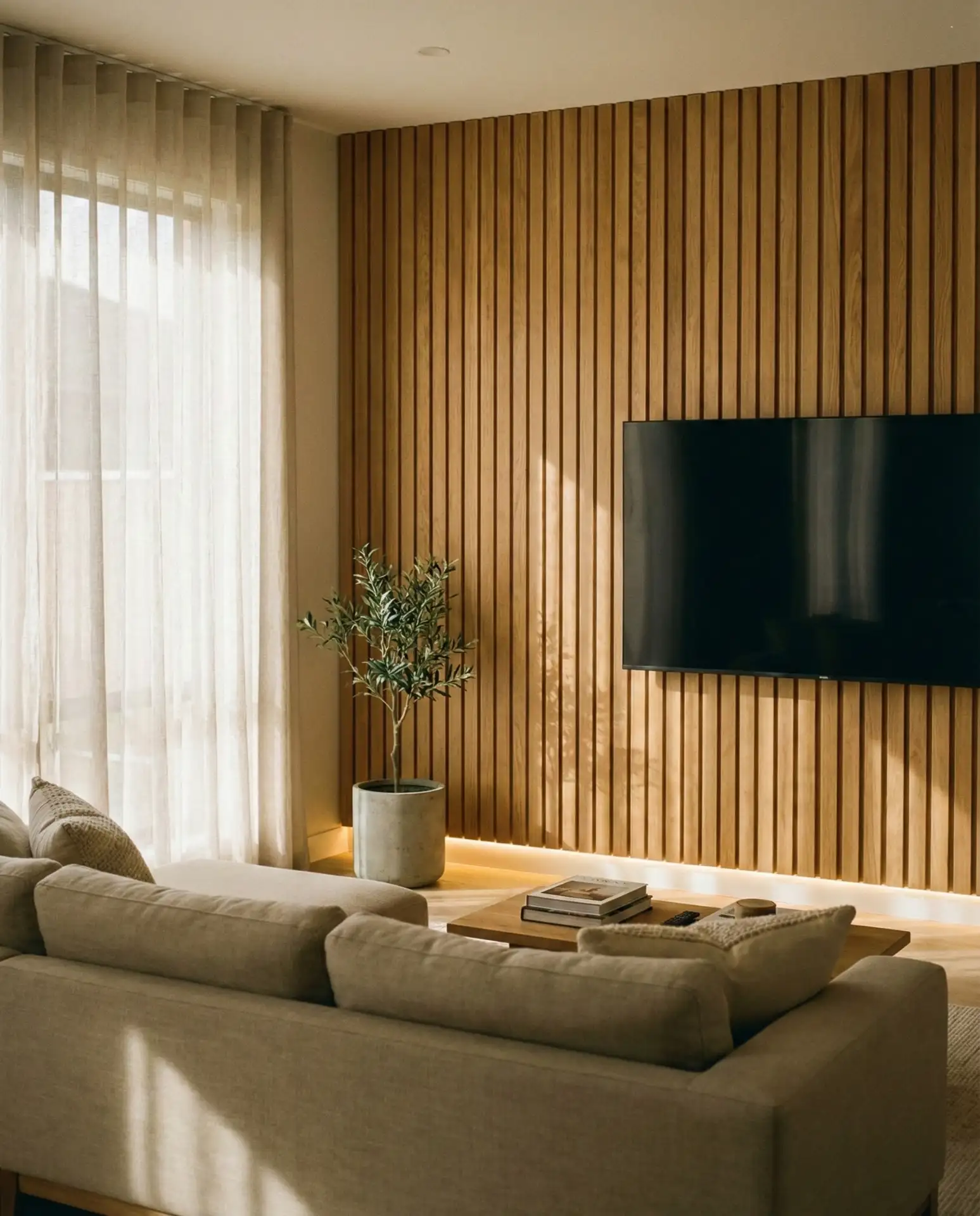
Vertical wood slats create rhythm and warmth behind the screen, turning a flat wall into a layered architectural feature. This approach works especially well in modern luxury settings where natural materials ground high-tech elements. The grooves catch light beautifully, adding depth without overwhelming the room. Pair with recessed LED strips along the top or bottom edge to highlight the texture after dark, creating a soft glow that reduces eye strain during evening viewing. 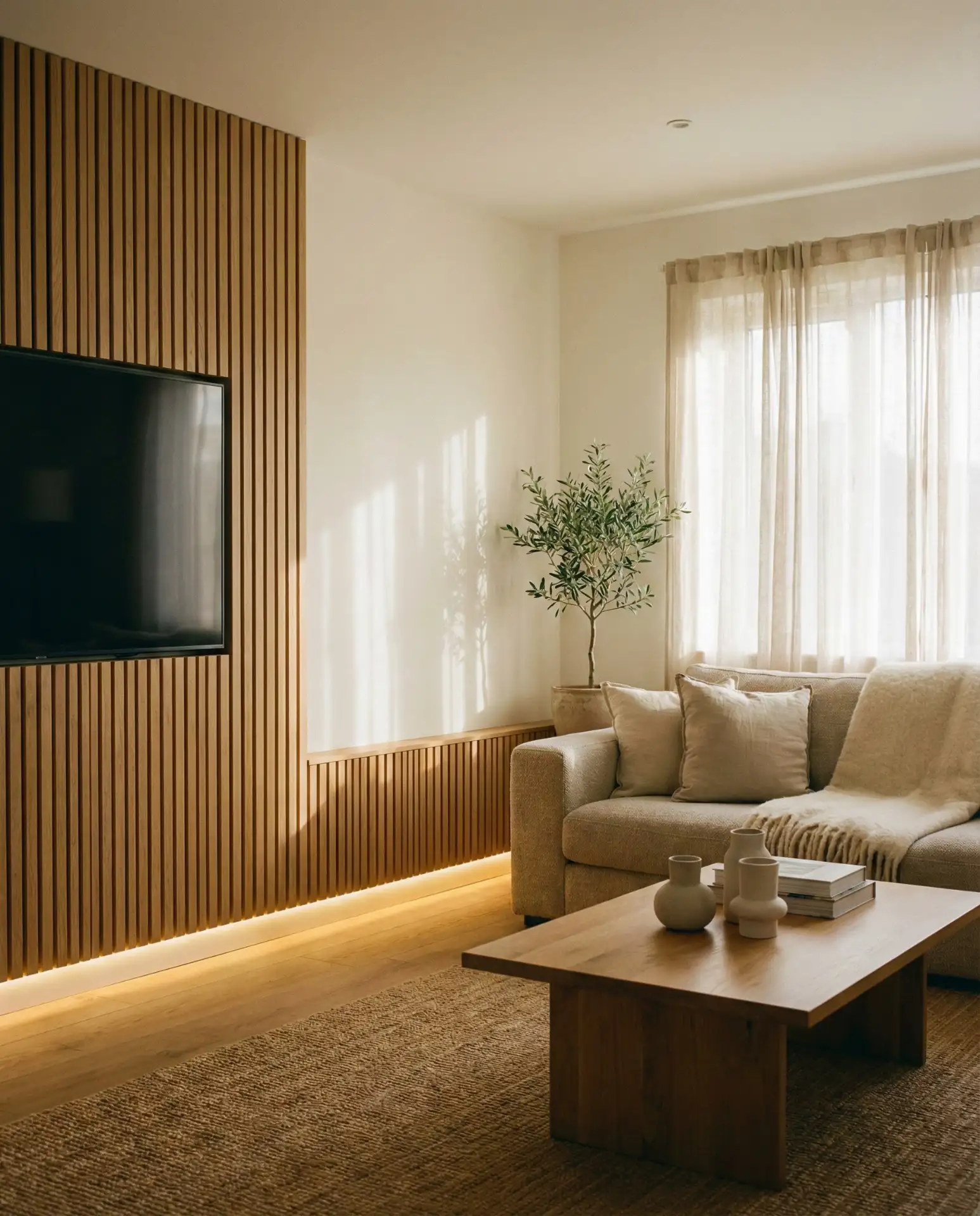
Where it works best: Open-plan homes where the TV wall is visible from multiple angles. The slats provide visual interest from the side, not just head-on, making the design work harder in flow-through spaces. Avoid this in rooms with heavy patterns elsewhere—let the fluting be the star.
2. Monochromatic Black Alcove with Hidden Storage
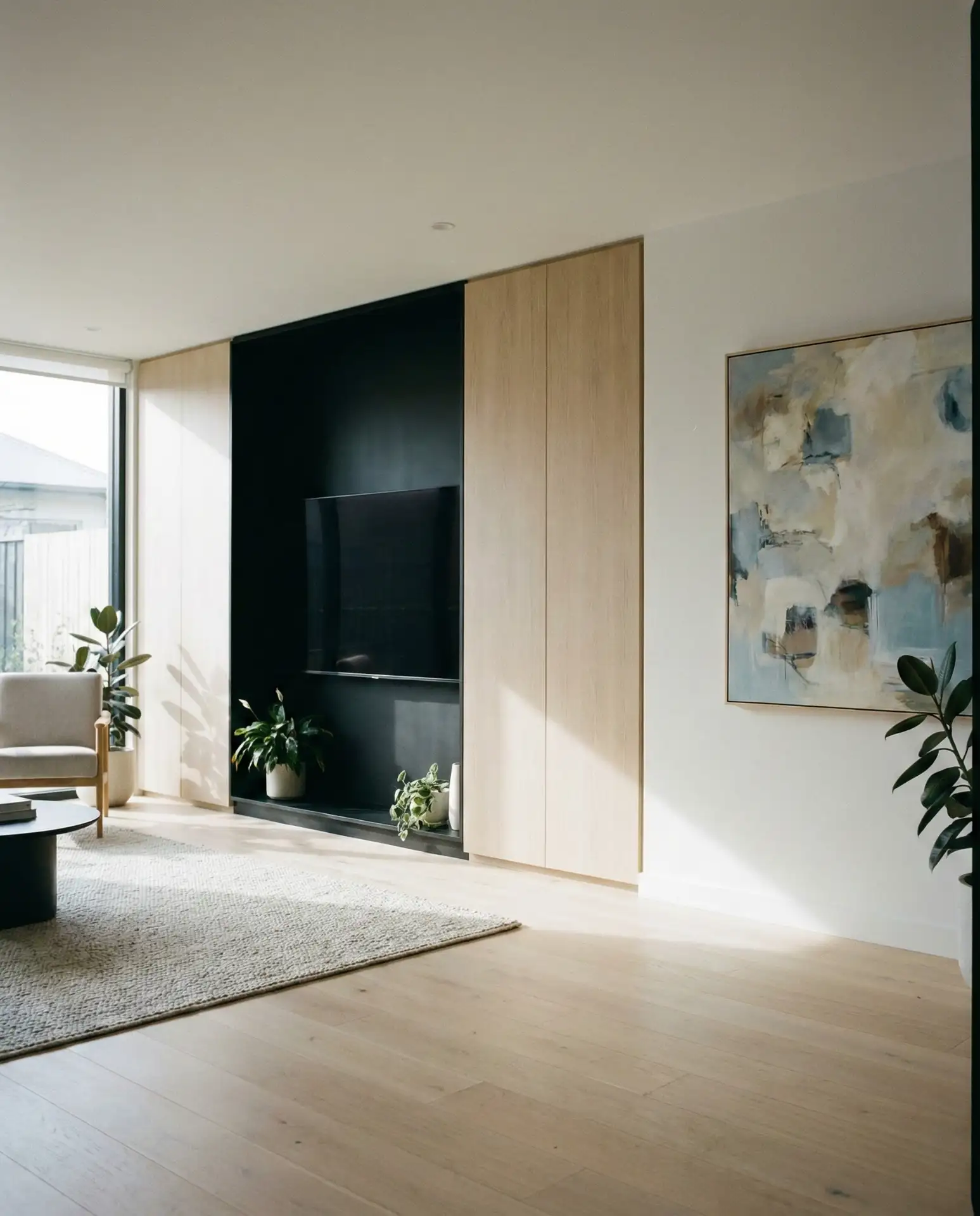
A recessed black niche frames the TV like a piece of art, with matte-finish cabinetry flanking both sides for storage that disappears into the wall. This elegant solution is gaining traction in 2026 as homeowners prioritize clean lines and clutter-free surfaces. The dark surround makes the screen blend in when off, reducing its visual weight. Push-to-open drawers and cabinets keep remotes, game controllers, and cables completely out of sight. 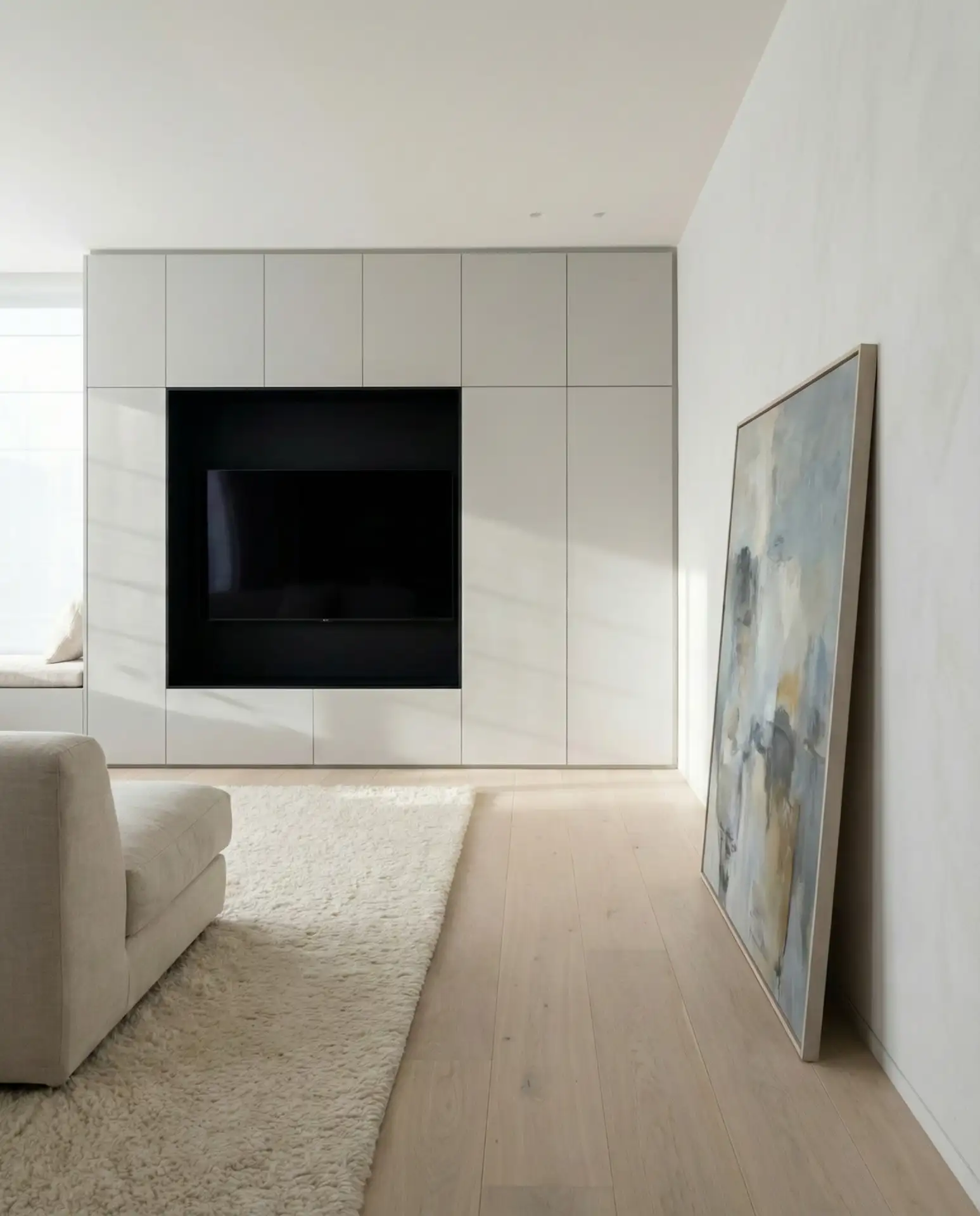
Budget tip: IKEA’s Besta system can be customized with matte black fronts and built into drywall for a fraction of custom millwork costs. Many American DIYers are achieving this look for under $1,200, including paint and installation supplies.
3. Marble Accent Wall with Brass Trim
Book-matched luxury marble slabs create a hotel-like backdrop that elevates the entire room, with thin brass or gold trim outlining the TV panel for a refined edge. This is the ultimate luxury classic move—timeless, tactile, and undeniably opulent. Real marble or high-quality porcelain tiles work equally well, offering veining that catches the eye without competing with the screen. The metal trim adds a jewelry-like detail that distinguishes this from builder-grade stone installations. 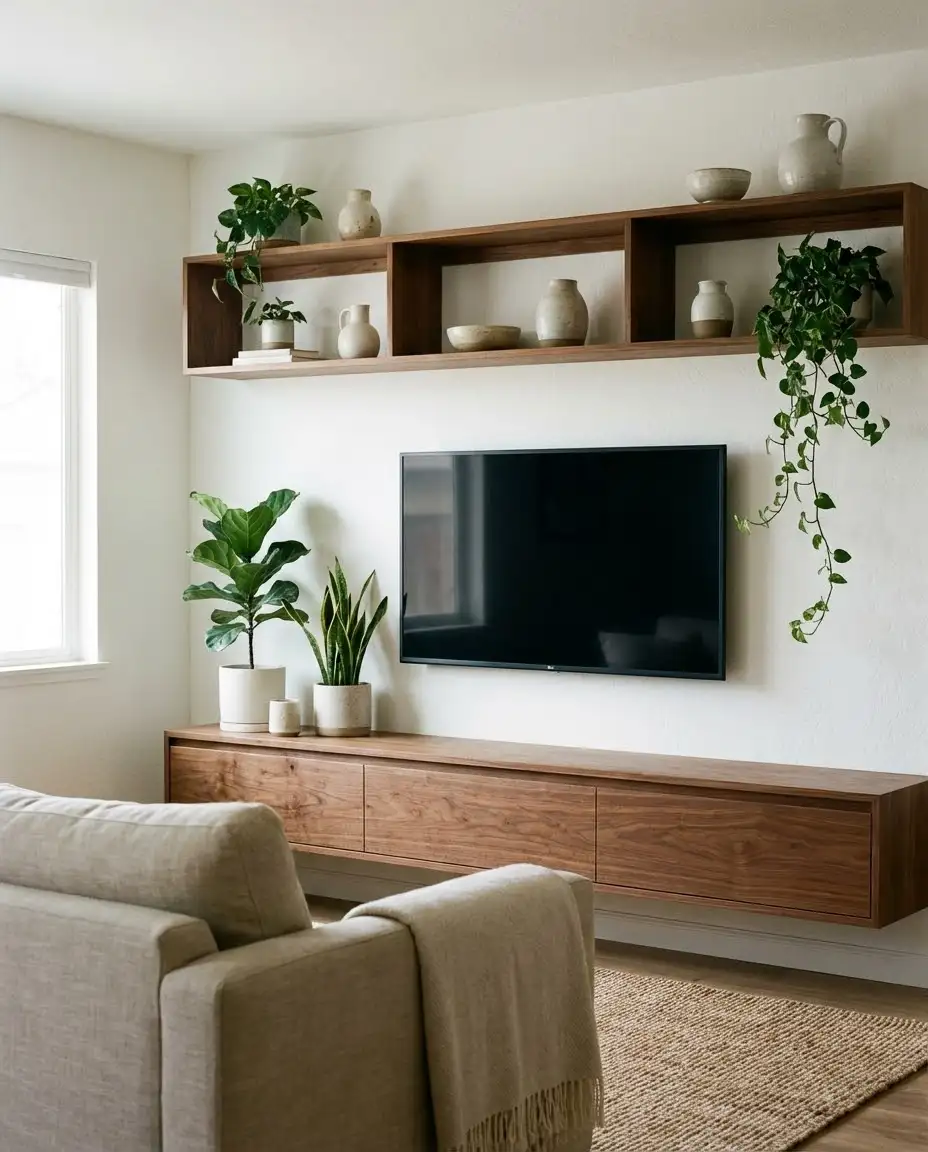
Expert insight: Opt for honed or leathered finishes over polished marble to reduce glare from ambient light. The matte surface feels more residential and less commercial, especially in spaces with large windows.
4. Slim Floating Console with Open Shelving Above
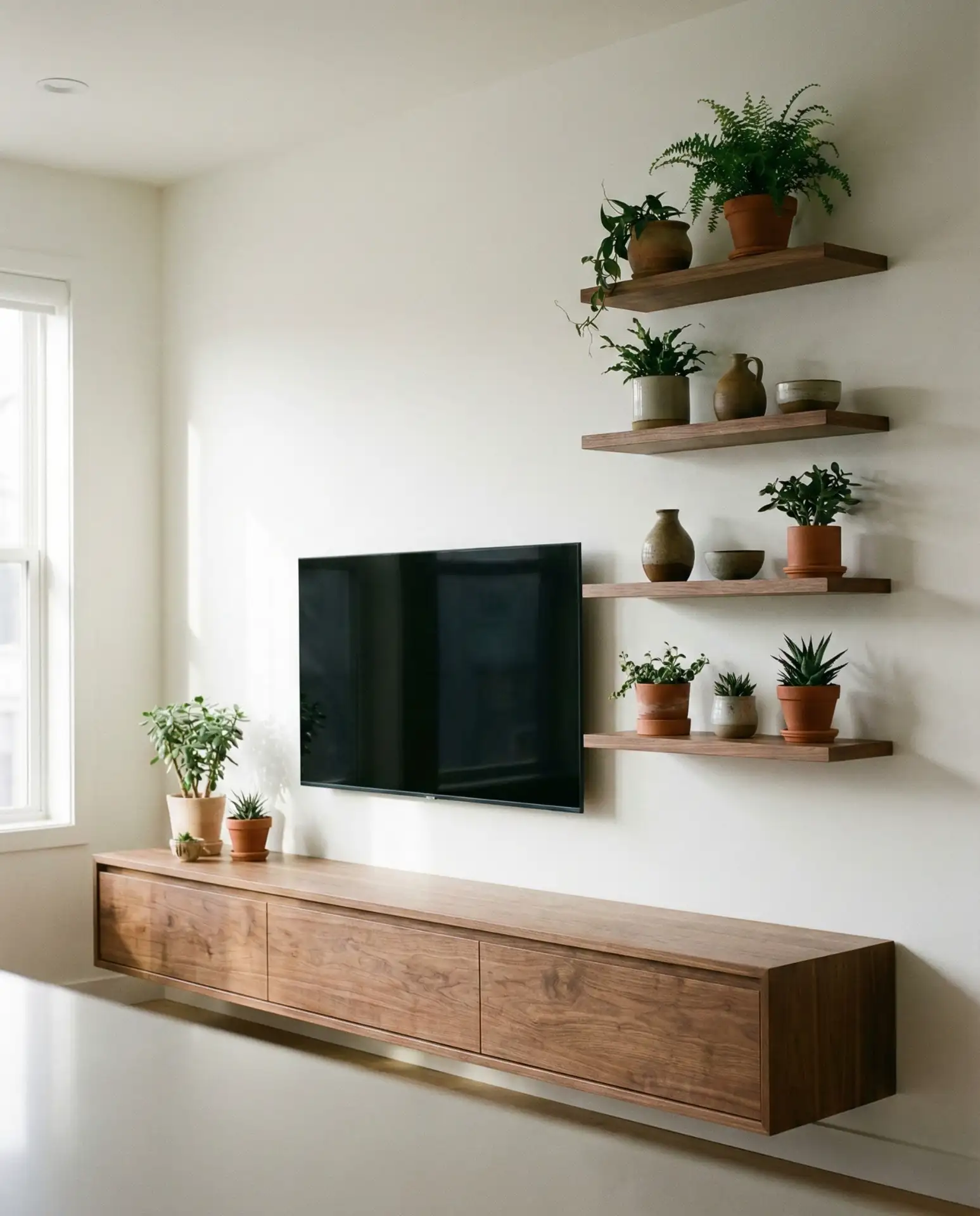
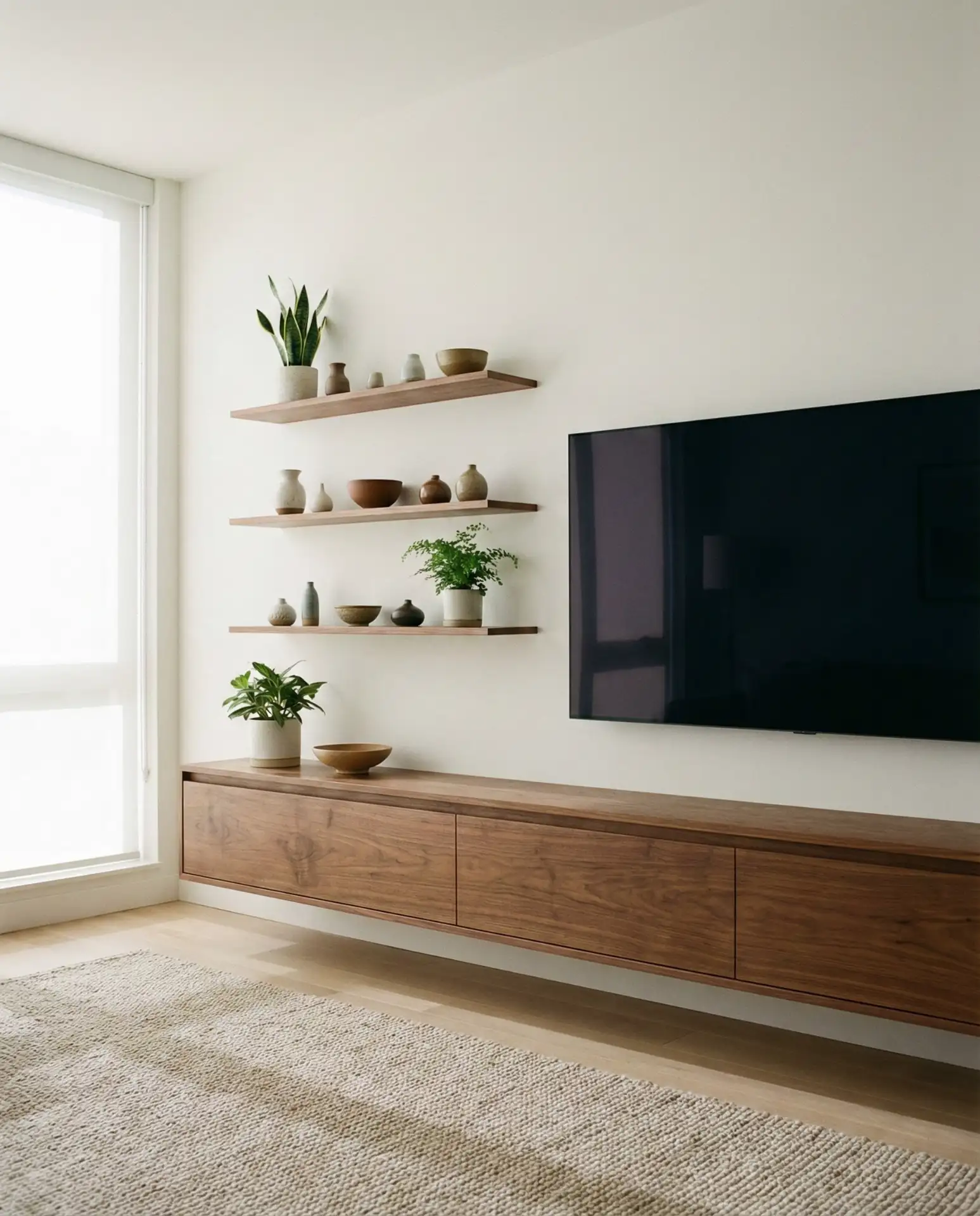
A wall-mounted console in walnut or oak hovers below the screen, while staggered open shelves above display books, ceramics, and greenery—perfect for small space living room minimalist setups. This arrangement keeps the floor clear and the sightline uncluttered, ideal for 2026 interiors that value airiness over mass. The asymmetry of the shelves adds personality without requiring a full built-in, making it a flexible, renter-friendly option. 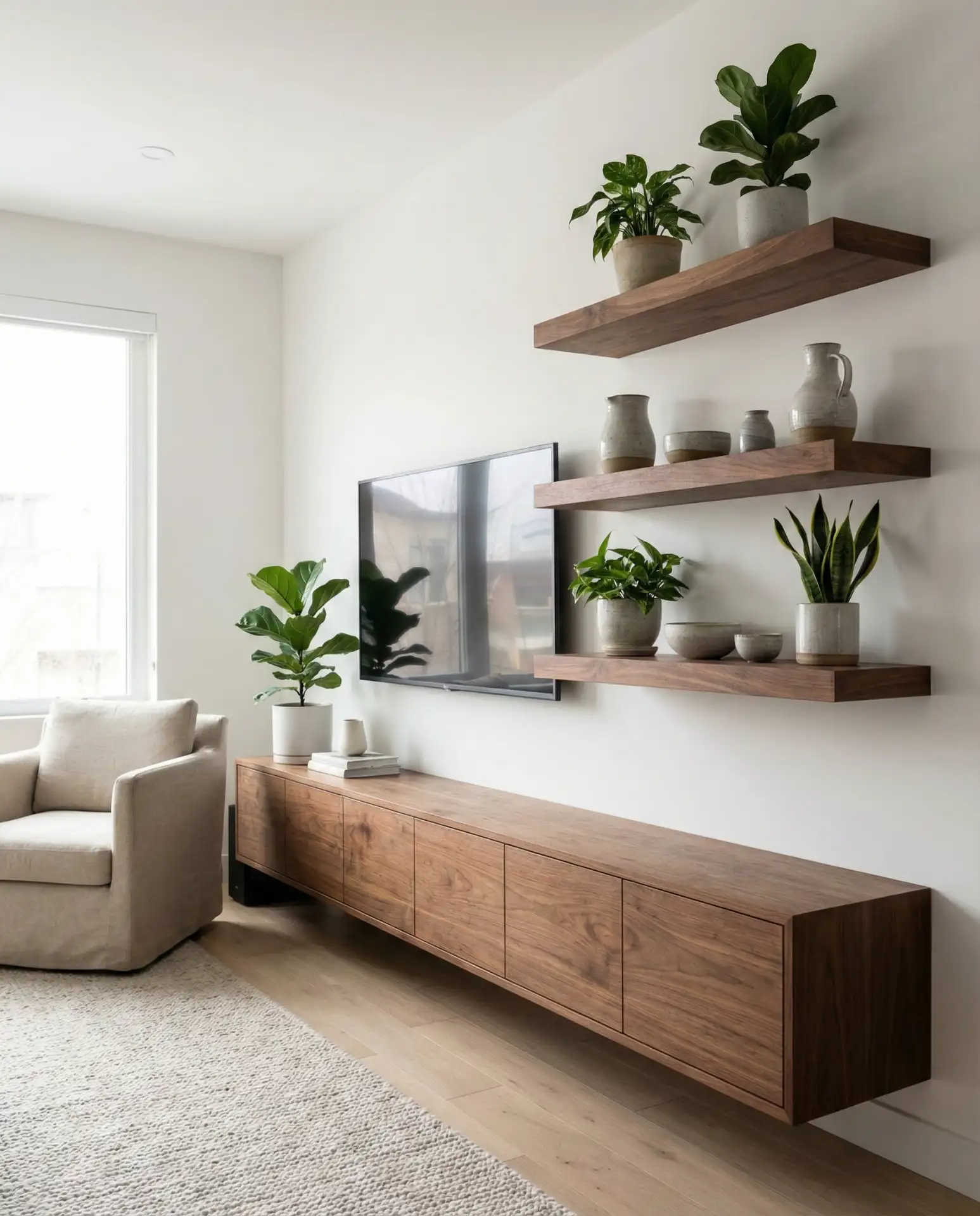
Real homeowner behavior: Many Americans are swapping heavy media centers for these lighter profiles, especially in cities where apartments feel cramped. The floating effect tricks the eye into reading more square footage.
5. Textured Gypsum Panel with Geometric Relief
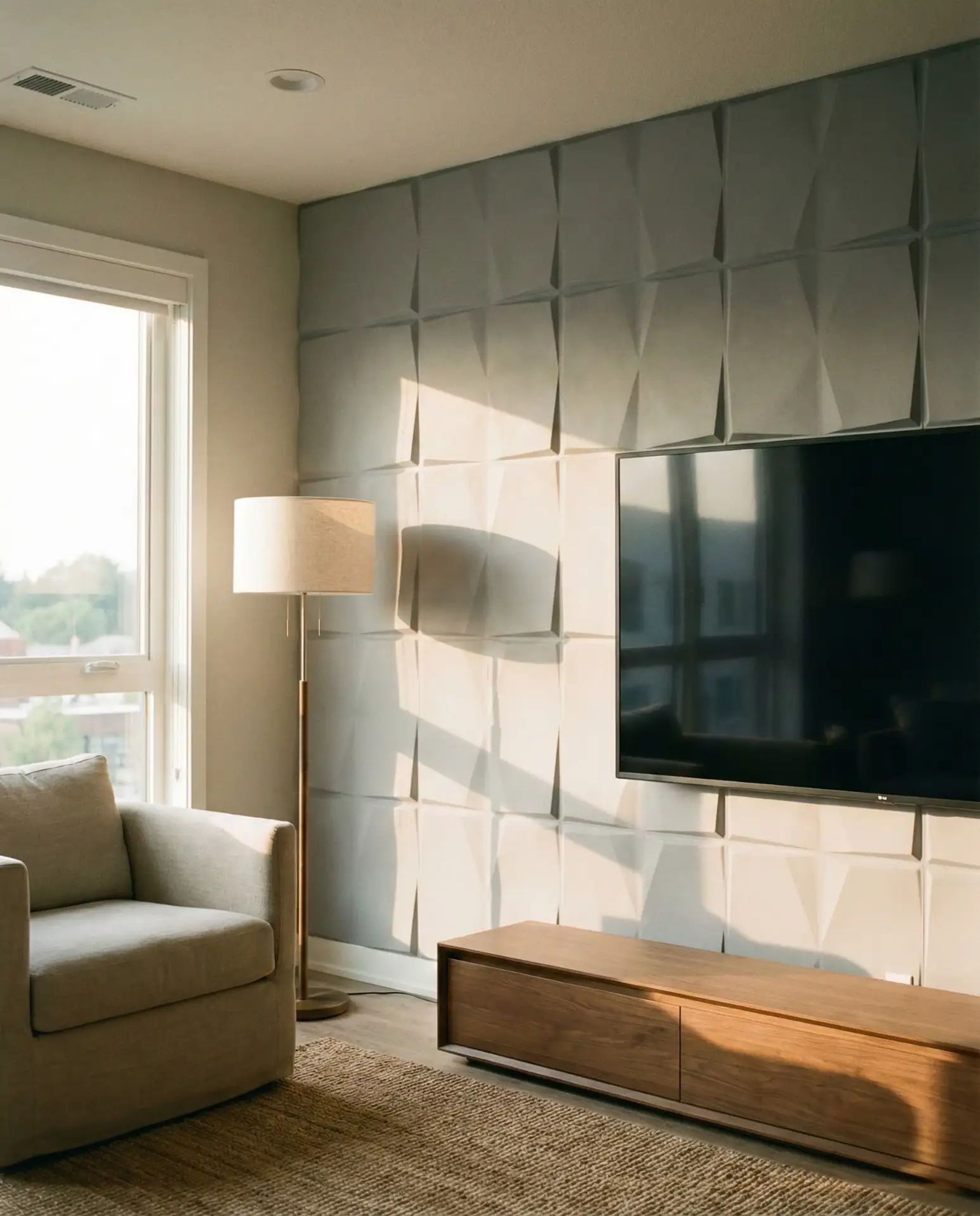
Gypsum panels with three-dimensional patterns—hexagons, waves, or linear grooves—add sculptural interest that’s subtle yet impactful. This unique material is cost-effective, paintable, and easier to install than wood or stone, making it a smart choice for budget-conscious updates. The relief catches shadows and light shifts throughout the day, creating a living backdrop that changes with the sun. Paint it in a soft neutral, or go bold with charcoal for contrast. 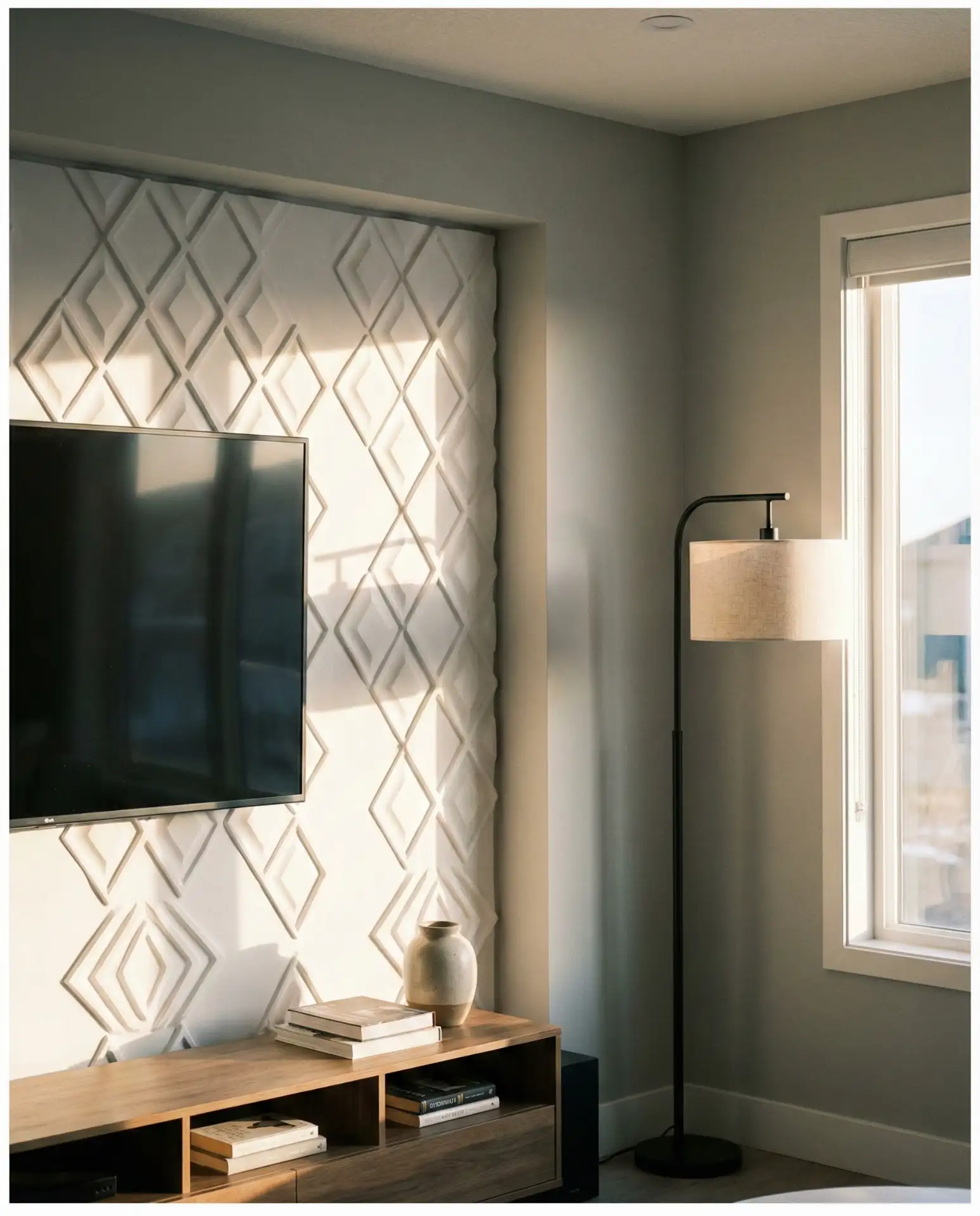
Common mistake: Overscaling the pattern. Choose a relief depth of 1–2 inches max so it reads as texture, not distraction. Too deep, and it competes with the screen; too shallow, and it disappears.
6. Double-Height Living Room with Gallery Wall Integration
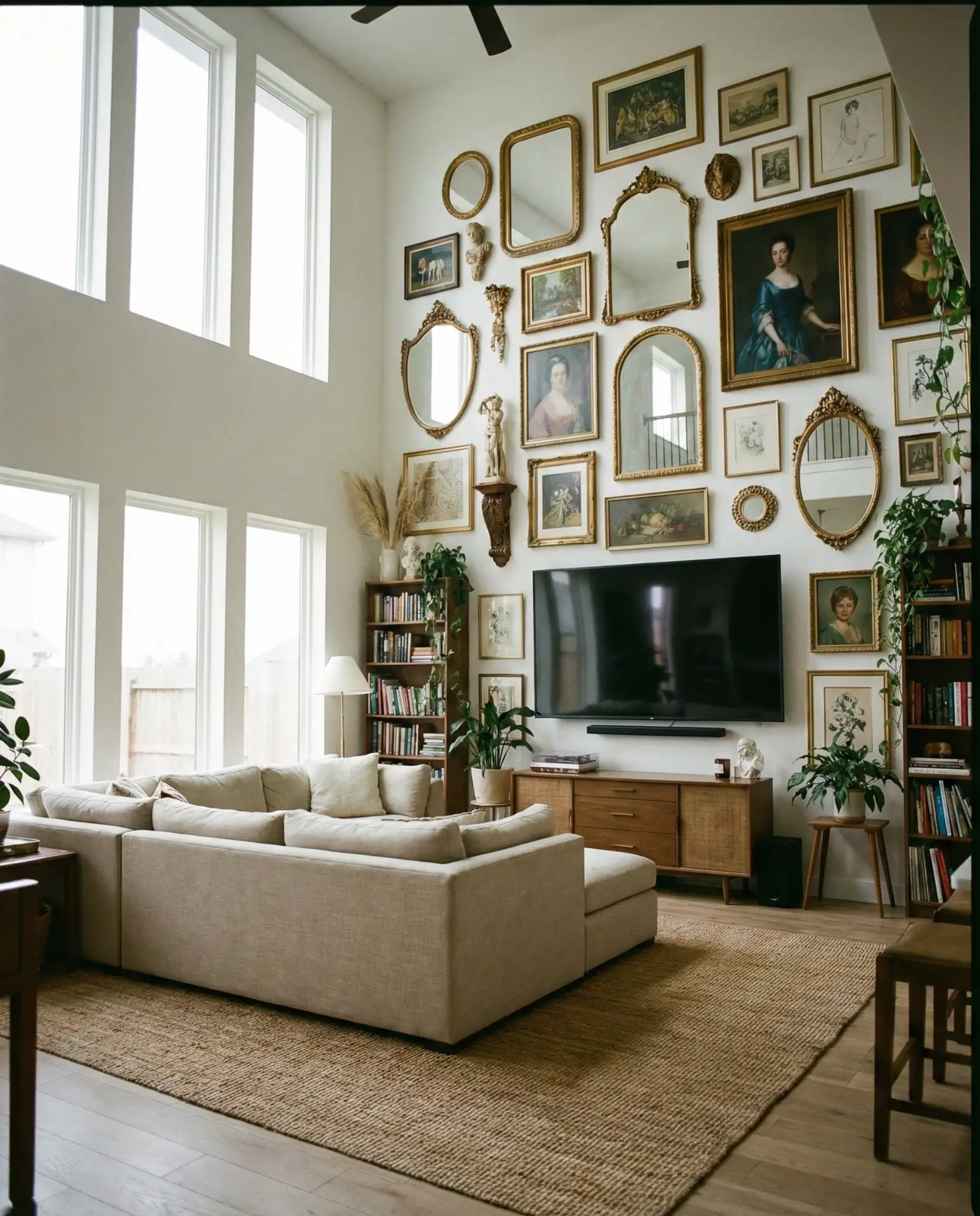
In homes with soaring ceilings, treat the TV as one element within a larger gallery grid rather than the dominant feature. Surround it with framed art, mirrors, or floating shelves to create a cohesive composition that draws the eye upward. This approach works beautifully in double-height spaces where a lone screen can look lost or awkwardly small. The key is scale: use oversize frames and artwork that matches the TV’s proportions. 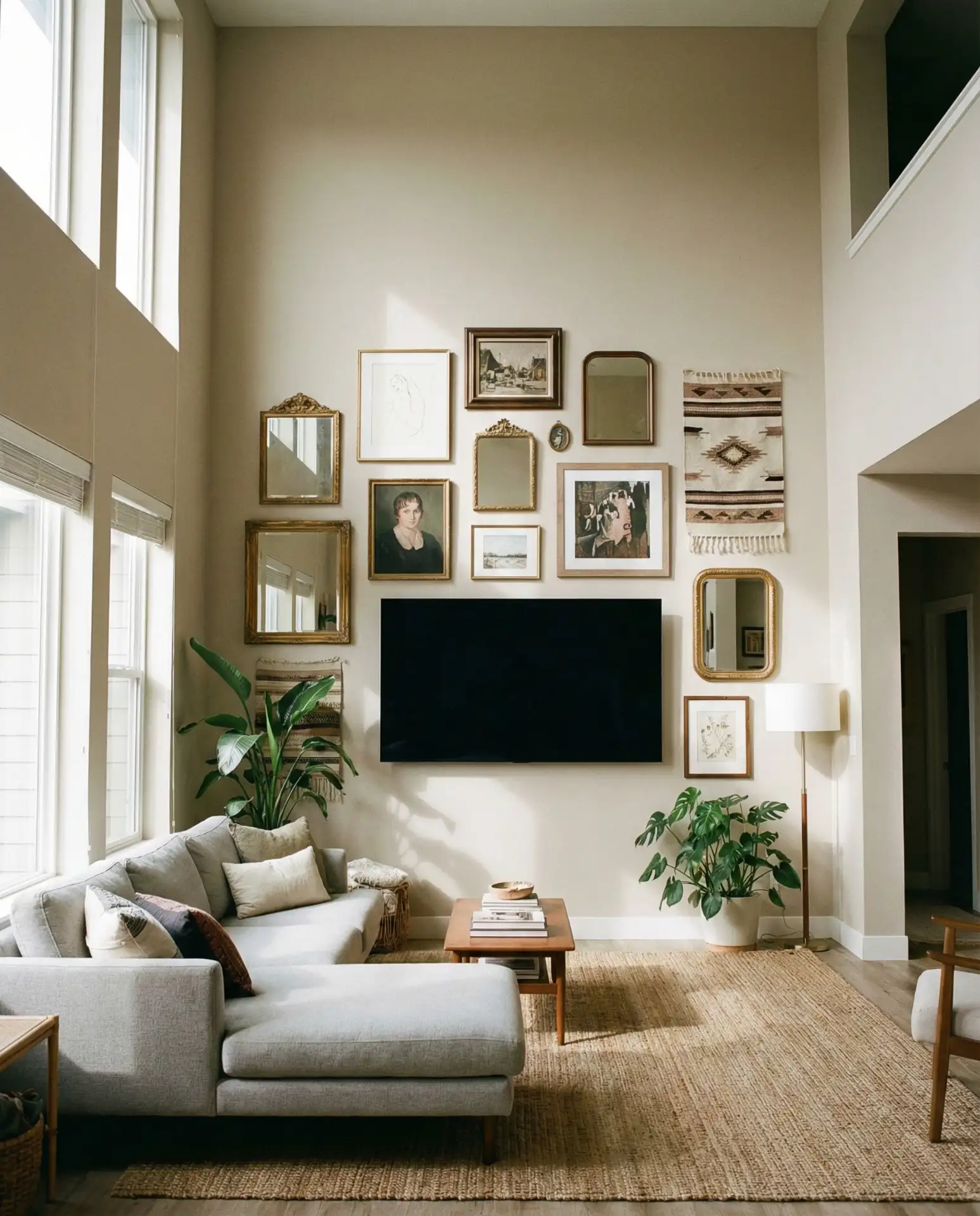
Where it works best: Lofts, renovated barns, and new-build homes with vaulted ceilings. The gallery approach softens the tech presence and makes the room feel more collected than staged.
7. Japandi-Inspired Shoji Screen Slider
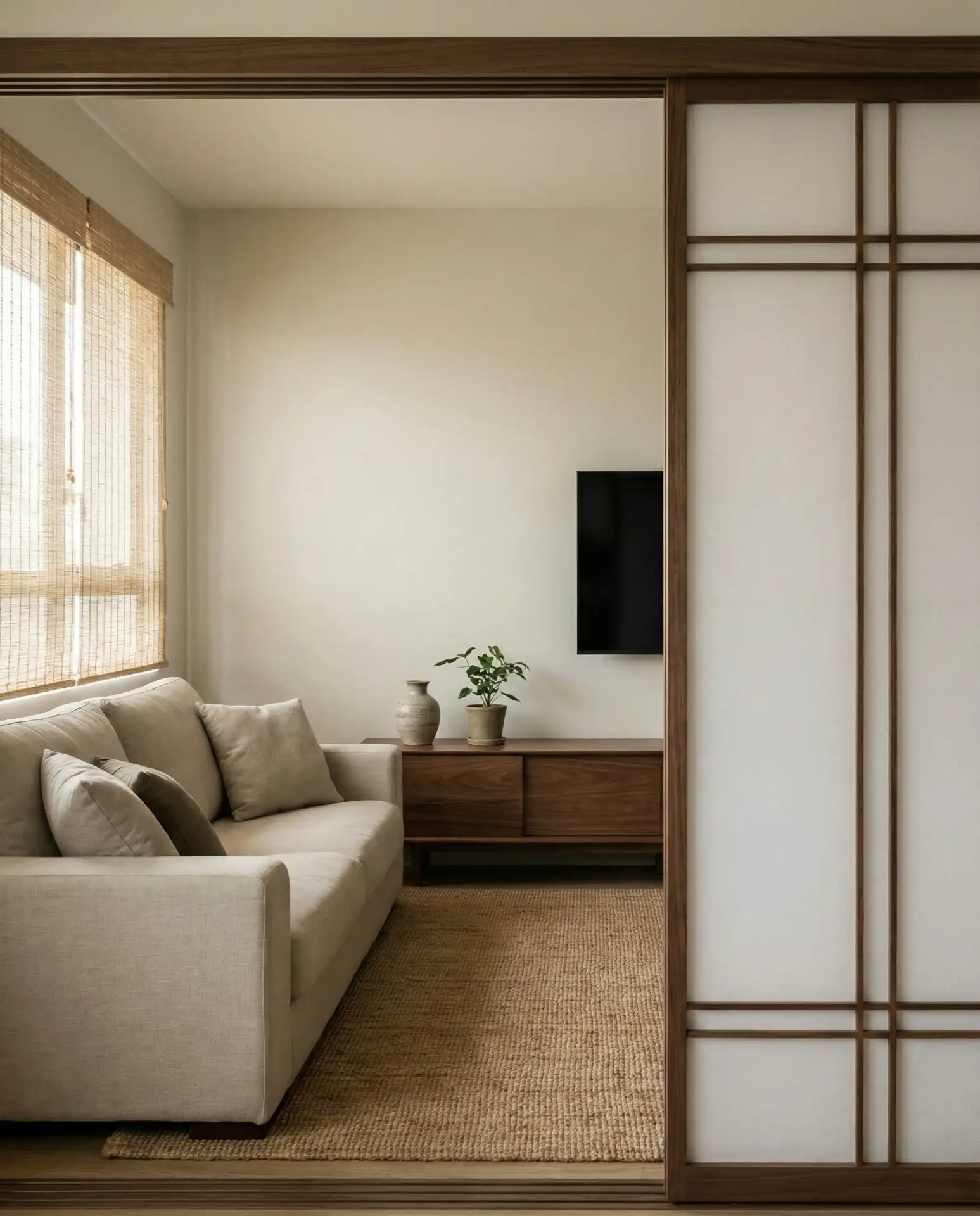
A sliding Japandi screen made from translucent rice paper or linen fabric conceals the TV when not in use, honoring the minimal aesthetic that defines this hybrid style. This idea is especially popular in 2026 as Americans embrace quieter, more intentional interiors. The screen softens the hard edges of technology and introduces warmth through natural materials like oak or walnut frames. When closed, it becomes a serene backdrop; when open, it tucks neatly to one side. 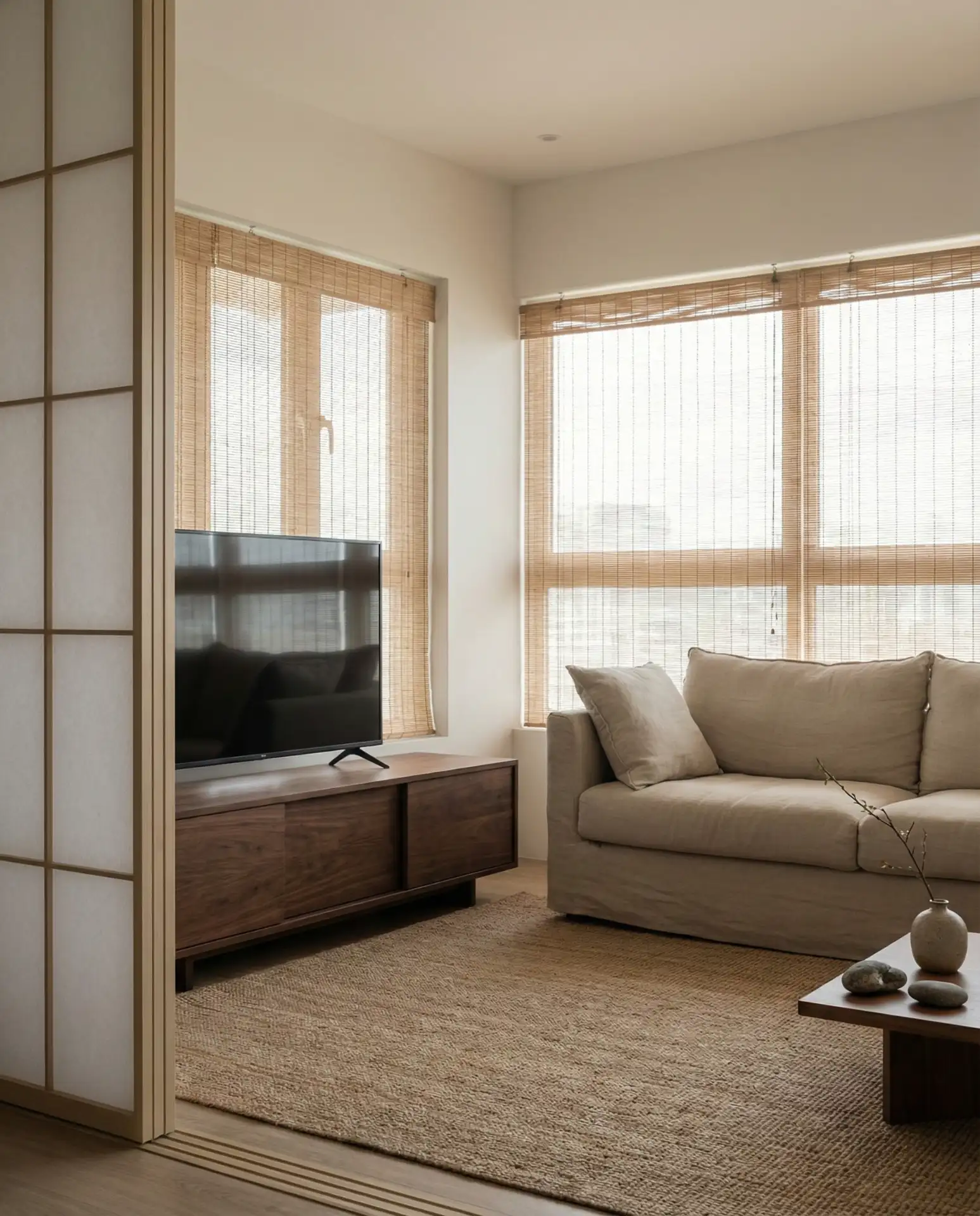
Practical insight: Hardware matters. Invest in smooth, silent track systems—cheap sliders will ruin the experience. Look for barn door kits designed for lightweight panels, available at most home improvement stores.
8. Built-In Fireplace and TV Combo with Stone Surround
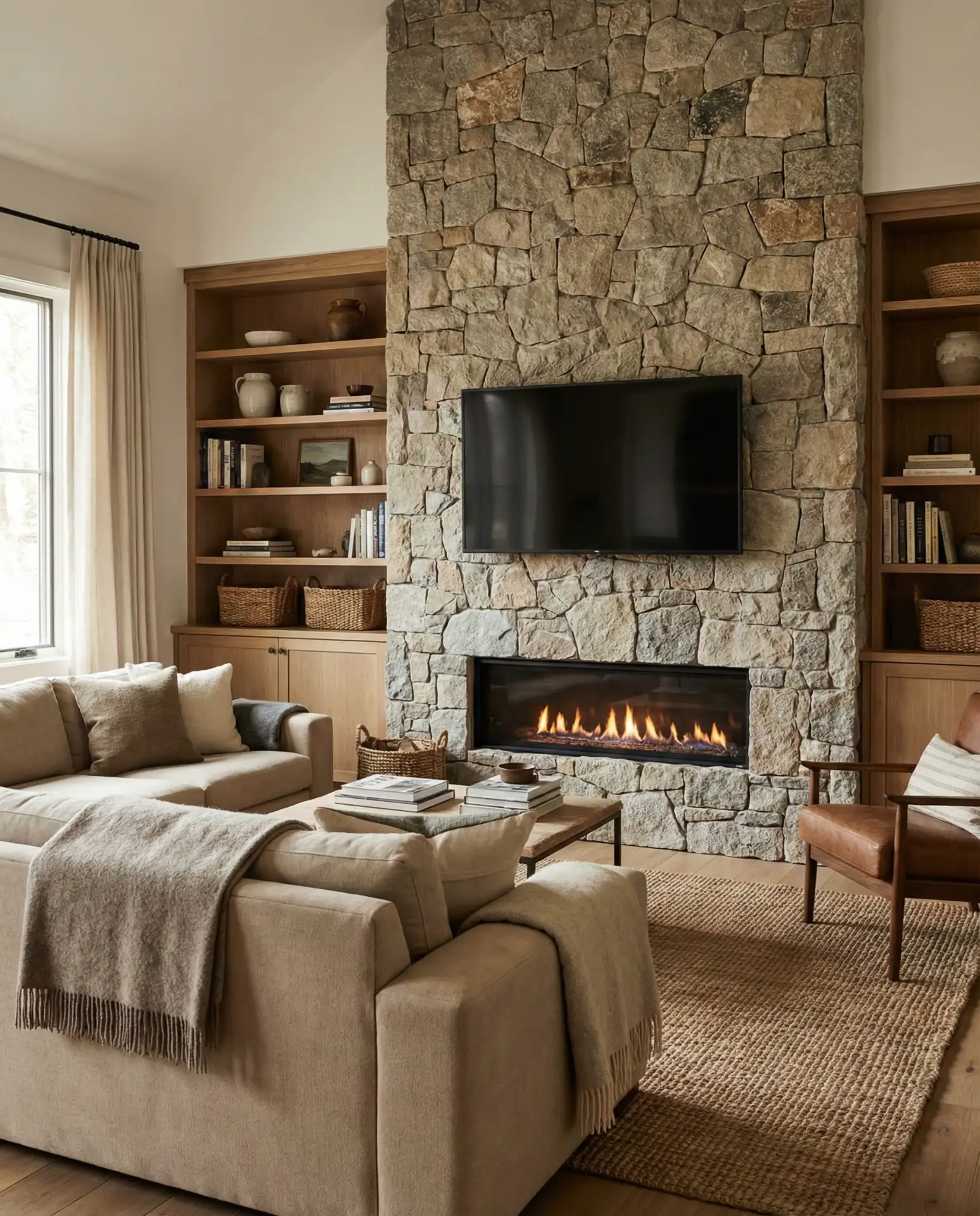
A linear fireplace below the screen, framed by stacked stone or thin brick, creates a classic American living room focal point that balances warmth and function. This pairing is especially common in suburban homes where the family room serves as the primary gathering space. Choose a low-profile electric or gas insert to keep the flames at a safe distance from the electronics, and ensure the stone extends floor-to-ceiling for maximum impact. 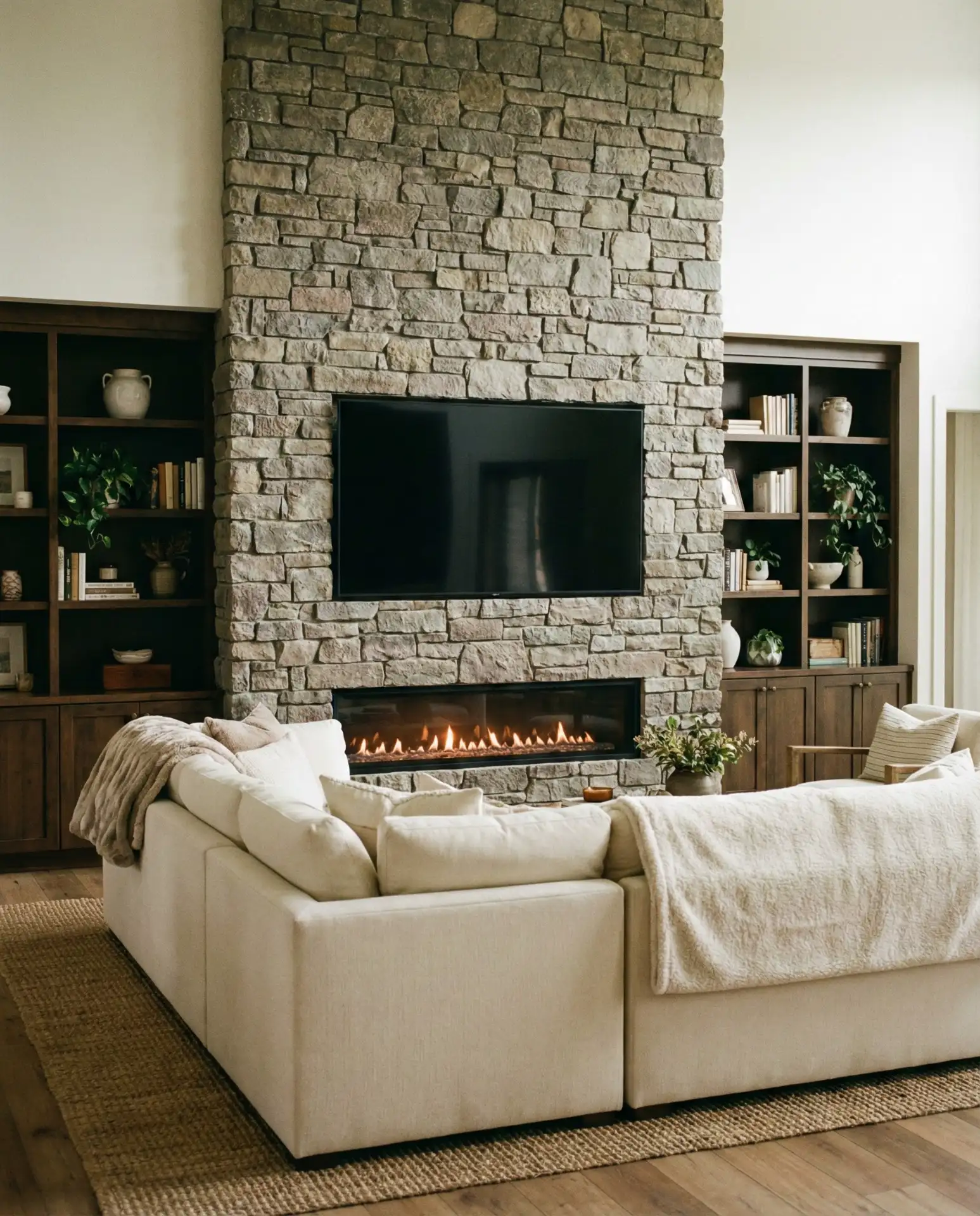
American lifestyle context: In colder states like Minnesota, Wisconsin, and upstate New York, this combo is nearly standard in new construction. The fireplace becomes a year-round asset, even if only used aesthetically in summer.
9. Mirrored Panel Surround for Reflective Depth
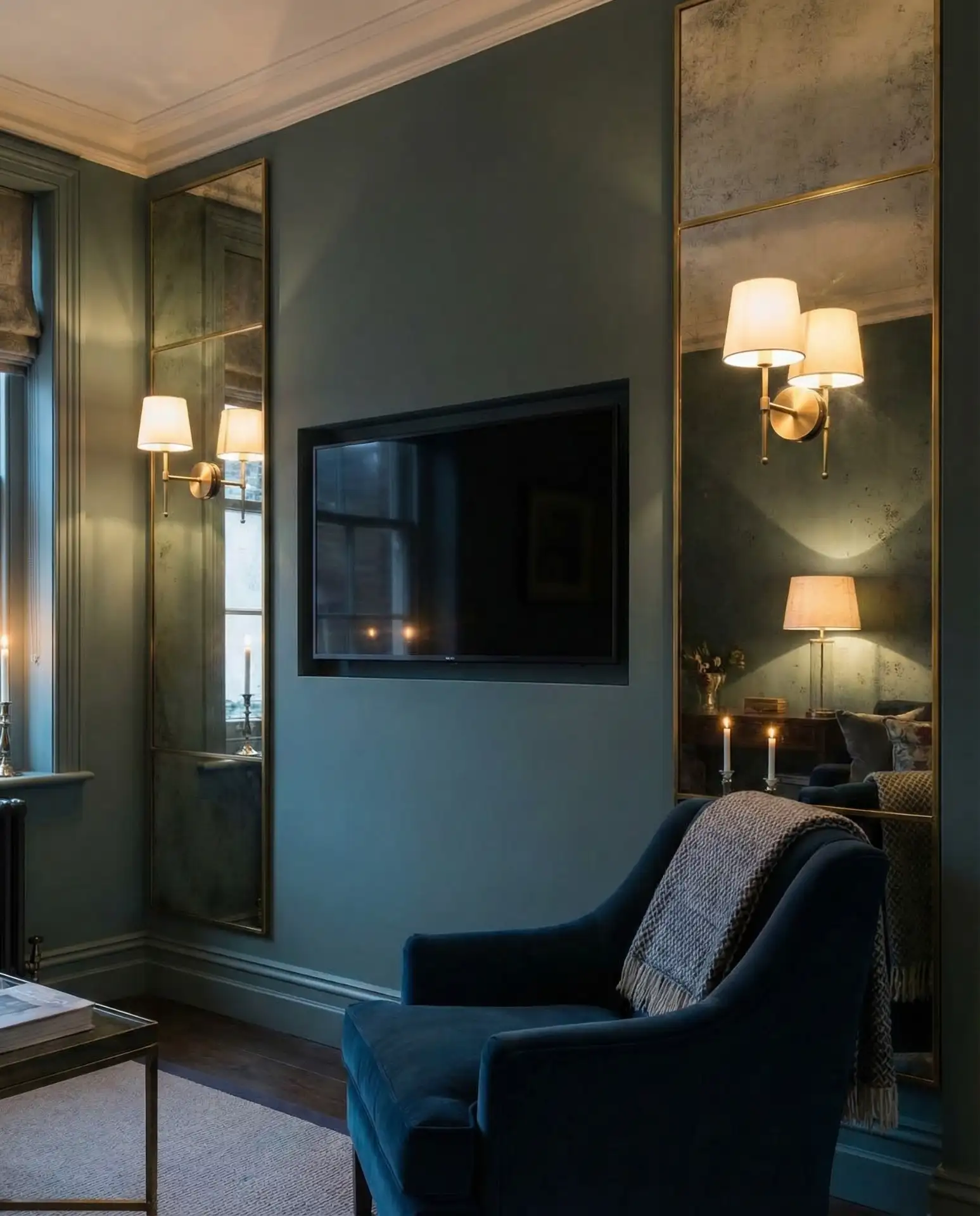
Antiqued or tinted mirror panels flanking the TV create an elegant illusion of expanded space, ideal for small-space homes where every visual trick counts. The reflective surface bounces light and adds a touch of old Hollywood glamour without overwhelming the room. Use bronze or smoked glass for a softer effect than bright mirror, which can feel too stark or commercial. Frame the mirror sections with thin metal trim to define the zones. 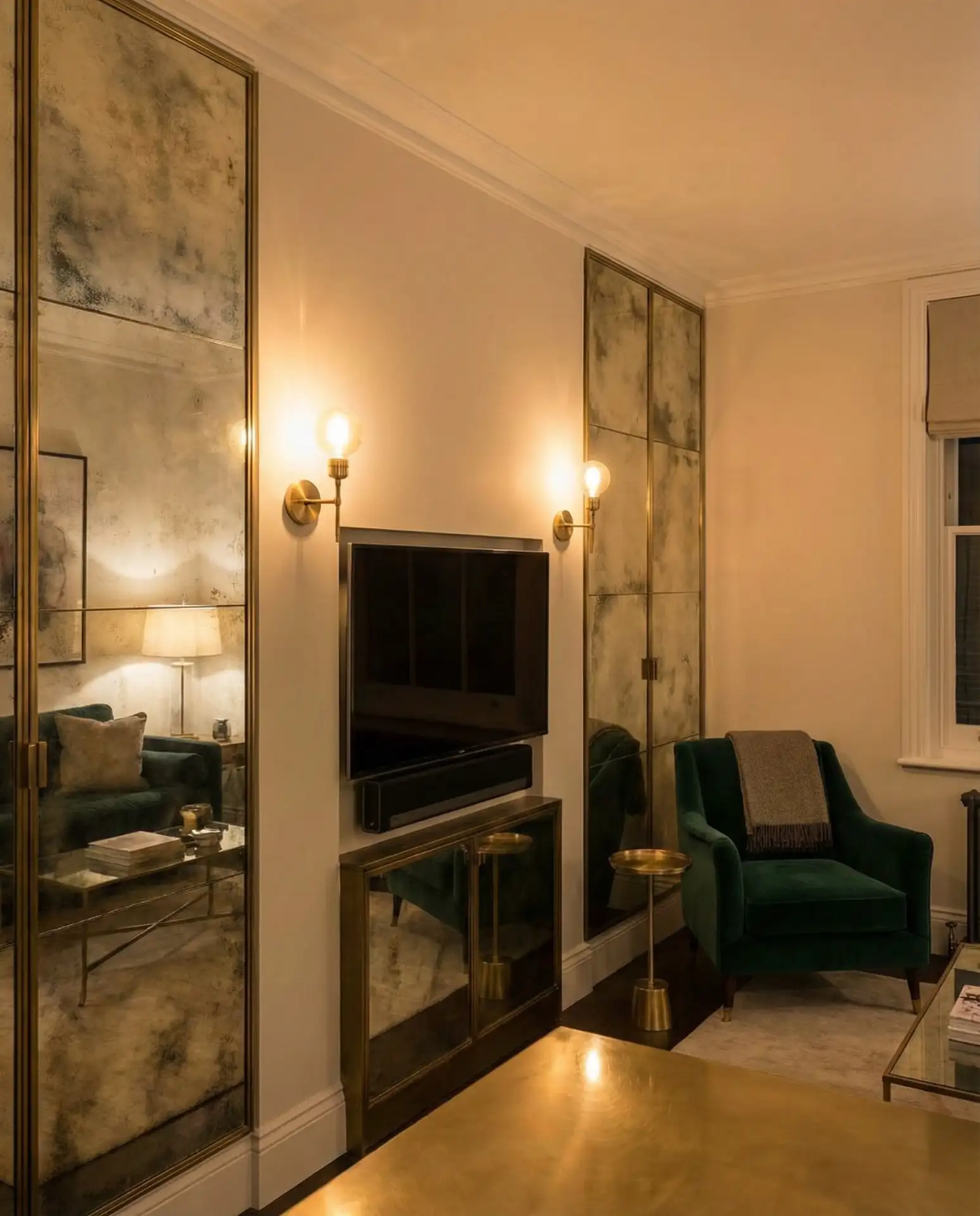
Micro anecdote: A designer friend in Brooklyn used this trick in a 450-square-foot studio, and guests consistently asked if the apartment had been expanded. The mirror doubled the perceived width of the wall.
10. Neo-Classical Molding Frame with Soft Pastels

Ornate crown molding and trim create a formal frame around the TV, painted in blush, sage, or powder blue for a neoclassical revival that feels fresh in 2026. This look nods to European interiors but softens the formality with modern color choices and cleaner lines. The contrast between the decorative frame and the flat screen is intentional—it makes the technology feel more integrated into the room’s architectural language. Pair with matching wainscoting or chair rail for continuity. 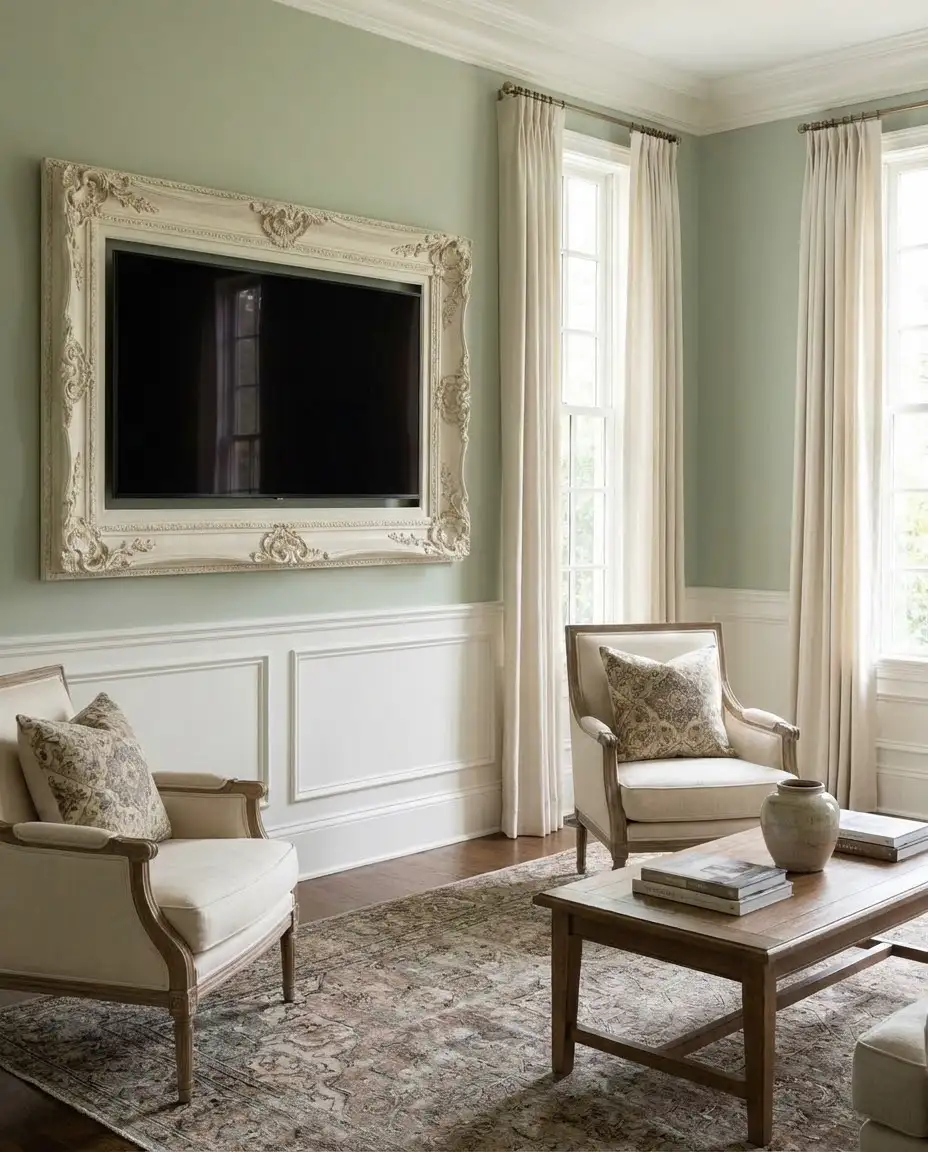
Budget angle: Pre-made polyurethane molding from Home Depot or Lowe’s costs a fraction of custom millwork and can be assembled and painted in a weekend. Expect to spend $150–$300 for materials.
11. Hotel-Inspired Upholstered Fabric Wall
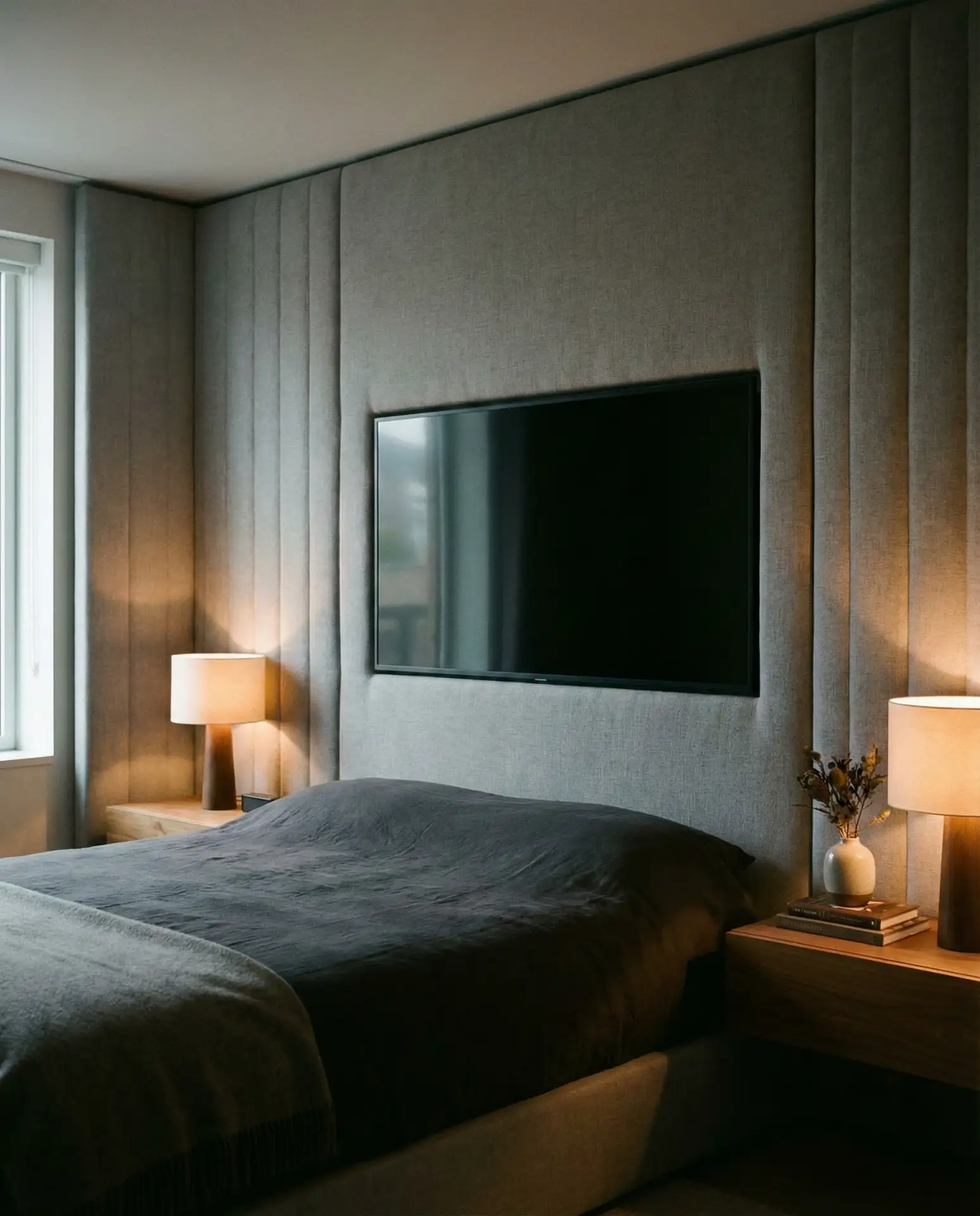
A padded, fabric-wrapped panel behind the TV brings hotel luxury home, muffling sound and adding tactile softness that feels unexpected. This approach is showing up in 2026 bedrooms and media rooms where acoustic comfort matters as much as aesthetics. Choose a durable, stain-resistant fabric in linen, velvet, or textured wool, and have it professionally stretched over a foam-backed frame. The upholstery extends from floor to ceiling or just within the TV zone, depending on your budget and room scale. 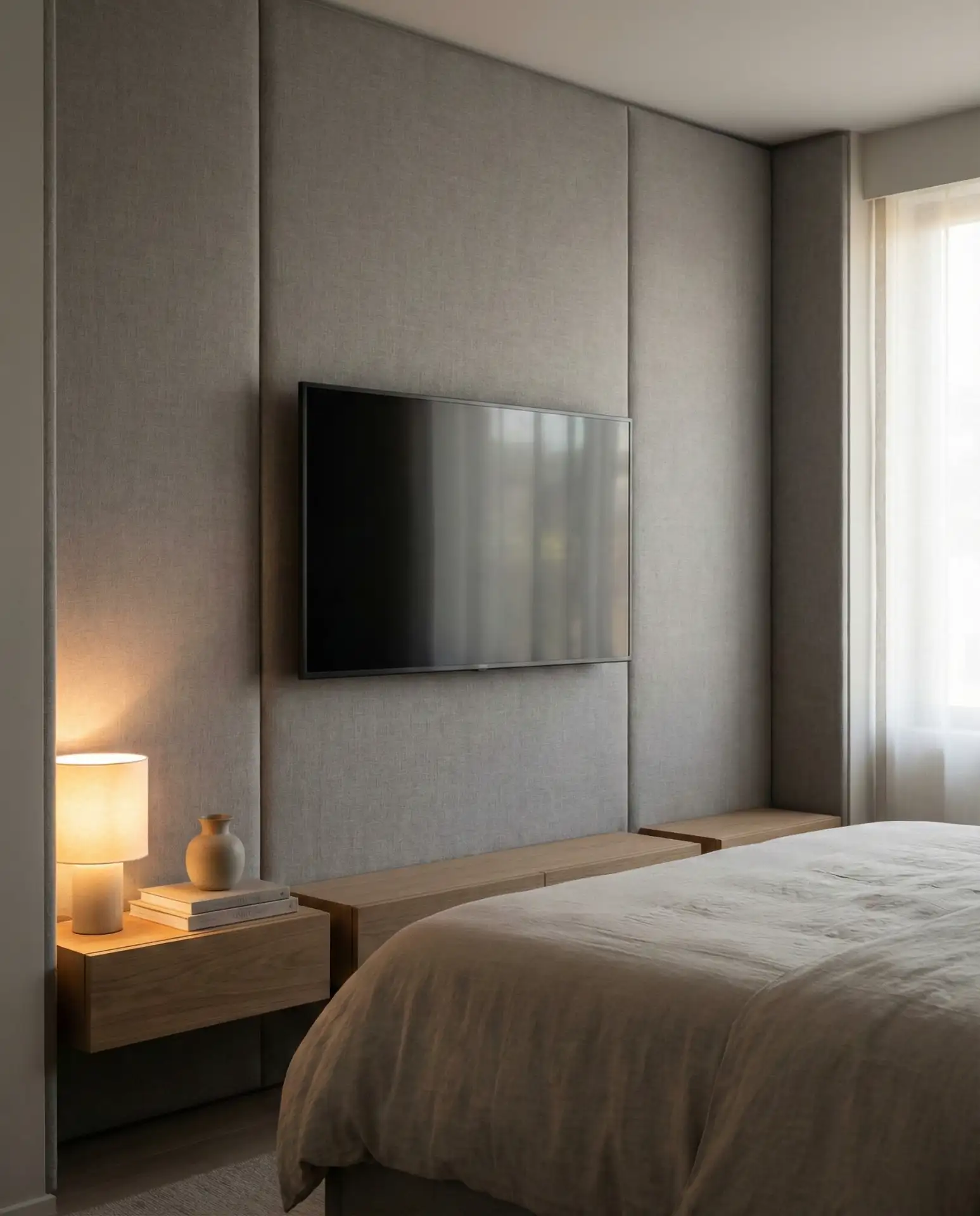
Expert commentary: Upholstered walls absorb echo, making dialogue clearer during movies and reducing noise transfer to adjacent rooms—a huge win in shared living spaces or thin-walled condos.
12. Modular Shelving with Rotating Display
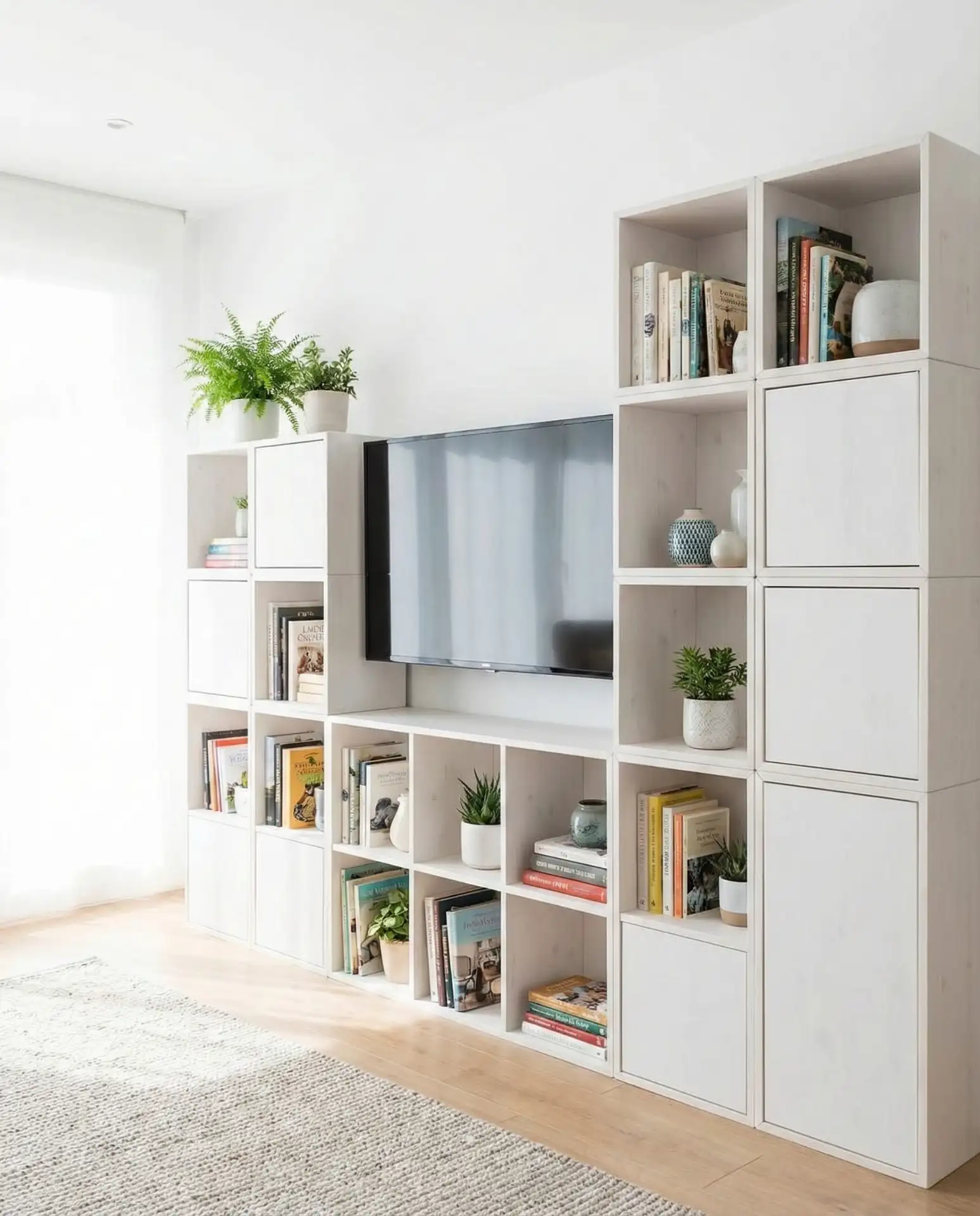
Configurable cube shelving surrounds the TV, allowing you to rearrange books, plants, and decor seasonally while maintaining storage and visual interest. This is the ideas-driven solution for renters and frequent redecorators who want flexibility without permanent installations. Paint the shelving unit the same color as the wall for a built-in look, or contrast it in matte black or navy for definition. Leave some cubes empty to avoid visual clutter. 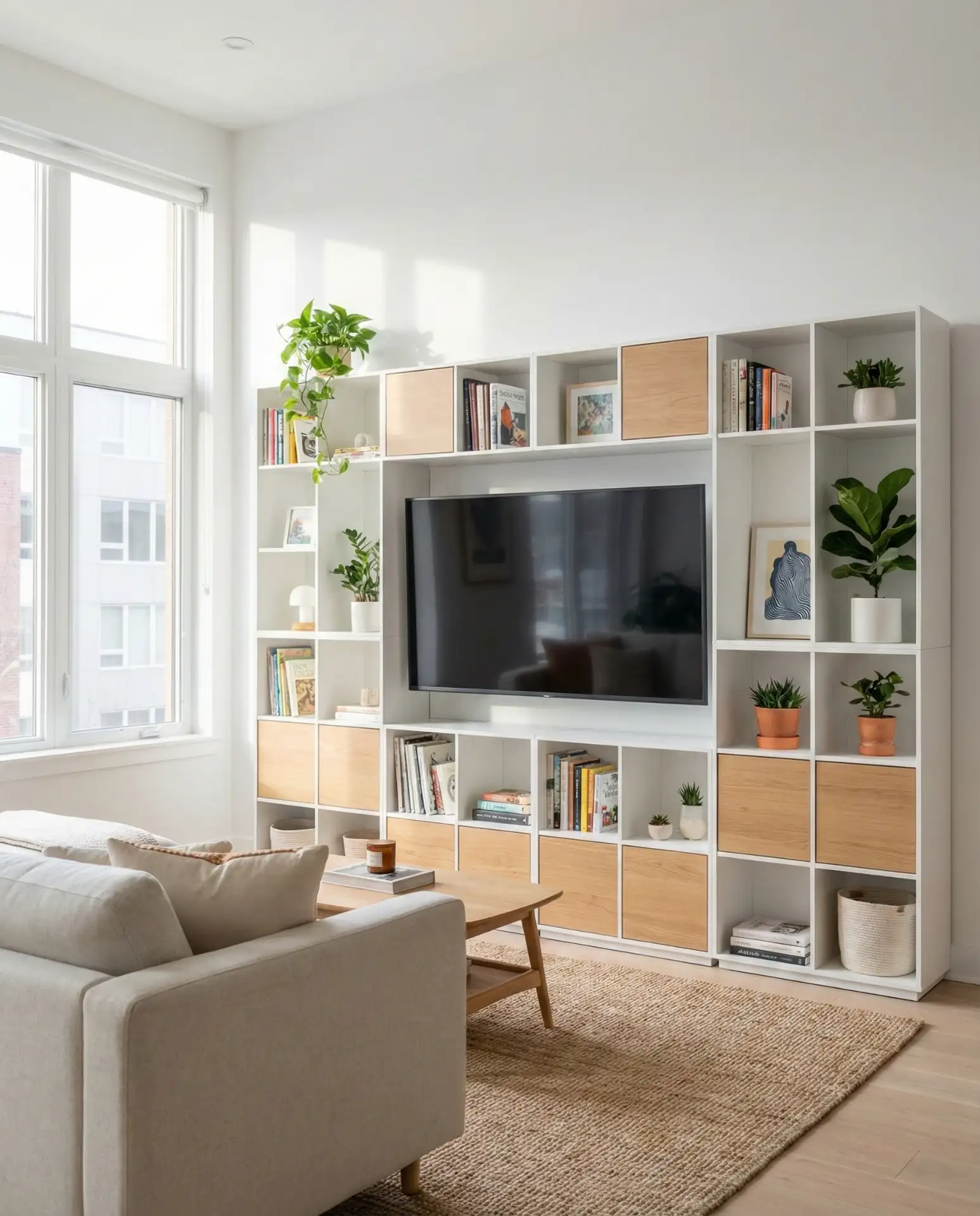
Real homeowner behavior: Younger homeowners are treating TV walls like Pinterest boards, swapping out objects monthly. This setup supports that impulse without requiring tools or commitment.
13. Concrete Finish with Industrial Edge
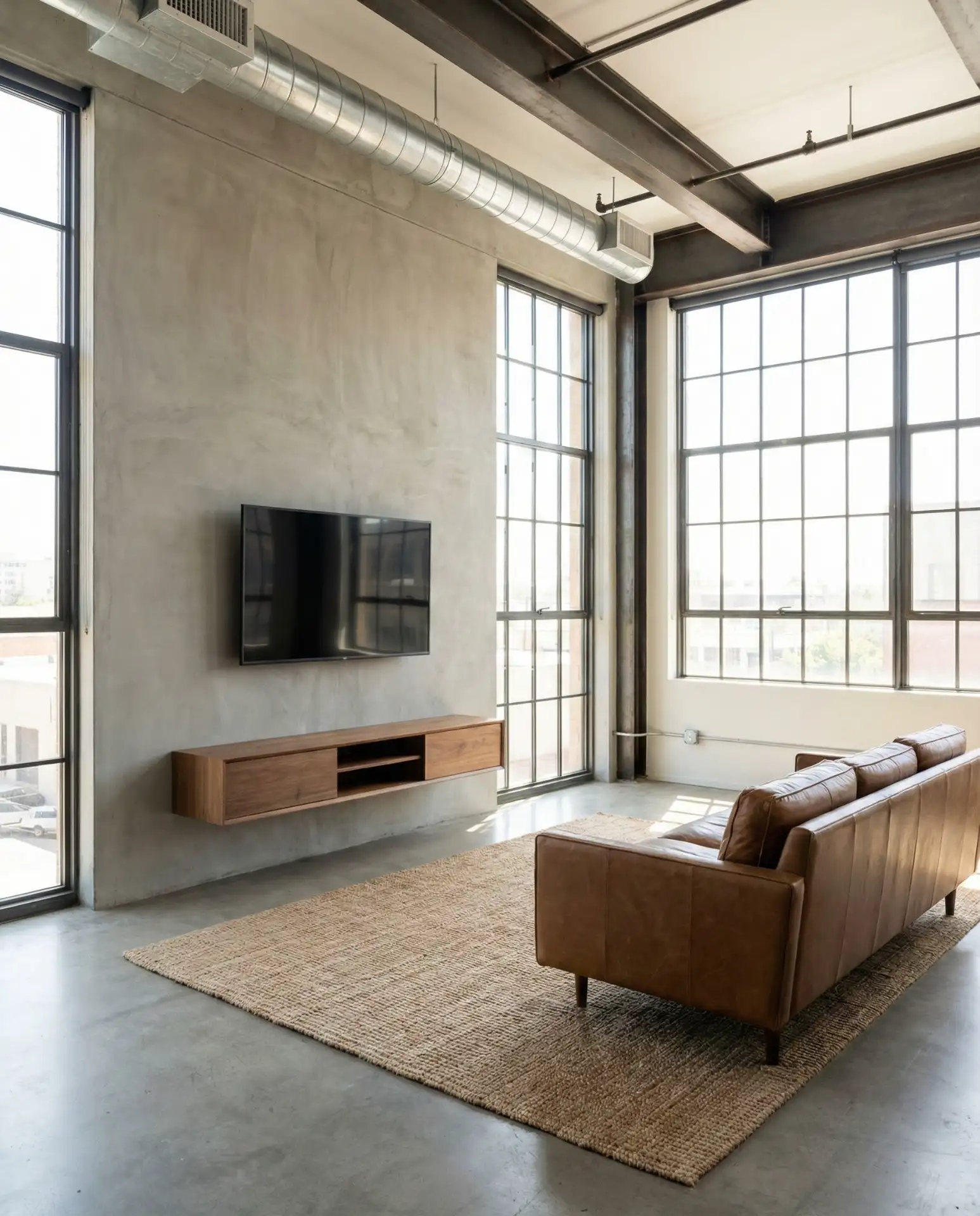
A raw or polished concrete panel provides a modern luxury backdrop with an urban, loft-style edge—perfect for open-concept spaces that embrace exposed materials. The cool, neutral tone of concrete lets the TV and surrounding decor pop without competing for attention. Seal it properly to prevent dusting, and consider adding a subtle texture or trowel finish for depth. Pair with leather furniture, metal accents, and greenery to warm up the industrial vibe. 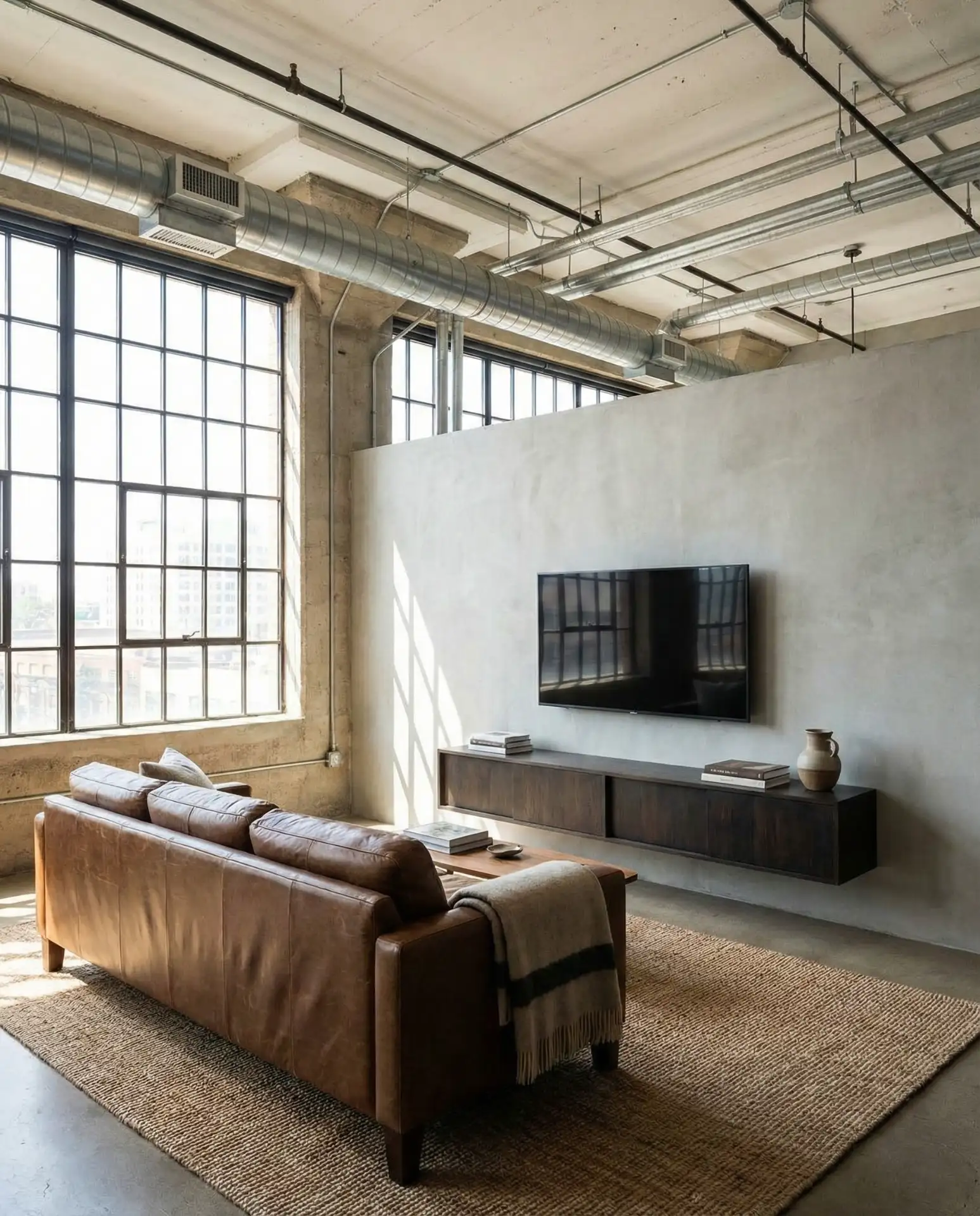
Where it works best: Converted warehouses, modern townhomes, and new builds with open floor plans. The concrete reads as intentional architecture rather than unfinished construction when paired with refined furnishings.
14. Dual-Function TV and Study Table Setup
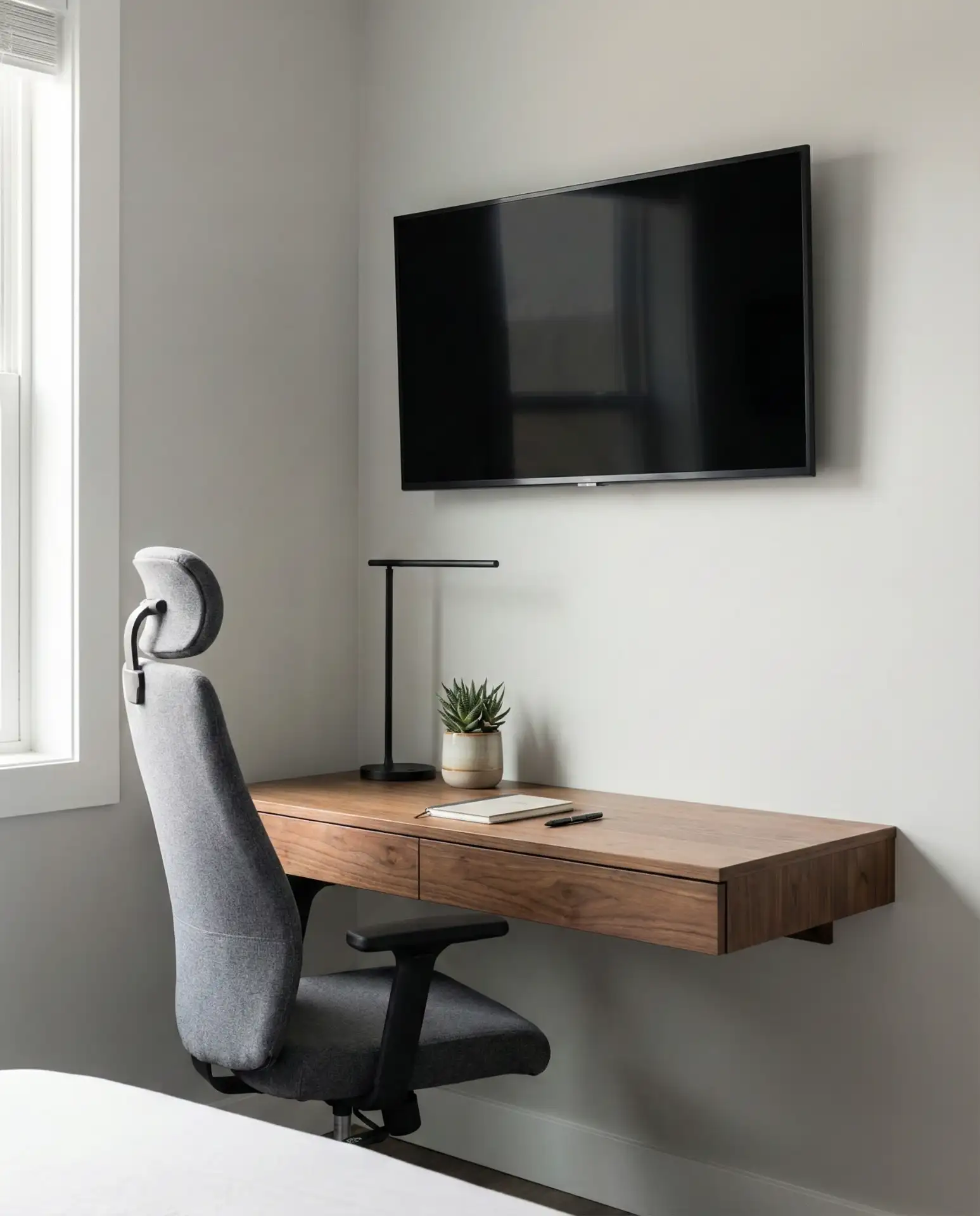
A built-in desk runs along the lower half of the wall, with the TV mounted just above at eye level for swivel-chair viewing—ideal for study table integration in home offices or multipurpose rooms. This layout is gaining traction in 2026 as remote work blurs the lines between productivity and leisure. Use matching cabinetry or a floating shelf to unify the desk and console, and keep cable management tight with in-wall conduit or sleek raceways. 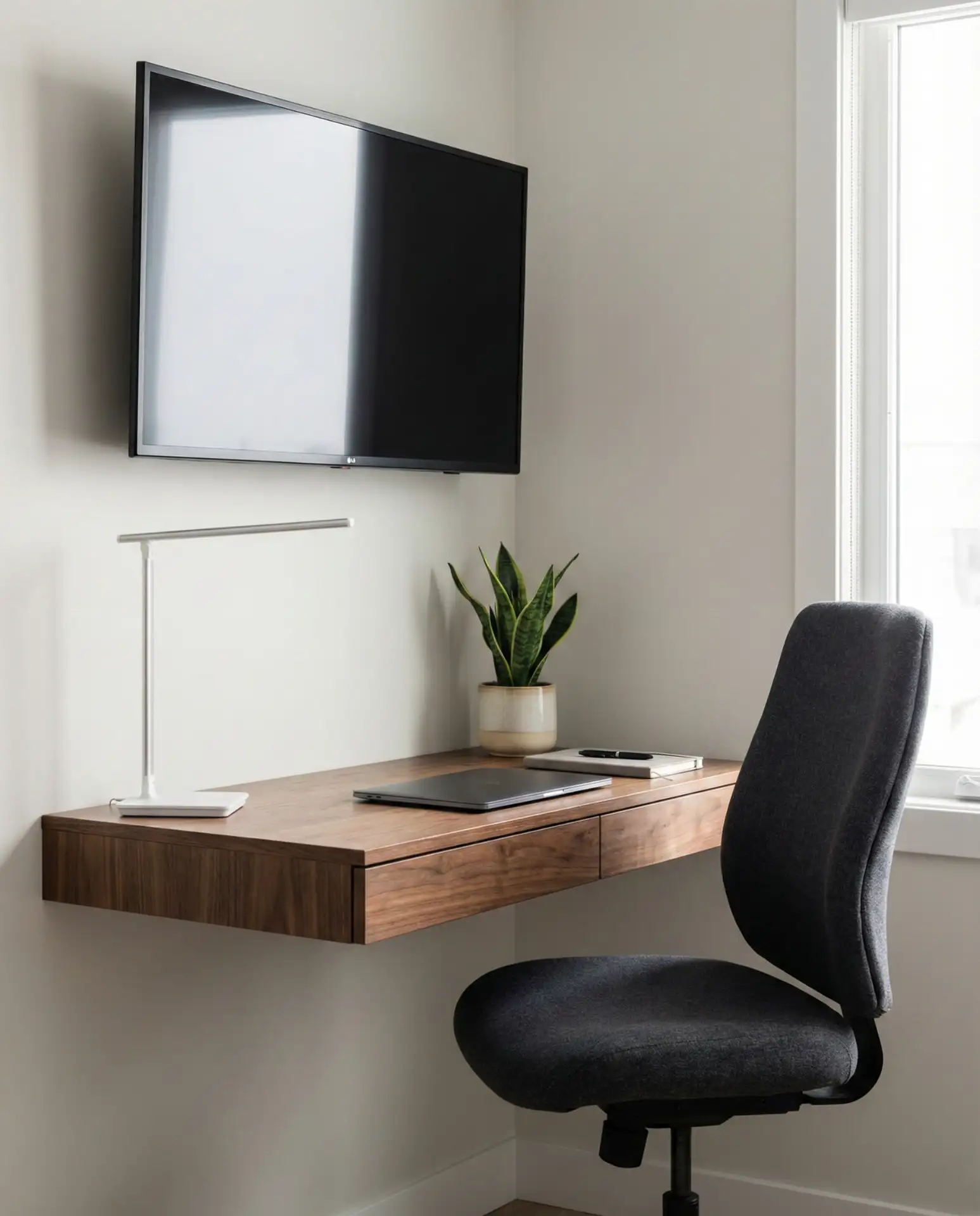
Practical insight: Position the TV slightly higher than standard viewing height to accommodate seated desk work. An articulating mount lets you tilt the screen down for optimal angles when working versus lounging on a nearby sofa.
15. Staircase Underside with Concealed Niche
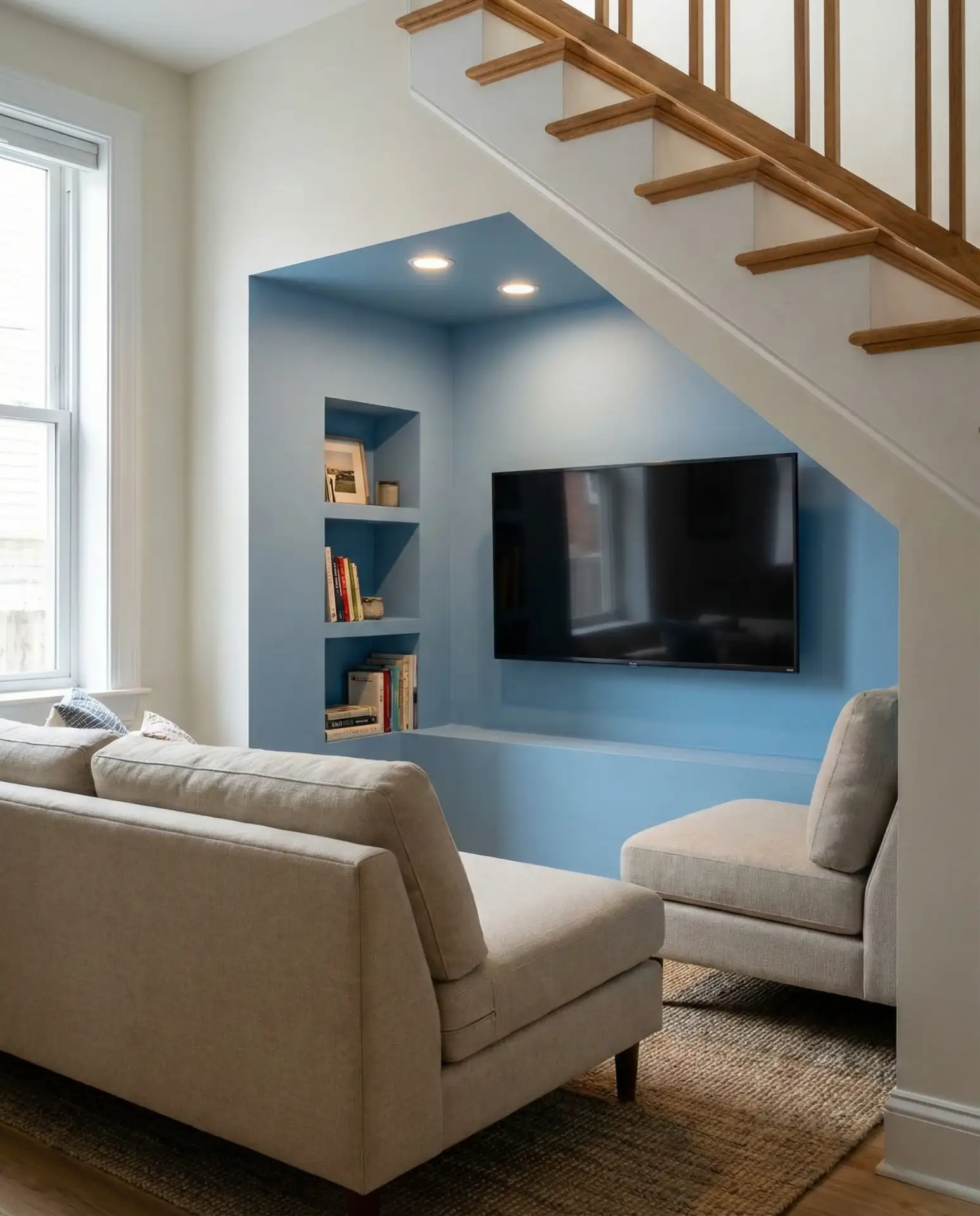
Utilize the space beneath a staircase by carving out a custom TV niche that turns dead space into a functional media zone—surprisingly practical in townhomes and split-level layouts. This unique solution keeps the main living areas open while creating a cozy viewing alcove. Line the niche with wallpaper, paint, or wood paneling to distinguish it from the surrounding wall, and add task lighting overhead for evening ambiance. 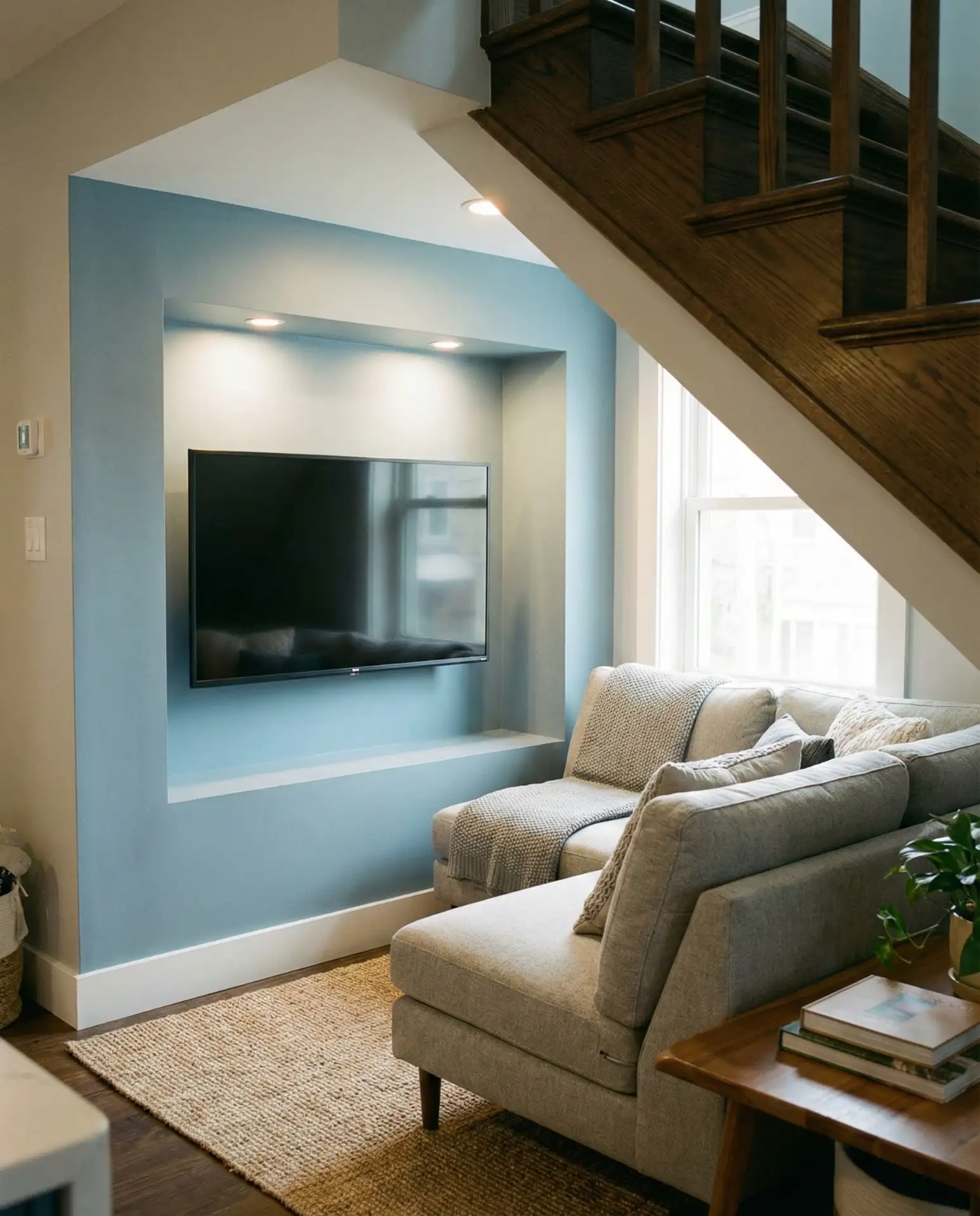
Common mistake: Failing to account for sightlines from the stairs above. Make sure the niche is deep enough that the TV isn’t visible from the landing, which can create awkward glare and distraction.
16. Minimalist White-on-White with Seamless Integration
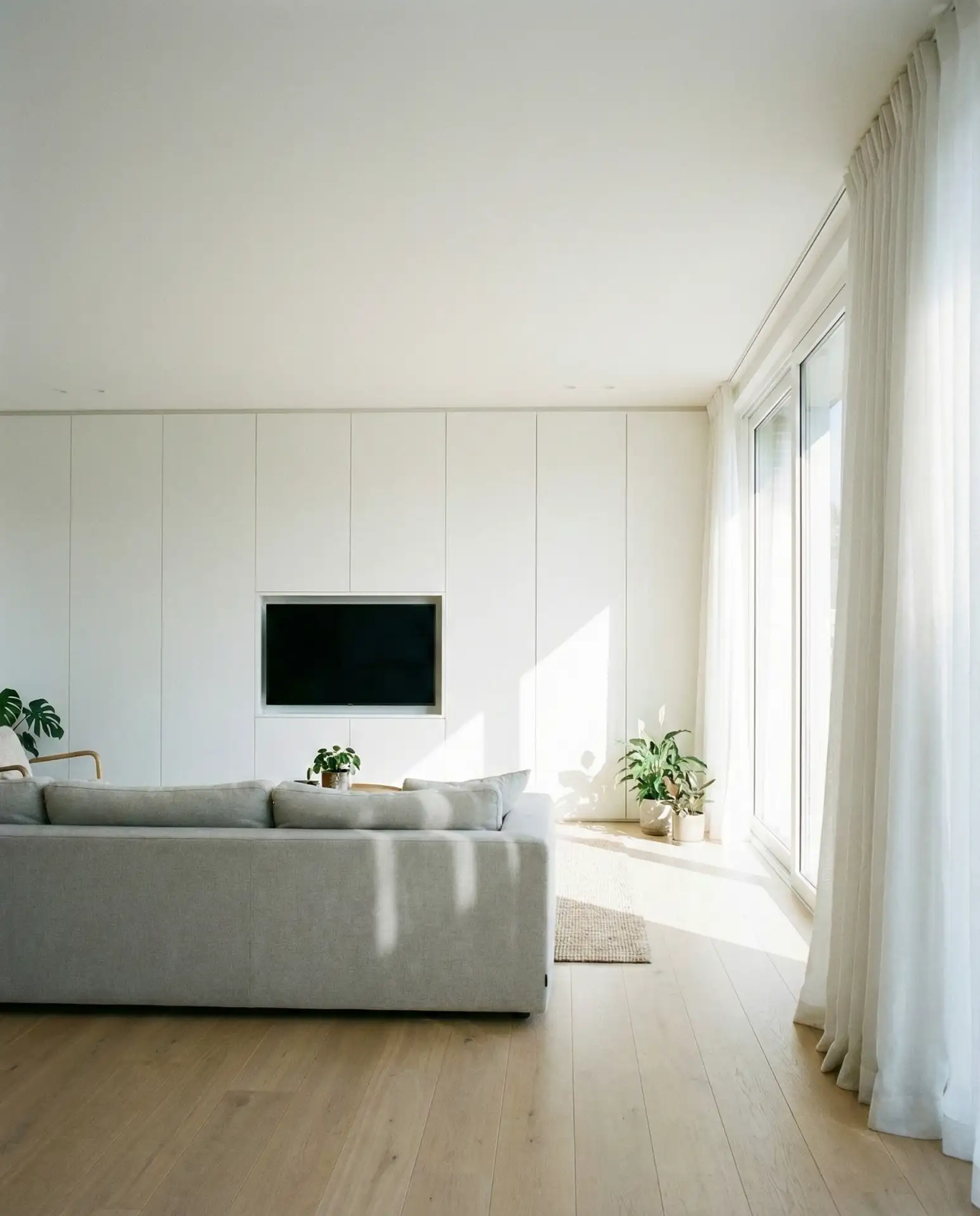
A pure white wall with flush-mounted cabinetry and a white or light gray TV bezel creates a small-space living room minimalist dream—clean, bright, and optically expansive. The goal is to make the technology disappear when not in use, allowing the room’s architecture and furniture to take center stage. Use handleless cabinetry with push-to-open mechanisms, and route all cables internally. The effect is serene and almost meditative, especially when paired with natural wood floors and abundant daylight. 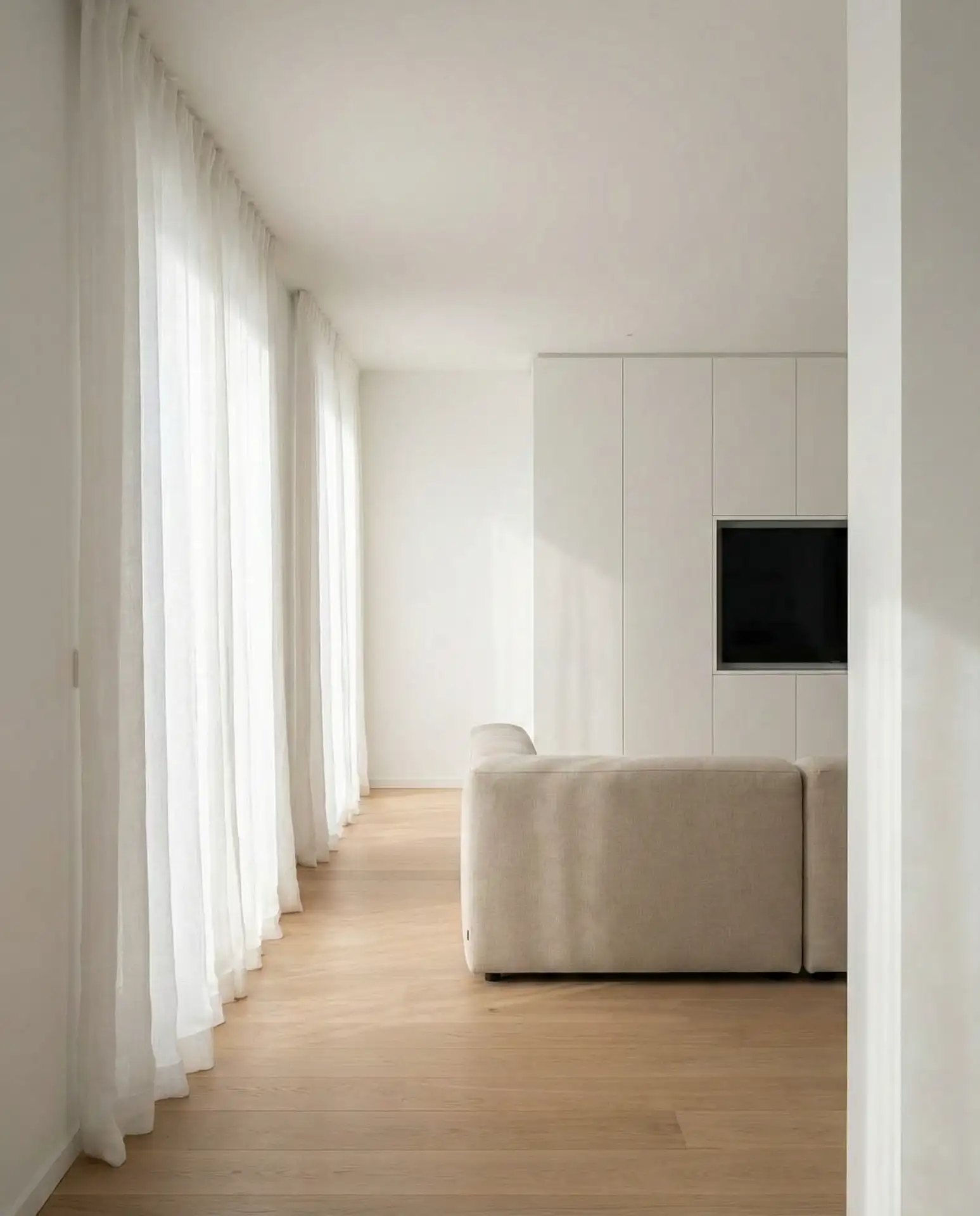
Budget tip: IKEA’s Besta and Samsung’s The Frame or LG’s OLED evo models with ultra-thin bezels pair beautifully for this look. Total investment can stay under $2,500 with strategic shopping.
17. Arched Niche with Curved Plaster Detail
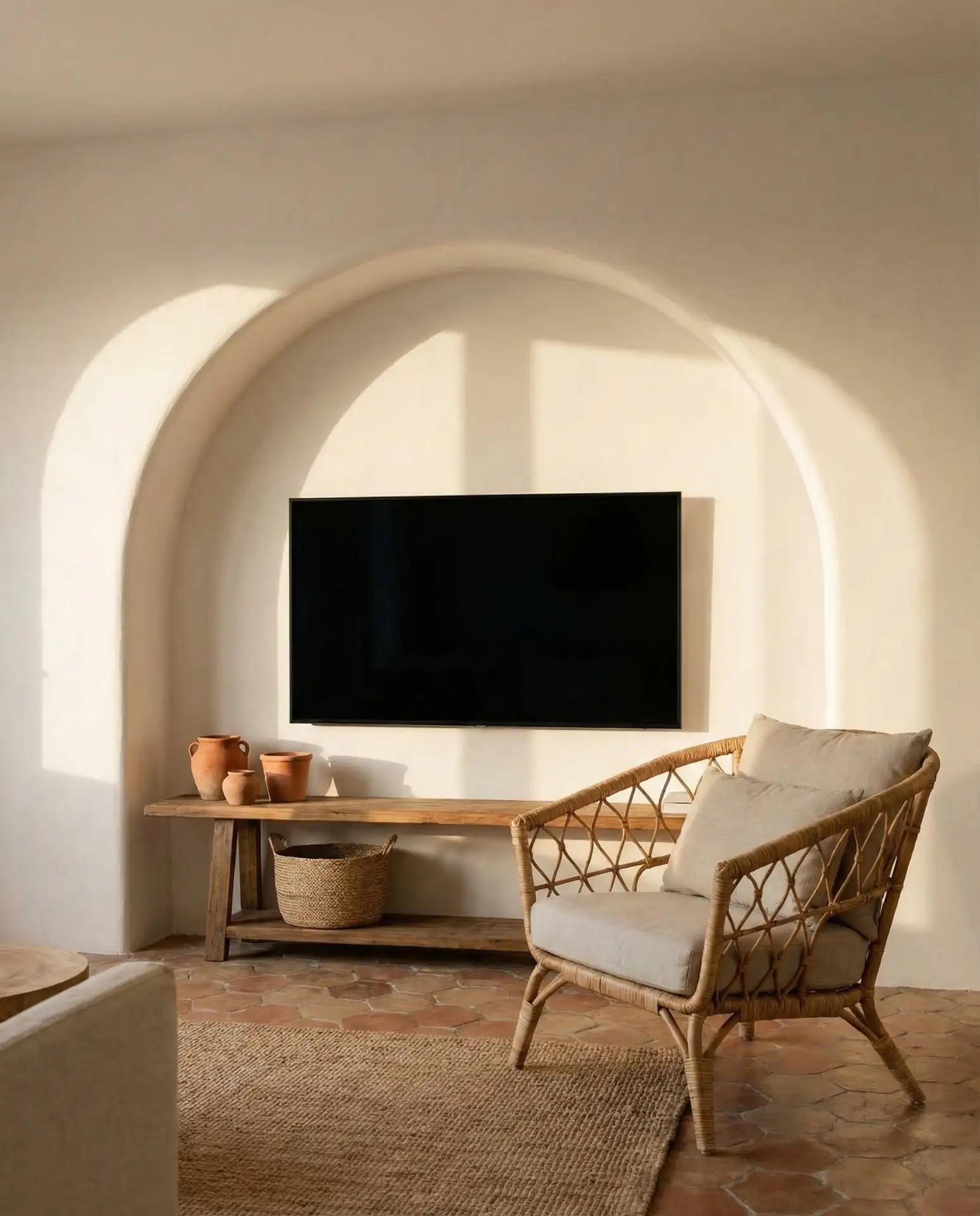
A softly curved archway frames the TV, echoing Mediterranean or Spanish Colonial architecture popular in California, Arizona, and Texas. The classic form contrasts beautifully with the rectangular screen, softening its edges and making it feel more intentional. Use smooth plaster or drywall curved with flexible corner bead, then paint in a warm white or earthy terracotta. The niche can be shallow or deep, depending on whether you want to recess the TV or keep it flush-mounted. 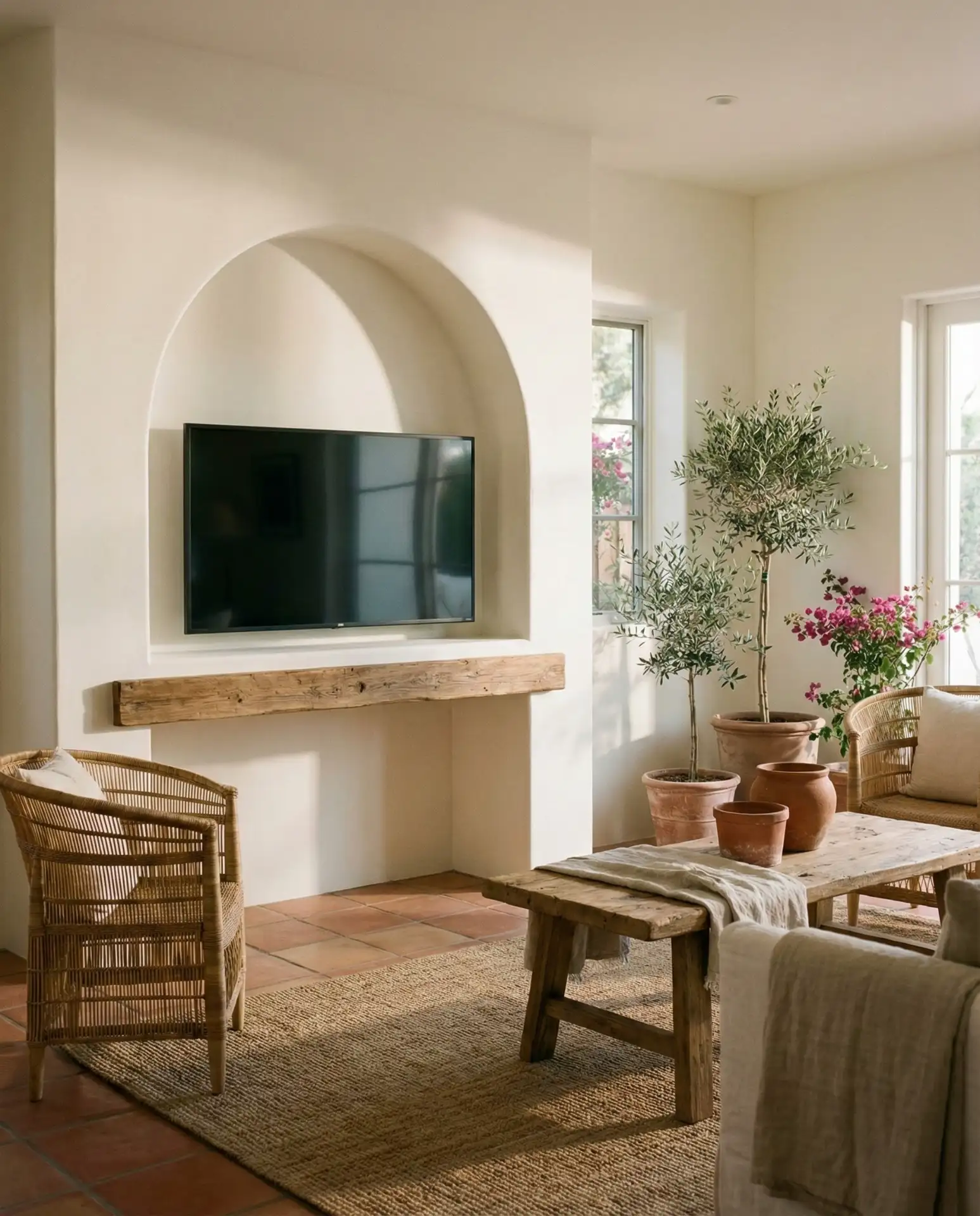
American regional context: In the Southwest, this detail feels native to the architecture. In other regions, it’s a statement move that works best when the rest of the room echoes the same softness—think rounded furniture, organic shapes, and natural materials.
18. Walnut Veneer Wall with Horizontal Grain
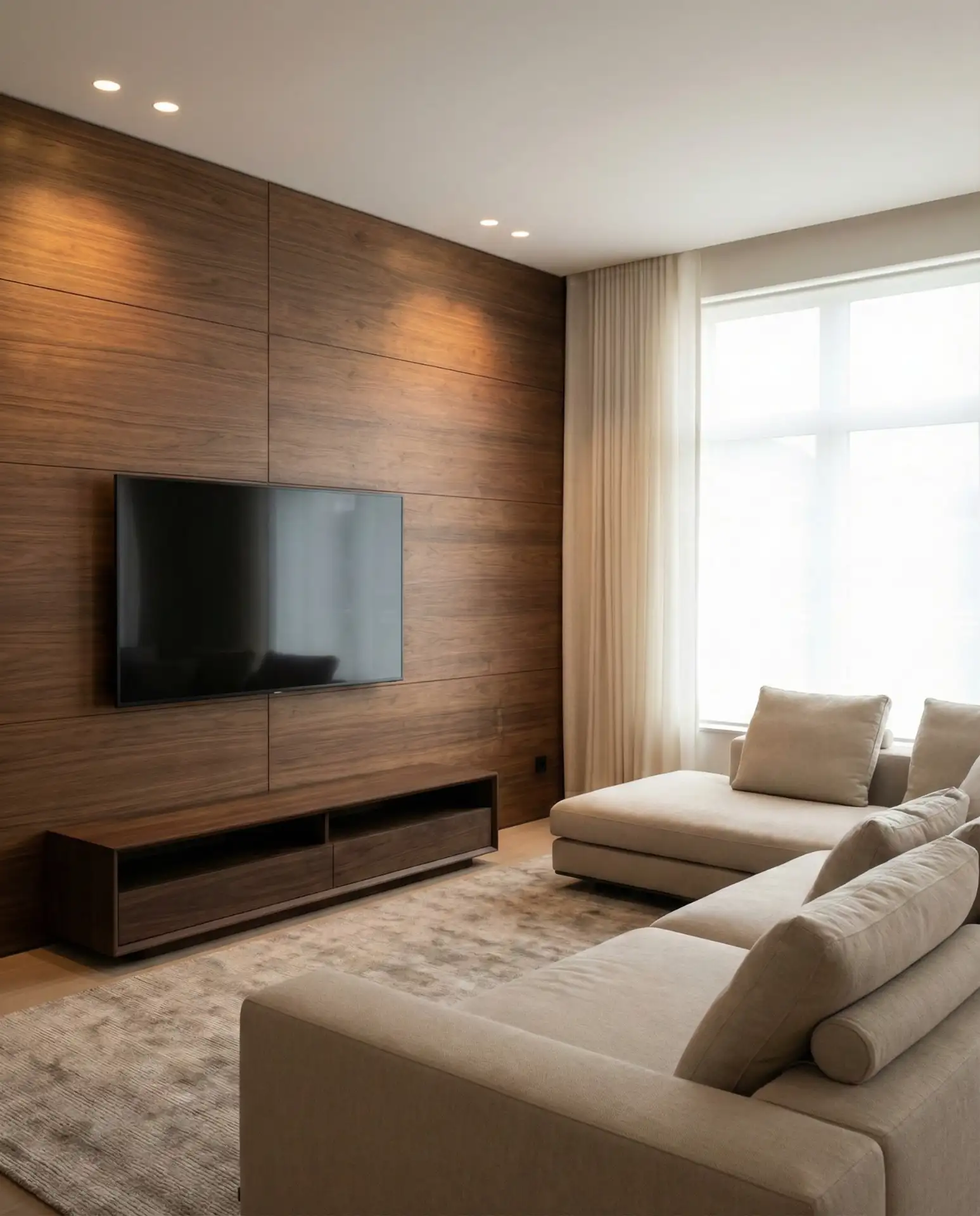
Full-wall walnut veneer with continuous horizontal grain creates a luxury backdrop that feels both modern and timeless—one of the most requested 2026 modern looks on Pinterest. The rich, dark tones add drama without heaviness, and the wood grain provides movement that keeps the eye engaged. This works beautifully in larger rooms where the scale of the wall can be fully appreciated. Keep the rest of the palette neutral to let the walnut shine. 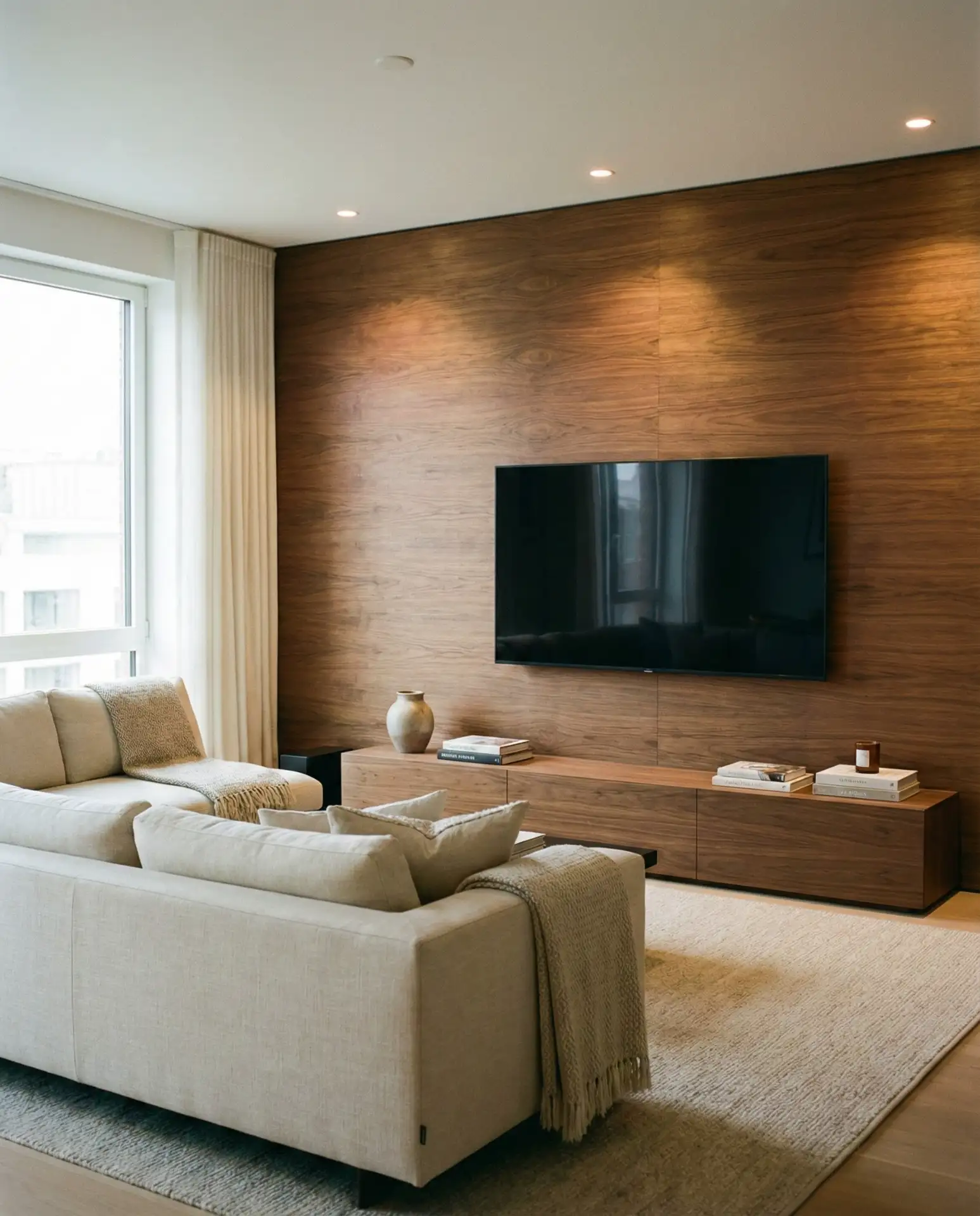
Expert commentary: Horizontal grain elongates the wall and makes ceilings feel taller, a trick borrowed from mid-century design. Vertical grain, by contrast, can make a room feel narrower—choose based on your space’s proportions.
19. Gallery Ledge Styling with Layered Frames
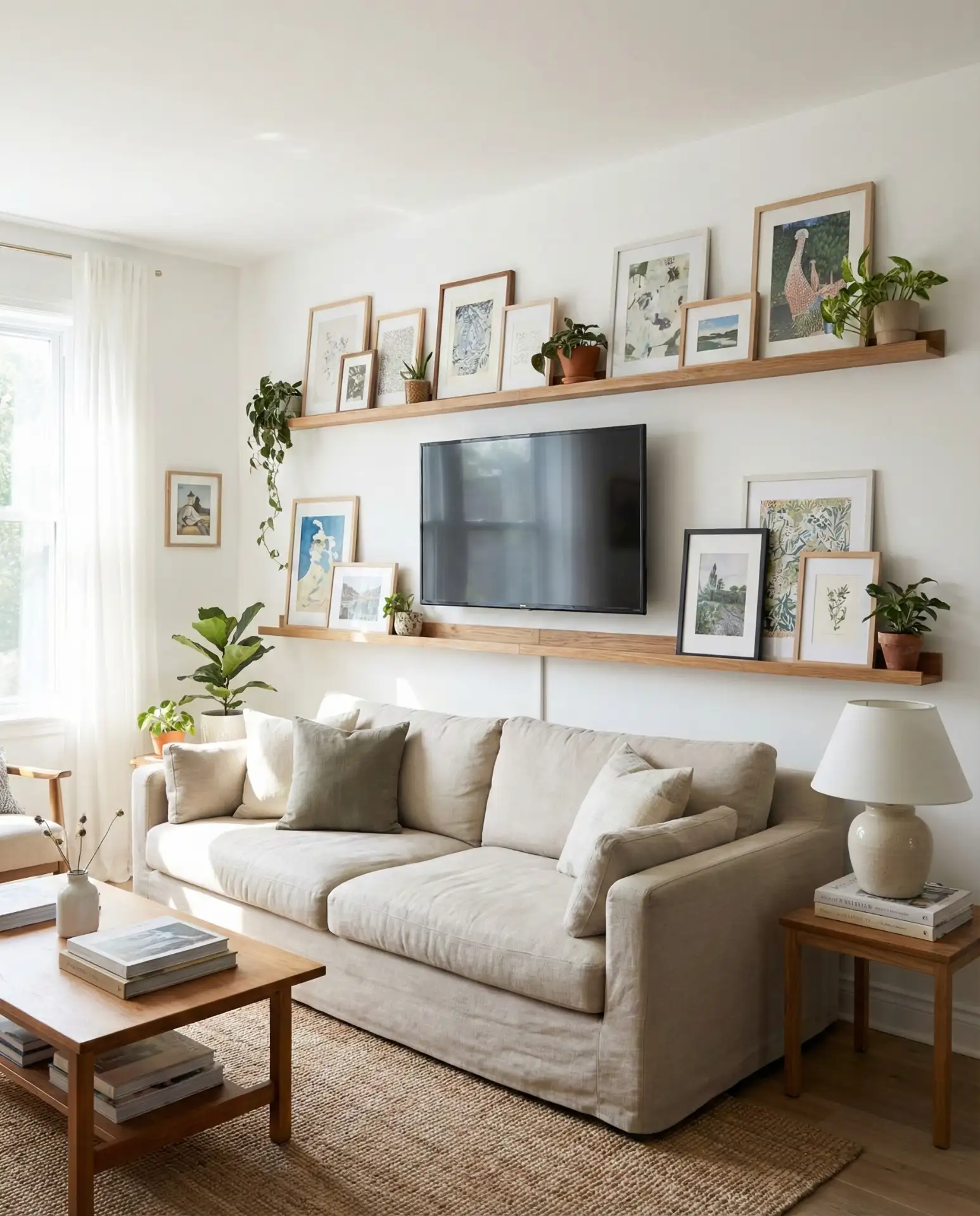
Narrow picture ledges above and below the TV hold rotating artwork, photos, and objects—a flexible, low-commitment way to add personality around the screen. This approach is perfect for those who love to refresh their decor seasonally or simply want the freedom to experiment without drilling dozens of holes. The ledges also balance the TV’s horizontal line, creating a more composed wall. Use matching frames for cohesion, or mix metals and wood for an eclectic vibe. 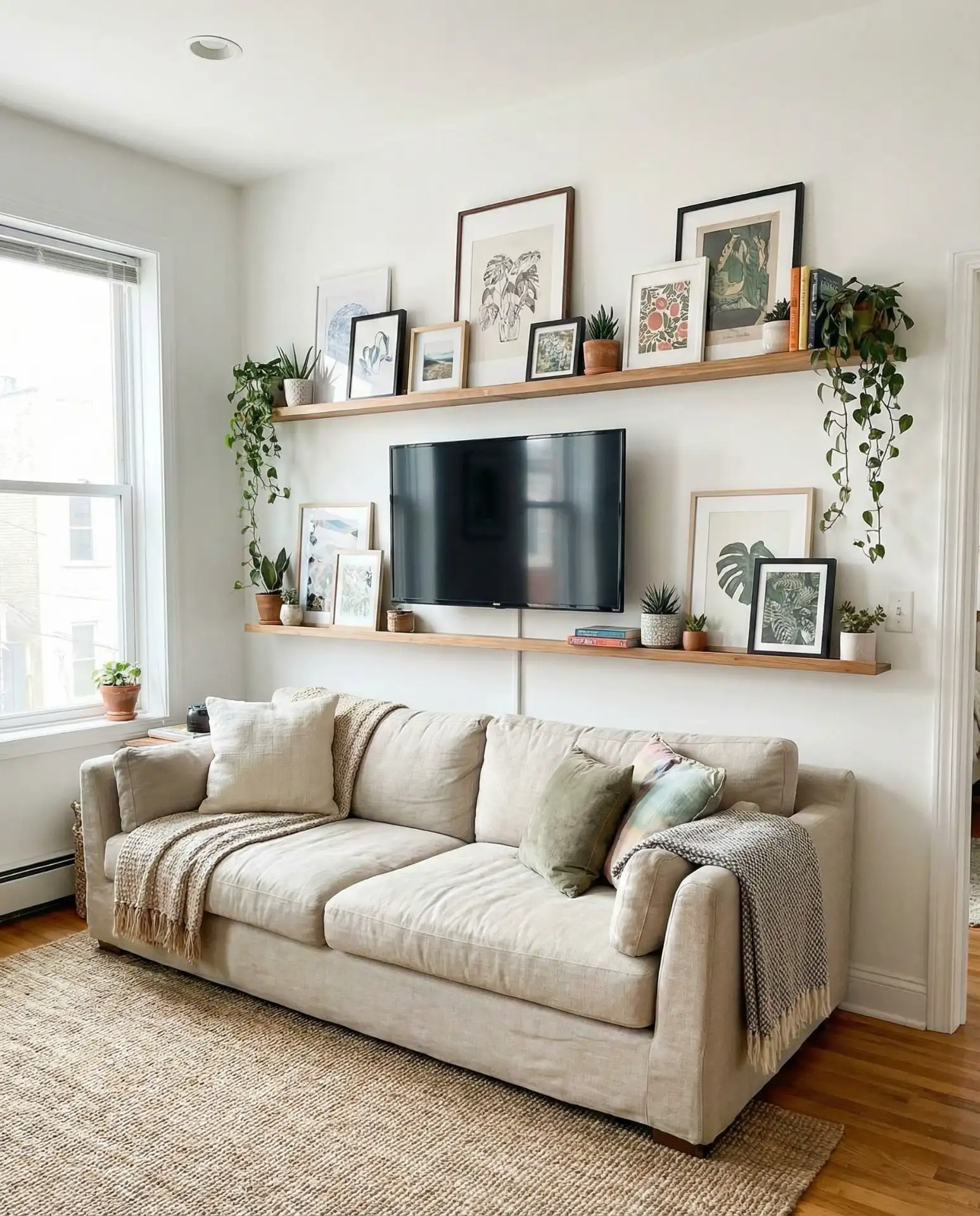
Real homeowner behavior: Americans are increasingly treating TV walls as living displays, swapping out frames and objects with the seasons. This setup makes that habit effortless and visually satisfying.
20. Backlit Translucent Panel in Resin or Acrylic

A glowing translucent panel made from resin or acrylic sits behind the TV, creating a halo effect that’s both futuristic and calming—ideal for modern luxury spaces that embrace light as a design element. The backlight can shift colors via smart LED strips, letting you set the mood for movie nights, gaming, or ambient lighting. This approach works especially well in rooms with limited natural light, where the glow adds warmth and dimension. 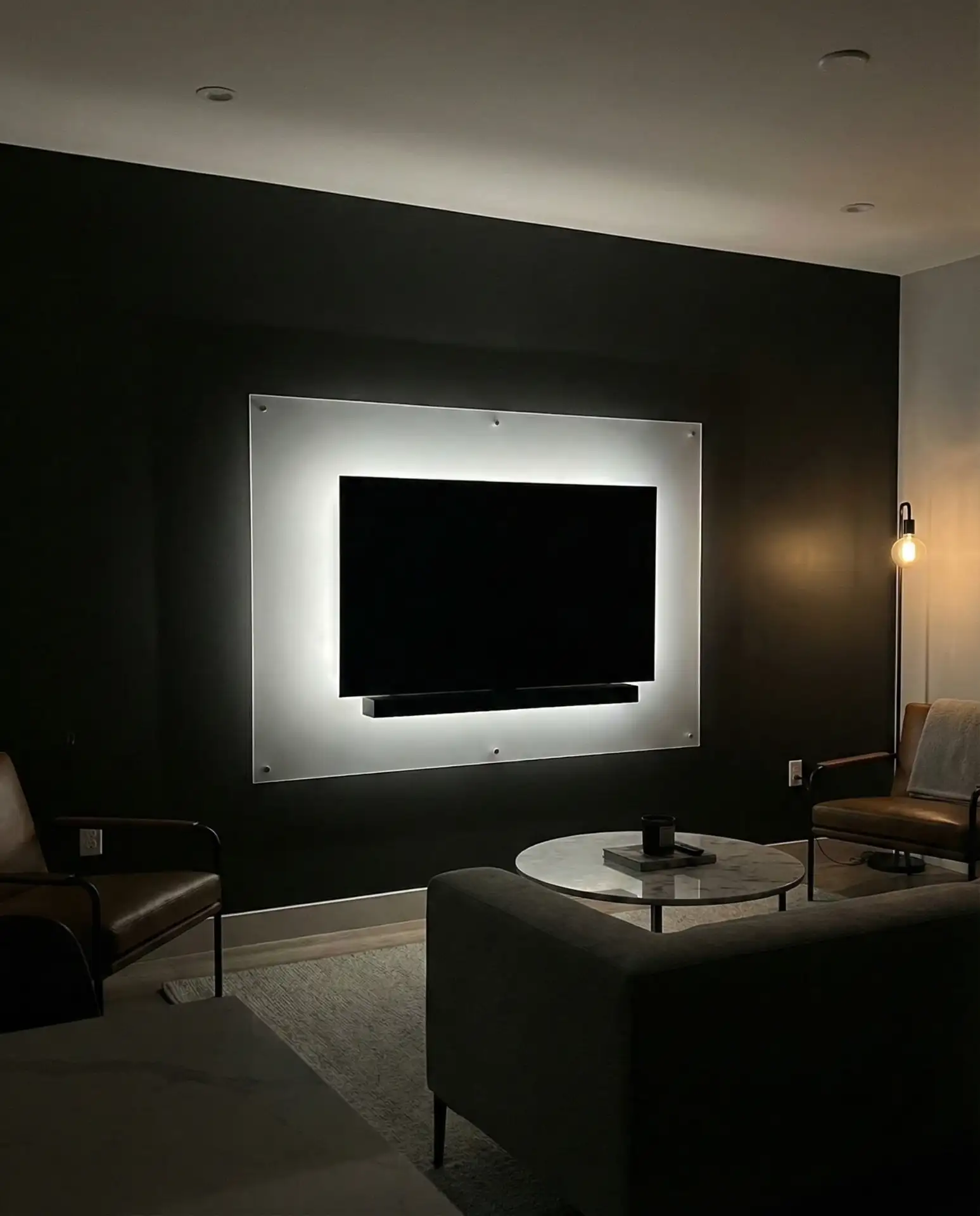
Micro anecdote: A tech-savvy couple in San Francisco integrated this with their smart home system, so the wall’s color changes based on the time of day—cool blue in the morning, warm amber at night.
21. Rustic Reclaimed Barn Wood Feature Wall
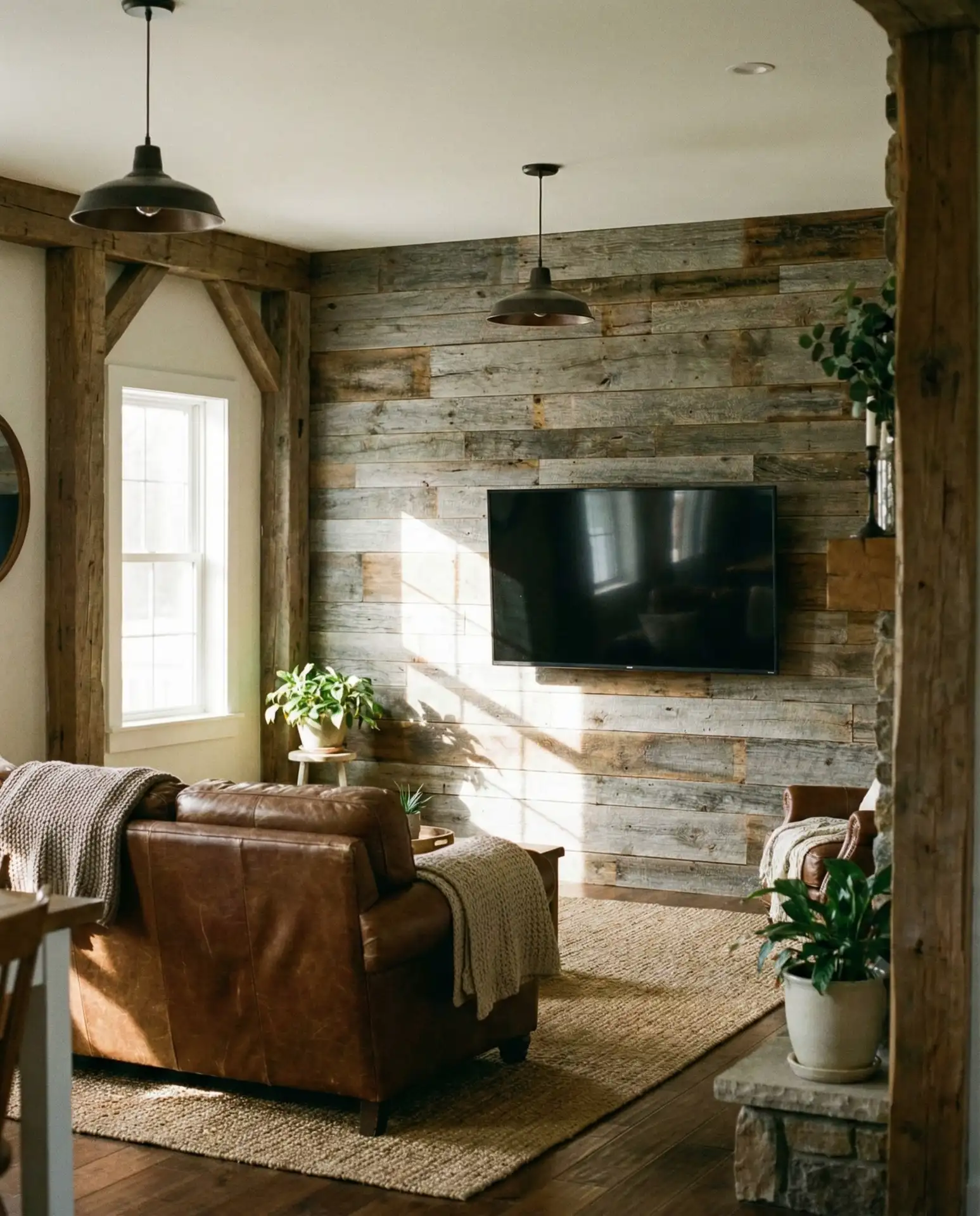
Weathered barn wood planks installed horizontally or vertically bring farmhouse warmth and texture, especially popular in rural areas and suburban homes across the Midwest and South. The aged patina and natural variation in tone make every installation one-of-a-kind. This look pairs beautifully with industrial lighting, vintage rugs, and leather seating—creating a lived-in, collected feel that’s the antithesis of sterile minimalism. Seal the wood to prevent splinters and dust, but embrace the imperfections. 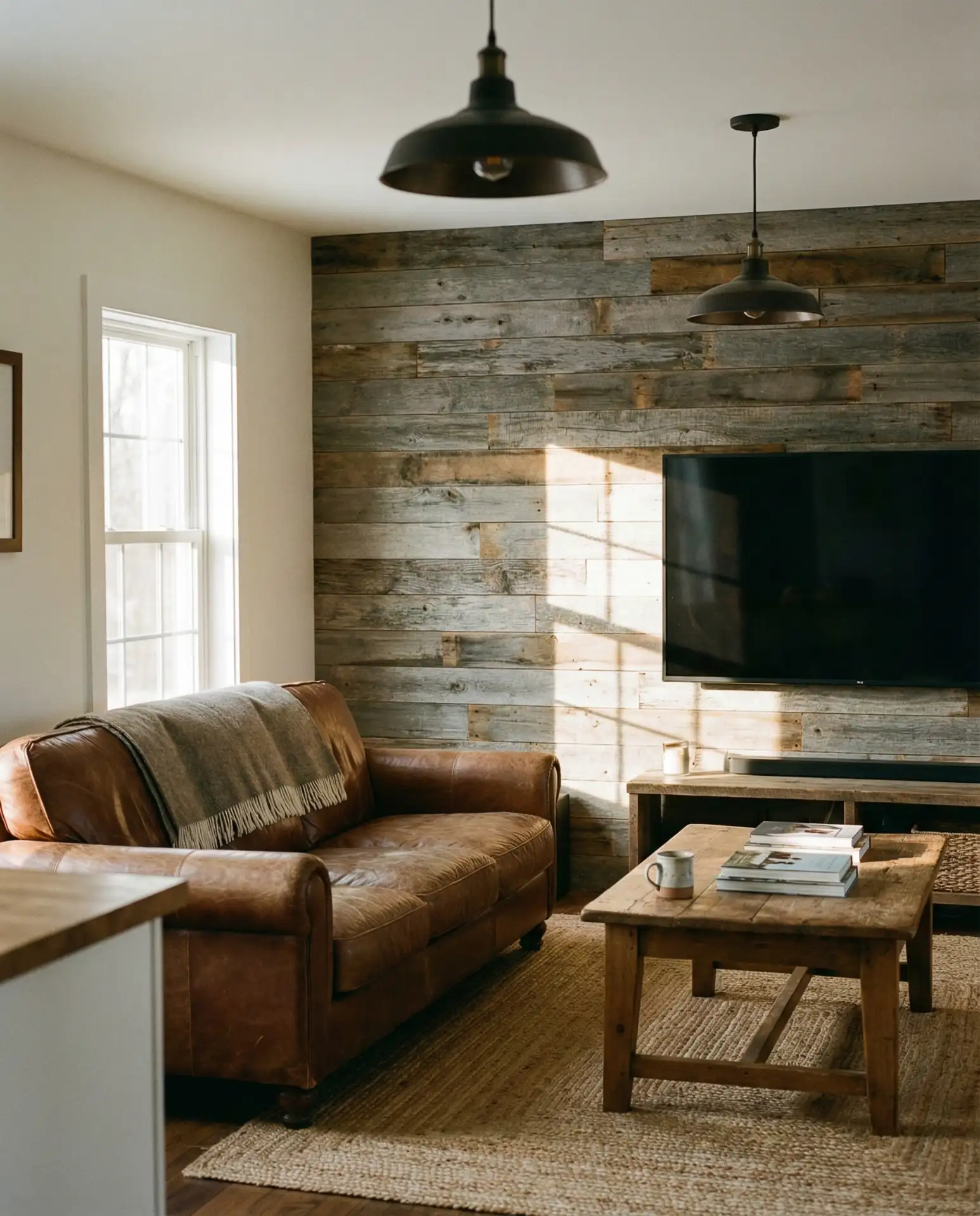
Budget angle: Reclaimed wood can be sourced from salvage yards or online marketplaces like Craigslist and Facebook Marketplace for $3–$8 per square foot—far less than new specialty lumber. DIY installation is straightforward with liquid nails or a brad nailer.
22. Integrated Sound Bar Niche with Hidden Wiring
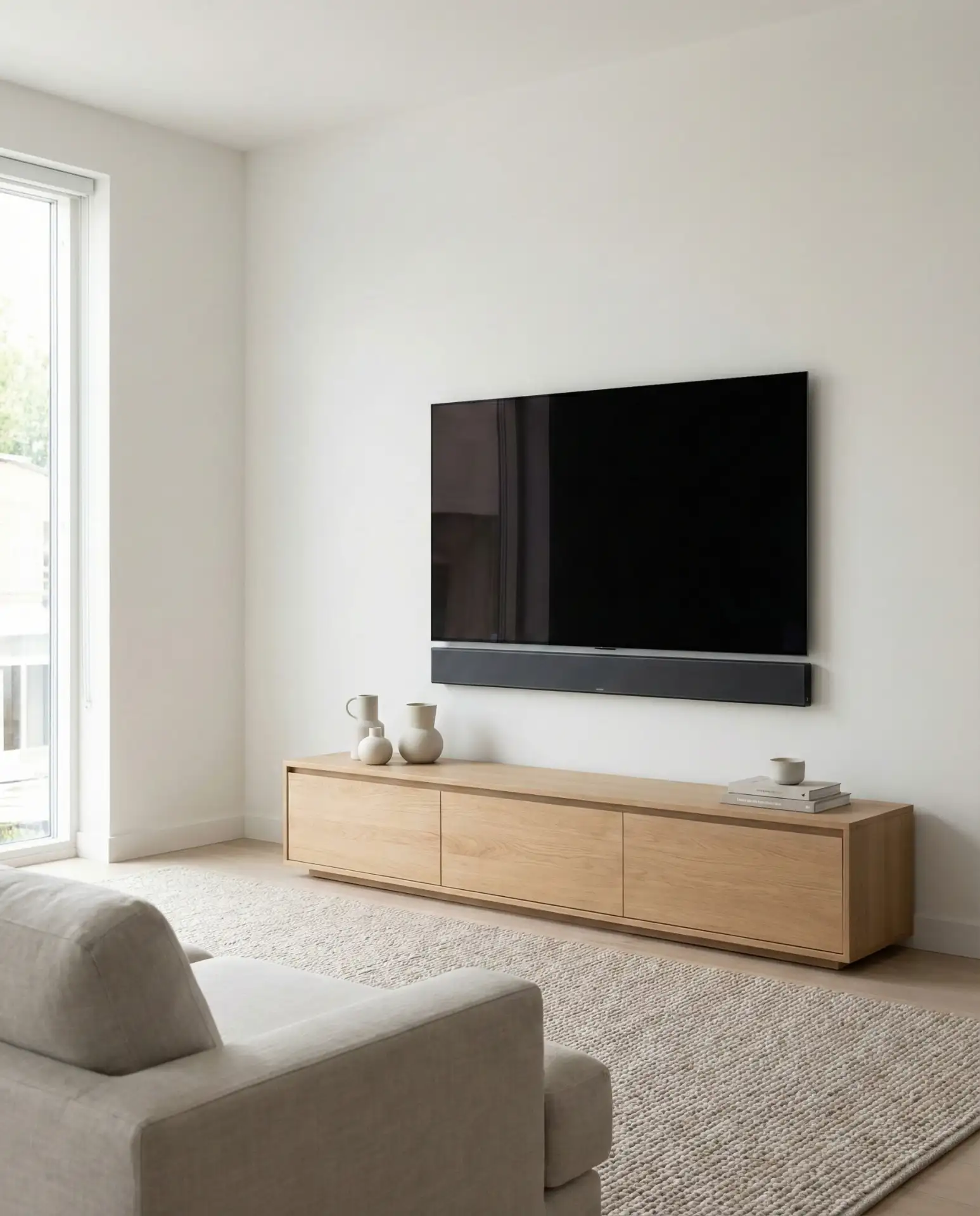
A shallow recessed shelf directly below the TV houses a soundbar perfectly flush with the wall, eliminating clutter and cable chaos—essential for achieving a polished, minimal result. This detail is often overlooked but makes a dramatic difference in the overall cleanliness of the installation. Run wiring through the wall during construction or use paintable raceways if working with existing drywall. The niche can be lined with acoustic fabric or left as painted drywall, depending on your aesthetic. 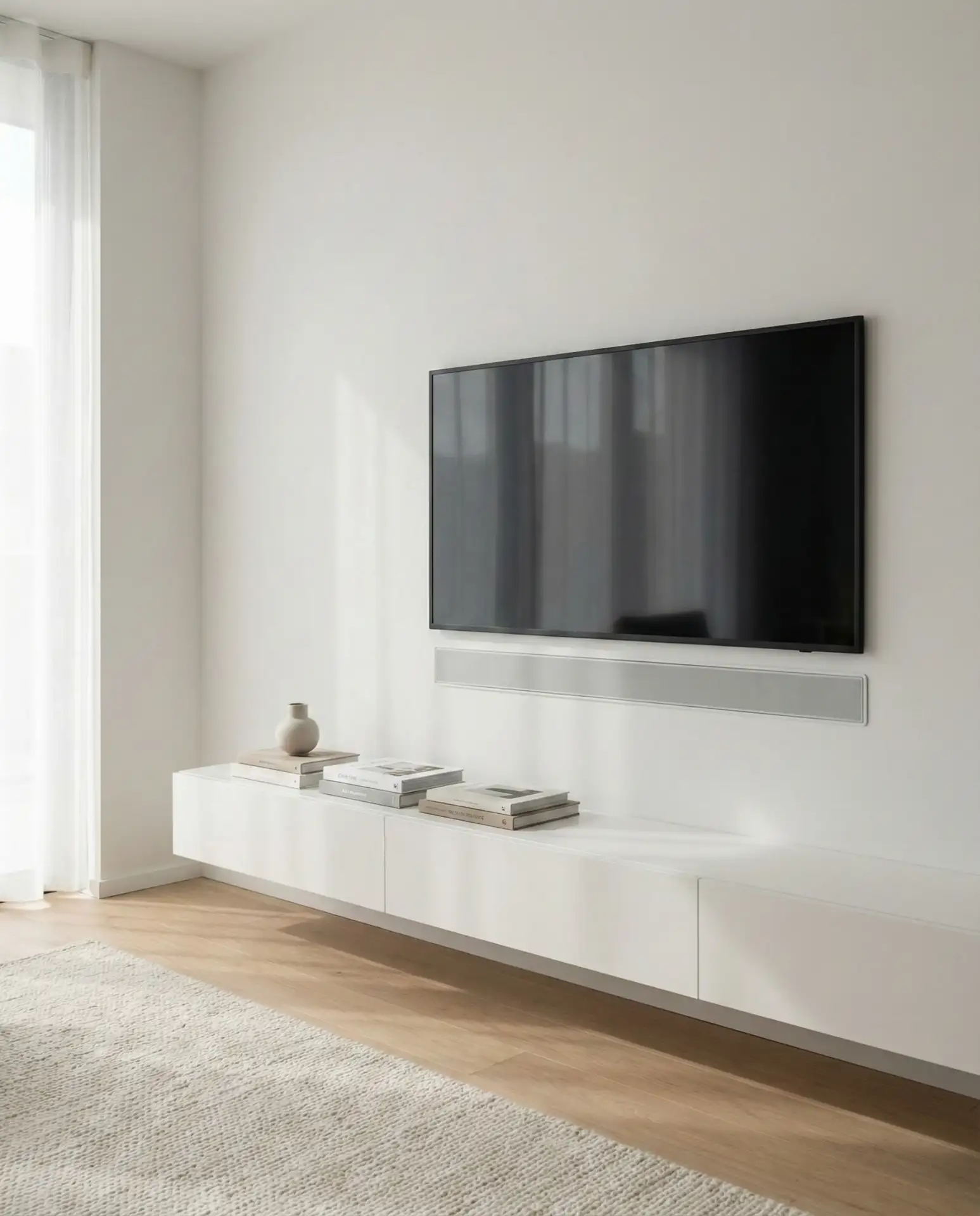
Common mistake: Not measuring the soundbar before framing the niche. Always buy your equipment first and build around its exact dimensions, leaving 1–2 inches of clearance for ventilation and future upgrades.
Conclusion
These TV wall designs prove that the screen doesn’t have to be an afterthought—it can be the starting point for a beautiful, cohesive room that reflects your style and meets your practical needs. Whether you’re drawn to the warmth of wood, the drama of marble, or the clean simplicity of minimalist white, there’s a solution here that will work in your home. Share your favorite idea in the comments below, or tell us which design you’re planning to try first!