Video game rooms have come a long way from the cluttered corner with a janky TV stand and a tangle of cords. In 2026, they’re among the most searched interior spaces on Pinterest—partly because they finally feel like real rooms. Whether you’re a parent building a shared family hangout, a grown adult reclaiming a basement for yourself, or a teenager dreaming of the ultimate setup, there’s never been more inspiration to work with. This article walks you through 22 fresh, achievable, and genuinely beautiful ideas for gaming spaces—from moody retro dens to sleek modern rigs—so you can find the look that actually fits your home and your life.
1. The Moody Retro Arcade Retreat
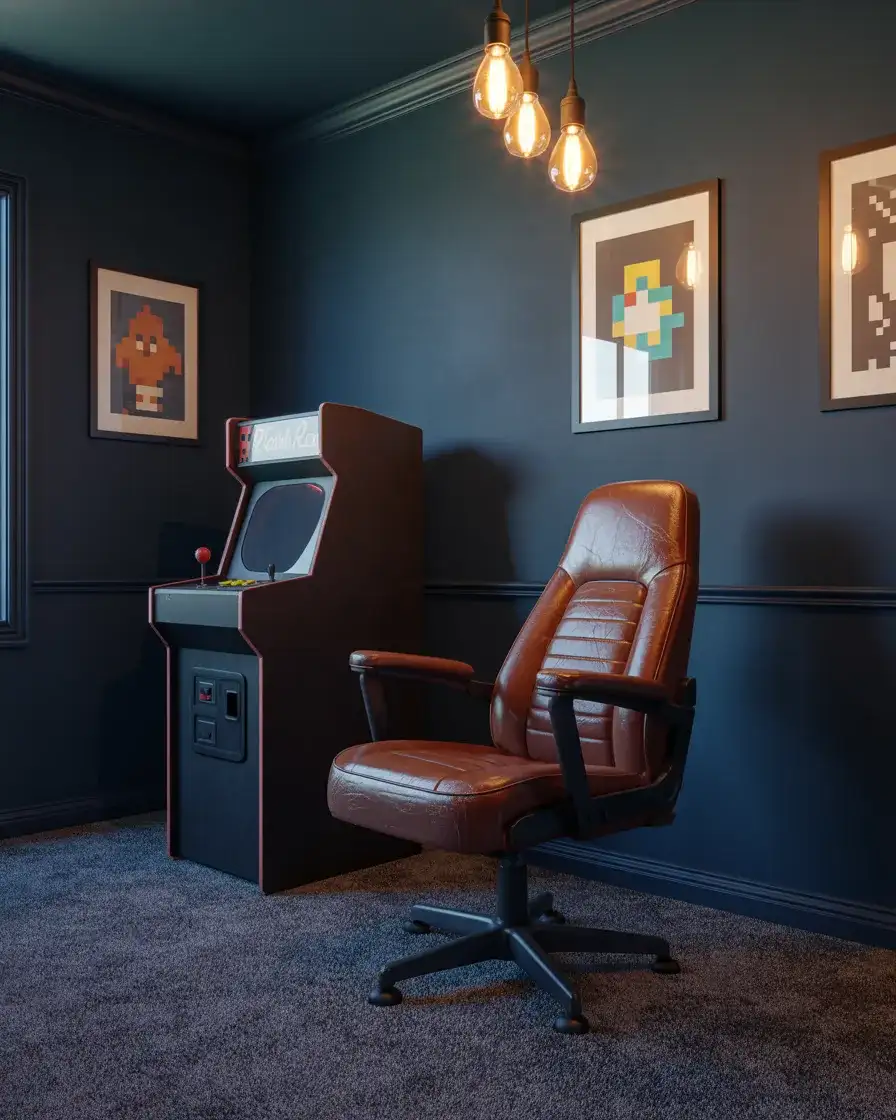
There’s something deeply satisfying about a gaming room that leans hard into the past. A retro arcade-inspired retreat mixes vintage cabinet silhouettes, neon tube accents, and dark painted walls to create that nostalgic tension between old-school cool and modern comfort. Think deep navy or charcoal walls, warm Edison-style lighting, and artwork that nods to golden-age gaming without screaming “museum.” It’s a vintage approach that works beautifully in basements, spare bedrooms, or converted garages where you can truly control the atmosphere.
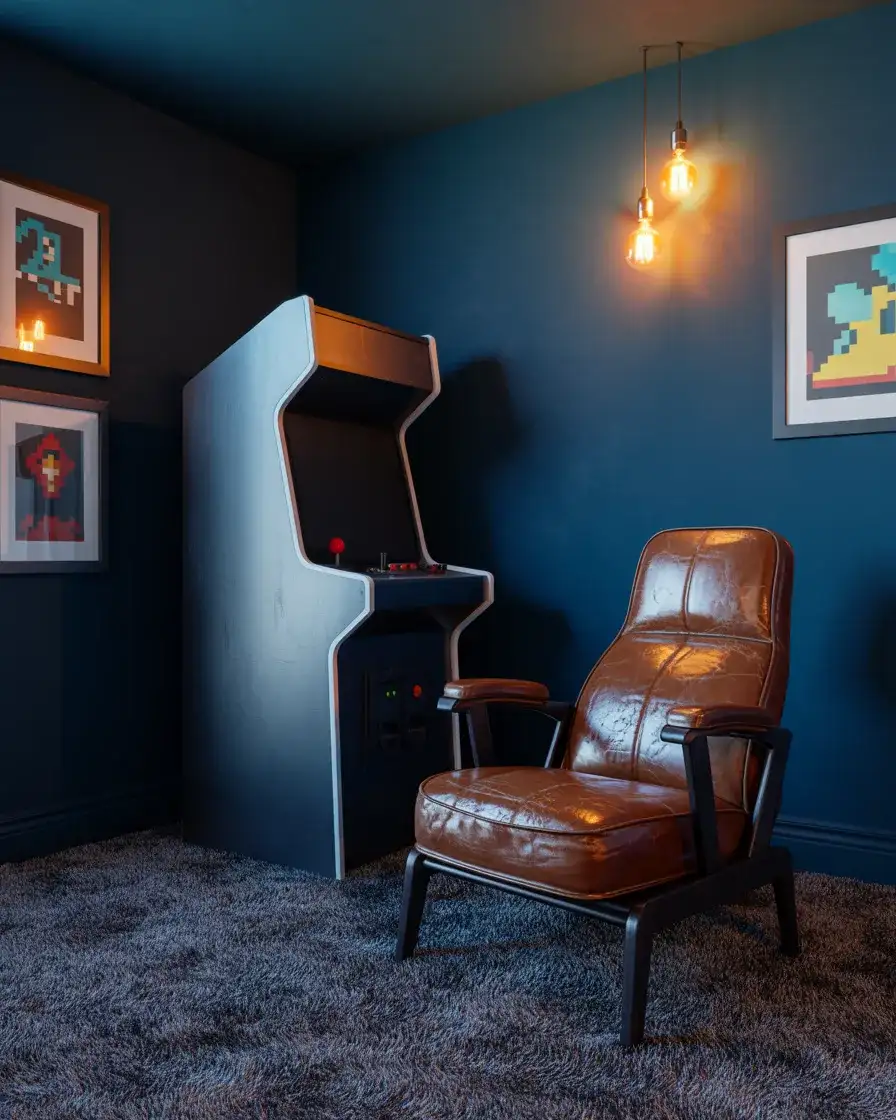
One homeowner in Nashville turned a detached garage into exactly this kind of space over a single long weekend—dark paint, thrifted arcade art, and a secondhand leather sofa pulled from Facebook Marketplace. The lesson? The vibe here doesn’t require big spending. It requires commitment to the palette and a willingness to hunt for the right pieces. Start with the wall color—that decision alone transforms the feeling of the room more than any single furniture purchase.
2. The Sleek PS5 Gaming Wall
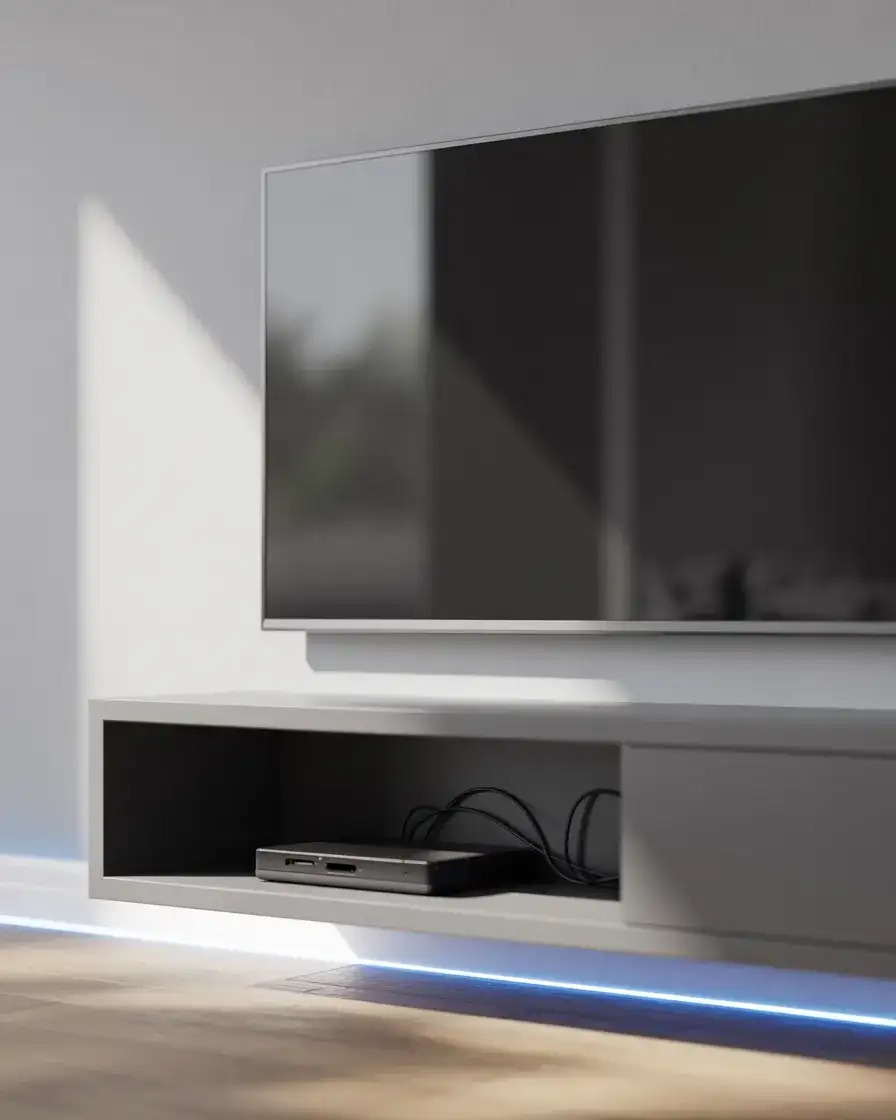
If there’s one gaming aesthetic that’s been quietly dominating Pinterest boards in recent years, it’s the design of a PS5-inspired setup—white, black, and electric blue tones arranged around a floating TV wall with clean cable management and integrated LED strips. The beauty of this look is its restraint. Everything has a place. The console sits in an open media unit, controllers hang on wall-mounted hooks, and the screen floats above a low credenza in matte black or warm wood tones. It’s modern without being cold.
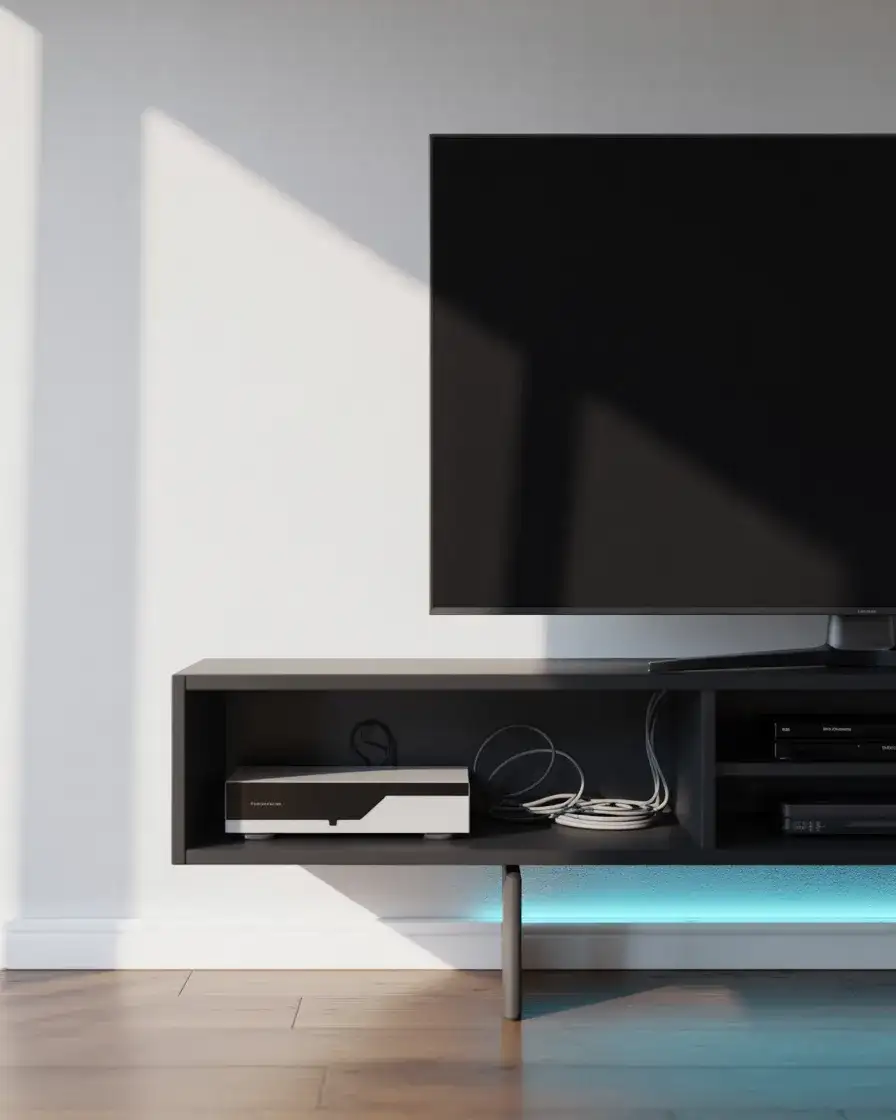
The most common mistake people make with this look is over-decorating. The PS5 aesthetic earns its impact from editing—not adding. A few controllers, one statement plant, and a single framed art print are plenty. Resist the urge to stack collectibles or add too many LED colors. Pick one accent hue and repeat it intentionally. The restraint is what makes it look designed rather than assembled.
3. The Cozy Bedroom Gaming Corner
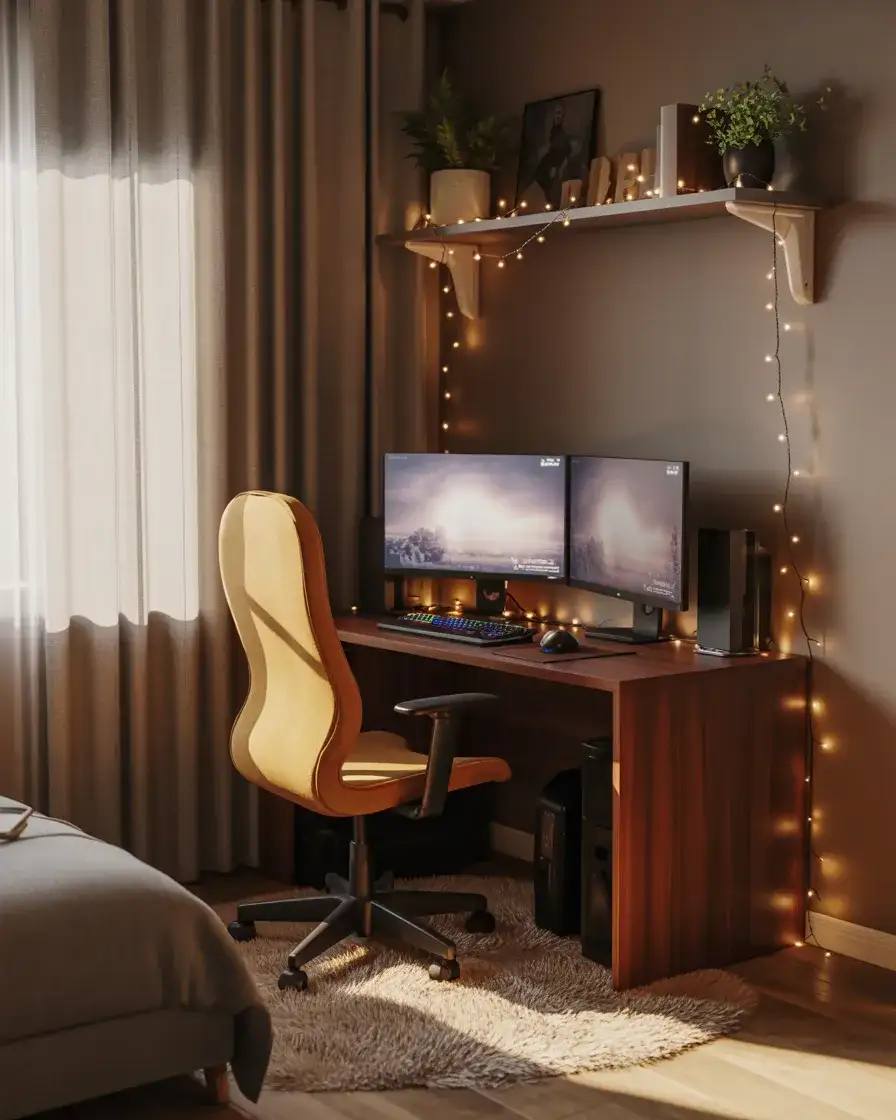
Not everyone has a spare room to dedicate to gaming—and honestly, you don’t need one. A bedroom design that integrates a gaming corner seamlessly is completely achievable with the right furniture arrangement. The key is treating the desk and monitor as part of the room’s design vocabulary rather than an intrusion. A cozy corner setup might include a compact L-shaped desk against a window wall, a plush gaming chair in a warm neutral, and soft task lighting that doubles as bedroom ambiance after hours.
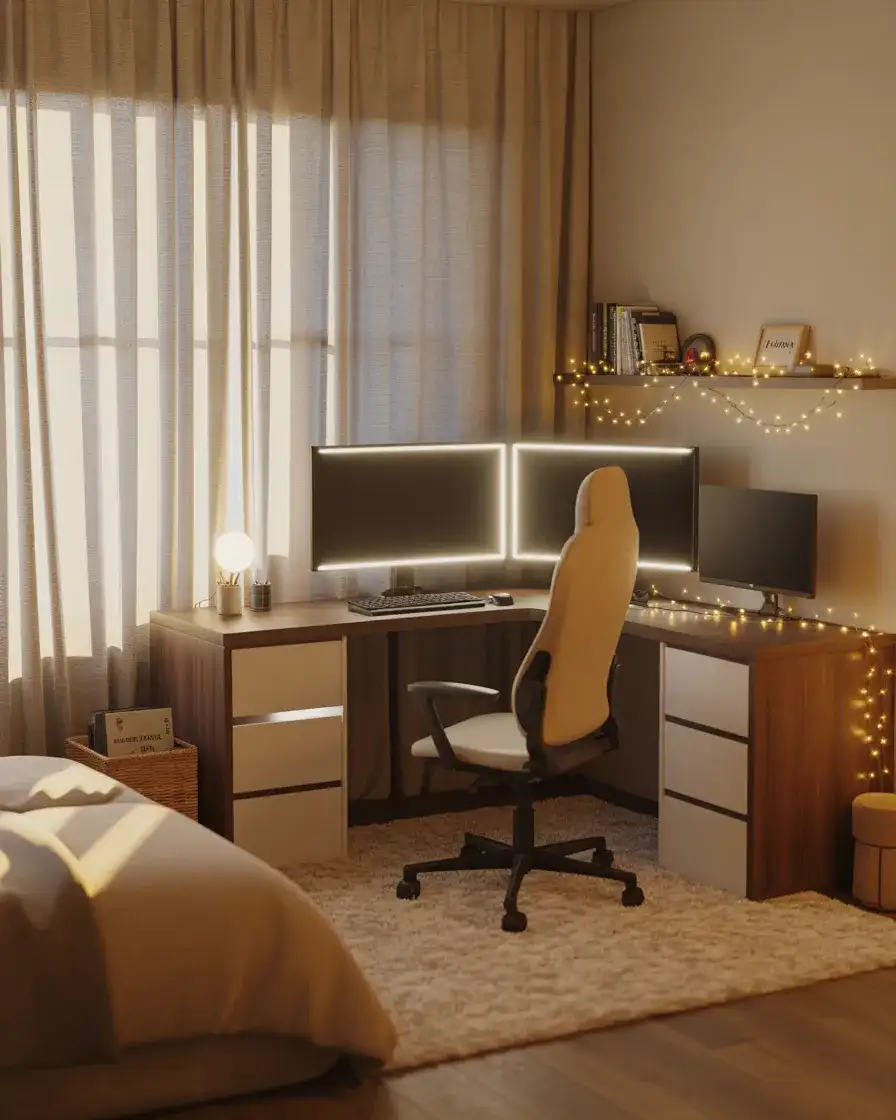
This setup works best in master bedrooms or larger guest rooms where you have at least a 10-foot wall to anchor the desk. Choose desk lighting that mimics the warmth of your bedroom lamps—cool blue task lights will fight with the cozy atmosphere you’re building. Warm white bulbs in the 2700K–3000K range are your best friend here, keeping the gaming zone from feeling like an office island in a relaxation retreat.
4. The Ultimate Man Cave Setup
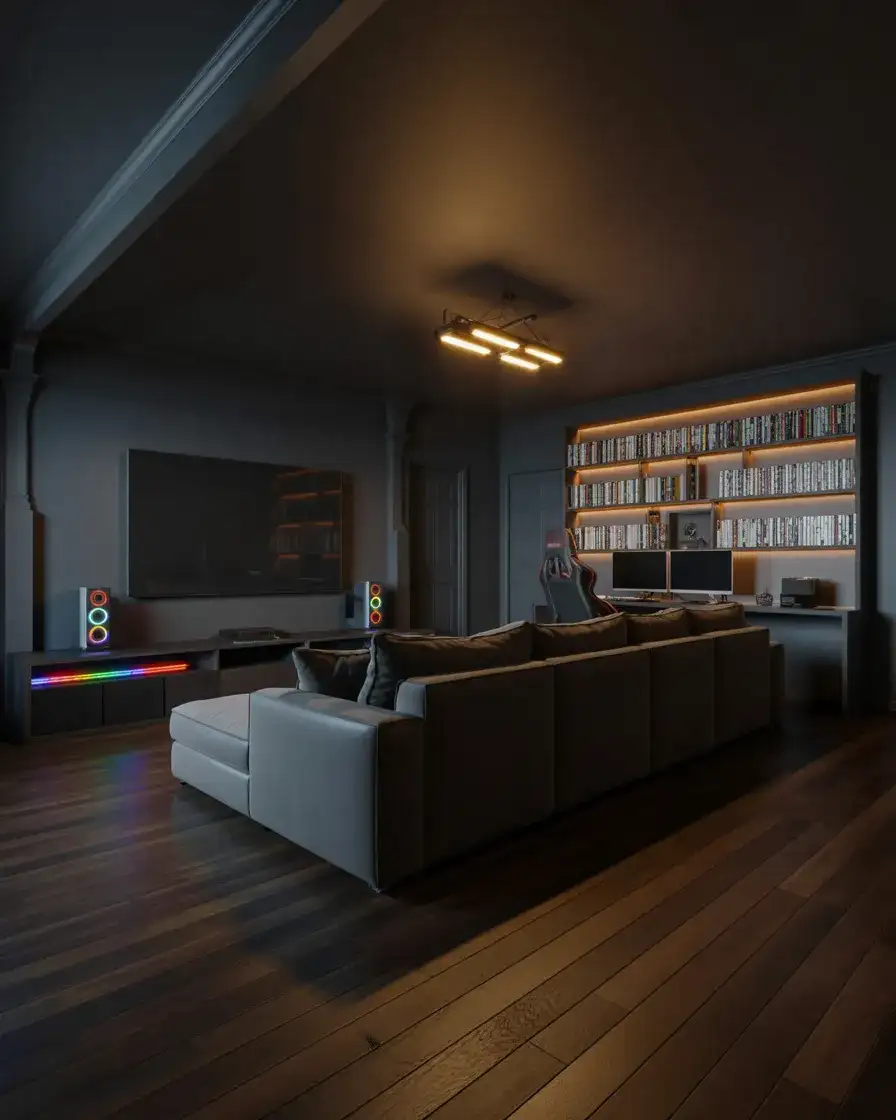
The man cave has evolved. In 2026, the best ones aren’t just packed with memorabilia and a mini-fridge—they’re actual rooms with real design intention. A well-executed gaming man cave layered with a setup that handles both console play and PC gaming might include a large sectional facing the main screen, a dedicated desk in a secondary zone, dark accent walls, and thoughtful storage for games, gear, and drinks. The goal is a room that functions brilliantly and still looks intentional from the doorway.
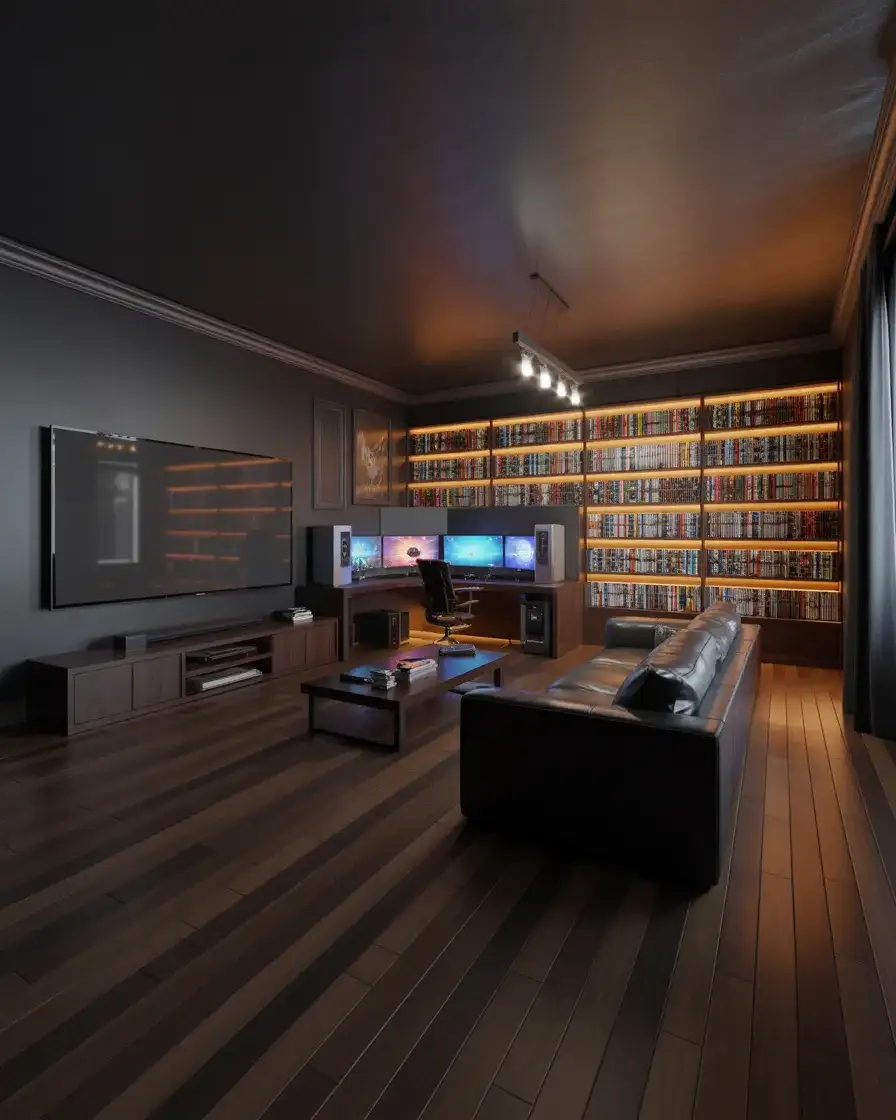
Budgets for man cave builds vary wildly across the country. In the Midwest, where finished basements are common, many homeowners complete a full transformation—furniture, lighting, flooring—for $3,000 to $6,000. In higher cost-of-living cities like Seattle or Denver, the same room might run $8,000 to $12,000. Prioritize the seating and the screen wall first. Those two elements carry 80% of the room’s impact and are worth spending on before anything else.
5. The Aesthetic Pastel Gaming Room
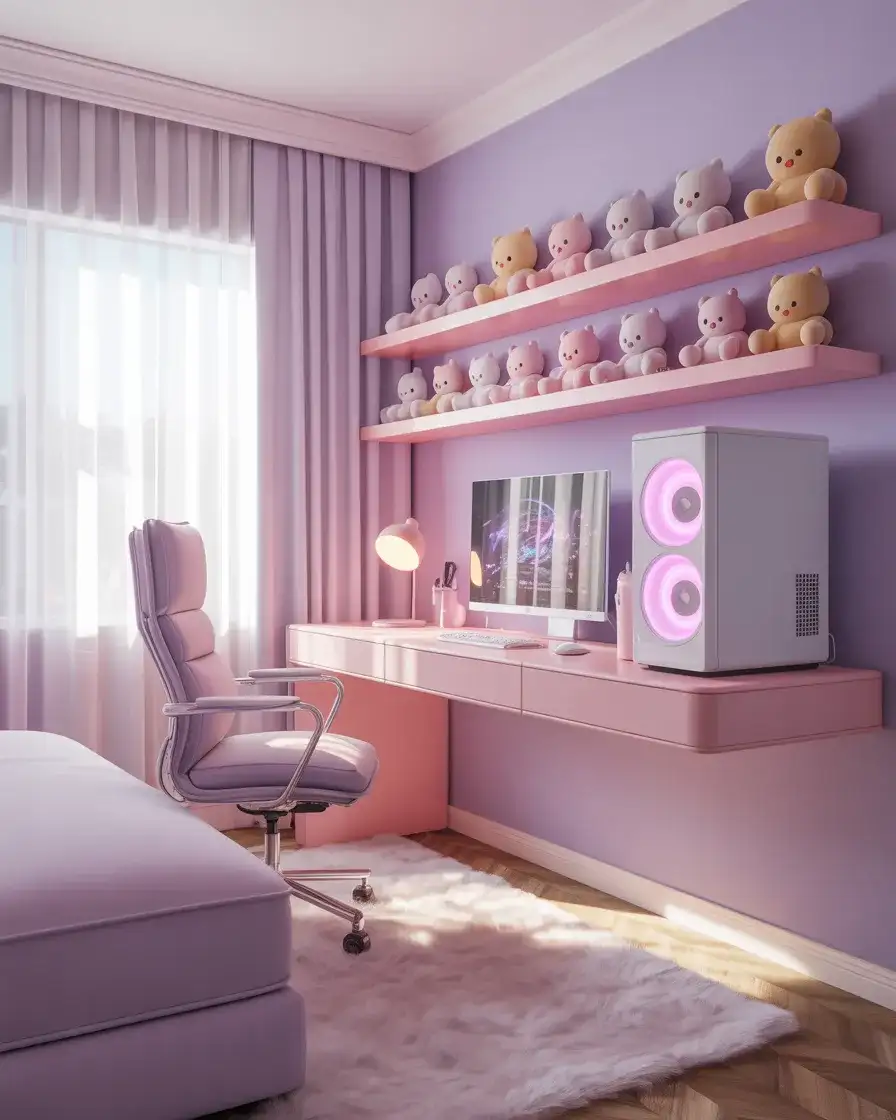
Soft lavender walls. Blush pink shelving. A white desk with rose-gold accents and a monitor that practically disappears into the dreamlike backdrop. The aesthetic pastel gaming room is one of Pinterest’s most-saved looks right now—and it’s popular across genders and age groups, not just among teenage girls. This style works because it transforms gaming from a hobby you hide into a hobby you celebrate. Every element feels intentional, and the color palette creates genuine calm that makes marathon gaming sessions feel less intense.
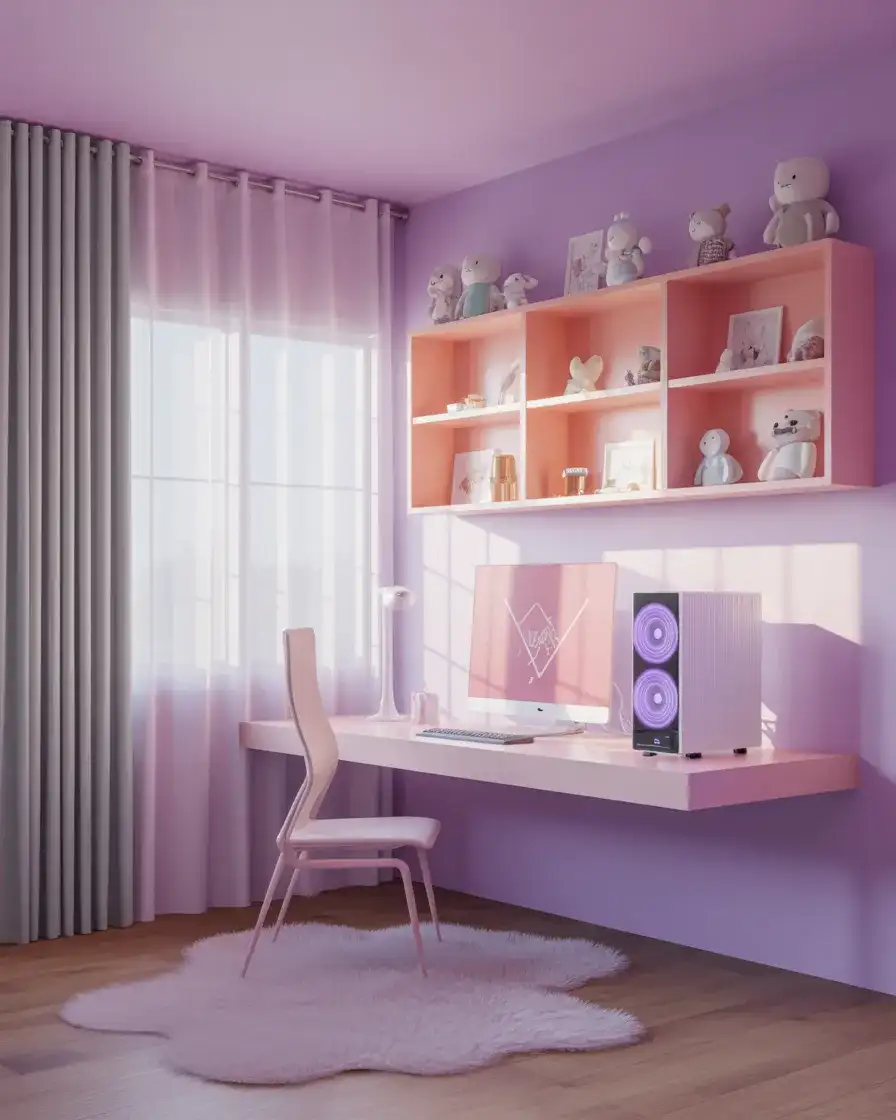
Interior designers who specialize in teen and young adult spaces note that the pastel aesthetic holds up surprisingly well over time—better than trendy neon or heavily branded looks. Because the foundation is color rather than characters or franchises, you can swap out accessories as tastes evolve without repainting or replacing furniture. It’s an investment in a vibe, not a moment, which makes it genuinely smart for spaces that need to grow with their owner.
6. The Family Gaming Lounge
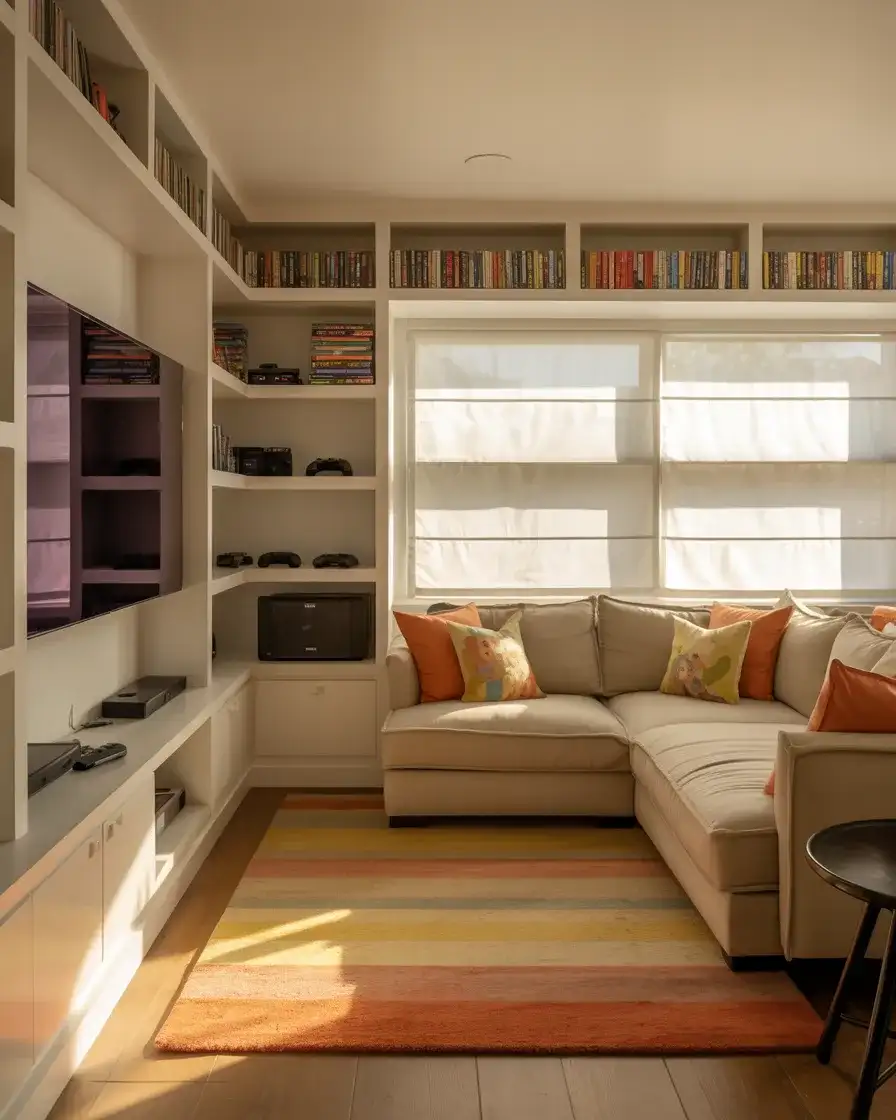
A family gaming room needs to pull double—sometimes triple—duty. It’s a movie room, a homework station, a play space, and yes, a gaming lounge all at once. The best versions of this space prioritize flexibility: modular seating that can reconfigure for movie night, open storage that works for both kids’ games and grown-up titles, and a media wall that doesn’t feel too aggressive for everyday living. Design ideas that center around a large sectional, a wall-mounted screen, and built-in shelving hit that sweet spot between functional and welcoming.
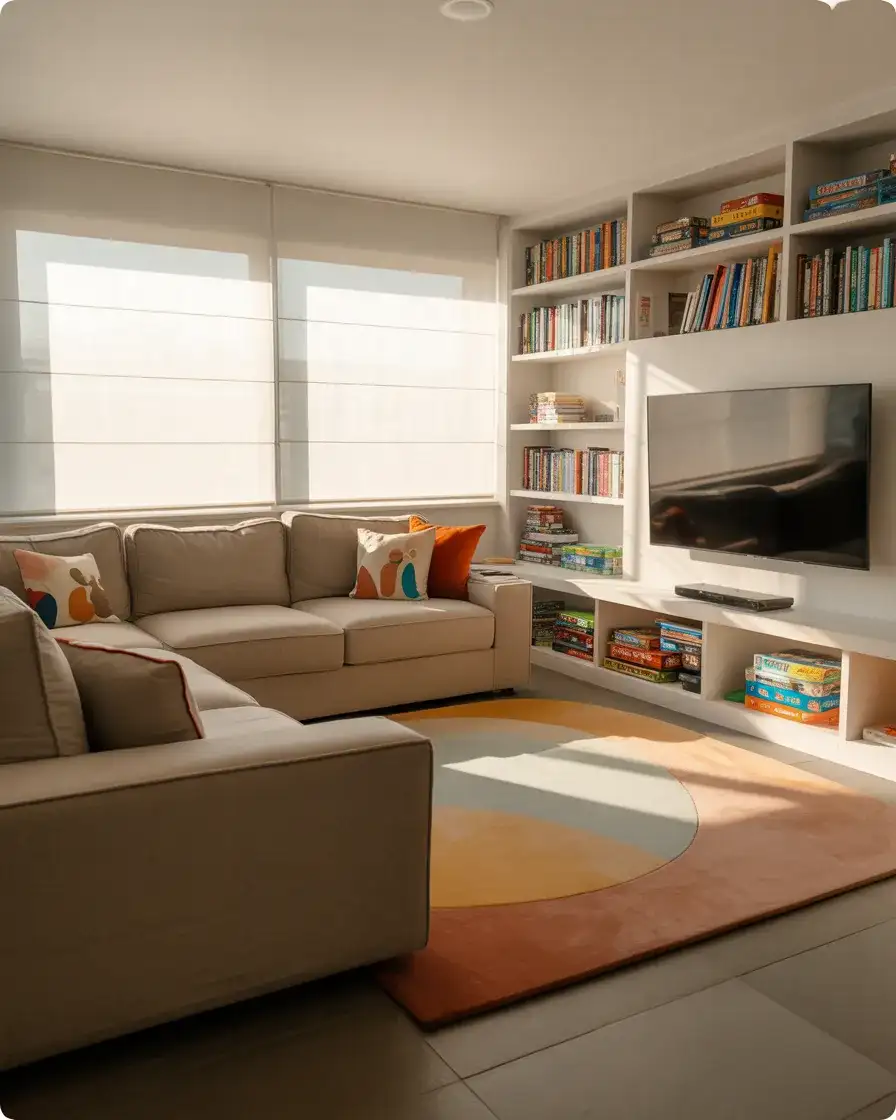
The family gaming lounge works best when you treat hidden storage as non-negotiable. Controllers, headsets, and charging cables left in the open become clutter within minutes in a household with kids. Closed-front cabinets, labeled bins, and a charging drawer built into the media unit keep the space looking intentional instead of chaotic. A simple basket system near the couch for remotes and accessories does more for daily livability than any decorating decision you’ll make.
7. The Dark Classy Gaming Den
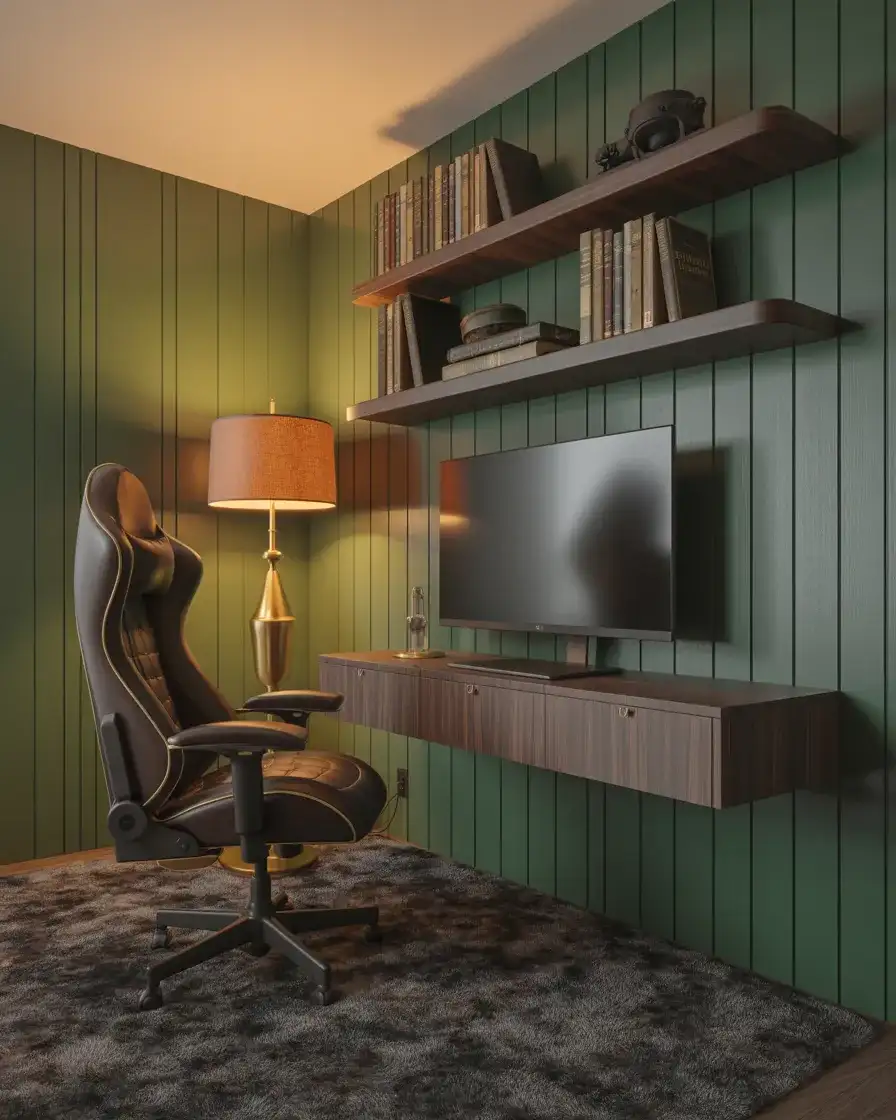
Dark rooms have had a serious design moment, and the gaming world was quick to catch on. A classy gaming den uses deep, saturated paint colors—think forest green, cognac brown, or midnight black—as the foundation for a space that feels more like a private club than a hobby room. Velvet accent chairs, brass fixtures, rich wood tones, and curated shelving complete the picture. This isn’t about hiding the gaming; it’s about elevating it. Ideas for adults who want their space to feel grown-up without abandoning their hobby start here.
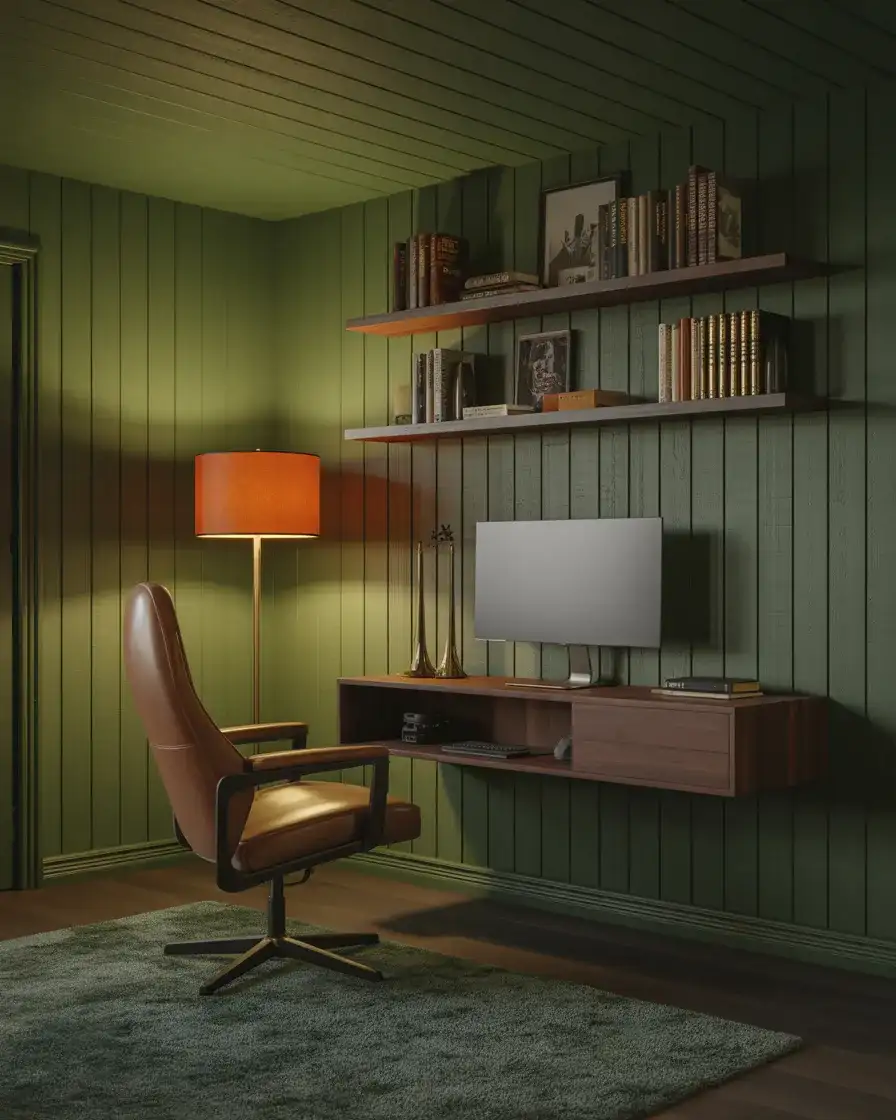
A real homeowner in Chicago described building this exact kind of room as the first time their spouse actually wanted to spend time in the gaming space. The design trick? Every piece of furniture could theoretically exist in a traditional study. The gaming peripherals—mouse, keyboard, and monitor—are the only giveaways. When your equipment is the accent, not the focal point, the room reads sophisticated first and functional second.
8. The DIY Wall Decor Gallery Gaming Room
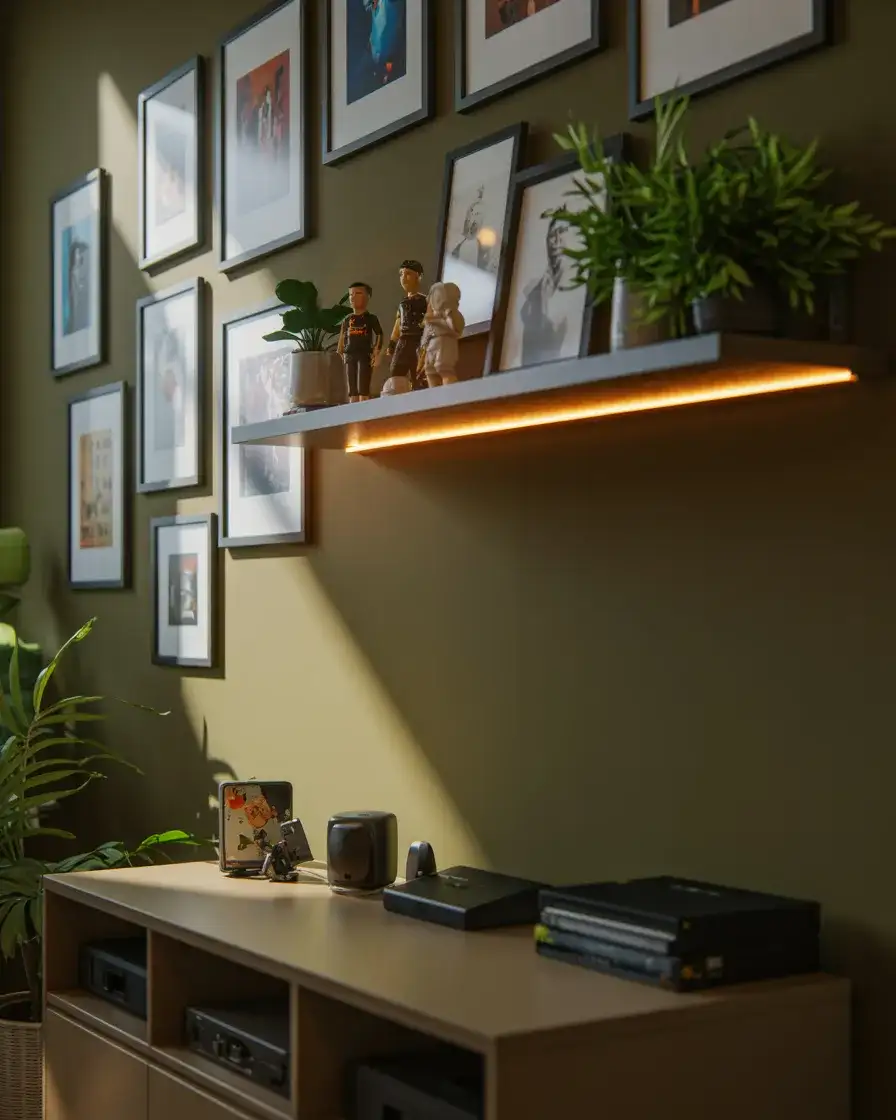
One of the most affordable ways to make a gaming room feel truly personal is through DIY decor and wall art. A carefully curated gallery wall—mixing printed poster frames, floating shelves with small collectibles, custom neon signs made from budget LED kits, and painted panels—creates visual personality that no furniture store can replicate. The wall decor approach also lets you update the room’s energy over time without repainting or purchasing new furniture. Swap a few frames, rearrange a shelf, and the room feels refreshed.
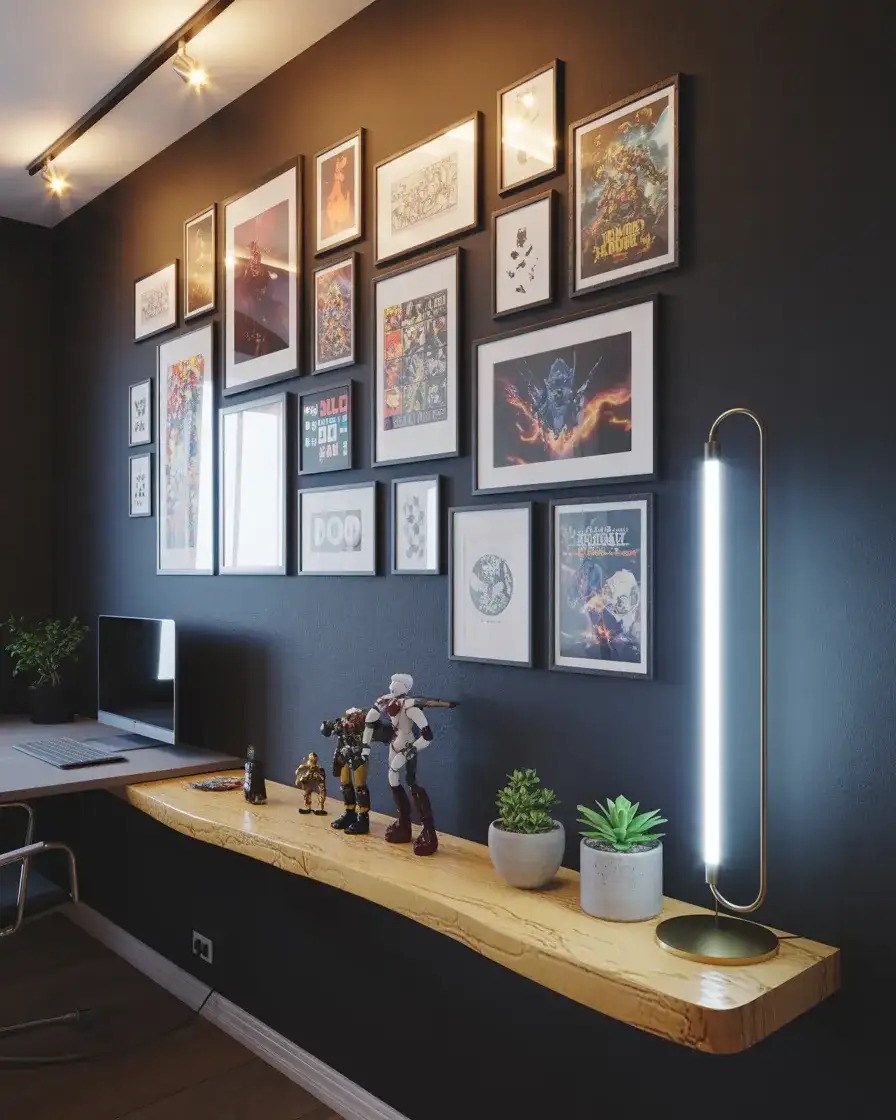
Budget-conscious decorators should know that a gallery wall for a gaming room can be built for as little as $80 to $150 using printed art from Etsy digital shops (often $3–$8 per file), frames from IKEA’s RIBBA line, and floating shelves from any big-box hardware store. Print your favorites at a local office supply store for under $2 per sheet. The visual impact you get is completely disproportionate to what you spend, making this one of the smartest starting points for any gaming room build.
9. The ACNH-Inspired Cozy Nature Room
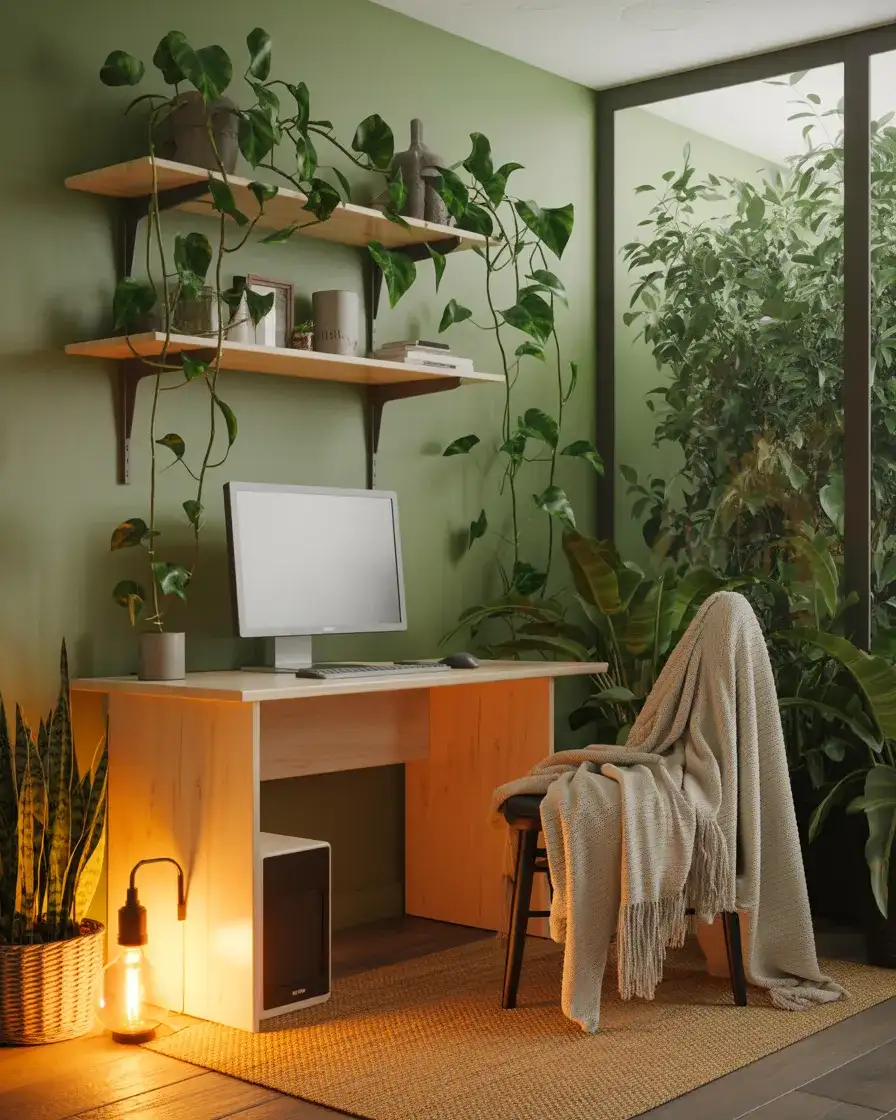
Animal Crossing: New Horizons transformed how an entire generation thinks about interior design—even real interior design. The ACNH-inspired gaming room takes that aesthetic offline: lots of natural wood tones, trailing houseplants, soft warm lighting, pastel-dotted fabrics, and furniture that feels handcrafted or gently worn. It’s the cozy, cottagecore cousin of the typical gaming setup, and it works remarkably well as a real room because the underlying design principles are genuinely sound. Ideas for cozy adults don’t get much warmer than this.
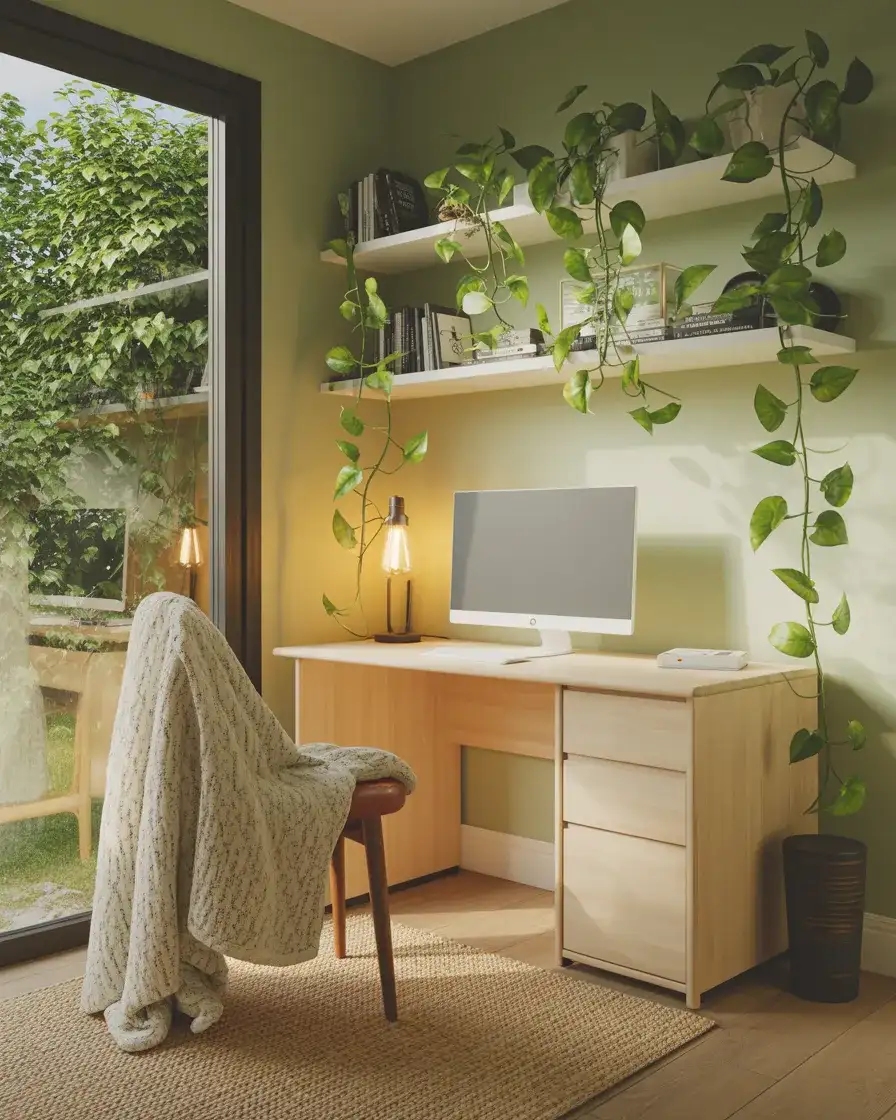
This look works best in rooms that already have some natural light—or where you’re committed to adding it through warm-toned bulbs and mirrors. The whole vibe depends on softness, and harsh overhead fluorescents will ruin it immediately. If your room lacks windows, invest in a daylight-simulating lamp (4000K color temp) for the desk and warm Edison bulbs for ambient fixtures. Layering those two temperatures gives you the natural-feeling glow that makes this look sing.
10. The Boys’ Gaming Bedroom
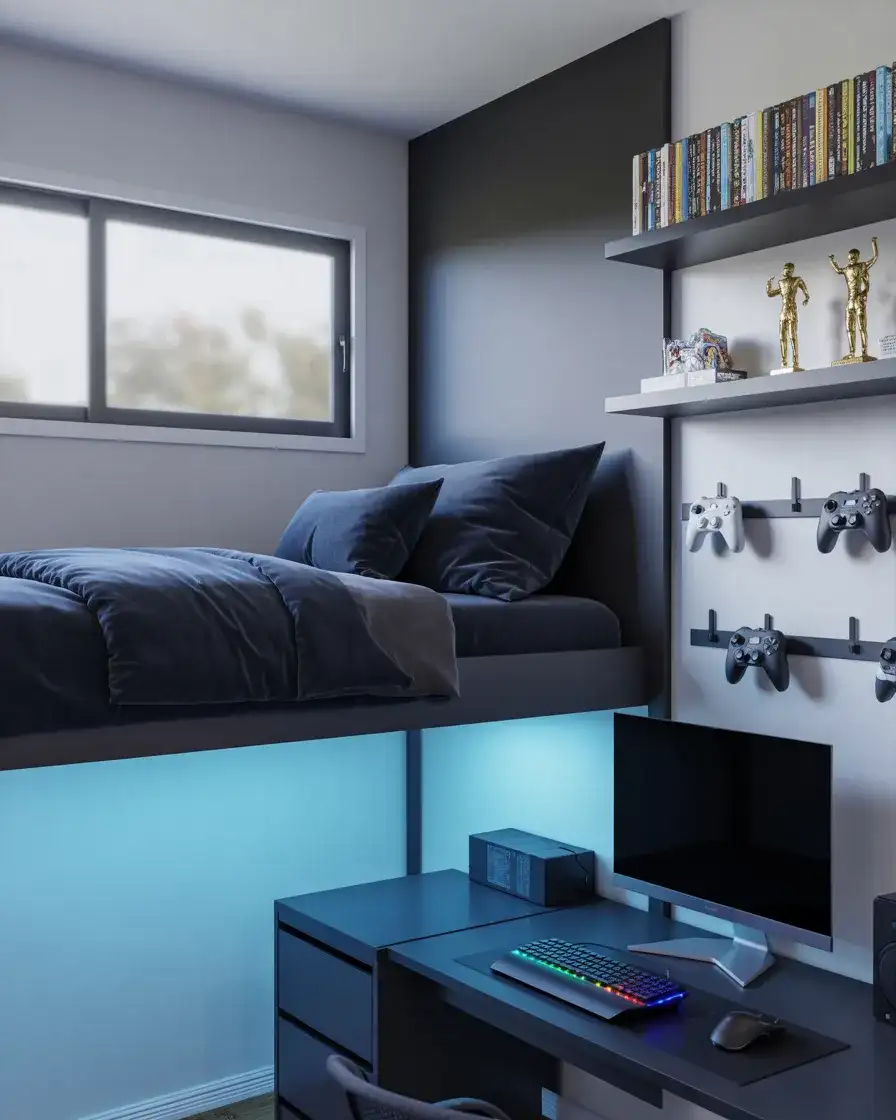
Designing a gaming space for boys—whether you’re talking about a 10-year-old or a 17-year-old—requires building in room to grow. The mistake most parents make is designing too specifically: a mural of a franchise character that gets abandoned in two years, or a color scheme tied too tightly to one game. The smarter play is a bedroom design anchored in a neutral base—charcoal, navy, or olive—that allows for personality through accessories and art that can evolve without a full repaint.
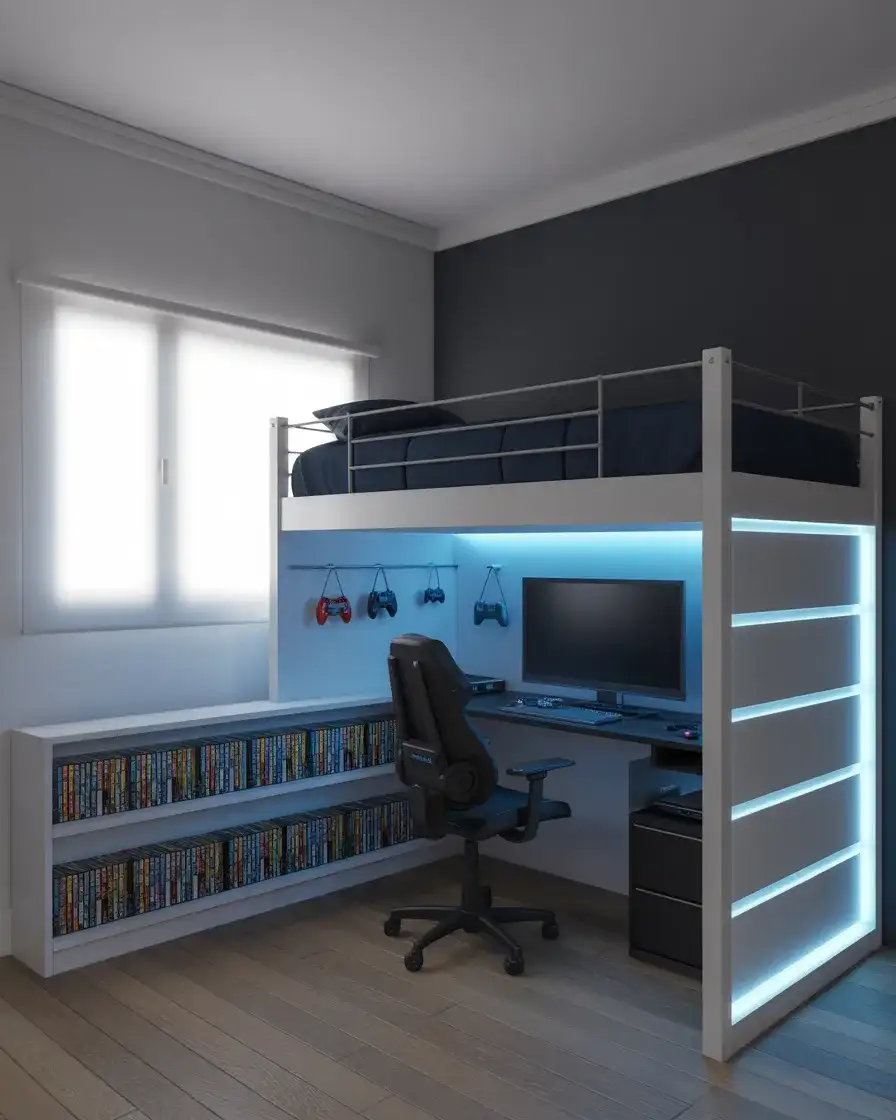
A loft bed with a built-in desk underneath is one of the most space-efficient moves you can make in a smaller bedroom. It separates the sleeping zone from the gaming zone both physically and psychologically—something that genuinely helps with sleep hygiene in kids who game at night. Many parents report that this simple spatial separation, more than any parental controls or rule-making, naturally encouraged their kids to stop gaming earlier in the evening.
11. The Modern Entertainment Center Gaming Wall
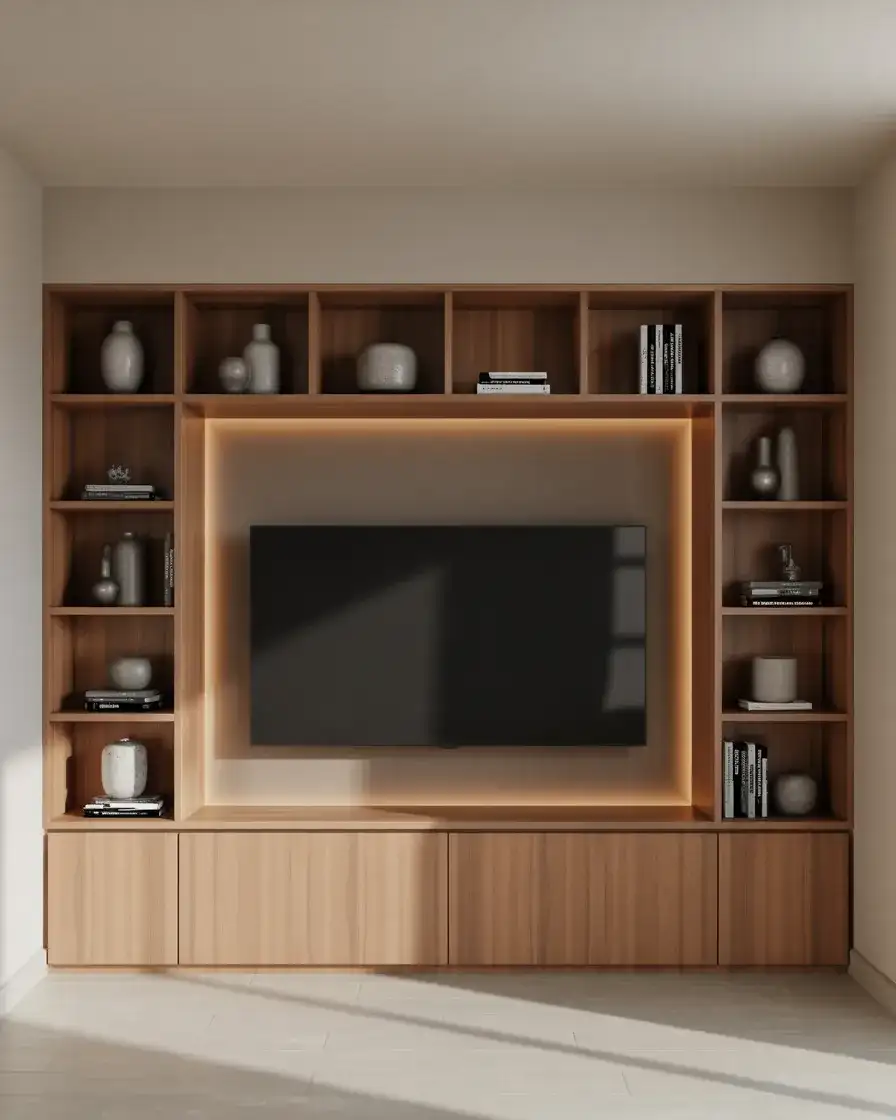
The design entertainment center has become one of the most searched gaming room features on Pinterest—and for good reason. A built-in or modular entertainment wall that thoughtfully integrates gaming consoles, streaming devices, smart lighting, and organized storage is the closest thing to a true showpiece a gaming room can have. Done well, it looks custom even when it isn’t. The key is treating it architecturally: frame the screen with symmetrical shelving, use consistent materials throughout, and hide the chaos behind closed doors at the base.
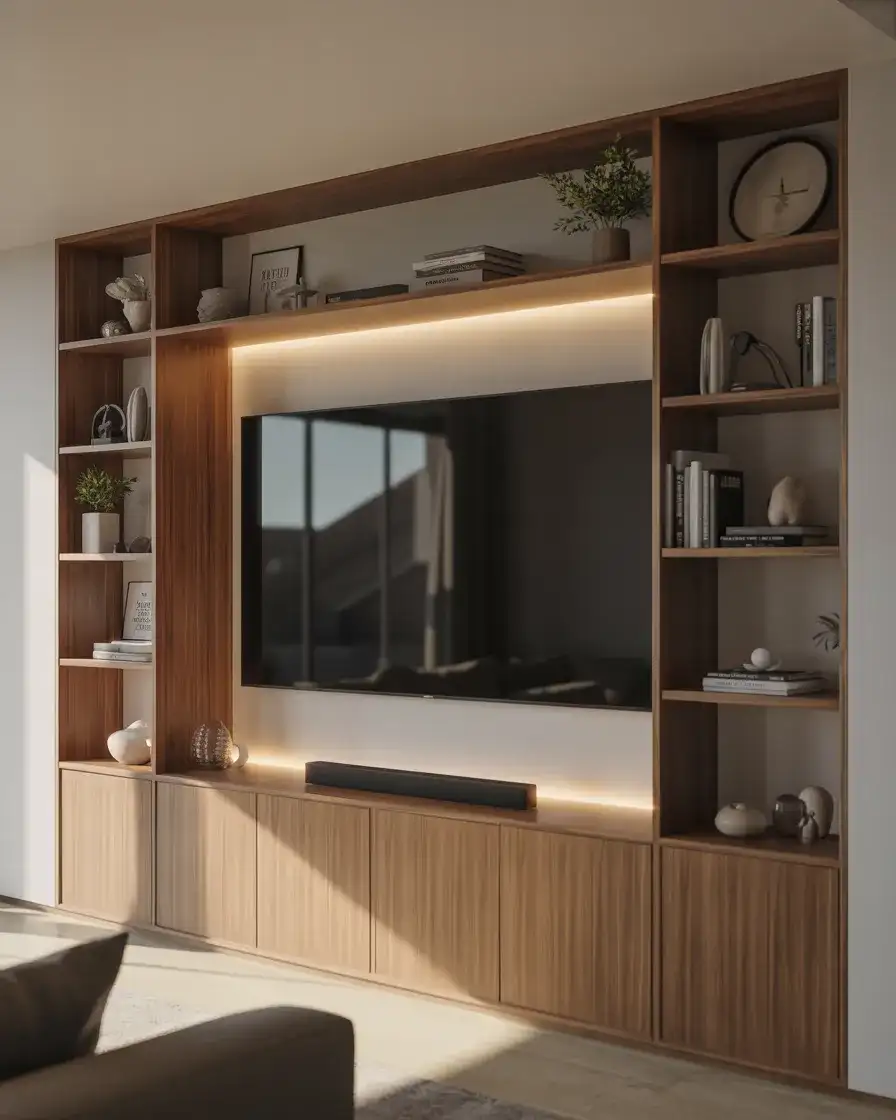
IKEA’s BEST A system remains the most accessible starting point for a custom-looking entertainment wall in America, with total builds ranging from $400 to $1,200 depending on configuration and added hardware. Swapping the standard handles for brushed brass or matte black bar pulls, adding a thin strip of picture-frame molding around the TV niche, and backing open shelves with peel-and-stick wallpaper elevates the system dramatically. Many people genuinely cannot tell it’s IKEA when finished—which is the goal.
12. The Luxury High-End Gaming Suite
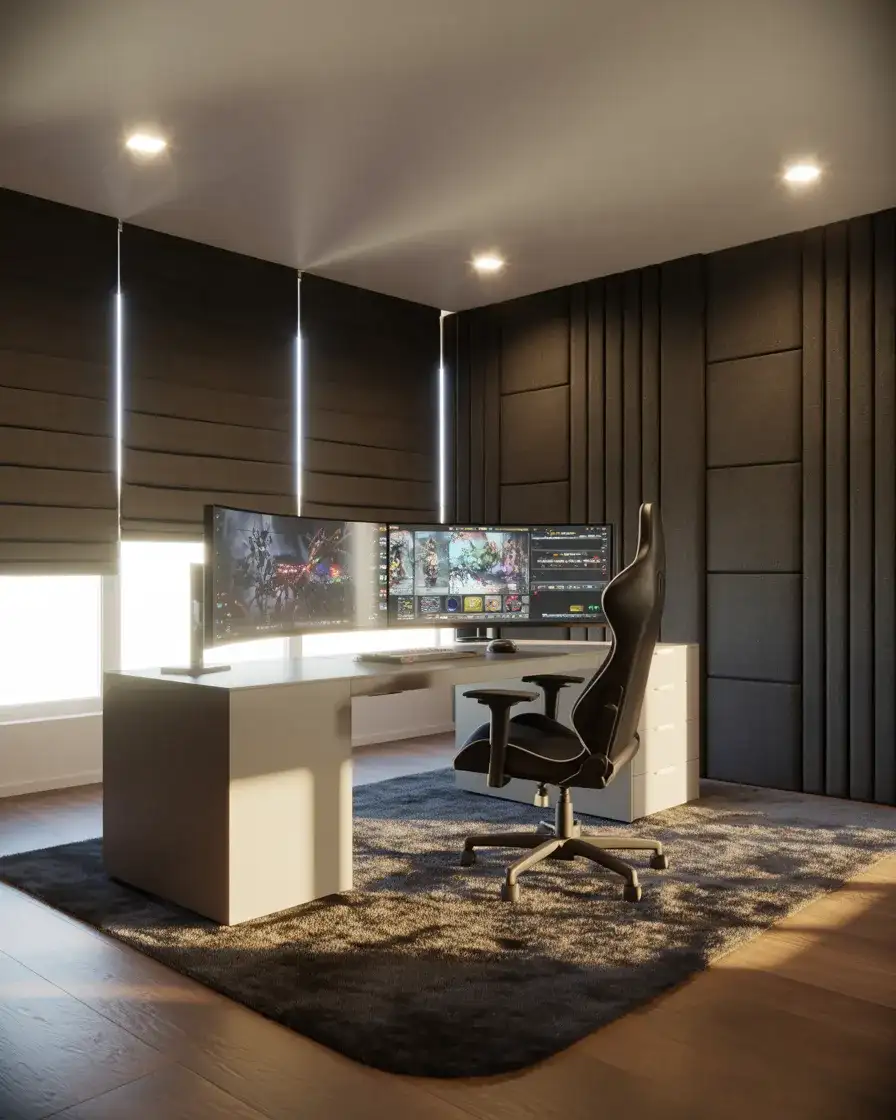
If budget is no object—or if you’re simply dreaming big—the luxury gaming suite is a category unto itself. We’re talking motorized blackout shades, a full acoustic treatment behind stretched fabric panels, Dolby Atmos surround sound integrated into the ceiling, and a gaming chair that costs more than most people’s living room sofas. The design of the modern version of this space feels closer to a boutique hotel screening room than a typical game room, and every element has been selected with obsessive precision.
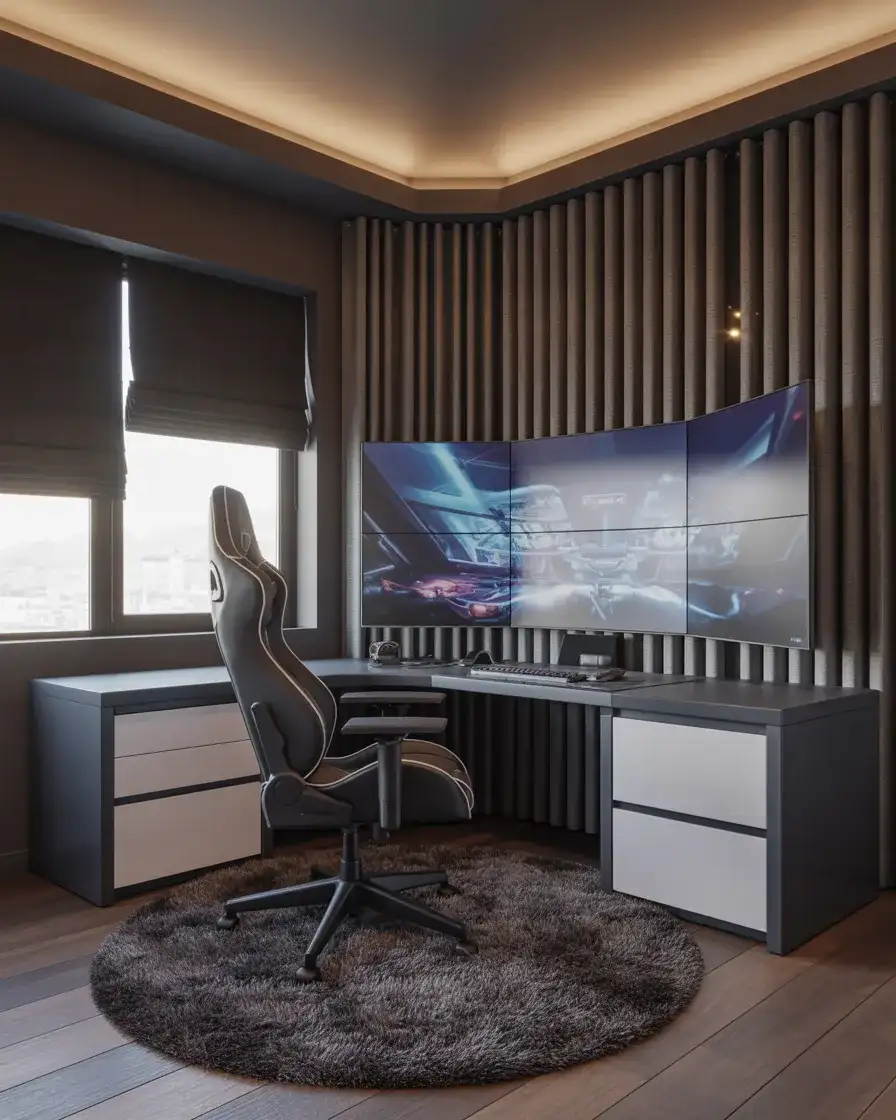
Designers who work on luxury home theaters and gaming suites note that the single highest-impact investment is always acoustic treatment—not the screen size or the chair. A room that sounds extraordinary changes how every game and piece of music feels within it, in a way that’s immediately noticeable and difficult to articulate. Bass traps in corners, diffusers on the rear wall, and absorption panels behind the main listening position form the acoustic triangle that professionals start with every time.
13. The Paint Ideas Accent Wall Transformation
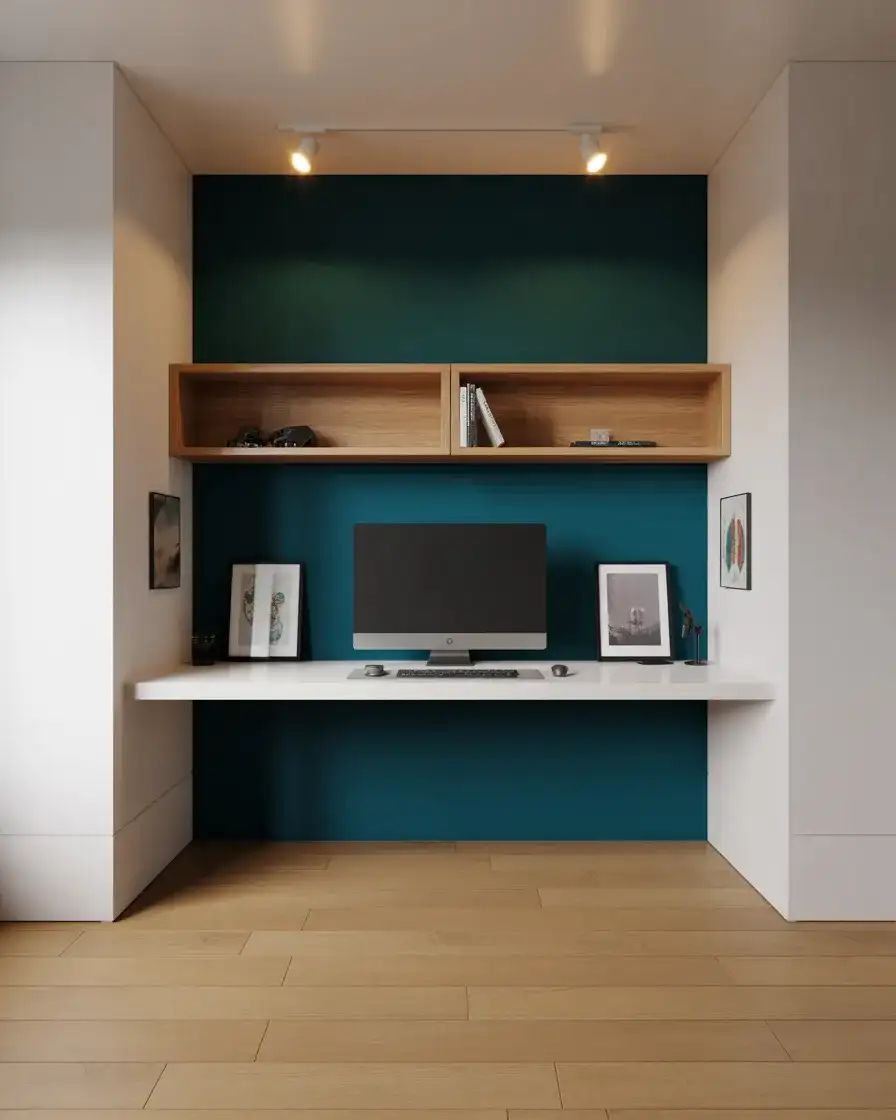
Few things transform a gaming room faster—or more affordably—than a well-chosen paint idea accent wall. A single statement wall in a deep, saturated color can anchor a desk, define the gaming zone within a multi-use room, and give the space a visual punch that takes an afternoon and under $50 to achieve. The best accent colors for gaming rooms in 2026 lean moody: deep teal, rich terracotta, inky black, or warm charcoal. The surrounding walls can stay white or a very light complementary tone to let the accent breathe.
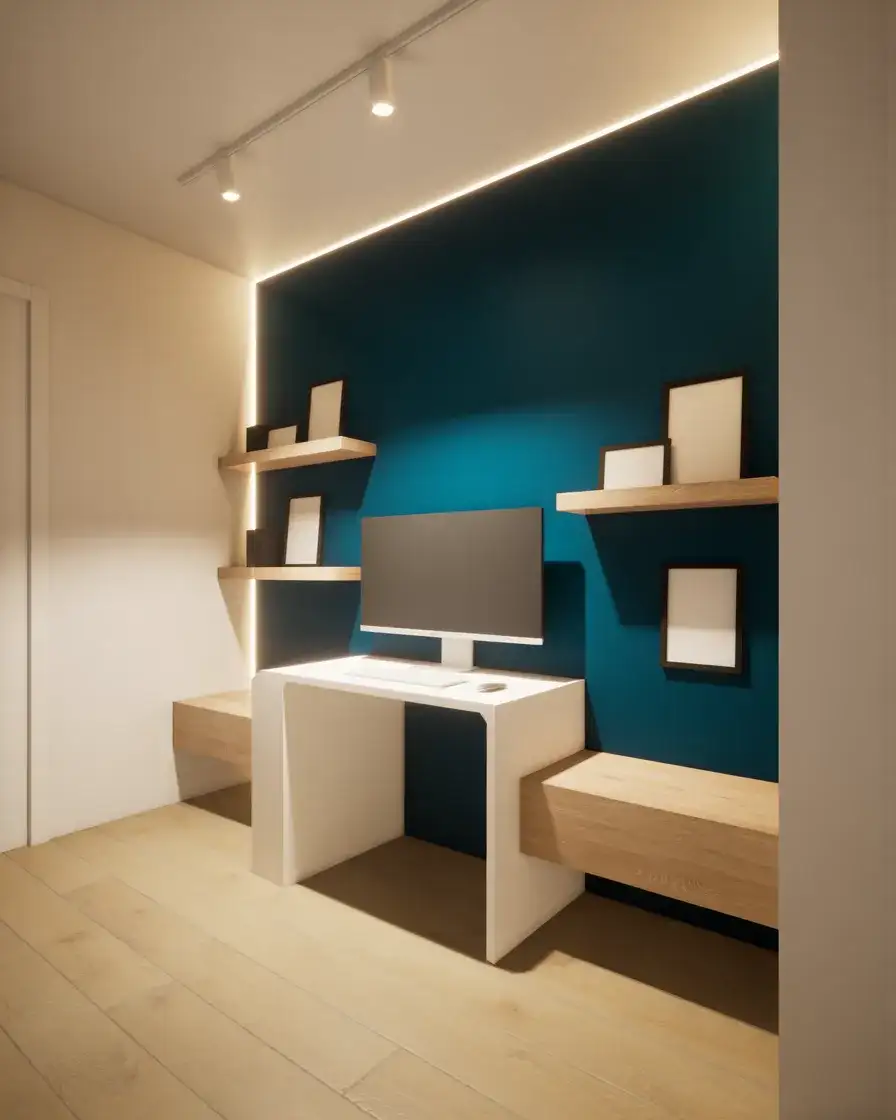
Sherwin-Williams Tricorn Black, Benjamin Moore Hale Navy, and Clare’s Wanderer (a warm slate) are among the most frequently recommended gaming room paint colors by interior design enthusiasts in American Reddit and Pinterest communities. The biggest mistake first-time accent wall painters make is going too light. Trust the depth. Paint a large sample—at least 12 by 12 inches—and live with it for two full days across different lighting conditions before committing. Colors shift dramatically from morning to night.
14. The Vintage Controller and Collectible Display Room
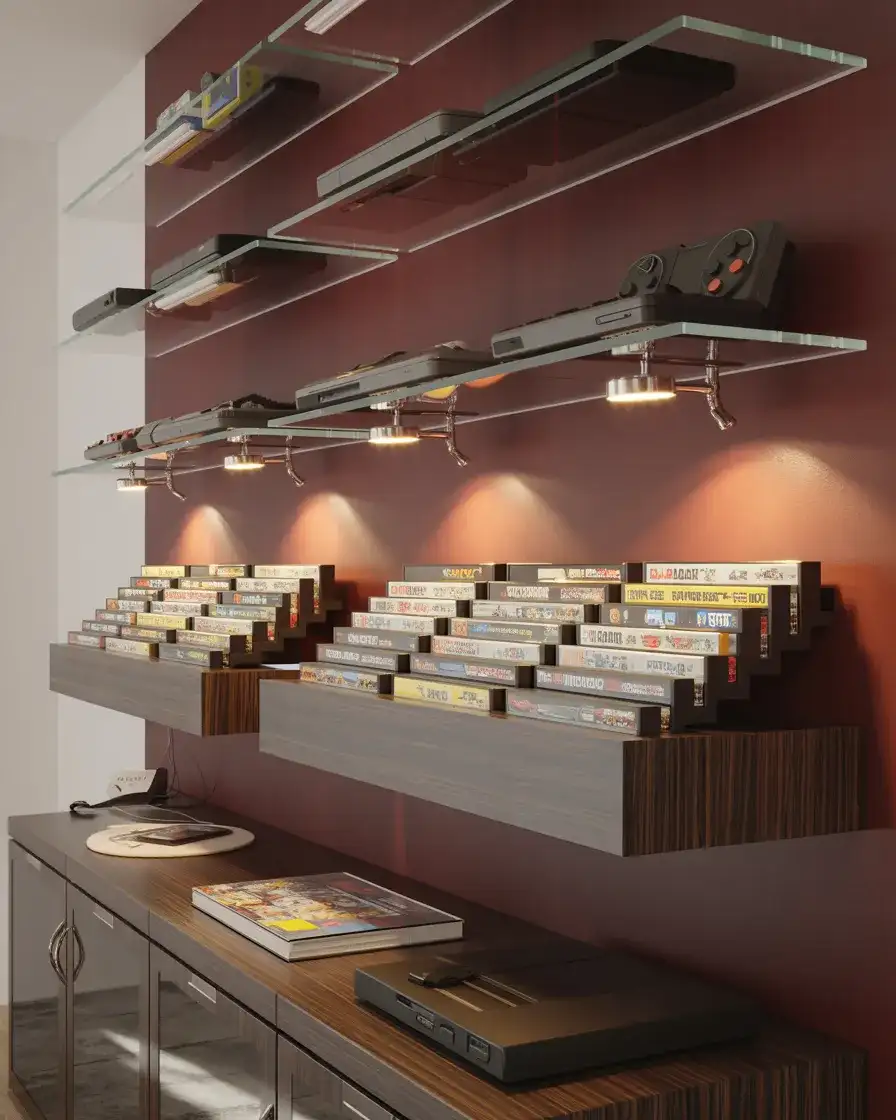
For the collector at heart, a gaming room is also a gallery—a place to celebrate the history of the medium through lovingly displayed vintage hardware, original controllers, boxed cartridges, and limited-edition pieces. This style of room is about curation as much as decoration. Shadow boxes, floating acrylic shelves, and museum-style lighting turn old hardware into art. The ideas man caves crowd has fully embraced this look, particularly when paired with a working emulation setup that lets the collection serve double duty as actually playable history.
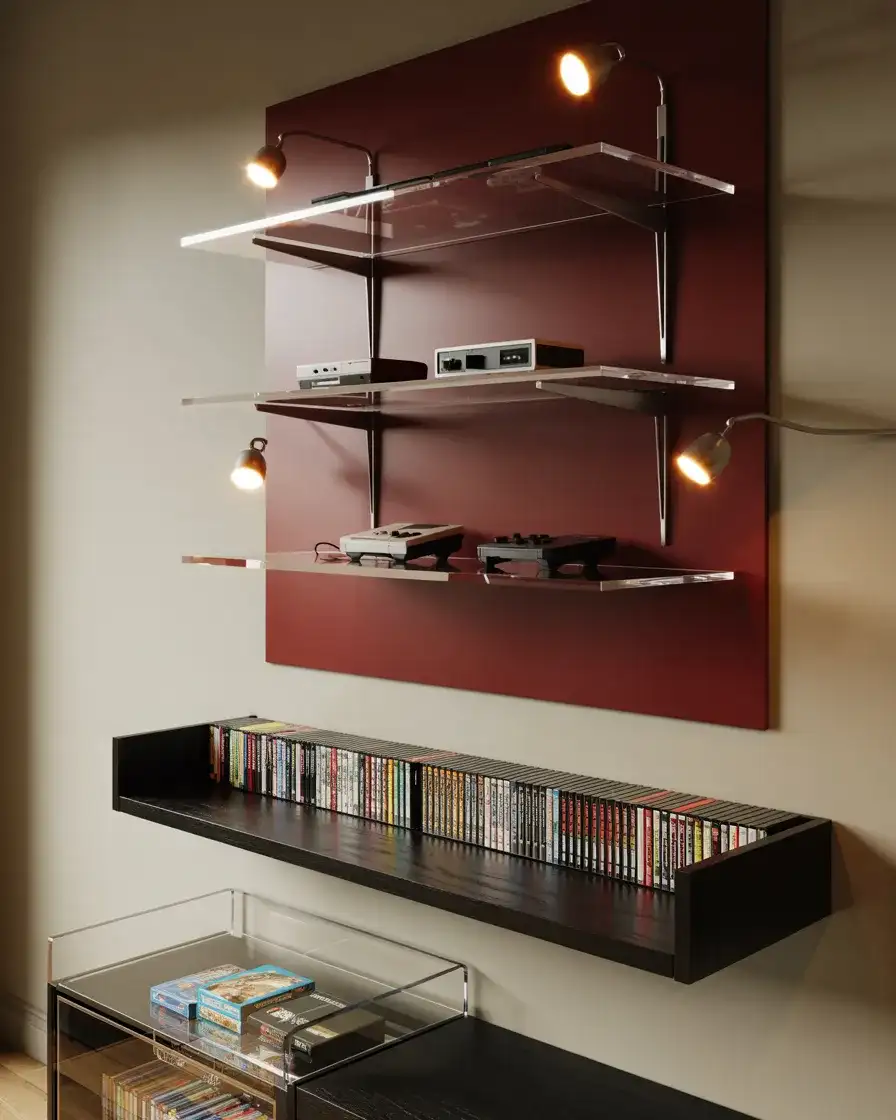
Where this room setup works best is in spaces with a single long wall—10 to 14 feet—that can be dedicated entirely to the display. A basement or office wall is ideal. The risk with the collectible display approach is visual clutter if pieces are placed without a deliberate system. Group items by era, console, or color family. Leave generous space between groupings. Negative space on a display shelf tells the viewer: these items matter. Crowding tells them: this is storage.”
15. The Minimalist Modern Gaming Office
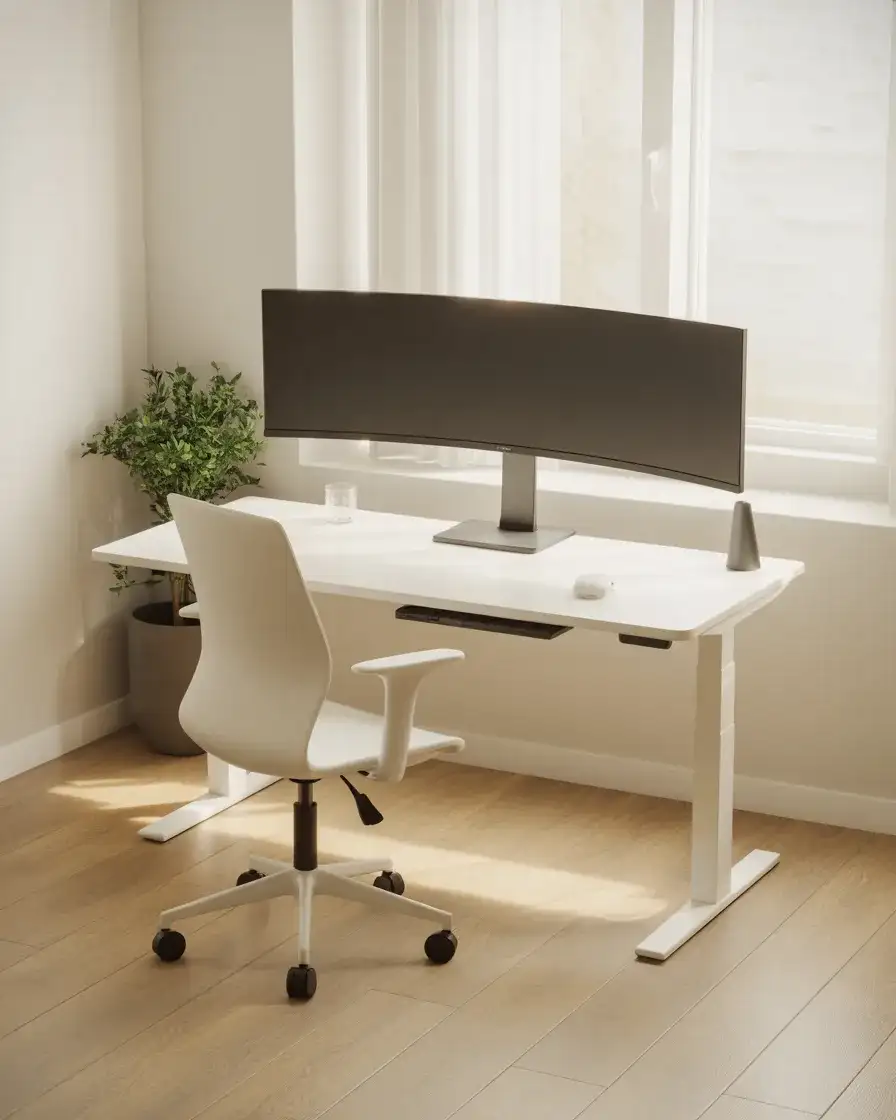
The dual-purpose gaming and home office is one of the most practical setups for adults who work from home and game in the evenings. The trick is making it feel like neither space compromises the other. Ideas for adults in this space tend to lean heavily into clean lines, neutral palettes, and smart ergonomics—a single ultra-wide monitor that handles both productivity and gaming, a height-adjustable desk, and storage that keeps work documents and game gear in completely separate but equally organized systems.
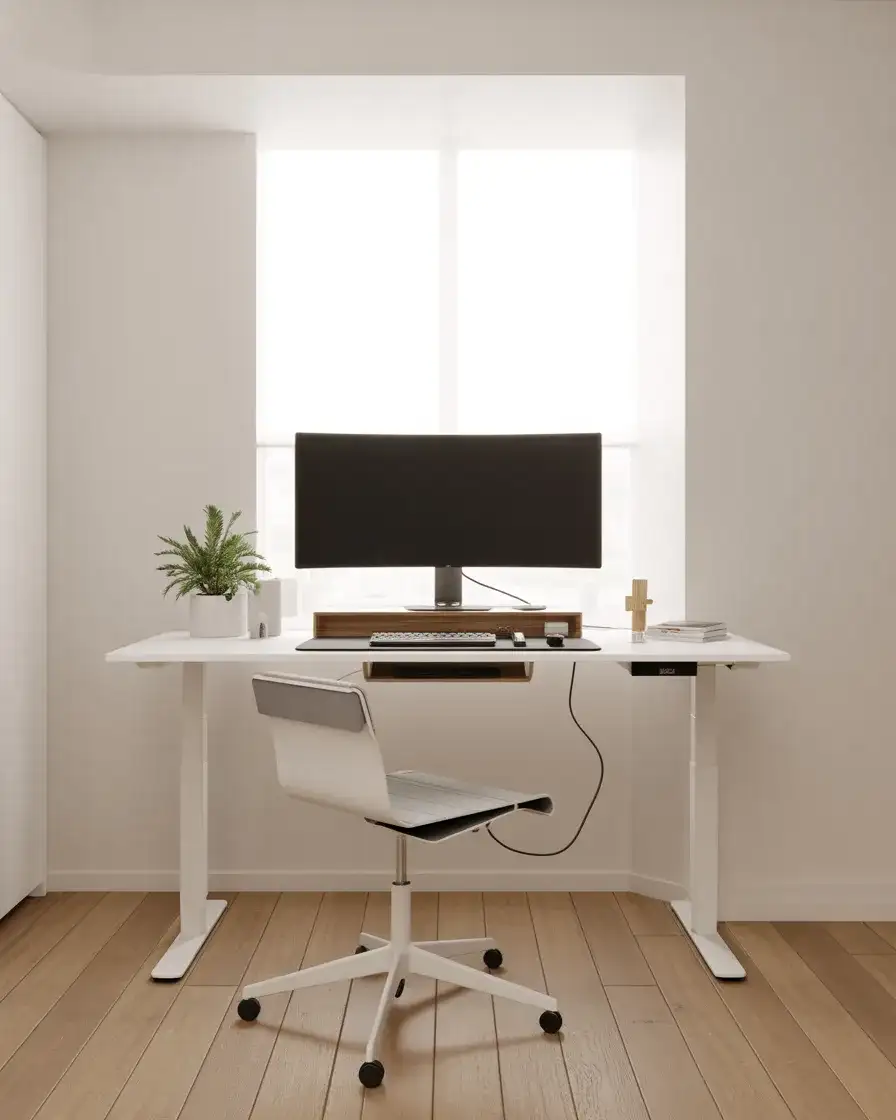
The most common complaint about combined gaming and work setups is that one activity bleeds into the other—not spatially, but mentally. People find it hard to switch off work when the same monitor is also where they unwind. One practical fix: use dedicated wallpapers or monitor profiles for work mode versus gaming mode. The visual shift cues your brain that the context has changed. Some people go further and use entirely separate peripherals—a work keyboard and mouse versus a gaming setup—stored in desk drawers when not active.
16. The Kids’ Colorful Gaming Playroom
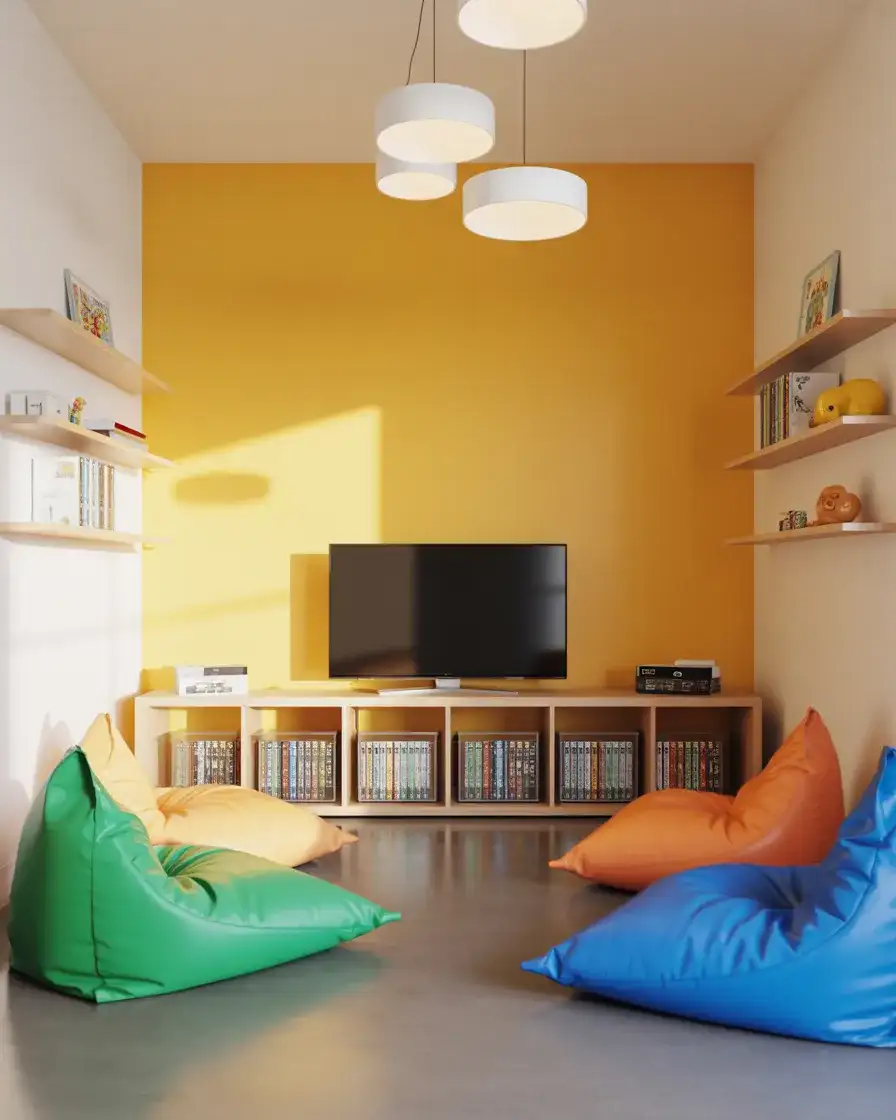
A dedicated kids’ gaming space doesn’t have to look like a toy store exploded in a room. The most successful children’s gaming playrooms balance stimulation with order—bright, energetic colors used selectively, comfortable low seating they can actually reach, and organized storage that makes cleanup achievable for small hands. Think a cheerful primary color palette on one accent wall, bean bag chairs or a floor cushion cluster for couch co-op sessions, and an entertainment unit low enough that kids aren’t straining to see the screen.
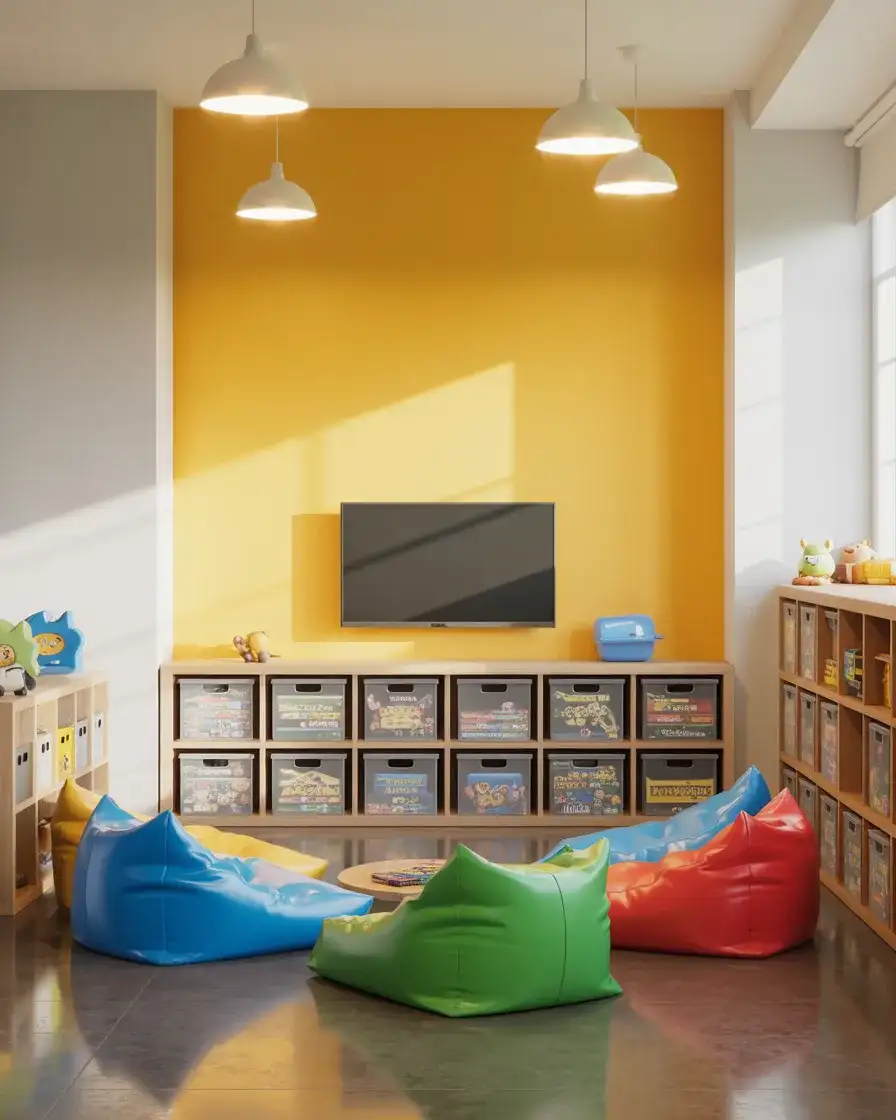
Child development specialists generally recommend that screens in children’s gaming spaces be mounted lower than standard adult height—ideally so the center of the screen is at the child’s eye level when seated on the floor or a low cushion. This reduces neck strain during long sessions and encourages better posture from an early age. For mounting, a low media console (16 to 20 inches high) with the TV on top often achieves the right height for kids aged 5 to 12 without requiring wall mounting adjustments as they grow.
17. The Neon-Lit RGB Man Cave
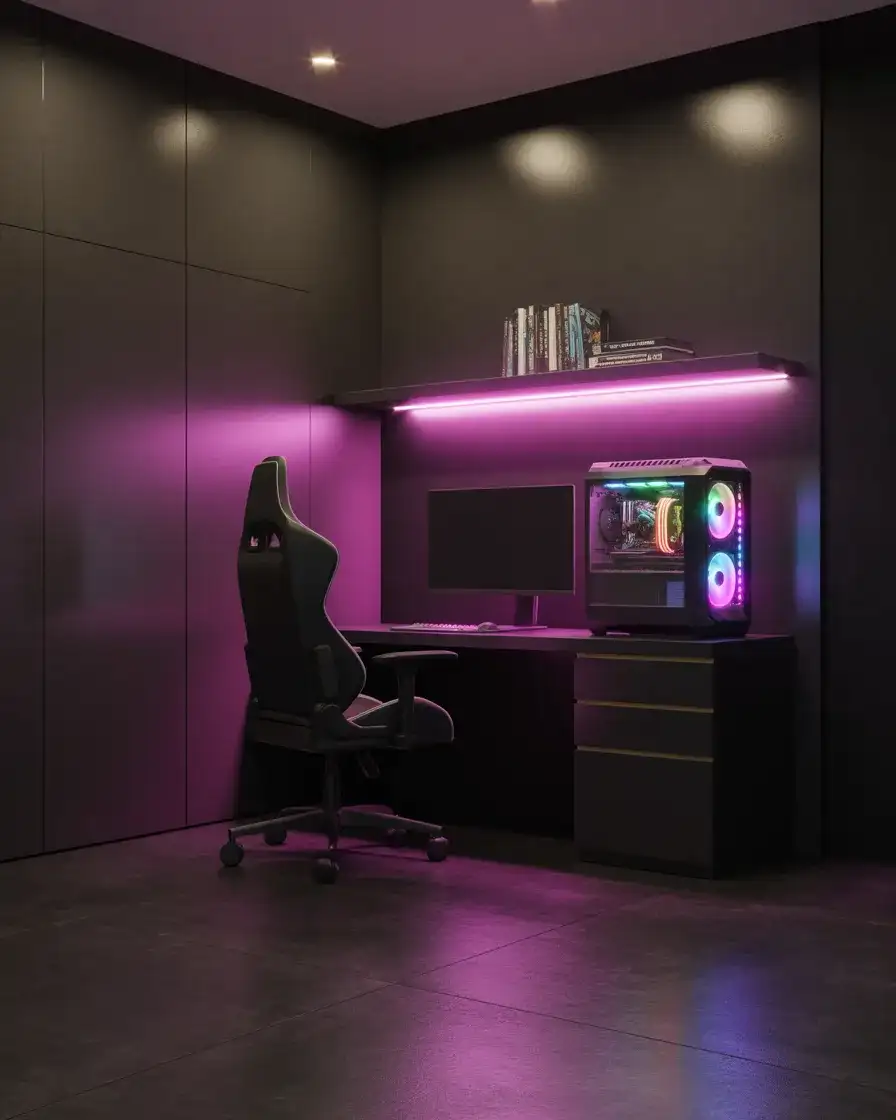
No list of gaming room ideas would be complete without the RGB neon setup—the visual language that most people associate with gaming at its most expressive. Done tastefully, this look is genuinely striking: deep dark walls serve as a canvas for LED strips in rich purple, red, or cyan, and every element in the room—desk, chair, PC tower, shelving—carries through with a complementary glow. This is the man cave approach that prioritizes atmosphere above all else, and when the lights drop and the room comes alive, the effect is genuinely dramatic.
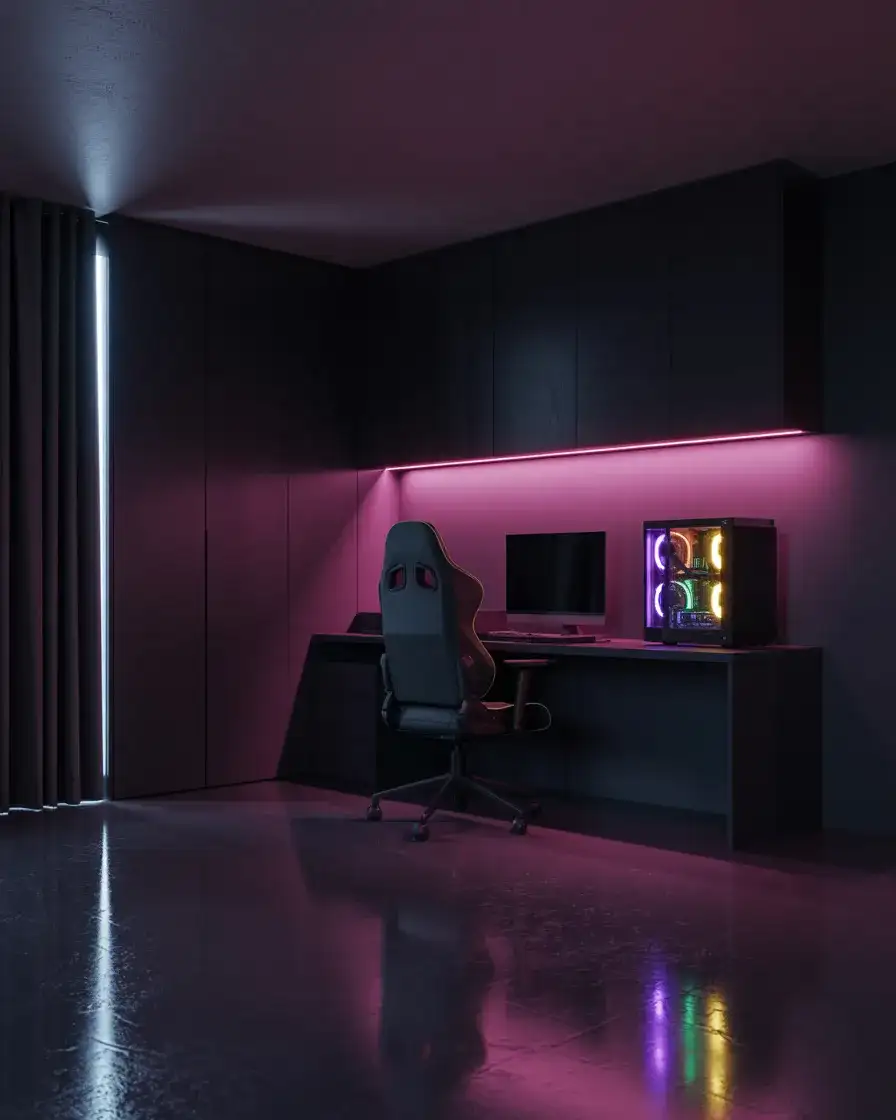
The biggest mistake in RGB rooms is going full rainbow—cycling through every color constantly. It reads as chaotic rather than considered. Choose one or two accent colors and hold them. Purple and white. Red and orange. Cyan and blue. Pick a palette and program your lights to stay there. The rooms that photograph beautifully and feel genuinely immersive are always the ones where someone made a color commitment and executed it with discipline across every light source in the space.
18. The Vintage Basement Arcade Bar
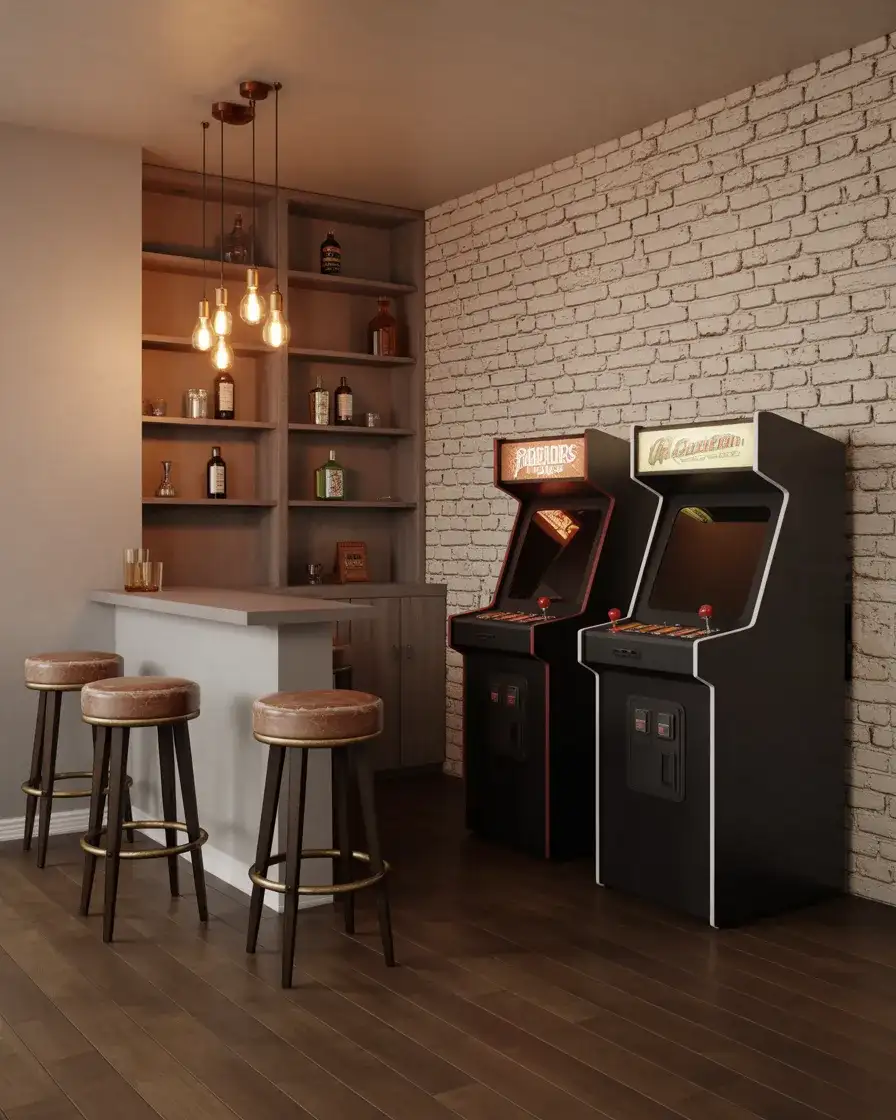
The hybrid gaming-and-entertaining space is the grown-up evolution of the man cave—a basement that functions as a vintage arcade bar where friends actually want to gather on weekends. Exposed brick or shiplap walls, a small built-in bar with a mini-fridge and glassware storage, a pair of working arcade cabinets, and a pool table or air hockey setup create an experience that’s social first and gaming second. Ideas for man caves built for entertaining rather than solo sessions have a fundamentally different energy—and a much longer lifespan.
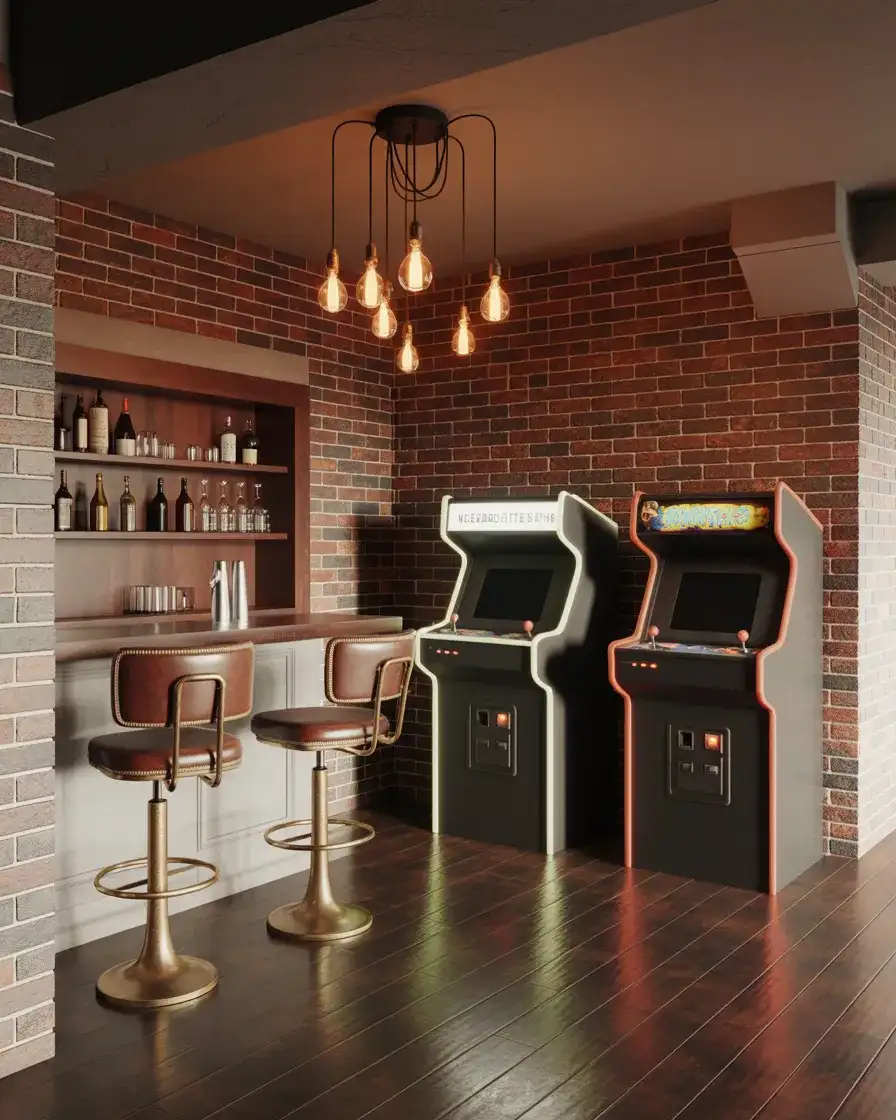
Midwest and Southern homeowners with unfinished basements are uniquely positioned for this build. A 400-square-foot basement can be transformed into a fully functional arcade bar for roughly $8,000 to $15,000 including bar build-out, flooring, and one or two arcade cabinets—a fraction of what the same renovation would cost in a coastal city. Arcade1Up and antique mall hunting are both legitimate sourcing strategies depending on your budget and patience level.
19. The Classy Monochromatic Gaming Library
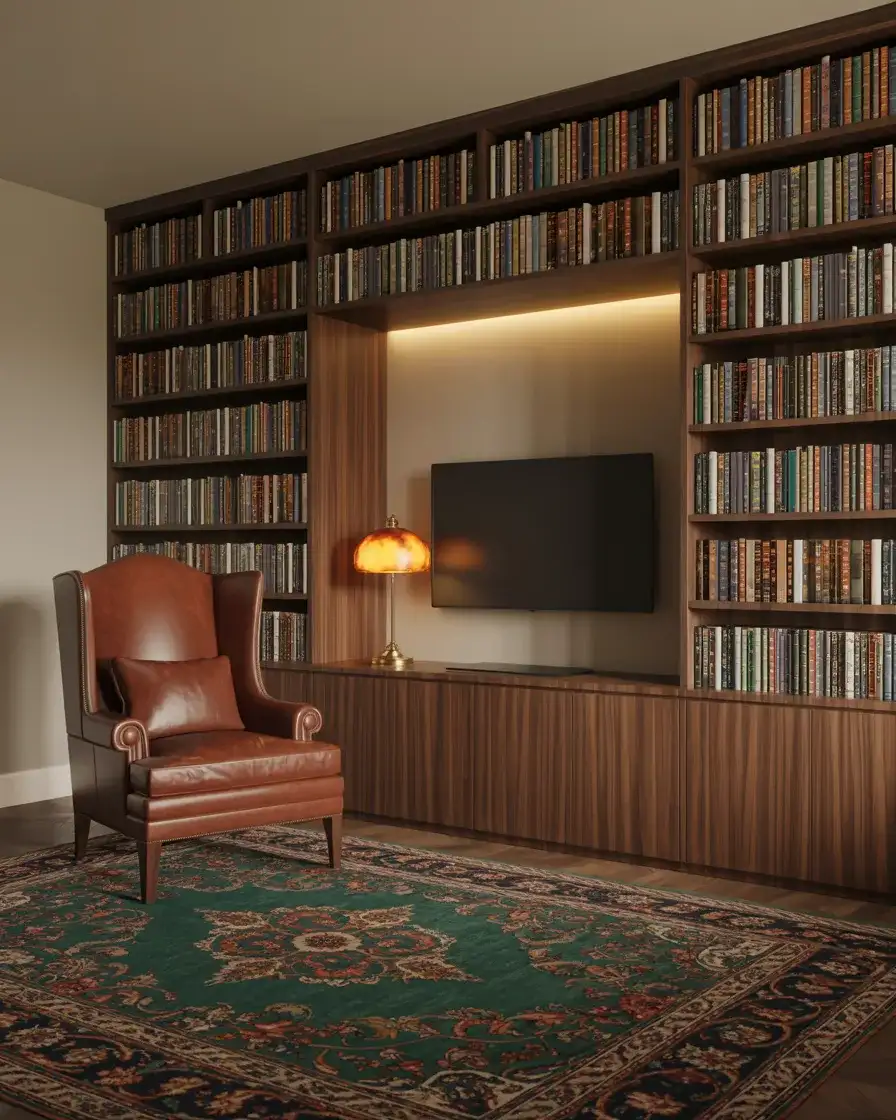
One of the most sophisticated and underexplored gaming room concepts is the gaming library—a room that leads with books, art, and intellectual curiosity, with gaming infrastructure woven in rather than centered. Floor-to-ceiling bookshelves flank a fireplace or media wall. A classy leather wingback chair sits beside an end table with a gaming controller discreetly stored in the drawer. The monitor, when present, folds or slides away. This approach speaks directly to ideas for adults who love gaming but have no interest in their home reading as a gamer’s home.
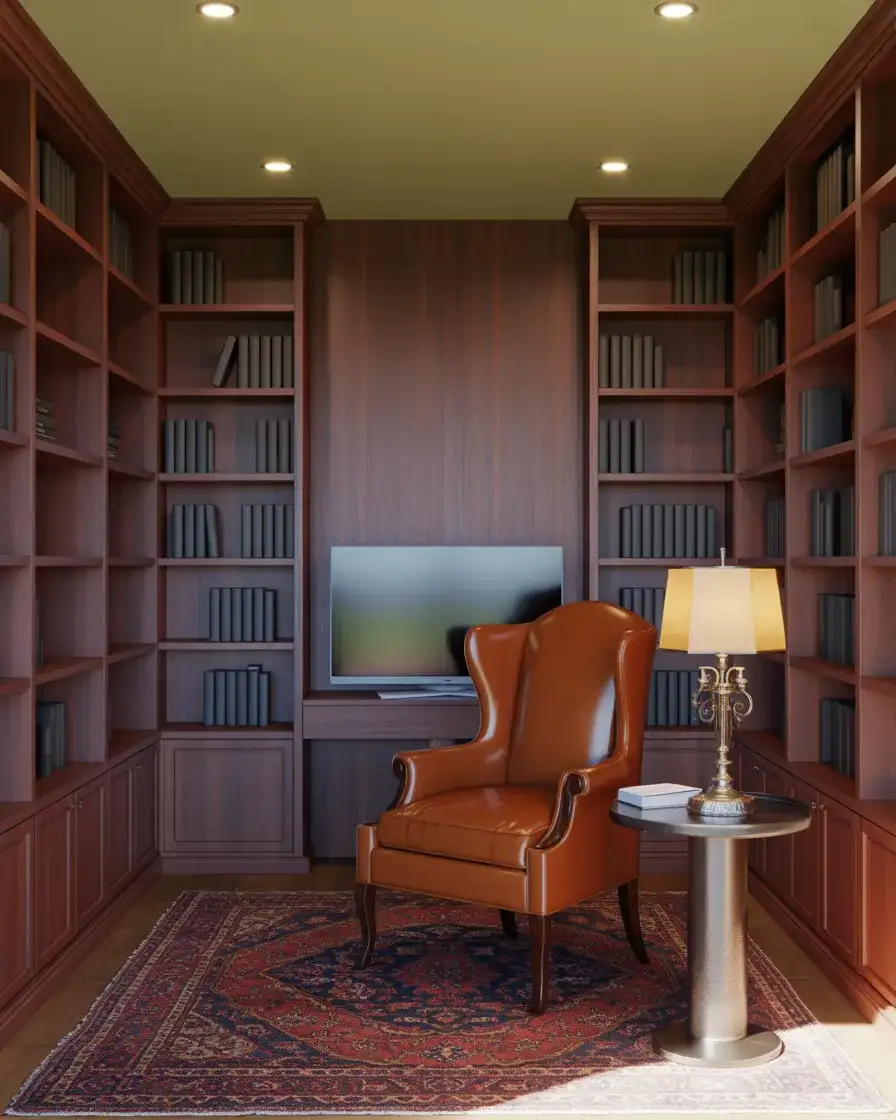
Interior designers refer to this as “concealed utility”—the art of making functional elements disappear when not in use. A monitor on a motorized lift, a console behind a cabinet door, and a keyboard tucked in a pullout drawer can transform in 30 seconds from a reading room to a gaming station. The investment in concealment hardware typically runs $500 to $1,500 but pays off in everyday livability and in the way guests perceive your space—which matters more to many homeowners than they’d like to admit.
20. The Cozy Nook Floor Setup
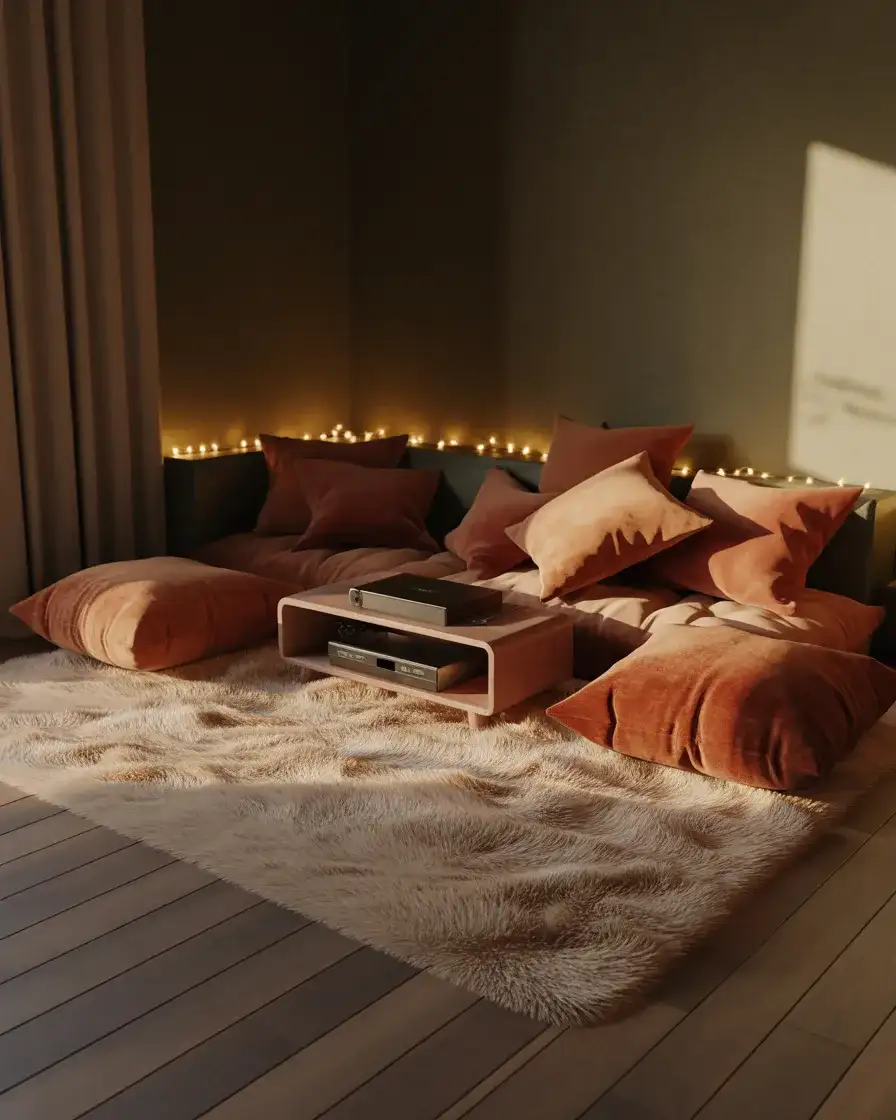
There’s a deeply satisfying kind of gaming that happens on the floor—cross-legged on a thick rug, controller in hand, back against a plush floor cushion with a low screen ahead. The floor setup gaming nook embraces this fully, creating a dedicated low-level zone within a room that feels deliberately casual and cozy. Oversized floor cushions, a large area rug in a warm neutral, a low media console or TV riser, and string lights or a floor lamp create a nook that feels like the most comfortable place in the house.
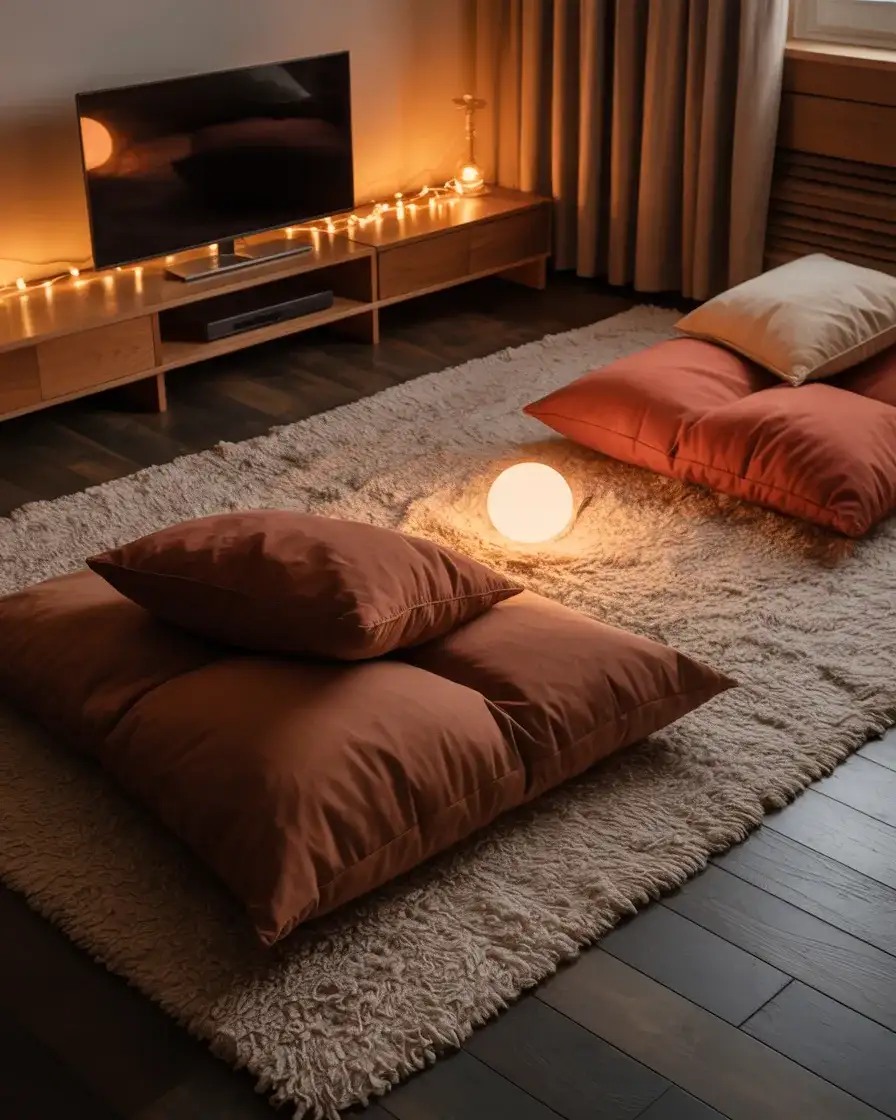
This setup is particularly popular among apartment dwellers in cities like New York, San Francisco, and Chicago, where square footage is limited and flexibility is essential. The floor nook requires no permanent installation, can be packed away entirely in minutes, and costs very little to build. A quality large area rug ($150–$300), four floor cushions ($20–$40 each), and a low TV stand ($80–$150) are all you need to create a gaming zone that punches well above its price point in terms of comfort and visual warmth.
21. The Industrial Dark Gaming Studio
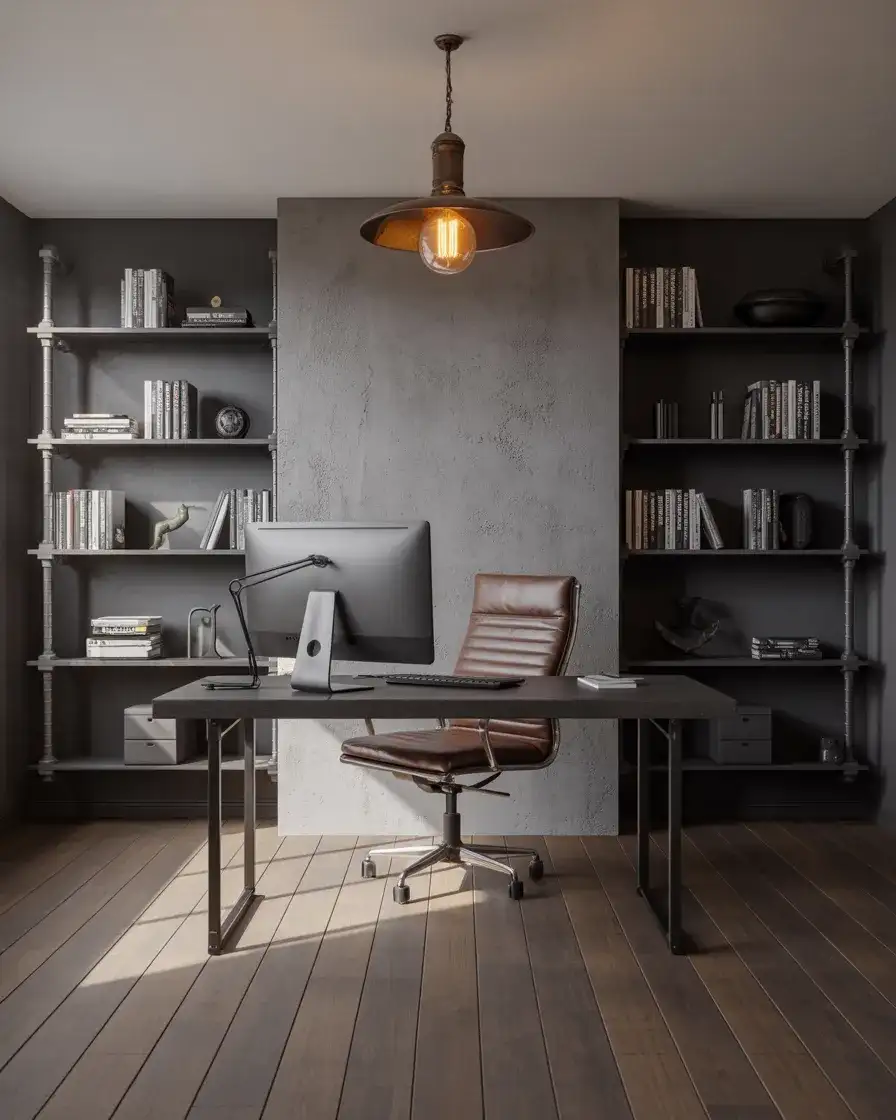
Raw concrete, exposed pipes, matte black metal, and rough-hewn wood—the industrial aesthetic translates surprisingly well into a gaming studio environment, particularly for adults who want a space that feels urban, serious, and creative. The modern industrial gaming room design leans into contrast: a dark metal-framed desk against a raw concrete or faux-concrete accent wall, a leather task chair, Edison pendant lighting, and open pipe shelving that doubles as display storage. Design ideas that push this look tend to come from loft-dwelling city gamers who blur the line between work and play.
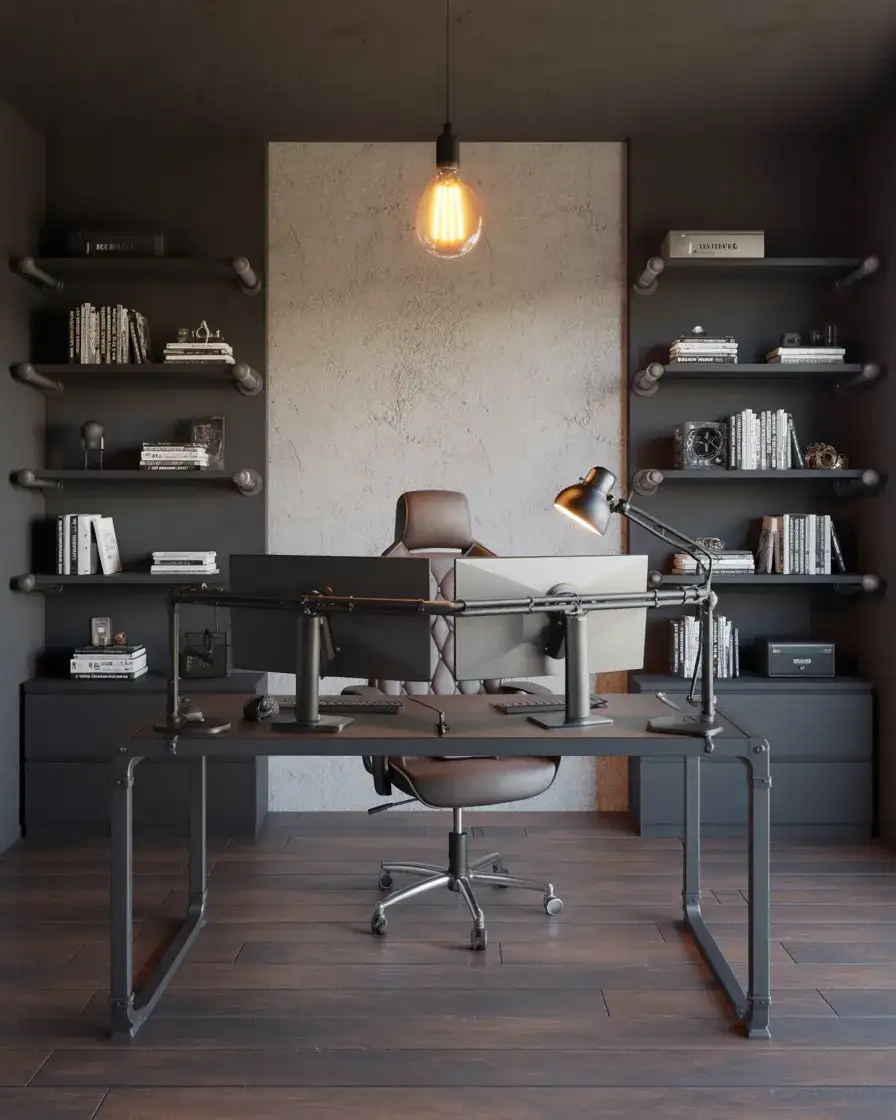
The industrial aesthetic is extremely forgiving for DIYers. Pipe shelving can be assembled from hardware store components for $60 to $120 per shelf unit—far cheaper than retail alternatives. Faux concrete wallpaper runs $30 to $80 per roll and installs in an afternoon. Black metal spray paint transforms basic furniture hardware instantly. If you’re building this look on a budget, the combination of affordable materials and high visual impact makes it one of the most rewarding gaming room styles to execute yourself.
22. The Organized Gaming Room with Smart Storage
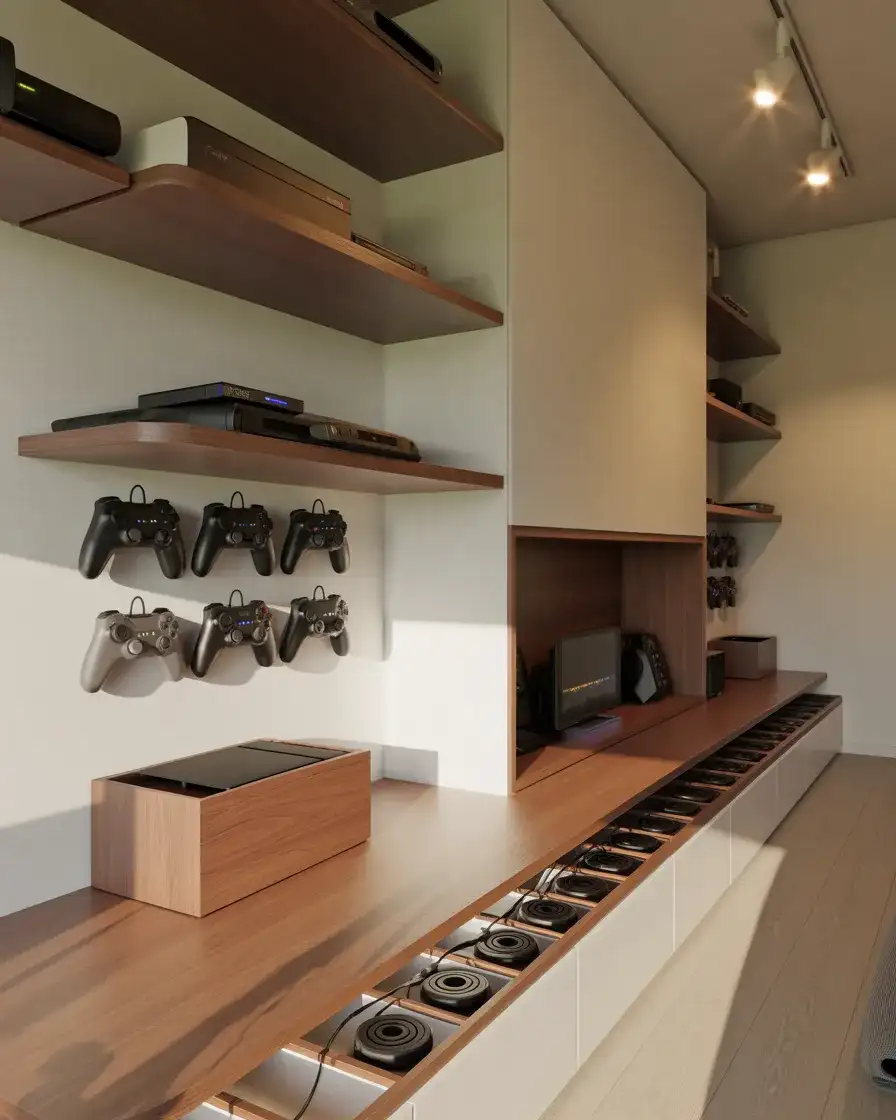
The most functional gaming rooms—the ones that stay beautiful after the first week—are built around storage as a design feature, not an afterthought. Ideas for cozy adults that prioritize organization include floating shelves with dedicated zones for each console generation, drawer inserts for cable management, wall-mounted controller hooks, and charging stations disguised as décor. A room where everything has a specific home is a room that takes two minutes to tidy, which means it actually stays tidy—a bigger luxury than most decorating decisions you’ll ever make.
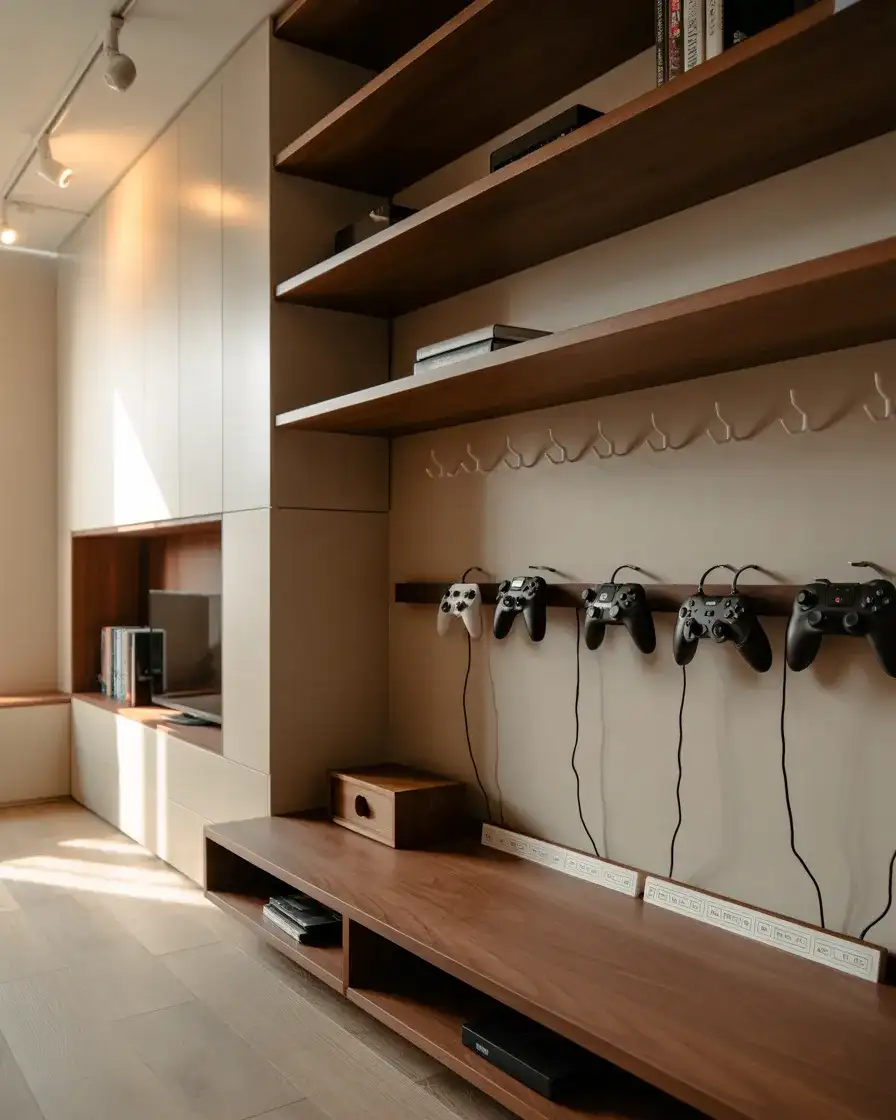
Real homeowners who’ve documented their gaming room organization journeys consistently point to the pegboard as a game-changer. A 24-by-48-inch painted pegboard installed behind the desk—available at any hardware store for under $30 — provides more flexible storage than almost any retail product at any price point. Hooks for headsets, clips for cables, small shelves for accessories, and a spot for frequently used items all come together in a system that’s infinitely adjustable as your setup evolves. Start there before buying anything else.
Conclusion
Whether you’re pulling together your first dedicated gaming space or finally committing to the room you’ve been dreaming about for years, there’s genuinely no wrong place to start—just the idea that resonates with your real life, your actual home, and the way you want to feel when you walk through that door. Drop a comment below and tell us which of these 22 looks speaks to you most, or share what your gaming room looks like right now. We’d love to see where you’re starting from and where you’re headed.