Western home decor is experiencing a powerful renaissance in 2026, blending the rugged charm of frontier living with modern sensibilities that resonate deeply with American homeowners. From Pinterest boards overflowing with ranch-style inspiration to curated searches for moody and edgy interpretations of the cowboy aesthetic, this design movement speaks to our collective yearning for authenticity and connection to heritage. Whether you’re drawn to rustic timber beams, antique leather accents, or contemporary takes on Southwestern patterns, Western decor offers endless possibilities for creating spaces that feel both timeless and refreshingly current. In this article, you’ll discover twenty-two inspiring ideas that span every room and style preference, helping you bring the spirit of the American West into your home with confidence and creativity.
1. Ranch-Style Living Room with Leather and Timber
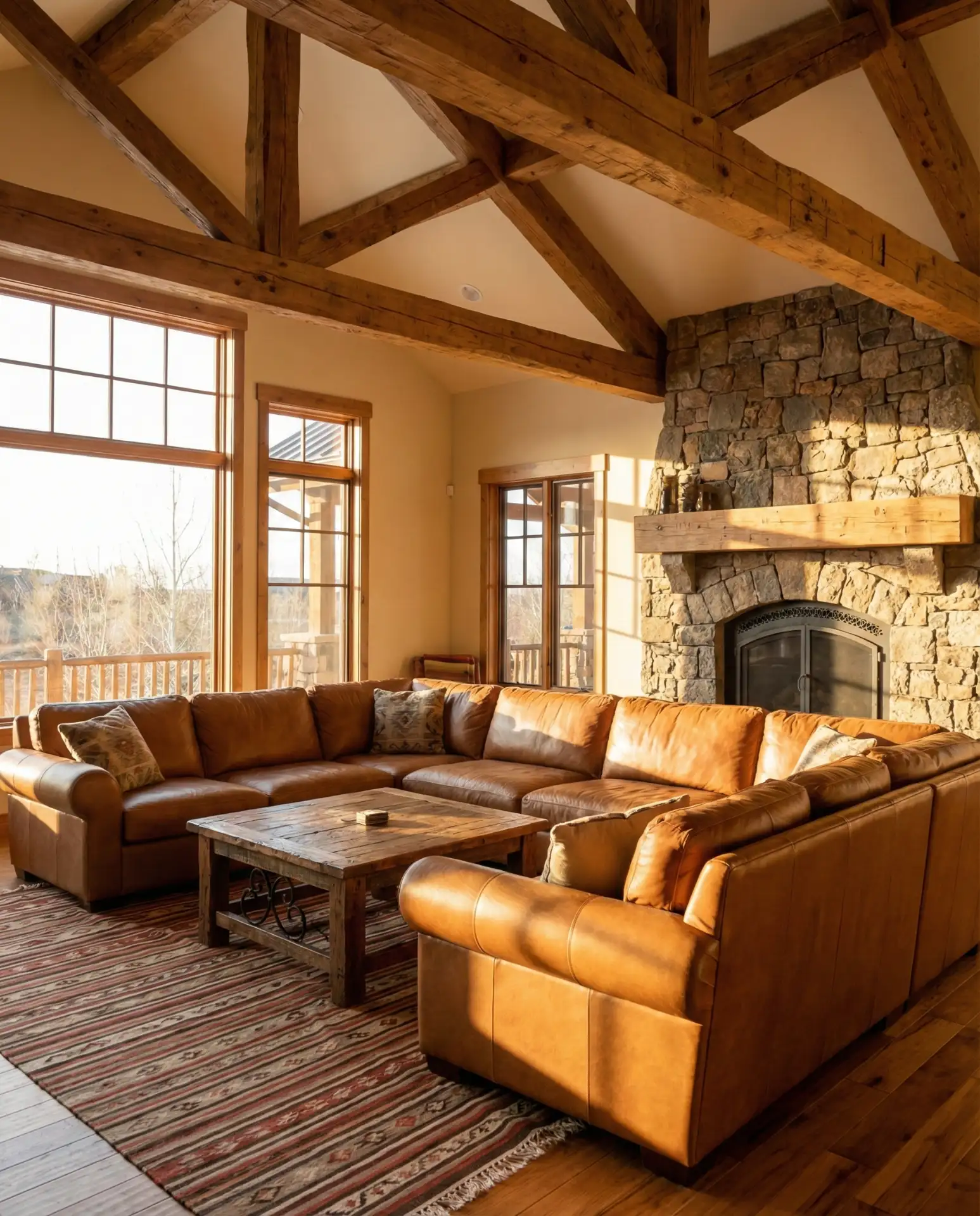
The foundation of any authentic ranch-style living room begins with substantial timber ceiling beams and a well-worn leather sofa that anchors the space. This approach draws directly from working cattle ranches, where furniture needed to withstand daily use while maintaining an understated elegance. Pair these elements with a stone fireplace surround and vintage Navajo textiles draped over seating to create layers of rustic warmth. The key is balancing rugged materials with thoughtful arrangement—avoid overcrowding the room, letting each piece breathe and tell its own story.
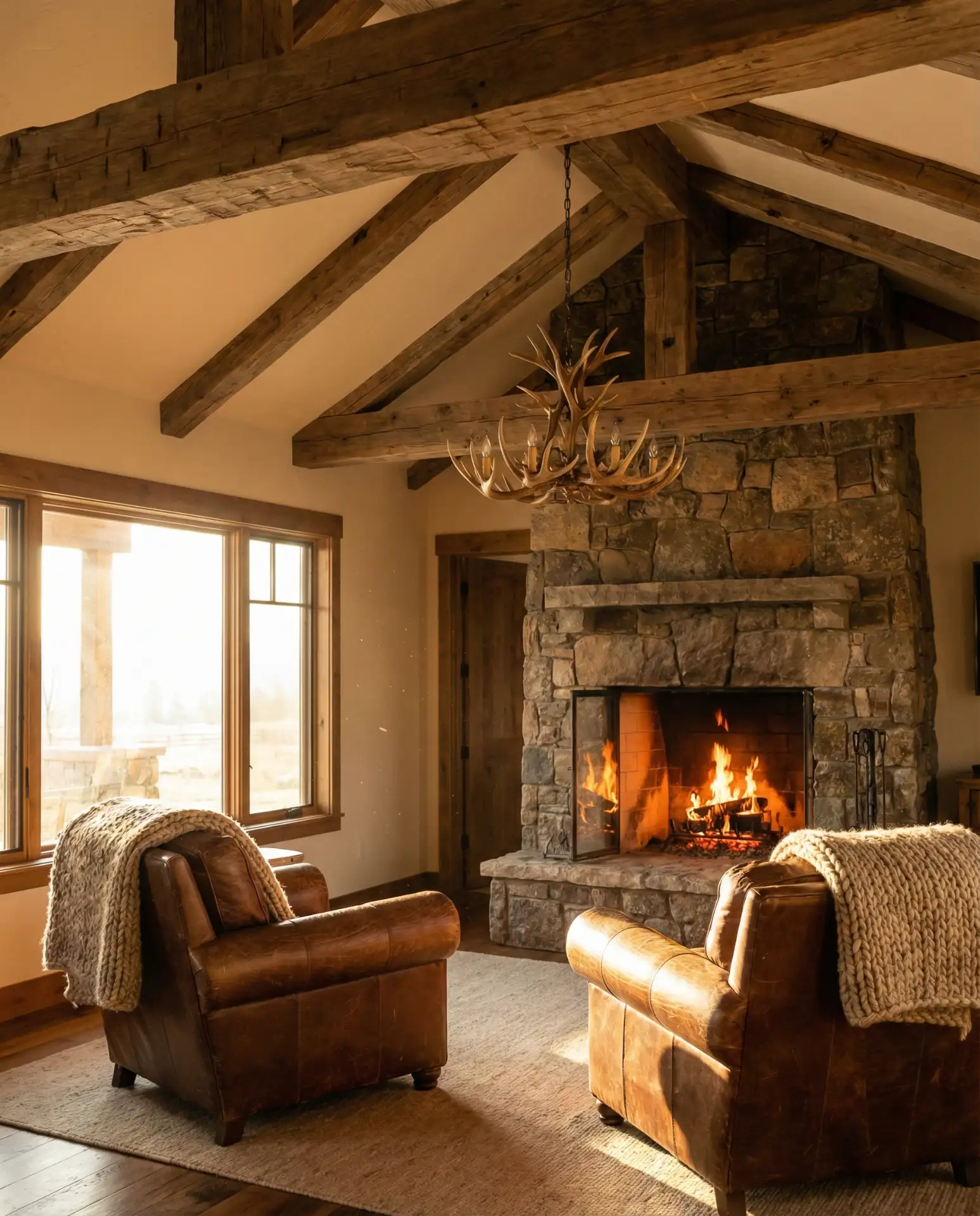
This style works exceptionally well in suburban homes with high ceilings where homeowners want to capture the openness of western landscapes without sacrificing comfort. The natural patina that develops on quality leather over time adds character that synthetic materials simply cannot replicate. Consider sourcing reclaimed barn wood for accent walls or ceiling treatments—many salvage yards across Texas, Montana, and Colorado offer authenticated materials with documented provenance. This attention to authenticity transforms a decorated room into a space with genuine soul.
2. Subtle Western Accents in Modern Spaces
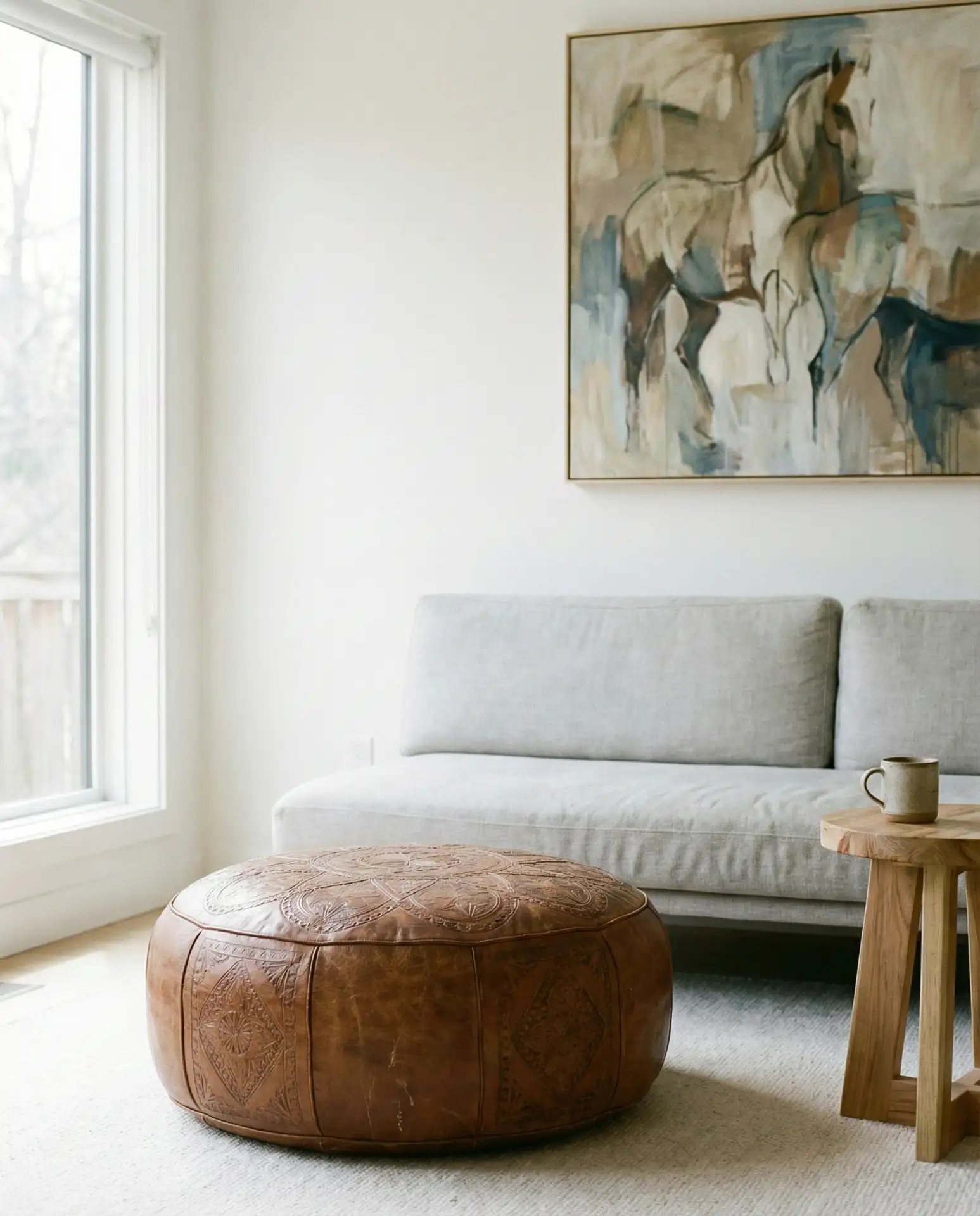
Not every western interior requires full commitment to frontier aesthetics—subtle nods to the tradition can be equally impactful in contemporary homes. Think of incorporating a single statement piece like a tooled leather ottoman, a collection of vintage spurs displayed in shadow boxes, or minimalist line drawings of horses in sleek black frames. These restrained touches allow homeowners to honor western heritage without overwhelming clean-lined modern architecture. The approach resonates particularly well with younger buyers who appreciate the narrative richness of western design but prefer visual restraint.
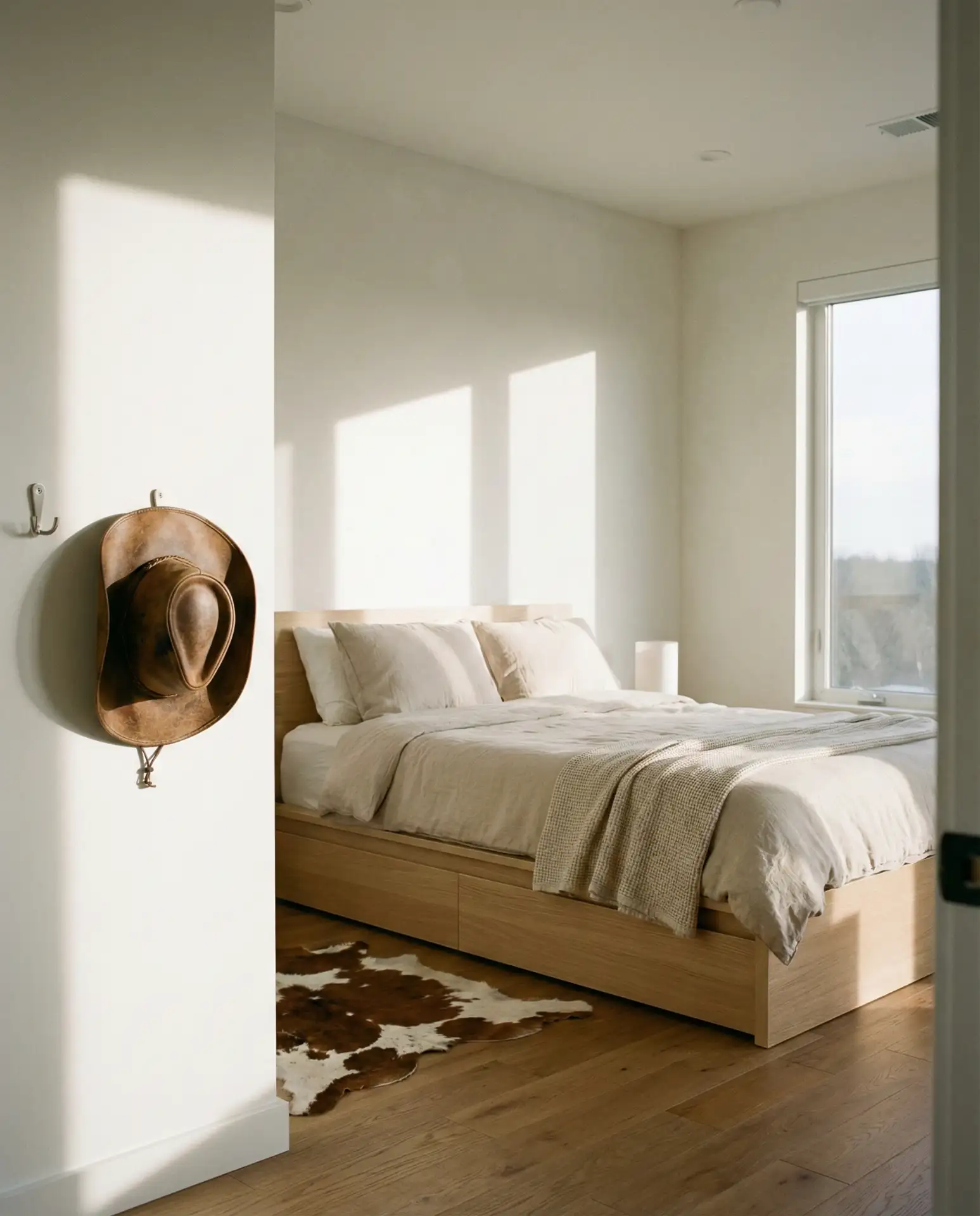
Many homeowners make the mistake of mixing too many western motifs at once, creating a themed appearance rather than an integrated design. The solution is editing ruthlessly—choose one or two meaningful pieces and let them stand alone against a neutral backdrop. This restraint actually amplifies their impact while maintaining the sophisticated atmosphere of modern interiors. Budget-conscious decorators can start with affordable finds like vintage bandanas framed as art or repurposed horseshoes serving as bookends.
3. Gothic Western Bedroom with Dark Romance
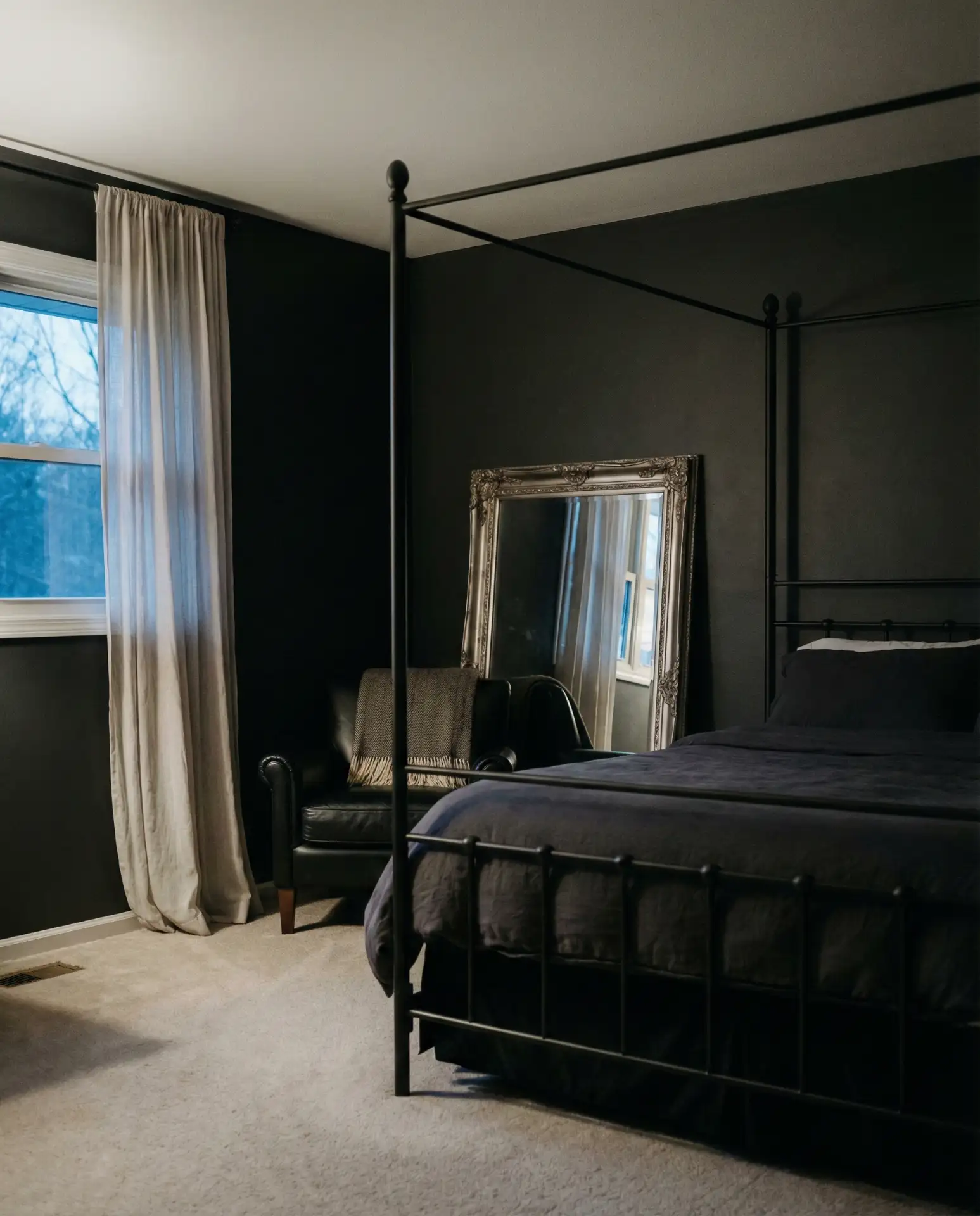
The intersection of gothic sensibilities and western design creates unexpectedly compelling bedrooms filled with drama and depth. Imagine a wrought-iron four-poster bed draped with black velvet, paired with oxidized metal sconces and aged leather trunks serving as nightstands. This dark interpretation moves beyond conventional western palettes into territory that feels both haunting and deeply romantic. Incorporating elements like bleached cow skulls, tarnished silver mirrors, and charcoal-hued Pendleton blankets completes the moody atmosphere.
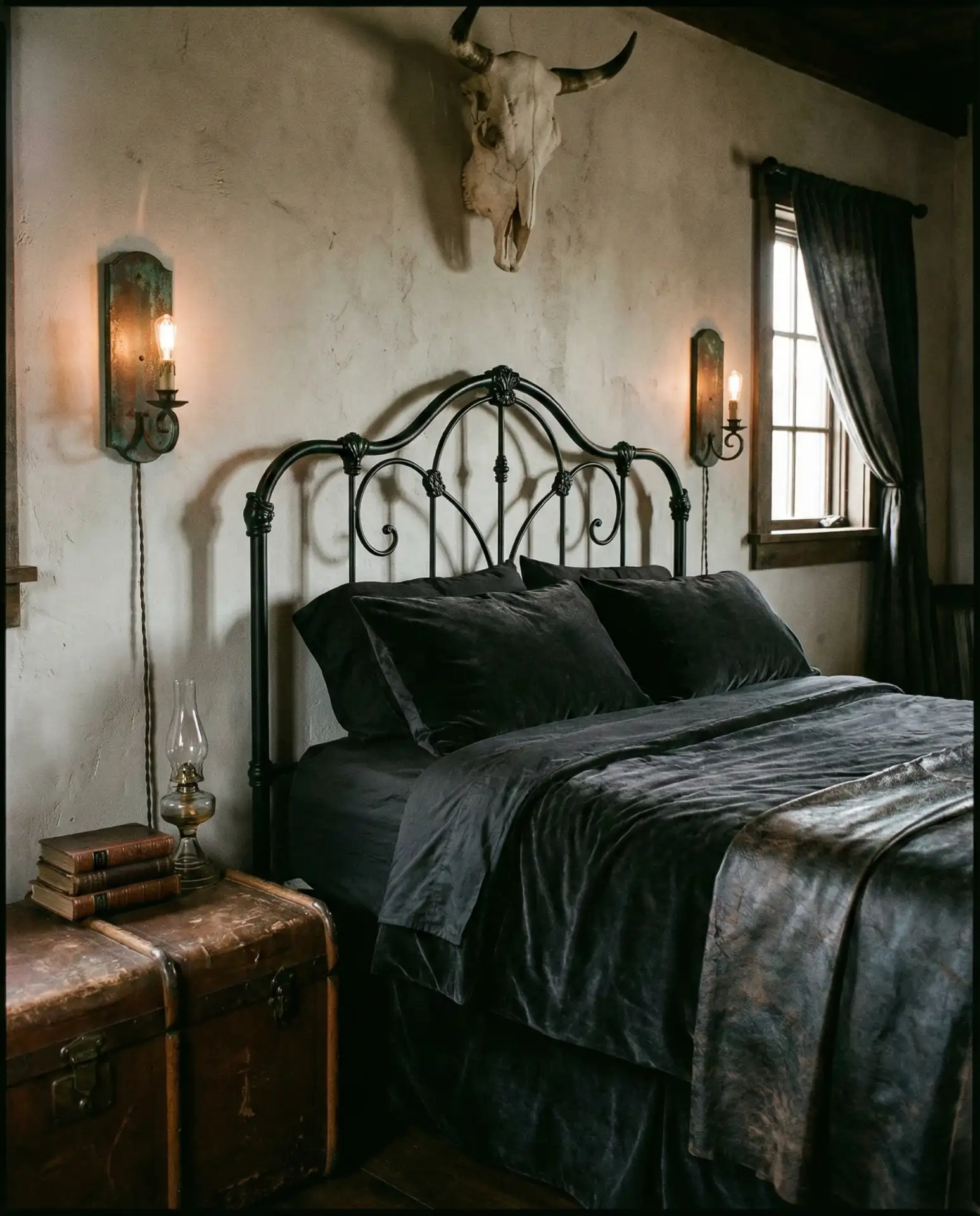
Real homeowners pursuing this aesthetic often begin by painting walls in deep charcoal or espresso tones, then layering in metallic accents and textured textiles to prevent the space from feeling oppressive. The gothic western bedroom particularly appeals to individuals in urban lofts or converted industrial spaces where the existing architecture already leans toward dramatic. Vintage shops in Santa Fe and Marfa frequently stock the exact type of distressed metal furnishings and ecclesiastical-inspired lighting that makes this look authentic rather than costume-like.
4. Ranch-Style Kitchen with Open Shelving
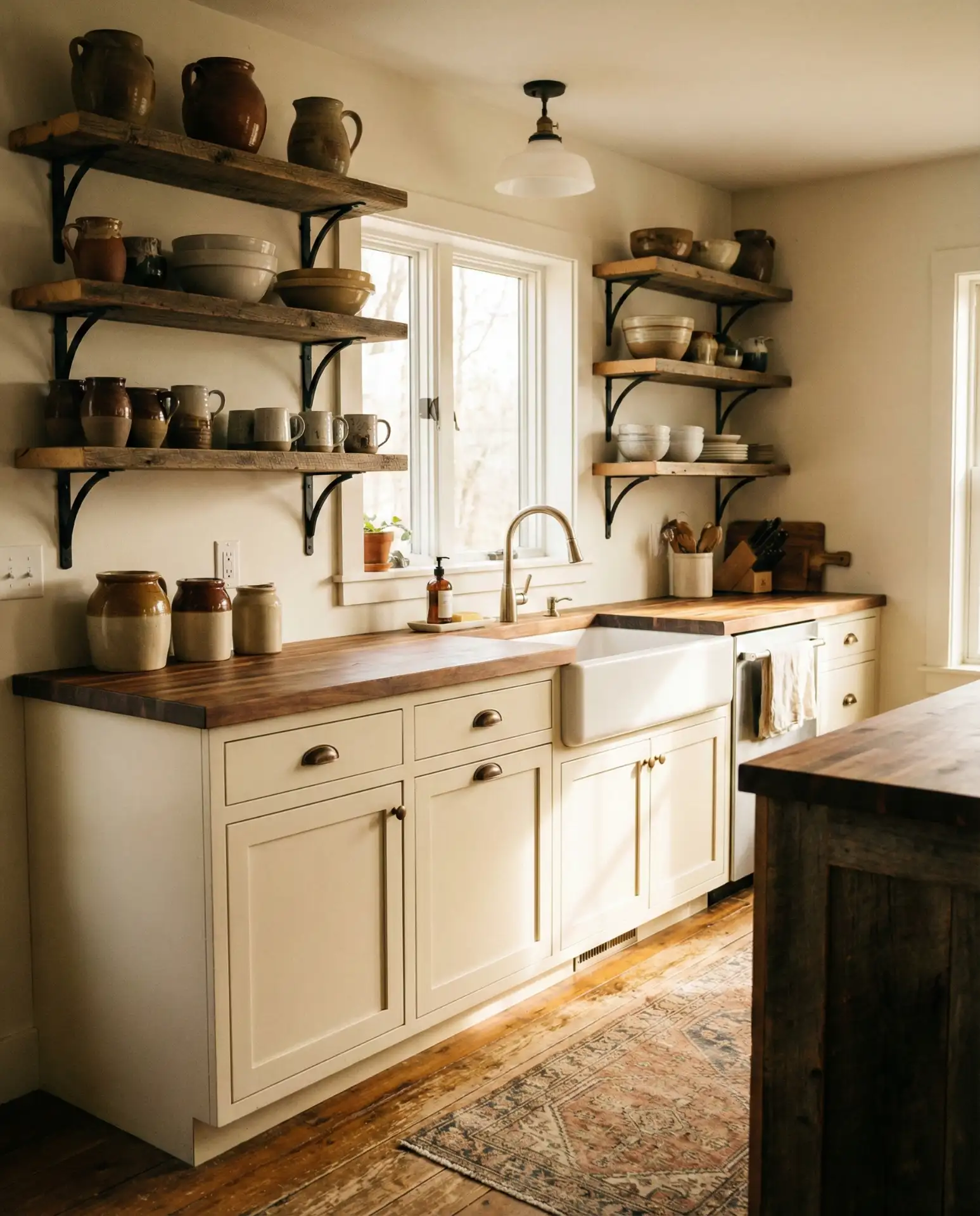
A ranch-style kitchen celebrates functionality and honest materials through exposed shelving crafted from reclaimed barn wood and iron brackets. Replace upper cabinets with these open displays to showcase earthenware pottery, vintage enamelware, and copper cookware that doubles as decoration. The aesthetic draws from historic ranch cookhouses, where every implement needed to be within easy reach and built to last generations. Complement the shelving with a farmhouse sink, butcher block countertops, and simple shaker-style lower cabinets in weathered sage or cream.
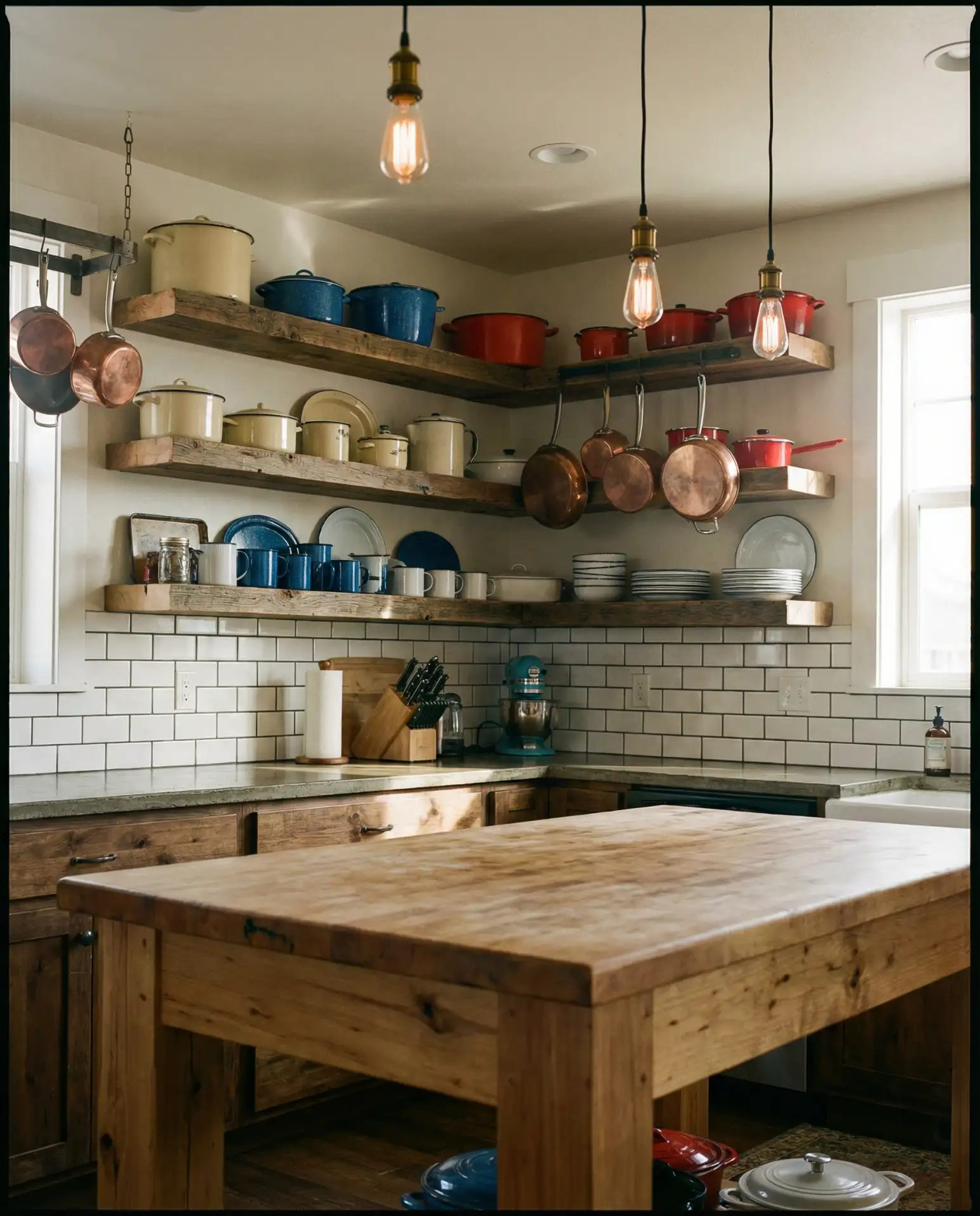
This kitchen style works best in homes with good natural light, as the open shelving requires disciplined organization to avoid visual clutter. Expert designers recommend limiting displayed items to those you actually use regularly, rotating seasonal pieces to keep the arrangement fresh. The approach typically costs less than traditional cabinetry, with quality reclaimed wood shelving ranging from two hundred to five hundred dollars per linear foot installed, depending on your region and material source.
5. DIY Western Wall Art Projects
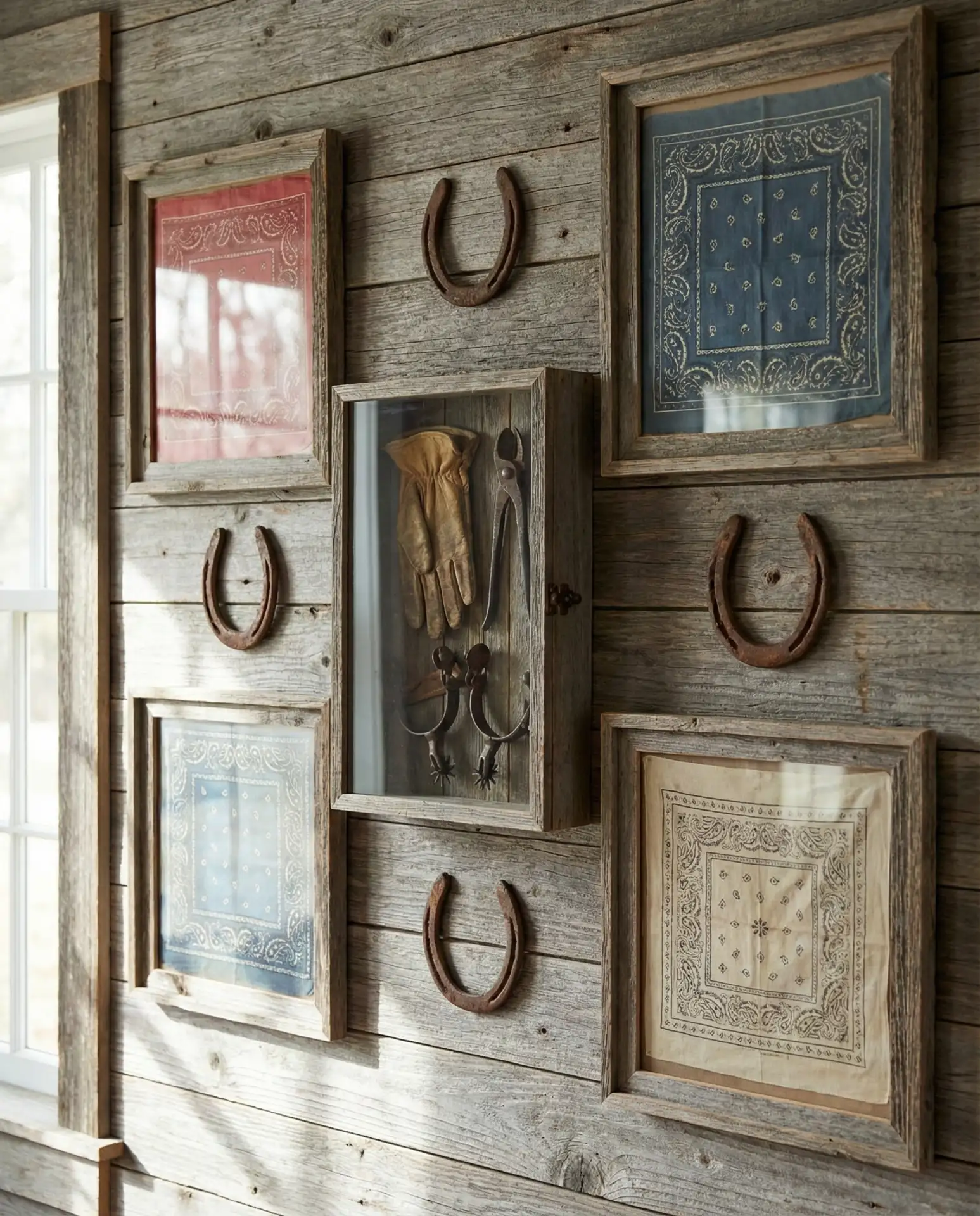
Creating your own western wall art through DIY projects offers both budget savings and personal connection to your decor. Simple crafts like framing vintage bandanas in mismatched thrift-store frames, mounting weathered horseshoes in geometric patterns, or creating shadow boxes with inherited ranch ephemera bring authentic character to blank walls. These projects require minimal skill but deliver maximum impact when grouped in thoughtful arrangements. The handmade quality actually enhances the western aesthetic, which values craftsmanship and personal history over perfection.
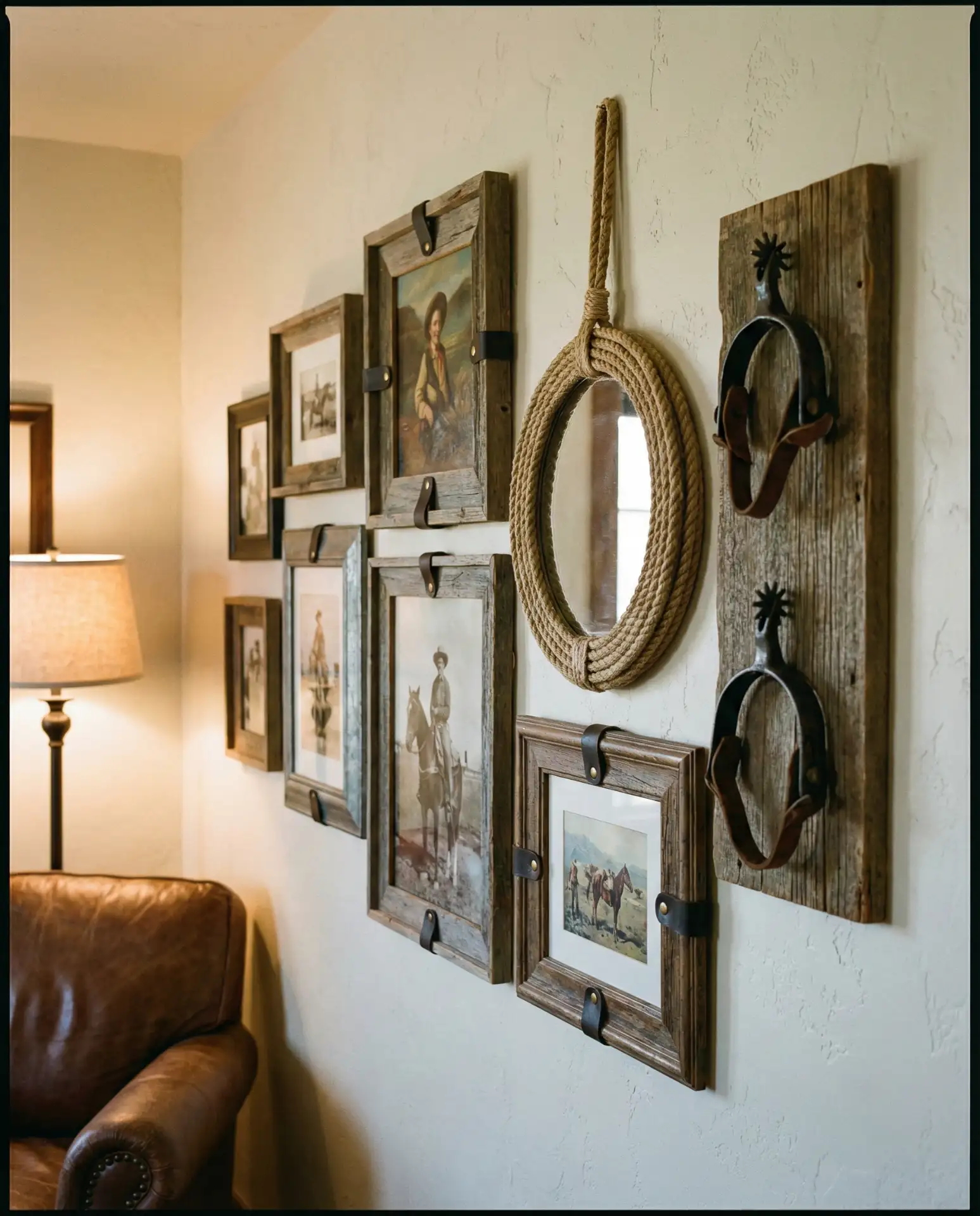
A design consultant I spoke with in Austin mentioned that her clients consistently underestimate how much personality these DIY elements bring compared to mass-produced alternatives. The imperfections and variations inherent in handmade pieces create visual interest that generic store-bought art cannot match. Online tutorials for western-themed macramé wall hangings, burned wood signs with livestock brands, and framed pressed wildflowers from western states have seen tremendous engagement on platforms like Pinterest throughout 2025 and into this year.
6. Country Western Dining Room
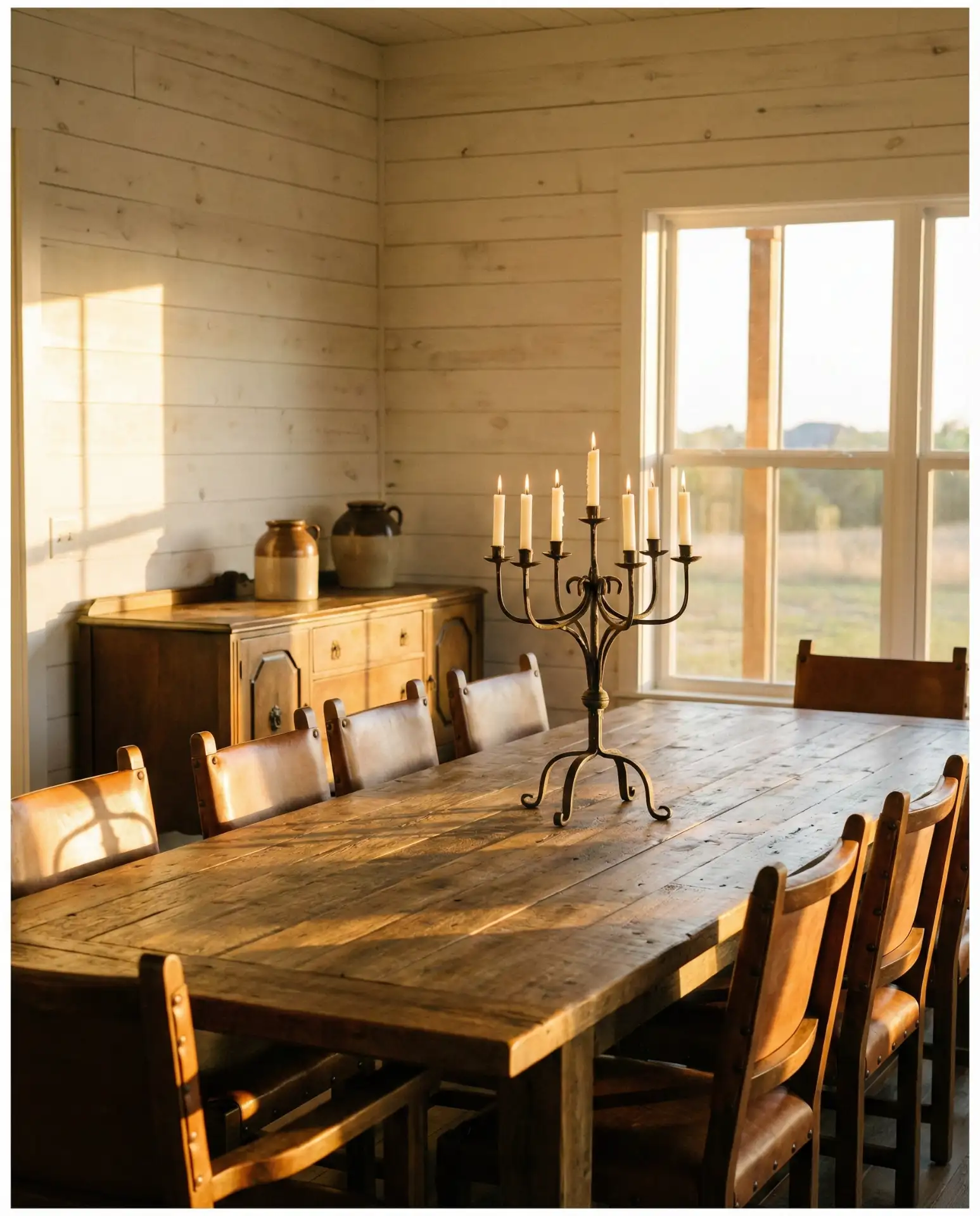
A country western dining room centers around a substantial wood table—ideally constructed from a single slab of native timber—surrounded by mismatched vintage chairs that tell individual stories. This approach reflects the communal gathering spaces of historic ranches, where form followed function and meals brought together hired hands, family, and neighbors. Layer in wrought-iron light fixtures, simple cotton or linen table runners in neutral tones, and perhaps a corner hutch displaying heirloom dishware. The goal is to create a space that encourages long conversations and generous hospitality.
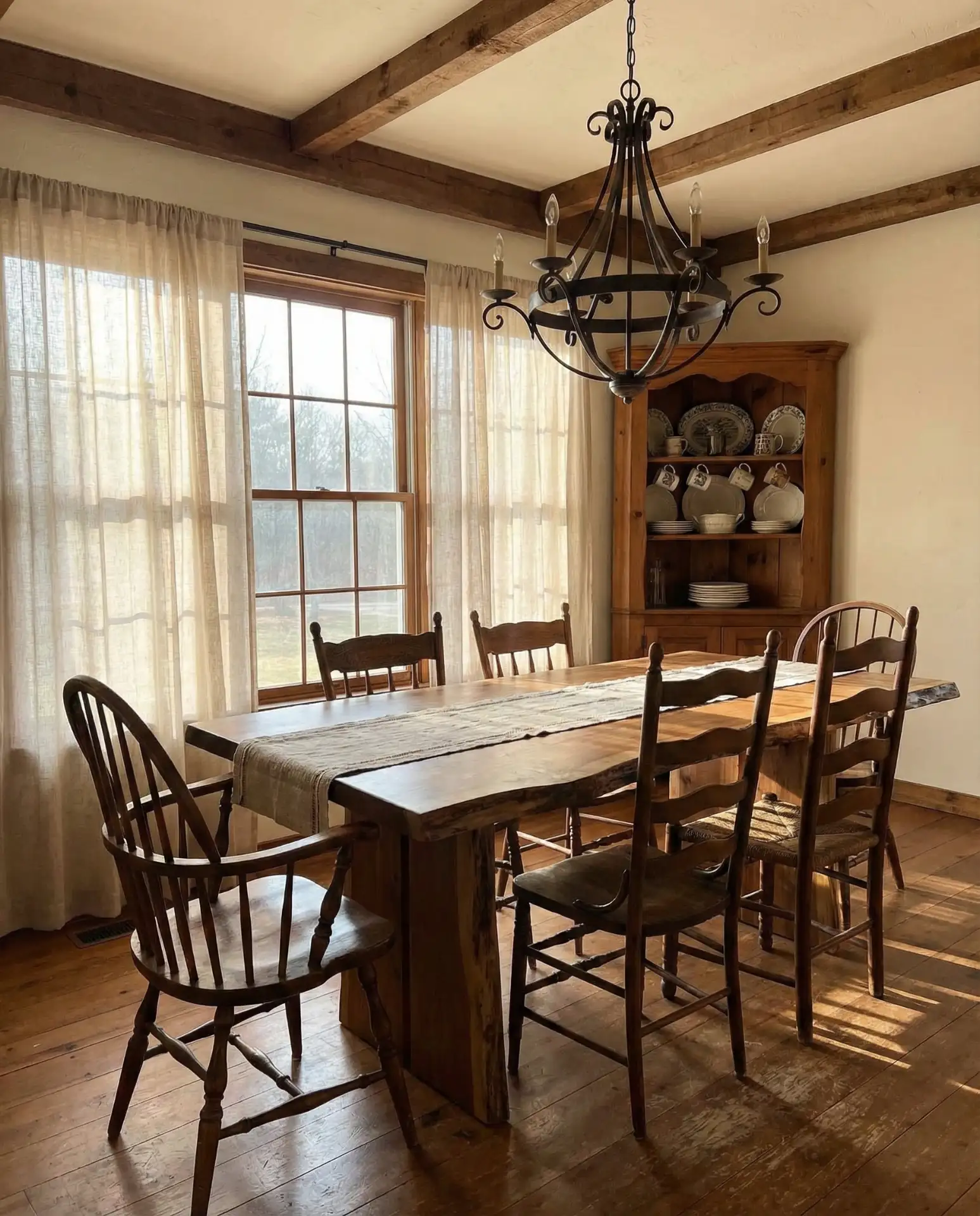
Throughout the Mountain West and Southwest regions, homeowners increasingly seek tables crafted by local artisans using regionally sourced wood like Utah juniper or Texas mesquite. These custom pieces typically range from eighteen hundred to four thousand dollars depending on size and wood species, but they become family heirlooms that actually appreciate in both monetary and sentimental value. The investment makes particular sense for those who view their dining room as the heart of home life rather than occasional-use space.
7. Antique Western Collectibles Display
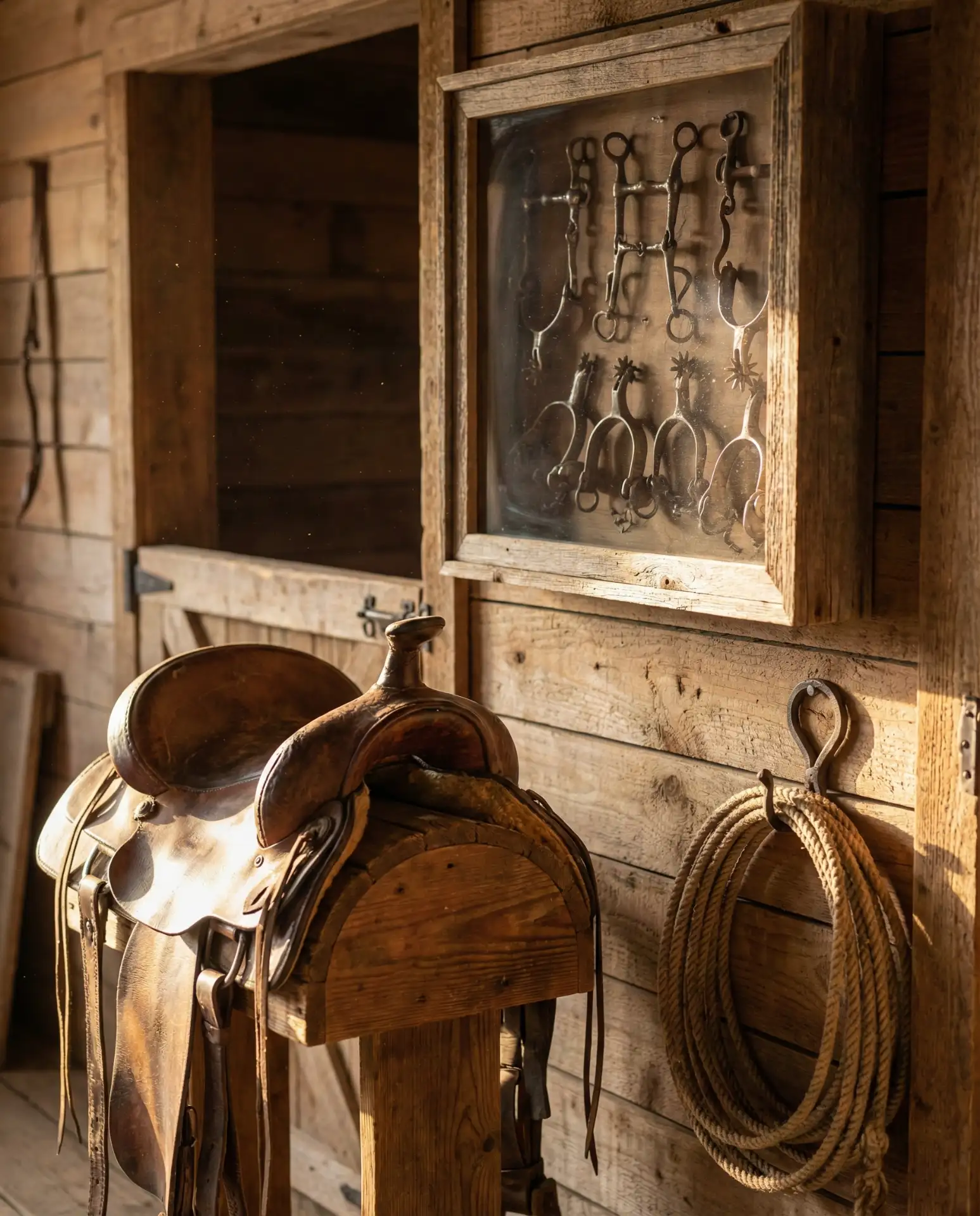
Showcasing authentic antique western collectibles transforms utilitarian objects into conversation-worthy art installations. Arrange vintage bridles, cast-iron branding irons, weathered wooden stirrups, and tarnished spurs on floating shelves or within glass-fronted cabinets where their sculptural qualities can be appreciated. These pieces carry genuine history from America’s frontier era, and their display honors the craftsmanship and labor they represent. The patina and wear patterns on authentic antiques provide textural richness that reproductions simply cannot replicate.
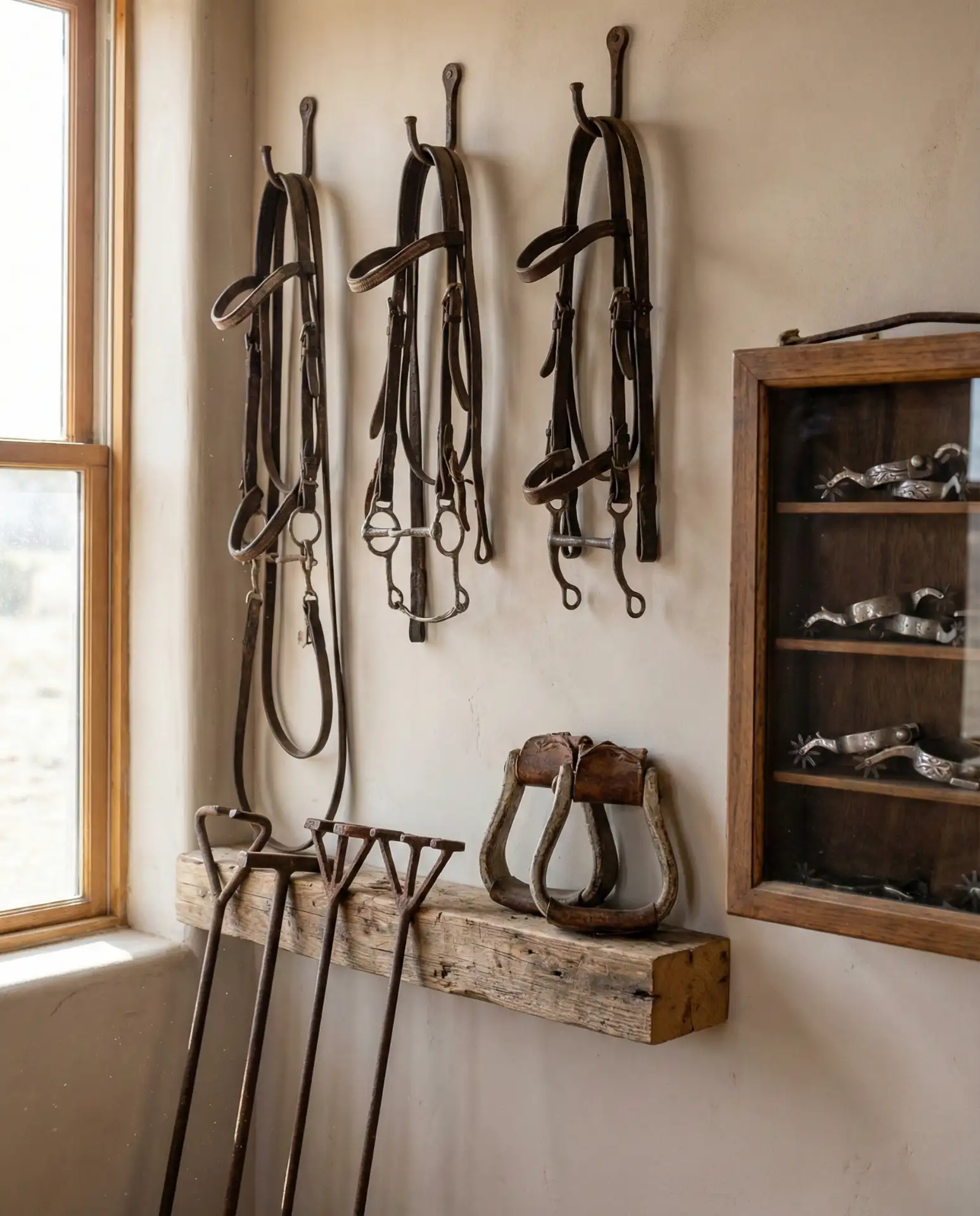
Common mistakes include overcrowding displays or mixing authentic antiques with cheap reproductions, which dilutes the impact of genuine pieces. Serious collectors recommend focusing on one or two categories—perhaps only spurs or only branding irons—to create depth rather than breadth. Antique markets in Tucson, Fort Worth, and Cheyenne remain excellent sources for authenticated pieces, though online auction platforms have made building collections more accessible nationwide. Documentation and provenance significantly affect value, so preserve any history that accompanies inherited or purchased items.
8. Ranch-Style Master Bedroom Cozy Retreat
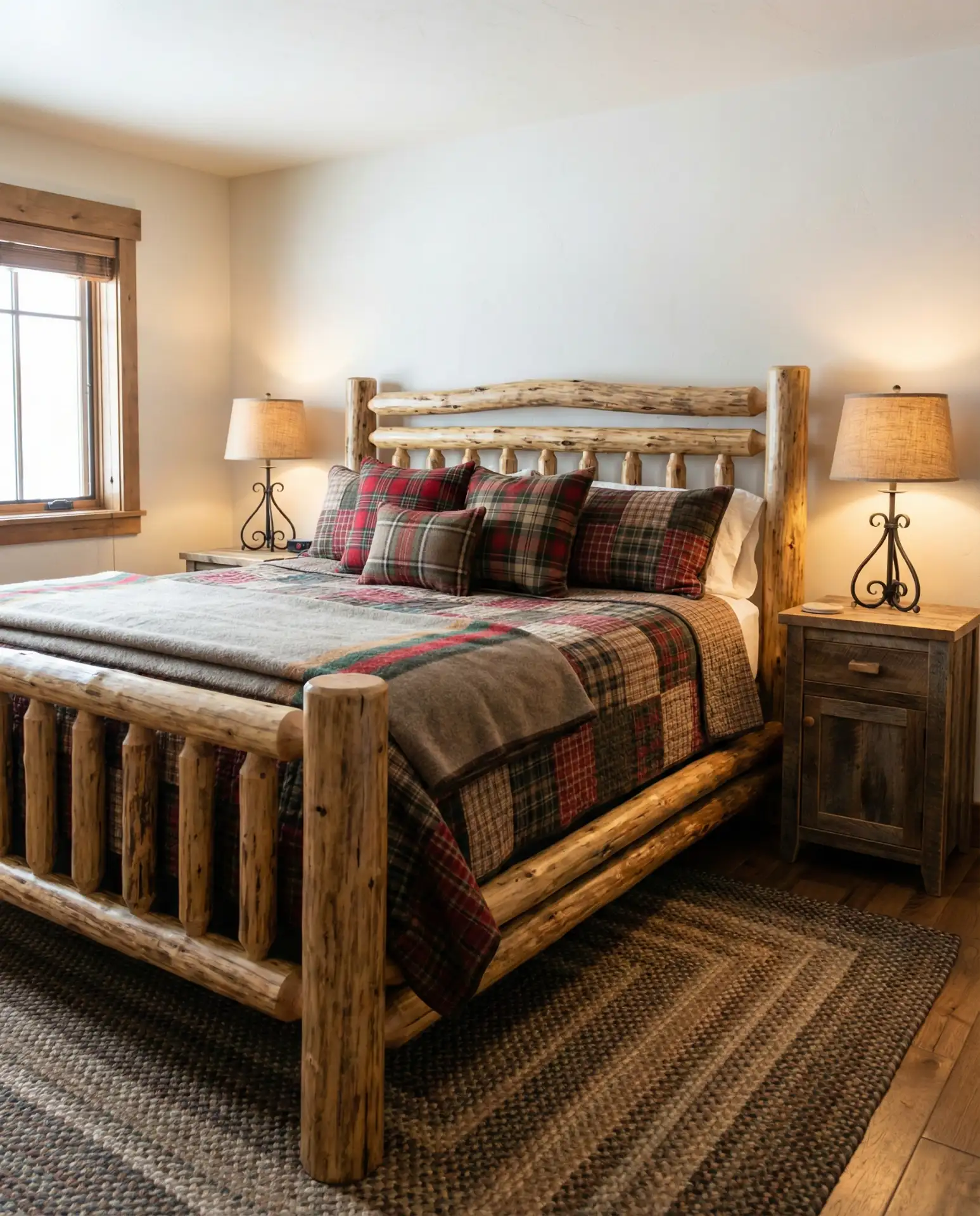
A ranch-style master bedroom’s cozy atmosphere develops through layers of soft textiles and warm wood tones that invite genuine relaxation. Start with a substantial log or timber bed frame, then build up bedding with wool blankets, quilts in muted plaids, and plenty of pillows in varied textures. Incorporate bedside tables crafted from weathered barn wood or tree stumps, topped with rustic iron lamps that cast gentle ambient light. The space should feel like a private refuge that honors Western heritage while prioritizing comfort above all else.
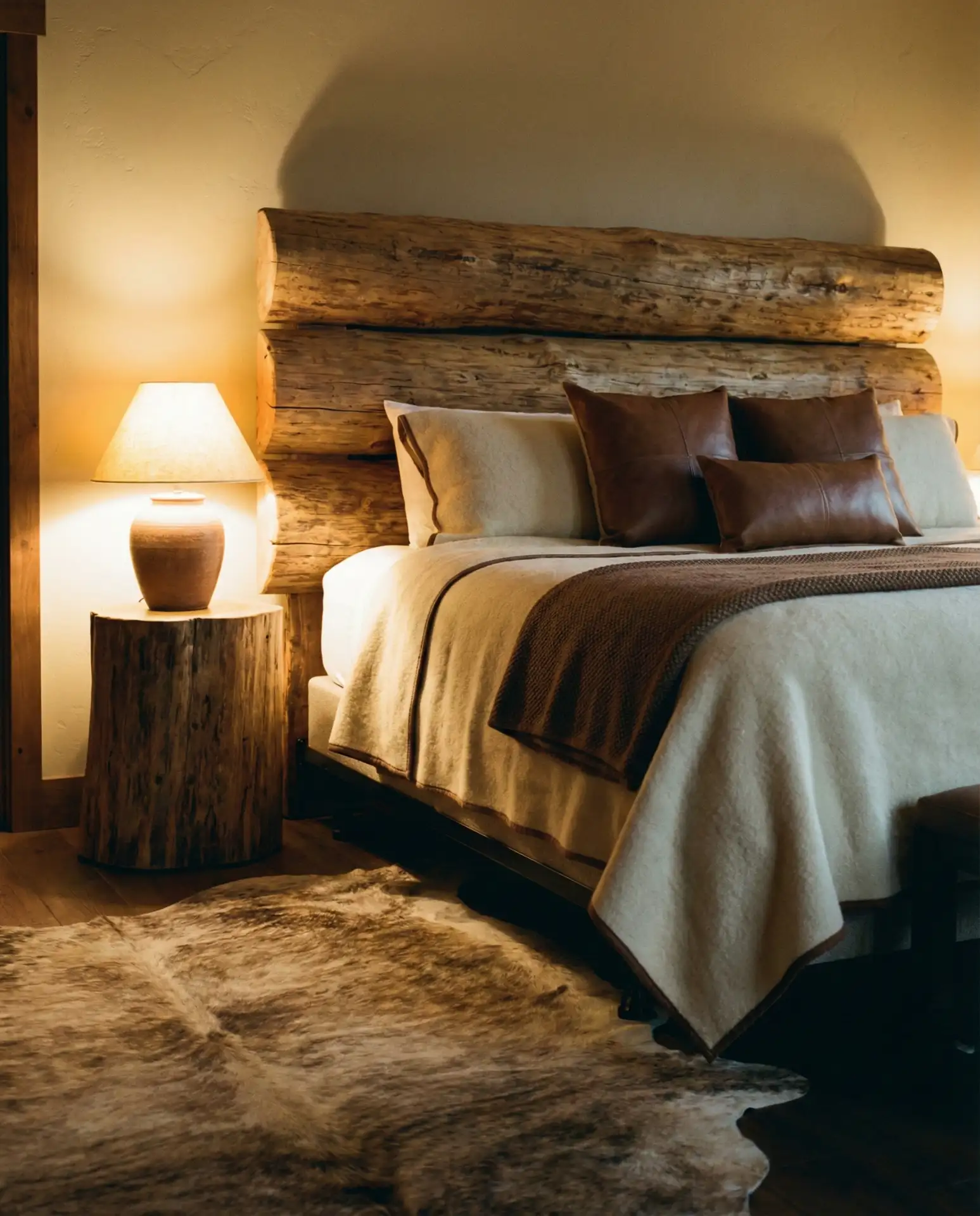
Practical insight suggests installing dimmer switches on all bedroom lighting to adjust ambiance throughout the day and choosing window treatments that block morning sun for those who value sleeping late. The cozy ranch bedroom particularly suits homes in colder climates where the layered textiles provide actual warmth during winter months. Quality wool blankets from Pendleton or Faribault range from one hundred fifty to three hundred dollars but last decades with proper care, making them worthwhile investments in both comfort and aesthetics.
9. Moody Western Home Office
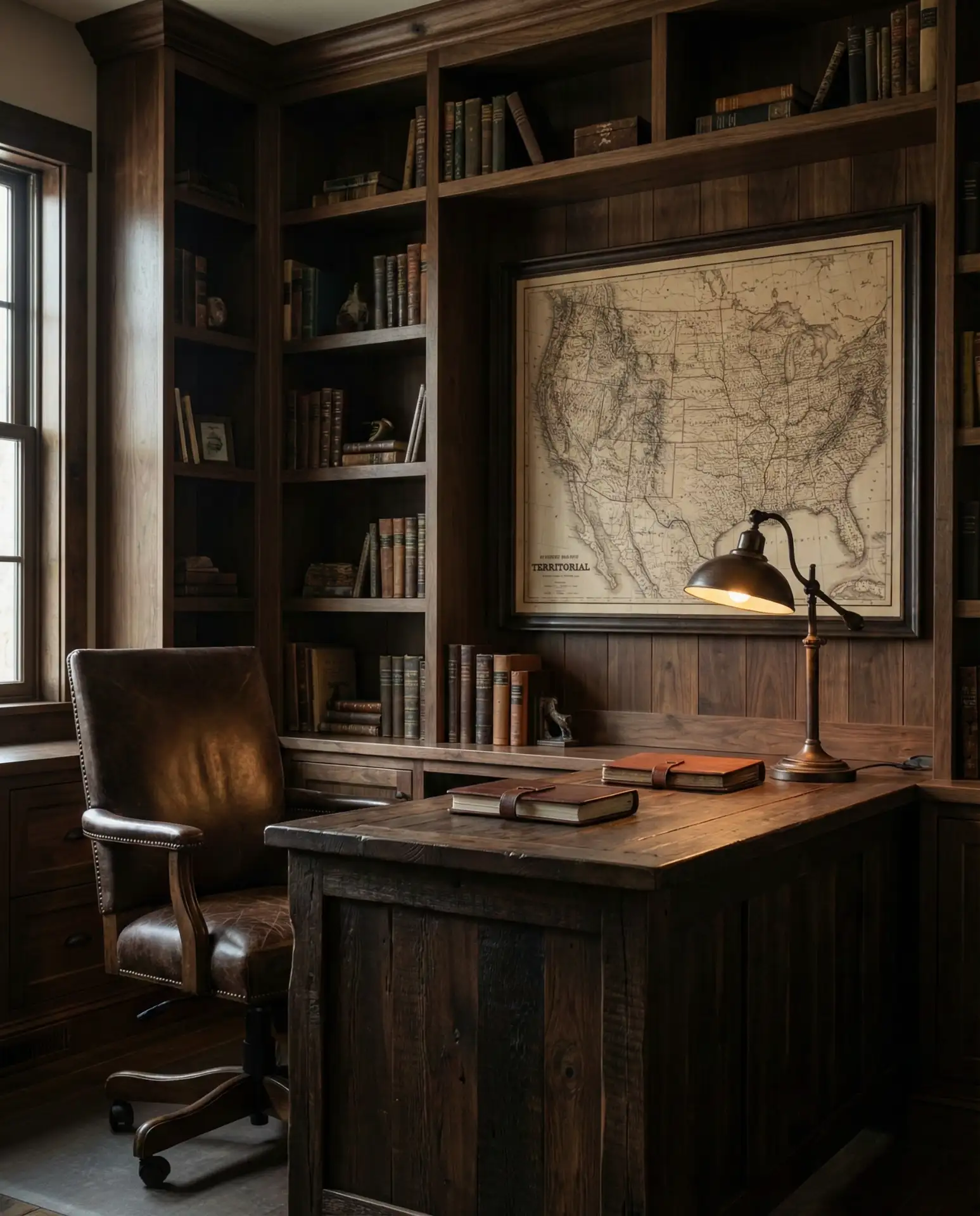
A moody western home office embraces darker wood tones, leather seating, and dramatic lighting to create a space that feels both masculine and contemplative. Anchor the room with a substantial desk made from reclaimed wood or a live-edge slab, pair it with a well-worn leather executive chair, and add floor-to-ceiling bookshelves in a deep walnut or espresso stain. Incorporate vintage maps of western territories, framed black-and-white frontier photography, and iron desk accessories to complete the atmosphere. This environment naturally encourages focused work and serious thought.
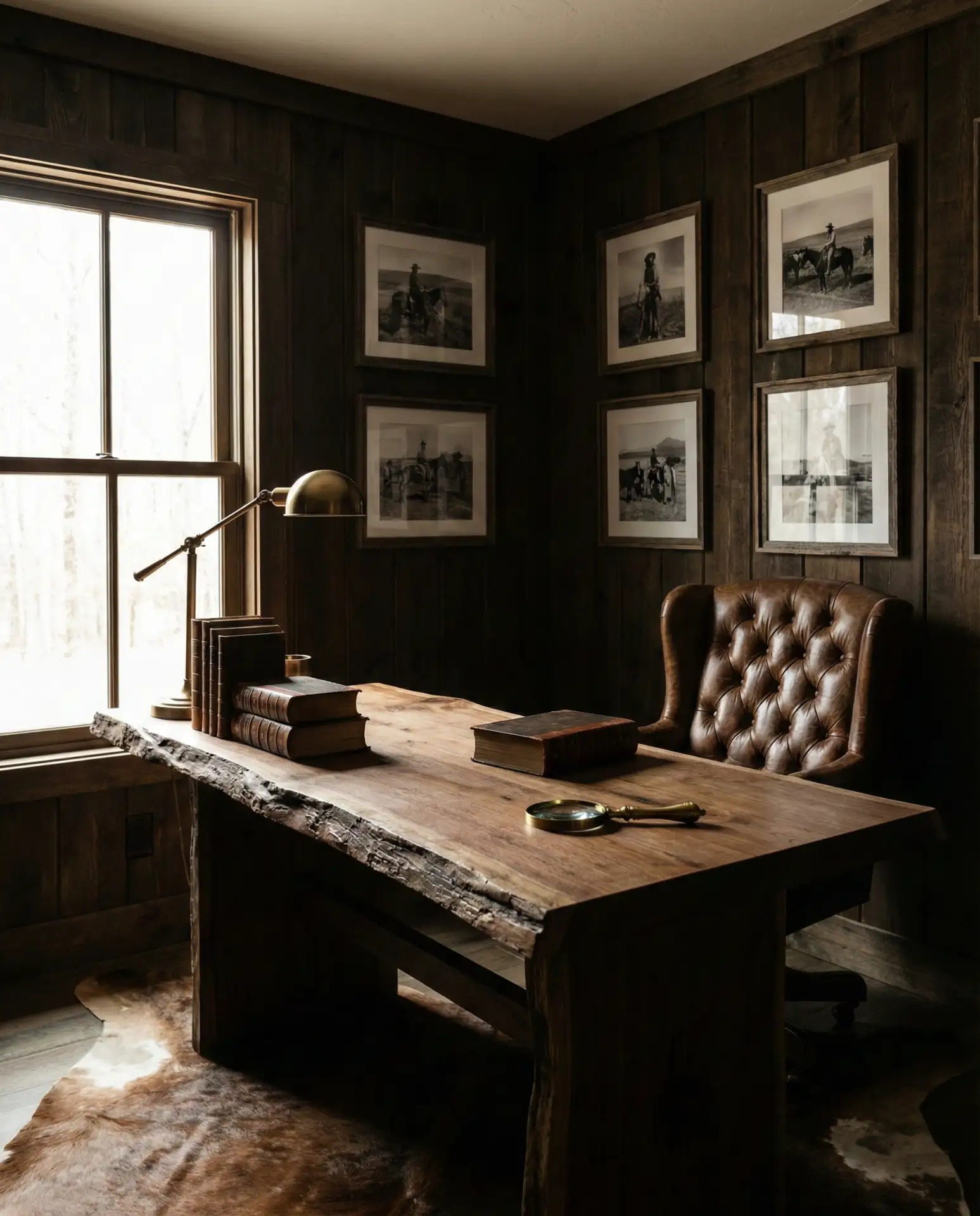
Where this aesthetic works best is in homes with dedicated office spaces rather than multi-purpose rooms, as the dark palette can feel oppressive in smaller areas. Consider painting just one accent wall in charcoal or installing wood paneling on a single surface to achieve the moody effect without overwhelming the space. Budget-conscious professionals can achieve this look gradually, starting with a quality desk chair (ergonomic comfort matters for long work sessions) and building out other elements over time as finances allow.
10. Edgy Black Western Living Space
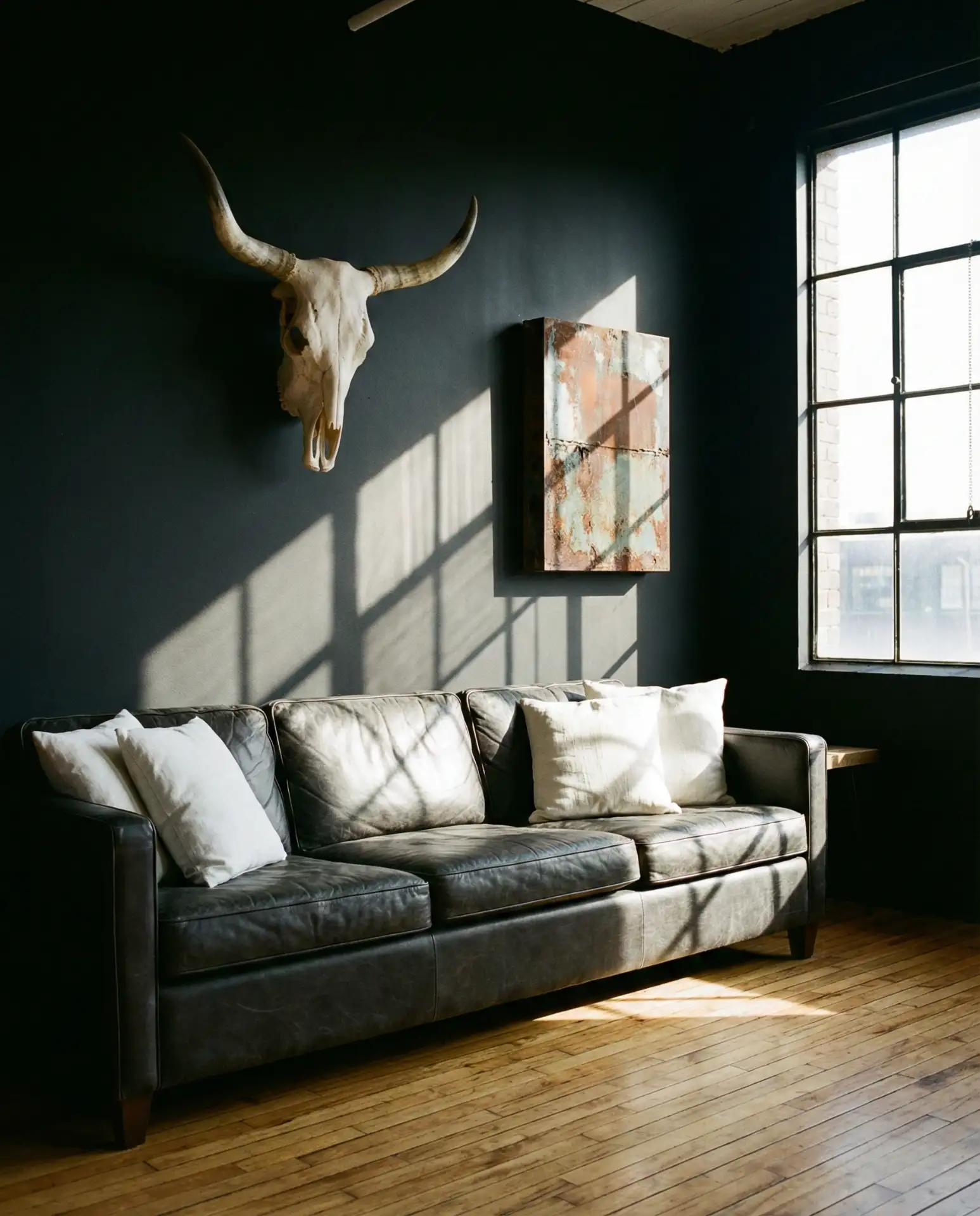
An edgy interpretation of Western design incorporates bold black elements that push the aesthetic into more daring territory. Picture a living room with matte black walls providing a dramatic backdrop for bleached animal skulls, oxidized metal art, and furniture upholstered in charcoal leather or suede. This approach works particularly well when balanced against natural wood floors and strategic placement of white or cream textiles to prevent the space from feeling cave-like. The result feels sophisticated and unexpected—distinctly western but filtered through contemporary sensibilities.
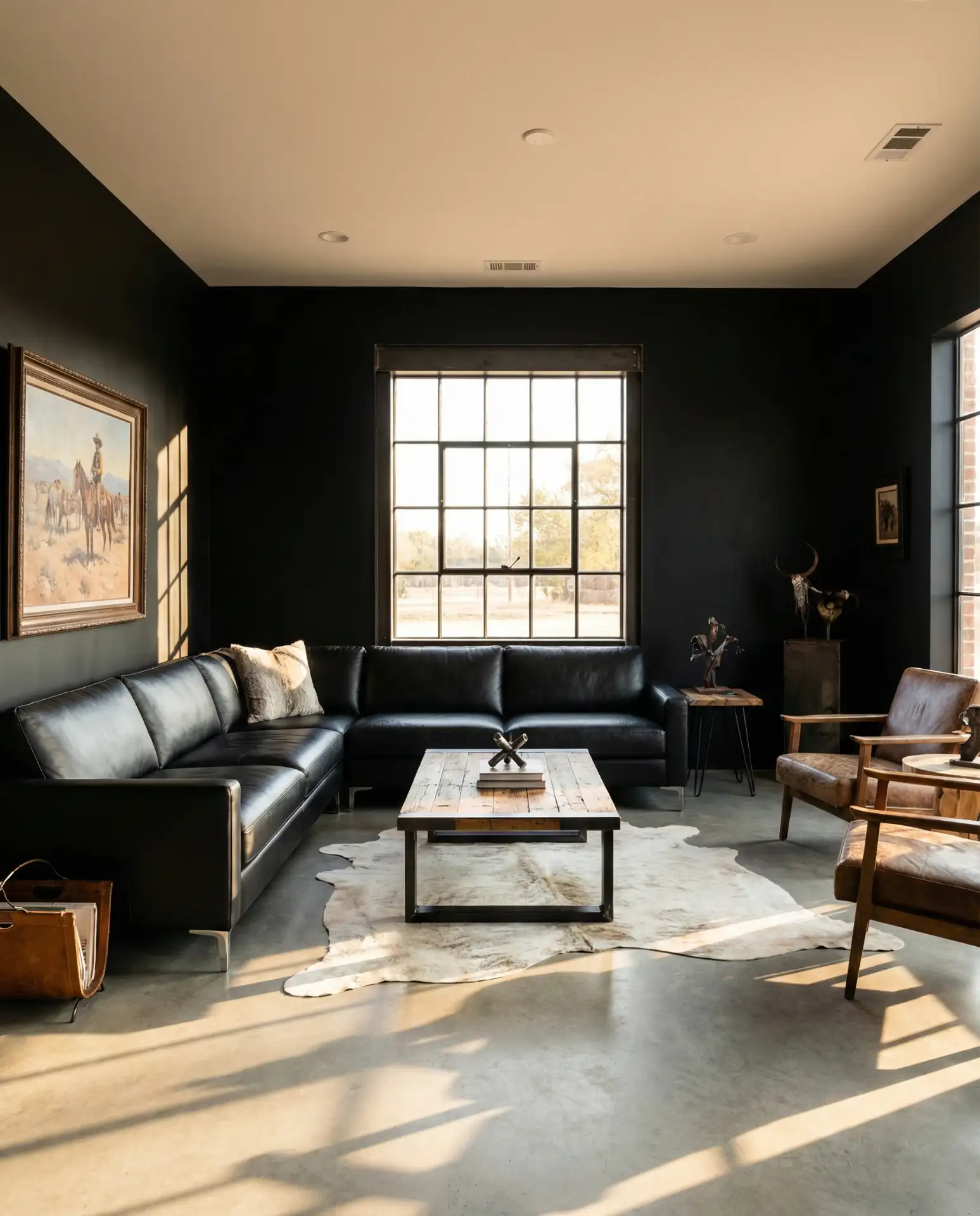
Expert designers caution that this look requires excellent natural lighting or carefully planned artificial lighting to succeed—insufficient light makes black-heavy rooms feel oppressive rather than dramatic. The edgy black western aesthetic particularly resonates with homeowners in urban areas who want to maintain a connection to western heritage while signaling modern sophistication. Installation of black walls typically requires high-quality matte paint and potentially multiple coats, with professional painting services ranging from three to five dollars per square foot in most metropolitan areas.
11. Western Bathroom with Copper Fixtures
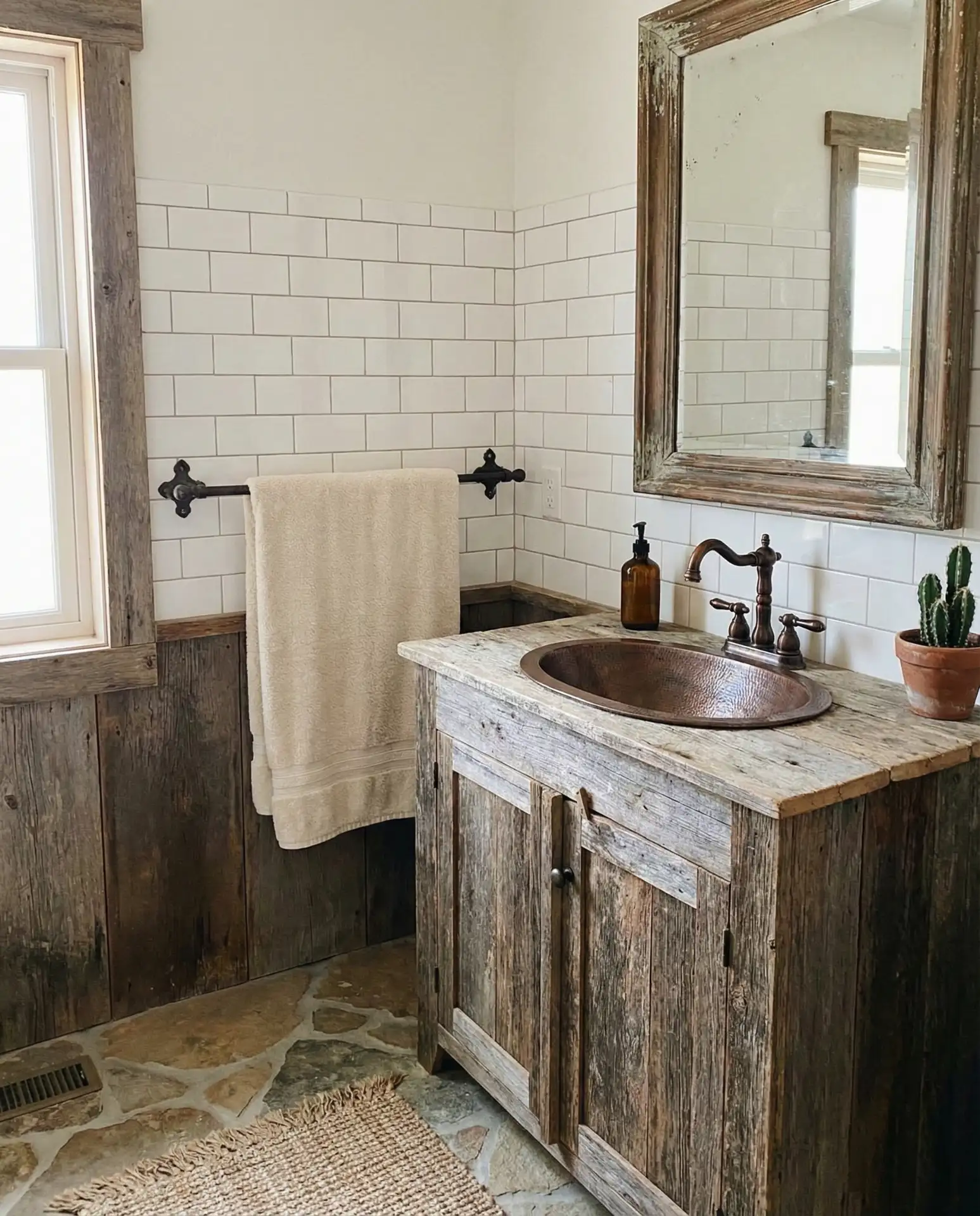
A western-inspired bathroom gains instant character through hammered copper sinks, aged bronze faucets, and wrought-iron towel bars that reference frontier utility. Pair these fixtures with natural stone tile, weathered wood vanities, and simple white subway tile to create a space that feels both rustic and refined. The warm tones of copper complement the natural materials beautifully while providing the antimicrobial properties that make copper inherently practical for bathroom environments. Consider adding vintage-style mirrors with iron frames and Edison-bulb sconces for authentic period lighting.
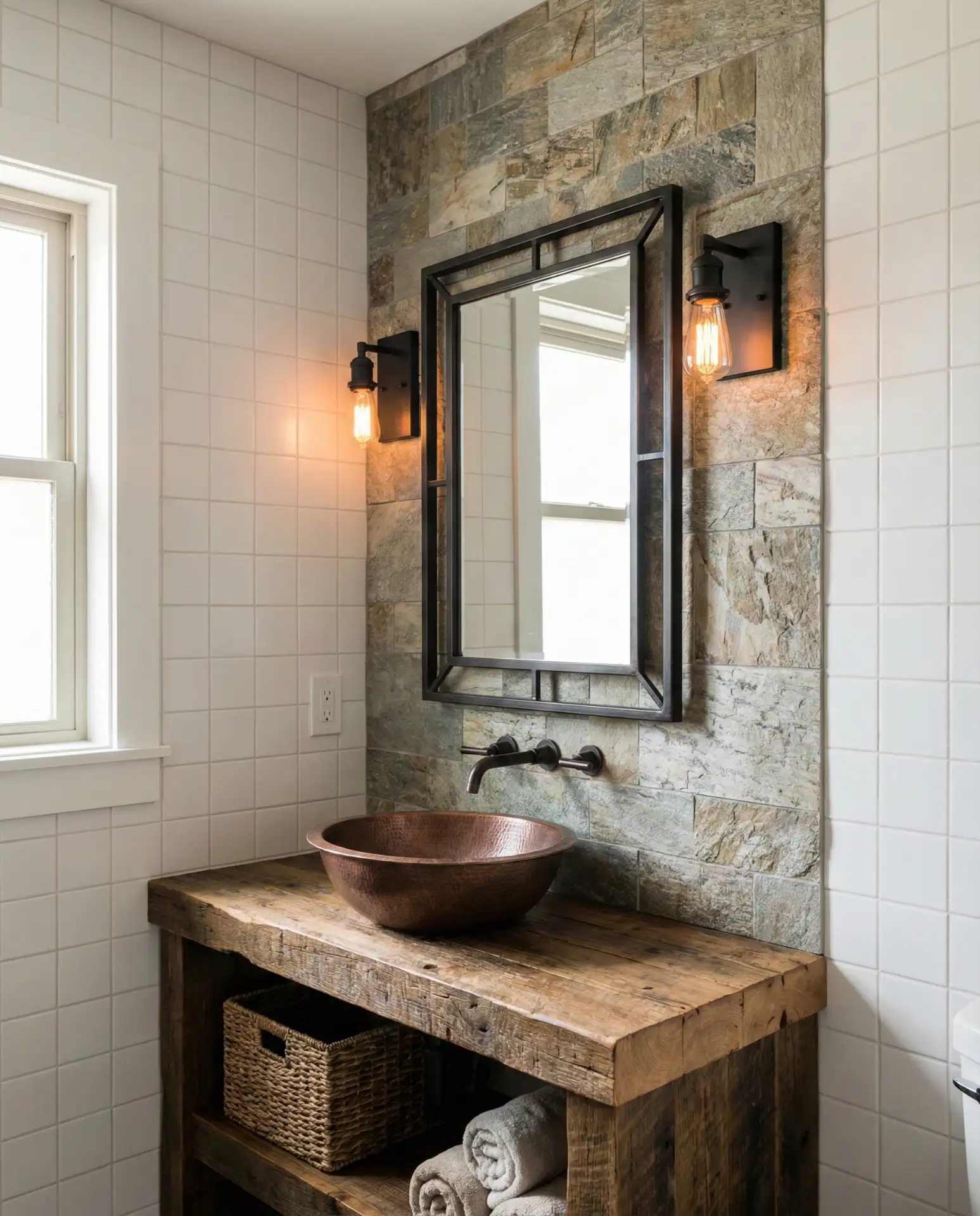
Real homeowners pursuing this aesthetic often begin with just the sink and faucet, as these create immediate visual impact without requiring full bathroom renovation. Quality hammered copper sinks range from three hundred to eight hundred dollars depending on size and craftsmanship, while comparable aged bronze faucet sets run between one hundred fifty and four hundred dollars. These fixtures develop a natural patina over time that enhances their appearance, unlike chrome or stainless finishes that show wear as deterioration rather than character.
12. Classy Western Entryway
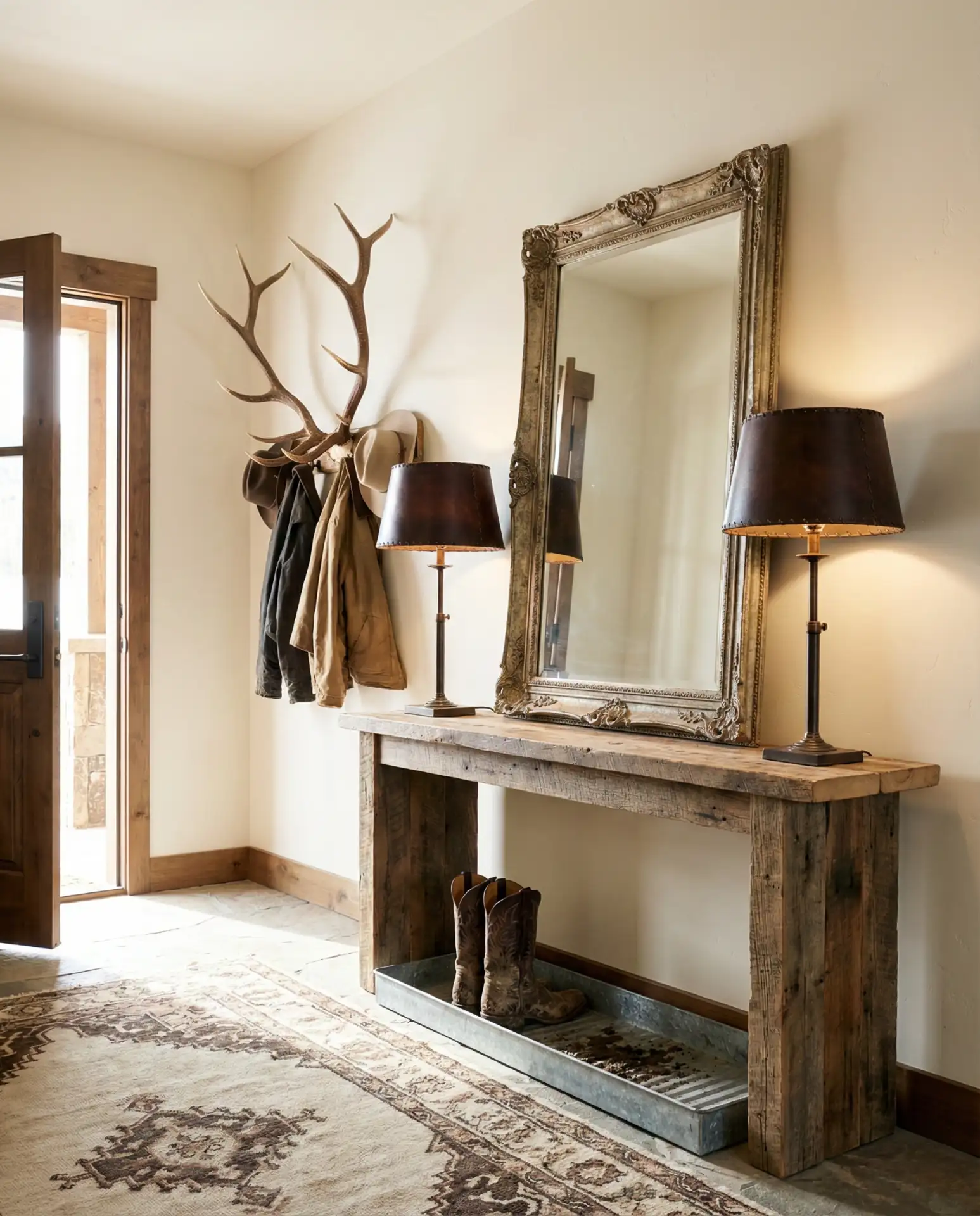
A classy western entryway establishes refined first impressions through carefully curated elements that balance rusticity with elegance. Install a substantial console table crafted from reclaimed wood or iron, topped with a large vintage mirror in an ornate frame and flanked by matching table lamps with burlap or leather shades. Add a boot tray made from galvanized metal, a coat rack fashioned from genuine antlers or wrought iron, and perhaps a bench with tooled leather cushioning for removing footwear. Every element should serve a function while contributing to a cohesive aesthetic.
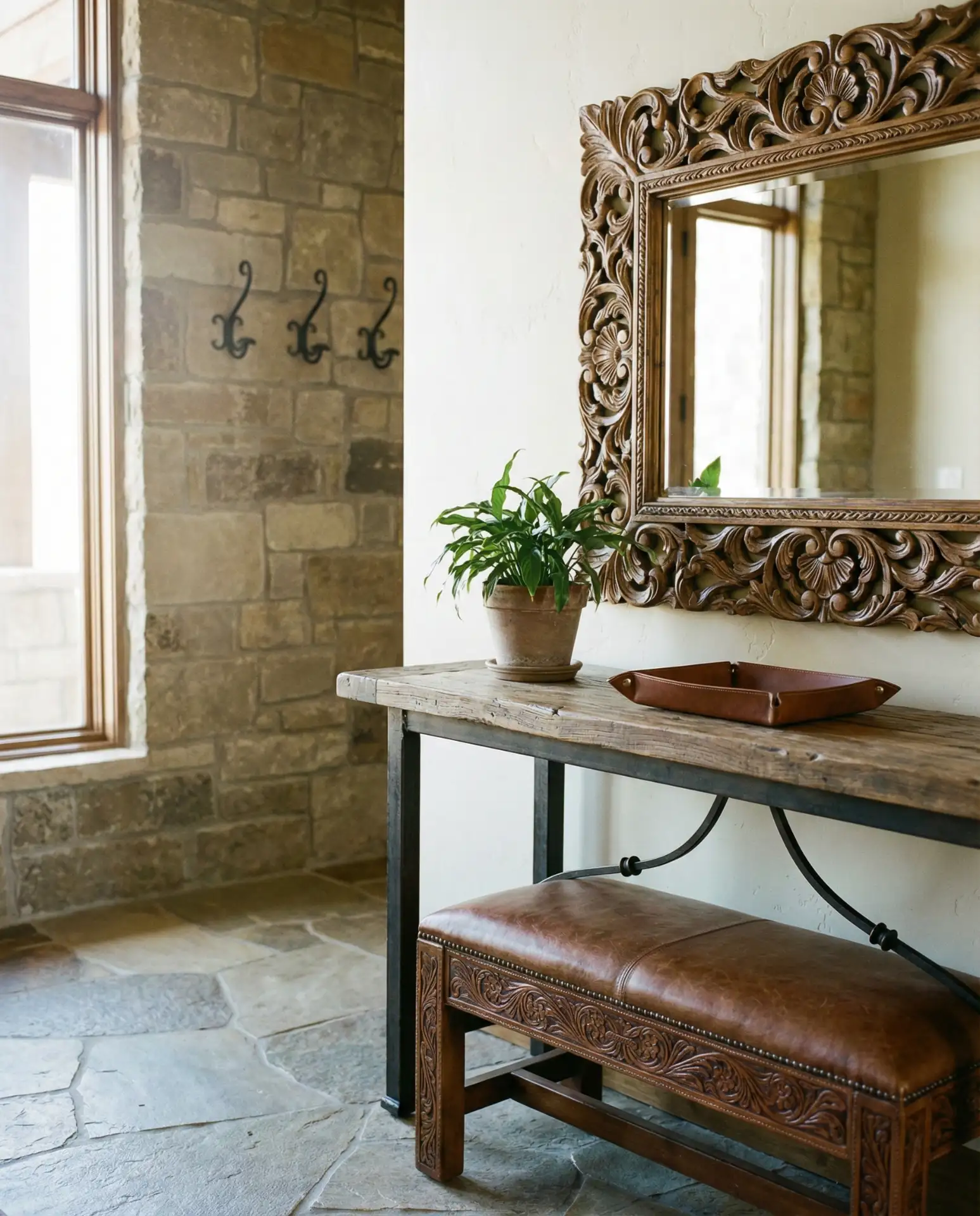
Throughout Arizona, New Mexico, and Southern California, homeowners favor this approach because it communicates western identity without appearing too casual or theme-park-like when guests arrive. The classy entryway makes particular sense in homes where the western aesthetic might not extend throughout the entire house, serving as a transitional space that sets the tone without overwhelming. Antique stores specializing in architectural salvage often carry the exact type of oversized mirrors and console tables that anchor these spaces successfully.
13. Seventies Western Revival Den
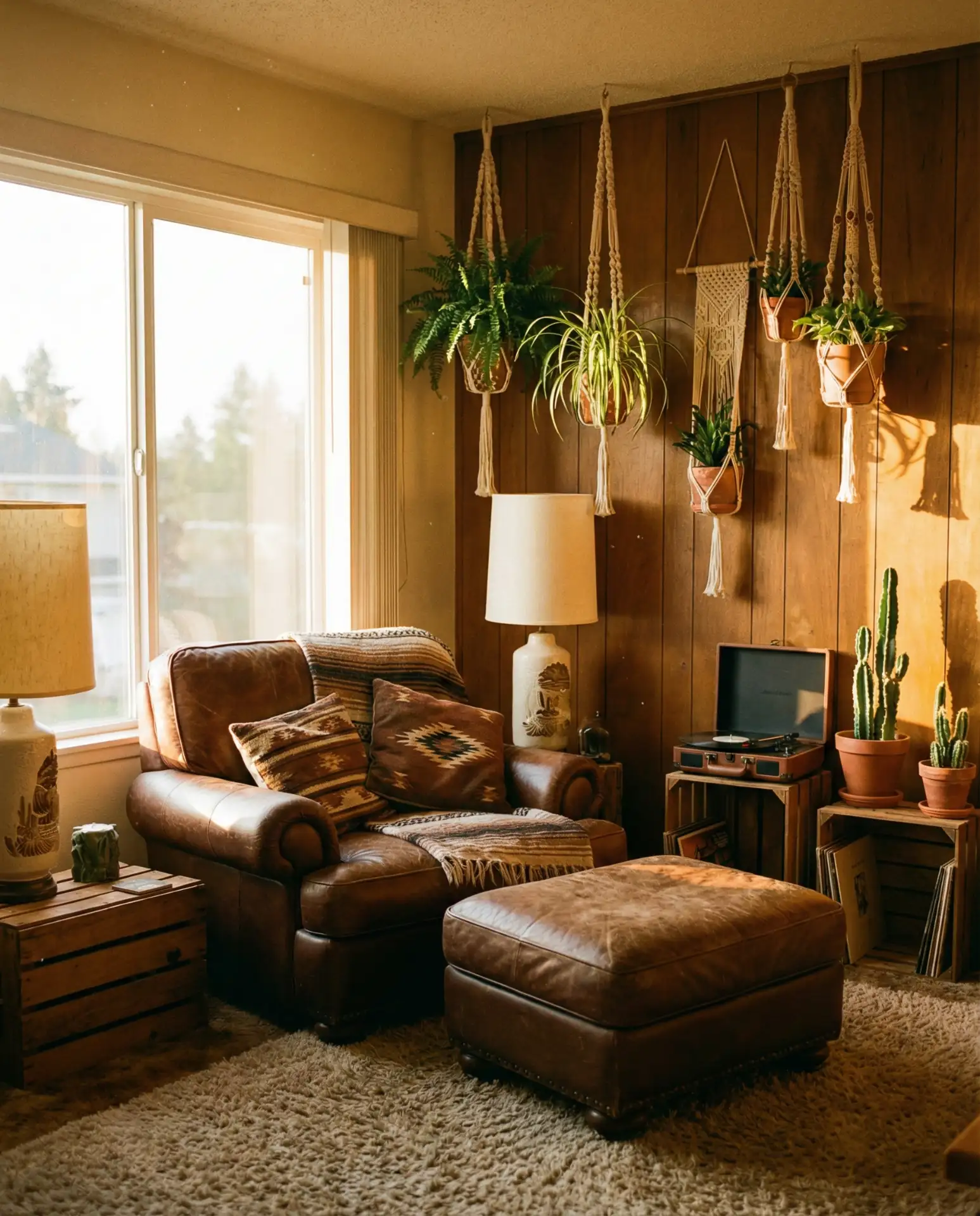
The 70s western revival embraces the specific aesthetic moment when frontier styling merged with earth-toned bohemian sensibilities, creating spaces rich with macramé, shag carpeting, and burnt orange hues. Design a den around a low-slung leather sofa in tobacco brown, add macramé wall hangings flanking vintage concert posters, and incorporate plenty of plants in ceramic pots with geometric patterns. The look celebrates a particular era of American design history when western motifs were reinterpreted through the lens of countercultural idealism and natural living movements.
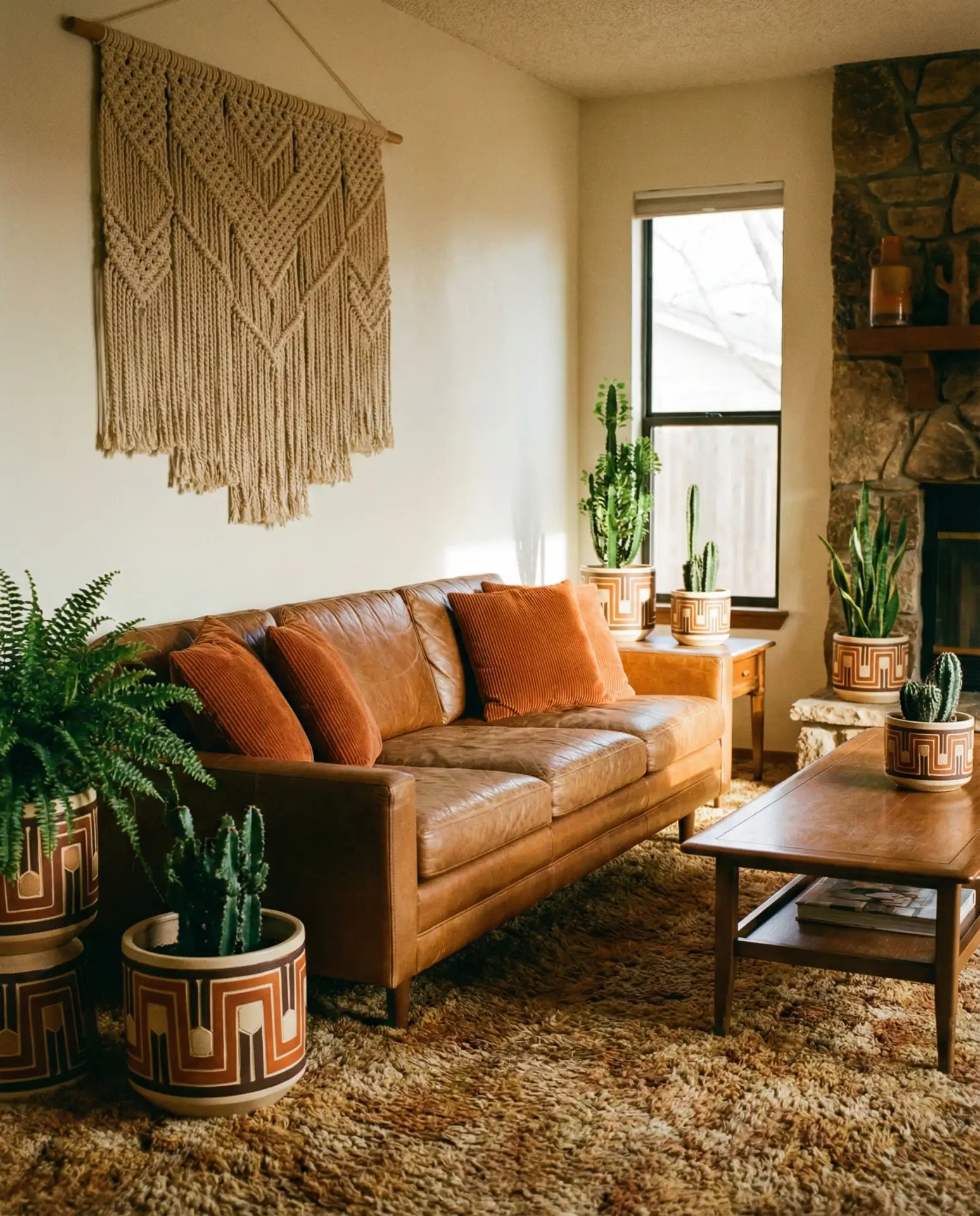
A vintage dealer in Portland mentioned that authentic 1970s western-bohemian pieces have seen tremendous collector interest over the past two years as millennials and Gen Z buyers rediscover this specific design moment. Original macramé works from that era, when found in good condition, can command surprising prices at estate sales and specialty vintage shops. The aesthetic works particularly well in finished basements or media rooms where the darker palette and cozy textures create natural gathering spaces for relaxation and entertainment.
14. Pink Accents in Western Nursery
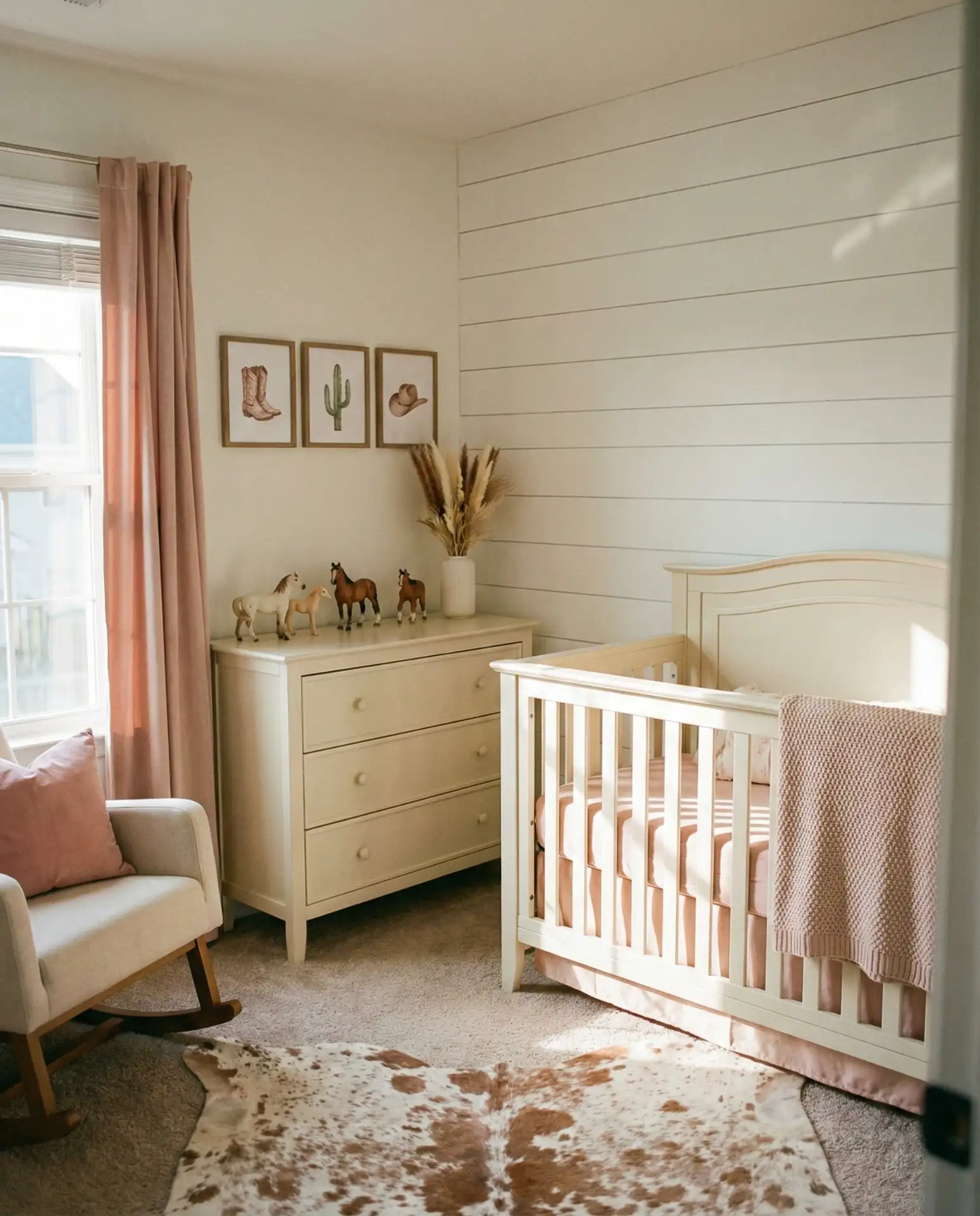
Incorporating soft pink tones into western nursery design creates gentle, feminine spaces that honor frontier heritage while maintaining age-appropriate softness. Combine dusty rose bedding with weathered white or cream furniture, add vintage cowgirl-themed prints in simple frames, and drape delicate pink gingham curtains at windows. Natural wood rocking chairs, small cowhide rugs in caramel tones, and ceramic horse figurines complete the look without overwhelming the peaceful atmosphere crucial for infant spaces. The palette references both classic western sunsets and traditional nursery color schemes.
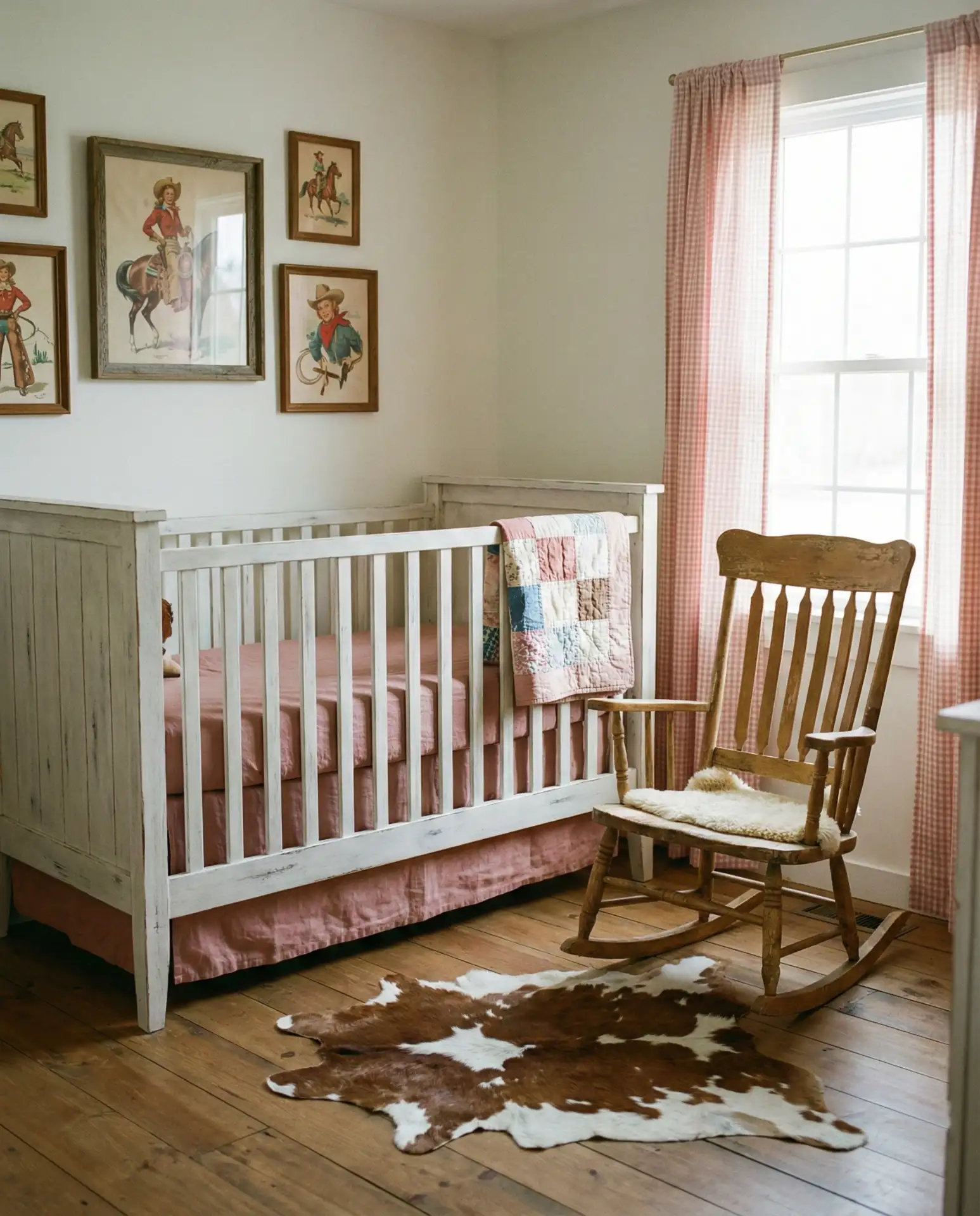
Common mistakes include choosing overly bright or bubblegum pinks that clash with the earthy western palette—muted, dusty rose tones integrate far more successfully. Parents should prioritize safety by ensuring all vintage or antique decorative elements are securely mounted and that furniture meets current safety standards regardless of aesthetic goals. Many homeowners report that this gentle western approach grows with the child better than highly themed alternatives, transitioning easily into toddler rooms with minimal redecoration required.
15. Ranch Bedroom with Woven Textiles
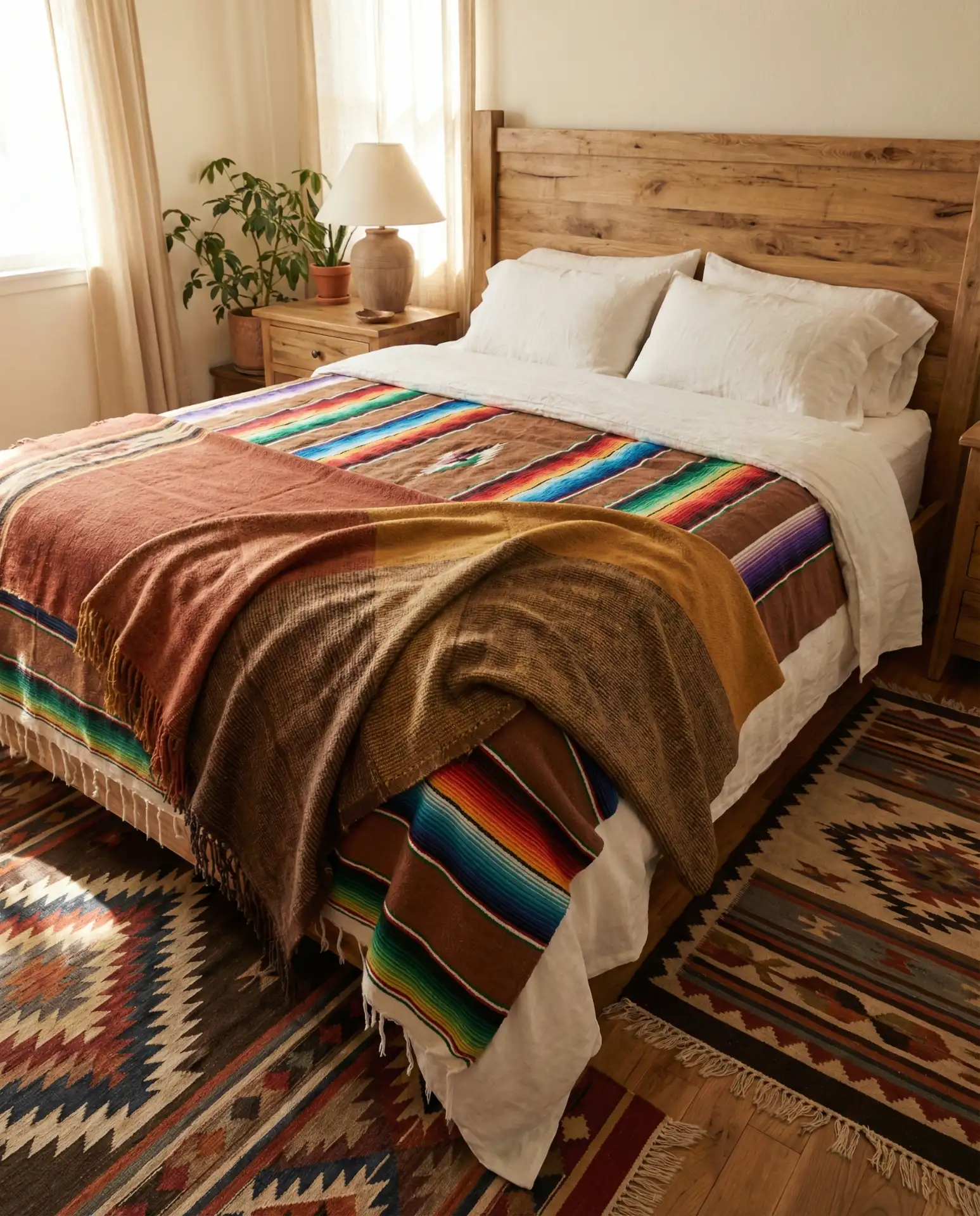
A ranch-style bedroom achieves authentic character through abundant woven textiles that reference Native American and Mexican weaving traditions integral to Western heritage. Layer the bed with Zapotec-style wool blankets, hang large Navajo rugs as tapestries, and include smaller woven pieces as throw pillow covers or table runners. These textiles bring bold geometric patterns and rich colors—deep reds, warm oranges, and earthy browns—that transform simple rooms into visually compelling spaces. The approach honors the multicultural roots of authentic western design rather than reducing it to cowboy clichés.
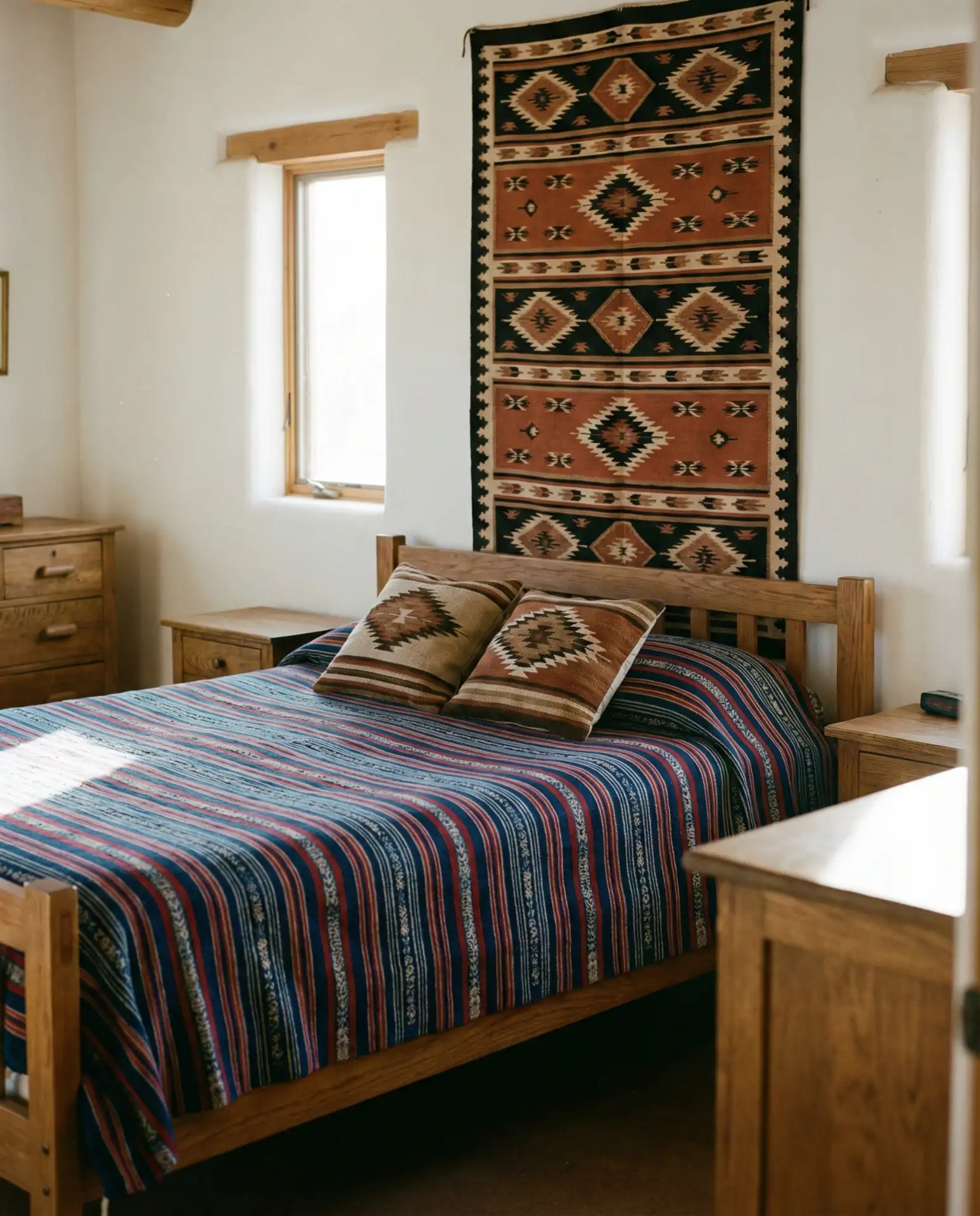
When purchasing woven textiles, seek out authentic pieces from Indigenous artisans or fair-trade cooperatives rather than mass-produced imitations that appropriate cultural designs without proper attribution or compensation. Organizations like the Indian Arts and Crafts Association can help buyers identify genuine work. Quality handwoven blankets range from two hundred to over a thousand dollars depending on size, complexity, and origin, but they represent both artistic and cultural value that transcends mere decoration. These textiles require gentle care—typically spot cleaning rather than machine washing—to preserve their integrity across generations.
16. Western Ideas for Small Apartments
Bringing western ideas into compact urban apartments requires strategic editing and focus on smaller-scale elements that deliver aesthetic impact without consuming precious square footage. Opt for a single statement piece like a compact leather chair or small trunk serving as a coffee table, then build around it with western-themed textiles, framed vintage photographs, and a carefully curated bookshelf displaying a few meaningful collectibles. Wall-mounted elements like small shelves holding miniature horse sculptures or framed bandanas provide visual interest without claiming floor space.
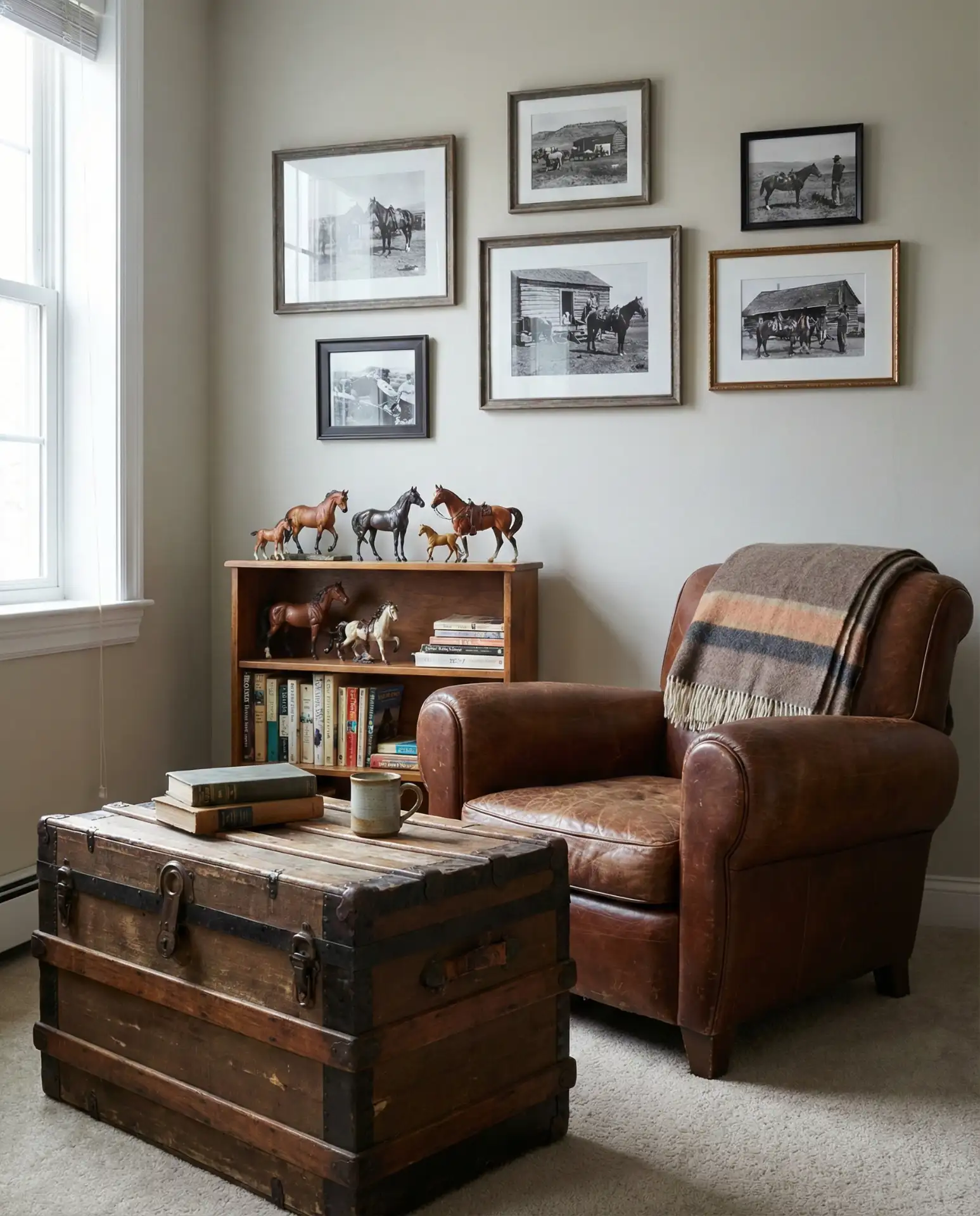
Urban dwellers in cities like Denver, Austin, and Nashville successfully incorporate western elements into apartments by maintaining restraint and choosing pieces that serve multiple functions. Storage ottomans with leather upholstery, fold-down wall desks made from reclaimed wood, and vertical plant arrangements in western-style containers maximize utility while maintaining aesthetic coherence. The approach proves particularly effective for young professionals who want to maintain regional identity despite living in compact urban housing.
17. Western Inspiration Boards for Planning
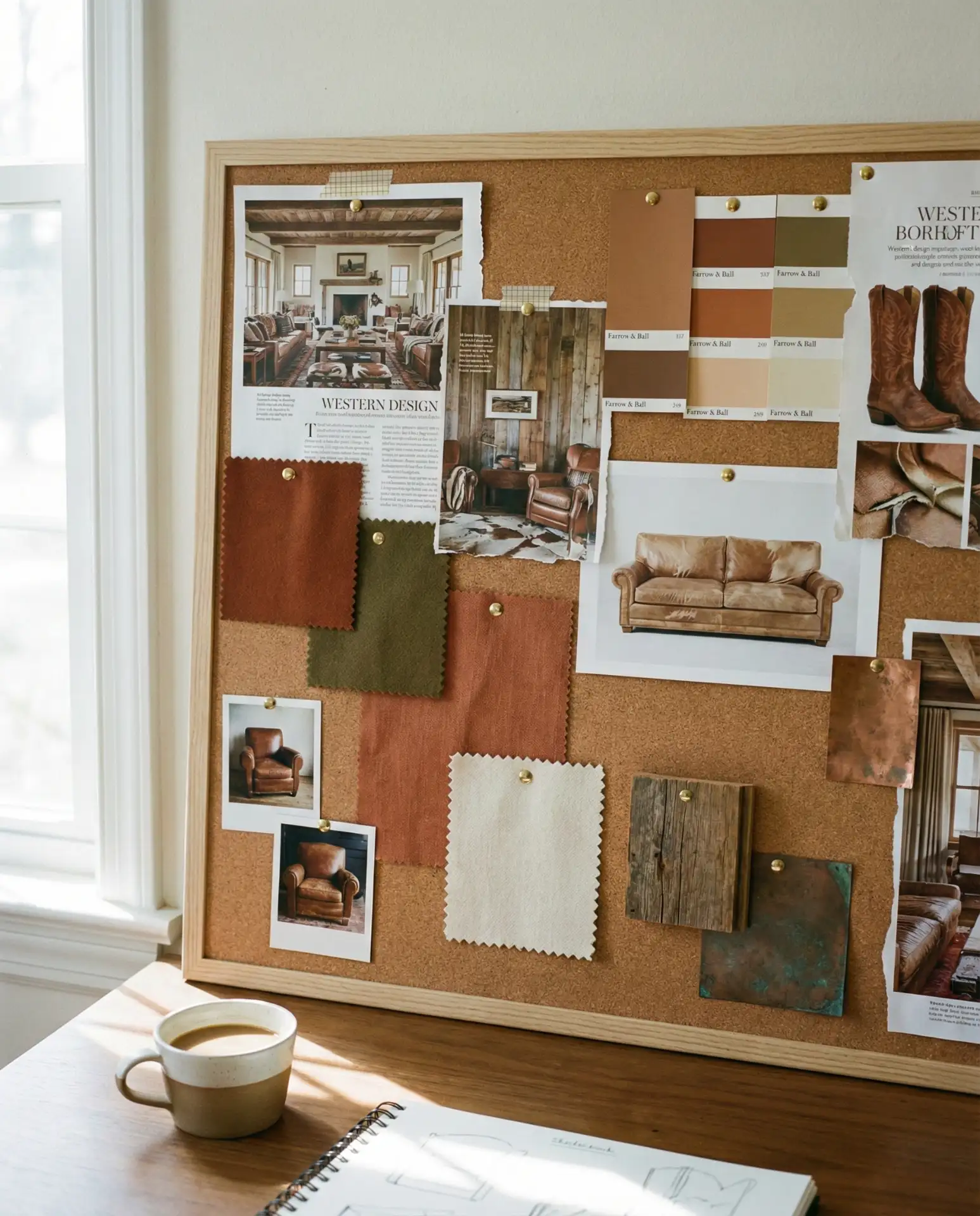
Creating physical or digital western inspo boards helps homeowners clarify their aesthetic direction before making purchasing decisions or beginning renovation projects. Gather images that resonate—whether from magazines, Pinterest, or personal photographs—and arrange them to identify recurring themes in color palette, material preferences, and overall mood. Notice whether you gravitate toward lighter ranch-house aesthetics, darker gothic interpretations, or colorful bohemian-western fusion. This planning process prevents costly mistakes and ensures final results align with genuine preferences rather than fleeting trends.
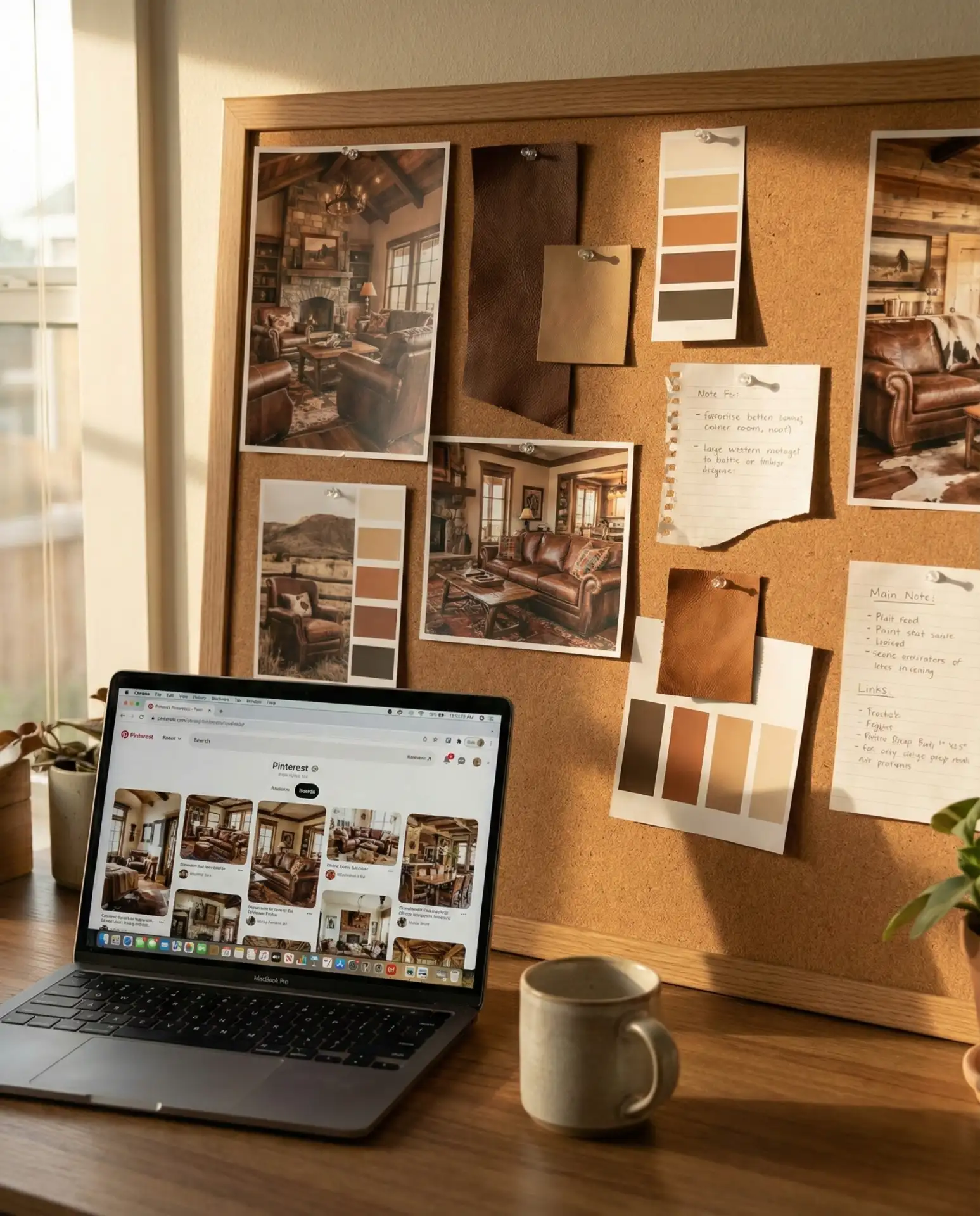
Professional interior designers consistently recommend this step before clients begin shopping, as it reduces buyer’s remorse and creates cohesive final results. Digital tools like Pinterest, Canva, or dedicated interior design apps make creating and sharing inspiration boards simple, while physical versions using foam core, cork boards, or poster board offer tactile engagement with fabric swatches and paint chips. Taking time for this planning stage typically saves both money and frustration compared to impulse purchasing scattered items that ultimately don’t work together.
18. Contemporary Western Living Room Fusion
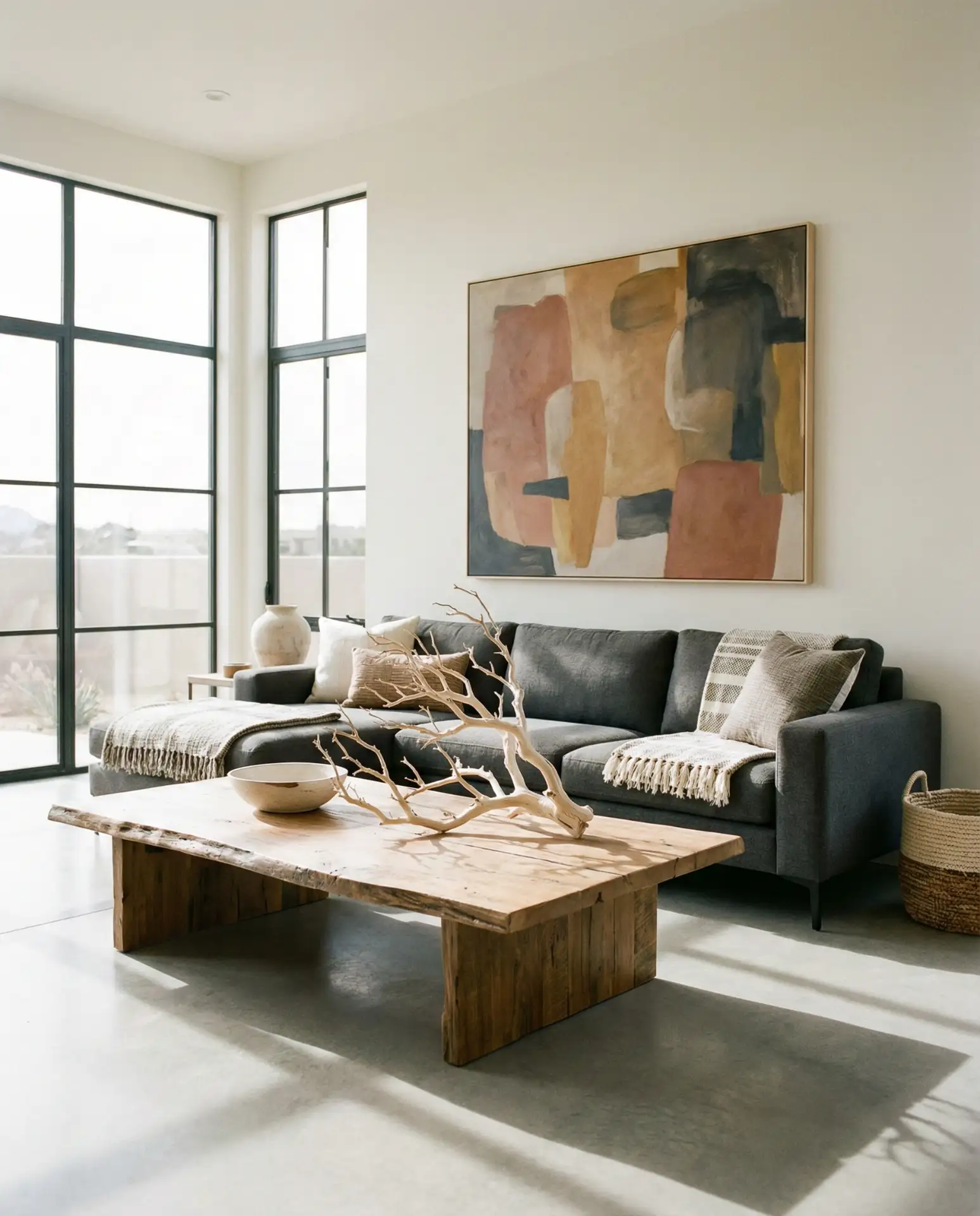
Merging contemporary design principles with Western aesthetics creates sophisticated living rooms that feel current rather than nostalgic. Start with clean-lined modern furniture in neutral upholstery, then introduce western elements through natural wood coffee tables with live edges, single statement pieces like a sculptural bleached wood branch, and abstract art incorporating frontier color palettes. The key is maintaining the simplicity and openness characteristic of contemporary design while allowing carefully chosen western pieces to provide warmth and regional character.
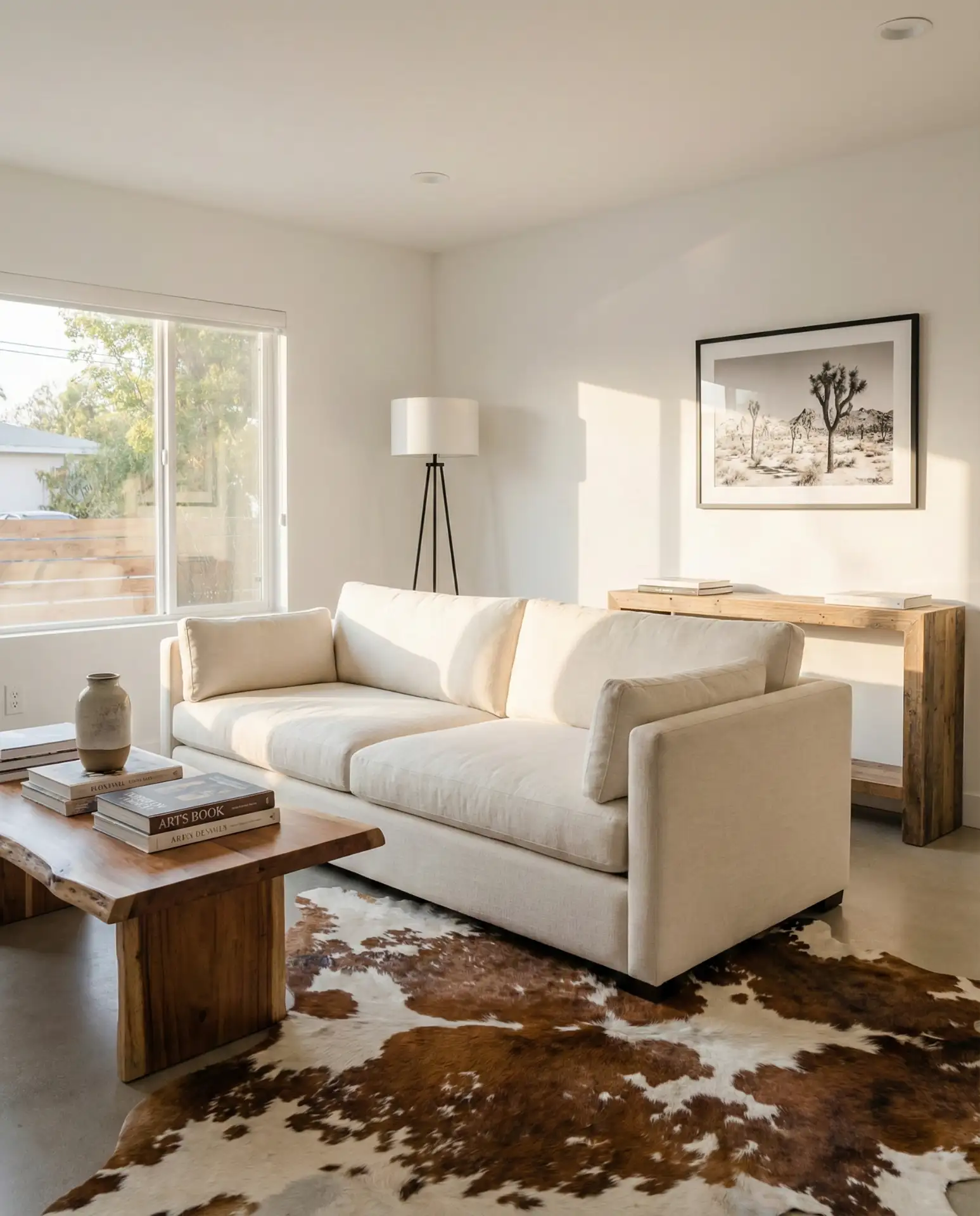
This balanced approach particularly appeals to homeowners in rapidly growing western cities like Boise, Salt Lake City, and Albuquerque, where new construction often features contemporary architecture that initially seems incompatible with regional design traditions. The fusion style proves that western elements can enhance rather than conflict with modern sensibilities when selected and placed thoughtfully. Avoiding oversaturation remains crucial—the contemporary framework provides discipline that prevents Western elements from overwhelming the space.
19. Western Guest Bedroom Welcome
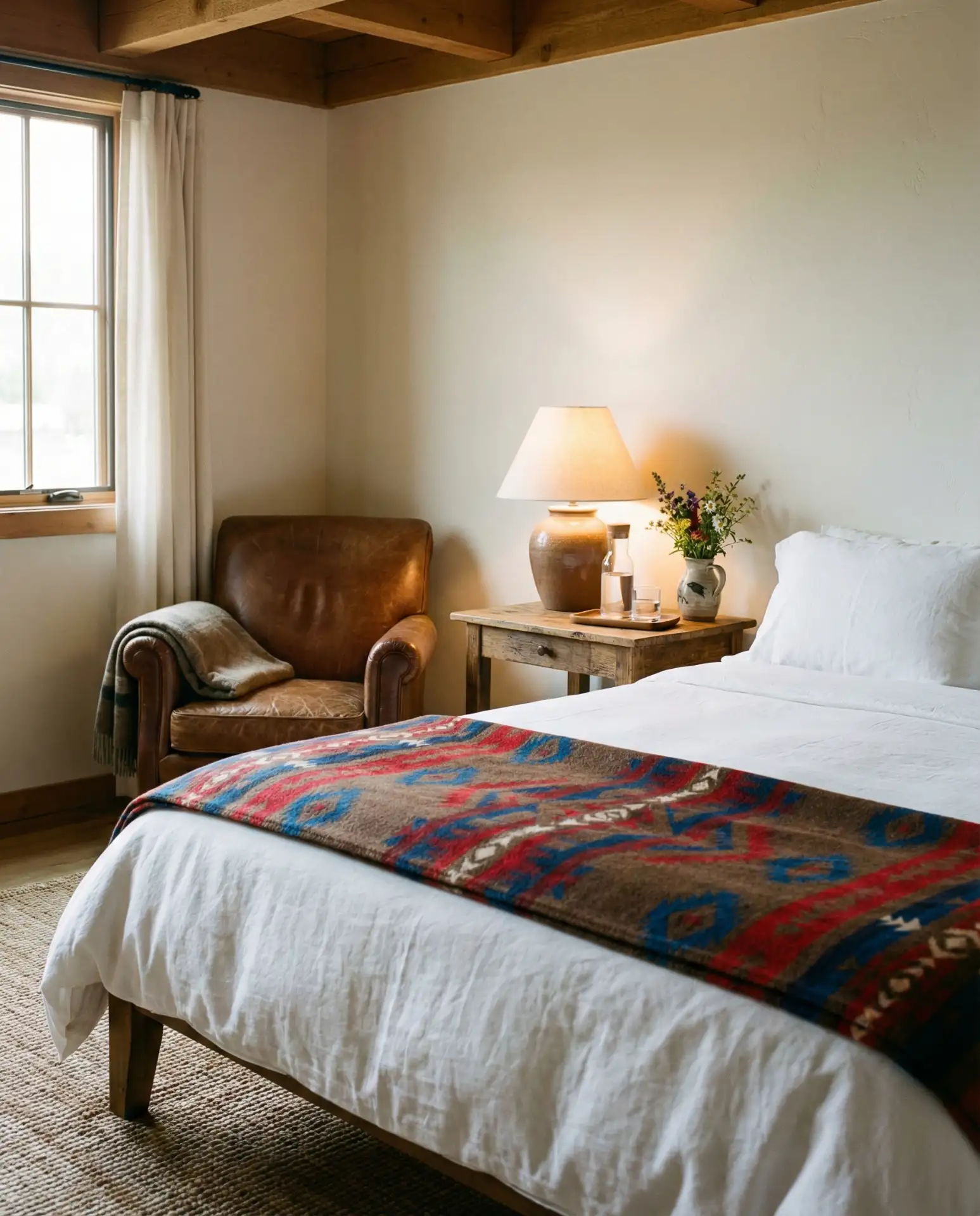
A western-themed guest bedroom offers visitors comfortable immersion in regional aesthetics through welcoming textiles and thoughtful amenities. Furnish the room with a quality mattress dressed in crisp white linens layered with a Pendleton blanket or quilt in traditional patterns, add a comfortable reading chair upholstered in leather or heavy cotton, and include bedside tables with adequate lighting for evening reading. Small touches like a carafe of water on a wooden tray, current magazines about western travel or lifestyle, and fresh flowers in simple pottery complete the hospitable atmosphere.
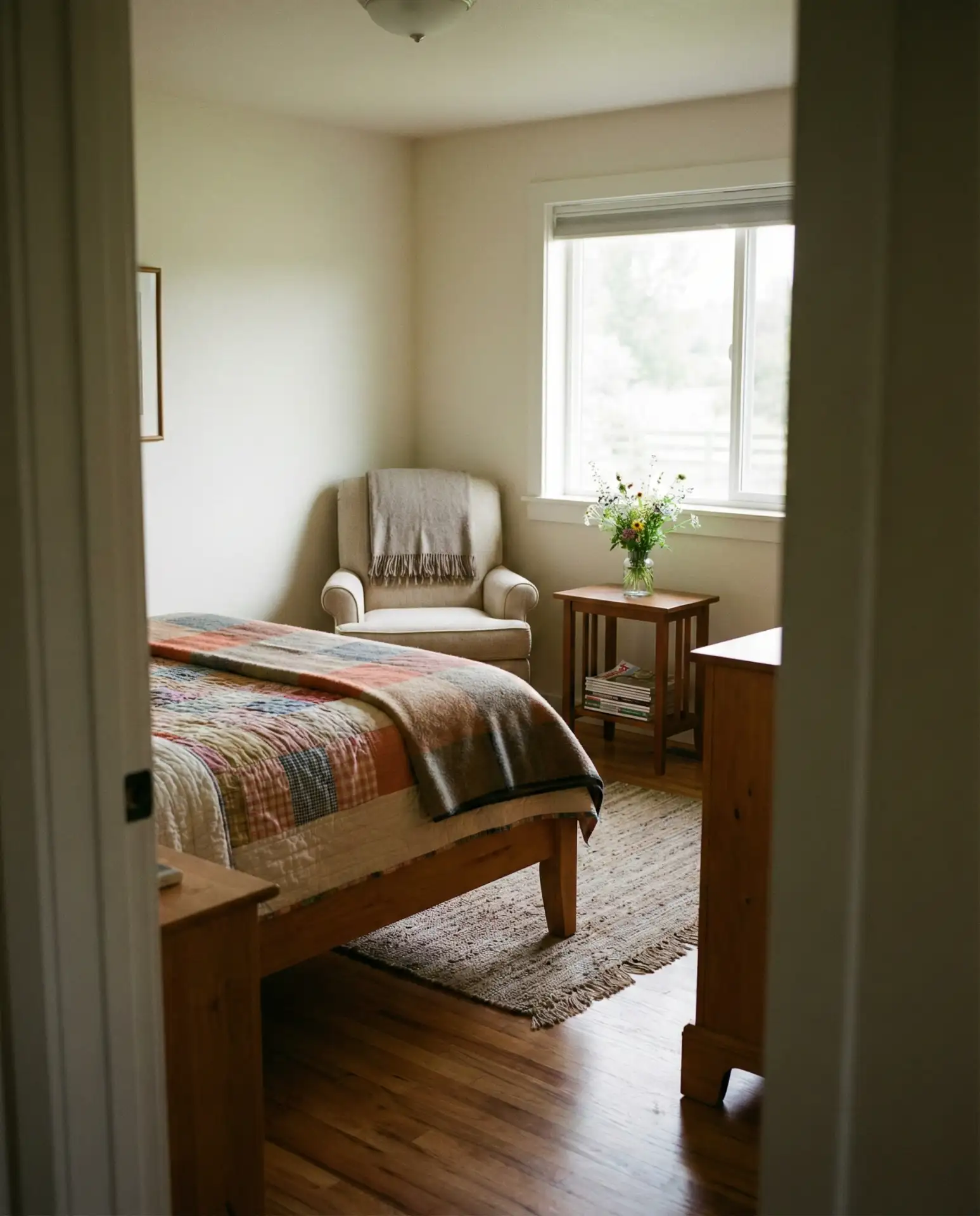
Expert hospitality advice emphasizes that guest rooms should prioritize actual comfort over decorative impact—beautiful aesthetics mean little if visitors sleep poorly or lack basic amenities. Invest in blackout curtains or shades for guests who need darkness to sleep well, provide adequate closet space with quality hangers, and ensure the room maintains a comfortable temperature independently from the rest of the house. These practical considerations combined with Western aesthetic touches create guest experiences that leave lasting positive impressions and encourage return visits.
20. Western Porch and Outdoor Spaces
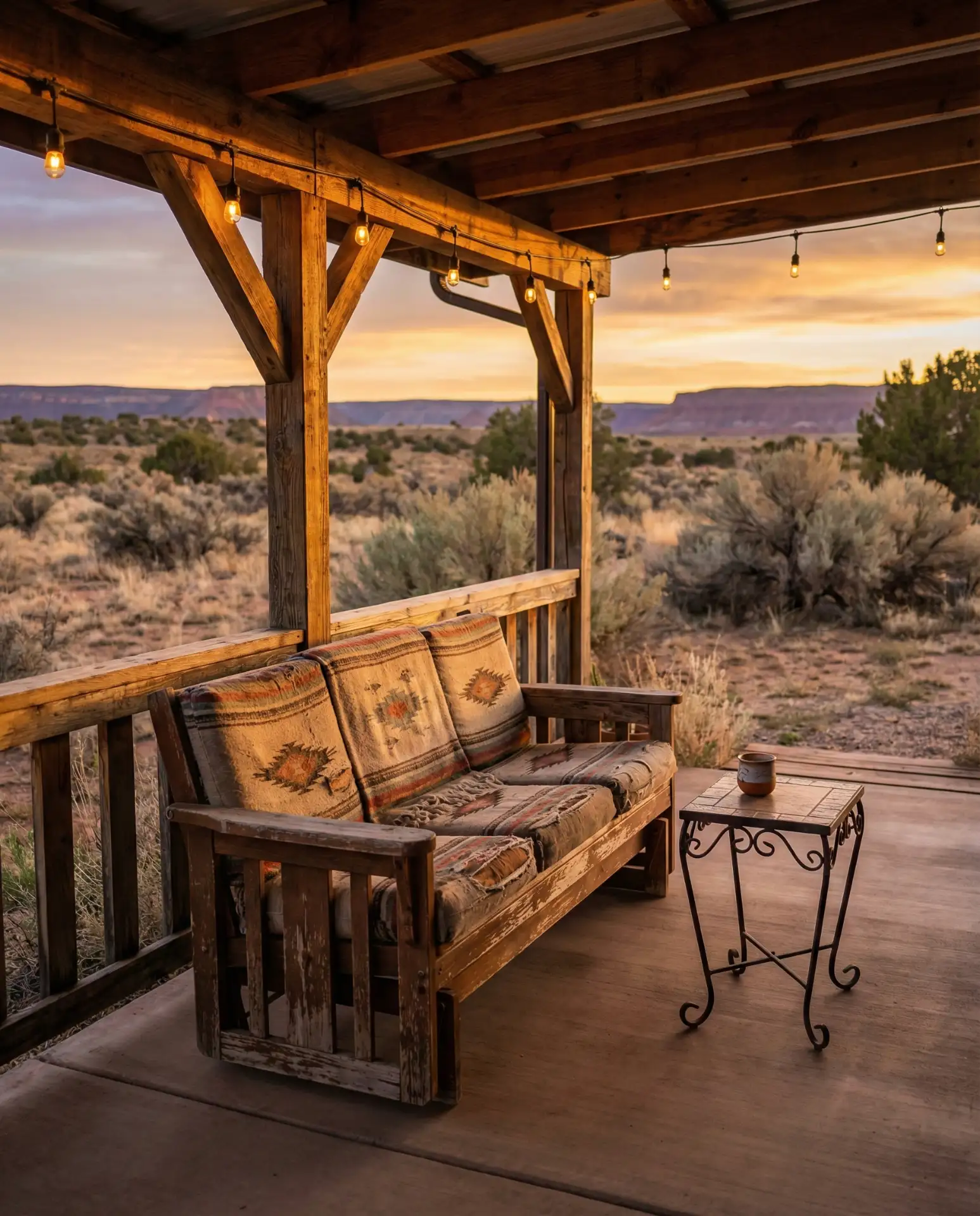
Extending western design to porches and patios creates transitional spaces that blur boundaries between indoor comfort and outdoor living central to western lifestyle. Furnish covered porches with substantial rocking chairs or gliders, add weather-resistant throw pillows in southwestern patterns, and hang vintage lanterns or string lights for evening ambiance. Consider including a porch swing with cozy cushions, side tables crafted from tree stumps or iron, and potted native plants that thrive in your regional climate. These spaces should invite lingering conversations and quiet observation of the surrounding landscape.
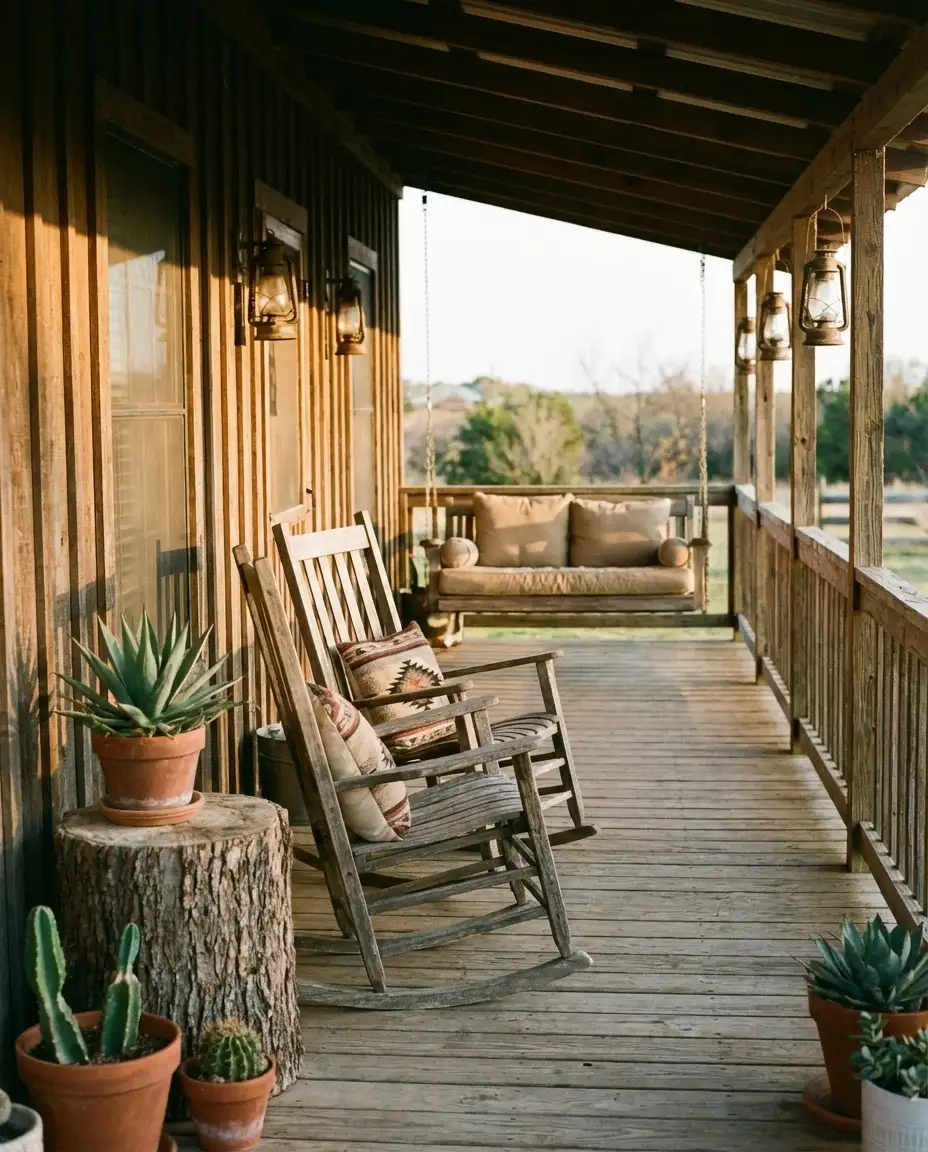
Throughout the American West, outdoor living spaces receive nearly year-round use due to favorable climates, making investment in quality weather-resistant furniture financially sensible. Homeowners in regions with harsher winters should choose furniture that either withstands exposure or can be easily stored during off-season months. Local artisans in states like Montana, Wyoming, and Colorado often craft outdoor furniture from lodgepole pine or other regional woods specifically designed to handle temperature extremes and moisture while developing an attractive weathered patina over time.
21. Western Mudroom Function and Style
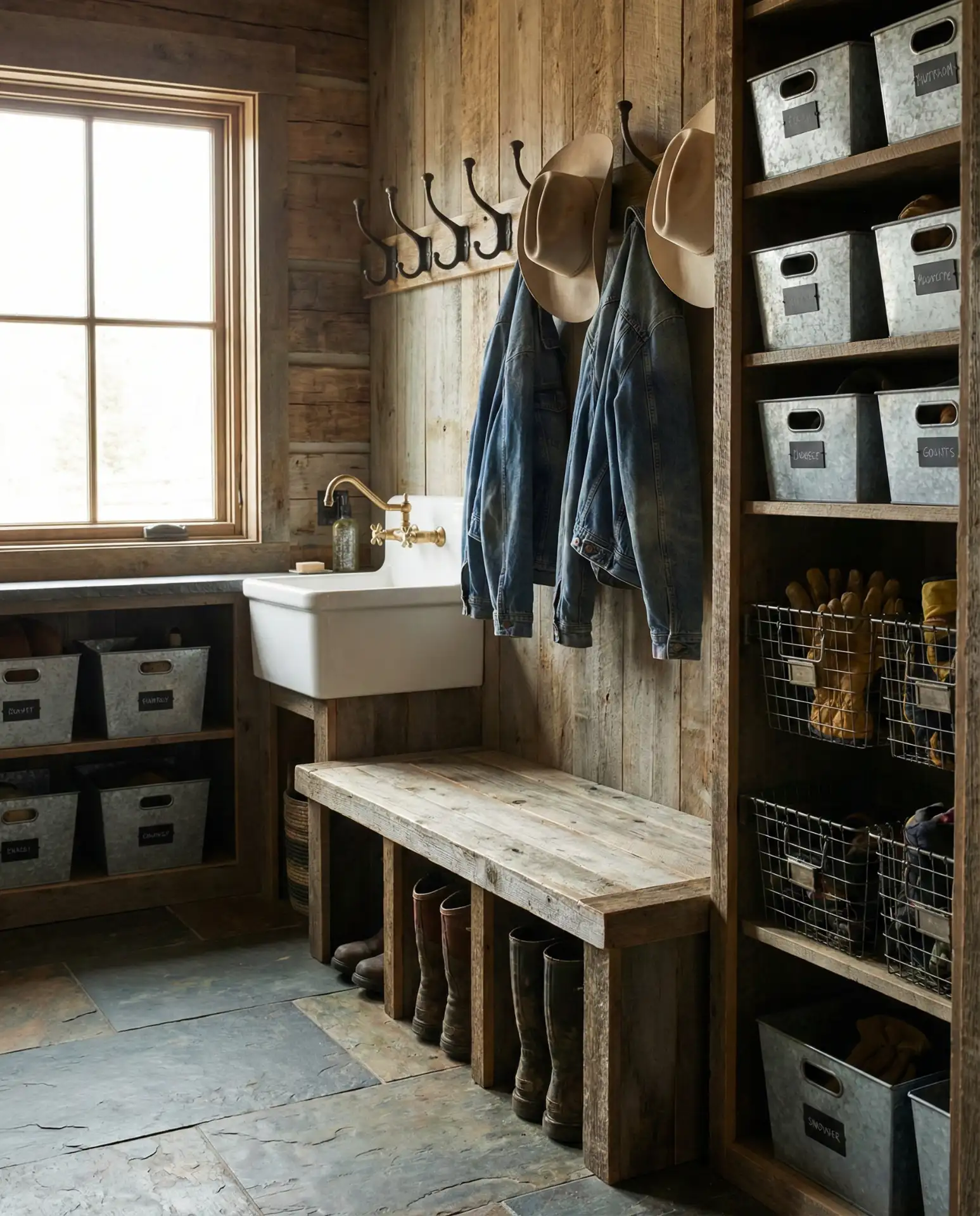
A western mudroom prioritizes serious functionality for active outdoor lifestyles while maintaining aesthetic coherence with the rest of the home. Install sturdy boot benches with storage underneath, add individual cubbies or lockers for family members to stash outdoor gear, and include plenty of heavy-duty hooks for coats, hats, and bags. Choose durable flooring like slate or sealed concrete that withstands tracked-in mud and moisture, and incorporate a deep utility sink for cleaning up after outdoor work or recreation. Galvanized metal bins, wire baskets, and wooden crates provide additional organized storage.
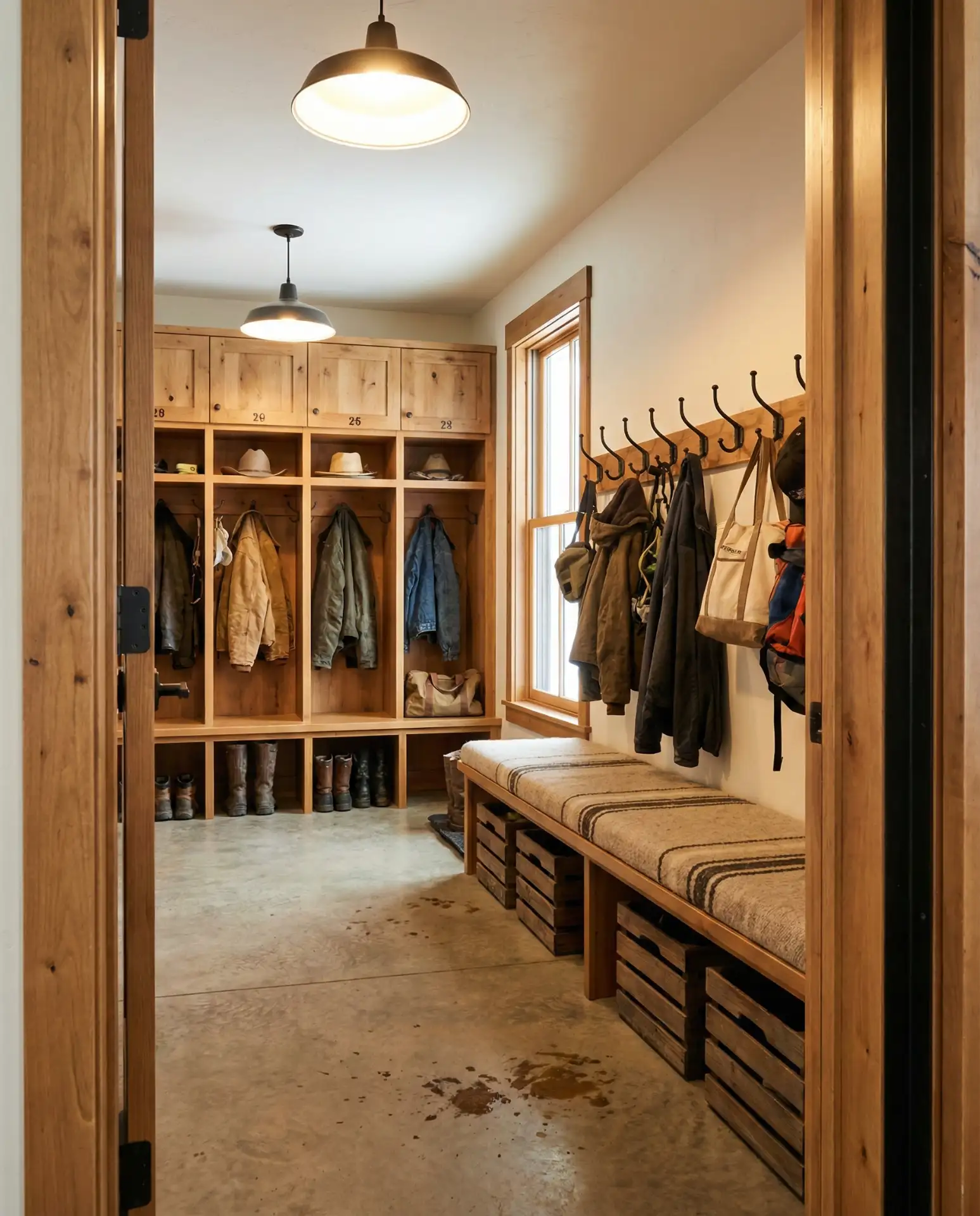
Real homeowners with experience maintaining mudrooms emphasize choosing materials and finishes that actually withstand heavy use rather than selecting aesthetically pleasing options that prove impractical. Sealed wood benches resist moisture better than upholstered versions, while metal and wire storage containers can be hosed clean when necessary. Homes in rural areas or those with active outdoor recreation habits particularly benefit from generous mudroom space—even small dedicated areas proving more effective than ad hoc solutions scattered throughout the house.
22. Western Gallery Wall Arrangements
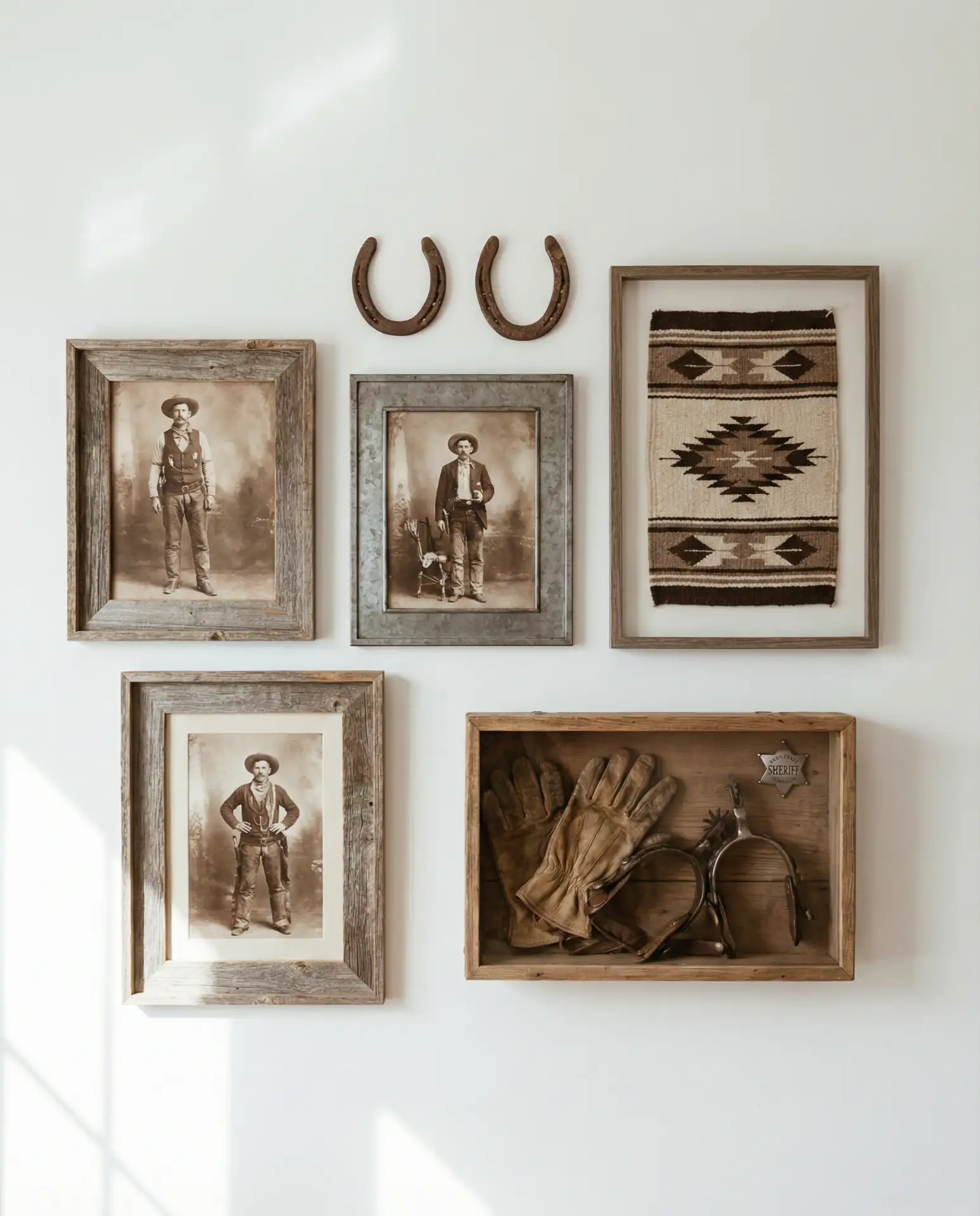
Creating compelling western gallery walls requires balancing diverse elements—vintage photographs, mounted artifacts, framed textiles, and artwork—into cohesive arrangements that tell visual stories. Start by laying pieces out on the floor to experiment with arrangement before committing to wall holes, mixing frame sizes and shapes while maintaining consistent spacing between elements. Include three-dimensional objects like small mounted horseshoes, vintage hats on hooks, or shallow shadow boxes containing collectibles to add depth variation. The goal is to create walls that feel curated and personal rather than matchy-matchy or overly formal.
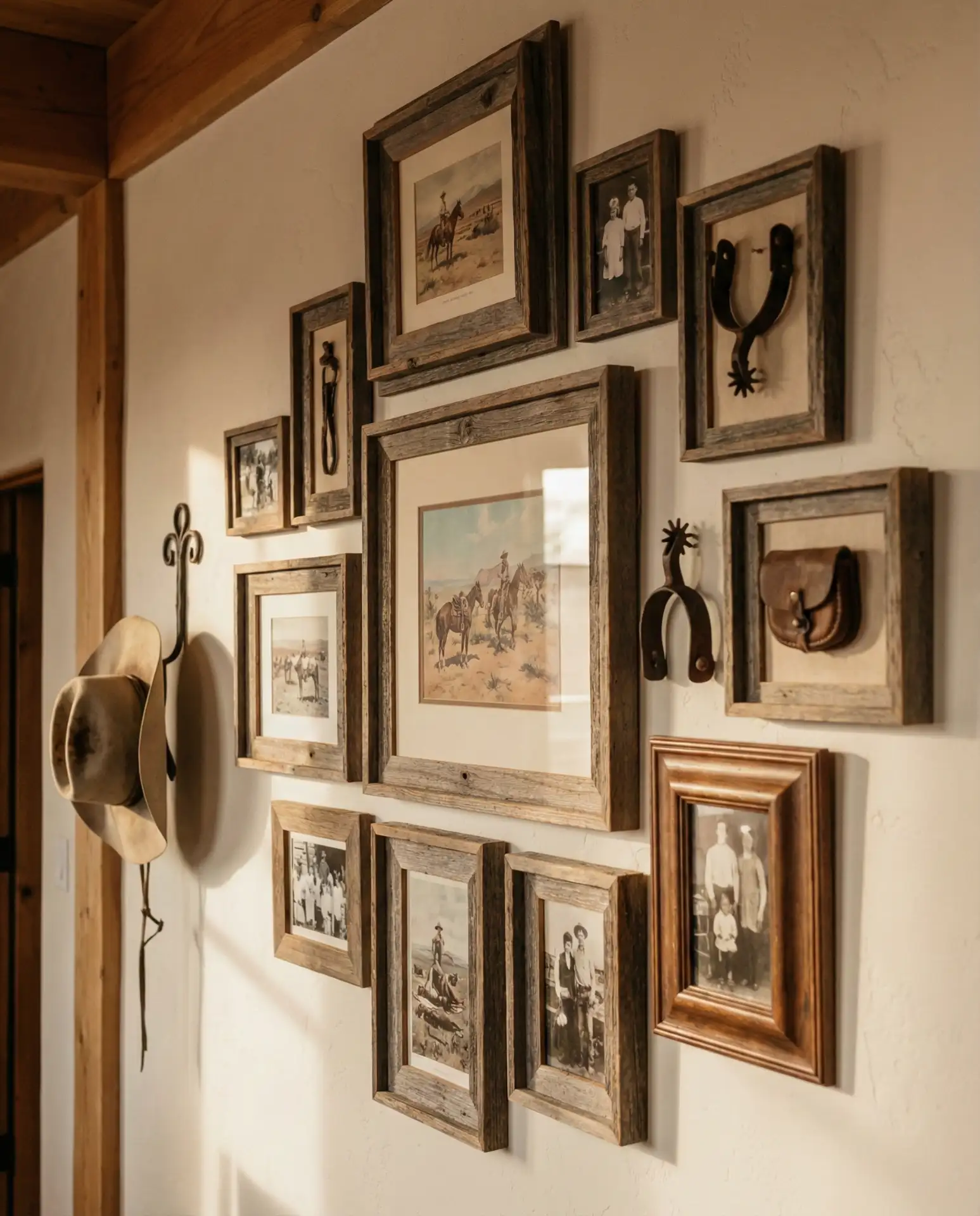
A common mistake involves hanging everything at the same height in rigid grid patterns that feel institutional rather than organic. Professional designers recommend establishing a central anchor point—typically the largest or most significant piece—then building outward while maintaining relatively consistent spacing (usually two to three inches between frames). Gallery walls work particularly well in hallways, above staircases, or on large empty walls in living spaces, where they provide visual interest and conversation starting points. Taking time to plan arrangements carefully prevents unnecessary wall damage from multiple hanging attempts.
Conclusion
Western home decor in 2026 offers remarkable flexibility, accommodating preferences from subtle contemporary nods to fully immersive rustic retreats across every room and budget level. The enduring appeal of this aesthetic speaks to fundamental human desires for authenticity, connection to heritage, and spaces that feel genuinely lived-in rather than staged. Whether you’re drawn to the moody drama of gothic interpretations, the comfortable familiarity of ranch-style classics, or the bold creativity of DIY projects, these ideas provide starting points for making western design your own. Share your favorite concepts or your own western decorating experiences in the comments below—this community thrives when we exchange inspiration and practical wisdom.