DIY bamboo craft projects are having a major moment on Pinterest right now — and we know exactly why. This sustainable, versatile material brings instant warmth and texture to any space, but figuring out how to make it look chic (and not like a forgotten tiki bar) is the real challenge. We’ve filtered through hundreds of options to bring you 28 curated ideas that actually deliver. We’re talking gorgeous lighting, unique furniture, and decor that looks high-end, inspired by what you’d find at places like World Market, IKEA, and Target. These projects prove that natural style is here to stay for 2026, driven by our collective desire for calming, biophilic design that connects us to the outdoors. And stay until the end — we break down the most common mistakes that can ruin these looks. 📌 Save this to Pinterest for later — you’ll want to revisit these ideas.
1. Wavy Woven Pendants in a High-Ceiling Living Room
The magic here is in the movement and repetition. The four wavy pendants aren’t just hung in a line; they’re staggered at varying heights, creating a dynamic, almost sculptural installation that draws the eye upward. This layering effect fills the vertical space of the high ceiling, making the room feel grand but not empty. The natural woven material also contrasts beautifully with the clean lines of the light wood furniture and the soft texture of the grey sofa, creating a look that’s balanced and full of interest.
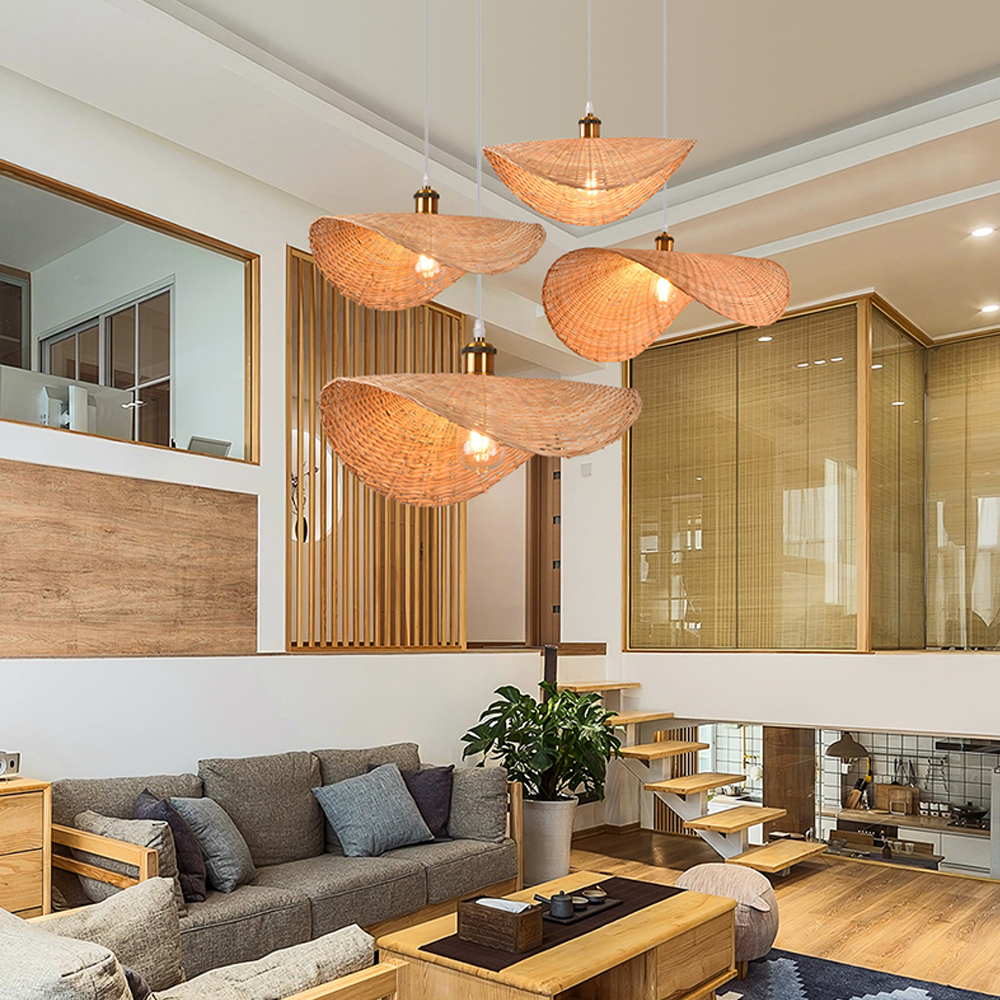
“When hanging multiple pendants like this, think like a choreographer.”
Don’t just space them evenly. Create a ‘visual dance’ by varying the heights. A great rule of thumb is to have the lowest pendant hang about 30-36 inches above your main surface (like a coffee table), but the highest one can go much further up. For a grouping of four, try staggering them with about 8-12 inches of vertical difference between each one to create that beautiful, cascading effect you see here. It adds rhythm and sophistication.
2. Spherical Woven Pendants for a Rustic Stone Kitchen
It’s the texture contrast. Without the three spherical woven pendants, this kitchen would still be beautiful, but potentially a little cold. The rustic stone wall and exposed wooden beams are hard, substantial materials. The pendants introduce a necessary softness and organic shape. Their light, airy weave provides a visual break from the heavy stone and dark wood, proving that the right lighting isn’t just about illumination—it’s about adding a crucial textural layer that makes a room feel complete and inviting.
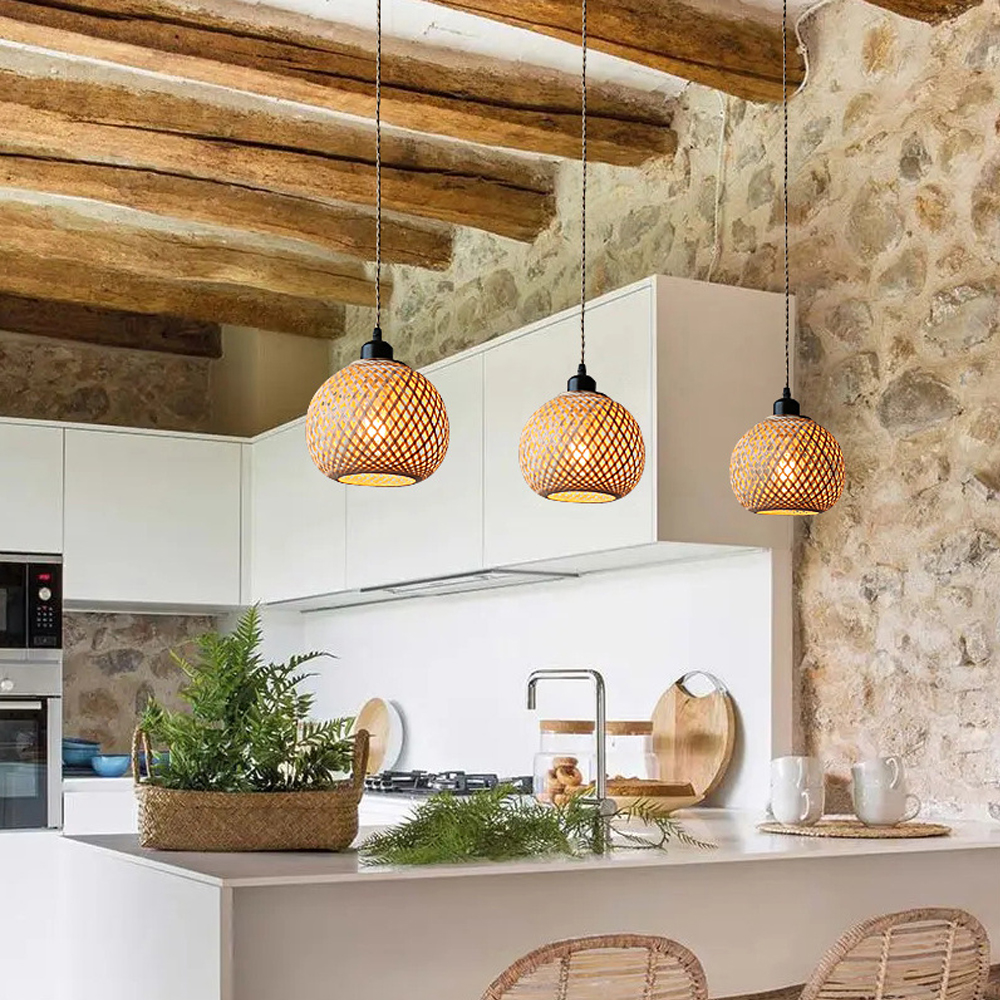
“This look is perfect for kitchens with an island and a ceiling height of at least 9 feet.”
The pendants themselves should be substantial enough to hold their own—look for spheres with a diameter of 18 to 24 inches. For a standard 8-foot-long island, a trio of pendants works beautifully. If your island is shorter, say 5-6 feet, two pendants would be better to avoid a crowded feeling. Ensure the bottom of the lights hang 30-36 inches above the countertop to provide ample task lighting without obstructing views across the kitchen.
3. A Single Large Woven Pendant for a Bright Dining Nook
- Large Woven Pendant Light: $150 – $400
- Light Wooden Dining Table: $300 – $800
- Simple Wooden Chairs (each): $100 – $250
- Sheer White Curtains: $50 – $150
- Decor (Vase, Mirror): $75 – $200
- TOTAL: $775 – $2,050
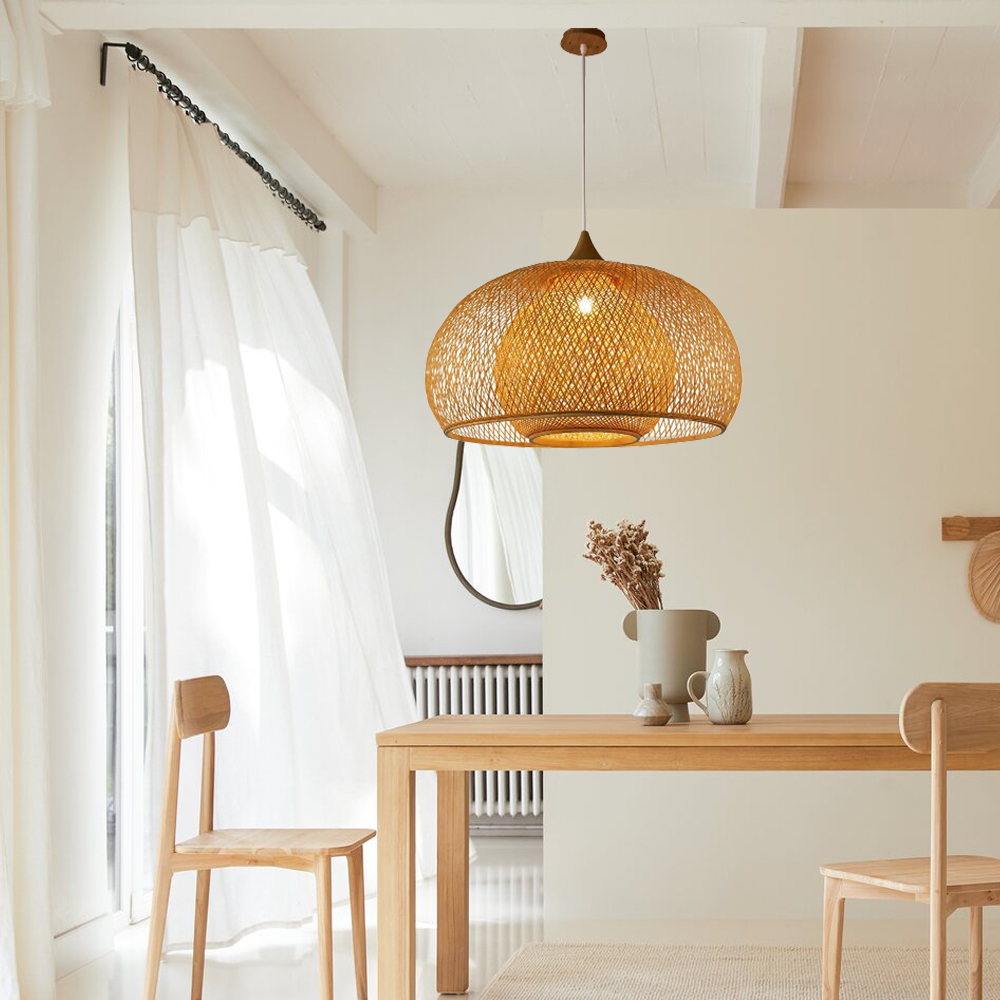
“Budget alternative: Source a secondhand dining set from Facebook Marketplace ($1”
Budget alternative: Source a secondhand dining set from Facebook Marketplace ($150), find a similar pendant from IKEA or Target ($70), and use simple linen-blend curtains to get this entire vibe for around $350.
A single, large pendant is a fantastic statement, but be mindful of the light it actually casts. An open-weave shade like this one will create beautiful, ambient light, but it’s not great for tasks. The light will be diffused and may cast patterns on the walls and table. If this is your primary dining spot where you also work or where kids do homework, it might not be bright enough on its own. You’ll want to supplement with other light sources in the room, like floor lamps or recessed lighting. For a similar look with more direct light, choose a pendant with a solid top and an open bottom. For a more budget-friendly approach, check out the similar styling in Idea #1, but scaled down.
4. Domed Bamboo Pendants Over an Asian-Inspired Dining Set
This look follows a simple but effective formula: 50% Natural Wood + 30% Warm Off-White + 10% Woven Texture + 10% Ceramic & Greenery. The foundation is the pairing of light and dark wood tones in the table and chairs. The warm white walls provide a neutral, gallery-like backdrop. The key is the 10% woven texture from the large bamboo pendants, which adds warmth and a focal point. The final touches of white ceramic and a potted plant keep it from feeling too sterile. You could swap the off-white for a soft grey or sage green and still maintain the same serene balance.
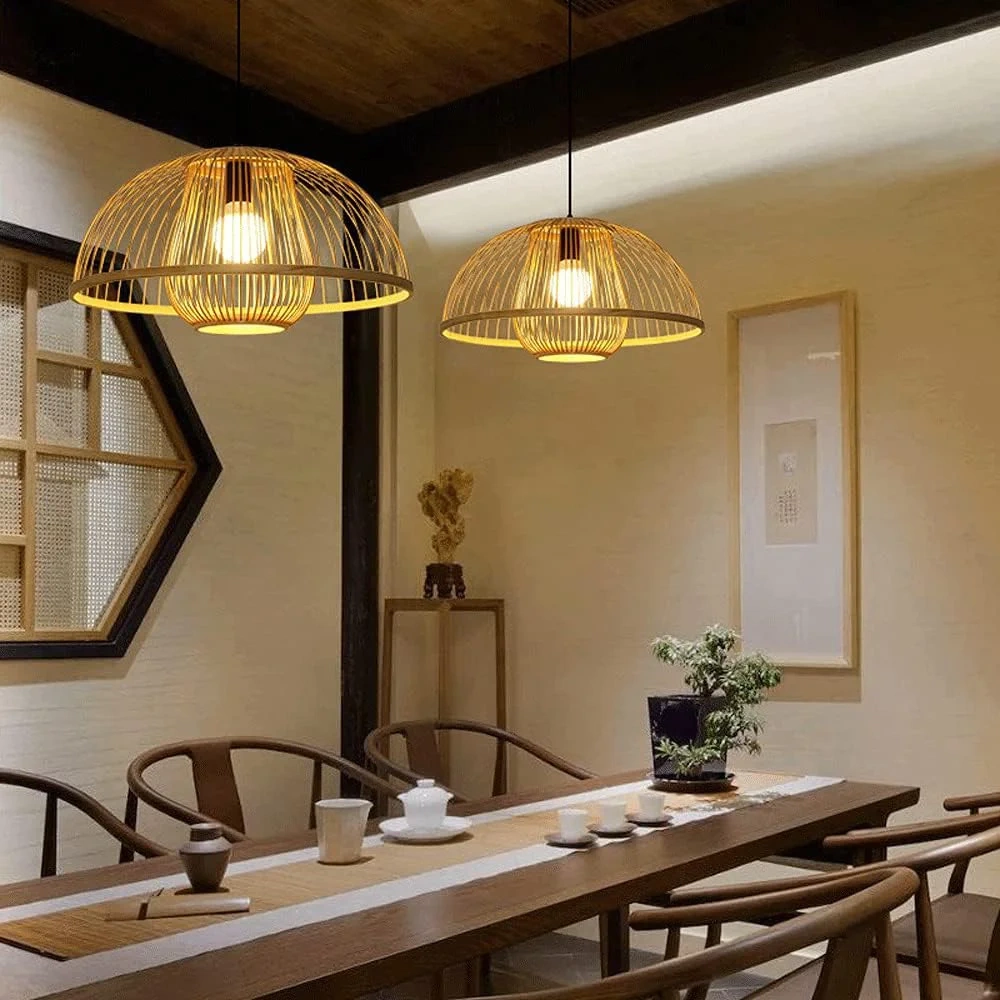
“This isn’t just a trend; it’s a quiet design movement called ‘Japandi’—a hybrid of Scandinavian function and Japanese rustic minimalism.”
It’s popular because it creates a feeling of artful, uncluttered calm, which so many of us are craving. The focus on natural materials, craftsmanship, and simple forms is a direct response to our overly digital lives. This look has serious staying power because it’s not about fleeting colors or patterns; it’s about a timeless philosophy of living with less, but better, stuff.
5. A Trio of Bamboo Cage Pendants for Ambient Glow
You can create a simple version of these cage pendants yourself. Here’s a quick guide for one light:
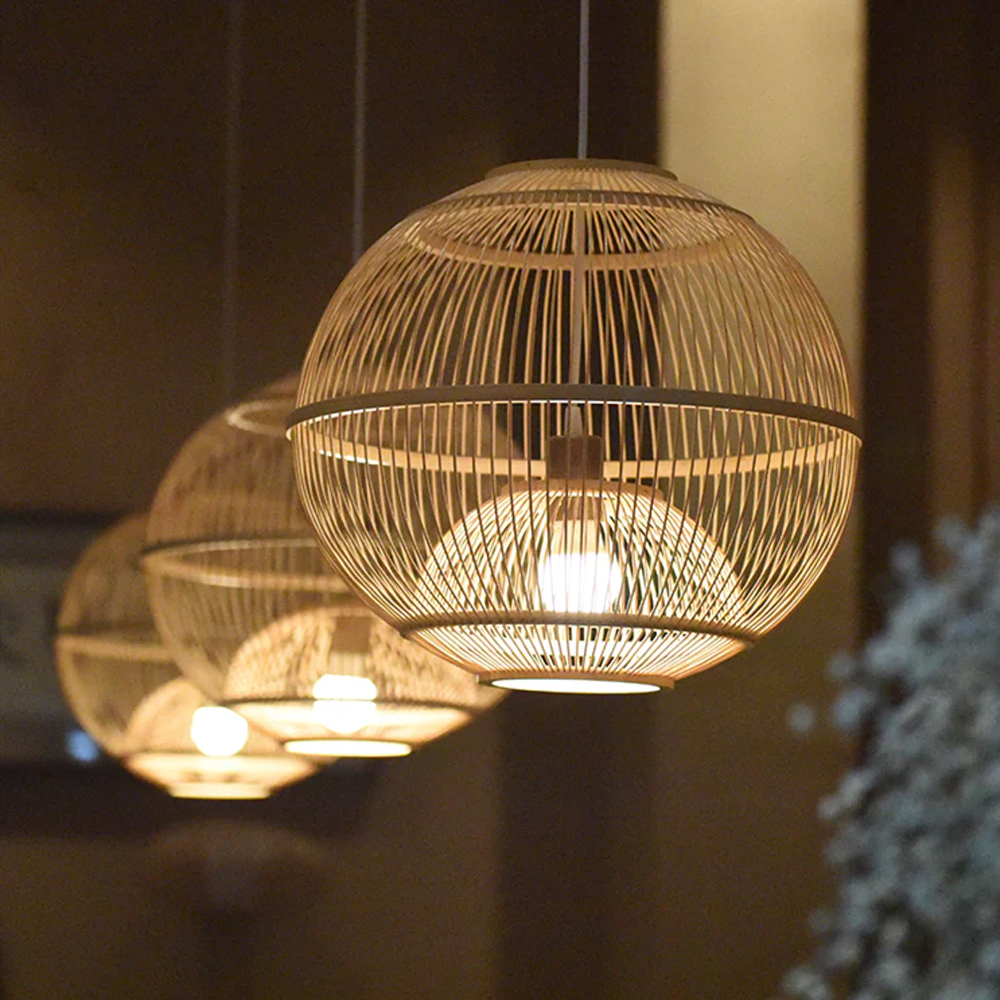
“Gather Materials: You’ll need a simple cord kit with a socket (about $15), a low-wattage LED Edison bulb ($10), a small embroidery hoop (around 6-8 inches, $5), and a bundle of thin, flexible bamboo sticks or flat reed ($20).”
Total cost: ~$50.Build the Frame: Use the inner ring of the embroidery hoop as your top frame. Drill small, evenly spaced holes around its circumference.Shape the Cage: Carefully bend the bamboo reeds, inserting one end into a hole and bringing it down to a central point where you’ll secure them all together with twine or wire.Secure the Bottom: Once all reeds are in place and forming a sphere, tightly wrap the bottom gathering point with twine.Install Lighting: Feed the cord kit through the top hoop so the bulb hangs in the center of your new shade.
This entire project should take about 2-3 hours per light.
You don’t need a huge budget to get this warm, layered lighting look. Start by thrifting for wicker or bamboo baskets with an open weave. You can often find them for $5-$10 each at Goodwill or on Facebook Marketplace. Then, purchase simple pendant light cord kits from Amazon or IKEA for about $15 each. Just flip the basket over, cut a small hole in the center of the base, thread the cord kit through, and you have a custom pendant light. Grouping three different-but-similar baskets together can look even more interesting and intentional.
6. Layered Woven Pendants with a Pop of Greenery
This arrangement works because it masters the art of layering and contrast. First, you have the layering of the pendants themselves—different shapes, colors (natural and dark grey), and heights create visual depth against the white ceiling. Then, you have the contrast between the airy, light woven texture of the lamps and the solid, lush green of the large plant. The black-framed chairs add a sharp, graphic element that grounds the otherwise soft and organic space. It’s a perfect mix of hard and soft, light and dark, natural and man-made.
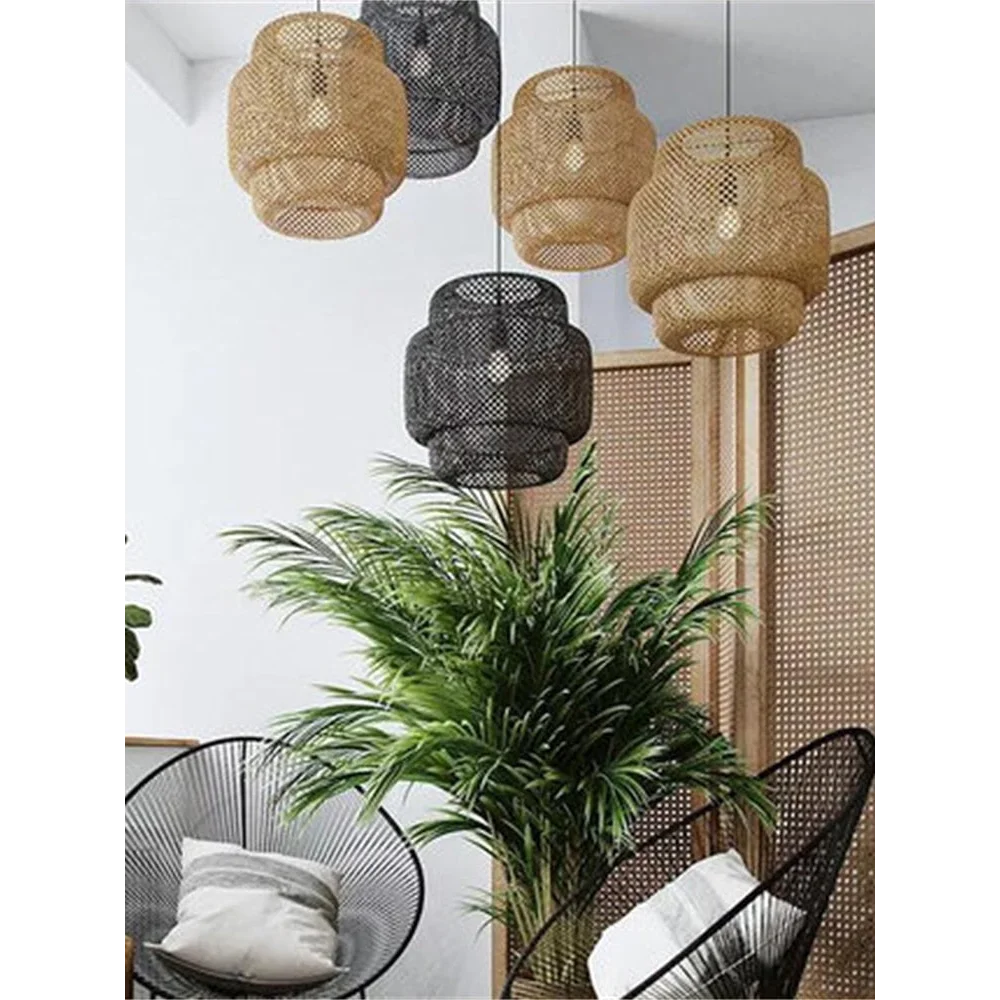
“Let’s be honest: woven shades are dust magnets.”
Because of all the little nooks and crannies in the weave, they require more frequent cleaning than a simple glass or metal shade. Plan to dust them every two weeks with a feather duster or the soft brush attachment of your vacuum. For a deeper clean once or twice a year, you can use a slightly damp microfiber cloth, but be careful not to oversaturate the natural fibers, which could cause them to warp or stain. The lush plant also needs care—if you don’t have a green thumb, a high-quality faux plant will give you the same look with zero effort.
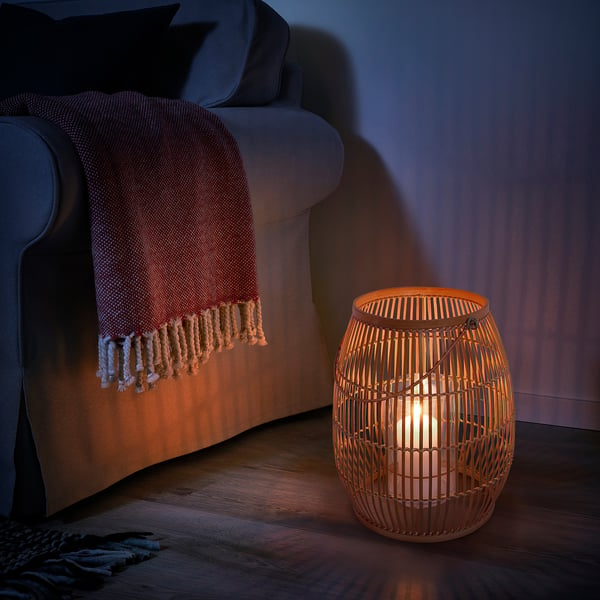
7. Freestanding Bamboo Slatted Lanterns for a Cozy Corner
The key element here is the warm, contained glow. These aren’t just lights; they’re atmospheric objects. Unlike a typical lamp that casts light outwards, these lanterns hold the light within their slatted bamboo structure. This creates a focal point of warmth that feels incredibly cozy and intimate. If you replaced these with a regular floor lamp, you’d get illumination, but you’d lose the magic. The lanterns themselves become the decoration, drawing you in and defining the corner as a place of relaxation and calm.
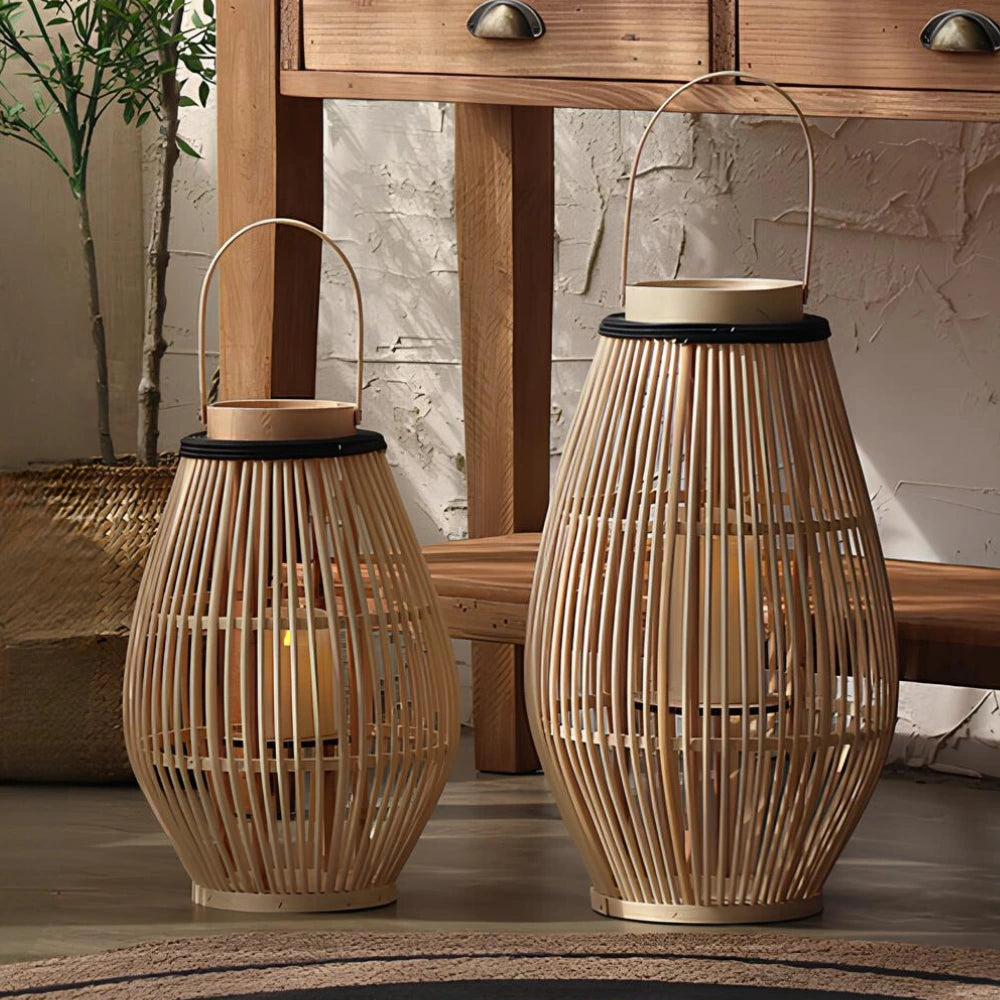
“While these lanterns are beautiful, they provide ambiance, not functional light.”
Don’t expect one of these to light up a reading corner or illuminate a whole room. Their glow is soft, warm, and directed inward. They are perfect for setting a mood, filling a dark corner with a bit of life, or adding a touch of warmth to an entryway. But if you need to actually *see* what you’re doing, you will need to pair them with task lighting like a reading lamp or overhead lights. Think of them as the modern, safer version of candles.
8. A Tiered Bamboo Fixture with a Soft White Diffuser
The secret to making fixtures like this work is the internal diffuser. An open-weave bamboo shade is beautiful, but the glare from a bare bulb can be harsh and create distracting striped shadows on your walls. The solid white interior layer solves this problem. It diffuses the light, creating a soft, even glow that’s easy on the eyes while still highlighting the beautiful bamboo structure. When shopping for or making a woven pendant, always look for this feature if you plan to use it as a primary light source in a room.
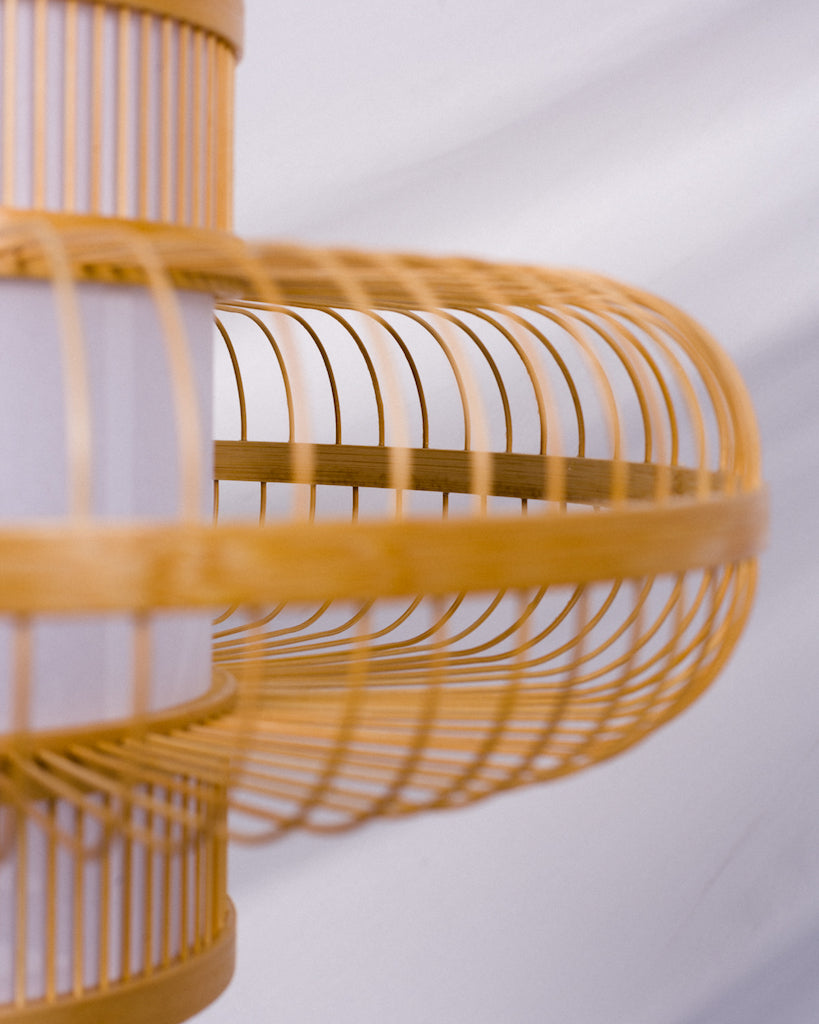
“A multi-tiered fixture like this has significant visual weight, so it’s best suited for rooms with ceilings that are at least 9 feet high.”
It would be a stunning centerpiece over a round dining table (48-60 inches in diameter) or in a serene bedroom with a minimalist aesthetic. In a living room, it works well centered in the space if the room is at least 12×12 feet. Avoid hanging it in smaller rooms or spaces with low ceilings (under 8 feet), as it can feel overwhelming and make the ceiling feel even lower.
9. Crafting Large-Scale Conical Bamboo Structures
Tackling a large-scale project like this requires some serious prep work. Before you even buy your first bamboo pole, run through this checklist:

“Check Your Space: Do you have a large, well-ventilated area to build this?”
A garage, workshop, or backyard is ideal. Measure the final height and width to ensure it fits through your doors once assembled!Source Your Bamboo: Not all bamboo is created equal. You’ll need structural bamboo poles, not the skinny decorative sticks from a craft store. Research local or online suppliers for quality, load-bearing poles.Plan Your Joints: How will you connect the poles? This is the most critical part. Research traditional lashing techniques with natural twine or plan to use modern hardware like bolts and screws for stability.Confirm Your Design: Sketch your design to scale. It’s much easier to fix a mistake on paper than when you’re halfway through building a 10-foot cone.
Working with large bamboo poles is not like your average weekend DIY. Bamboo is strong, but it can also be unpredictable. It can split if you drill or cut it incorrectly, and cheap, dry bamboo is brittle and unsafe for structural projects. This is an advanced-level craft that requires research into proper joinery techniques (like lashing or pegging) and the right tools (a fine-toothed saw is a must). If you’re not confident, start with a smaller project first. And be aware of the common pitfalls we outline in our mistakes section to avoid disappointment.
10. A Handcrafted Peacock with a Bamboo Stick Tail
The undeniable star of this piece is the tail. The carved wooden body is rustic and charming, but the explosion of bamboo sticks is what gives it drama and scale. Each stick, tipped with a spot of vibrant green, creates a sense of rhythm and repetition that beautifully mimics the iconic fan of a real peacock’s tail. Removing this element would leave you with a simple bird carving; with it, you have a true piece of folk art that tells a story of patience and creativity. The sheer volume and texture of the bamboo are what make it unforgettable.
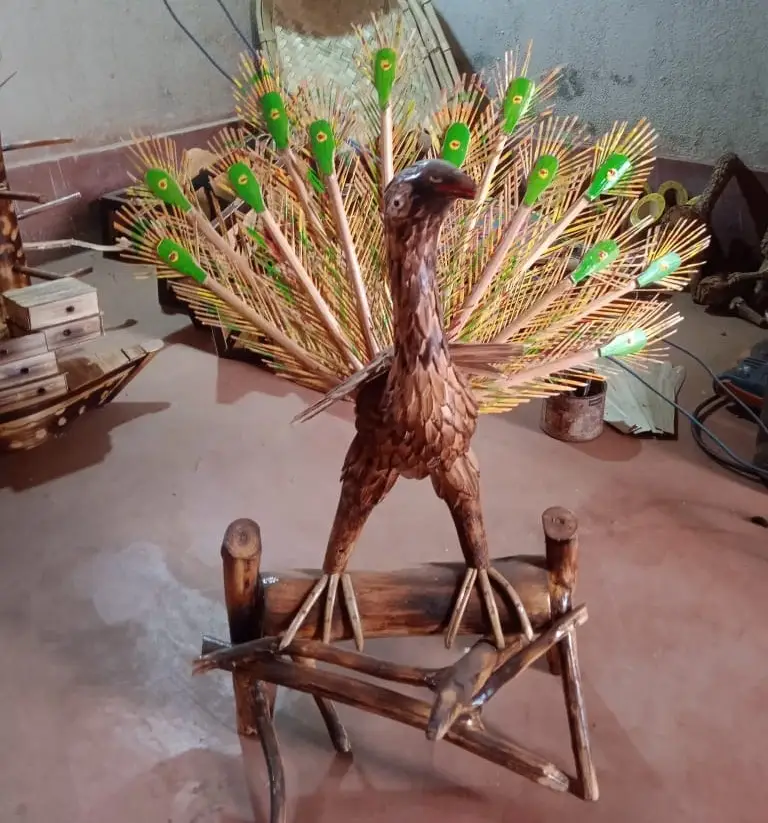
“Love the idea of a sculptural bamboo accent but don’t have the carving skills?”
You can create a stunning piece of abstract wall art with the same principles. Find a beautiful piece of driftwood or a uniquely shaped branch to serve as your base. Then, purchase a bundle of thin bamboo garden stakes. Cut them to varying lengths and simply hot glue them onto the back of the driftwood, fanning them out in a sunburst pattern. You can leave them natural or dip the ends in paint, just like the peacock’s ‘feathers.’ It’s a 1-hour project that costs less than $30.
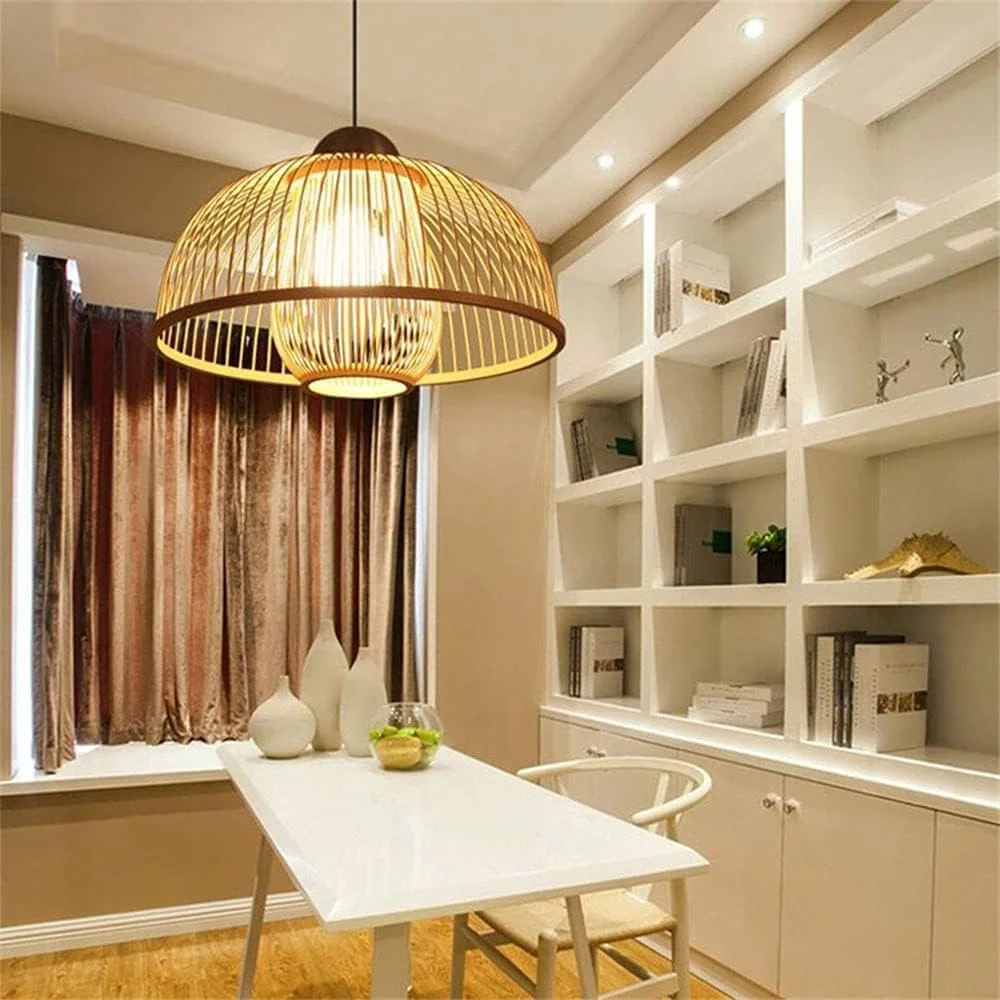
11. Bamboo Dome Light with a Dark Rim in a Modern Room
This room’s sophisticated formula is 60% Bright White + 20% Natural Texture + 20% Dark Accents. The white walls, table, and shelving create a clean, expansive canvas. The natural texture comes from the bamboo pendant and the light wood floors, adding necessary warmth. The magic is in the 20% dark accents: the dark brown rim of the pendant light, the textured brown curtain, and the subtle dark lines of the chair and decor. These dark points anchor the space and give it a graphic, intentional quality, preventing the white and bamboo from looking washed out.
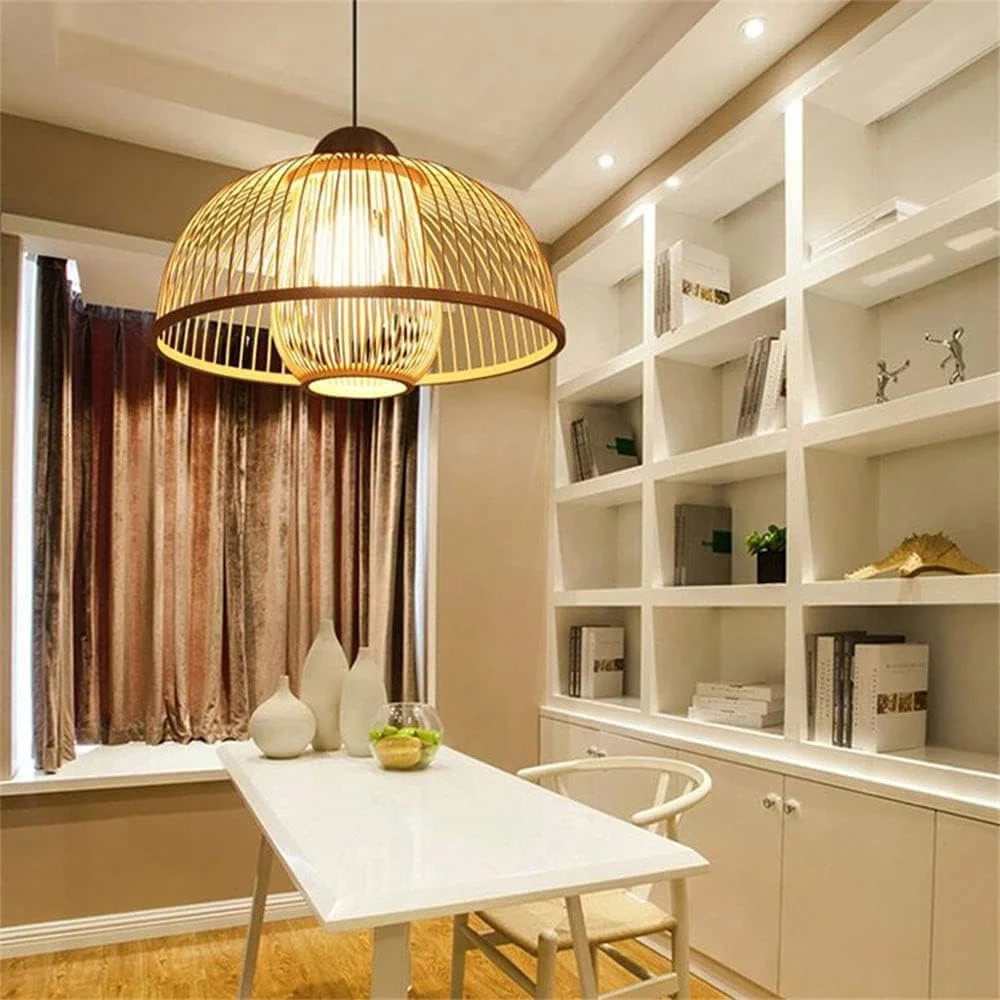
“This design succeeds by balancing clean modernism with natural warmth.”
The white built-in shelving unit and rectangular table are crisp and geometric. The dome-shaped bamboo pendant introduces a soft, organic curve that breaks up all the straight lines. The dark brown rim on the pendant is a clever detail that connects it to the darker curtain, creating a cohesive visual dialogue across the room. It’s a masterclass in using lighting not just for function, but as a bridge between different elements in a space.
12. Create a Woven Bamboo Panel Accent Wall
When installing woven panels like these, the trick to a high-end look is adding trim. Instead of just butting the panels up against each other and the ceiling, frame the entire accent wall with simple, 1×2 inch wood trim painted to match your wall color. This creates a clean, finished border that makes the installation look intentional and custom-built, rather than just stuck on. It hides any uneven cuts or gaps at the edges and gives the entire feature a professional, polished appearance.
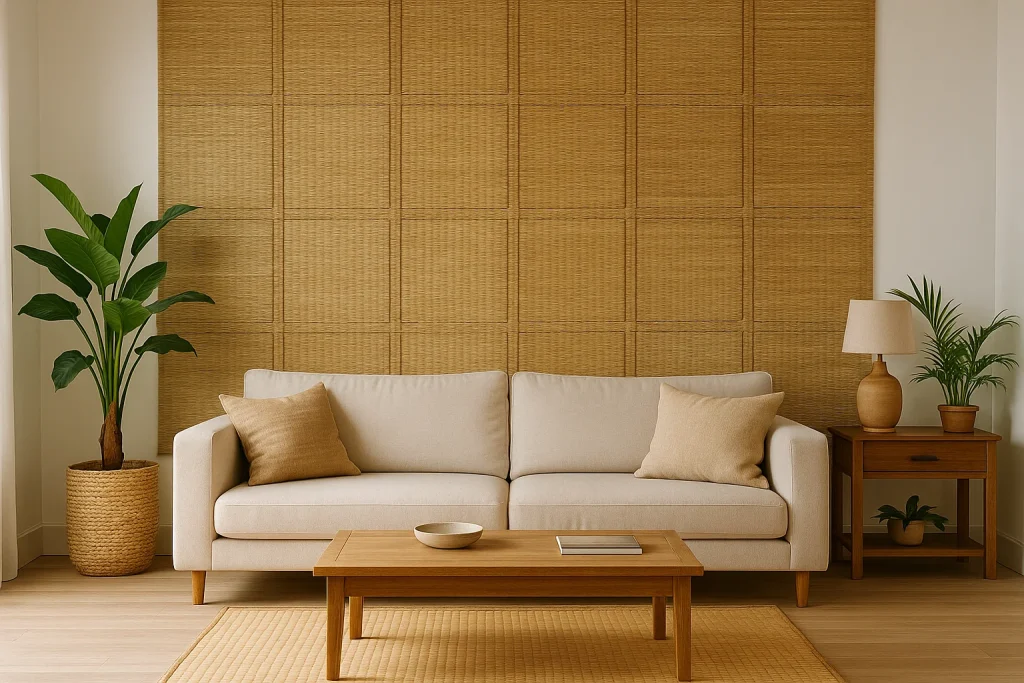
“A full accent wall of woven bamboo works best in a medium to large-sized room (at least 150 square feet) where it can be a true focal point without overwhelming the space.”
It’s perfect for the wall behind a sofa in a living room or behind a bed in a primary bedroom. Avoid using it in very small rooms or narrow hallways, as the texture can make the space feel smaller and busier. For a similar effect in a smaller space, consider the minimalist approach of Idea #22, using bamboo in a more contained way.
13. An Organic Bamboo Structure in a Lush Forest Setting
This isn’t just a building; it’s a piece of biomorphic architecture, a trend that designs structures to mimic natural forms. This style is gaining traction as we seek a deeper, more seamless connection with nature. Instead of imposing a box on the landscape, this curved bamboo structure feels like it grew right out of the ground. The use of locally sourced, sustainable materials like bamboo is also a huge part of the eco-conscious design movement. It represents a future where our buildings are in harmony with, not opposition to, the environment.
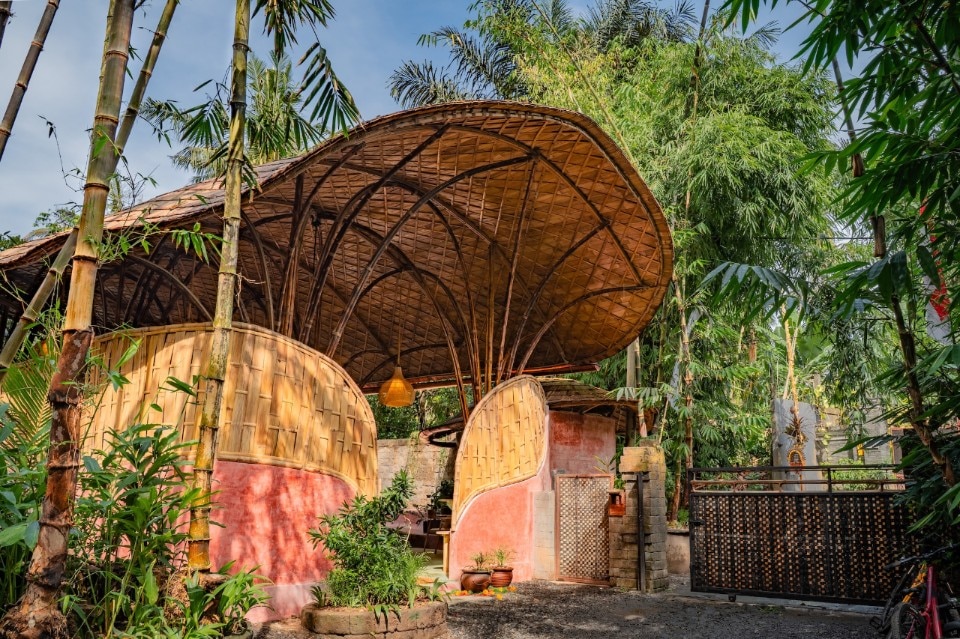
“A structure made of natural, untreated bamboo exposed to the elements requires significant upkeep.”
Bamboo is susceptible to rot, insect damage, and degradation from sun and rain. In a tropical climate, you would need to inspect the structure annually for any signs of weakness or decay. A protective coating or sealant would need to be reapplied every 2-3 years. The woven roof, while beautiful, is a prime spot for collecting leaves and debris and would need regular cleaning to prevent moisture buildup and rot. This is a labor of love.
14. Thatched Dome Building with Vertical Bamboo Accents
The power of this design lies in its bold combination of textures. You have the soft, shaggy texture of the massive thatched roof, the smooth, cool surface of the light-colored concrete supports, and the rigid, linear pattern of the vertical bamboo poles. This textural trio is what makes the building so visually compelling. Each material highlights the unique qualities of the others, creating a rich, layered aesthetic that is both monumental and deeply connected to nature. The contrast between the handcrafted feel of the thatch and the modern look of the concrete is particularly effective.
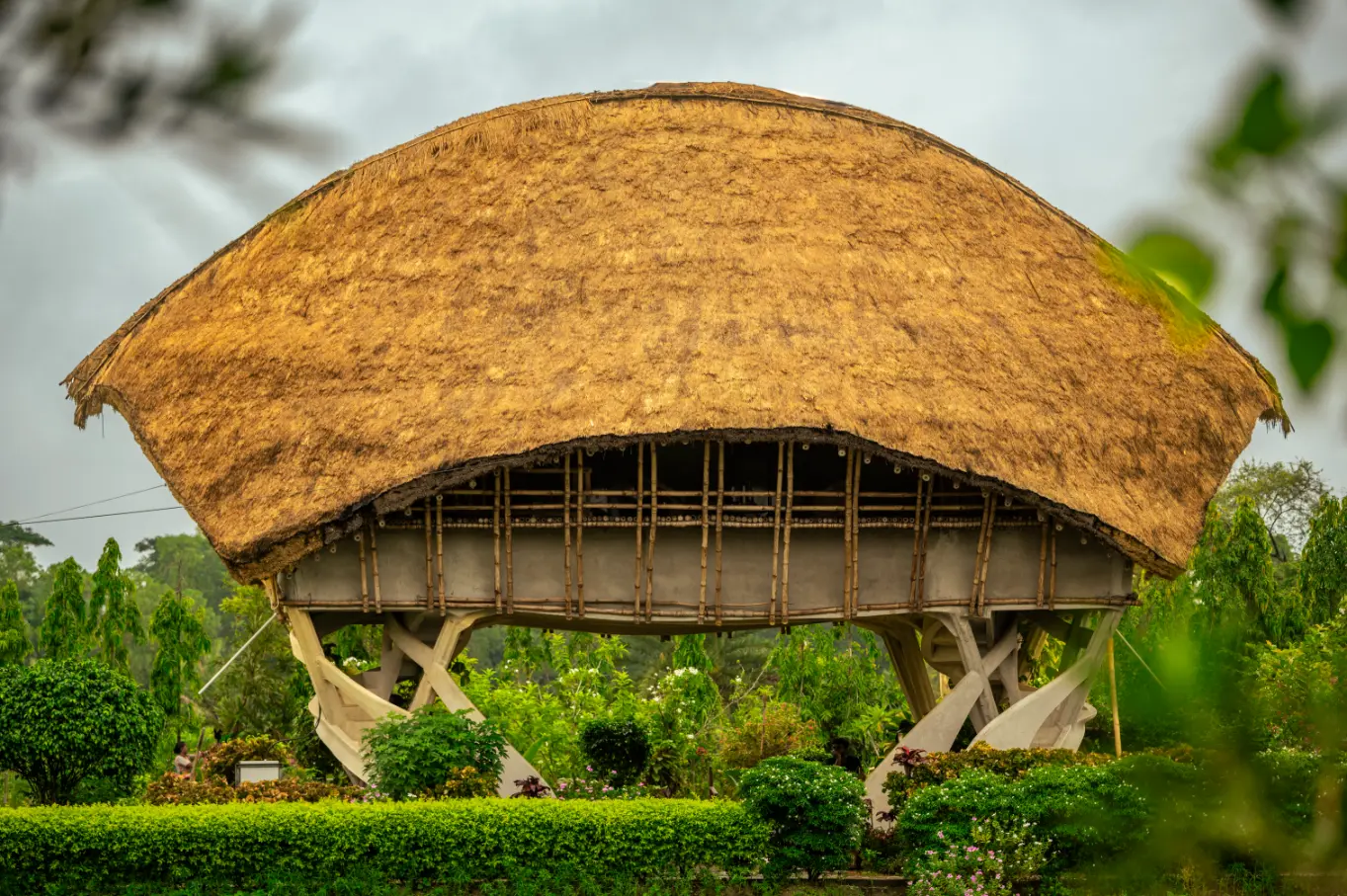
“While this is an absolutely stunning piece of architecture, let’s be real: this is not a DIY project or a simple home addition.”
This is large-scale, professional construction involving complex engineering, especially with those sculptural concrete supports. A thatched roof, while beautiful and sustainable, is also a specialized craft that requires expert installation and maintenance to be watertight and long-lasting. This is pure inspiration—a reminder of the incredible things that can be done with natural materials when pushed to their limits.
15. An Irregular Woven Bamboo Orb with Internal String Lights
You can create a similar glowing orb using a large balloon and flat bamboo reed. Here’s how:
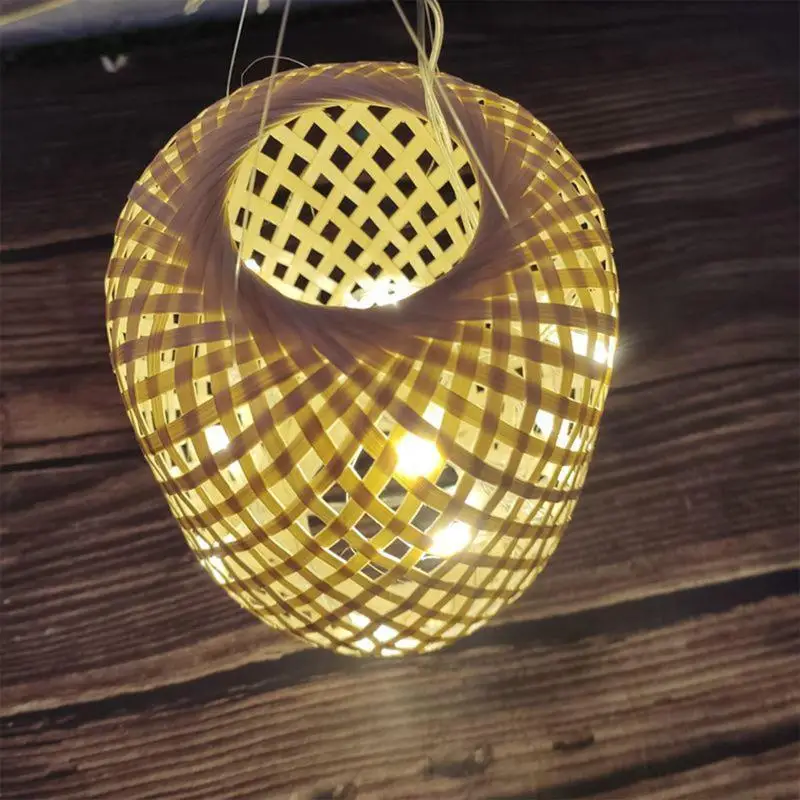
“Prep your materials: You’ll need a large round balloon, flat reed or bamboo strips, and a bowl of wood glue thinned slightly with water.”
Get a battery-powered set of fairy lights ready.Create the form: Inflate the balloon to your desired size and hang it somewhere you can work around it.Weave the orb: Dip a strip of reed into the glue mixture, wiping off the excess. Wrap it around the balloon. Repeat, crisscrossing the strips to build up a random, woven shell. Leave an opening at the top large enough for the balloon and your hand.Dry and pop: Let the shell dry completely for 24-48 hours until it’s hard. Once rigid, carefully pop and remove the balloon.Add lights: Gently feed the fairy lights inside the orb, securing the battery pack near the opening for easy access.
This DIY project is messy but incredibly rewarding, and should cost you less than $40.
Want this look in 10 minutes? Find a pre-made, open-weave grapevine or bamboo sphere at a craft store like Michaels or Hobby Lobby (usually in the floral or garden section for under $20). They come in various sizes. Then, simply buy a pack of battery-operated warm white fairy lights (about $10) and carefully weave them throughout the inside of the sphere. You get the exact same ambient, magical glow for a fraction of the effort and cost.
16. Casting Intricate Patterns with a Woven Bamboo Lamp
This effect is all about a simple, dramatic formula: 80% Darkness + 15% Patterned Light + 5% Woven Object. The key is creating a dark, neutral backdrop that acts as a canvas. The lamp itself is a minor part of the visual; the real star is the light it throws. The intricate patterns projected onto the wall become the room’s artwork. This works best in a space where mood is more important than function, like a cozy media room, a hallway, or a bedroom corner. The bamboo lamp is the tool, but the light is the art.
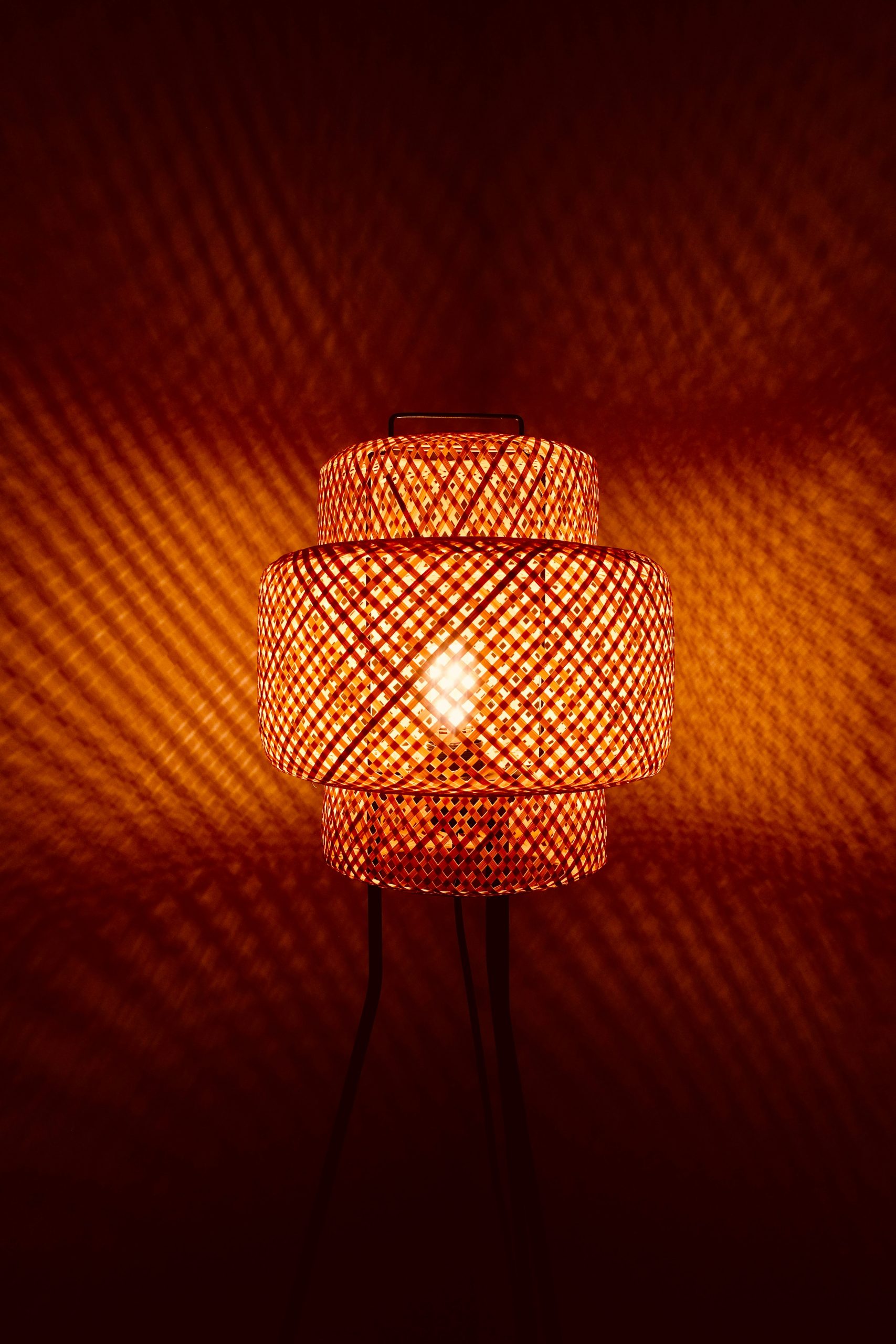
“that makes this idea work is the shadow play.”
The lamp itself is secondary to the effect it creates. The intricate open weave of the bamboo shade acts like a stencil, casting a complex, beautiful pattern of light and shadow onto the surrounding walls. This turns a simple light source into an active design element that adds texture, depth, and a huge dose of atmosphere to the room. Without the shadows, it’s just a lamp. With them, it’s an experience. This is lighting as decoration.
17. A Sculptural Wide-Weave Pendant Over Greenery
With a large, sculptural shade like this, the bulb choice is critical. Don’t hide a standard A19 bulb in there. You need a bulb that is part of the design. Opt for a large, globe-shaped G25 or G40 bulb in a warm white (2700K). The oversized, round shape of the bulb will complement the grand scale of the shade and look intentional within the open weave. Using a clear filament bulb can add an extra layer of vintage-style detail, but a frosted globe will provide a softer, more diffused light if you prefer less glare.
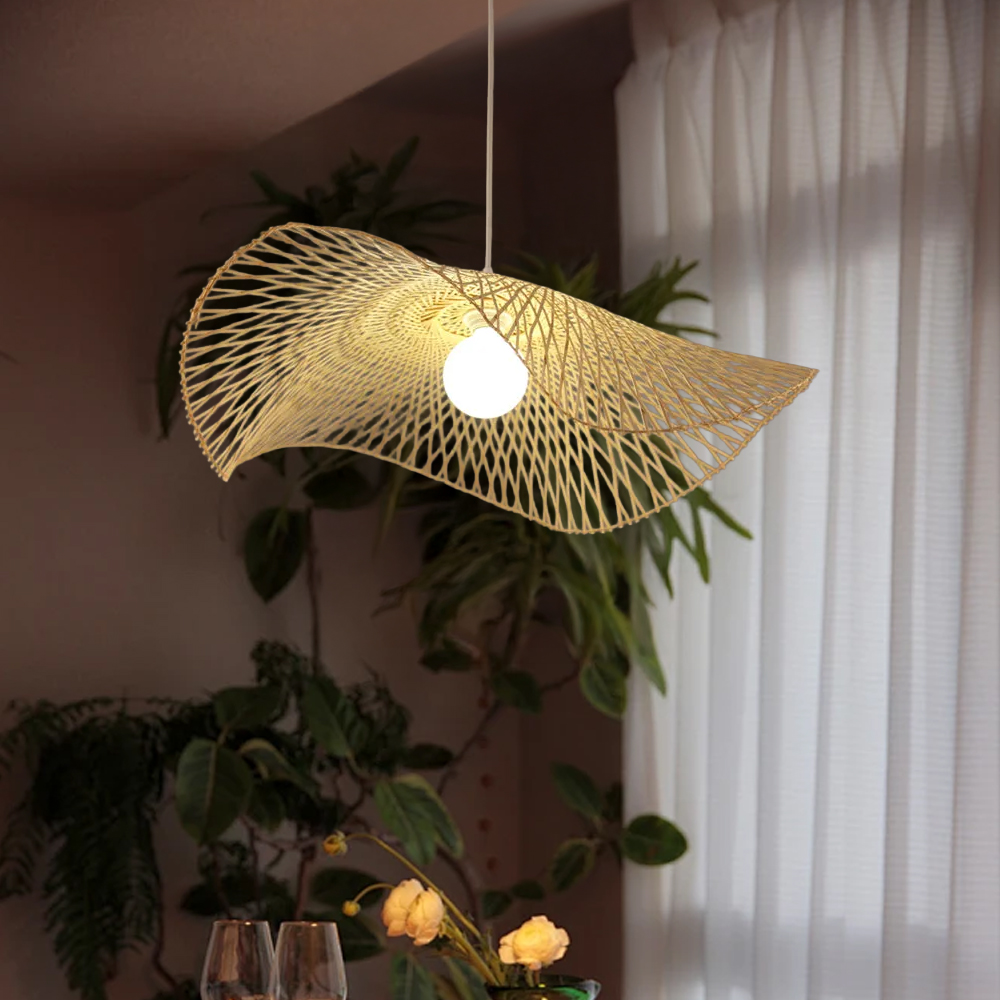
“Sculptural Woven Pendant: $250 – $700Large House Plants (Fiddle Leaf Fig, etc.):”
- Sculptural Woven Pendant: $250 – $700
- Large House Plants (Fiddle Leaf Fig, etc.): $100 – $300
- Sheer Curtain Panel: $40 – $100
- Glassware & Table Decor: $50 – $150
- TOTAL: $440 – $1,250
Budget alternative: You can find surprisingly large and dramatic woven pendants at stores like World Market or IKEA for under $150. For greenery, check out local plant swaps or Facebook Marketplace for mature plants people are giving away. The total look can be achieved for closer to $250. Check out a similar pendant style in Idea #20.
18. Minimalist Dome Pendant with a Criss-Cross Weave
While this simple bamboo pendant is beautiful, its open weave means it will cast a pattern on your walls and ceiling. This can be a cool, textural effect in the right context (like a hallway or bedroom), but it can be really distracting in a space where you need clean, even light. If you’re planning to hang this over a kitchen island where you chop vegetables or a desk where you work, the criss-cross shadows might drive you crazy. For task-oriented spaces, look for a bamboo shade with a built-in diffuser or a solid top to direct light downwards.
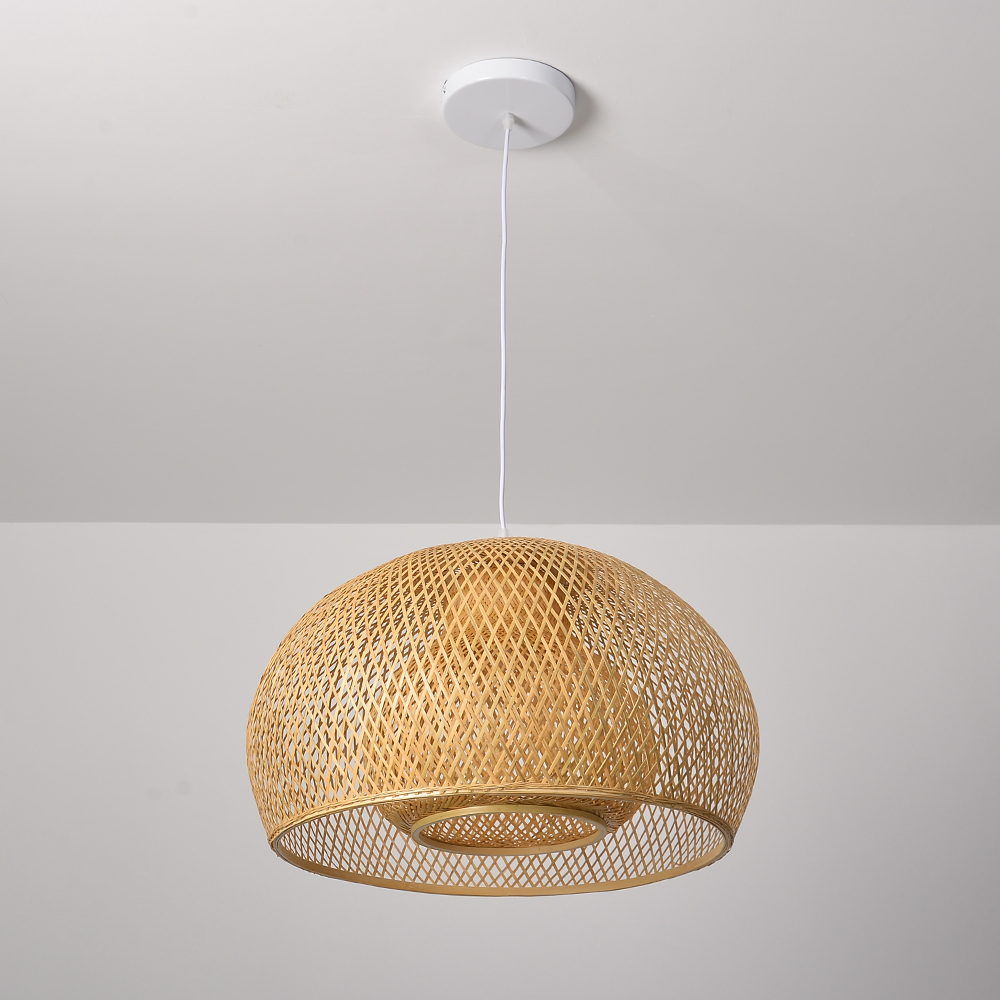
“This style of pendant is incredibly versatile.”
A single pendant of this size (around 15-20 inches in diameter) is perfect for a small entryway, a reading nook, or centered in a small bedroom (around 10×10 feet). You could also hang a pair of them over a rectangular dining table or a kitchen island that is 5-6 feet long. Because of its light, airy construction, it doesn’t feel heavy or bulky, so it can work well in rooms with standard 8-foot ceilings without making the space feel cramped.
19. A Patterned Vase Lamp with Woven Rattan Straps
This lamp is a masterclass in mixing materials and patterns. The ceramic base provides a smooth, glossy surface for the vibrant red and white floral pattern. The vertical woven rattan straps add a completely different, natural texture that breaks up the pattern and adds rustic warmth. Finally, the simple fabric shade offers a third texture—soft and muted—that balances the busyness of the base. It’s this thoughtful combination of ceramic, rattan, and fabric that makes the lamp feel so rich and curated.
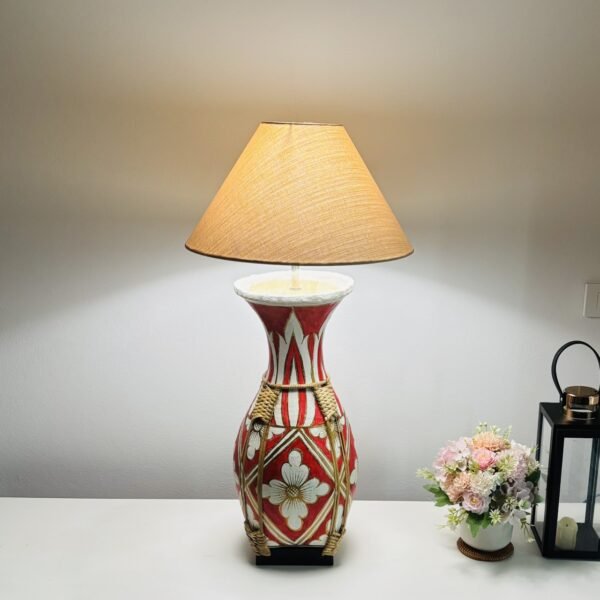
“This style, often called ‘Global Bohemian’ or ‘Modern Souk’, is trending because it allows for more personal and eclectic expression.”
It’s a move away from strict minimalism and towards spaces that feel collected and full of stories. The mix of a traditional floral pattern with natural rattan feels like something you could have picked up on your travels. It’s about curating a home that reflects a life well-lived, blending different cultures and styles into a cohesive, warm, and inviting look.
20. Gourd-Shaped Bamboo Pendant in a Room with a Gallery Wall
The organic shape of the pendant light is what truly makes this corner special. The gallery wall, with its rectangular frames, creates a strong grid. The gourd-shaped bamboo fixture interrupts that geometry with a soft, natural curve. This contrast is what creates visual harmony. It prevents the wall of art from feeling too rigid or formal and infuses the space with a relaxed, bohemian energy. If you swapped it for a square or drum-shaped pendant, the whole vibe would be lost. Compare the shape here to the wide, sculptural form in Idea #17.
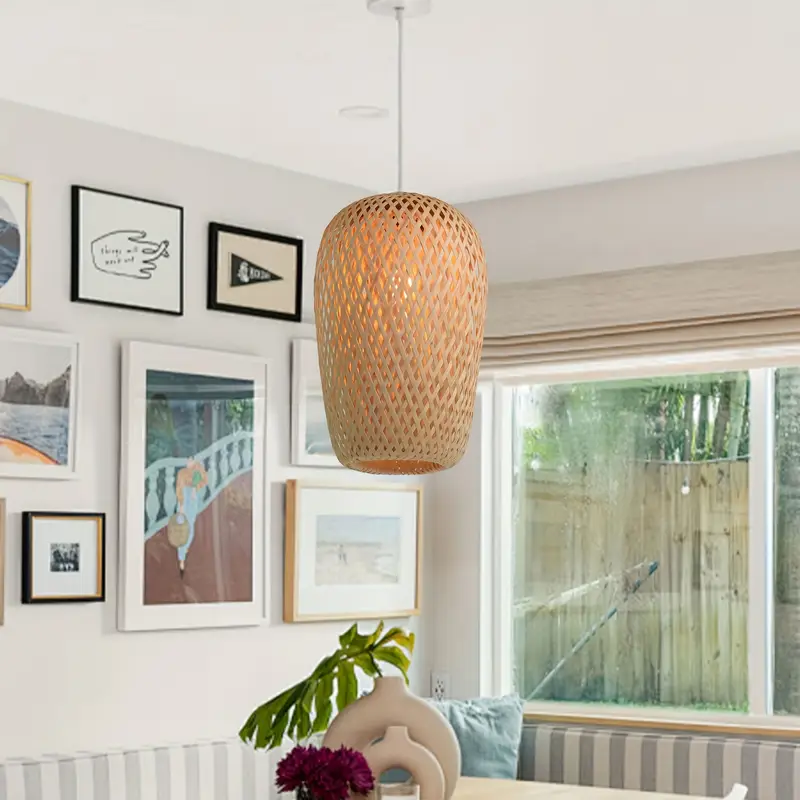
“You can get this look for so much less.”
The key is the combination of art and a natural pendant. For the art, frame beautiful pages from old books, high-quality wrapping paper, or even your own sketches. Thrift stores are a goldmine for mismatched frames that you can unify by spray-painting them all black or white. For the pendant, check out World Market, Pier 1, or even Amazon for woven, gourd-shaped shades under $80. The whole curated corner could easily be assembled for under $150.
21. A Cafe Vibe with Woven Pendants and Slatted Booths
This inviting look is achieved with a simple recipe: 50% Warm Wood + 40% Creamy White + 10% Black Accents. The slatted wood booths and woven pendants make up the dominant warm, natural element. The off-white walls and floors create a bright and airy backdrop, preventing the wood from feeling too heavy. The crucial 10% comes from the black details—the thin electrical cords of the pendants, the dark frames of the wall decor. These sharp black lines add a modern, graphic punch that keeps the design feeling crisp and intentional, not just rustic.
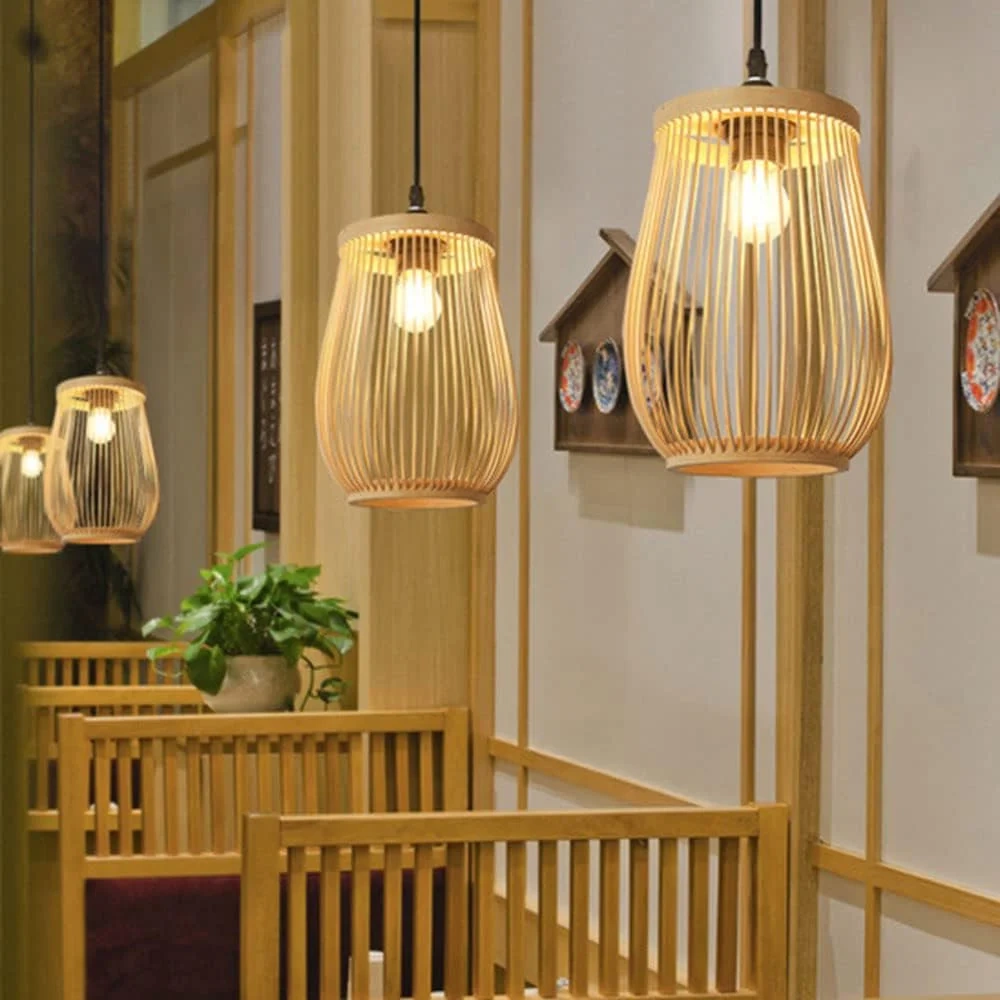
“To get that professionally designed ‘cluster’ look with pendant lights, don’t hang them all from the same height.”
Create a more organic, interesting arrangement by staggering the cord lengths. A good rule is to have at least 6-8 inches of vertical space between the lowest and highest pendants in a group. This creates depth and visual rhythm. For an even more custom look, use a multi-port ceiling canopy, which allows you to hang several pendants from a single electrical box with artfully draped cords.
22. A Minimalist Corner with a Bamboo Reed Diffuser
A bamboo reed diffuser is a beautiful, minimalist way to add scent to a room, but its effectiveness is limited. The scent will be most noticeable within a 3-5 foot radius of the vase. It’s perfect for a small powder room, an entryway table, or right beside your bed, but don’t expect it to perfume an entire open-concept living room. To keep the scent going, you need to flip the reeds once a week and replace the oil and the reeds themselves every 2-3 months, as the reeds eventually get clogged and lose their ability to diffuse.
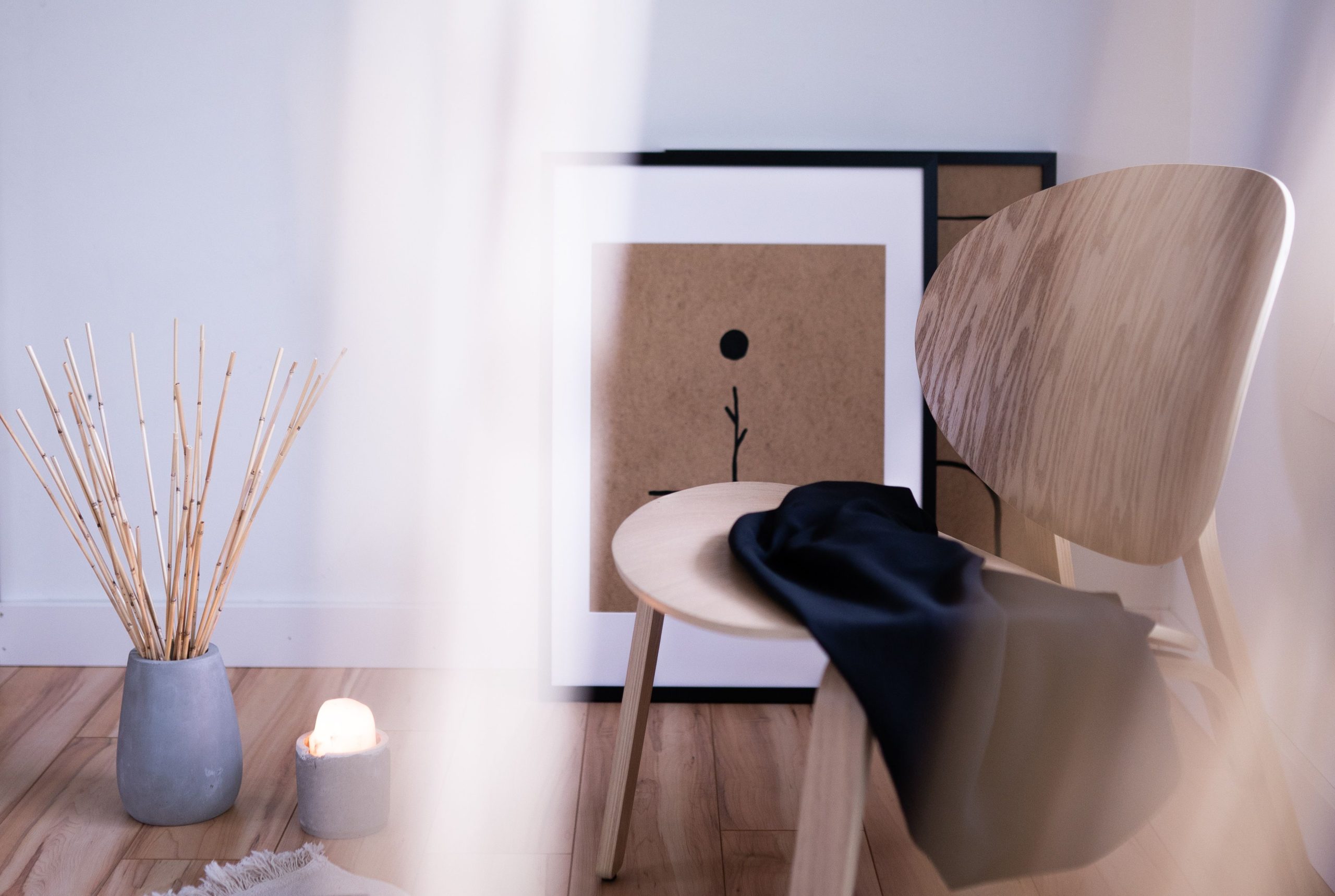
“This composition is a perfect example of the ‘rule of thirds’ and material contrast in action.”
The arrangement isn’t centered; it’s thoughtfully placed to create an asymmetrical balance that is pleasing to the eye. The tall, thin bamboo reeds provide a strong vertical line, which is contrasted by the low, solid form of the light wood chair. Furthermore, the rough, cool texture of the concrete vase is a perfect counterpoint to the warm, smooth wood of the chair and the delicate bamboo, creating a vignette that is simple yet rich in sensory detail.
23. A DIY Bamboo and Wood Shelving Unit with Exposed Fasteners
Building a custom shelving unit like this is surprisingly affordable if you’re willing to do the work. Here’s a rough breakdown:
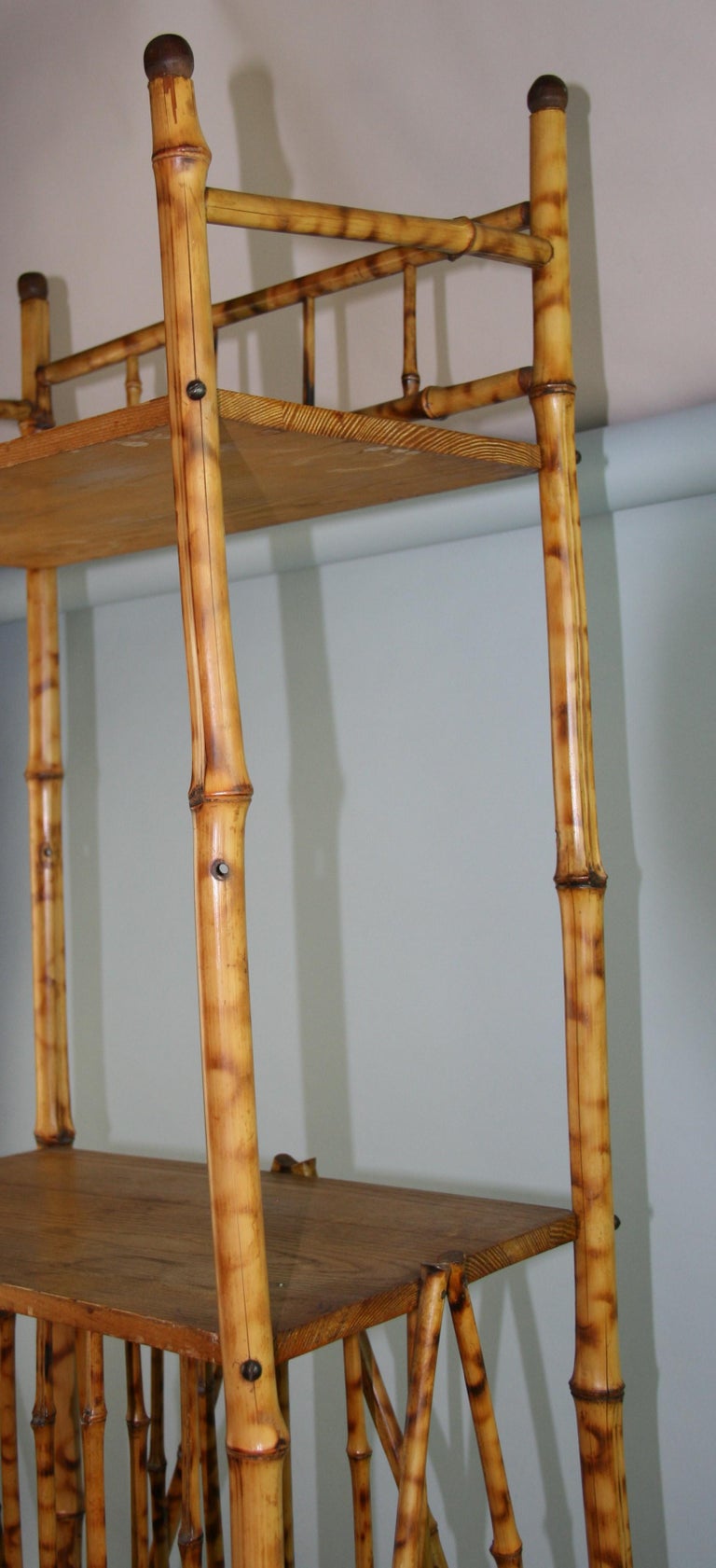
“Structural Bamboo Poles (8-10): $100 – $250Pine or Poplar Wood Planks for shelve”
- Structural Bamboo Poles (8-10): $100 – $250
- Pine or Poplar Wood Planks for shelves: $80 – $150
- Dark Metal Fasteners (screws, bolts): $20 – $40
- Wood Stain or Sealant: $20 – $30
- TOTAL: $220 – $470
Budget alternative: For a similar look with less construction, you can find pre-made bamboo shelving units online for $150-$300. They may not be as robust, but they capture the same organic style with zero sawdust.
Raw, unfinished bamboo is a natural material, and it will change over time. It’s prone to drying out and cracking, especially in a centrally heated home with low humidity. To keep it looking its best and prevent splits, you should treat it with a specialized bamboo oil or a tung oil finish once a year. This will nourish the fibers and help it maintain a subtle sheen. The wooden shelves will need regular dusting, and be mindful that softwoods like pine can dent or scratch easily, so use coasters and be gentle.
24. Basket-Style Pendants Over a White Marble Kitchen Island
When mixing rustic elements like weathered wood beams and woven pendants with elegant materials like marble, the key is to keep the rest of the palette simple. Notice how the upholstered seating and drapes are a soft, unified grey. This quiet color choice allows the star materials—the wood, the weave, and the marble—to shine without competing. If the curtains were a loud pattern or the chairs a bright color, the space would feel chaotic. The restrained color palette is what makes the mix of textures feel sophisticated. You can see a similar approach in the kitchen in Idea #2.
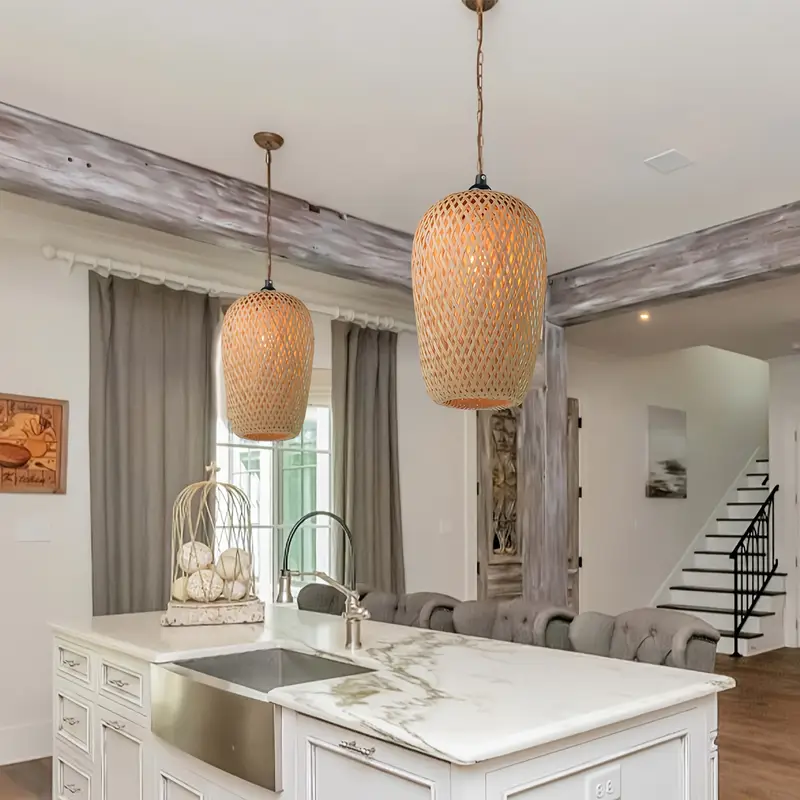
“This pairing is ideal for a generously sized modern farmhouse or coastal-style kitchen.”
You need high ceilings (at least 10 feet) to accommodate the visual weight of the weathered beams without them feeling oppressive. The kitchen island should be substantial, at least 7-8 feet long, to justify the scale of having two large pendants. This look wouldn’t translate well to a small galley kitchen or a room with standard 8-foot ceilings, as the beams and large lights would overwhelm the space and make it feel cluttered.
25. A Serene Bedroom with a Woven Bamboo Headboard
The woven bamboo headboard is the anchor of this entire room. Everything else—the light wood nightstands, the simple ceramic lamps, the neutral bedding—is chosen to support and complement it. If you were to swap it out for a simple wooden or upholstered headboard, the room would still be nice, but it would lose its distinct personality and textural focus. The headboard introduces an organic, handcrafted element that instantly sets a calm, natural tone for the space. It’s proof that one great piece can define a whole room.
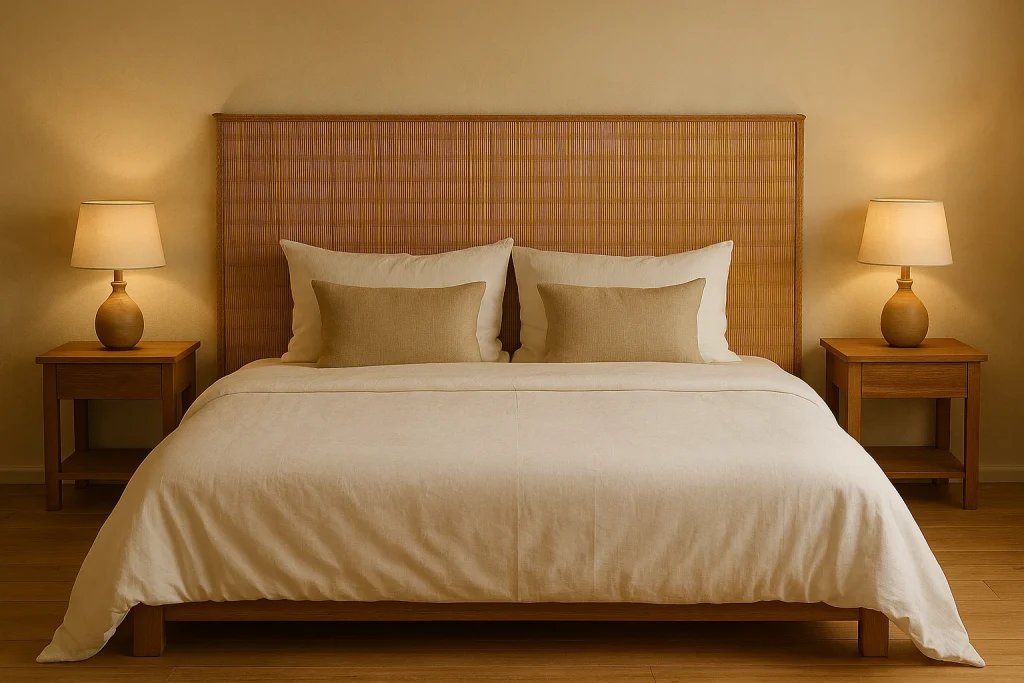
“A high-end woven headboard can cost upwards of $800, but you can get this look for much, much less.”
The ultimate hack is to use a large, flat woven screen or a decorative bamboo area rug as a headboard. You can find these at stores like Target, HomeGoods, or online for under $100. Simply mount the screen or rug directly to the wall behind your bed. It gives you the same scale and texture for a fraction of the price. Just ensure it’s securely fastened to the wall.
26. Close-Up on a Bamboo Dome with a White Inner Diffuser
This design is a perfect marriage of form and function. The outer bamboo cage provides the organic, natural texture and sculptural shape that makes the fixture beautiful to look at when it’s off. The inner white cylinder is the functional hero—it diffuses the light from the bulb, eliminating harsh glare and casting a soft, even glow. This two-part construction means you get the aesthetic benefit of an open-weave material without the practical downside of distracting shadows or a visible, ugly bulb.
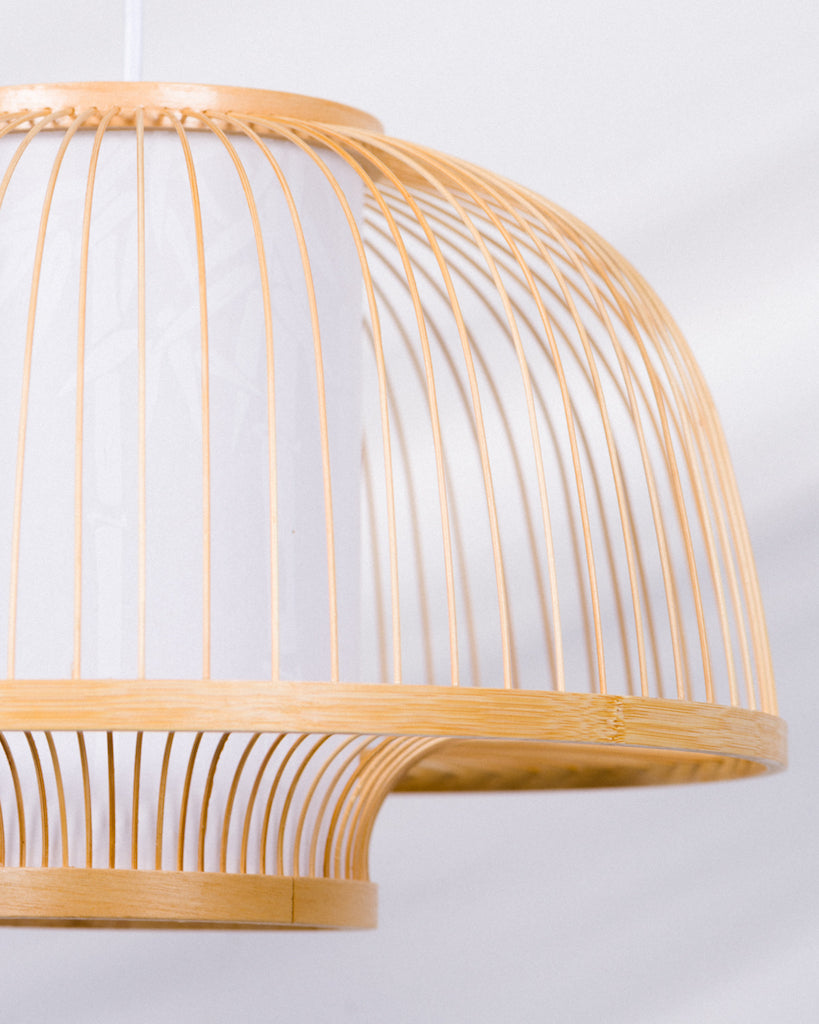
“Be aware that the white inner diffuser, while essential for soft light, will impact the color of the bamboo.”
When the light is on, the warm glow will be filtered through the white shade, and the bamboo itself won’t be as richly illuminated as an open-weave fixture would be. The effect is softer and more subtle. Also, the diffuser can collect dust and the occasional stray bug. You’ll need to be able to remove the outer cage or reach inside to clean the diffuser periodically to keep the light bright and clean.
27. Airy Bamboo Cage Pendant with a Fabric Diffuser
The formula for this light and airy look is simple: 70% Natural Weave + 30% Soft White. The dominant visual is the delicate, handcrafted bamboo cage, which provides all the texture and organic shape. The white fabric diffuser and white suspension cord make up the other 30%, serving to soften the light and blend the fixture seamlessly with a light-colored ceiling. This minimalist palette is what makes it so versatile. You could introduce this fixture into almost any color scheme, and it would add warmth without creating a clash.
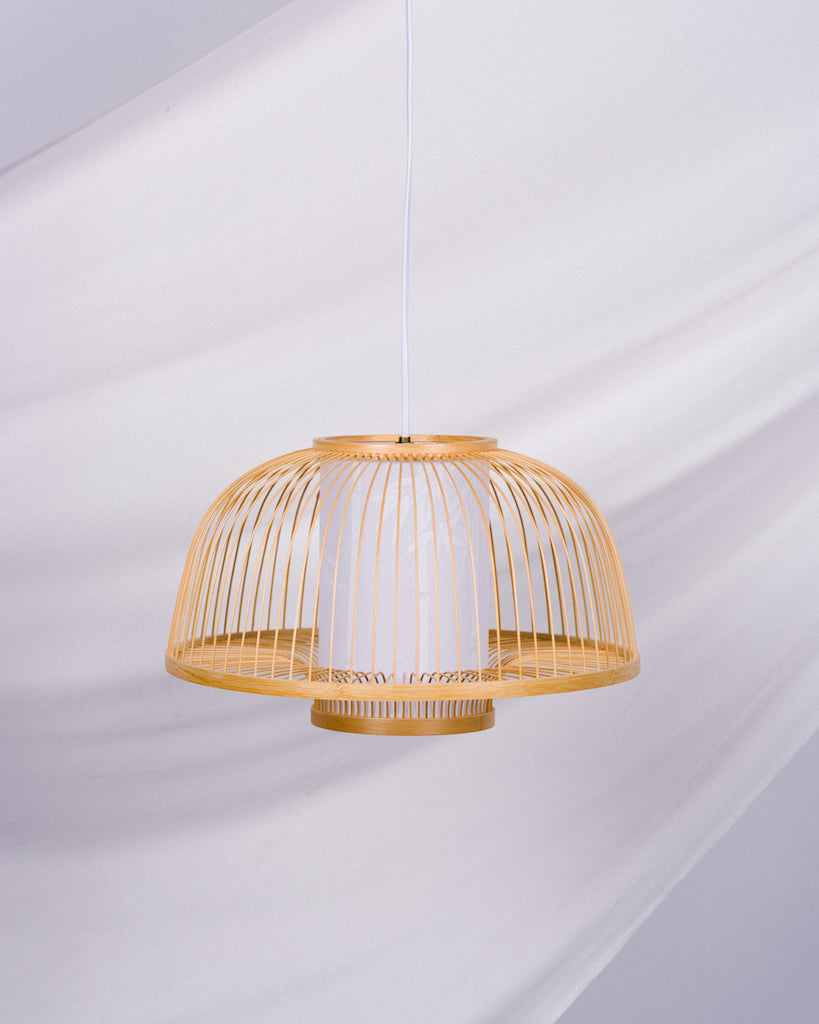
“When choosing a bulb for a pendant with a diffuser like this one, pay attention to the color temperature, measured in Kelvins (K).”
For that warm, cozy glow that complements bamboo so well, look for a bulb rated at 2700K. This is a warm white that feels like traditional incandescent light. A bulb at 3000K will be a brighter, cooler white, and anything higher (like 4000K or 5000K) will start to feel very cool and clinical, which would fight against the natural warmth of the bamboo.
28. An Intricately Woven Bamboo Dome Pendant
The single element that makes this piece breathtaking is the intricacy of the weave. This isn’t just a simple basket flipped upside down. It’s a complex, patterned weave that shows a high level of craftsmanship. The way the bamboo strips crisscross and layer creates a rich texture that is beautiful both when the light is on and off. This detail elevates the fixture from a simple shade to a piece of functional sculpture. The complexity of the pattern is what you’re paying for in a high-quality piece like this.
“An intricate, open-weave shade is a serious dust collector.”
All those tiny crevices are perfect for trapping airborne particles. To keep it looking fresh, you’ll need to dust it weekly or bi-weekly. The most effective tool is a can of compressed air (like you’d use for a keyboard), which can blow the dust out of the tight weave without you having to touch it. For more stubborn grime, a soft-bristle paintbrush or the brush attachment on your vacuum cleaner on a low setting will also work well.
Your Next Bamboo Project Awaits
Feeling inspired? The beauty of bamboo is its versatility—it can be rustic, modern, minimalist, or bohemian. Whether you’re tackling a full-on construction or a simple weekend craft, the key is to let the natural beauty of the material shine. Don’t be afraid to start small and see how this incredible material can bring warmth and character into your home. Now, which idea are you saving to your ‘Must-Try’ board on Pinterest?