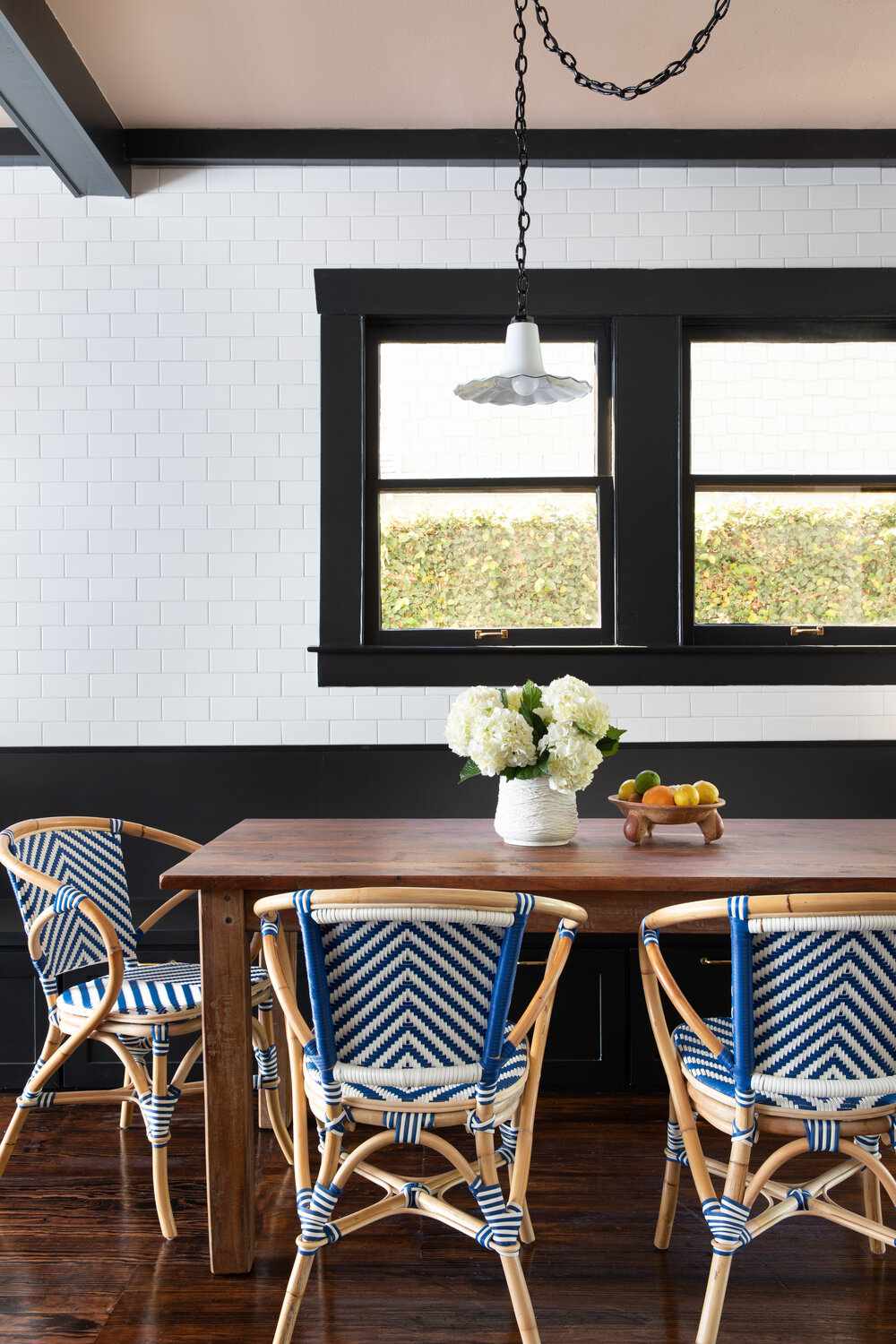
That moment when you land on the perfect fall kitchen photo on Pinterest and think, “This is it!”—that’s what this guide is all about. Forget endless scrolling. We’ve gone through hundreds of looks to find the 29 best fall kitchen decor ideas that feel fresh for 2026. After filtering through hundreds of options across IKEA, Target, and Walmart, we narrowed it down to 29 ideas that actually deliver. We’ve included styles from modern farmhouse to rustic traditional, so there’s something for every taste.
As we’re all leaning into creating homes that feel personal and gathered, these ideas are less about fleeting trends and more about building a warm, inviting space for the season. And stay until the end — we break down the most common mistakes that can ruin these looks. 📌 Save this to Pinterest for later — you’ll want to revisit these ideas.
1. Cozy Kitchen Counter with a Harvest Basket and Copper Accents
This look is the epitome of a warm welcome home. What makes it work so well is the masterful blend of textures. The rough, earthy quality of the brick backsplash is softened by the smooth, creamy white ceramics on the floating shelves. Add to that the gleam of hanging copper pots and the natural weave of the fruit basket, and you have a scene that is rich in sensory detail without feeling cluttered. It’s a lesson in layering materials to create depth and character.
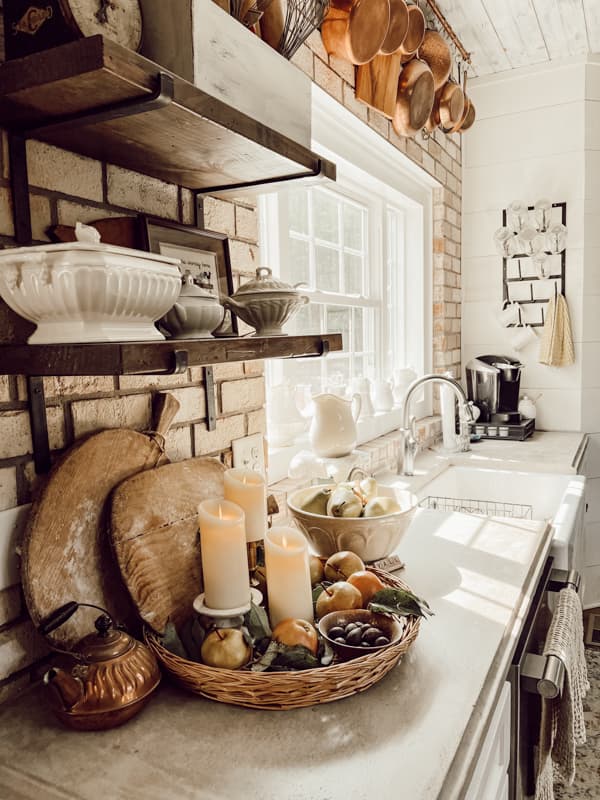
“Recreating this cozy corner involves a mix of functional and decorative pieces.”
Here’s a rough estimate:
- Main Furniture (Floating Shelves): $150 – $400
- Lighting (assuming existing, but for effect): $100 – $300
- Textiles (Woven Basket): $30 – $75
- Decor/Accessories (Copper pieces, ceramics, cutting boards): $250 – $600
- Wall Treatment (Brick veneer backsplash): $300 – $800
- TOTAL: $830 – $2,175
Budget alternative: Get a similar vibe for about 40-50% less by using faux brick panels, thrifting for copper-colored items (they don’t have to be real copper!), and using a more affordable basket from a craft store.
2. Embracing Rustic Furniture for a Hearty Fall Kitchen
Let’s have some real talk about rustic furniture. While those chunky, reclaimed wood pieces have undeniable character, they aren’t always the most practical for a high-traffic kitchen. Unsealed wood can be prone to staining and requires more maintenance than a lacquered or stone surface. Before you commit to a fully rustic dining table or island, consider your lifestyle. Are you a meticulous coaster-user, or do spills happen frequently? Being honest about this will save you a lot of stress down the road.
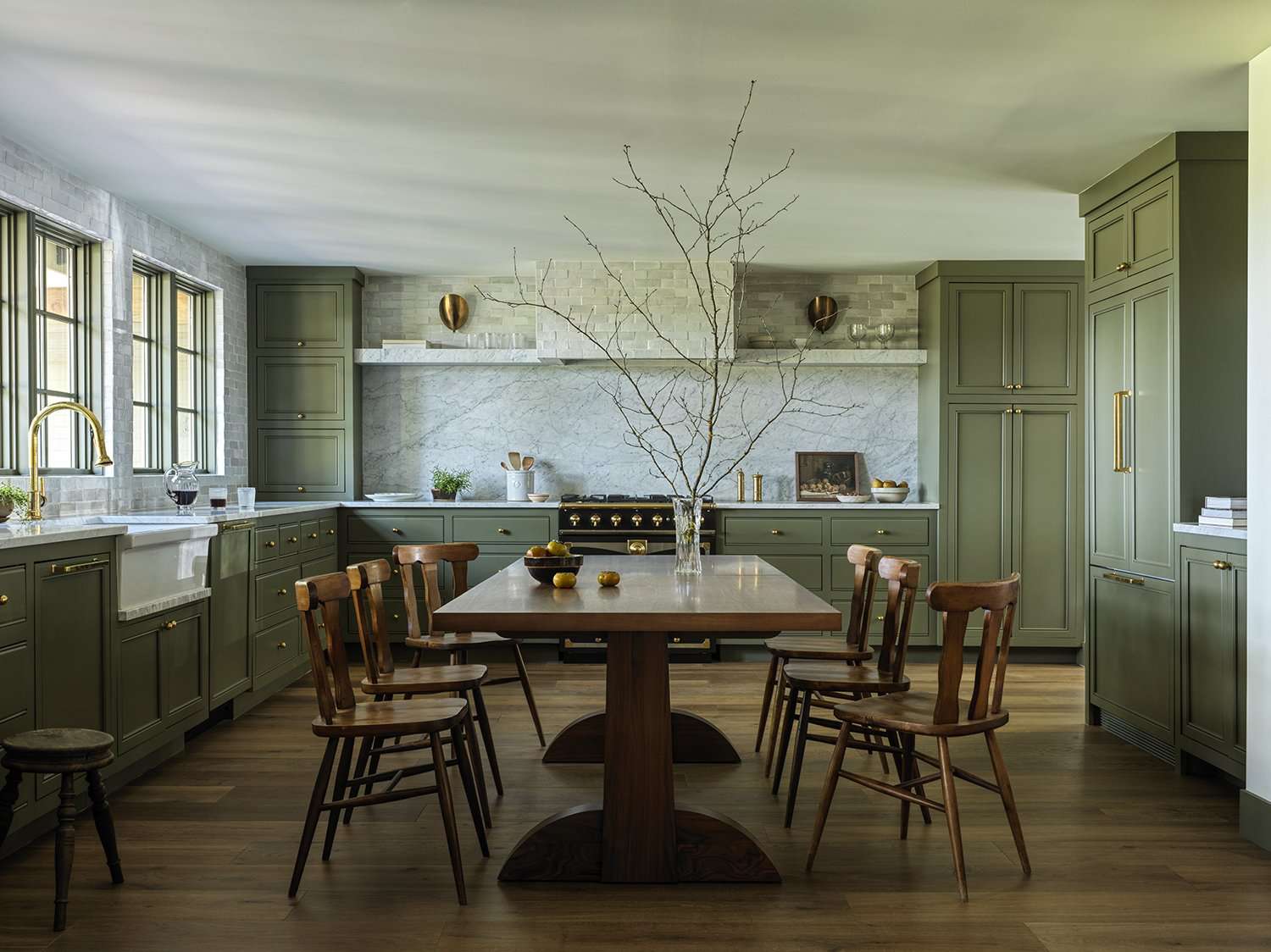
“The formula for a successful rustic look is all about balance.”
Think of it as 60% sturdy, natural materials (like wood and stone) + 30% soft, cozy textiles (think linen napkins, a chunky knit throw over a chair) + 10% warm metallic accents (a copper pot, brass hardware). You can swap out the specific elements—maybe your wood is dark walnut instead of light oak—but keeping this ratio ensures the space feels layered and intentional, not like a stage set for a lumberjack competition.
3. Setting a Simple, Elegant Fall Kitchen Table
In any fall tablescape, the one thing that truly sets the mood is the centerpiece. You can have the finest china and the most elegant glassware, but if the centerpiece is an afterthought, the whole table feels flat. It’s the gravitational center of your design. It doesn’t need to be extravagant—a simple cluster of gourds or a vase of seasonal branches can be enough. But it must be intentional. It’s the element that tells your guests, “I prepared this space for you.”
“Here’s a pro tip for creating a centerpiece that doesn’t obstruct conversation: follow the “14-inch rule.” The top of your main floral arrangement or tallest object should be no higher than 14 inches from the tabletop.”
This allows everyone to see each other across the table easily. For longer tables, instead of one tall central arrangement, create a “runner” of smaller items—like mini pumpkins, scattered leaves, and votive candles—that are all well below this height.
4. Warm Wood Dining Table with Purple Florals and Pumpkin Decor
This setup is a perfect example of color theory in action. The pairing of traditional orange pumpkins with a vase of pale purple flowers is unexpected and sophisticated. Orange and purple are near each other on the color wheel, but the specific shades used here—a muted, dusty purple against a classic pumpkin orange—create a complementary contrast that feels modern and fresh. The warm wood of the table and the gold accents provide a beautiful, grounding base for these colors to play on.
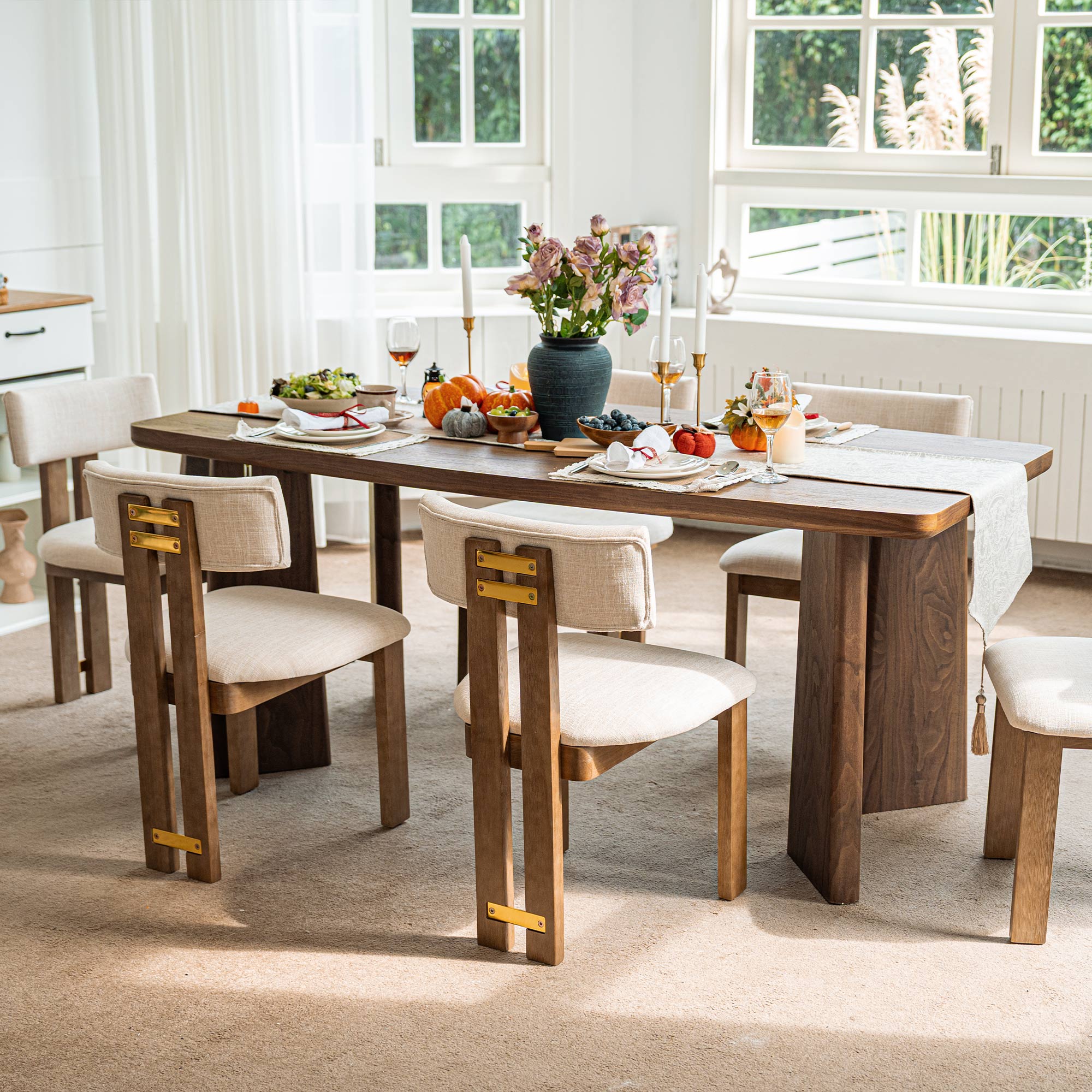
“A little real talk about this look: while tapered candles in candlestick holders are undeniably elegant, they require some vigilance, especially with a flowing centerpiece.”
Make sure your candles are securely placed and that any foliage or decorative items are a safe distance away from the flame. For a worry-free alternative that gives the same verticality and glow, invest in a set of high-quality flameless LED tapered candles. You get all the ambiance with none of the fire risk.
5. Choosing the Right Rustic Furniture for Your Autumn Kitchen
Rustic furniture often has a significant visual weight. A heavy, reclaimed wood table needs a room that can handle its scale. For a large farmhouse-style table (8 feet or longer), you’ll want a dining space that’s at least 12 feet by 15 feet to allow for comfortable chair clearance and foot traffic. If your kitchen is smaller, consider a rustic-style island or a single statement hutch instead of a full dining set. This gives you the desired texture without overwhelming the room. Compare this idea with the lighter scale of the furniture in Idea #7.
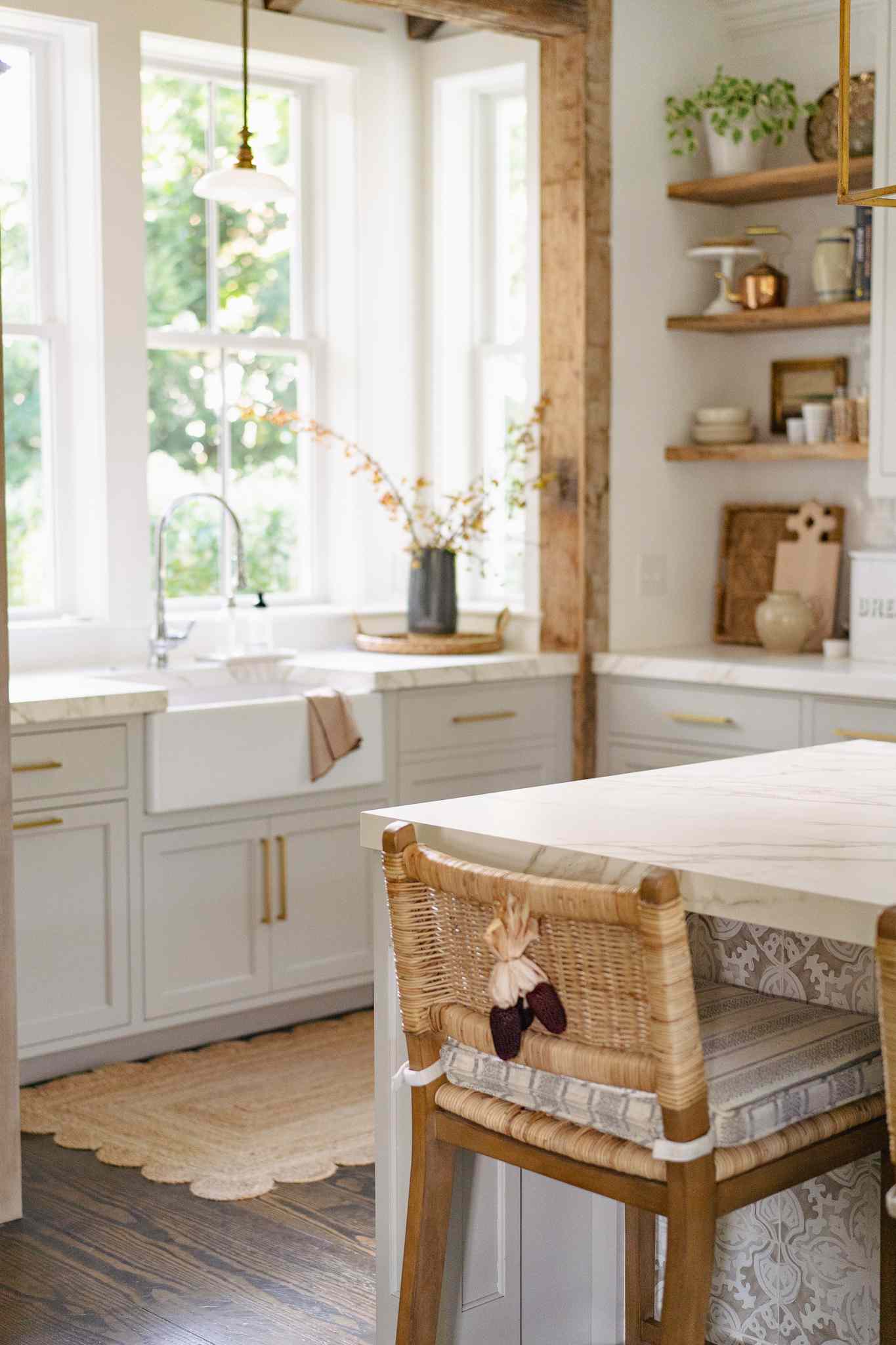
“You don’t need a custom-built piece to get this look.”
Facebook Marketplace and local thrift stores are goldmines for solid wood furniture with rustic potential. Look for pieces with good bones, even if the finish is dated. A bit of sanding and a new stain or wax can completely transform them. You can often find a solid oak or pine table for $100-$300, a fraction of the cost of a new piece, and it will have more authentic character to boot.
6. A Warm Wood Kitchen with a Statement Copper Hood
The single element that makes this kitchen unforgettable is the stunning copper range hood. Without it, the space would still be beautiful, with its warm wood cabinets and marble floors, but it would lack that central, show-stopping feature. The copper hood acts as a piece of jewelry for the room, elevating the entire design from simply “nice” to truly special. It introduces a metallic warmth that plays beautifully against the wood and stone, creating a focal point that is both functional and artful.
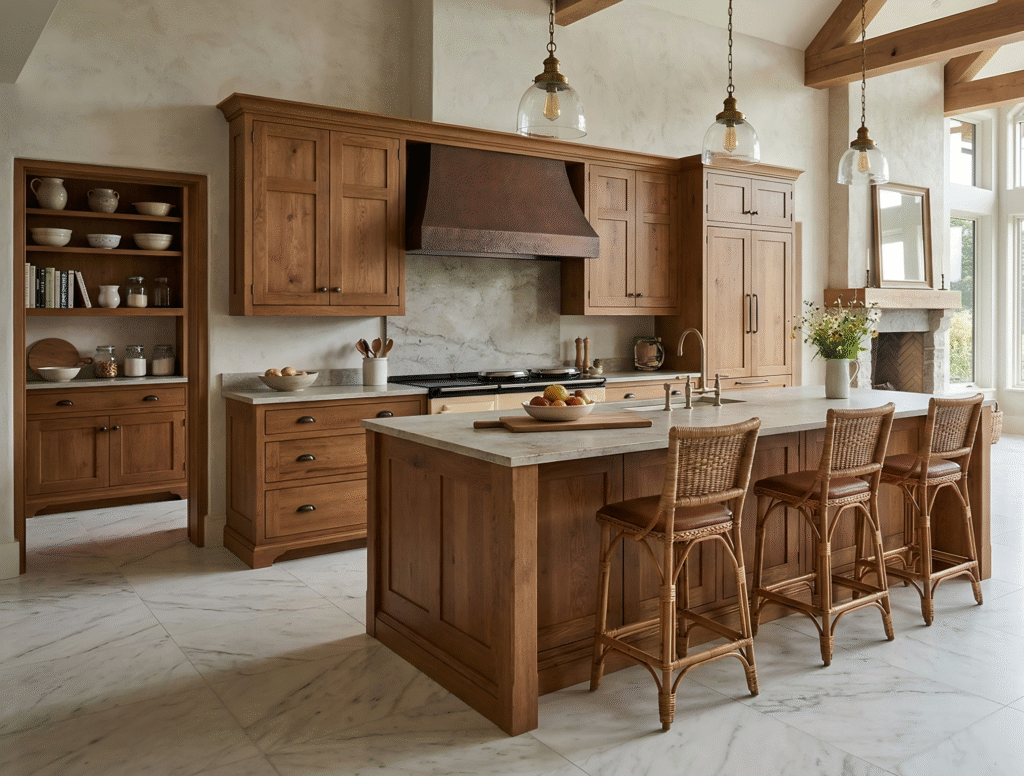
“A copper hood is a living finish, meaning it will change over time.”
It will develop a patina, a mix of darker and sometimes greenish tones, as it oxidizes. Some people love this evolving character, while others prefer the bright, polished look. To keep it shiny, you’ll need to polish it regularly (every few weeks to months, depending on humidity and use) with a dedicated copper cleaner. If you let the patina develop, cleaning is simpler—just soap and water. Be honest with yourself about which you prefer before investing.
7. Bright Farmhouse Dining Nook with Natural Oak Chairs
This space feels so fresh and inviting because of its smart use of contrast and repetition. The clean, crisp cream of the cabinets and the distressed white of the table base create a bright canvas. Then, the natural oak of the X-back chairs is introduced, bringing in warmth and a rustic touch. This use of natural wood is repeated in the finish of the chandelier, tying the whole look together. The green apples and hydrangeas provide a pop of organic color that keeps the neutral palette from feeling boring.
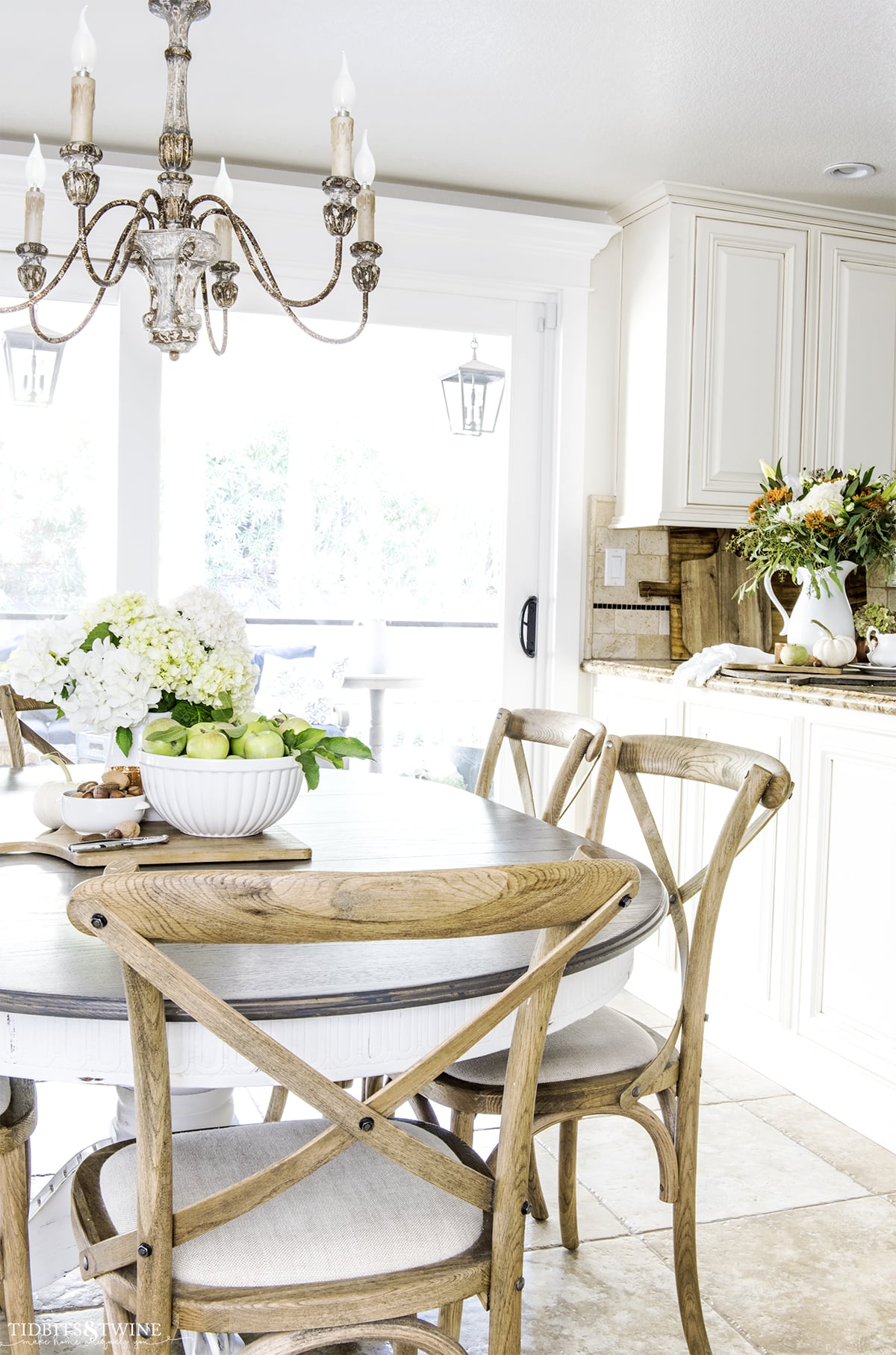
“When you have a neutral color scheme like this, texture is everything.”
To prevent a cream and white room from feeling sterile, you must layer different finishes. In this kitchen, you see it in the textured mosaic backsplash, the woven fabric of the chair seats, the distressed paint on the table, and the smooth finish of the cabinets. Aim for at least four different textures in a single space to create visual interest and a sense of coziness.
8. Modern Farmhouse Kitchen with Light Wood and Woven Pendants
The visual formula here is a masterclass in modern farmhouse style. It’s roughly 50% light, natural wood (cabinets, beams, floor), 30% crisp white (countertops, walls), and 20% bold black accents (window frames, hardware, light fixture). This ratio keeps the space feeling bright and airy while providing enough contrast to be interesting. The woven rattan shades on the pendants add a crucial textural element that softens the clean lines and bridges the gap between the wood and white tones.
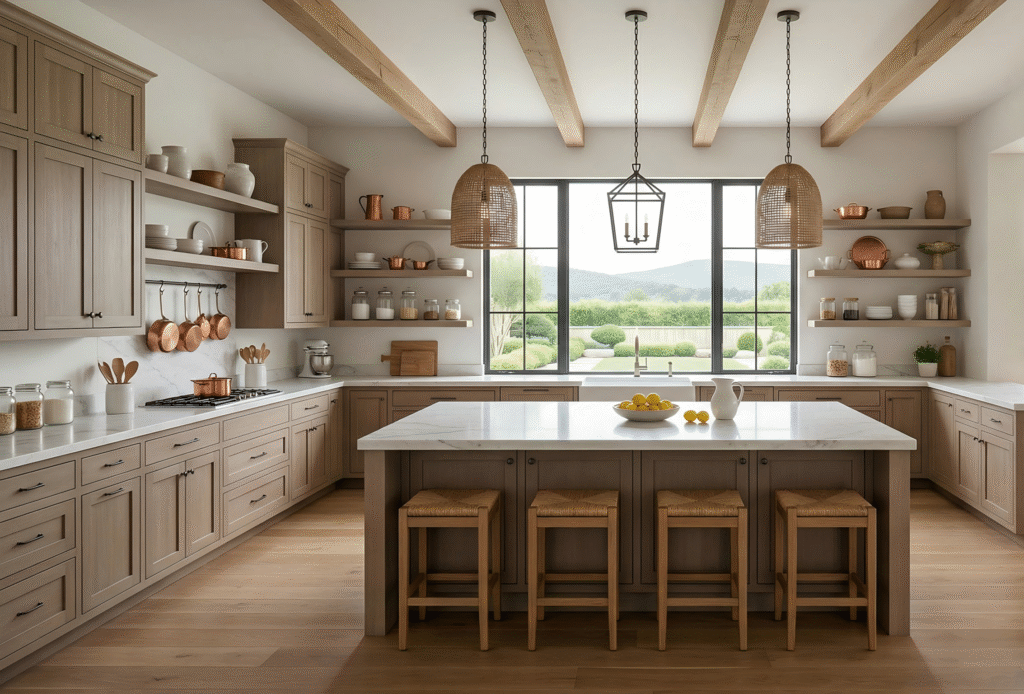
“This open, airy look works best in a room with generous proportions and good natural light.”
The exposed beams require a ceiling height of at least 9 feet to avoid feeling cramped. The large central island is the hero piece, so you’ll need a kitchen with a width of at least 13-15 feet to accommodate the island itself (around 4 feet wide) and adequate clearance (at least 42 inches) on all sides for comfortable workflow and traffic.
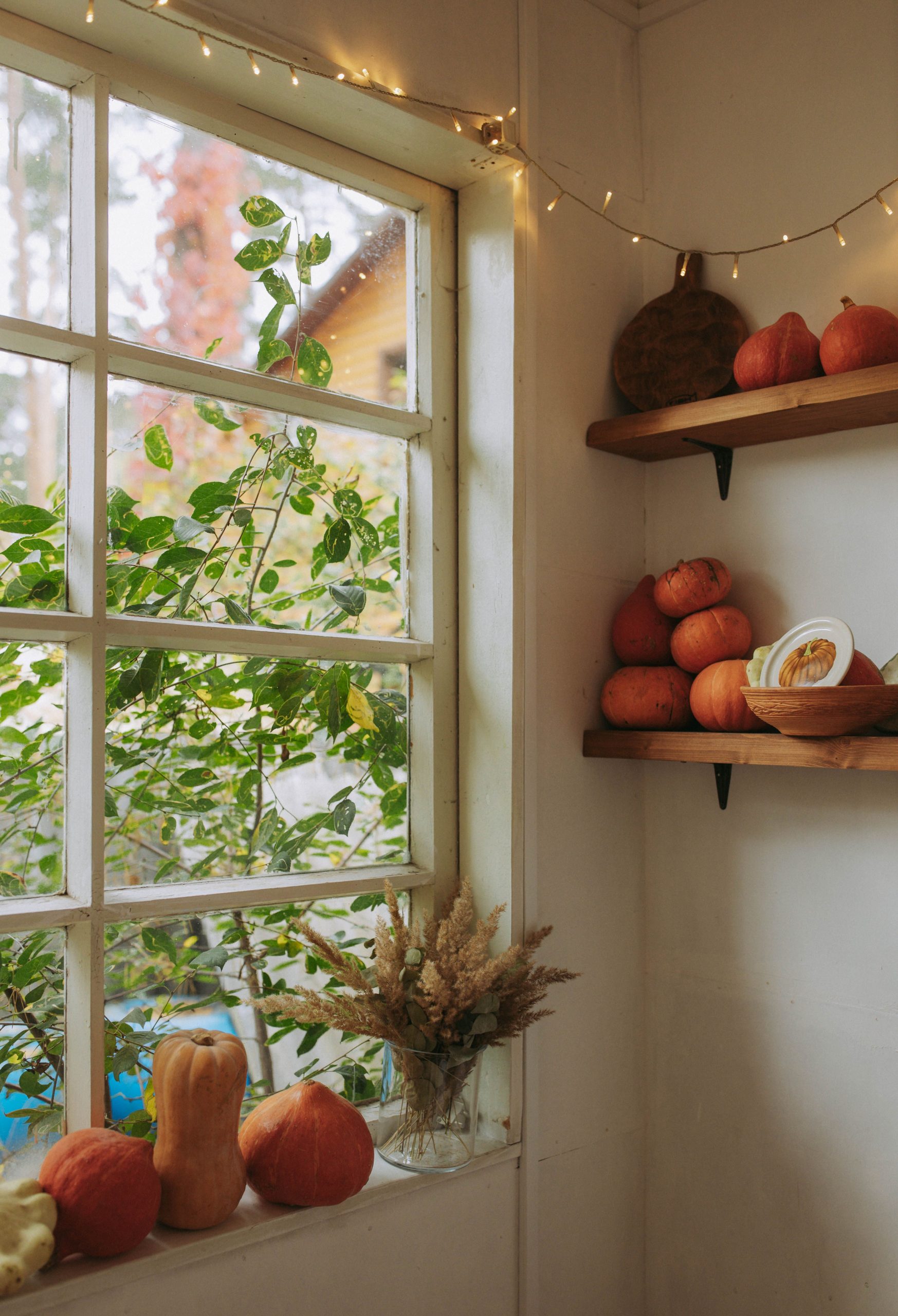
9. Creating a Cozy Autumnal Mood with Interior Styling
The
10. Warm Modern Kitchen with Ribbed Pink Pendant Lights
that absolutely makes this kitchen are those ribbed pink glass pendants. They are a delightfully unexpected choice against the dark wood cabinetry and exposed beams. Removing them would leave a handsome but conventional kitchen. With them, the space has personality, wit, and a touch of glamour. It’s a brave design choice that proves that sometimes, the most memorable element is the one that breaks the rules just a little bit.
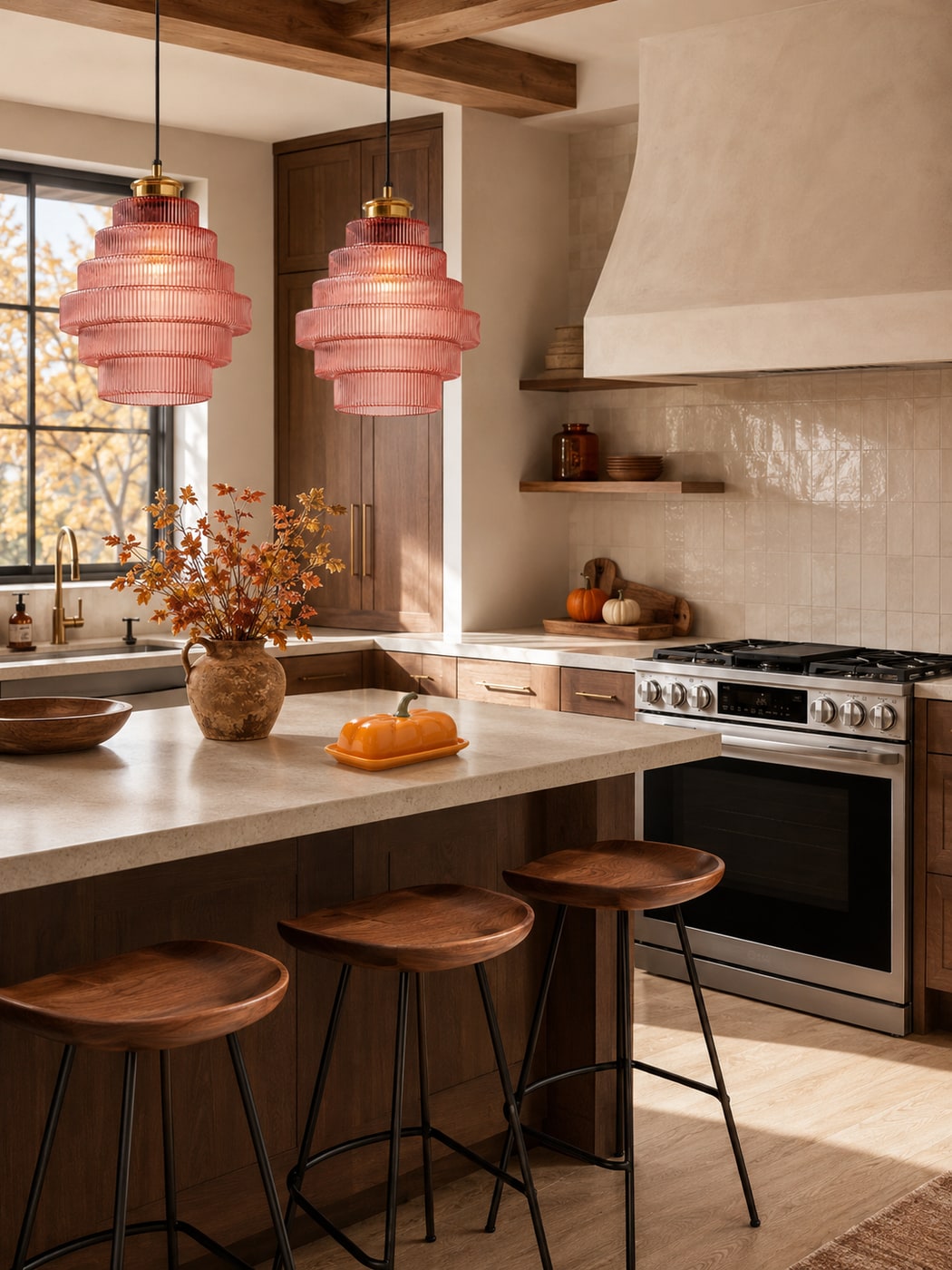
“What makes this design so successful is the sophisticated color and material dialogue.”
The dusty pink of the pendants doesn’t scream; it whispers. It picks up the warm, reddish undertones in the dark wood cabinets and the terracotta notes of the fall foliage outside the window. The brass accents on the lights connect to the warmth of the wood, while the light gray island provides a cool, neutral counterpoint that keeps the whole palette from becoming too sweet.
11. A Simple, Warm Kitchen Counter with a Teapot and Candles
You don’t need a huge budget to create a cozy fall moment. This look is achievable for under $50. Find a cute teapot at a thrift store or Target for around $15-$20. A set of simple ceramic mugs can be found for less than $10. Add a small plant from a local grocery store ($5) and a few flameless LED candles ($15) for ambiance. The key is to group these items together on a tray or cutting board to make them feel like a deliberate, styled vignette.
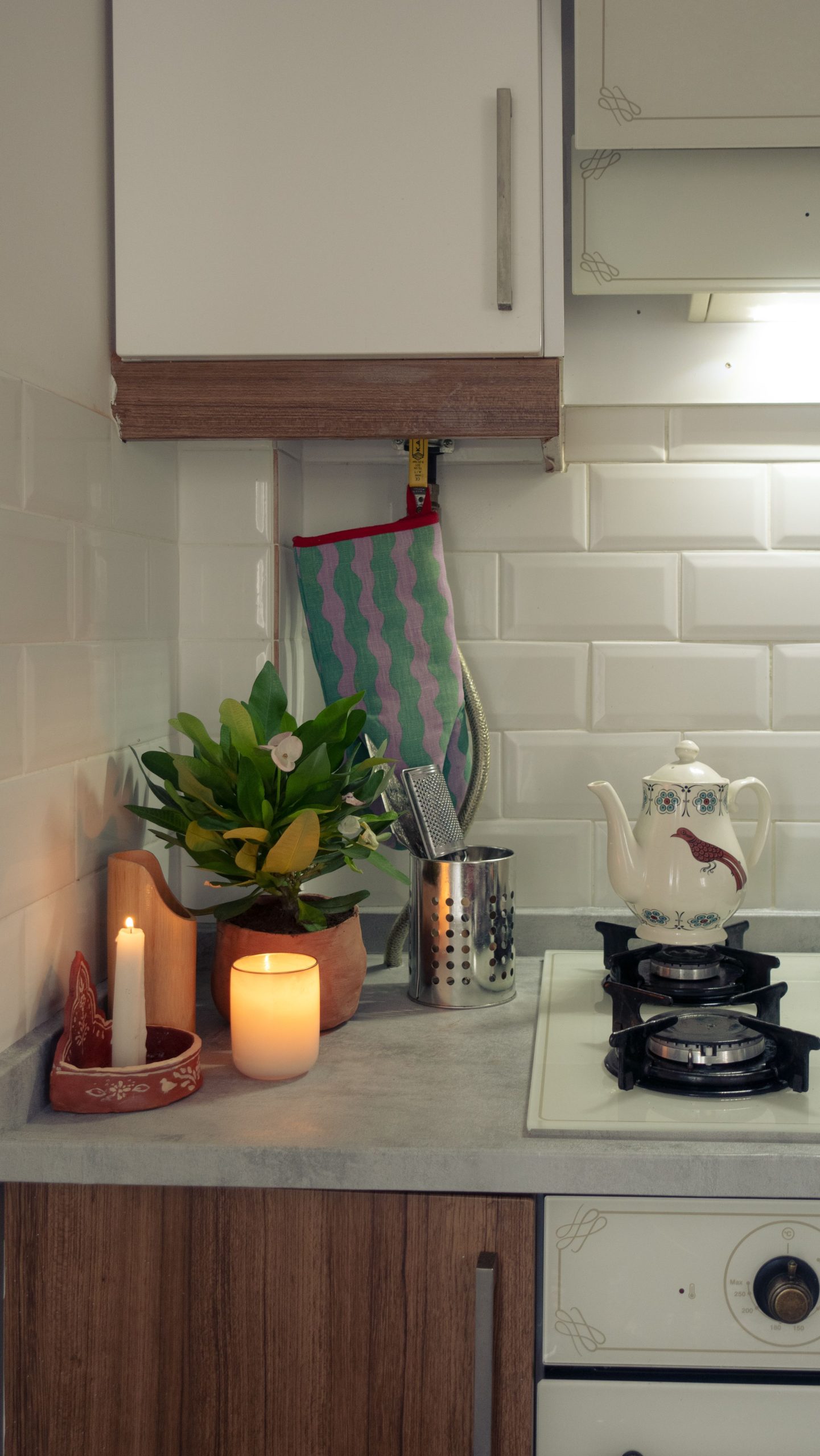
“To make a simple arrangement feel more significant, use the “Rule of Threes.” Grouping items in odd numbers, particularly threes, is more visually appealing and dynamic than even-numbered groupings.”
In this case, you have the teapot (1), a candle (2), and a potted plant (3). Arranging them in a small triangle, with varying heights, creates a simple but professionally styled look on any countertop or shelf. It’s a fundamental trick designers use constantly.
12. A Quick and Cozy Update for Your Kitchen Island
You can create a beautiful fall island centerpiece in under 15 minutes. Here’s how:
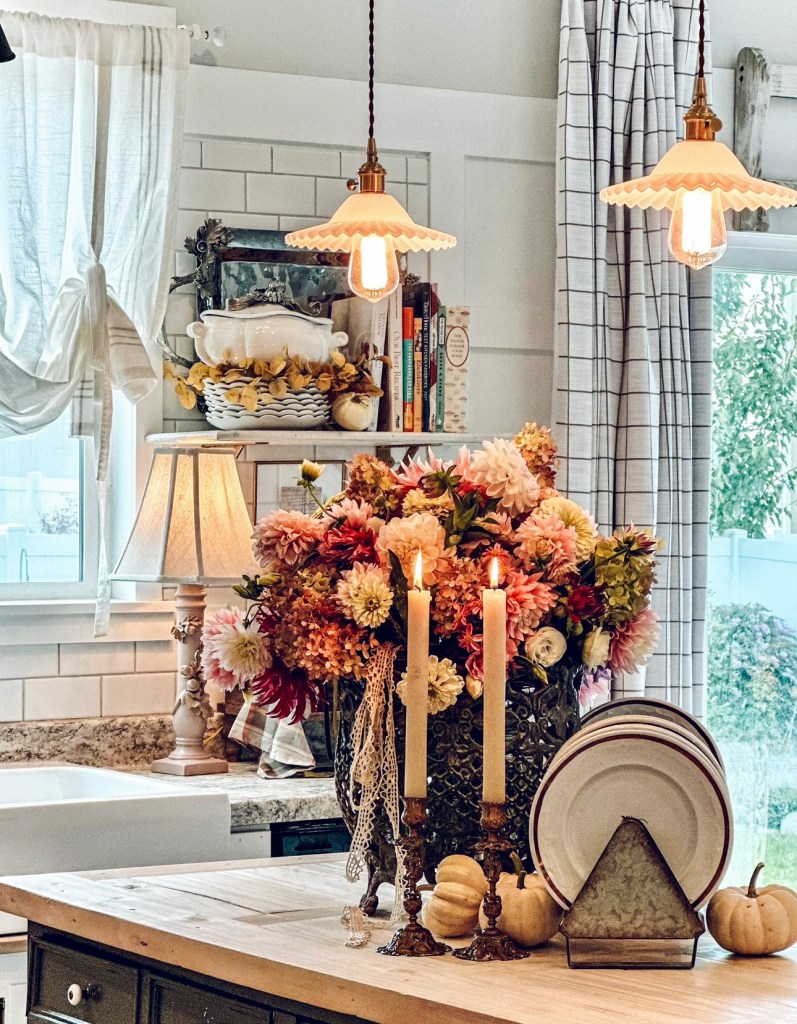
“Start with a base: Place a wooden cutting board, a decorative tray, or a woven placemat in the center of your island.”
This anchors the arrangement.
Add height: Find a vase and fill it with seasonal branches, either real or faux. Don’t overthink it; something with colorful leaves or interesting texture is perfect.
Introduce a fall icon: Place one or two medium-sized pumpkins or gourds (real or ceramic) next to the vase.
Add warmth: Tuck in a candle in a hurricane glass or a simple votive. Use a scented one for extra coziness, or go flameless for safety.
Finish with texture: Scatter a few smaller elements like mini pumpkins, acorns, or a small bowl of nuts around the base.
A quick word of caution: if your kitchen island is a primary workspace for meal prep, a large, elaborate centerpiece can become a daily annoyance that you have to constantly move. If that’s your reality, opt for a smaller, contained arrangement on a single tray. This allows you to easily lift and move the entire display when you need the counter space, giving you the best of both worlds—seasonal beauty and everyday function.
13. The Beauty of Wood Accents in a Modern Kitchen
To successfully integrate wood into a modern kitchen, follow this formula: 70% sleek, hard surfaces (like flat-panel cabinets, quartz countertops, and minimalist hardware) + 20% natural wood grain + 10% soft textural element. The wood is there to provide warmth and organic character, preventing the modern elements from feeling too cold or clinical. It can be in the form of an island front, a set of open shelves, or even just a collection of beautiful wooden cutting boards.
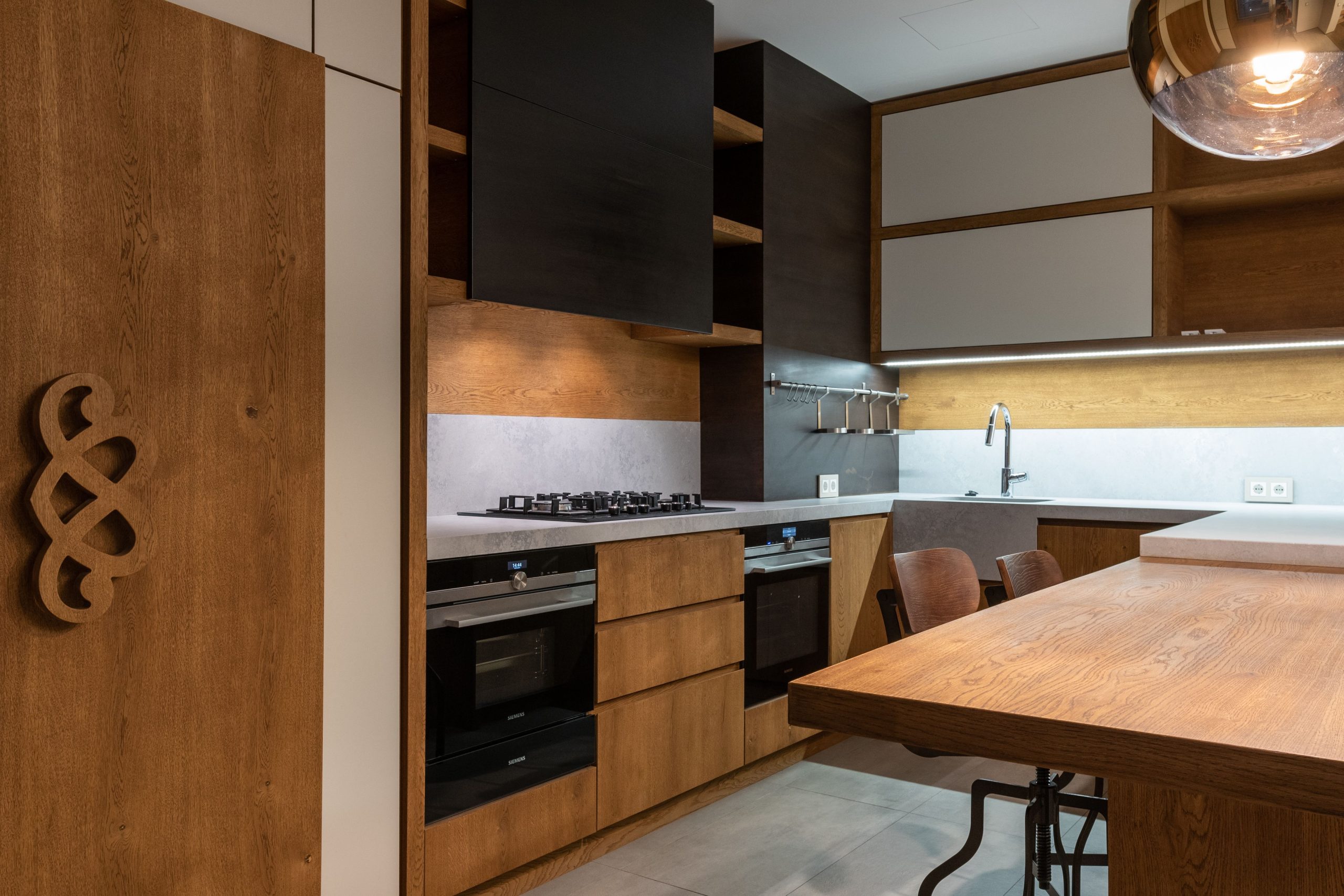
“Before you commit to adding significant wood elements, check these items off you”
Before you commit to adding significant wood elements, check these items off your list:
- Assess your lighting: Does your kitchen have enough natural or artificial light to support the wood tone you’re considering? Dark wood in a poorly lit kitchen can make the space feel heavy.
- Check your existing finishes: Does the undertone of the wood you want (e.g., yellow, red, gray) clash with your existing flooring or cabinet colors?
- Budget for quality: Whether it’s shelving or cabinet fronts, good quality woodwork isn’t cheap. Ensure you’ve budgeted appropriately for the material and installation.
14. Achieving a Bright, Contemporary Farmhouse Look
The secret to keeping a farmhouse kitchen feeling contemporary is in the hardware and fixtures. Instead of choosing ornate, traditional pulls or a rustic faucet, opt for clean, modern shapes in a matte black or brushed brass finish. This subtle choice instantly updates the entire aesthetic, creating a sophisticated tension between the classic farmhouse elements (like a farmhouse sink or shaker cabinets) and the modern accents. It signals that the design is current and intentional, not a historical recreation.
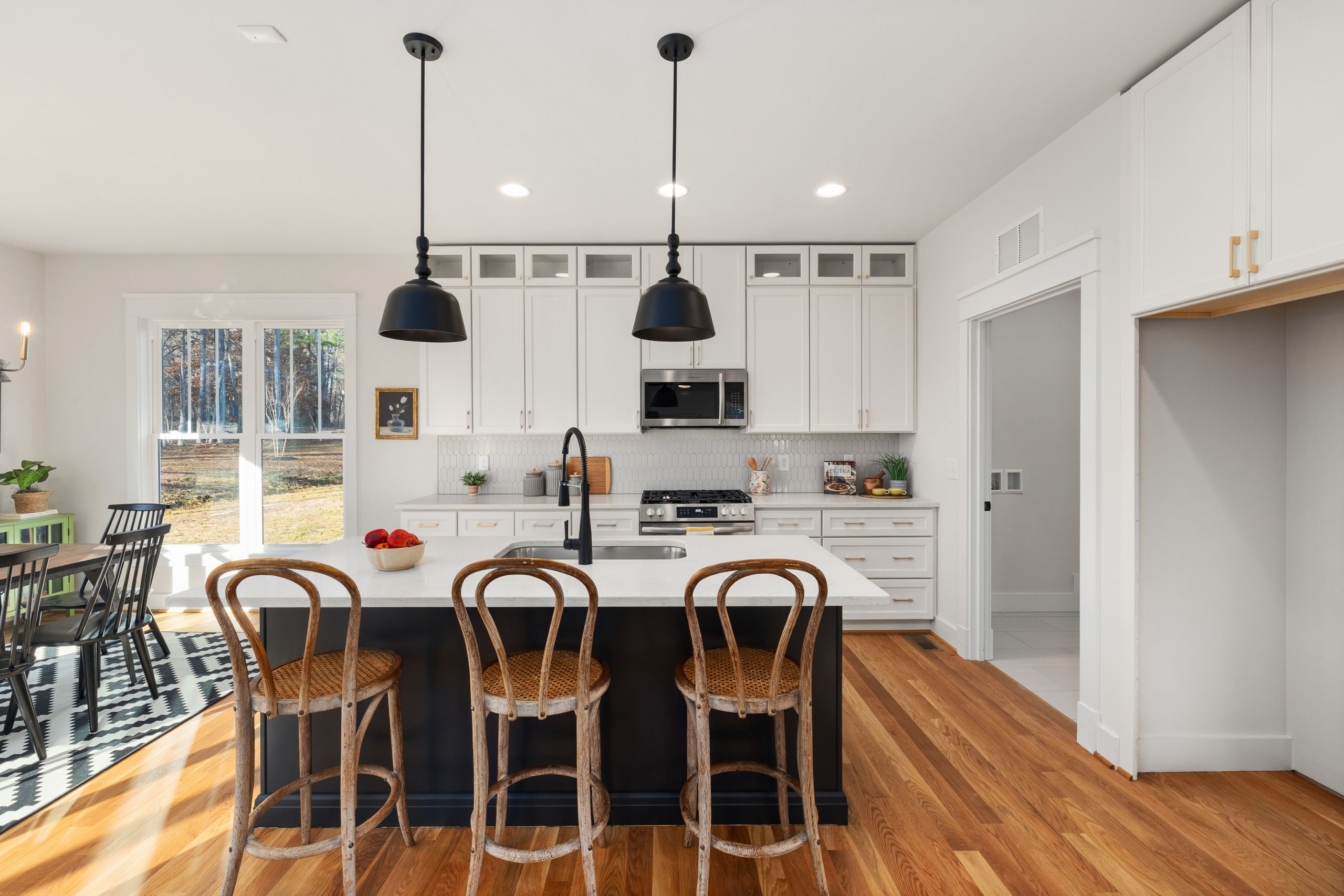
“This look works because it follows the design principle of the 80/20 rule.”
About 80% of the space is a neutral, calming base—white walls, light wood floors, simple cabinetry. This creates a serene backdrop. The other 20% is dedicated to high-contrast, high-impact moments, like black window frames or a statement light fixture. This prevents the neutral space from being bland and injects it with personality and a clear focal point. The balance is just right.
15. A Rustic Centerpiece with Sunflowers and Metallic Pumpkins
Here’s a breakdown of what it might cost to put this festive centerpiece together using items from a craft or home goods store:
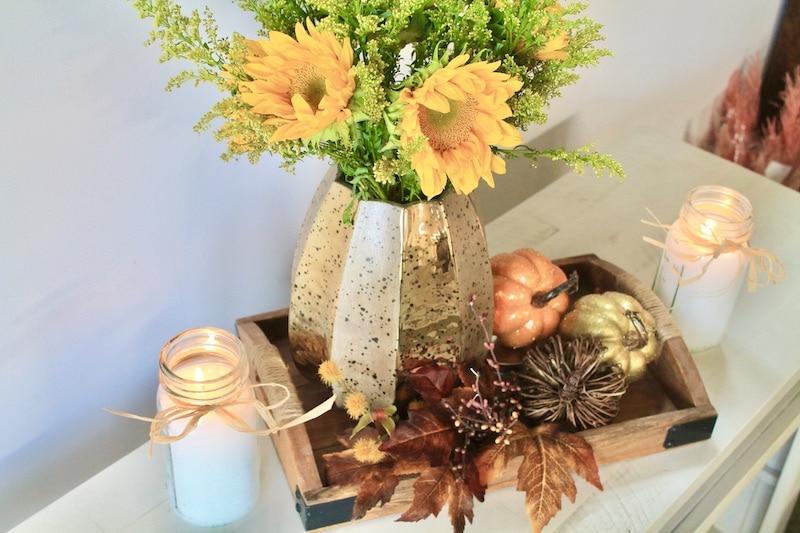
“Main Piece (Wooden Tray): $25 – $50
Vase (Faceted Metallic Vase): $20 – $40
Flor”
- Main Piece (Wooden Tray): $25 – $50
- Vase (Faceted Metallic Vase): $20 – $40
- Florals (Faux Sunflowers & Greenery): $30 – $60
- Decor/Accessories (Glitter pumpkins, faux leaves, mason jar candles): $40 – $75
- TOTAL: $115 – $225
Budget alternative: You can achieve this for under $50. Use a simple wooden serving platter you already own, find a vase at a thrift store and give it a textured spray paint finish, and use real, seasonal sunflowers which are often inexpensive. The glitter pumpkins can be a fun DIY project with cheap craft store gourds.
A little dose of reality: glitter is forever. While these glittery pumpkins add a fun, festive sparkle, be prepared for that sparkle to migrate. You will find glitter on your table, your floor, and somehow, on your dog. If you’re glitter-averse, look for pumpkins with a metallic paint finish or a subtle shimmer instead of loose glitter. You’ll get a similar effect with far less cleanup. Also, those mason jar candles need to be watched carefully among the faux leaves!
16. A Rustic Kitchen with Dark Wood Cabinets and Framed Fish Art
This kitchen design works because of its commitment to a specific, earthy narrative. The combination of dark wood, stacked stone, and the trio of fish illustrations creates a cohesive story—it feels like a refined lodge or a rustic country home. The light granite countertops and pale green island are crucial; they provide a visual lift, preventing the dark wood and stone from feeling too heavy or cave-like. The glass-front cabinets also help to break up the solid wood and add a layer of display and refinement.
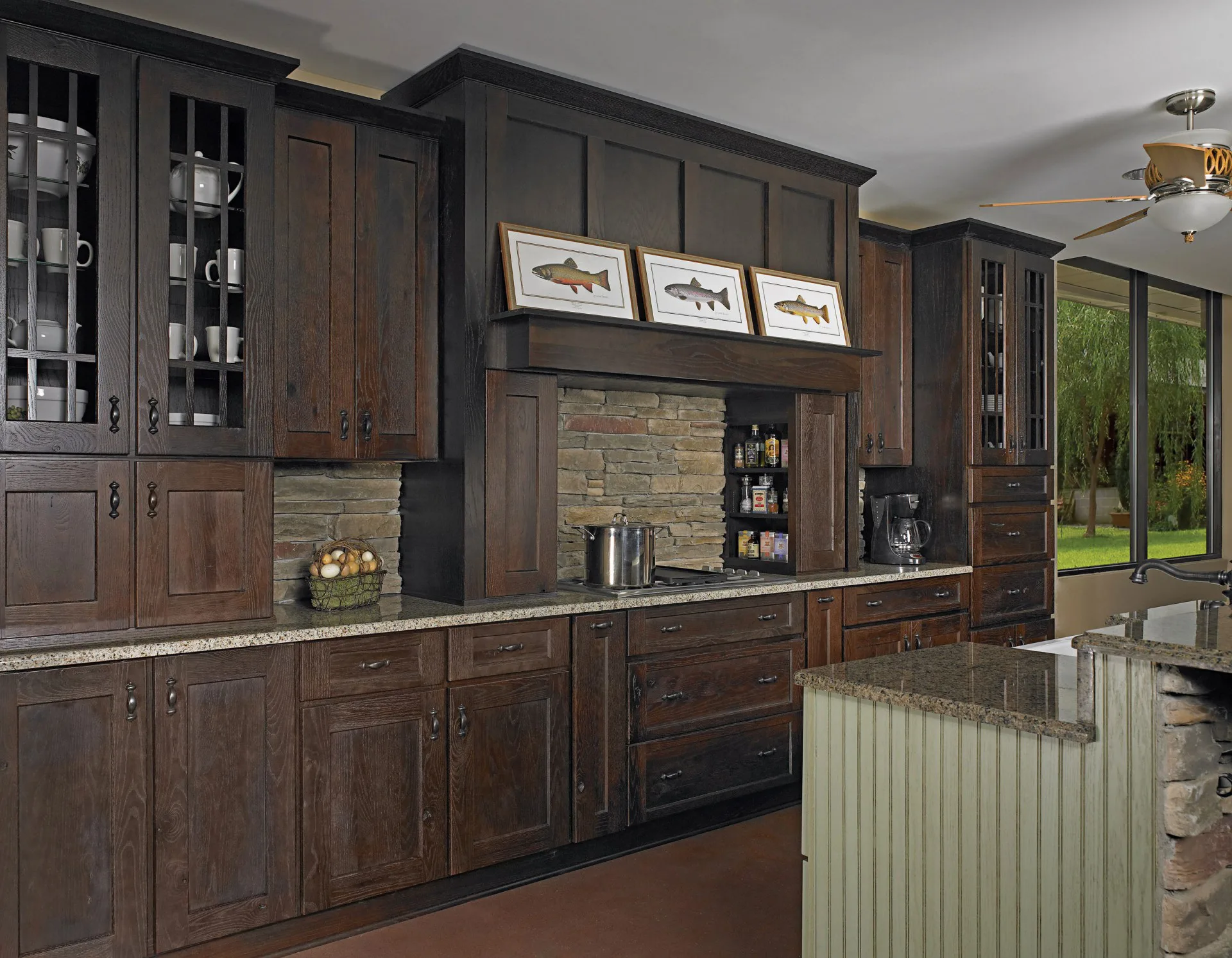
“When displaying a collection, like the white ceramics in the upper cabinets, the key is uniformity.”
Notice how using all white/cream dishware creates a clean, graphic statement against the dark wood. If the cabinets were filled with a jumble of different colored mugs and plates, it would look like clutter. By sticking to one color family, the collection reads as a deliberate design feature. This is an easy and inexpensive way to make your kitchen look more polished and intentional.
17. A Crisp White Kitchen with a Light Blue Subway Tile Backsplash
This kitchen’s fresh and modern formula is simple but effective: 60% classic white (Shaker cabinets, countertops) + 30% a single soft accent color (the light blue subway tile) + 10% a sharp, contrasting neutral (the matte black hardware). This recipe is endlessly adaptable. Swap the light blue for a soft sage green, a pale blush, or a warm greige, and it would still work beautifully. The key is the high ratio of white, which keeps it feeling bright and clean, and the consistent use of black to add a graphic punch.
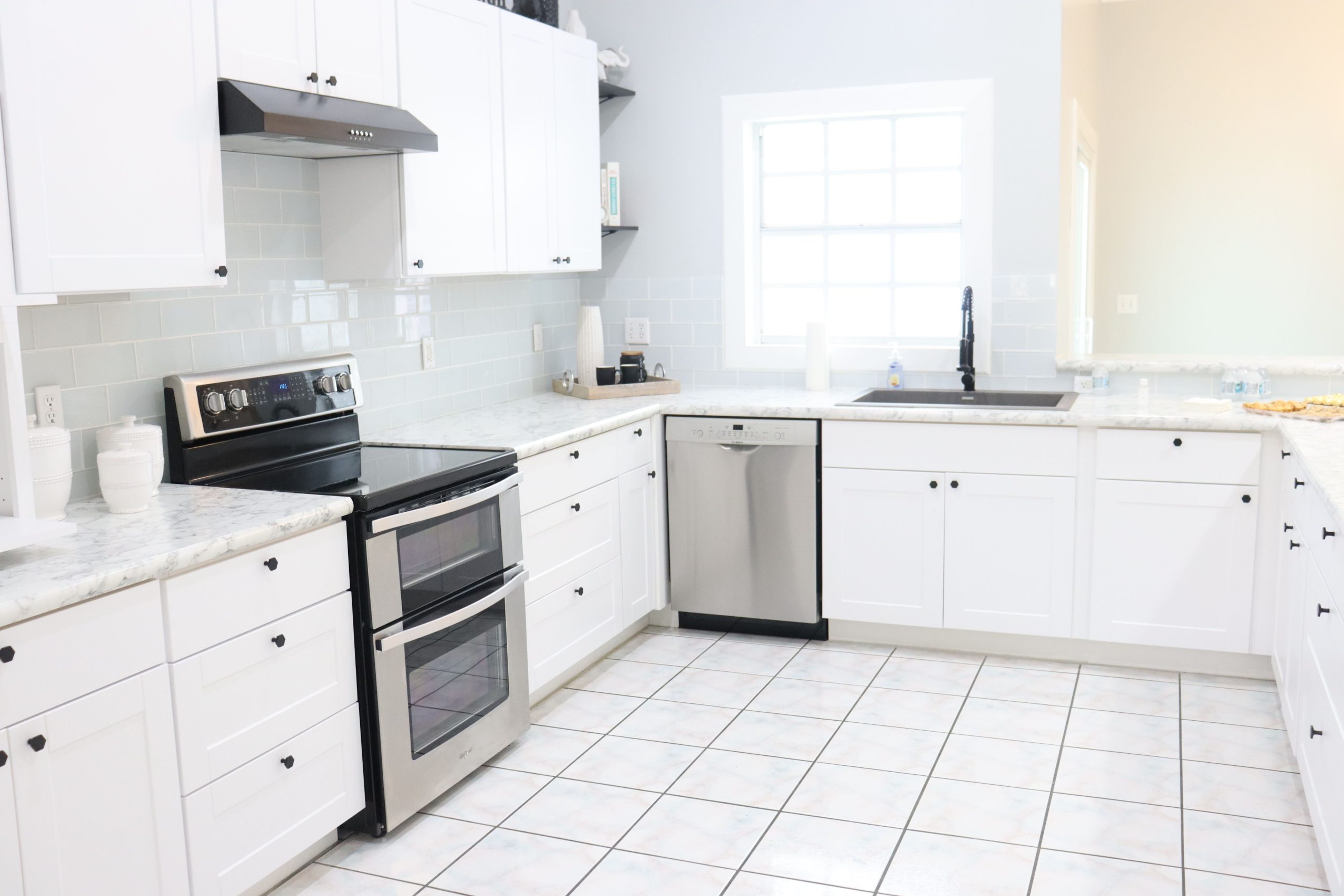
“Want to swap out your cabinet hardware for a quick update?”
It’s a simple DIY project. Time: 1-2 hours. Cost: $50-$200.
- Choose your new hardware. Make sure the screw hole spacing matches your existing knobs or pulls!
- Unscrew the old hardware from the inside of the cabinet door or drawer.
- Clean the surface of the cabinet where the old hardware was sitting.
- Screw in the new hardware. A manual screwdriver is often better than a drill to avoid stripping the screw or damaging the cabinet.
- Step back and admire your speedy kitchen transformation!
18. Warmth and Character from a Rustic Kitchen Shelf
This look is incredibly budget-friendly and all about found objects. Skip the high-end decor stores and head to a flea market or your grandparents’ attic. The charm comes from the authenticity of vintage tins, old-school cookware, and simple, sturdy shelving. You can replicate this entire vibe for under $100 if you’re a savvy thrifter. A simple wooden plank and a couple of brackets from a hardware store make the shelf, and the decor is all about the joy of the hunt.
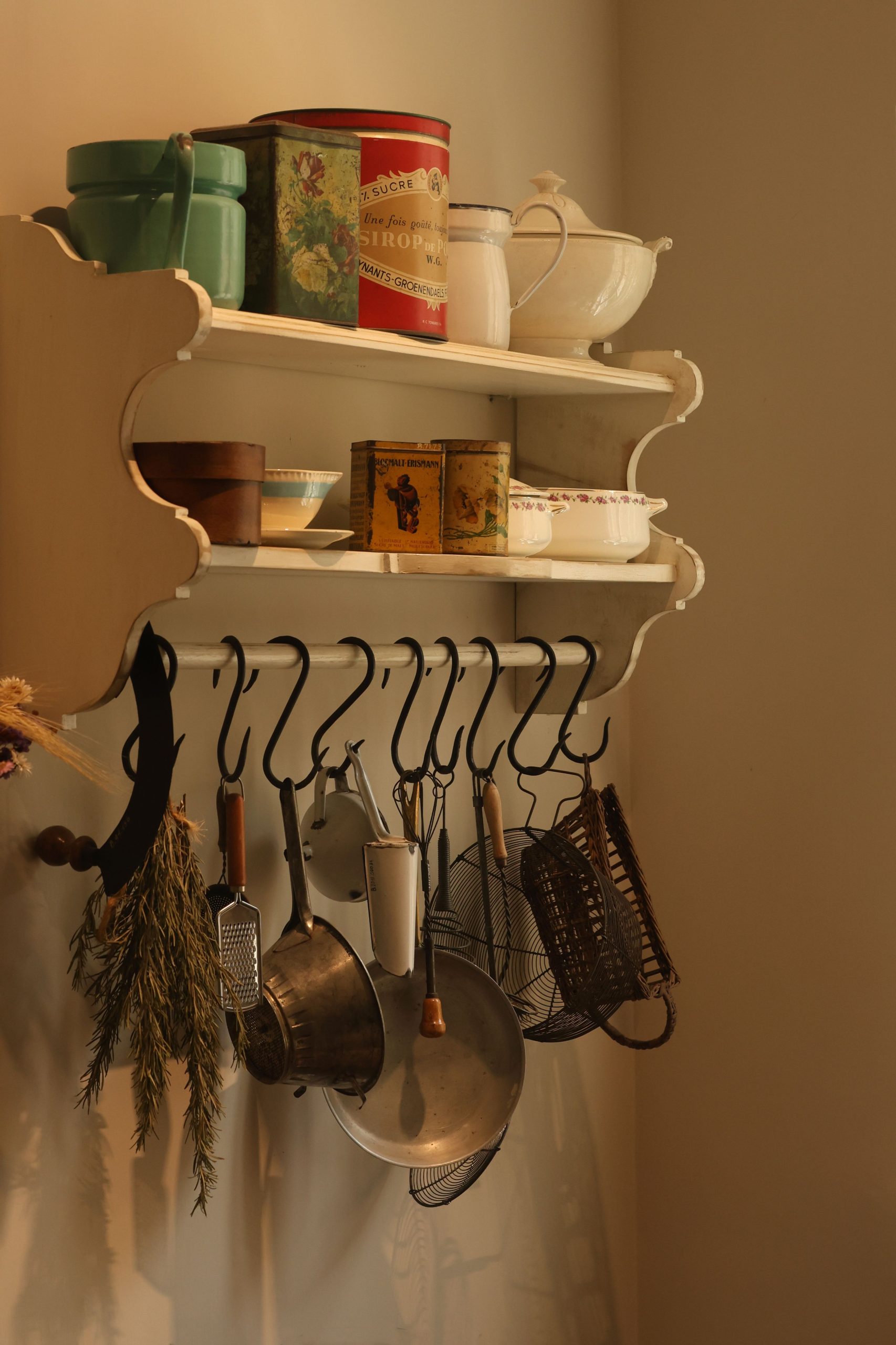
“that makes this concept work is patina.”
Nothing on this shelf looks brand new, and that’s the whole point. It’s the subtle dents in the metal tins, the worn finish on the wooden utensils, and the slightly uneven glaze on a ceramic pot that give this space its soul. If you tried to replicate this with all new items, it would feel sterile and staged. The beauty is in the history and the signs of a life well-lived, which is a core tenet of rustic design.
19. A Cream and Wood Country Kitchen with Sunny Yellow Walls
This kitchen feels so warm and established due to its masterful use of natural materials and confident color. The warm wood of the countertops and island is a perfect partner for the creamy cabinets, creating a soft, inviting base. But the decision to paint the upper walls a cheerful, light yellow is what truly brings it to life. It’s like a drop of sunshine, enhancing the warmth of the wood and preventing the cream and black from feeling too predictable. It’s a choice that shows personality.
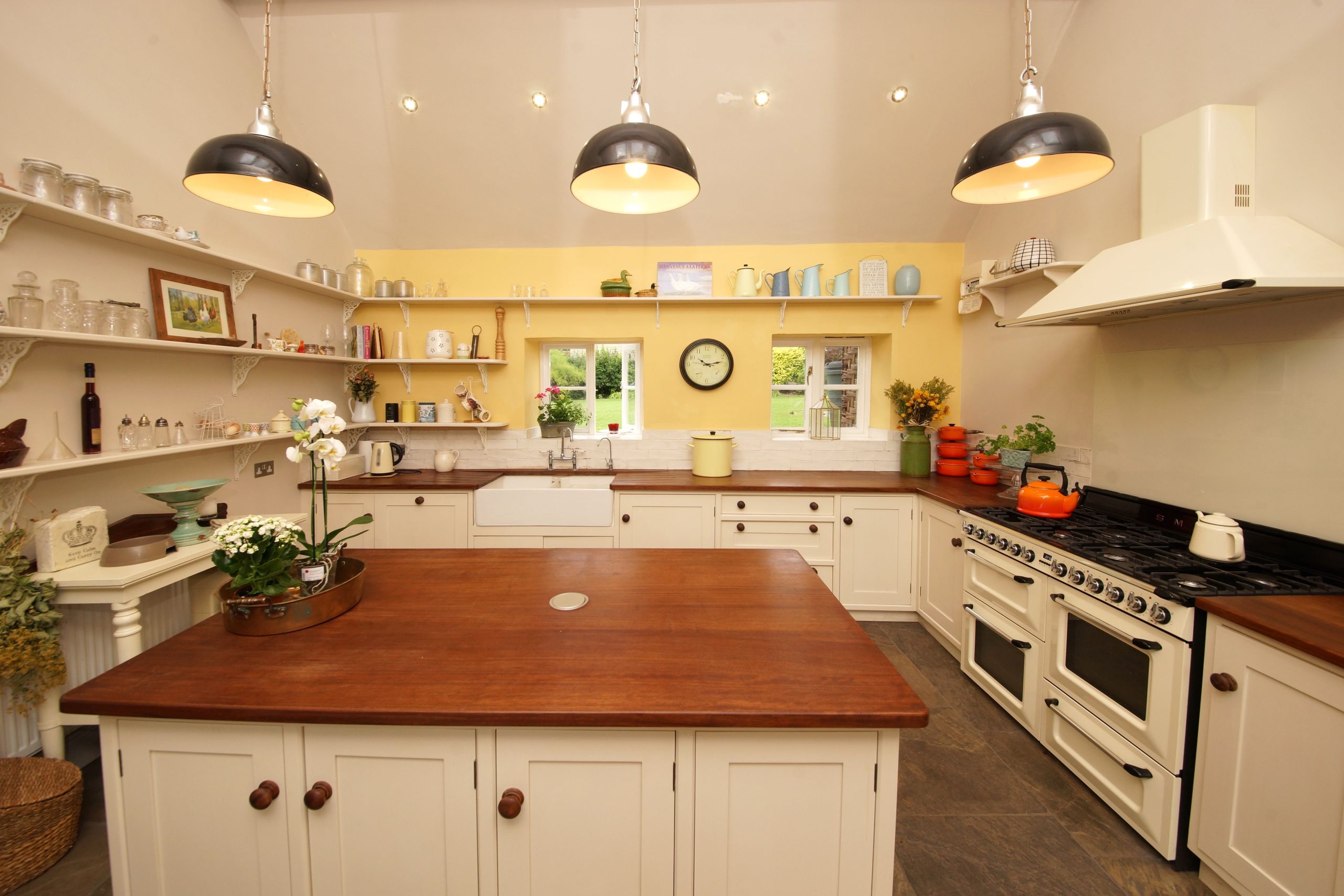
“Let’s be honest: open shelving is a commitment.”
It looks beautiful when styled perfectly for a photo, but in real life, it requires regular dusting and careful curation. If you’re not the type to diligently arrange your dishware, it can quickly look messy. A good compromise is to have a small section of open shelving for your most beautiful items, like in this kitchen, while keeping the bulk of your everyday, less-than-gorgeous stuff tucked away behind cabinet doors.
20. White Shaker Cabinets with a Vertical Wood Backsplash
When mixing wood tones in a kitchen, a great rule of thumb is to make them distinctly different. Notice how the backsplash is a very light, almost bleached beige wood, while the cutting boards and cookbook stand are a much darker, richer walnut tone. By choosing woods with high contrast in their color depth, you create a layered, collected look. If the wood tones were too similar, they would risk looking mismatched and unintentional. Go for contrast, not a near-miss.
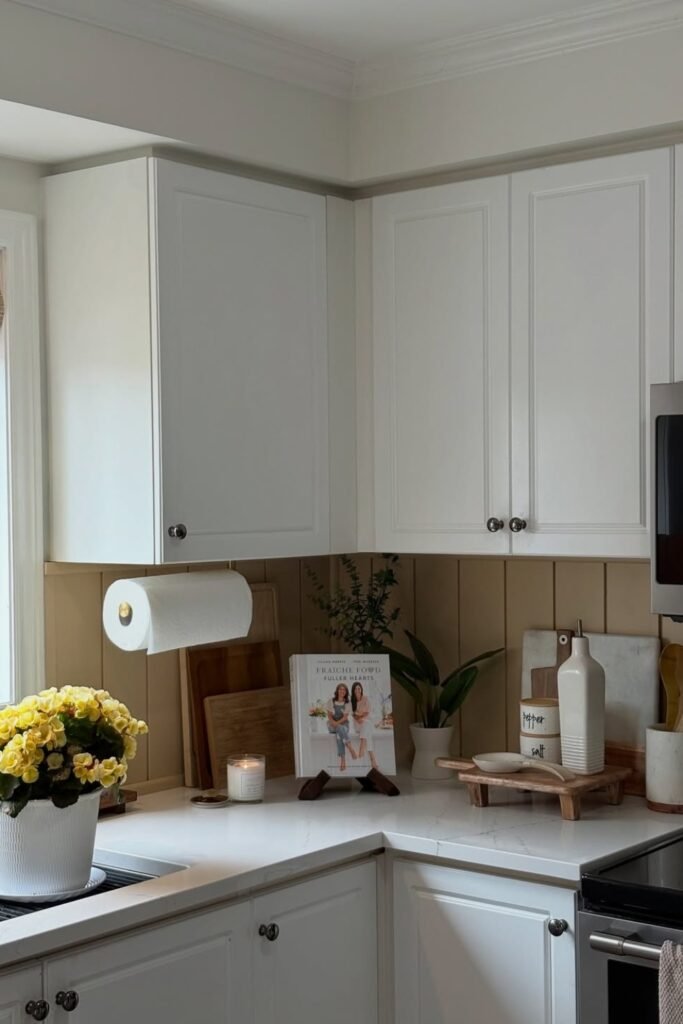
“The element that elevates this simple corner is the vertical plank backsplash.”
A standard tile backsplash would have been fine, but the choice to use wood in a vertical orientation adds unexpected texture, warmth, and a subtle sense of height. It’s a modern take on classic beadboard, and it bridges the gap between the crisp white cabinets and the other wooden accessories in the space. It’s a relatively simple material choice that makes a huge impact on the overall feel of the kitchen.
21. An Outdoor Fall Table Set with an Apple Centerpiece
This tablescape is so effective because it feels completely effortless and abundant, even though it’s thoughtfully designed. The key is the use of natural, almost ‘foraged’ elements. The centerpiece isn’t a stiff floral arrangement; it’s a tumble of apple branches and leaves that looks like it was just gathered from the orchard. The amber glassware catches the light beautifully, and the plaid blanket tossed over a chair adds a final, cozy layer. It’s a story of harvest and gathering, told through simple objects.
![Bright Fall Kitchen Centerpiece 20 Fall Centerpieces For The Table That You Can DIY [with Photos]](https://quotableideas.com/wp-content/uploads/2026/08/bright-fall-kitchen-centerpiece-20-fall-1.jpg)
“You don’t need a formal vase or expensive flowers to create a stunning fall centerpiece.”
This look can be recreated for next to nothing. A trip to an apple orchard, a park, or even your own backyard can yield beautiful branches with changing leaves. Arrange them in a simple pitcher or glass jar you already own. The pie, the blanket, the rustic chairs—they all contribute to a feeling of homegrown hospitality that money can’t buy. It’s the ultimate high-impact, low-cost decorating idea.
22. A Rustic Dough Bowl Centerpiece with Greenery and a Candle
Creating this long-lasting centerpiece is a fun afternoon project. Time: 30 minutes. Cost: $60-$120 (for faux elements).
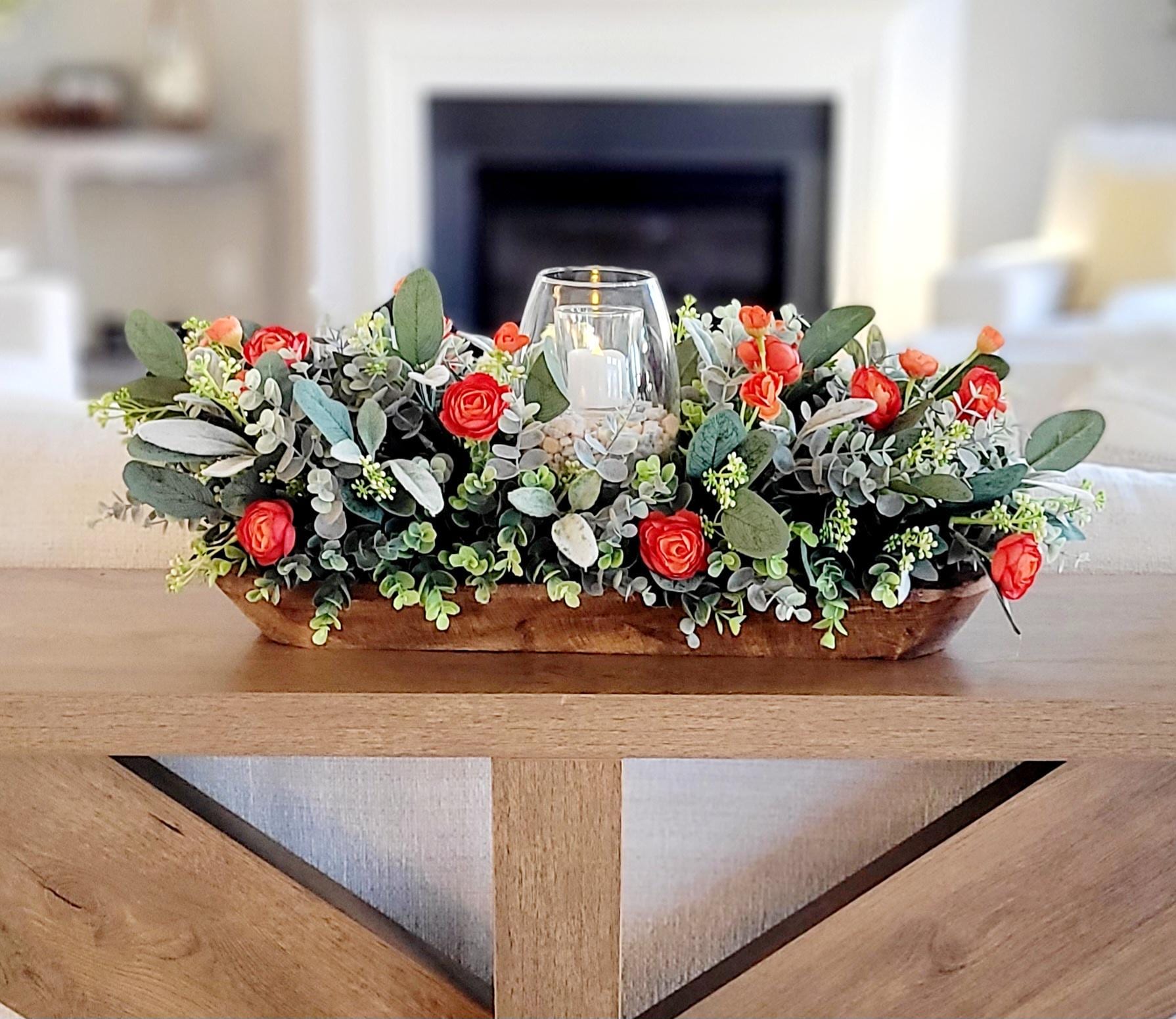
“Select your foundation: Start with a wooden dough bowl.”
The more rustic and imperfect, the better.
Create a base: If your bowl is deep, use some crumpled paper or floral foam at the bottom to add height.
Add the candle: Place your hurricane glass and pillar candle slightly off-center. Fill the base of the hurricane with pebbles or sand to keep it stable.
Build the greenery: Start ‘planting’ your faux eucalyptus and other foliage stems around the hurricane, working from the inside out. Vary the direction and height.
Add accent color: Tuck in your smaller, colorful flower sprigs last, placing them in gaps to add pops of visual interest.
The beauty of using high-quality faux greenery and a flameless candle is that this centerpiece is incredibly low maintenance. However, it will gather dust. To keep it looking fresh, give it a quick once-over with a hairdryer on a cool, low setting every couple of weeks to blow away dust. For a deeper clean once a season, you can wipe individual leaves with a damp cloth. Store it covered in a plastic tub after the season ends to keep it pristine for next year.
23. A Farmhouse Dining Room with a Reclaimed Wood Hutch
The undisputed star of this room is the magnificent reclaimed wood hutch. It’s more than a piece of furniture; it’s an architectural element that provides the entire space with its history and soul. The sheer scale of it, combined with the warm, weathered patina of the wood, makes it the heart of the room. Storing the extensive collection of white ceramics inside turns it into a curated display, transforming everyday objects into a powerful design statement. Without the hutch, the room would lose its anchor and its story.
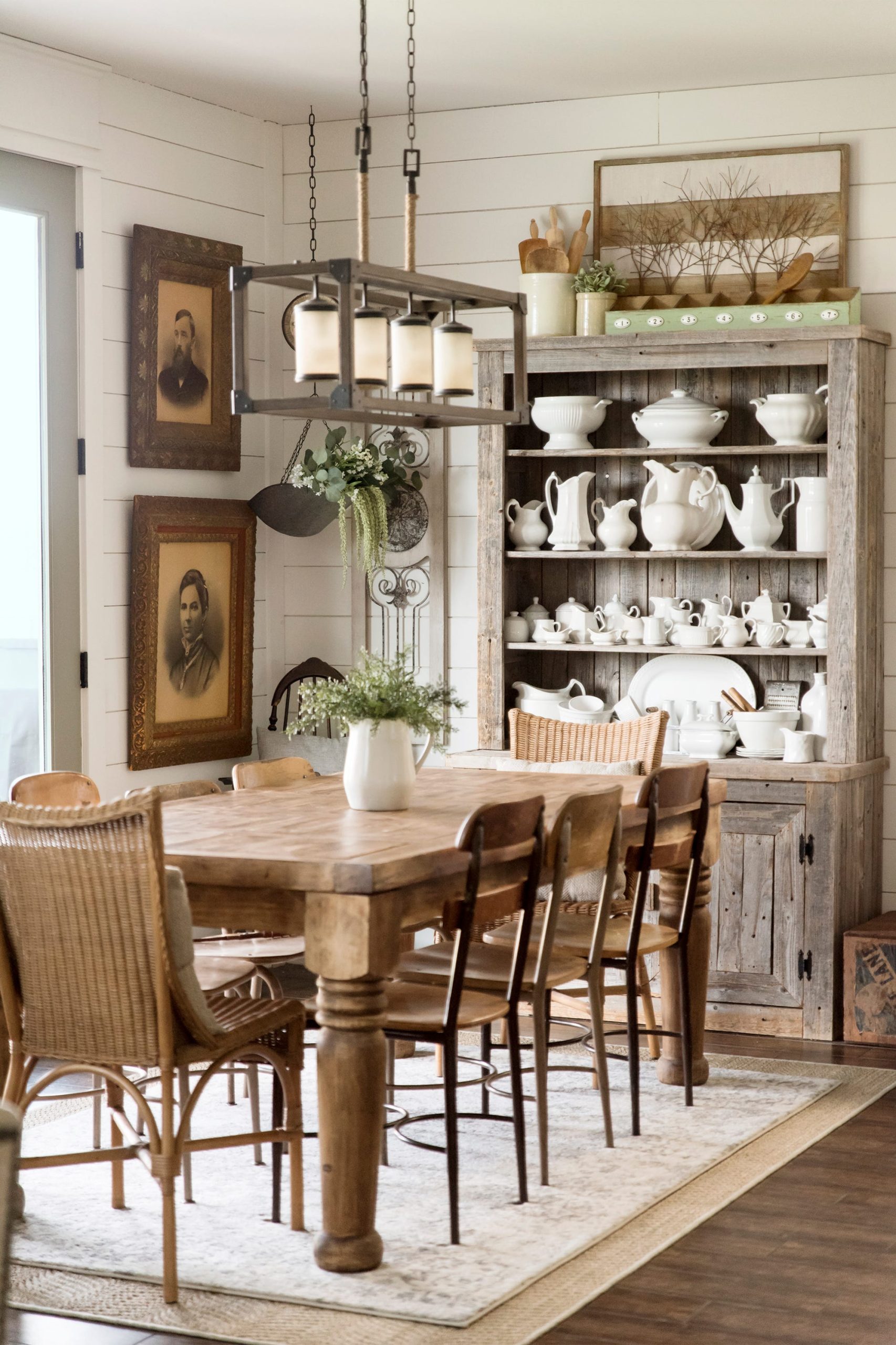
“A piece of furniture this grand requires a room with matching scale.”
To accommodate a hutch of this size (likely 6-7 feet wide and 7-8 feet tall), you need two things: wall space and ceiling height. This hutch would look best on a solid wall that is at least 10-12 feet wide, allowing for some breathing room on either side. A standard 8-foot ceiling would feel oppressively low; this piece calls for a ceiling height of 9 feet or, ideally, 10+ feet to truly feel at home.
24. Autumn Window Decor in a Blue and White Kitchen
When you have a strong, non-traditional color story in your kitchen, like blue and white, your fall decor needs to adapt. Instead of defaulting to rustic orange and brown, lean into a more refined palette. Think metallic. Gold, brass, and copper pumpkins and accessories will pop beautifully against a blue backdrop, creating a chic, luxe autumn vibe. White pumpkins are also a perfect choice, as they complement the existing color scheme without competing with it. This is a much more sophisticated take than trying to force a classic fall palette where it doesn’t belong.
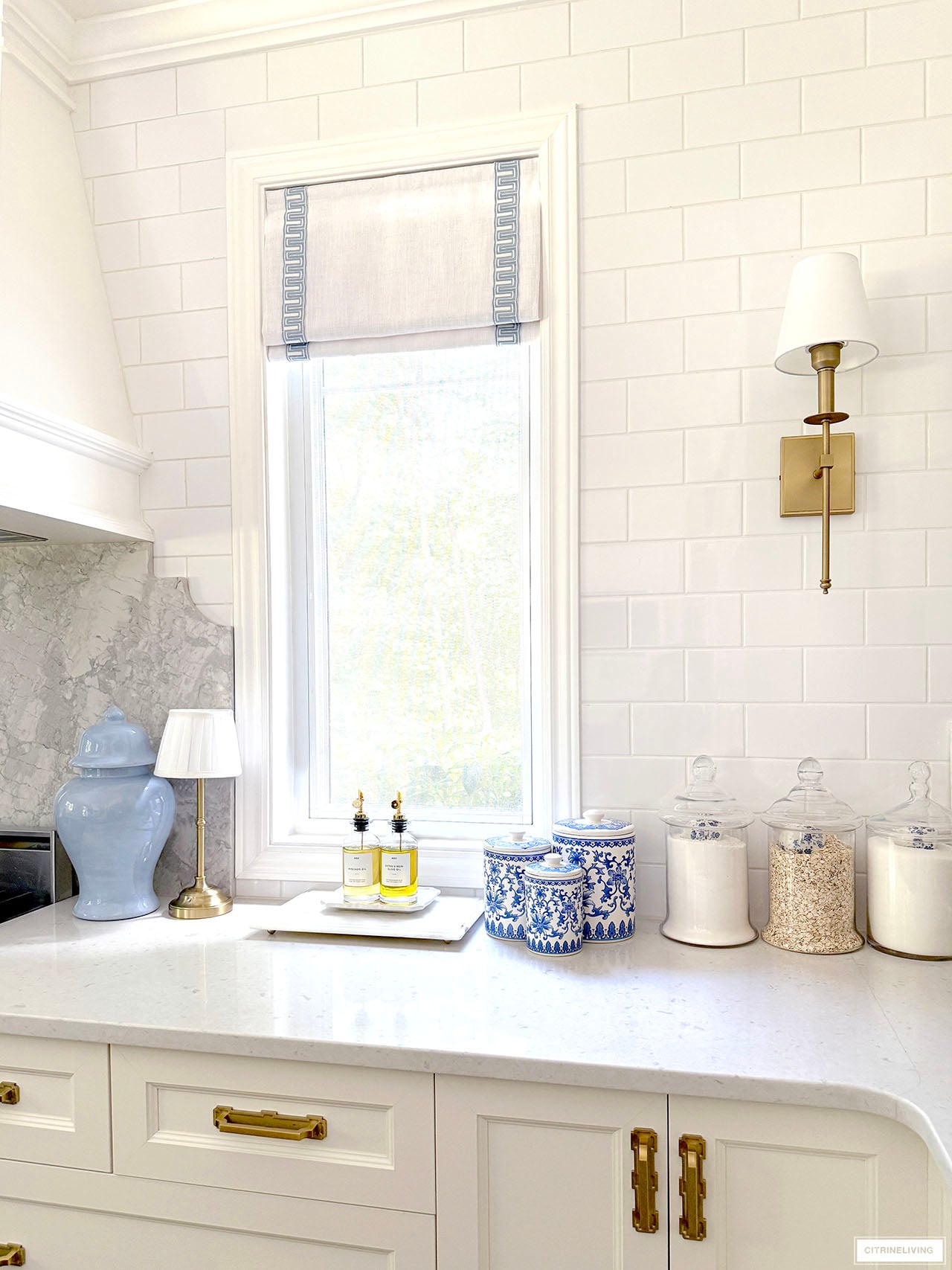
“The style math for this look is about restraint and elegance.”
It’s 80% your existing, year-round decor (the blue and white ceramics, the ginger jars) + 15% metallic fall accents (brass pumpkins, gold-leaf gourds) + 5% natural texture (a simple vase of bare branches or white berry stems). By keeping the fall additions minimal and focused on a single finish (metallics), you ensure the look is an enhancement, not an overwhelming seasonal takeover. Compare this to the more traditional approach in Idea #1.
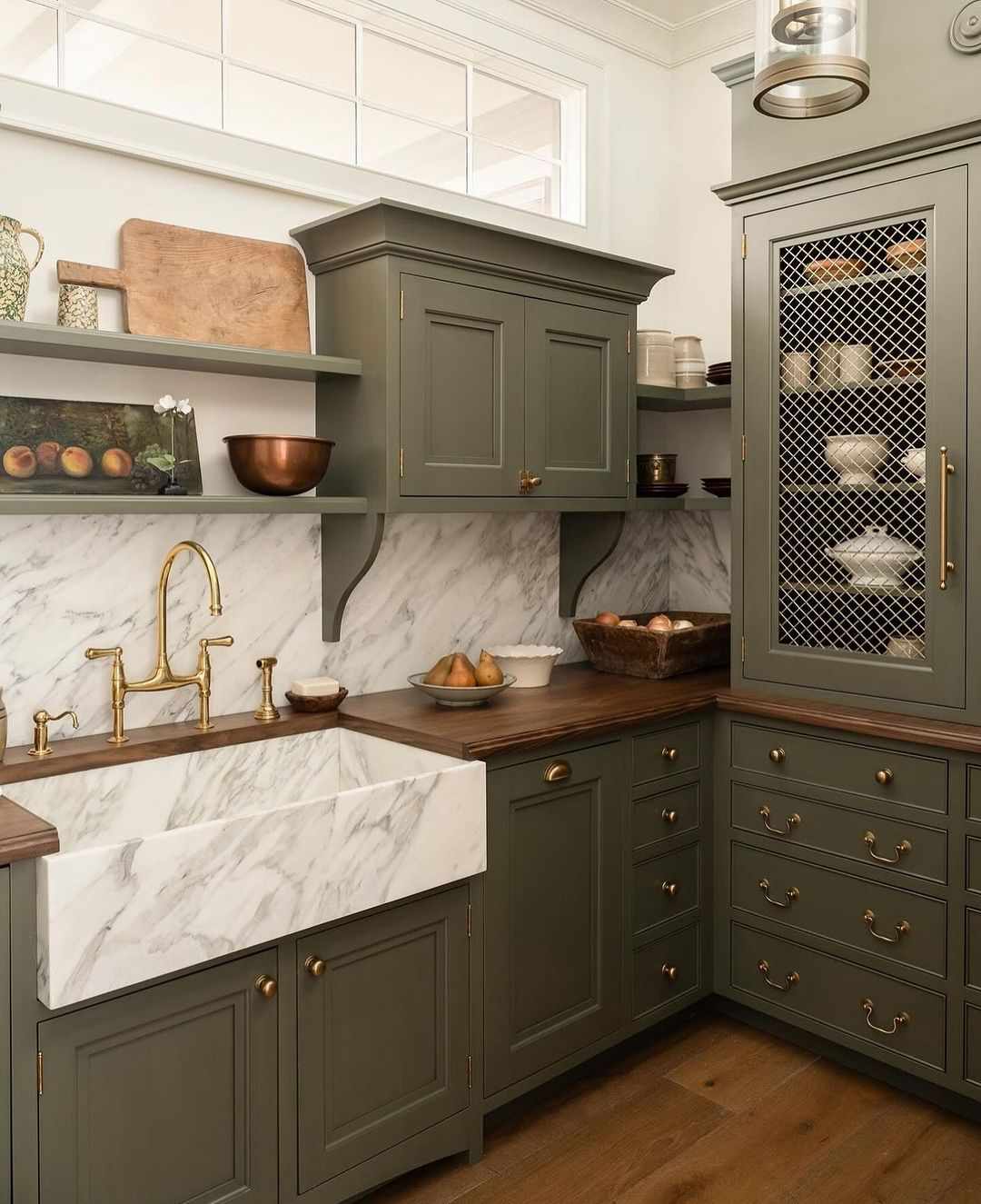
25. The Charm and Texture of Rustic Kitchen Cabinets
Rustic, and especially reclaimed, wood cabinets come with a specific set of maintenance rules. Unlike smooth, sealed factory cabinets, their textured surfaces can trap dust and grease more easily. Regular cleaning with a soft cloth and a gentle wood cleaner is key. Avoid harsh chemicals. Nicks and scratches that would be a disaster on a modern cabinet often just add to the character here, but you do need to be mindful of anything that could cause splinters. It’s a trade-off: more character for a bit more mindful care.
“Before you go all-in on rustic cabinets, run through this quick checklist:”
Before you go all-in on rustic cabinets, run through this quick checklist:
- Is the rest of your home’s style compatible? Rustic cabinets can feel out of place in a very modern or minimalist house.
- Have you seen a sample in person? The texture, color, and finish of rustic wood can vary dramatically from photos.
- Is your budget realistic? Custom or semi-custom rustic cabinets can be more expensive than standard big-box options.
- Are you prepared for the upkeep? Be honest with yourself about your tolerance for a more hands-on cleaning and maintenance routine.
26. A Modern Rustic Kitchen with a Marble-Topped Island
This kitchen is a perfect example of the ‘Modern Rustic’ aesthetic done right. It works because it expertly balances sleek, modern elements with warm, natural textures. The crisp white shiplap walls, clean lines of the cabinetry, and the luxurious marble countertop are all modern. But the light wood tones, tan leather stools, and black metal accents bring in the rustic, earthy quality that makes the space feel inviting and not sterile. It’s the tension between these two styles that creates such a dynamic and appealing look, similar to the vibe in Idea #7 but with a different palette.
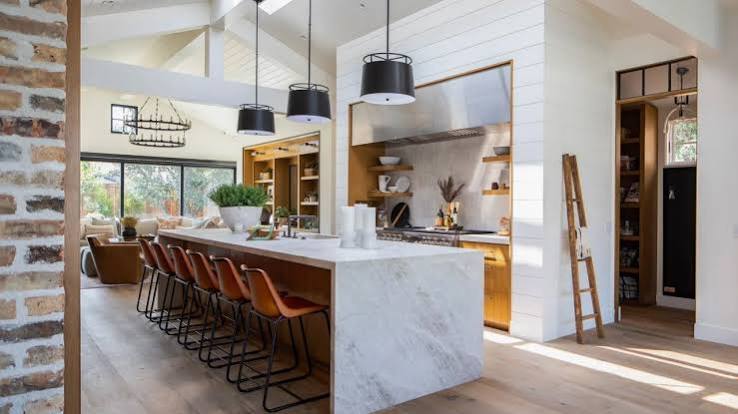
“We’re seeing this blend of clean lines and natural materials everywhere in 2026, and for good reason.”
It’s a direct reaction to years of all-white kitchens that sometimes felt a bit cold. People are craving warmth, texture, and a connection to nature, but they don’t want to sacrifice the clean, functional aspects of modern design. This style offers the best of both worlds and has real staying power because it’s so livable and versatile.
27. A Festive Table Glowing with Amber Light and Candles
that defines this entire scene is the quality of the light. It’s not just about having candles; it’s about how the light interacts with the materials. The extensive use of amber glass, both in the candle holders and vases, tints the candlelight, casting an incredibly warm, golden glow over the entire table. The addition of the tiny string lights interwoven through the runner adds another layer of sparkle. This isn’t just decoration; it’s atmosphere-building at its finest.
![Bright Fall Kitchen Centerpiece 20 Fall Centerpieces For The Table That You Can DIY [with Photos]](https://quotableideas.com/wp-content/uploads/2026/08/bright-fall-kitchen-centerpiece-20-fall-3.jpg)
“The formula for this magical glow is layered and textural.”
Think of it as 50% candlelight (from various heights and sources) + 30% colored and textured glass (to filter and diffuse the light) + 20% reflective surfaces (the patterned runner, the gloss on the wood table). The goal is to create a dynamic interplay of light, not just a static set of candles. You could swap the amber for deep jewel tones like ruby or amethyst for a different but equally enchanting mood.
28. A Farmhouse Kitchen with Open Shelving and Copper Pots
This kitchen works because it feels completely authentic and lived-in. The open shelving isn’t just for show; it’s a practical storage solution for beautiful, everyday items. The gleaming copper pots, the stack of white dishes, and the wooden bowls are all functional, but their inherent beauty makes them part of the decor. This is a key principle of farmhouse style: utility and beauty should not be separate. The choice of blue lower cabinets adds a soft, welcoming color that grounds the entire space.
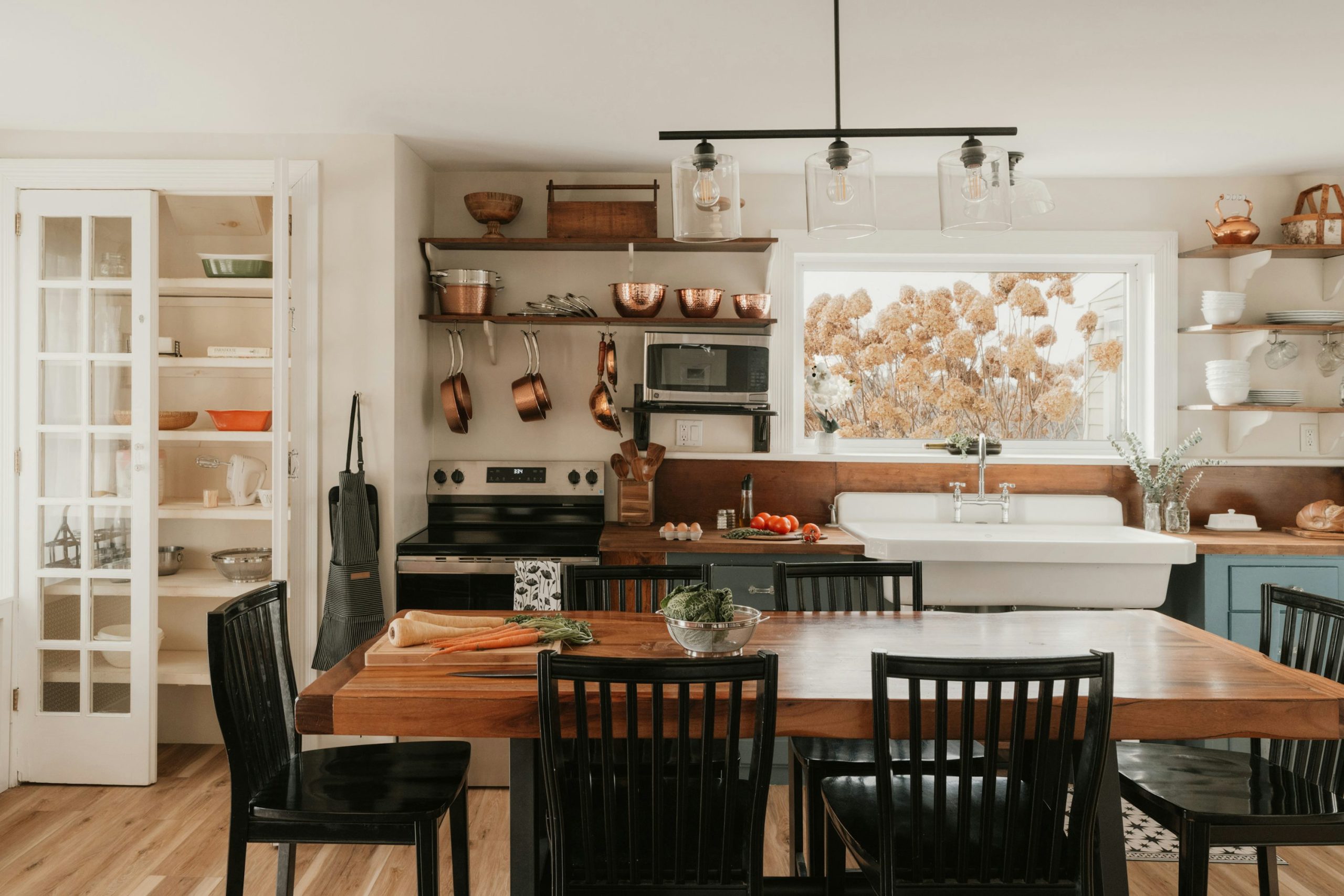
“Love the look of copper but not the price tag?”
You’re not alone. You can get this look for less by focusing on a few key, high-impact pieces. Hunt for vintage copper-bottomed pans at flea markets or on Etsy—they often have more character for less money. Alternatively, use copper-colored spray paint on a few decorative accessories, like a pitcher or a tray, to get that warm metallic accent without the hefty investment of a full set of cookware. Even a little goes a long way.
29. A Braided Pumpkin on a Simply Styled Wooden Mantel
The special element here is all about texture. The braided natural fiber of the main pumpkin provides a tactile, crafty warmth that sets it apart from a typical smooth gourd. It’s unexpected and feels artisanal. This textural focus is a sophisticated way to do seasonal decorating. Instead of relying only on color (orange!) and shape (pumpkin!), it introduces another sensory layer that makes the display feel more curated and interesting. It invites you to look closer.
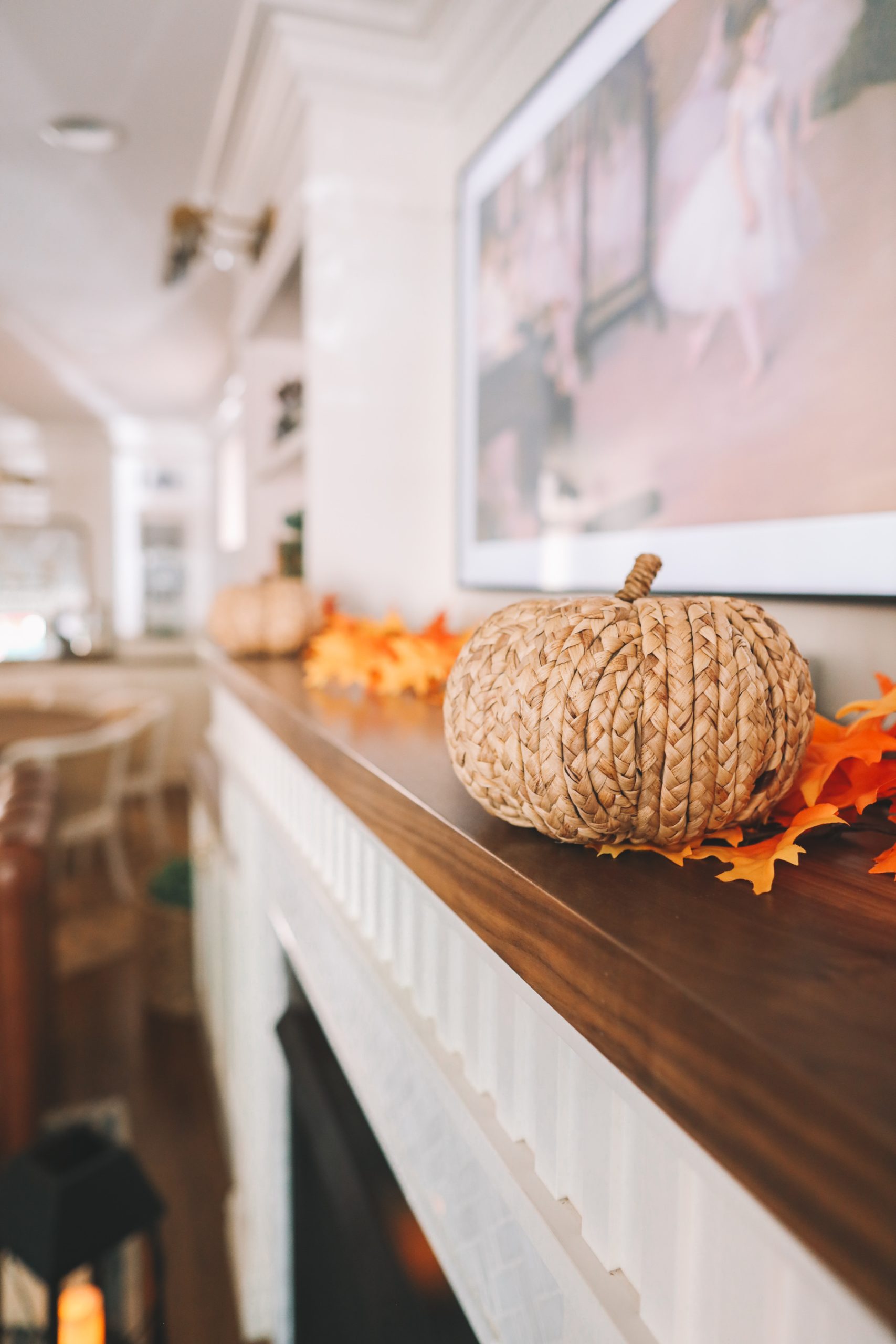
“When styling a mantel or shelf, think in layers and create a visual triangle.”
Here, the braided pumpkin is the focal point at a medium height. The scattered leaves create a low layer of color and texture along the base. In the background, a taller element (like the blurred framed picture) would form the highest point of the triangle. This creates a composition with depth and a clear focal point, making it look balanced and professionally styled, rather than just a flat line of objects.
Your Coziest Kitchen Is Calling
And there you have it—29 distinct ways to bring the warmth and beauty of fall into the heart of your home. The best approach is to pick one or two ideas that truly resonate with your personal style and the way you live. Don’t be afraid to mix and match to create a look that is uniquely yours.
Ready to get started? Head over to Pinterest and start a board for your favorite ideas from this list. Happy decorating!