Is your Small Full Bathroom Design Ideas 2026 Pinterest board a chaotic mix of saves with no clear direction? You know the feeling—you find a look you love, but have no idea how to make it work in your actual, non-Pinterest-perfect space. We get it. That’s why we did the heavy lifting for you. After filtering through hundreds of options at stores like Target, IKEA, and Walmart, we narrowed it down to 31 ideas that are both beautiful and genuinely achievable, with options ranging from a few hundred dollars to a full $15,000+ remodel. This isn’t just a gallery; it’s a playbook covering modern, minimalist, and farmhouse-inspired looks, with budget and luxury versions compared side-by-side. These styles are trending for 2026 because they masterfully blend function with personality, proving small bathrooms can be big on style. And stay until the end — we break down the most common mistakes that can ruin these looks. 📌 Save this to Pinterest for later — you’ll want to revisit these ideas.
This post may contain affiliate links. As an Amazon Associate, we earn from qualifying purchases at no extra cost to you.
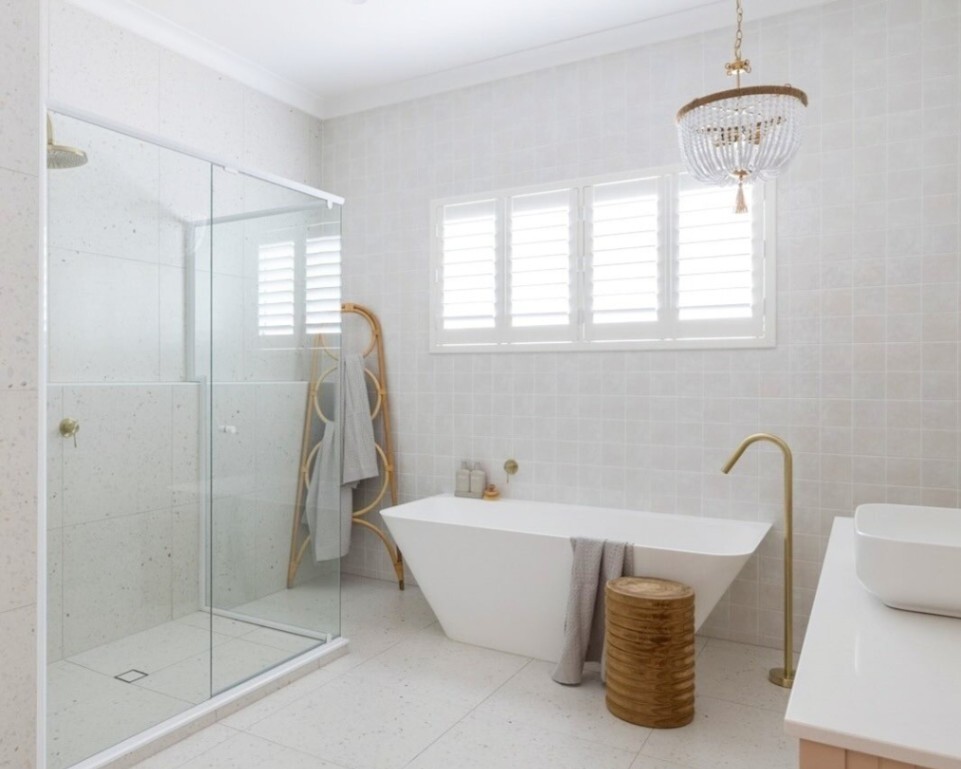
1. Create a Serene Escape with Terrazzo and Brass
What makes this bathroom feel so open and luxurious is the consistent use of large-format terrazzo tiles across both the floor and walls. This technique erases the visual breaks between surfaces, making the entire room feel like one seamless, expansive space. The choice of warm brass for the fixtures and chandelier is a crucial counterpoint; it cuts through the cool-toned terrazzo, adding a layer of warmth and sophistication that feels both modern and timeless.
|
$569.99
|
$916.50
|
$69.14
|
$170.59
|
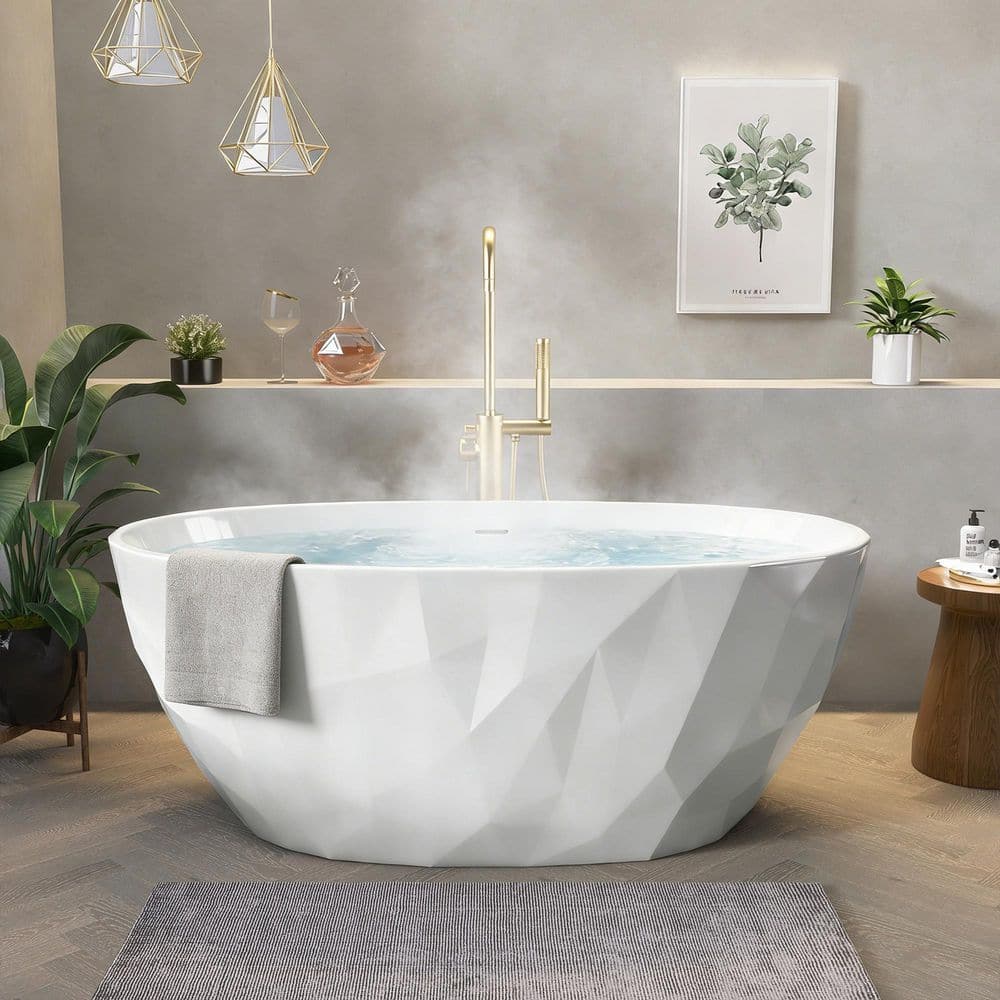
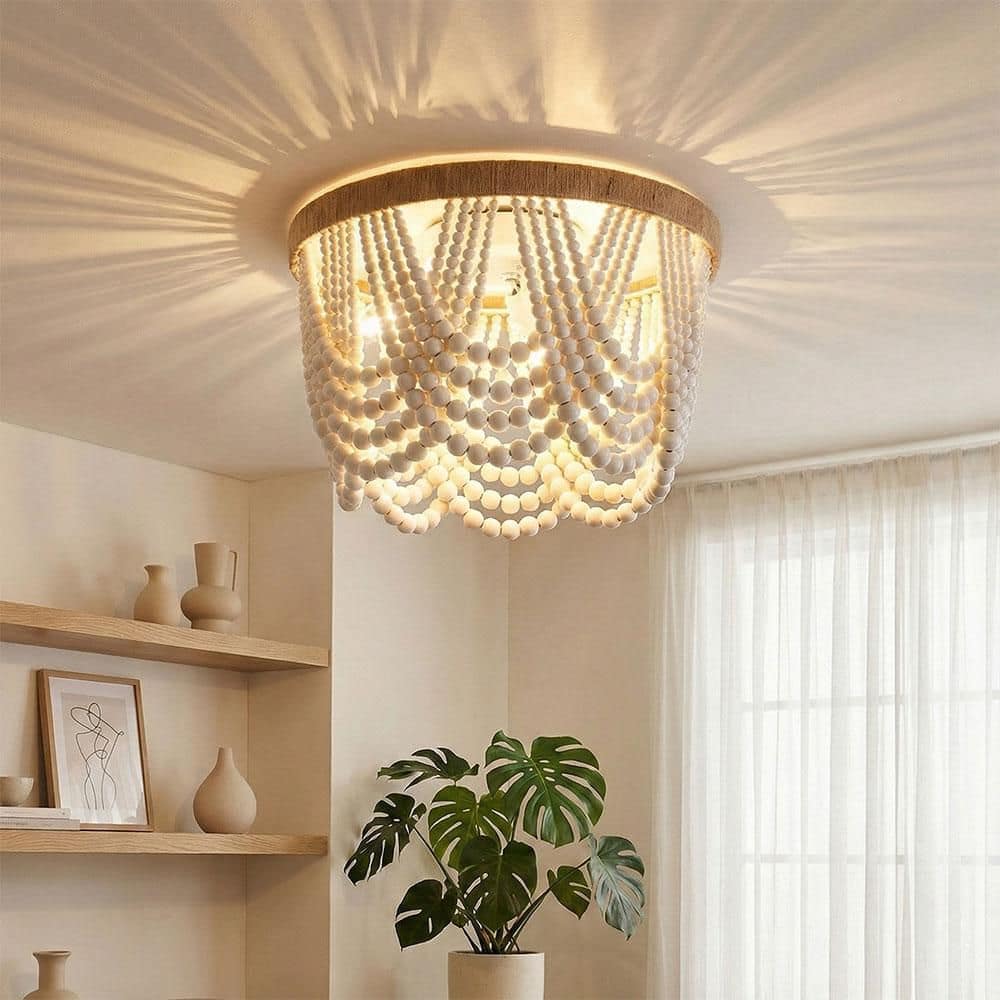
“To recreate this specific look, here is a general cost estimate.”
Remember that labor costs can vary wildly based on your location.
- Main Furniture (Freestanding Tub, Vanity): $1,800 – $5,500
- Lighting (Chandelier, Sconces): $400 – $1,200
- Textiles (Shutters, Towels): $300 – $800
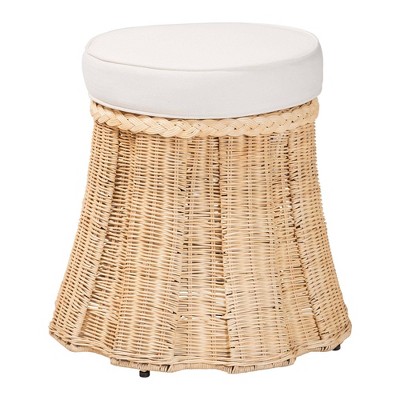
- Decor/Accessories (Stool, Rack): $200 – $600
- Wall Treatment (Terrazzo Tile & Installation): $3,000 – $8,000
- TOTAL: $5,700 – $16,100
- Budget alternative: Get a similar vibe by using a terrazzo-print porcelain tile and high-quality brass-finished fixtures instead of solid brass. This can reduce the total cost by 40-50%.
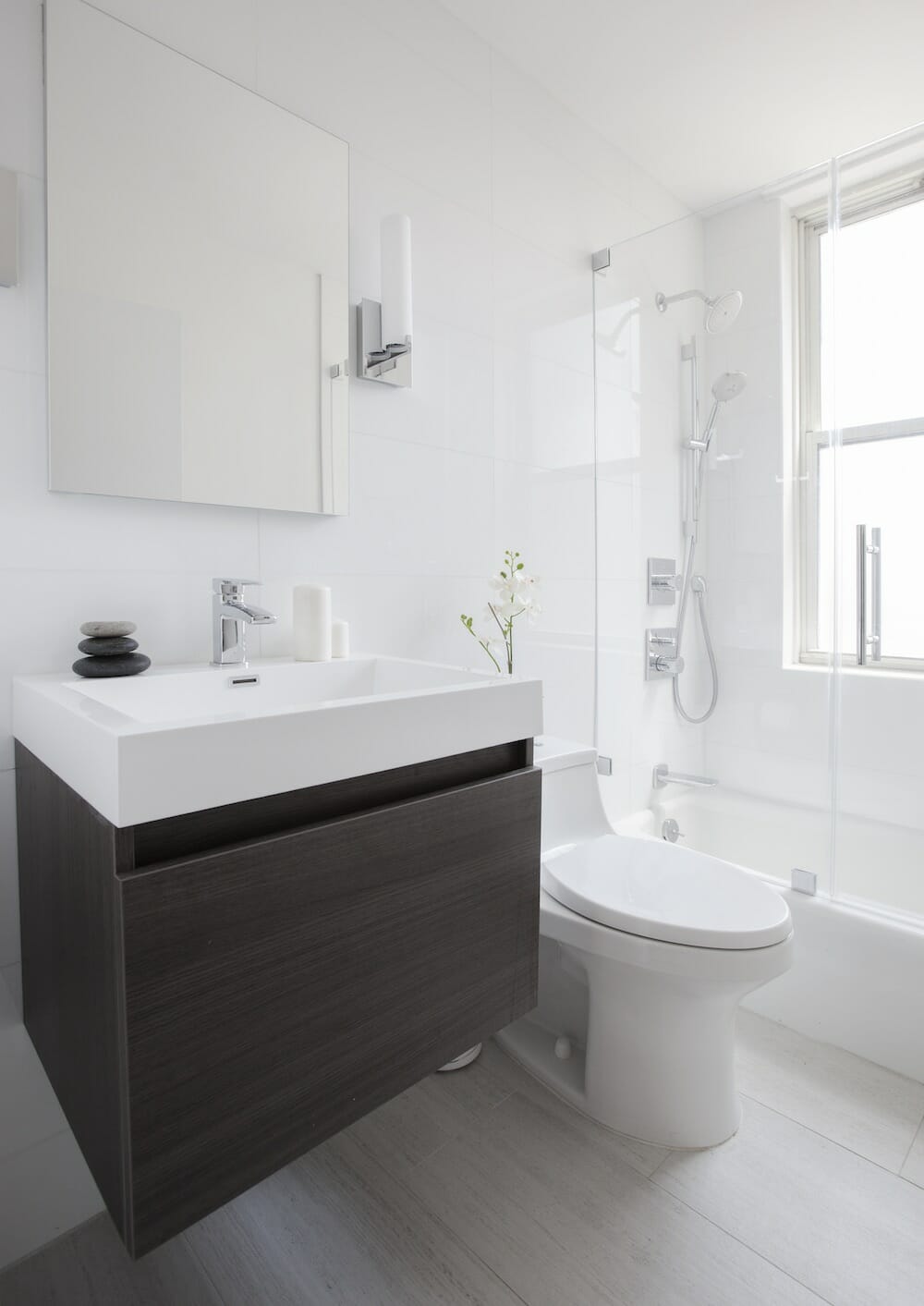
2. Achieve Modern Minimalism with a Freestanding Vanity
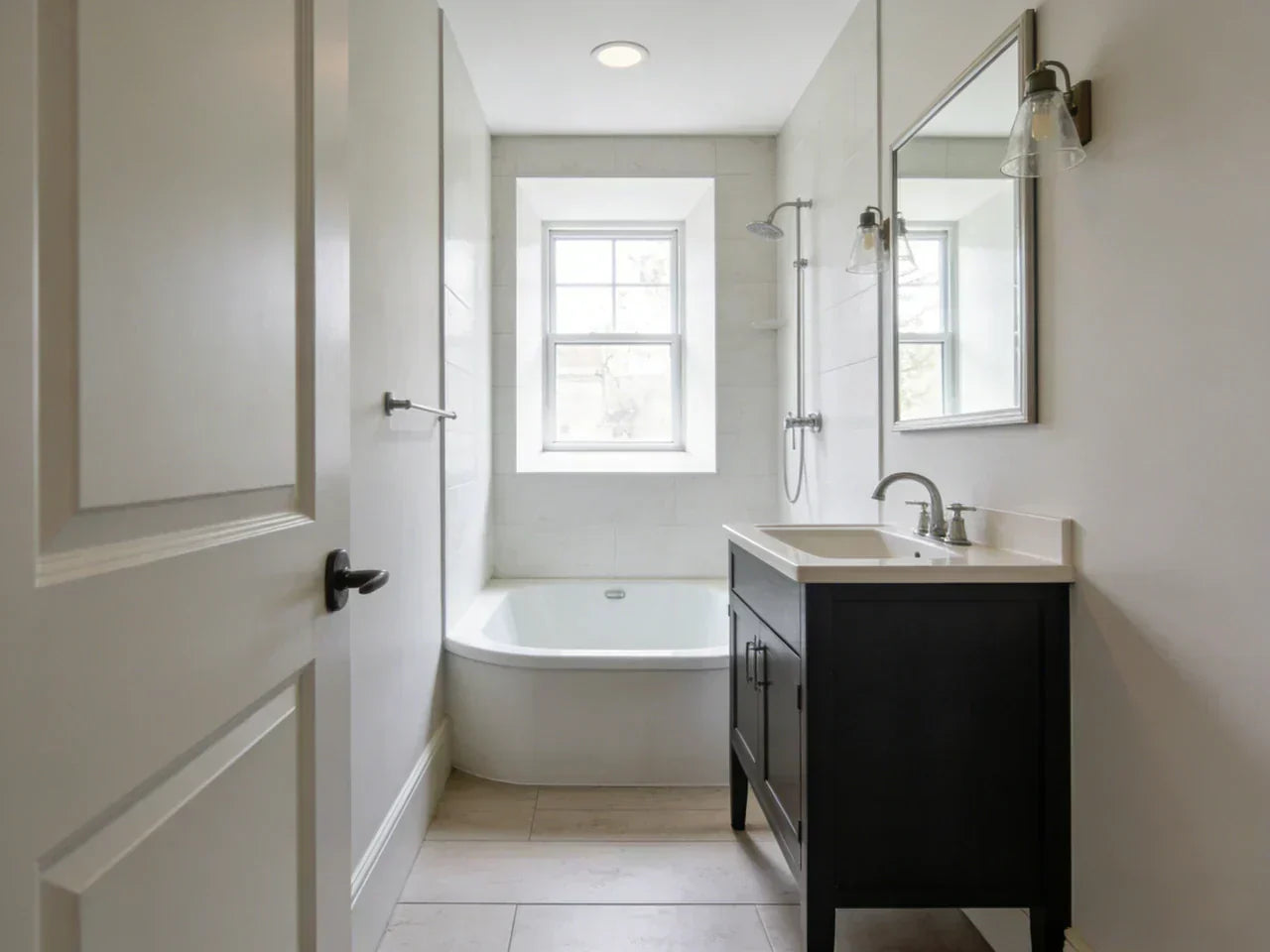
The single element that defines this space is the dark wood freestanding vanity. In a room dominated by light, neutral tiles, this piece of furniture acts as a crucial anchor. It grounds the design, adds a touch of organic warmth, and provides much-needed contrast without overwhelming the small footprint. If you were to swap it for a white or floating vanity, the room would lose its focal point and feel far more generic. It’s the perfect example of how one great piece can define a room.
|
$199.00
|
$989.00
|
$99.97
|


“This layout is ideal for narrow bathrooms, often called a galley-style bathroom, that are at least 5 feet wide and 8-10 feet long.”
The key is to keep all the main fixtures along one or two adjacent walls to maintain a clear path. A minimum ceiling height of 8 feet is recommended to avoid feeling cramped, especially with the window above the tub. For an even smaller space, consider the layout in Idea #7, which uses a floating sink.
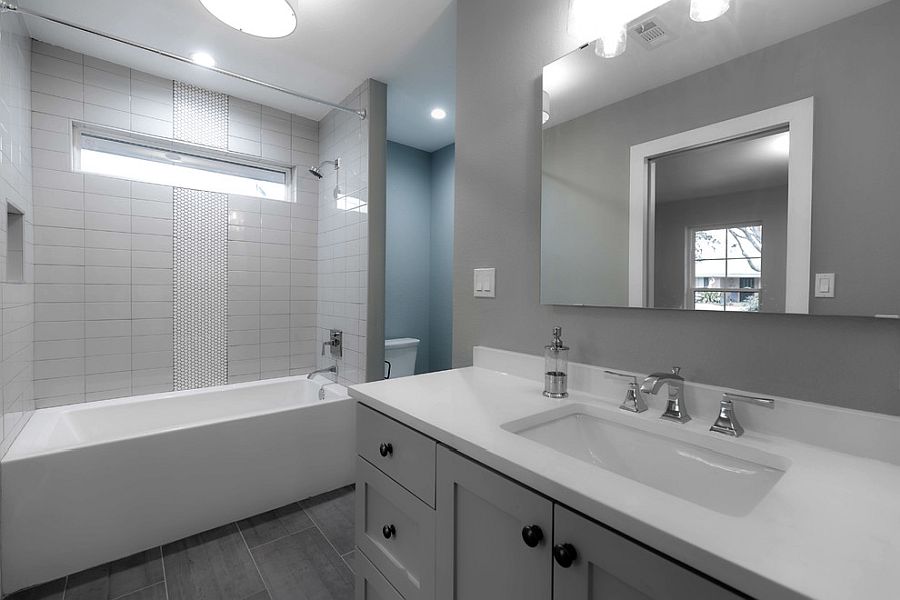
3. Use Horizontal Lines in a Gray and White Bathroom
When you have a narrow bathroom, think horizontally. The long, high-set window and the extended horizontal wall niche above the tub are clever design tricks. They draw the eye lengthwise down the room, creating an illusion of width. For maximum effect, your horizontal niche should be at least 48 inches long and unobstructed. This not only provides fantastic storage for shampoos and soaps but also becomes a strong architectural feature that makes the whole space feel more custom and thoughtfully designed.
|
$669.00
|
$59.00
|
$71.14
|
$603.95
|

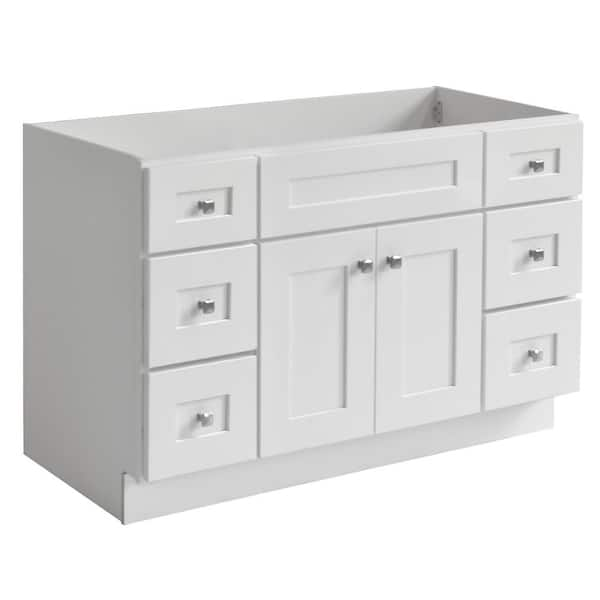
“This design works because of its masterful use of tone and direction.”
The consistent use of gray on the floor and main walls creates a calming, unified backdrop. Then, the design introduces strong horizontal elements—the window, the vanity, and the wall niche—which visually stretch the room, making it feel wider. The vertical mosaic accent in the shower is a smart touch; it adds a point of interest without disrupting the room’s overall horizontal flow, drawing the eye upward just enough.
4. Balance Light Wood and Patterned Walls for a Modern Look
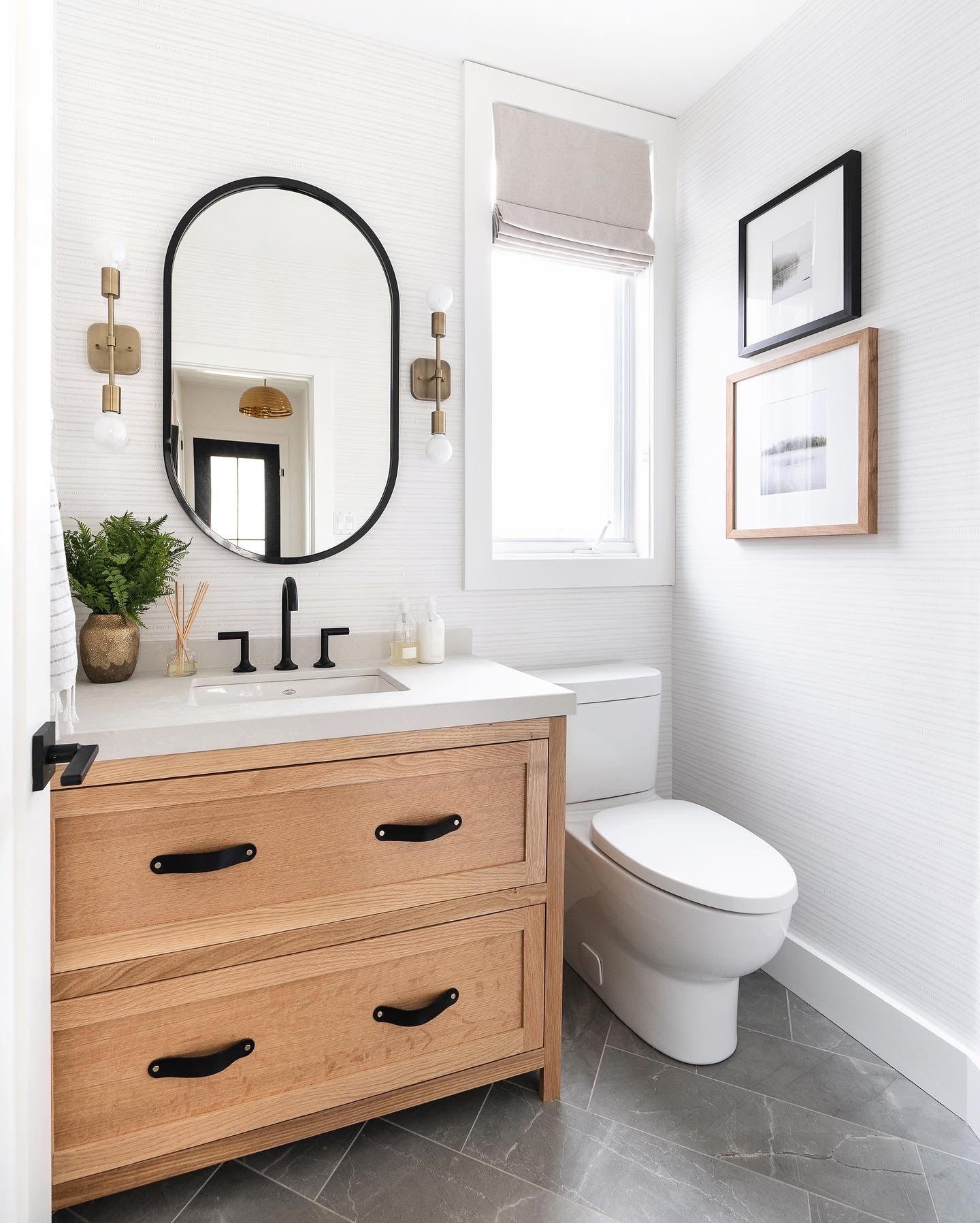
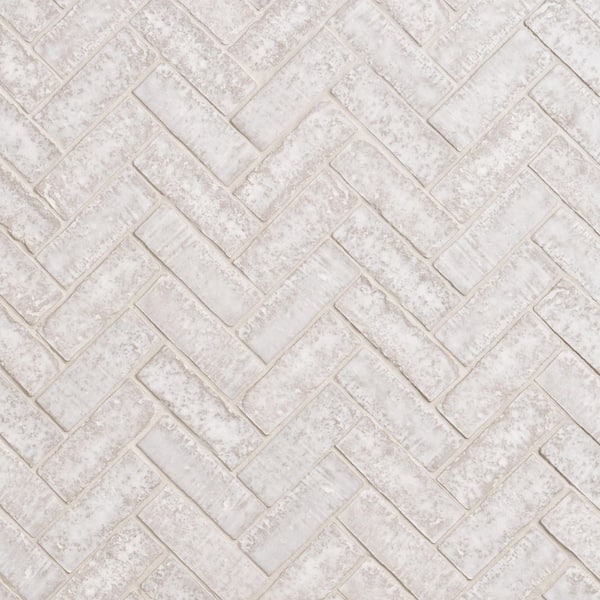
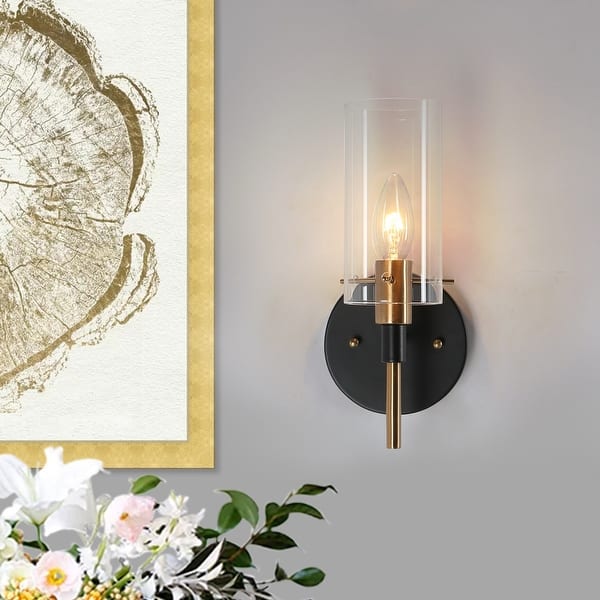
This bathroom achieves its warm, modern feel with a simple but effective formula: 50% neutral texture + 30% natural wood + 20% dark accents. The white textured wallpaper provides a subtle, light-reflecting base. The light wood vanity brings in warmth and an organic touch. Finally, the black mirror, faucet, and hardware provide the sharp, graphic contrast that makes the design pop. You could swap the grey chevron floor for a simple large-format tile and still maintain the same balanced feel.
|
$29.02
|
$61.19
|
$98.49
|
$242.85
|
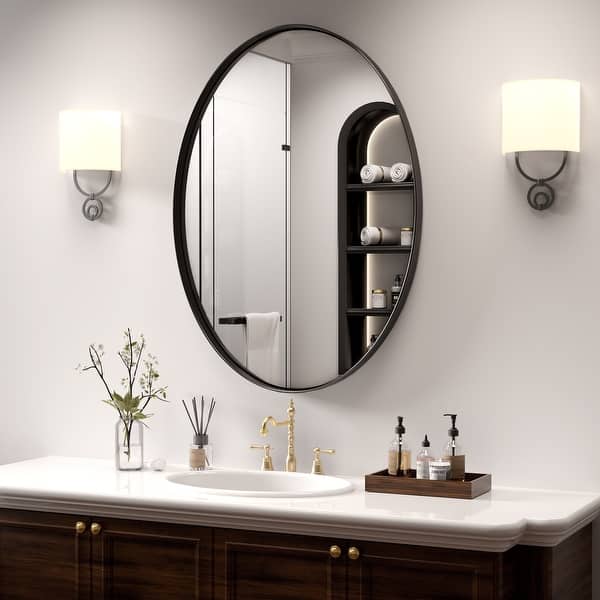
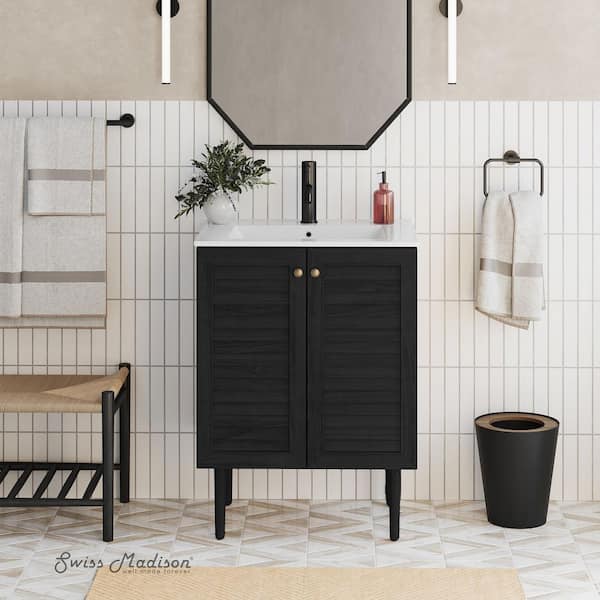
“A word of caution about textured wallpaper in a full bathroom: steam and moisture are not its friends.”
While it looks stunning, ensure you have excellent ventilation (a high-CFM exhaust fan is a must) and that the wallpaper is specifically rated for bathroom or high-humidity use. Look for vinyl or water-resistant treated papers. Without proper precautions, you risk peeling seams and potential mold growth behind the paper, turning a beautiful feature into a maintenance headache.
5. Create a Clean Look in a White and Gray Small Bathroom
You don’t need a massive budget to achieve this clean, modern aesthetic. The core elements are affordable and widely available. White subway tiles are famously inexpensive, often under $3 per square foot. Look for a similar dark wood-grain floating vanity from places like IKEA or Wayfair for $250-$500. For the floor, a light gray porcelain tile from a big-box store like Home Depot can be found for $2-$4 per square foot. The glass screen is a splurge, but you can find kits for under $400. All in, you can get this entire look for under $2,000 in materials. For a similar high-contrast vibe, check out Idea #14.
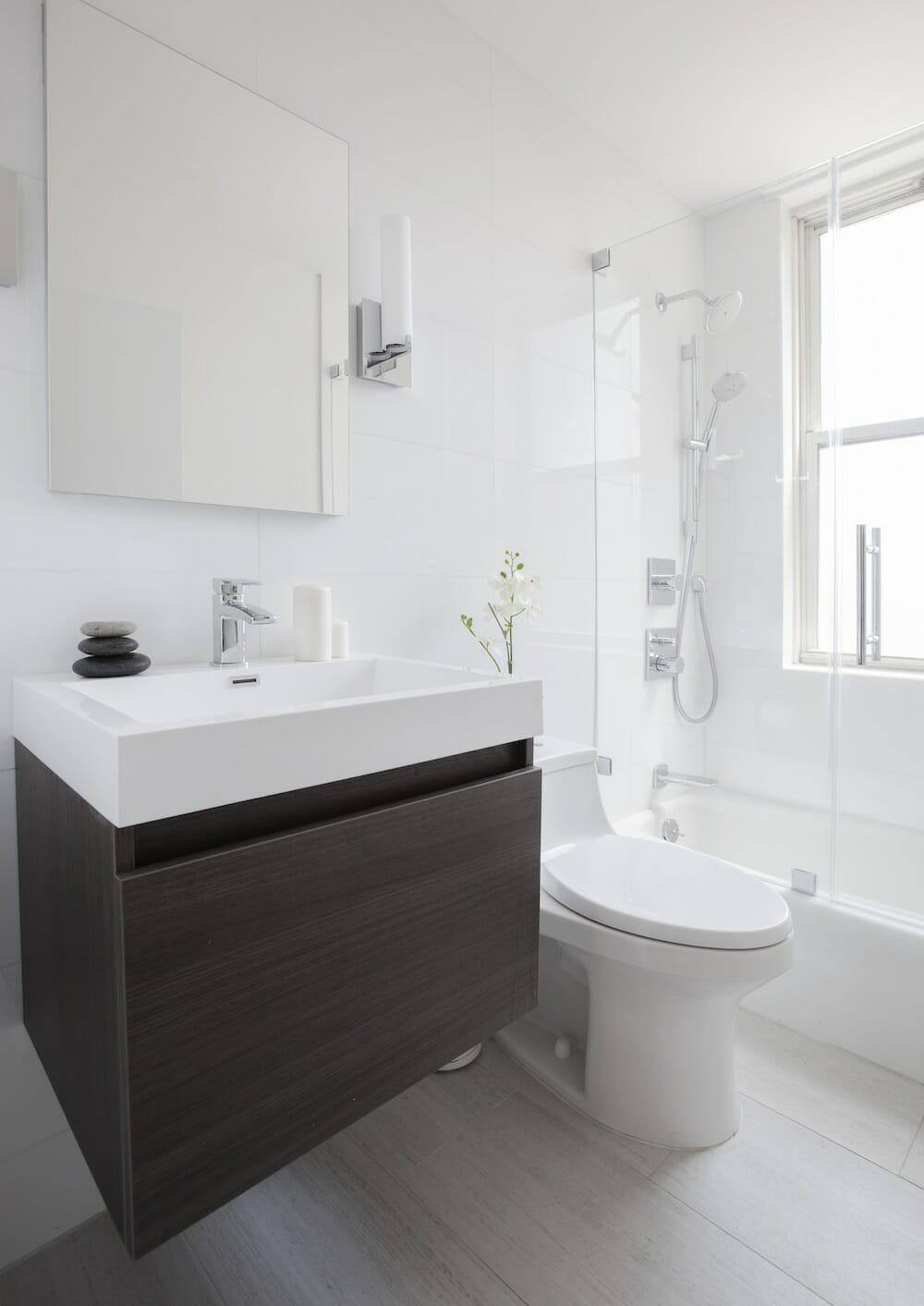
|
$629.00
|
$34.98
|
$44.97
|
$39.97
|
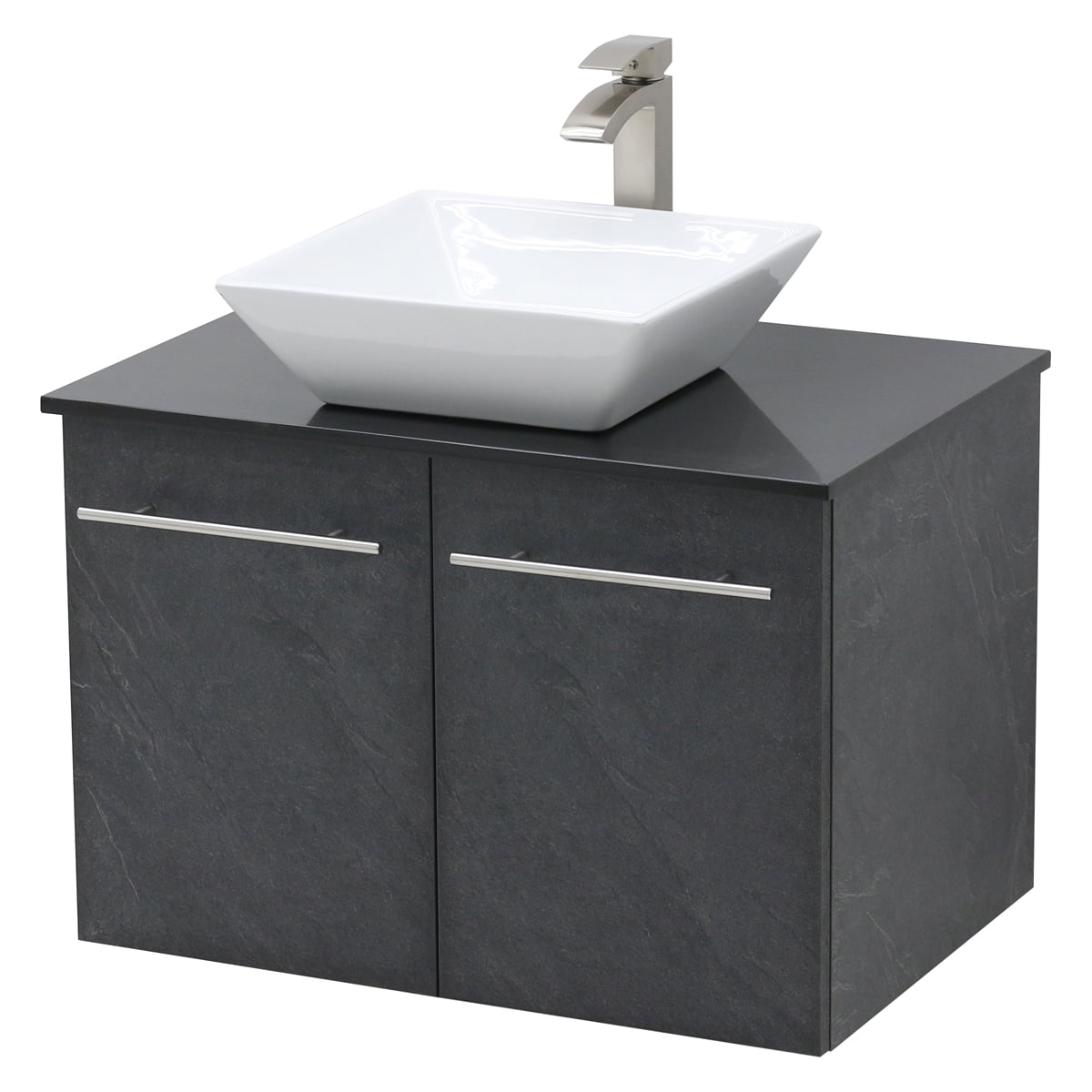
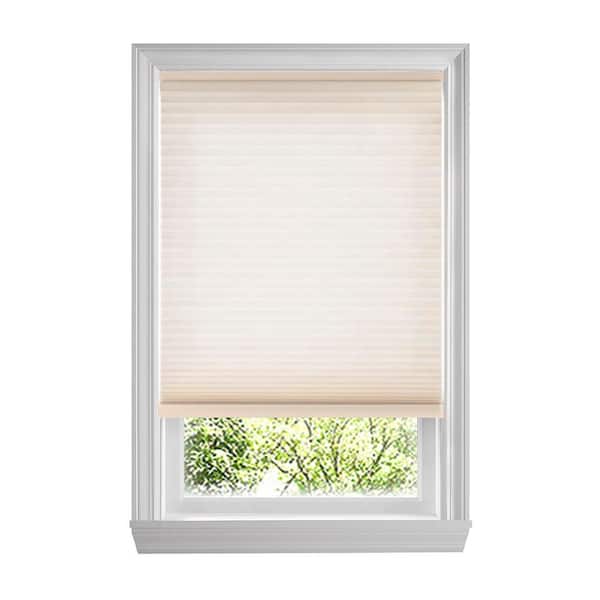
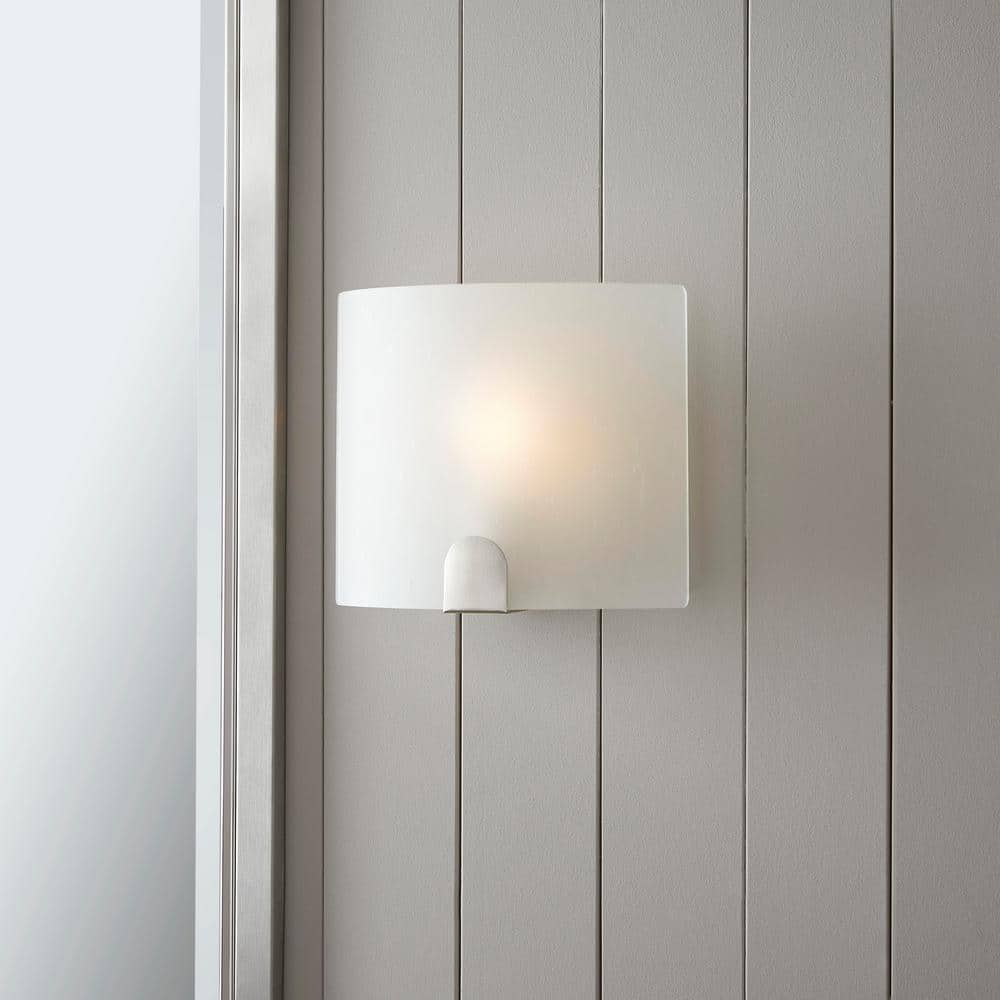
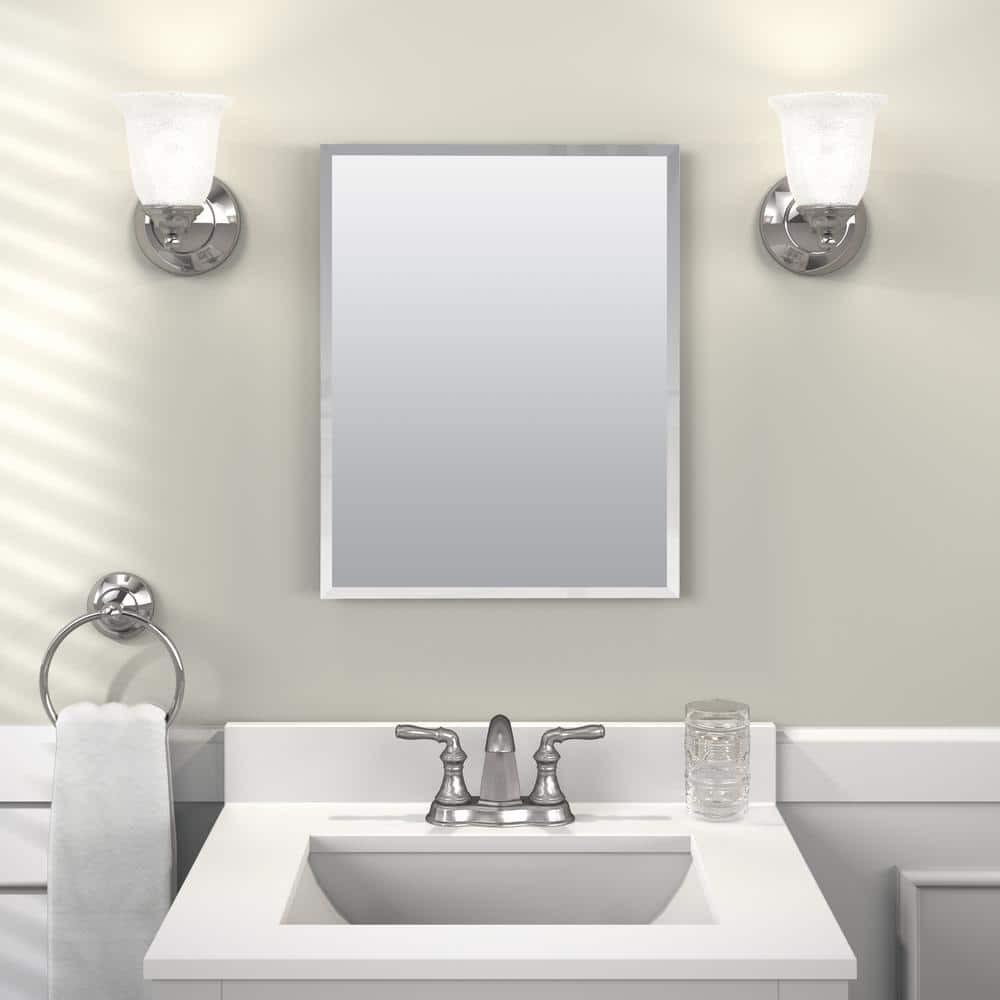
“While this bathroom is a dream of clean lines, keeping it that way requires a little diligence.”
The glass shower screen will show water spots and soap scum, so a daily squeegee is your best friend. The white grout of the subway tiles can be prone to discoloration over time; sealing it annually is a non-negotiable step to keep it looking crisp and prevent mildew. The floating vanity is great for cleaning the floor underneath, but be mindful of splashes on the wood-grain laminate, which should be wiped dry to prevent water damage.
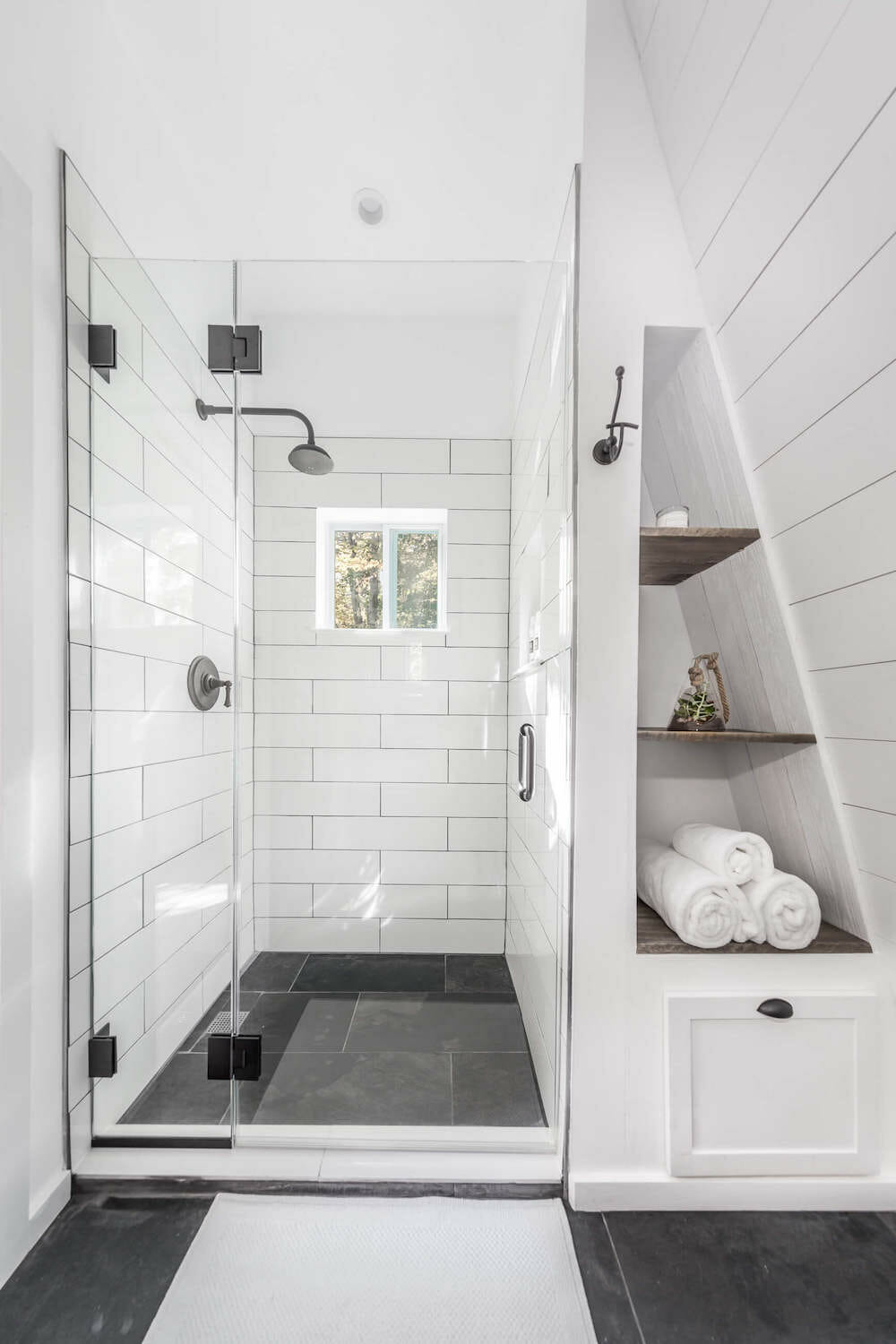
6. Build Smart Storage with Angled Farmhouse Shiplap
That awkward angled wall, often a design afterthought, can become a stunning feature. Here’s a brief guide to creating that shiplap storage niche.
|
$107.35
|
$49.99
|
$0.15
|
$431.00
|

“Frame it out: Build a simple frame for your niche using 2x4s, ensuring it’s anchored to wall studs.”
Install Shiplap: Cut your shiplap boards to fit around the niche opening. Use a nail gun and construction adhesive for a secure fit.
Add Shelving: Measure the inside of your niche and cut distressed wood boards to size. For a floating look, use hidden shelf brackets.
Finish & Style: Caulk all seams, then paint the shiplap (a semi-gloss white is great for bathrooms). Once dry, style your new shelves!
Time estimate: 1-2 weekends. Material cost: $200-$500.
The single element that makes this design work so well is the angled shiplap niche. Without it, you’d have a standard, nice-enough modern farmhouse shower. With it, you have a custom, clever solution that turns a potentially awkward corner into the room’s main feature. It adds architectural interest, injects rustic texture via the distressed wood, and provides practical storage. It’s a design move that’s doing triple duty.
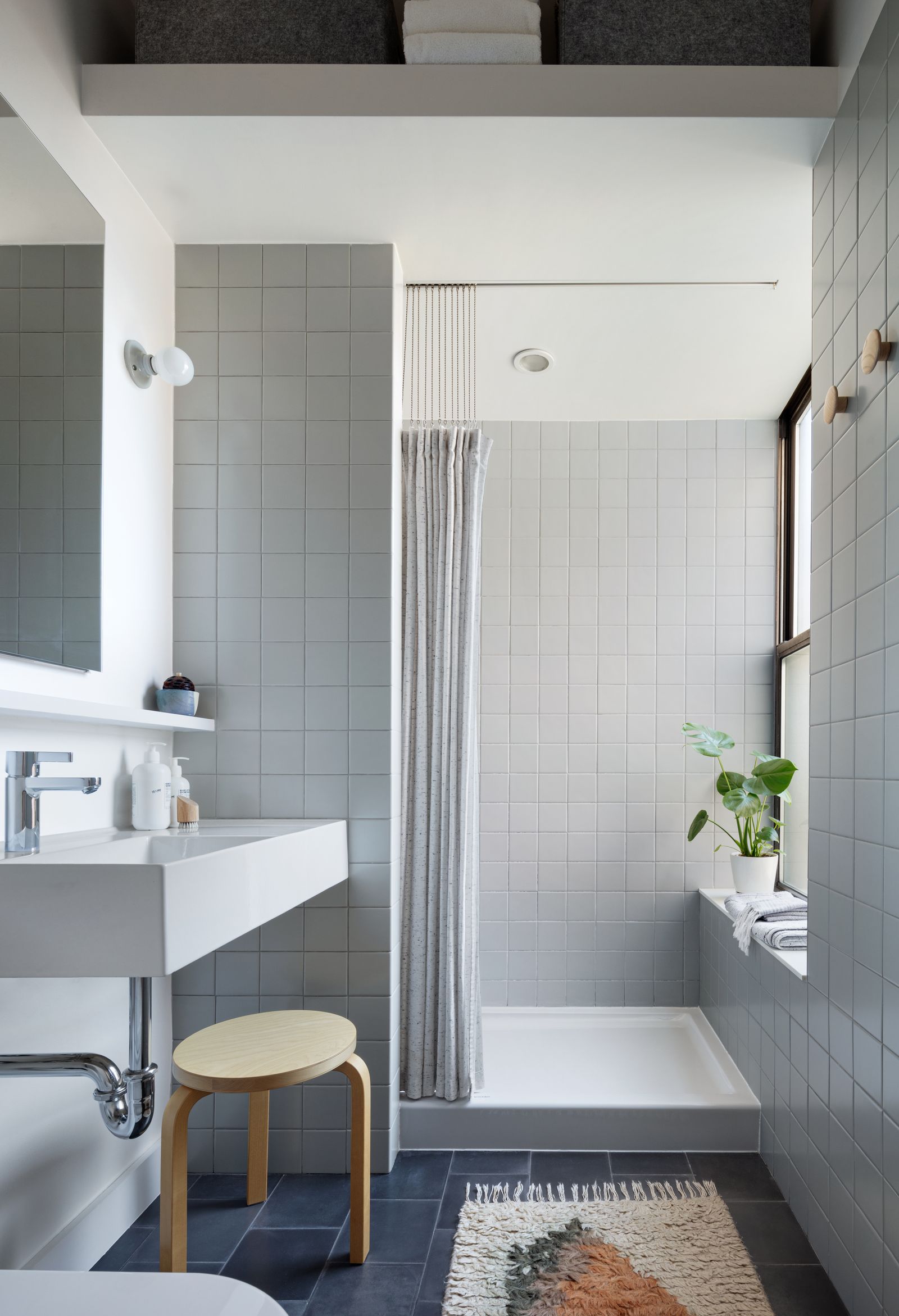
7. Embrace Minimalism with Grey Tiles and Natural Wood
This design is perfect for exceptionally small or narrow bathrooms, particularly those found in apartments or as secondary baths. It works well in spaces as small as 4 feet wide by 6 feet long. The key is the use of wall-mounted fixtures—the floating sink and shelf—which keep the floor entirely clear, creating an unbroken sightline that maximizes the perception of space. Using the same large square tiles on all walls also contributes to this effect, as seen in Idea #24, which takes this concept even further.
|
$346.00
|
$16.14
|
$128.70
|
$11.74
|
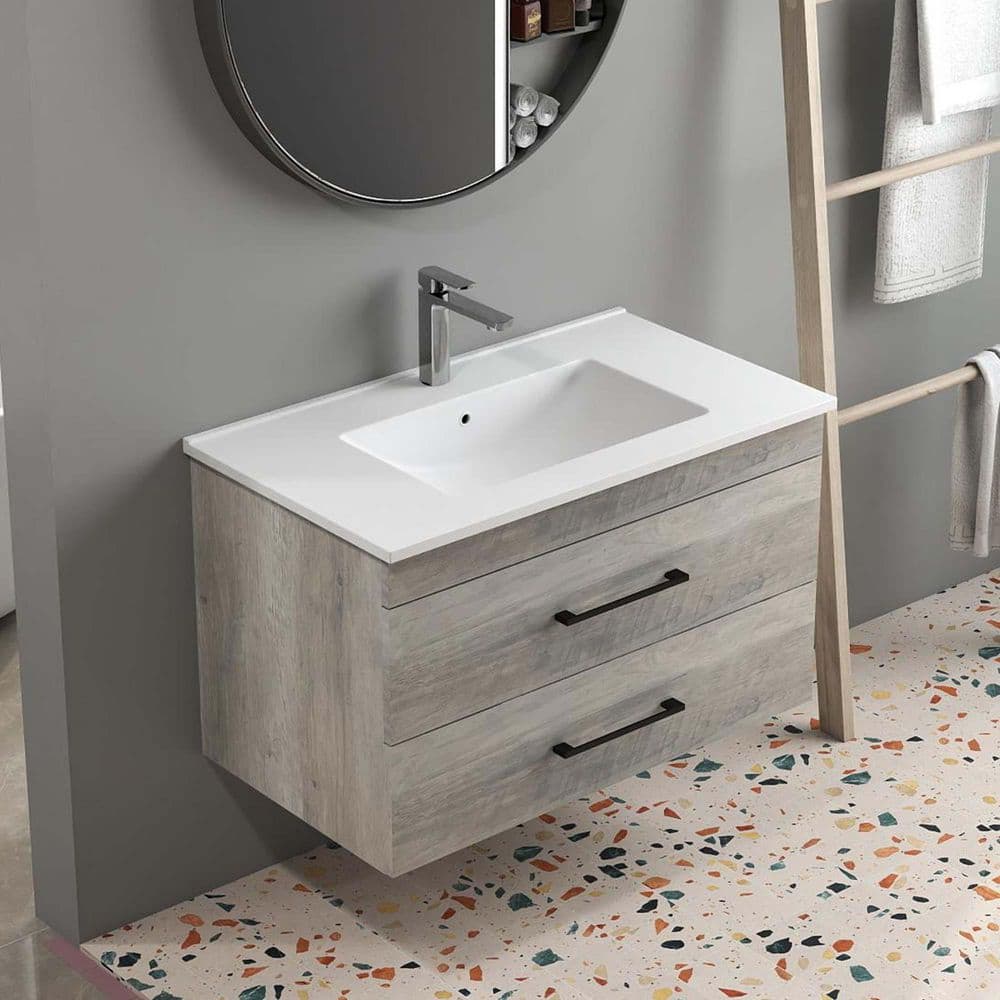
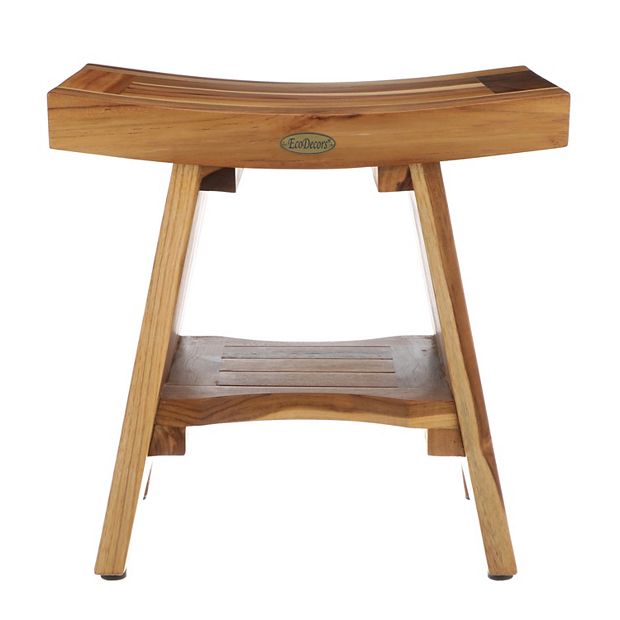
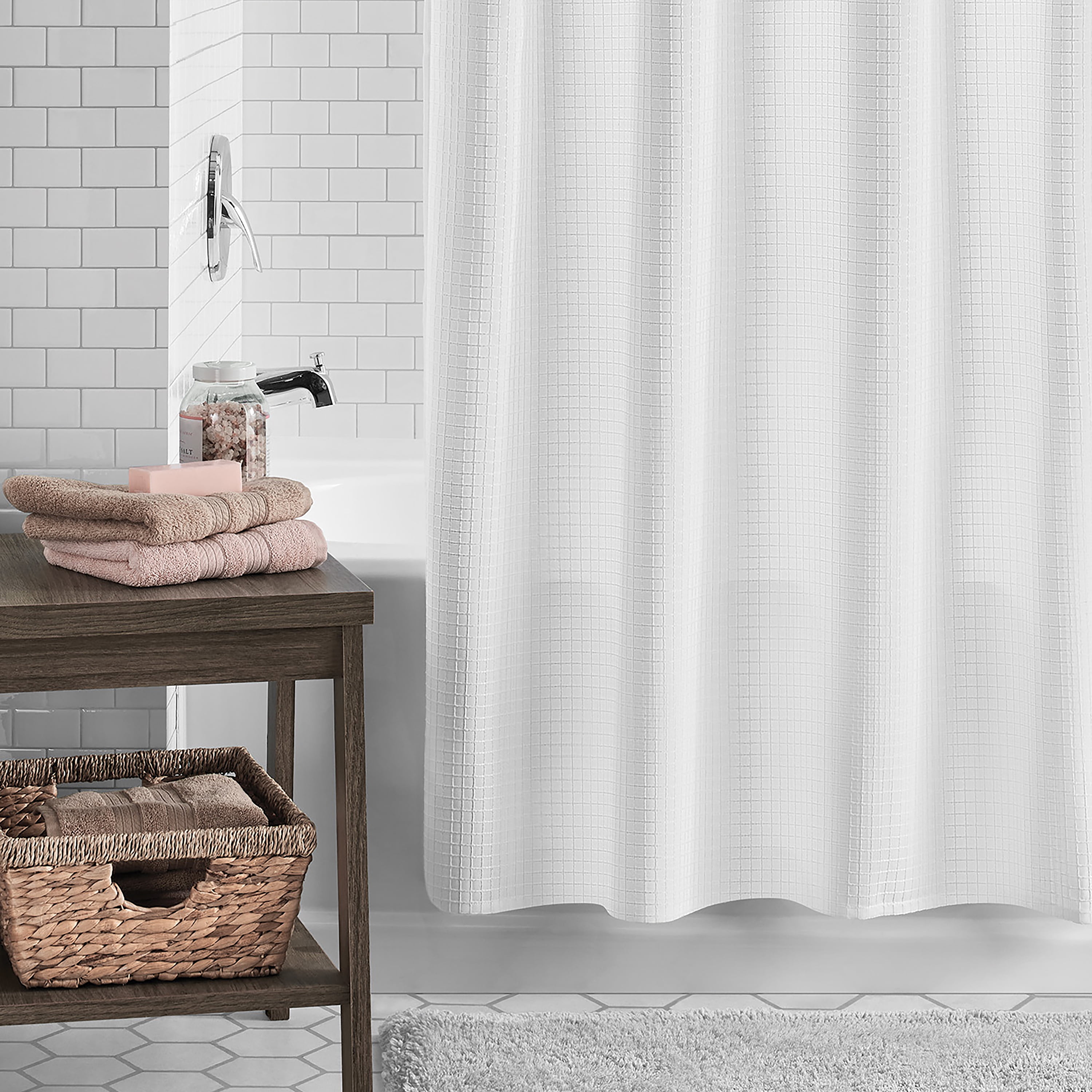
“To prevent a gray-tiled bathroom from feeling cold or sterile, the texture and warmth of the accessories are critical.”
Don’t just add a wood stool; make sure it’s a wood with warm, honey-toned grain. The plant isn’t just for looks; its organic shape and color actively combat the room’s hard lines and monochrome palette. Even the shower curtain has a subtle pattern. In a minimalist space, your few accessories have to work much harder. Choose items with inherent texture and warmth.
8. Go Bold with Black and White Hexagon Tile
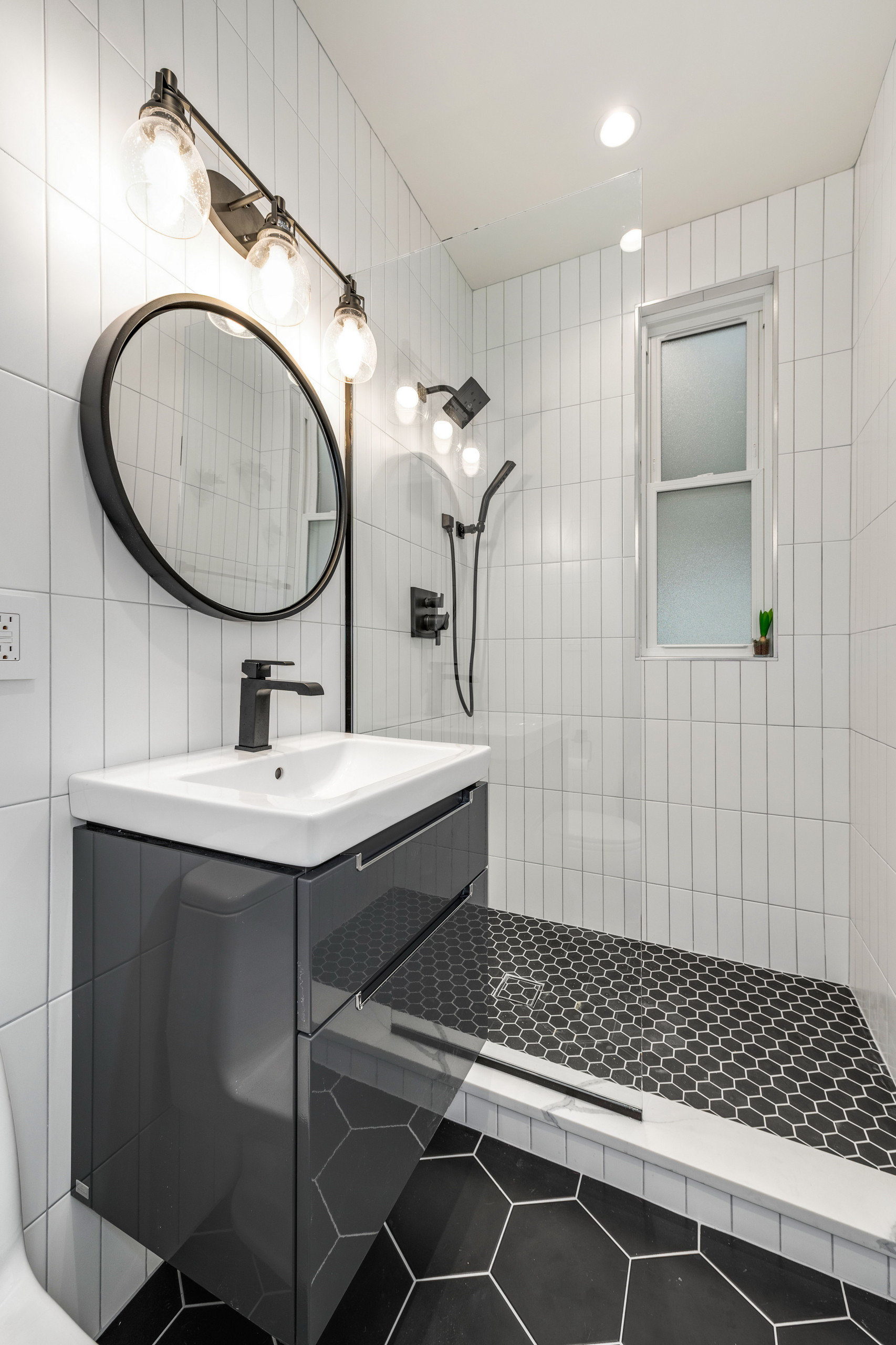
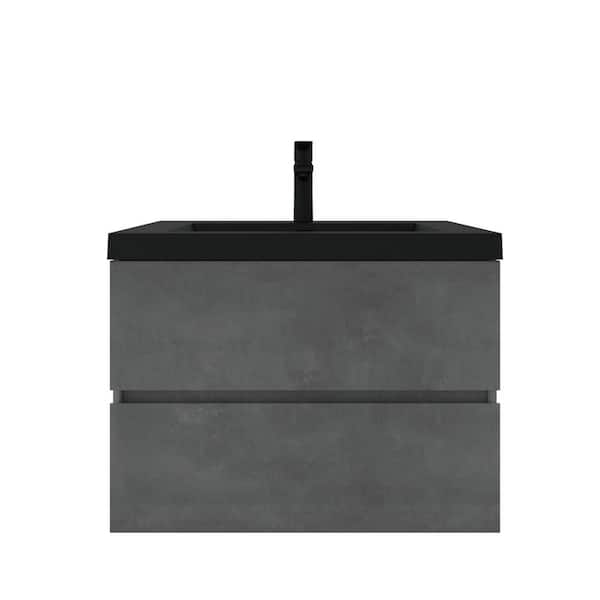
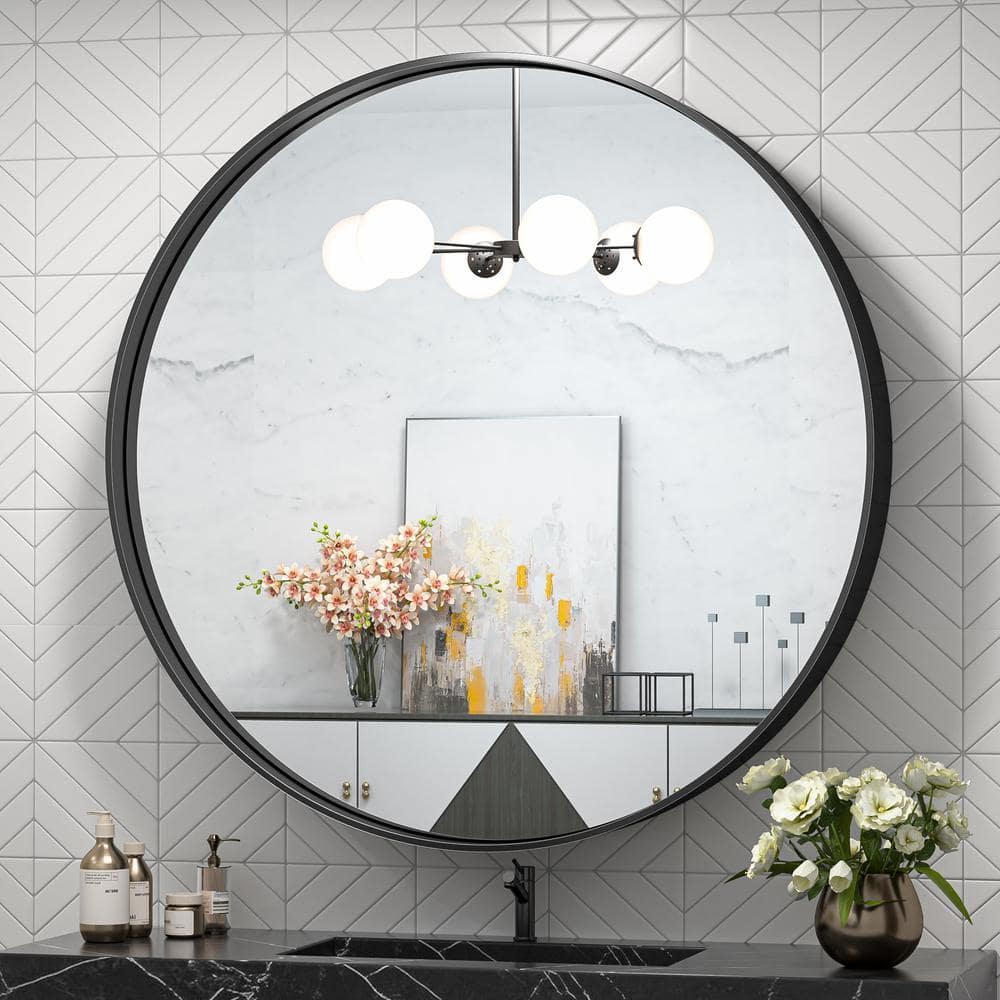
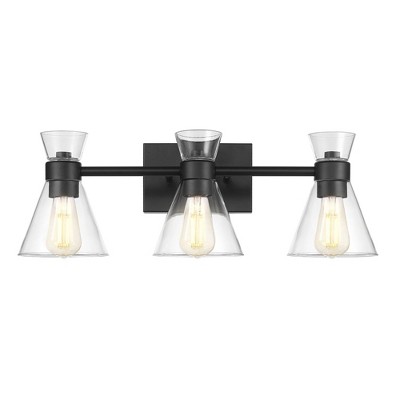
This bathroom is a masterclass in high-contrast design for small spaces. The magic comes from the interplay of shapes and lines. The strong vertical lines of the wall tiles draw the eye upward, making the ceiling feel higher. This verticality is then grounded by the busy, engaging pattern of the black-and-white hexagon floor tiles. The round mirror and globe light fixture soften the hard angles of the vanity and tiles, adding a crucial bit of geometric variety that keeps the space feeling dynamic and not rigid.
|
$627.76
|
$136.40
|
$99.99
|
$2.99
|
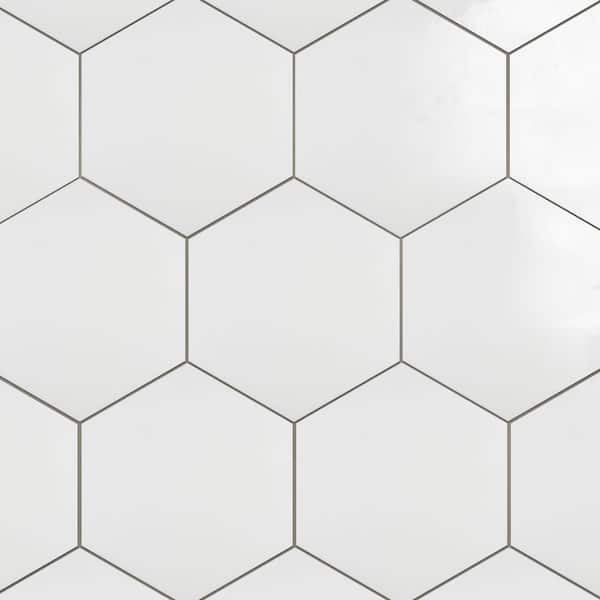
“Before you commit to a bold floor tile like this, check these boxes:”
Before you commit to a bold floor tile like this, check these boxes:
- Confirm your lighting: A strong pattern on the floor can absorb light. Ensure you have adequate overhead and vanity lighting to keep the room feeling bright, not cave-like.
- Measure for wall tile: The scale of your wall tile matters. The small-format hex tiles work well with the tall, narrow subway tiles. Avoid pairing two large, competing patterns.
- Commit to the palette: This look relies on a strict black, white, and gray palette. Are you prepared to stick to it with your towels, accessories, and even soap dispensers to maintain the cohesive look?
9. Pair a Warm Wood Vanity with a Playful Pink Tub
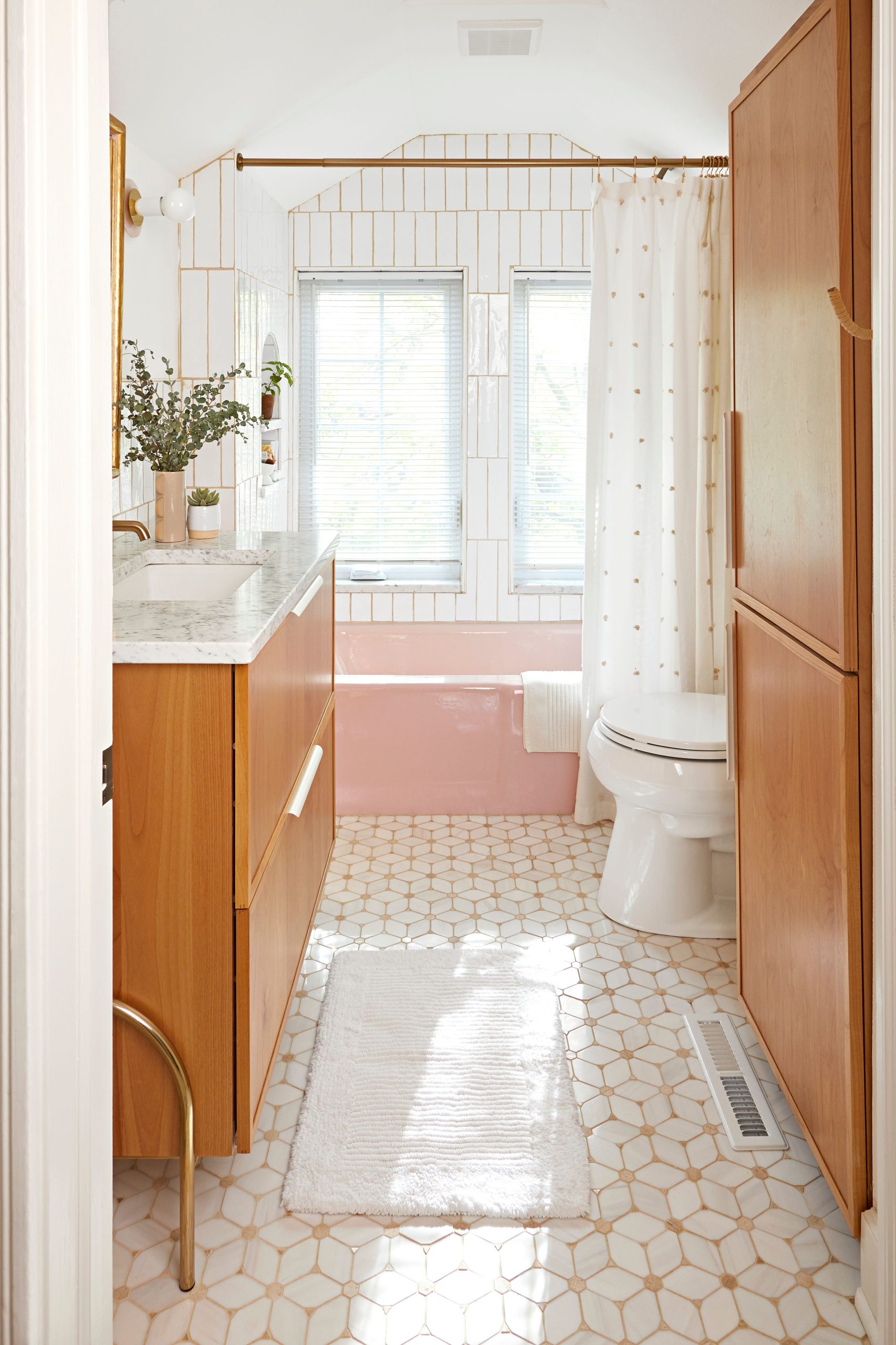
This look is catching fire on Pinterest because it perfectly captures the shift towards “dopamine decor”—design that makes you feel happy. For years, all-white bathrooms reigned supreme. Now, people are craving personality and joyful color. The pink tub is a bold, confident statement, but pairing it with the warm wood vanity and brass fixtures keeps it feeling sophisticated, not childish. It’s a nod to retro palettes but executed with modern, clean lines, making it feel fresh and very 2026.
|
$26.94
|
$4.99
|
$9.34
|
$1,349.94
|

“Let’s be honest: a pink tub is a commitment.”
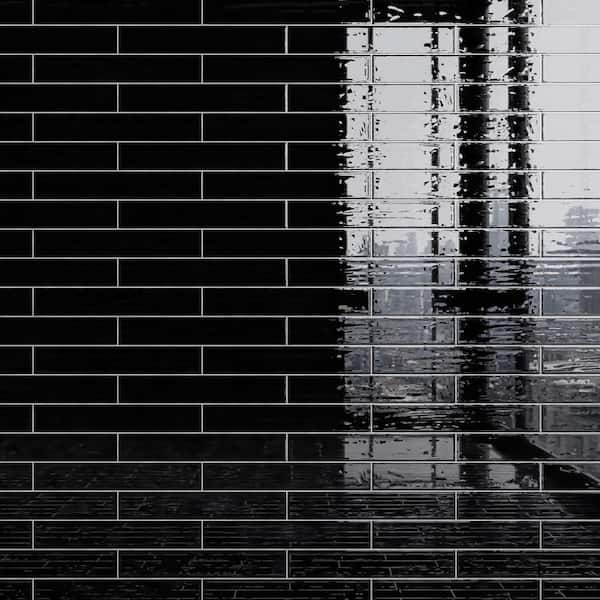
While it’s undeniably fun, it is a very specific choice that might not appeal to everyone, which could be a factor if you plan on selling your home in the next few years. Furthermore, the light-colored grout used with the vertical subway tiles looks fantastic, but it will require diligent cleaning and sealing to prevent staining and mildew, especially in the high-moisture area around the tub and shower.
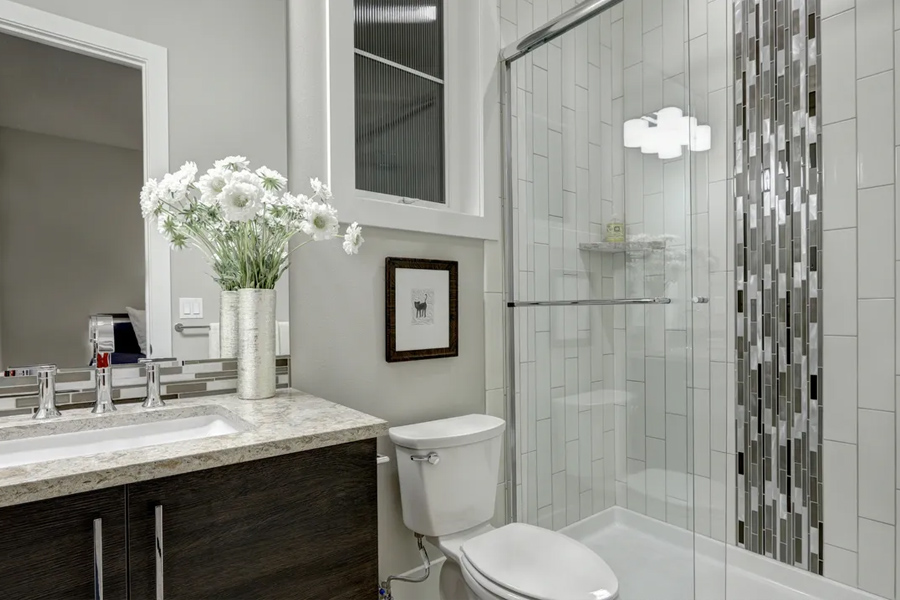
10. Accent a Gray and White Bathroom with a Striped Tile
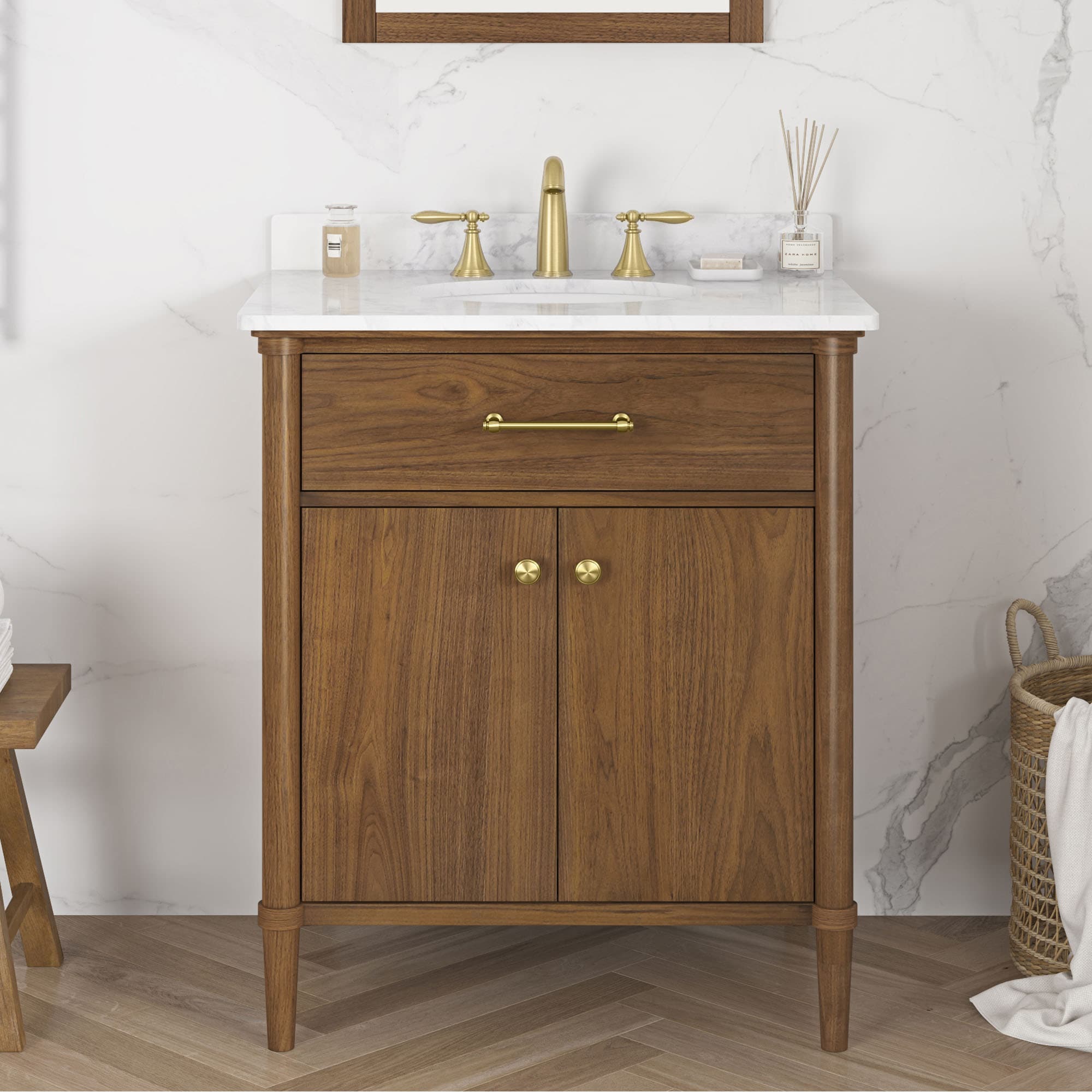
The vertical accent strip in the shower is the element that elevates this entire bathroom. Without it, the space would be a perfectly pleasant but standard modern bathroom with gray walls and white subway tile. That single column of mosaic tile, however, creates a powerful focal point. It draws the eye upward, adds a touch of custom detail, and breaks up the large field of white tile. It’s a design trick that delivers a huge visual impact for a relatively small cost and effort.
|
$31.52
|
$134.61
|
$649.00
|
$73.95
|

“This is a fantastic budget-friendly idea.”
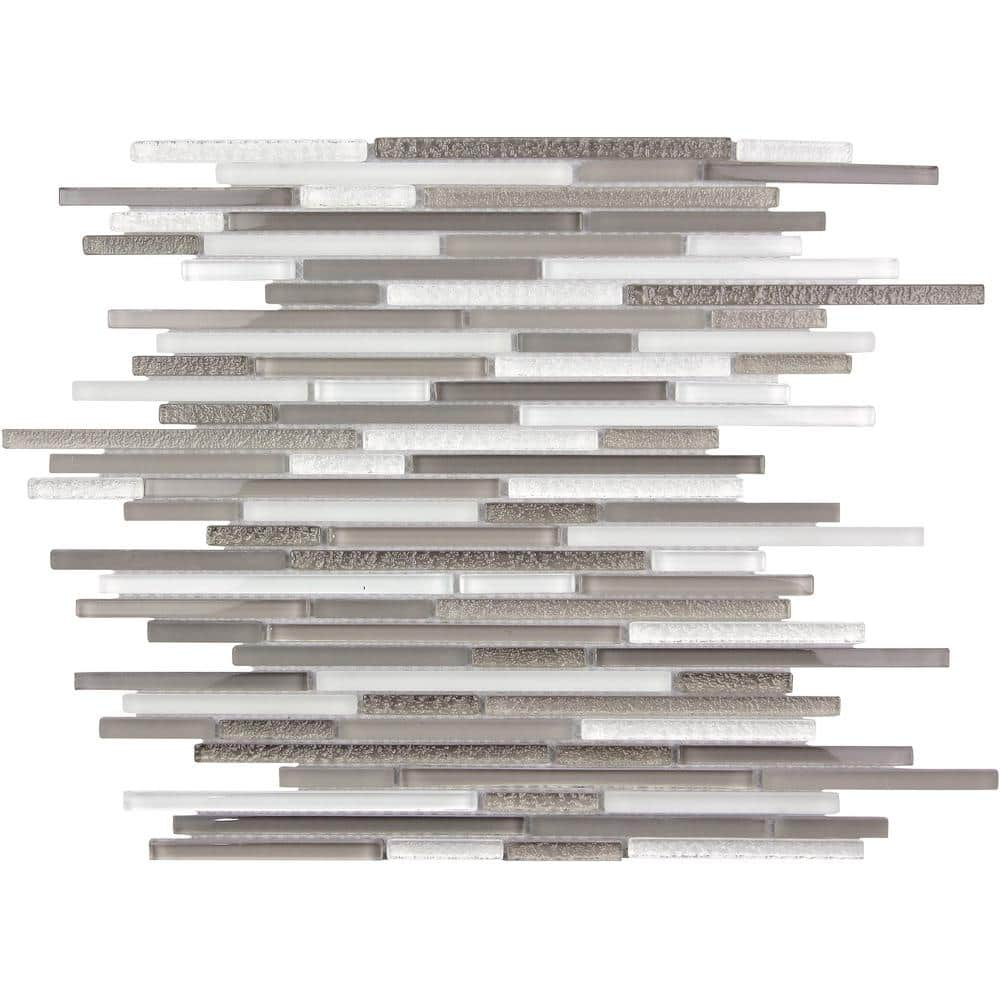
The majority of the shower is tiled in affordable white subway tile. The expensive, decorative mosaic tile is used sparingly—only for a single 12-to-18-inch-wide vertical strip. You can often buy high-end mosaic tiles by the sheet (usually one square foot). This means you can get the look of a pricey designer tile for just $100-$300, depending on your selection. The dark wood vanity can be sourced from big-box stores for a few hundred dollars, making this a very achievable high-impact upgrade.
11. Design a Compact, Neutral Bathroom with Brown Floor Tiles
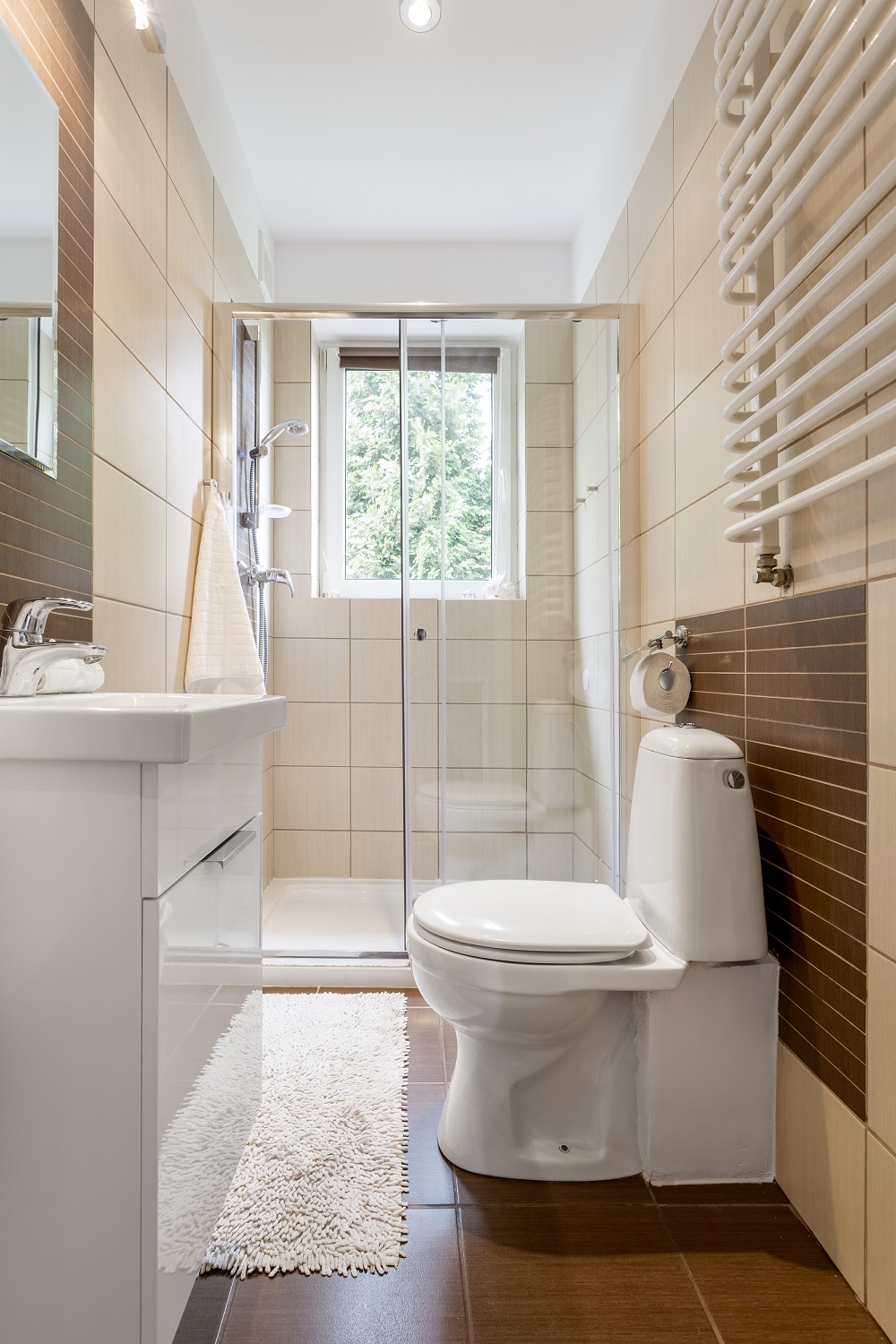
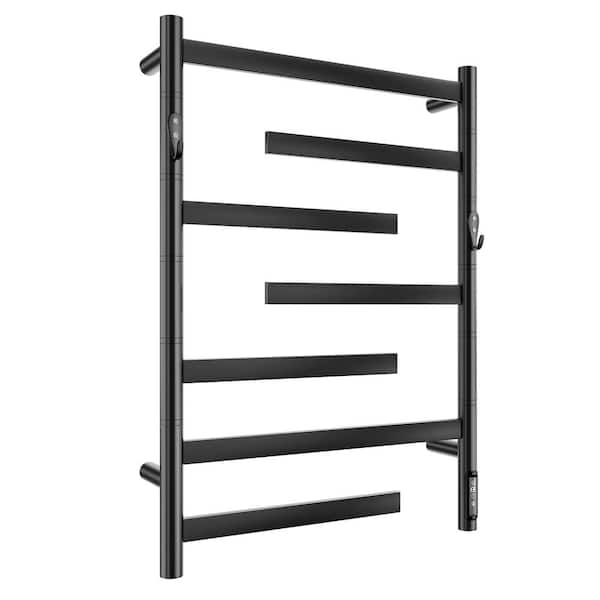
This layout is a textbook example of how to design a full bathroom in a very tight space, likely no more than 5 feet by 7 feet. It works because it designates clear zones. The glass shower enclosure on one end keeps the sightlines open while containing water. The toilet and vanity are placed on the opposite wall, leaving a clear, albeit narrow, path down the middle. Using a heated towel rack instead of a standard radiator or floor vent is a space-saving masterstroke, providing warmth and function in one.
|
$599.00
|
$684.96
|
$23.98
|
$128.00
|


“The design succeeds through its disciplined simplicity.”
The color palette is strictly limited to beige, brown, and white, creating a calm, cohesive feel that prevents the small space from feeling cluttered. The continuity of the light beige square tiles from floor to ceiling is key; it tricks the eye into seeing a larger, more unified volume. The chrome fixtures and glass panel add a touch of sparkle and reflection, which helps to bounce light around the compact room.
12. Mix Dark Cabinetry and Textured Walls in a Neutral Space
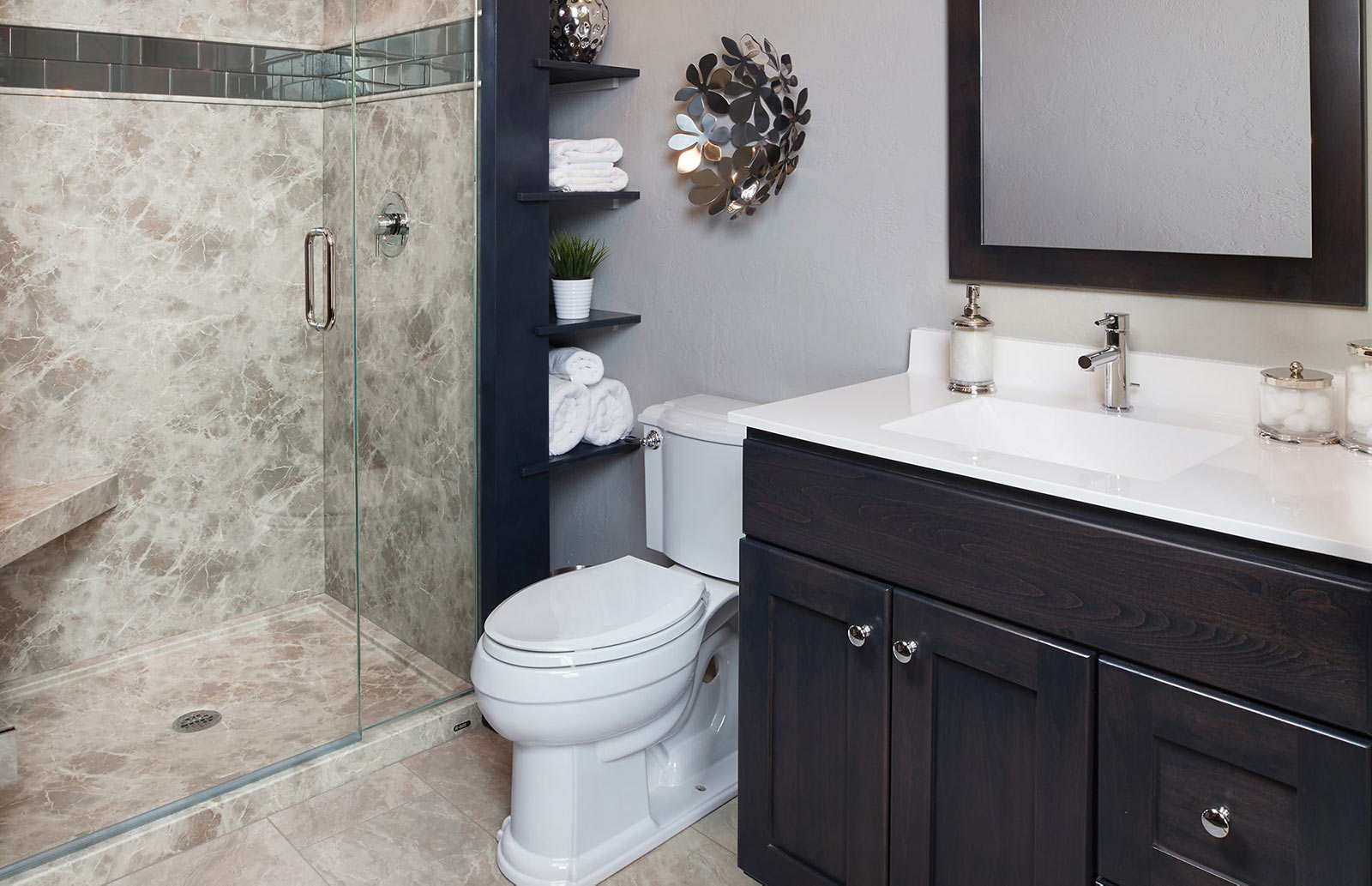
In a small, neutral bathroom, adding layers of texture is the key to creating a sense of depth and luxury. Notice how this design pairs a light gray textured wall finish with the smooth, marbled beige of the shower tiles and the rich grain of the dark wood vanity. These are all subtle, but together they create a rich tactile experience. When you can’t use bold colors, use bold textures. A great rule of thumb is to include at least three different textures: one rough (like the wall), one smooth (the countertop), and one natural (the wood).
|
$48.55
|
$799.00
|
$74.63
|
$29.99
|


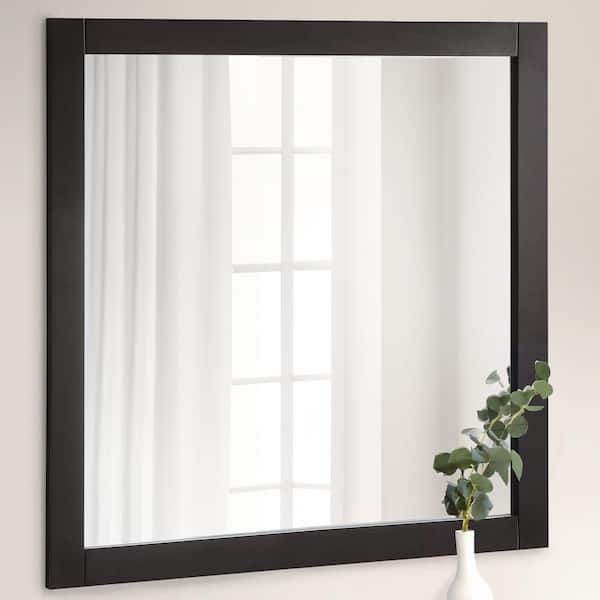
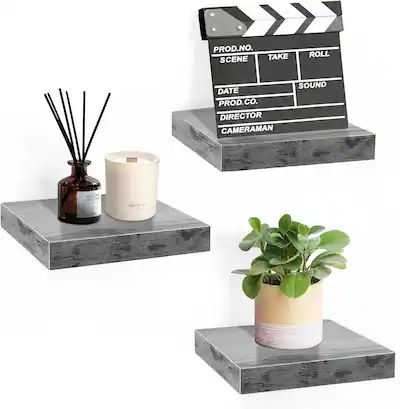
“A glass shower enclosure, especially with a built-in bench, looks sleek and spa-like, but it demands consistent upkeep.”
To prevent hard water stains and soap scum buildup on both the glass and the marbled tiles, a daily squeegee after every shower is essential. The grout lines of the shower floor and bench will also require regular scrubbing to stay pristine. The dark wood vanity, while beautiful, will show dust and water spots more readily than a lighter finish, so quick wipe-downs are necessary.
13. Contrast Dark Gray Plank Walls with a Hexagonal Floor
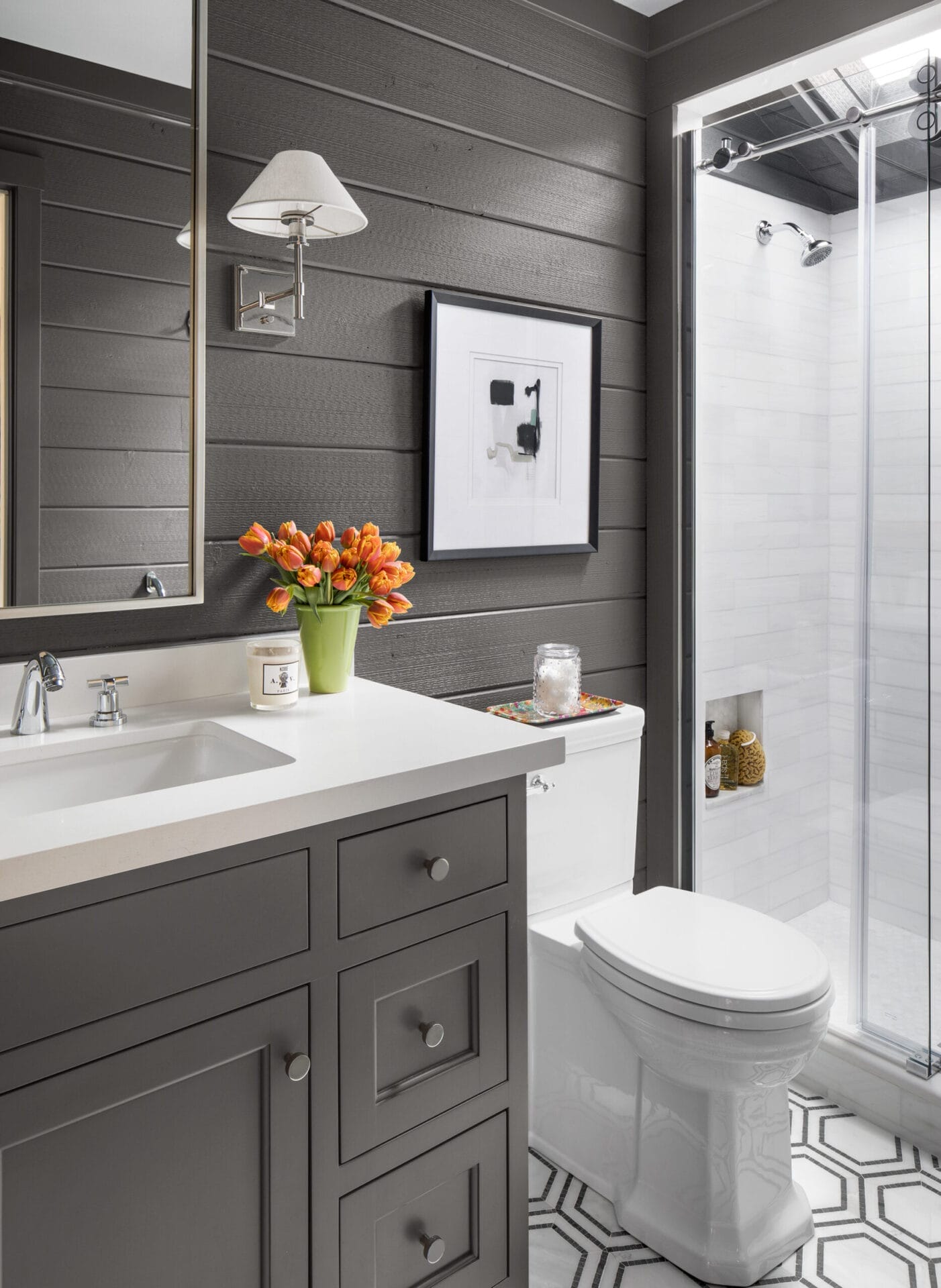
Here’s the winning formula for this bold look: 60% dramatic wall color + 30% bright white fixtures + 10% graphic pattern. The dark grey horizontal plank walls create a moody, sophisticated shell. The white toilet, vanity top, and subway tiles cut through the darkness, preventing it from feeling oppressive. Finally, the black and white hexagonal floor tiles provide a punch of energy and pattern that activates the whole space. The pop of orange from the tulips is the perfect final touch.
|
$1,085.00
|
$4.49
|
$45.98
|
$42.49
|


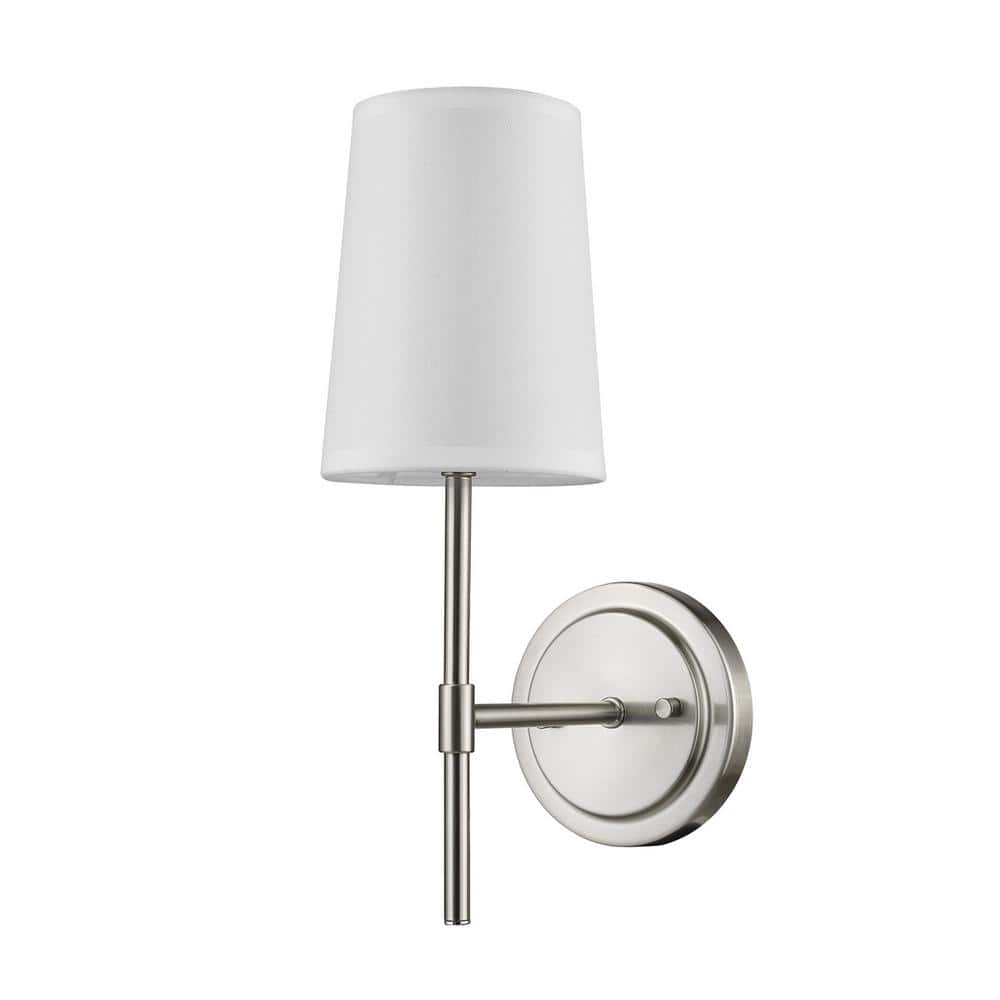
“Dark walls can make a small bathroom feel incredibly chic, but they can also make it feel like a cave if you’re not careful.”
This idea works because it has a few things going for it: a decent amount of white to provide contrast and reflect light, and a bold floor to create interest underfoot. If your bathroom has no natural light or has low ceilings, this look could feel heavy and claustrophobic. Be honest about your room’s lighting before committing to dark, dramatic walls.
14. Embrace High Contrast in a Modern Black and White Bathroom
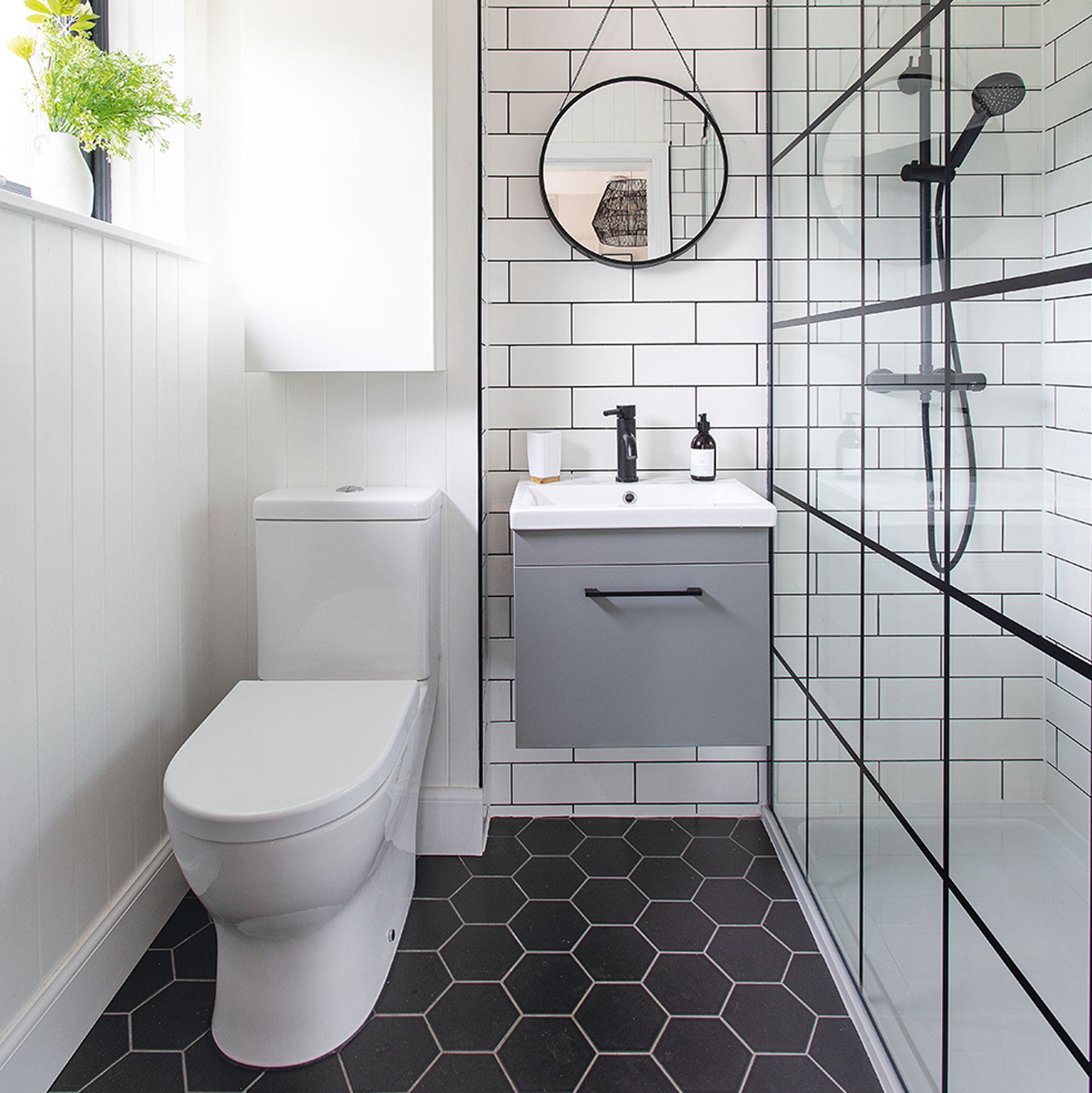
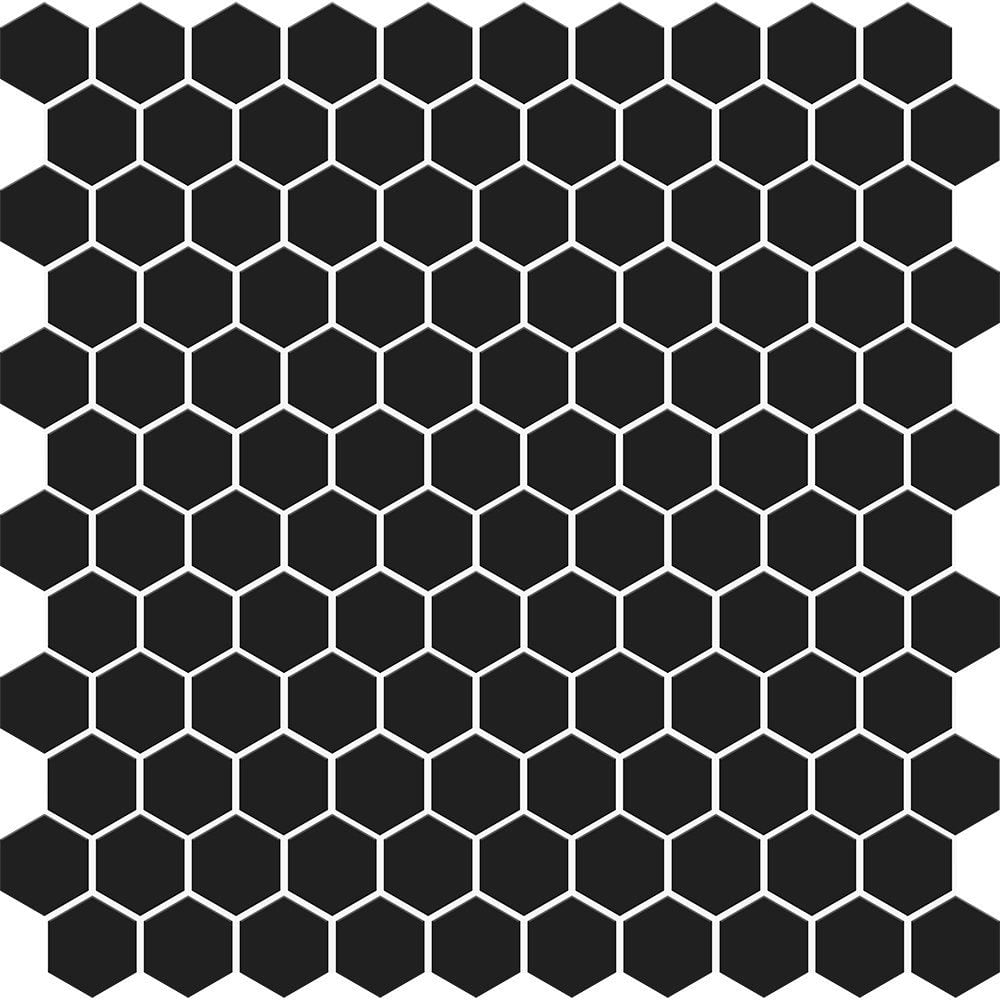
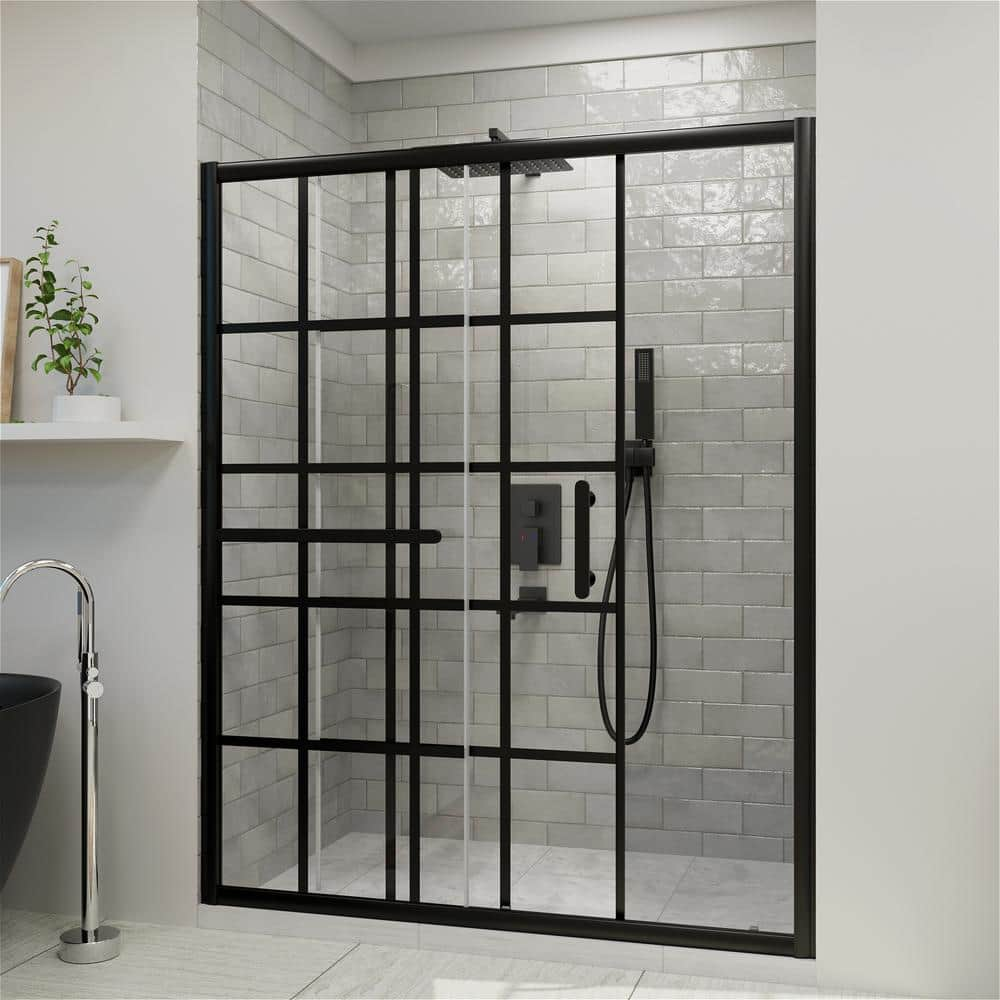
The key element that makes this bathroom sing is the dark grout used with the white subway tiles. It’s a small detail with a massive impact. Standard white grout would have made the walls recede into a simple white plane. The black grout, however, turns the wall into a graphic grid that perfectly complements the black hexagon floor and black-framed shower. It’s the visual thread that ties all the bold black elements together, creating a look that is intentional, sharp, and confident.
|
$3.05
|
$30.00
|
$629.99
|
$730.00
|

“This design is a study in purposeful contrast.”
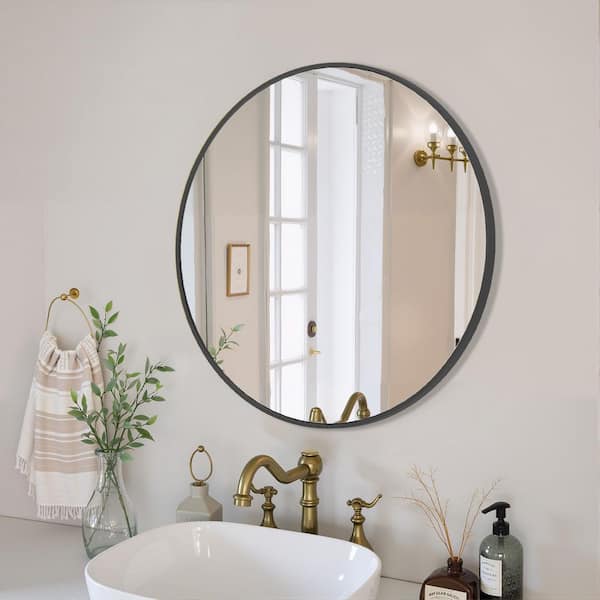
It’s not just black and white; it’s a careful balance of materials and finishes. The glossy subway tiles are played against the matte finish of the hexagon floor tiles. The sharp, geometric lines of the shower frame and grout are softened by the round, modern mirror. The gray vanity adds a necessary mid-tone, bridging the gap between the stark black and white. It’s this thoughtful layering of sheens and shapes that makes the simple color palette feel so sophisticated.
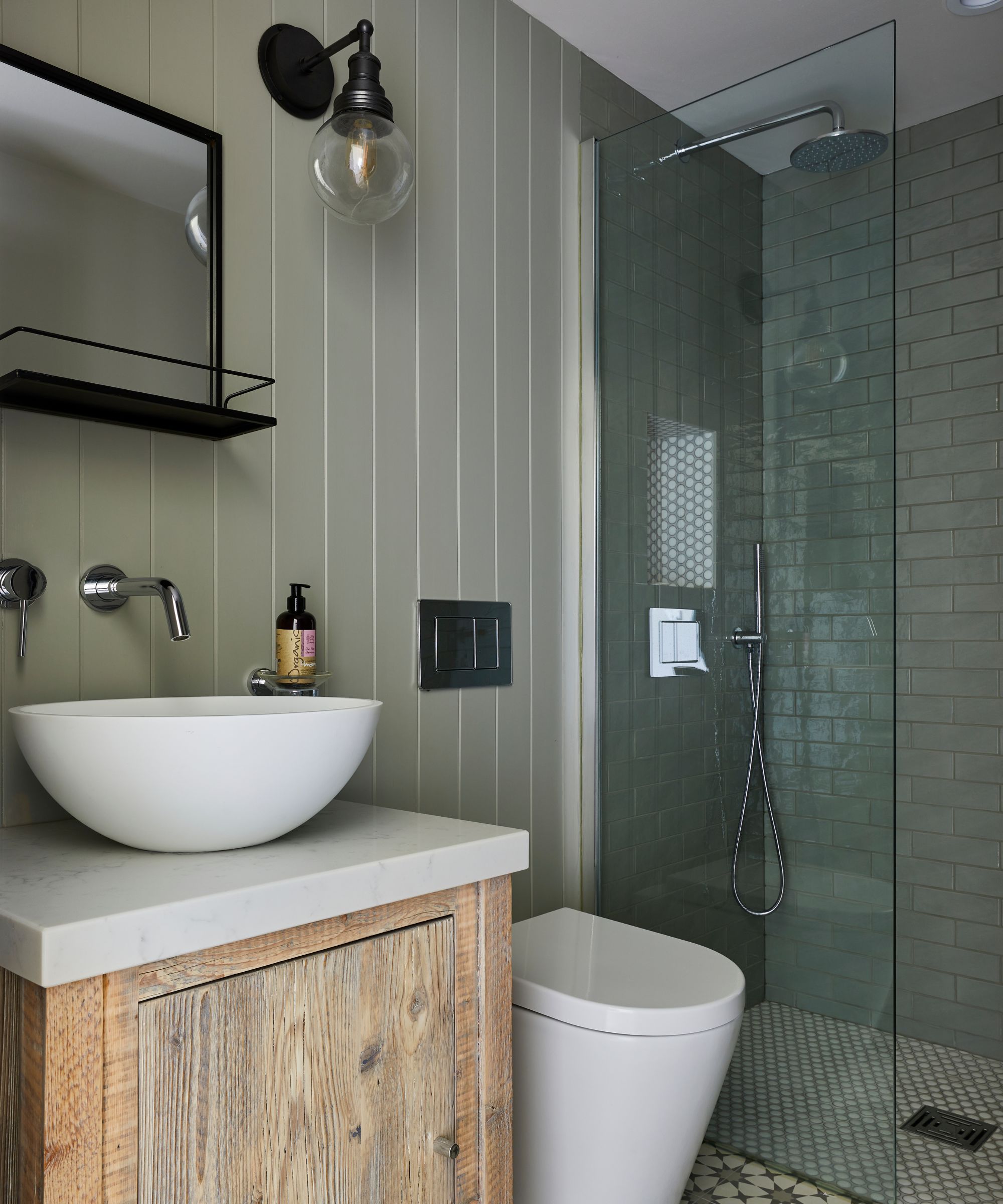
15. Combine Sage Green Walls with a Rustic Wood Vanity
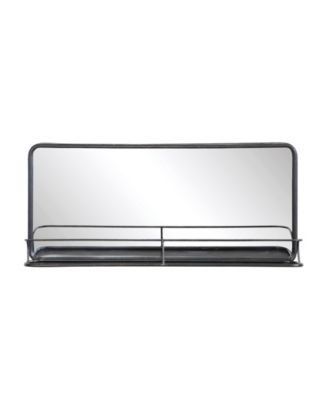
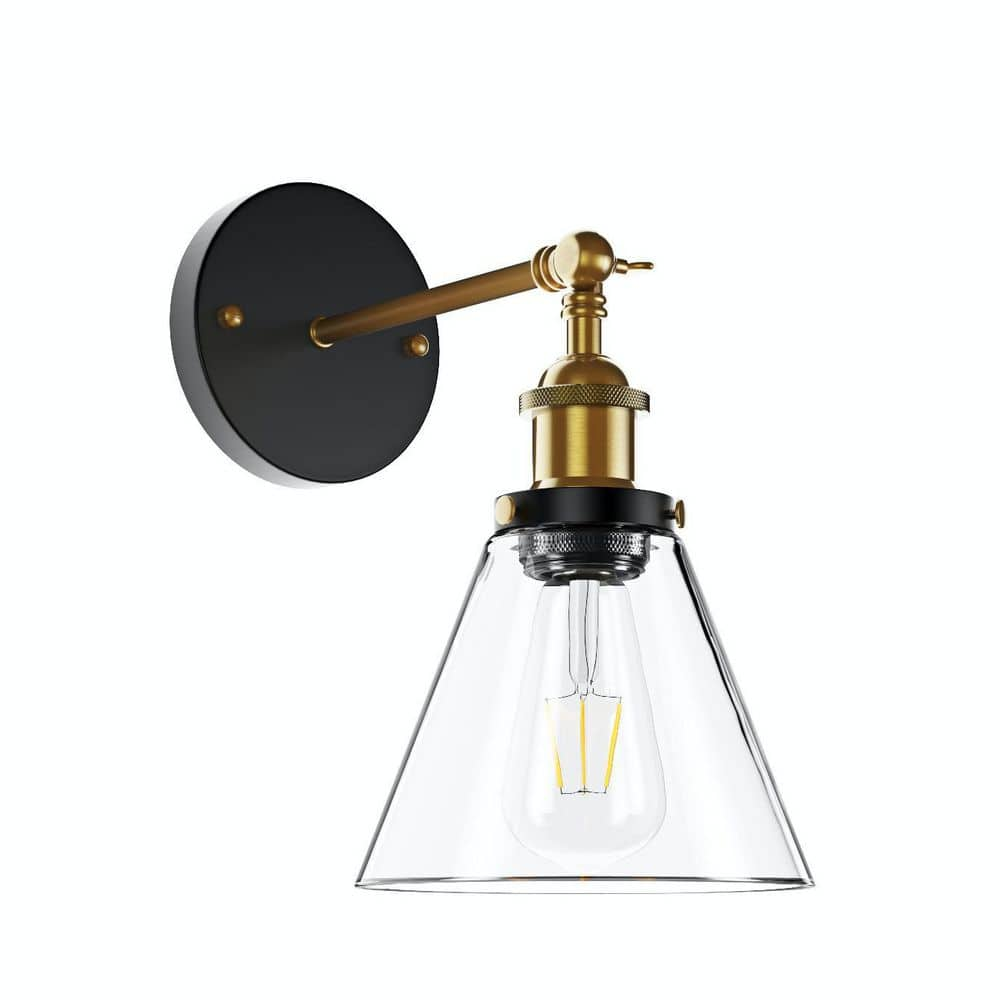
Thinking of recreating this rustic-industrial look? Here’s your checklist:
|
$131.99
|
$63.19
|
$53.87
|
$399.00
|
“Verify wall-mount faucet compatibility: Can your plumbing be re-routed into the wall?”
This is a more involved plumbing job than a standard deck-mounted faucet.
Source your vanity: A reclaimed wood piece is unique. Start searching on Facebook Marketplace or at architectural salvage yards early; you can’t just buy this off the shelf.
Check your clearance: This layout is tight. Ensure you have the minimum required clearance around your toilet and that the glass partition placement allows for comfortable use of the space.
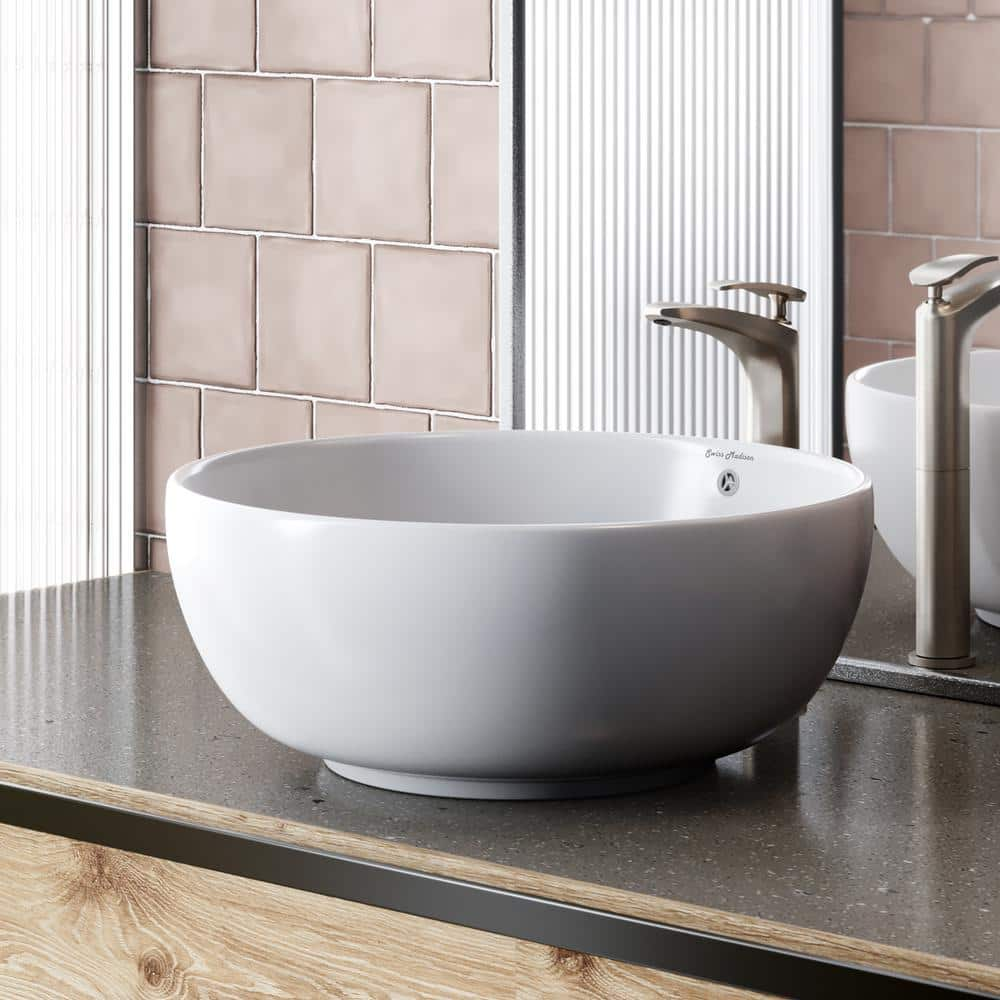
When using a vessel sink, especially a bowl-shaped one, the faucet choice is critical. A wall-mounted faucet, as seen here, is often the best solution in a tight space. It frees up valuable counter space on the small vanity top and creates a clean, uncluttered look. Aim for the spout to be positioned directly over the drain and about 6-8 inches above the rim of the sink to minimize splashing. This thoughtful placement is what makes the setup both functional and beautiful.
16. Go Wall-to-Wall with White Subway and Geometric Tiles
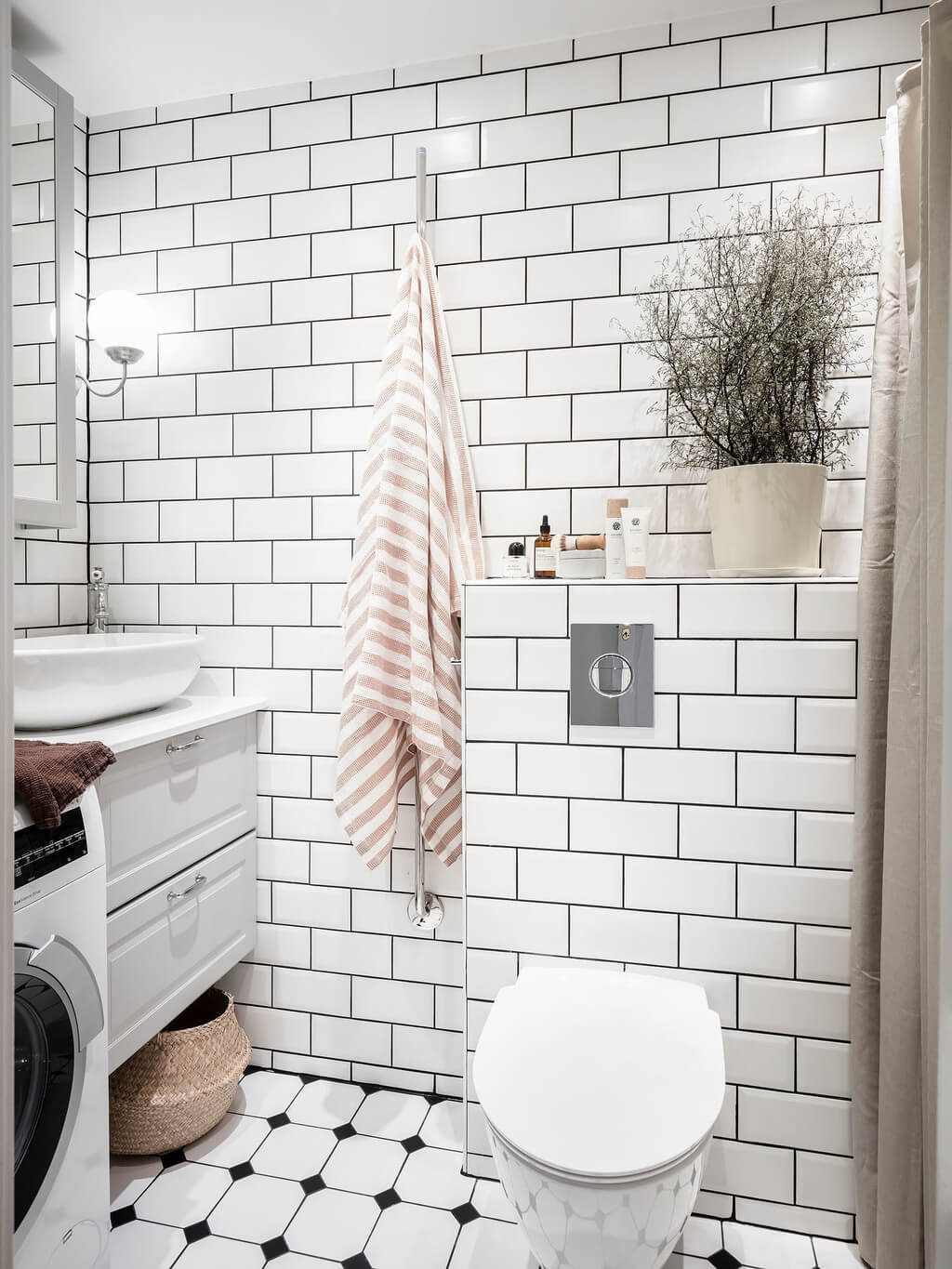
This galley-style layout is a workhorse for long, narrow rooms, often seen in urban apartments or older home renovations. It works best in a room that is at least 5 feet wide but can be 10-12 feet long. By placing all the fixtures—including the washing machine—along one wall, you preserve a clear, straight path from the door to the window, maximizing the sense of length. The wall-mounted toilet and floating vanity are essential here, as they free up floor space and make the narrow room feel wider.
|
$1,749.00
|
$381.64
|
$100.76
|
$24.19
|


“Let’s talk about the black grout.”
It looks incredibly sharp and modern, but it’s a bold choice that can be unforgiving. If the tile installation isn’t perfect, the dark grout will highlight every single flaw, uneven line, or slightly off-kilter tile. It also requires more cleanup effort during installation to avoid “grout haze” on the white tiles. While it’s a stunning look, it demands a higher level of precision from your tile setter than standard white grout would.
17. Add Luxury with Marble, Dark Walls, and Gold Fixtures
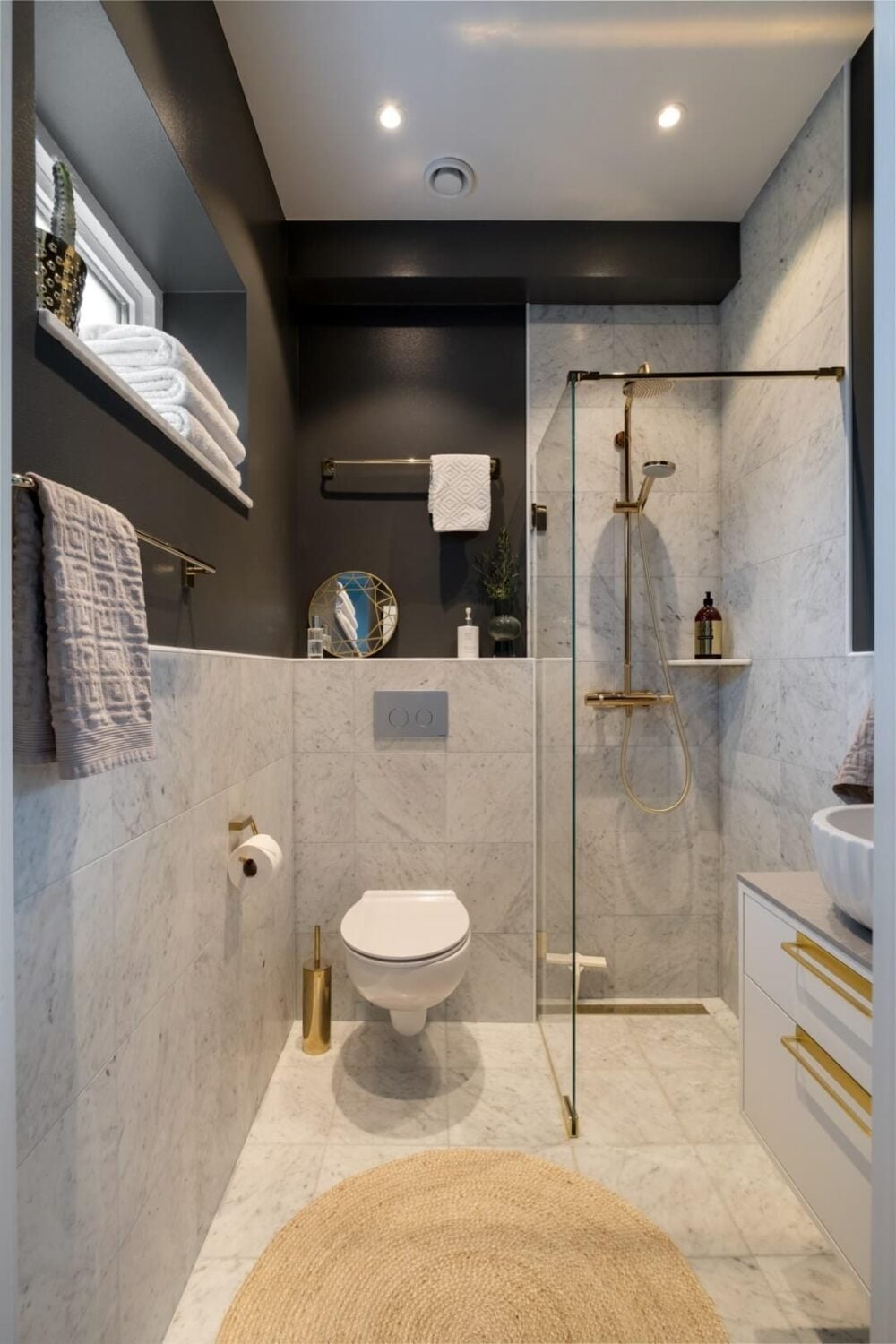
This bathroom feels luxurious because of a principle called “visual weight.” The bottom half of the room, clad in light gray marble, feels solid and grounded. The top half, painted a dark, moody gray, feels lofty and dramatic, drawing the eye upward. The gold fixtures act like jewelry, their metallic sheen popping against the dark background. The wall-mounted toilet contributes to this effect by creating negative space at the floor level, making the room feel lighter despite the dark paint.
|
$79.99
|
$92.99
|
$26.05
|
$784.99
|


“Want this luxe look for less?”
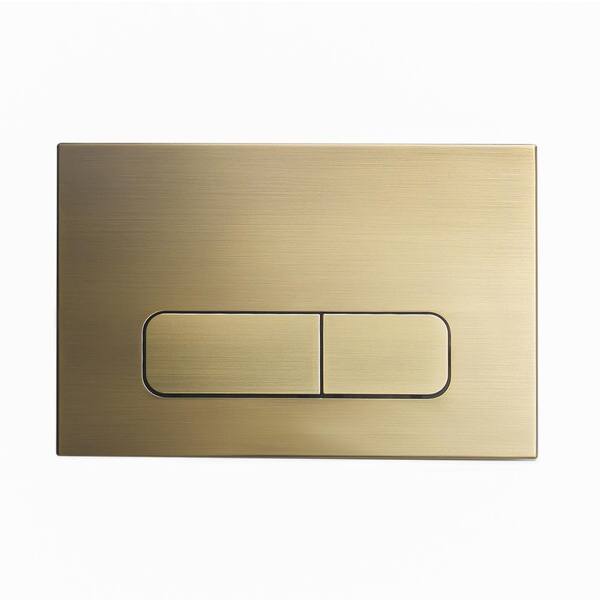
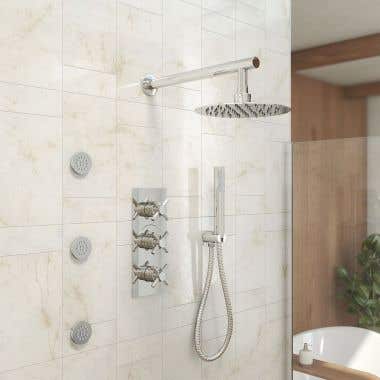
It’s all about smart substitutions. Instead of real marble tile on the walls, use a high-quality marble-effect porcelain tile, which can save you 60-70% on material costs. For the fixtures, look for PVD-coated brass or gold-finished stainless steel instead of solid brass; they offer a very similar look and good durability for a fraction of the price. A round jute rug from Target or IKEA can add the same warmth as a pricier version. This brings a high-end look into a much more accessible price range.
18. Mix Warm Wood, Red Granite, and Azure Mosaic Tile
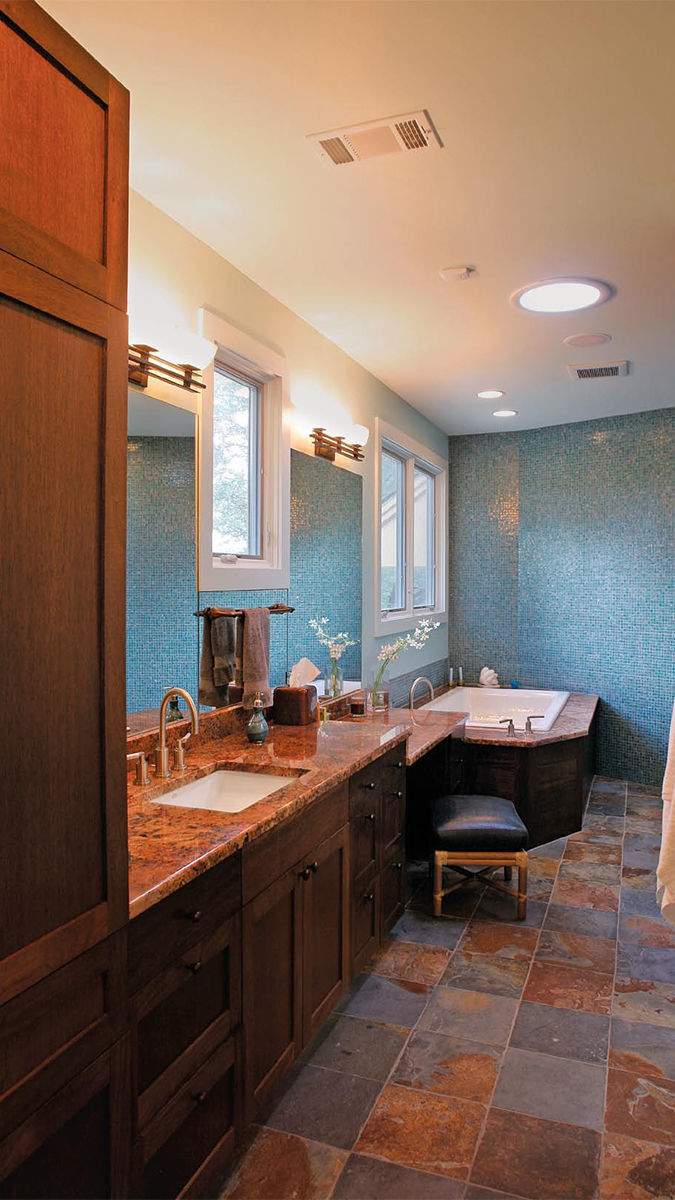
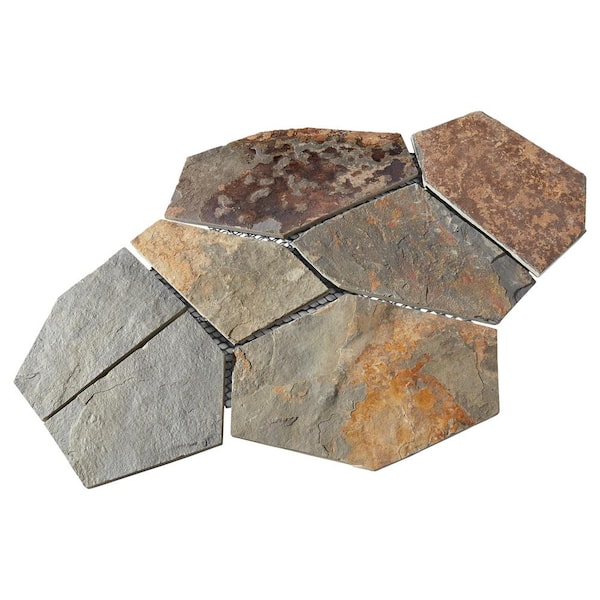
This is a bathroom with a lot of personality, and also a lot of grout lines. The beautiful azure mosaic tile wall will be the highest-maintenance feature here. The thousands of tiny grout lines are prime real estate for soap scum and mildew, especially around the tub. Regular, gentle cleaning and ensuring the grout is properly sealed annually will be absolutely necessary to keep it looking vibrant. The slate floor, being a natural, porous stone, should also be sealed periodically to prevent staining and water absorption.
|
$1,595.00
|
$100.00
|
$126.59
|

“After years of minimalist white and gray, we are seeing a major return to rich, earthy, and personal color palettes.”
This bathroom is a perfect example of the “Mediterranean Modern” trend that’s gaining steam. It pairs the deep blues of the sea (the mosaic tile) with the warm, sun-baked tones of terracotta and stone (the red granite and slate floor). The dark wood cabinetry grounds the look, keeping it from feeling too beachy. It’s a sophisticated, layered style for those tired of monochrome minimalism. Compare it a more playful use of color in Idea #9.
19. Pair a Navy Vanity with Brass Hardware and Geometric Tiles
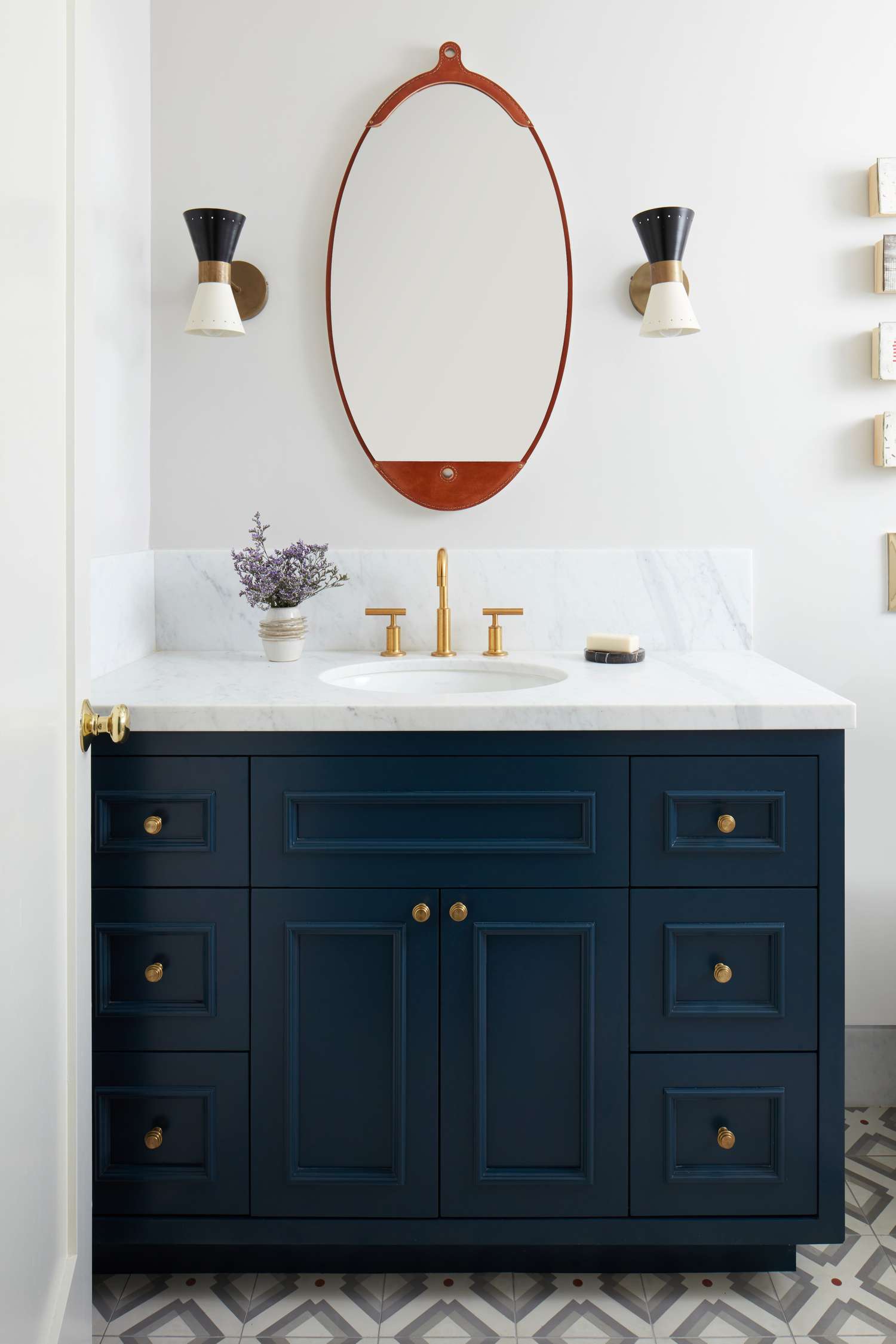
The formula here is pure modern chic: 50% stately color (the navy vanity) + 30% classic material (the white marble top) + 10% warm metal (the brass/gold hardware) + 10% playful pattern (the geometric floor). This balance ensures the look is sophisticated but not stuffy. The navy and gold are a timeless combination, while the patterned floor adds a contemporary edge that keeps the design feeling fresh and current for 2026.
|
$4.95
|
$159.98
|
$99.00
|
$629.00
|

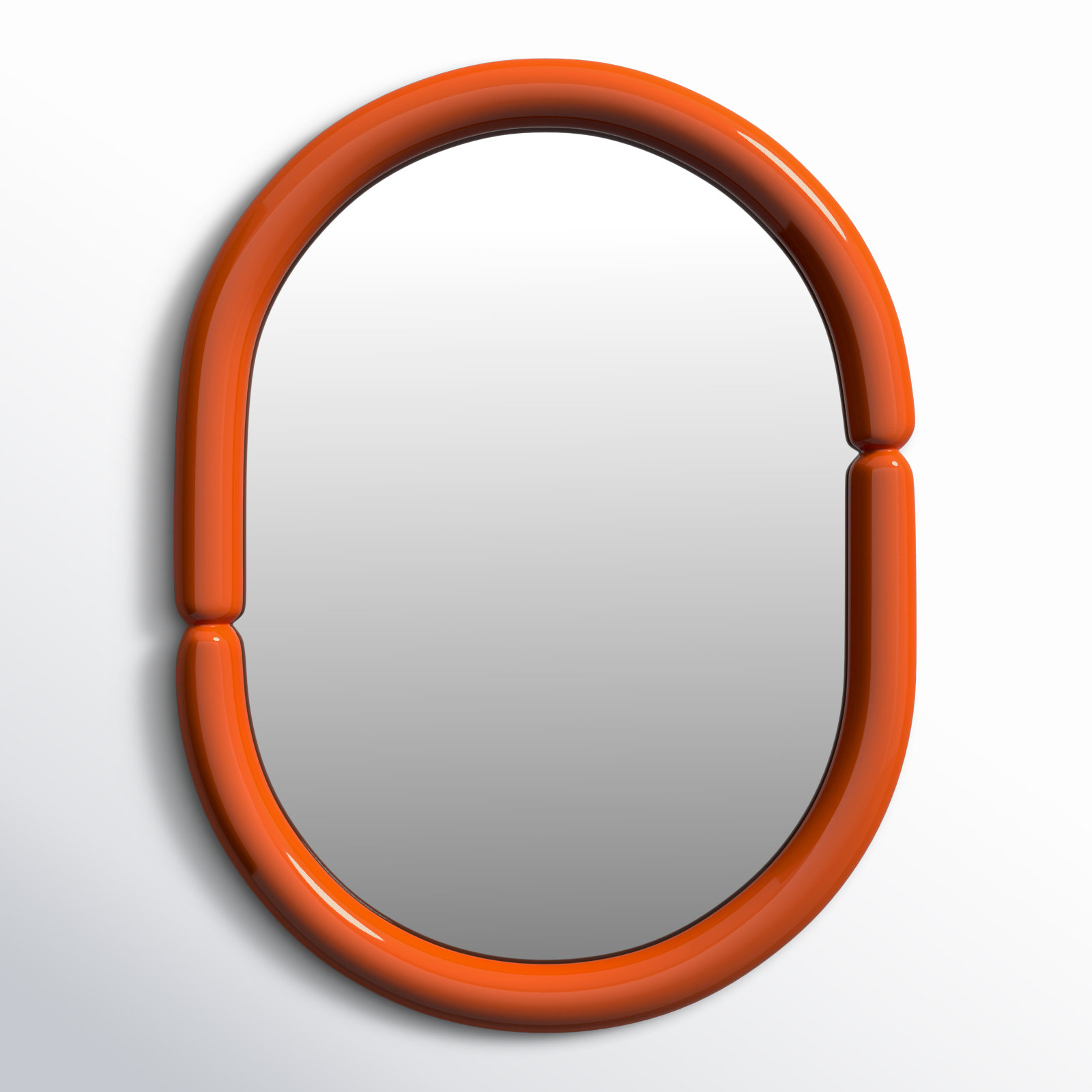
“The star of this show is undoubtedly the oval mirror with its unique brown leather strap.”
It’s an unexpected, slightly rustic touch in an otherwise polished and chic space. It breaks up the hard lines of the vanity and the sharp angles of the floor tile. Without it, the design would still be lovely, but it would lack that special, curated element that makes it feel personal and unique. It’s a perfect example of how one well-chosen accessory can elevate an entire vignette.
20. Create a Classic Look with Dark Paneling and a Checkerboard Floor
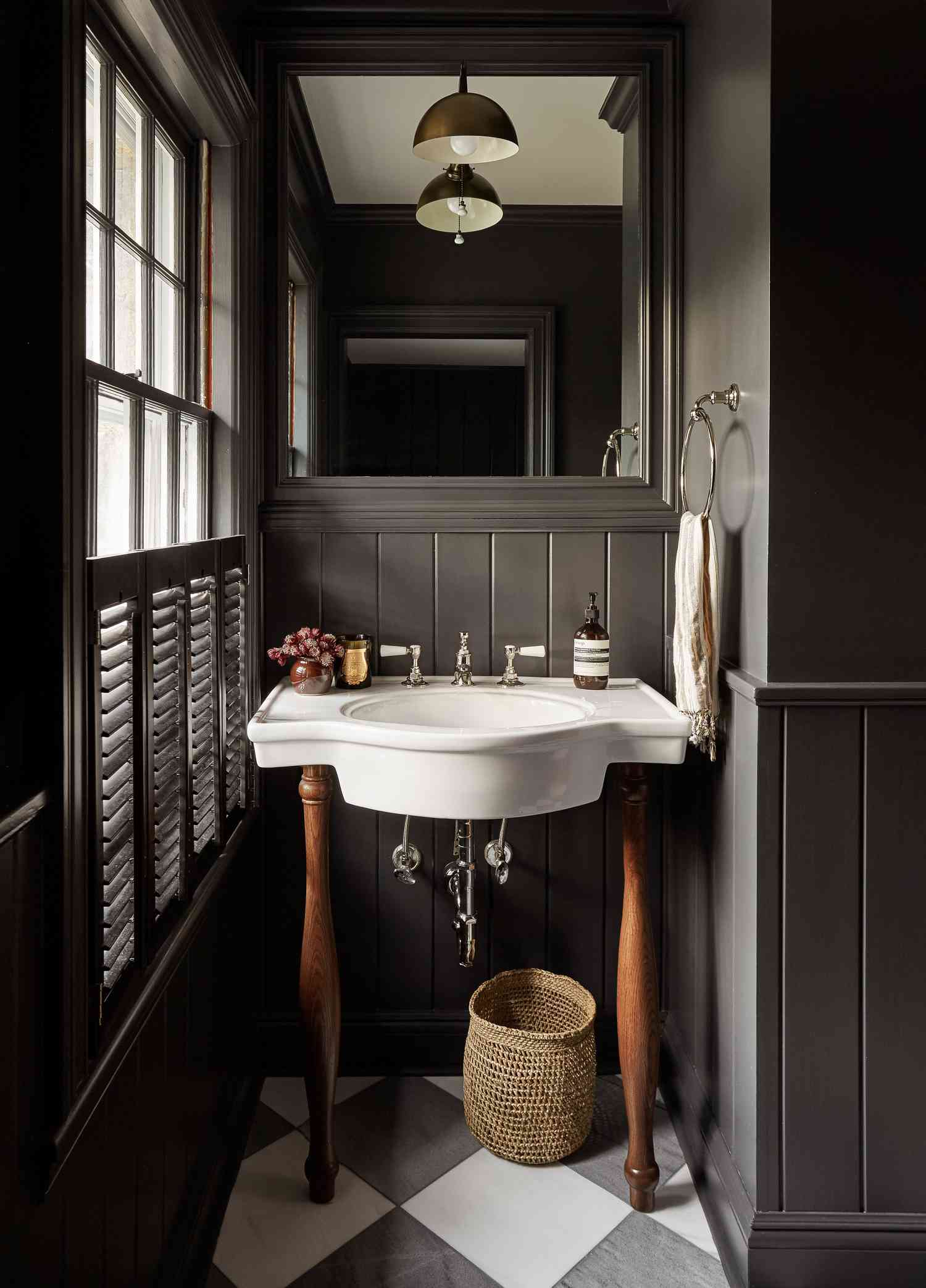
This design feels so elegant because it masterfully plays with classic, almost historic, design elements in a compact space. The dark grey wall paneling provides a dramatic, moody backdrop that exudes sophistication. The checkerboard floor is a timeless pattern that adds graphic punch without feeling trendy. Finally, the console sink with its delicate wooden legs feels light and airy, preventing the dark walls from overwhelming the room. The blend of dramatic color, classic pattern, and delicate furniture is what creates the magic.
|
$884.26
|
$29.98
|
$365.00
|
$85.00
|


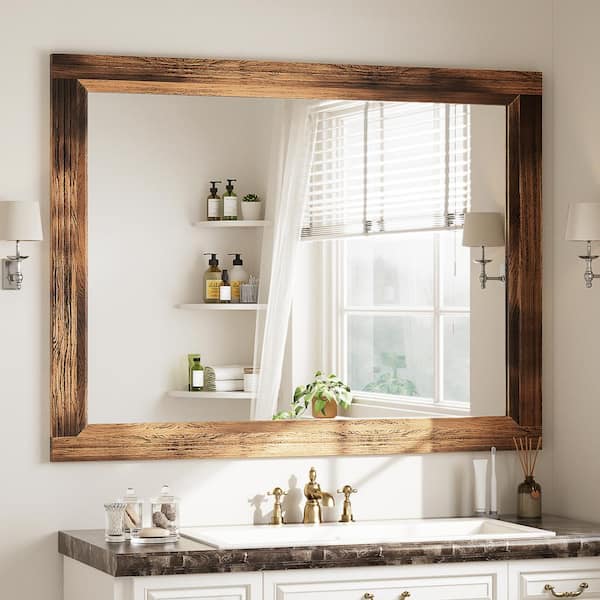
“Creating this high-end look involves some key investments, but can be managed.”
Labor will be a significant factor for the paneling.
- Wall Treatment (Paneling, Paint & Labor): $1,500 – $4,000
- Flooring (Checkerboard Tile & Installation): $500 – $1,500
- Main Furniture (Console Sink): $600 – $2,000
- Fixtures & Lighting (Faucet, Pendants): $500 – $1,800
- Mirror & Shutters: $400 – $1,200
- TOTAL: $3,500 – $10,500
- Budget alternative: Achieve the paneled look with applied moulding directly on the drywall before painting to save significantly on labor and material costs.
21. Mix White, Warm Gray, and Black Fixtures
This bathroom proves that you don’t need bold color to create a dynamic space. The formula is a sophisticated layering of neutrals: 50% crisp white (tub, toilet) + 30% soft, light gray (vanity) + 15% warm gray (shower tile) + 5% matte black accents. The key is the variation in the gray tones; the light, cool gray of the vanity contrasts subtly with the warmer, earthy gray of the large format tiles. The matte black fixtures are the punctuation, adding a graphic edge that ties it all together.
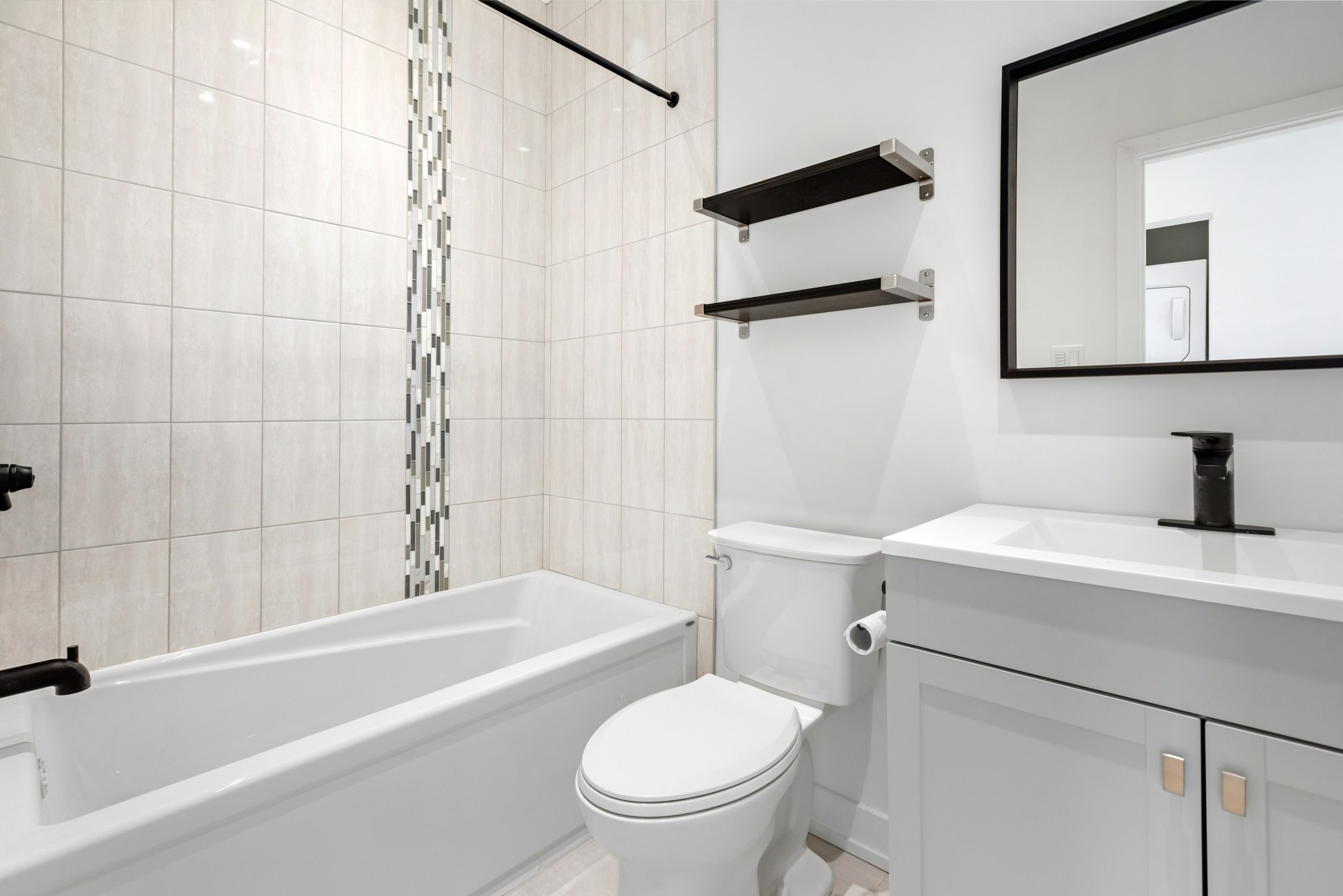
|
$38.22
|
$211.83
|
$30.00
|
$489.02
|
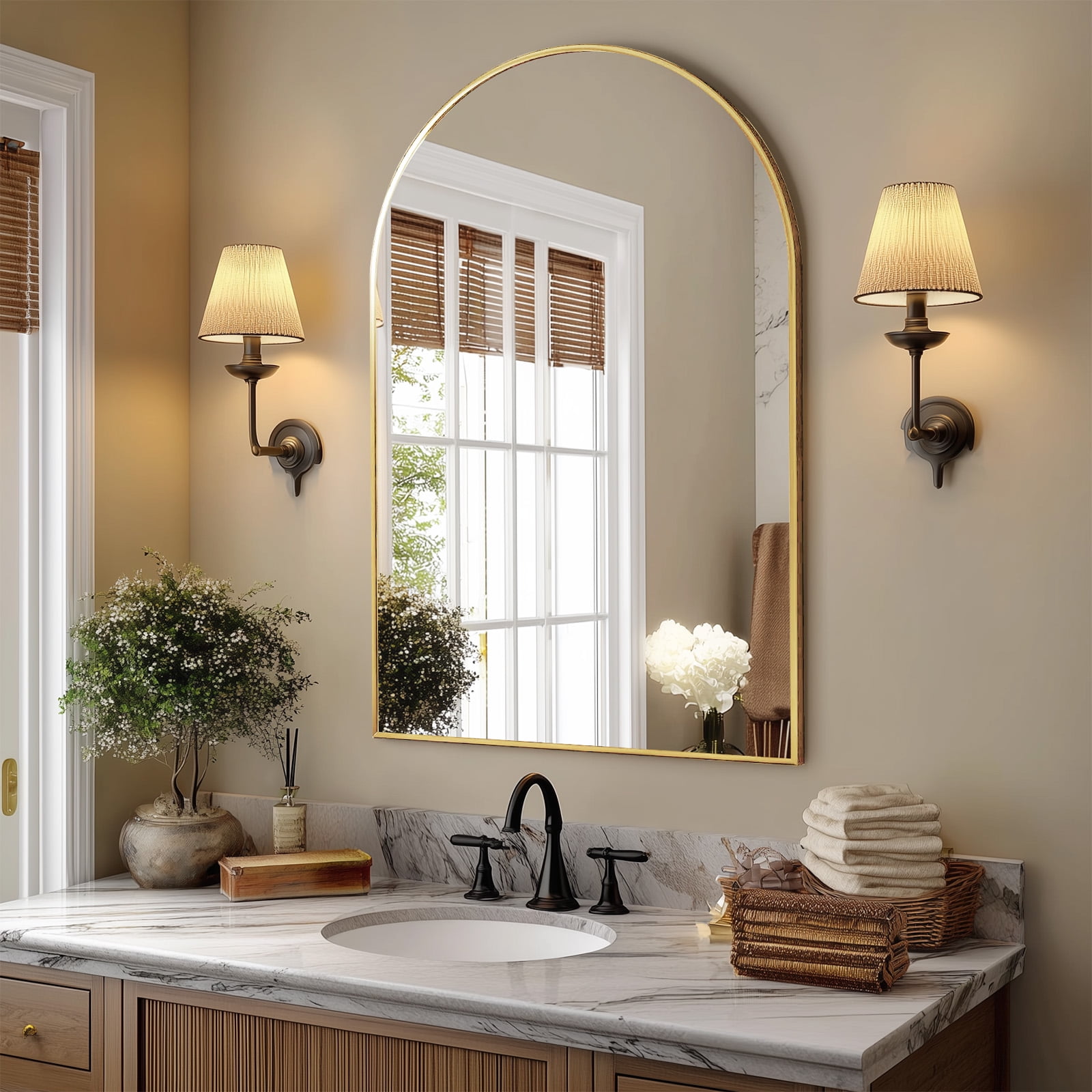
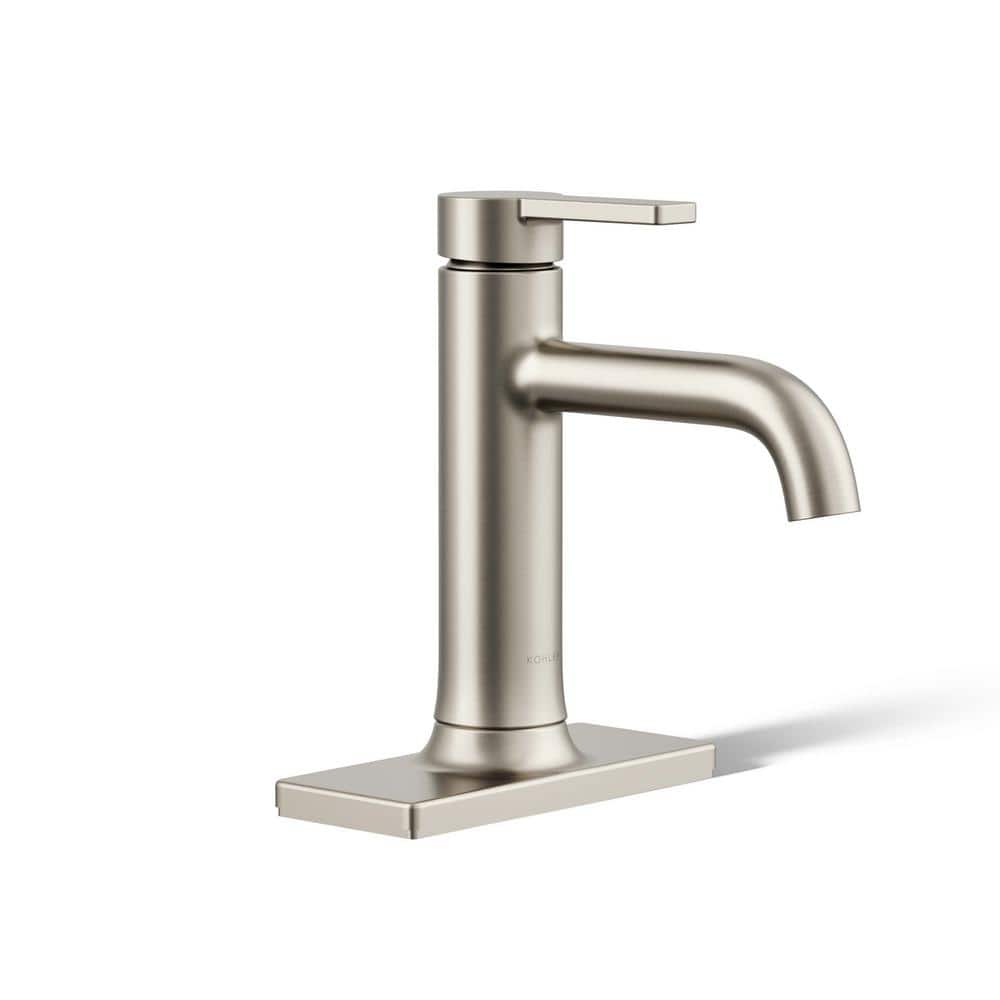
“Mixing metals is a great way to add a curated, designer feel to your bathroom, but there’s a rule to doing it well.”
Notice how this design commits to matte black for all the functional water fixtures (faucet, shower head), creating a cohesive story. The second metal, a soft gold, is used only for the decorative hardware—the cabinet pulls. This creates a clear hierarchy. Rule of thumb: Pick one dominant metal for your main fixtures and a second accent metal for hardware or lighting.
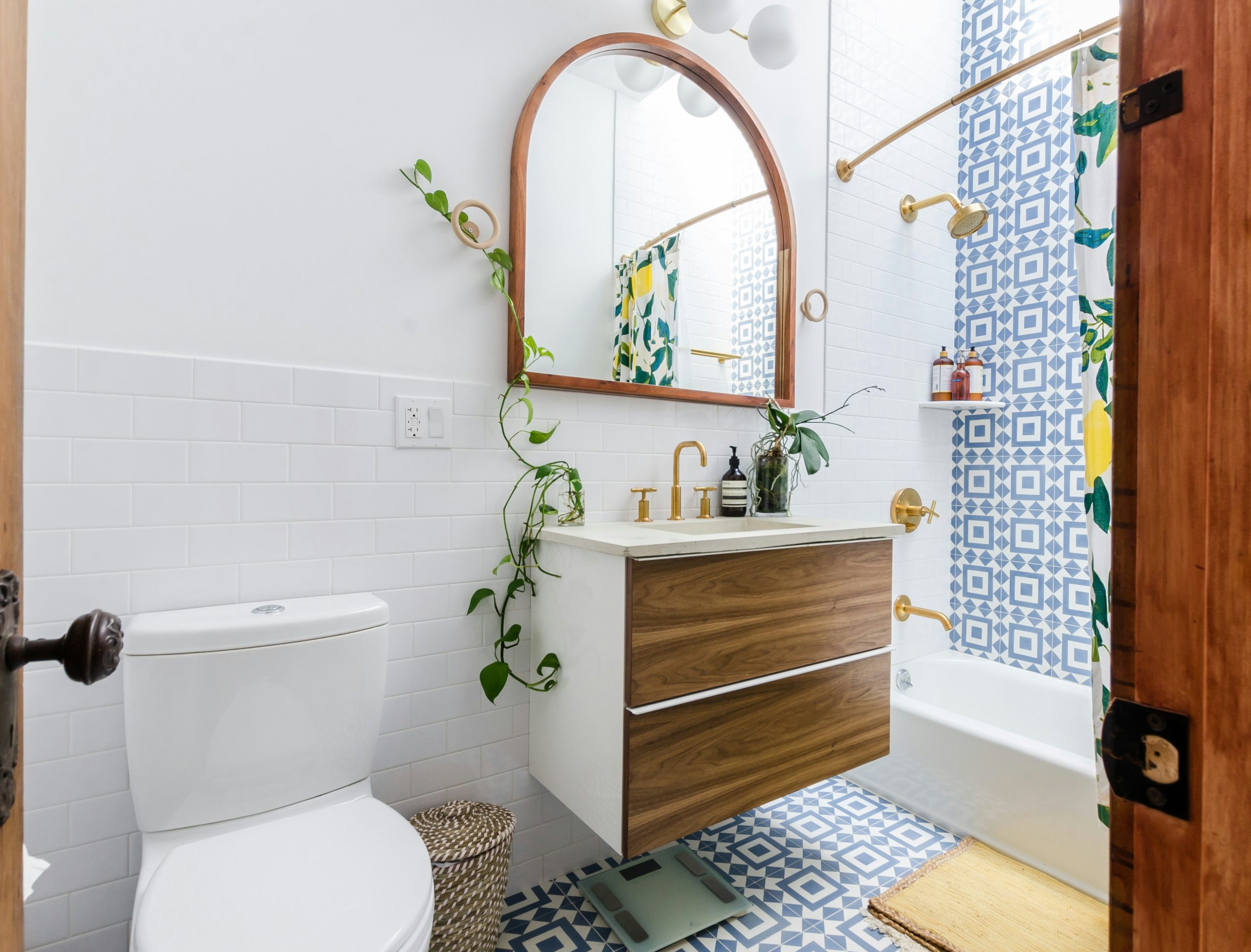
22. Energize a Room with Blue Patterned Tile and Brass Accents
This bathroom is so successful because it perfectly balances pattern and simplicity. The blue and white geometric tile is bold and makes a huge statement. The designer wisely chose to contain its energy by pairing it with simple, classic white subway tile on the walls. The warm brass fixtures and the dark wood vanity act as a grounding counterpoint to the cool blue, adding warmth and sophistication. The result is a space that feels playful and energetic, but also deliberate and well-designed.
|
$686.99
|
$99.99
|
$66.99
|
$23.59
|
“A bold, graphic floor tile is a fantastic way to inject personality, but be prepared for a long-term commitment.”
Unlike a paint color or a shower curtain, floor tile is a permanent and expensive element to change. Before you fall in love with a vibrant pattern, ask yourself if you’ll still love it in five or ten years. If you’re hesitant, consider using a similar pattern in a peel-and-stick floor tile or a vinyl sheet good to test out the look before committing to porcelain.
23. Brighten a Narrow Bathroom with a Skylight and Floating Vanity
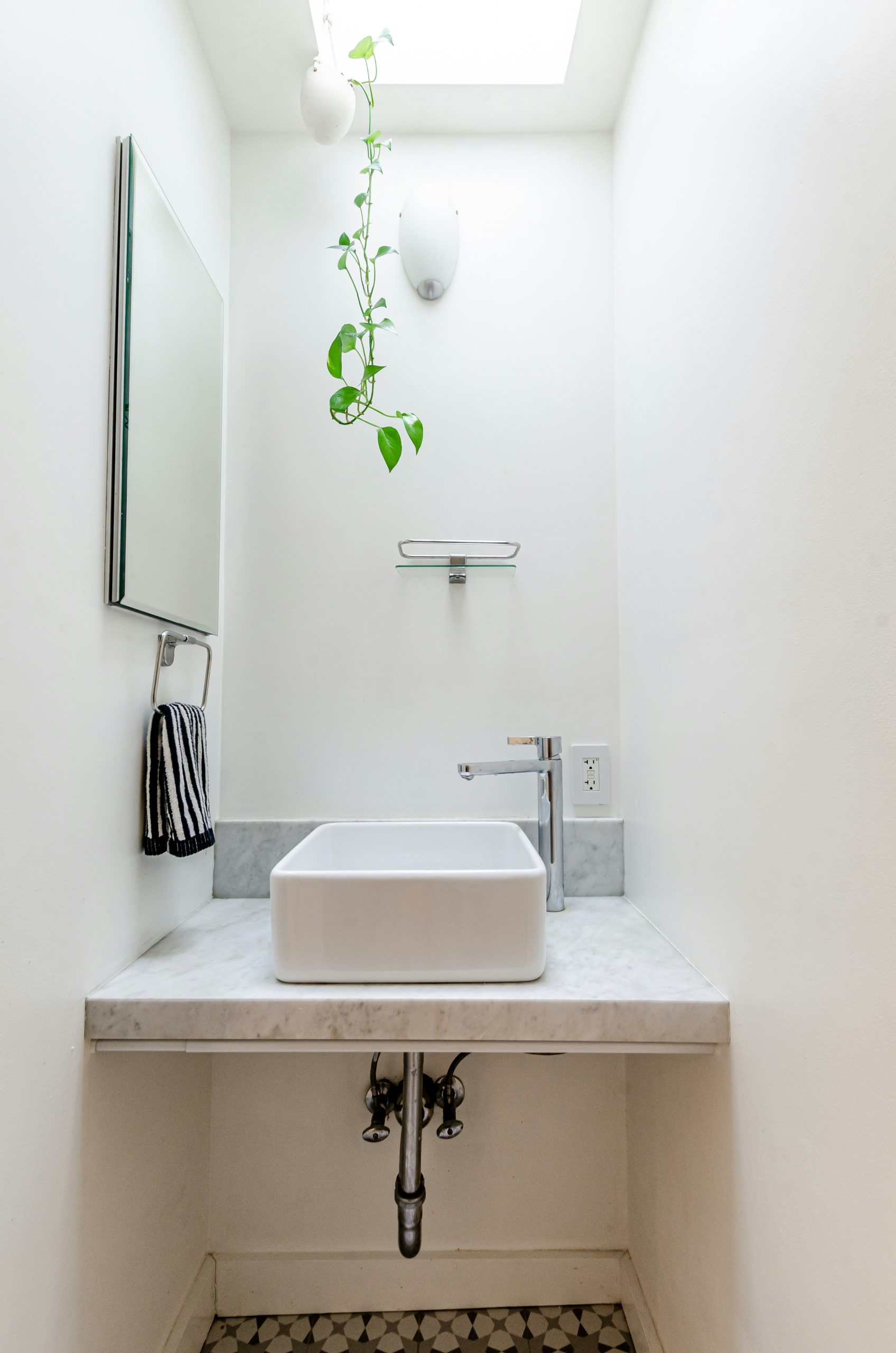
The skylight is, without a doubt, the game-changing element in this bathroom. In a narrow, windowless, or light-challenged space, a skylight is the ultimate problem solver. It floods the room with natural light, making the all-white palette feel bright and airy rather than sterile and boring. It draws the eye upward, creating a sensation of volume and height that visually counteracts the room’s narrow footprint. Without it, this would just be a small, white bathroom. With it, it’s a sun-drenched sanctuary.
|
$190.80
|
$74.32
|
$96.50
|
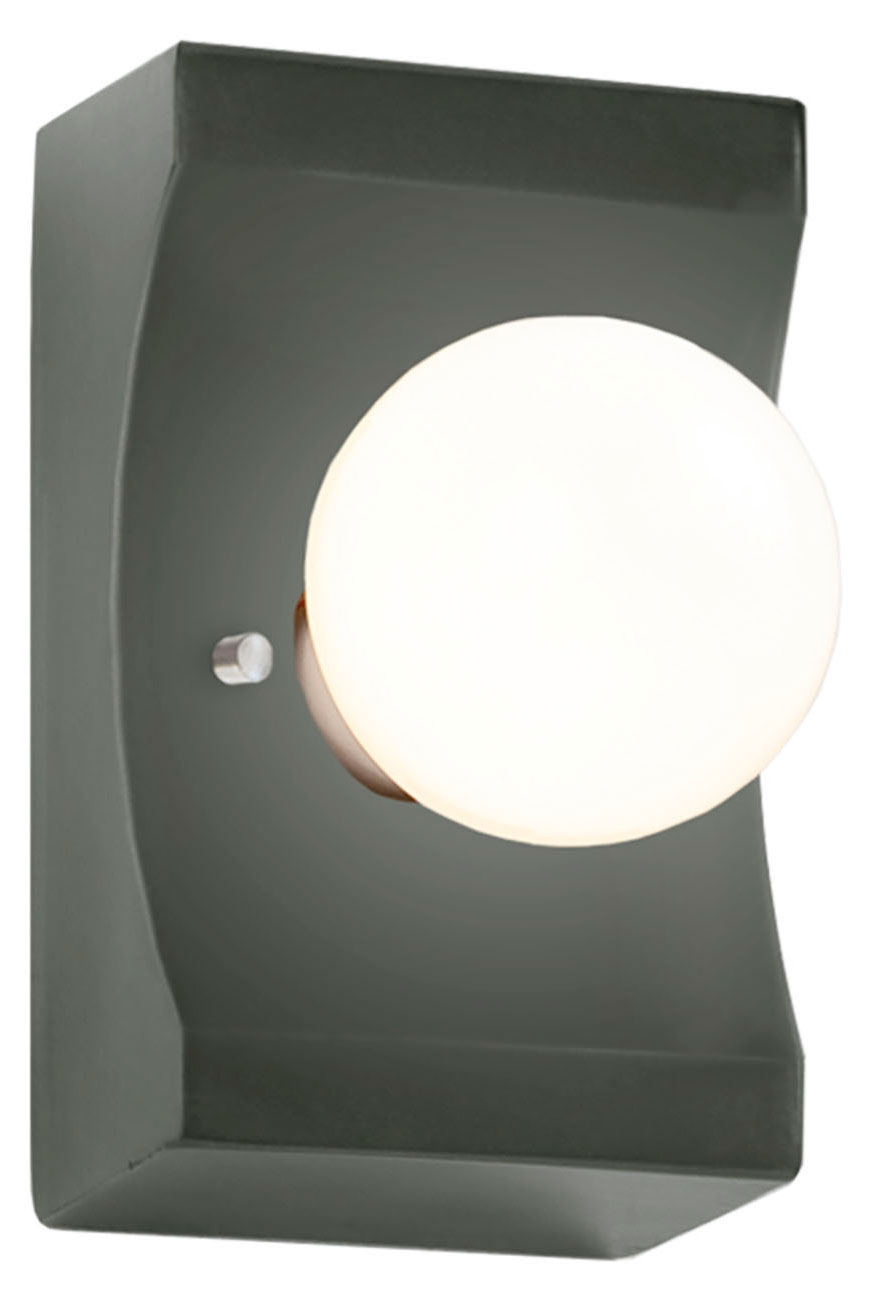
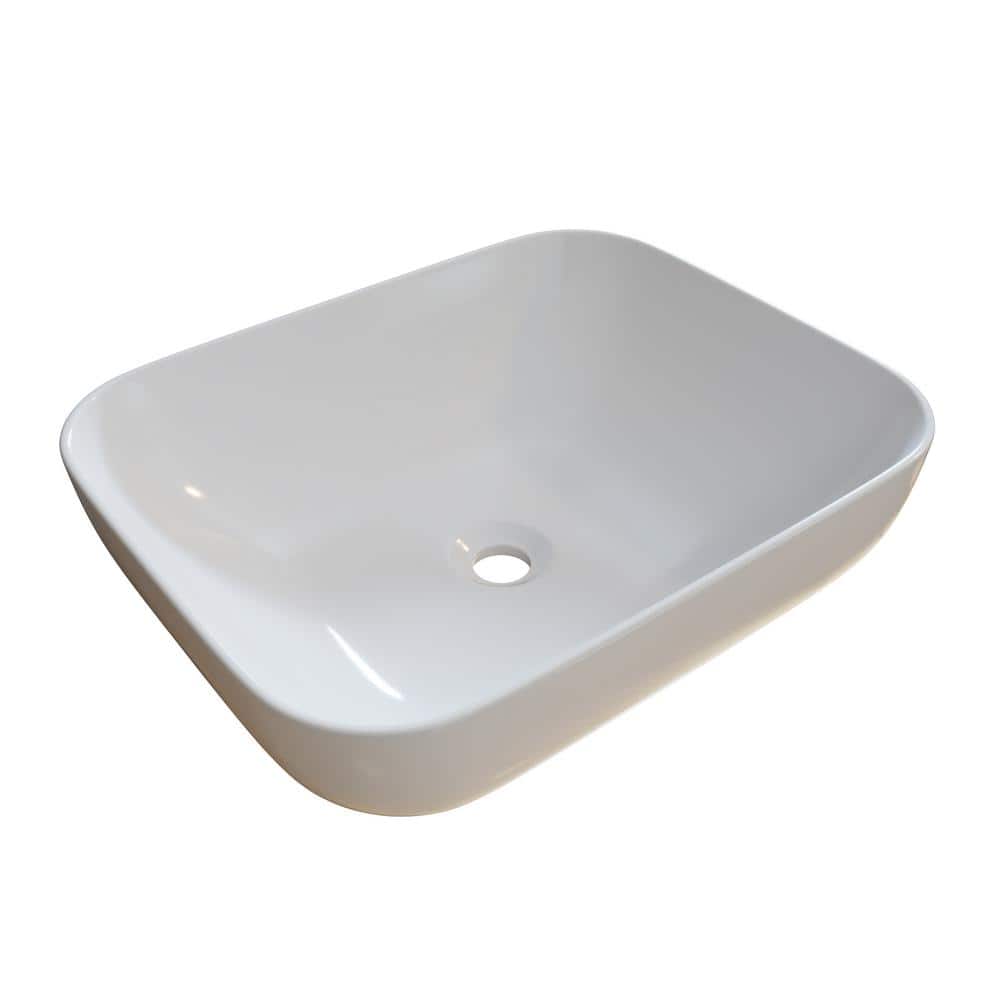
“While a floating vanity looks incredibly chic and makes cleaning the floor a breeze, it can create a maintenance challenge on the countertop itself.”
The vessel sink, sitting on top of the marble slab, means there are more seams and edges to clean around. Water can splash and pool at the base of the sink, requiring diligent wiping to prevent hard water stains on the marble. Likewise, the area where the marble meets the wall needs to be well-sealed to prevent water from seeping behind it.
24. Achieve a Sleek Look with Modern Gray Tiles
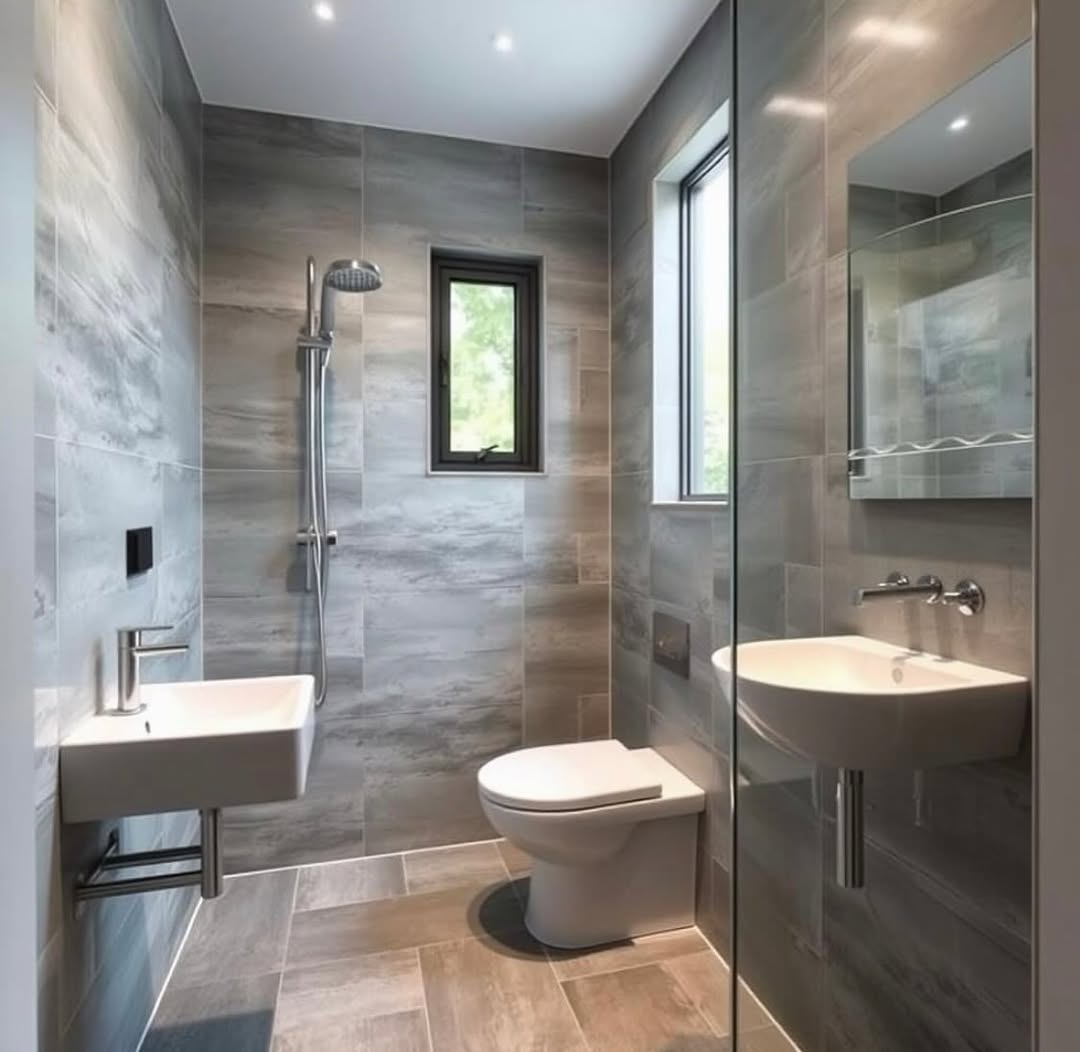
The genius of this design lies in its radical simplicity and commitment to a single material. Using the same large-format gray tile on every single surface—walls and floor—creates a seamless, monolithic space. This unbroken visual field tricks the eye, making a small room feel significantly larger and less cluttered. The wall-mounted toilet and sink are crucial to this effect, as they float above the floor, maintaining the continuous tile surface and enhancing the sense of openness.
|
$113.81
|
$199.00
|
$64.98
|
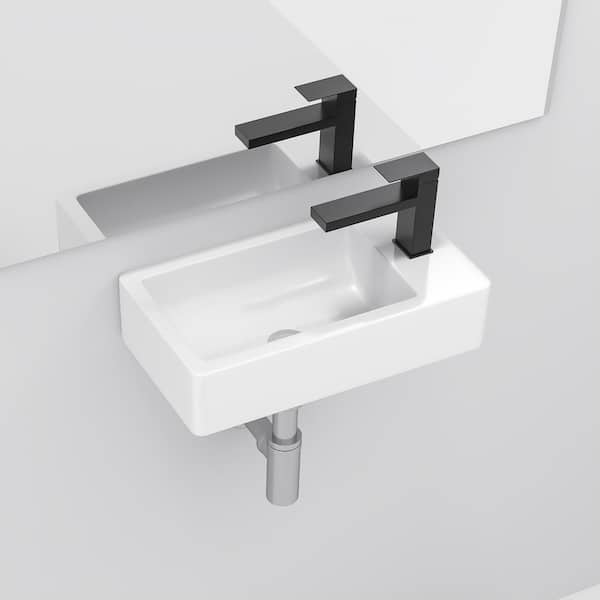
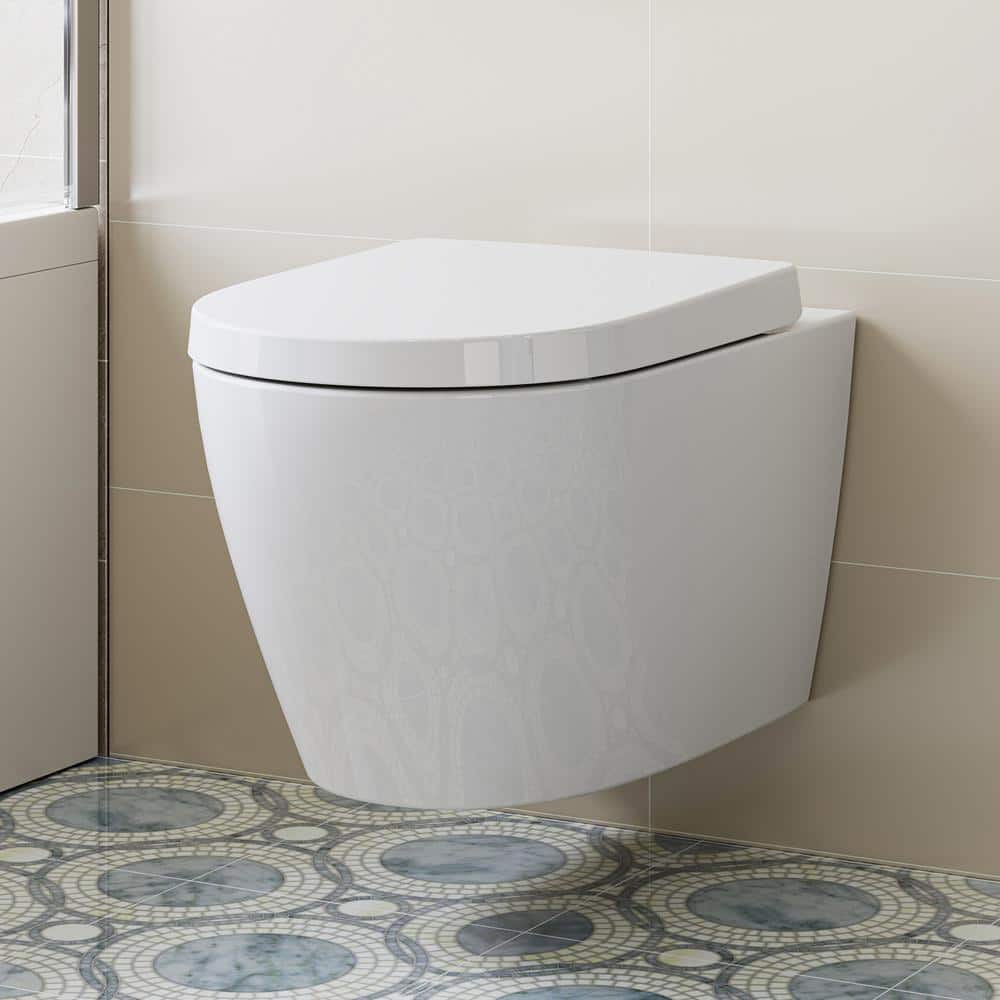
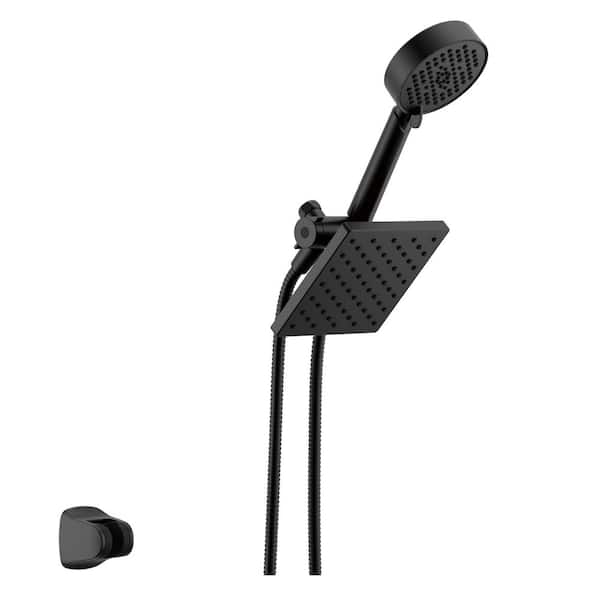
“Installing a glass shower partition is a great way to open up a small bathroom.”
Here’s a quick guide:
- Measure Carefully: Measure the width at the top and bottom of your shower curb, and the desired height. Most fixed panels are 72-78 inches tall.
- Install the U-Channel: Secure the metal U-channel to the wall and curb using screws and silicone sealant. Ensure it is perfectly plumb.
- Set the Glass: Carefully lift the glass panel and slide it into the U-channel. Use setting blocks to create a small gap at the bottom.
- Secure and Seal: Apply a bead of clear silicone sealant along all edges of the glass and channel, both inside and outside the shower. Let it cure for 24 hours.
This is often a two-person job. Estimated time: 2-3 hours. Cost: $300-$800 for the panel and hardware.
25. Design a Functional Family Bathroom with a Grey Double Vanity
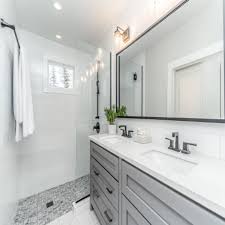
A double vanity is a dream for busy households, but it requires a certain amount of space to work. For a comfortable setup like this, you need a bathroom that is at least 10 feet long, and ideally 12 feet. This allows for a standard 60-inch double vanity while leaving adequate clearance for the toilet and shower area. The minimum width for this layout, with fixtures on opposite walls, would be around 7-8 feet to ensure you have a comfortable walkway between the vanity and the shower.
|
$10.79
|
$74.36
|
$162.52
|
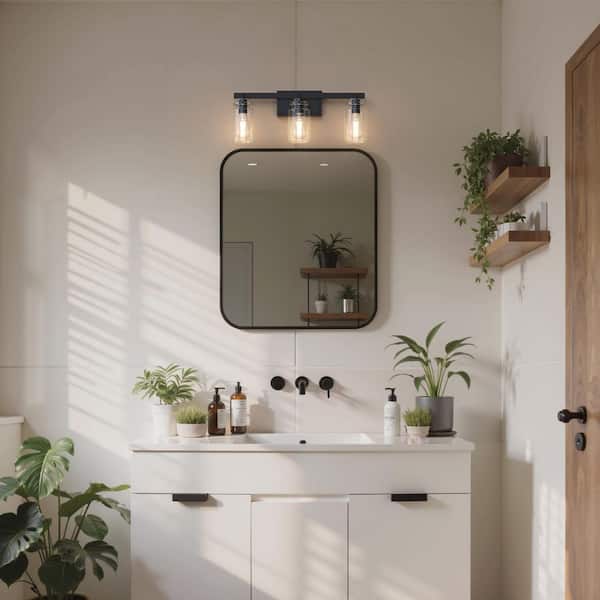
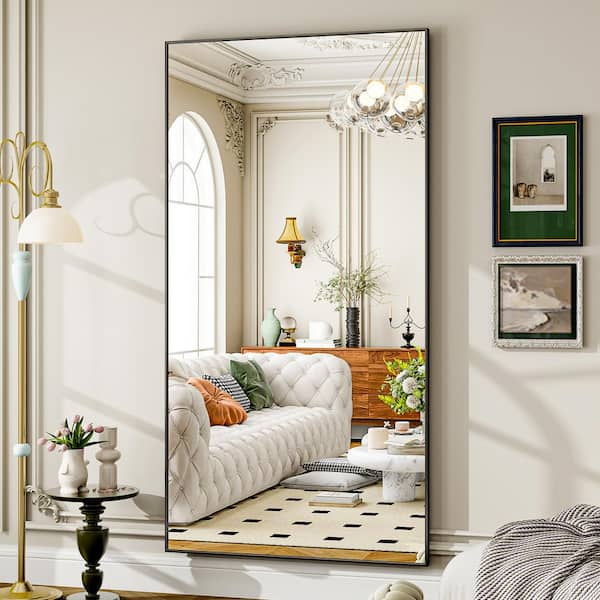
“In a bathroom with a lot of hard surfaces and a neutral color palette, lighting is everything.”
Notice how this design uses three layers of light: recessed ceiling spotlights for general ambient light, and two wall sconces flanking the mirror for task lighting. The sconces are key; they provide cross-illumination that eliminates shadows on your face, which is essential for grooming. Always install vanity lights at roughly eye level, about 60-66 inches from the floor, for the most flattering light.
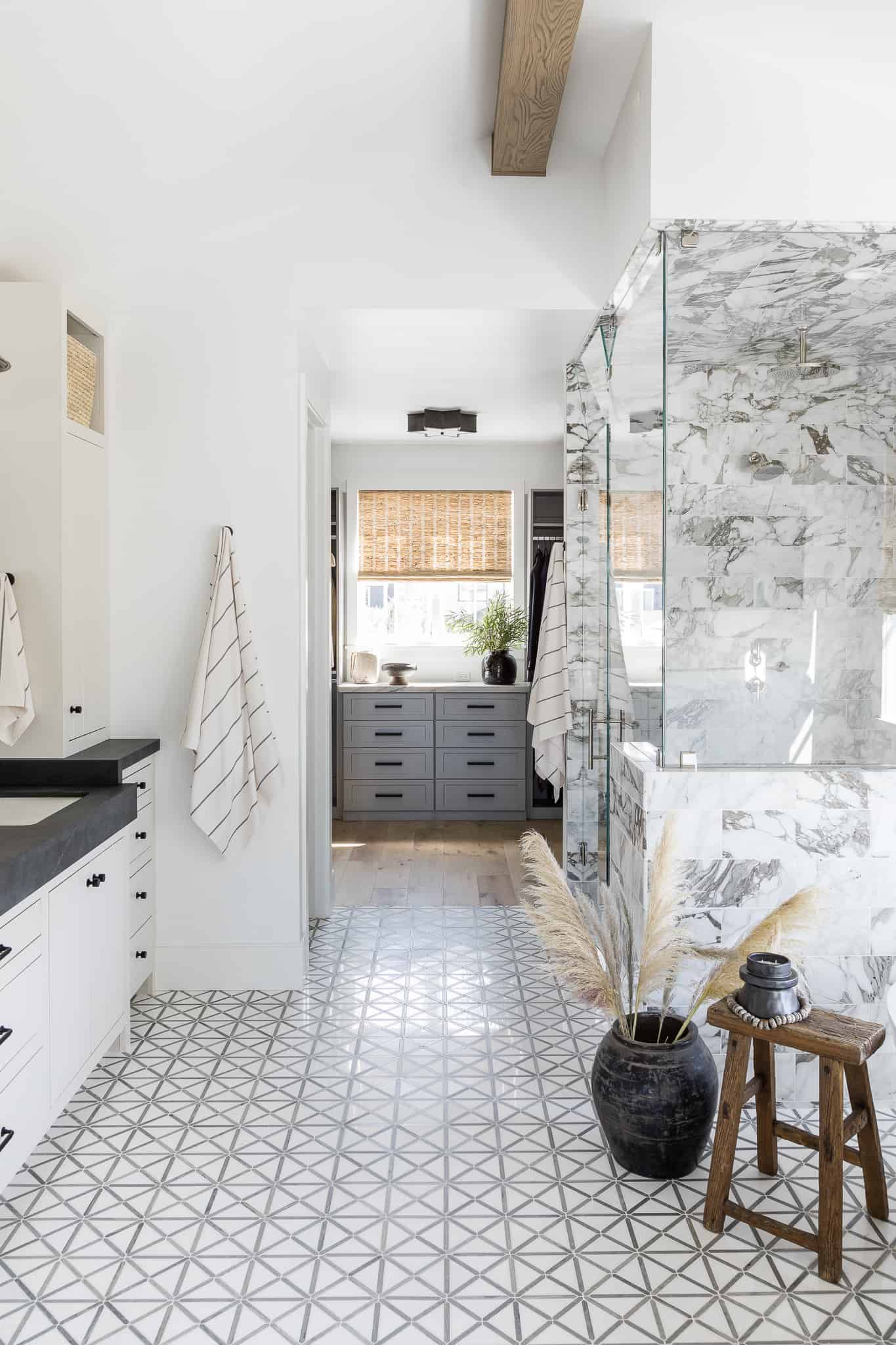
26. Create a Modern Organic Vibe with a Patterned Floor
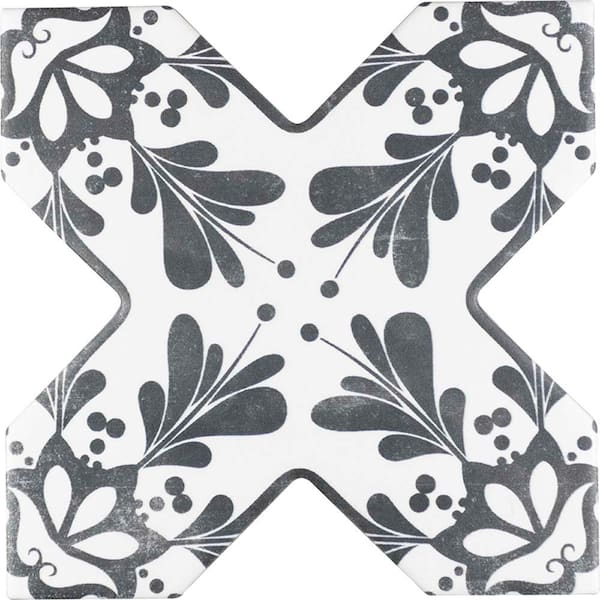
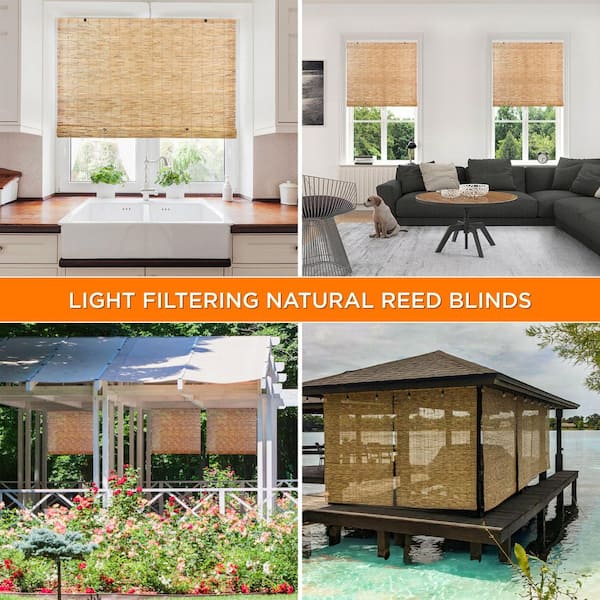
This bathroom perfectly encapsulates the “Modern Organic” trend that continues to dominate interior design in 2026. It’s about blending clean, modern lines with natural, tactile materials. You have the crisp geometry of the floor tile and glass shower, but it’s softened by the rich texture of the visible wood beam and the woven window blind. The marble in the shower adds another layer of natural pattern. It’s a look that feels both clean and warm, curated and comfortable, which is why it has such lasting appeal.
|
$58.99
|
$2.99
|
$396.00
|
$29.98
|

“The single element pulling this entire look together is the visible wooden beam on the ceiling.”
It’s a powerful statement piece that immediately injects warmth and rustic character into the otherwise cool and modern space. It visually connects to the warmth of the woven blind and prevents the gray and white palette from feeling sterile. If you removed that beam, the room would still be nice, but it would lose its defining “organic” soul.
27. Craft a Classic Bathroom with Light Blue Walls and a Marble Vanity
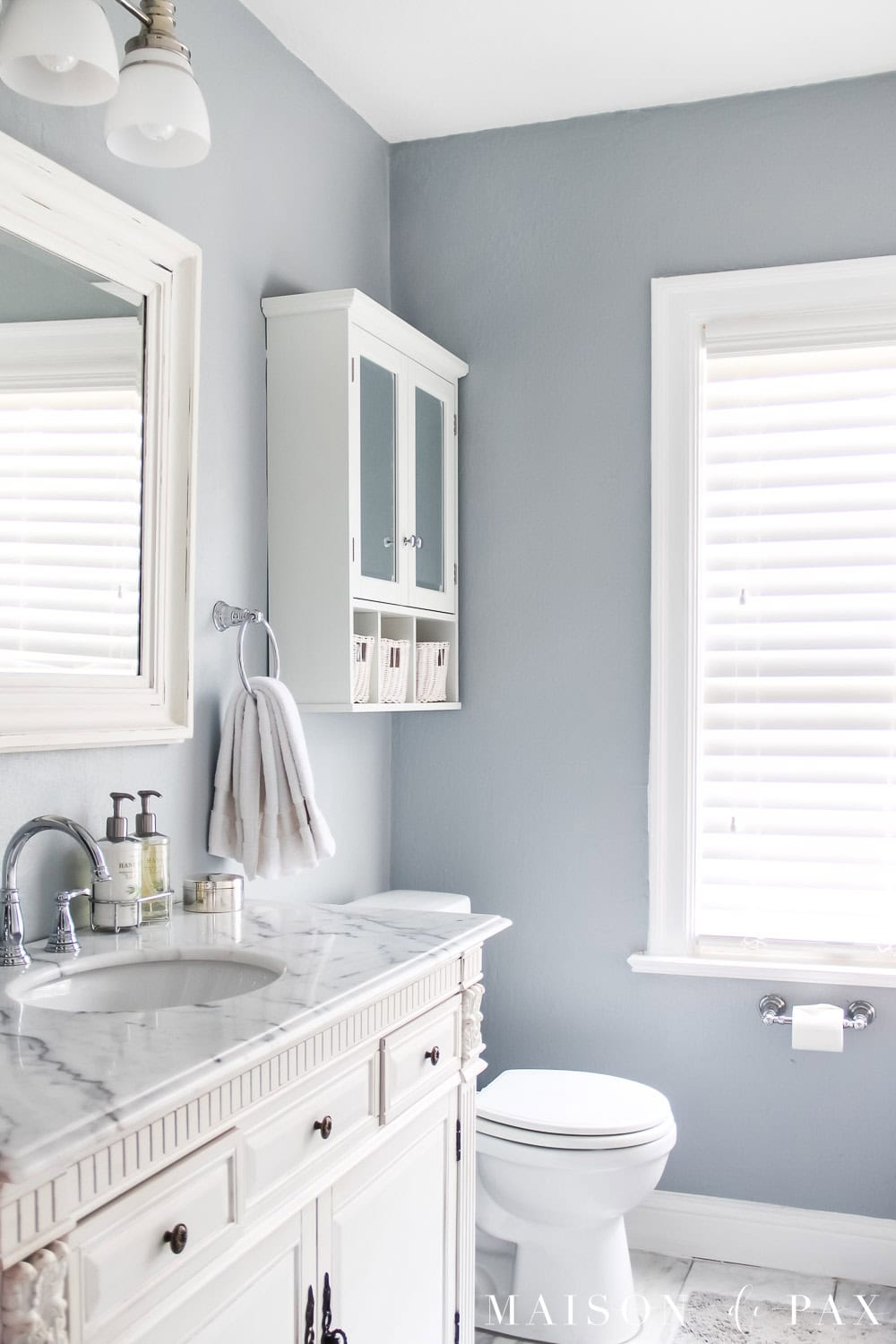
This design feels so serene and timeless because it adheres to a classic color theory principle: pairing a soft, cool color (the light blue walls) with crisp, clean white (the trim, cabinetry, and toilet). The white marble countertop serves as a perfect bridge between the two, with its gray veining adding a touch of sophisticated pattern. The chrome fixtures provide a bit of sparkle, reinforcing the clean, bright, and airy feeling of the space. It’s a palette that just never goes out of style.
|
$1,185.00
|
$254.63
|
$24.99
|
$54.97
|
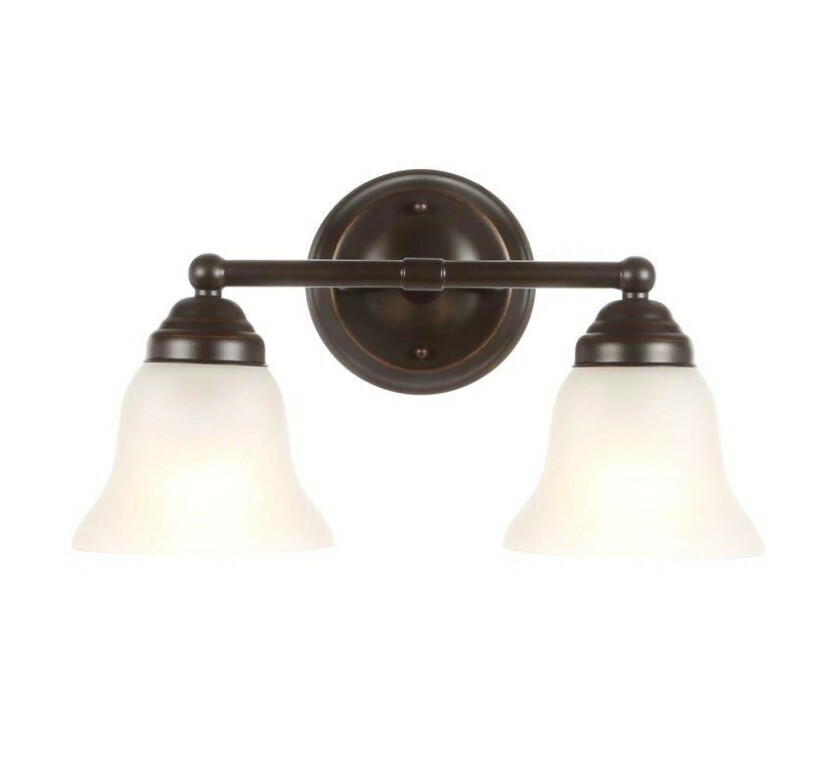
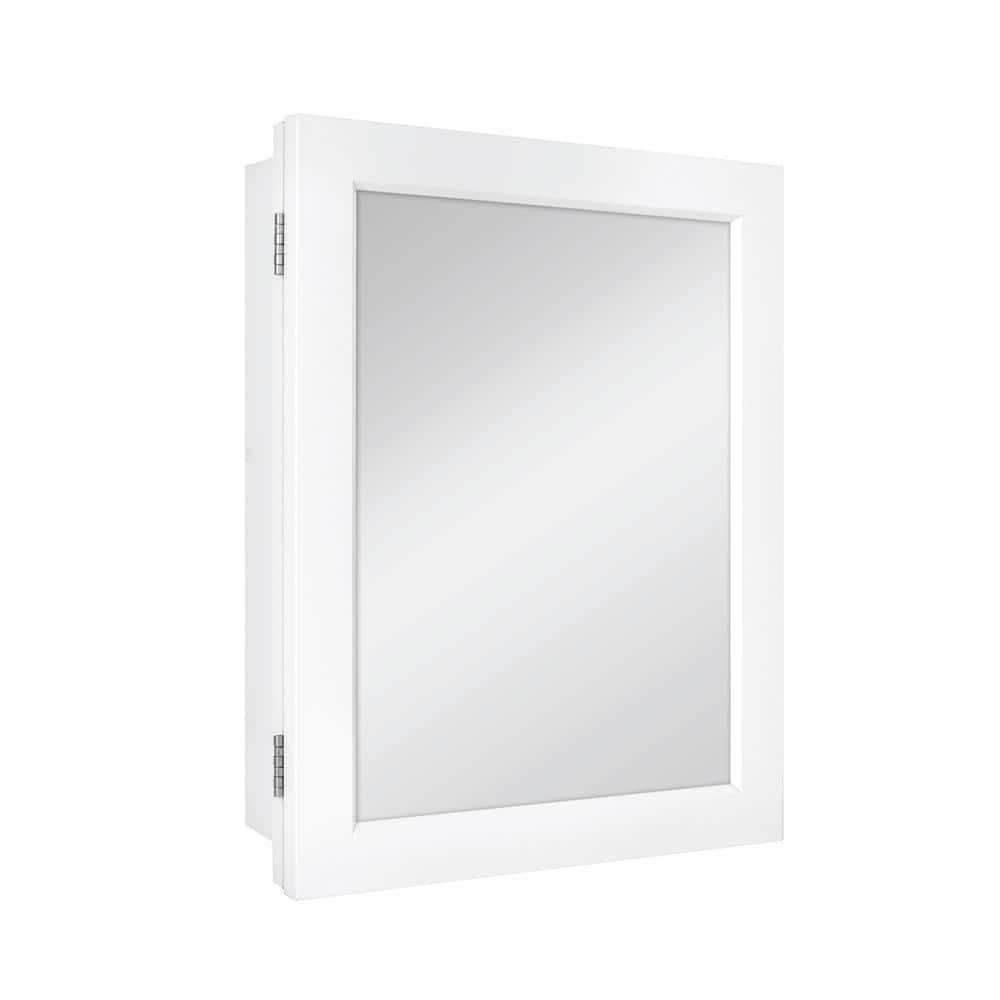
“A marble-topped vanity can be pricey, but you can get this classic look on a budget.”
Look for a standard white vanity from a store like Lowes or Home Depot and upgrade the countertop. You can often find remnants of real marble or quartz at a local stone yard for a fraction of the cost of a full slab. Alternatively, modern laminate countertops offer incredibly realistic marble patterns for a very budget-friendly price. Paired with a can of high-quality light blue paint, you can achieve this entire aesthetic for under $1,000.
28. Design a Rustic Retreat with Wood-Effect Tiles
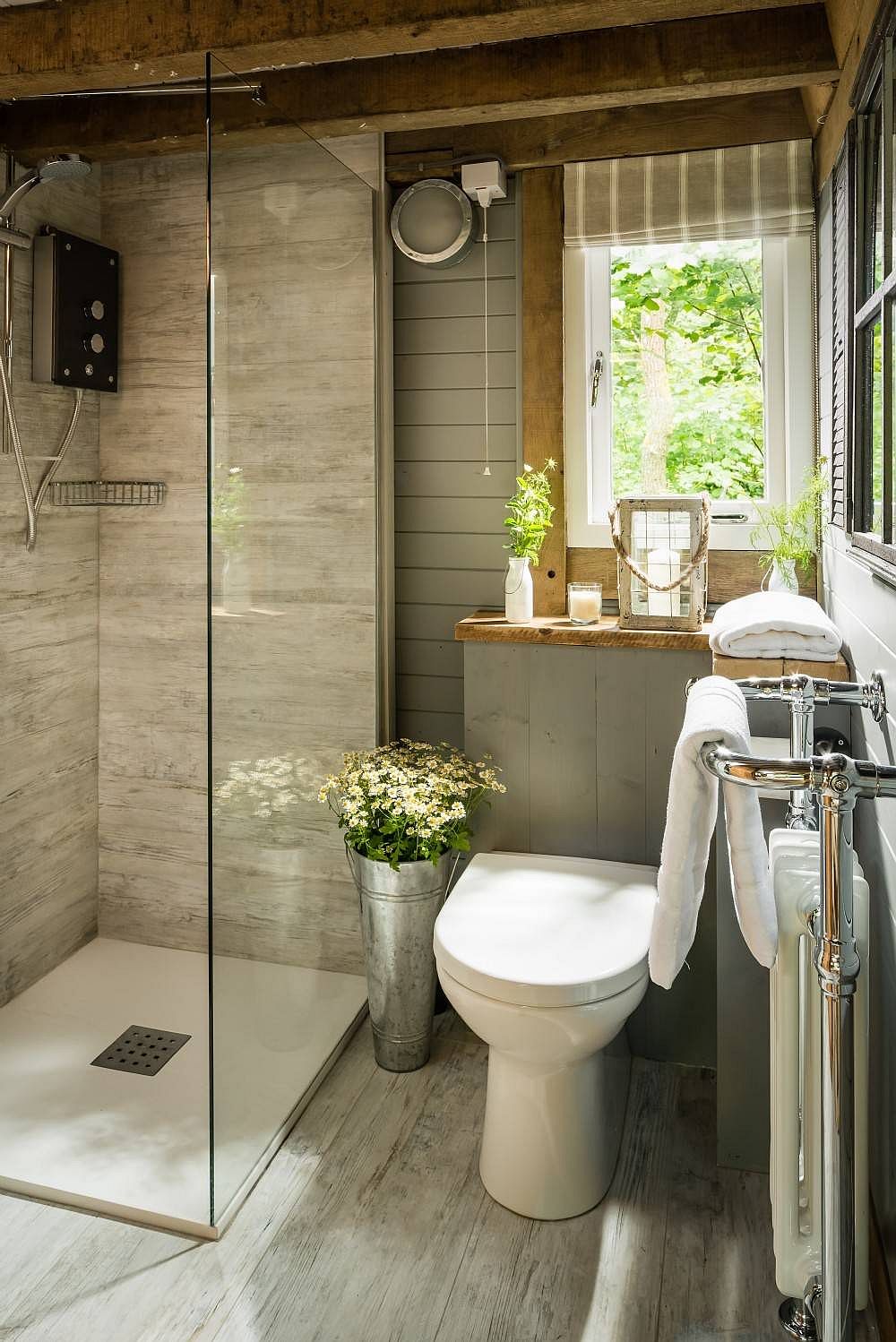
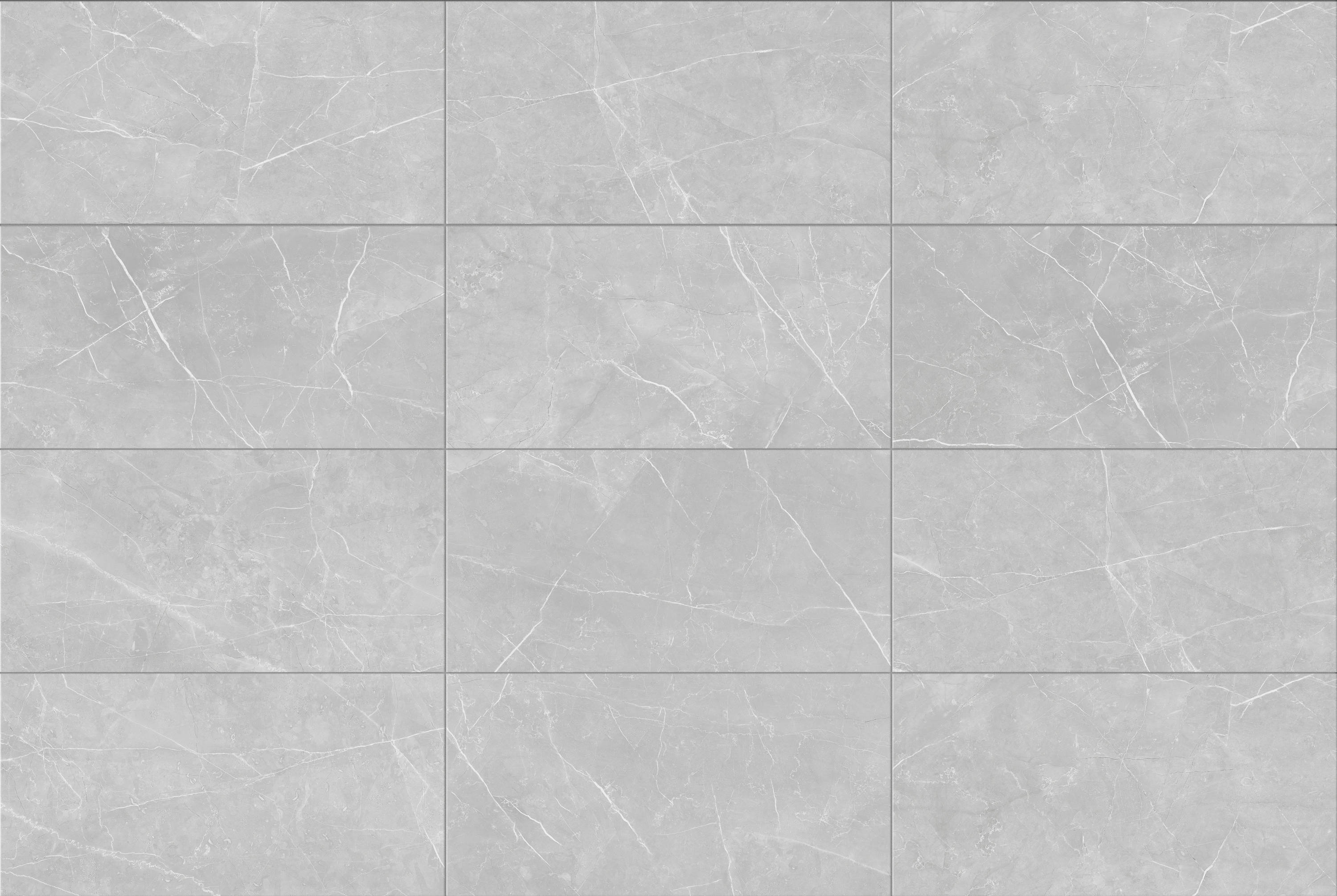
The beauty of using wood-effect porcelain tiles in a shower, as seen here, is that you get all the rustic, natural warmth of wood with none of the maintenance nightmares. Real wood in a shower is a recipe for rot, warping, and mold. These tiles, however, are completely waterproof, incredibly durable, and easy to clean. You only need to maintain the grout lines. It’s the perfect solution for achieving that cozy, cabin-like feel without compromising on practicality. The gray shiplap outside the shower is a safer place to use real wood.
|
$269.99
|
$4.42
|

“To truly sell the rustic woodland vibe, the details matter.”
Notice the use of natural textures: the striped roman blind, the galvanized bucket used as a planter, and the rough-hewn exposed wooden beams. These small touches prevent the design from looking like a flat imitation of rustic style. When using faux materials like wood-effect tile, it becomes even more important to introduce authentic, natural textures elsewhere to create a convincing and immersive atmosphere.
29. Achieve Modern Serenity with a Freestanding Tub and Floating Vanity
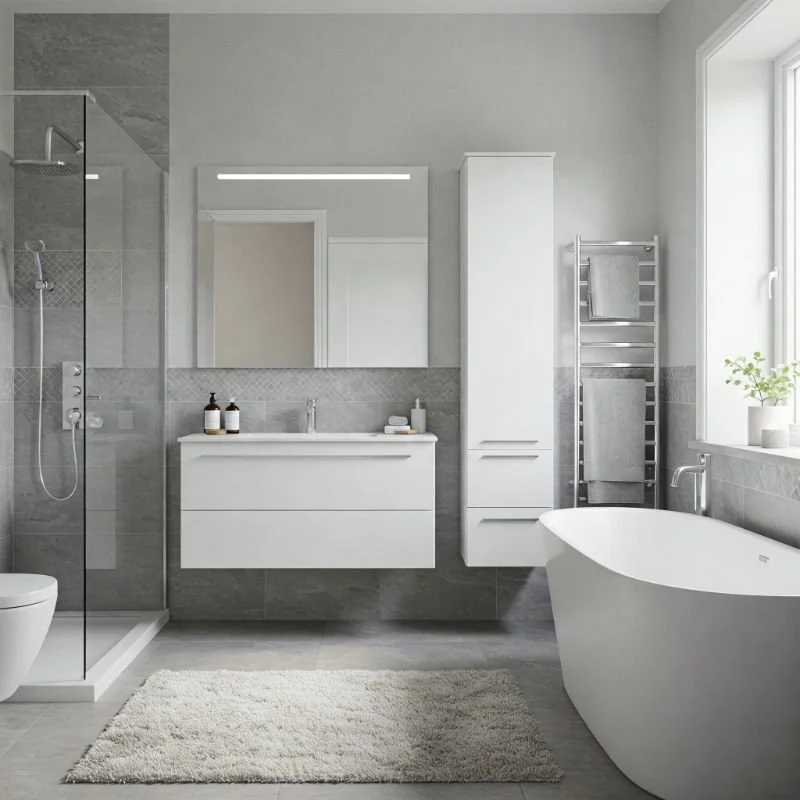
This bathroom feels so calming and spacious due to its emphasis on “negative space.” The freestanding tub pulls away from the wall, creating air and space around it. The floating vanity exposes the floor underneath, making the room feel wider. Even the tall, narrow cabinet leaves breathing room. By lifting furniture off the floor and pulling it away from the walls, the design maximizes visible floor and wall space, which our brain interprets as a larger, more serene room. The minimalist color scheme of light gray and white enhances this effect. Compare this approach to the compact efficiency of Idea #11.
|
$1,715.00
|
$599.24
|
$187.96
|
$30.00
|
“This look is best suited for a moderately sized “small” bathroom, typically in the range of 8×10 feet or larger.”
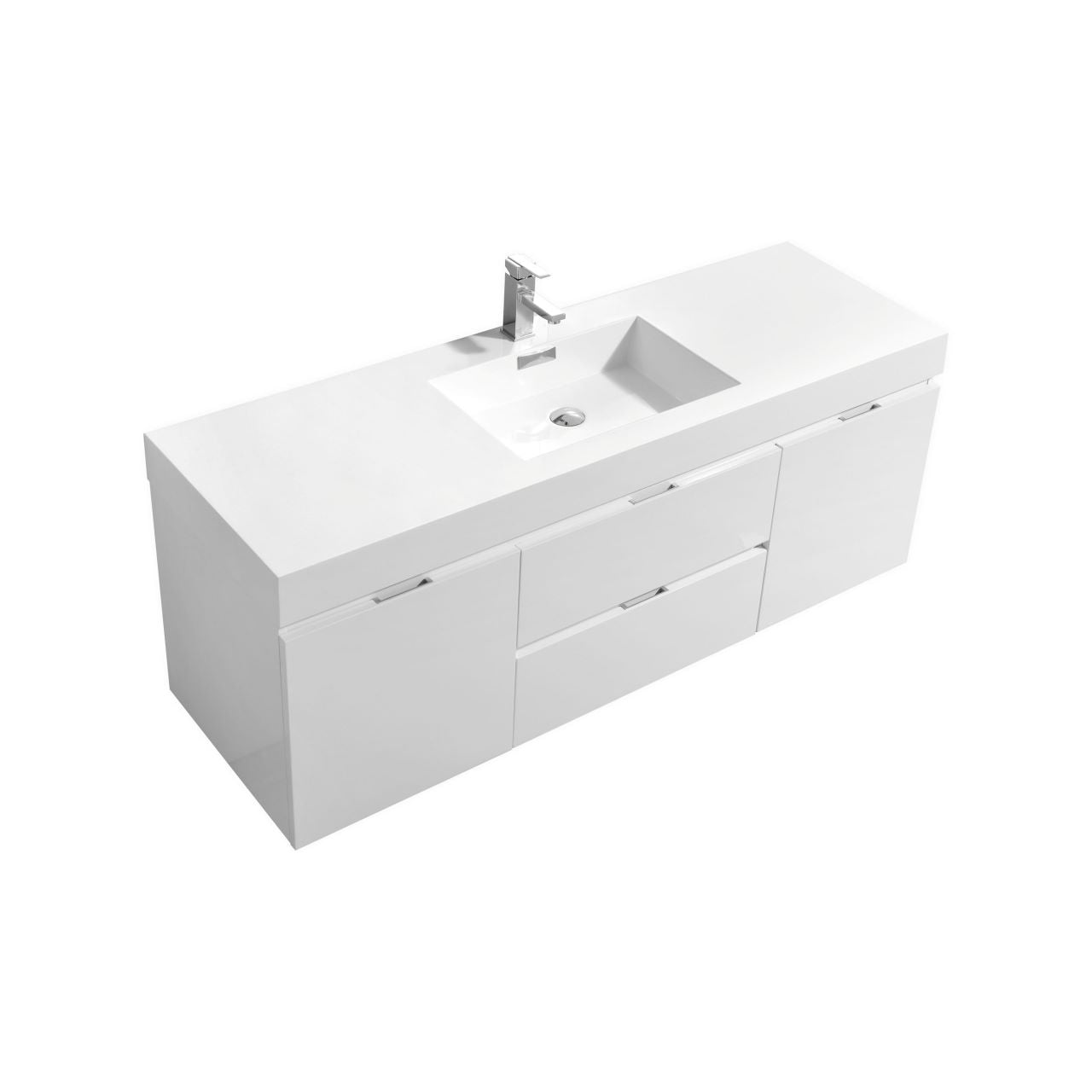
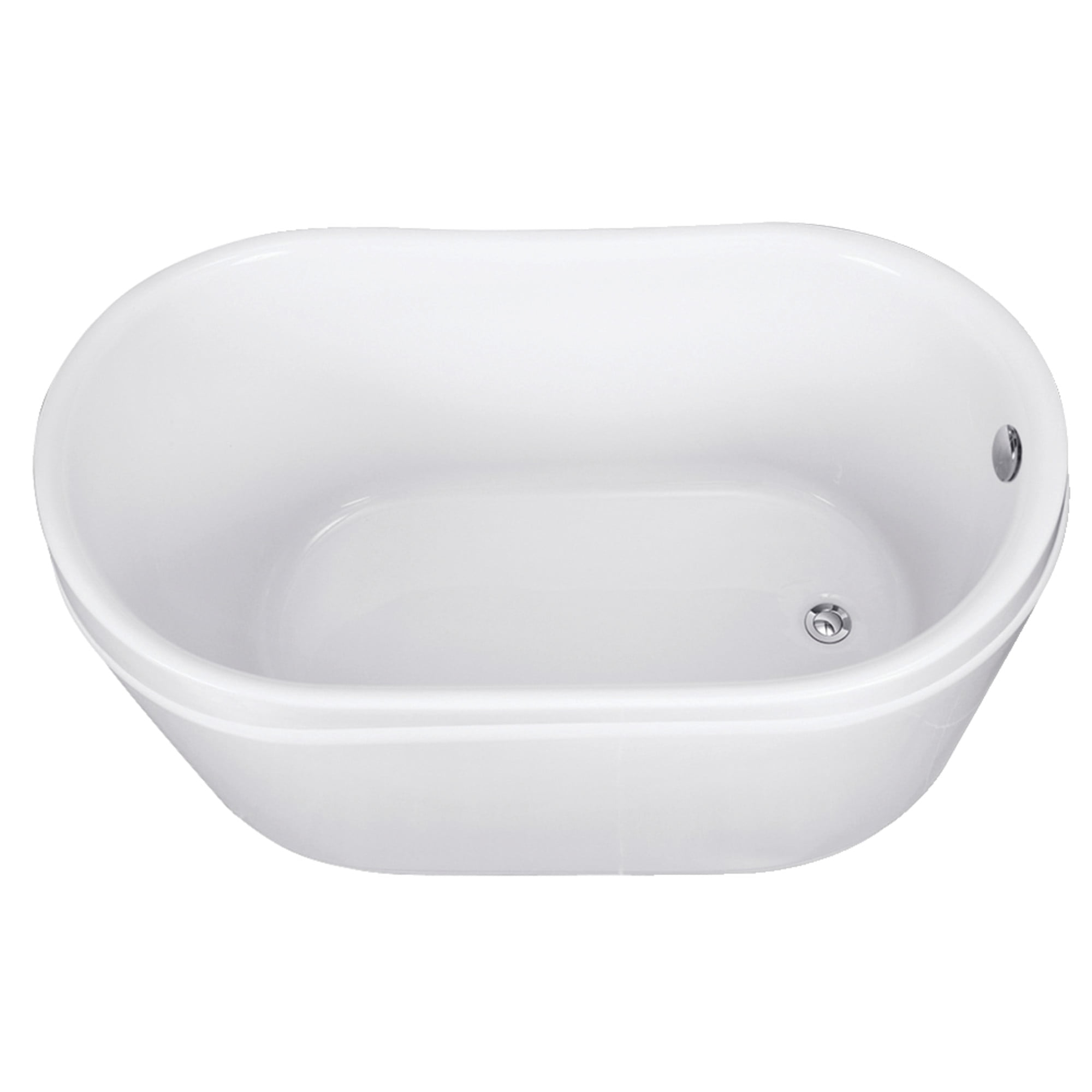
A freestanding tub requires at least 6-12 inches of clearance on all sides for cleaning and visual breathing room. Similarly, a floating double vanity needs a wall of at least 60 inches. While elements of this design can be used in smaller spaces, achieving this exact open, airy feel requires a bit more square footage to accommodate the space around each fixture.
30. Make a Statement with Black Walls and Wood Accents
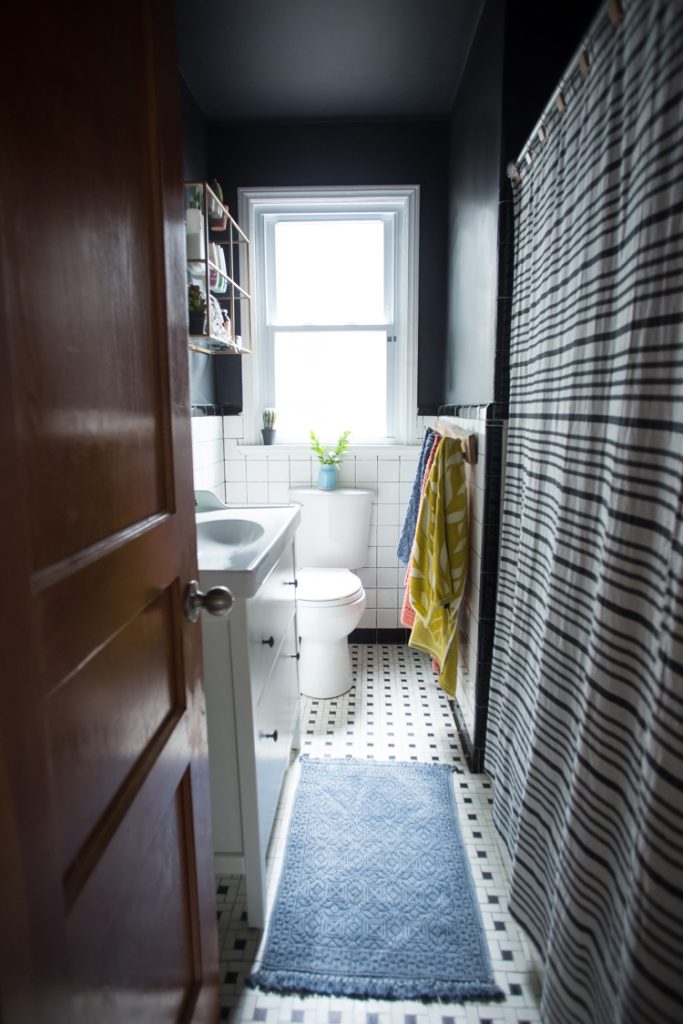
Painting a small bathroom black is a bold, dramatic move that can look incredibly chic. However, it comes with a reality check: lighting is everything. This bathroom works because it has a large amount of reflective white tile to bounce light around, a white ceiling to prevent it from feeling like a cave, and a pop of color from the rug to add life. If your bathroom lacks good natural or artificial light, a full black wall treatment can feel gloomy and claustrophobic. Be honest about your lighting situation before you pick up the paintbrush.
|
$229.99
|
$629.00
|
$21.74
|
$10.00
|

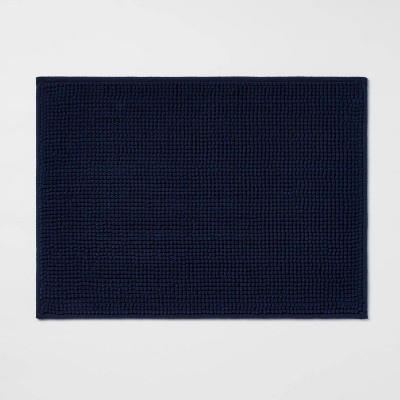
“The single most important element making this bold design work is the wooden towel rack.”
In a room defined by the hard, graphic contrast of black and white, the organic shape and warm, natural material of the wood provide a crucial moment of softness. It breaks the rigid color scheme and adds a tactile, human element. Without it, the room would risk feeling stark and cold. The wood is the bridge that makes the high-contrast design feel approachable and livable.
31. Use a Teal Accent Wall and Gold Fixtures for a Vibrant Look
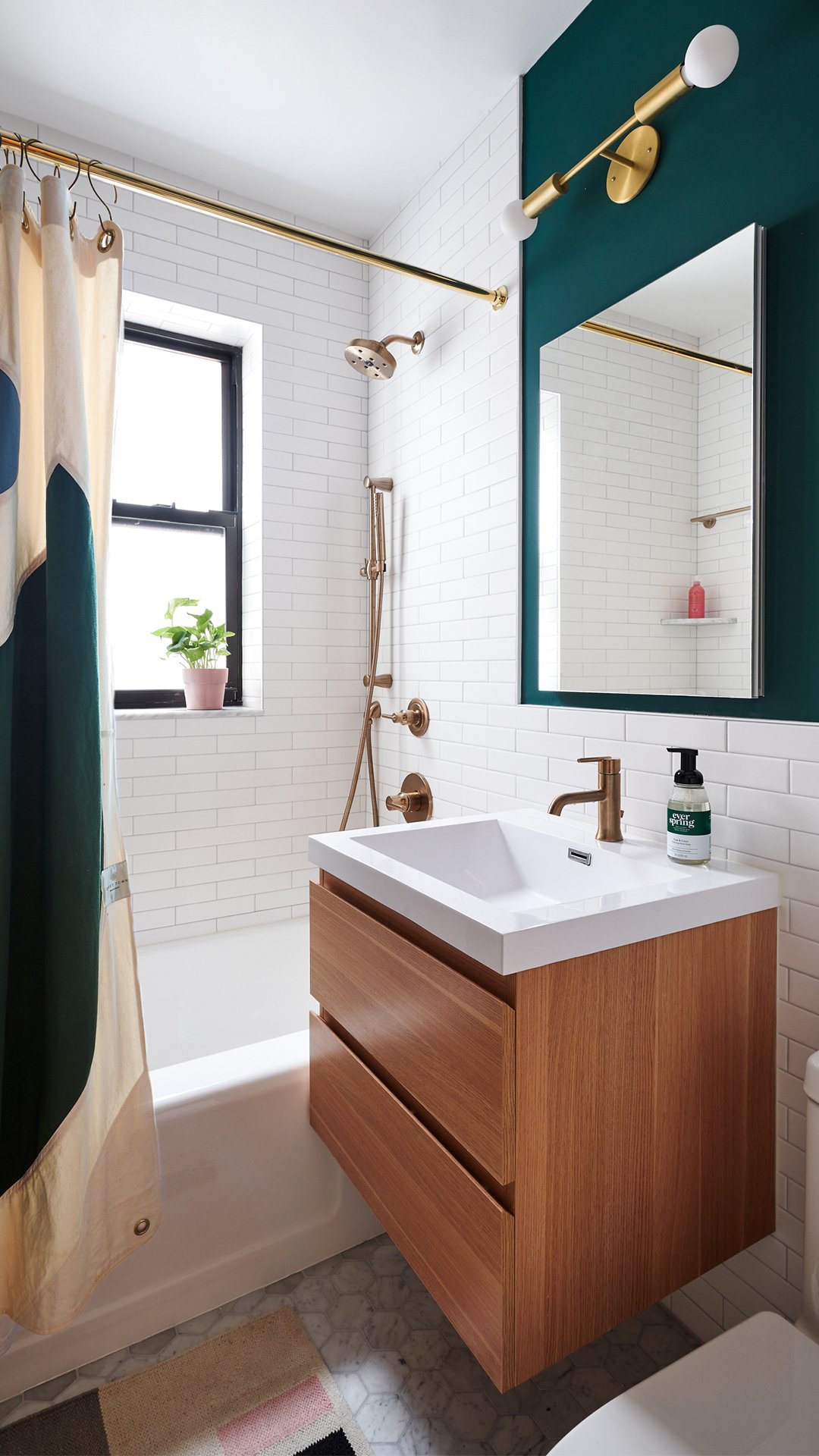
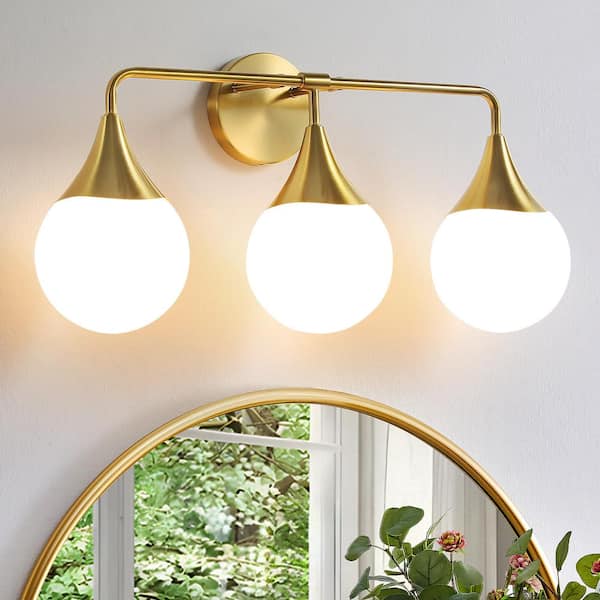
The formula for this vibrant, modern look is all about balance: 60% neutral base (the white subway and hex tiles) + 30% bold accent color (the teal wall) + 10% warm metallic (the gold fixtures). The neutral background provides a clean canvas that keeps the look from becoming overwhelming. The teal wall creates a powerful focal point, and the gold fixtures add a touch of luxury and warmth. Swapping the teal for a deep navy or emerald green would work just as well with this formula.
|
$1,421.52
|
$64.79
|
$45.00
|

“Creating a sharp, professional-looking accent wall is easier than you think.”
Here’s a quick guide:
- Choose your wall: Pick the wall you want to be the focal point, usually the one behind the vanity and mirror.
- Prep and Tape: Clean the wall thoroughly. Use high-quality painter’s tape (like FrogTape) to create a crisp edge where the accent wall meets the other walls, ceiling, and tile.
- Prime if needed: If you are painting a dark color over a light one, a coat of tinted primer will ensure rich, even coverage.
- Cut in and Roll: Use a brush to “cut in” along the tape lines and corners. Then, use a roller to fill in the main area. Apply two coats for the best result.
- Remove Tape: Pull off the painter’s tape while the second coat is still slightly damp for the sharpest possible line.
Time estimate: 3-4 hours. Cost: $50-$100.
Your Small Bathroom’s Big Debut
That’s a wrap on our tour of the best small full bathroom ideas for 2026! We hope you’re leaving with a clear vision and the confidence to turn your compact space into something truly special. Remember that the best designs are the ones that reflect your personality and make your daily routines a little more joyful.
Feeling inspired? Don’t let these ideas get lost in your browser tabs. Head over to Pinterest and start creating a board for your dream bathroom project today!
Photo credits: HOROW, Live Free Creative Co, Decoist, Block Renovation, MyDomaine, Houzz, Sanctuary Bathrooms, Nero Tapware, Fine Homebuilding, Architectural Digest, Ideal Home, The Nordroom, Bob Vila, Better Homes & Gardens, TheCoolist, Interior Company, Lord Decor, Homes and Gardens, Maison de Pax, Metropolitan Bath & Tile, This Old House, Re-Bath, Martha Stewart, The Spruce / Web, Point3D Commercial Imaging Ltd., Chastity Cortijo / Unsplash