There’s something quietly revolutionary happening in American homes right now: people are carving out dedicated reading corners the way they once carved out home offices. Whether you’re scrolling Pinterest at midnight looking for cozy nook inspiration or trying to transform a forgotten slice of your living room into something genuinely beautiful, the appetite for thoughtful, personal reading spaces has never been stronger. In 2026, the reading corner isn’t just a chair and a lamp—it’s a full-on sanctuary. This article brings together 22 of the best reading corner ideas across every room type, style, and budget so you can find the one that feels most like yours.
1. The Canopy Cocoon
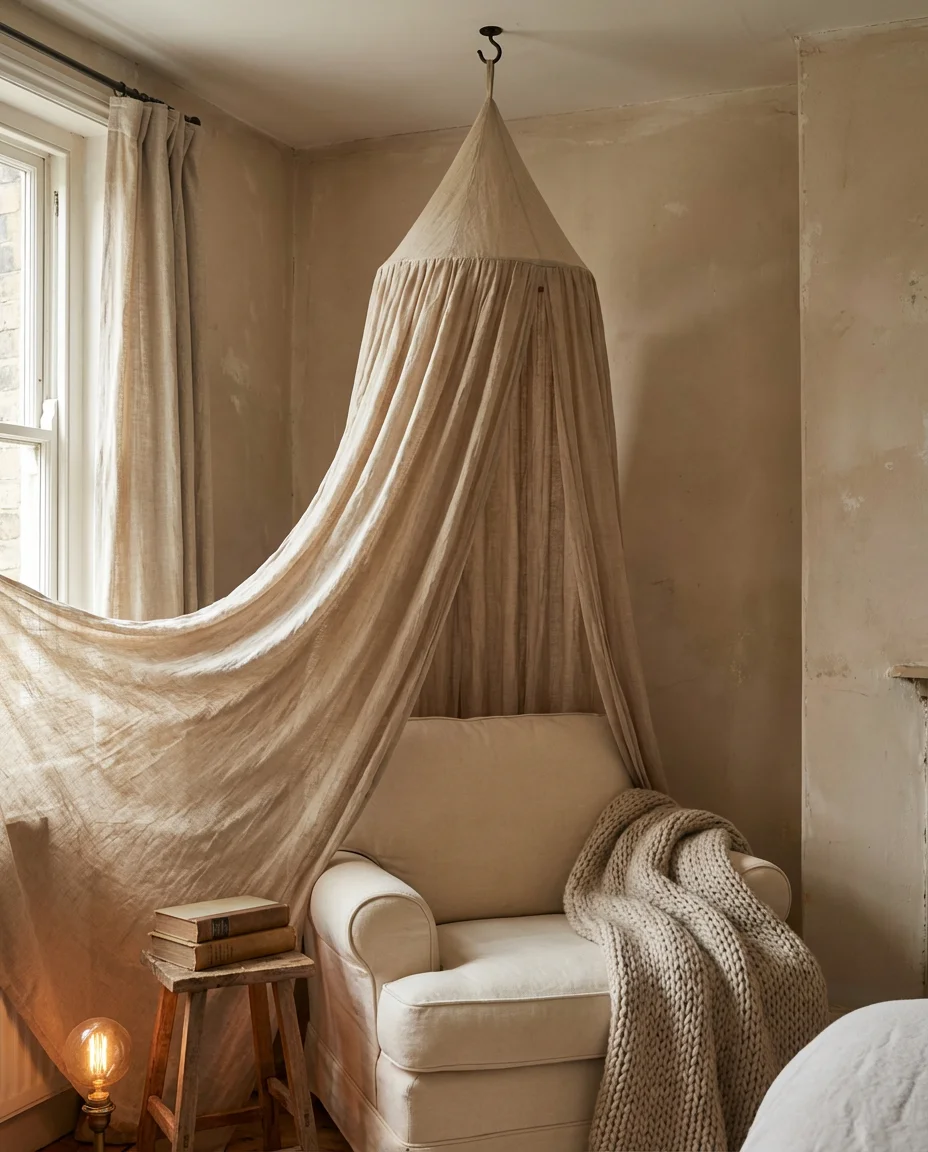
A canopy transforms any reading corner into something that feels genuinely transportive. Draped fabric—whether sheer linen, velvet, or even a simple cotton muslin—creates an overhead softness that signals to your brain: this space is for rest. It works especially well in bedroom setups where you want the corner to feel distinct from the rest of the room, almost like a room within a room. The effect is romantic without being fussy, and the setup can cost as little as a tension rod and a few yards of fabric from your local Joann’s.
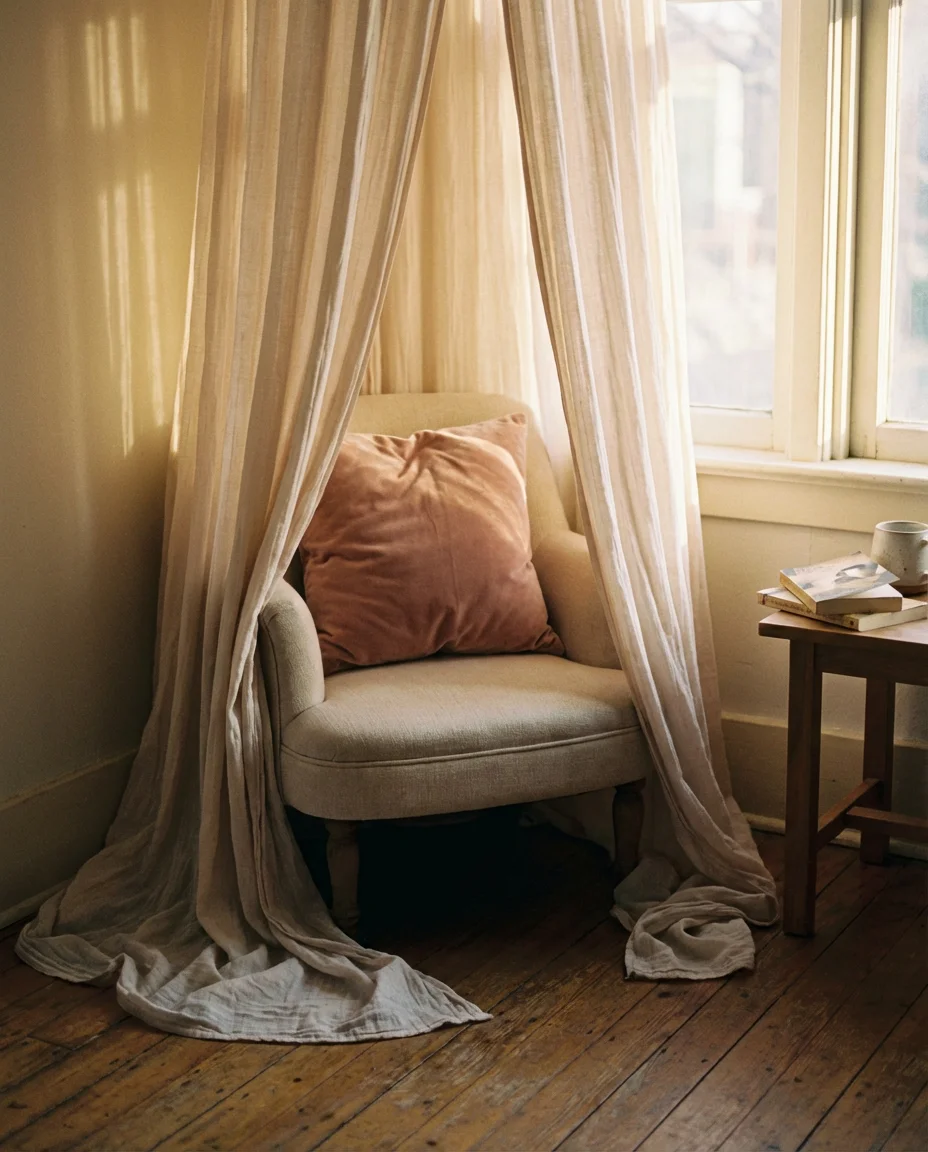
Budget-wise, this is one of the most accessible reading corner upgrades out there. A full canopy setup using IKEA curtain panels and a basic ceiling hook runs under $40 in most cases. If you want something more polished, look for a ready-made bed canopy frame on Amazon—they start around $60 and come with all the hardware. The payoff in atmosphere is enormous for the spend. It’s the kind of detail that makes guests stop and say, “Wait, did you always have that?”
2. Window Seat with Built-In Storage
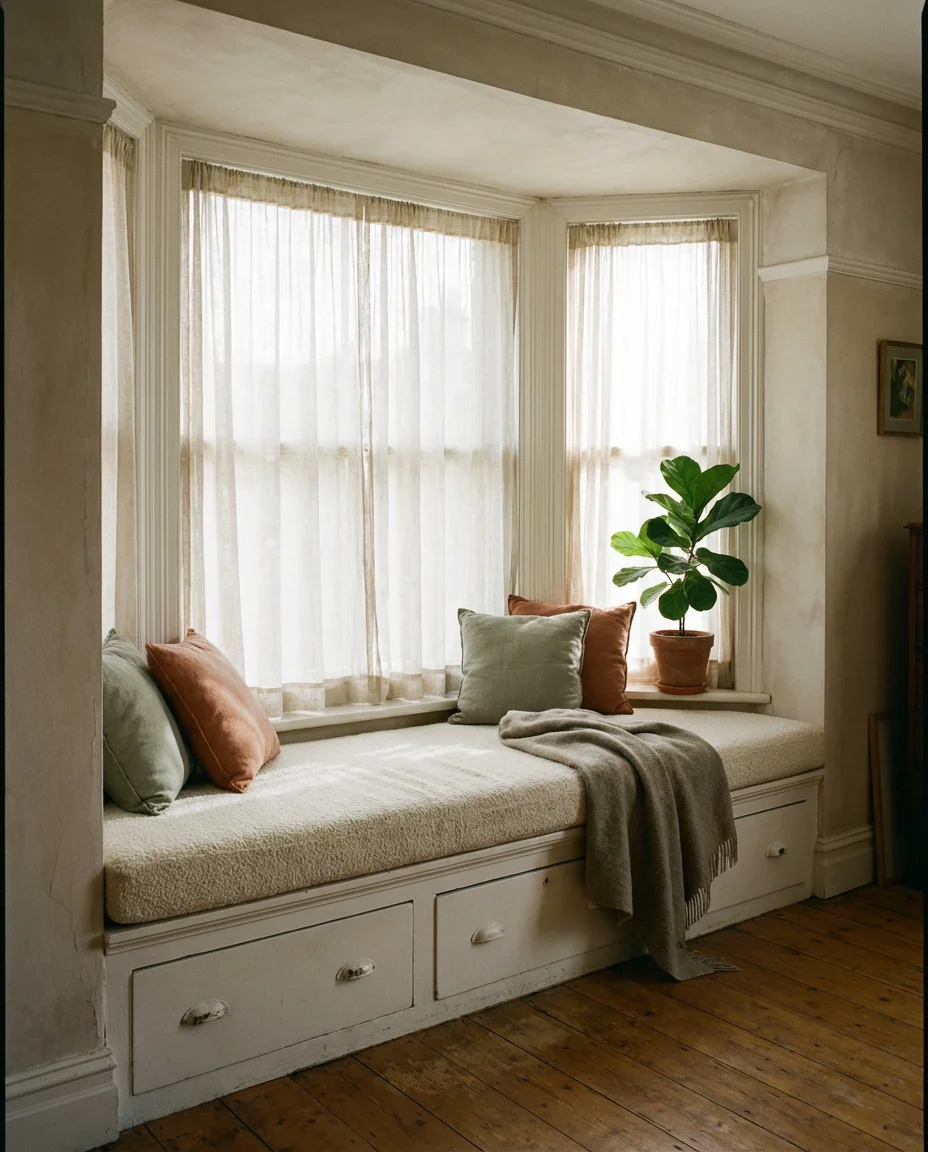
A window reading nook is the classic for a reason: natural light is simply the best light for reading, and the act of looking up from a page to watch the street or the garden below has a restorative quality that no interior lamp can replicate. When you add built-in storage below the seat—drawers or lift-top bins—you’ve solved two problems at once. This design works beautifully in older American homes with deep window bays, but it’s equally achievable in a new build with some creative trim carpentry.
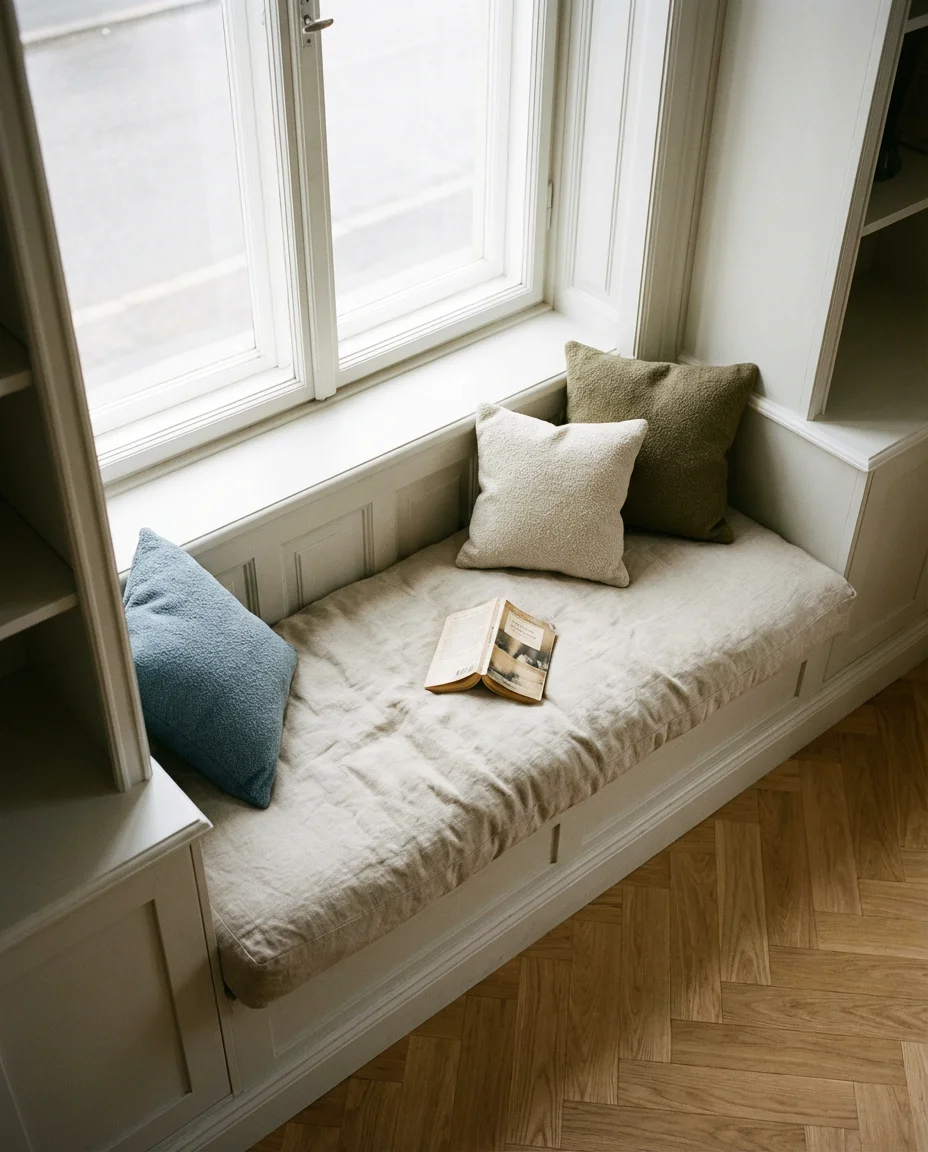
Where it works best: bay windows, end-of-hallway alcoves, and any window that sits low enough to the floor that the sill is roughly knee height. If your window doesn’t have a natural ledge to work from, a floating platform with a thick cushion achieves the same visual effect. Add a few scatter cushions, and you have the kind of reading corner that photographs beautifully—which is probably why this is consistently one of the most-saved ideas on Pinterest year after year.
3. Cozy Bedroom Corner with Layered Textiles
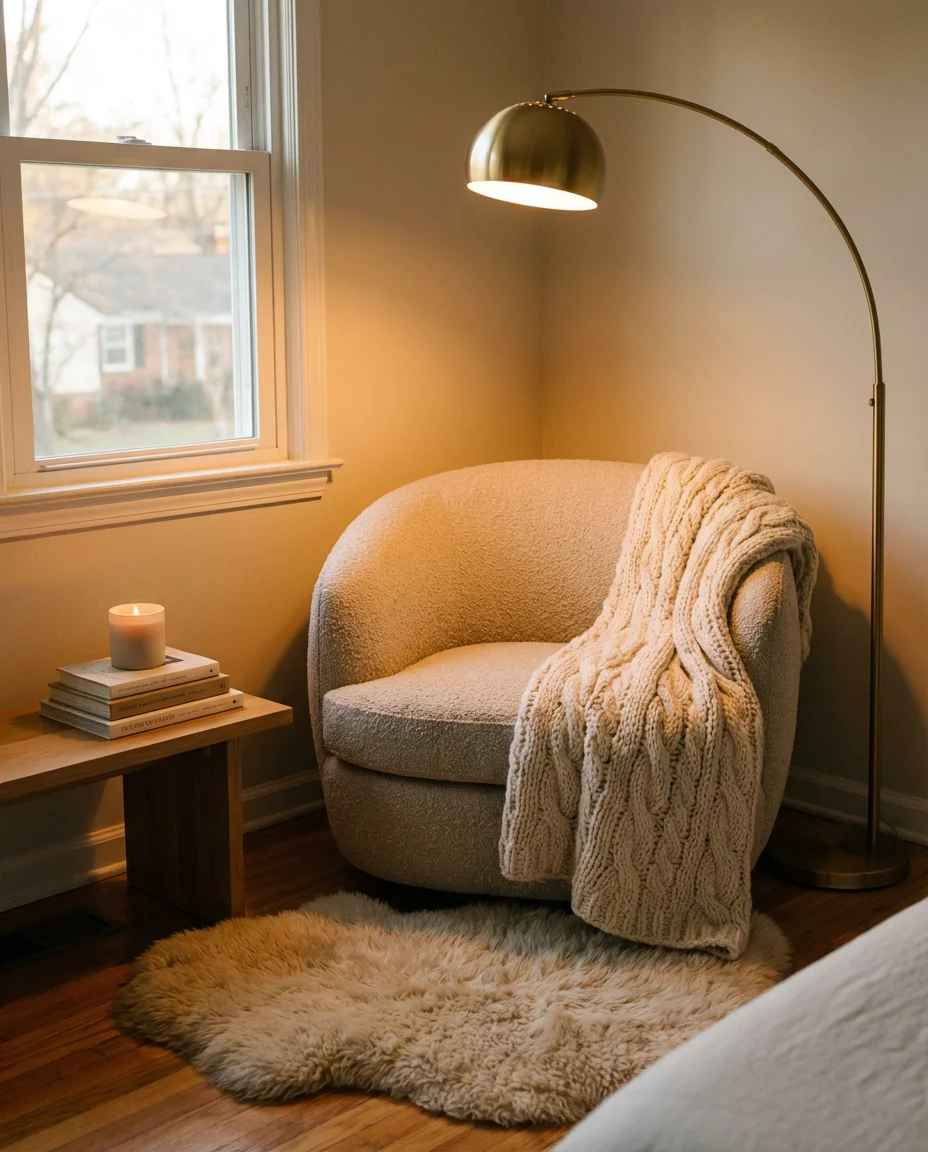
The cozy bedroom reading corner lives and dies by its textiles. A single armchair becomes a destination the moment you layer a chunky knit throw over one arm, tuck a small lumbar pillow into the seat, and add a sheepskin rug beneath. This is the kind of cozy inspo that dominates Pinterest boards every fall and winter—and for good reason. It’s deeply personal, relatively inexpensive to build, and it photographs in a way that makes every homeowner look like a professional stylist.
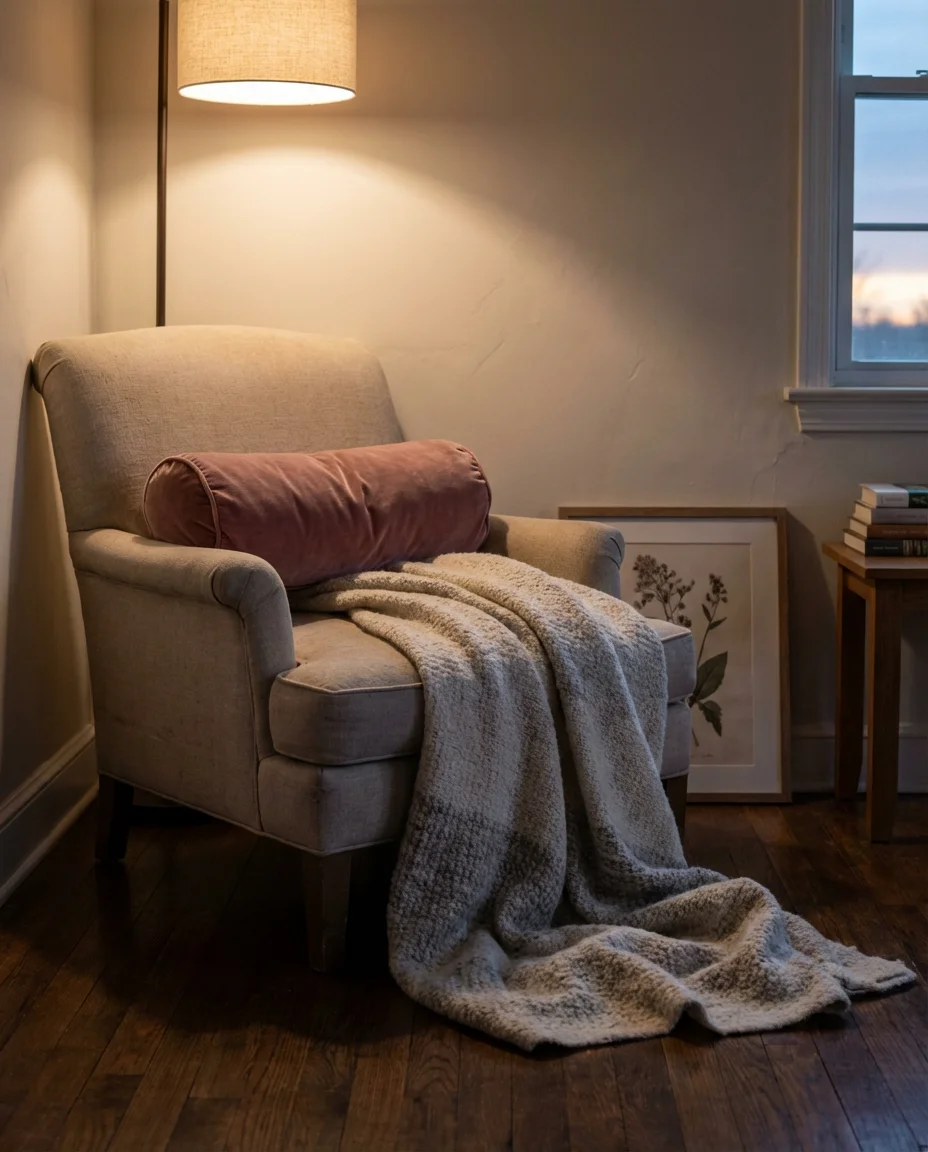
One mistake people consistently make here is choosing a chair that looks great but isn’t actually comfortable for long reading sessions. A slipper chair might be beautiful, but if you can’t sit in it for 45 minutes without your back aching, it’s decoration, not function. Before you buy, sit in the chair for at least five minutes in the showroom. Your future self—the one three chapters deep into a novel on a Sunday morning—will thank you.
4. Kids’ Room Reading Nook with Tent and Fairy Lights
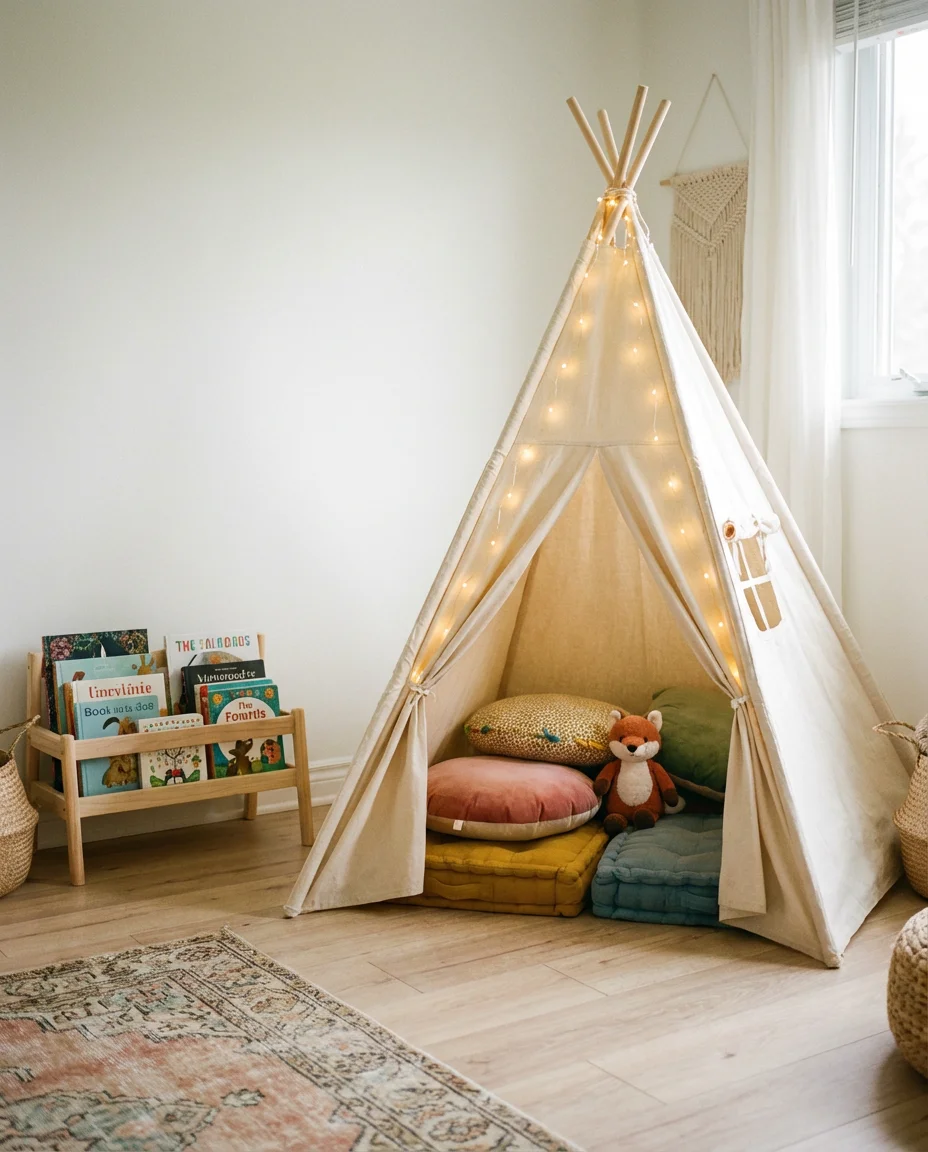
For a kid’s room, the reading corner should feel like a secret hideout. A pop-up tent or a simple teepee in the corner, layered with floor cushions and a string of warm fairy lights, creates the exact kind of magical atmosphere that makes a child want to reach for a book instead of a screen. This idea works for kids’ bedroom setups of any size—even small bedrooms can tuck a teepee into a corner without sacrificing too much floor space. The setup is also completely portable and can grow with the child.
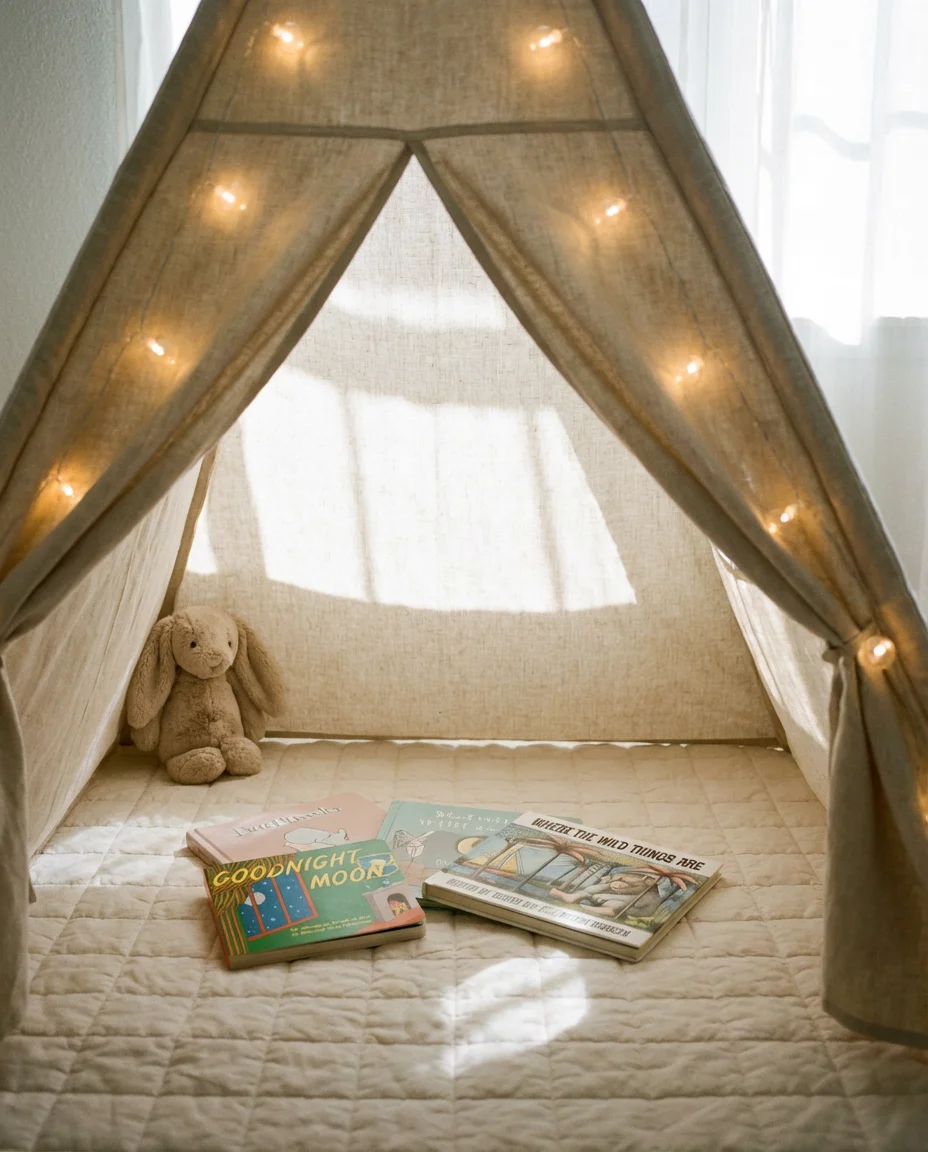
Sarah, a mom in Nashville, told a home décor blog that converting her daughter’s unused corner into a reading tent was the single change that made her six-year-old go from “I hate books” to reading for twenty minutes every night before bed. The tent cost $35 on Amazon. The lights were $8. The transformation was priceless—and that’s the kind of real-life story that explains why this idea keeps circulating every year among parents searching for ways to build reading habits early.
5. Aesthetic Floating Shelf Reading Wall
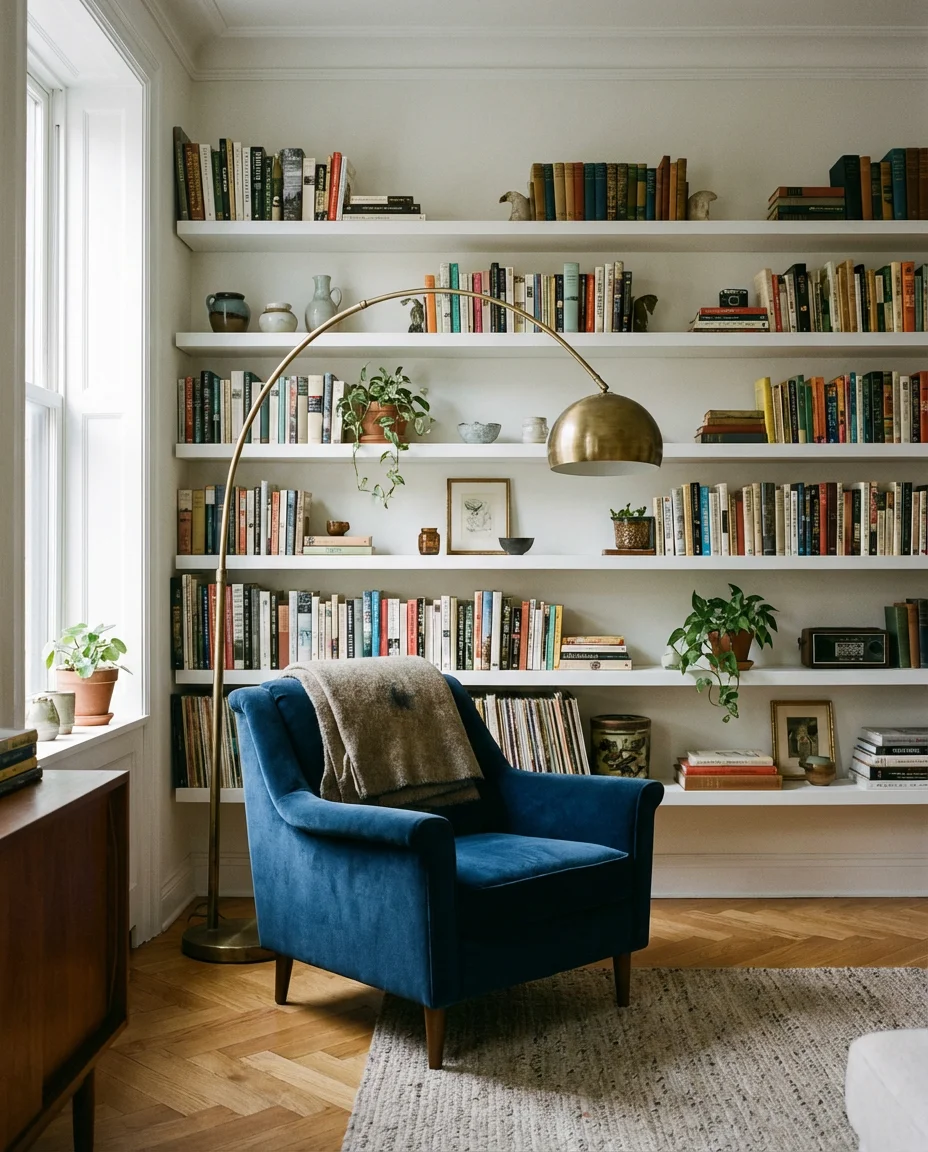
The aesthetic reading corner built around a floating shelf wall is one of those ideas that looks far more expensive than it is. Floor-to-ceiling shelves flanking a comfortable chair create an immersive, library-like atmosphere that feels deeply intentional. For the visual-first Pinterest audience, this setup is catnip—it’s the kind of decor that photographs beautifully in both natural morning light and warm evening lamp glow. The key is choosing shelves that have a consistent finish and spacing them thoughtfully so the wall reads as designed rather than chaotic.

Interior designers will tell you the secret to making a shelf wall feel curated rather than cluttered is the 70/30 rule: 70% books and functional items and 30% decorative objects like plants, candles, and small art pieces. Breaking up the spines with the occasional facing cover also adds visual rhythm without requiring expensive styling props. If your walls are rental-grade and you can’t put up heavy anchors, floating shelf systems from IKEA’s BILLY series can mimic the look using freestanding units pushed flush against the wall.
6. Classroom Reading Corner with Floor Cushions
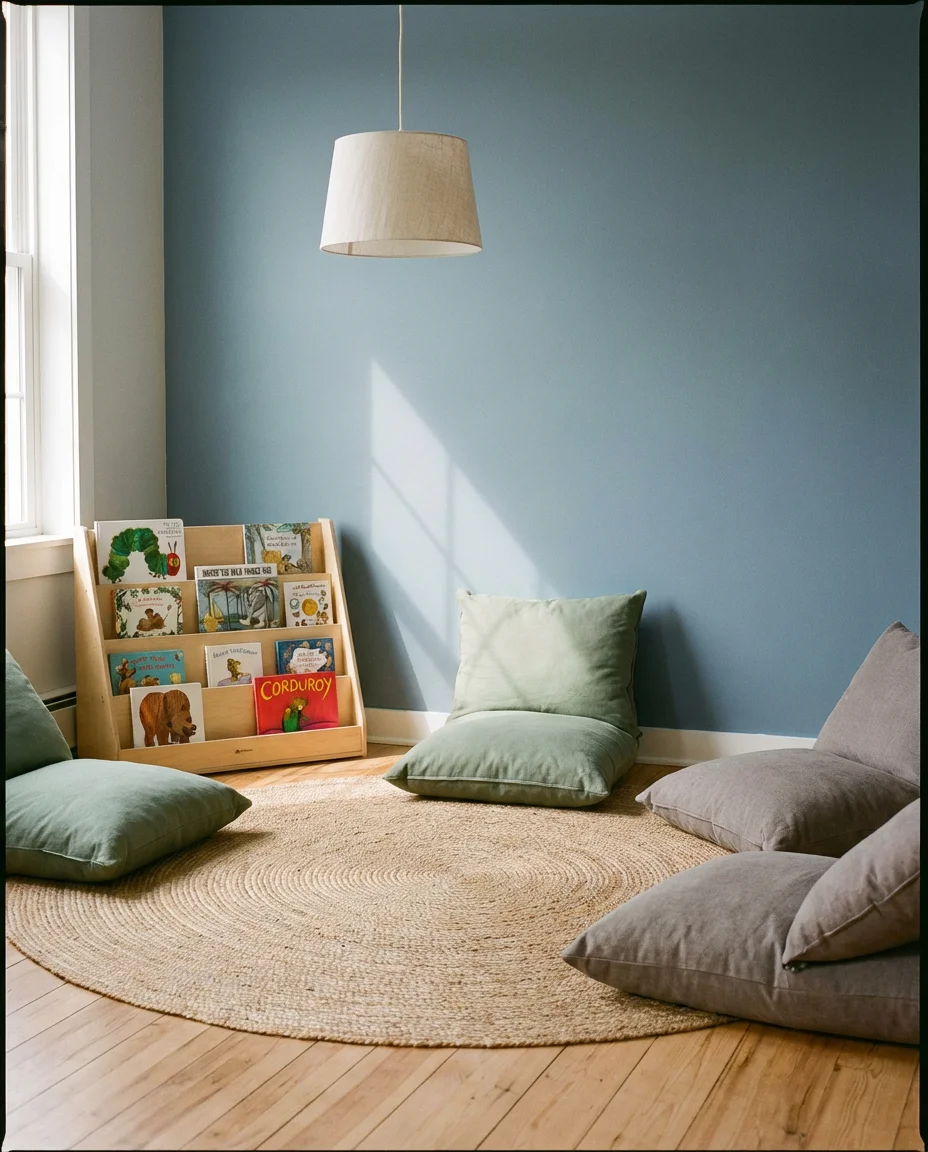
The classroom reading corner has evolved well beyond a bookshelf and a beanbag. In 2026, the best ideas for classroom reading spaces prioritize sensory comfort and visual calm—a corner rug in a muted tone, oversized floor cushions in a mix of textures, and a low shelf at child height so students can choose their own books independently. For preschool and early elementary teachers especially, this dedicated corner communicates something important: reading is a choice you make, not just a task you complete.

Teachers in American public schools often build these corners on tight budgets, and that’s where community sourcing shines. Facebook Marketplace and local Buy Nothing groups regularly surface gently used floor cushions, rugs, and low bookshelves for free or nearly free. Several teachers have documented building fully functional classroom reading corners for under $50 by combining thrift store finds with a few targeted purchases. The investment in the physical space pays dividends in student engagement that no worksheet can match.
7. Living Room Reading Nook Beside the Fireplace
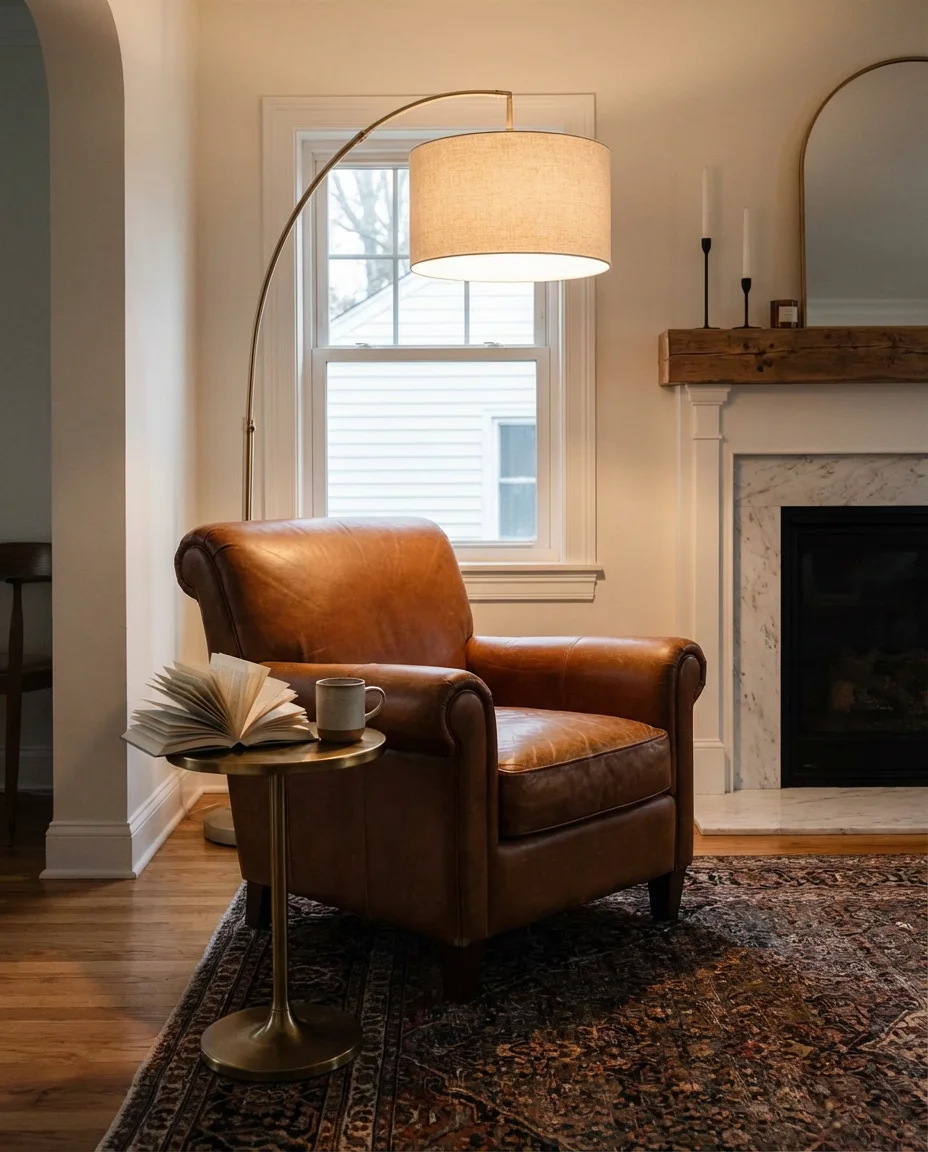
In the living room, the reading corner works best when it’s clearly delineated from the main seating area without being physically separated. Positioning a reading chair beside a fireplace—angled slightly inward with a small side table and a floor lamp—creates a secondary seating zone that invites solo use without disrupting the larger social function of the room. This is one of the most sought-after home layouts in American real estate listings, and it’s achievable even without an actual fireplace by using a media console or a styled bookcase as the anchor point instead.
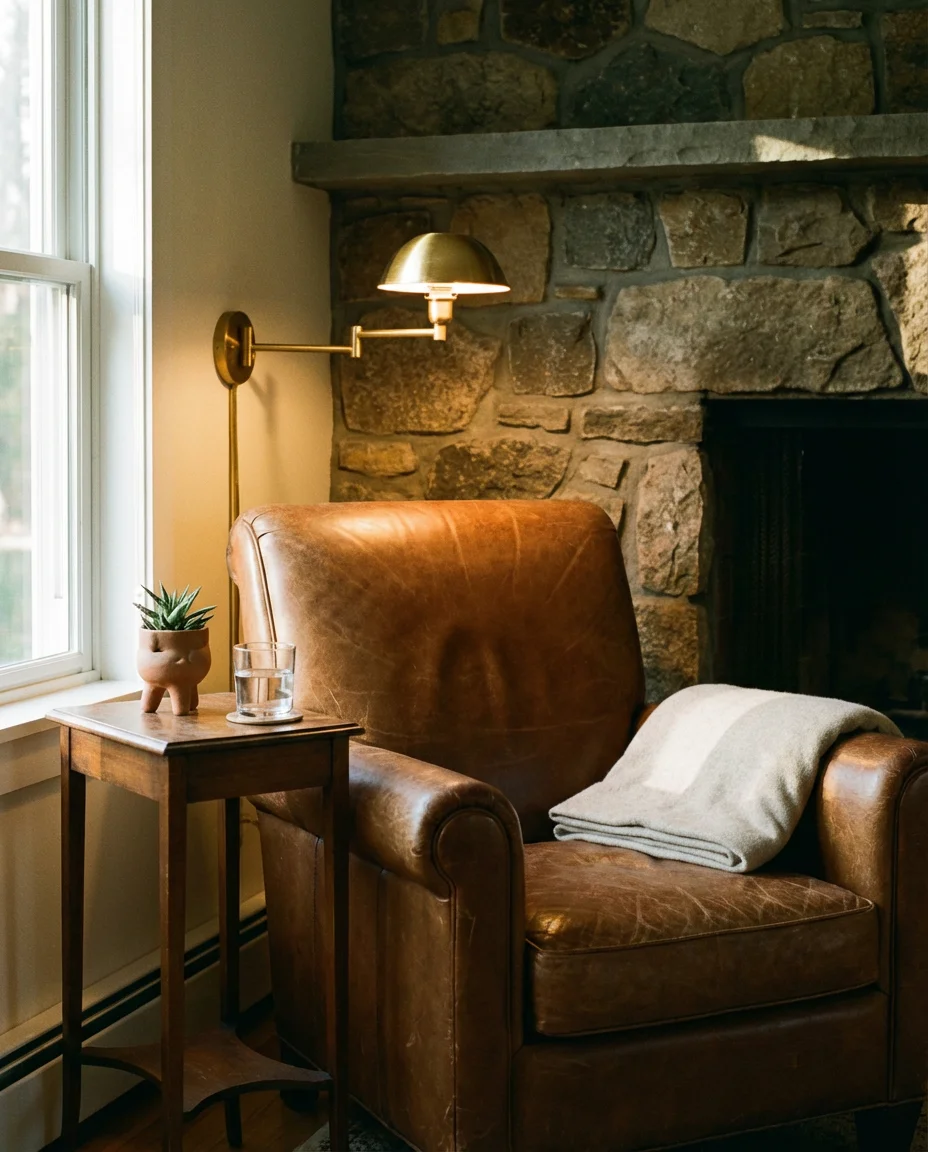
Lighting is everything in a fireplace-adjacent reading corner. The ambient glow of a fire (or an electric insert) is romantic but rarely sufficient for actual reading. A well-positioned arc floor lamp or a swing-arm wall sconce gives you the directed task light you need without killing the mood. For rooms with lower ceilings, a plug-in sconce mounted at shoulder height beside the chair is the most elegant solution—and it avoids the commitment of hardwired electrical work.
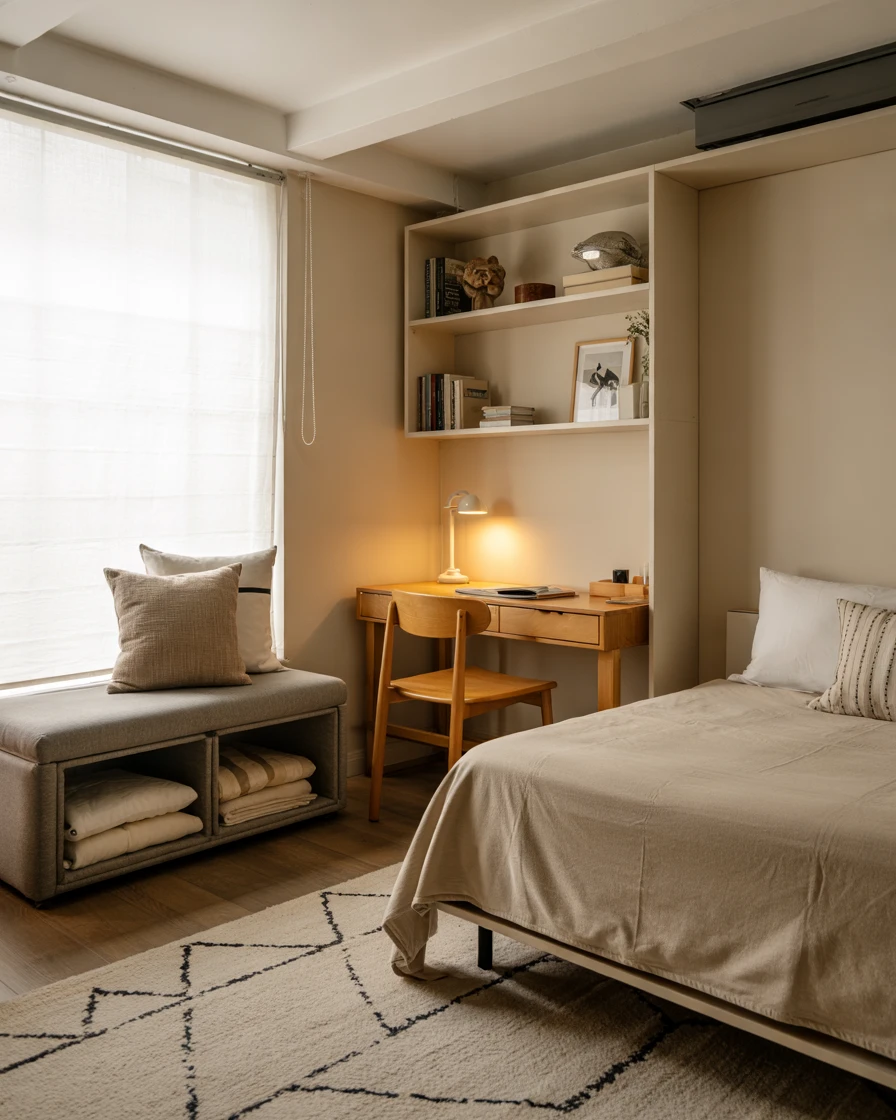
8. Small Space Bedroom Reading Corner
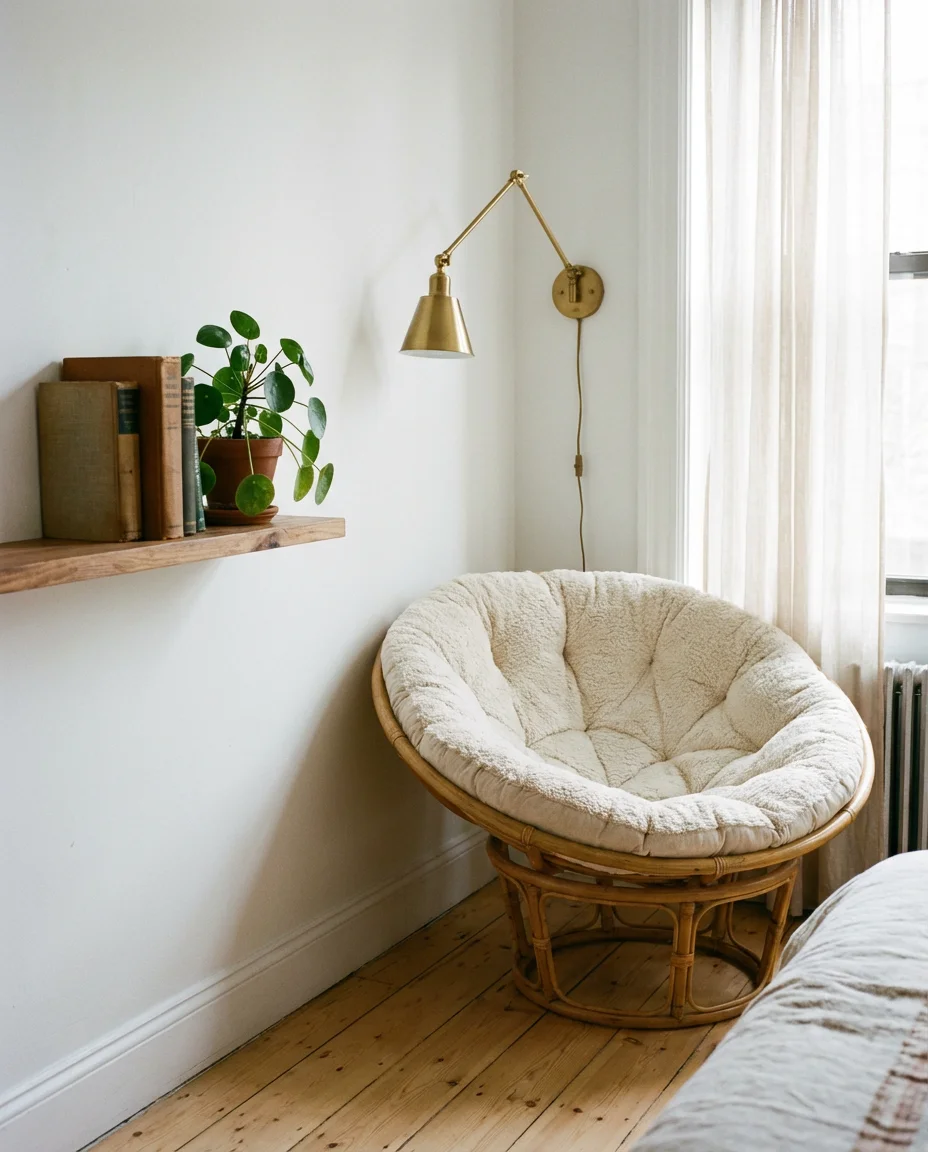
The bedroom small-spaces reading corner is arguably the most democratizing idea in this entire list—it proves that you don’t need square footage to have a beautiful reading nook. Even a corner that’s 24 inches wide can hold a small papasan chair or a slipper chair paired with a wall-mounted swing-arm lamp and a floating shelf for your current reads. The trick is to keep the footprint intentional and the scale appropriate: an oversized chair in a tiny corner reads as an obstacle, not a destination.
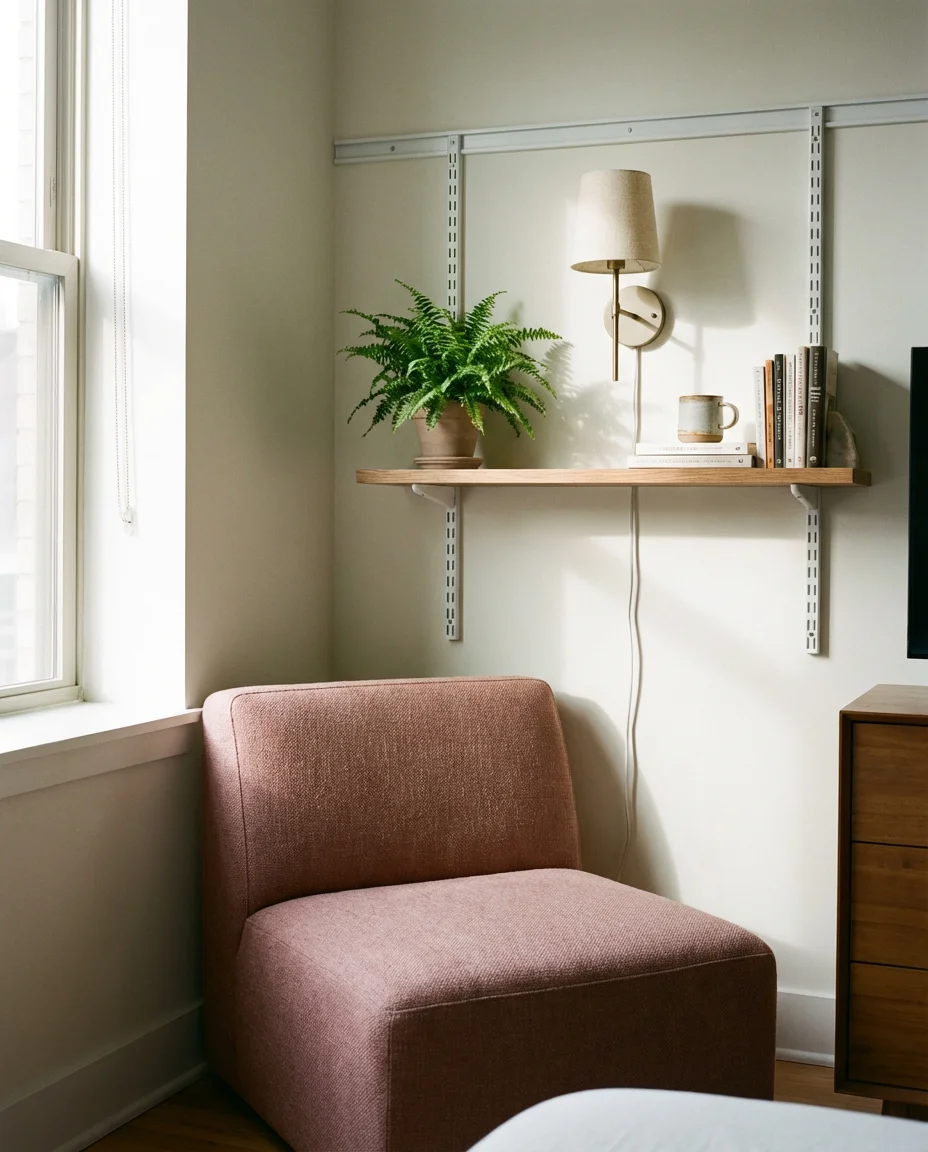
American apartment dwellers, especially those in studio and one-bedroom units in cities like New York, Chicago, and San Francisco, have turned small-space reading corners into an art form. The key insight from the most successful small-space setups is vertical thinking: wall-mounted shelves above the chair extend the storage capacity without expanding the floor footprint. A simple gallery rail system can hold both shelves and a lamp, leaving you with a fully functional reading corner that occupies the same square footage as a single armchair.
9. Nursery Reading Corner for New Parents

The nursery reading corner serves double duty: it’s where you’ll spend countless nighttime hours feeding and soothing a newborn, and it’s where you’ll begin the ritual of reading aloud that research consistently links to language development and a lifelong love of books. A comfortable glider or a nursing recliner is the obvious starting point, but the space around it matters just as much. Keep the color palette soft and low-stimulation, use dimmable lighting, and position the chair so you have a clear sightline to the crib without having to turn your whole body.
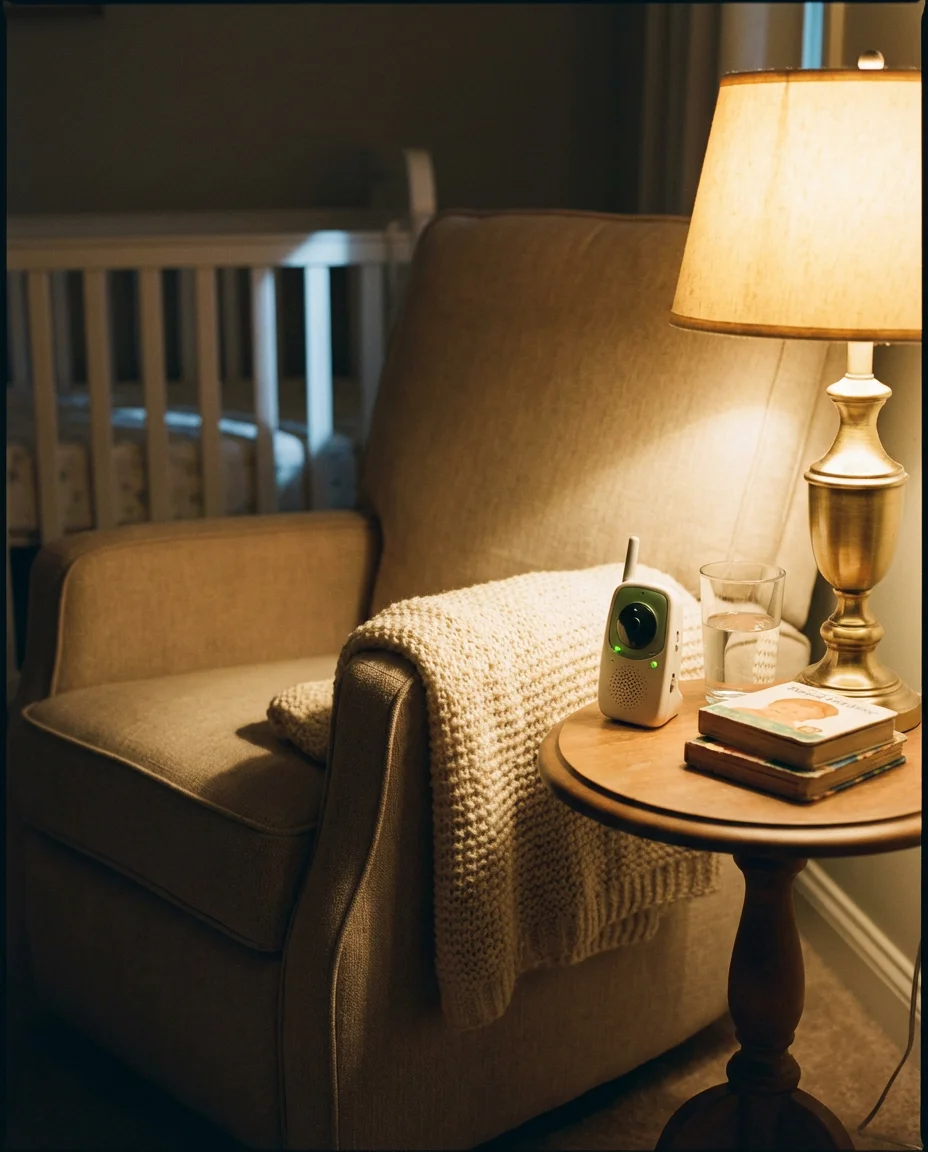
Child development experts consistently recommend reading aloud starting from birth, long before babies can understand words. The rhythm of language, the closeness of a parent’s voice, and the physical act of being held while looking at images all contribute to early literacy foundations. Building that ritual into a dedicated corner of the nursery—a chair, a small basket of board books, warm light—turns a daily necessity into something that feels sacred. Many parents report that the nursery reading corner becomes the room’s emotional center long after the child has grown out of it.
10. Playroom Book Nook with Low Shelves
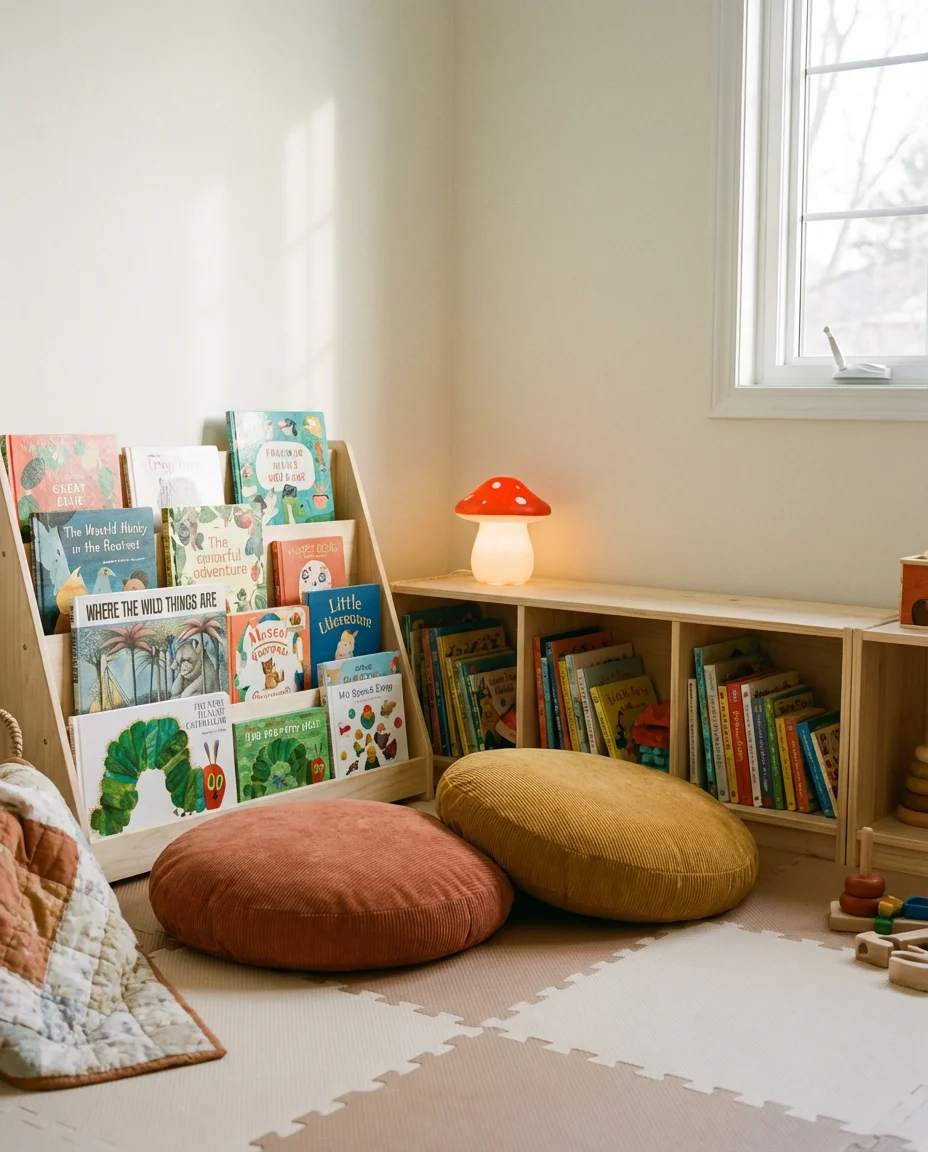
A playroom reading corner works best when books are visible and accessible—spine-out shelving hides covers and makes selection harder for young children, while front-facing display rails put the artwork of the book on show and invite browsing the same way a bookstore does. Pair low display shelves with a simple foam reading mat or a few floor cushions, and you have a corner that children will actually use rather than walk past. This layout is particularly effective in kindergarten and preschool-age playrooms where independent book selection is a developmental goal.
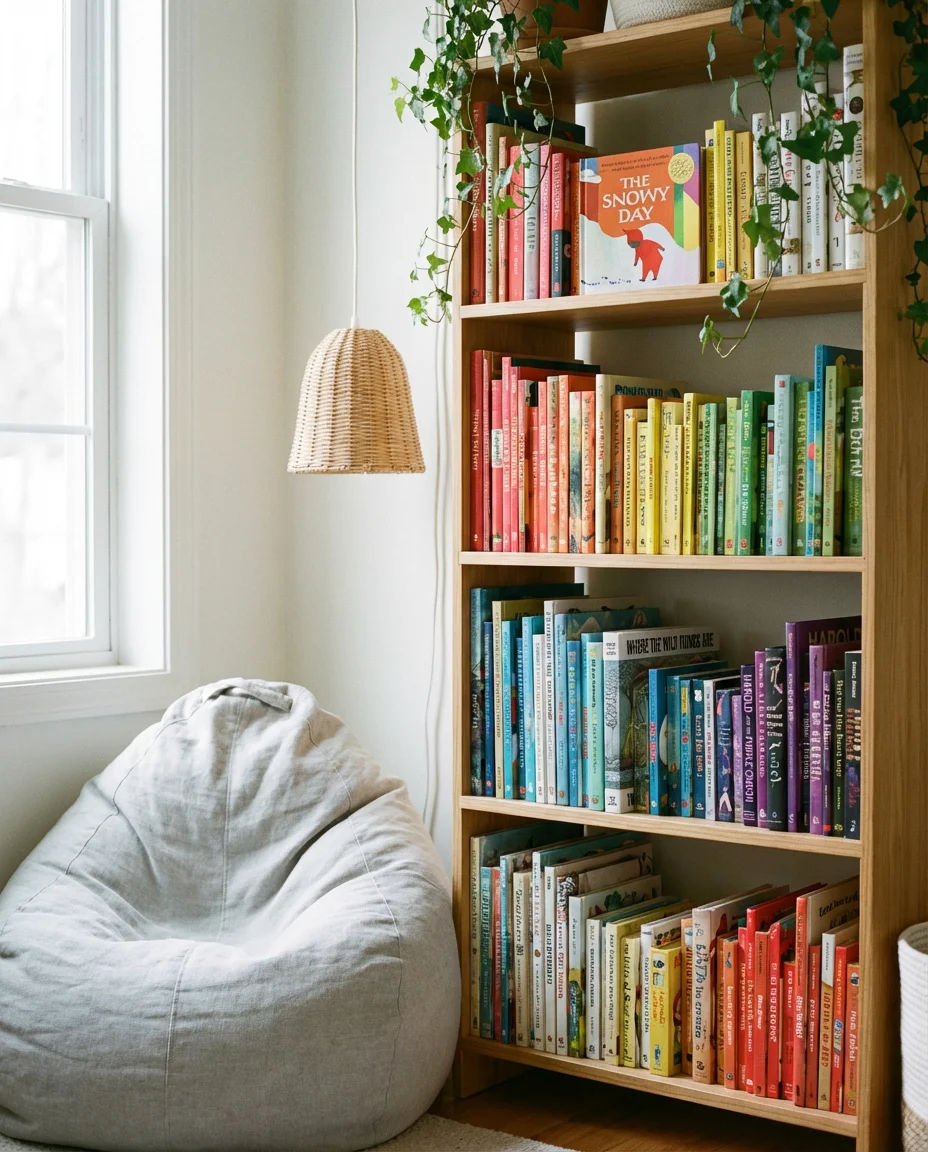
One thing parents often overlook in the playroom reading corner: the lighting. Overhead recessed lighting is functional but flat—it doesn’t signal “this is a special, calm space.” Adding a low pendant or a plug-in floor lamp with a warm bulb changes the atmosphere in a way that children actually respond to. Many parents notice that their kids gravitate toward the reading corner in the late afternoon when the lamp is on, almost instinctively seeking out the cozier light. It’s a small design detail with a surprisingly large behavioral effect.
11. Kindergarten Classroom Reading Space

A well-designed kindergarten reading corner can fundamentally change how young learners relate to books. The best setups for this age group combine visual warmth—soft rugs, gentle colors, and low lighting—with clear structure: a defined entry point, a limited number of seats so the corner doesn’t become chaotic, and books organized at eye level in a way children can navigate without adult help. This is one of those school environment details that research supports strongly: children in classrooms with dedicated, inviting reading spaces read more voluntarily.
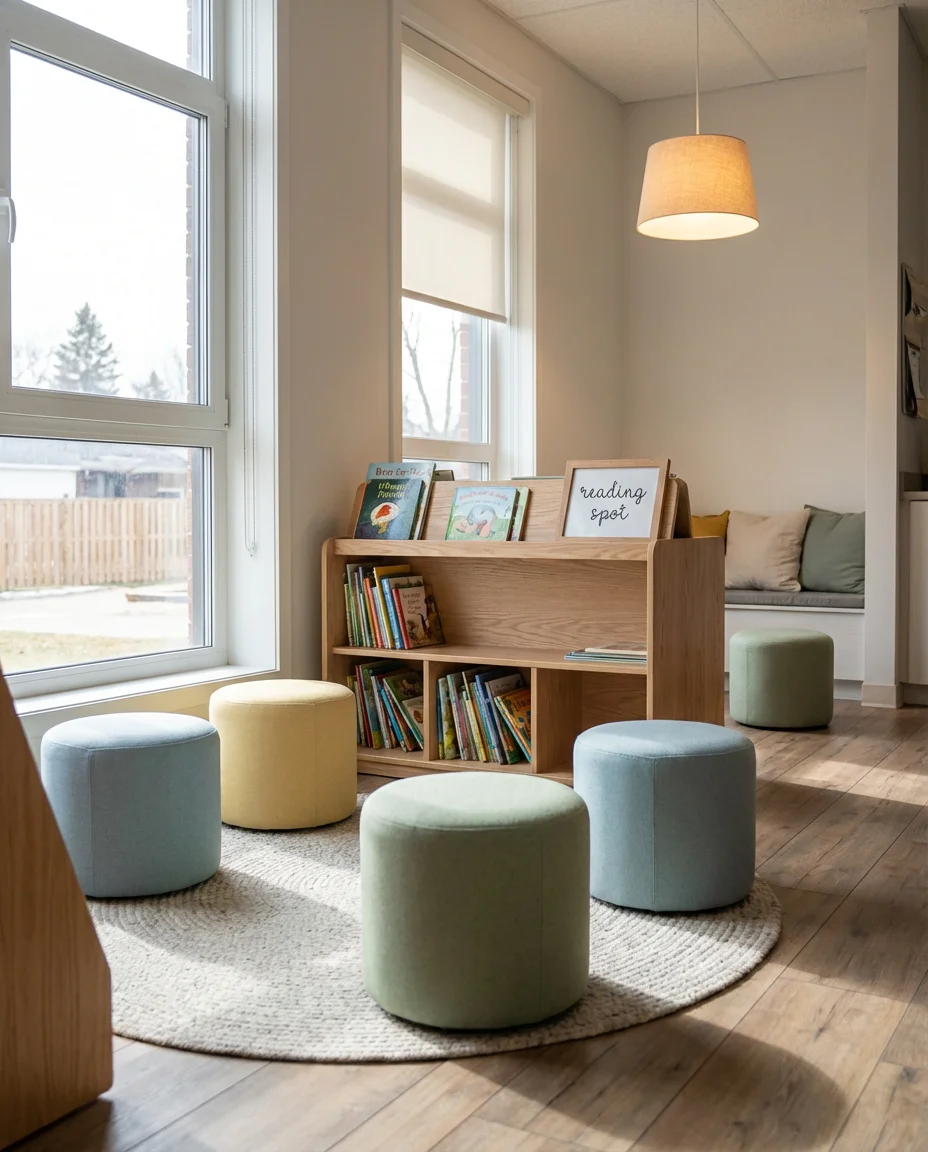
Experienced early childhood educators suggest limiting the kindergarten reading corner to three or four children at a time—a small sign-up system, a limited number of cushions, or a “seats taken” indicator can manage this without making the space feel restrictive. The goal is to make it feel like a privilege rather than a corner of the room. When kids have to wait their turn for the reading nook, they tend to value it more. It becomes a destination, and destinations are where reading habits begin.
12. Home Library Corner with Dark Moody Walls
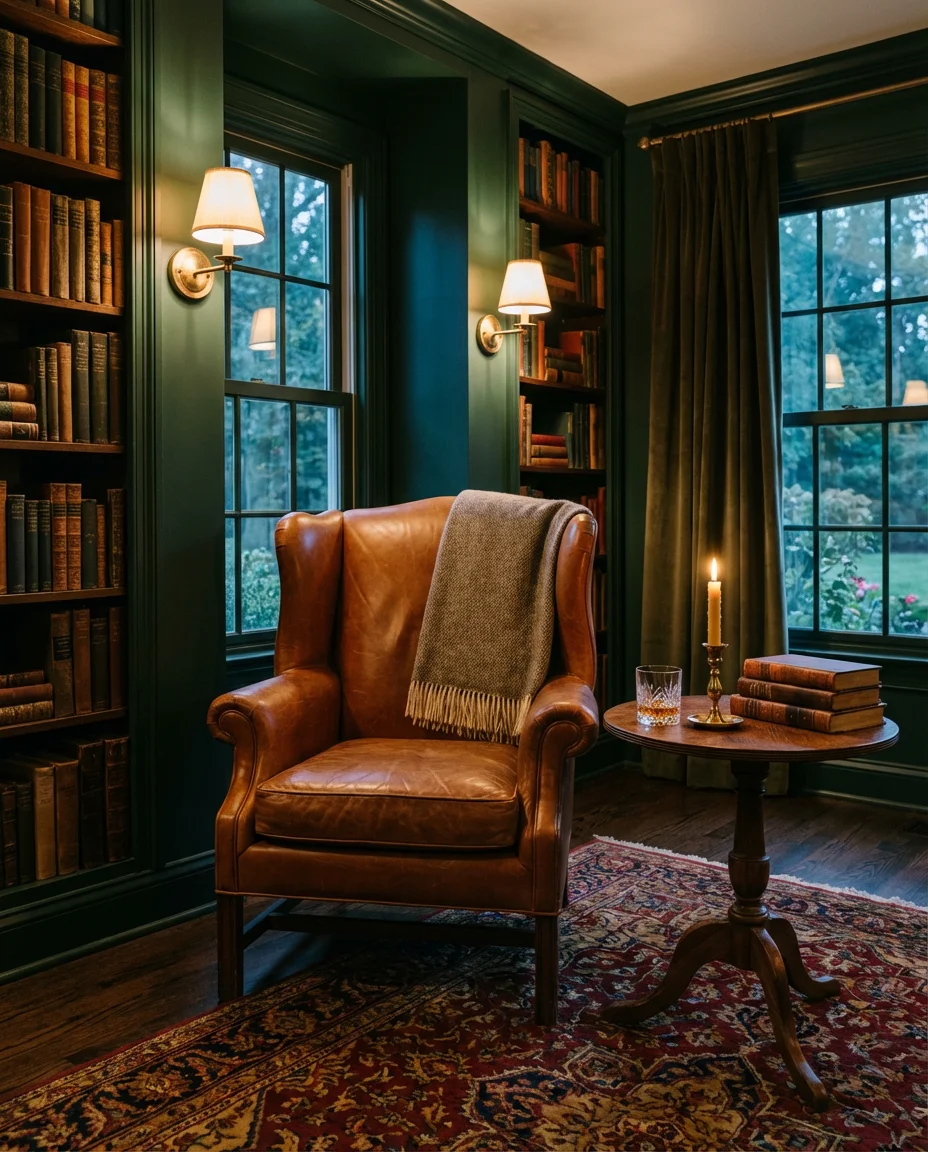
Deep, moody wall colors—navy, forest green, charcoal, and oxblood—are having a significant moment in American home interior design, and the reading corner is one of the best places to commit to them. A dark-walled reading nook feels intentionally curated, a little theatrical, and deeply atmospheric in a way that pale walls simply can’t achieve. Pair a saturated wall color with warm brass hardware, a leather or velvet chair, and amber-toned lighting, and you have a corner that reads like a private club or a study in an old manor house.
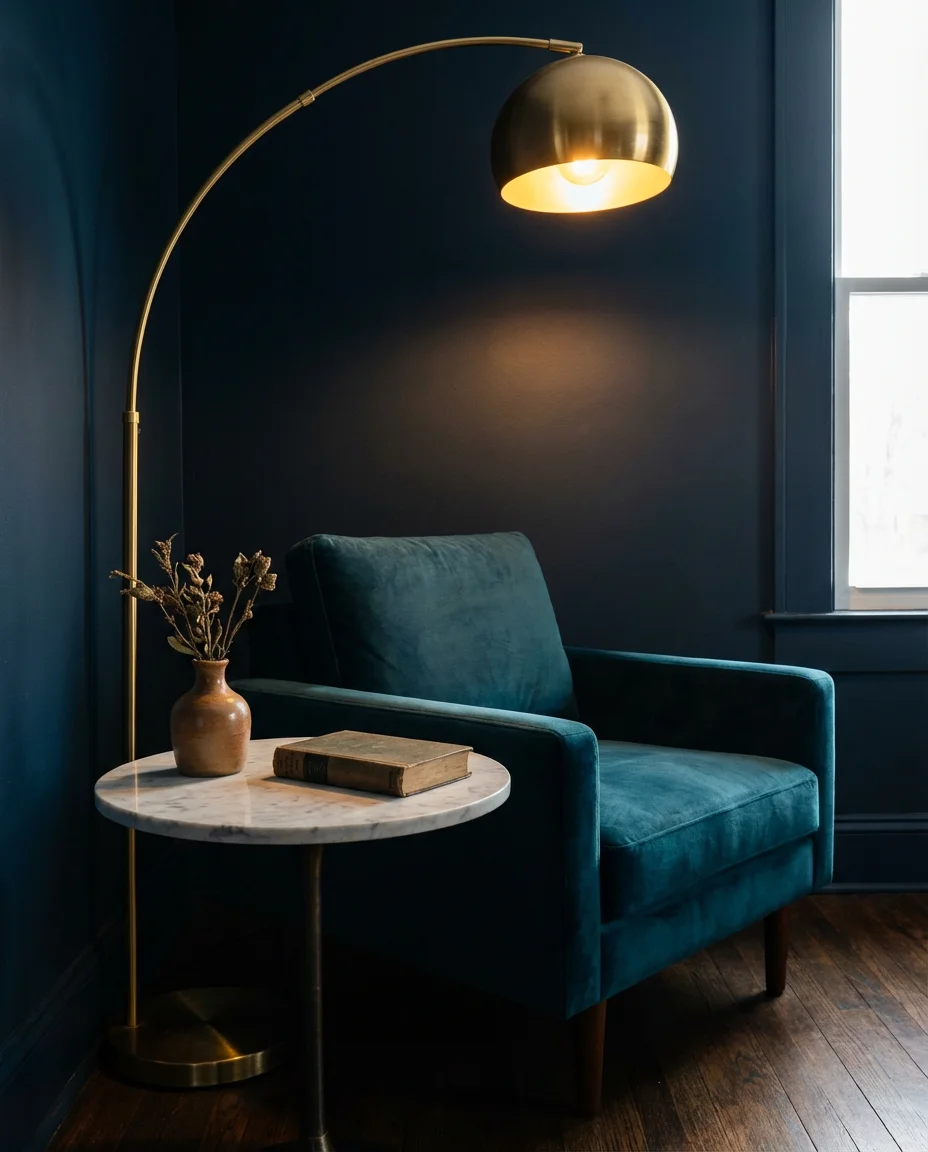
The most common mistake with dark-walled reading corners is under-lighting them. Dark paint absorbs light aggressively, and what looks moody and intentional in a professional photo can look gloomy and cave-like in real life if the lighting isn’t carefully considered. You need at least two light sources: a warm overhead or pendant for ambient fill and a directed task lamp beside the chair for actual reading. Sconces at shoulder height on either side of the chair are the gold standard—they provide beautiful symmetry and practical illumination in equal measure.
13. Preschool Cozy Reading Corner with Bean Bags
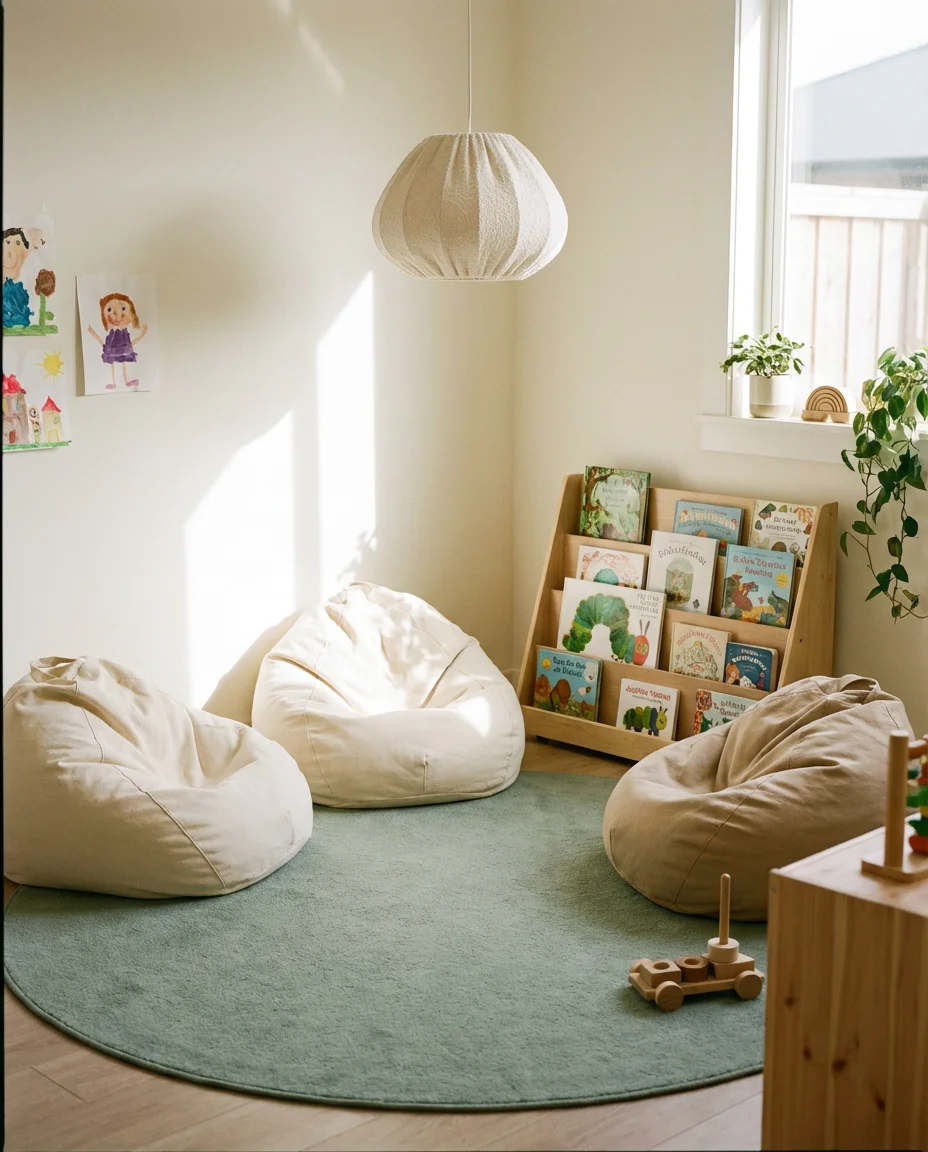
For a preschool setting, bean bags are hard to beat as reading corner seating. They’re low to the ground, endlessly adjustable, washable, and—crucially—children find them deeply comfortable in a way that adult furniture simply isn’t designed for. A cluster of two or three bean bags in different sizes, arranged on a soft area rug in a corner defined by a simple bookshelf, gives you a reading space that’s both functional and warmly cozy. Choose covers in muted tones or natural cotton rather than the bright primaries that are tempting for kids’ spaces but tend to age quickly in terms of style.
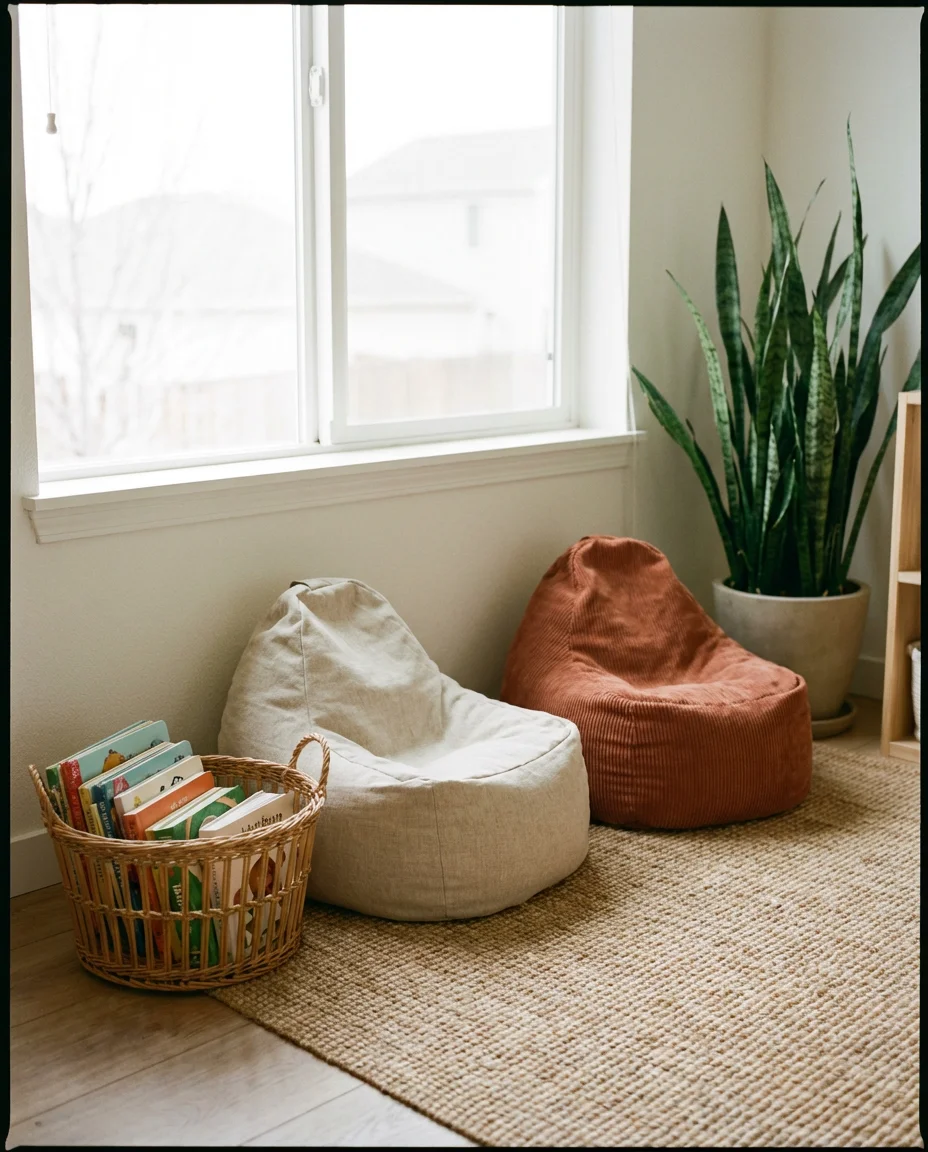
From a practical standpoint, the preschool beanbag reading corner is also one of the most budget-friendly classroom setups you can build. Bean bag covers can be sourced from IKEA, Amazon, or even Walmart for $15–$30 each, and the filler lasts for years with occasional topping up. More importantly, the sensory quality of sinking into a beanbag has a genuine calming effect on young children who may otherwise struggle to settle into quiet reading time. Several preschool teachers report it as the single most effective investment in their classroom reading program.
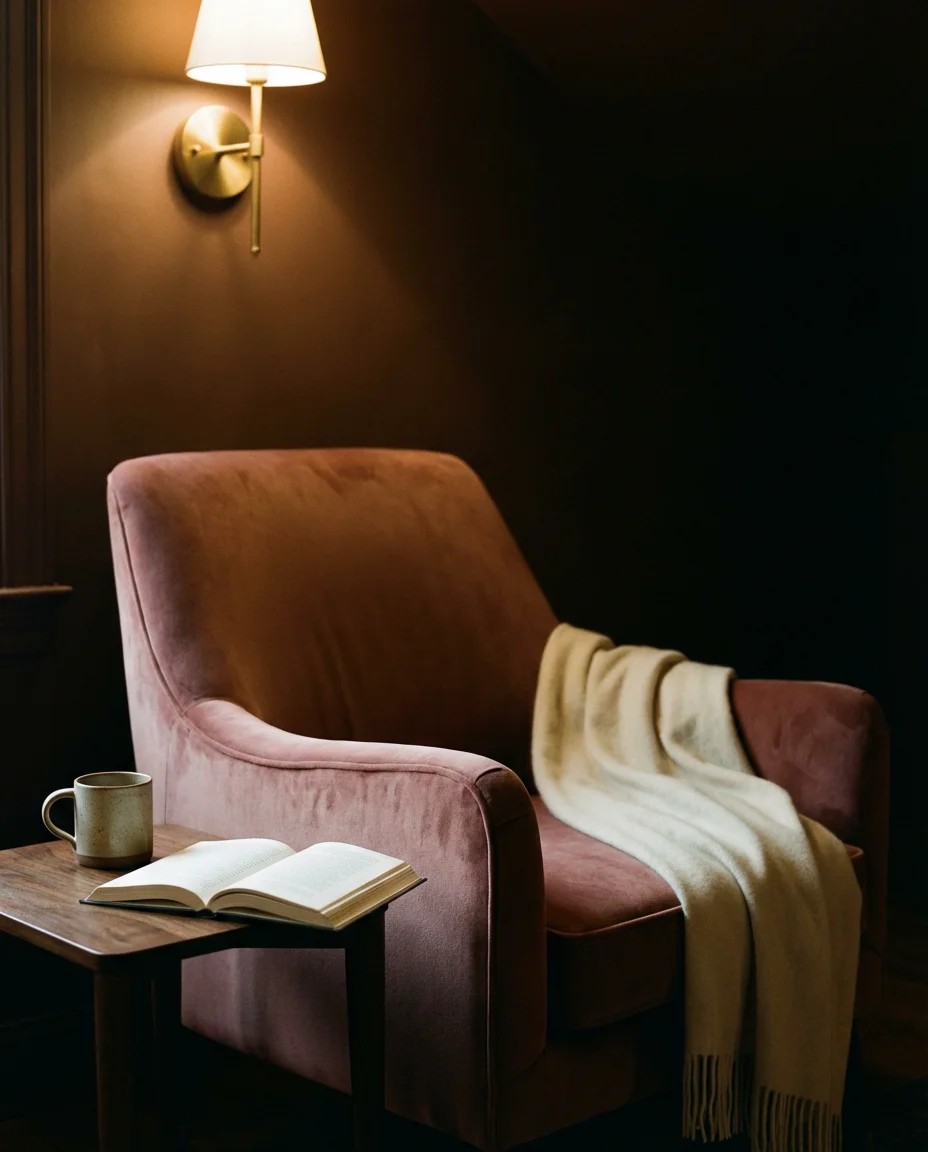
14. Aesthetic Adults Reading Corner with Velvet Chair
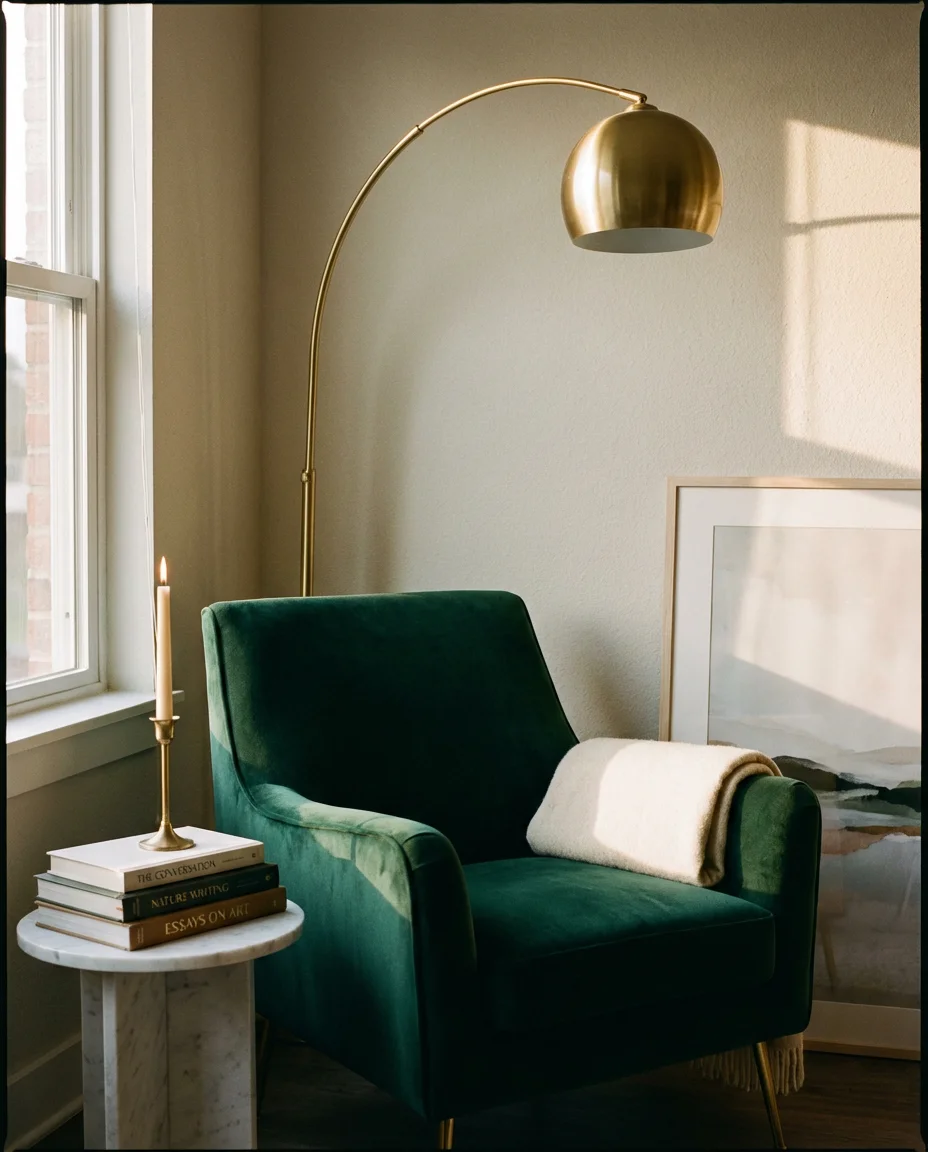
For ideas for adults who want a reading corner that feels genuinely grown-up and aesthetic, the velvet accent chair is the defining piece. A deep teal, forest green, or dusty rose velvet chair beside a tall floor lamp, with a small marble-top side table for your drink and a neat stack of current reads, is one of those interiors that looks exactly like the life you’re trying to build. This is the reading corner for the adult who has moved past the “functional furniture only” phase and is ready to invest in spaces that are beautiful because beauty matters.
Velvet has a reputation for being high-maintenance, but modern performance velvets—which most furniture retailers now offer as an upgrade fabric—are surprisingly durable and stain-resistant. If you have pets or small children sharing the space, look specifically for “performance velvet” or “easy-clean velvet” in product descriptions. The tactile quality of the fabric is what elevates the entire reading corner from ordinary to exceptional, and sitting in a well-made velvet chair on a cold autumn evening with a novel and a glass of wine is, genuinely, one of life’s better experiences.
15. Under-Stair Reading Nook
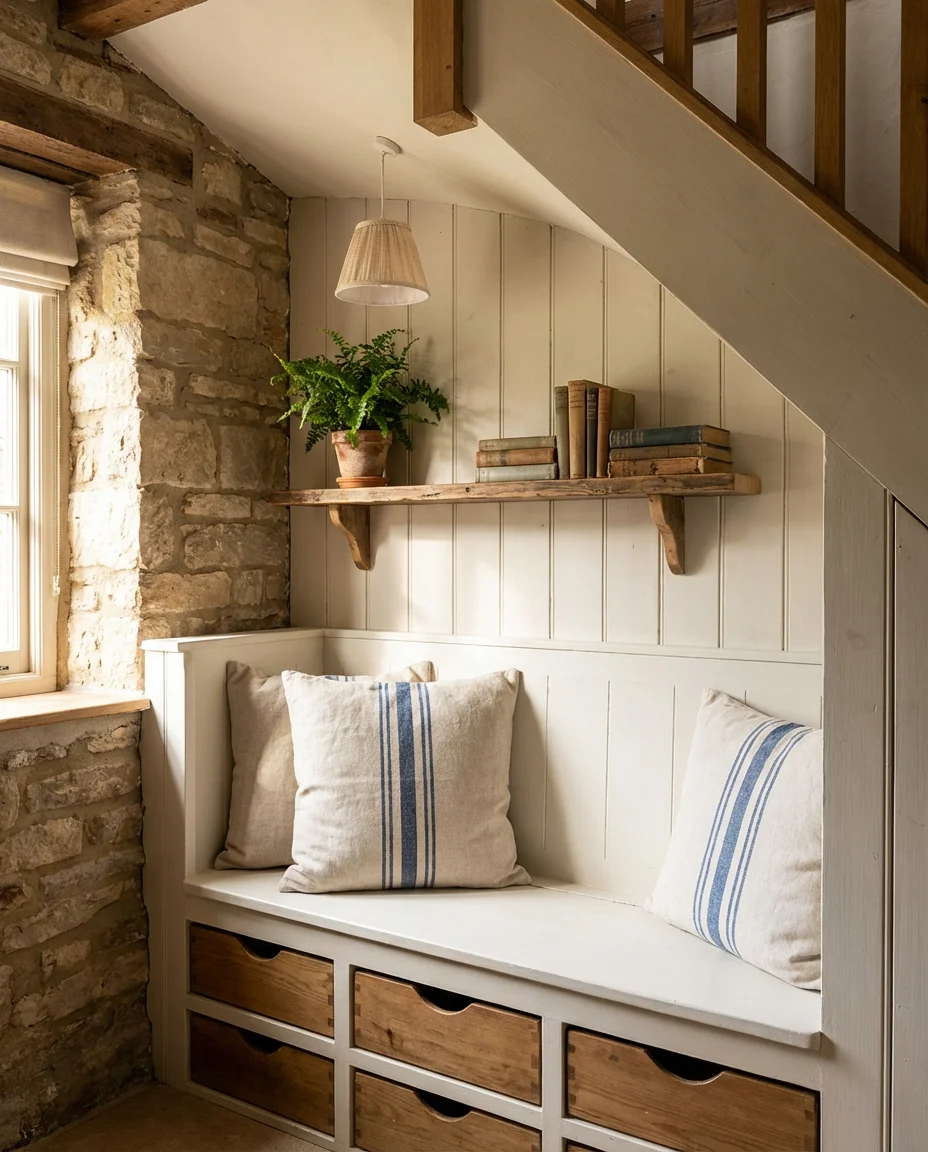
The space beneath a staircase is one of the most underused architectural opportunities in American home design, and converting it into a reading nook is consistently one of the highest-ROI renovation projects a homeowner can undertake—both for daily quality of life and for eventual resale value. A built-in bench with drawers below, a couple of shelves along the angled ceiling, and a reading lamp create a tucked-in, protected feeling that’s fundamentally different from an open-plan reading chair. It feels like your own private corner of the house.

A licensed contractor in Portland, Oregon, who specializes in small-space renovations, notes that under-stair reading nooks typically run between $800 and $2,500 depending on the finish level—far less than a full bathroom or kitchen update, but with a daily impact that clients consistently describe as one of their favorite improvements to the house. For renters, a freestanding approach using a narrow loveseat and a couple of tall plants to define the space can achieve a similar visual effect without any construction at all.
16. Boho Reading Corner with Macramé and Plants
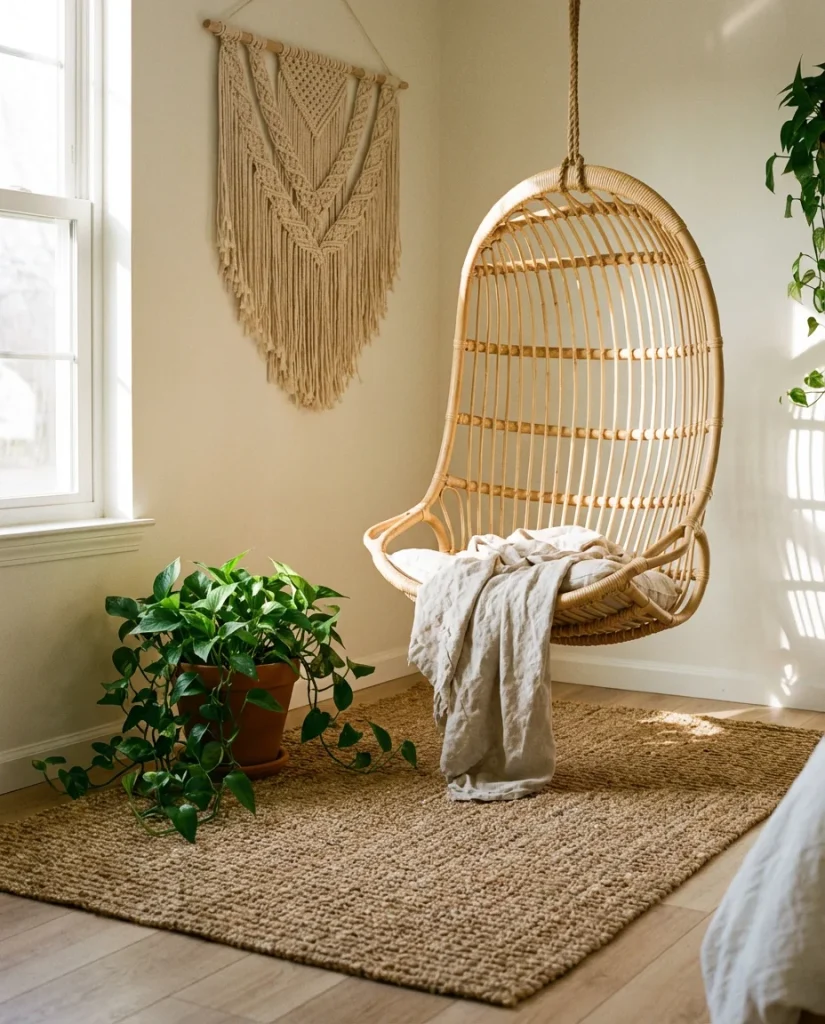
The bohemian reading corner remains one of the most beloved and most-searched styles on Pinterest, and in 2026 it’s evolved into something a little more refined than its maximalist origins. The updated boho reading nook leans into natural textures—jute rugs, rattan chairs, and linen throws—while keeping the plant life lush and the macramé intentional rather than overwhelming. This decor style works especially well in spaces with warm natural light and wood floors, where the organic materials can breathe and the overall effect feels curated rather than chaotic.
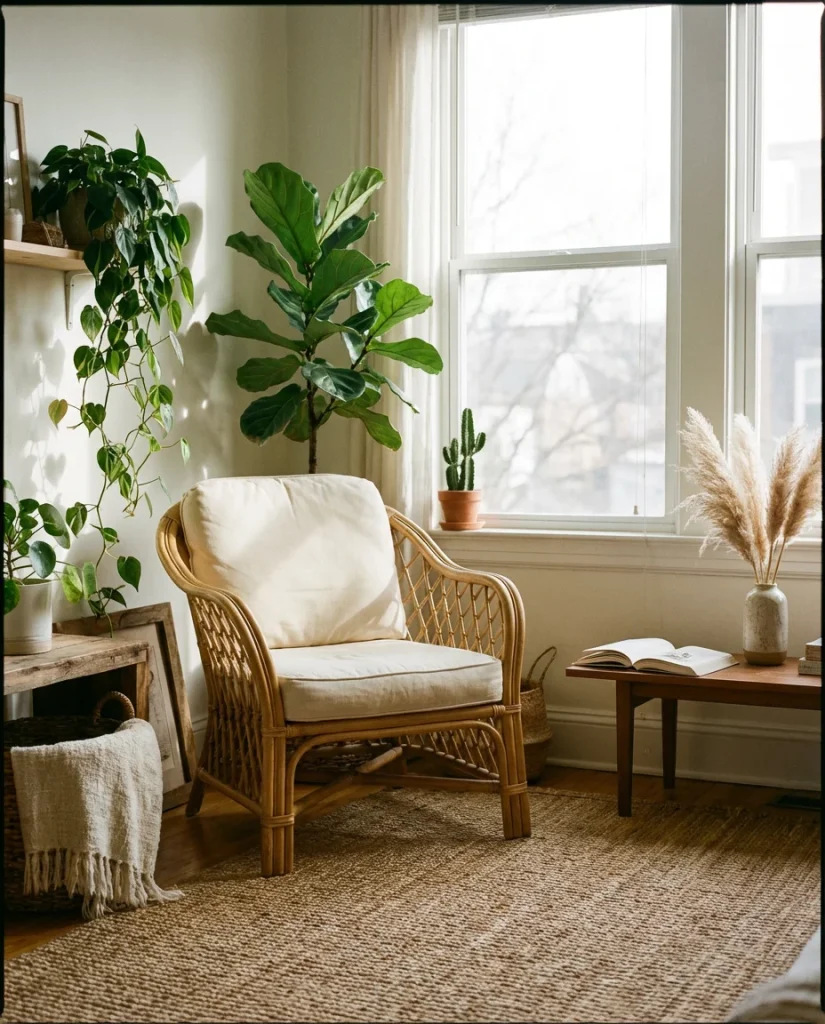
What makes the boho reading corner feel authentically personal rather than like a Pinterest mood board made physical is restraint: pick three to four natural materials and repeat them, rather than adding every texture you love. A rattan egg chair, a jute rug, a linen throw, and a single macramé wall hanging above the chair is a complete and cohesive setup. Add a trailing pothos or a fiddle-leaf fig in a terracotta pot, and the corner practically styles itself. The plants do as much visual work as any purchased décor piece.
17. Minimalist Reading Corner for Modern Homes
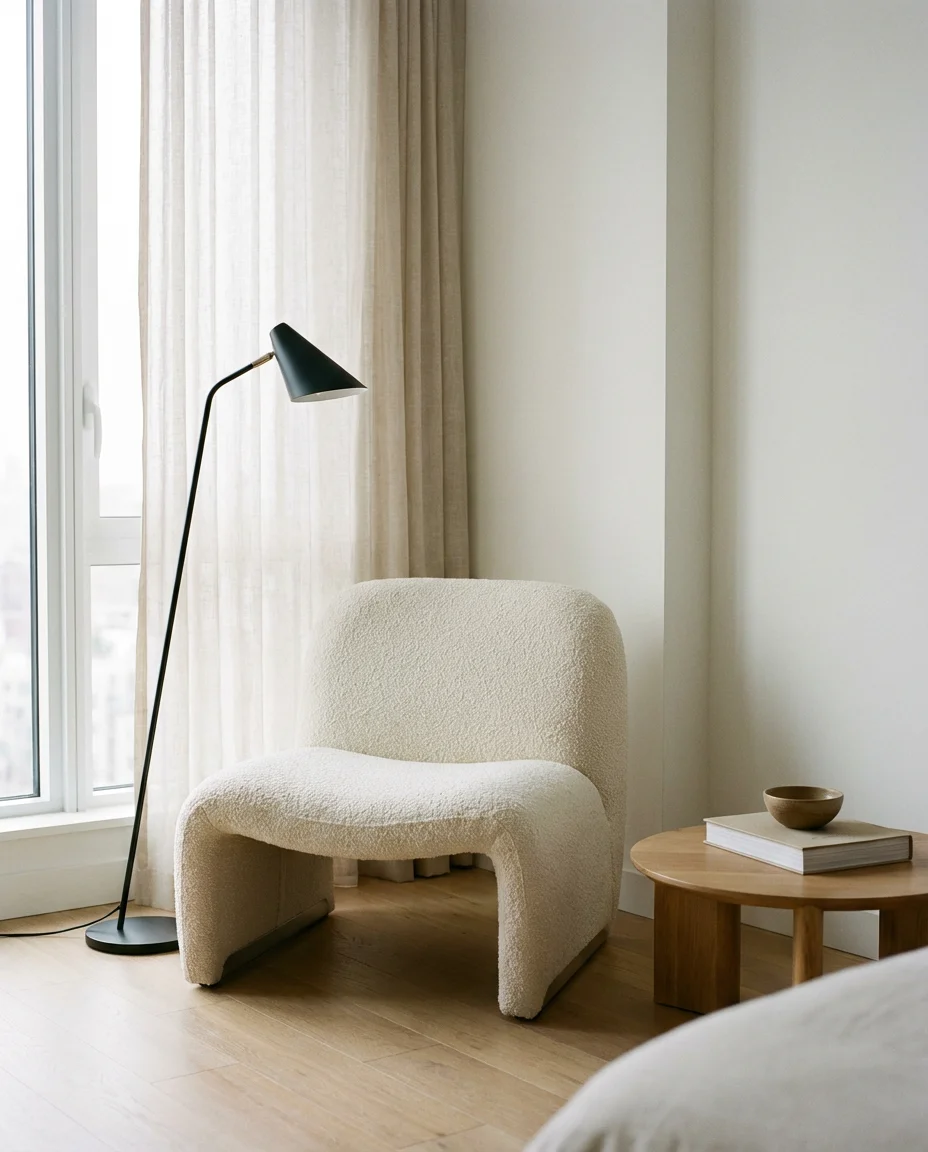
Not every reading corner needs to be layered and textured. The minimalist approach—a single well-designed chair, a floor lamp with a clean silhouette, and nothing else on the floor—can be just as compelling and far easier to maintain. This is the reading corner for the person who finds clutter genuinely distracting, who reads better in visual quiet, and whose overall home aesthetic runs toward the spare and intentional. In 2026, the clean-lined Scandinavian-influenced reading corner continues to perform strongly in home design circles as a counterpoint to the maximalism trend.
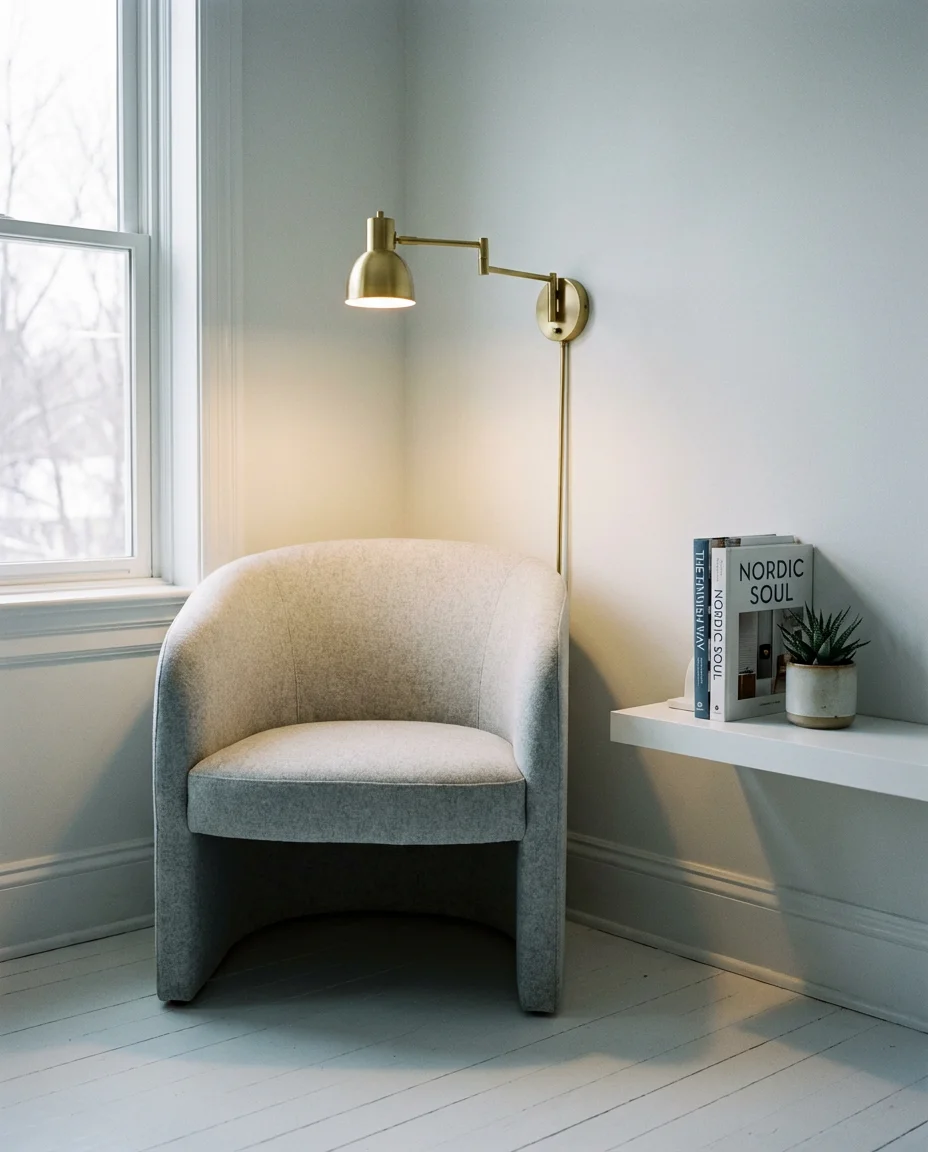
The minimalist reading corner is also the easiest reading corner to maintain over time, which is worth saying plainly. A single chair, a lamp, and a small side table have almost no surface area for accumulation. You sit down, you read, and you get up. There’s no pile of throw blankets to refold, no stack of half-read books to feel guilty about, and no scatter cushions to arrange. For people who love the idea of a reading corner but have historically found them hard to maintain, this is the version that will actually survive contact with real daily life.
18. School Library Reading Corner Refresh
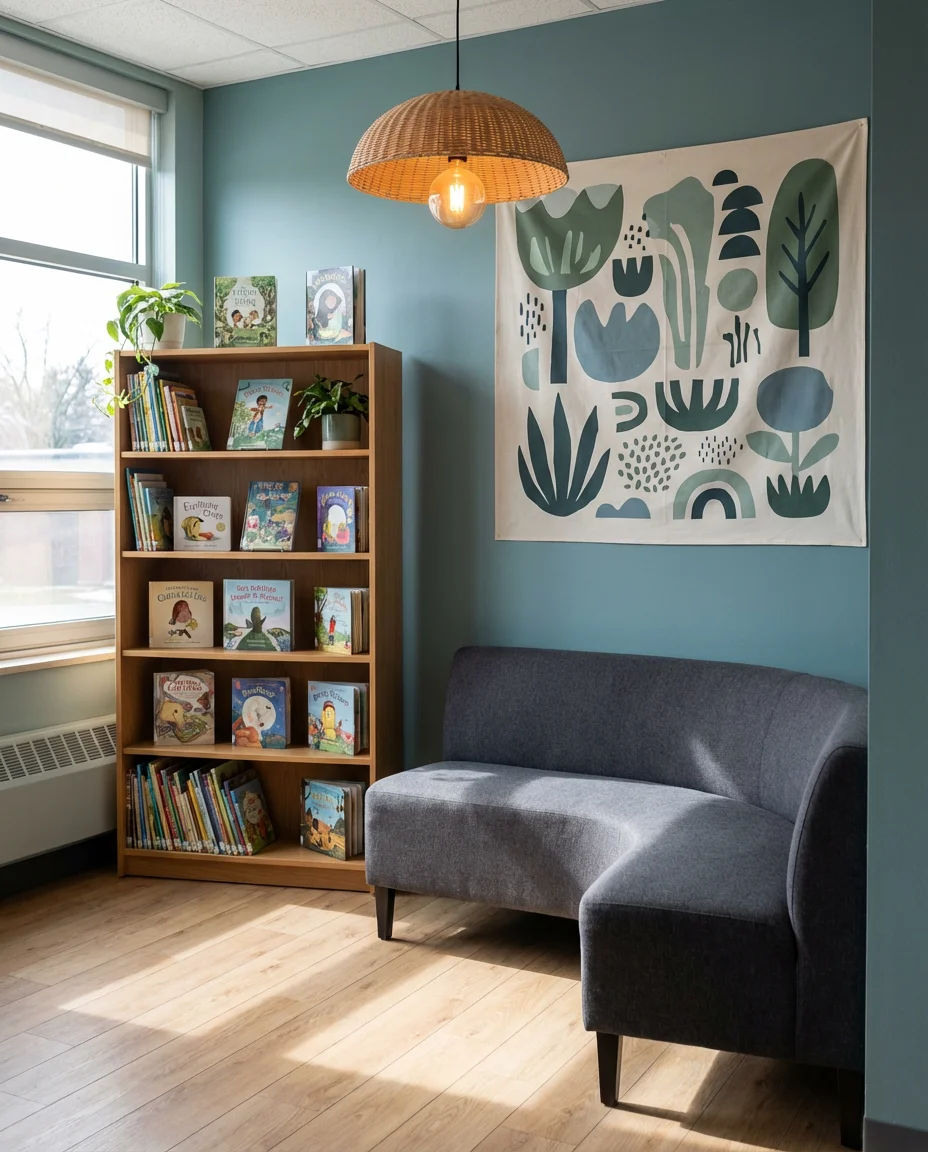
The school library reading corner in 2026 looks nothing like it did a decade ago. Where institutional furniture and fluorescent overhead lighting once dominated, today’s most effective classroom reading spaces feature soft seating, warm pendant lighting, painted walls in calming hues, and curated book displays that work more like a bookstore than a warehouse. Students respond differently—and read more—in spaces designed with care. This isn’t a luxury observation; it’s backed by consistent research from school library associations and education design specialists across the country.
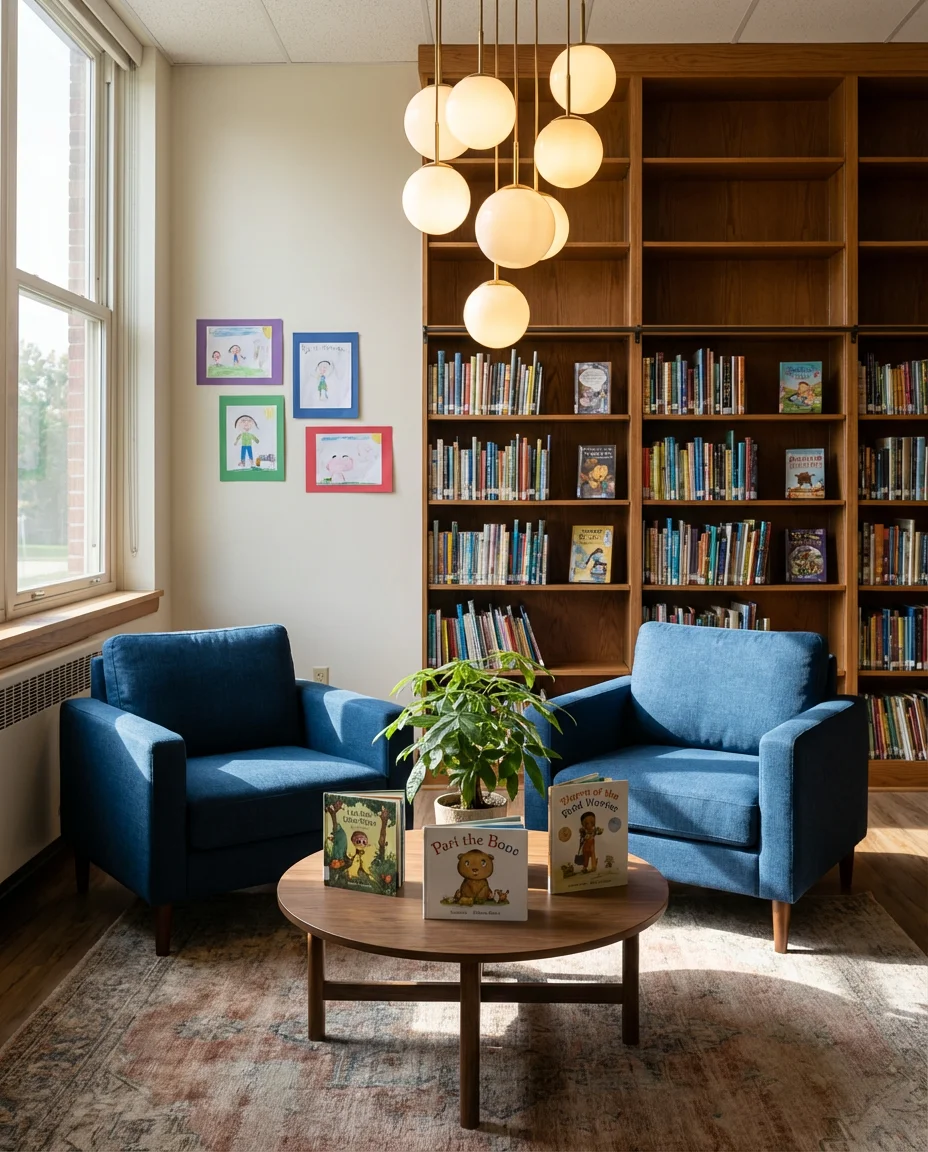
Many school librarians have funded reading corner refreshes through DonorsChoose campaigns, PTA grants, and local business partnerships—and the fundraising itself has a community-building effect that adds value beyond the physical space. A well-documented school library renovation posted to a school’s social media page regularly generates significant local engagement and additional donations. The reading corner, in this context, becomes a visible symbol of a community’s investment in its children’s relationship with books and learning. That’s a story worth telling.
19. Loft Bed Reading Nook for Kids
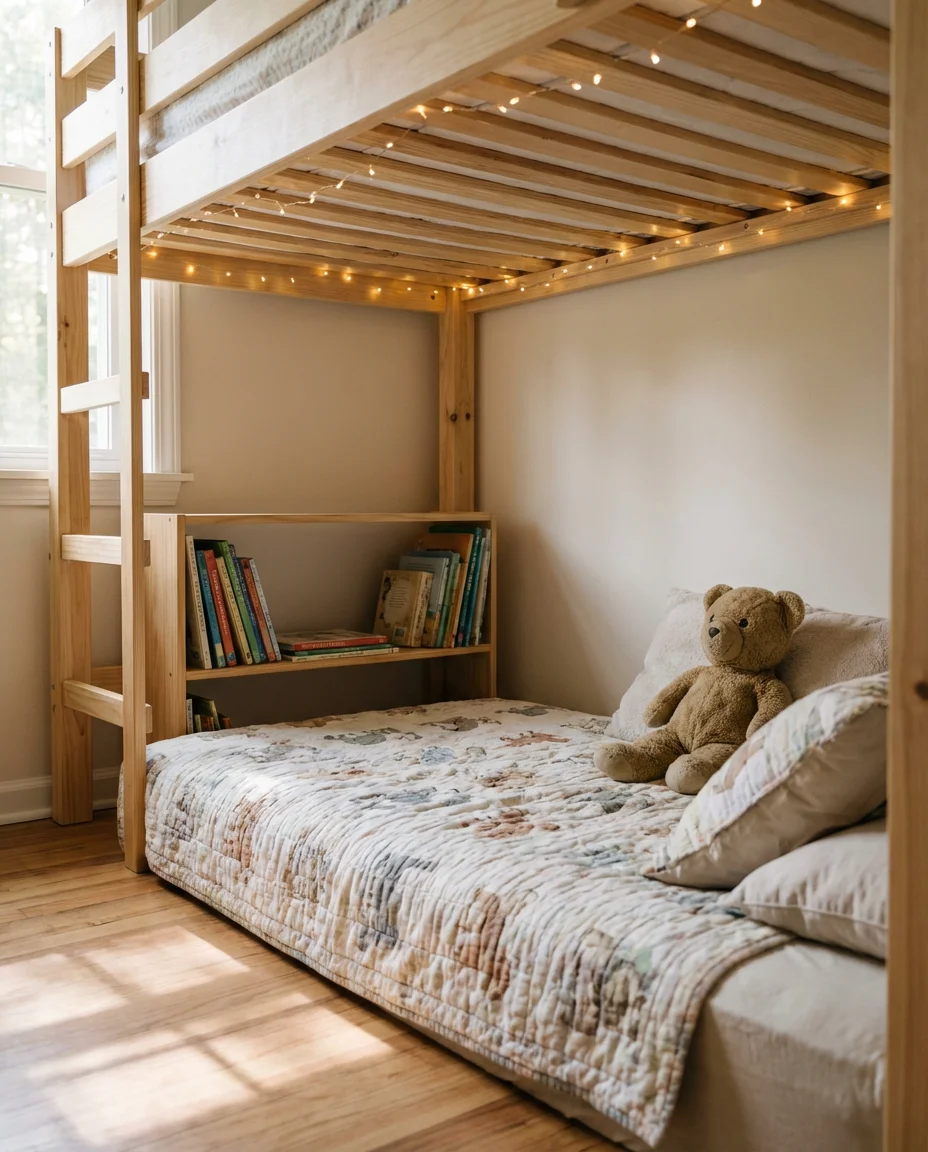
The space beneath a loft bed is one of the best-kept secrets in kids’ bedroom design—and converting it into a reading nook rather than a desk or extra storage creates something that children find genuinely magical. String lights along the ceiling of the under-loft space, add a flat floor cushion or a narrow futon, and line the walls with a few low shelves for books. The enclosed, sheltered quality of the under-loft feels like a secret hideaway, which is exactly the kind of environment that makes reluctant readers reach for a story.
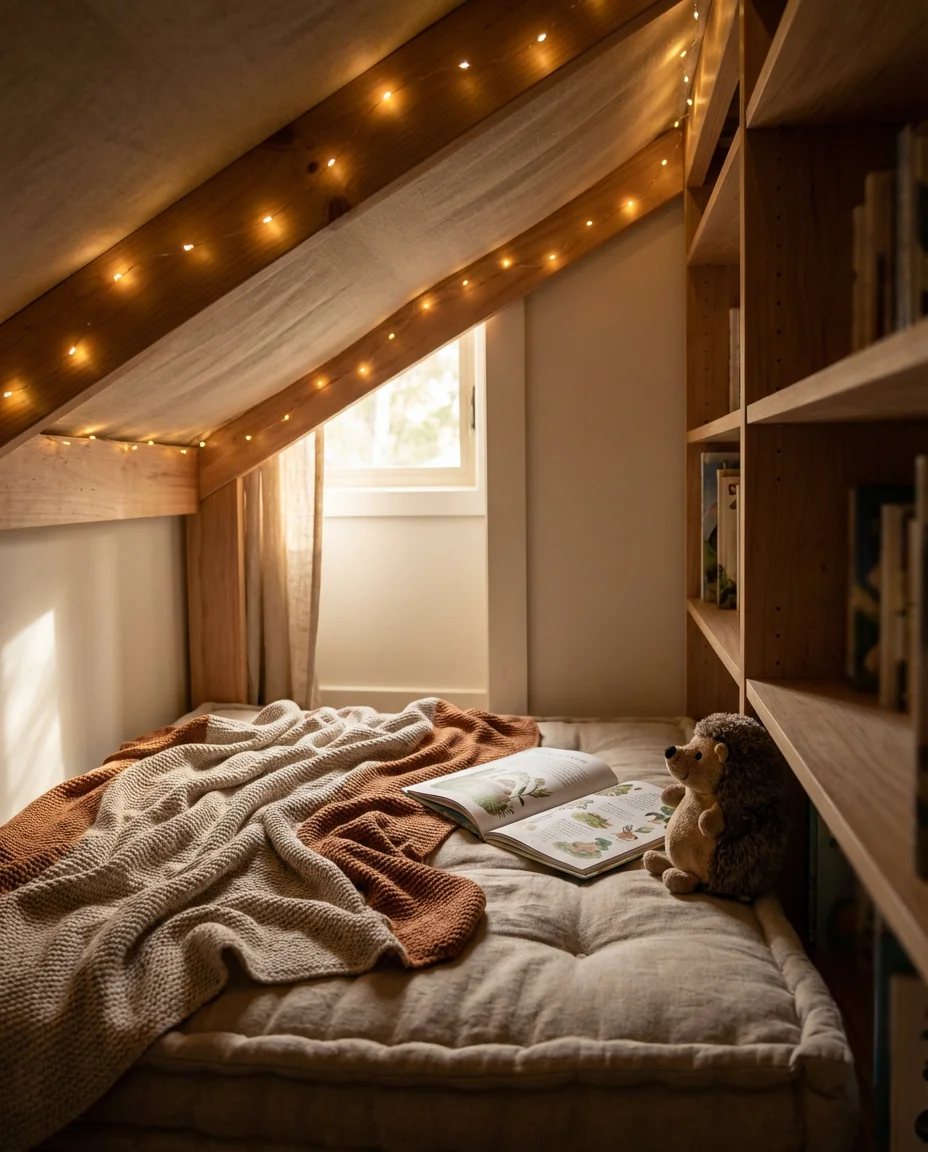
From a practical standpoint, the under-loft reading nook is one of the most space-efficient room designs available for small kids’ room setups. By stacking the sleeping and reading functions vertically, you free up significant floor space for active play—which is exactly what children’s rooms should prioritize. The IKEA KURA reversible loft bed is one of the most-used starting points for this configuration, and the community of parents who have customized it is enormous, with tutorials and inspiration photos numbering in the thousands across Pinterest and YouTube.
20. Outdoor-Inspired Reading Corner with Natural Elements
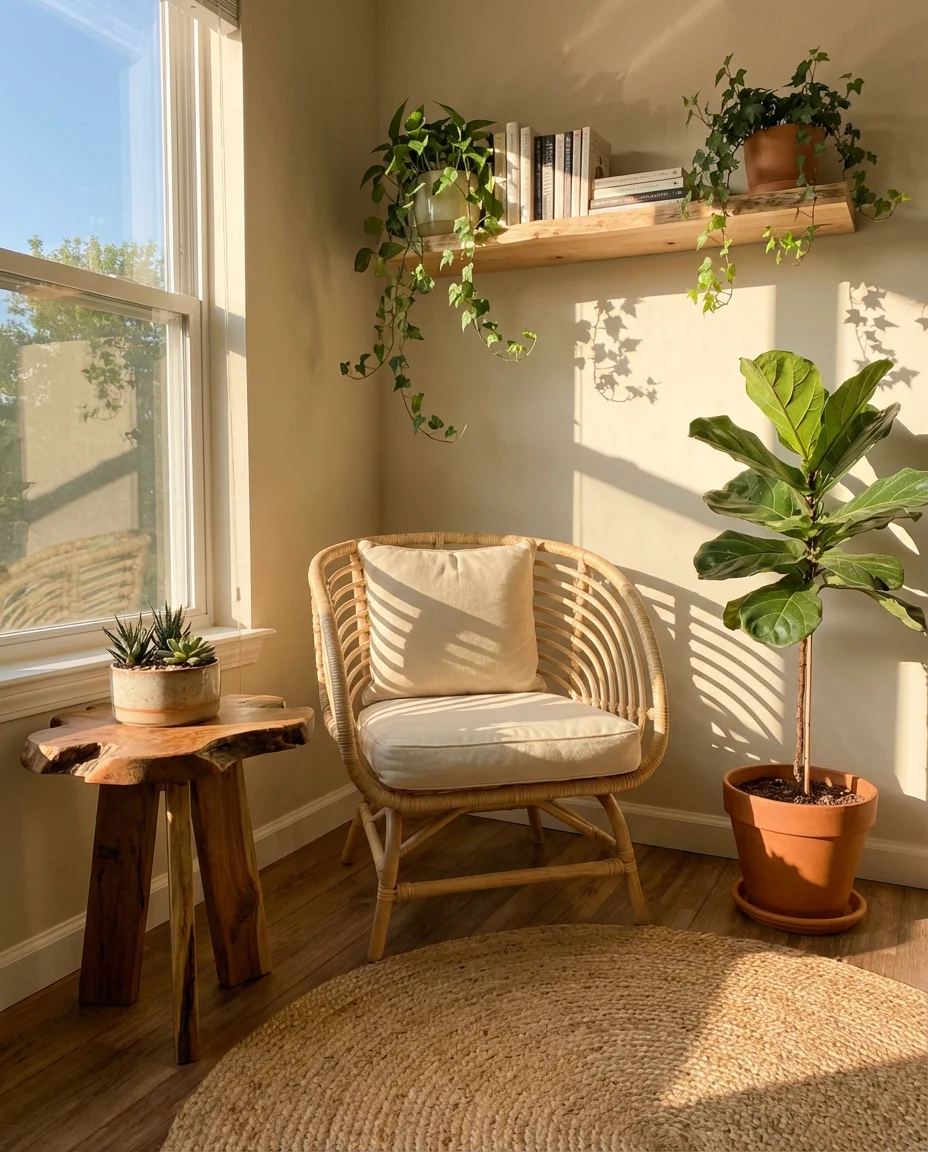
Bringing the outside in is one of 2026’s strongest interior design movements, and the reading corner is a perfect canvas for it. A rattan chair, a live-edge wood side table, a cluster of potted plants in varying heights, and a woven grass rug can transform a corner of any room into something that feels connected to the natural world—calming in a way that’s particularly valuable in spaces dedicated to focused, slow activities like reading. This approach works in virtually any room size and at any budget point, from thrifted rattan to high-end custom furniture.
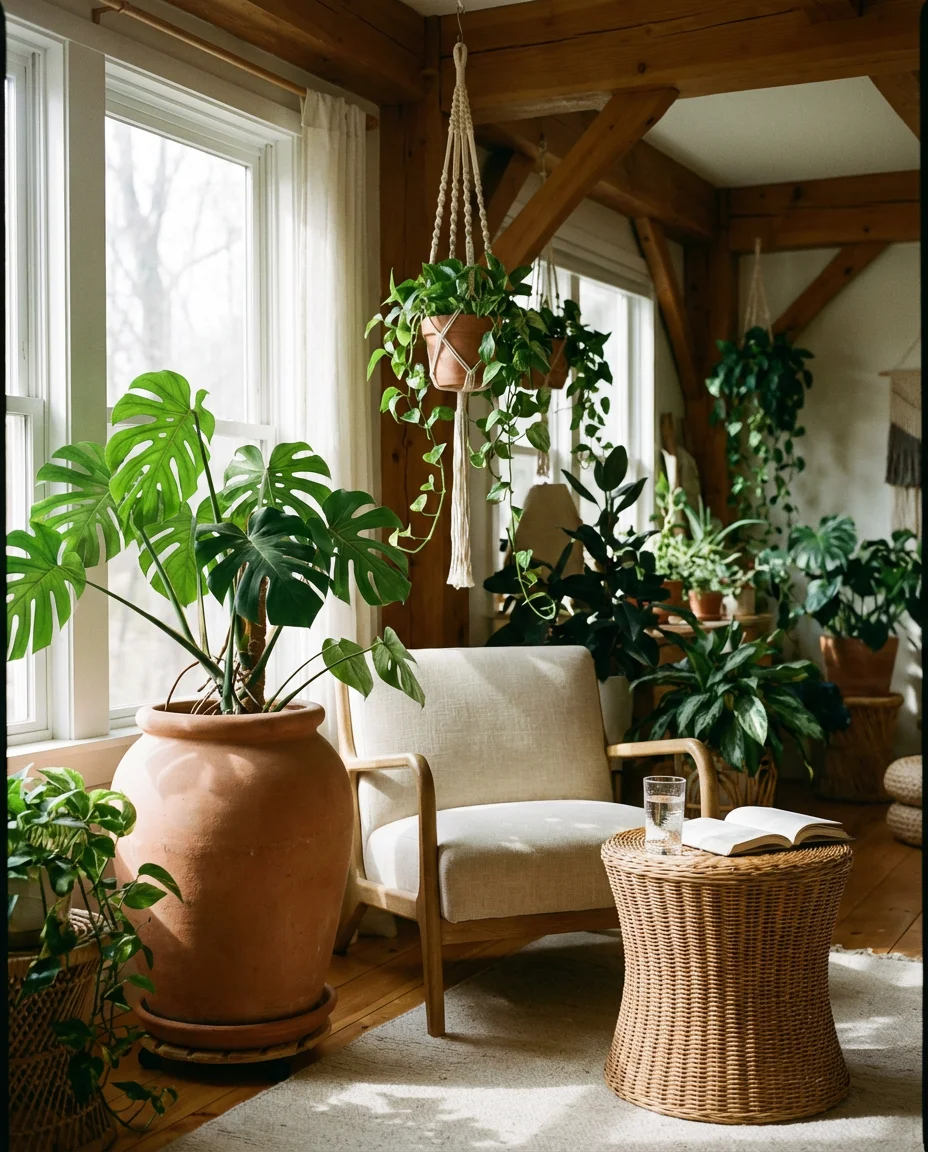
Biophilic design—the incorporation of natural elements into interior spaces—has moved from a niche architectural concept to a mainstream home décor priority, and the science behind it is compelling. Studies consistently show that exposure to natural materials, living plants, and organic textures reduces cortisol levels and supports focus. For a reading corner, where the entire goal is to settle your nervous system into a state of relaxed attention, leaning into biophilic principles isn’t just aesthetically pleasing—it’s physiologically supportive of the activity you’re designing the space for.
21. Maximalist Reading Corner with Gallery Wall
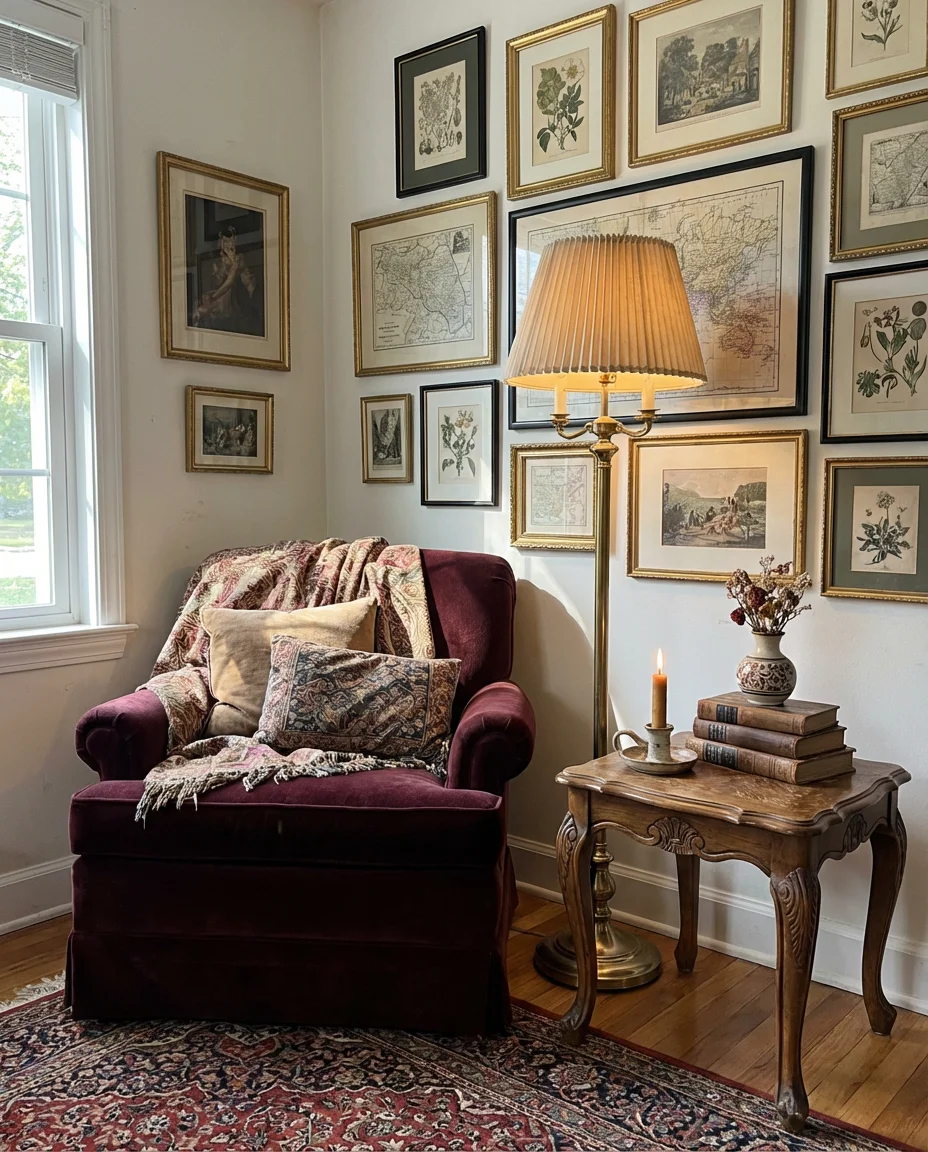
For those who find minimalism cold and bohemian too casual, the maximalist reading corner offers a third way: more is more, but make it intentional. A gallery wall of framed prints, personal photos, and small artworks behind a richly upholstered chair creates an immersive, storied atmosphere that feels deeply personal and endlessly interesting to look up at between chapters. This is the aesthetic for the reader who has eclectic taste and isn’t afraid to show it—the person whose bookshelves are organized by color, whose side table holds three books and a candle, and who finds visual richness genuinely energizing.
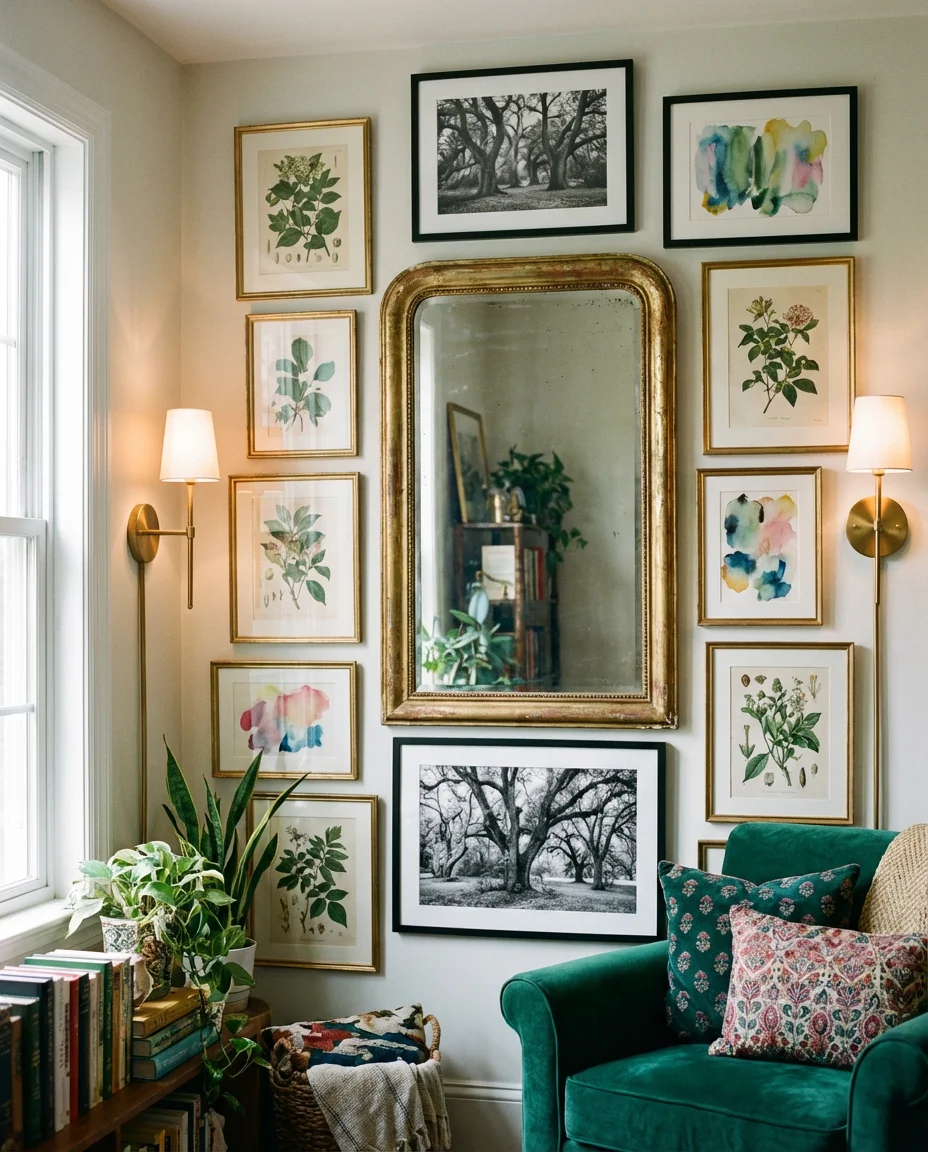
Real homeowners who’ve built maximalist reading corners consistently report the same thing: the space takes time to evolve, and that’s okay. The gallery wall that looks perfectly composed in the final photo was usually assembled over six months to two years, with pieces added, swapped, and repositioned as new finds arrived. Don’t try to build it all at once. Start with the chair and two or three pieces you love, and let the rest accumulate naturally. The best maximalist spaces feel lived-in because they were—they’re a record of a life spent noticing beautiful things.
22. Corner Reading Nook with a Hammock Chair
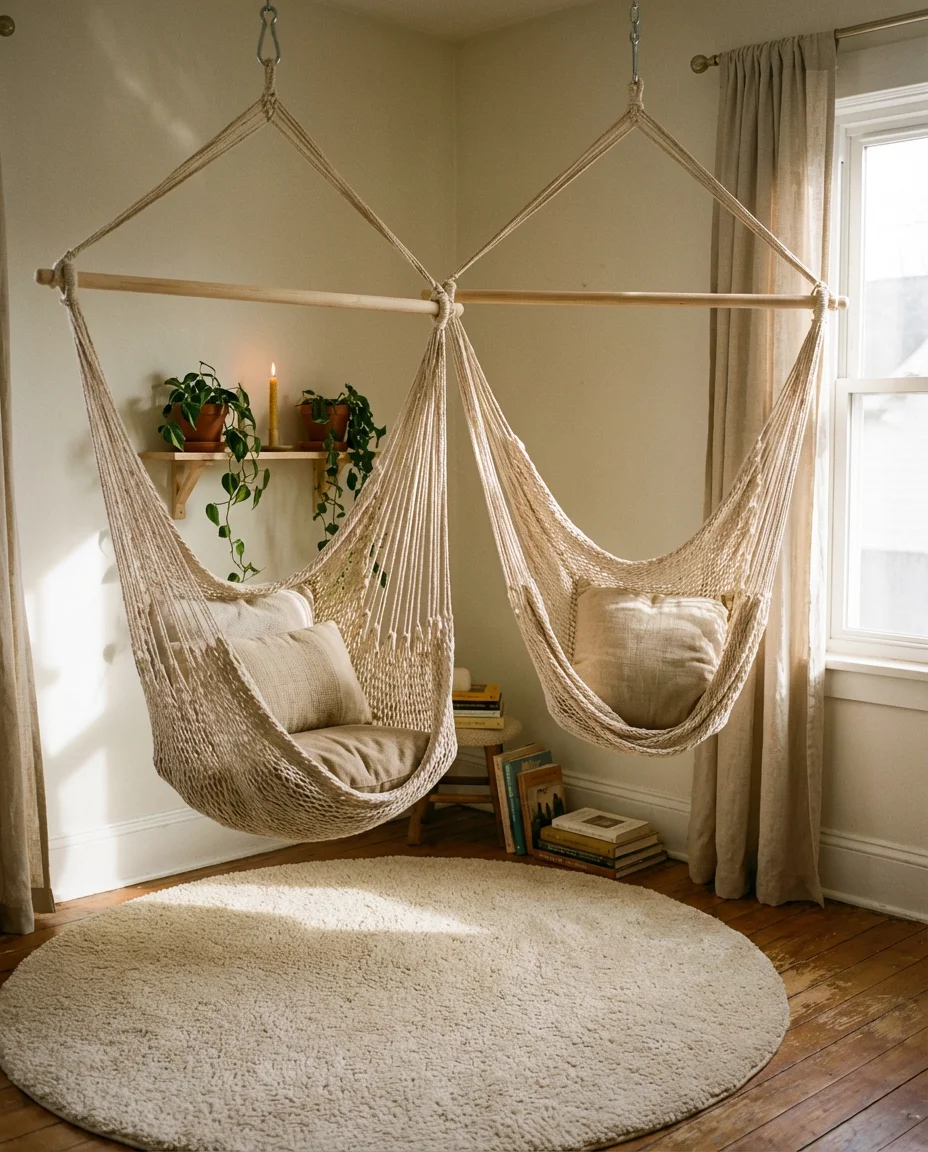
The hammock chair—a hanging fabric or rope chair suspended from a single ceiling hook—is the reading corner’s most playful and unexpected option, and it’s gaining serious traction in 2026 among younger homeowners who want their spaces to feel a little less like a furniture showroom and a little more like a life being lived. Hung in a corner of a bedroom or living room, a hammock chair creates a gentle swinging motion that many people find deeply relaxing for reading. It’s also a genuine conversation piece, and it costs far less than most upholstered chairs.
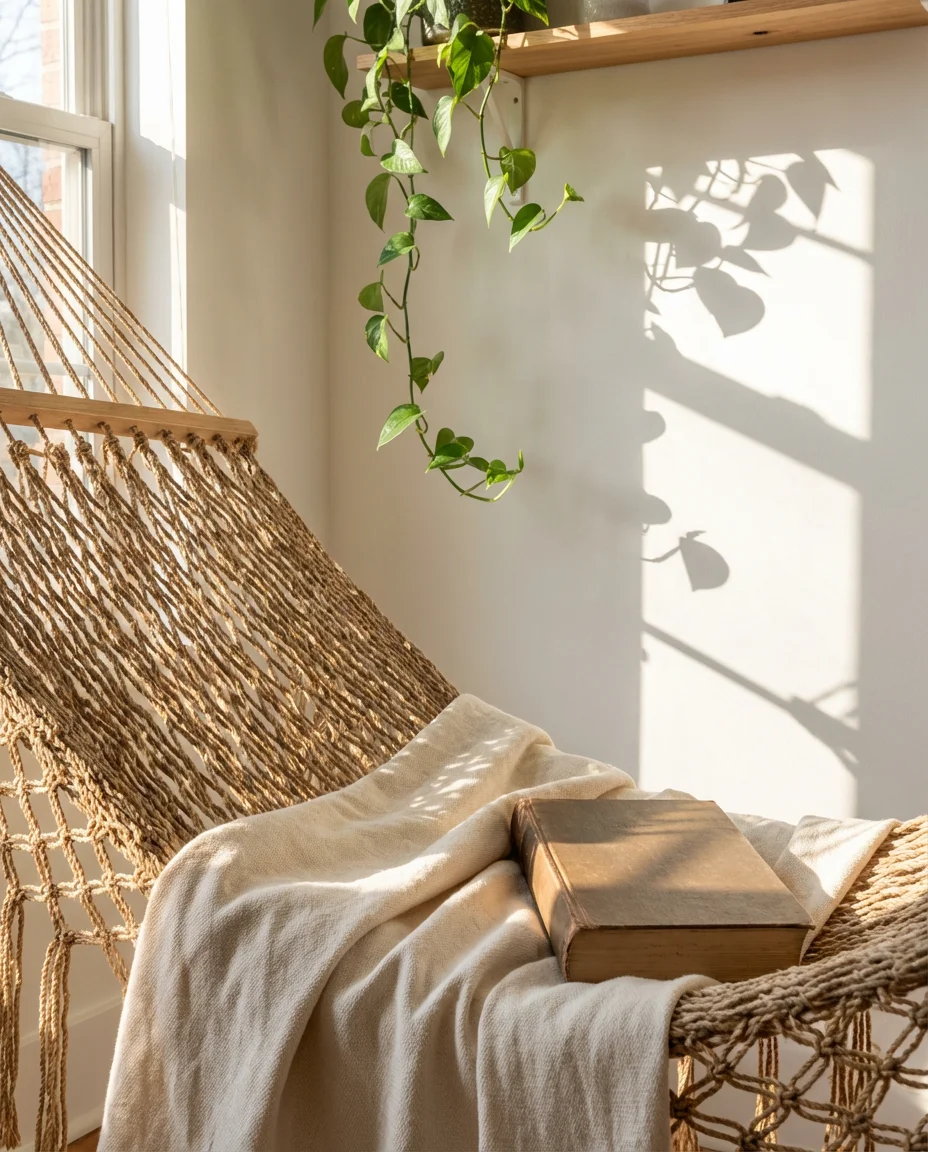
The one thing to get right with a hammock reading chair is the ceiling anchor. This is not a job for a basic drywall anchor—the chair needs to be secured into a ceiling joist, and for heavier models or heavier users, a metal toggle bolt rated for the weight is essential. Many hammock chair injuries happen not from the chair itself but from improper ceiling installation. Done correctly, though, the setup is completely safe and remarkably durable. Cotton rope hammock chairs start around $45, and the whole setup, including a proper ceiling hook and swivel, is achievable for under $80.
Conclusion
There’s a reading corner on this list for every room, every budget, and every personality—from the kindergarten classroom to the moody home library, from the under-stair nook to the boho hammock chair. The best one is the one you’ll actually use, so start there. We’d love to know which idea spoke to you most: drop your thoughts in the comments below, share photos of your own reading corners, or tell us what you’re building next. This community is always the best source of the next great idea.