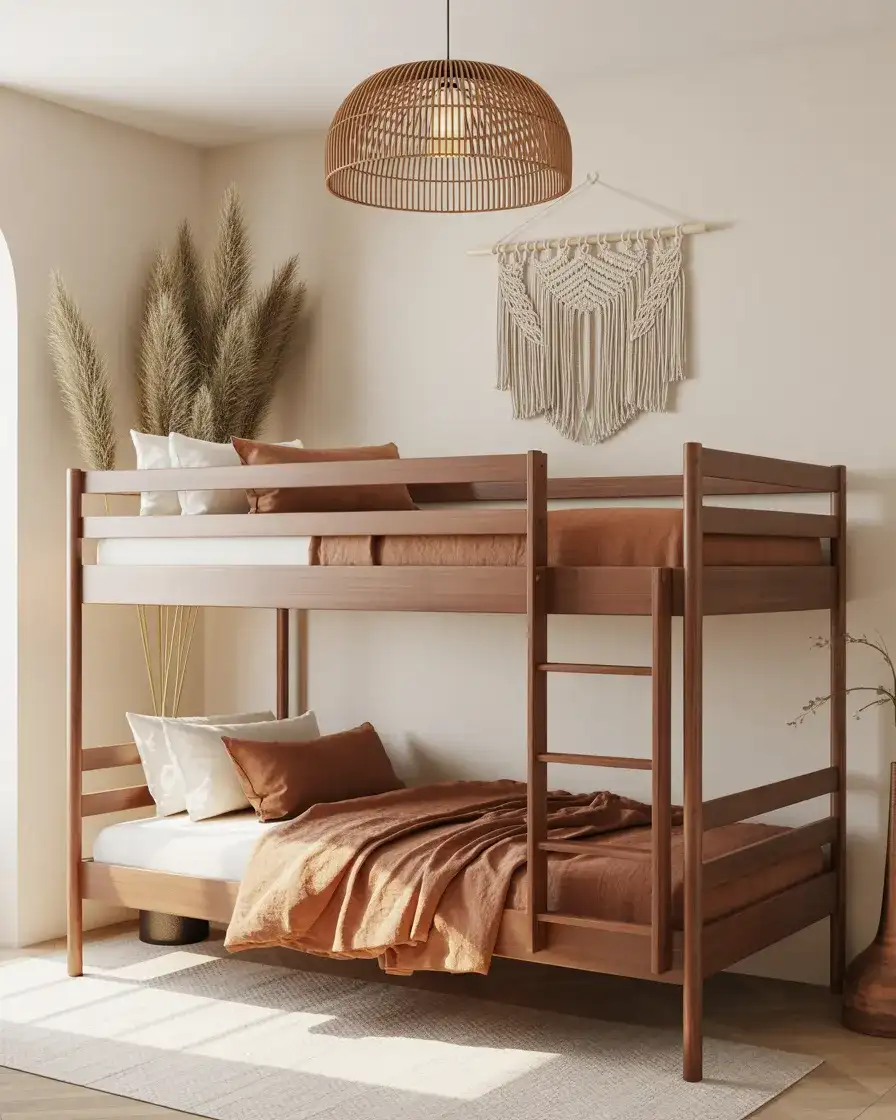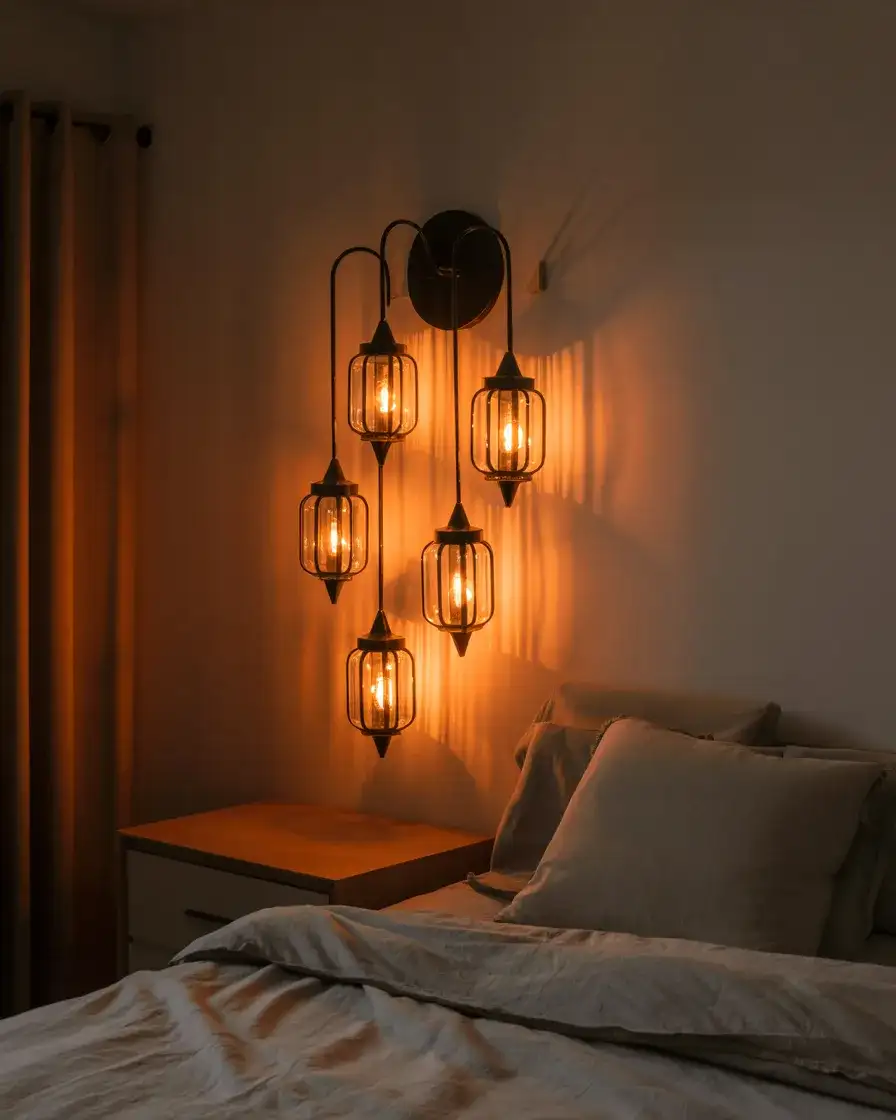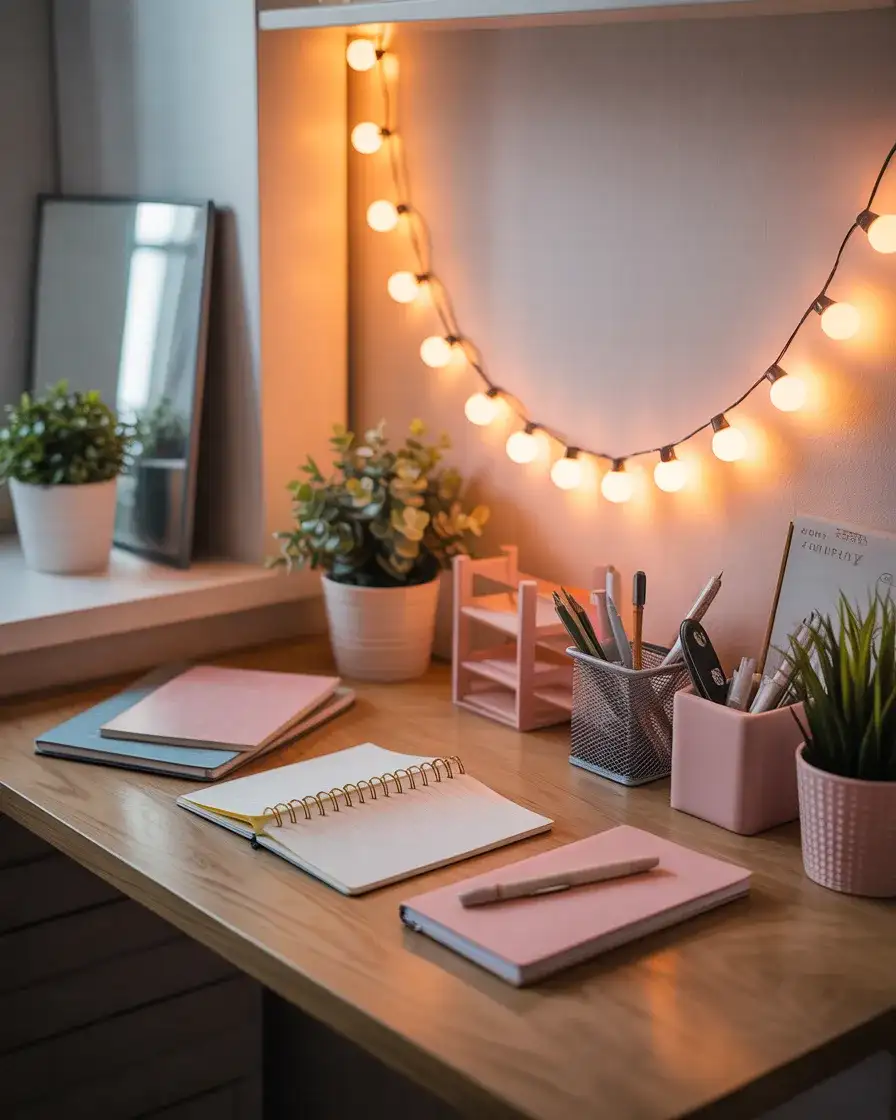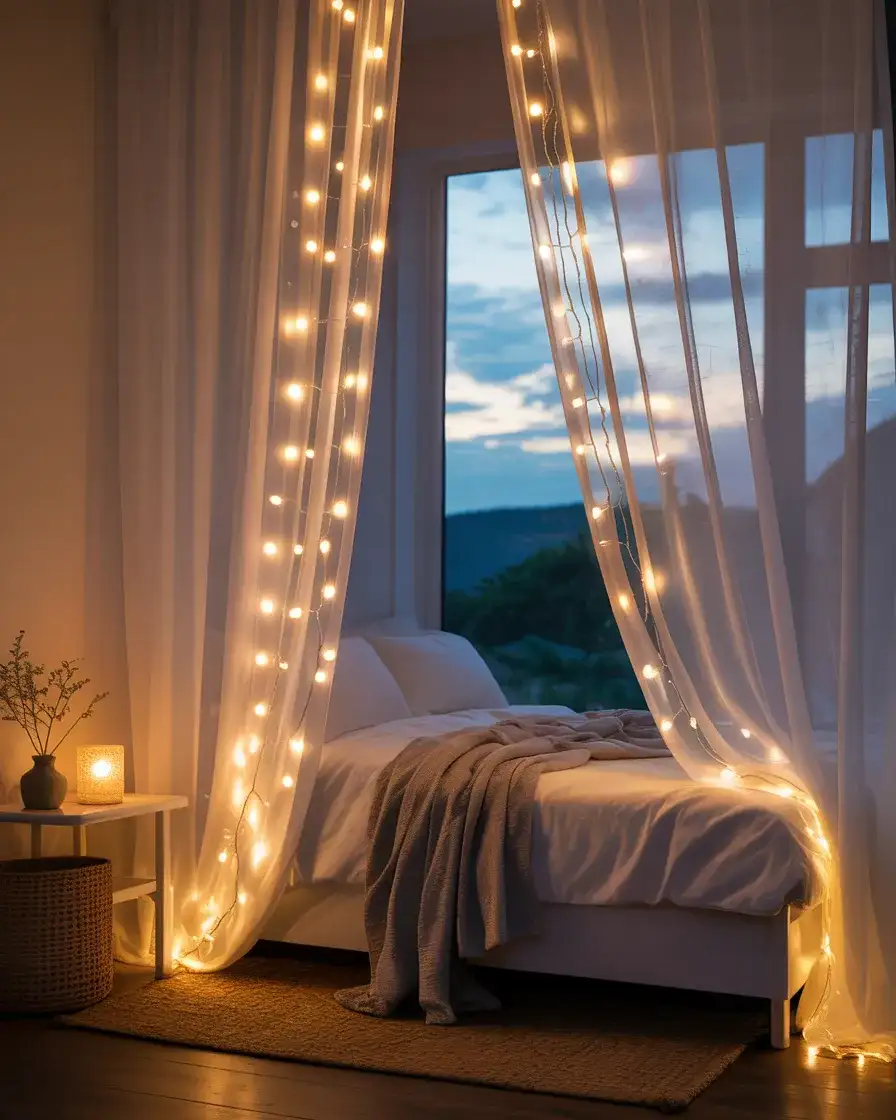
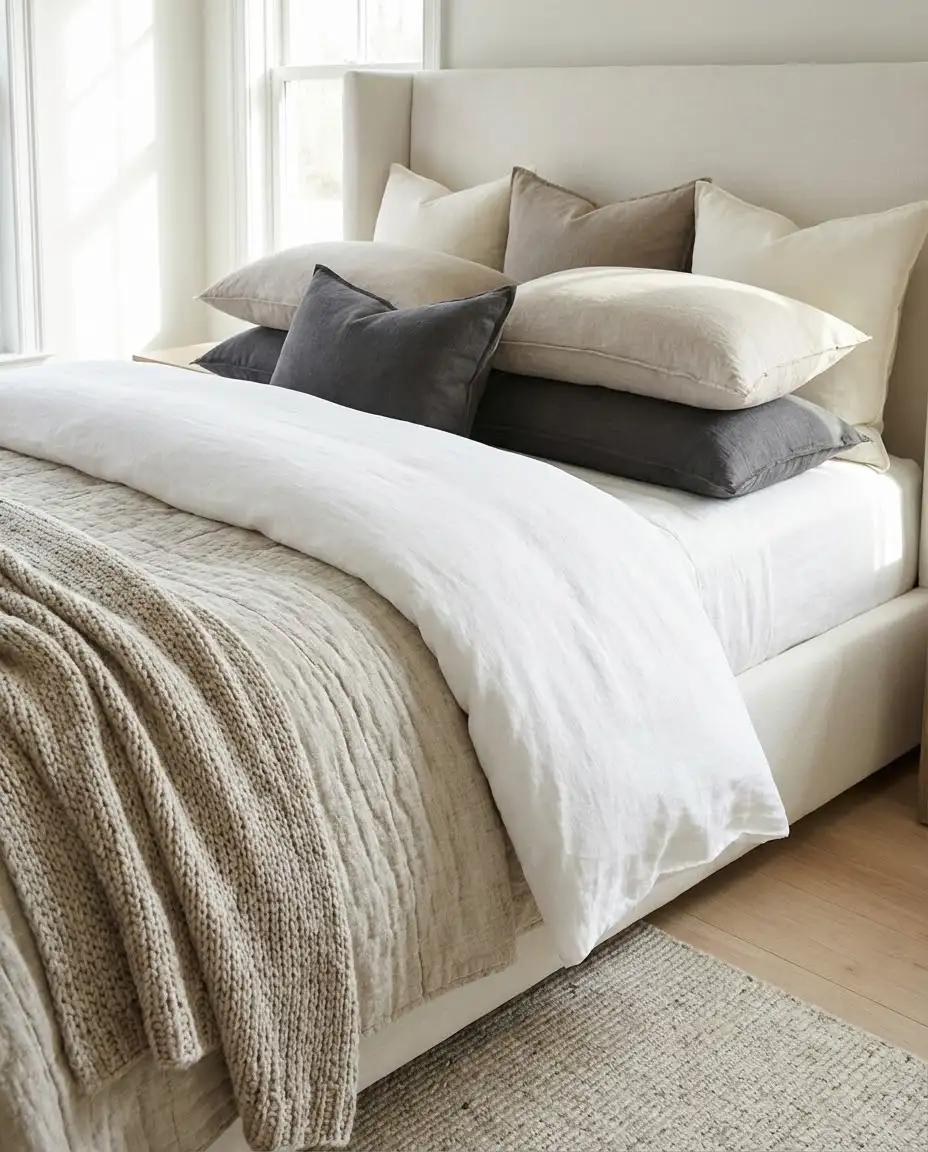
As we move into 2026, American homeowners are reimagining the bedroom as more than just a place to sleep—it’s becoming a personal retreat that reflects evolving lifestyle priorities. Pinterest searches for bedroom inspiration have surged as people seek spaces that balance aesthetic appeal with genuine comfort. Whether you’re drawn to minimal serenity, luxury layering, or bold colour statements, this year’s bedroom trends offer something for every style and budget. From Bauhaus-inspired geometry to neoclassical elegance, these 22 ideas will help you transform your bedroom into a space that truly feels like home.
1. Warm Minimalist Retreat
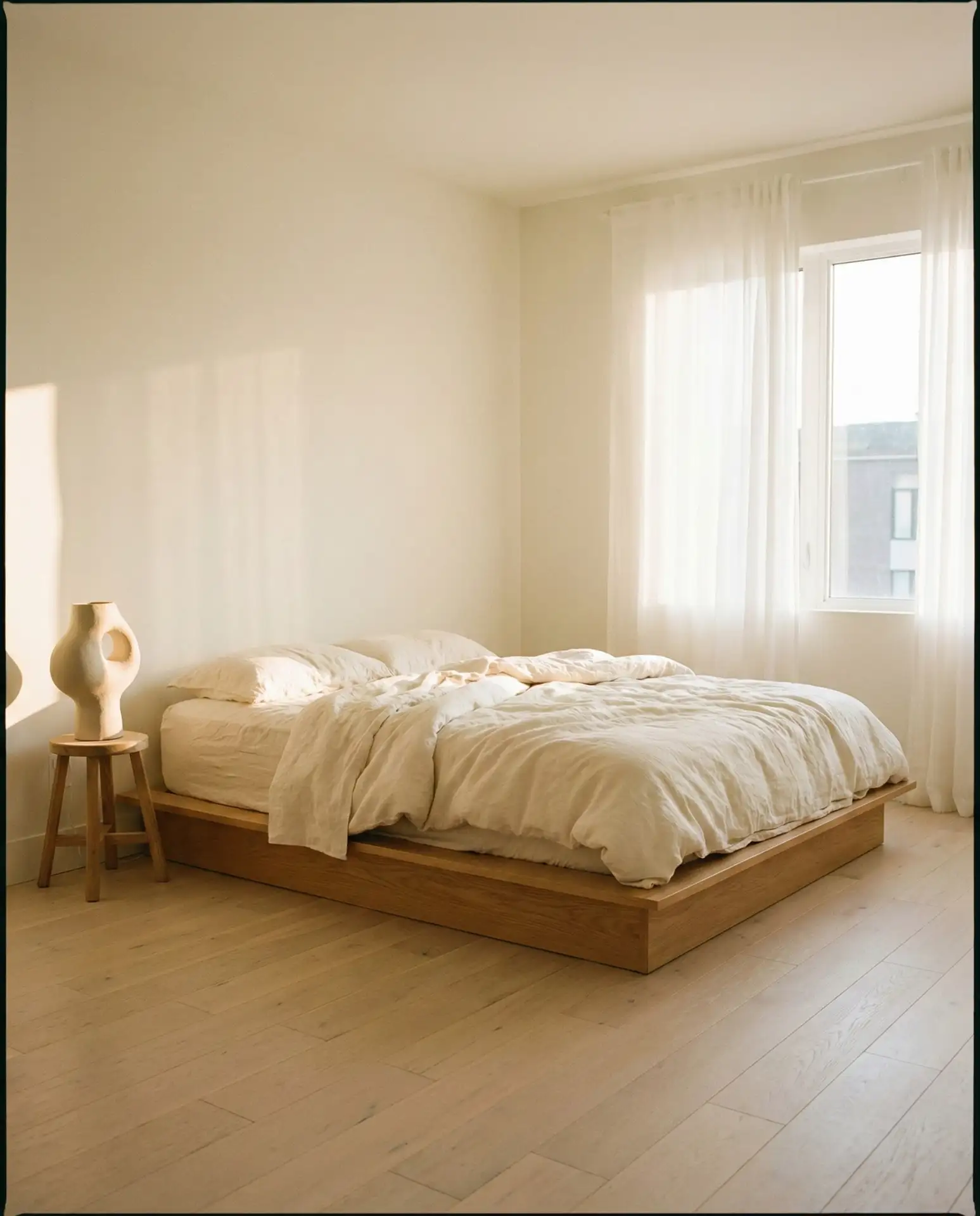
A minimal bedroom doesn’t have to feel cold or sterile. The 2026 approach layers warm oak furniture, soft linen bedding, and one statement piece—perhaps a sculptural lamp or handwoven wall hanging. This design modern philosophy strips away clutter while preserving personality through texture and natural materials. It’s particularly popular in urban apartments where square footage comes at a premium. 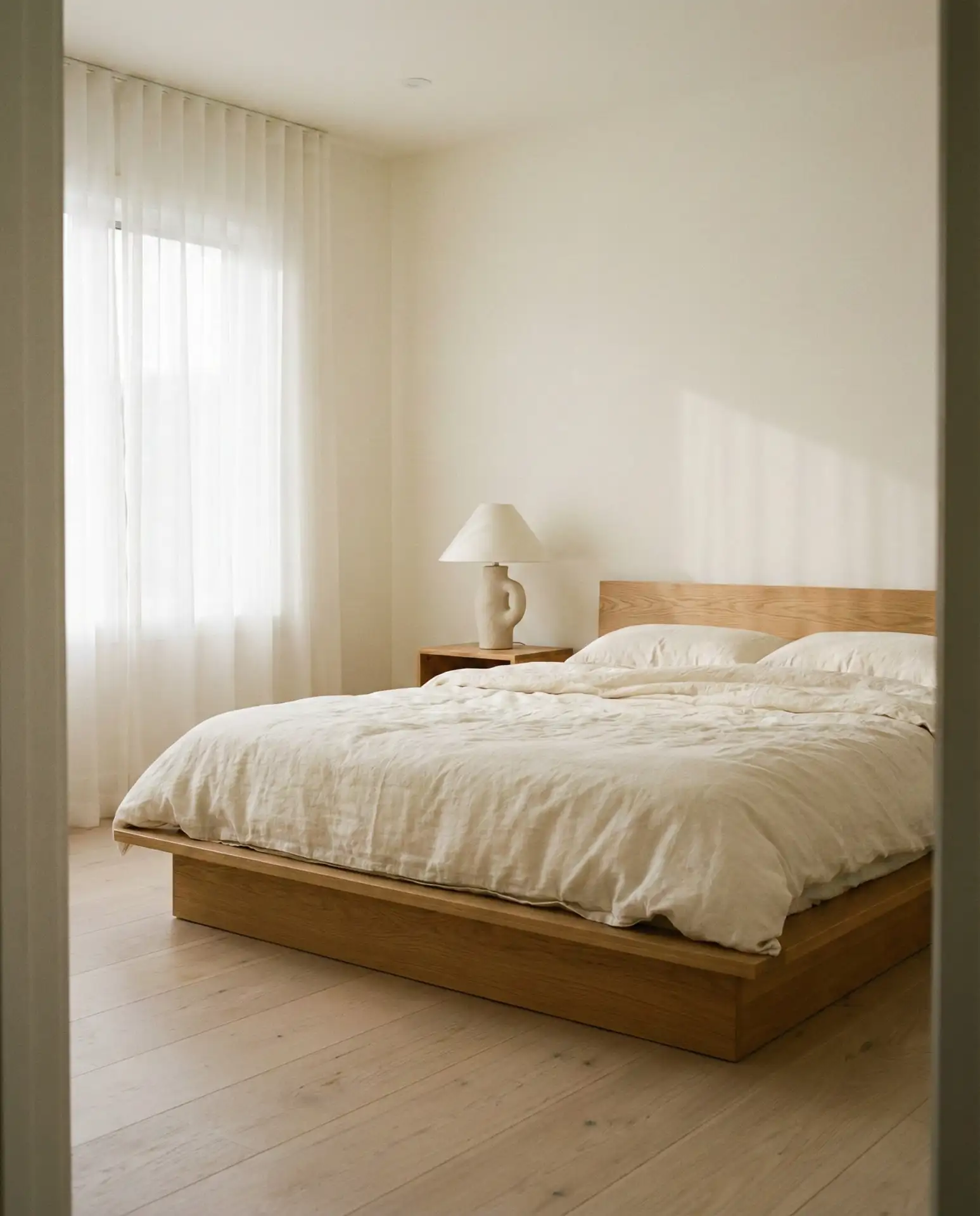
This works best in homes where natural light floods in during morning hours—the sun amplifies those warm wood tones beautifully. Many homeowners make the mistake of going too stark with minimalism, but the key is balancing simplicity with enough visual warmth that the room still feels inviting. A single plant or a textured throw can make all the difference without compromising the clean aesthetic.
2. Moody Blue Sanctuary
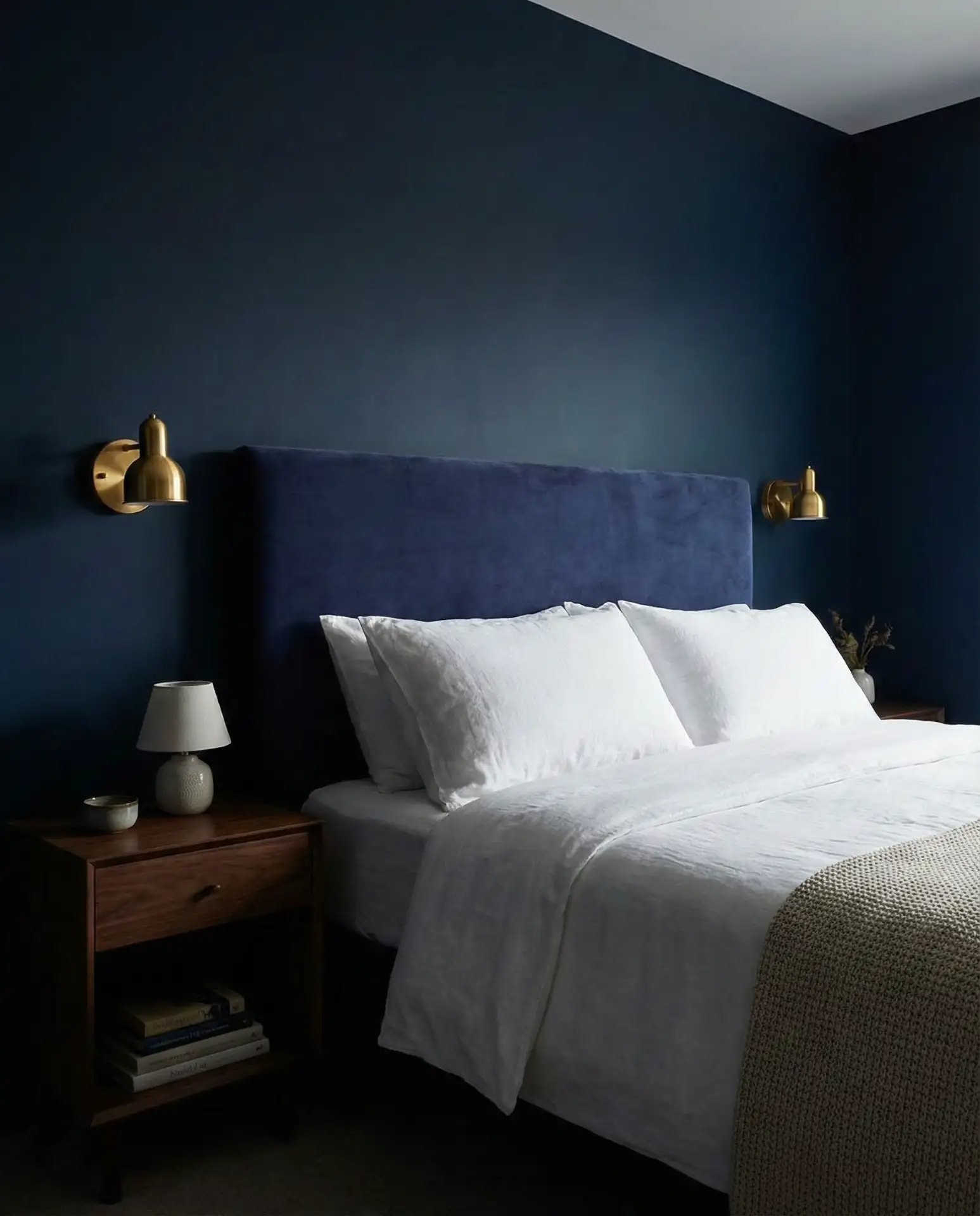
Deep blue walls are having a major moment as Americans embrace richer, more dramatic bedroom palettes. This shade creates an enveloping sense of calm—almost cocoon-like—while providing a sophisticated backdrop for brass fixtures and velvet accents. It’s a design luxury move that doesn’t require a complete overhaul, just confidence with paint and thoughtful lighting choices. 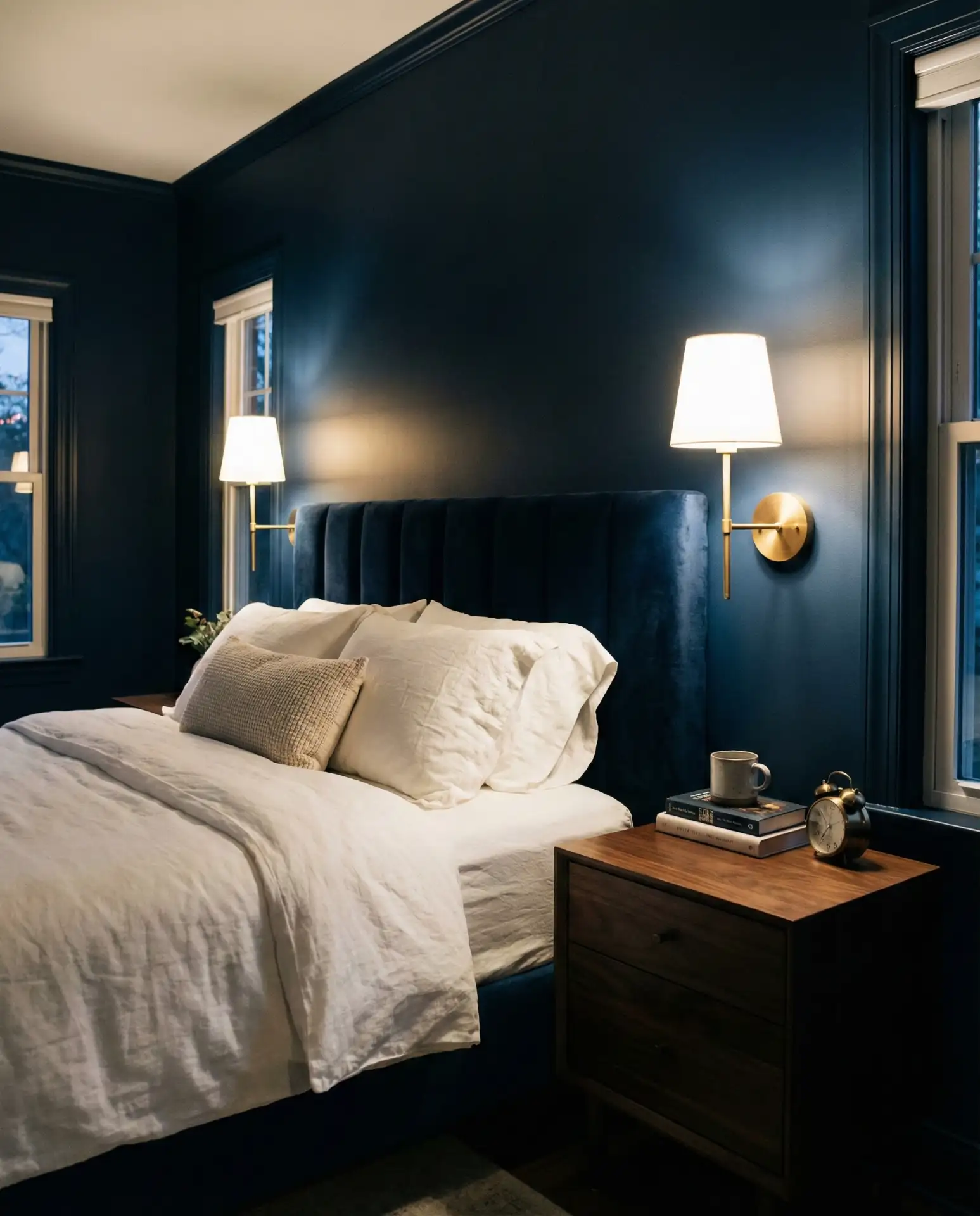
Practical insight: Use a satin or eggshell finish rather than matte on dark walls—it reflects just enough light to prevent the room from feeling too heavy. Pair with warm-toned lighting (around 2700K) to keep the space from skewing too cold. This approach works particularly well in bedrooms with good ceiling height, where the depth of color enhances rather than shrinks the space.
3. Textured White Haven
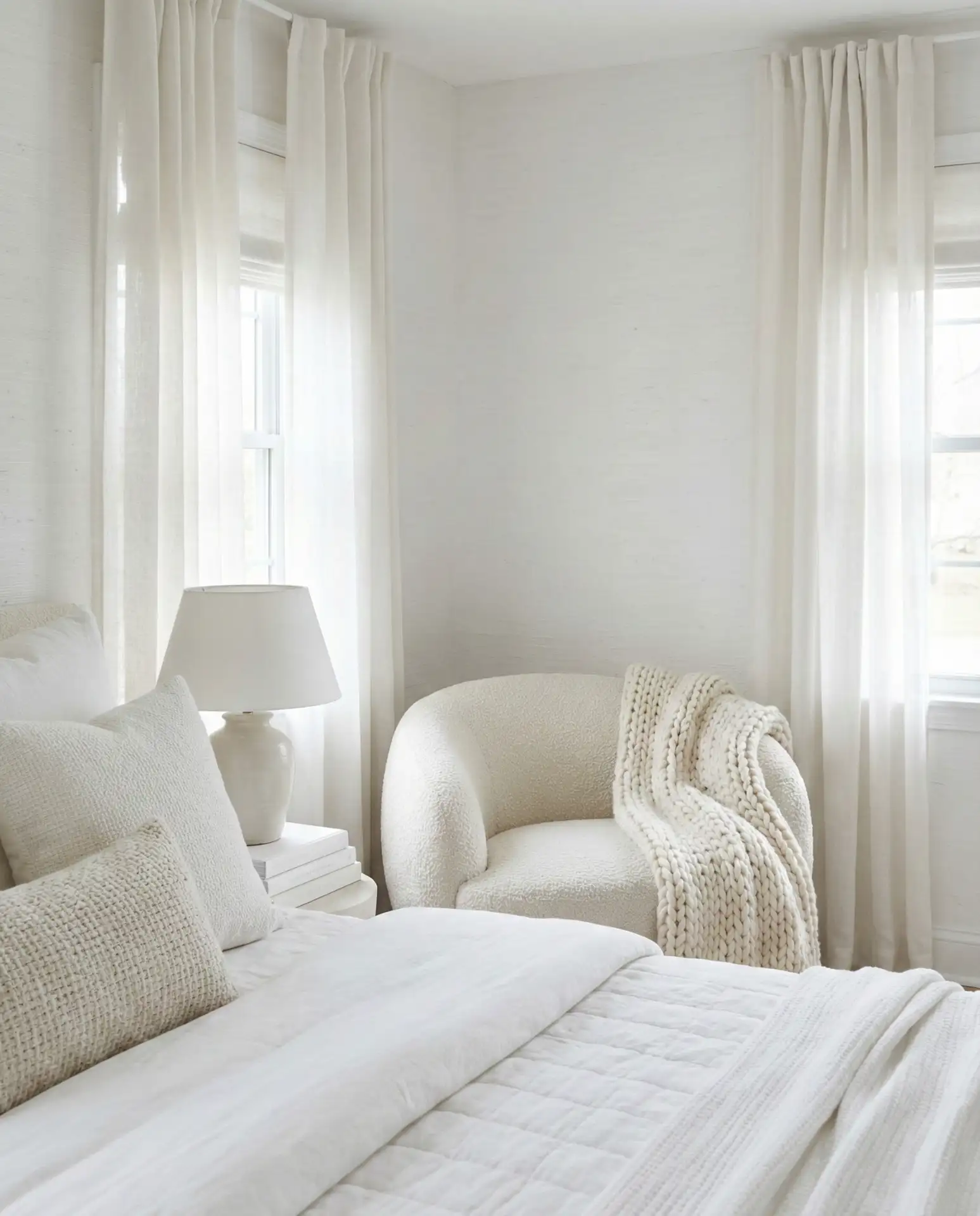
All-white bedrooms remain timeless, but the 2026 version leans heavily into texture to avoid feeling flat. Think chunky knit throws, bouclé chairs, grasscloth wallpaper, and linen curtains—all in varying shades of cream and ivory. This cozy layering creates visual interest without introducing color, making it perfect for those who love serene, aesthetic spaces. 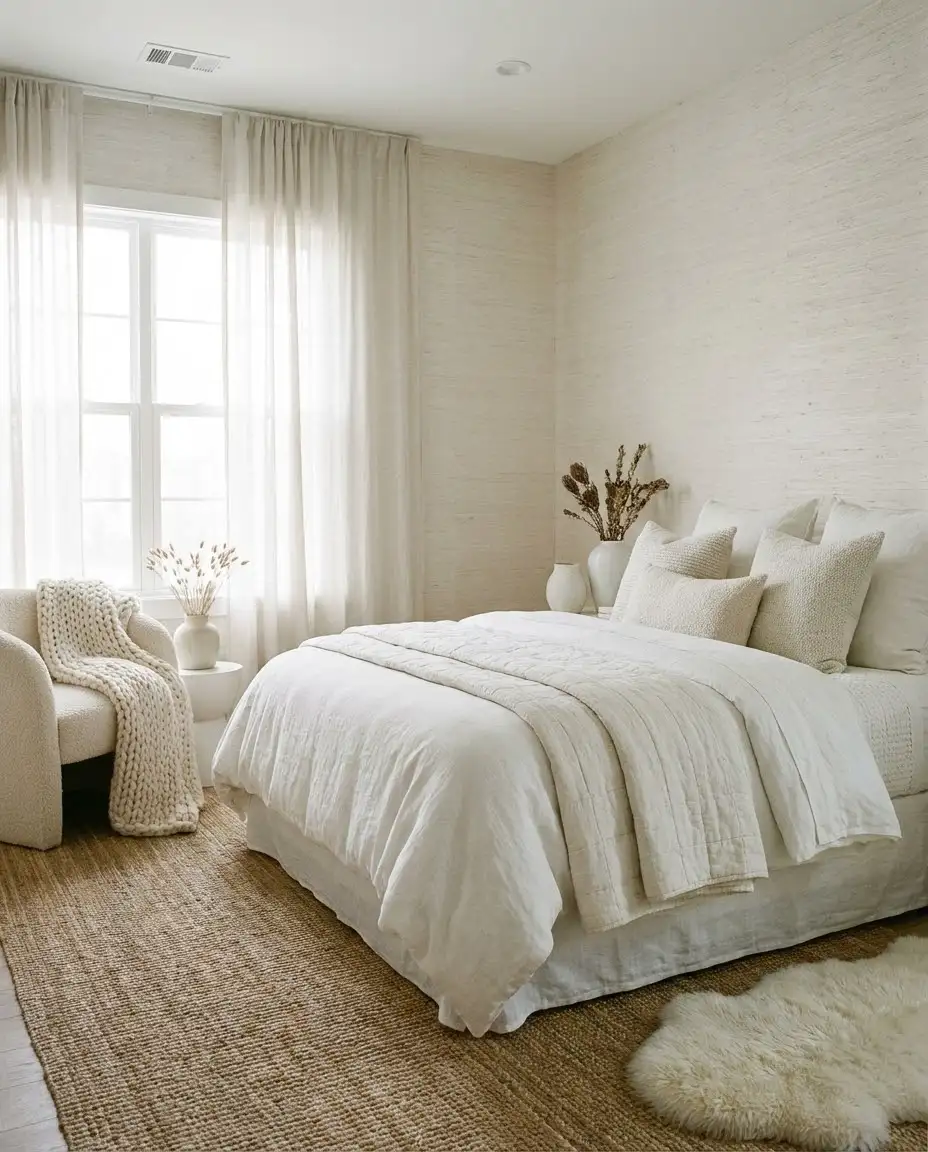
Where it works best: Southern-facing bedrooms with abundant natural light, where the textures create subtle shadow play throughout the day. In the Pacific Northwest, where gray skies dominate, homeowners often add warmer white tones (like ivory or cream) to prevent the space from feeling too clinical. The key is mixing at least five different textures to give the eye something to explore.
4. Indian Modern Fusion
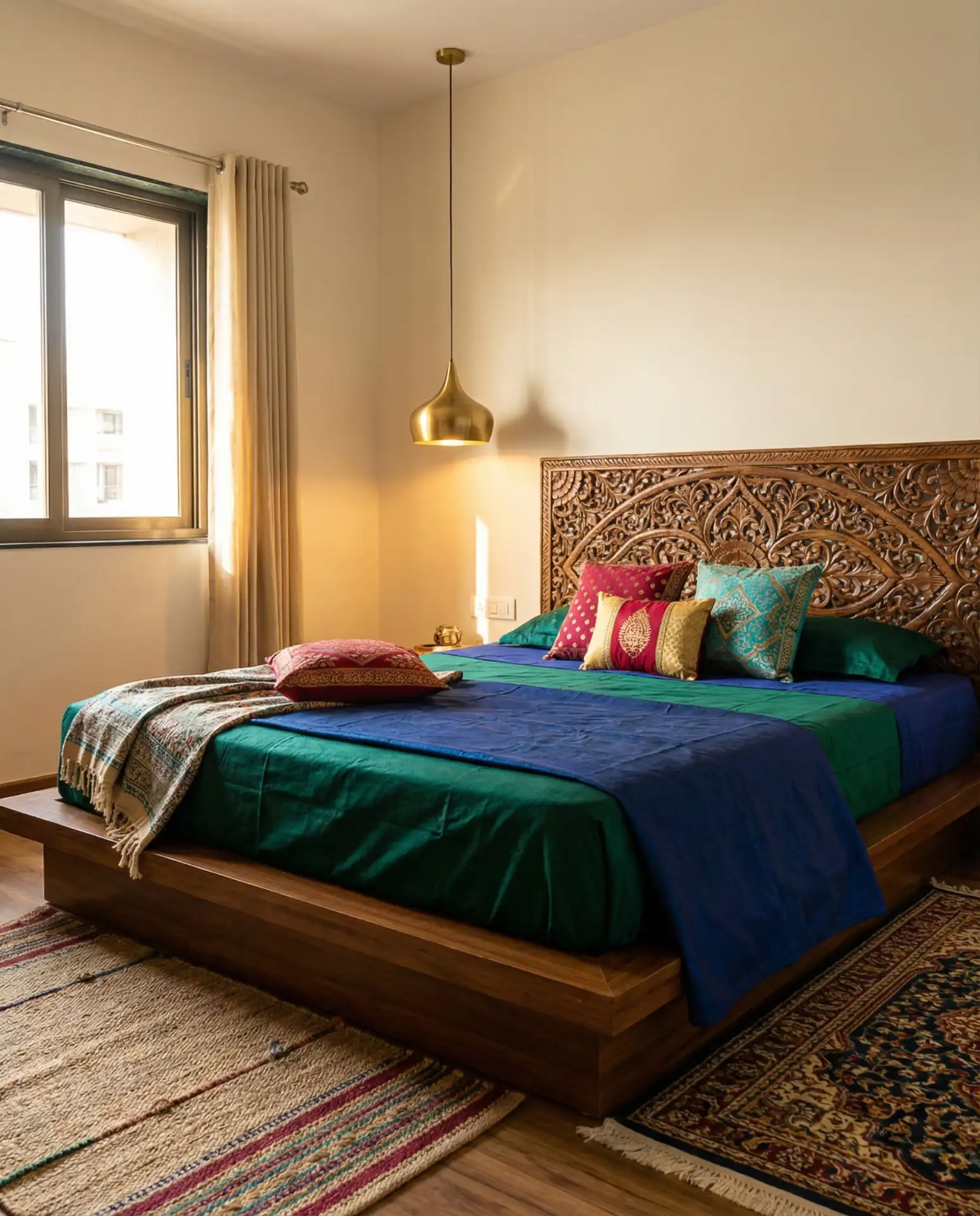
American homes with South Asian heritage are beautifully blending Indian modern elements into contemporary bedrooms. Hand-carved wooden headboards meet clean-lined furniture, while vibrant textiles and brass accents provide cultural richness. This design ideas approach honors tradition without feeling dated, creating spaces that tell personal stories through carefully curated details. 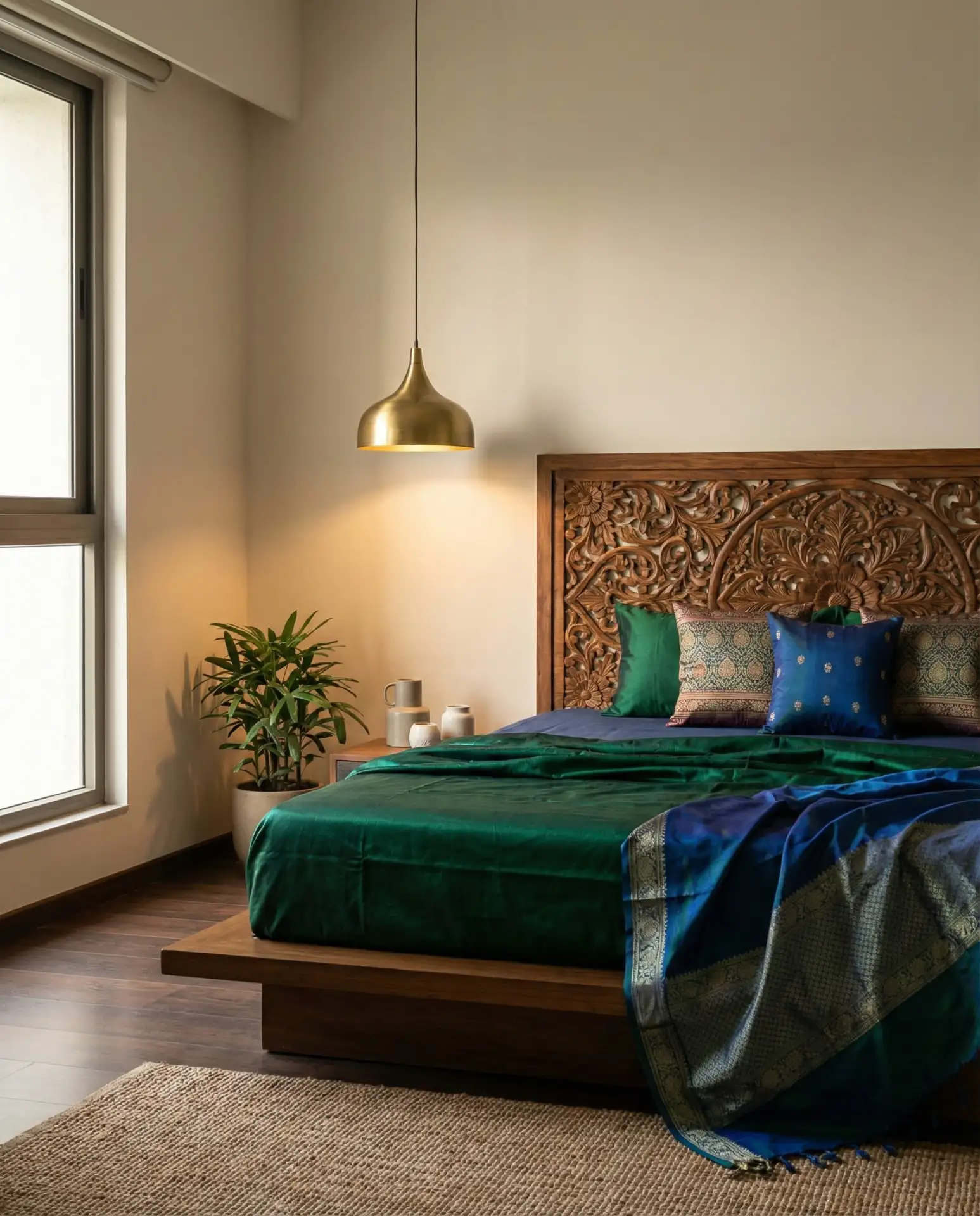
Real homeowner behavior: Many combine heirloom pieces—like a carved mirror or vintage trunk—with contemporary furniture from mainstream retailers. This mixing creates authenticity that purely decorative “ethnic” accessories can’t replicate. In suburban areas with significant South Asian communities, particularly in New Jersey and California, local artisans often create custom pieces that bridge traditional craftsmanship with modern proportions.
5. Bauhaus Geometry
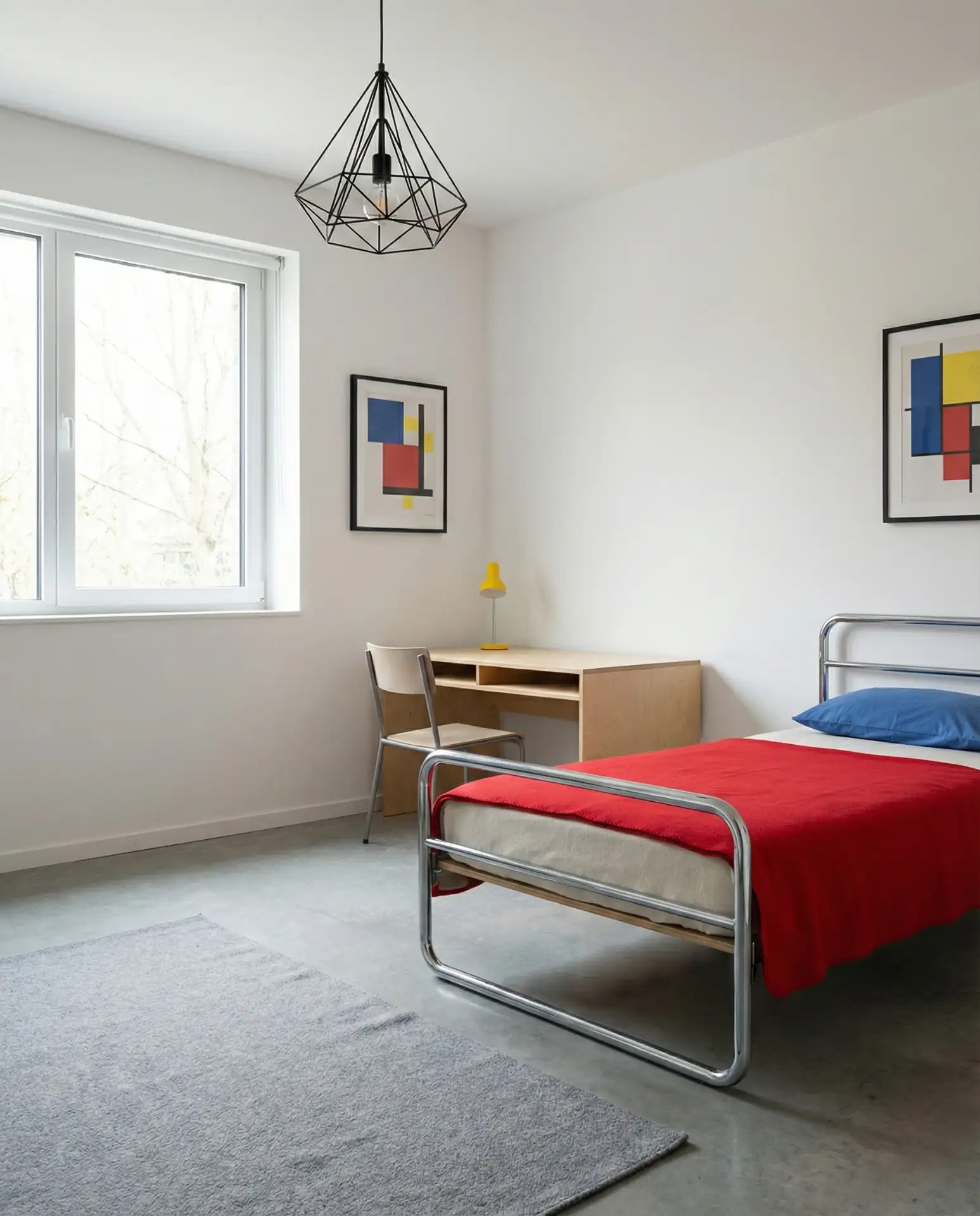
The clean lines and functional beauty of Bauhaus design are influencing bedroom layouts in 2026. Geometric light fixtures, tubular steel bed frames, and primary color accents create spaces that feel both historic and refreshingly modern. This design modern master approach works especially well for those who appreciate architecture and want their bedroom to reflect that sensibility. 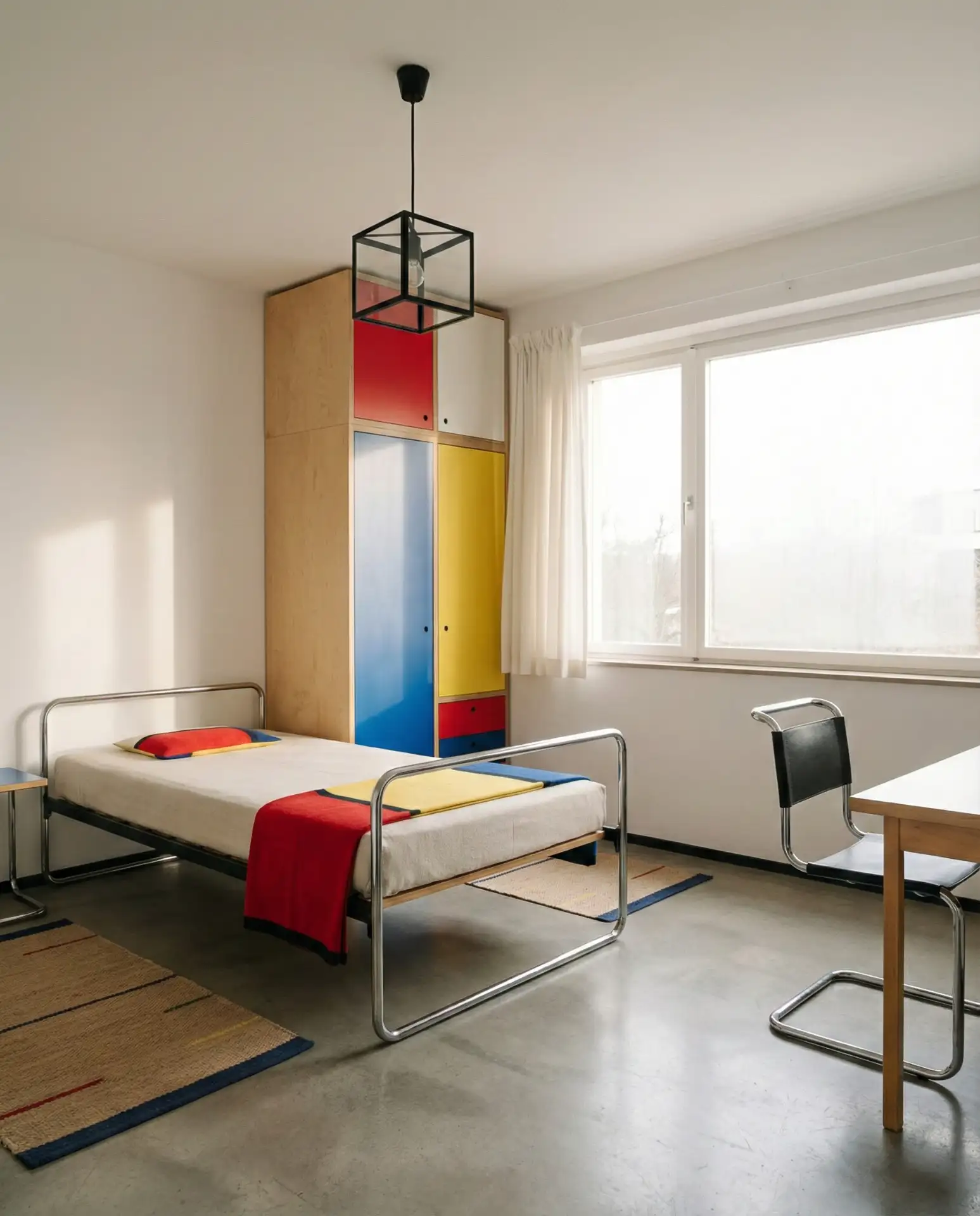
Expert-style commentary: Bauhaus principles emphasize “form follows function,” so every piece should serve a purpose while looking beautiful. This means integrated storage, adjustable lighting, and furniture that’s both comfortable and architecturally interesting. It’s a style that rewards quality over quantity—invest in fewer, better pieces rather than filling the room with decorative items that don’t earn their place.
6. Neoclassical Elegance
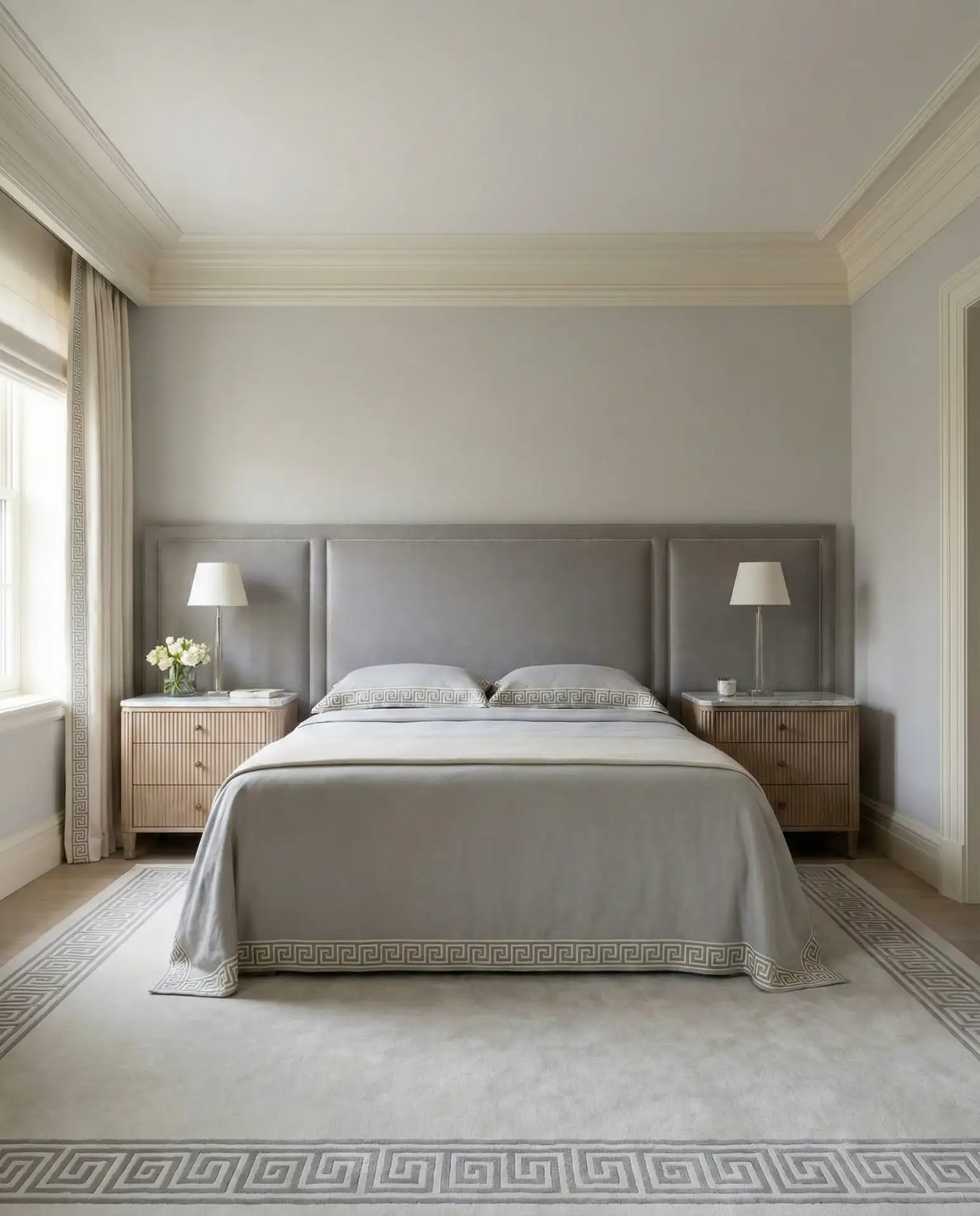
Neoclassical bedrooms bring Old World grandeur into contemporary life through symmetry, refined moldings, and classical proportions. Think fluted nightstands, Greek key patterns, and a restrained colour palette of grays, creams, and golds. This classical approach appeals to those who want sophistication without the heaviness of traditional Victorian or Baroque styles. 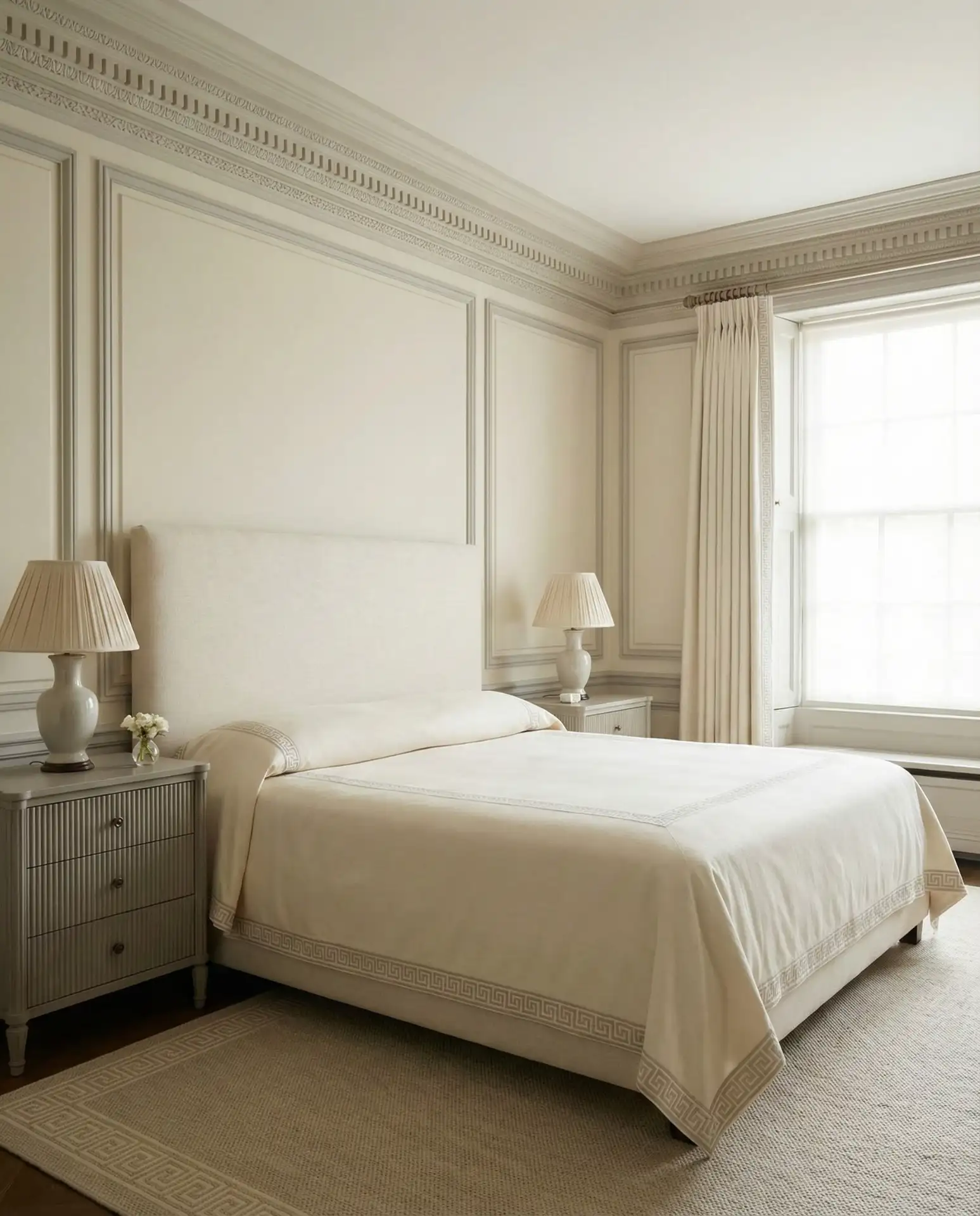
American lifestyle context: In Northeastern cities like Boston and Philadelphia, where historic architecture is cherished, homeowners often modernize neoclassical elements by keeping walls light and furniture scaled appropriately for today’s lifestyles. The mistake many make is over-accessorizing—true neoclassical design relies on restraint and perfect symmetry rather than ornate excess.
7. Ceiling as Fifth Wall
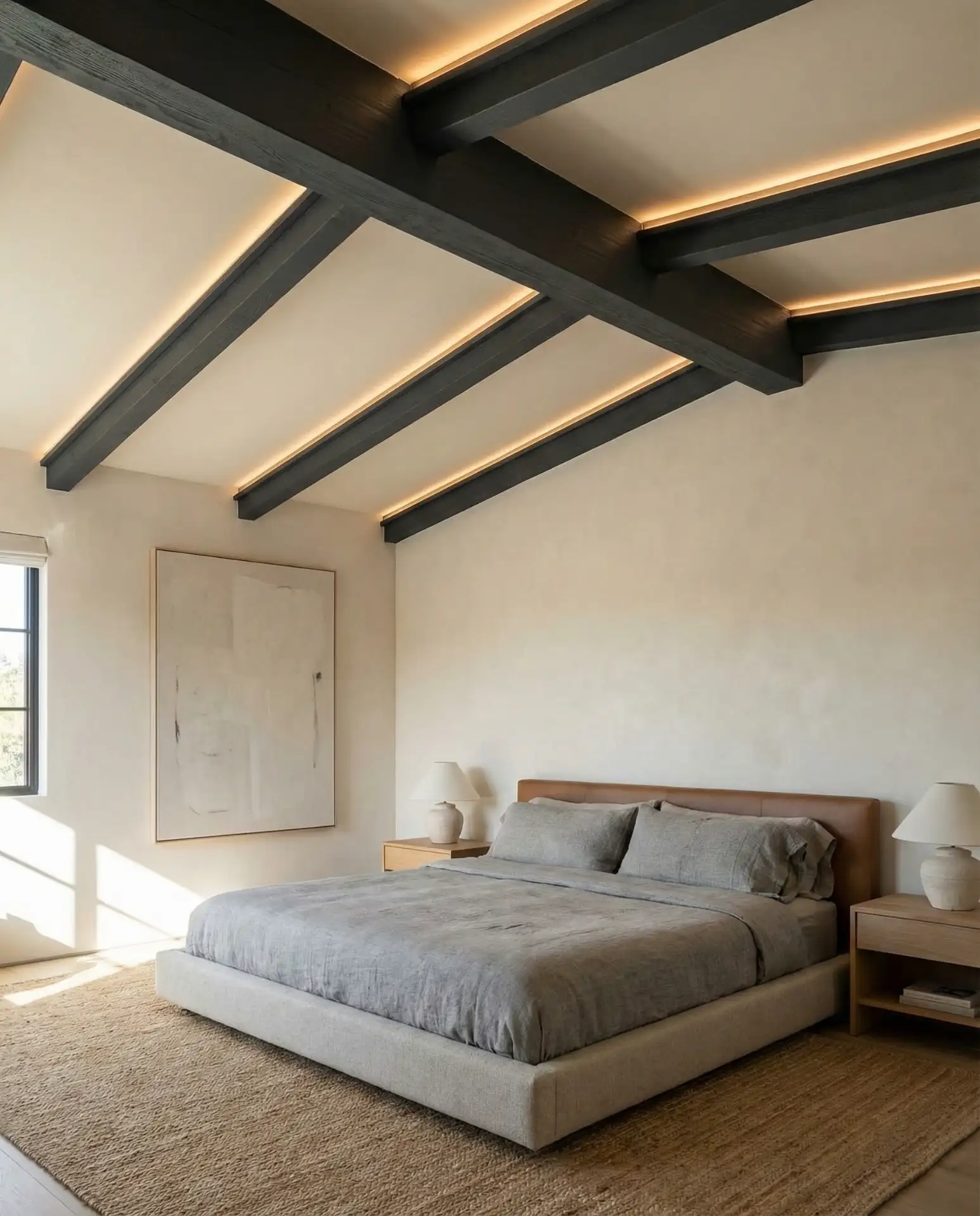
The ceiling design modern movement treats overhead space as an opportunity rather than an afterthought. Painted beams, integrated LED strips, coffered details, or even wallpapered ceilings add unexpected visual interest. This works especially well in masterbedroom suites where you want to create a true retreat that surprises and delights from every angle. 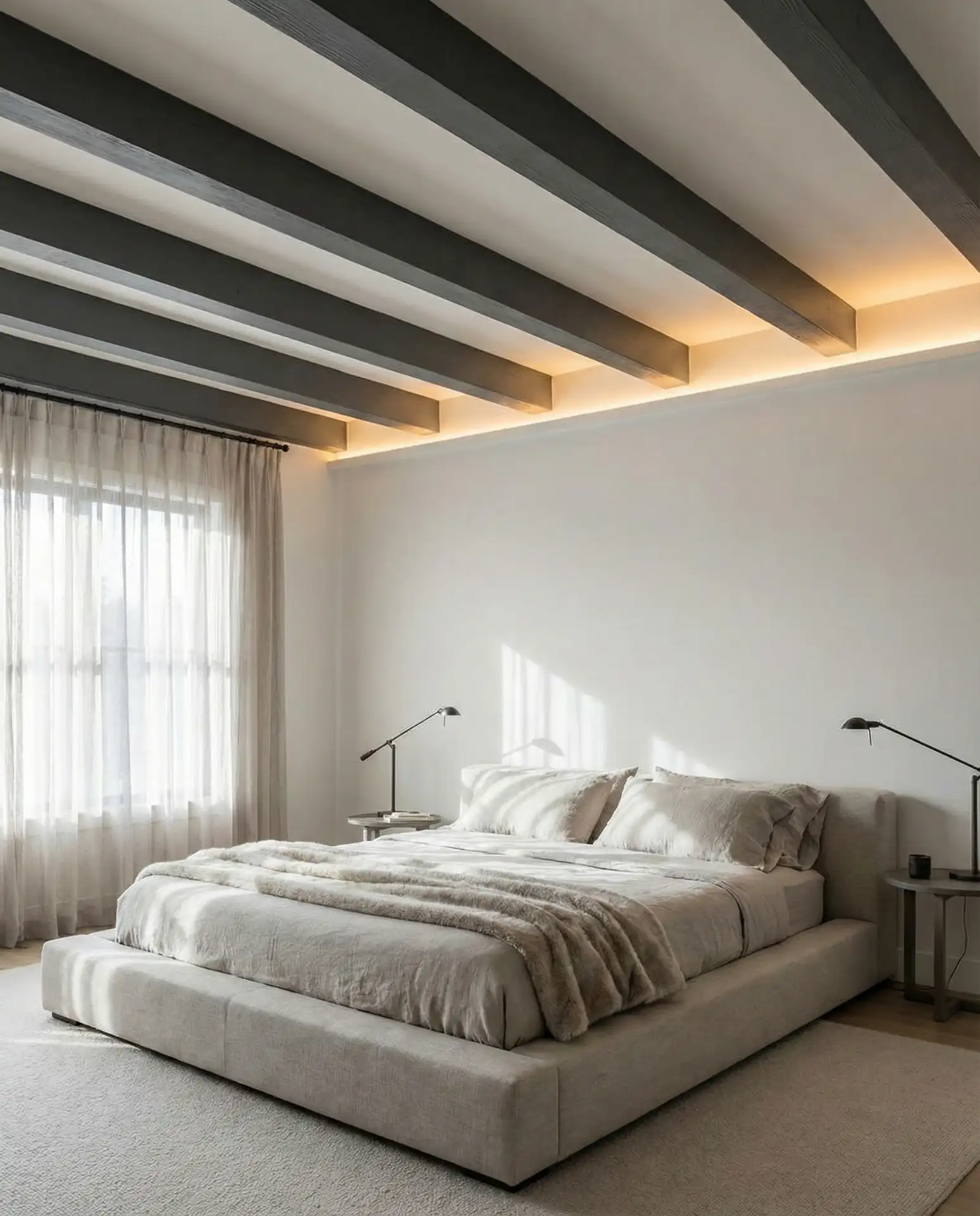
Budget angle: Painting the ceiling a color different from the walls costs the same as standard painting but delivers outsized visual impact. For around $200-400 in materials, you can transform the entire feel of a room. Wood beam overlays (often faux for affordability) run $500-1500 depending on room size but create architectural presence in newer homes that lack character.
8. Luxury Layered Bedding
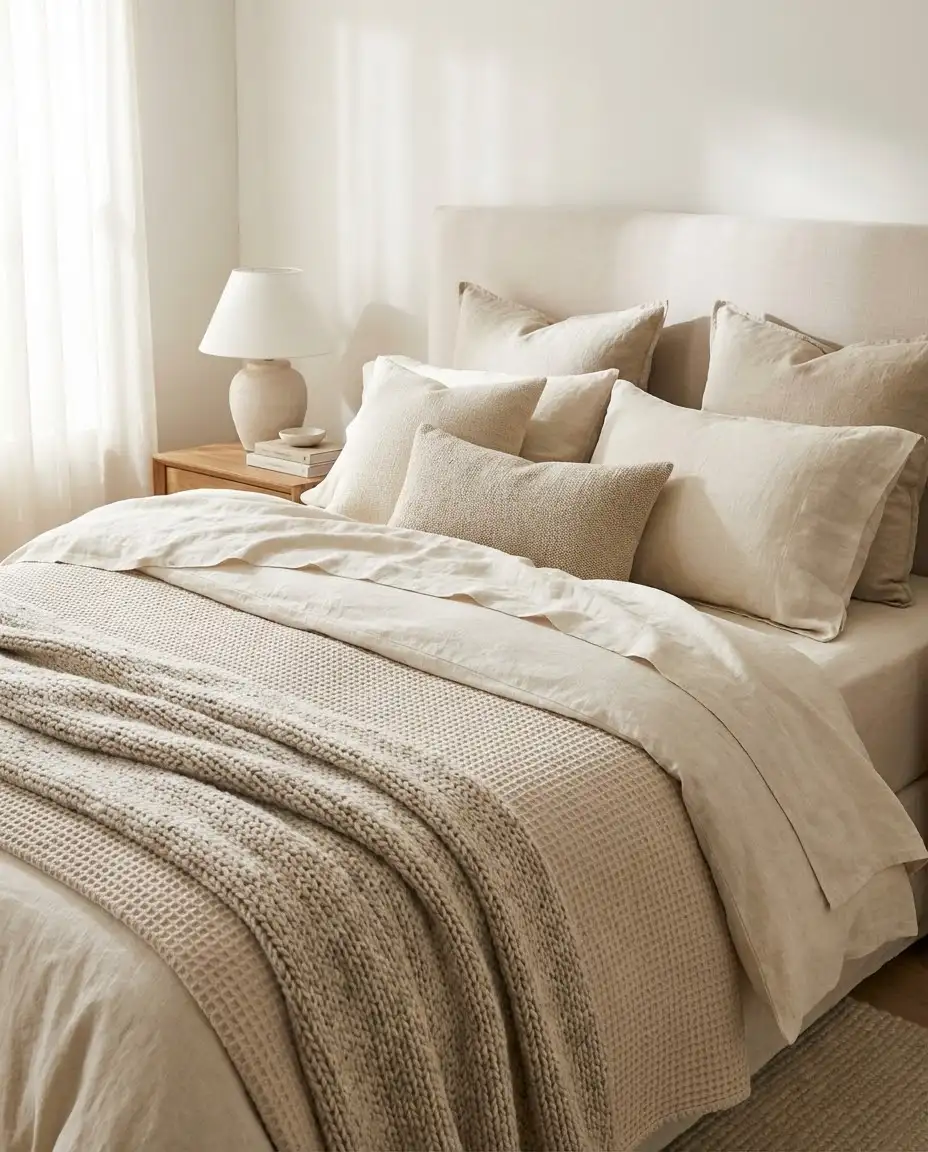
The design luxury 2025 aesthetic continues into 2026 with emphasis on hotel-quality bedding that’s actually achievable at home. Multiple pillows in varying sizes, a linen duvet topped with a lightweight quilt, and a throw at the foot create that design luxury classy look. The secret is mixing textures—smooth cotton, nubby linen, soft velvet—rather than matching everything perfectly.
Micro anecdote: A designer friend swears by the “odd numbers rule”—five or seven pillows look intentionally styled, while four or six can feel too symmetrical and stiff. She also recommends starting with euro shams in back, then standard shams, then decorative pillows in front. It’s the same formula high-end hotels use, and once you see it, you can’t unsee it.
9. Cozy Reading Nook Integration
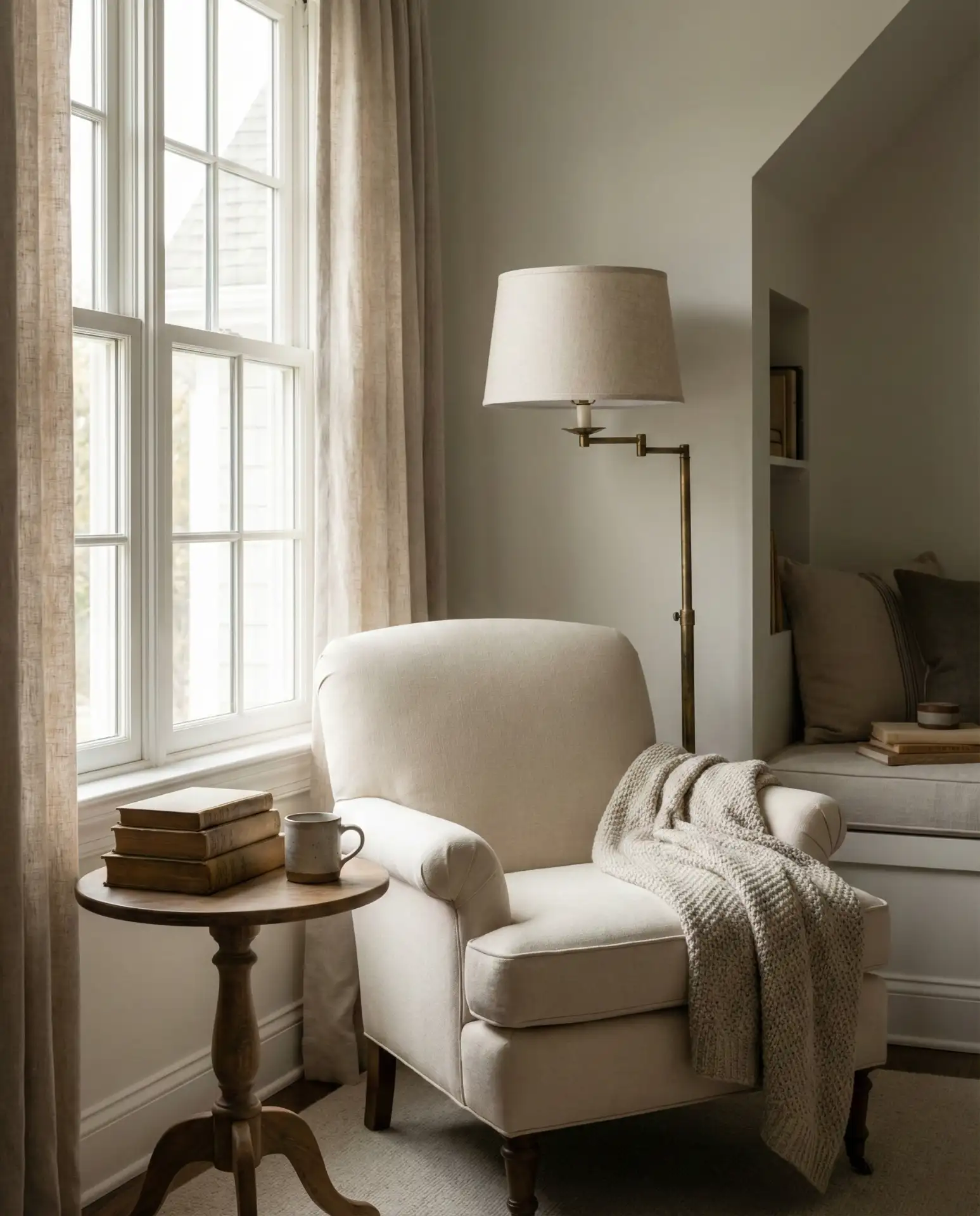
If space allows, carving out a dedicated reading corner makes a cozy bedroom feel even more special. A comfortable chair, good task lighting, and a small side table create a retreat within a retreat. This ideas modern approach recognizes that bedrooms serve multiple functions beyond sleep—they’re personal sanctuaries for unwinding with a book or morning coffee. 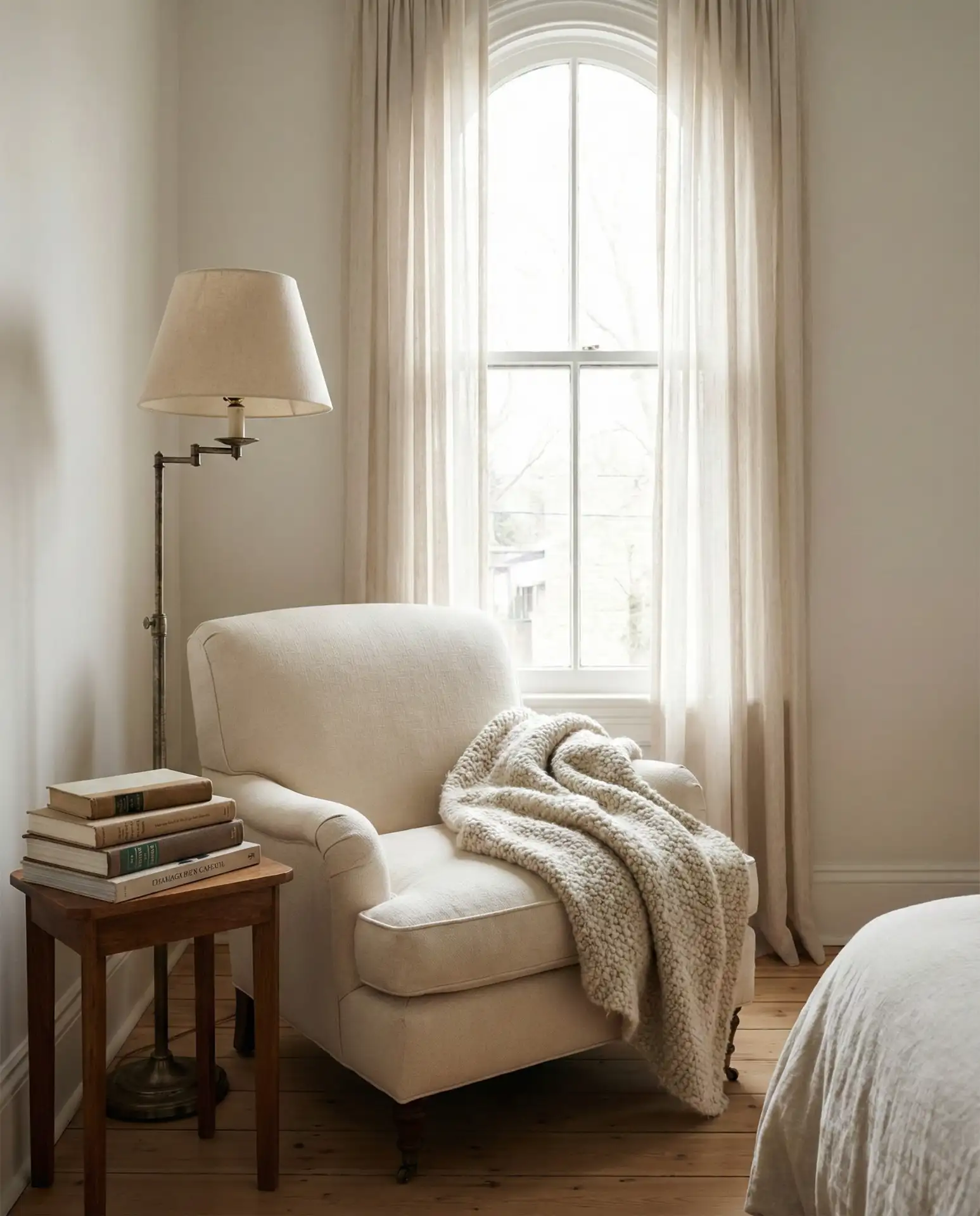
Where it works best: Bay windows and corner spaces that might otherwise go unused. In master bedrooms, placing the nook opposite the bed creates visual balance and gives the room multiple focal points. Even in smaller rooms (under 200 square feet), a single statement chair near a window can serve this purpose without overwhelming the space—the key is choosing appropriately scaled furniture.
10. Design Indian Heritage
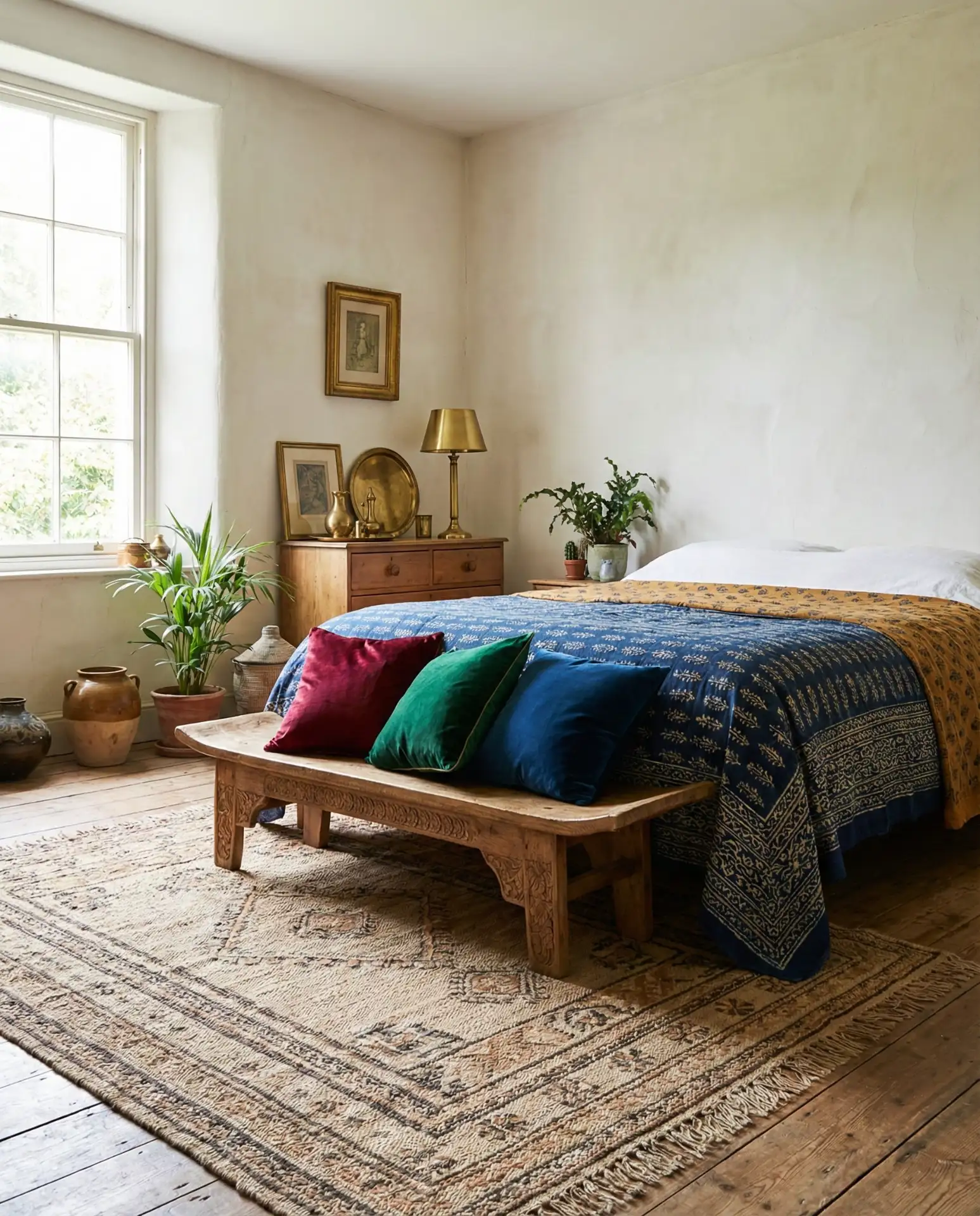
The design indian aesthetic celebrates rich color, intricate patterns, and handcrafted details in ways that feel fresh for 2026. Block-printed textiles, low seating options, and jewel-toned accents create warmth and personality. Unlike heavy traditional looks, modern interpretations keep walls neutral and let textiles and art provide the colour and cultural narrative. 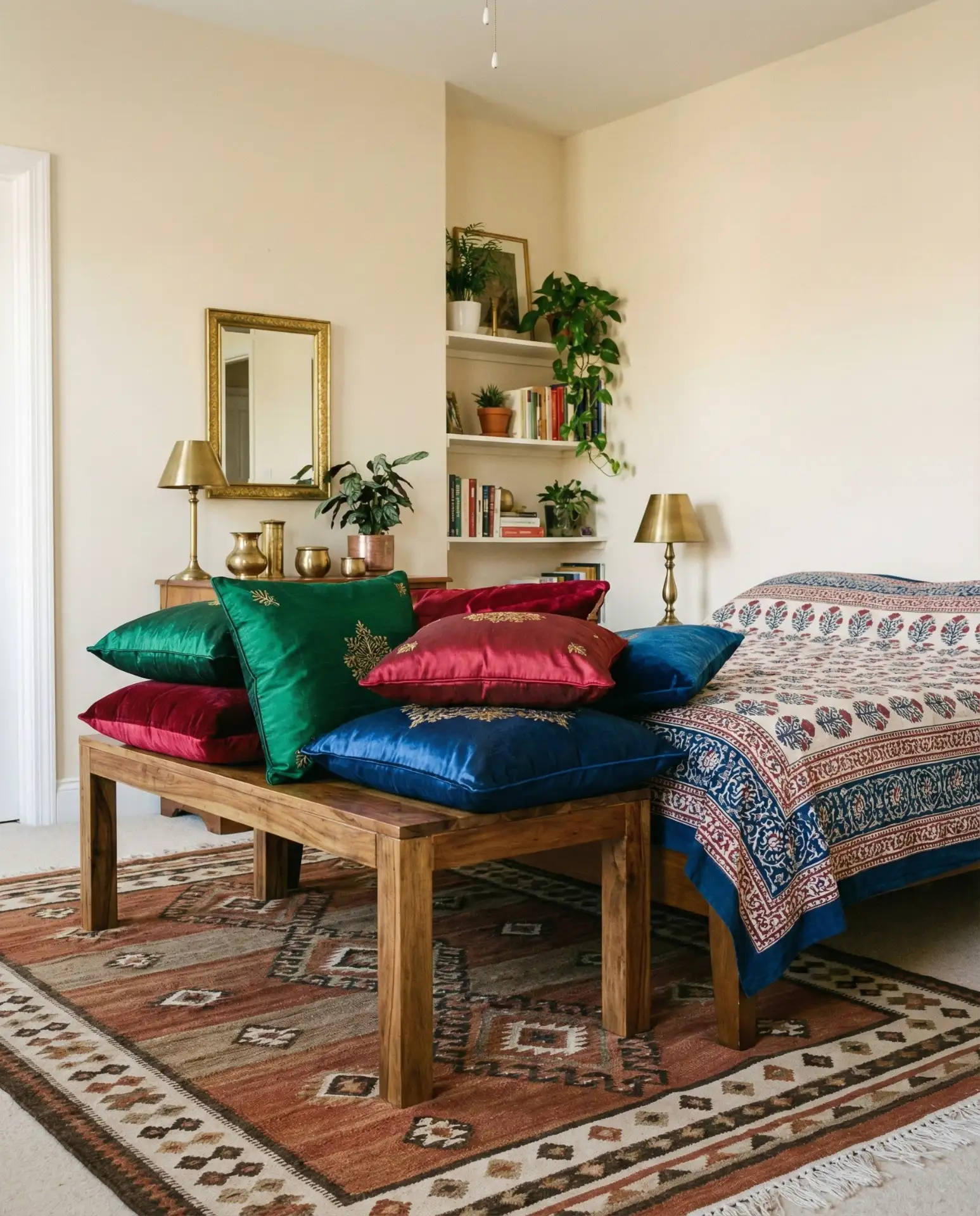
Common mistake: Overdoing pattern can make a space feel chaotic rather than curated. The best approach uses one large-scale pattern (perhaps a bedspread or rug), then complements it with smaller-scale prints in coordinating colors. This creates visual interest without competition. Many homeowners also miss the importance of negative space—letting some walls and surfaces remain simple allows the intricate details to truly shine.
11. Simple Modern Master Suite
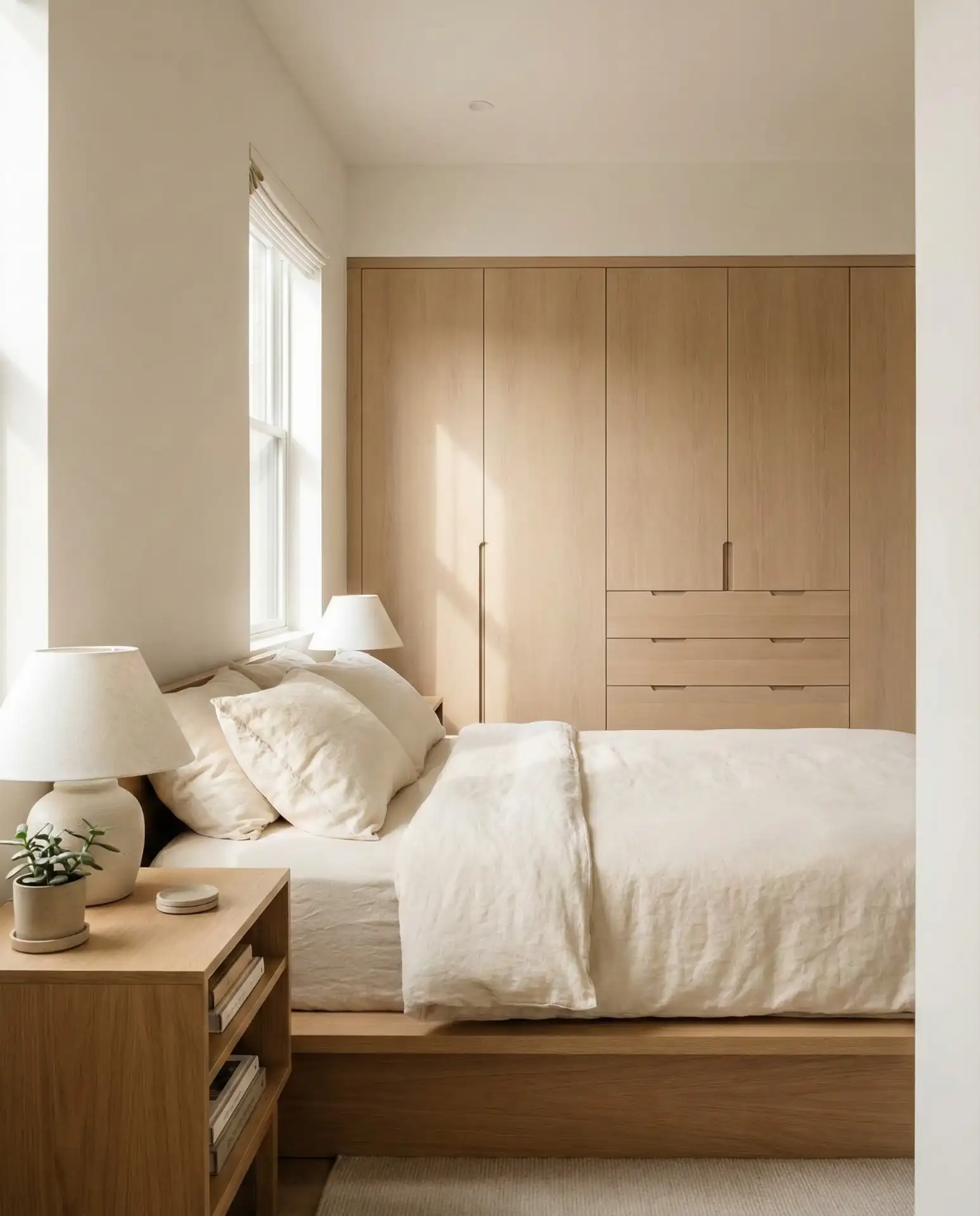
A design modern master simple bedroom strips away unnecessary decoration to focus on quality materials and functional layout. Platform beds with integrated storage, built-in closets, and streamlined furniture create calm, organized spaces. This minimal philosophy doesn’t mean boring—it means every choice is intentional and nothing feels extraneous or cluttered. 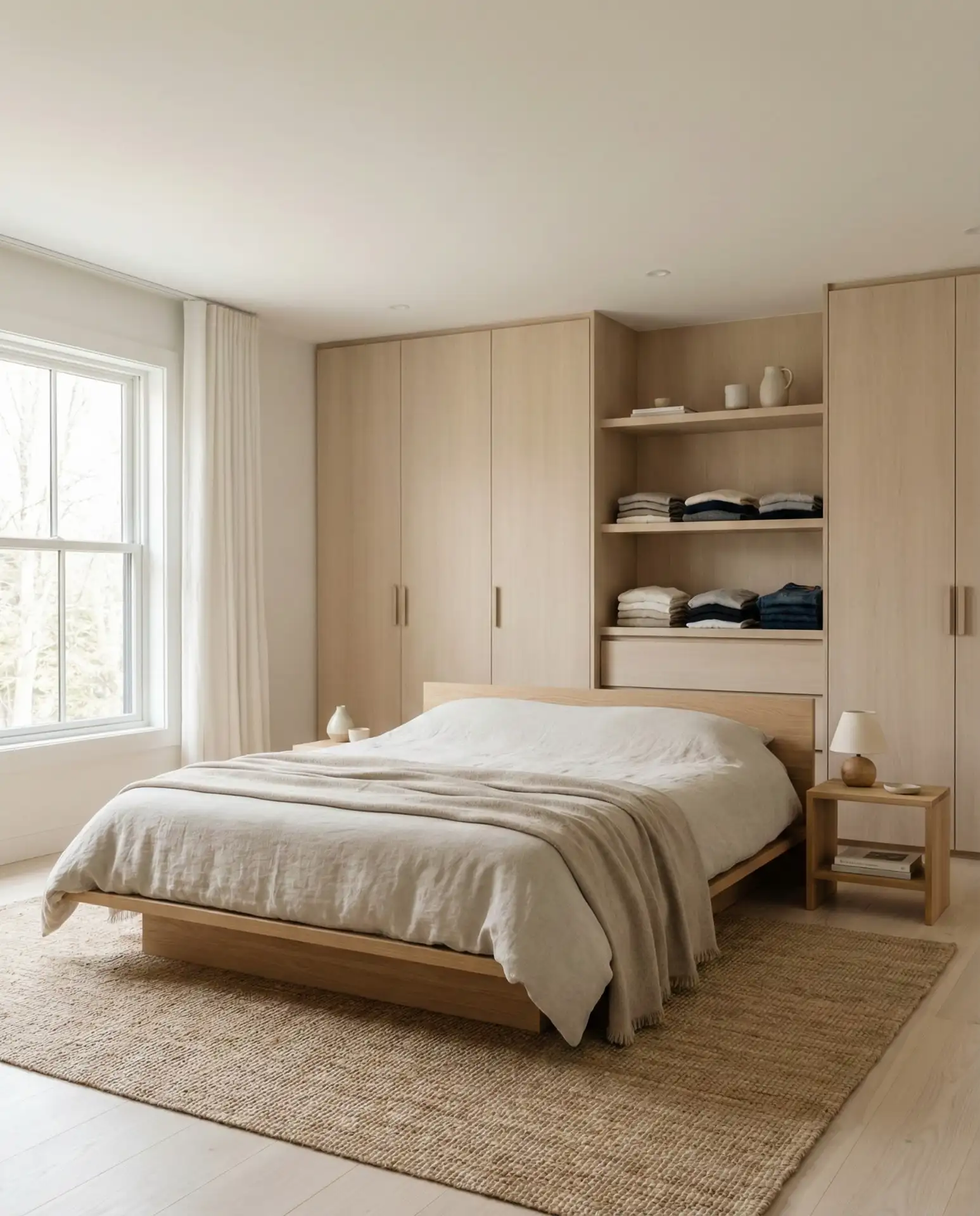
Practical insight: Under-bed storage is invaluable in modern master suites, particularly in homes without large walk-in closets. Look for platform beds with hydraulic lift mechanisms—they provide access to several cubic feet of storage without visible drawers that can make furniture feel heavy. This solution is especially popular in condos and townhomes where basement storage isn’t an option.
12. Classy Elegant Luxury
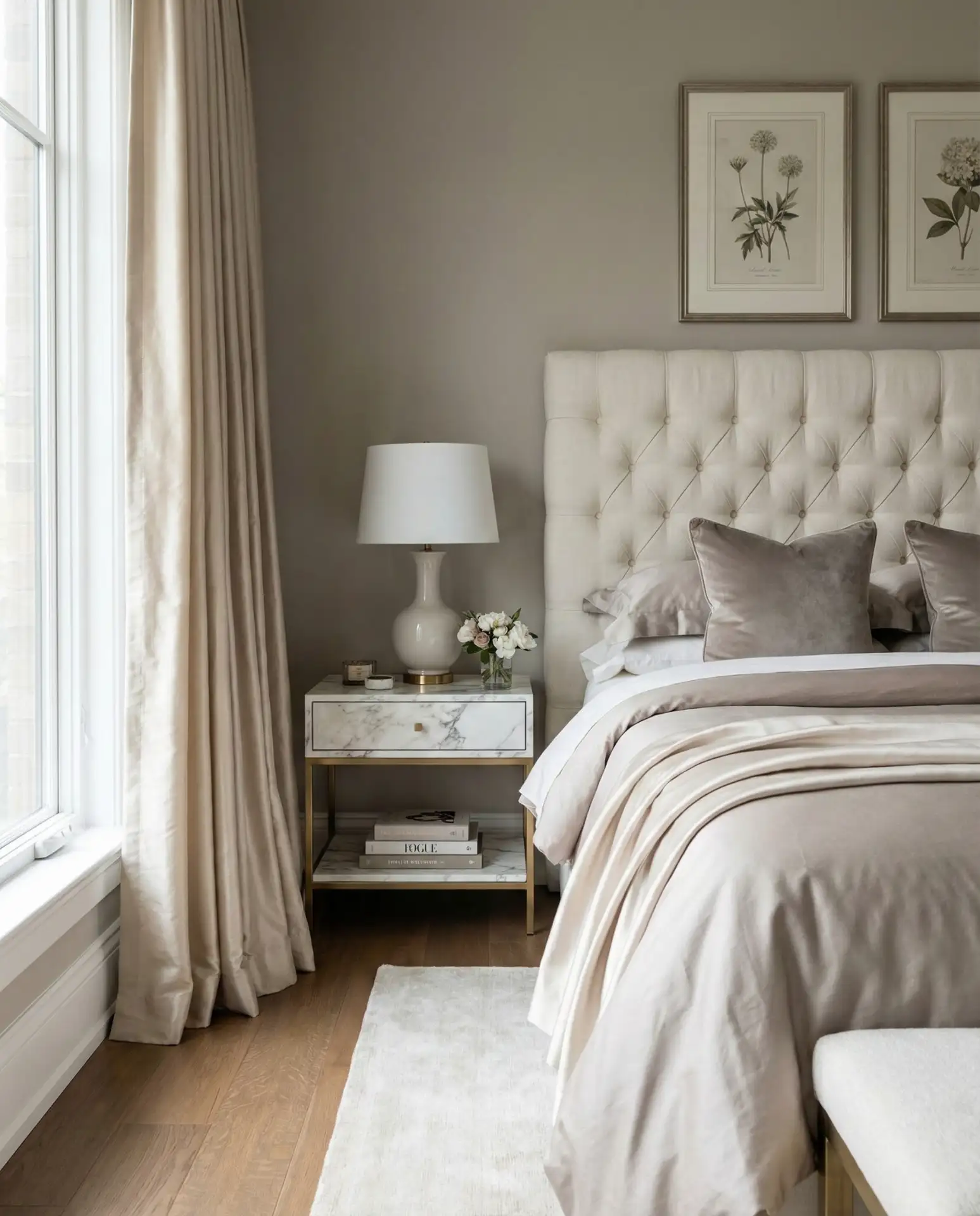
The design luxury classy elegant bedroom combines refined materials, sophisticated color palettes, and carefully edited accessories. Silk drapes, marble surfaces, and tailored upholstery create polish without ostentation. This approach works for those who want their bedroom to feel special—like a boutique hotel—but still personal and genuinely comfortable for everyday living. 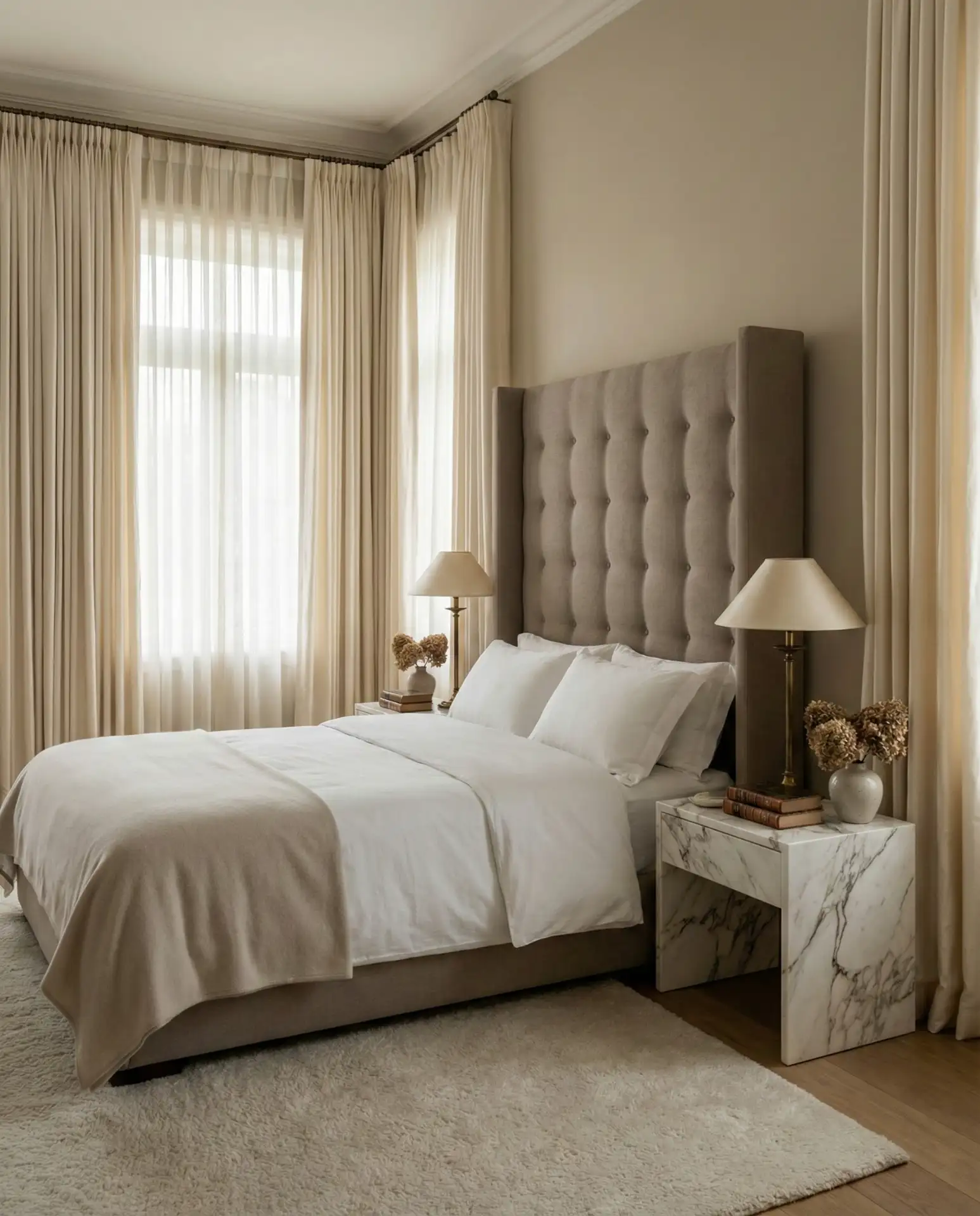
Real homeowner behavior: Many people invest in one or two high-quality statement pieces—perhaps a really exceptional headboard or custom window treatments—then fill in with more affordable items. This creates the feeling of luxury without the five-figure price tag. In upscale suburbs across states like Connecticut and Virginia, interior designers often recommend splurging on what you touch daily (bedding, rugs) while saving on decorative items.
13. Minecraft-Inspired Geometric Play
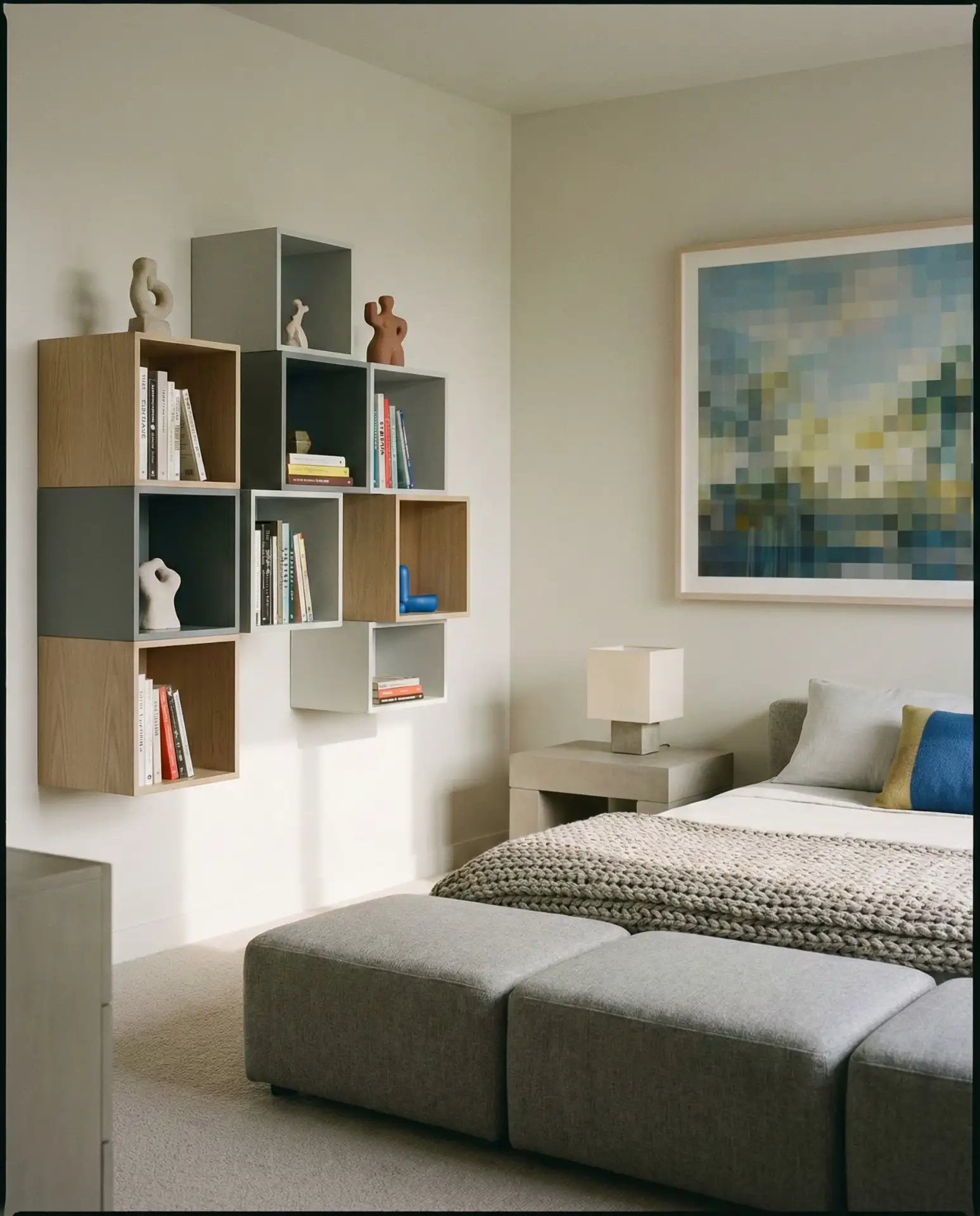
While Minecraft typically inspires kids’ rooms, the game’s blocky aesthetic has influenced adult bedroom design in unexpected ways. Geometric accent walls with cube-like shelving, pixelated art, and modular storage systems create playful spaces that still feel grown-up. This works particularly well for young adults who want their personality reflected in bold, unconventional design ideas. 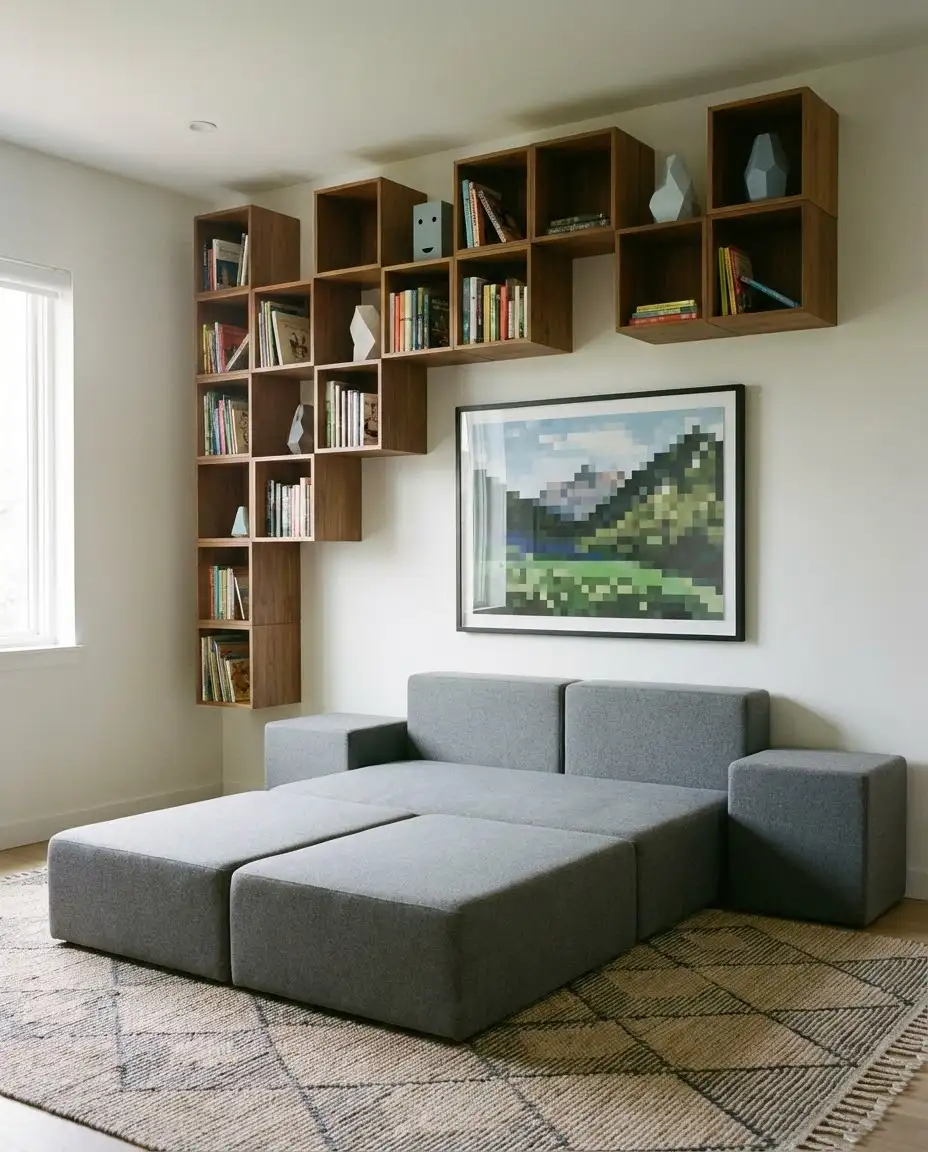
Micro anecdote: A 28-year-old software developer in Austin told me his cube-based shelving system, originally inspired by Minecraft, ended up being incredibly functional. Each cube unit can be rearranged seasonally, and the geometric pattern creates visual interest without permanent commitment. His friends initially teased him, but now several have copied the idea—it turns out modular design appeals beyond gaming enthusiasts.
14. Aesthetic Soft Neutrals
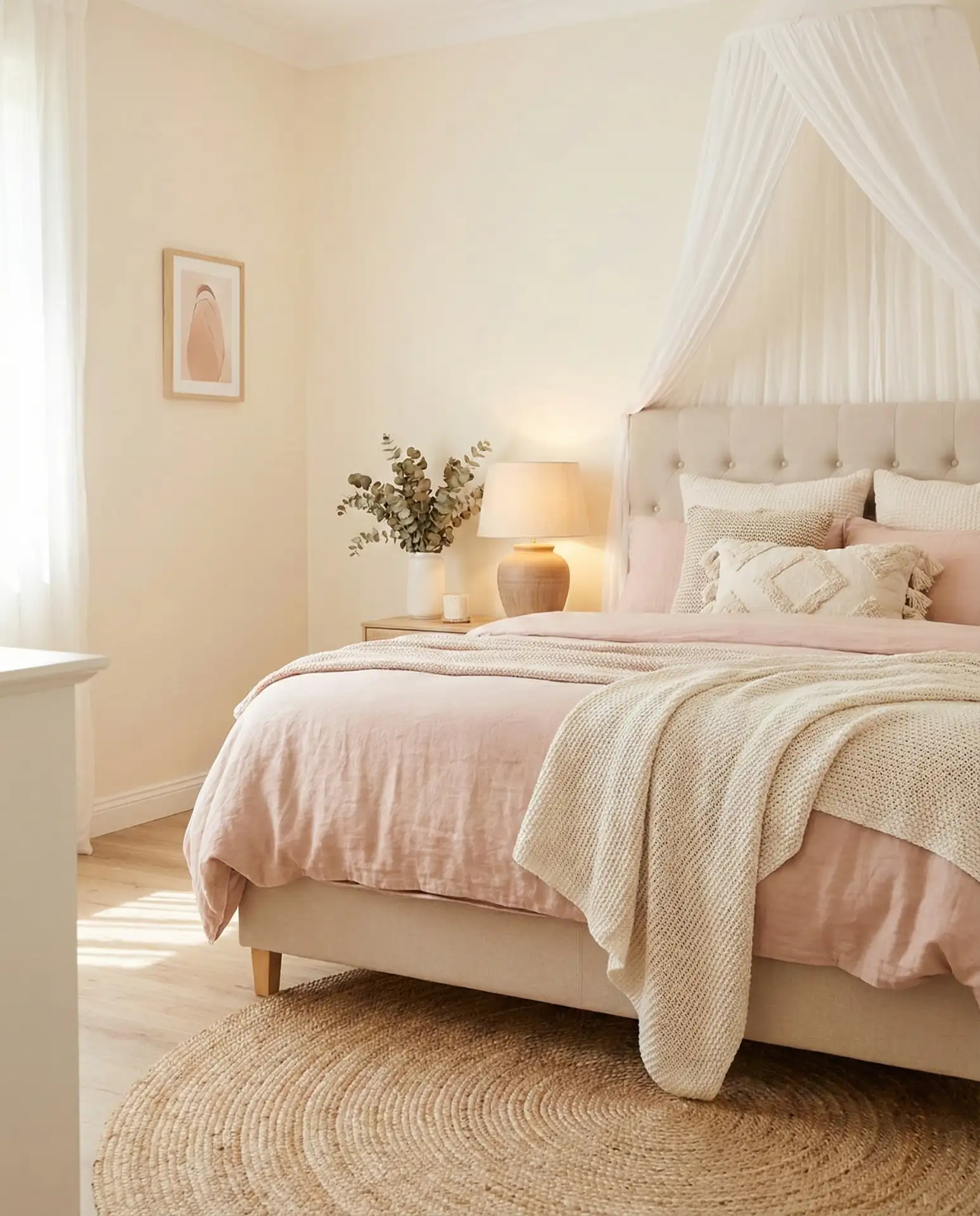
The aesthetic movement on social media has translated into real-world bedrooms filled with soft neutrals, dreamy lighting, and carefully curated vignettes. Blush pinks, warm taupes, and creamy whites create spaces that photograph beautifully but, more importantly, feel genuinely peaceful. This style speaks to younger homeowners who grew up with Pinterest and want that curated look in their actual living spaces.
Where it works best: Bedrooms with good natural light that can make soft colors glow throughout the day. In darker spaces, these palettes can read as dingy rather than dreamy, so consider adding more artificial light or choosing slightly warmer tones. The Pacific Northwest and Northeast, where gray days dominate, often benefit from adding peachy or golden undertones to prevent the palette from feeling too cool.
15. Bold Colour Statement Walls
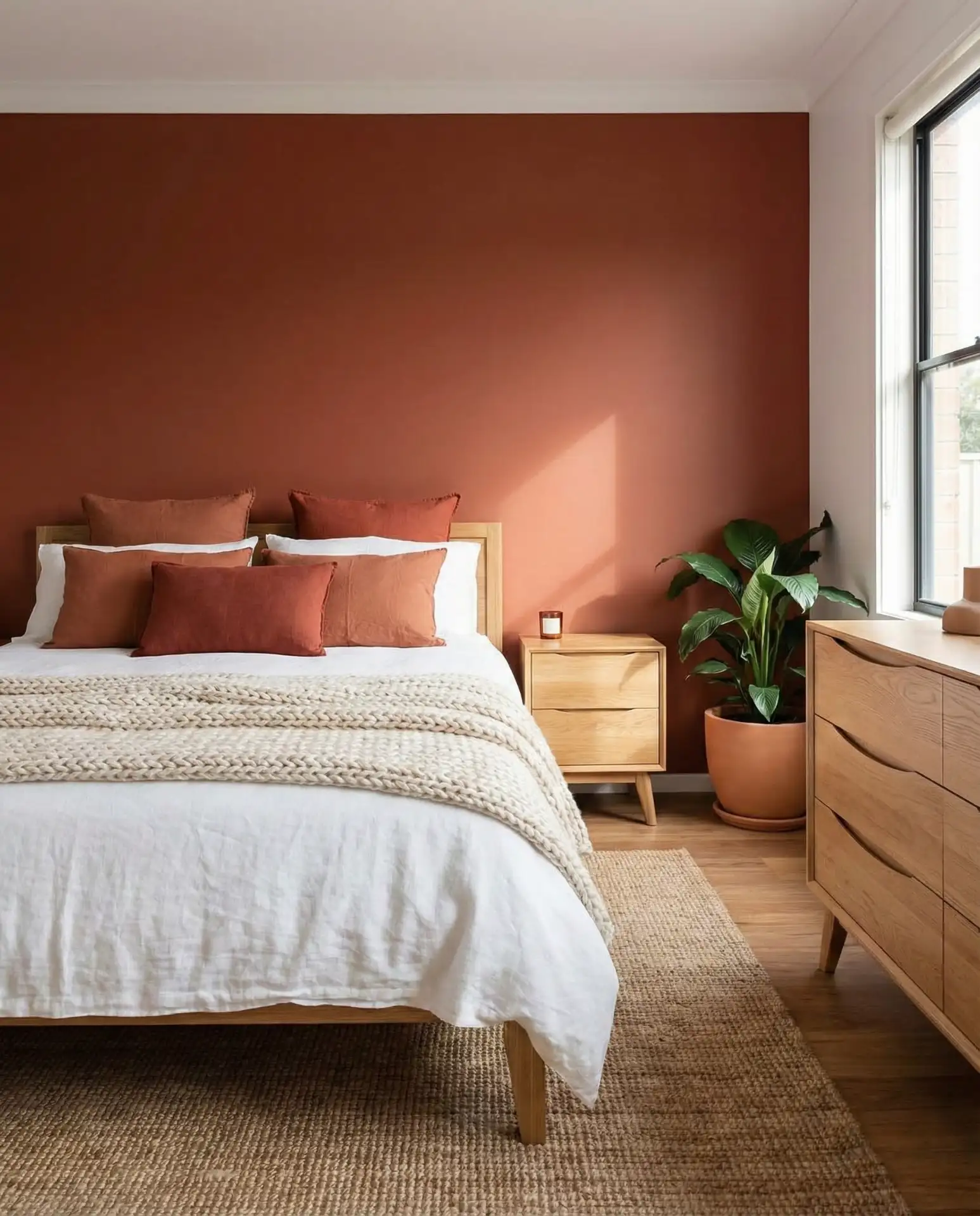
After years of all-white everything, homeowners are embracing bold colour on bedroom accent walls. Deep terracotta, forest green, or even dramatic black create instant personality and make the bed feel anchored rather than floating in space. This design luxury move is surprisingly accessible—great paint costs around $60 per gallon, making it one of the most affordable ways to completely transform a room. 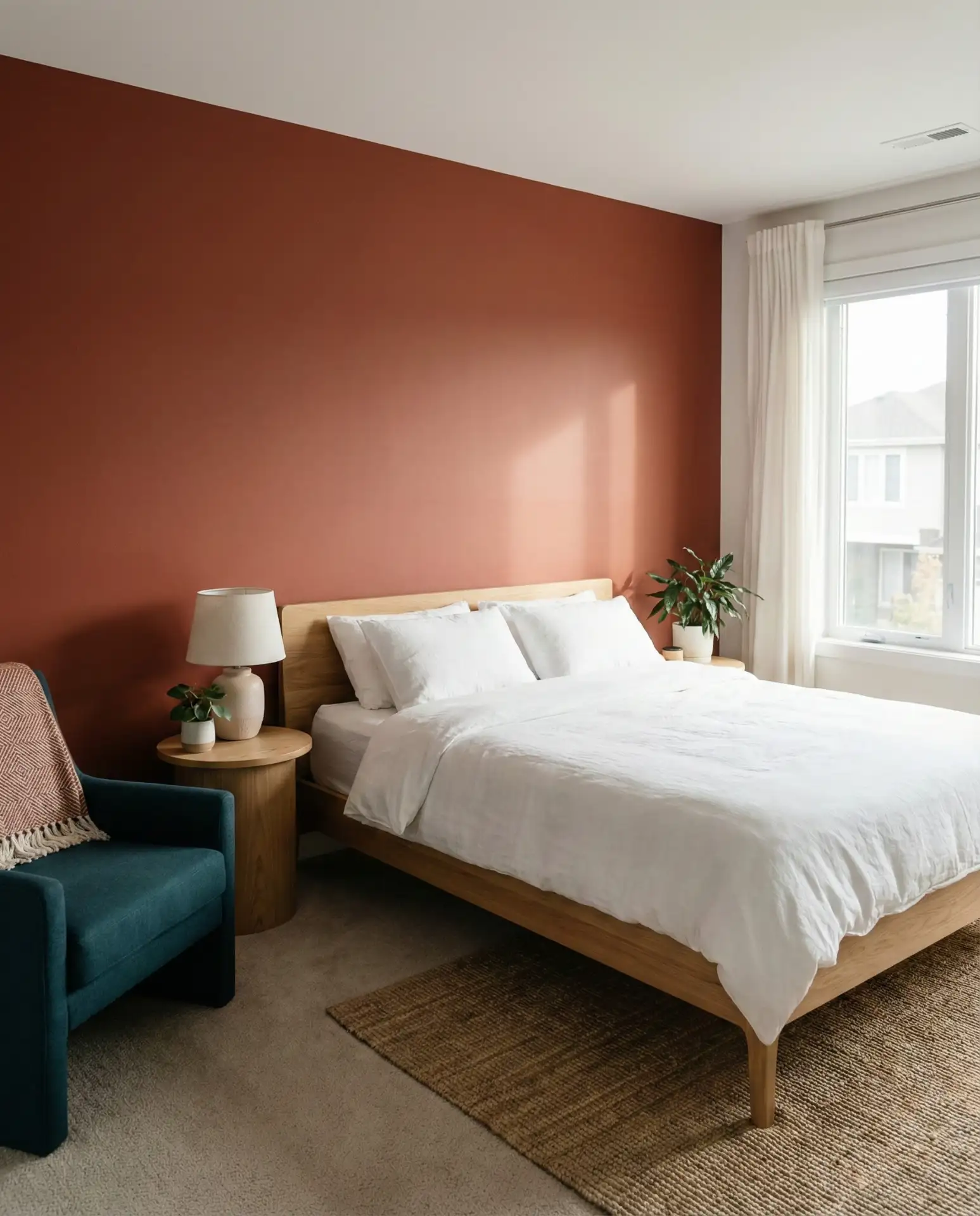
Budget angle: Quality paint matters more than brand name—look for paint with good coverage (one-coat if possible) and easy washability. Benjamin Moore, Sherwin-Williams, and even Behr Premium Plus provide excellent results in the $50-70 per gallon range. Most bedrooms need only 1-2 gallons for an accent wall, bringing total paint costs under $150. The real investment is preparation—proper taping, priming, and allowing adequate drying time between coats ensures professional-looking results.
16. Design Modern Master Retreat
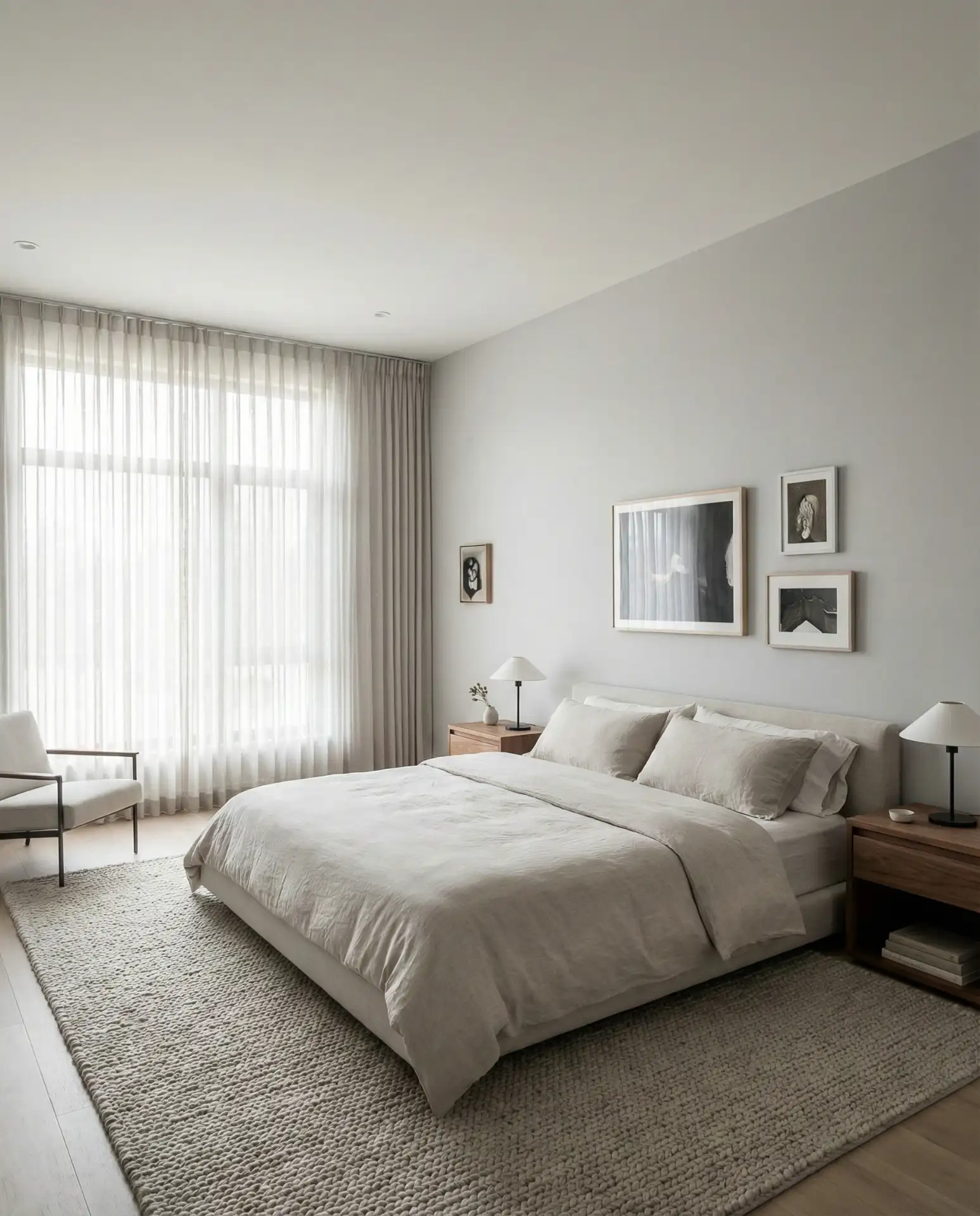
A design modern master bedroom in 2026 balances sleek contemporary lines with comfortable, livable details. Low-profile furniture, clean walls, and minimal window treatments create openness, while plush rugs and soft textiles prevent the space from feeling cold. This approach works especially well in newer construction homes where architectural details may be limited, allowing furniture and thoughtful design to create character. 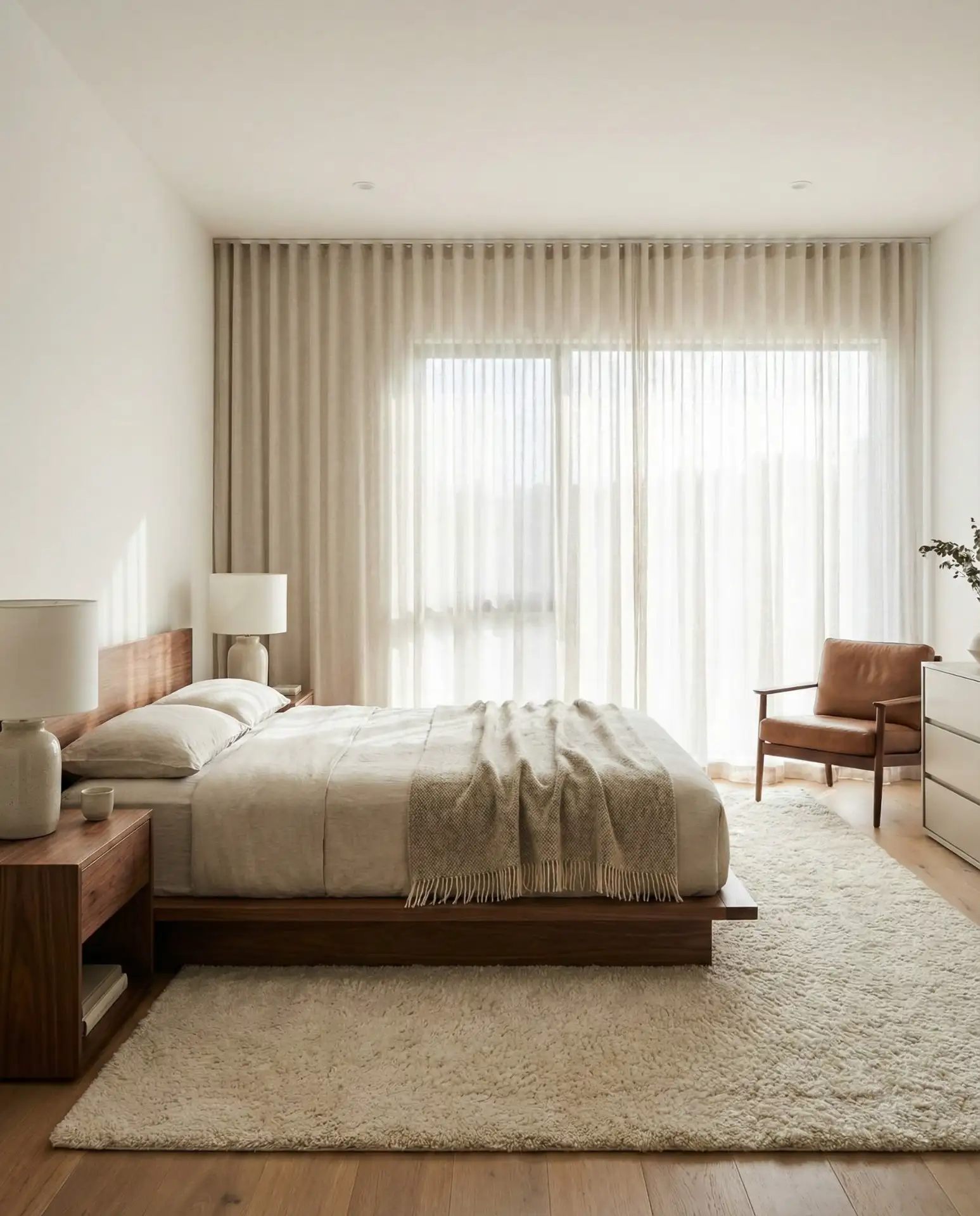
Expert-style commentary: The key to successful modern design is proportion—furniture should relate to room scale, and negative space is just as important as filled space. A common mistake is pushing all furniture against walls, which makes rooms feel disconnected. Instead, float the bed slightly away from the wall and use rugs to define zones. This creates a more intentional, designed feel rather than a furniture showroom.
17. Warm Cozy Textures
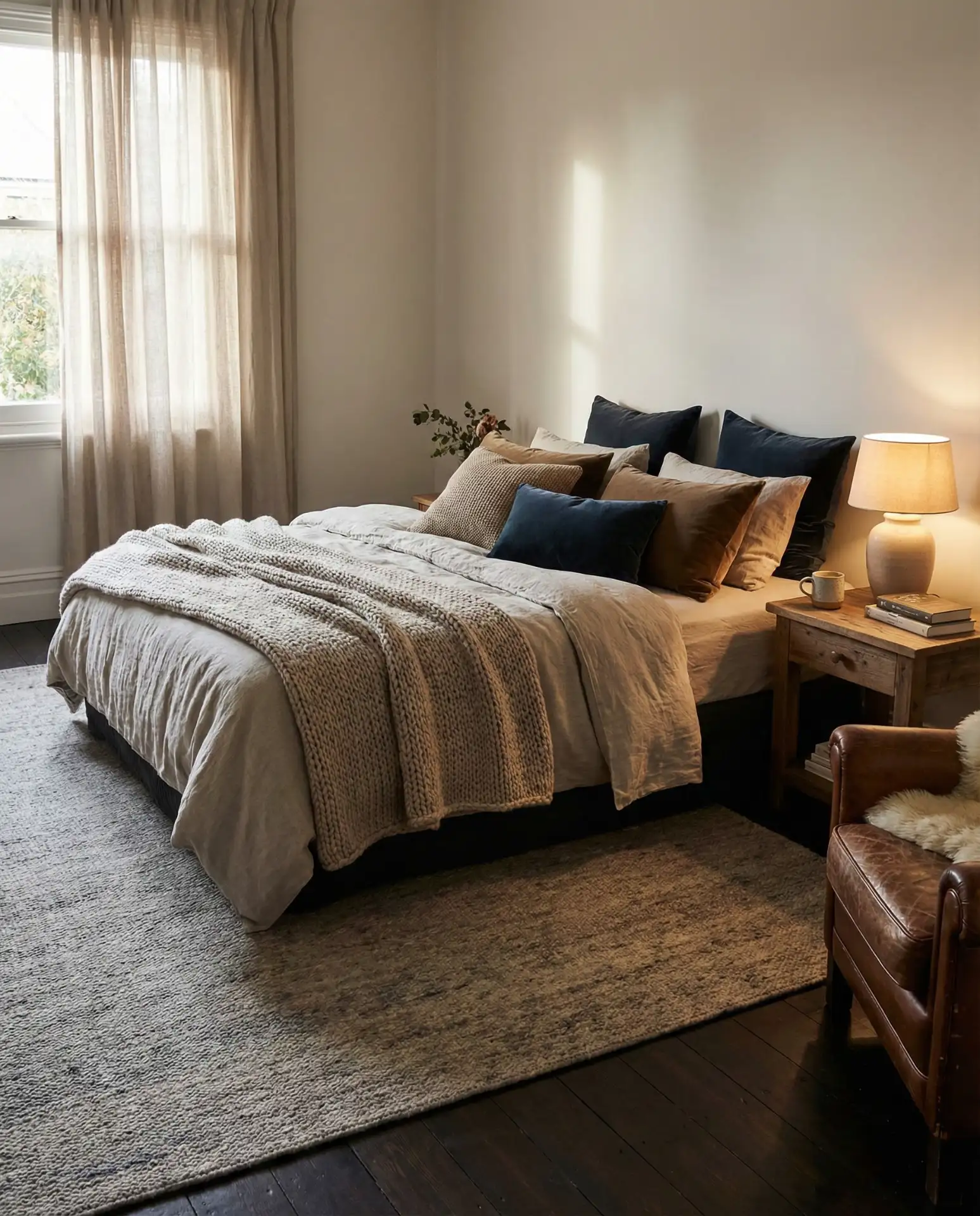
Creating a genuinely cozy bedroom goes beyond just adding blankets—it’s about layering multiple textures that invite touch. Nubby wool rugs, linen drapes, velvet pillows, and wood surfaces each contribute different tactile experiences. This design ideas approach transforms bedrooms into true comfort zones where you actually want to spend time, not just sleep. 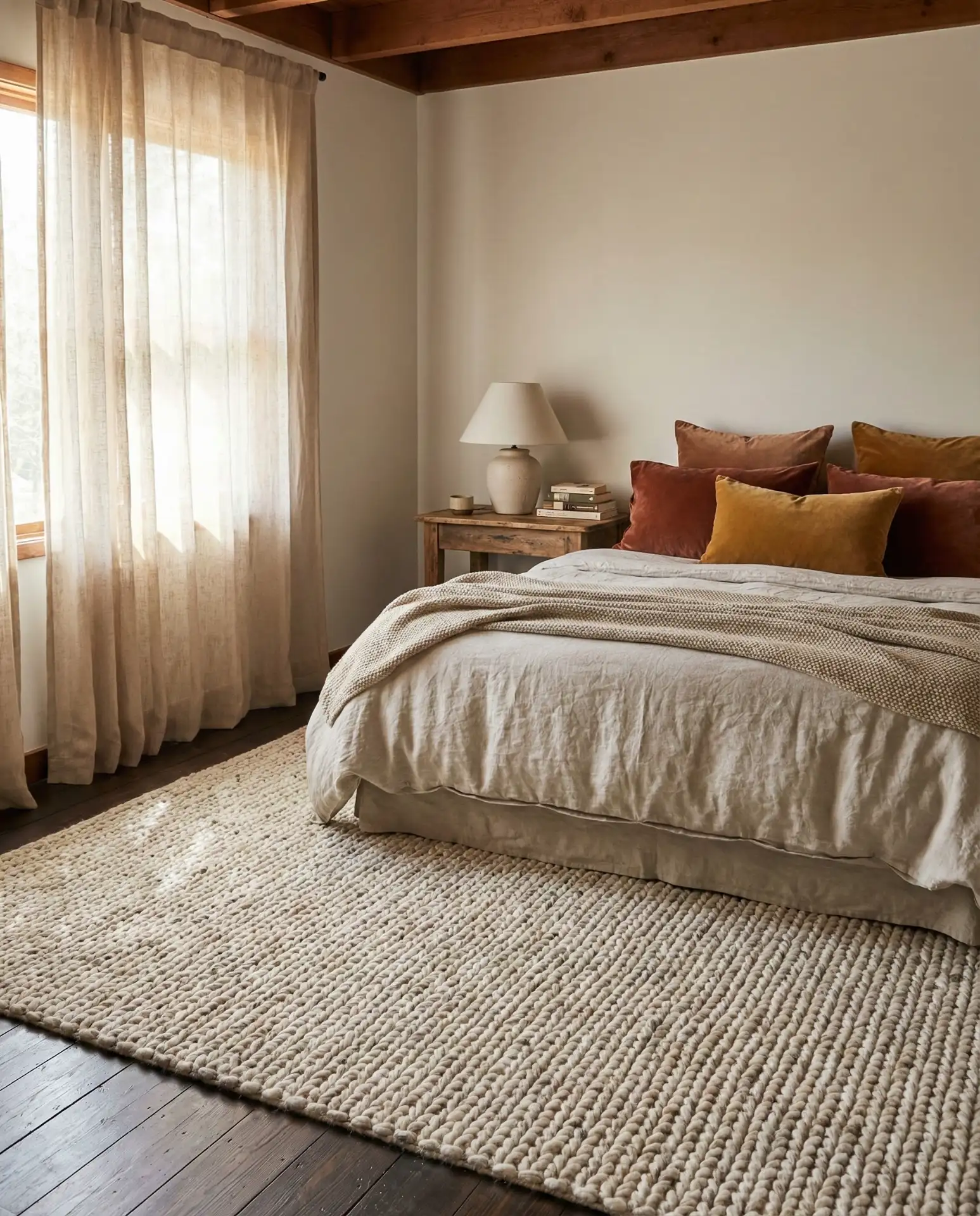
American lifestyle context: In colder climates like Minnesota, Wisconsin, and upstate New York, homeowners particularly appreciate bedrooms that feel warm both visually and physically. Layering textures serves a functional purpose—thick curtains provide insulation, wool rugs add warmth underfoot—while also creating that desired cozy aesthetic. Even in warmer states like Arizona or Florida, these textural elements work when executed in lighter-weight materials like cotton instead of wool.
18. Minimalist Luxury Balance
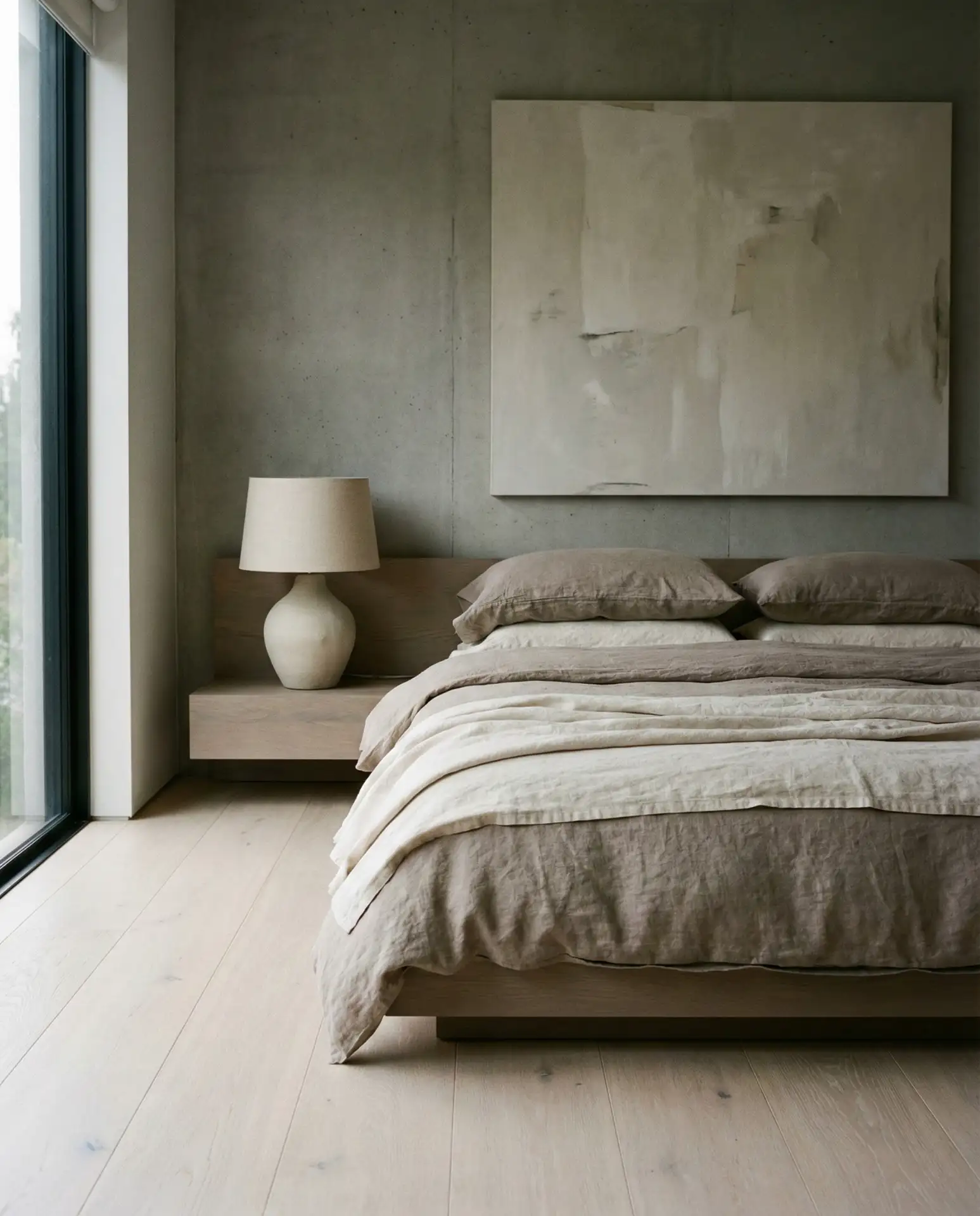
The sweet spot between minimal and luxury creates bedrooms that feel both serene and special. High-quality materials in simple forms—like a perfectly made linen bed, a single sculptural lamp, or one piece of statement art—deliver visual calm without sacrificing refinement. This approach appeals to those who want their bedroom to feel expensive without looking busy or overly decorated. 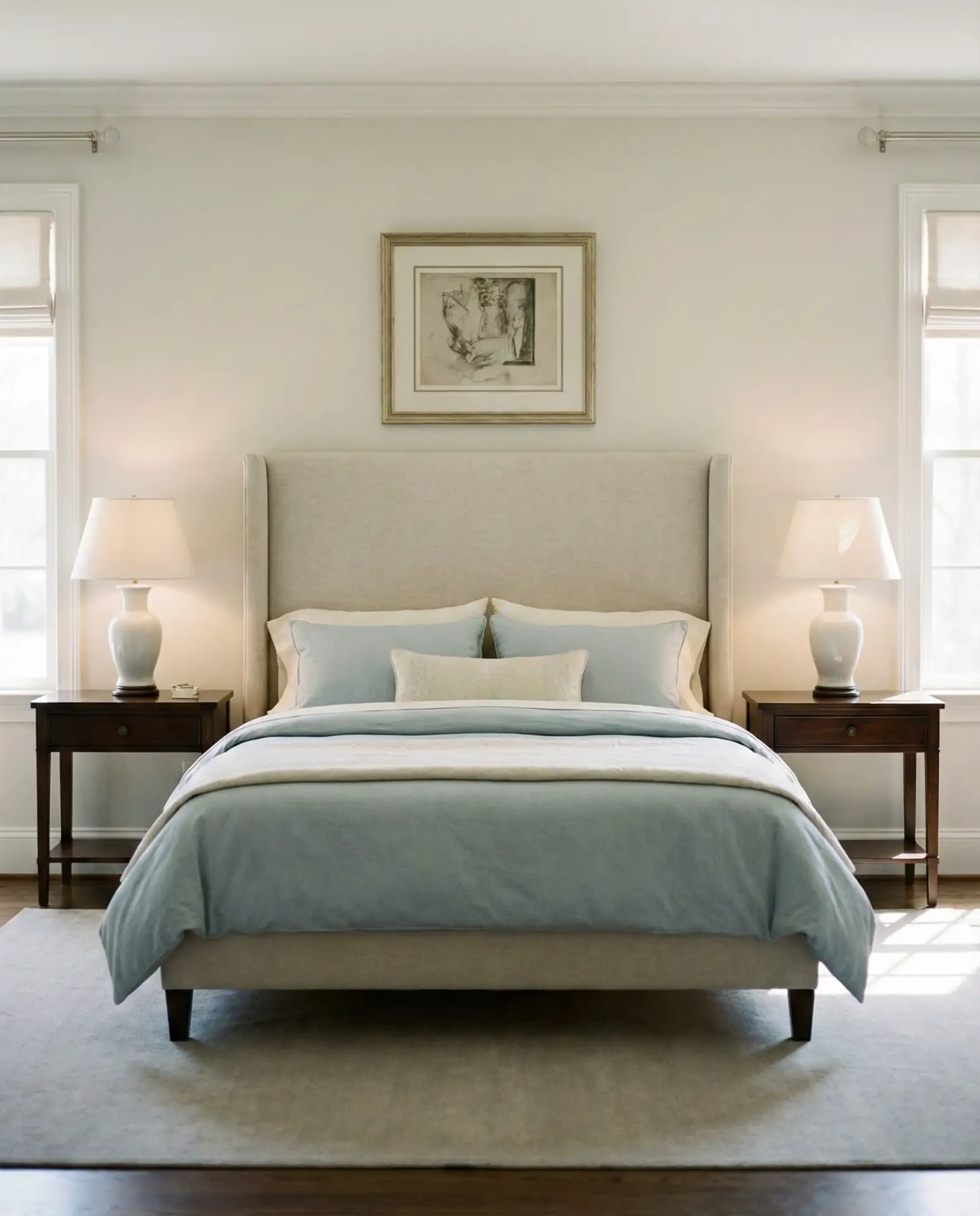
Common mistake: Confusing minimalism with emptiness. A truly successful minimalist luxury bedroom has fewer items, but each one is carefully chosen for quality and aesthetic impact. That might mean saving for months for the perfect headboard rather than buying something adequate immediately. The restraint is what makes each piece feel special—when there are only five items in a room, all five better be worth looking at.
19. Classical Symmetry
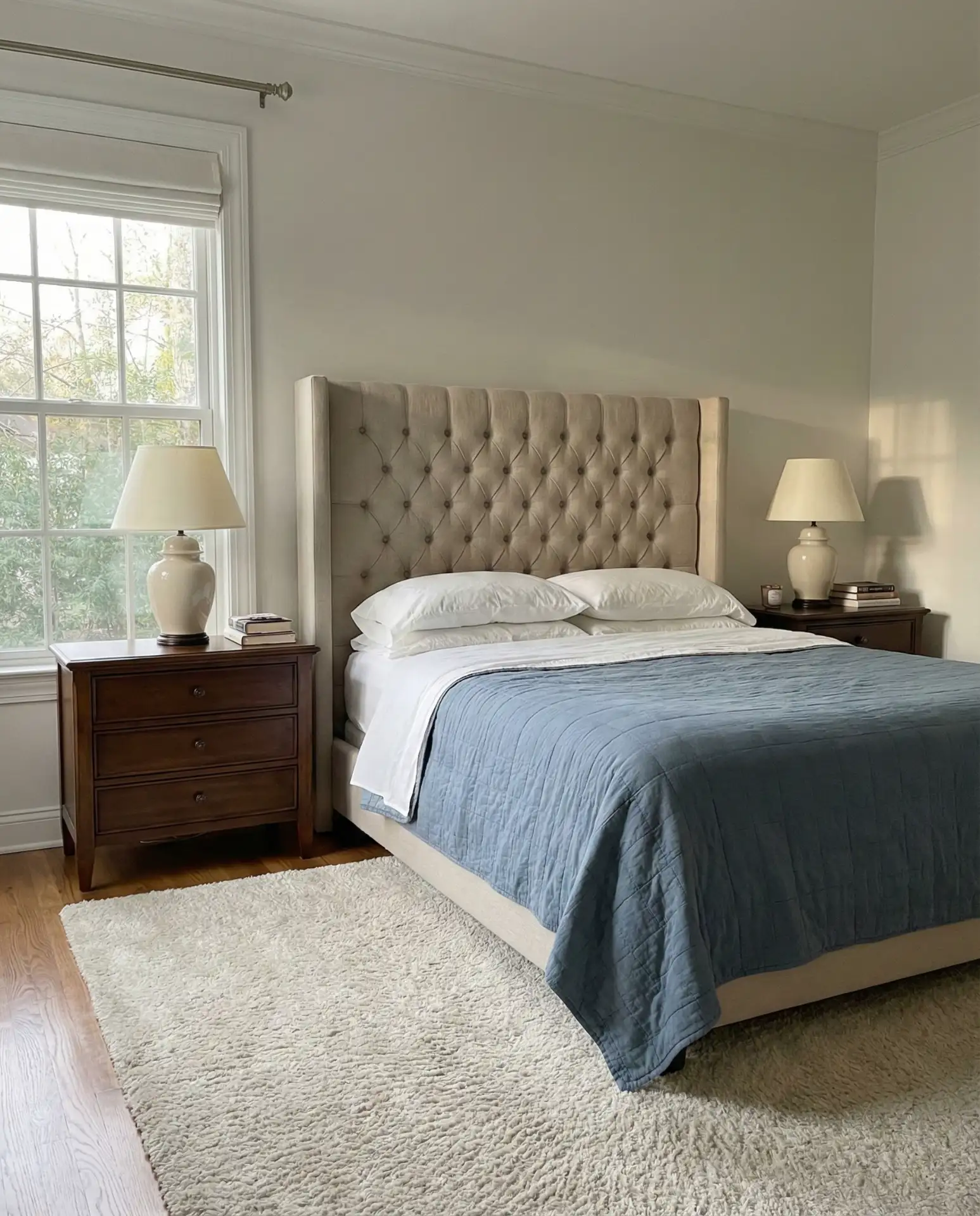
Classical bedroom design relies on balanced, symmetrical arrangements that feel inherently calming. Matching nightstands, centered headboards, and paired lamps create visual harmony that’s psychologically soothing. This neoclassical principle has endured for centuries because it simply works—our brains find symmetry pleasing, making it easier to relax and unwind in these thoughtfully arranged spaces. 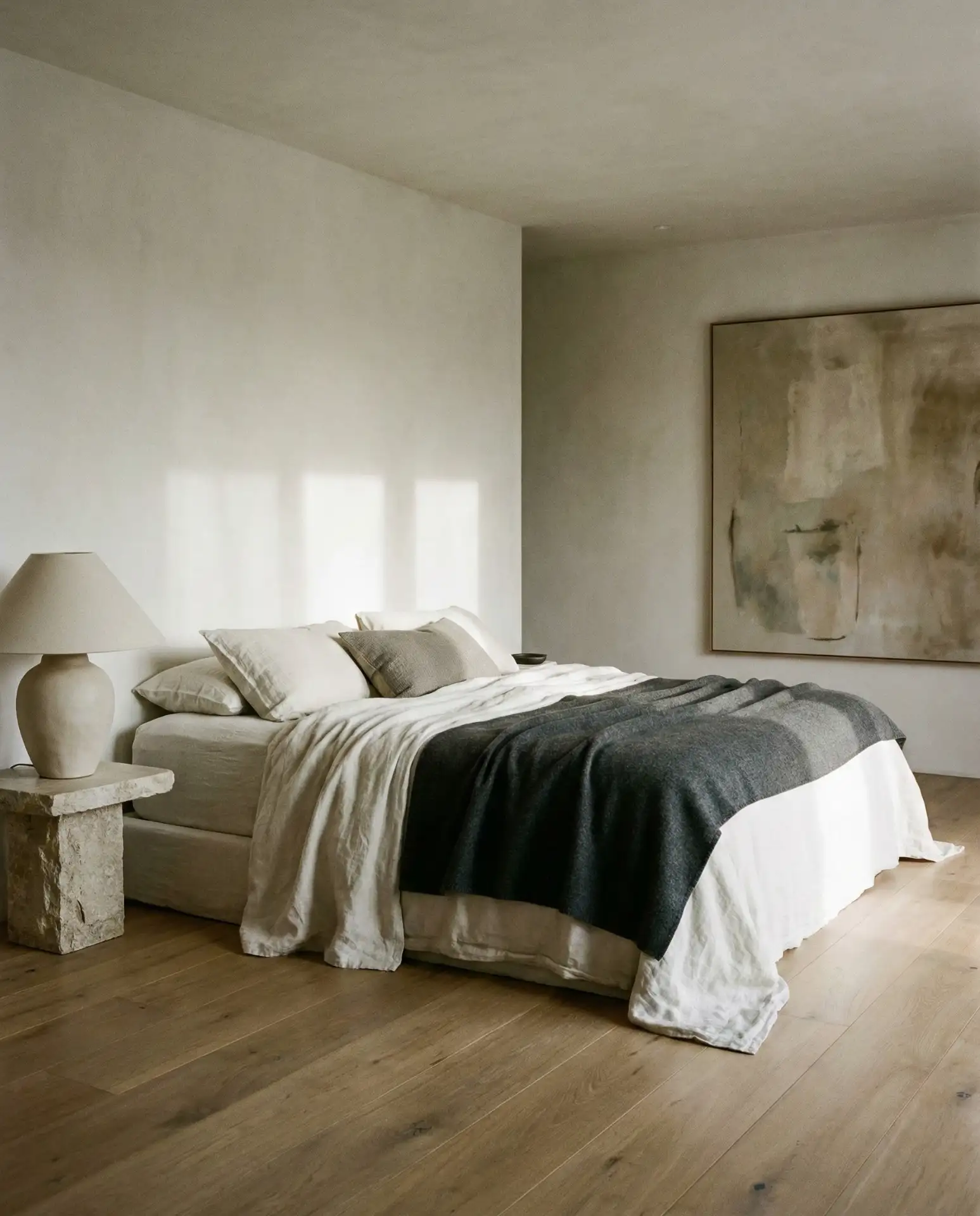
Practical insight: Symmetry doesn’t require expensive matching furniture sets. Even mismatched nightstands painted the same color, or similar lamps at different price points, create that balanced effect. The key is matching height and visual weight rather than exact style. This approach saves money while still achieving the calming symmetry that makes classical design so enduring and appealing across different budgets.
20. Unexpected Ceiling Details
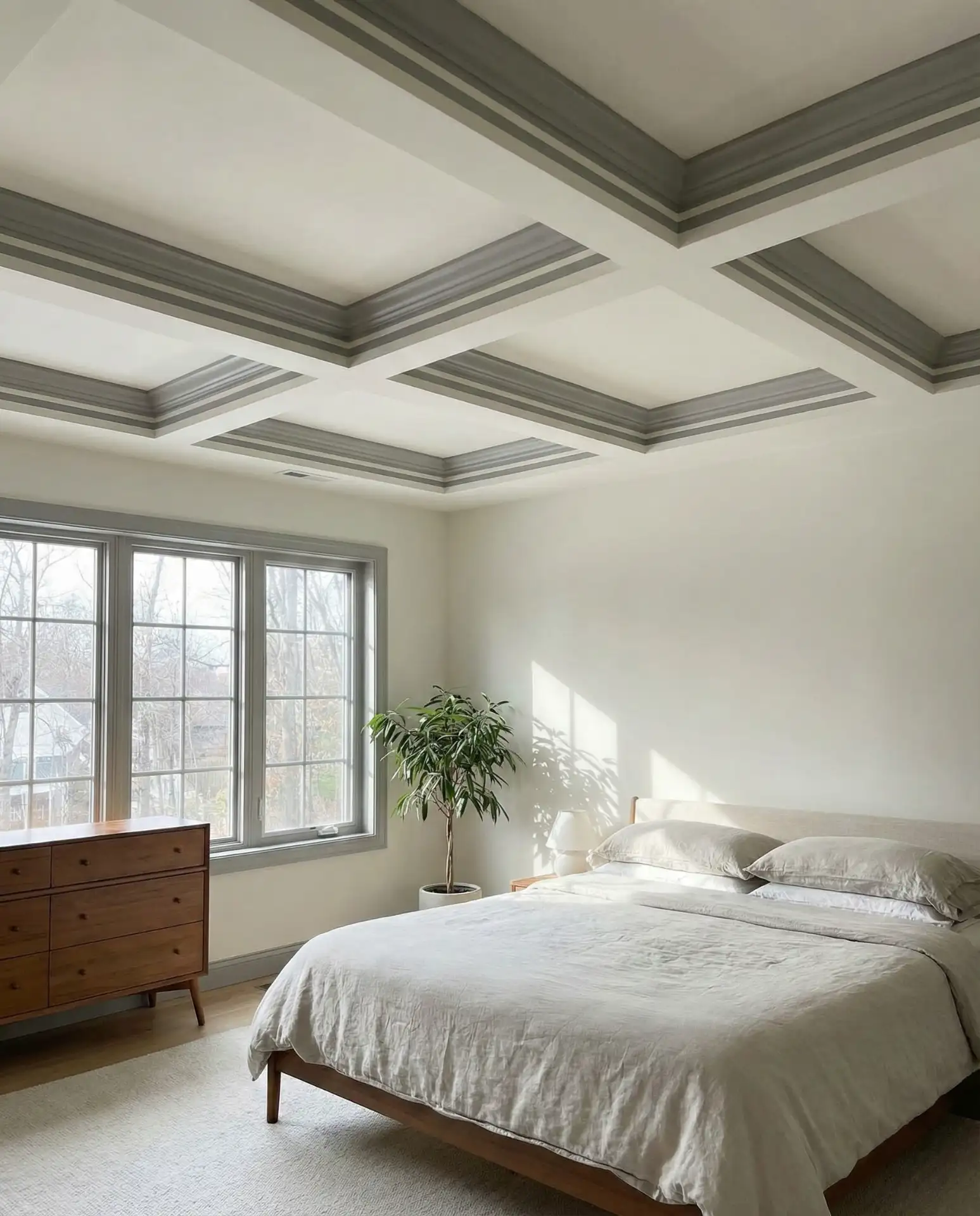
Modern ceiling design modern thinking treats overhead space as prime real estate for interest. Painted stripes, subtle wallpaper, or even a slightly different shade than the walls adds dimension without overwhelming the room. This works particularly well in masterbedroom spaces where you spend significant time lying down actually looking at the ceiling—why not make it worth seeing? 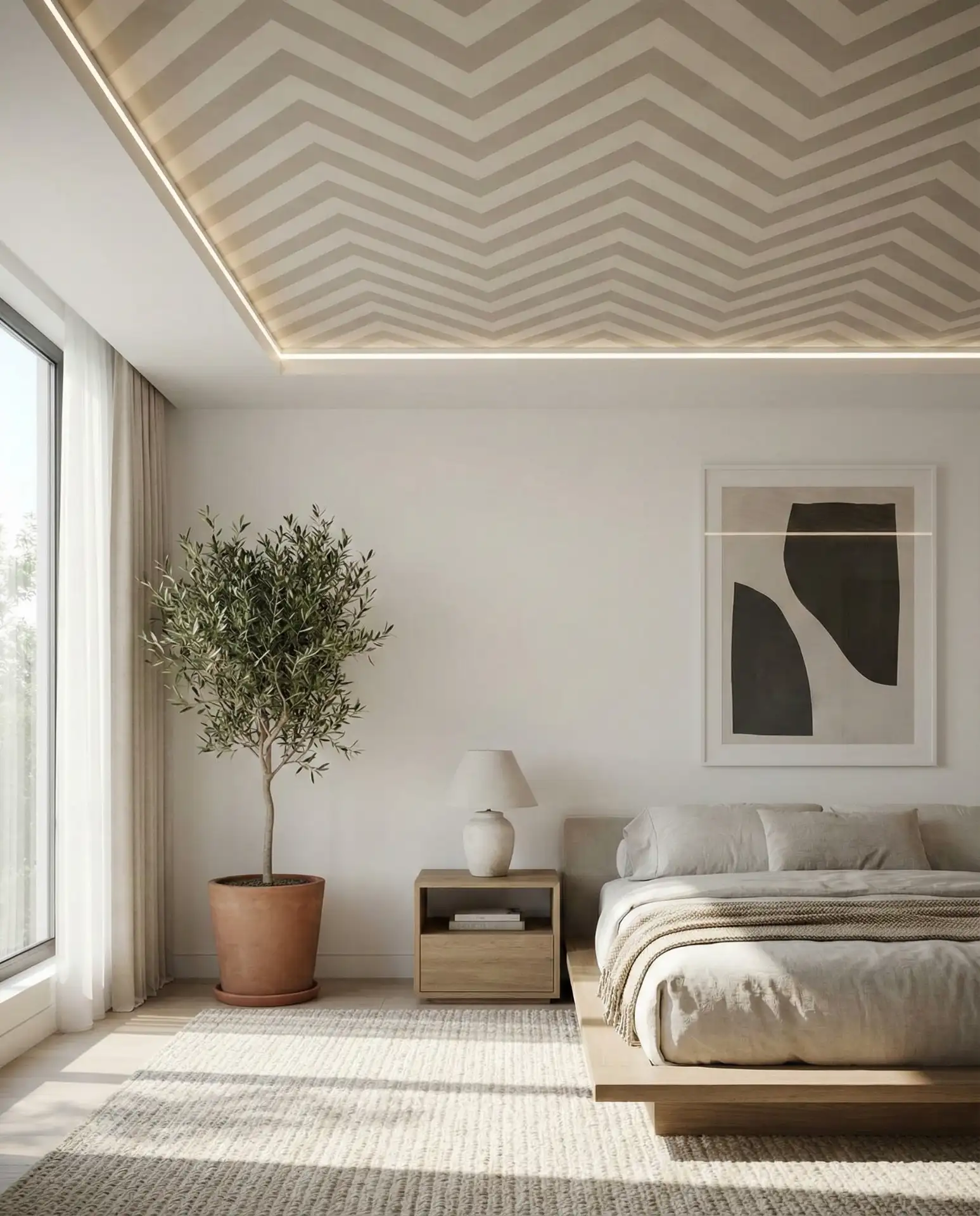
Micro anecdote: An interior designer in Charleston painted her bedroom ceiling a soft blue-gray, one shade darker than the walls. She said guests always comment on how calming the room feels but rarely identify why—the ceiling color subconsciously grounds the space. It’s the kind of detail that professional designers use to create polish without obvious tricks, and it costs no more than painting the ceiling standard white.
21. Global Textile Mix
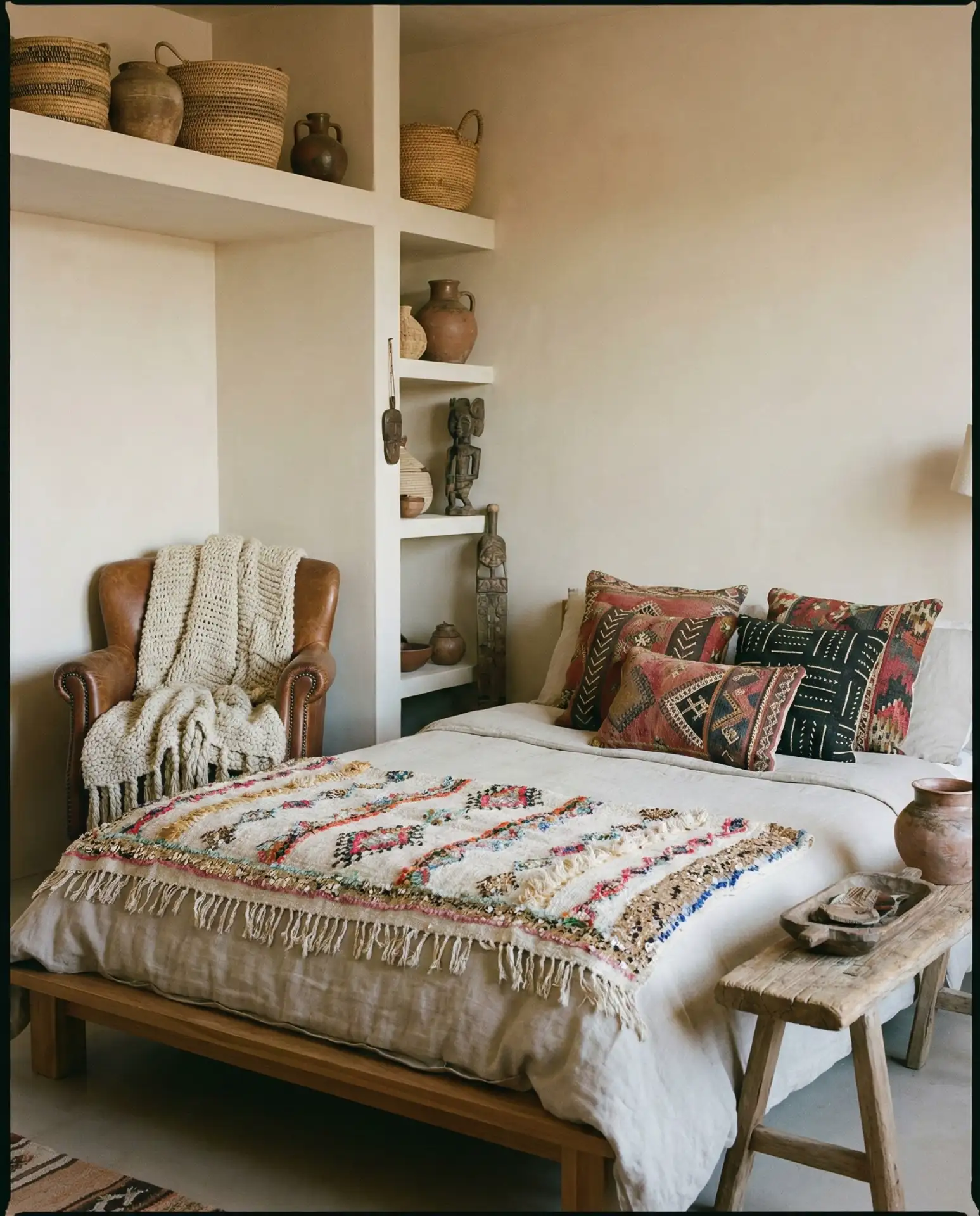
Collecting textiles from travels or artisan sources creates bedrooms with genuine personality and story. A Moroccan wedding blanket, Japanese indigo pillows, or Mexican woven throw each add cultural richness without requiring a themed room. This design ideas approach celebrates global craftsmanship while keeping the overall space feeling cohesive through a consistent base palette. 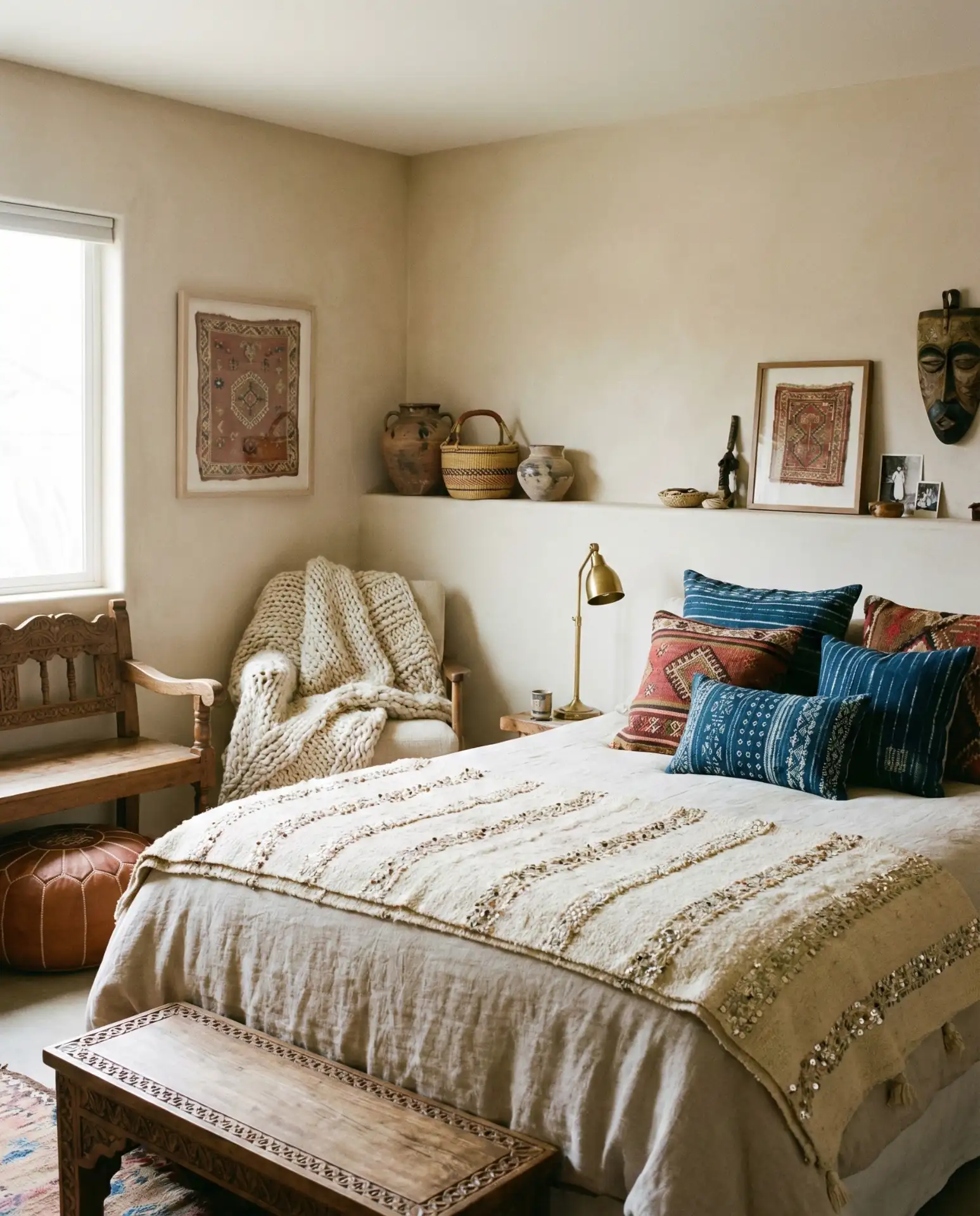
Where it works best: Bedrooms where the architecture is fairly simple, allowing textiles to provide all the pattern and interest. This approach is particularly popular in urban lofts and modern homes where the bones are clean and contemporary—the global textiles provide warmth and history the architecture lacks. Many homeowners start with one or two meaningful pieces and build the palette around them rather than trying to match everything from the start.
22. Sustainable Natural Materials
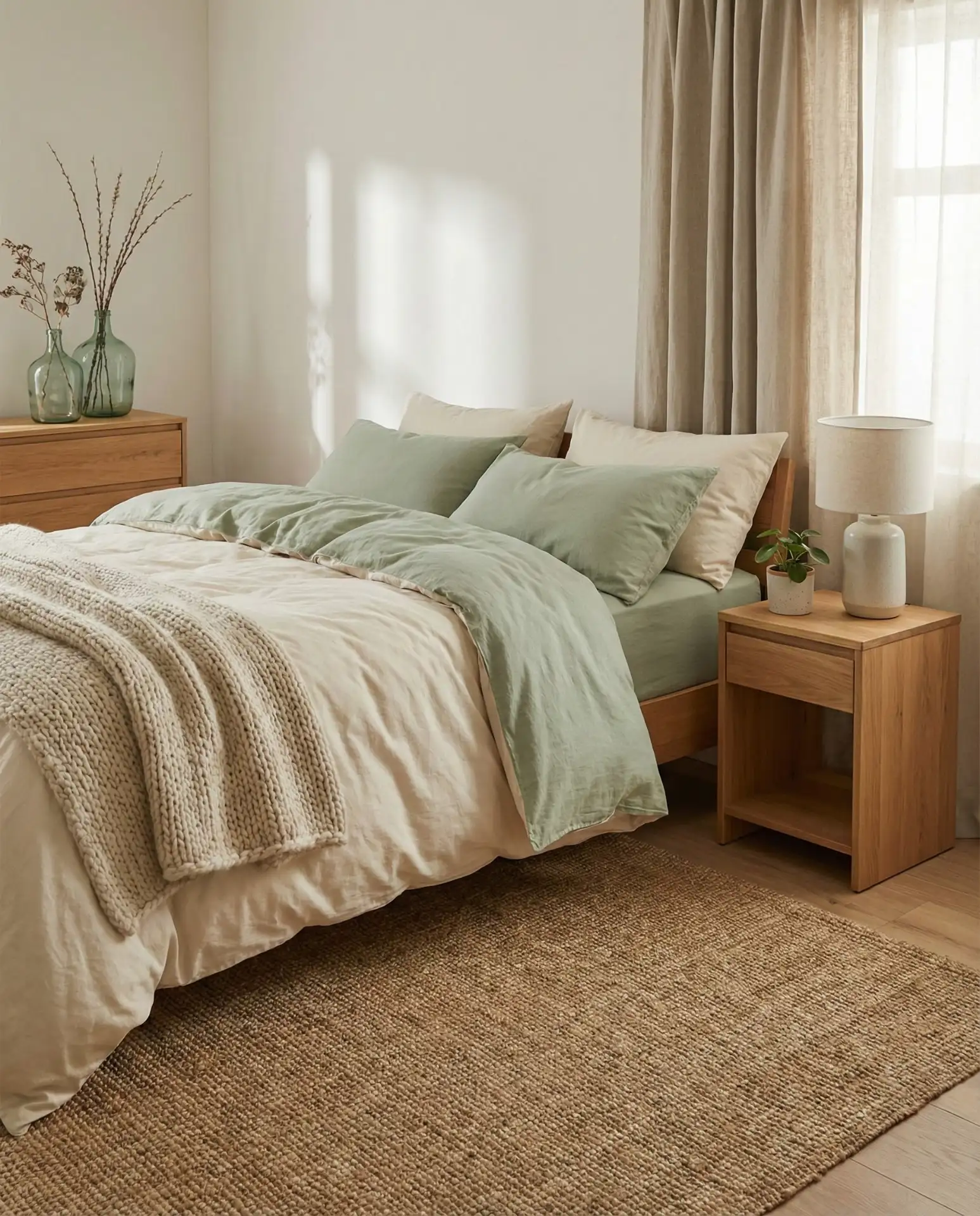
Eco-conscious design prioritizes natural, sustainable materials that are both beautiful and responsible. Organic cotton bedding, FSC-certified wood furniture, natural latex mattresses, and non-toxic paints create healthier sleeping environments. This aesthetic works across all styles—from minimal to maximalist—because it’s about material choices rather than specific looks, making sustainability accessible to everyone regardless of design preference. 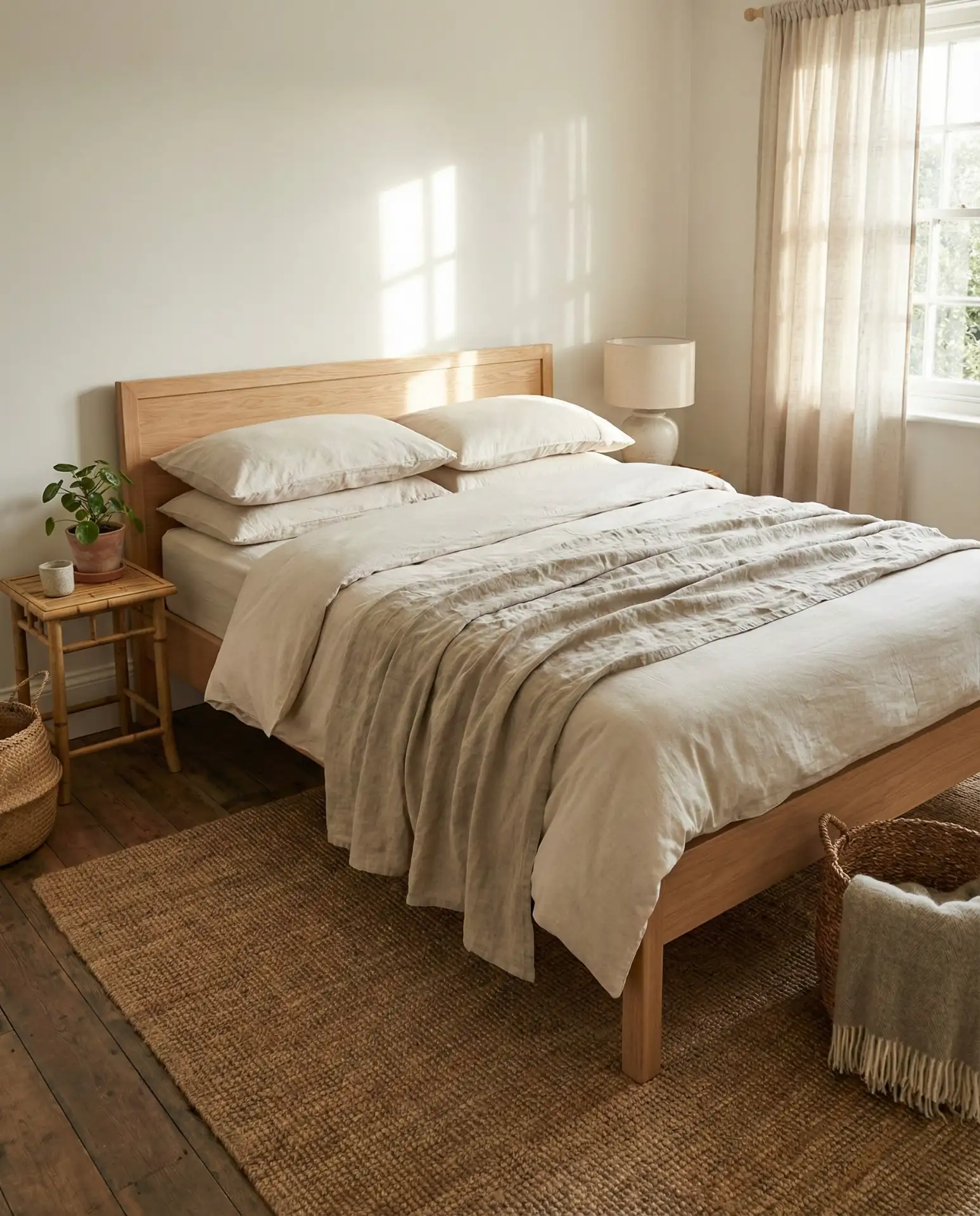
Real homeowner behavior: Many people start their sustainability journey with bedding, since you’re in direct contact with it for eight hours nightly. Organic cotton sheets from companies like Coyuchi or Boll & Branch range from $200-400 for a set—comparable to high-quality conventional bedding. The investment pays off in durability and peace of mind. As budgets allow, they gradually replace other elements, creating increasingly healthy, environmentally responsible bedrooms over time rather than all at once.
Conclusion
Which of these bedroom ideas resonates most with your personal style and space? Whether you’re planning a complete renovation or just looking to refresh your current setup, the bedroom trends of 2026 offer something for every taste and budget. Share your favorites in the comments below, or let us know what bedroom challenges you’re trying to solve—we’d love to hear what you’re working on in your own home.