A butterfly garden does more than add color to your yard. It turns your outdoor space into a living ecosystem, drawing in monarchs, swallowtails, and painted ladies with the right mix of nectar plants and host species.
You don’t need a huge plot or a degree in horticulture to make it work. This article rounds up 31 practical looks that show how to attract and support butterflies, from a single zinnia in a pot to a full bed designed in their shape.
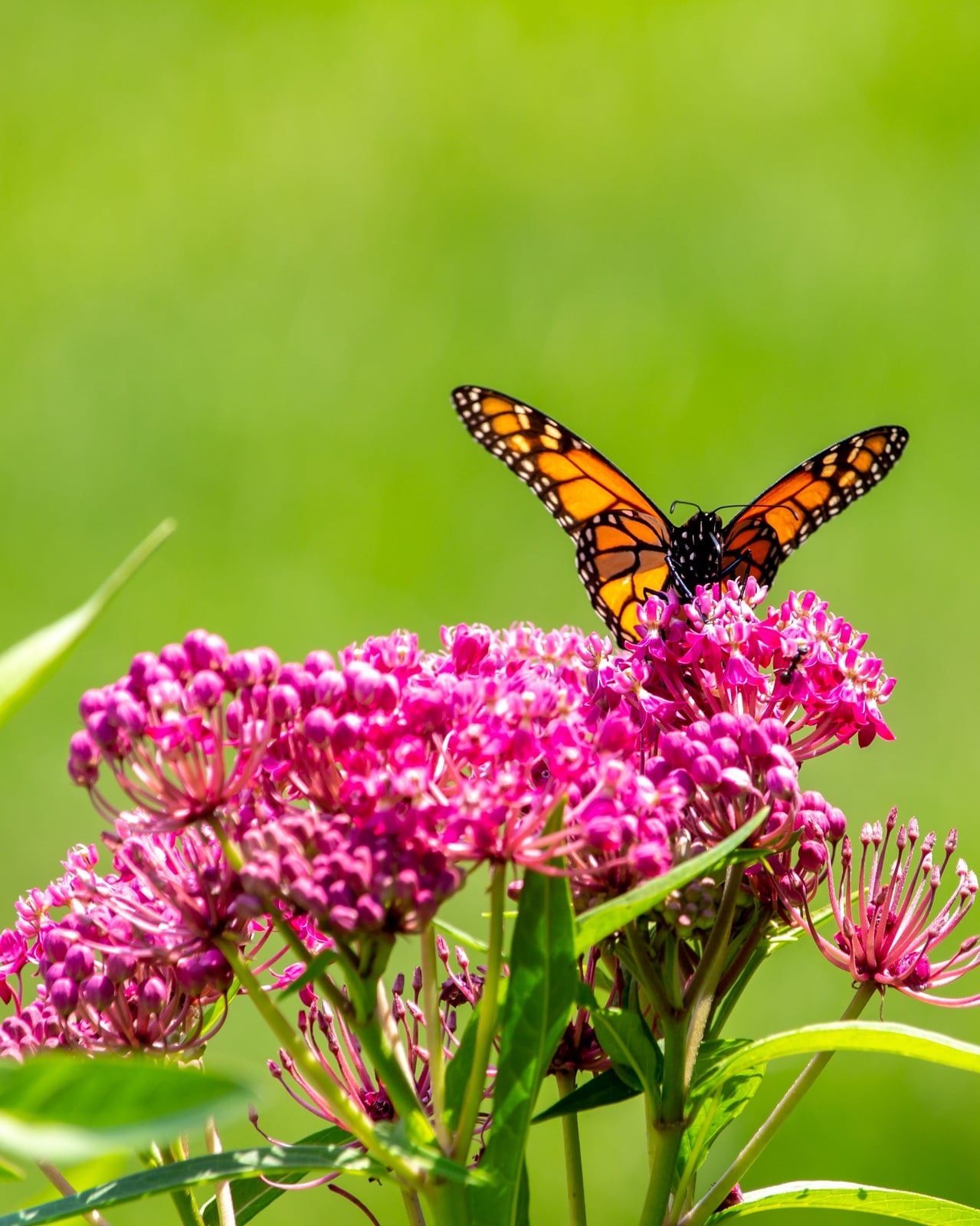
Monarch Butterfly on Pink Milkweed Blooms
A monarch butterfly rests on a cluster of pink milkweed blooms, its orange wings a bright contrast against the green stems. The layout centers the butterfly as the natural focal point, with the milkweed flowers forming a simple backdrop. Keeping the surrounding area uncluttered lets the monarch stand out, a technique that works in a dedicated bed or a single container.
Vibrant Pink Flowers Attracting Butterflies
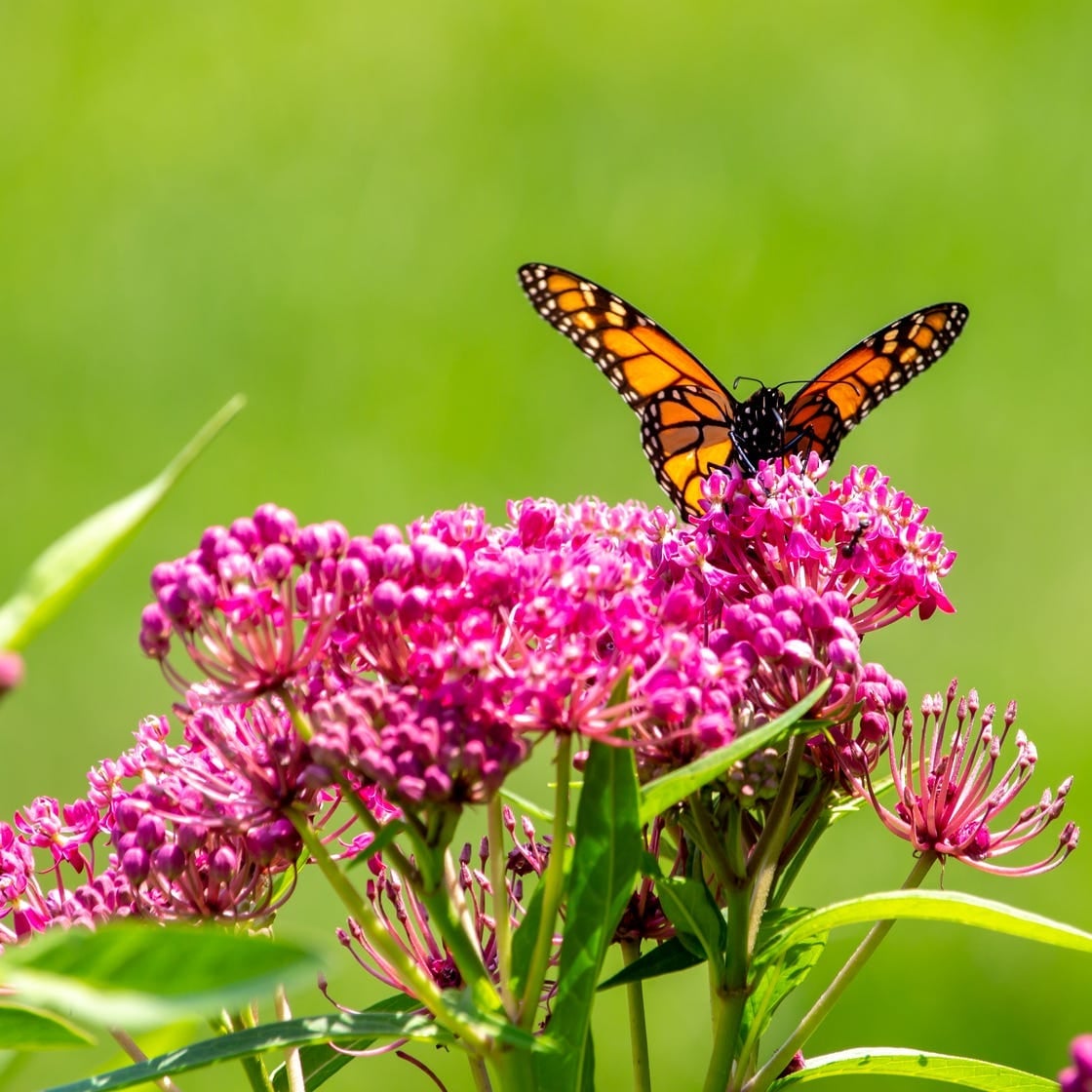
The palette here is a straightforward success: pink and orange blooms against green foliage. That warm pink-orange combination is a reliable draw for butterflies, and the green provides a neutral anchor. A garden that relies on this ratio of bright to neutral tends to feel lively without being chaotic. Stick to two main flower colors and let the leaves do the rest.
Dual Monarch Butterflies on Coneflower
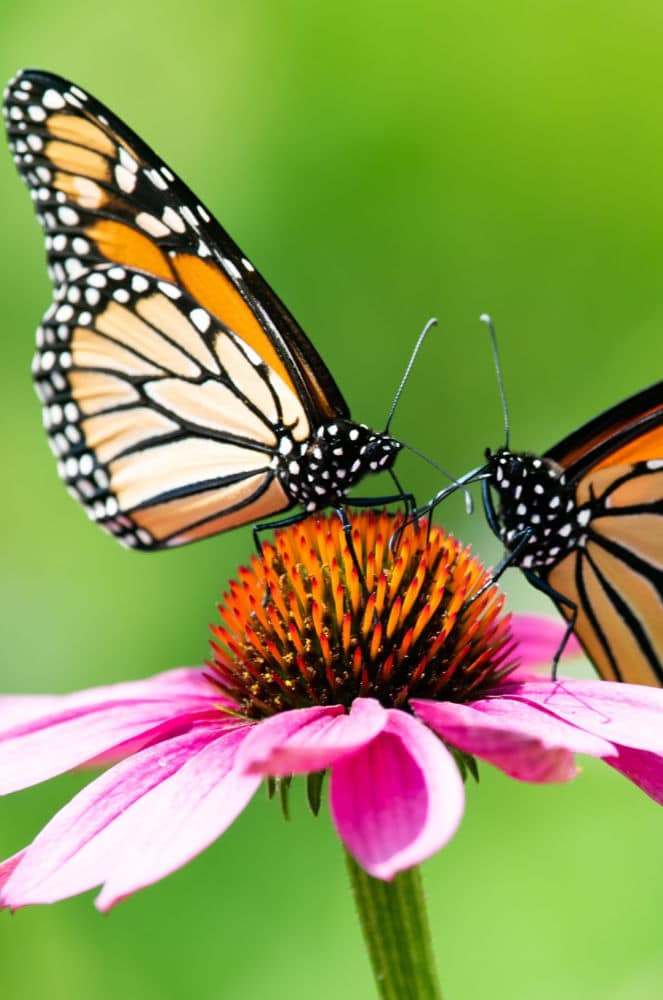
Why do two butterflies land on the same coneflower? The layout of the flower head is part of it. A coneflower’s wide, flat center gives multiple insects room to feed at once, and the sturdy stem supports their weight without bending. In garden terms, that means choosing flowers with broad landing pads if you want to host more than one visitor at a time. The close framing here shows how the pink petals frame the orange wings, a natural composition that feels intentional.
Yellow Swallowtail on Pink Zinnia
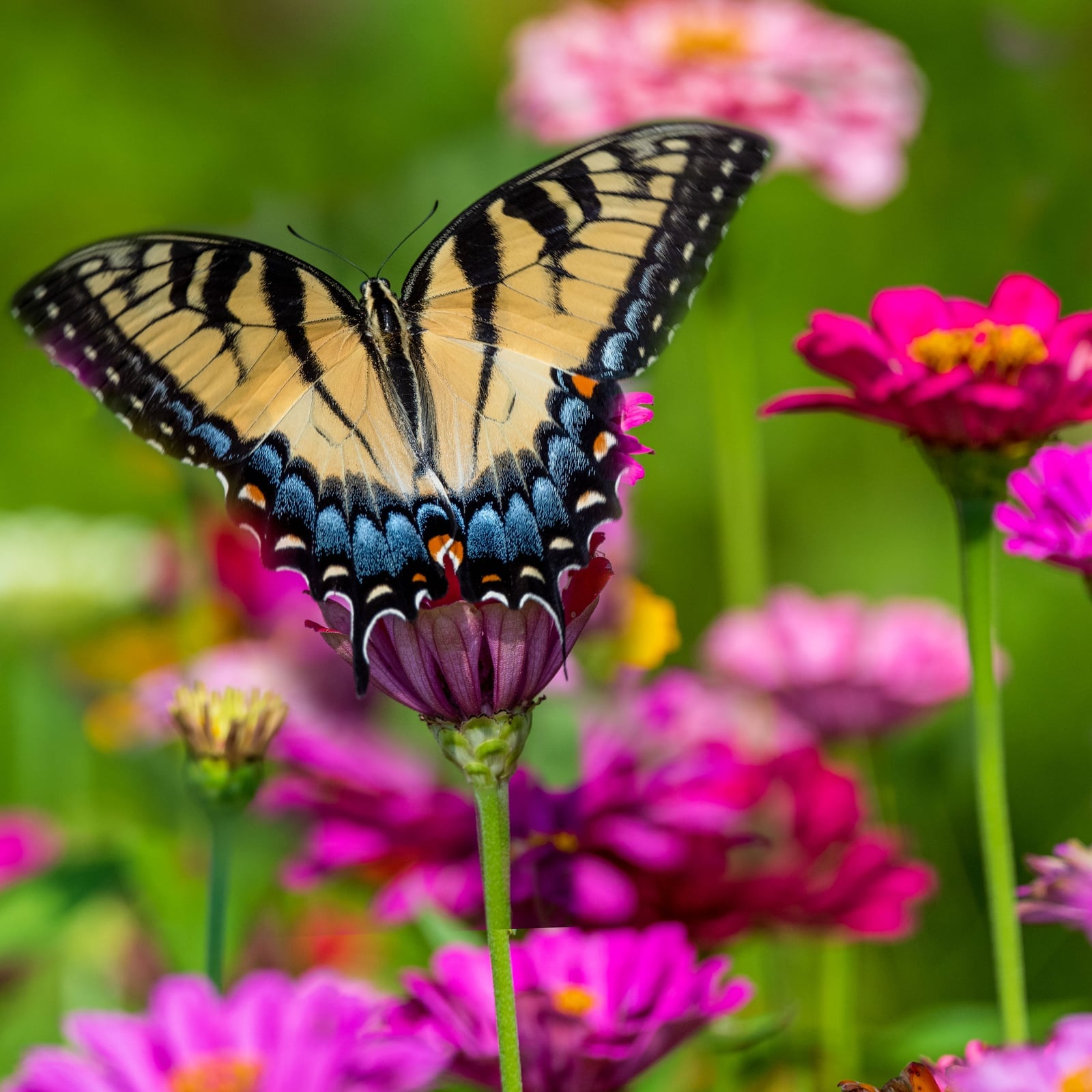
A yellow swallowtail butterfly has landed on a pink zinnia, and the color pairing is what catches the eye. Yellow against pink is a high-contrast combination that reads as cheerful in a garden setting. Zinnias are a solid choice for this kind of palette because they bloom in a range of bright shades, making it easy to repeat the yellow-pink pairing across a bed.
Swallowtail Butterfly on Purple Coneflower
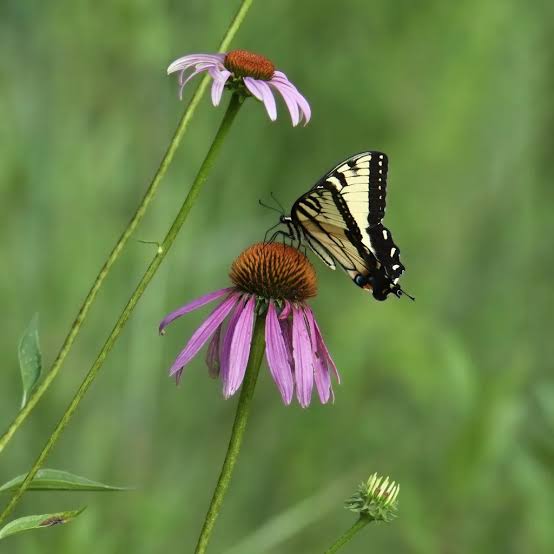
Group the same flower type in clusters rather than scattering singles. Here, the swallowtail butterfly on a purple coneflower benefits from a dense patch of similar blooms, which makes the feeding spot easier for insects to find. The soft natural light on the purple petals and yellow wings keeps the scene from feeling harsh, even in direct sun.
Pair of Monarchs on Delicate Pink Blooms
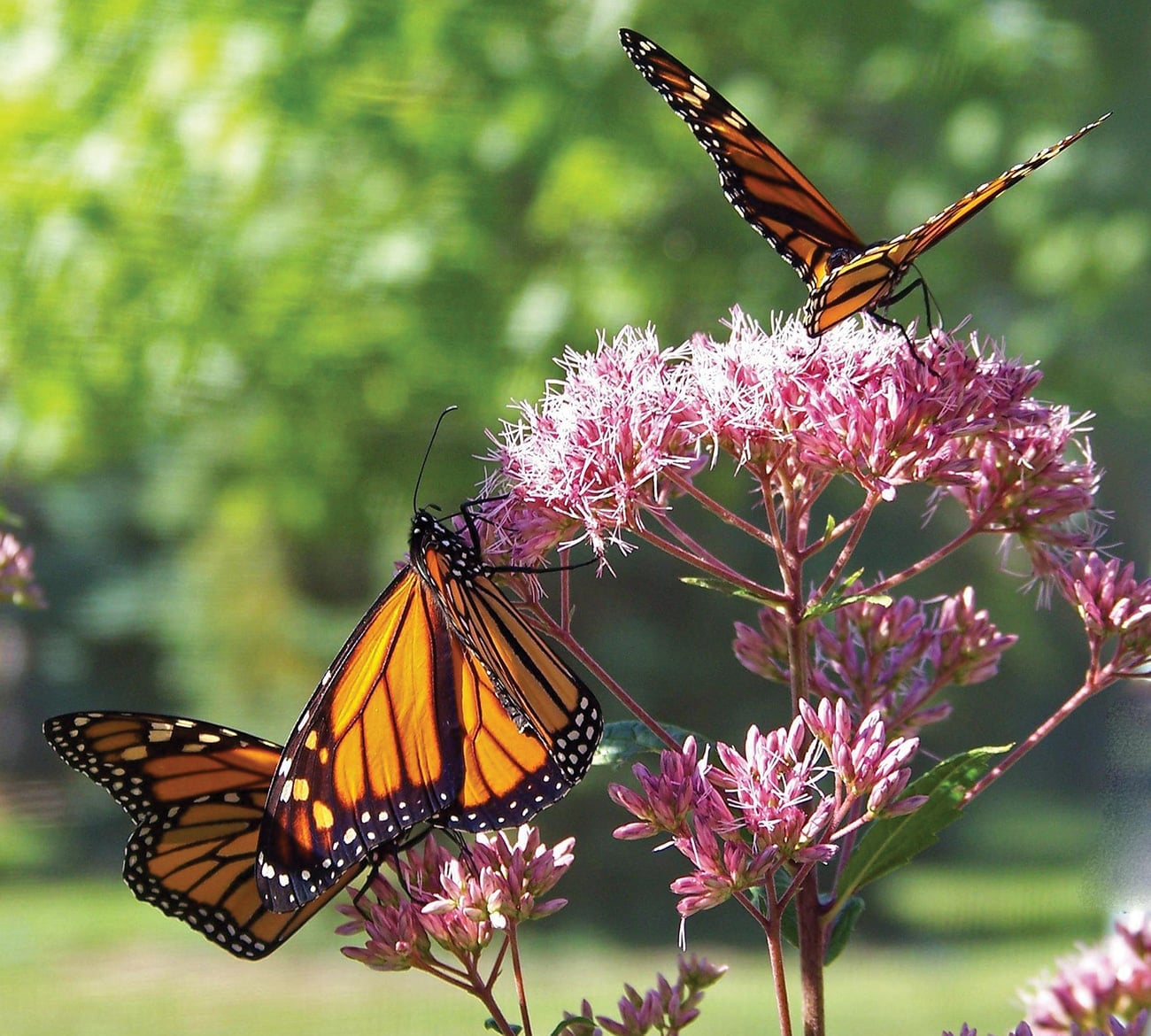
A single large planter can be a missed opportunity when you see what two monarch butterflies do on a cluster of pink flowers. The scale works because the blooms are plentiful enough to host both visitors without looking crowded. This is a room-mode lesson: the whole garden bed matters more than any one stem. A naturalistic layout repeats the same flower type in a broad drift instead of dotting singles around. That repetition gives butterflies a reason to land. The palette stays tight with pink, orange, and green, so the orange on the monarch wings reads as a deliberate accent. If your garden feels scattered, try grouping one flower variety in a patch at least three feet wide. That single shift makes the space feel intentional and gives you 31 looks that actually work.
Black Swallowtail on Red and Orange Lantana
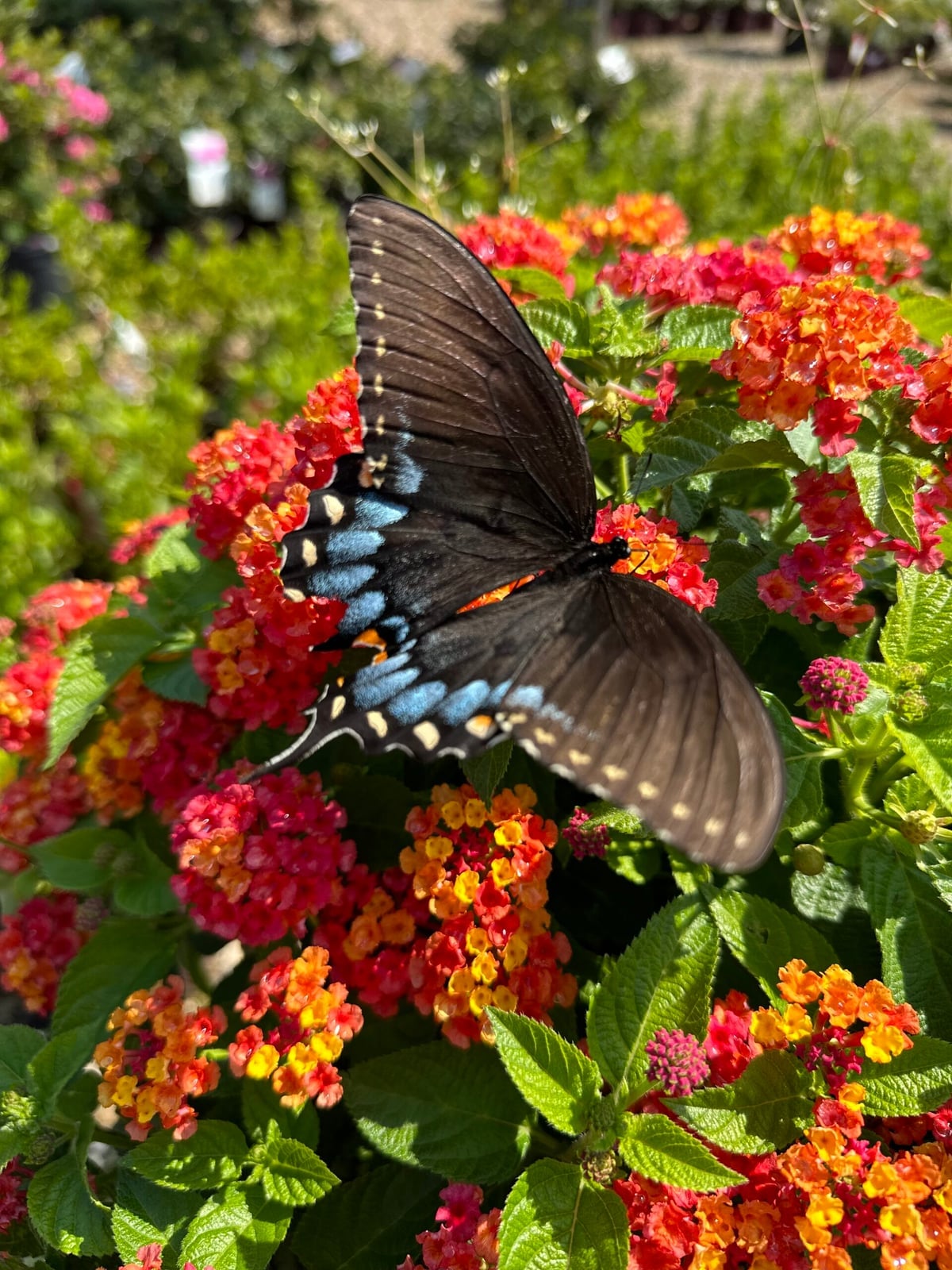
The black swallowtail on red and orange lantana shows what happens when you let a bold palette do the work. The butterfly’s dark wings with blue flashes sit against warm flower clusters, and the contrast is sharp without feeling forced. This is a renter-friendly approach because you can shift color with container plants instead of digging up a bed. Lantana grows fast in a pot, and moving it around lets you test which corner of the patio gets the most attention from passing butterflies. The palette here is the anchor: black, blue, red, orange, and green. Keeping the flower colors warm and the butterfly colors cool creates a natural tension that draws the eye. No structural change required, just a few pots and a willingness to shuffle them until the contrast clicks.
Tiger Swallowtail on Orange Marigold
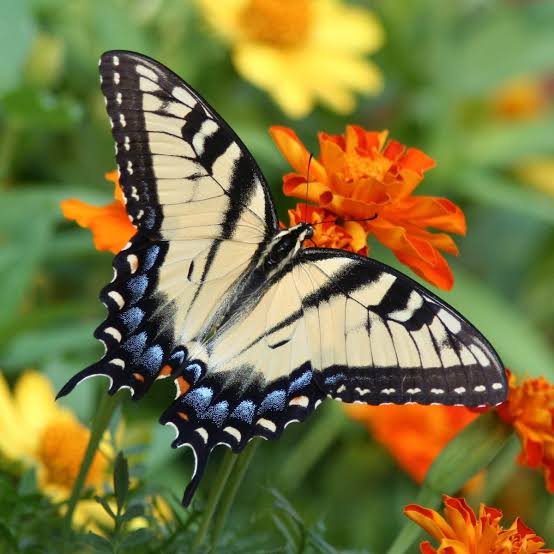
This is a straightforward layout win: a tiger swallowtail on an orange marigold, and the composition works because the flower sits at eye level. The butterfly’s yellow and black stripes echo the marigold’s warm center, so the pairing feels harmonious. The layout lesson here is about height. Marigolds typically stay under two feet, which puts them in the perfect range for a seated view from a patio chair or a low garden bench. If you plant tall flowers in the back and shorter ones in the front, you create a natural stage. The tiger swallowtail tends to feed at mid-height, so keeping marigolds, zinnias, or coreopsis in that middle band increases the chances of a visit. The garden feels layered without requiring a complex planting plan.
Dark Swallowtail on Orange Tiger Lily
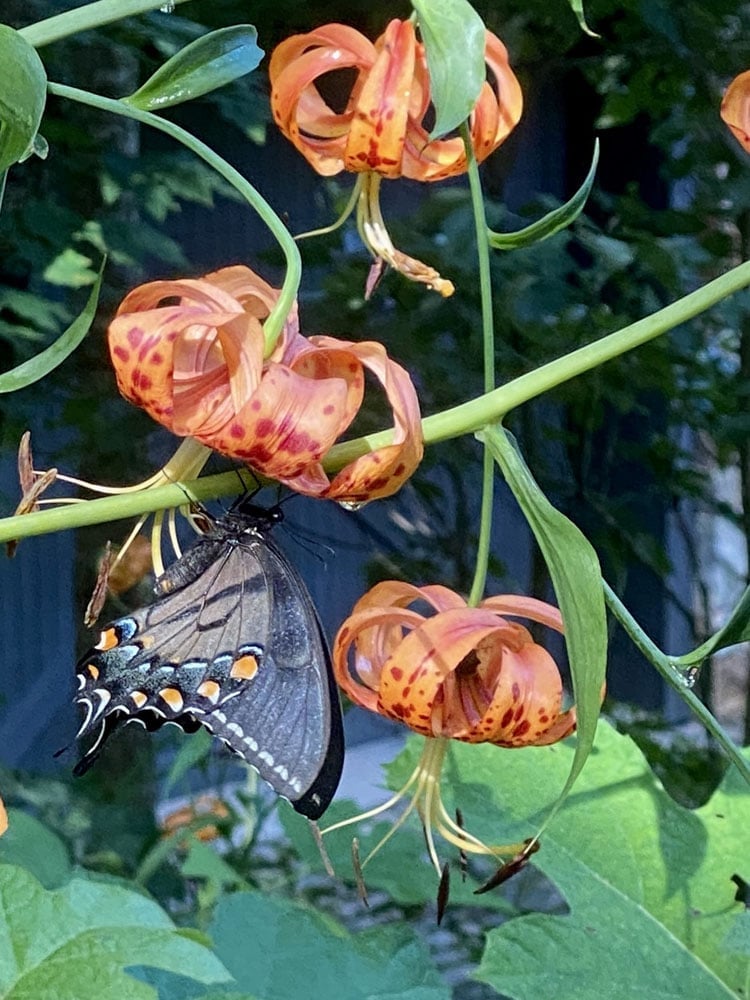
How do you keep a garden looking full without it turning into a tangle of stems? The answer is in the material choices. A dark swallowtail on an orange tiger lily shows what happens when you pick plants with strong vertical structure. The tiger lily sends up a single stalk with multiple blooms, so each stem carries visual weight without taking up much ground space. That matters for a compact bed where every inch counts. The soft daylight here lets the orange petals glow without washing out the brown and green stems behind them. The material lesson is about form: plants with upright habits, like lilies, salvia, and delphiniums, organize the garden visually. They act like columns in a room, giving the eye a vertical line to follow. Mix them with mounding plants like marigolds, and you get a full look that still breathes.
Monarch Butterflies on Purple Salvia
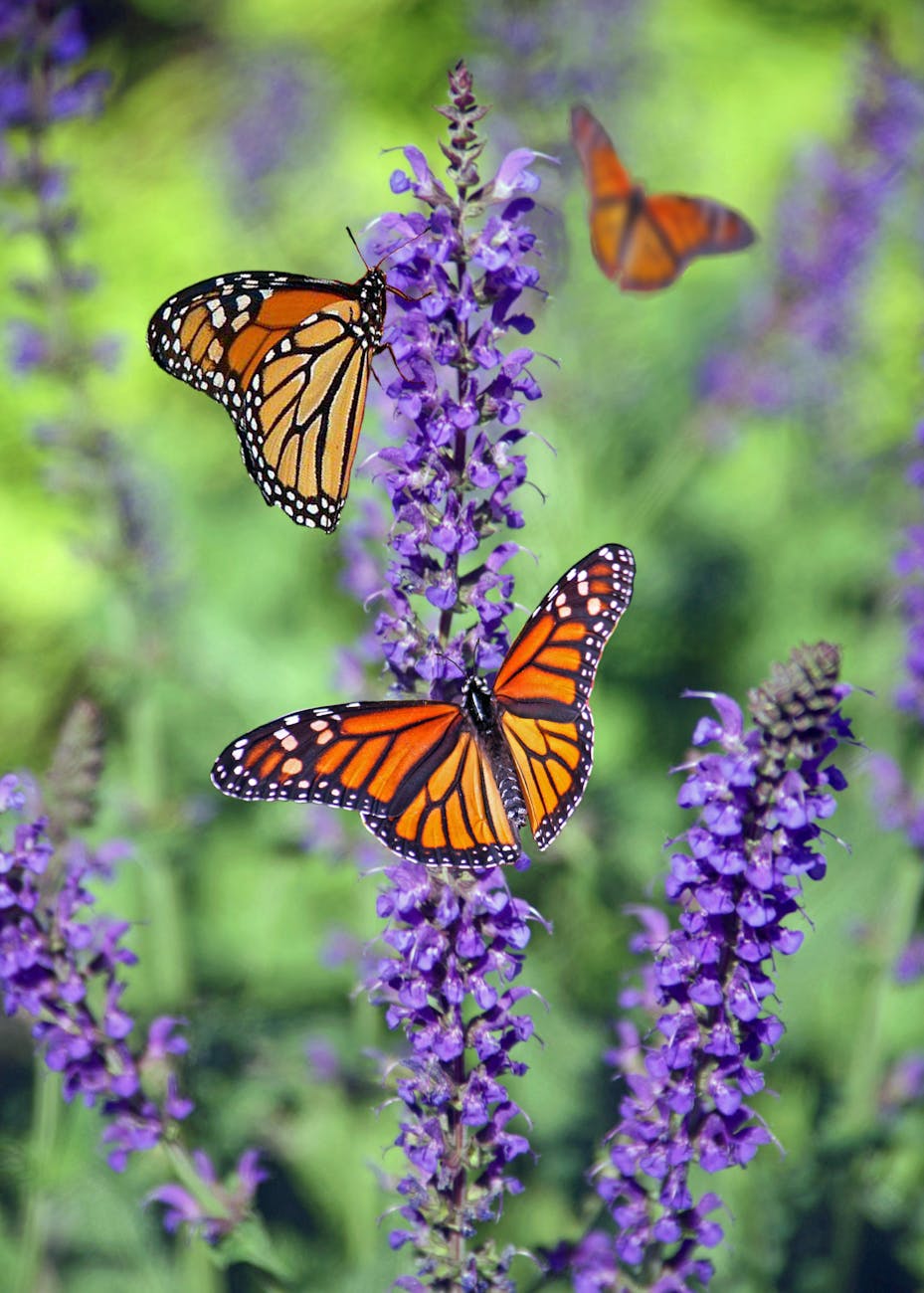
Monarch butterflies on purple salvia is a palette pairing that practically guarantees repeat visits. The deep purple spikes of salvia create a strong vertical line, and the orange monarch wings pop against that cool backdrop. This is a palette-driven lesson: complementary colors on the color wheel, purple and orange, create the highest contrast without clashing. Salvia blooms for weeks in mid-summer, and its tubular shape is built for butterflies with long proboscises. The daylight is bright but not harsh, which keeps the purple saturated and the orange warm. If you want a low-maintenance way to test this combination, plant a three-foot patch of salvia near a sunny wall. The purple will anchor the bed, and any orange flower you add nearby will look like it belongs.
Monarch Butterfly on Yellow Goldenrod
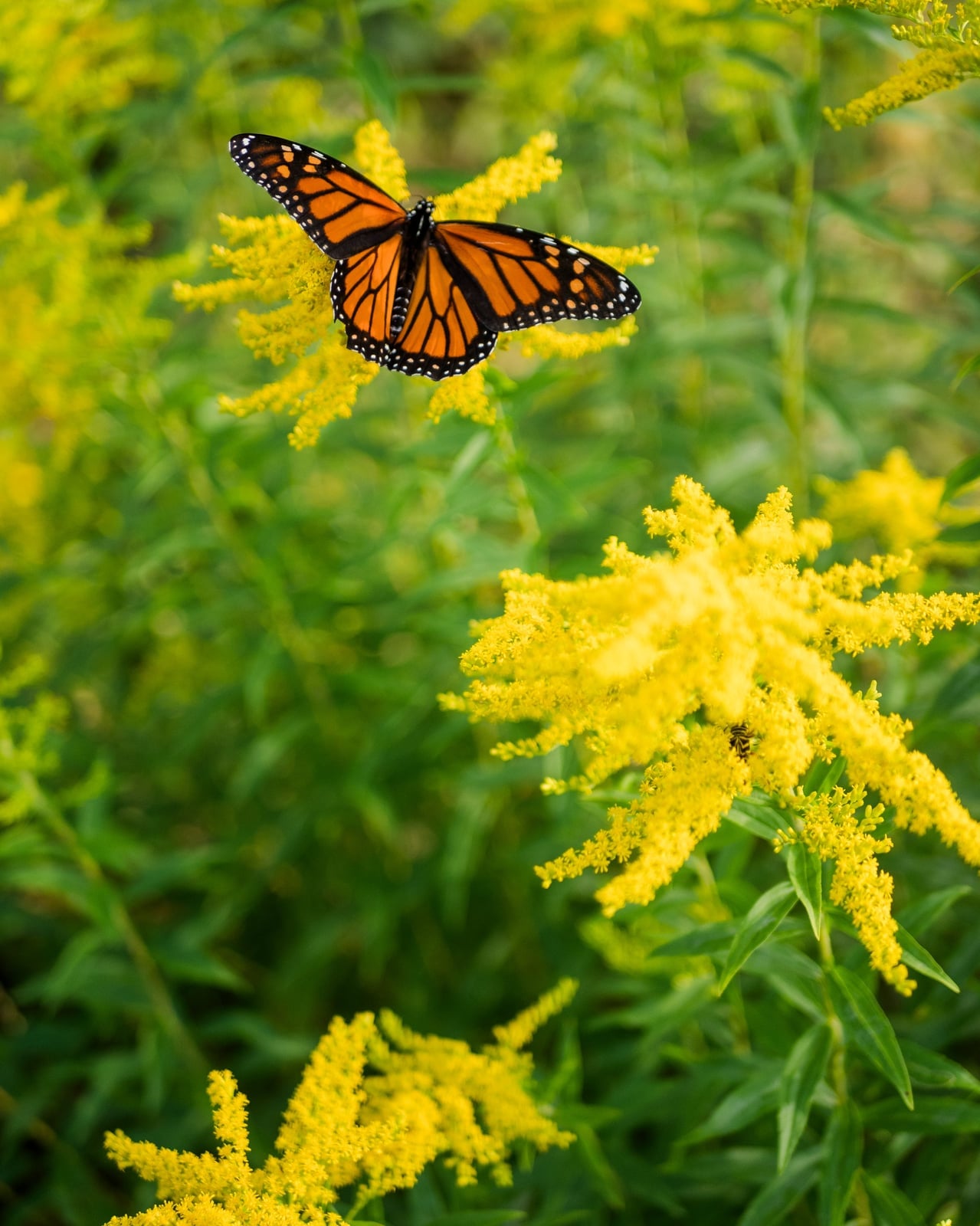
Grouping plants by bloom time keeps a butterfly garden active from spring through fall. Goldenrod flowers in late summer, so it fills the gap between early perennials and autumn asters. The monarch butterfly on yellow goldenrod shows how a single tall stem can anchor a bed. The bright orange wings against the yellow florets create a warm palette that feels cohesive. Plant goldenrod in a cluster of three to five stems so the mass forms a block of color. This layout works for any sunny border, even a narrow strip along a fence.
Vivid Monarch Wings on Purple Blooms
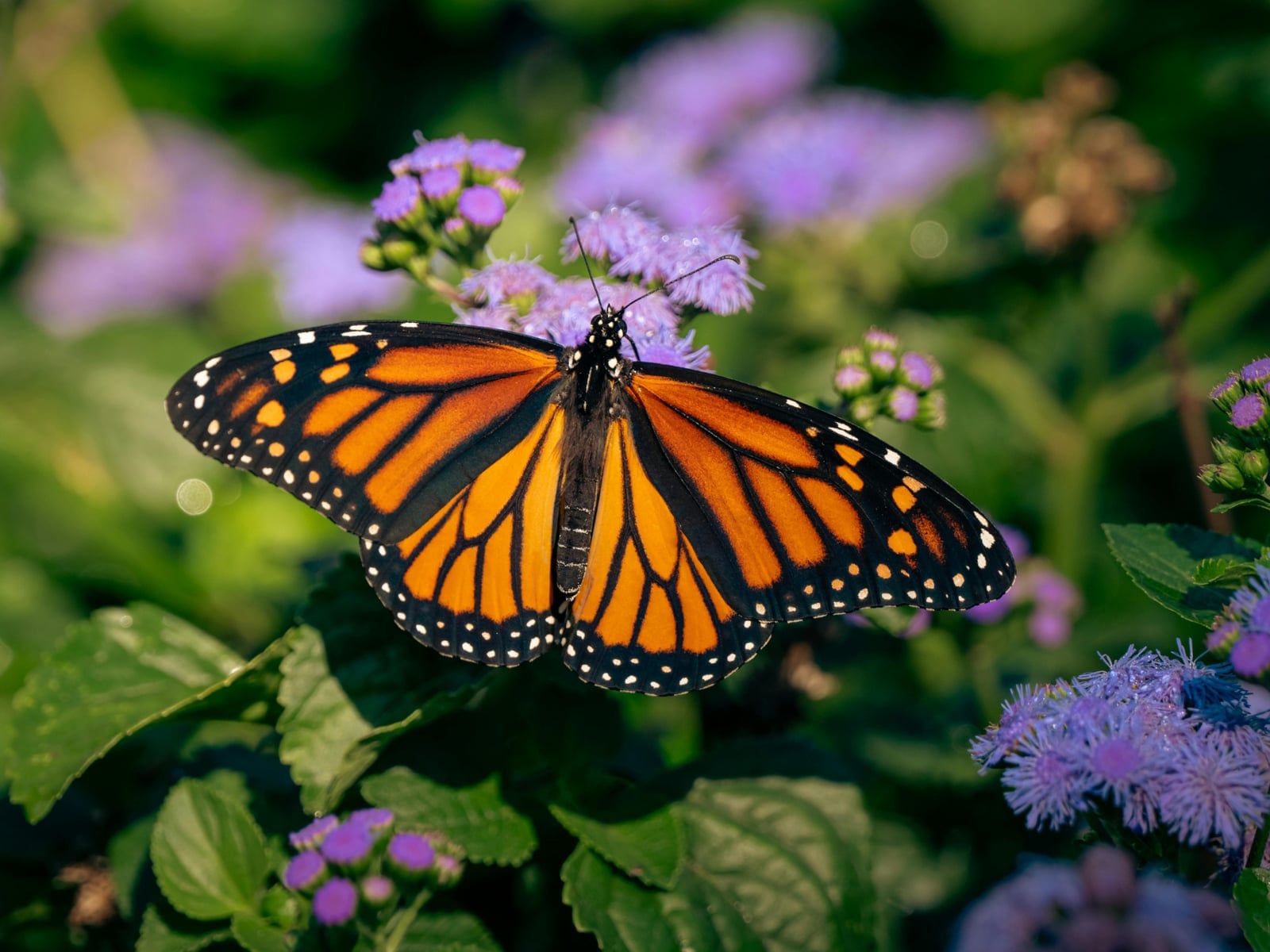
A purple flower bed might feel subdued on its own, but it becomes electric with the right visitor. The vivid monarch wings on purple blooms prove that contrast is a shortcut to a memorable palette. The orange and black wings pop against the cool purple petals, while green leaves keep the whole scene grounded.
This natural pairing is easy to replicate. Plant purple salvias or asters near orange milkweed or butterfly weed. The two colors sit opposite each other on the color wheel, so they amplify each other without extra planning. For a smaller space, a single pot of purple verbena next to a pot of orange lantana gives the same effect.
Monarch Butterfly on Pink Zinnia with Picket Fence
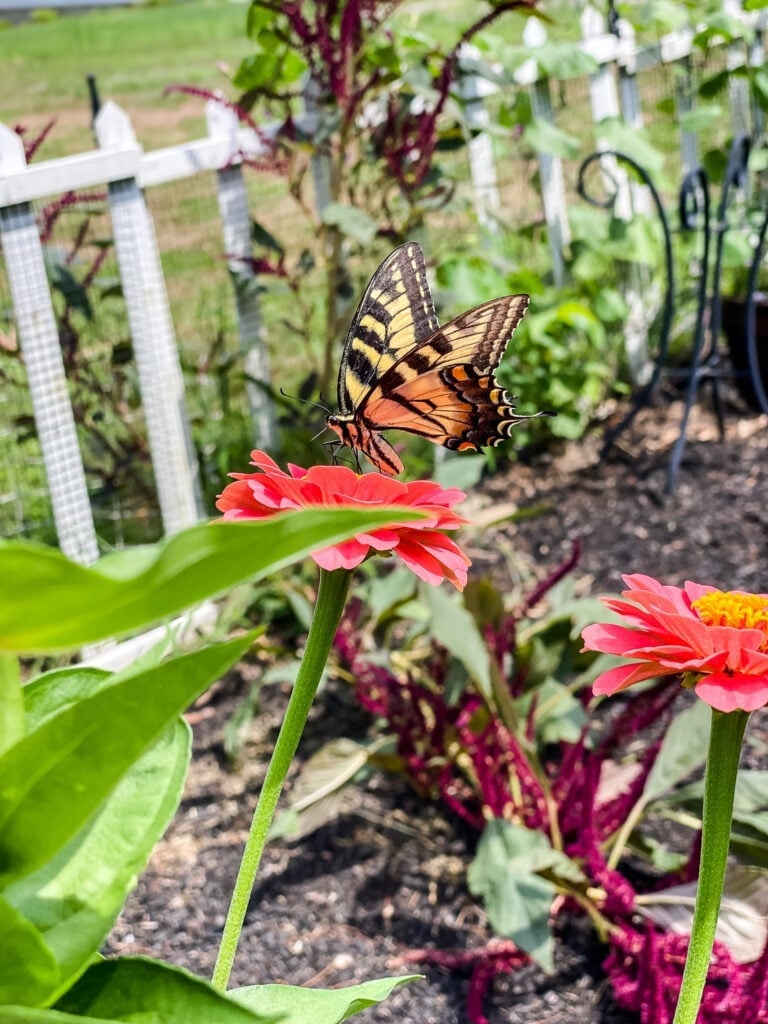
A white picket fence gives a butterfly garden a clear backdrop that makes every flower stand out. The monarch butterfly on pink zinnia with picket fence shows how a simple boundary defines the whole space. The pink petals and orange wings read as brighter because the white wood has no competing color. This style suits a cottage garden where flowers spill over the edges. If you rent and cannot install a fence, a row of white-painted stakes or a white trellis panel does the same job without permanent changes.
Glasswing Butterfly on Small Orange Flowers
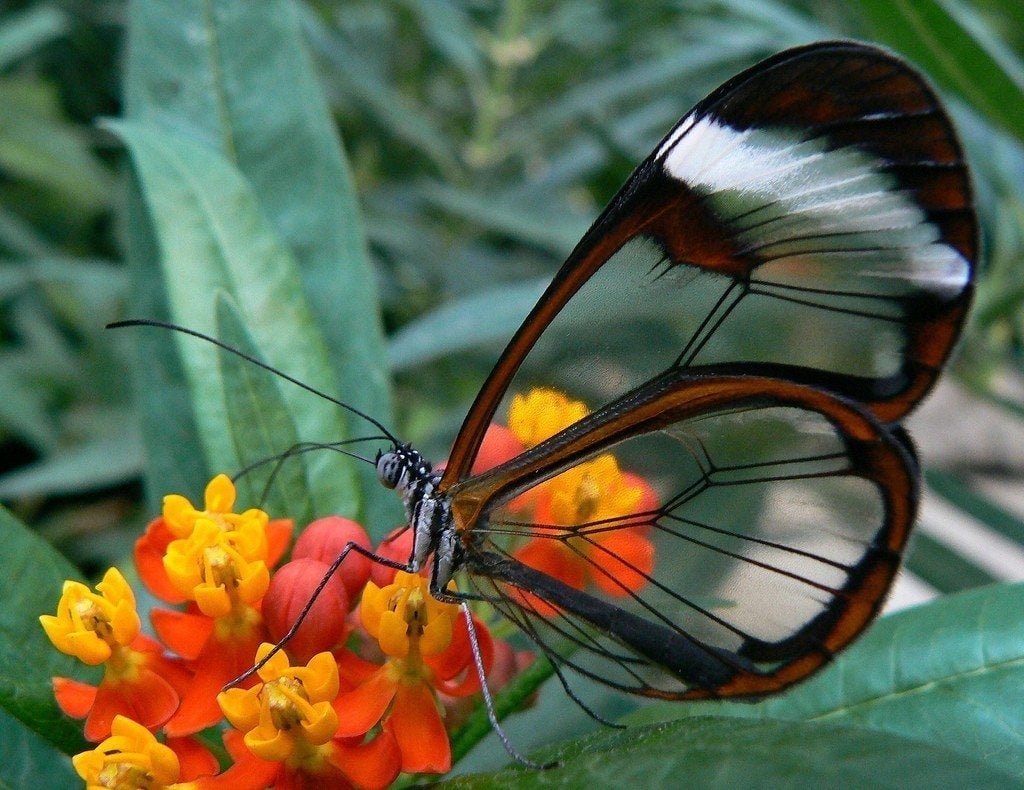
The glasswing butterfly on small orange flowers shows how transparency changes a garden. Its clear wings let the orange petals and green leaves show through, so the butterfly feels like part of the plant. This effect works when the flowers behind the wings are bright and simple. Small orange lantana or calendula blooms provide enough color without overwhelming the delicate wings. Place these flowers at eye level in a raised bed or container so the light catches the transparent panels from the right angle.
Abundant Monarchs on Pink Butterfly Bush
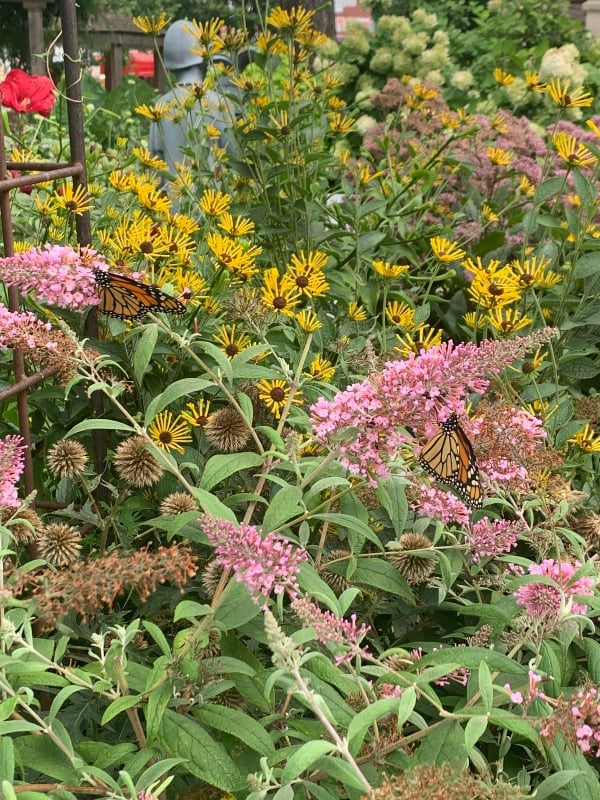
A butterfly bush can host multiple monarchs at once because its flower clusters offer many landing spots. The abundant monarchs on pink butterfly bush show how a single large plant can replace a whole bed of scattered flowers. The bush reaches five to six feet tall in most climates, so it creates a vertical anchor that draws the eye upward. Plant it at the back of a border or in the center of an island bed. This layout saves space and reduces the number of plants you need to water and deadhead. Check your USDA zone before planting, since butterfly bush is invasive in some regions and may need a sterile cultivar.
Pair of Monarchs on Red and Orange Milkweed
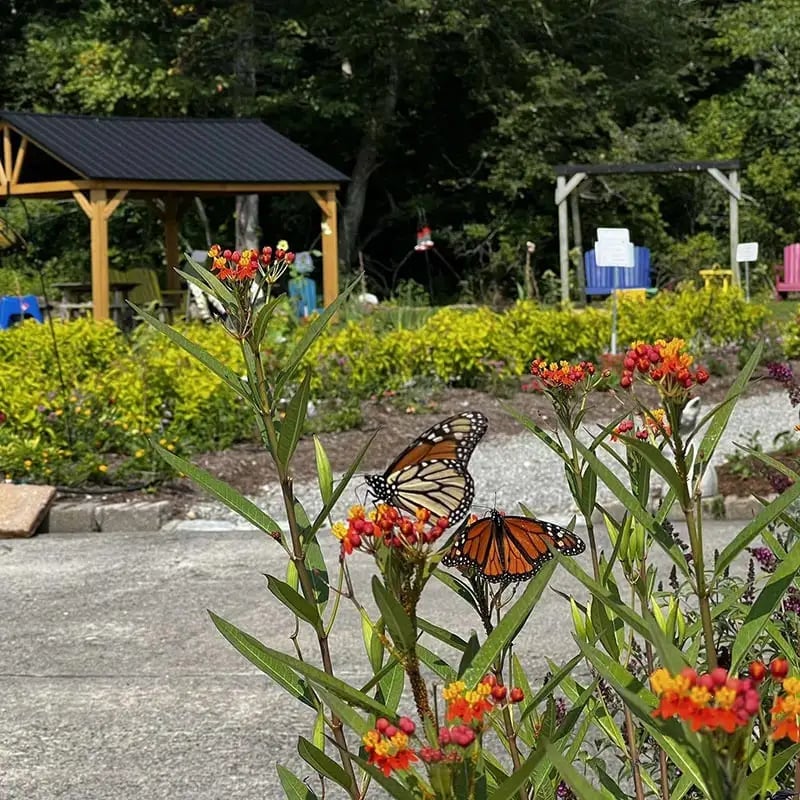
A pair of monarch butterflies on red and orange milkweed is a good reminder that planting in clumps of the same color draws more attention from passing butterflies. The bright orange and red blooms create a strong visual target against the green leaves, making the garden a single destination for pollinators. Grouping at least three to five of the same plant together gives the garden a designed feel, and it helps the butterflies spot their next meal from farther away. This kind of palette block works well in a naturalistic garden because it keeps the eye moving without feeling chaotic.
Monarch Butterfly on Orange and Yellow Blooms
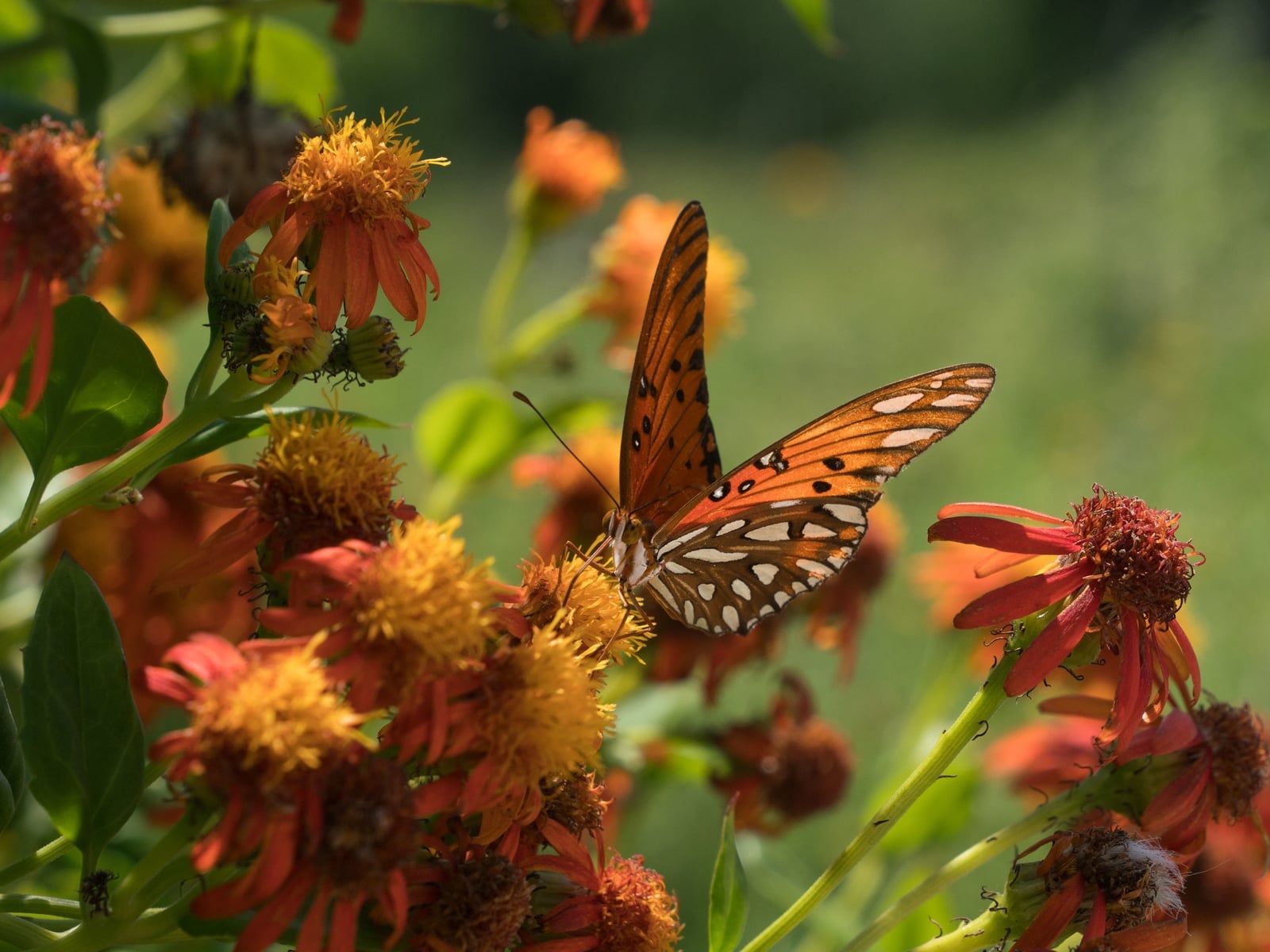
A practical rule for a butterfly garden is to place taller flowers at the back and shorter ones in front so every bloom gets enough sun. The monarch butterfly on orange and yellow flowers here shows how bright daylight hitting the petals from above makes the colors pop. If you are renting and cannot dig up the yard, you can still create that layered look with large containers on a patio or balcony. Use a lightweight potting mix and set the pots on plant caddies so you can move them around as the sun shifts through the season. That way you get the same sun exposure without any permanent changes to the property.
Monarch Butterfly on Pink Echinacea
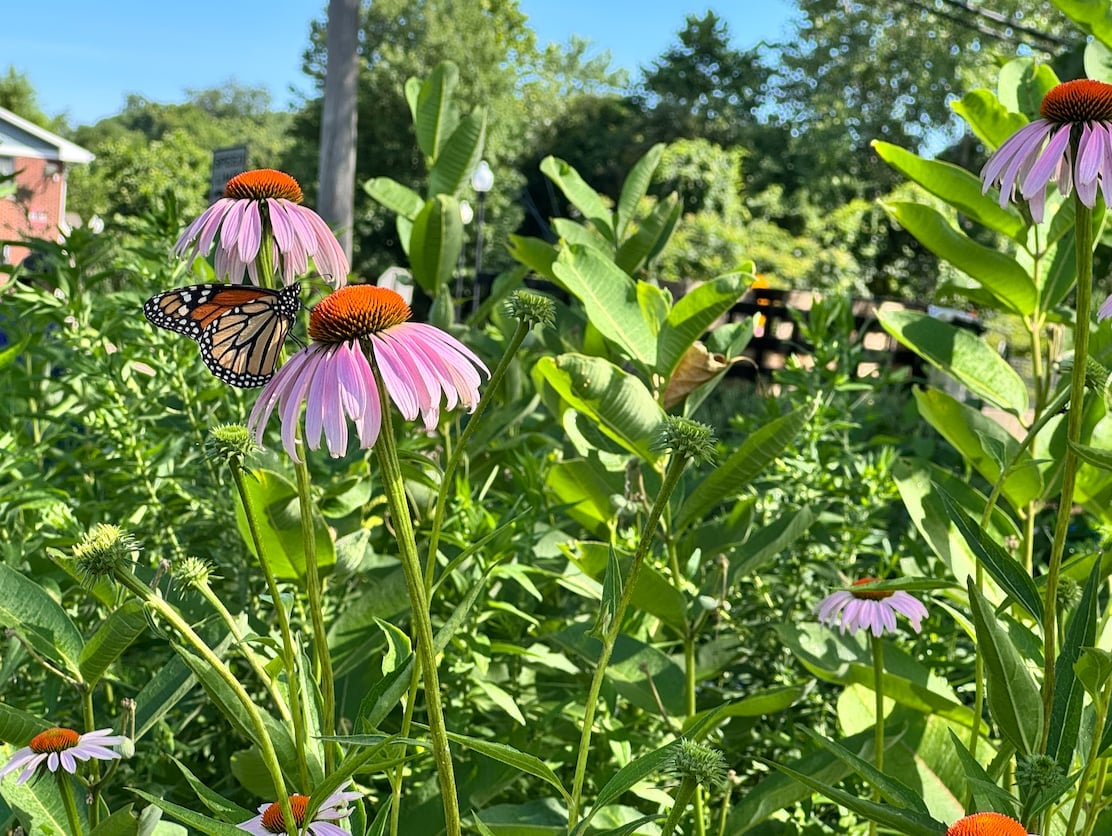
Echinacea is a solid choice for a butterfly garden, but it is worth noting that the flat, cone-shaped center of the flower gives butterflies a stable landing pad, unlike tubular blooms that require hovering. The monarch butterfly on pink echinacea in this garden shows how the open face of the flower makes feeding easier for larger butterflies. A garden layout that mixes echinacea with milkweed and zinnias creates a succession of bloom times, so there is always something in flower from early summer into fall. That staggered bloom cycle is the main reason a butterfly garden keeps looking active rather than having one big show and then going quiet.
Monarch Butterfly on Orange and Red Flower Near Greenhouse
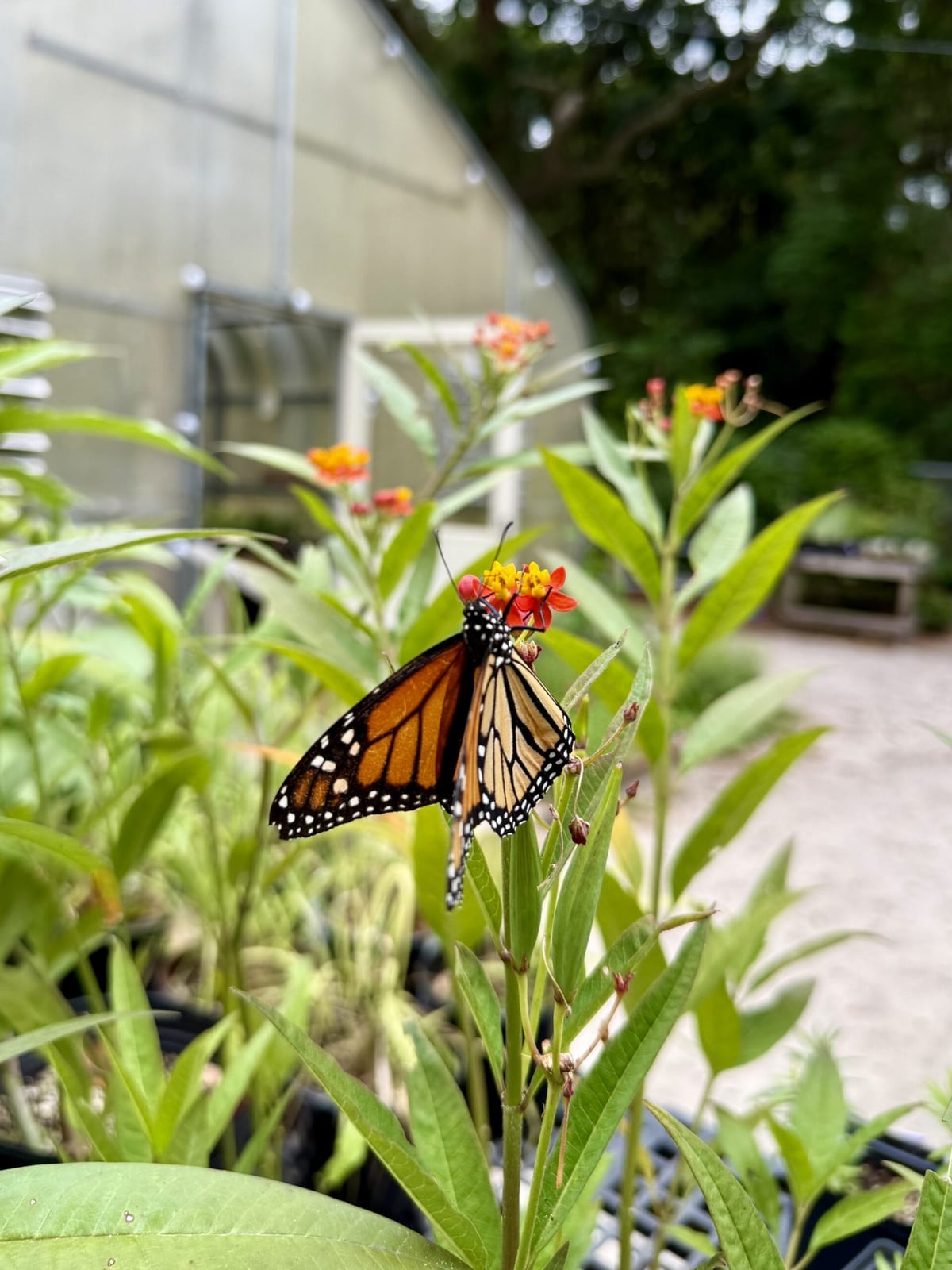
The monarch butterfly on orange and red flower near a greenhouse shows how a simple structure can extend the garden season. The overcast daylight in this garden softens the contrast between the bright petals and the green leaves, which makes the butterfly stand out even more. A greenhouse nearby means you can start milkweed and other host plants earlier in spring, giving the butterflies a reason to visit before the main garden is fully up. It also provides a sheltered spot for plants that need a little extra warmth, which is useful in cooler climates where the growing window is short.
Monarch Butterfly Wings on Pink Flower
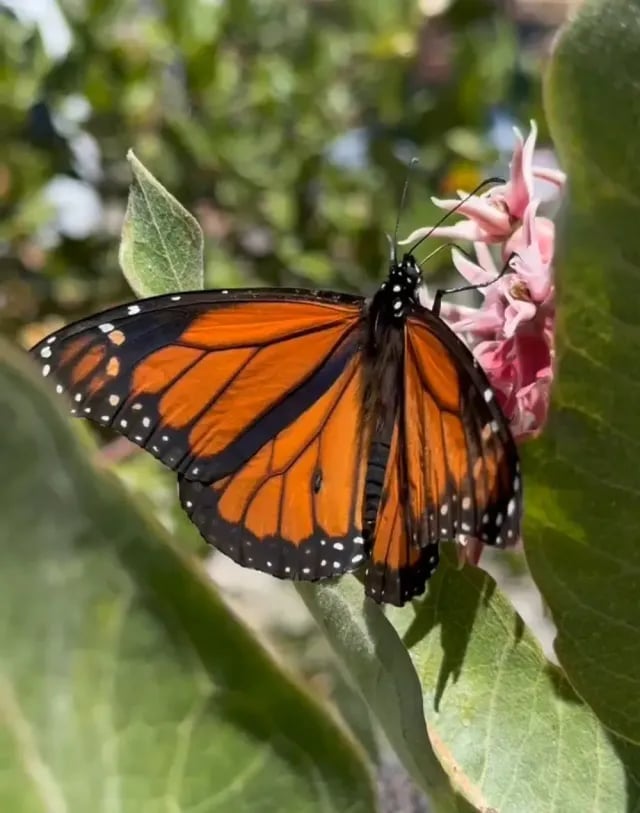
The monarch butterfly wings on a pink flower are the real focus here, and the scale of the butterfly relative to the bloom is worth noting. Monarchs are larger than many garden butterflies, so they need a flower with a sturdy stem and a wide enough landing area. Pink flowers with a broad, flat face, like zinnias or coneflowers, give the butterfly a stable perch without bending under its weight. In a naturalistic garden, the balance between flower size and butterfly size matters because a top-heavy bloom will tip over, and a tiny flower does not offer enough surface area for the butterfly to rest and feed.
Butterfly-Shaped Bench in Lush Garden House
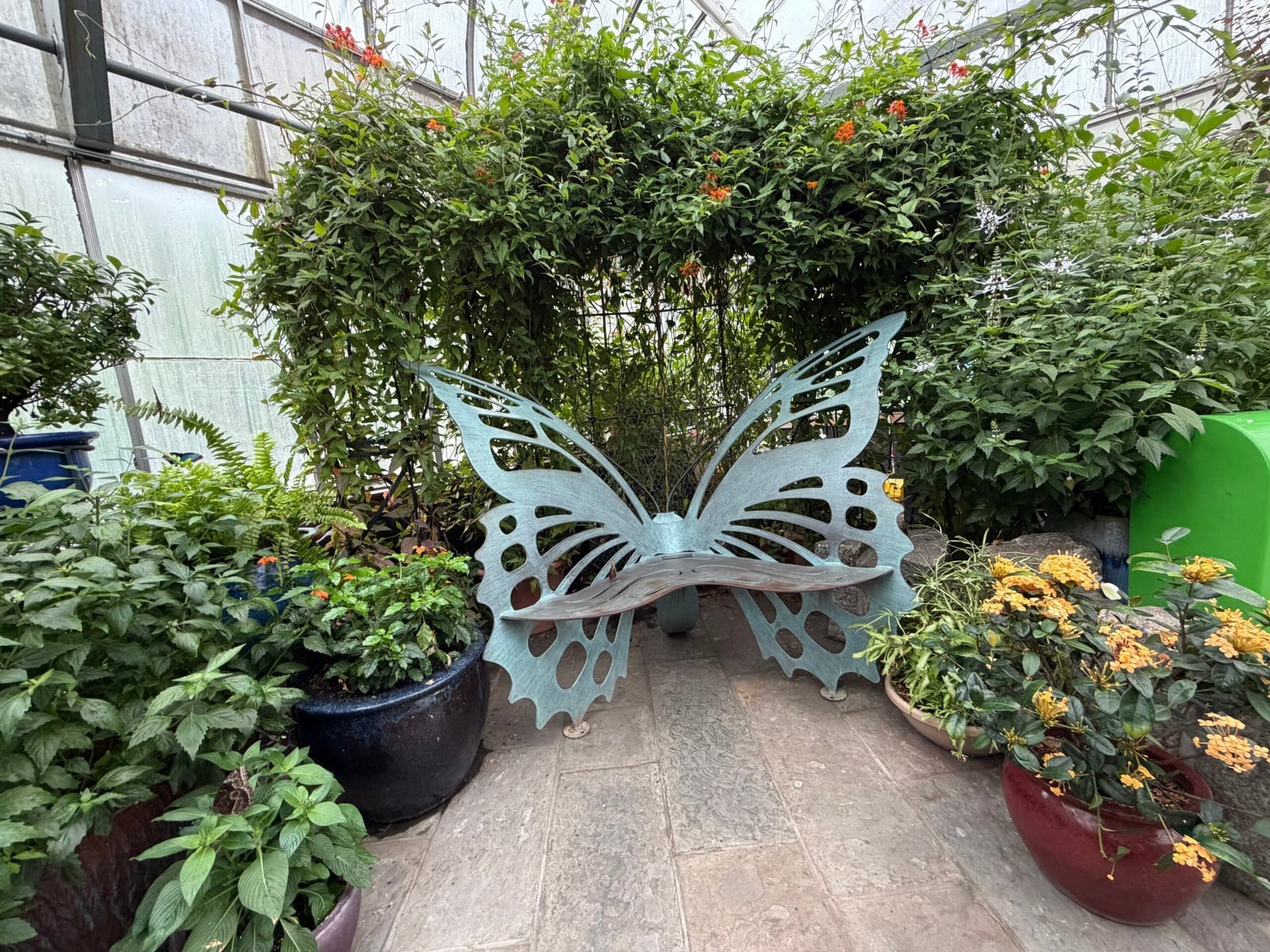
A bench is only as good as its view, and this one earns its spot. The butterfly-shaped bench sits centered in a lush garden house, surrounded by potted plants and arching greenery. The metal frame curves into wing-like forms, while the seat itself is wood, warm brown against the green and terracotta palette. Stone pavers anchor the bench, keeping it grounded. The layout here is straightforward: one hero piece, generous planting around it, and nothing else competing for attention. That makes it simple to replicate. Pick one sculptural seat, place it where you will sit and look, then plant outward in layers. The roominess comes from letting the bench breathe, not from cramming in more furniture.
Painted Lady Butterfly on Orange Calendula
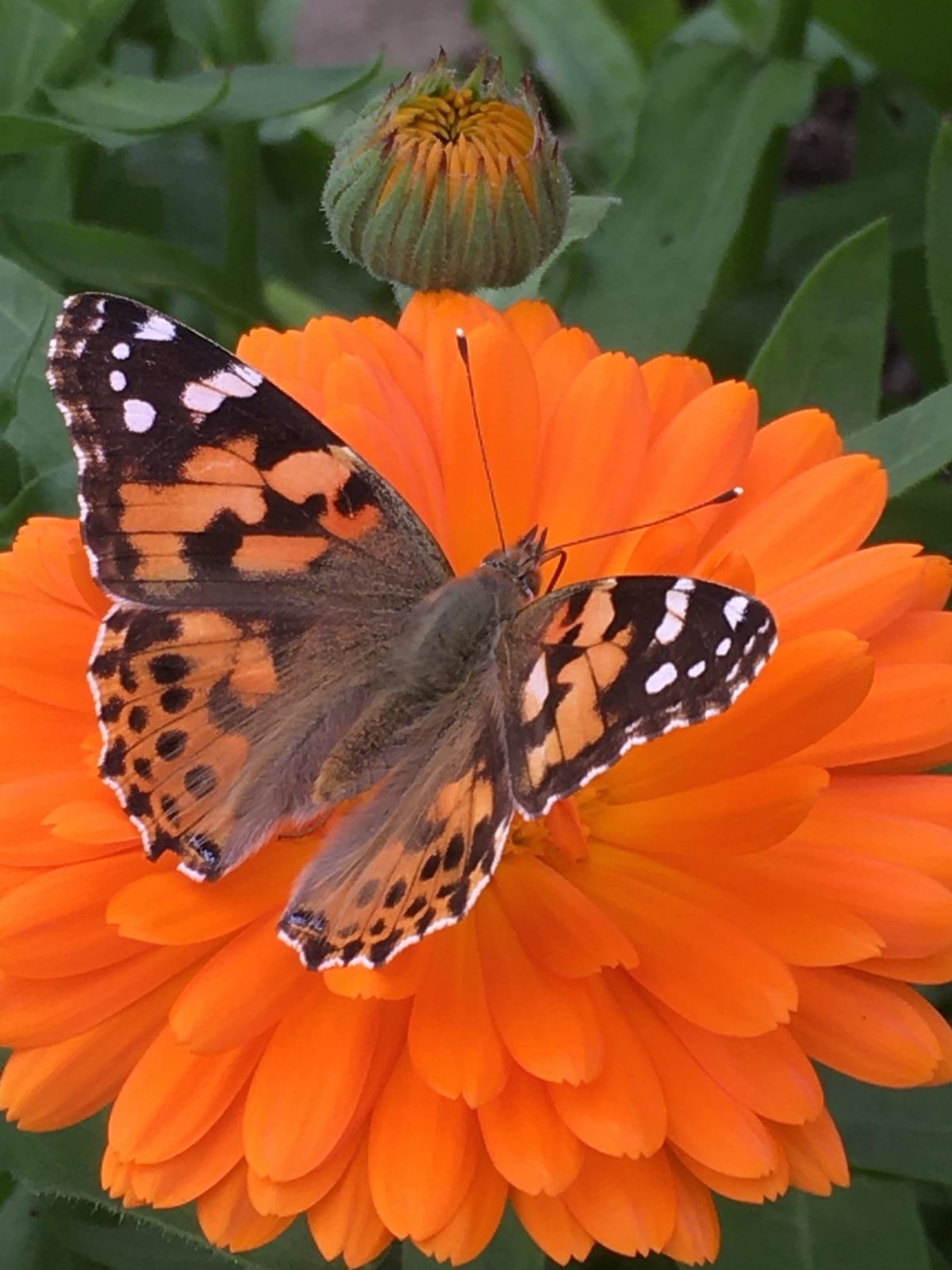
The painted lady butterfly lands on an orange calendula, and the materials are simple: flower petals and plant leaves. The orange is bright, the black and white wing patterns crisp against the green foliage. This close view shows how the butterfly’s body matches the flower’s center, a natural palette trick that makes the whole scene feel cohesive. For a garden, this reads as a reminder to plant single-color clusters. A mass of one flower color draws the eye better than a mix, and butterflies seem to agree.
Aerial View of Butterfly-Shaped Garden Bed
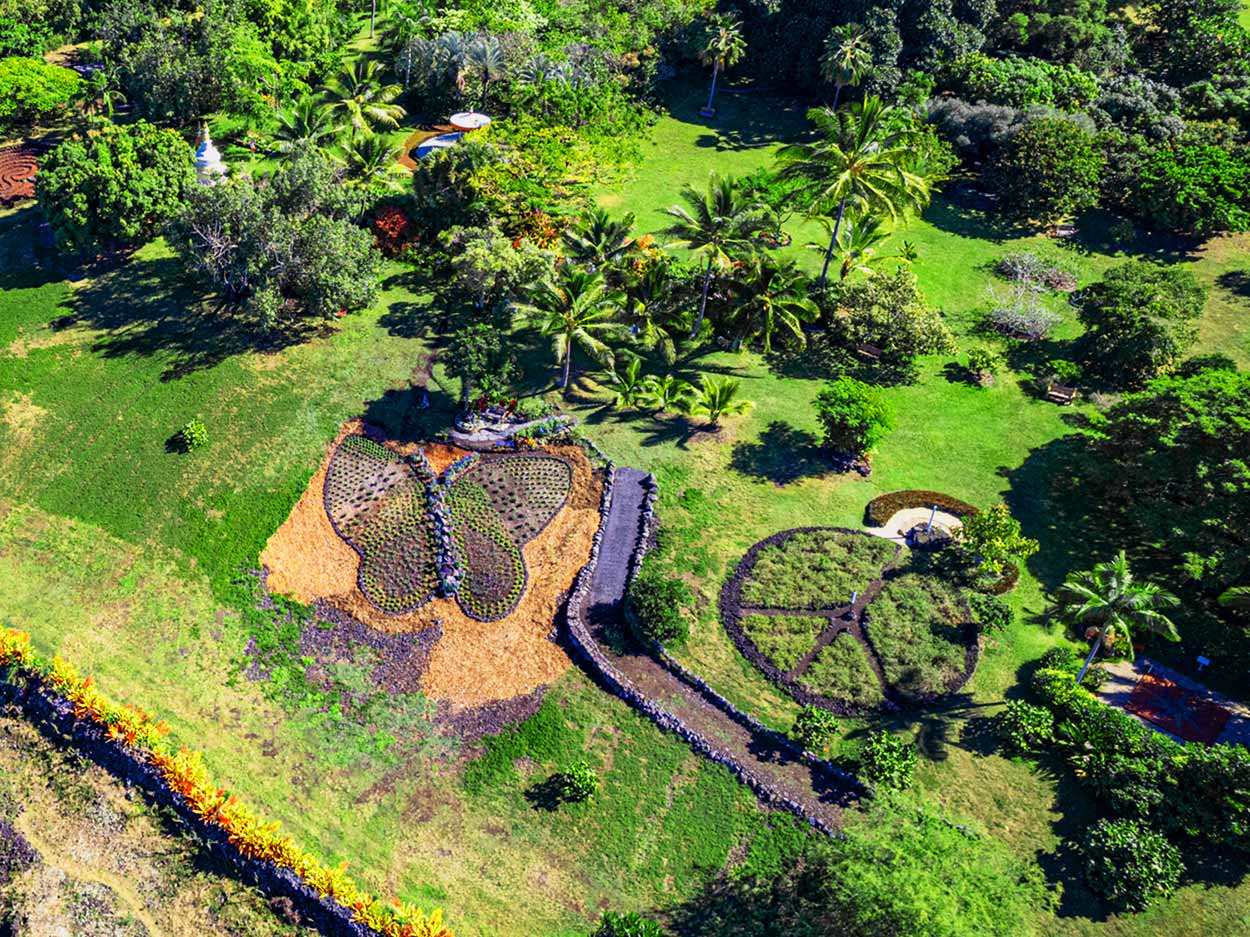
A practical rule for garden beds: shape matters more than size. This aerial view shows a butterfly-shaped garden bed, its wings formed by curved paths of mulch and stone against grass. The body of the butterfly is a circular bed, with the wings extending outward in brown and yellow tones. The layout is expansive, the shape clear from above. To pull this off, mark the outline with hose or rope before digging. Keep the curves smooth and the edges clean. The shape does the work, so the planting inside can be simple, just low perennials or annuals in one or two colors.
Monarch Butterfly on Vibrant Orange and Yellow Milkweed
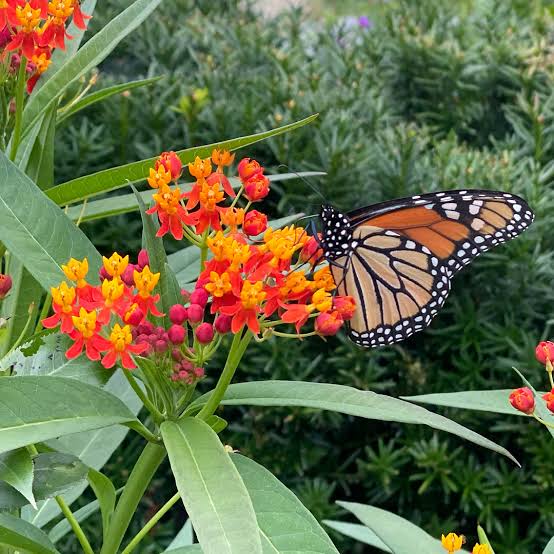
A monarch butterfly on milkweed is a classic pairing, but this one stands out for how the orange and yellow flowers frame the butterfly’s own orange wings. The soft natural light keeps the colors rich without harsh shadows. Compare this to a garden where milkweed is planted in a shady corner. The same flowers would look muted, the butterfly harder to spot. Here, the palette is the point: orange, yellow, green, and a hint of pink from nearby blooms. For your own garden, place milkweed where it gets several hours of direct sun. That is what brings out the color and keeps the butterflies coming back.
Circular Metal Sculpture of Butterfly Life Cycle
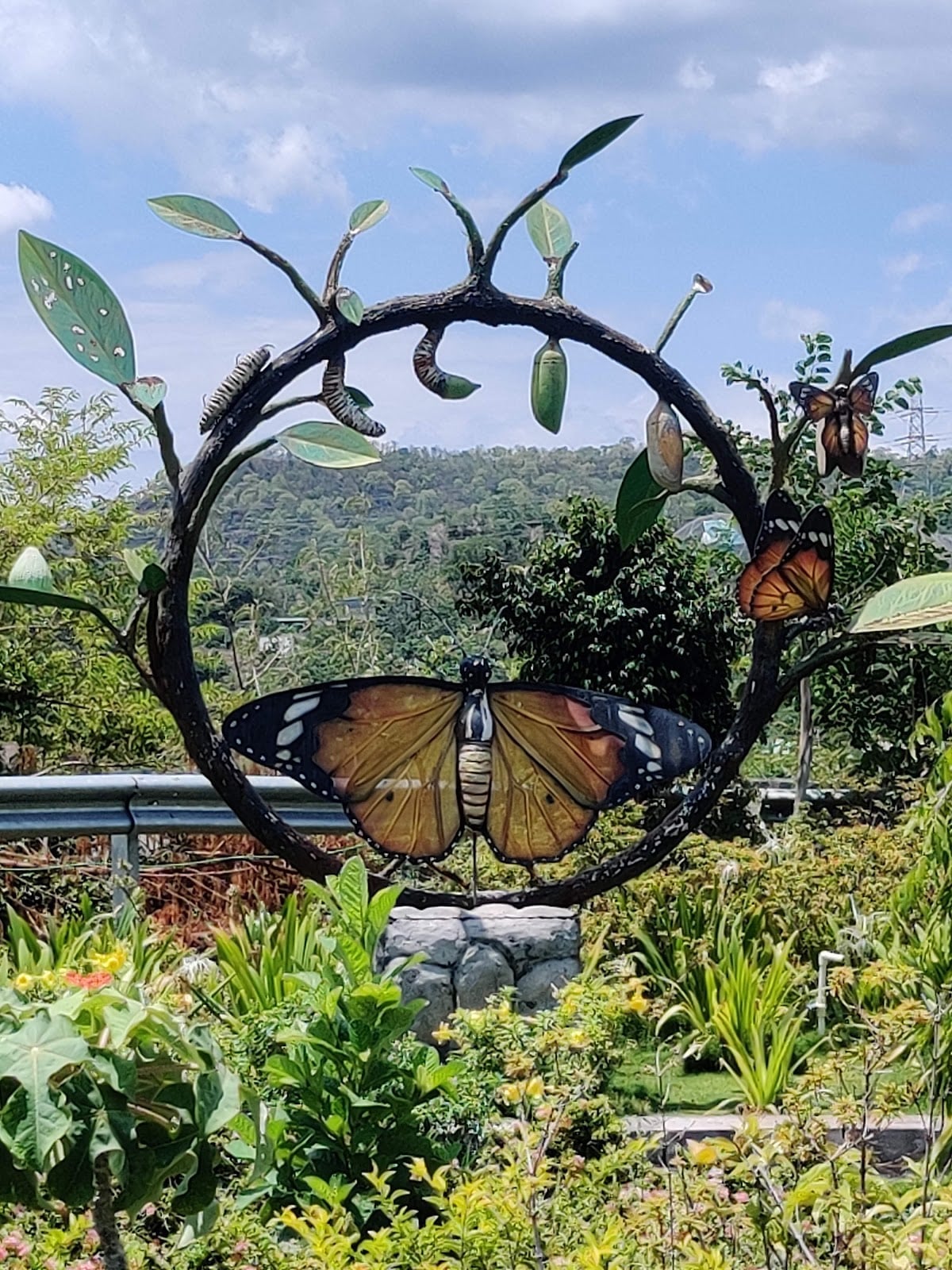
The circular metal sculpture stands in a garden, its surface painted with butterflies, caterpillars, and a chrysalis in orange and blue against the brown metal. Lush greenery surrounds it, with stone edging the bed. The design is precise: each stage of the life cycle is its own section of the circle, readable from any angle. This is not a piece you tuck behind a bush. It sits front and center, a clear educational element. For a garden with kids or frequent visitors, a single sculpture like this teaches without a sign. It also adds a vertical element to a mostly ground-level planting.
Butterfly on Dew-Kissed Pink Zinnia
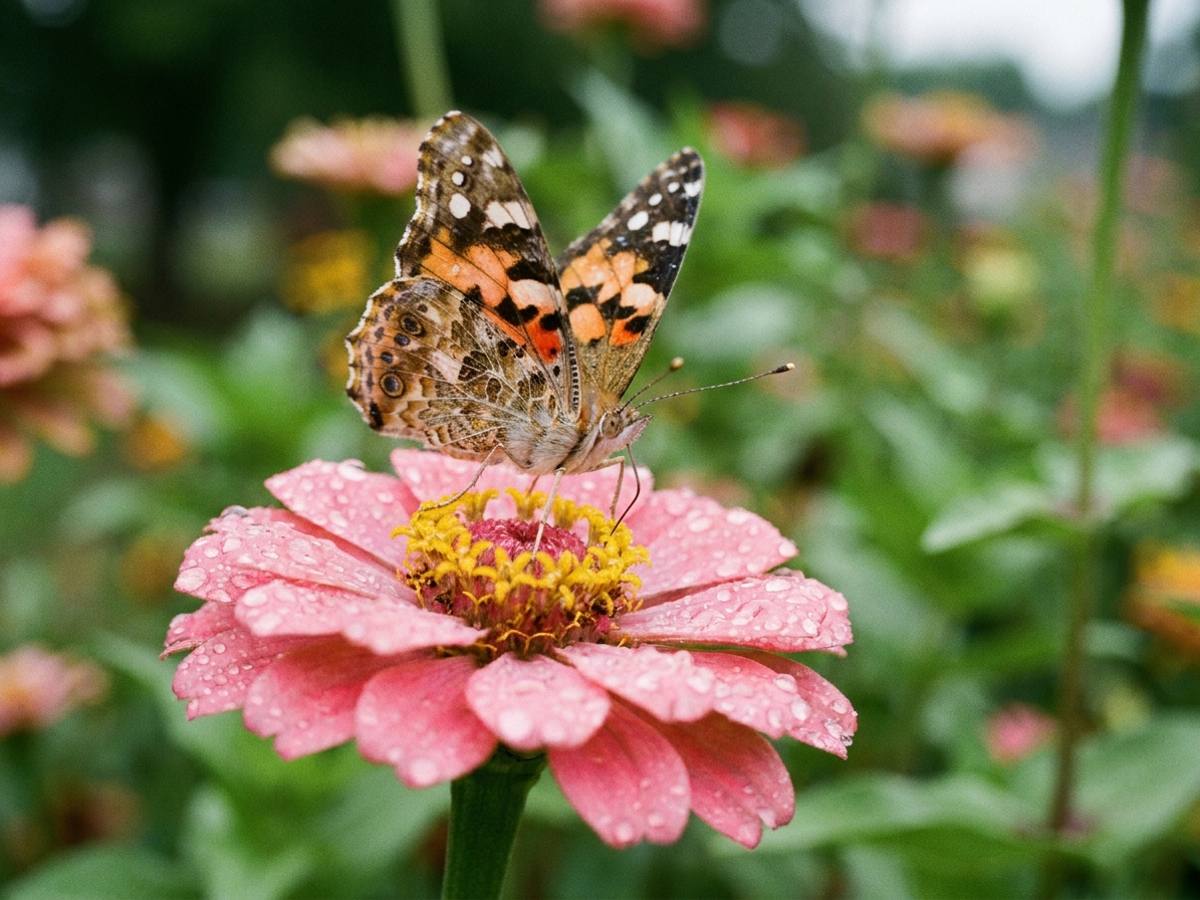
A close-up view of a pink zinnia with water droplets on its petals and a butterfly resting on top shows how natural materials do the work for you. The petals provide a landing pad, the droplets add texture, and the butterfly supplies the movement. There is no need for decorative elements here. The combination of living plants and morning dew creates a garden vignette that feels complete on its own. Soft daylight keeps the scene gentle, letting the patterned wings of the butterfly stand out against the pink and green. The palette stays within pink, orange, green, and yellow, which is a color range that repeats across many native flowers.
Vibrant Metal Butterfly Garden Stakes
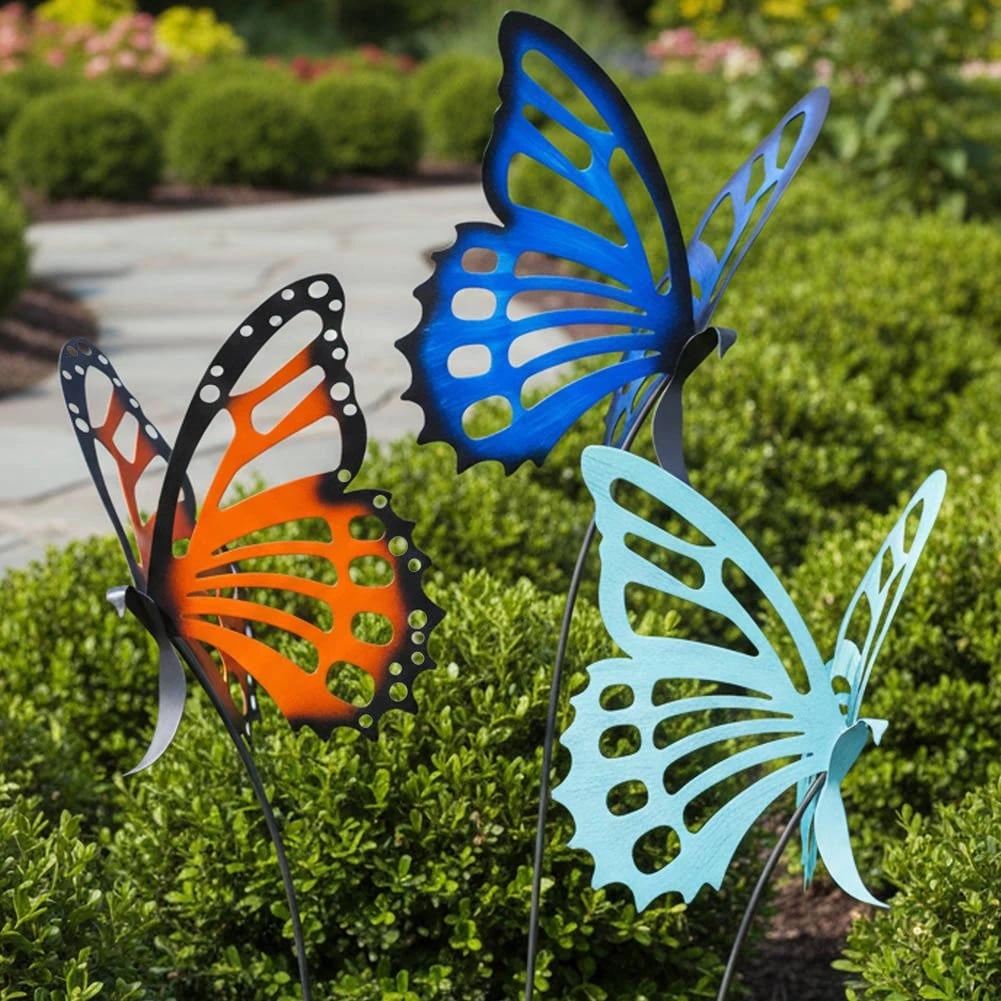
Add color without digging or planting. Three metal butterfly stakes placed in bushes bring blue and orange into a green garden without changing the soil. The bright daylight makes the metal surfaces catch attention, so the stakes look like art. The modern style comes from the contrast between the man-made shapes and the natural greenery around them.
To keep the look cohesive, choose stakes in colors that appear somewhere else in your outdoor space, even if that is just a flower pot or a cushion. The metal construction means they stay put in wind, and the placement in bushes hides the stake pole. This setup works for any yard size, since you can cluster them or spread them out depending on the room available.
Butterfly on Purple Aster Flowers
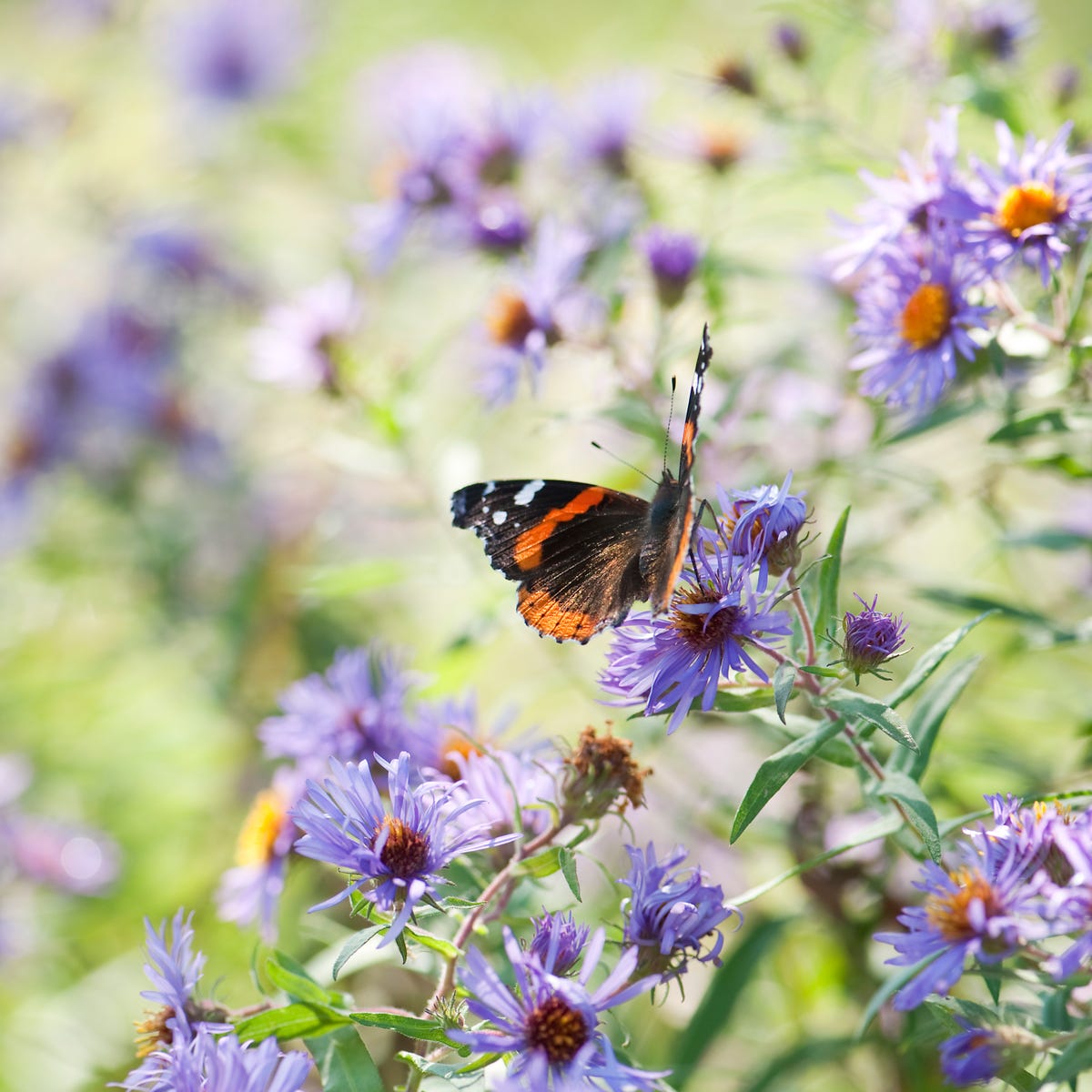
The purple aster flowers in this garden scene create a dense cluster of color that draws the eye upward. The butterfly’s wings add orange and white accents against the purple and green backdrop. This palette combination is a reliable one for attracting pollinators because the high contrast between flower and insect makes each element more visible. The soft daylight keeps the purple from reading as flat, and the pollen on the petals adds a subtle texture that a solid color block would not have.
Formal Garden Designed as a Butterfly
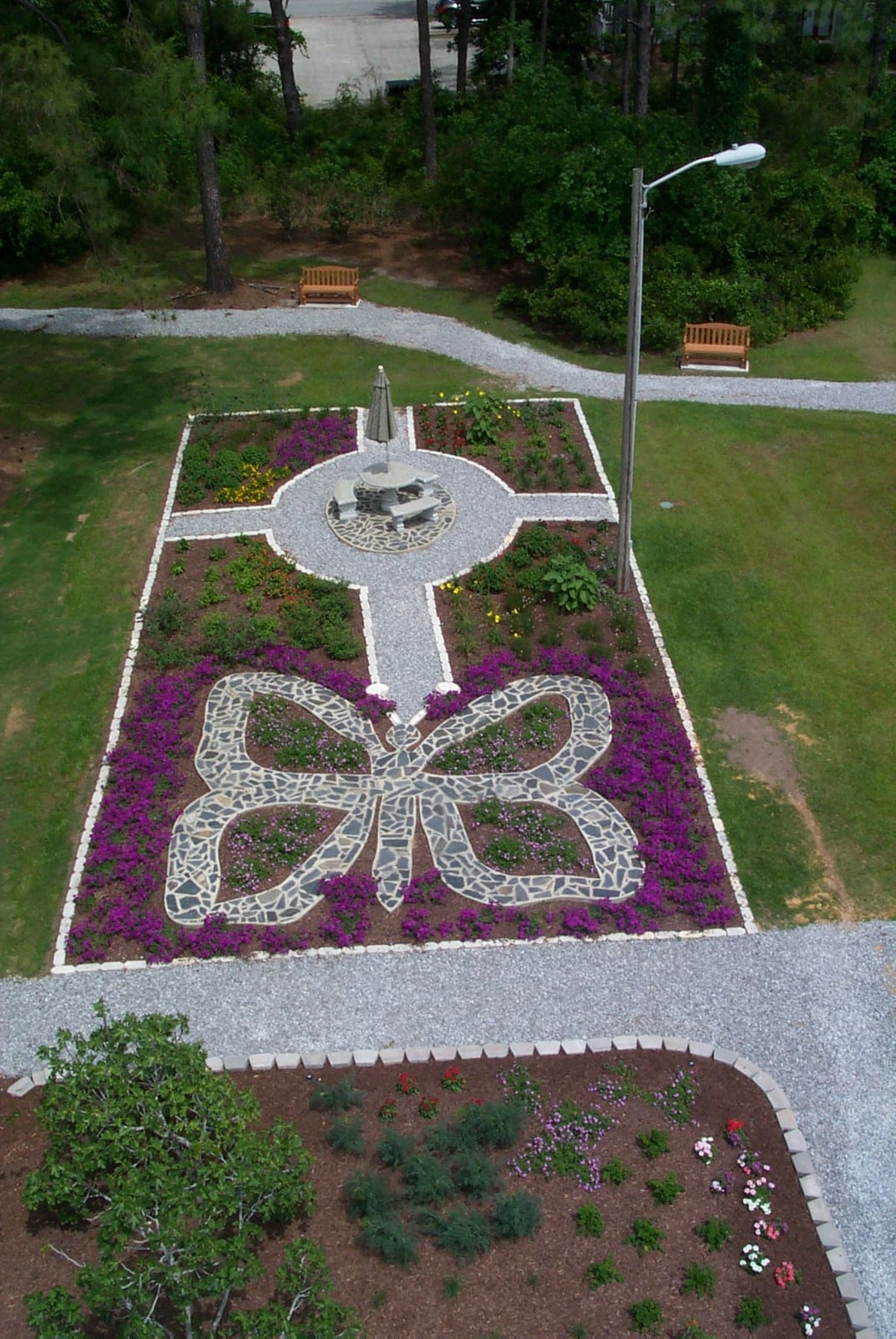
An overhead view of a garden shows a large butterfly shape made of stone, with purple flowers planted inside the wings and gravel paths outlining the form. The layout uses symmetry, with the body of the butterfly as a central axis and each wing mirroring the other side. Purple flowers fill the wing shapes, while the gray stone and brown soil provide a neutral background. This kind of formal design requires planning the bed boundaries before planting, since the shape is the main feature. The gravel paths help define the edges and make the butterfly shape readable from above.
Orange Butterfly on Purple Lavender
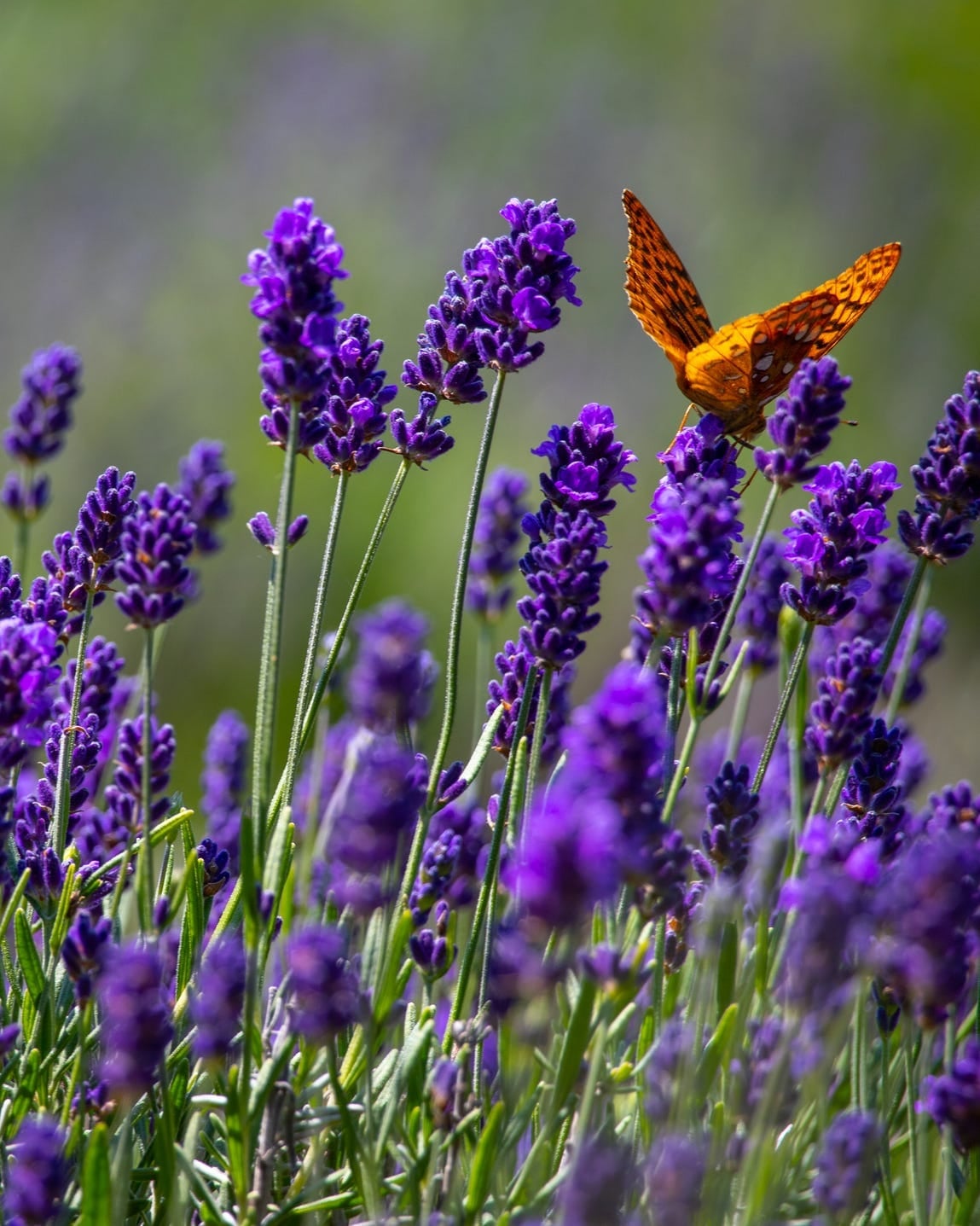
An orange butterfly resting on purple lavender stalks sets up a color pairing that is both high contrast and easy to achieve. The lavender provides vertical lines with its tall stems, while the butterfly adds a horizontal element with its wings spread open. This natural scale and proportion works because the flower spikes are tall enough to support the butterfly without bending, and the color difference keeps each element visible.
To recreate this look in your own garden, plant lavender in a sunny spot where it can reach full height. The purple spikes will rise above the foliage, creating a perch for butterflies. The orange butterfly here is a contrast that happens naturally when nectar sources are nearby. The daylight keeps the purple from washing out, which matters for the overall visual impact.
Aerial View of Butterfly-Shaped Planting Bed, Outdoor
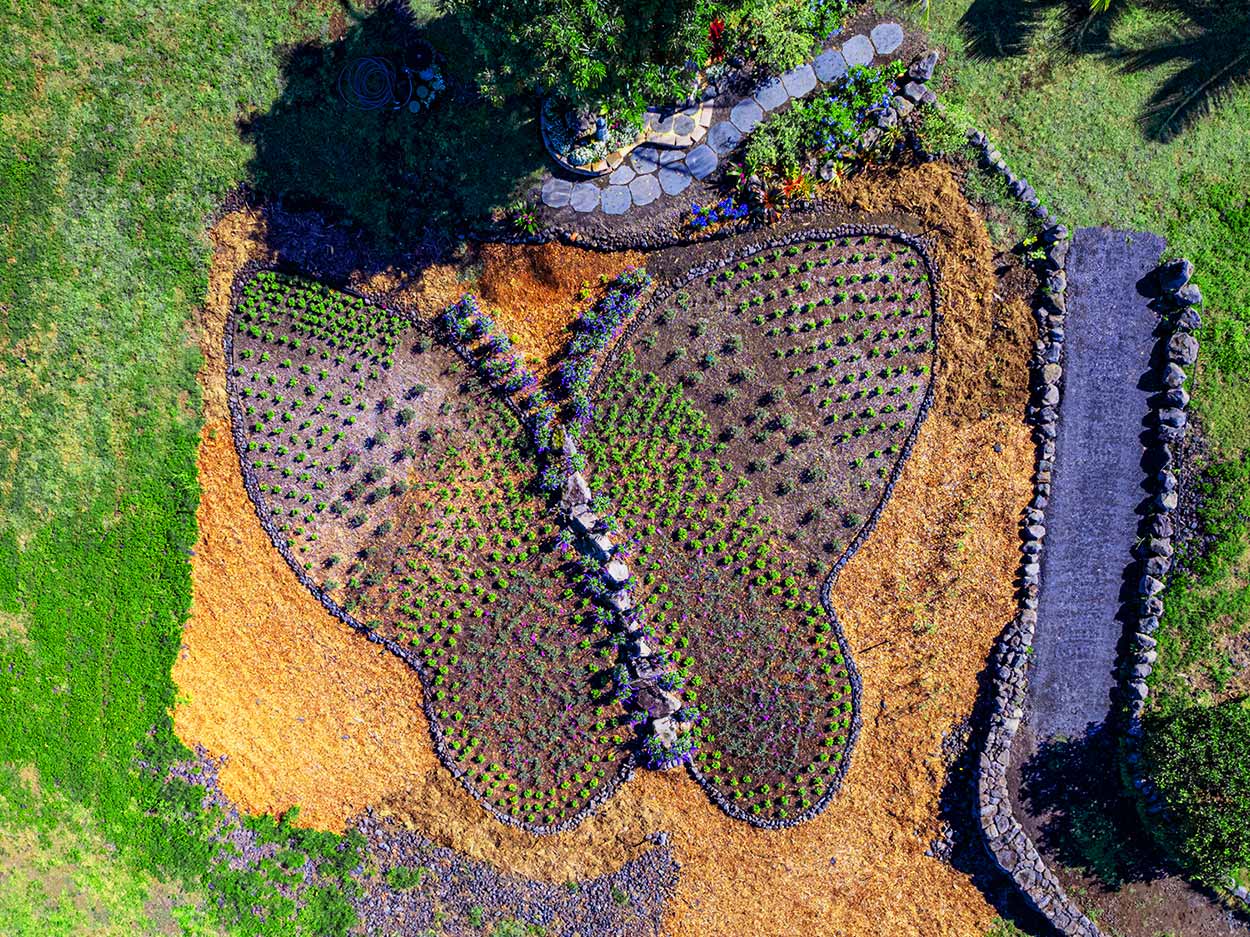
From above, the garden reveals its formal structure in a single glance. A butterfly-shaped planting bed acts as the central layout device, its wings outlined in low stone and filled with purple blooms against a brown mulch ground. A straight stone pathway cuts across the manicured lawn, leading the eye through the design without competing for attention. The aerial view makes the geometry clear: the shape is the anchor, and everything else, grass, path, bordering plants, stays simple so the butterfly remains the point. It is a smart trick for any garden that wants a strong focal point without adding clutter.
Final Thoughts
Building a butterfly garden is a long game. The most reliable approach is to plant a mix of nectar-rich flowers in full sun, add milkweed for monarchs, and skip the pesticides. Keep a shallow water source and some flat stones for basking. Deadhead spent blooms to extend the season. Check your USDA zone before buying perennials. The payoff is a yard that feels alive from spring through fall, with something new to spot every time you step outside.