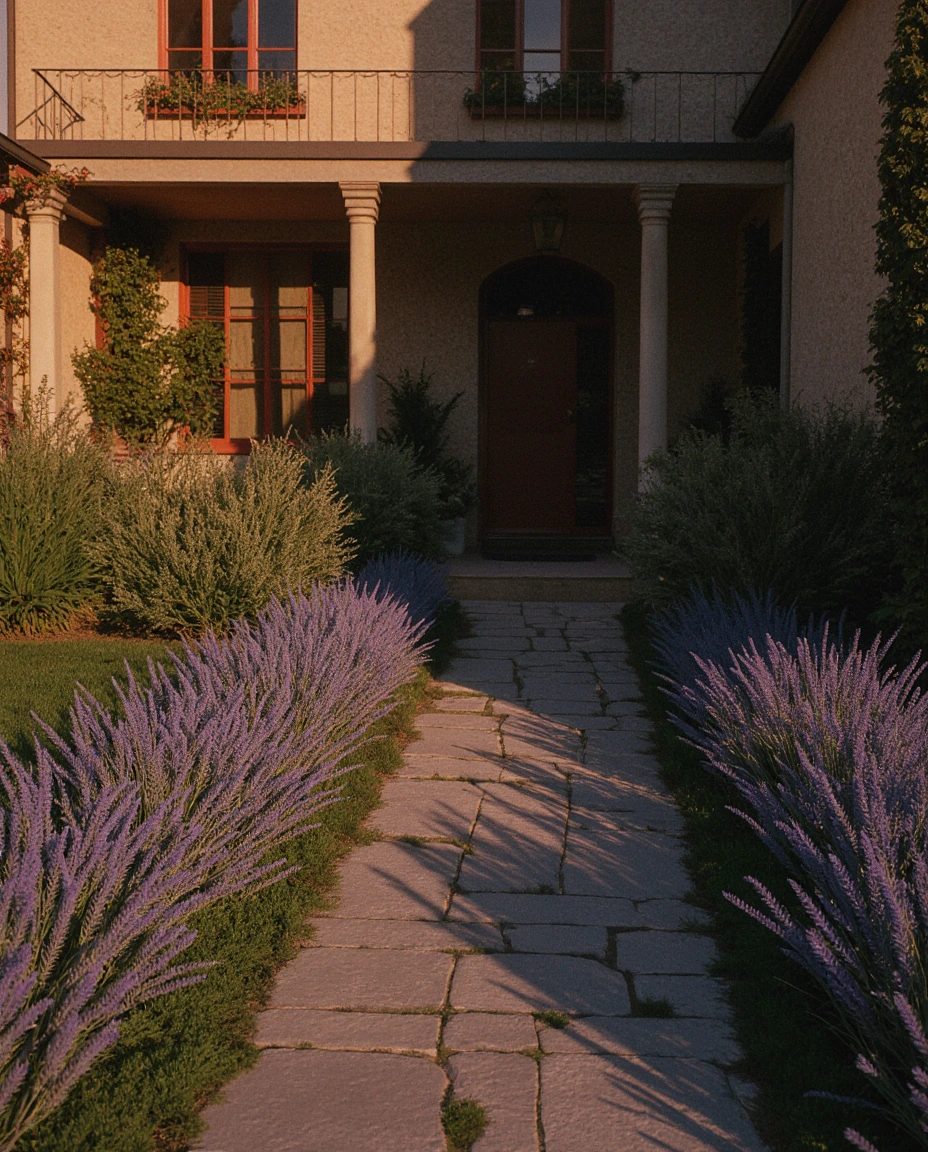
Front yard landscaping in 2026 is all about creating a welcoming first impression that feels personal, sustainable, and effortlessly stylish. American homeowners are turning to Pinterest more than ever to find designs that balance beauty with practicality—whether that means trading high-maintenance lawns for native wildflowers or adding architectural elements like modern fountains and tiered retaining walls. This year’s top trends reflect a shift toward outdoor spaces that require less water, less mowing, and less weekend stress, while still delivering serious curb appeal. From drought-tolerant rock gardens to lush entryway plantings that frame your front door, these ten ideas will help you transform your front yard into a space that’s as functional as it is photogenic.
1 Native Wildflower Garden with Stepping Stone Path

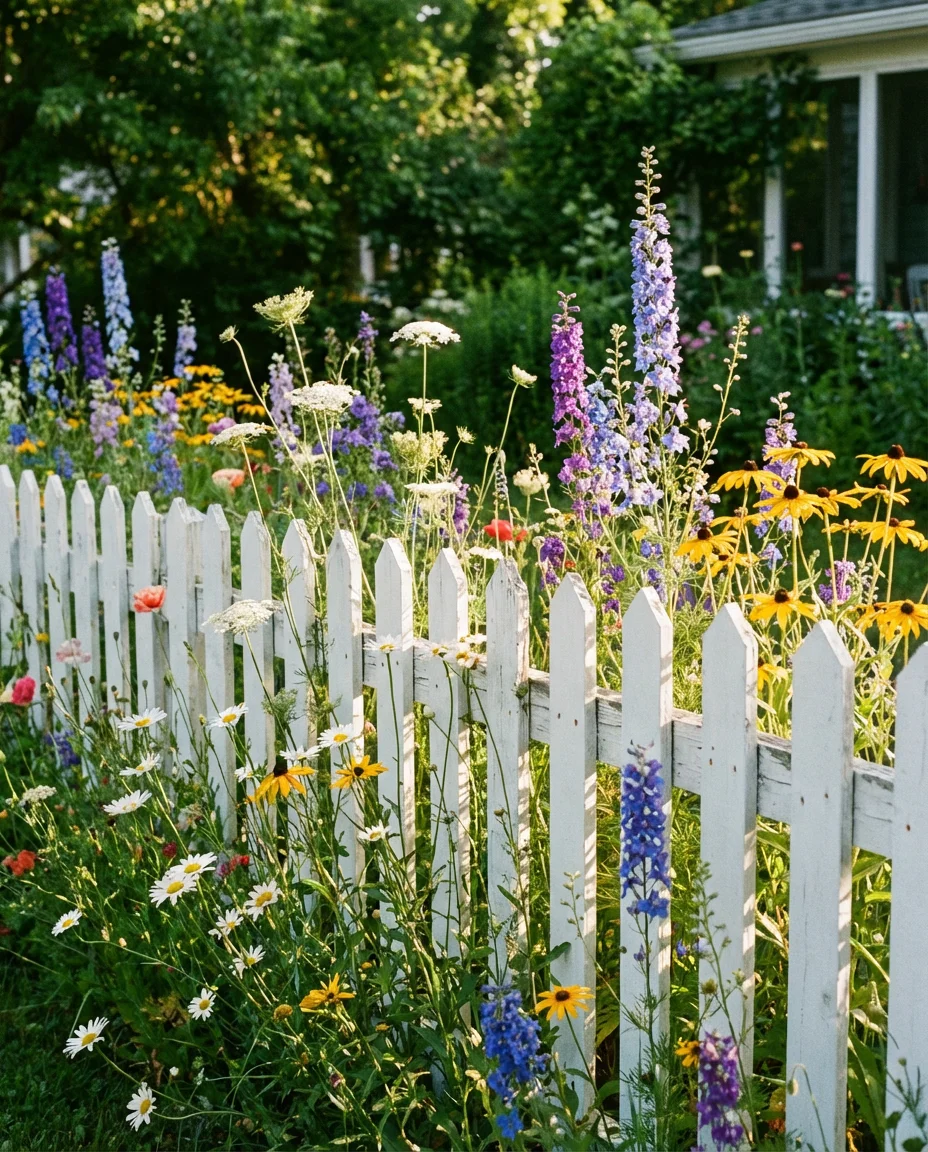
One of the best ways you can add curb appeal to your property and cut down on maintenance is by not having a lawn and replacing it with a wildflower garden. The mess itself, but far too many houses have been transformed with livestock sprawls of lawn. But instead of spending on neutral, bony, such summertime lovely heights of color, try against pottery that invites polychromists five as no watering. Guided with more insight, centering an imaginary stone path onto the main face creates cohesiveness within your entry site and invites the visitor to follow it. 
For regions like the Mountain West and the Pacific Northwest, where the local species have adapted to local rainfall patterns and thus local soil conditions, the design is incredibly suitable. The flowers seem to be of low-growing habit, and the patch is deeply rich in colors but minimal in care by the last weeks of spring. Some things to avoid with the meadow are planting too thickly initially, as there must be separate plants around each plug. Thus, one would be ultimately rewarded with a luxuriant sight, unmanicured, naturalistic development through the years.
2 Modern Fountains as Focal Point

A clean, modern water fountain set in a minimalist courtyard or at your home entrance will give your front yard the “wow”-elegant look you are after. Clean lines, geometric shapes, and water noise together seem to offer a sensory experience that will greet your guests even before they reach your home. Accentuate this with potted planters filled with architectural grasses or succulents to add to the contemporary feel and further highlight the water feature as the focal point of your front yard. Landscape designers maintain that fountains are most useful where street noise becomes a disturbance in urban or suburban settings; the gentle trickle tends to drown out traffic sound and adds to a peaceful presence. As far as pricing goes, a good quality fountain with a recirculating pump and installation will range between $800 and $2,500. A fountain instantly becomes the focal point of the year, a color in winter when green plants leave a contrast against its reflective surface.
3-Tiered Retaining Wall Garden for Sloped Yards

A tiered retaining wall system that is perfect for a highly visible sloped site will switch a foreboding topography into a triumphant, multi-level statement. Stone or stacked block walls create planting pockets at different heights, allowing you to layer textures and colors that draw the eye towards the sky. This method is perfect for curbside entrance zones, in which elevation changes could otherwise be pronounced and unwelcoming. Fill each tier with a mix of trailing perennials, ornamental grasses, and evergreen shrubs for year-round interest. 
A three-tier system installed by a neighbor last spring quickly presented almost fully covered walls in creeping thyme and sedum by midsummer—it seemed distinctly timeless coupled with these low walls. The best areas for such treatment are inclined neighborhoods of California, the Carolinas, and New England, where grade change is very common. These walls also assist in drainage and check erosion, making them both practical and beautiful.
4 Grass-Free Palm Springs Modernism

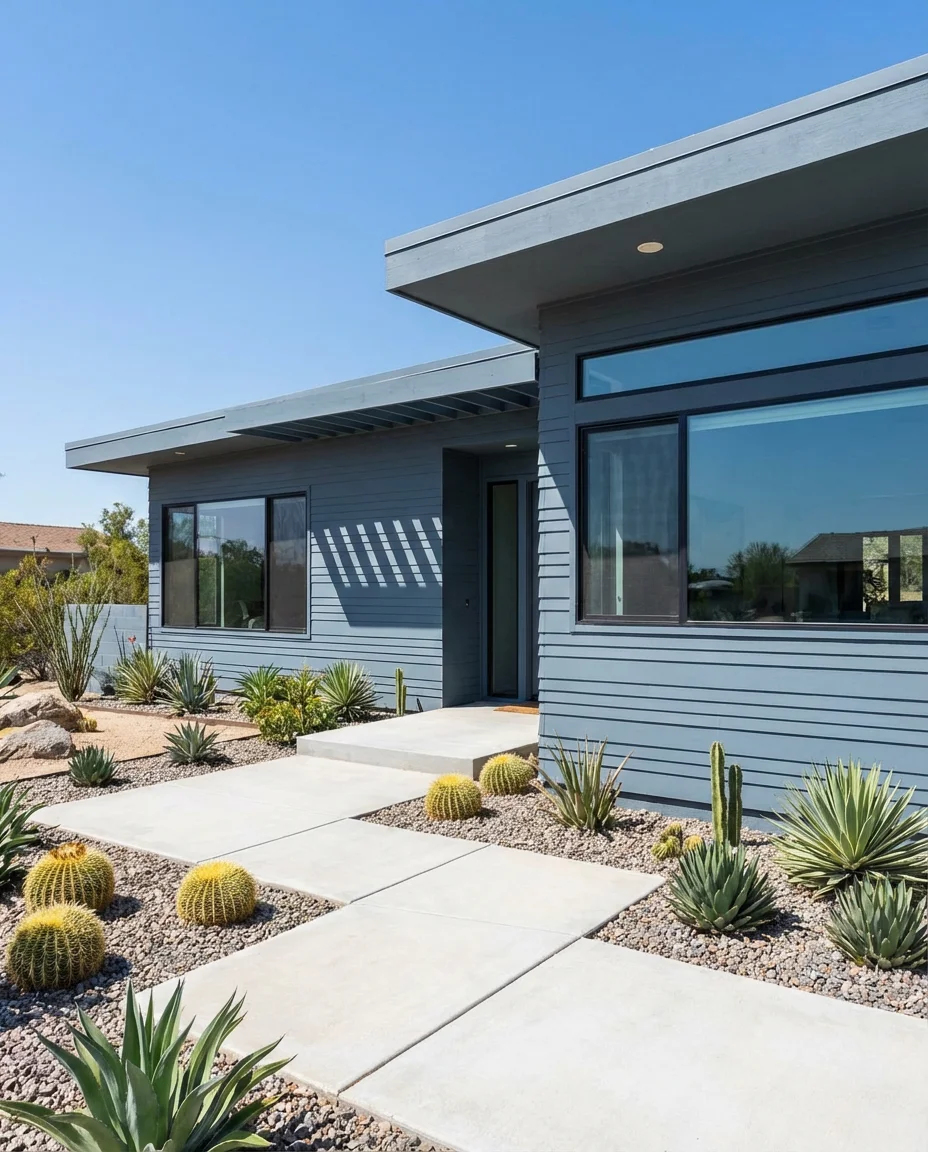
Inspired by the Palm Springs desert aesthetic, a grass-free front yard built around rocks, gravel, and sculptural succulents delivers instant drama with virtually zero upkeep. This layout is perfect for homes in arid climates or for anyone tired of fighting brown patches and high water bills. Choose a neutral base of decomposed granite or crushed stone, then punctuate the space with bold accents—think spherical agaves, tall ocotillo, or clusters of golden barrel cacti arranged like living sculptures.
This style has surged in popularity across the Southwest, Southern California, and even parts of Texas, where homeowners are rethinking traditional turf. Real homeowner behavior shows that once they make the switch, most never look back—maintenance drops to occasional raking and seasonal pruning. The upfront cost ranges from $3 to $8 per square foot depending on stone quality and plant selection, but the long-term savings on water and labor make it one of the smartest investments you can make.
5 Dry Creek Beds for Drainage and Interest

A dry creek bed winding through your front yard solves drainage issues while adding organic movement to your house’s front layout. Edged with river rocks and native plantings, the creek mimics a natural waterway and guides runoff away from your foundation during heavy rains. This feature works especially well in low-maintenance designs, where you want visual interest without the demands of traditional garden beds. Flank the creek with grasses, ferns, or drought-tolerant perennials that soften the stone and reinforce the naturalistic feel. 
Practical insight: a dry creek bed is far more than decorative—it’s a functional drainage solution that prevents pooling and erosion, especially in regions like the Pacific Northwest and Mid-Atlantic, where seasonal storms can overwhelm standard grading. Homeowners often make the mistake of using stones that are too uniform in size; for the most authentic look, mix boulder-sized rocks with smaller cobbles and pea gravel to mimic how water naturally sorts sediment.
6 Structured Entrance Gardens with Boxwood and Urns

For a timeless, symmetrical house entrance that radiates polish and permanence, frame your front door with clipped boxwood hedges and oversized pot planters. This classic layout borrows from European garden tradition but feels right at home on American colonial, Georgian, and craftsman-style properties. Choose matching urns planted with seasonal color—tulips and pansies in spring, mums and ornamental kale in fall—to keep the design fresh and engaging throughout the year. 
This approach works best in suburban neighborhoods across the Northeast, Mid-Atlantic, and Midwest, where formal landscaping is appreciated and well-maintained homes set the tone for the block. Real homeowners find that the structured look requires seasonal pruning but rewards them with a high-end aesthetic that photographs beautifully and consistently impresses guests. If you’re working with a modest budget, you can achieve a similar effect with smaller planters and dwarf boxwood varieties that cost less upfront but still deliver that polished symmetry.
…[IMG PLACEHOLDER]

A large perennial border running the length of the house front will bring layered texture and seasonal color to contrast even the most simple of home architectural styles. Planting in drifts rather than traditional sidewalk straight rows, combine taller plants that provide background effects such as Joe Pye weed or Russian sage, mid-height bloomers, and ground covers, which spill to the edge of the lawn. This mix of annual or perennial flowers and ruderal plants will create the illusion of depth and movement, converting your front yard from arbitrary to planned. This idea is highly recommended for properties living up to their curb appeal due to their large land area, which is otherwise bare due to insufficient soil for the placement of a single accent bed. 
A garden architect once told me that the most successful border is meant to be messy and lush—let them mingle and self-sow, and it will set a relaxed, cottage-garden ambiance that feels welcoming and not stiff. A style like this works quite well in temperate climates such as the Pacific Northwest, Mid-Atlantic, and parts of the Midwest, where one can rely on consistent moisture and seasonal growing conditions for a rich plant palette.
8 Low-Maintenance Rock and Succulent Compositions

For homeowners seeking low-maintenance ideas without sacrificing visual impact, a carefully arranged composition of rocks and hardy succulents delivers year-round structure with almost no intervention. This layout house plan is ideal for busy professionals or retirees who want a beautiful front yard but can’t commit to weekend gardening. Choose a mix of stone sizes—large boulders as anchors, medium rocks for fill, and fine gravel as a base—then nestle in cold-hardy sedums, hens-and-chicks, and yucca for texture and color variation. 
The faults most commonly encountered are inadequate mulch cover and planting too many succulents together, which can crush themselves—just allow each plant room to spread, topping annually with fresh gravel to keep down the weeds and hold in moisture. A gorgeous rock and succulent setting could be put together with a price range between $500 and $1,500, depending on your yard size and the quality of stone you’re willing to invest in. This setting almost maintains itself, so hardly any hover is required from the homeowner; just mow away here and there!
9 Turf Reduction with Ornamental Grass Meadow

Replacing a traditional lawn with an ornamental grass meadow decreases mowing to around 1 or 2 times per year and instead provides a soft and beautiful backdrop that murmurs and waves in the wind. All will work very well to make the best of the trade wind in the case of country ranch-like houses with sizable expansive front lawns while turning down full-on turf quite well, testifying to undergrowth. Grassland plants can be little bluestem, switchgrass, and prairie dropseed underplanted by low wildflowers so that seasonal splashes of color are visible. 
This style is gaining traction in the Midwest and Great Plains, where native grasses are ecologically appropriate and visually stunning. Homeowners report that the meadow requires far less water than turf and becomes a habitat for beneficial insects and songbirds—making it both beautiful and environmentally responsible. Where it works best is in neighborhoods that embrace a more relaxed, natural aesthetic, rather than communities with strict HOA guidelines around manicured lawns.
10 Contemporary Courtyard Entries with Pavers and Planters

A semi-enclosed courtyard formed by low walls, pots, planters, and geometric pavers redefines your curb appeal entrance as a transitional space that feels both public and private. This layout house entrance strategy works beautifully for modern and mid-century homes, where clean lines and intentional voids are part of the architectural language. Use large-format pavers in a staggered pattern, then anchor the corners with statement planters filled with architectural plants like birds of paradise, Japanese maple, or clumping bamboo. 
Experts note that this design creates a psychological buffer between the street and your home, making the entry feel more intimate and considered. It’s especially effective in urban settings where front yards are shallow and every square foot counts. Real homeowner behavior shows that once a courtyard is installed, it becomes a favorite gathering spot—somewhere to pause with morning coffee or greet neighbors without feeling fully exposed to passing traffic.
Whether you’re drawn to the wild romance of a meadow garden, the sculptural simplicity of desert modernism, or the polished symmetry of a formal entrance, your front yard is an opportunity to make a statement that feels authentically you. These ideas prove that you don’t need a massive budget or endless weekends to create a landscape that turns heads and stands the test of time. Which design speaks to your home’s style—and what will you try first? Share your thoughts and favorite ideas in the comments below.
11 Monochromatic Green Layered Planting

A frontage of all verdant foliage in multifarious textures and levels, arranged from stage to quasi-styling, yields an ambiance—as opposed to a first impression—of consistently sophisticated, timeless curb appeal. These layers of greens are seldom stunningly colorful once the greens diminish to greys or bri
lighter citrus shades in the winter. Thus, a meager maintenance regime relies on the dependable evergreen shrubs, ferns, hostas, and ornamental grasses, layered so that you will enjoy a framework of line and texture sustained year-round—there shall be no stress in trying to make this rich arrangement resolve all possible color clashes from a passionate cosmopolitan color freak of a front garden. 
It should take a while to find a site that will be shaded or only partly so with previous yards of the Pacific Northwest, New England, and Mid-Atlantic, where moisture levels make a very effective green palette! So, let’s look at nice contrasting leaves and mixed textures—broad leaves alongside fine grasses and architectural spikes. Although the upfront cost may be $600 to $1200, multiply by the number of beds that do the do for a homeowner! Unlike those gardeners that keep those high street plants far too hydrated and heated, proper instructions for managing the health of these species are the minimum in upkeep-wise tasks. Maintenance, on the whole, is in occasional clipping and mulching; plants would never ask you to feed and prune them “for flowers!”
12 Vertical Garden Wall at Entry

A wall of life attached near the front entrance—or how about lining up against a fence—finally turns your house entry into an urban oasis with bigger curb appeal, all packed into a little area. Here the vertical layout makes sense, since this appertainment develops upward instead of outward for you to tap its hanging grown succulents, ferns, or trailing ivy (it’s all based on the direction in which it is turned). It is a vivid discussion trigger and praises gracefulness to clean, stark lines with an organic touch of color and texture against, say, a block of a street almost halfway submerged into the ground below. 
A designer friend put one of these along her narrow San Francisco rowhouse and says it looks different from all the standard homes around and gives life and dimension to an otherwise impotent wall, the one feature that receives the most accolades from passersby. Detailed plans or information on all living walls will range from $300 for do-it-yourself enthusiasts to about $2000 for prefabricated panels with an integrated irrigation system to have them everywhere. This works well in the dense urban environment, particularly where greenery is so much desired while limitation confronts any leeway.
13 Fragrant Herb Border Along Walkway

Bordering your sidewalk with scented herbs like lavender, rosemary, and thyme creates a sensorial effect that engages visitors even before they fortify themselves noisily outside your front door. Wetlich—this blurs the line between beauty and the practical.
one that supplies the garden with just a little fresh material for your dishes, all while being totally easy to maintain and, unlike the black-glove treatment! If the herbs are crushed, they will release their scent, making the entrance feel even more intentional, entirely facetious, and inviting—a minuscule detail that elevates an entirety from the house layout. 
Practical knowledge: herbs are very forgiving and need far less water once established than traditional ornamentals, so they work well in areas under water restrictions. Most homeowners overwater, so rest assured they’re one plant that doesn’t mind the slightest bit of drama. A well-planned herb garden can be had for a mere $150 to $400, from which you will soon reap the rewards for both aesthetic appeal and kitchen use in the coming years.
14 Boulders and Native Grasses for Textural Drama

Arranged along a series of large boulders, native grass creates a design that would draw the eye to a composition grounded in nature rather than being awkwardly bestowed upon. This look works best in environments associated with ranch houses in the Southwest and West, where the idea is to mimic the surrounding terrain while curtailing much-cut grass and water use. Choose rounded granite or limestone boulders in varying sizes and plant around them grassy plants like blue grama, sideoats grama, or muhly grass for movement and seasonal color. 
Where this works best: Transitional zones at the grave margin between exclusive suburban developments and the utter(ly natural) outdoors, where homeowners really do want a front yard that feels like an extension of the native ecosystem. Factually observed homeowner behavior shows that this landscaping style attracts wildlife—butterflies, songbirds, and other beneficial insects—giving the front space yet another layer of life and interest. Boulders in themselves serve as sculptural elements in their absolute self-sufficiency, with zero maintenance and giving a solid gravity to the entire composition.
15 Formal Parterre with Boxwood and Gravel

A scaled-down parterre garden built from clipped boxwood hedges and filled with pale gravel brings European elegance to your curb appeal entrance. This highly structured layout house entrance is perfect for symmetrical homes where formality is part of the architectural DNA—think Georgian colonials, Federal-style townhomes, or French-inspired estates. The geometric beds create rhythm and order, while the gravel infill provides contrast and keeps the design feeling crisp and maintained without the need for seasonal replanting.
According to landscape historians, the parterre style has seen a resurgence in American gardens as homeowners seek timeless designs that age gracefully. Budget expectations run between $1,200 and $3,500 depending on the size of the beds and the maturity of the boxwood you purchase. Maintenance involves seasonal shearing to keep the hedges tight and tidy, but the bones of the design remain constant year-round, making it one of the most reliable curb appeal ideas for traditional homes.
16 Shade Garden with Ferns and Hostas

For front yards dominated by mature trees or north-facing exposures, a shade garden anchored by ferns, hostas, and woodland perennials turns a challenging condition into a lush asset. This idea’s low-maintenance approach embraces the natural light conditions rather than fighting them, creating a cool, serene layout of flower gardens that thrive without full sun. Layer in spring bulbs like daffodils and hellebores for early color, then let the foliage take center stage through summer and fall.
A neighbor of mine transformed her deeply shaded front yard last year, and by midsummer it looked like a secret woodland retreat—the kind of space that makes you want to linger rather than rush past. This style is especially successful in the Northeast, Pacific Northwest, and upper Midwest, where mature tree canopies are common and shade-loving plants have a long growing season. The key is to improve the soil with compost and provide consistent moisture during establishment, after which the garden largely cares for itself.
17 Coastal Cottage Garden with Driftwood Accents

Capturing the relaxed, wind-swept beauty of coastal living, this curb appeal style combines weathered driftwood, ornamental grass, and salt-tolerant perennials in a naturalistic layout that feels effortlessly beachy. Tuck pieces of driftwood among the plantings as sculptural accents, then fill in with Russian sage, sea thrift, lavender, and blue fescue—plants that can handle salt spray and sandy soil. This design works beautifully for homes near the coast or for anyone who wants to evoke that breezy, vacation-home aesthetic year-round.
Practical insight: driftwood is not only decorative but also functional—it helps anchor plantings in sandy soil and provides visual structure in a garden style that can otherwise feel too loose. Homeowners often collect driftwood from local beaches (where permitted) or purchase it from garden centers for $50 to $200 depending on size. The plants themselves are incredibly low maintenance once established, thriving on neglect and requiring only occasional trimming to keep them looking tidy.
18. Edible Landscaping with Blueberries and Greens

Who says your front yard can’t be productive? An edible landscape that blends blueberry bushes, ornamental kale, Swiss chard, and compact fruit trees delivers curb appeal while putting fresh food on your table. This layout house front approach is gaining traction among homeowners who want their landscaping to work harder, offering beauty in spring when blueberries bloom, color through summer as fruits ripen, and autumn interest when foliage turns scarlet. Tuck edibles into traditional bed layouts or devote entire areas to raised planters filled with pots and planters of herbs and greens. 
Real homeowners report that once they make the leap to edible front yard landscaping, they never look back—there’s something deeply satisfying about harvesting breakfast from the curb. This style works best in neighborhoods with a relaxed, community-oriented vibe where the sight of vegetables won’t raise eyebrows. Budget expectations are comparable to traditional landscaping, typically $800 to $2,000 for a well-designed edible border, but the ongoing harvest provides tangible value that ornamentals simply can’t match.
19 Xeriscaping with Agave and Crushed Stone

For homeowners committed to water conservation, a xeriscape design built around architectural agaves, yucca, and a base of crushed rocks delivers bold curb appeal with near-zero irrigation demands. This grass-free approach is ideal for arid and semi-arid regions where traditional lawns are ecologically and financially unsustainable. Choose a warm-toned decomposed granite or crushed stone, then punctuate the space with specimen plants that offer dramatic silhouettes and sculptural form—each one becomes a living piece of art in your layout house plan.
Expert commentary: landscape architects specializing in arid climates emphasize that successful xeriscaping is about celebrating the beauty of desert plants rather than trying to make them mimic lush gardens. The upfront investment ranges from $4 to $10 per square foot, but the long-term water savings can exceed 70% compared to turf. Maintenance involves occasional removal of spent flower stalks and refreshing the stone mulch every few years—far less demanding than any traditional lawn care routine.
20 Mixed Container Gardens on Front Porch

When in-ground planting isn’t an option—or you simply want maximum flexibility—a curated collection of pots and planters on your front porch or stoop creates an instant entrance with curb appeal that can be refreshed seasonally. Group containers in varying heights and materials, from glazed ceramic to weathered terracotta to sleek fiberglass, then plant them with a mix of trailing ivy, upright grasses, and seasonal bloomers. This approach is perfect for renters, urban dwellers, or anyone who wants to experiment with color and texture without committing to permanent beds. 
A landscape designer once told me that container gardens are where you can break all the rules—mix patterns, play with scale, and change your mind with the seasons. Where this works best is in neighborhoods with covered porches or stoops that provide some protection from the elements and create a natural stage for the display. Budget-wise, you can start small with $200 to $500 and build your collection over time, swapping out plants as they finish their season and trying new combinations each year.
21 Prairie-Style Border with Coneflowers and Black-Eyed Susans

Drawing inspiration from the American prairie, a front yard border filled with native coneflowers, black-eyed Susans, and wildflower garden favorites creates a layout of curb appeal ideas that’s both ecologically responsible and visually stunning. This low-maintenance style thrives in full sun and poor soil, making it ideal for homeowners who want beauty without constant amendment or irrigation. The plants are tough, long-blooming, and beloved by pollinators, which means your front yard becomes a hub of activity from June through September. 
Common mistakes include planting prairie species too densely or expecting immediate fullness—these plants need two to three seasons to establish robust root systems, after which they’ll self-sow and spread naturally. Where it works best is across the Midwest, Great Plains, and parts of the South, where native prairie plants are adapted to local climate extremes. The investment is modest, typically $300 to $800 for a generous border, and the payoff is a garden that becomes more beautiful and resilient with each passing year.
Conclusion
These eleven additional ideas prove that there’s no single formula for a beautiful front yard—the best design is the one that aligns with your climate, lifestyle, and personal aesthetic. Whether you’re drawn to the structured elegance of a parterre, the wild abundance of a prairie border, or the practical charm of an edible landscape, each approach offers a pathway to a front yard that feels both welcoming and uniquely yours. What’s catching your eye, and which elements will you weave into your own space? Let us know in the comments.