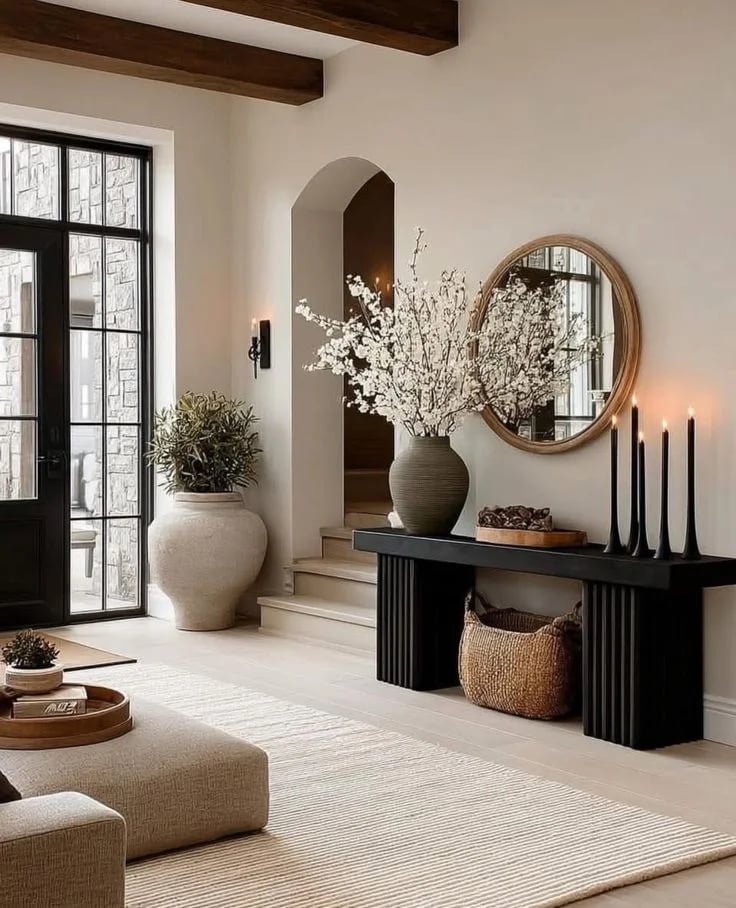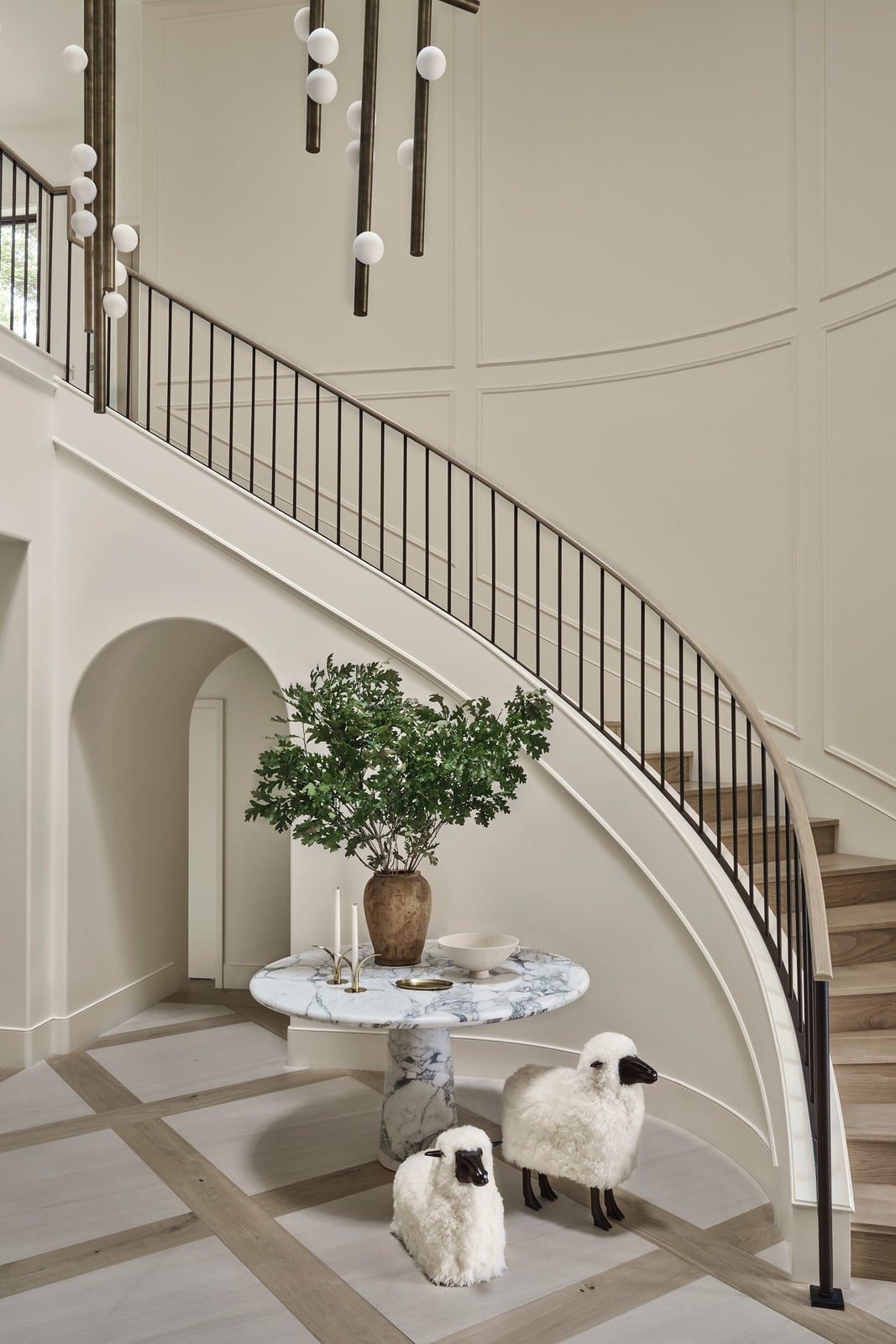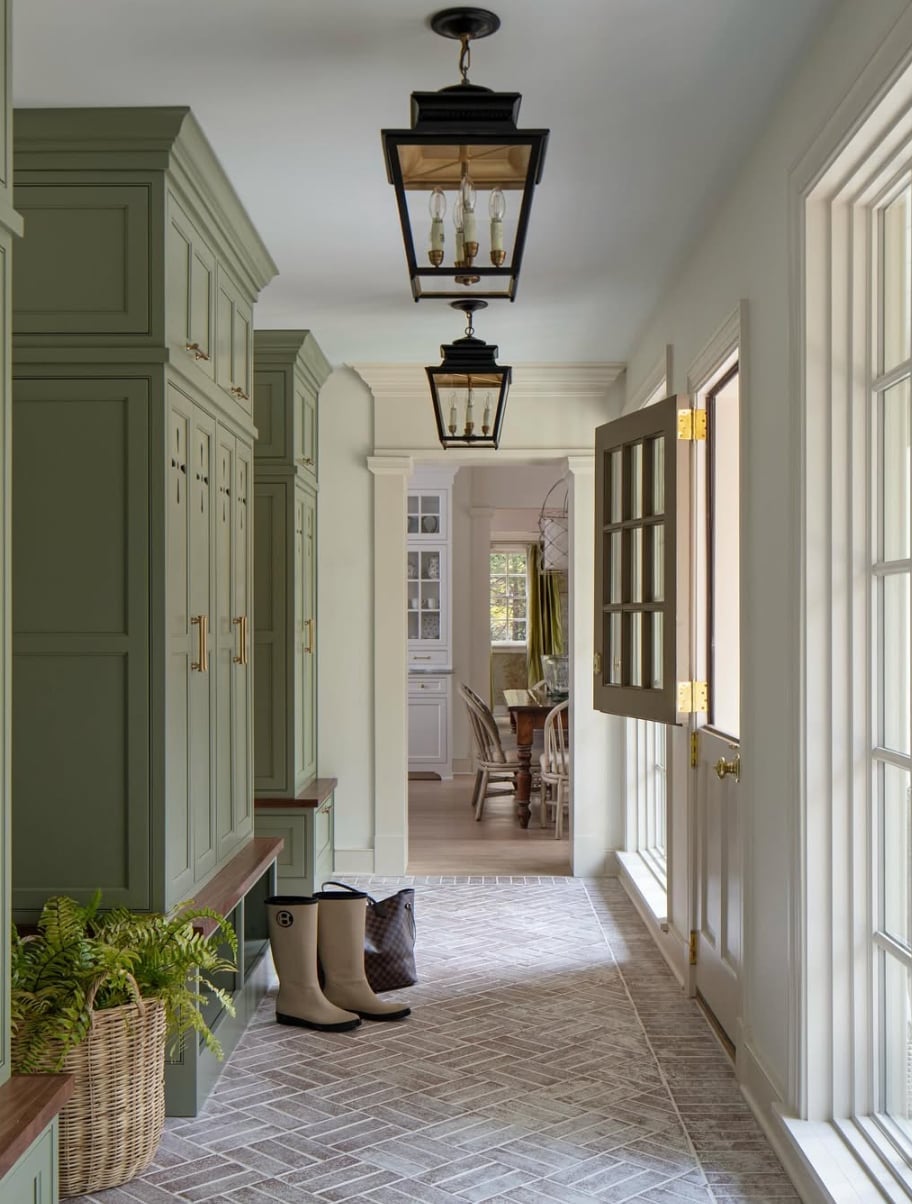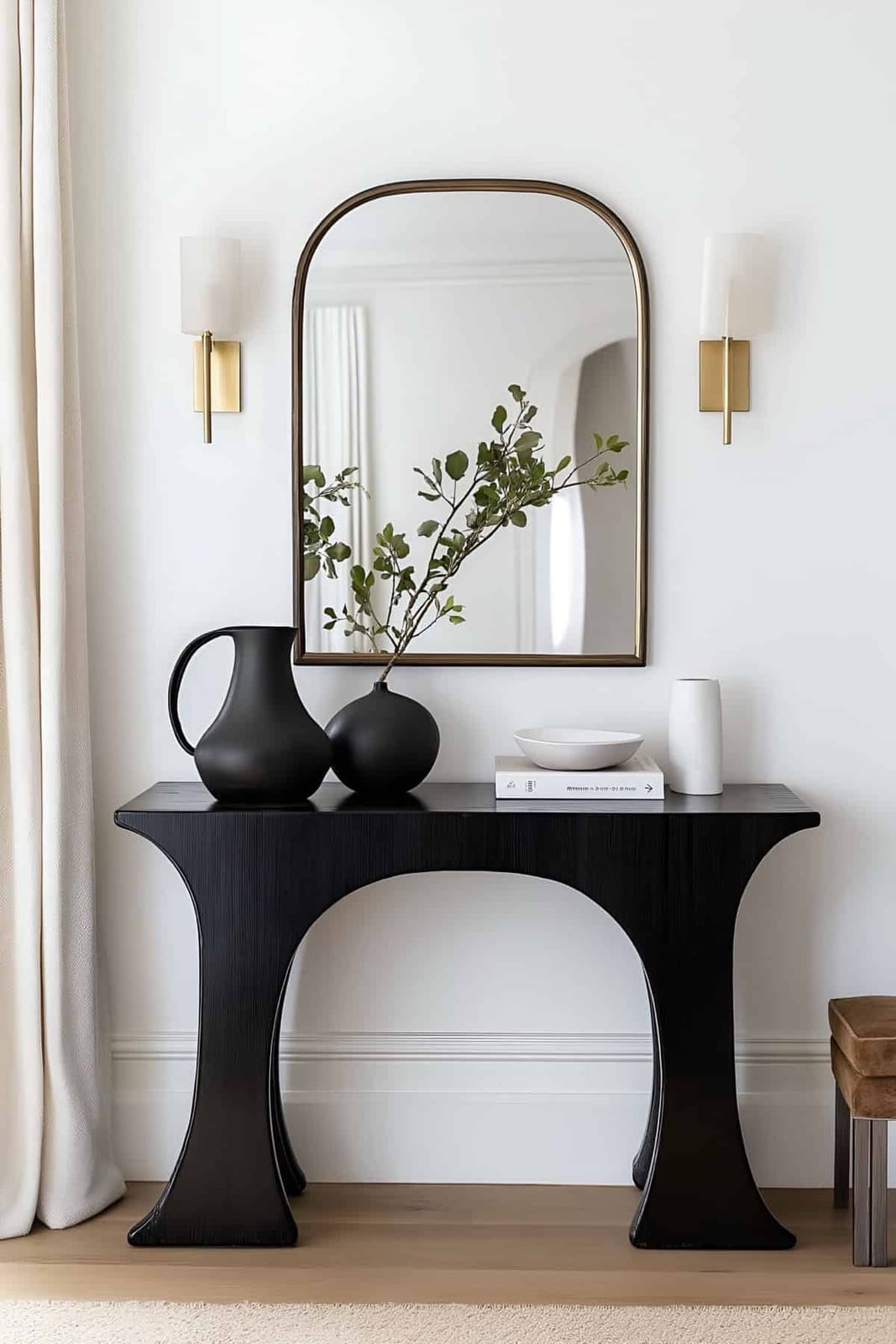
A hallway is the first thing you see when you walk in, so the paint color you choose sets the tone for the whole house. It is also one of the trickiest spaces to get right, because it tends to be narrow, often windowless, and has to work with multiple doorways.
These 34 hallway paint colors offer a range of approaches, from calm neutrals that open up the space to saturated shades that make a small entry feel like a destination. Each idea treats the paint as the main event, keeping the rest of the decor simple and supportive.
Serene Sage Green Walls for a Modern Organic Hallway
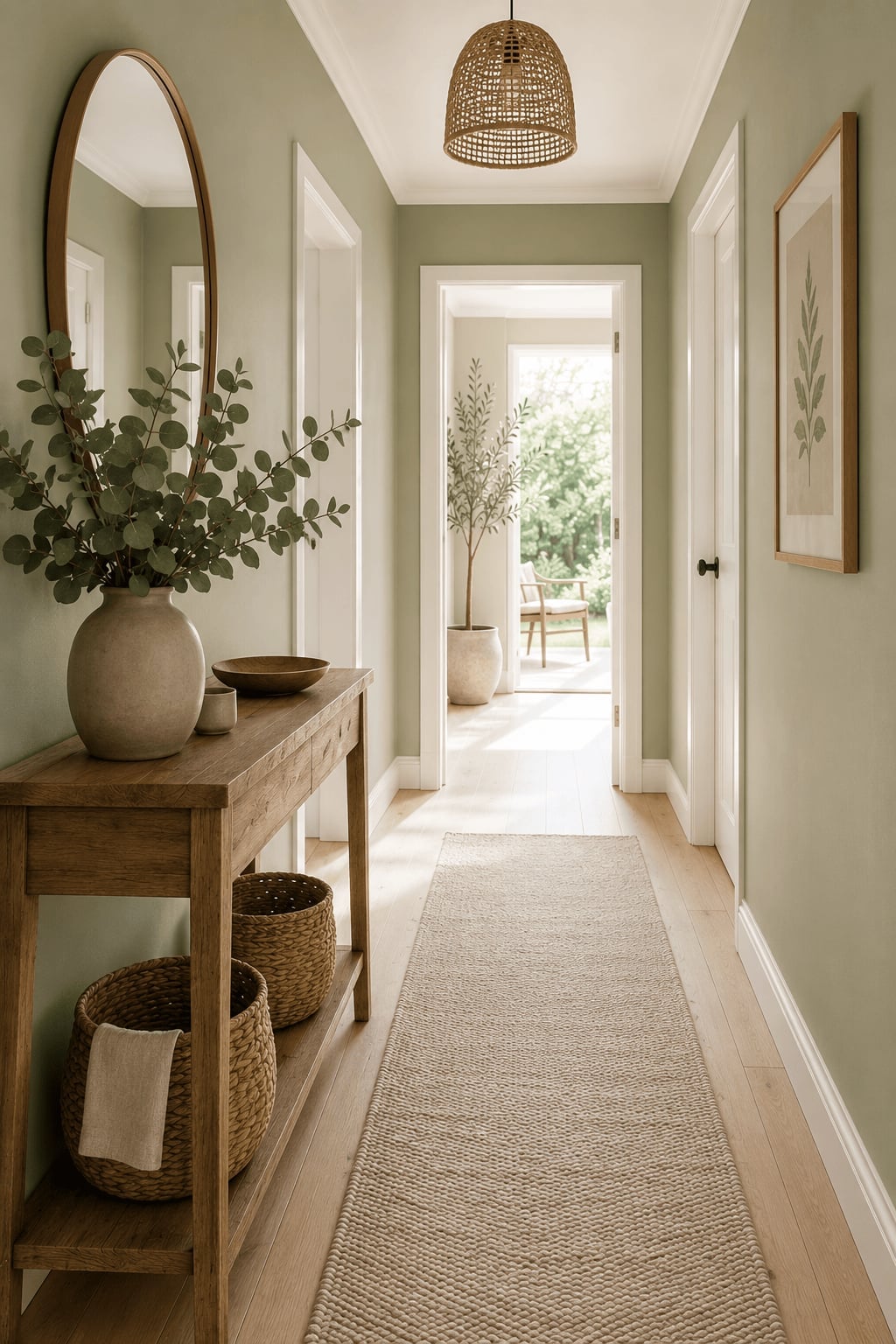
Sage green walls turn a long passage into a calm walkway. The muted green reads as natural rather than colorful, which lets the console table and woven rug stand out. A large mirror bounces natural light and the woven pendant light, keeping the space open. A eucalyptus arrangement on the console ties the organic feel together.
Bold Two-Tone Peach and Terracotta Hallway with Blue Accents
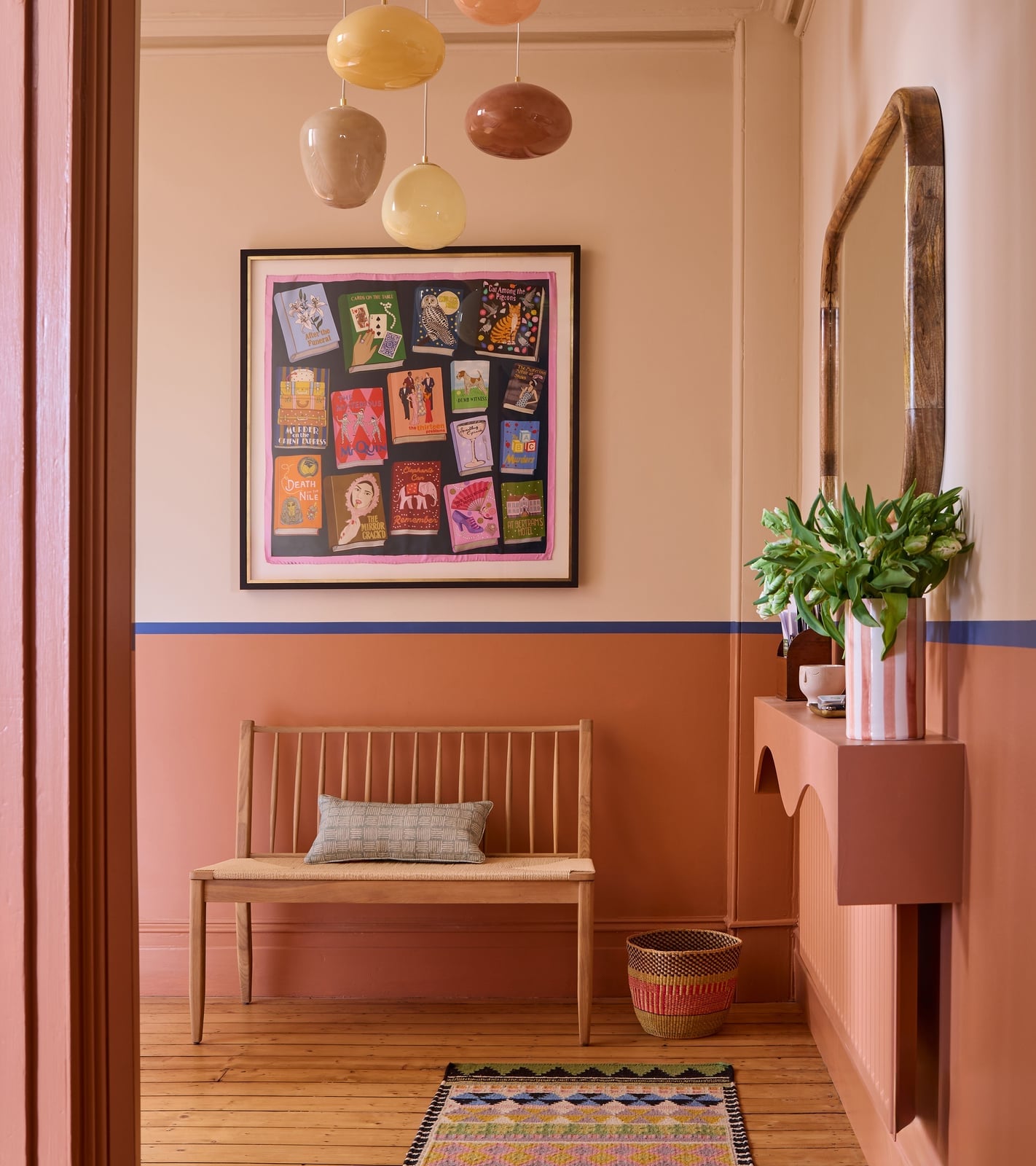
This palette works because peach on the upper wall and terracotta below create a clear divide without competing. A blue door or blue accents in the artwork pull the eye through the narrow space. The wooden bench and woven runner add texture, while the pendant lights provide warmth. The ratio is roughly two thirds warm tone to one third accent color, which keeps the look balanced. What breaks it is adding a third bold color without a neutral to anchor it.
Light Green Walls Brighten a Compact Modern Hallway
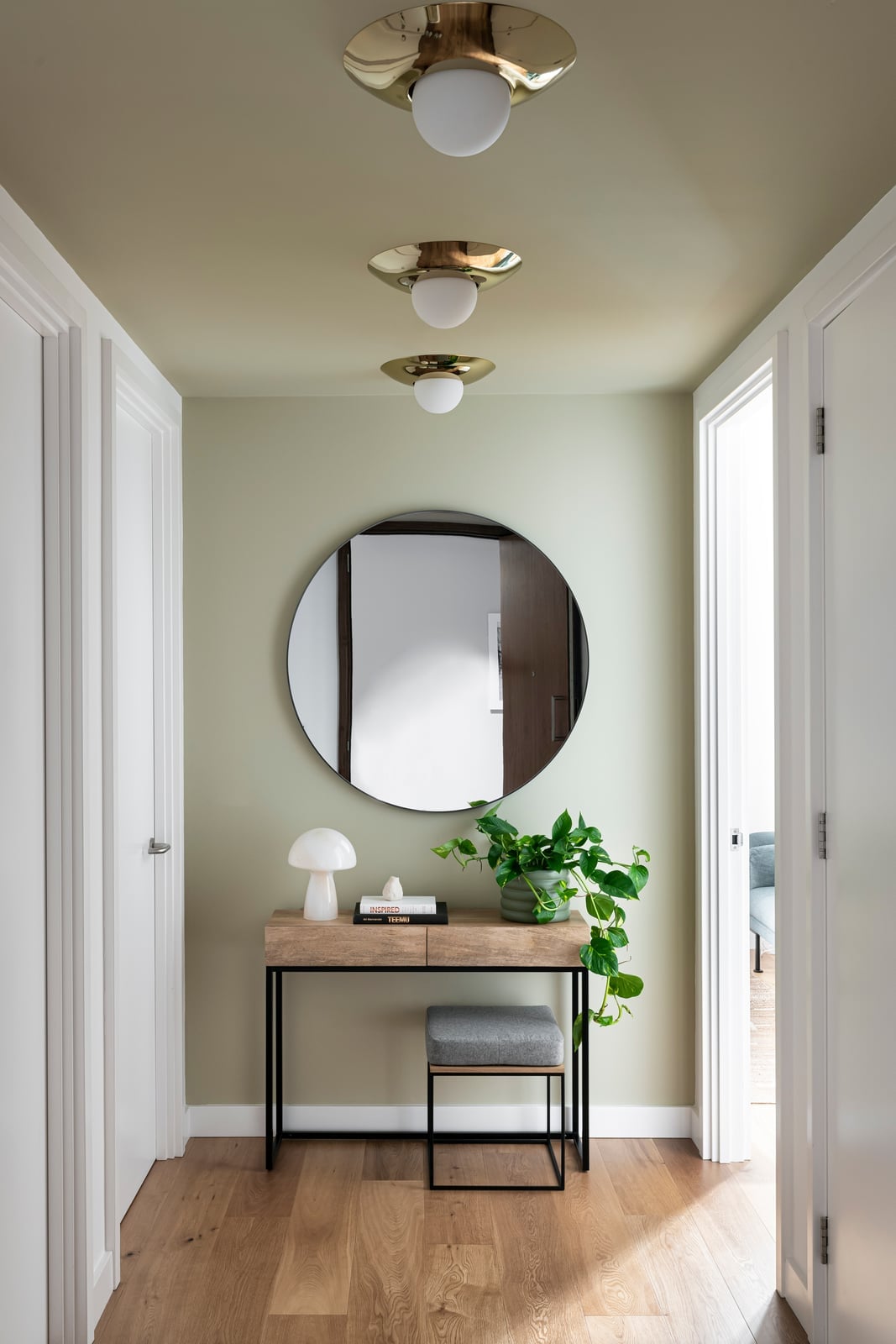
Can a light wall color make a narrow hallway feel wider? Yes, when the green has enough white in it. The pale green walls reflect natural light from the window, bouncing it off the white trim and ceiling. A round mirror on the console doubles that effect. The wood stool and metal-framed mirror add warmth without clutter. A potted plant on the floor brings the green tone down to eye level. The key is keeping the furniture slim: a console table that is no deeper than the mirror width lets you walk past easily.
Vibrant Blue Door Accents Eclectic Beige Hallway
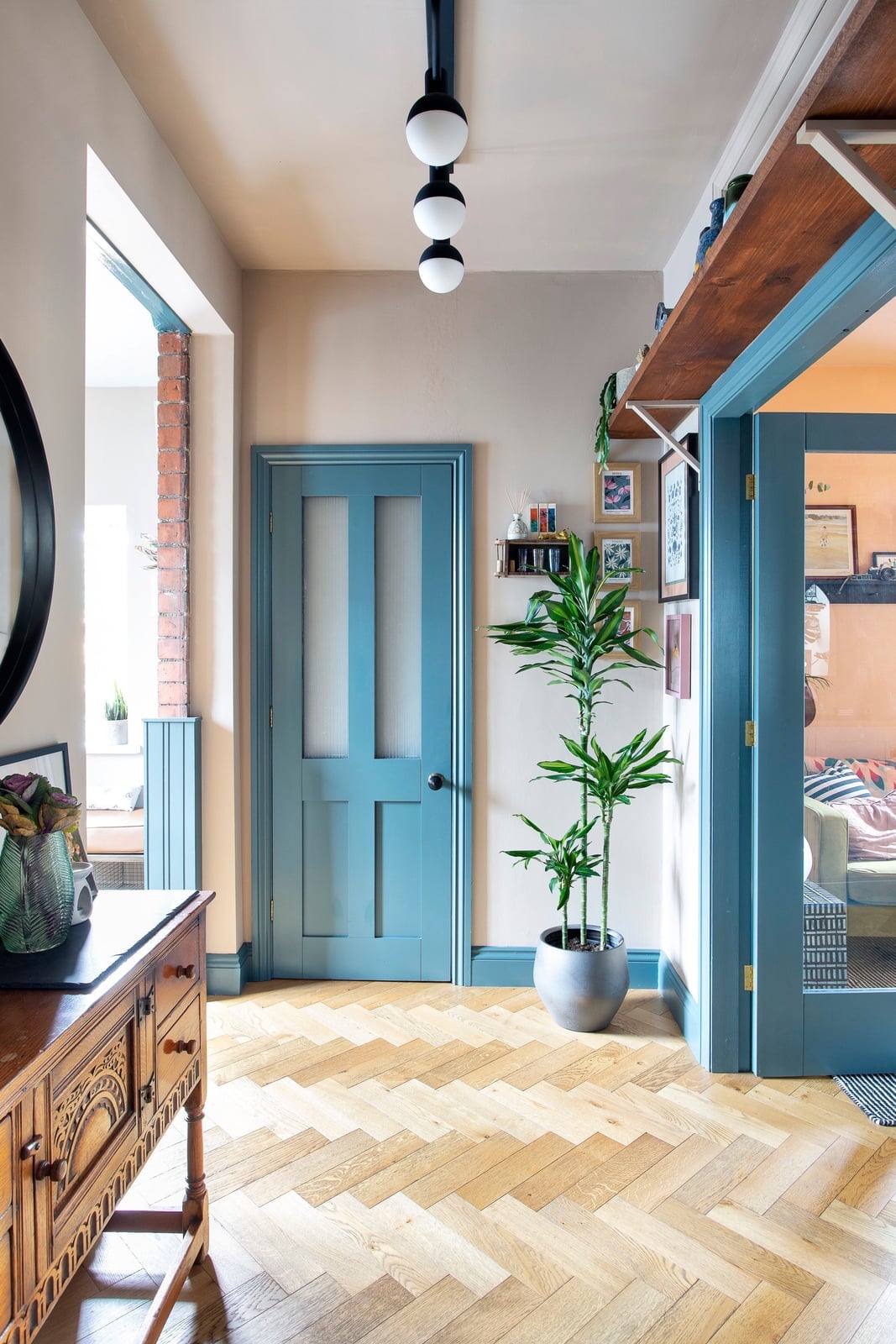
A single blue door changes how the whole hallway reads. Against beige walls and a herringbone wood floor, the blue becomes the focal point without needing a gallery wall. The glass panes in the door let light through, which keeps the roomy feel intact. A potted plant near the door softens the transition from the neutral walls to the bold blue.
Farmhouse Charm with White Walls and a Light Green Door
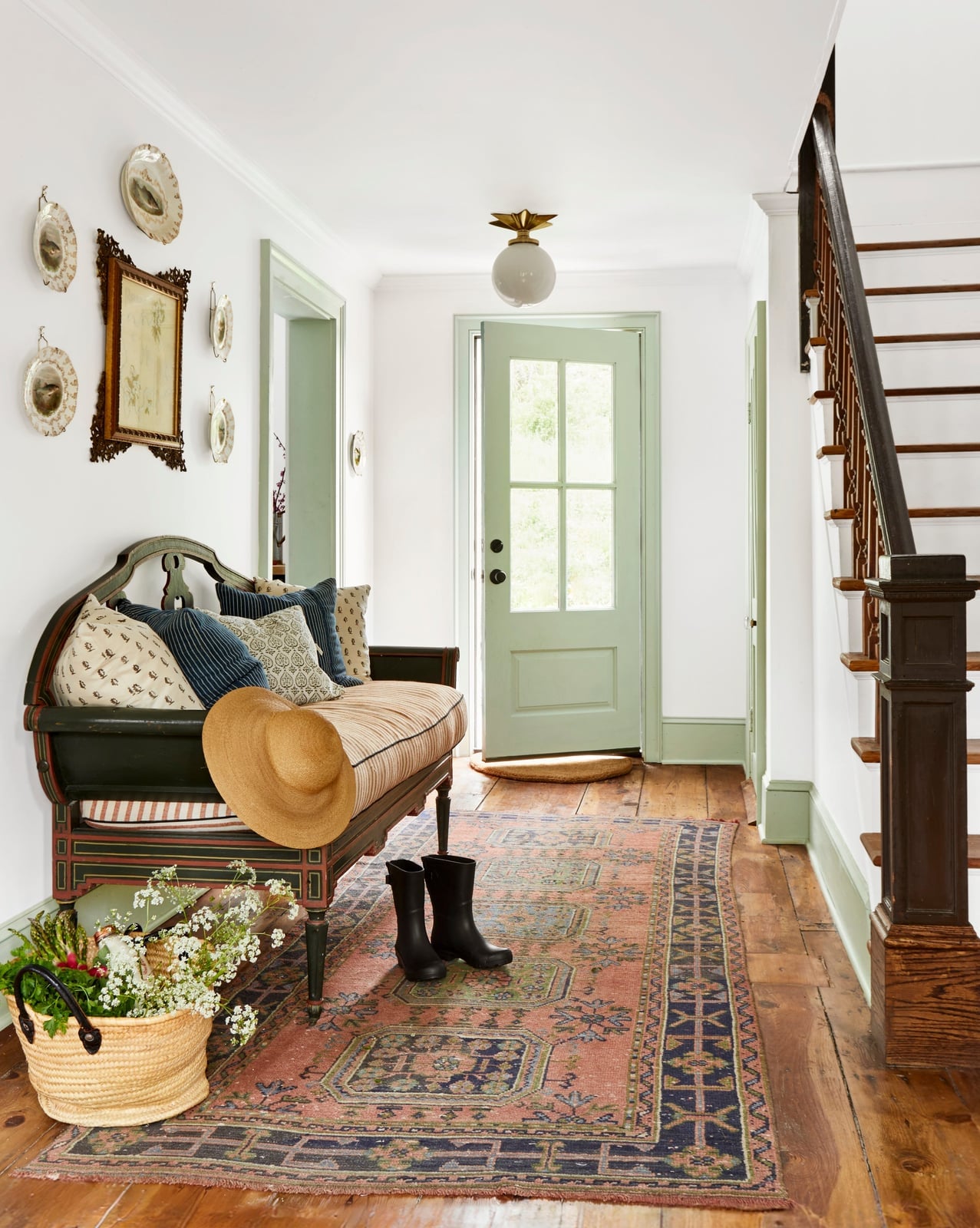
A practical rule for a farmhouse entry is to let one color do the work. White walls keep the space bright, while a light green door adds the farmhouse touch without painting the whole room. A painted bench below the door gives you a spot to sit and take off shoes. A runner rug anchors the area, and a set of decorative plates on the wall adds pattern. The pink and blue in the rug tie back to the green door without matching it exactly.
Modern Two-Tone Pale Green and Yellow Hallway Vignette
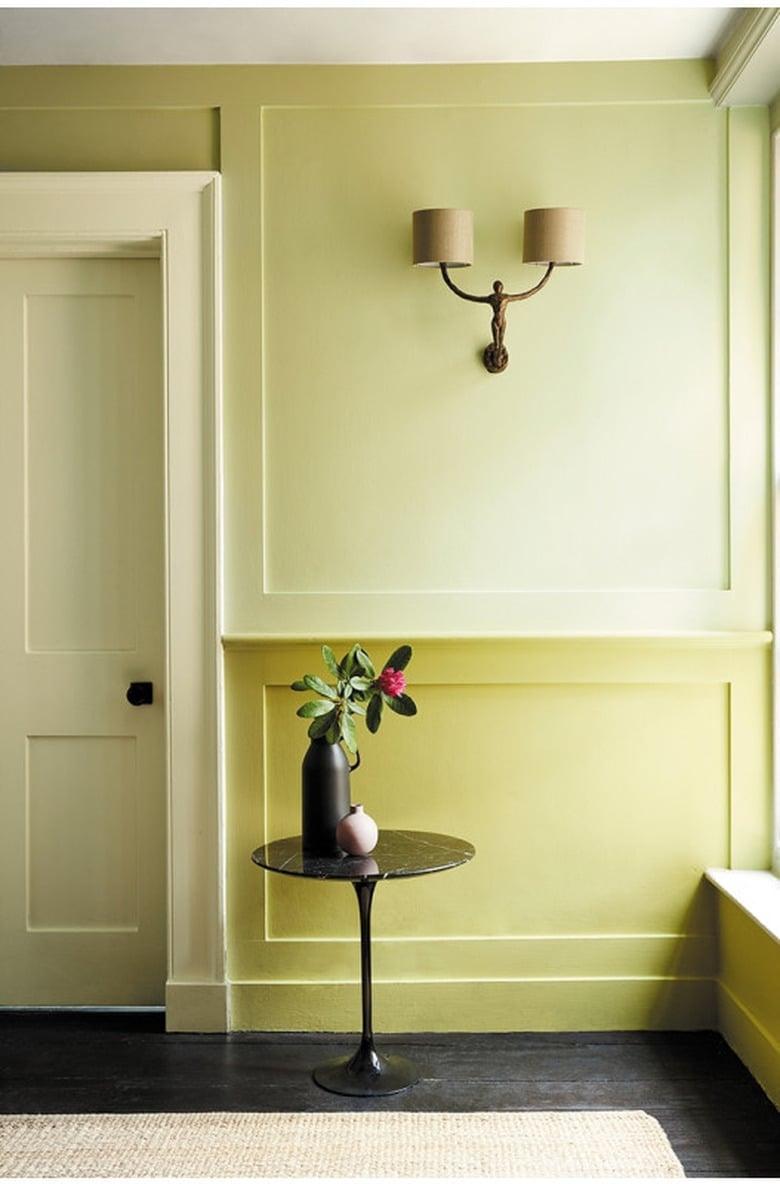
A two-tone wall treatment can feel like a big commitment until you see it confined to a single wall. Here pale green and yellow share a hallway wall, with the green on the lower portion and the yellow above, meeting at a clean line. The dark wood of a small table and the glass of a vase keep the palette grounded, while a wall sconce adds a warm glow. This kind of color blocking works well in a compact space because it defines a zone without needing furniture. The hallway remains neutral so the painted wall reads as a deliberate feature, not a mismatch.
Transitional Light Gray Hallway with a Gallery Wall
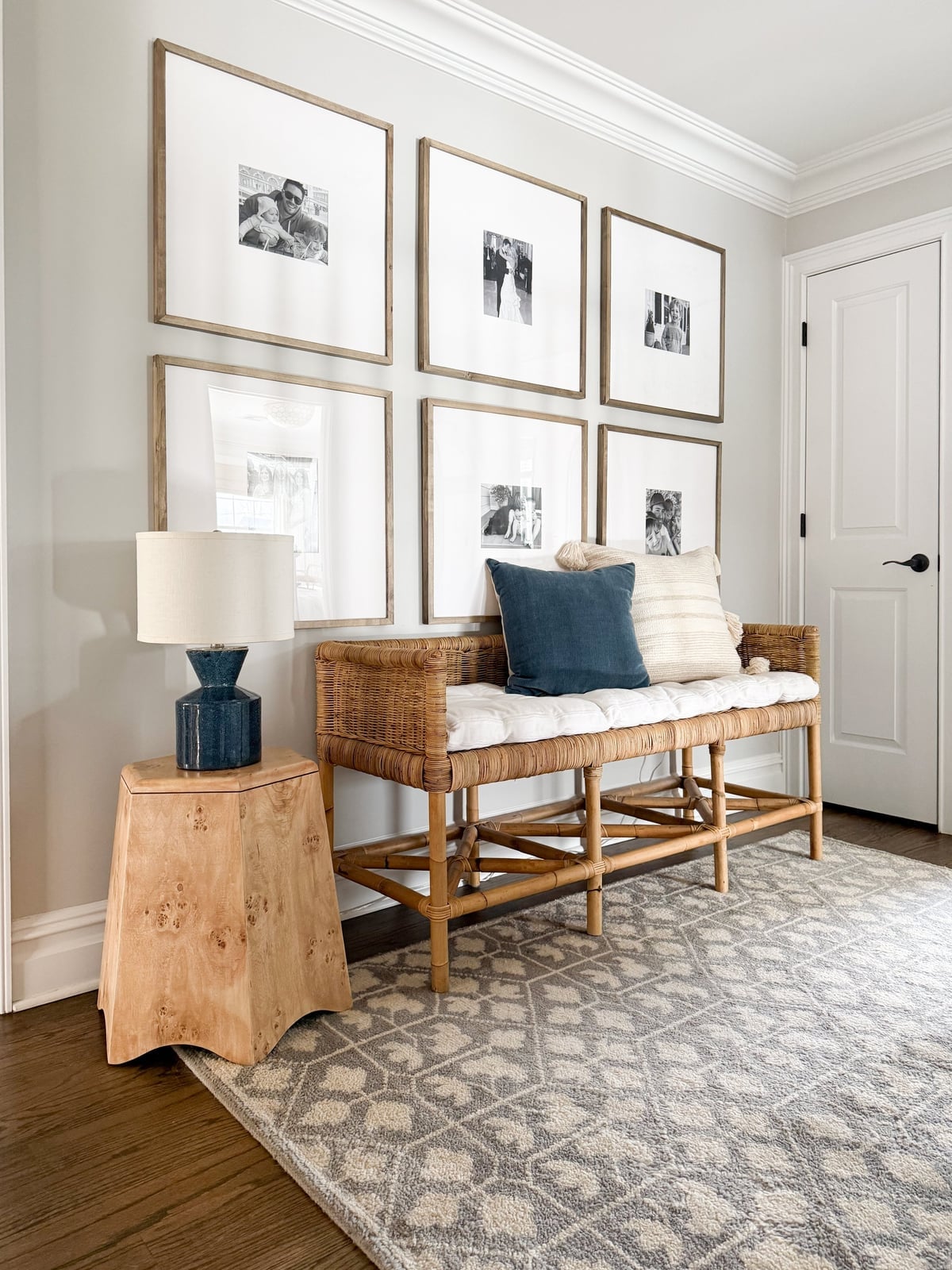
A gallery wall above a rattan bench gives a light gray hallway its personality without a single new nail in the wall. The bench provides a place to sit while tying the space to the wood tones of the side table and lamp. Overhead light and a table lamp layer the illumination, so the room never feels flat. For a renter, this setup means you can swap in your own art and furniture without touching the paint, and the bench can move with you to the next place.
Neutral Taupe Walls for a Serene Modern Organic Hallway
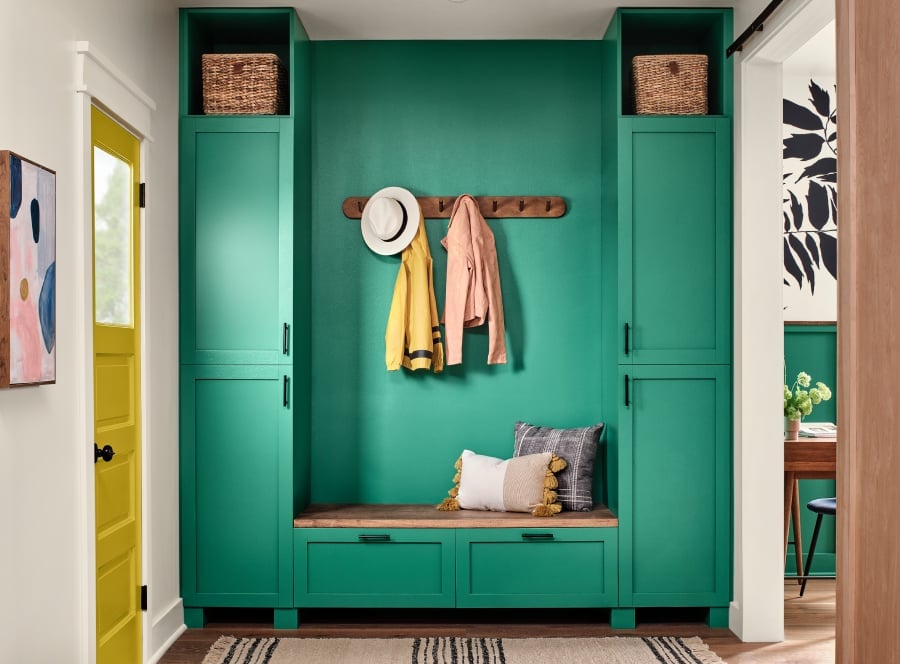
Taupe is a neutral paint color that sits between beige and gray, warming up a hallway. Here it wraps a roomy space that holds a console table, bench, mirror, and artwork, all in cream, wood, and natural textures. A pendant overhead and natural light keep the taupe from feeling flat. The modern organic style leans on these earthy tones, so the paint color sets the room’s tone. A taupe wall makes it easy to swap in accent colors later without repainting.
Dramatic Dark Green Walls in a Modern Hallway
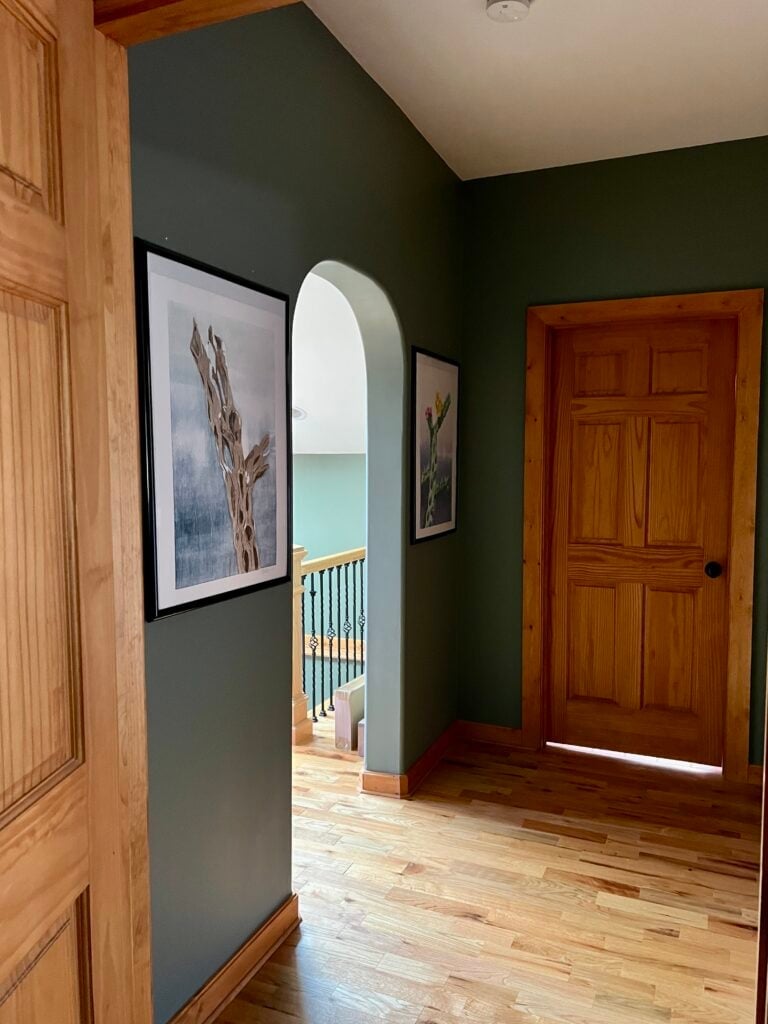
Can a dark wall make a hallway feel bigger rather than smaller? It can when the color is a deep green and the space has plenty of natural light. Here the dark green wraps an archway and leads the eye toward wooden doors and lighter green artwork. The contrast between the dark paint and the light wood floors keeps the hallway from feeling like a tunnel. Overhead light adds visibility at night, but the real trick is the archway: painting it the same green as the walls makes the transition from room to hallway feel intentional. For a modern look, keep the trim and doors in a lighter wood tone to balance the drama.
Soft Pale Pink Walls for a Traditional Hallway
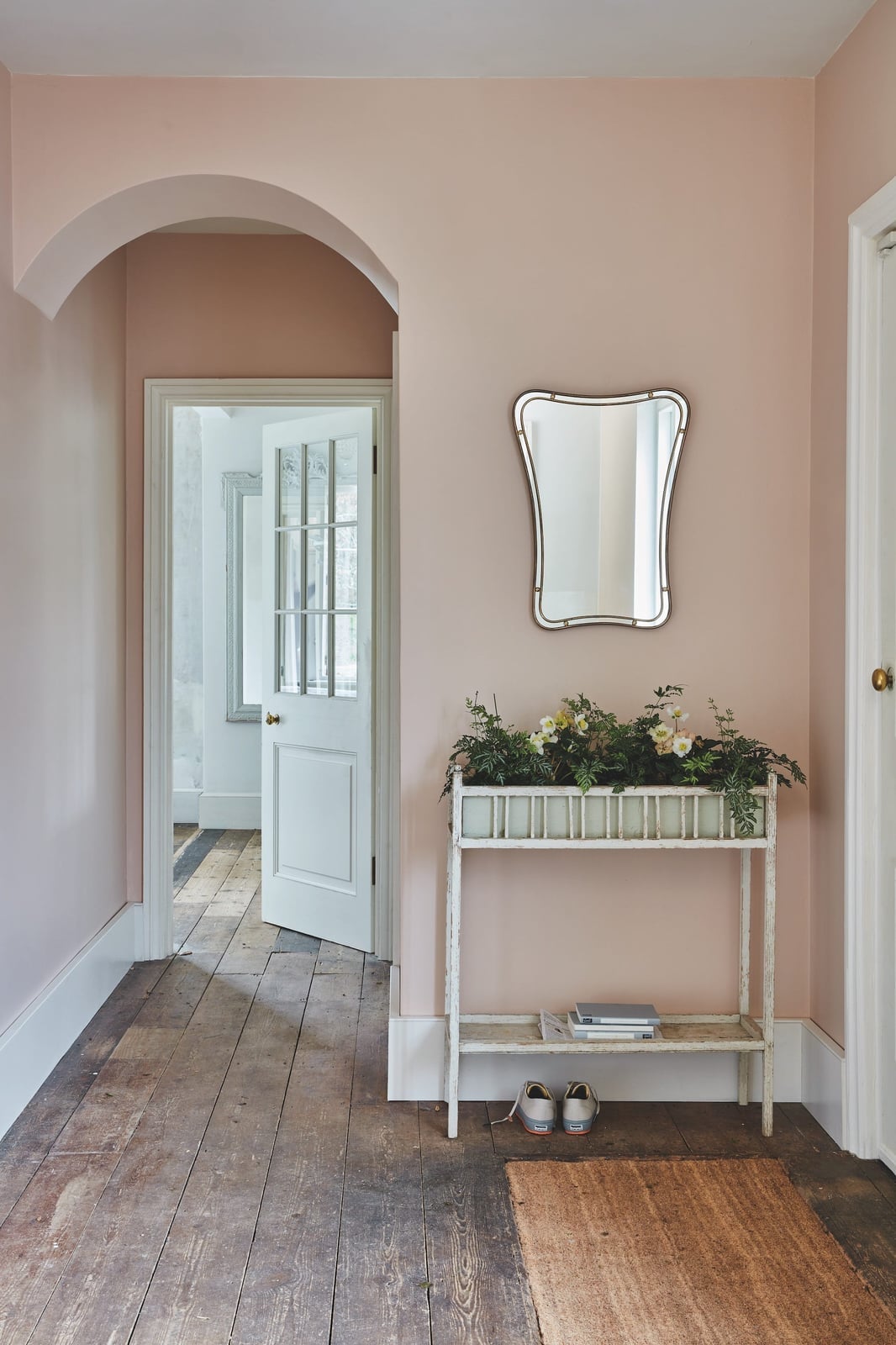
Pale pink on the walls of a traditional hallway softens the hard lines of wood trim and an arched doorway. The pink reads as a warm neutral here, pairing with white woodwork and a mirror that reflects natural light. A plant stand and a stack of books add life without clutter. In a roomy hallway, this shade keeps the space from feeling cold while still letting the architecture stand out. The trick is choosing a pink with enough gray in it to avoid going too sweet.
Warm Terracotta Hallway with an Extensive Gallery Wall
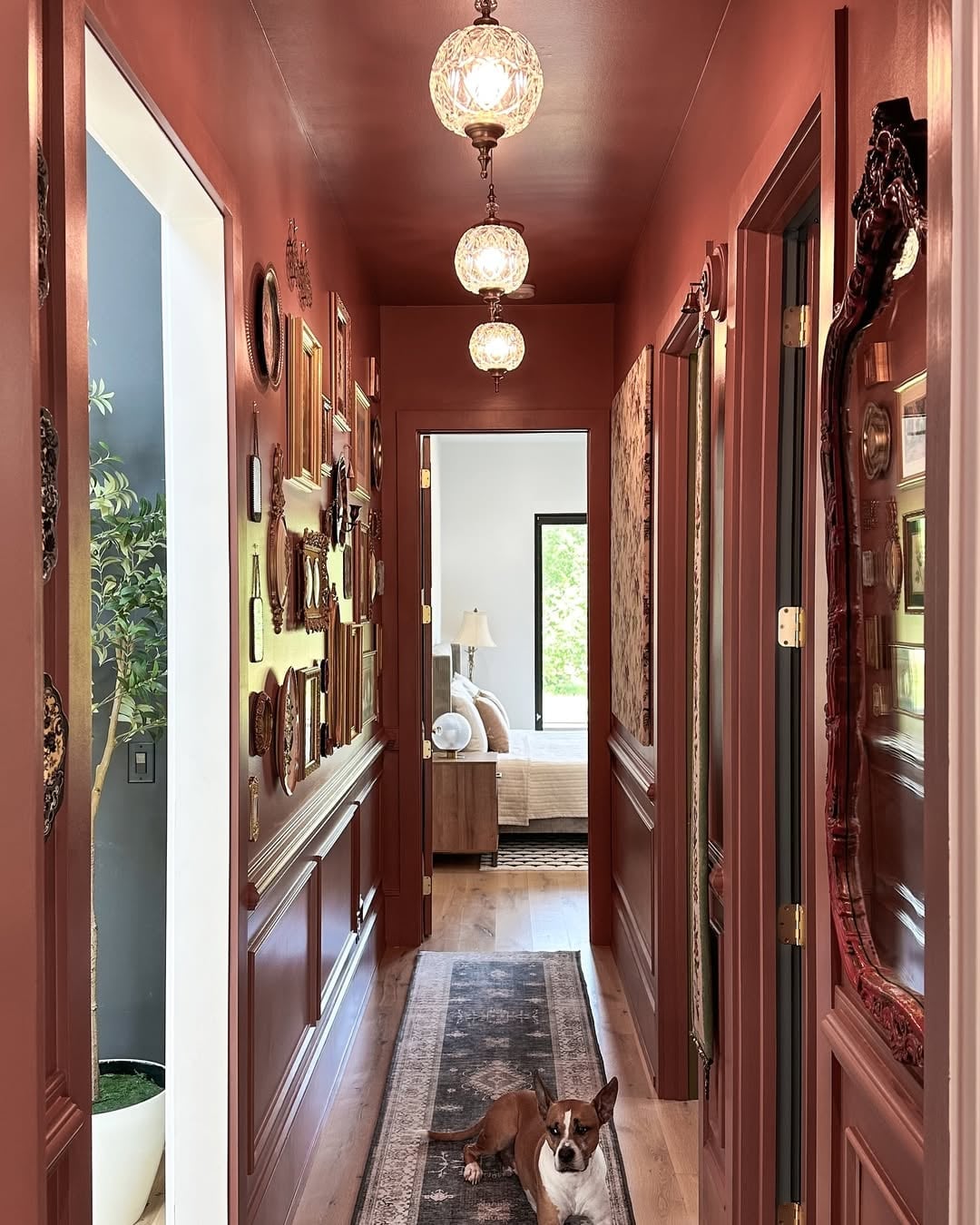
A gallery wall needs a backdrop that holds its own without stealing the show. Terracotta does exactly that here, warming the narrow space while the gold frames and dark wood of the runner keep the eye moving. The ornate mirror at the center anchors the arrangement, and the ambient pendant lights make sure nothing gets lost in shadow. When your collection includes varied finishes like metal and glass, a solid earthy wall color unifies them better than white ever could.
Navy Blue Door Enhances Traditional Hallway with Paisley Wallpaper
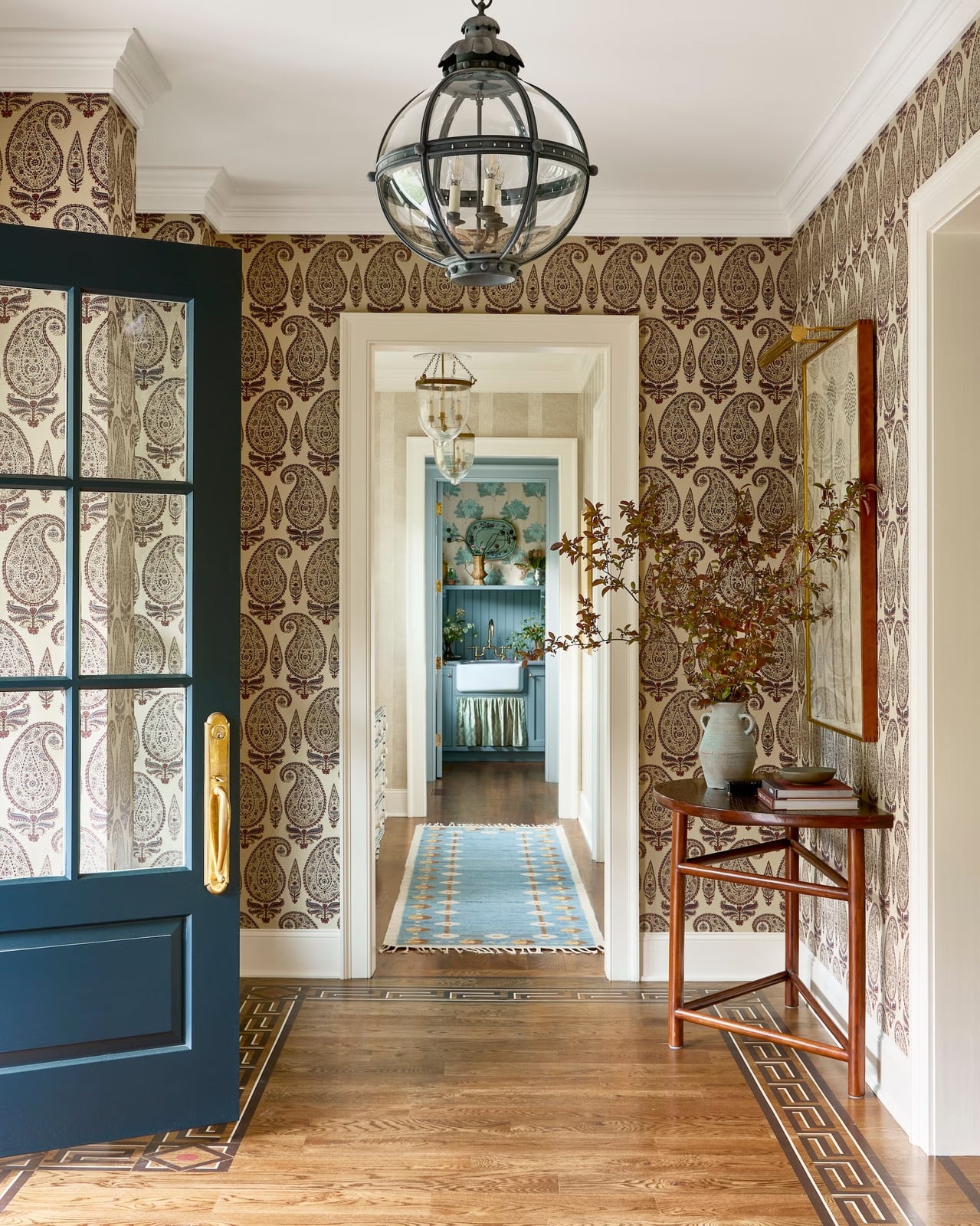
Most people reach for white or cream when they have paisley wallpaper, but navy blue is a stronger choice. A navy door stands out against that dense pattern. The dried branches in the vase on the small wooden table add a natural texture that balances the formal wallpaper.
The blue rug further down the hall picks up the door color and pulls the eye through the space. If you have a traditional hallway with busy wallpaper, paint the door a deep saturated color that appears in the pattern. It creates a natural stopping point and makes the entry feel deliberate.
Dramatic Dark Blue Walls Complementing a Patterned Runner
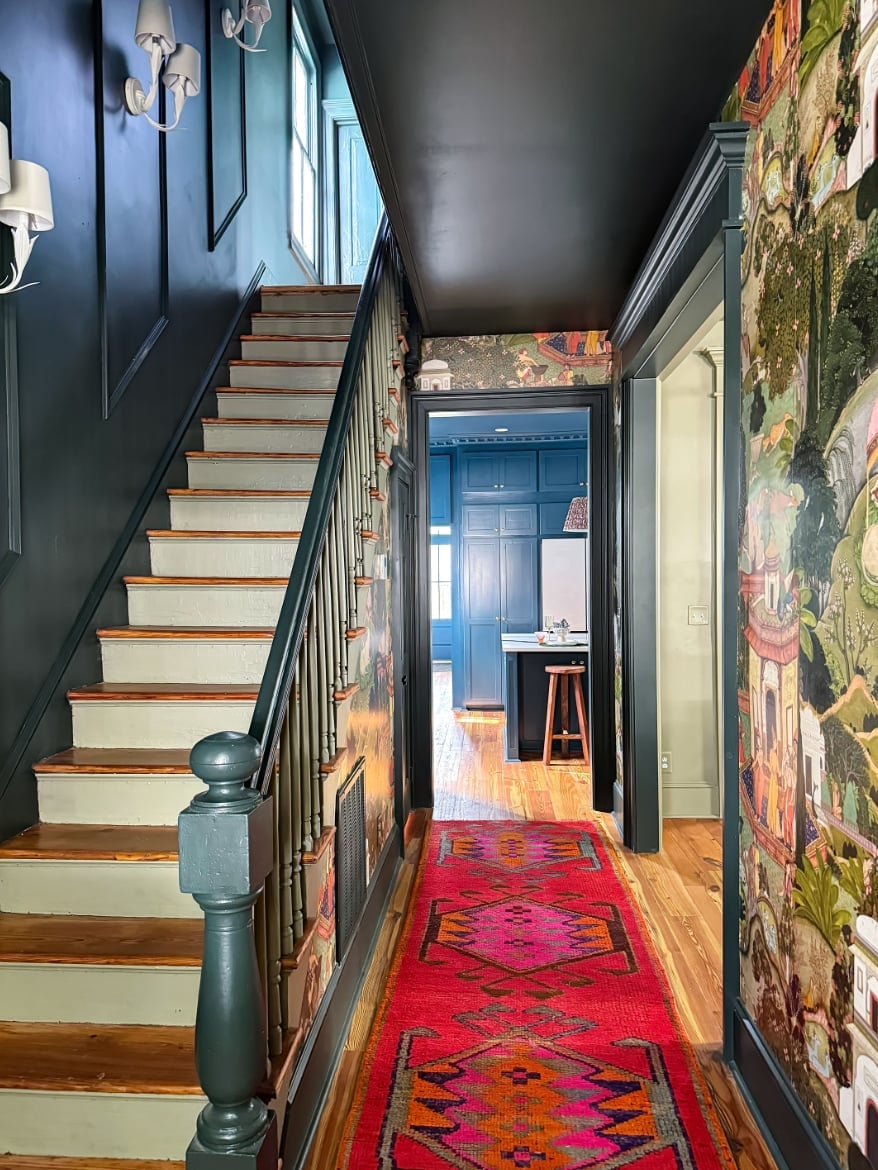
Dark blue walls and a multi-color patterned runner share the same narrow hallway without competing. The bold wallpaper above the staircase adds another layer, so the trick is letting each surface do one job. The wall sconces throw light across the blue paint, keeping the corridor from feeling like a tunnel.
Vibrant Yellow Accent Wall on a Staircase
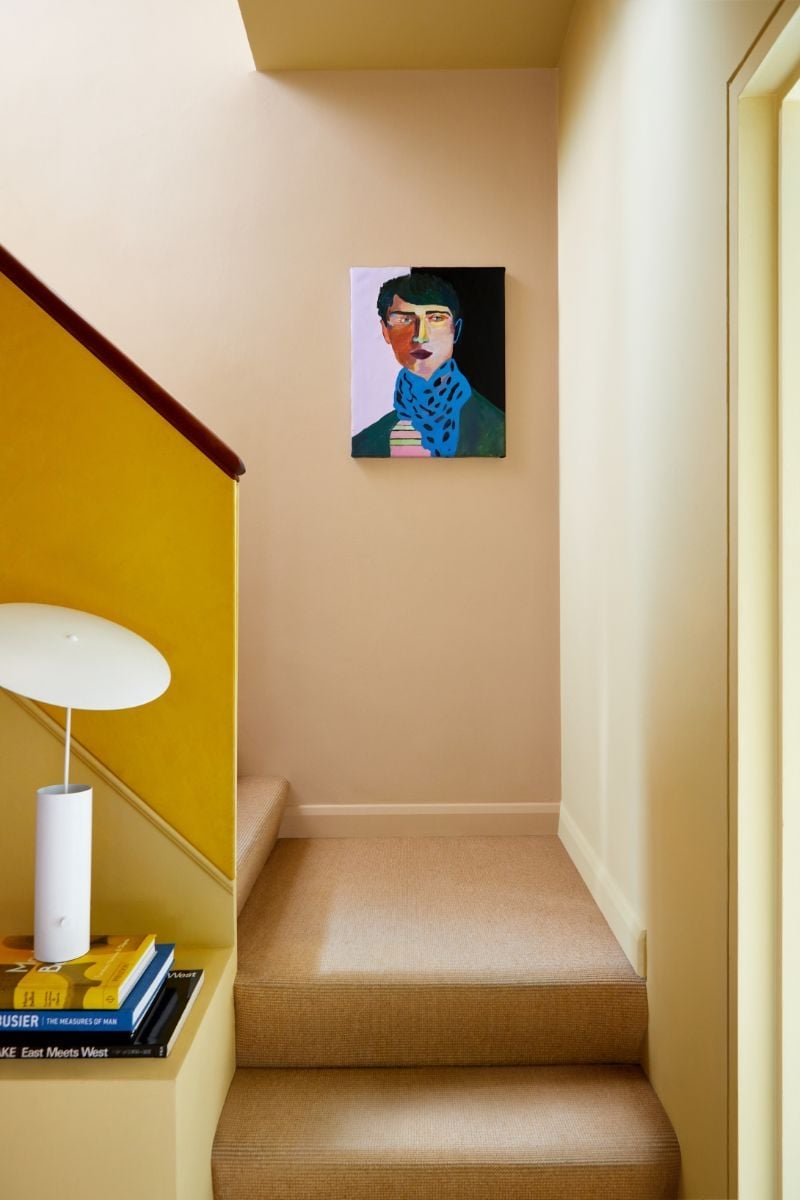
Yellow works on a staircase wall because it catches the changing light throughout the day. This modern hallway uses a pale cream on the other walls to keep the yellow from overwhelming the compact landing. The minimalist lamp and modern art on the landing stay simple so the color remains the main event. Natural light bouncing off that bright wall makes the whole corner feel larger than it is.
White Walls with a Purple Archway Accent
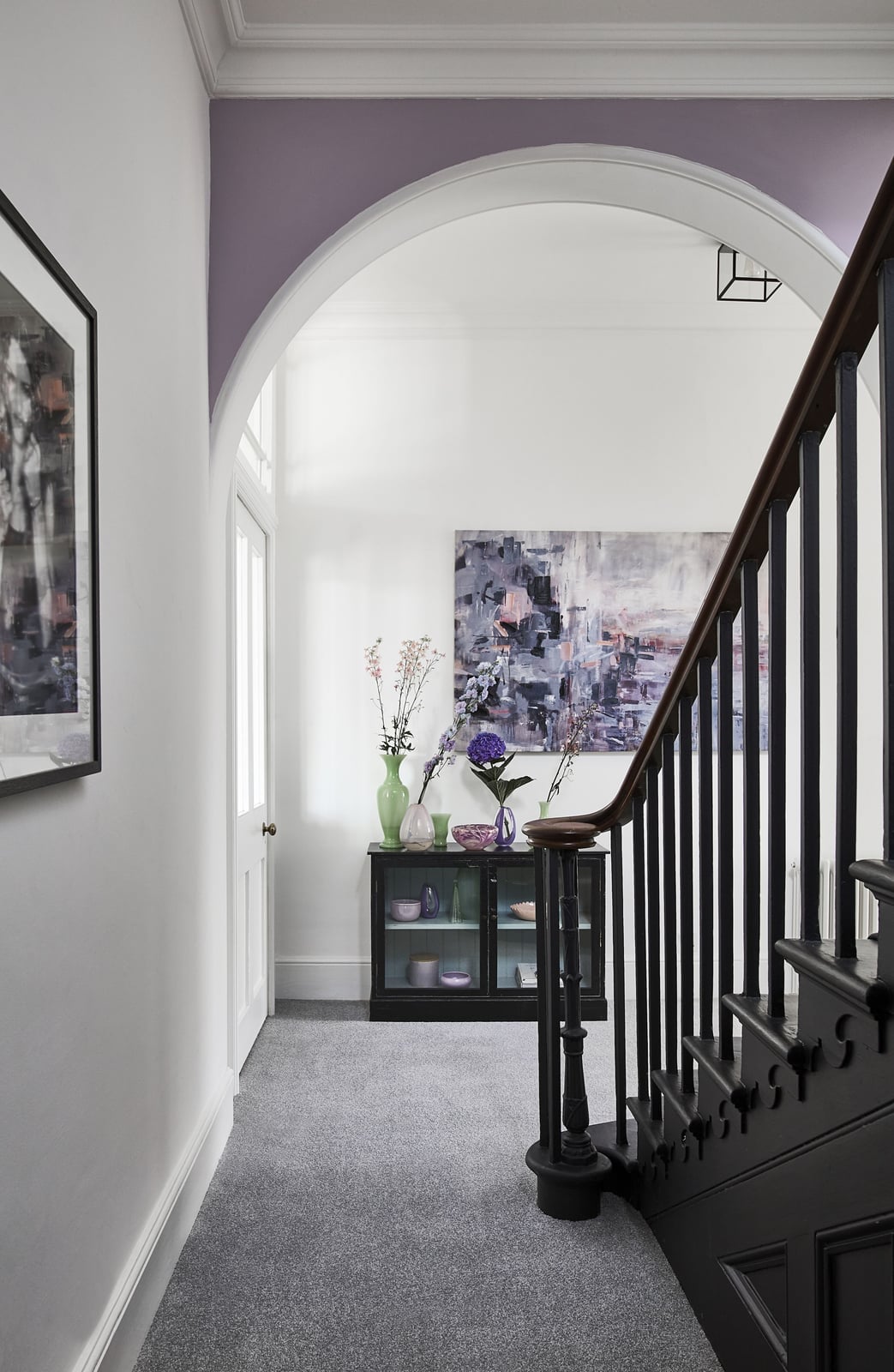
An archway painted in a saturated color is a practical way to zone a roomy hallway without adding walls or furniture. White everywhere else keeps the space open, while the purple arch marks the transition between the staircase and the house. The black details from the cabinet and artwork tie back to the arch without repeating the exact shade.
This approach works well for renters who can paint one architectural feature and leave the rest neutral. A single bold arch draws attention to the bones of the space and the contents of the console table.
Vibrant Pink Walls for a Traditional Entryway
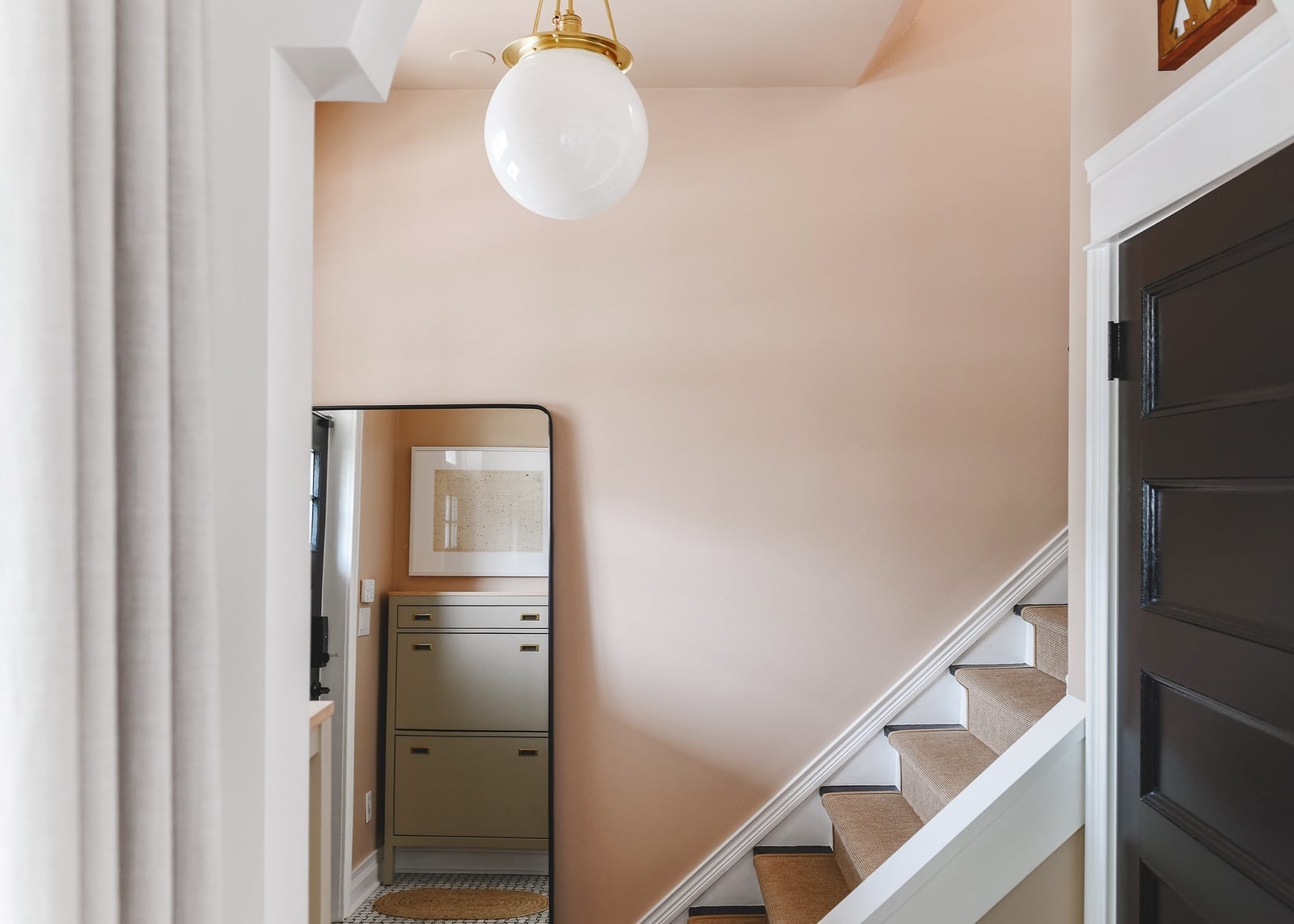
A vibrant pink paint color turns a traditional entryway into something memorable without losing its classic bones. The bright walls pair naturally with white trim and wood tones, and the arched doorway and console table keep the look grounded. A chandelier overhead adds a formal touch, while natural light from nearby windows keeps the pink from feeling heavy. The trick is letting the wall color be the main event and keeping everything else simple and neutral.
Minimalist Beige Hallway with Natural Wood Accents
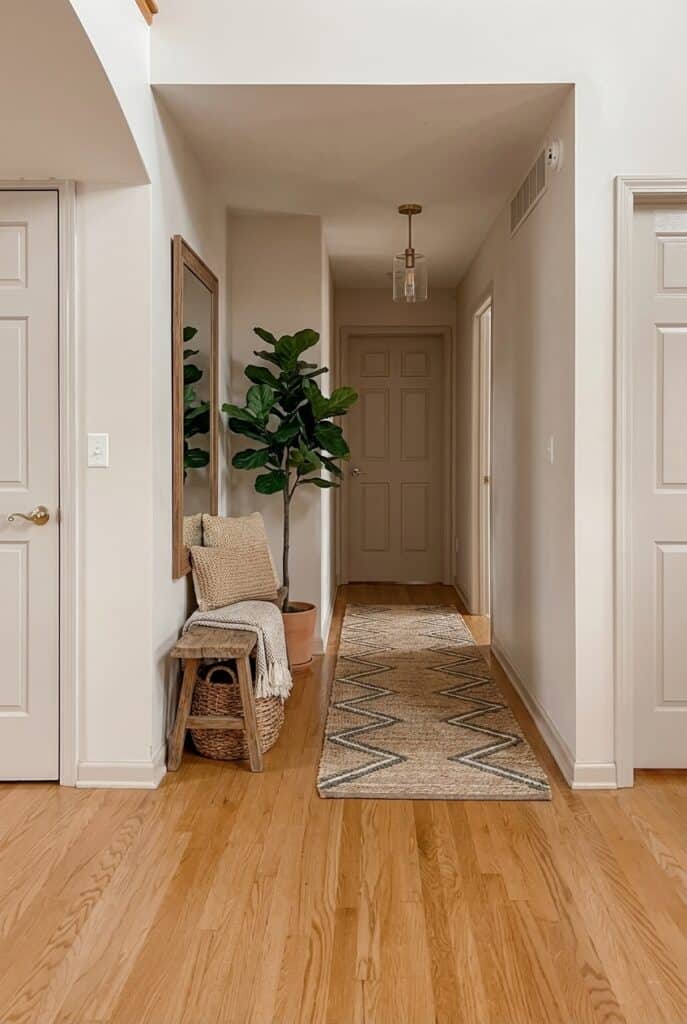
For a narrow hallway, keep the palette light and the furniture minimal, letting one or two natural textures do the work. Beige walls create a calm backdrop that makes the space feel larger, while a wood bench and a large potted plant add warmth without clutter. A mirror on the wall helps bounce natural light around, and a simple pendant light provides soft illumination. For renters, this look is easy to achieve because beige is a landlord-friendly neutral, and the wood accents and plant are personal additions that can move with you. This hallway feels deliberate without requiring any permanent changes.
Dark Gray Walls with an Ornate White Archway
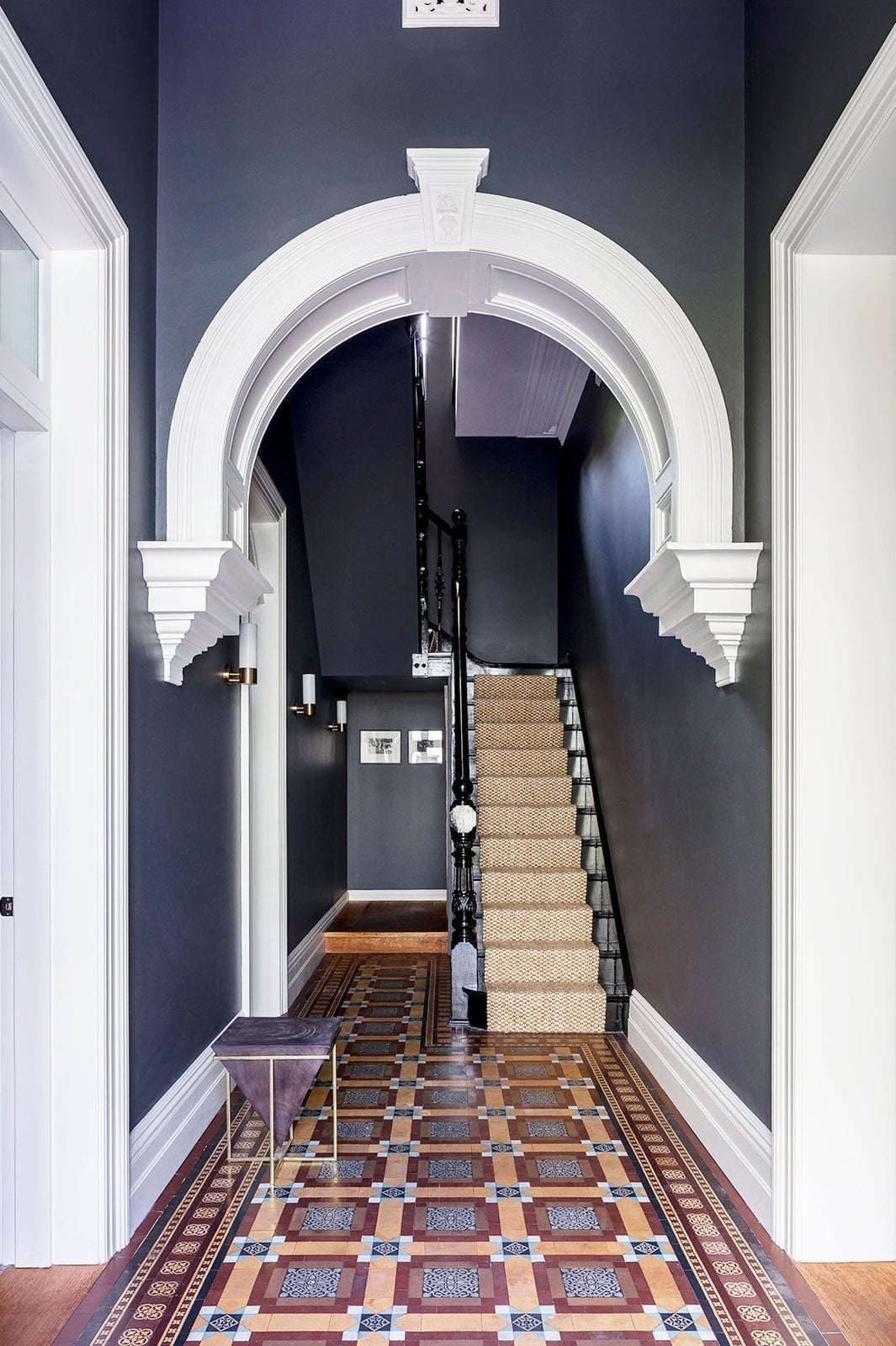
Dark gray walls might feel like a gamble in a hallway, but they work when balanced by an ornate white archway and pale beige carpet on the stairs. The contrast is the whole point: the dark gray recedes, making the white architectural detail pop, while patterned floor tiles add a layer of visual interest at ground level. Wall sconces provide warm light that prevents the gray from reading as flat or cold, and natural light from above softens the overall effect.
A variation on this approach would be to swap the dark gray for a deep navy or charcoal brown. The dark gray hallway paint still delivers the same dramatic contrast, but navy leans cooler and brown feels earthier. The archway and trim stay white to maintain the clean, traditional silhouette that makes the look work.
Contrasting Navy Blue Wall in a Traditional Hallway
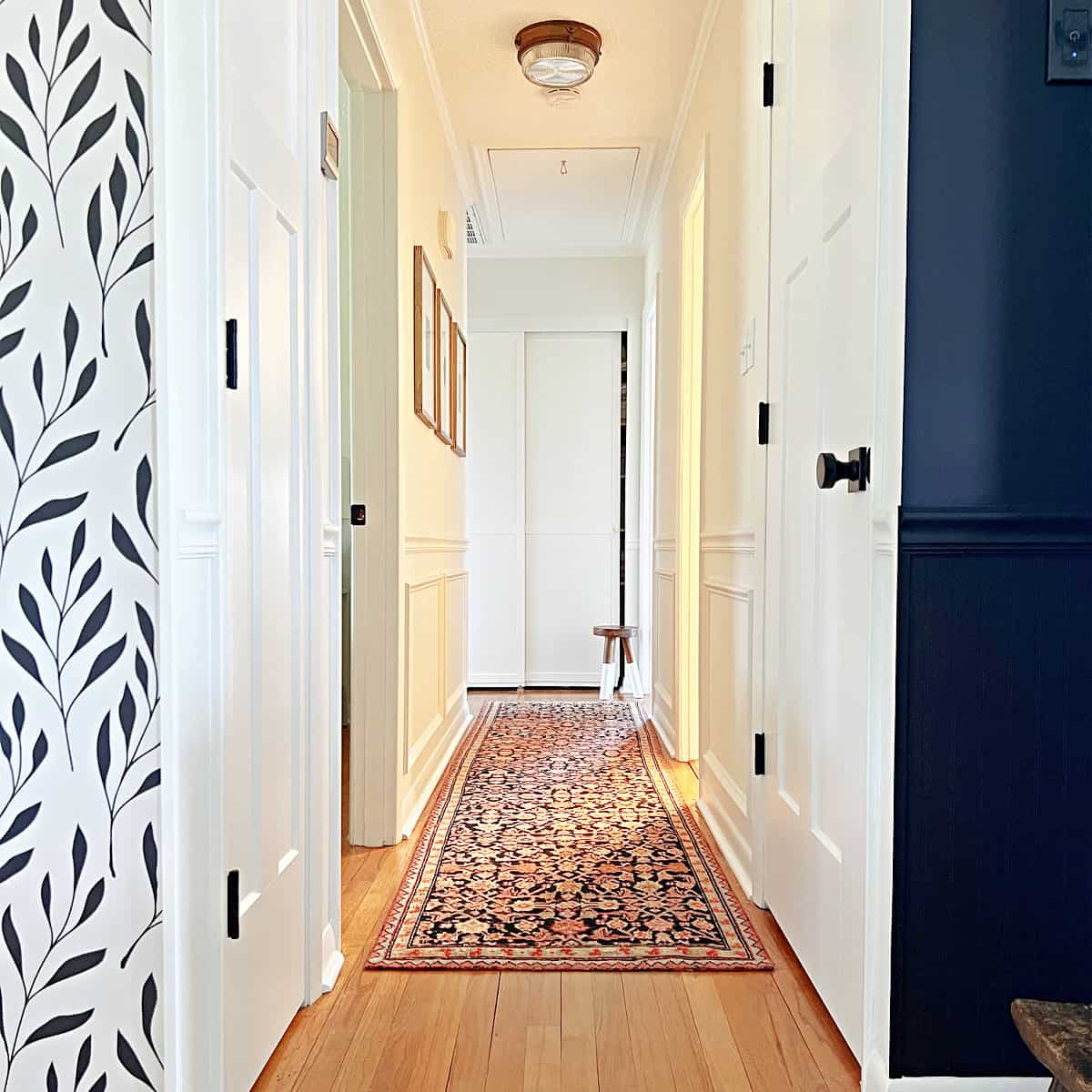
A single navy blue wall in an otherwise white hallway creates a focal point without overwhelming the narrow space. The deep color anchors the room, especially when paired with a runner rug and wall paneling that echo the traditional style. Natural light from the entry keeps the navy from darkening the hallway too much, and an overhead light ensures the contrast reads clearly. This approach works well in compact hallways where a full dark paint job might feel cramped.
Modern Farmhouse Hallway with Black Wainscoting
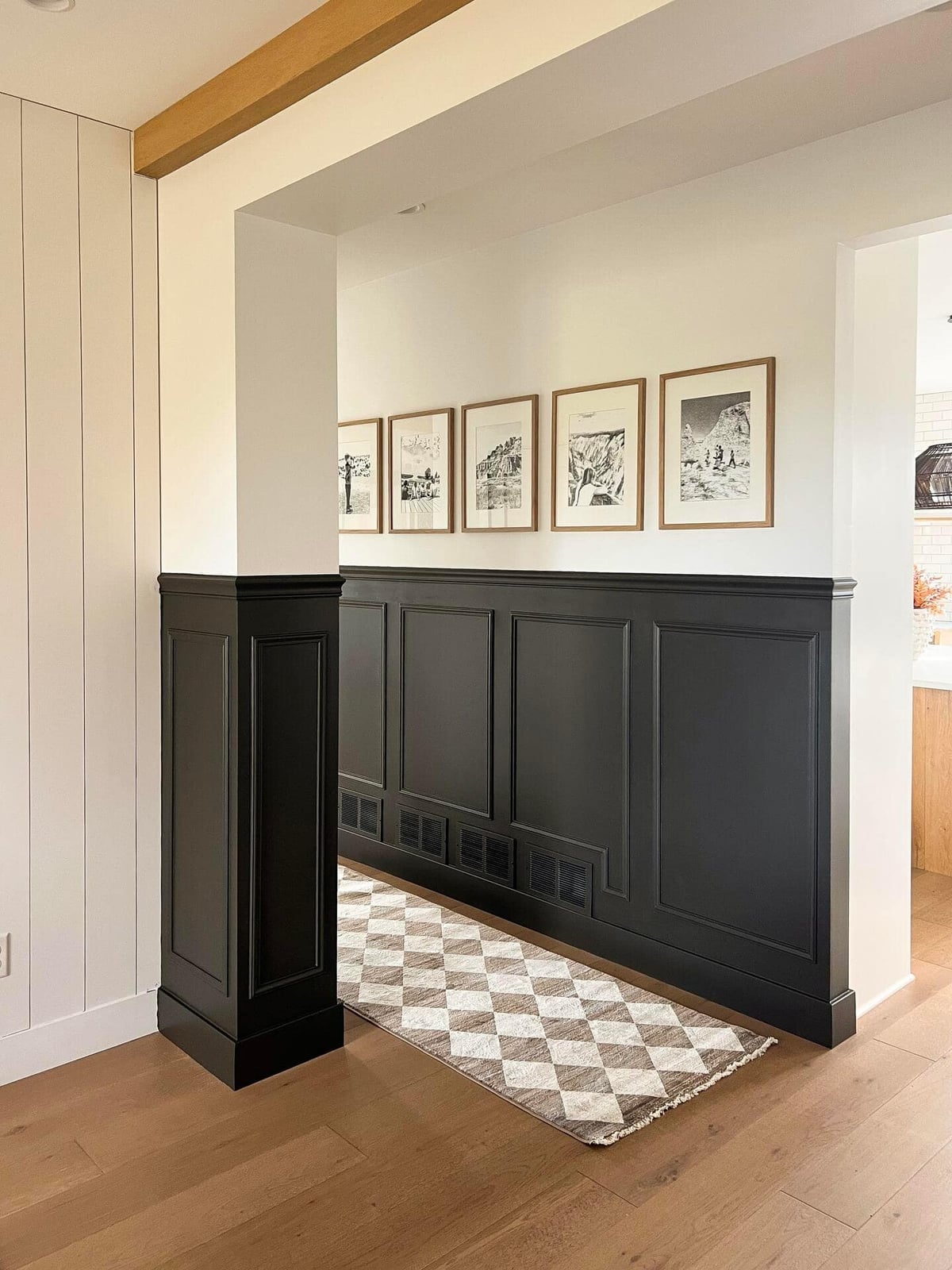
Black wainscoting in a modern farmhouse hallway is a bold choice that pays off when the proportions are right. The black paneling runs along the lower half of the wall, grounded by a wood floor and topped with white upper walls, which keeps the hallway from feeling too dark. A runner rug adds softness underfoot, and artwork on the white walls provides visual breaks. The pillar in the middle of the hallway is painted to match, which helps it blend into the design rather than stand out as an obstacle. Natural light from the far end balances the dark wainscoting, making the hallway feel roomy rather than closed in.
Vibrant Pink Paint for a Traditional Entryway with Multiple Doors
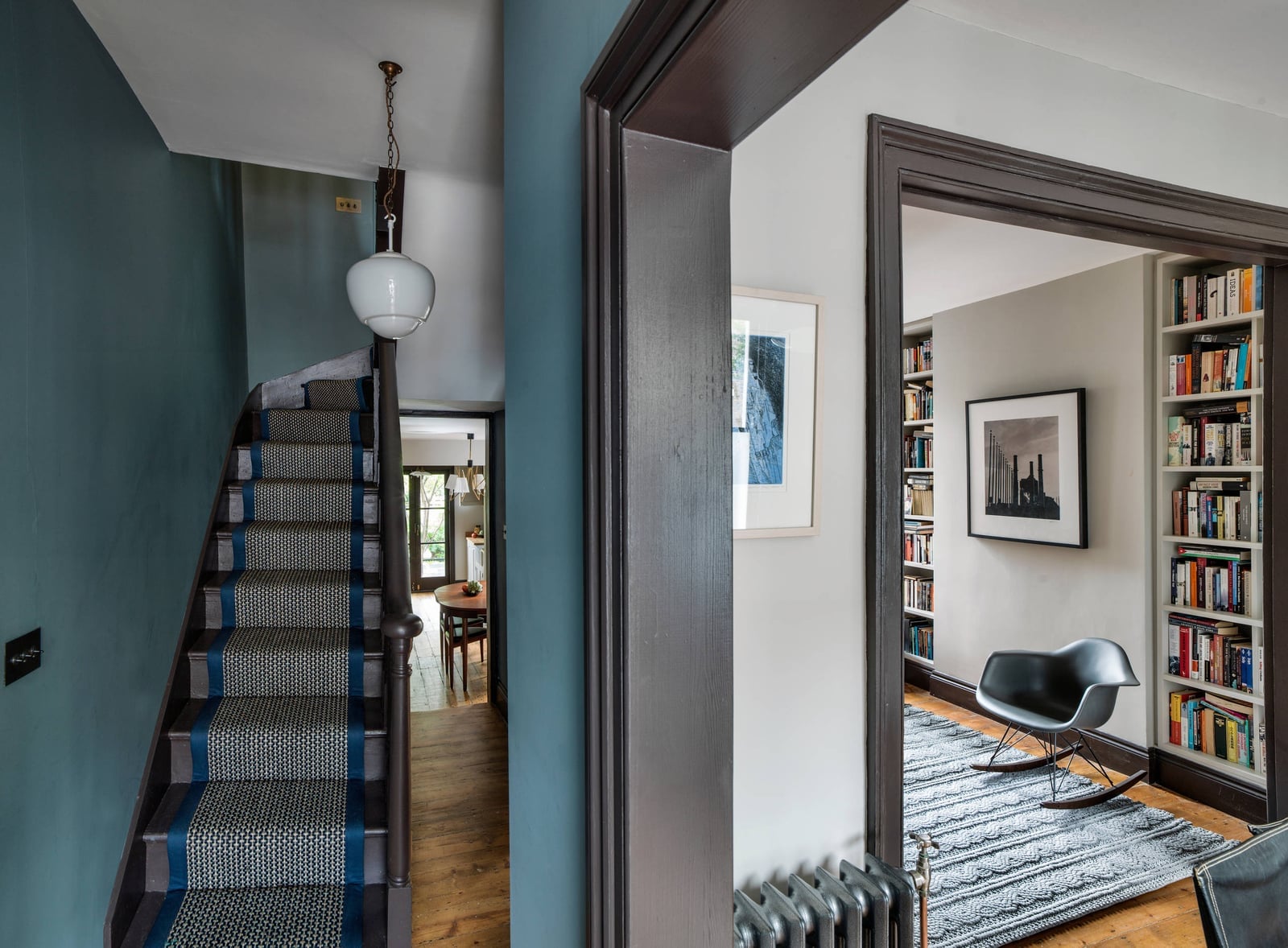
A practical rule for a bold paint choice in a traditional entryway is to let the color do the work of defining zones. The vibrant pink walls make the arched doorway and multiple doors feel like deliberate features rather than obstacles. White trim and warm wood tones keep the look grounded, so the pink reads as intentional and not overwhelming. The overhead chandelier adds a formal note, while natural light from the entry keeps the pink from feeling too heavy. For a similar effect in your own home, choose a pink with enough depth to hold its own against white woodwork and dark furniture. The key is to use the pink on all walls, not just an accent, so the color becomes the unifying element that ties together the doors and the console table.
Deep Blue Walls with Painted Paneling in a Modern Hallway
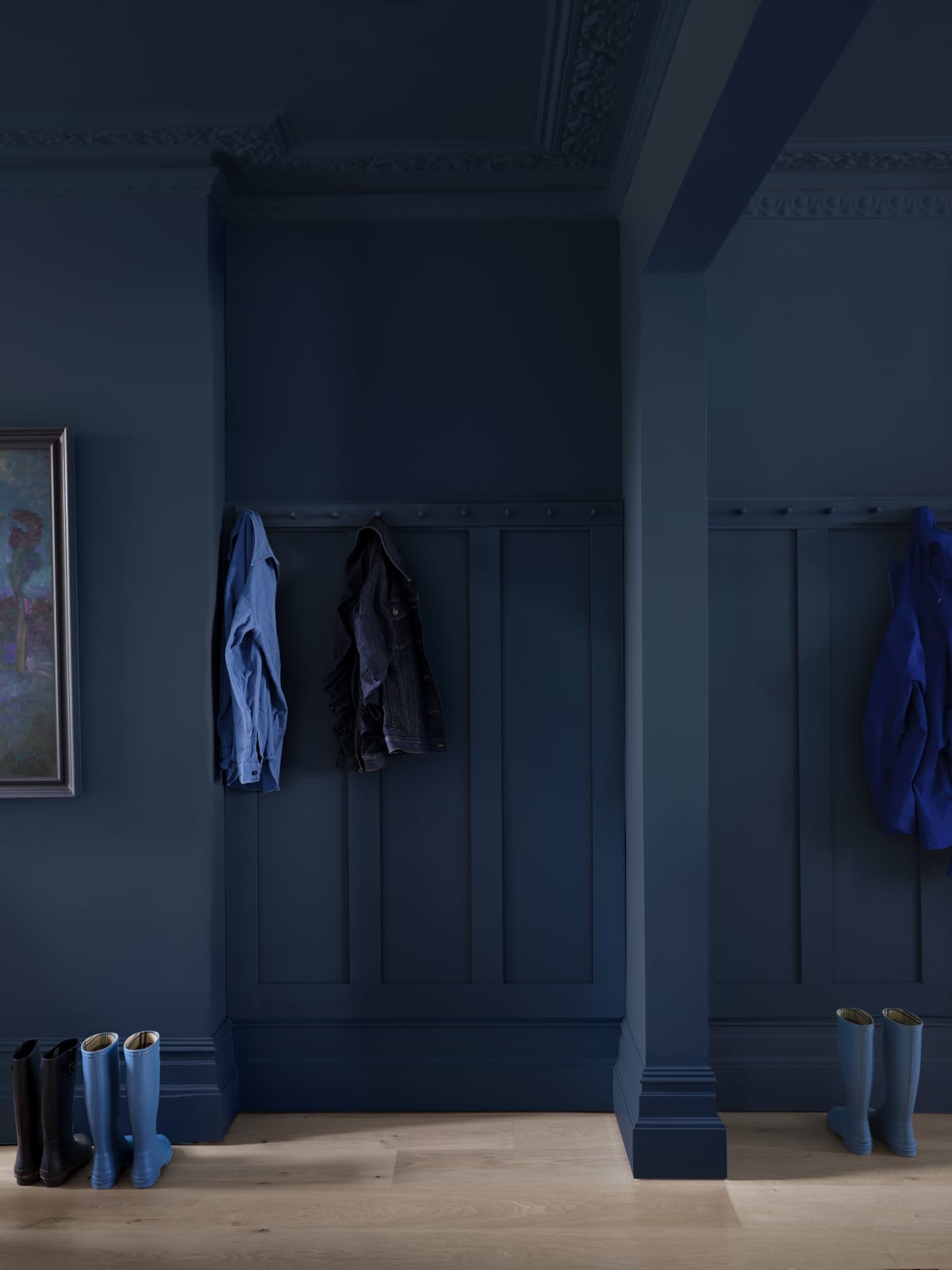
The deep blue walls here are paired with painted paneling that runs the length of the hallway. The paneling adds texture and structure, while the blue provides a rich backdrop that makes the wood tones in the floor and coat hooks stand out. The natural light from the end of the hall helps the blue stay vibrant without feeling dark. This look works because the painted paneling breaks up the wall into manageable sections, so the deep color does not overwhelm the space. The boots and coat hooks by the door add a lived-in feel that keeps the design from being too formal.
Vibrant Teal Accent Wall in a Transitional Hallway
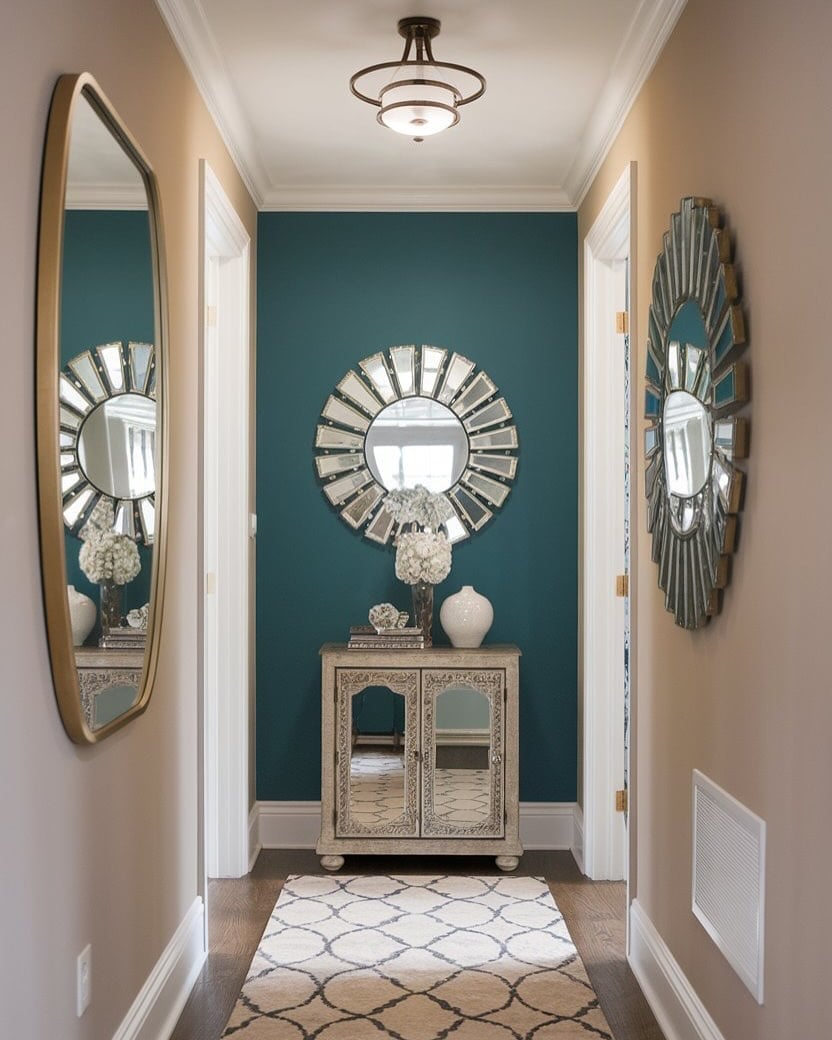
An accent wall in a hallway is anchored with a substantial piece of furniture. The vibrant teal wall here supports a mirrored sunburst and an ornate cabinet, which add visual weight and keep the color from floating. The beige walls and white trim let the teal pop without competing. The patterned rug on the floor echoes the teal and ties the accent wall to the space. The ceramic details in the cabinet and the mirror add a layer of texture that makes the scheme feel finished. This approach works when the accent wall is at the end of a sightline, so it draws the eye naturally.
Neutral Taupe Hallway with a Bench Nook
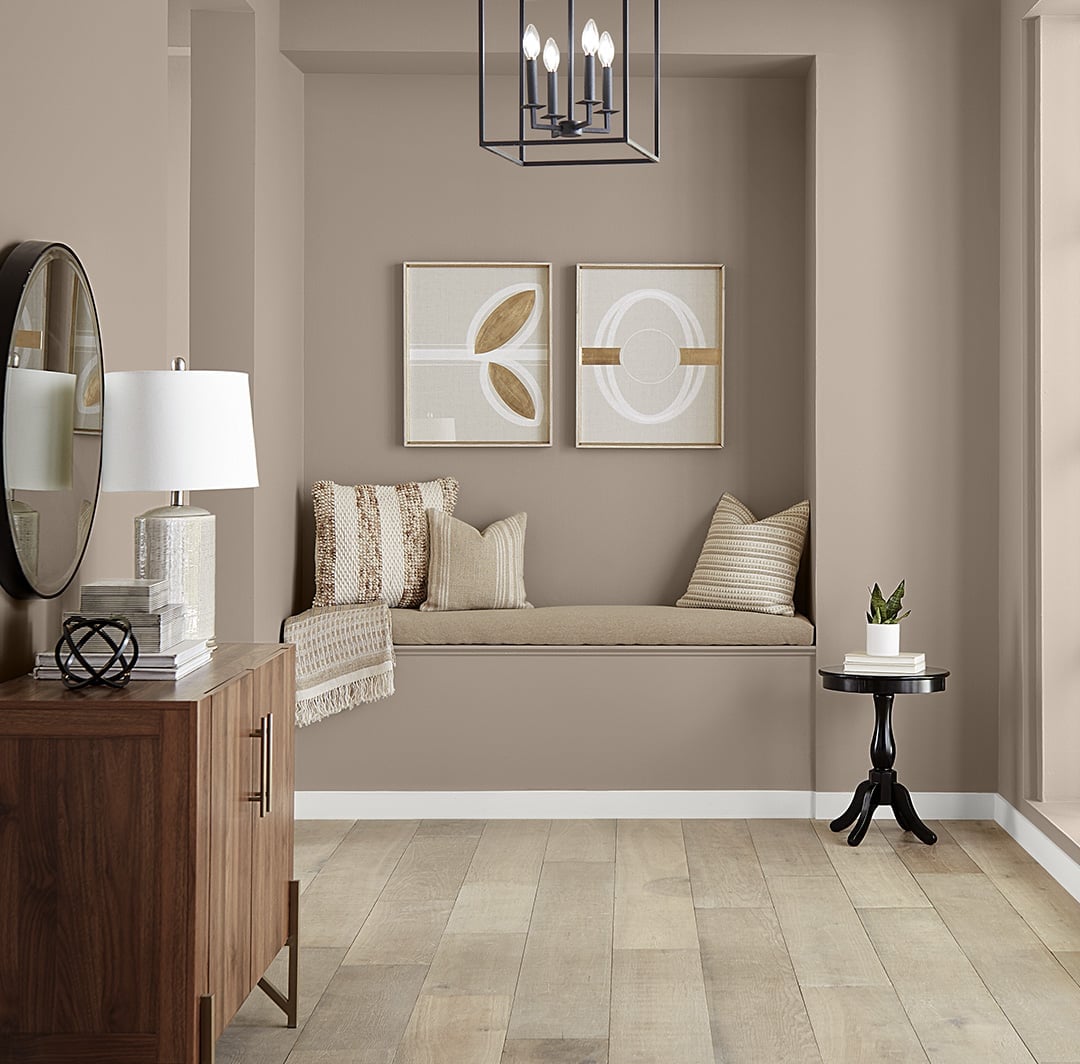
A neutral taupe hallway can feel one-note next to a warm wood bench nook if the paint lacks enough brown undertone. The taupe here has a creamy base that picks up the beige in the console table and the cream in the fabric on the bench. The overhead pendant provides task light for the nook, while natural light from the side keeps the taupe from reading as flat. The artwork on the wall above the bench adds a focal point that breaks up the long wall. For a bench nook, the taupe works because it does not compete with the wood tones or the fabric. The mirror on the opposite wall reflects light and makes the hallway feel wider. The overall effect is calm and grounded, with the bench nook as the natural resting point.
Eclectic Teal Hallway with a Green Bicycle Accent
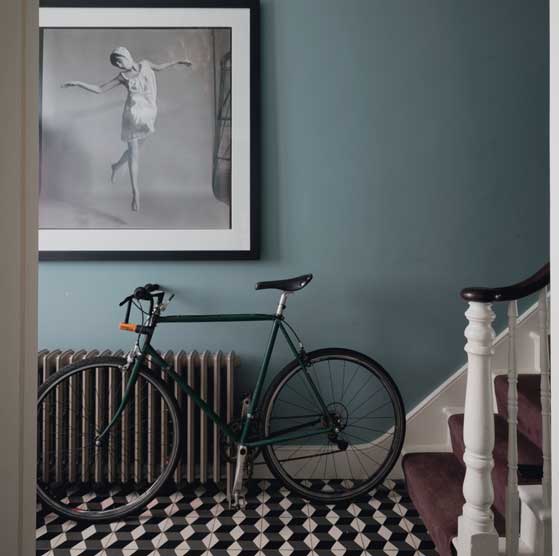
The teal walls in this eclectic hallway are a strong backdrop for a green bicycle that serves as both art and storage. The graphic black and white floor tiles add a geometric counterpoint to the teal, while the burgundy in the artwork and the gray in the radiator create a layered palette. The natural daylight from the staircase keeps the teal from feeling too dark. The bicycle leans against the wall near the radiator, making use of vertical space that might otherwise go empty. The overall effect is collected and personal, with the teal acting as the unifying color that ties together the different elements.
Muted Green Hallway with a Yellow Bicycle
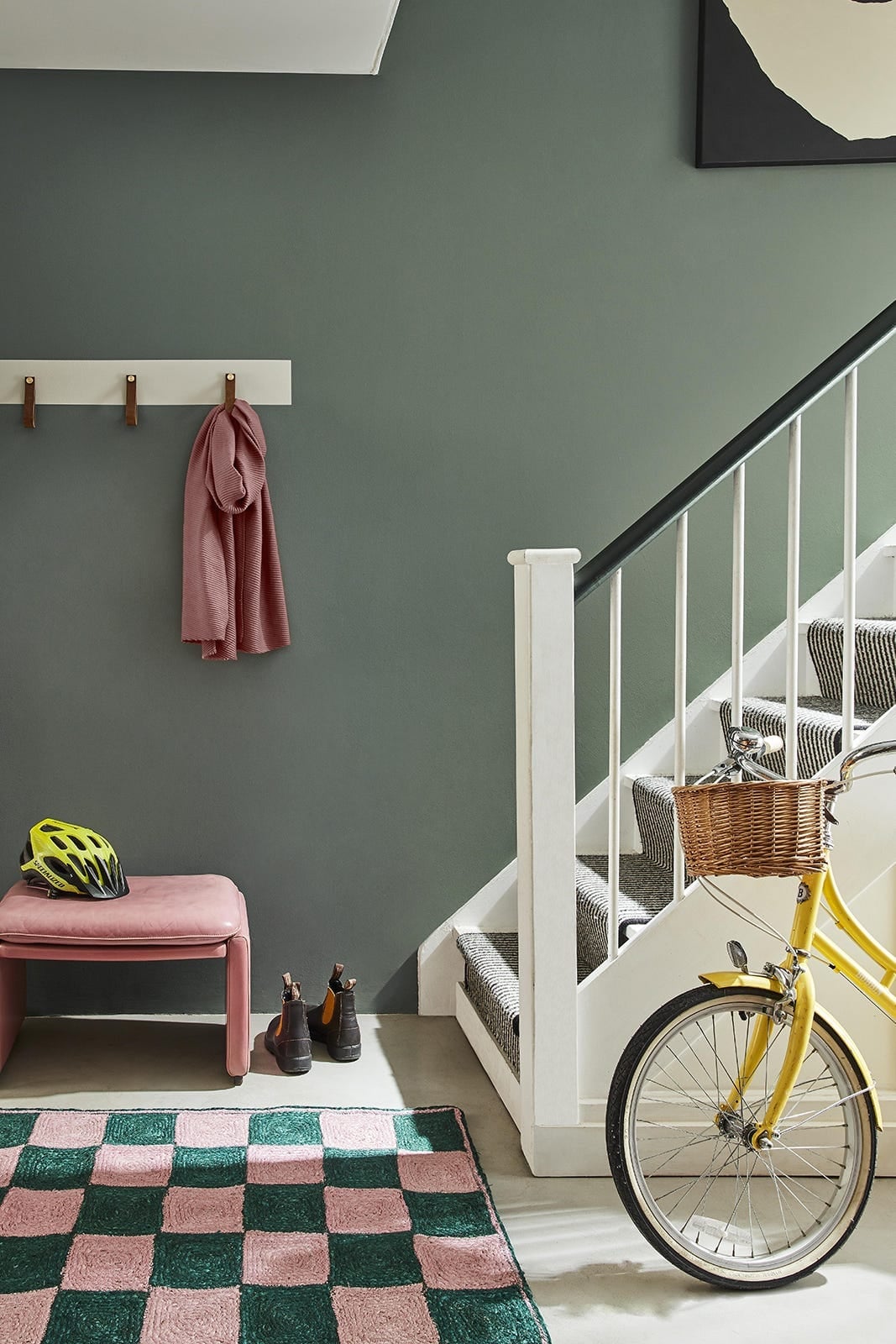
A muted green hallway is a safe choice until you park a yellow bicycle against the wall. The contrast is instant: the green reads as calm and the bike becomes a sculptural accent, not a storage problem. A pink rug and gray ceiling light keep the palette from turning too earthy. If you own a bicycle and have a roomy hallway, this is a smarter use of floor space than a console table. The bike doubles as decor and daily transport.
Sage Green Farmhouse Hallway with a Console Table
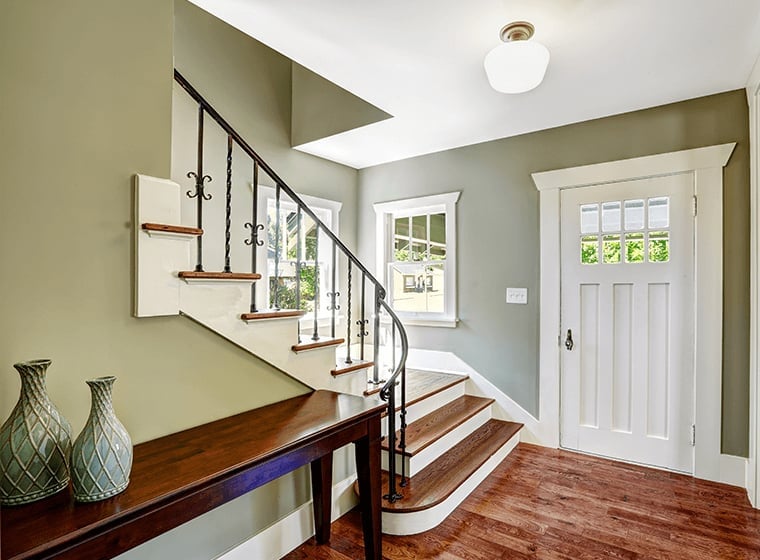
To anchor a sage green farmhouse hallway, pair the wall color with a light wood console table. The sage green appears neutral, not pastel, against white trim and a natural wood staircase. The table provides a spot for decorative vases and a surface for keys or mail. This layout works because the console table is narrow enough to leave the walkway clear. If you rent, sage green is one of the easier colors to paint over when you move out, as long as you use a quality primer.
Traditional Blue and White Hallway with an Ornate Mirror
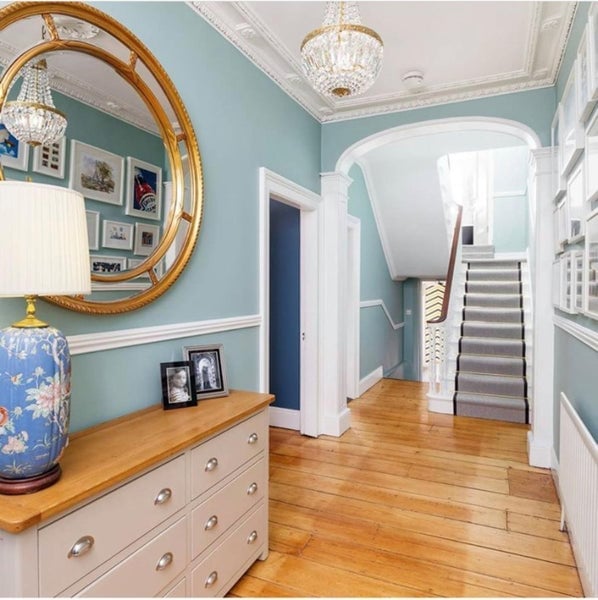
A traditional blue and white hallway gains its formality from the contrast between deep blue walls and a large ornate gold mirror. The mirror reflects natural light from the hallway windows and makes the room feel wider. A wooden dresser beneath it provides a surface for a small lamp or a tray for mail. The chandelier overhead repeats the gold tone, tying the look together without extra effort.
Scandi-Inspired Gray Hallway with a White Staircase
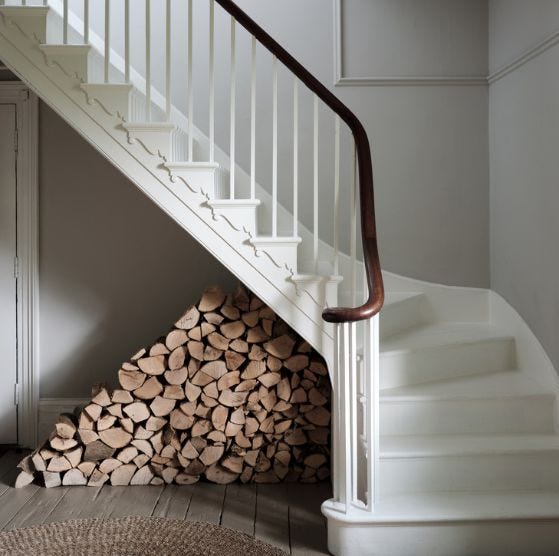
A gray hallway with a white staircase reads as clean and practical, especially when the gray is a warm mid-tone rather than a cool slate. The white staircase keeps the compact space from feeling closed in, and a woven mat on the floor adds texture. A stack of firewood under the stairs is a smart use of dead space: it brings in natural wood tones and is easy to grab when heading to the living room. This setup works best in hallways with good natural daylight, which keeps the gray from looking flat.
Modern Organic Taupe Hallway with Bench Seating
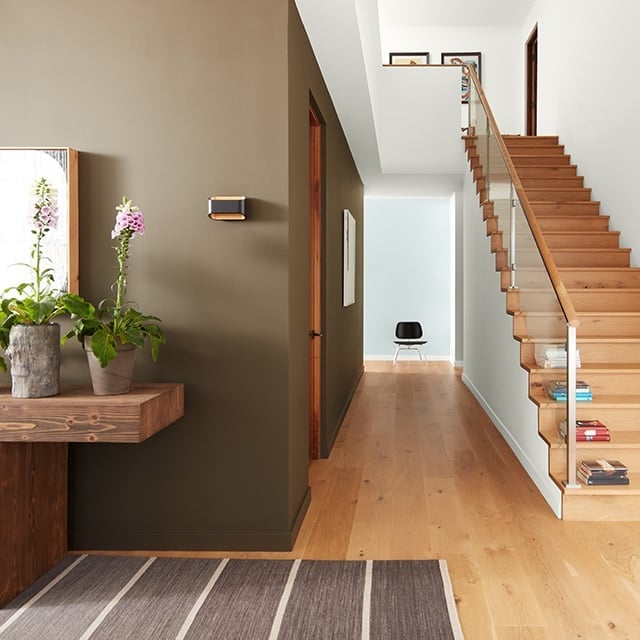
If you are deciding between beige and taupe for a hallway, taupe offers more depth without reading as cold. A modern organic taupe hallway with bench seating proves the point: the wall color blends with cream and wood tones rather than fighting them. The bench nook turns a narrow corridor into a place to sit and put on shoes, and the console table opposite it holds a mirror and a small piece of artwork. An overhead pendant provides warm light, stopping the taupe from falling flat. The layout makes the hallway feel wider than it actually is because the furniture runs along the walls.
Cottage Style Pale Yellow Hallway with Green Accents
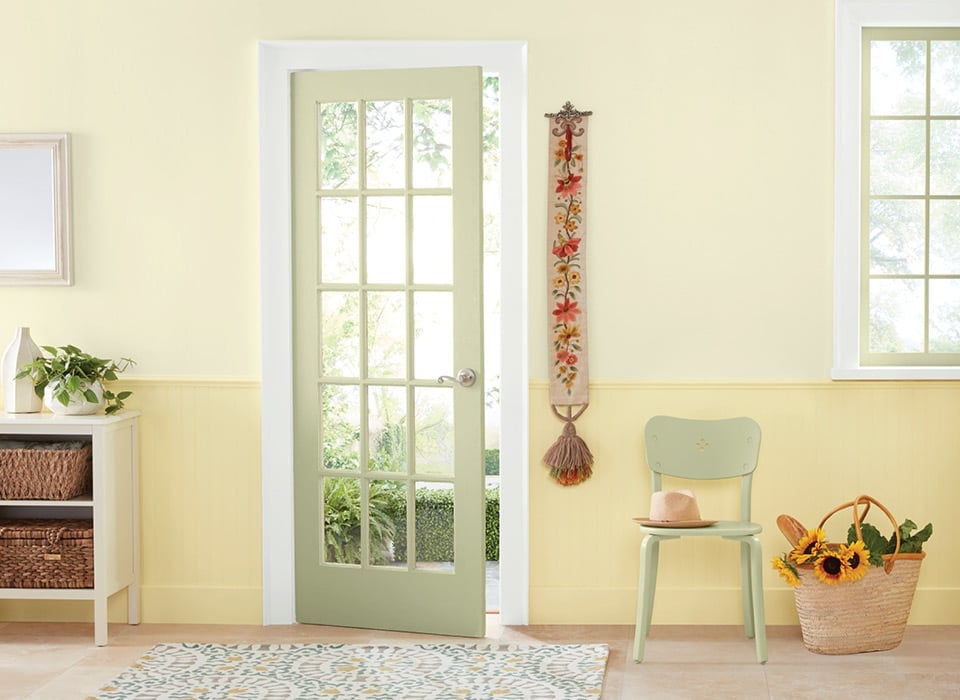
Pale yellow walls lean soft, and the cottage style here lets them do the talking. A light green door and a wicker basket add texture without crowding the palette. The open doorway draws the eye outside, which keeps a roomy hallway from feeling like a pass-through. If you want a pale yellow hallway paint that is sunny but not loud, pair it with white trim and one green accent piece.
Modern White Hallway with Dark Gray Doors
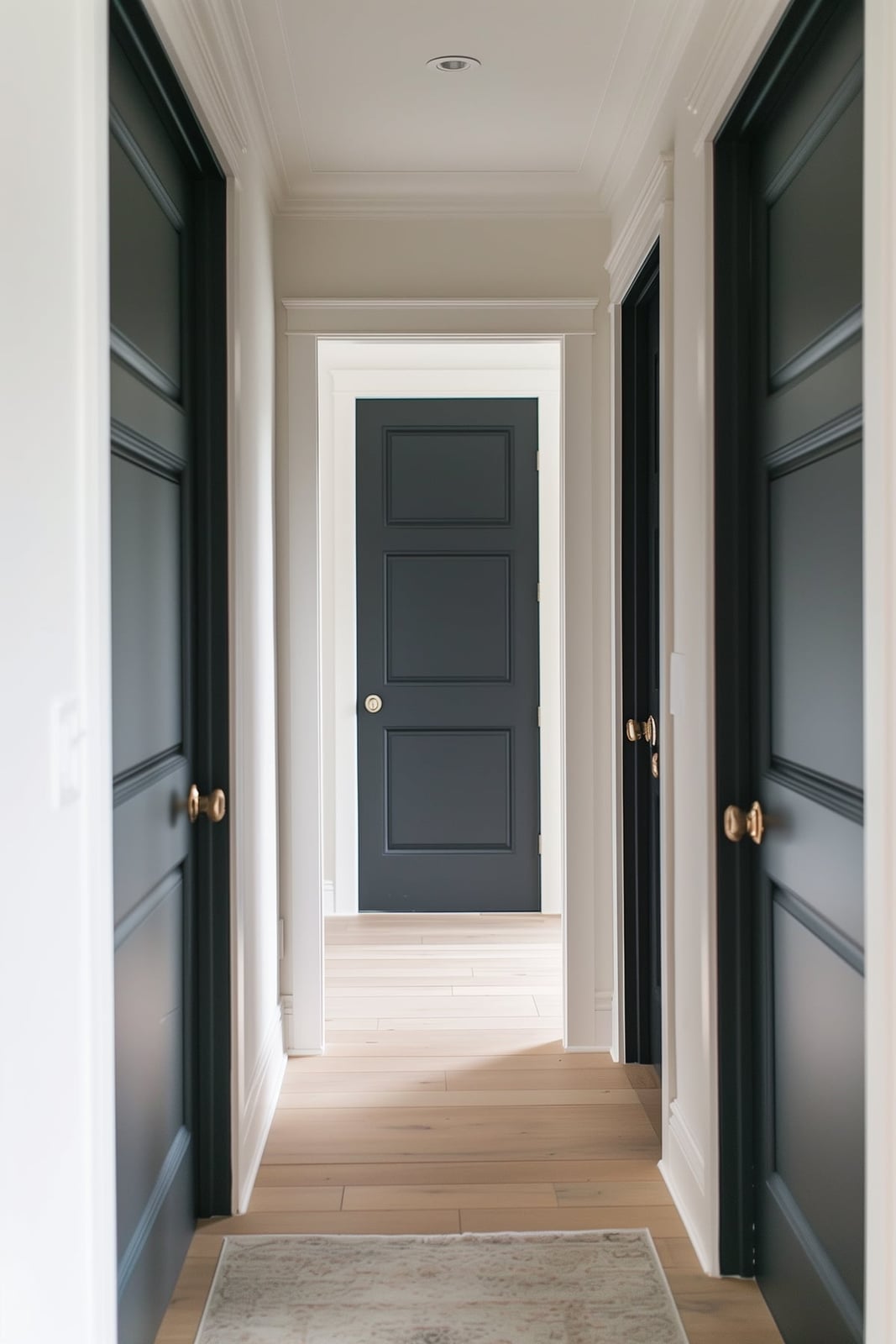
Dark gray doors set against white walls give a long corridor a clear sense of direction. The wood tones in the flooring warm up the contrast, and the brass handles add a small reflective detail. This is a palette that works because the ratio is obvious: one dark element per wall, everything else recedes. For a similar look, carry the same gray onto the baseboards so the doors feel grounded rather than floating.
Gray Farmhouse Hallway with a Paneled Door
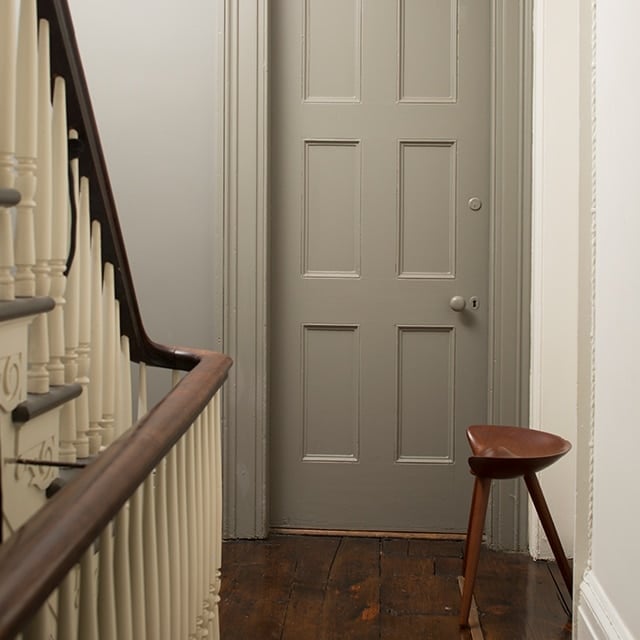
Gray can read as cold in a compact hallway, but this farmhouse version avoids that by pairing it with warm wood tones and a white trim. The paneled door carries the gray without making the space feel heavy, since the panels break up the surface into smaller shapes. A simple wooden stool adds a spot to set down keys or a bag, which is useful when every inch counts. The plaster walls keep the look matte and quiet, letting the door be the main event.
Sage Green Walls with White Wainscoting
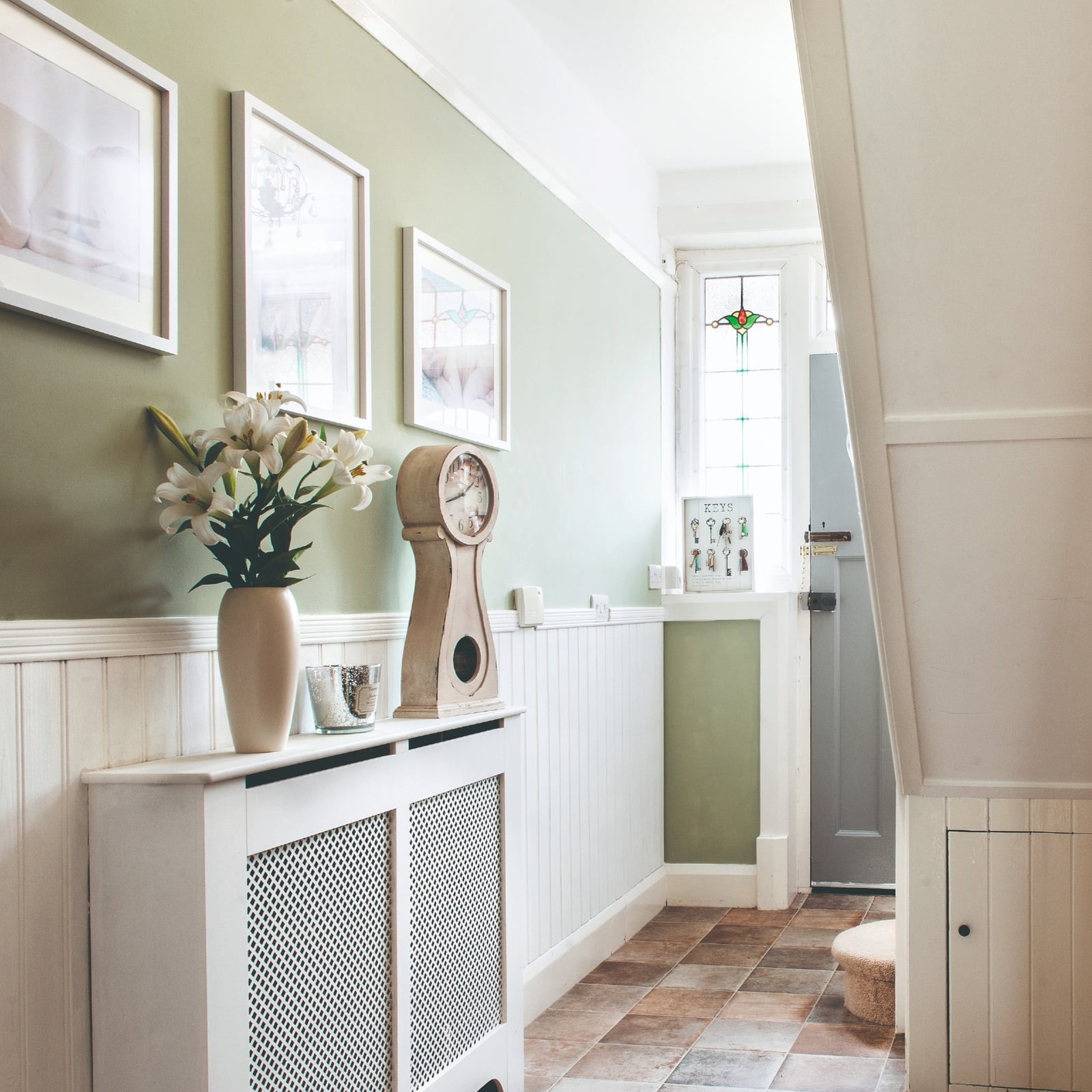
Sage green walls in a narrow hallway get a lift from white wainscoting, which bounces natural light from the window around the room. The clock and artwork sit against the green without competing, because the wainscoting creates a clear horizontal line. If your hallway runs north-facing, sage green hallway walls can read more gray than green, so test a large swatch before committing.
Final Thoughts
A hallway paint color does more than fill a wall. It guides the eye, sets the mood, and makes a small space feel deliberate. From soft sage to deep navy, each of these 34 ideas proves that one coat can transform a passage into a place. Stick with a single shade for calm, or try a two-tone approach for contrast. Keep trim and doors neutral if you want the wall color to lead. Test samples on different walls first, because hallway light shifts through the day. With the right paint, your hallway becomes more than a walk-through. It becomes a room worth stopping in.