A hallway is the first thing you see when you walk in, but it often gets the last bit of paint left in the can. That’s a missed chance to set the mood for your whole home. These 31 hallway paint ideas show how a single color can turn a pass-through into a destination without a full renovation.
From dramatic darks to playful pastels, each look keeps the paint as the main event and the space around it deliberately simple. You’ll get practical takeaways on what works with natural light, narrow layouts, and high-traffic zones.
Charcoal Gray Walls Create a Dramatic and Sophisticated Hallway
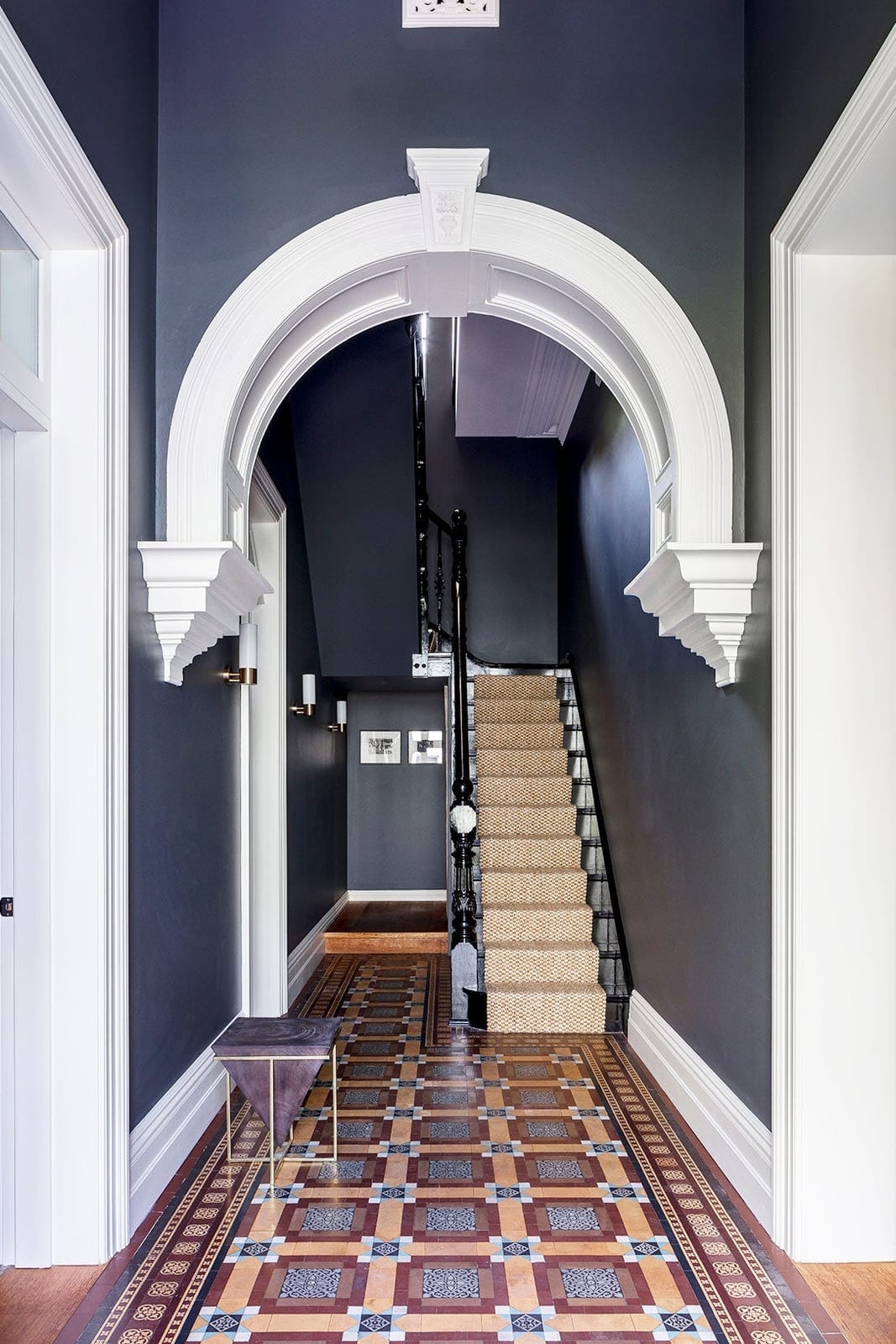
An ornate archway and a curved staircase set the tone, but the charcoal gray walls make the space feel deliberate rather than just inherited. The deep gray acts as a backdrop that lets the cream tones in the mosaic floor and the wood of the staircase read as warmer by contrast. Wall sconces cast ambient light across the matte finish, so the hallway stays roomy without the walls competing for attention. The palette here is simple: gray, cream, and wood, with no accent color trying to interrupt the line of sight from the archway to the stairs.
Vibrant Teal Paint for an Energetic and Open Hallway
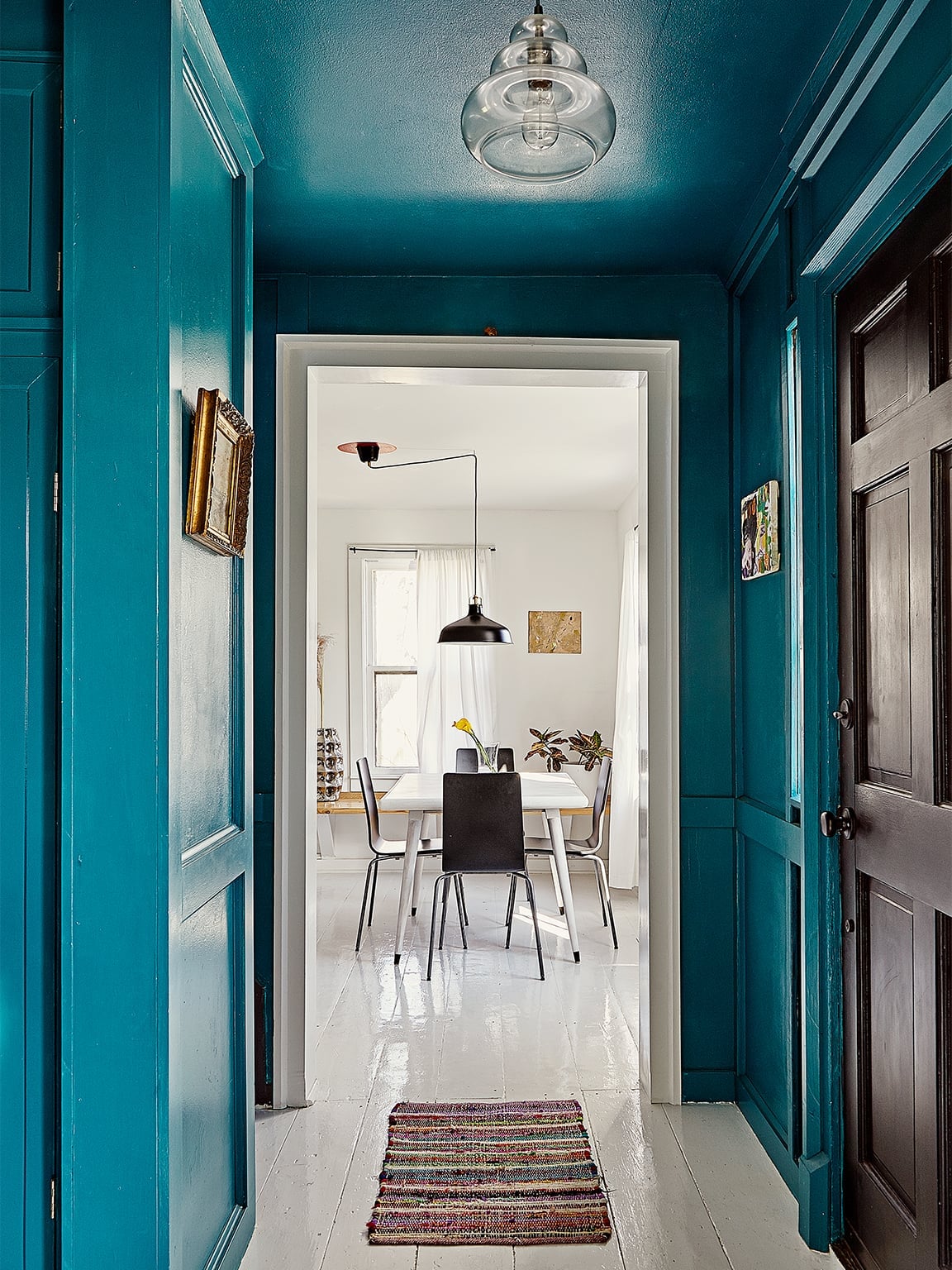
This is a transitional hallway that uses teal paint to connect a front entry to a dining area without closing off either zone. The teal is the hero element, but the white doors and wood-toned floor prevent the space from becoming a single saturated box. A pendant light with a glass shade hangs mid-hall, and a far window brings light onto the teal surface so the color shifts slightly through the day. The rug underfoot adds a soft texture that breaks up the long sightline. The palette ratio is roughly three parts teal to one part white, with wood tones acting as the neutral ground.
Gray Paneled Walls with White Trim for Classic Elegance
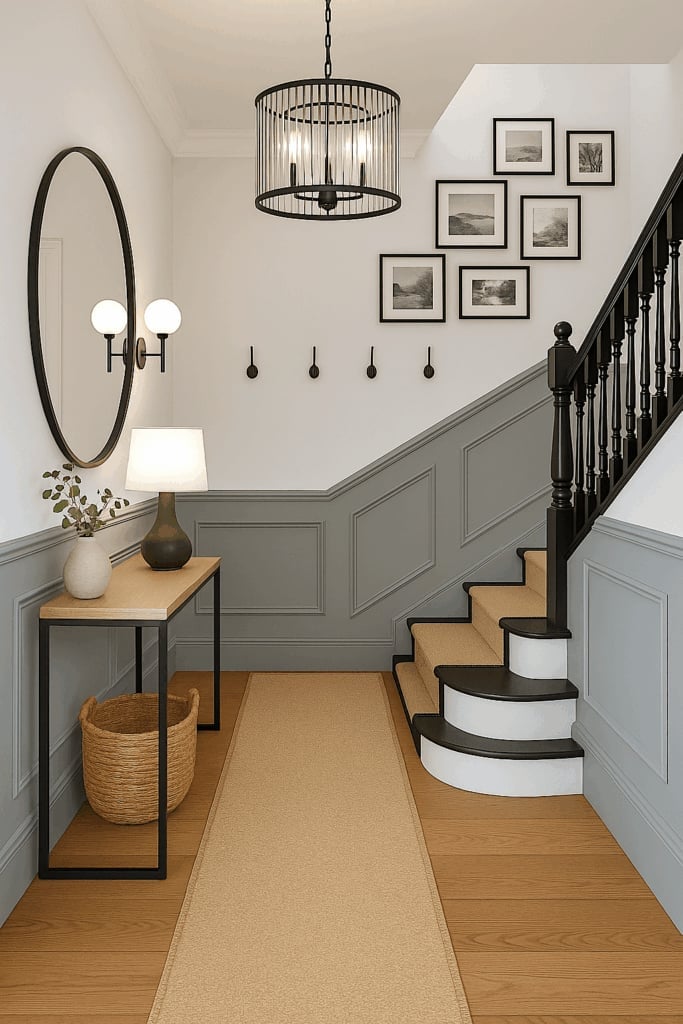
How do you add architectural detail to a hallway that has plain drywall without gutting the space? The answer here is paneling. The gray paneled walls run from floor to ceiling, and the white trim around each panel creates a grid that gives the hallway a built-in structure. A console table with a lamp and a mirror sits against one wall, and the staircase at the far end completes the traditional layout.
The wall sconces are mounted on the paneling, so the light grazes the painted surface and emphasizes the depth of each recessed panel. Natural daylight from a window at the top of the stairs keeps the gray from reading as flat. The carpet runner on the stairs and the wood floor below add two different textures that stop the paneling from feeling too formal.
Bright Yellow Front Door as a Focal Point in a Gray and Blue Hallway
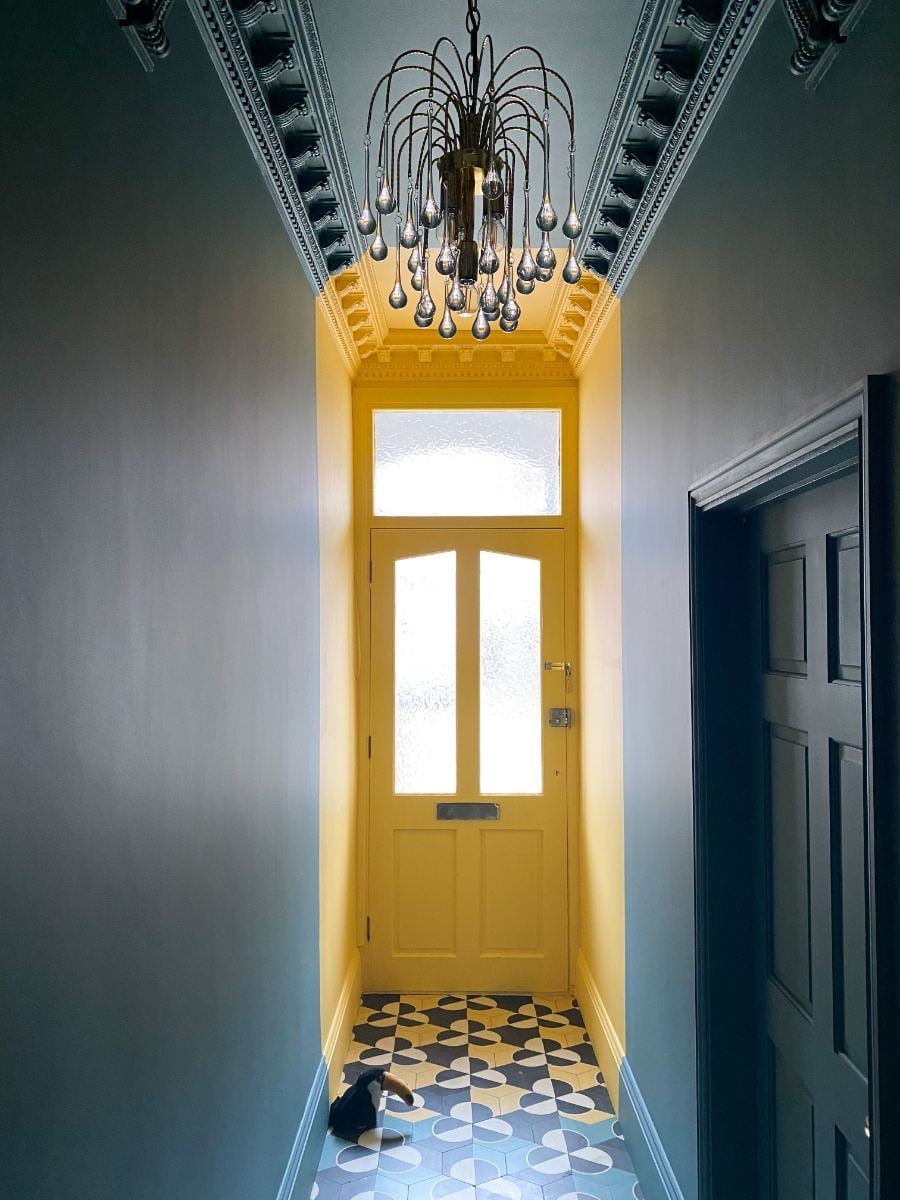
A narrow entryway with a bright yellow front door uses that single saturated element to pull the eye straight to the exit point, which makes the narrow layout feel less like a tunnel. The walls are a muted gray and the floor is a patterned tile in blue tones, so the yellow door sits as the only warm note in an otherwise cool palette. A chandelier hangs overhead, and bright natural light from the door itself bounces off the plaster walls. The trick is keeping the rest of the palette restrained so the yellow has room to act as the focal point without competing with another strong color.
Dark Green Walls Paired with Bold Wallpaper for a Maximalist Hallway
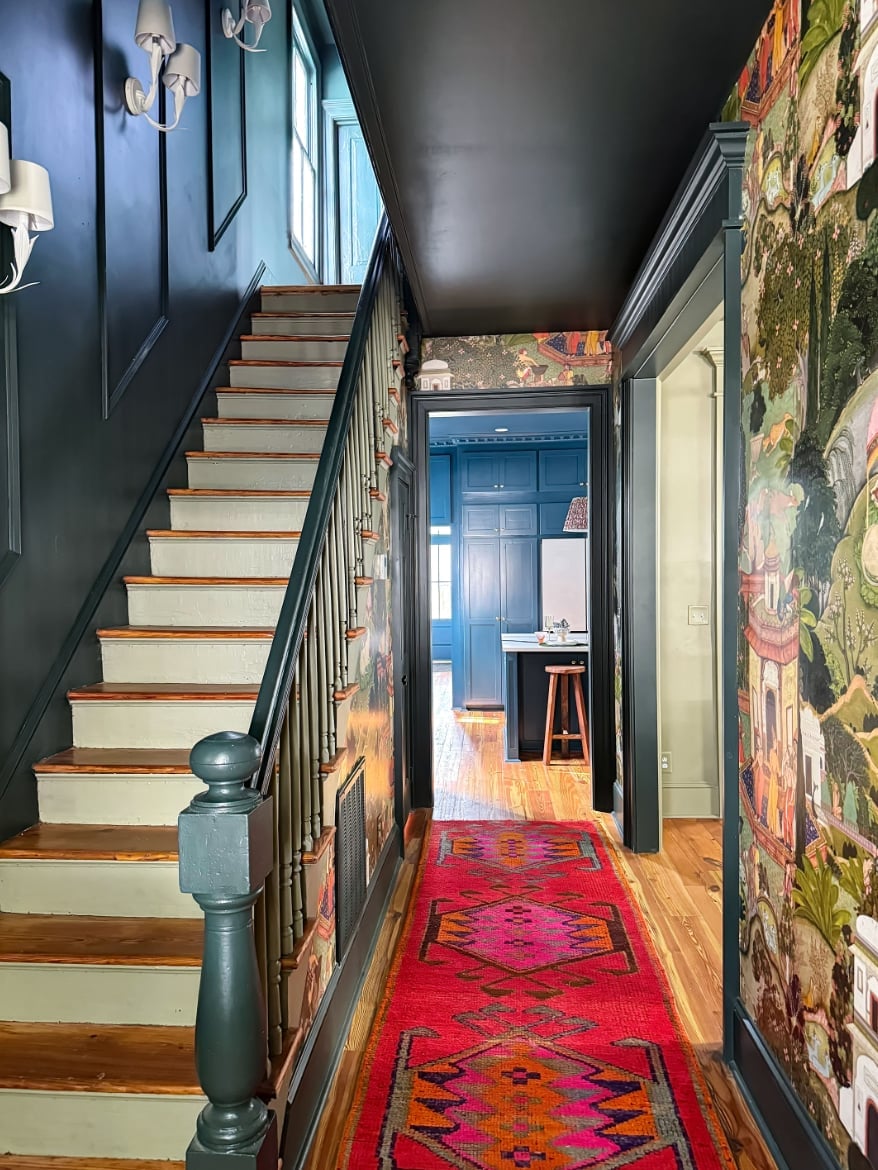
A maximalist hallway works when there is a clear rule for how much pattern and color the space can hold. In this case, the rule is dark green paint on the lower walls and a bold patterned wallpaper above, with a staircase and a rug adding more pattern underfoot. The dark green anchors the room, while the wallpaper brings in multi-color details that keep the eye moving. Natural light from a window at the top of the stairs prevents the dark paint from swallowing the space. The style is defined by the ratio of solid color to print, roughly two thirds green to one third wallpaper, with the rug acting as the element that breaks the vertical line.
Glossy Pink Ceiling and Walls for a Playful and Spacious Hallway
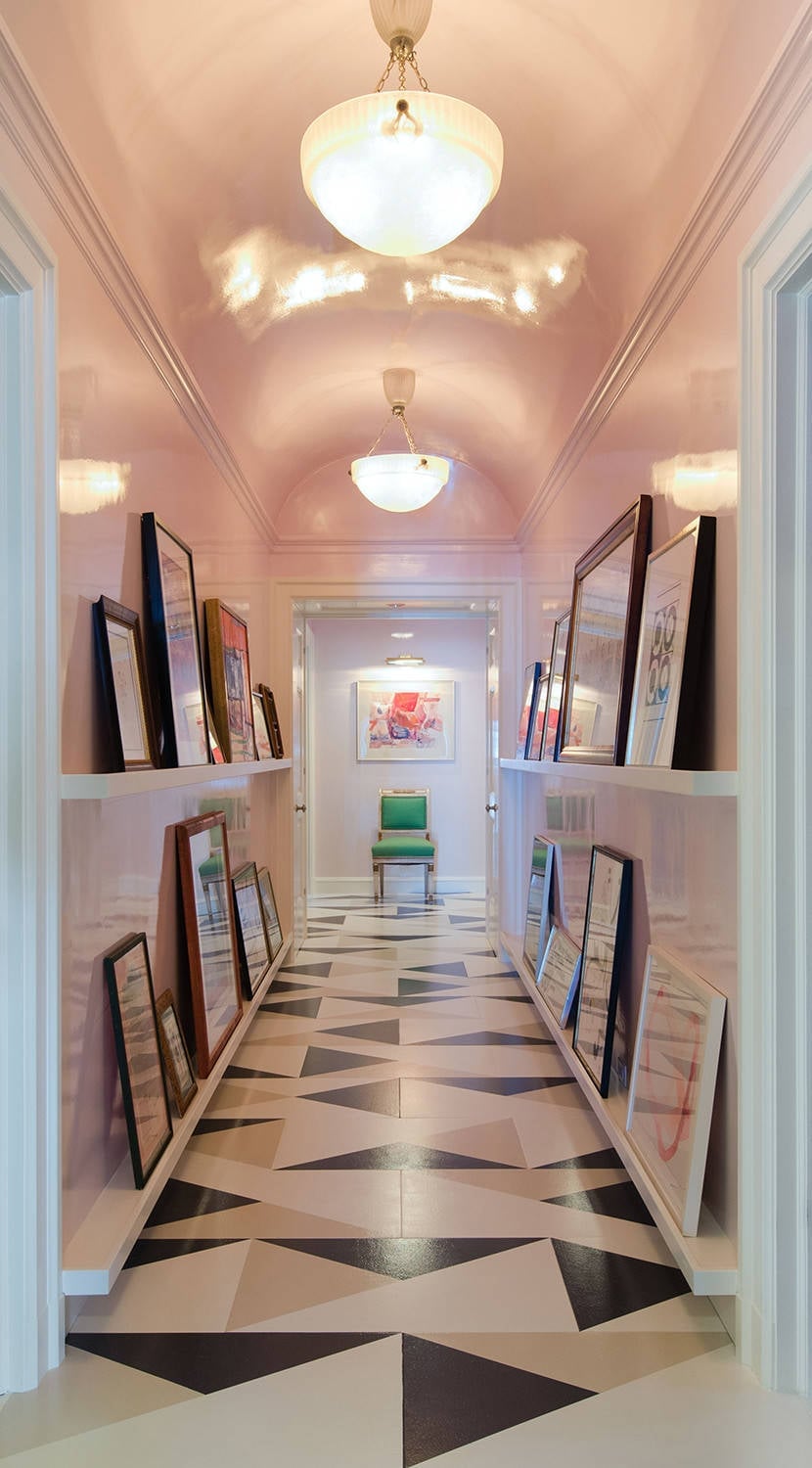
Glossy paint on a ceiling is not something you see every day. In this eclectic hallway, the high-gloss pink finish on the ceiling and walls makes the space feel larger rather than smaller. The sheen bounces light from the pendant fixtures and ambient sources around the room. Beige walls and a black-and-white tile floor keep the look from feeling one-note. Symmetrical shelves and artwork on either side add balance to the long, narrow layout. If you want to try a glossy ceiling, stick to a narrow hallway where the reflective surface has the most impact. The shine will show every imperfection, so prep work matters more than usual.
Pale Yellow Walls with Rustic Touches for a Warm Entryway
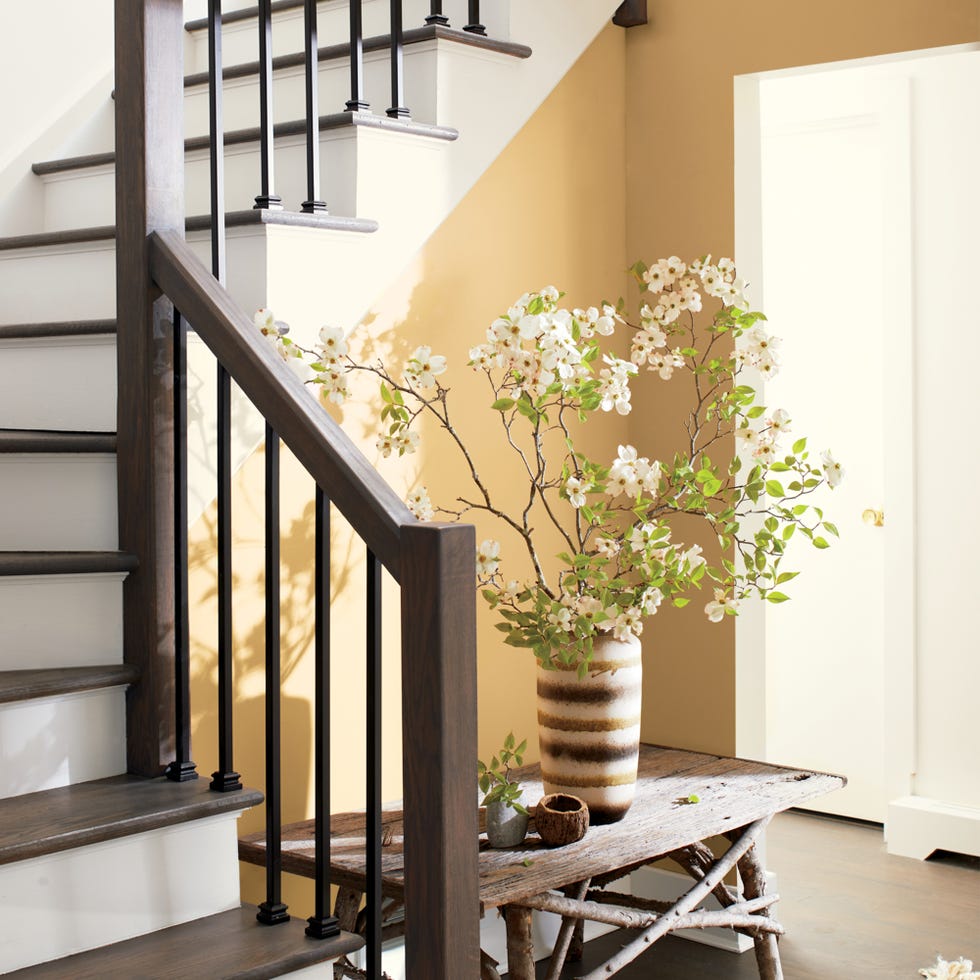
Pale yellow walls bring warmth without overwhelming a transitional entryway. The soft tone works with the wood staircase, the white trim, and the natural light coming through the window. A bench near the wall gives you a spot to sit, and a vase with flowers adds a soft organic touch. The shadows from the window change the yellow throughout the day, so the color reads differently in morning and afternoon light. This is a renter-friendly option because pale yellow is easy to paint over when you move out.
Two-Tone Terracotta and Cream Paint for a Modern Hallway
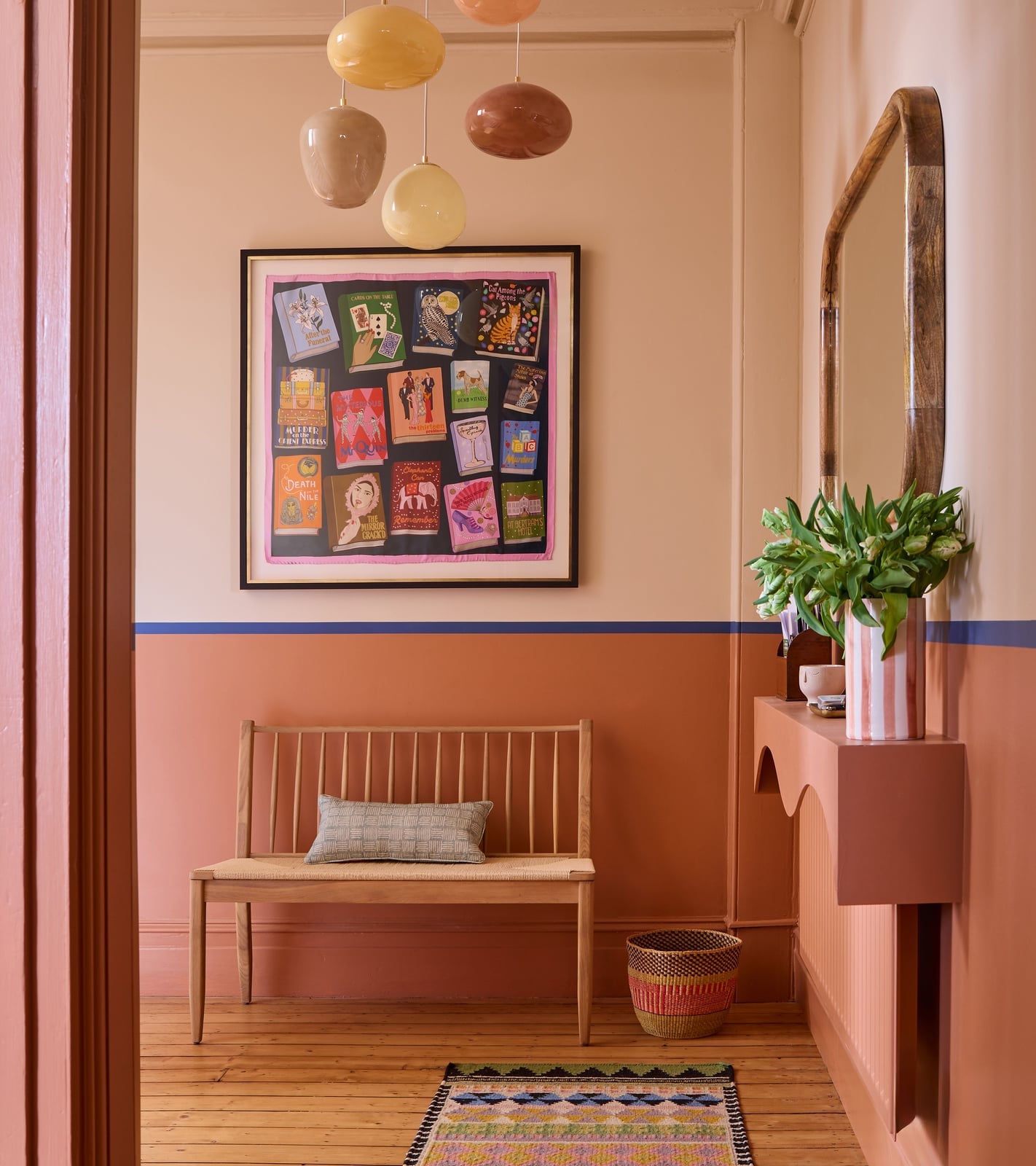
Two-tone terracotta and cream paint is a straightforward way to add depth to a modern hallway. The terracotta sits on the lower portion of the wall, while the cream above keeps the space open. Blue accents from the artwork and a woven basket add contrast without competing. Pendant lights and natural light from a nearby window keep the color from feeling too heavy. This scheme works in a hallway with a bench because the two-tone line can align with the height of the furniture.
Taupe and Cream Two-Tone Walls with Green Accent Band
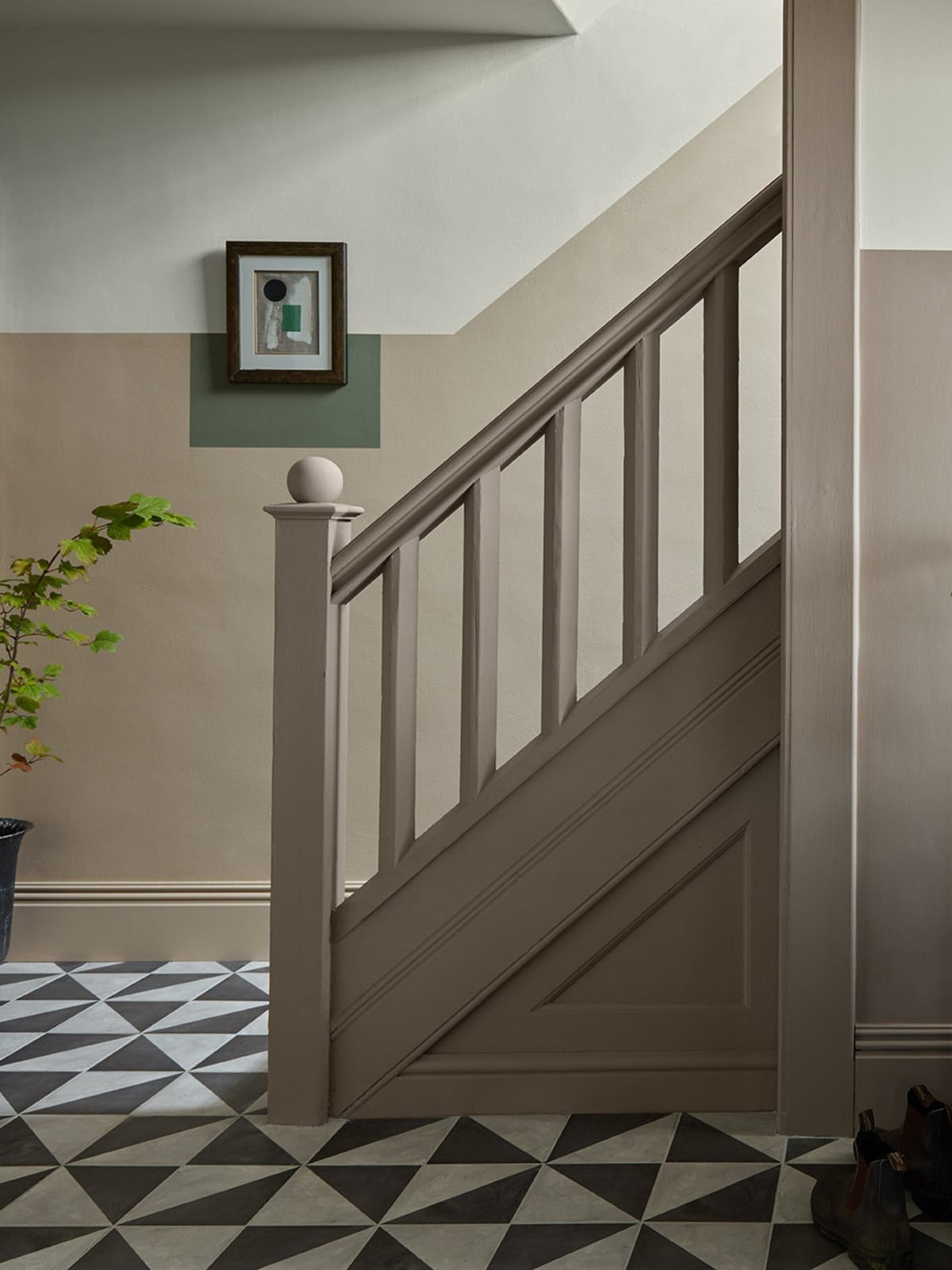
How do you add interest to a traditional staircase without a full renovation? A two-tone paint scheme with a green accent band does the job. The lower wall is taupe, the upper wall is cream, and a thin green stripe runs between them. The band draws the eye up the stairs and ties the palette together. Natural light from nearby windows makes the taupe feel softer and the green more subtle. The skirting board and wood trim stay white, which keeps the look crisp. This type of paint job requires careful taping and a steady hand, but the result is a custom look without custom millwork.
Warm Beige Hallway with Navy and Terracotta Accents
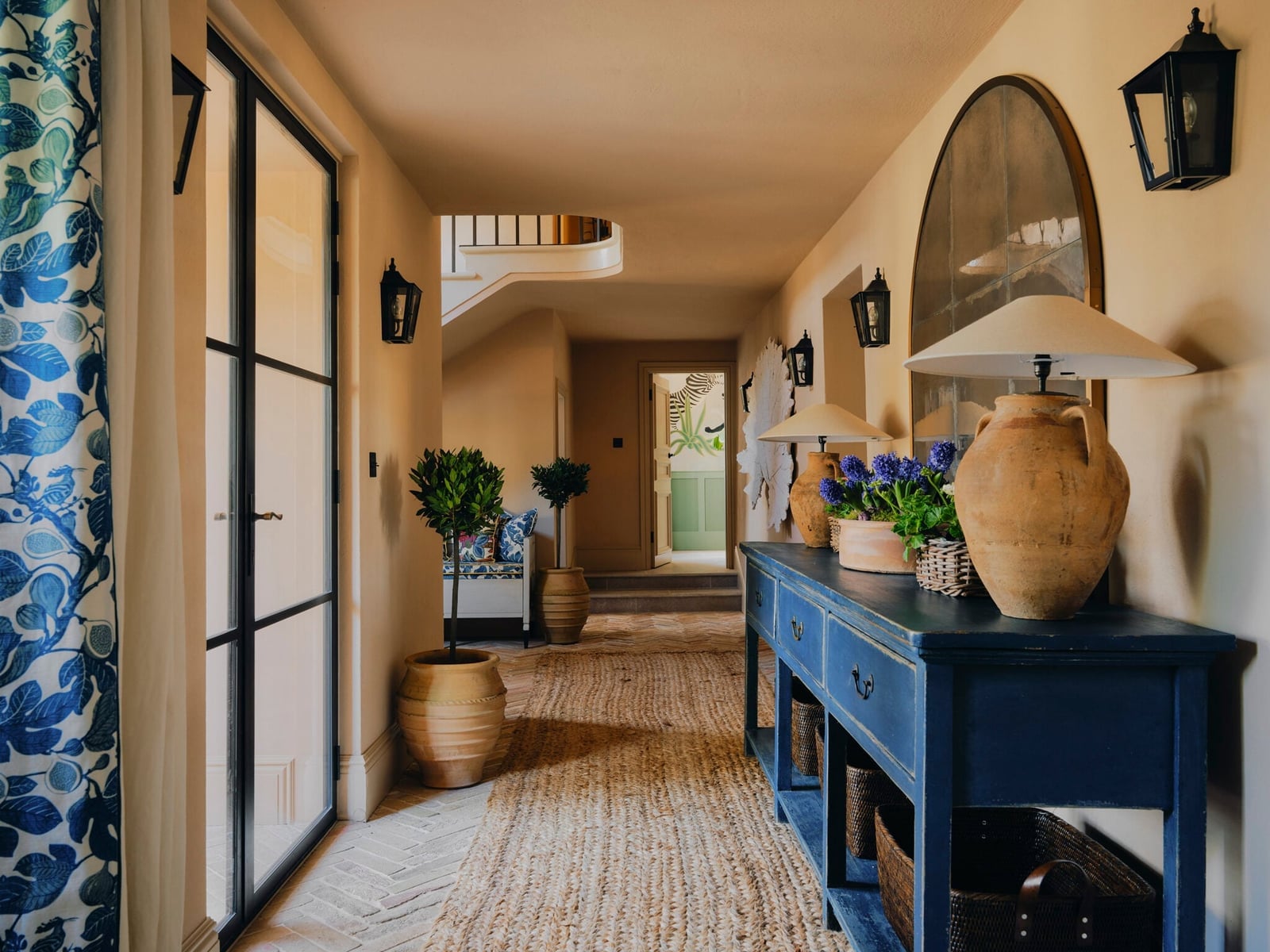
Warm beige walls act as a neutral backdrop for navy and terracotta accents in this transitional hallway. The wall color is quiet, so the large terracotta vases and the navy bench become the focal points. Wall sconces and table lamps add layers of light along the long, wide corridor. The stone floor and plaster walls keep the palette natural. If you have a hallway that sees a lot of foot traffic, warm beige hides scuffs better than a pure white.
Gray Walls with White Wainscoting and Geometric Floor Tiles
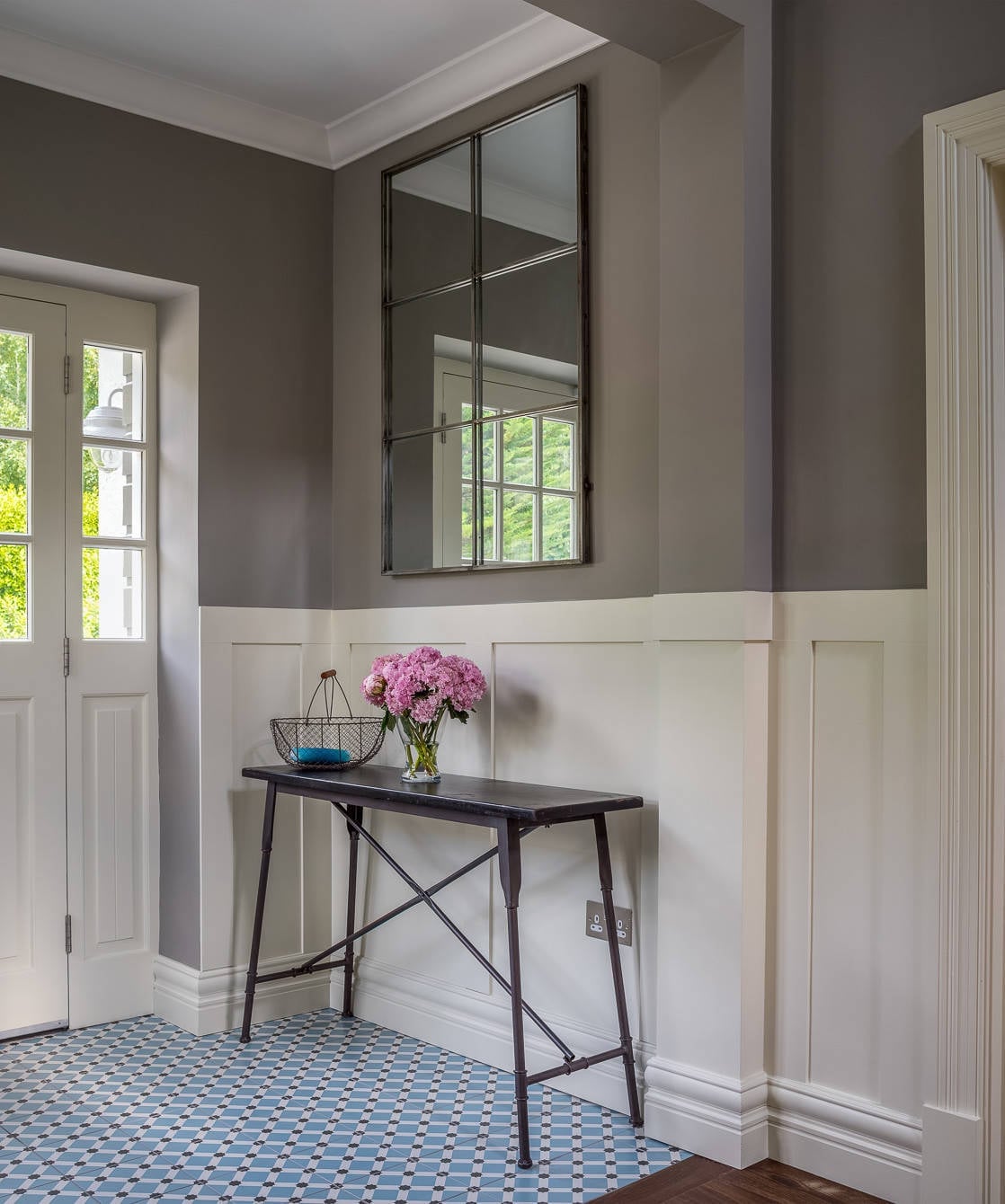
A consistent palette keeps a busy floor pattern from feeling chaotic. The gray walls and white wainscoting give the eye a calm middle ground, while the geometric floor tiles add energy down low. A console table against the wall holds a mirror and flowers, drawing attention to the window. The blue in the tile pattern ties into the gray, creating a cohesive look that would also work with a darker trim.
Dark Blue Walls for a Moody and Artistic Hallway
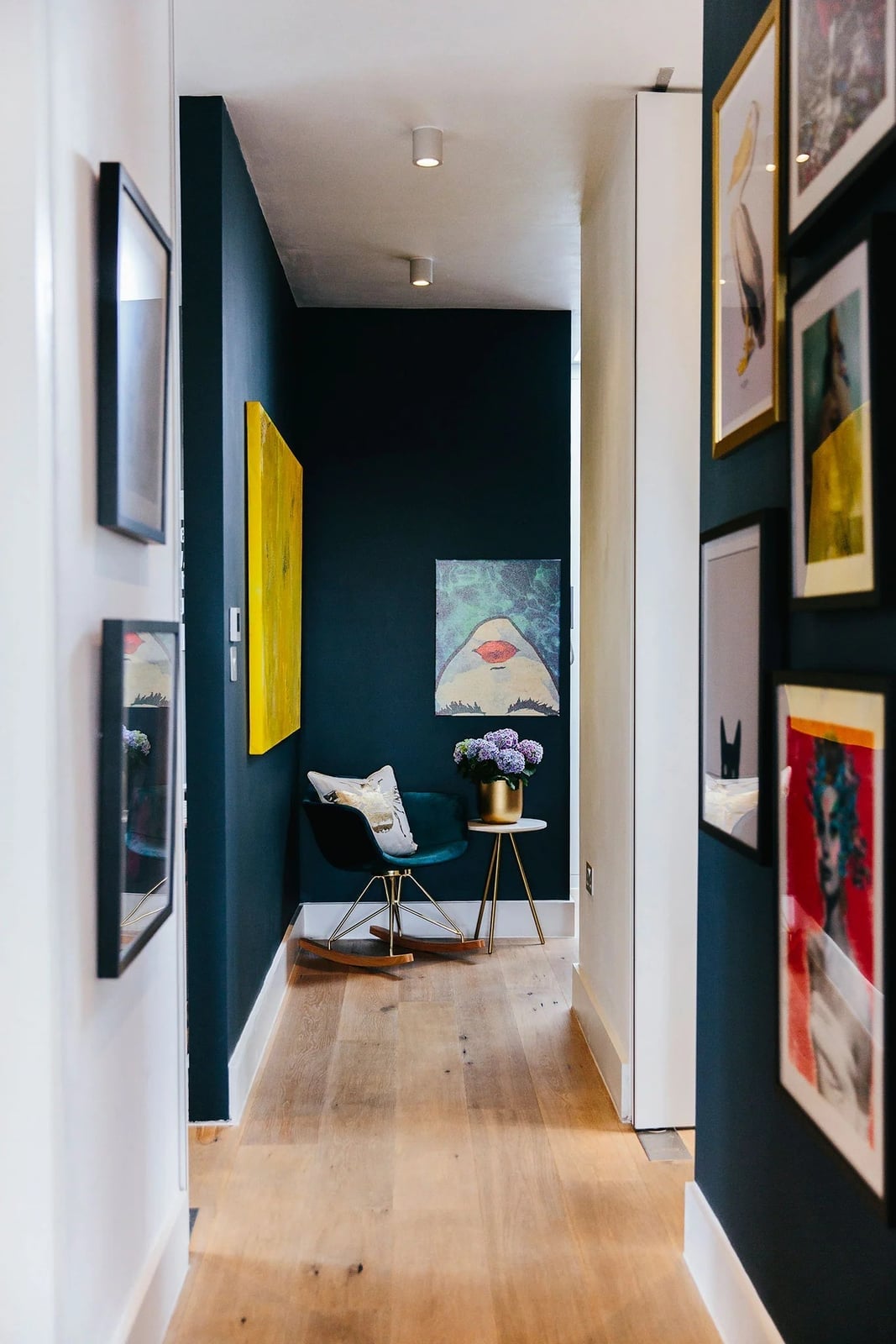
Dark blue walls can feel heavy, but this approach keeps them airy with white accents and bright art. The narrow hallway uses spotlights and natural light to prevent the dark blue from closing in. A gallery wall with yellow and white prints breaks up the color, while a wooden rocking chair and small table add warmth. The yellow in the art provides a direct contrast that makes the blue feel deliberate. For a similar effect in a compact space, choose art with a light background to avoid making the room feel smaller.
Pale Yellow Walls and Doors for a Bright and Airy Minimalist Hallway
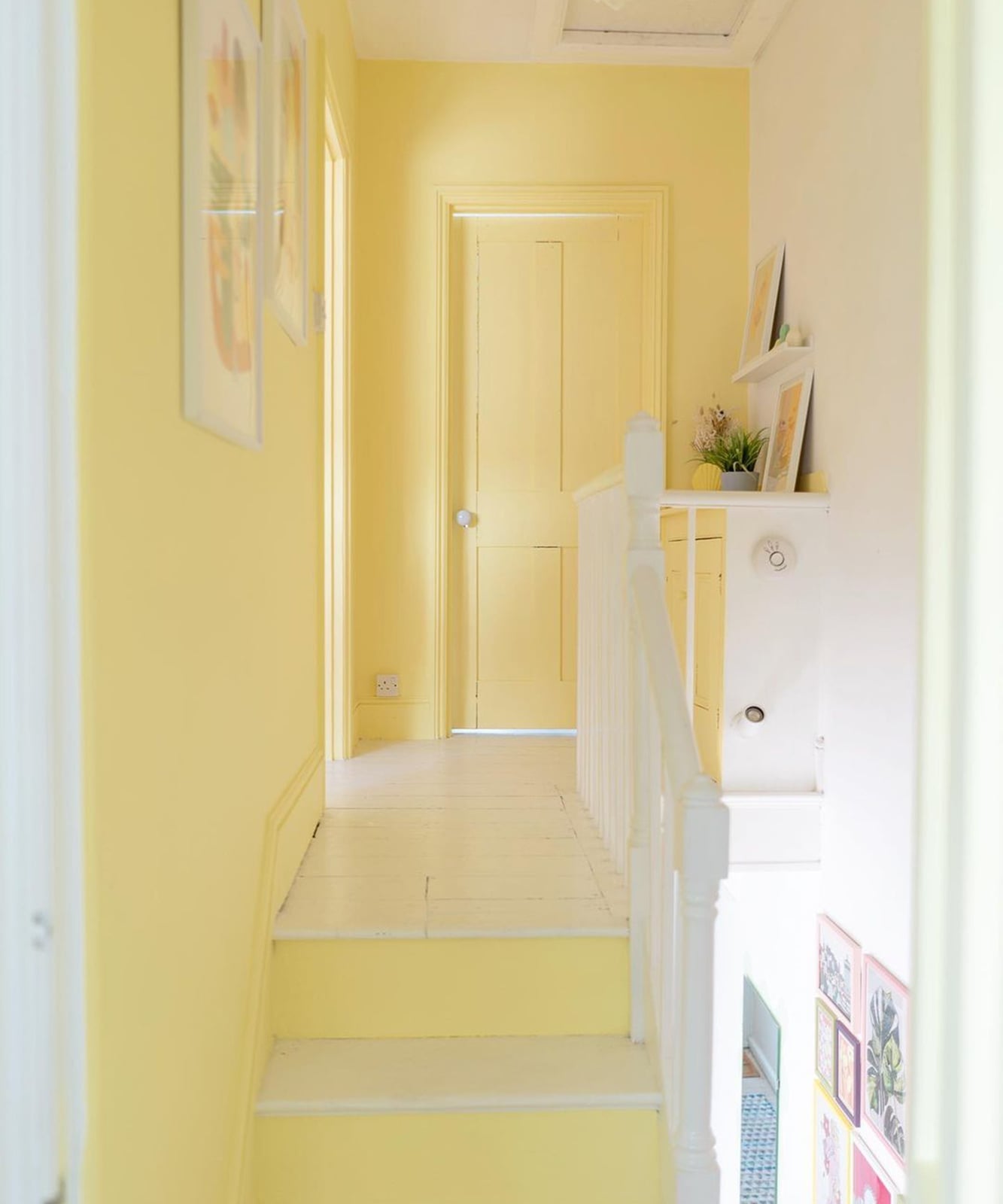
The pale yellow here covers both walls and doors, creating an unbroken wash of color. A white banister and small shelf keep the look clean, while natural light bounces off the yellow to make a narrow hallway feel wider. The plaster walls and wood details add subtle texture without clutter.
Deep Green Walls with Gray Carpeted Stairs for a Modern Contrast
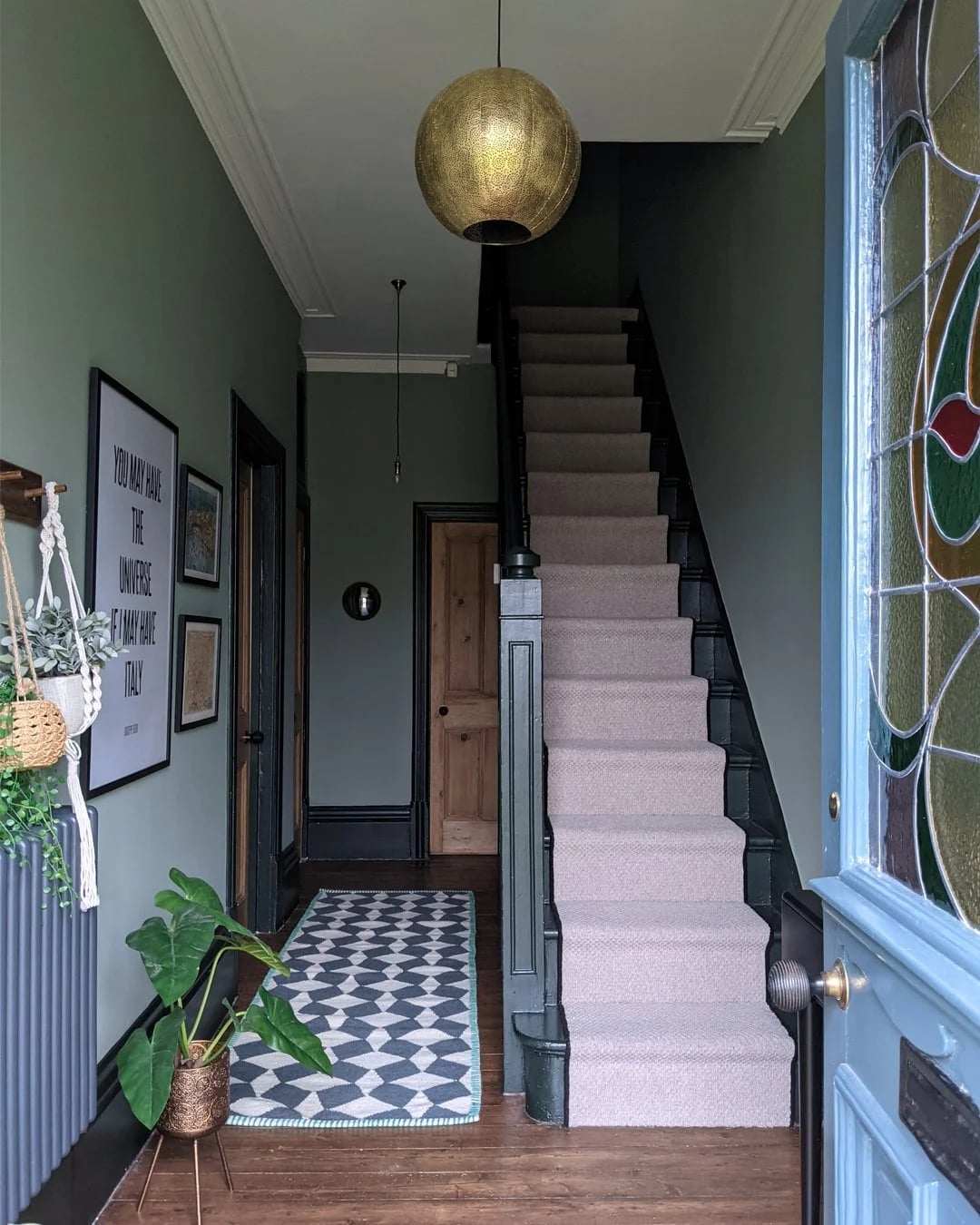
This pairing works because the deep green and gray share an undertone. The dark green walls anchor the space, while the gray carpeted stairs provide a neutral counterpoint. A large gold pendant light hangs over the staircase, adding warmth and a focal point. The window and the glass in the pendant light reflect off the green, making it shift throughout the day. A rug and plants soften the transition between the wall color and the wood floor.
Deep Blue Paneled Wall in a Traditional Mudroom Entryway
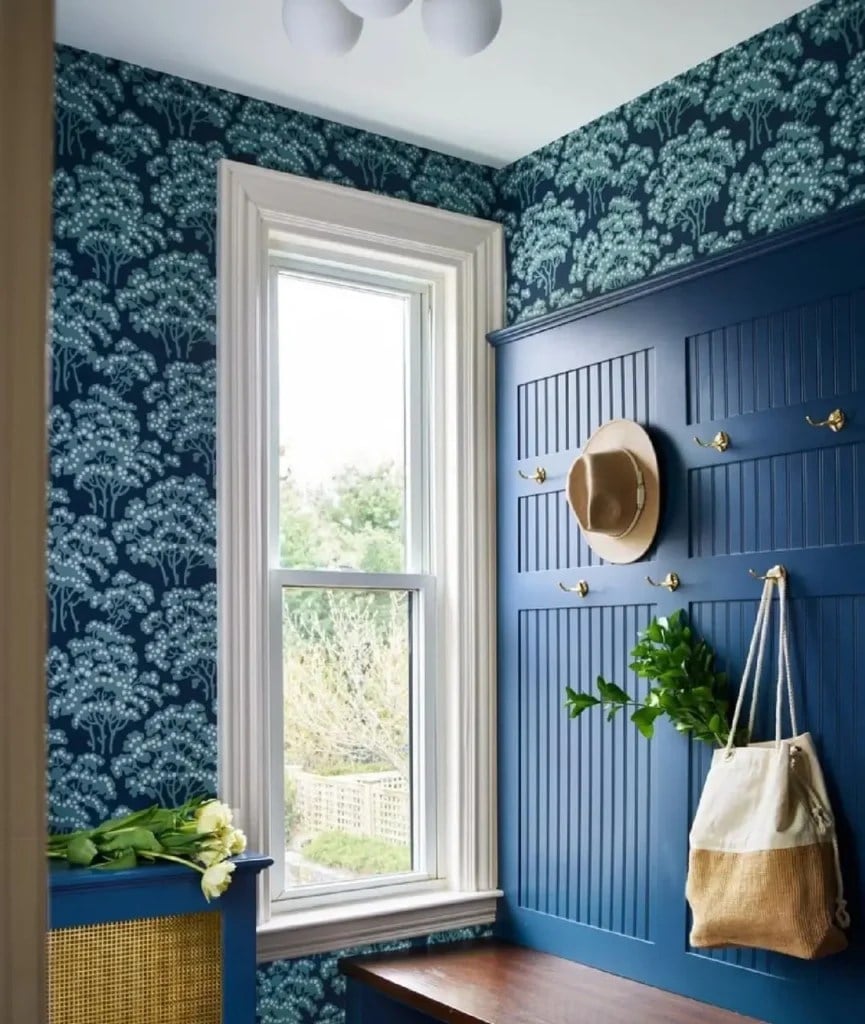
A mudroom needs to handle daily traffic, and a deep blue paneled wall does that while adding a traditional feel. The wood paneling is painted a rich deep blue, which hides scuffs better than a light color. White wallpaper above the paneling keeps the space from feeling too dark, and natural daylight floods in. A bench with fabric cushions and coat hooks provide storage. The hat and bag on the hooks show that the setup works for daily use. For renters, peel-and-stick wallpaper above a temporary wainscoting can mimic this look without permanent changes.
Dark Brown Wainscoting with White Upper Walls for a Classic Hallway
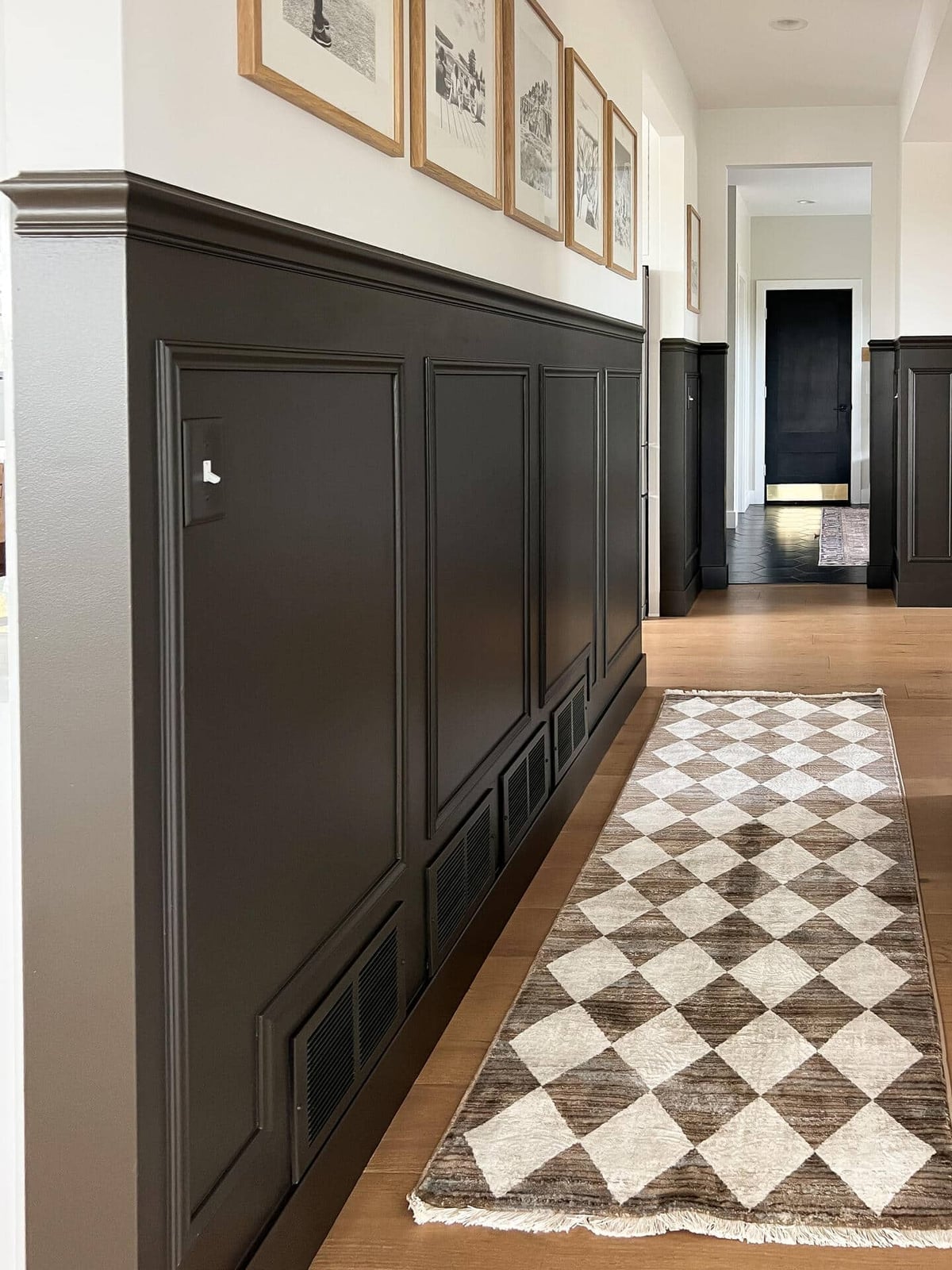
Dark brown wainscoting brings weight and tradition to a long hallway, especially when paired with white upper walls and a beige runner. The contrast is formal without feeling cold, and the brown ties into the wood floor below. For a similar look, stick with a warm white on top so the brown feels balanced. A framed piece of art on the wall above the wainscoting keeps the eye moving down the hall.
Sage Green Walls for a Serene and Modern Hallway
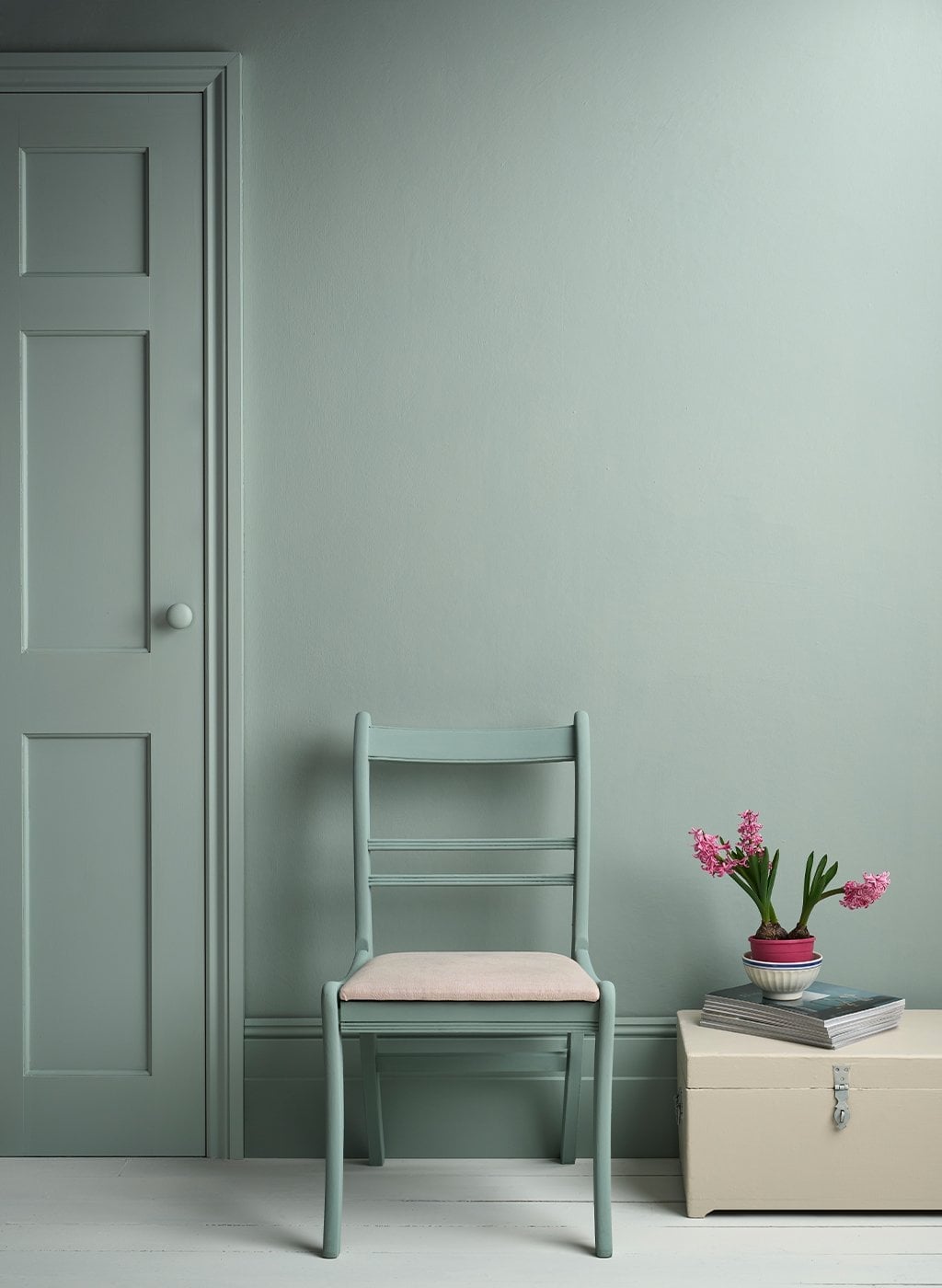
A narrow hallway benefits from a soft color like sage green because it does not close in the space. This modern hallway uses sage green on the walls and a cream chair and chest to keep the look light. A potted plant adds a natural note that repeats the green. For renters, sage green is a safe choice that works with most trim and flooring, and it reads as neutral enough to pass a walkthrough. The key is to keep the palette simple so the green stays calm.
Pale Yellow and Cream Walls with a Vibrant Abstract Art Accent
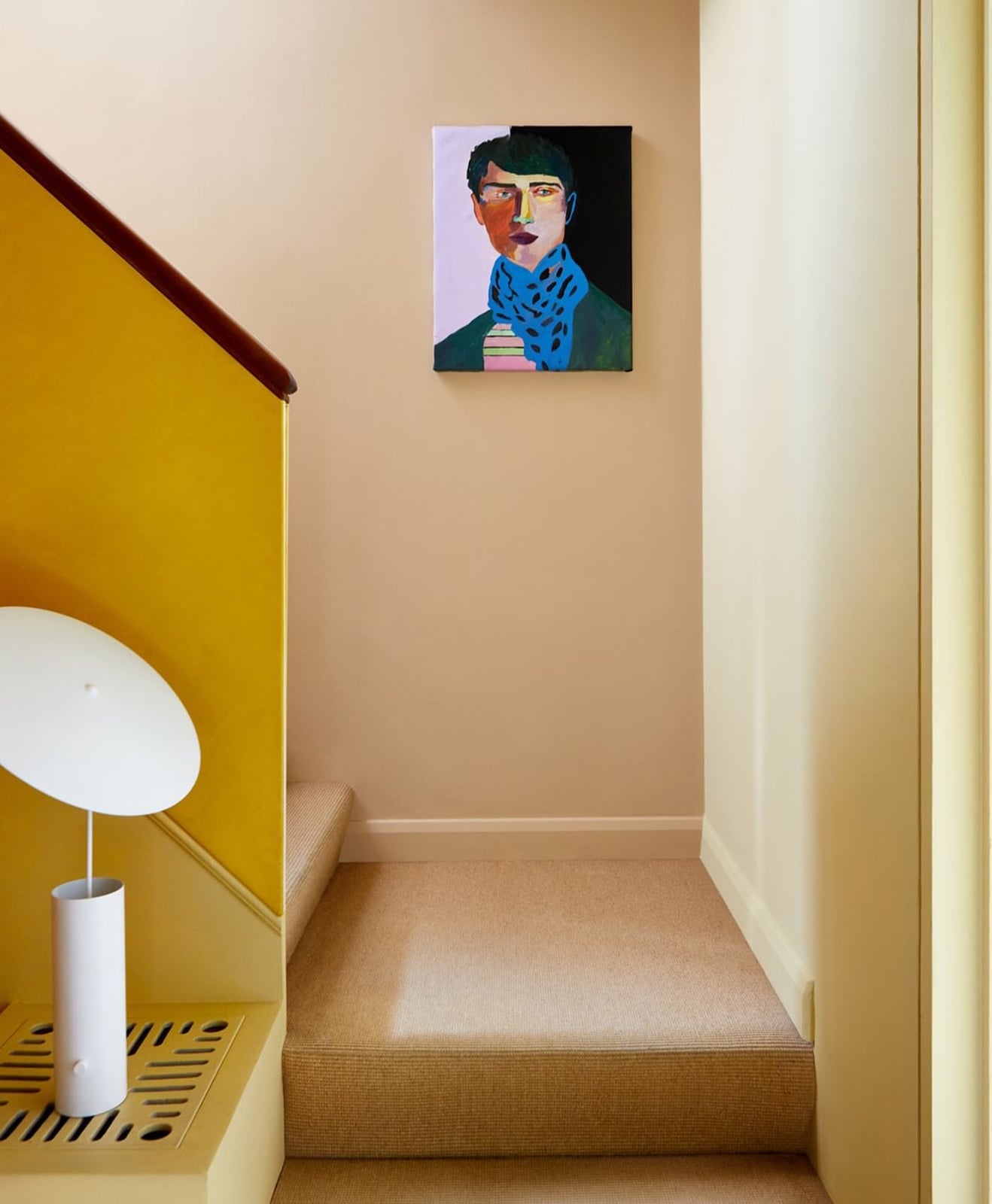
Pale yellow walls can feel too sweet on their own, so this hallway adds a cream tone on the lower walls and carpeted stairs to ground the space. The real move is the vibrant abstract portrait art that pulls in warm and cool notes. A modern floor lamp in metal adds contrast without fighting the yellow.
For a similar effect, use pale yellow as the base and let the art do the work. Cream softens the transition from wall to floor, and the metal lamp keeps the look from drifting into nursery territory.
Vibrant Teal Walls with Wood Paneling for a Rich Hallway Corner
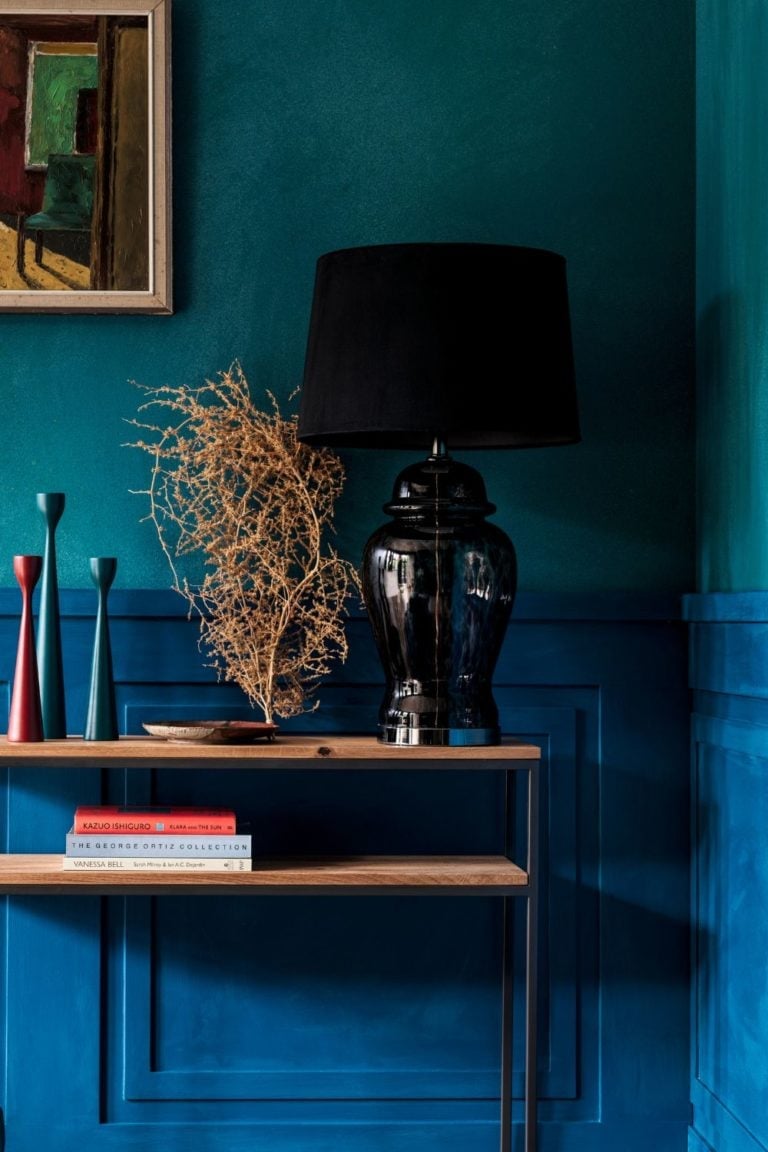
Vibrant teal paint on a hallway corner turns a pass-through into a destination. The dark wood paneling on the lower wall anchors the teal and keeps it from floating. A console table with a lamp and decorative objects gives the corner a purpose. The teal reads as rich because the wood paneling adds depth, and the lamp light softens the saturation. This setup works best when the teal is the only bright color in the vignette.
Muted Mauve Walls with an Arched Doorway for a Soft Entry
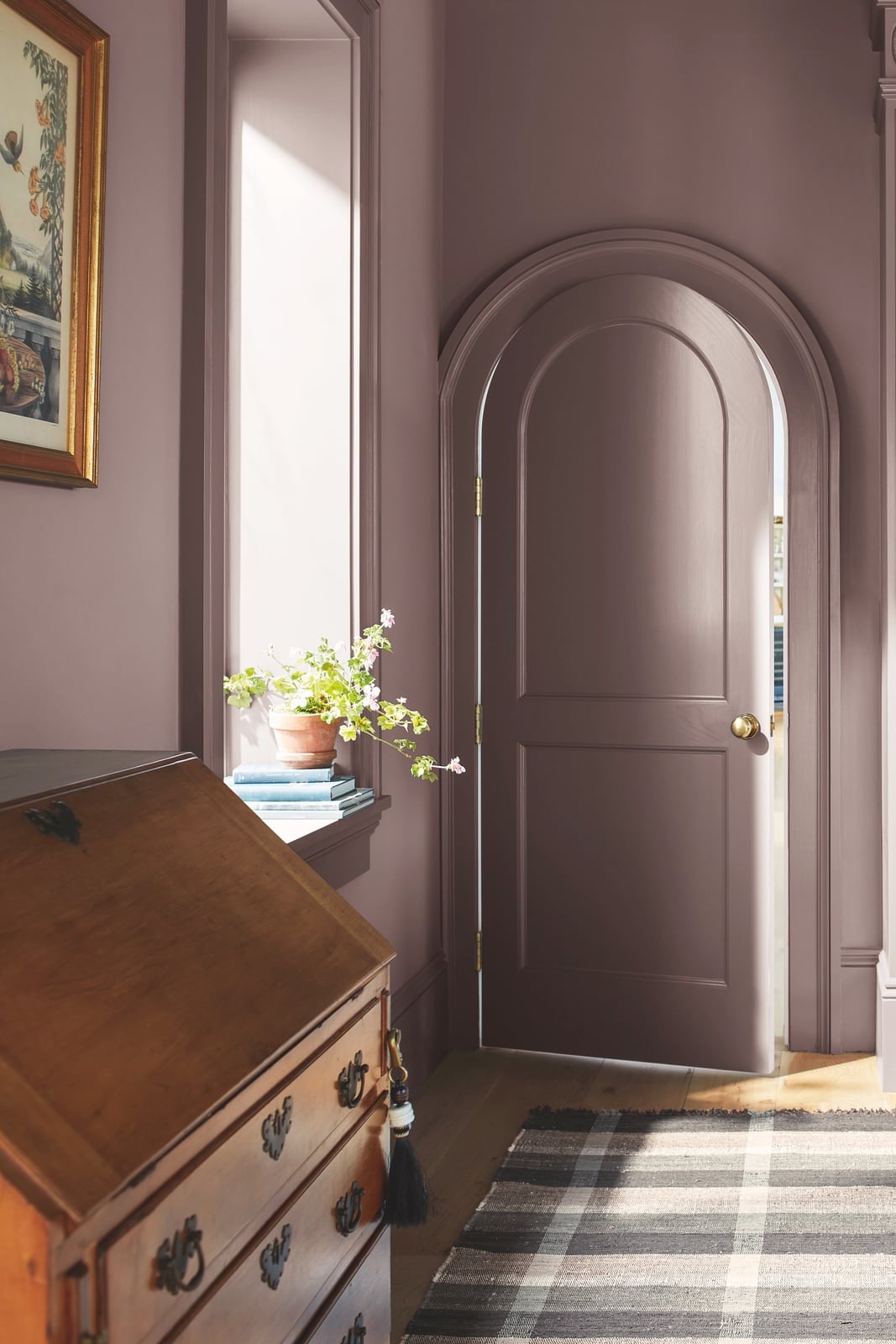
Muted mauve is a grown-up neutral that gives an arched doorway a soft, defined look. In this compact corner, the mauve paint extends onto the door and trim, creating a continuous backdrop. A wooden antique desk and a plaid rug add texture, while a potted plant brings life. Daylight from the window and doorway keeps the mauve from turning flat. This palette works because the mauve is toned down enough to let the wood grain and rug pattern stand out.
Cream Walls with Wainscoting and Patterned Floor Tiles
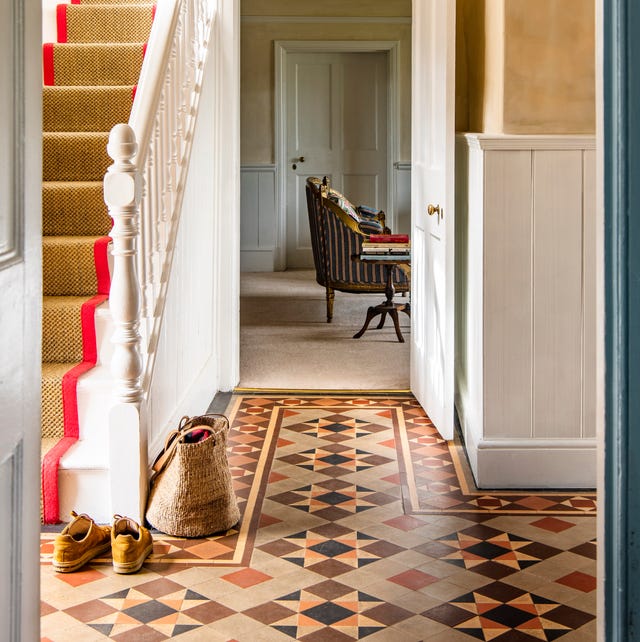
In a narrow hallway with stairs, keep the main wall color light and let the floor carry the pattern. Cream walls and wainscoting prevent a boxed in feel, while geometric floor tiles add personality at ground level. The wainscoting protects the lower wall from scuffs, which matters in a pass through space that sees shoes and a basket of gear. A hallway runner in a neutral tone softens the tile underfoot and ties the beige and red tones together. Natural light from the doorway lands on the cream paint, making the narrow setup feel wider than it is.
Deep Blue Walls with a Prominent Wooden Staircase
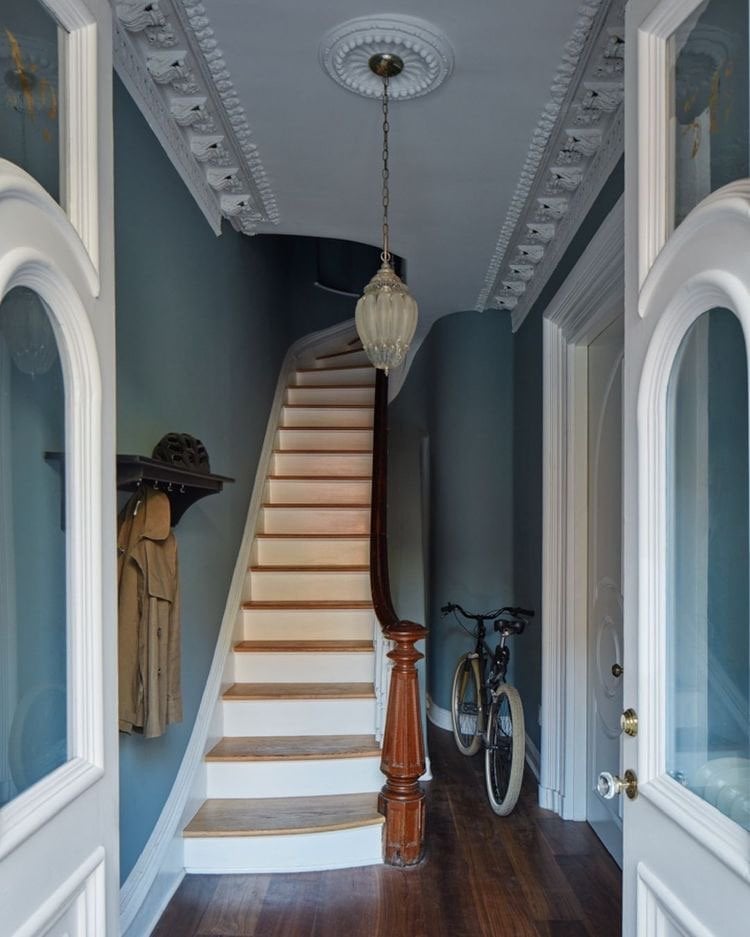
The deep blue paint wraps the walls of a compact hallway, creating a cocooning effect that makes the wooden staircase stand out. The white risers and handrail keep the stairway from disappearing into the dark walls. A brass chandelier overhead adds a warm glow that balances the cool blue. The color choice works because the hallway has natural light from the front door, which keeps the deep shade from reading as flat.
White Walls with a Striking Navy Accent Wall
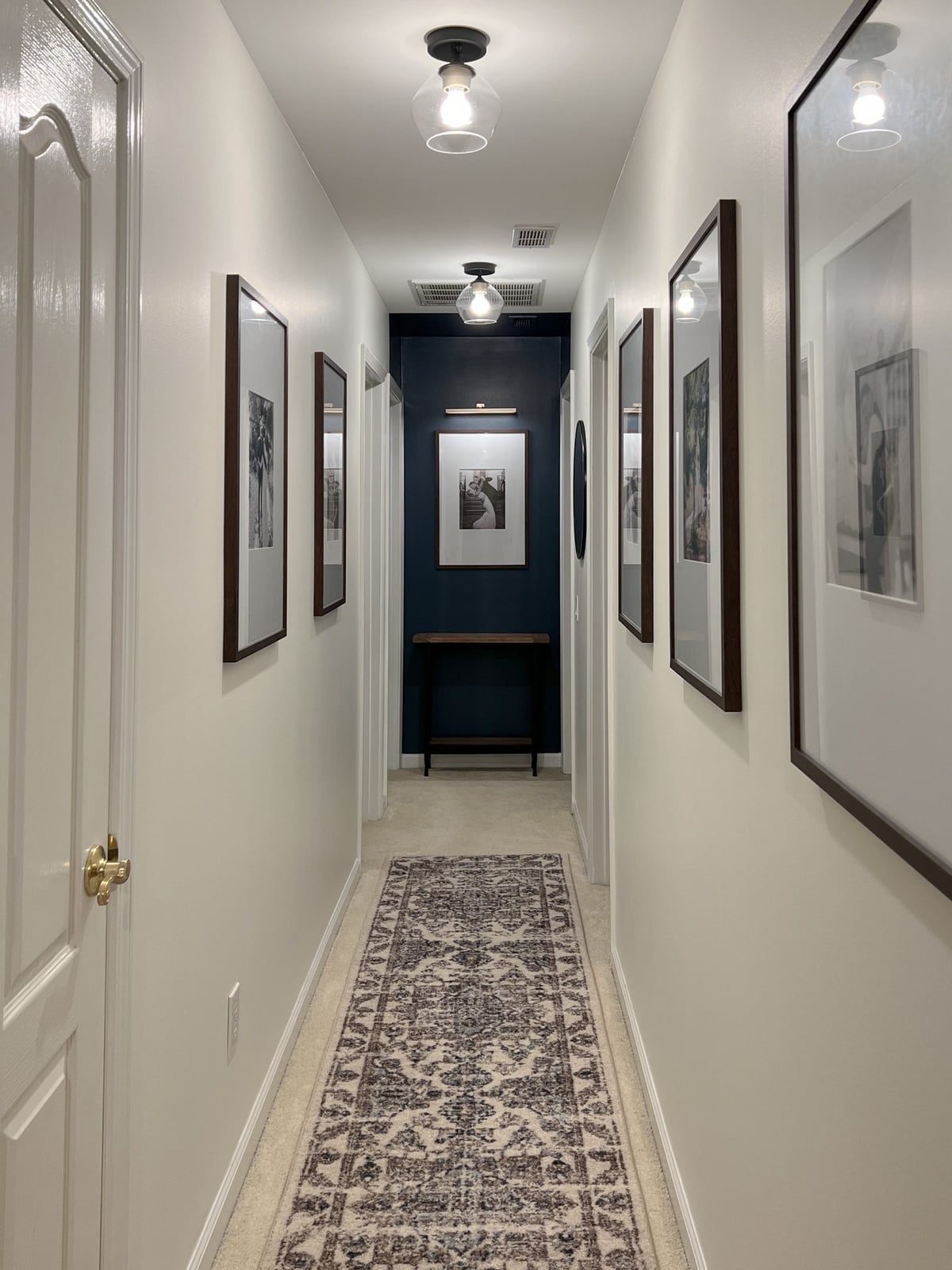
A narrow hallway benefits from a single dark accent wall because it anchors the view without making the whole corridor feel tight. The white walls on the other sides reflect the ceiling lights, keeping the path bright. A console table and artwork on the navy wall create a stopping point, and the picture light above the art adds a focused glow. The dark hue works best when the rest of the palette stays simple, so the eye has one place to land.
Pale Blue Walls with Stone Flooring for a Bright Traditional Hallway
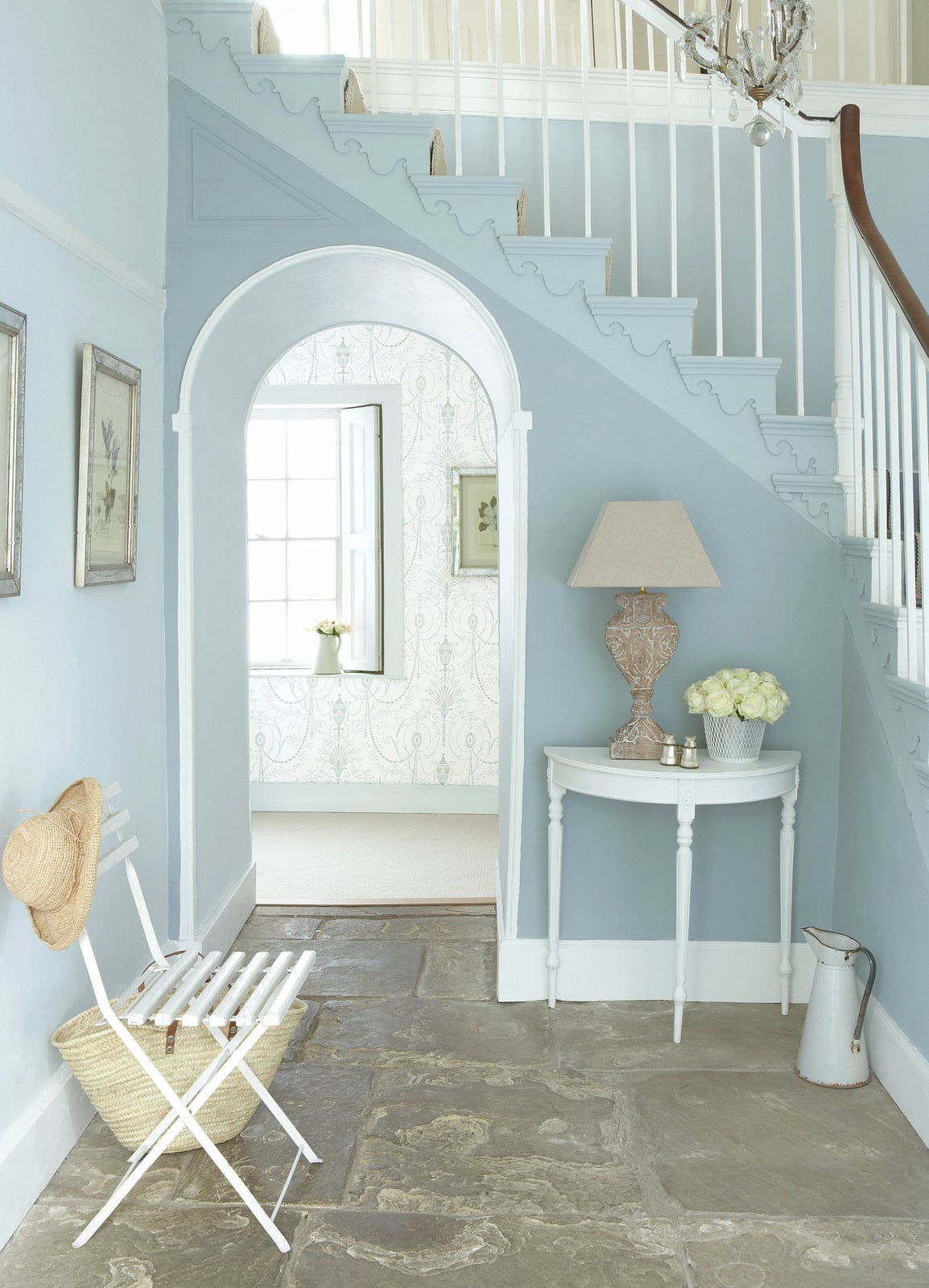
A pale blue entryway with stone flooring is a quieter alternative to a white hallway, offering color without losing the open feel. The pale blue walls brighten the space from the front door and the lamp on the table, keeping the area airy even on overcast days. The stone floor grounds the look with its natural texture, while the wooden chair and ceramic jug add traditional touches. The palette stays simple: pale blue, white trim, and the warm gray of the stone. This combination suits a home that wants a soft color story without going fully neutral. The pale blue also works as a backdrop for layered accents like a hat on the hook or a seasonal arrangement on the table.
Cream Walls with Herringbone Wood Floor and a View into a Green Living
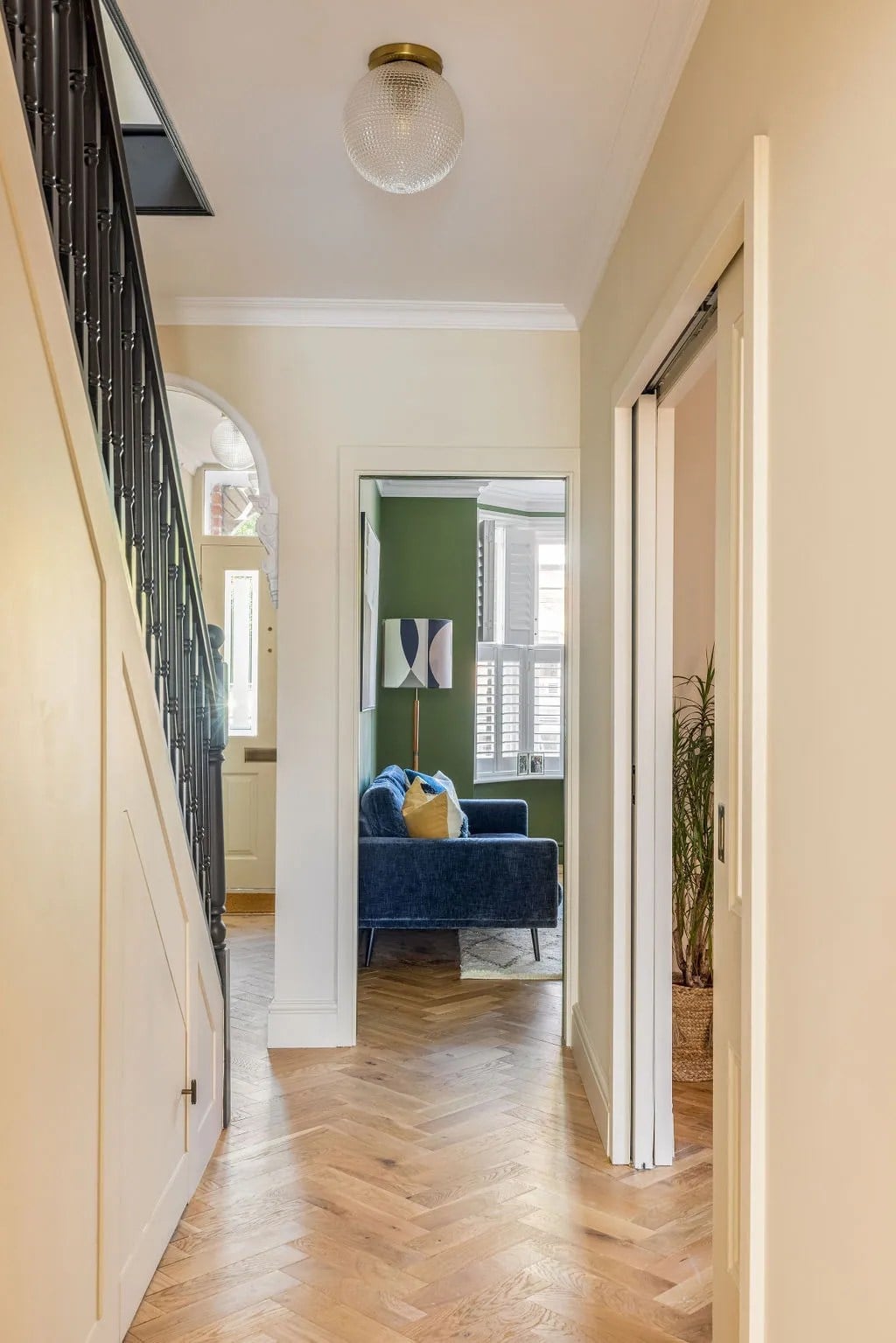
The cream walls in this hallway let the herringbone wood floor take center stage while creating a visual bridge to the green living room beyond. The warm beige and cream palette makes the transition between spaces feel smooth rather than abrupt. The staircase with painted risers and dark treads echoes the floor’s wood tone, keeping the layout cohesive. The view into the green room adds a pop of color that the neutral hallway frames without competing.
Striking Two-Tone Teal and White Hallway Paint Scheme
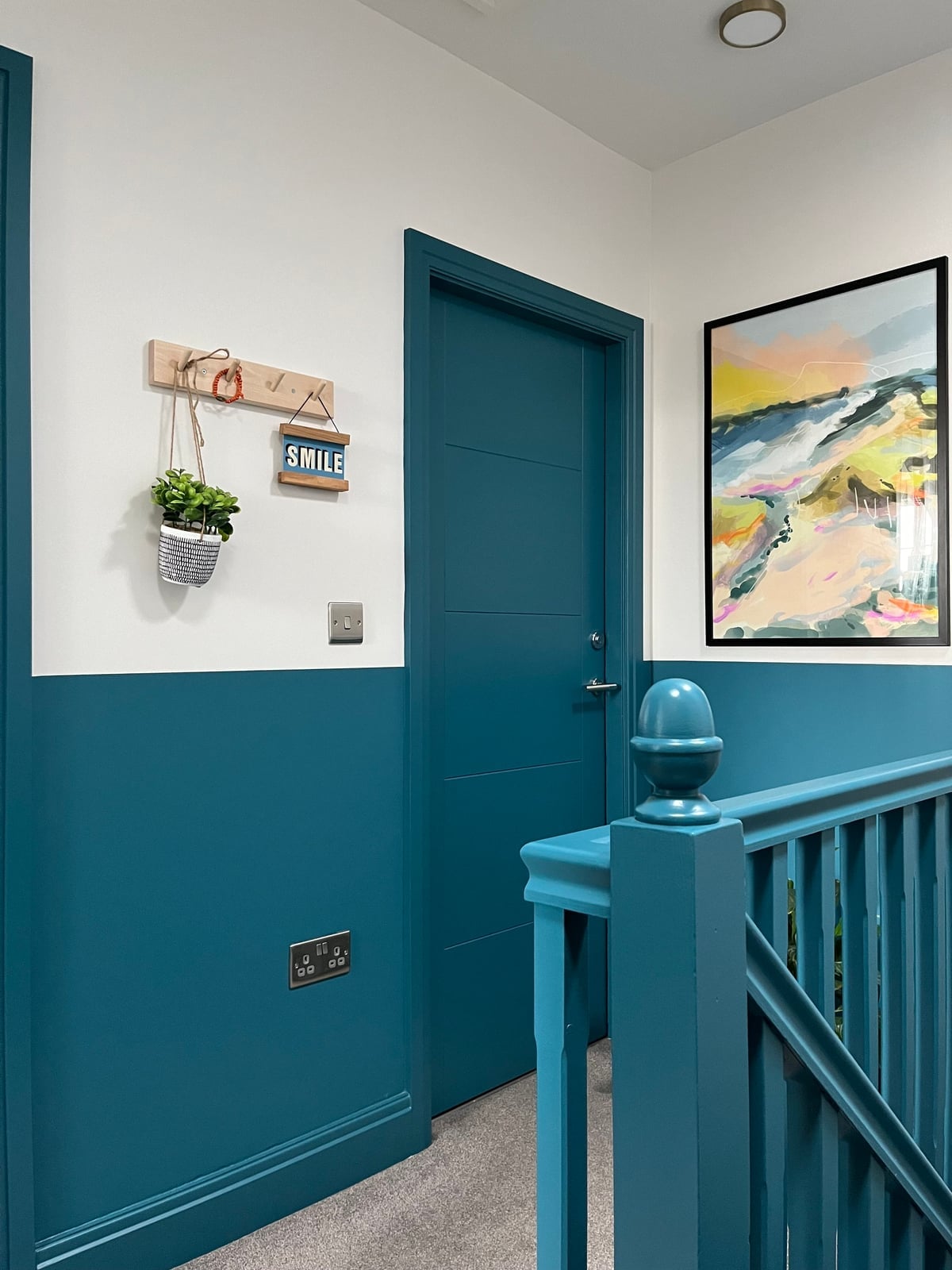
This two-tone teal and white paint scheme is a clever way to add depth without overwhelming a wide hallway. The lower half of the walls is painted in a rich teal, while the upper half and trim stay white, creating a clean horizontal line that draws the eye along the length of the space. Wood stairs with a metal railing and a simple carpet runner keep the look grounded and practical. An overhead light and natural light from the entry keep the teal from reading too dark. The key is the ratio: the white upper wall keeps the room feeling open, while the teal anchors it. For renters, a temporary wallpaper panel on the bottom half can mimic the same effect without a permanent commitment.
Pink Wavy Wallpaper and Orange Door for a Boho Hallway
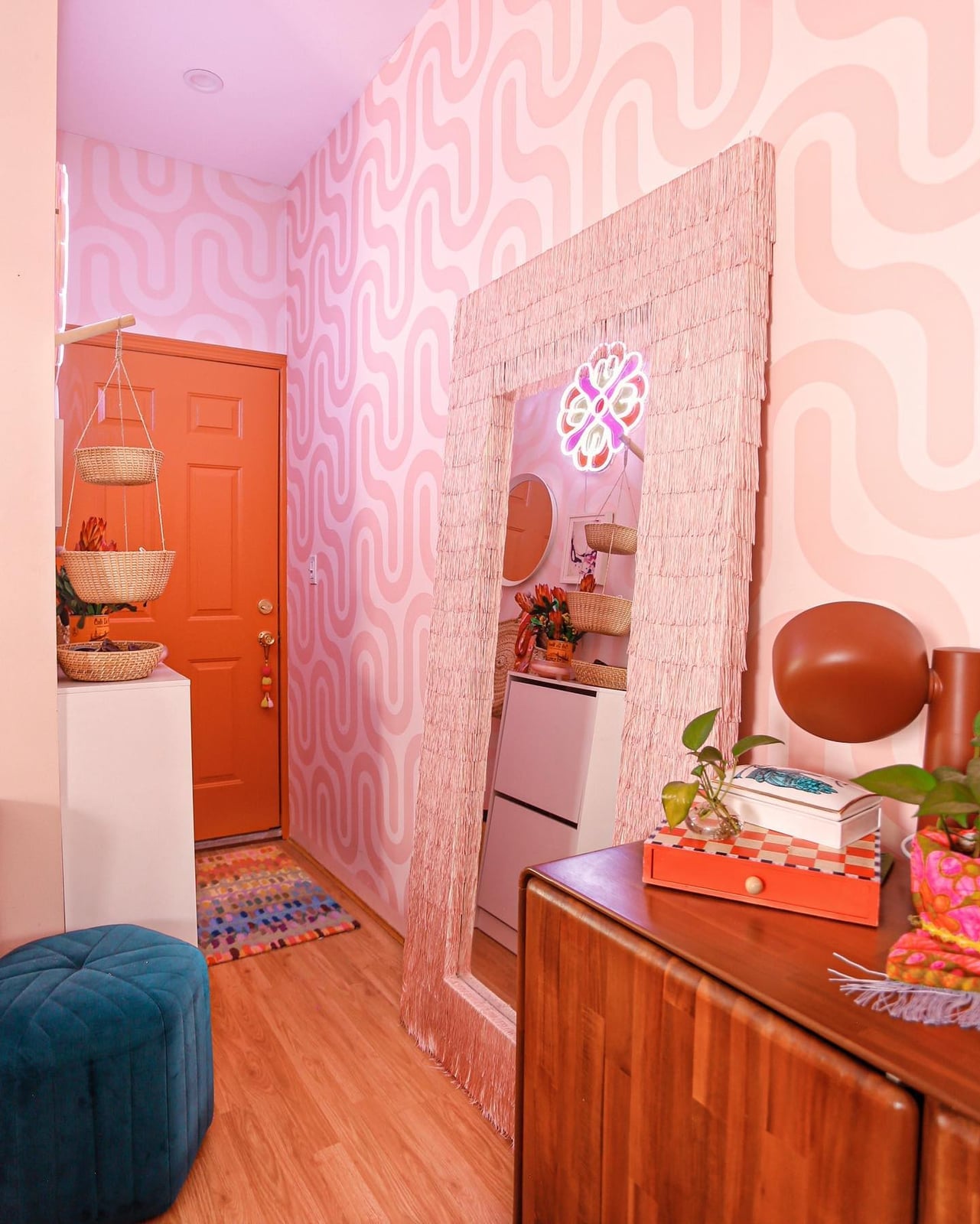
A practical rule for a boho hallway: let one bold pattern lead and everything else follow. Here, pink wavy wallpaper covers a compact entrance wall, setting a playful tone. The orange door becomes a natural accent, not a competing statement. The style is defined by the mix: the wallpaper provides the pattern, while the orange door and cream walls balance the warmth. A large mirror with a wooden frame and a rattan ottoman add texture without clutter. What breaks the look is too many patterns or colors in one small space. The wallpaper is applied to one wall only, which keeps the hallway from feeling busy. For renters, peel-and-stick wallpaper is a practical swap that comes off cleanly when it is time to move.
Deep Green Paneled Walls with a White Banistered Staircase
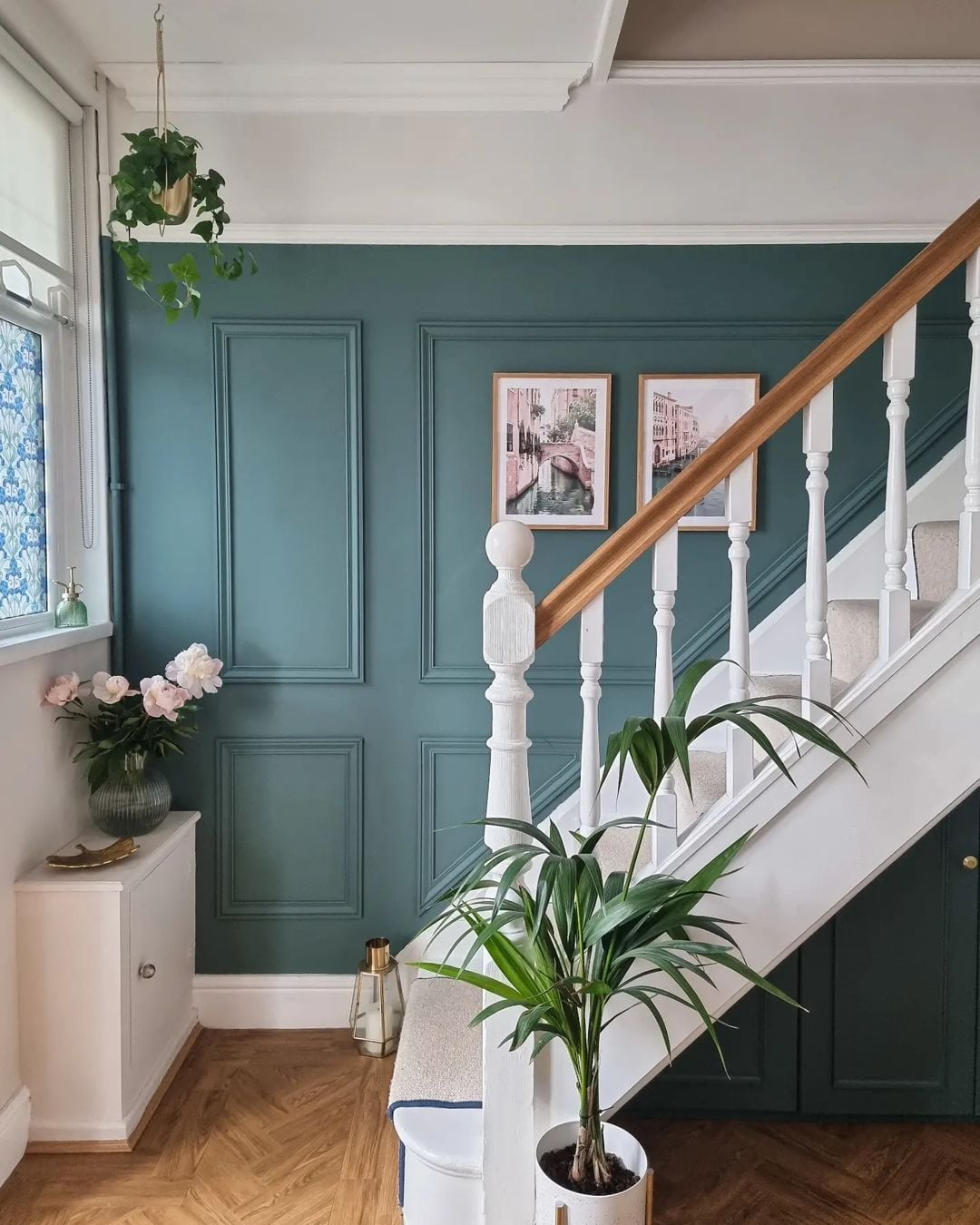
The deep green paneled walls cover the lower portion of the hallway, while the white banistered staircase and upper walls prevent a closed in feel. The contrast is crisp: the dark green adds weight and tradition, and the white trim and natural daylight balance it. A wooden cabinet and framed artwork on the wall introduce lighter tones. The paneling adds texture and visual interest, making the hallway feel deliberate. This setup works best in a compact hallway where the dark color might otherwise dominate. The glass in the door and the ambient light keep the green from feeling too heavy.
Vibrant Orange Walls for a Bohemian Style Hallway
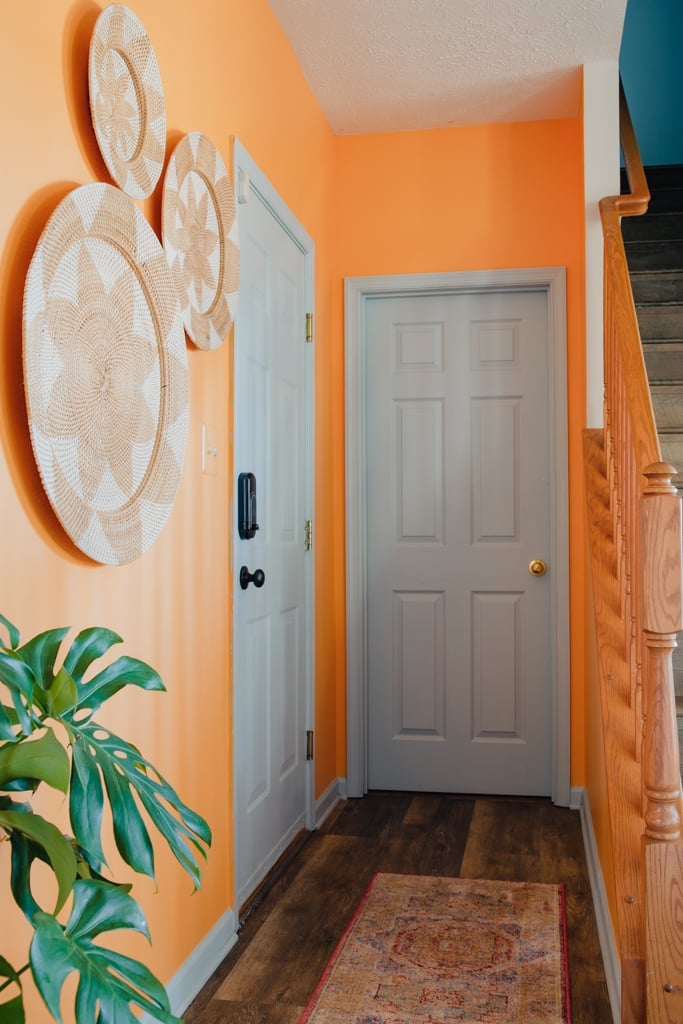
Vibrant orange walls in a compact hallway corner make a strong first impression without needing much else. The orange is the hero, covering all visible walls, while the gray door and wood tones of the stairs and wicker wall decor keep the palette grounded. Daylight prevents the orange from feeling too intense, and an overhead light ensures the color reads clearly even in the evening. The bohemian style comes through in the layered textures: woven wall pieces, a wood floor, and a simple runner. This color works best in a hallway that gets some natural light; in a darker space, the orange can feel heavy. A matte finish helps the color feel soft rather than glossy.
Muted Green Walls and Door for a Calming Traditional Hallway
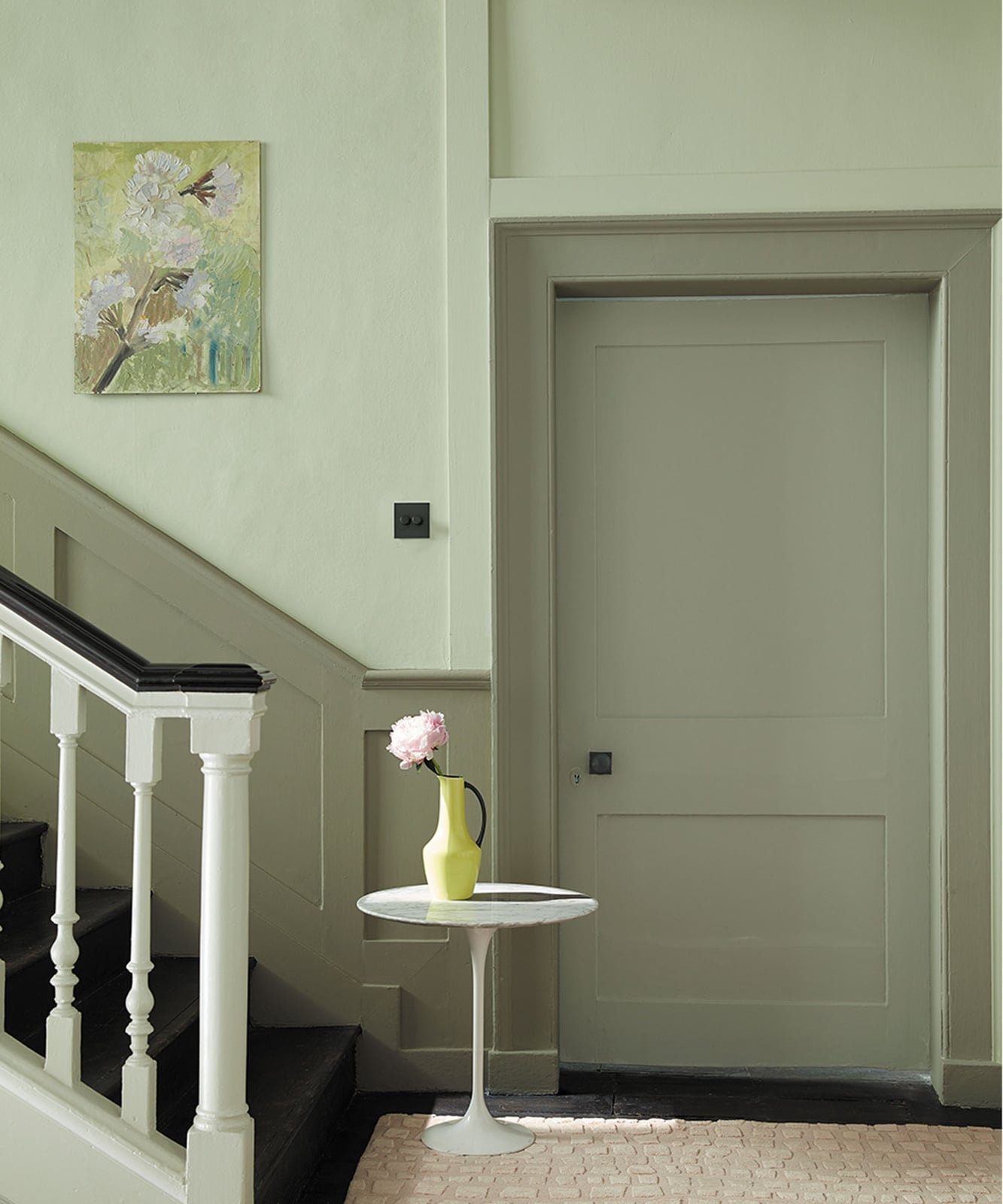
Muted green can act as either a neutral or an accent depending on what you pair it with. Here, the green covers both the walls and the door, creating a seamless, calming backdrop in a compact traditional hallway. White trim and a white ceramic vase on a wooden table provide contrast without competing. A small painting on the wall adds a touch of personal style. The key is the finish: a matte or eggshell sheen keeps the green soft and welcoming. Ambient light helps the color feel airy. In a darker hallway, choose a green with a warm undertone to prevent the space from feeling cold.
Vibrant Hot Pink Walls for a Bold Traditional Hallway
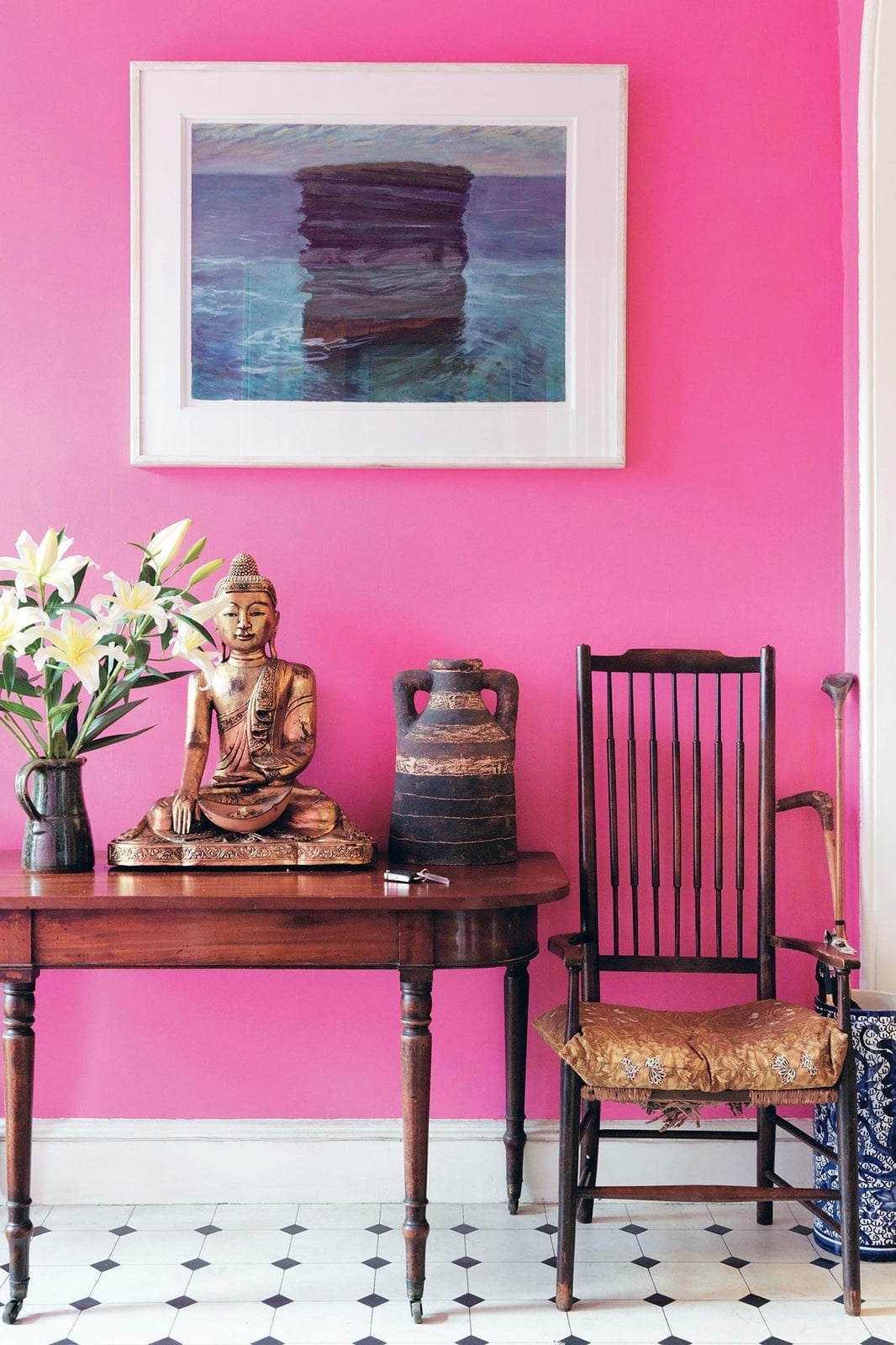
Hot pink walls bring an unexpected jolt of energy to a traditional hallway. The compact vignette pairs the vivid finish with warm wood tones on a console table and chair, grounding the scheme. Gold accents on the table and a ceramic Buddha statue pick up the warmth, while a framed artwork breaks the pink with a lighter note. Natural light from a nearby window keeps the saturated color from feeling heavy. This palette works because the hot pink is the only intense color in the view, letting the wood and gold textures do the balancing.
Final Thoughts
The best hallway paint is the one that makes you want to walk through it every day. Across these 31 ideas, the common thread is choosing a color that fits your light and your lifestyle. Dark shades hide scuffs well but need good lighting. Light colors bounce natural light around and make a narrow hall feel wider. Two-tone and paneled looks add structure without a full renovation. Glossy finishes reflect more light but show every brushstroke, so take your time with prep. Test your top three colors on the wall and live with them for a few days before committing. A hallway is a high-traffic zone, so a quality paint with a scrubbable finish will last longer. Keep the rest of the decor simple, and let the color do the work.