Japandi design is the quiet room you didn’t know you needed. It takes Scandinavian warmth and Japanese restraint, then edits out the noise. This isn’t about bare walls. It’s about choosing fewer things that earn their place. Light wood, plaster, stone, and woven textures do the talking.
33 spaces show how that plays out across bedrooms, living rooms, dining areas, and entryways. Each one proves that minimal doesn’t mean cold. You’ll see low beds, shoji screens, live-edge tables, and the occasional surprise, like a blue sofa or pink bedding, that keeps the look from getting too predictable.
Japandi Bedroom: Low Bed and Exposed Beams for Serene Minimalism
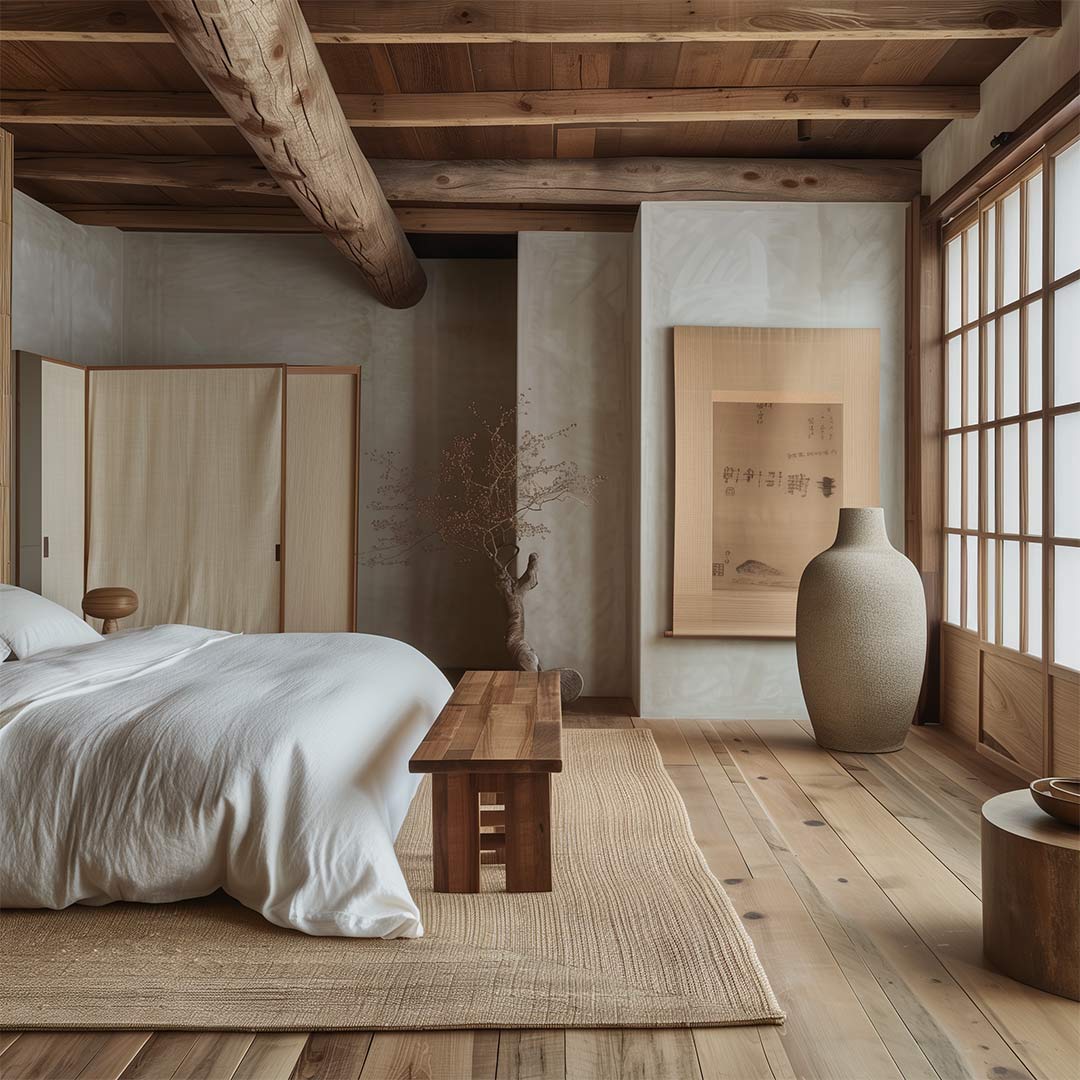
A low wooden bed frame sits centered in a spacious room with exposed wooden beams overhead and a shoji screen over the window. Cream, wood tones, and a large ceramic vase focus attention on texture rather than color. Linen bedding and a simple wooden bench at the foot of the bed add softness. The layout makes the bed the clear anchor, leaving the room quiet. This style is grounded and sparse, with the beams and screen providing the only visual break.
Cozy Japandi Living Room with Woven Chair and Oversized Pendant
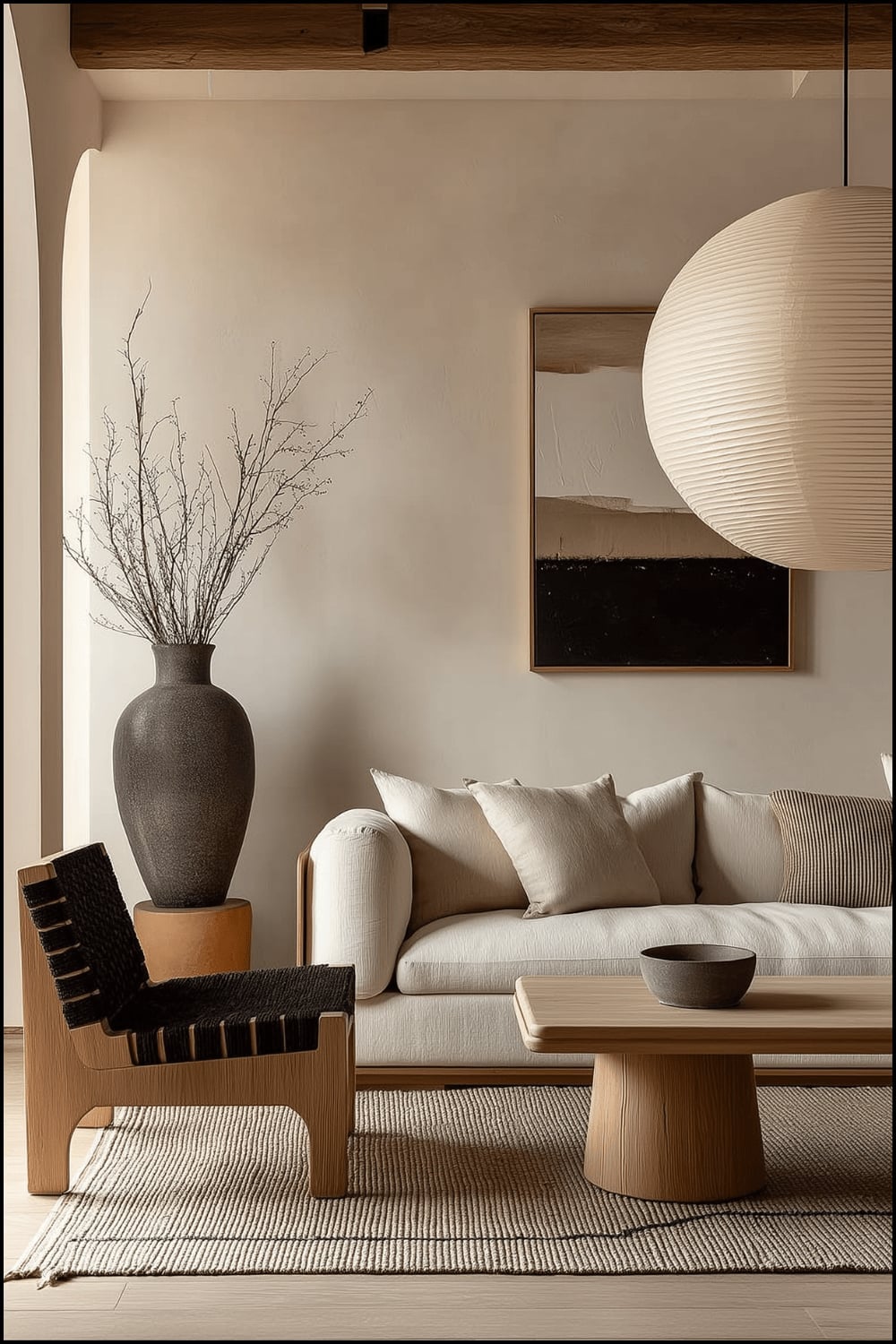
This room relies on materials to set the mood. A low sofa in a neutral beige pairs with a woven chair, while a large ceramic vase and an oversized pendant light hang above. The palette stays tight to beige, black, and white, which keeps the layered textiles from feeling busy. The woven chair adds a tactile contrast to the smooth linen of the sofa. The oversized pendant creates a focal point overhead without competing with the seating below. The ratio of natural to man-made materials here is about three to one, which is a good target for Japandi interiors: let wood and weave lead, and use ceramic or metal sparingly.
Japandi Bedroom: Stone Accent Wall and Minimalist Fireplace
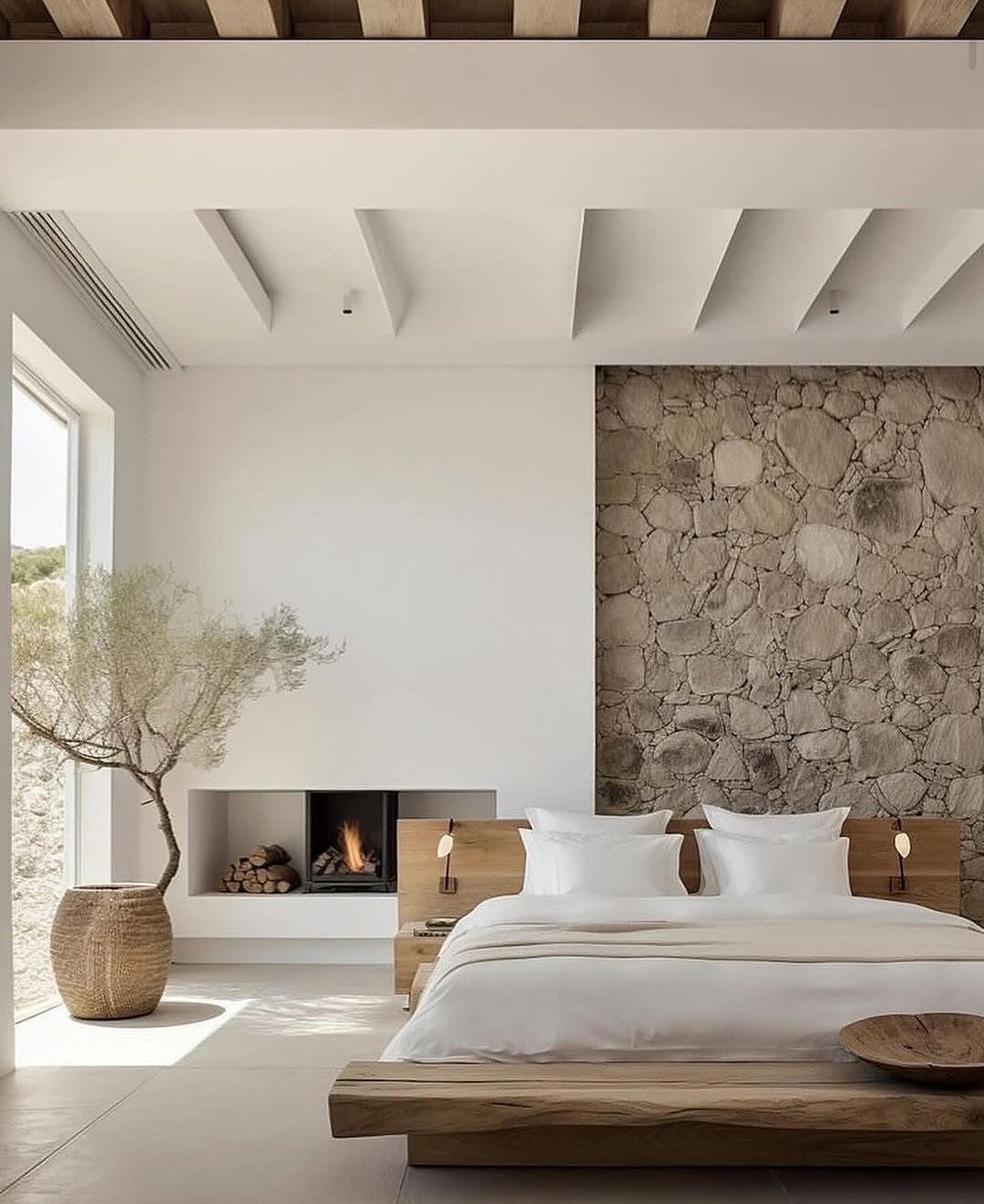
Can a bedroom feel warm with a stone accent wall and a minimalist fireplace? Yes, when the room stays restrained. A platform bed sits centered in a spacious room, flanked by bedside lamps and a potted tree near the window. The stone wall provides a dramatic backdrop, but the palette of white, neutral, and wood prevents it from overwhelming. The minimalist fireplace adds a clean line at the foot of the bed. Recessed ceiling lights keep the ceiling uncluttered, while the bedside lamps offer softer light for reading.
The key to making stone work in a Japandi bedroom is limiting it to one wall. The wooden bed frame and woven basket introduce grain and texture that balance the hard, cool surface of the stone. Window light softens the overall contrast.
Japandi Living Room with Shoji Screen Wall and Natural Wood
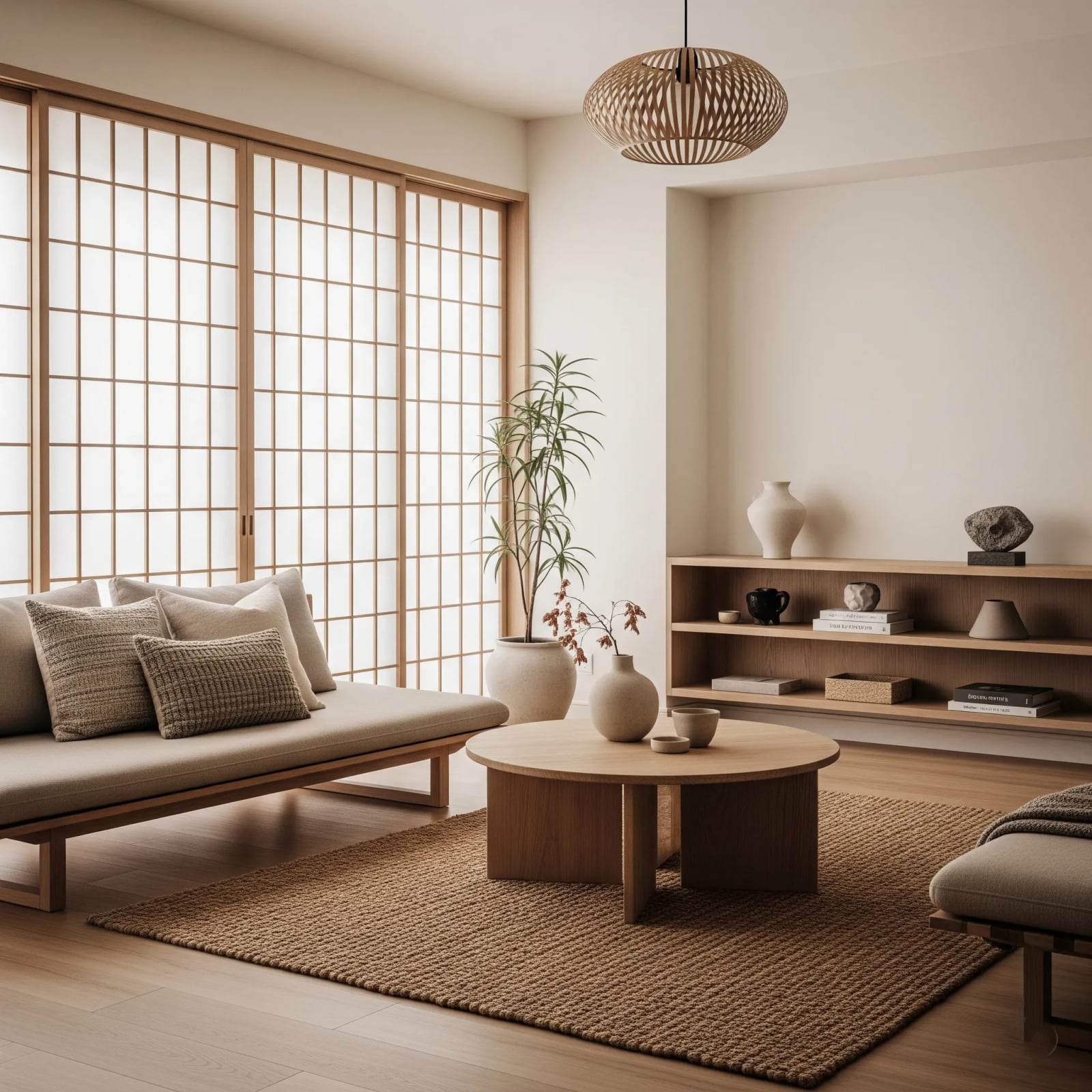
A shoji screen wall diffuses natural light across the room, landing softly on a low sofa and a round coffee table. The paper screen filters harsh sunlight into a gentle glow, which makes the wood tones in the shelving unit and furniture feel warmer. An overhead light provides ambient illumination for evenings. The layout places the sofa facing the coffee table, with the screen as a backdrop. The screen is the defining element here: it sets the quality of light for the entire space, so no other window treatment is needed.
Japandi Dining Room: Arched Window and Natural Wood Table
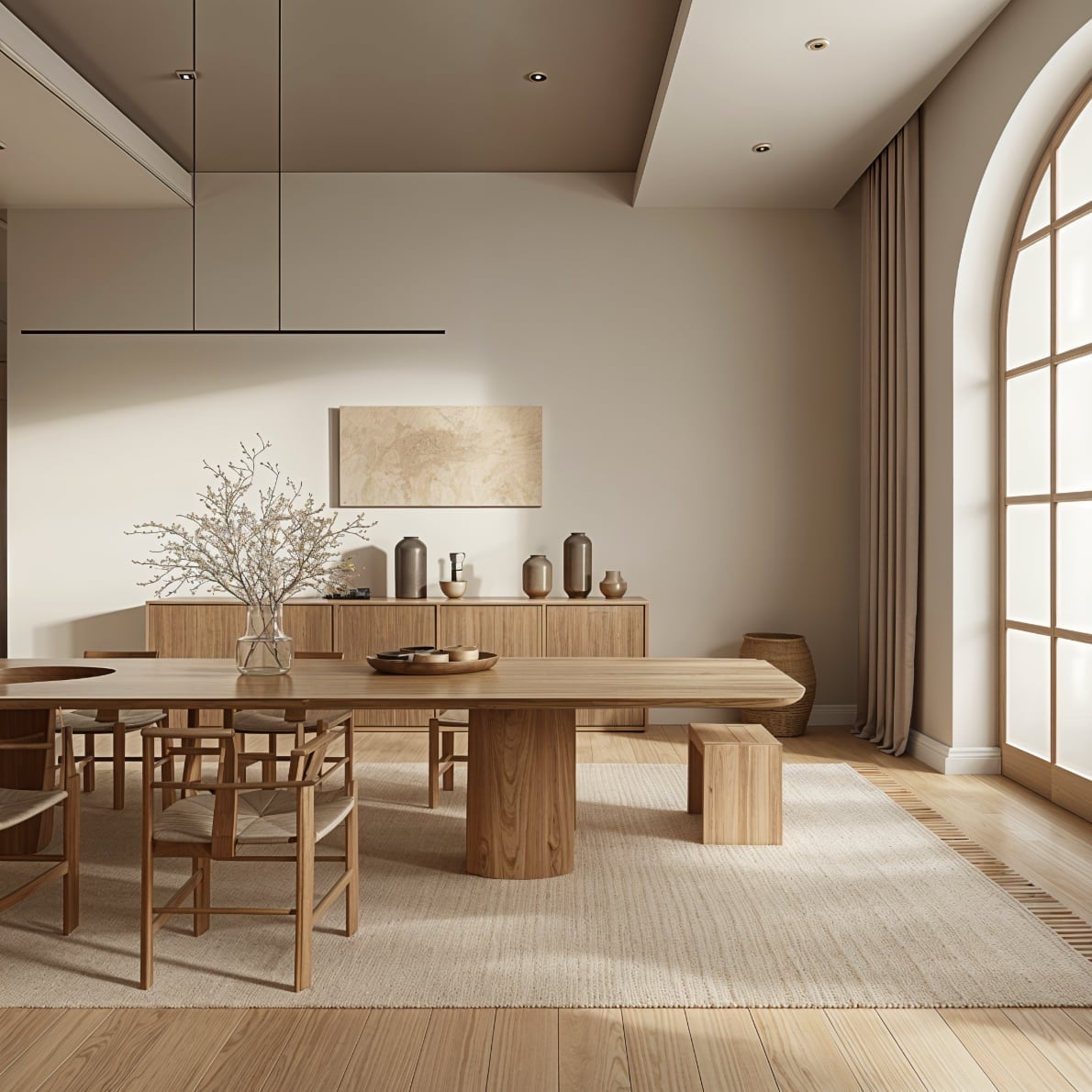
A dining table works best when it has room to breathe. A large wooden table sits centered in an open plan space, with a sideboard and bench along one wall and a woven rug underneath. The arched window floods the table with natural light, while an overhead linear pendant provides task lighting for meals. The layout leaves enough clearance around the table for chairs to pull out and for traffic to flow past. The sideboard offers closed storage for tableware, keeping the surface clear. The bench seats up to three people, which makes the table feel communal without crowding the room.
Japandi Living Area with Concrete Floors and Built-in Bench
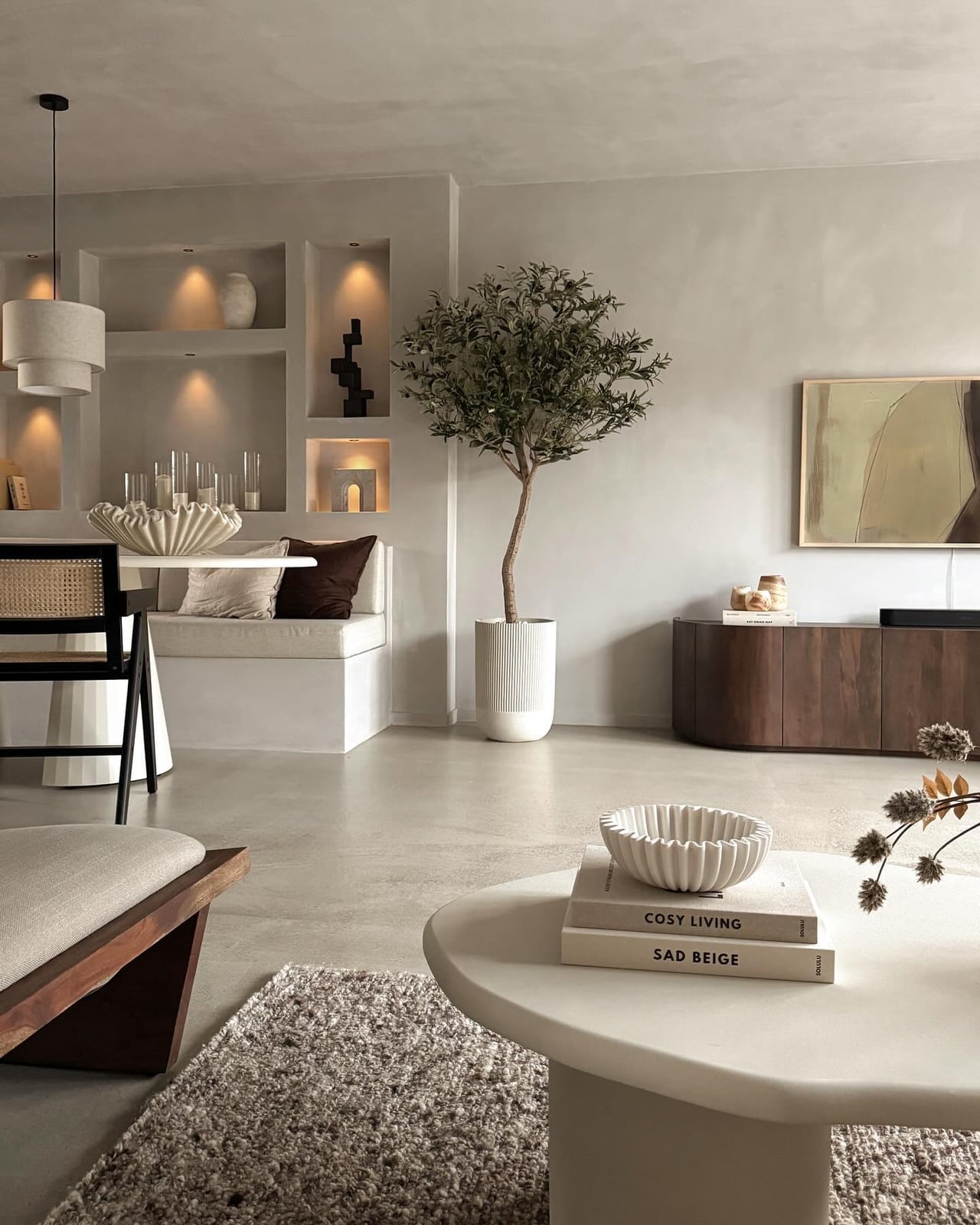
Most living rooms start with a sofa against a wall. This one starts with a built-in bench wrapped around a corner, with recessed shelving tucked above it. The concrete floors keep the room grounded, while the wood cabinet and large plant bring warmth. Layered ambient lighting from recessed spotlights and a floor lamp keeps the space from reading as cold or industrial.
What defines this as Japandi is the balance: hard concrete with soft fabric cushions, open shelving with closed storage. The ratio leans heavily neutral, with gray, white and wood tones taking up most of the visual space. A few decorative bowls on the shelf break the straight lines and add a handcrafted note. If you are renting, a low platform frame can mimic the built-in bench without permanent construction.
Japandi Living Room with Blue Sofa and Rattan Room Divider
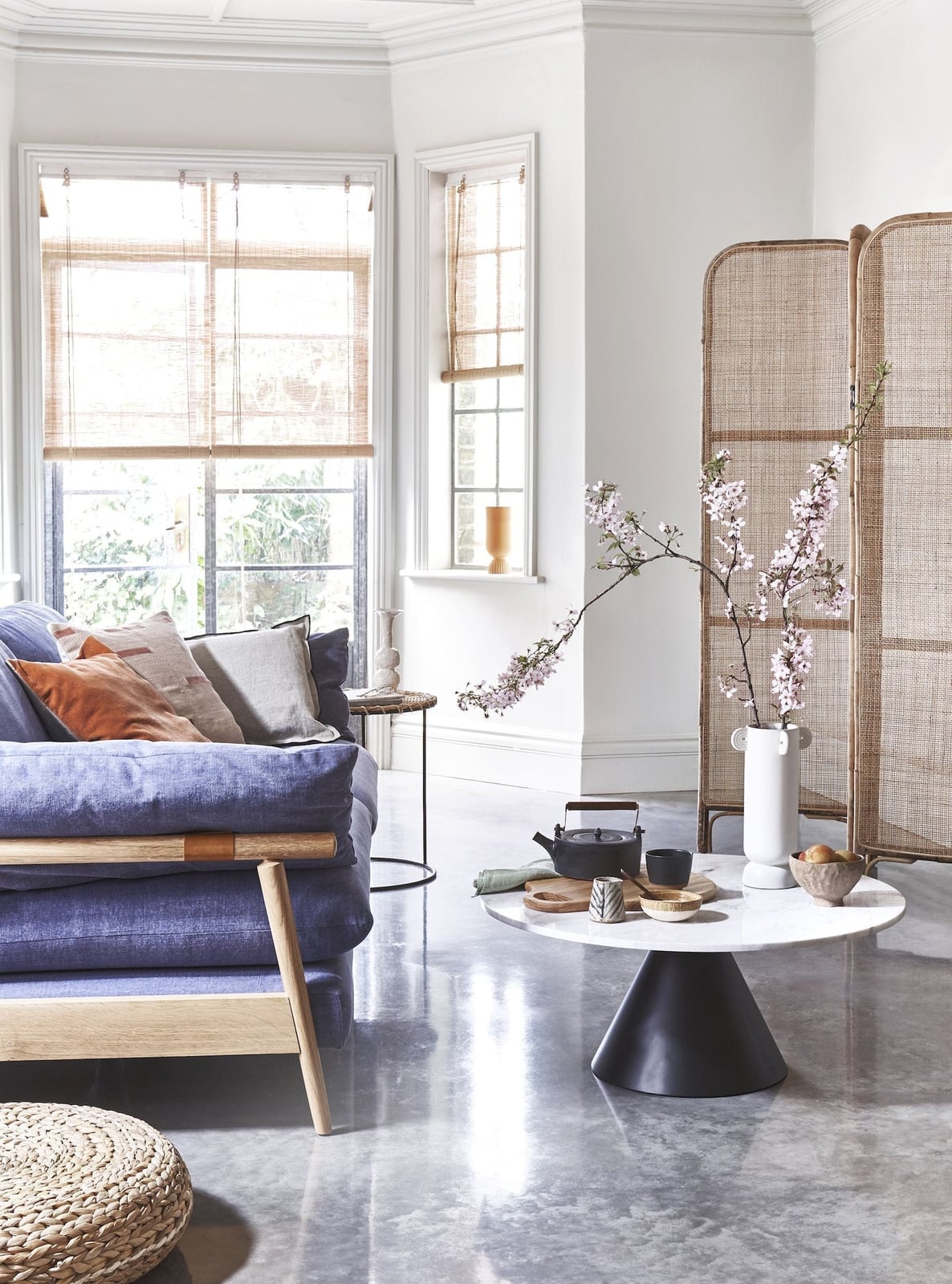
A woven room divider that stretches nearly to the ceiling changes how you read the room. The large blue sofa faces it directly, with a marble coffee table in between, so the divider becomes the visual anchor rather than the furniture. The scale of the screen keeps the open layout from feeling sprawling. The cream and beige palette keeps the blue sofa from feeling heavy, and the round ottoman softens all the straight lines. What defines this look is the proportion: one oversized piece that redefines the space.
Japandi Dining Area: Live-Edge Table and Bench Seating
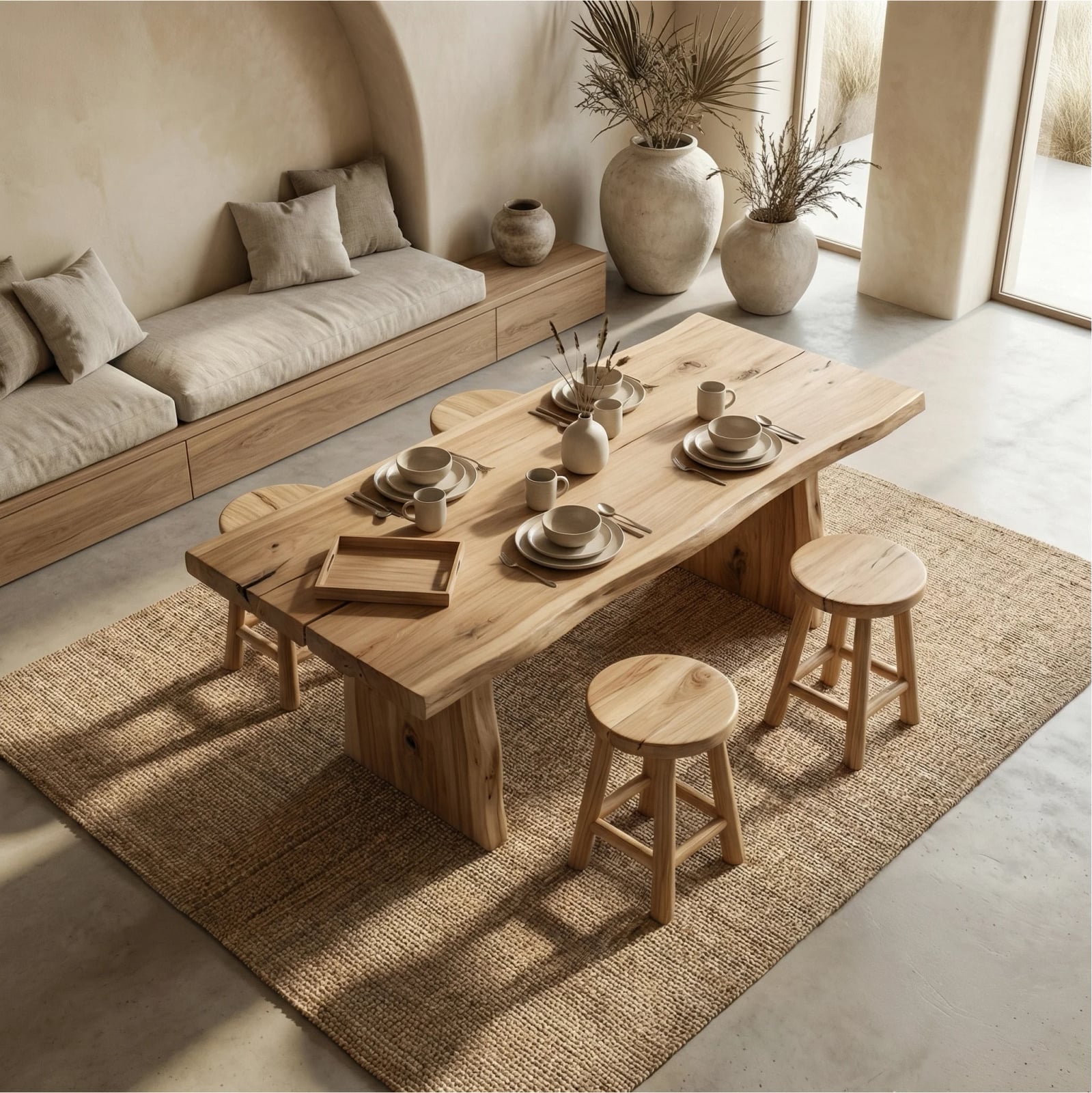
A live-edge dining table is the kind of piece that does not need decoration. The natural edge of the wood provides all the visual interest. Here it is paired with a bench on one side and wooden stools on the other, which keeps the look casual. A jute rug underneath adds texture without competing with the wood grain. The palette stays neutral with beige and wood tones, so the table remains the clear focus. This setup works for everyday meals where you want the materials to do the talking.
Japandi Entryway: Light Wood Cabinet with Rattan Doors
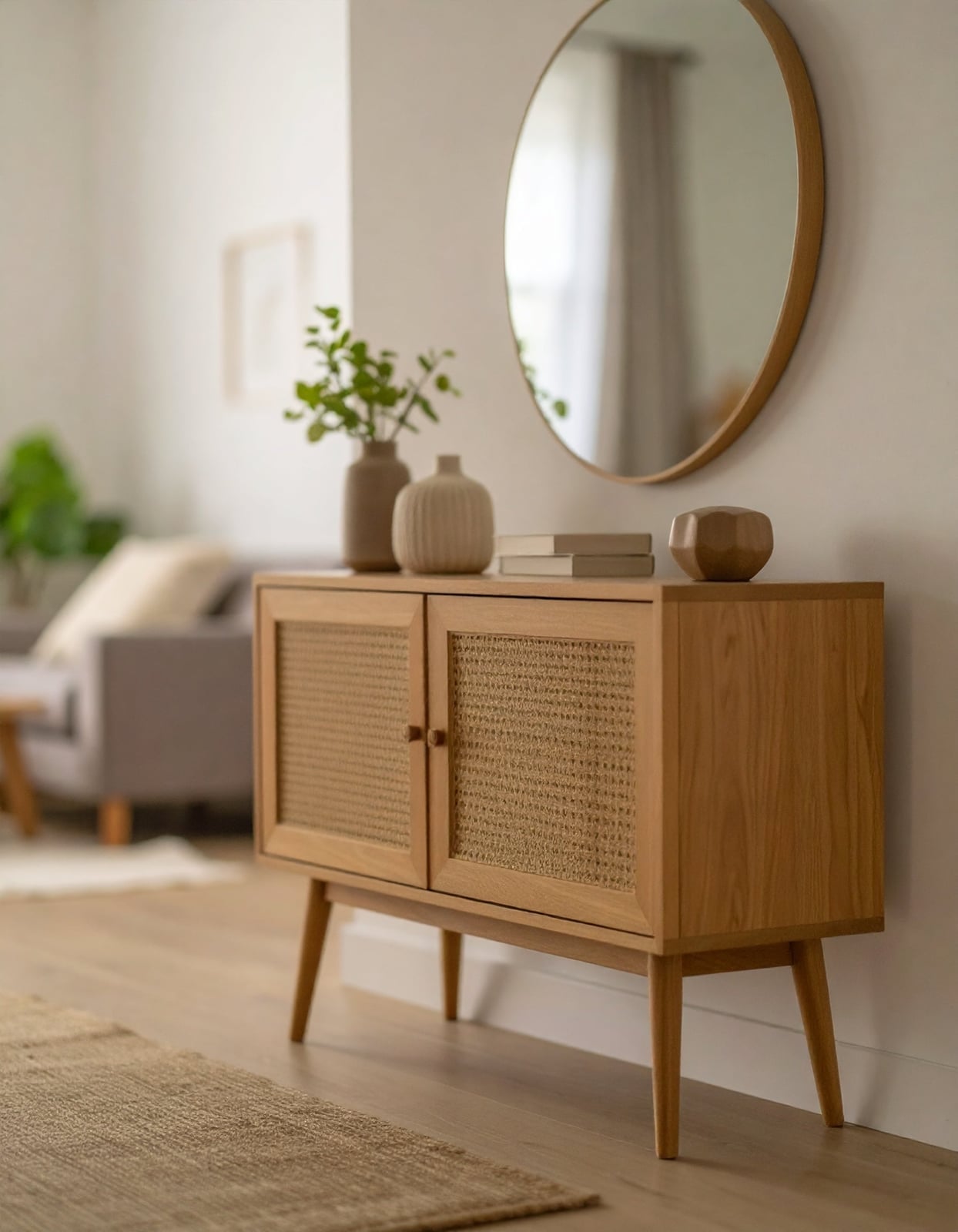
Where do shoes, mail and keys go without creating visual clutter? A light wood cabinet with rattan doors answers that question. The rattan allows air to move through, which helps with anything stored inside, and the woven texture adds warmth to an otherwise plain entryway.
A round mirror hangs above the cabinet, reflecting light from the opposite wall. A vase of greenery sits on top, adding life without taking up floor space. The layout is simple: cabinet against the wall, mirror above, one decorative object. That restraint keeps the entryway calm. The rattan doors also hide the contents, so the hallway stays neutral even when the cabinet is full.
Japandi Living Room: Carved Wood Sideboard and Low Sofa
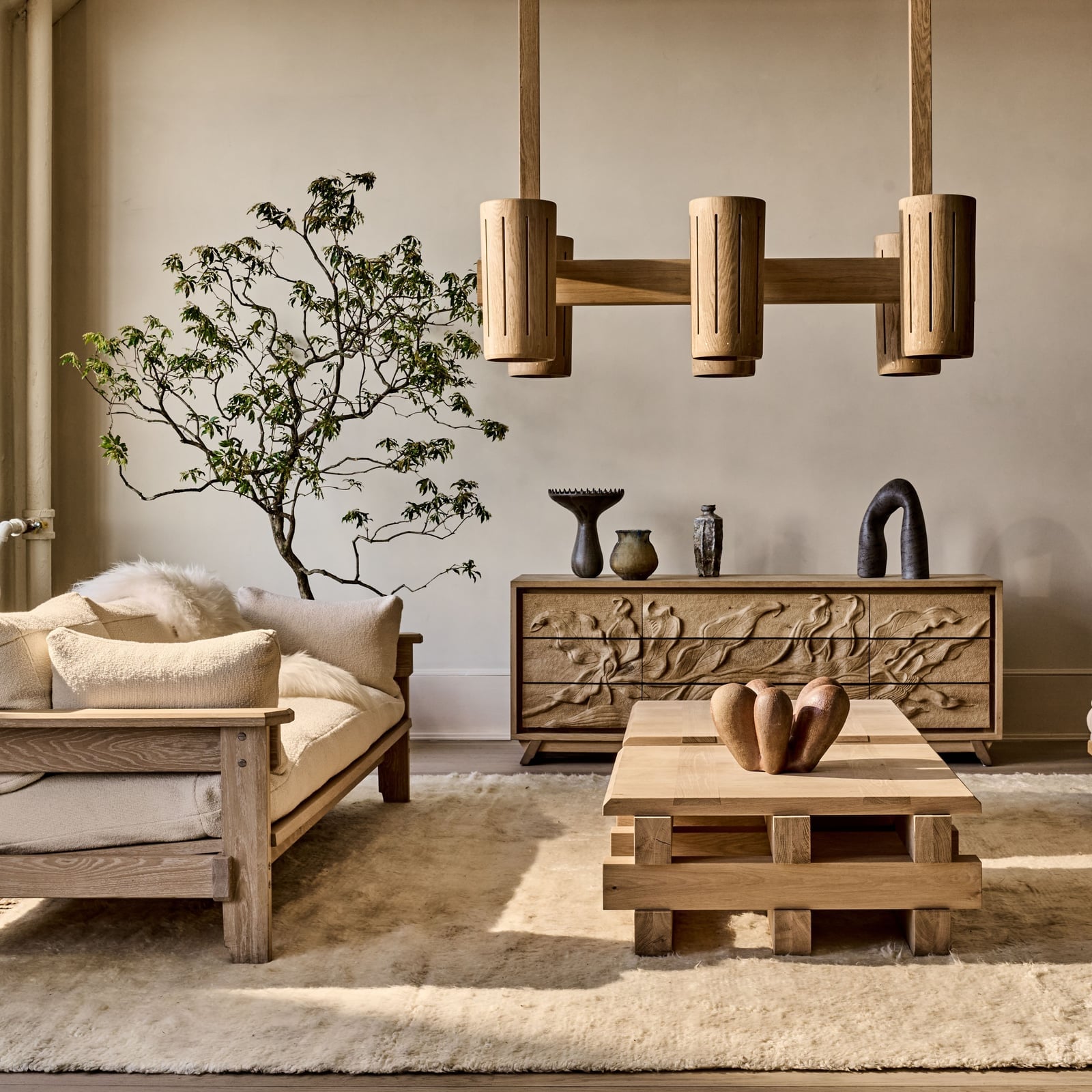
A low wooden sofa changes the eye level of the room. When paired with a carved wood sideboard, the furniture sits closer to the ground, which makes the ceiling feel higher and the space more open. The sideboard provides storage and display space, while a sculptural vase on top adds a single focal point. The neutral palette of cream and wood tones keeps the carved details from competing with other elements. A pendant light hangs low enough to define the seating area without blocking the view across the room.
Japandi Living Room: Textured Plaster Wall Art and Bouclé Sofa
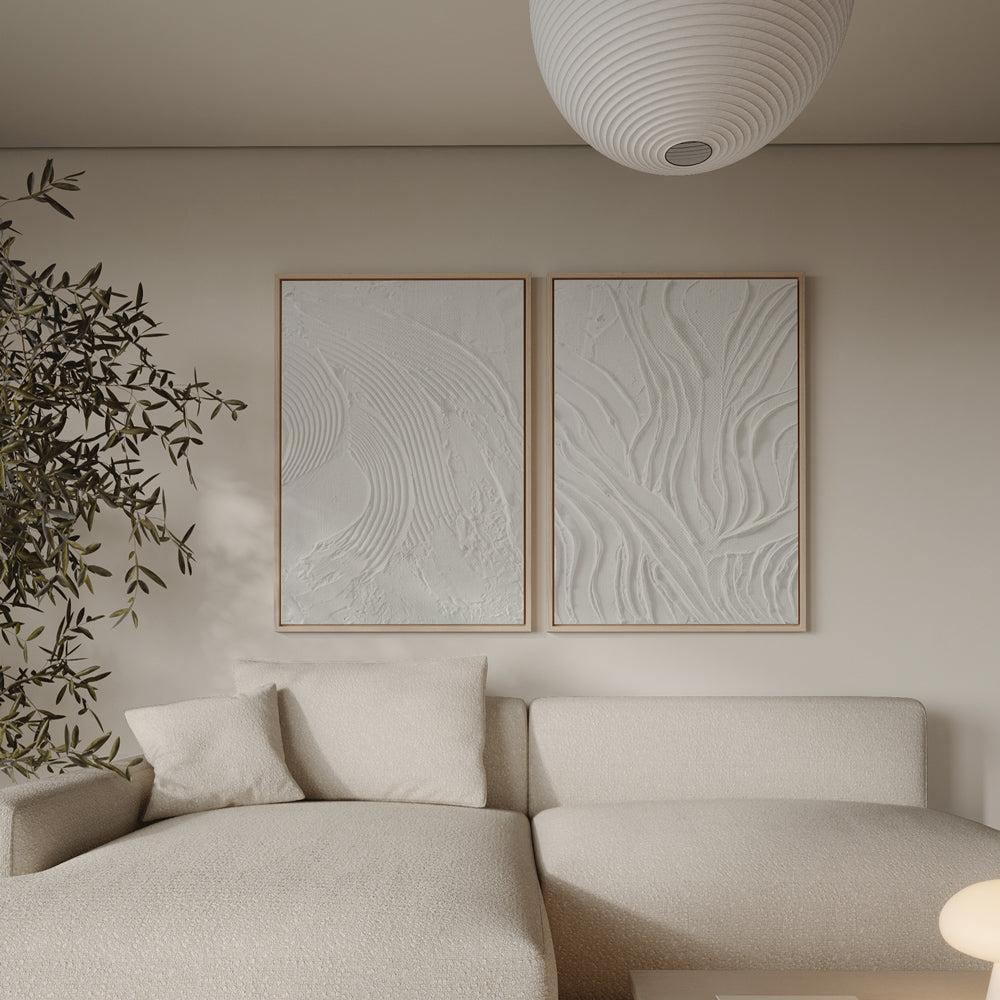
Textured plaster wall art holds its own against a boucle sofa without competing for attention. The contrast in surface, one smooth and soft, the other rough and dimensional, gives the room a tactile balance that a single finish cannot match. Two framed pieces hung side by side above the sectional create a horizontal anchor that echoes the sofa’s length. The off-white and cream palette lets the art’s uneven surface catch ambient ceiling light and natural daylight differently throughout the day. Style mode: what defines this look is the pairing of opposite textures, the ratio is roughly equal parts smooth and rough, and what breaks it is adding a third busy pattern that muddles the contrast.
Japandi Entryway: Stone Floors and Dramatic Natural Light
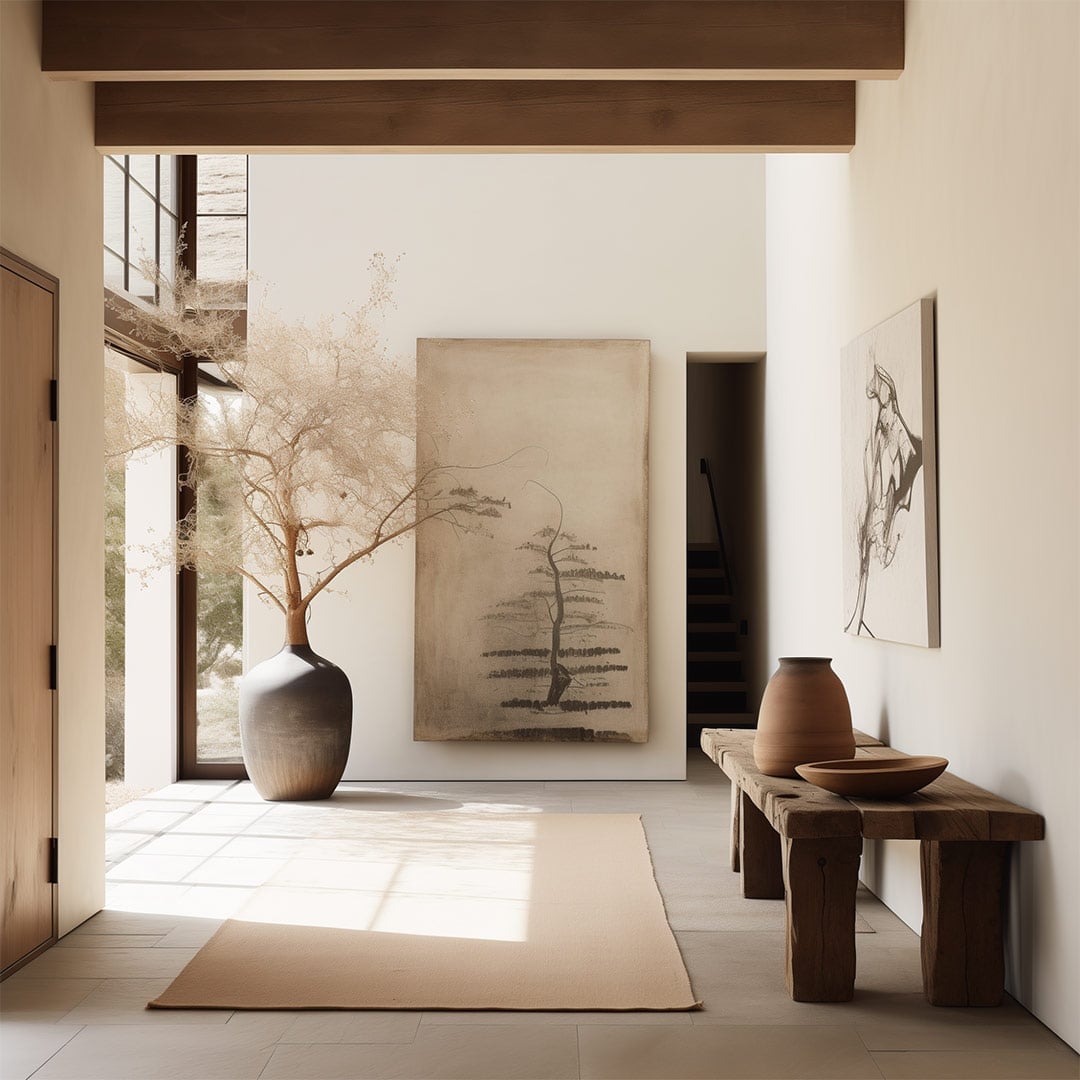
A Japandi entryway with stone floors risks feeling cold, but dramatic natural light changes the equation. The large window sends strong sun across the tiles, creating shifting floor patterns that warm the neutral beige and gray palette. A rustic wooden bench against the wall offers a spot to pause, while a large textured vase with dried branches draws the eye upward. The minimalist artwork on the plaster wall keeps the composition grounded. Style mode: the defining move is using light as a design element, the ratio is open floor to sculptural object. Cluttering the path with small furniture blocks the light patterns.
Japandi Corner: Fluted Wood Side Table and Ceramic Lamp
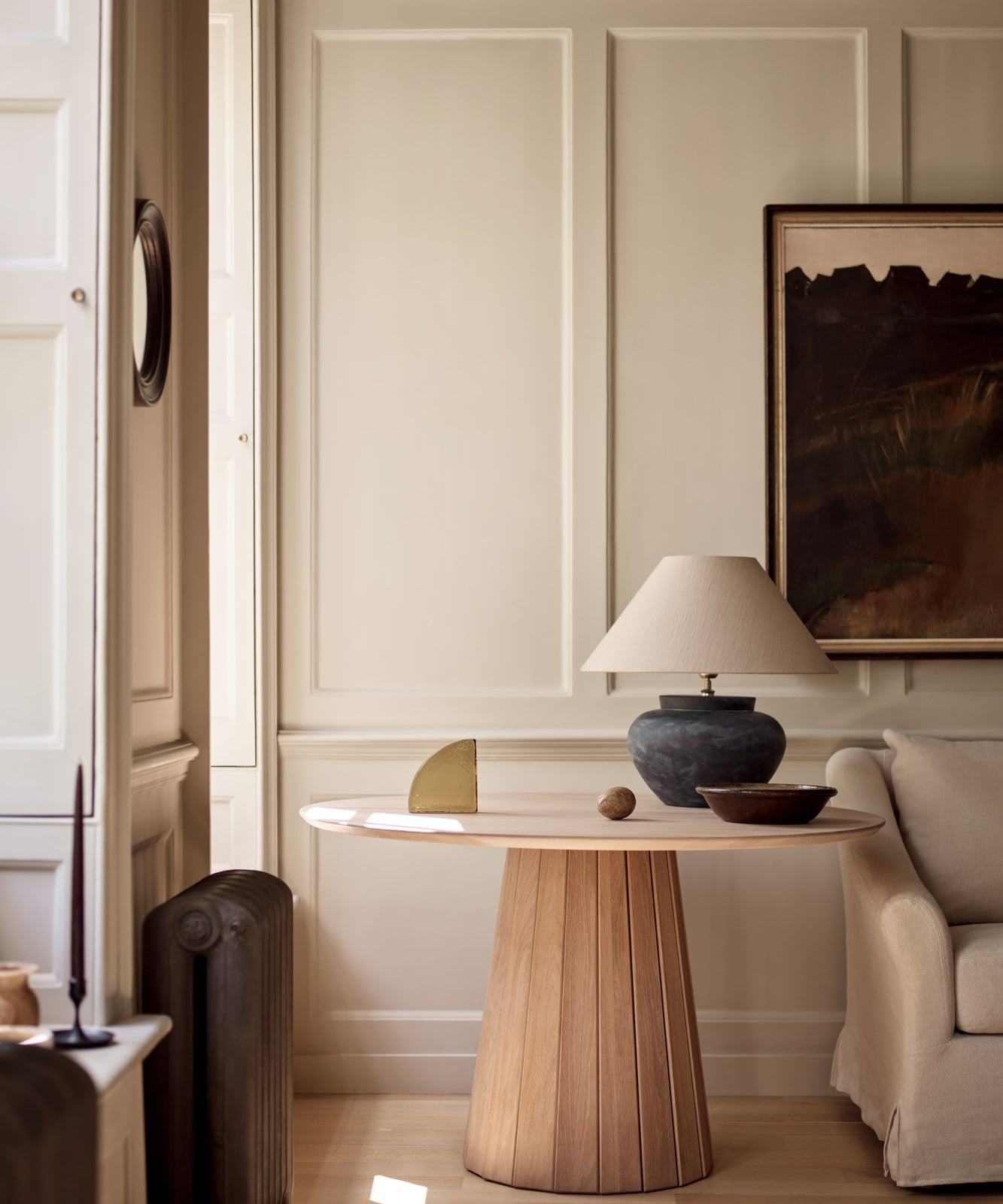
A round fluted wood side table introduces vertical line work into a quiet corner without overwhelming the space. The dark ceramic lamp on top provides weight, while the upholstered chair and framed art complete a compact vignette. Fluting, a repeated groove detail, adds visual rhythm to an otherwise simple form. Light from a nearby window highlights the wood grain, and the table lamp extends the corner’s use into evening. What defines this corner is the interplay of round and vertical lines. A second patterned table would compete with the fluted base.
Japandi Living Room: Textured Plaster Fireplace and Organic Coffee
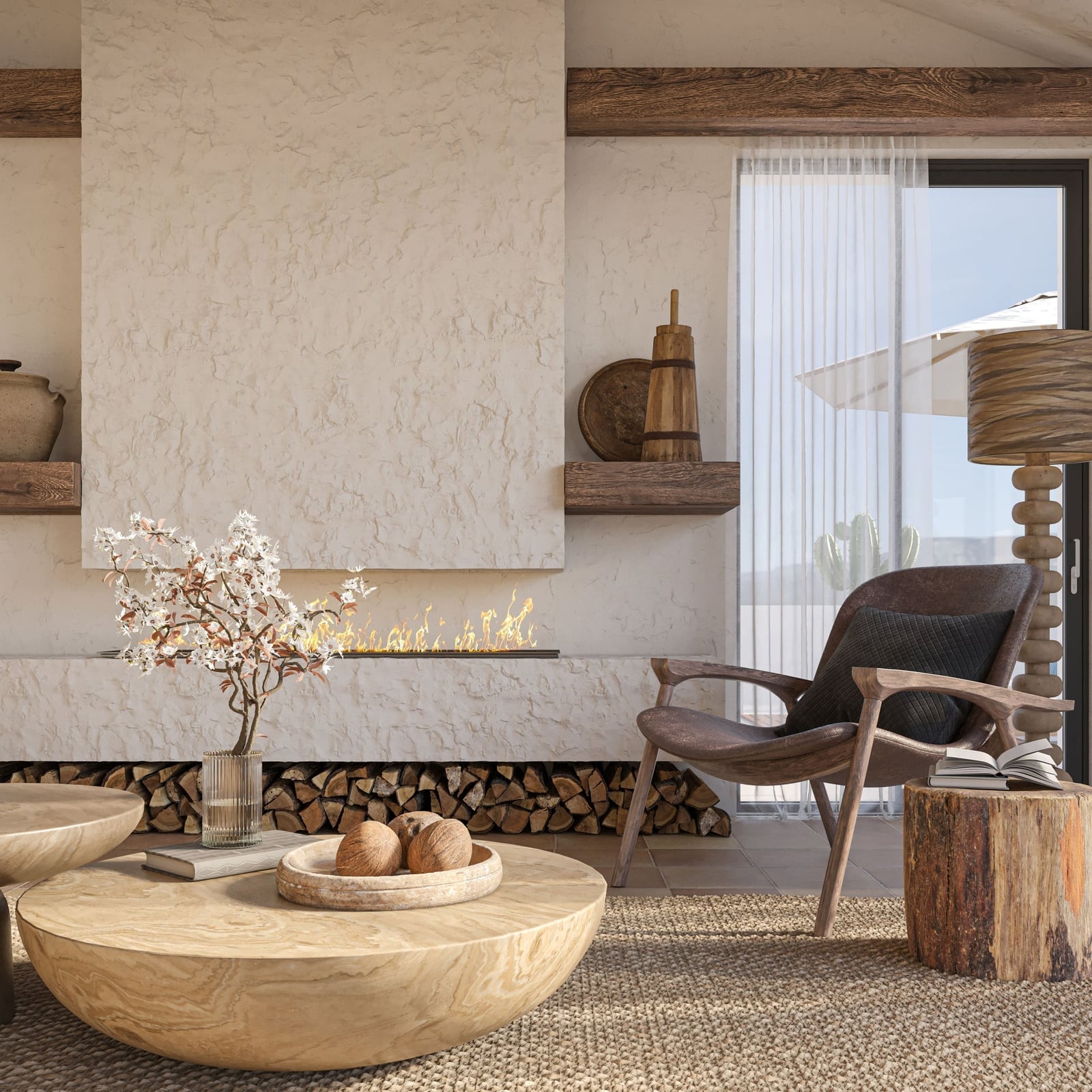
A textured plaster fireplace anchors this living room as the visual center without needing a mantel or surround. The uneven surface catches daylight and lamp glow, while the large wood coffee table and wooden armchair create a conversation area around it. A rattan accent and a floor lamp with a warm bulb add softness. The terracotta tones in the palette keep the cream and beige from reading as sterile. This room defines the fireplace as a sculptural object, not a heat source. Placing decor directly against the plaster hides the texture.
Japandi Dining Room: Communal Table and Woven Pendant Light
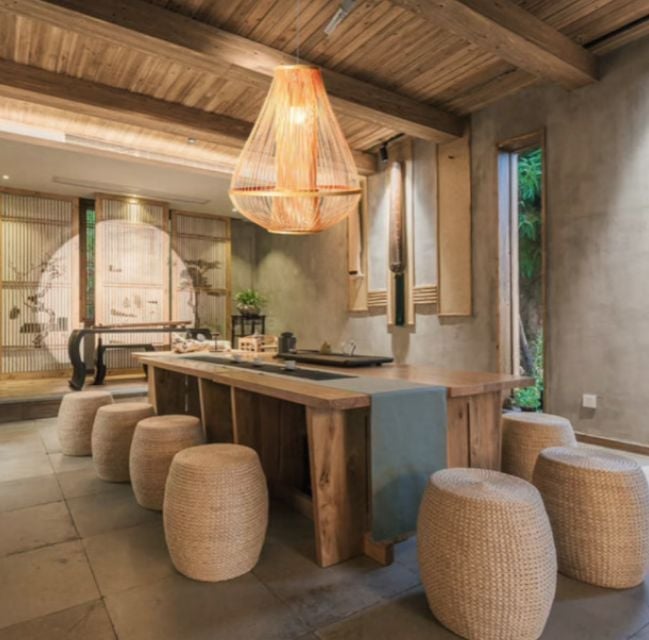
A long communal table defines a japandi dining room when the surrounding space stays simple. The natural wood surface and rattan stools ground the dining area, while a woven pendant light hangs low to mark the table zone without blocking sightlines across the room. A window brings in daylight that softens the gray and green accents. The concrete or stone floor keeps the look utilitarian but warm. Style mode: what defines this room is the table as the sole furniture anchor, the ratio is one large piece to empty floor, and adding a sideboard or extra chairs shrinks the open feel.
Japandi Living Area: Slatted Wood Ceiling and Floor Cushions
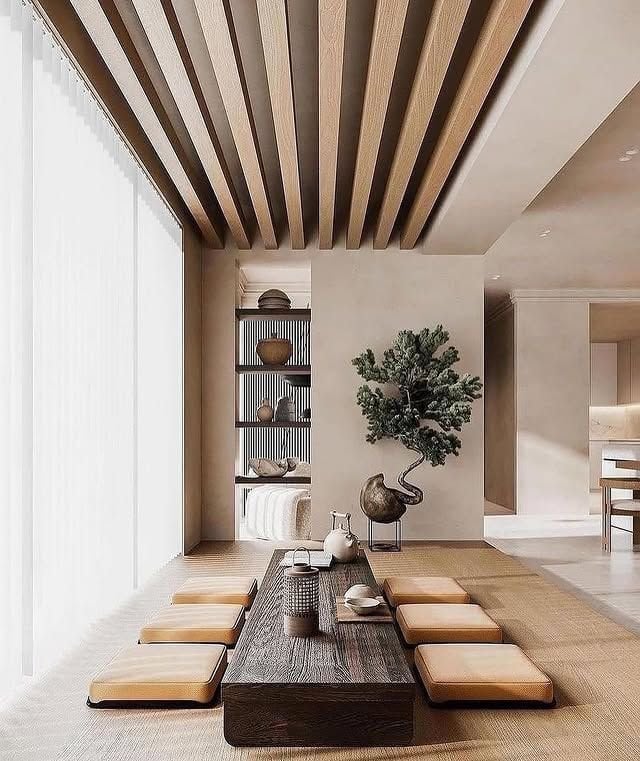
The slatted wood ceiling draws the eye upward while the low table and floor cushions keep the seating grounded, a Japandi play on height. This room feels spacious because the ceiling detail reads as texture, not clutter, and the neutral palette of wood tones and beige lets the architecture lead. A minimalist bonsai on the shelving unit brings a controlled piece of nature inside, which is the point: every object earns its place. The large window and recessed lights keep the space bright without competing with the wood grain.
Japandi Bedroom Corner: Curved Bouclé Headboard and Wood Accents
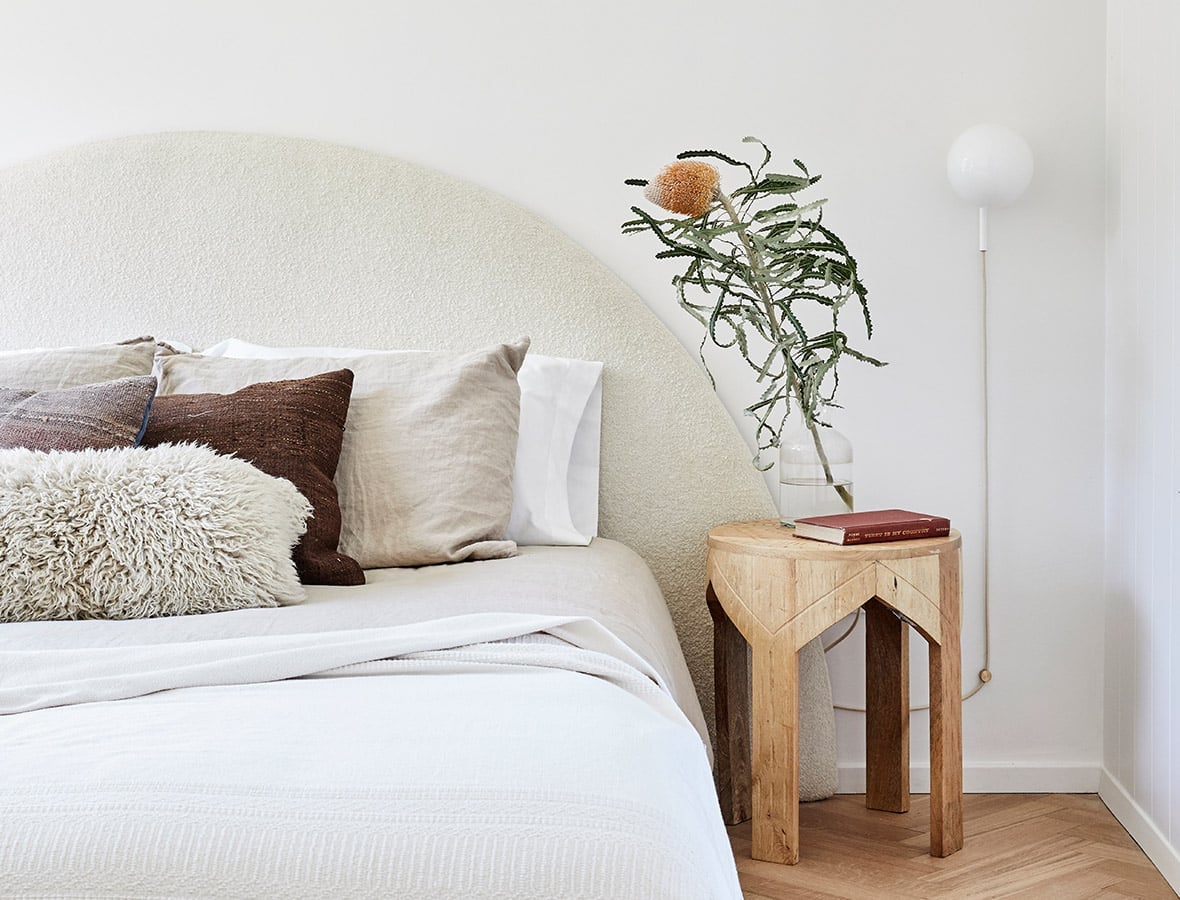
A curved bouclé headboard softens the geometry of a small bedroom corner, and this is the kind of piece that defines the room without taking up visual space. The cream and beige palette keeps things calm, while the wooden side table and floor lamp add warmth in brown tones. For renters, a curved headboard is a smart swap: it leans against the wall, needs no drilling, and can move with you. The green accent from a plant or ceramic piece prevents the neutral scheme from feeling flat. This corner arrangement works because the bed is the hero, and everything else steps back.
Japandi Entryway: Rustic Bench Under Stairs and Textured Vases
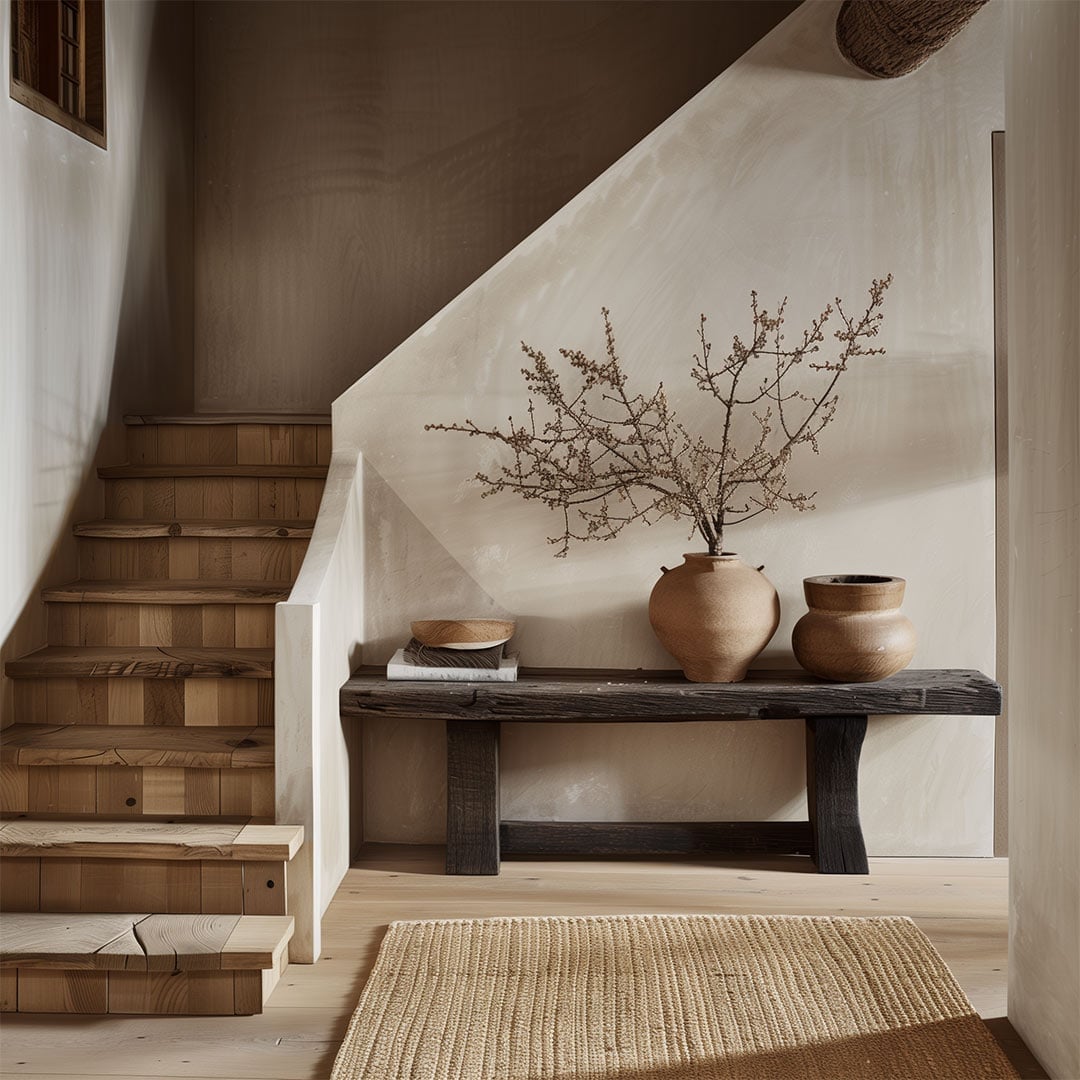
An entryway under the stairs can feel like leftover space, but a dark wood bench turns it into a deliberate drop zone. The textured wall behind it adds visual weight without needing art, and the jute rug underfoot anchors the area. Textured vases on the bench hold nothing more than branches or dried stems, which is the whole idea: they are sculptural, not functional. The soft ambient light and shadows from the stairs keep the narrow spot from feeling harsh. This setup works because it gives you a place to sit and set things down, while the earthy tones of wood, plaster, and ceramic keep the look cohesive.
Japandi Dining Vignette: Rattan Chairs and Overhead Branches
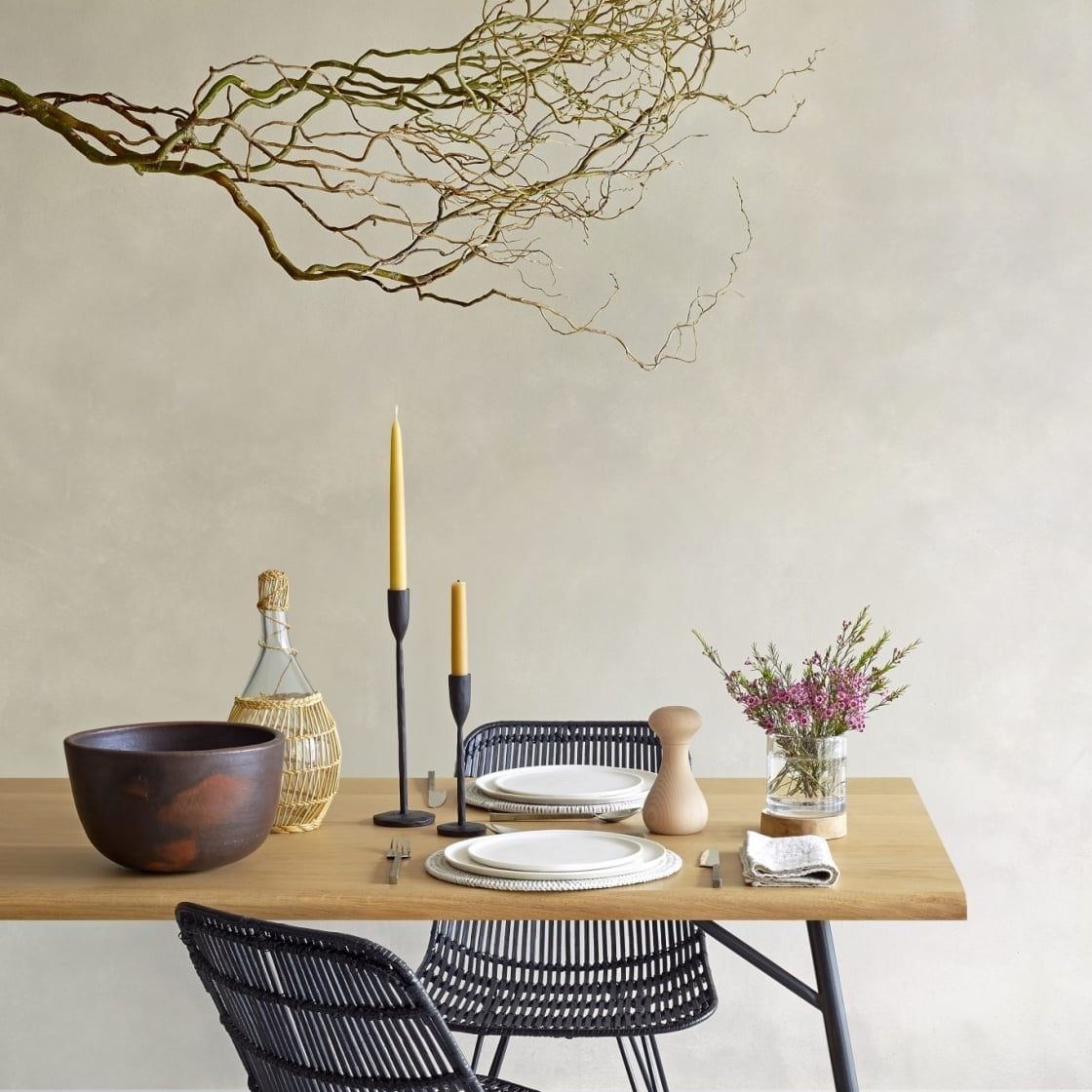
A wooden dining table set for two with black rattan chairs gives the room a clean, grounded base, and the decorative branches overhead add a natural canopy without blocking the view. The ceramic bowl on the table and the pink accents in the room prevent the palette from becoming too neutral. This vignette works because the overhead element draws the eye up, while the low table and chairs keep the focus on the gathering. The rattan chairs bring in texture that softens the black frames, and the natural light keeps everything airy.
Japandi Living Room: Rattan Cabinet and Neutral Palette
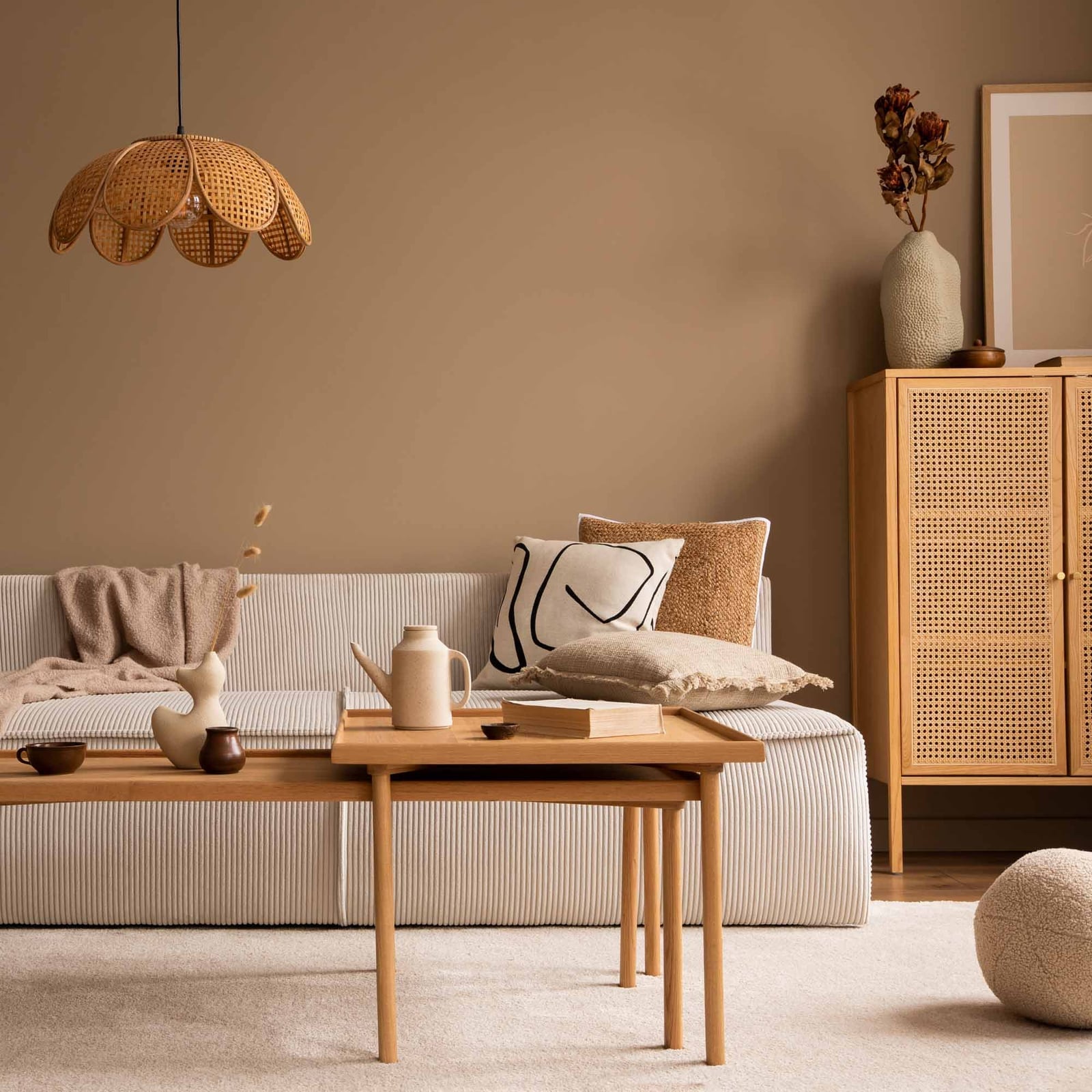
A neutral palette of beige and brown lets the rattan cabinet and pendant light take center stage without competing. The sofa and coffee table face each other in a straightforward layout, and the natural light keeps the room feeling open. The rattan cabinet stores what you need to hide while adding texture to the wall, and the pendant light hangs low to define the seating area. This room works because the palette is restrained, so the materials do the talking: linen on the sofa, wood on the table, rattan on the cabinet and light. Nothing is loud, but everything has a purpose.
Japandi Entryway: Curved Wood Cabinet and Oval Mirror
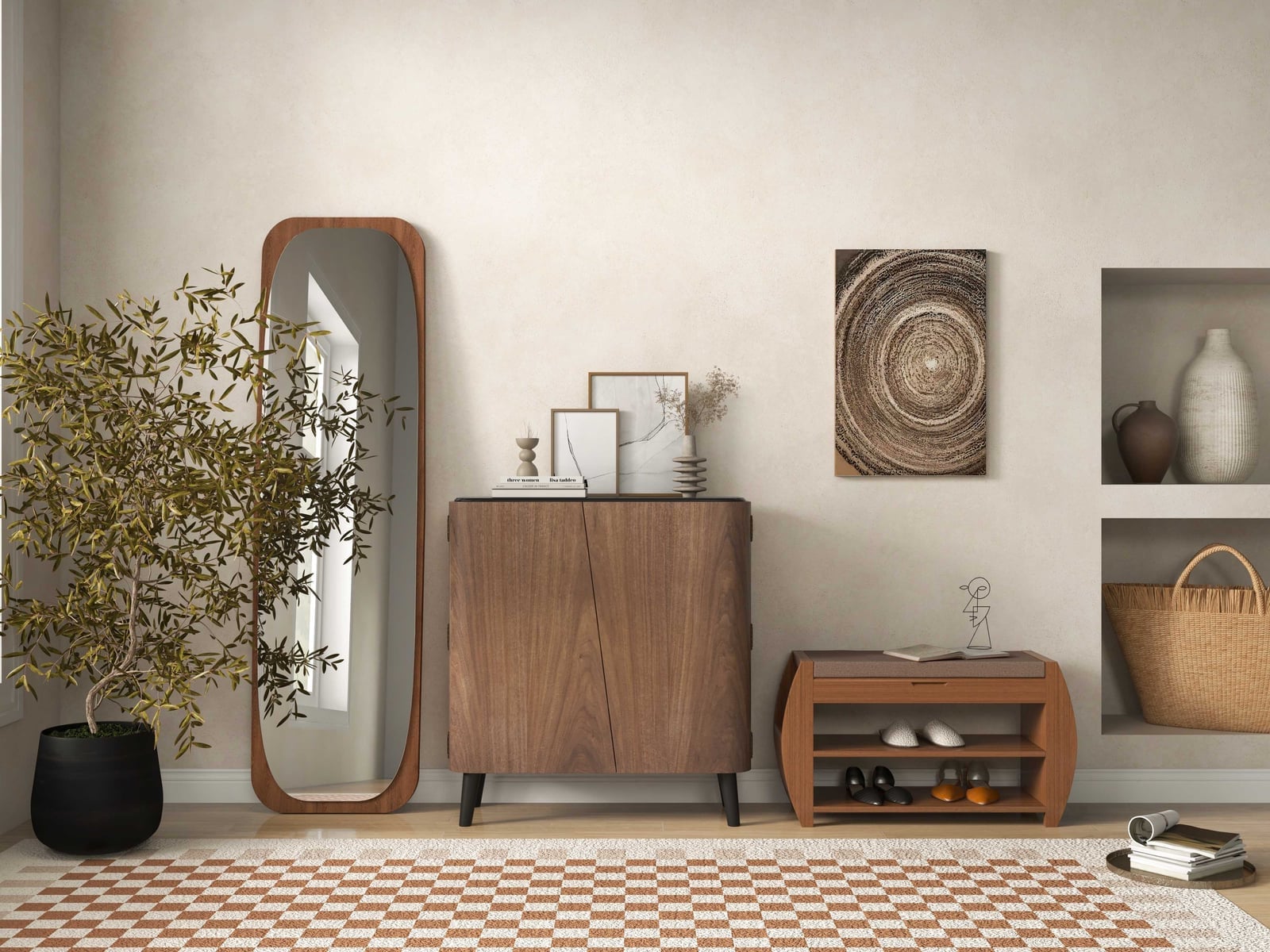
An entryway works best when it holds what you need at the door and still looks calm. A curved wood cabinet does both by hiding shoes and bags behind its doors while the soft shape keeps the corner from feeling boxy. The tall oval mirror beside it reflects the window light and makes a compact space feel wider. A checkered rug on the floor adds a little pattern without breaking the neutral wood-and-brown palette. If you rent and cannot swap a cabinet, a slim console with a basket underneath gives you the same drop-and-hide function. Keep the top surface to one ceramic vase and a small plant so the eye rests on the cabinet curve and the mirror frame.
Japandi Entryway: Curved Console Table and Abstract Art
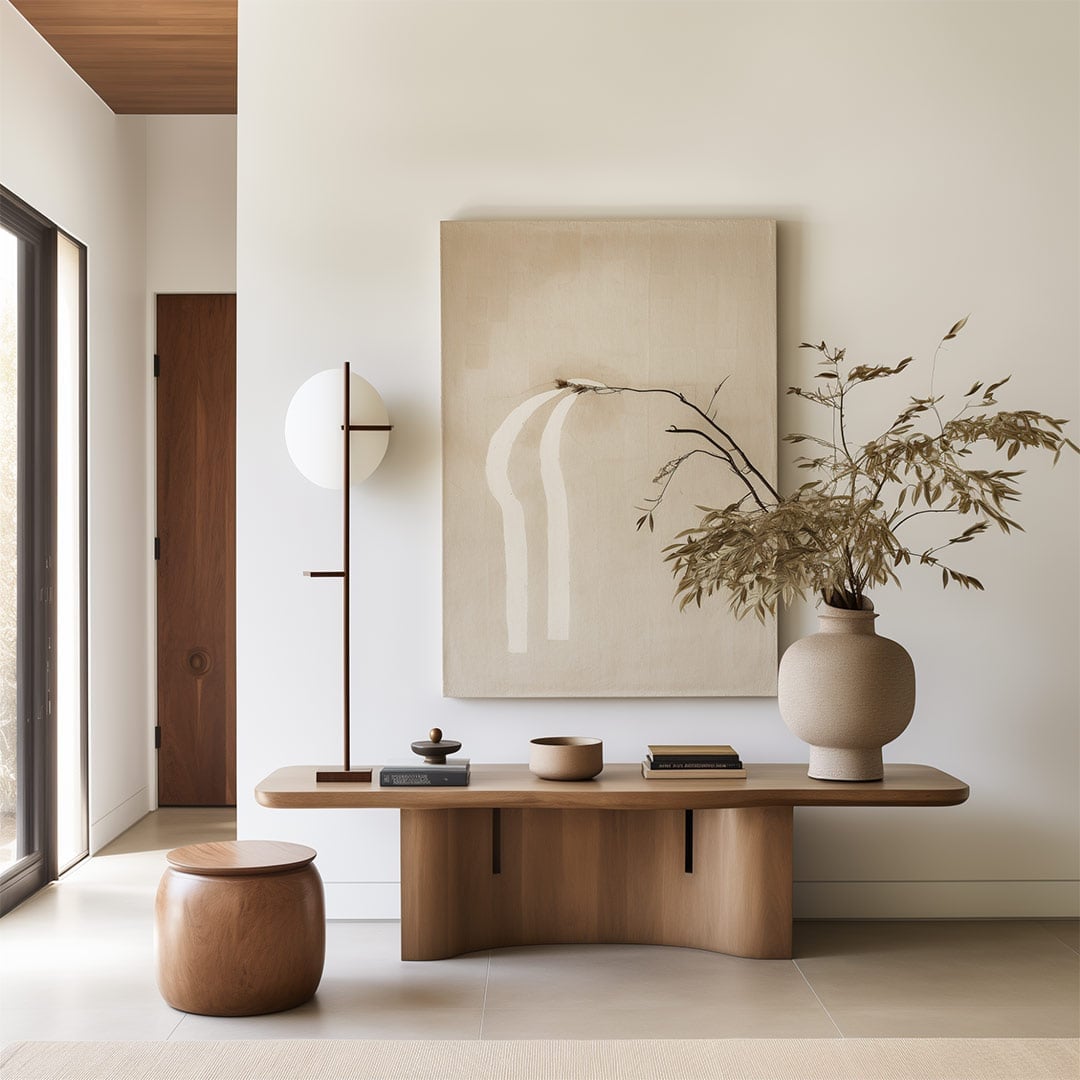
The sculptural wood console table uses its curved legs to soften the straight line of the wall behind it. Light wood and beige keep the palette airy, while the abstract art above adds a darker note that stops the wall from reading as blank. A floor lamp with a warm shade brings in ambient light that hits the art and the table top. The mix of wood, ceramic, and paper layers three textures without adding color. For a similar look, choose one piece of art with a strong shape and let the console sit low so the wall feels open.
Japandi Dining Room: Travertine Table and Sculptural Chairs
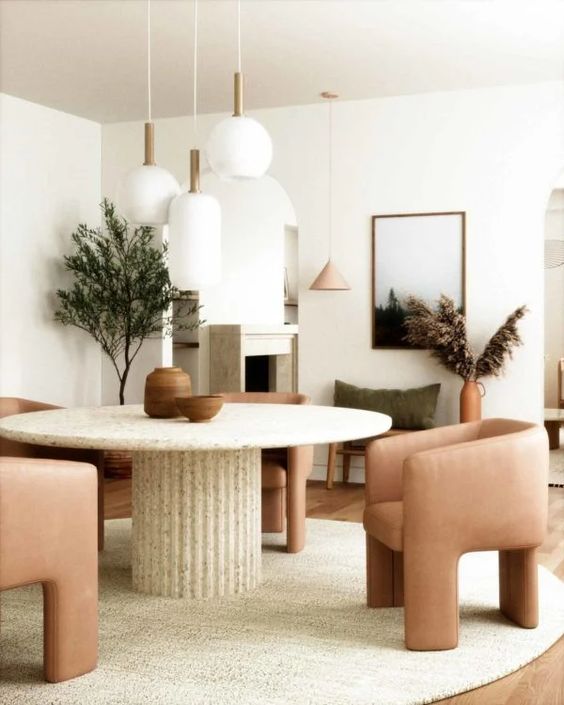
A round dining table with a travertine top and a carved pedestal base brings natural stone into the room without making it feel heavy. The sculptural chairs around it alternate between boucle fabric and leather, mixing soft and smooth textures around the same neutral palette of blush, cream, and wood tones. Pendant lights hung above the table center the eye on the stone surface and the pedestal detail. A textured rug underneath anchors the seating and stops the chairs from scraping the floor. If you have a smaller room, a round table saves floor space and lets you walk around it more easily than a rectangular one.
Japandi Living/Dining: Woven Pendant and Potted Olive Tree
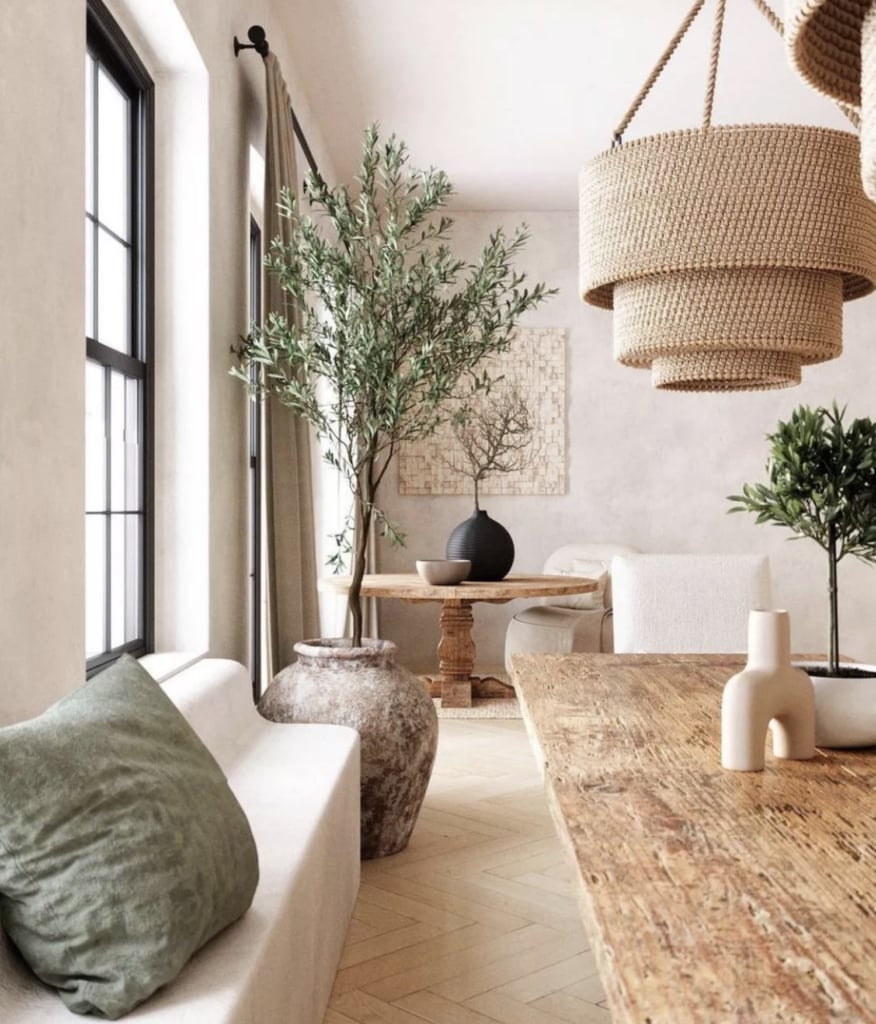
A layered woven pendant light can define a dining area without a wall, while a metal or glass fixture would reflect too much light and feel cold. The woven shade diffuses the glow so the table and the seating area both get soft, even light. In this open plan room, a large wooden dining table sits near a textured sofa, and a potted olive tree between them adds green without blocking the view through the window. Ceramic lamps on a side table add warm light at eye level, so the room does not rely only on the overhead pendant. A stone vase or woven basket keeps the natural material theme going. If you have a combined living and dining space, one woven pendant over the table and a floor lamp near the sofa gives you two light zones that blend when both are on.
Japandi Bedroom: Vibrant Pink Bedding and Woven Chair
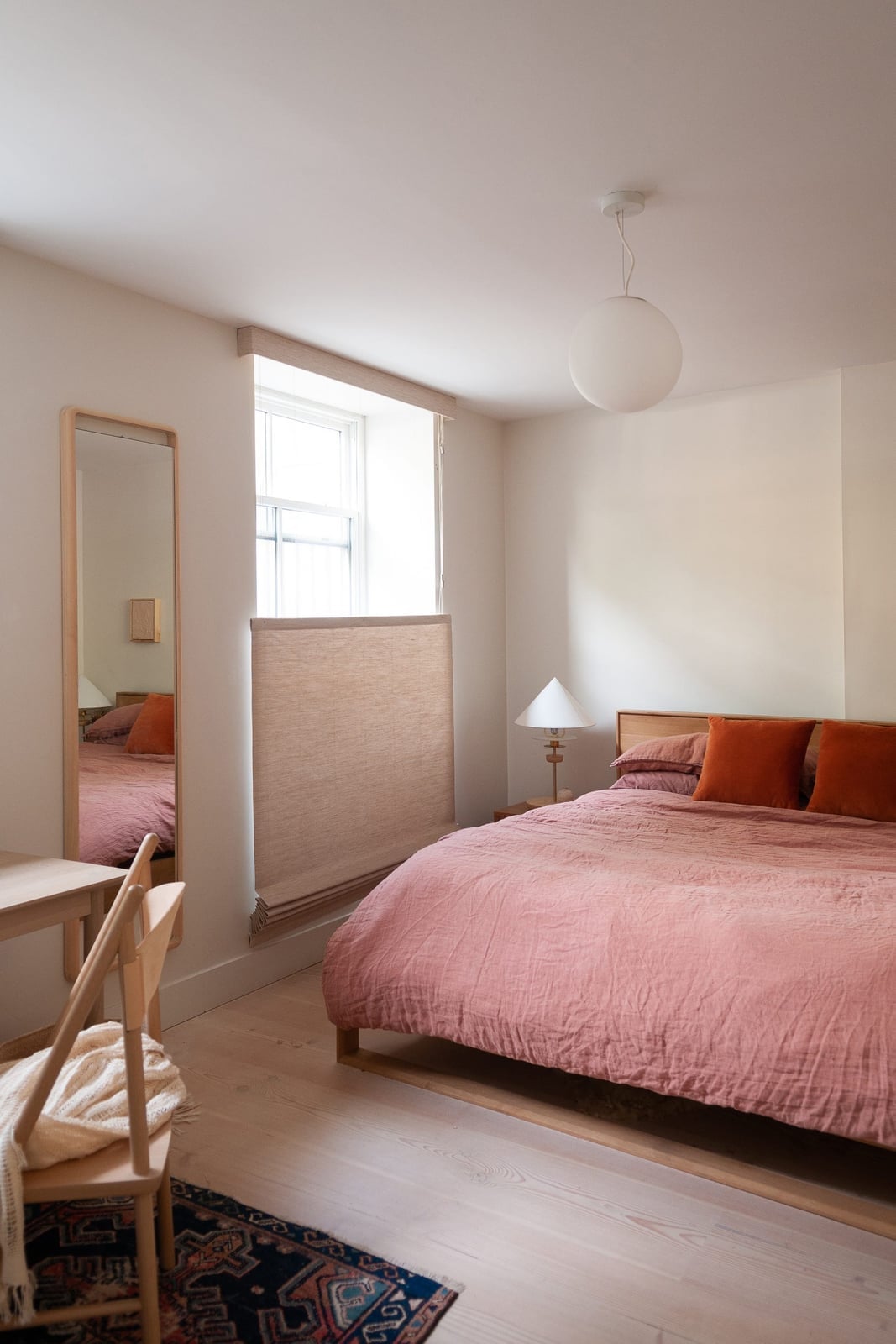
Vibrant pink linen bedding and orange accent pillows prove that Japandi does not have to stay beige. The wooden bed frame and a woven chair keep the natural material base, while the bright colors add energy without clutter. A ceiling light in a simple white shade keeps the overhead look clean. If you want color but hesitate to paint a wall, swap your bedding and one accent piece for a bolder shade, and keep the rest of the room in wood tones and cream.
Open Plan Japandi Living and Kitchen with Pendant Light
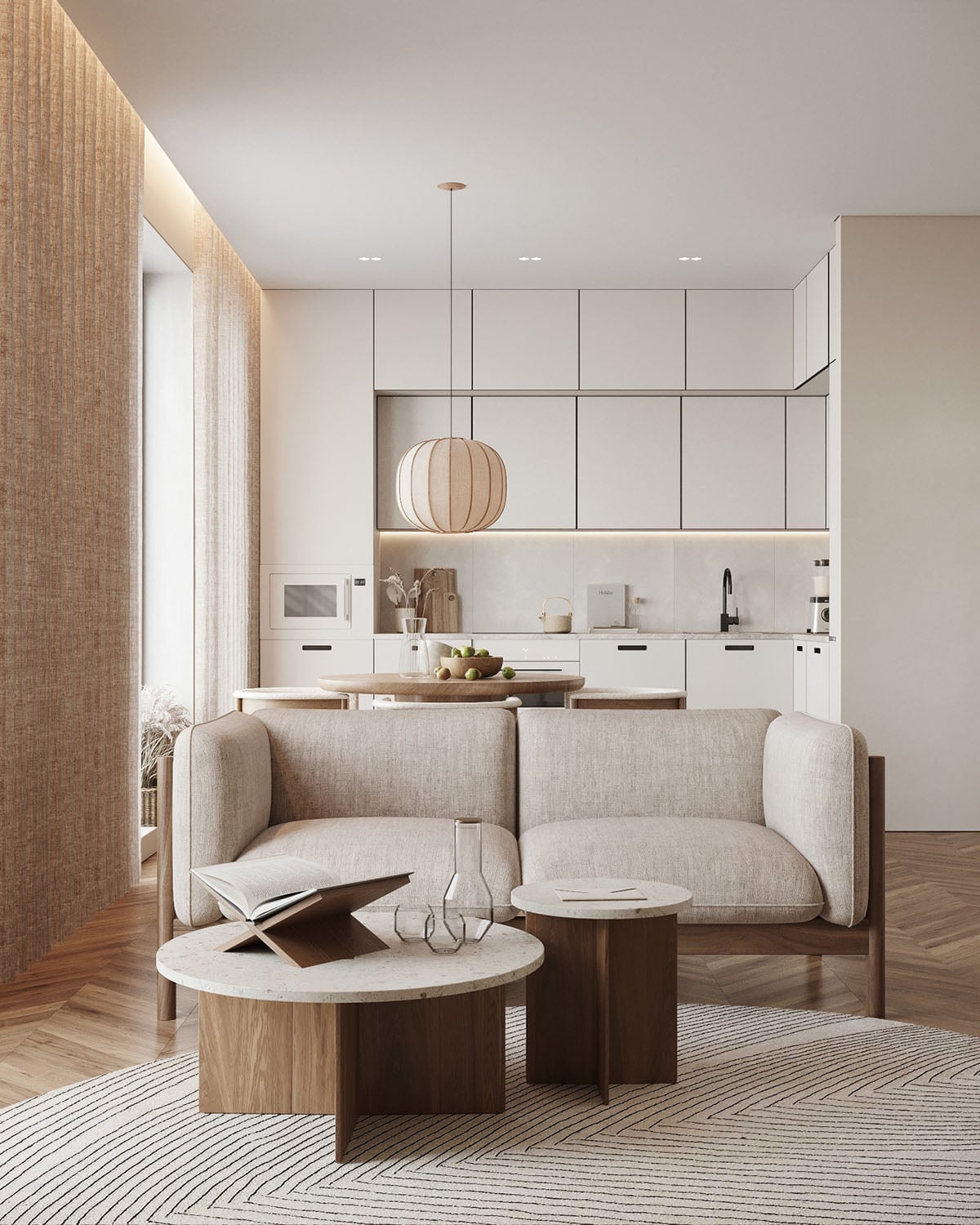
An open plan living and kitchen layout works best when the finishes carry through both zones. Here, cream cabinetry and a neutral sofa share the same quiet palette, while a round rug anchors the seating area without blocking the walkway. The pendant light hangs above the living side, not the kitchen, which helps define each zone without a wall. Recessed lighting keeps the kitchen functional, and natural daylight fills both spaces. The result is a Japandi interior that feels spacious but not empty, with wood tones and stone surfaces adding just enough texture to keep the eye moving.
Japandi Bedroom: Botanical Wallpaper and Statement Pendant
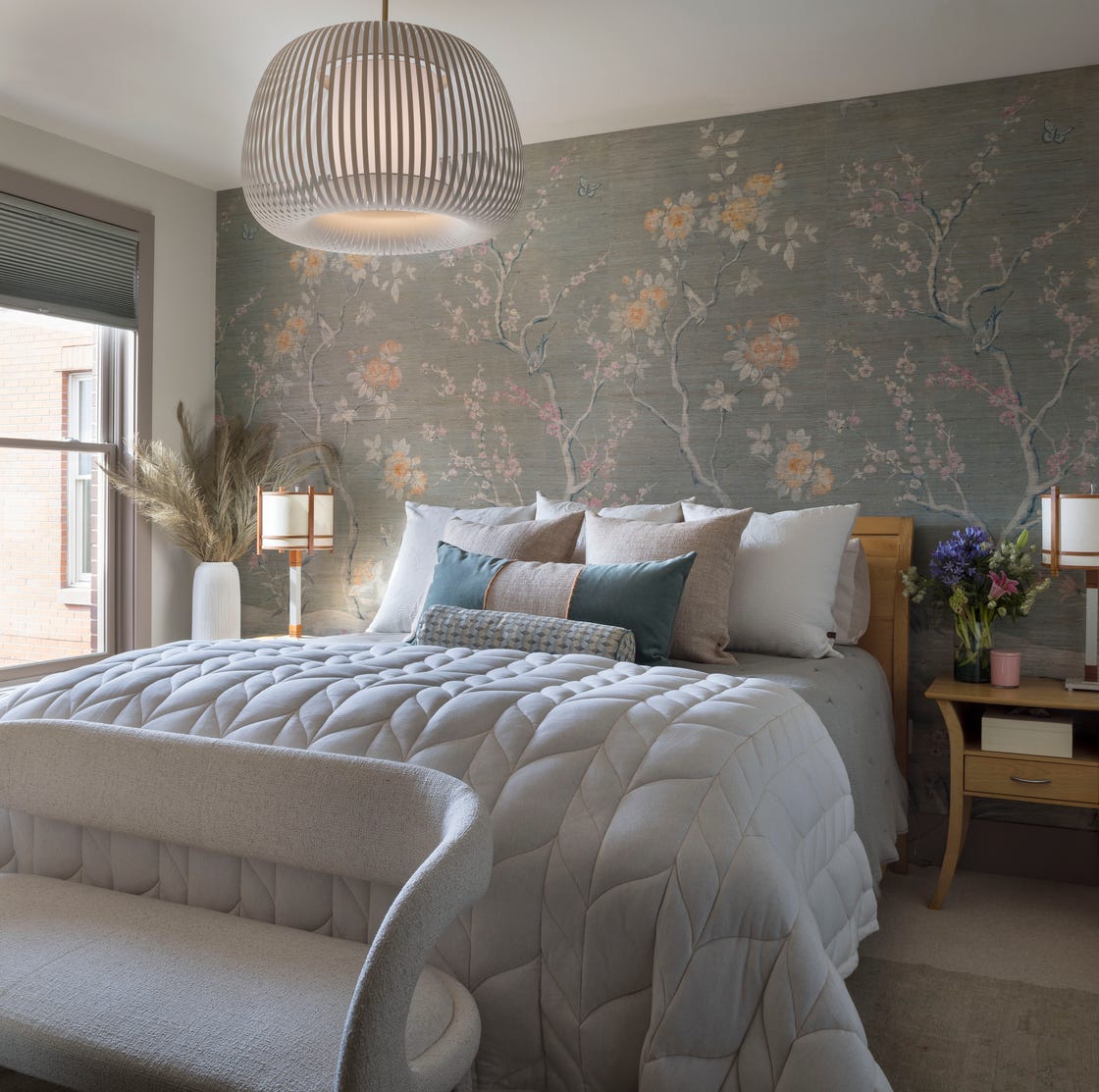
Botanical wallpaper in a Japandi bedroom becomes the focal point, so the wooden bed frame and cream bedding stay unpatterned. The muted green print here anchors the room, while the statement pendant light draws the eye upward, balancing the visual weight of the wallpaper behind the bed. Bedside lamps offer softer light for reading. This approach lets you add pattern without overwhelming the room, and since wallpaper is a renter-friendly swap with removable options, you can change it when the mood shifts. The botanical motif brings nature indoors while the calm, neutral palette remains.
Japandi Coffee Table Vignette: Textured Ceramics and Natural Elements
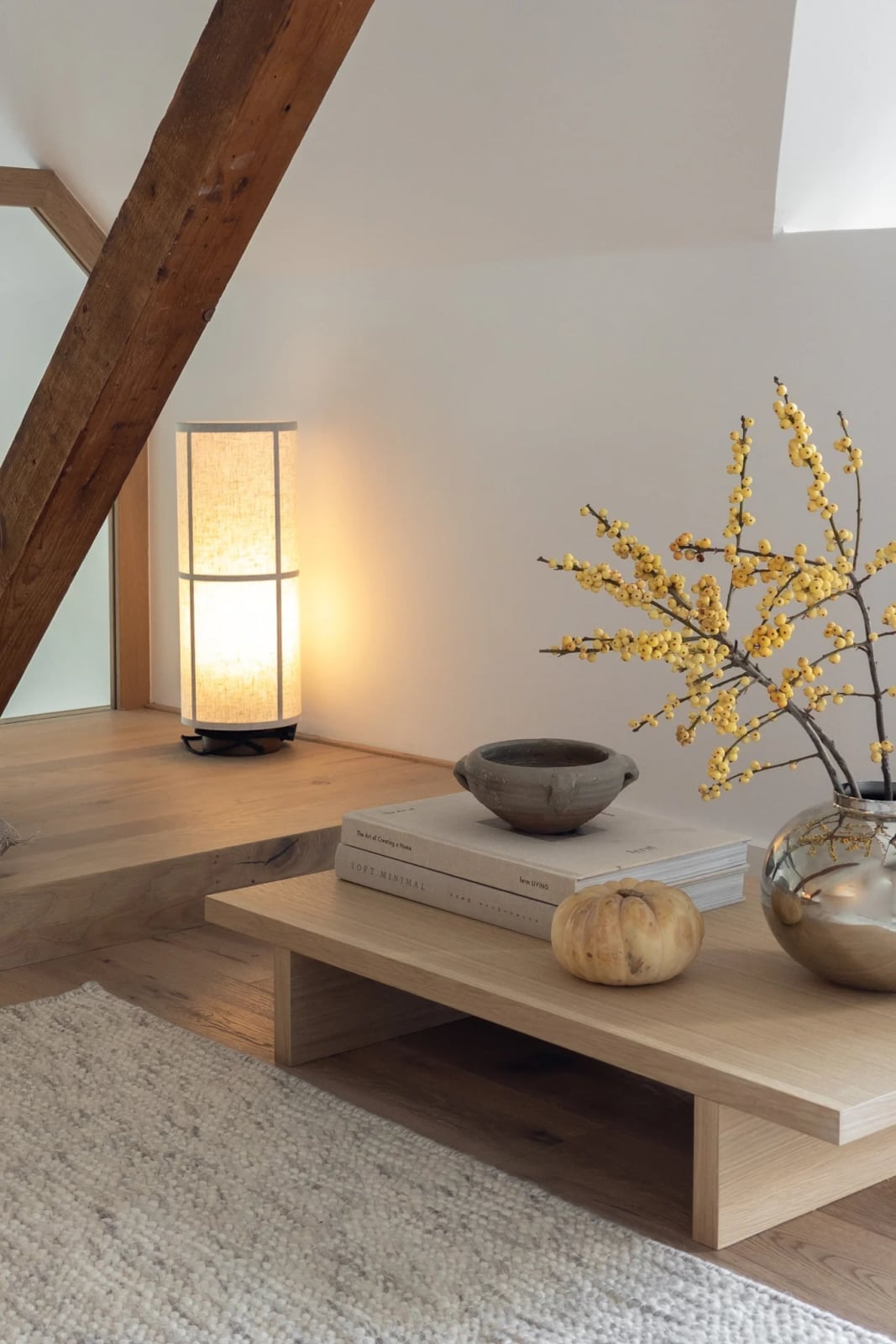
A low wooden coffee table holds a vignette of textured ceramics, a metallic vase with yellow branches, and a few books. The mix of matte and shiny finishes adds depth without clutter. A decorative gourd and a second vase in muted earth tones round out the arrangement. Warm lamp light softens the look, making the grouping feel intentional rather than random. This is a Japandi coffee table vignette that relies on natural materials and asymmetry, not symmetry or over-styling.
Japandi Living Room: Low Sofa and Raw Textured Plaster Wall, Indoor
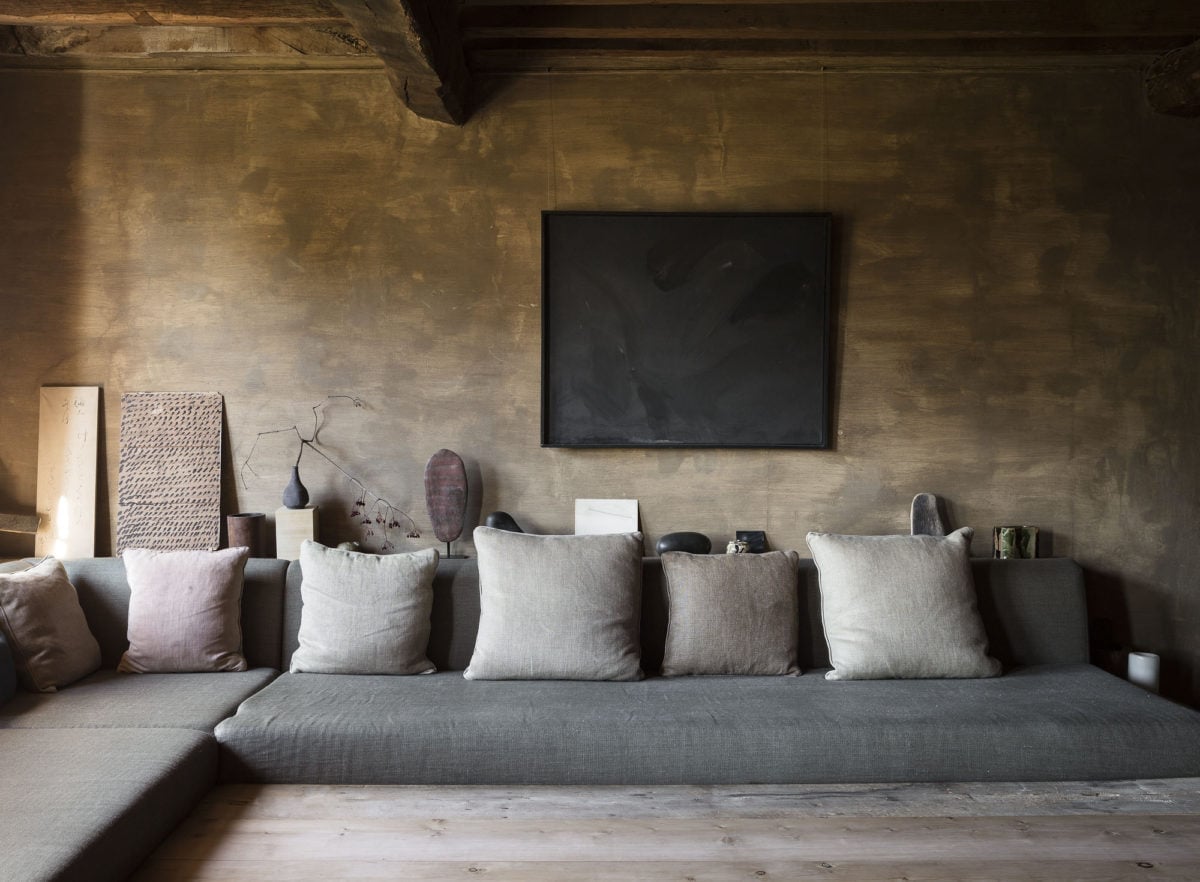
A low-profile modular sofa in earthy brown sits against a raw, textured plaster wall. The wall finish is the anchor here: its uneven surface adds warmth and depth that smooth drywall cannot match. The sofa is arranged in an L-shape, which makes the room feel larger by keeping sightlines open. Dark framed art on the plaster wall adds contrast without breaking the muted pastel and gray palette. The linen-like fabric on the sofa softens the roughness of the plaster, creating a Japandi living room that feels balanced between rugged and refined.
Japandi Hallway: Translucent Shoji Screen Door and Wood Tones
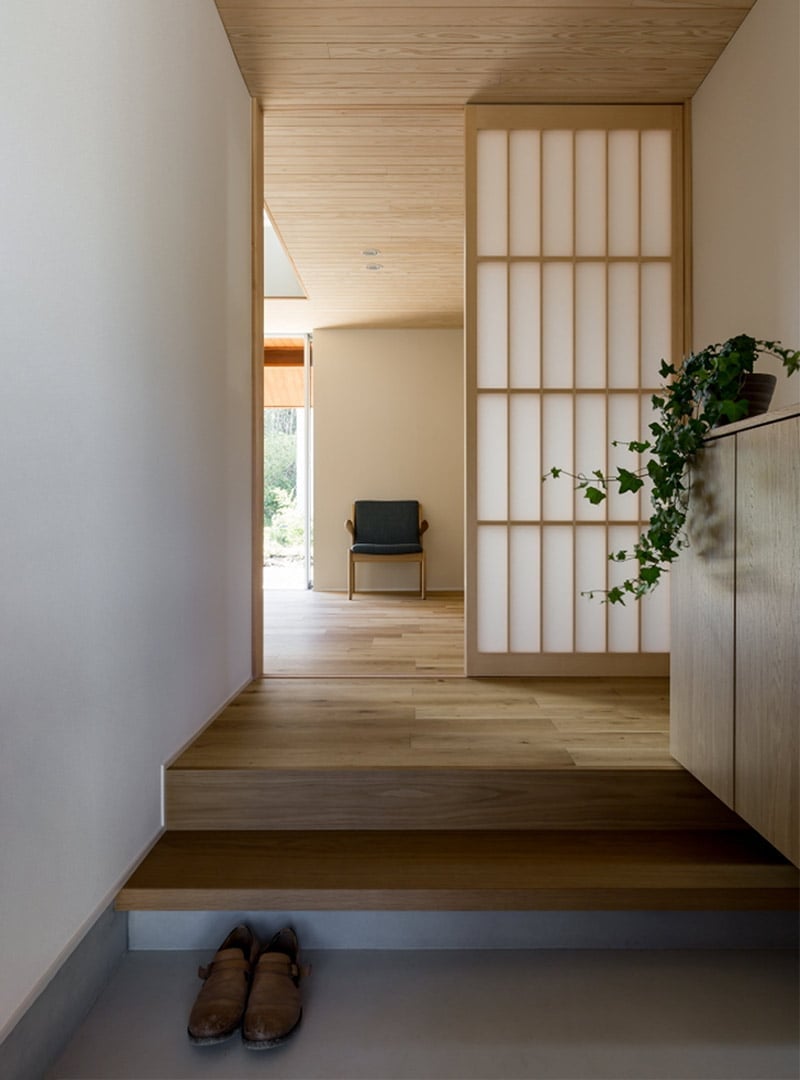
A shoji screen door might seem like a traditional choice, but in this hallway it feels modern. The translucent paper panels let in natural light while keeping the view private, and the wood frame matches the staircase and cabinet. The stepped wooden floor adds a subtle transition between the entry and the home. Concrete flooring keeps the look grounded. The key to making a shoji door work in a Japandi hallway is proportion: the door should be tall enough to match the ceiling height, so it reads as an architectural feature. Recessed lighting overhead keeps the path clear with the soft light through the paper.
Japandi Accent Chair: Channel Tufted Upholstery and Wood Frame
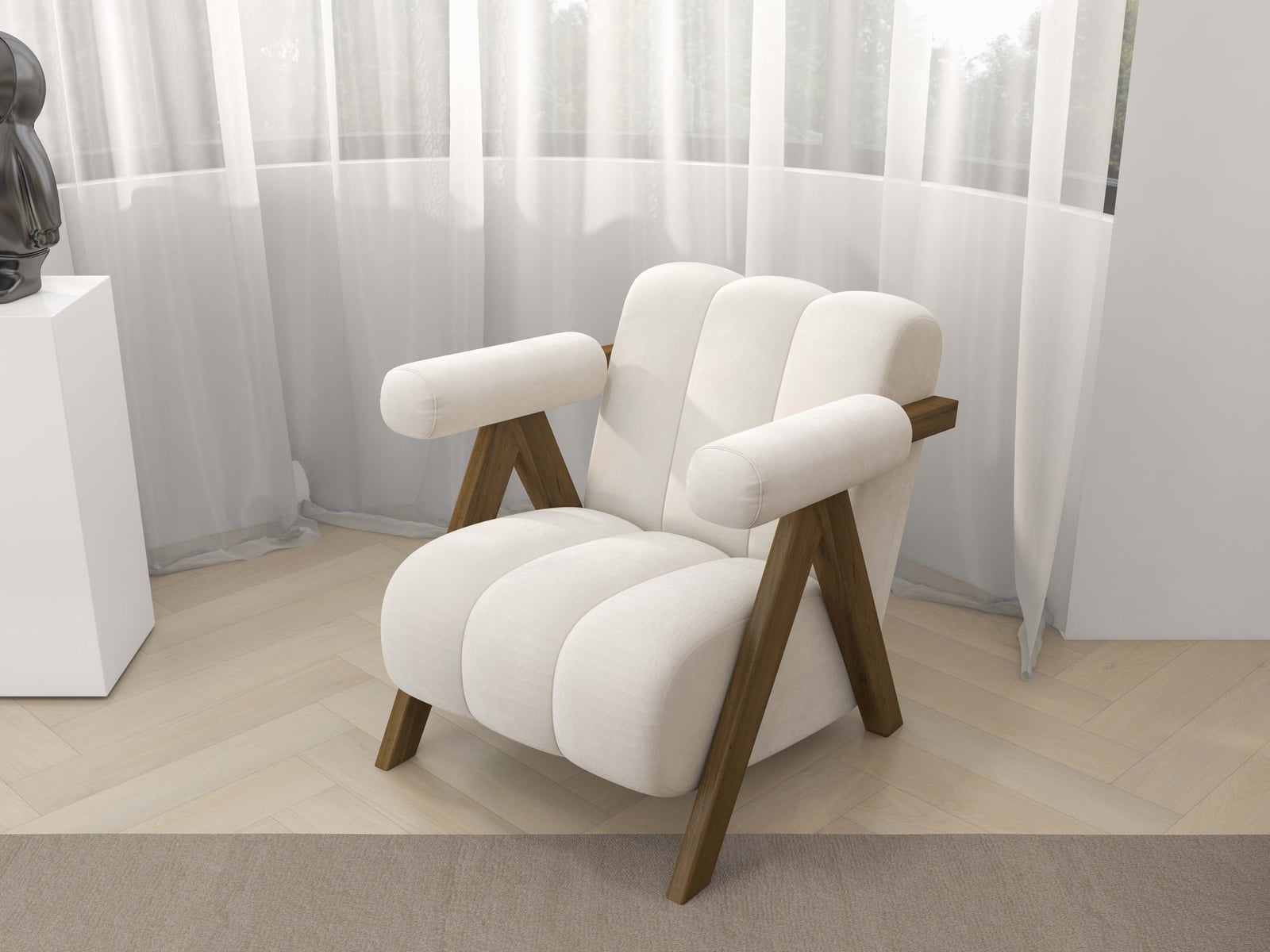
A channel-tufted armchair with a visible wood frame brings a tailored silhouette to a Japandi living room corner. The cream fabric softens the parquet flooring, while the exposed frame keeps the look grounded rather than overly plush. In style mode, the chair defines the ratio of the room by introducing vertical lines through the tufting, which breaks the horizontal plane of low furniture. The compact scale means it works as a reading nook anchor or a visual pause in an open layout.
Japandi Living Room: Garden View Window and Sunbeams
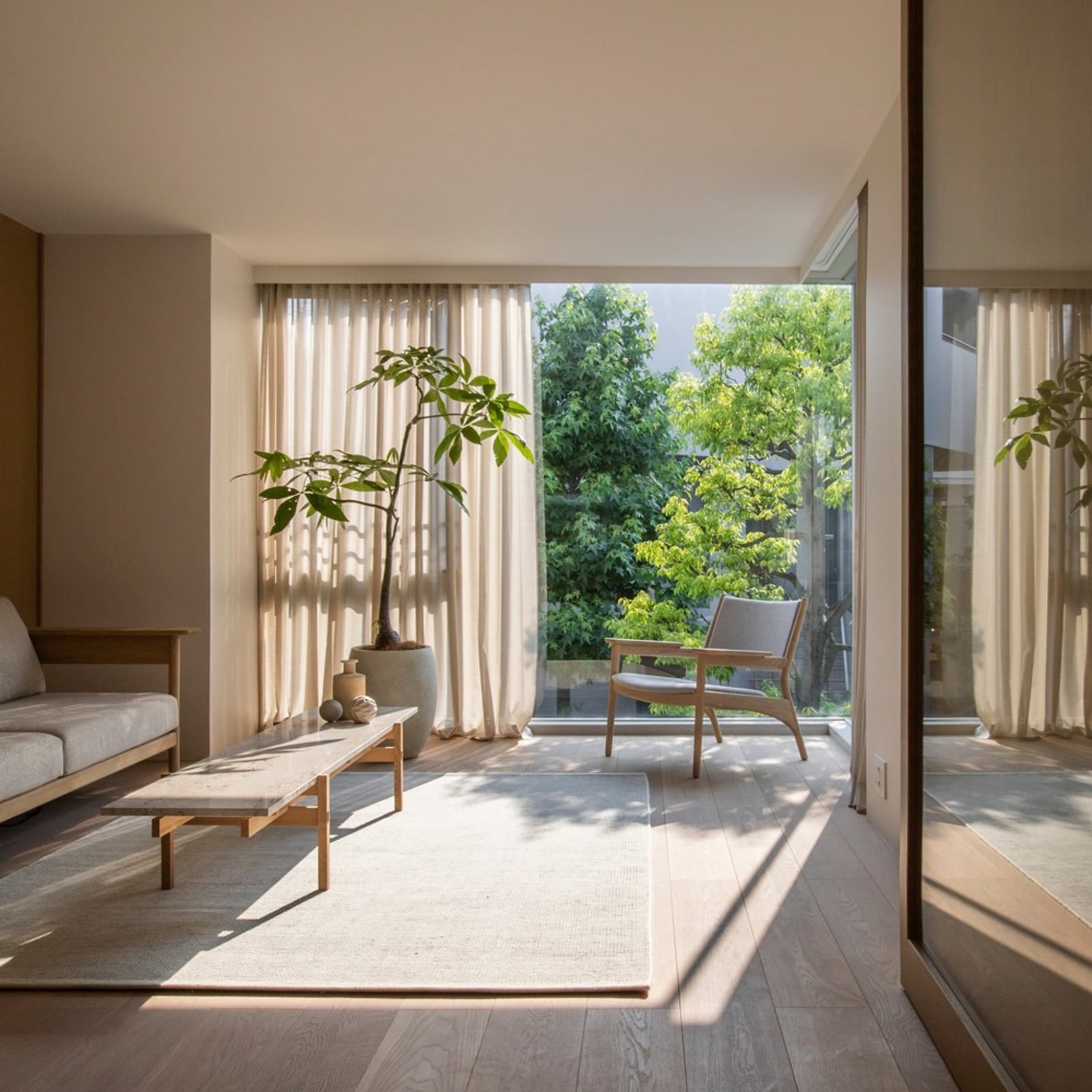
Natural light is the real decor here. A large window overlooking a garden floods the room with sunbeams, landing on a low wood sofa, a minimalist coffee table, and an armchair. The neutral palette of cream, wood tones, and green from the potted plant stays secondary to the shifting light patterns. In style mode, the concrete floor and linen upholstery absorb the warmth without glare, making the room feel open and airy. The dramatic sunlight becomes the defining element, so keep window treatments minimal to let the seasonal changes in the garden dictate the mood.
Japandi Dining Room: Minimalist Set and Black-Framed Windows
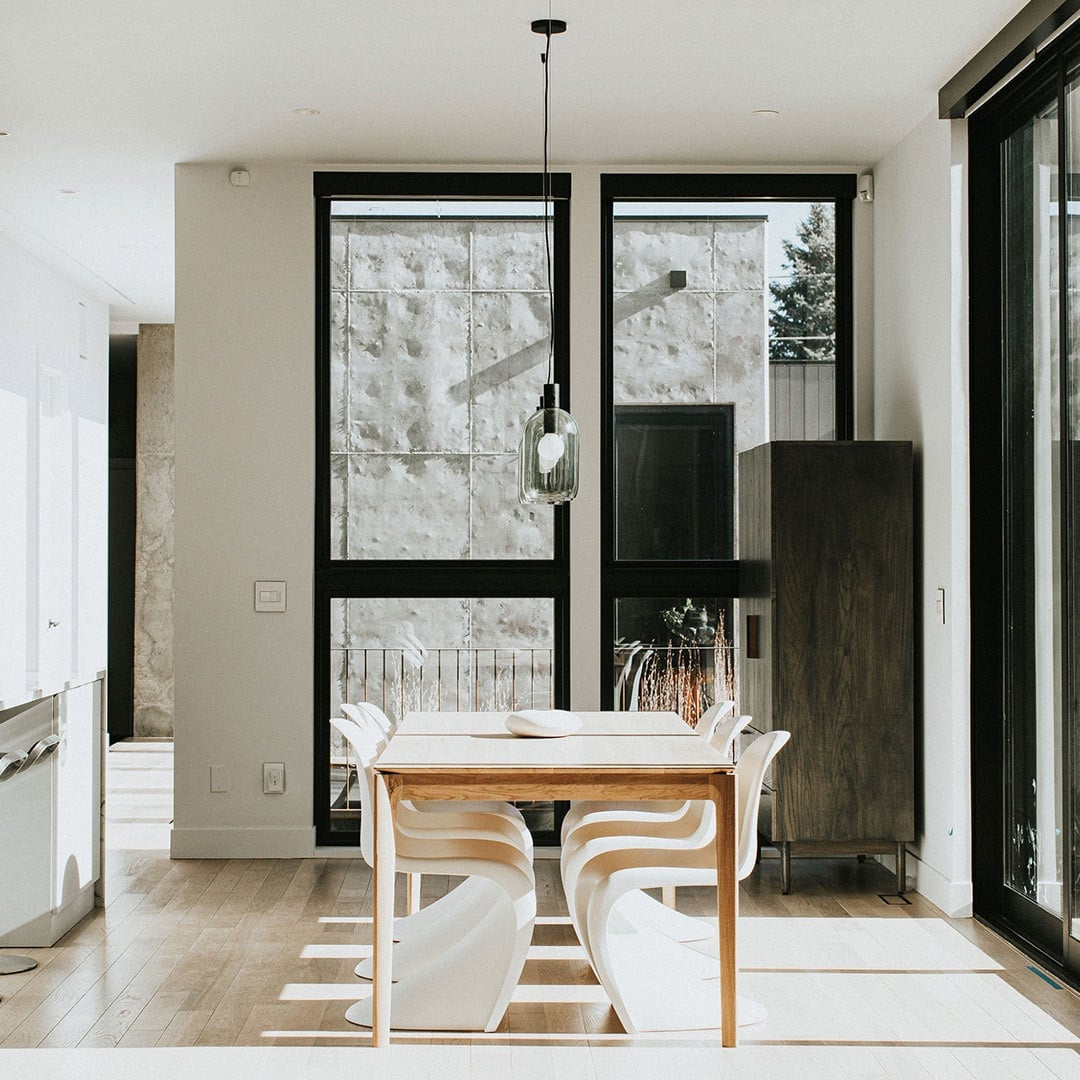
A dining table and chairs in light wood could read as basic, but black-framed windows and a tall cabinet give the room a crisp boundary. The minimalist set stays centered, leaving plenty of floor space around it. The scale works because the dark frames anchor the pale palette and prevent the room from floating visually. A pendant light above the table echoes the metal of the windows, tying the upper and lower halves together. If the dining set feels too sparse for your space, a tall cabinet with closed storage adds mass without clutter.
Final Thoughts
Japandi interiors aren’t about chasing trends or filling a room with the right objects. They’re about editing your space until only the functional and beautiful remain. Across these 33 looks, the common thread is intention: a low bed that grounds a bedroom, a woven pendant that anchors a dining area, a shoji screen that softens light. The palette stays quiet, but texture does the talking. Start with one piece you love, a carved sideboard, a ceramic lamp, and let the rest fall away. That’s the whole point.