Your kitchen cabinets cover a lot of real estate. Get their color right, and the whole room reads as finished.
Get it wrong, and you’re stuck with a mismatch that nags at you every time you grab a coffee mug. This roundup of 28 kitchen cabinet color ideas skips the theory and shows you what works in real kitchens, from moody greens to classic two-tone combos.
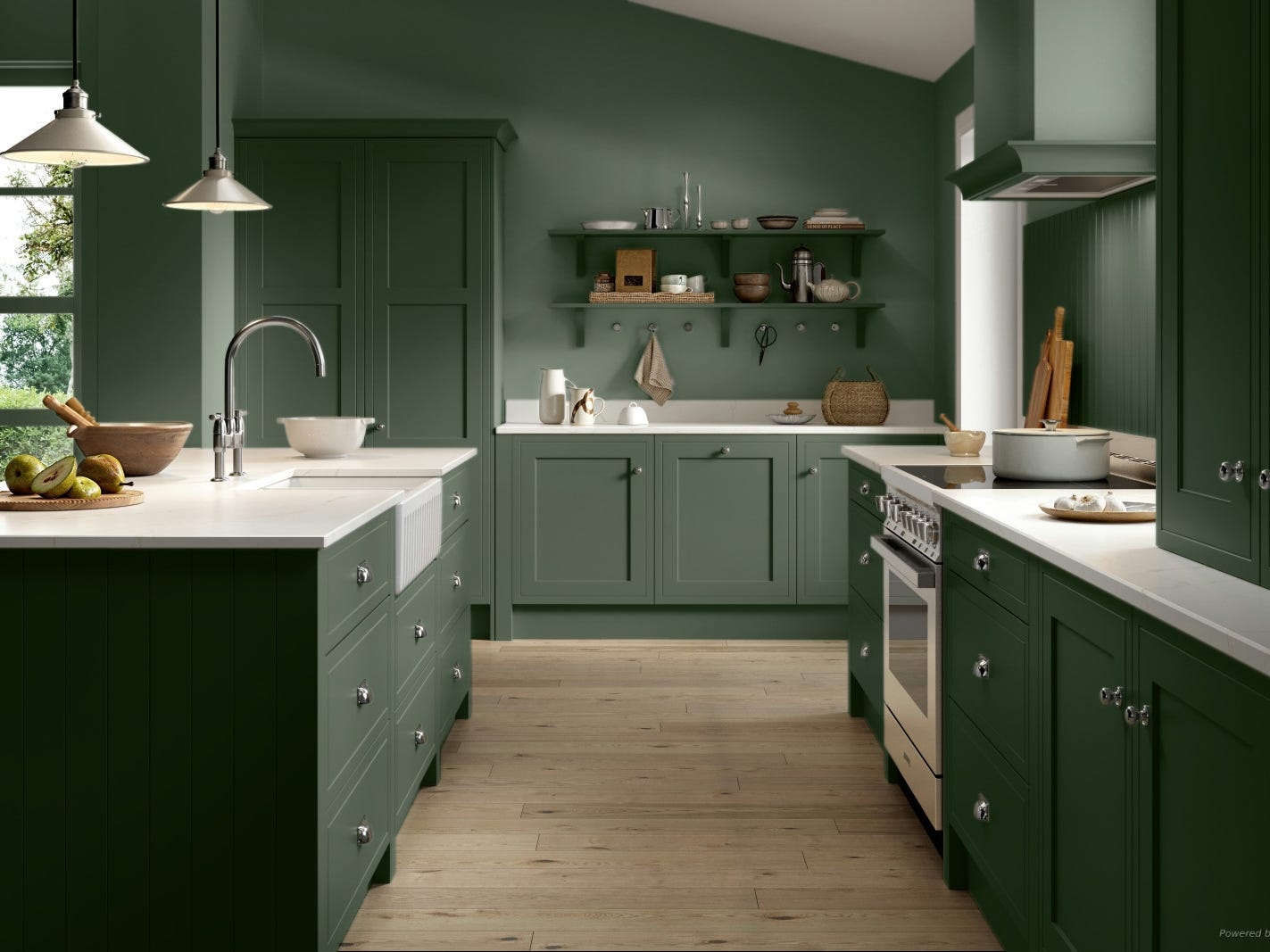
Deep Green Matte Cabinets in a Modern Farmhouse Kitchen
A deep green matte cabinet finish has the rare ability to feel both grounded and fresh, especially when it stretches from counter to ceiling in a galley layout. The matte surface absorbs light rather than bouncing it around, which makes the rich color feel more like a natural material than a painted one. Paired with a white farmhouse sink and warm wooden floorboards, the cabinets become the anchor of the room without overwhelming it.
Light Gray Cabinets with Bold Gold Hardware
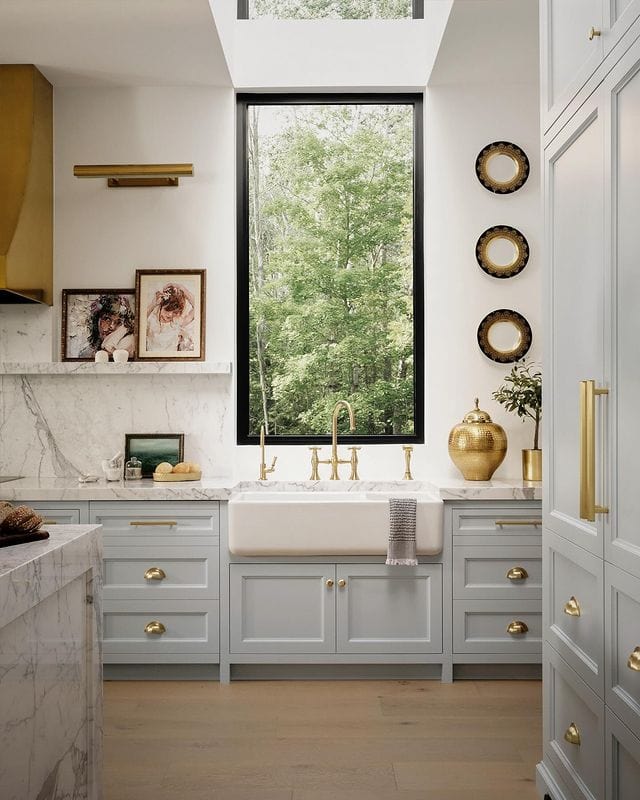
The combination works because the gray is pale enough to read as neutral, while the gold hardware supplies the personality. In a roomy kitchen with a marble-topped island and a skylight overhead, the brass fixtures catch natural light at different angles throughout the day, shifting the look from subtle to statement without changing a thing. Hardware is the most renter-safe swap on this list: replacing standard knobs with brass pulls costs only time and a screwdriver, and it changes the whole feel of the cabinets.
Dramatic Deep Teal Cabinets in a Spacious Kitchen
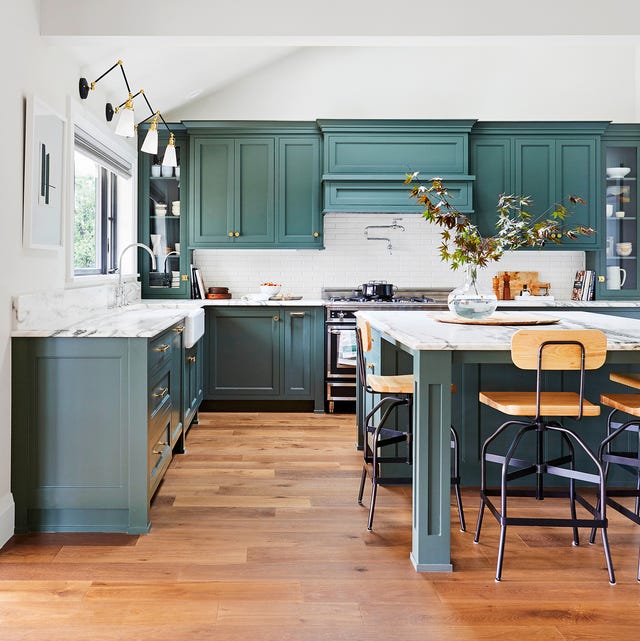
Can a single color make a galley kitchen with an island feel larger than it is? Deep teal comes close, especially when the cabinetry extends from floor to ceiling. The dark hue recedes visually, pushing the walls outward while the white countertops and backsplash maintain an open look.
Wall sconces mounted beside the range add warm light that softens the teal’s cool undertones, and the natural wood accents on the island bring back the earthy balance. The trick is letting the cabinets dominate: no competing patterns or busy hardware, just clean lines and a color that anchors the room.
Two-Tone Blue-Gray and Cream Farmhouse Cabinets
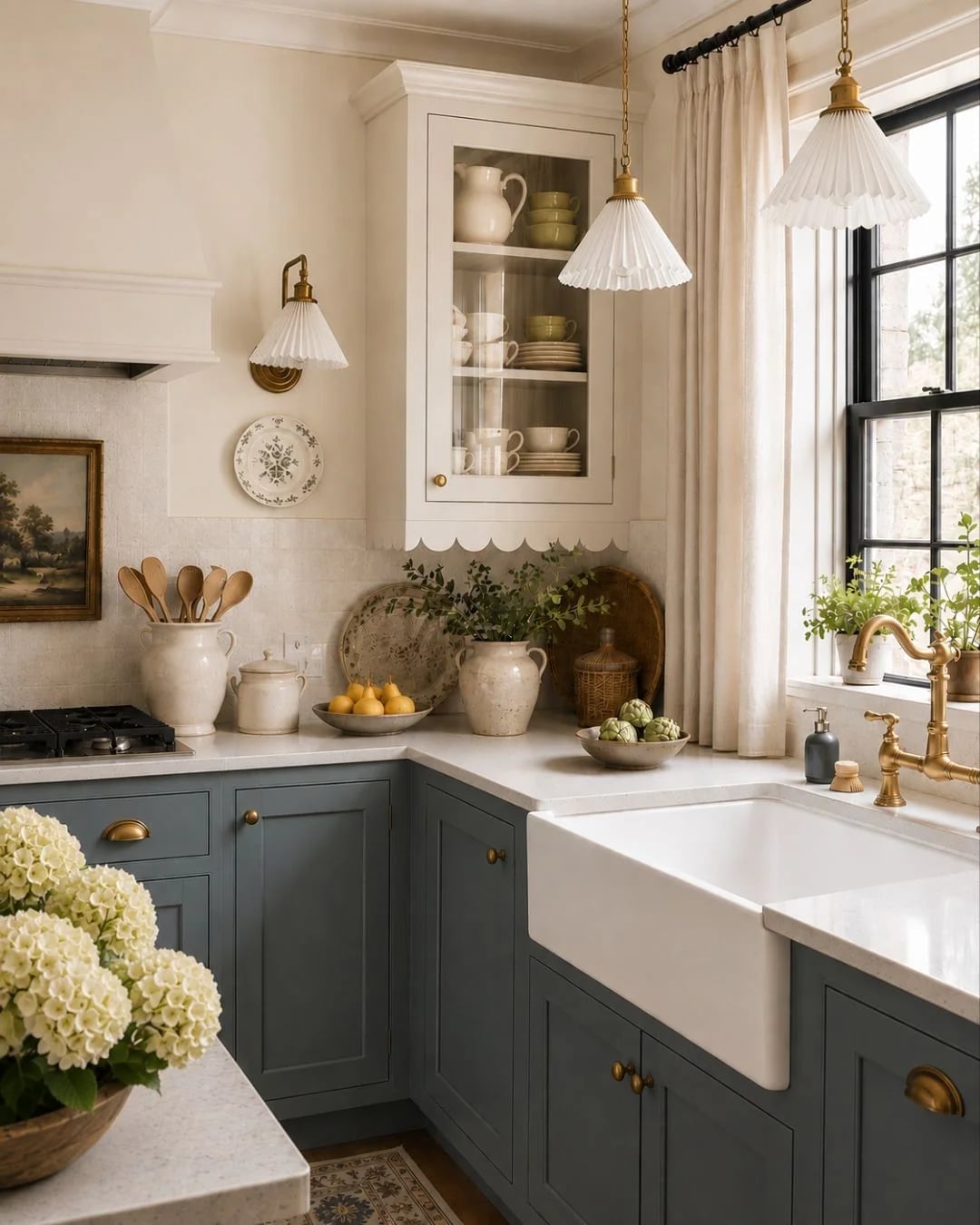
The blue-gray lower cabinets sit solidly against the cream uppers, creating a visual horizon line that makes a corner kitchen feel more grounded. Brass fixtures on the sink and faucet tie the two tones together without trying to match either one exactly. The wood floor keeps the palette from floating into pastel territory, adding warmth that a purely cool scheme would miss.
Modern Kitchen with Warm Brown and White Two-Tone Cabinets
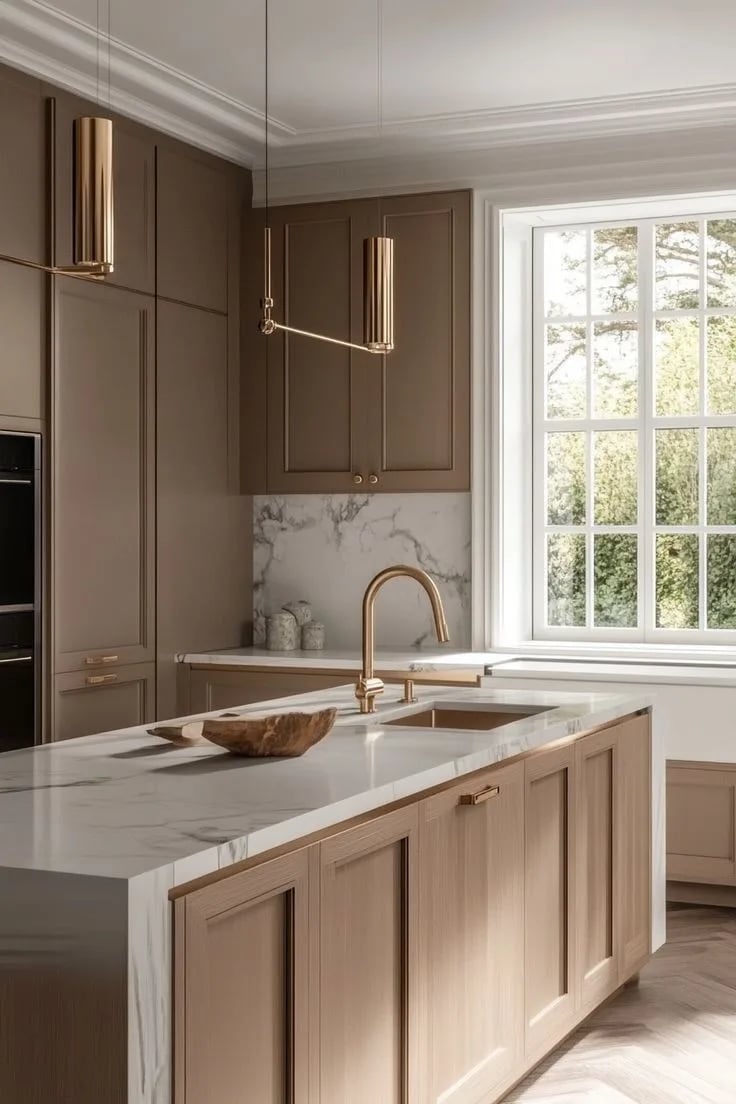
Let the darker color sit on the lower half where it hides daily scuffs and splashes, and reserve the lighter shade for uppers where it reflects light. Warm brown base cabinets paired with white uppers in an open plan kitchen create a clear divide between work and storage zones. The stone countertops and tile backsplash stay neutral so the wood grain in the brown cabinets can be the texture that matters.
Subtle Two-Tone Beige Cabinets in a Modern Farmhouse
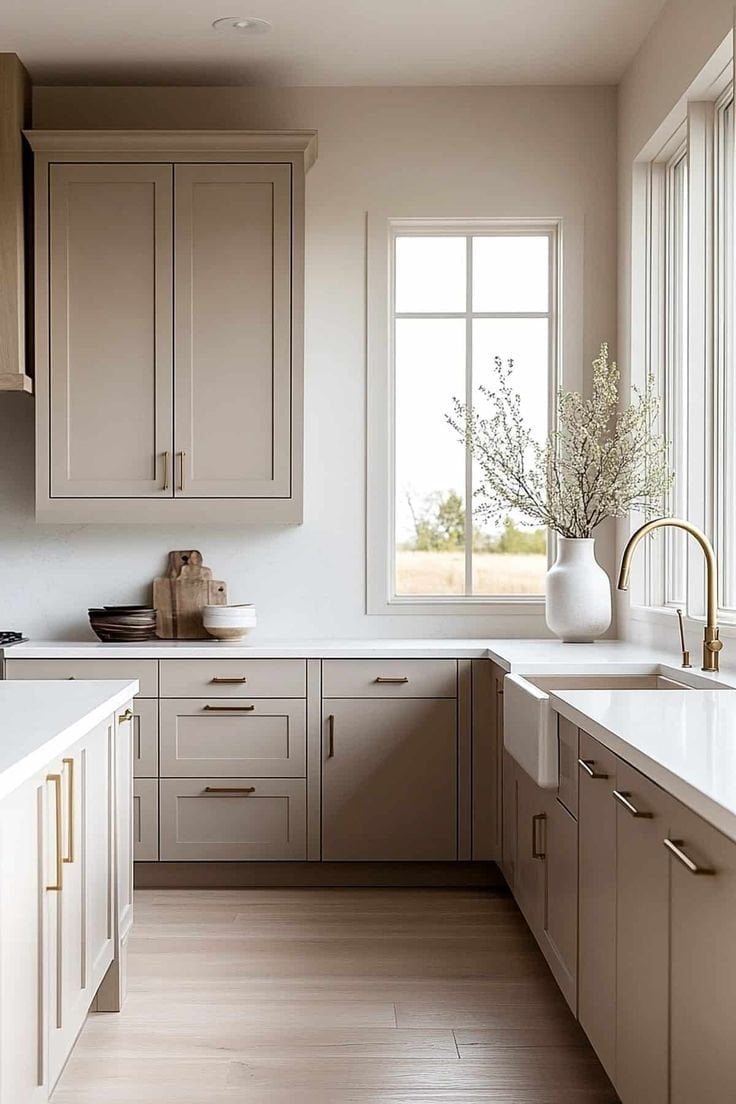
If a stark white kitchen feels a little too sterile for a modern farmhouse, beige is a softer alternative. The upper cabinets here stay pale, while the lowers and the island base shift to a warmer wood tone. That swap keeps the room from feeling top-heavy and gives the eye a natural place to land. The quartz countertops and brass faucet follow the same logic: nothing competes for attention. A corner layout like this one benefits from keeping the palette quiet, because the angles already do the work of defining the space.
Traditional Blue and White Two-Tone Galley Kitchen
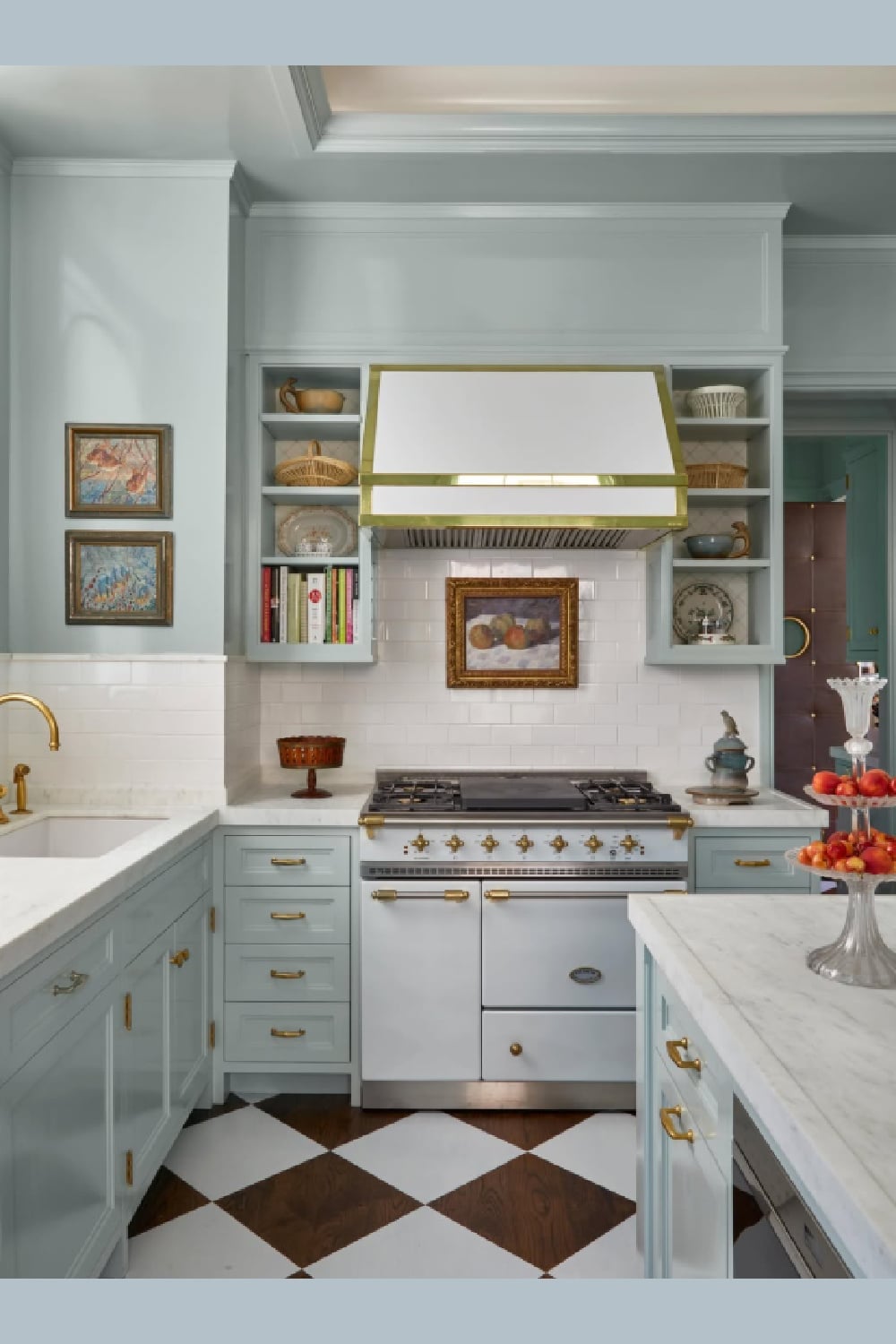
The blue lowers stop at the counter, and the white uppers carry the light from the window through the galley. That split is the kind of detail that makes a narrow kitchen feel wider without moving a wall. The white tile backsplash and marble counter keep the blue from dominating, while the wood tones in the stool and cutting boards add a warm note. A renter could recreate the effect with peel-and-stick tile on the backsplash and removable vinyl on the lower cabinet fronts, then pull it off when the lease ends.
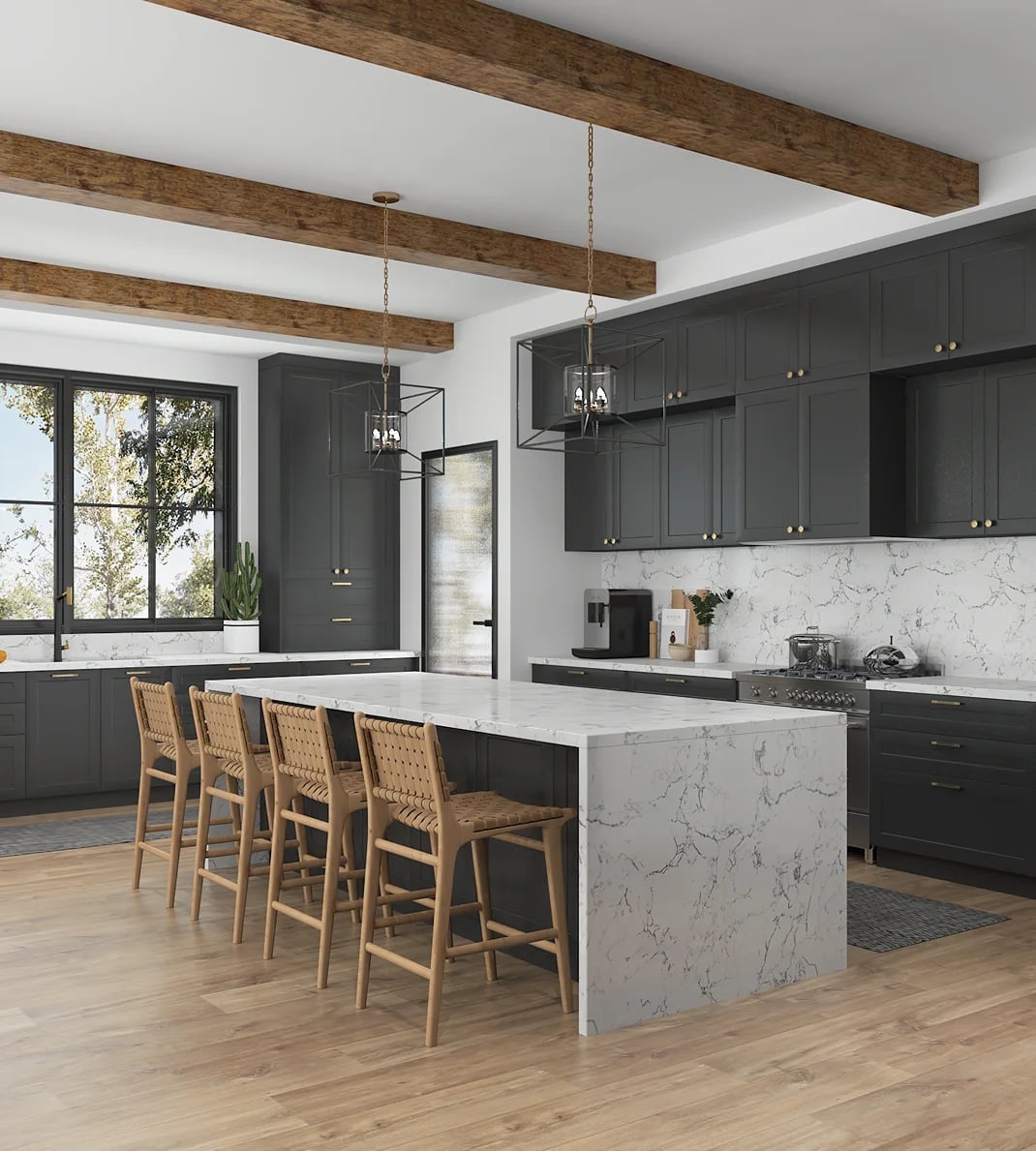
Classic Dark Brown Wood Cabinets
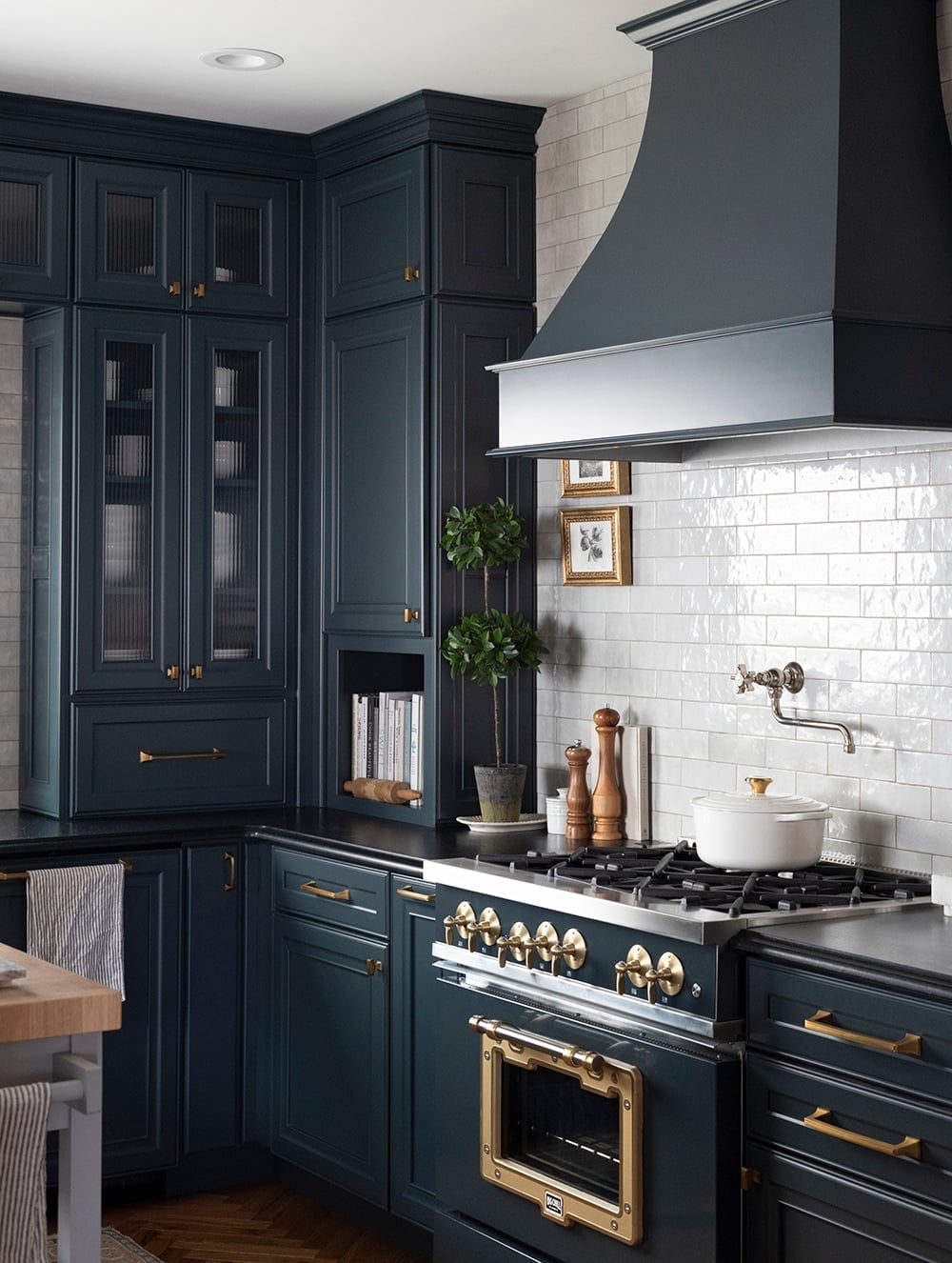
Dark brown wood cabinets read as grounded and unfussy, the kind of choice that does not rely on a trend to feel current. The deep stain anchors the open-plan room, and the white island and gray stone countertop provide the contrast that keeps the look balanced. Recessed and under-cabinet lighting are essential here: without enough illumination, dark cabinets can shrink the visual space. The wood grain adds texture, so the kitchen does not need busy tile or a bold backsplash to hold interest.
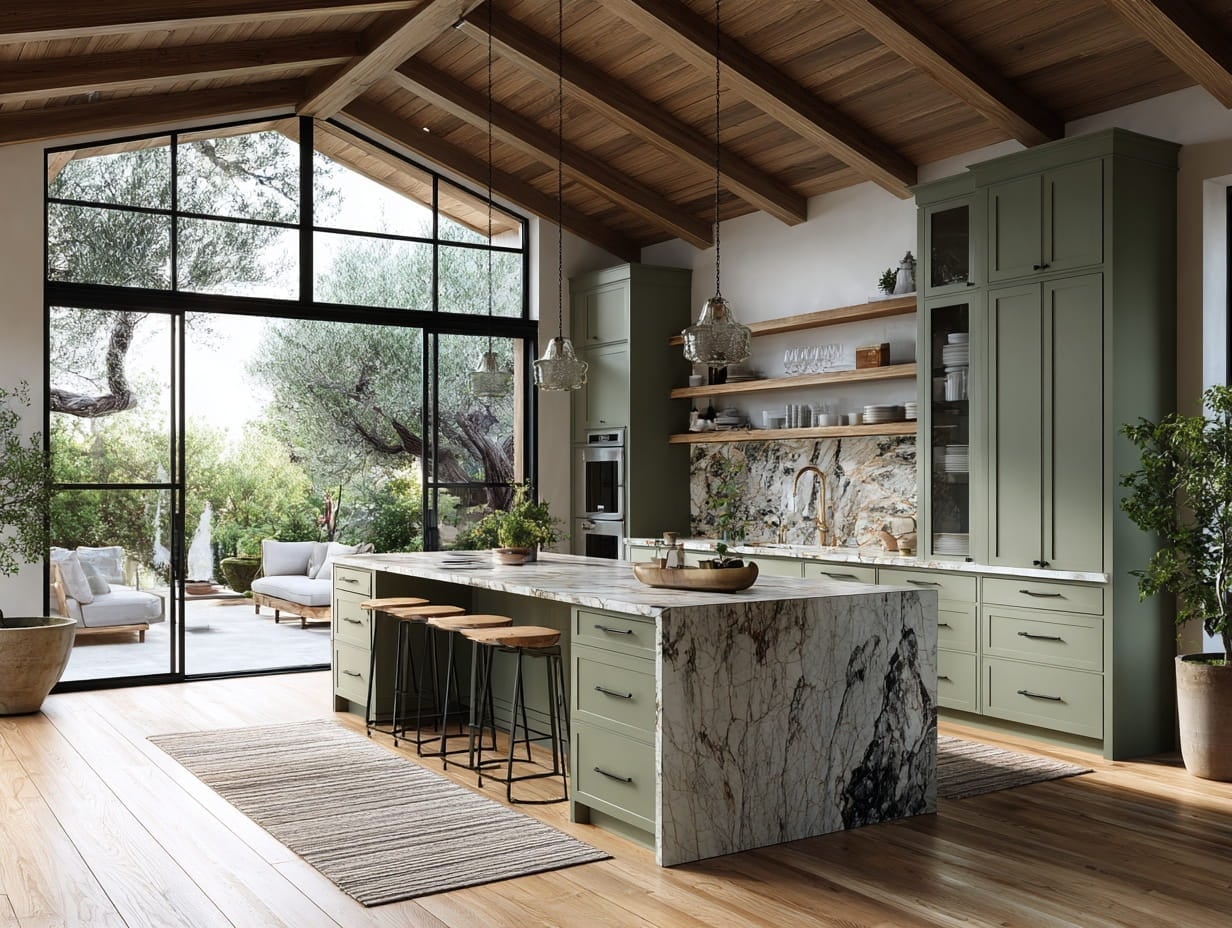
Serene Sage Green Cabinets in a Modern Farmhouse
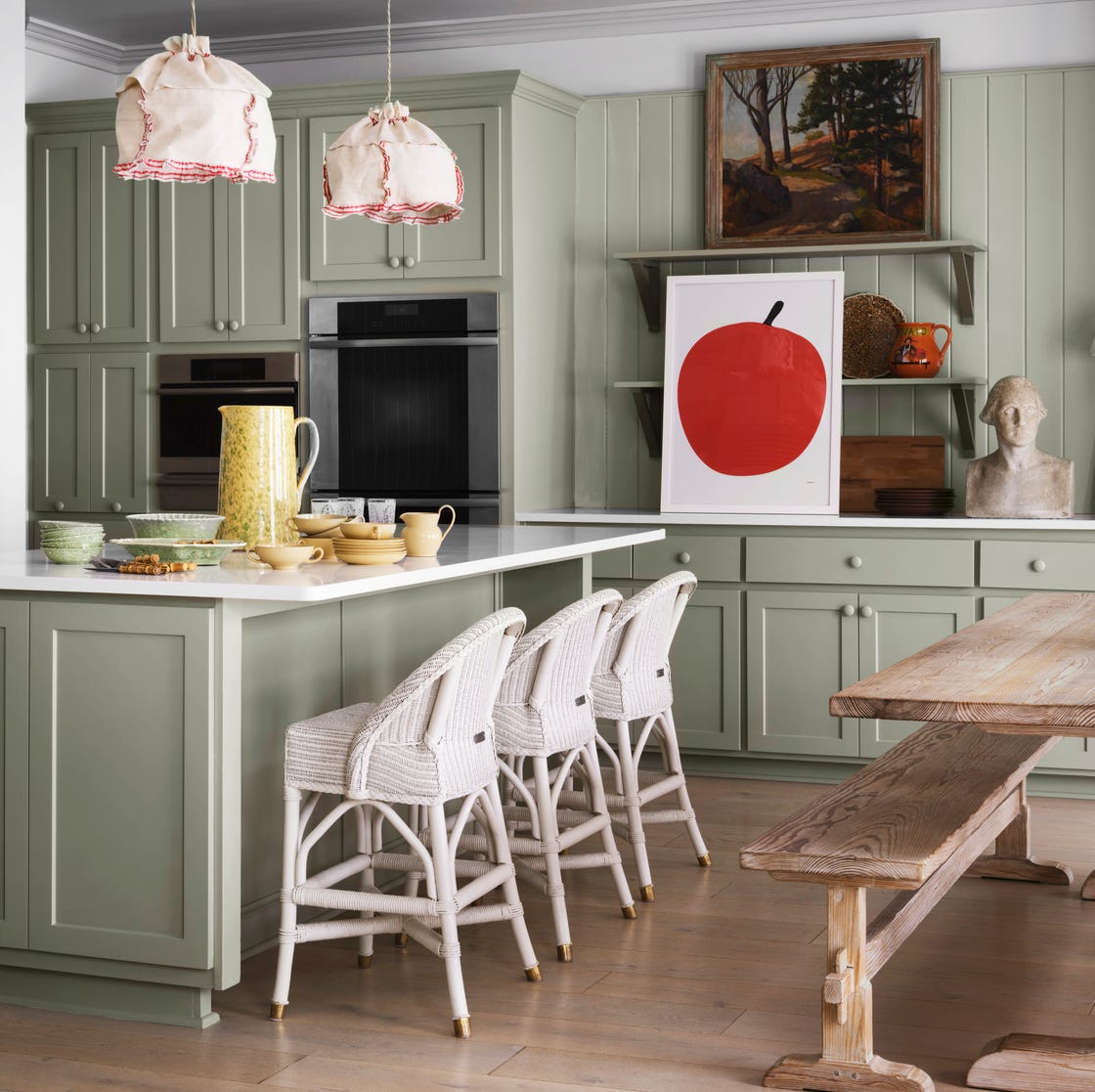
Can a color feel both calm and lively at the same time? Sage green manages that trick better than most. The soft green cabinetry wraps the perimeter, while the wooden island and wicker stools bring in warmth and a natural texture. The white countertops and open shelving lighten the space. This palette works because the green is muted enough to let the wood and wicker stand out without clashing. The overhead lighting and natural light keep the sage looking fresh rather than muddy.
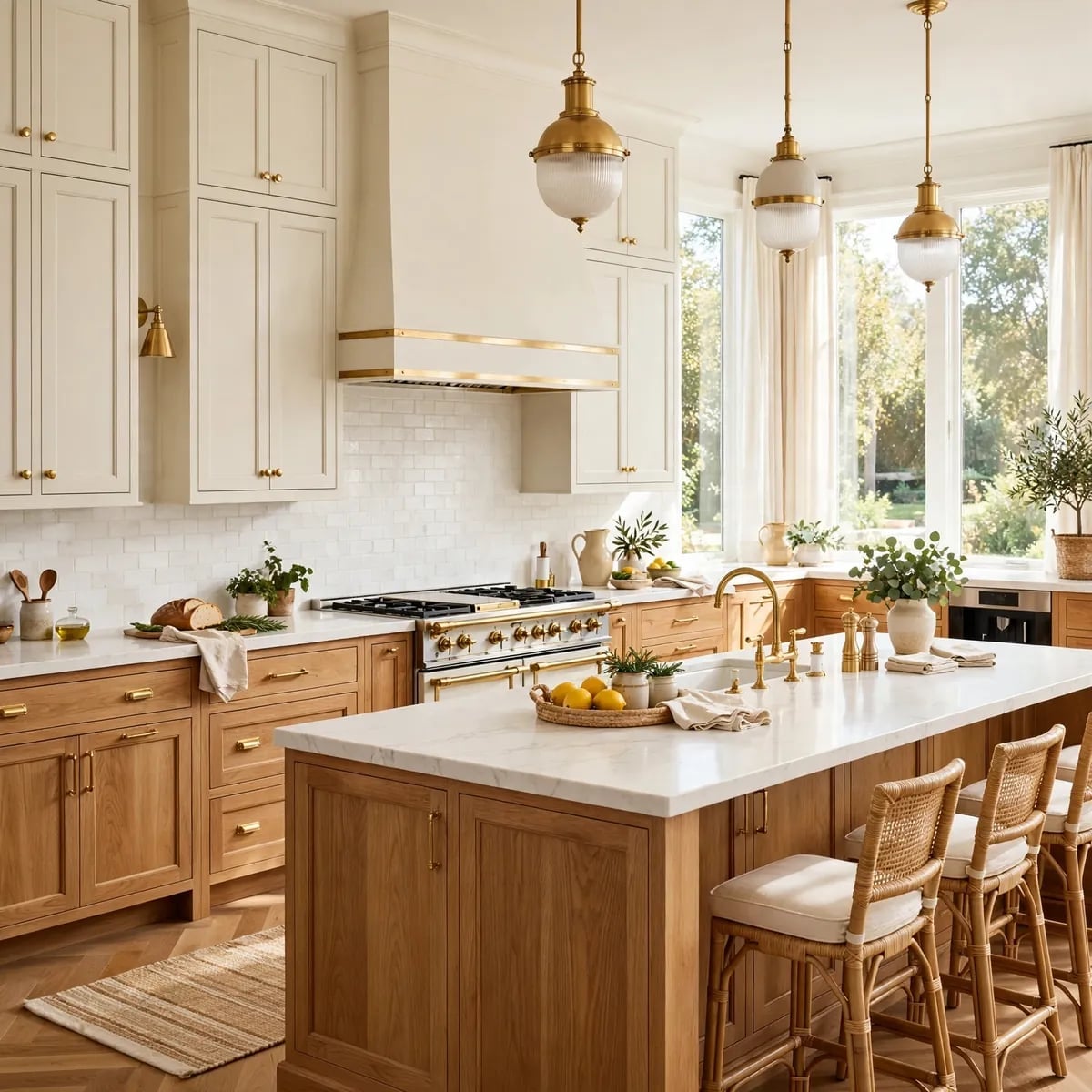
Modern Mix of Natural Wood and White Cabinets
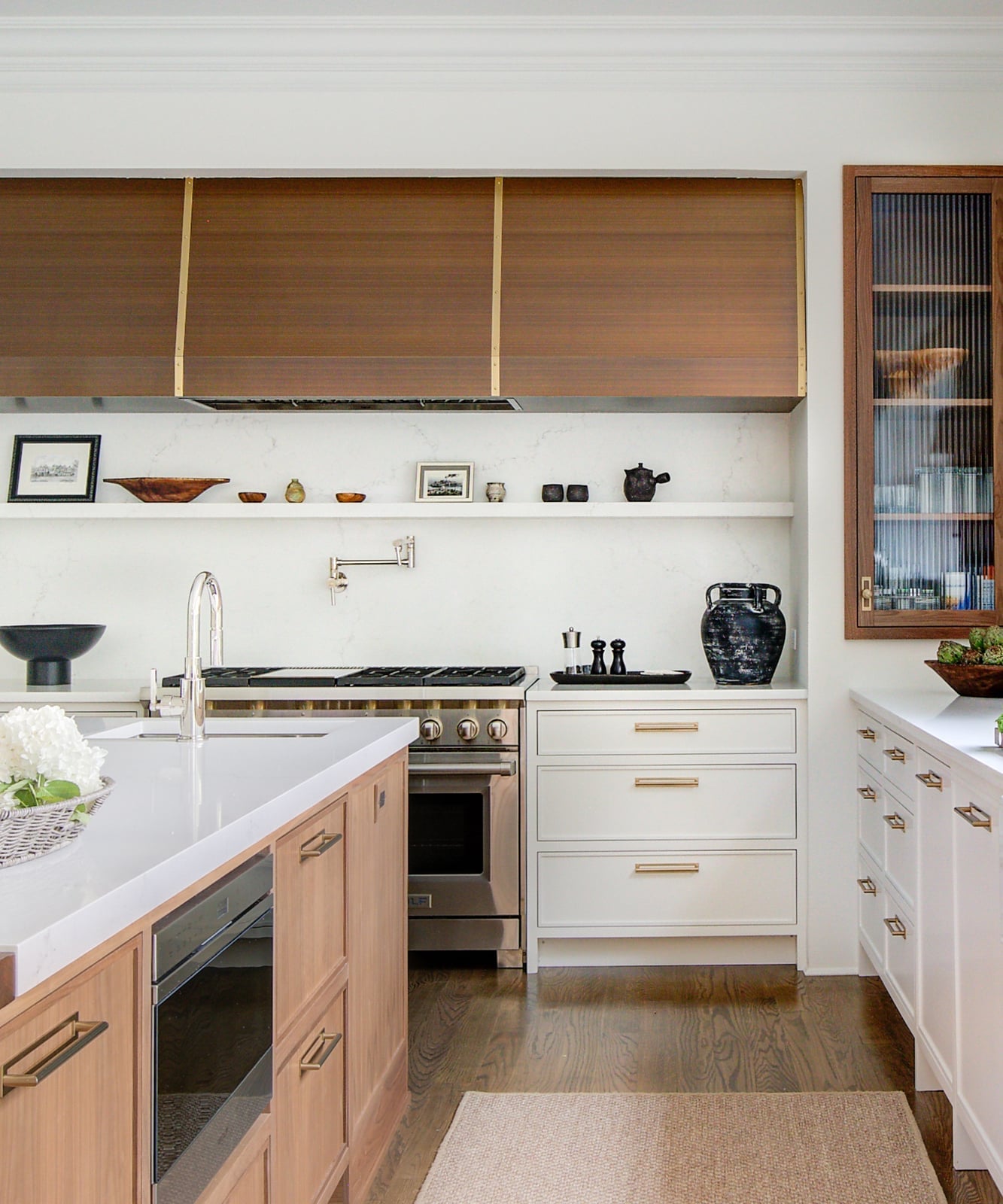
The wood cabinets sit on the island base, and the white cabinets line the perimeter. That arrangement puts the warm material at the center of the room, where it becomes the focal point without taking over. The brass hardware on the white cabinets adds a subtle metallic thread that ties the two halves together. A stone countertop on the island keeps the wood from feeling too casual. This mix works best when the wood tone is the only warm element, so the white and brass can provide structure.
Vibrant Lime Green Island as a Kitchen Focal Point
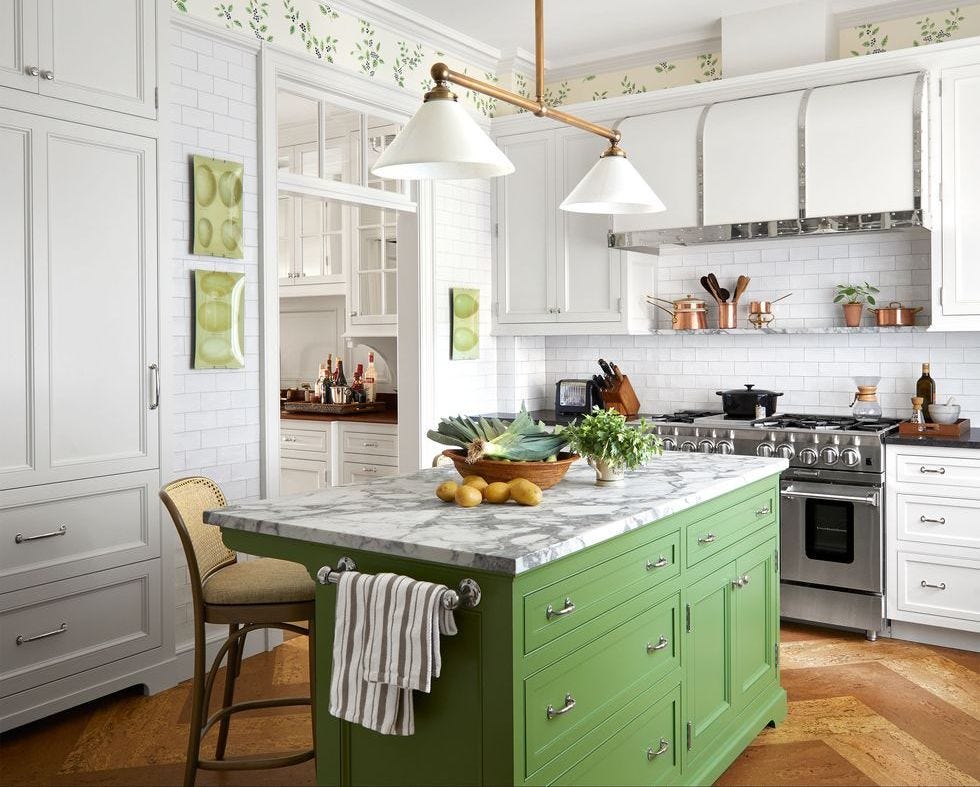
When you pick a color that loud, the rest of the room has to stay quiet. A lime green island painted wood gets all the attention, so the white perimeter cabinets, marble countertop, and subway tile backsplash keep the palette simple. Pendant lights above the island add direct task light without competing. The island is the only accent: no other bold color fights for your eye. That makes the layout feel intentional, and the room stays bright even with a saturated hue at center.
Bold Deep Blue-Green Cabinets in a Transitional Kitchen
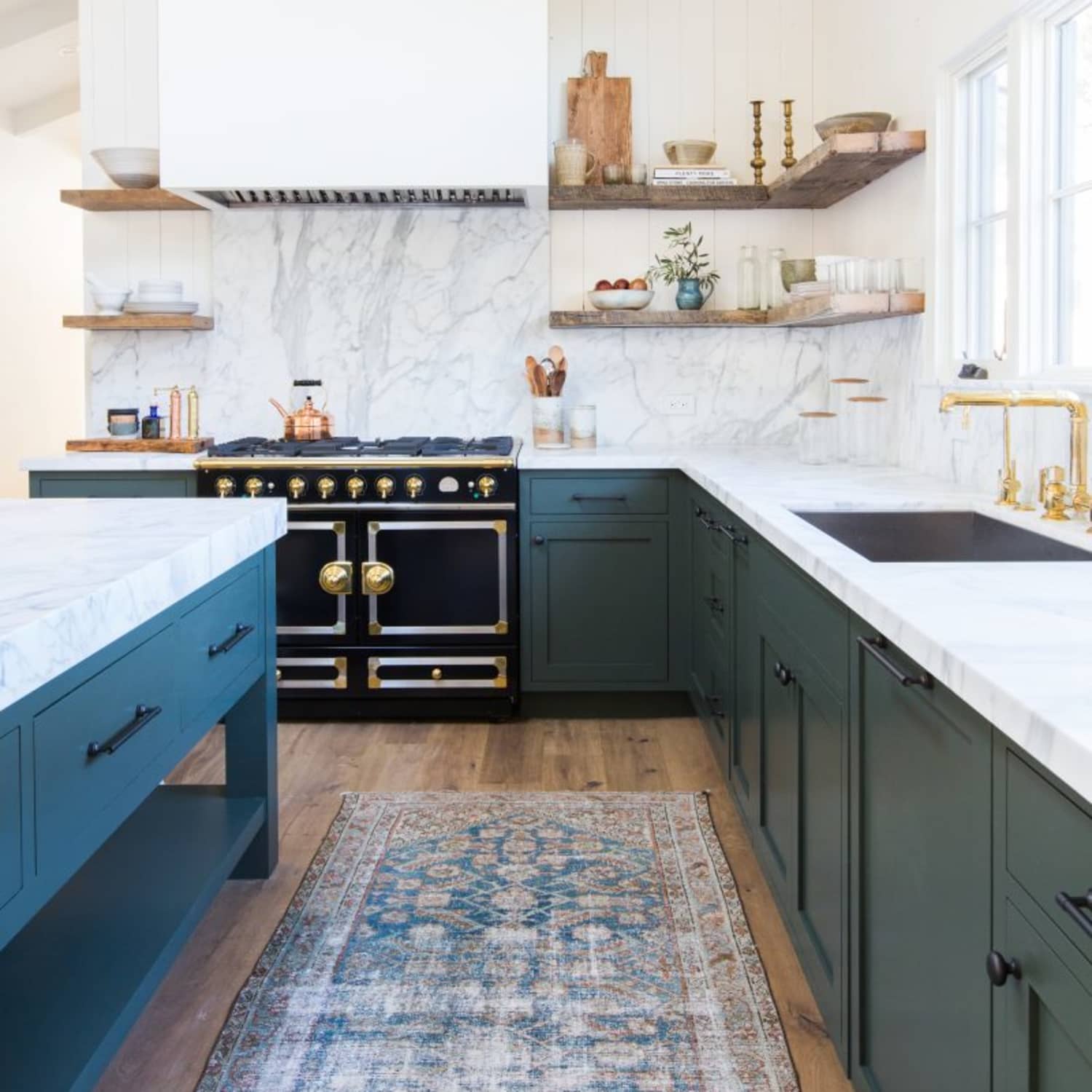
Deep blue-green can read as navy or teal depending on the light, which is exactly why it works in a transitional kitchen. Against white walls and wood tones, the cabinets hold their own without feeling cold. The marble countertops and brass hardware add warmth, and a patterned rug underfoot keeps the floor from feeling empty. Natural light from nearby windows shifts the shade through the day, so it never sits flat.
Transitional Gray Island with White Perimeter Cabinets
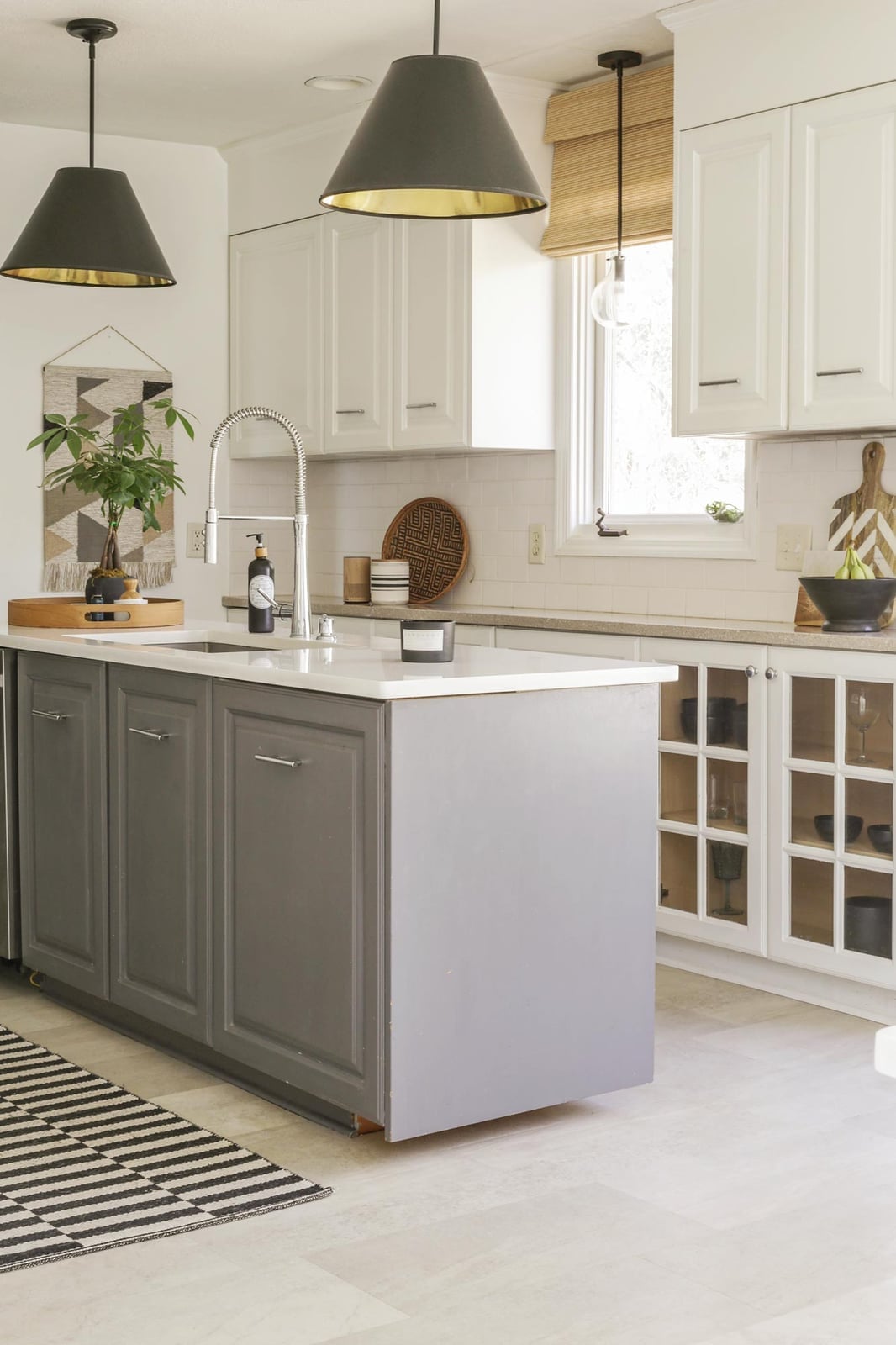
A gray island with white cabinets is a two-tone combination that relies on contrast without drama. The gray reads as a solid anchor, while the white keeps the perimeter light. Pendant lights above the island add focused task light, and the stone countertop ties the two colors together. The material difference between the painted island and the tile backsplash gives the eye a natural pause.
Atmospheric Olive Green Cabinets with Brass Hardware
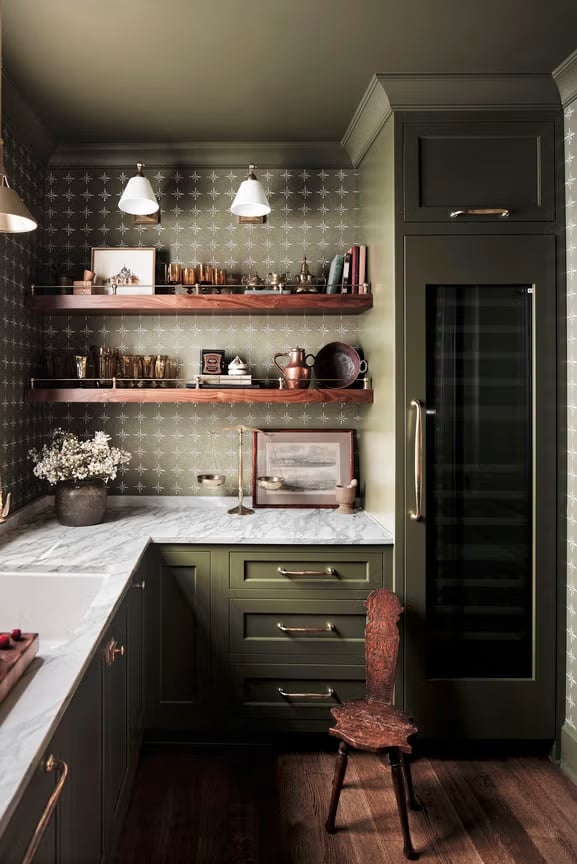
Olive green cabinets work because they carry a natural warmth that cooler greens lack. With brass hardware and marble countertops, the palette feels grounded rather than trendy. Soft room light and task lighting over work zones keep the green from overwhelming. The integrated wine fridge and open shelves break up the cabinetry for a balanced look.
Farmhouse Style Green and White Two-Tone Cabinets
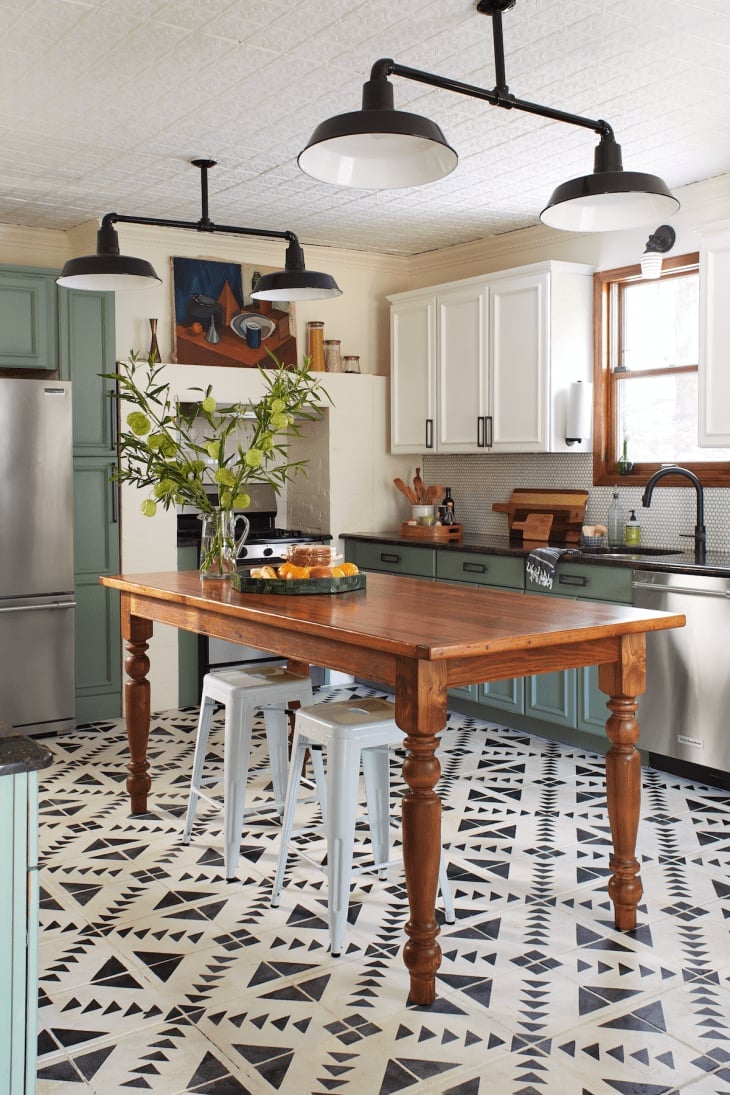
Two-tone cabinets in a farmhouse kitchen look best with the darker color on lower cabinets and the lighter one above. Green on the base and white on the upper keeps the room feeling open while adding depth where you need it. The wood tones in the island and the metal hardware tie the two colors together. Pendant lights over the island provide task light, and natural light from nearby windows keeps the green from feeling heavy.
Sage Green Lower Cabinets with White Upper Cabinets
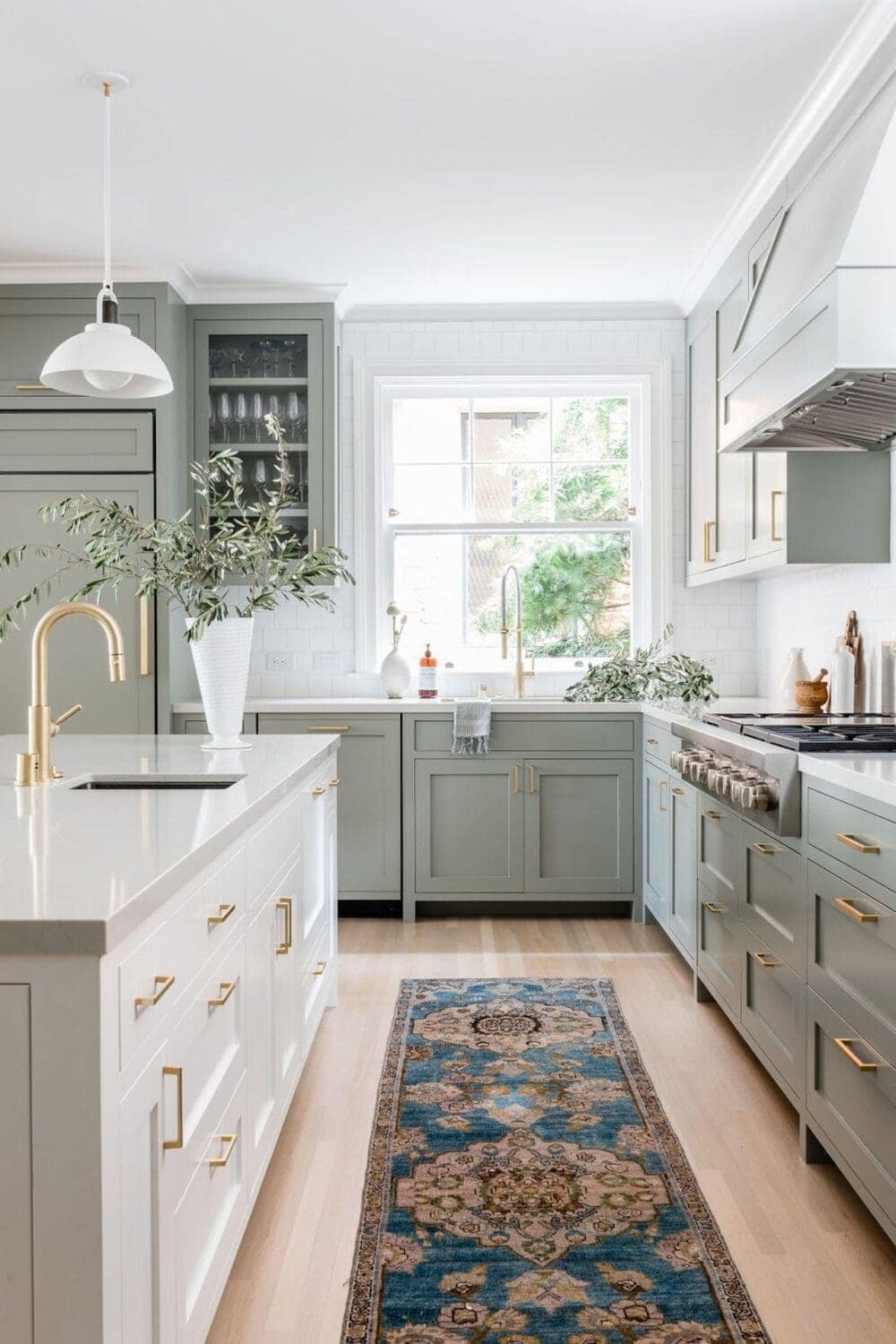
Sage green lower cabinets anchor the kitchen, while white uppers keep the space airy. This split is a smart way to try a color without committing to a full repaint. The sage green cabinets sit under a marble countertop, with a wood island and tile backsplash adding texture. Natural light from nearby windows and a pendant light above the island balance the look. The palette works because the darker shade stays below eye level, so the room never feels top-heavy. It is a variation on the standard two-tone formula that suits open plan kitchens.
Modern Contrast: Off-White and Dark Gray Cabinets
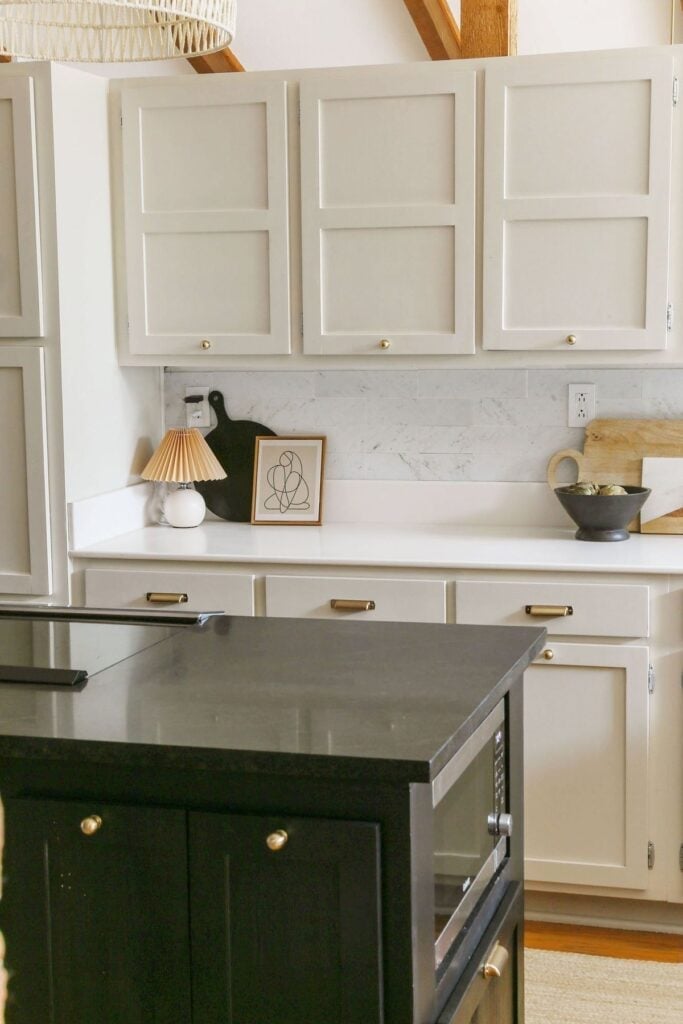
A practical rule for two-tone cabinets is to pair a light upper with a dark lower to ground the room. Here, off-white upper cabinets sit above dark gray lowers, with brass hardware adding contrast. The island continues the dark gray finish, while a marble countertop and backsplash tie the palette together. Natural light and ambient light soften the high-contrast scheme. For renters, this look is achievable with peel-and-stick wallpaper on the island or contact paper on the lower cabinets, as long as the landlord approves. The brass hardware is a small swap that changes the feel without permanent work.
Soft Blue-Green Cabinets in a Bright Modern Farmhouse
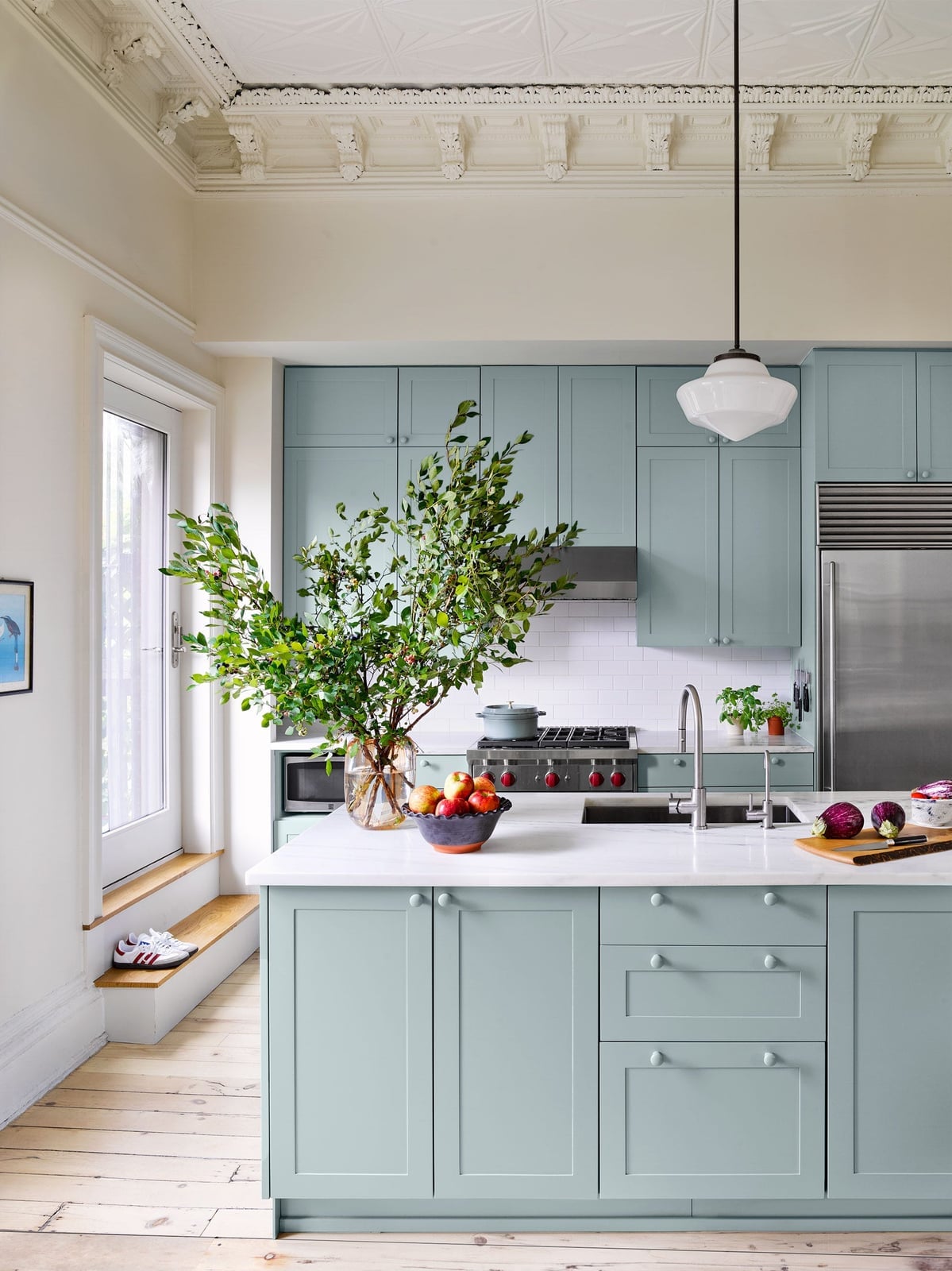
Soft blue-green cabinets sit between sage and teal, offering a cooler alternative to the usual farmhouse greens. In this kitchen, the blue-green cabinets cover the perimeter while a large island in a lighter shade keeps the layout from feeling heavy. Stainless steel appliances and a stone backsplash add a modern edge, while the wood island top brings warmth. Natural light from large windows and overhead lighting make the color appear as a soft blue rather than a true green. The palette breaks from the standard white farmhouse by using the blue-green as the main color instead of an accent. It is a practical choice for anyone who wants color but finds sage too warm or teal too bold.
Modern Kitchen Bar with Dark Gray and White Cabinets and Painted Wood
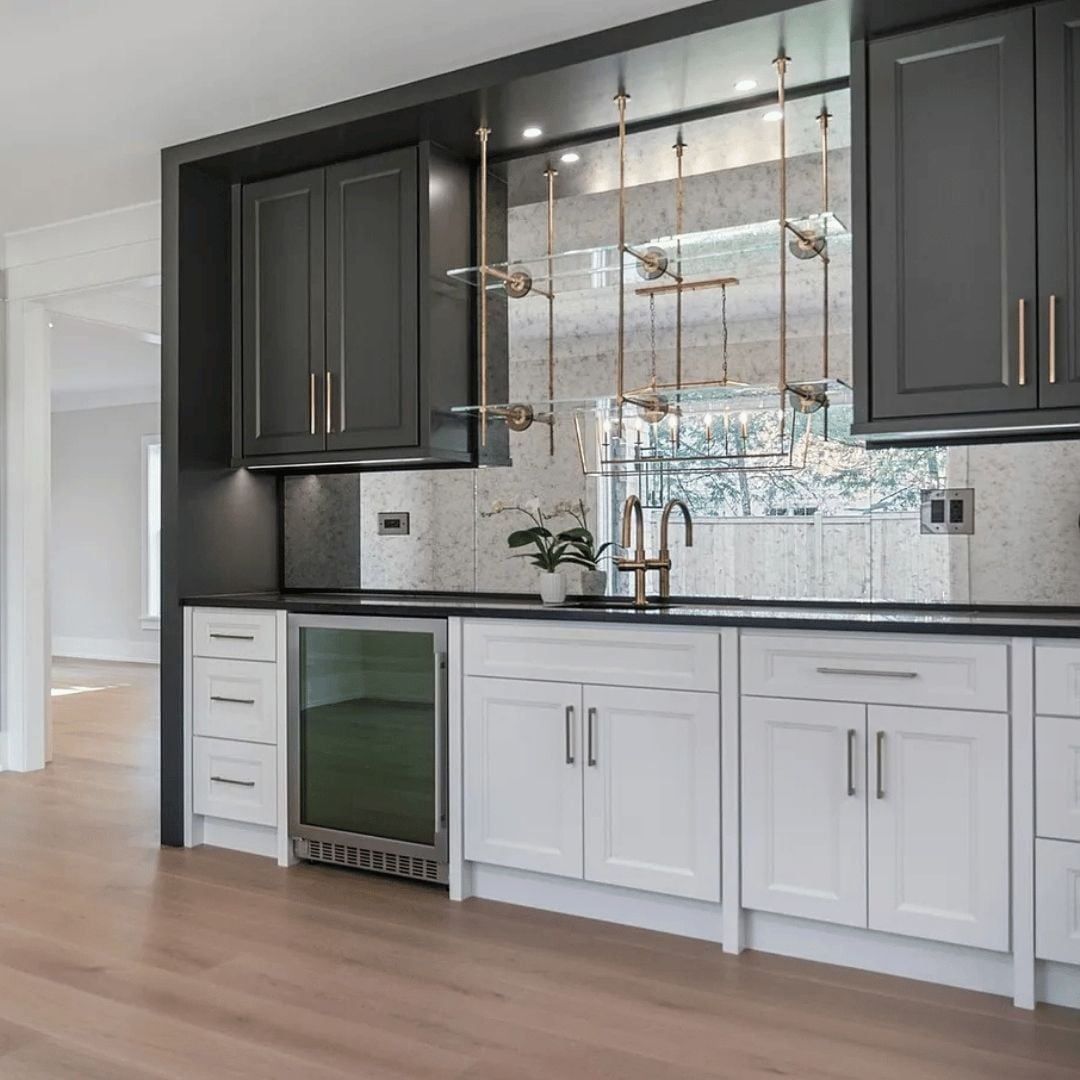
The dark gray upper cabinets contrast with white base cabinets in this linear bar setup, creating a clear visual break. A mirrored backsplash behind the bar reflects light, making the painted wood cabinets feel less imposing. The stone countertop and brass accents tie the dark gray and white together. Task lighting above the bar highlights the work area, while ambient light softens the edges. The mirrored backsplash is a practical choice for a bar area, where spills are common and easy cleaning matters. It also makes the room feel larger without adding square footage.
Striking Teal Cabinets in a Modern Kitchen
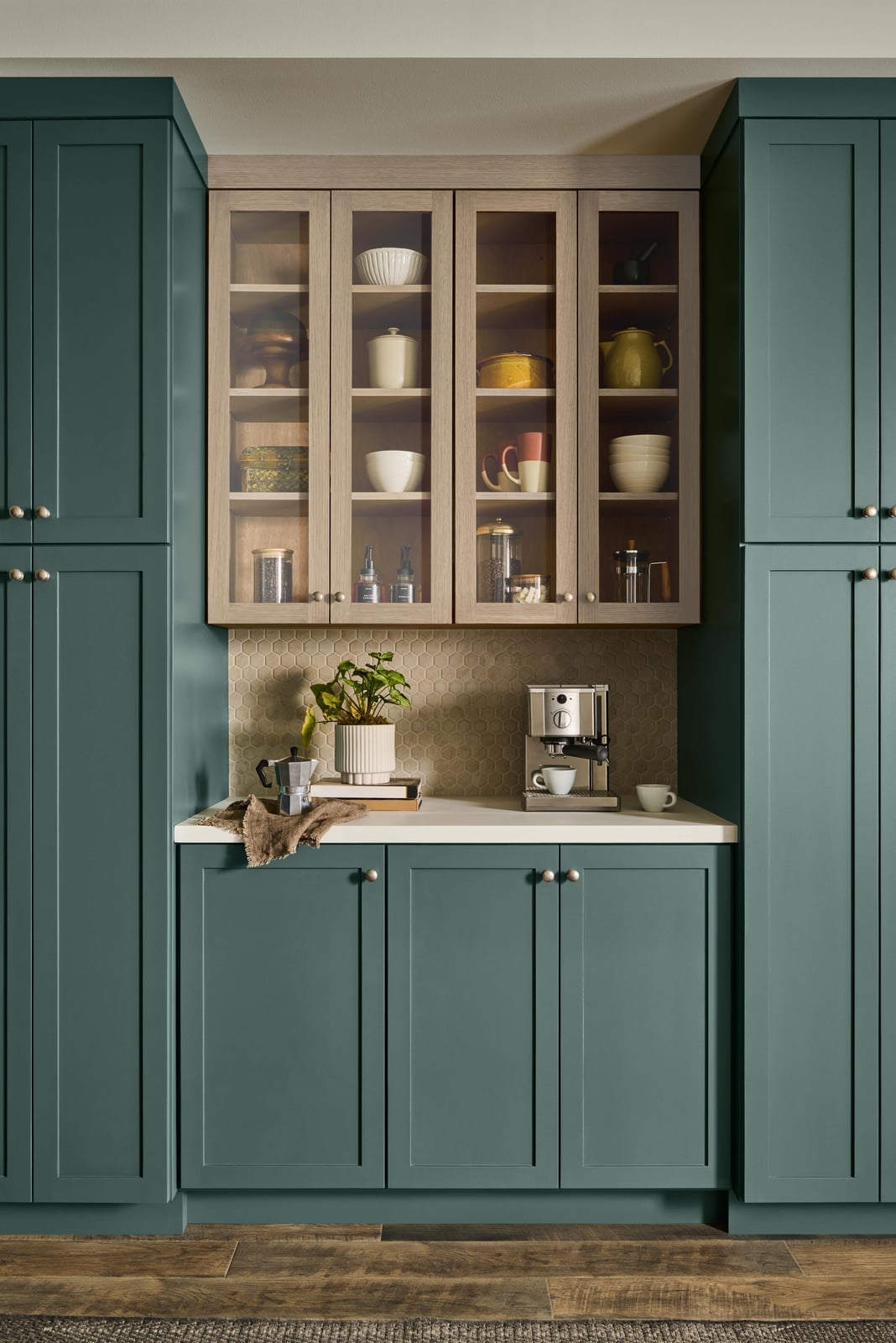
Teal cabinets make a strong statement in this modern kitchen. The color is bold but not overwhelming, thanks to the wood and beige palette that surrounds it. Glass-front upper cabinets break up the teal expanse and show off dishware, adding visual interest. The wood countertop and tile backsplash keep the look grounded, while ambient and task lighting prevent the teal from reading as too dark. The key to using a color like teal is to let it be the hero element and keep the rest of the room simple. It works best in kitchens with good natural light, where the color can shift throughout the day.
Farmhouse Charm with Sage Green Cabinets and Wood Island
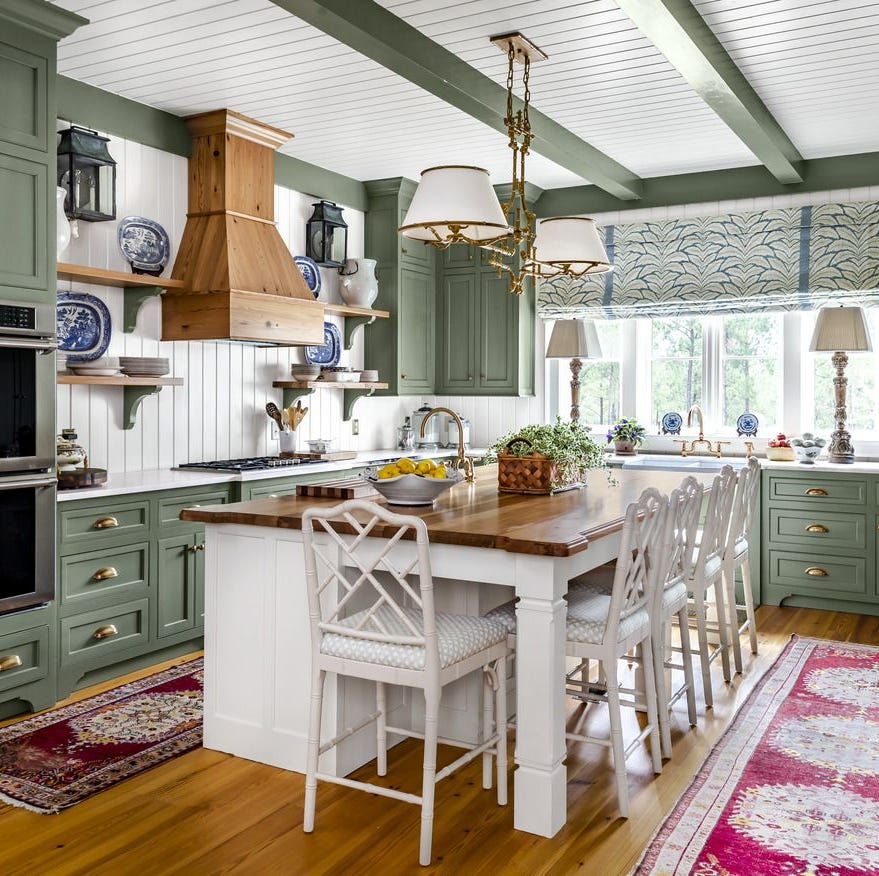
In a two-tone kitchen, when the perimeter cabinets are a muted color, let the island take the opposite material. Here the sage green perimeter cabinets look calm and traditional, while the large wood island brings a warm, rustic anchor. The butcher block top on the island adds texture that painted wood alone cannot match. Pendant lights with visible bulbs hang above the island, and the ceiling beams reinforce the farmhouse structure. The wood island breaks up the green and prevents the room from feeling like one flat color block. It also gives you a natural spot for bar seating or prep work without competing with the cabinet finish.
Tall Beige and Cream Cabinets with Natural Wood Base
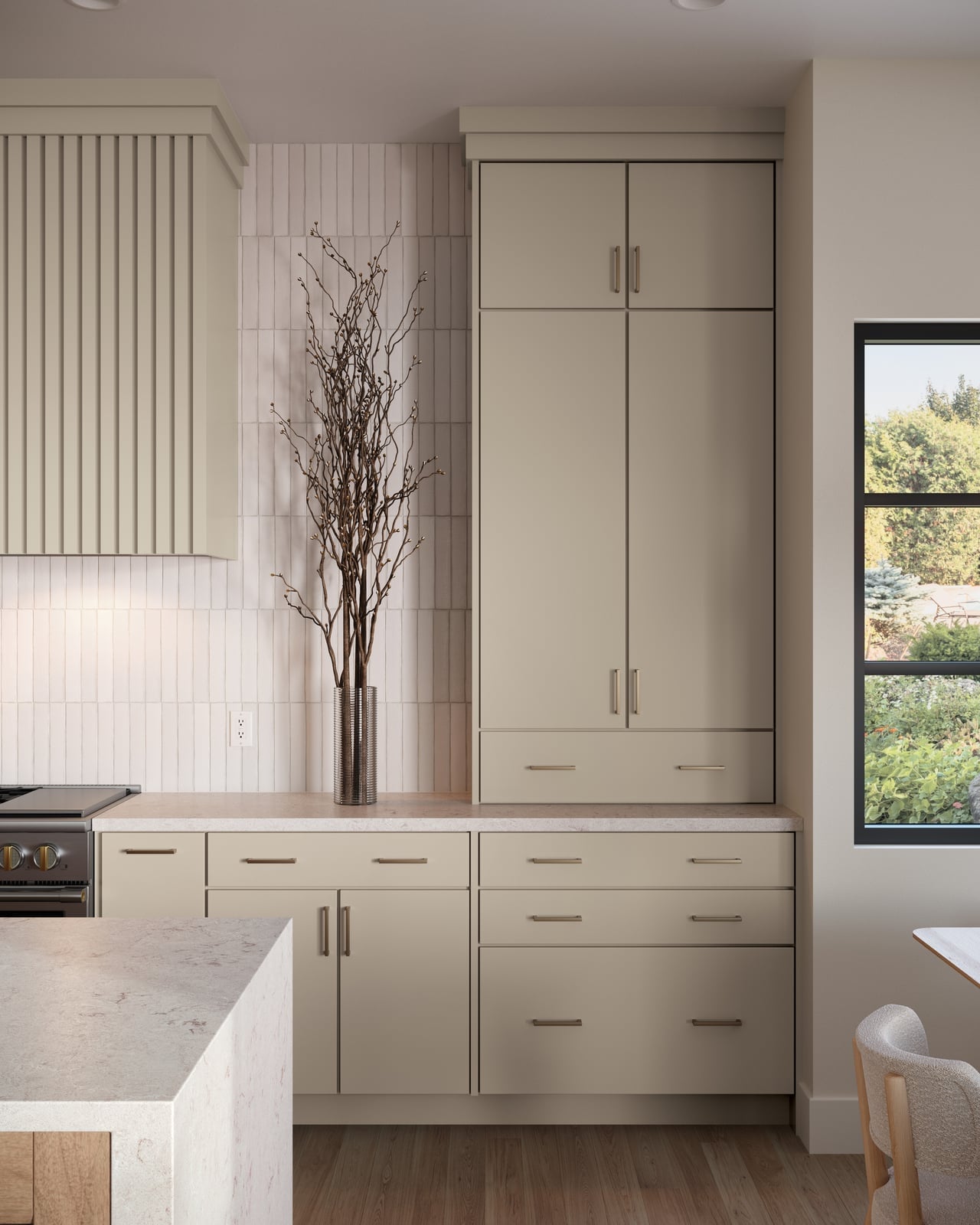
The tall cabinets here run from floor to ceiling in beige and cream, with a natural wood base that grounds the whole arrangement. The wood base adds visual weight at the bottom, which makes the tall upper cabinets feel less top-heavy. Recessed lighting keeps the focus on the neutral palette and the stone countertops. The open plan layout lets the island and range sit comfortably within the roomy footprint.
Calm Blue-Gray Cabinets in a Transitional Kitchen
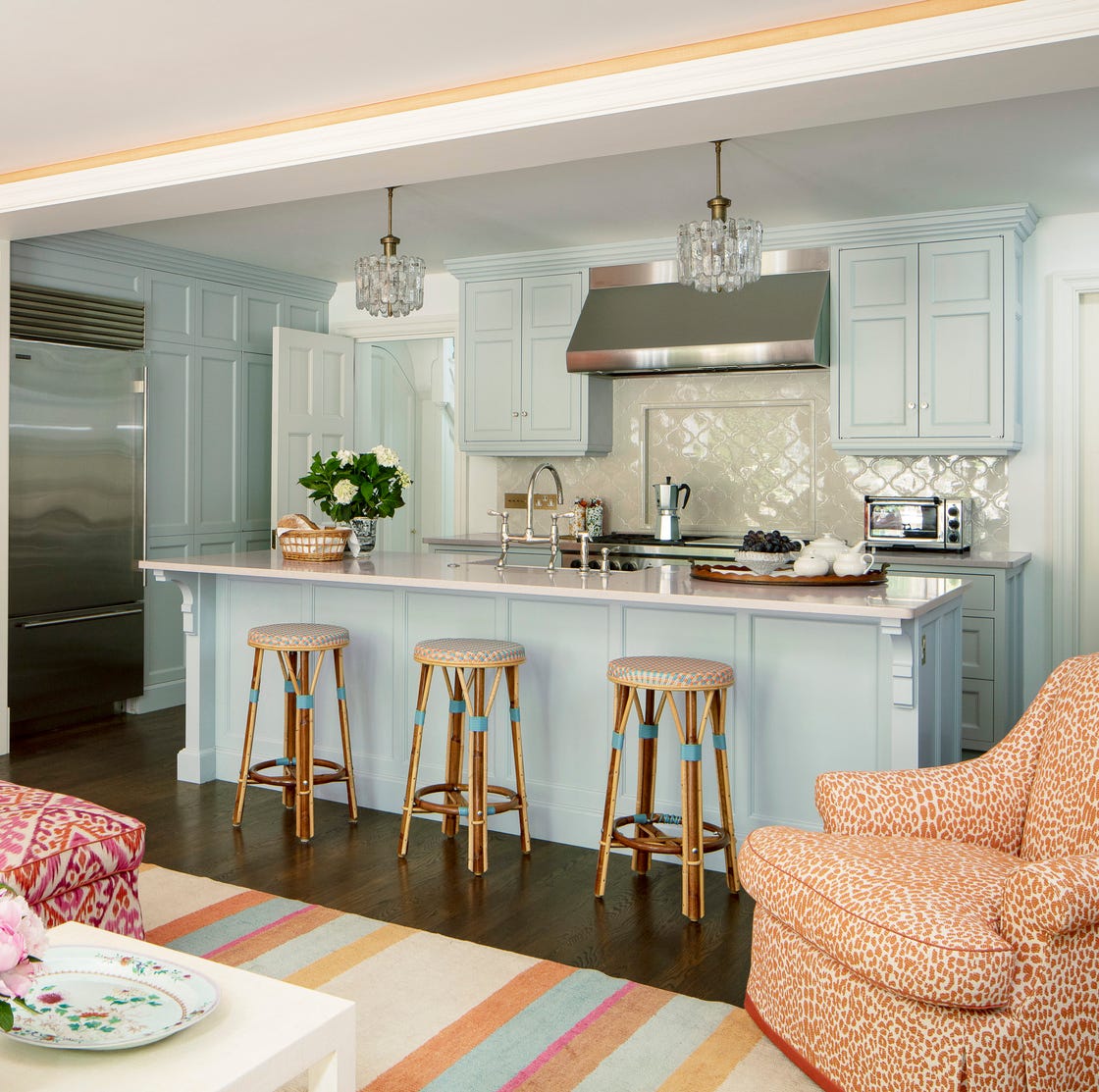
For a transitional kitchen, soft blue-gray cabinets add color without overwhelming the space. This shade pairs well with white walls and wood floors, giving the room a distinct character. The island features wicker stools that introduce natural texture, unlike metal or leather options. A chandelier above the island provides formal lighting, balancing the casual feel of the wicker.
Warm Olive Green Island with Creamy White Cabinets
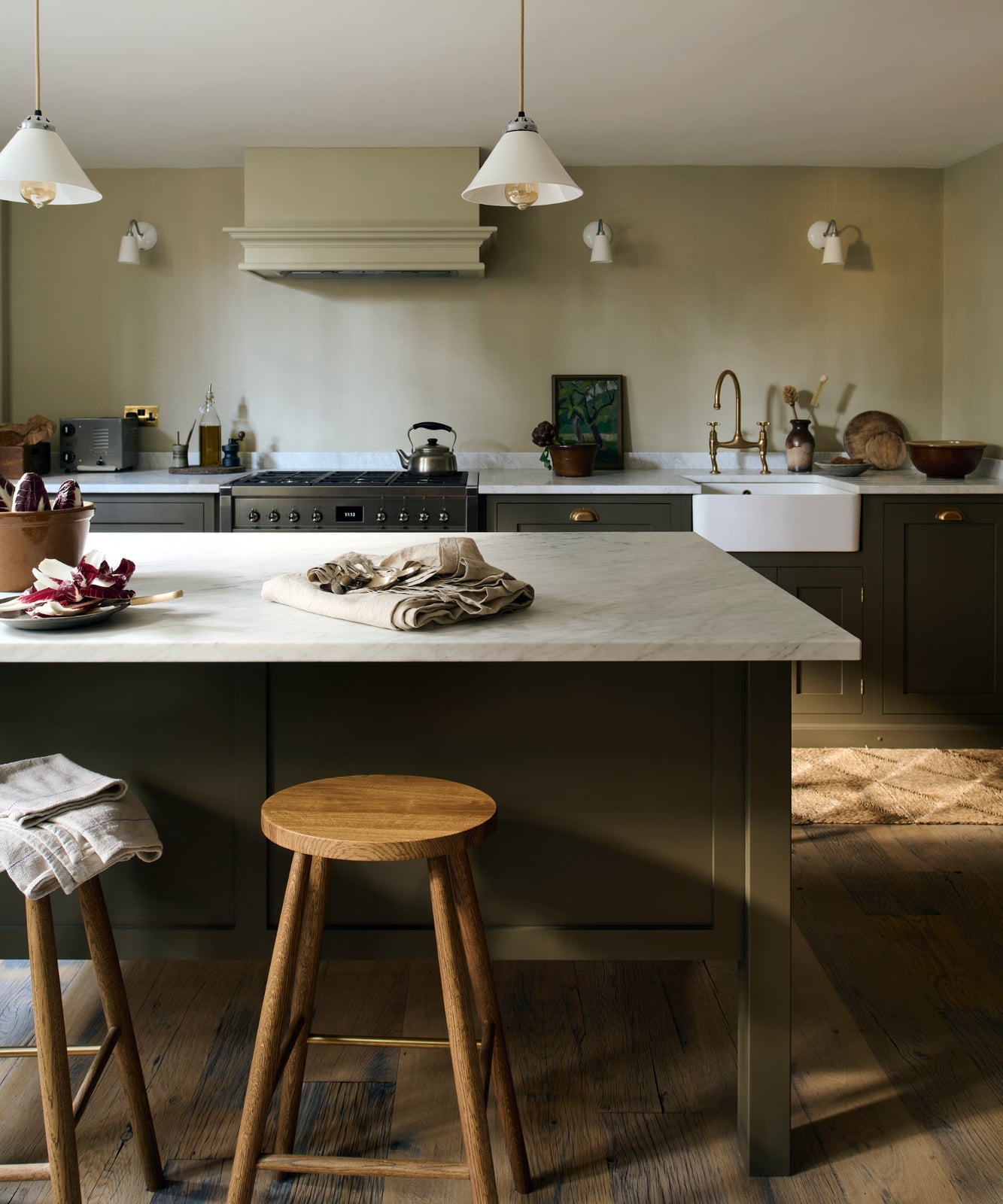
If a full green kitchen feels like too much, try a single olive green island against creamy white perimeter cabinets. The olive green island here does not compete with the white; it adds depth and a clear focal point. The farmhouse sink set into the island anchors the work zone, and wooden stools keep the look warm rather than formal. Marble or stone countertops on the white cabinets keep the palette clean. The pendant lights above the island echo the wood tone of the stools, pulling the two halves of the kitchen together without matching them exactly.
Traditional Mix of Dark Wood and Deep Purple Cabinets
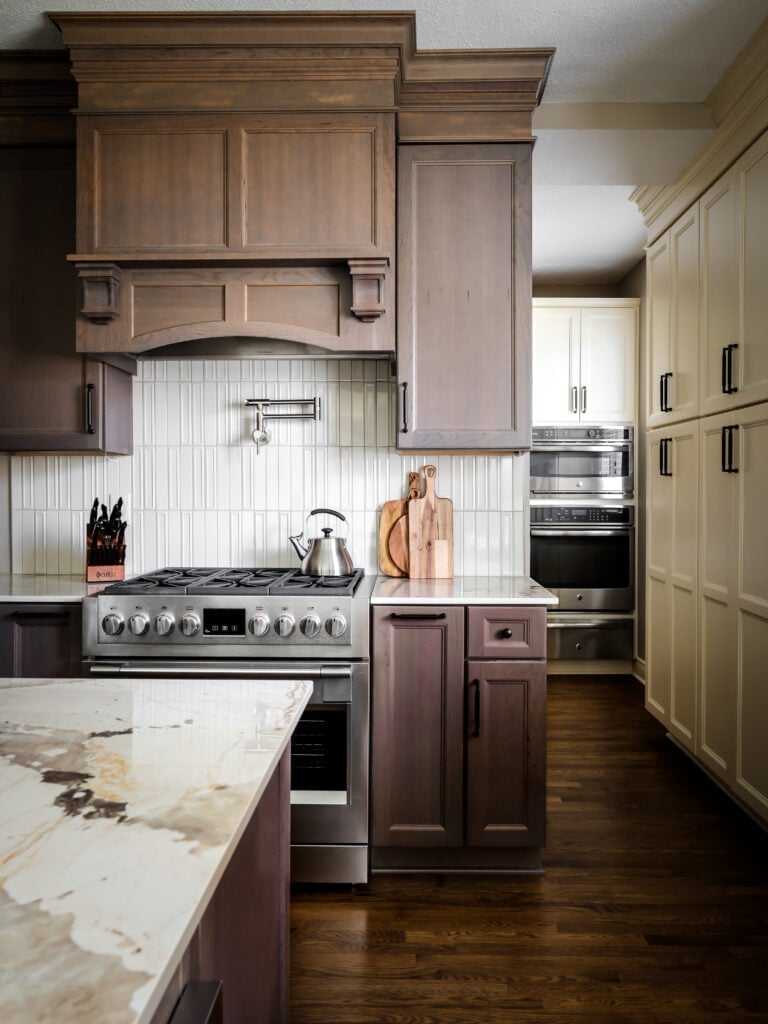
A precise observation here: the deep purple cabinets sit alongside dark wood cabinets, not replacing them. The purple acts as an accent, which keeps the kitchen from drifting too far from traditional. The granite countertops and tile backsplash are neutral, so the purple and wood do the talking. Overhead lighting and natural light balance the darker tones, and the stainless steel range adds a modern note without breaking the traditional feel.
Modern Light Wood and White Two-Tone Cabinets, Indoor
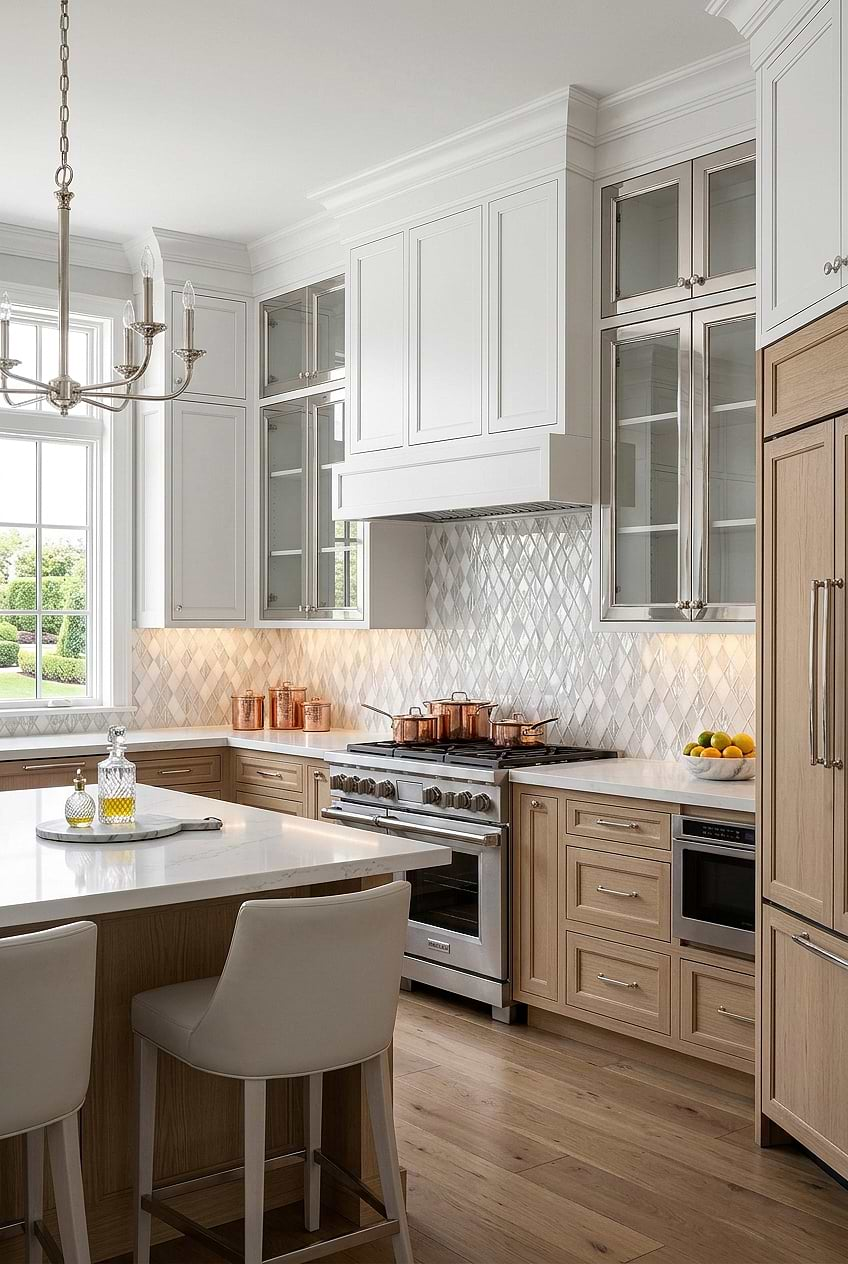
Light wood cabinets and white cabinets side by side is a two-tone approach that feels less formal than it sounds. The light wood runs across a large island and the refrigerator panel, while the white cabinets line the perimeter. The wood is warm and the white keeps the kitchen feeling open. A quartz countertop and tile backsplash are neutral so the wood stands out. The palette works because the wood tone is pale enough to contrast with the white without creating a hard line. Recessed lighting and natural light from nearby windows keep both finishes visible.
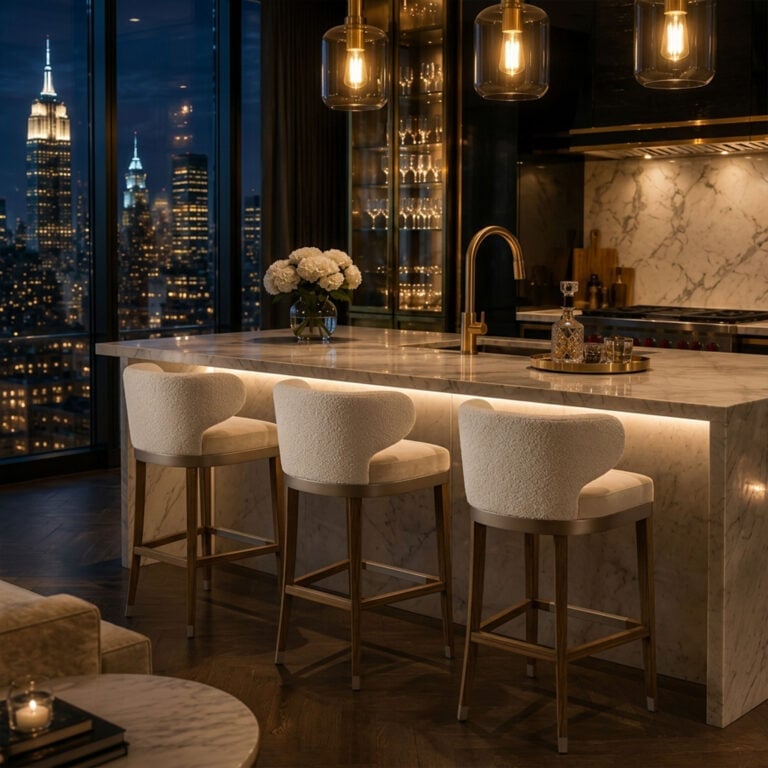
Dark Gray Cabinets with Dramatic Marble Backsplash, Close-Up Take
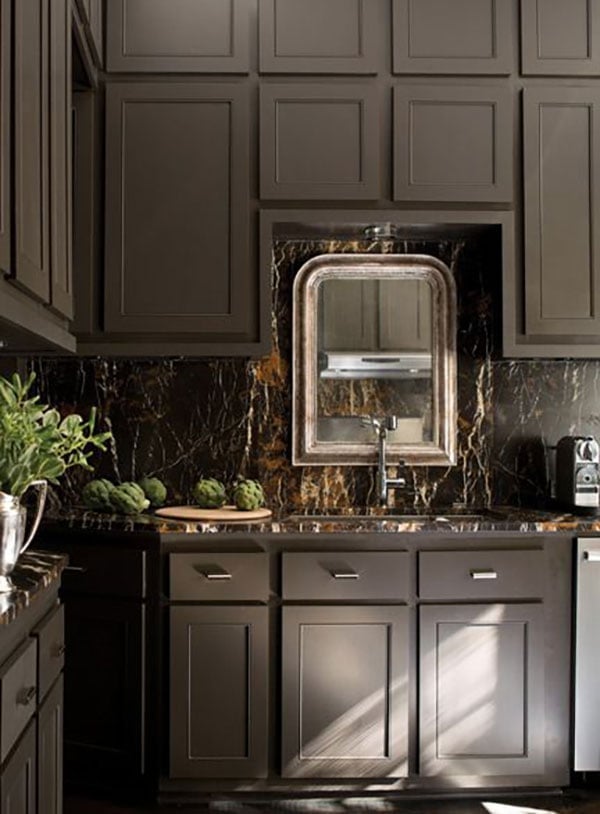
Dark gray cabinets can read as heavy, but a marble backsplash changes the equation. The marble runs floor to ceiling behind the sink, breaking up the dark cabinetry with its veining and lighter base. An ornate mirror above the sink adds another reflective surface, which helps the compact kitchen feel less boxed in. The dark gray cabinets and black countertop create a moody palette that the marble interrupts just enough. Overhead lighting and natural light keep the dark finish from swallowing the room. For renters, a marble-look peel and stick backsplash can achieve the same effect without permanent changes. The gold hardware on the cabinets adds a warm note that ties the dark gray to the marble’s warmer veins.
Compact Transitional Kitchen with Gray and White, Close-Up Take
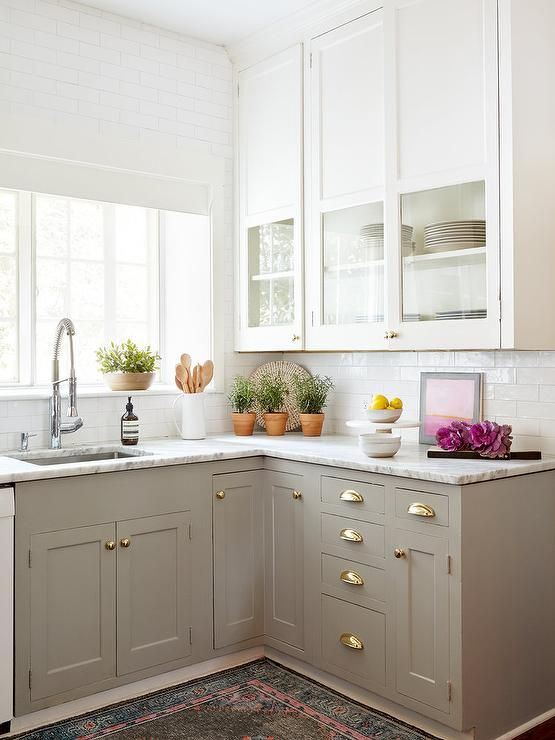
Gray base cabinets and white upper cabinets in an L-shaped corner kitchen create a clear horizon line that makes a compact layout feel wider. The marble countertop sits over the gray base, and the white uppers reflect light from the window and under-cabinet lighting. Brass hardware on both colors ties the two tones together without matching either one exactly. The tile backsplash stays neutral, letting the two-tone cabinet palette do the work.
Final Thoughts
The best cabinet color balances your taste with how the room lives. Darker finishes need good task lighting and show dust, but they hide daily splashes. Light colors bounce natural light and feel open, yet they ask for more frequent wipe-downs. Two-tone schemes let you anchor the room with a deeper shade on lowers or an island while keeping the space airy above. Test samples on your actual cabinet doors, not a swatch, and live with them a few days. That is the only way to know if a color will outlast the first week of admiration.