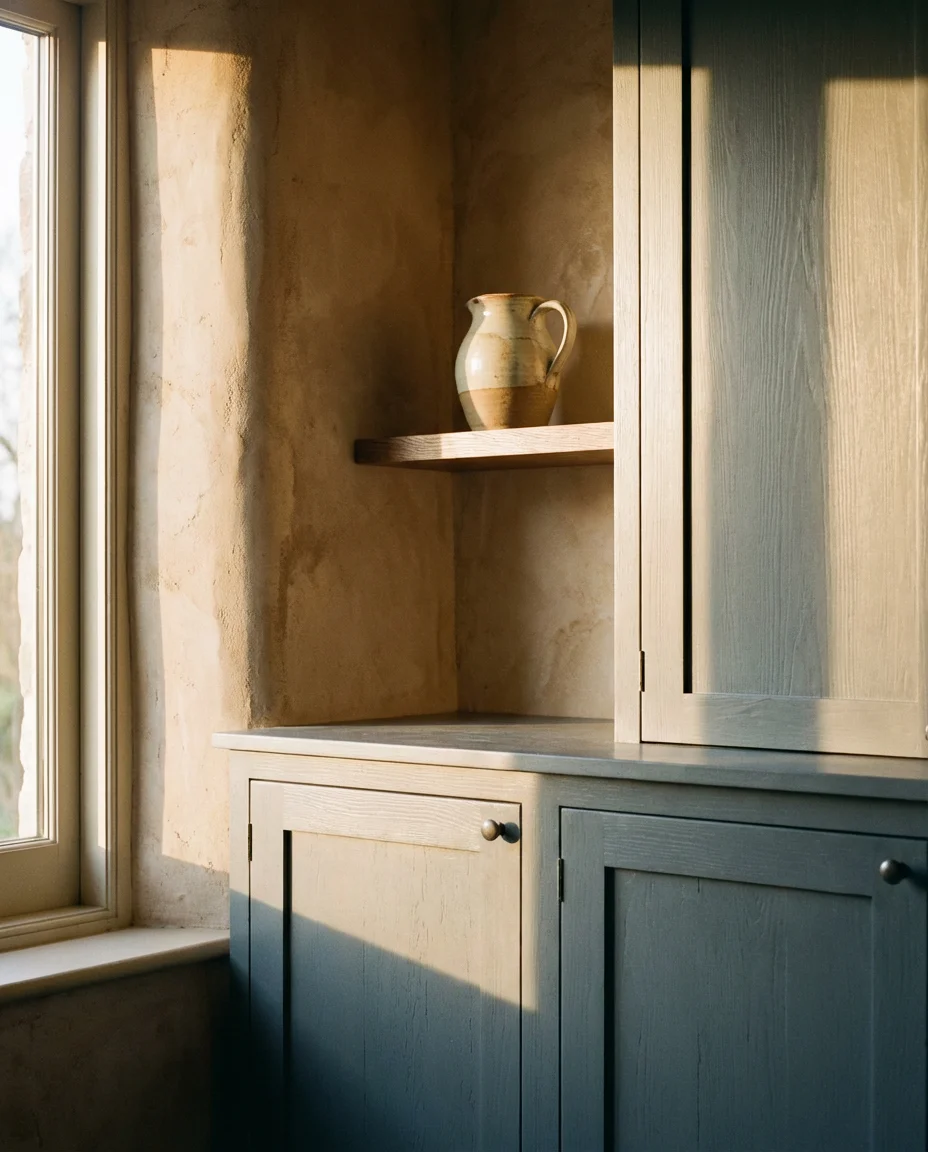
Kitchen design is having a serious moment right now, and if your Pinterest feed has been full of moody color palettes, warm wood finishes, and sleek modular layouts, you’re not alone. As we move through 2026, American homeowners are rethinking everything from countertop materials to cabinet configurations—blending function with personality in ways that feel deeply personal and genuinely livable. Whether you’re renovating a compact city apartment or refreshing a suburban family kitchen, the ideas out there right now are more exciting—and more achievable—than ever. This guide walks you through the most inspiring kitchen interior ideas shaping homes this year, so grab a coffee and let’s get into it.
1. Modern Luxury Kitchen With Warm Wood Accents
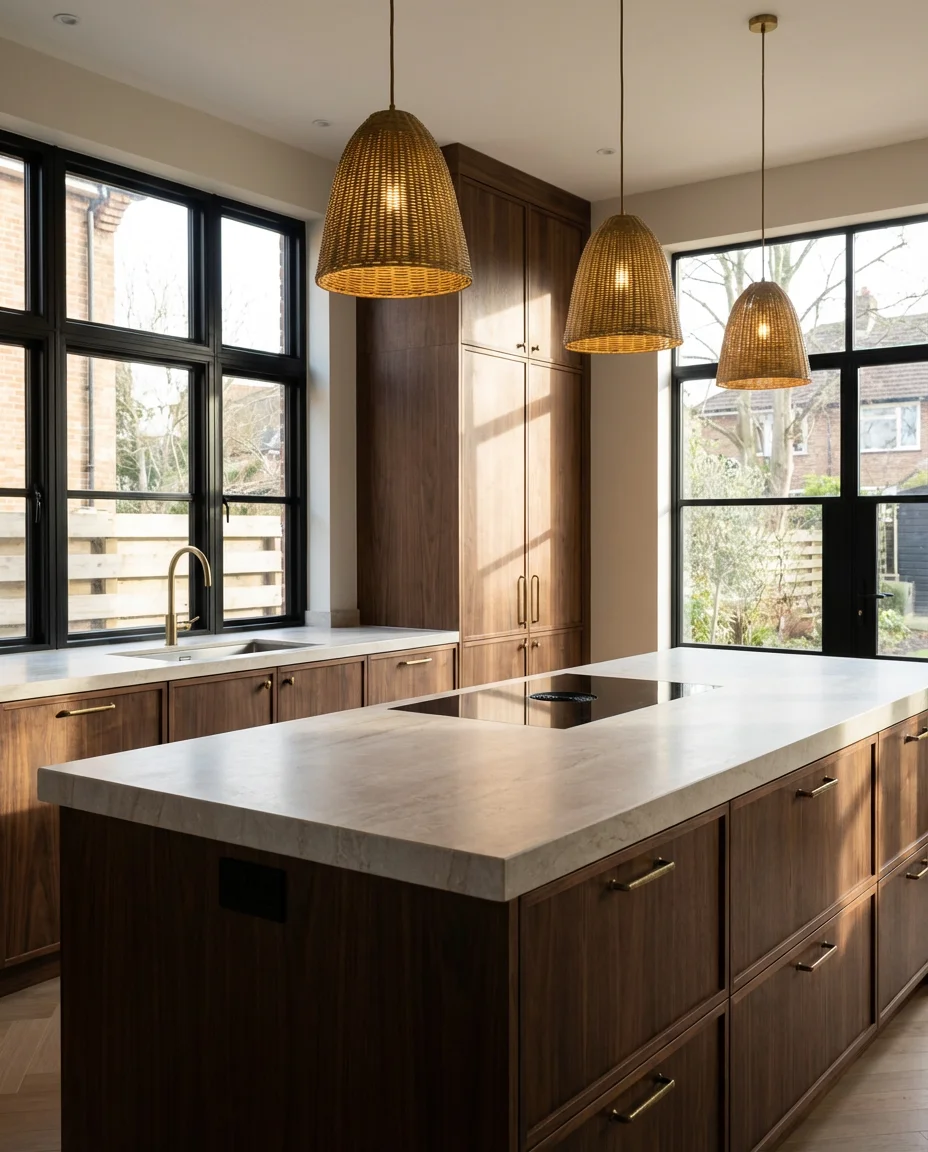
When people talk about a modern luxury kitchen design, they’re usually picturing something cold and untouchable—all marble and steel with nowhere to set down a coffee mug. But the best versions of this look in 2026 are actually the opposite: warm, layered, and full of texture. Wooden cabinetry in rich walnut or white oak is doing a lot of heavy lifting here, grounding spaces that might otherwise feel sterile. Paired with brushed brass hardware and thick stone counters, it’s a look that says “expensive” without whispering “don’t touch anything.”
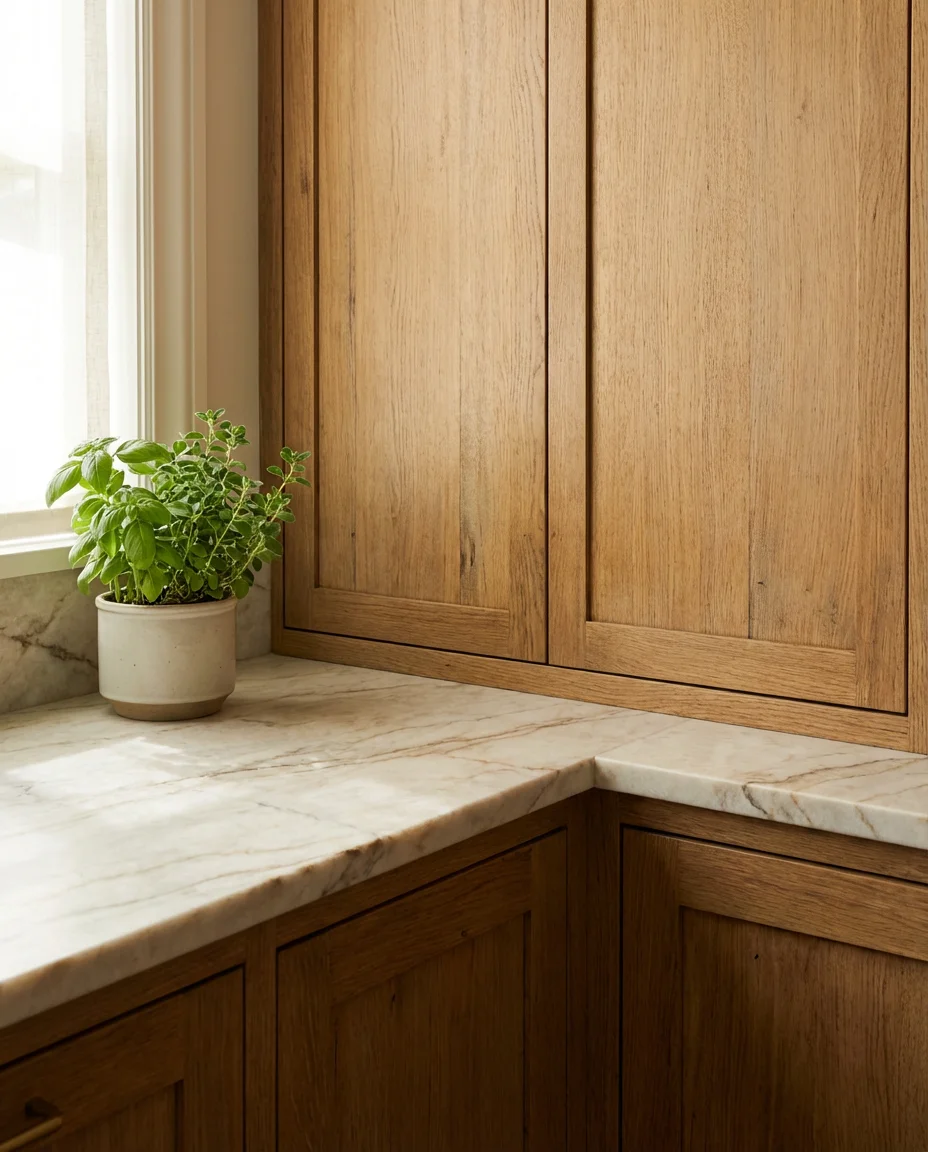
If you’re going for this aesthetic, the biggest mistake most homeowners make is choosing wood tones that are too yellow or too orange—think 2005 kitchen remodel rather than 2026 intentional warmth. Opt for cooler-toned woods like cerused oak or smoked walnut, and balance them with matte stone surfaces that absorb light rather than reflect it. The result feels curated rather than constructed.
2. Open Kitchen Design for Everyday Living
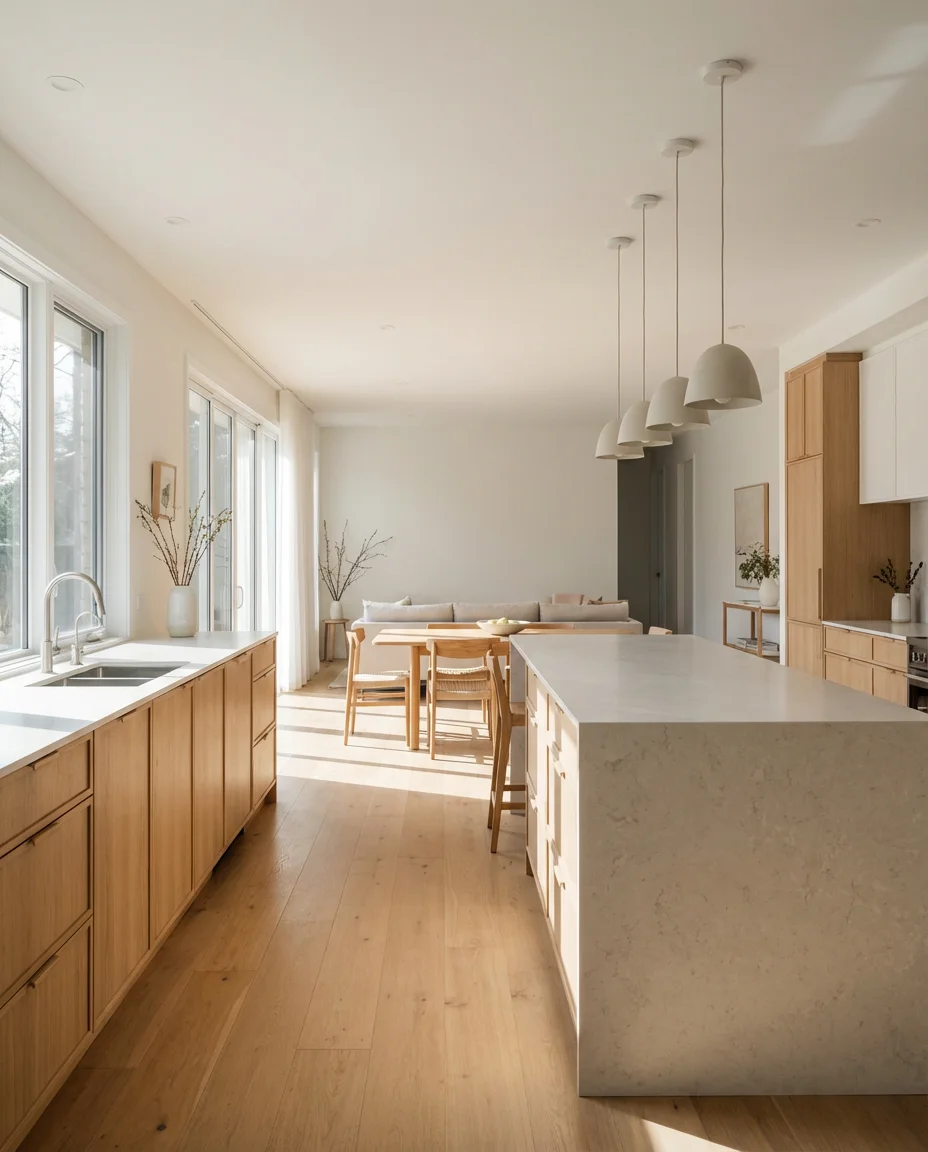
The open kitchen isn’t a new concept, but the way Americans are using it in 2026 has shifted considerably. It’s less about knocking down every wall in sight and more about creating zones—a kitchen that flows into a dining nook or a prep area that opens toward a living room—without sacrificing any sense of purpose or privacy. This modern design approach to open layouts prioritizes sightlines and movement, making even mid-size homes feel notably more spacious and connected during those chaotic weeknight dinner rushes.
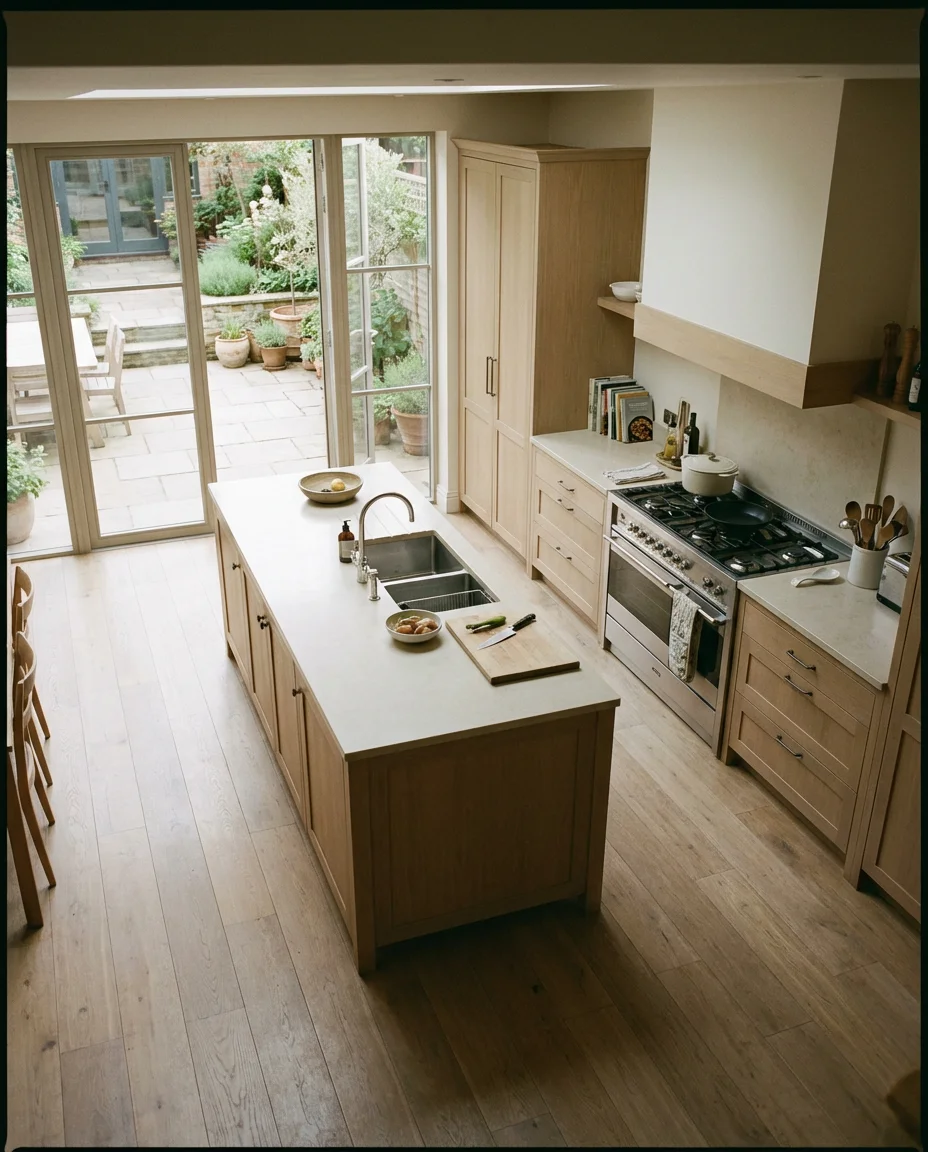
Open kitchens work especially well in homes where the main living and dining spaces share one footprint—common in ranch-style houses throughout the Midwest and South. The key is grounding each zone with its own visual anchor: a pendant light cluster above the island, a bold rug under the dining table, or a distinct flooring transition. Without those markers, the whole space can feel unfinished no matter how good the cabinets are.
3. Simple Indian Kitchen With a Modern Twist
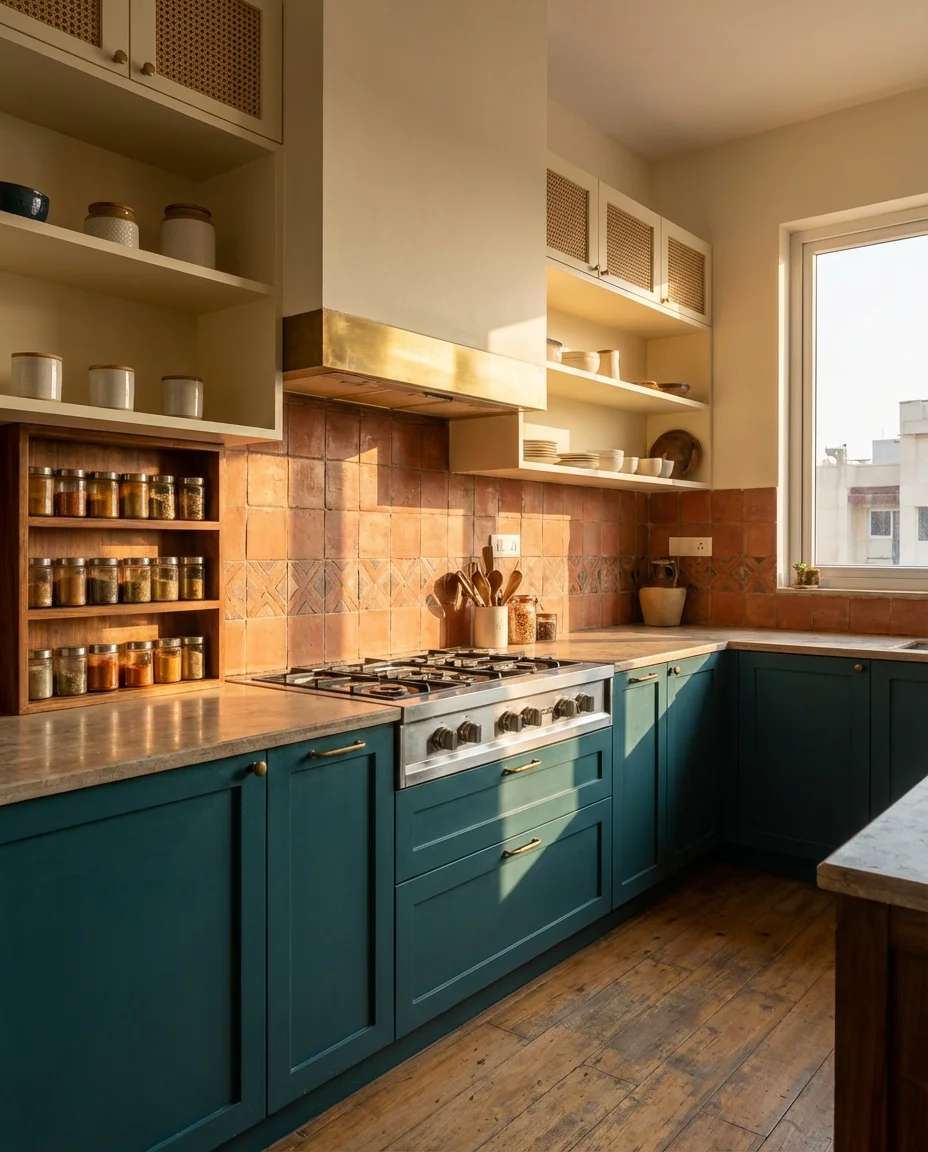
The simple Indian kitchen has always been built around practicality—good storage, easy-clean surfaces, and a layout that supports the kind of daily cooking that involves multiple burners going at once and a serious amount of spice. What’s changed in 2026 is how this functional DNA is being dressed up. Design in India has moved decisively toward cleaner lines, integrated appliances, and color stories that feel considered rather than default. Deep teals, warm terracotta, and creamy off-whites are showing up in Indian-inspired kitchens across the US diaspora community, and they’re absolutely stunning.
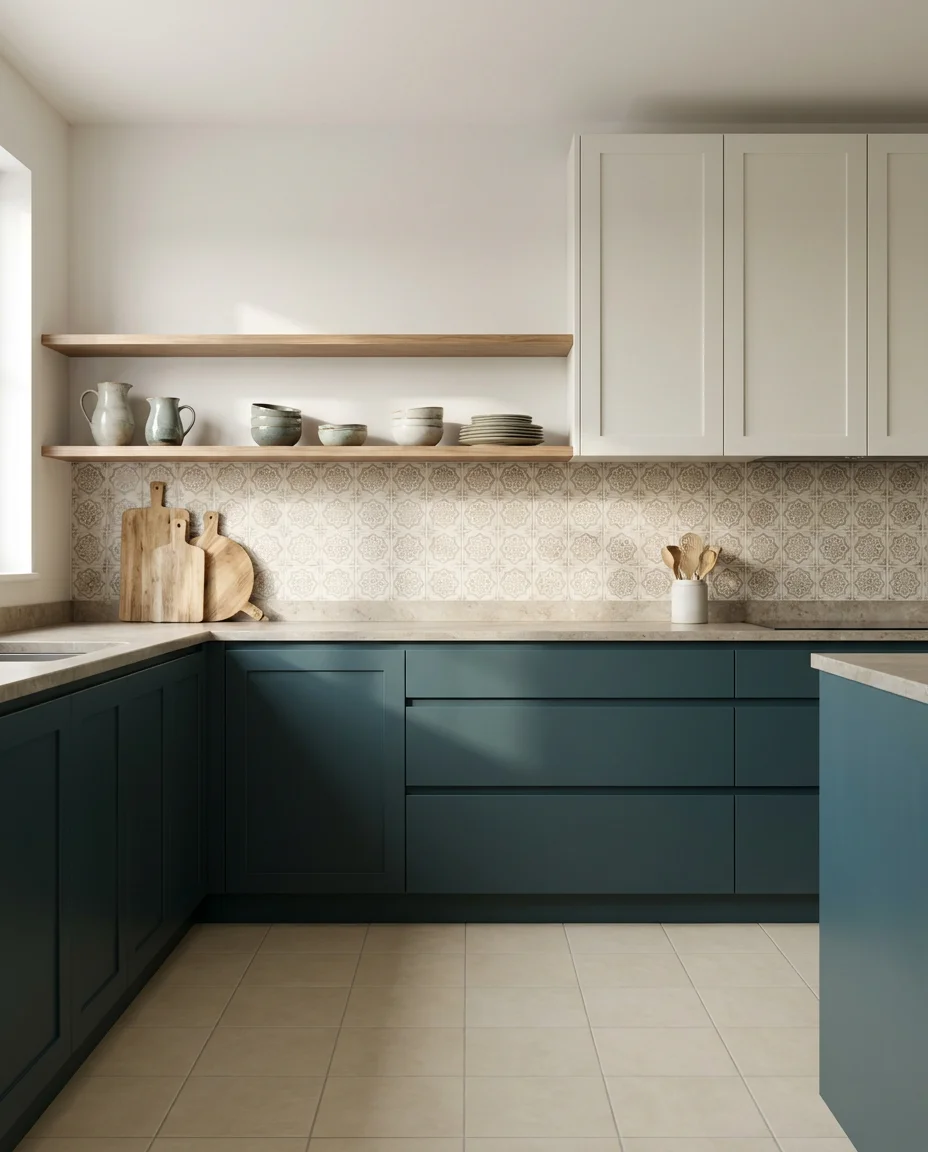
One interior designer who works primarily with South Asian families in New Jersey once described the challenge as “making a kitchen that works like a dhaba and looks like a design magazine. ” That balance—high utility meets high style—is exactly what the best of these spaces pull off. Deep drawers near the stove, a dedicated spice pull-out, and easy-wipe laminate or ceramic tile surfaces are the practical bones beneath that beautiful exterior.
4. Modular Kitchen Ideas for Small Spaces
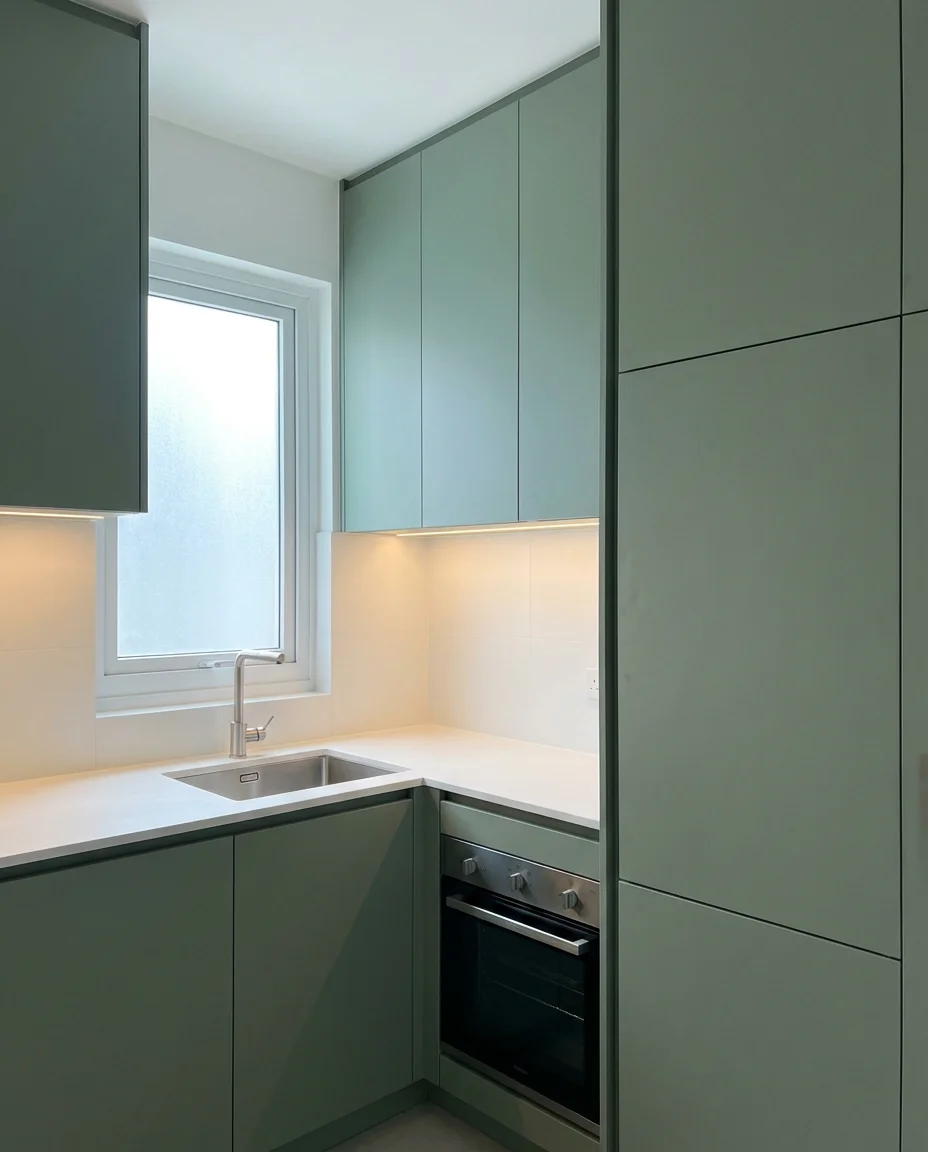
A modular kitchen is one of the smartest investments a homeowner in a small space can make right now. Unlike custom-built cabinetry, modular systems are designed to be flexible—you choose the units, configure the layout, and can even reconfigure later if your needs change. For apartment dwellers in cities like Chicago, Seattle, or New York, where galley kitchens and awkward corner layouts are the norm, this approach offers a level of control that traditional renovation rarely delivers at the same price point.
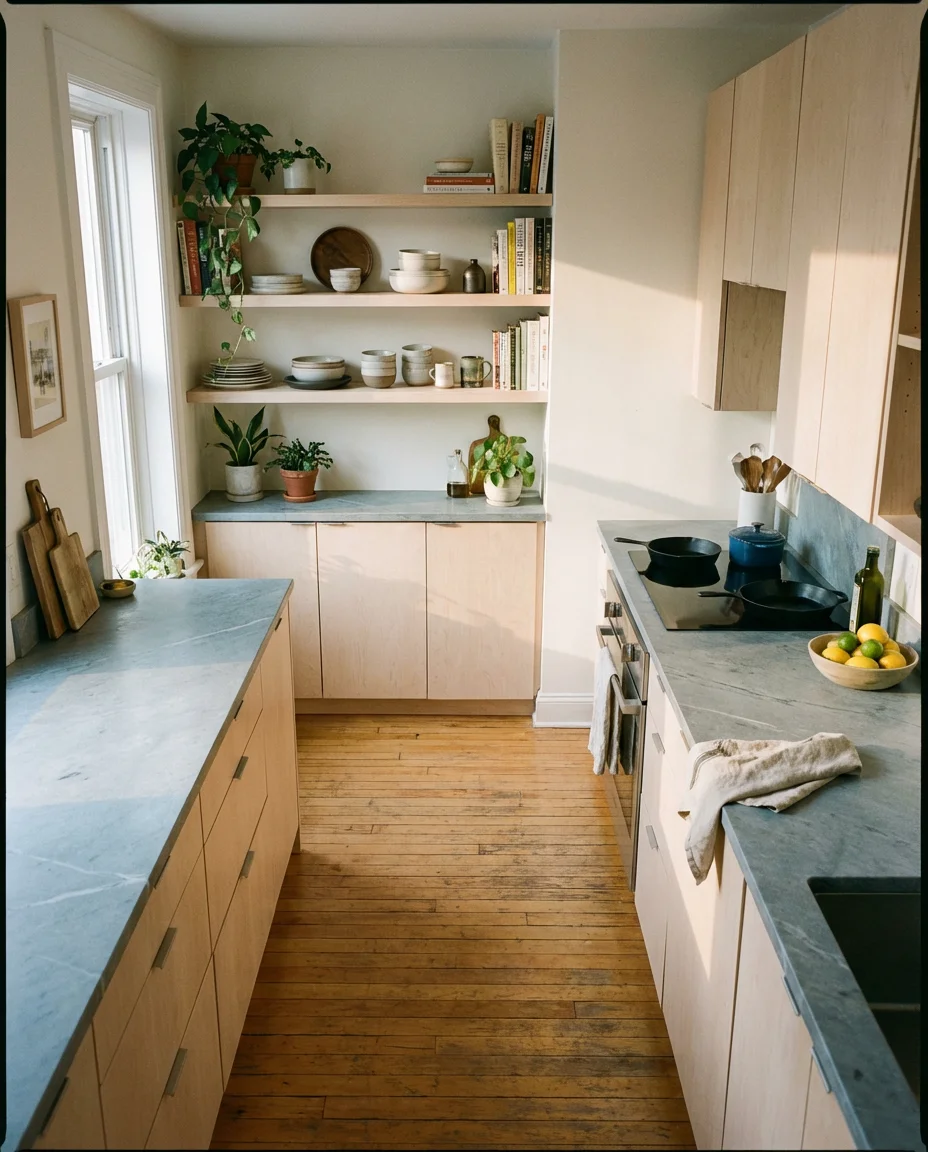
Budget-wise, a well-planned modular kitchen can come in anywhere from $3,000 for a basic IKEA-based setup to $15,000–$20,000 for semi-custom modular systems with premium finishes. The sweet spot for most renters and first-time buyers tends to be in the $5,000–$9,000 range—enough to get clean cabinetry, integrated lighting, and a cohesive look without overextending on a space you might not be in forever.
5. Black Granite Top Kitchen With Bold Contrast
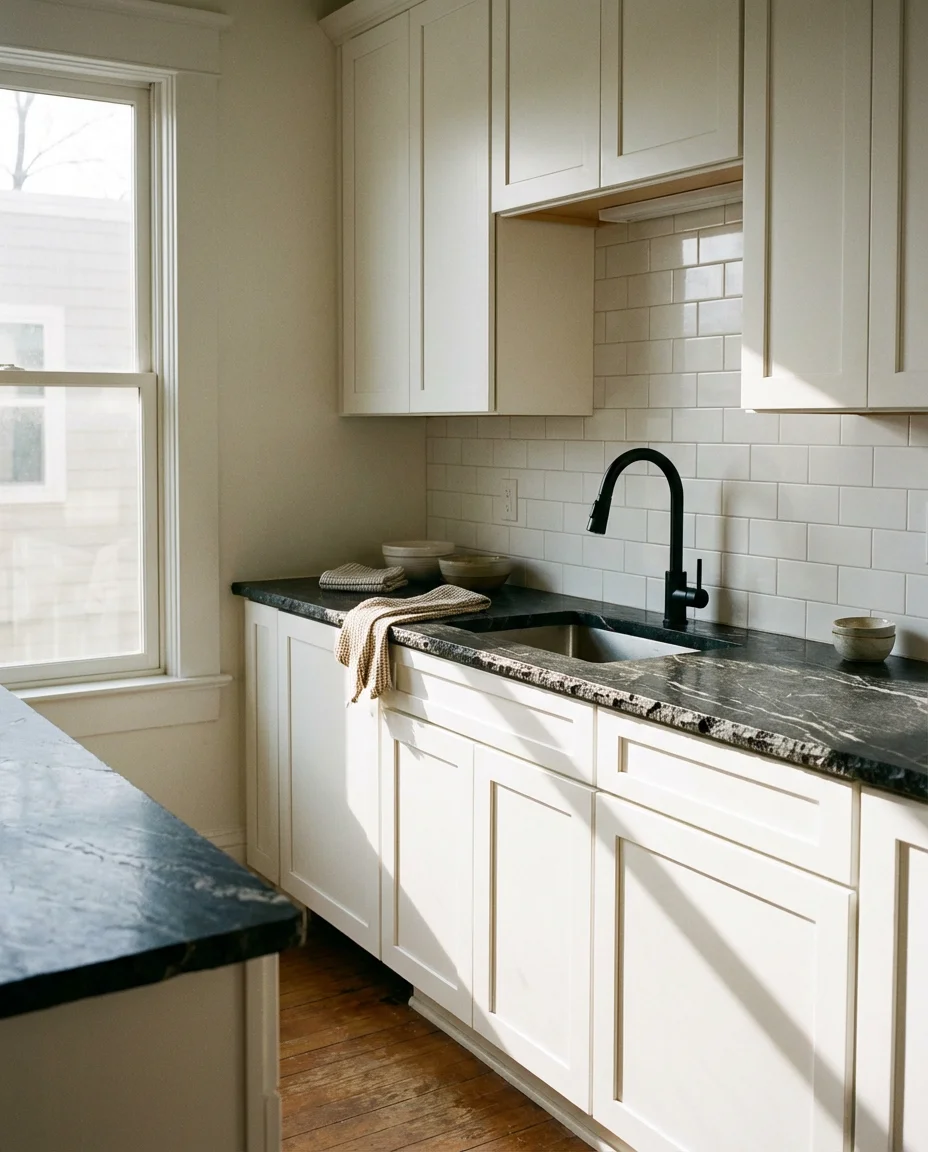
There’s a reason the black granite top kitchen never really goes out of style—it’s one of the few material choices that reads as simultaneously classic and dramatic. In 2026, it’s being paired with unexpected backdrops: creamy white shaker cabinets, of course, but also pale sage greens, raw concrete walls, and even warm terracotta tile. The contrast between the deep, veined stone and a lighter surround creates a visual anchor that makes the whole kitchen feel intentional and grounded. It’s a look that photographs beautifully, which is probably why it floods Pinterest every single season.
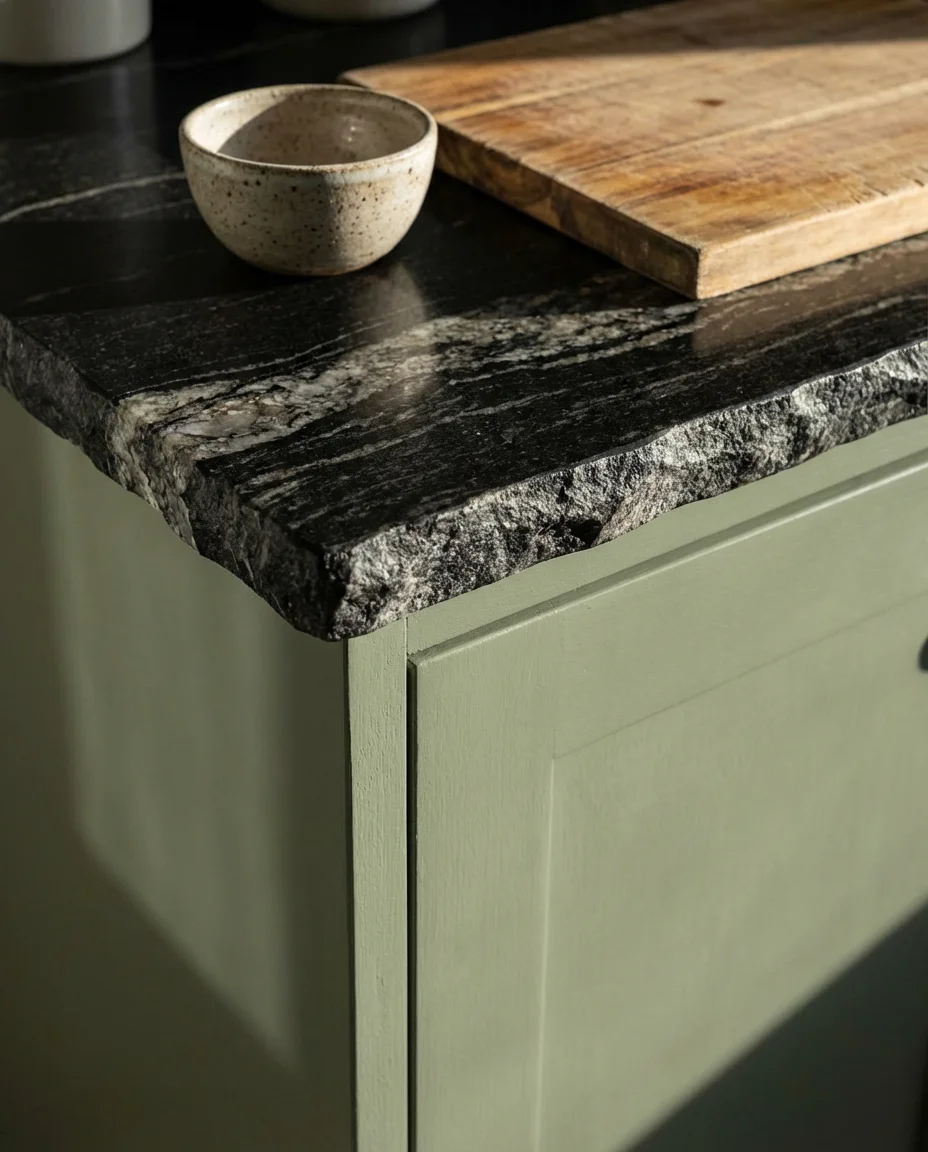
Where black granite really earns its reputation is in active family kitchens. It hides crumbs and minor smudges better than lighter stones, and it’s extraordinarily durable under the kind of daily punishment that a busy household delivers. The one genuine maintenance note: seal it once a year, and avoid acidic cleaners that can dull the surface over time. Do those two things, and it will outlast just about any other countertop material you could choose.
6. Green Kitchen—Nature Indoors
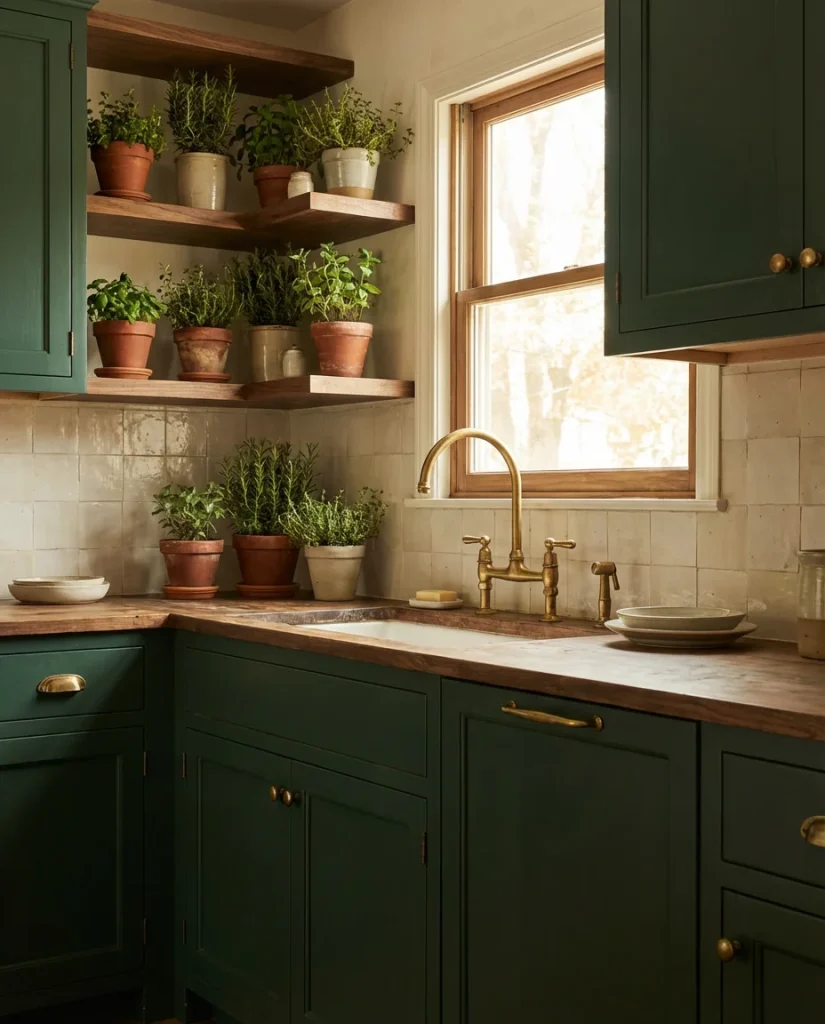
If there’s one color that’s definitively having its moment in 2026 kitchen design, it’s green. Not the pale sage that dominated 2022 and 2023, but richer, more saturated tones—forest green cabinetry, deep olive islands, and bottle-green tile backsplashes that make a room feel like it’s been grown rather than built. These kitchens lean into the biophilic design movement, drawing nature indoors through color and texture rather than just potted herbs on the windowsill. When combined with natural wooden open shelving and brass or unlacquered fixtures, the effect is genuinely breathtaking.
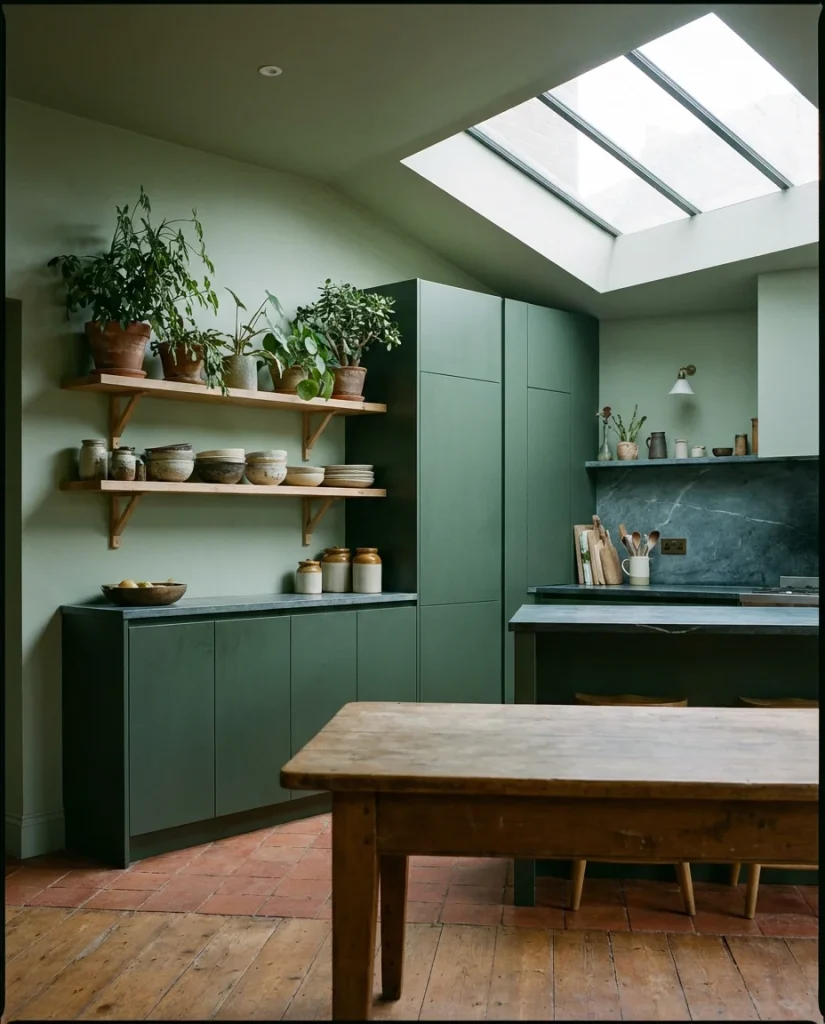
Green kitchens work beautifully in homes that get good natural light—the color shifts throughout the day in a way that makes the space feel alive. In darker kitchens, go lighter with your green choice (sage, eucalyptus, or muted olive) and pair it with warm-toned lighting to avoid the space feeling cave-like. Keeping upper cabinets lighter while going bold on the lowers and island is a tried-and-true approach that gives you drama without overwhelm.
7. Grey Kitchen With Layered Texture
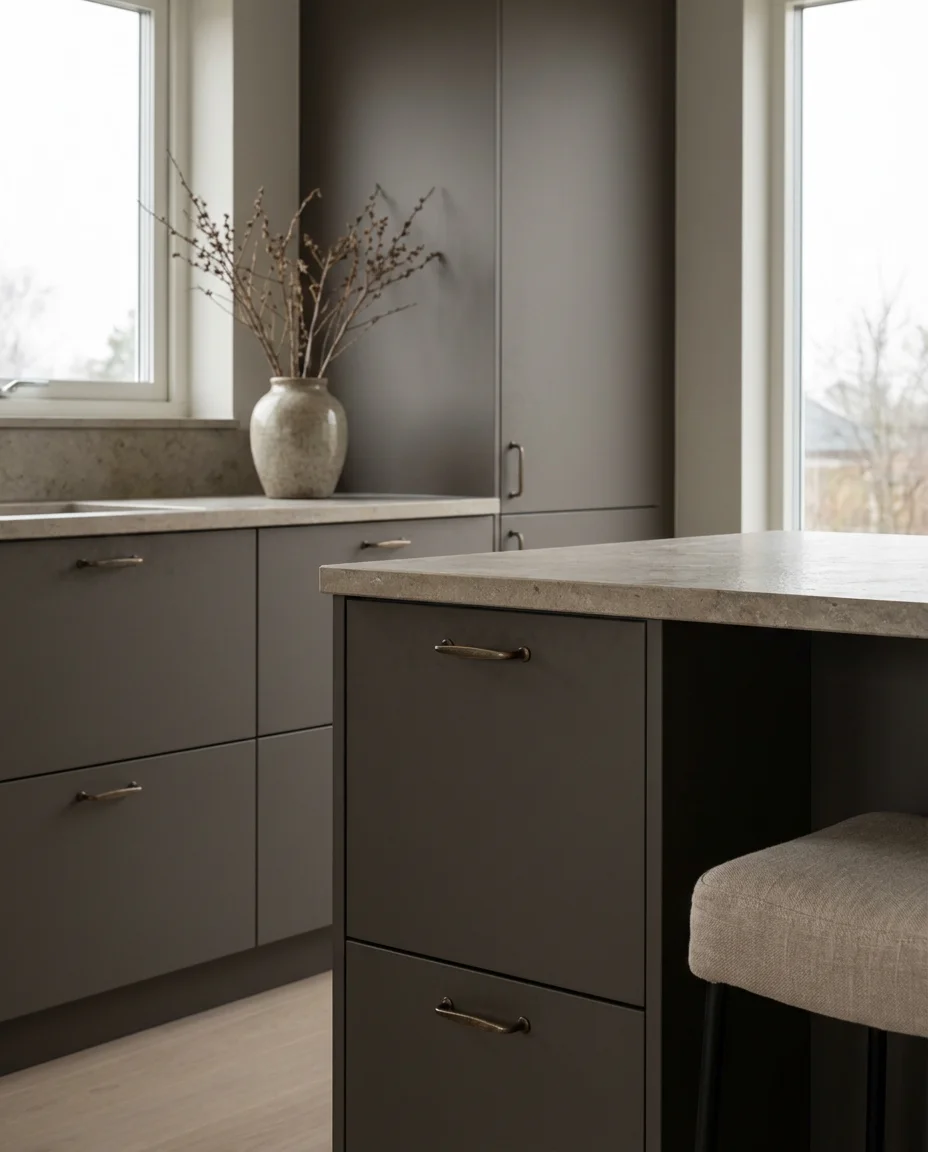
The critics who declared grey kitchen design dead were, it turns out, premature. What’s shifted isn’t the color itself but how it’s being used—gone are the flat, one-note grey-on-grey schemes that made kitchens feel like dentist waiting rooms. In their place: warm charcoal with linen upholstered seating, slate-toned cabinetry next to raw plaster walls, and dove grey surfaces accented with aged bronze hardware. Paired thoughtfully with tactile materials, grey in 2026 feels grounded, cozy, and genuinely sophisticated in a way the earlier wave rarely managed.
A homeowner in Portland recently described her grey kitchen renovation as the one project she actually doesn’t second-guess two years later—”It doesn’t compete with anything in the room; it just holds everything together.” That quality of restraint is exactly what makes a well-executed grey kitchen so enduring. It’s a backdrop that lets your lighting, your hardware, and your everyday objects do the talking.
8. Blue Kitchen That Makes a Statement
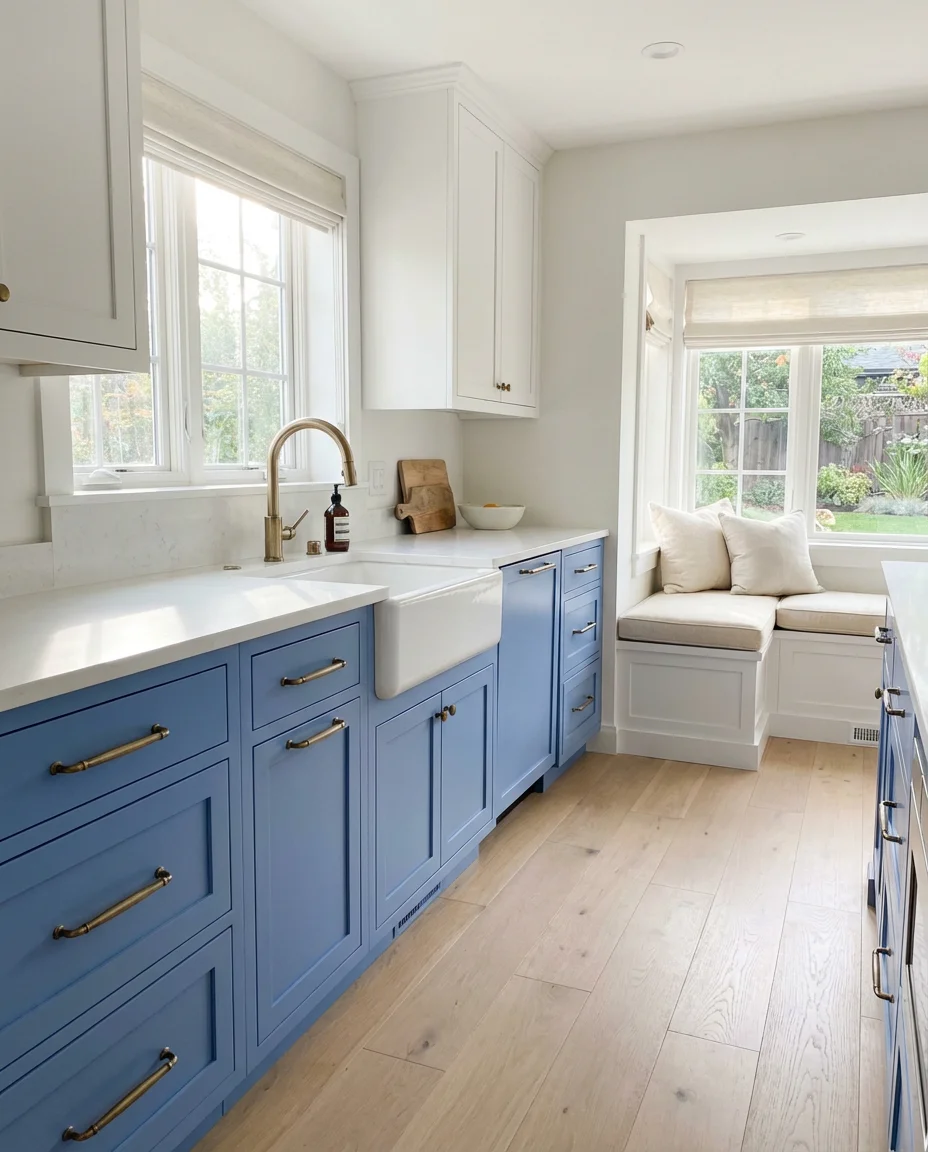
A blue kitchen done right is one of the most confident design choices you can make in 2026. Navy islands are everywhere on Pinterest, but the more interesting territory right now is in the mid-tones—cornflower blue lower cabinets, dusty denim open shelving, and periwinkle tile set against creamy grout. These are colors that feel equally at home in a coastal New England cottage or a minimalist urban loft, which explains their broad appeal. The color combination possibilities with blue are genuinely expansive: warm brass, matte black, aged silver, and even unexpected terracotta all play well against a good blue.
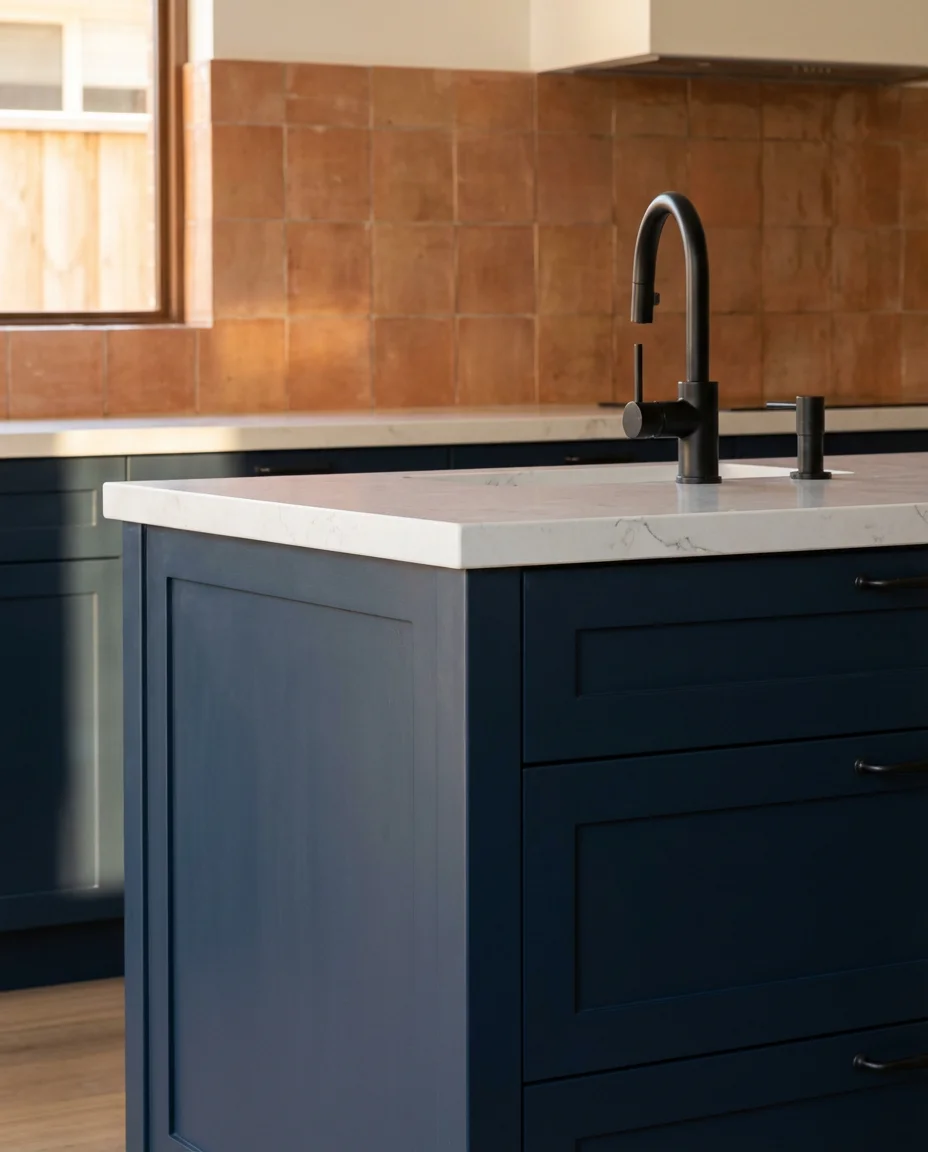
The main thing to get right with a blue kitchen is the finish. High-gloss blue reads as very contemporary and a little formal; matte or eggshell finishes feel more approachable and age more gracefully. If you’re going bold on color, a matte finish also gives you a little more margin for error on installation—small imperfections catch light more harshly on a gloss surface, which can be unforgiving in a high-traffic room.
9. Parallel Kitchen Layout for Maximum Efficiency
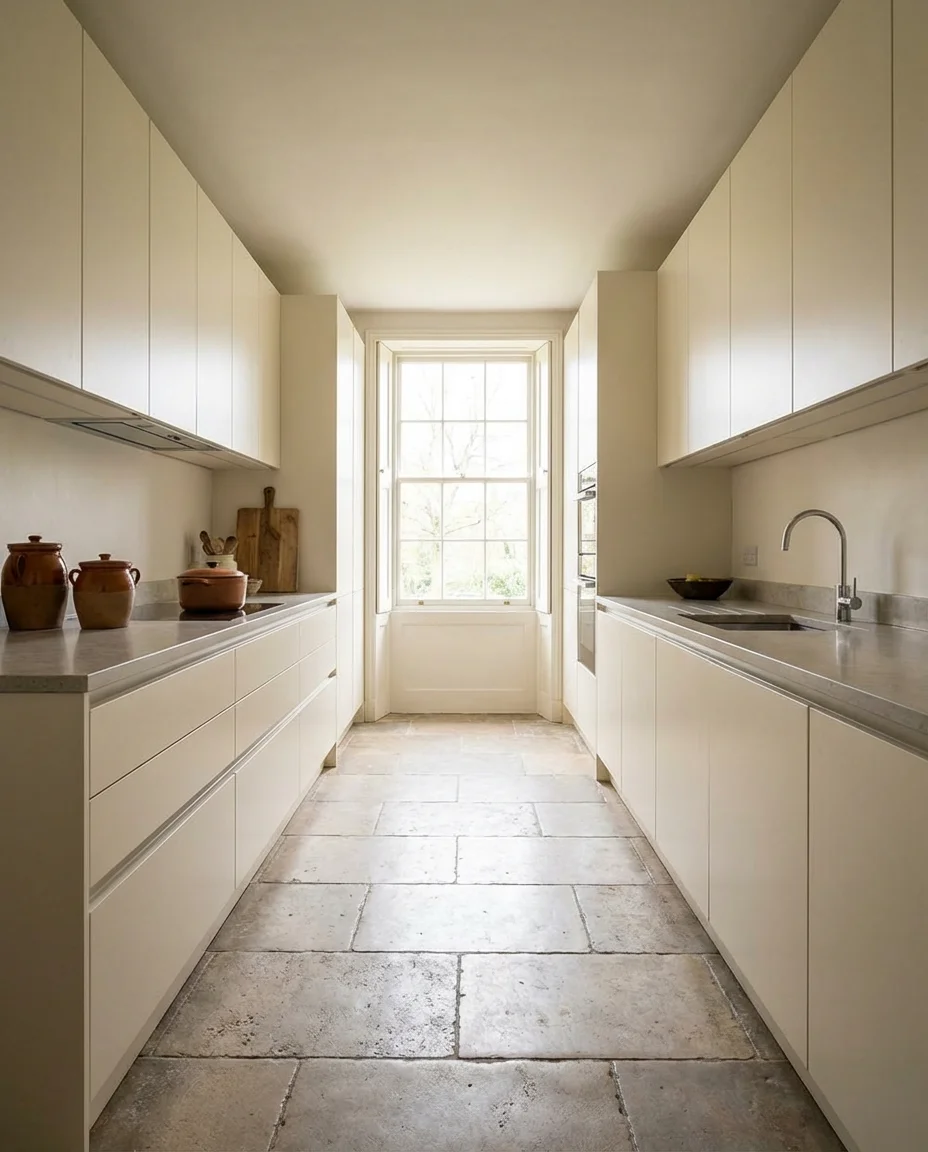
The parallel kitchen—two facing runs of cabinetry with a corridor between them—is one of the most efficient layouts ever devised for a kitchen, and it’s getting serious attention again as urban homes shrink and homeowners prioritize function. It’s particularly well-suited to narrow spaces where an island simply won’t fit: the two opposing counters create a natural prep-and-cook workflow, with everything within arm’s reach. Add a window at one end and the layout transforms from purely functional into something genuinely pleasant to spend time in.
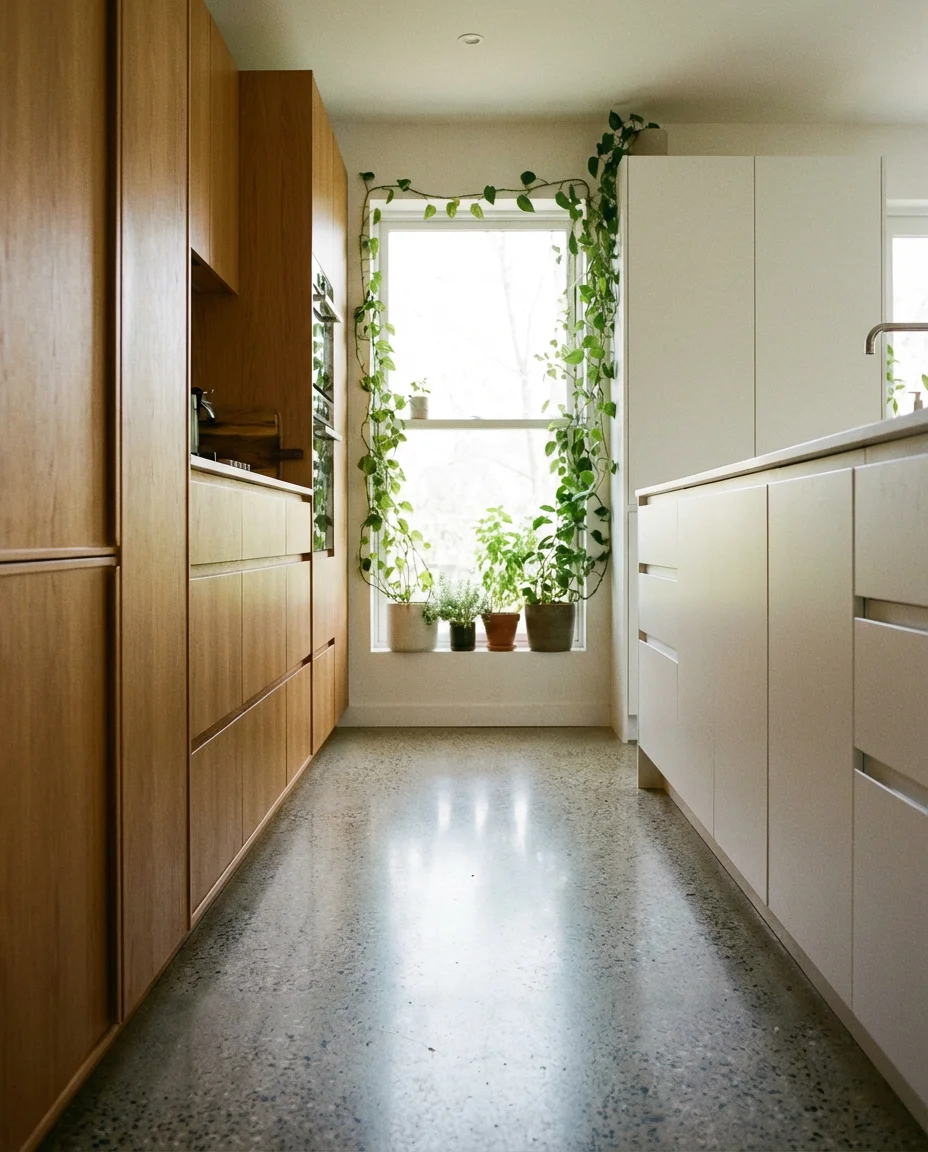
Where parallel kitchens fail is when the corridor between the two counters is too narrow—less than 42 inches—and two people cannot comfortably work side by side. Building codes in most US states require a minimum of 36 inches, but 48 inches is the sweet spot if you have the footprint. If you’re planning a parallel layout, prioritize that corridor width over adding extra cabinetry; the storage you gain from an extra cabinet run isn’t worth the daily frustration of bumping into someone every time you open the oven.
10. Kitchen Window Design—Light as a Feature
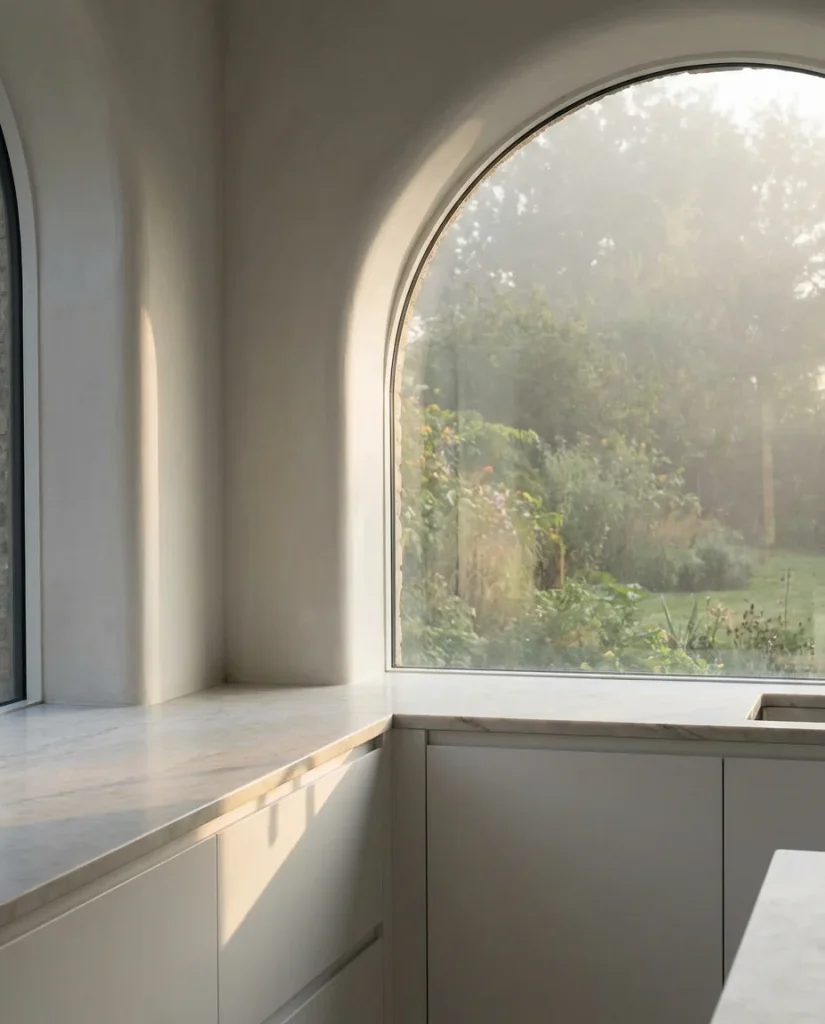
The kitchen window is one of the most underutilized design elements in American homes, and 2026 is finally the year that’s changing. Rather than treating it as a functional afterthought—a hole in the wall above the sink with a basic valance—designers and homeowners are leaning into the window as a genuine focal point. Steel-framed casement windows with deep sills turned into herb gardens, arched openings that frame a backyard view, and floor-to-ceiling glass panels replacing what used to be an upper cabinet run—these treatments transform how a kitchen feels at every time of day.
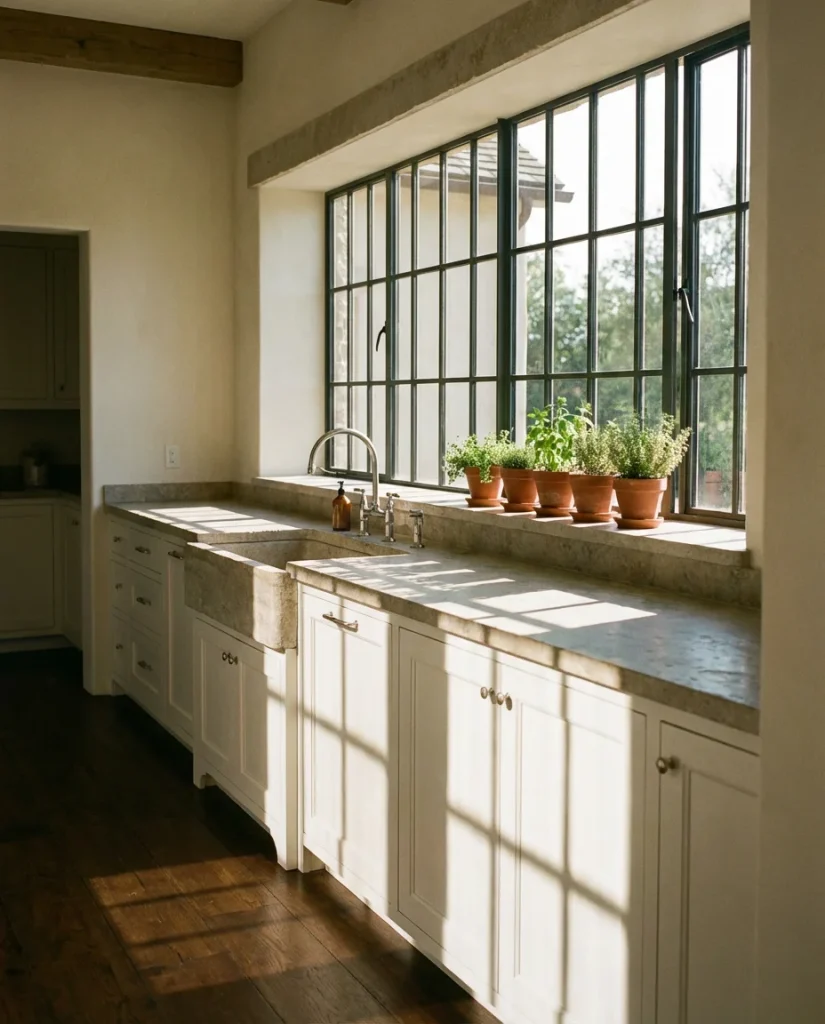
In terms of practical impact, maximizing kitchen window space is one of the highest-return moves you can make on a renovation. Natural light makes even modest materials look better, reduces the need for artificial lighting during daylight hours, and creates a connection to the outdoors that no pendant fixture can replicate. If you’re in the planning stages, talk to your contractor about enlarging existing window openings—it’s often less structural work than it sounds, and the transformation in atmosphere is dramatic.
11. Modern Luxury Small Space Kitchen
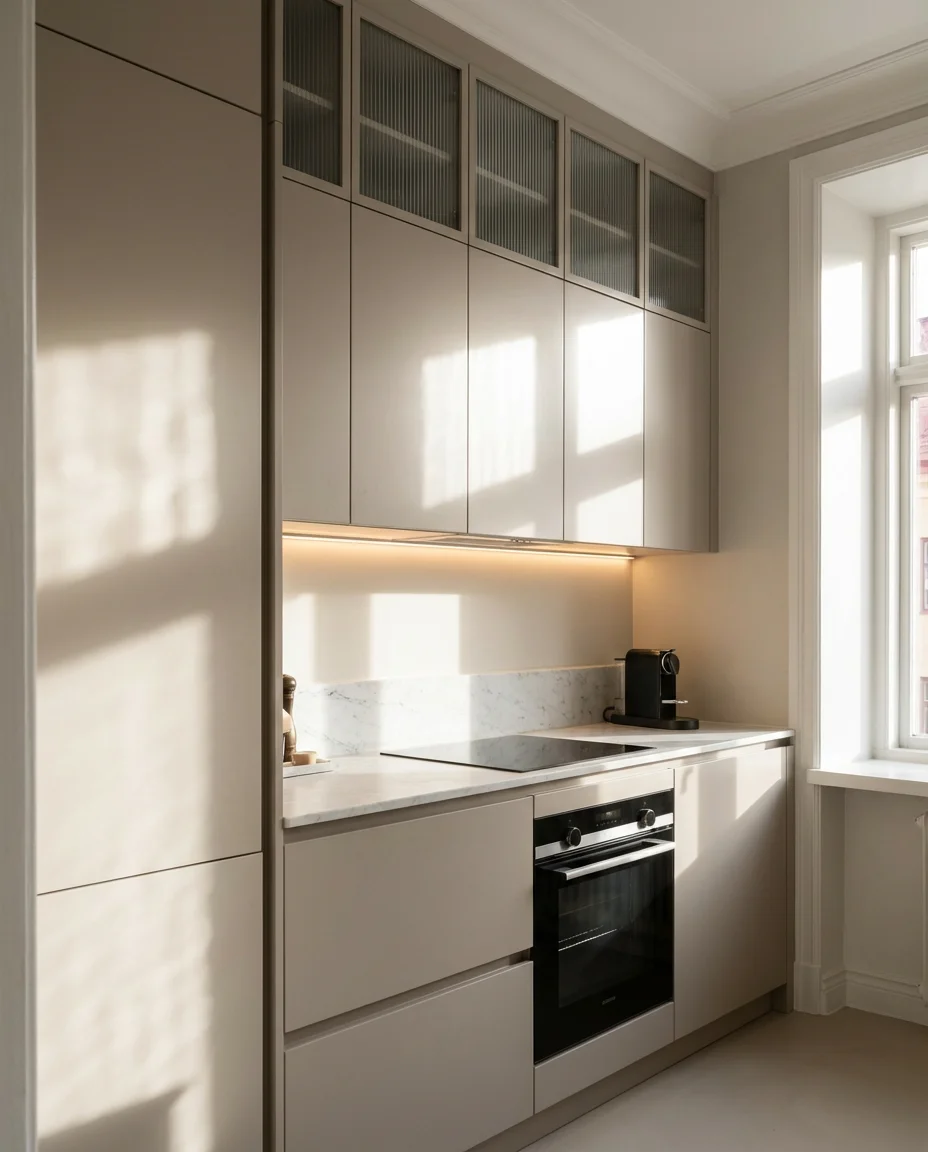
The idea that luxury and small space are mutually exclusive is one that a new generation of designers and homeowners is actively dismantling. A modern luxury small-space kitchen design isn’t about fitting less—it’s about choosing better. Every surface, every fitting, and every square inch is intentional. Integrated appliances disappear behind cabinetry panels, drawer inserts organize every utensil and spice with quiet precision, and materials like fluted glass, honed marble, and unlacquered brass elevate what would otherwise be a straightforward galley or single-wall layout into something that genuinely feels elevated.
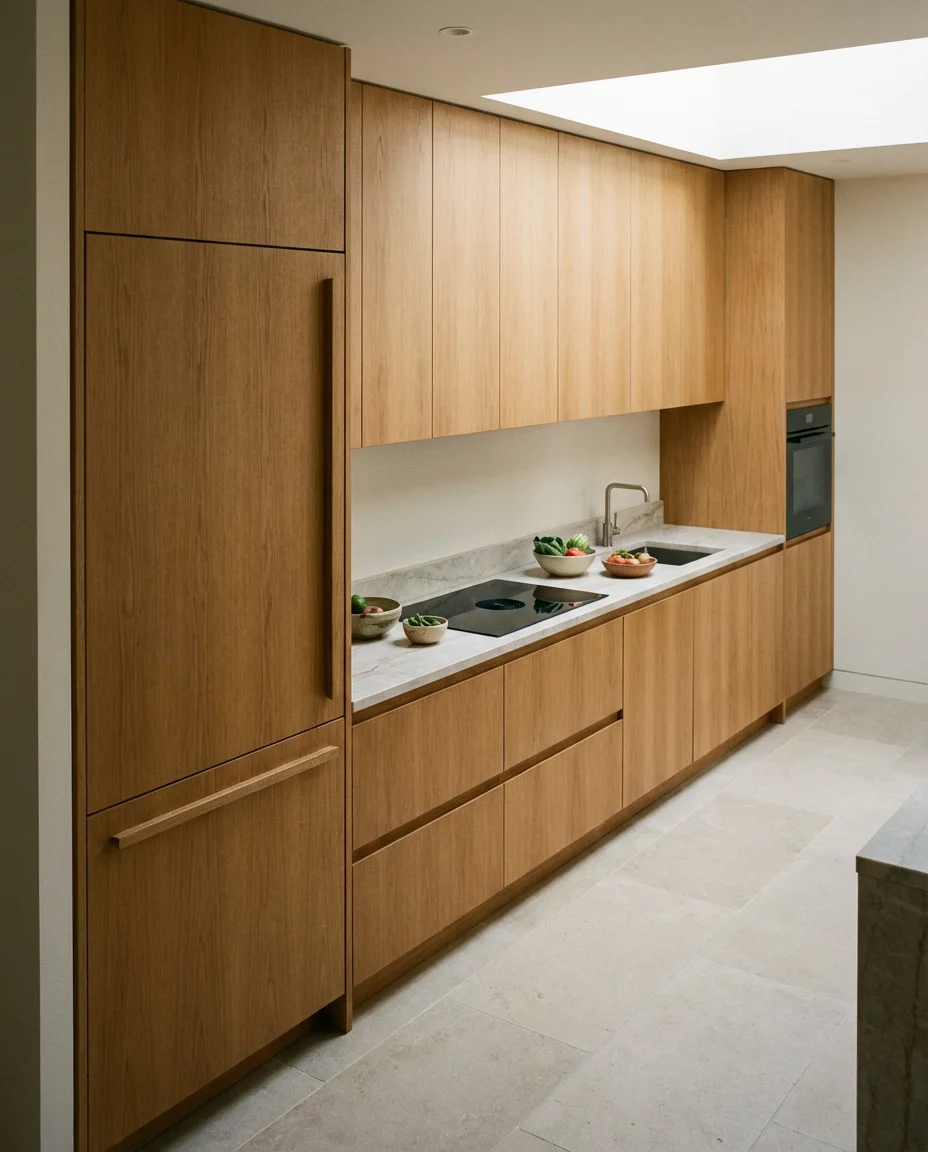
One thing that separates a truly well-done small luxury kitchen from a cramped expensive one is vertical thinking. Tall cabinetry that runs to the ceiling eliminates the visual clutter of the space above the cabinets—that awkward gap where grease and dust collect and nobody ever quite gets around to cleaning. It also adds significant storage, which in a small kitchen is never not useful. Pair ceiling-height cabinets with under-cabinet task lighting, and suddenly the whole room reads as polished rather than pinched.
12. Kitchen Color Combination—Unexpected Pairings That Work
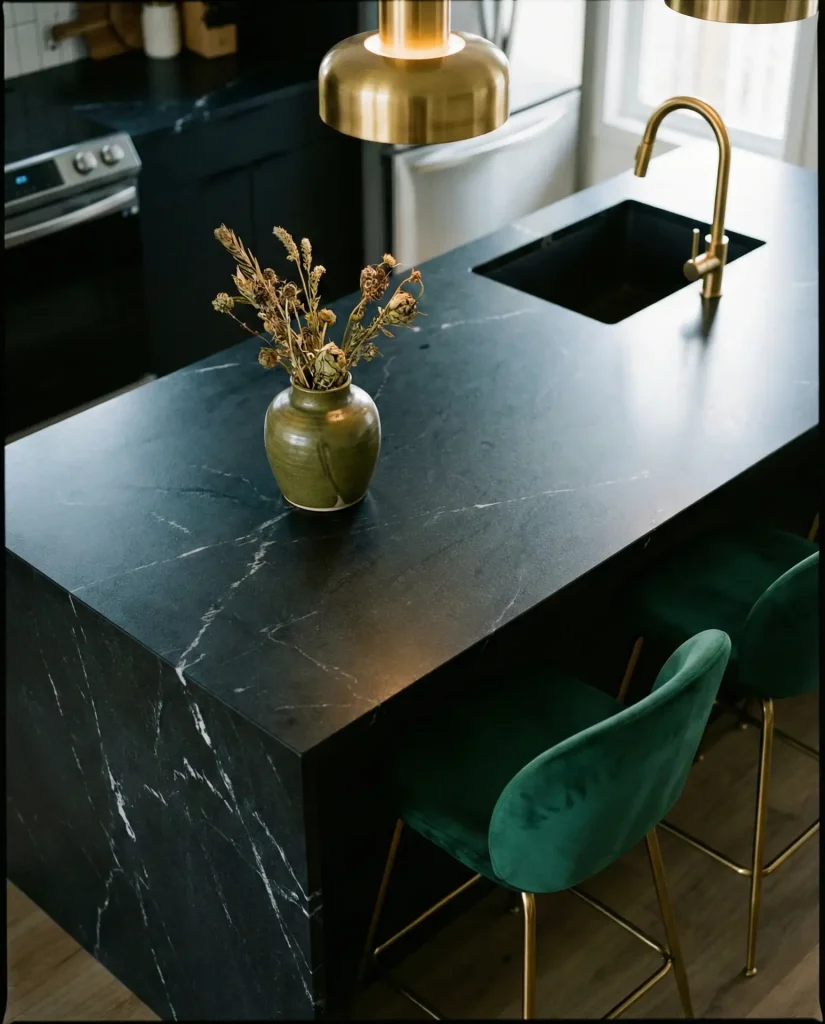
The most interesting kitchen color combination choices in 2026 aren’t coming from paint companies’ annual trend decks—they’re coming from homeowners who trusted their instincts. Dusty pink upper cabinets over charcoal lowers. A warm honey-toned oak island against deep forest-green walls. Ivory cabinetry with a terracotta zellige tile backsplash and matte black fixtures. Design decor thinking has shifted away from safe monochromatic schemes toward pairings that create genuine visual interest, referencing fashion, art, and even traditional textiles for inspiration rather than just interior design conventions.
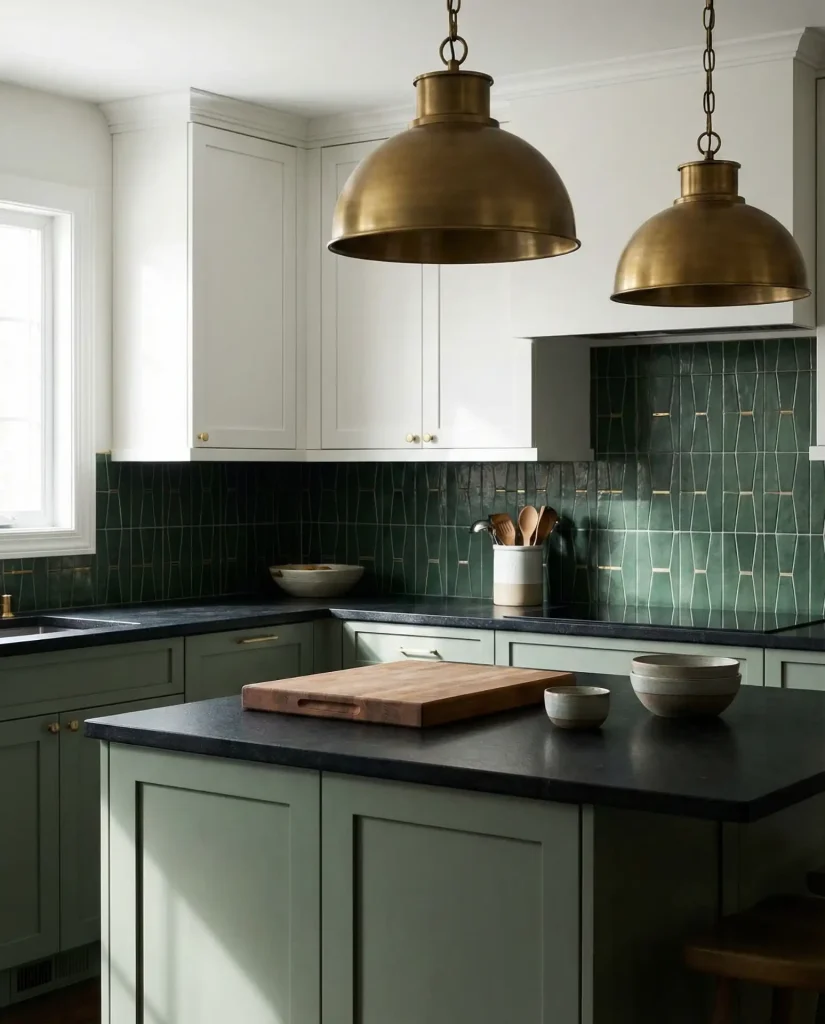
The practical rule for making an unexpected color combination work in a kitchen: anchor one bold choice and keep everything else in a supporting role. If you’re going for that dusty pink and charcoal pairing, your countertop, your floor, your lighting fixtures, and your hardware should all be chosen in reference to those two lead colors rather than competing with them. One bold move at a time is how great kitchens are built—trying to do three bold things at once is how you end up repainting everything 18 months later.
13. Design Ideas for an L-Shaped Kitchen
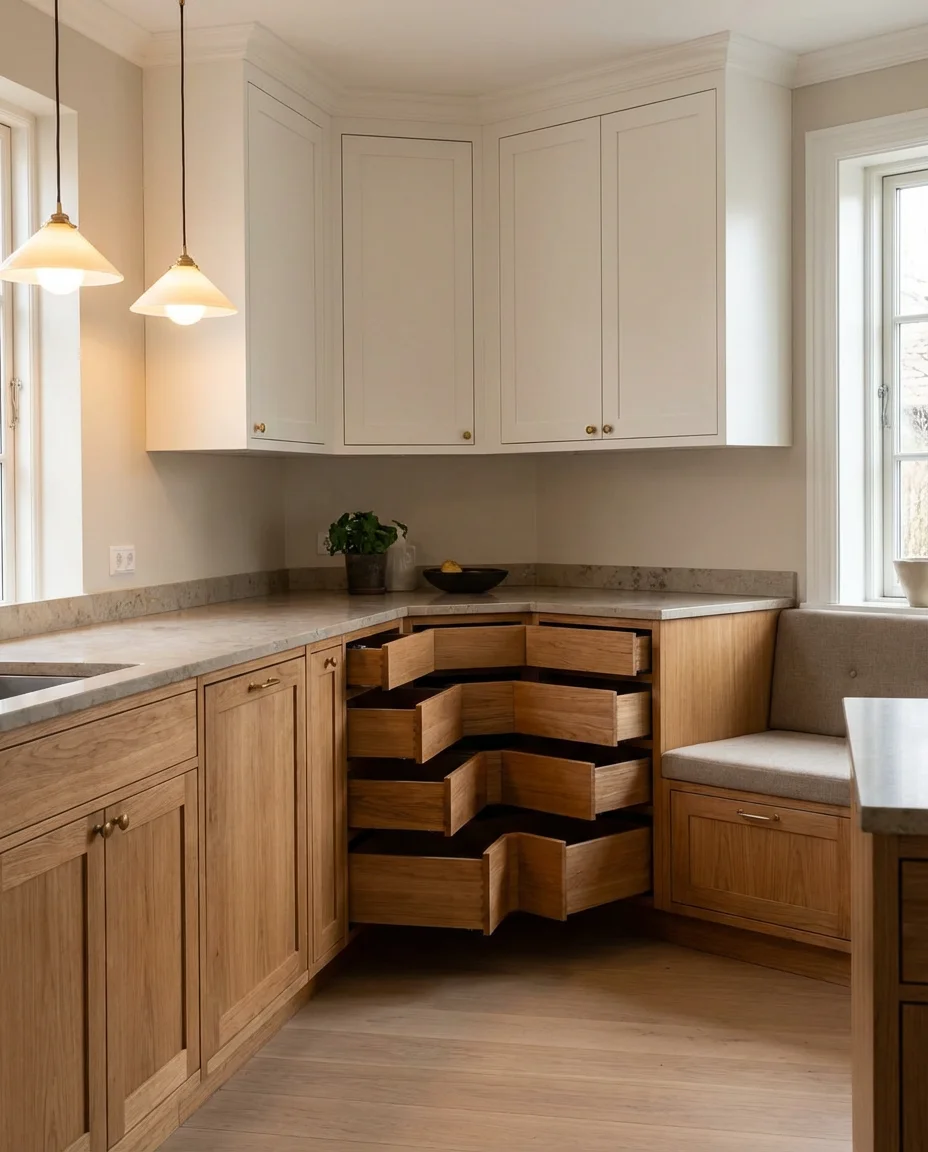
The L-shaped kitchen is arguably the most versatile layout in residential design—it works in large open-plan spaces and modest apartments alike, and it’s naturally forgiving of awkward room proportions. In 2026, the most compelling design ideas for this layout are leaning into the corner rather than fighting it: corner drawer systems that give you actual access to what would otherwise be dead space, curved cabinet transitions that soften the junction, or a banquette built into the corner for informal dining that turns the layout’s main constraint into its biggest asset.
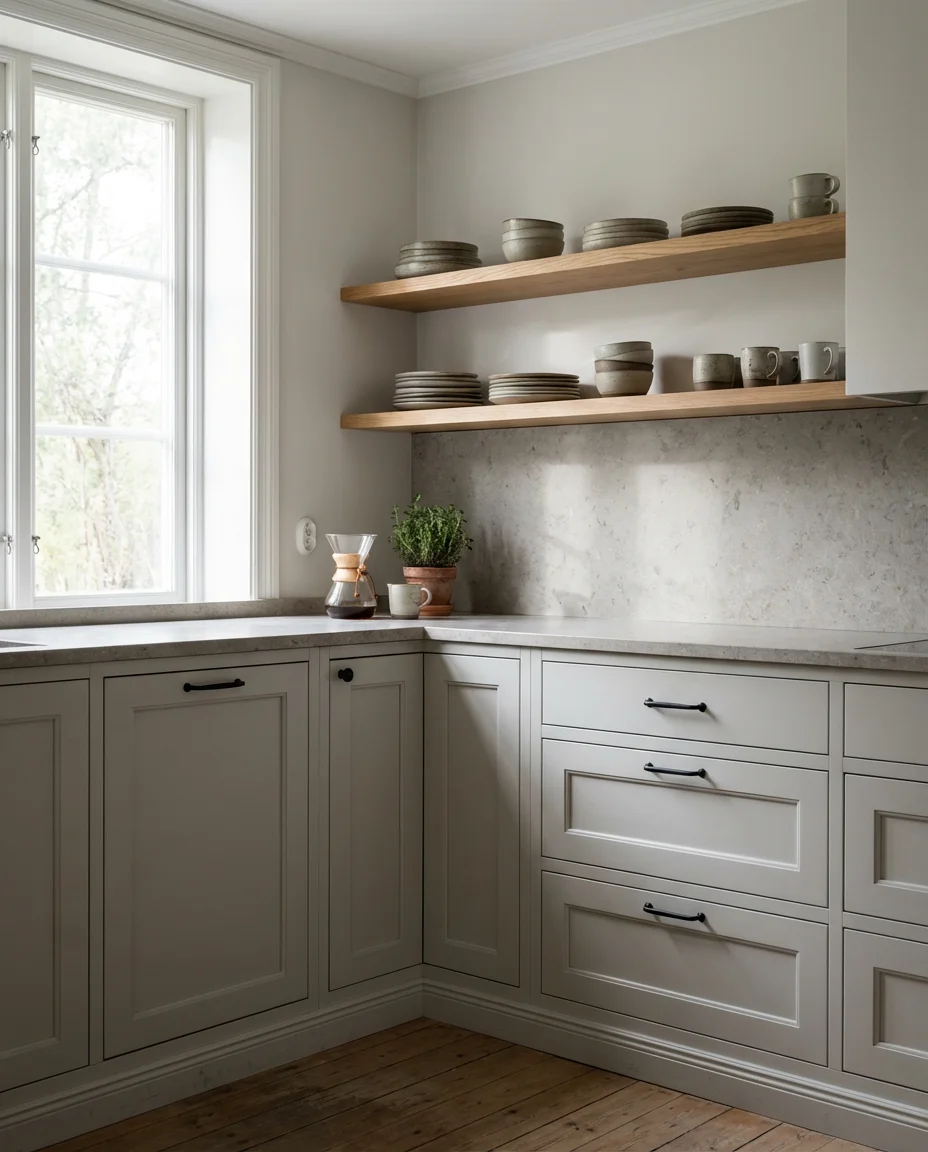
L-shaped kitchens are where they work best in homes that need the kitchen to be both separate enough for cooking noise and mess but open enough for casual entertaining. The leg of the L facing the living space becomes a natural bar and serving counter—high stools, a simple overhang, and good lighting turn that section into the most social spot in the house on a Friday evening. It’s a layout that multitasks as effectively as the people who use it.
14. Modern—Minimalist Kitchen for the Intentional Home
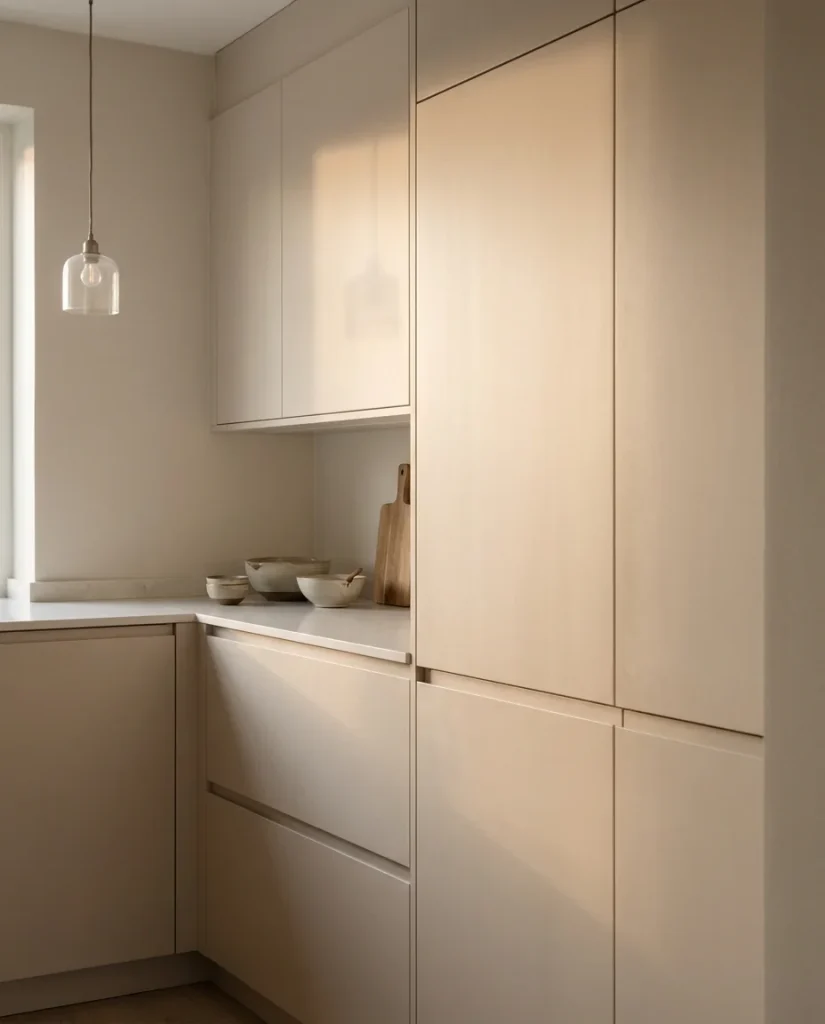
The ideas of the modern kitchen of 2026 have moved well past the “everything hidden, no personality” phase of minimalism that defined the 2010s. Today’s minimalist kitchen is intentional rather than merely sparse—it’s about choosing fewer things and choosing them well. A single large-format stone slab backsplash instead of individual tiles. Handle-less cabinetry with push-to-open mechanisms instead of visual hardware. One beautiful faucet as a sculptural object rather than a purely functional fitting. These kitchens require serious upfront decisions but reward you daily with how serene they feel to work in.
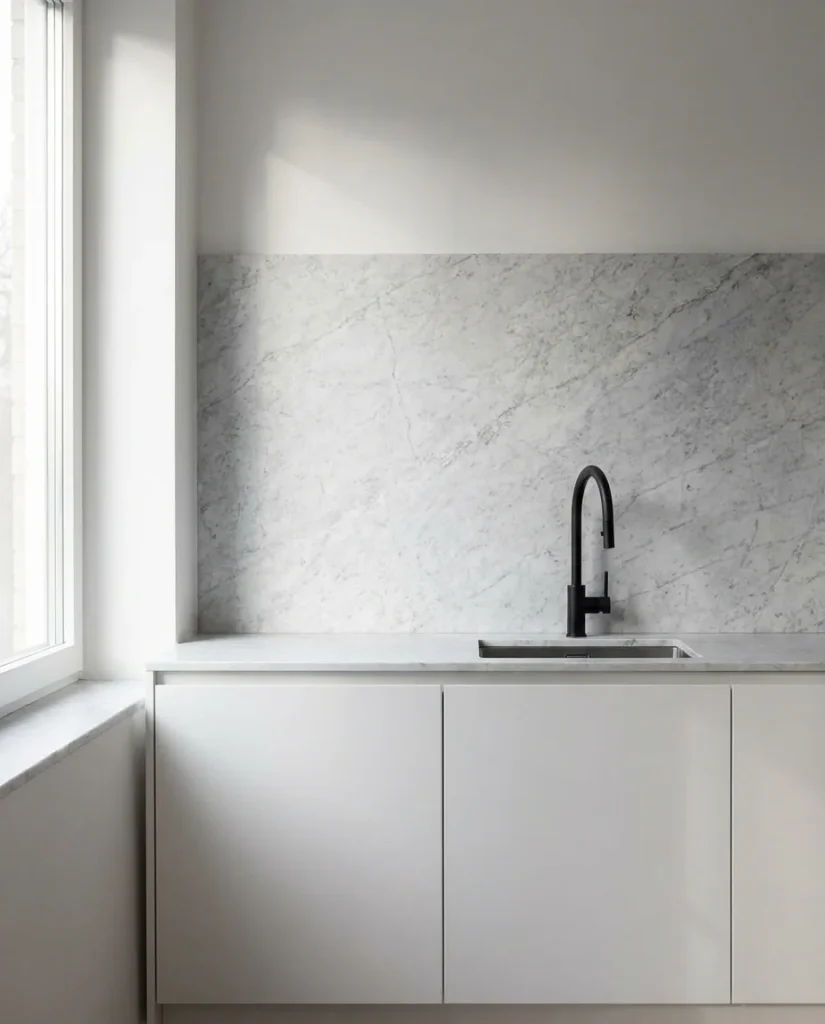
Minimalist kitchens demand honest storage planning before you commit to the aesthetic. Every small appliance, every bag of flour, and every set of mixing bowls needs a designated home inside a cabinet before the doors close for good. The homeowners who struggle with this look are usually the ones who design the kitchen first and think about storage second. Reverse that order—audit what you own, plan storage precisely, then design around it—and the minimalist kitchen becomes genuinely effortless rather than aspirationally stressful.
15. Design Modern 2026 — Micro-Trends Reshaping Kitchen Aesthetics
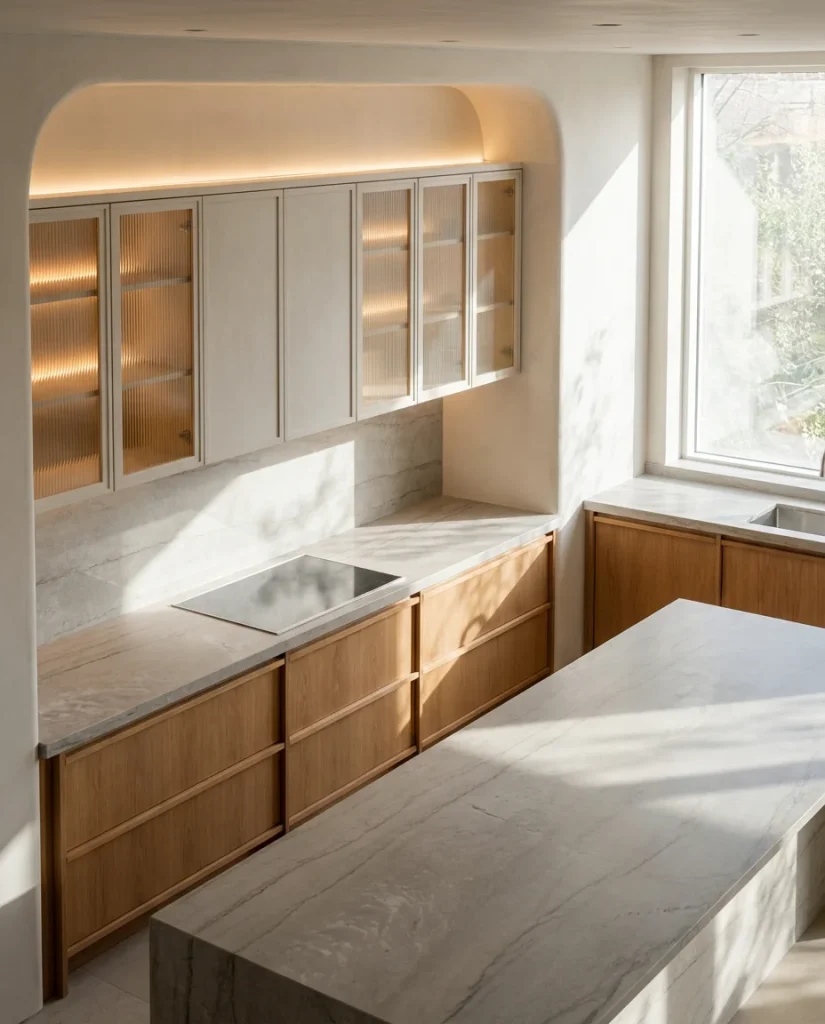
What does “design modern 2026 actually mean at a granular level? Beyond the big moves—color, layout, materials—it’s the micro-details that are shifting the feel of kitchens right now. Reeded or fluted cabinet fronts that add depth without pattern. Integrated refrigerator columns that disappear into the cabinetry run. Unlacquered brass fixtures that will patina naturally over time rather than maintaining a permanent factory shine. Plaster or limewash walls that absorb light softly instead of bouncing it back. None of these are individually revolutionary, but together they add up to a distinctly different sensibility from kitchens of even three years ago.
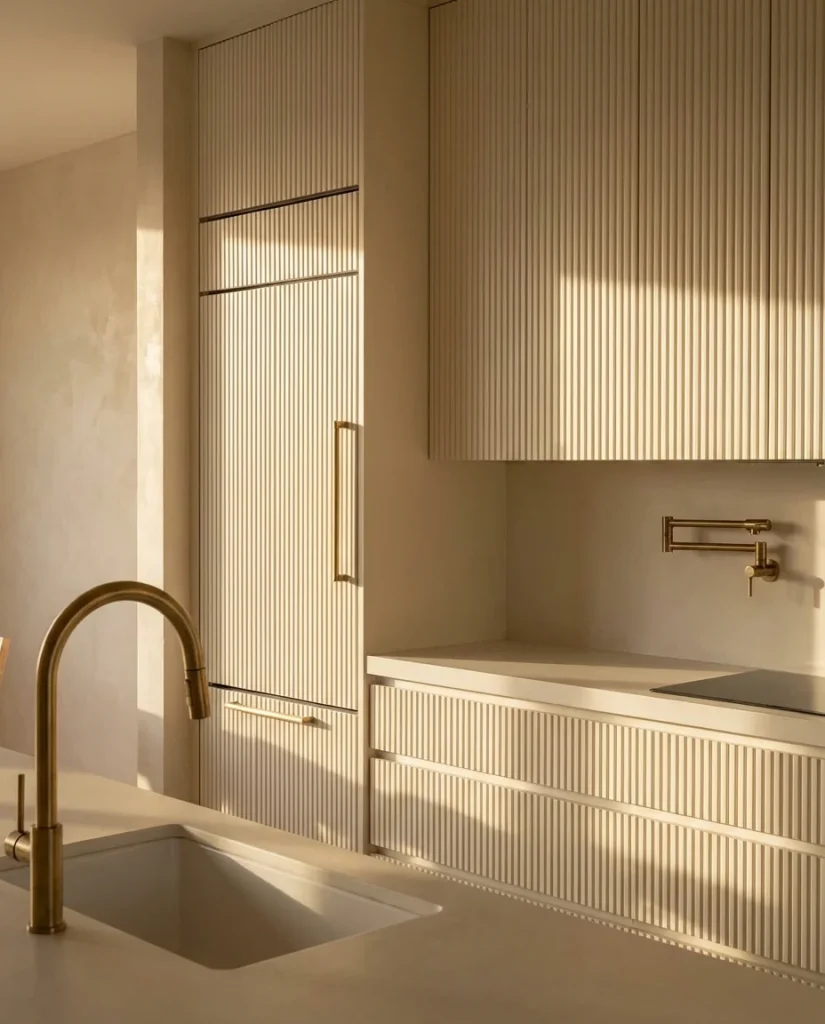
The shift that feels most significant to designers working at the high end of the market right now is a move away from “showroom perfect” and toward “lived-in intentional.” Clients are asking for materials that age gracefully, finishes that develop character over time, and layouts that anticipate how their families actually use the space rather than how kitchen design photography suggests they should. That’s a genuinely healthy direction for the industry—and for the people who have to cook dinner in these kitchens every night.
16. Luxury Kitchen Design With Statement Lighting
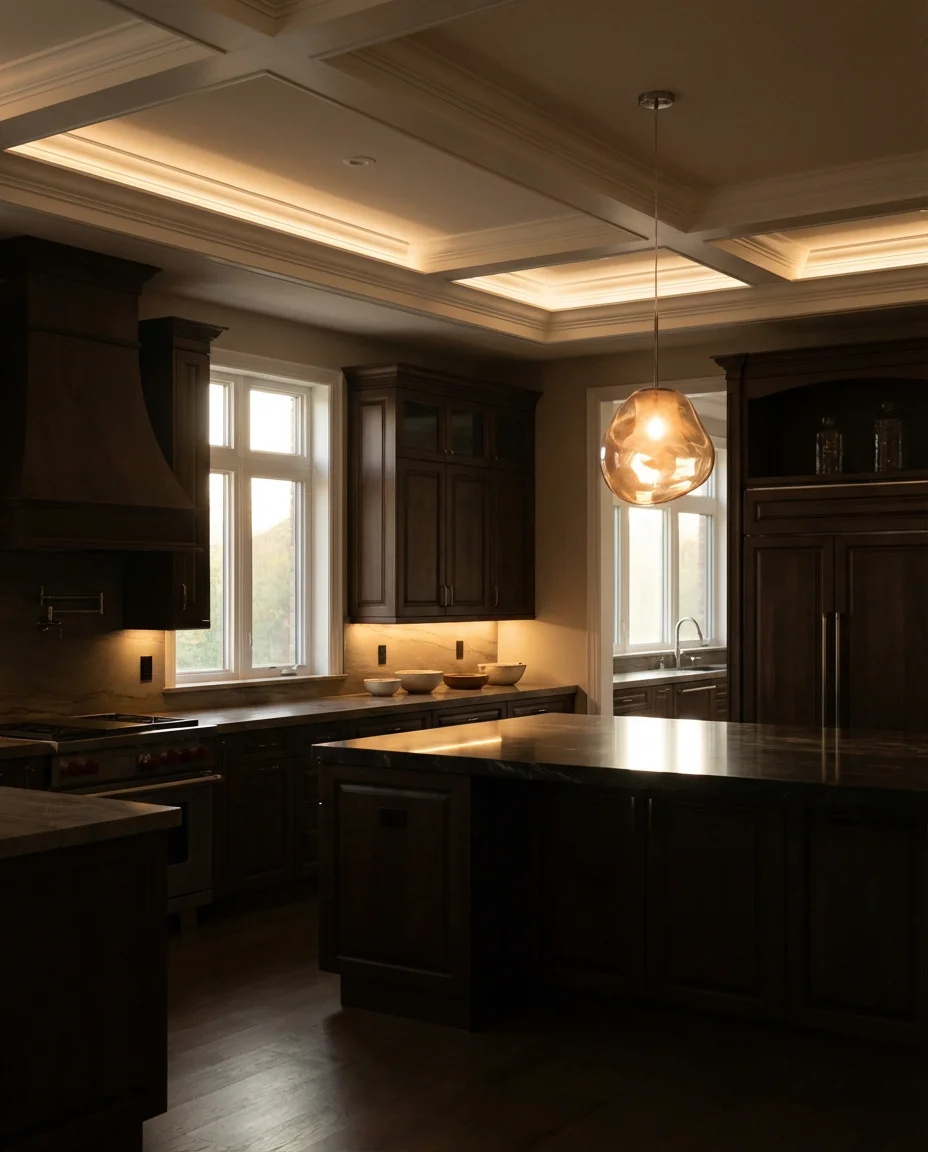
In a luxury kitchen, lighting is the one element that separates a beautiful room from a truly exceptional one. The standard recessed grid that dominates most American kitchens is functional, but it’s also completely flat—it casts no shadows, creates no mood, and makes the room feel like a well-lit grocery store rather than a space designed for pleasure. The best design decor approaches in 2026 treat lighting as layered architecture: task lighting under cabinets, ambient lighting from recessed coves or plaster pendants, accent lighting inside glass cabinets or beneath floating shelves, and one hero fixture—a sculptural chandelier or a row of blown-glass pendants—that acts as a visual full stop.
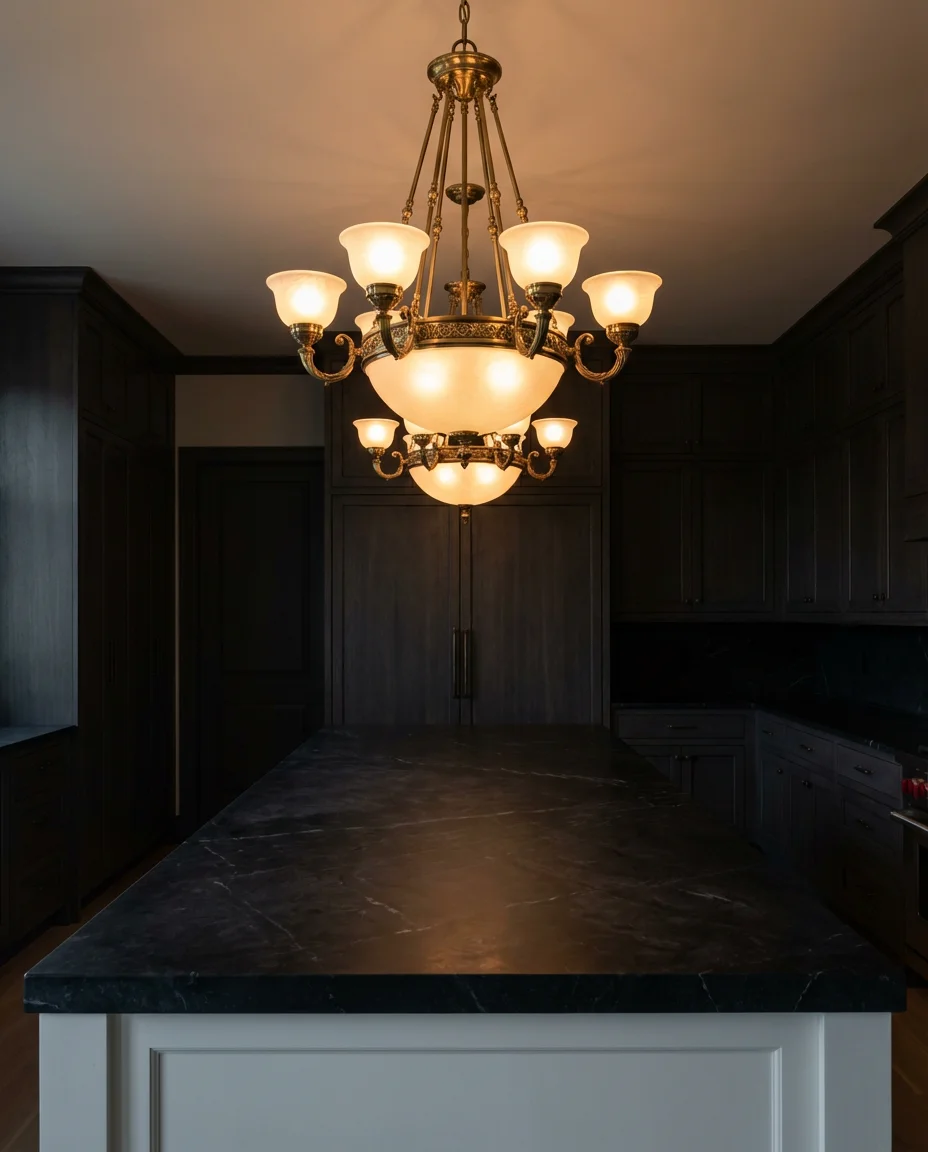
Lighting is also one of the most cost-effective upgrades you can make to an existing kitchen without touching the cabinetry or countertops. A well-chosen pendant over the island, a warm-toned under-cabinet LED strip, and a dimmer switch on the main overhead can transform how a kitchen reads in evening hours. If you’re working within a tight renovation budget, invest in lighting before anything else—the return on atmosphere per dollar spent is difficult to beat.
17. Indian Kitchen Design With Modern Storage
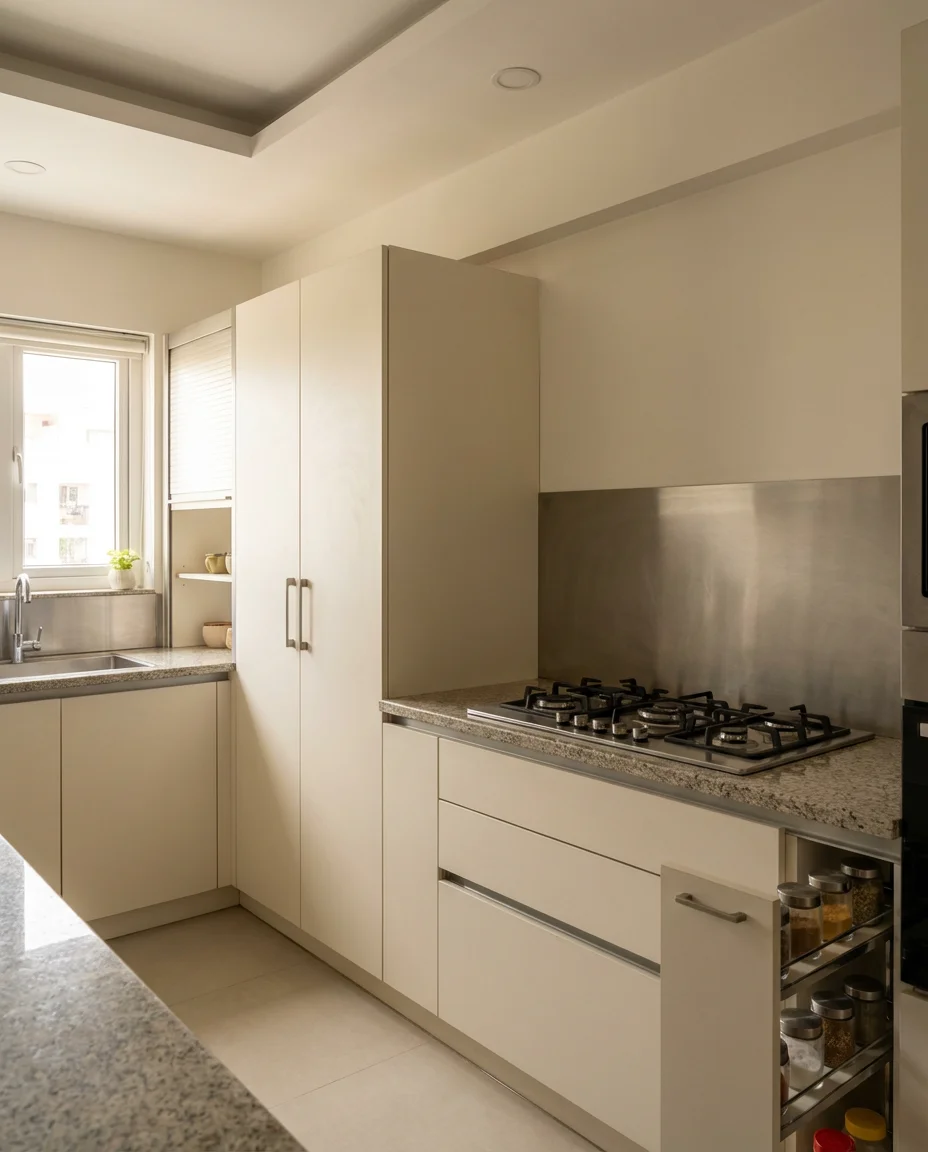
The Indian kitchen in 2026 — whether in Delhi, Houston, or New Jersey—is being reimagined through the lens of modular design thinking. The requirements haven’t changed: heavy-duty cooking, large-batch preparation, extensive dry goods storage, and a layout that supports multiple cooks working simultaneously. But the solutions have gotten considerably smarter. Tall pantry units with pull-out shelving for stacked dals and spice tins. Wide drawers for pressure cookers and heavy kadais. Easy-clean acrylic or membrane cabinet fronts that stand up to oil and steam without warping or discoloring.
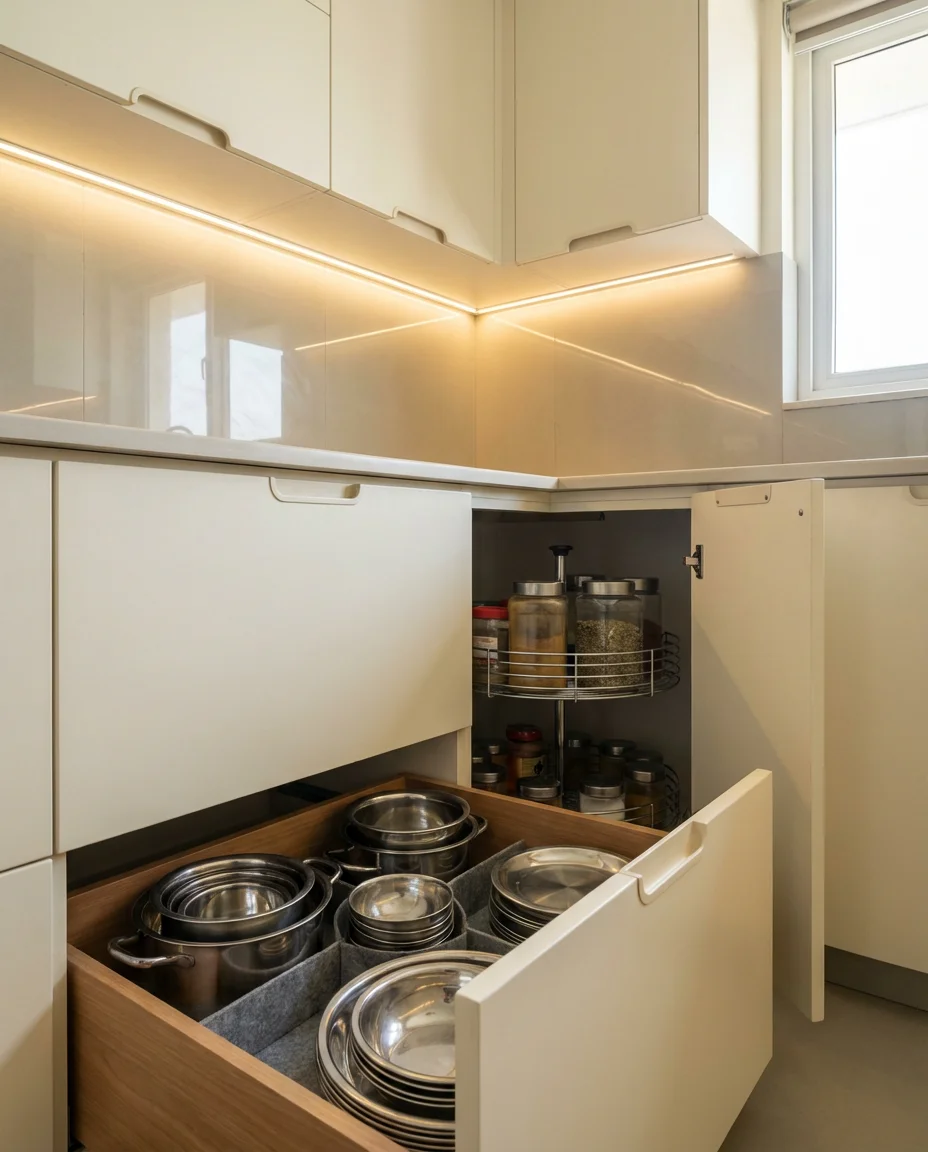
One of the more practical insights that comes from designing kitchens for Indian households is the importance of dedicated wet and dry zones. In traditional Indian cooking, the wet area near the sink needs to handle a lot of pre-prep work—soaking, washing, draining—while the dry area is where grinding, mixing, and measuring happen. Designing those zones explicitly into the layout, rather than treating the whole counter as one undifferentiated workspace, makes daily cooking dramatically more efficient and the kitchen easier to clean at the end of the day.
18. Kitchen Design Decor—Art and Objects That Belong
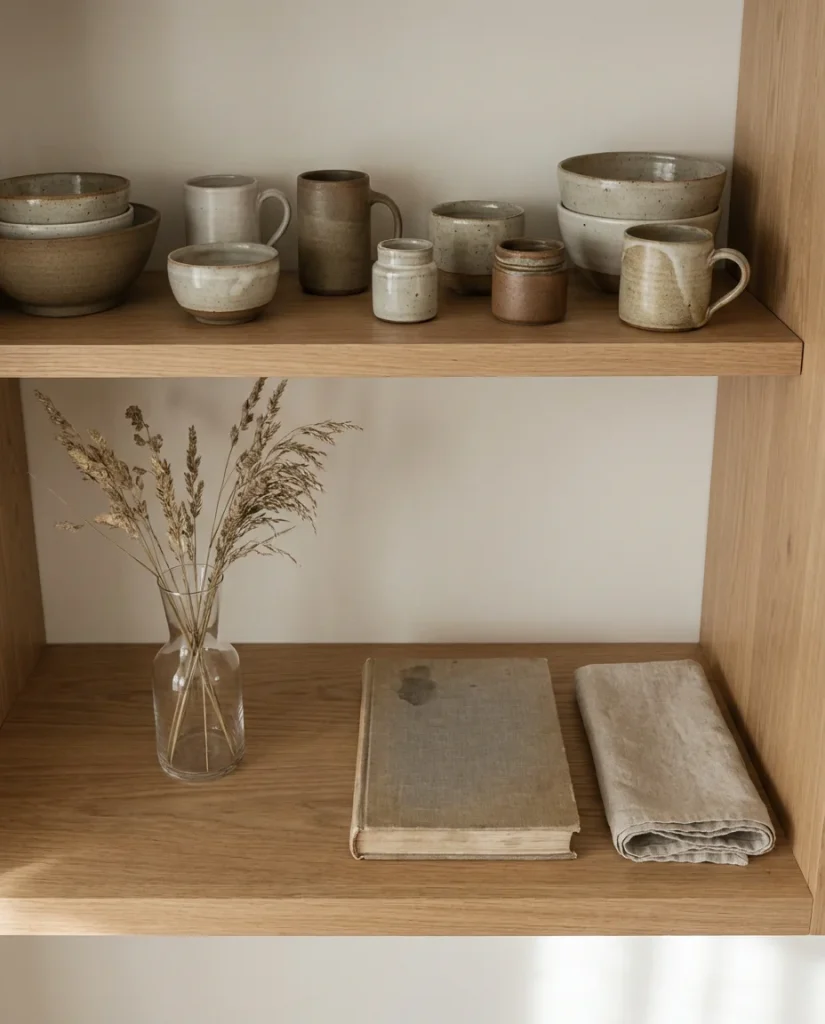
The best kitchens in 2026 feel collected rather than staged, and that quality comes entirely from how design decor is handled. A small oil painting propped against the backsplash. A ceramic bowl from a local maker holding fruit on the island. A vintage wooden breadboard leaning against the wall by the stove. These aren’t afterthoughts—they’re the details that give a kitchen its personality and make it feel like it belongs to specific people with specific taste rather than a generic “nice kitchen.” The color combination choices in a kitchen’s decor layer should reference but not match the cabinetry and surfaces exactly, giving the eye places to rest and wander.
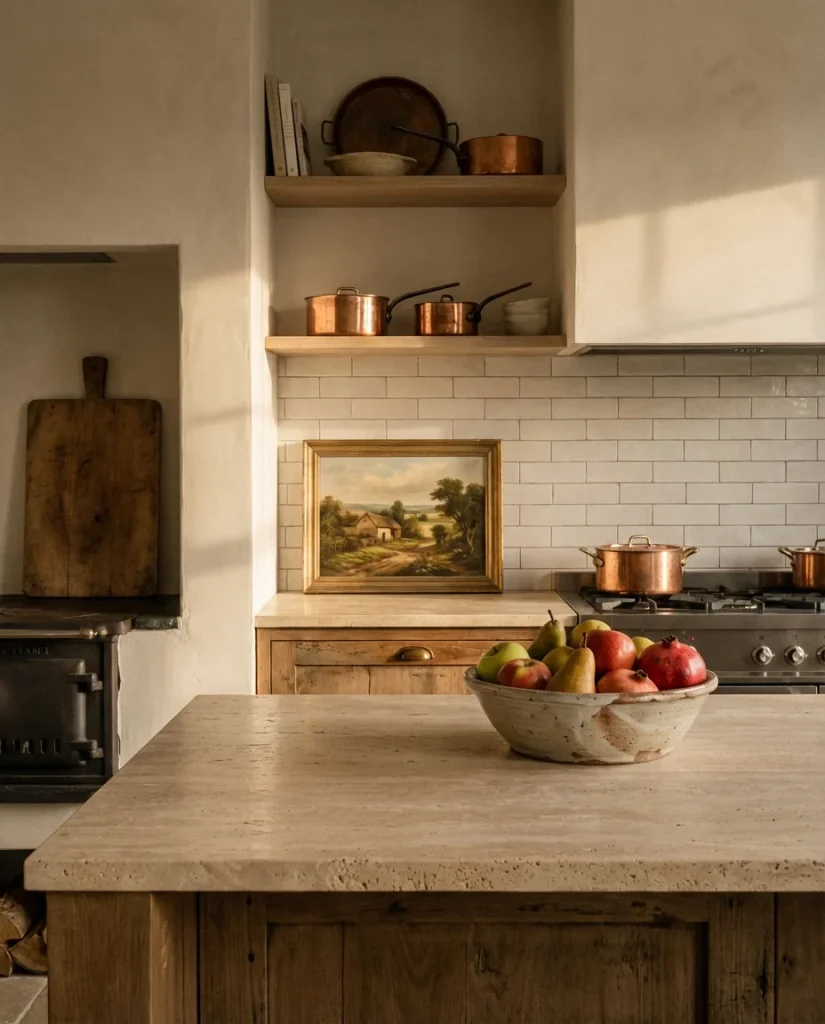
The common mistake in kitchen decorating is confusing clutter with warmth. Real warmth comes from a few well-chosen objects displayed with intention—not every surface covered in small items that need to be moved before you can cook anything. The Scandinavian design principle of “only keep what is either useful or beautiful” applies perfectly here. If something on your counter is neither of those things, it’s just in the way. Edit ruthlessly, display intentionally, and the kitchen will feel both personal and calm.
19. Green and Wood Kitchen—An Organic Modern Look
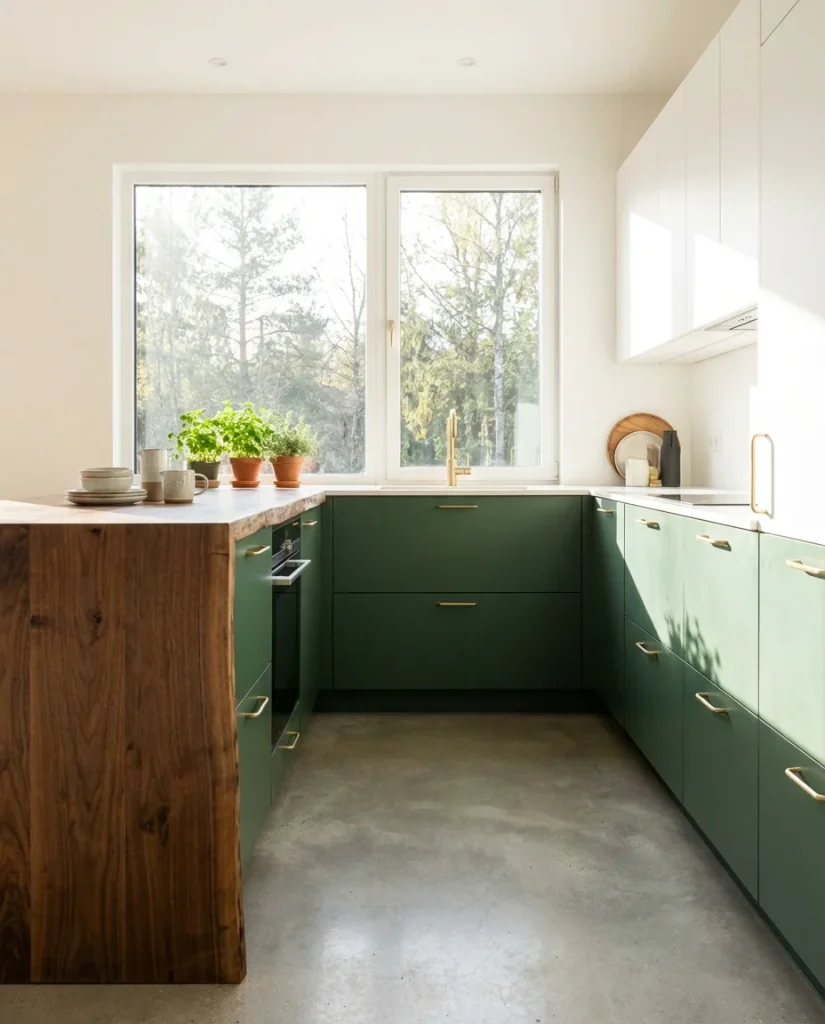
Combine green cabinetry with wooden open shelving, and you get one of the most talked-about kitchen aesthetics of the past 18 months—a look that feels simultaneously organic, modern, and deeply rooted in natural materials. The combination works because both elements reference the same source: nature. Deep sage or forest green cabinets recall forest canopy; raw-edge oak or walnut shelving recalls the trunk and branch. Together, they create a kitchen that feels connected to the outdoor world in a way that purely man-made materials simply cannot replicate.
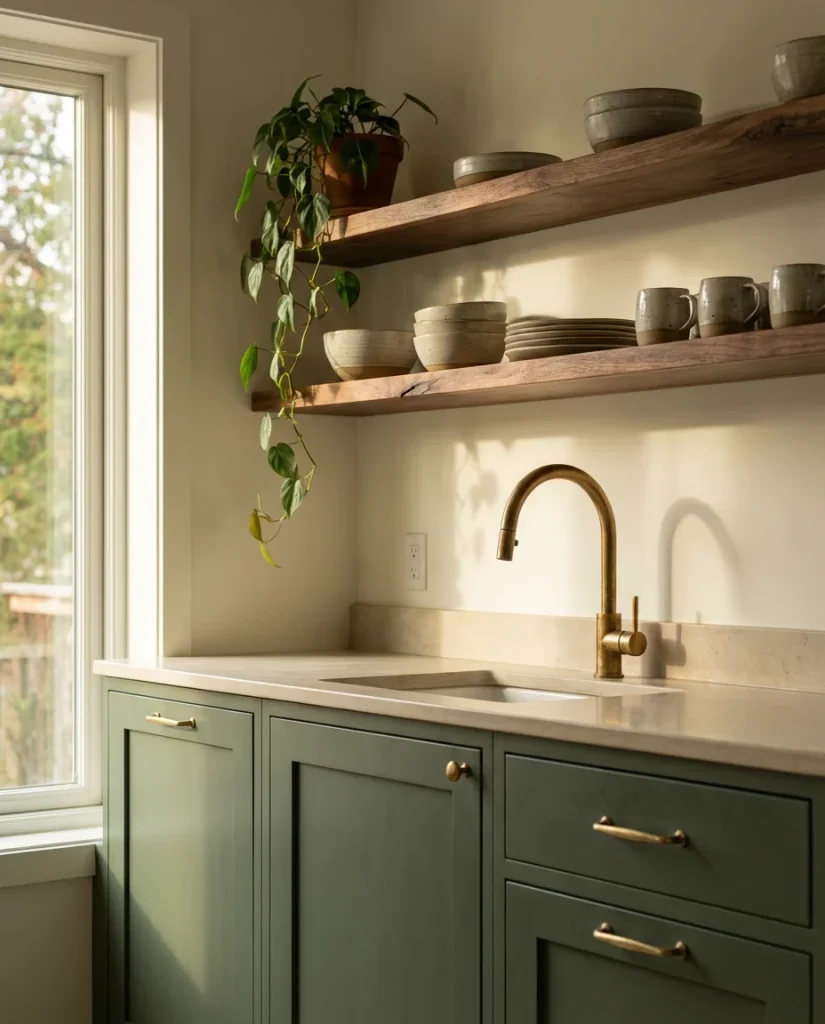
This combination is particularly popular in the Pacific Northwest—Portland, Seattle, and the surrounding towns—where the natural landscape is a constant design reference and homeowners tend to favor materials that nod to their environment. But it translates beautifully across climates and home styles, from a modernist mountain cabin to a Victorian brownstone in Brooklyn. The key is keeping other materials in the kitchen restrained: stone, ceramic, linen, and aged metal all work; anything plastic or highly synthetic will break the spell immediately.
20. Small Indian Kitchen—Working Smart in Limited Space
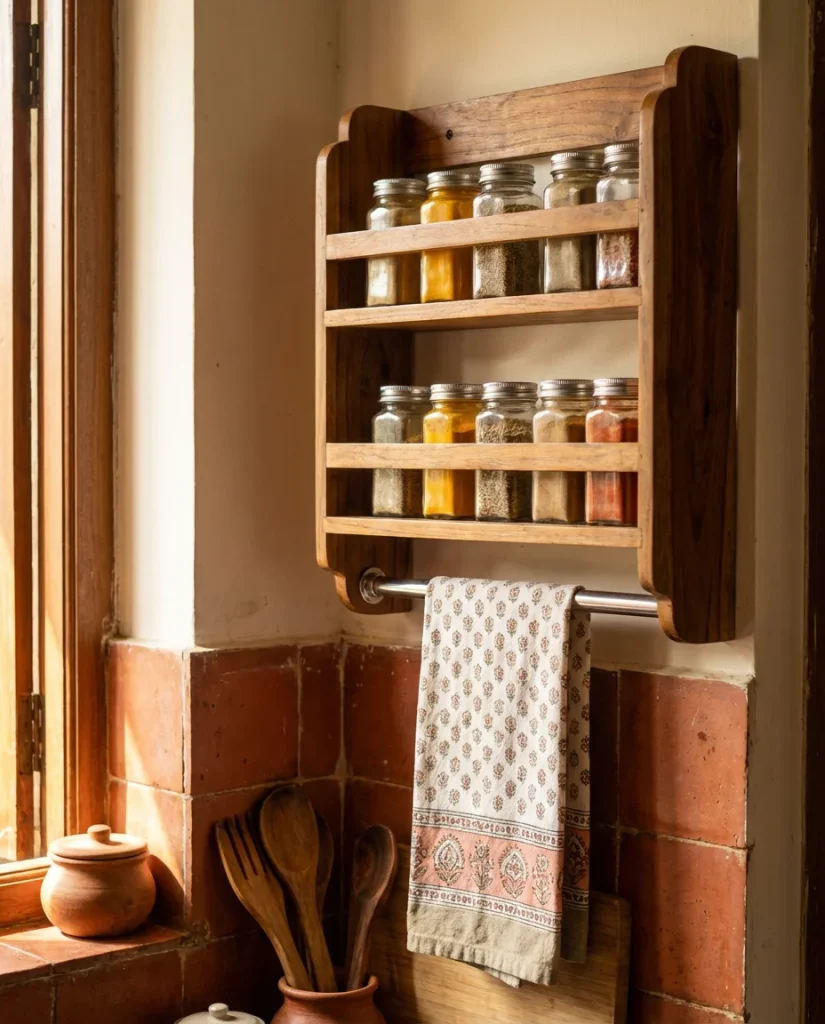
Designing a small-space kitchen that meets the demands of simple Indian cooking is one of the more genuinely challenging briefs in residential interior design—and solving it well is immensely satisfying. The cooking style requires significant equipment, large vessels, multiple simultaneous processes, and extensive ingredient storage, all in a footprint that might be under 80 square feet. The most successful small Indian kitchens treat every single inch as a design decision: corner carousels, vertical spice racks mounted on cabinet doors, shallow pull-out drawers for flat items, and a well-placed rolling cart that adds prep space when needed and parks out of the way when not.
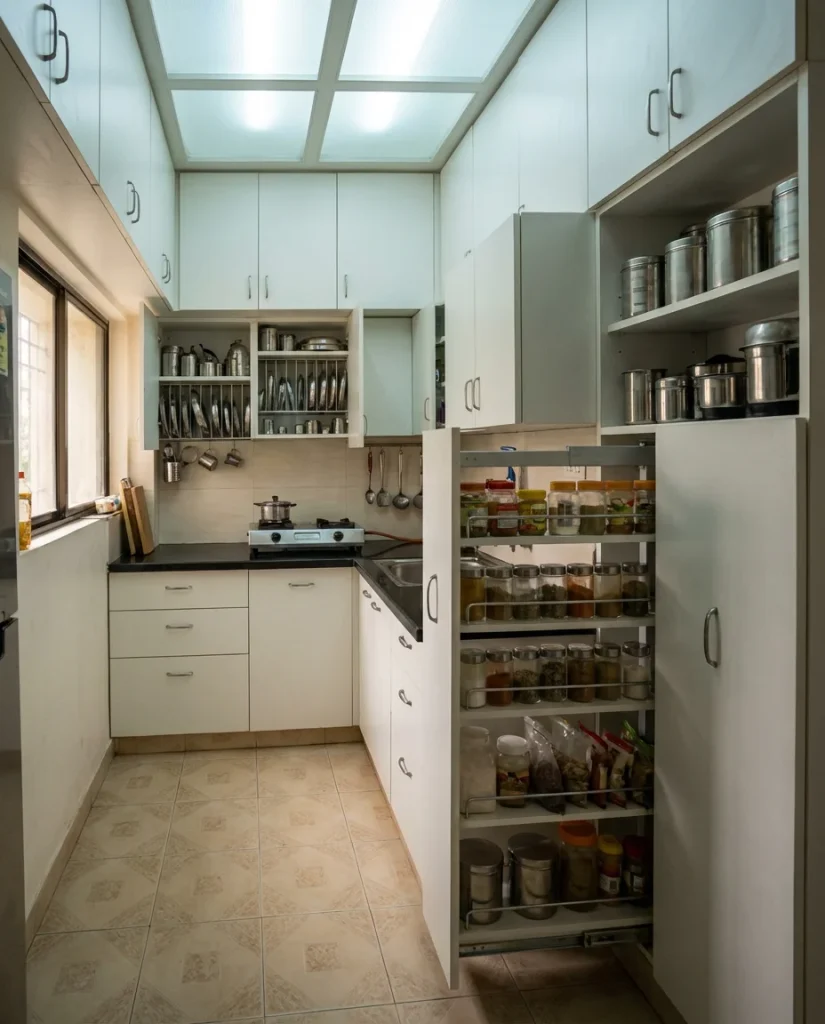
Practically speaking, the single biggest upgrade in a small Indian kitchen is almost always ventilation. Heavy cooking—high heat, oil, strong spices—demands a serious range hood or exhaust system, and it’s an element that gets under-specified constantly in compact kitchens where the temptation is to save ceiling space. A powerful, quiet exhaust fan will make a small kitchen genuinely usable for everyday Indian cooking rather than something that requires opening every window in the house whenever you make a tadka.
21. Grey and White Kitchen—Timeless and Livable
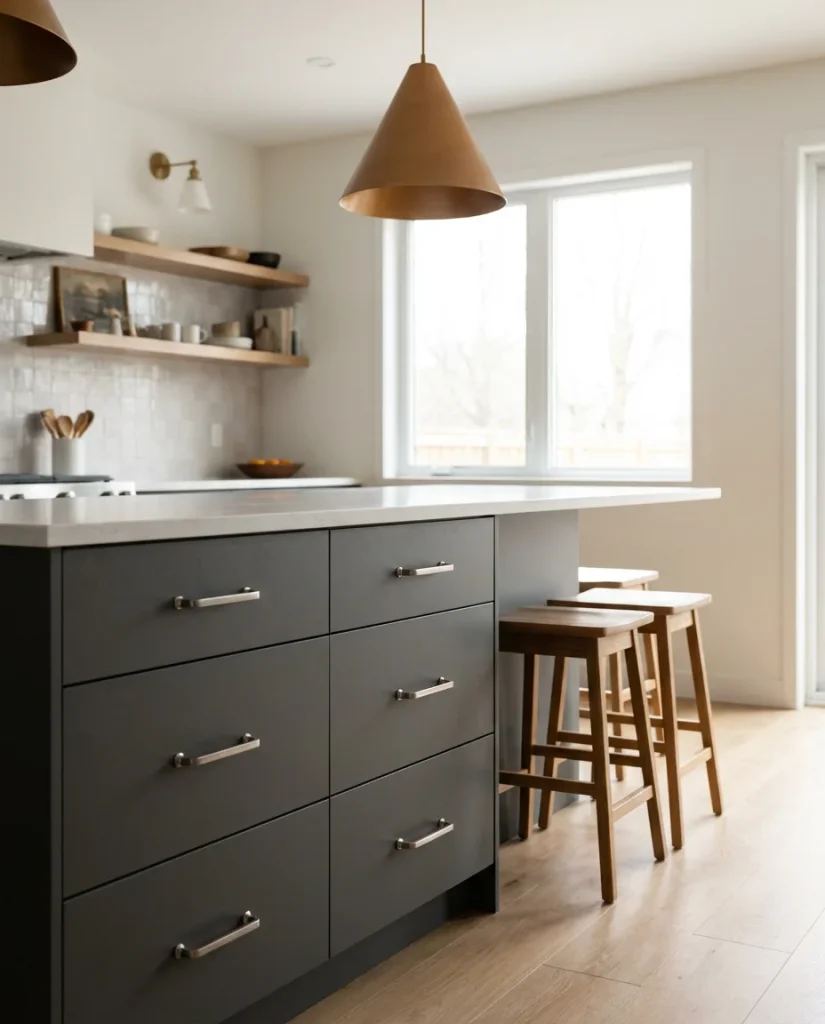
The grey and white kitchen is the little black dress of interior design—it never fully goes out of style because it works in virtually every context and age remarkably well. In 2026, the version getting the most attention pairs warm white upper cabinets with cool mid-grey lowers, grounded by a natural stone or quartz counter in a complementary tone. What lifts this classic color combination above the ordinary right now are the hardware and fixture choices: aged bronze, polished nickel in a brushed matte finish, or even hand-forged black iron all transform the same basic palette into something with a completely different character.
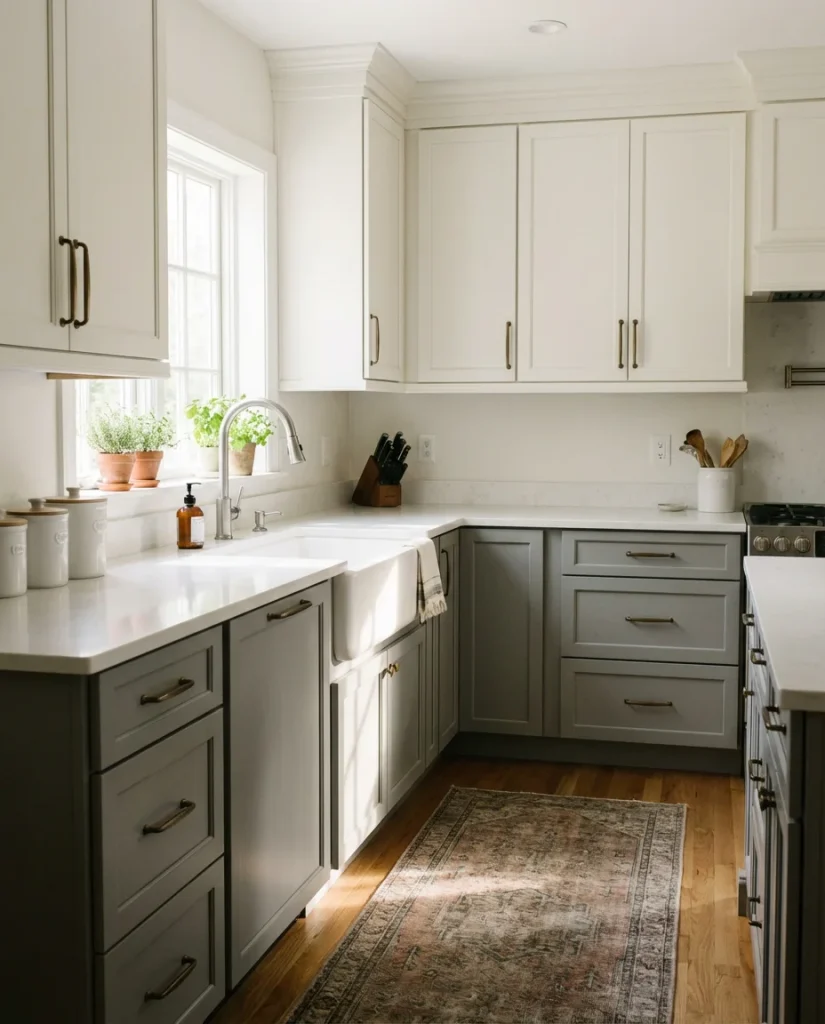
For American families with children, the grey-and-white kitchen has one distinct practical advantage that doesn’t get discussed enough: it’s genuinely easy to touch up. White cabinet paint is widely available, color-matching is straightforward, and a scuffed or chipped door can be painted out on a Saturday morning without the whole kitchen looking wrong. Bolder, more unusual color choices can be harder to maintain over time—especially in homes where the kitchen absorbs a lot of daily action from kids and pets.
22. Modern Kitchen Design Ideas—Pulling It All Together
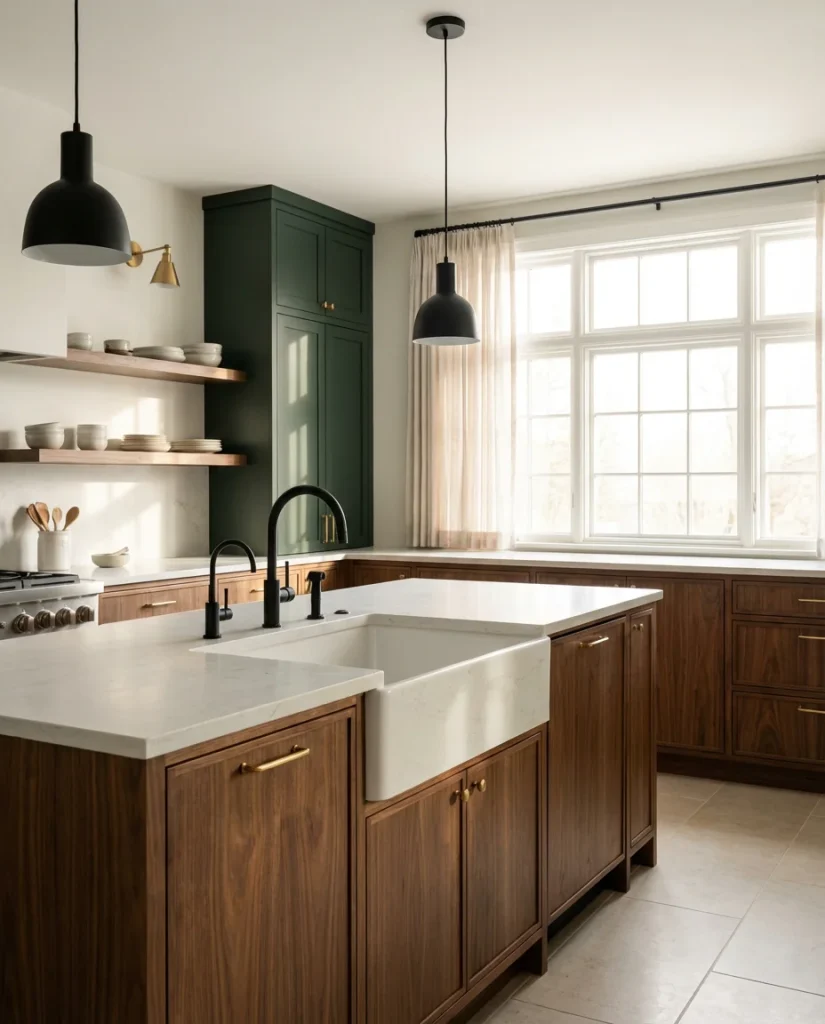
The best-designed modern kitchens of 2026 don’t follow a single trend or commit to a single aesthetic—they synthesize. They pull from the warmth of wooden materials, the drama of bold color, the efficiency of smart layout planning, and the personality of carefully chosen decor. They feel like the result of someone thinking hard about how they actually live rather than what will look good in a listing photo. Whether you’re working with a generous budget and a full gut renovation or a tight one and a weekend’s worth of paint and new hardware, the principle is the same: make decisions that serve your daily life first and visual appeal second. The best-looking kitchens are almost always the most honest ones.
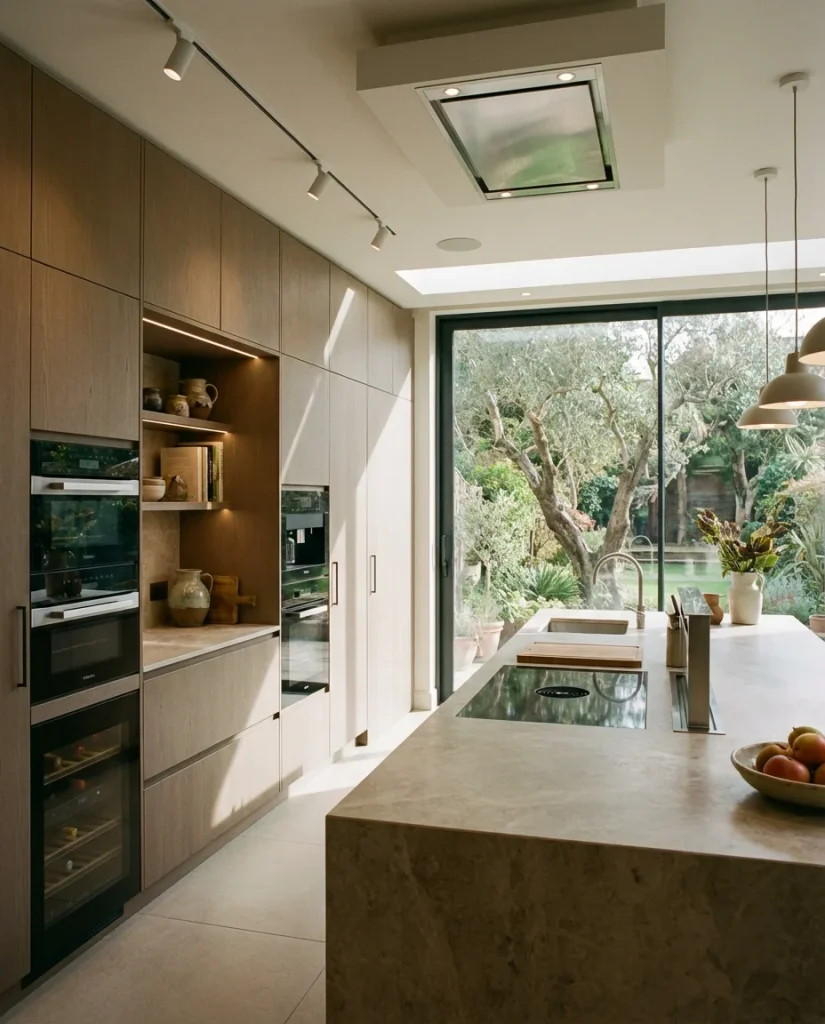
What makes 2026 particularly exciting for kitchen design is that there’s genuine room for every taste, every budget, and every lifestyle to find something that resonates—whether that’s a sleek luxury kitchen with integrated everything, a colorful statement space that makes guests gasp, or a beautifully functional everyday kitchen that just makes cooking feel good. The ideas in this list are a starting point, not a prescription. Take what speaks to you, leave what doesn’t, and build something that’s entirely and unmistakably yours.
Conclusion
We’d love to hear which of these ideas resonated most with you—are you dreaming of bold color, or gravitating toward something more organic and material-driven? Drop your thoughts in the comments below, share a photo of your own kitchen project if you’ve taken the plunge, and let’s keep this conversation going. There are no wrong answers when it comes to making a kitchen that actually feels like home.