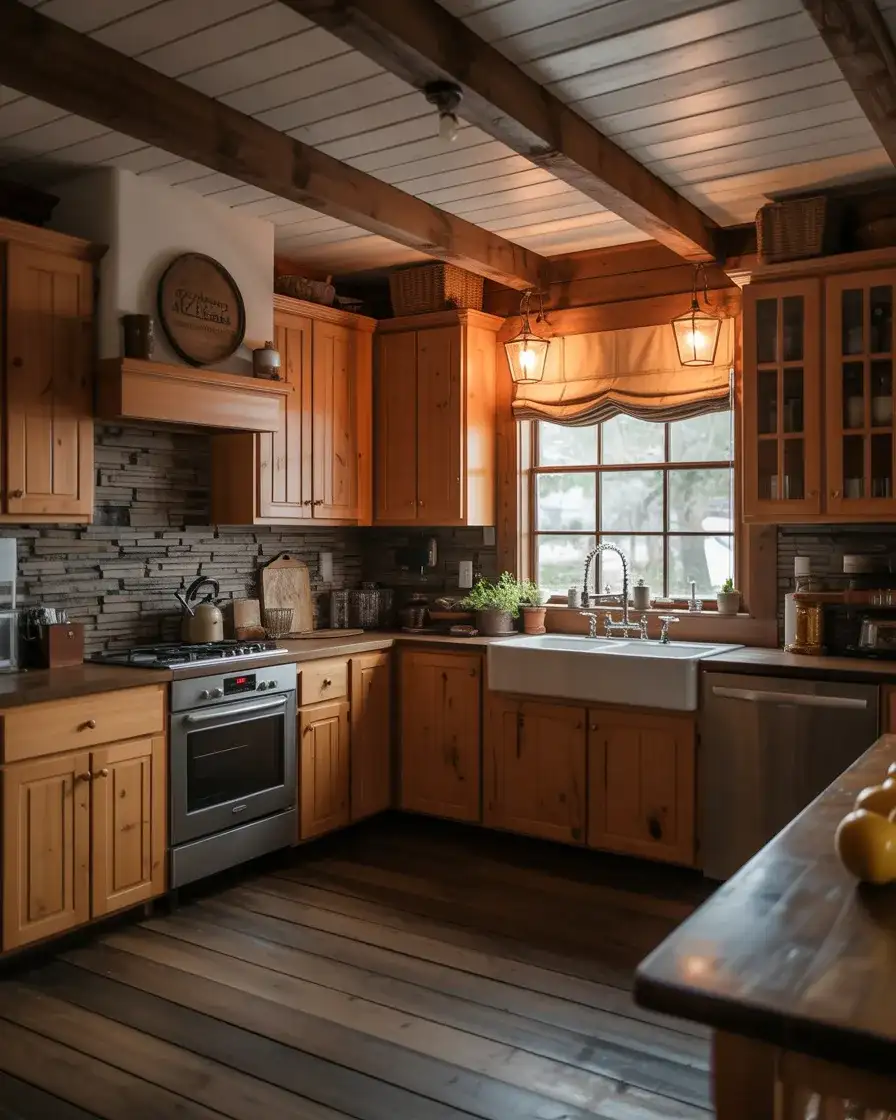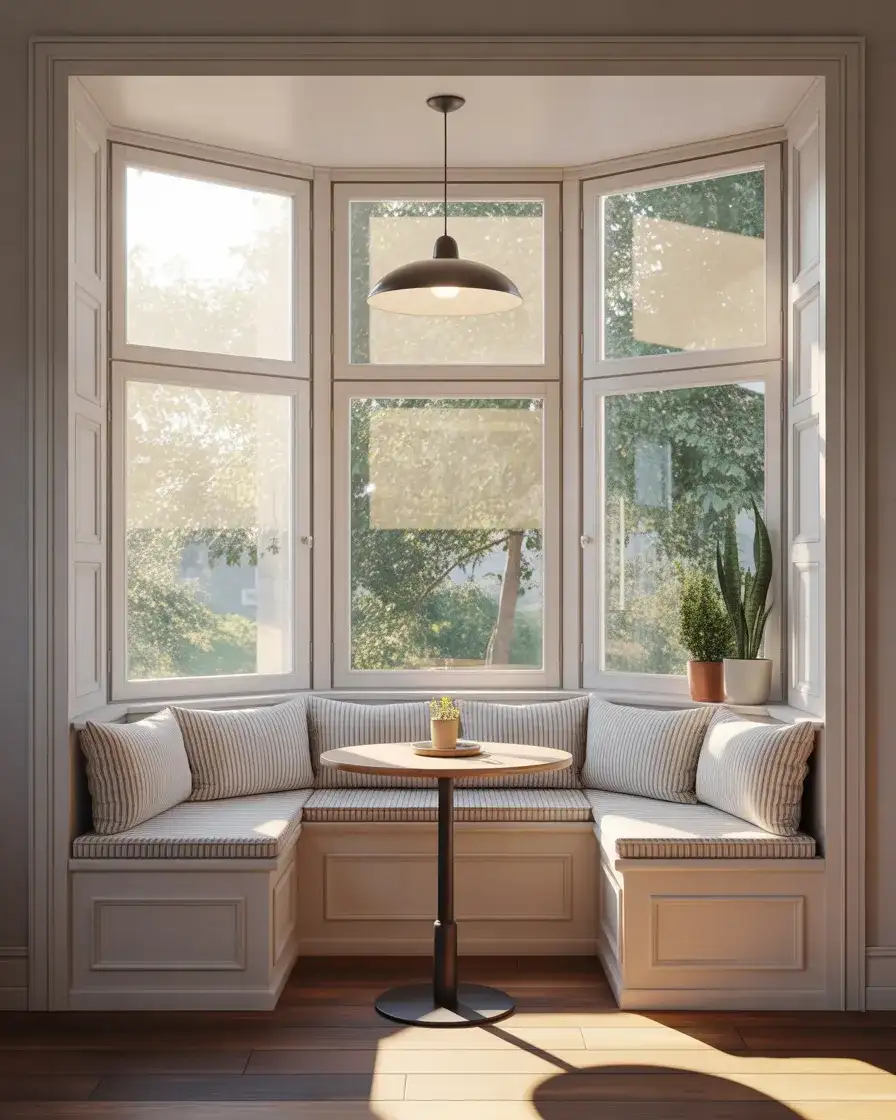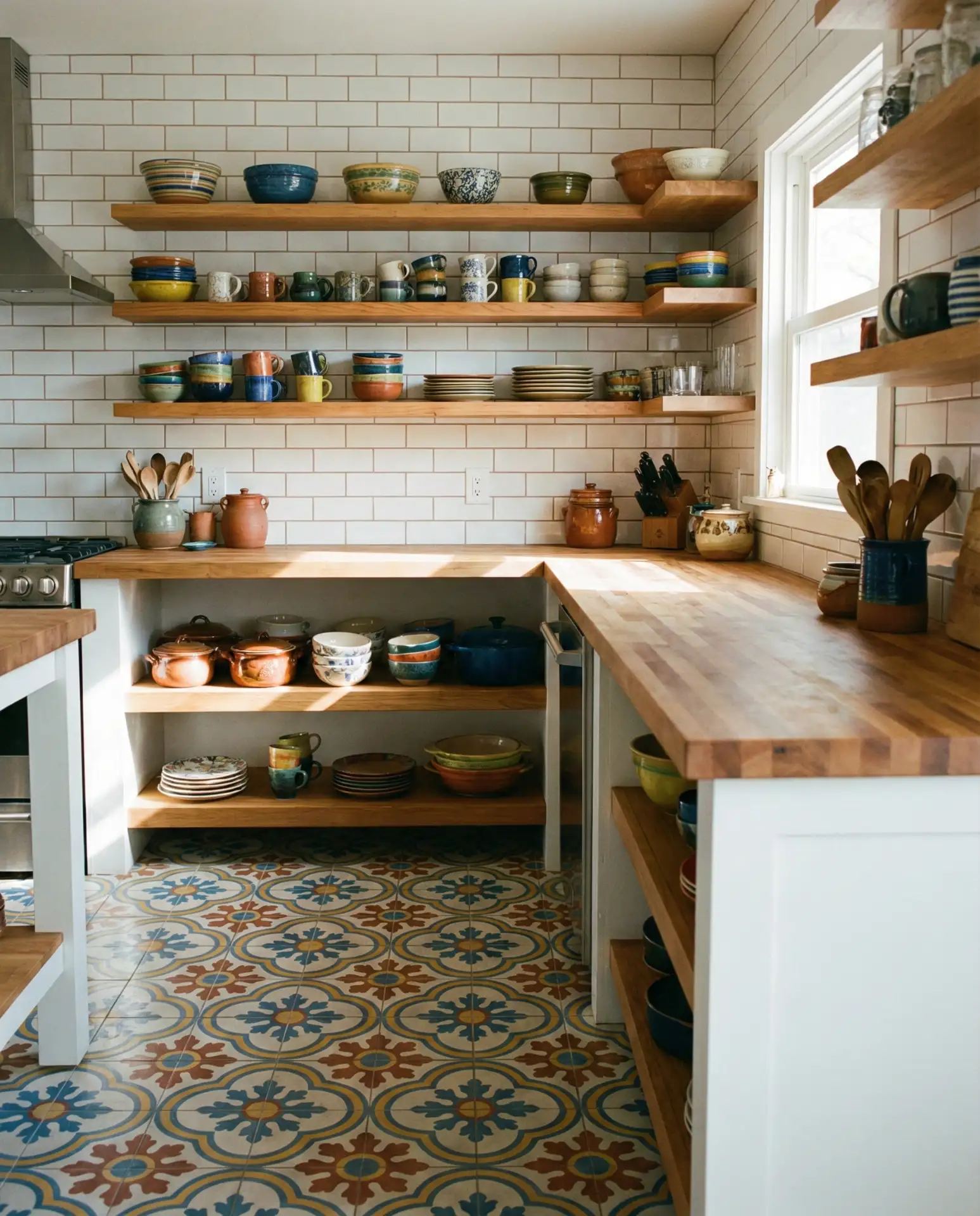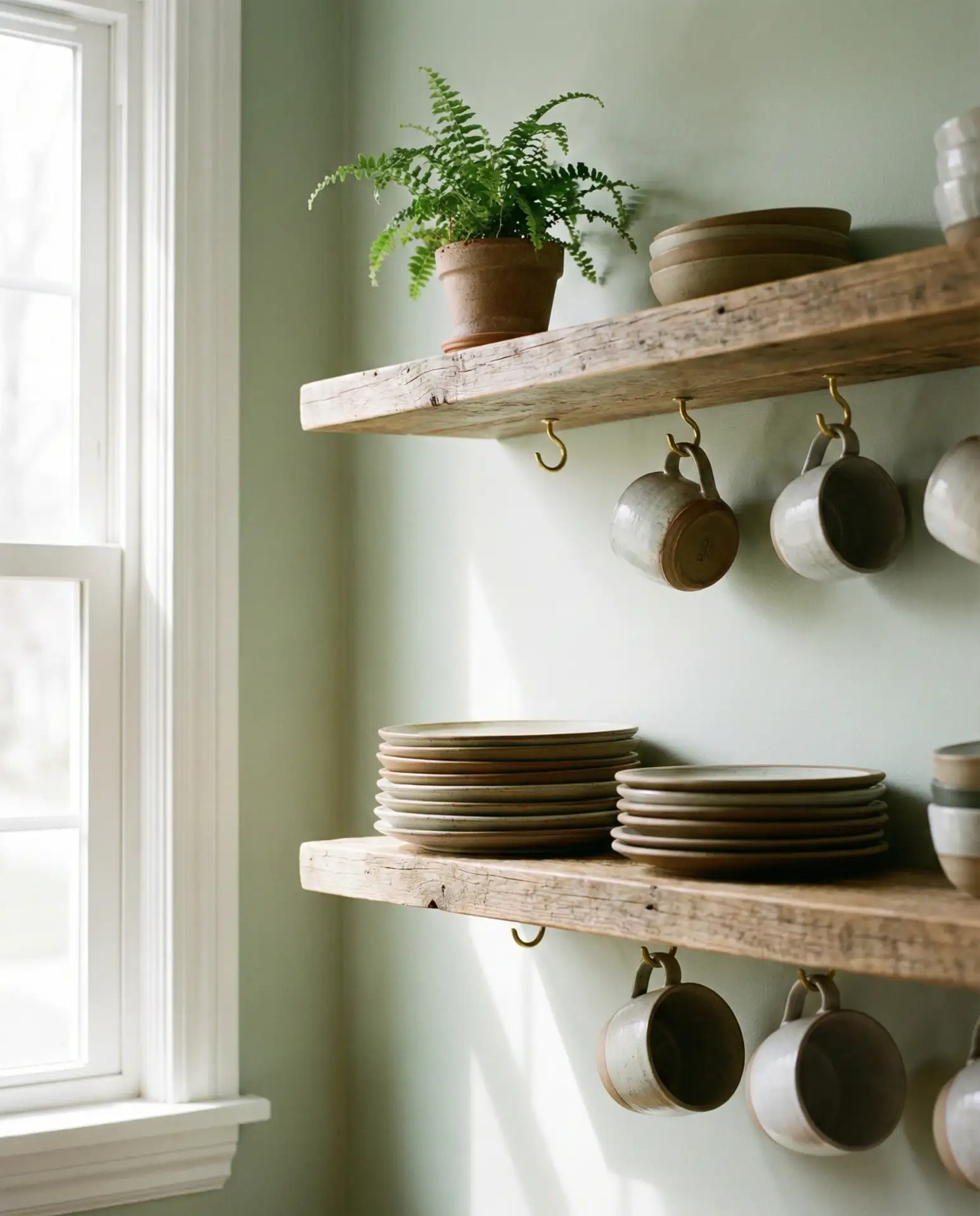
Kitchen design is moving faster than ever, and 2026 rocks all-new layouts that speak to flexibility, efficiency, and style. American homeowners are flocking to Pinterest not just for pretty countertops, but also for real-world answers tailored to how they actually cook, entertain, and live. Whether you are planning a full upgrade or just want to freshen up your cooking space, here are the latest ranges on display from coast to coast—in compact urban apartments and beachfront suburban homes from Manhattan to Malibu. Here are some ideas that reflect the full spectrum of what’s achievable this year.
1. Kitchen Layout Ideas with Island
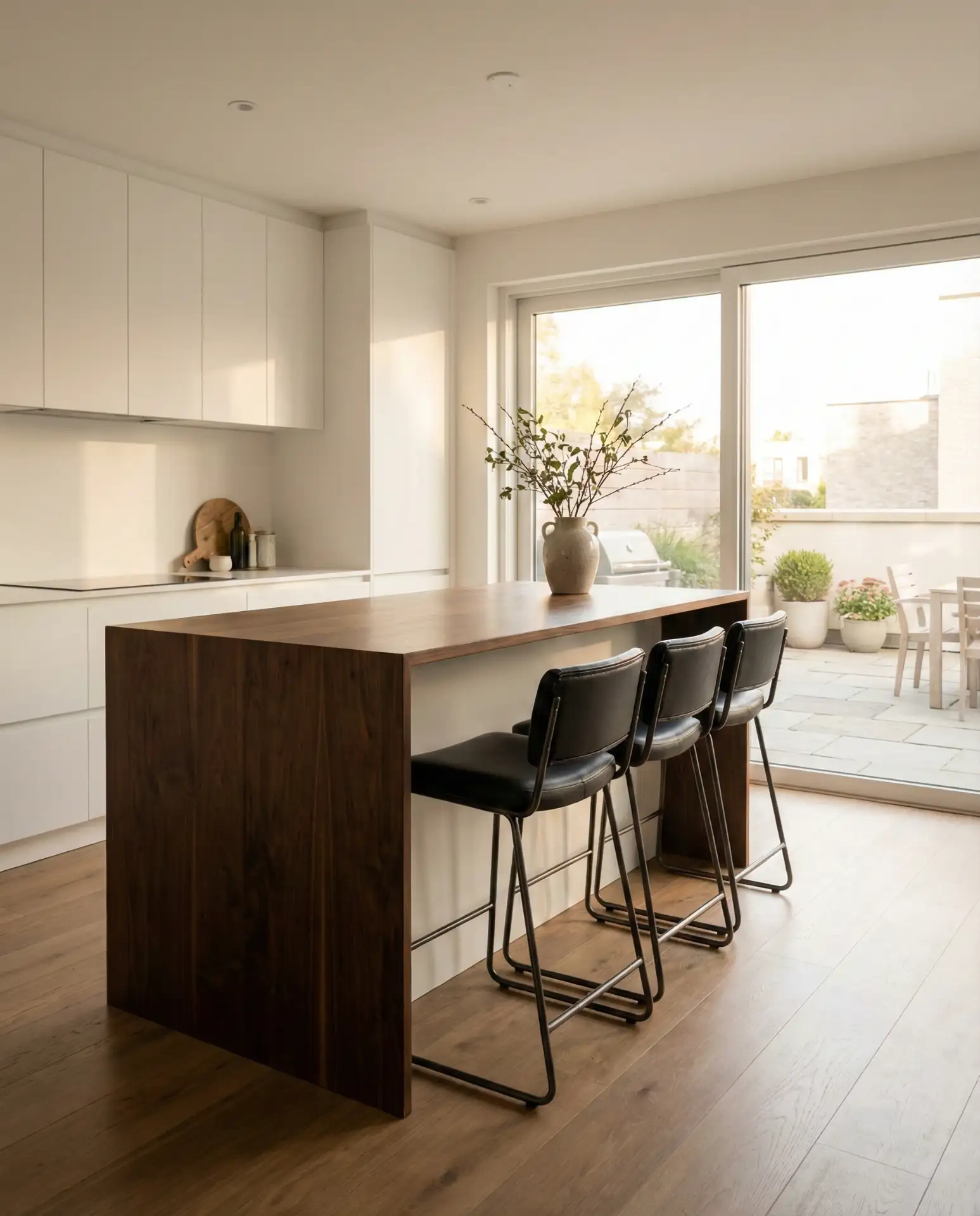
The island is the anchor of the contemporary American kitchen, providing a workspace, storage, and serving as a social hub. Kitchen layout ideas with islands are also similar to those used to create a new island and incorporate asymmetry and mixed elements in 2026—think butcher block paired with marble or concrete. No longer just a functional fixture, the kitchen island has become a chic workhorse, acting as a piece of furniture that can shine solo or create connectivity in an open floor plan. This arrangement is ideal for open living room plans when the kitchen opens up to other spaces. 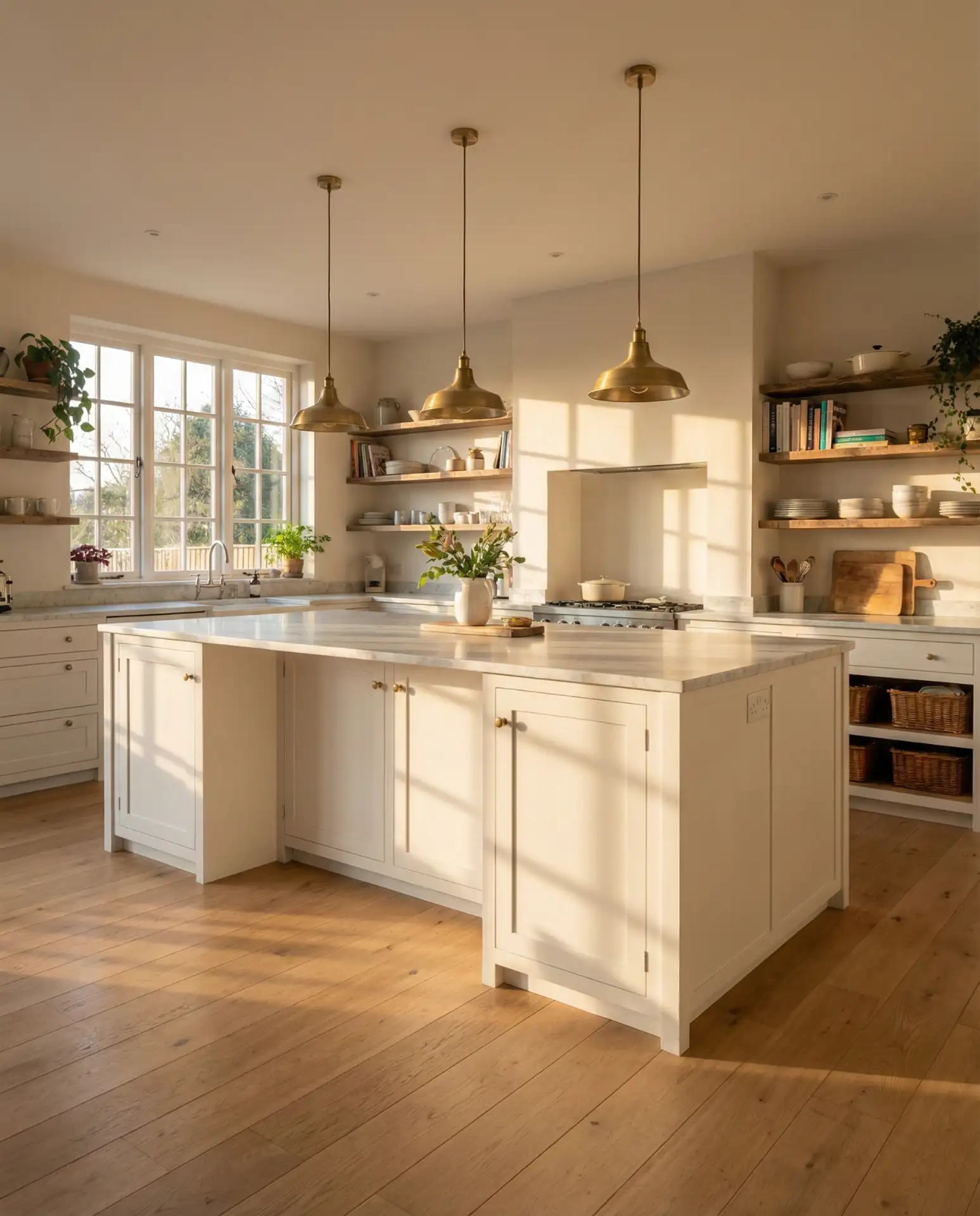
One common mistake is sizing the island too large for the room, which creates bottlenecks rather than flow. Aim for at least 42 inches of clearance on all working sides. If your kitchen is under 150 square feet, consider a narrow island or a mobile cart instead. The island should enhance movement, not obstruct it—especially in homes where multiple people cook at once or kids do homework while dinner prep happens.
2. Kitchen Layout Drawing for Planning
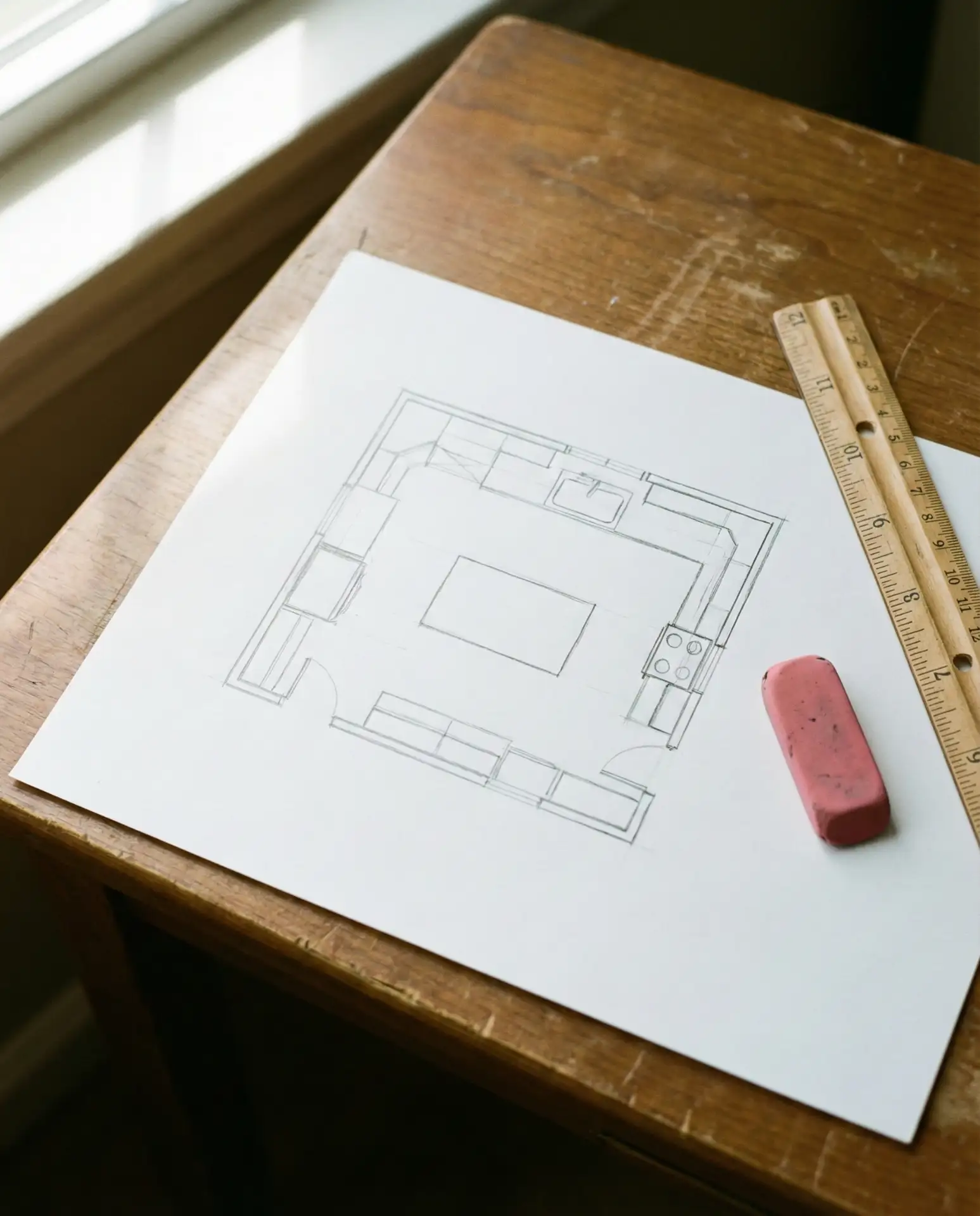
Before the first bonfire begins, a kitchen layout drawing is your blueprint for success. Homeowners are using digital tools and graph paper to plan appliance placement, traffic flow, and storage zones in 2026. A good drawing takes the work triangle—sink, stove, fridge—into account but also how you actually move throughout the space. It is particularly handy if you need to work around immovable elements such as windows, doors, or structural beams. 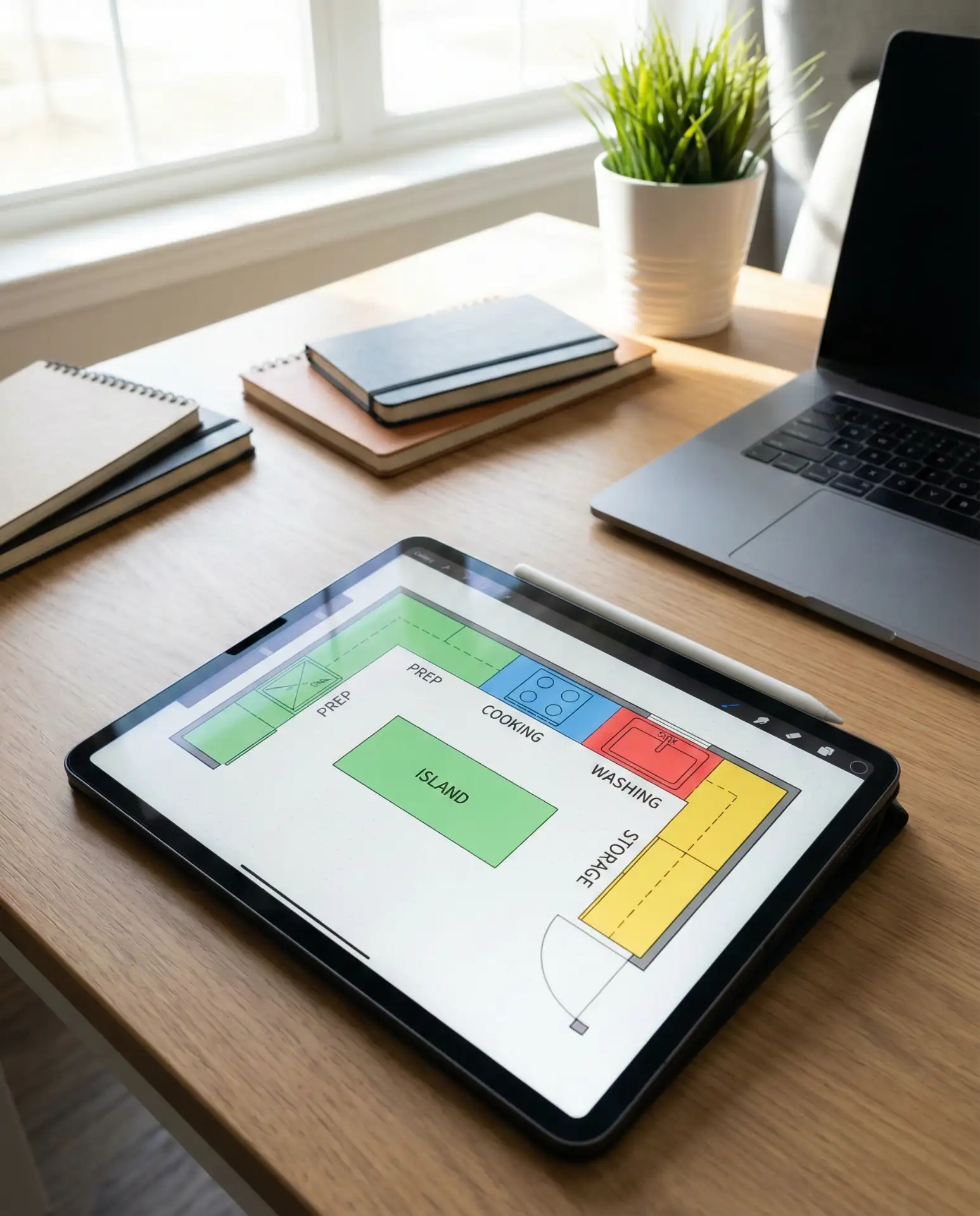
Where it works best: Homes with atypical measurements or multipurpose spaces. A thorough sketch can help you catch issues before they turn into costly problems. It’s a communication tool, too—contractors, designers, and family members can all look and weigh in on the vision. A lot of homeowners print their drawings at scale and then tape them to the floor to experience spatial relationships so they don’t need cabinetry.
3. Long Kitchen Layout for Narrow Spaces
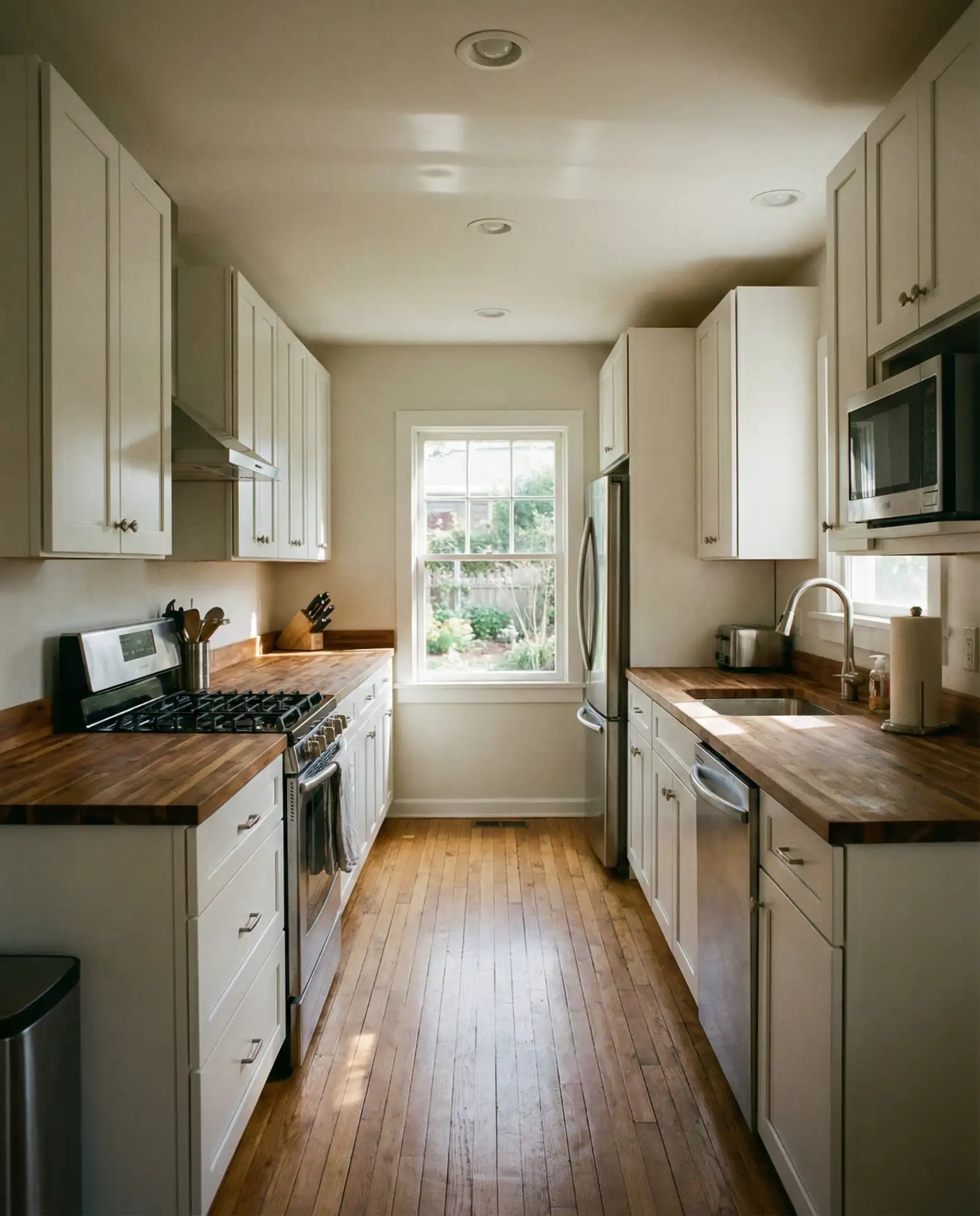
A long or galley-style kitchen maximizes every inch of a narrow footprint. This shape is common in older urban homes and row houses where width is limited but length is generous. The key is creating distinct zones—prep at one end, cooking in the middle, cleanup at the far side—so the layout feels purposeful rather than cramped. Many 2026 designs add a small peninsula or breakfast bar at the terminus to soften the corridor effect. 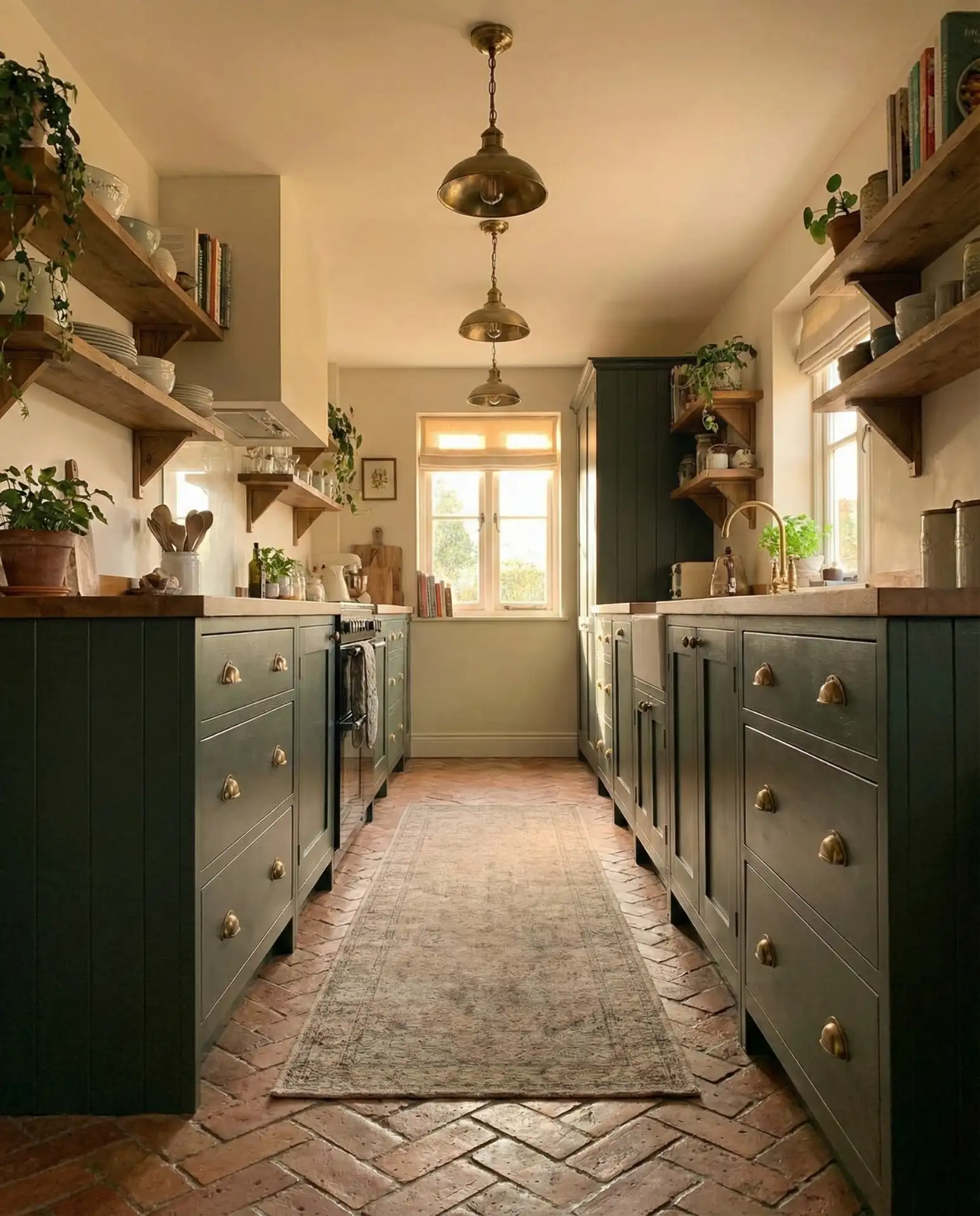
Practical insight: keep upper cabinets shallow—around 12 inches—to prevent the space from feeling tunnel-like. Use reflective surfaces like glossy tile or mirrored backsplashes to bounce light around. If the kitchen opens to a dining area or living room, consider removing the door or widening the opening to visually expand the space. Long kitchens thrive when there’s a clear sight line from end to end.
4. Kitchen Layout with Double Oven
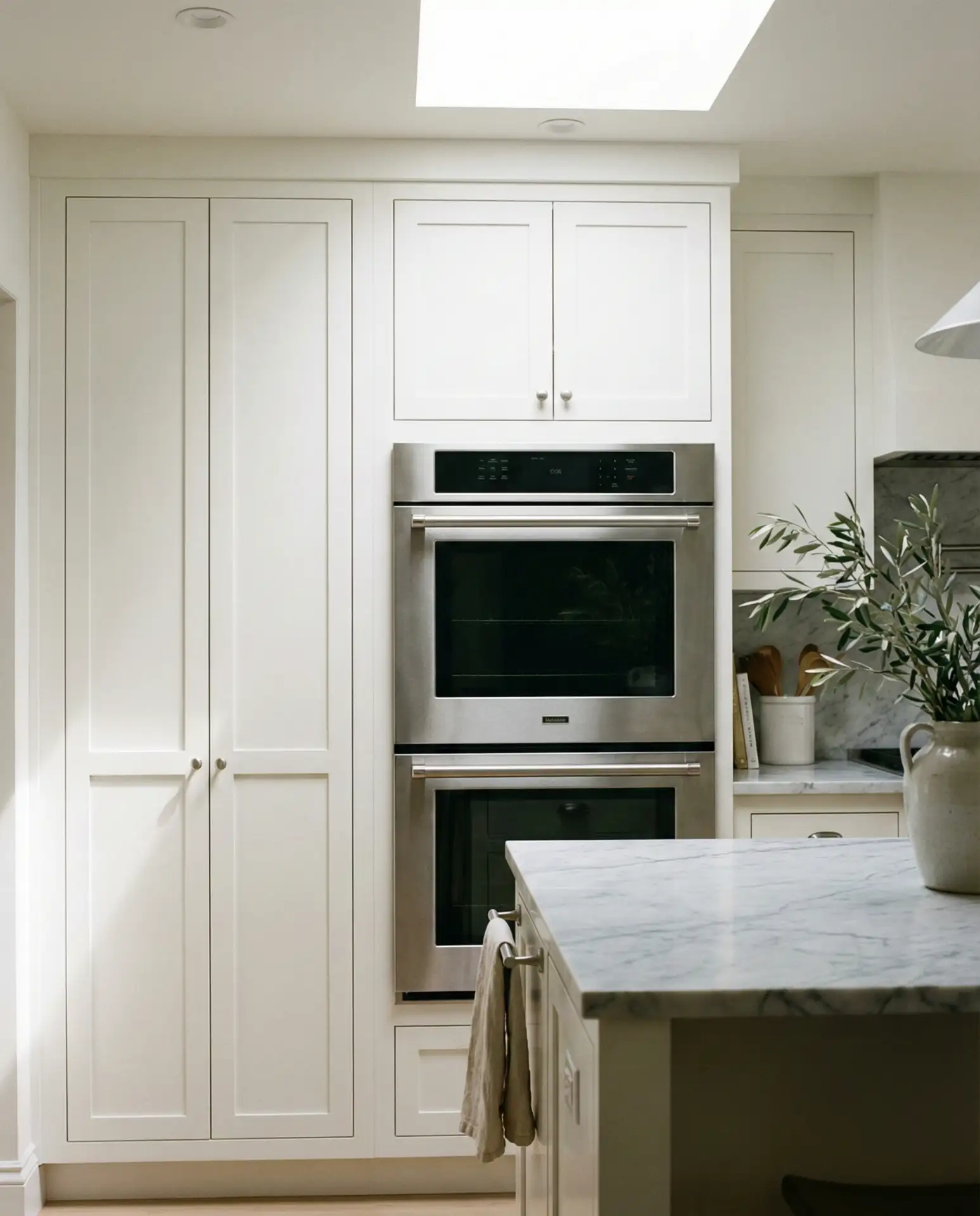
A double oven is a game changer for serious cooks at home. In 2026, these are frequently installed as wall oven units instead, allowing the range to be used for a (possibly new) cooktop and making that area more ergonomic. The design usually has the double oven in a bank of tall cabinets, with pantry storage or a microwave on either side. This configuration is very common in open living rooms where the kitchen is visible and you want your appliances to match. 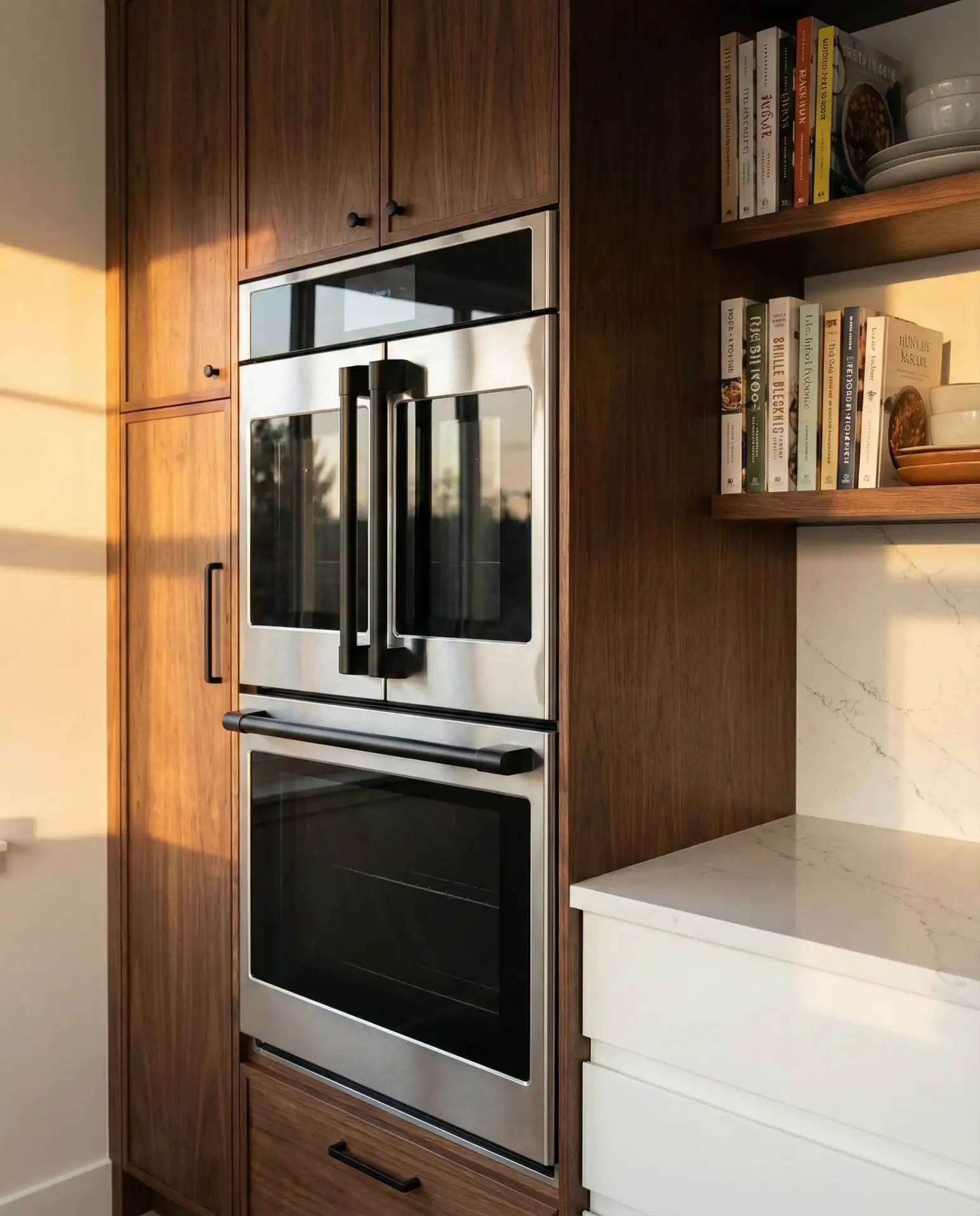
In the South and Midwest, where large family gatherings are routine, the double oven is practically standard. It allows you to bake a pie and roast a turkey simultaneously without juggling temperatures. But it’s not just for holidays—busy weeknight cooks use one oven for reheating while the other roasts vegetables or bakes chicken. Just make sure your electrical panel can handle the load; many double ovens require a 240-volt circuit.
5. Small Bakery-Inspired Kitchen Layout
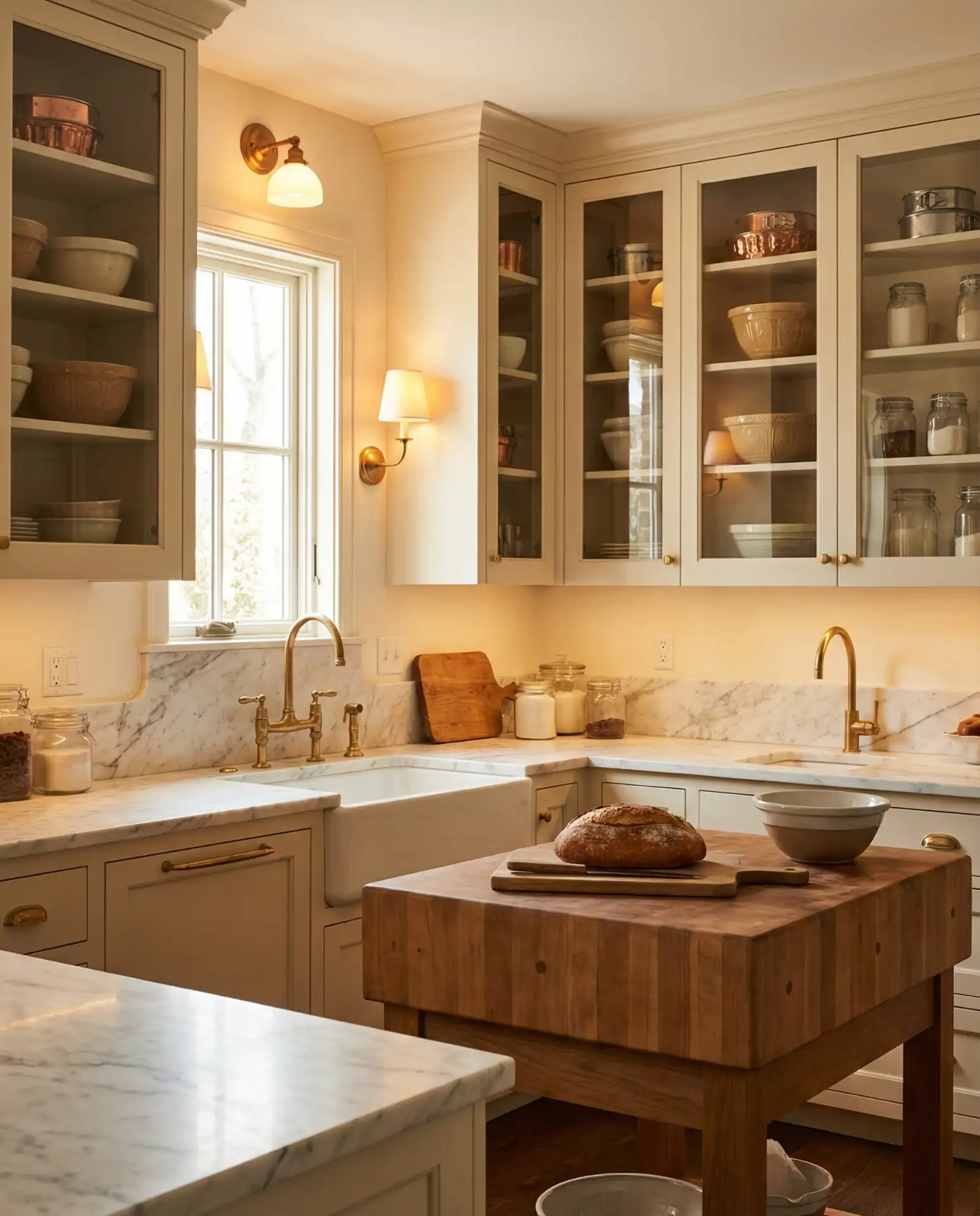
The small bakery aesthetic brings commercial charm into residential spaces, with open shelving, stainless steel prep tables, and industrial lighting. This layout prioritizes function over form, with everything within arm’s reach and surfaces that can withstand heavy use. It’s ideal for home bakers who need counter space for rolling dough, proofing bread, or assembling pastries. Many 2026 versions incorporate a mix of vintage and modern elements—think subway tile paired with matte black fixtures. 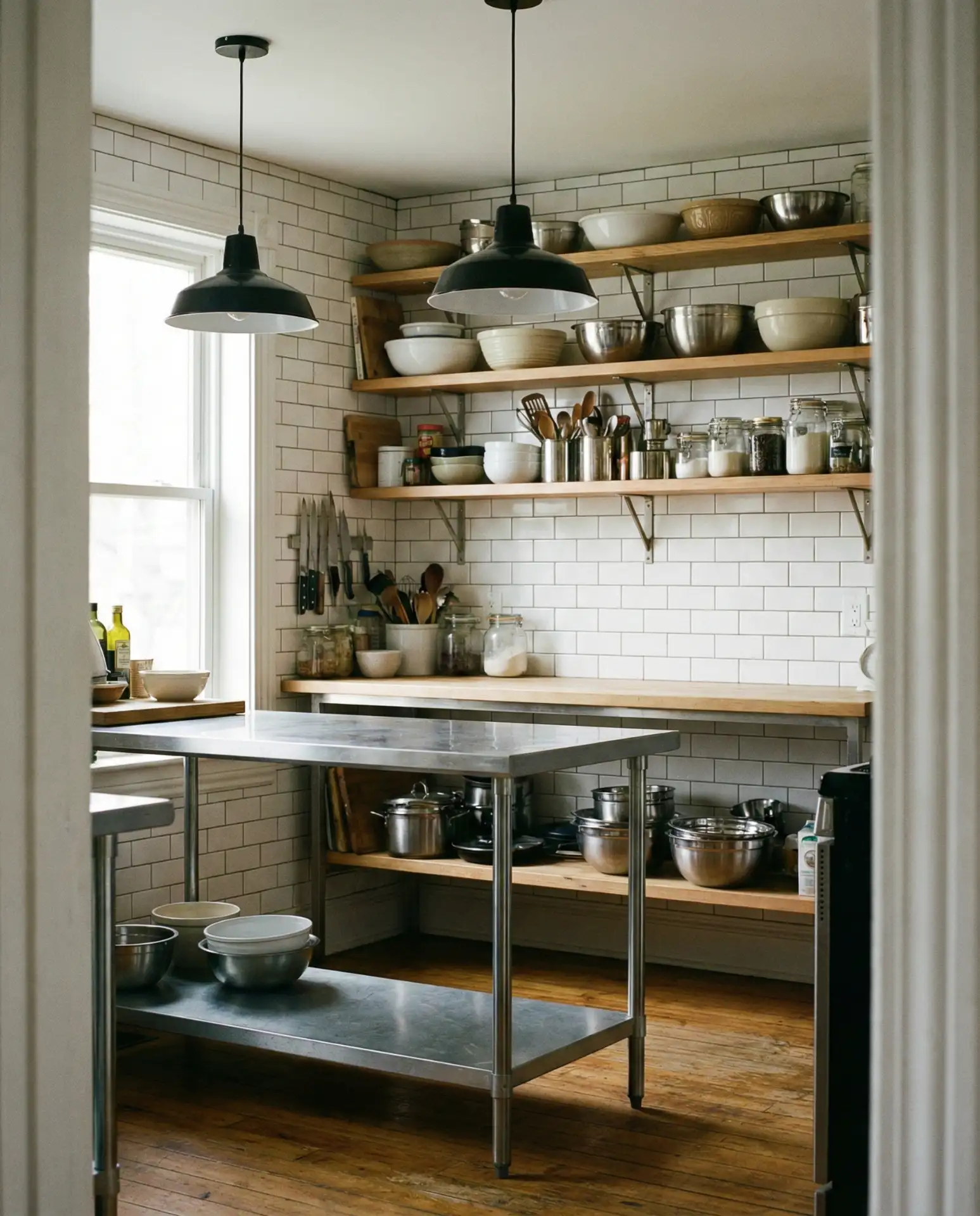
A friend who runs a cottage bakery out of her home says this setup is the best thing that ever happened to her. She has flour, sugar, and yeast in labeled glass jars on open shelves, and her stand mixer lives permanently on the counter. It feels like the wasted motion has been designed out of everything: you can see and reach everything. If you’re drawn to this look, it’s the perfect time to buy hardy surfaces that can withstand daily use and regular cleaning—think stainless steel or butcher block.
6. Single Wall Kitchen Layout
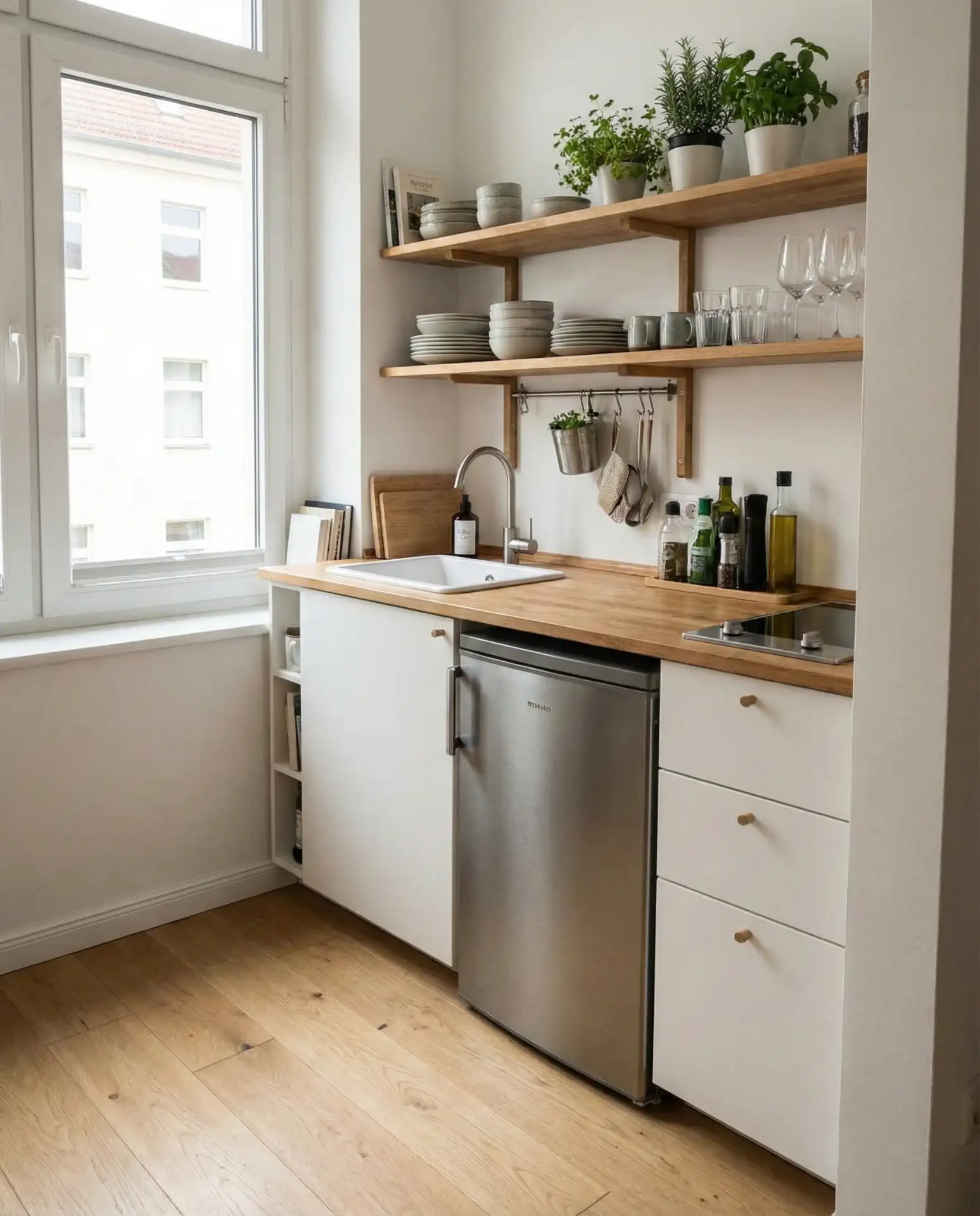
The single-wall layout fits everything along one straight run of cabinetry, making it the most space-efficient option for tiny house living, studio apartments, or basement kitchenettes. In 2026, designers are adding depth with layered storage—upper cabinets, lower drawers, and even pegboards or magnetic strips for utensils. This linear approach keeps the footprint minimal while still accommodating a sink, cooktop, and under-counter fridge. 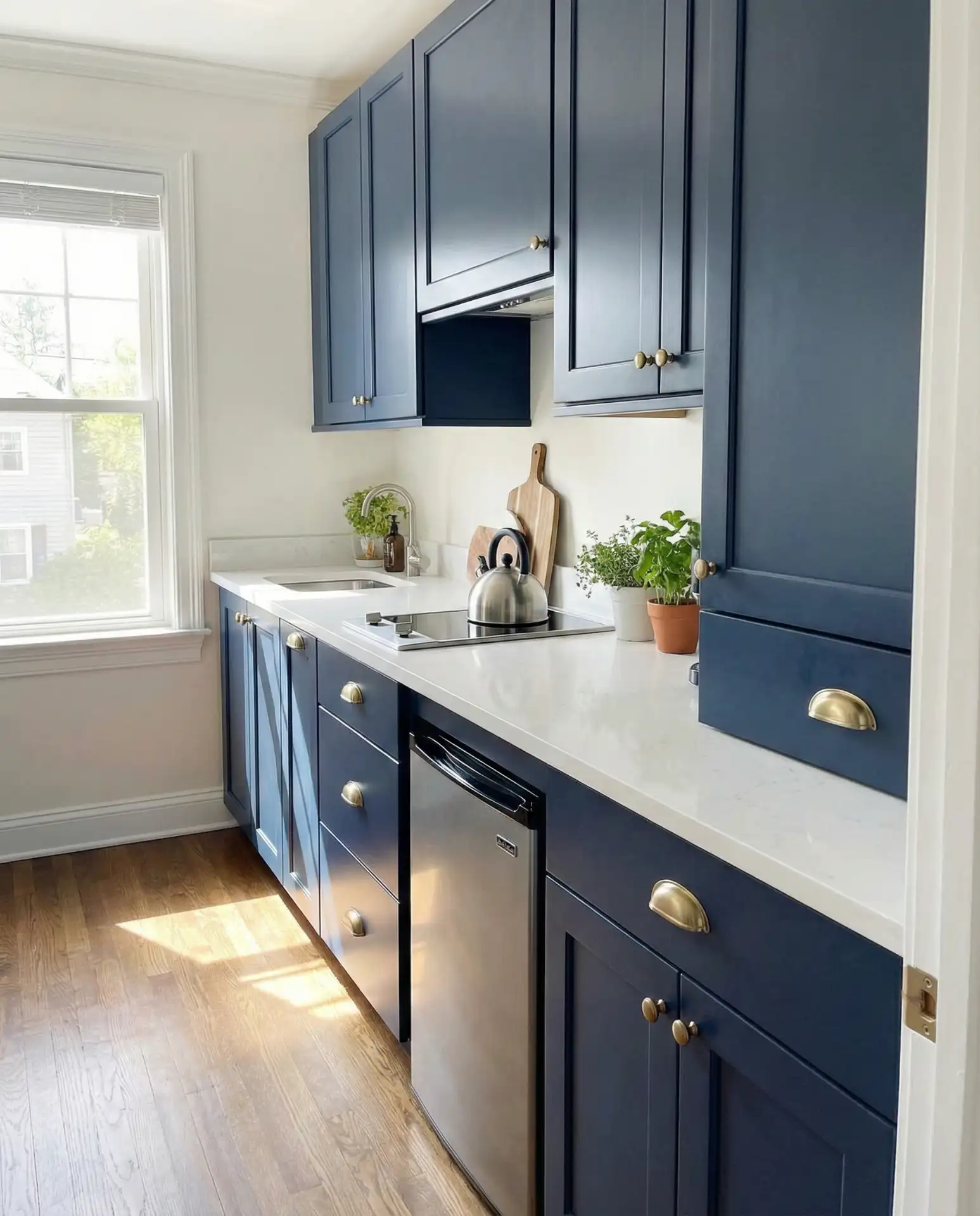
Expert-style commentary: the single wall works best when there’s no through traffic. If people are constantly walking past, the cook feels exposed and the layout becomes inefficient. To compensate, use a kitchen cart or small island on casters for extra prep space. And don’t underestimate the power of good lighting—under-cabinet LEDs make a single wall feel brighter and more functional, especially in windowless spaces.
7. Kitchen Layout Shapes That Work
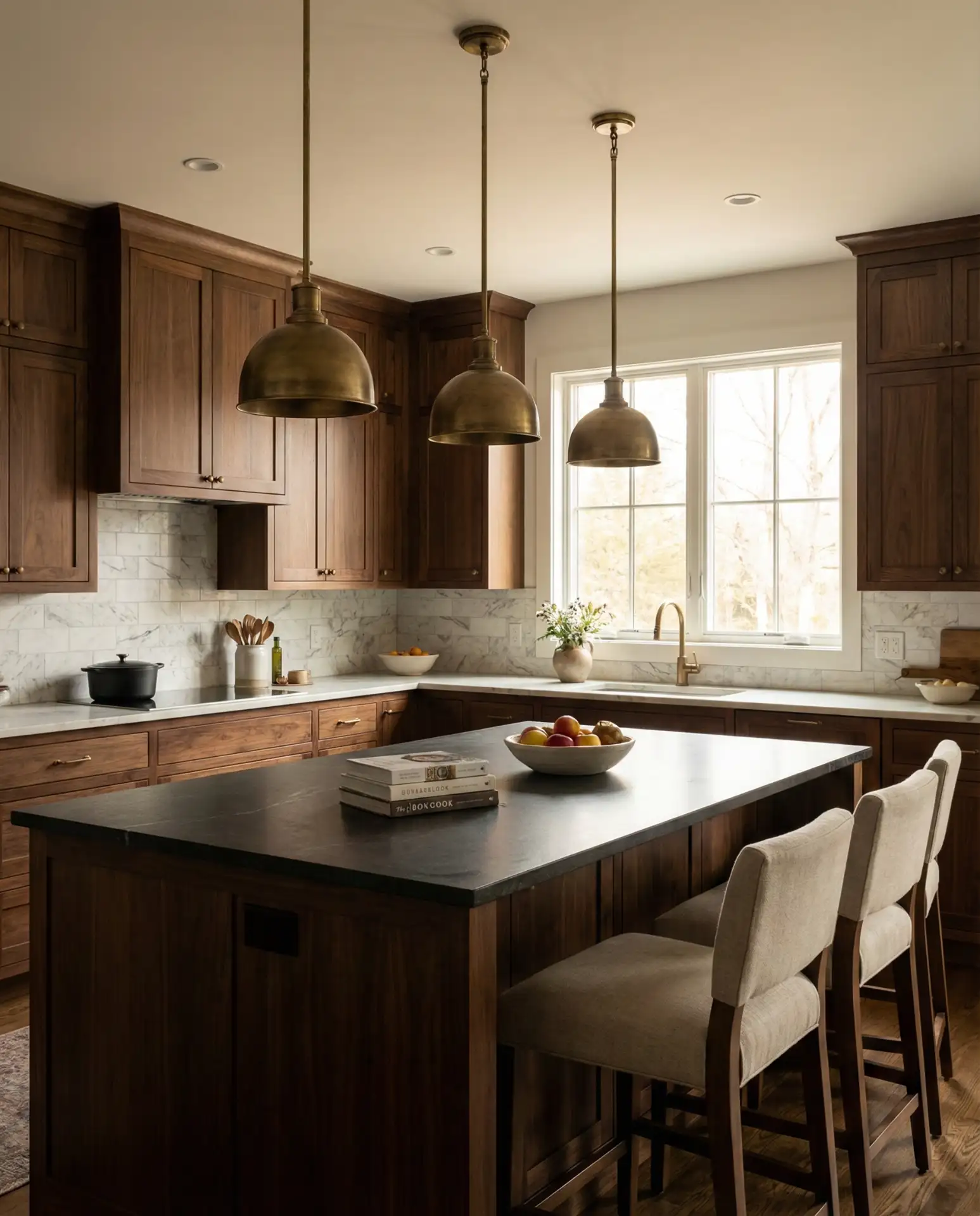
From L-shaped to U-shaped—shape dictates flow and efficiency. The 12 most popular kitchen architecture shapes for 2026 overall are the classic L (ideal for corners), U (which ensures storage and counter space are maximized), and G (which incorporates a peninsula area to provide additional seating). Each style is good for different types of homes and cooking lifestyles. The L-shape, for example, is perfect in open-plan homes where the kitchen shares space with a dining or living area. 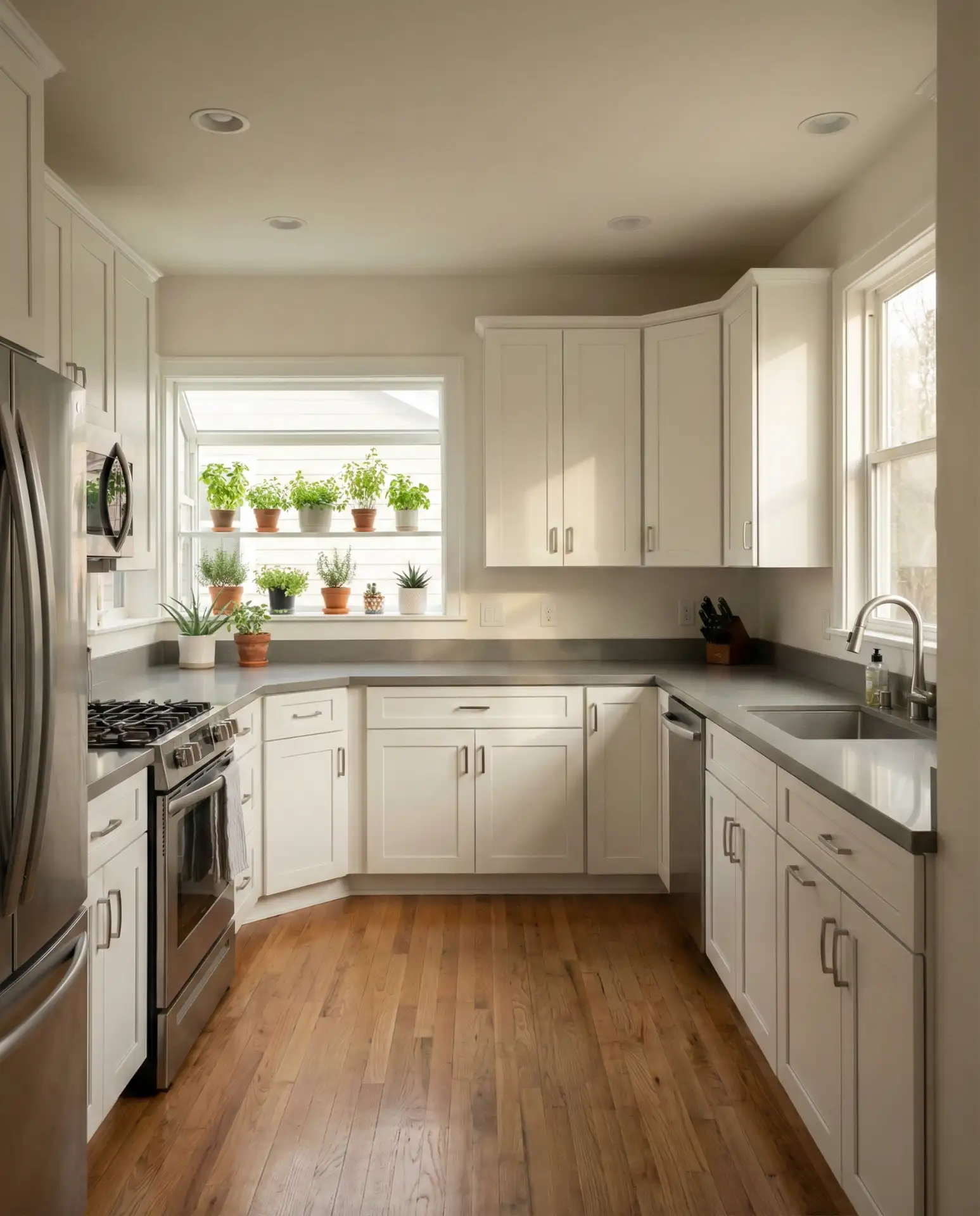
Budget-angle L-shaped kitchens are often the cheapest to build because they require less cabinetry and millwork. U-shaped floor plans are more pricey, but you get a lot more counter and storage space. If you’re on a tight budget, keep shapes uncomplicated and consider spending more for better materials instead of intricate builds. Occasionally the smartest arrangement is clean and uncomplicated.
8. Small Galley Kitchen Layout
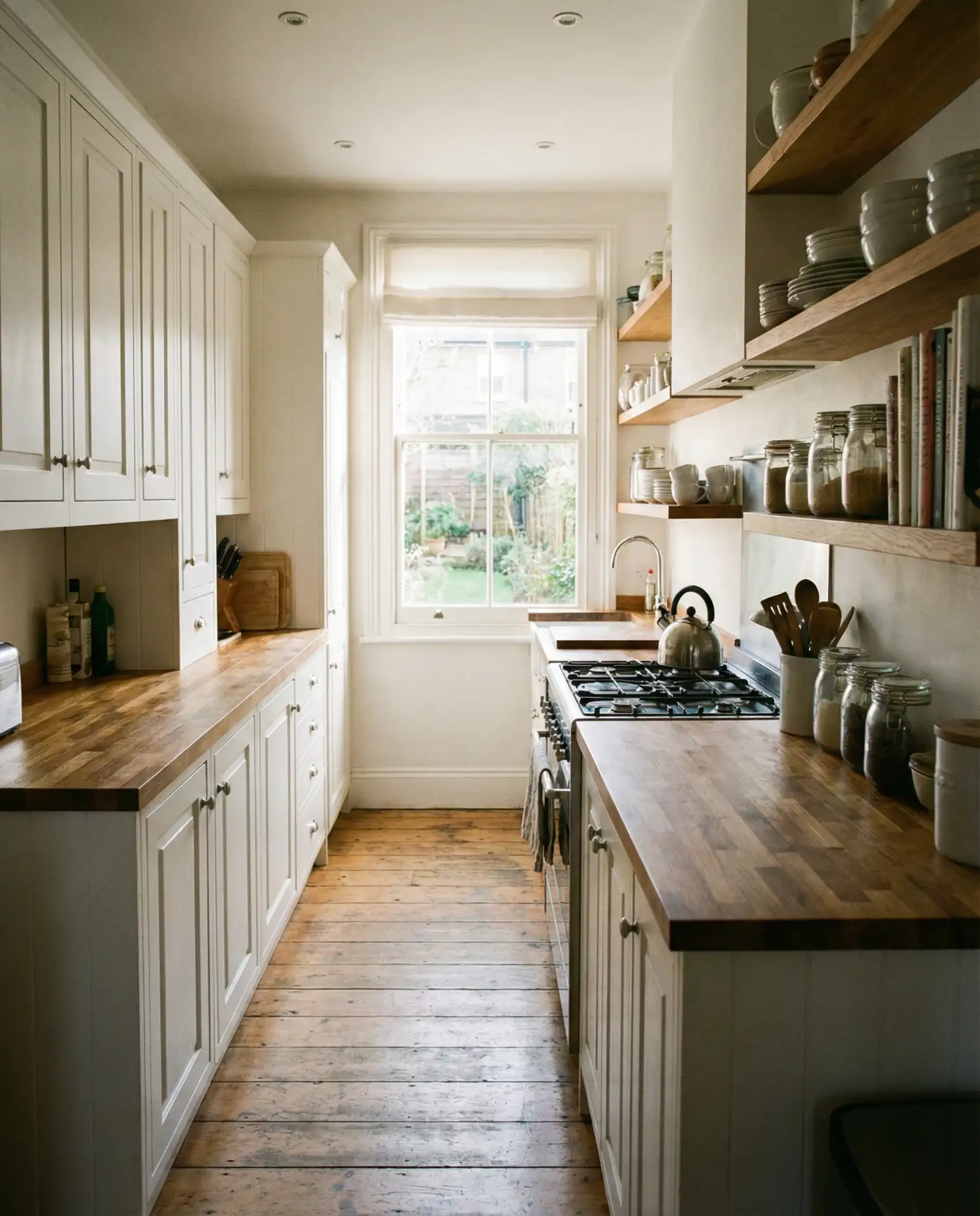
Small Galley The small galley is a hallmark of apartments and older home kitchens. Cabinets and appliances line two parallel walls, meaning everything is just a few steps away. In 2026, gallery-style kitchens are going lighter and airier with open shelving on one side, glass-front uppers, or even dropping all of the upper cabinets to give it a less closed-in feel. The trick is striking that balance between storage utility and visual breathing room, particularly in kitchens smaller than 80 square feet. 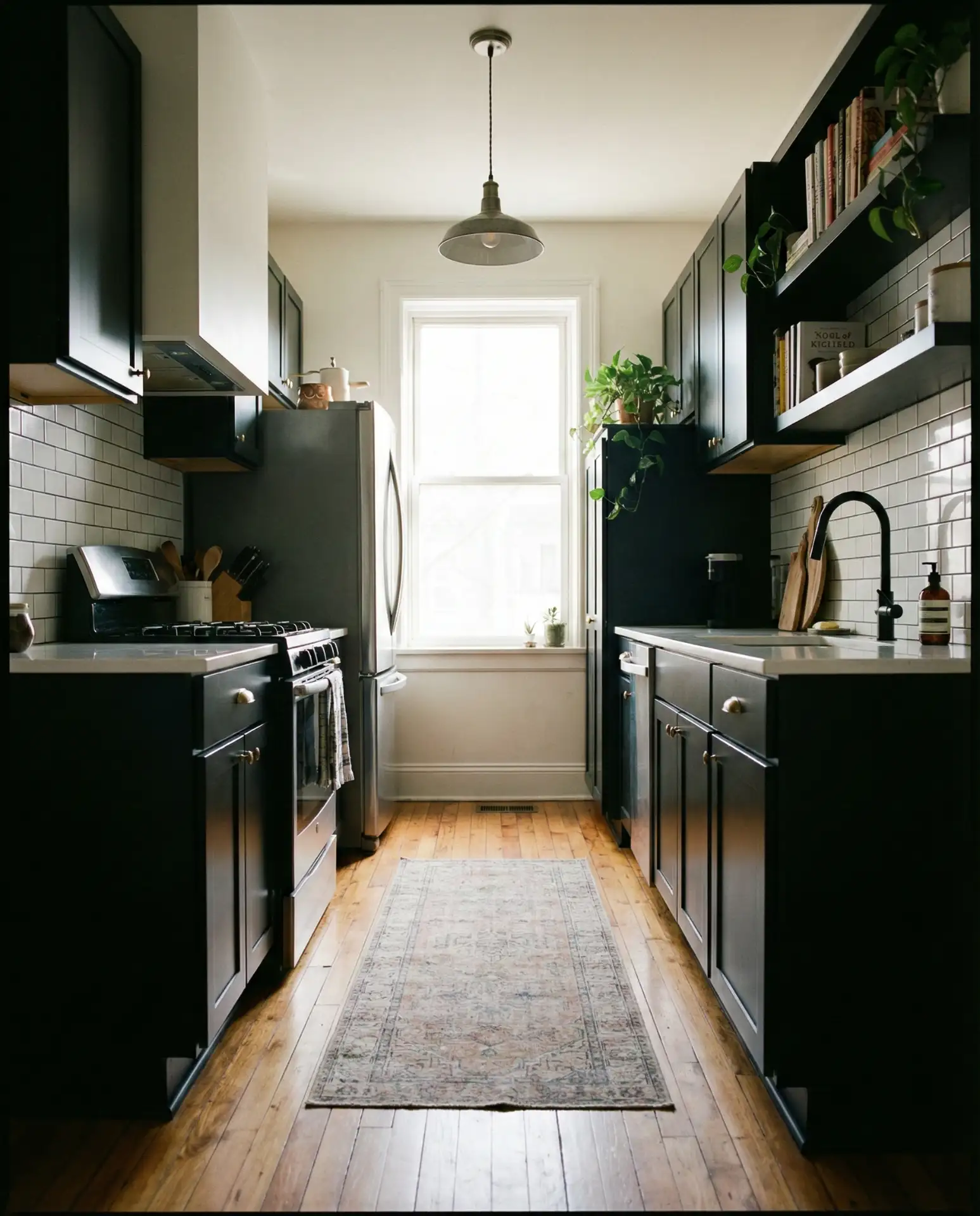
Real homeowner behavior: a lot of galley kitchen owners will take away a few cabinet doors and style the shelves above with some attractive dishware. It liberates the space and makes the most used things easy to pick up. Some, in fact, replace an entire wall of uppers with a pegboard system for pots and utensils. The galley requires discipline (counters should be kept clear, or the whole thing feels cluttered), but when cued up, it’s amazingly efficient.
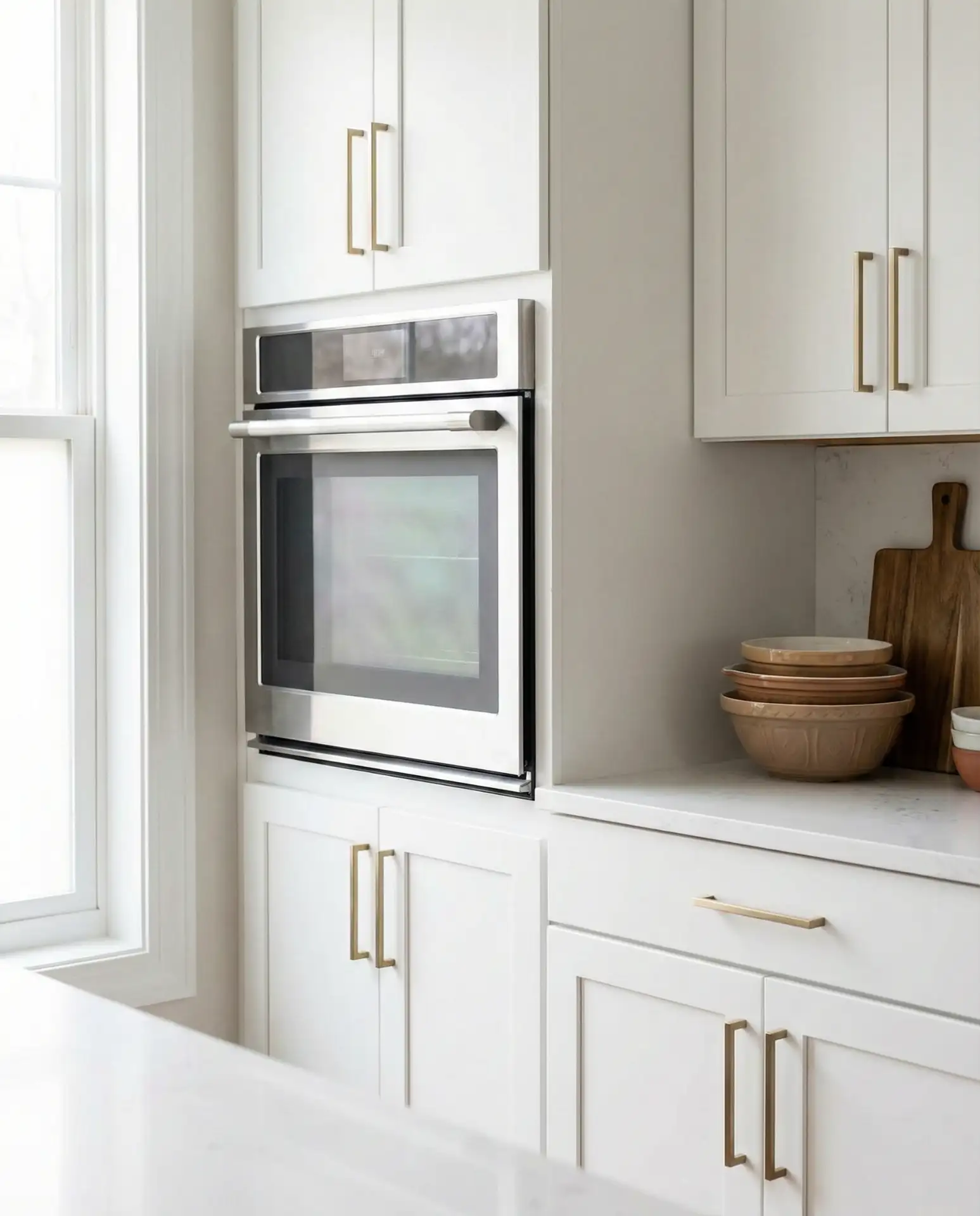
9. Kitchen Layout with Wall Oven
Who wouldn’t like to cook here with a little assistance from the coffee maker, above the refrigerator? Able to place it at eye level, so no more bending down or standing on toes to check roasts and baked items. Today: Wall oven configurations (which in 2026 typically pair the oven with a separate cooktop) provide two clearly defined zones—for baking and stovetop cooking. It’s a layout that works well in bigger kitchens with enough space to have an appliance wall on its own, supported by pantry cabinets or combined with a double oven stack. 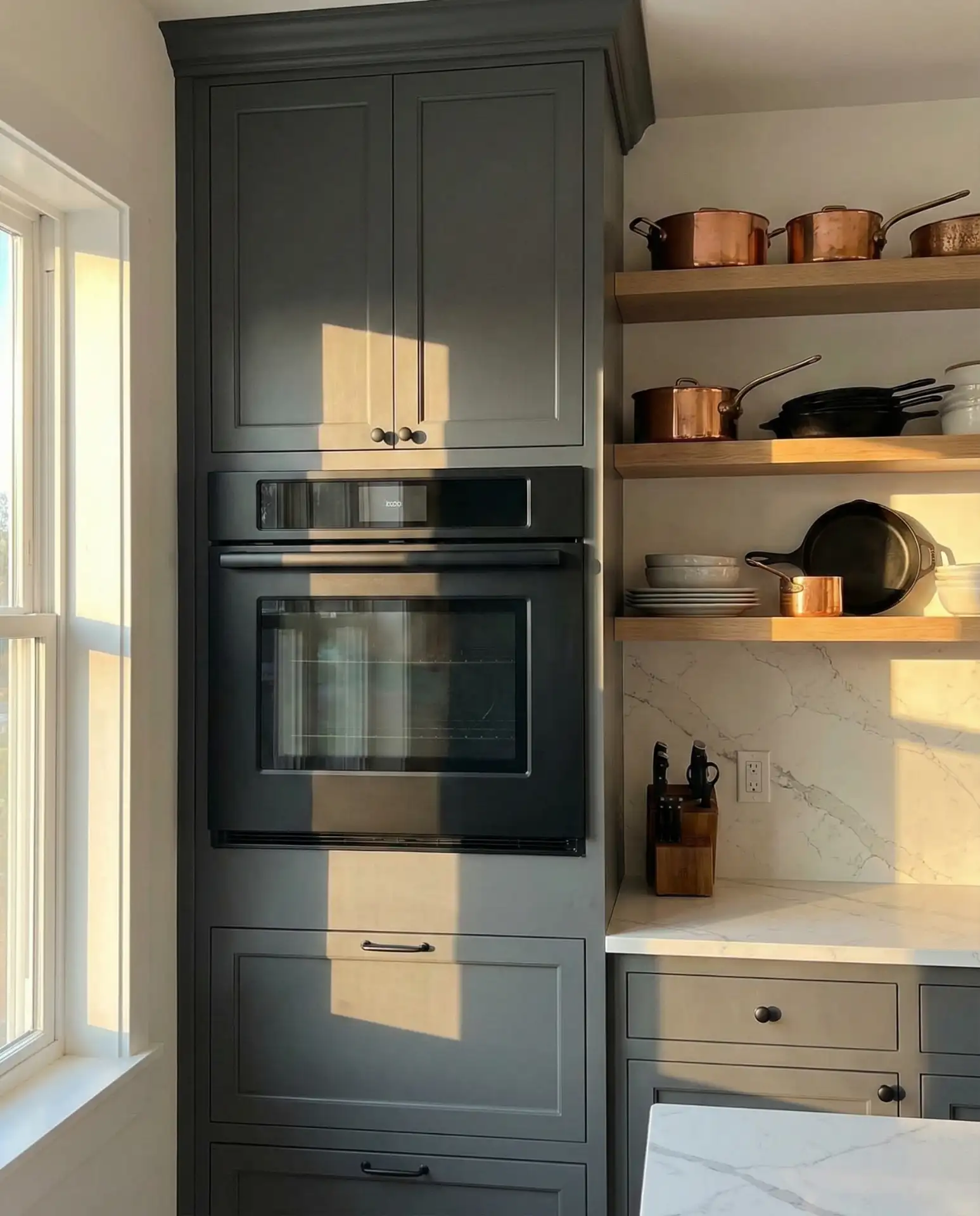
Where it works best: In kitchens with high ceilings and plenty of wall space. The wall oven is also an intelligent option if you are planning on aging in place, as it minimizes back and knee strain. If you’re retrofitting an existing kitchen, ensure the size of your cabinets aligns with the oven’s dimensions. There’s not much wiggle room here compared to gas or electric ranges. And think about ventilation; some wall ovens will need an independent vent or hood system.
10. Kitchen Layout with Corner Sink
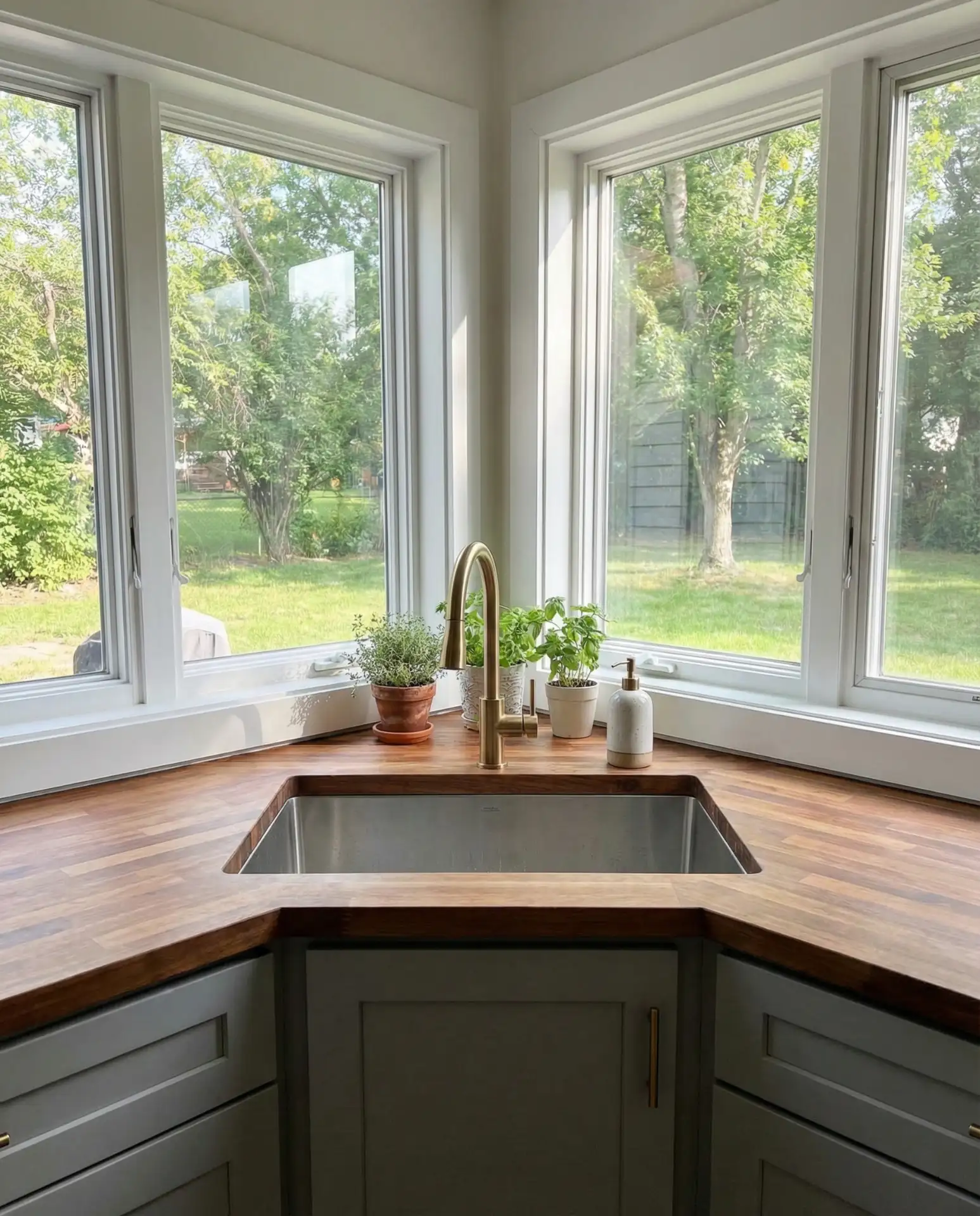
Good Use Of A Corner Sink: Corners can be intimidating and a little taboo due to that whole “unsolvable issue when it comes to decorating” thing. In 2026, this design is proving most popular within L-shaped kitchens—the corner instantly becomes a focal point. Centering the sink here frees up valuable counter space elsewhere and—with two windows, one behind each wall—often includes a view. Combine one with a corner cabinet solution (either a lazy Susan or pull-out drawers and the like) to make better use of storage space in the deep, hard-to-reach area down there. 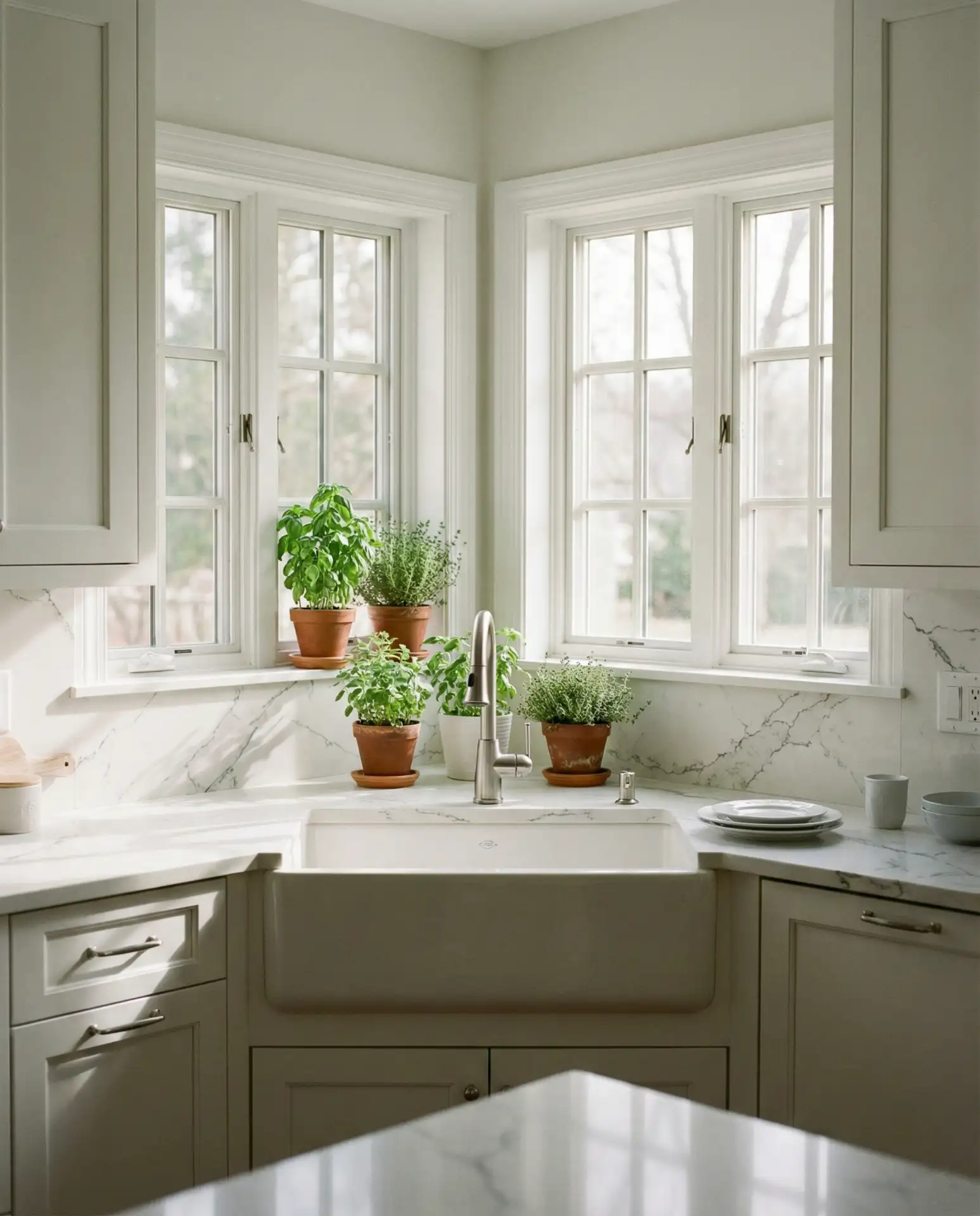
\u003cp\u003e One commonly neglected thing is the clearance that faucets require. In a corner sink, a faucet that pivots or reaches is important unless you plan to have difficulty filling large pots. And don’t make that corner too sharp—if the sink is at a 90-degree angle, it’s going to feel tight. Angling them a tad or even setting them diagonal can work better, providing you with elbow room on both sides and less of an awkward cleansing clean.
11. Kitchen Layout for Canning and Preserving
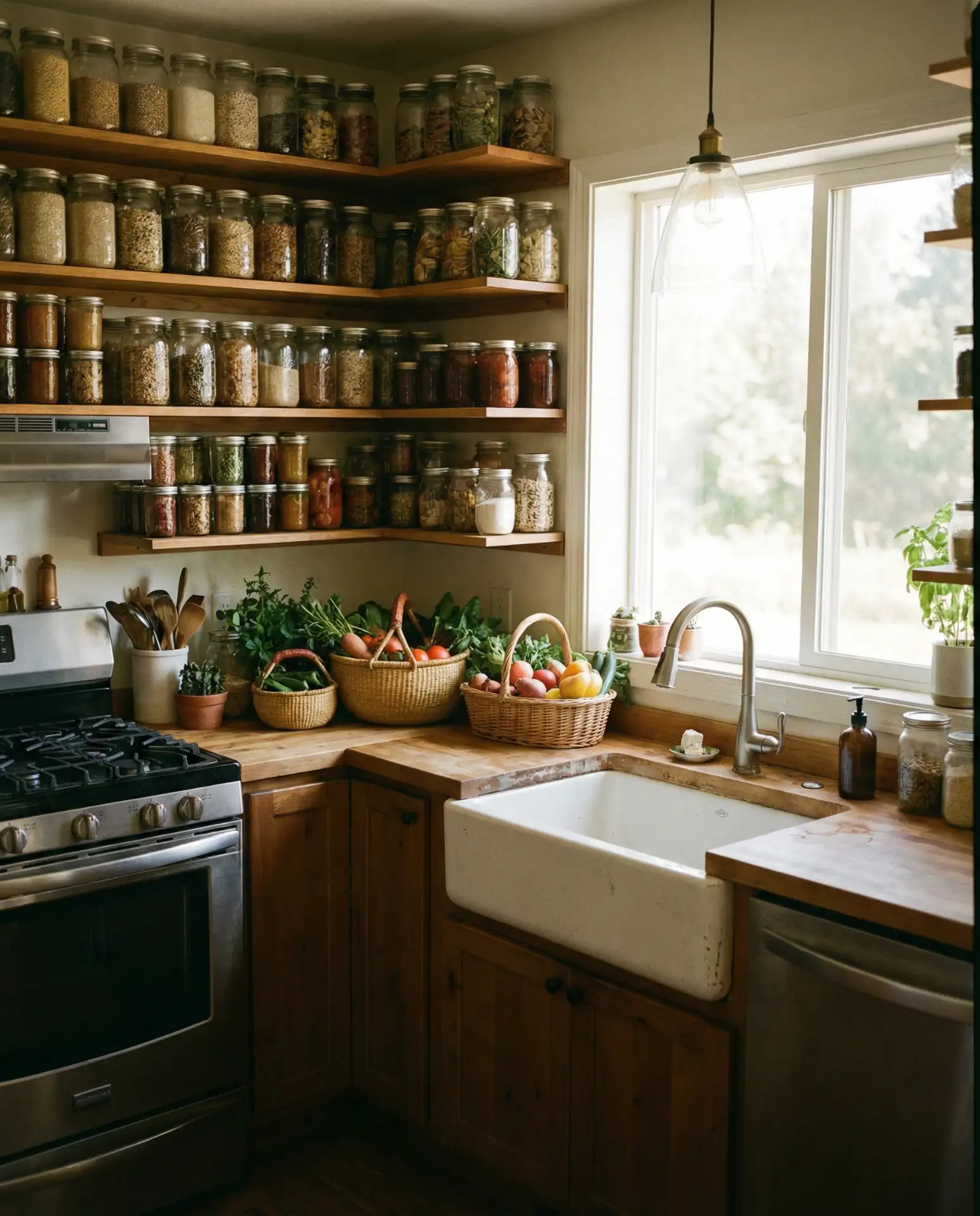
Home canning is experiencing a resurgence, and the kitchen layout needs to support the process. This means ample counter space for processing jars, a large sink for washing produce, and storage for canning equipment and pantry staples. In 2026, dedicated canning kitchens often include a second prep sink, open shelving for jar storage, and a powerful gas range that can handle large stockpots. A walk-in corner pantry is ideal for storing finished preserves. 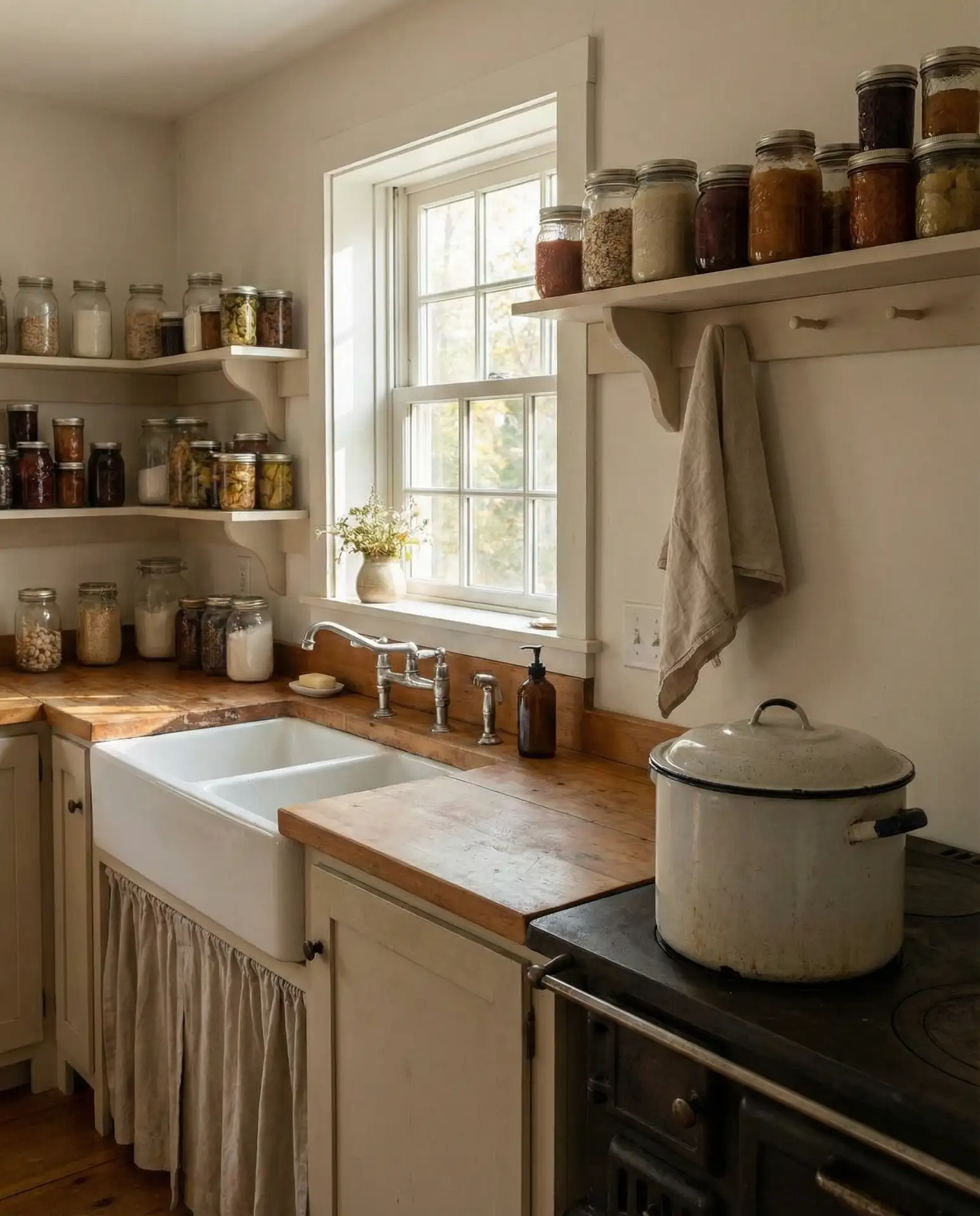
Pro Tip: If canning is a passion, set up a pot-filler faucet next to the stove. It takes away the necessity to carry heavy water-filled pots across the kitchen. Also, have a look at something like heat-resistant porcelain tile for flooring—canning is a rather messy process, and you’ll be glad you opted for a surface that cleans up easily and doesn’t stain. Most canners also want a cool kitchen, so good ventilation or a ceiling fan is essential.
12. Commercial Kitchen Layout at Home
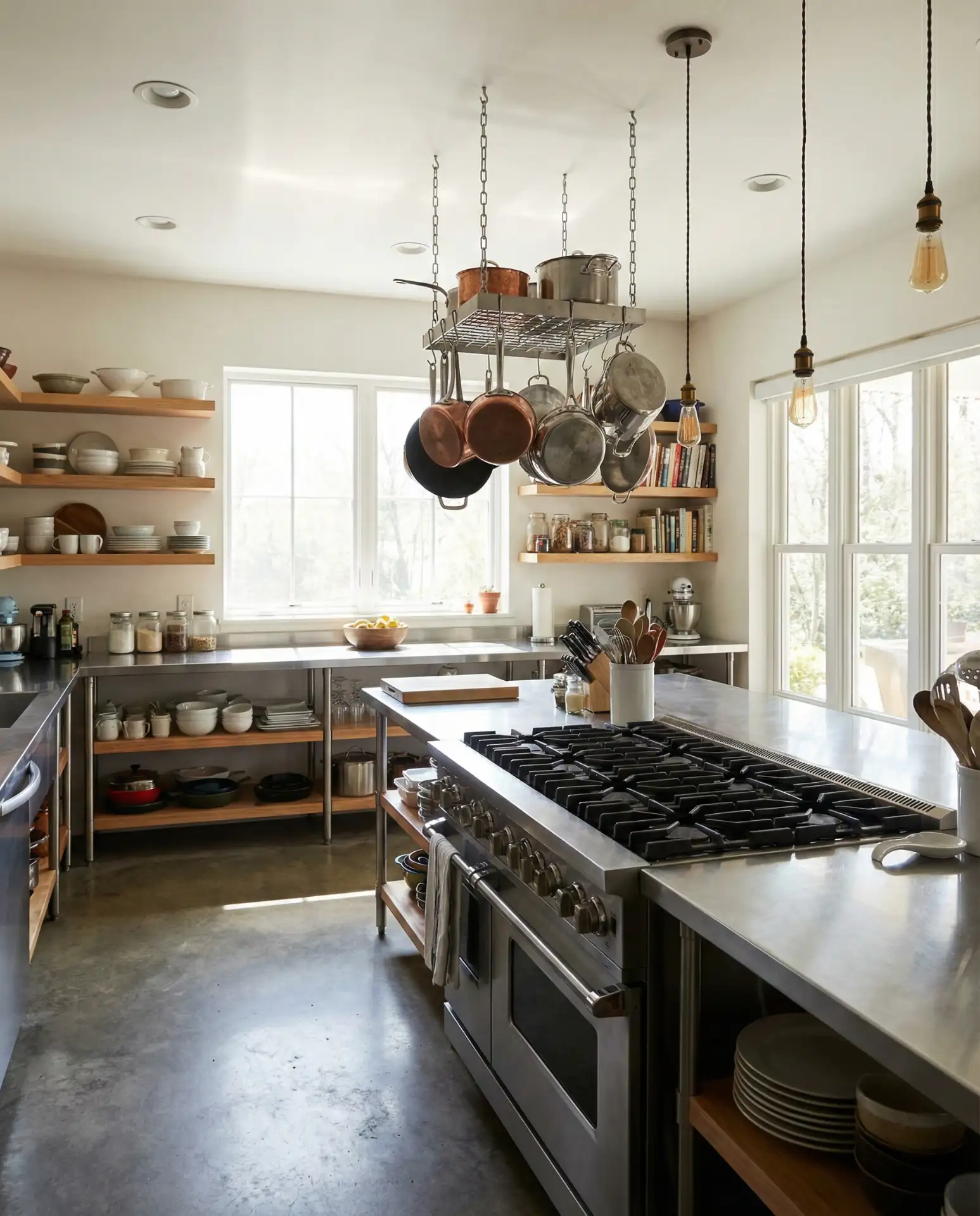
Bringing commercial kitchen efficiency into a residential space is a dream for many home chefs. Think stainless steel everywhere, professional-grade appliances, and modular workstations. In 2026, this restaurant-inspired layout includes features like a six-burner range, a walk-in cooler, and open shelving for quick access to cookware. It’s not just about aesthetics—commercial layouts are designed for speed and durability, with materials that can withstand constant use. 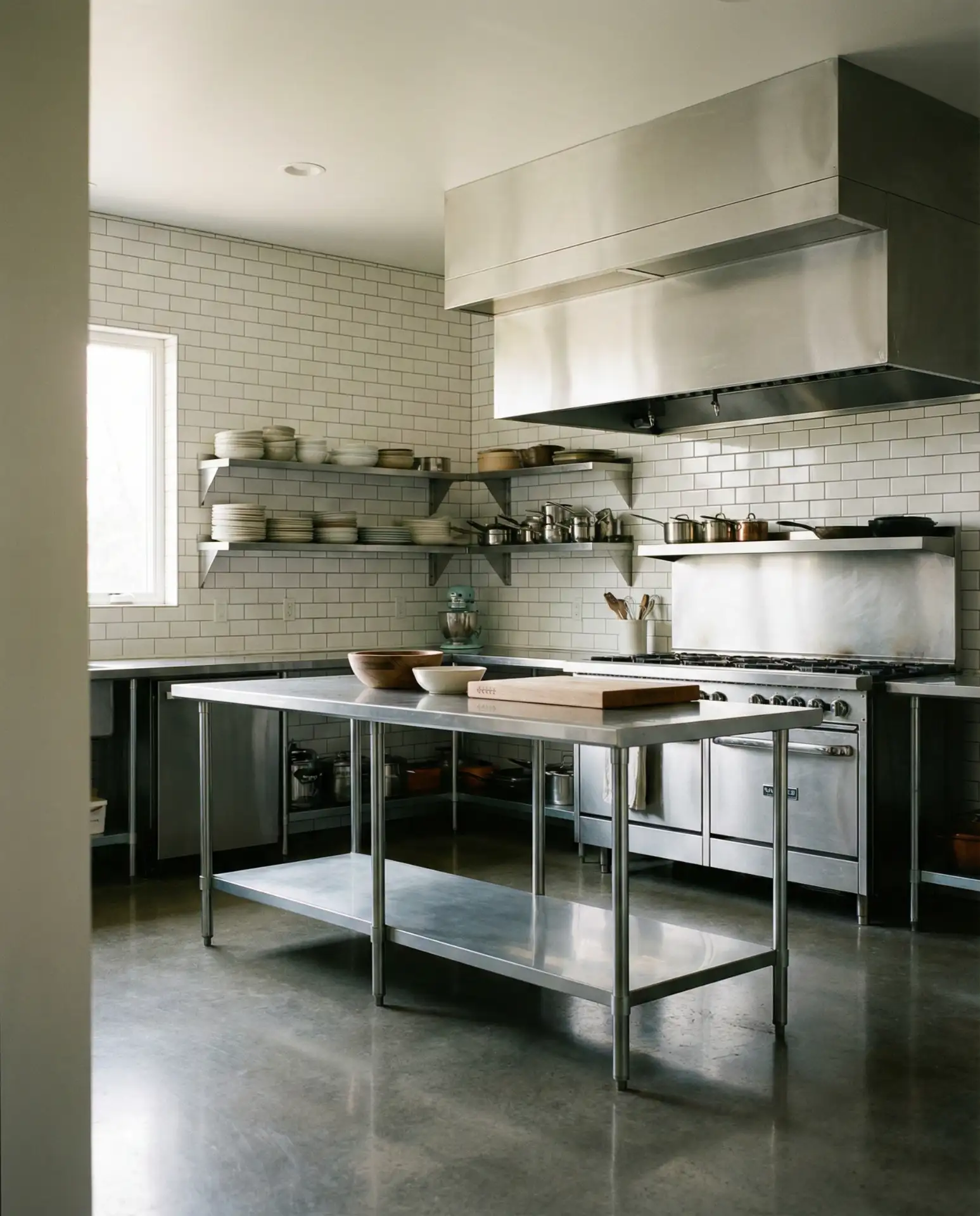
In areas like California and Texas, where food entrepreneurship is booming, homeowners are building commercial kitchens to support catering or cottage food businesses. But there’s a downside: commercial kitchens can feel cold and institutional without softening elements like wood accents or textured tile. Balance the steel with warmth, and make sure your local zoning allows for commercial activity at home if you’re planning to sell what you cook.
13. Kitchen Layout with Corner Stove
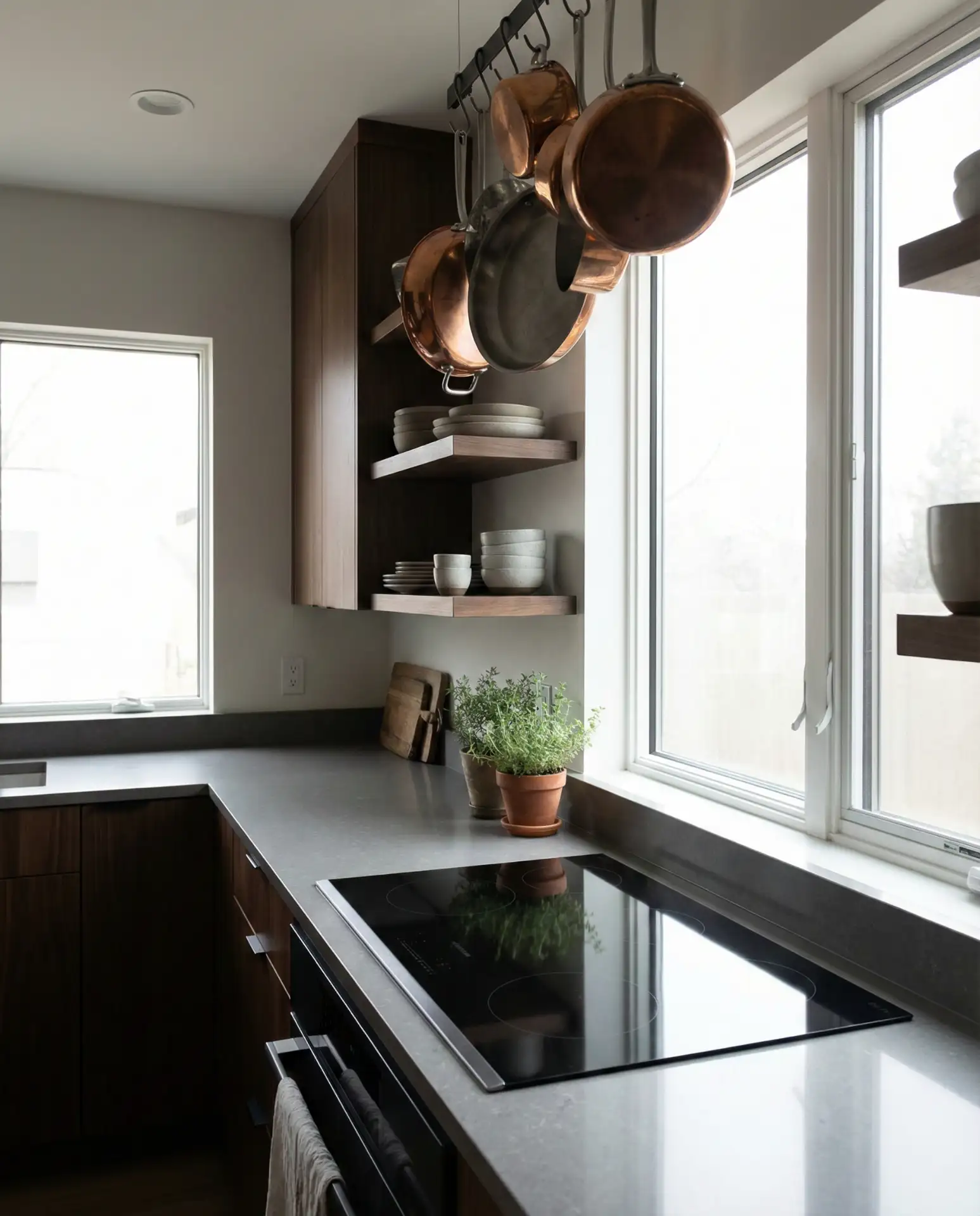
A corner stove is unconventional but increasingly popular in 2026 for its space-saving potential. This layout works in L-shaped or diagonal kitchen designs where the corner becomes a natural cooking hub. The key is ensuring adequate ventilation—corner installations often require a custom hood or downdraft system. When done right, a corner stove opens up adjacent walls for additional cabinetry or a wall oven, creating a more flexible overall layout. 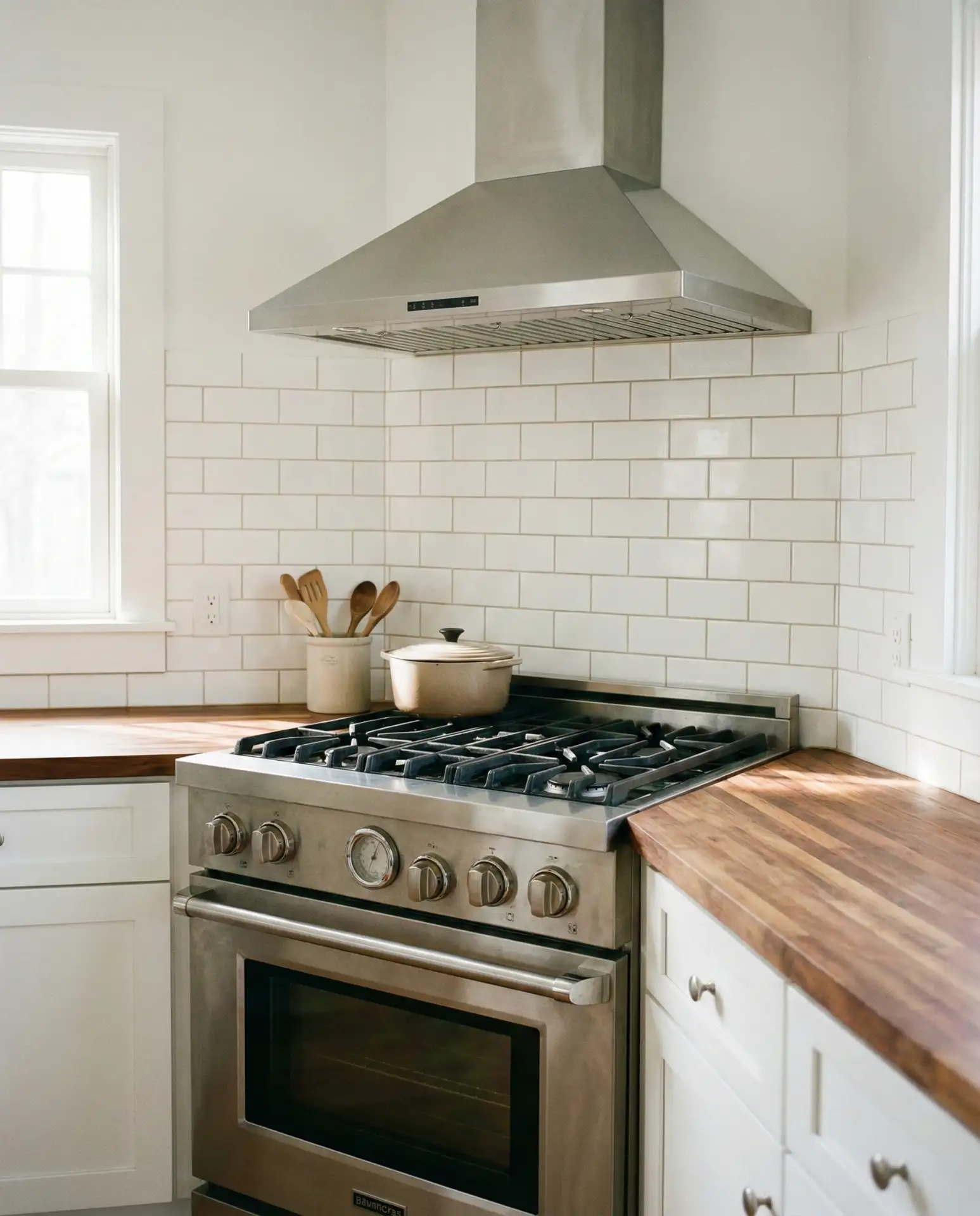
Real homeowner behavior: Some cooks love the corner stove because it turns them toward the room, not the wall, so they can watch kids or talk with guests. Others are less comfortable with it, especially if the corner is too tight. Before committing, think about the way you move when cooking—are you doing a lot of pivoting, or do you like to keep in a straight line? The ergonomics are also completely different with a corner stove.
14. Kitchen Layout with Corner Pantry
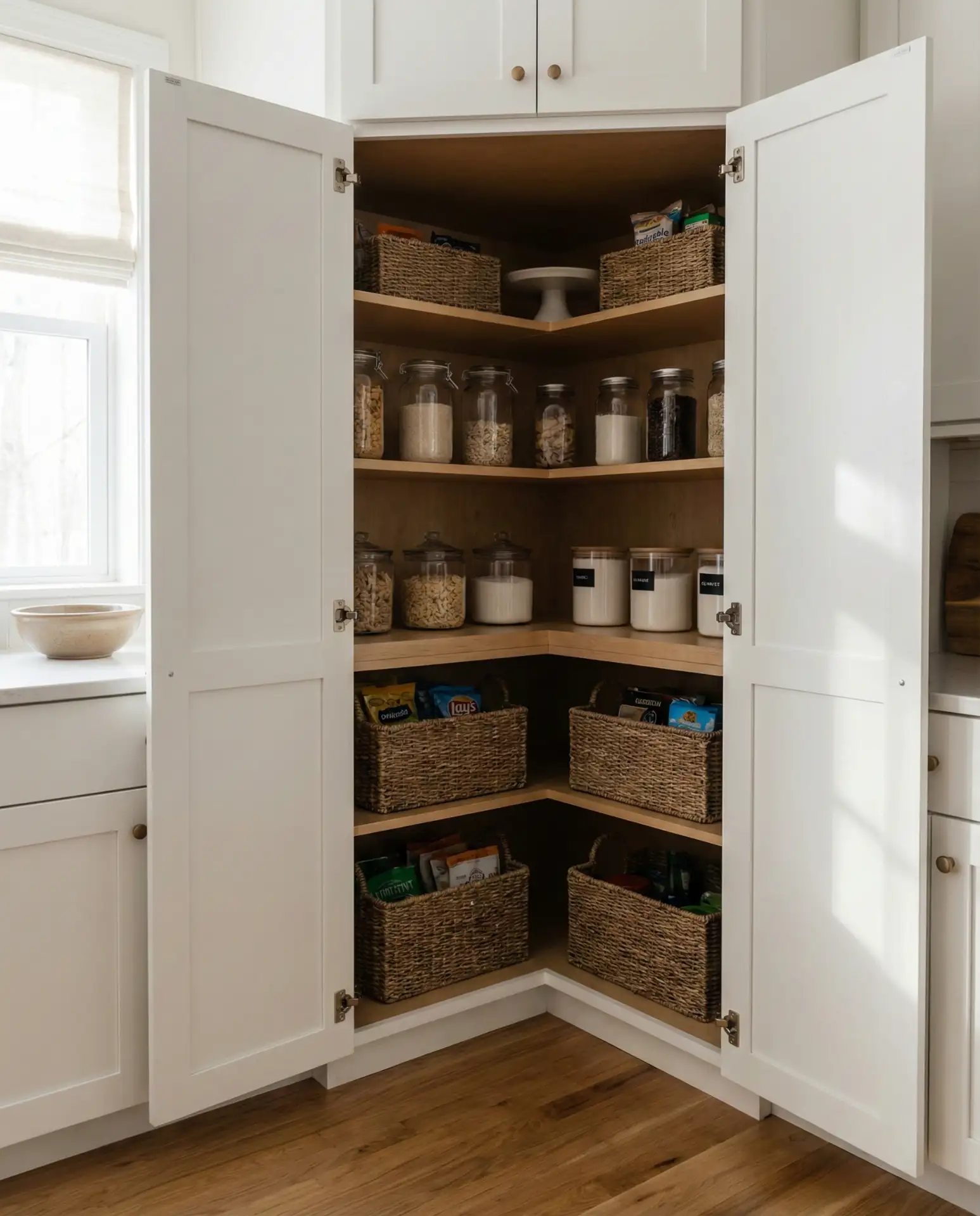
Steamrolling Dead Space A corner pantry converts an unused cabinet into prime storage space. Whether it’s the floor-to-ceiling cabinet with pull-out shelves or the walk-in closet hidden in a corner, this design makes every square inch count. This is the year of corner pantry innovations: rotating shelves, tiered racks, and clear containers ensure that every single thing in the pantry can be seen and all parts accessed. And this arrangement is particularly useful in kitchens with little to no wall space along which to place traditional pantry cabinets. 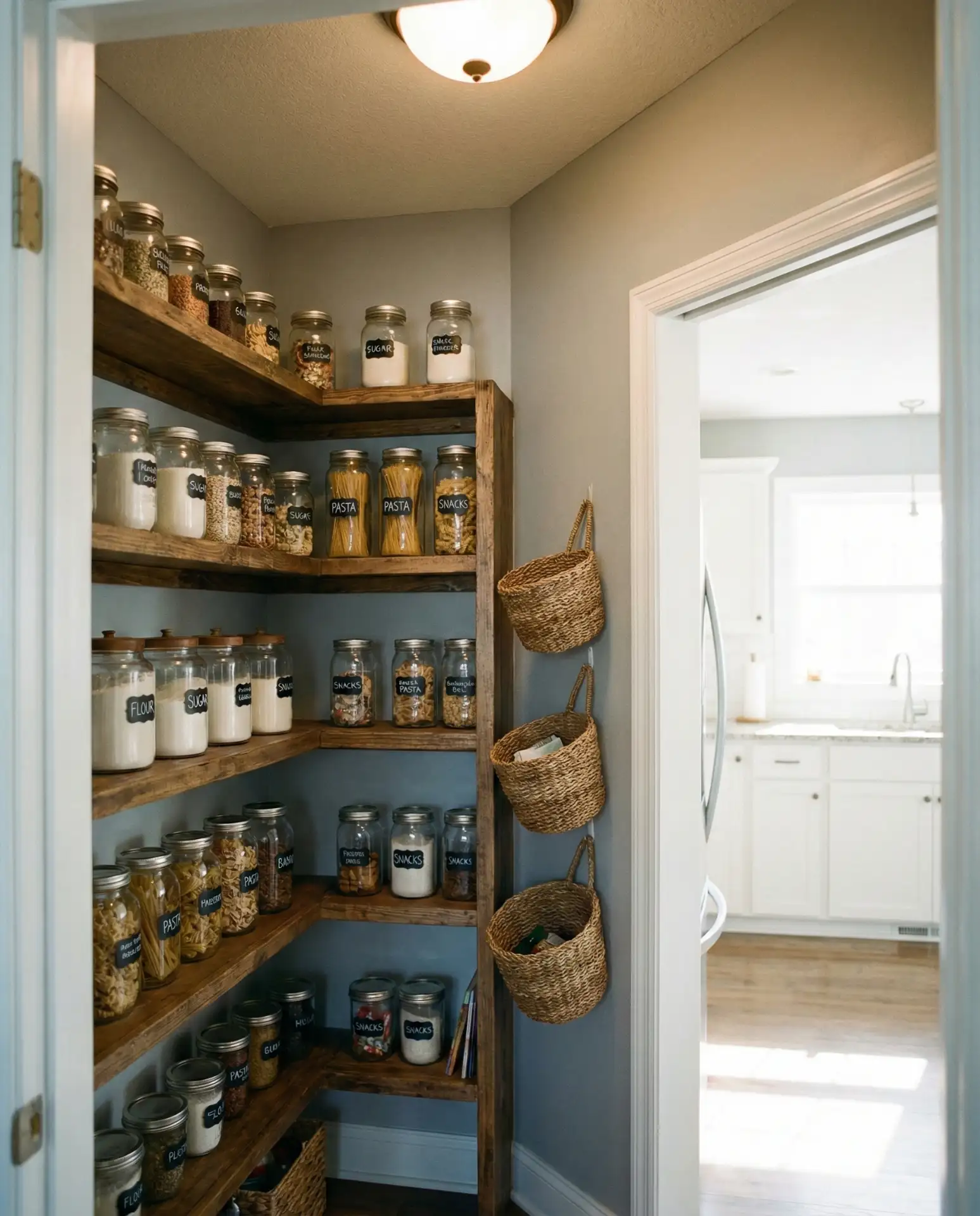
Expert-style commentary: the corner pantry is a brilliant solution for older homes where kitchens are small and boxy. It takes advantage of awkward angles that would otherwise be wasted. If you’re retrofitting, consider a lazy Susan system or a swing-out organizer—these make it easier to access items at the back. And don’t forget lighting; a motion-sensor LED strip inside the pantry makes a huge difference in functionality.
15. Restaurant-Style Kitchen Layout
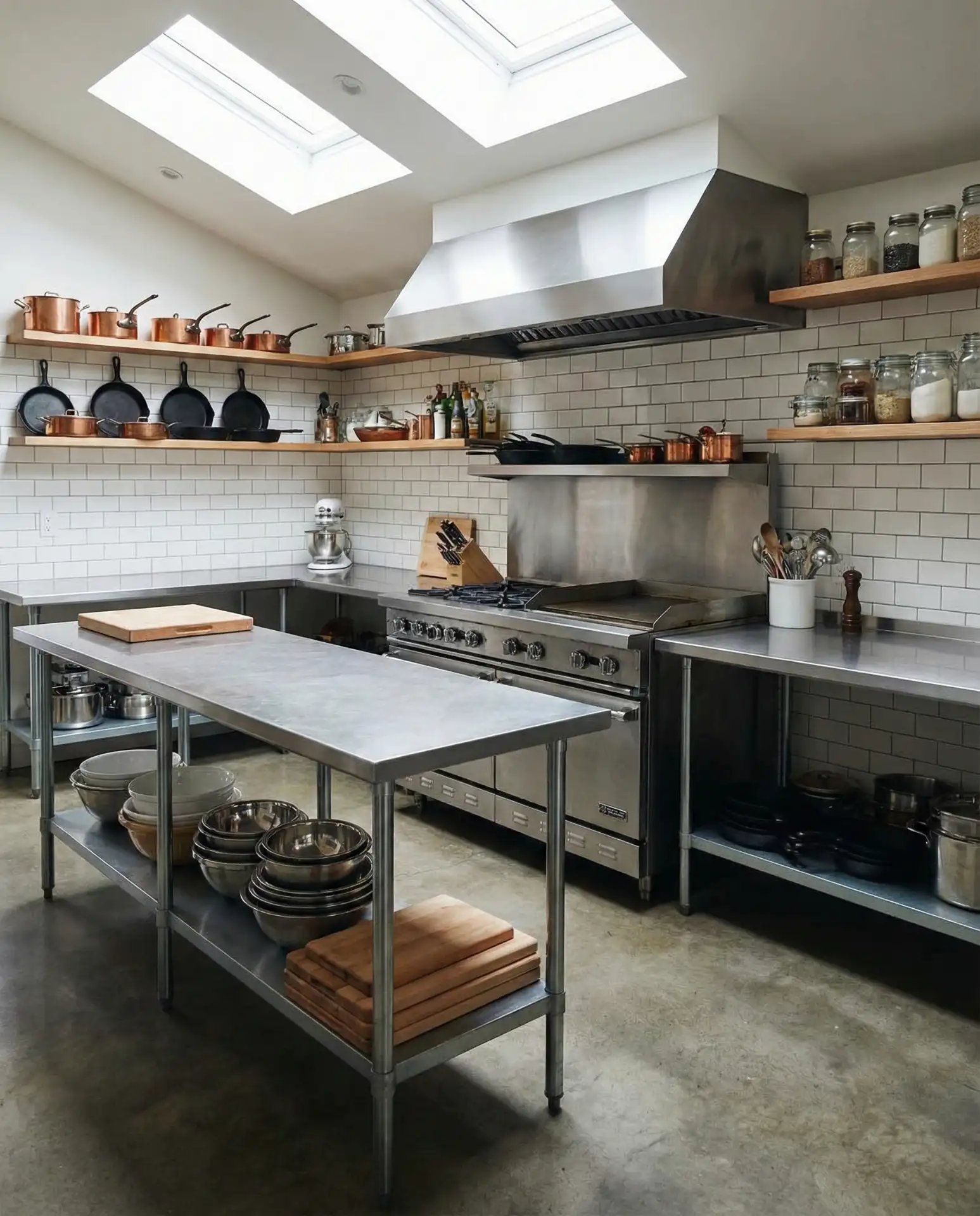
\n A restaurant kitchen at home is all about zones: prep, cooking, plating, and cleanup. A layout modeled after the Case IH plant, this commercial-style space tasks out spatially and at times has multiple workstations with equipment required for each operation. In 2026, homeowners are dreaming up a salamander broiler, a sous-vide station, and a cold prep area. It’s a design for serious cooks who are looking for professional speed and capability but without having to leave home. 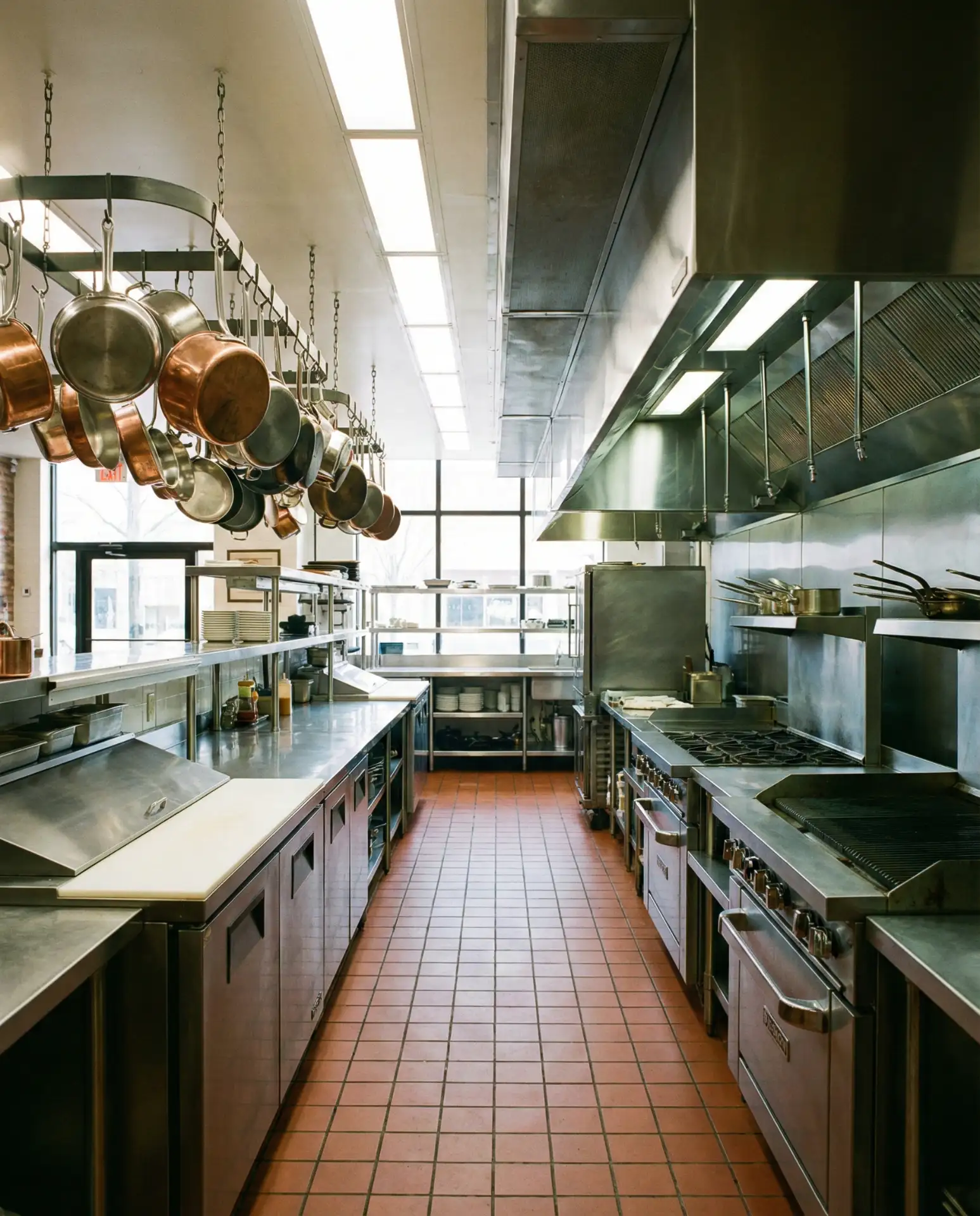
Budget angle: A full restaurant-style kitchen is a major investment, with price tags of $50,000 or more, depending on appliances and finishes. But you can get the vibe on a smaller budget by stressing layout and workflow much more than high-end gear. Install stainless steel countertops from a local fabricator, opt for open shelving instead of upper cabinets, and lose the laminate countertop and move for counter-to-ceiling subway tile.
16. Tiny House Kitchen Layout
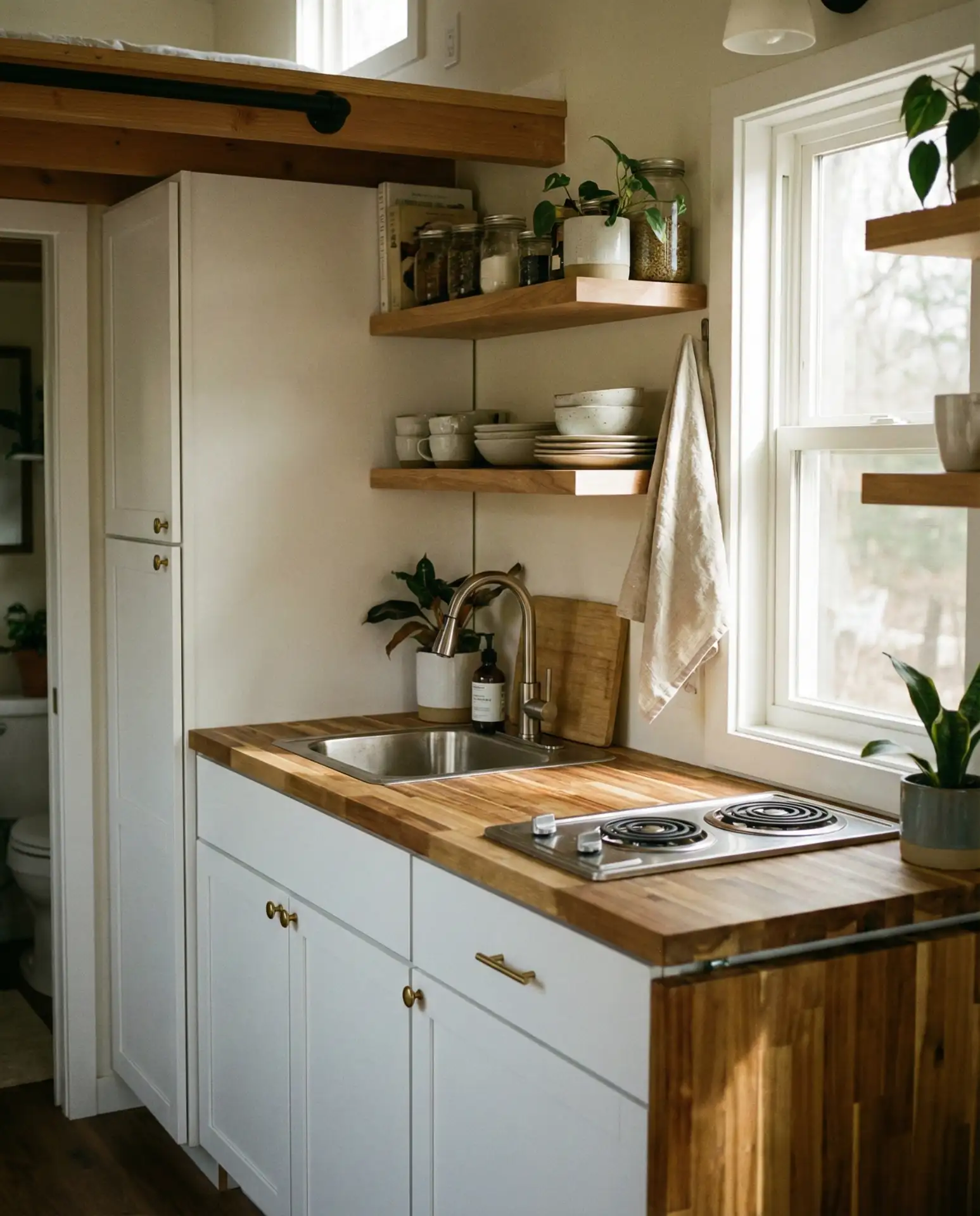
The tiny house kitchen proves that size doesn’t limit function. In 2026, tiny house layouts are ingeniously compact, with multi-purpose furniture, fold-down counters, and appliances scaled to fit. A typical setup includes a two-burner cooktop, a small under-counter fridge, and a combination microwave-convection oven. Storage is vertical—hooks, magnetic strips, and hanging baskets keep everything within reach without eating into precious floor space. 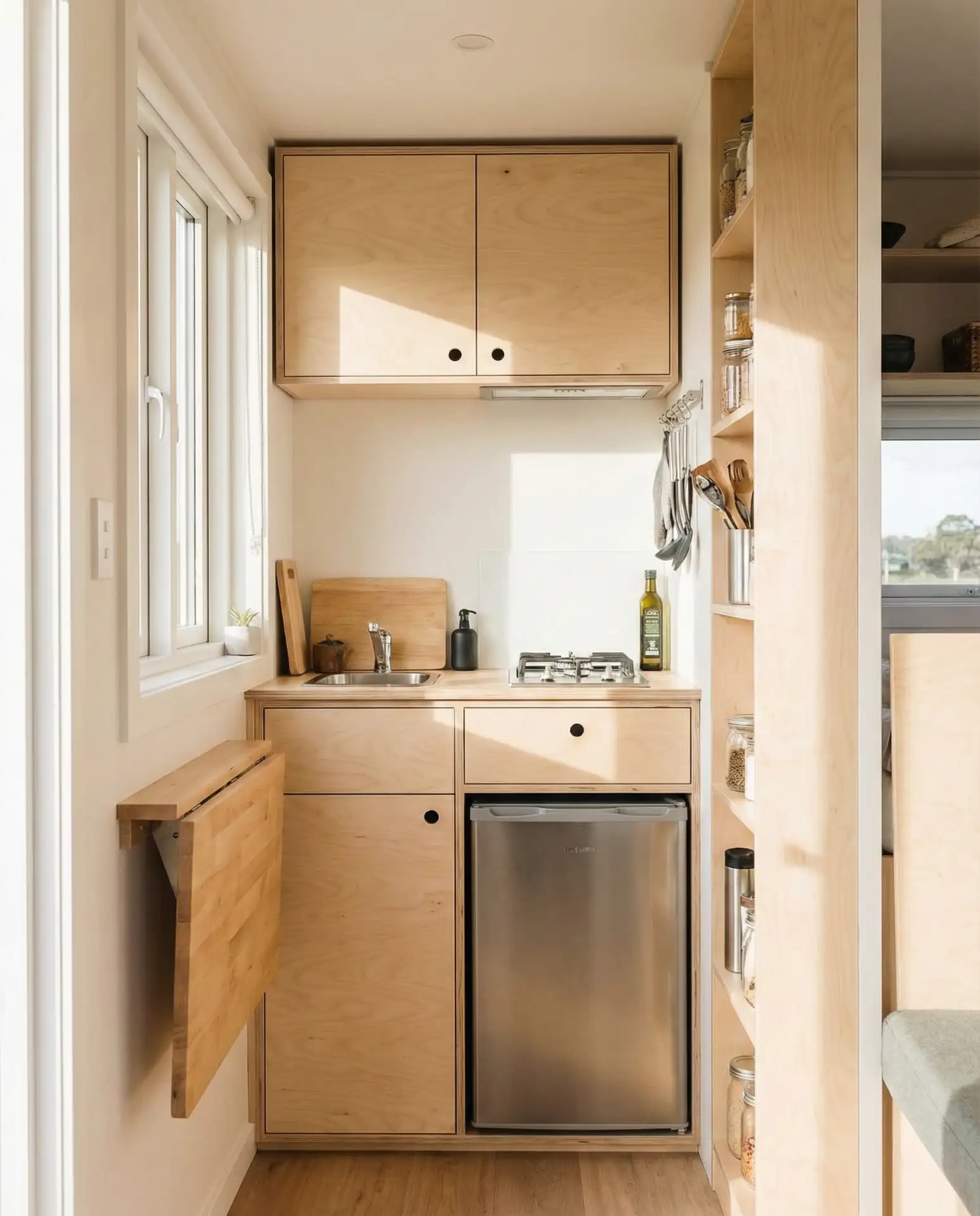
Practical insight: Small house, everything must pay its way. Opt for multifunctional tools—a pot you can use on the stovetop or in the oven, a cutting board that doubles as a cover for your sink. And go minimalist; restrict yourself to one set of dishes and a handful of basics when it comes to pots and pans. Indeed, the tiny house kitchen compels you to cook simply—a self-defeating turn of phrase so many owners find liberating rather than limiting.
17. Kitchen Layout with Peninsula
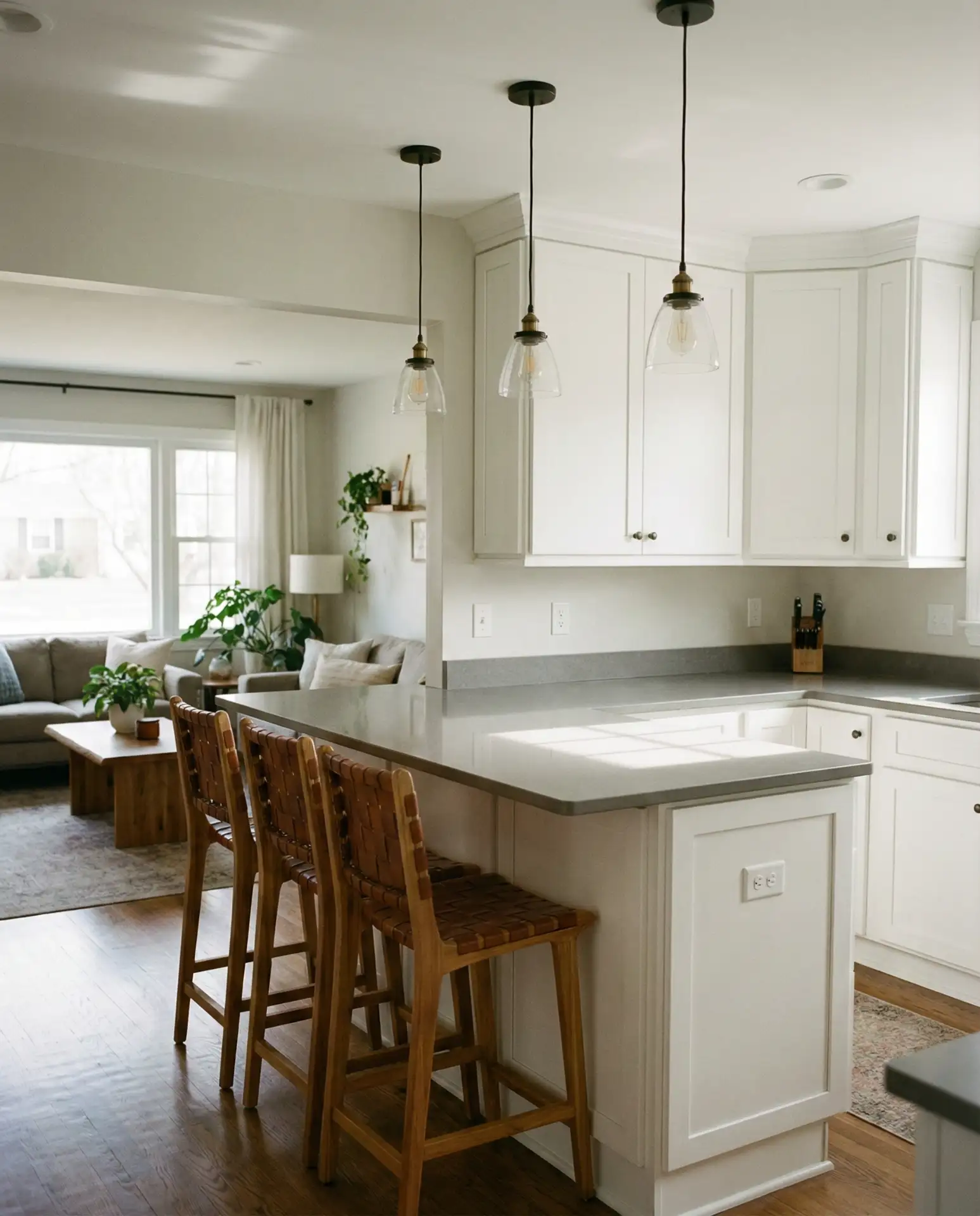
A peninsula is really a connected island, converting an open layout and providing a wall surface available for cabinetry. In 2026, peninsulas won’t be going anywhere because in open floor plans they can offer seating, additional storage, and a visual break without closing the space off. This plan is especially well-suited to mini-kitchens or open kitchens in combination with a second island. The peninsula can also accommodate a sink or cooktop, which adds utility as well as counter space. 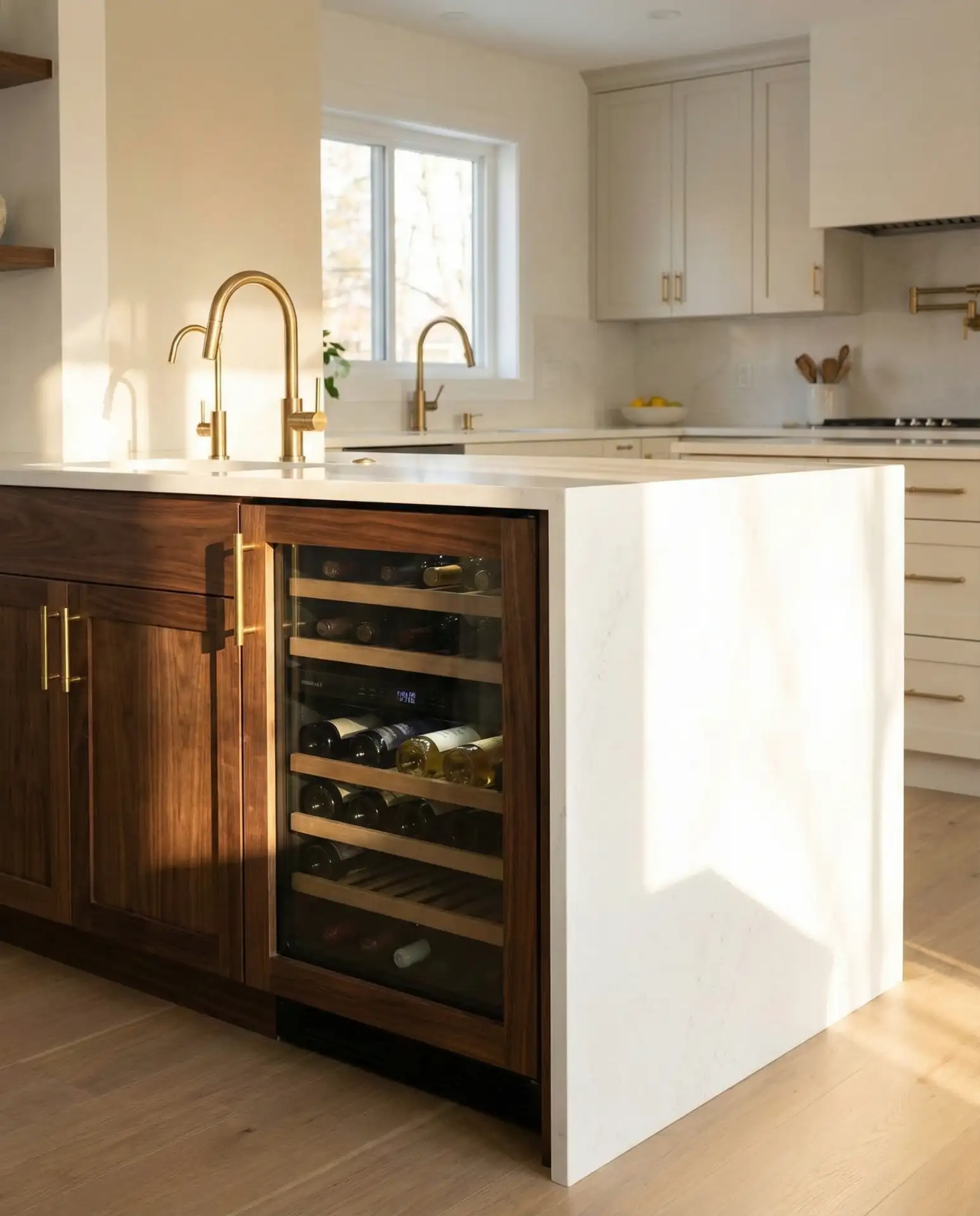
Where it works best: In houses with little square footage but a yearning for open-plan living. The peninsula has many of the benefits of an island—extra seats, a spot for relaxed meals, a surface for homework or laptops—without needing as much clearance. Just be sure to leave at least 36 inches of walkway on the open side for people not to feel squeezed in walking through.
18. Gallery Kitchen Layout Inspired by Museums
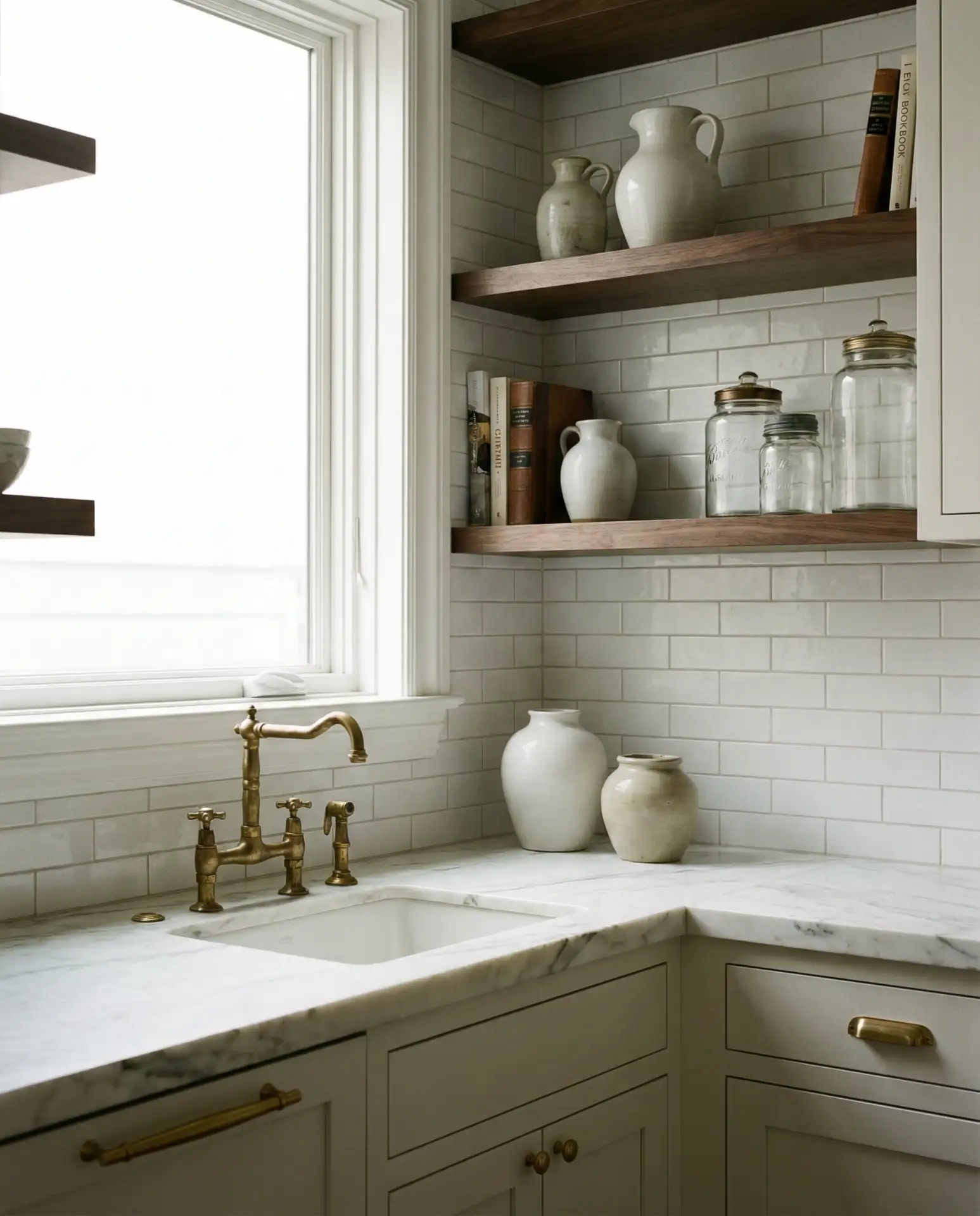
The gallery kitchen draws inspiration from museum spaces—orderly lines, curated displays, and a sense of purposeful negative space. In 2026, this look is characterized by art installations of open shelving stacked with dishes and glassware that stand or lean or otherwise flirt with an appreciation-building edge. There’s little flash in the layout itself, which is generally single wall or galley but feels special due to attention to detail and restraint. It is a look that works best in modern or minimalist homes where every object has been chosen not only for its function but also for its beauty. 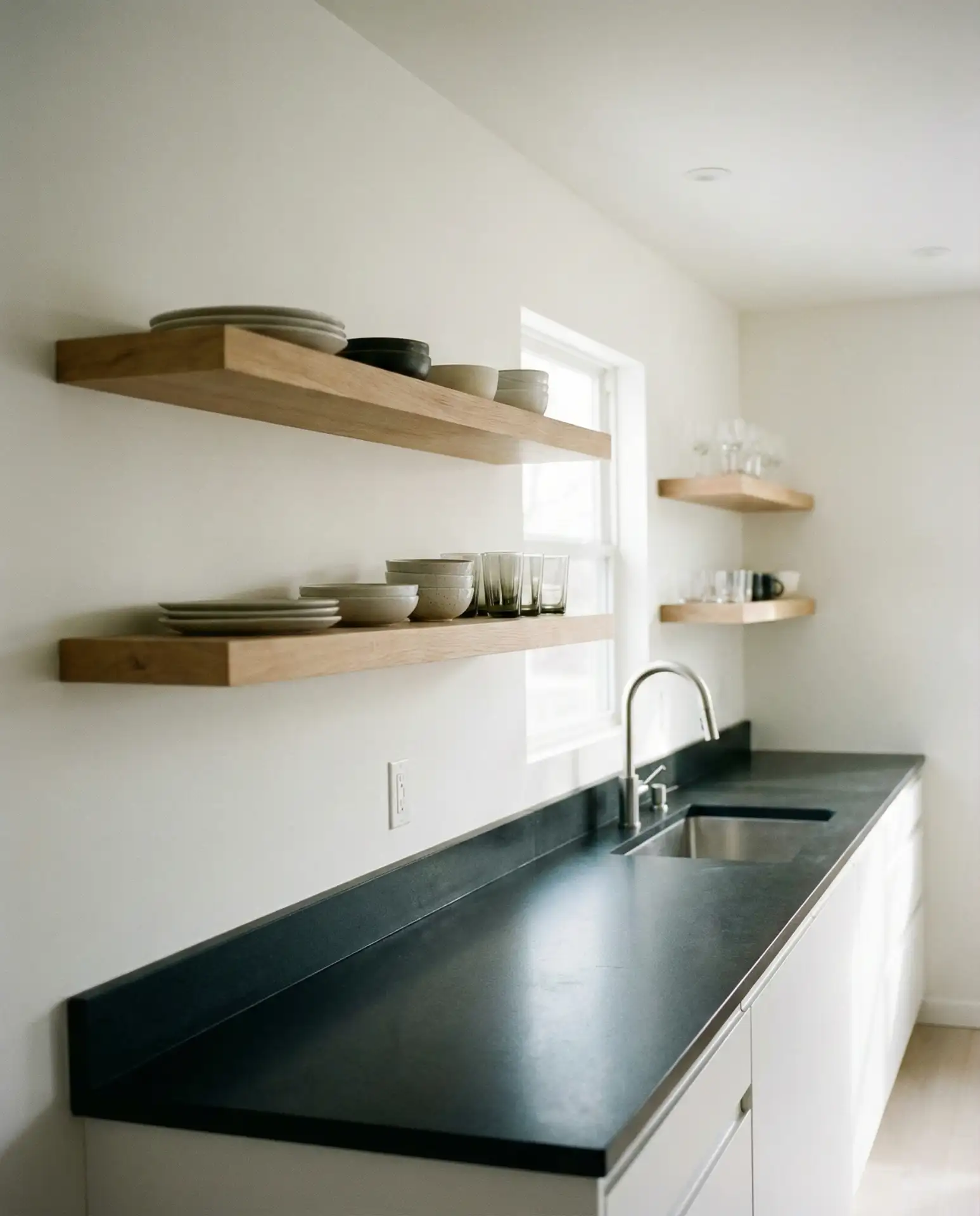
A neighbor who’s a graphic designer styled her kitchen this way, and it’s stunning. She keeps only her favorite pieces on display—a set of vintage plates, a few handmade mugs, and a wooden cutting board—and everything else is hidden behind cabinet doors. It’s high-maintenance (dust shows on open shelves) but deeply satisfying if you love the aesthetic. The galley kitchen is as much about editing as it is about design.
19. Classic Island Kitchen Layout
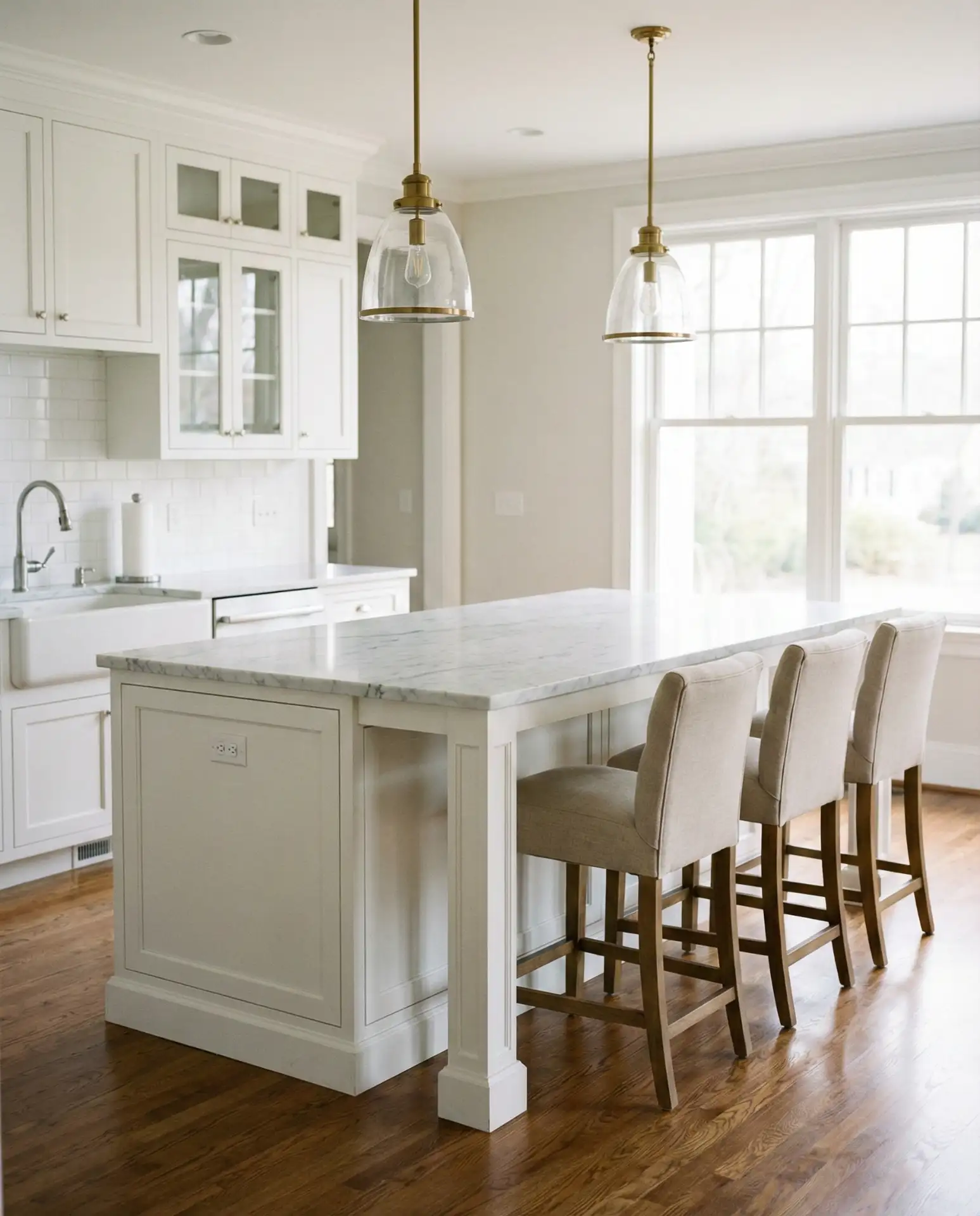
The timeless island kitchen remains the gold standard for American homes. In 2026, island designs are getting more personalized—some include built-in charging stations, hidden trash compartments, or even a small prep sink. The island serves as the heart of the home, a place where cooking, homework, and conversation all happen simultaneously. When planning an island layout, consider traffic patterns carefully; the goal is to facilitate movement, not obstruct it. 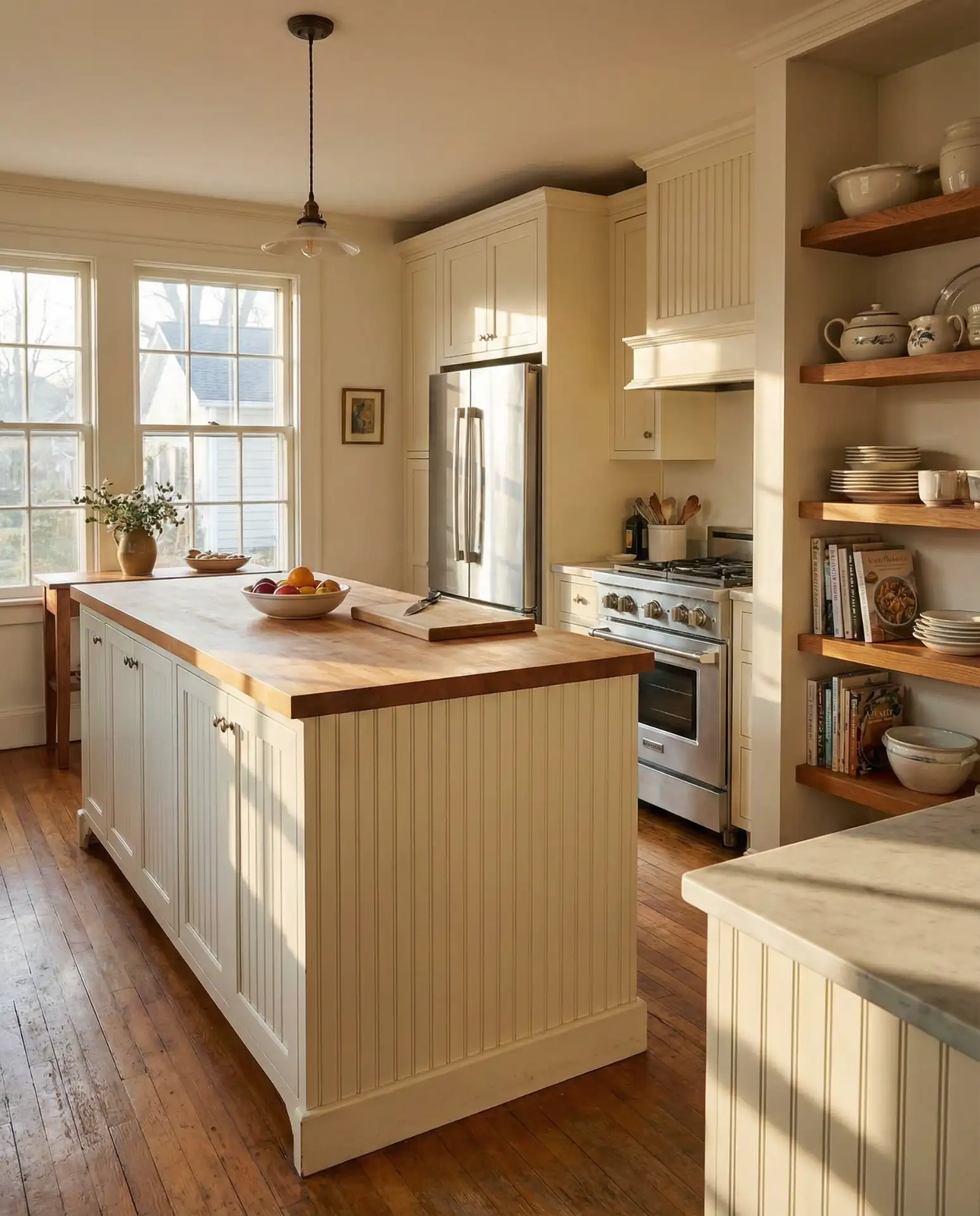
Mistakes to avoid: putting the island too close to surrounding cabinets (you want 42-48 inches of clearance) or making it too large so it overtakes the room. Also consider seating—plan on at least 24 inches of width per person for a counter stool and an overhang on the seating side (about 12 inches) so legs can tuck in. If your island has a cooktop or sink, be sure both sides of the island have counter space to allow for prep and cleanup.
20. Kitchen Layout out with Fridge Next to Stove
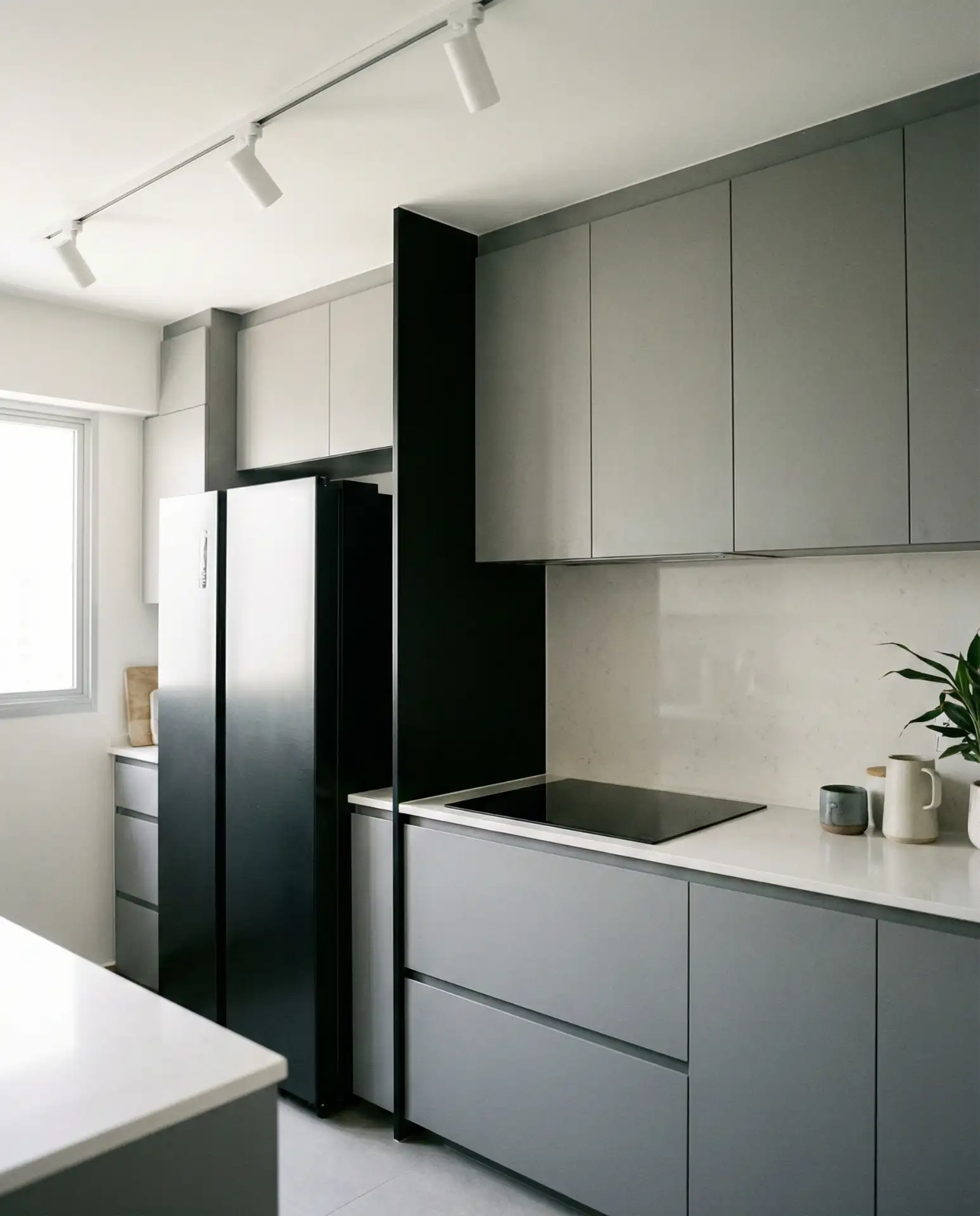
Placing the fridge next to the stove is sometimes unavoidable in tight layouts, but it requires careful planning. The main concern is heat transfer—appliances generate heat that can make the fridge work harder and shorten its lifespan. In 2026, designers address this by adding a narrow cabinet or a heat-resistant panel between the two appliances. This small buffer protects the fridge and creates a more finished look, especially in small galley or single-wall kitchens where space is at a premium. 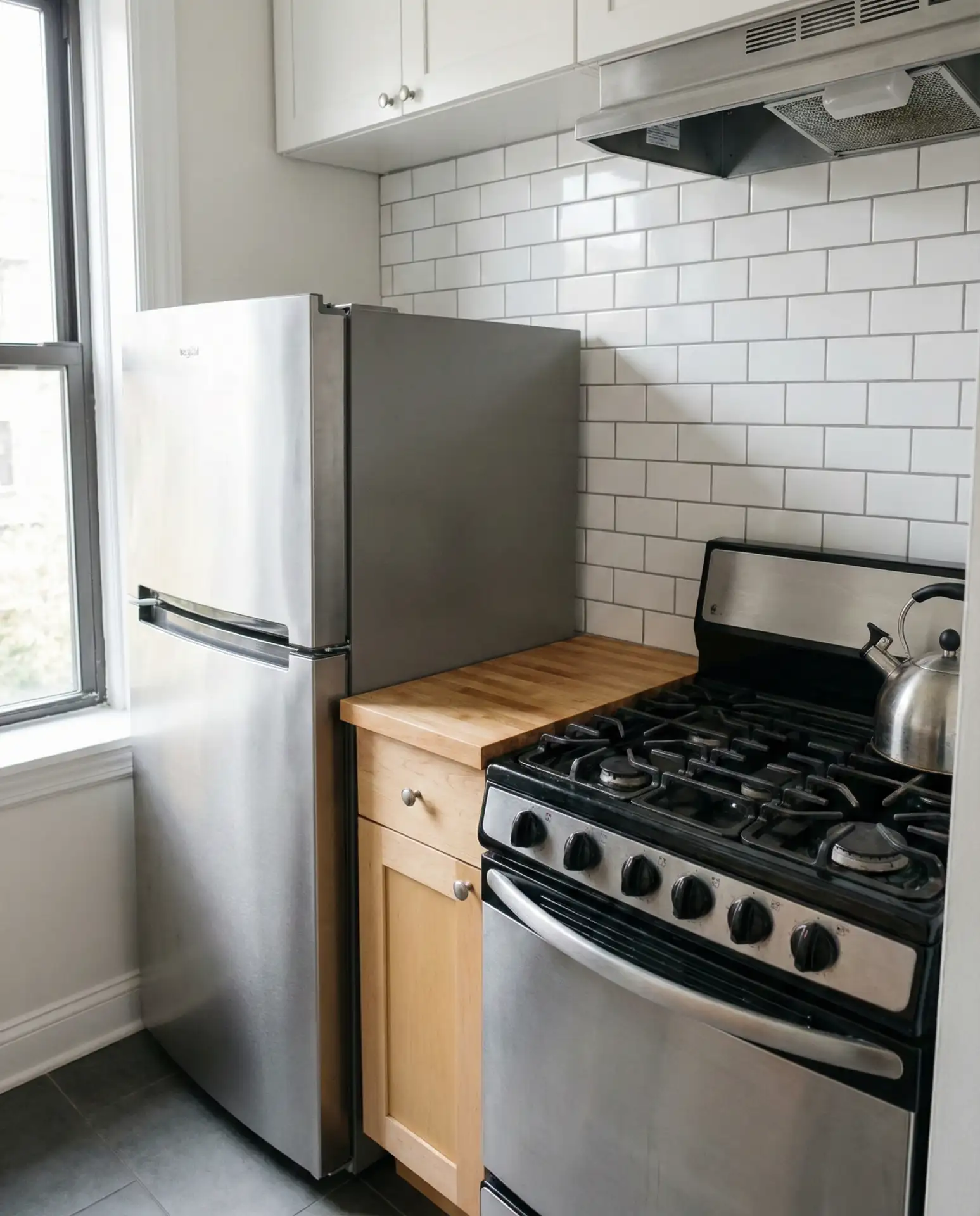
Expert-style commentary: if you’re stuck with this layout, make sure there’s at least 6 inches of separation (a narrow pullout cabinet works well) and avoid placing the fridge directly against a wall oven or high-heat appliance. Also, check your appliance manuals—some manufacturers void warranties if heat sources are too close. It’s not ideal, but with the right precautions, it’s workable, especially in older homes where reconfiguring plumbing or electrical isn’t practical.
21. Outdoor Kitchen Layout
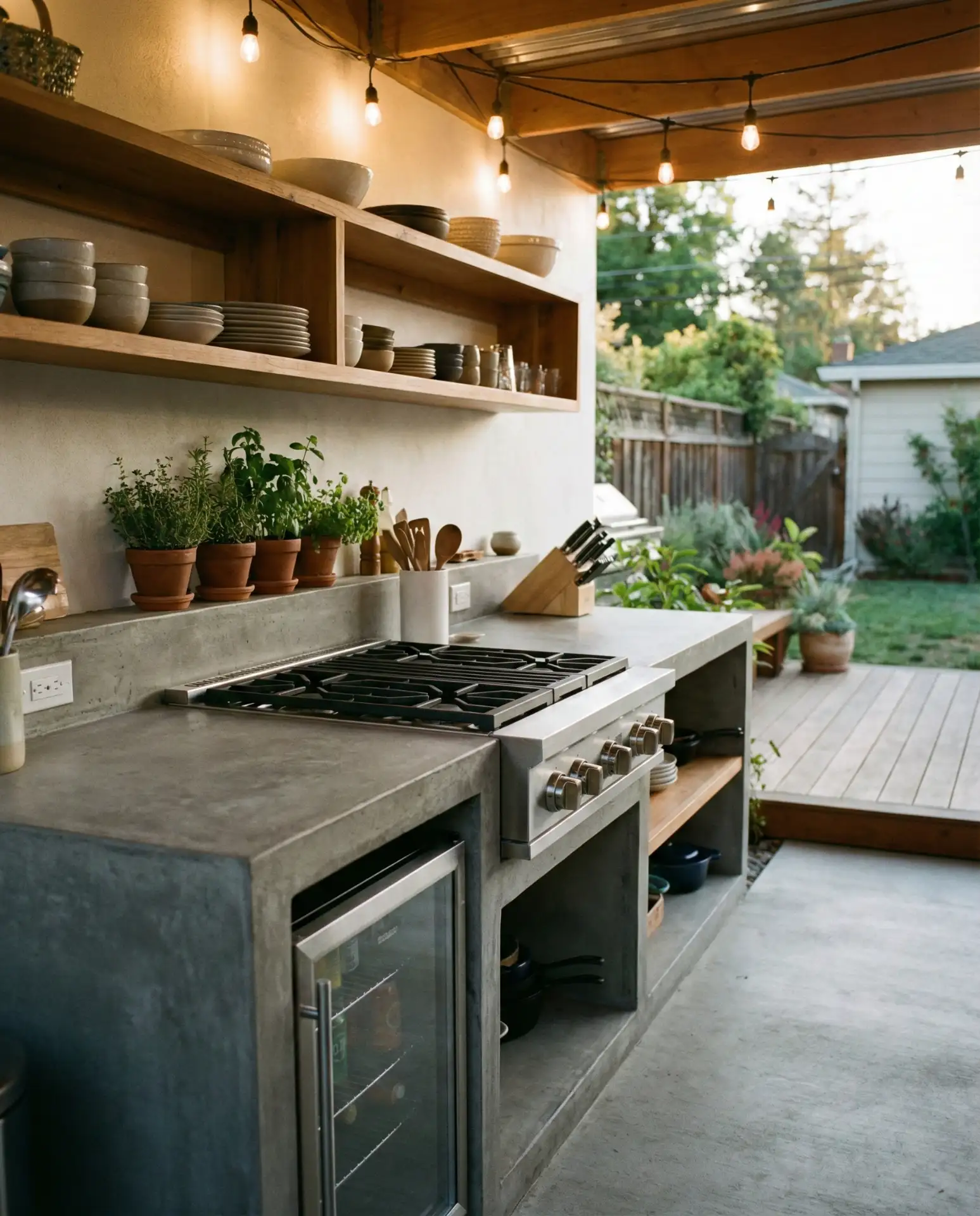
The outdoor kitchen has evolved beyond a simple grill on a patio. In 2026, outdoor layouts include full prep stations, refrigeration, sinks with hot water, and even pizza ovens. These kitchens extend the living space and make entertaining effortless, especially in warm climates like the Southwest and Southeast. The layout typically mimics an indoor island or linear setup, with durable materials like stainless steel, stone, and weather-resistant cabinetry that can handle the elements. 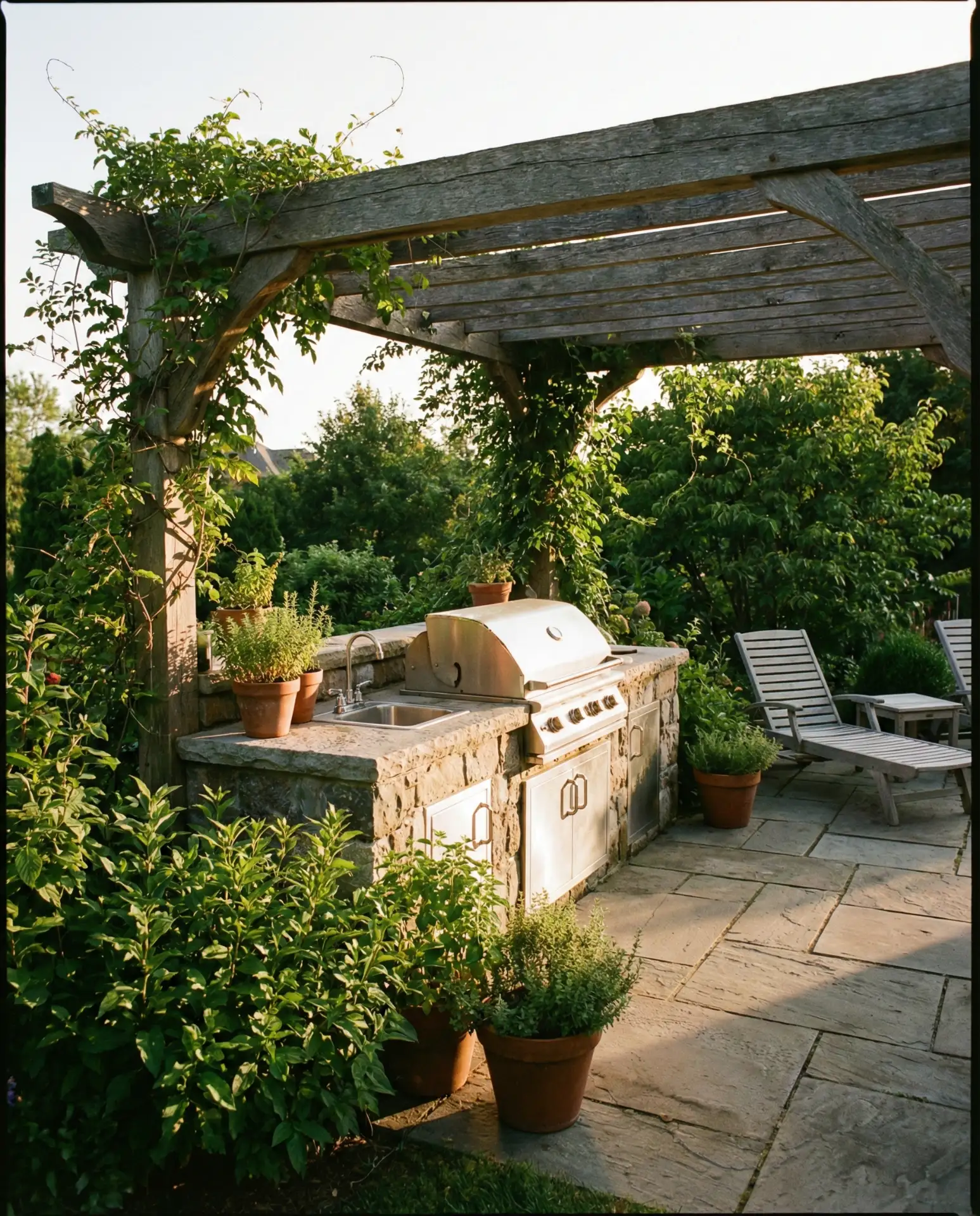
In Southern California, outdoor kitchens are almost de rigueur in new construction. But even in cooler climates, they’re catching on as homeowners aim to squeeze every possible outdoor month out of the year. Expect to spend around $10,000-$30,000, based on size and features. And this is not to mention details—good lighting, a nearby shade structure, and easy access from/to the indoor kitchen—that play such an enormous role in whether you will actually use the space.
22. La cucina lineare perfetta
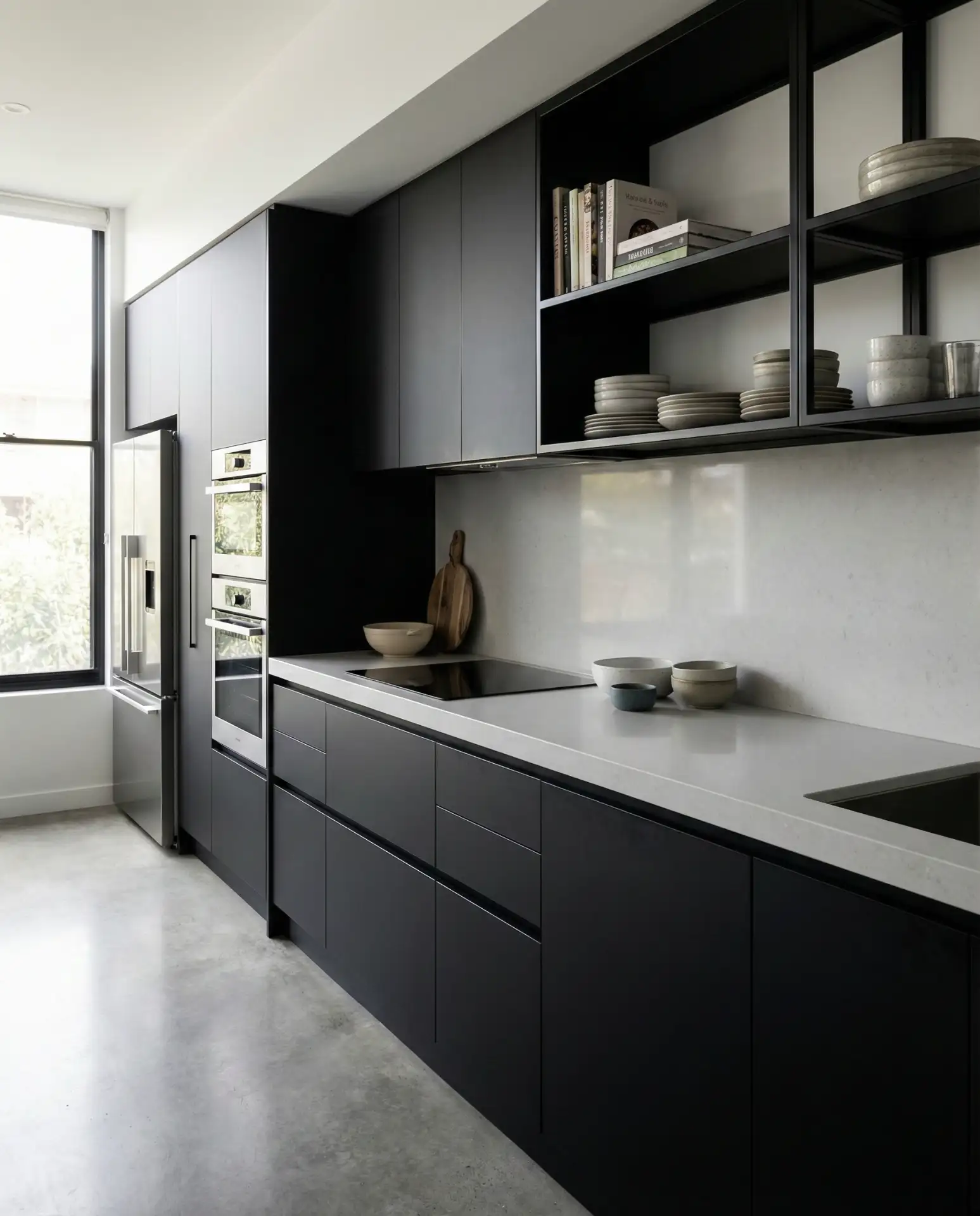
The ideal linear kitchen strikes a balance between simplicity and functionality. This single-wall layout is perfect for lofts, studios, or homes where the kitchen is part of a larger open space. In 2026, linear kitchens are getting smarter with integrated appliances, hidden storage, and seamless countertops that create a streamlined look. The key is keeping the run between 8 and 15 feet—short enough to be efficient but long enough to include all necessary functions without feeling cramped. 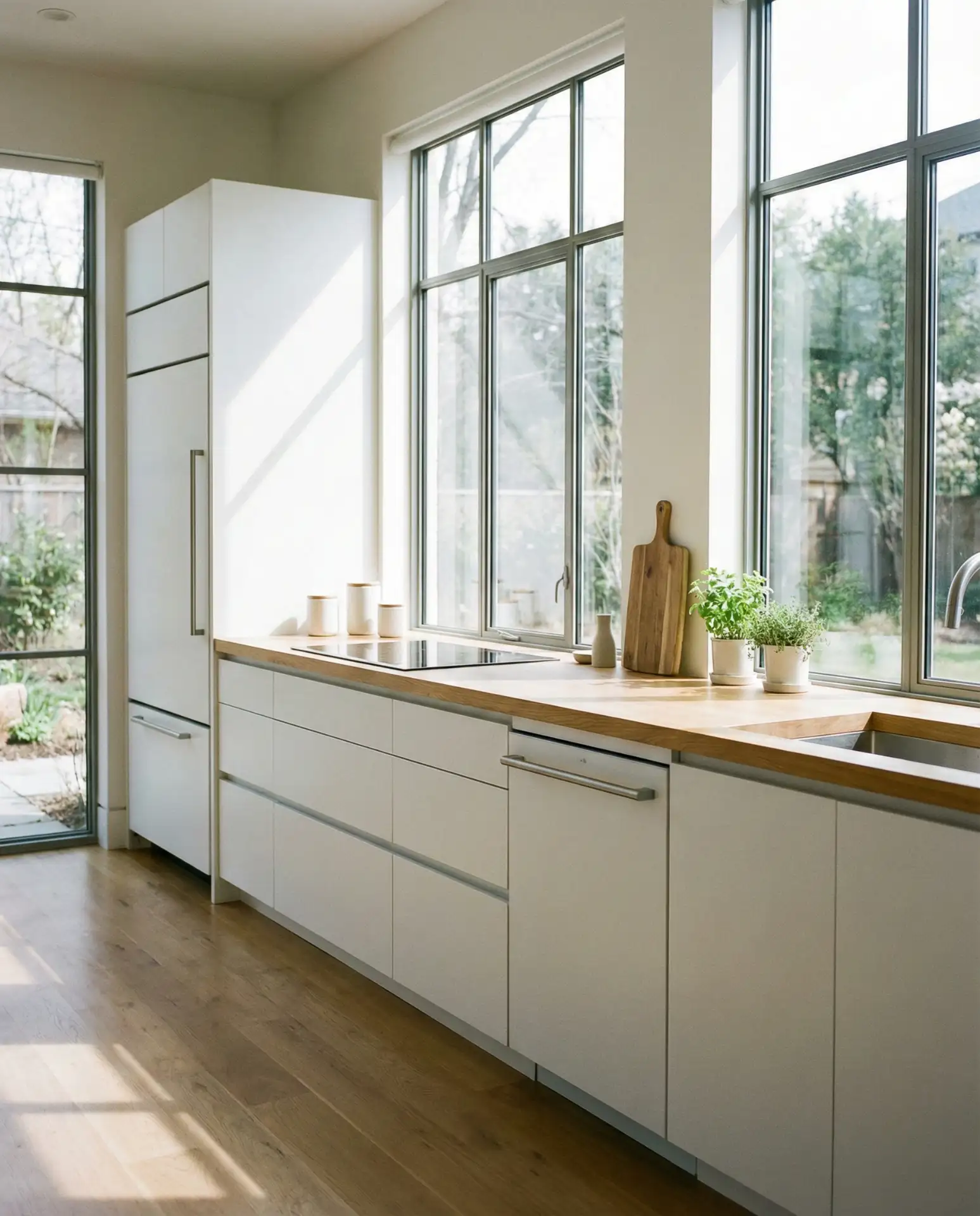
Real homeowner behavior: people with linear kitchens often add a rolling cart or small bistro table nearby for extra work surface. It’s a simple fix that makes a big difference when you’re prepping a large meal or hosting. And because everything is along one wall, cleanup is straightforward—you’re never more than a few steps from the sink or trash. The linear kitchen is proof that thoughtful design can make even the smallest space feel sufficient.
Conclusion
Which of these layouts speaks to your style and space? Whether you’re drawn to the efficiency of a galley, the openness of an island, or the charm of a bakery-inspired setup, there’s a configuration here that can work for you. Drop a comment below and share which idea you’re considering—or tell us about a layout challenge you’re trying to solve. We’d love to hear how you’re planning your 2026 kitchen.