The kitchen sink is a workhorse, but it doesn’t have to be boring. Whether you are planning a full remodel or just swapping out the faucet, the right sink sets the tone for the whole room.
From deep farmhouse basins to sleek undermount designs, we have rounded up 28 kitchen sink ideas that balance style with everyday function. Each look offers a practical take on materials, layout, and how the sink fits into the space around it.
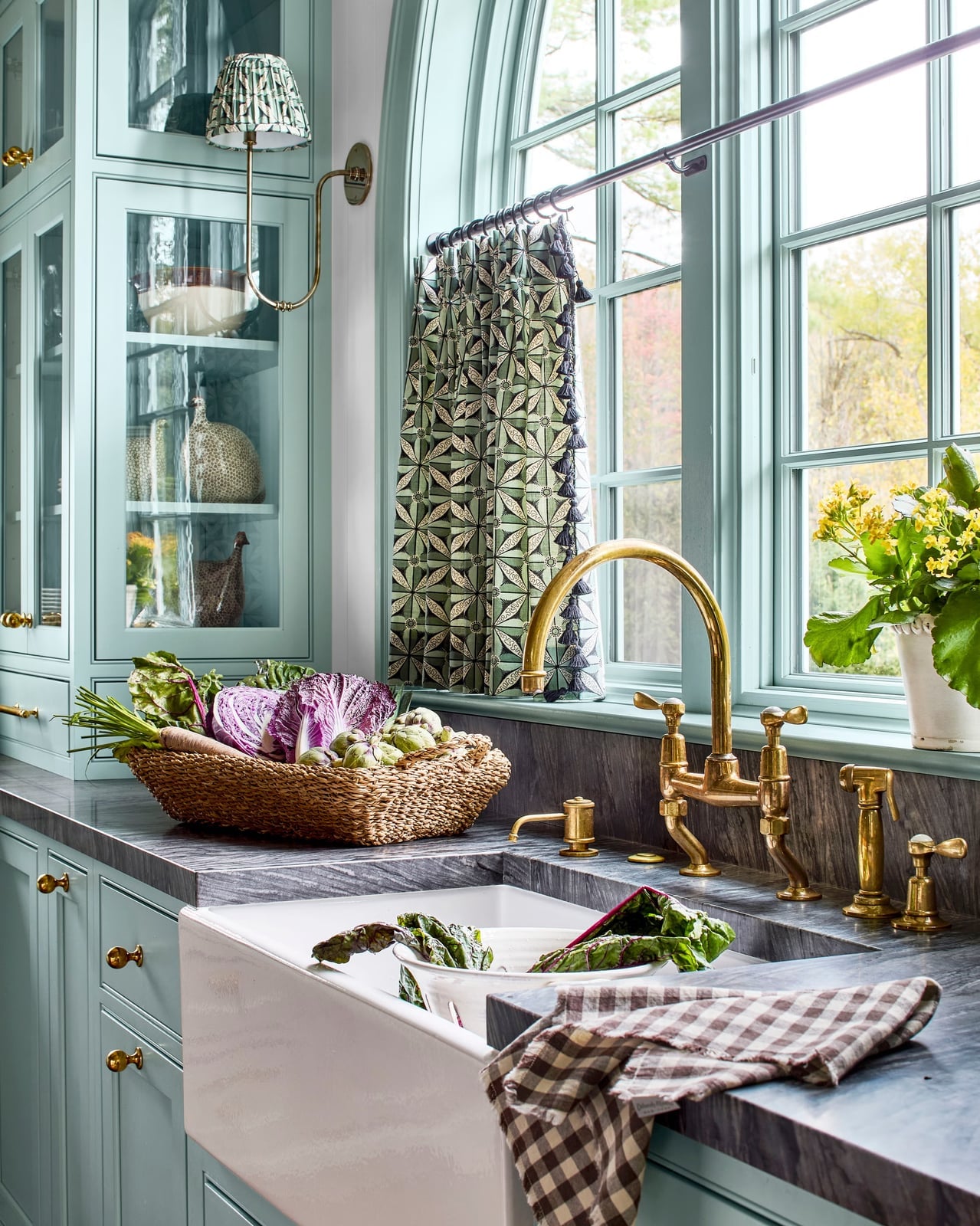
Undermount Stone Sink with Elegant Brass Fixtures
A polished brass faucet is the first thing you notice, even before the gray stone sink it rises from. The undermount installation keeps the countertop line clean, and the sink sits below a window that pours in daylight. A small woven basket nearby softens the hard edges of stone and metal. The palette stays cool with gray and blue, but the warm gold of the faucet keeps the look from turning cold. This kind of sink works best when you let one finish lead the room and everything else follows.
Polished Brass Double Basin Sink in Traditional Kitchen
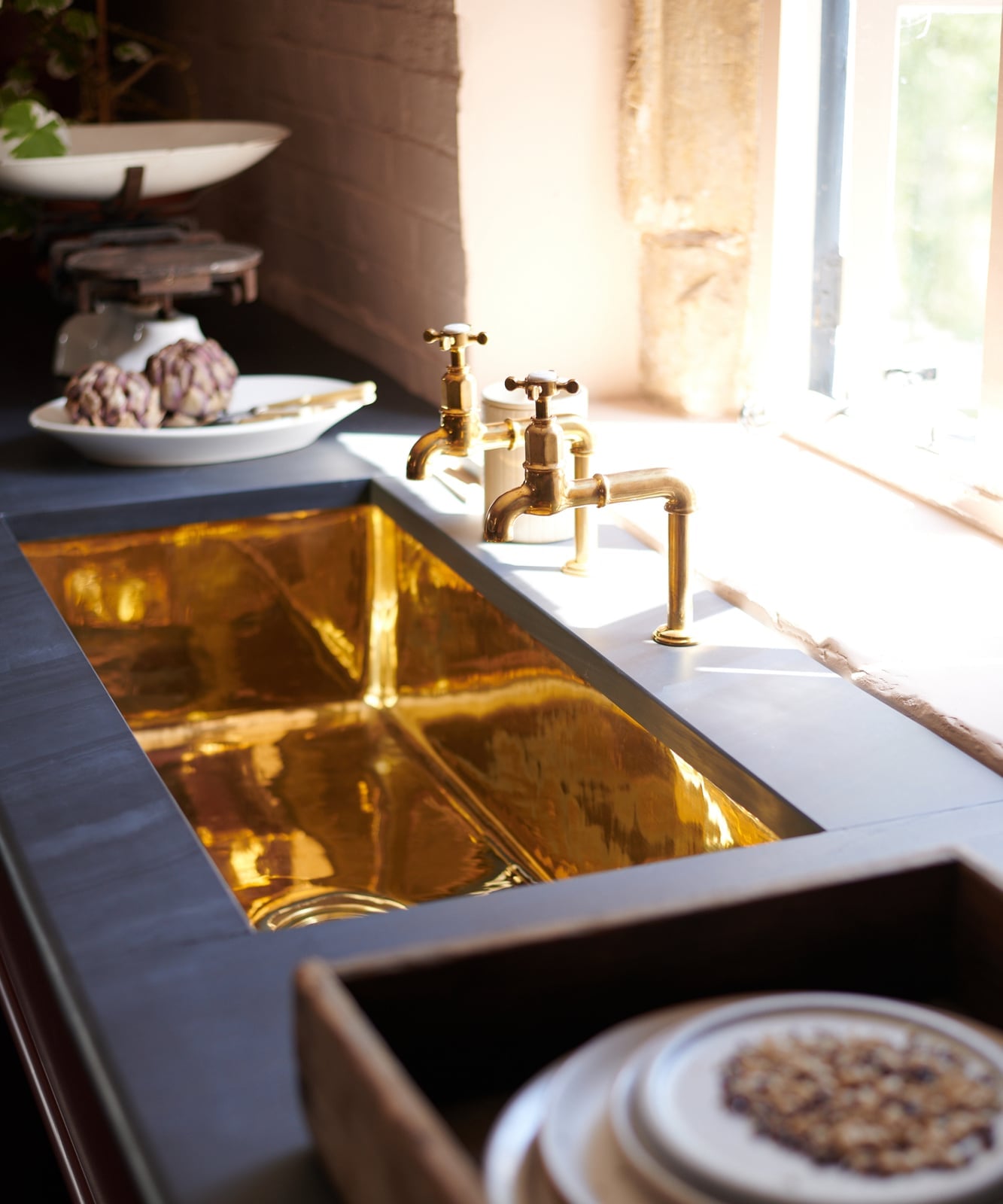
A polished brass double basin sink is the kind of piece that sets the whole room’s direction. The reflective finish catches the natural light and brightens the gray stone countertop around it. Traditional kitchens often lean on wood cabinetry and neutral stone, so the brass adds warmth without changing the palette. The two basins make practical sense for washing on one side and drying on the other. If you choose a sink this reflective, keep the countertop finish matte so the surfaces do not compete.
Matte Black Composite Apron Sink for Modern Farmhouse
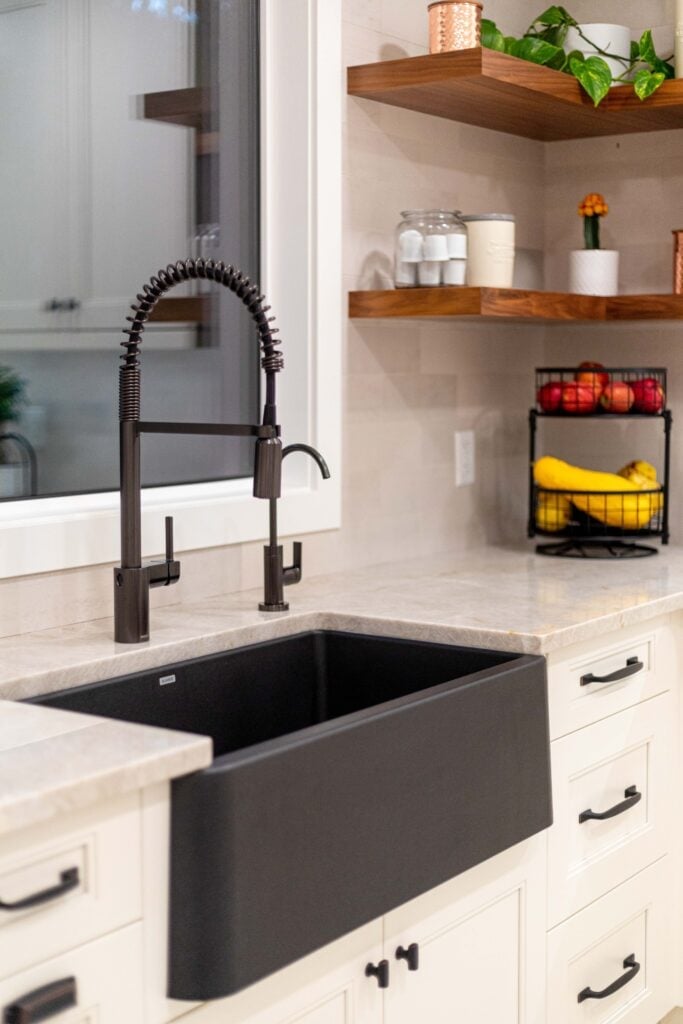
What makes a dark sink work in a light kitchen? The answer is contrast with restraint. A matte black composite apron sink sits against cream cabinetry and beige stone, and the dark surface anchors the whole counter without shouting. The apron front gives the modern farmhouse look its signature, while the composite material keeps the weight lighter than fireclay. Natural light from a nearby window keeps the black from swallowing the space. For a compact kitchen, a dark sink can actually make the room feel larger by defining a clear focal point.
Black Quartz Workstation Sink with Integrated Accessories
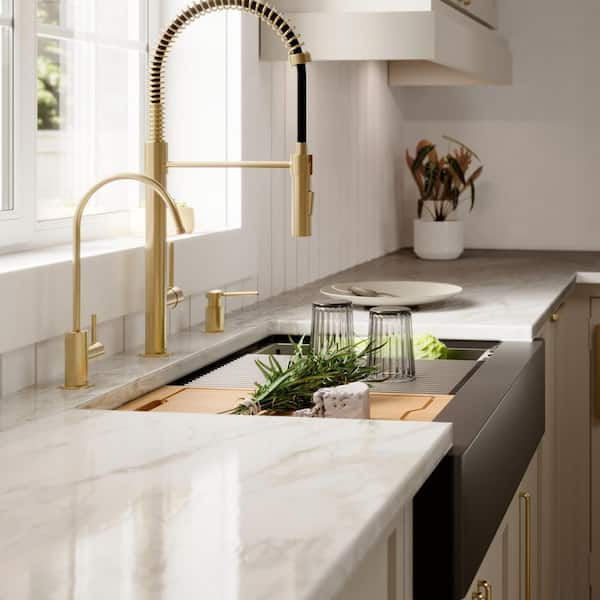
A workstation sink changes the way you use the counter by bringing the work surface into the basin itself. This black quartz composite version includes a cutting board that sits across the top, turning the sink into a prep station. The pull-down faucet tucks away when not in use, and the dark finish hides the wear that lighter sinks show over time. Natural light from the window and overhead lighting keep the black surface from reading as a hole in the counter. The integrated accessories mean less clutter on the surrounding marble.
White Apron Front Sink on Marble Island
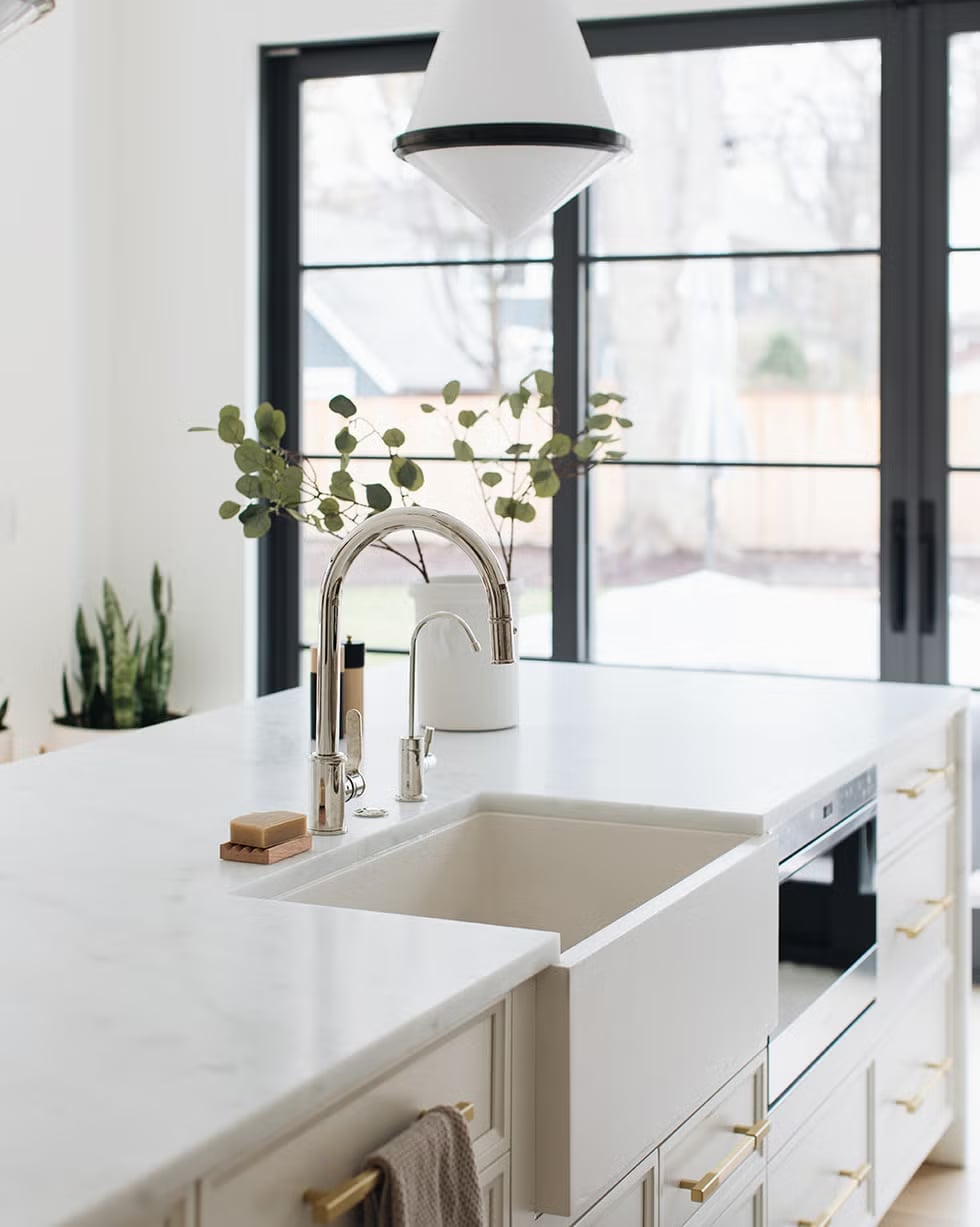
A practical rule for island sinks: leave enough clearance around the basin for two people to work. This white apron front sink sits on a marble island, with a brass modern faucet and a pendant light above. The white ceramic stays bright against the gray marble veining, and the apron front adds the farmhouse touch without needing full country styling. The island placement means the sink becomes a social spot, so a low-arc faucet helps keep the line of sight open across the room.
Dual White Apron Sinks with Matte Black Faucets
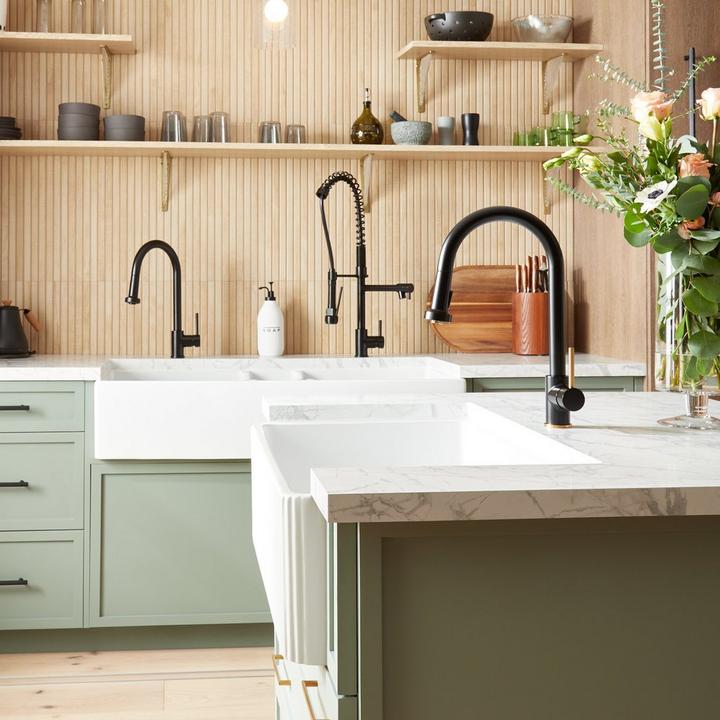
If you are torn between one big farmhouse sink and two smaller ones, the answer might be both. This kitchen takes an open plan layout and plants two white apron sinks side by side, one on the island and one against the counter, with matte black faucets that break up all that white. The room stays cohesive because the palette stays tight: sage green cabinets, wood paneling, and quartz surfaces that do not compete with the sinks. Having two sinks means two people can work without bumping elbows, and the black hardware provides a visual anchor. A symmetrical sink setup requires enough width in the room and simple finishes to support it.
Farmhouse Kitchen with Sage Green Cabinetry and Farmhouse Sink
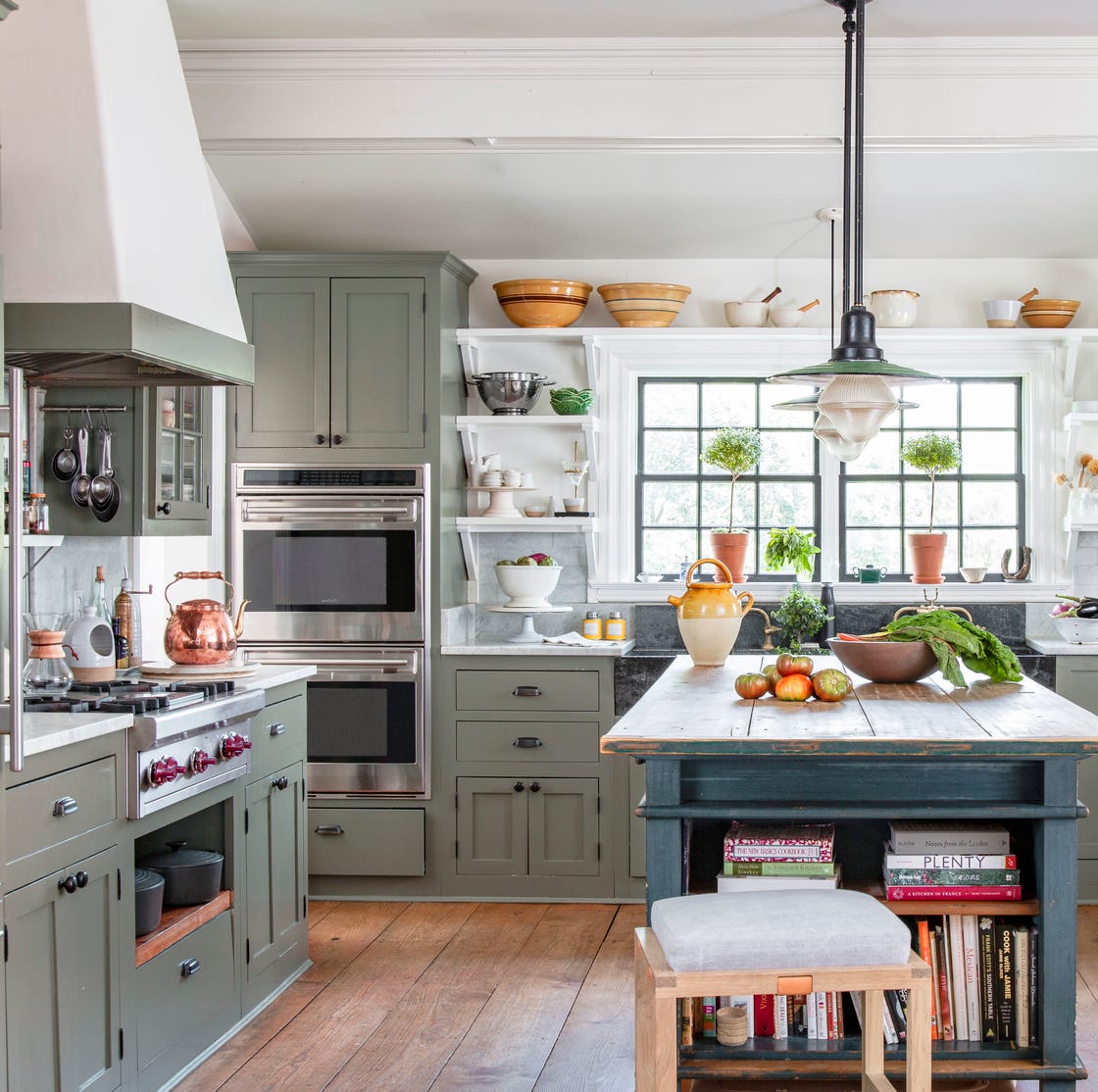
The sage green cabinets are the first thing you notice, but the farmhouse sink is what makes the kitchen feel grounded. The palette runs from creamy whites and wood tones to the soft green of the cabinetry, with the sink in white ceramic that sits under the counter. A pair of wooden stools at the island and a pendant light overhead keep the look relaxed. The trick with a bold cabinet color like sage is to let the sink stay neutral and let the countertop and hardware do the connecting. If you rent, a peel-and-stick backsplash in a matching green tone can echo the look without painting cabinets.
Deep Stainless Steel Undermount Sink with Functional Accessories
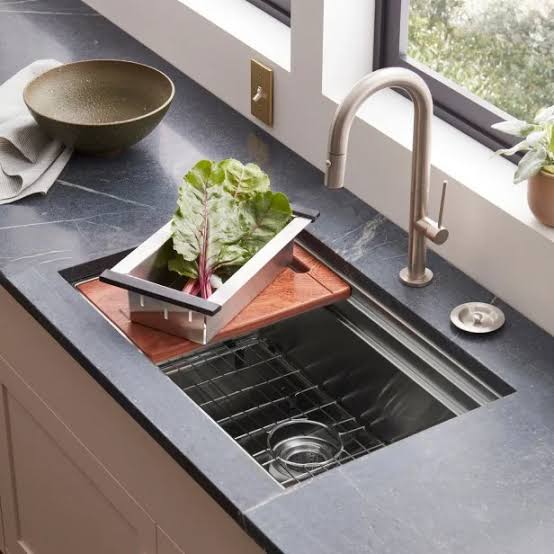
This sink earns its keep with depth and accessories. The undermount stainless steel basin sits flush against a stone countertop, and a wooden cutting board rests across the top, turning the sink into a prep station when you need more surface. Natural light from a nearby window hits the metal and keeps the gray and silver palette from feeling cold. A deep basin like this handles tall pots and large baking sheets, and the undermount design makes wiping crumbs from counter to sink a single motion. The practical takeaway is that a cutting board sized to fit the sink rails adds function without taking up counter space.
Modern White Sink with Matte Black Faucet and Marble Countertop
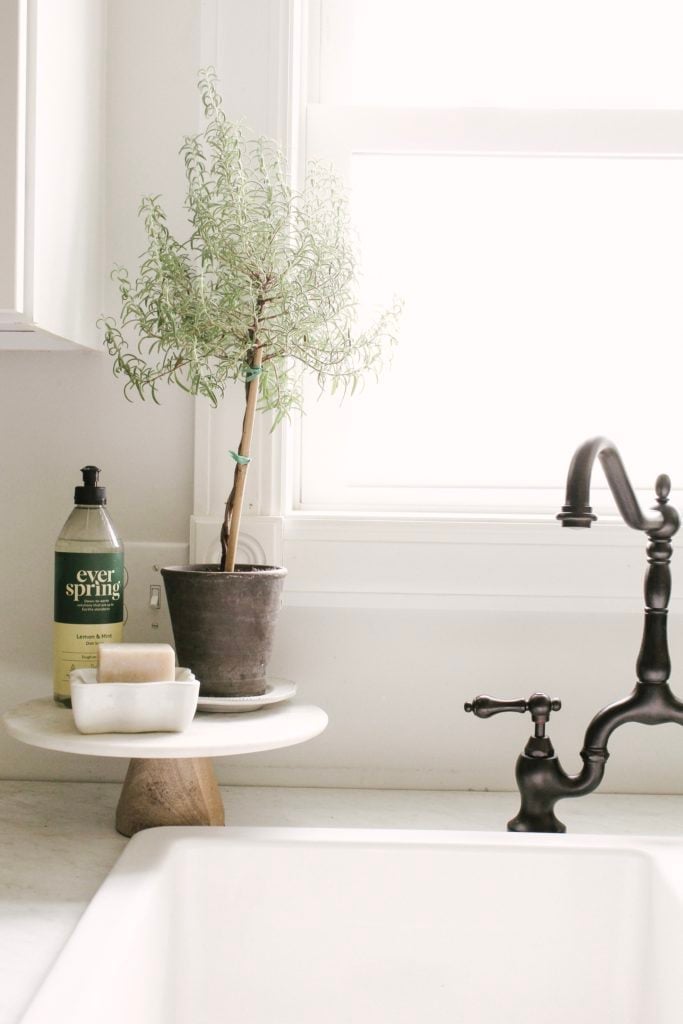
Can a white sink and marble countertop work without looking too sterile? This setup proves it can, with a matte black faucet that stops the palette from going flat. The white ceramic sink sits undermounted in marble, and a potted rosemary plant adds a green accent that softens the hard surfaces. Bright natural light from a window keeps the kitchen airy, while the black faucet gives the eye a contrast point. The material choice matters here: marble needs sealing and is prone to etching from acidic spills, so if you cook with citrus or wine often, quartz is a lower-maintenance alternative that gives a similar look.
Farmhouse Sink on Rustic Wooden Stand with Stone Wall
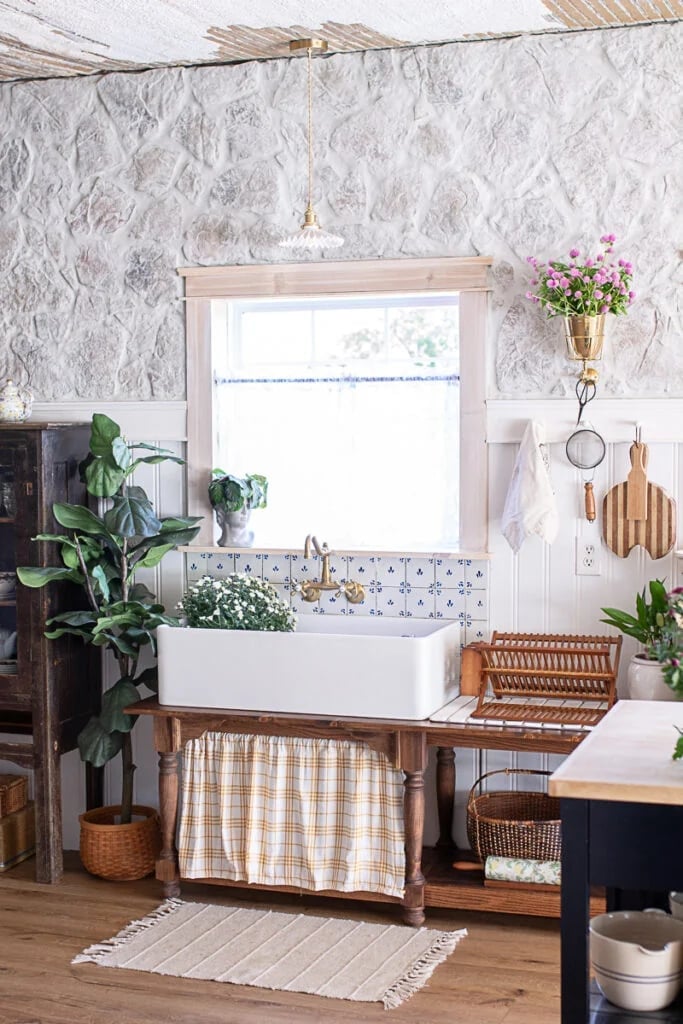
This kitchen puts the sink front and center by setting it on a rustic wooden stand, with a textured stone wall behind it and open shelving above. The farmhouse sink is large and white, and the wooden table underneath gives it the look of a standalone piece of furniture. Natural light from a window hits the stone wall and brings out its variation in tone. The layout trick here is that the sink becomes the anchor of the room, so the wooden stand needs to be sturdy enough to handle the weight of a full sink and the stone wall should be sealed against moisture if it is near a water source.
Transitional Stainless Steel Sink with Chrome Faucet and Wicker Basket
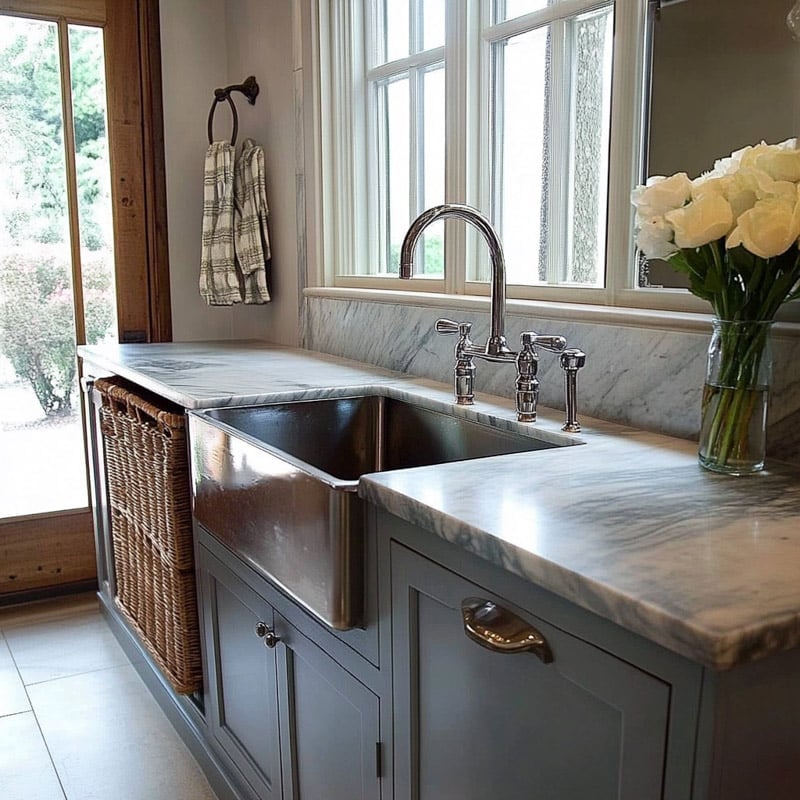
A stainless steel sink fits best when the surrounding finishes give it company, not competition. The chrome faucet and the gray-veined marble countertop share the same cool metallic family, so the sink reads as part of a connected palette rather than a lone appliance. A wicker basket and a wooden cutting board add warmth without fighting the metal. The window light lands on the reflective sink surface and makes the whole zone feel brighter. If your kitchen leans warmer, try a stainless sink with a brushed or satin finish instead of mirror-polished.
Undermount Stainless Steel Sink Under Black Grid Window
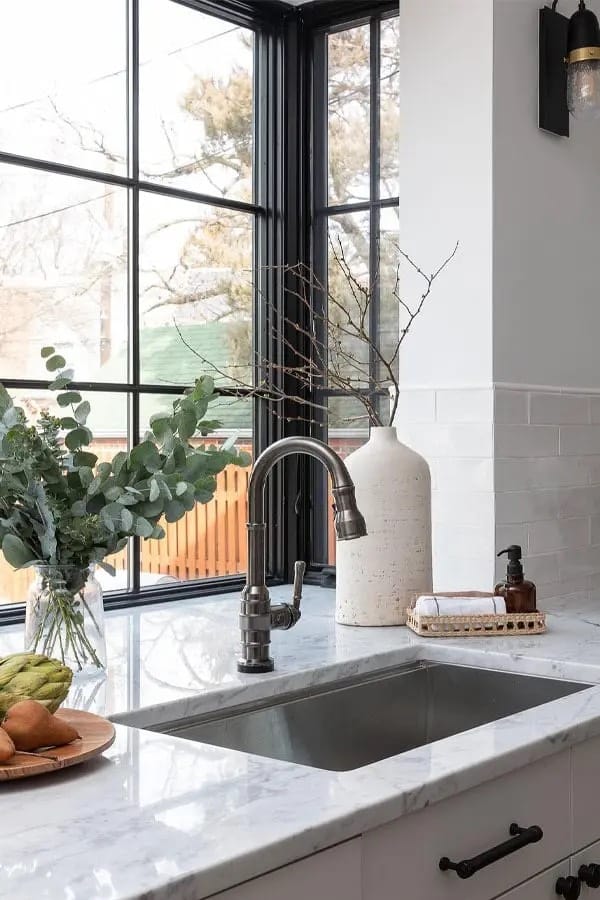
A white marble countertop with a stainless steel sink can read as purely utilitarian unless the window above gives it a reason to be there. The large black grid window frames the view and turns the sink into a stationary spot for looking out rather than just scrubbing in. The dark mullions echo the black faucet and the gray veining in the marble, so the palette stays tight: white, gray, black, with a few green stems on the counter for contrast.
The undermount installation keeps the counter surface uninterrupted, which matters when the view is the main event. A lip or rim would break the clean line between marble and window. If your sink sits under a window, match the window frame finish to the faucet metal. It ties the vertical plane to the counter without adding extra colors.
Vintage Modern White Integrated Sink with Drainboard
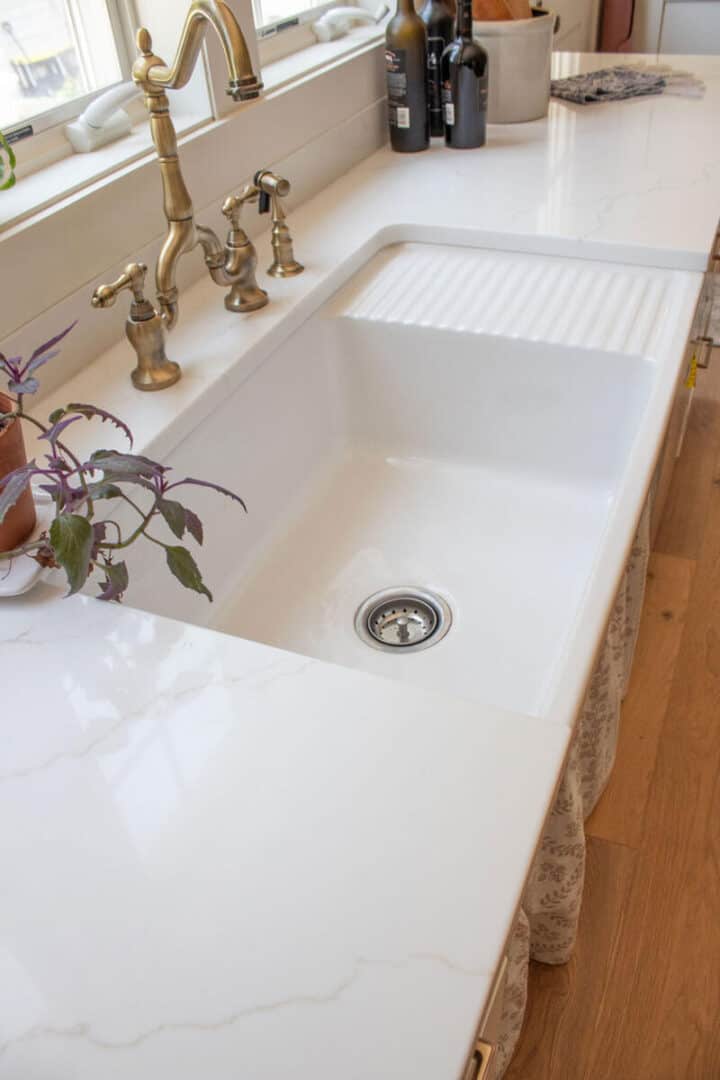
An integrated drainboard saves counter space by making the sink do double duty. The white quartz basin flows into a ribbed drying area on the same surface, so wet dishes never need to cross a seam. The wooden countertop next to it stays dry, and the vintage-style faucet with its curved neck gives the compact layout a deliberate, old-kitchen feel. The trick is keeping the drainboard clear of clutter. A drying rack on top of it defeats the purpose.
Eclectic Kitchen with Navy Blue Cabinetry and Farmhouse Sink
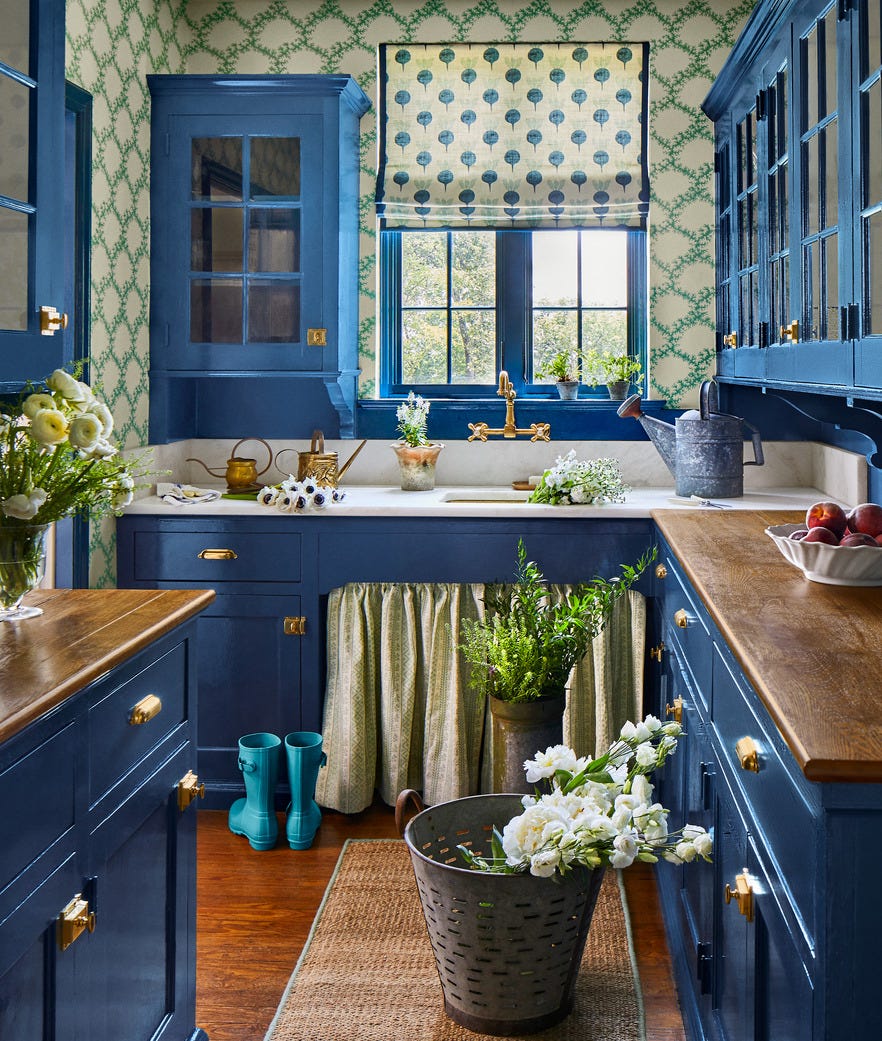
Navy blue cabinets need a sink that holds its ground. A white farmhouse apron sink does exactly that: the bright front face breaks up the dark cabinetry and gives the eye a place to rest. The patterned wallpaper behind the sink adds a layer of pattern without competing, because the blue in the paper picks up the cabinet color. A cream marble countertop softens the transition between the two. The window light hits the sink front and keeps the dark cabinetry from closing the room in. If you have bold cabinet color, let the sink be the lightest surface in that zone.
Modern Matte Black Sink Cover and Faucet on Granite
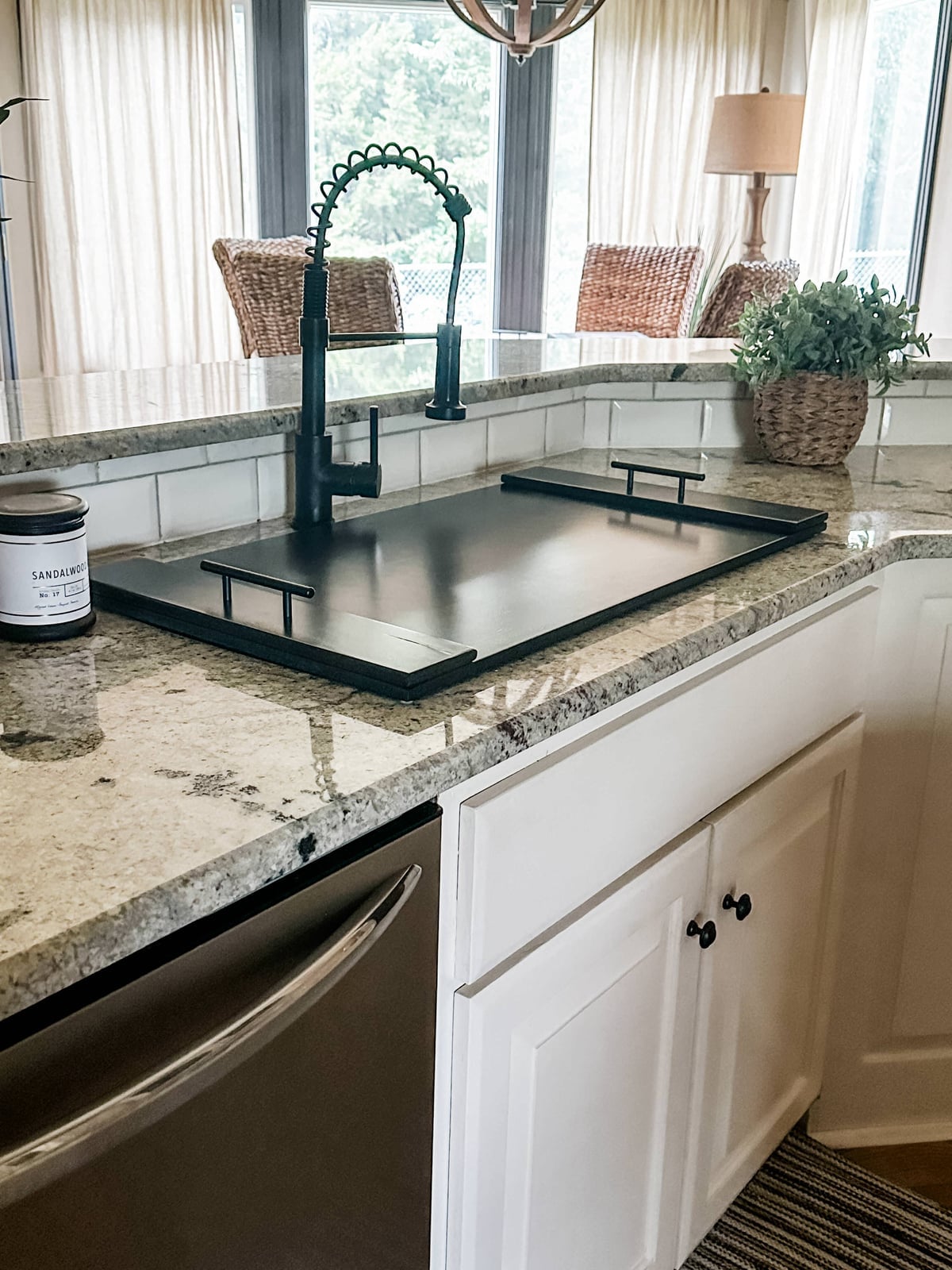
A sink cover turns the wet zone into extra counter space when the dishes are done. The matte black cover here sits flush on the granite, so the surface reads as a single dark plane instead of a hole and a lid. The black faucet rises behind it, and the cover itself has a subtle texture that breaks up the solid color without adding a second finish.
For the trick to work, the cover needs to match the counter in thickness and sit flat at the rim. A domed or lipped cover creates a bump that collects crumbs and defeats the prep-space purpose. The overhead light bounces off the matte surface rather than glaring, which is the main advantage over a glossy cover. If you prep a lot of food, look for a cover that includes a built-in cutting board layer.
Large Stainless Steel Apron Sink with Open Shelving
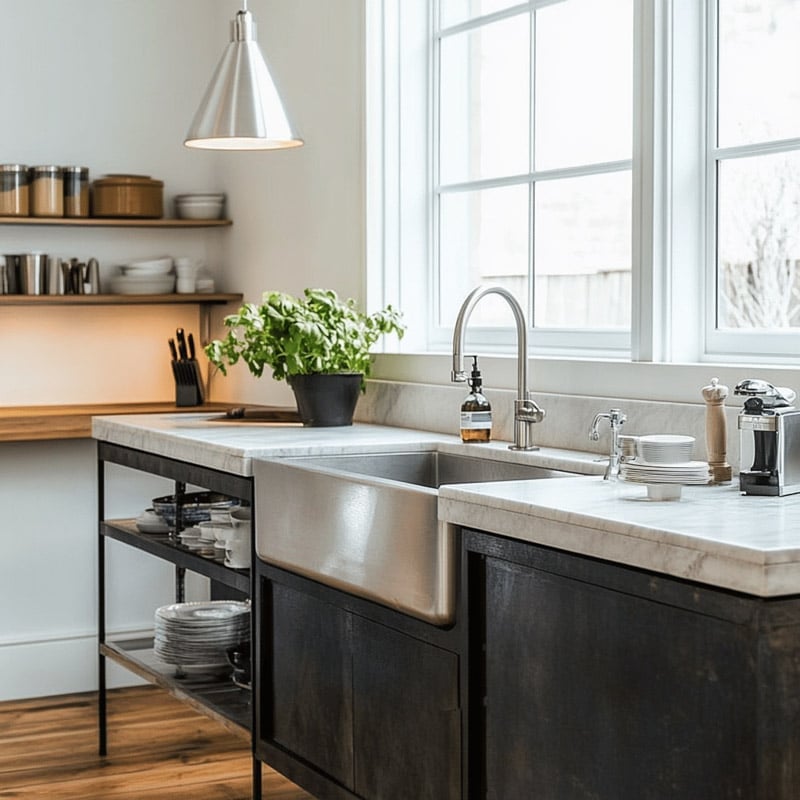
A large stainless steel apron front sink brings industrial durability to a farmhouse kitchen. The silver finish pairs naturally with white marble countertops and wood open shelving, creating a balanced palette of white, black, silver, and wood. Natural light from the window combines with an overhead pendant to keep the sink area bright for washing produce or loading dishes. The open shelving above and below the sink offers visible storage for everyday glassware and ceramics, so you can grab a plate without opening a cabinet door. This layout suits anyone who prefers to keep daily items within arm’s reach.
Transitional Undermount Sink with Brass Faucet and Wall Sconces
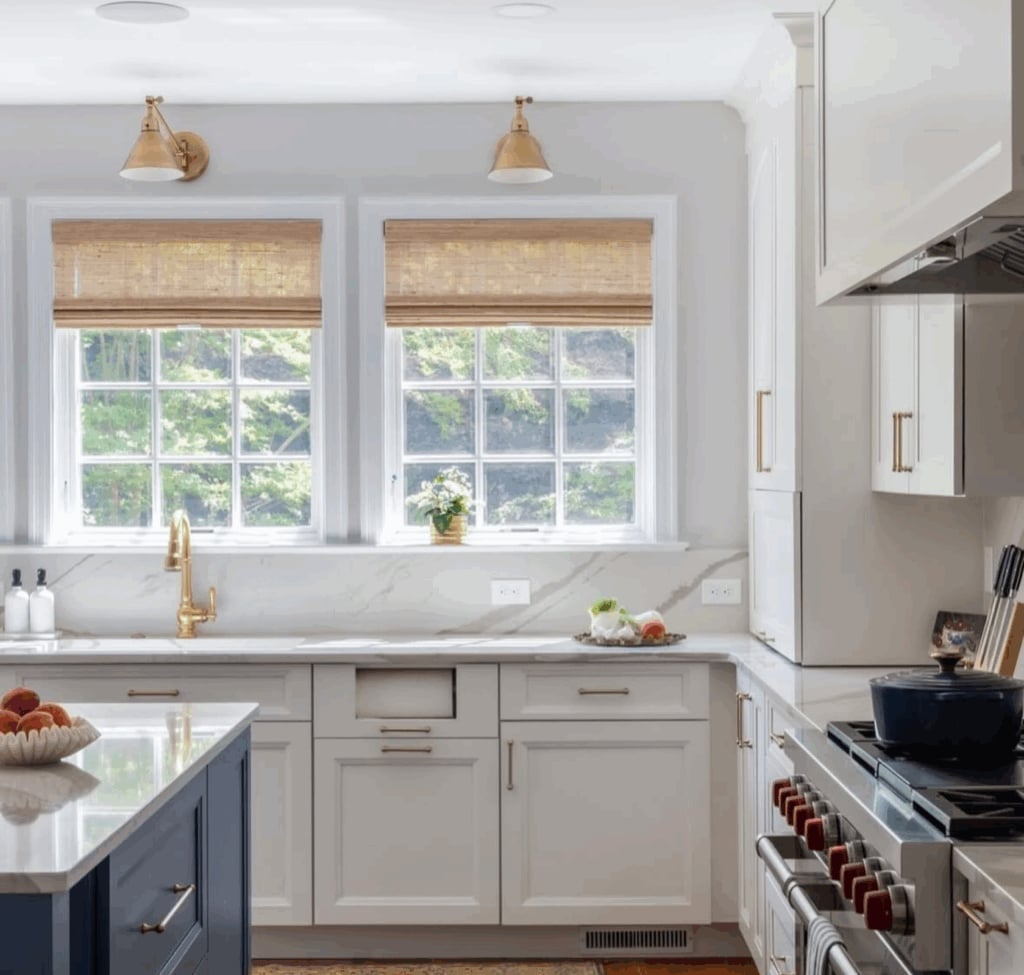
For a transitional kitchen, let lighting shape the sink zone. Here, two brass wall sconces flank the window above the undermount sink, casting warm light onto the marble countertop and the brass faucet. The palette stays in white, gray, gold, and natural wood tones, so the sconces and faucet become intentional accents without competing metals. Renters can mimic this look by installing plug-in wall sconces over the sink area without hardwiring. The brass finish ties the sink to the room’s fixtures, making the whole counter feel cohesive without requiring a full renovation.
Modern Stainless Steel Sink with Black Coil Faucet and Subway Tile
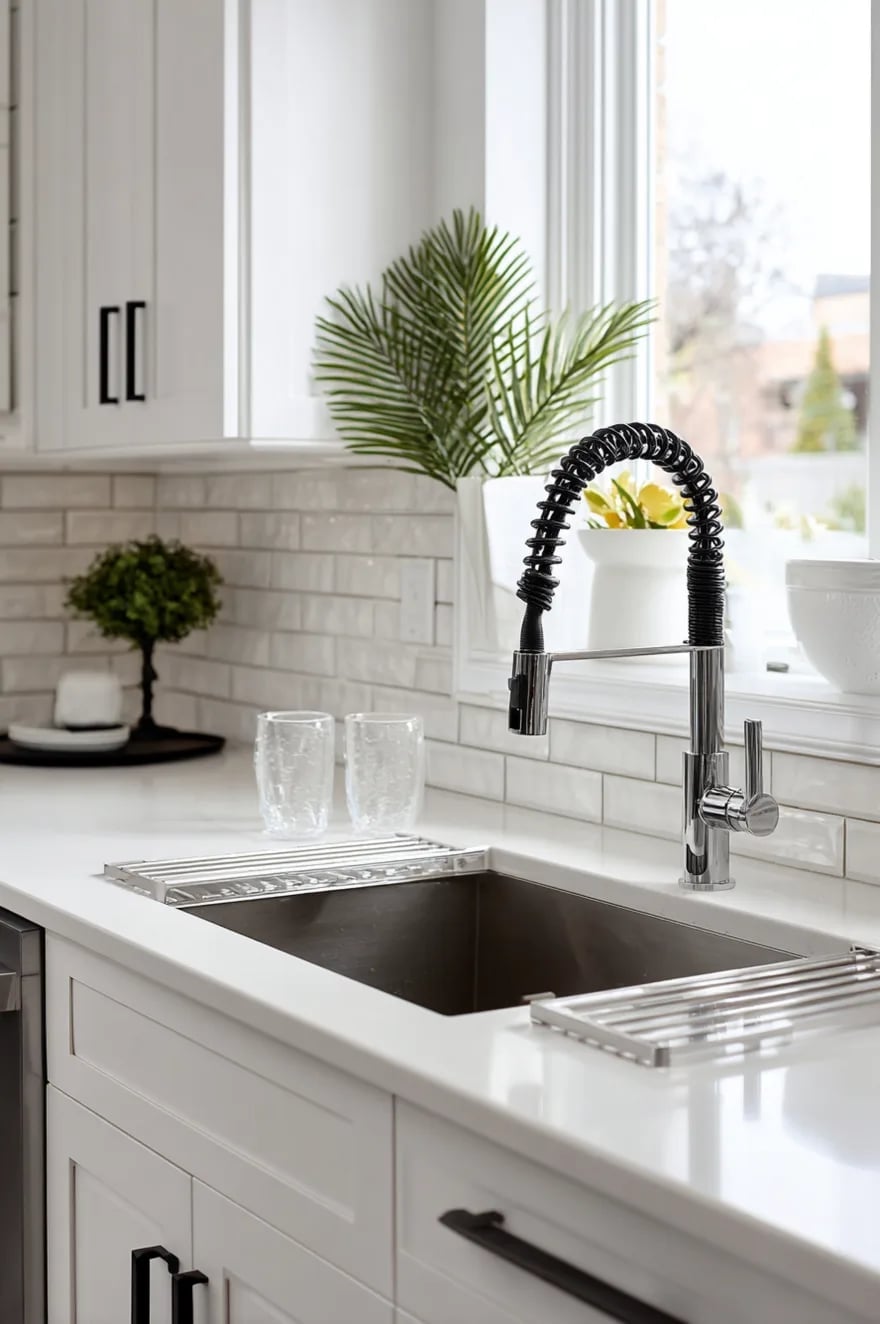
A white subway tile backsplash is a common choice, but pairing it with a black coil faucet shifts the look from standard to intentional. The stainless steel undermount sink keeps the countertop clear of rim buildup, while the dark faucet provides a crisp silhouette against the light tile. Sunlight hits the quartz countertop and prevents the black faucet from reading too heavy in a compact sink area. The coil shape of the faucet adds a tactile detail that a straight gooseneck does not.
For renters who cannot change the sink itself, swapping a standard faucet for a black coil model is a straightforward weekend project that redefines the whole sink zone. The matte black finish resists visible water spots better than chrome, so the sink area stays clean-looking between wipes. Keep the counter minimal white and gray to let the faucet do the work.
Modern Farmhouse White Apron Sink with Gold Faucet
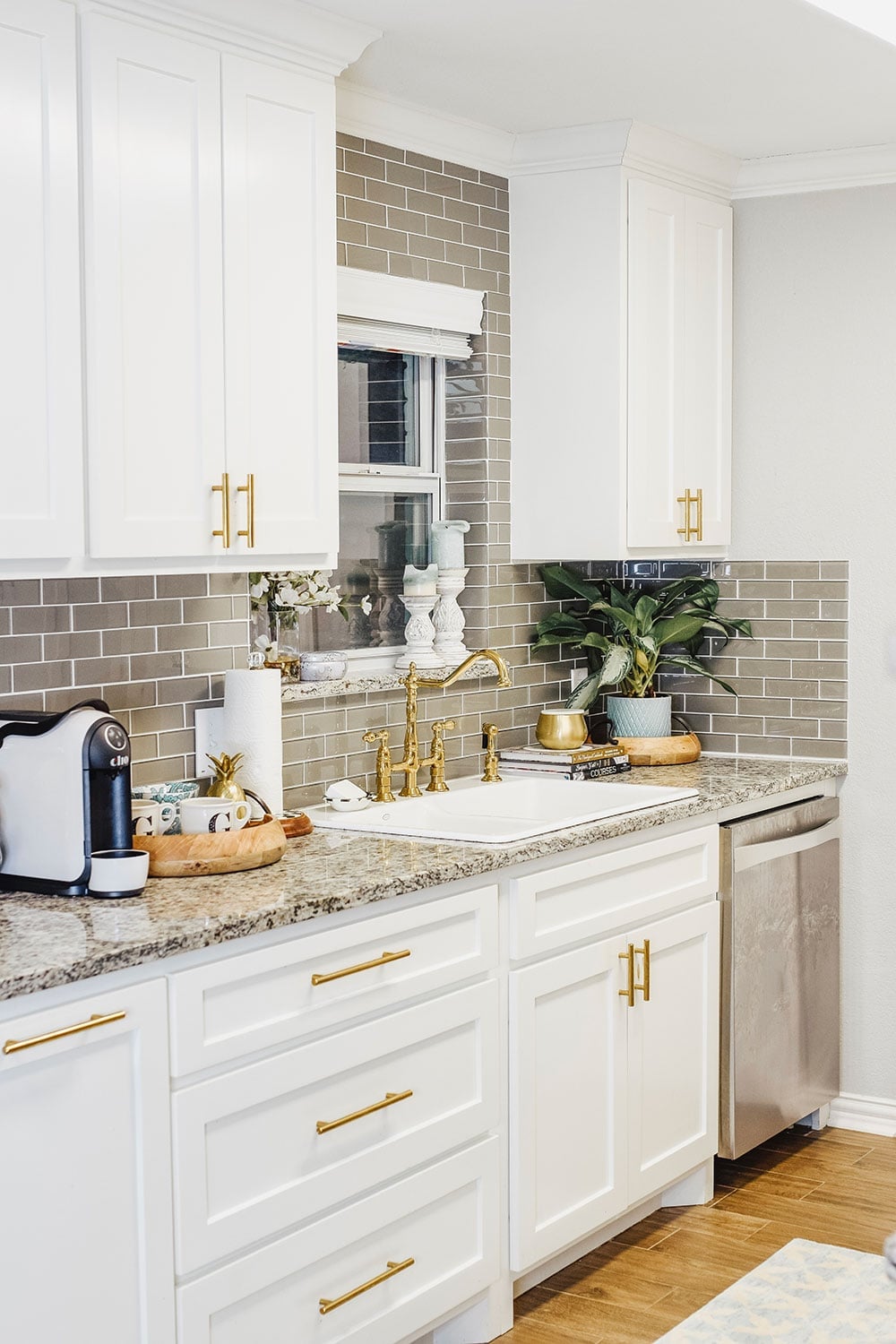
A white apron front sink anchors a modern farmhouse kitchen with its broad, rounded front panel. The gold faucet and cabinet hardware break up the white and gray tile palette without adding another color family. Natural light and an overhead fixture ensure the gold finish reads warm. The corner sink placement leaves ample counter space on both sides for staging dishes or prepping ingredients. White cabinets keep the look airy, while the gold accents add contrast. This palette works well for anyone who wants farmhouse charm without going full rustic.
Modern White Quartz Island with Double Basin Sink and Brass Faucet
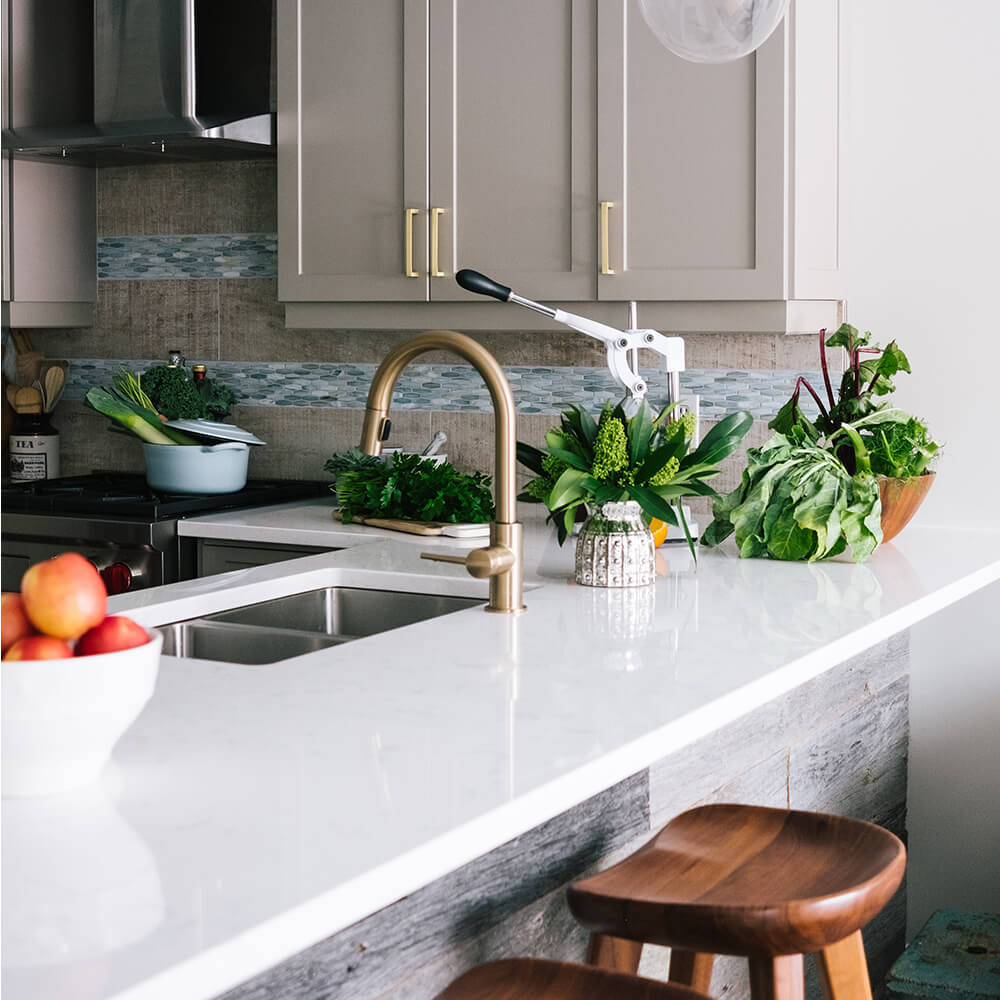
A double basin sink on a white quartz island handles both prep and cleanup simultaneously. The brass faucet sits centered between the two basins, and the waterfall quartz edge extends past the counter for a sculptural feel. The open plan layout places the island within view of the main kitchen, so the sink functions as a secondary work zone. Stools line the opposite side of the island, meaning the sink needs to stay tidy enough to look presentable from the seating area. The palette of gray, beige, wood, and green keeps the island from competing with the surrounding cabinetry. A double basin works best when you have space to dedicate each side to a separate task.
Modern Undermount Sink with Concrete Countertop and Subway Tile
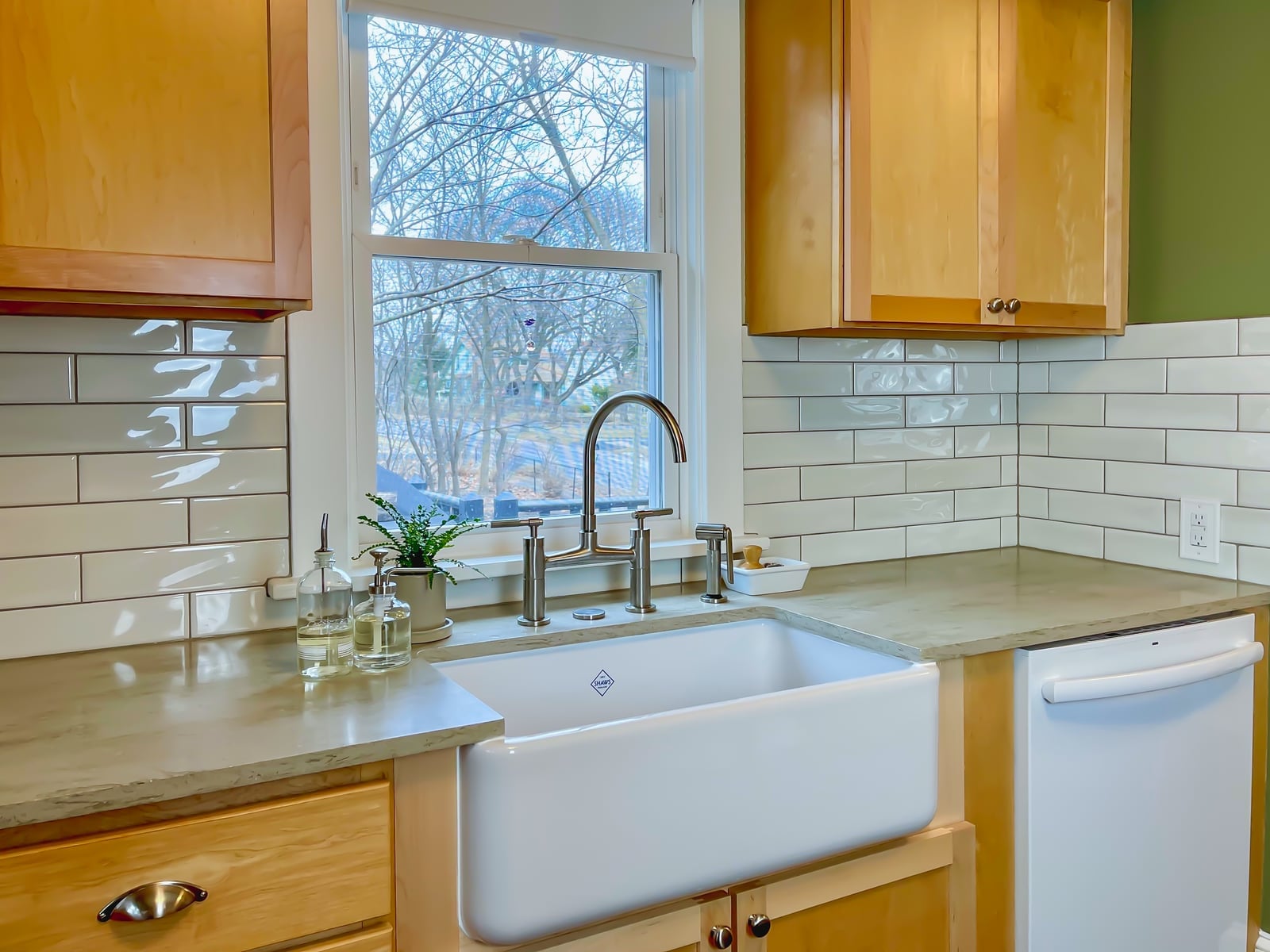
The key to a modern kitchen is letting each material do its job without competing for attention. Here, an undermount sink sits flush against a concrete countertop, with the clean line of subway tile wrapping the backsplash. The gray of the concrete and the white of the tile keep the palette neutral, while the wood cutting board and silver faucet bring in warmth and a bit of shine. The window above the sink makes the whole surface feel less industrial and more approachable. The layout works because the sink anchors the space under the window, and the tile provides a clear path to follow. The result is a kitchen that feels put together.
Transitional White Composite Sink with Brushed Nickel Faucet
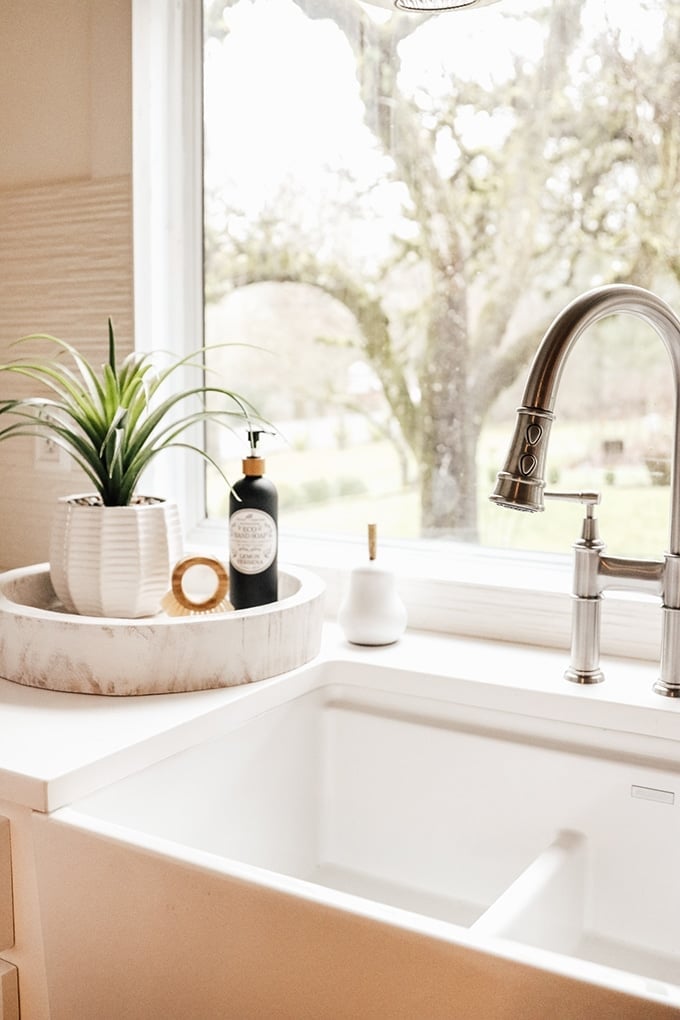
A white composite sink paired with a brushed nickel faucet offers a clean and warm palette. The white sink softens the metal faucet, while the silver finish prevents the look from feeling stark. A small potted plant on the counter adds green, breaking up the neutral scheme without clashing. The natural window light makes the white sink appear bright, not cold, and the brushed nickel faucet looks polished. This palette works because it stays simple and lets the materials speak.
Traditional Double Basin Stainless Steel Sink with Garland
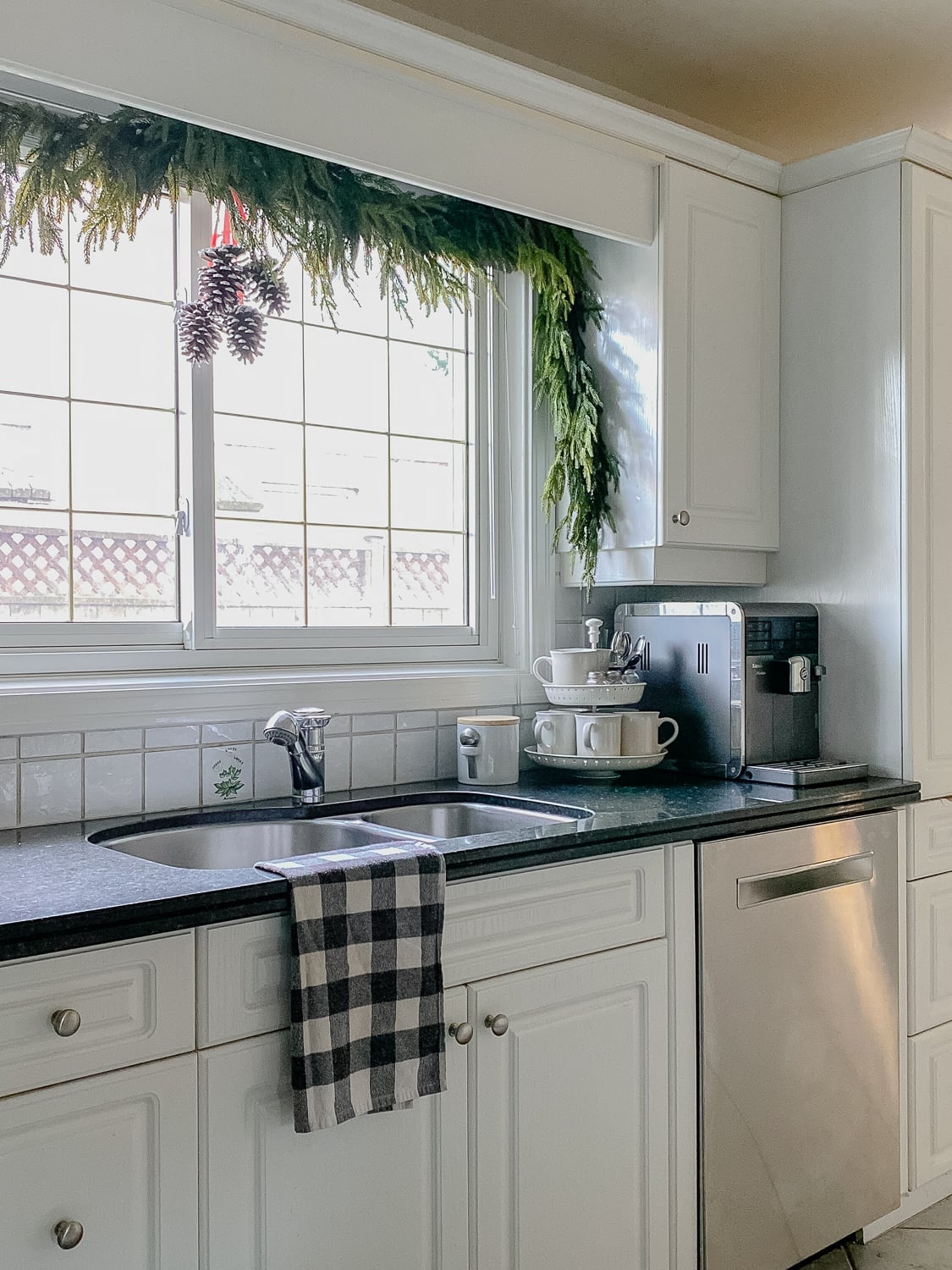
For a traditional kitchen, let the sink feel like part of the room, not just a workhorse. A double basin stainless steel sink sits under a window with natural light, and a garland draped across the front adds a soft, seasonal touch. The stainless steel reads cleanly against the white surround, while the granite countertop and wood cabinet bring in natural texture. The garland breaks the straight lines of the sink and counter, creating a focal point. This simple addition makes the kitchen feel lived in and welcoming.
Large Stainless Steel Farmhouse Sink with High-Arc Faucet
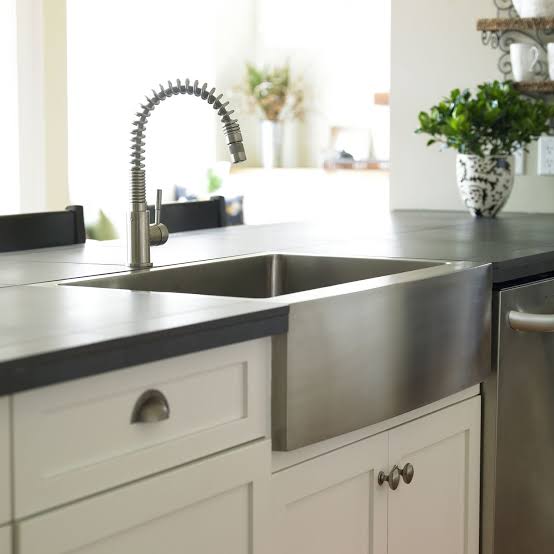
A large stainless steel farmhouse sink is not the same as a standard undermount model. The apron front changes the whole silhouette of the counter, making the sink a visual anchor. Here, the high-arc faucet rises above the deep basin, and the stainless steel finish reflects the window light. The surrounding white laminate cabinets and wood butcher block counter keep the look from feeling too cold or commercial. The scale of the sink works because the counter is wide enough to balance it, and the faucet is tall enough to clear the basin. This setup is best for a kitchen where washing large pots is the norm, and the sink becomes a daily tool.
White Double Basin Sink with Gooseneck Faucet and Wood Countertop
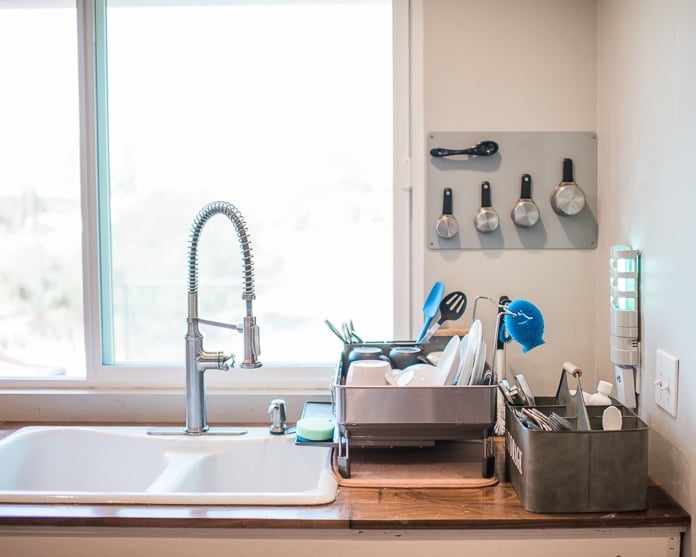
A white double basin sink paired with a gooseneck faucet and a wood countertop is a precise study in contrast. The white composite of the sink keeps the surface bright and clean, while the warm wood counter brings in natural texture. The gooseneck faucet arcs high over the double basins, making it easy to wash large items without hitting the back of the sink. A simple dish rack on the counter keeps daily tools within reach, and the natural light makes the whole setup feel airy. The storage lesson here is that a deep double basin does the work of two sinks, so you can keep the counter clear.
White Ceramic Drainboard Sink with Vintage Brass Faucet and Floral
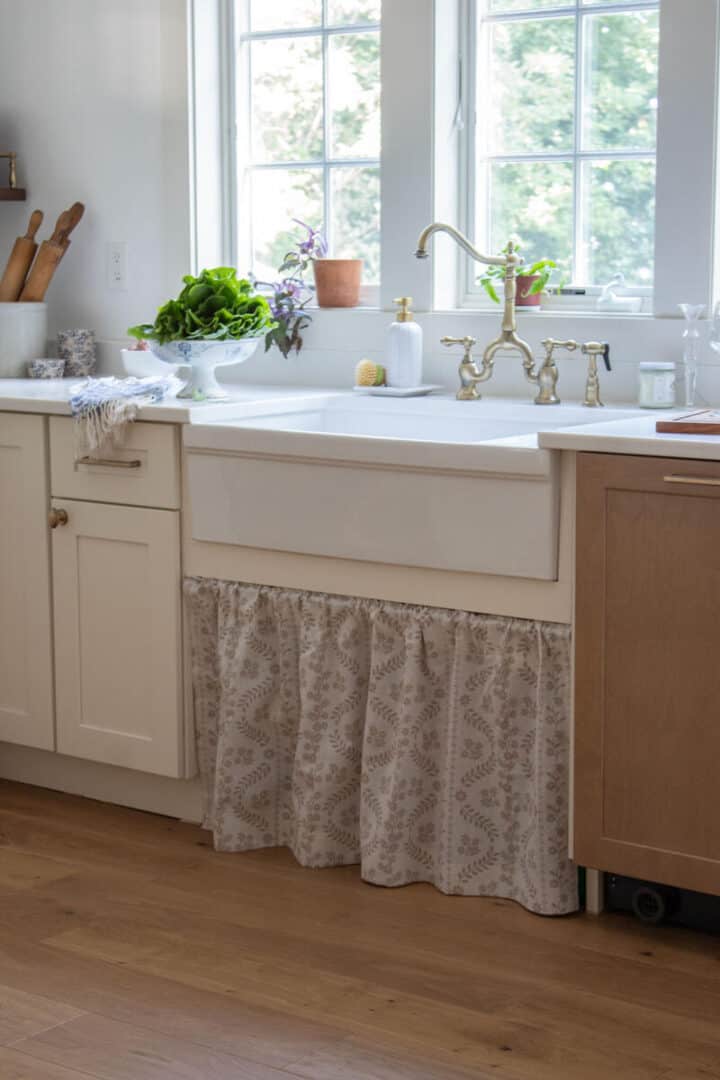
A white ceramic drainboard sink with a vintage brass faucet brings a gentle, practical charm to a farmhouse kitchen. The sink sits under a window that lets in natural light, with wood cabinetry framing the setup. A floral skirt tucked under the sink adds a soft, unexpected detail that keeps the look from feeling too stiff. The integrated drainboard is the real workhorse here, giving you a place to let washed produce or dishes dry without needing a separate rack on the counter. This kind of sink suits anyone who wants the farmhouse feel without the full apron-front commitment, and the skirt is an easy swap you can change out whenever the mood strikes.
Vibrant Orange Composite Sink in a Kitchen Corner
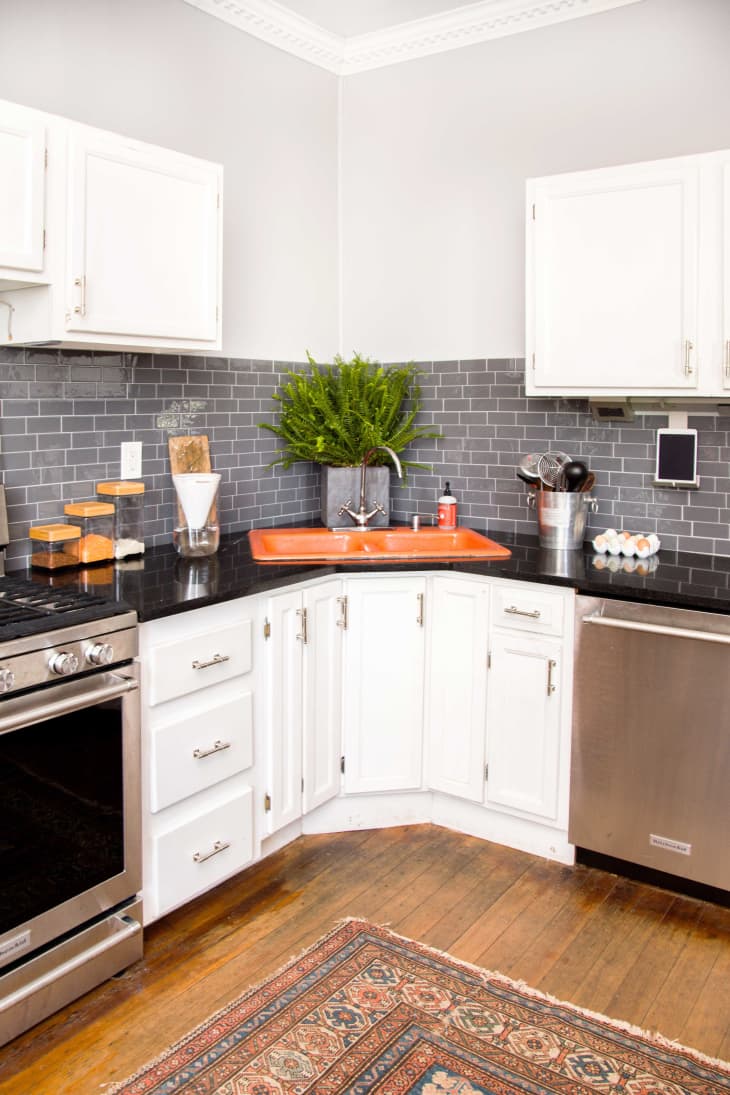
If a white or stainless steel sink feels predictable, a vibrant orange composite sink is a different path entirely. This one sits tucked into a corner, with a simple faucet above it and a white subway tile backsplash behind. The orange stands out because the kitchen stays quiet: gray, white, and black tones let the sink take center stage. Overhead lighting and natural light both hit the surface, keeping the color from feeling heavy.
The palette here works because it follows a simple ratio. One bold element, the orange sink, gets surrounded by neutrals that support it without competing. A white tile backsplash and a dark faucet keep the look grounded. For renters, this is a harder swap since the sink itself is a permanent fixture, but the idea translates: if you can choose the sink, pick a color that makes you happy and build everything else around it.
Modern Farmhouse Undermount Sink with Brass Bridge Faucet
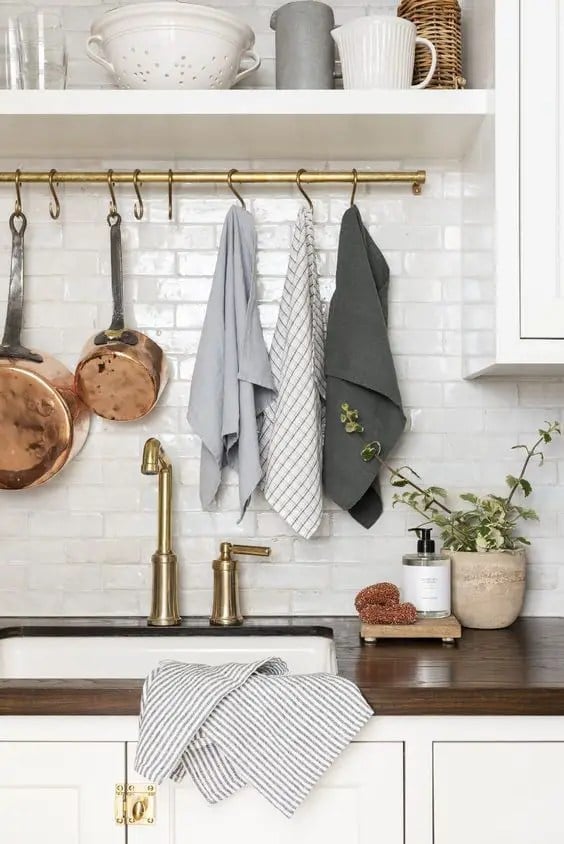
A brass bridge faucet is the defining detail in this modern farmhouse kitchen, paired with an undermount sink that keeps the countertop line clean. The faucet stands out against a white tile backsplash, with copper pots on a nearby shelf echoing the warm metal tone. Natural light and a light under the shelf keep the brass from feeling too dark. The material mix here is what makes the look work: the warmth of brass and copper balances the cool white of the tile and the wood tones in the cabinetry. For a similar effect, match your metal finishes to the smaller accents in the room, like pot racks or cabinet hardware, so the sink area reads as part of a bigger plan.
Final Thoughts
Choosing a kitchen sink comes down to how you cook and clean. A deep single basin handles large pots, while a divided sink lets you multitask. Material matters too: stainless steel is forgiving, stone adds weight, and composite resists scratches. Keep an eye on faucet height for filling tall vessels and on the sink depth to avoid splashing. The right sink makes daily tasks feel less like chores and more like part of a well-run kitchen. Let these 28 ideas guide you to a sink that works as hard as you do.