Mediterranean style never goes out of fashion, and the homes in this collection prove why. It’s a look built on sun-warmed stucco, cool tile floors, and the kind of arches that make every doorway feel like an invitation. We’ve gathered 34 examples that show how this aesthetic plays out across entries, kitchens, living rooms, and gardens.
Some lean rustic, others feel grand, but they all share that relaxed, indoor-outdoor rhythm that defines the look. If you’re after a space that feels both grounded and airy, these homes offer plenty of inspiration.
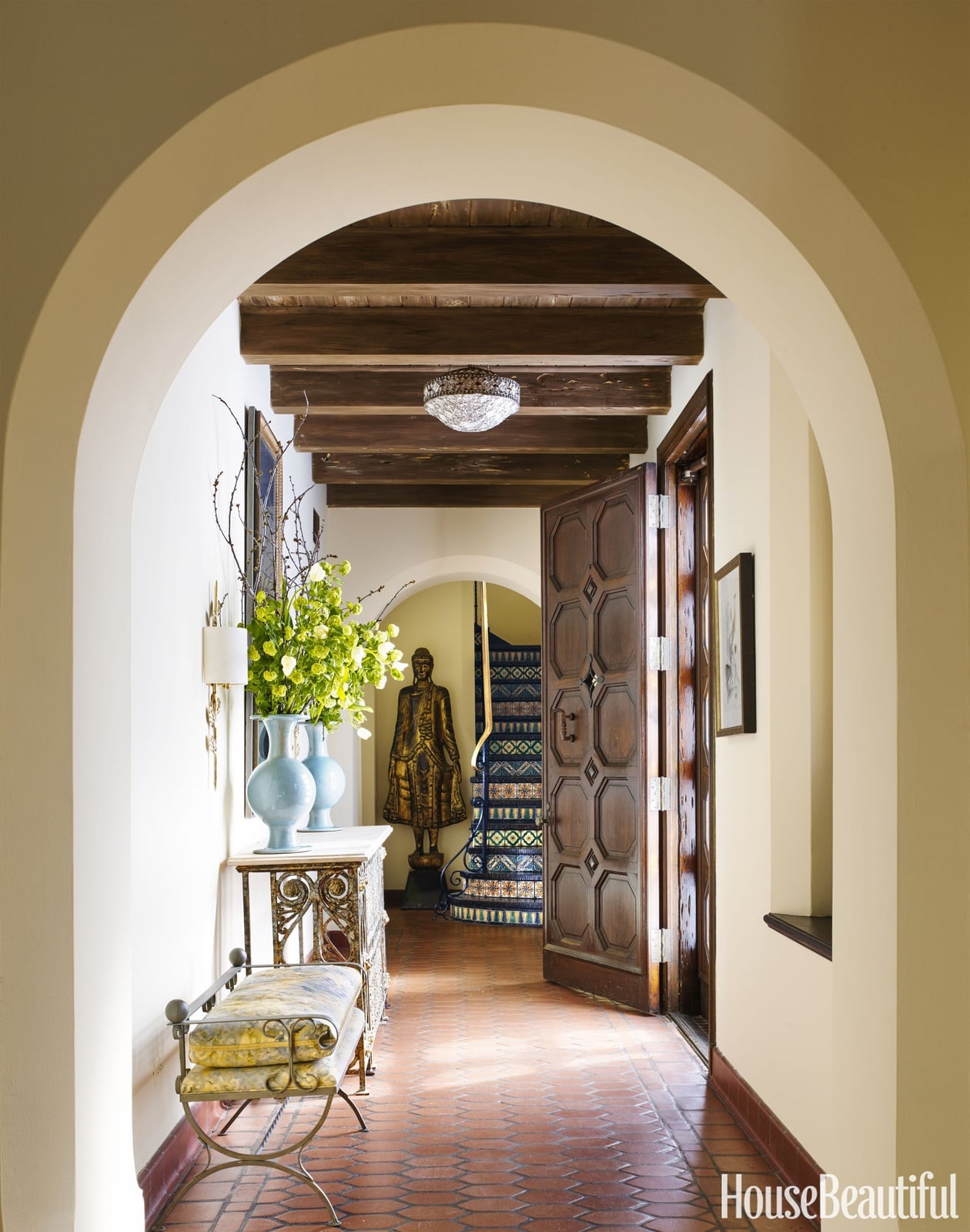
Mediterranean Hallway with Arched Entry and Terracotta Floors
An ornate wooden door set within a broad plaster arch anchors this hallway, the warm cream walls and terracotta tile floor setting a quiet rhythm. A simple wooden bench offers a practical pause point before the open doorway draws the eye forward. The layout keeps the path clear and the hero element central, which is the rule for a hall that wants to feel generous rather than cluttered.
Tranquil Mediterranean Courtyard with Stone Fountain and Tiled Floors
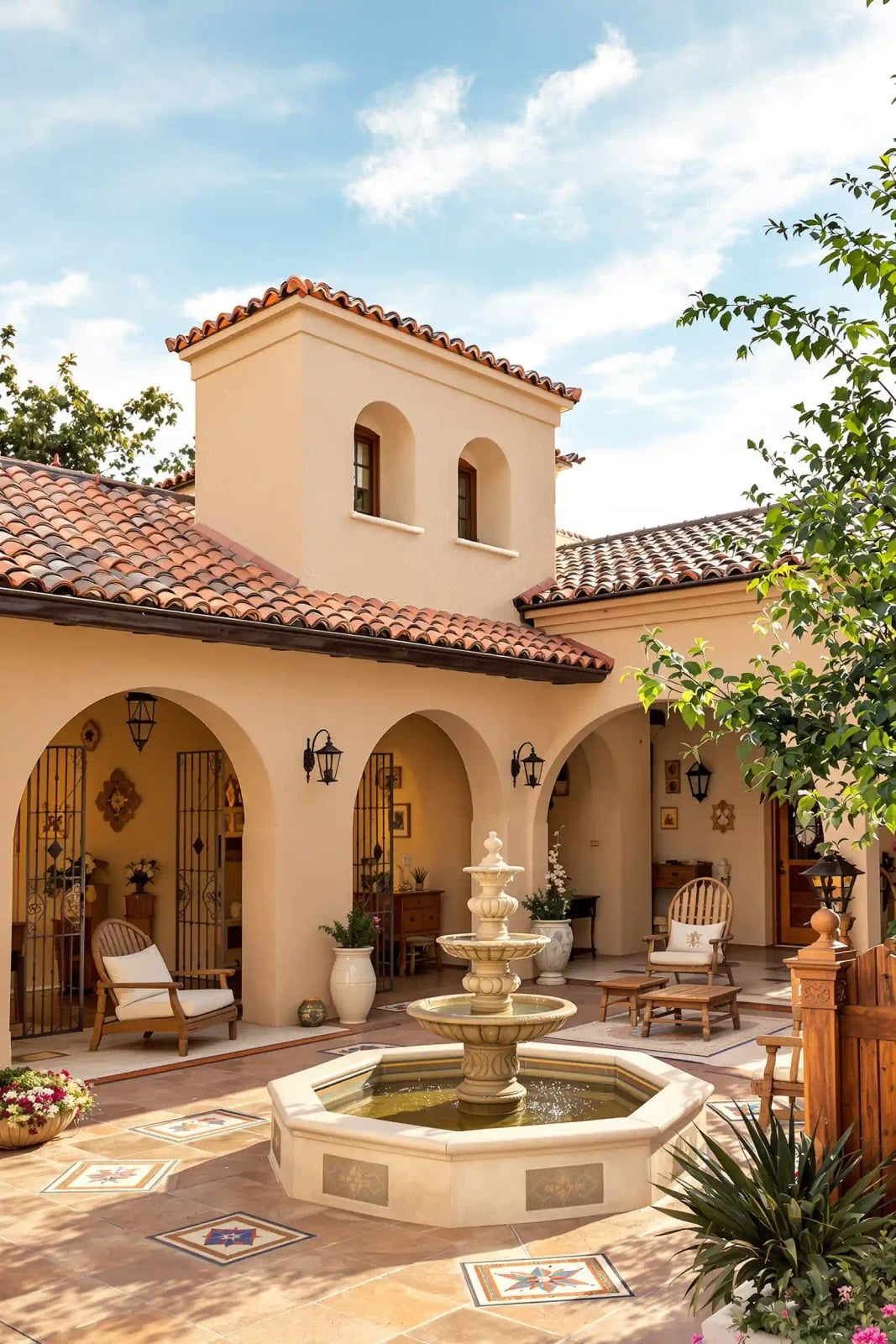
This courtyard works because the palette stays restrained. Cream stucco walls, beige stonework and terracotta tile floors frame the central stone fountain without competing for attention. Arched walkways and a few wooden chairs keep the seating secondary to the water feature. The look is defined by that quiet ratio of warm neutrals to hardscape, and what breaks it would be anything glossy or dark added to the mix.
Mediterranean Kitchen with Blue Cabinetry and Patterned Tiles
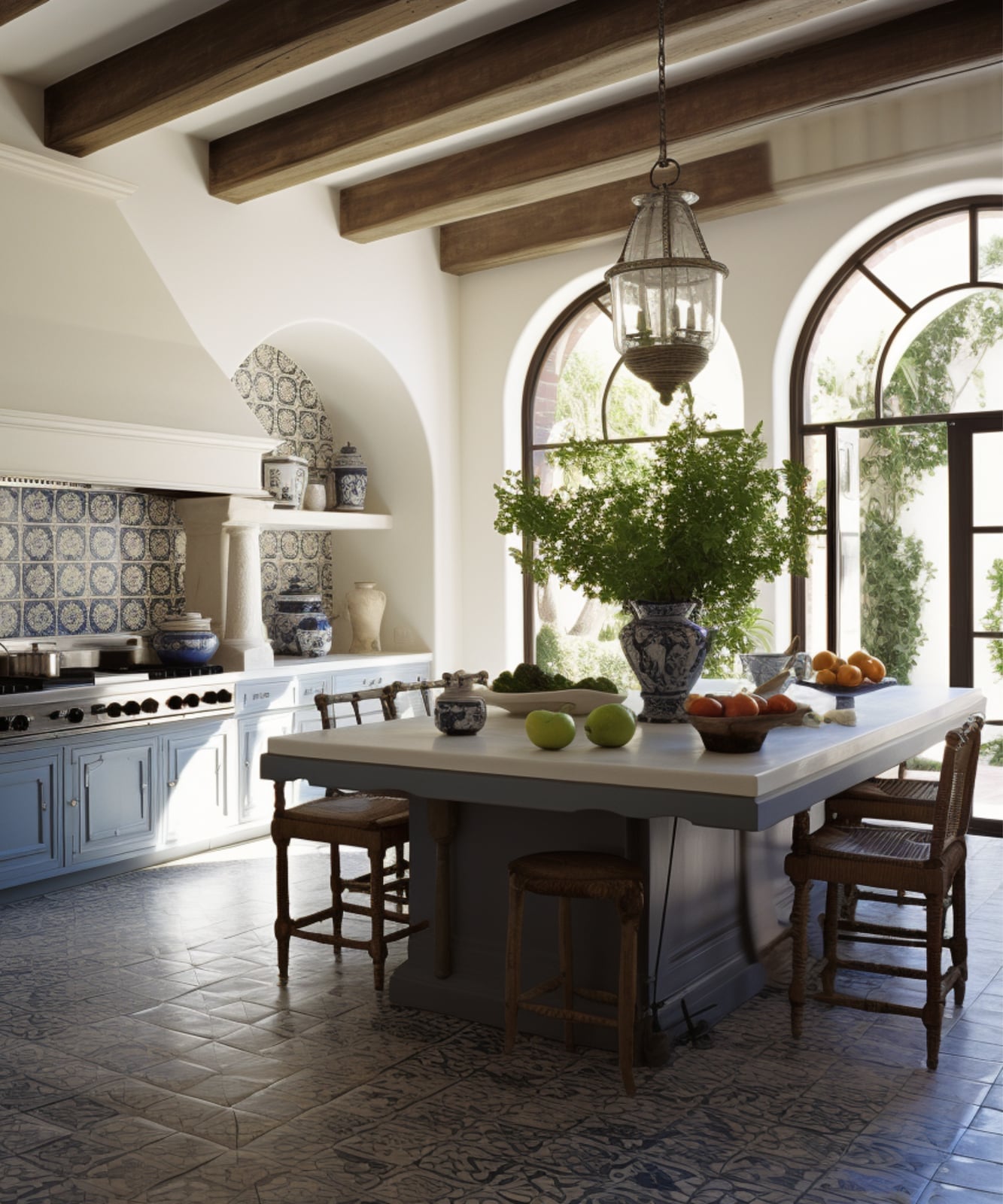
Blue cabinetry feels timeless when paired with warm naturals. This kitchen uses a large island as its hub, with blue lowers and white uppers keeping the weight low. Patterned blue and white tiles climb the backsplash and connect to terracotta floors through the wood of the island top. The palette relies on that blue-white-terracotta triangle, while a cool gray or stark black would break the balance. Arched windows let in natural light that keeps the blue from reading as cold.
Vibrant Mediterranean Garden Path with Terracotta Pots
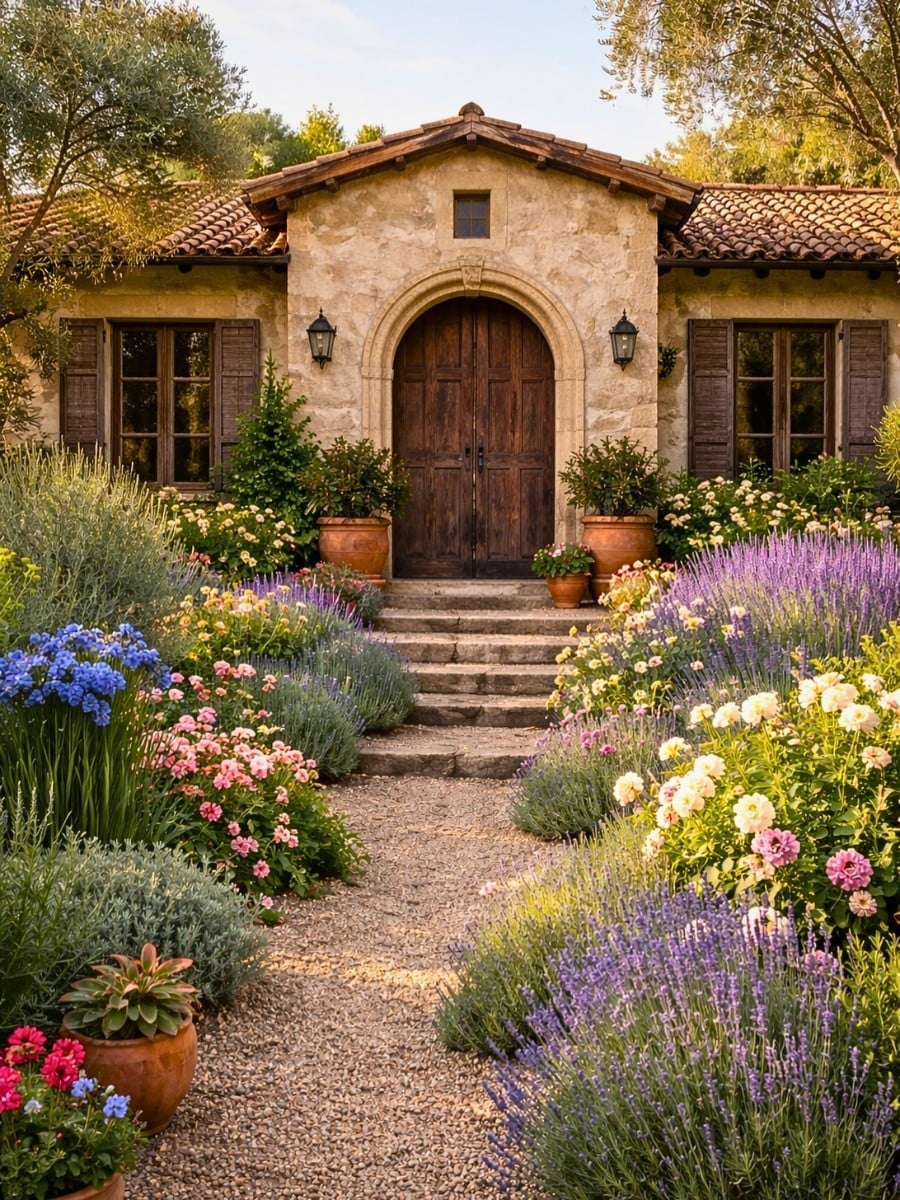
A stone house facade with an arched wooden door sits at the end of a gravel path, but the real work is done by the flower beds. Purple, pink and blue blooms layer up against the green foliage, while terracotta pots repeat the warm tone of the house. The bright daylight makes the colors pop. For a similar effect in a smaller yard, cluster pots of a single flower color near the entry to create that same layered look without the full garden bed.
Mediterranean Home Exterior with Stucco and Cascading Bougainvillea
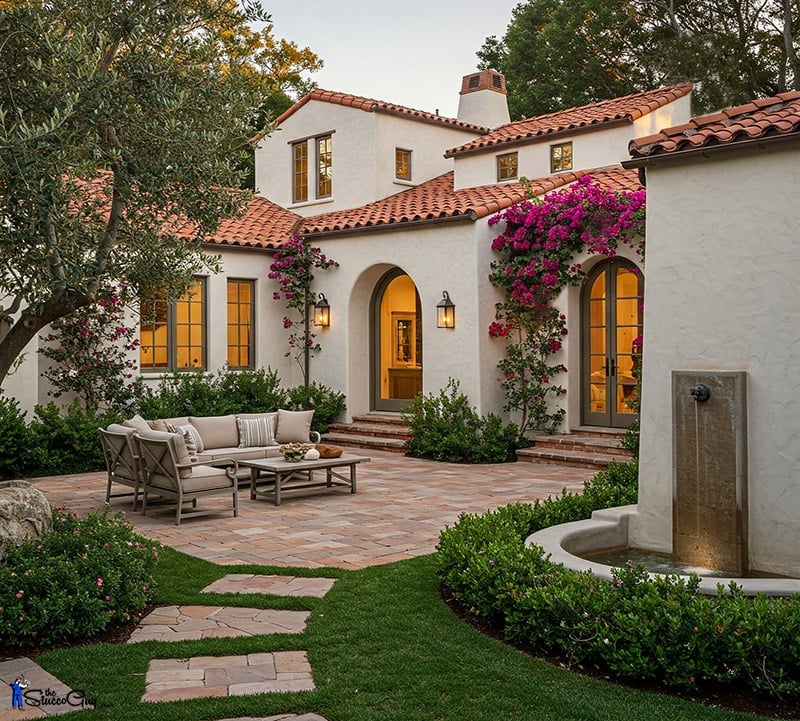
For exterior color, let the plants provide the bright notes. Here the white stucco walls and terracotta roof stay neutral, while bougainvillea in deep pink cascades over the facade. A stone fountain and simple outdoor furniture keep the courtyard functional. The look relies on a ratio of mostly neutral hardscape to a single vivid plant accent. Adding more than one strong flower color would break the balance.
Charming Mediterranean Garden Entrance with Carved Wooden Door
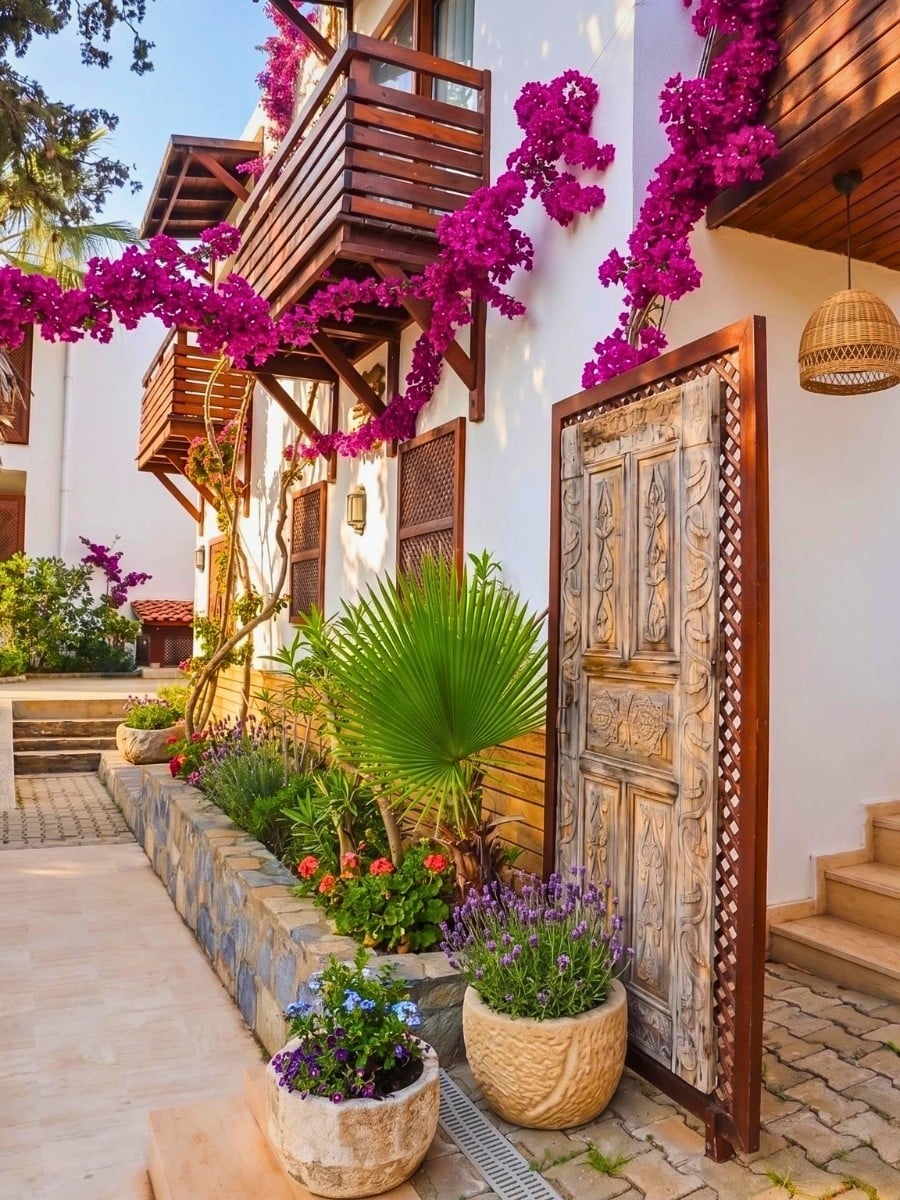
A solid wood door with visible carving can read as a distinct focal point, while a simpler painted door often blends into the facade. This entrance uses the carved detail as the hero, with the white plaster walls and terracotta pathway keeping the rest of the scene quiet. The palette pairs the warm wood with green foliage and purple flowers in potted plants, making the door stand out without competing.
The style relies on that one ornate piece against otherwise plain surfaces. The wooden balcony above adds vertical weight, but the pathway leads the eye straight to the carving. What breaks the look is the tile step at the threshold, a small shift in material that marks the transition from garden to entry. For a renter, a salvaged door with similar carving can replace a plain one, or a large potted plant can anchor the entrance without changing the structure.
Mediterranean Courtyard with Geometric Blue and White Tiles
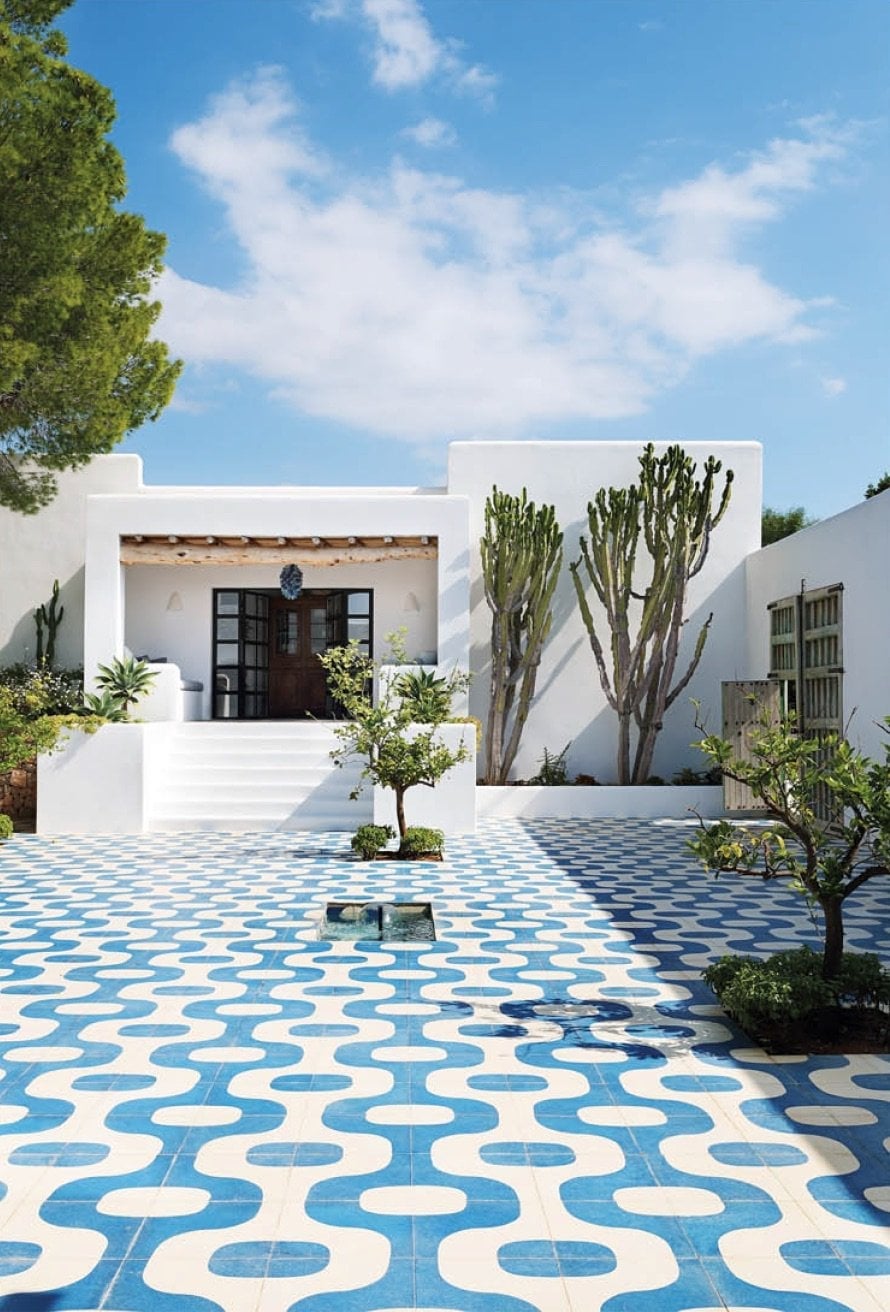
The courtyard uses a bold geometric tile pattern in blue and white laid across the entire floor, while the white stucco building and wooden doors stay neutral. The palette is defined by that blue against the warm green of cacti and the cool white of the walls. The ratio is roughly two-thirds tile to one-third stucco and wood, keeping the pattern from overwhelming. What breaks it are the dark wood doors. They add a heavier tone that grounds the bright tile. For a similar effect on a patio or balcony, a blue and white outdoor rug can mimic the geometry without a permanent install.
Open-Plan Living Area with Exposed Beams and Textured Chandelier
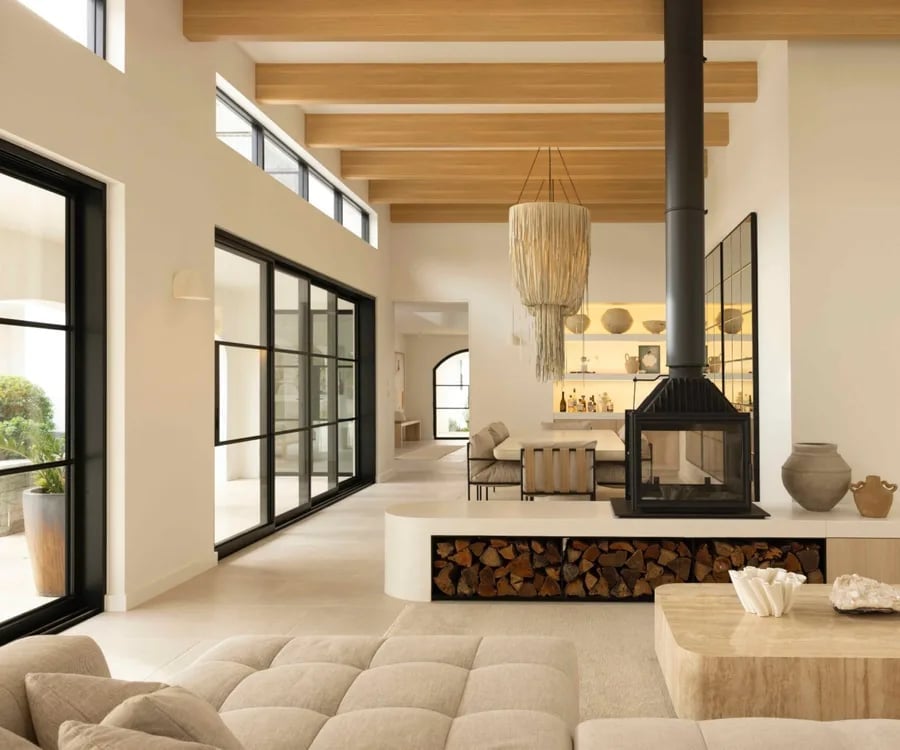
This living area uses the ceiling as an anchor. The exposed wooden beams run the length of the room, and the textured chandelier hangs at the center, drawing the eye upward. The layout places a large sectional and fireplace below, creating a clear zone within the open plan. The palette stays neutral with warm wood tones, so the ceiling features carry the weight. Let the architecture define the zones instead of adding walls or dividers. In a rental, a large pendant or a row of ceiling-mounted hooks can create a visual line without altering the structure.
Mediterranean Entryway with White Plaster Arch and Terracotta Tiles
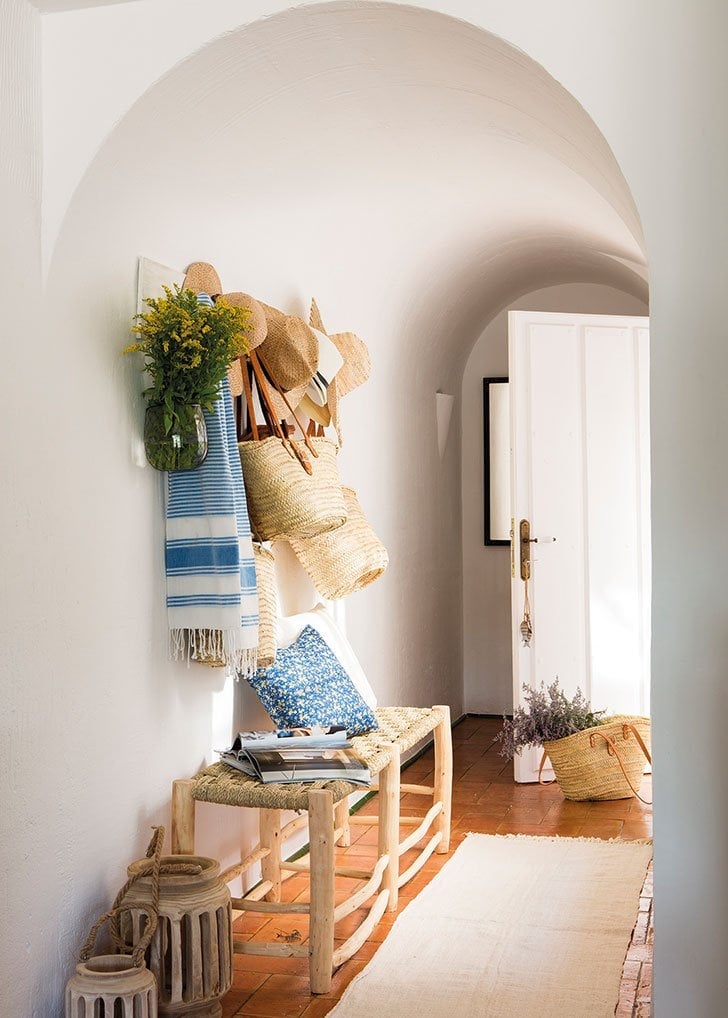
Can a curved archway make a narrow entry feel wider? It can, because the eye follows the arc and stops at the corner. This entry uses a white plaster arch as the focal point, with terracotta tiles underfoot and a wooden bench against the wall. The palette mixes white, natural wood, and a touch of blue from a striped towel and straw bags on hooks. The floor stays clear, and the bench offers seating without blocking the path.
The arch remains the focal point because everything else is low or against the wall. The straw textures and the towel add softness without clutter. For a similar feel in a home without an arch, a large curved mirror above a console can echo the shape. The terracotta tiles hold up well to foot traffic and are easy to sweep, making this a practical choice for a busy entry.
Living Room with Arched Fireplace and Beamed Ceilings
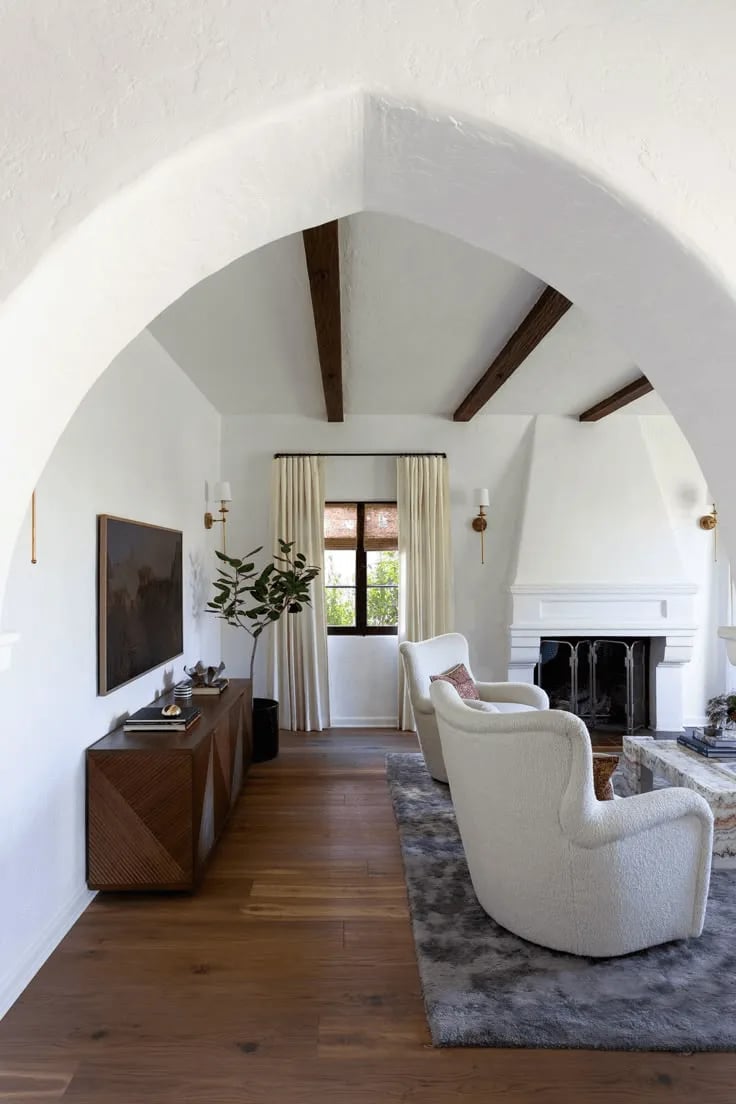
The arched fireplace is the main architectural detail, framed by the wooden beams overhead. The plaster surround keeps the shape clean, while the bouclé armchairs in front add soft texture. The palette stays white and wood with gray accents from the chairs, so the arch reads clearly. Wall sconces on either side add light without breaking the silhouette. For a room without an arched fireplace, a simple arched mirror above a mantel can create a similar focal point.
Grand Mediterranean Entrance with Stone Accents and Large Planters
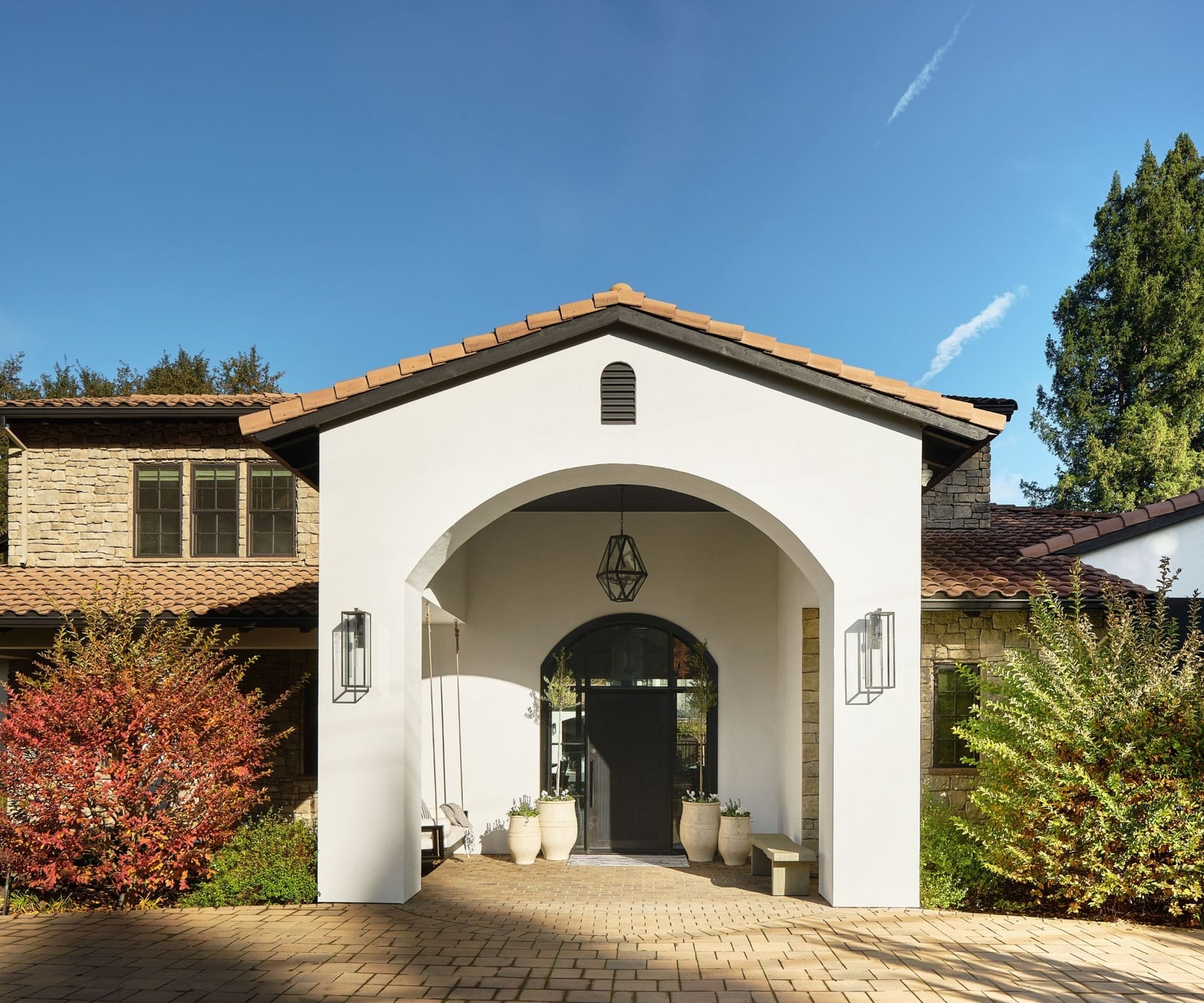
A grand entrance works best when scale is the first thing you get right. Here, an arched entryway is the clear center, framed by stone accents and large planters that keep the eye moving up rather than across. The white stucco, terracotta brick, and stone read as a single palette, so the layout feels deliberate. The large planters in green soften the hard lines without crowding the path. A lantern adds a human-sized detail next to the tall arch. The principle is simple: let one element dominate and keep everything else as background.
Mediterranean Living Room Through an Archway with Terracotta Floors
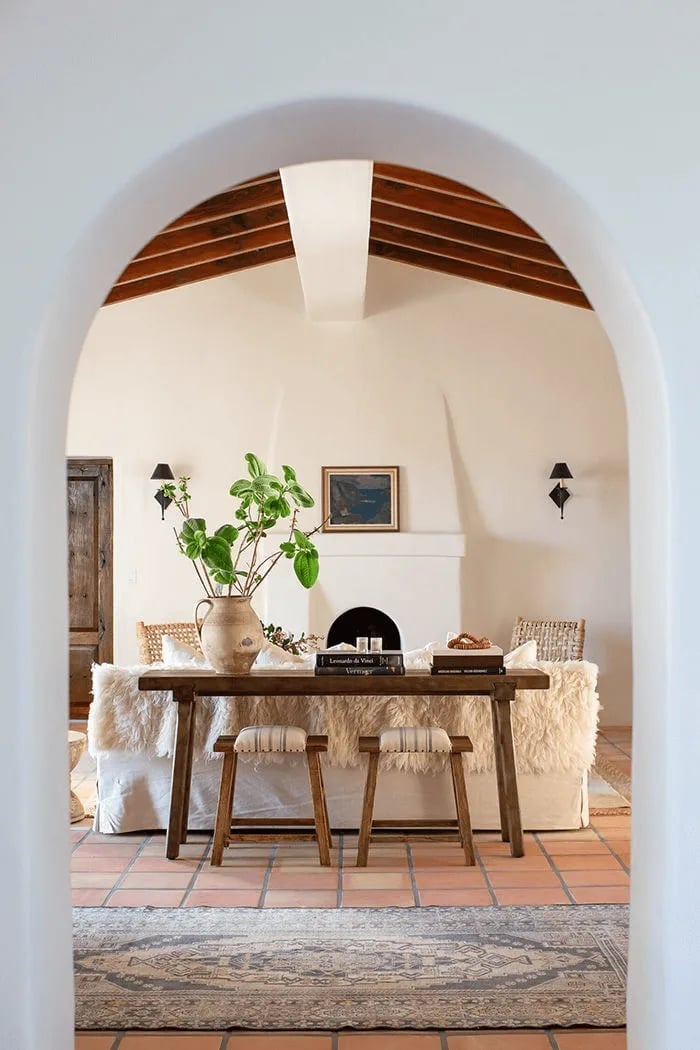
A living room seen through an archway could feel like a separate zone or an extension of the hall. This one chooses extension. The terracotta floor runs straight through, so the arch frames the space. The fireplace becomes the anchor, with a sofa facing it and a console table behind for balance. Wall sconces add warm light at eye level. The palette of white plaster, wood tones, and linen stays soft. The room feels roomy because nothing fights the floor or the arch. The architecture owns the edges while the furniture fills the middle.
Mediterranean Home Exterior with Terracotta Roof and Mountain Backdrop
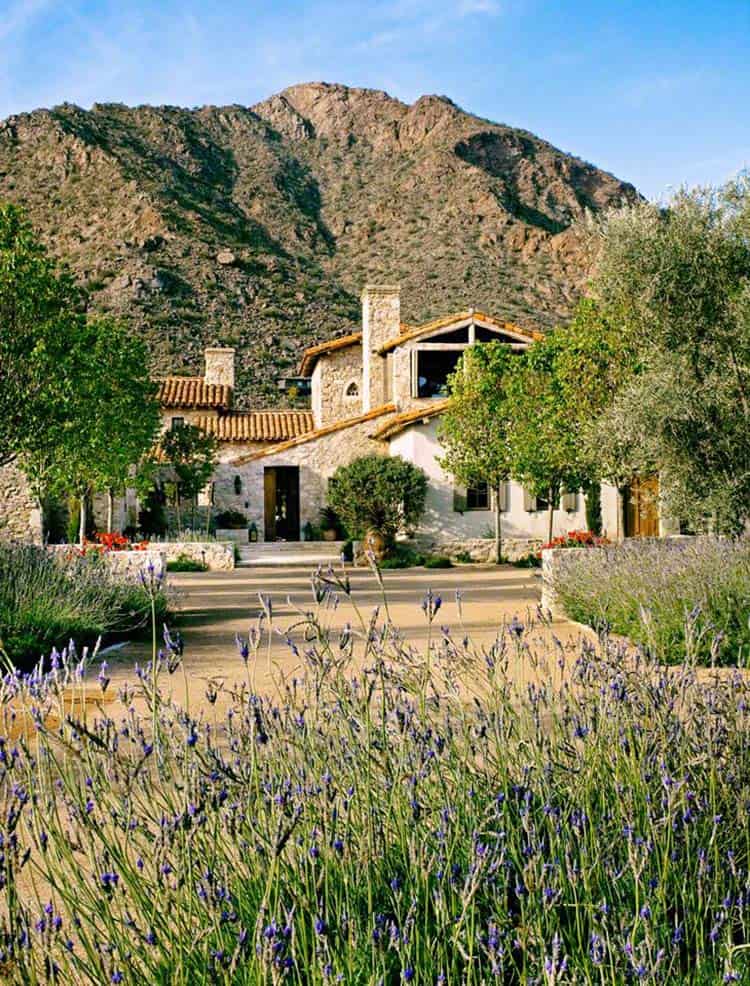
The house sits low against the mountain, its terracotta roof tiles and stone walls blending into the dry landscape. Olive trees and lavender in the foreground match the muted green of the hillside, so the building looks like part of the terrain. The natural palette includes stone, terracotta, olive, and sky. That restraint makes a Mediterranean exterior feel settled, not staged.
Mediterranean House Facade at Sunset with Arched Doorways
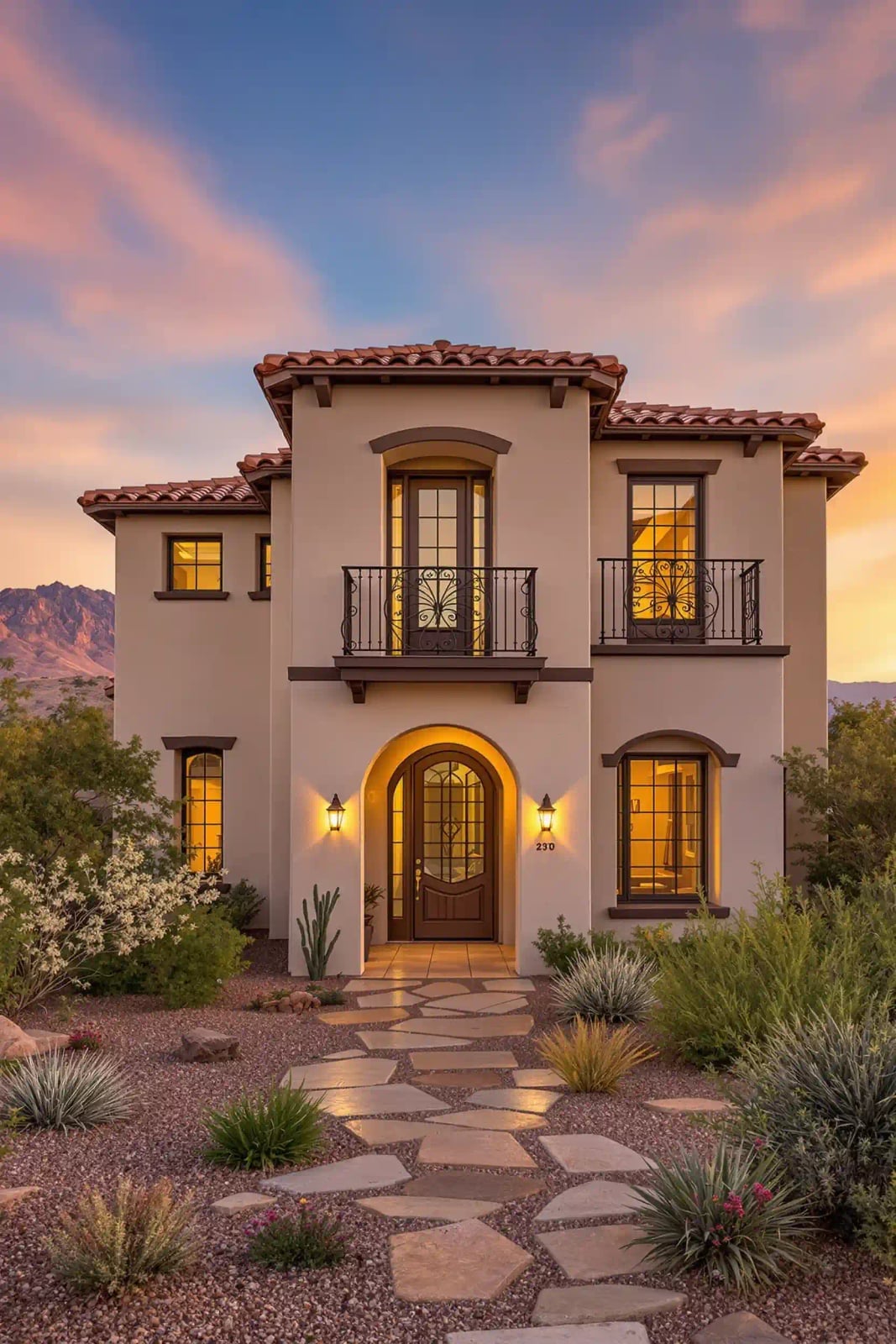
This facade uses sunset light as a design tool. The warm beige stucco and terracotta roof catch the low sun, while the arched doorways and balconies throw long shadows that add depth. Exterior lamps are not yet on, so the facade relies entirely on the sky for drama. The palette of beige, terracotta, and brown works because the light is the contrast. If the sun were overhead, the same arches and tiles would read flat. The lesson is that architecture and light need each other, and the best time to look at a house is when the light is changing.
Mediterranean Entrance with Textured Stone Facade and Arched Doorway
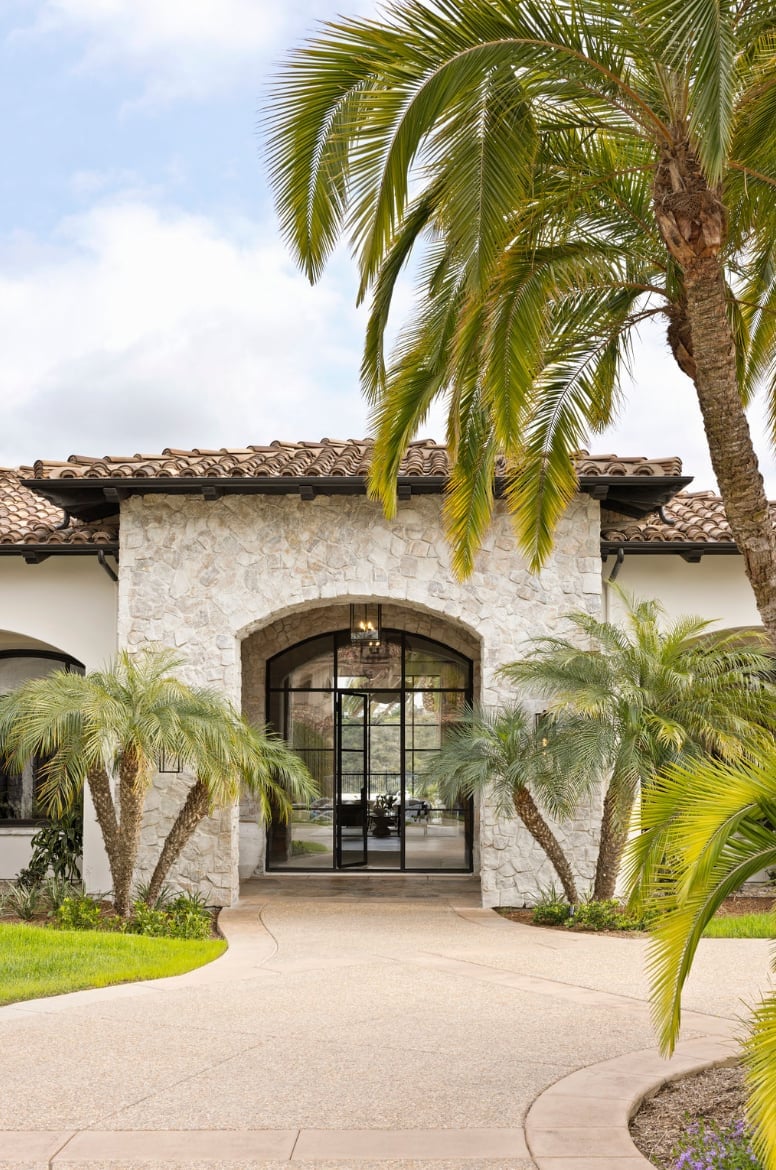
A practical rule for a grand entrance: use one material heavily and everything else sparingly. Here, the textured stone facade wraps the entire front, so the large arched glass door and tiled roof feel like accents rather than competing features. The concrete driveway and stucco edges stay neutral, letting the stone carry the character. Palm trees add vertical softness without touching the facade. The second paragraph might point out that this approach works for any entrance, not just a Mediterranean one. If you have a dominant material like brick, stone, or wood, lean into it. Keep the rest simple and let the texture do the work.
Mediterranean Living Room with Terracotta Floors and Leather Sofa
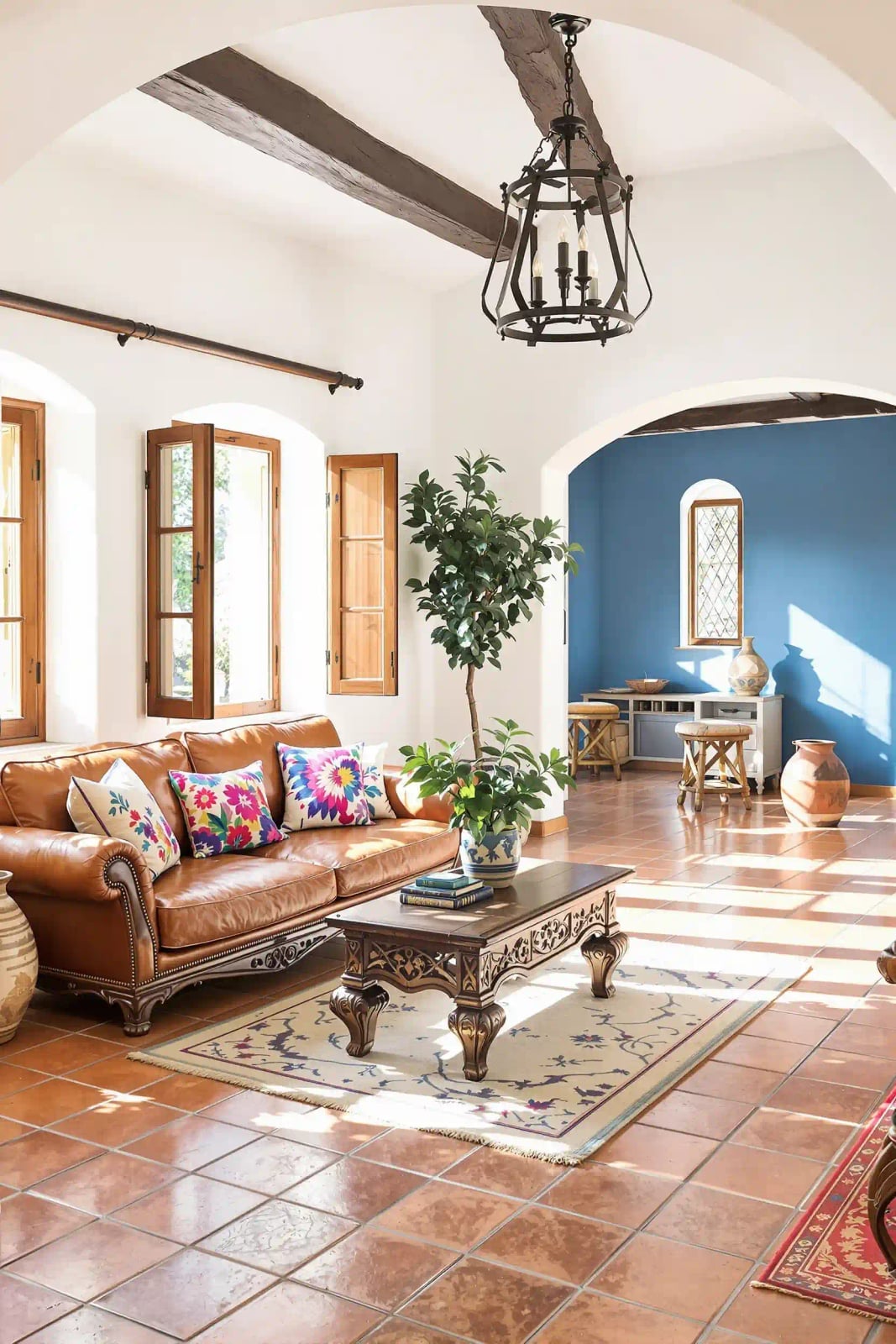
A warm leather sofa against white plaster walls anchors this living room. The terracotta floors and a blue rug define the seating area, while sunlight streaming in keeps the room from feeling too heavy. The style relies on contrast: the dark, worn-in leather becomes the focal point, and everything else stays light and neutral around it. The ornate coffee table, a carved piece, adds just enough detail so the room never feels spare.
Grand Mediterranean Mansion with Arched Windows and Manicured Lawn
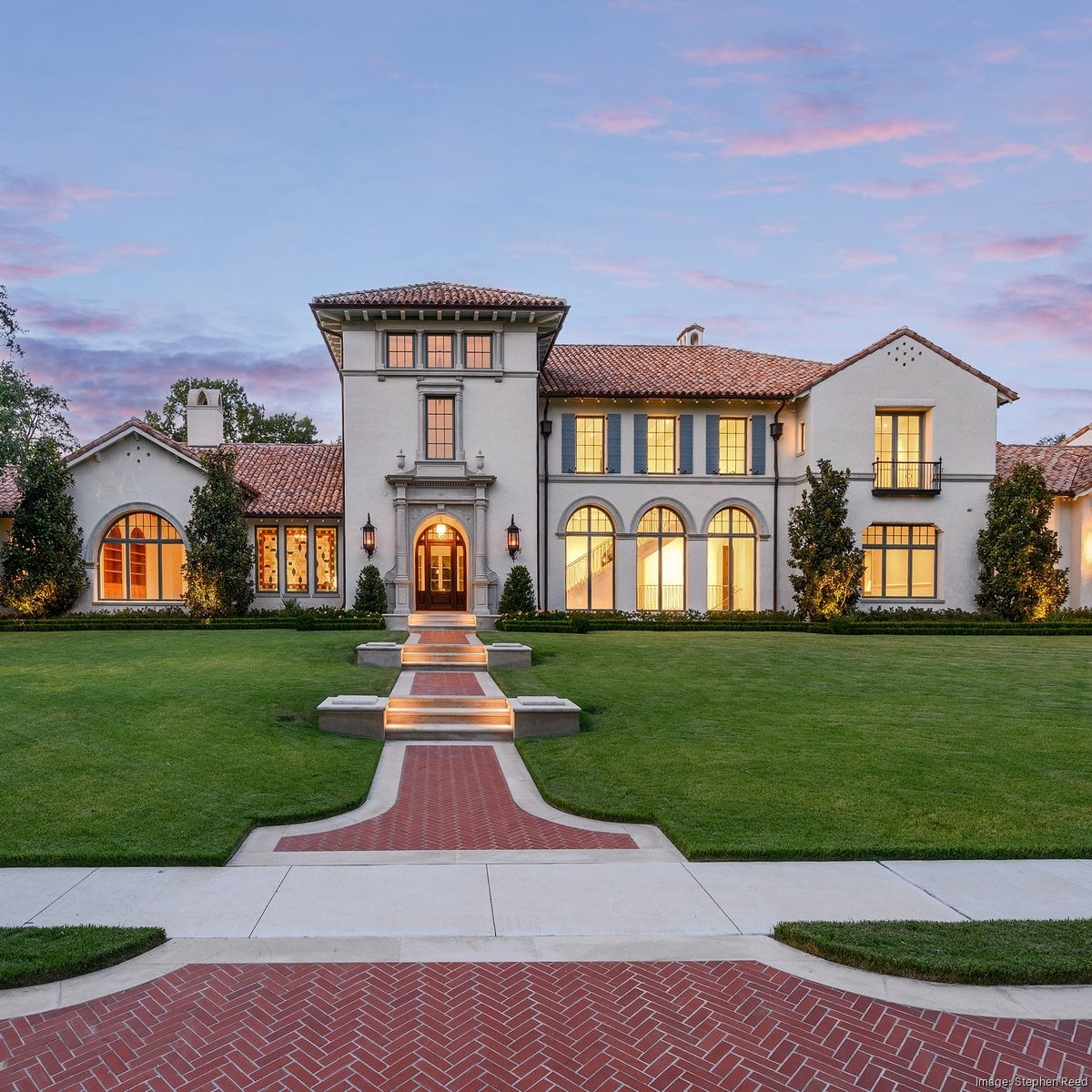
For a large facade, let the windows do the talking. This Mediterranean mansion uses grand arched windows as the main event, with the white stucco and terracotta roof playing a supporting role. The manicured lawn and landscaping keep the approach clean, so the eye travels straight to the architecture. At dusk, the interior lights glow through the glass, making the scale feel cohesive. The palette uses white, terracotta, and green, which gives a house this size a unified look from every angle.
Mediterranean Patio with Stucco Walls and Olive Tree
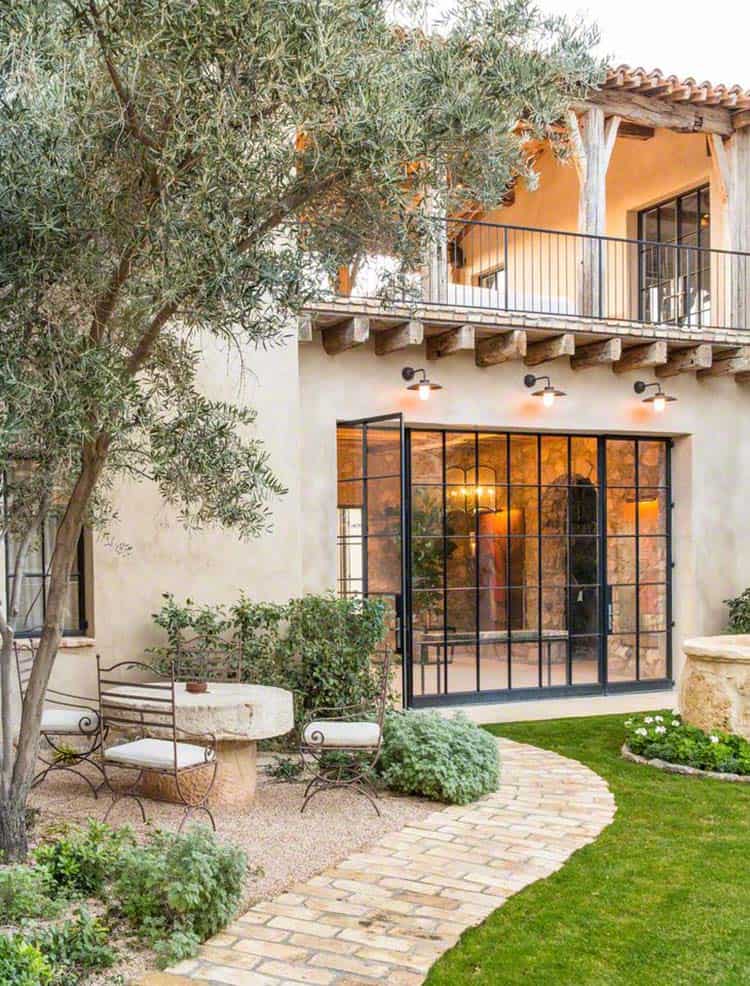
A courtyard with an olive tree feels different from one with a fountain or a fire pit. Here, the tree is the quiet center, and the stucco walls and wood beams frame it without competing. The large industrial-style window on one wall brings the indoor and outdoor spaces together, while the stone path winds past a seating area. The palette leans on beige and terracotta, with the olive tree adding the only green. That ratio is what makes the space work: one natural element anchors the whole patio, and the materials around it stay earthy and simple.
Evening lights strung above the seating area soften the hard edges of the stone and tile. The dusk light filters through the window, so the courtyard feels like a room in itself.
Mediterranean Patio with Yellow Door and Wicker Furniture
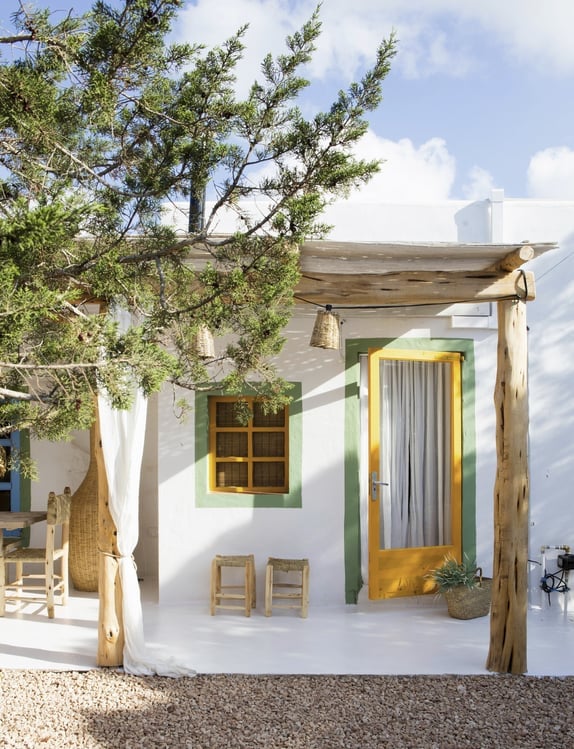
A vibrant yellow door against white stucco defines a Mediterranean patio. The wicker furniture and wood table stay neutral, so the door provides the punch of color. The palette works because the yellow is warm, not bright, and the green from nearby plants and the wood tones keep it grounded. Pendant lights hang overhead, adding a soft glow during the day. The woven basket and stools repeat the natural texture without adding more color.
Mediterranean Living Room with Arched Fireplace Niche and Rattan
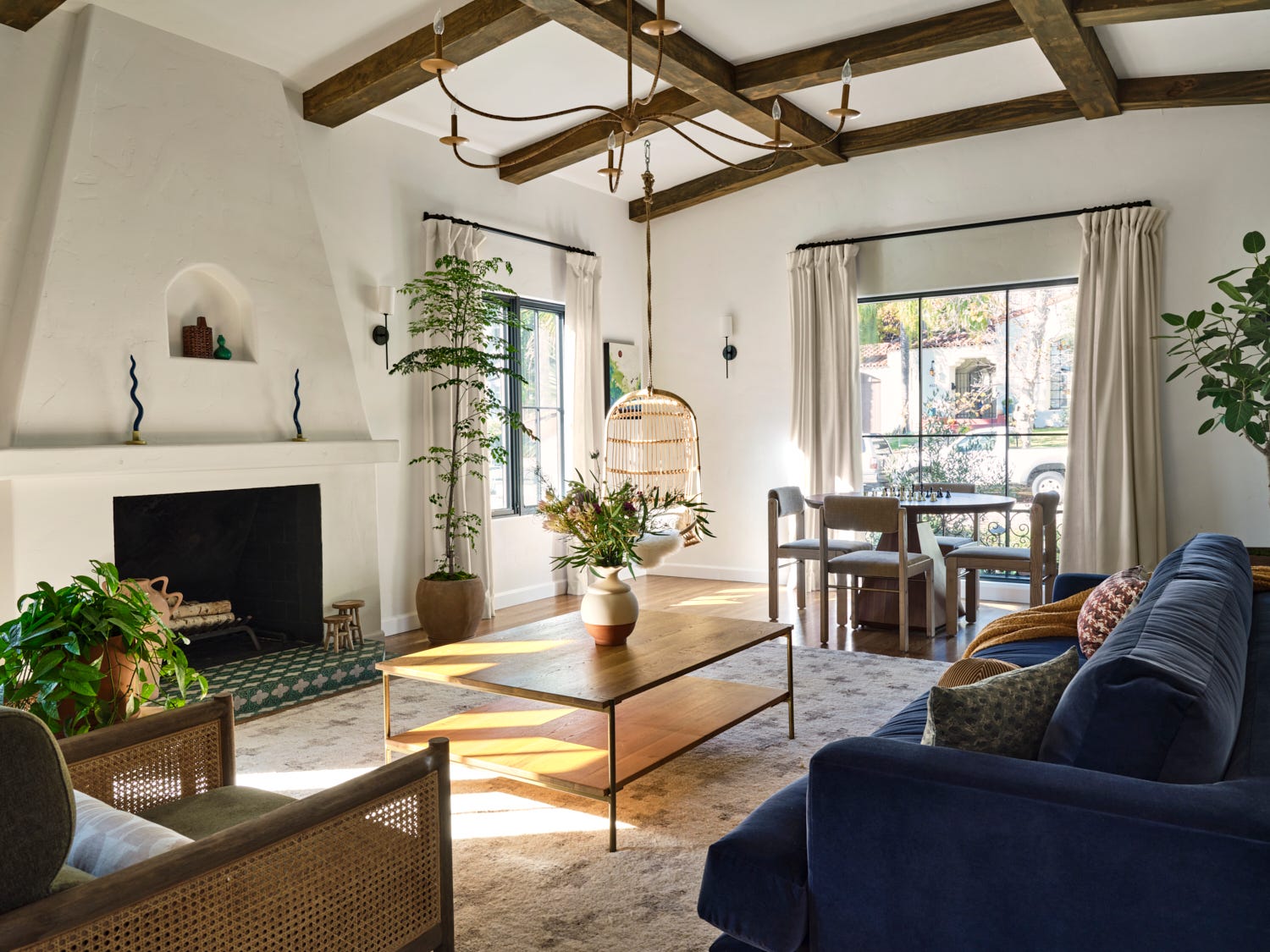
This is a room where the fireplace is the clear center. The arched niche in white plaster draws the eye, and the rattan chairs and blue accents around it keep the look relaxed. A ceiling fixture provides light, but the natural light from the windows does most of the work. The layout separates the seating area from a dining nook, so the room feels spacious without being bare. The palette of white, wood, blue, and green reads as coastal Mediterranean, and the rattan chairs break the formality of the plaster arch by adding a casual, woven texture.
Vibrant Mediterranean Kitchen with Orange Walls and Tiled Hood
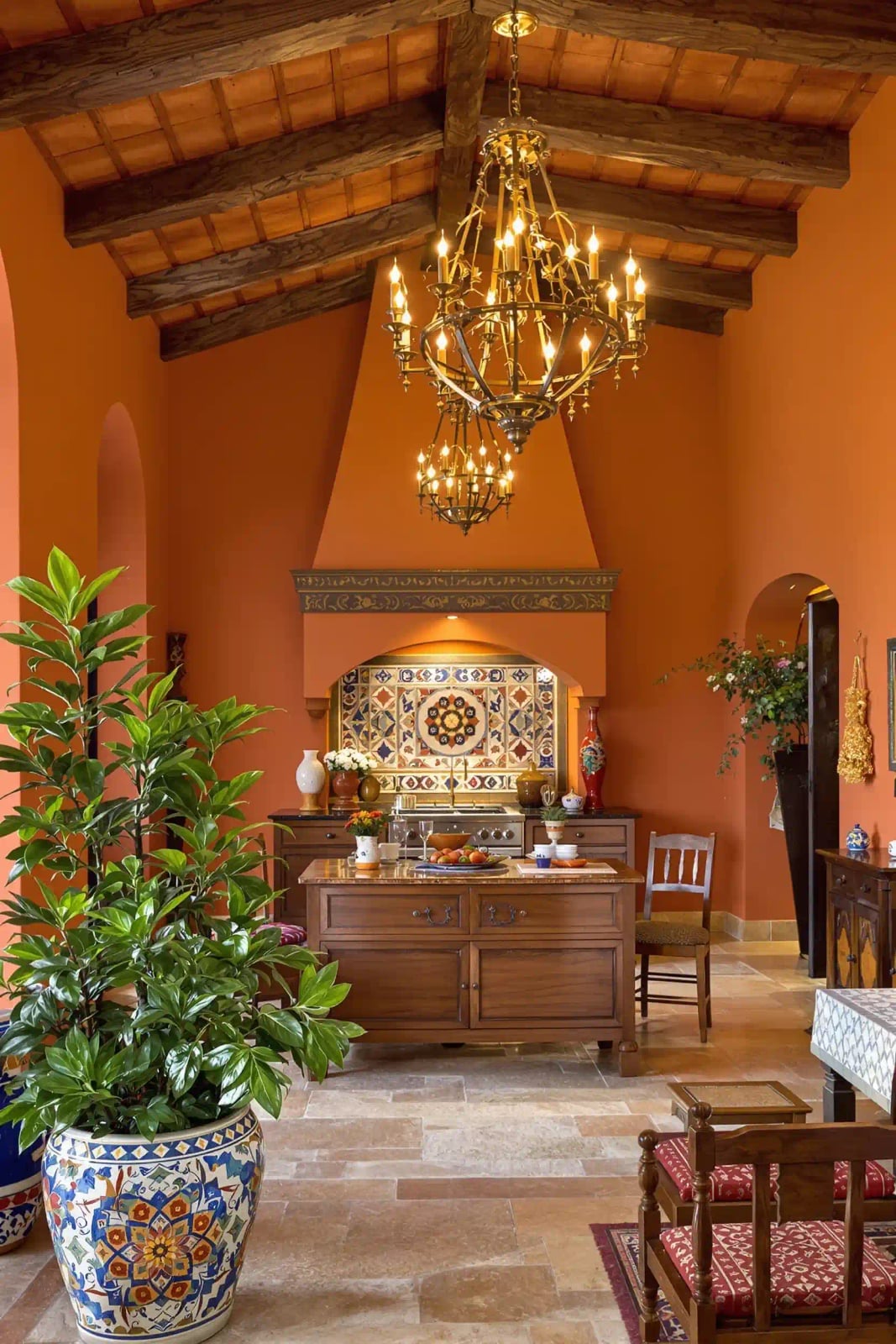
A bold kitchen wall color needs a neutral base of cabinetry and counters. The orange walls here are the clear lead, but they do not float because the wooden cabinetry and terracotta tile floor offer a warm, earthy counterweight. The tiled range hood becomes a focal point that echoes the wall color while adding its own pattern, keeping the look cohesive. The chandelier adds a touch of refinement above the central island, preventing the strong color from feeling too casual. In a kitchen this size, the orange is energetic, not overwhelming, so the layout stays open and the eye moves easily from the island to the hood and back out. The palette is warm with a small blue accent that breaks the heat just enough to keep the room from feeling one-note.
Covered Outdoor Patio with Stone Fireplace and Arched Doorways
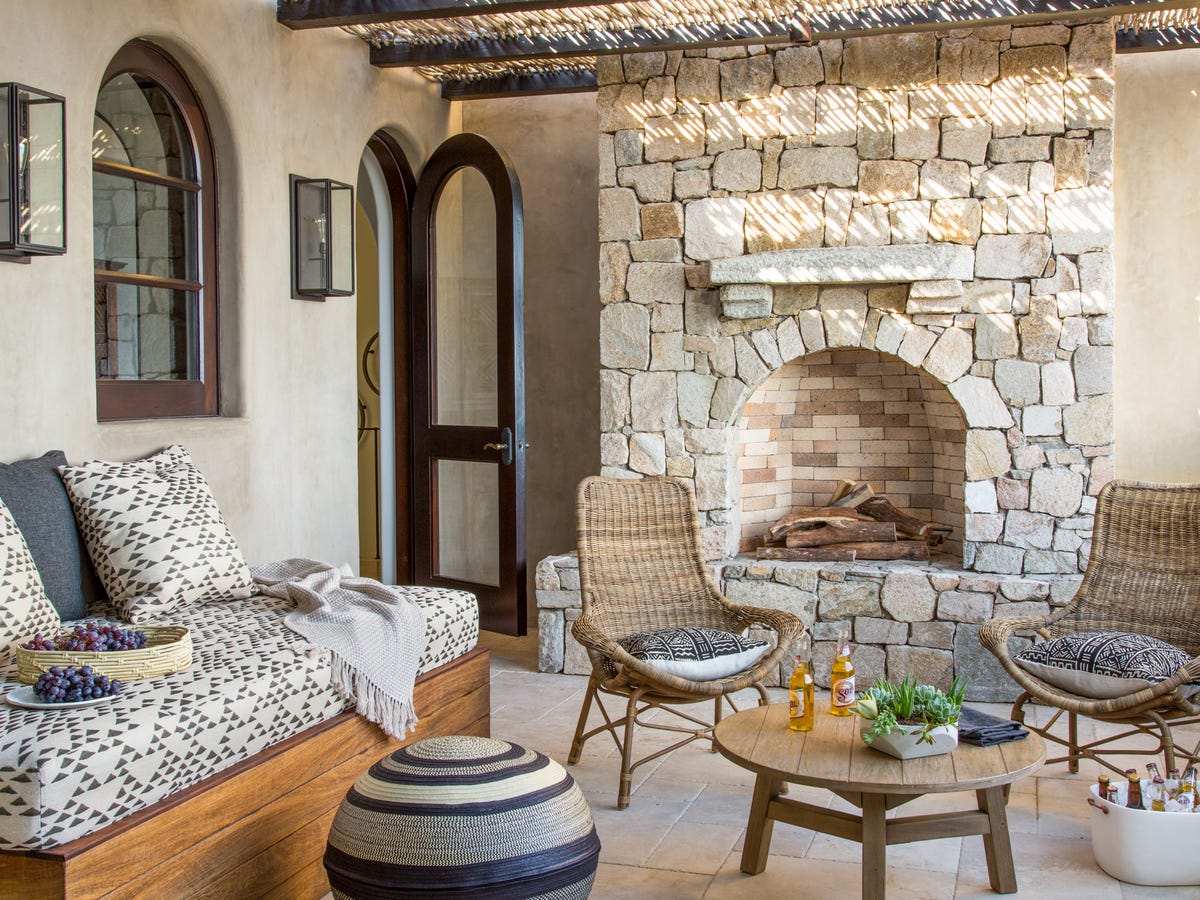
The stone fireplace stands as the clear anchor for this outdoor seating area, its mass balanced by the softer material of the wicker seating around it. The beige and stone palette keeps the space grounded, while the terracotta accents in the tile work pick up warmth without competing with the fireplace. The arched doorways frame the view out, making the patio feel like a proper room rather than an afterthought. Wall sconces extend the usable hours, so the space works from afternoon through evening without relying solely on firelight.
Mediterranean House Facade with Stone and Green Shutters at Twilight
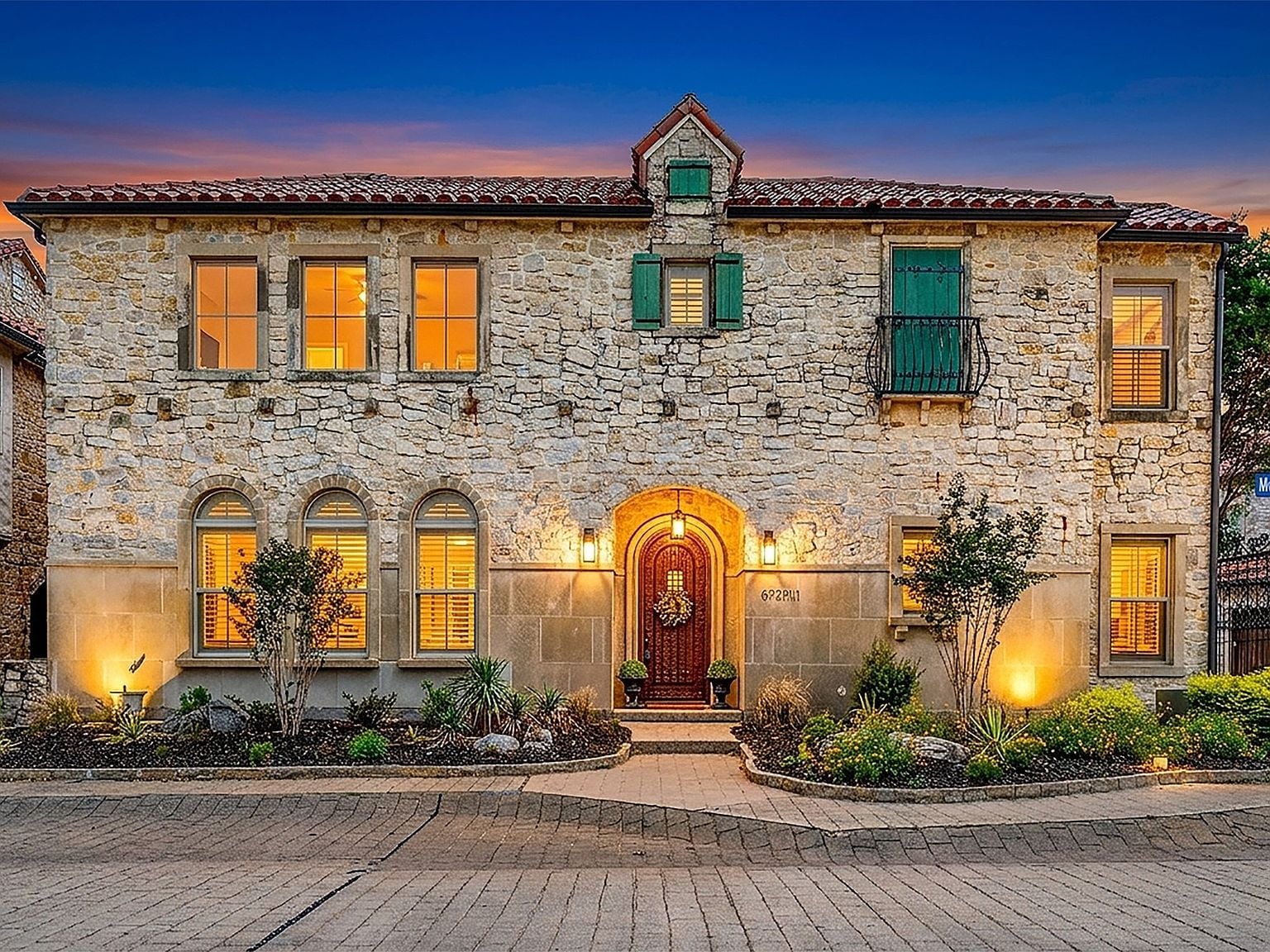
The stone facade provides all the visual interest needed, so the green shutters work as a deliberate accent without competing. The warm evening light softens the stone’s natural variation, making the facade feel welcoming. The arched doorway repeats the soft curve that Mediterranean style favors, and the wide framing lets you appreciate how the materials work together at scale. The look is defined by the ratio of stone to wood, with the green shutters breaking the earthy tones at just the right intervals.
Mediterranean Entryway with Rustic Console Table and Stone Wall
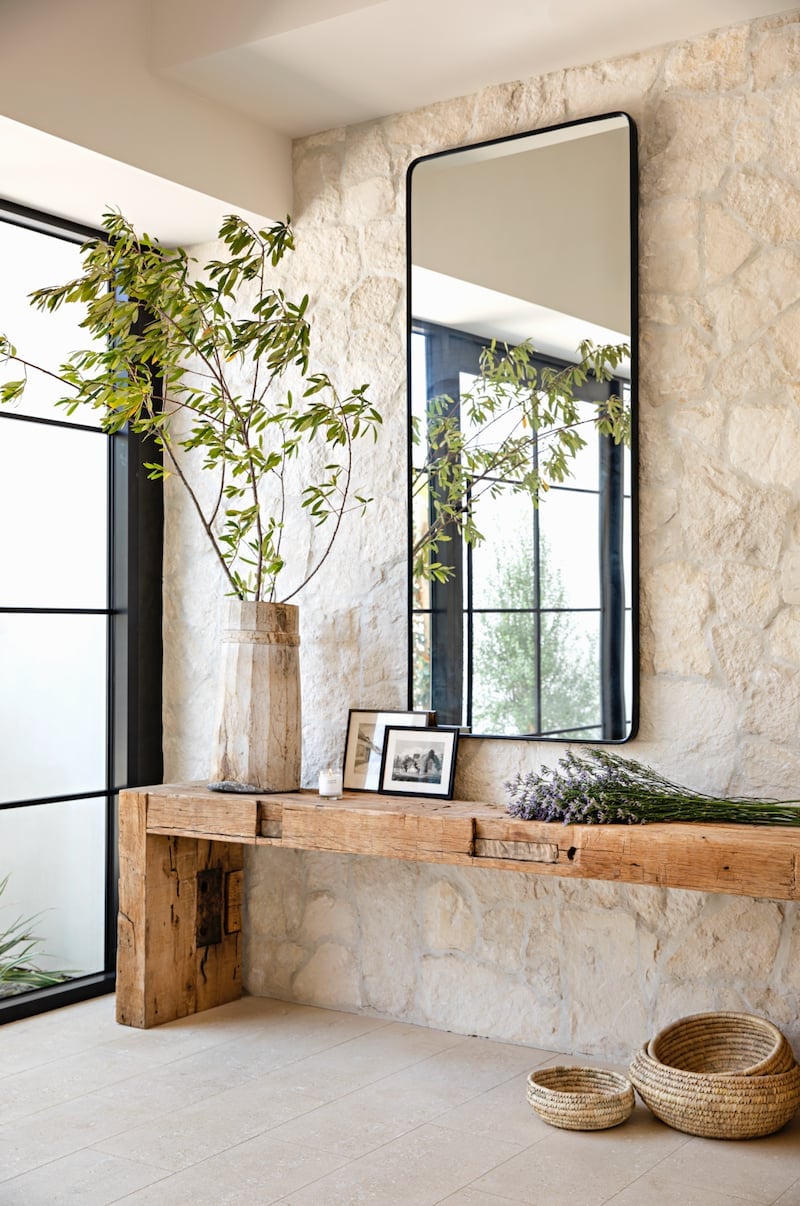
For an entryway that needs character without clutter, a rustic wood console table against a stone wall offers a natural focal point that does not rely on accessories. The white walls and green plant accents keep the vignette from feeling heavy, while the large mirror above the table adds a sense of depth and reflects natural daylight around the space. The stone wall provides texture that reads as aged and settled, so the wood table does not need to be polished or ornate. It is a styling variation that works because the materials contrast without fighting. The open layout means the entryway serves as a transition zone, and the console table gives you a landing spot that stays out of the path of traffic. If the stone is not an option in your home, a textured wallpaper or limewash paint can mimic the same depth for a renter-safe swap.
Mediterranean Backyard Lounge with White Sofas and Potted Plants
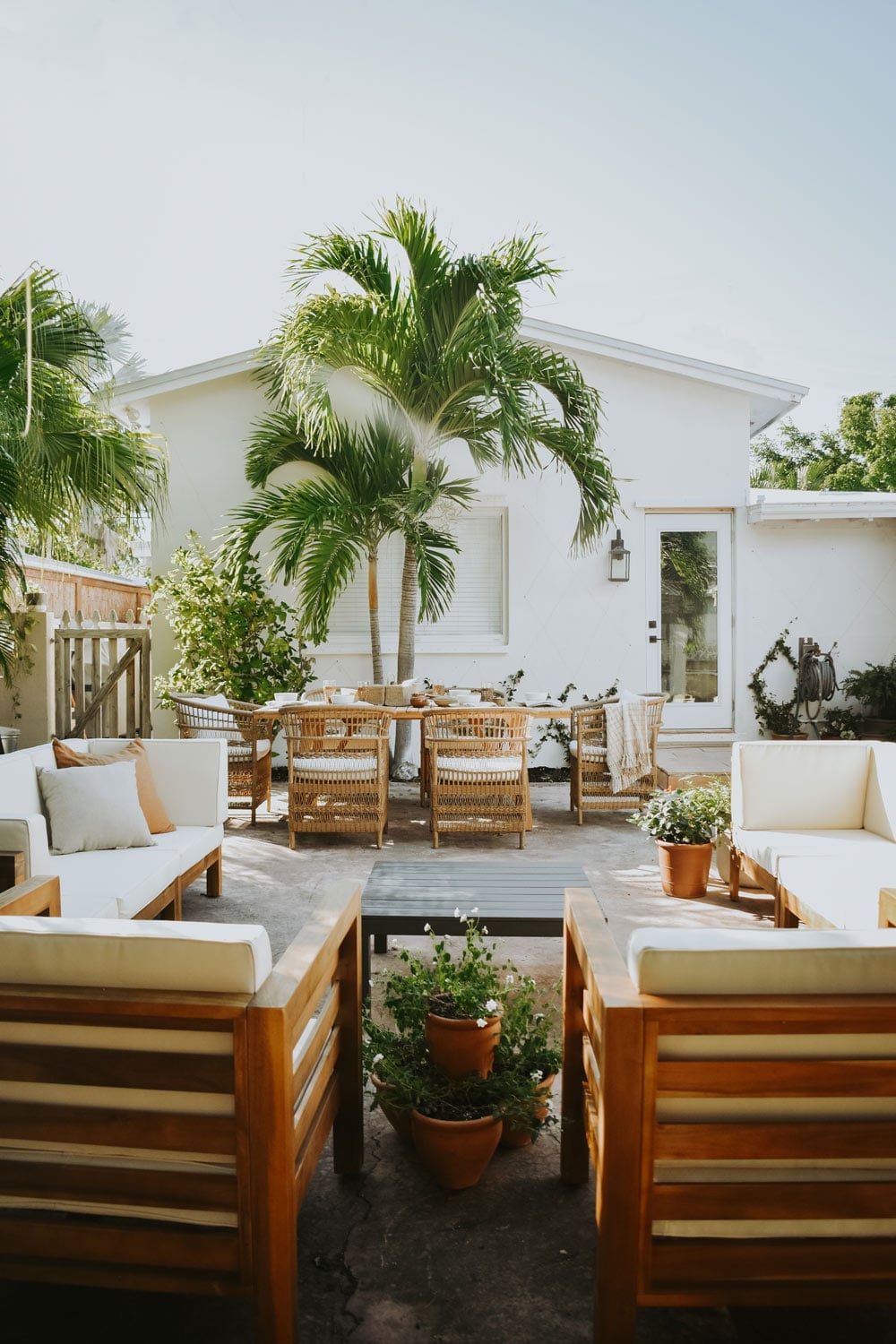
The white sofas anchor this backyard lounge with a clean visual weight, while the wooden armchairs and potted plants soften the edges and bring in the green palette. The layout is arranged for conversation, with the seating grouped to fill the large space. The natural daylight keeps the white upholstery looking fresh and cool even in direct sun. The mix of wicker, wood, and concrete planters adds texture without pattern.
Mediterranean Patio Dining with Stone Table and Wicker Chairs
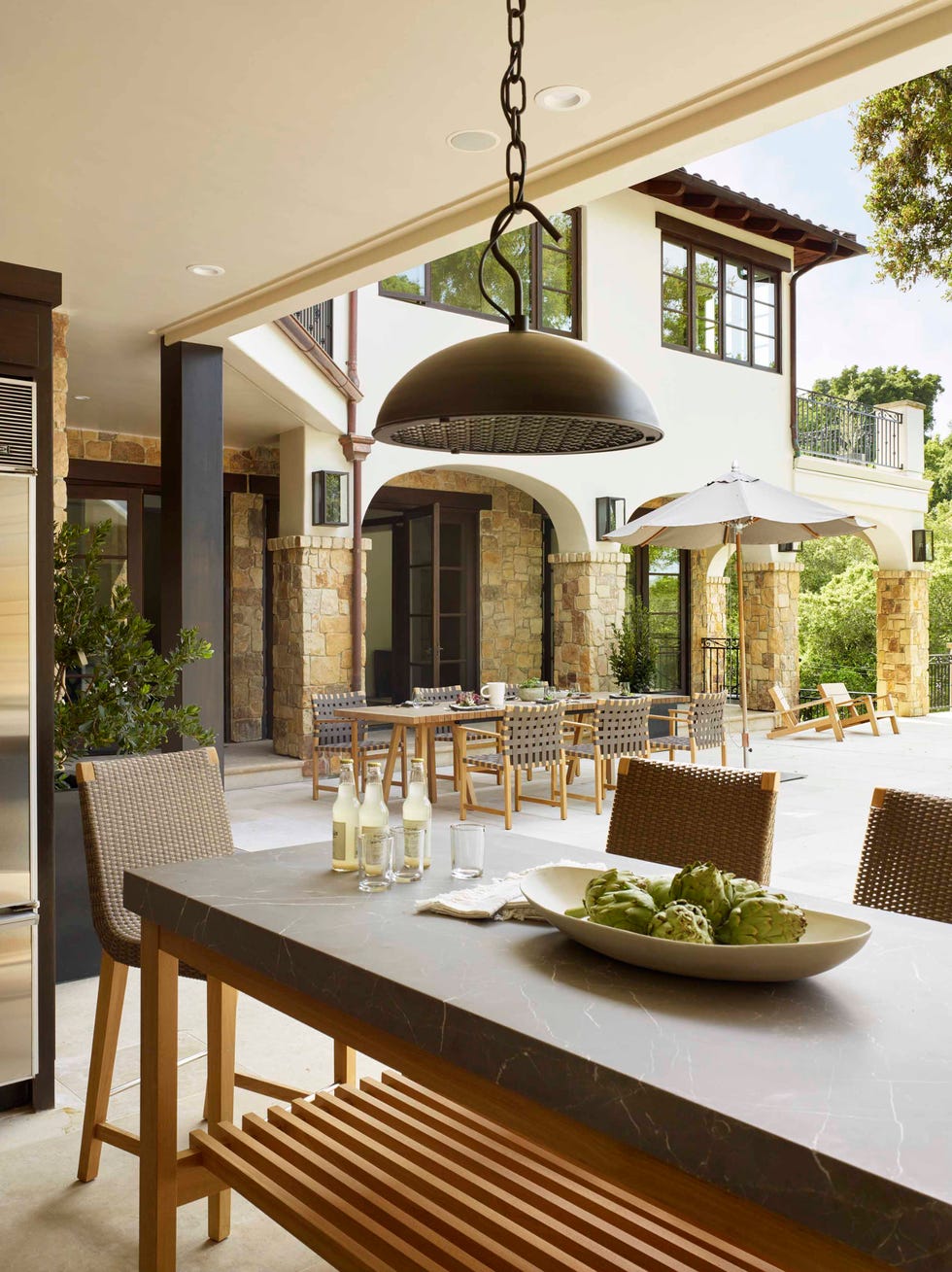
This dining set anchors the patio without trying to disappear. A large stone table gives the space its weight, while wicker chairs keep the look breathable and grounded in beige and brown tones. The umbrella adds practical shade, and the overhead heater extends the season into cooler evenings. The style works because the materials feel native to the setting: stone reads as permanent, wicker as relaxed. What breaks the look is anything too polished or glossy, so skip the lacquered finishes and let the natural textures do the work.
Mediterranean Entryway with Ornate Hanging Lantern and Terracotta
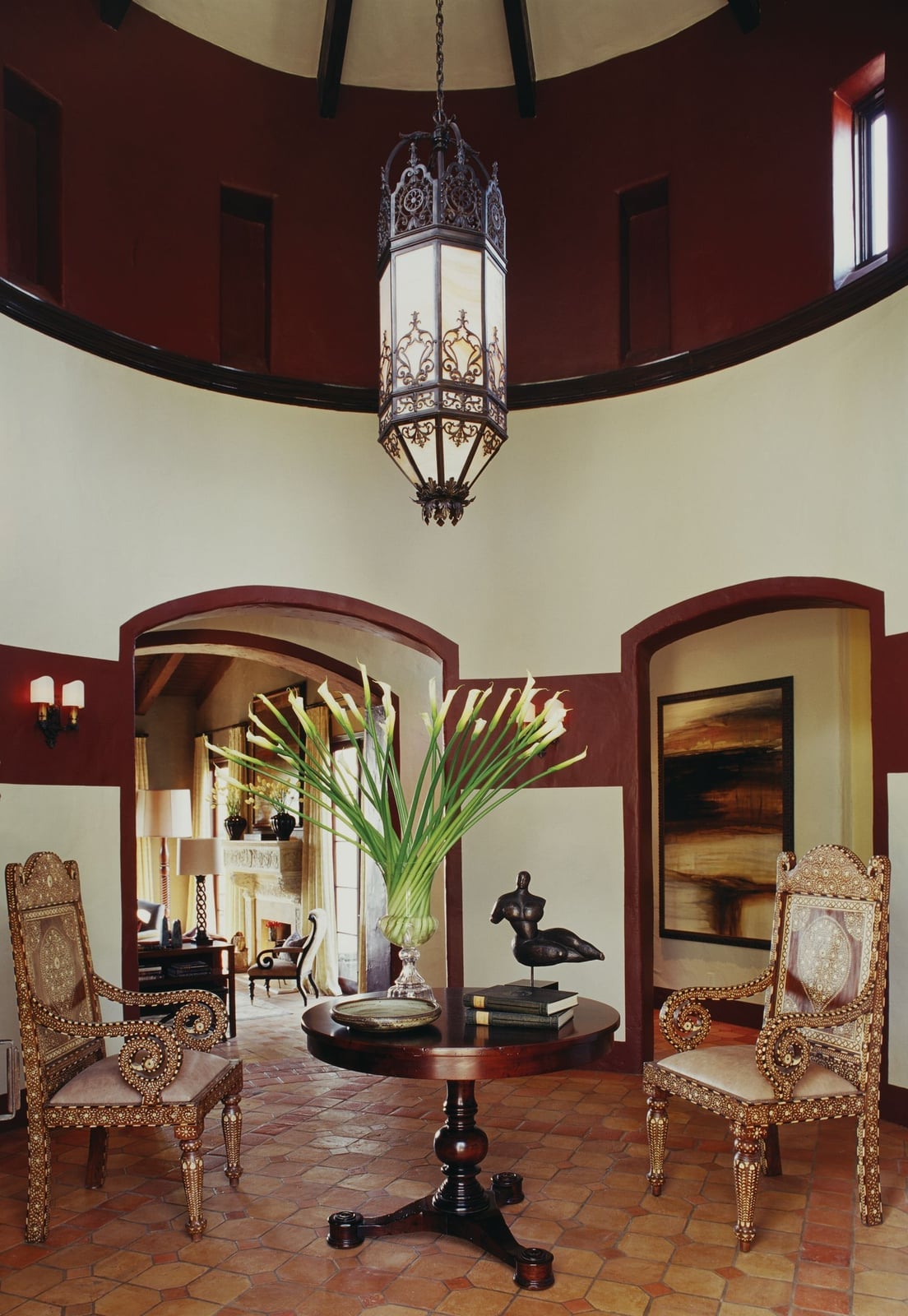
A renter can change the light fixture without touching the walls or floors. That matters here because the ornate hanging lantern is the element that gives this entryway its character. The cream and burgundy palette reads as warm and established, and the terracotta tiles below anchor the whole scene.
The round table and ornate chairs sit under the lantern, but the fixture pulls the eye up. Wall sconces add secondary light without competing. If you cannot change the flooring, swap in a lantern with gold or brass tones to echo the same warmth. The style depends on that central glow, so choose a fixture with visible detail rather than a plain drum shade.
Mediterranean Living Room with Exposed Beams and Stone Fireplace
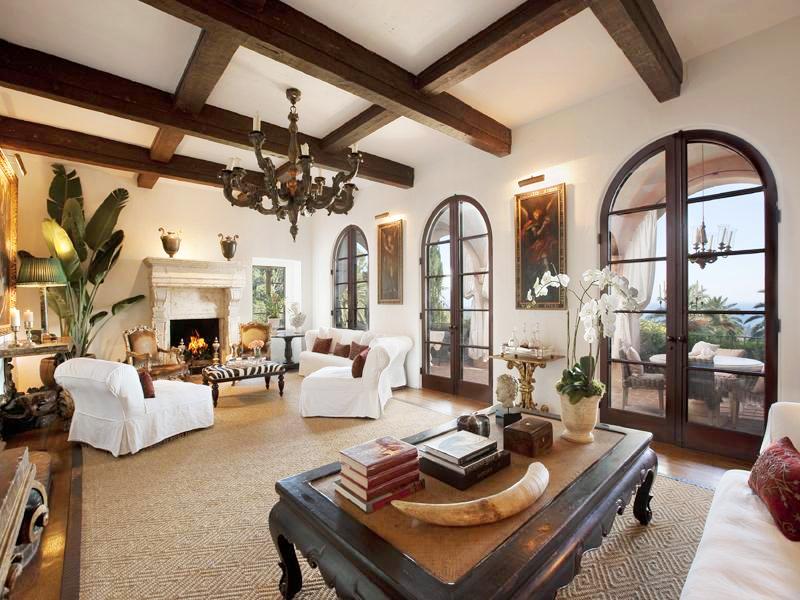
The exposed wooden beams and stone fireplace create a room that feels both old and open. Cream plaster walls keep the space light, while the brass chandelier and wall sconces add a collected glow. The linen sofas and armchairs soften the stone and wood, so the room stays comfortable rather than cavernous. What defines this look is the balance of rough and refined: the beams are raw, the brass is polished. It breaks when every surface is too smooth or too matched, so let the textures stay a little uneven.
Expansive Mediterranean Mansion with Stone Facade and Circular
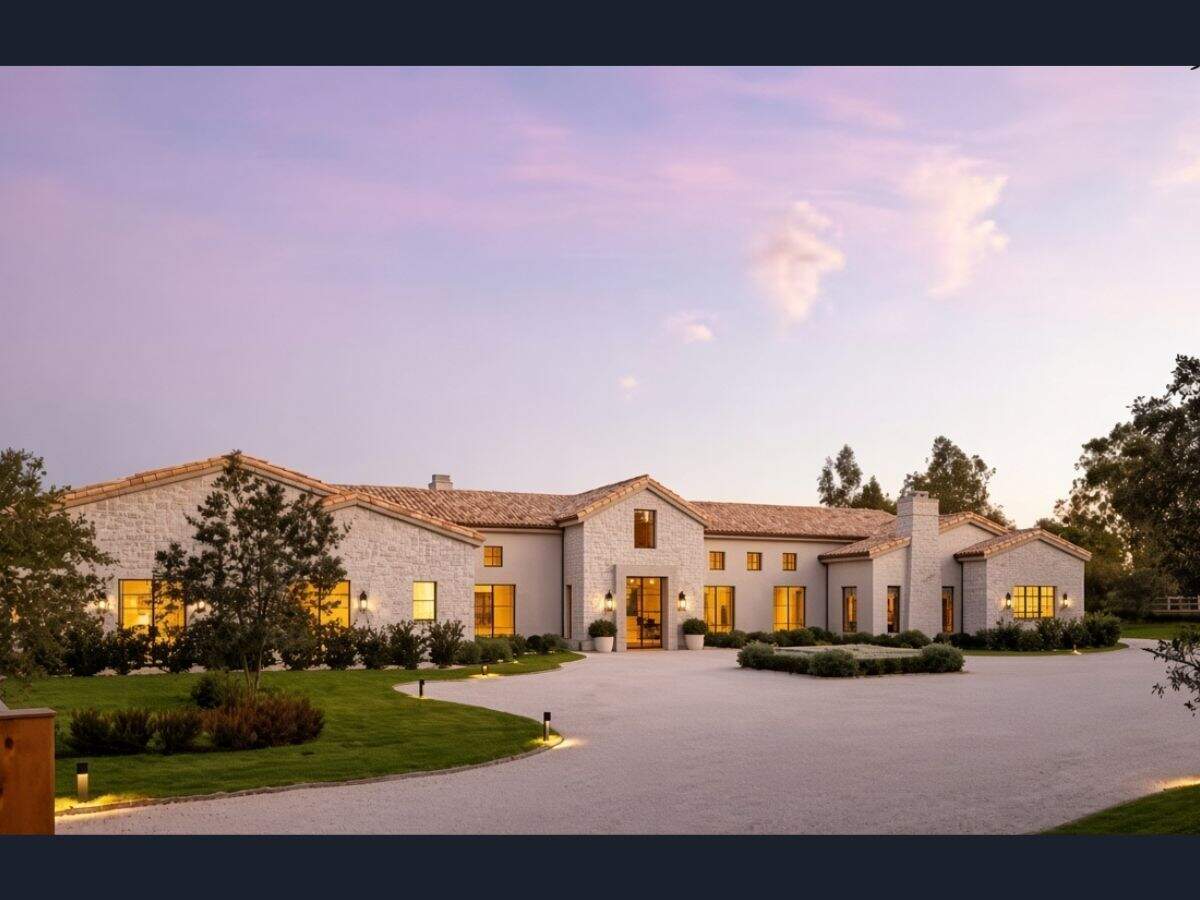
The scale of this house is the first thing you notice, and the stone facade gives it a solid, grounded presence. The tile roof and stucco details follow the same earthy palette of white, beige and terracotta, while the circular driveway softens the approach. At dusk, the exterior lights pick out the texture of the stone without flattening it. The style works because the proportions are generous but the materials stay humble: stone and stucco do not compete with the landscaping. What breaks it is anything too delicate or small in scale, so match plantings and hardscape to the same generous proportions.
Mediterranean House Exterior with Arched Doorway and Green Landscaping
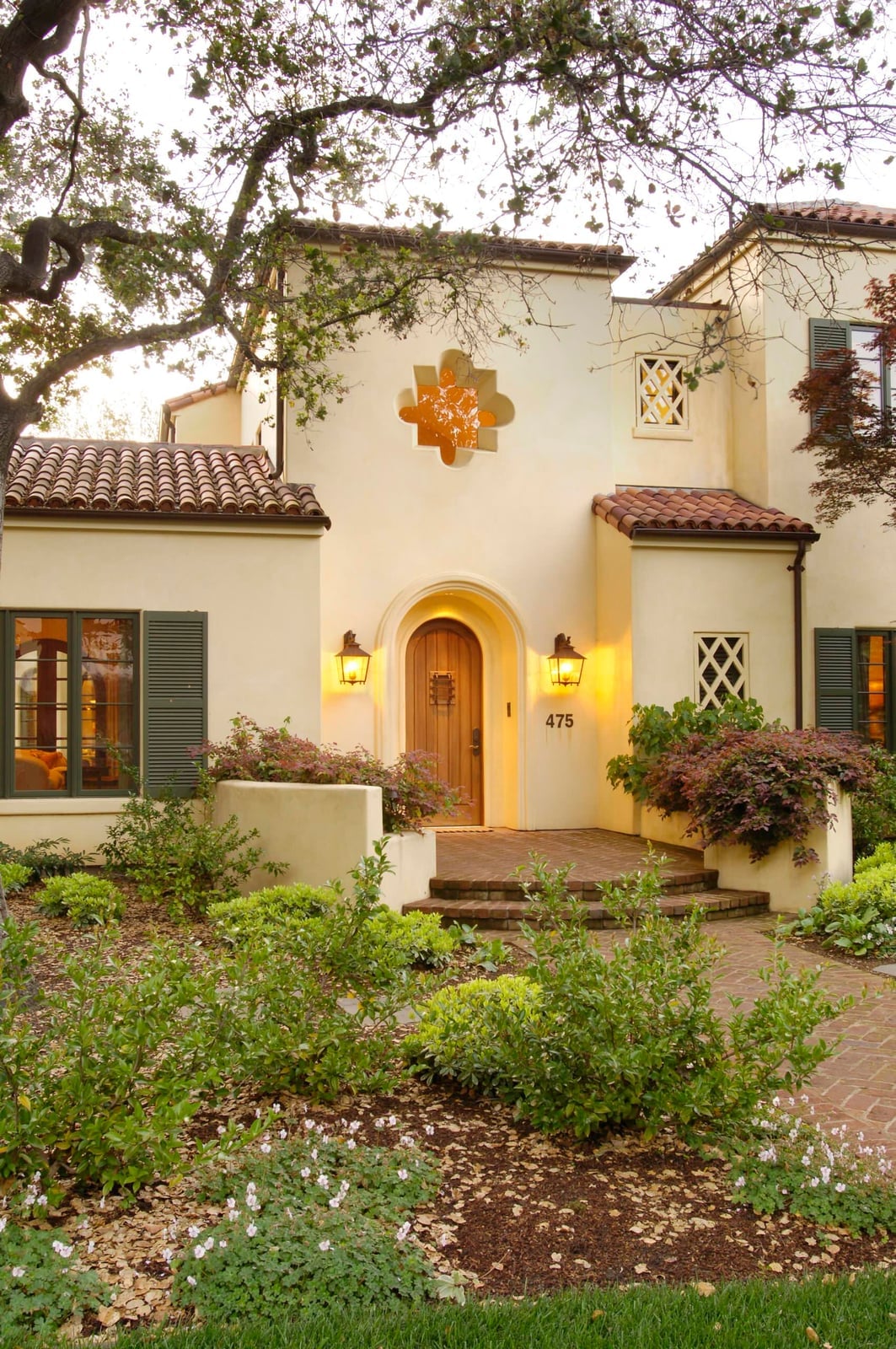
This facade reads as more approachable than a sprawling estate, even though it still uses the same stucco, tile roof and arched doorway. The cream walls and terracotta roof feel familiar, but the green landscaping and shutters add a layer of softness that the larger mansion lacks. The exterior sconces at dusk keep the entry warm without flooding it.
The difference is in the details: the decorative window trim and the carved wood door give the front entrance a crafted feel. If you want this look on a smaller house, keep the palette tight and let the greenery do the filling. The style breaks when the landscaping is too sparse or too manicured, so aim for lush but relaxed planting.
Mediterranean Garden Detail with Terracotta Pot and Blue Flowers
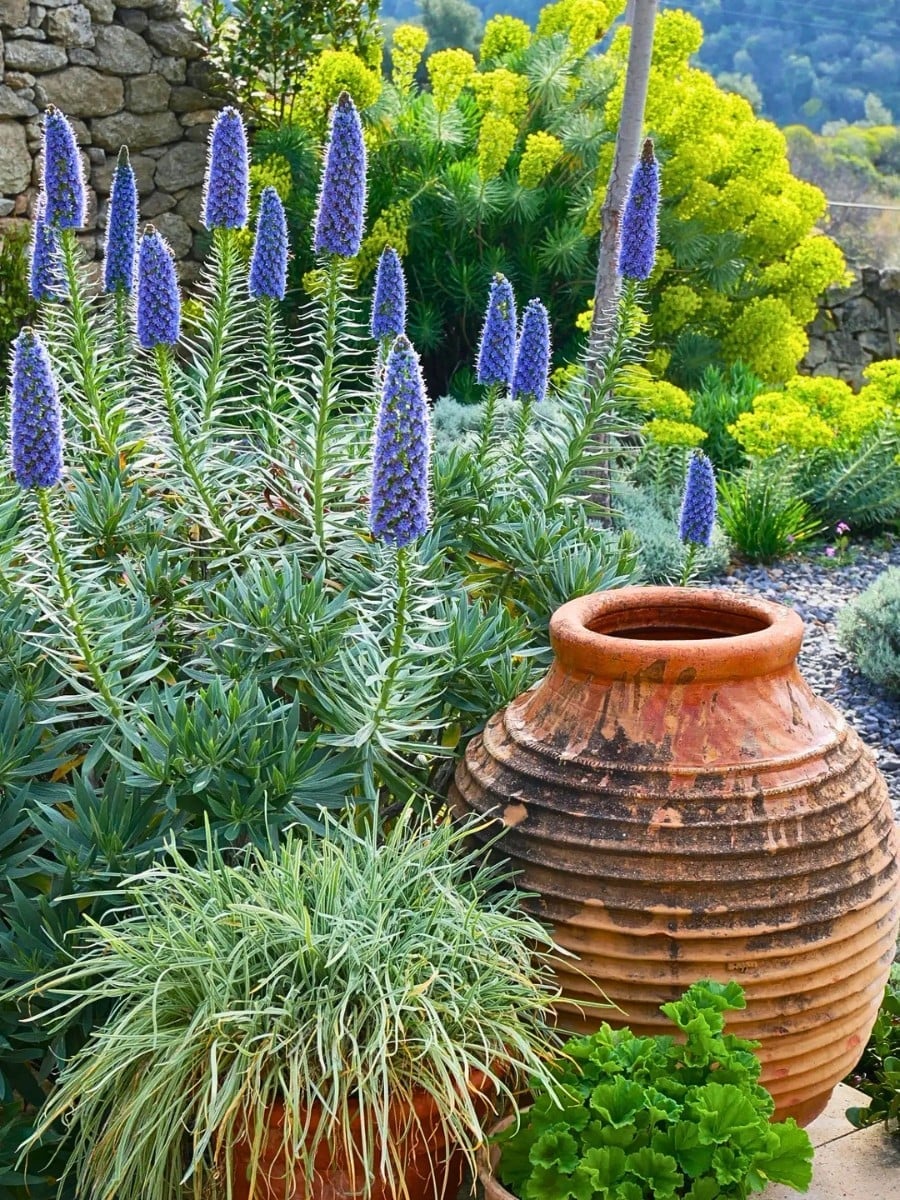
A big, ribbed terracotta pot sits at the center of this garden vignette, and its warm orange-brown tone does the work of pulling the whole composition together. Around it, blue spiky flowers rise against lush green foliage, with a few yellow blooms adding an unexpected jolt. The palette here is the definition of the style: earthy clay grounds the cooler blues and greens, while that pop of yellow breaks the predictable ratio and keeps the look from turning too formal. The principle is simple: let one warm element anchor a cool-heavy planting, and the contrast does the rest.
Mediterranean Entryway with Stone Floors and Arched Doorways
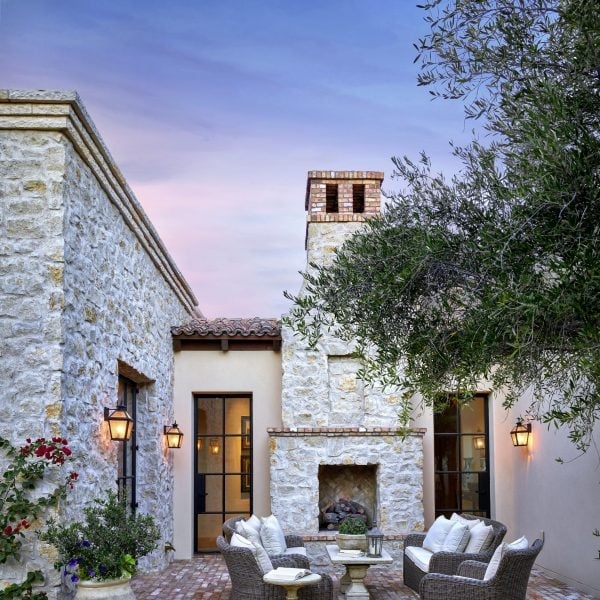
This entryway gets the proportions right. The wide hall is framed by arched doorways that draw the eye through the space, while a beamed ceiling adds structure overhead without making the room feel low. The palette stays neutral in cream and wood tones, with stone floors providing a solid base and a leather armchair adding a darker note near a wooden cabinet. A lantern pendant and a lamp layer the light so the hall never goes flat, even away from the windows. The takeaway: when the architecture is strong, keep the color quiet and let the shapes lead.
Grand Mediterranean House with Stucco Exterior and Brick Driveway
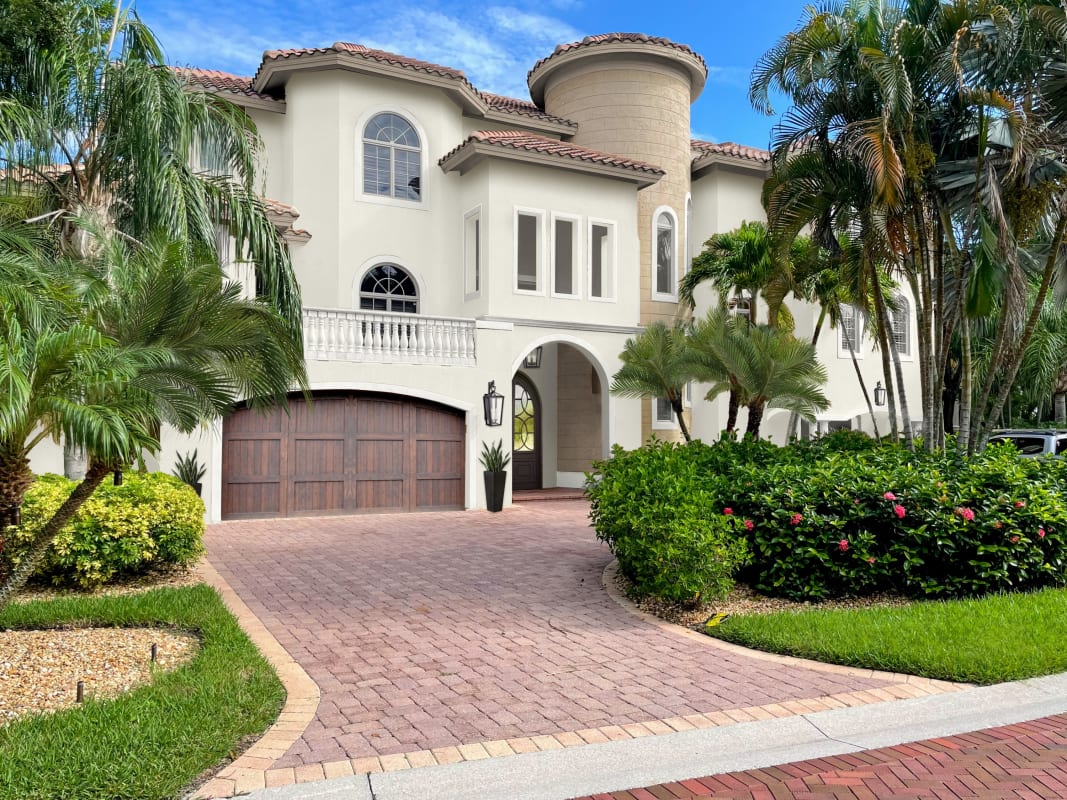
Compared to a simpler stucco box, this house leans into detail without going overboard. The white stucco exterior is broken up by a tile roof in warm terracotta, and the brick driveway softens the transition from the street to the entrance. Stone accents around the windows and at the base give the facade a grounded feel, while lush landscaping in varied greens keeps the hard materials from taking over. The palette balances white and beige with terracotta and green, so the house reads as classic rather than stark.
Where a modern home might use a single material and let the form do the talking, this one layers materials to create depth. The stucco and stone play off each other in texture, and the brick adds a pattern underfoot that echoes the roof tiles above. It is a reminder that mixing materials works best when you stick to a tight palette and let each surface earn its place.
Spanish Mediterranean House with Arched Windows and Balcony
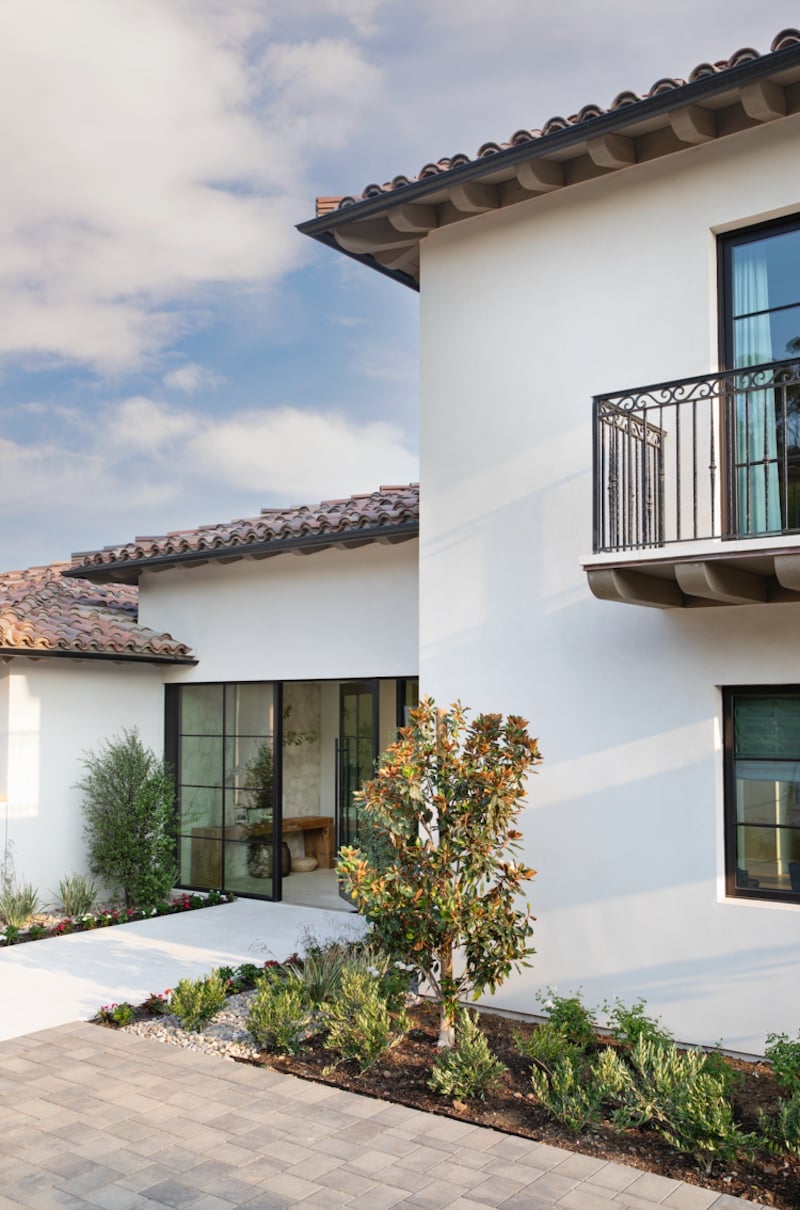
Arched windows are the defining feature of this Spanish Mediterranean facade, repeating across the white stucco wall in a rhythm that gives the house a balanced, grounded look. A balcony with wrought iron railings sits above the entrance, and the terracotta tiled roof caps the whole composition without competing with the windows. The palette stays tight: white, terracotta, and black from the ironwork. When the architecture is this deliberate, you do not need much else. The repeated arch shapes alone create enough interest to carry the facade.
Final Thoughts
What holds these 34 Mediterranean homes together is a shared respect for material and light. Terracotta, plaster, stone, and tile do the heavy work, while arches and exposed beams shape the air around them. The palette stays grounded in white, blue, and warm earth, with greenery or bougainvillea adding the only bright accent needed. To keep these finishes looking their best, seal terracotta and stone every few years, wipe tile with a mild cleaner, and rinse outdoor planters before winter. The takeaway is simple: Mediterranean style is not about perfection. It is about building with what lasts and letting the sun do the rest.