Minimalist living rooms prove that less really is more, but getting the balance right takes more than just clearing out clutter. These 29 spaces show how to keep a room calm and open without making it feel cold or unfinished.
From choosing the right sofa to working with natural textures, you will see how thoughtful edits create a living room that breathes.
Open-Plan Living with a Live-Edge Statement Coffee Table
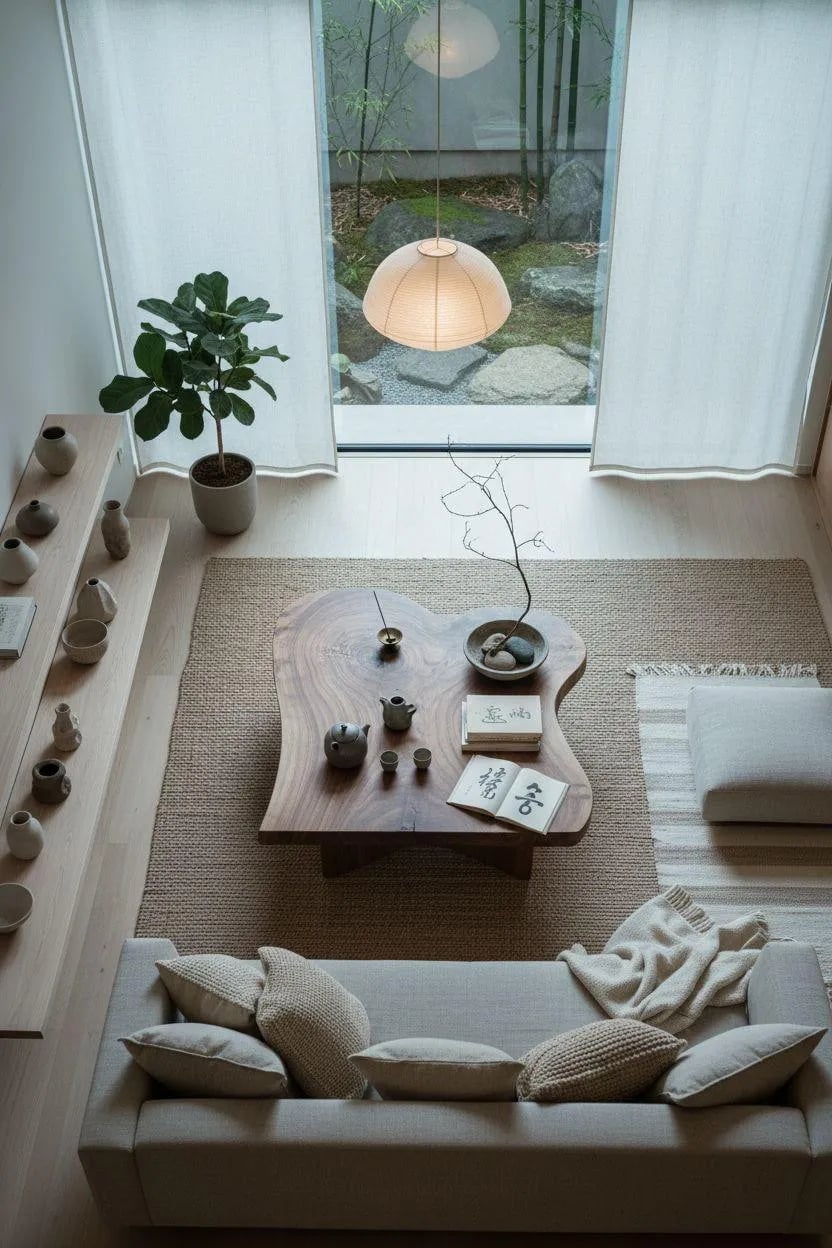
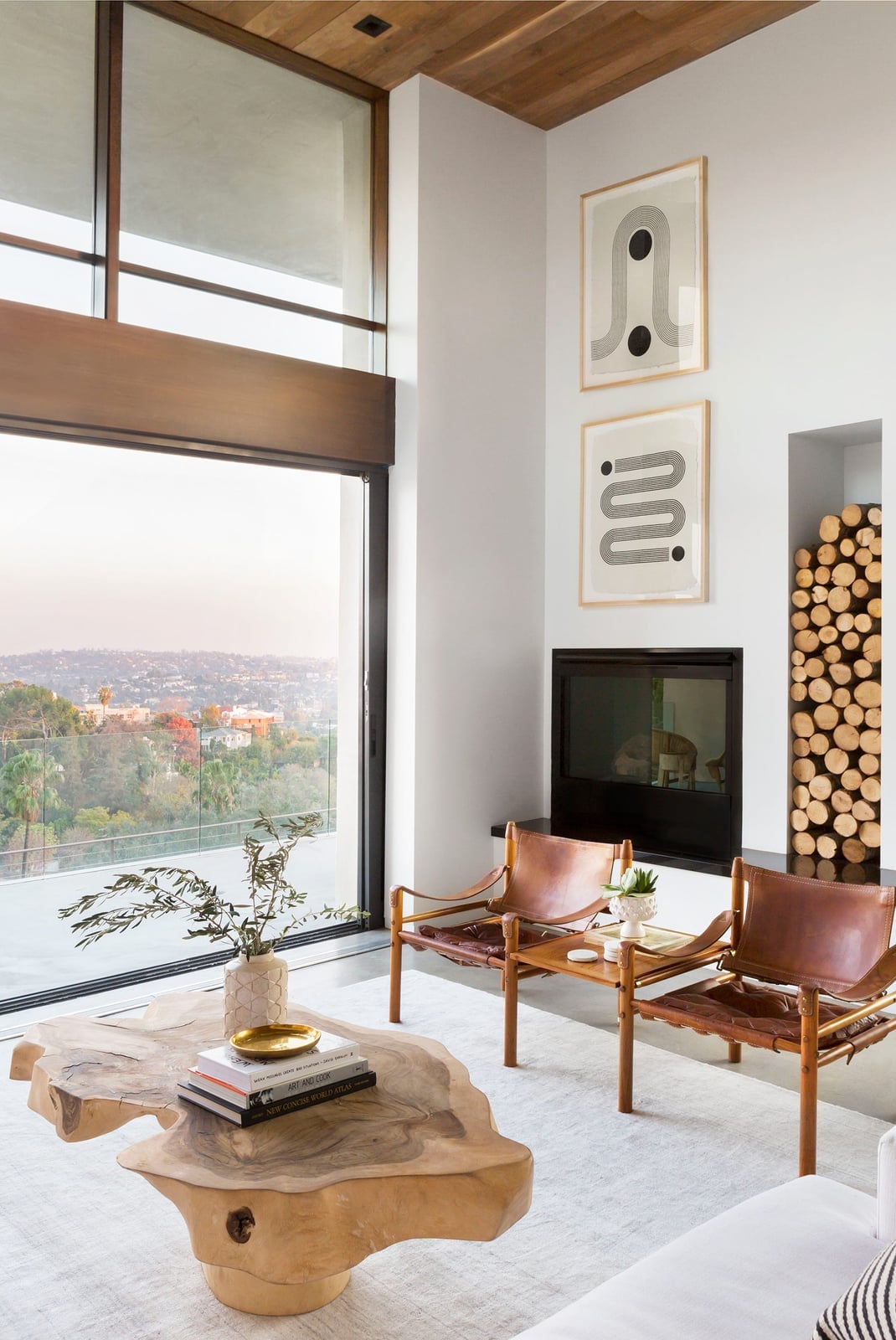
A live-edge coffee table becomes the natural anchor in an open plan room, its organic form contrasting with a neutral sofa and a simple floor lamp. The layout works because the sofa faces the window, with the coffee table centered in the seating zone, so the eye moves from the light outside to the wood grain inside. A single pendant light overhead marks the conversation area. This arrangement gives the open plan a clear center.
Curved Bouclé Sofa Anchors Serene Open-Plan Living
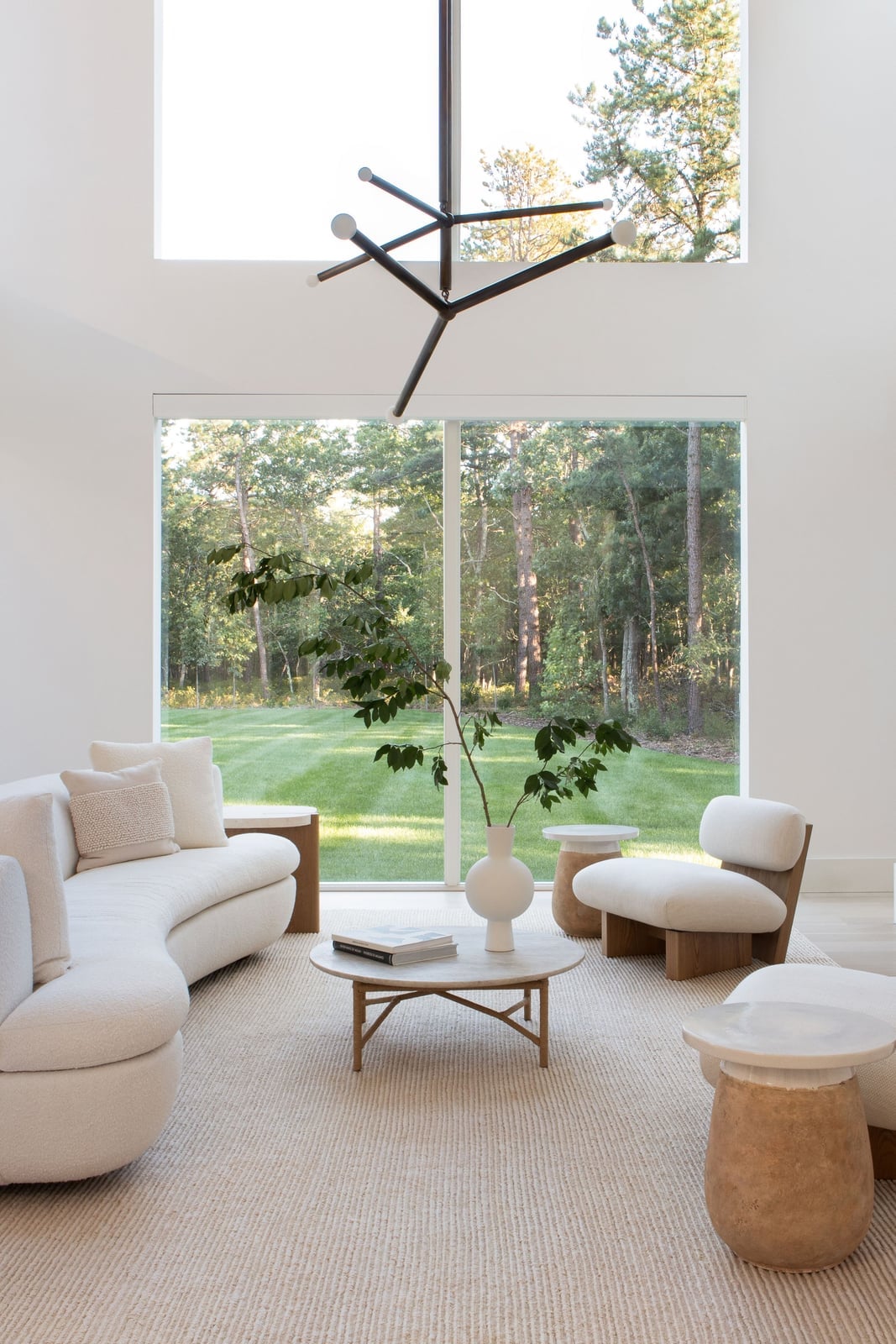
A curved bouclé sofa does more than add softness; it defines the seating zone in an open-plan room. The rounded shape creates a natural flow around the conversation area, so the space feels intentional rather than accidental. With a pair of sculptural chairs and a round coffee table, the arrangement forms a clear island of comfort. The white, cream, and beige palette keeps the room calm, while wood and stone textures add warmth without clutter. A modern chandelier hangs above, drawing the eye up and balancing the broad footprint of the sofa.
Compact Living with a Warm Wooden Ladder Shelf
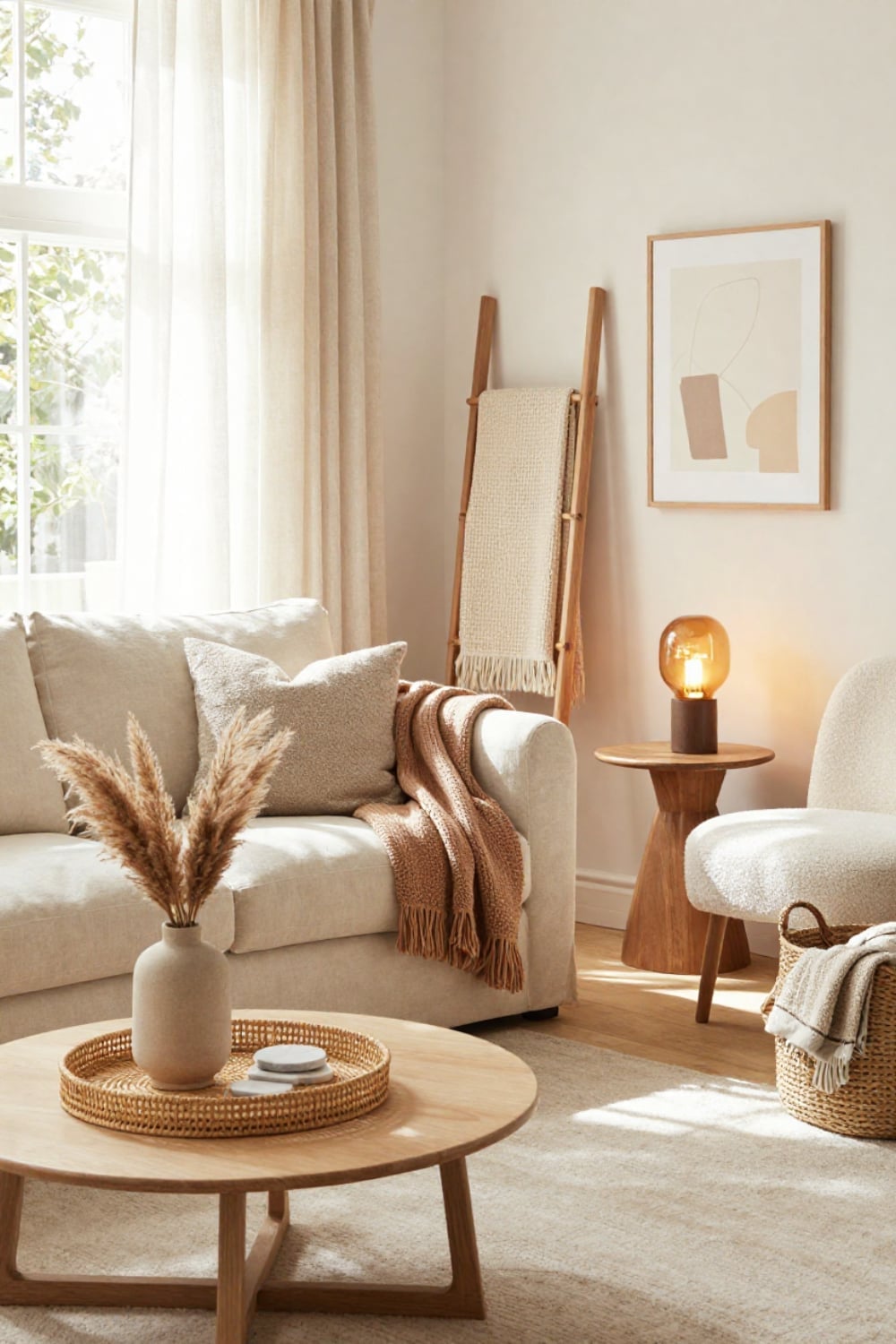
How do you add storage in a compact living room without making it feel crowded? A wooden ladder shelf leans against the wall, offering open display space for ceramics, folded textiles, or a small lamp. Because it is vertical and shallow, it does not eat into the floor area the way a cabinet would. The cream sofa and round coffee table stay low, so the eye travels up the shelf rather than stopping at furniture edges. An amber table lamp on the shelf adds warm light in the evening. In a small room, the trick is to pick one statement piece that stores and shows at the same time.
Linear Modular Sofa and Sculptural Floor Lamp
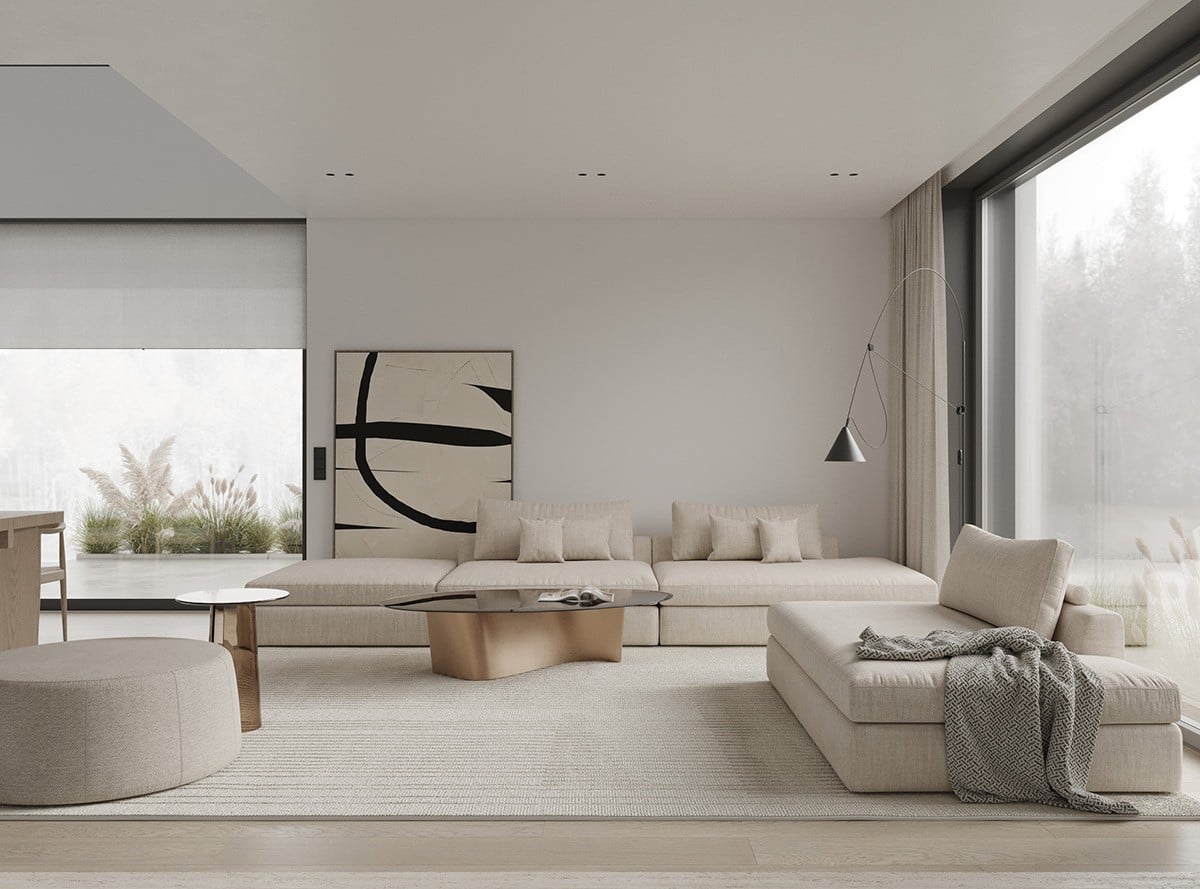
A low-profile modular sofa runs the length of the room, its clean horizontal line matched by a sculptural floor lamp with a dark shade at one end. The lamp does double duty: it marks the edge of the seating area and casts light upward to soften the open plan. Abstract art on the wall above the sofa keeps the eye moving, while the glass coffee table and ottoman stay low to preserve sight lines. The beige, cream, and gray palette keeps the room serene. In a roomy open plan, a tall lamp with a distinct shape can define a zone where the furniture alone cannot.
Textured Bouclé Sofa Against Warm Wood Paneling
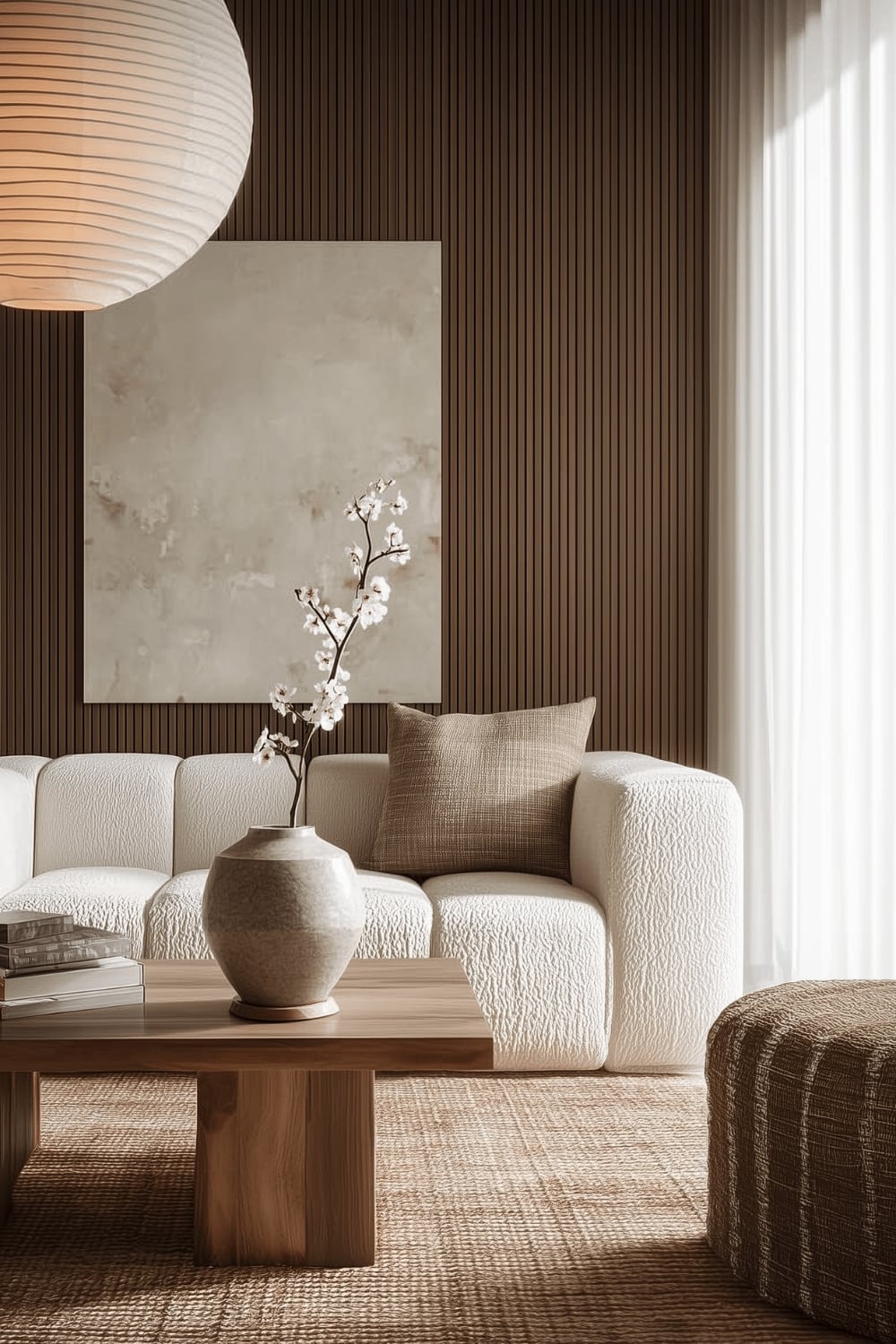
A bouclé sofa against warm wood paneling creates a layered look without adding extra objects. The textured fabric catches the light differently than the smooth wood, so the room feels rich in a quiet way. A wooden coffee table and round ottoman in similar tones keep the palette neutral, while a large artwork on the paneled wall provides a focal point. A pendant light overhead pulls the seating area together. When the wall finish itself has texture, the furniture can stay simple and the room still has depth.
Roomy Living with Curved Sectional and Abstract Art
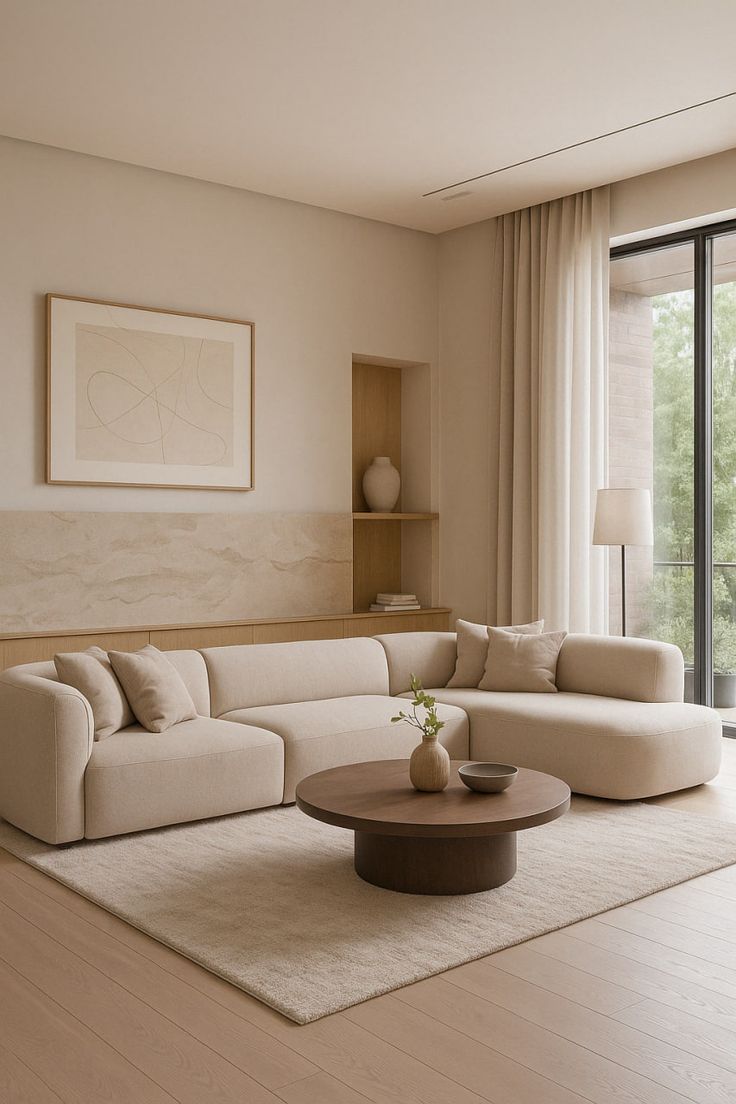
A curved sectional is often seen as the pricier choice, but its real value is in how it reshapes a room. In a roomy living space, a cream curved sofa defines a generous seating area without blocking the flow to a large window. A round coffee table echoes the soft lines, while recessed shelving keeps the walls clean. The large framed abstract art adds a focal point that draws the eye and balances the scale of the sectional. The principle here is proportion: a single oversized piece of art can anchor a wide wall better than a cluster of small frames, and it keeps the palette calm against the beige and light wood tones.
A floor lamp steps in where overhead light might feel too harsh, casting a warm glow across the fabric and stone finishes. The layout works because the sofa doesnt fight the window; it sits parallel, leaving a clear path and making the room feel even larger than its square footage.
Open-Plan Living and Dining with Sculptural Pendant Light
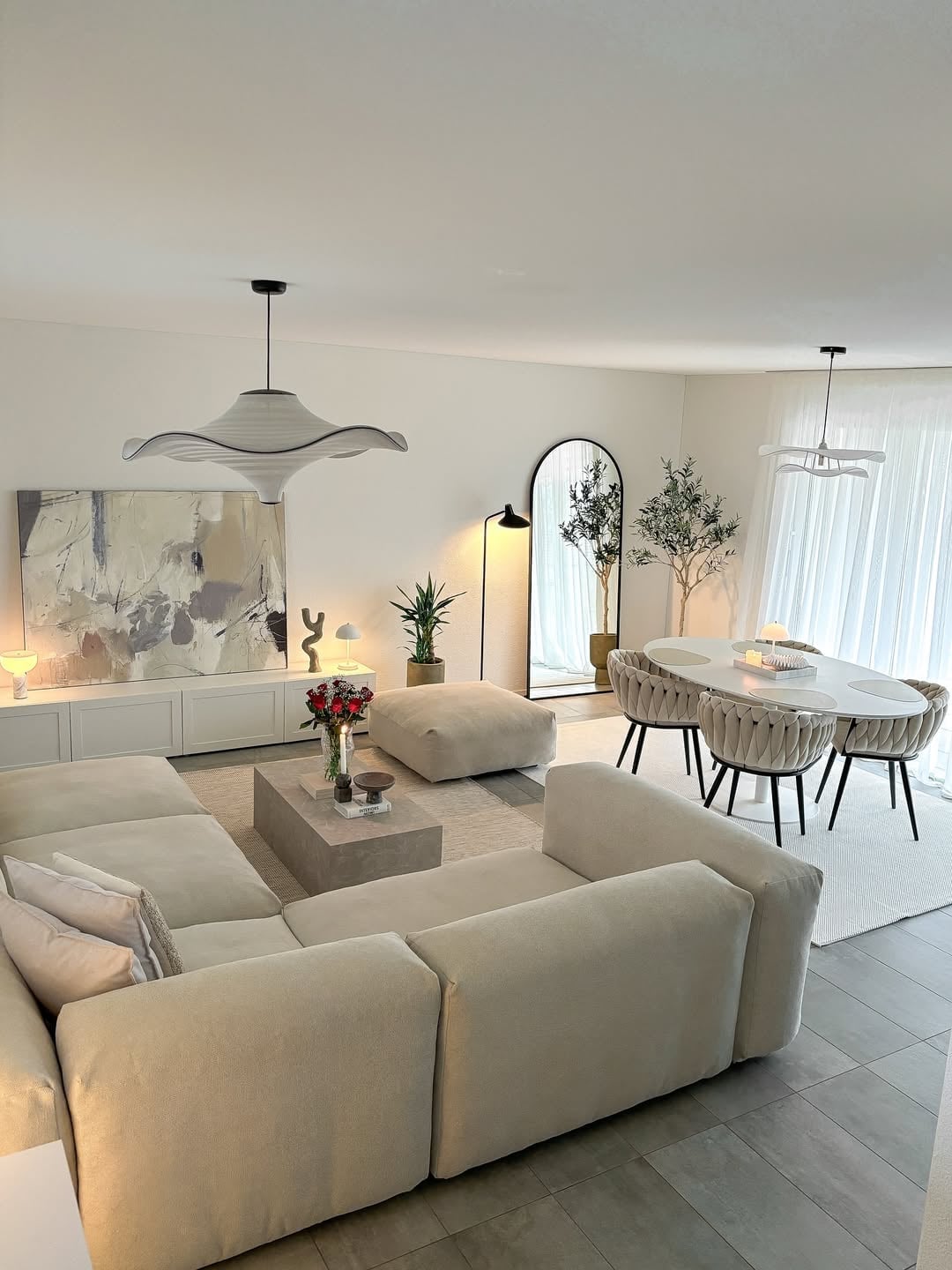
The sculptural pendant light hangs low enough to mark the dining zone without blocking the view across the room. In an open plan space, that single gesture separates living from dining more cleanly than a wall ever could. The cream sectional and dining table share a taupe and beige palette, so the eye moves smoothly from sofa to table. Table lamps on a sideboard add layered ambient light for evenings, while the pendant does the heavy lifting overhead. A renter can swap a flush mount for a pendant like this without wiring changes, as long as the ceiling box supports the weight.
Terracotta Accents in a Roomy Neutral Living Space
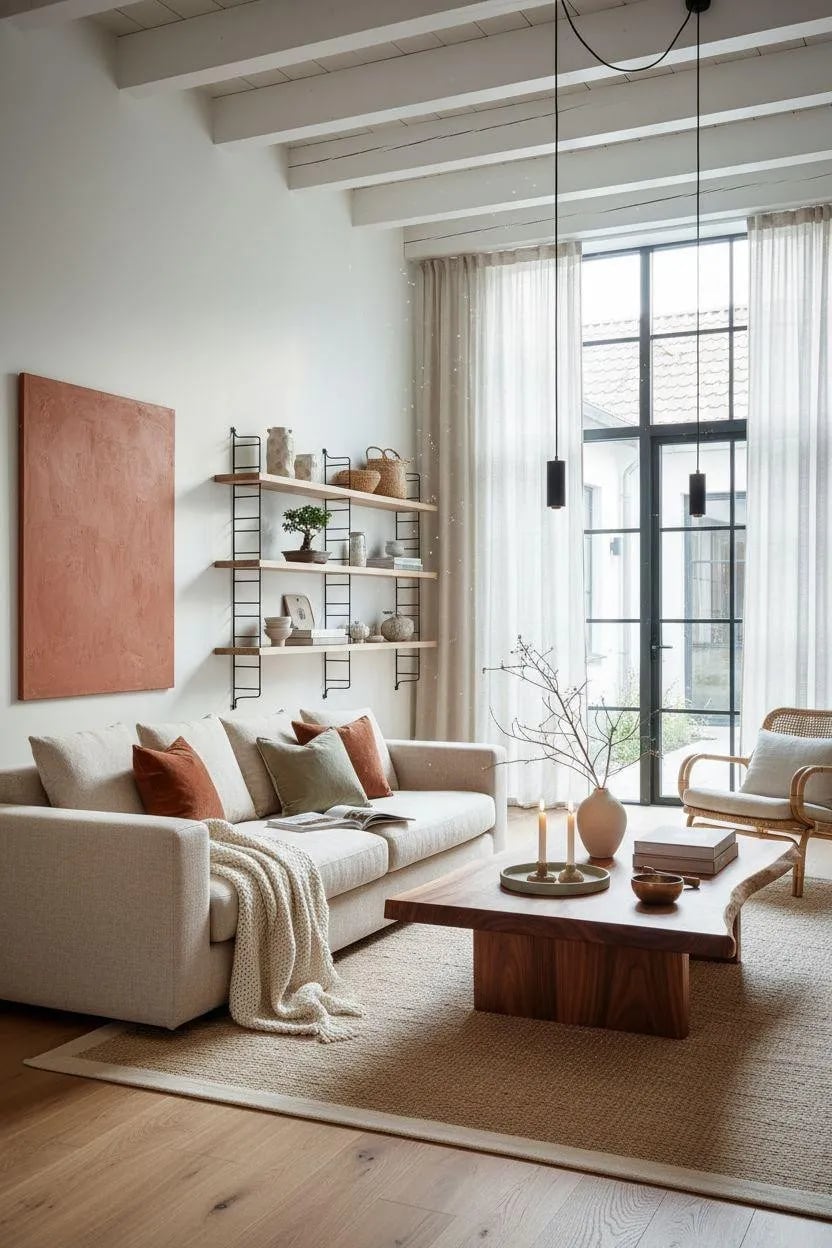
This room proves that a neutral palette does not have to feel flat. A live-edge wood coffee table brings organic texture to the space, while a rattan chair adds a woven note that softens the sofa. The terracotta accents, likely in a ceramic vase or a throw, introduce warmth. The palette works because the wood tones bridge the gap between the cool white walls and the warm clay hue. Pendant lights overhead and natural light keep the room airy, so the terracotta reads as a deliberate accent.
White Pendant Lights Elevate Open-Plan Living
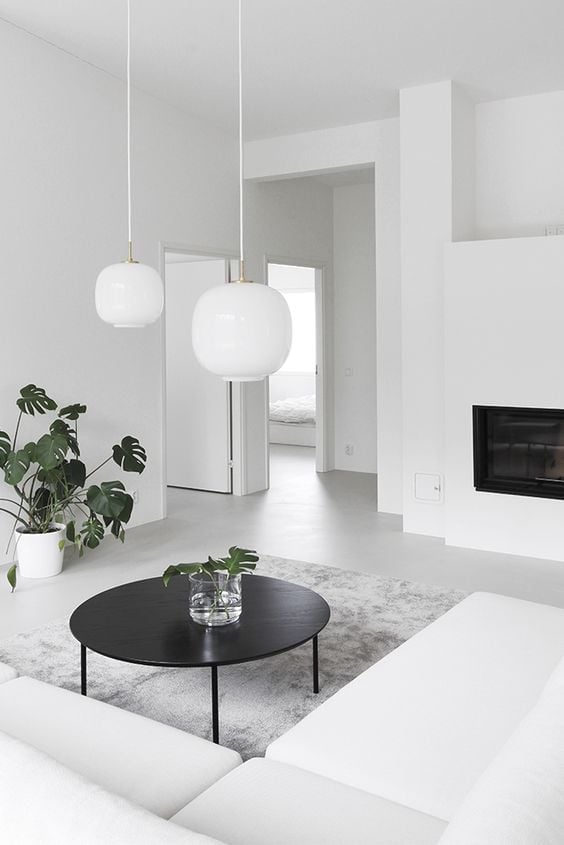
Can a light fixture change how a whole room feels? In an open plan space, two white pendant lights do exactly that. They hang over the seating area, drawing the eye upward and making the ceiling feel higher. The glass and brass construction catches natural light during the day and casts a warm glow at night. A sofa and coffee table sit below, with a plant adding a green note and a fireplace anchoring the right side. The pendants are light in color but substantial in form, so they balance the solid mass of the fireplace without competing.
The black accents in the room, likely in the fireplace or table legs, keep the white fixtures from floating. The layout works because the pendants are centered over the conversation zone, not the fireplace, which reinforces the seating area as the heart of the room. For renters, hanging pendants from a ceiling hook is a simple swap that does not require hardwiring.
Line Art Print Adds Artistic Flair to Minimalist Walls
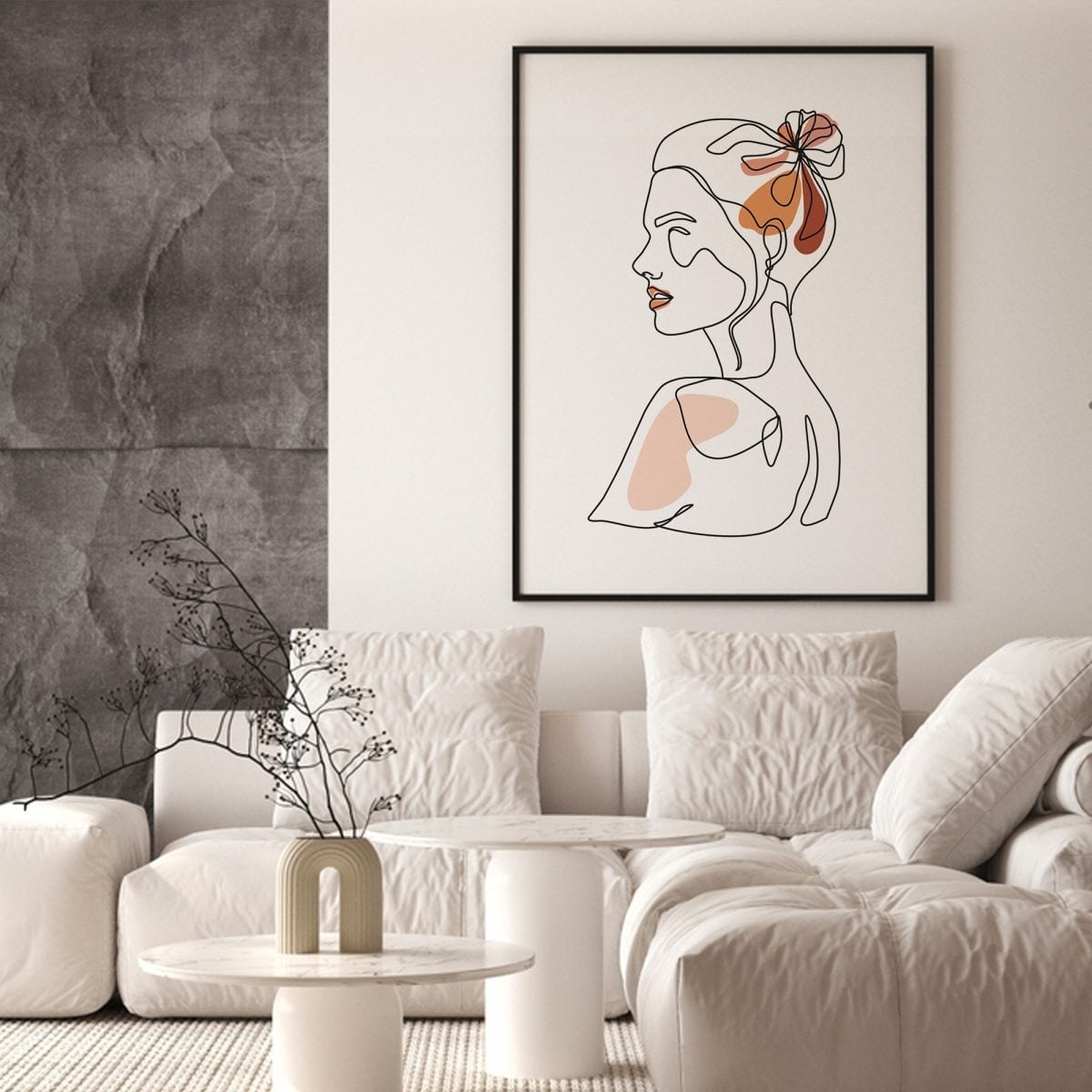
A single line art print can shift a minimalist room from sparse to intentional. The black line drawing on a white background sits above a white sofa, with peach and orange accents in the room adding a subtle warmth. The scale of the print matters: it is large enough to hold its own against the sofa below, so the wall does not feel empty. The canvas catches soft daylight, keeping the artwork from competing with the ceiling light. The contrast between the simple black line and the white wall creates a crisp focal point, while the peach and orange tones prevent the palette from feeling cold.
Compact Living with a Gray Sofa Bed and Hanging Plant
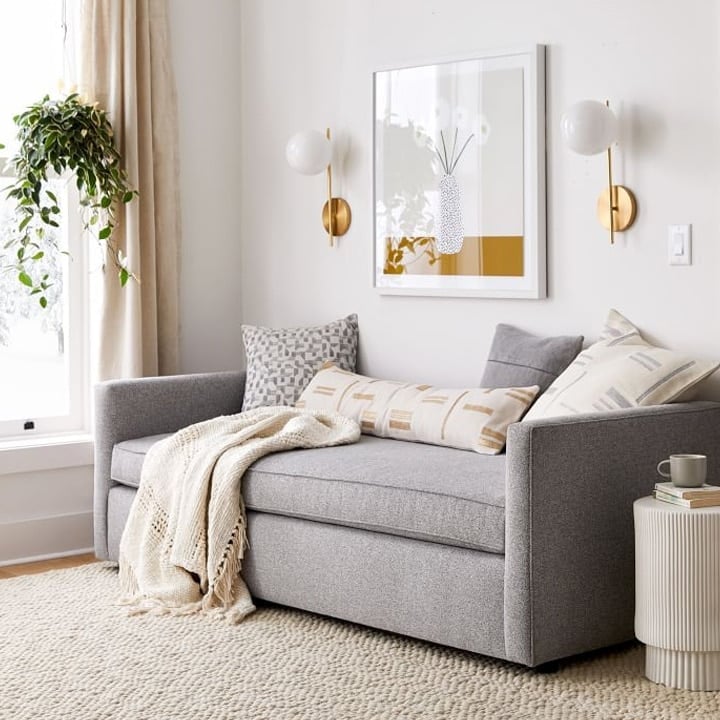
In a compact room, every piece should earn its keep. A gray sofa bed against the wall leaves the floor open for movement, with a round side table and wall sconces handling the bedside duties. A hanging plant draws the eye upward, making the ceiling feel higher than it is. The palette stays to gray, white, and beige so nothing competes for attention. This layout uses the sofa bed as the only large item on that wall, letting natural light from the window do the rest. It is a guest-friendly setup that does not ask the room to pretend it is bigger than it is.
Oversized Textured Artwork Above Fireplace
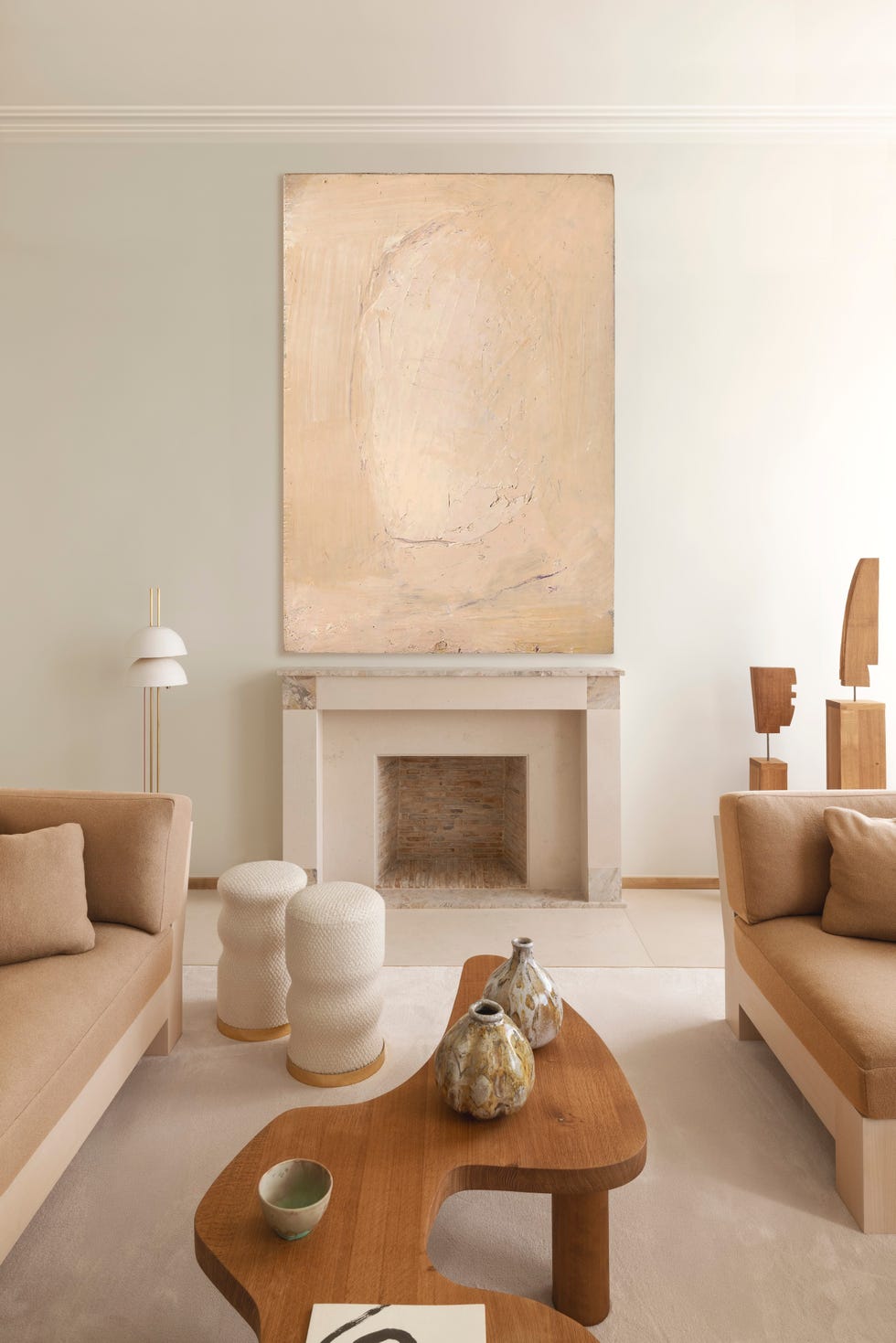
A large abstract painting over a fireplace might seem like a risk, but it is one of the fastest ways to give a neutral room a point of view. The beige and cream palette of the sofas and the light wood floor keep the space calm, while the textured canvas adds depth without color. A sculptural coffee table sits low between the symmetrical seating, and a floor lamp on one side balances the natural light from the window. The trick is in the finish: the plaster-like texture of the artwork catches soft light differently than the smooth walls around it. That contrast keeps the eye moving without needing a second pattern or a bold accent. The room stays minimal because the art carries the weight.
Compact Living with Curved Sofa and Modular Shelving
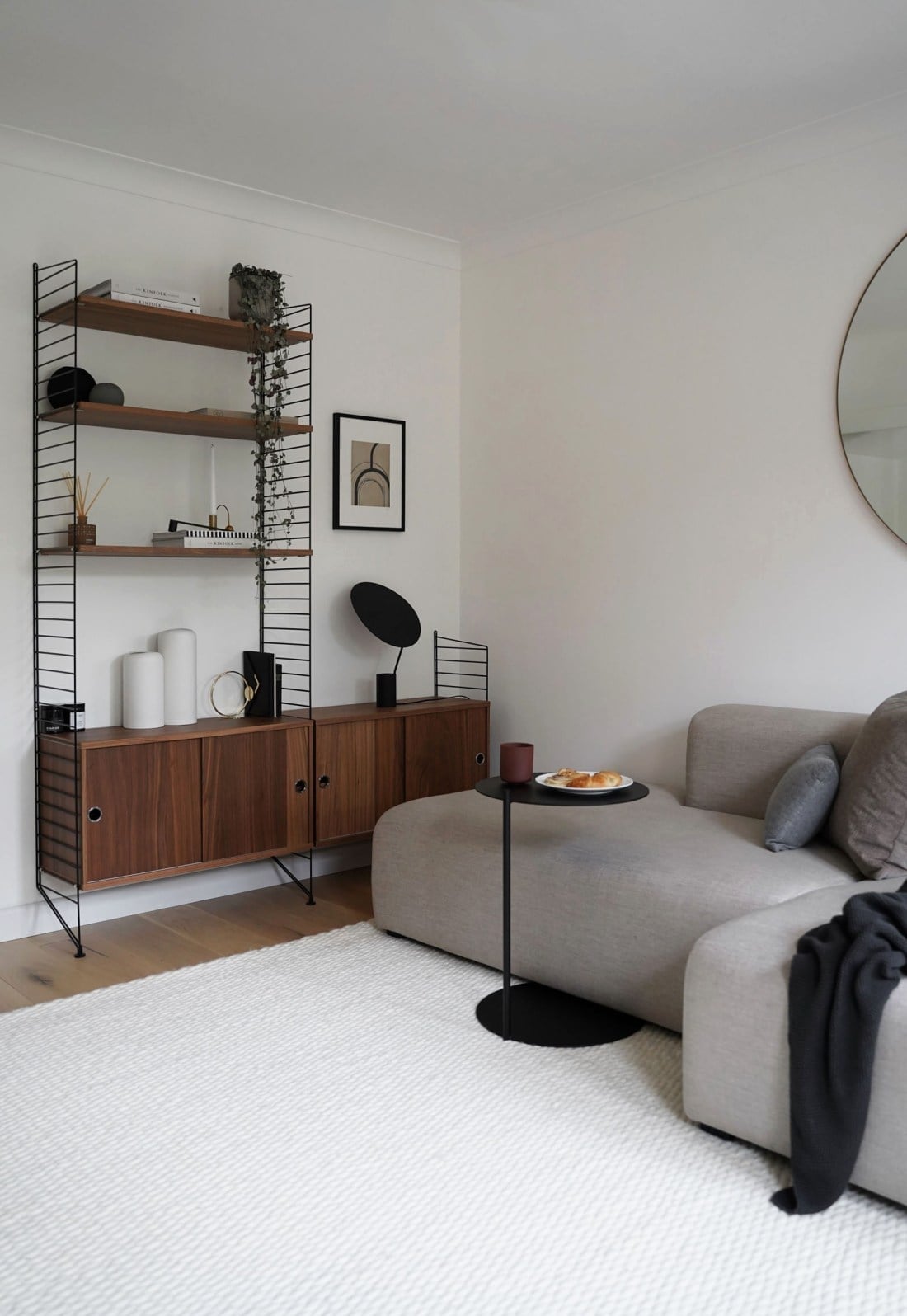
A curved, low-profile sofa gives a compact corner arrangement a softer line than a standard square piece. The modular shelving unit on the adjacent wall holds books and objects without crowding the floor, while a round mirror above the side table bounces light from the window across the room. Wood tones in the shelving and rattan accents warm the white and beige palette, and the metal legs on the sofa keep it from feeling heavy. It is a setup that uses vertical storage to free up square footage.
Marble Fireplace as the Centerpiece of Minimalist Design
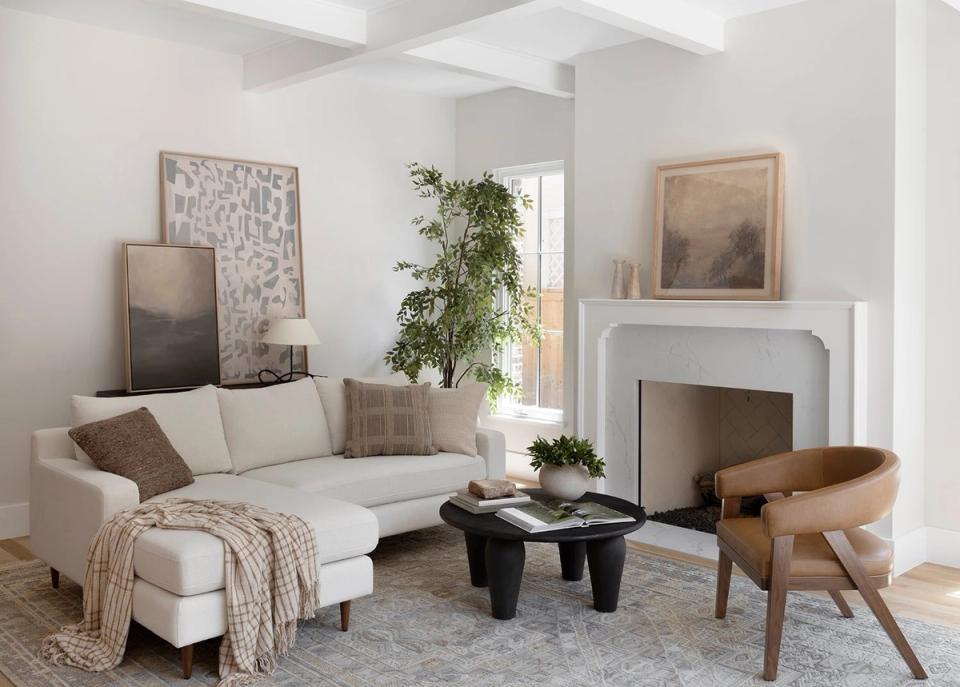
A marble fireplace surround does not need much help to anchor a room. Here it sits as the clear focal point, with a cream sofa and a leather armchair arranged around a coffee table that lets the stone take center stage. Natural light from a window hits the marble surface, while an ambient lamp warms the opposite corner. The palette stays within white, cream, brown, and gray, so the veining in the stone becomes the only pattern in the space. Artwork above the mantel is kept simple and low contrast. The lighting strategy is deliberate: bright, even light on the marble creates a clean look, while softer light on the seating makes the room feel livable.
Dark Blue Sectional Sofa in a Neutral Scheme
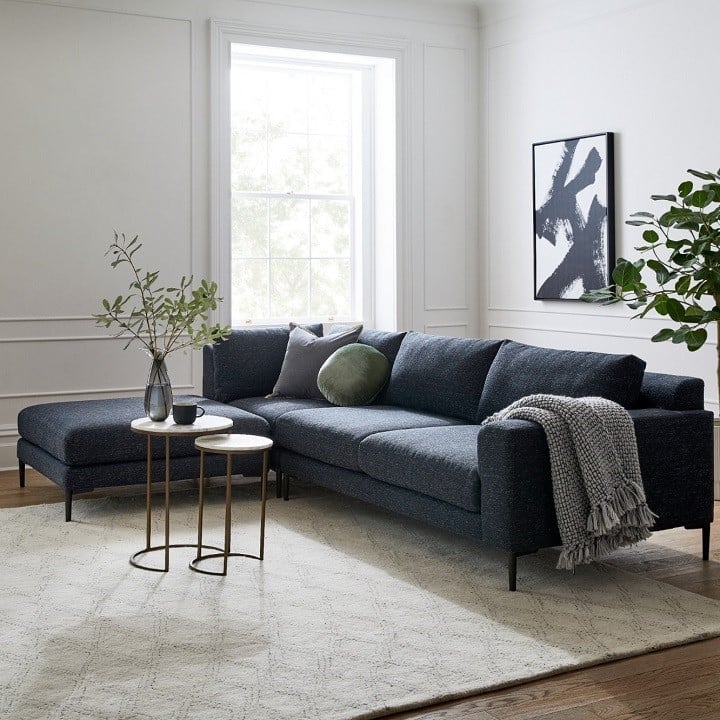
A dark blue sectional sofa against a neutral backdrop creates a grounded look without feeling gloomy. The gray and white walls keep the palette airy, while the deep blue fabric pulls the eye to the seating area. Side tables in metal and a marble top add a cool contrast to the soft upholstery. Abstract art above the sofa repeats the neutral tones, so the blue is a deliberate choice.
The rule here is about balance: one dark piece needs enough light around it to breathe. Overhead lighting keeps the room bright during the day, and window light hits the sofa from the side, softening its mass. A roomy layout like this can handle the weight of a dark sectional as long as the floor and walls stay light.
Sculptural Curved Sofa and Marble Coffee Table
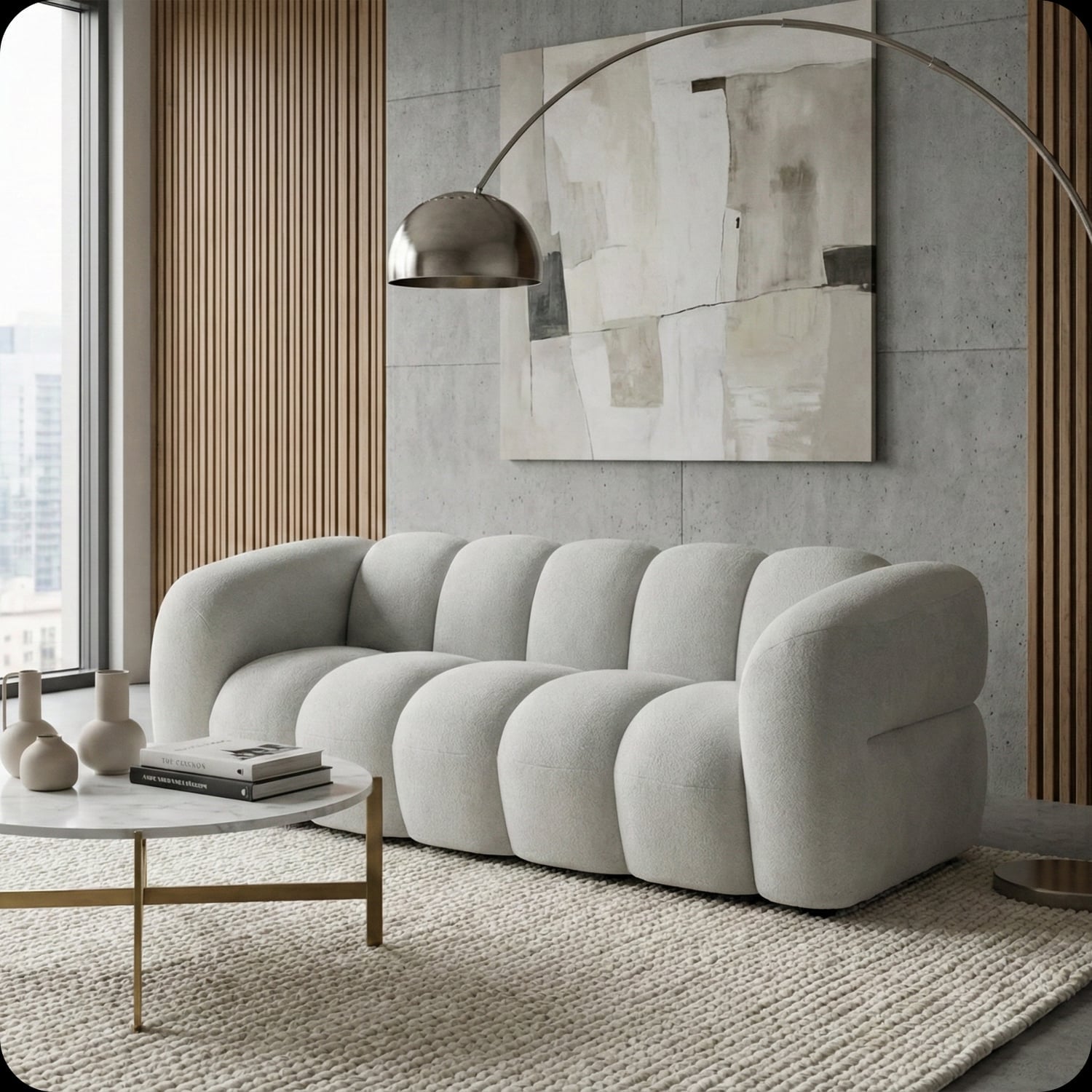
A curved sofa anchors this open-plan room without blocking the flow. The marble coffee table adds weight and contrast against the off-white upholstery and concrete finishes, while the arc floor lamp echoes the sofa’s rounded lines. Natural light from a large window keeps the palette airy. This layout works well when the hero element stays central and the rest of the room keeps a simple, balanced arrangement around it.
Natural Stone Fireplace with Minimalist Ambiance
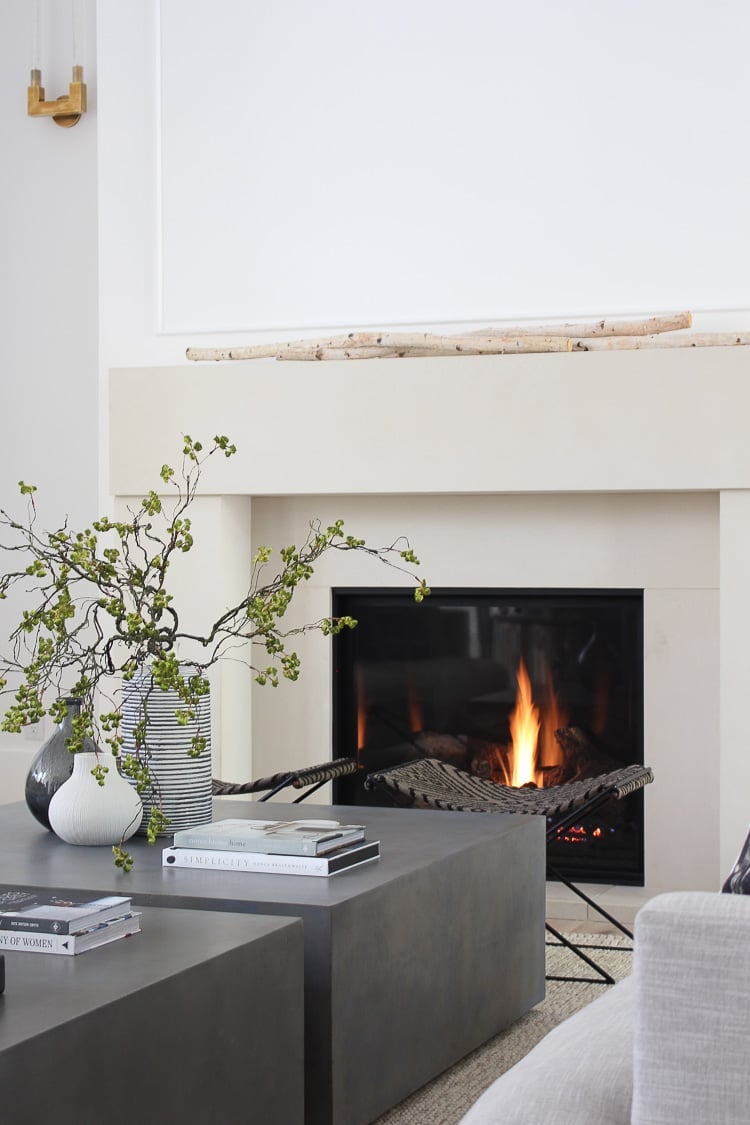
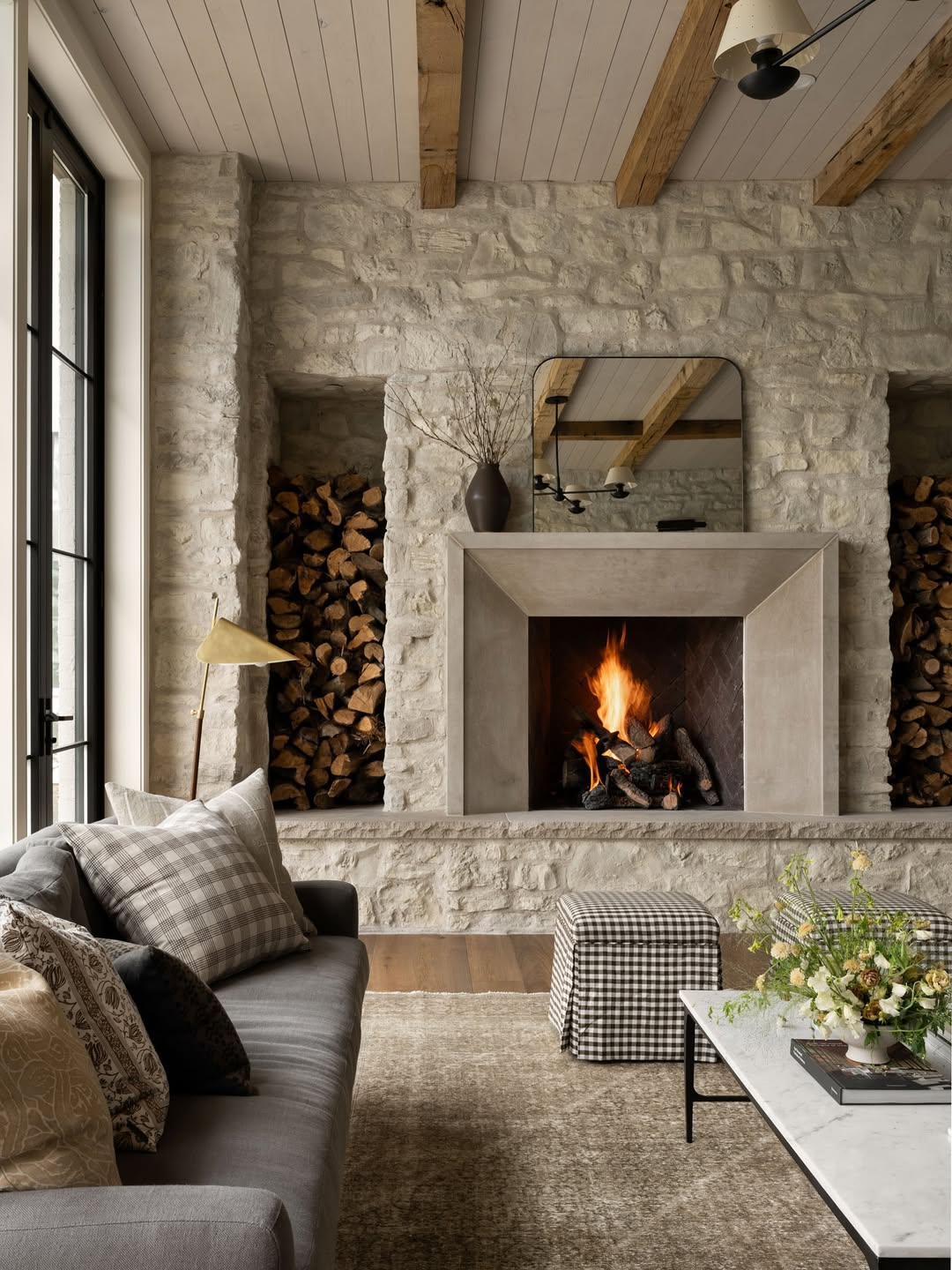
A practical rule for a minimalist room with a fireplace is to let the hearth set the tone. Here, natural stone surrounds the fire, and a ceramic vase with branches adds a soft organic note without clutter. The cream armchair and simple coffee table face the fireplace, making it the clear focal point. For renters, a freestanding fireplace insert can create a similar anchor without altering the structure, and a lightweight armchair is easy to move when needed.
Curved Forms and a Striking Marble Coffee Table
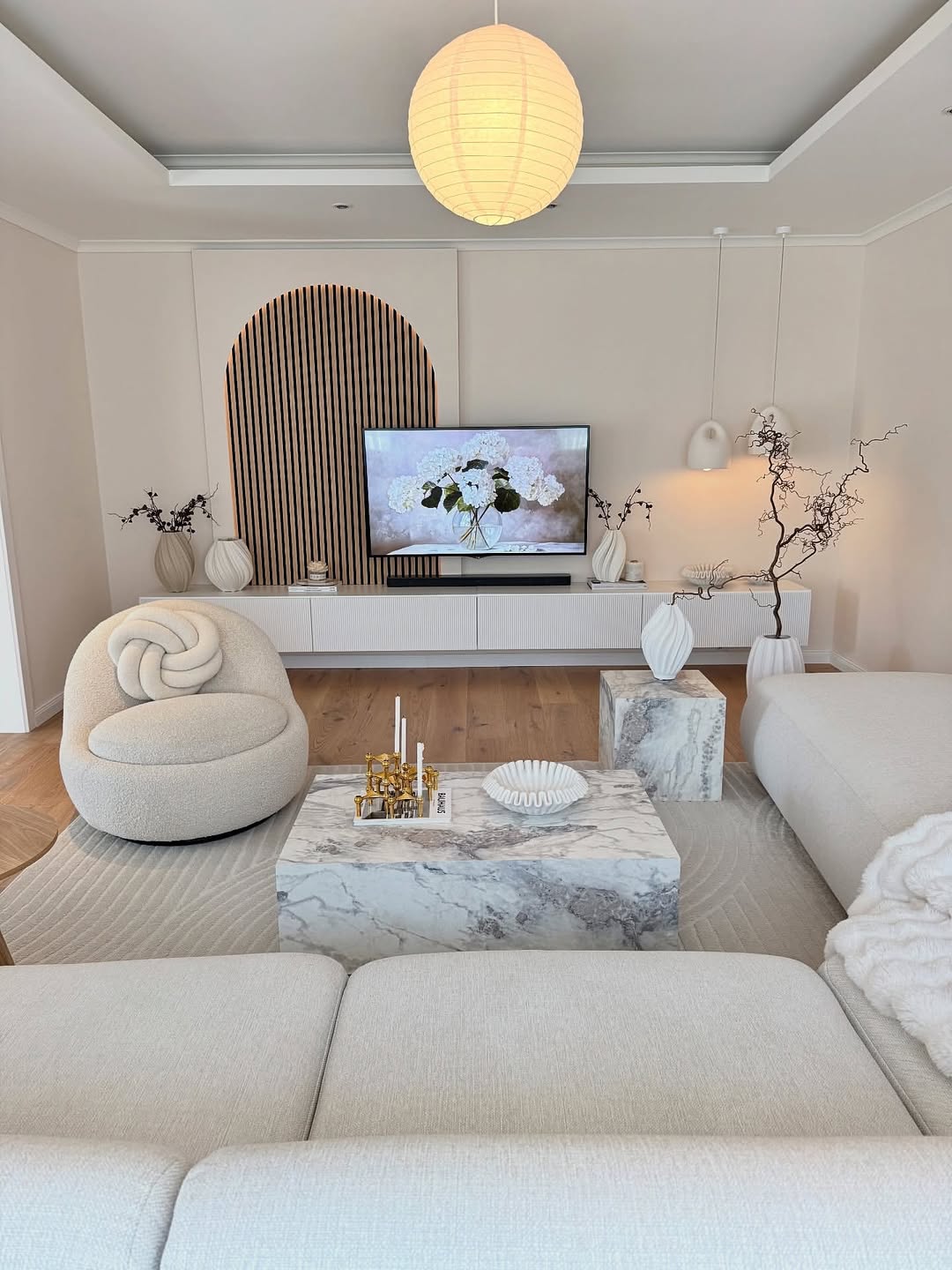
Where many minimalist rooms rely on straight lines and sharp angles, this space leans into curves. The sofa and accent chair both have rounded forms, and the marble coffee table brings a cool, polished surface that contrasts with the soft fabric upholstery. A large paper lantern overhead adds a sculptural element without competing.
For a variation, swap the accent chair for one in a darker tone or a different texture, like boucle or leather. The room stays cohesive because the palette stays within cream, beige, and white, and the marble table provides a consistent anchor.
Cream Curved Sofa and Marble Coffee Table with Linen Textures
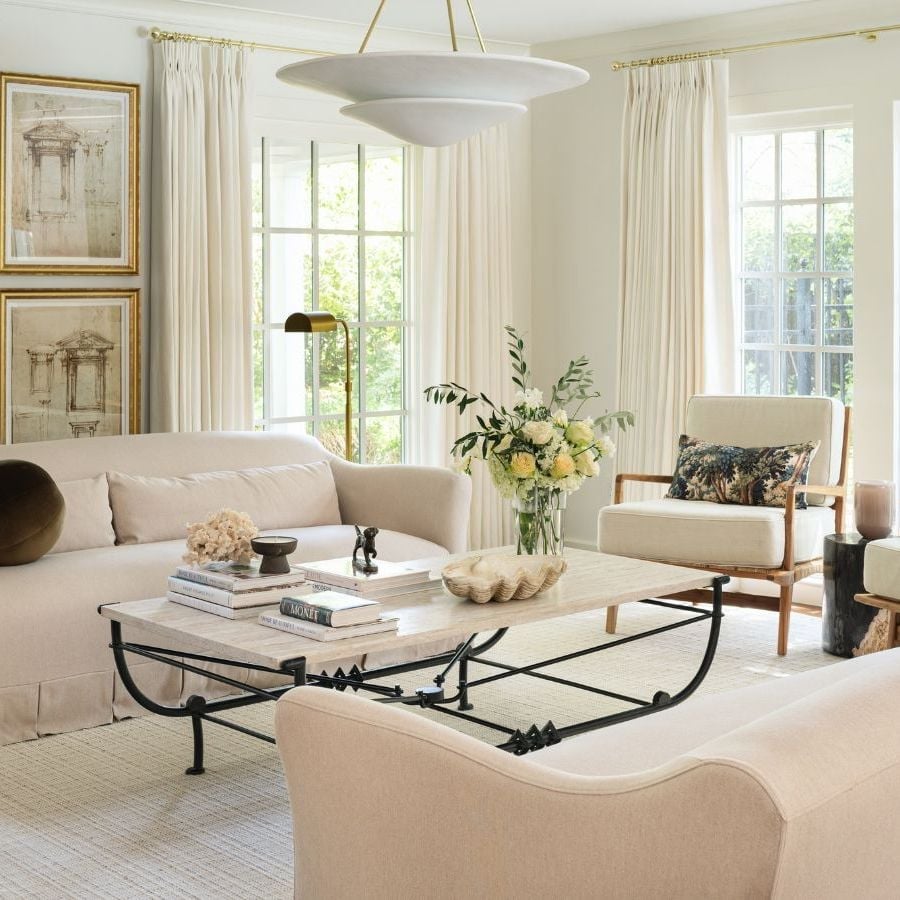
The cream curved sofa and marble coffee table sit in a roomy layout with an armchair facing the sofa. Linen upholstery adds a natural, breathable texture that softens the marble’s formality. A floor lamp near the armchair provides task lighting for reading, while natural light fills the space during the day. The combination of soft fabric and hard stone creates a balanced, durable setup that works for everyday use.
Layered Round Coffee Table with White Sectional
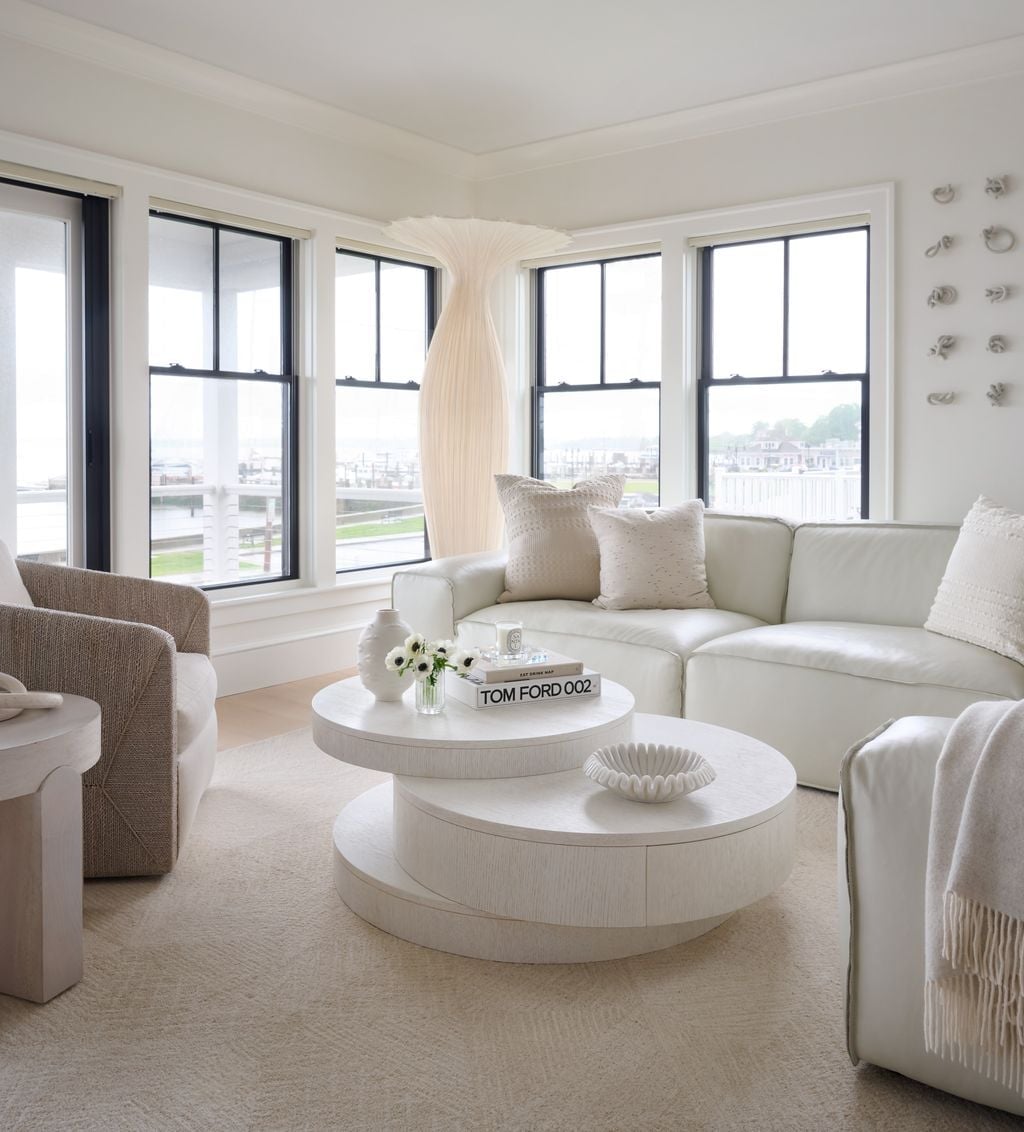
A white sectional sofa defines the seating zone in this roomy living space. The round coffee table breaks up the long lines of the sectional, and an armchair adds a second seating option. A floor lamp near the armchair provides focused light. The layout keeps the coffee table within easy reach of both the sofa and the chair, making the arrangement feel intentional and easy to use.
Large Cream Sectional Sofa with Terracotta Accents
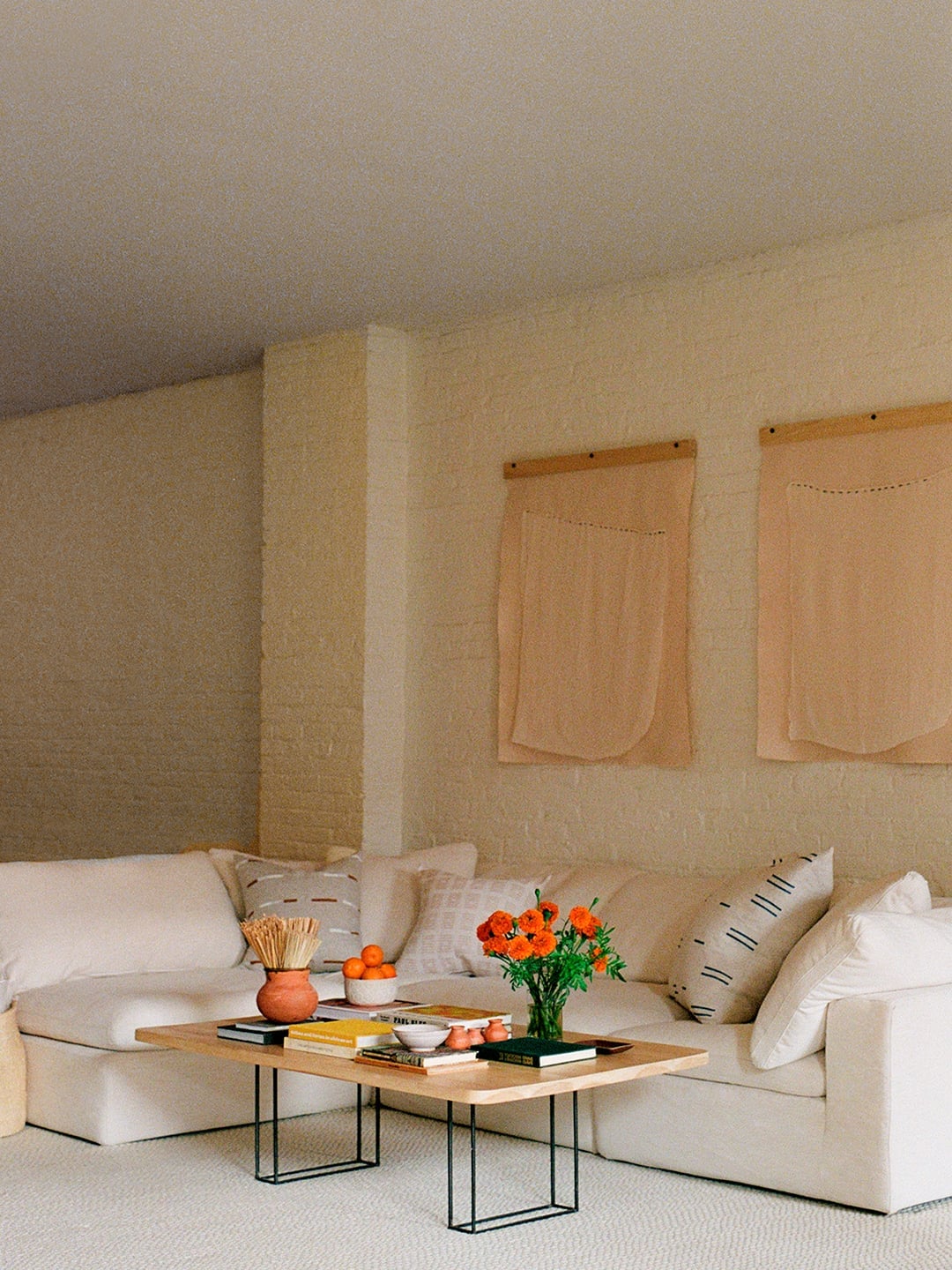
When you have a large cream sectional sofa as the anchor, the layout benefits from keeping the room simple. The sofa faces a wooden coffee table, with a terracotta vase and textured pillows adding warmth without clutter. Bright natural light softens the cream and beige palette, while the brick wall introduces subtle texture. This setup lets the seating do the talking.
The terracotta accents break up the neutral scheme in a way that feels intentional rather than random. The ceramic vase and orange-toned pillows create a visual bridge between the light sofa and the darker wood table. For a roomy living room, this arrangement keeps the focus on comfort while the accent colors prevent the space from feeling flat. It is a straightforward way to add personality to a minimalist room without overcomplicating the layout.
Light Wood Room Divider in Open-Plan Living
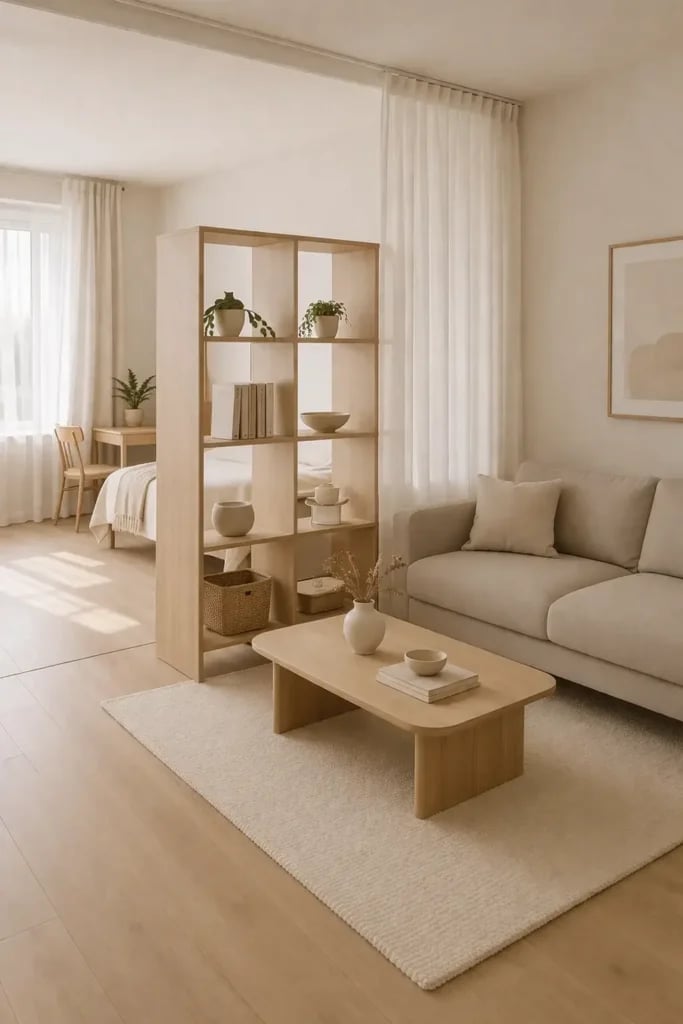
A light wood room divider is a concrete way to carve out separate zones in an open plan layout. The shelving unit sits between the living area and whatever lies beyond, with the sofa and coffee table on one side and the rug anchoring the zone. Cream, beige, and wood tones keep the transition smooth. Soft ambient light and natural light make the divider feel like a functional part of the room.
Gallery Wall Adds Personality to Compact Living
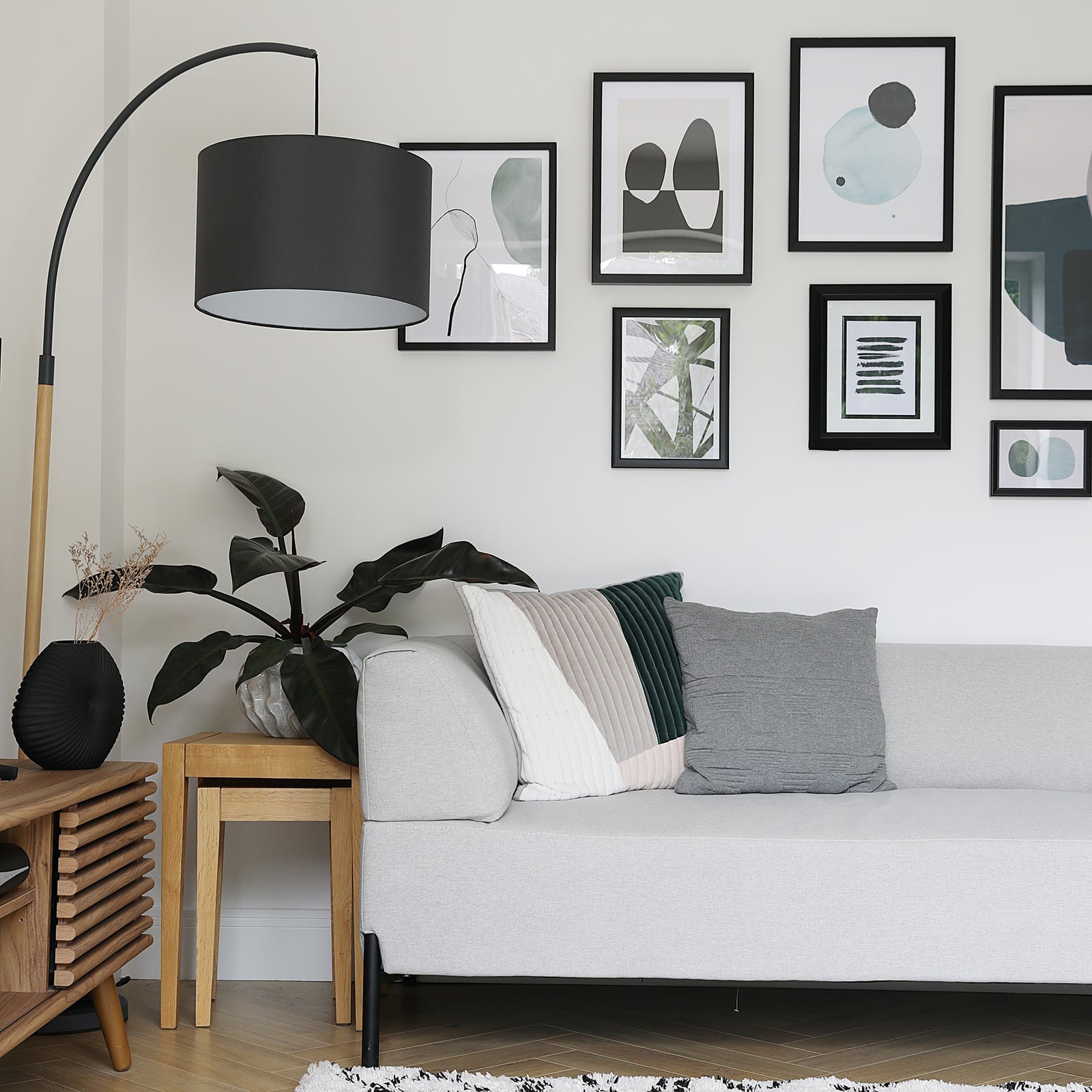
In a compact living room, use vertical wall space for personality without taking up floor area. A gallery wall with framed art in white, gray, black, and green tones sits above the sofa, with a floor lamp and side table nearby. The mix of materials in the frames, wood, paper, and metal, adds depth while natural light and the lamp keep the art visible. For a smaller room, this approach adds character without crowding the layout.
Sleek Modern Fireplace with Bold Black Doors
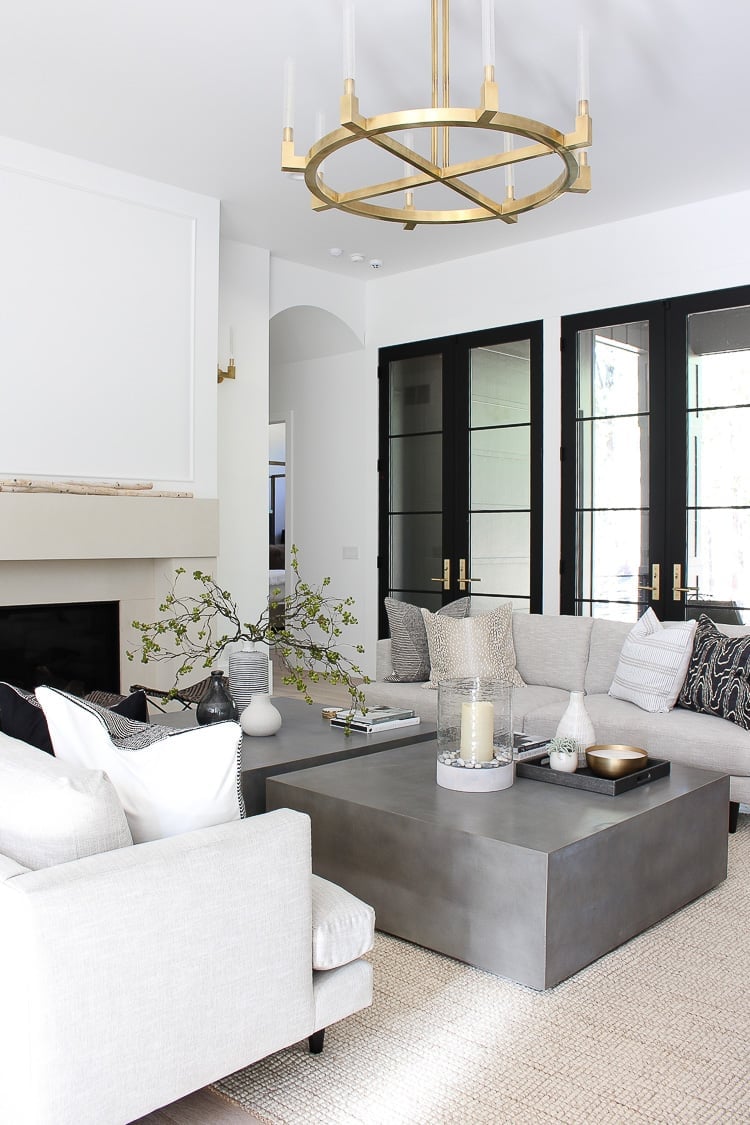
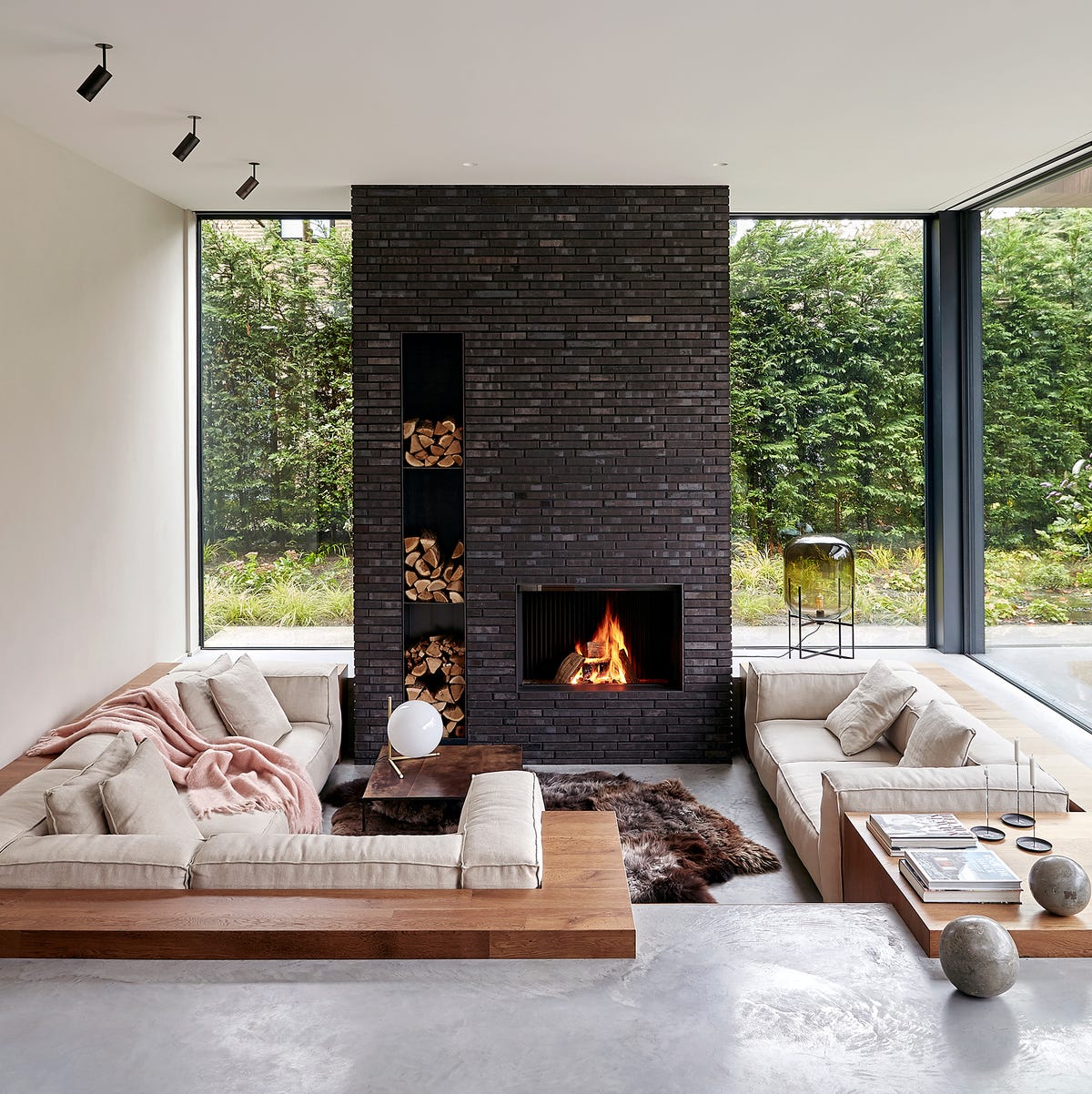
A sleek modern fireplace with bold black doors offers a different focal point than a traditional stone hearth. In this roomy living room, the fireplace sits as the hero element, with seating arranged around it. The palette stays restrained with white, gray, black, and wood tones, letting the dark doors stand out. Natural daylight and ambient lighting make the fireplace feel integrated rather than overpowering.
The layout with a sofa and chairs facing the fireplace creates a natural gathering spot. The black doors contrast with the lighter walls and floor, while the glass and stone materials keep the look clean. For renters, a fireplace like this is usually a fixed feature, but you can work with it by arranging seating to emphasize the symmetry. The key is to let the fireplace anchor the room without adding competing visual weight.
Glass Coffee Table with Soft Gray and Blush Tones
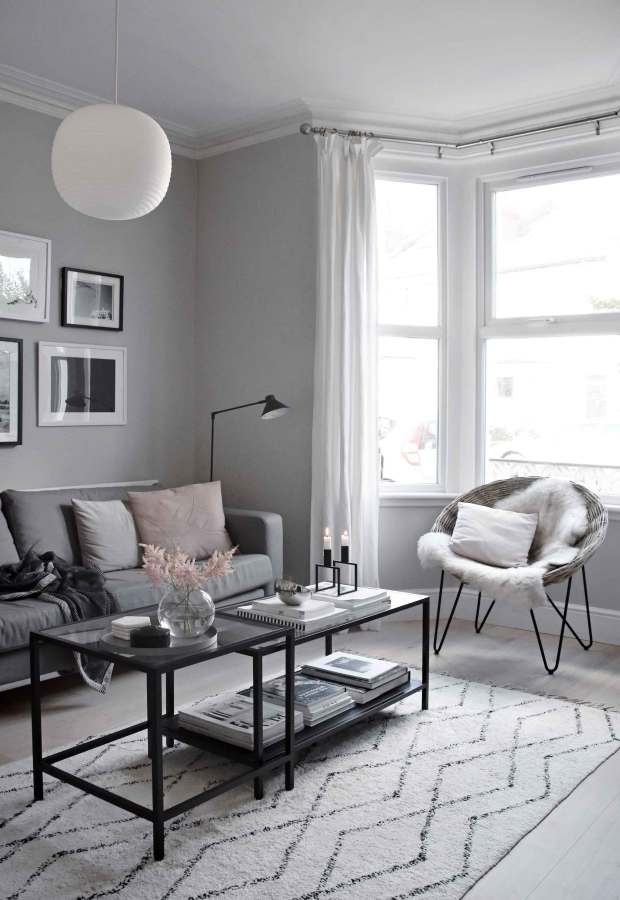
The design pairs a gray sofa with a glass coffee table and an armchair to the side, creating a layout that feels open rather than heavy. The blush pink accents in the room add warmth to the gray and white palette, with the glass table keeping the sightlines clear. A large round pendant light overhead draws the eye upward, while natural light from the window balances the cool tones. The metal and wood elements in the furniture provide subtle contrast without disrupting the soft palette.
Hanging Fireplace Adds Unique Focal Point
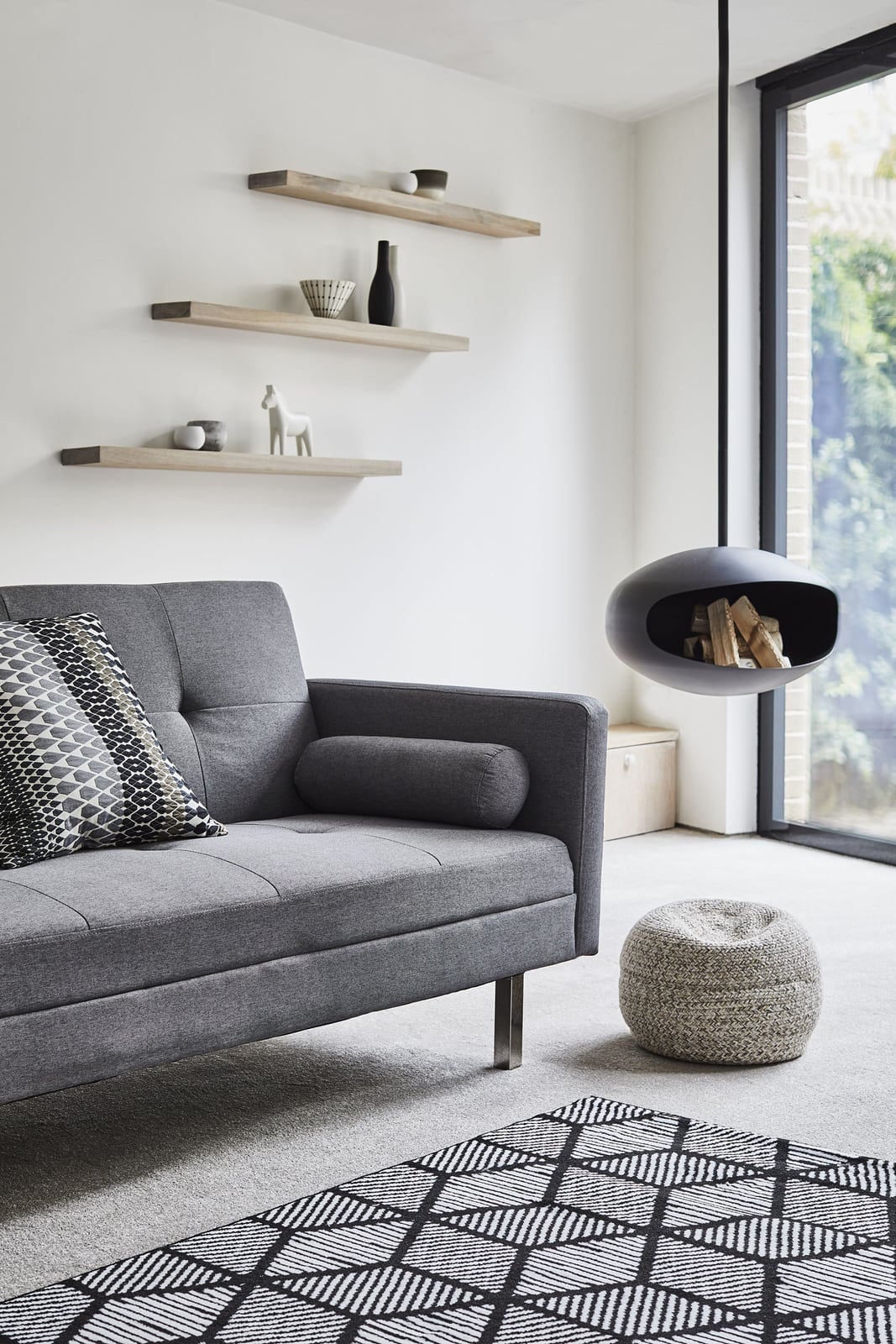
A hanging fireplace turns a roomy living space into something special without taking up floor area. In this layout the sofa faces the window while the suspended fireplace draws the eye upward, making the high ceilings feel intentional rather than empty. Floating shelves above the sofa keep the wall practical without clutter. The gray and white palette with wood accents keeps the room calm, so the fireplace can be the talking point. This setup works best when the hero element has room to breathe, avoid crowding it with furniture or decor. The fireplace becomes both heat source and art, which is a smart swap for anyone who wants a focal point that doesnt demand a renovation.
Corner Living with Fireplace and Large Round Mirror
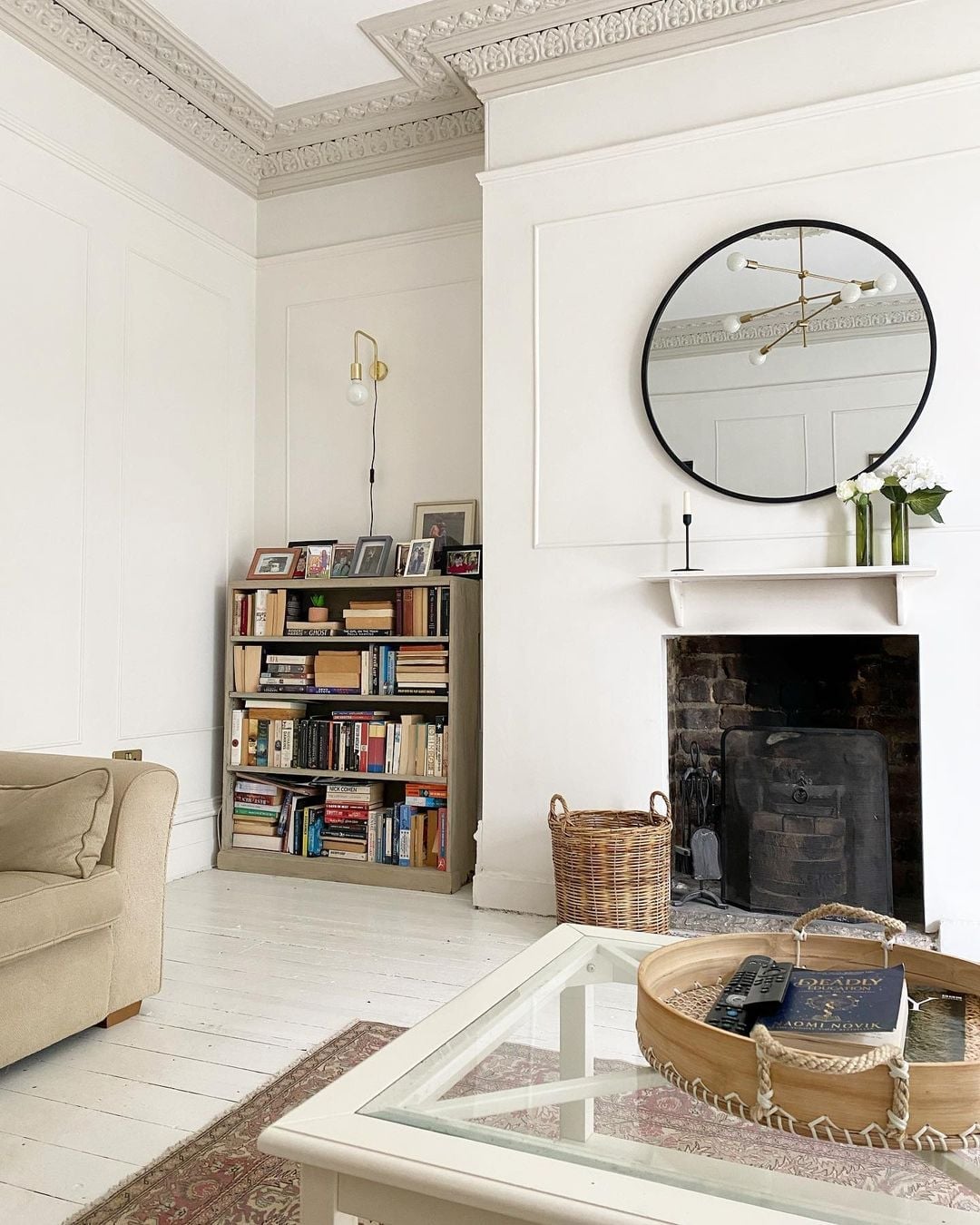
A corner fireplace often gets treated like an awkward leftover, but this layout proves it can anchor the whole room. The minimalist living room uses a corner fireplace and a large round mirror to balance the space. The mirror above the fireplace reflects light from the window and the wall sconce, making the corner feel open. Furniture arranged around the fireplace creates a natural conversation zone. The ornate ceiling detail adds character without breaking the neutral palette. For renters, this arrangement is a smart workaround. You cannot move the fireplace, but you can control everything else. A large mirror costs little and changes how the corner reads by doubling the light and the view.
Textured Chunky Knit Rug Enhances Compact Space
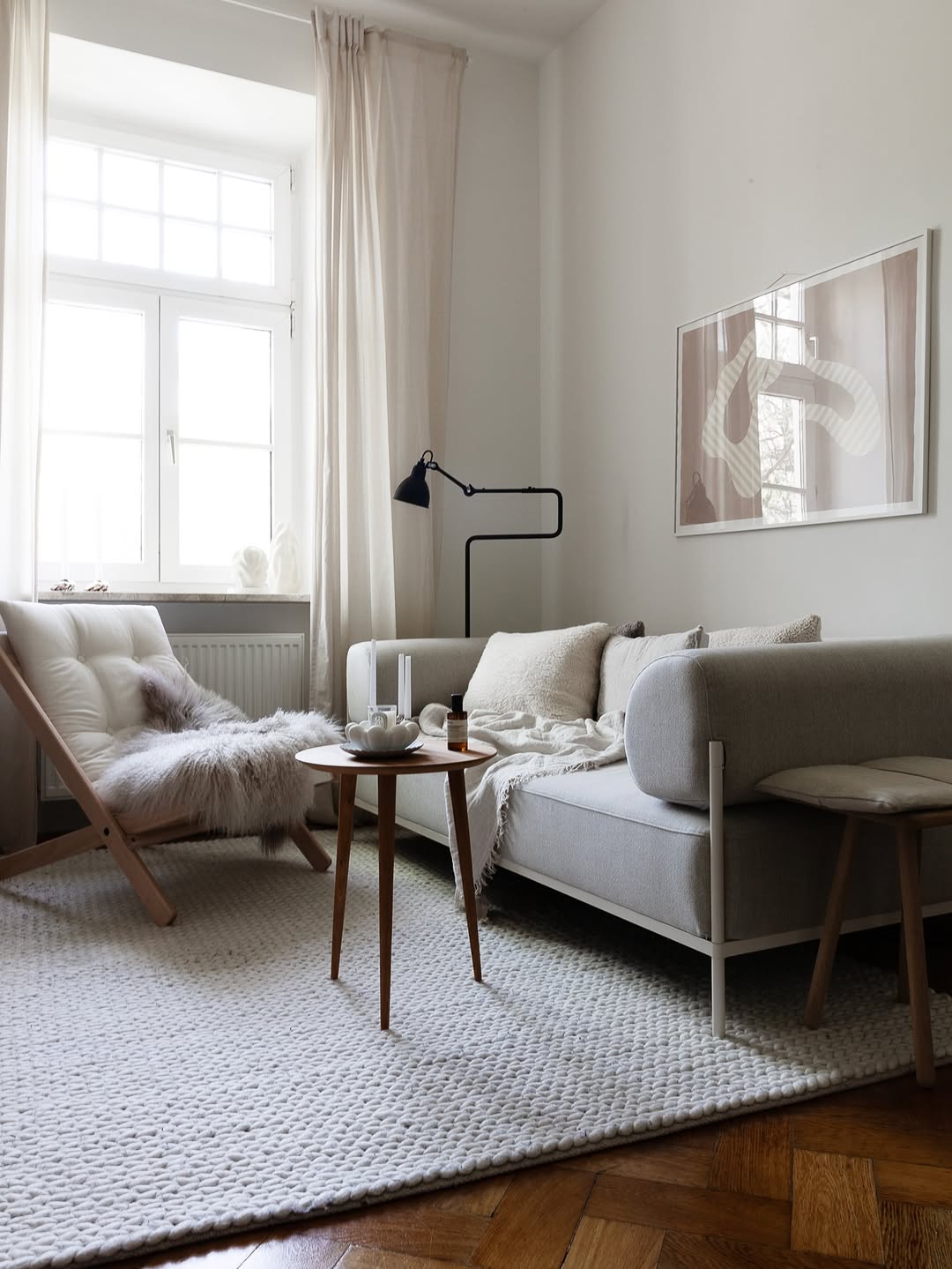
A chunky knit rug adds visual weight and warmth to a compact living room without eating up square footage. The light gray sofa and wooden lounge chair sit on the textured rug, which breaks up the neutral palette with its thick weave. Soft light from the large window and a task lamp keep the room bright. The rug defines the seating area in an open layout, so the space feels planned. For any compact minimalist living room, a rug with texture is the easiest way to add depth without adding color or clutter.
Tall Dark Metal Shelving Unit for Open Plan Living
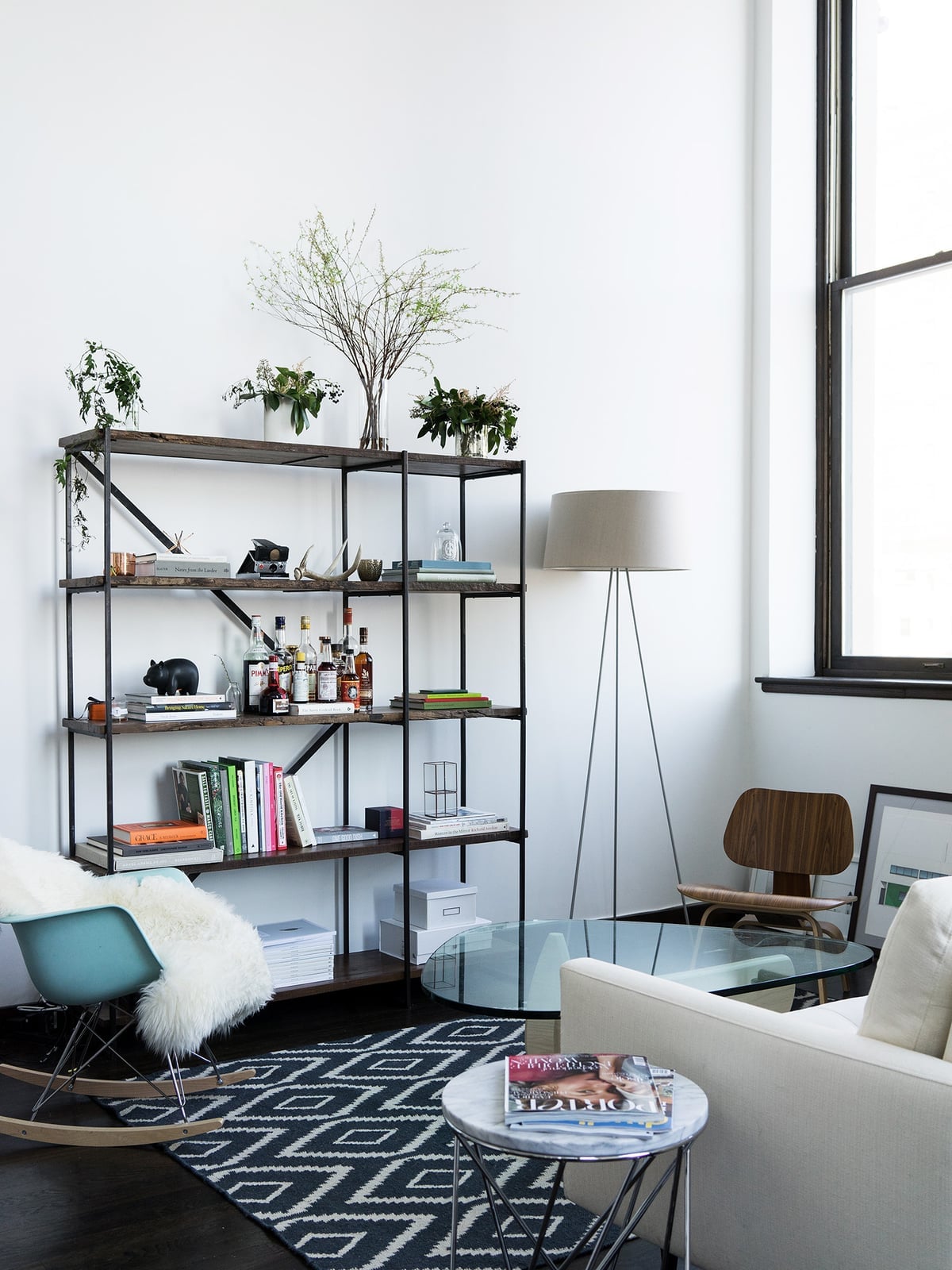
A tall dark metal shelving unit makes the most of vertical space in a living room. The black frame contrasts with the white walls and wood tones, creating a structured look that defines the room without blocking the view. A rocking chair and glass coffee table keep the seating area light and open. The shelving unit holds books and decor, but its real job is to ground the layout and provide storage without a bulky cabinet. In a roomy space, a single tall unit gives a deliberate, uncluttered appearance. This works especially well for anyone who needs storage but wants to keep the minimalist aesthetic. The open shelves keep everything visible and curated.
Final Thoughts
A minimalist living room isn’t about emptiness. It’s about choosing pieces that earn their place. Across these 29 spaces, the common thread is restraint: a single sculptural lamp, one textured rug, a sofa with clean lines. Start by editing out what you don’t use, then let the architecture and a few key items do the work. Natural light, neutral tones, and honest materials keep the room feeling open. The goal is a space that lives well today and adapts tomorrow. Keep surfaces clear, choose quality over quantity, and let the room breathe.