Your driveway is often the first thing people see, so why not make it a design statement? We have rounded up 35 modern driveway ideas to help you transform this practical space into a stylish entry point for your home.
From geometric concrete to integrated lighting, you will find inspiration for materials, patterns, and landscaping that fits a contemporary aesthetic.
Geometric Concrete Slabs with Gravel Accents
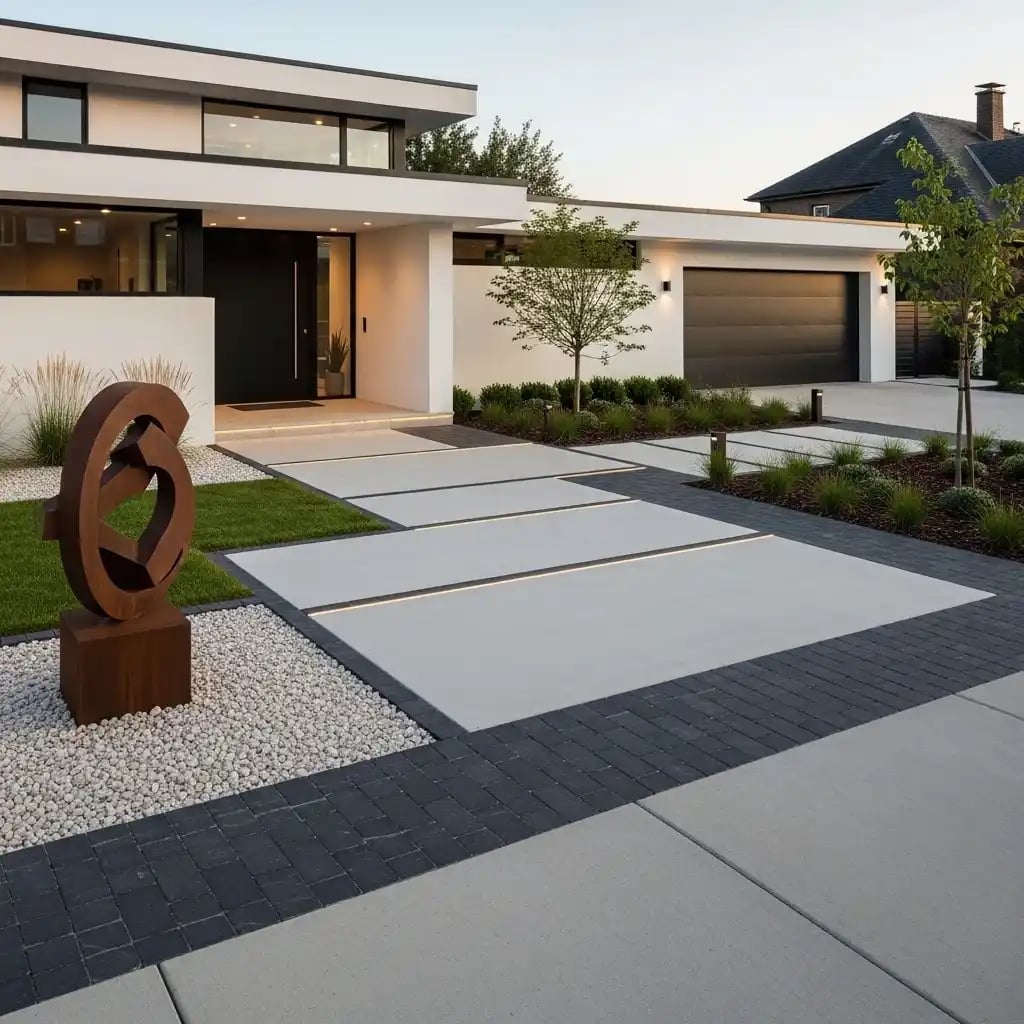
The driveway is a grid of large concrete slabs, each separated by a generous strip of gravel that softens the transition between hard surfaces. A border of dark brick frames the whole layout, tying the geometric pattern to the modern house behind it. An abstract sculpture near the edge adds a deliberate focal point without competing with the clean lines of the pavers. The overall effect is a roomy approach that feels structured but not clinical.
Exposed Aggregate Concrete with Integrated Lighting
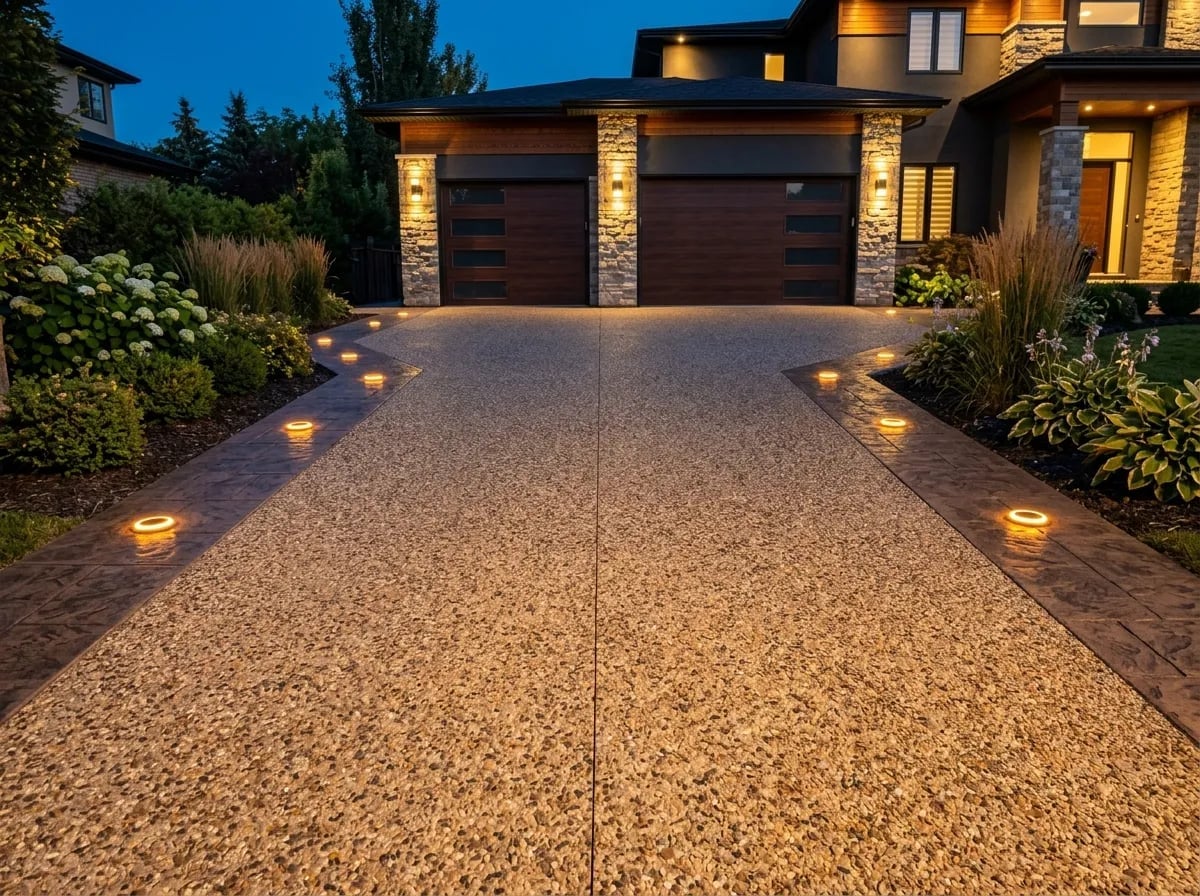
This design pairs exposed aggregate concrete with low integrated pathway lights that follow the curve of the driveway. The warm glow from those lights, combined with the exterior house lights, makes the textured surface readable even in the evening. The tan and gray tones of the aggregate blend into the surrounding stone landscaping, so the driveway feels like a natural extension of the yard rather than a separate paved zone. The stamped concrete sections near the garage reinforce the modern look without adding visual clutter.
Modern Driveway with Grass Infill
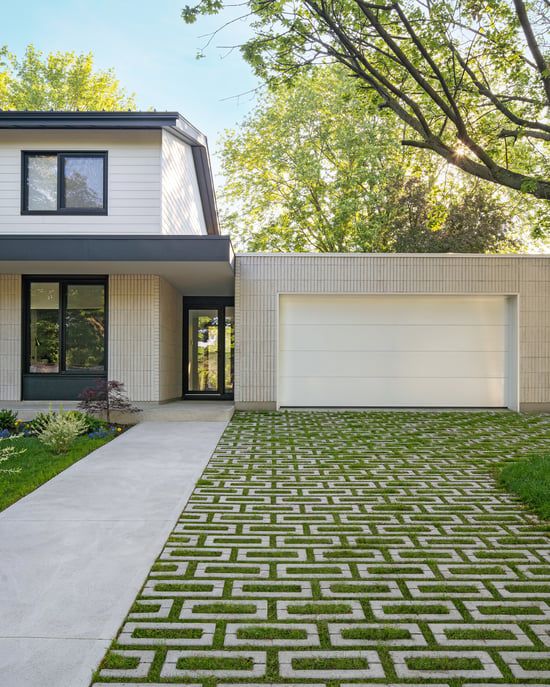
A driveway can feel less like a parking lot and more like part of the garden with this design. Large concrete pavers are set in a grid with strips of grass running between them. Metal edging keeps the grass contained and the line crisp. The black and gray palette of the house and pavers lets the green infill stand out, so the driveway reads as a planted surface rather than a solid expanse of concrete. The grass strips absorb some runoff and break up the visual weight of the pavers, making the approach feel wider and softer.
Multi-Level Pathways with Integrated Step Lighting
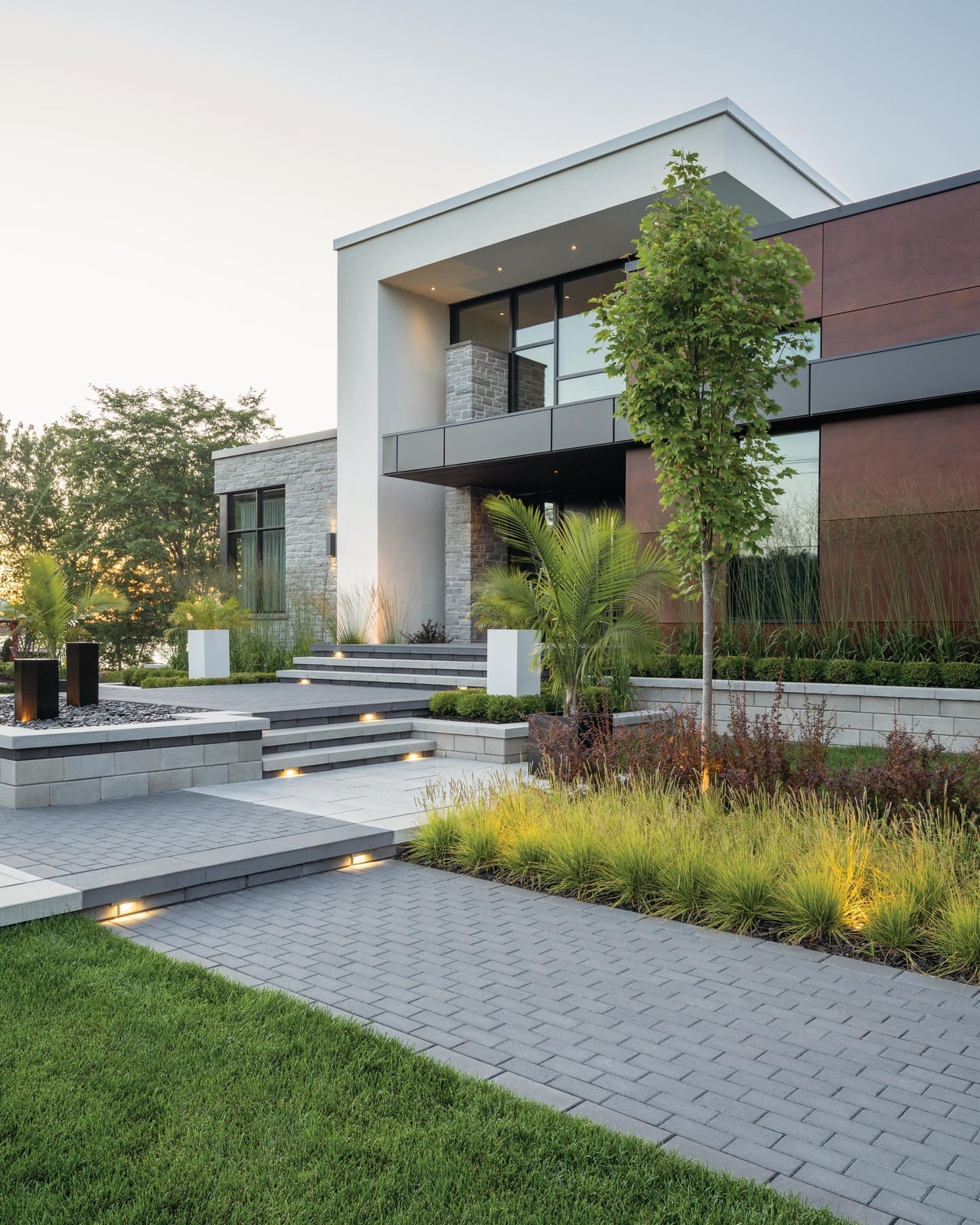
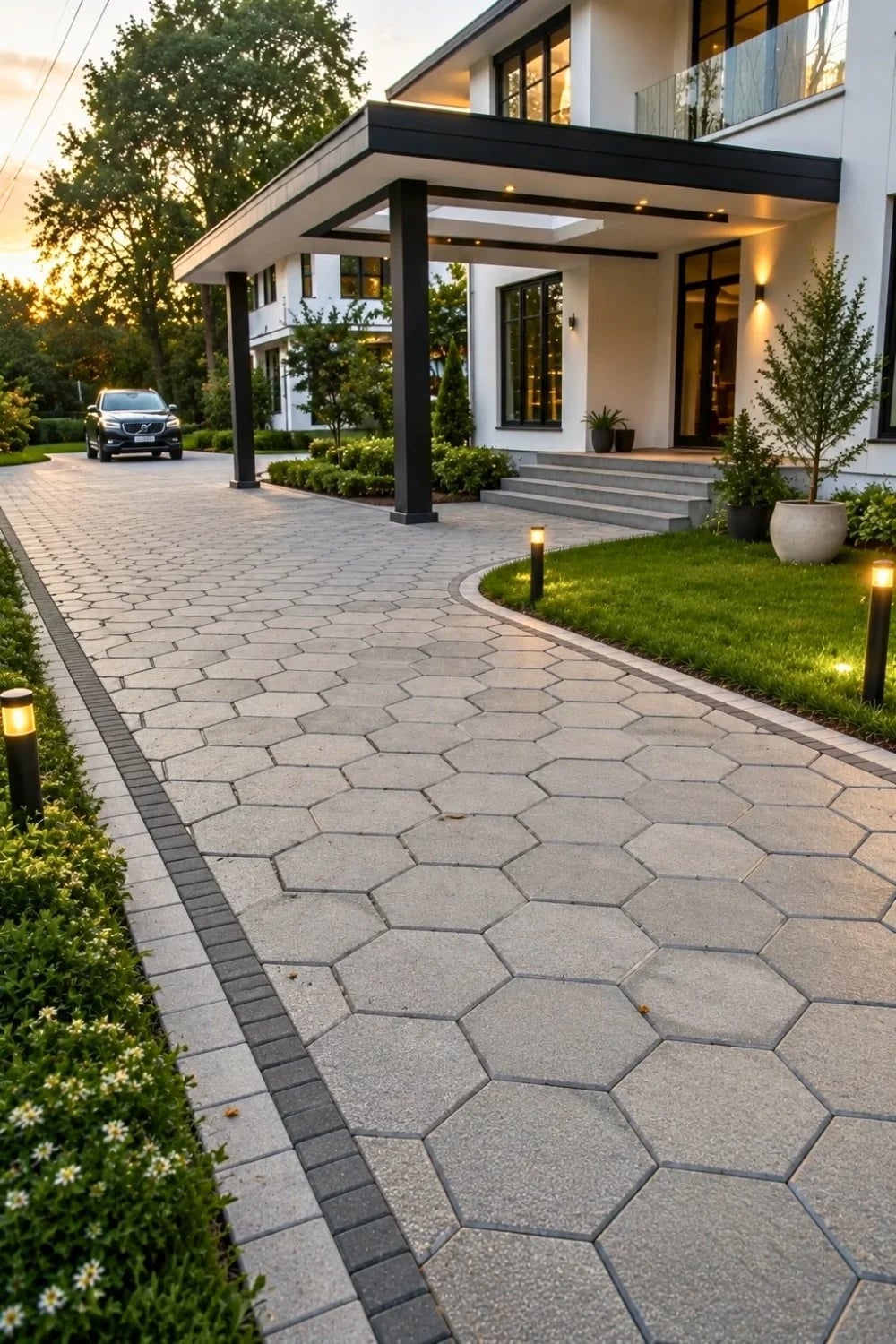
Integrated step lights are set into the risers of a multi-level front pathway, casting a warm glow across the gray stone treads. The lights guide the eye upward through the levels, making the transition from driveway to front door feel deliberate and safe after sunset. Planters and low hedges flank the steps, softening the hard edges of the stone and metal. The warm light against the cool gray palette creates a natural contrast that defines each level without needing railings or painted markings.
Large Concrete Slabs with Uplighting Accents
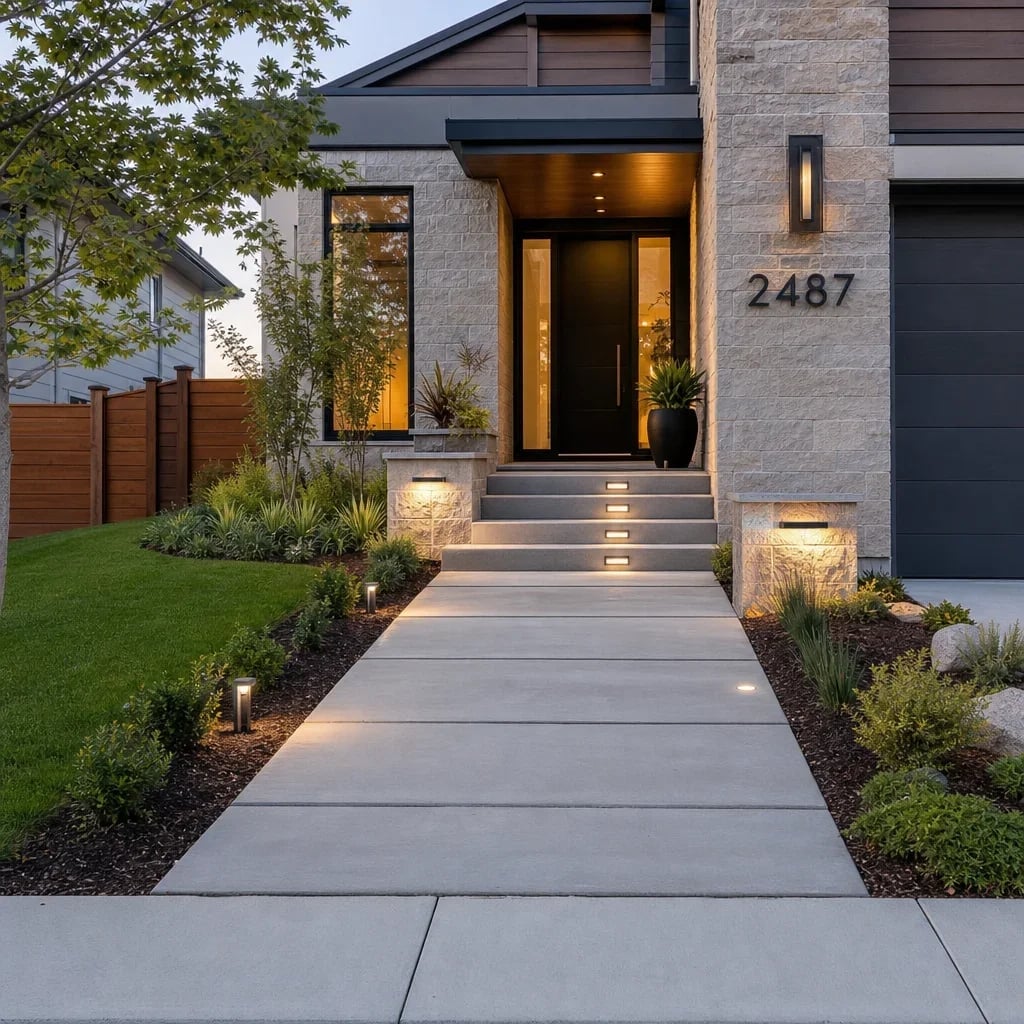
A straight concrete pathway to the front entrance is lined with low uplights that wash the surface in a soft evening glow. Sconces on the house add another layer of light, so the whole approach is illuminated without harsh glare. The large concrete slabs keep the pathway simple and uncluttered, letting the lighting do the work of defining the route. The stone and metal accents around the entrance echo the gray tones of the concrete, creating a cohesive look from driveway to door.
Asphalt Driveway with Contrasting Stone Paver Border
An all-asphalt driveway gets the job done, but a border of stone pavers turns it into something with actual curb appeal. That contrast between the dark, smooth asphalt and the lighter, textured paver edge gives the whole entrance a finished look without needing to pave the whole thing in stone. The curving shape here follows the landscape rather than fighting it, which keeps the driveway from feeling like a big black scar across the yard. Gravel and grass along the edges soften the transition further, so the hard surfaces blend into the garden rather than sitting there like a landing strip.
Permeable Driveway with Grass Infill
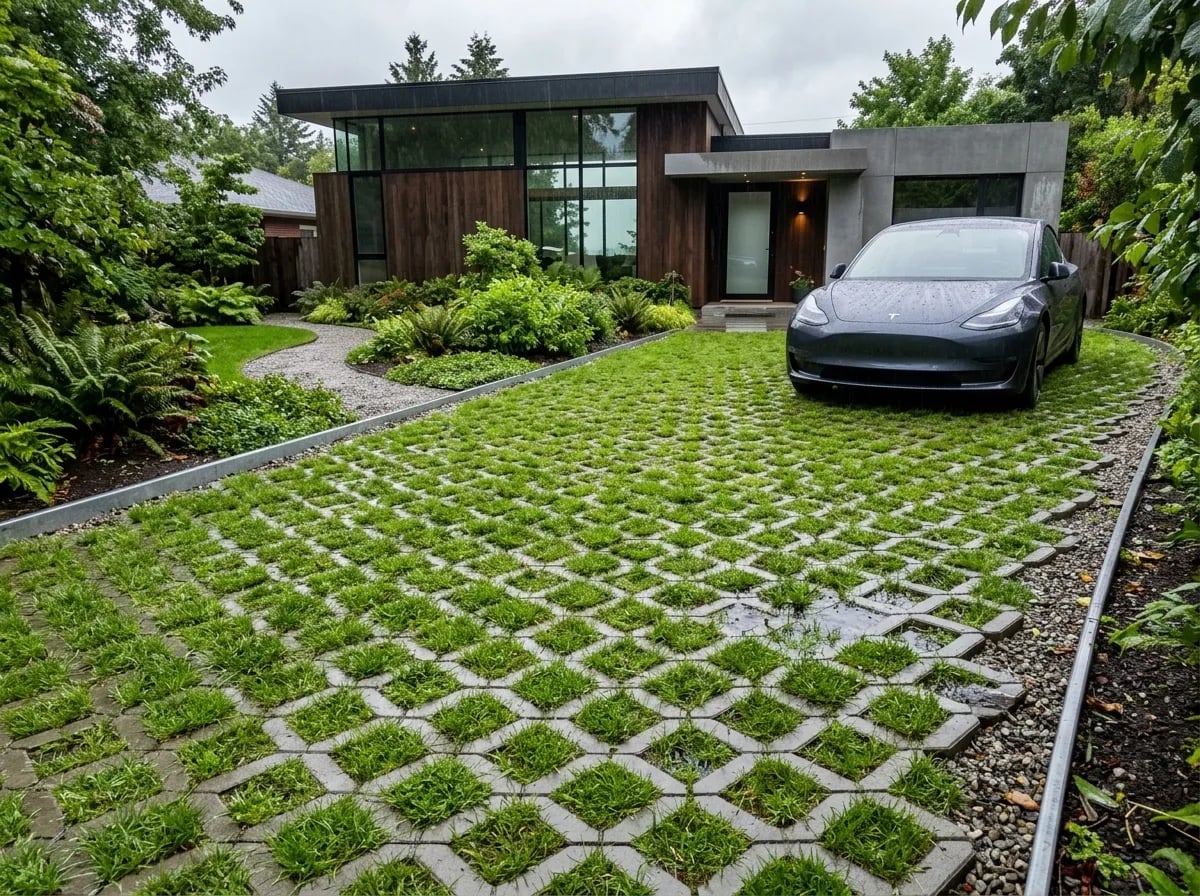
Grass growing through concrete pavers sounds like a maintenance headache, but this permeable driveway design actually handles water runoff better than solid paving ever could. The concrete grid carries the cars while the grass strips between them absorb rain and keep the surface from heating up the way asphalt does. It reads as a single green surface from a distance, which keeps the front yard looking like yard rather than parking lot. The wood and stone details on the house tie into the natural tones of the grass, so the whole entry feels cohesive rather than patched together.
Curving Asphalt Driveway with Abstract Sculpture
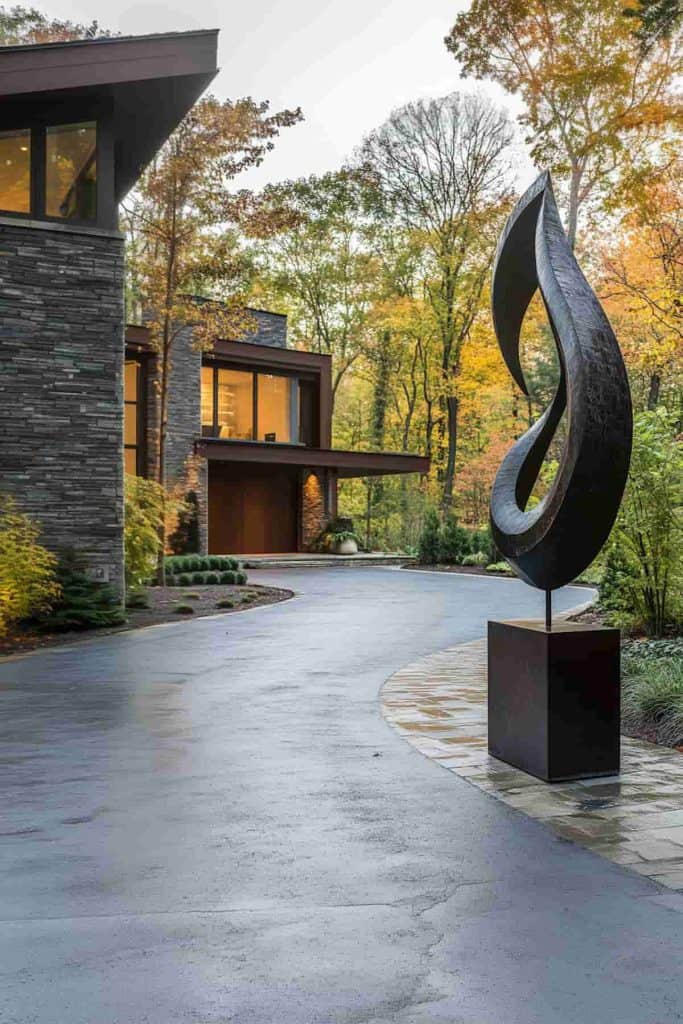
A large abstract metal sculpture placed where the driveway curves forces you to slow down and actually look at the arrival sequence. The asphalt itself is just a plain dark surface, but the sculpture becomes the focal point that gives the whole entrance a reason to exist beyond parking cars. Autumn leaves on the ground and the gray overcast light keep the scene from feeling too polished, which is exactly how a driveway should feel: lived in, not staged. The sculpture breaks up the long sweep of asphalt and gives the eye somewhere to land before reaching the house.
Dark Gray Herringbone Paver Driveway
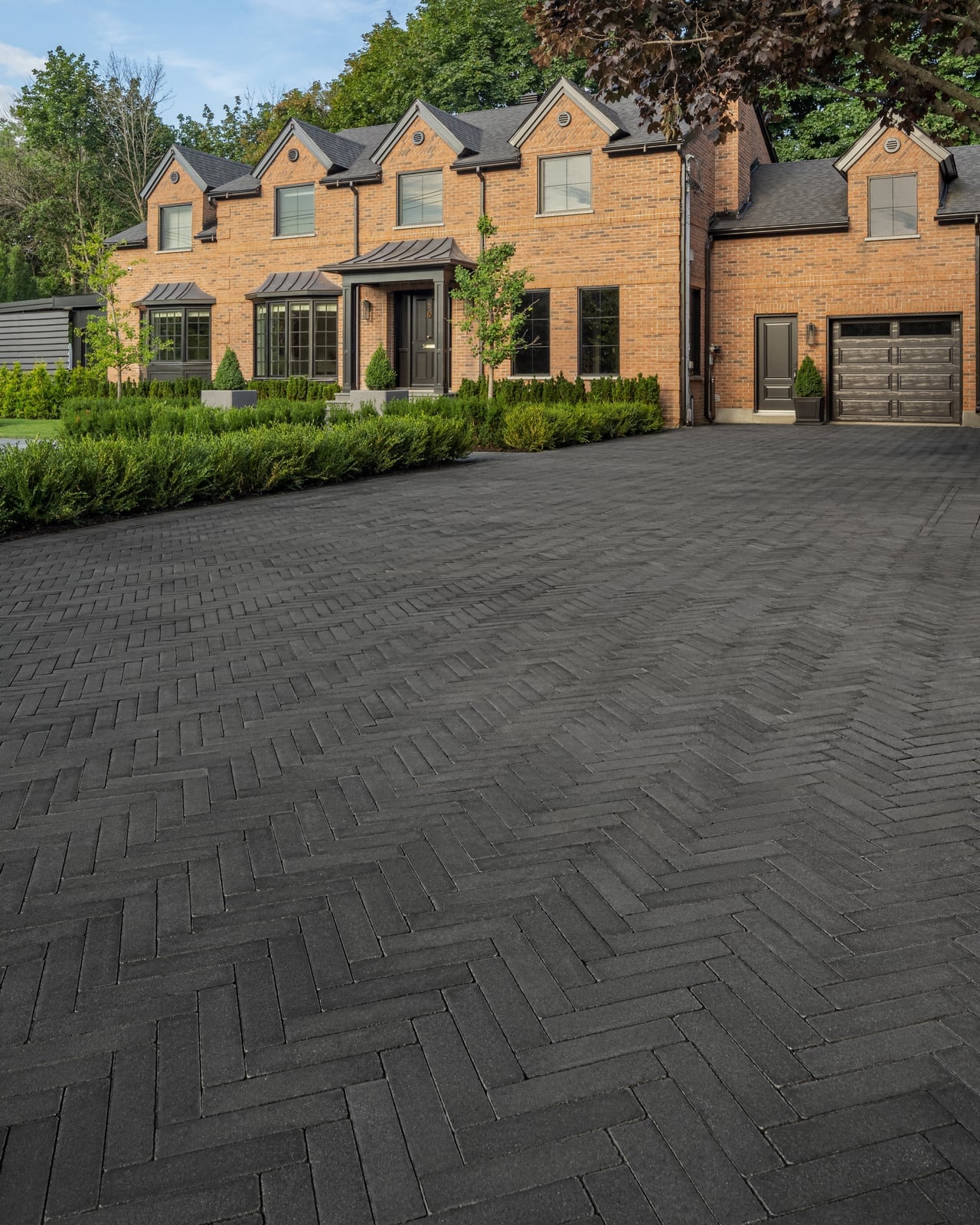
Can dark pavers actually make a driveway look bigger rather than smaller? The herringbone pattern here pulls the eye outward across the width of the surface, so the driveway feels wider than it would with a straight grid layout. The dark gray color hides tire marks and oil spots better than light concrete ever could, which means it looks clean for longer between washes. The brick red accents in the house and garage door keep the dark pavement from feeling too heavy or oppressive. That pattern also distributes weight across multiple pavers, so individual stones are less likely to crack under the car.
Dual-Material Driveway: Slabs and Herringbone Brick
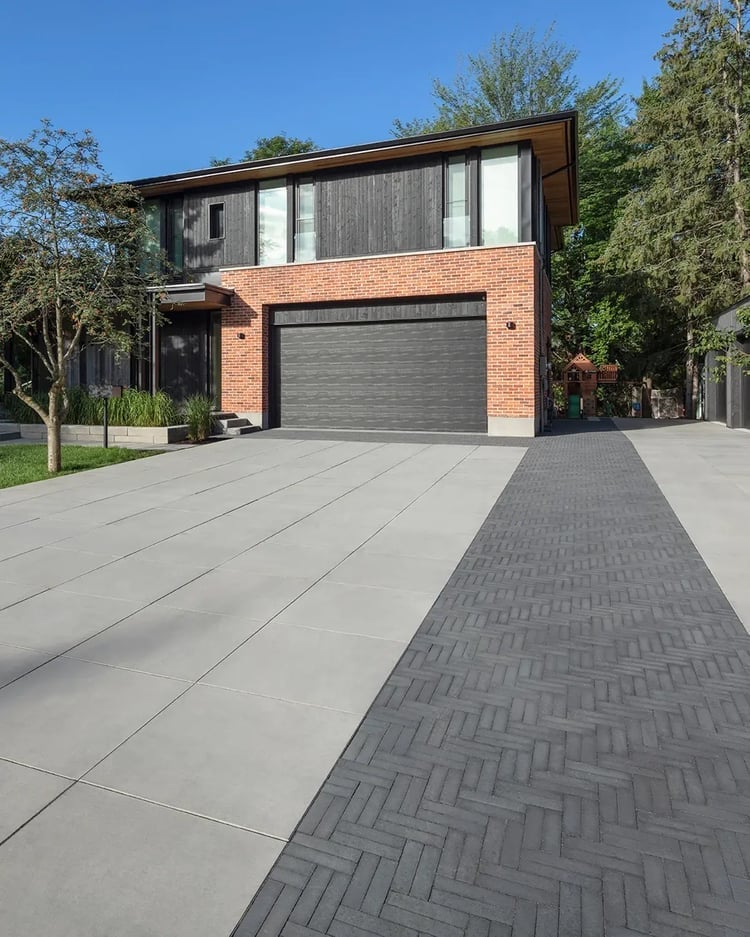
Large concrete slabs make up the main driving surface here, with brick pavers laid in herringbone forming a border that defines the edges. The two materials work because the concrete is smooth and modern while the brick adds warmth and texture where the driveway meets the grass. The brick garage door picks up the same red tones as the pavers, so the house and the driveway read as part of the same design rather than two separate decisions. That material shift also visually narrows the driveway at the entrance, which slows cars down naturally.
Transitional Walkway with Beige Pavers and Boxwood
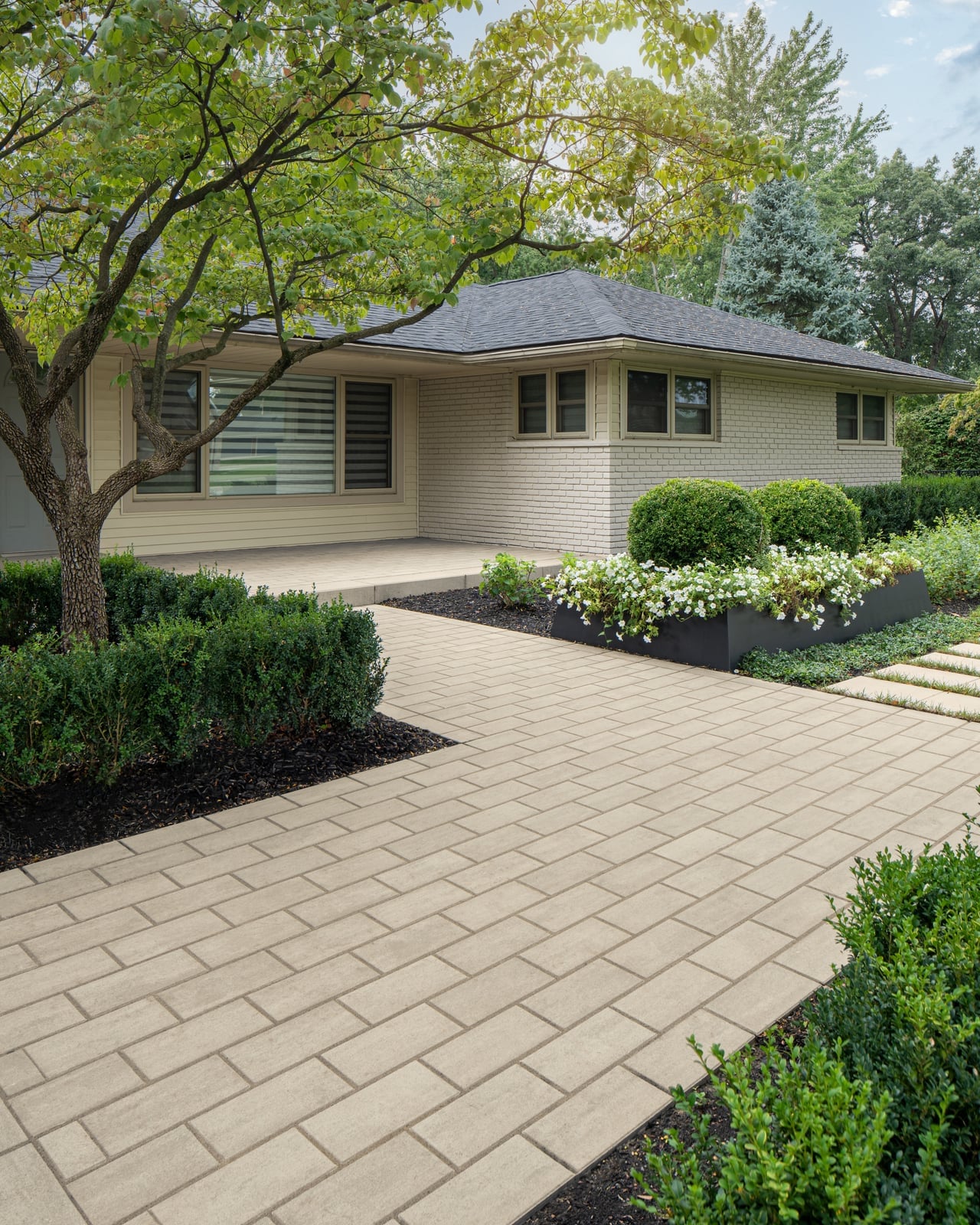
For a transitional front yard, a straight walkway with beige pavers keeps the look grounded. Flanking garden beds with stone edging and boxwood add structure without competing for attention. The uniform paver pattern here creates a calm path, while the mulch and plantings soften the edges. This layout works well for homes where the entry is straightforward. Keeping the garden beds at a consistent width helps the walkway feel planned. The beige tones tie the house facade to the landscaping without introducing a new color family.
Geometric Gray Paver Driveway
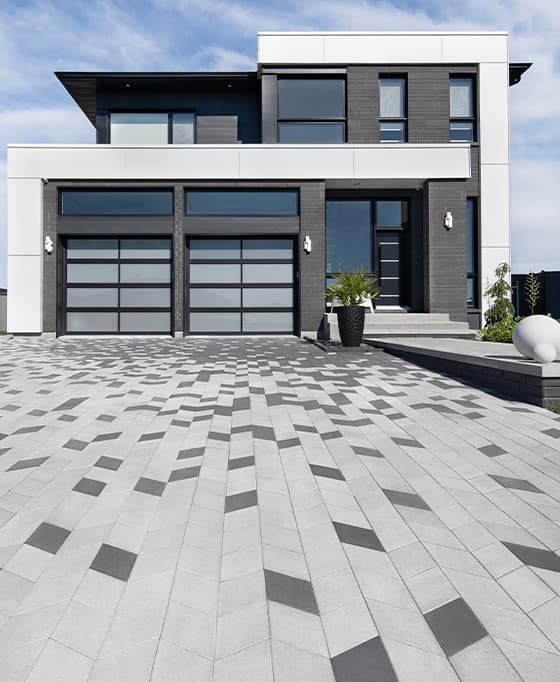
A geometric gray paver driveway is a clear choice for a modern house, but it is not the only option. Compare it to a solid concrete slab. The pattern here uses large concrete pavers in a repeating grid, and the gray palette reads as clean against a white house facade and black garage doors. The wide layout gives the driveway presence, and the geometric pattern adds visual interest without extra color. This approach suits homeowners who want a tailored look without the maintenance of grass strips. The straight lines guide the eye toward the entry. For a similar effect, keep the paver gaps narrow and consistent. The gray base allows the house and landscaping to provide contrast.
Dark Stone Driveway with Integrated Ground Lighting
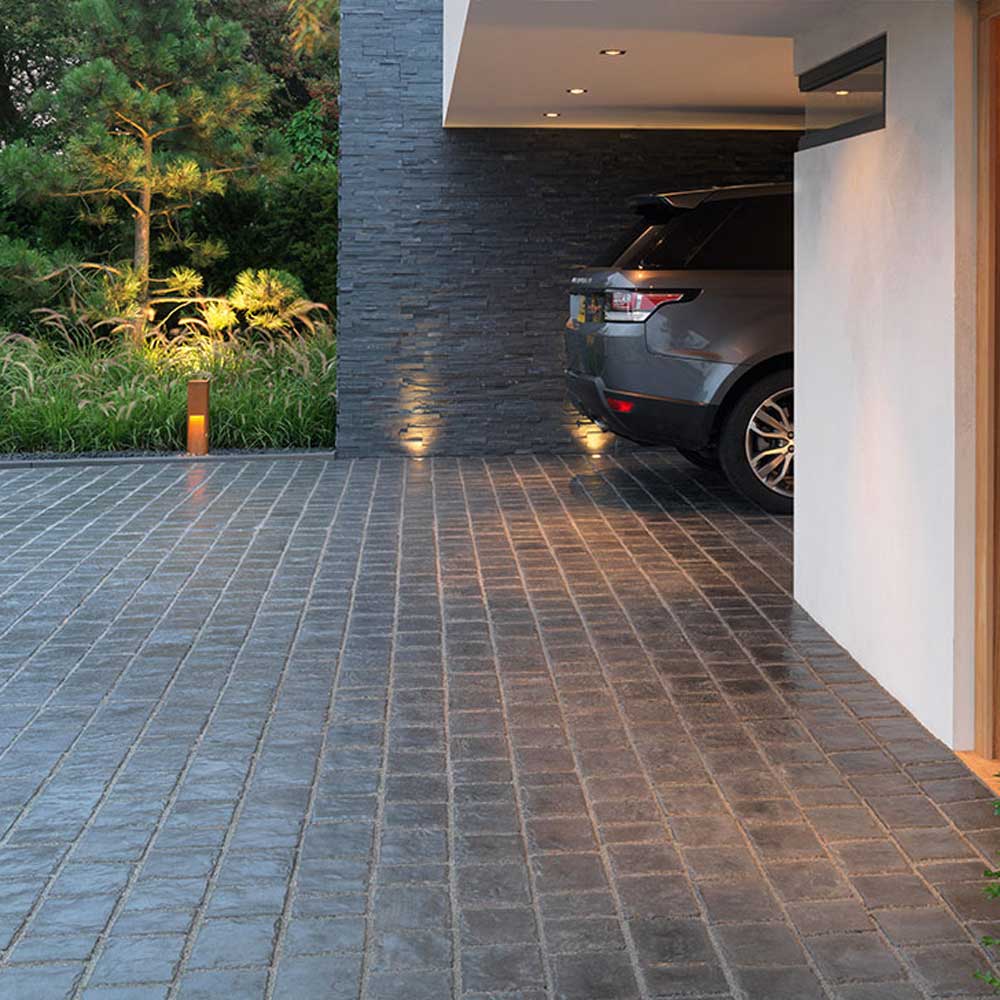
Integrated ground lights set into a dark stone driveway create a subtle glow that defines the path after dark. The dark gray paving stones recede during the day and become a backdrop for the house and landscaping. At night, the low lights along the driveway edges guide visitors without overwhelming the facade. Exterior wall lights near the entry complete the scene. This design avoids tall fixtures that might clutter the sightline. The even spacing of the ground lights is key. Too far apart and the path breaks up. Too close and it reads as a runway.
Curved Driveway with Integrated Lighting and Water Feature
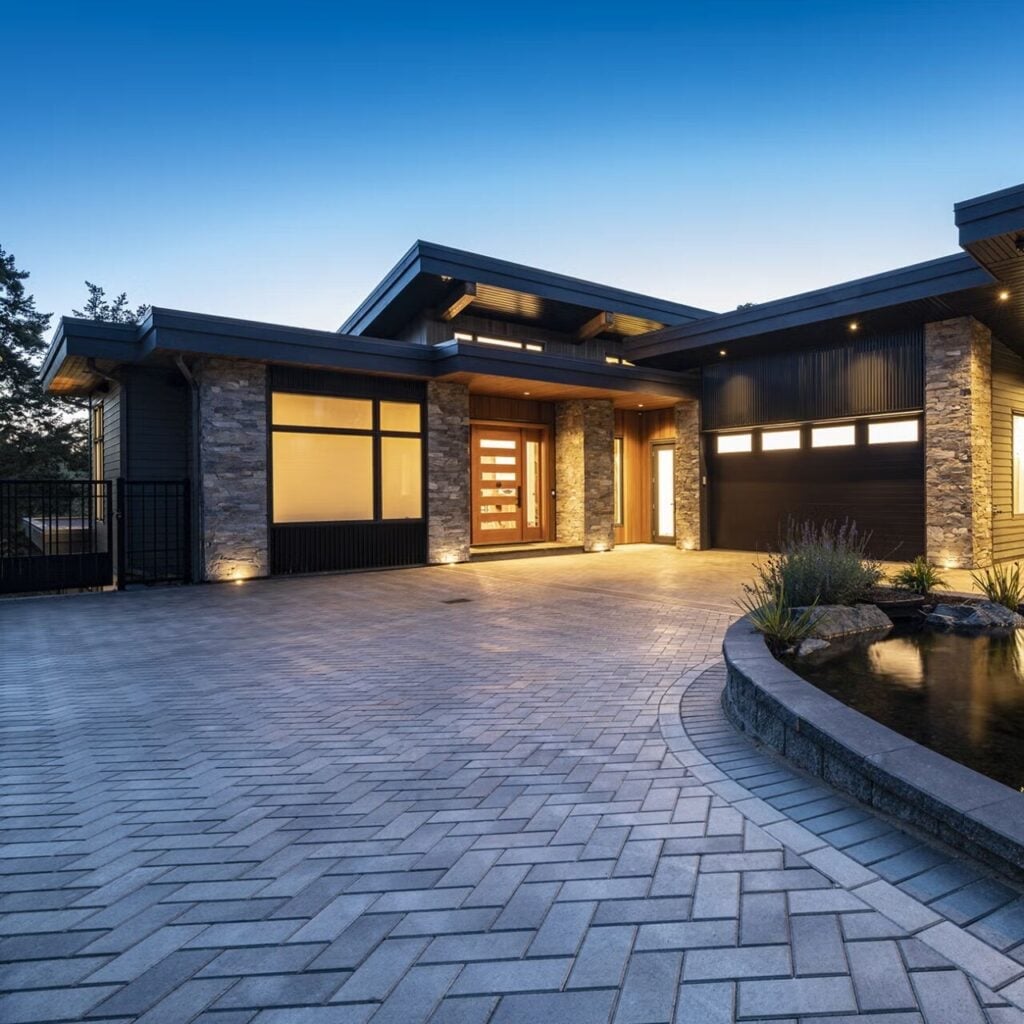
A curved driveway changes the pace of a front yard. The stone pavers here sweep toward the house, and integrated lighting follows the curve. A water feature near the entry adds sound and movement. The warm light from the fixtures softens the dark gray stone at dusk. The layout works for homes with enough front yard depth to support the arc. The curve naturally slows vehicles and creates a sense of arrival. The water feature anchors the turning point. The overall palette stays muted, so the house facade and landscaping remain the focus.
Large Format Stone Tile Driveway with Concrete Borders
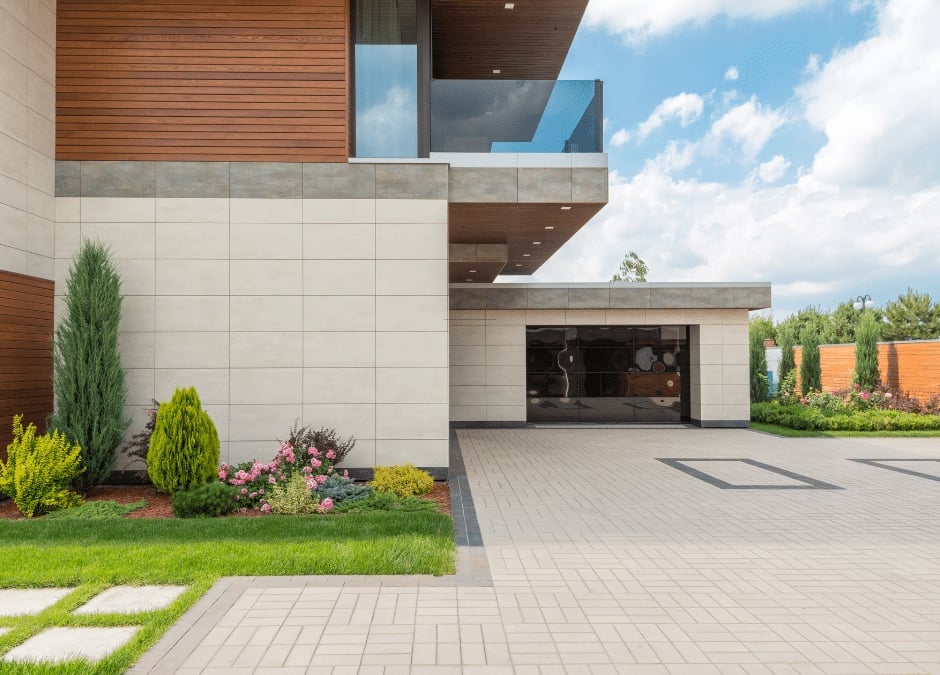
Large format stone tiles reduce the number of joints in a driveway surface. Fewer joints mean less space for weeds to settle and a cleaner visual line. Concrete borders frame the tiles and define the driveway edges. The beige and gray tones here match the house exterior and wood accents on the facade. The wide layout allows the tile size to read clearly. For a roomy front yard, this approach keeps the surface uncluttered. The concrete borders also provide a transition to the lawn or planting beds. The large tiles work best on a stable base to avoid shifting over time.
Geometric Gray Paver Driveway with Black Garage Doors
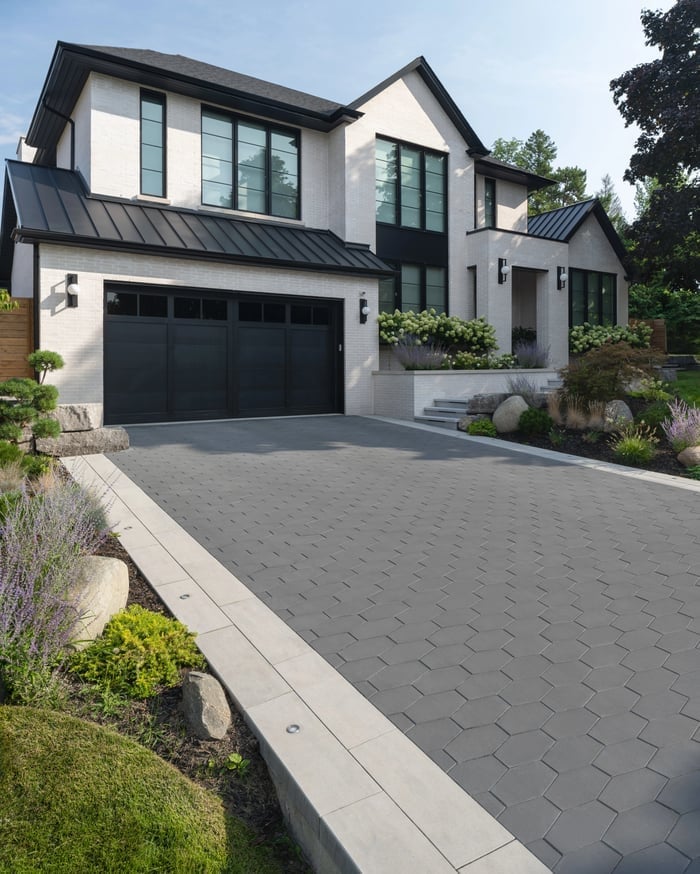
A geometric gray paver driveway sets the tone before you even step inside, especially when the house itself is clean and modern. The repeating pattern draws the eye from the street toward the black garage doors, making the entrance feel purposeful. The palette stays tight, gray, white, black, and green from the landscaping, so nothing competes. This layout works because the driveway is the focal point, and the front yard keeps things simple. If you are planning a similar look, focus on the paver pattern first. A strong geometric layout does not need much else to create a cohesive design.
Geometric Stone Pathway with Stacked Stone Walls
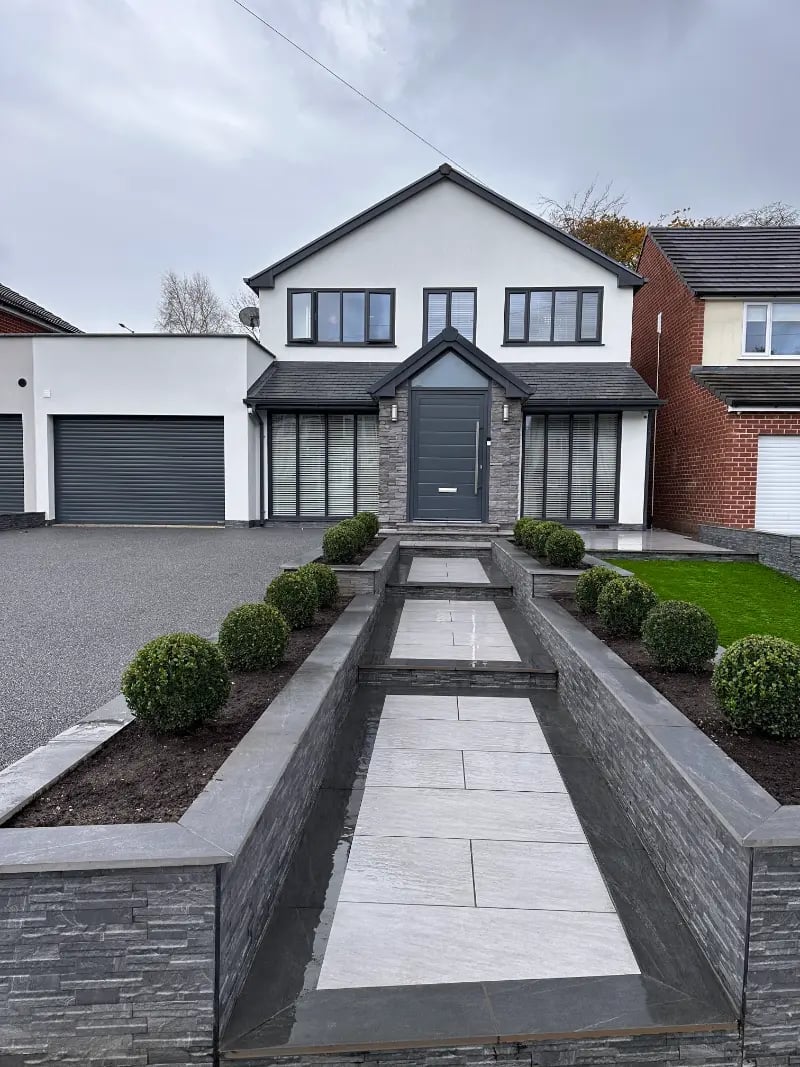
Keep the path clear and the edges planted for a modern front yard. A geometric stone pathway runs straight through the center, flanked by stacked stone planters filled with boxwood shrubs. The gray stone and gravel repeat across the hardscape, so the path feels like part of a larger system. This setup is renter-friendly because nothing is permanent. Those planters are movable, and the stone pathway sits on a gravel base that can be lifted without breaking up concrete. If you want a similar look without a long commitment, lay stepping stones directly on leveled gravel and add potted evergreens on either side.
Dark Gray Herringbone Pavers for a Spacious Driveway
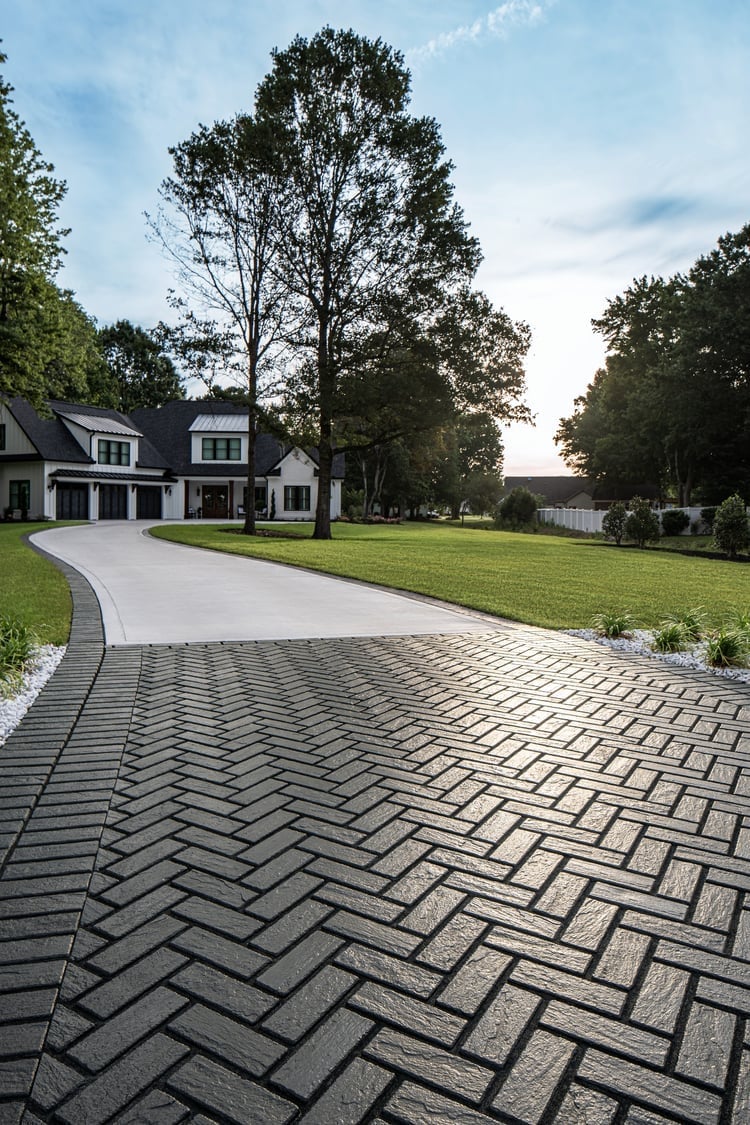
A plain concrete slab does the job, but a dark gray herringbone paver driveway adds texture without trying harder. The pattern breaks up the wide expanse of paving, giving the eye something to follow as it moves toward the house. In soft daylight, the alternating angles catch subtle shadows that keep the surface from looking flat.
This layout suits a spacious driveway because the herringbone pattern scales well. It does not get lost in a large area the way a simple grid might. The dark gray anchors the modern house while the green lawn keeps the overall palette light. If you are deciding between a running bond and a herringbone, go with herringbone for a driveway that sees a lot of surface area. It reads as more deliberate and holds visual interest from every angle.
Geometric Concrete Driveway with Central Succulent Garden
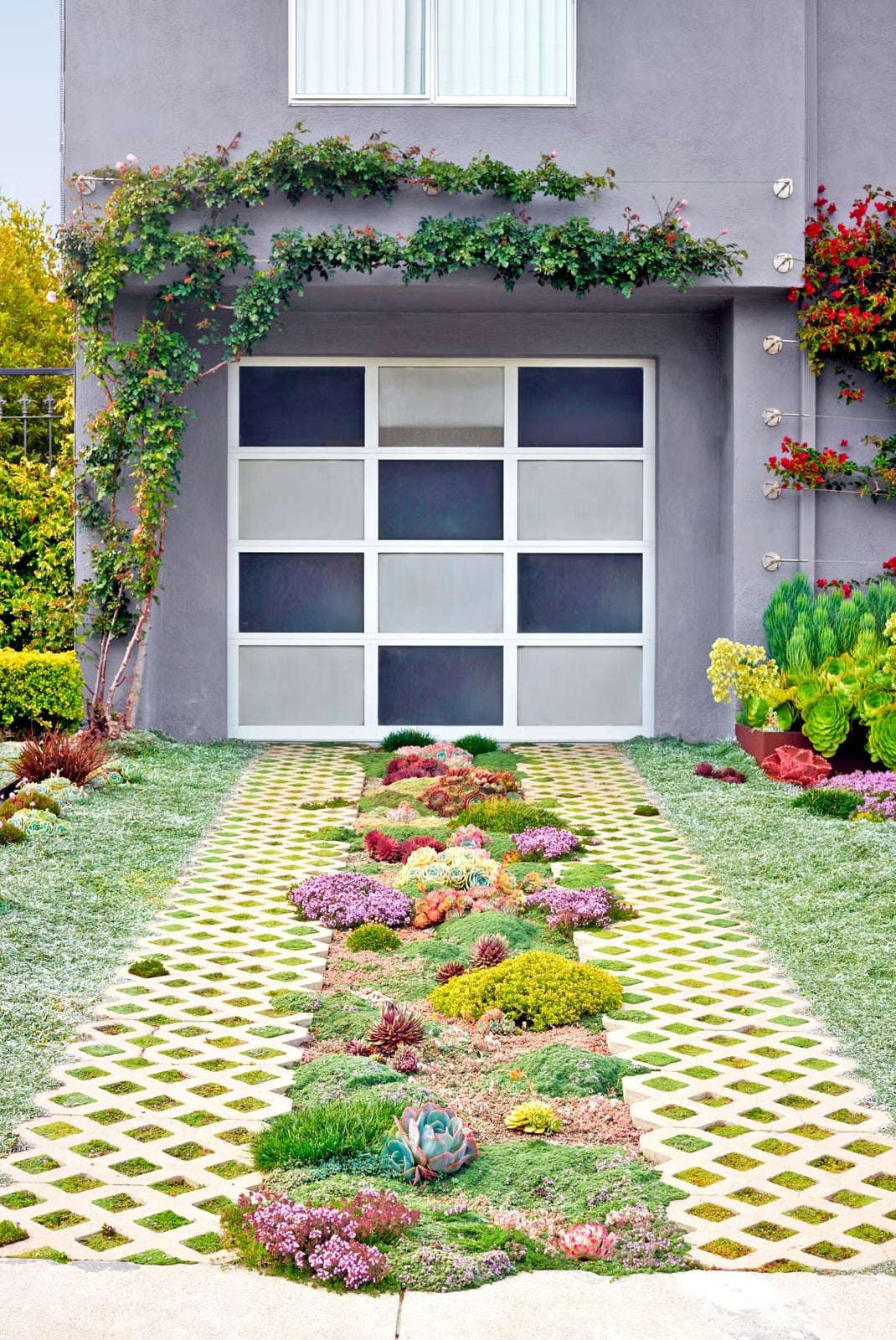
A driveway does not have to be one solid surface. Here, geometric concrete pavers frame a central garden bed filled with succulents in shades of green, pink, and orange. The pavers form two clear paths for the car wheels, while the planting stays protected in the middle. This layout works because the garden bed breaks up what could be a monotonous stretch of gray concrete. The succulents are a smart choice for a sunny spot. They need less water than traditional flowers and hold their shape year-round. Just check your USDA zone before planting to make sure they survive the winter.
Large Concrete Pavers Set in Gravel
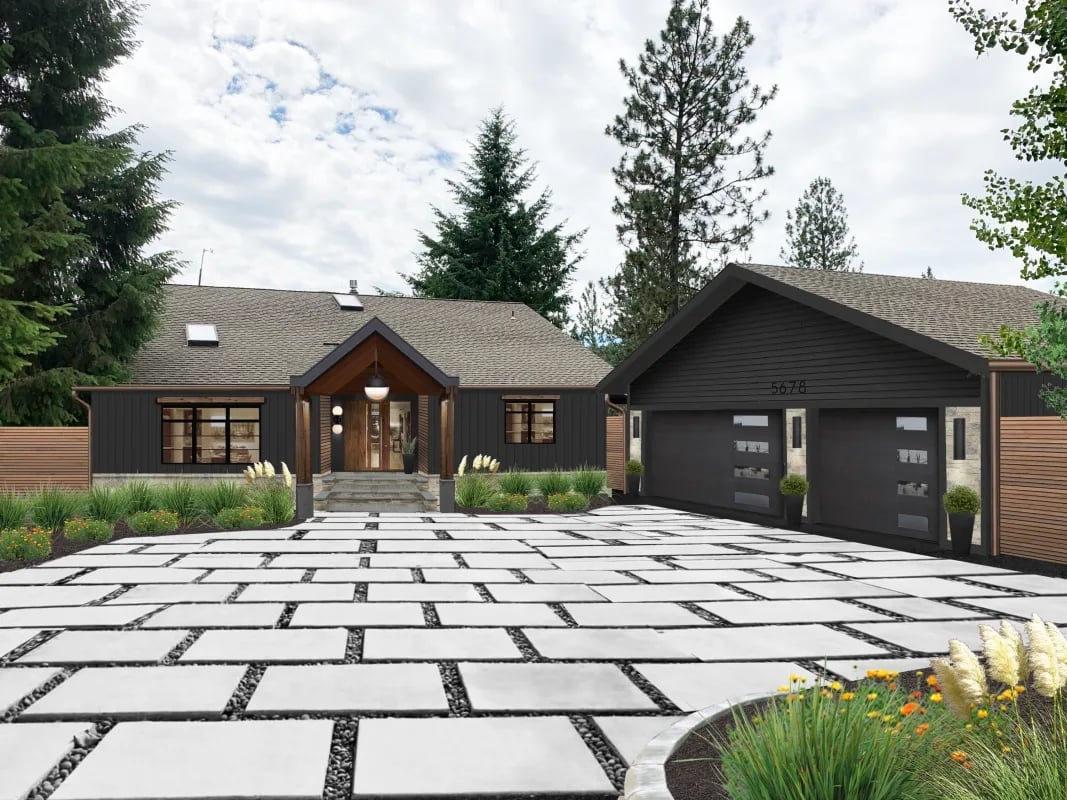
Large concrete pavers set in gravel is a straightforward material combination that does not rely on ornament. The oversized slabs reduce the number of joints, which keeps the surface cleaner and easier to walk on than loose gravel alone. The dark gray gravel fills the gaps and drains well, so you avoid the puddles that can form on a solid slab. Against the wood siding and metal accents of the house, the gray palette feels consistent. If you are choosing between small pavers and large ones for a modern driveway, go large. Fewer seams mean a quieter, more sculptural look, and the gravel does the work of keeping everything in place.
Geometric Gray Pavers with Gravel Beds
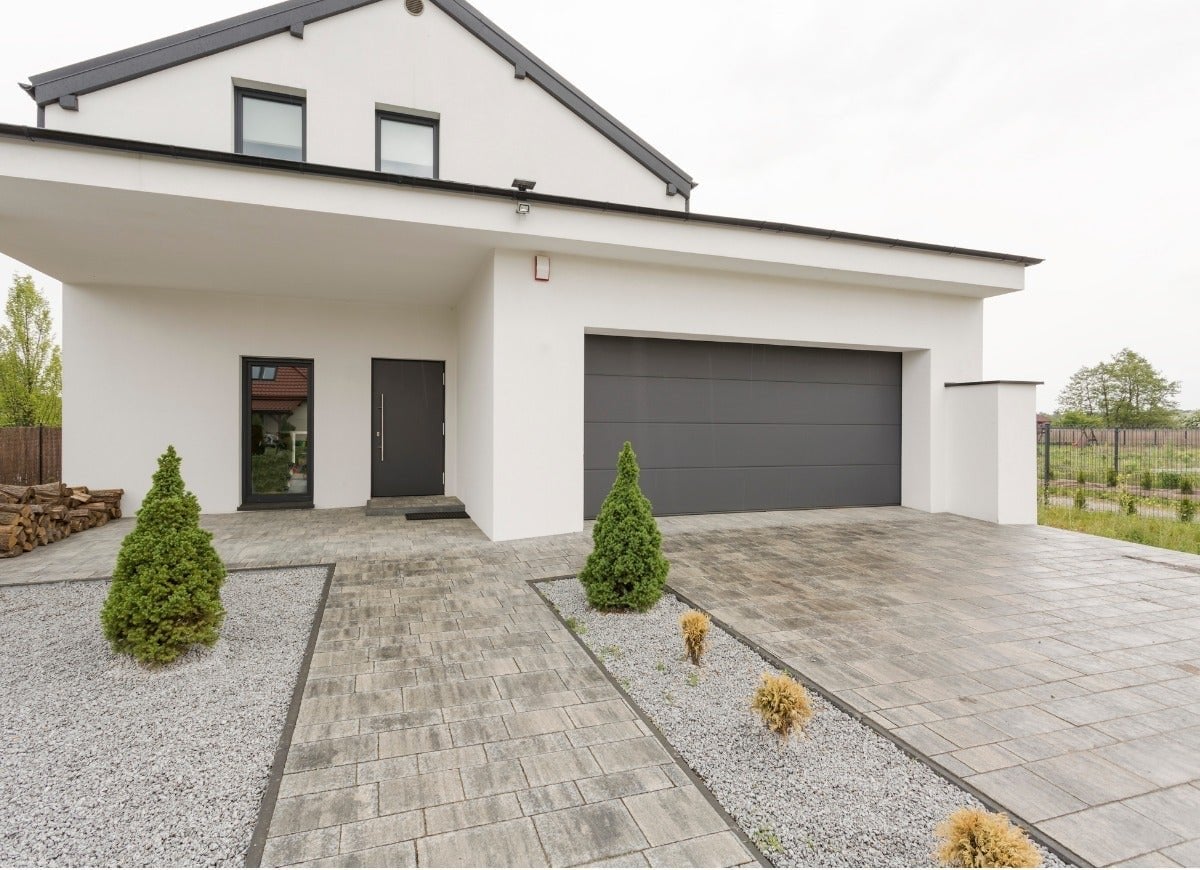
In a modern driveway, the layout matters as much as the materials. Here, geometric gray concrete pavers form a wide path, with gravel beds filling the gaps between them. The pattern looks balanced because the pavers are large and the gravel is a neutral charcoal tone. The effect makes the driveway feel roomy without needing more square footage. A wood garage door and a white front wall keep the palette simple, letting the paver pattern do the work.
Dark Composite Decking and Concrete with Linear Lighting
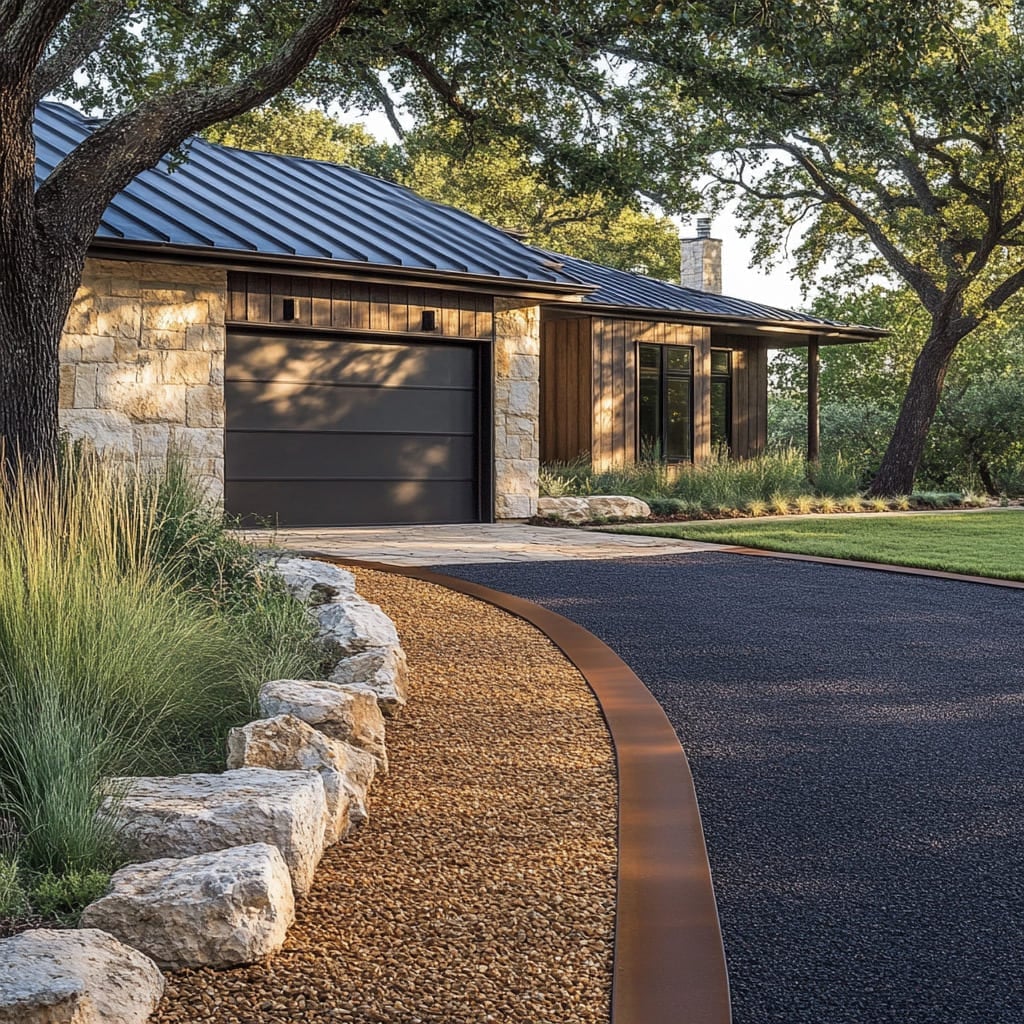
Linear integrated lighting is a practical way to guide the eye and the car after dark. Ground level lights run along the edge of a dark composite decking driveway, casting a warm orange glow against the concrete and stone. The palette stays dark gray and black, so the light forms a clear line. It is a setup that suits a modern house with a garage that sits flush to the drive.
Concrete Pavers with Grass Strips and Stone Walls
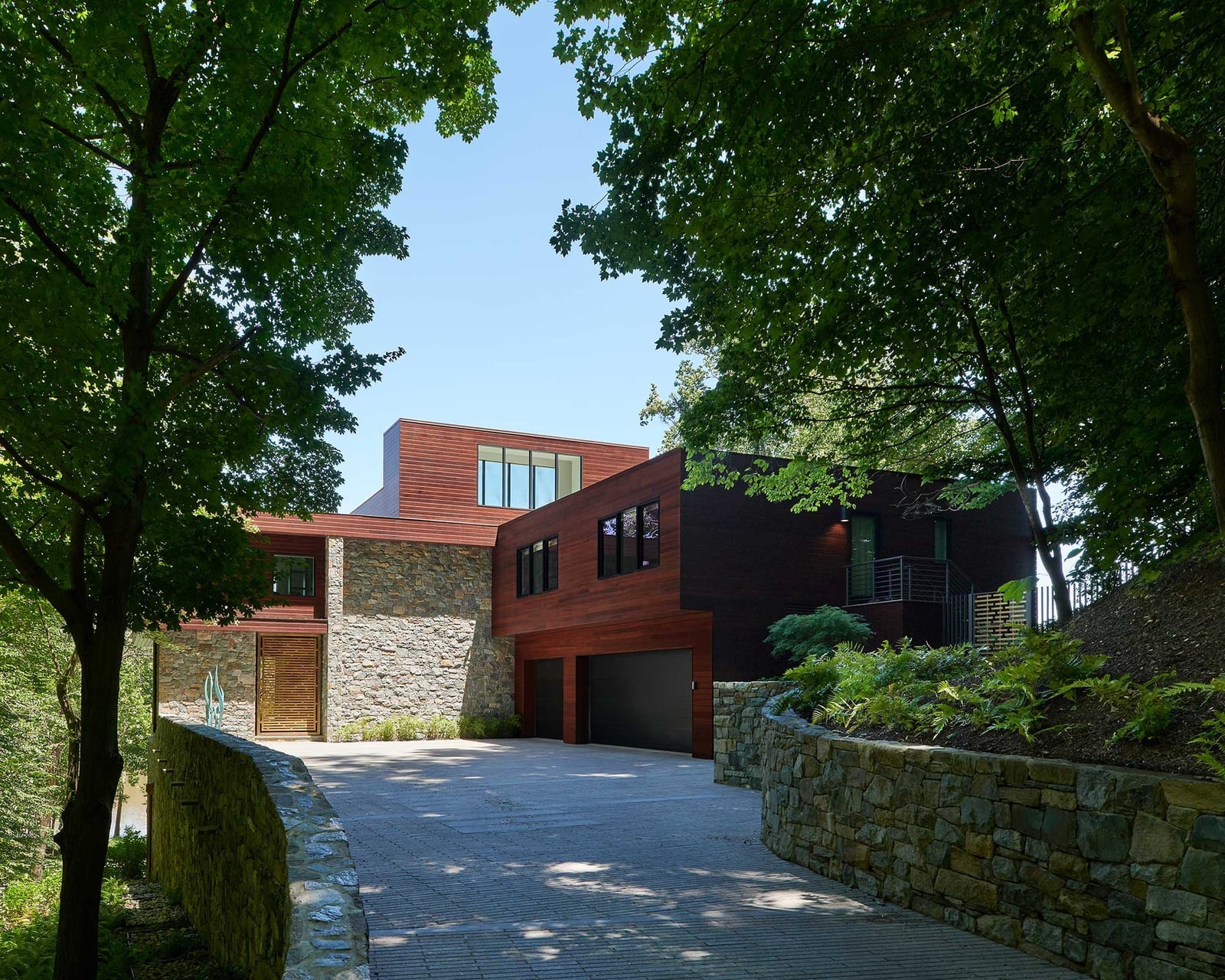
A practical rule for mixing hard and soft surfaces is to let one lead. Here, concrete pavers form the main drive, with grass strips running between them. The green softens the gray stone and dark wood of the house, while low stone walls frame the edge. The metal accents on the house tie back to the paver grid, so the whole layout feels connected rather than patched together.
Concrete Driveway with Metal Edging and Gravel Accents
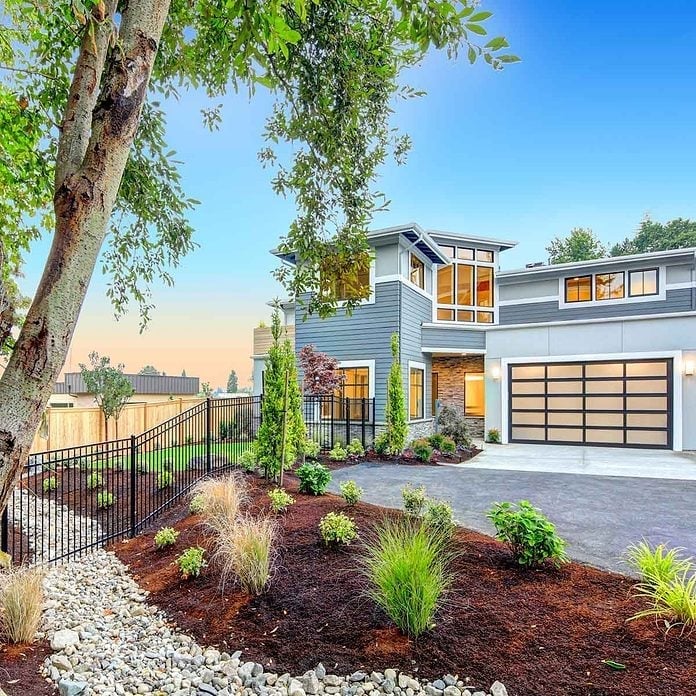
A concrete driveway does not have to be a plain slab. Adding metal edging gives it a clean, tailored edge that stands out against gravel accents. The blue-gray concrete and the warm brown of the gravel keep the palette grounded, while the metal strips catch the daylight with an architectural finish. The house and garage sit behind the drive, so the edging becomes the defining feature of the front yard. This look requires the metal to be kept straight and the gravel contained within the borders.
Gravel Driveway with Concrete Paver Accents and Hedges
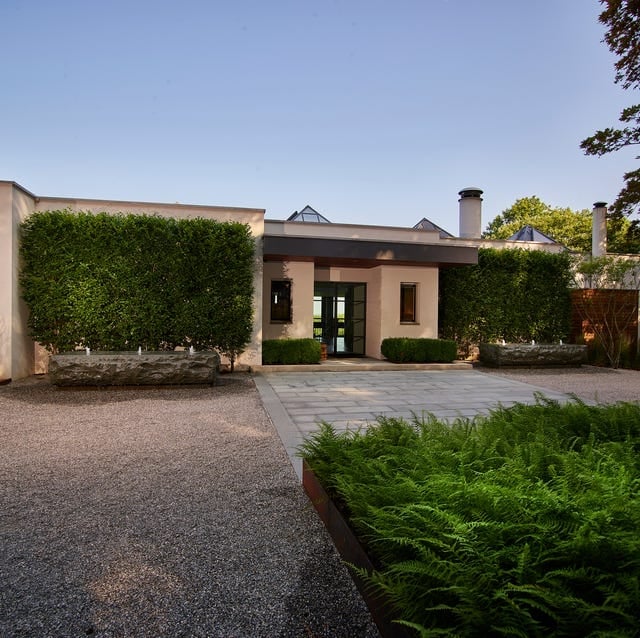
The gravel here is not a loose fill but a contained surface, with concrete pavers set at intervals to create a path for tires and feet. Beige and gray tones keep the palette neutral, while a low hedge frames the edge of the drive. The minimalist landscaping lets the driveway be the focal point, with the hedge acting as a clean border.
Geometric Grass Paver Driveway
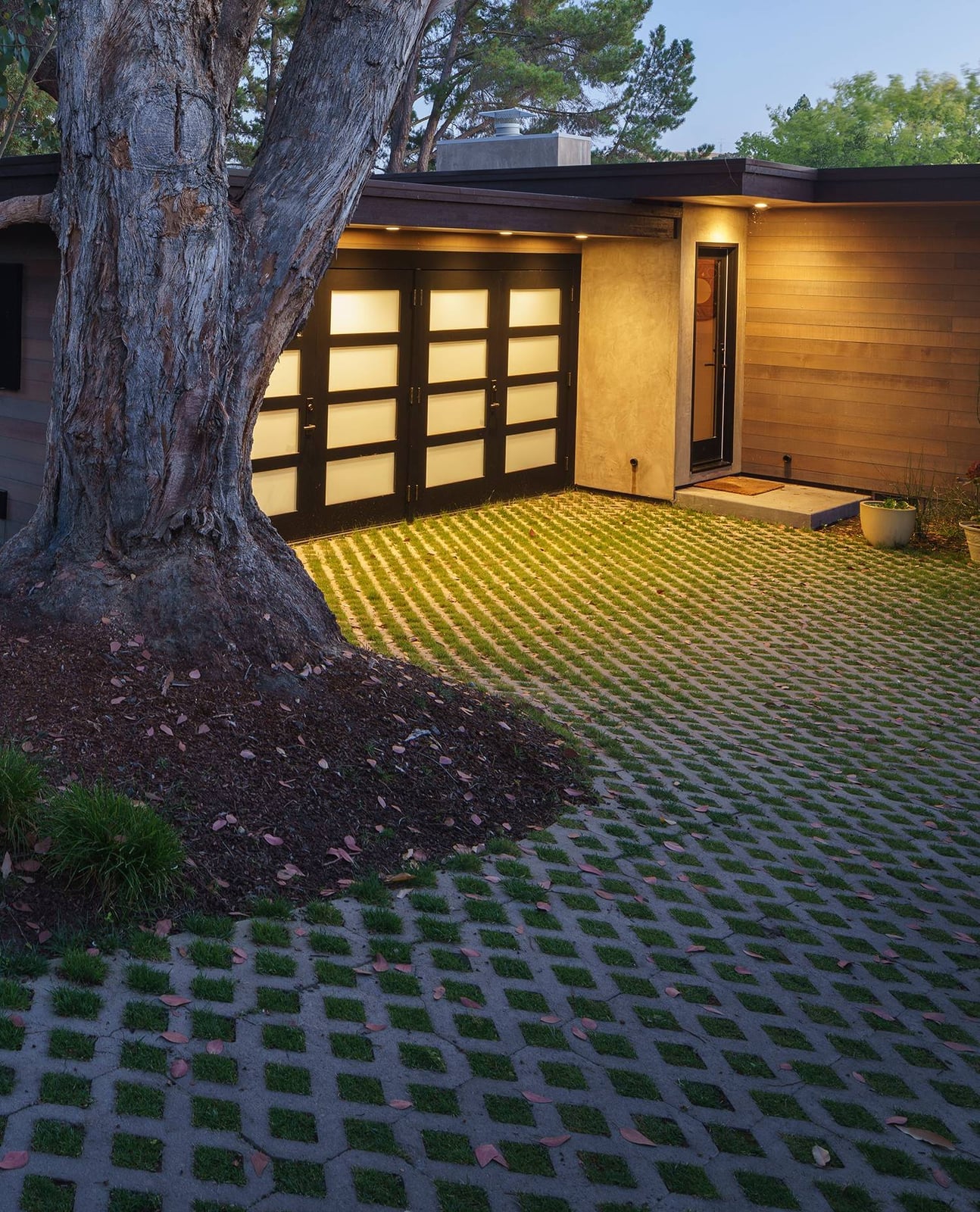
A geometric grass paver driveway is one of those ideas that reads as both modern and surprisingly practical. The pattern of concrete grids filled with grass creates a strong visual line from the street to the garage, with the green and gray palette softened by wood and metal accents around the house. In room mode, the driveway itself is the hero, and the layout keeps the surrounding landscape simple so the pattern can do the work. The natural daylight shows off the texture, while the evening glow from exterior lights extends its use after dark. For anyone wondering how to make a driveway feel less like a parking lot and more like part of the yard, this is 35 of the better options.
Geometric Concrete Driveway with Dark Brick Border
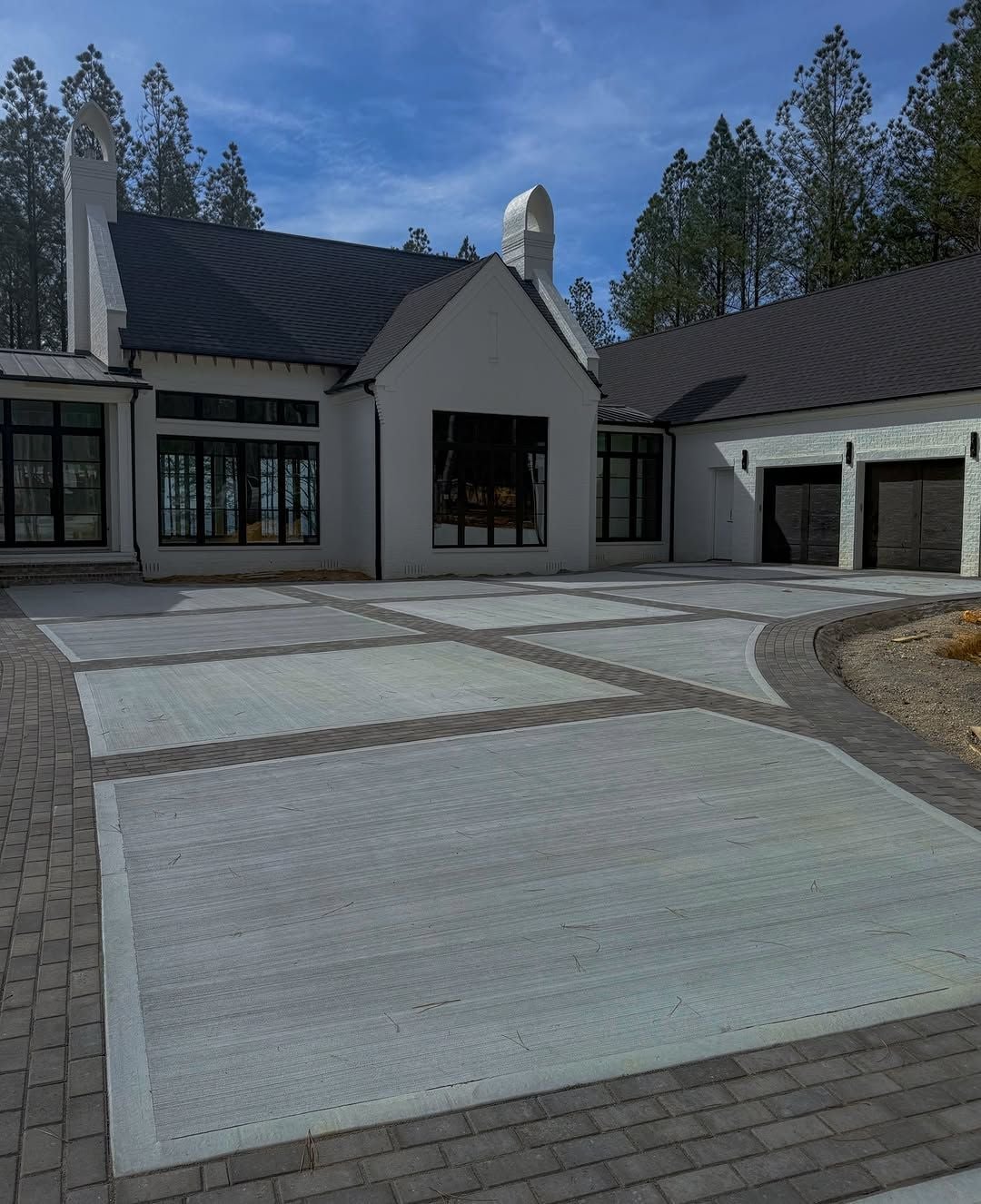
To make a driveway feel designed, define the edges first. In this front yard, the geometric concrete driveway and dark brick border keep the white and gray palette from blending into the house facade. The overcast daylight shows that good material contrast works in flat light, not just bright sun.
The view shows the driveway leading to dark garage doors, with the house staying neutral. A renter friendly swap for a permanent brick border is to use flexible edging strips or large container plants along the driveway edge to create the same boundary effect without altering the surface. This small change shifts the whole layout from a plain concrete strip to a designed approach.
Grid Pattern Concrete Pavers and Artificial Grass
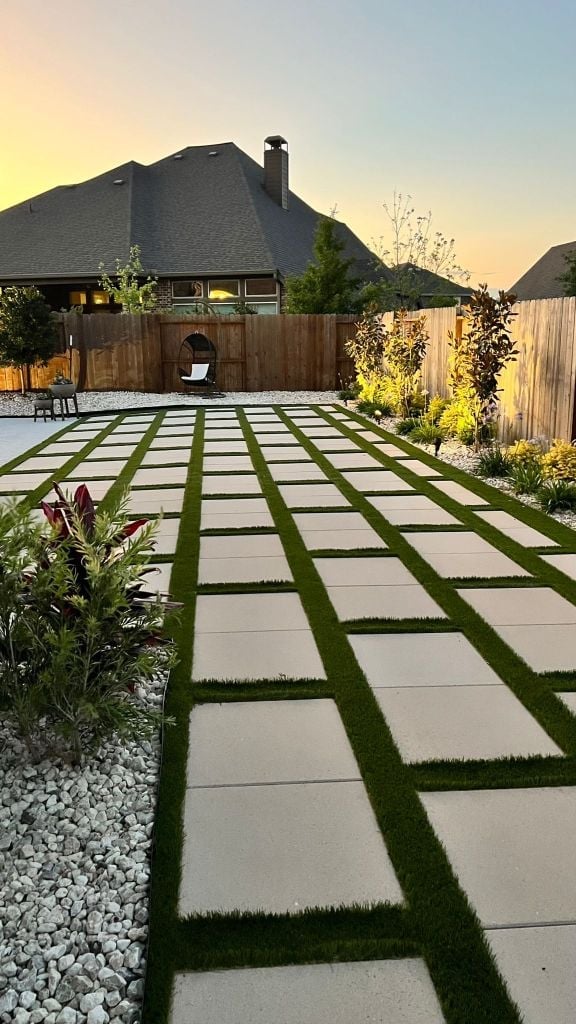
The design here uses a grid of concrete pavers with artificial grass in the negative spaces, creating a clean geometric layout that breaks up the surface without losing the driveway function. The light gray and green palette is anchored by a wooden fence and evening artificial lights that highlight the pattern after dark. The driveway is the hero, and the grid keeps the eye moving across the surface. For a space that sees lighter traffic, consider replacing the concrete grid with a paver strip running down the center and artificial grass on either side, which still gives the geometric look but is easier to adjust later.
Dark Anthracite Slate Driveway with Integrated Lighting
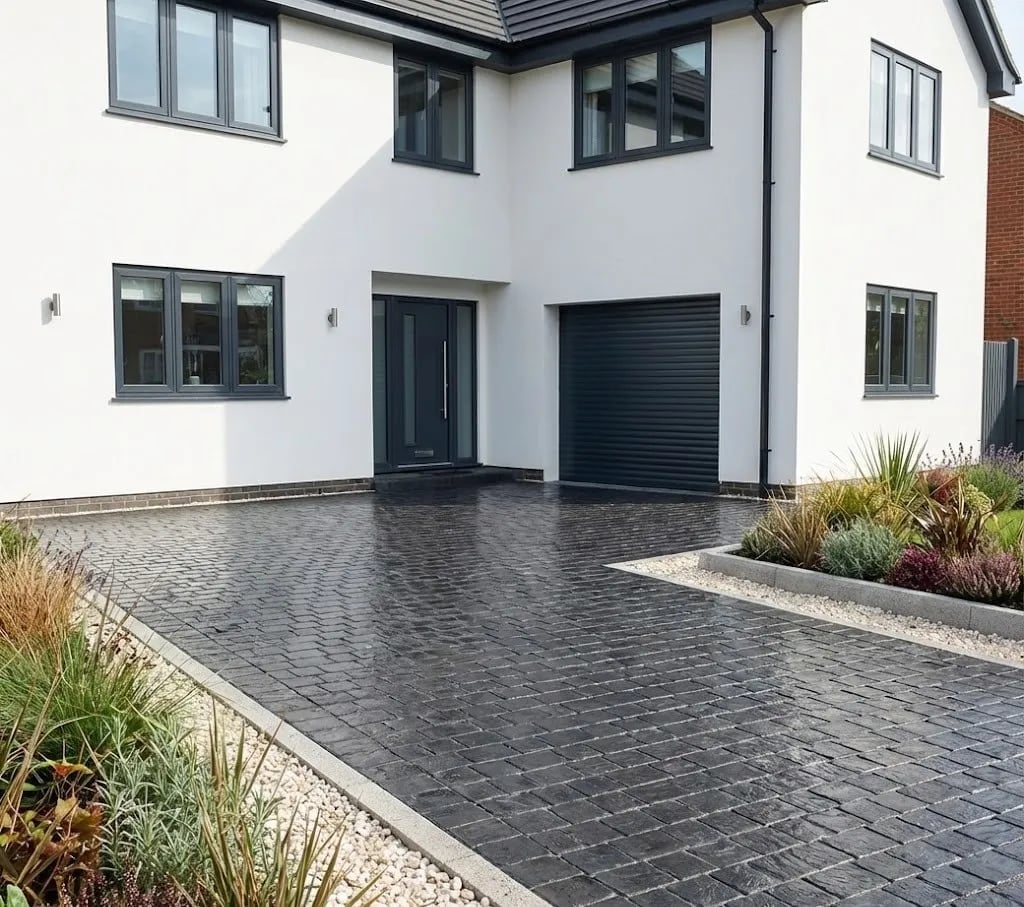
The dark anthracite slate paving anchors the whole approach to the house. The driveway features integrated pathway lighting along the edges that turns the slate into a guided path. The evening exterior house lights add a warm contrast to the cool gray and anthracite tones. For a material like slate, the durability comes from its natural density, which resists cracking under vehicle weight better than softer stone. Keeping the joints tight and sealed is the main upkeep task, as loose joints can collect debris and shift over time.
Textured Dark Stone Paver Driveway with Wood Accents
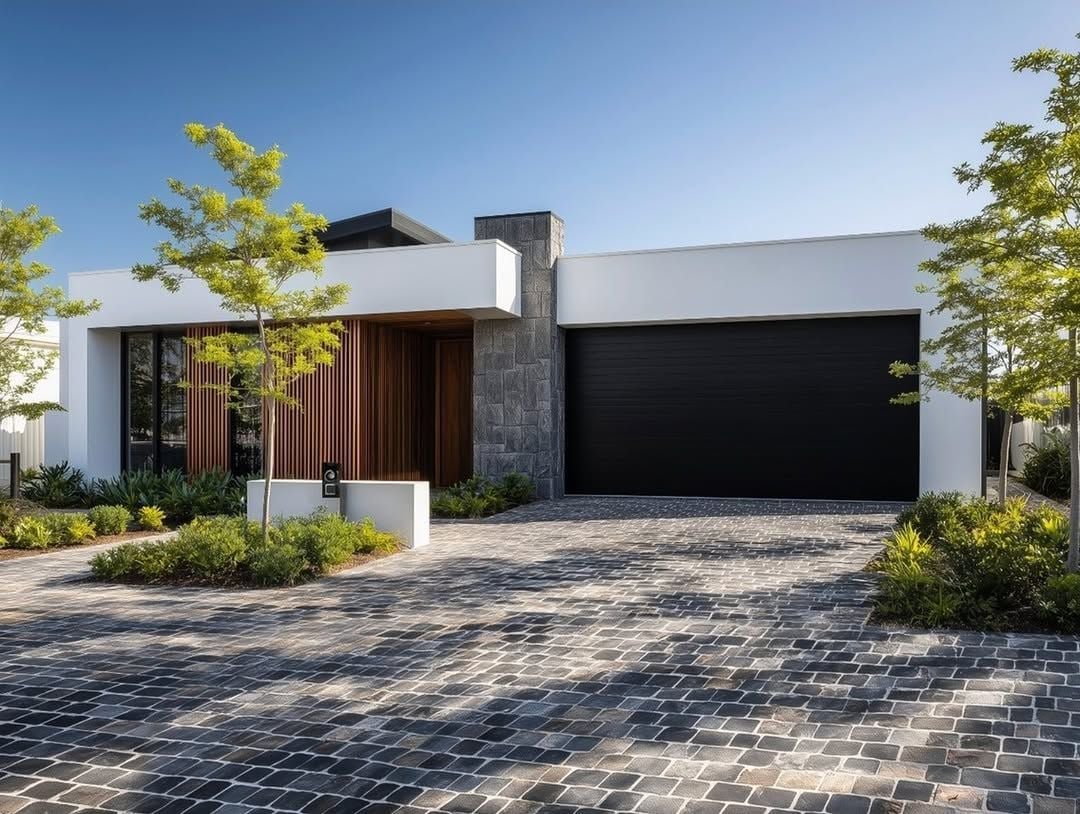
Where a smooth concrete driveway can feel a bit flat, this one goes for texture. The dark stone pavers have a rough surface that catches the daylight and adds depth, while the wood slat accents on the house facade echo the warm tones in the stone. In room mode, the driveway leads the eye straight to the garage, but the texture keeps it from being a boring straight shot. The scale of the pavers matters here: large format tiles would have made the space feel industrial, while the medium-sized textured stones feel more residential and grounded. For a similar look without a full replacement, a layer of dark exposed aggregate concrete can give that textured feel and is easier to maintain than individual stone pavers.
Geometric Gray Concrete Paver Driveway, Outdoor
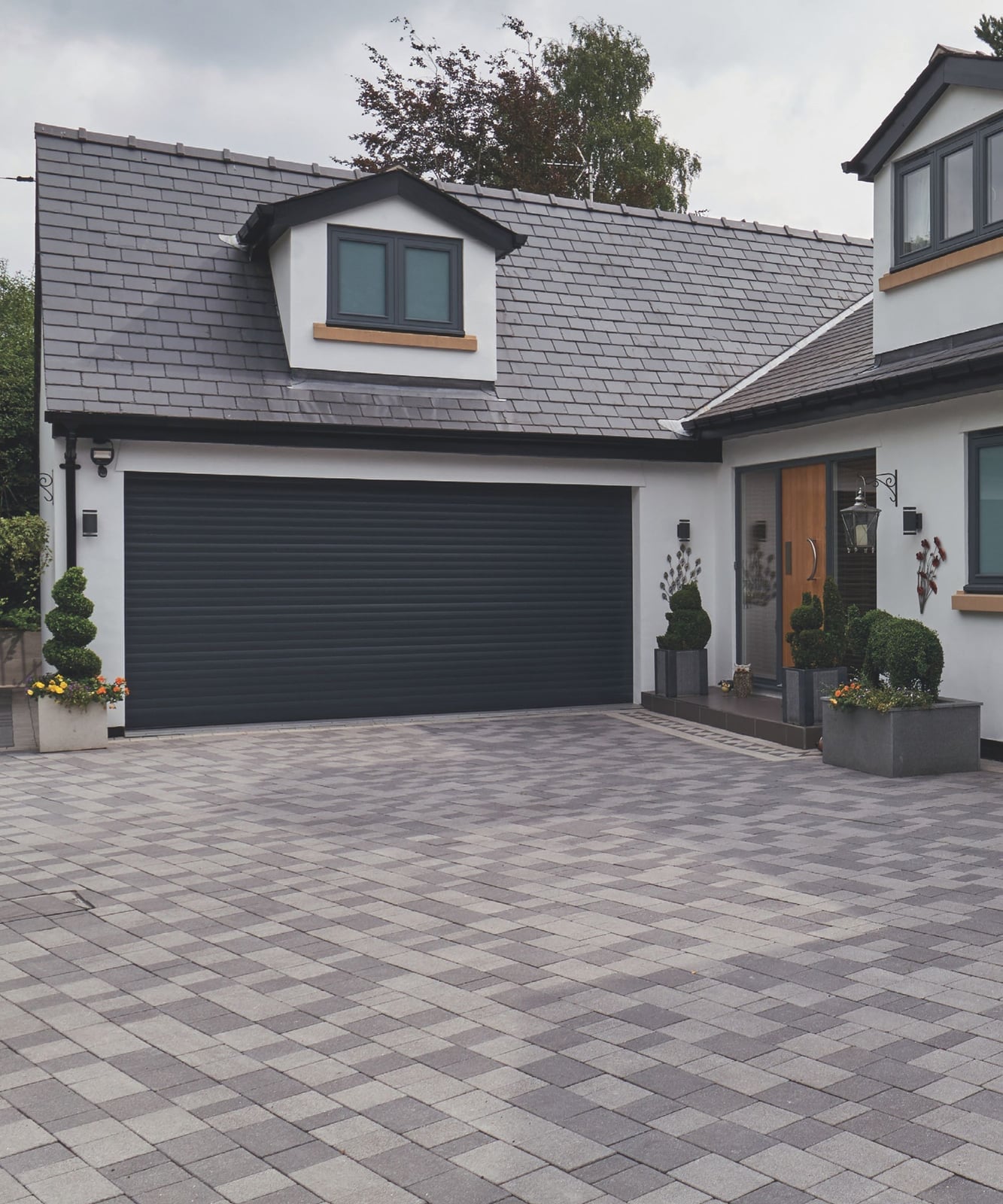
A geometric pattern of gray concrete pavers turns a wide driveway into a deliberate design feature rather than a flat expanse of paving. Squares set on a diagonal create a grid that draws the eye toward the modern house, while narrow strips of grass between the pavers soften the hardscape and add a natural break in the color. This layout works well for a roomy front yard where the driveway is a primary visual element, not just a path for the car. The repeating shape keeps the look orderly without needing borders or contrasting materials to define the edges.
Geometric Gray Paver Pattern With Modern House
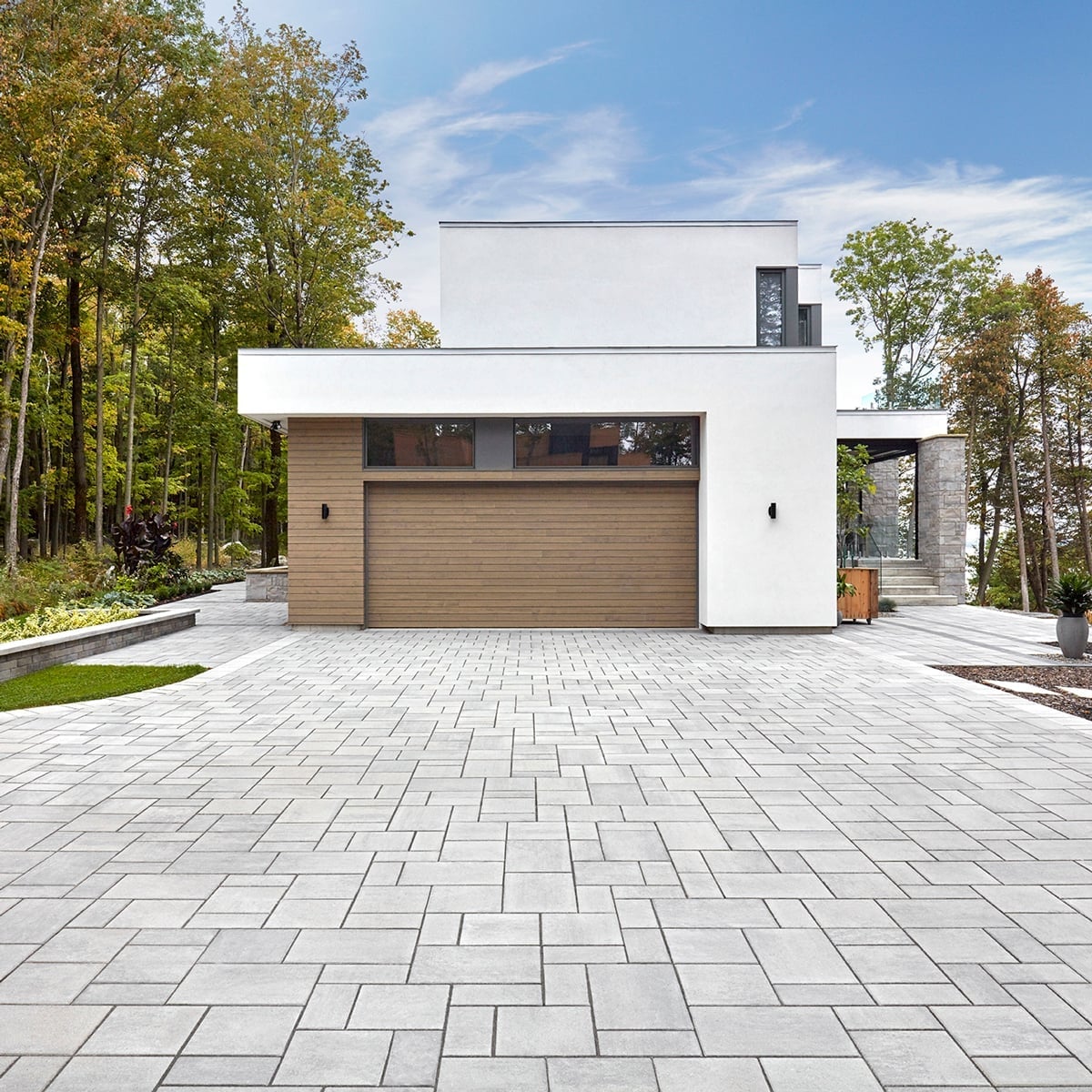
This driveway proves that a single paver pattern can tie together a whole facade. Gray concrete squares laid in a repeating grid extend from the garage to the street, and the restrained palette of gray, white, and natural wood tones on the house keeps the clean geometry. Subtle exterior lights near the entrance echo the straight lines of the pavers, so the hardscape and architecture form one composed piece. The pattern itself is the anchor here: a simple grid that does not compete with the strong horizontal lines of the modern house. What breaks the repetition is the shift in scale where the driveway meets the walkway, a natural pause that keeps the eye from gliding straight past the front door.
Dark Gray Interlocking Stone Driveway with Ground Lighting
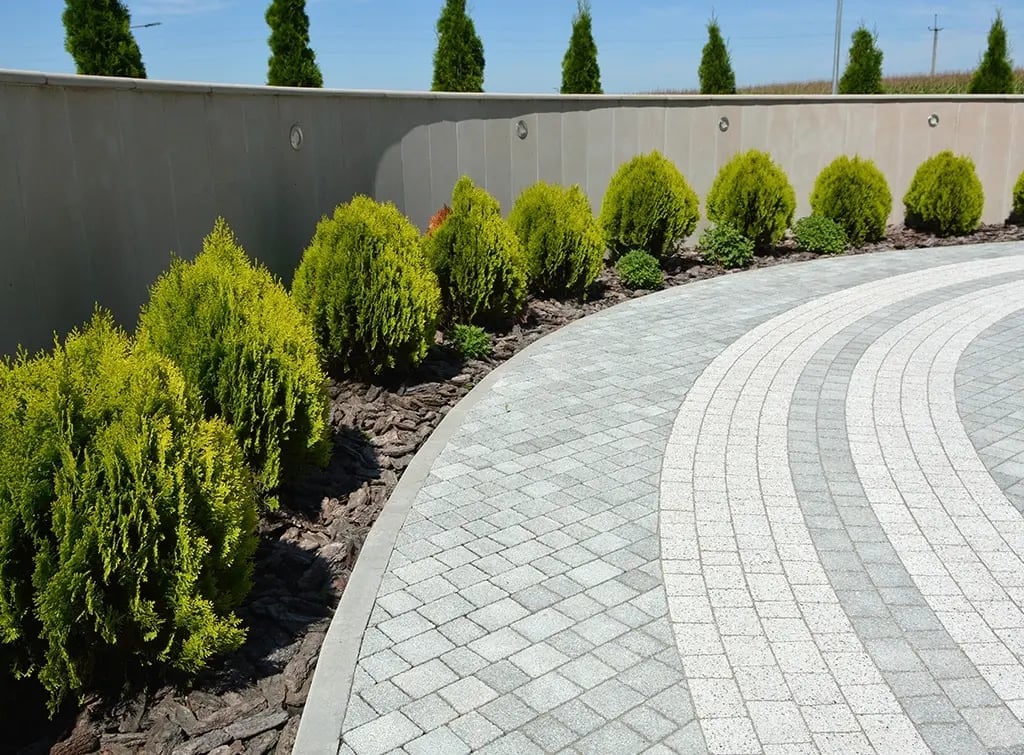
Dark gray paving stones can feel heavy in a front yard, but integrated ground lighting changes the relationship between the surface and the house. In this design, low lights set into the pavement cast a warm glow across the stone, lifting the dark material so it does not absorb the evening light. The interlocking pattern of the stones creates a continuous surface that leads the eye from the street to the modern entrance, with the lighting acting as a guide rather than a separate feature.
The concrete border along the edges keeps the paving contained and adds a clean transition to the surrounding lawn. For a driveway that sees evening use, lighting embedded in the paving makes the path visible without the glare of overhead fixtures. The dark gray also hides tire marks better than a lighter surface, a practical benefit that matters when the driveway is the first thing guests see as they arrive.
Modern Gravel Driveway with Stone and Wood Accents
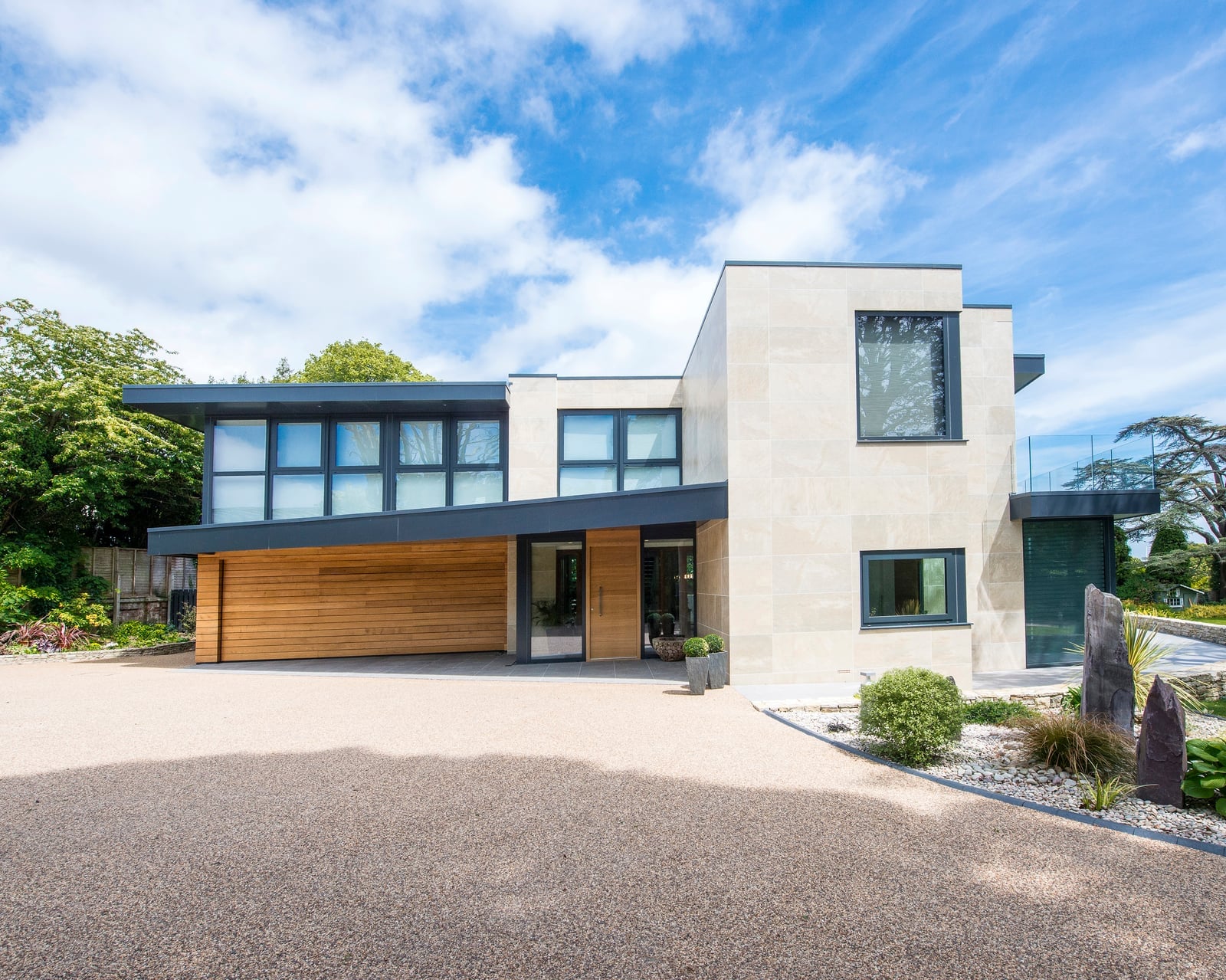
Gravel is often dismissed as a temporary surface, but paired with a house that has strong geometric lines, it becomes a deliberate textural choice. The beige gravel here softens the transition between the road and the crisp stone, wood, and glass of the modern house. A wide garage door and a glass balcony railing above create a balanced facade, and the gravel keeps the ground plane from competing with those clean horizontal and vertical lines. The material also drains naturally, which matters in climates with regular rain. Check your USDA zone before committing to gravel: it works best where freeze-thaw cycles are mild and the ground stays relatively stable.
Concrete Driveway with Integrated Planter and Water Feature
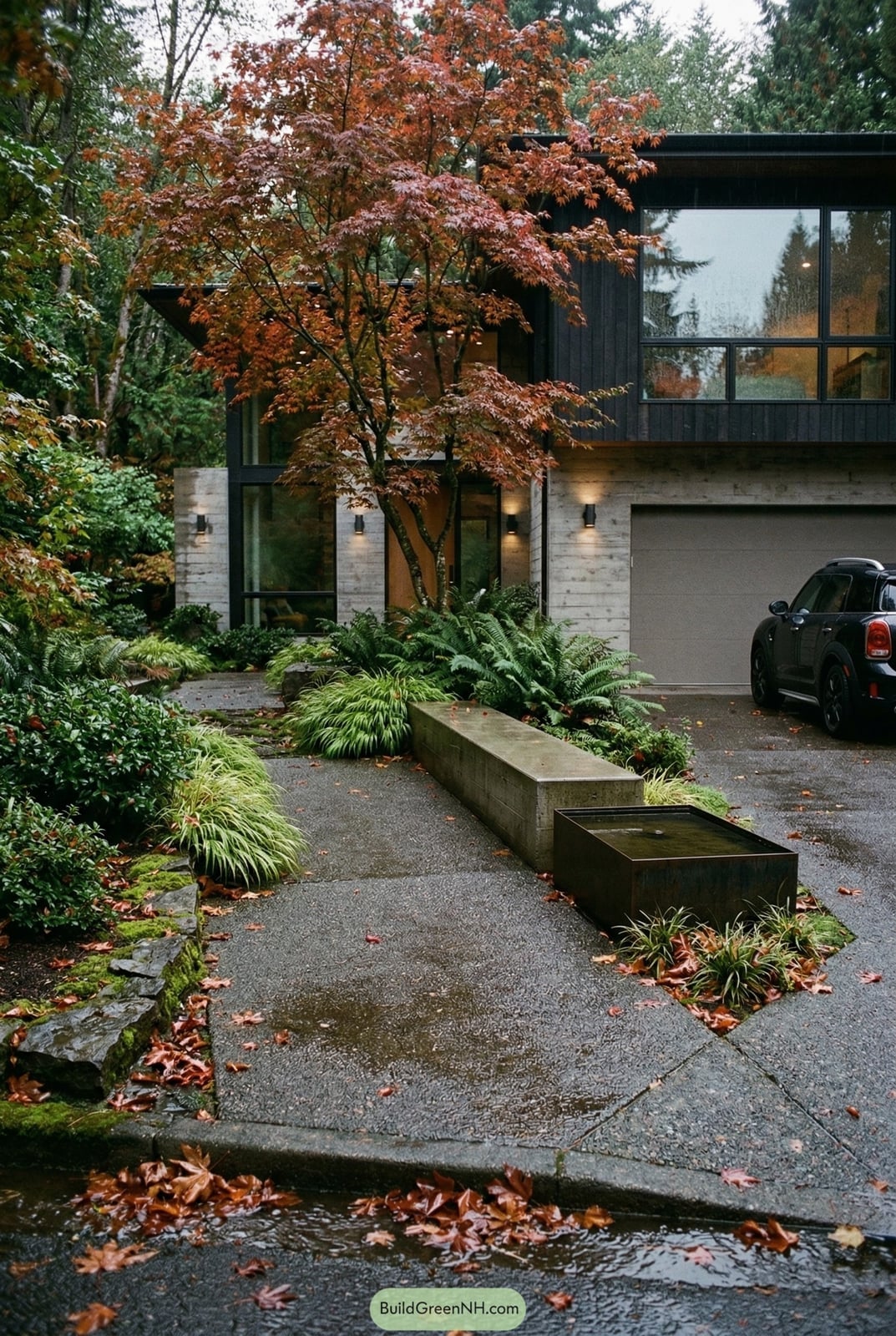
A concrete driveway does not have to be a single slab from garage to street. Here, an integrated concrete planter and water feature break the paved area into zones, giving the front yard a sense of arrival rather than just a place to park. The planter sits between two sections of the driveway, with low greenery that softens the gray concrete, and the water feature adds movement and sound that mask street noise. On a rainy day, the wet concrete deepens in tone and the integrated lights reflect off the surface, making the whole entry feel intentional. This layout works best for a roomy lot where the driveway is wide enough to accommodate a center island without blocking the path to the garage.
Final Thoughts
A modern driveway is more than a place to park. It’s a design element that anchors your front yard. The best options balance durability with visual interest, using materials like concrete, gravel, or pavers in geometric patterns. Integrated lighting adds safety and atmosphere, while grass or gravel infill softens hardscapes. Choose a layout that complements your home’s architecture and climate, keeping maintenance in mind. With the right mix of texture and structure, your driveway can be both practical and polished.