A deck is more than just a platform. It’s where morning coffee tastes better and evenings stretch longer. Whether you’re starting from scratch or refreshing an existing space, these 38 outdoor deck ideas cover the full range of possibilities.
You’ll find layouts that work for dining, lounging, and entertaining, along with material and lighting choices that make a deck feel like an extension of the home. No single style dominates here. The focus stays on the deck itself and how it can anchor outdoor living without competing with the yard around it.
Modern Deck with Sunken Hot Tub and Fire Pit
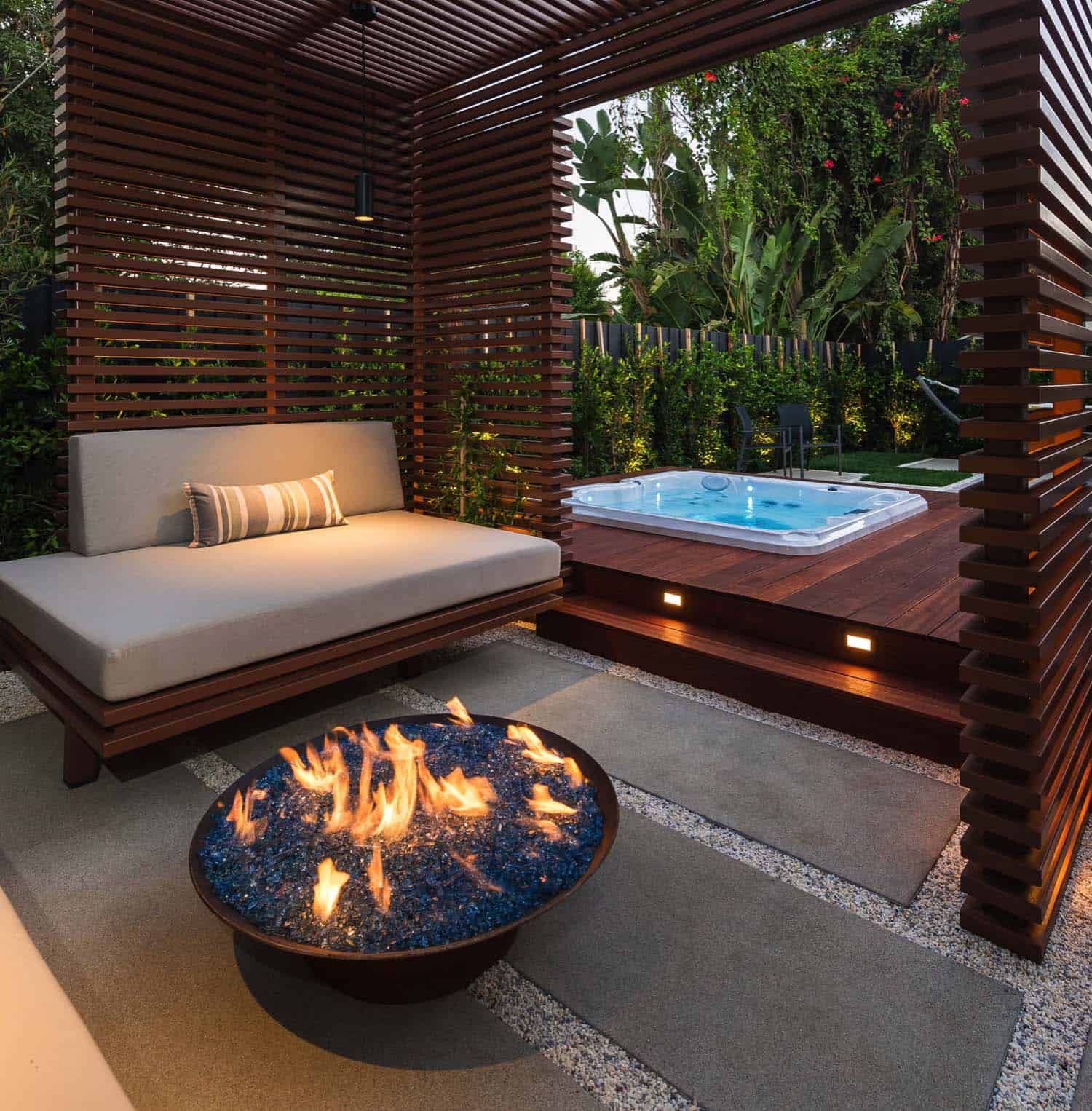
A modern deck that commits to a single, clear layout makes every zone feel intentional. This one uses a slatted wood structure to define a seating area with a daybed, a sunken hot tub, and a separate fire pit, all on the same open plane. The palette stays neutral with wood, gray, and green so the concrete and metal elements read as architecture, not clutter. Integrated deck lights carry the look into evening without competing with the fire pit’s glow.
Expansive Deck with Sunset Lighting and Zoned Areas
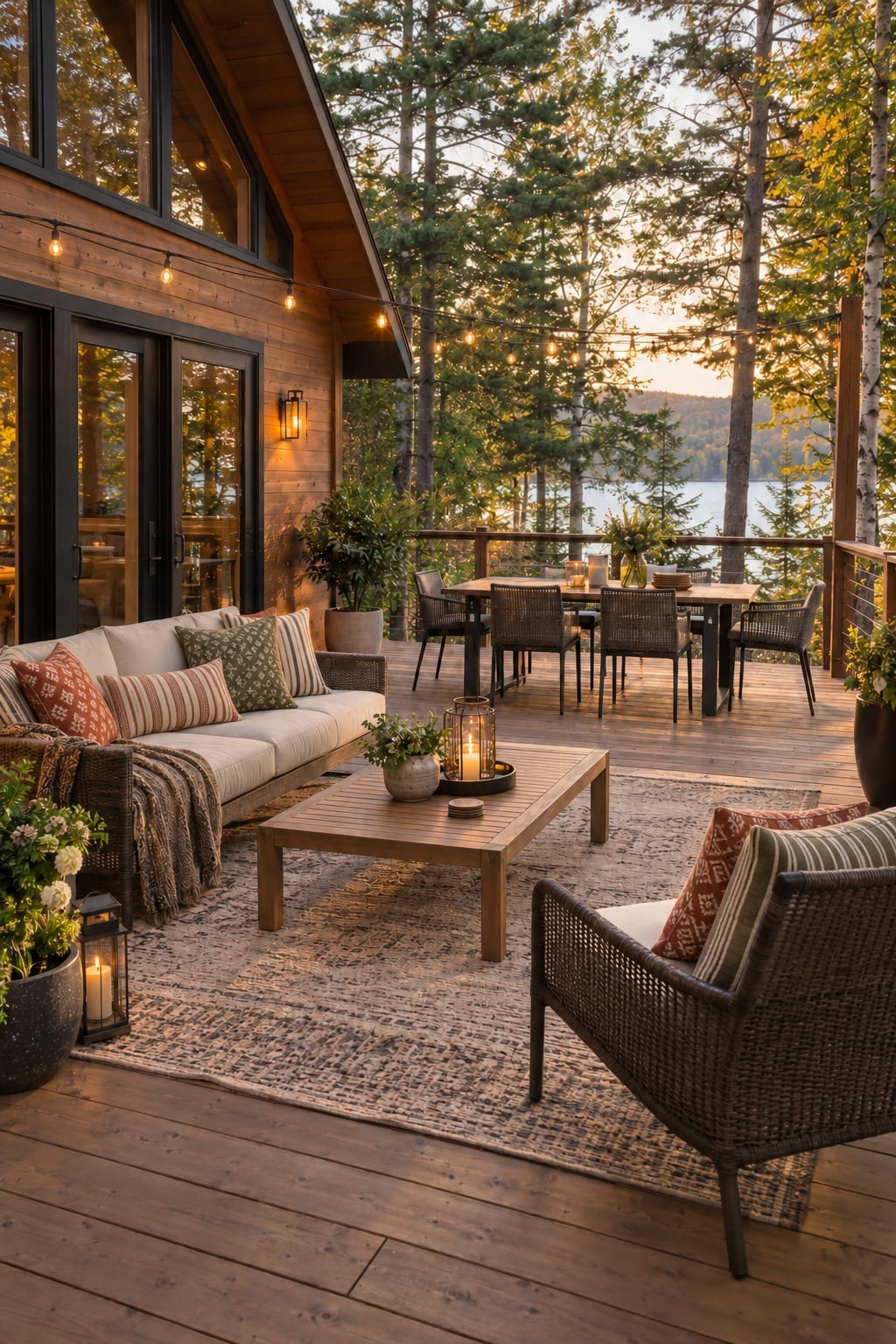
This deck proves that lighting is the fastest way to turn a large space into two distinct rooms. The golden hour does the first round of work, warming the wood and casting long shadows across the lounge and dining zones. After sunset, string lights draped above the sectional and lanterns on the dining table take over, keeping the warm terracotta and neutral tones alive. The trick is to match the light’s color temperature to your materials: warm bulbs on wood and stone, cooler light on metal. That keeps the zones separate even when the furniture reads as one big setup.
Stone Patio Deck with Fire Pit and Pool Access
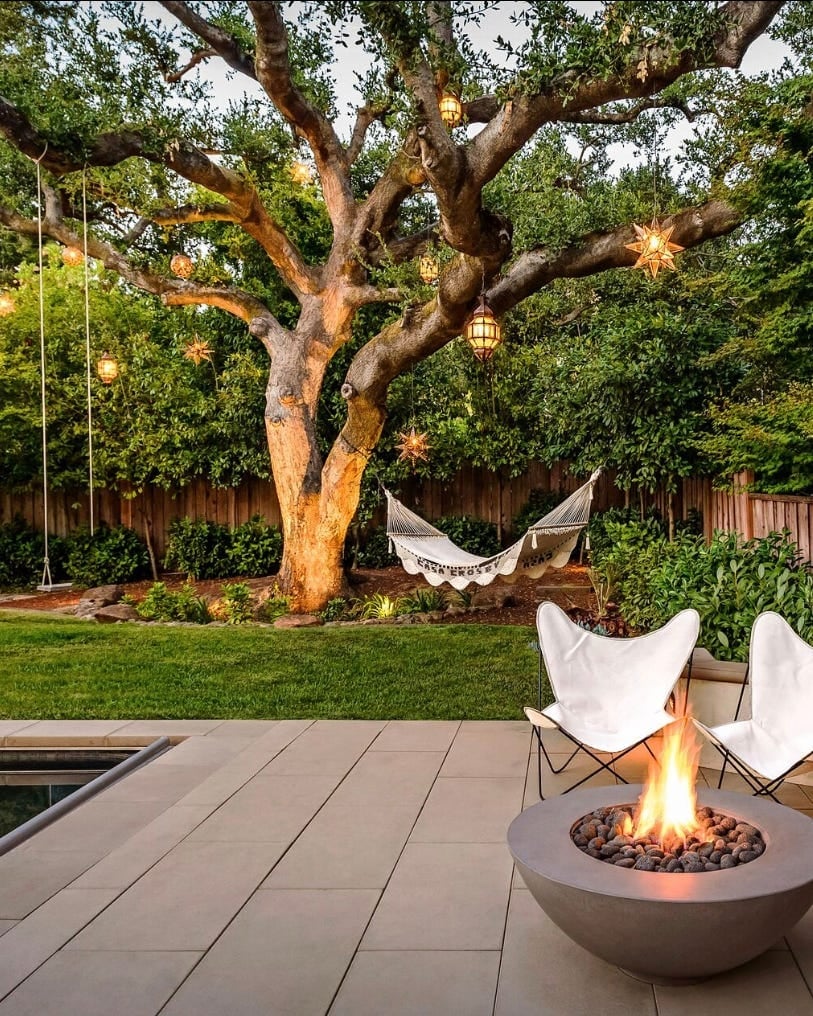
To make a stone patio feel like part of the deck, repeat one material in two ways. Here, the large fire pit uses the same gray stone as the path that leads to the pool, so the eye travels from seating to water without a visual break. The chairs stay light, white fabric and metal frames, to keep the heavy stone from dominating. Evening light comes from ambient tree lights, which soften the hard edges of the stone and make the whole setup feel like a natural extension of the yard.
The pool access is the real payoff. Placing the seating area between the fire pit and the pool means you can warm up after a swim without walking across grass. Just keep the path clear, no low tables or planters in the way, and you have a circulation route that doubles as a design feature.
Wooden Deck with Pergola and Lush Garden Views
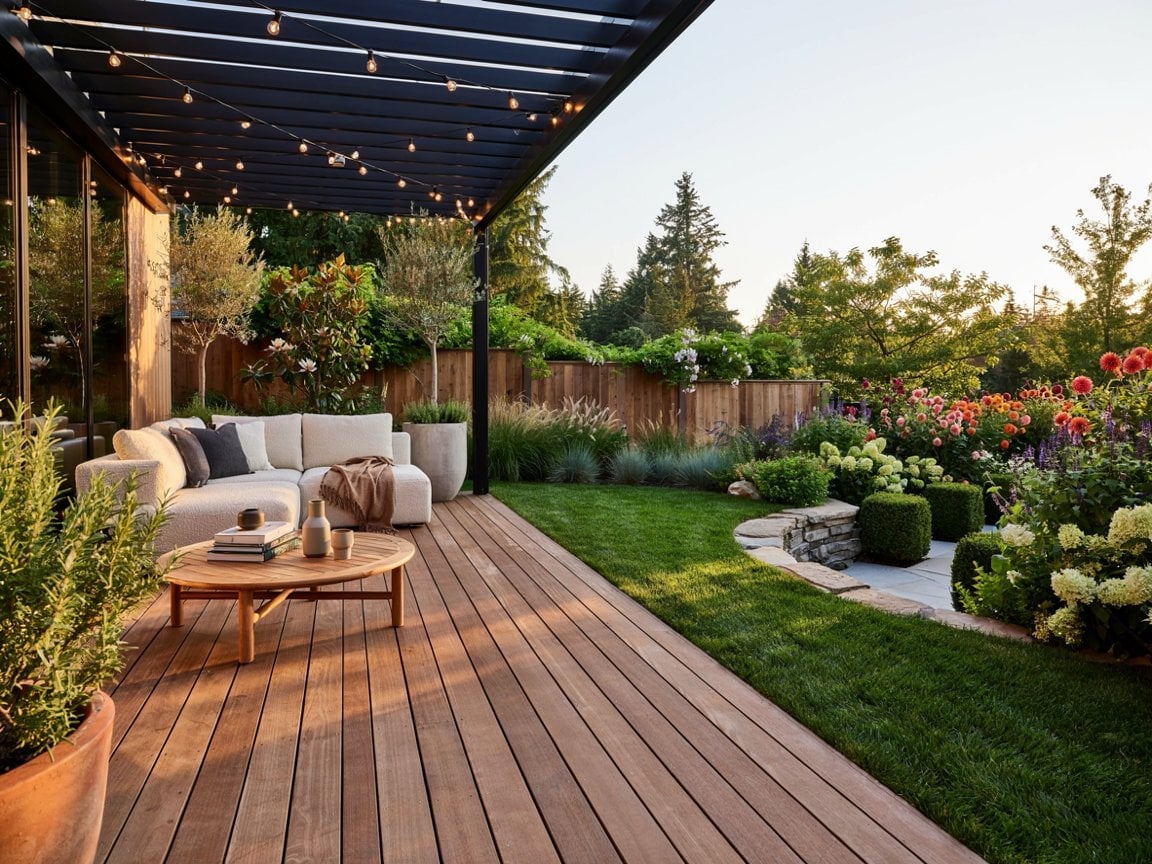
A pergola does more than provide shade; it frames the view. This wooden deck sits right next to a lush garden, and the pergola’s open slats direct your eye to the greenery beyond the sectional sofa. The natural wood decking and stone coffee table keep the foreground quiet so the floral colors in the garden do the talking. String lights woven through the pergola rafters add evening glow without blocking the daylight view.
Modern Boho Deck with Layered Planting
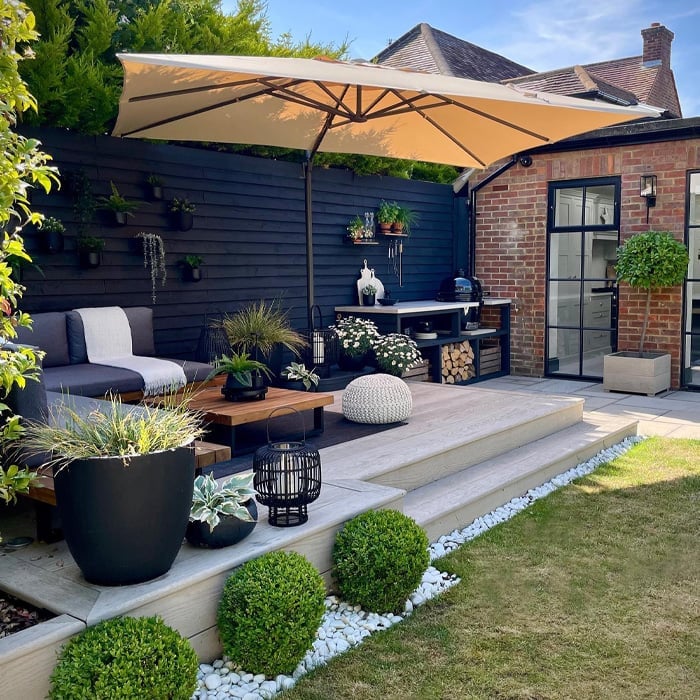
Start with one texture you love, then add one more. Here, the dark wood fence and wood decking set a neutral stage, and a single rattan pouf introduces the woven texture that defines the style. The large planters group tall greenery near the sofa and trailing plants on the coffee table. A large cantilever umbrella in white keeps the sun off without blocking the view of the fence and planters. The ratio is roughly two-thirds hardscape and one-third soft texture, which keeps the look relaxed without tipping into cluttered.
Zoned Deck with Pergola and Concrete Fire Pit
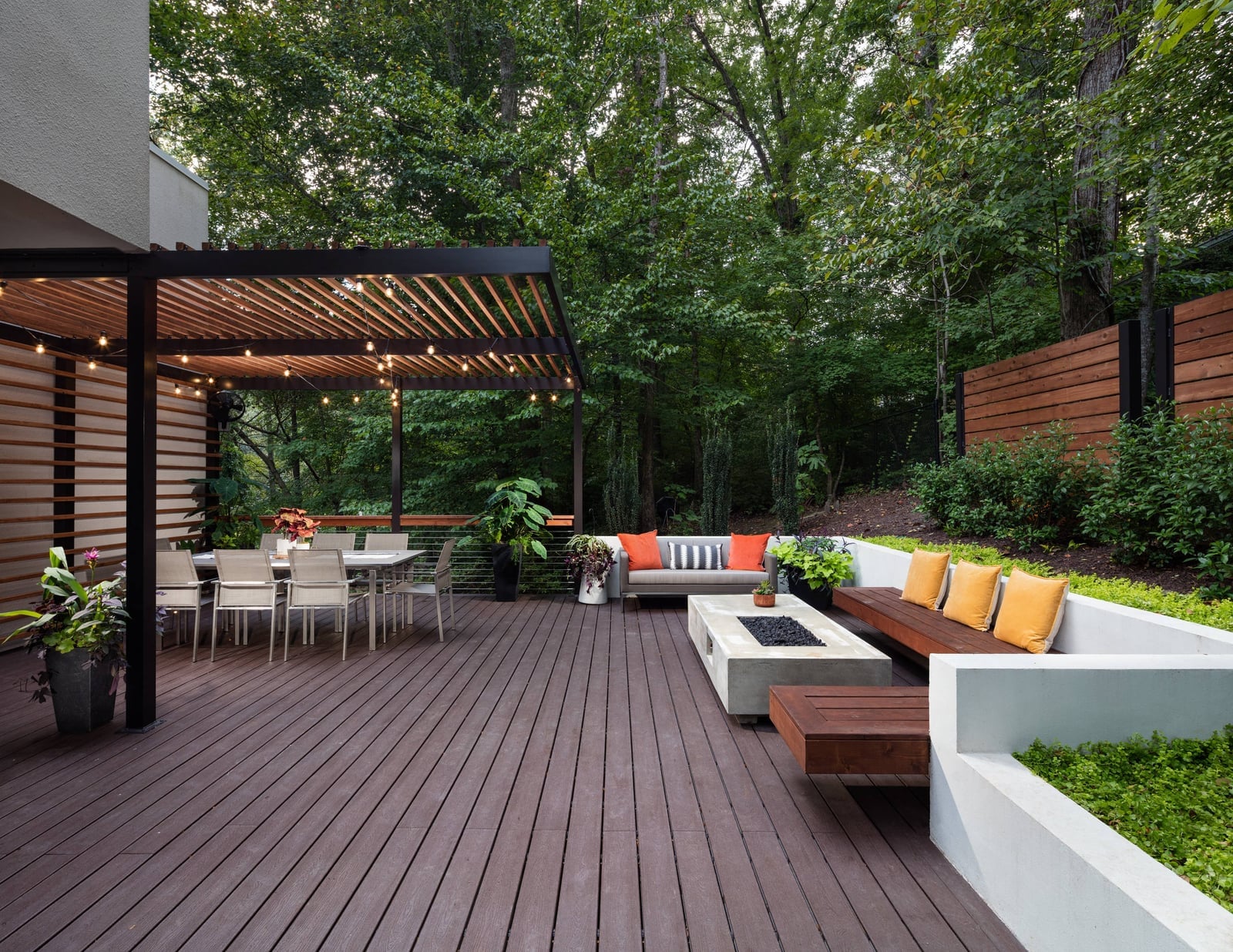
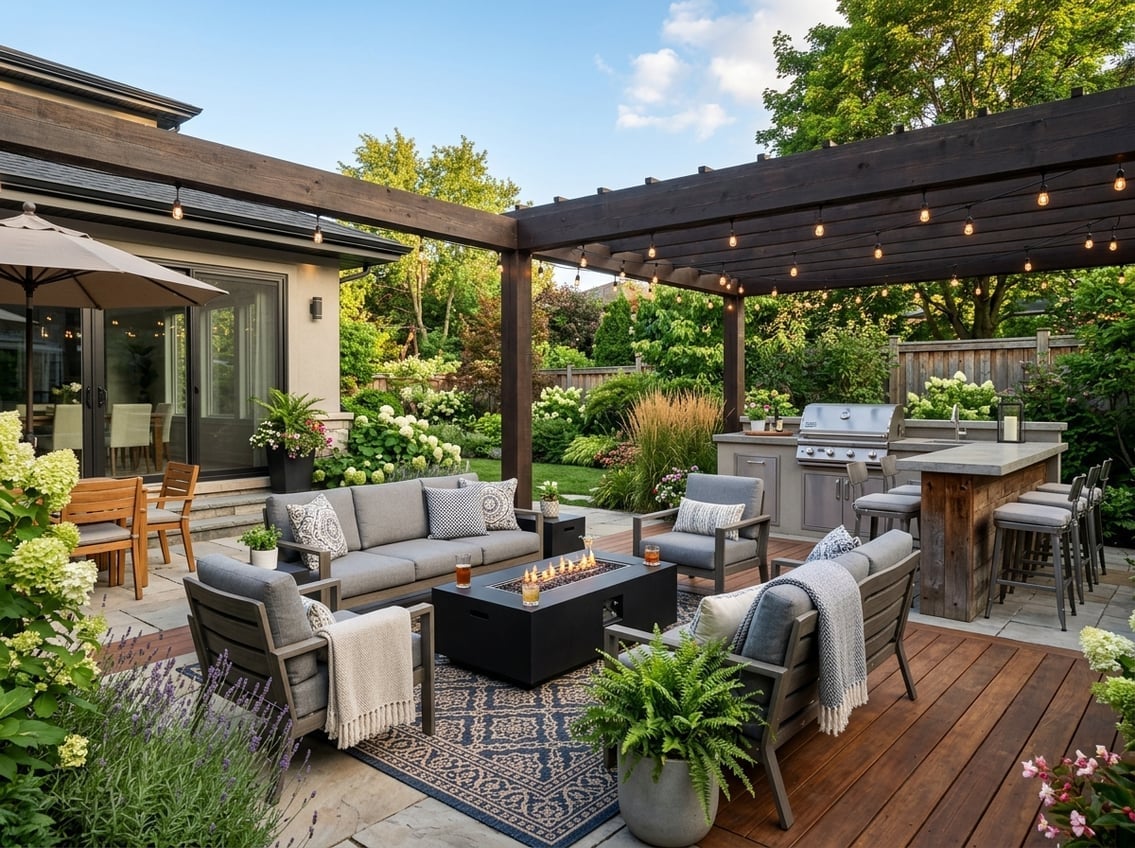
A deck this size can feel like a blank parking lot if you just drop a table in the middle. Zoning gives it a pulse. Here, a pergola with string lights anchors the dining set, while a separate lounge area clusters around a concrete fire pit. The wood decking and metal furniture keep the palette simple. Each zone has a clear job: eat under the pergola, talk by the fire. That split makes the whole space feel bigger than one big seating area would.
String lights do double duty here. They define the pergola zone without adding a hard wall, and they soften the modern lines at dusk. If you are working with a similar layout, think about where the evening light falls. Let the lights mark the gathering spot, not the whole deck.
Multi-Level Wooden Deck with Integrated Planters
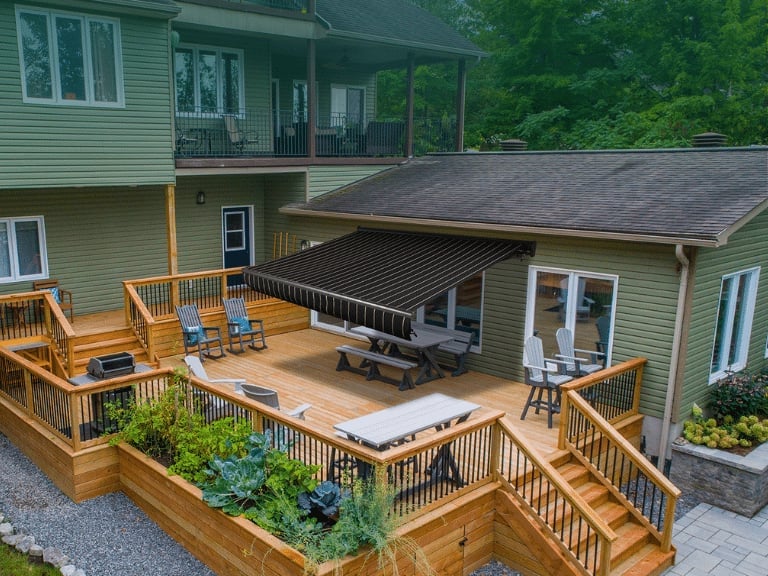
What draws the eye here is how the built-in planters soften the transition between levels instead of leaving a hard drop. The wood tones carry through from the decking to the railings, so the green from the planters appears as a deliberate addition. The lower level holds picnic tables and chairs, keeping the dining separate from the lounge area above. For a rental, you can fake this layout with freestanding planters arranged at the edge of each level. They break up the sight lines and give the same layered feel without cutting into the framing.
Poolside Deck with Sleek Lounge Chairs
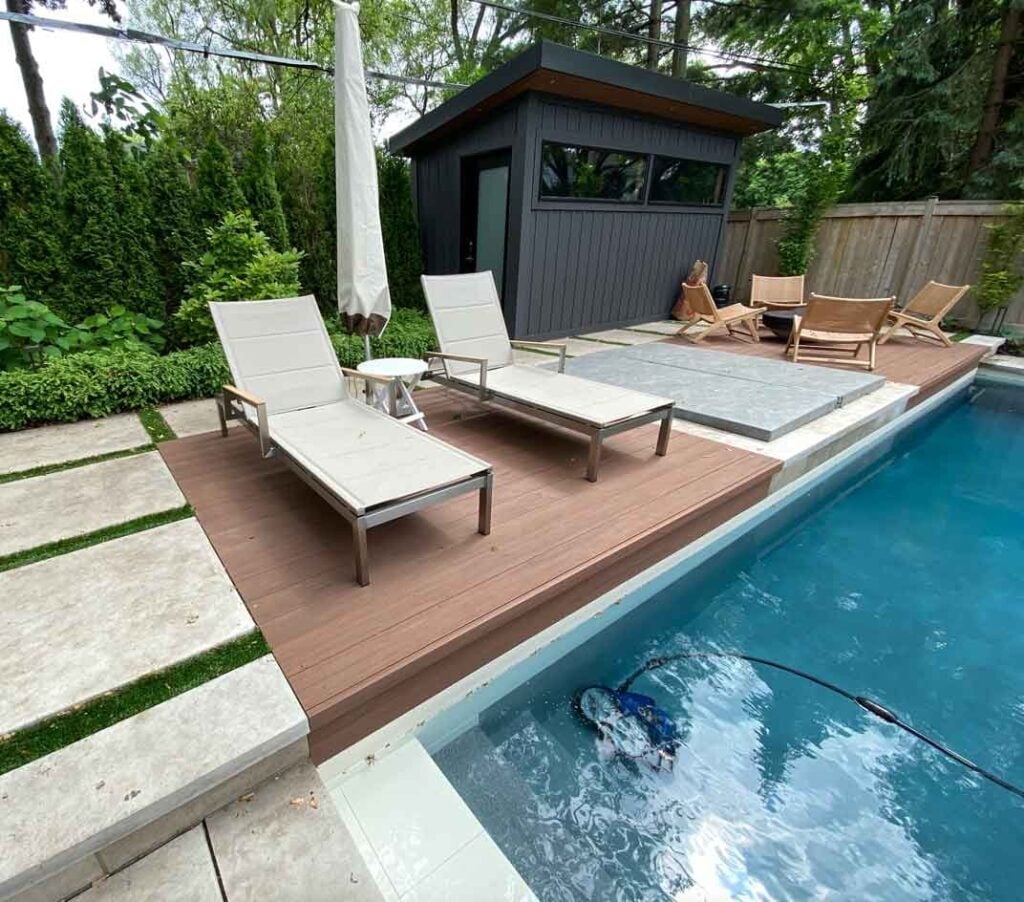
This deck plays it smart by keeping the lounges simple and letting the pool do the talking. The wood composite decking runs right up to the concrete pool edge, which makes the transition between surfaces feel seamless. The gray and brown palette stays quiet so the blue water reads as the main color. A shed at the far end tucks away the gear. If you are planning a poolside deck, the takeaway is restraint. Pick lounges with clean lines and a low profile. They should disappear when no one is sitting in them, not compete with the water.
Deck Dining Area with Woven Pendant Light
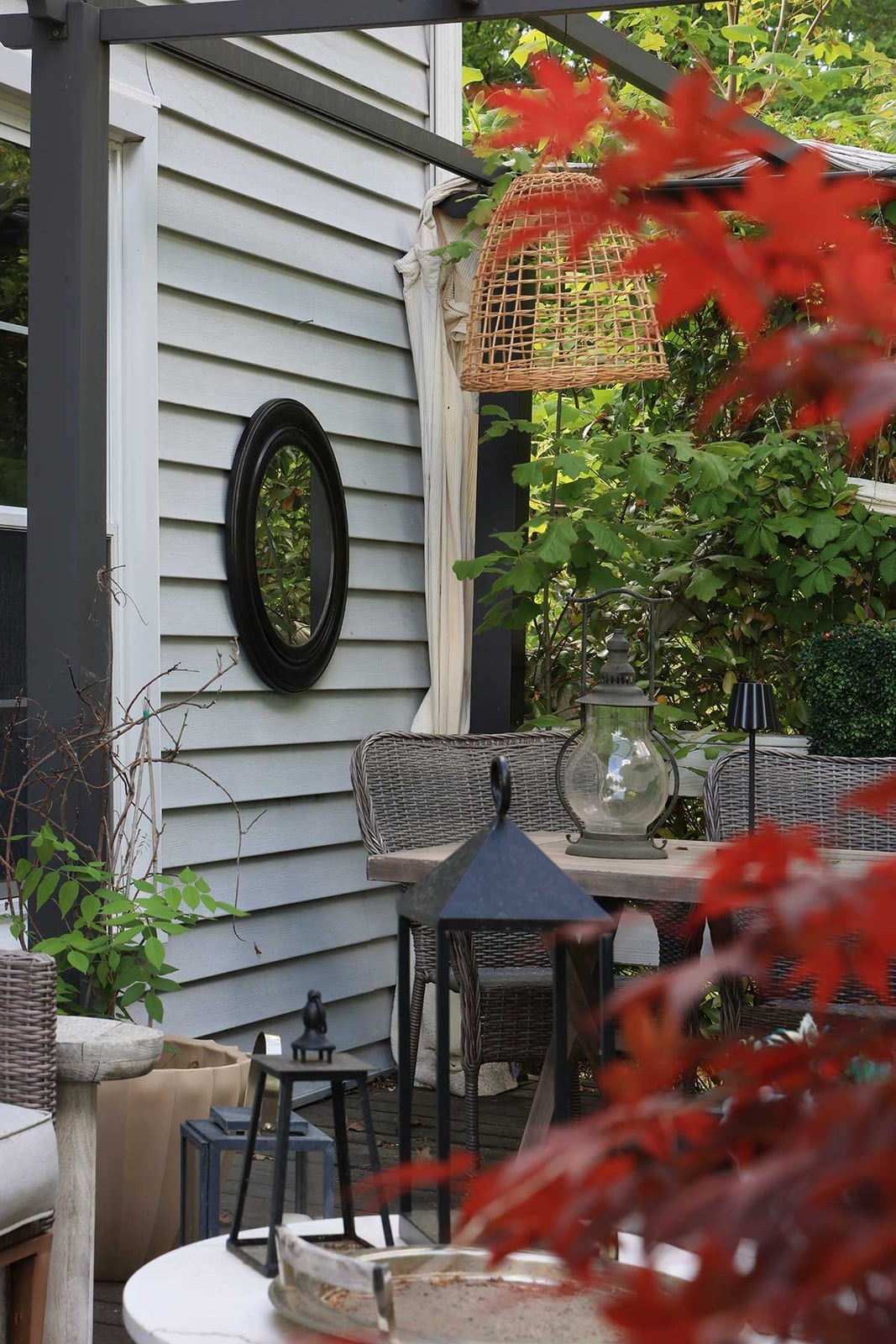
Can a woven pendant light really hold up outside? It can, if you are willing to bring it in during heavy rain or store it for the winter. In this setup, the rattan shade hangs over a wooden dining table with matching chairs, and a lantern on the table adds a second light source. The oval mirror on the siding reflects the greenery, which makes the compact dining area feel wider. The trick is to treat the pendant as a seasonal fixture. It adds warmth that a metal shade cannot match, but it needs a dry spot when the weather turns. If that swap feels like too much work, stick with a sealed metal pendant in a similar shape.
Multi-Level Deck with Integrated Seating and Pergola
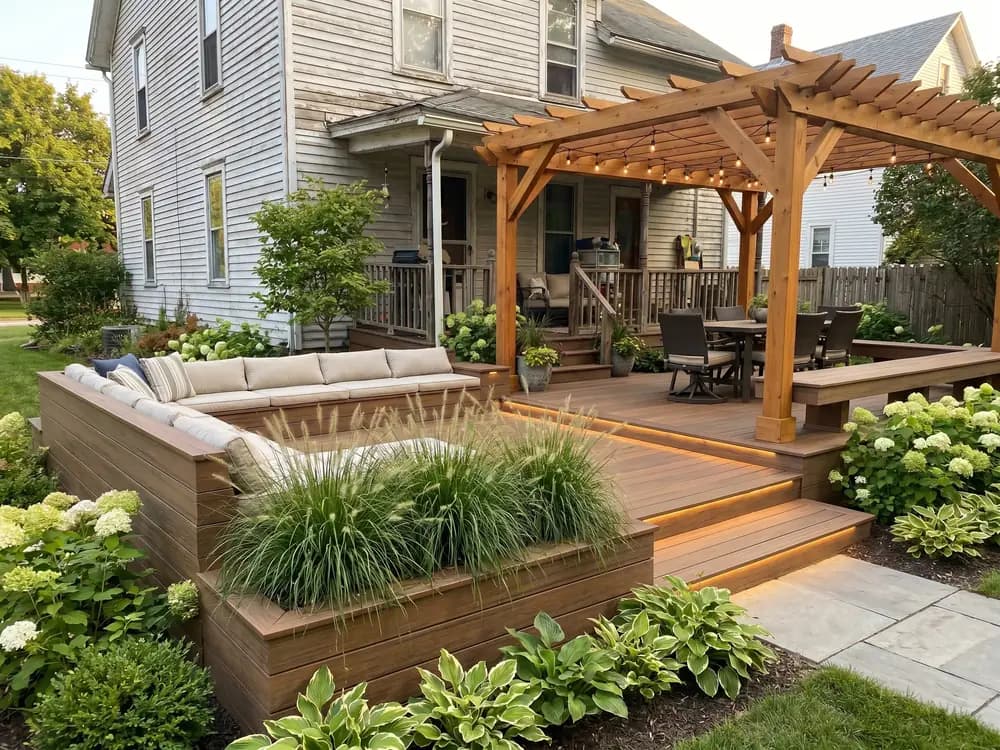
The built-in sectional here is not just seating. It acts as a low wall that separates the upper lounge from the dining area below. The pergola frames the dining zone, while integrated deck lights along the steps guide traffic between levels. String lights crisscross above the sectional, keeping the upper zone bright without overhead fixtures. The stone base under the pergola anchors the dining set visually. That combination of built-in seating and level change gives each zone its own identity without needing a single wall or fence.
Spacious Deck with Integrated Hot Tub and Stone Patio
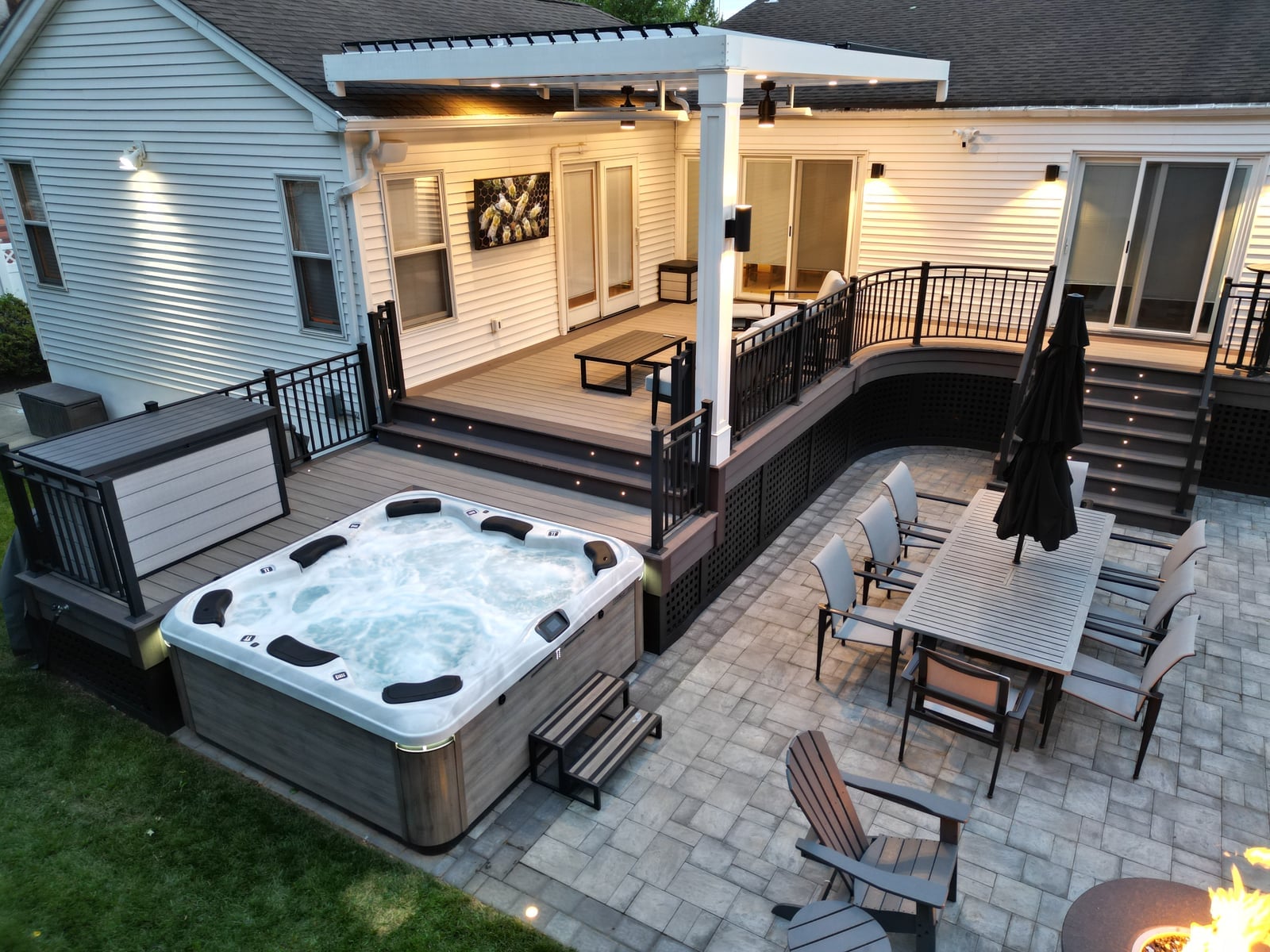
A good rule for a deck this size is to let one feature anchor the whole layout. The hot tub here is set into a lower level, with the dining area and lounge chairs on the main deck above it. That split gives each zone a clear purpose. The stone patio below adds a natural transition between the composite decking and the hot tub. Integrated lights around the edges make the tub a focal point after dark. The result is a layout that feels planned.
Dusk Deck with Black Pergola and LED Lighting
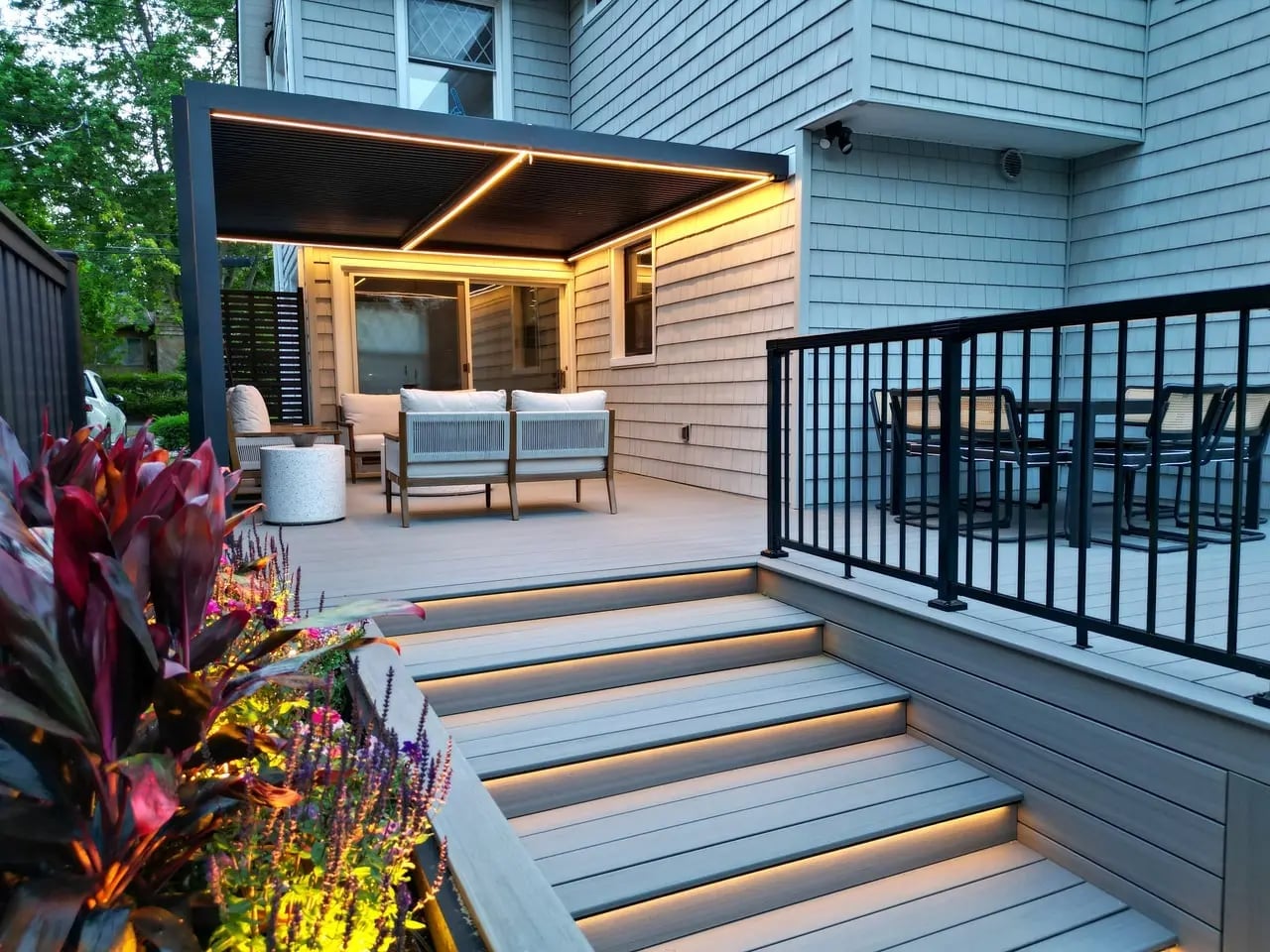
A black pergola could read as too heavy in daylight, but this one works because the structure is open and the deck around it is light gray. The dark frame grounds the space without blocking the view across the yard.
What makes it feel finished is the layered lighting. The pergola has integrated LED strips along its beams, which cast a warm glow down onto the dining set below. The deck itself has low-level lights built into the steps and edges. That combination means you get task light for eating and soft ambient light for lounging, all from fixtures that disappear during the day. The warm tone against the black frame keeps the whole setup from looking like a parking lot.
Coastal Farmhouse Deck with Red Adirondack Chairs
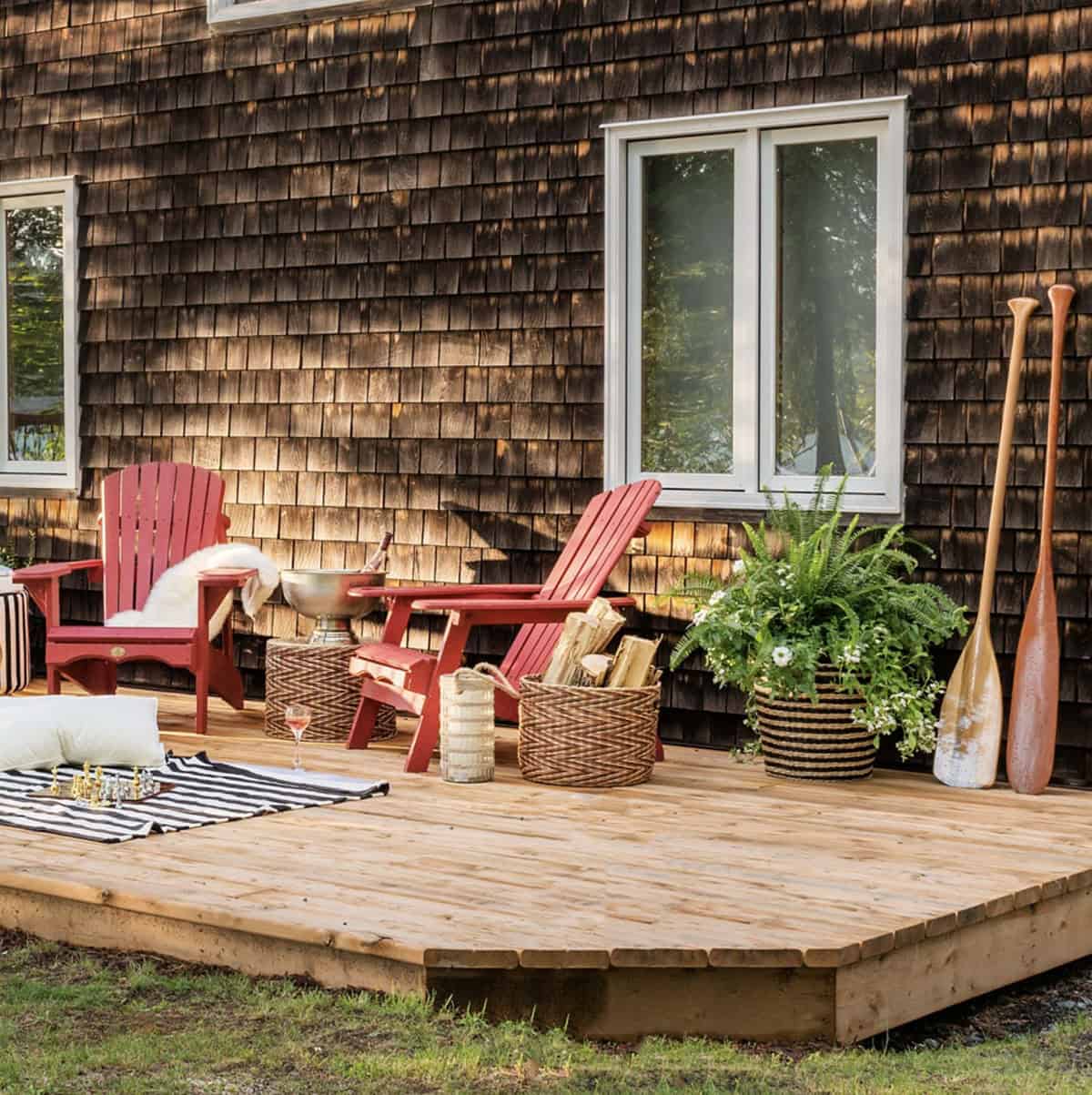
The red chairs are the first thing you notice, but the real trick is how little else competes with them. The deck is natural wood, the house siding is white, and the planters are a deep green. That palette lets the chairs carry the color without the whole deck feeling busy. A couple of dark metal side tables and a black lantern repeat the dark notes from the chair frames. The look is coastal farmhouse in the relaxed shapes and the weathered wood, but the red gives it a pop that keeps it from blending into every other beach house deck.
Coastal Casual Deck with Wicker Seating and Jute Rug
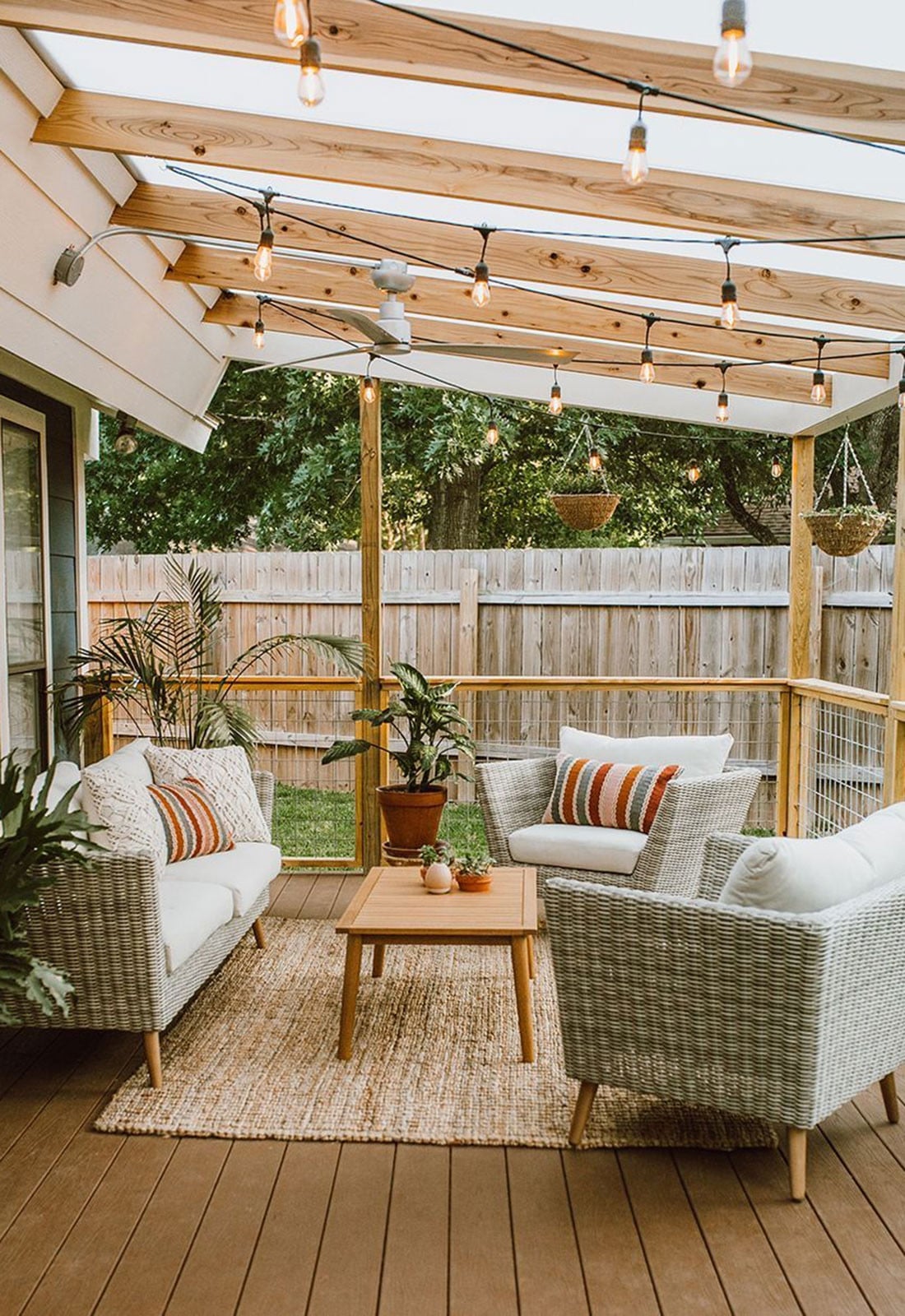
This setup earns its coastal casual label through materials alone. The sofa and chairs are natural wicker with plush cream cushions, the coffee table is light wood, and the rug is a flatweave jute in a warm beige. None of it is precious, which is the point. String lights looped above the seating area add a soft glow that turns the whole group into a room after sunset. The jute rug defines the conversation zone on the bare wood deck without needing a wall or a railing. It is a relaxed arrangement that invites you to sit down without worrying about sand or damp cushions.
Modern Composite Deck with Sleek Metal Railing
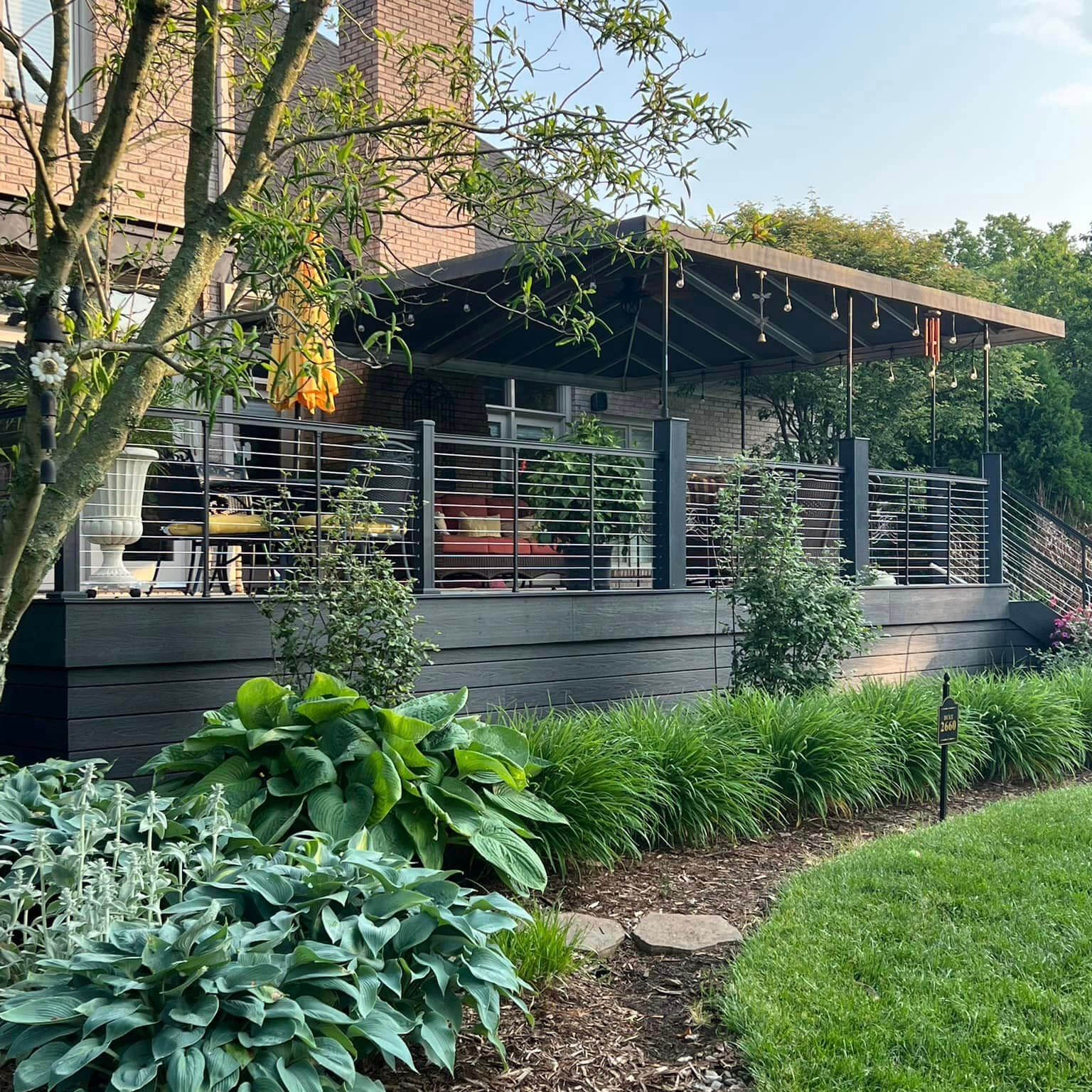
A deck with a view needs a railing that does not fight the sightline. The dark composite planks here run horizontally, and the metal railing uses thin vertical bars in a matching dark finish. That combination keeps the eye moving outward rather than stopping at the edge.
For the same reason, the furniture stays low and simple. The seating is a dark metal frame with neutral cushions, and the planters around the perimeter are filled with tall greenery that softens the hard lines. Composite decking holds up well in wet climates and needs only an occasional rinse to keep its color. The string lights overhead add a casual note that balances the sleek railing, so the deck does not feel like a commercial balcony.
Gray Composite Deck with Sectional Sofa and Olive Trees
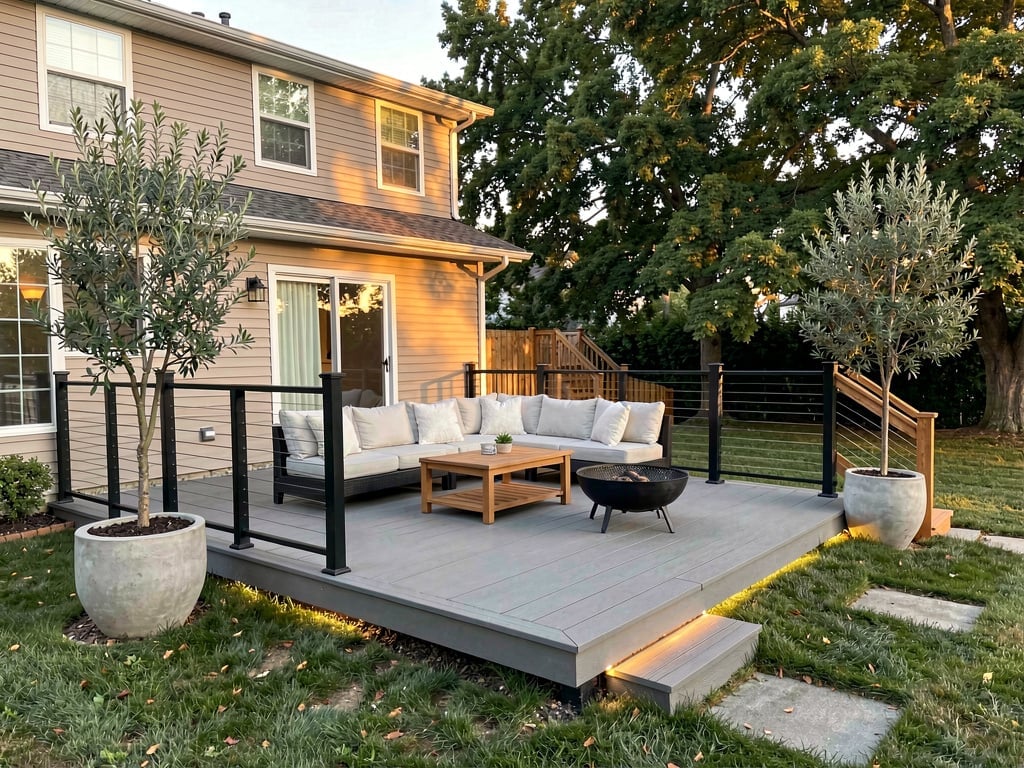
A roomy single-level deck relies on scale, not clutter, to feel finished. The sleek gray composite decking stretches wide, holding a large sectional sofa and a low coffee table near the fire pit. Concrete planters with olive trees add height without crowding the seating zone. Integrated deck lights and pathway lights keep the layout usable after dark, while the beige cushions and black metal frames tie the modern palette together.
Modern Farmhouse Covered Patio with Wicker Sofa
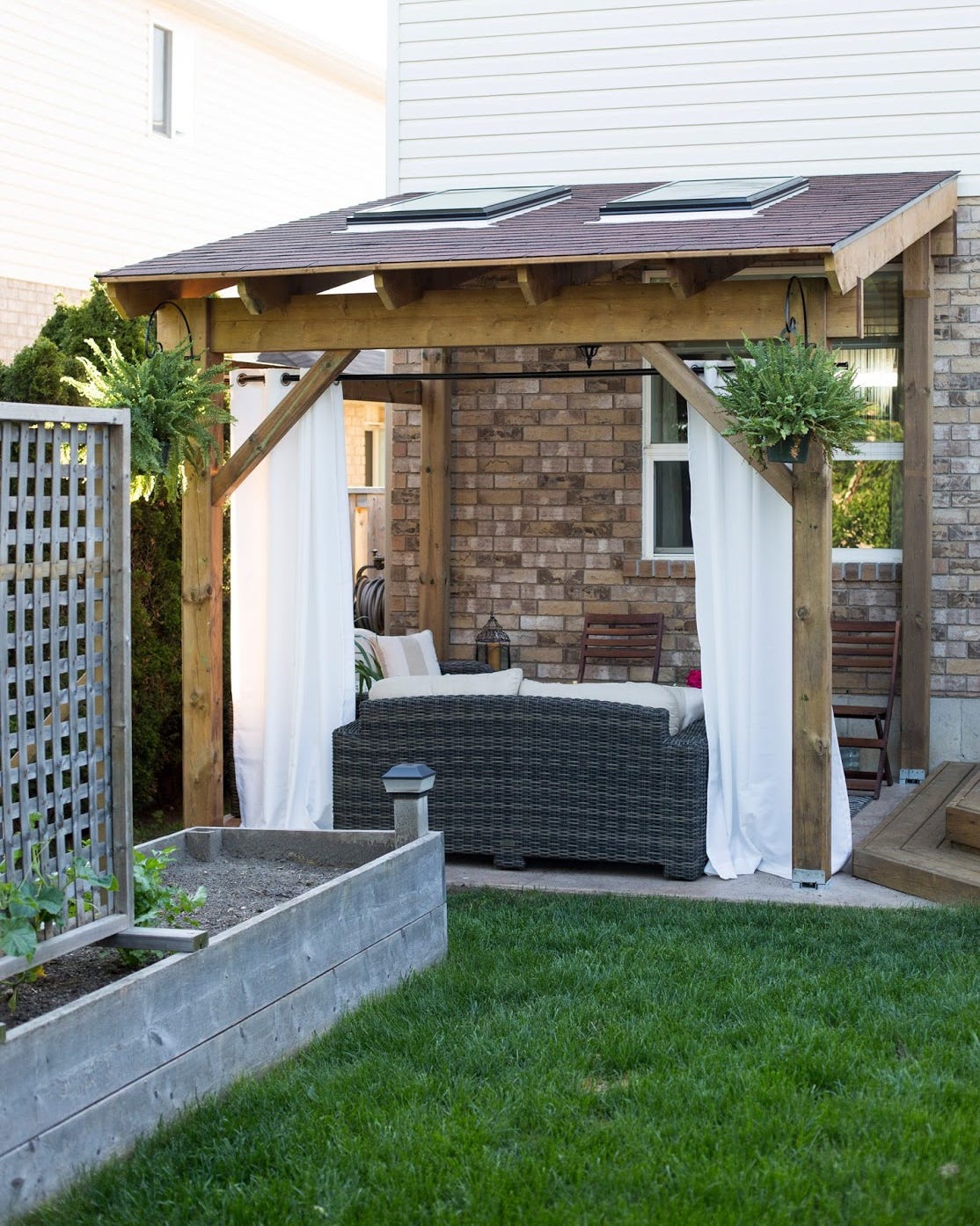
Choose pieces that can move with you instead of building anything permanent. Under a wooden pergola with white curtains, a wicker sofa and a pair of outdoor chairs create a roomy seating area on this covered patio. Hanging ferns add softness at the roofline, while the mix of wood, brick, and metal keeps the modern farmhouse feel. The overhead lights are already wired, but a plug-in version can work on a porch without hardwiring.
Natural Modern Multi-Level Deck with Stone Foundation
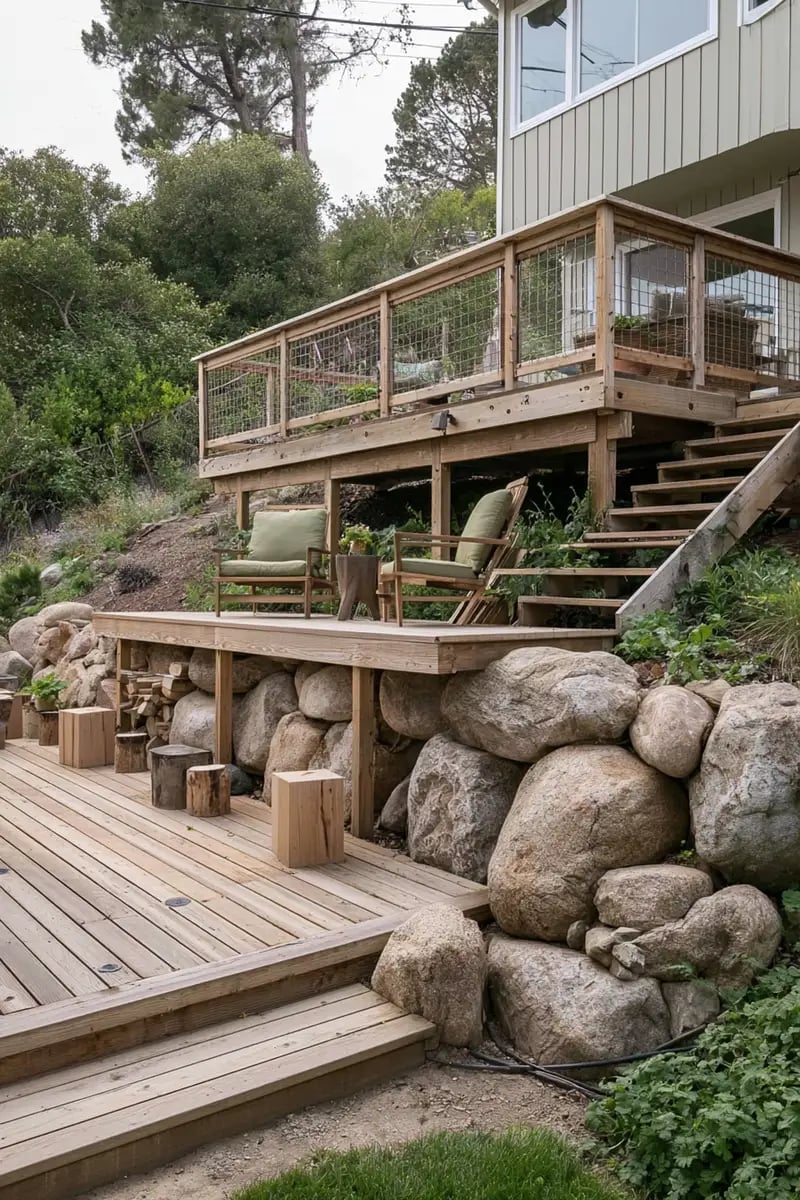
Where a poured concrete patio can feel too polished, this tiered deck leans into raw materials for a softer look. The multi-level design uses a large natural stone foundation as the base, with wood planks on the upper level and metal stools near a small table. Two chairs sit on the stone itself, blending the seating area into the ground below.
The palette stays close to wood, stone, and green from the surrounding yard, so the structure reads as part of the landscape. Keeping the furniture minimal and the materials honest is what defines the natural modern style. Adding a painted railing or glossy planters would break that balance.
Multi-Level Modern Farmhouse Deck with Integrated Grill
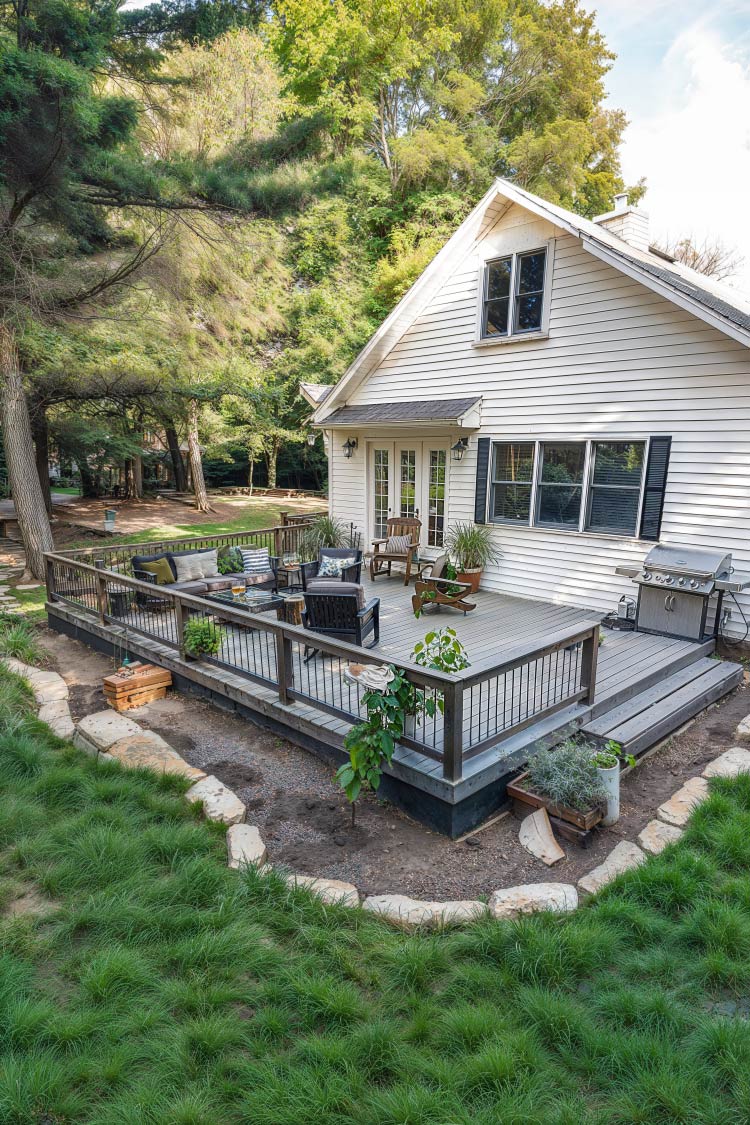
The multi-level design here does more than add visual interest: it separates the cooking zone from the seating area without a wall. The upper level holds the grill and planters, while the lower level is set up for outdoor furniture. Gray composite decking and white railings keep the modern farmhouse palette clean, with wood tones and green planters adding warmth. The layout makes it clear where to cook and where to relax.
Boho Sunroom with Tropical Plant Accents
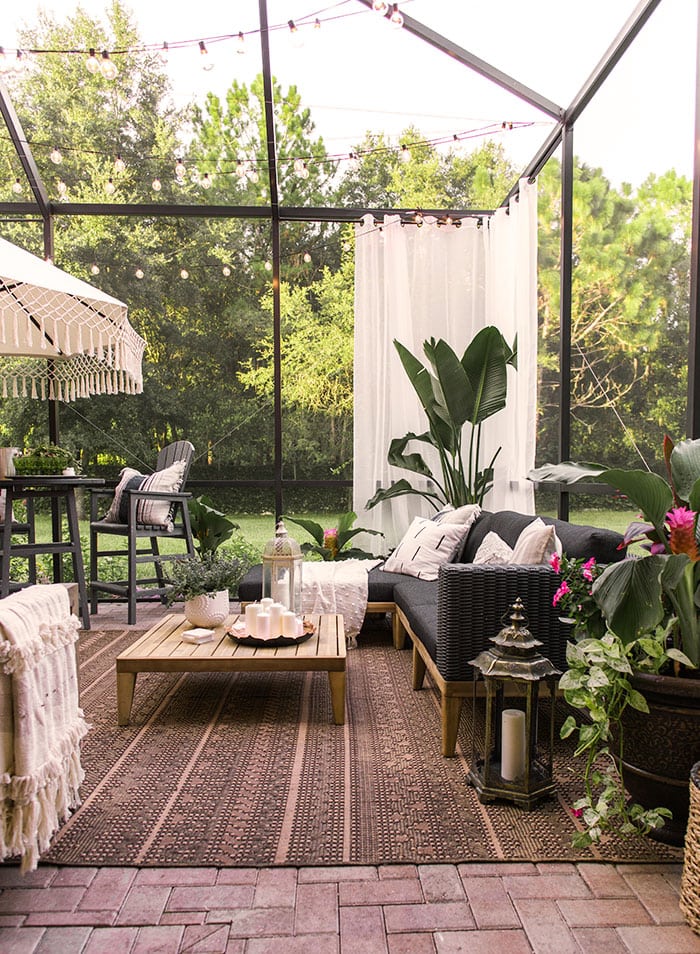
This roomy sunroom proves that a boho style can work indoors as long as the structure lets in enough light. A large bird of paradise plant anchors the corner, while the sofa and coffee table sit on a dark gray floor under string lights. The rattan, wood, and brick finishes keep the palette warm and natural. The green from the tropical plant is what breaks up the darker tones and keeps the space from feeling too heavy.
Casual Deck Dining with Vibrant Teal Runner
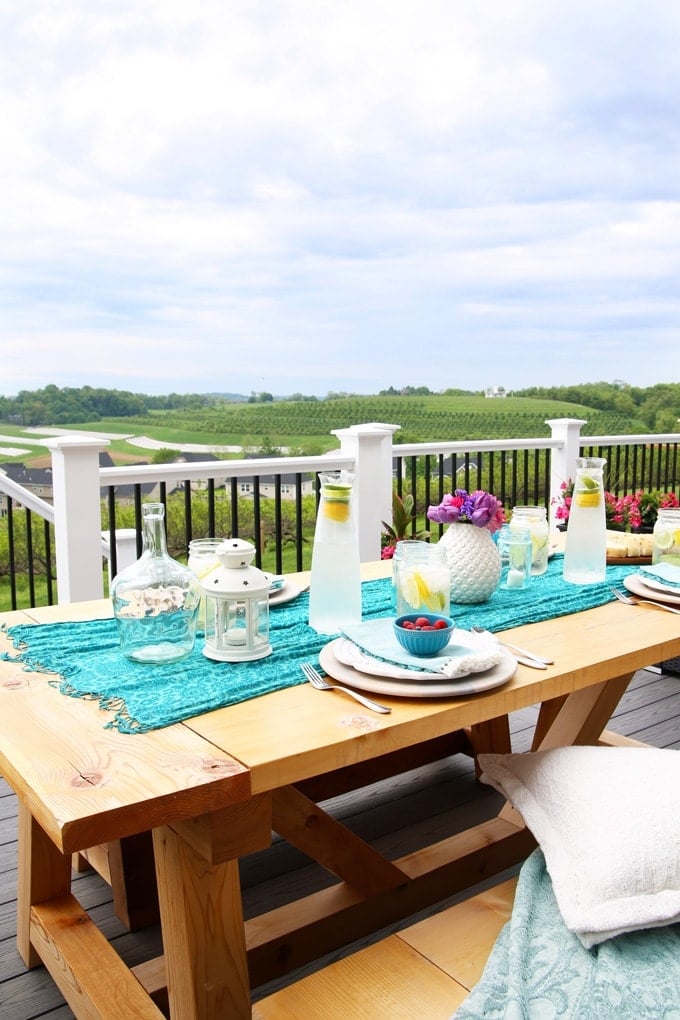
A dining setup uses the table as the anchor while everything else steps back. A chunky picnic table in warm wood tones does this, with a vibrant teal runner as the only bold move. White glassware and simple plates keep the look unfussy, so the runner appears planned.
The palette stays grounded by sticking to wood, white, and that single hit of teal. No competing patterns or extra colors. A long runner on a picnic table also defines the eating zone without needing a formal rug, which matters on a deck where dirt and rain are part of the deal.
Modern Organic Deck with Integrated Hot Tub
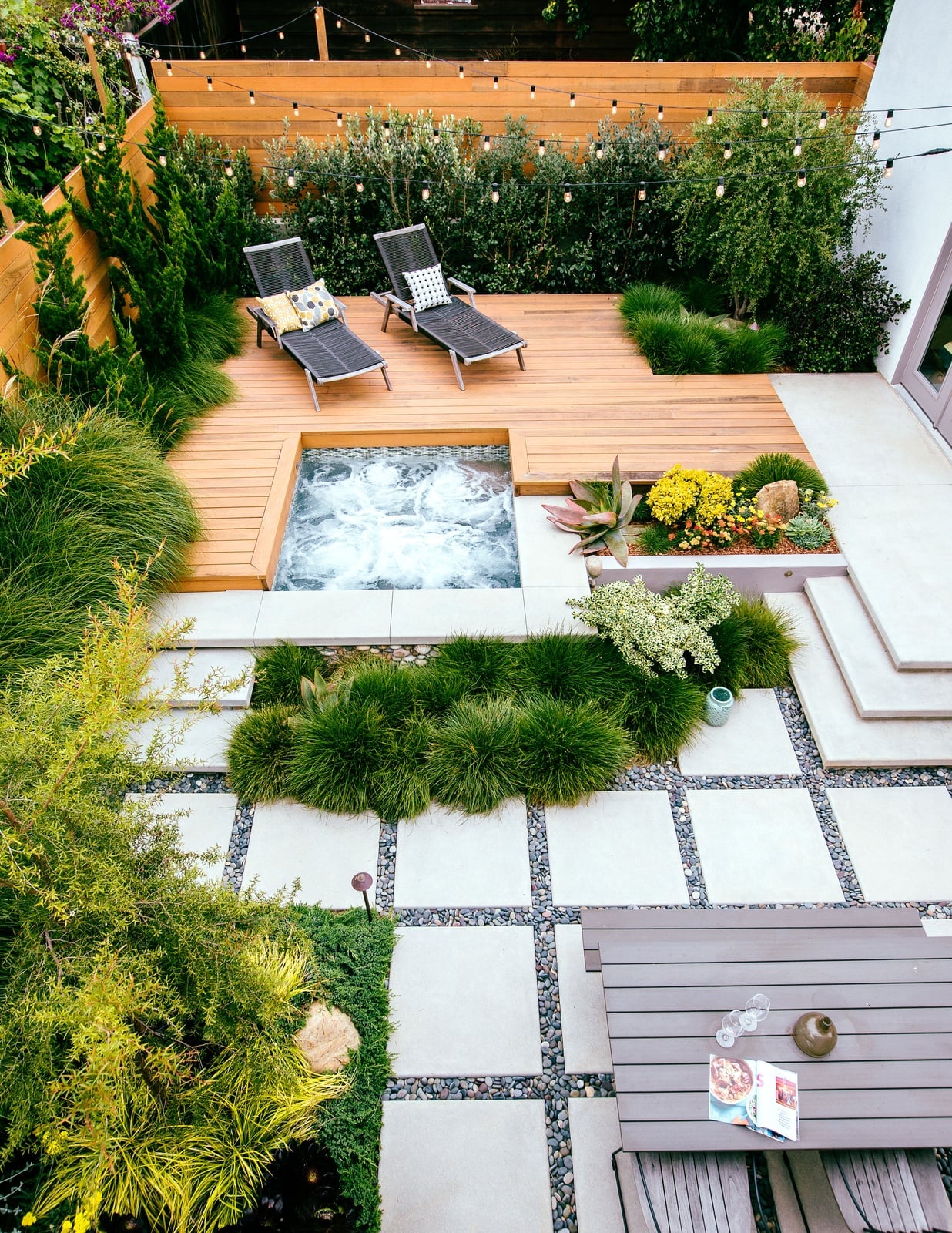
An integrated hot tub turns a deck into a destination. This multi-level layout zones the space without walls: one level for lounging on the outdoor sofa and chairs, another for the hot tub itself. Warm wood decking and gray stone planters keep the palette natural, while string lights overhead add a soft glow for evening use. The hot tub sits flush with the deck surface, so it feels built in.
Traditional Deck Adorned with Potted Plants
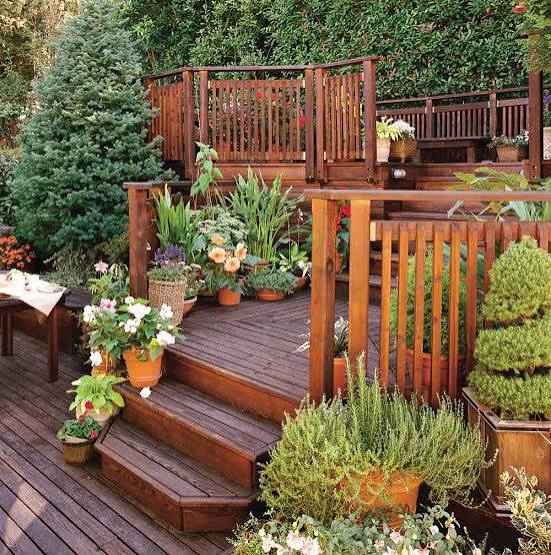
A traditional deck uses repetition to create a cohesive look. Here the wooden railing and stairs stay simple, letting the potted plants take center stage. Clusters of greenery in brown and green tones line the edge and fill the corners, with a wooden bench tucked in for seating. The floral accents break up all that wood without paint or stain. Group pots of different heights along the railing instead of scattering them one by one across the deck.
Coastal Deck with White Adirondack Chairs and Rug
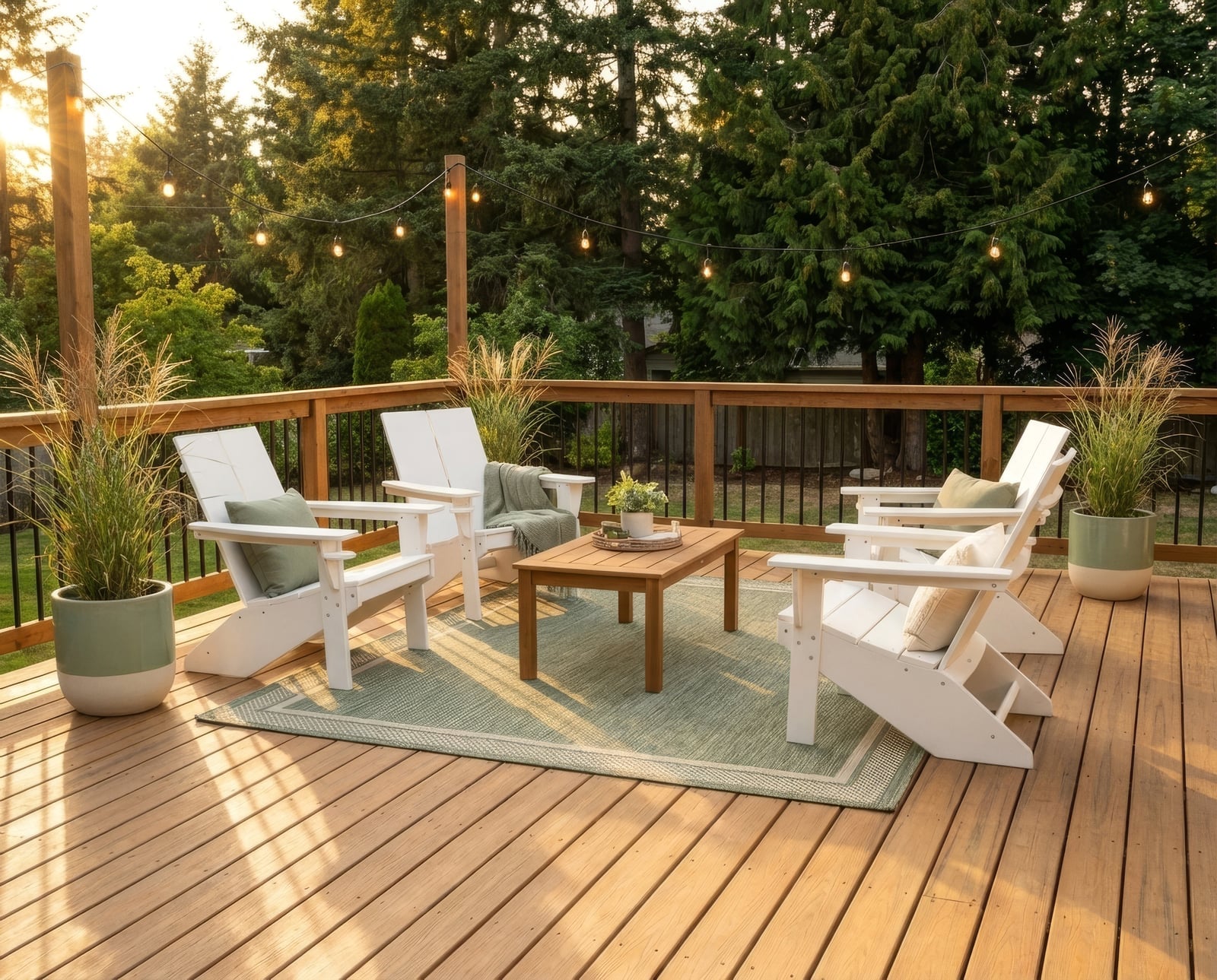
White Adirondack chairs could read as stark against a wood deck, but this setup avoids that by warming them up with a rug and greenery. The rug in natural tones softens the wood planks and gives the seating group a defined footprint. A low coffee table in a similar wood finish bridges the chairs, while potted plants add green to the white-and-wood palette.
The late afternoon light does the rest. String lights overhead mean the space works after sunset too, without the glare of a single overhead fixture. The trick is letting the rug pull the chairs together so the arrangement feels like a room, not a row.
Farmhouse Porch with Swing Bench and Wicker Pram Planter
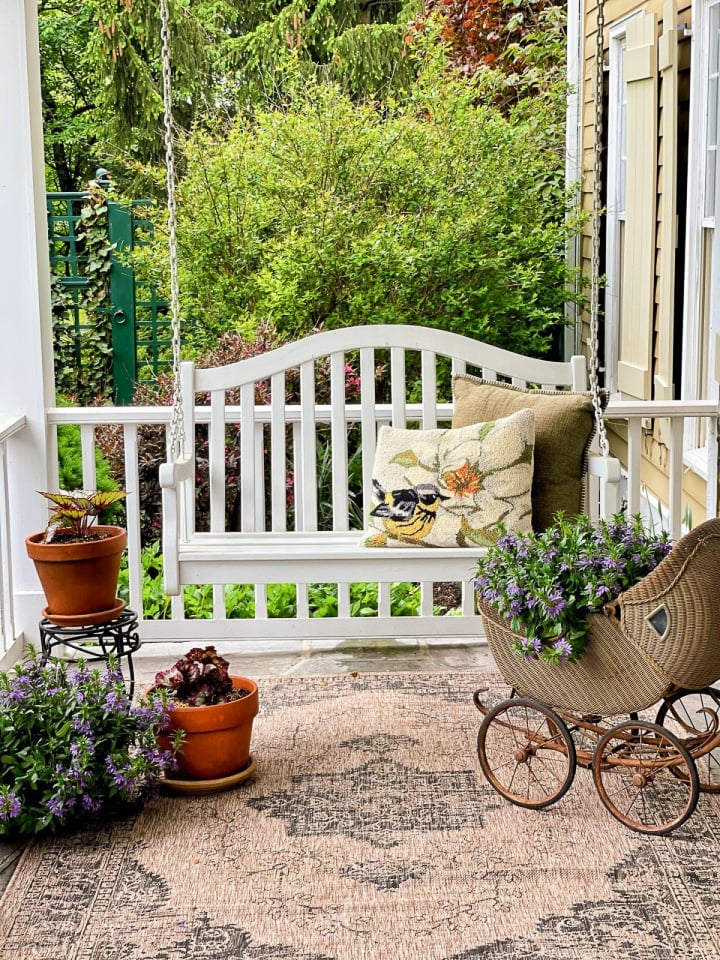
A wicker pram planter is the kind of quirky piece that gives a farmhouse porch personality without trying hard. Here it sits beside a white swing bench, filled with greenery, while potted plants cluster around the corner. The swing bench in white keeps the look light, and the brown wicker adds texture. The compact layout means every piece earns its spot, which is the point: a small porch can hold more character than a big one if you edit carefully.
Coastal Boho Porch with Patterned Swing Cushions
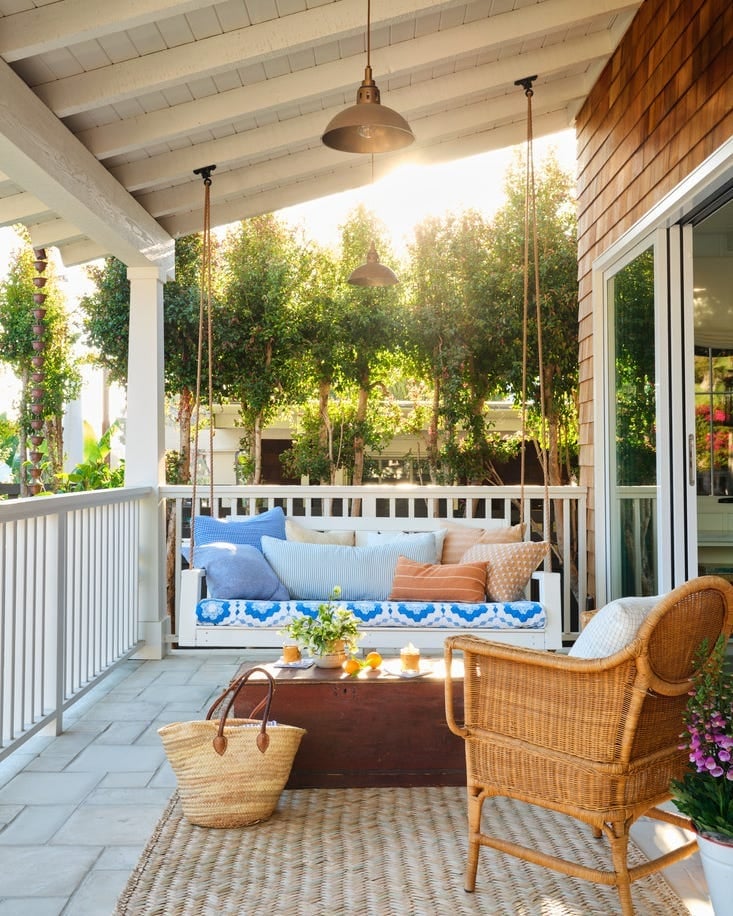
This porch swing is the anchor, and everything else steps back to let it lead. The blue and white patterned cushions on the swing set the palette, with a rattan chair and a woven basket echoing the natural, relaxed coastal boho look. A warm overhead light keeps the space usable into the evening and works with the daylight that fills the covered porch. If you want to swap the look without replacing the swing, change just the cushion fabric. A solid neutral or a stripe in a similar blue will shift the whole feel for the cost of a few yards of outdoor fabric.
Modern Deck with Pergola, Dining Set, and Fire Pit
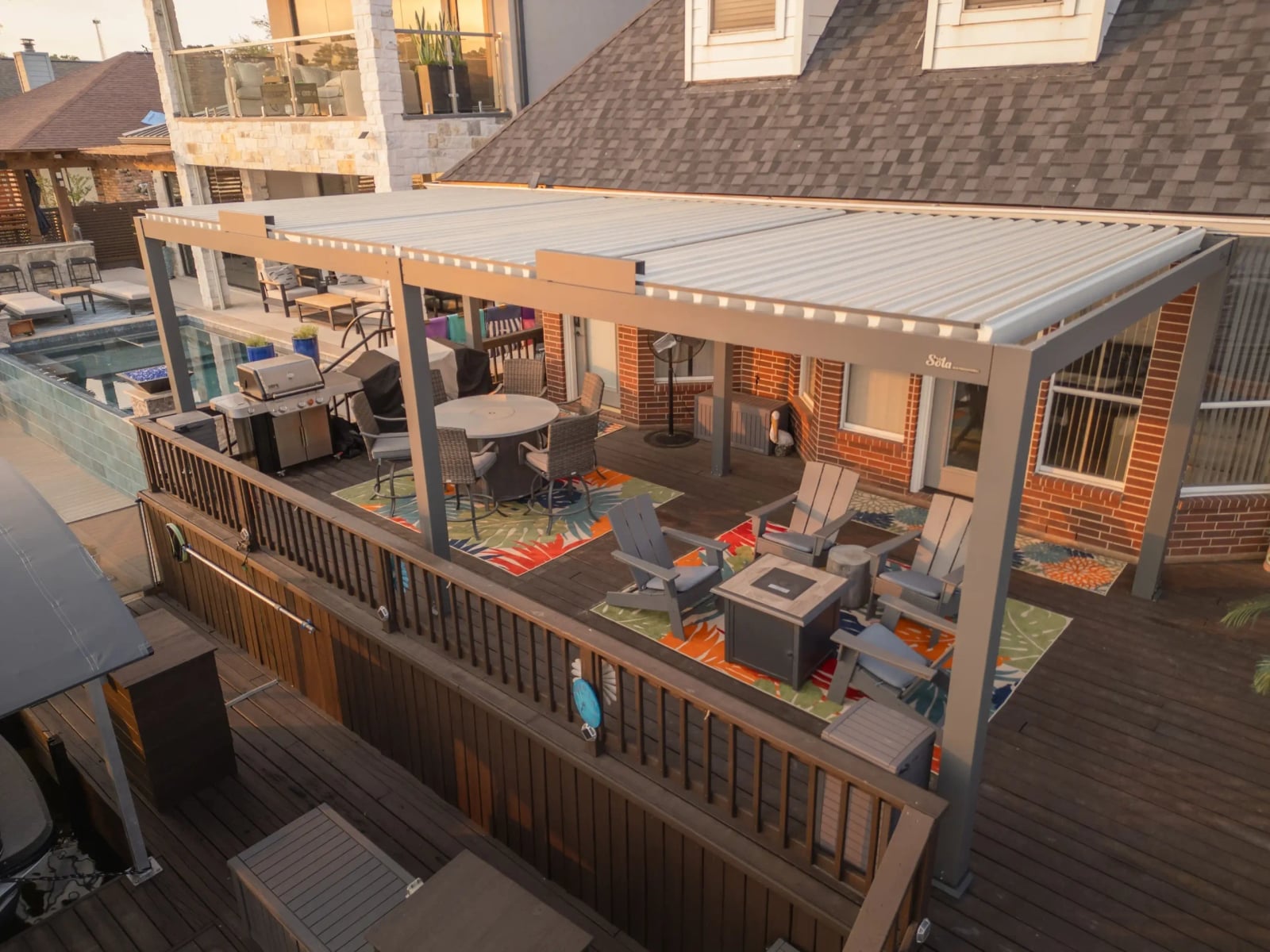
A multi-zone deck benefits from one structure defining each area. Here the large covered pergola anchors the dining set, while lounge chairs and a fire pit claim a separate spot nearby. The integrated pergola lights make the transition from day to evening seamless, casting enough glow for dinner without washing out the fire pit’s flame.
For renters, a pergola is often off the table, but a cantilever umbrella on a rolling base can mark the same zone. Pair it with a portable fire pit on a heat-proof mat, and you have the same three zones dining, lounging, warmth without a single permanent fixture. Just check your lease for any fire pit rules before you buy.
Farmhouse Porch with Conversation Seating and Patterned Rug
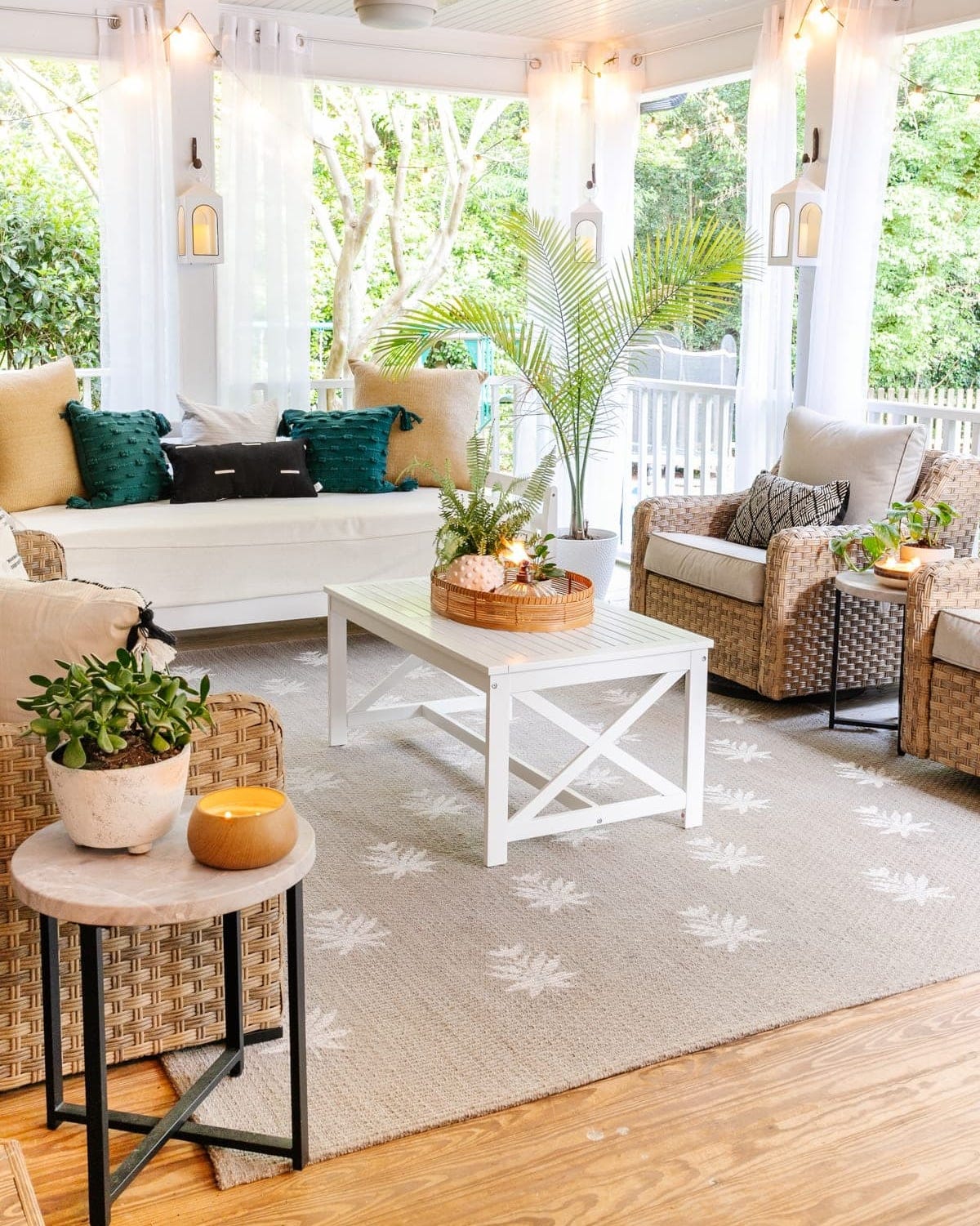
The layout here turns a roomy porch into a proper living room. A sofa and two armchairs face each other over a coffee table, all on a patterned rug that anchors the group. Overhead lights and natural daylight keep the space bright without glare. The patterned throw pillows pull the yellow-green accents from the surrounding plants into the seating area. To recreate the arrangement, measure the rug first, then place the sofa and chairs so the front legs of each sit on the rug. That simple rule keeps the group tight enough for easy talk.
Multi-Level Composite Deck with Stone Patio Transition
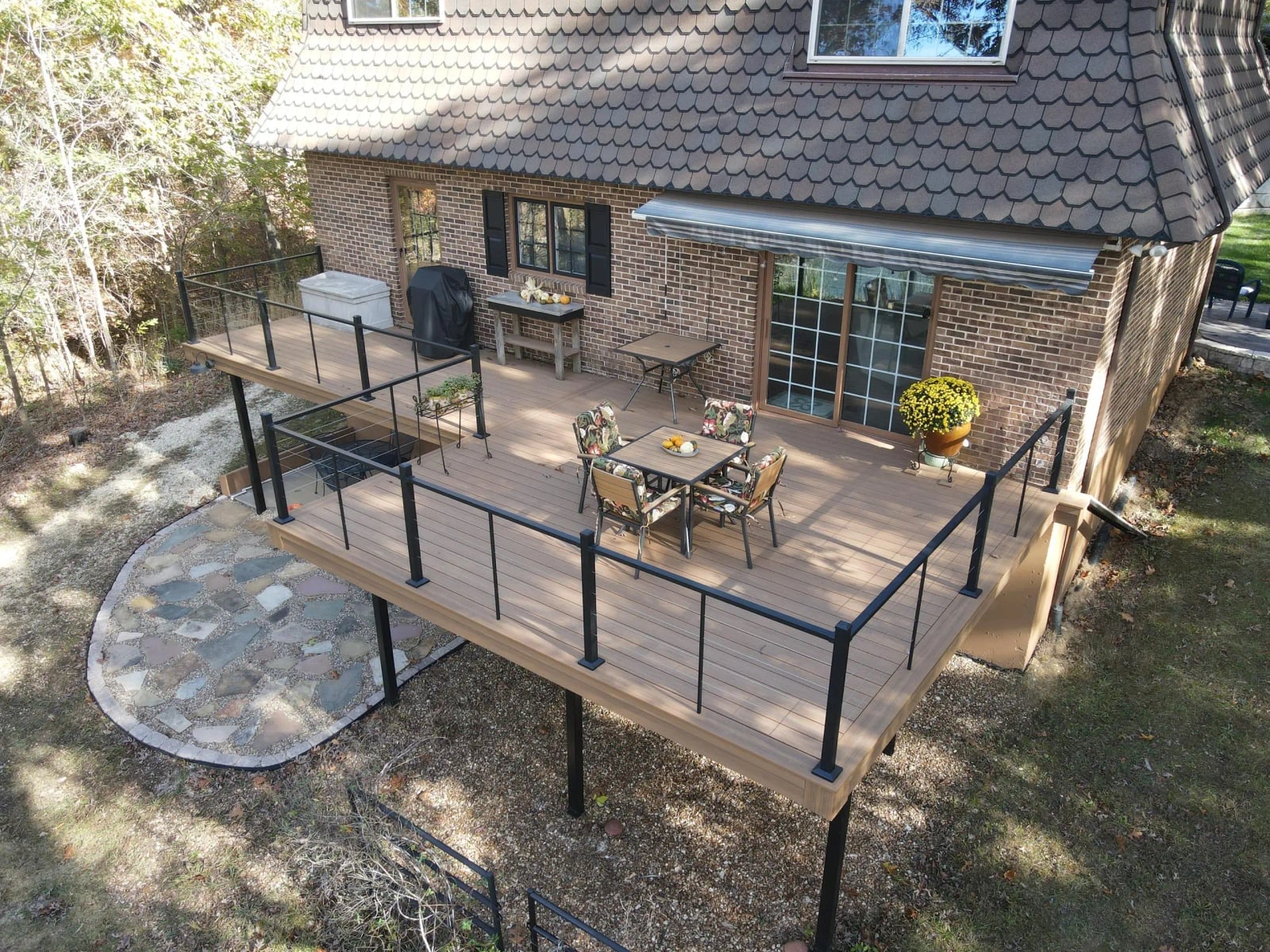
A practical rule for a two-tiered deck is to use the transition as a feature, not a seam. Here composite decking on the upper level gives way to a stone patio below, with a metal railing marking the change. The dining set and grill sit on the composite level, while lounge chairs claim the stone area for a different feel. The overhead awning shades the upper tier, leaving the lower one open to daylight. For upkeep, composite boards need only soap and water a few times a year, while the stone patio might need a yearly power wash to keep the grout lines clean.
Eclectic Deck with Egg Chair and Striped Umbrella
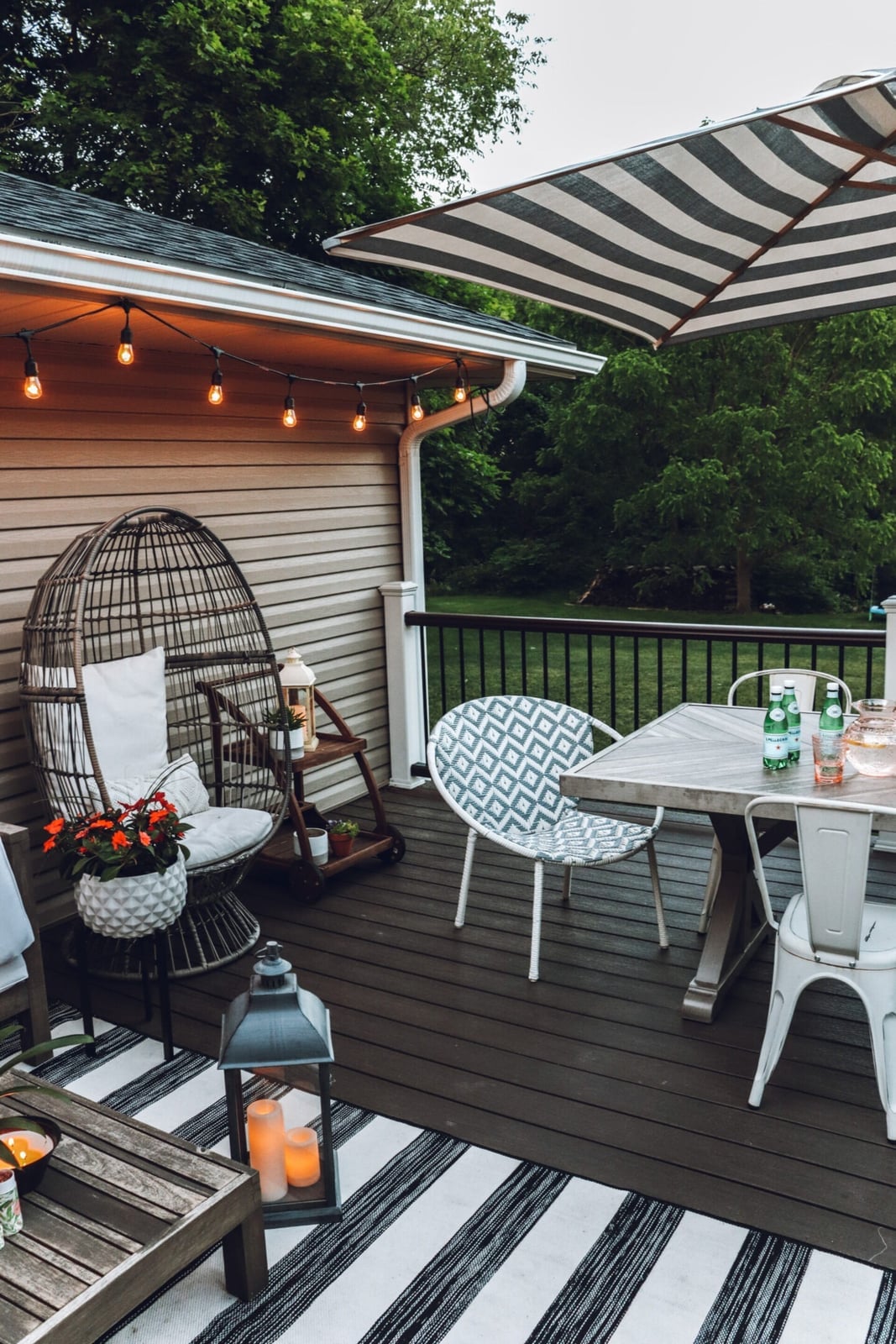
A close alternative to a standard dining set is one that mixes styles on purpose. Here a large wicker egg chair stands beside a dining table with patterned chairs, all under a striped umbrella. The string lights overhead tie the two zones together, while the gray-brown deck keeps the look grounded. The egg chair is the scale risk: too large and it swallows the space, too small and it reads as an afterthought. A good rule is to leave at least 18 inches of walking room around a piece that big. If the deck feels tight, swap the egg chair for a pair of smaller accent chairs in a similar wicker finish.
Deck Dining with Pink Theme and Oval Table
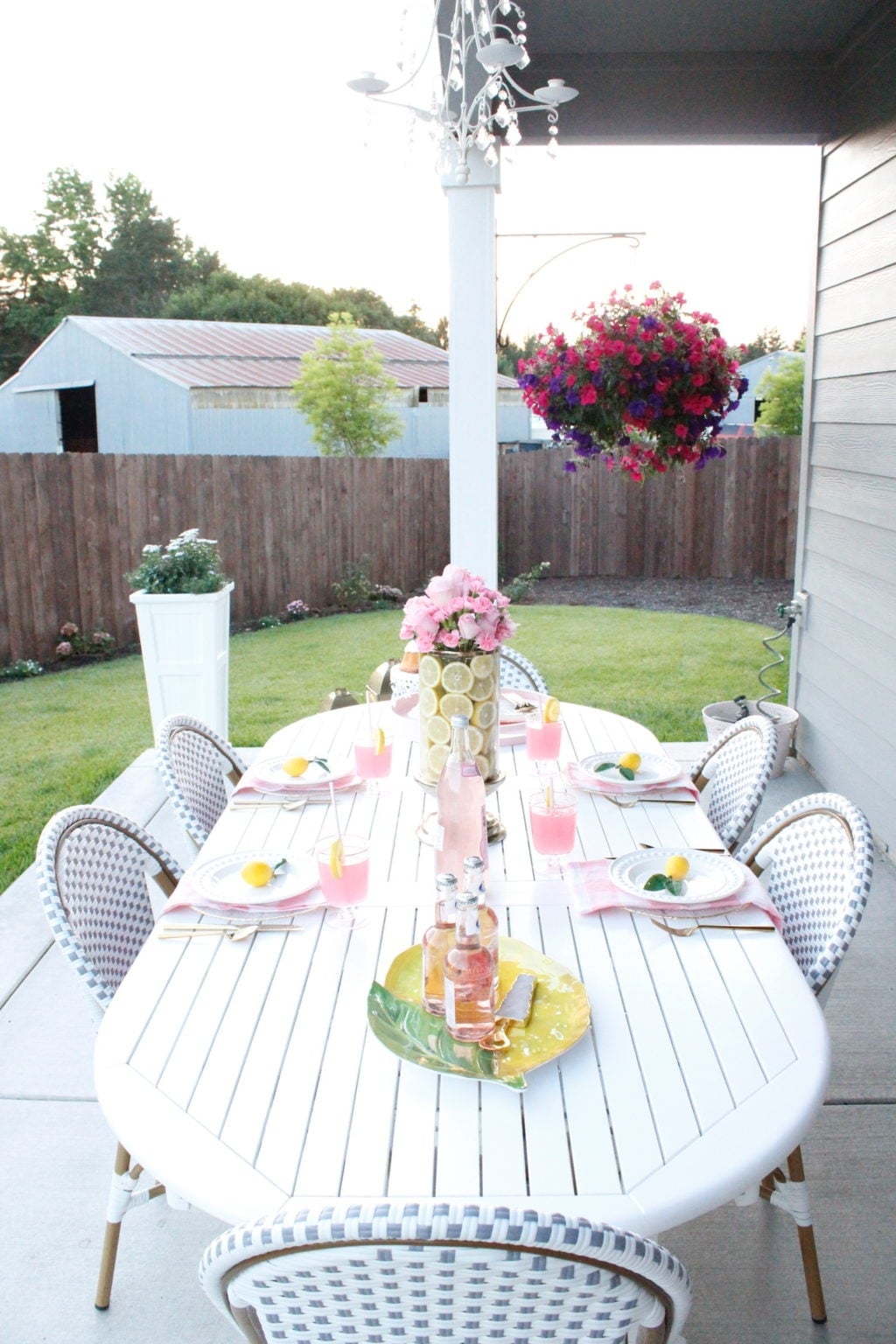
A pink lemonade palette turns a traditional deck dining setup into something worth lingering over. The oval wood table and wicker chairs stay neutral, so the pink looks planned. A hanging planter adds green, and the white chandelier overhead keeps the look from going sweet. The palette ratio here is roughly 60 percent wood and white, 30 percent pink, and 10 percent green. That third color breaks it, keeping the pink from taking over the whole space.
Boho Covered Deck with Swing Bench and Yellow Accents
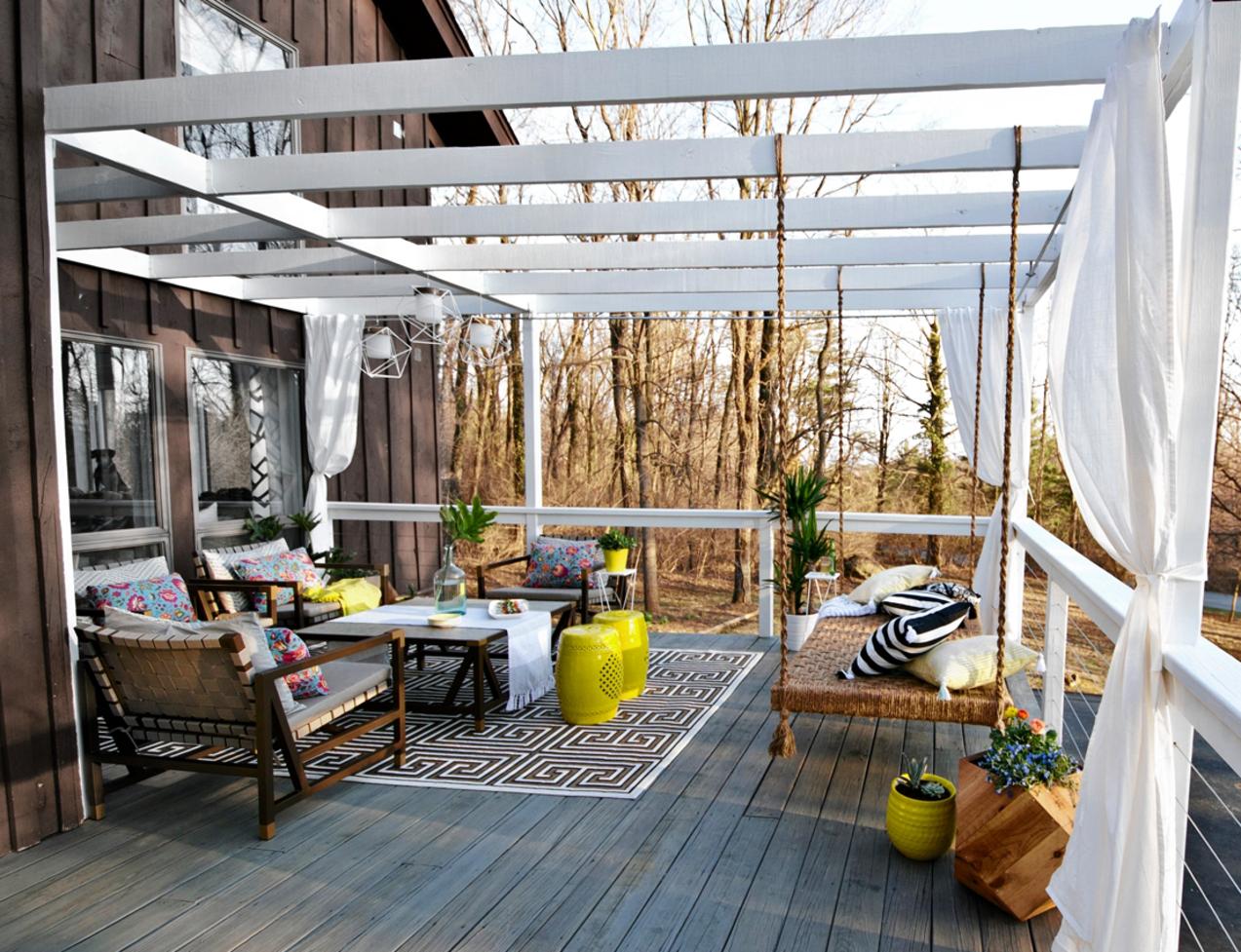
This covered deck does boho with restraint, and the yellow accents are the reason it works. The swing bench anchors one end while a sofa and chairs create a second seating zone, all on a patterned rug. Sheer curtains soften the edges without blocking the view. The yellow comes through on small stools and a few cushions, a ratio of maybe 10 percent of the total palette. Gray and white make up the rest, so the yellow is a highlight, not a carnival. The patterned rug ties the zones together.
Deck with Stone Retaining Wall and Wide Steps
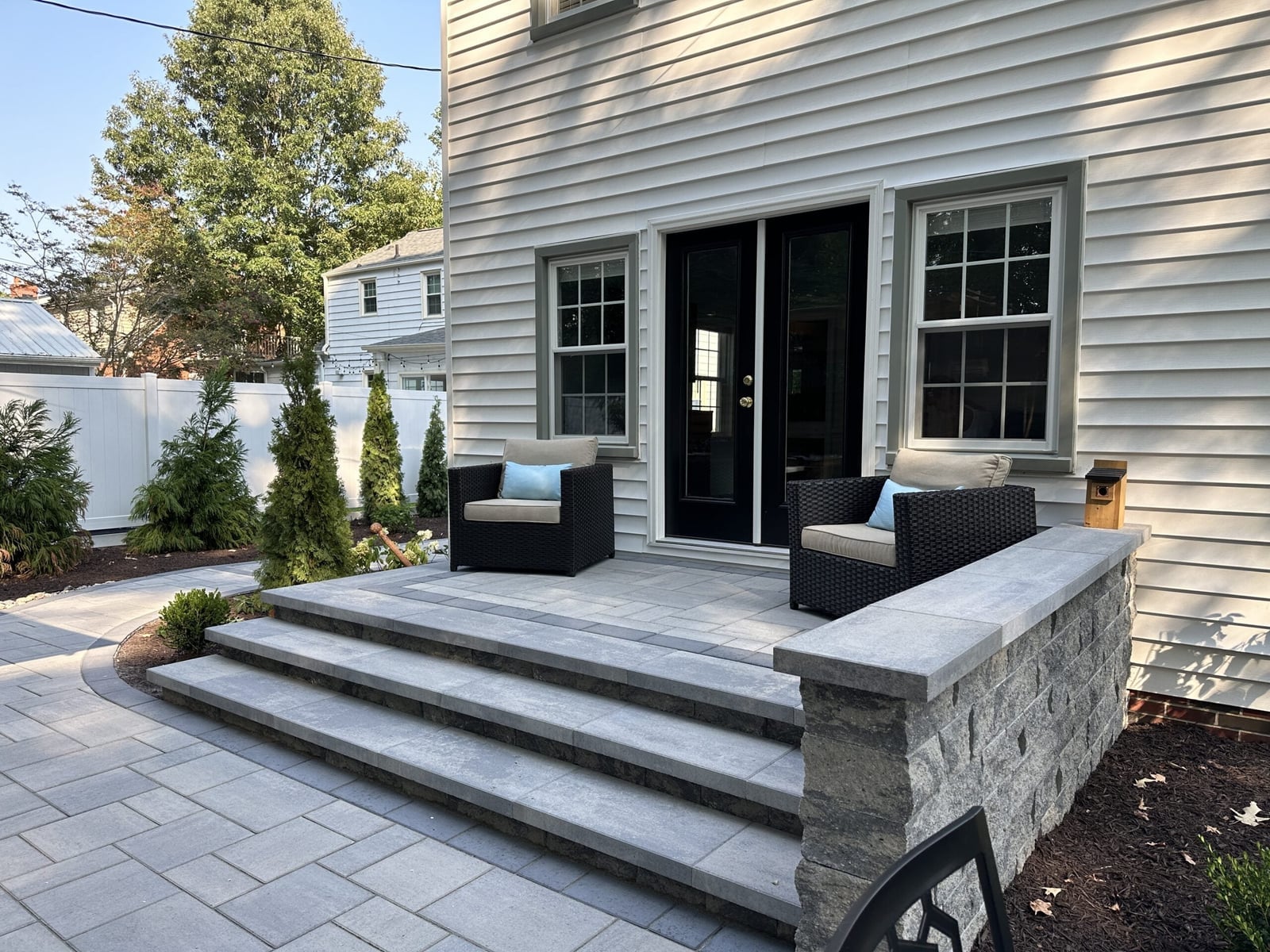
A raised deck can feel disconnected from the yard, but a stone retaining wall and wide paved steps close that gap. The composite decking stays warm gray, while the wall introduces a cooler beige stone, a natural transition between the house and the ground. Two wicker armchairs sit on the deck, keeping the space furnished without crowding the compact footprint.
The wide steps do more than provide access. They create a landing that slows the transition from deck to grass, which is useful on a smaller lot where every inch counts. The stone wall also doubles as a planting ledge, though here it stays clean. For a similar effect on a rental, a row of low potted evergreens along the edge can mimic the visual weight of stone.
Deck Dining Area with Large Woven Pendant Lights
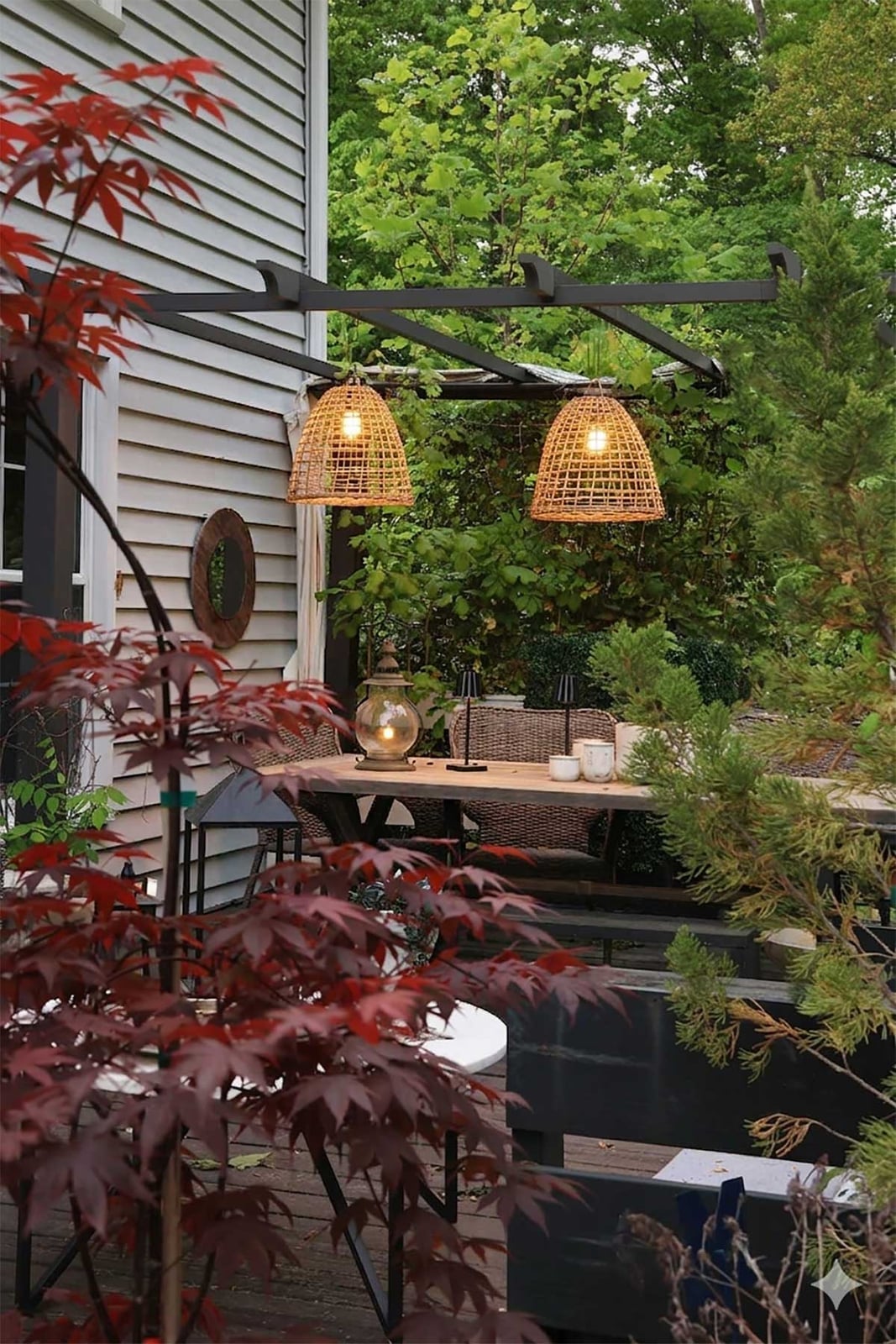
Large woven pendant lights bring the ceiling down on a compact deck dining area. The natural rattan shades warm the gray wood deck and beige chairs, while a small lantern on the table adds a second light source at eye level. The pendants hang over the wooden table, defining the dining zone under the pergola without walls. For a renter, a plug-in pendant kit with a ceiling hook avoids wiring work and still gives the same layered light effect.
Multi-Level Wooden Deck with Brick Accents
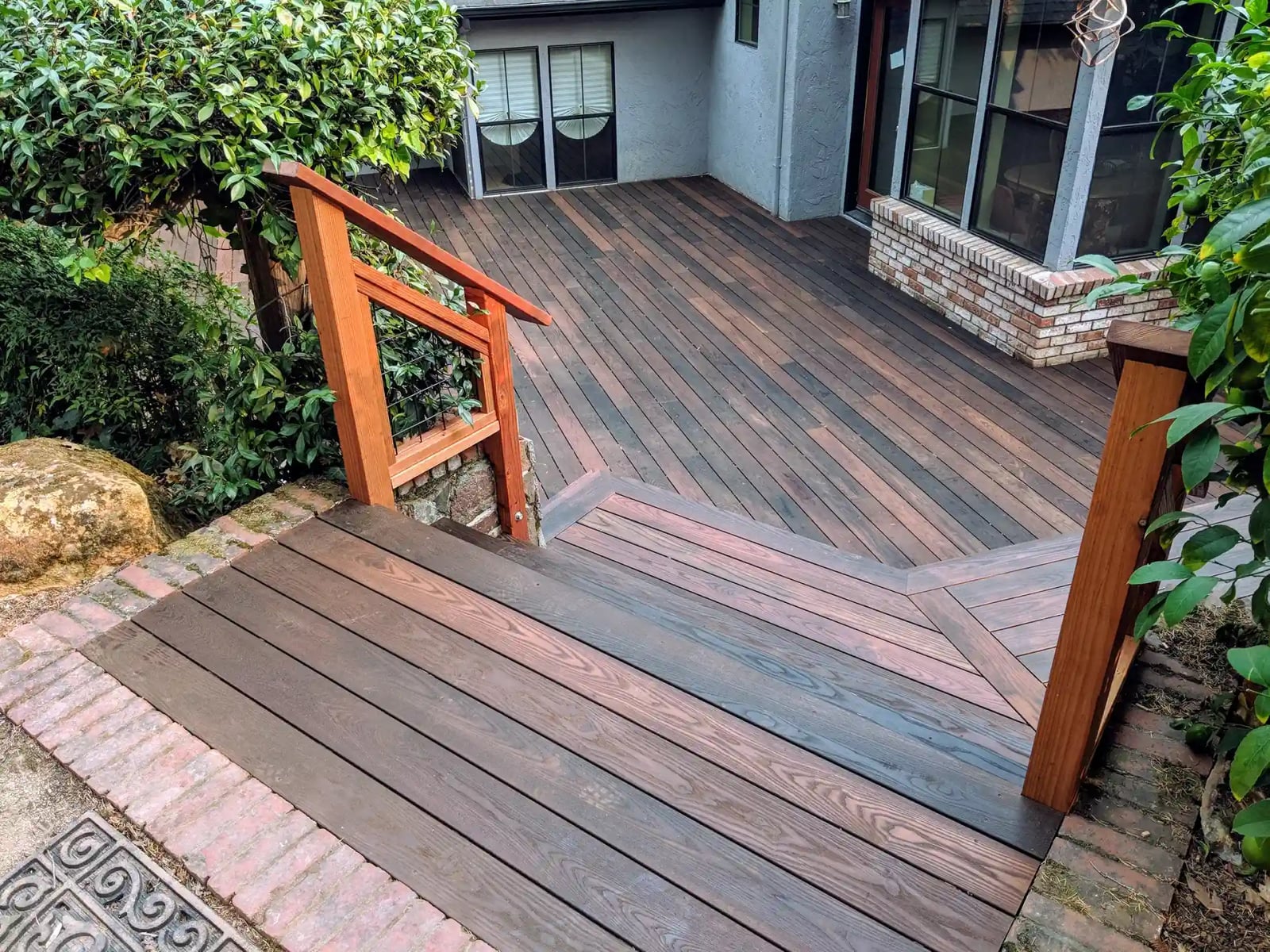
A multi-level wooden deck gains texture from brick accents woven into the path between levels. The warm brown of the wood stairs meets a gray brick walkway, a shift in material that signals a change in function without needing a railing. Green planting along the edges softens the transition. On a multi-level deck, using a different material for the connecting path helps the eye read each level as its own zone. Here the brick reads as a deliberate pause between the upper and lower wood surfaces.
Modern Deck with Contrasting Railings and Hanging Chair
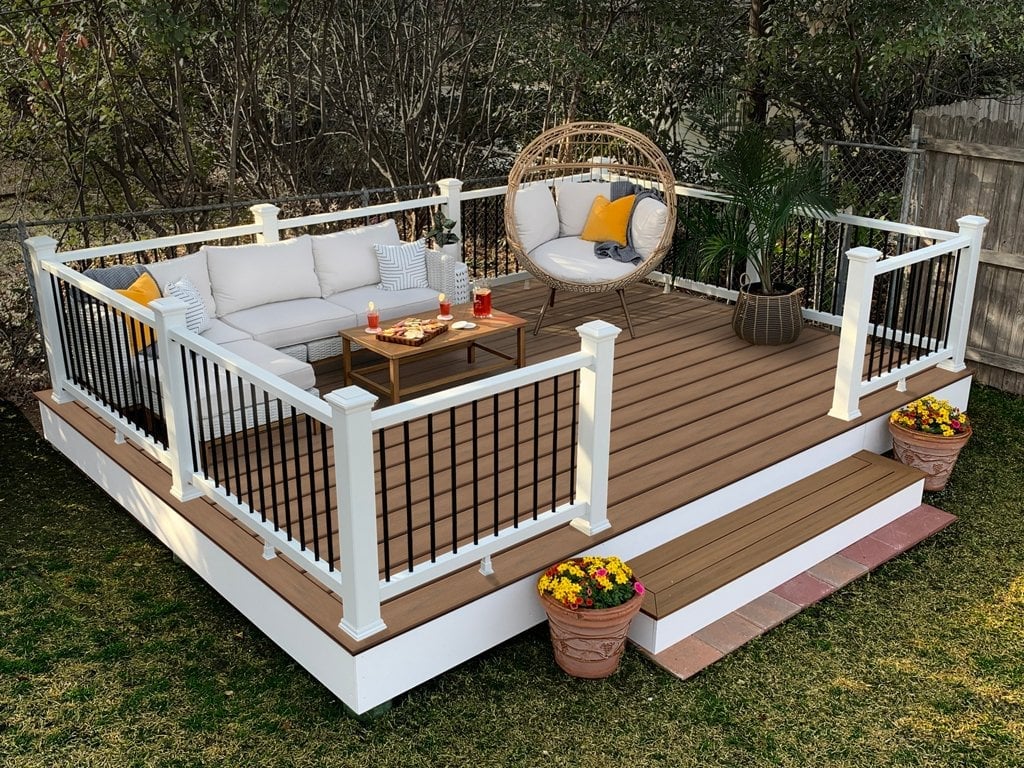
A close alternative to a single-level deck is one that uses contrast to define its zones without walls. Here the dark wood decking and white railings set up a clear visual boundary, with a hanging wicker chair suspended from the upper structure and a sectional sofa grouped around a coffee table below. The white railings keep the space feeling open while the dark floor anchors the seating. The palette stays mostly neutral, with brown and white carrying the weight, and the yellow of the hanging chair providing the only deliberate pop of color. On a multi-level deck, contrasting the railing finish from the deck floor is a simple way to add depth without changing the footprint.
Minimalist Floating Deck in Grassy Yard
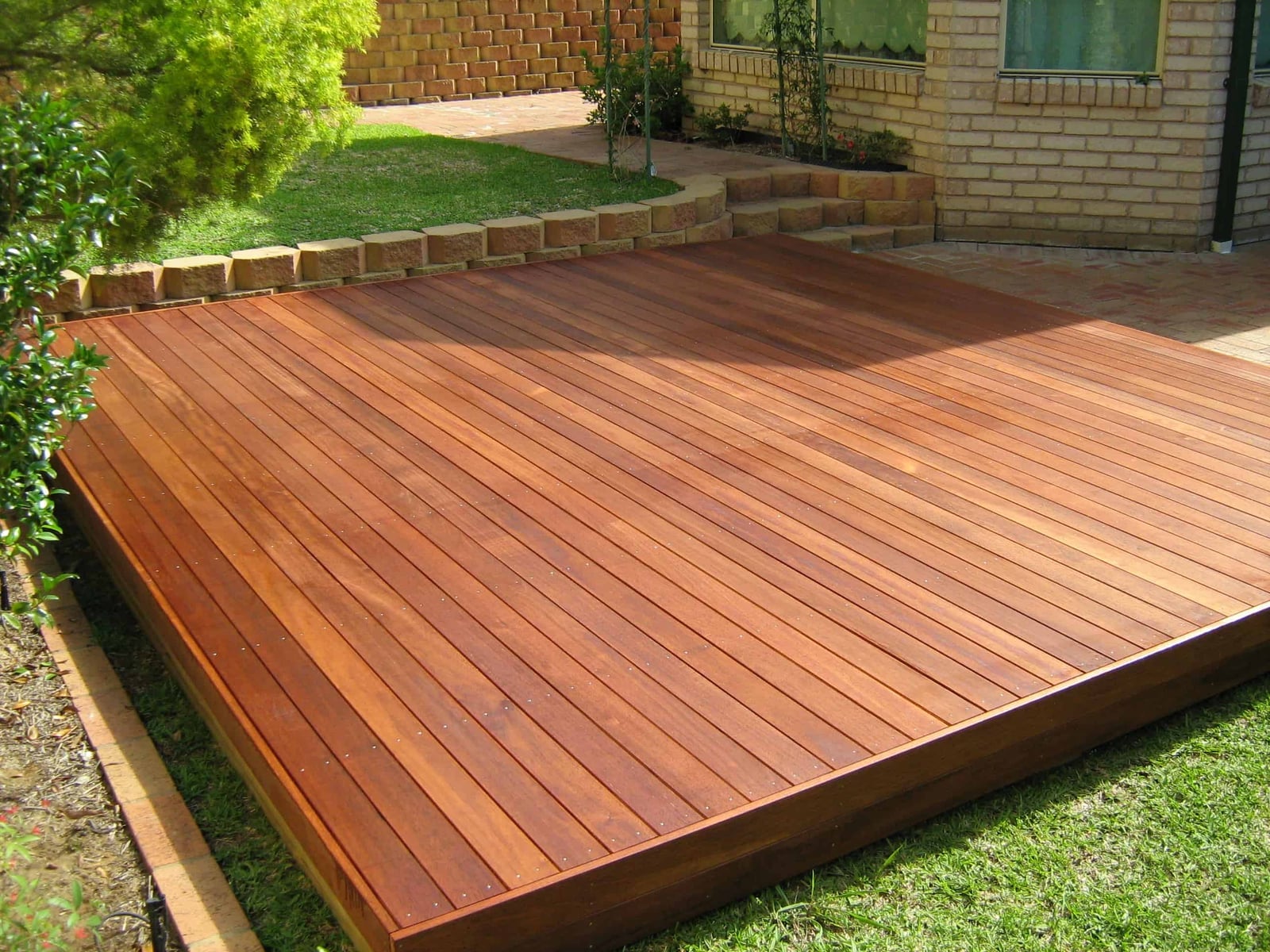
A floating deck sits directly on the ground, which makes it a renter-friendly option because it requires no permanent foundation or attachment to the house. This one keeps the shape simple: a rectangular warm wood surface set into a grassy yard, with clean lines and no railings. The grass around the edges softens the transition from deck to lawn, so the structure reads as a platform rather than a barrier. If you are renting and want an outdoor space that can move with you, a floating deck is one of the few options that leaves the yard exactly as you found it.
Modern Suburban Deck with Integrated Step Lighting
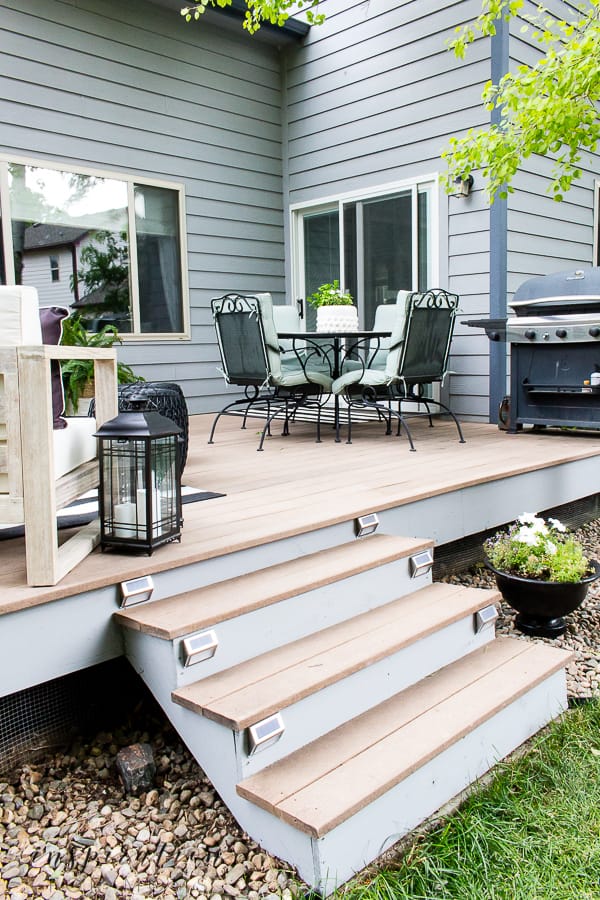
Integrated step lighting is worth the planning because it solves the problem of navigating a raised deck after dark without flooding the whole space with glare. On this modern suburban deck, the lights are built into the risers of the steps that lead down from the dining area, casting a low glow that outlines the path. The gray composite decking and metal dining set keep the look clean, and the lighting does not compete with the natural daylight or the greenery around the deck. For a deck with multiple levels, adding light at the transition points is the most practical way to make the layout usable after sunset.
Final Thoughts
A well-planned deck balances structure and comfort. The common thread across these ideas is zoning: separating cooking, dining, lounging, and fire features gives a deck the same flow as an interior floor plan. Material choices matter for upkeep: composite decking resists moisture and fading, while natural wood needs annual sealing in most climates. Lighting extends usability into evening hours without overwhelming the space. Before you build, check local codes for railing height, stair width, and setback requirements. The best deck is the one that fits how you actually live outdoors.