A raised bed garden changes how you think about growing things. It brings order to the vegetable patch and makes planting, weeding, and harvesting easier on your back. Whether you want to grow tomatoes, flowers, or a mix of both, the bed itself sets the tone.
This article walks through 27 different raised bed garden ideas that work in real backyards. Some lean modern, others feel like a farmhouse kitchen garden. Every look keeps the bed as the main thing you see, with the space around it staying simple and supporting.
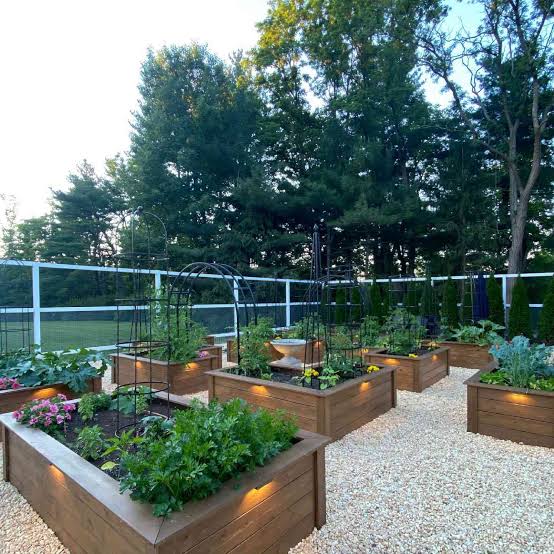
Modern Luxury Raised Garden Beds with Integrated Lighting
The raised beds in this garden have their own low lighting built right into the wood frames, which changes how the space works after dark. Warm wood tones and white gravel keep the palette simple so the green planting and the glow from the beds are what you notice. The layout uses multiple beds with clear pathways between them, and that mix of daylight structure with evening illumination makes the garden feel complete no matter the hour.
Cottage Garden Charm with Wooden Raised Beds
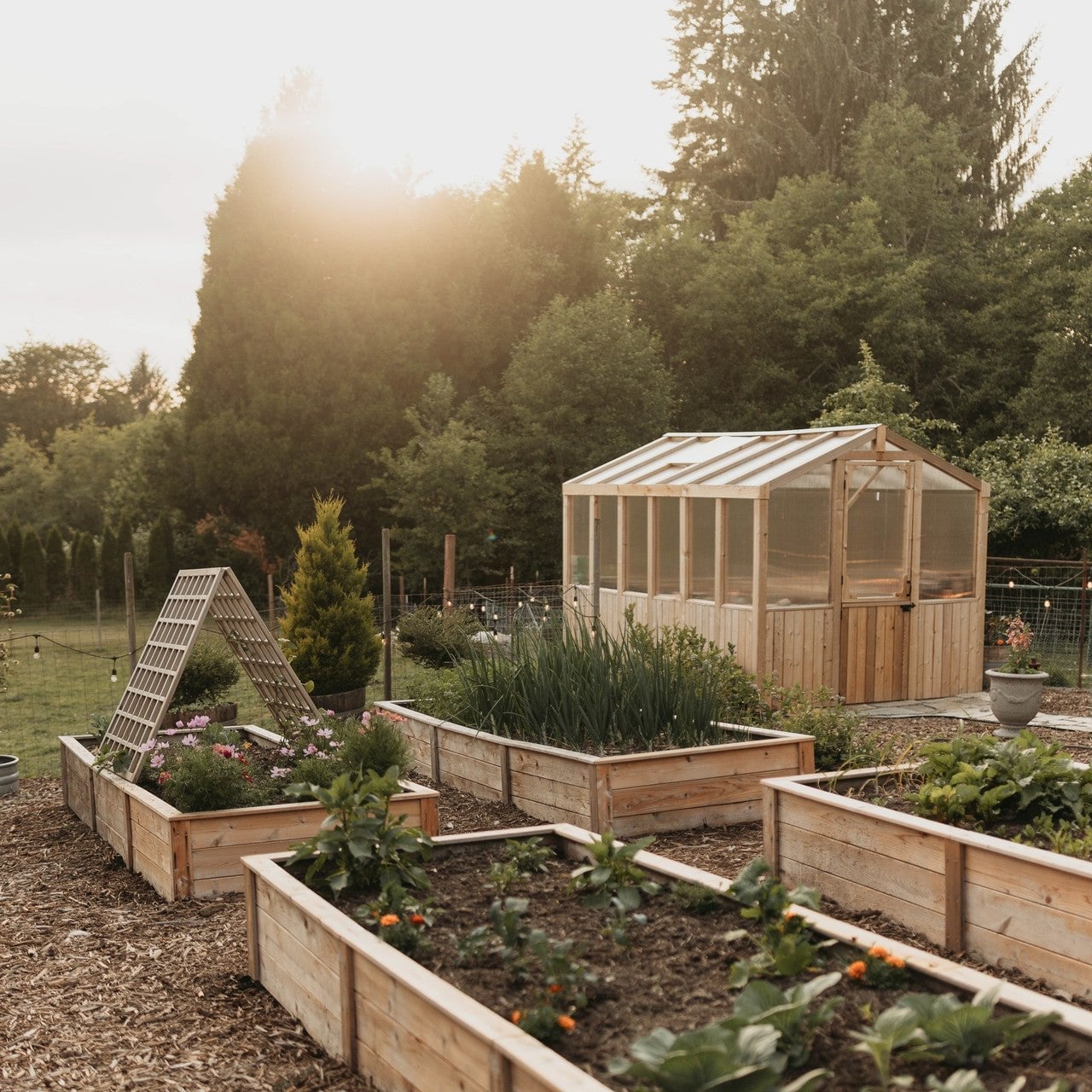
This is a cottage garden that gets the balance right. Natural wood beds sit in neat rows, but the planting is loose and layered with green, pink, and yellow blooms that spill over the edges. A glass greenhouse and a metal trellis add structure without making things stiff. The golden sunlight filtering through the scene softens every edge. What breaks the formality is the way the flowers climb and lean wherever they want, which is exactly what keeps a cottage garden from feeling too arranged.
Symmetrical Modern Garden Design with Raised Beds and Seating
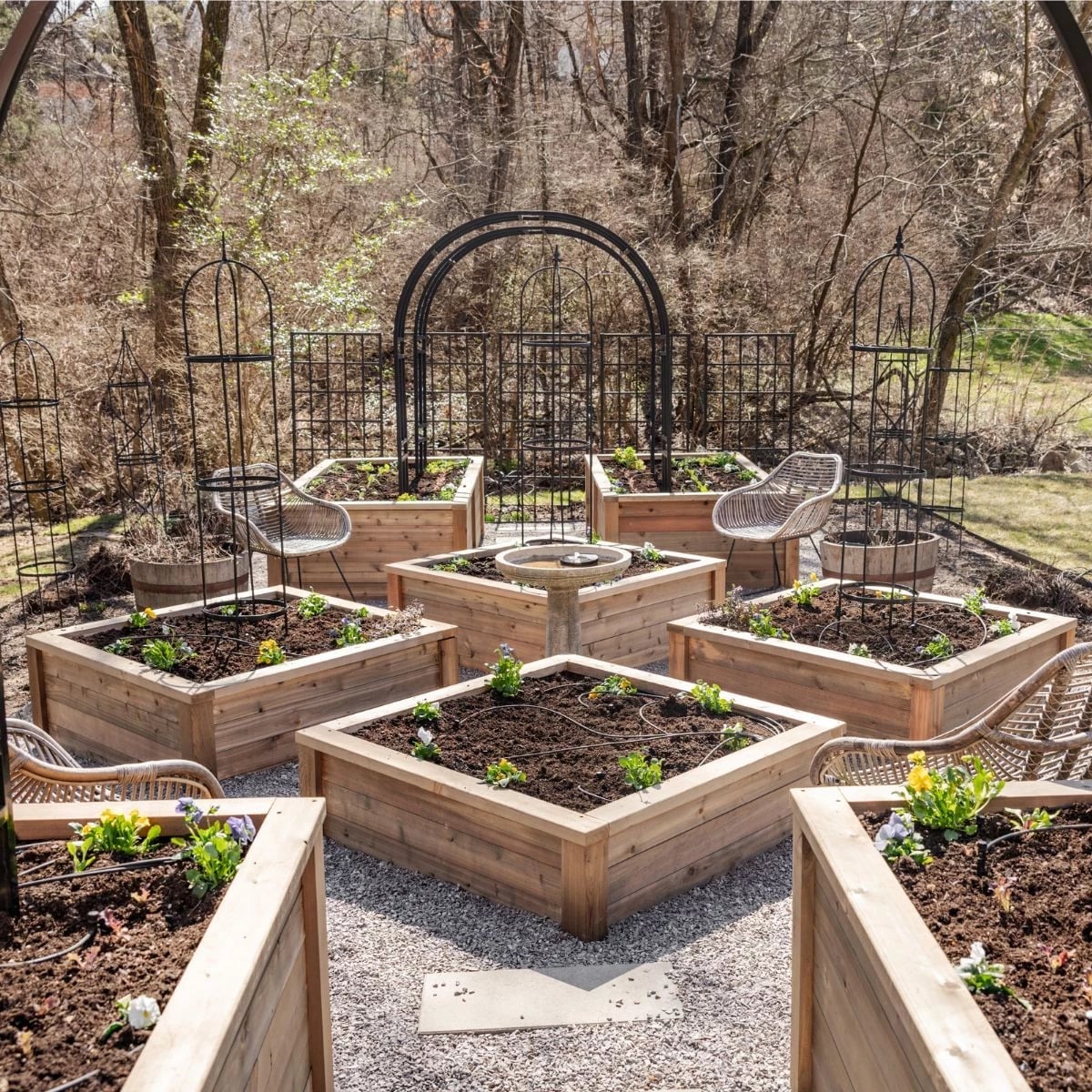
Can a garden feel orderly without feeling stiff? This one proves it can. Square wooden beds are arranged in a clear symmetrical layout with gray gravel paths running between them. A pair of wicker chairs sits on one side, and a metal garden arch marks the entrance. The symmetry gives the space a calm rhythm, so your eye knows where to go. The chairs make the garden a place to sit, not just work in. For a renter, the arch and chairs are easy to move, and gravel paths can be laid over soil without digging anything permanent.
Traditional Expansive Wooden Raised Garden Beds
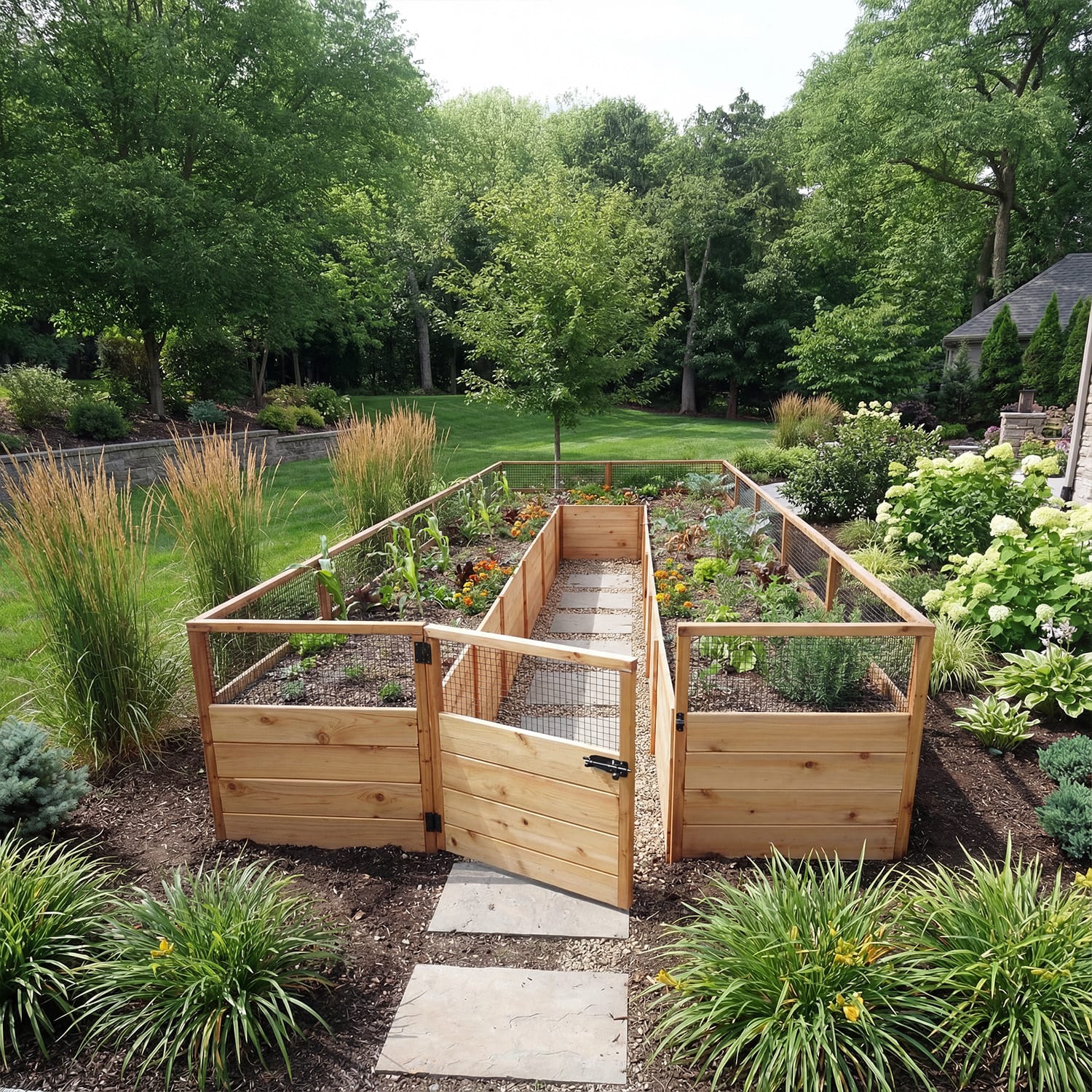
These raised beds are built on a large scale, with thick wood frames and wire mesh fencing that encloses the whole garden area. The natural wood and earthy brown palette highlights the growing plants. A gate at the front controls access and adds a clear entry point. The size of the beds means you can plant in wide rows or dedicate entire sections to one crop. The wire mesh serves double duty as a trellis for climbing vegetables and a barrier against animals.
Modern Farmhouse Raised Beds with Corrugated Metal Accents
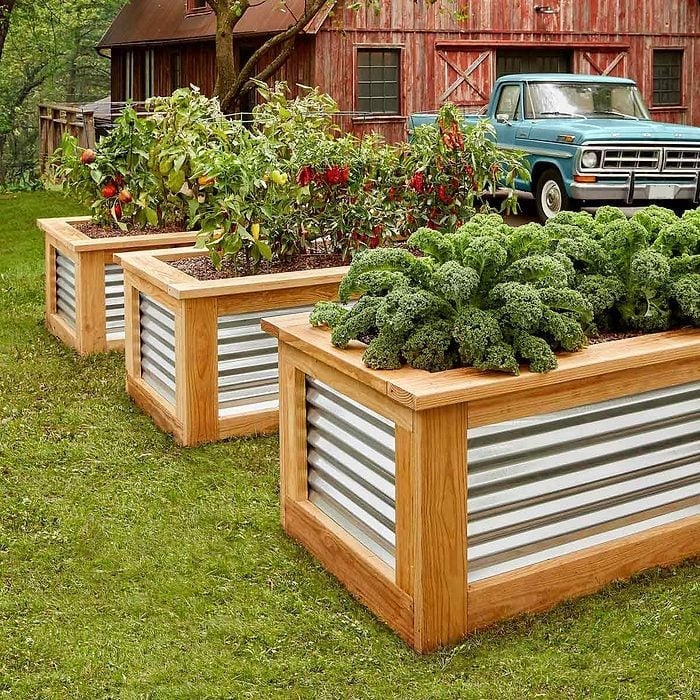
To mix materials, let one finish anchor the look and another add texture. Here, warm wood frames three raised beds arranged in a straight line, and corrugated metal inserts run along the sides. The metal adds a rugged industrial note that keeps the wood from feeling too soft. The palette stays natural with wood tones and green plants, while touches of red in the planting provide contrast. The metal is also durable and holds up to weather better than wood alone.
Farmhouse Garden with Lush Greenery in Wooden Raised Beds
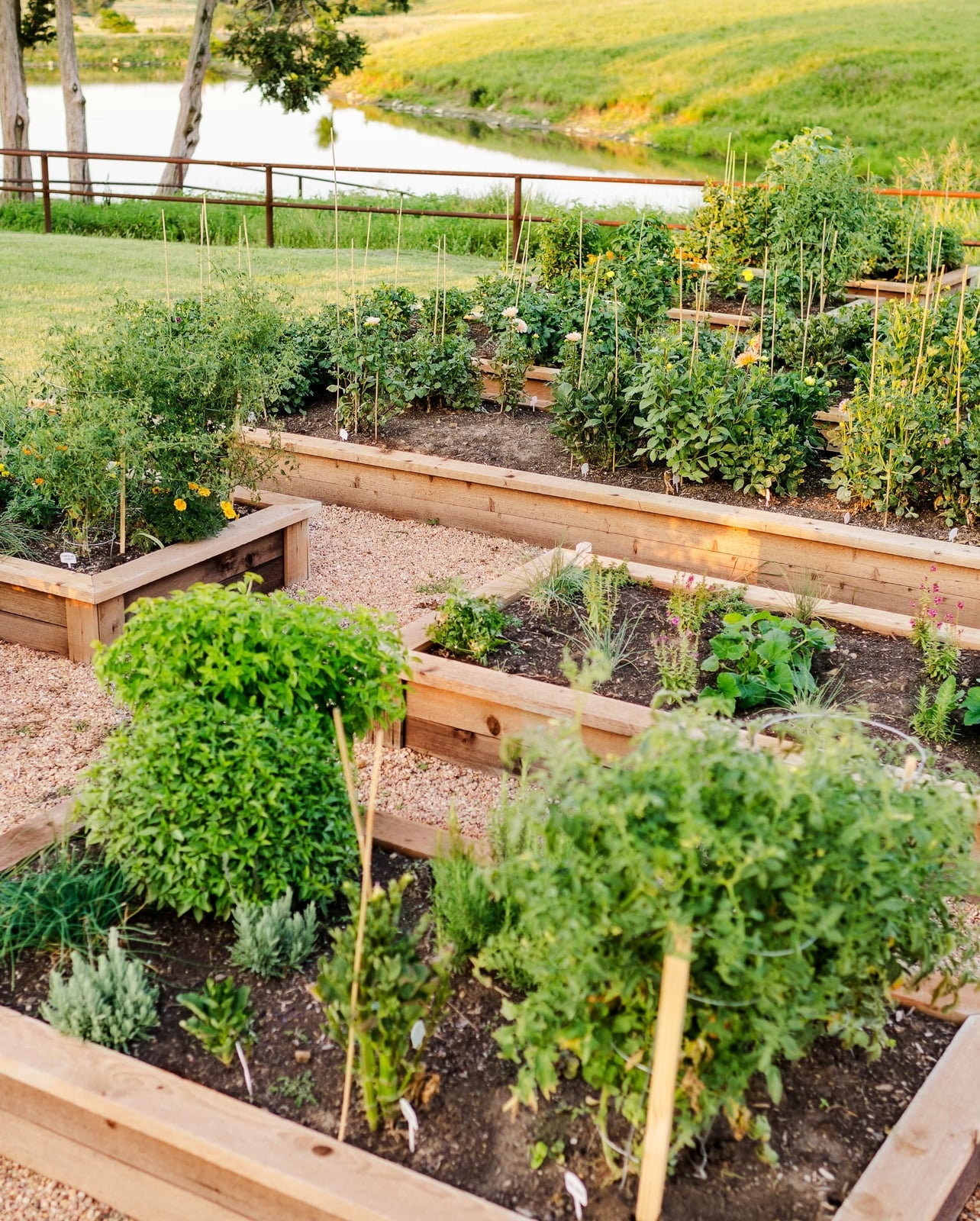
A farmhouse garden can lean either tidy and structured or loose and abundant. These wooden raised beds lean toward the lush side, with vegetables and herbs spilling over the edges. The wood tones keep the scene grounded, while the gravel paths between the beds add a practical, clean surface underfoot.
The palette stays in the natural range: brown wood, green leaves, and the soft gray of gravel. No bright flowers or painted trim compete with the plants. Focus on the ratio of green to brown. More green than wood gives the garden a full, productive feel. A single trellis or obelisk in one bed would add vertical interest without breaking the relaxed look.
Detailed Vegetable Planting in Dark Wooden Raised Beds
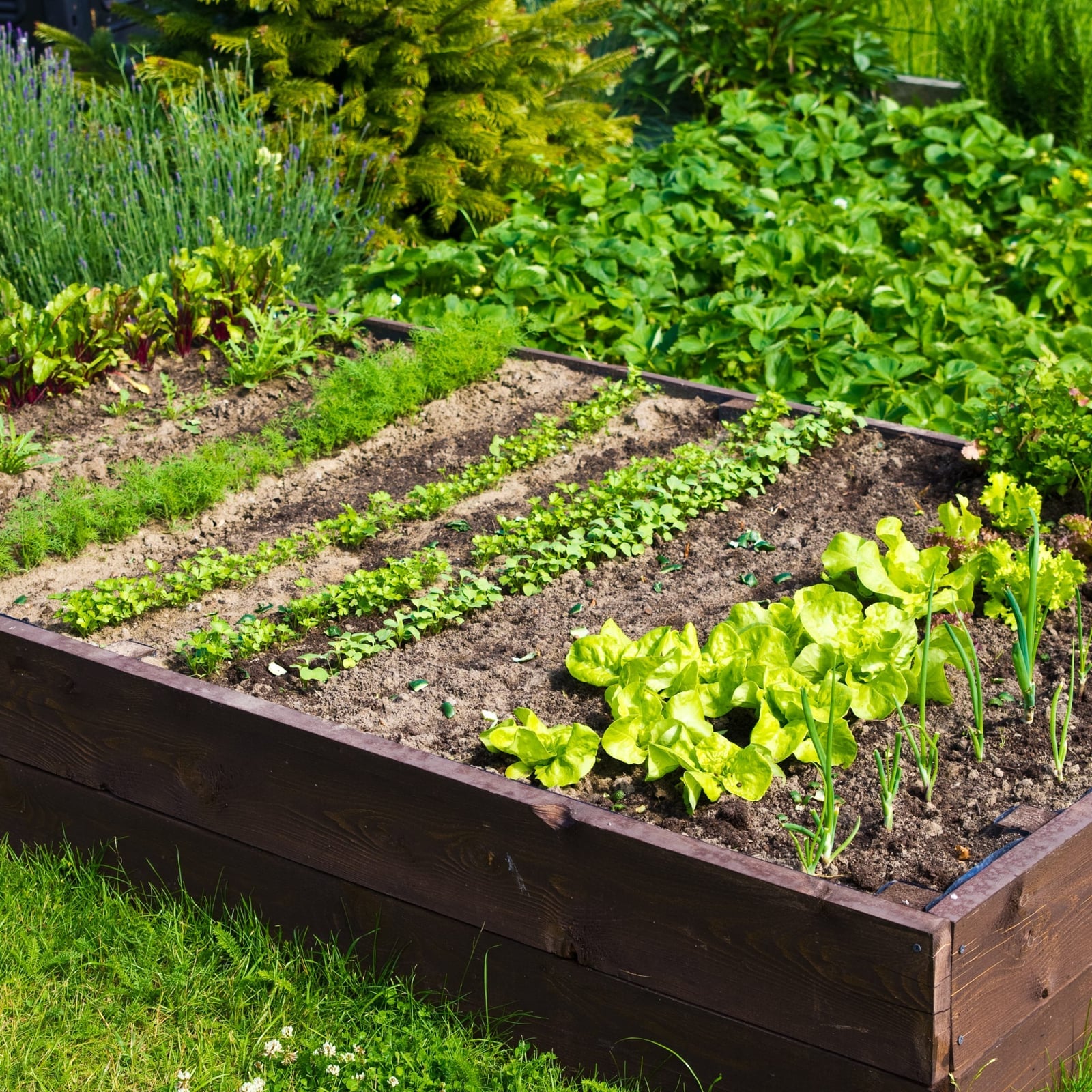
Dark wood frames a raised bed with a clear boundary between planting and lawn. The deep brown almost disappears against the soil, putting attention on the neat rows of vegetables. This setup works for a small garden where plants, not the bed, stand out. A dark stain on standard pine boards gives the same look without buying specialty lumber.
Modern Garden with Wooden Raised Beds and Stone Paver Paths
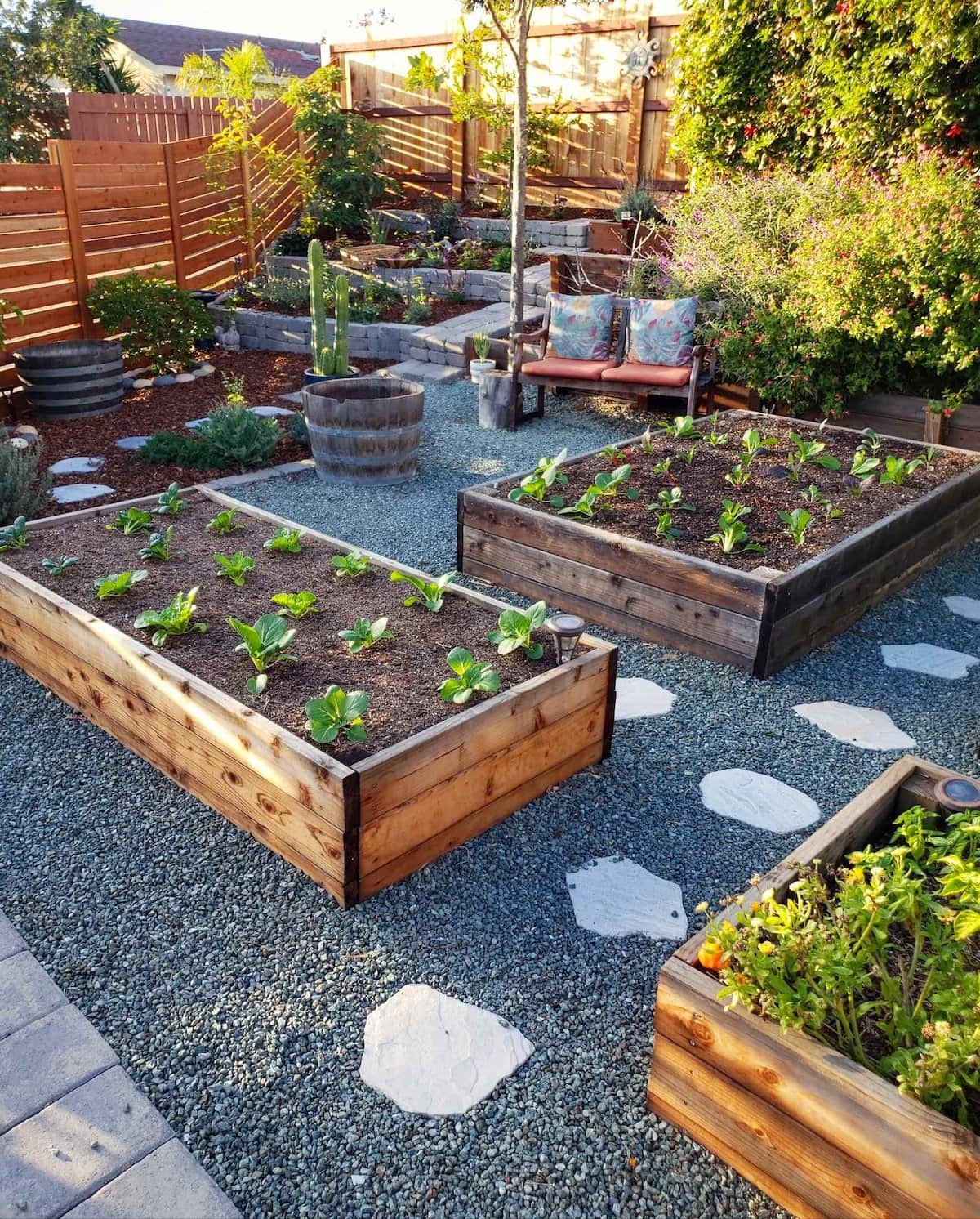
Wooden raised beds set on gravel with stone paver paths create a clean, modern garden layout. The warm golden hour light catches the wood grain and the pale stone, making the whole space feel inviting. A simple bench nearby gives you a spot to sit and take in the garden. The stone pavers break up the gravel and make walking between beds easier on rainy days. This combination of materials works because the wood is warm, the gravel is neutral, and the stone adds a touch of permanence. Just keep the paver joints tight to stop weeds from pushing through.
Farmhouse Style Raised Beds with Vibrant Planting
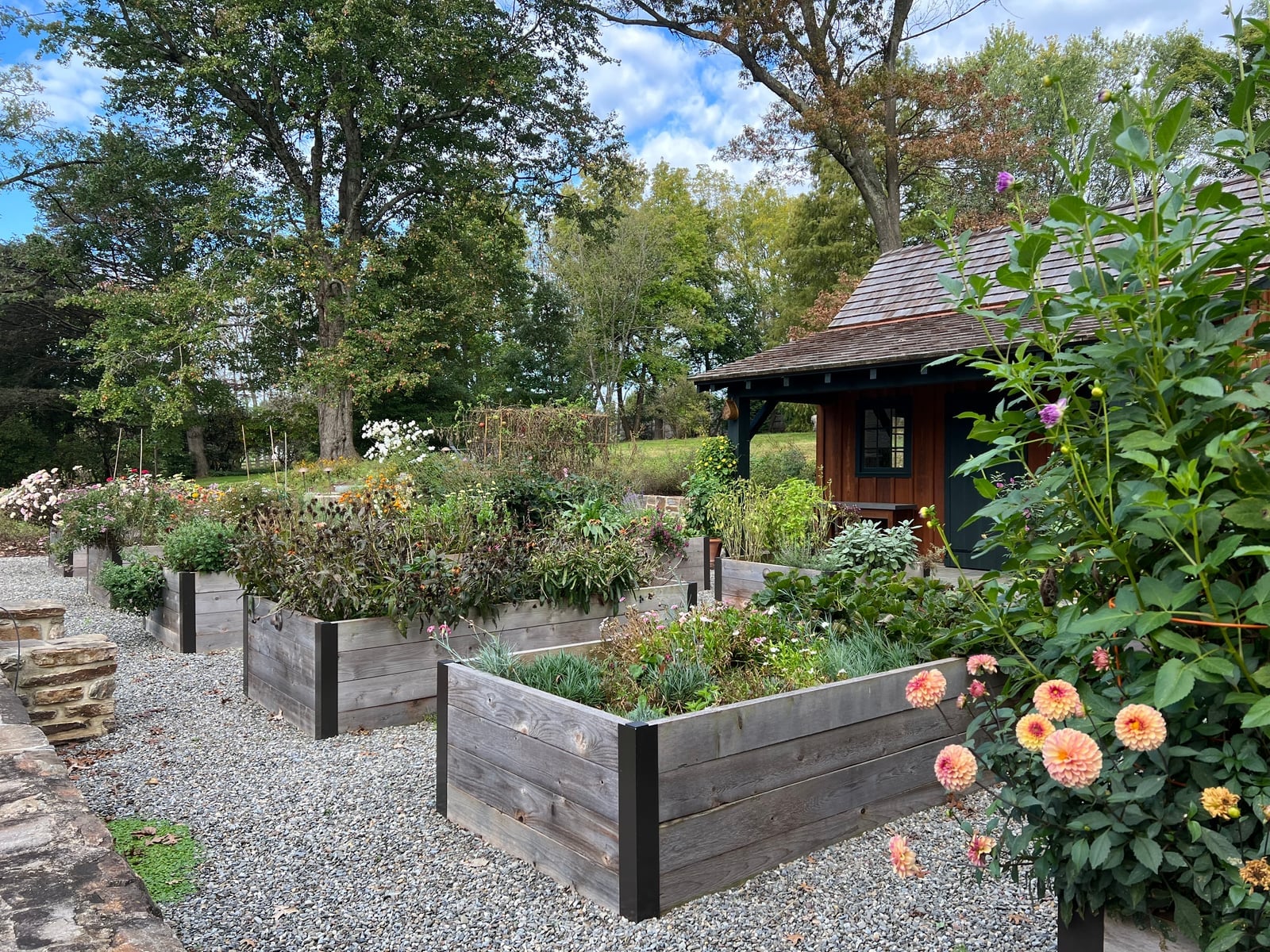
Can a farmhouse garden feel both classic and colorful at once? These wooden raised beds prove it can, with lush flowers and plants in shades of pink and white against the warm wood tones. The overcast daylight softens the contrast, so the colors blend rather than shout.
Stone and gravel paths run between the rows of beds, keeping the look cohesive. The flowers take center stage, while the wood and stone stay in the background. To get this balance at home, choose one or two flower colors and repeat them through the beds. White flowers keep the palette calm; pink adds warmth without going wild. The gravel paths also help drainage, so you can water generously without muddy walkways.
Naturalistic Garden with Wood, Brick, and Gravel Pathways
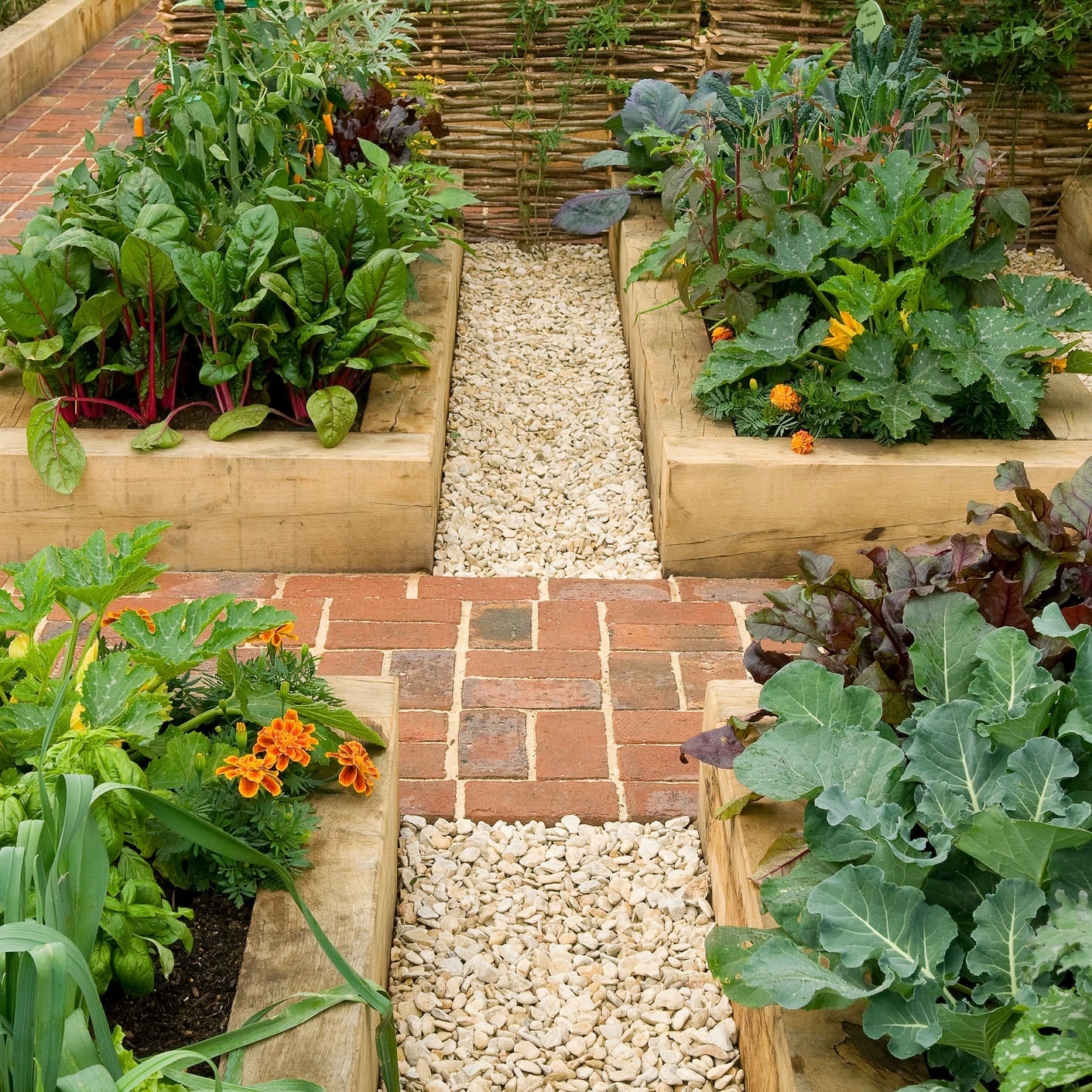
Wooden raised beds set on gravel with brick pathways create a naturalistic garden that feels settled and intentional. The warm red of the brick adds a contrasting note against the green plants and wood tones. Bright daylight shows the texture of each surface: the smooth wood, the rough brick, the loose gravel. This mix of materials gives the garden a layered look without needing many plants. Just keep the brick path edges clear of gravel so the lines stay distinct.
Unique Raised Bed with Hanging Basket Support
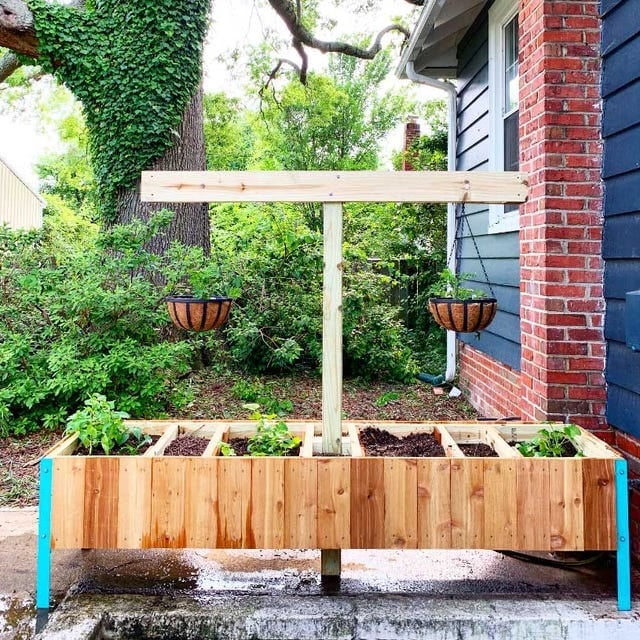
To make the most of a small garden, use the vertical space above a raised bed. This modern rustic design features a wooden raised bed with a tall wooden post set into the middle, from which hanging baskets are suspended. The bright blue accents on the bed frame catch the eye, while the baskets add planting room without taking up more ground. The concrete floor keeps the base clean and dry, so you can reach every basket and plant without stepping into mud.
Rustic Garden with Wooden Raised Beds on Gravel
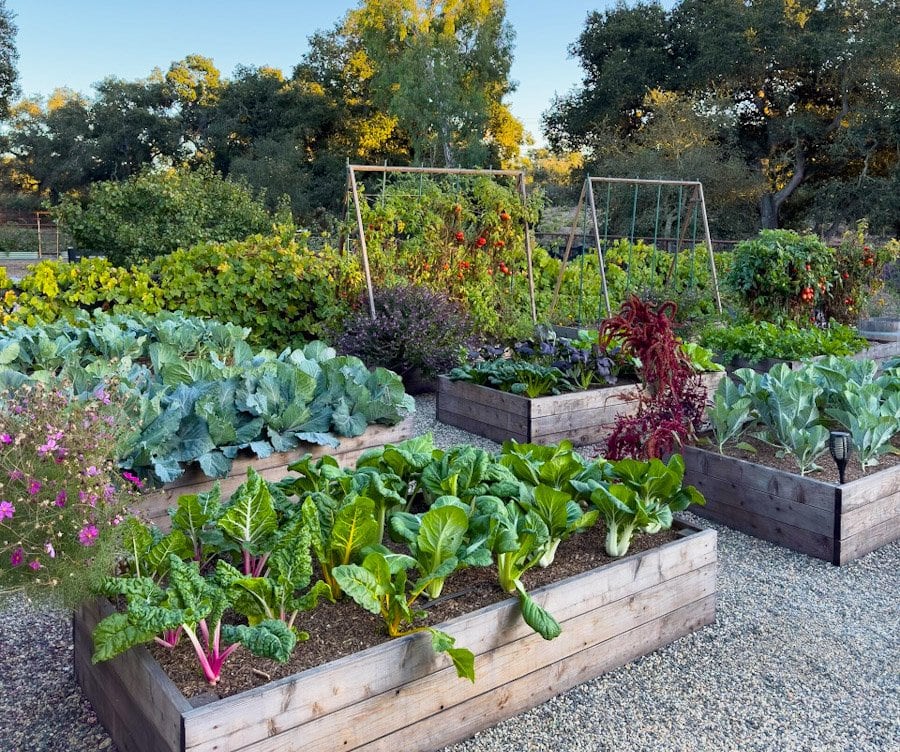
Some gardens aim for a manicured look, but this one leans into the relaxed side of rustic. Several wooden raised beds sit directly on a gravel yard, with trellises rising behind them. The palette is all earth and bloom: natural wood, deep green leaves, and touches of pink and purple from the flowers.
The golden hour light makes the scene feel warmer and softer than midday sun would. Gravel is a practical choice for a rustic garden because it drains well and keeps weeds down between beds. It also makes a satisfying crunch underfoot as you walk through to check on the plants.
Modern Garden with Dark Wood Beds and Archway
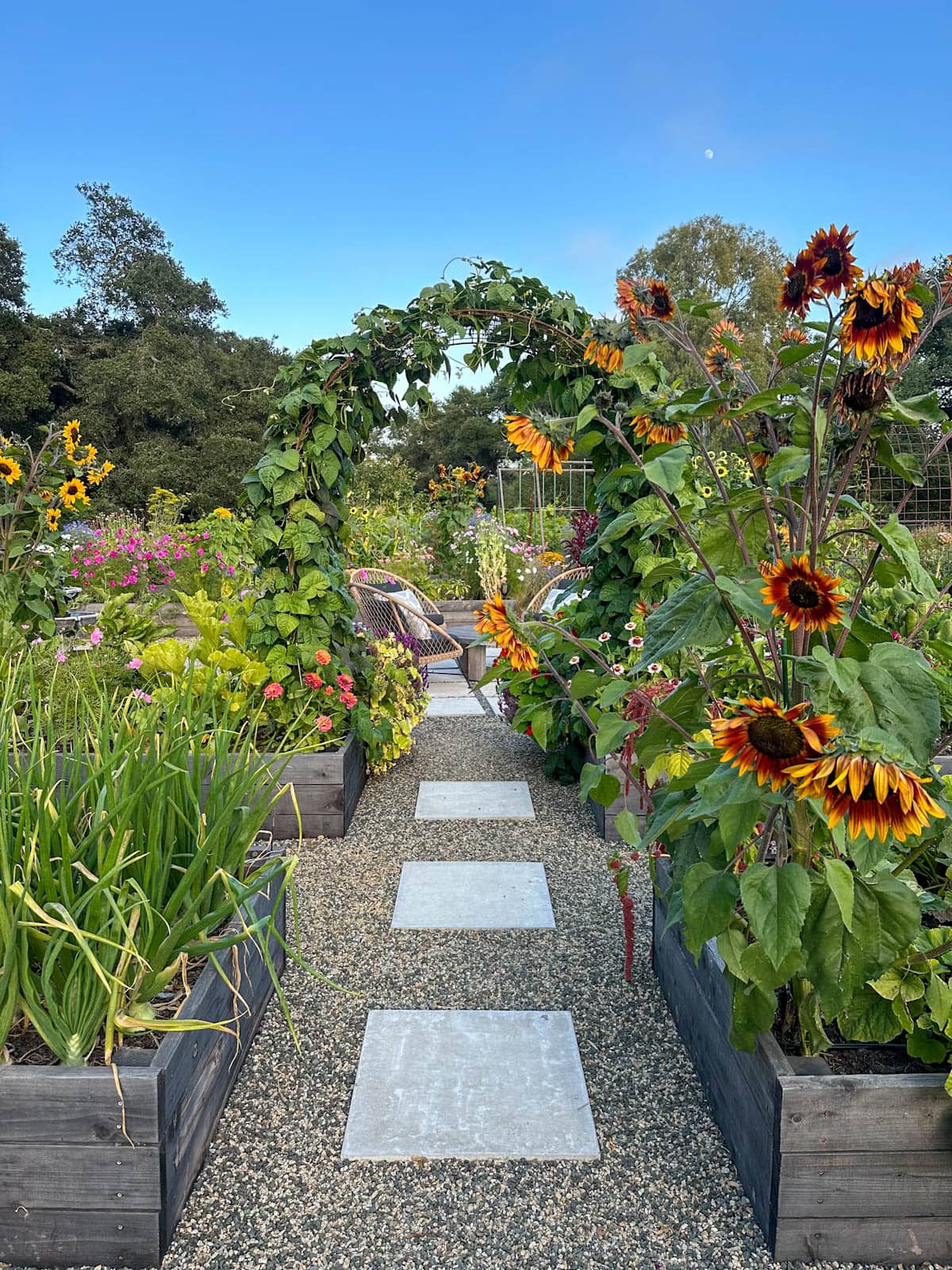
The layout here uses a straight stone path between two dark wood raised beds, with an archway at the end that frames the view ahead. Sunflowers on one side draw the eye up, balancing the horizontal lines of the beds. The gravel around the path softens the transition from stone to soil, and the clear sky keeps the palette simple: green, brown, and gray.
Traditional Productive Garden with Large Wooden Beds
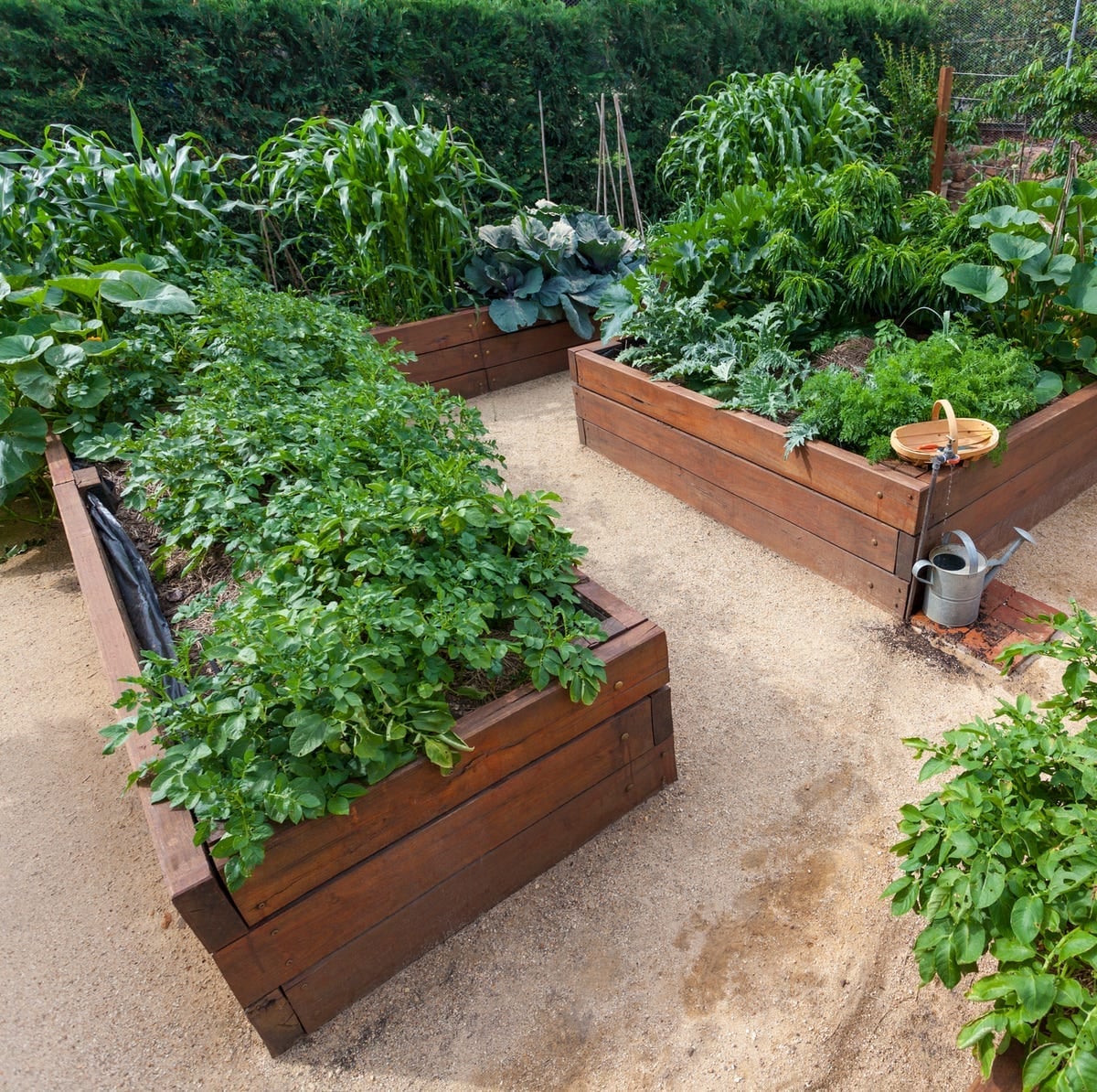
This garden is built for volume. Two large dark wood raised beds sit side by side with wide pathways between them, making it easy to move a wheelbarrow or kneel down to tend the vegetables. The dark wood stands out against the beige sand and green leaves, giving the space a clear structure. A watering can and a basket rest nearby, ready for a morning round of watering and harvesting. The natural daylight shows the true color of the wood and soil, with no shadows to hide the work ahead.
Modern Garden with Galvanized Metal and Wood Trim Beds
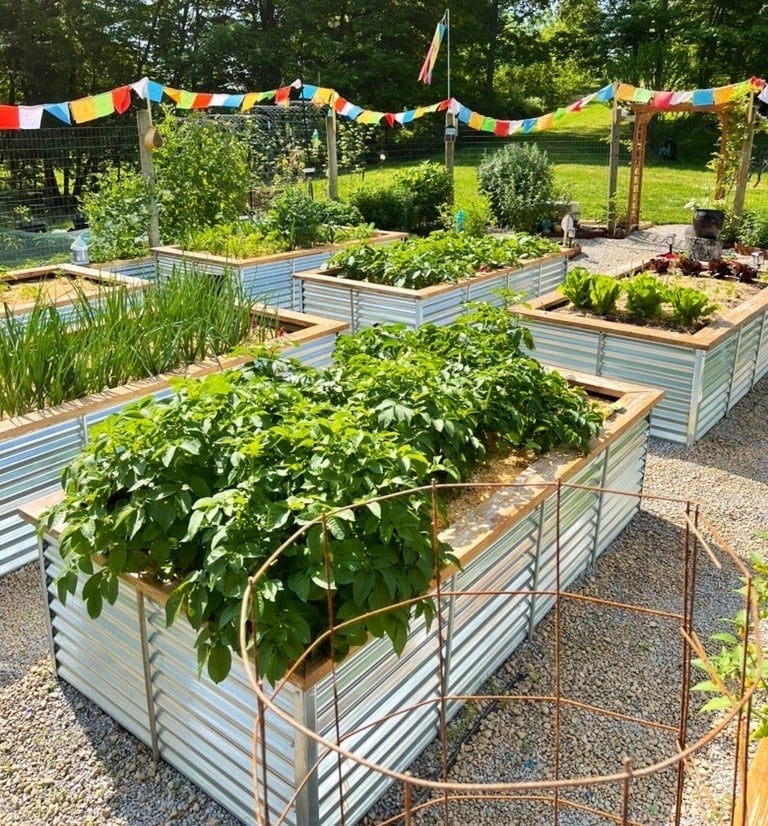
For a modern garden, choose materials that contrast without clashing. Here, multiple corrugated metal raised beds are topped with a wide wood trim, pairing the cool silver of the metal with warm wood tones. The beds sit in neat rows on gravel, with bright sun hitting the metal and making the surface look almost reflective.
The wood trim serves a purpose beyond looks: it gives you a place to sit or rest a tool while you work. The silver and green palette feels clean and intentional, and the gravel between the rows keeps the whole setup tidy. This is a garden that looks good from the house and works hard when you are in it.
Formal Garden Pathway Between Raised Beds
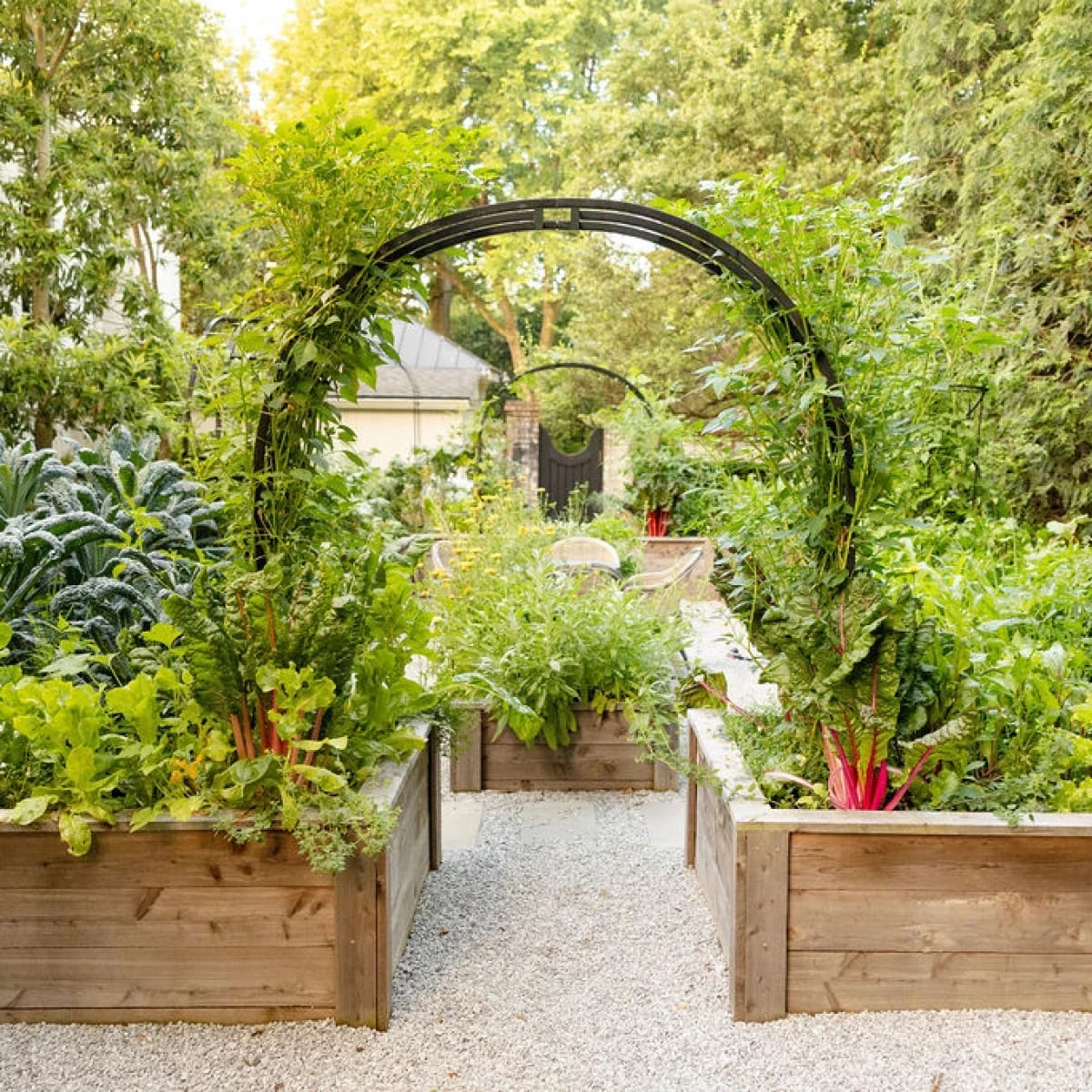
A straight gravel path between two long wooden raised beds creates a formal garden layout. The beds are filled with leafy greens and red chard, and a metal archway at the far end adds a clear destination. The path keeps the beds as the hero element, with the garden staying simple and open. This setup works best for gardeners who want an organized, easy-to-navigate space. The key is keeping the path width consistent so the symmetry holds.
Suburban Garden with Uniform Light Wood Raised Beds
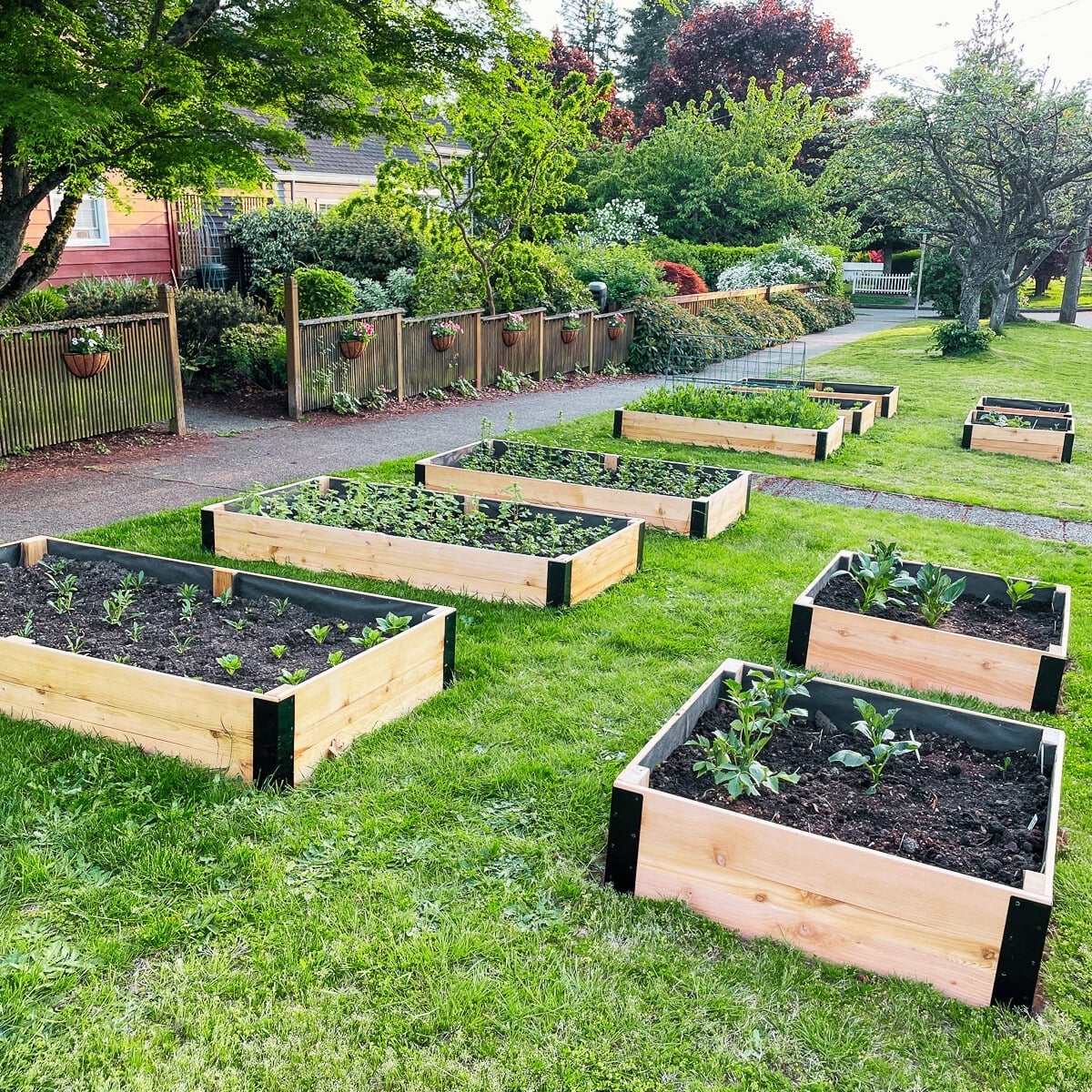
In a suburban garden, keep the scale of the raised beds consistent. Multiple light wood beds sit in neat rows on the lawn, with gravel paths between them. The uniform color and size make the whole garden feel cohesive. The late afternoon light softens the wood tones and greens, which helps the beds blend into the yard. For renters, this layout is easy to reverse: the beds sit on grass and gravel, so they can be removed without tearing up a permanent foundation. The open framing means the garden feels larger than it is.
Naturalistic Garden with Large Ceramic Planter Accent
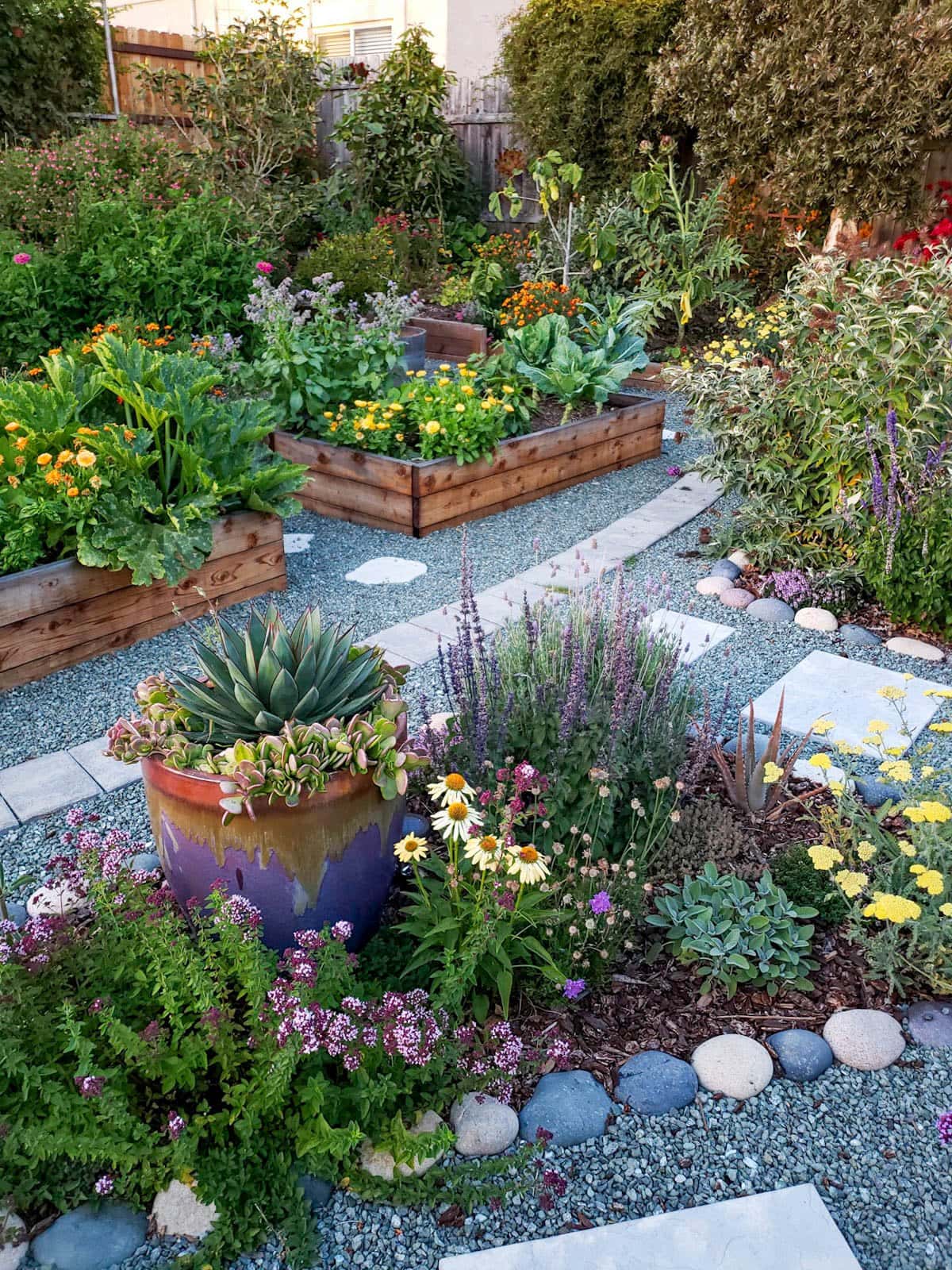
A naturalistic garden with wooden raised beds can feel a bit samey if every container matches. That is where a large ceramic planter changes the rhythm. Set on gravel between the beds, the planter adds a rounded, glazed shape that contrasts with the straight wood lines. The late afternoon sun hits the purple and yellow flowers inside, breaking up the green and wood tones.
The planter sits off to the side, acting as a decorative accent. This lets the garden feel curated without looking stiff. The stone paths and varied plant heights keep the eye moving. For anyone who wants a looser, more gathered look, one oversized container is an easy addition.
Expansive Garden with Numerous Corrugated Metal Beds
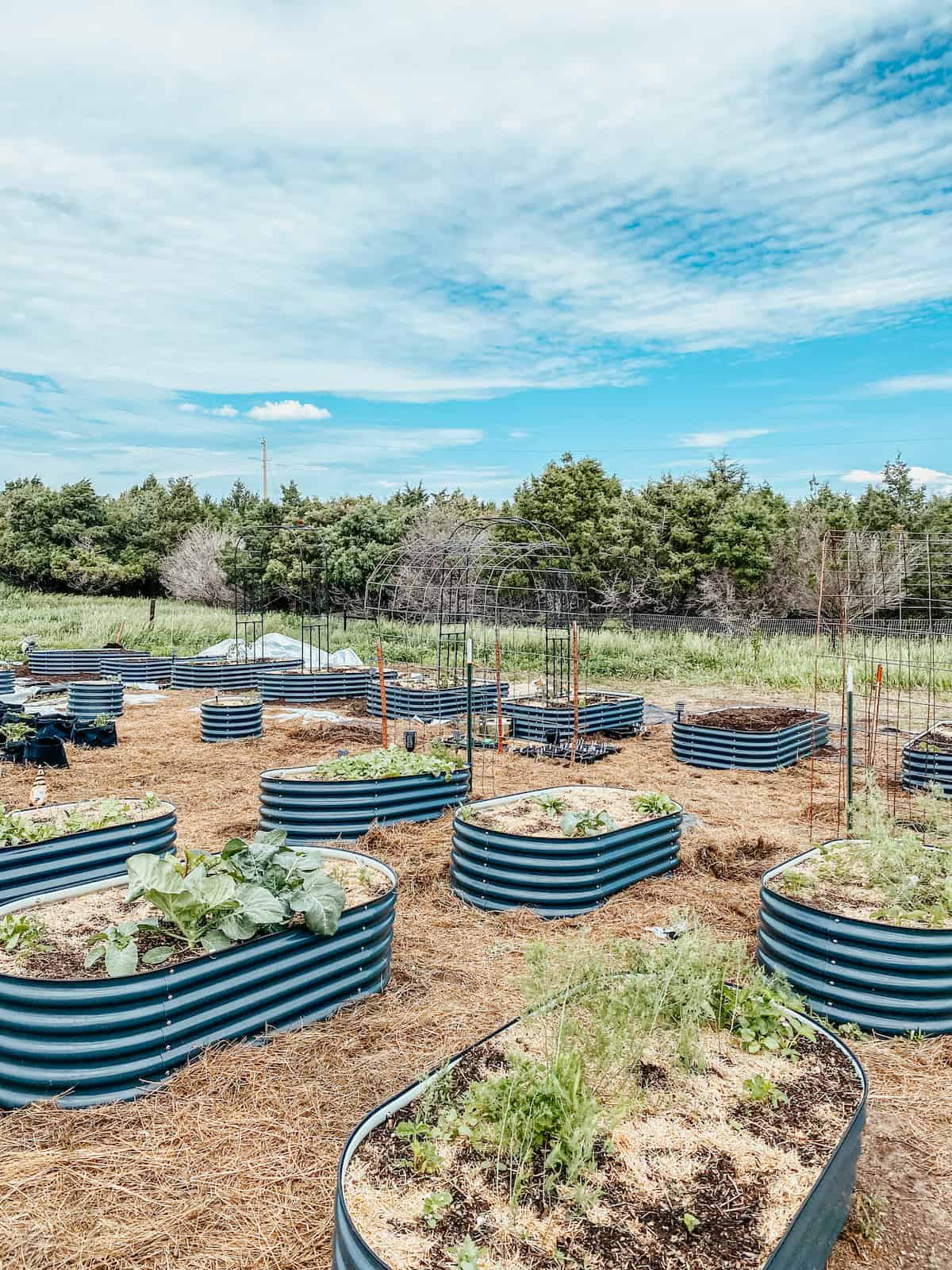
Corrugated metal raised beds in an expansive garden offer a clean, industrial look that holds up well outdoors. The gray metal tones contrast with the green foliage and brown straw mulch spread between the rows. The beds are arranged in long, straight lines, with trellises at the ends for climbing plants. The cloudy daylight softens the metal’s shine, so the garden feels practical rather than flashy. This layout suits a gardener who wants to maximize planting space without adding decorative frills.
Modern Garden with Vibrant Vegetables in Raised Beds
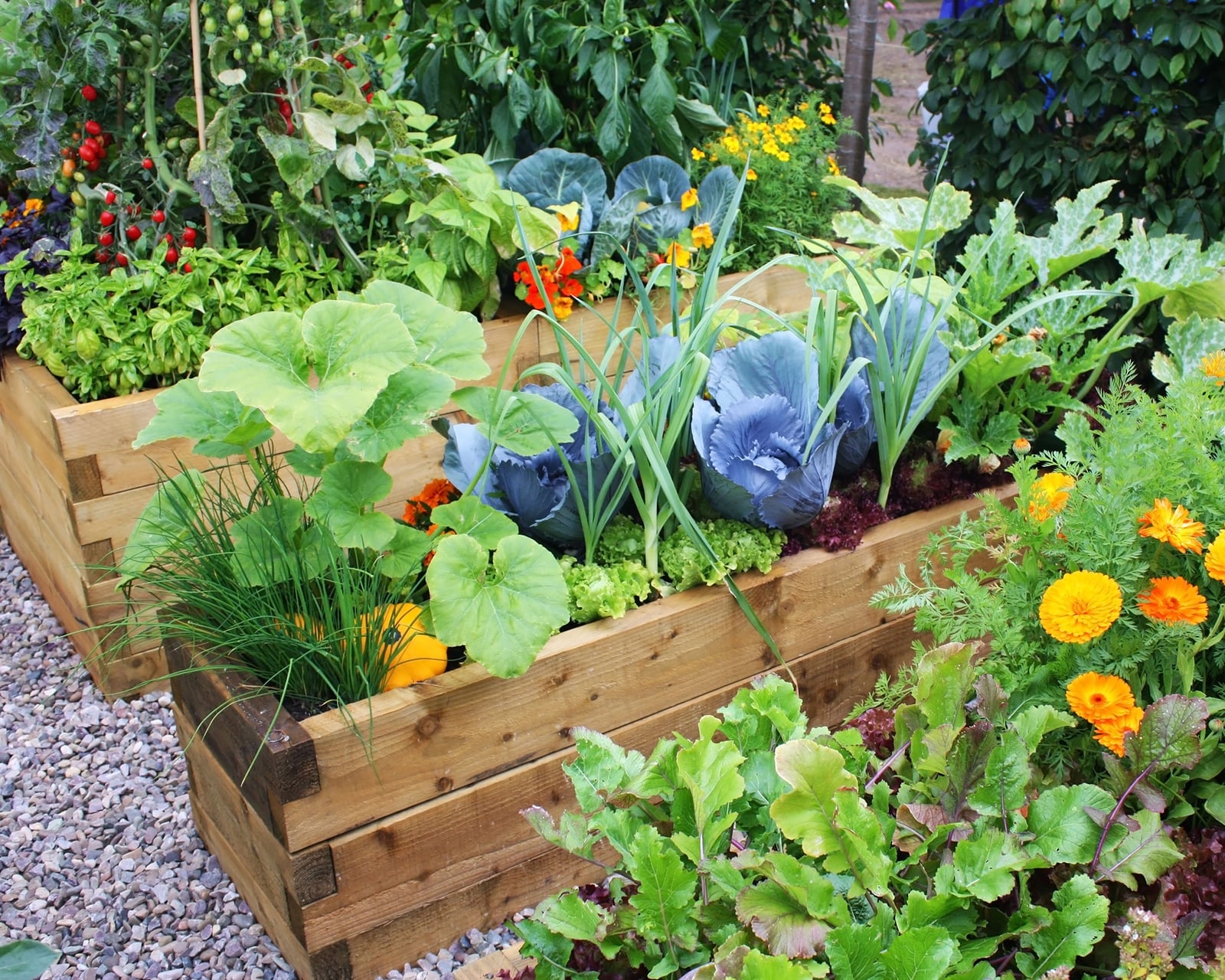
A modern garden with wooden raised beds gets its energy from the color of the vegetables. Cabbage, chard, and marigolds bring orange and blue tones into the green and wood palette. The bright daylight makes the colors pop against the neutral gravel paths. The palette is what defines this look: the vegetables are the main color source, not the structures. The ratio is mostly green with deliberate warm accents. What breaks it is letting the beds get too crowded or weedy, which mutes the contrast. Keeping paths clear and plants spaced lets each color stand out.
Naturalistic Garden with Abundant Flowering Plants
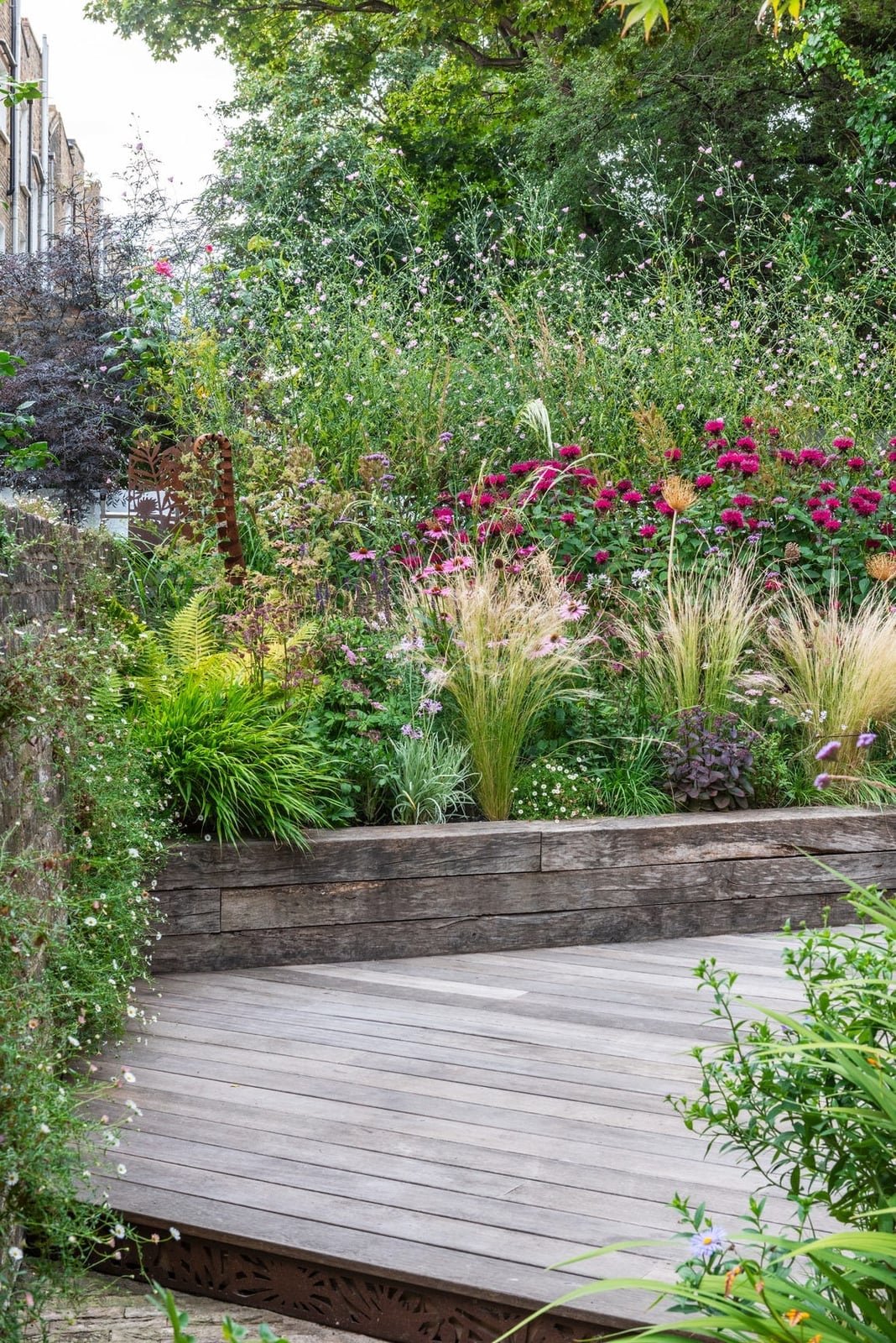
A naturalistic garden uses dense planting to soften hard lines and create a lush look. Here a large wooden raised bed holds a mix of flowering plants and ornamental grasses that spill over the edges, softening the wood frame. The palette stays within wood tones, green, pink, and white, so nothing competes for attention.
Stone and gravel surround the bed, creating a clear boundary between the lush interior and the path. The tiered layout of the beds adds depth without requiring extra structures. For a renter safe swap, place large galvanized metal tubs on gravel and fill them with the same dense mix of perennials and grasses. The effect is nearly identical and leaves no permanent mark on the yard.
Modern Farmhouse Garden with Colorful Harvest
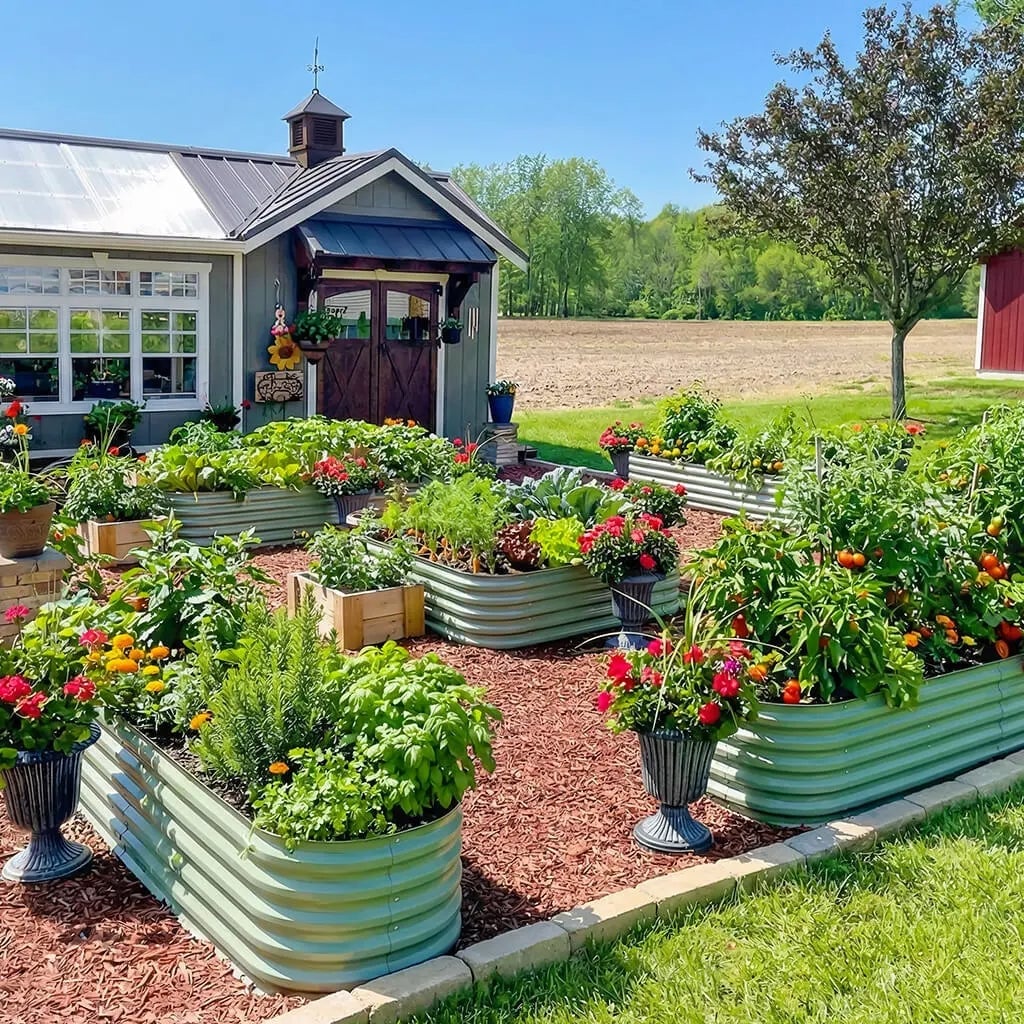
Corrugated metal raised beds bring an industrial edge to the modern farmhouse garden, but the planting softens that look fast. Here a mix of flowers and vegetables in red, orange, and yellow fills the beds, with tall urns adding vertical contrast. The metal sides warm in the sun and help define the planting area without distracting from the harvest colors. Stone mulch between the beds keeps the ground clean and ties the metal to the natural surroundings.
Rustic Garden with Raised Beds Framing an Arched Structure
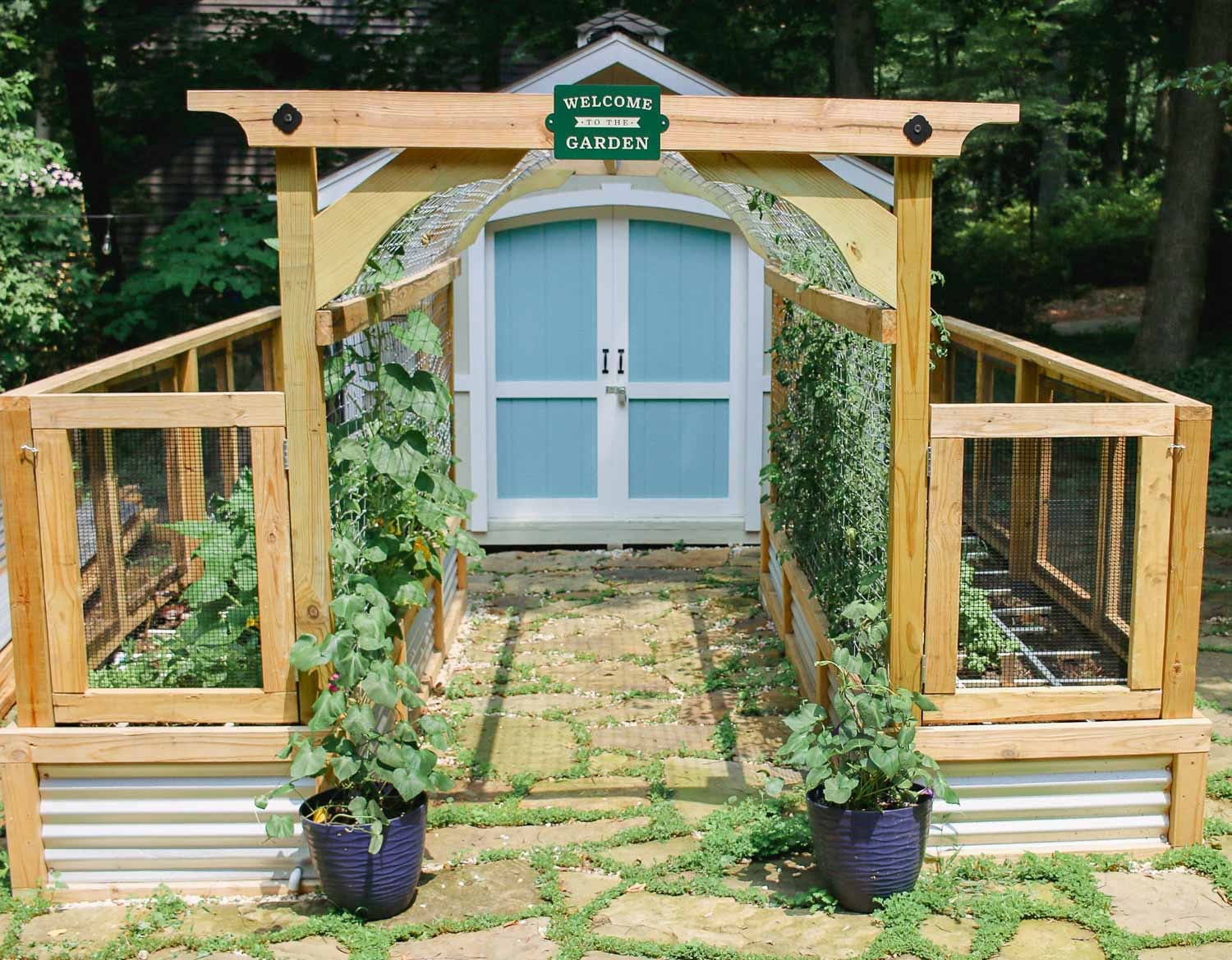
To frame a garden entrance, place raised beds on both sides of the path so they guide the eye forward. Here natural wood beds flank an arched wooden structure with a blue door, creating a clear destination. The wood tones repeat in the beds and the arch, while the blue door adds a single focal point. Gravel underfoot keeps the path dry and defines the walkway. The metal mesh on the arch offers a surface for climbing plants, which will eventually soften the structure and blend it into the garden.
Farmhouse Garden with Raised Beds and White Arbor
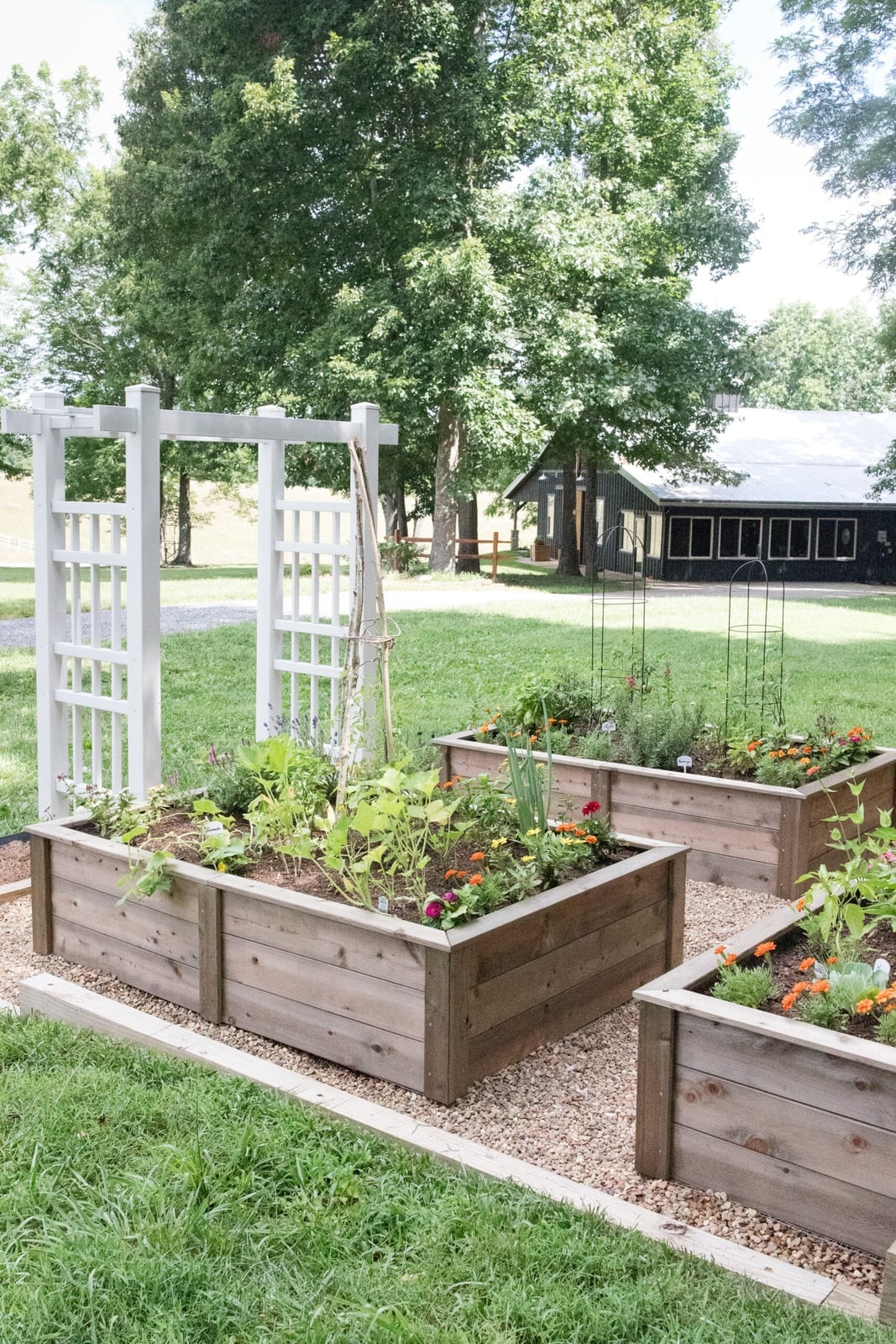
A white arbor can feel too formal for a vegetable garden, but here it works because the raised beds and gravel path keep things grounded. The arbor stands at the far end of a row of wooden beds, drawing the eye through the space without dominating it. The wood tones of the beds match the natural gravel path, so the arbor acts as an accent. Soft daylight filters through the structure, casting gentle shadows across the planting beds. Paint an existing gate or arch white and let the surrounding greenery do the rest.
The palette stays within wood tones, green, pink, and orange, keeping the garden cohesive. The arbor sits at the edge of the visual field. This setup works best in a roomy garden where the path has room to breathe before reaching the structure.
Modern Green Metal Raised Bed with Integrated Trellis
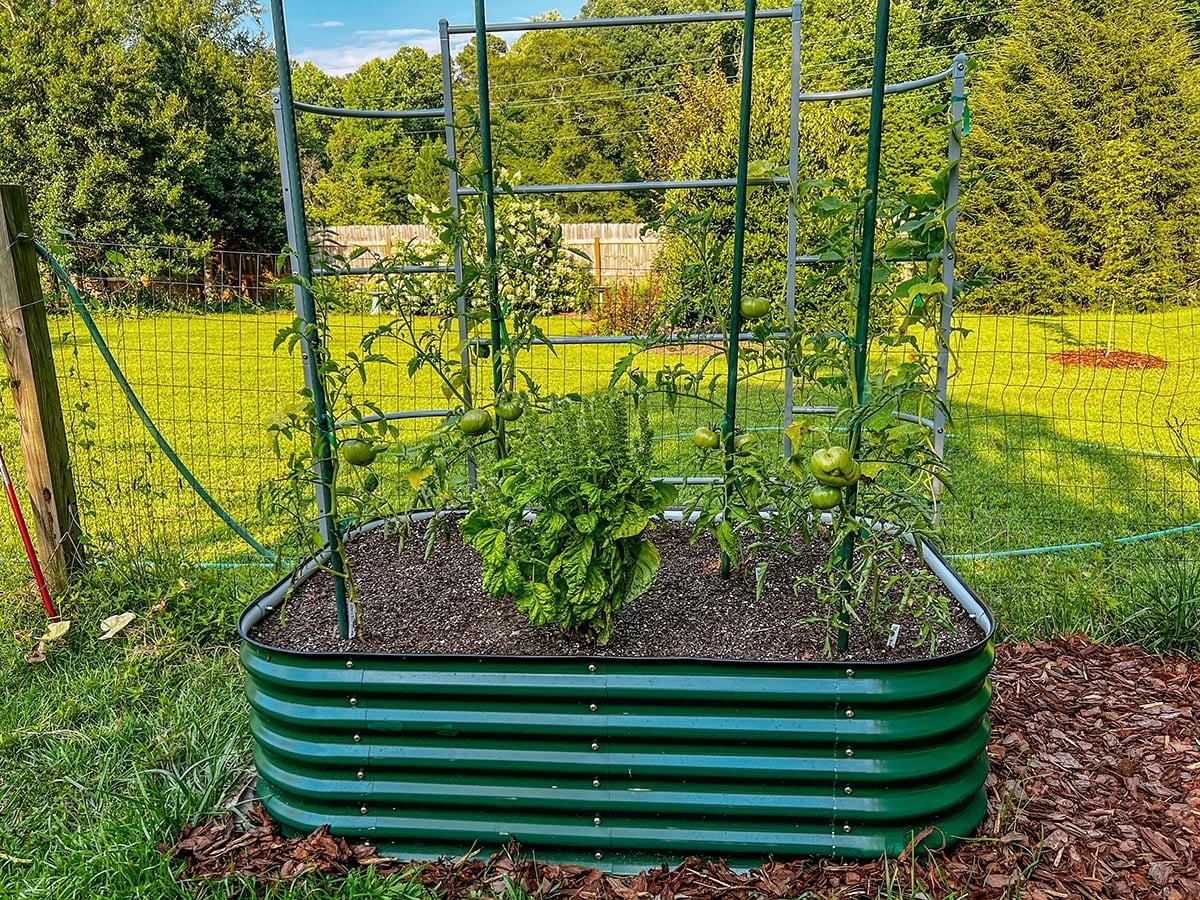
A green corrugated metal raised bed with an integrated trellis solves two problems at once: it contains the soil and gives climbing plants a vertical surface. The trellis attaches directly to the bed, so there is no need for separate stakes or cages. The green finish blends into the foliage, letting the plants take center stage. Sunny daylight hits the metal and warms the soil faster than wood, which can extend the growing season for heat-loving crops.
Natural Garden with Clean Lined Cedar Raised Beds
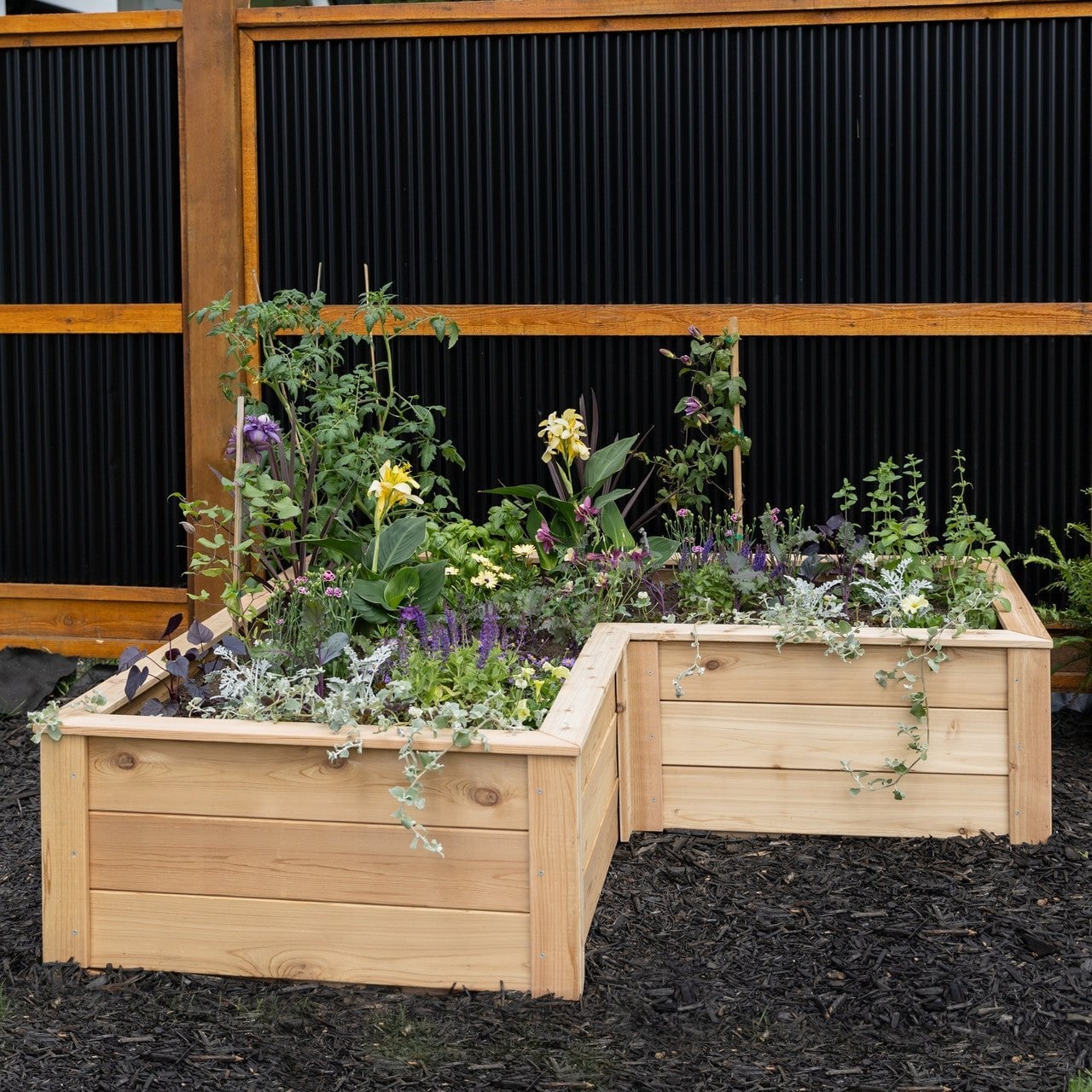
Cedar brings a natural warmth that blends into a garden without competing for attention. Two long cedar beds sit side by side, their clean lines framing the planting rather than dominating it. The wood stays a soft honey tone as it ages, while the dark mulch underneath the green and purple plants adds a crisp edge that makes the foliage stand out. This setup works because the material does the work. Cedar resists rot and insects on its own, so you skip the chemical treatments and let the silvering happen at its own pace. The simplicity of the layout means you can swap in any mix of flowers or vegetables next season without the bed itself feeling wrong.
Rustic Raised Bed Constructed from Concrete Blocks
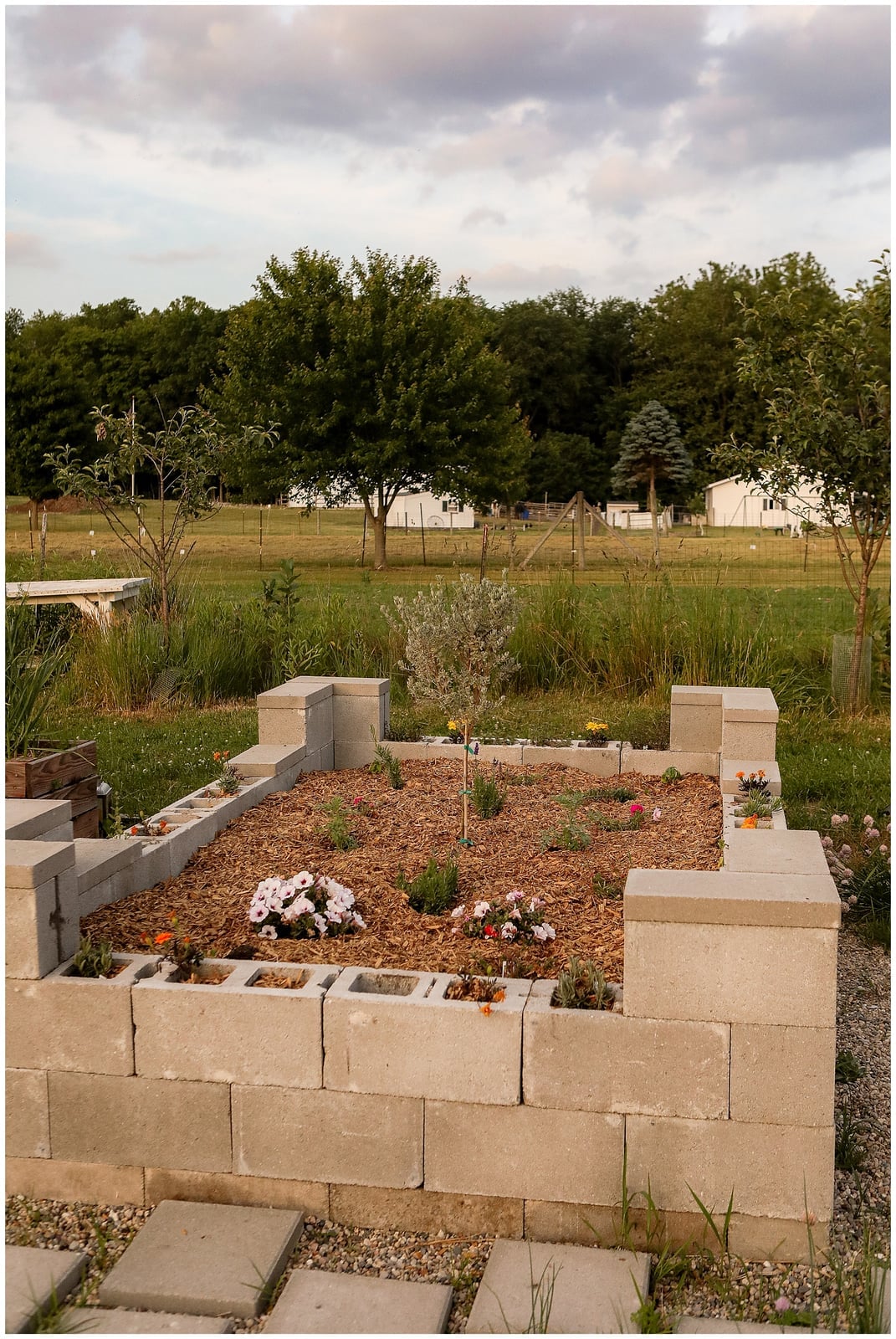
Concrete blocks land somewhere between a permanent structure and a weekend project. The blocks stack without mortar, so you can adjust the height, take them apart, or move the whole bed when your lease ends. The gray tones against the green plants and brown wood chips keep the look grounded rather than industrial.
Final Thoughts
The raised bed garden is a practical foundation for any outdoor space. It defines the layout without requiring a complete overhaul of your yard. From modern metal to rustic wood, the material and shape you choose sets the tone. The best setup is the one that fits your routine and the sunlight you have. Check your USDA zone before planting and plan for easy access to water. With 27 ideas here, you have plenty of room to adapt the look to your own garden.