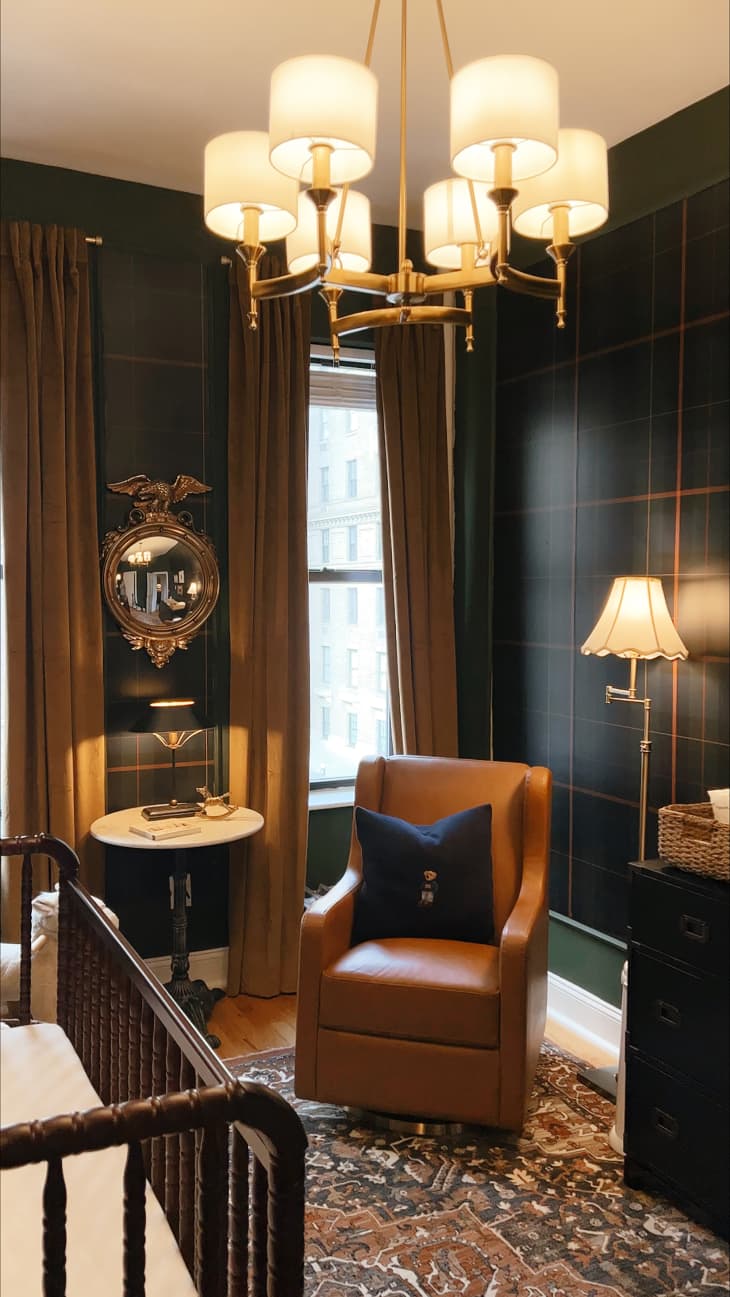
A Ralph Lauren nursery isn’t about miniature polo ponies; it’s a lesson in applying grown-up design to a tiny space. These 16 ideas focus on the room’s bones: layout, palette, and material choices that work for both baby and parent.
Expect practical takes on tartan wallpaper, antique dressers doubling as changing tables, and the right rug scale for a nursery.
Equestrian Nursery Layout
A corner of the room holds a crib, an armchair, and a dresser, all set against a dark green and navy tartan plaid wallpaper. The rich pattern anchors the space, so the furniture stays simple in silhouette and finish. Brass wall sconces add warm light without taking up floor space. The real layout trick here is to let one bold wallcovering do the heavy visual work, then keep the floor plan open for movement around the crib.
Traditional Nursery Palette
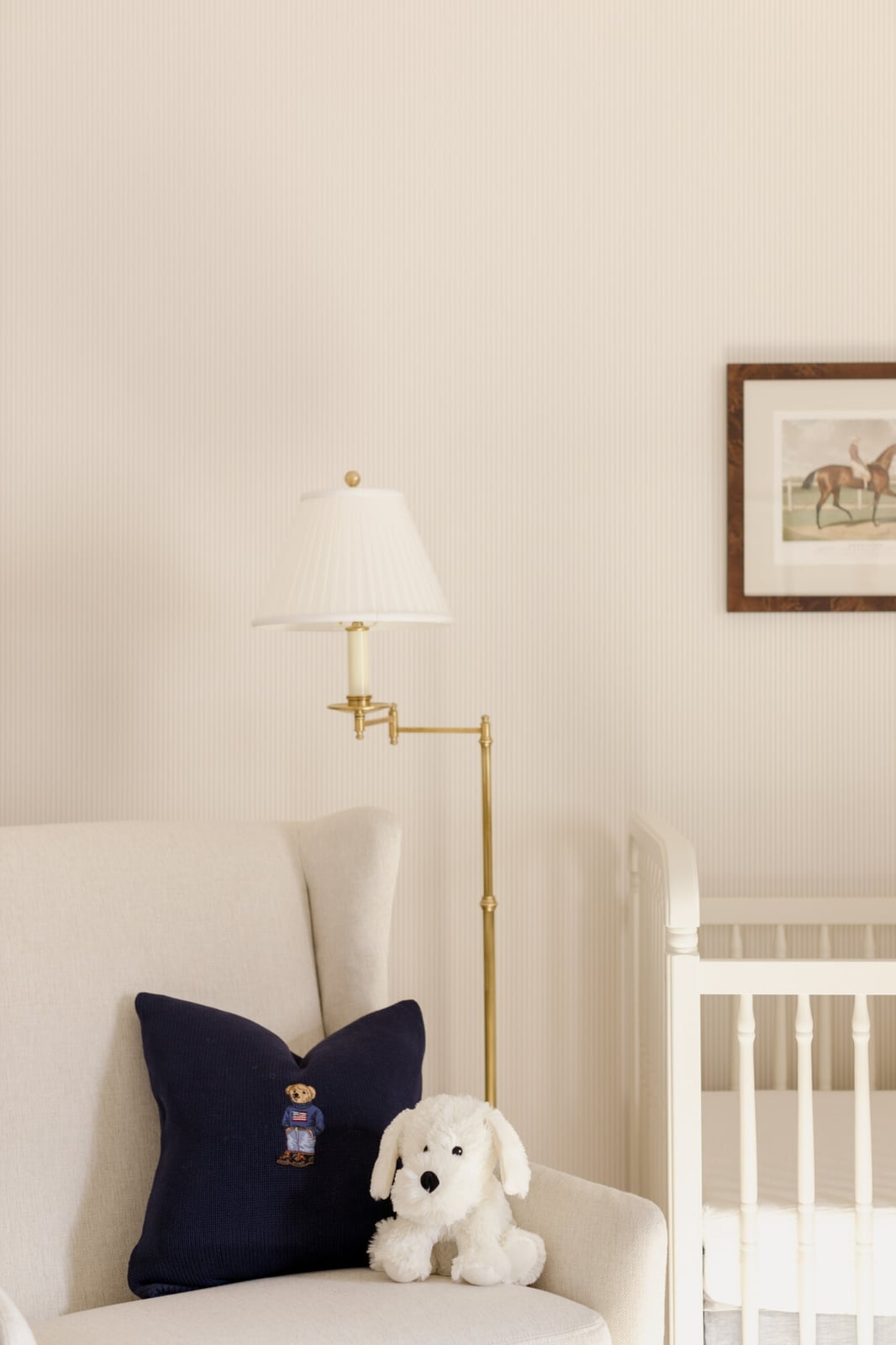
This palette sticks to cream, brown, and gold, and it works because the ratio leans heavily on the lightest shade. Cream walls and linen upholstery keep the room airy, while brown wood furniture and a brass floor lamp add weight without darkening the space. A small dog pillow in a warm neutral repeats the brown tone at a smaller scale. The gold appears only in the lamp and small hardware details. That limited distribution prevents the metallic finish from competing with the natural wood grain.
Eclectic Nursery Storage
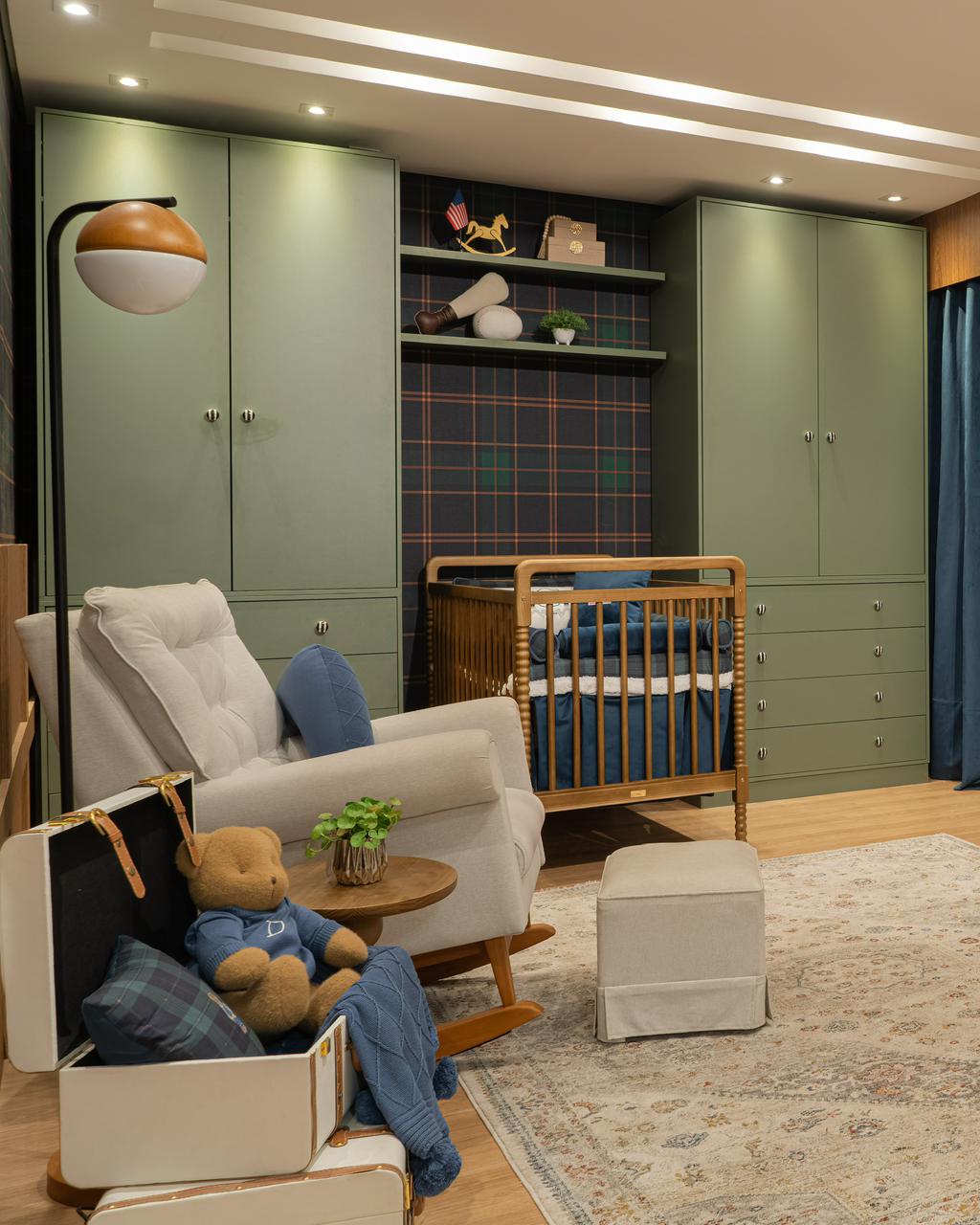
How do you fit enough storage without making a nursery feel like a closet? Two tall wardrobes in sage green flank the crib and armchair, creating a symmetrical storage wall that feels planned rather than crowded. The green cabinets contrast with navy and beige accents in the room, so they become a feature instead of a utility piece. The wardrobes have glass fronts on the upper doors, which breaks up the solid wood surface and lets you display a few soft toys or books behind the glass. Fabric bins and baskets on the lower shelves hide diapers and extra bedding.
Nursery Vignette Styling Variation
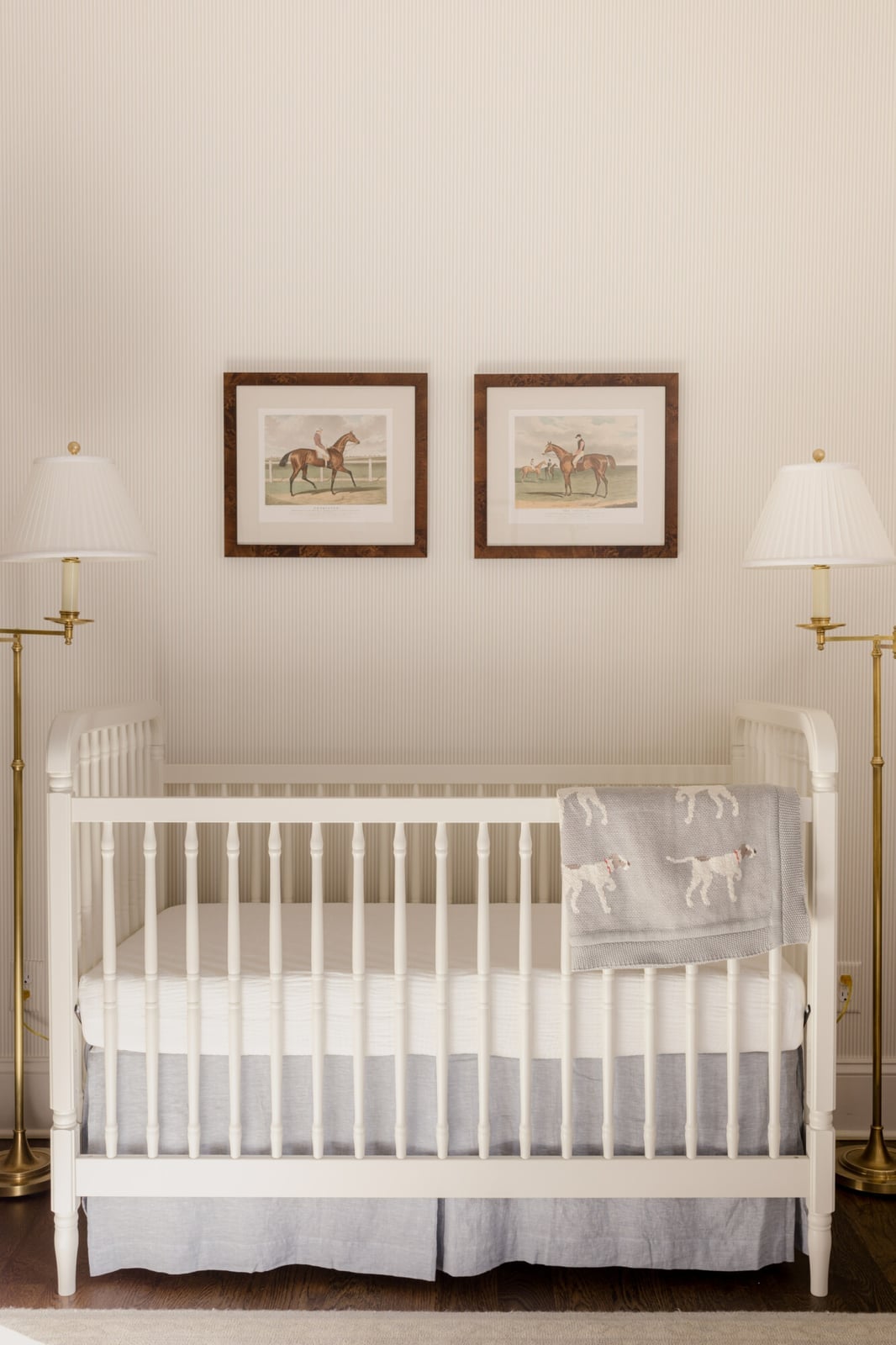
A crib set in a corner near a window gets flanked by two floor lamps in brass, one on each side. The lamps create a balanced frame around the crib and cast warm light across the cream and brown palette. A small dog pillow sits in the armchair nearby, adding a soft texture against the linen upholstery. The trick is to keep the vignette tight: the lamps, the crib, and one chair. Anything more would crowd the corner and dilute the focused composition.
Whimsical Nursery Materials
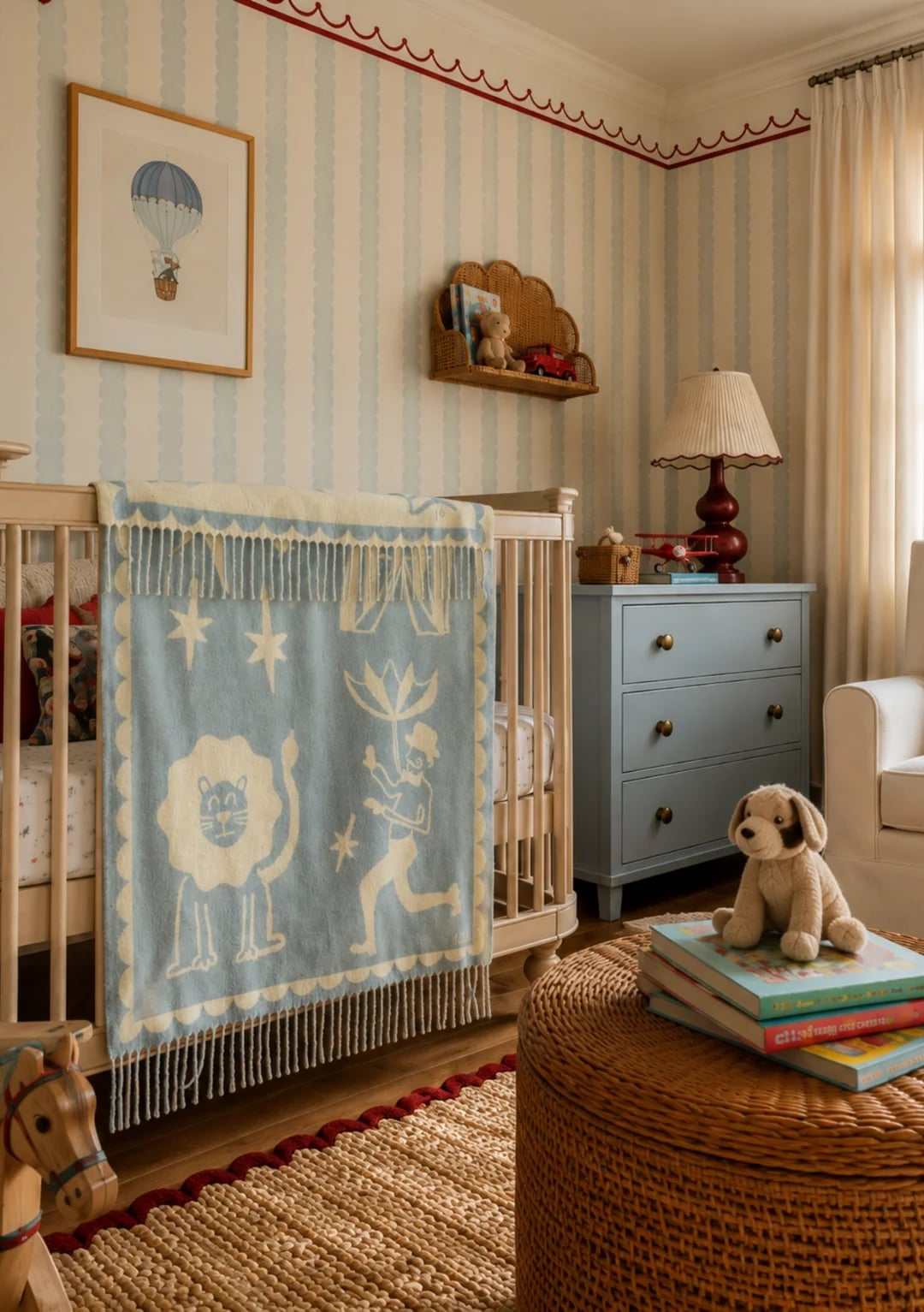
A practical rule for layering a nursery blanket is to match the weight of the material to the season. A lambswool blanket in a circus jacquard pattern gives warmth and a playful focal point when draped over the crib rail. The wool fibers handle light use well and resist pilling if you wash on a gentle cycle with cold water. Cotton sheets underneath keep the sleeping surface breathable. The jacquard weave means the pattern is integrated into the fabric rather than printed on, so it holds up to repeated washing without fading.
Nursery Changing Table Durability
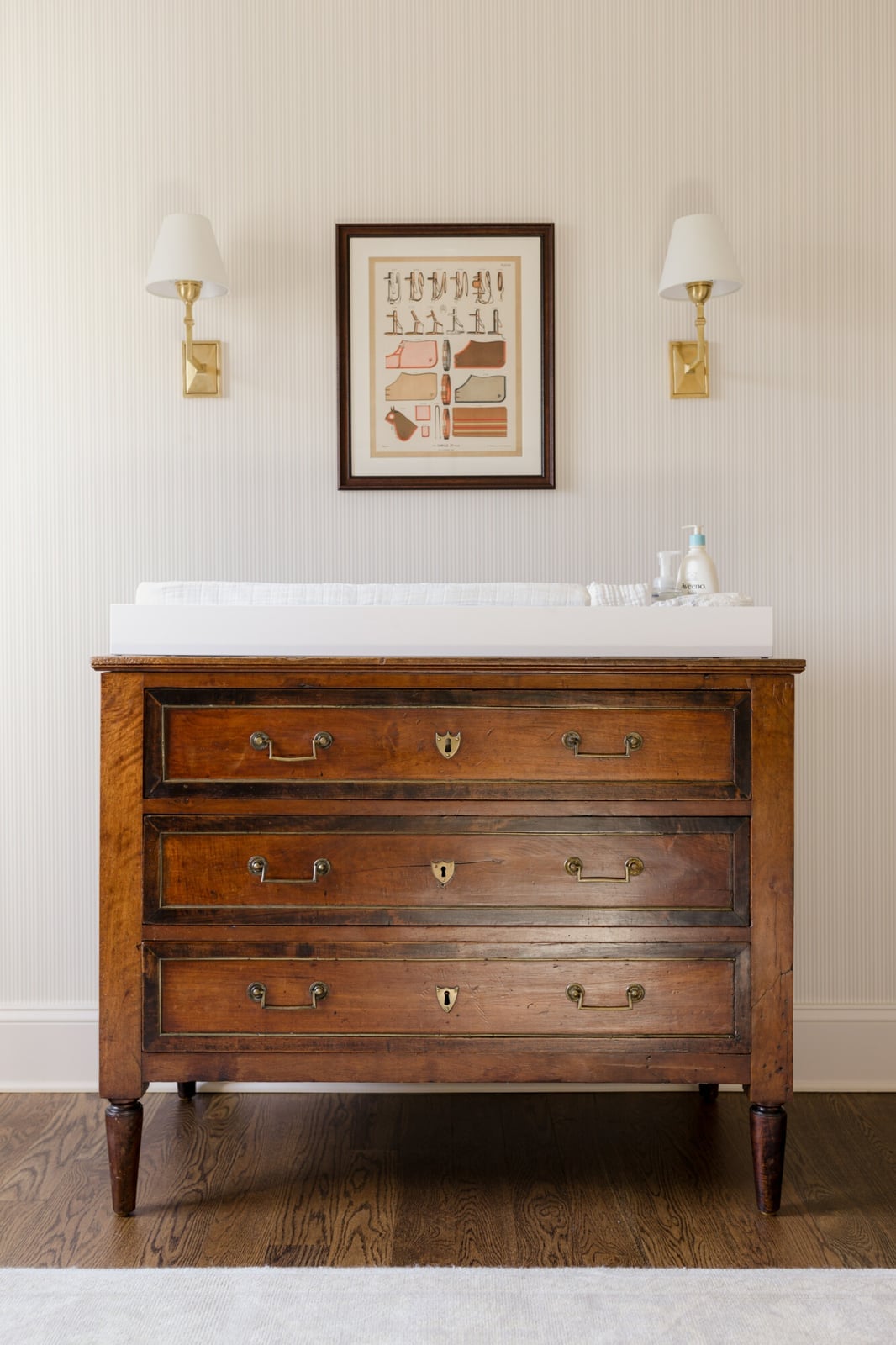
An antique dresser can serve as a changing table with more staying power than a purpose-built unit. The solid wood construction and ornate brass drawer pulls hold up to daily use without the wobble you sometimes get from lightweight laminate pieces. Wall sconces on either side provide task light for diaper changes, while natural light keeps the space feeling open. The cream and gold palette keeps the look traditional, and the compact size means it fits in smaller nurseries without dominating the floor plan. A changing pad on top protects the dresser surface and gives you a safe, contained spot for quick changes.
Traditional Nursery Styling Variation
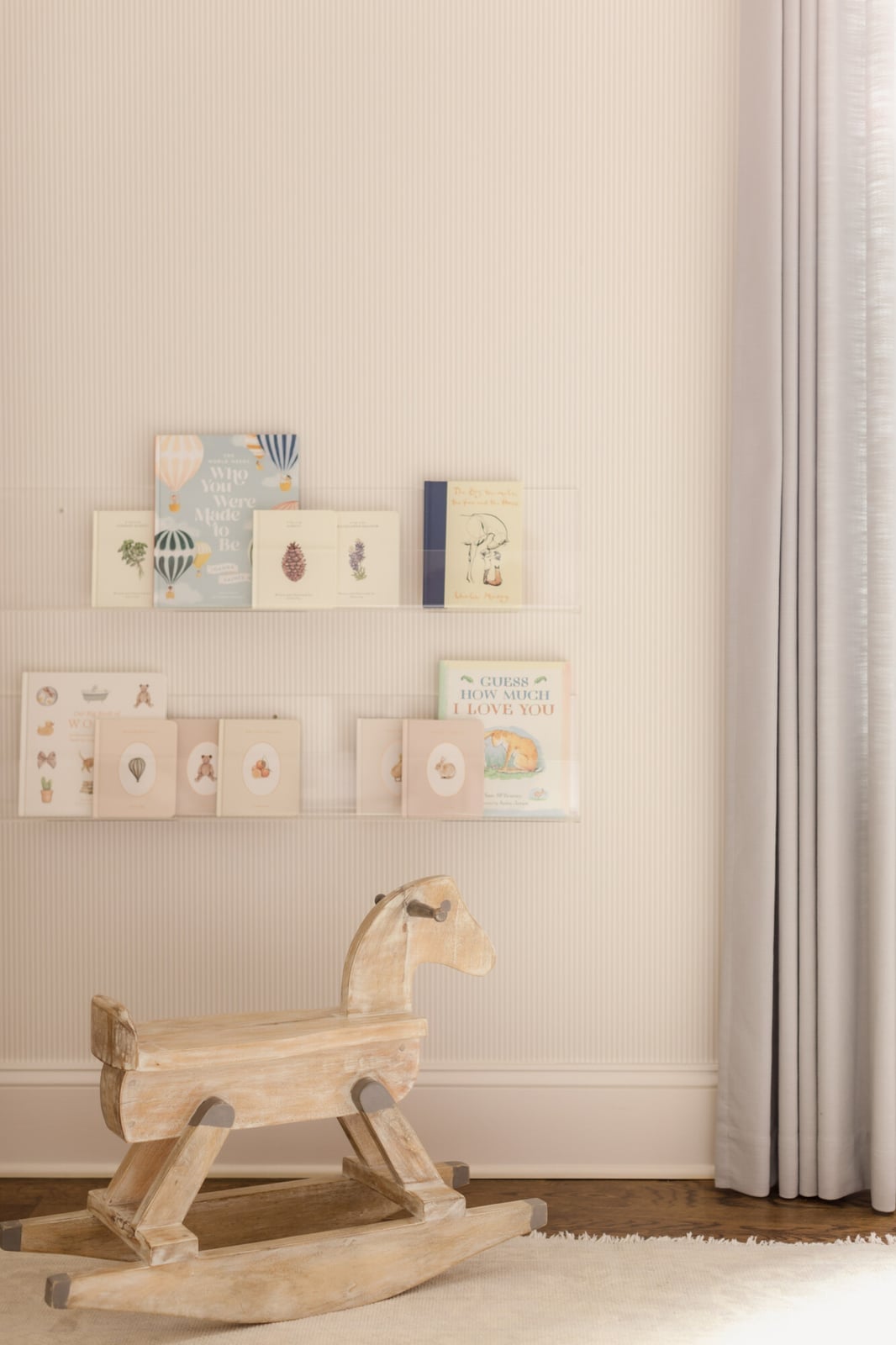
A dog pillow tucked into the corner of a traditional nursery adds an unexpected soft note against the cream, brown, and gold palette. The crib anchors the room, while floor lamps and an armchair create a reading nook. The dog pillow breaks the formality of the brass and wood details, making the space feel lived in rather than staged.
Nursery Rug Scale and Proportion
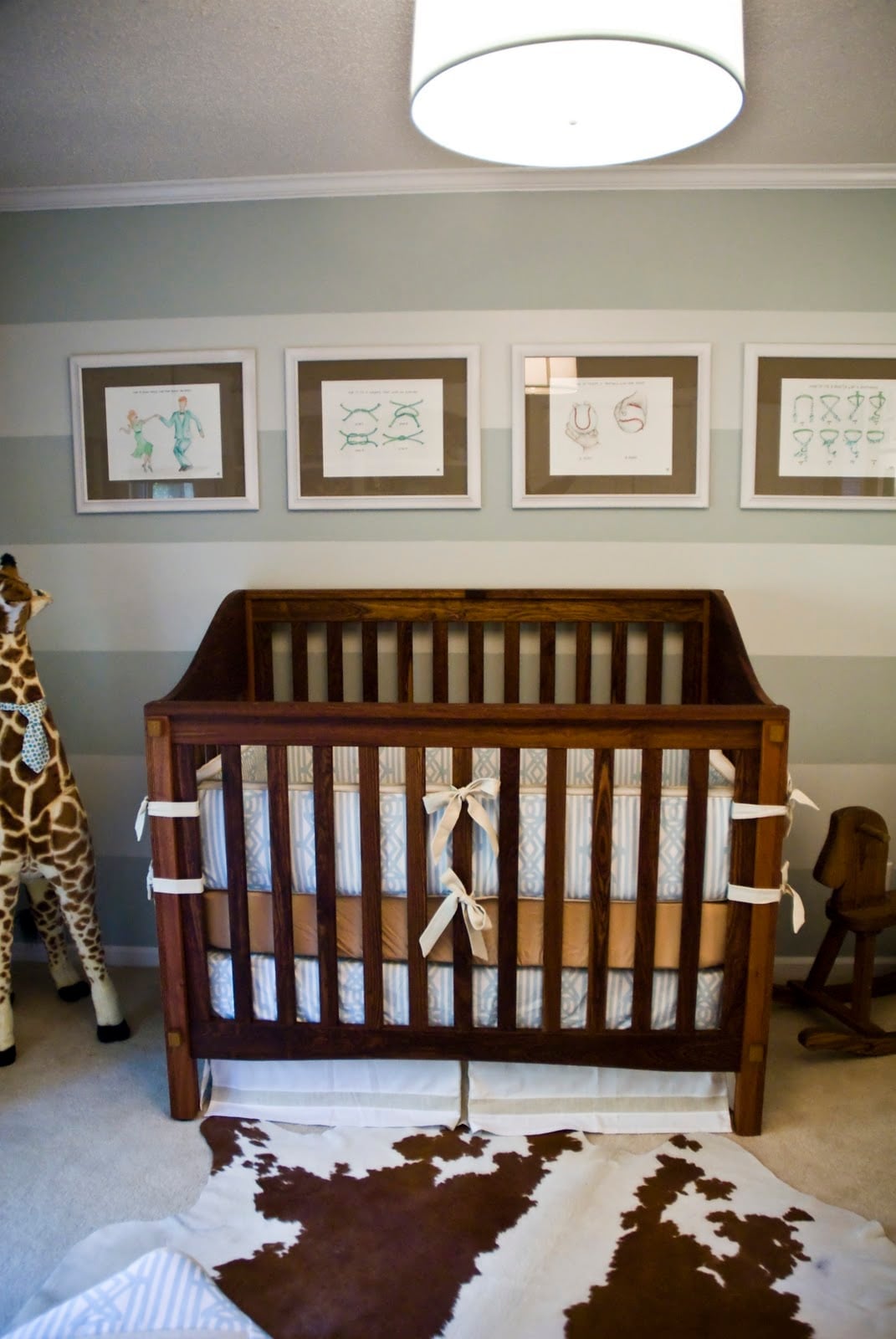
A cowhide rug under a wooden crib sets the scale for the whole nursery. The natural hide shape breaks up the rectangular geometry of the room and contrasts with the green and white striped walls. A rocking horse and stuffed giraffe flank the crib, filling the visual space without crowding the floor. The hide rug anchors the play area, keeping toys within reach while the crib stays centered. Natural light and an overhead ceiling light balance the room, so the rug reads as a functional base rather than just a decorative layer.
Nursery Storage Solutions
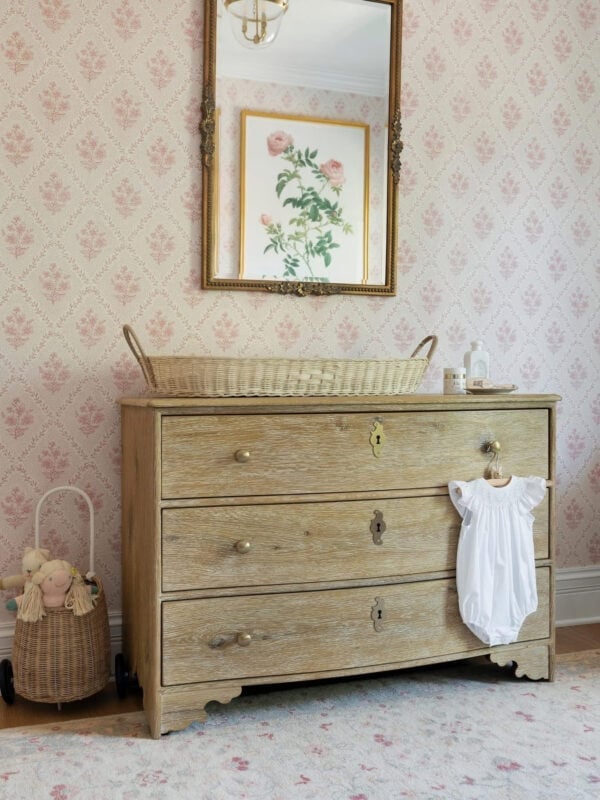
How do you fit a dresser, bassinet, and toy storage into a compact nursery without it feeling cramped? A light wood dresser with vintage hardware anchors one corner, while a wicker bassinet sits nearby for easy access during naps. A toy cart on wheels slides under the dresser for out-of-sight storage, keeping the floor clear. The cream and pink palette keeps the space airy, and an ambient lamp makes the corner feel larger. The wicker adds texture without adding visual weight, keeping the room functional without feeling cluttered.
Equestrian Nursery Materials
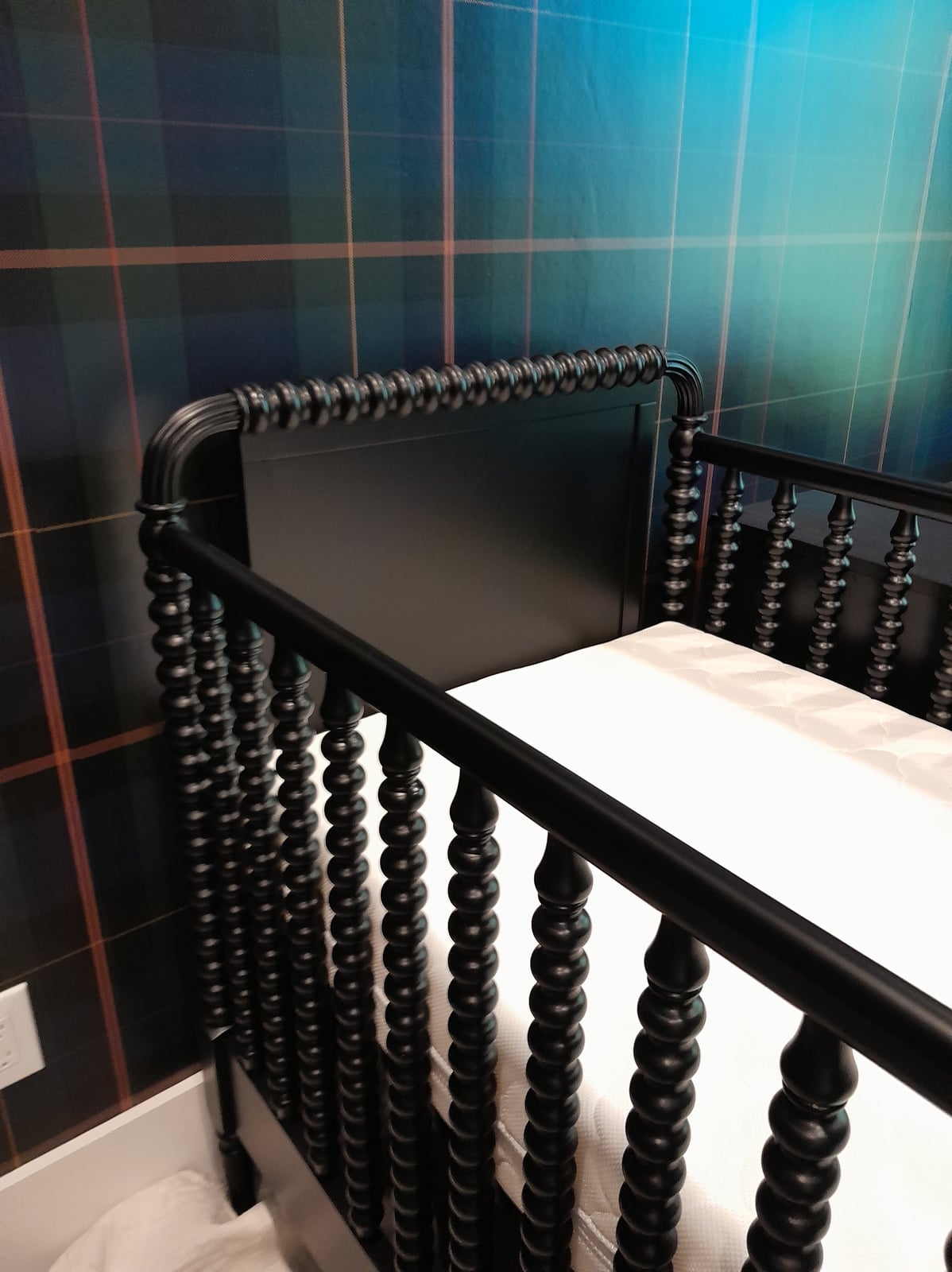
A black spindle crib sets the tone for an equestrian nursery with a plaid wallpaper backdrop. The metal and wood combination gives the crib a sturdy look, while the eagle mirror above adds a classic touch. Wall sconces provide warm light and keep the compact room from feeling dark. The black, cream, and plaid palette stays true to the riding theme without tipping into novelty.
Nursery Layout with Bassinet
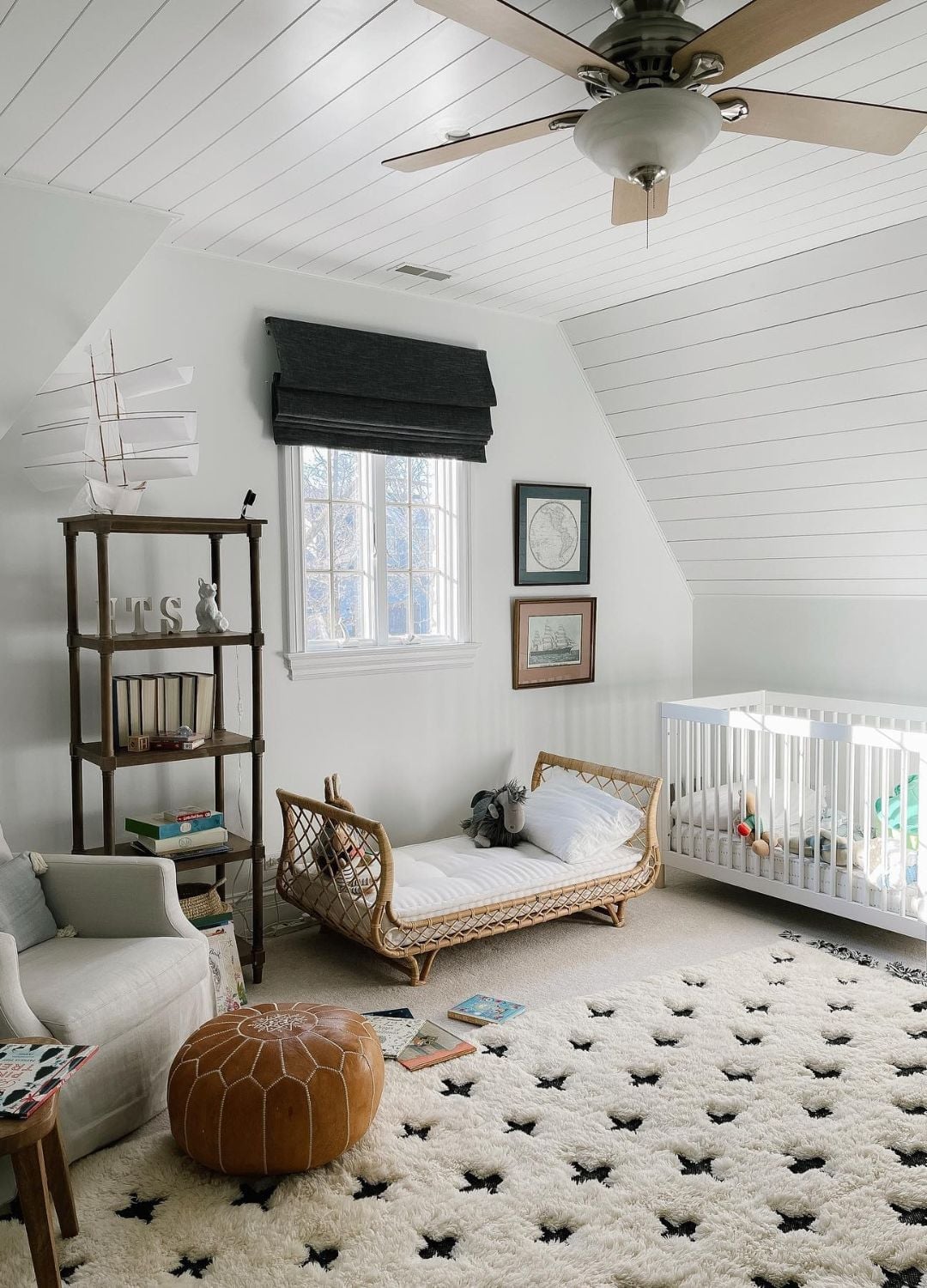
A practical rule for nursery layout is to keep the most-used pieces within arm’s reach of a comfortable seat. Here, the crib and wicker bassinet sit near the window for natural light, with a leather armchair placed beside them. A nearby bookshelf holds changing supplies and bedtime stories, so you don’t have to cross the room mid-feed. This arrangement works because the room is roomy enough to let each piece breathe instead of crowding the path to the door. The black spindle crib anchors the space, while the wicker bassinet adds a lighter, airy contrast. Overhead lighting fills in after sunset, but the daytime setup makes the most of the window.
Classic Nursery Palette and Decor
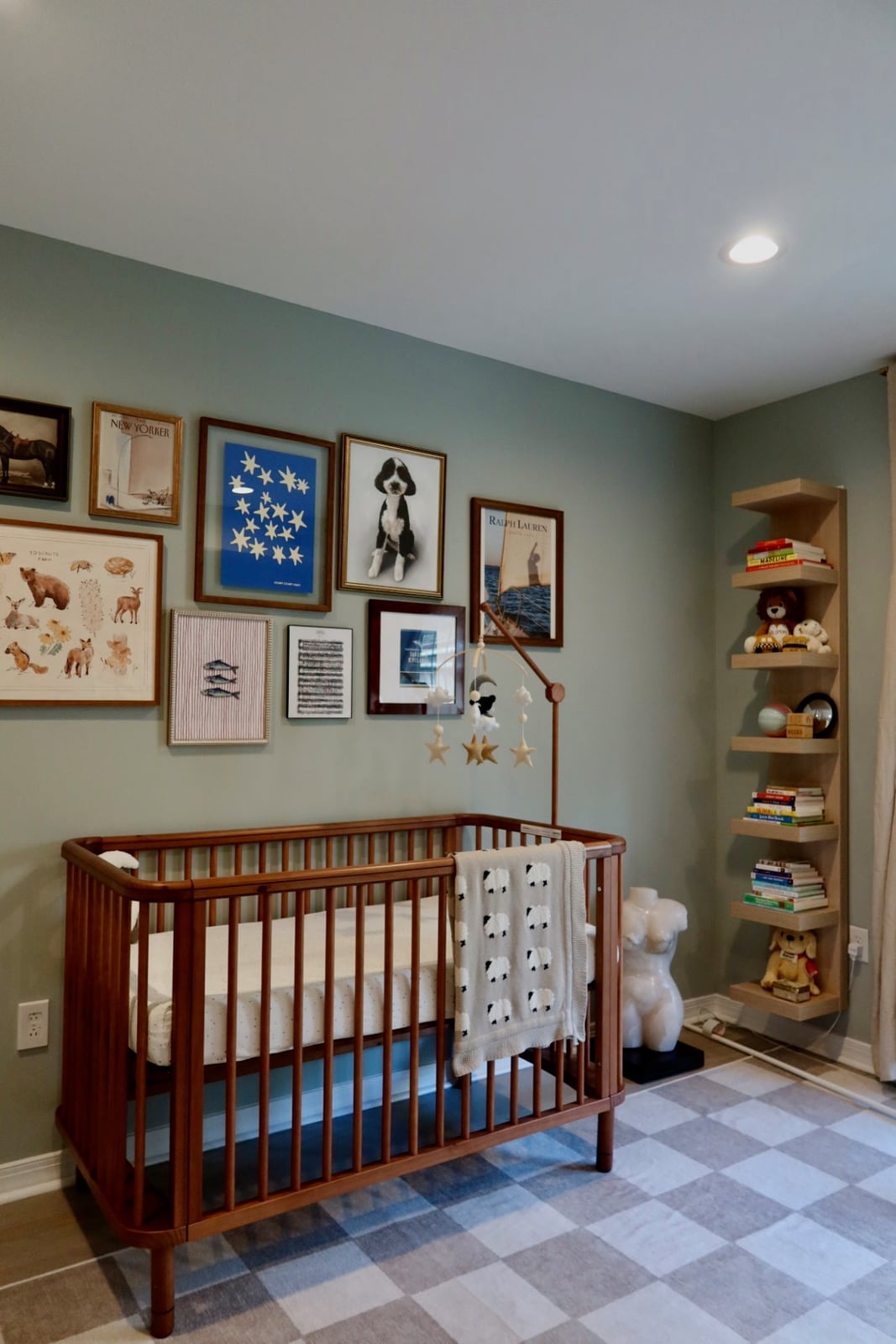
A classic nursery palette leans on soft neutrals, but sage green offers a more grounded alternative to plain cream or gray. Here, the sage green walls wrap the room in calm, while cream linens and a checkered rug in cream and gray add structure. The gallery wall on the left side mixes frames and art without feeling busy, and the wooden crib stays center stage. What makes this palette work is the balance: the green is strong enough to define the room, but the cream and gray keep it from feeling heavy. Shelving on the right side holds books and small toys, repeating the wood tone from the crib. The overhead light and natural light ensure the green looks fresh and not dark. This is a palette that can grow with the child, swapping out nursery art for prints later on.
Modern Nursery Styling Variation
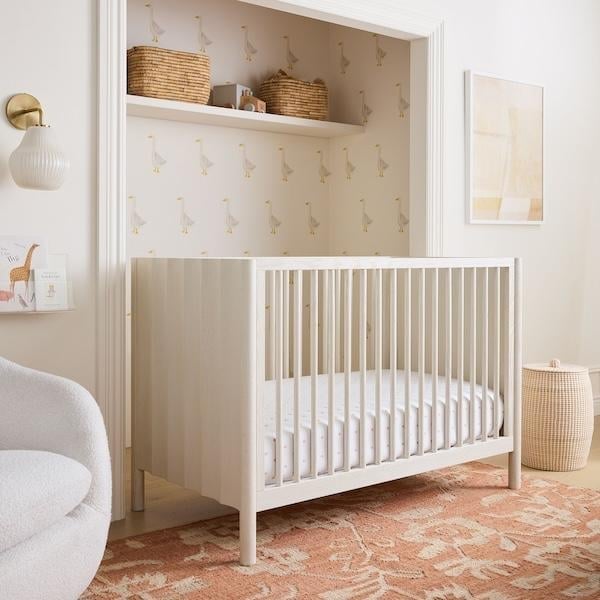
The goose wallpaper sets the tone here, introducing a whimsical pattern without overwhelming the room. A wooden crib centers the space, while an armchair to the side creates a reading nook. Woven baskets tuck away toys, and a blush rug softens the white and cream palette. The ambient wall sconce adds warm light at eye level, a quieter option than an overhead fixture for late-night feedings. The gold accents in the room tie back to the wallpaper’s details, keeping the look cohesive.
Nursery Wall Treatment
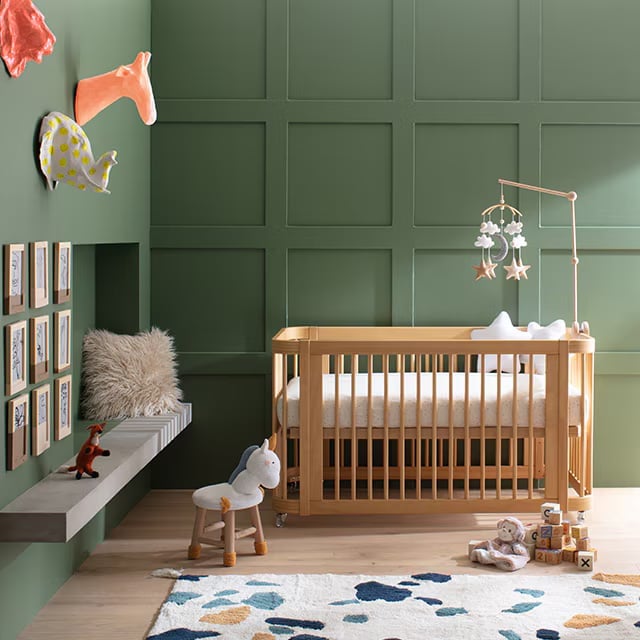
A single green paneled wall can do more for a nursery than an entire room of wallpaper. Here, the treatment anchors the room without competing with the wooden crib. A floating shelf above the crib holds decorative items, including a faux fur pillow and small figurines, adding texture at eye level. The mobile hanging above the crib draws the eye upward, making the ceiling feel higher. Natural light during the day and overhead fixtures at night keep the green from feeling too dark. For a renter-safe version, use peel-and-stick paneling in a similar green, or paint a single wall with a low-VOC paint. The key is keeping the other walls neutral so the color feels deliberate.
Coquette Nursery Palette and Materials
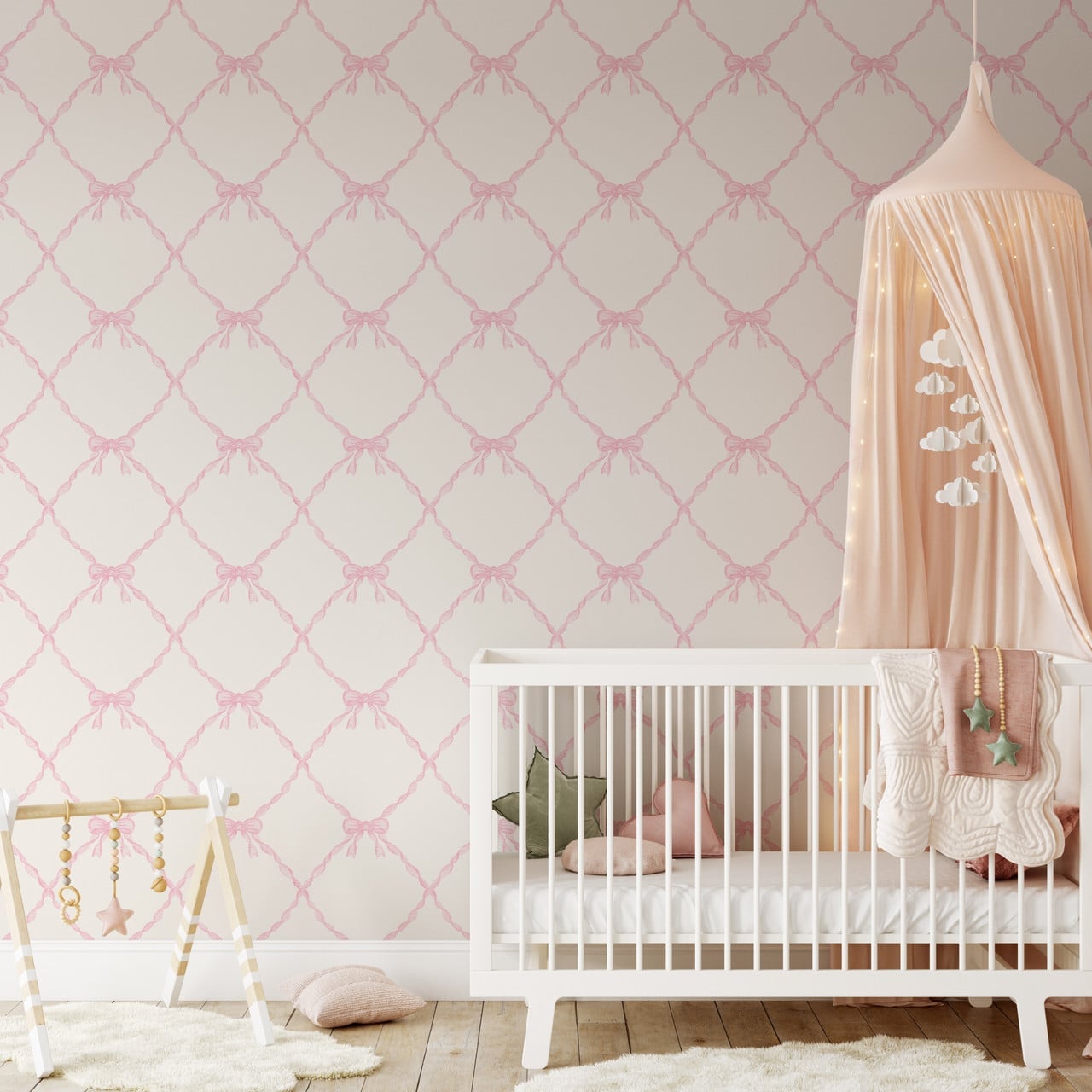
Let one pattern lead and keep everything else soft in a coquette nursery. Here, the pink bow trellis wallpaper covers the wall behind the white crib, setting a romantic tone. A pink canopy drapes above the crib, filtering the overhead light into a soft glow. The palette stays in pink, cream, and white, so the bow pattern does not feel crowded. A wooden play gym sits nearby, adding a natural texture that balances all the soft fabric. The plush rug underfoot and the canopy’s sheer layers create a room that feels like a gentle hug. What breaks the sugary look is the wood: the crib and play gym ground the pink with their warm tone. This style works when the pink feels like a choice, not the only option. The room is roomy enough for the canopy to float without overwhelming the space.
Nursery Scale and Proportion
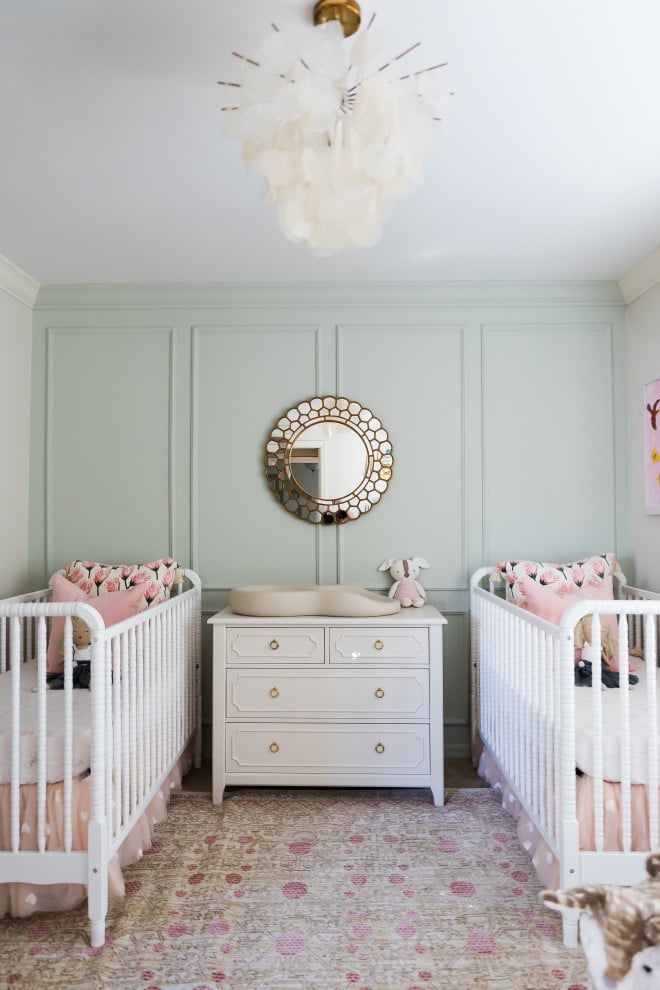
Two cribs in one nursery need a layout that avoids a crowded feel, and a symmetrical arrangement with a centered dresser does exactly that. The mint green and blush pink palette softens the visual weight of the furniture, while the decorative mirror above the dresser adds height and balances the overhead chandelier. A roomy feel comes from leaving enough floor space between the cribs and the dresser so the room breathes.
Final Thoughts
These 16 nurseries show that Ralph Lauren style isn’t just for adults. It’s about mixing classic patterns with practical pieces that grow with your child. The best part is that you can start small, maybe with a tartan wallpaper accent wall or a cream dresser, and build from there. Remember to check your climate for any plants you add and keep the layout flexible for changing needs. Ultimately, a nursery should feel like a cozy retreat, not a showroom, and these ideas offer a solid foundation for that balance.