Small bathroom design is entering a new era in 2026, where creative solutions meet refined aesthetics in the most compact spaces. Americans searching Pinterest for bathroom inspiration are discovering that size doesn’t limit style—it challenges designers to be smarter, bolder, and more intentional. This year’s trends embrace everything from spa-inspired retreats to japandi minimalism, proving that even the smallest bathroom can become a statement of modern luxury and thoughtful design. Whether you’re working with a powder room or a narrow ensuite, these ideas will show you how to maximize every inch while creating a space that feels both beautiful and functional. Get ready to reimagine what’s possible when constraint becomes creativity.
1. Floating Vanity with Hidden LED Strips
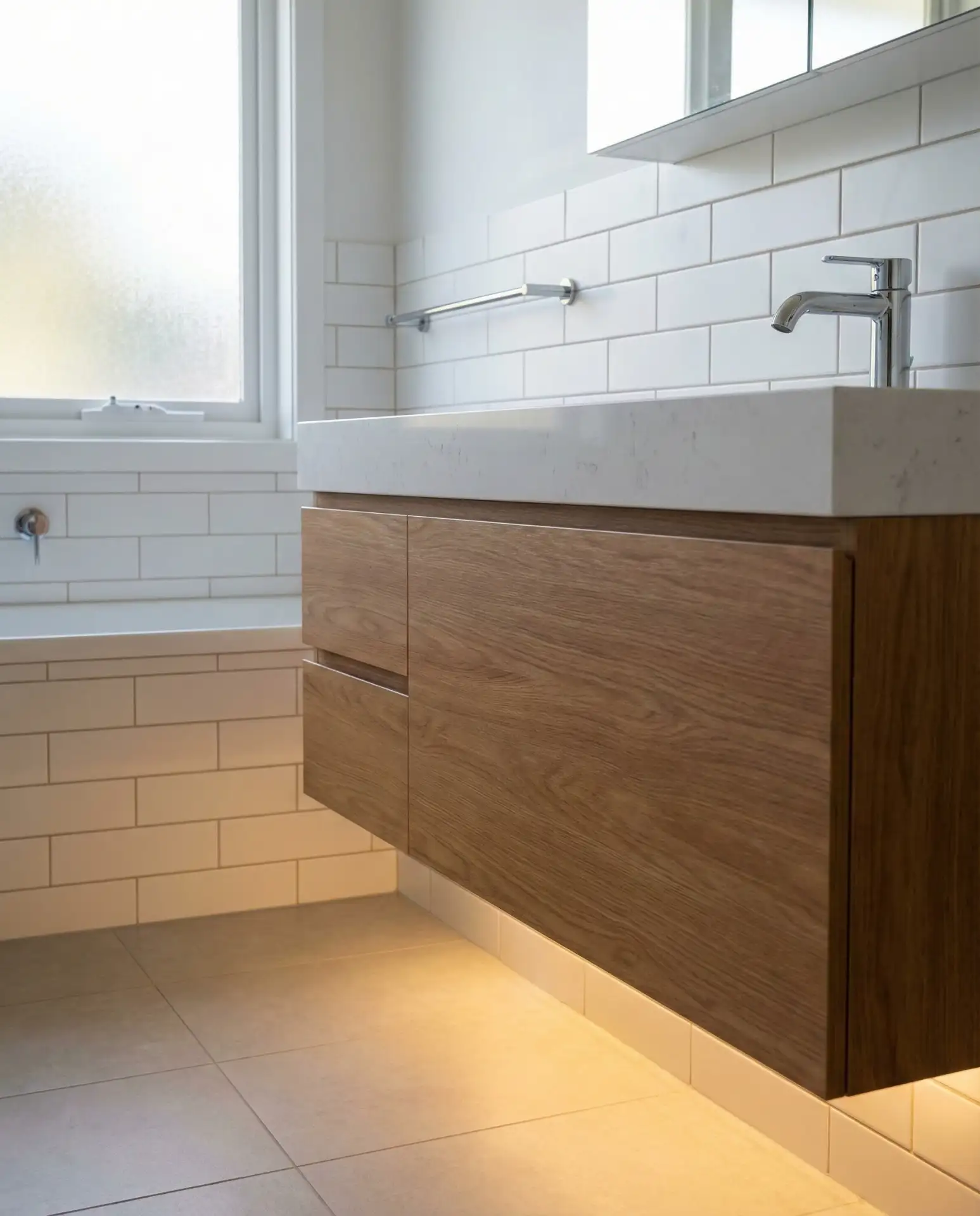
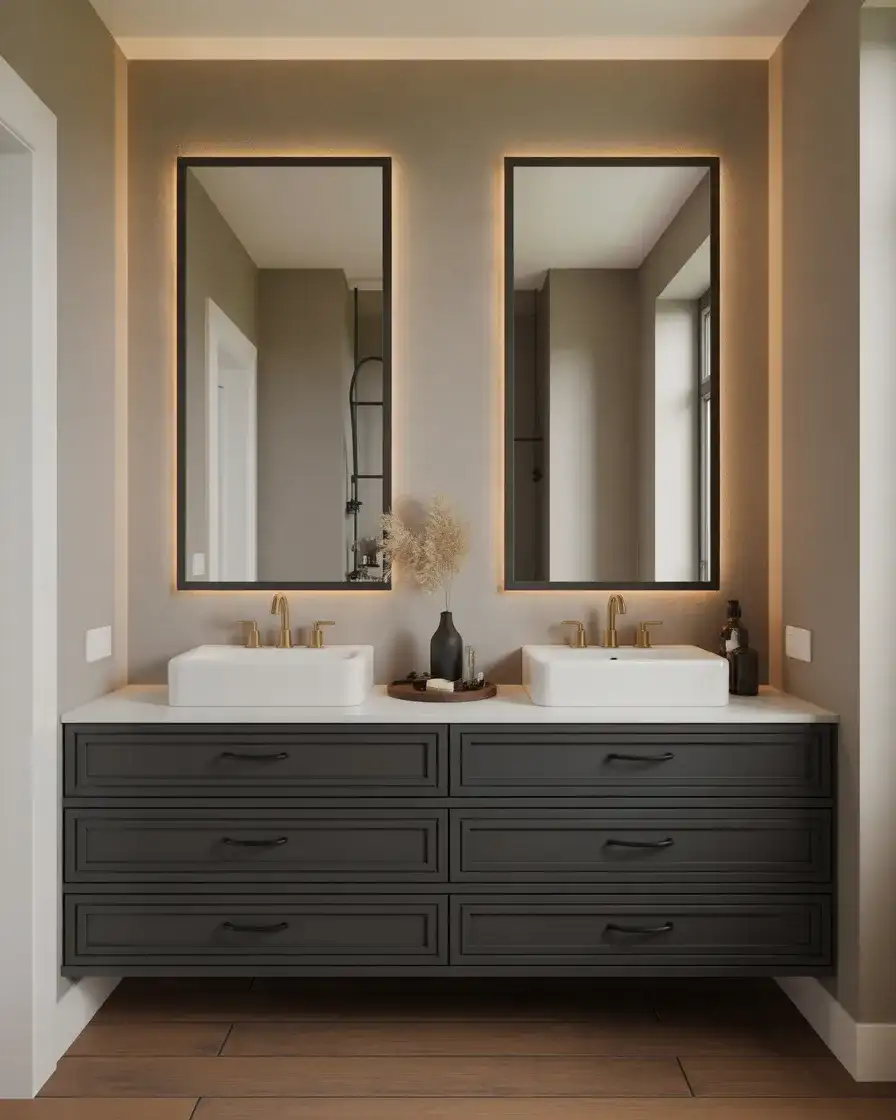
A floating vanity creates the illusion of more floor space while hidden LED strips add a modern glow that transforms your small bathroom into a spa-inspired retreat. This space saving approach works beautifully in narrow layouts where every visual trick counts. The soft underglow makes morning routines feel luxurious without requiring a full renovation, and the clean lines align perfectly with 2026 trends toward minimalism and light play. 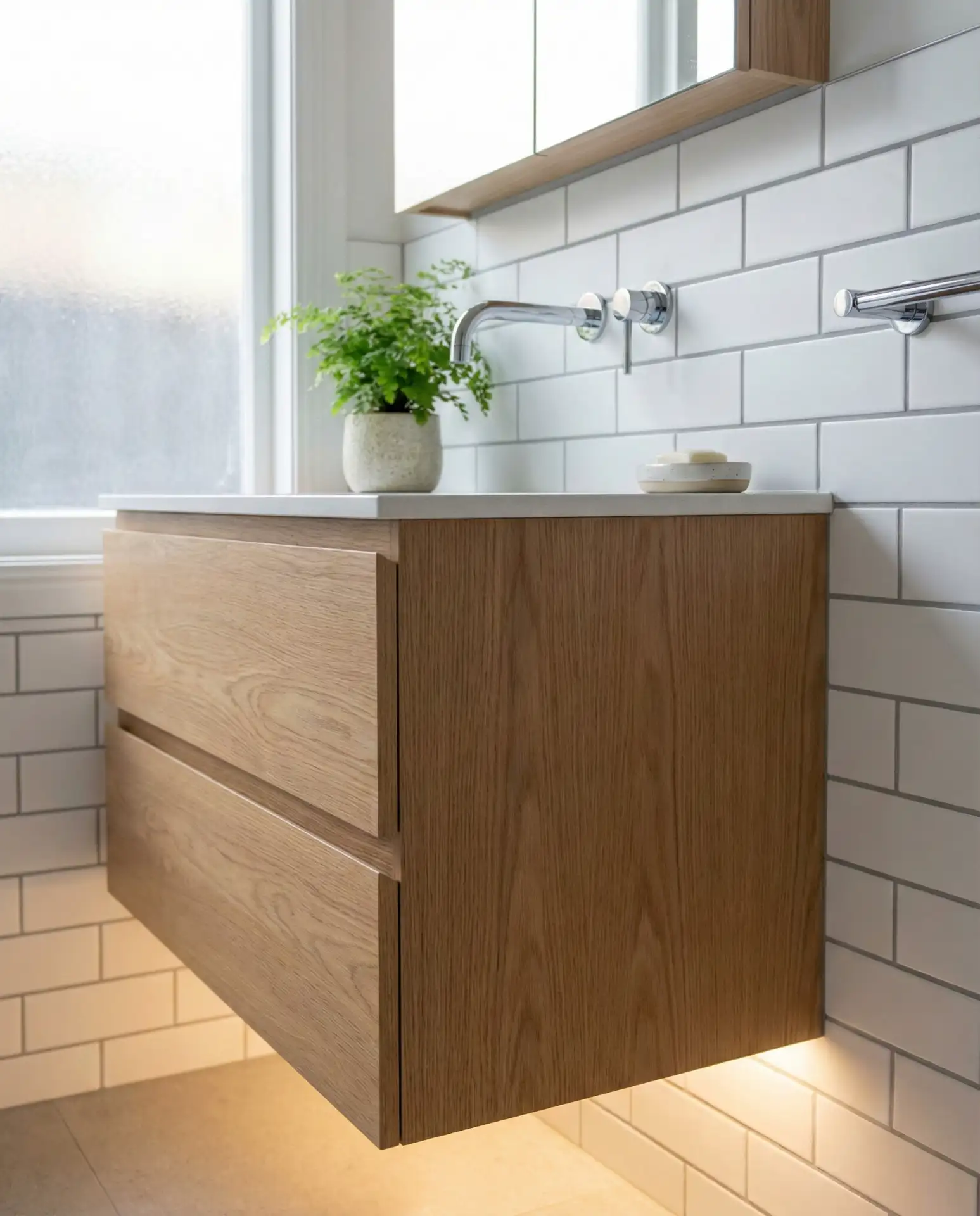
This works best in condos and apartments where floor space is precious but ceiling height allows for dramatic lighting effects. The floating design also makes cleaning underneath effortless, which busy homeowners appreciate more than any design magazine admits. Pair it with a large mirror to bounce that LED glow around the room and watch a cramped bathroom suddenly feel twice its actual size.
2. Vertical Subway Tiles for Height Illusion
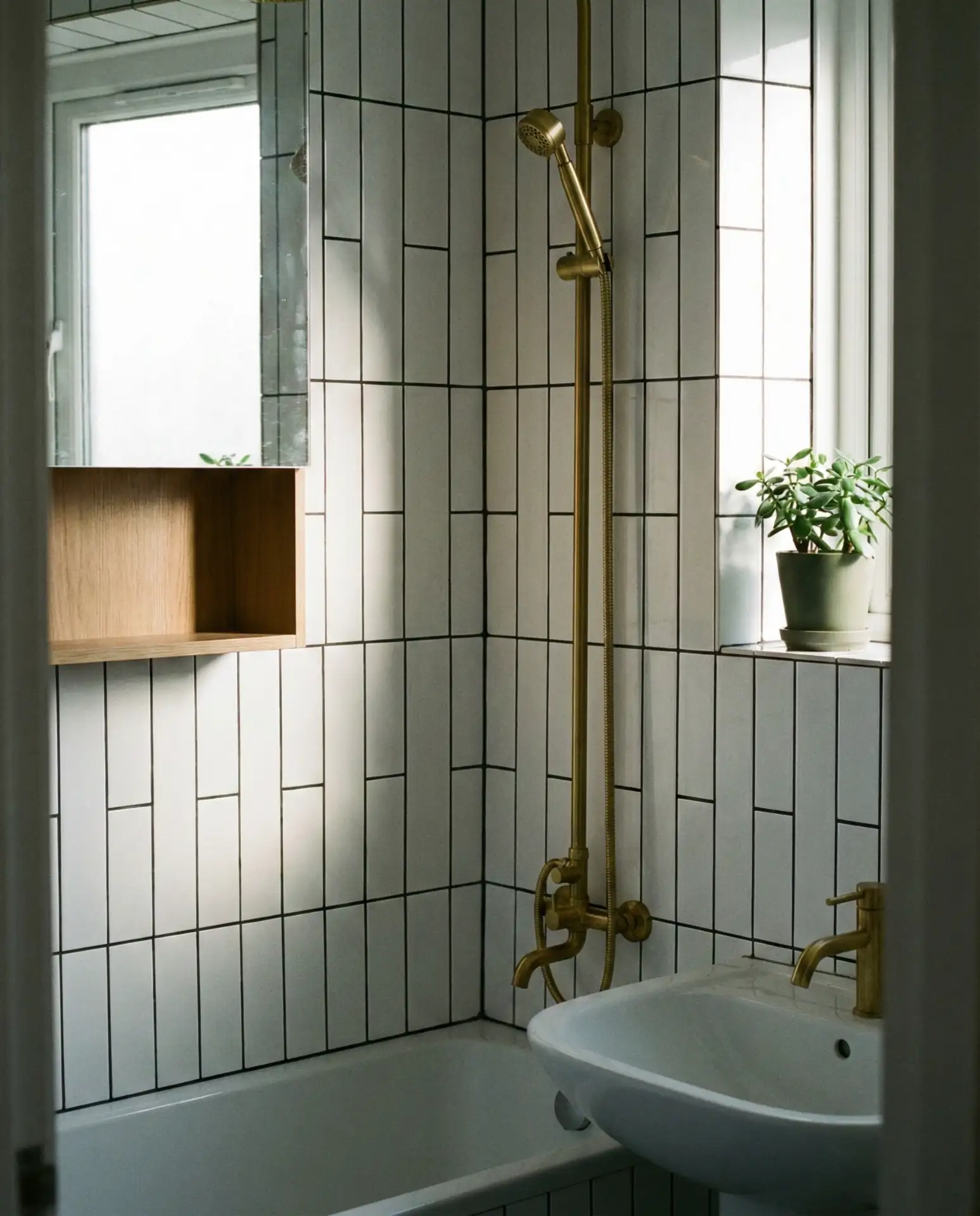
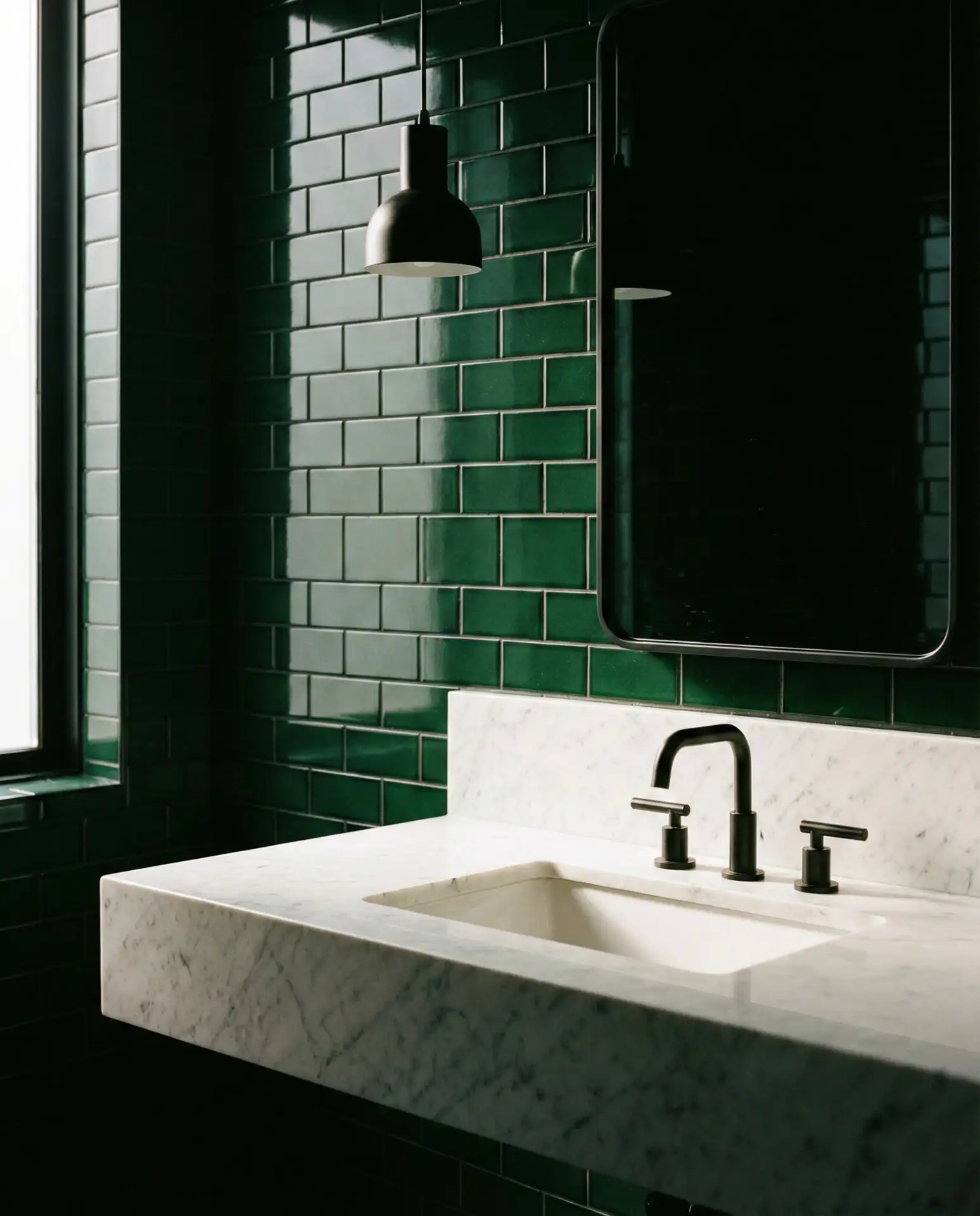
Running subway tiles vertically instead of horizontally is a simple modern trick that draws the eye upward and makes low ceilings disappear. This layout choice costs nothing extra but delivers a striking visual impact that feels both fresh and timeless. White or soft green tiles work particularly well, creating a clean backdrop that lets fixtures and textiles shine without overwhelming a compact footprint. 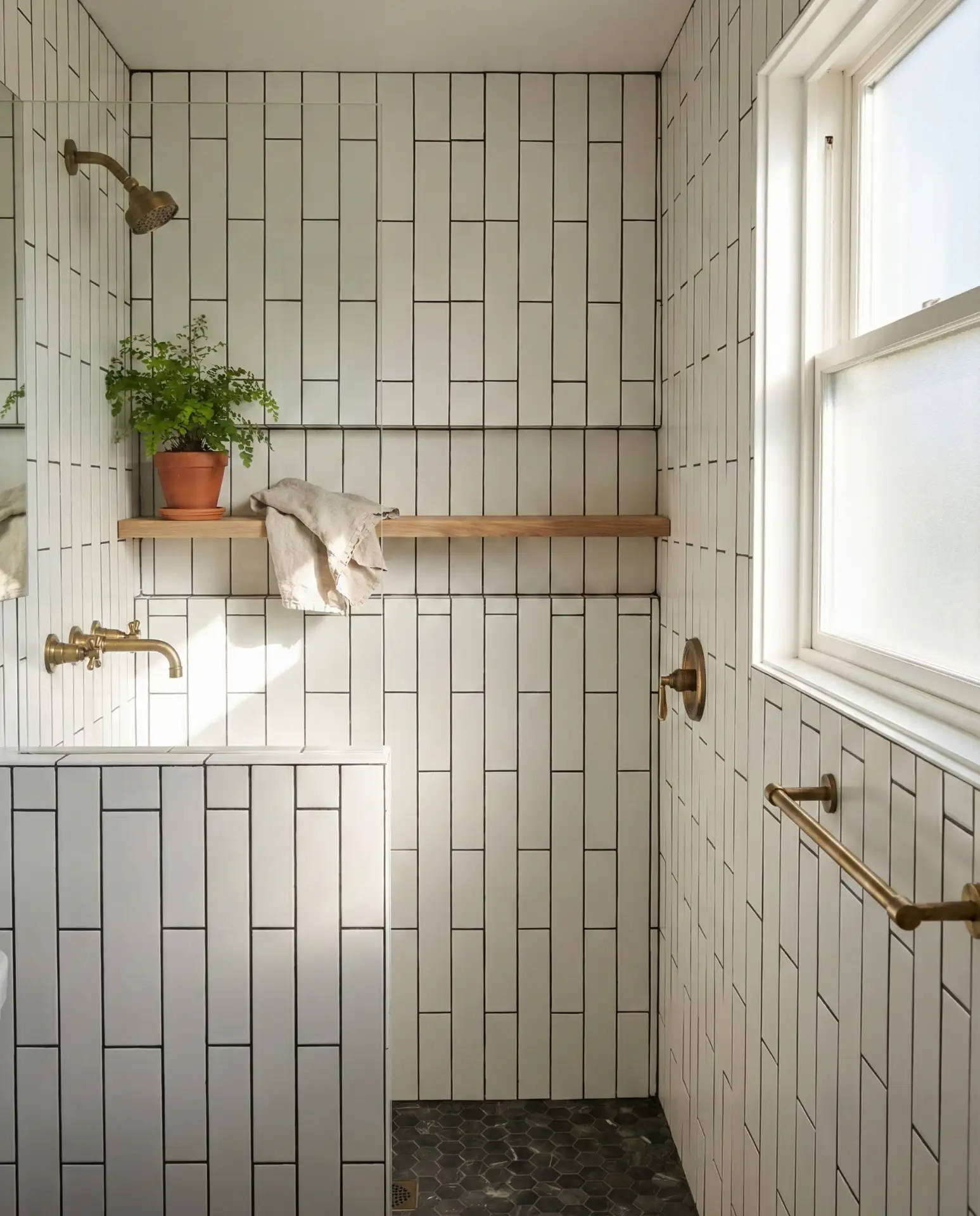
Regional note: In older East Coast homes with 7-foot ceilings, this technique can add perceived height that compensates for original architecture. The grout lines become subtle pinstripes that guide your gaze skyward, a detail that homeowners notice subconsciously but appreciate consciously. It’s proof that orientation matters as much as material choice.
3. Corner Glass Shower with Rainfall Head
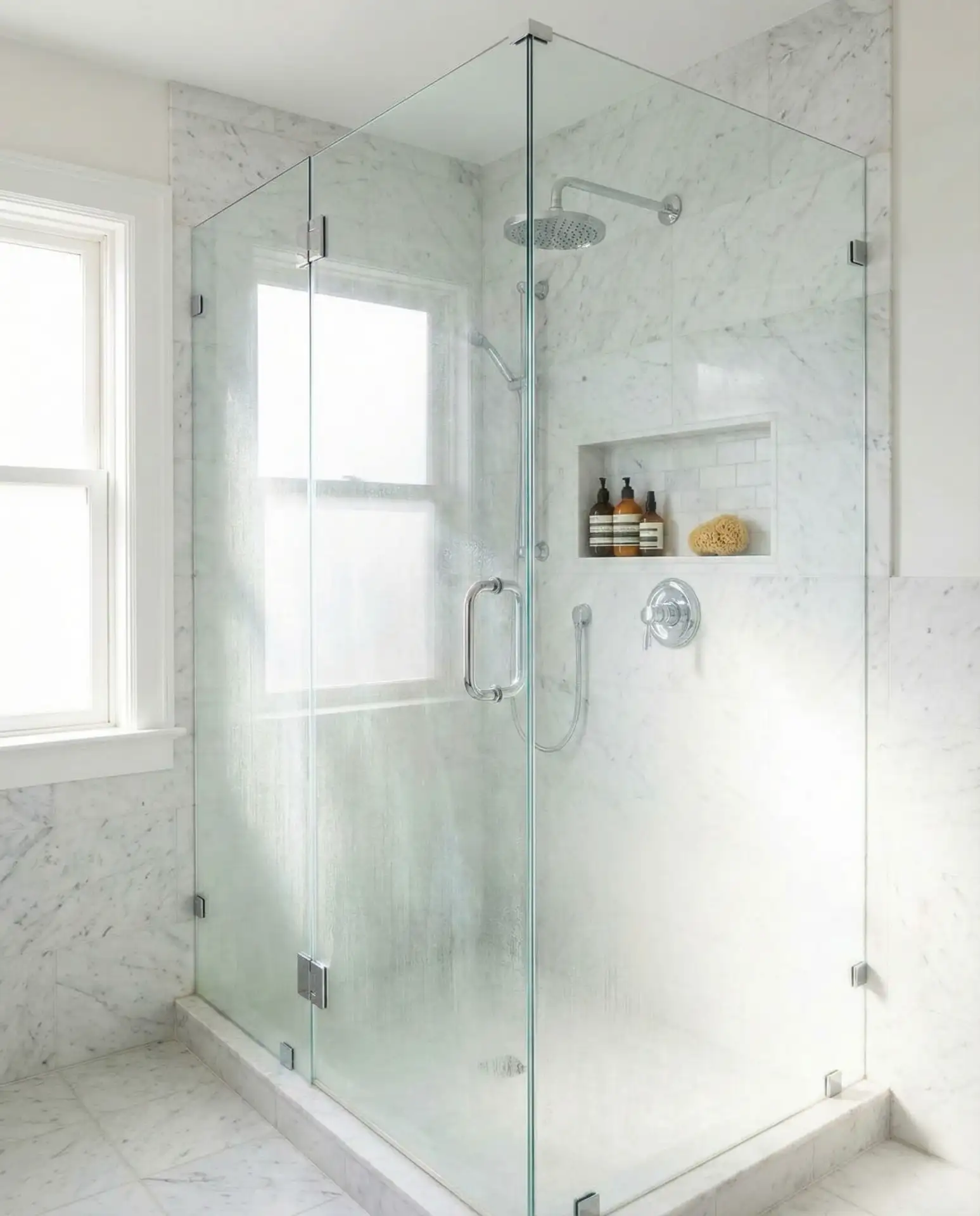
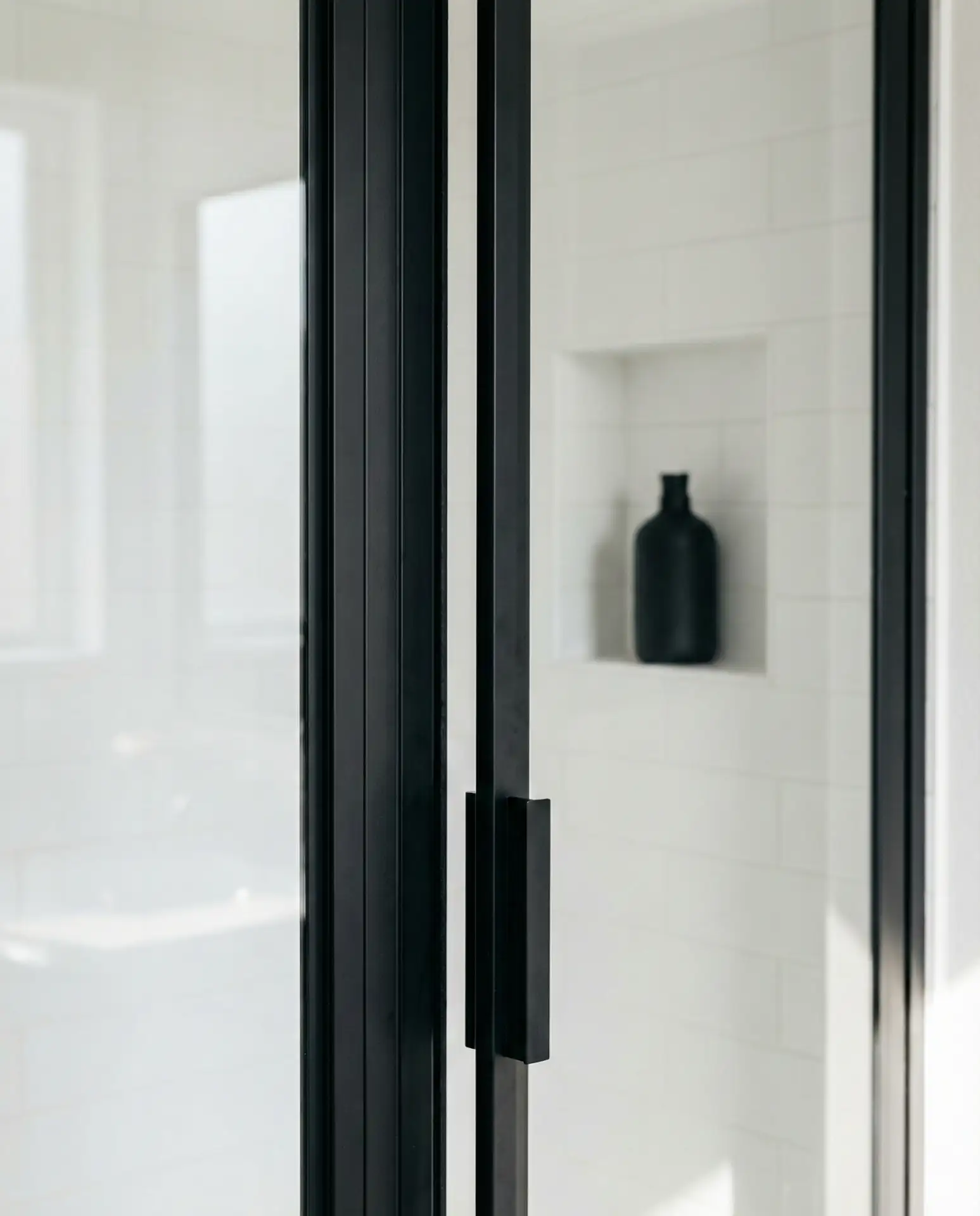
Tucking a frameless glass shower into a corner maximizes usable space while a ceiling-mounted rainfall showerhead delivers that luxury hotel experience at home. Clear glass keeps sightlines open, making the room feel larger than its measurements suggest. This is a favorite modern small bathroom design move in urban apartments where every square foot must justify its existence through both function and style. 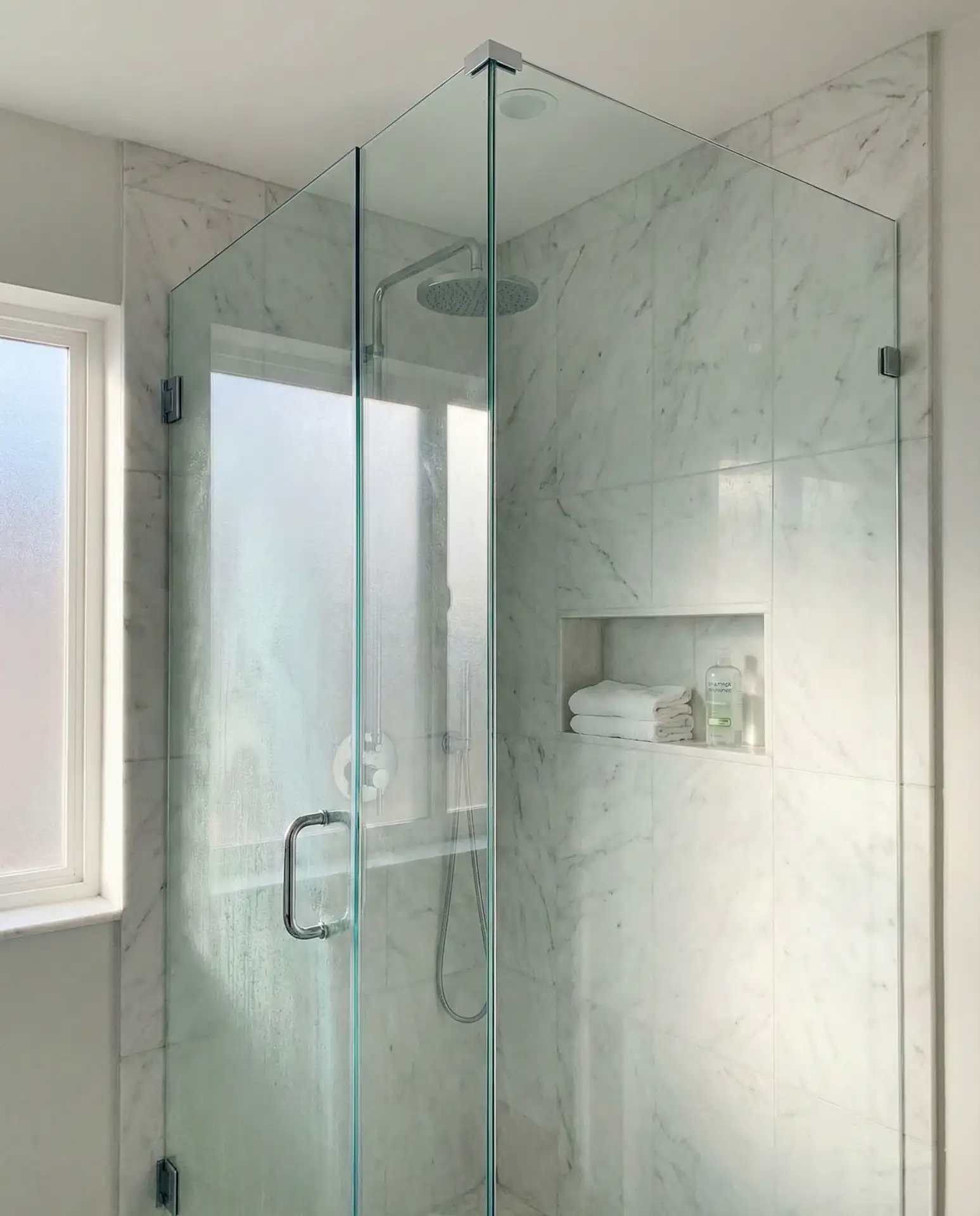
Common mistake: Installing a shower door that swings outward into an already tight space. Always opt for a sliding door or no door at all when square footage is limited—you’ll thank yourself every morning when you’re not doing a bathroom choreography routine just to step inside. The rainfall head also uses less water than multiple body jets while feeling more indulgent.
4. Japandi Wood and Stone Harmony
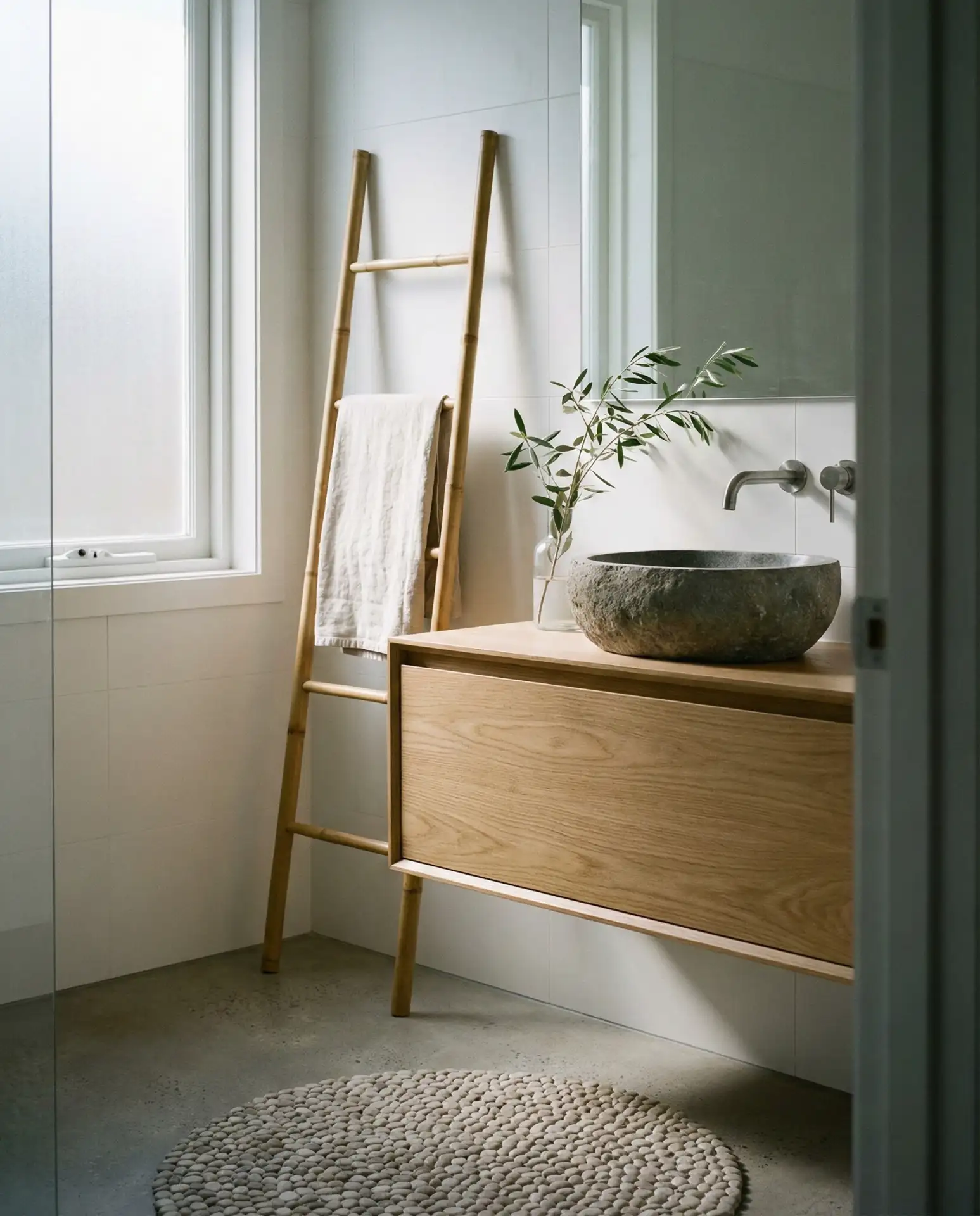
Japandi design brings together Scandinavian functionality and Japanese serenity, making it perfect for small bathrooms that need to feel calm rather than cluttered. Natural wood vanities paired with stone vessel sinks create textural inspiration that feels organic and grounding. The neutral palette—think warm oak, cool gray stone, and matte black fixtures—prevents visual chaos while maintaining very high design standards that Pinterest users crave. 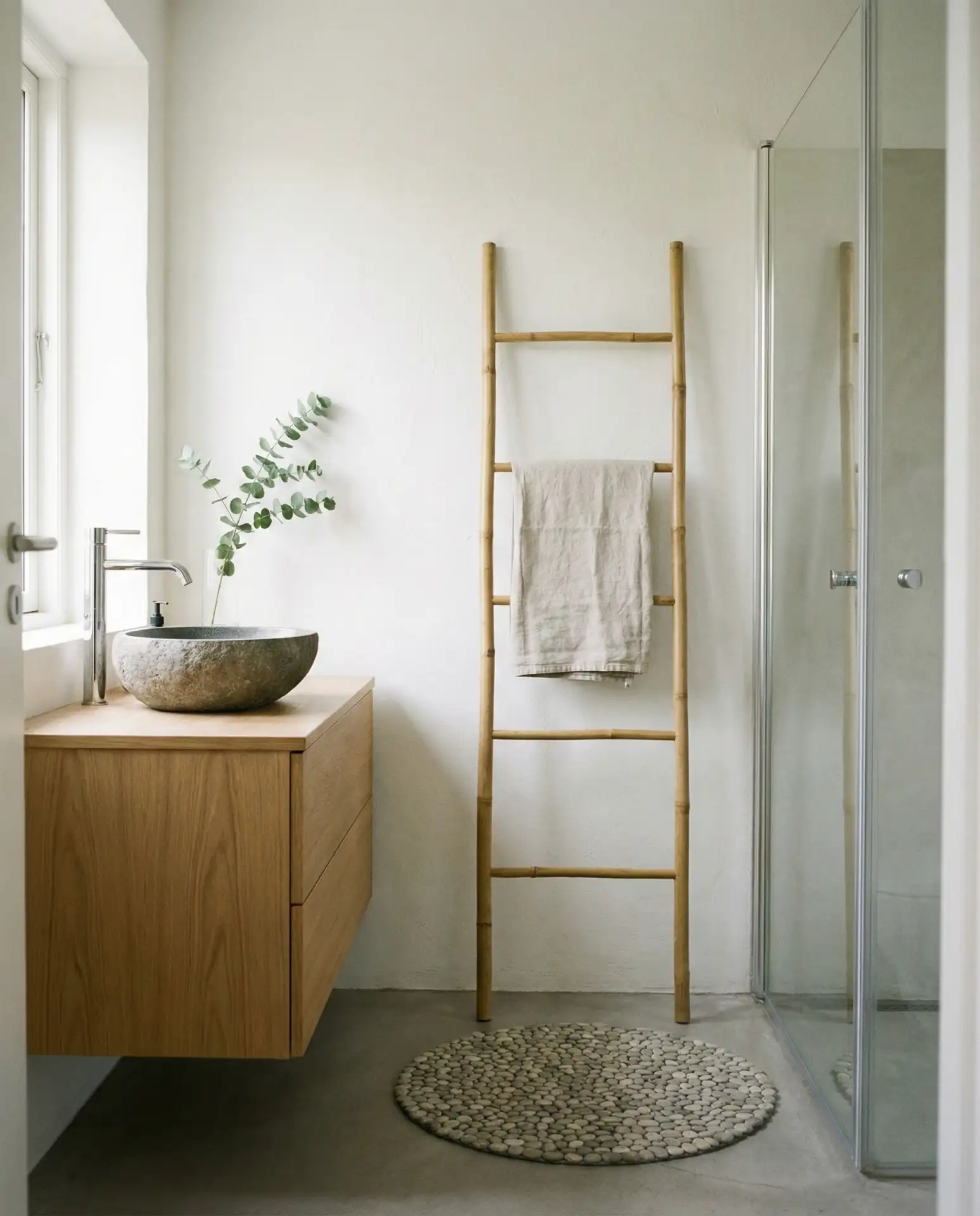
Budget tip: You don’t need imported Japanese hinoki wood or Italian Carrara marble to achieve this look. Many American suppliers now offer japandi-inspired materials at accessible price points, especially through online retailers who’ve caught onto the trend. A $200 wood vanity and a $50 stone sink can deliver the same serene vibe as pieces costing ten times more—it’s about proportion and restraint, not price tags.
5. Monochrome Blue with Brass Accents
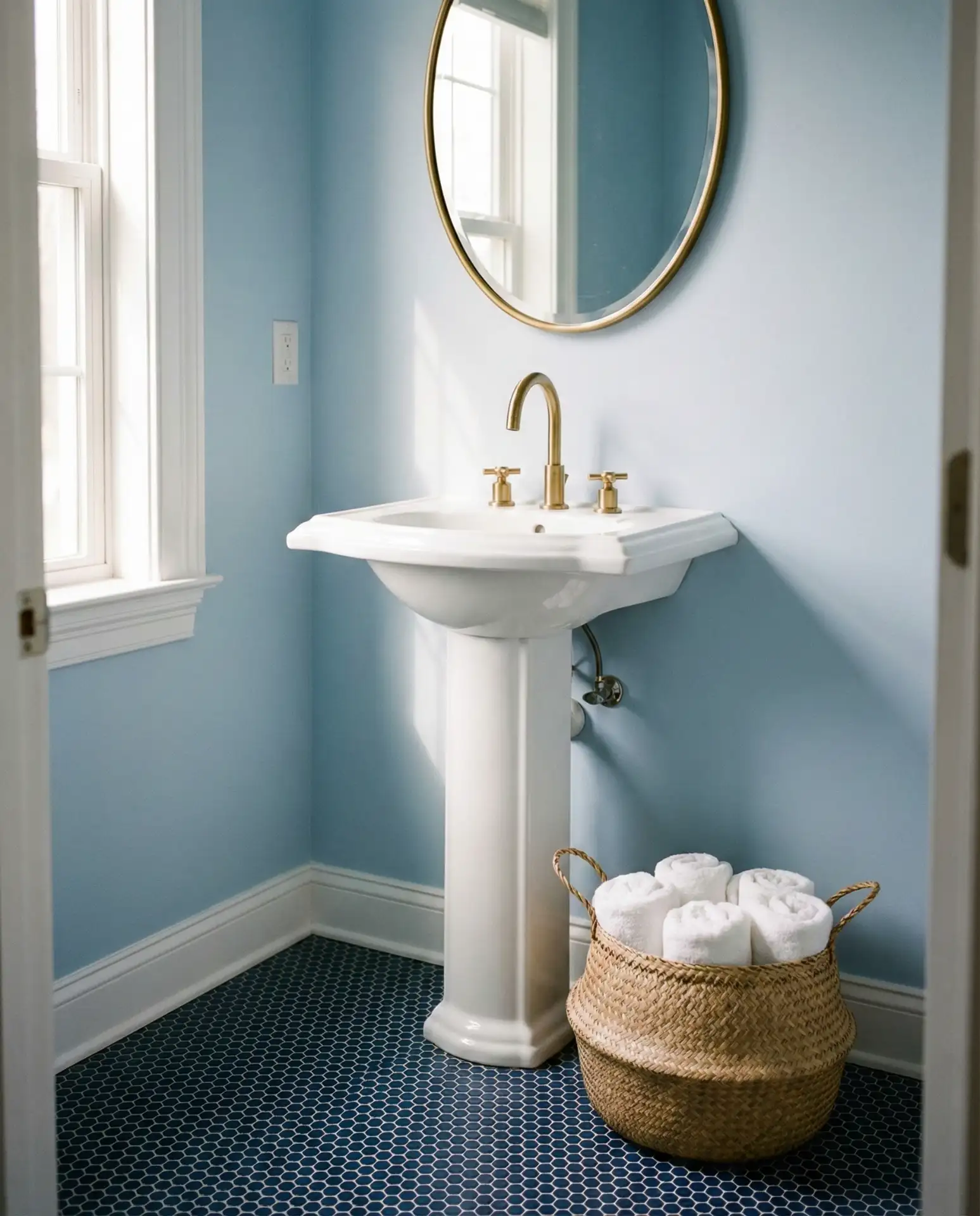
A blue color scheme creates depth without darkness, especially when you layer different shades from navy floor tiles to powder-blue walls. Brass fixtures and hardware add warmth that prevents the space from feeling cold or clinical. This palette is trending hard in 2026 because it offers modern luxury with a coastal ease that Americans across regions—from Pacific Northwest to Gulf Coast—find universally appealing. 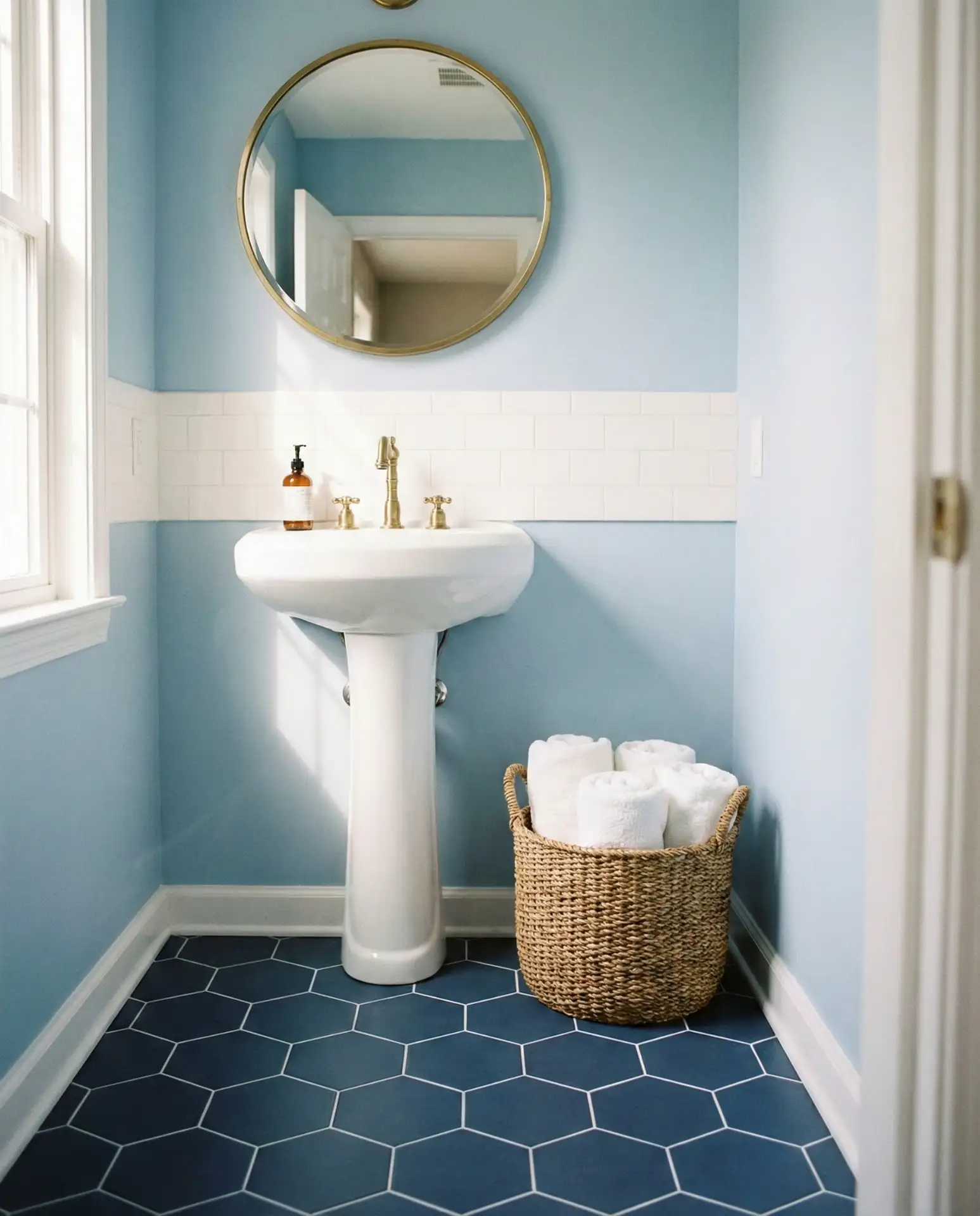
Expert insight: The brass doesn’t need to match perfectly—mixing brushed, polished, and antique brass creates a collected-over-time look that feels more authentic than a coordinated set. Blue also has the psychological benefit of promoting relaxation, which is exactly what you want in a bathroom that doubles as your morning meditation space before a chaotic commute.
6. Open Shelving with Woven Baskets
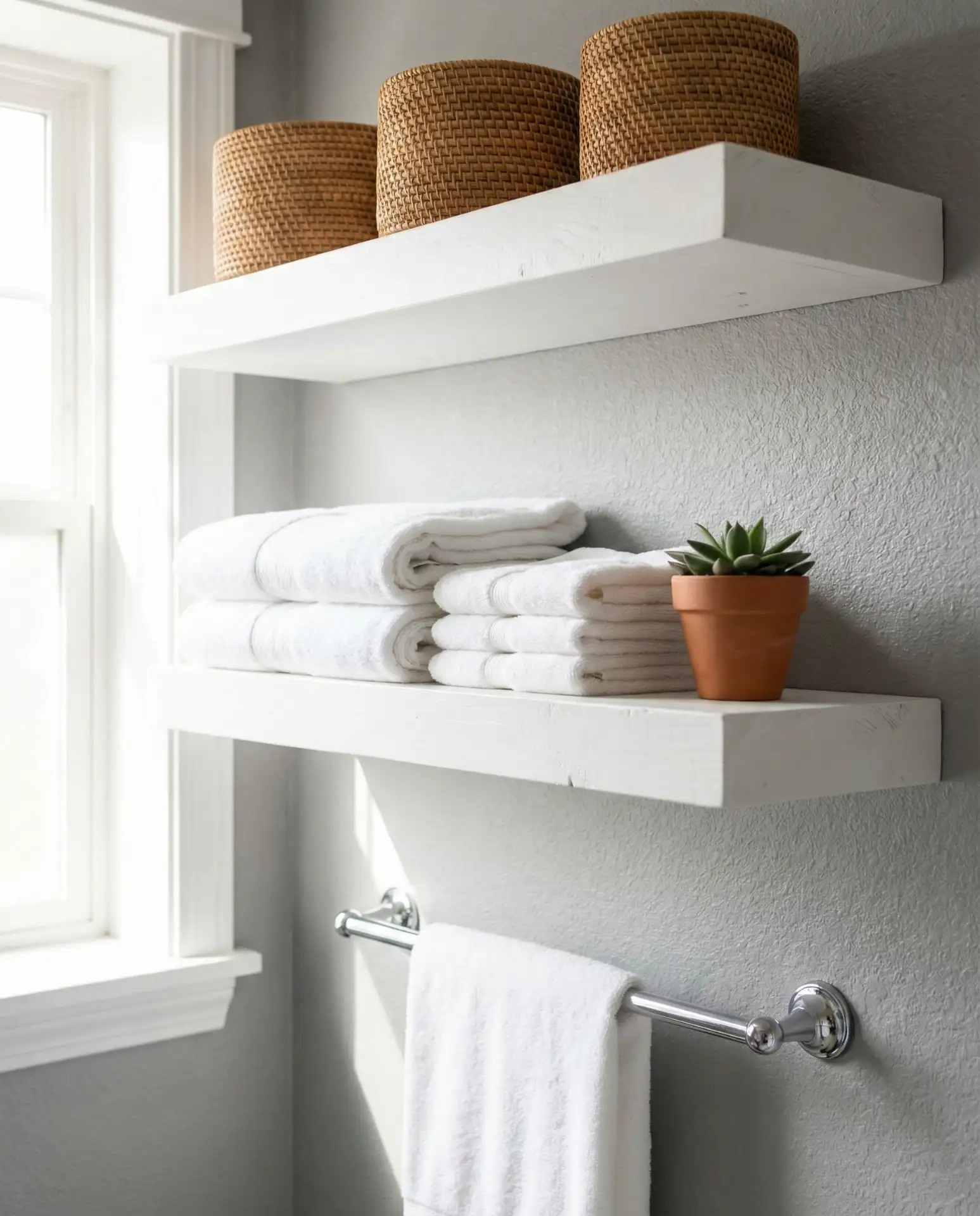
Open shelving eliminates the visual weight of closed cabinets while woven baskets hide toiletries in a way that looks intentionally beautiful rather than utilitarian. This space saving strategy works wonders in rentals where you can’t modify existing storage. Natural materials like rattan or seagrass add organic texture that softens hard tile and glass surfaces common in modern small bathroom design minimal approaches. 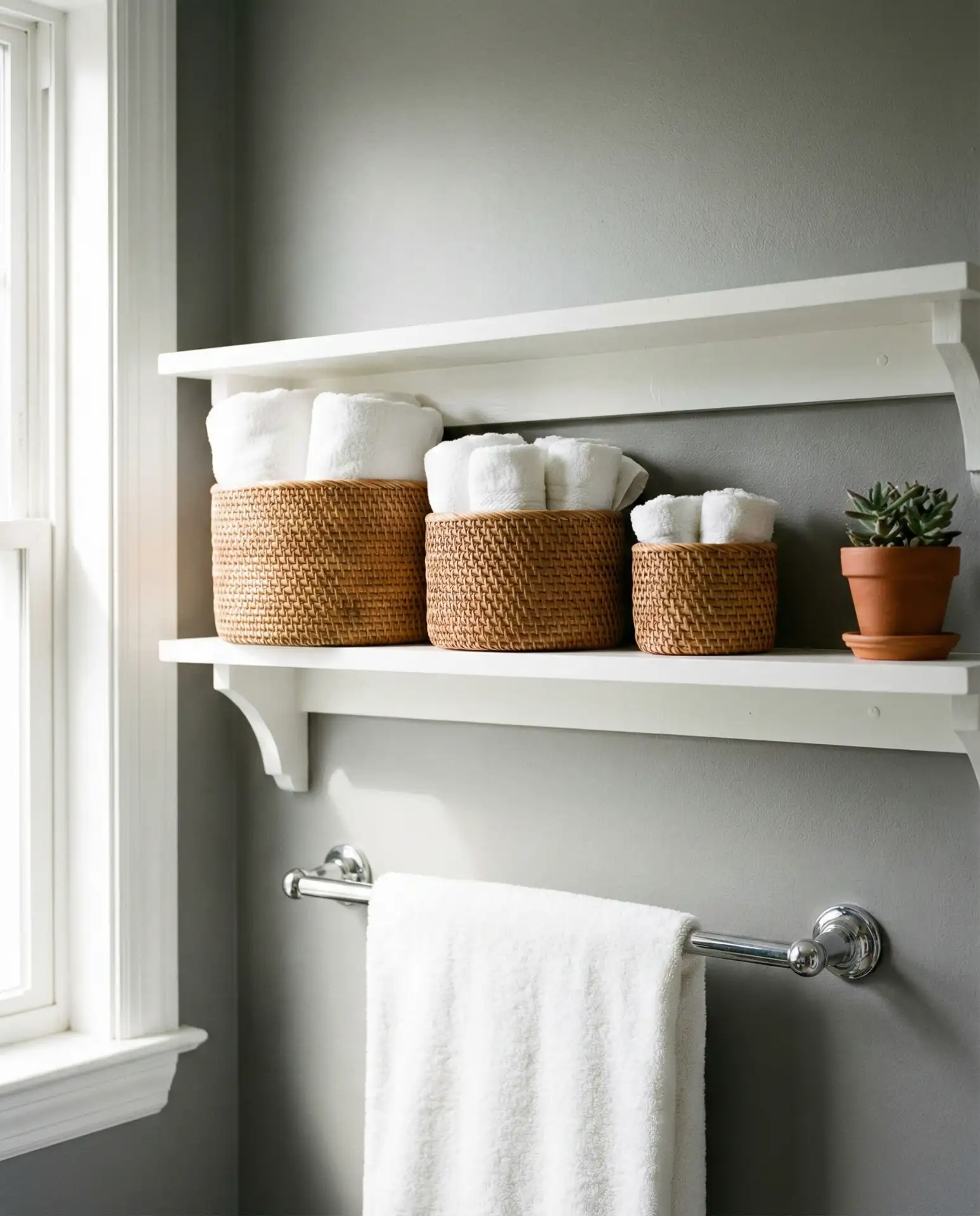
Real homeowner behavior: Most people keep their most-used items in the baskets within arm’s reach of the shower or vanity, while decorative objects live on open shelf space. This creates a functional hierarchy that looks curated but actually serves daily routines. Just remember that open shelving requires more frequent dusting than closed cabinets—a trade-off worth considering if you’re not naturally tidy.
7. Freestanding Tub as Statement Piece
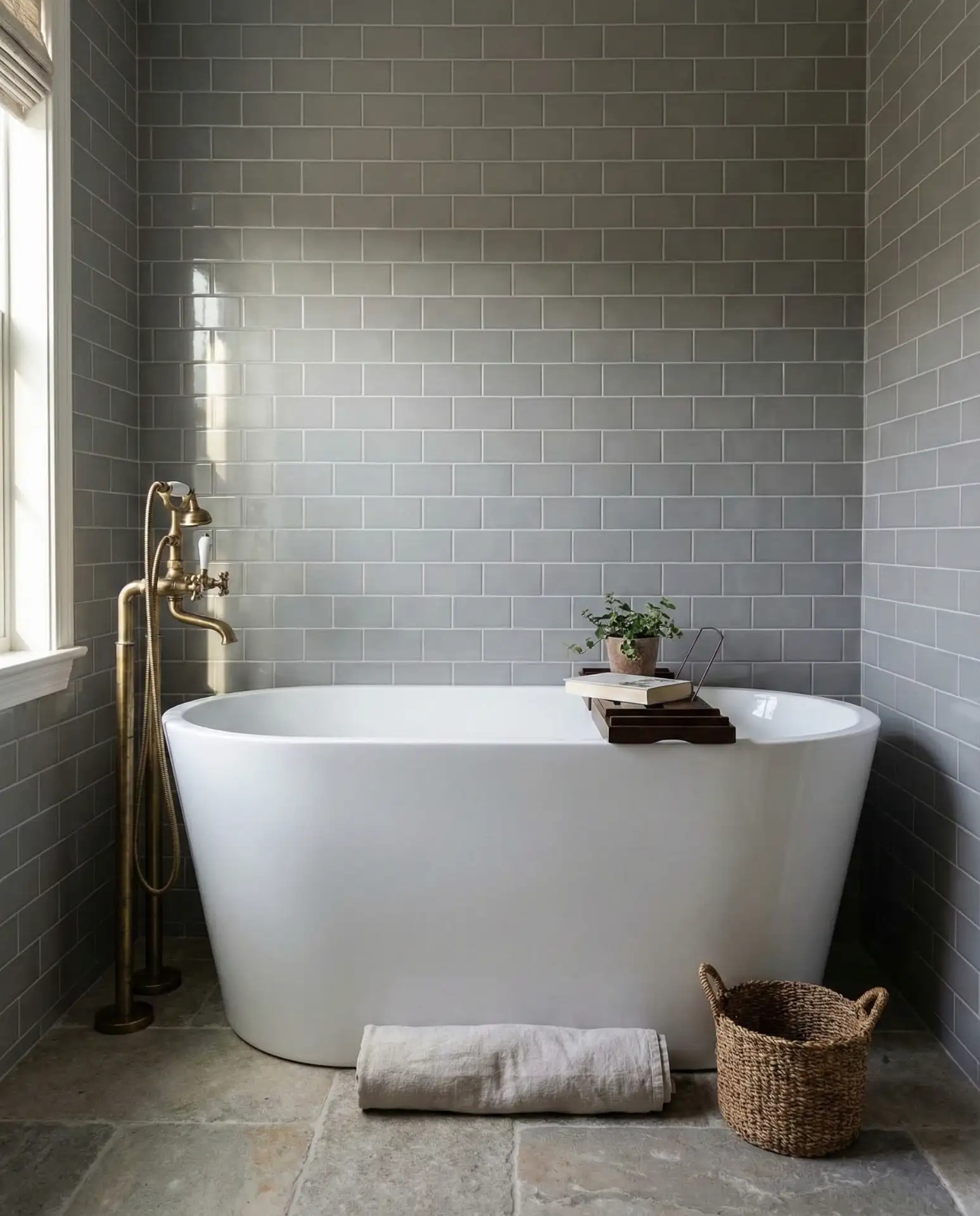
A compact free standing bath tub can anchor a small bathroom layout when positioned thoughtfully, becoming the focal point that everything else revolves around. Modern tub designs come in shorter lengths—around 55 inches instead of standard 60—that fit tight spaces without sacrificing soaking depth. This is pure luxury redefined: choosing one exceptional element over multiple mediocre features. 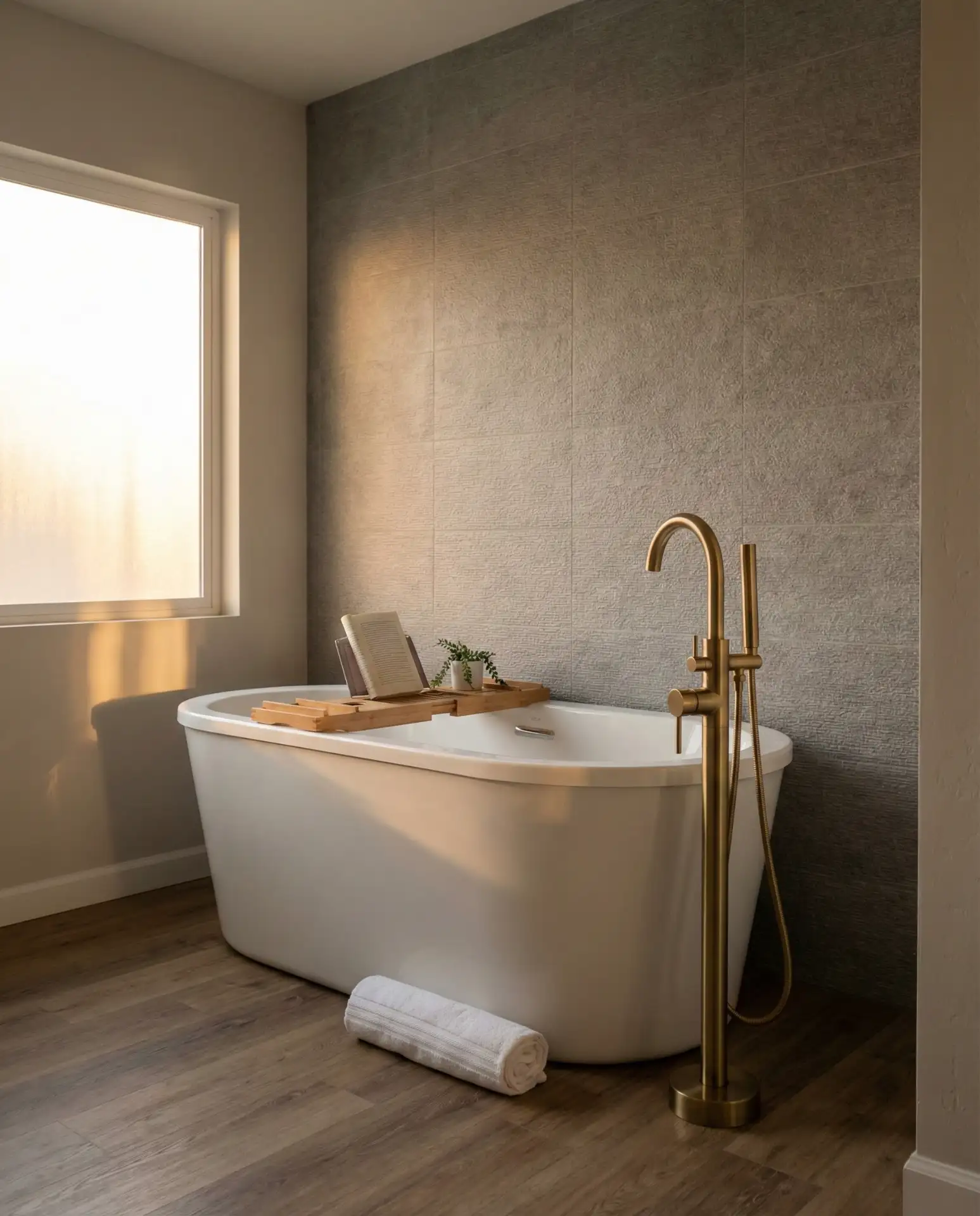
This works best in bathrooms where you can eliminate the traditional shower-tub combo and commit to a standalone shower elsewhere or a handheld shower attachment. Western states like California and Arizona see more of this approach because water-conscious homeowners prefer efficient showers for daily use and save the tub for occasional indulgence. It’s a lifestyle choice that doubles as a design statement.
8. Black Fixtures Against White Tile
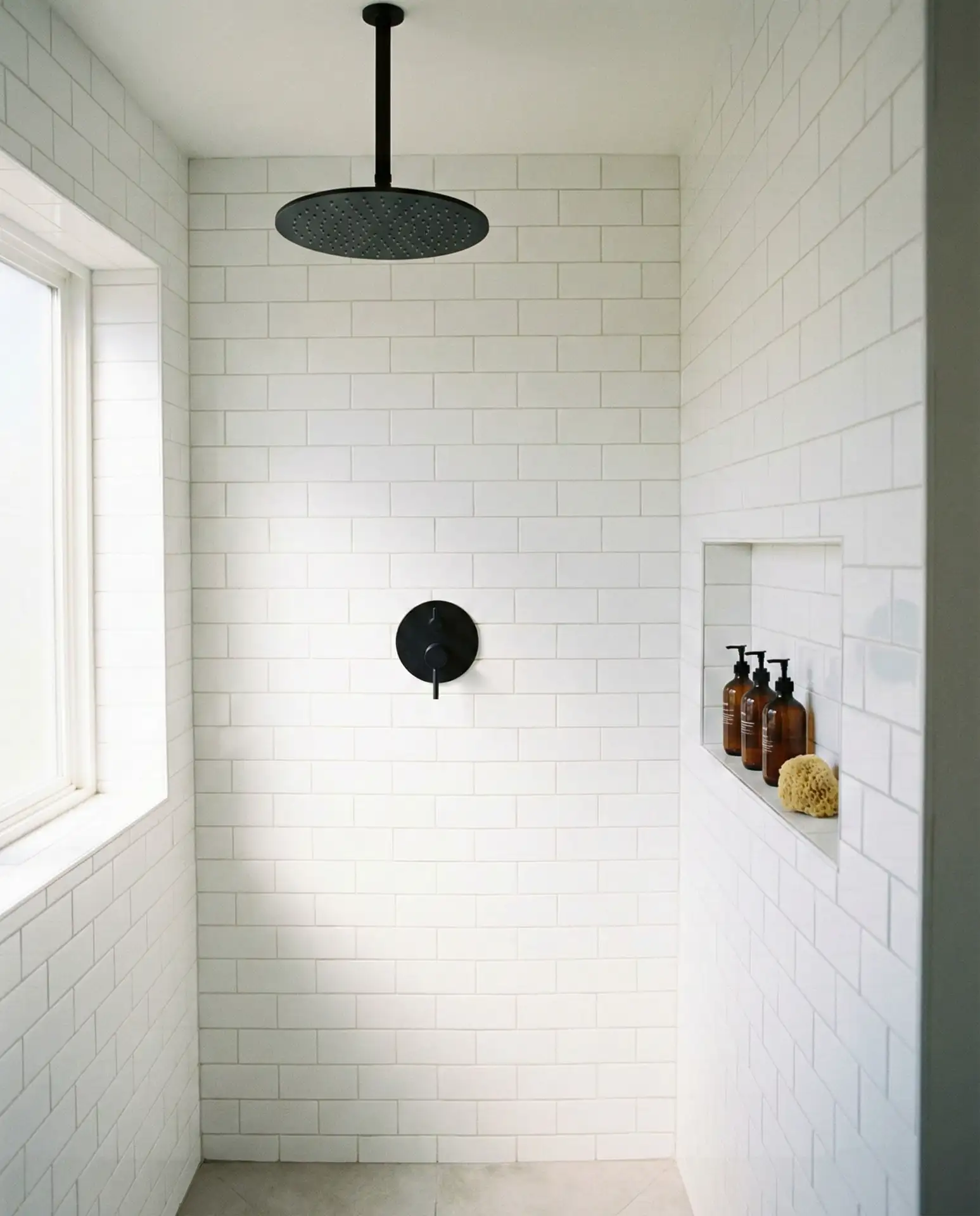
Matte black faucets, showerheads, and cabinet hardware create graphic contrast against classic white tile, delivering a modern edge without requiring bold color everywhere. This pairing has become a 2026 trends staple because it photographs beautifully and ages well—black never feels dated the way some trendy colors do. The high contrast also makes small spaces feel more defined and intentional rather than apologetically cramped. 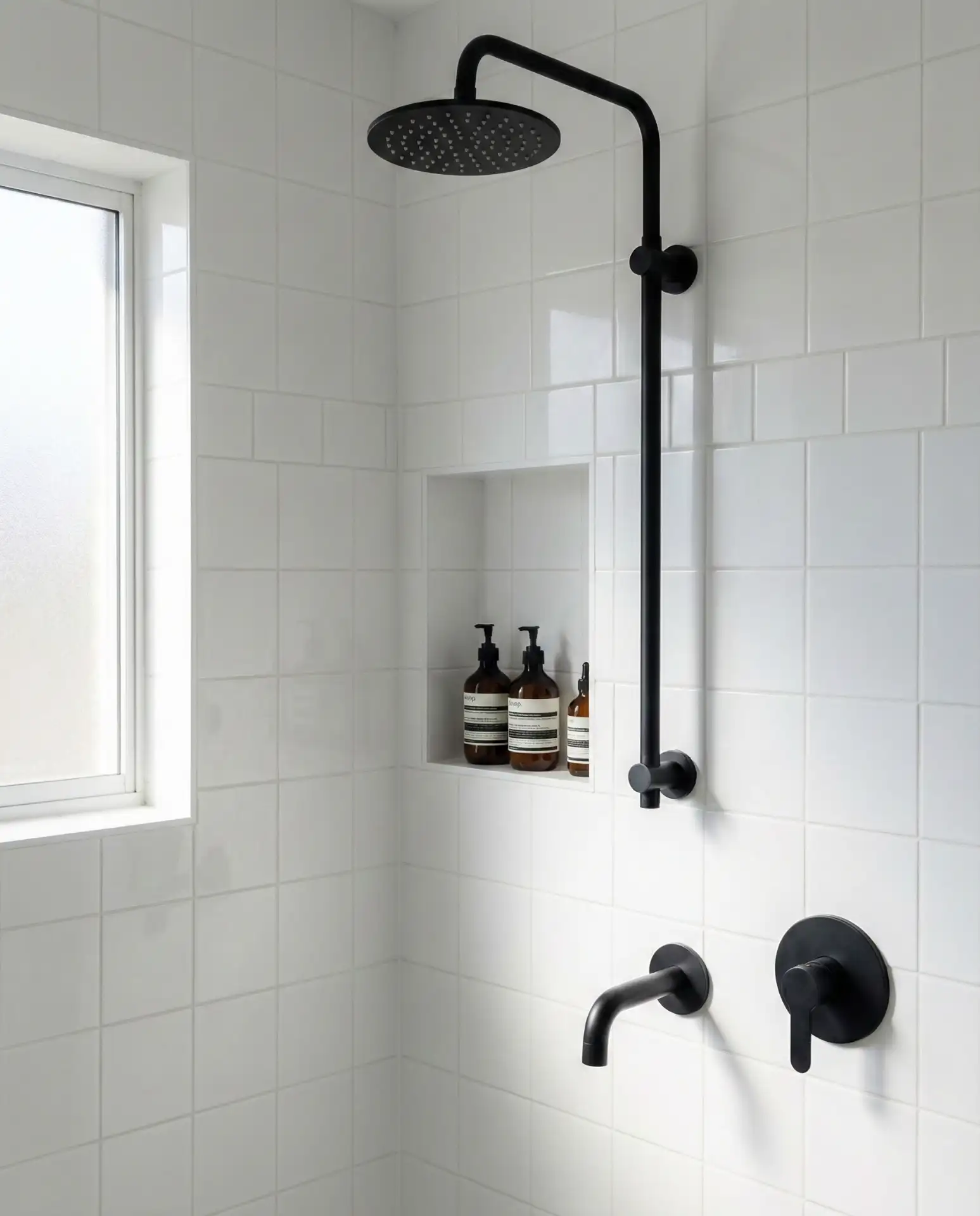
Micro anecdote: A friend renovated her 1940s bungalow bathroom and swapped chrome for matte black fixtures—the before-and-after photos looked like two different decades. The black anchored the space and made everything feel more substantial, even though the footprint hadn’t changed. Just be aware that matte black shows water spots more than chrome, so keep a microfiber cloth handy if you’re particular about finishes.
9. Wet Room with Linear Drain
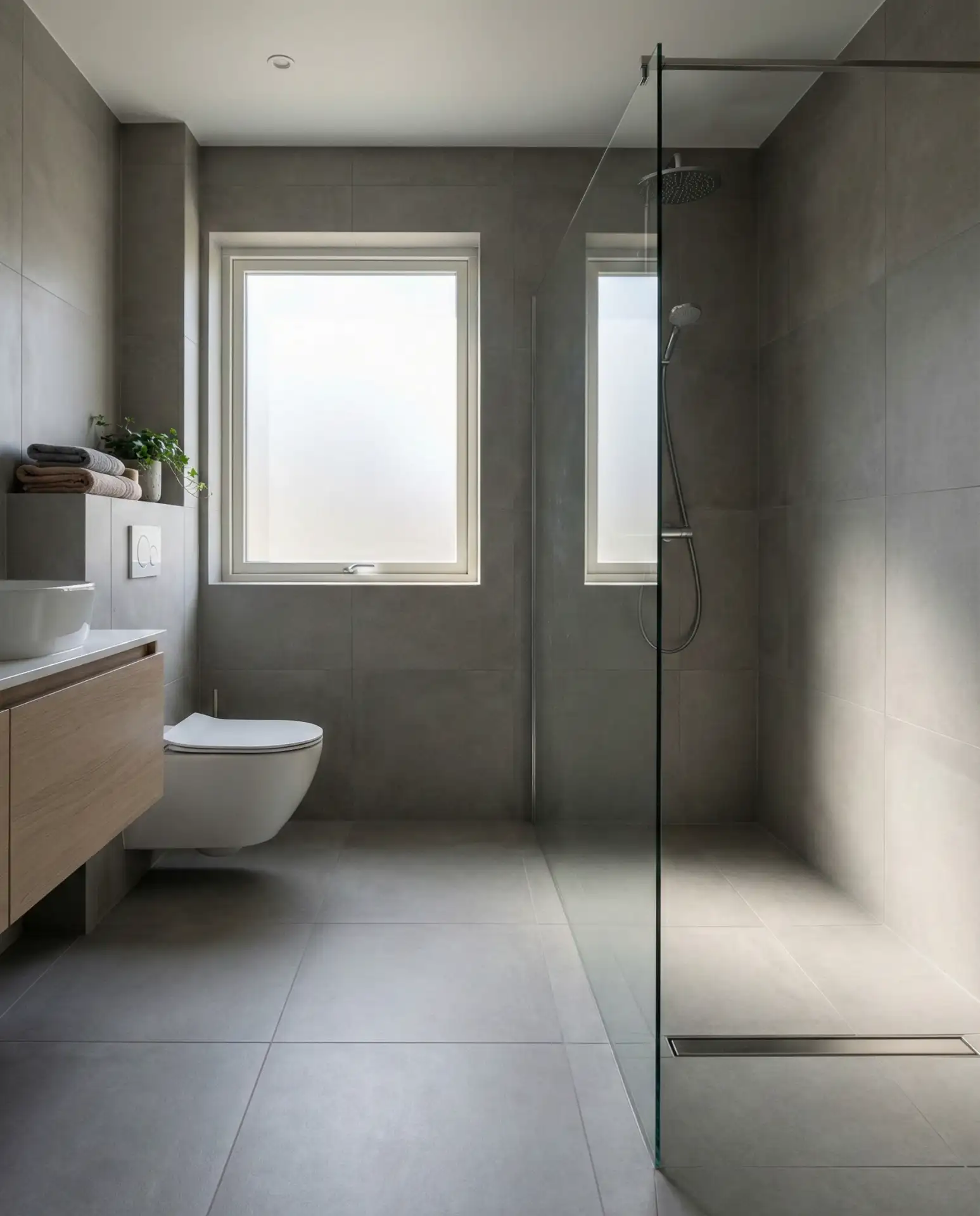
A wet room eliminates shower enclosures entirely, using a linear drain and slight floor slope to handle water while maximizing openness. This European-inspired layout is gaining traction in American modern small bathroom design because it removes visual barriers that make tight spaces feel even tighter. Waterproofing the entire room requires proper installation, but the result is a seamless, spa-inspired environment where walls don’t divide the space. 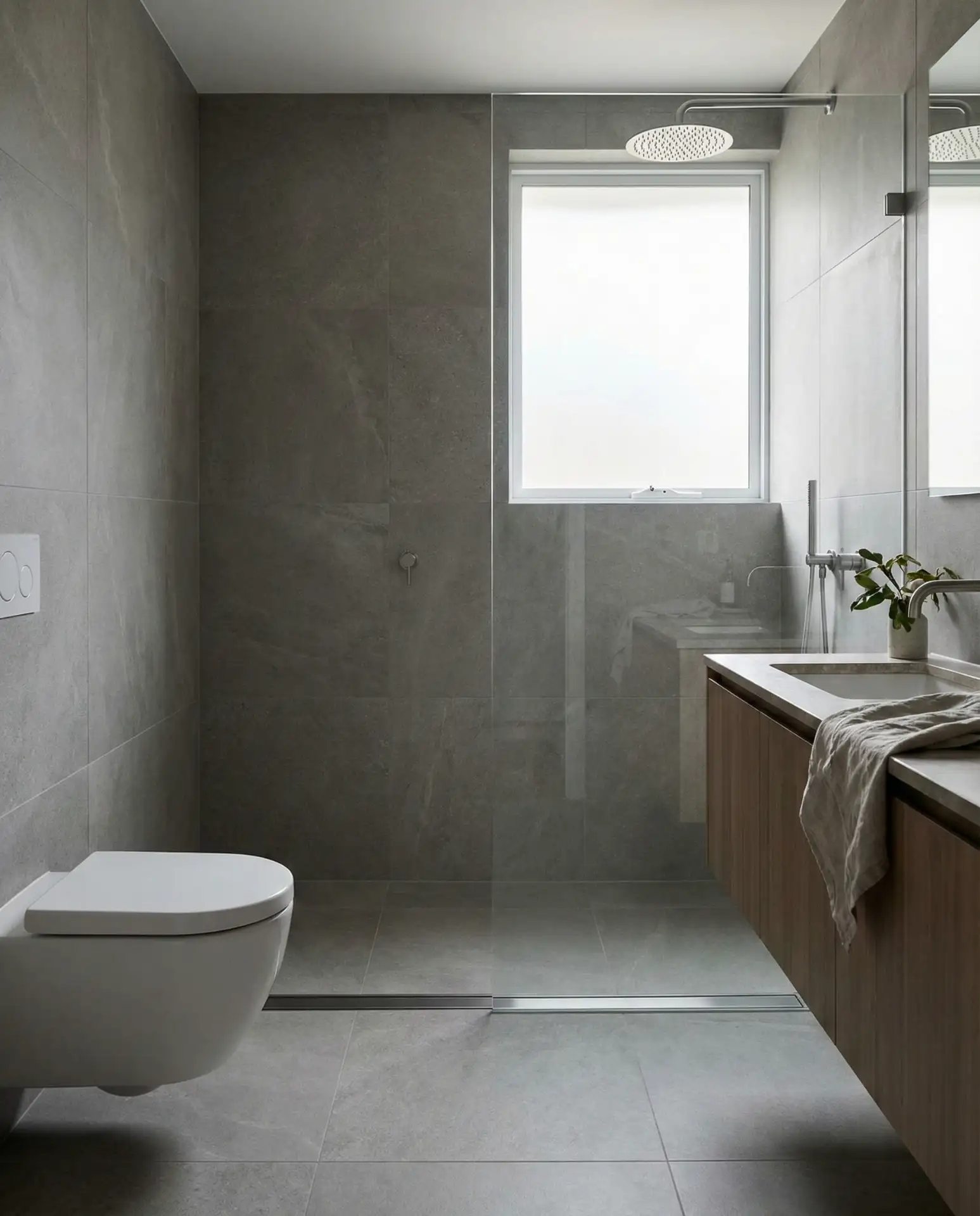
Where it works best: Ground-floor bathrooms or condos where neighbors below won’t be affected if waterproofing ever fails. Also ideal for aging-in-place design since there’s no threshold to step over. The linear drain creates a clean aesthetic that traditional round drains can’t match, and it channels water more efficiently in smaller footprints. Just budget for a skilled installer—this isn’t a DIY weekend project.
10. Sage Green Walls with Natural Wood
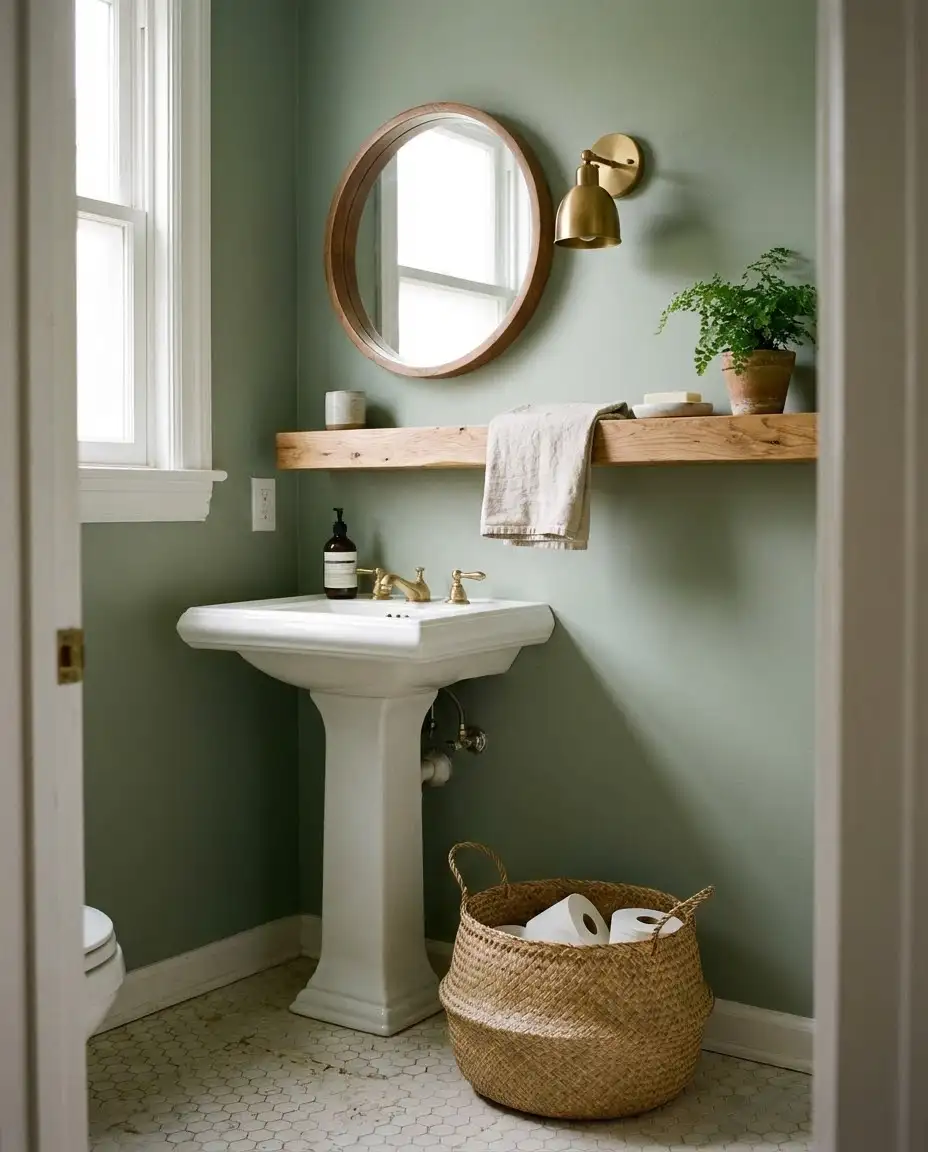
Green painted walls bring nature indoors without literal plants, creating a calming backdrop that works beautifully in bathrooms with limited natural light. Pair this with natural wood elements—a teak shower bench, walnut mirror frame, or pine shelving—for a modern luxury look that feels organic rather than fussy. This combination is everywhere on Pinterest in 2026 because it bridges styles from farmhouse to contemporary without committing hard to either. 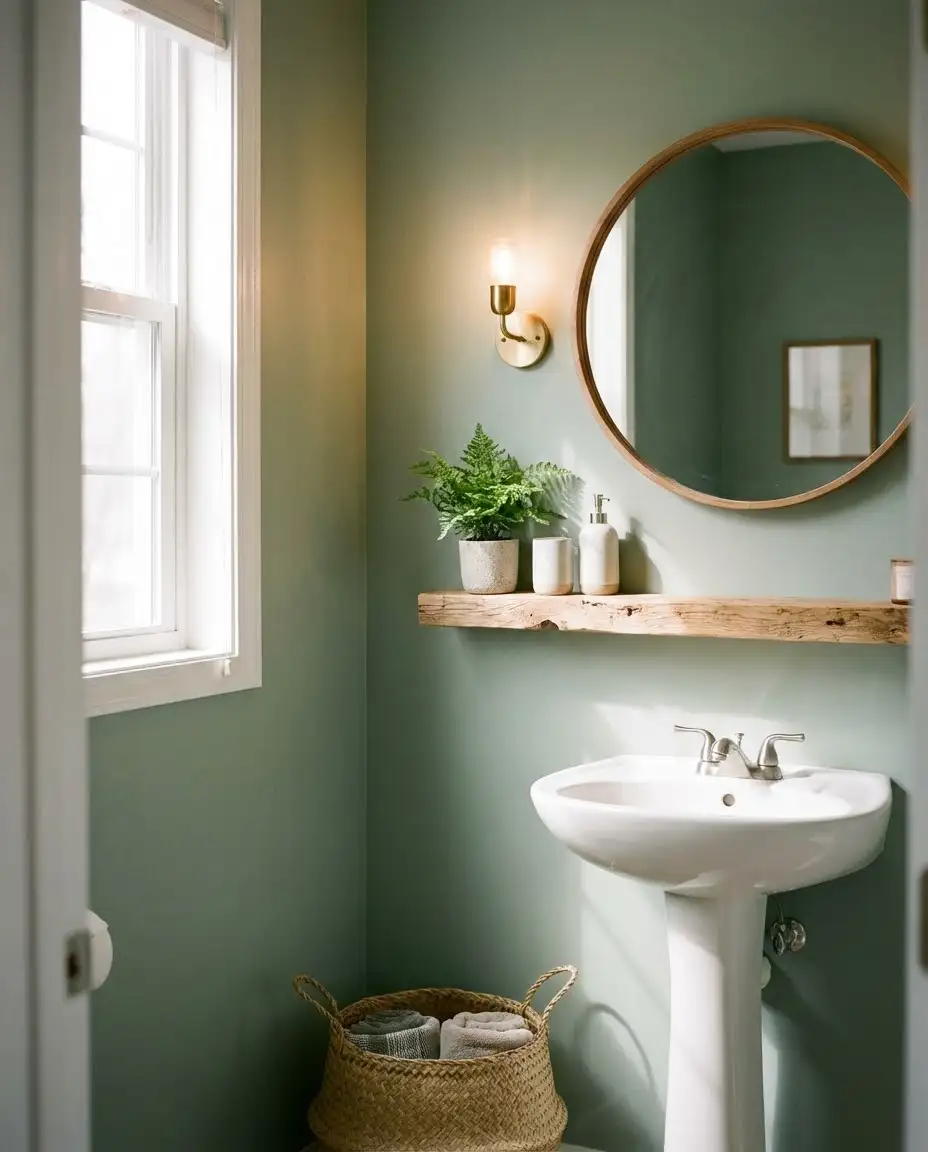
Practical insight: Sage green has more longevity than trendy colors like millennial pink or Gen-Z yellow because it reads as neutral enough to work with multiple accent colors. When you eventually want to refresh the space, swapping towels and accessories is easier than repainting. The wood tones add warmth that prevents green from feeling cold or clinical—a balance that’s harder to achieve with stark white or gray schemes.
11. Bathtub and Shower Combo with Glass Half-Wall
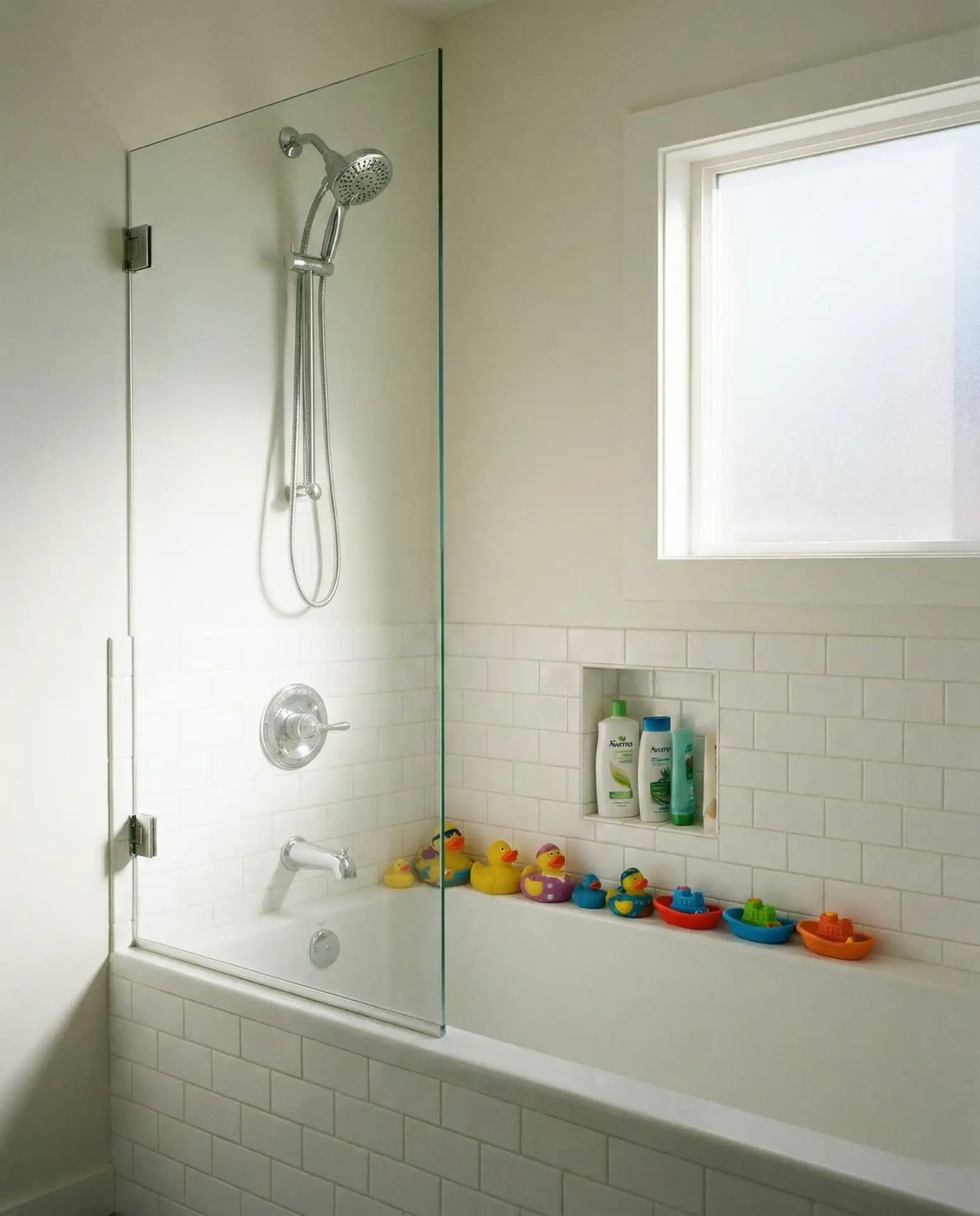
A bathtub and shower combo doesn’t have to mean a sad curtain—a glass half-wall offers splash protection while keeping sightlines open and making the room feel larger. This space saving setup works for families who need both bathing options without sacrificing precious square footage. The glass panel is easier to clean than a full shower curtain and ages better than dated sliding doors that yellowed in every bathroom throughout the ’90s. 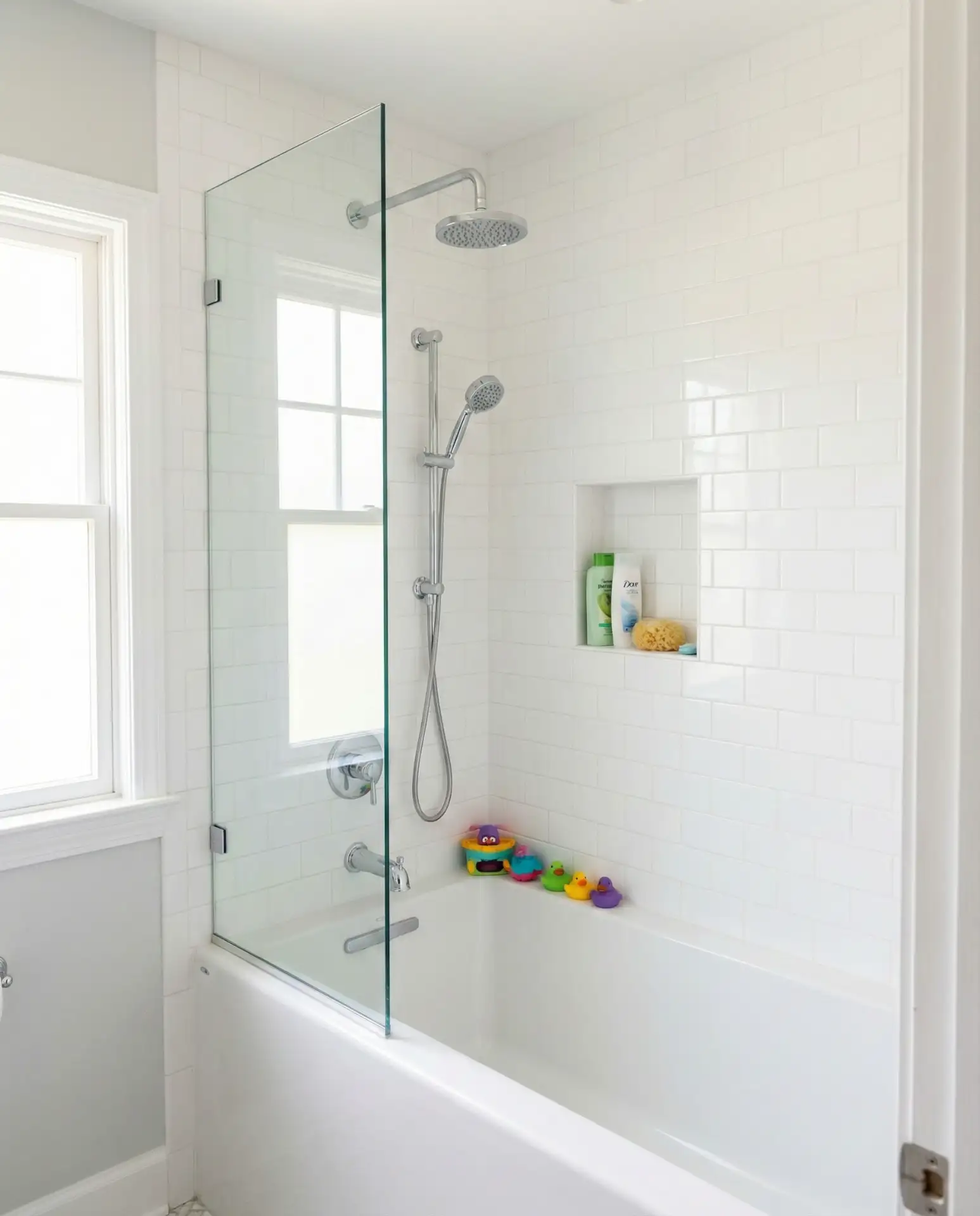
American lifestyle note: In suburban homes where kids’ bath time happens nightly but adults prefer quick showers, this configuration serves both needs without requiring separate rooms. The half-wall typically extends 30-40 inches, enough to contain shower spray but not so high that it blocks light or makes the space feel divided. It’s a middle ground that respects both function and aesthetics.
12. Terrazzo Floor for Pattern Without Busy
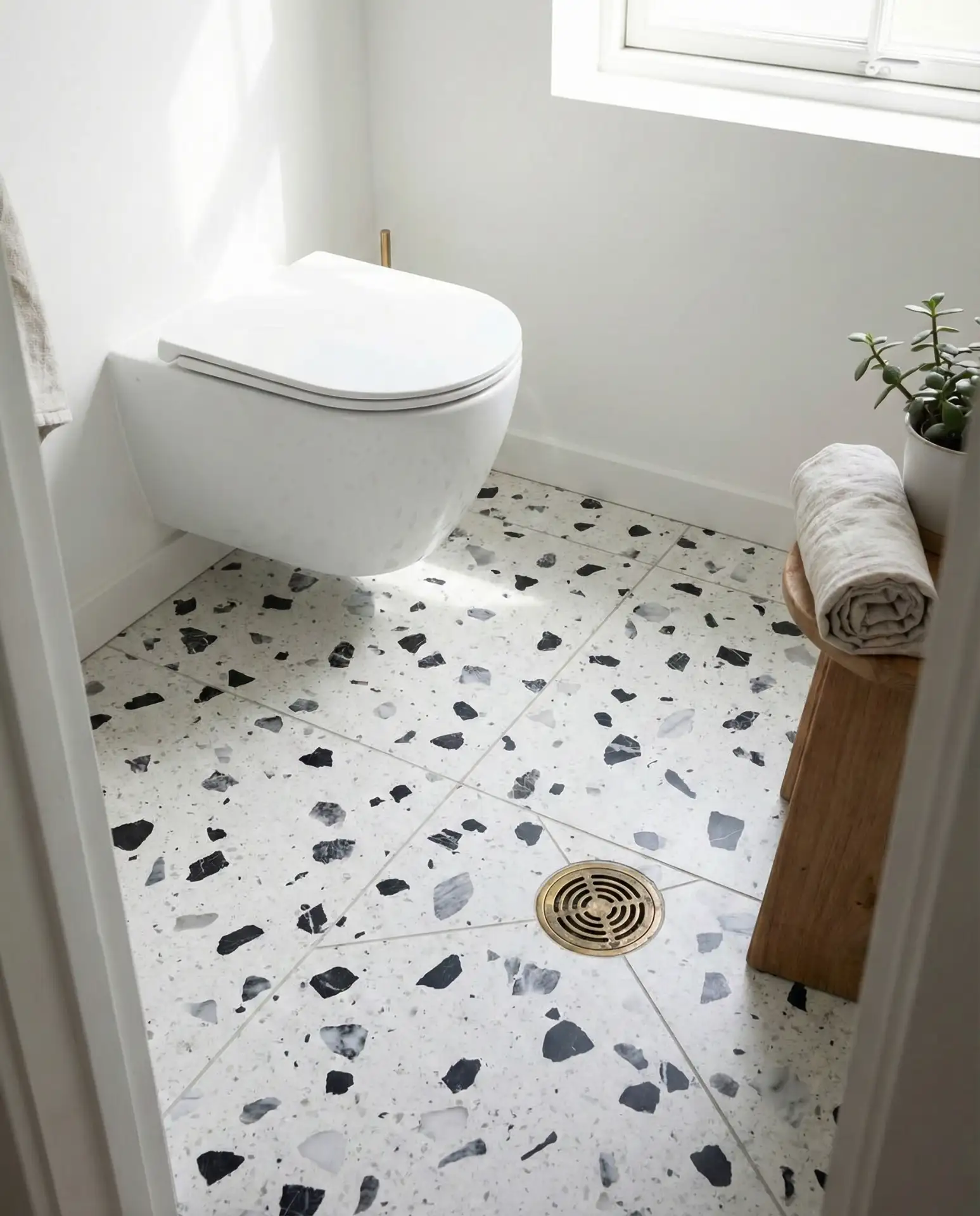
Terrazzo flooring delivers visual interest through speckled aggregate without the grid lines of traditional tile, making small bathrooms feel more cohesive and less chopped up. This material is having a major revival in 2026 trends, appearing in everything from budget-friendly porcelain versions to custom-poured originals. The mottled pattern hides water spots and soap scum better than solid colors, a practical advantage that homeowners appreciate more than any design award. 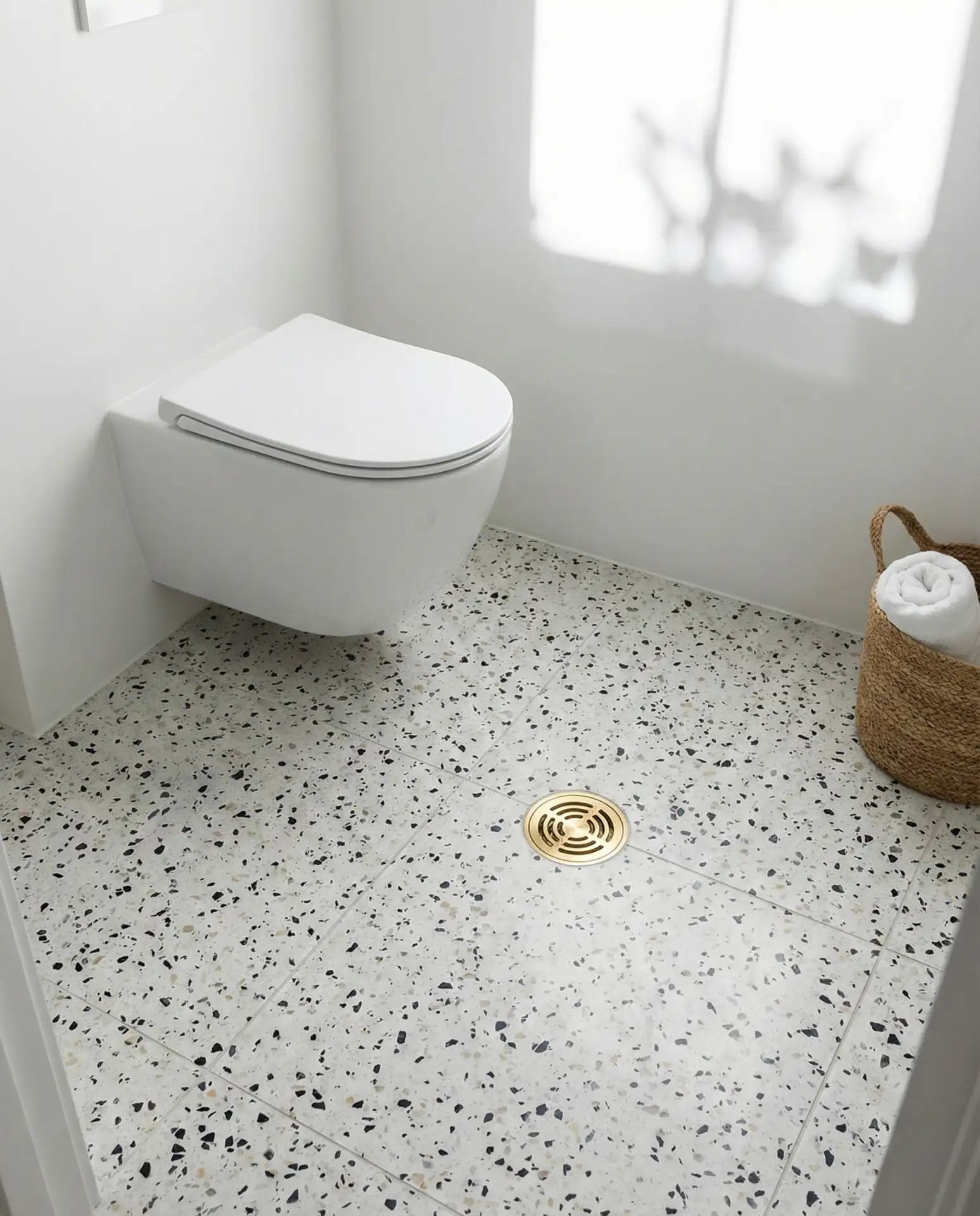
Common mistake: Pairing terrazzo floors with busy wall tile or bold paint colors. The floor should be your pattern moment—keep walls and fixtures simple so the terrazzo can breathe. If you’re working with a tight budget, terrazzo-look porcelain tiles start around $3-5 per square foot, while authentic poured terrazzo runs $50+ per square foot. Both deliver the aesthetic, but one lets you splurge elsewhere.
13. Skylight for Natural Light Flood
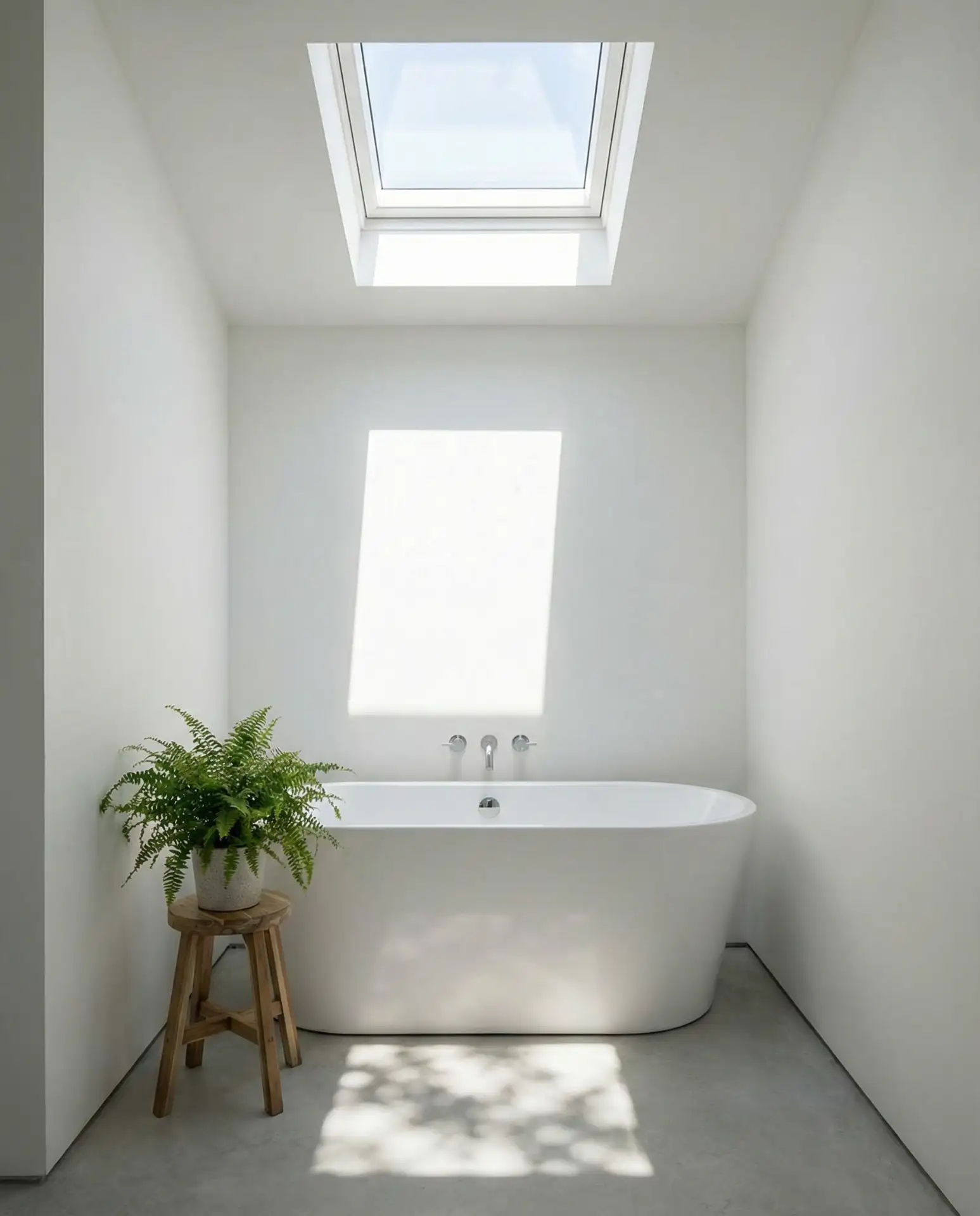
Adding a skylight transforms a windowless bathroom from cave to sanctuary, flooding the space with natural light that no number of sconces can replicate. This works very well in top-floor apartments or single-story ranch homes where roof access makes installation feasible. The overhead light eliminates harsh shadows and makes small bathrooms feel airy and open, solving the claustrophobia problem that plagues so many interior bathrooms built in the ’60s through ’80s. 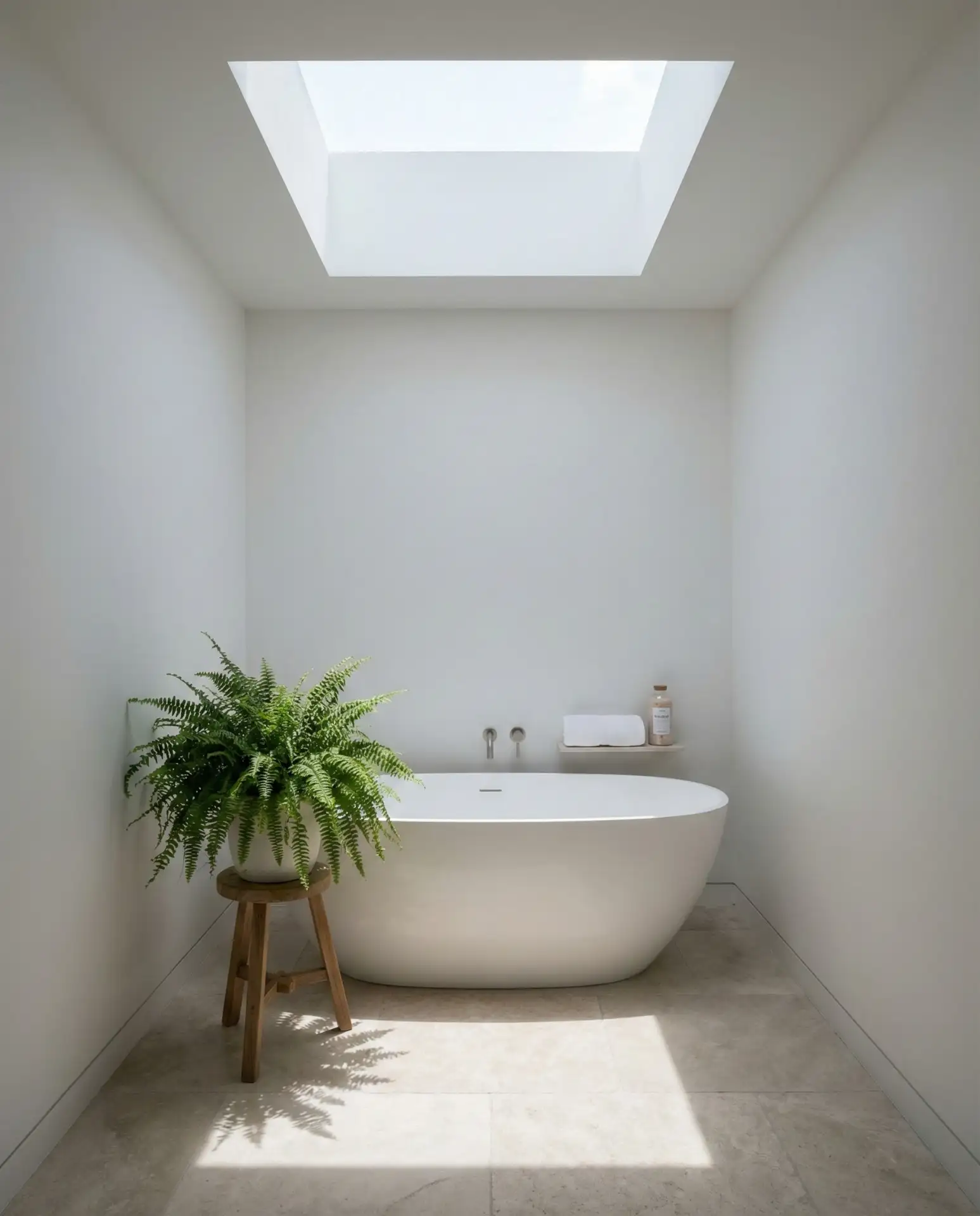
Where it works best: Climates with more sunny days than cloudy ones—think Southwest or Southern California where you’ll maximize your investment. Tubular skylights offer a budget alternative for about $300-500 installed, compared to $1,500-3,000 for traditional skylights. Both solve the natural light problem, but traditional skylights add resale value that tubular versions don’t quite match. Consider your long-term plans before drilling through your roof.
14. Niche Shelving in Shower Wall
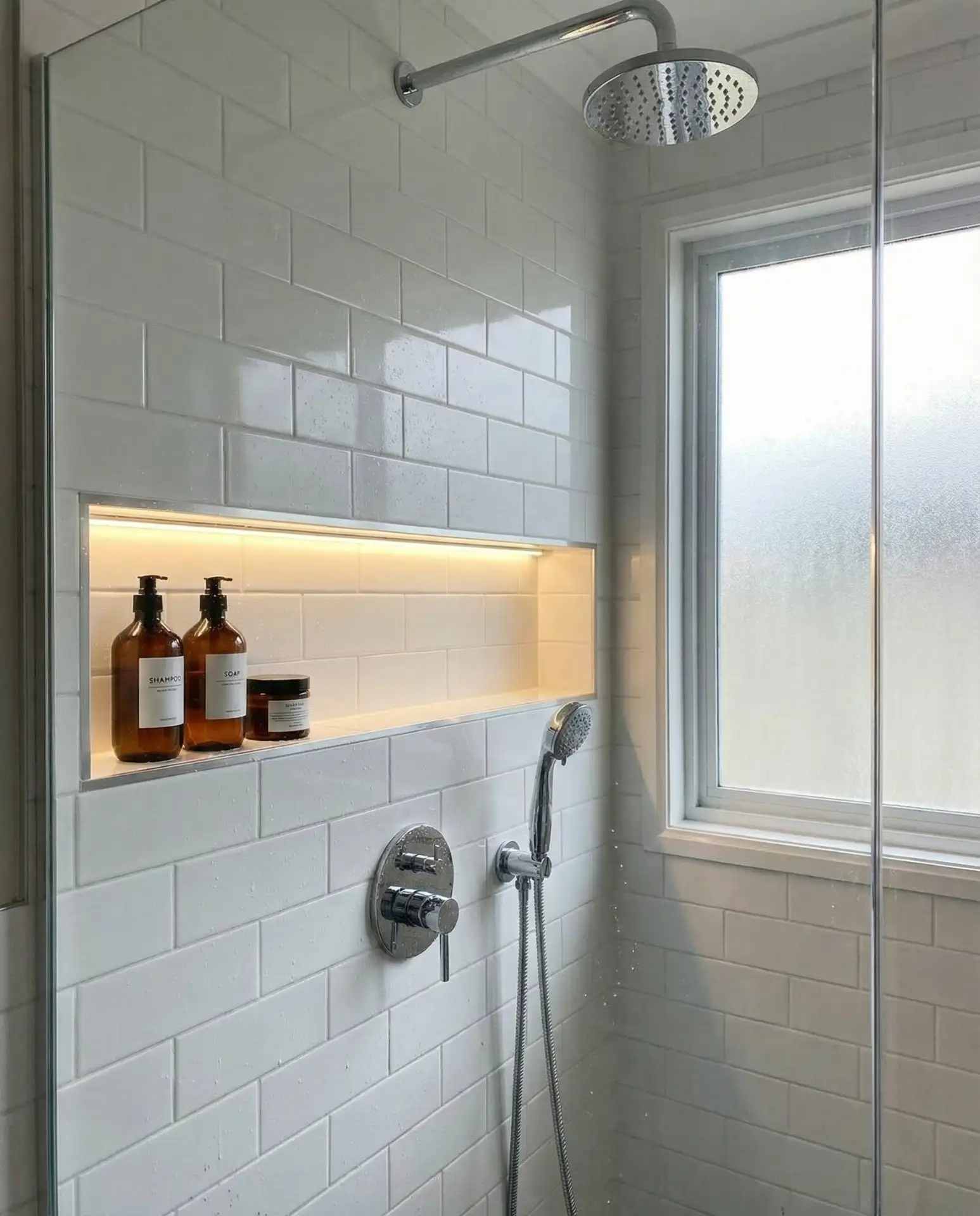
Built-in niche shelving eliminates clunky corner caddies while providing space saving storage exactly where you need it. These recessed shelves should be planned during construction or renovation, ideally positioned between studs at shoulder height. The simple modern look keeps bottles organized without protruding into shower space—a detail that matters enormously when you’re working with a 30-inch shower instead of a 36-inch one. 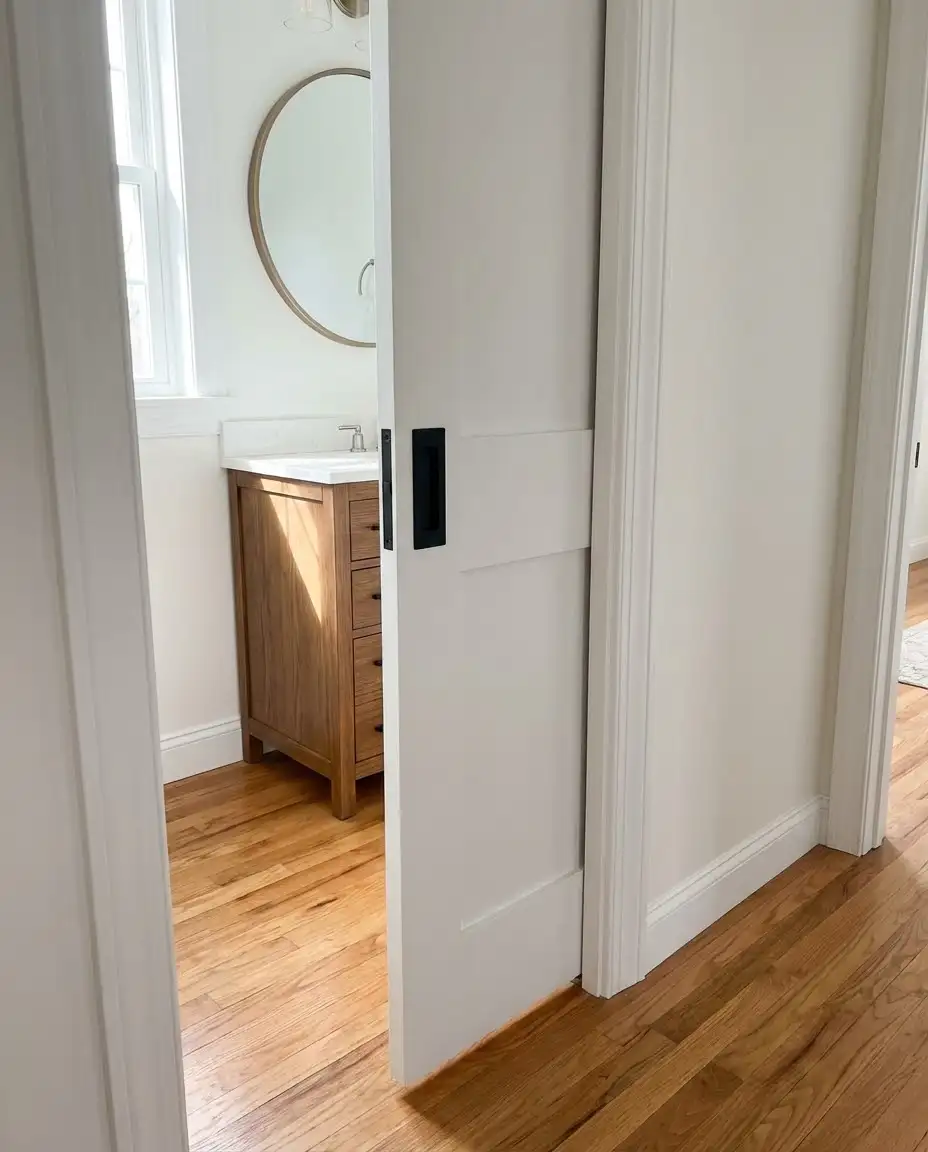
Practical insight: Most contractors recommend a niche size of 12×24 inches or 12×12 inches depending on your product collection. Add subtle LED lighting inside the niche for a spa effect that costs about $30 in materials. The key is waterproofing the niche properly—this is where membrane and careful tiling make the difference between a feature that lasts decades and one that creates leak problems within years.
15. Pocket Door to Save Swing Space
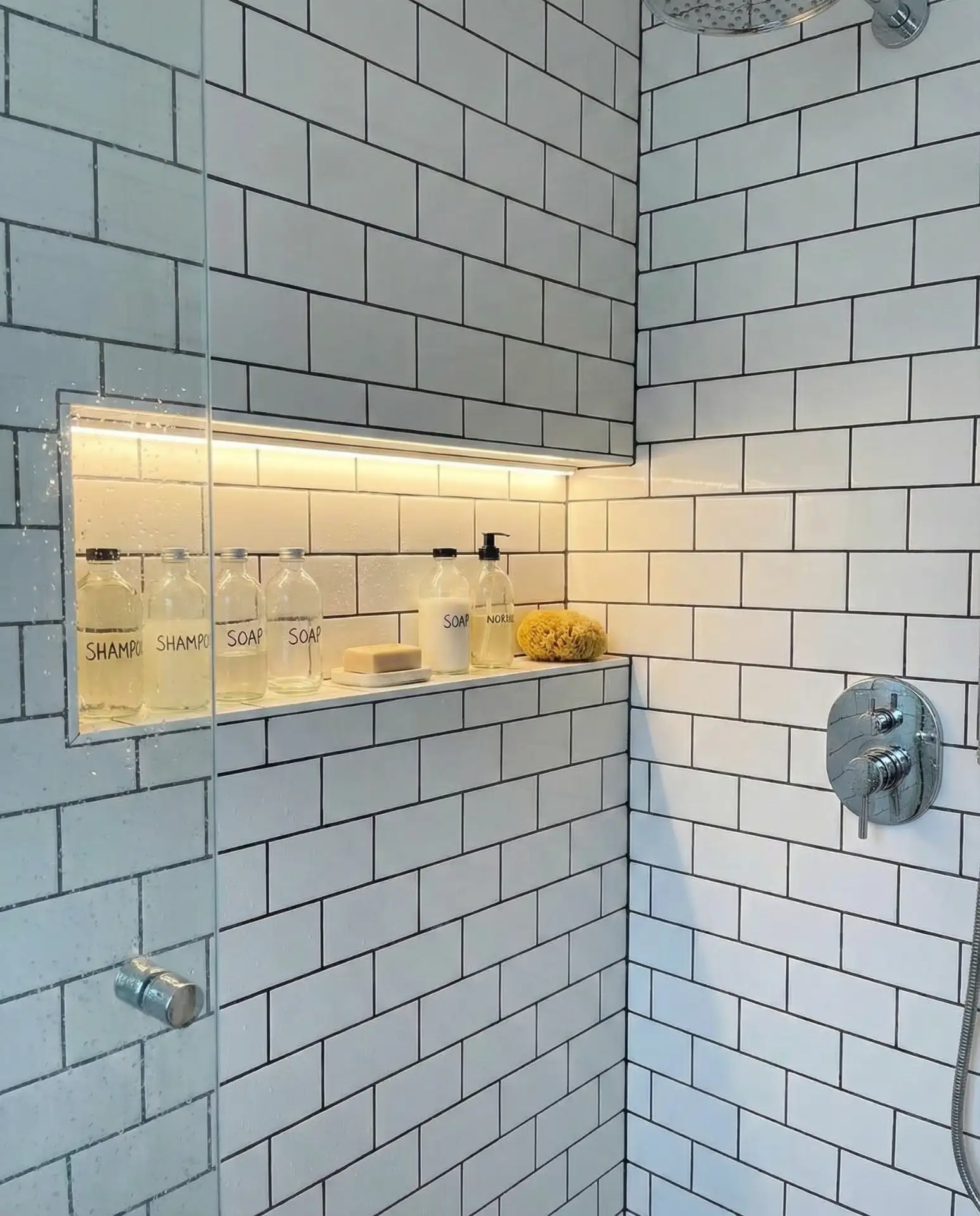
A pocket door that slides into the wall reclaims the arc space that a traditional swinging door demands, often adding 6-10 square feet of usable area. This layout change is transformative in powder rooms and ensuites where door swing eats into vanity or toilet clearance. Modern pocket door hardware has improved dramatically—no more sticky tracks and failed rollers that plagued older installations—making this a reliable ideas space saving solution for 2026 renovations. 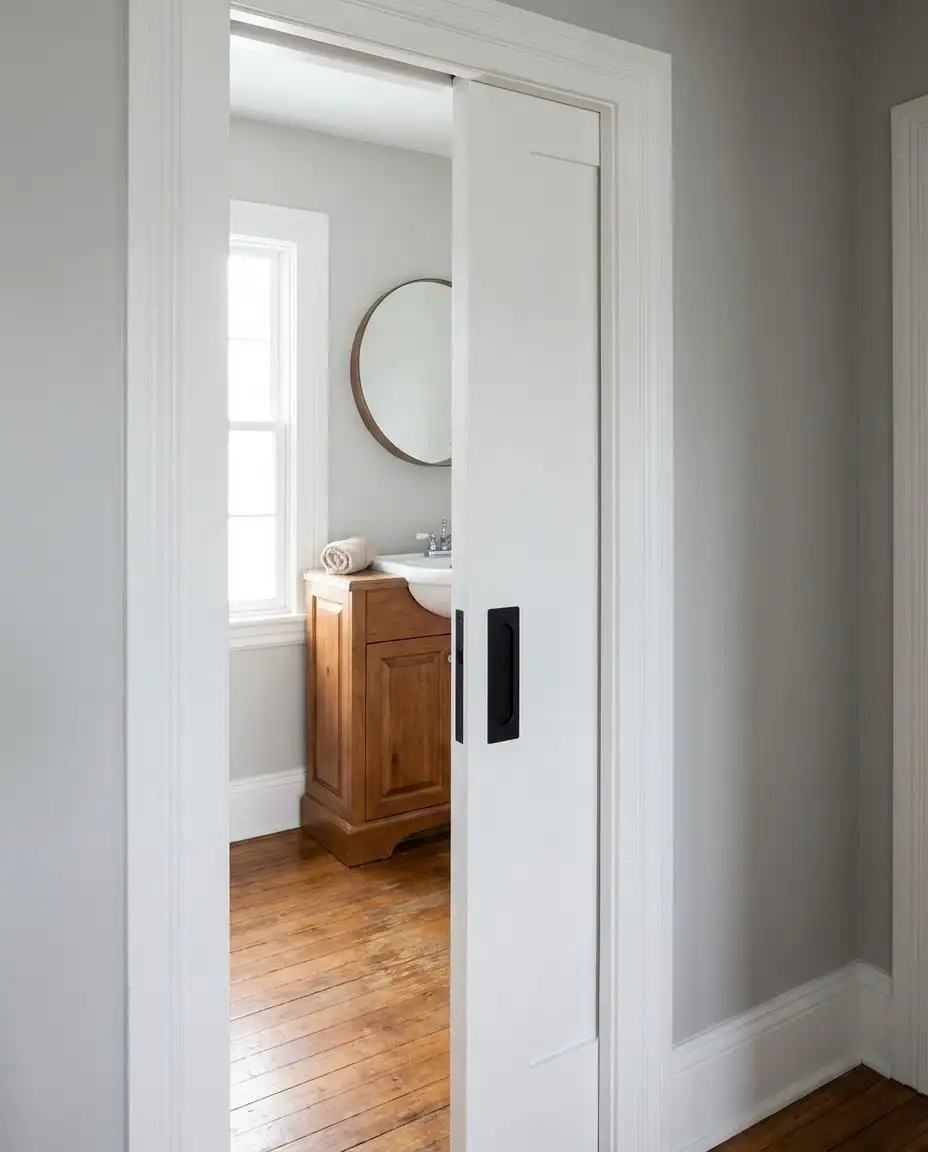
Budget angle: Basic pocket door kits cost $150-300, while soft-close versions run $300-600. Installation adds $400-800 depending on whether your wall has obstructions like electrical or plumbing. It’s not the cheapest upgrade, but it’s one of the few changes that genuinely makes a small bathroom function better every single day. If you’re choosing between a pocket door and new tile, choose the door—it changes how you move through the space in ways that aesthetics alone can’t.
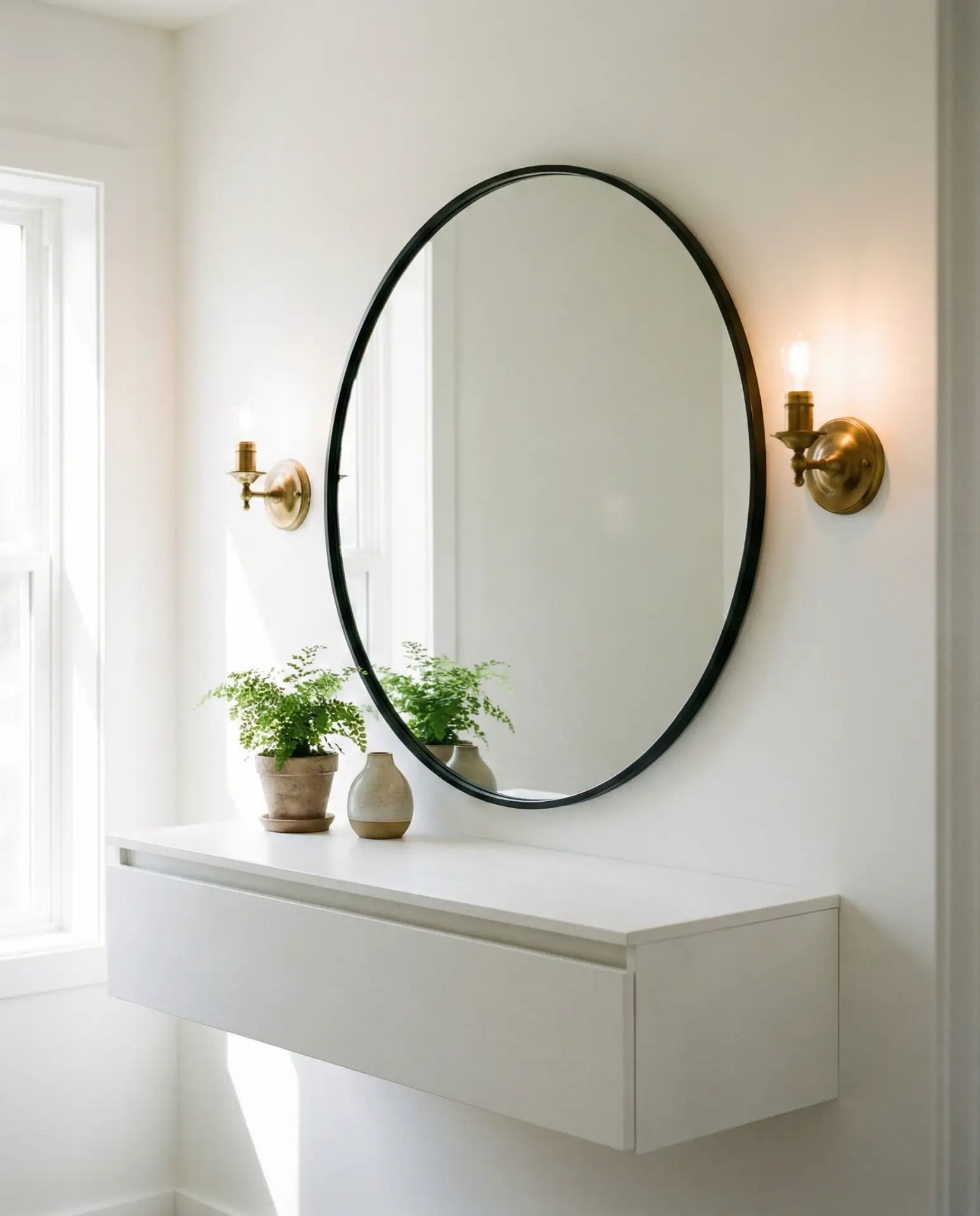
16. Round Mirror to Soften Angles
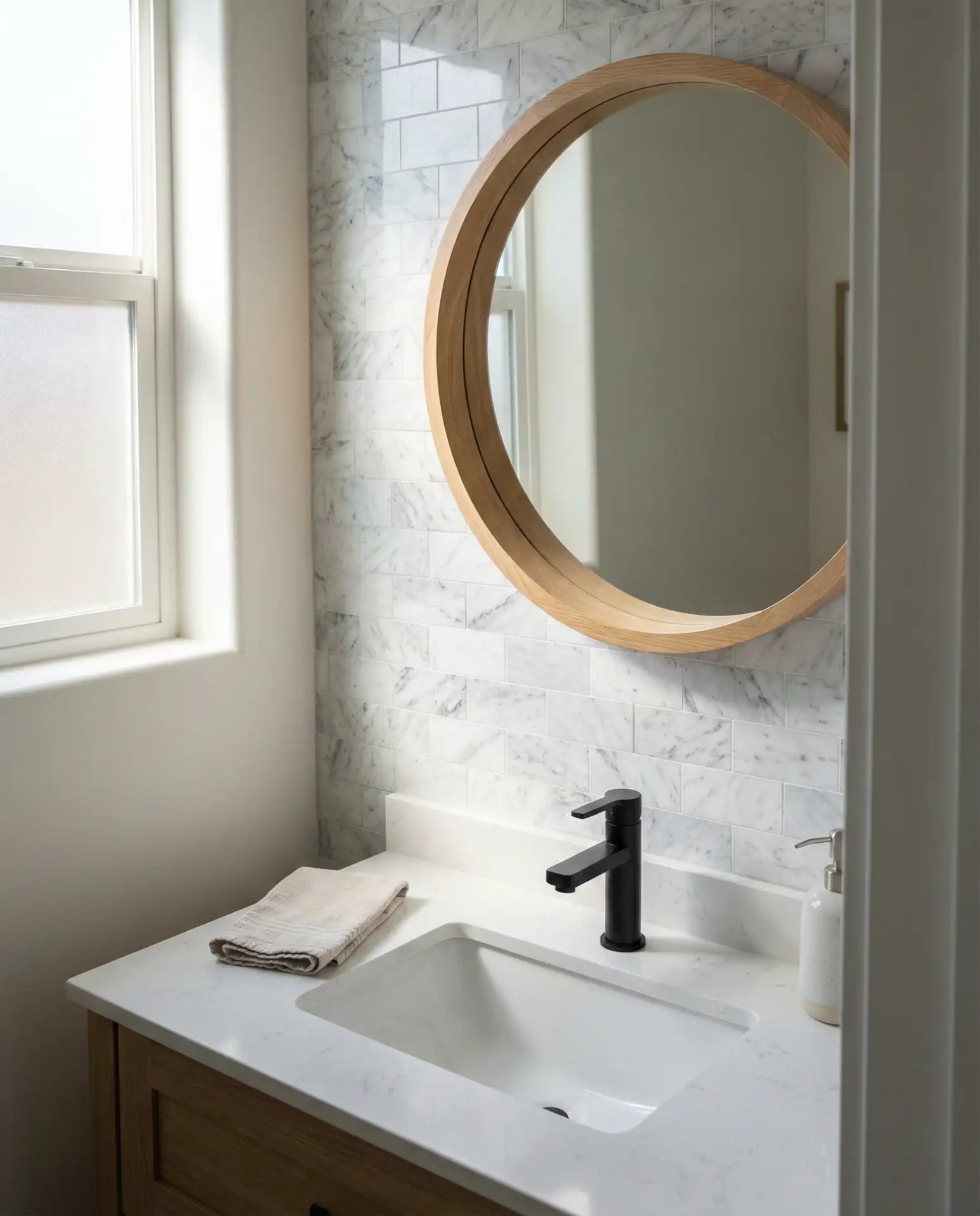
A large round mirror introduces curves into a room dominated by straight tile lines and rectangular fixtures, creating visual relief that makes the space feel less boxy. This beautiful and simple modern choice works across styles from coastal to industrial, which is why Pinterest users gravitate toward it for inspiration. The circular shape also reflects light in multiple directions more effectively than rectangular mirrors, a functional benefit disguised as pure aesthetics. 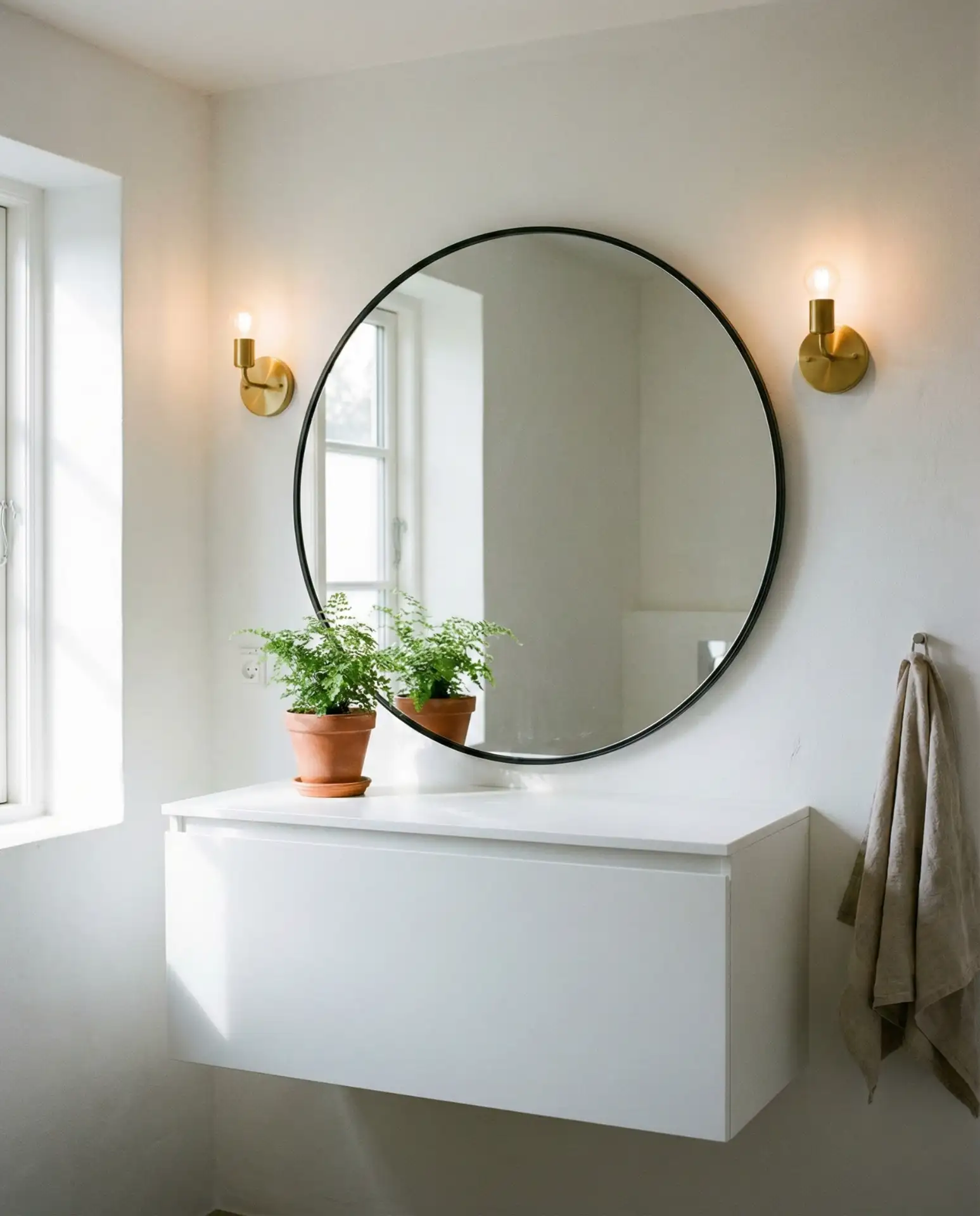
Expert commentary: Size matters more than you’d think—go as large as your wall allows, ideally 30-36 inches in diameter for maximum impact. Smaller rounds feel decorative rather than functional. Frame material should coordinate with your fixture finish: black metal for modern, brass or gold for glam, natural wood for organic styles. The round mirror trend isn’t going anywhere because it solves both aesthetic and practical problems simultaneously.
17. Heated Floor for Comfort
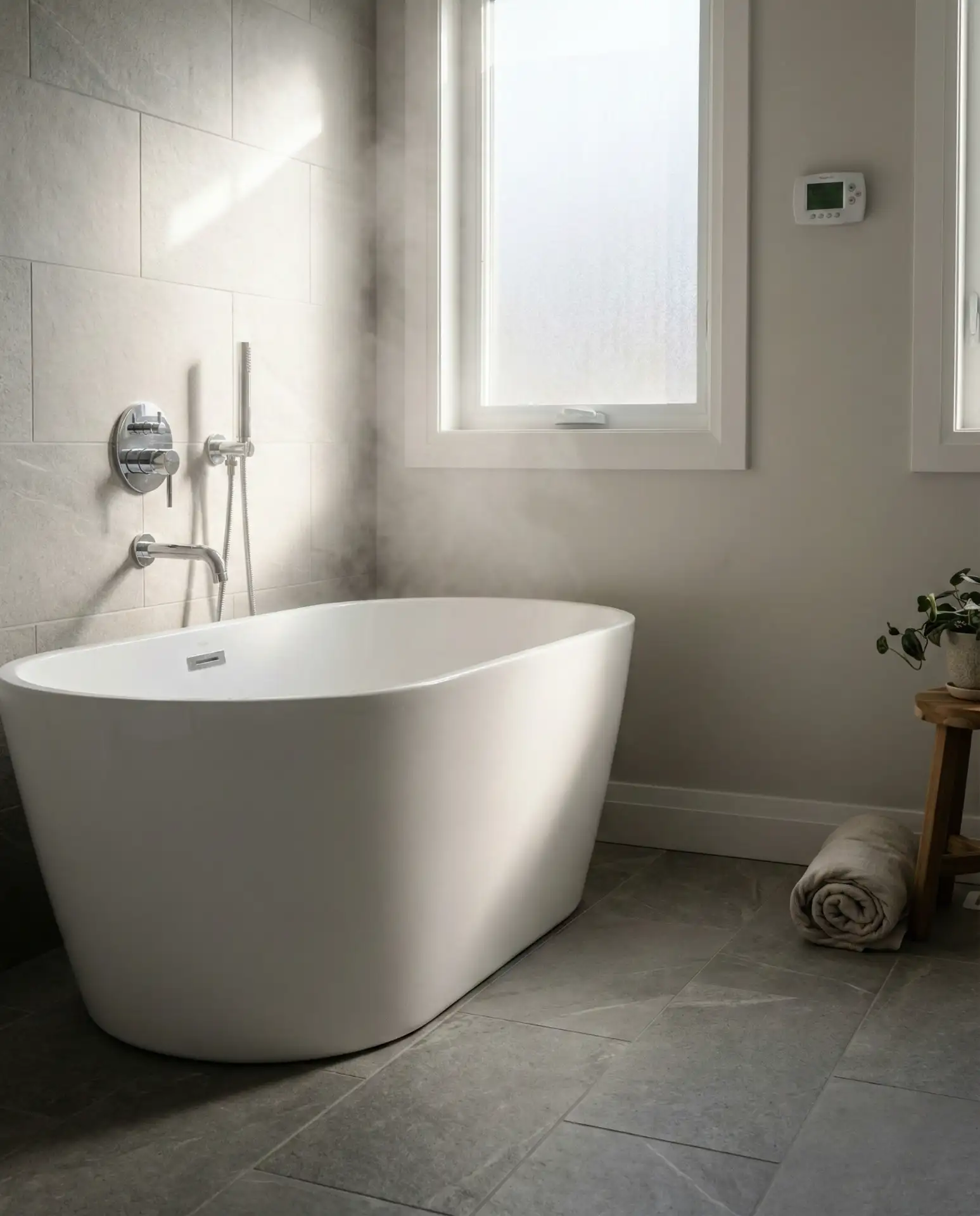
Radiant floor heating transforms cold tile into a warm surface that makes winter mornings bearable, especially in Northern states where bathroom floors can feel punishing from November through March. This is true modern luxury that doesn’t require visible space—the system lives beneath your tile. Installation costs $10-20 per square foot but adds that spa quality that elevates a small bathroom from merely functional to genuinely indulgent. 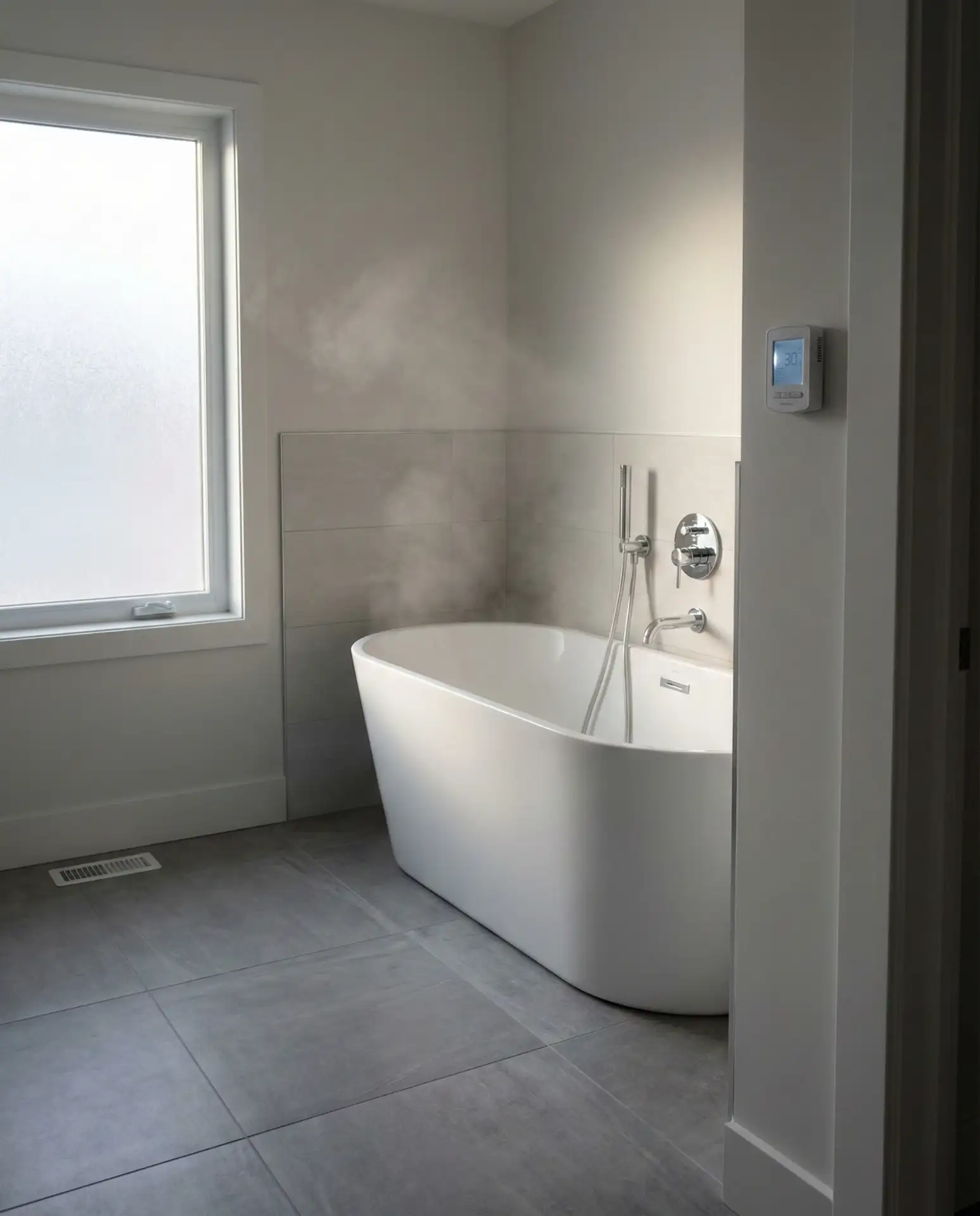
Real homeowner behavior: Most people program their heated floors to warm up 30 minutes before their morning alarm, so they step onto toasty tile rather than shocking cold. The system uses surprisingly little energy—usually adding $5-15 monthly to electricity bills—because it’s only running a few hours daily. It’s one of those upgrades that seems extravagant until you experience it, then you wonder how you ever lived without it.
18. Wall-Mounted Toilet for Clean Lines
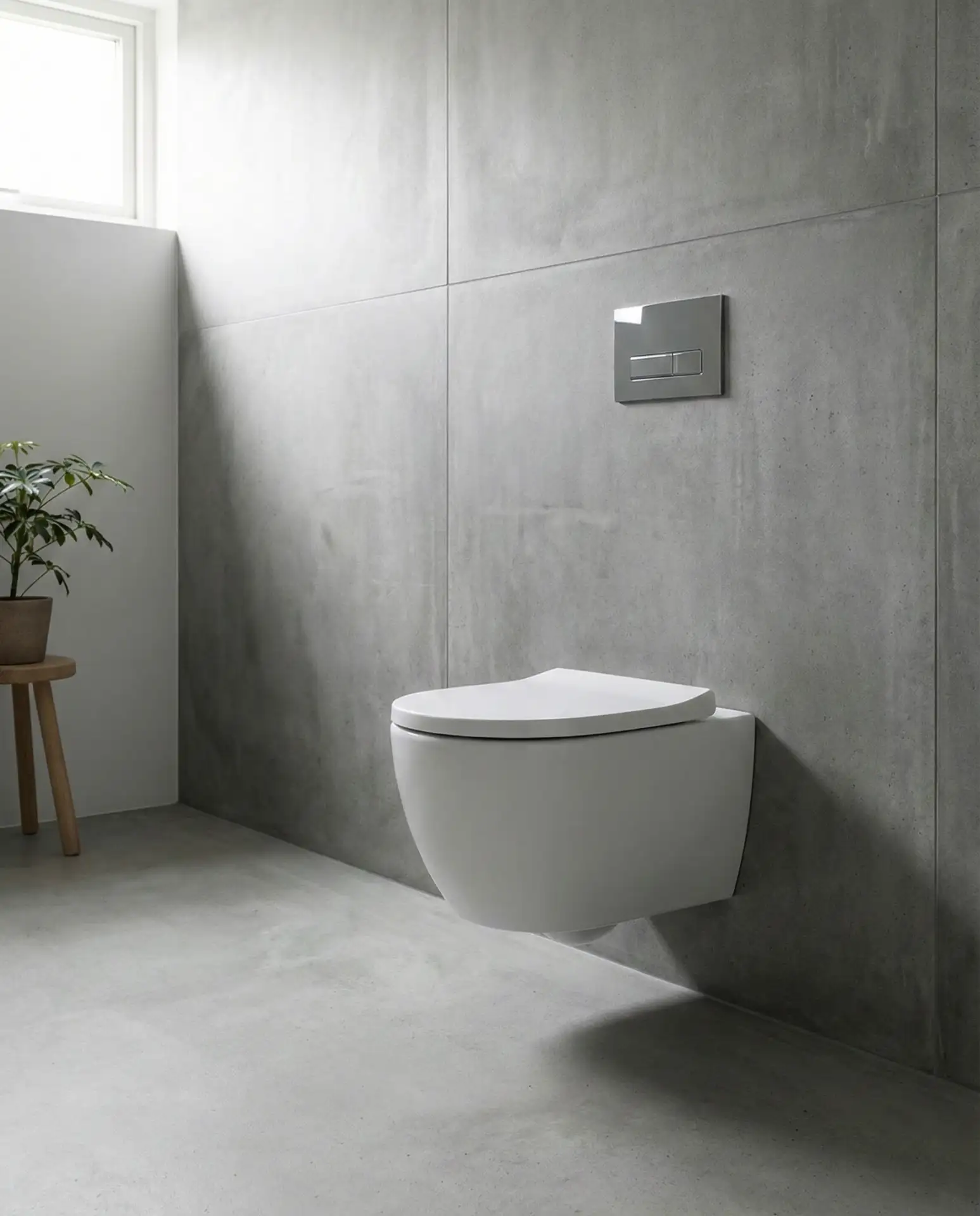
A wall-mounted toilet hides the tank inside the wall, creating clean lines and making floor cleaning effortless—no more base to work around with a mop. This European design is gaining American adoption in 2026 trends because it looks undeniably modern and saves visual space even if actual dimensions stay similar. The floating effect makes small bathrooms feel less crowded, and the concealed tank reduces noise when flushing. 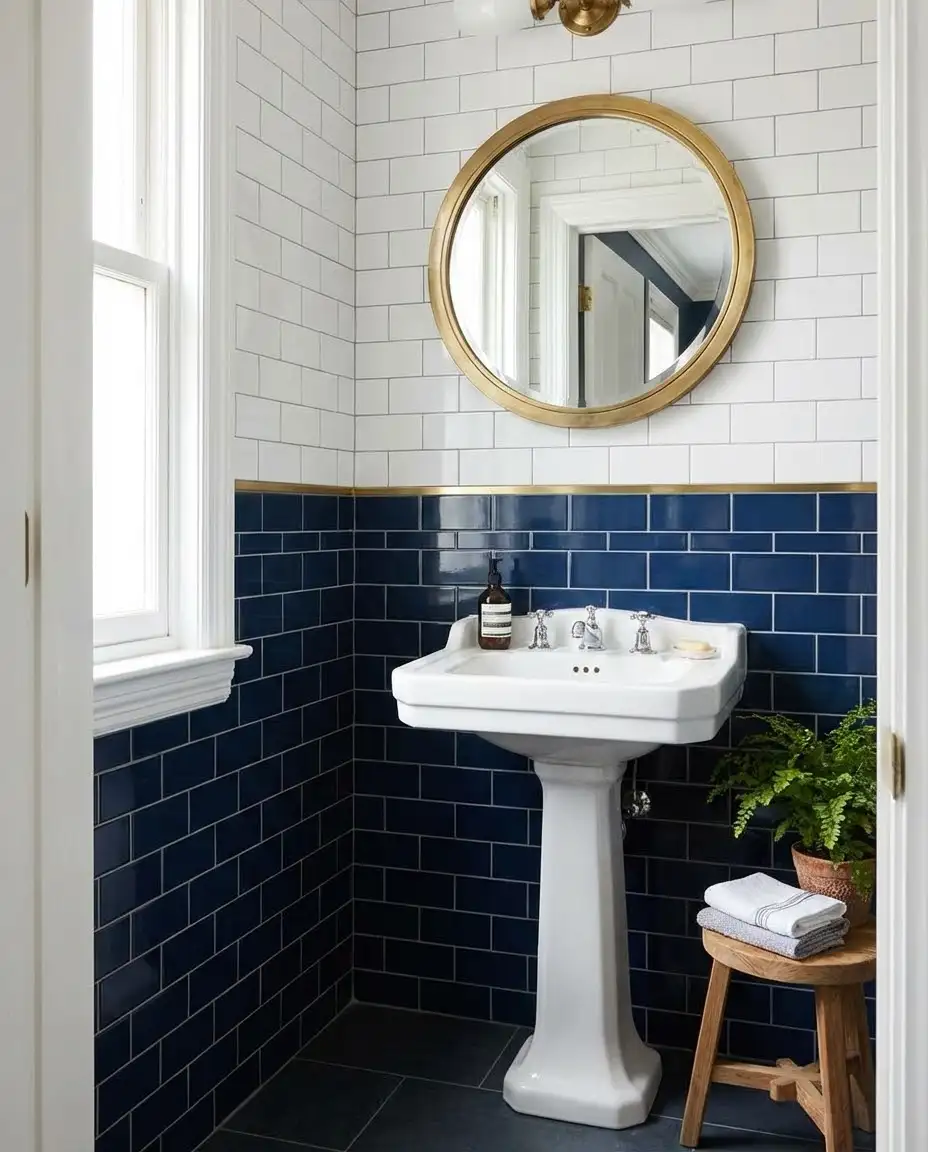
Common mistake: Assuming all walls can support wall-mounted toilets—you need either a solid concrete wall or a carrier system with proper backing. This adds $200-500 to installation costs but is non-negotiable for safety and function. The good news? Once properly installed, these toilets are just as reliable as floor-mounted versions, and the cleaning convenience alone makes converts of skeptical homeowners. Just make sure your plumber has experience with them.
19. Two-Tone Tile for Visual Interest
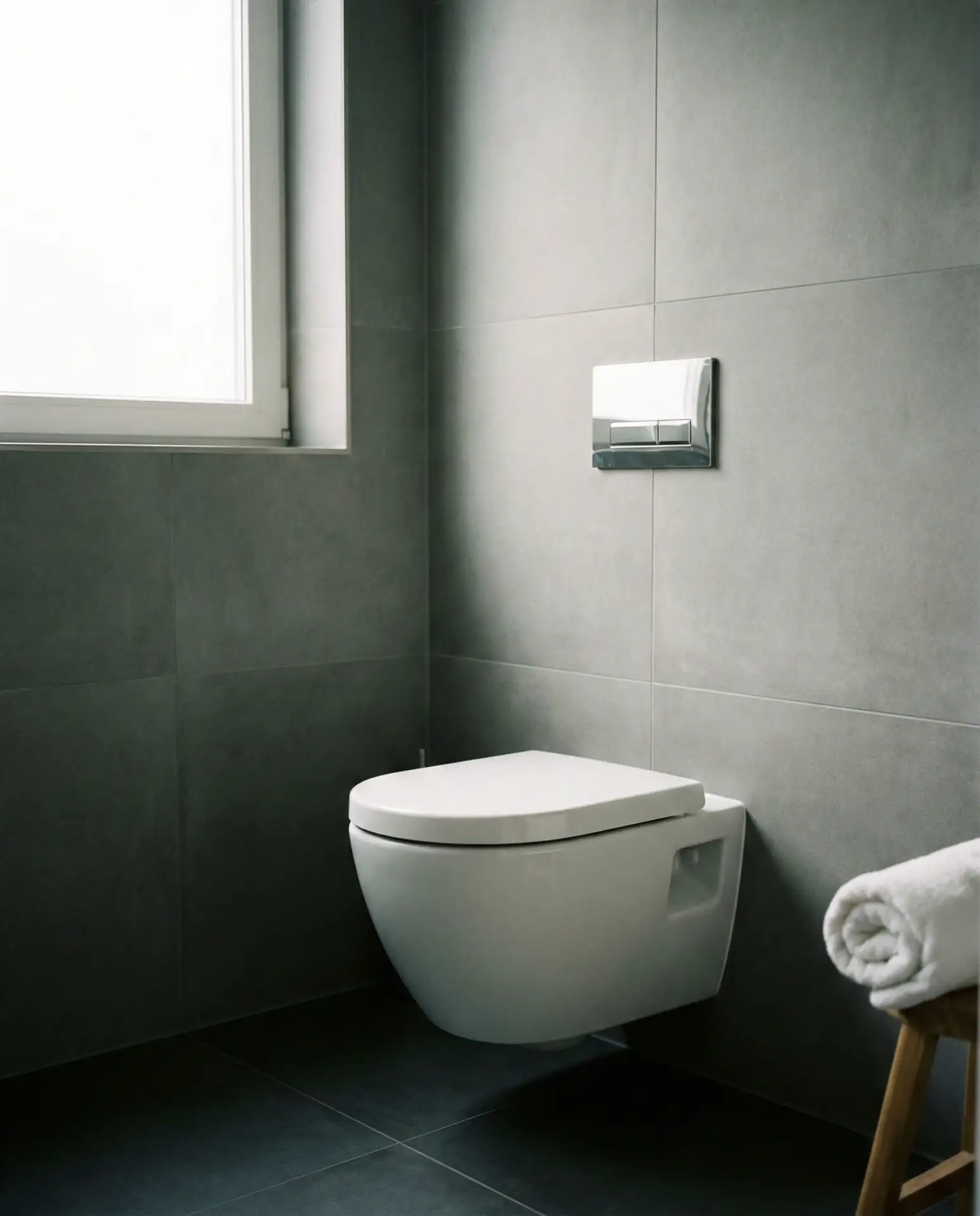
Splitting your walls horizontally with two tile colors or styles creates a dynamic that draws the eye without overwhelming a small footprint. A darker lower section grounds the space while lighter upper walls keep things airy—a balanced approach that feels both beautiful and intentional. This technique appears constantly in ideas 2026 because it adds personality without requiring bold color commitments that might feel dated in five years. 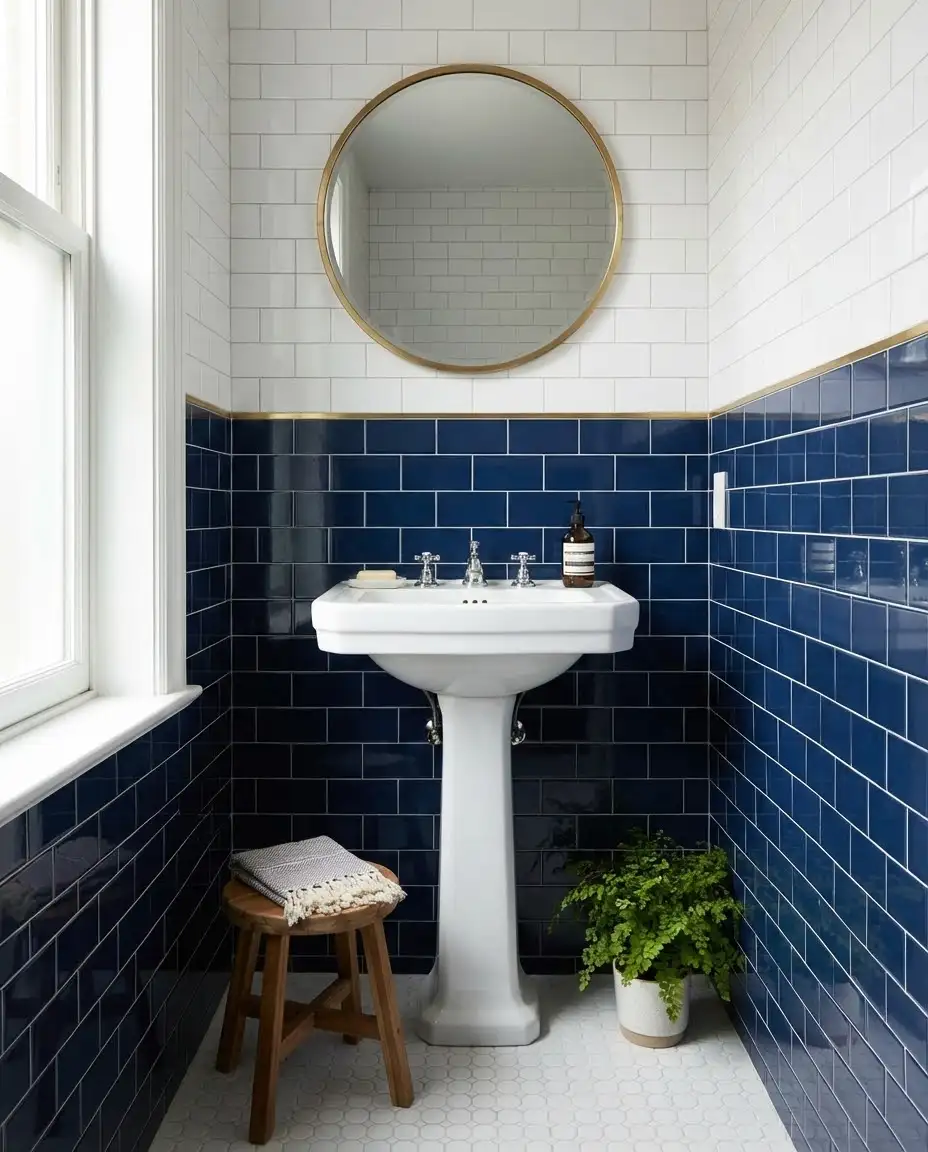
Where it works best: Bathrooms with at least 8-foot ceilings, where you can split the wall at 40-48 inches without making the space feel squat. The dividing line should align with a natural break point like the top of your wainscoting height or vanity backsplash. Using similar tile shapes in different colors creates cohesion—don’t mix large-format slabs with tiny mosaics or the contrast becomes chaos instead of composition.
20. Medicine Cabinet with Mirror Front
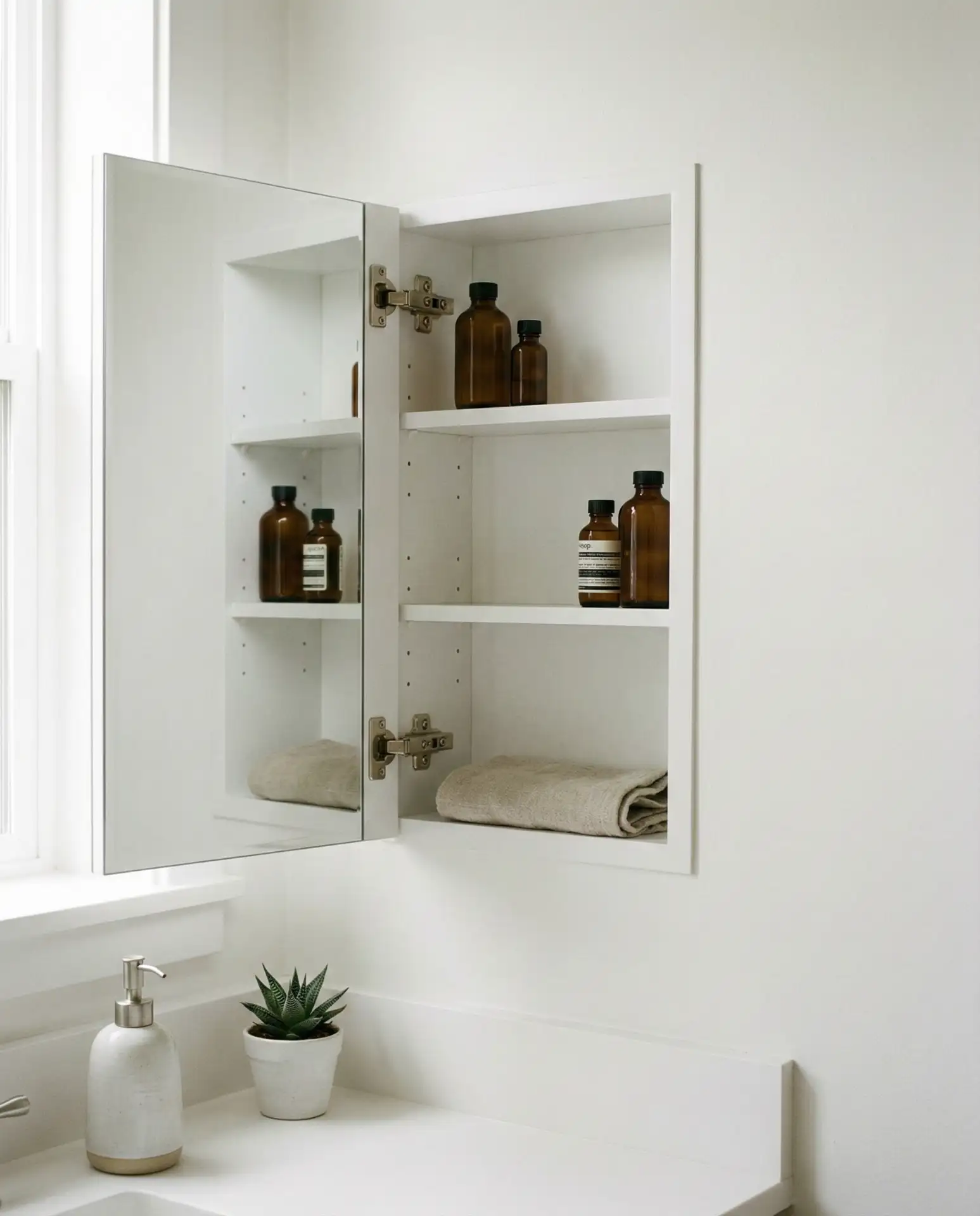
A recessed medicine cabinet with a mirrored door provides hidden storage without sacrificing your primary mirror, solving two problems in one elegant space saving move. This is standard in pre-war apartments but often forgotten in new construction—which is a shame because it’s perhaps the most practical bathroom feature ever invented. The modern versions come with integrated lighting, USB ports, and defoggers that make them feel high-tech rather than old-fashioned. 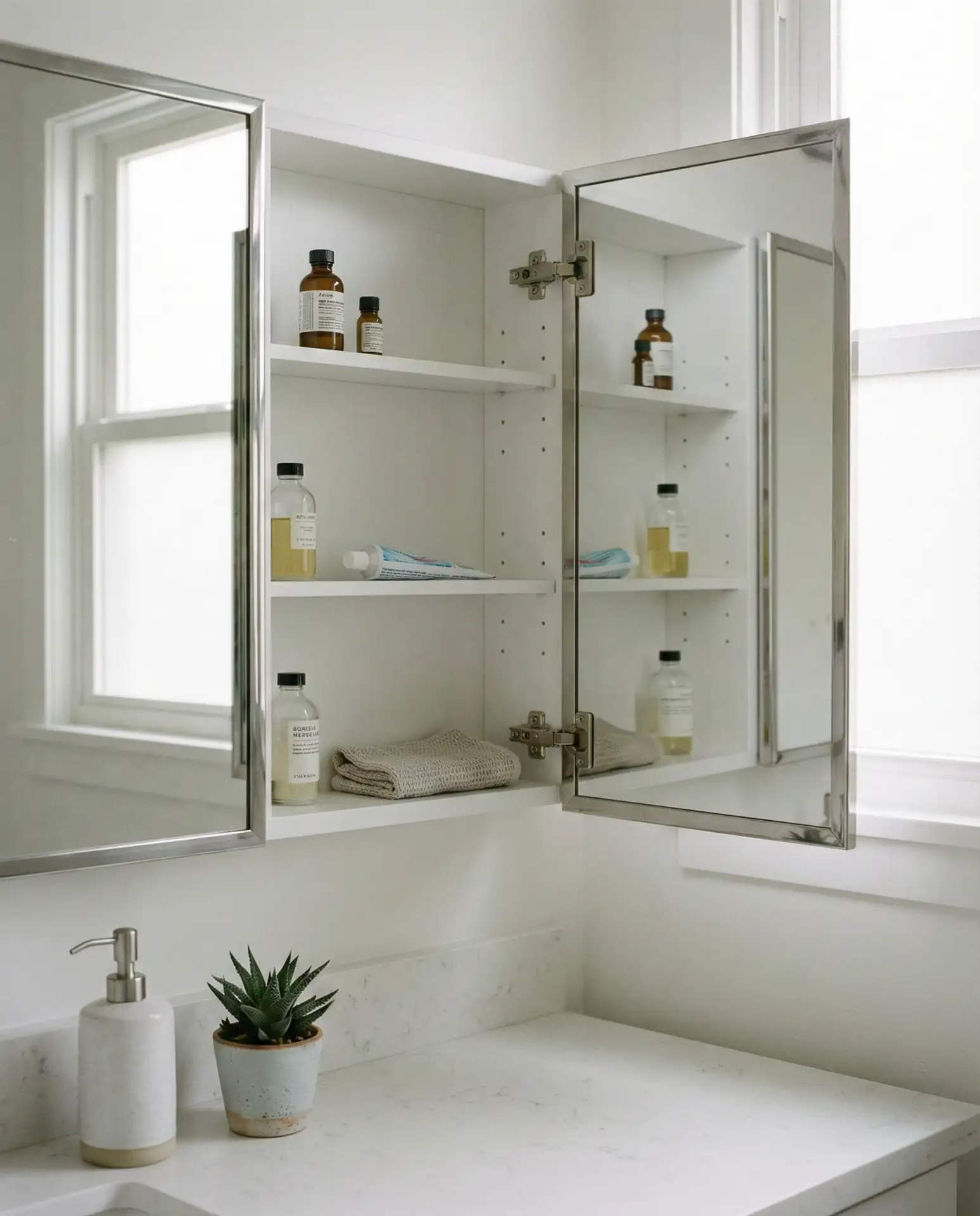
Practical insight: Standard cabinet depths are 4 inches, but 6-inch versions exist if you have the wall depth for deeper storage. Measure your wall cavity before ordering—older homes have 2×4 stud walls that limit depth, while newer construction often has 2×6 walls that accommodate larger cabinets. The mirror front eliminates the need for a separate mirror, freeing up wall space for windows, artwork, or just the breathing room that small bathrooms desperately need.
21. Accent Wall with Geometric Tile
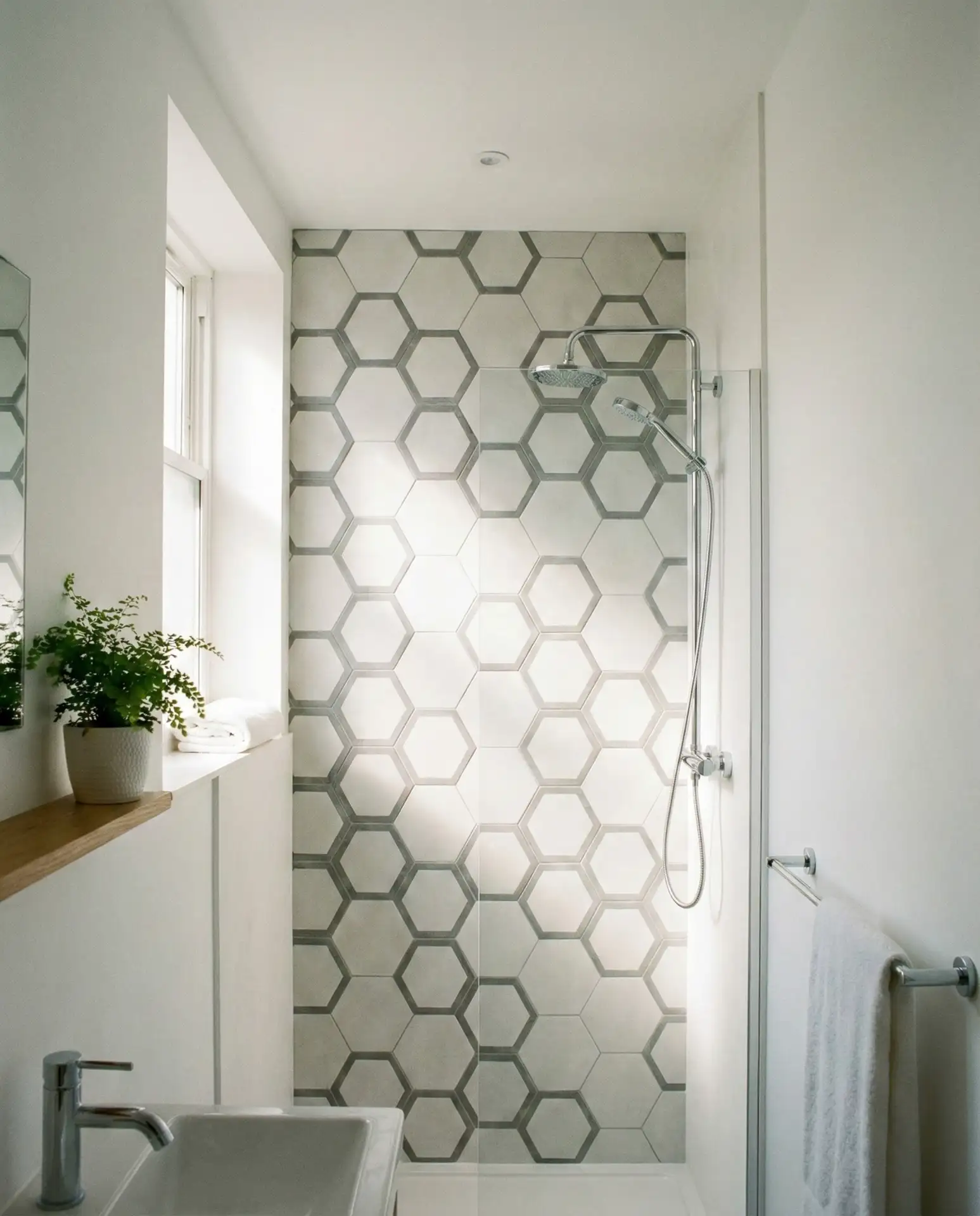
A single accent wall featuring geometric tile—hexagons, chevrons, or Moroccan patterns—creates a focal point without tiling the entire room, keeping costs down while delivering maximum inspiration potential. This approach is wildly popular on Pinterest because it photographs dramatically but doesn’t require the material budget of a full tile installation. Keep other walls simple and let one surface do all the heavy lifting in terms of pattern and personality.
Budget tip: Accent walls let you splurge on expensive tile—$15-30 per square foot—because you’re only covering 30-40 square feet instead of 200. That fancy Moroccan zellige or hand-painted cement tile suddenly becomes affordable when you’re strategic about placement. Choose the wall you see first when entering the bathroom, typically opposite the door, for maximum impact. Don’t hide your statement wall behind the door—that’s just wasted effort and material.
22. Ladder Towel Rack for Vertical Storage
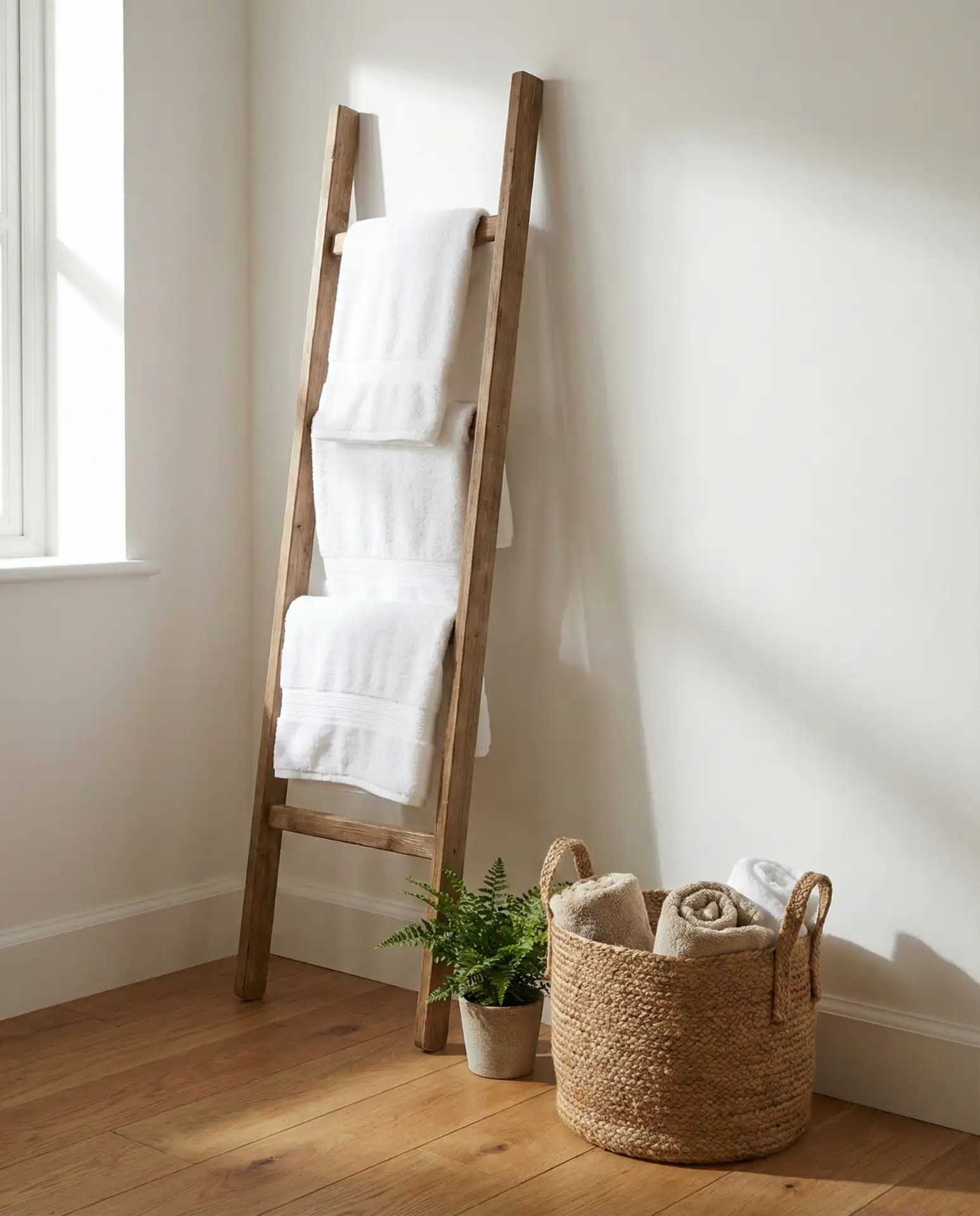
A leaning ladder rack uses vertical space for towel storage while adding an architectural element that feels casual and collected rather than rigidly planned. This works beautifully in narrow bathrooms where traditional towel bars eat into circulation space. The styles 2026 include everything from industrial black metal to warm bamboo, meaning you can find a version that coordinates with your broader design direction without compromising function. 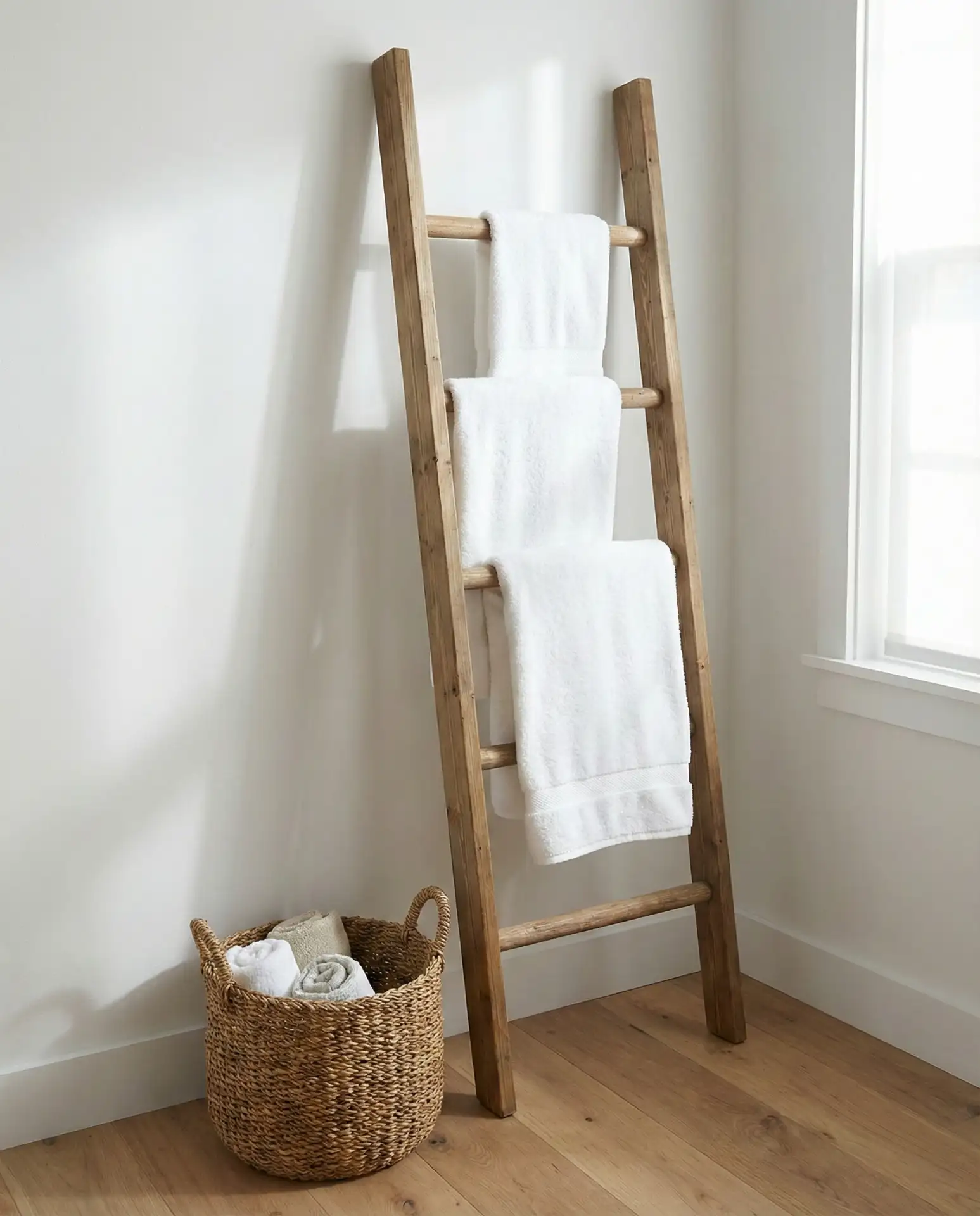
American lifestyle note: In homes where multiple people share one bathroom, the ladder rack provides individual hanging space that traditional single bars don’t offer—each person gets their own rung. It’s also incredibly rental-friendly since it requires no installation, just leaning. When you move, it comes with you. Look for styles with felt pads on the feet to protect your floors, and position it away from shower splash zones unless you want perpetually damp towels.
23. Frosted Glass for Privacy with Light
Frosted or textured glass windows allow natural light to flood the bathroom while maintaining privacy—a perfect solution for urban homes or bathrooms facing neighboring properties. This eliminates the need for window treatments that collect moisture and mildew, keeping the space cleaner and more modern small bathroom design minimal in its approach. The diffused light is also more flattering than direct harsh sunlight, creating that soft glow you see in spa-inspired hotel bathrooms. 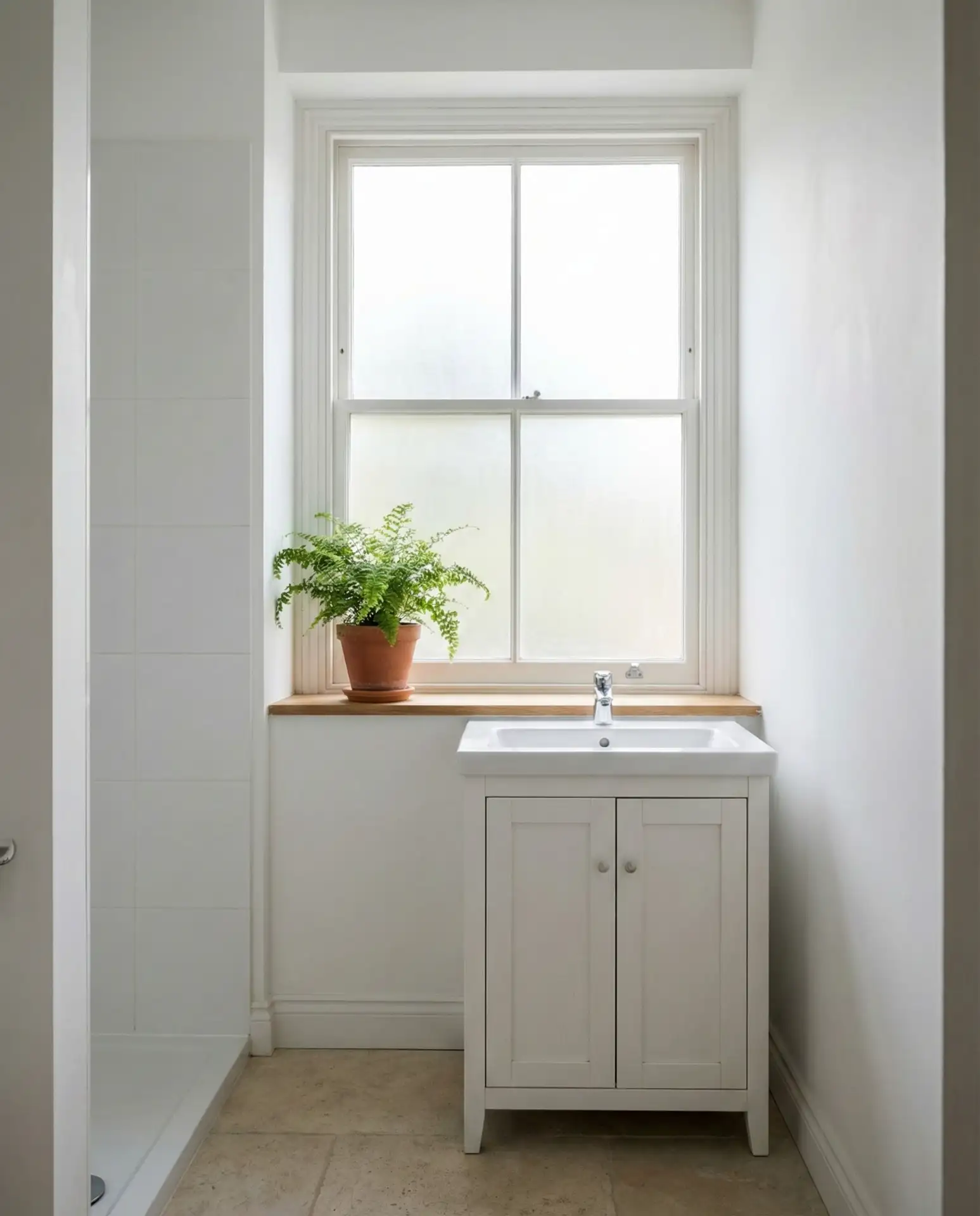
Micro anecdote: After installing frosted film on her bathroom window, one Brooklyn homeowner finally stopped keeping her blinds closed 24/7—suddenly her dark bathroom became bright without sacrificing privacy. The $50 DIY window film delivered the same effect as replacing the entire window for a fraction of the cost. Whether you choose actual frosted glass during construction or apply film to existing windows, the result is a bathroom that feels connected to daylight without exposing your morning routine to the world.
Conclusion
These ideas prove that small bathroom design in 2026 is about creativity meeting constraint, where smart choices and thoughtful details matter more than square footage. Whether you’re drawn to the calm minimalism of japandi aesthetics or the bold contrast of black fixtures against white tile, there’s a path forward that fits your space, budget, and style. Drop a comment below sharing which idea resonates most with your bathroom vision—we’d love to hear what’s inspiring your renovation plans.