In 2026, small bedrooms are about optimizing limited square footage without losing style or comfort. Whether you live in a city and have an apartment or condo, or if you have a home with rooms that are smaller than you’d like them to be, there are easy ways you can create the illusion of a larger space without any major renovations. Americans are using Pinterest to find clever use of space, convertible furniture, and lots of cozy without getting claustrophobic. This year’s trends are all about minimalism, intelligent storage, and personal touches that tell your story. Here are some creative ideas that will help you to use your small bedroom to the fullest while making it a beautiful and comfortable space.
1. Floating Shelves Above the Bed
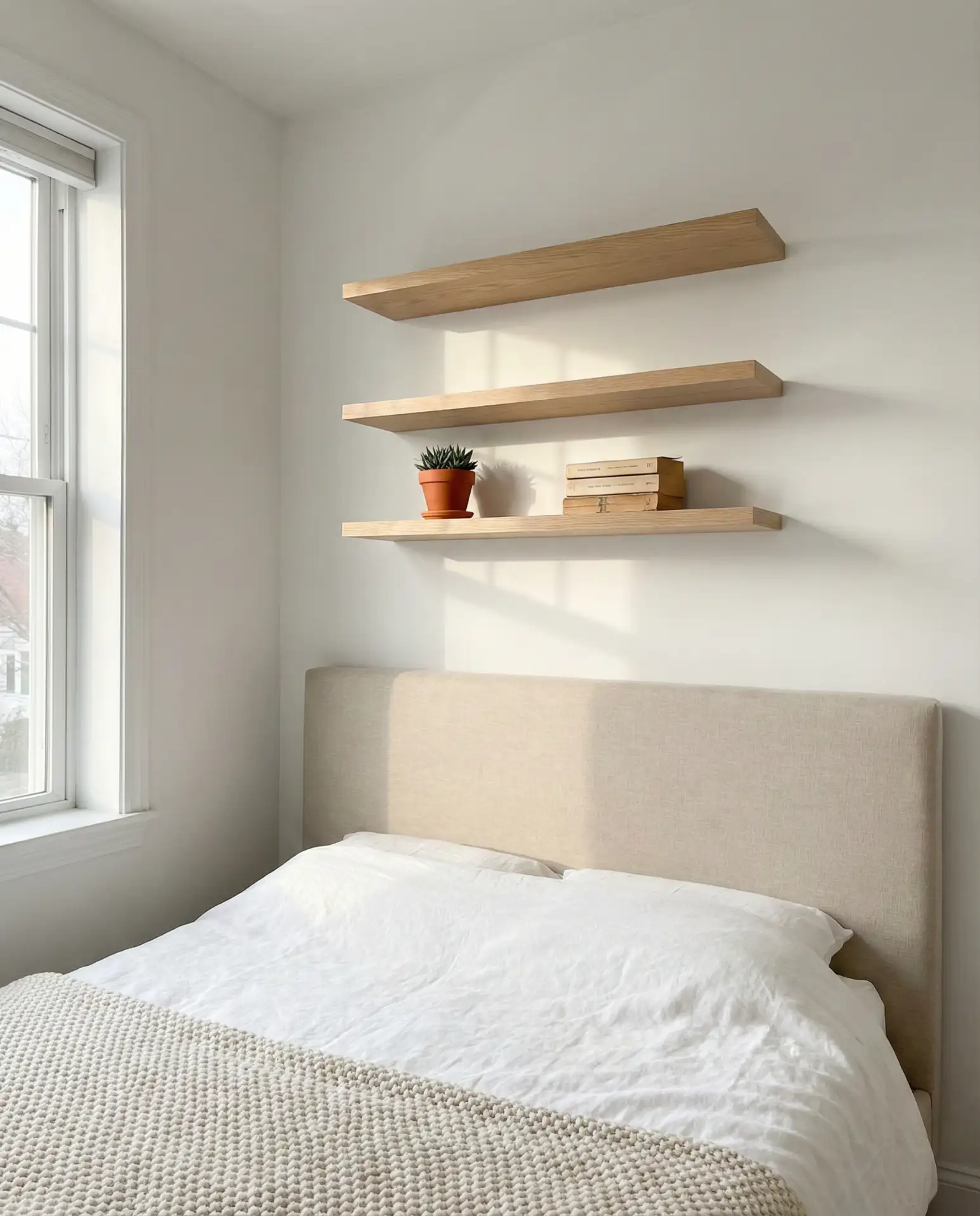
Floating shelves immediately above the bed frame can be used as vertical storage ideas that will not take up space on the floor. This works particularly well in rooms where there’s not enough space for a nightstand, and you need somewhere to put books, a small plant, or a reading lamp. The trick is to install the towel bar low enough that you can reach it easily but high enough so that you (presumably) do not bump your head. Opt for light-wood or white shelves to stay in the spirit of airiness, and skimp on any unnecessary clutter. 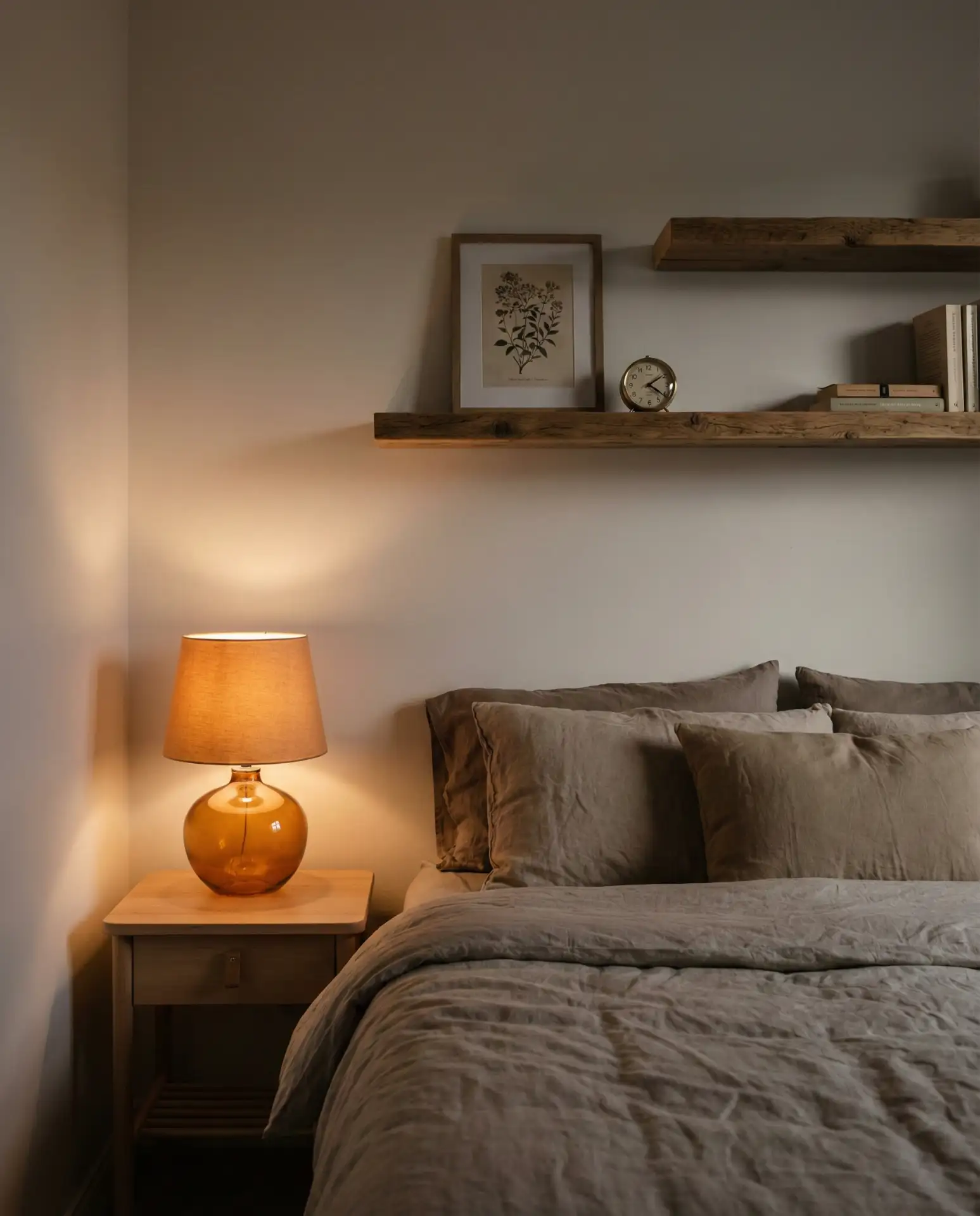
One common error is installing overly deep shelves, which makes the bed feel boxed in and introduces a visual weight overhead. Stick with shelves no deeper than 8 inches and put just a few carefully curated objects on them instead of cramping them full. This makes the look intentional and avoids it feeling too cluttered. If you’re renting, heavy-duty Command strips or tension-mounted systems may be options that don’t require drilling into the wall.
2. Under-Bed Drawers on Wheels
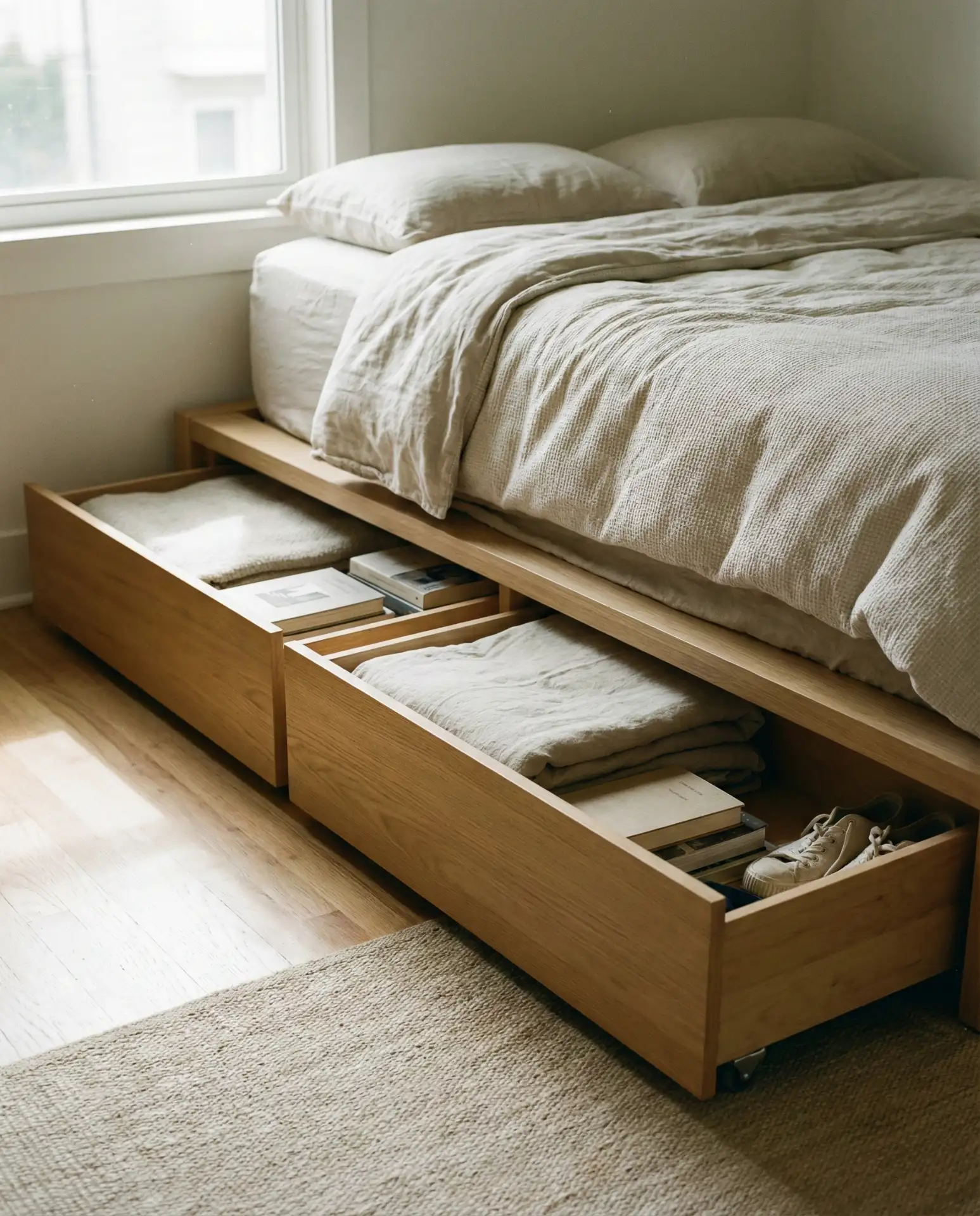
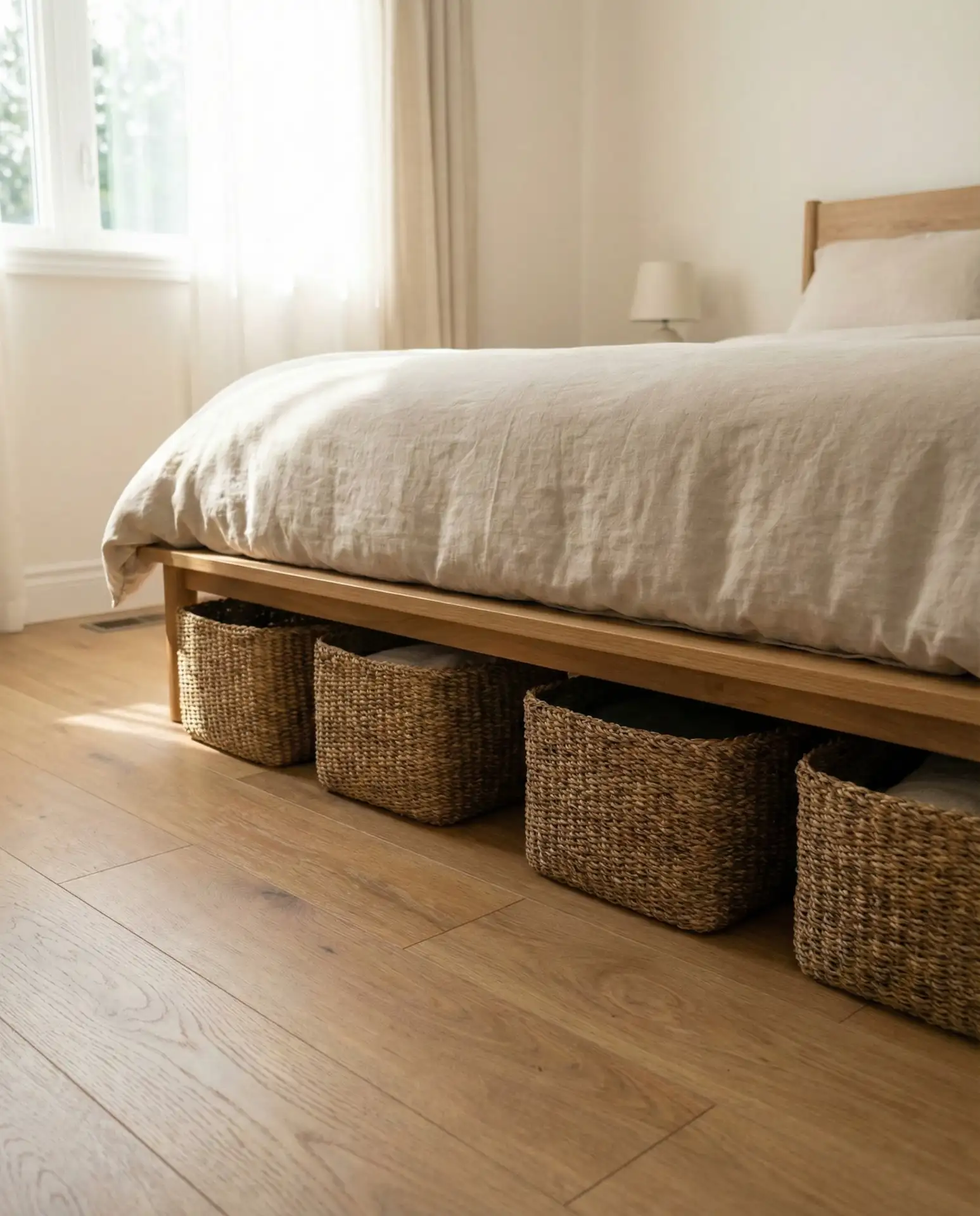
Rolling storage bins that slide underneath your bed frame are a game-changer for small spaces, especially when you need to stash off-season clothing or extra linens. This organization’s approach keeps everything accessible without requiring you to lift a heavy mattress or dig through boxes. Look for low-profile drawers designed specifically for under-bed use, ideally with smooth-gliding wheels and pull handles. Clear plastic versions let you see what’s inside at a glance, while fabric-covered options maintain a cleaner aesthetic. 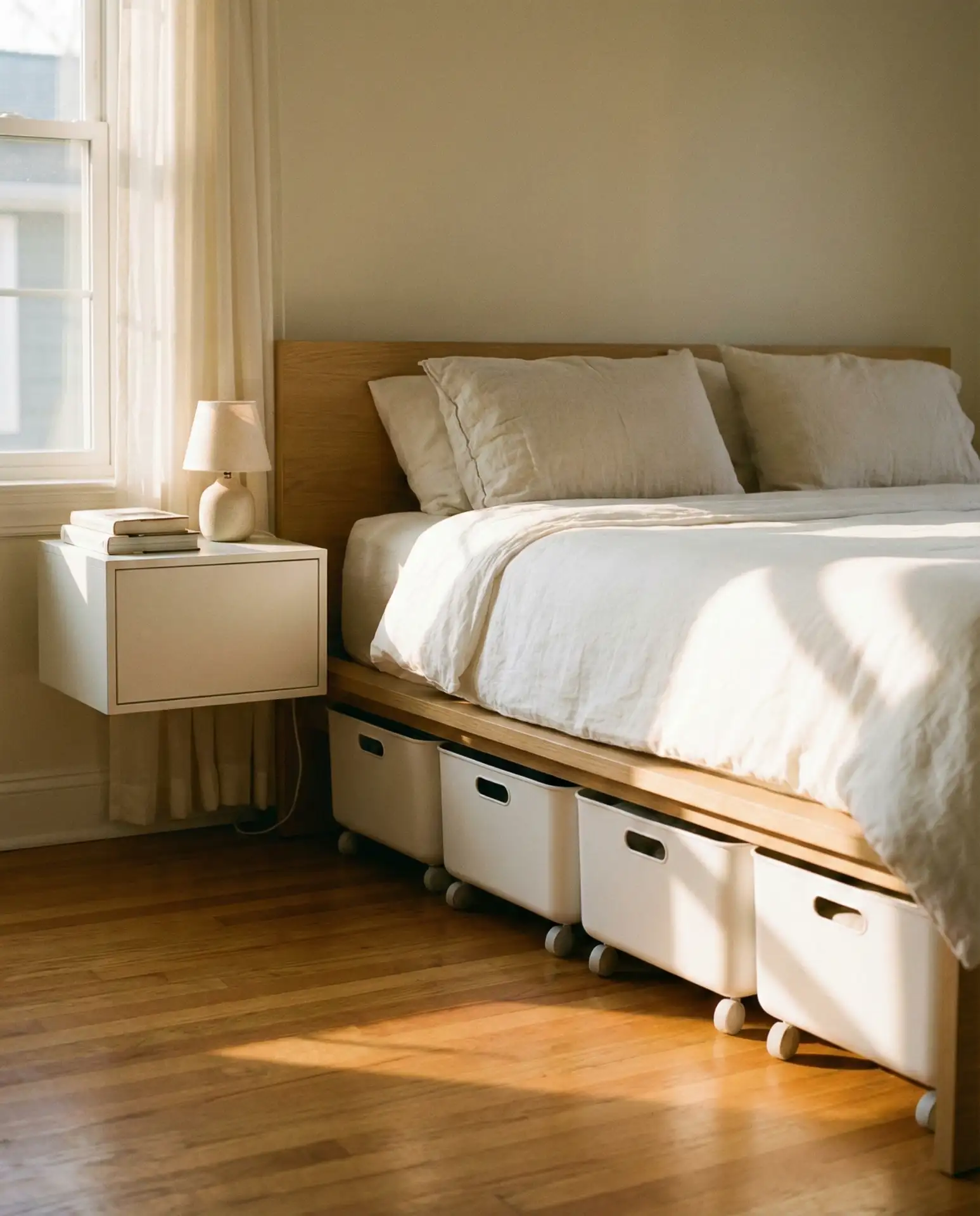
This setup works best in bedrooms with at least six inches of clearance beneath the bed frame, so measure before you buy. You’ll also want to ensure the floor surface is smooth—thick carpet can make rolling bins difficult to pull out. A quick vacuum underneath every few weeks prevents dust buildup, keeping stored items fresh and ready to use whenever you need them.
3. Murphy Bed with Built-In Desk
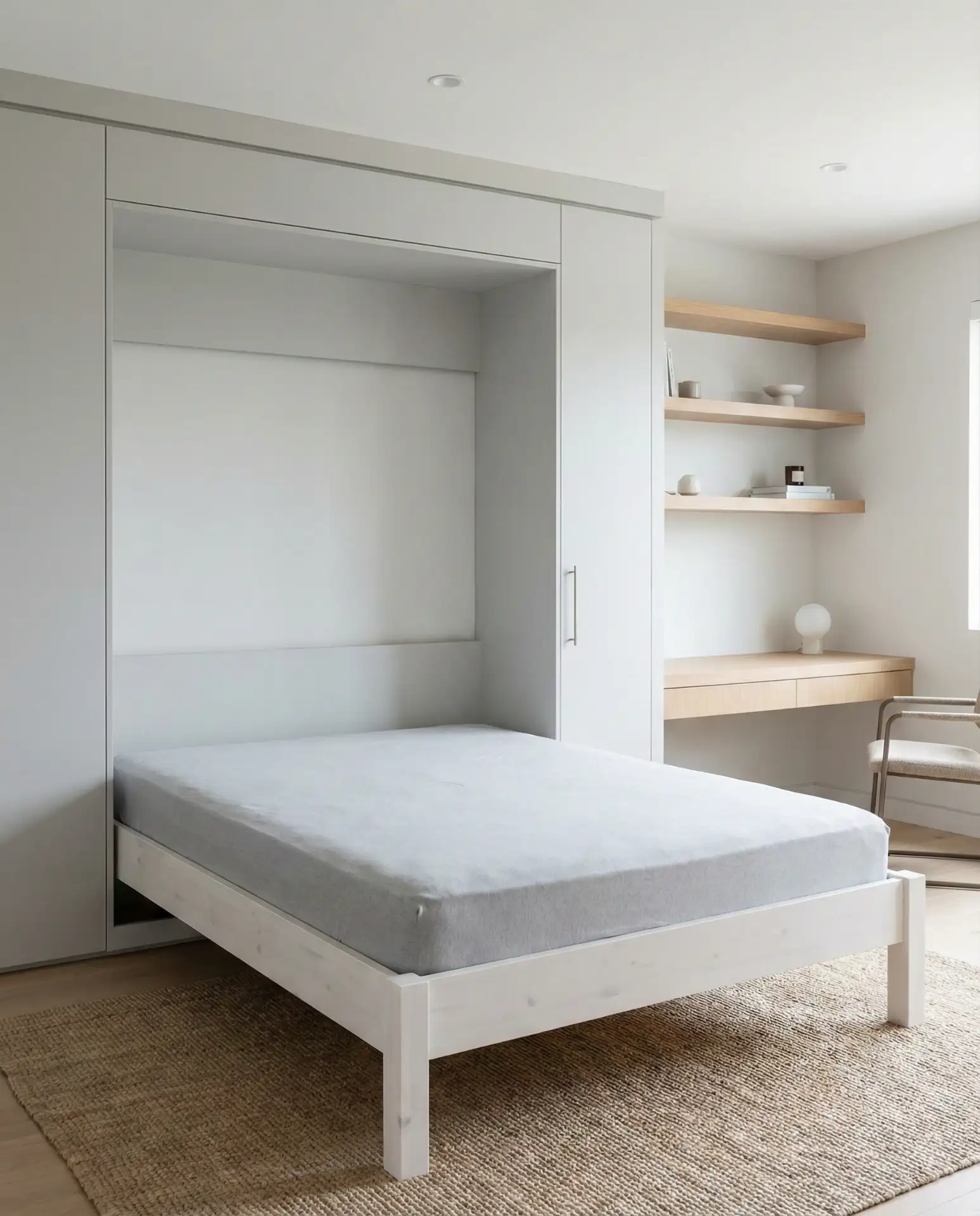
A wall bed with a desk that folds up under it turns your sleep room into a home office, ideal for working or schooling from home. It’s a full work area with space for work tools during the day, and at night, the desk tucks away and the bed lowers down. This style is particularly prevalent in studio apartments or office conversions, where real estate inches are at a premium. Today’s Murphy beds are sleeker than their previous generation, with quiet hydraulic lifts and cabinetry that hides within the room. 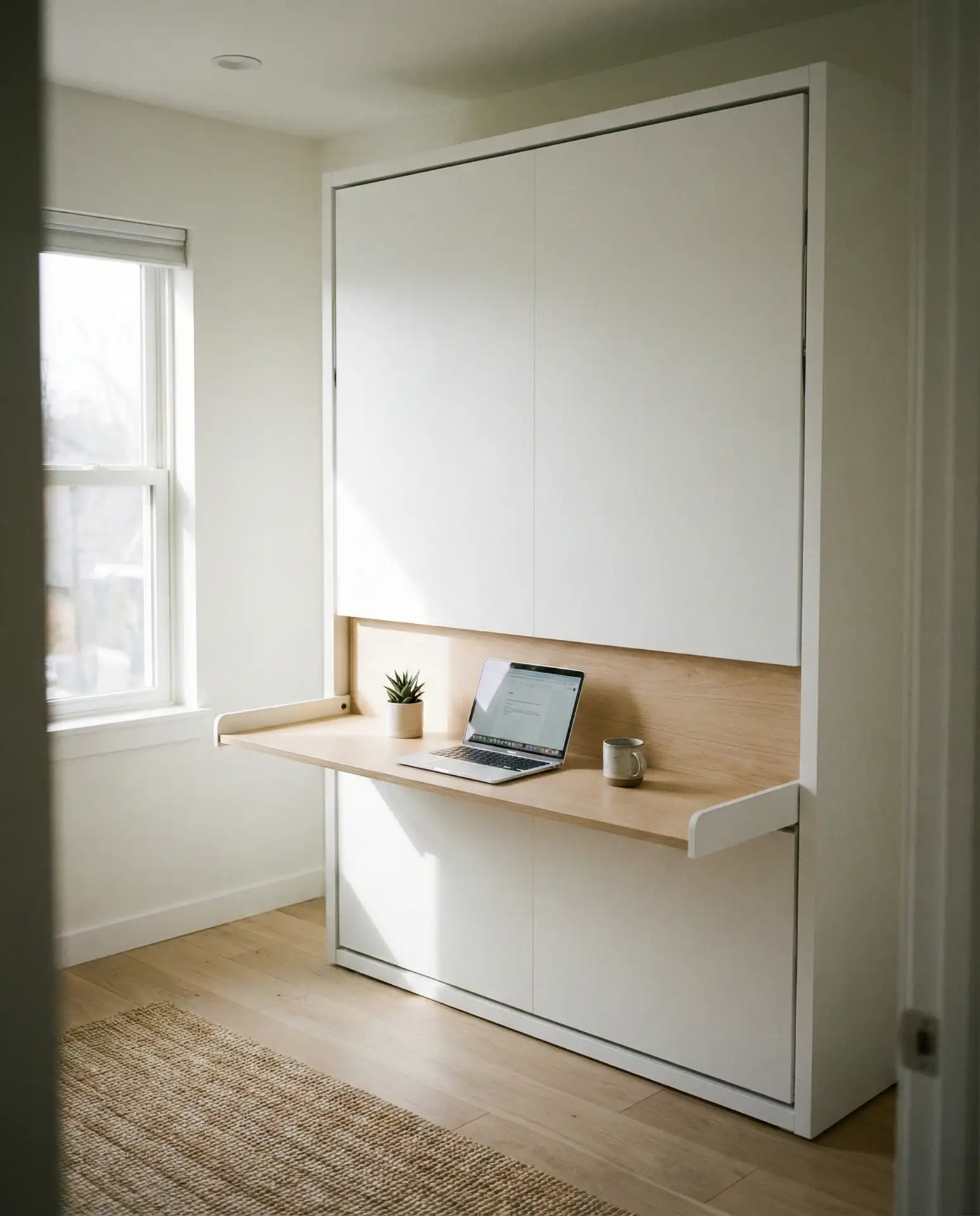
High-quality Murphy bed systems tend to start at $1,500 and range up to more than $4,000, depending on materials and custom features. Installation typically requires help from a professional if you’re not very handy, and be sure to have a solid wall that can take the weight. It’s a bit of an investment, but for those living in high-priced urban areas where there is always a premium on space, the ability to take back an entire room during waking hours more than makes up for any cost in actual functionality and peace of mind.
4. Light-Colored Walls and Ceiling
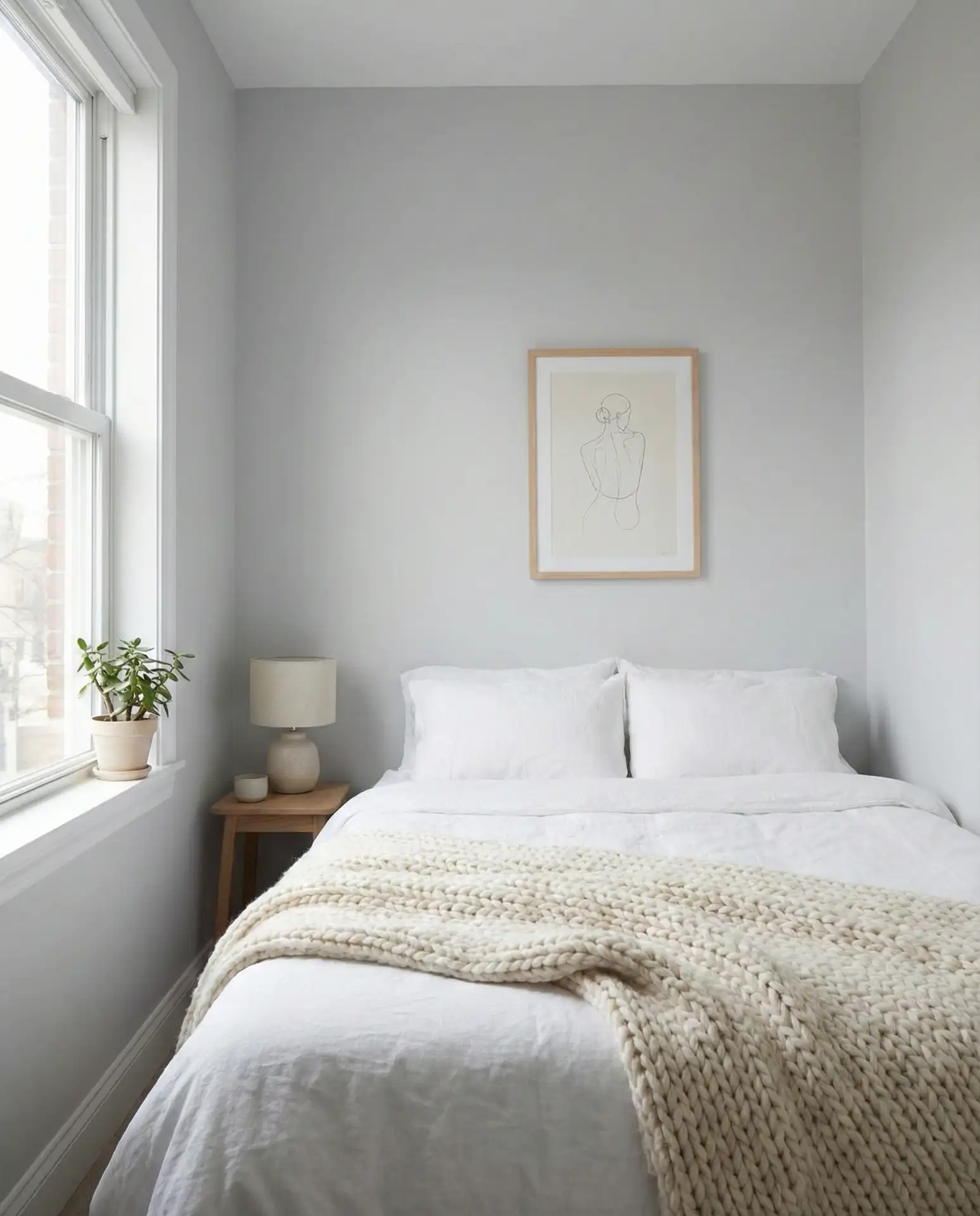
Painting your walls and ceiling with soft whites, warm creams, or light grays immediately lifts a small bedroom. Natural light is reflected off the light tones rather than absorbed, brightening everything so that it doesn’t feel quite as closed in. This is one of the easiest and least expensive ways to decorate a small room, and it provides you with a neutral background for layering textures and accent colors. And if your room gets little sun, avoid stark white—warmer off-whites keep the space from feeling cold or clinical. 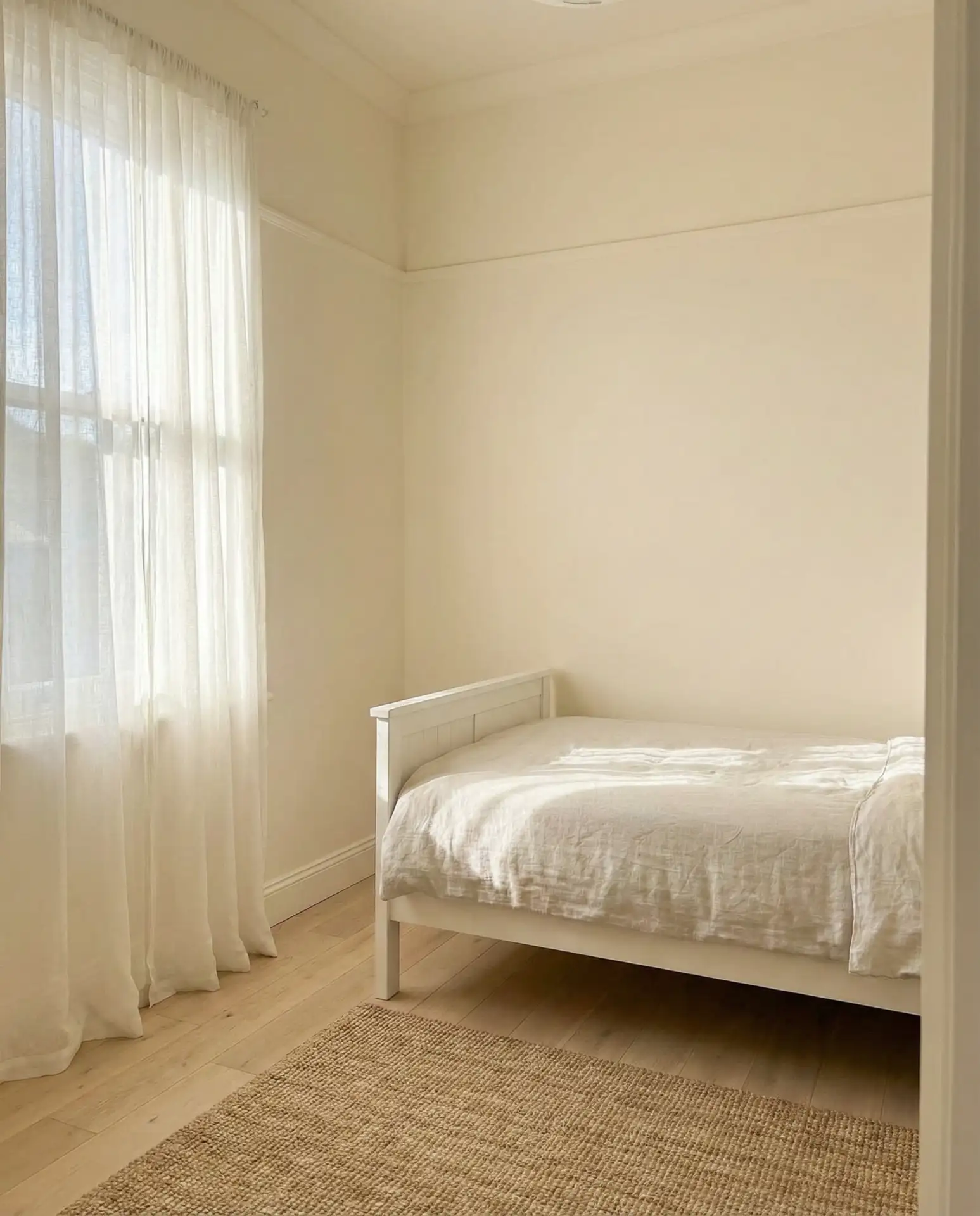
Real homeowners often worry that light walls will show scuffs and fingerprints, but modern washable paints make maintenance easier than ever. A satin or eggshell finish strikes a good balance between durability and a soft glow. If you crave more personality, use your bedding, rugs, and artwork to introduce color rather than committing to bold wall tones that can visually shrink the room. This keeps the space adaptable as your style evolves.
5. Sliding Barn Door Closet
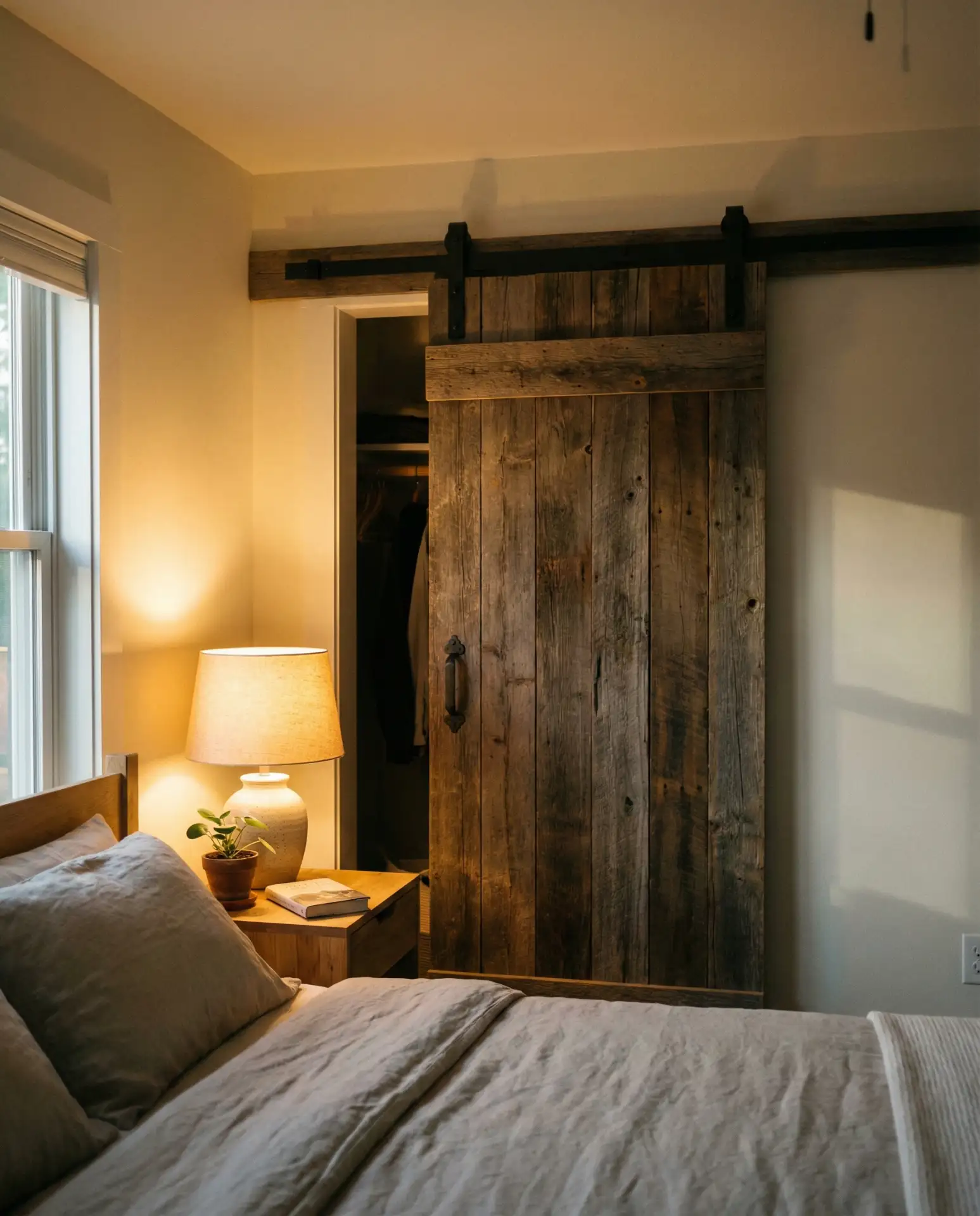
Replacing a traditional hinged closet door with a sliding barn-style door frees up floor space and adds a touch of rustic charm to your small bedroom. Standard doors require clearance to swing open, which can block furniture placement or create awkward traffic flow. A barn door slides along a wall-mounted track, so you can position a dresser or chair right next to the closet without any interference. This solution is especially useful for closet ideas in tight layouts where every inch matters. 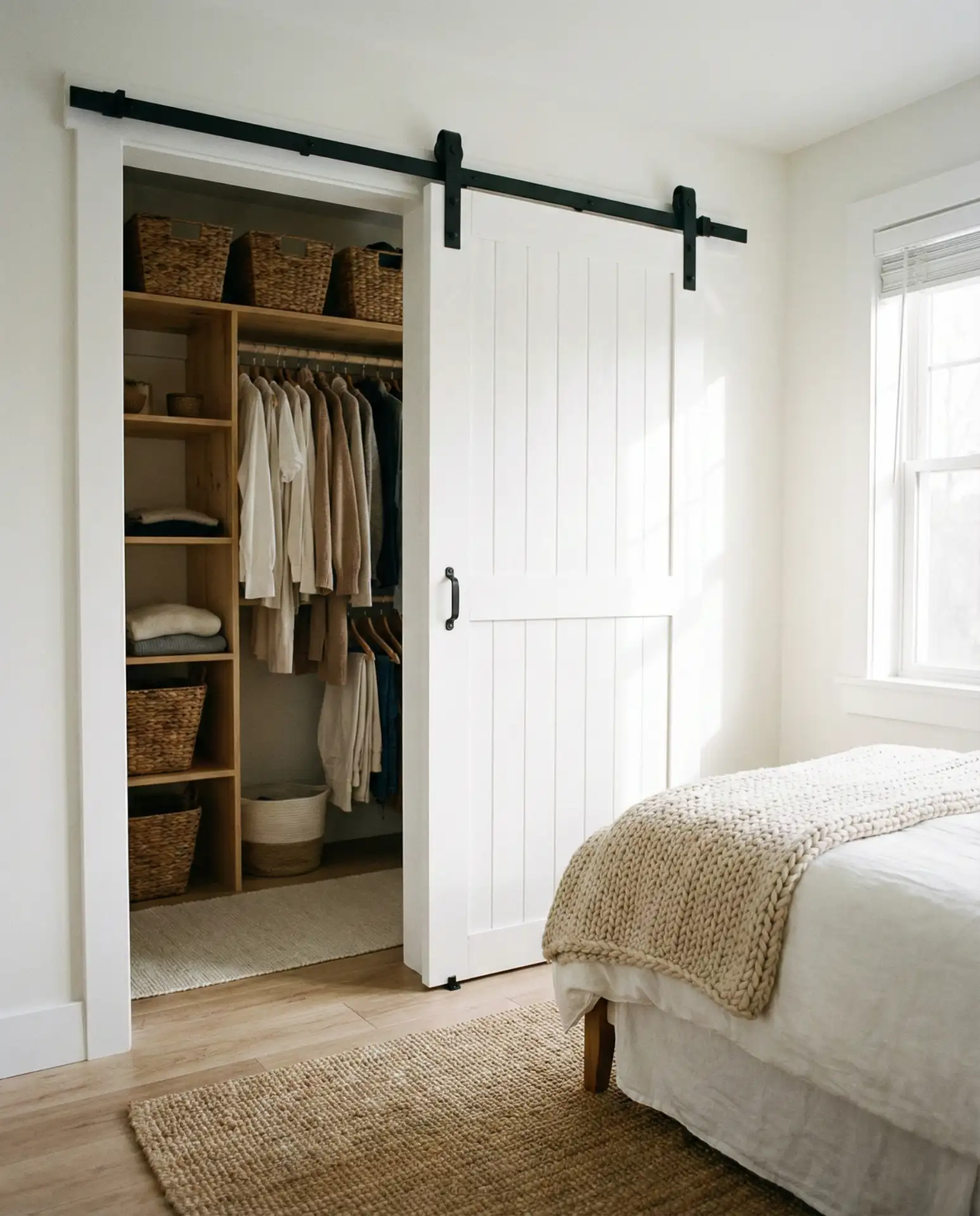
In the Midwest and South, barn doors have become a go-to choice for homeowners looking to blend practical storage with a touch of farmhouse character. Hardware kits are widely available at home improvement stores and online, with prices ranging from around $100 for basic steel rails to $300 or more for premium finishes. Installation is straightforward if you’re comfortable with a drill and level, though you’ll want to locate wall studs to ensure the track is securely anchored.
6. Lofted Bed with Storage Below
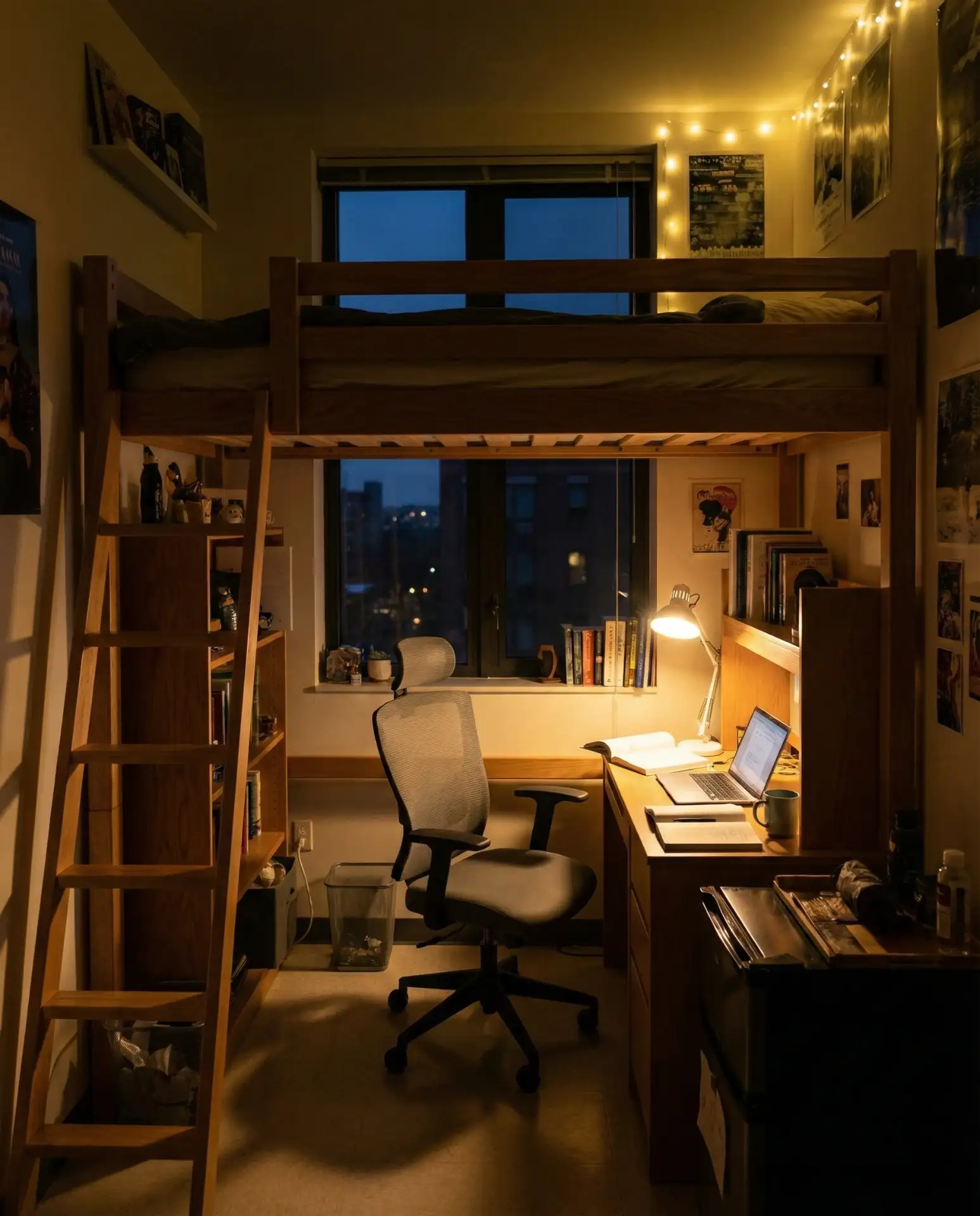
Lifting your bed off the ground with a lofted frame gives you an entire footprint underneath that can be used for storage, as a workspace, or—let’s just say it—creating the master bedroom decor of your dreams. This design is especially favored by college students and young professionals who reside in micro-apartments where square footage is a precious commodity. Beneath the bed, you can fit bins, a small dresser, or open shelving; it’s not quite like having two rooms, but doubling your storage is close. Just be sure the ceiling height will permit you to sit up comfortably in bed—most lofts need at least eight feet of clearance to feel livable. 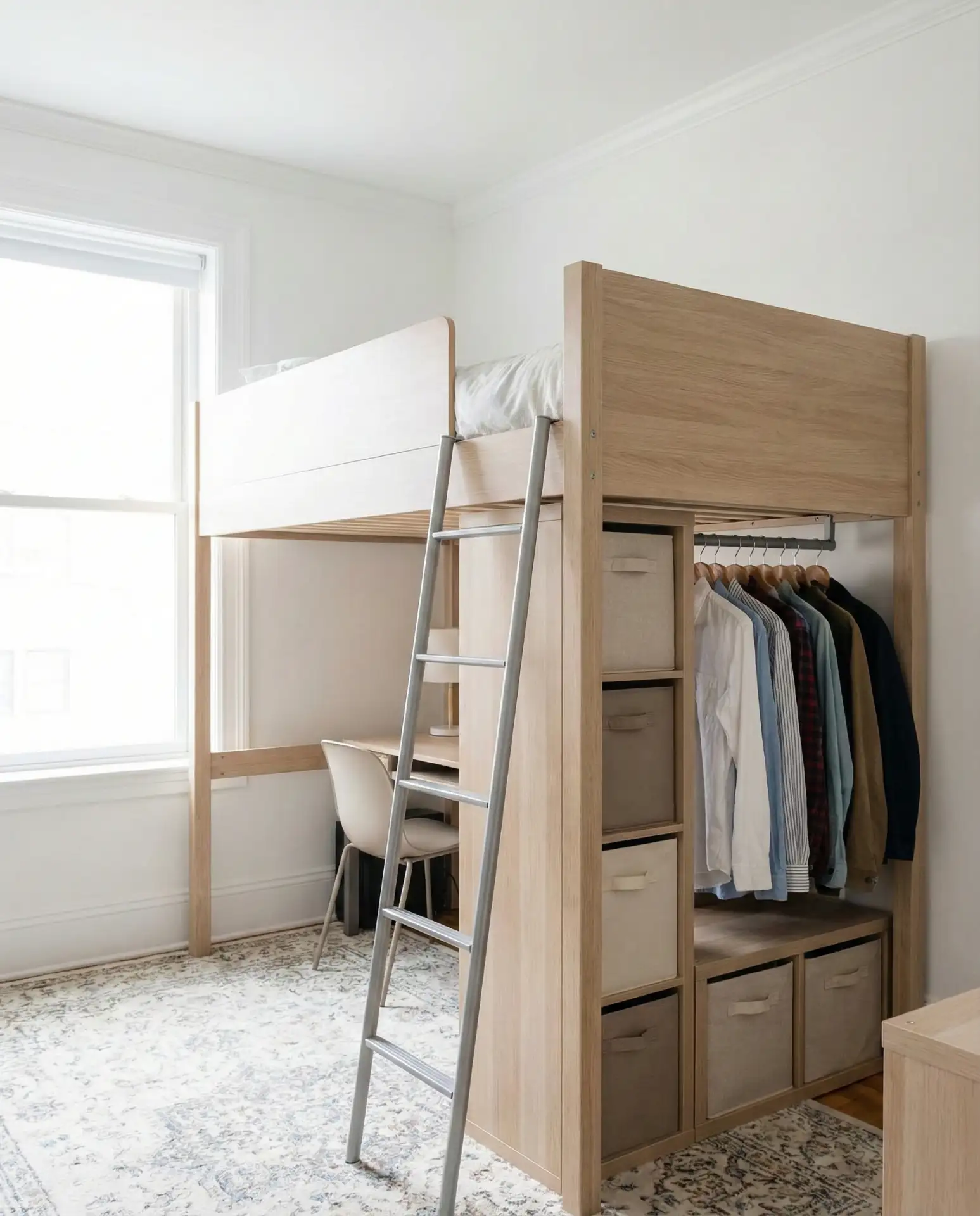
From my own experience crashing with friends in San Francisco, I can attest to how a lofted bed can transform the vibe of a 200-square-foot studio. One friend even took the area under here and turned it into a tiny home office, while another has set up a cozy little lounge space with floor cushions and string lights. The trick is to treat the lower zone as its own space and not just as dead airspace reserved for storage bins, a move that makes the room feel purposeful and welcoming.
7. Mirrored Closet Doors
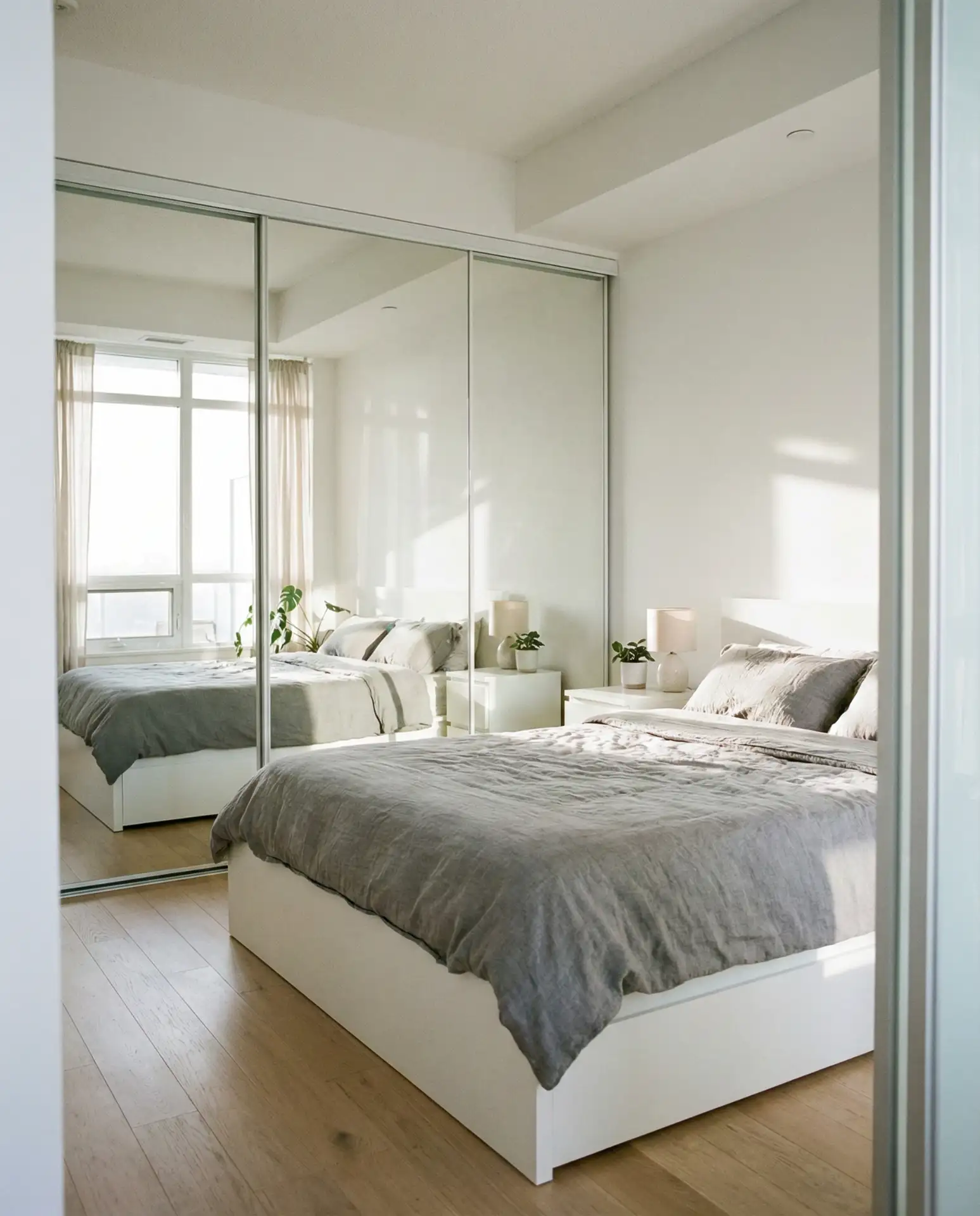
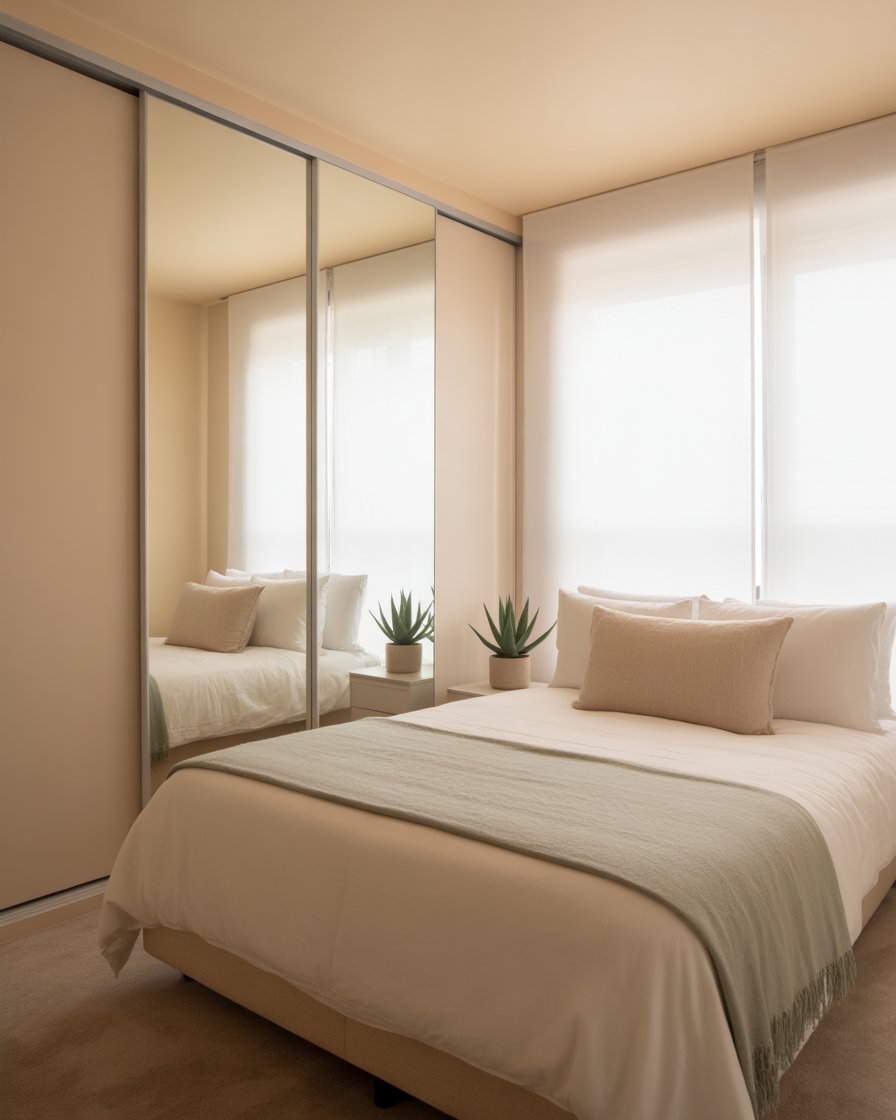
When you mount full-length mirrors on your closet doors, the results can make a room look twice as big and reflect light at every angle! Bring it back This old trick always works best in those narrow, depthless bedrooms It will suddenly feel so much more spacious and breathable. Mirrored doors have a functional use as well, allowing you to see your outfit (and yourself) fully when you’re getting dressed and eliminating the need for another free-standing mirror. Opt for sliding or bifold if you prefer to maintain as much floor space as possible, and try to keep that mirror surface pristine for maximum impact. 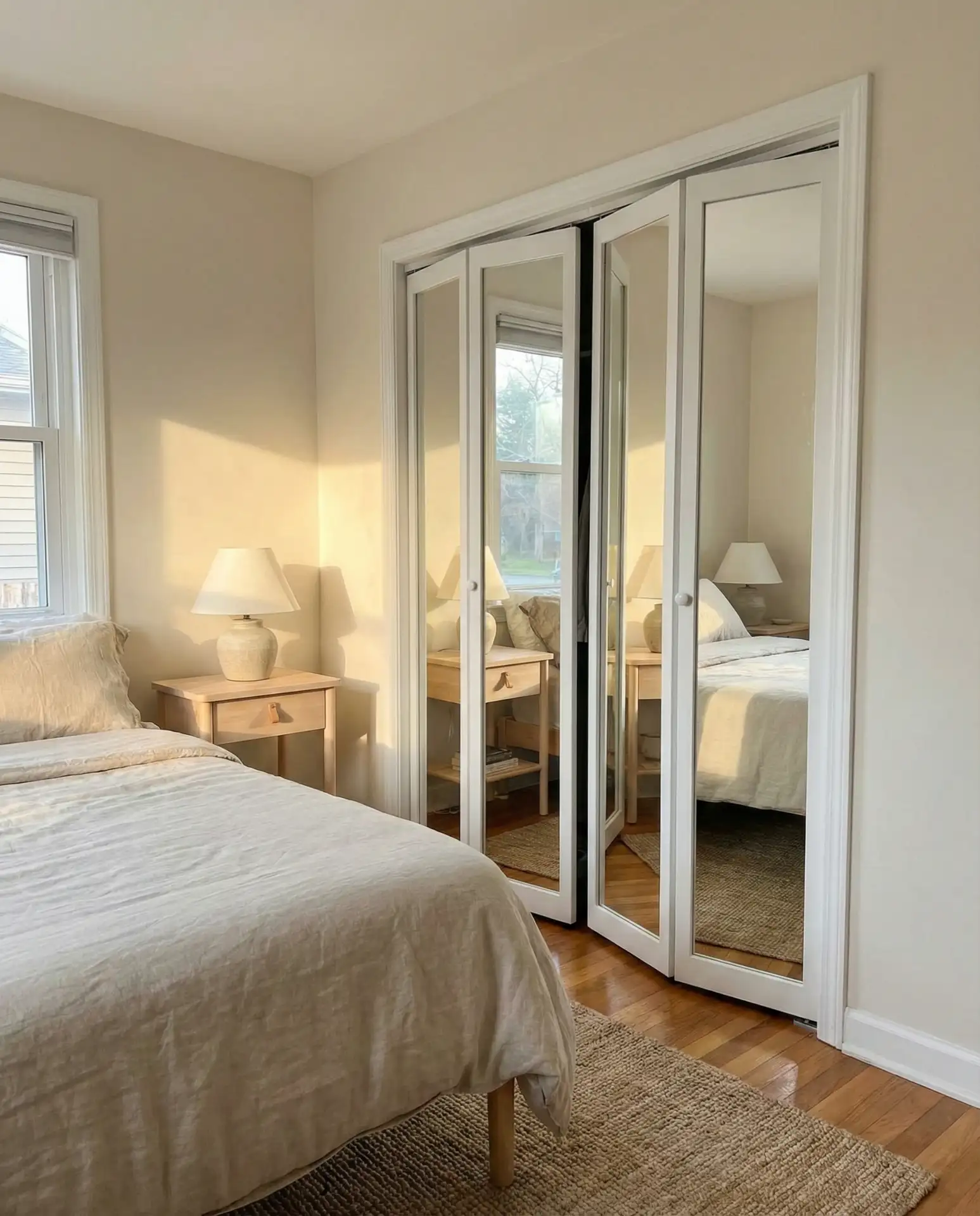
\n The same is true with respect to the decoy wall—a potentially easier solution in smaller spaces, where you’re likely to spend time anyway. “The bedroom feels like a room,” said Cohen. Turn your mattress so it doesn’t face directly into the mirrored closet (some people find seeing themselves first thing in the morning or when they wake up at night unsettling). This can easily be addressed by angling the bed away from the door or on an adjacent wall where it won’t be reflecting the morning sun to provide light into the space. If safety is a concern, particularly for homes with young children, choose tempered glass or acrylic mirror panels instead of the traditional materials, as they are more difficult to shatter.
8. Wall-Mounted Nightstands
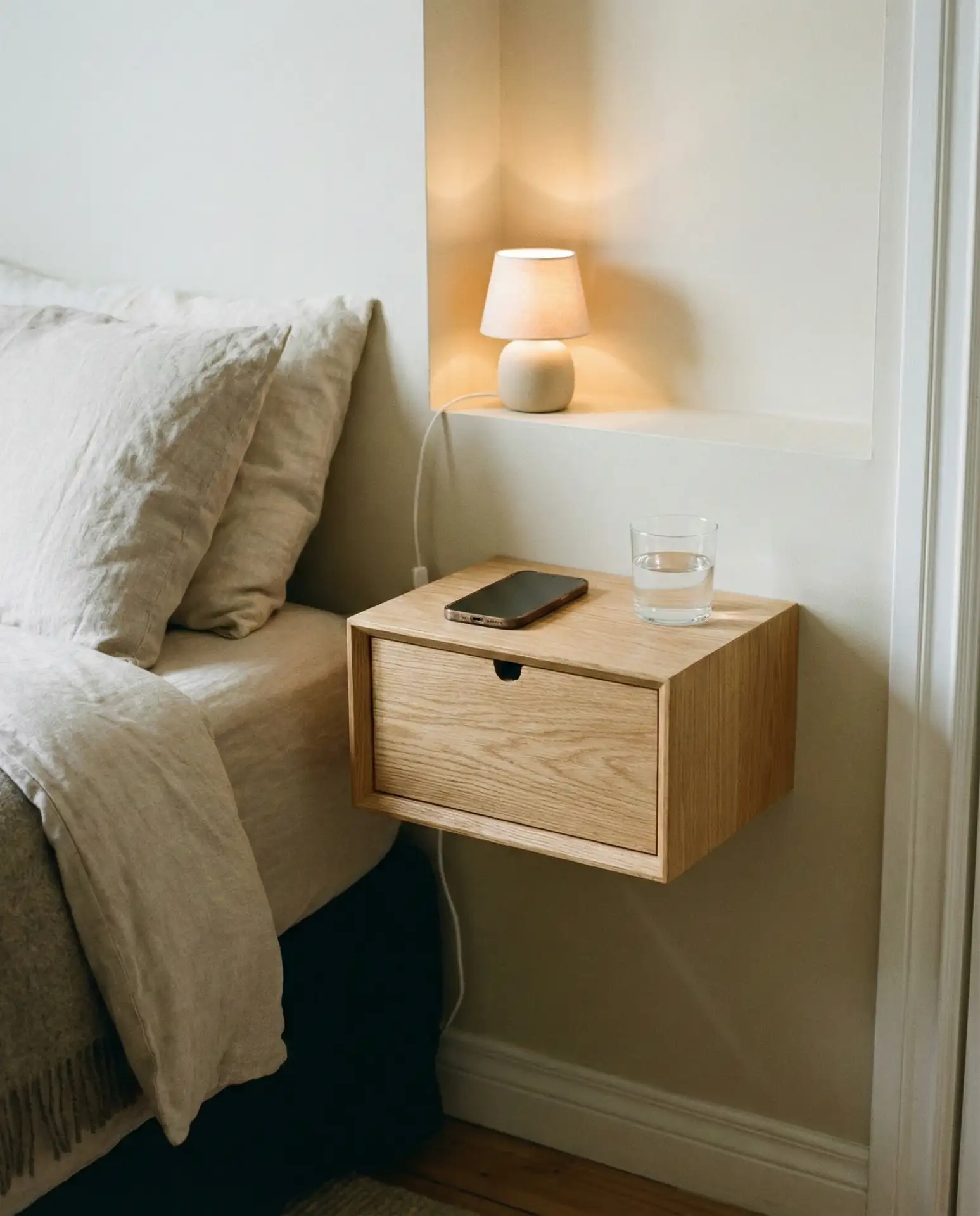
“Floating nightstands that are attached to the wall can eliminate heavy legs, making a small bedroom feel more open and less cluttered,” she said. These scaled-down shelves or small cabinets, designed to fit bedside necessities but not hog much room, offer a place to set a lamp, phone charger, and glass of water. And since they stand above the floor, they also make cleaning underneath a cinch and therefore help keep that aviation feel—airy and uncluttered. Select a finish that complements the color of your headboard or wall for a streamlined look. 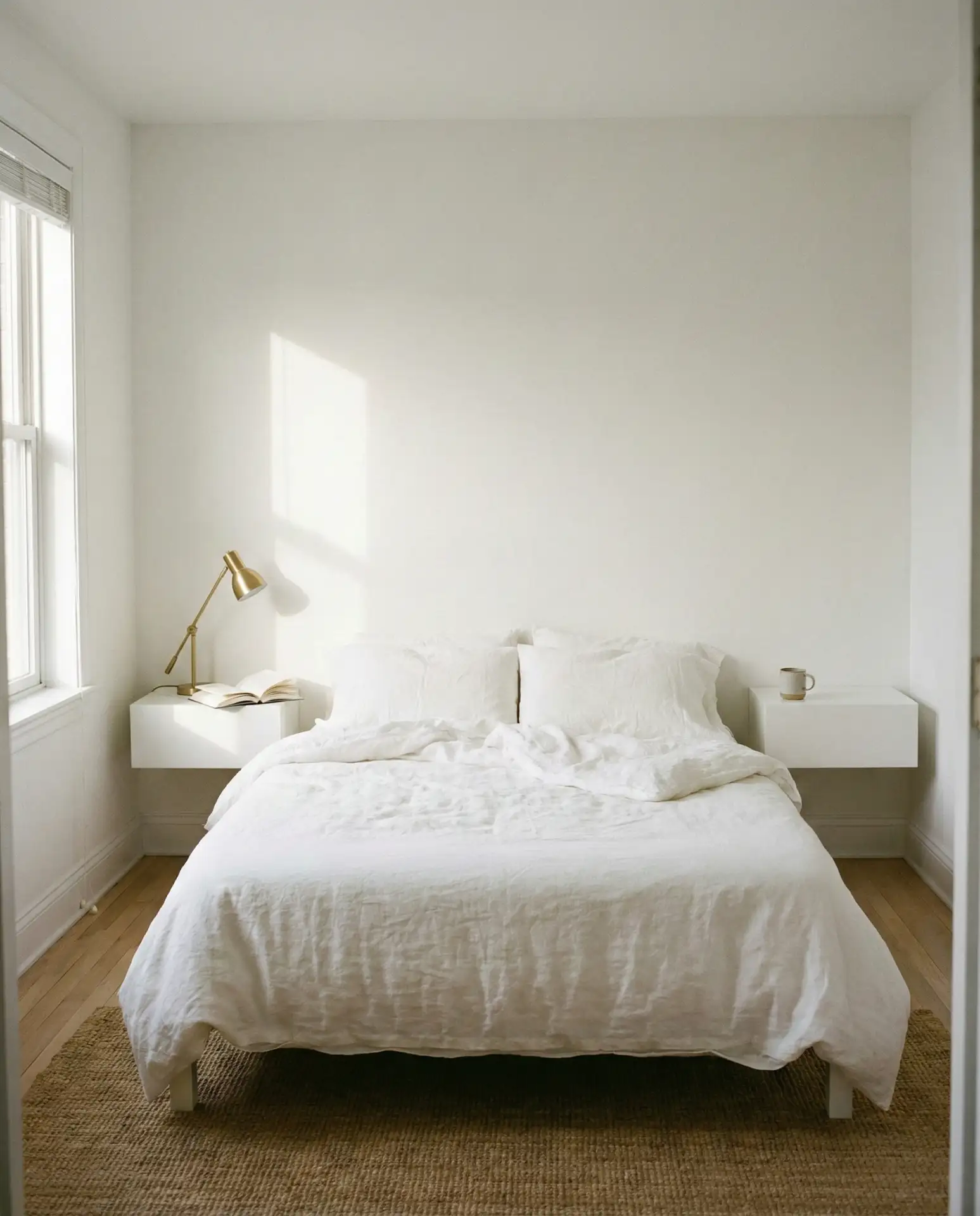
This setup works best in rental apartments where you can’t install heavy built-ins but still want a custom look. Many wall-mounted nightstands come with hidden mounting hardware that supports surprising amounts of weight, so don’t hesitate to use them for a small alarm clock or a stack of books. Just make sure to anchor them into wall studs or use heavy-duty drywall anchors rated for the load you plan to place on them.
9. Vertical Striped Accent Wall
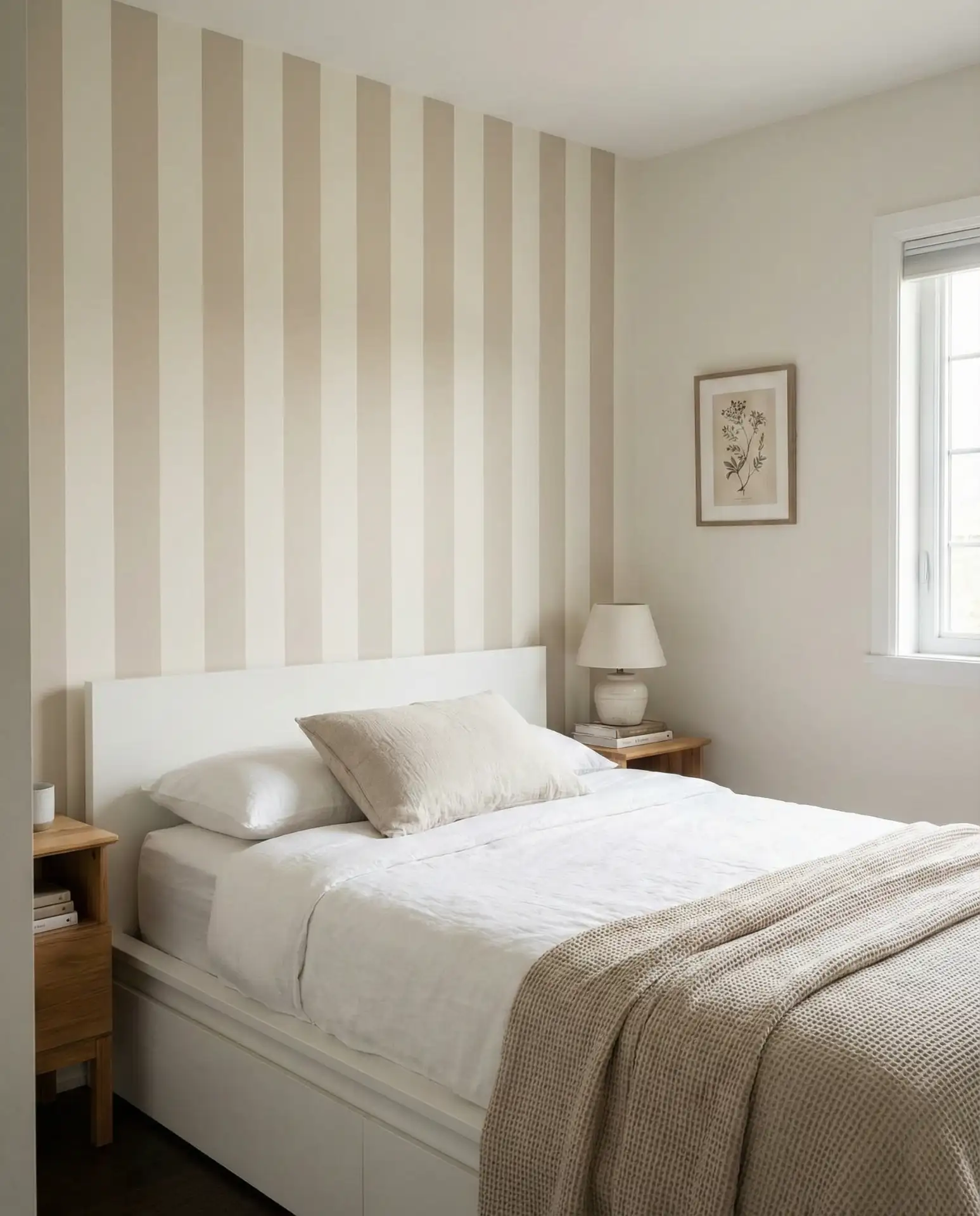
Painting one wall with narrow vertical stripes will help your eye climb the wall, making the ceiling feel taller, a great trick for small bedrooms without high enough ceilings. Select two tones of a single-color concept—such as muted gray and slightly deeper charcoal—for a look that’s refined, not overwhelming. The stripes are meant to be wide and evenly spaced for a modern look, not scurrying or dizzying. This cordon bleu travel method is visually interesting without being totally dependent on statement furniture or excessive decoration. 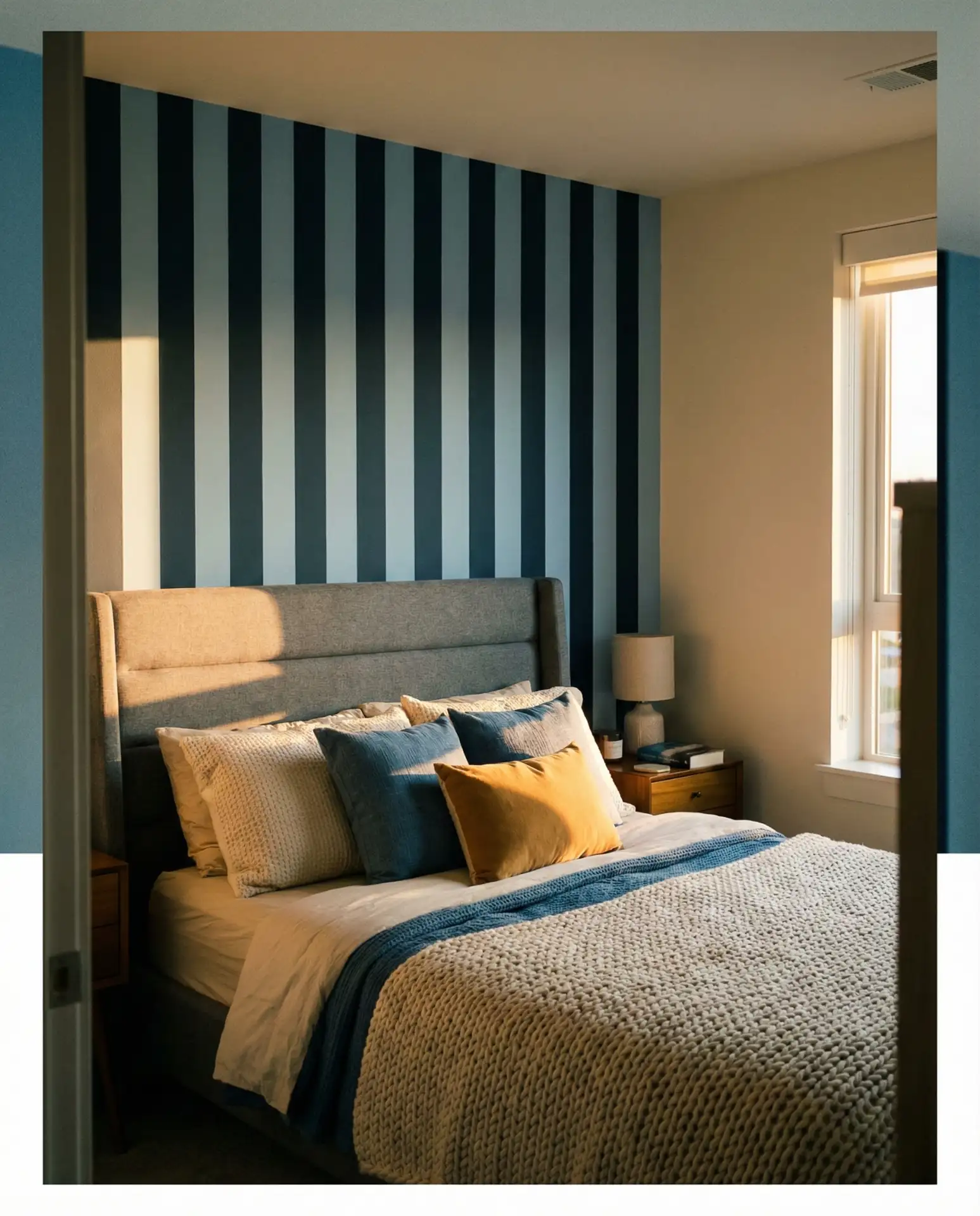
In the Pacific Northwest, where many homes have lower ceilings and less natural light, homeowners often use this trick to brighten and lift smaller bedrooms. The stripes work particularly well behind the bed, creating a focal point that anchors the room without needing a large headboard or gallery wall. Painter’s tape and a steady hand are all you need for a DIY project that can be completed over a weekend.
10. Japandi-Inspired Minimalism
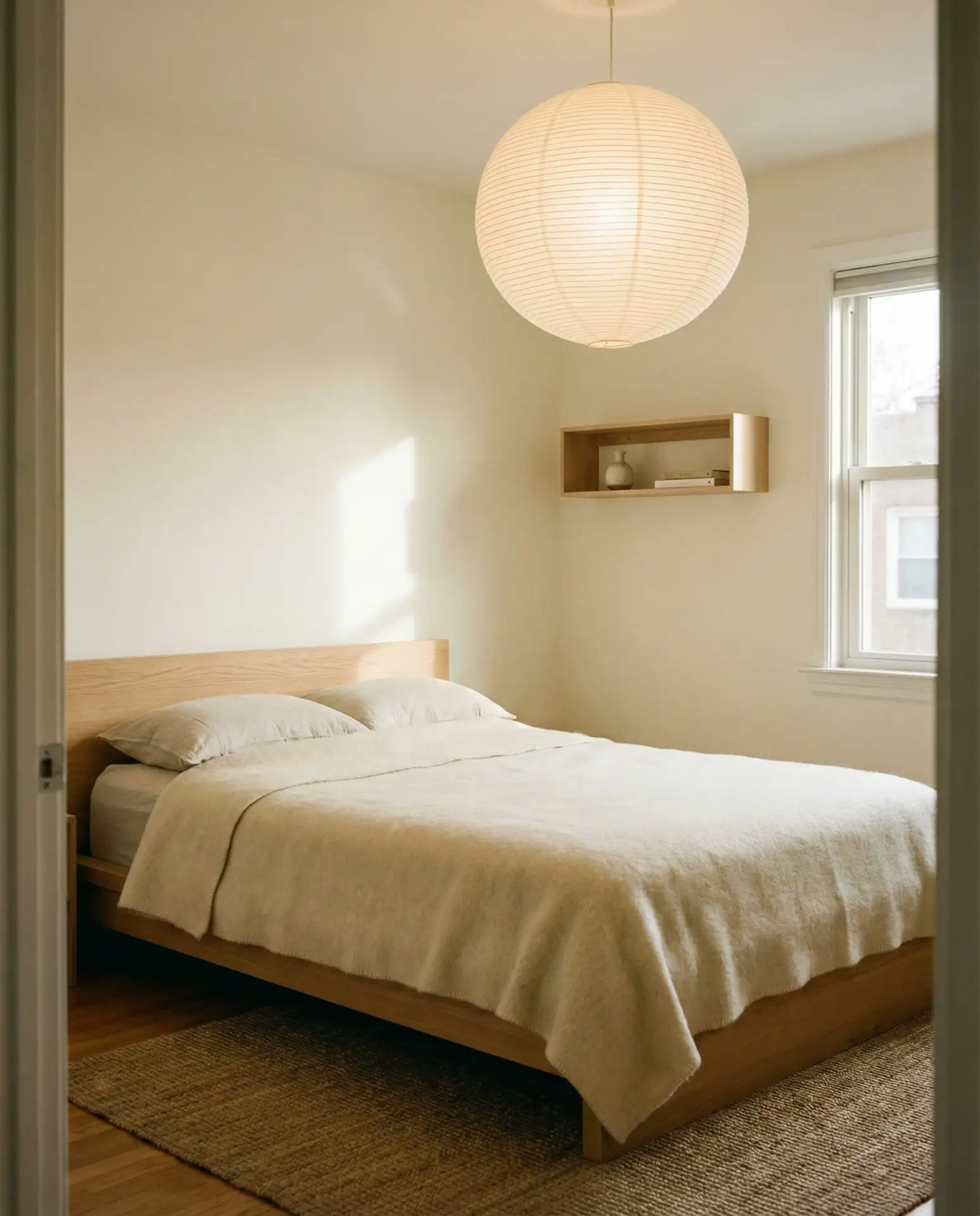
Marrying the low-key, pared-back approach of Japan with the Scandinavian flair for practicality and airiness, Japandi design is all about lots of space, soft lighting, simple lines, and muted tones—perfect for smaller bedrooms that could use a little calming uncluttering. This is a style dedicated to quality over quantity, so you will need only a few well-made pieces: A low platform bed, a simple wooden bench, and linen bedding in earthy hues. The goal is to make a cozy escape, not cover every inch of your surfaces with decorations. 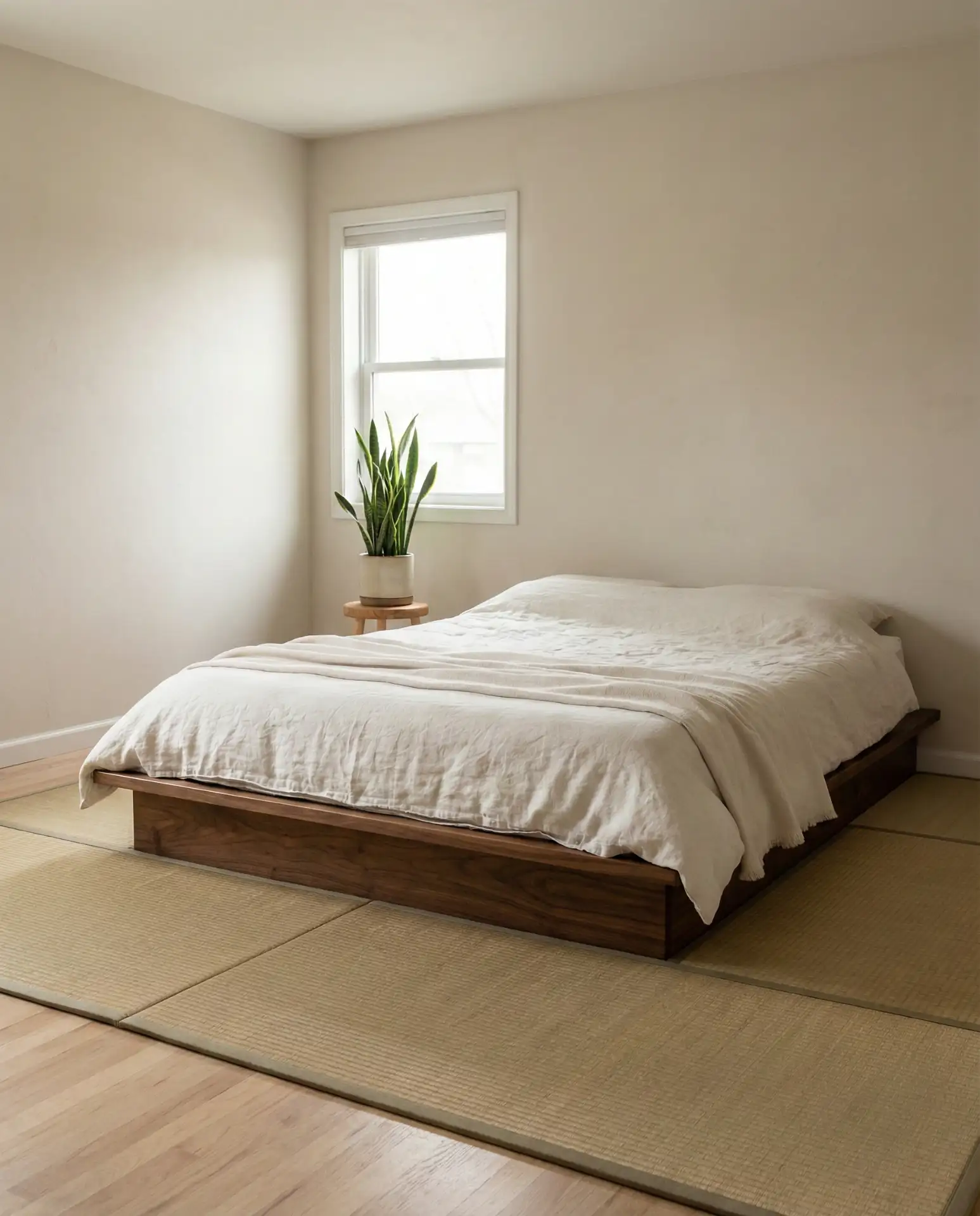
This methodology is catching on among younger Americans who prioritize conscious living and sustainable design. When you’re minimalist and intentional with the bedroom, it means there’s not much visual clutter, so your sense of place is truly restful. Small rooms are practical and beautiful thanks to natural light, organic textures and the “less is more” approach. Natural light, organic textures and the “less is more” philosophy […] blocks From Design Fishtown townhouse From Design A sophisticated home on a tight street They added big windows (which turns out you can totally add even in really narrow homes!), an open plan, and bright white walls with warm wood floors.
11. Built-In Window Seat with Storage
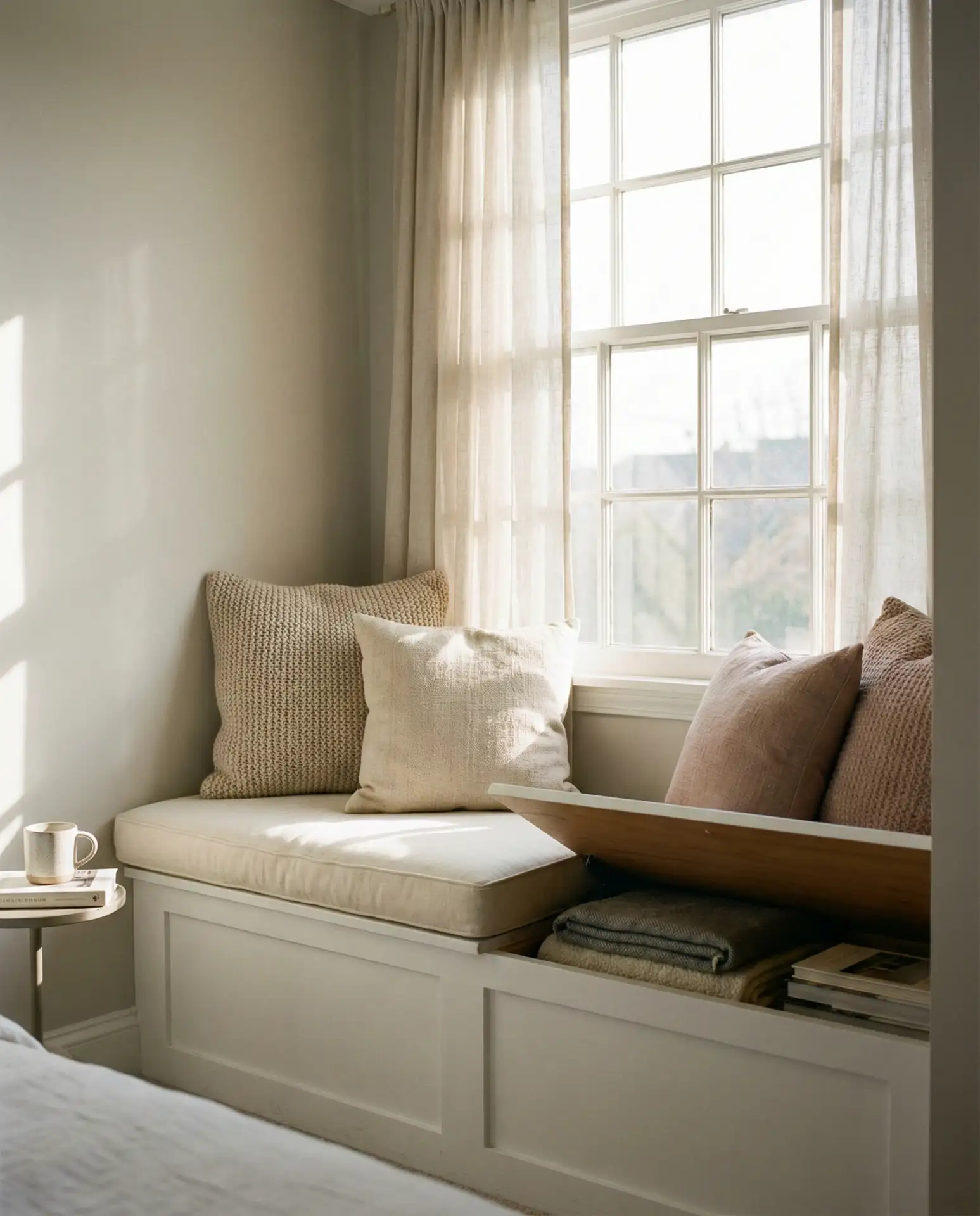
Built-in window seat with storage. /#ID54, description:caption=’ Image Text: A custom window seat with lift-up cushions and pull-out drawers lowers the awkward space into a cozy reading spot and prepped storage solution. ’/. It’s a good trick, especially for use in older homes with deep windowsills or bay windows in which this space would otherwise go to waste. You get bonus seating for guests, a peaceful place to cozy up with a book, and valuable hidden storage for blankets, pillows, or off-season clothes—without bringing in extra freestanding furniture that crowds the room. 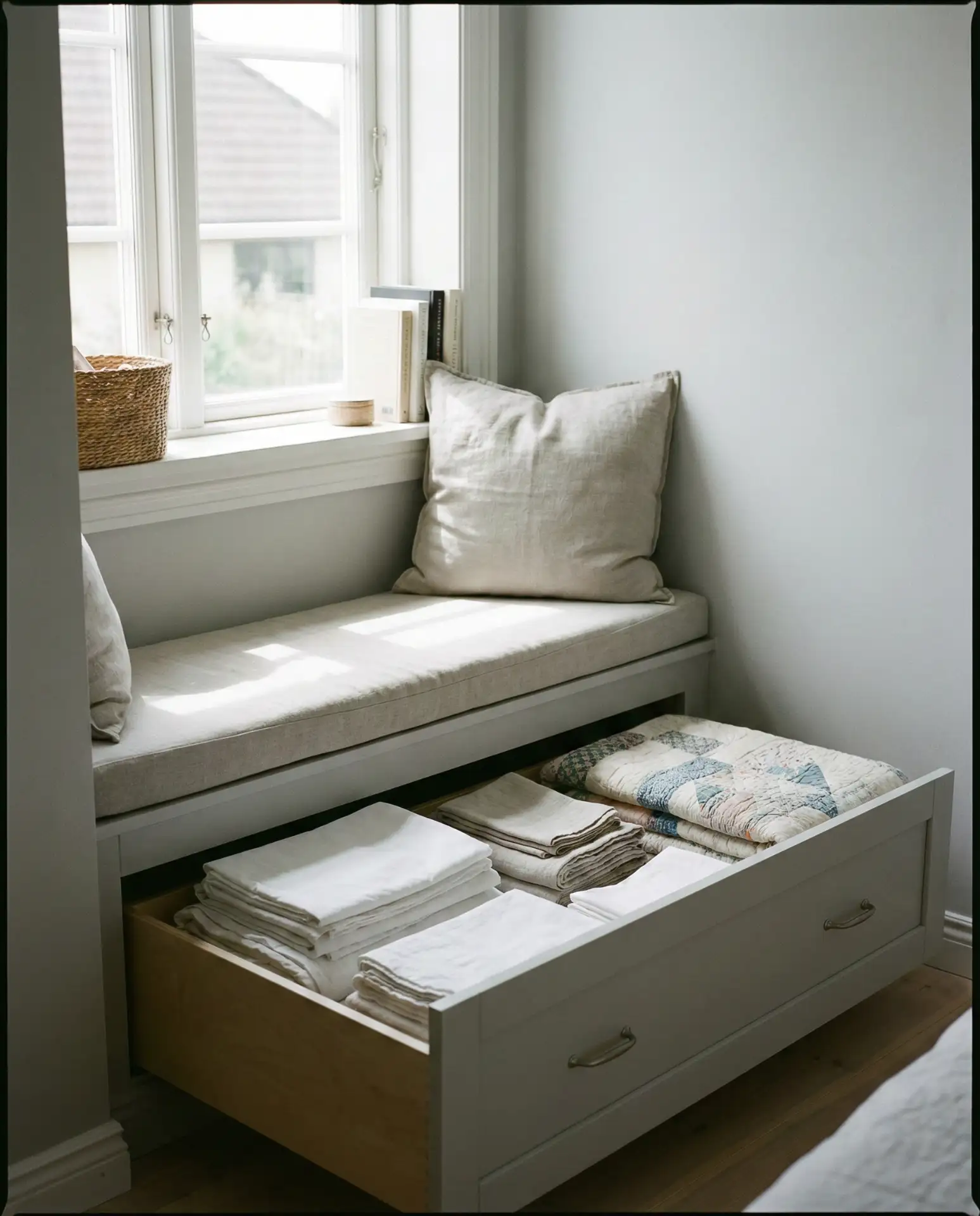
Once you install them, whether you’re doing a simple DIY version or paying up for custom millwork with soft-close hinges and padded cushions—which typically requires carpentry work or hiring a contractor to do it for you—costs can vary from about $500 on the low end to north of $2,000. This is a permanent addition, so think long term about what you want the room to be used for. If you’re renting, a freestanding bench with storage baskets below achieves the same effect without the commitment.
12. Bunk Beds for Siblings
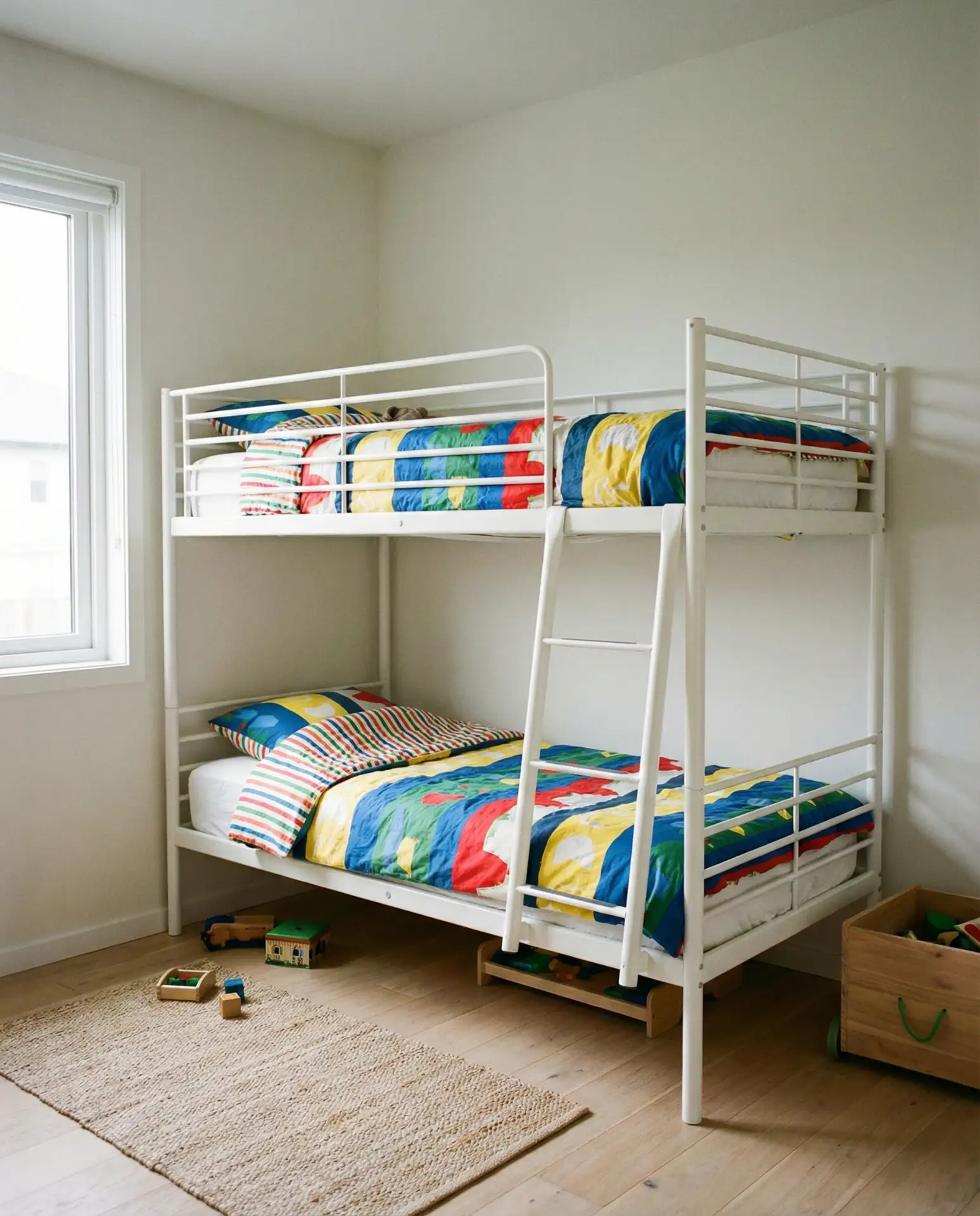
When a pair of kiddos with big personalities share a pint-sized bedroom, bunks are the thing to do for adding floor space and separate sleep zones. Today’s bunk designs are not all about the typical wooden frames; add-ons might include storage stairs, built-in desks, and even trundle beds for sleepovers. Ideally, you want a design that features sturdy metal or solid wood construction and guardrails on the top bunk, and look for models where mattress thickness won’t exceed the rail height to keep kids safe. 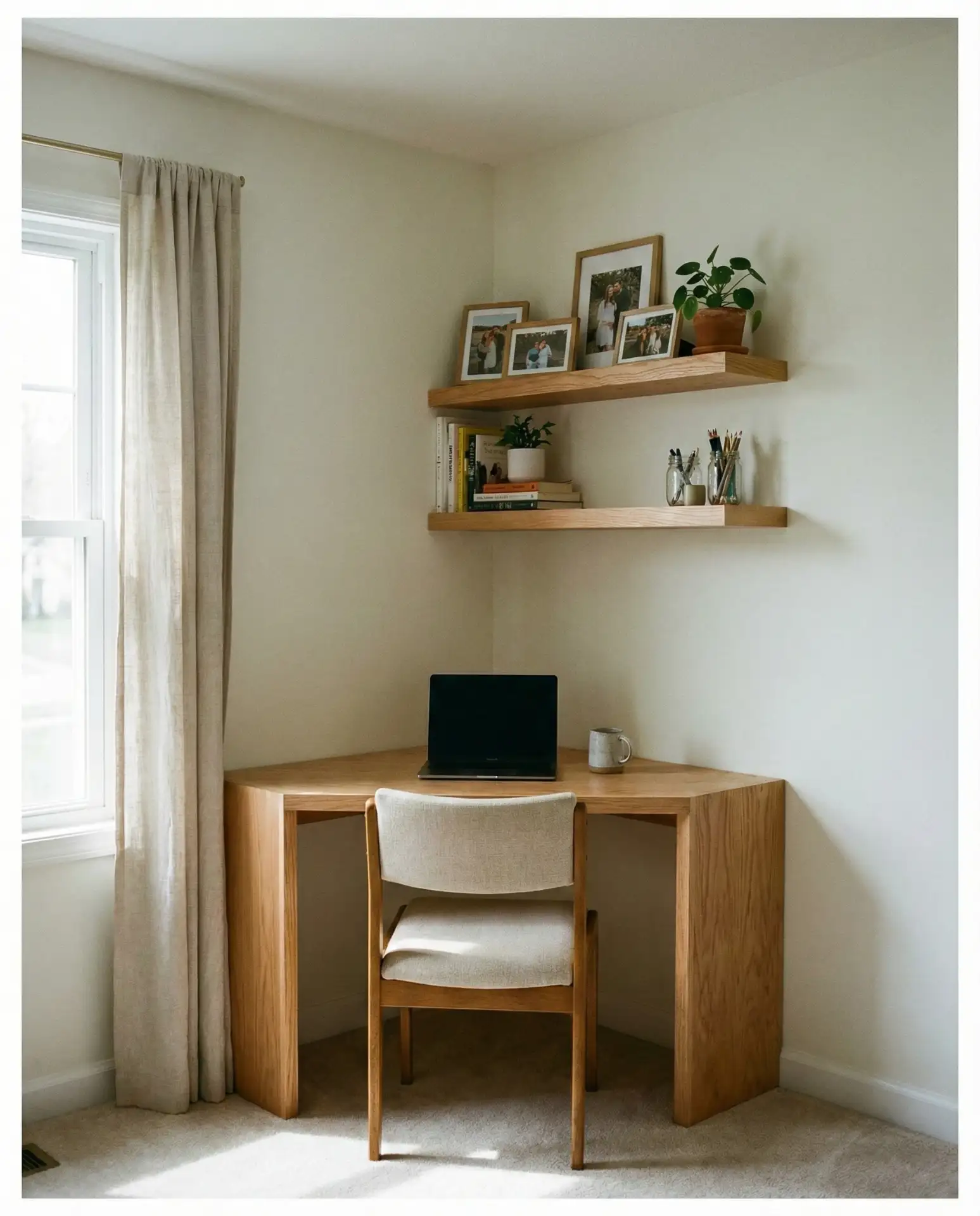
In suburban America, bunk beds are ubiquitous, especially among families in which children share bedrooms and wall space is at a premium; the bunks feel like they’re straight out of summer camp. The top bunk is transformed into a magical getaway, and the bottom one can feel like a secret cave with the proper curtains or fabric drapes. Just be sure to set a few house rules about climbing and monkey business to avoid mishaps, and pay attention to placement—most safety pros recommend kids should be at least 6 before they sleep on the top bunk.
13. Corner Desk with Wall Shelving
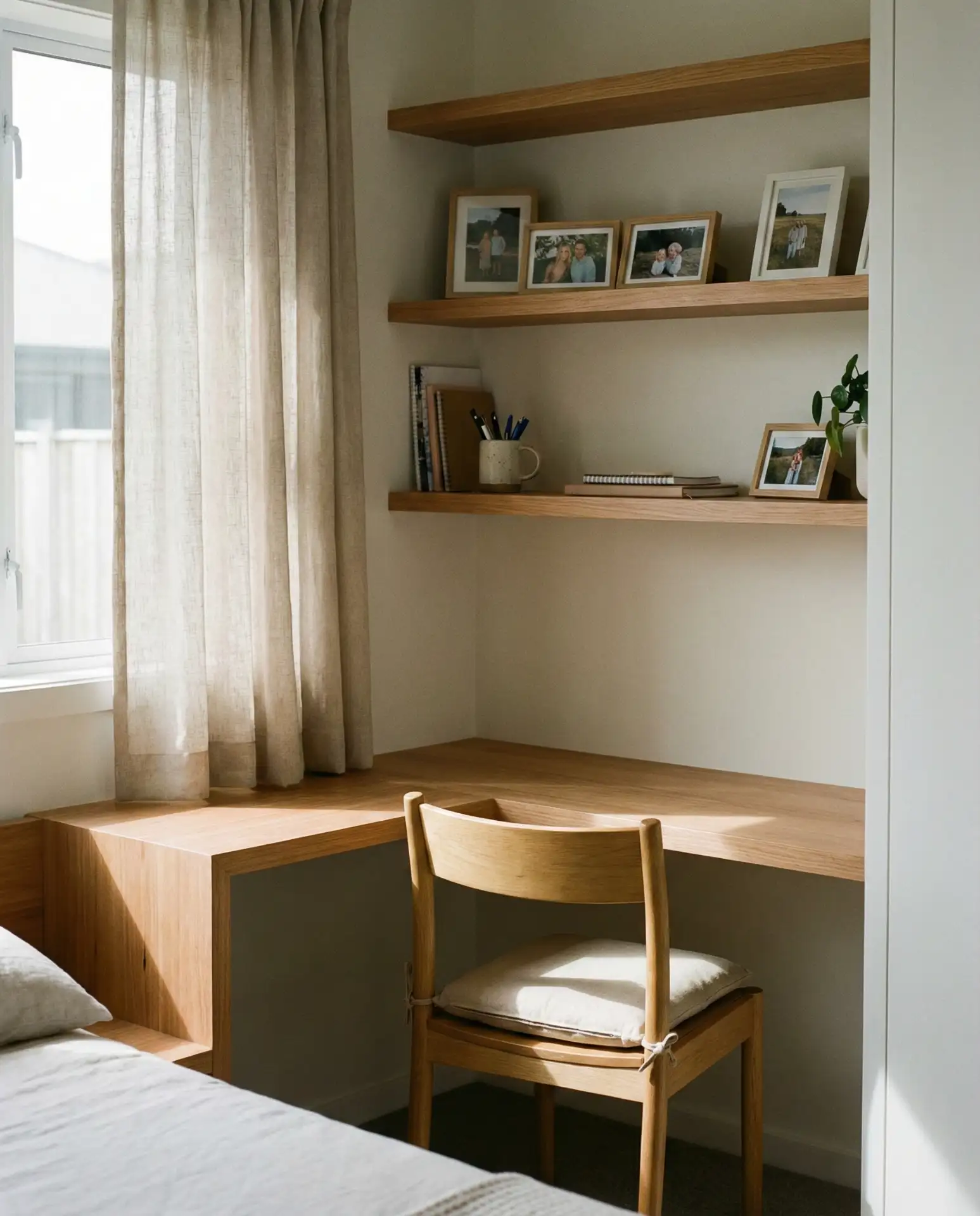
Creating a study space tucked into an unused corner opens up the wall while providing a spot to focus on homework, remote work, or hobbies. Complete the look by framing your favorite books, accessories, and supplies in a set of floating shelves installed above for storage that is not only functional but fashionable as well. This layout is very common in teen room ideas, and it’s a great way to provide a functional desk space without squeezing in an entire home office. With a chair that is on wheels, you can quickly slide it in and out without hitting the bed or other furniture. 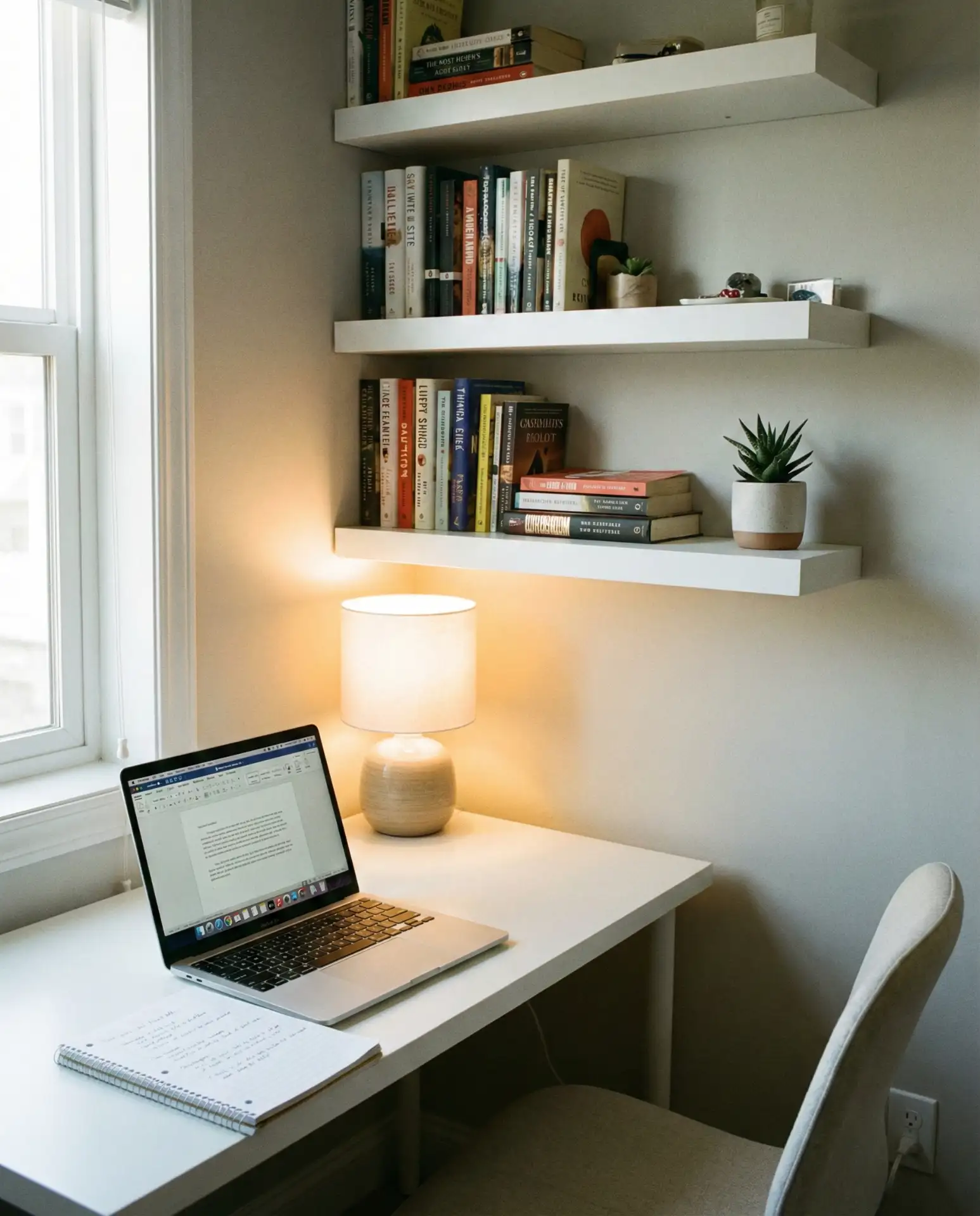
Too deep a desk. It sticks out in the room and can impede traffic flow. Keep the depth at 20 to 24 inches, enough room for a computer and a few writing materials without overdoing it in that corner. If the room receives decent natural light, you can situate the desk by a window if possible to limit eye strain during lengthy study sessions—just make sure you’re not setting yourself up to work with screen glare, and consider adjustable blinds or curtains.
14. Foldable Wall-Mounted Table
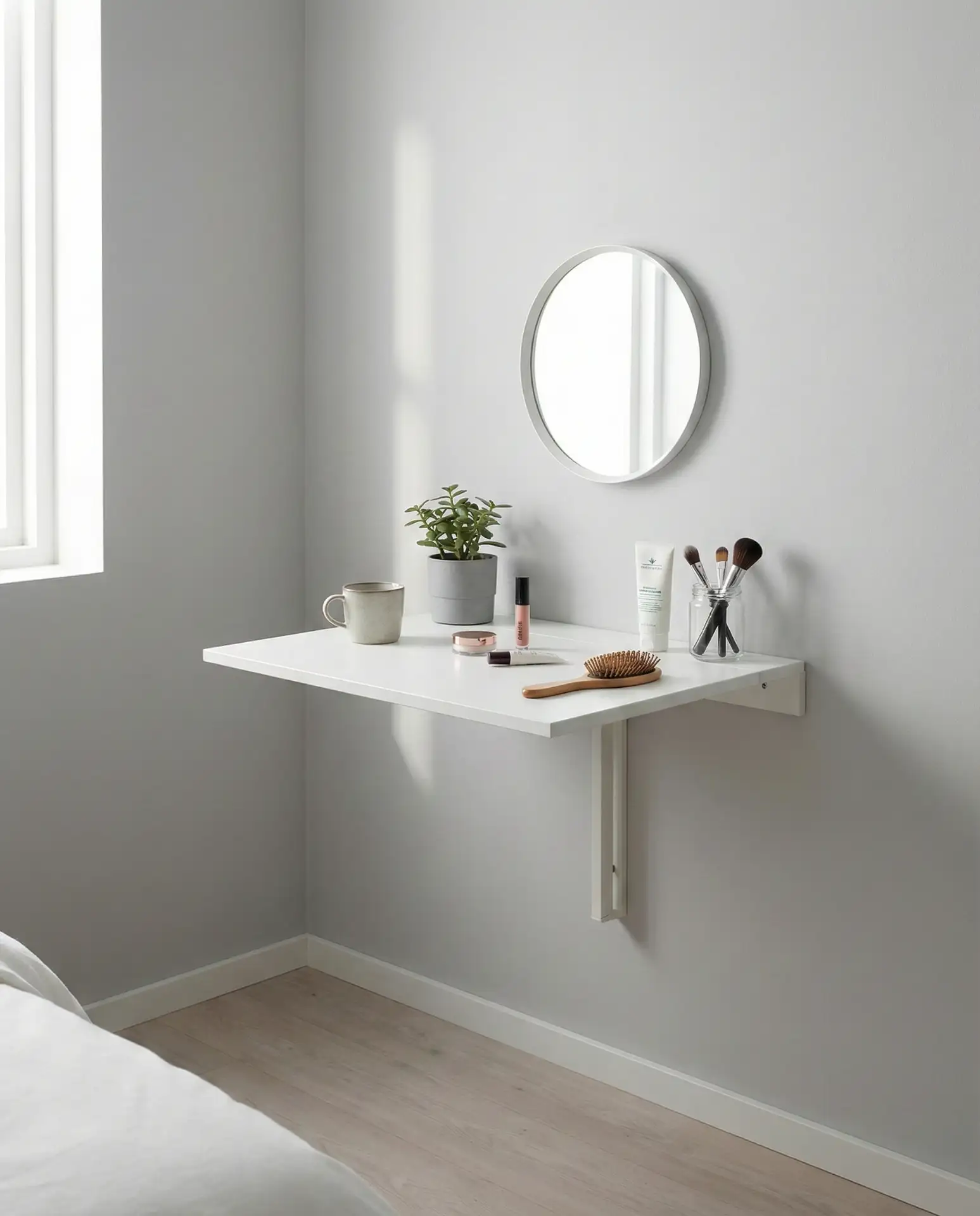
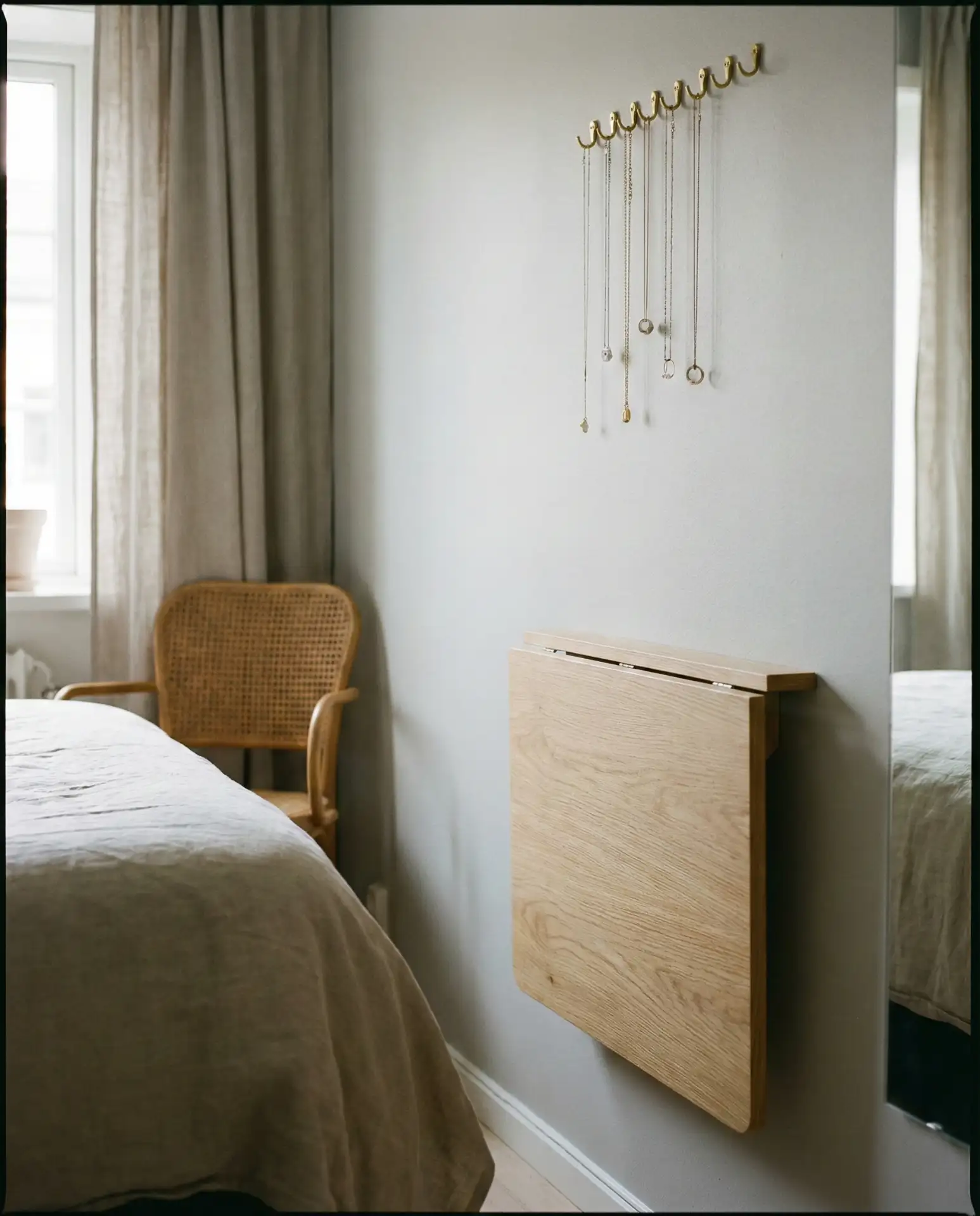
A wall-mounted table with a hinge becomes a temporary work surface or vanity when opened and then easily folds away to free up floor space when you’re through. This is perfect for dressing table ideas in a small bedroom where you don’t want to block traffic or make the room feel overly crowded through having a permanent desk. Some come with small shelves or hooks for accessories; the fold-down action is smooth enough you could use it every day but doesn’t feel flimsy or unsteady. 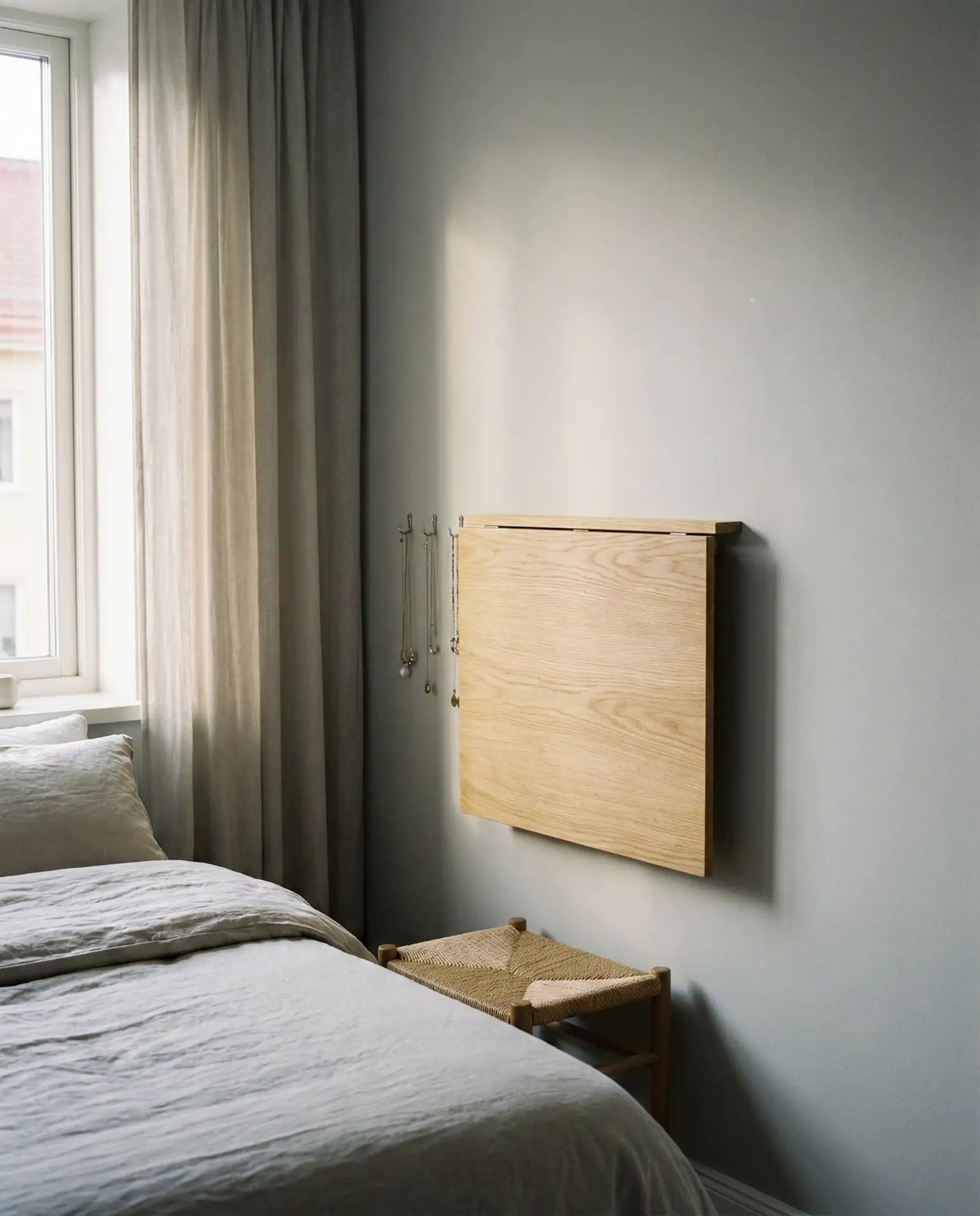
My friend added this fold-down table to her Brooklyn apartment so she could use it as a makeup station for work in the morning and a laptop desk when she gets home at night. When the guests arrive, she just folds it up, and suddenly you’d never know the wall was supposed to be plain. It is a wonderful example of how space-saving furniture can easily meet your changing needs throughout the day without wasting material that you need in your room.
15. Modular Wardrobe System
Rather than one big wardrobe, modular storage units allow you to create the final look of your closet to match the dimensions of your tiny room. In a lot of these systems, which often come with stackable cubes, hanging rods, and drawer units, you can rearrange them to suit your storage needs. The flexibility means you can squeeze it into tight spots, from beneath sloped ceilings to beside windows, without losing an inch. Many brands have open shelving or closed cabinets available so you can mix and match for both a utilitarian and aesthetically pleasing look. 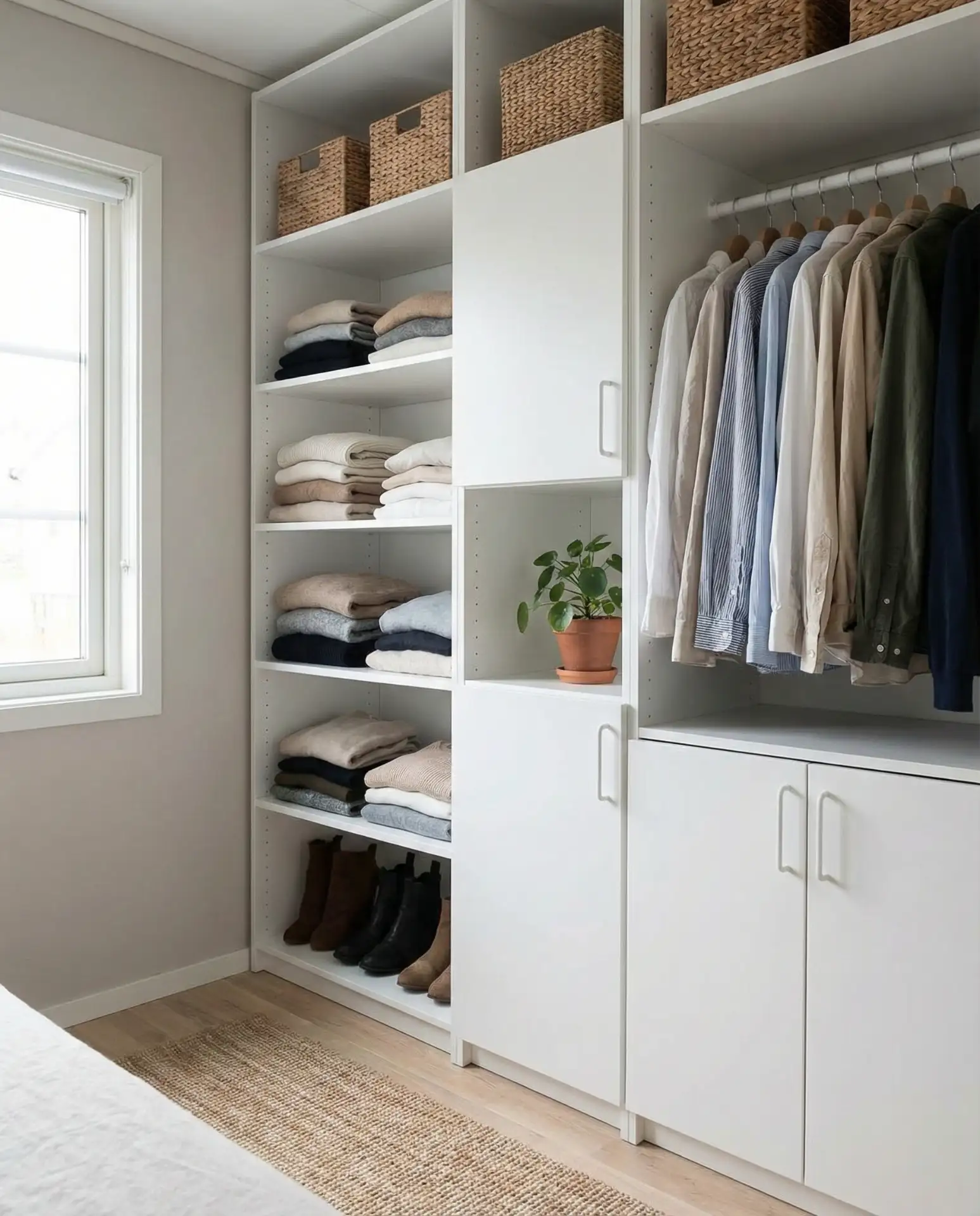
The price of modular systems varies significantly, with budget models available for approximately $200 and high-end versions retailing for up to $1,000 or more. The benefit over traditional wardrobes is that the thing can be taken with you: If you move, you just take all the units apart and reconfigure them in your new space. So modular storage can be a good investment for a renter or anyone else who knows they’ll move in the next three years.
16. Recessed Lighting for Low Ceilings
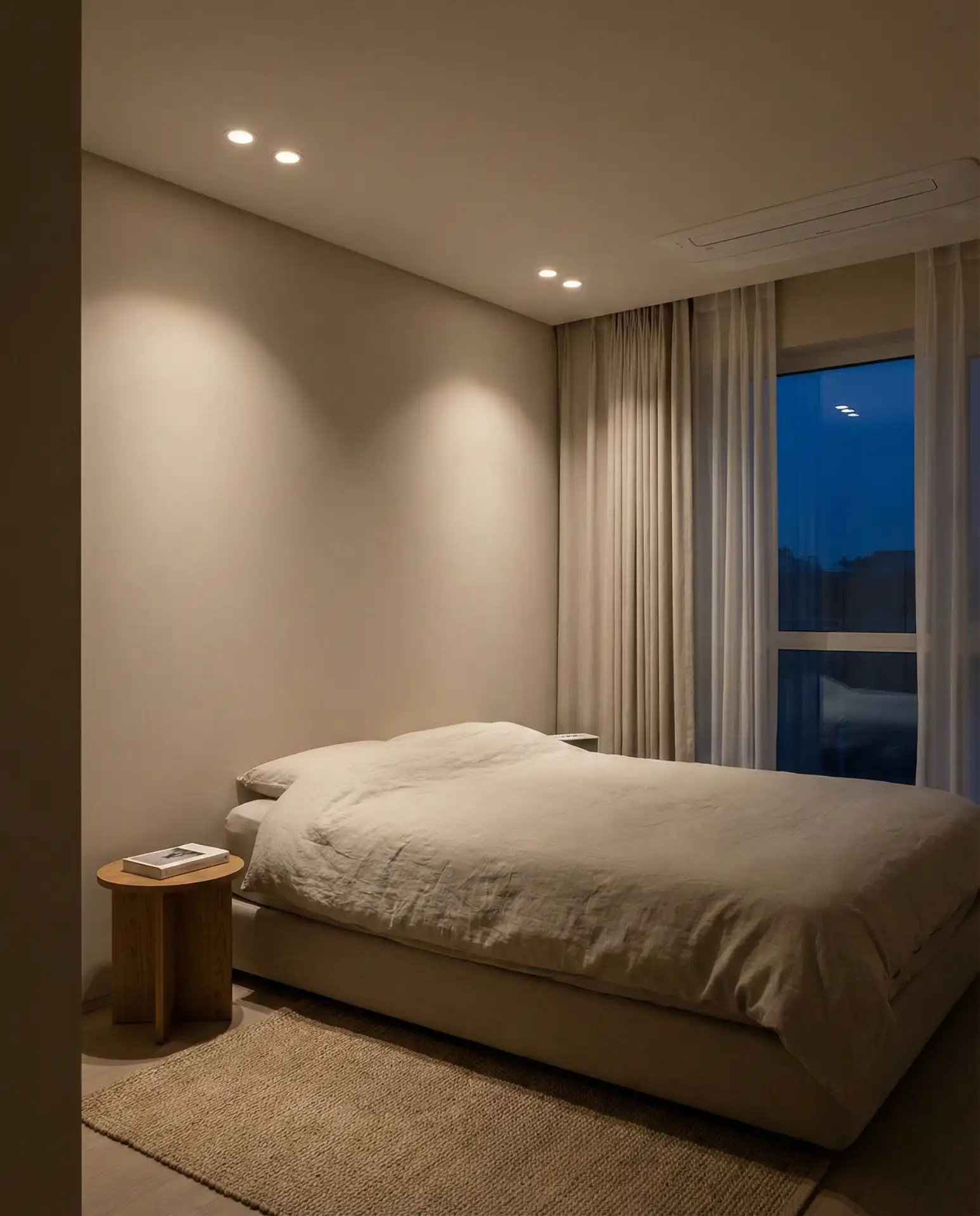
Recessed lighting A good option to consider when dealing with lower ceilings is flush or recessed lights instead of traditional pendant fixtures; keeping a continuous ceiling plane helps a small bedroom feel taller and more spacious. This is a modern ceiling design for a living room. a must-have room that works best in rooms with 8-foot ceilings where a hanging chandelier or fan will overwhelm the room vertically. Recessed lights spread light through the room without any glare or visual break, and dimmable LED options allow an instant change in vibe from bright task lighting to a warm evening mood. 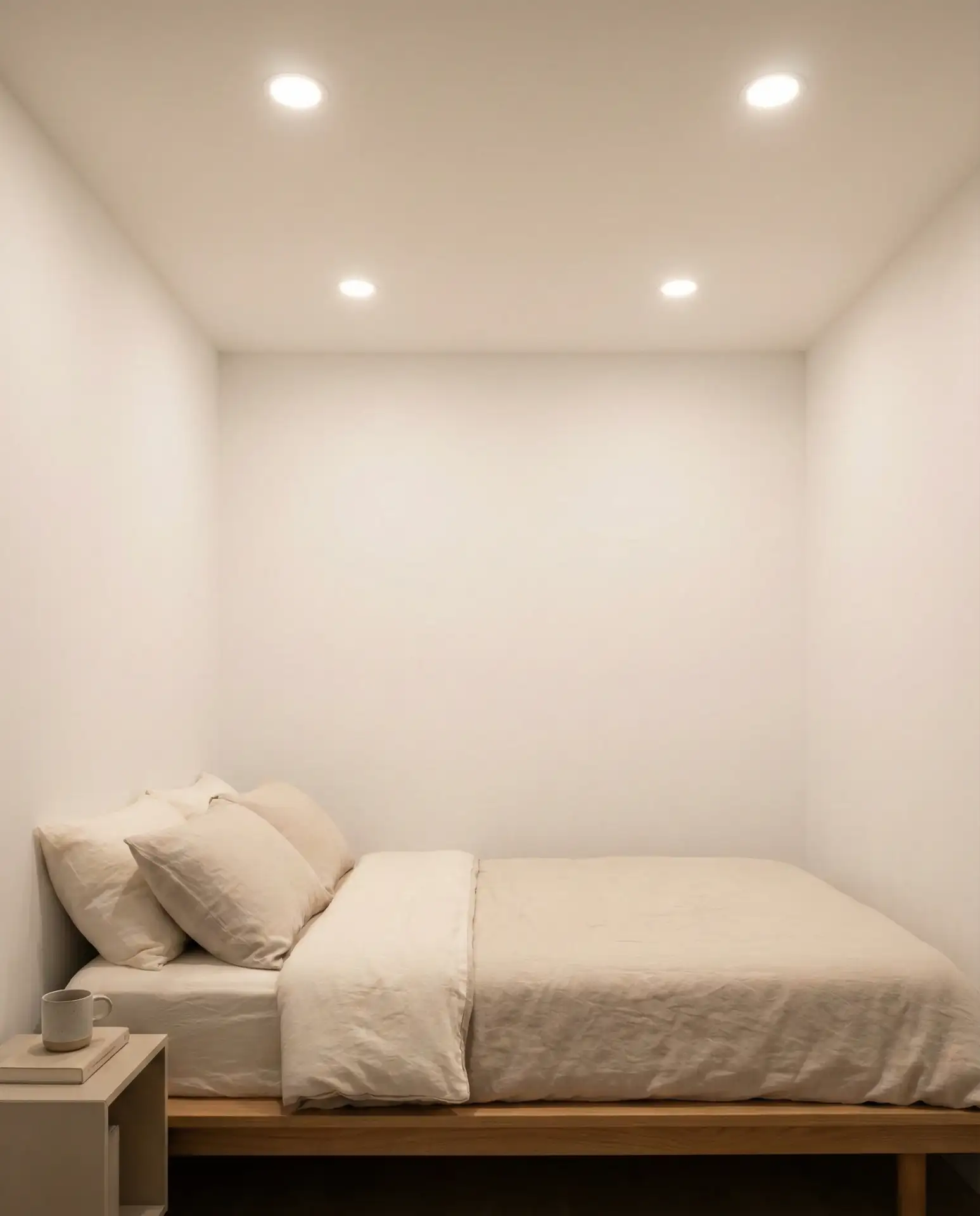
Professional designers often recommend spacing recessed lighting about four to six feet apart in a small bedroom so that there are no intensely bright hotspots or even dark corners. When working with an existing electrical system in a home, retrofitting recessed lights doesn’t require much construction, but you may need to hire a licensed electrician to do the wiring. The investment is worth it when it comes to functionality and looks, providing your room with a sophisticated hotel vibe that’s tough to replicate when equipped with traditional overhead fixtures.
17. Minimalist Platform Bed
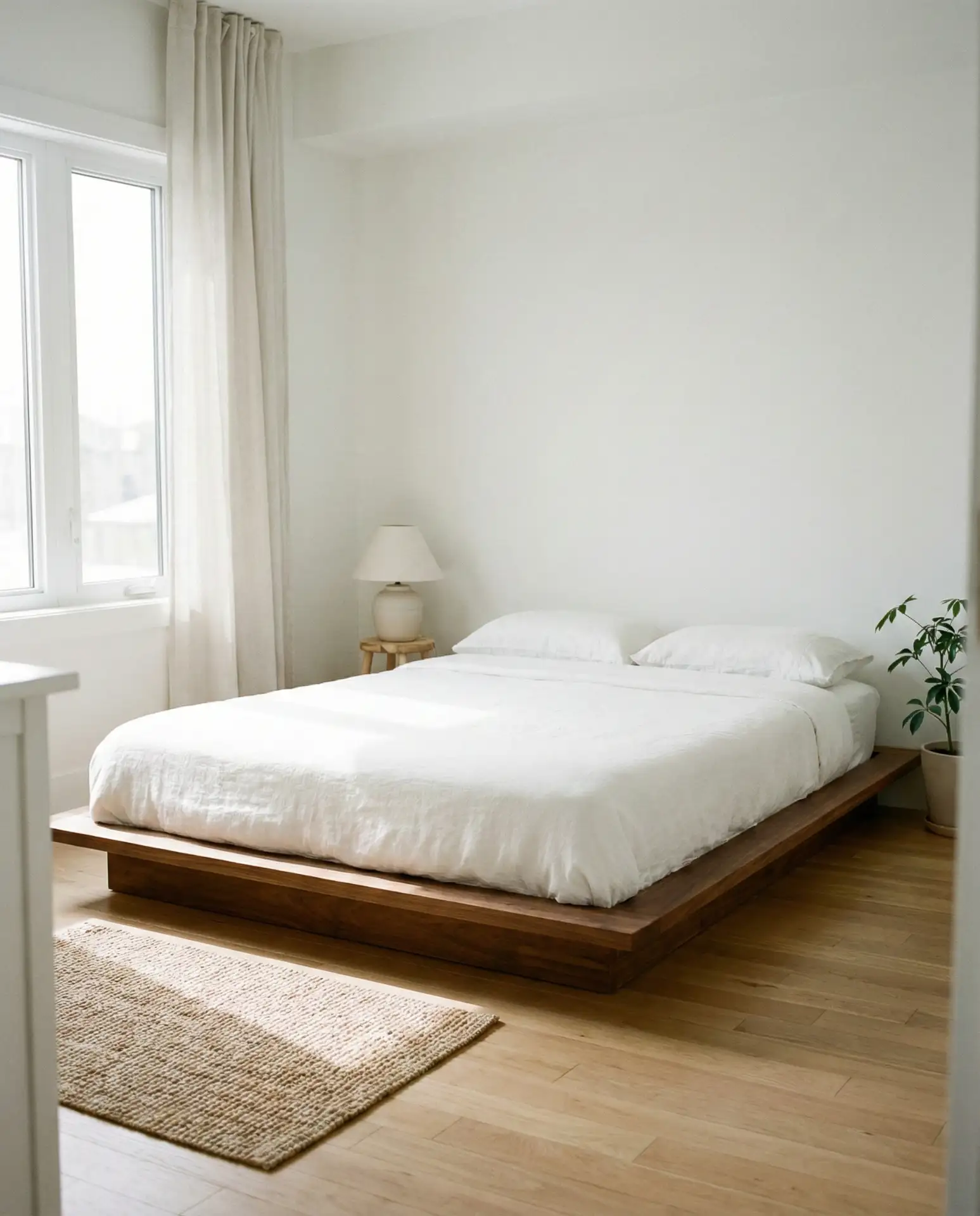
A low-profile platform bed with clean lines and no bulky footboard visually opens up the room and creates a minimalist aesthetic that’s both modern and calming. These beds sit closer to the ground, which draws the eye horizontally rather than vertically and makes the ceiling feel higher. The simple frame eliminates unnecessary ornamentation, letting your bedding and wall decor take center stage. Many platform beds also include built-in slats, so you don’t need a separate box spring—saving money and reducing the overall bed height. 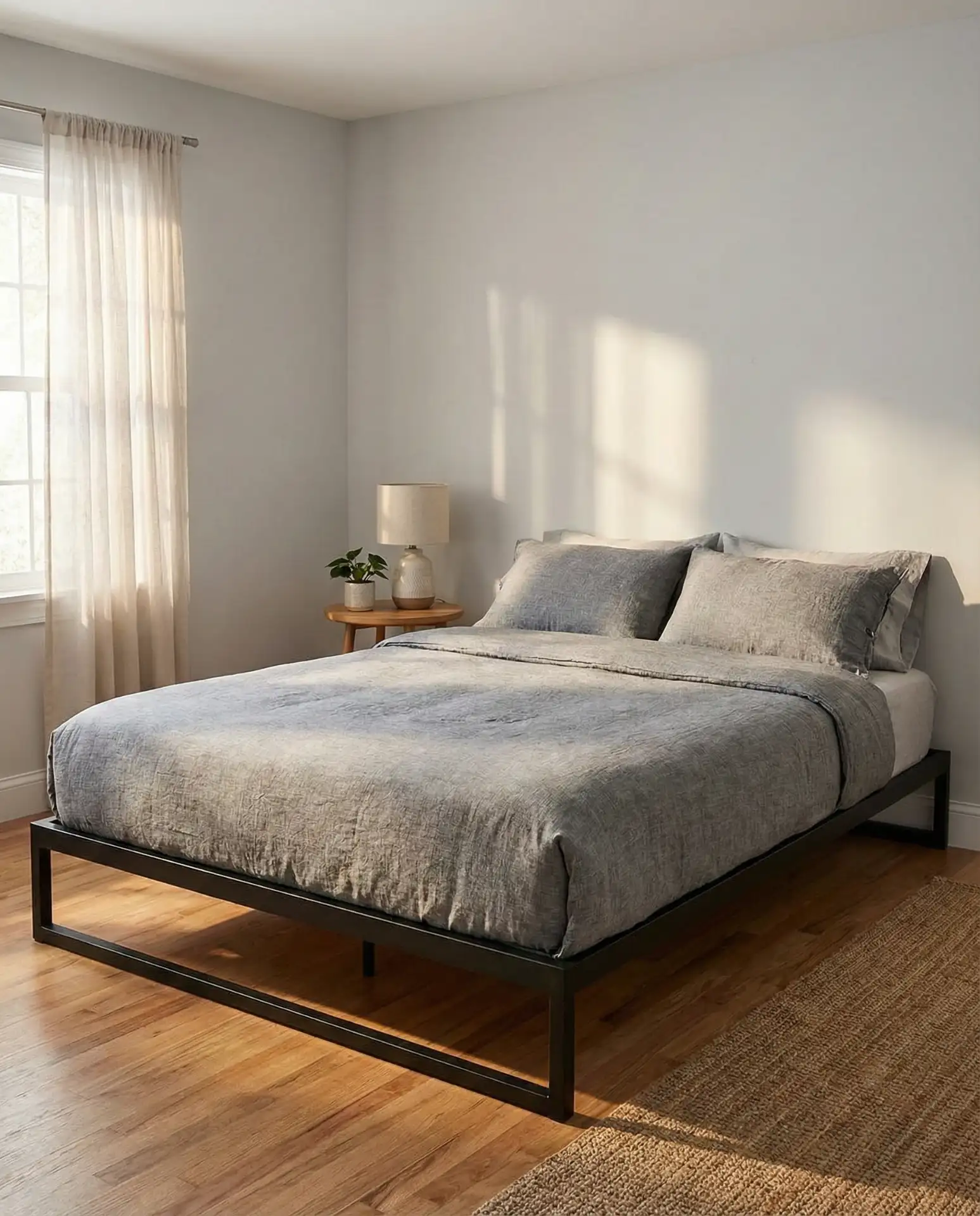
This style works best when you embrace the less-is-more philosophy throughout the room—adding too many decorative elements or heavy furniture can clash with the bed’s simplicity and undermine the spacious feel you’re trying to create. Stick to neutral tones, natural textures, and a few carefully chosen accessories. The result is a bedroom that feels like a peaceful retreat rather than a cluttered storage closet.
18. Pegboard Wall for Flexible Storage
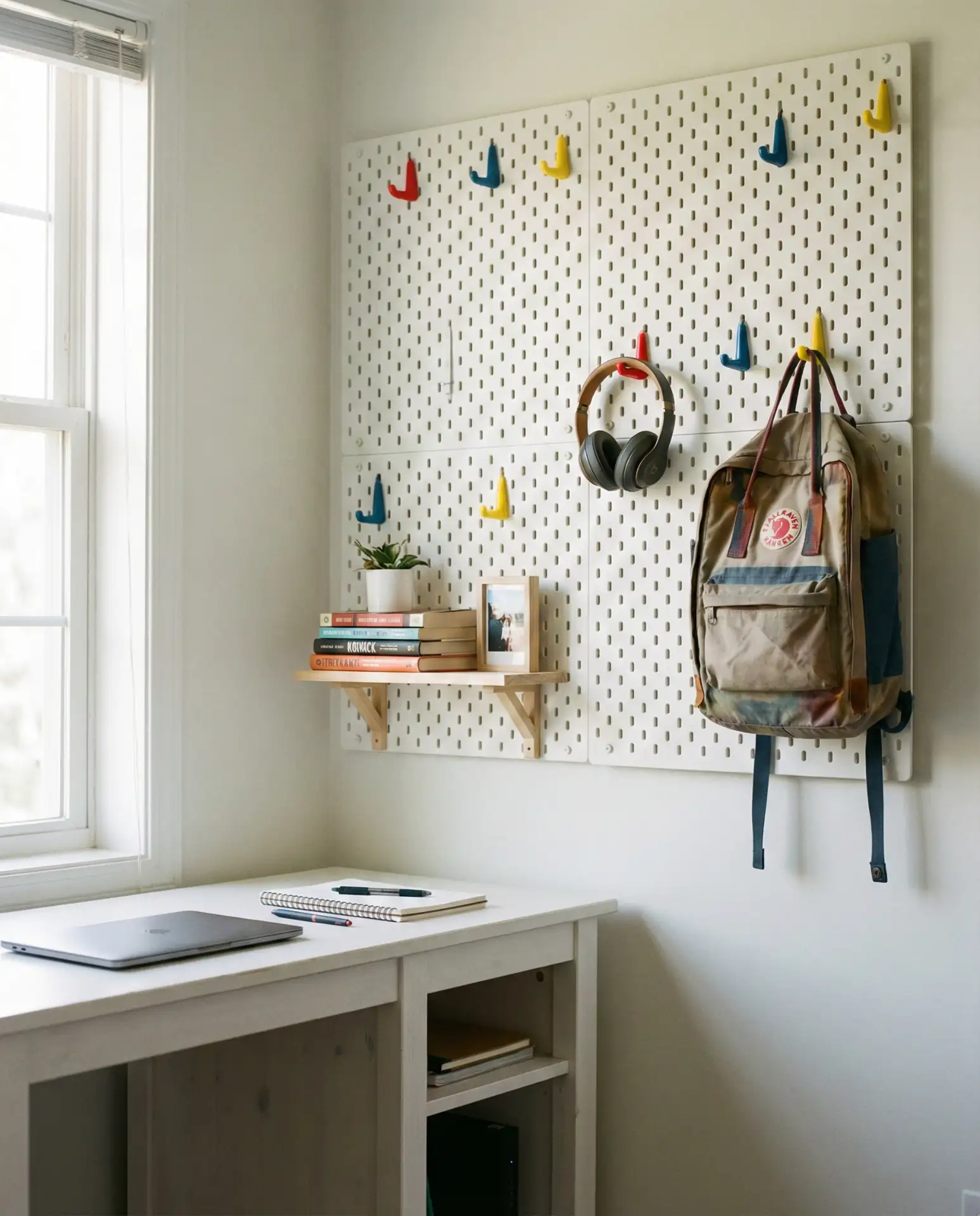
A painted pegboard on a single wall provides flexible storage for jewelry, hats, craft supplies, and even small electronics. This works especially well in kids’ rooms and teen spaces where interests are constantly evolving and you need a system that can change with them. Hooks, shelves, and baskets slip into the holes, so you can move the layout around as often as you want without drilling new holes or ruining your wall. It’s practical, it’s affordable, and there’s a kind of fun DIY look to it that I love in any room. 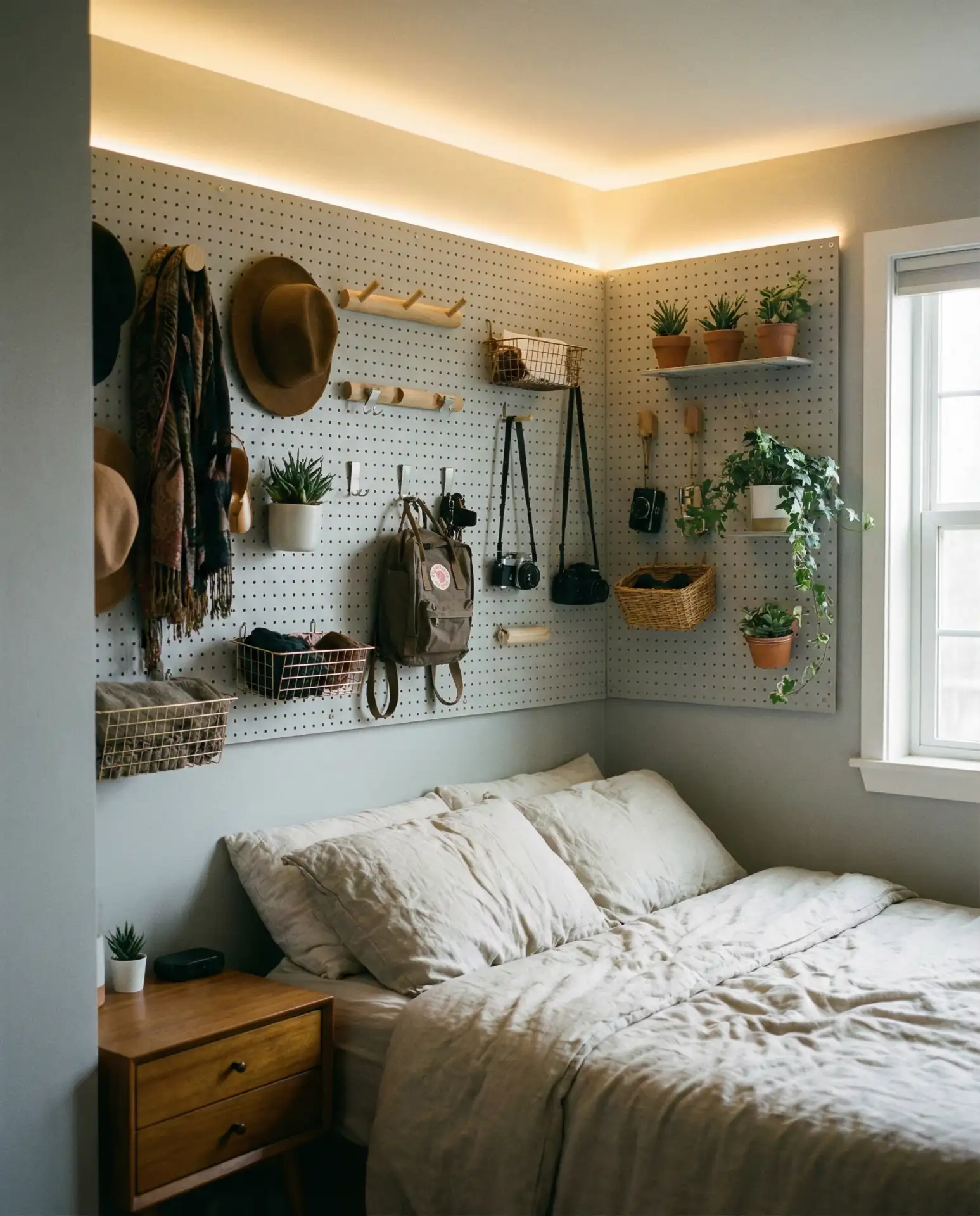
A good tip here: Paint the pegboard the same color as your walls to make it all feel like one piece but not too busy or industrial. You can also trim the pegboard with wood to make it look more finished. Pegboard is also available from hardware stores in standard 4×8 sheets that you can cut to size, and installation typically requires just a few screws and wall anchors. Just be sure to leave a little bit of space between the board and the wall so that once you push your hooks through those holes, they don’t bind on the wall.
19. Neutral Bedding with Textured Layers
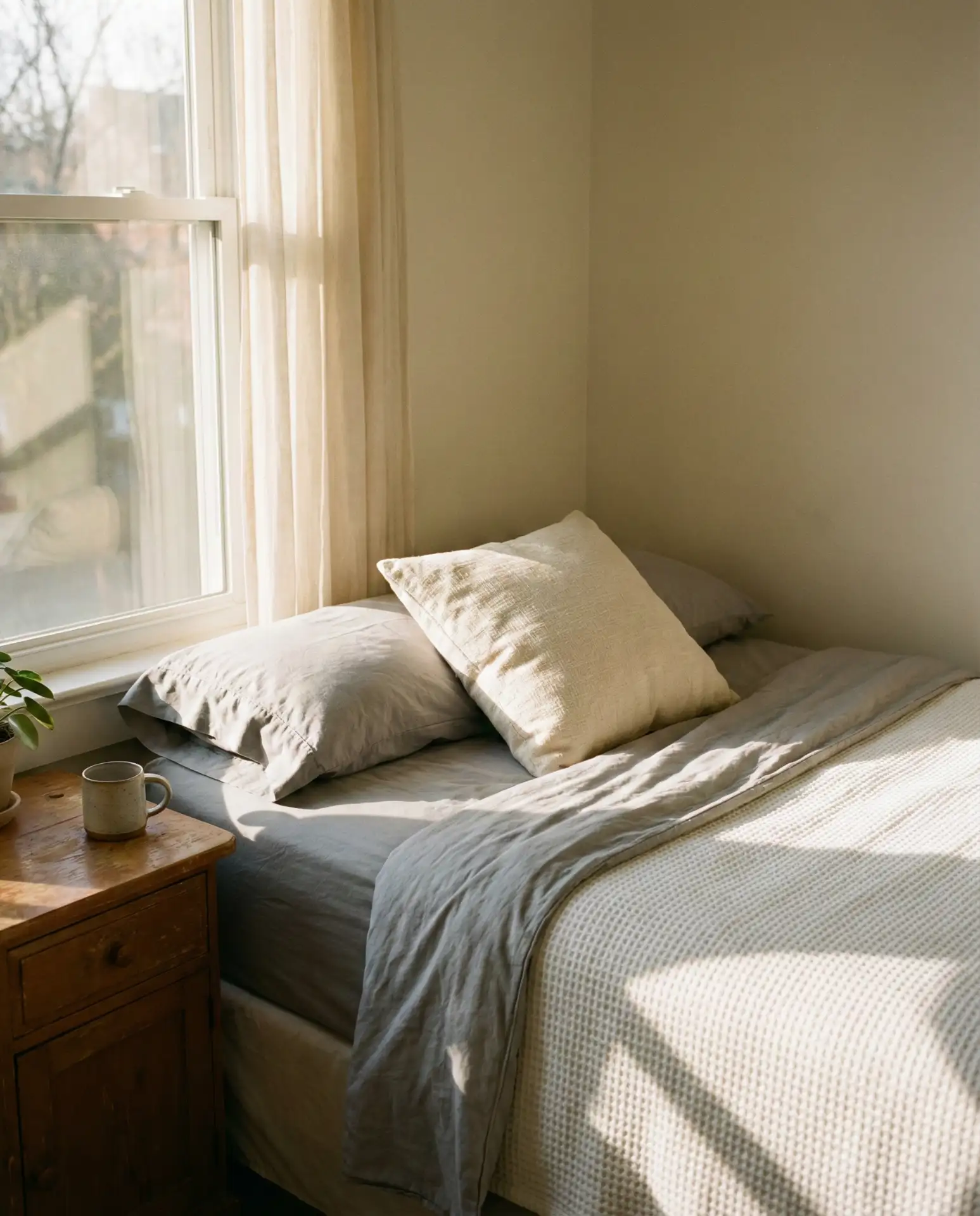
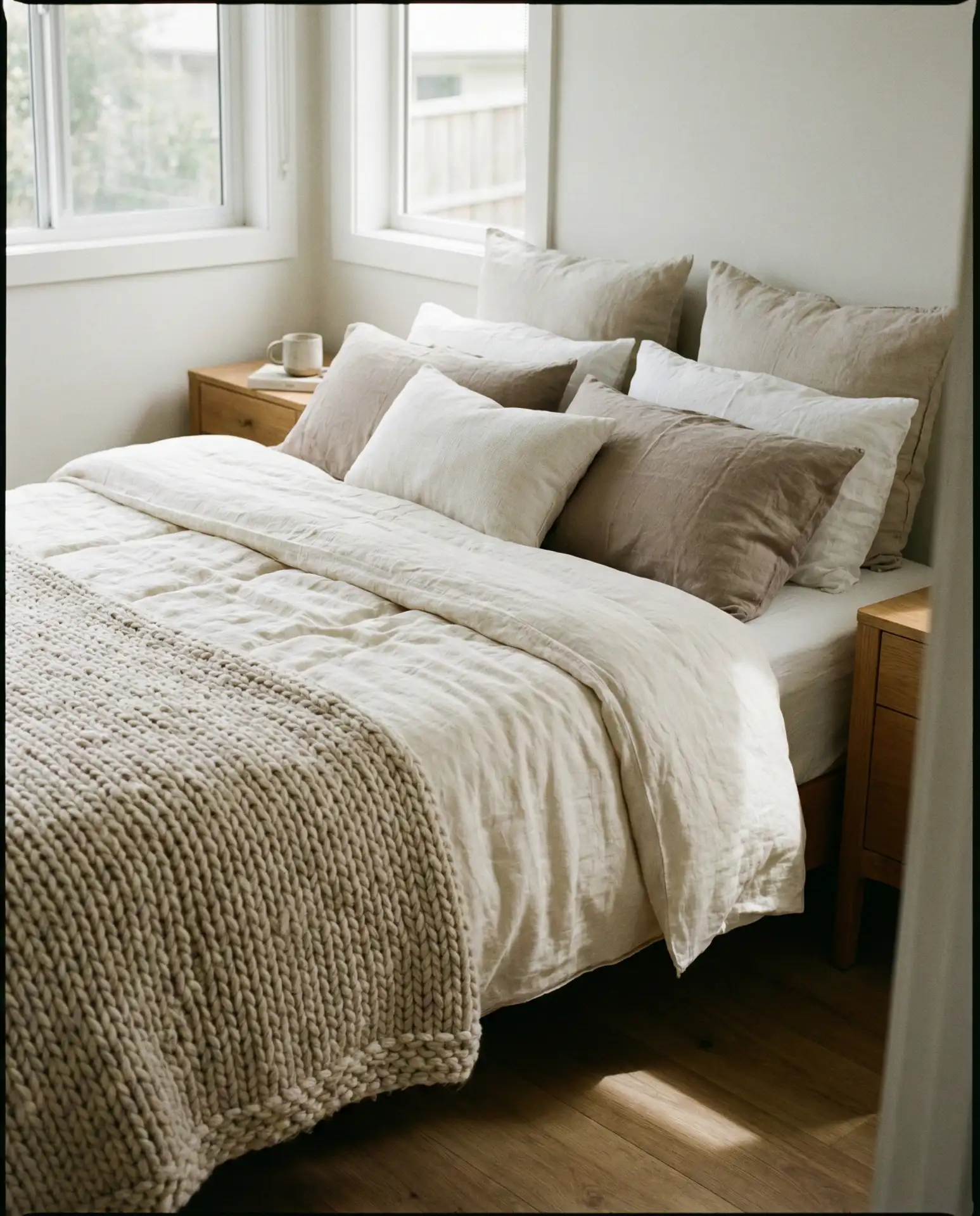
Layer Different Textures [@almondtreeinteriors.com) Layer different textures—such as linen, cotton, and chunky knit throws—in neutral hues to create depth without adding bold patterns or colors that could overwhelm a small bedroom. This results in a snug room decor vibe that’s cozy and welcoming but still light and airy. Just stick with whites, creams, soft grays, and warm taupes, then add a couple of pillows or a lightweight blanket in slightly darker shades to break things up. The different textures play with light differently, and that is interesting to the eye even if you are keeping the color palette low.
This layered bedding style has spread all over the U.S., where it’s become a fixture of many a modern American bedroom, with help from influencers and home goods companies that prioritize comfort and hygge-lite coziness. The beauty is, you can change accessories, say swapping out one piece for another on a seasonal basis—a warmer knit throw in winter for a lightweight quilt in summer—and not have to completely redecorate the room. It’s an inexpensive and easy way to have your space feeling fresh and inviting all year long.
20. Compact Ensuite Bathroom Layout
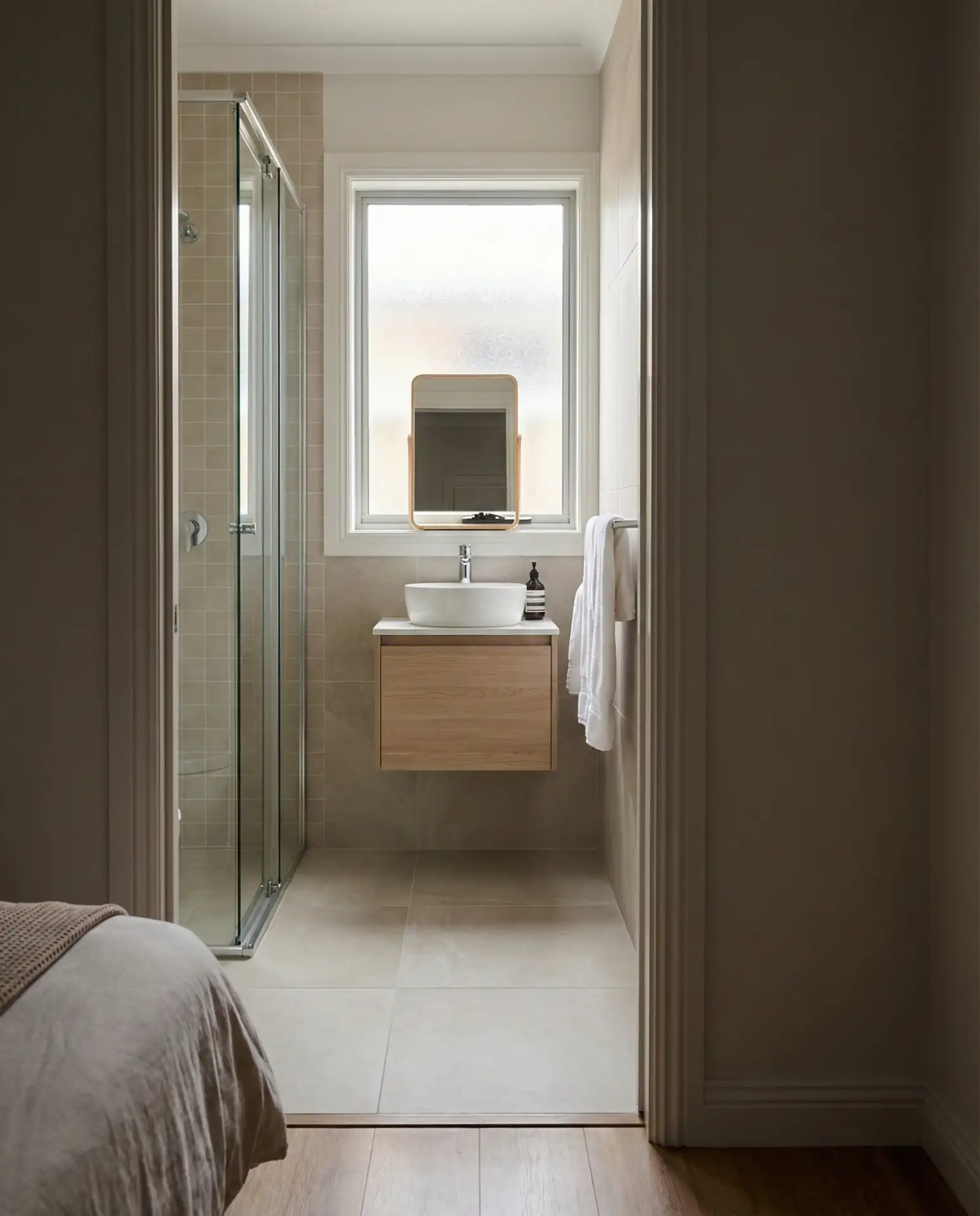
If your small bedroom forms or is connected to a bathroom, it’s important to make the most of every inch in that ensuite space. 4 Instead of a tub, free up square footage with a small corner shower and clear glass shower door that keeps sightlines uninterrupted. Wall-mounted sinks and toilets minimize visual bulk and facilitate cleaning, while recessed medicine cabinets deliver storage without encroaching on space. Pocket doors or sliding barn doors for bathroom entrances take away the floor space required for traditional door clearance. 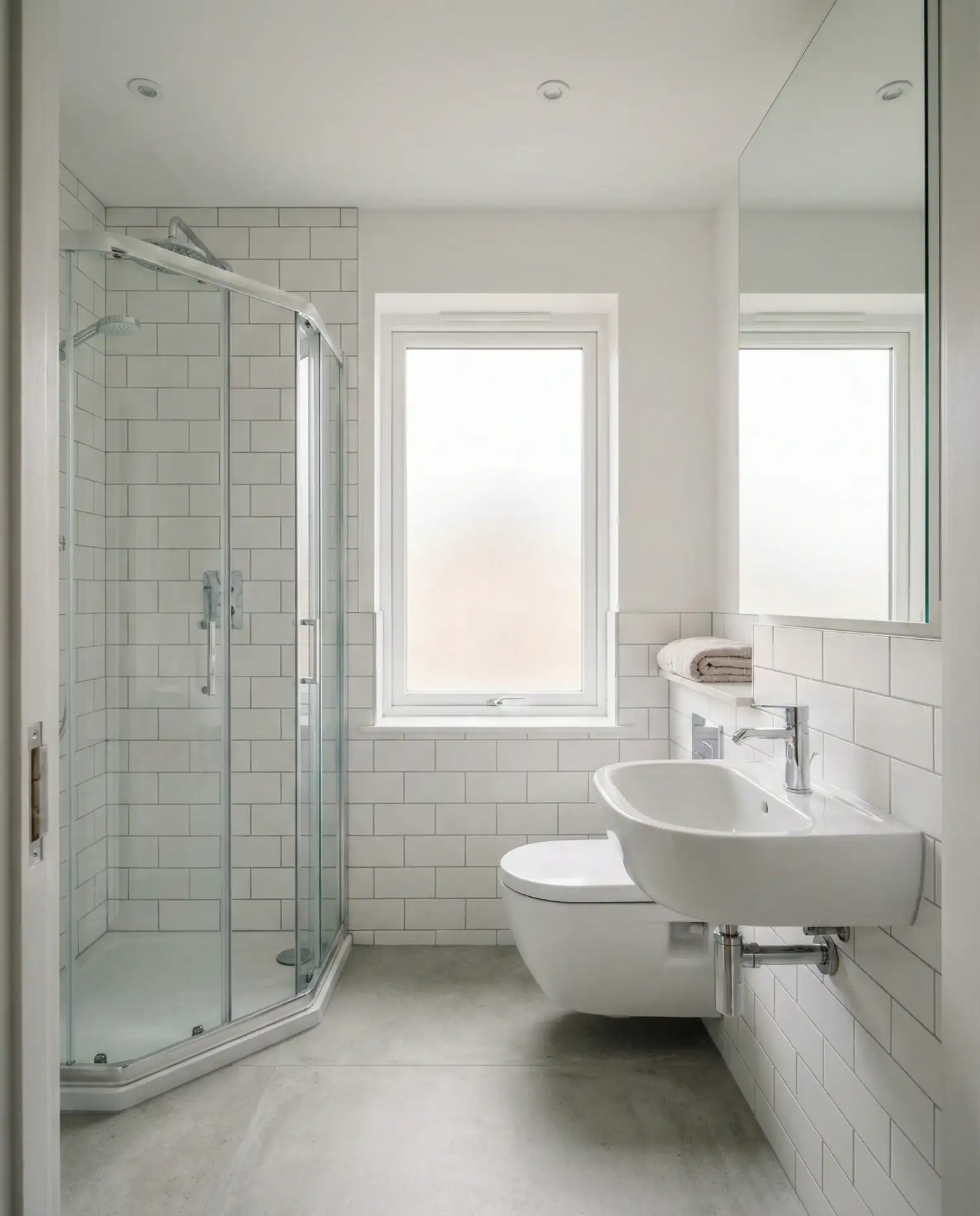
In urban condos and remodeled lofts, petite ensuites are popping up everywhere as builders attempt to maximize the functionality in tight floor plans. The secret is a smart choice of fixtures and sly storage—niches in the shower wall, for example, or a slender linen closet tucked behind the door. Small ensuites can be sumptuous too if they are thoughtfully designed and high-quality materials are used.
21. King Bed in a Tight Footprint
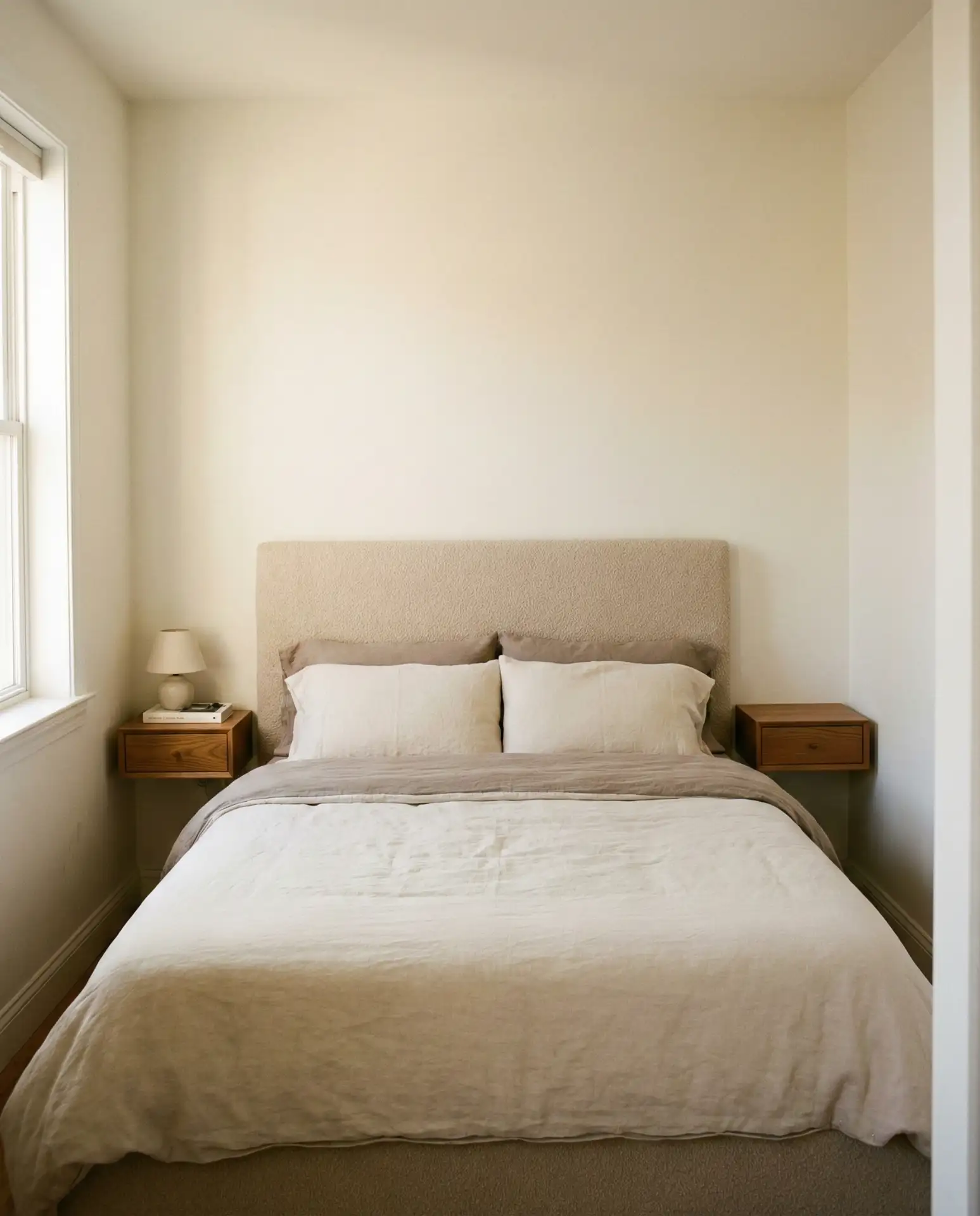
King beds may be king of the bedding world, but take a close look at the dimensions for bedside tables and other bedroom furniture before moving ahead with this type of layout. Center the bed on the longest wall, providing narrow walkways on all sides—around 18-24 inches should be sufficient for your needs. Ditch the cumbersome dressers and nightstands in favor of floating wall shelves or narrow side tables that will not encroach on your floor. The trade-off is worth it for couples who prioritize a roomy mattress over extra storage or sitting space. 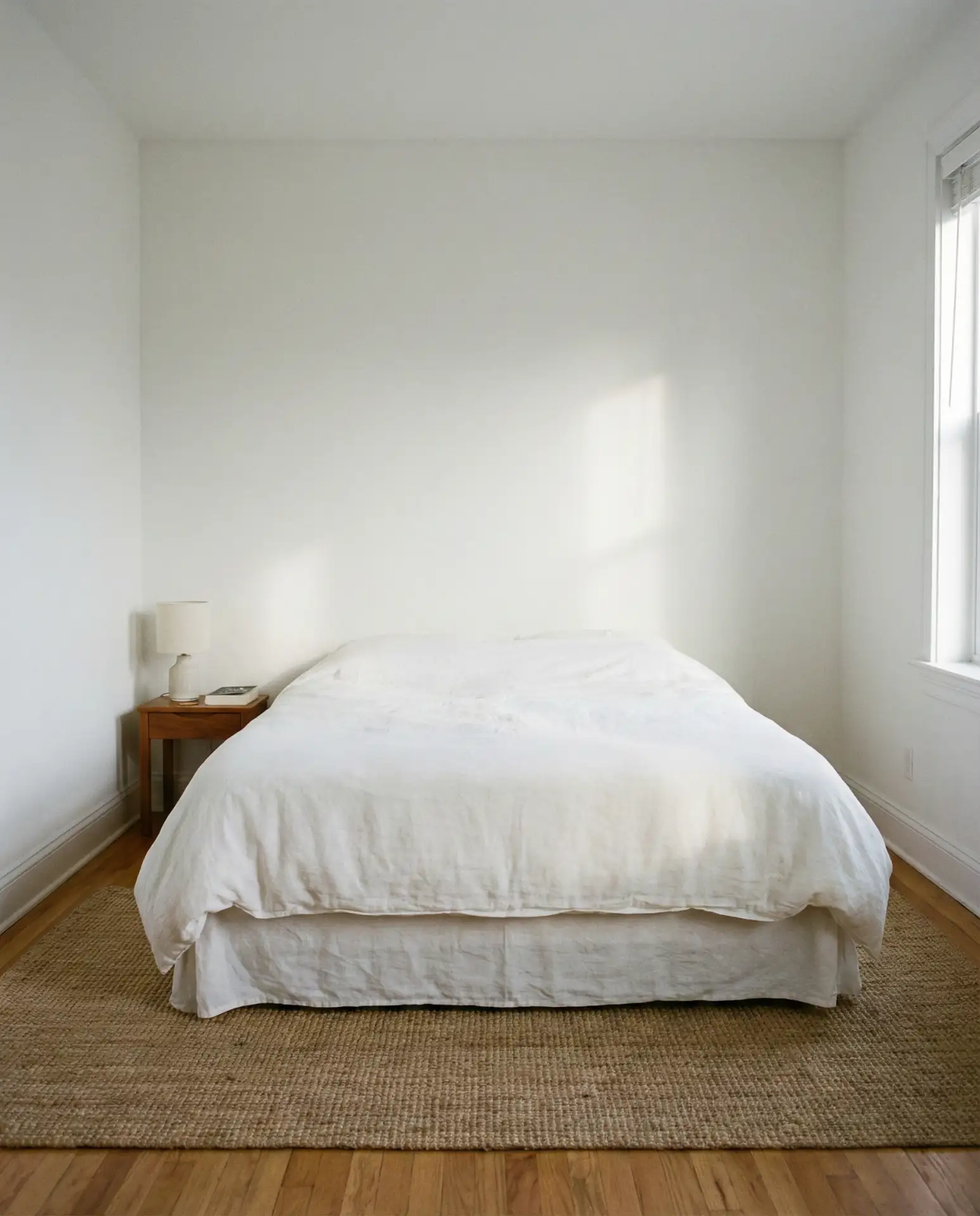
As found, homeowners often have a king bed installed, and they are apprehensive that it will make the room feel tight, but in fact, because you have one big comfortable piece to work with, it can help simplify your design.” The key is to keep everything else minimal, without heavy curtains or dark colors that close in the space. Light bedding, pale walls, and strategic lighting offset the scale of the bed, keeping it open and airy.
22. Rustic Wood Accent Wall
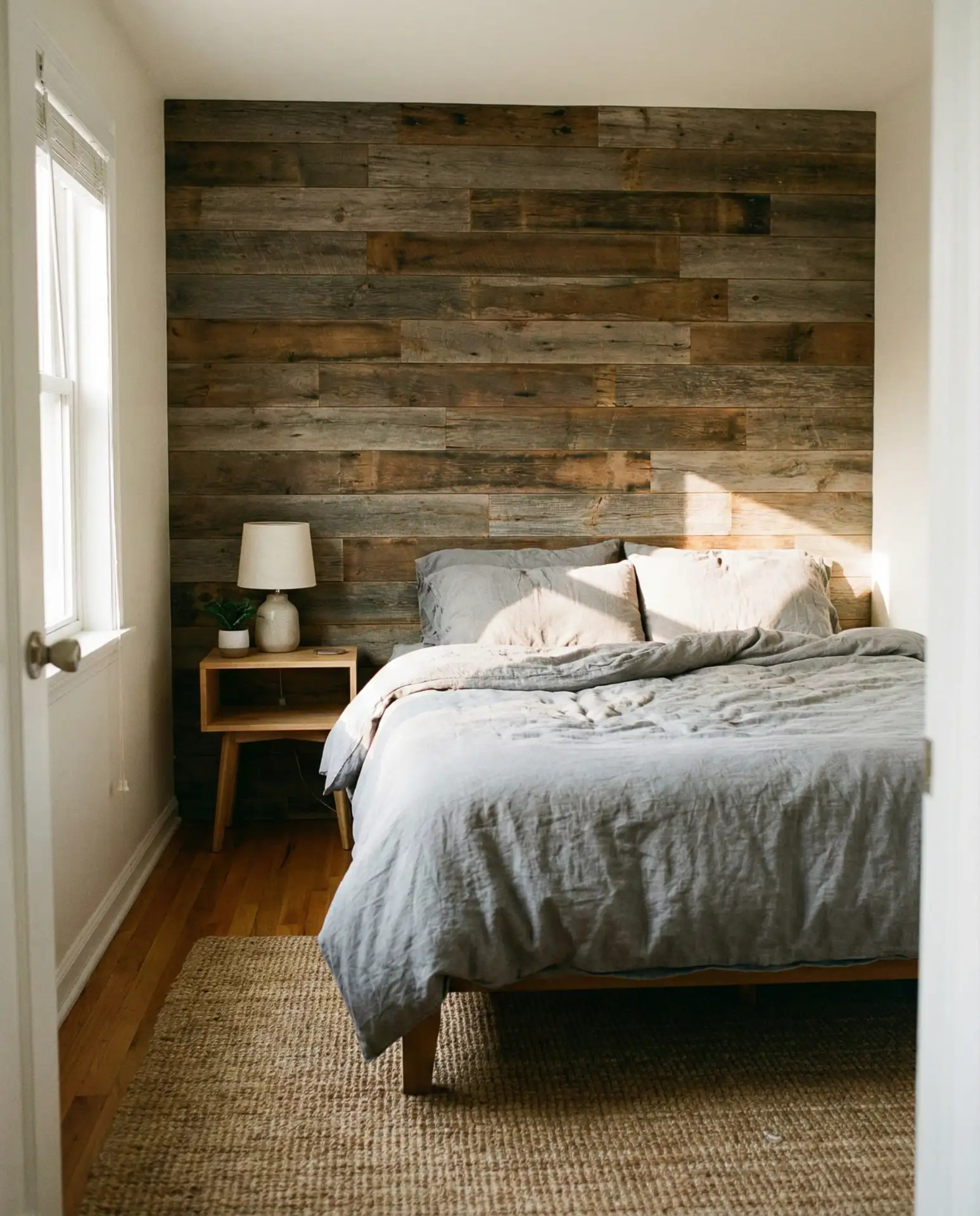
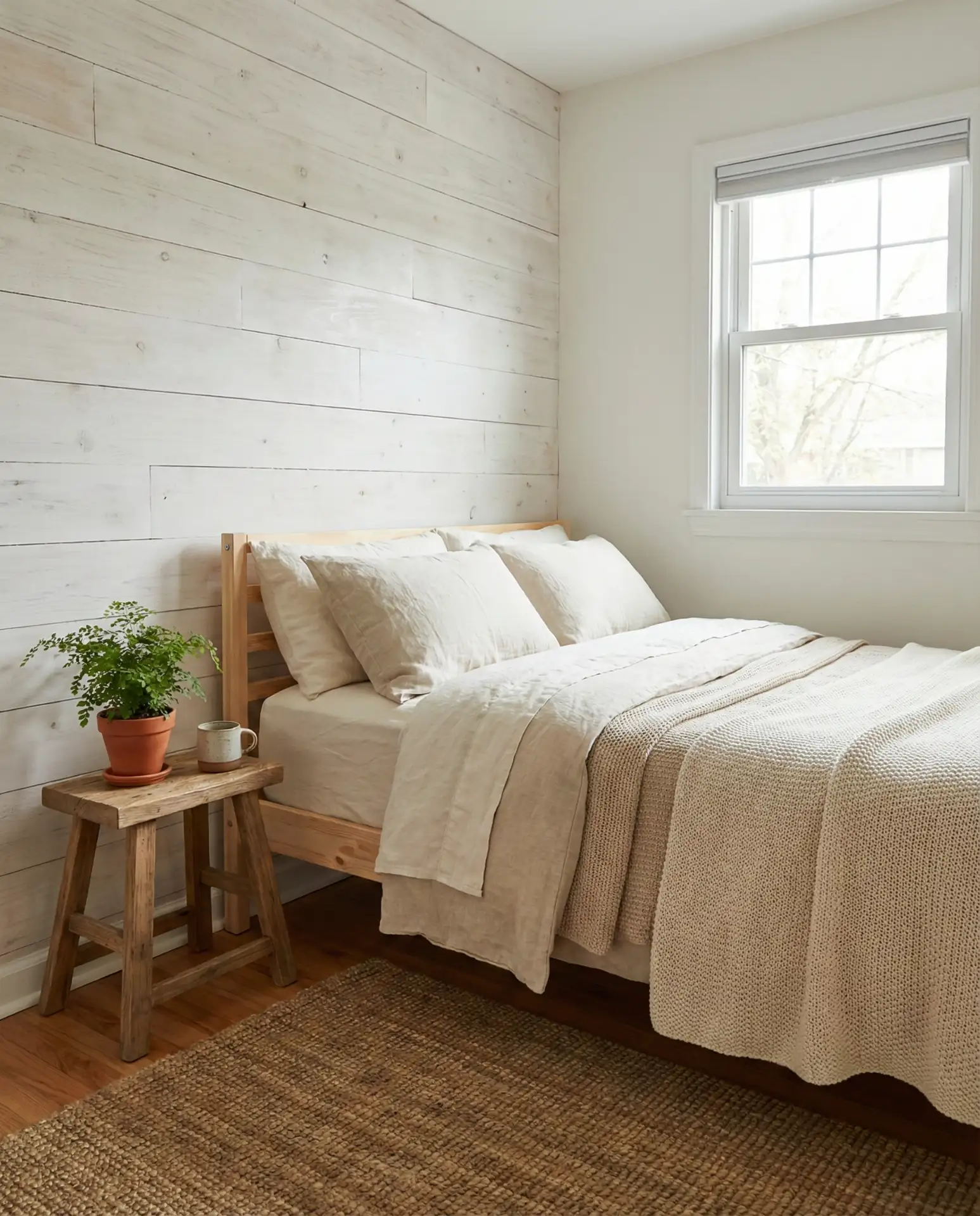
Installing reclaimed or faux wood planks on a wall will… Reclaimed or Faux Wood Wall Paneling [/#10 Rustic Wood Accent Wall (1)] Gain warmth and depth in a small space without the cost of painted color. The feature wall makes a statement that directs attention to the architecture rather than the size of the room. Each piece brings some natural grain and variation in the wood’s tones, offering up designs for couples who desire things to feel cabin cozy or extra modern farmhouse. Natural wood can also keep the space open, such as in whitewashed pine, or create a sense of drama and intimacy if it’s darker walnut or cedar. 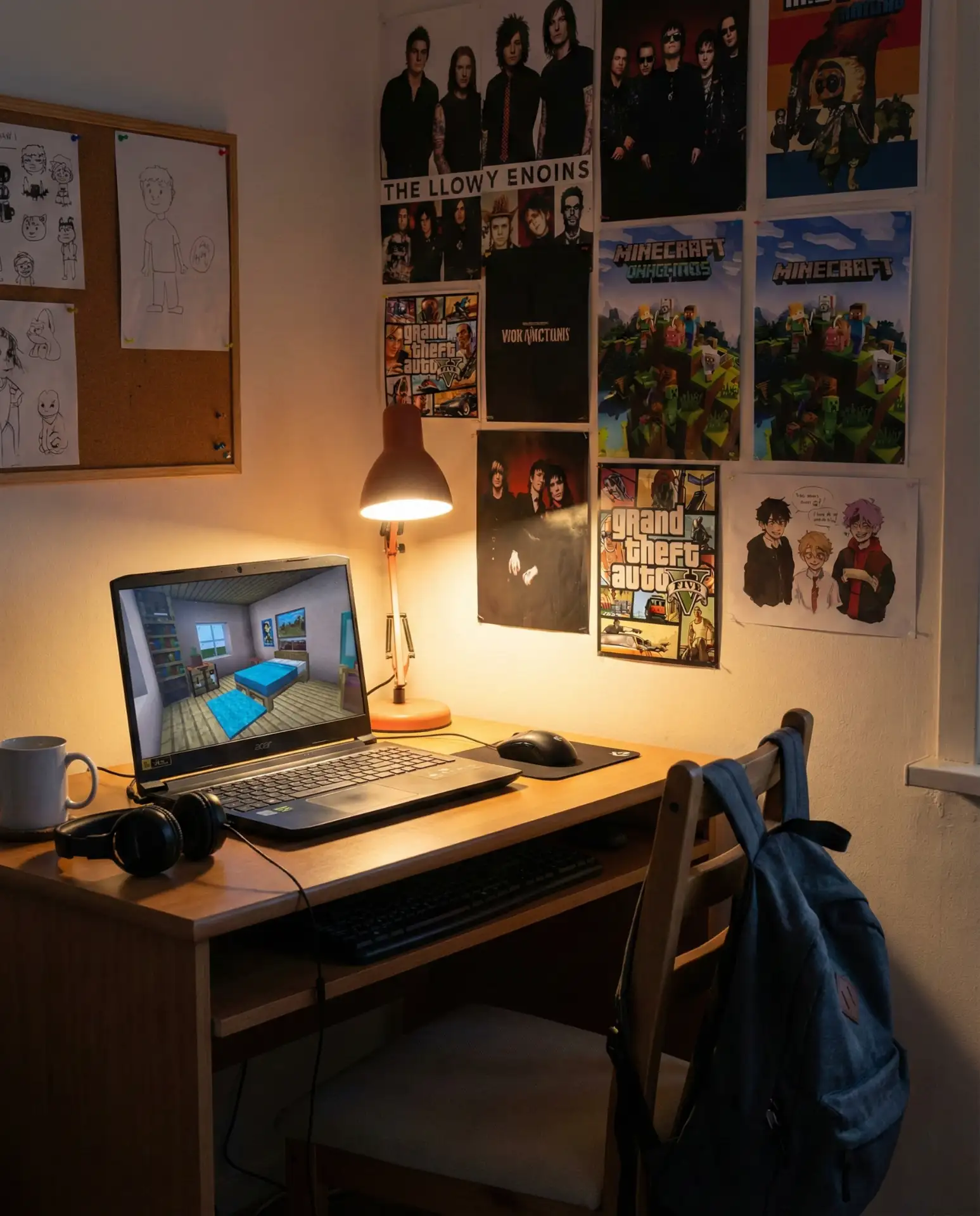
In the Mountain West and some of the South, wood accent walls are a popular way to bring the outdoors inside—especially in places where timber construction is very common. Installation can be D.I.Y.-friendly if you’re comfortable with a saw and a nail gun, and many home improvement stores also sell peel-and-stick wood panels for renters who aren’t allowed to make permanent changes to walls. Just be aware of humidity levels—real wood can warp in bathrooms or basements, so faux panels might make more sense in those spaces.
23. Virtual Minecraft Bedroom Build
Kids and teens who love gaming can mirror their own small bedroom in real life on Minecraft as a way to test out ideas for moving furniture. The game’s block-based construction system allows for easy experimentation with a variety of setups, from bunk bed designs to corner desks, that won’t require you to lift an ounce of furniture. This tactile effort enables kids to imagine spatial relationships and see how furniture placement impacts the flow and function of a room. Parents can also use it as a teaching opportunity around making plans, solving problems, and learning about other people. 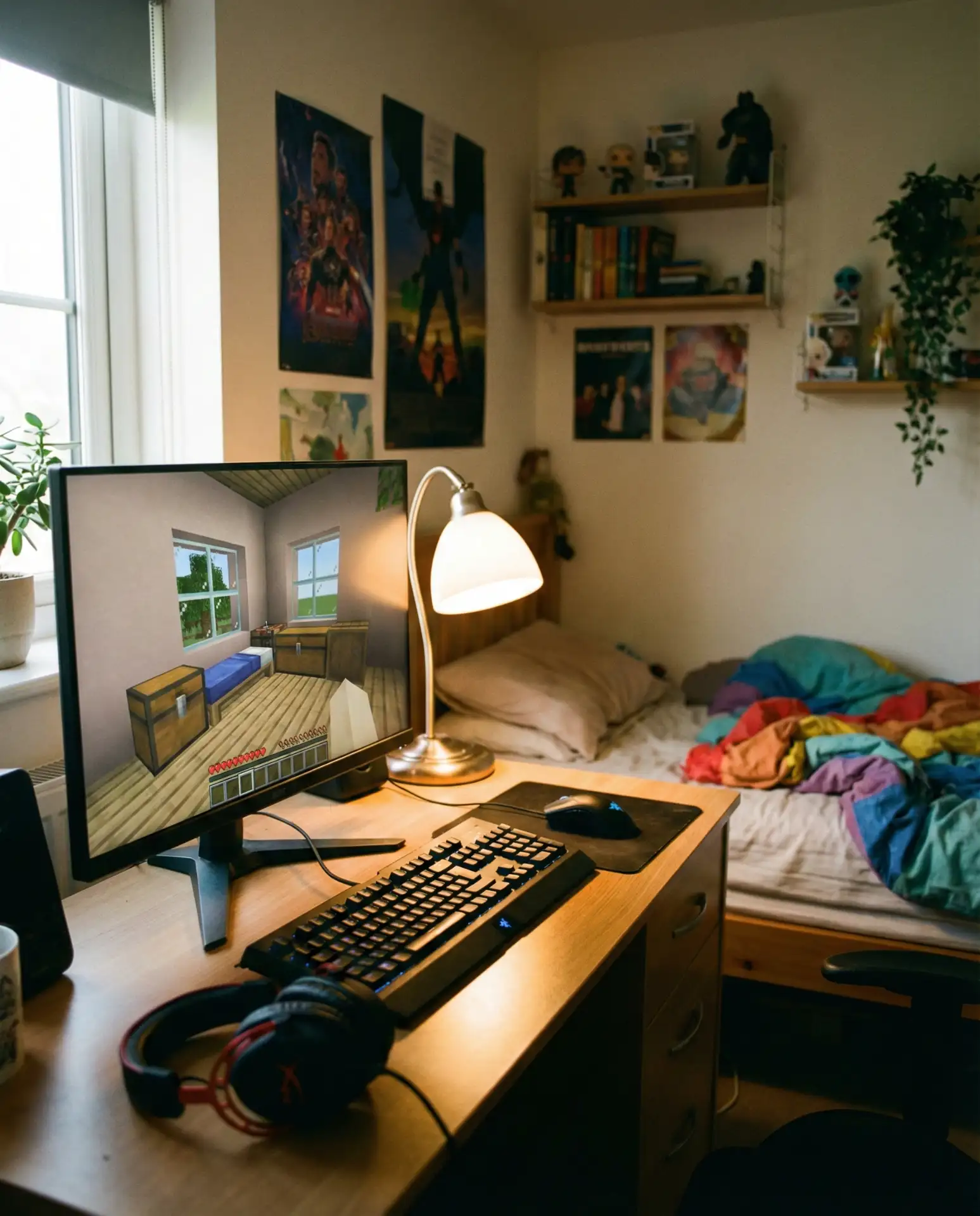
This design exercise, for kids to do digitally no less, also has them consider color palettes and storage options and even little decorative touches like wall art or plants. Once a virtual floor plan they adore has been established, students can share screenshots with parents to determine which design ideas would work in real life. It’s a new take on old-school room planning that should appeal to a generation weaned on digital tools and games as features of everyday life.
Conclusion
These small bedroom ideas demonstrate that it’s not a need for a large master suite to make the perfect room; it’s all about what you put in the space! Whether you’re into minimalist design, love a runner from here to eternity, or are looking for clever storage solutions, the point is to make choices that honor your lifestyle and use every inch available. We would also like to know which ideas you’re most excited to try out—let us know in a comment, and share your own small bedroom victories or stumbling blocks. You may be the gateway inspiration to someone else stuck in a tight place.