Staircases bridge the gap between floors, but they can also define a home’s character. Whether you lean toward sleek modern lines or prefer a touch of traditional charm, the right design transforms a hallway from a simple passage into a memorable space. This collection of 32 staircases spans minimal floating steps, sculptural spirals, and playful color-blocked treads, offering practical inspiration for updating your own home.
From glass balustrades to carpet runners, each idea considers layout, light, and how the staircase lives within the room. Expect honest takes on materials, upkeep, and what works for different spaces, no matter your style preference.
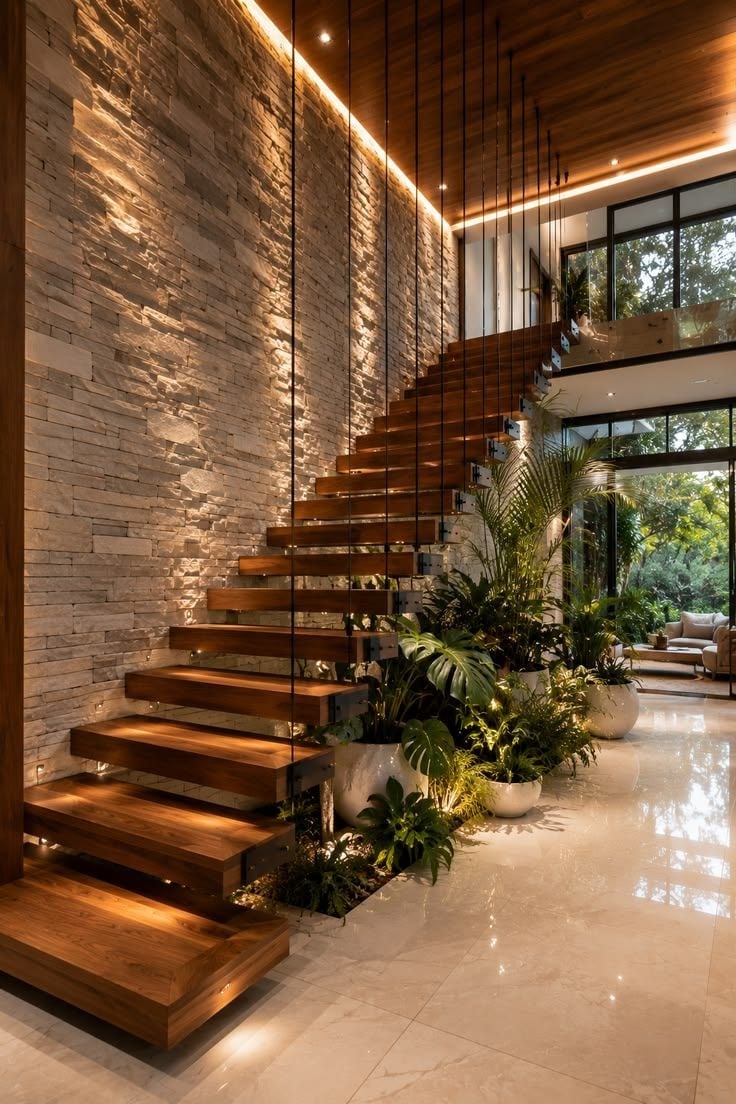
Dramatic Floating Staircase with Stone Accent Wall
The staircase reads as a separate object in the room because the treads are open-riser wood planks that appear to hover against a stone accent wall. Uplighting on the stone texture gives the wall an almost sculptural presence, while recessed ceiling lights keep the path clear. The wood tones and stone sit alongside large green plants that add softness to the hard surfaces. This is a case where the materials do the work: the stone wall anchors the floating element and prevents the staircase from feeling like an afterthought.
Minimalist Floating Staircase with Natural Light
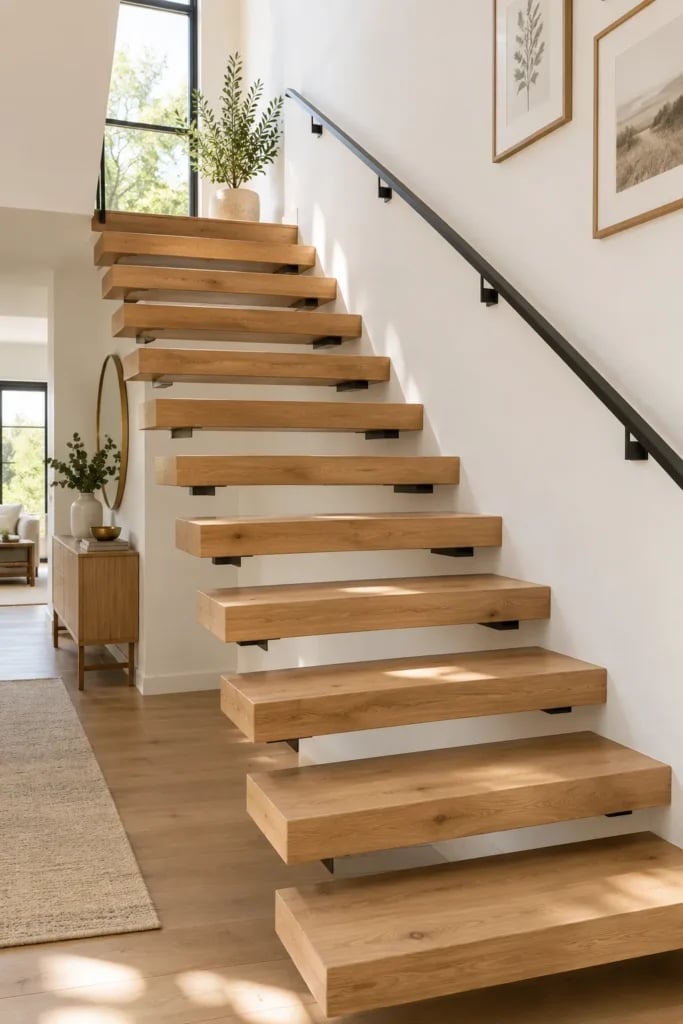
This hallway uses natural light as the main decorative tool. The floating treads are thick, solid wood planks against a white wall, and a black railing runs along one side. The white walls and wood create a clean palette, but the real trick is the light: it comes through a window and casts soft shadows across the treads, giving the staircase a changing appearance through the day. The floor stays open underneath, which helps the space feel airy. A minimalist wood floating stairs black railing combination like this needs a plain wall behind the treads so the wood grain can be the focus.
Sculptural White Spiral Staircase in Open Plan
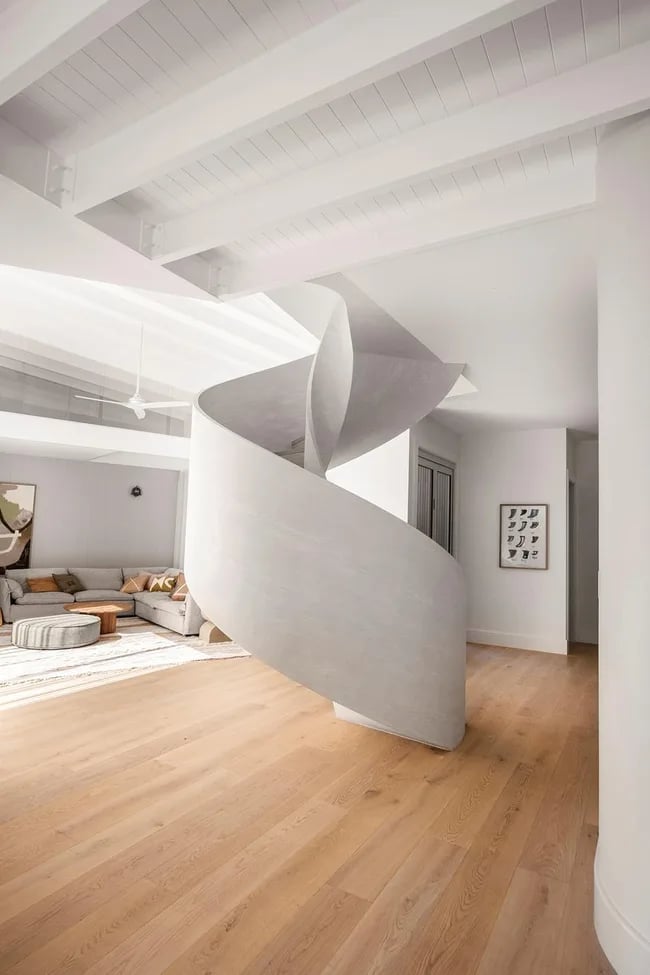
A staircase can become a room’s centerpiece without blocking the layout. This white spiral staircase uses a pale, sculptural form that rises through the space without cutting off sightlines. The plaster-like finish on the spiral gives it a solid, almost carved look, while the wood treads add a warm contrast at each step.
The open plan means the staircase sits next to a living area with a sectional sofa and an ottoman, so the eye moves between the two zones easily. Natural light comes in through windows and a ceiling fan helps with air movement. The staircase is generous enough to feel substantial but not so large that it dominates the room. A contemporary white spiral staircase open plan design like this holds its own because the pale color lets it blend with the walls rather than compete.
Geometric Metal and Glass Staircase with Chandelier
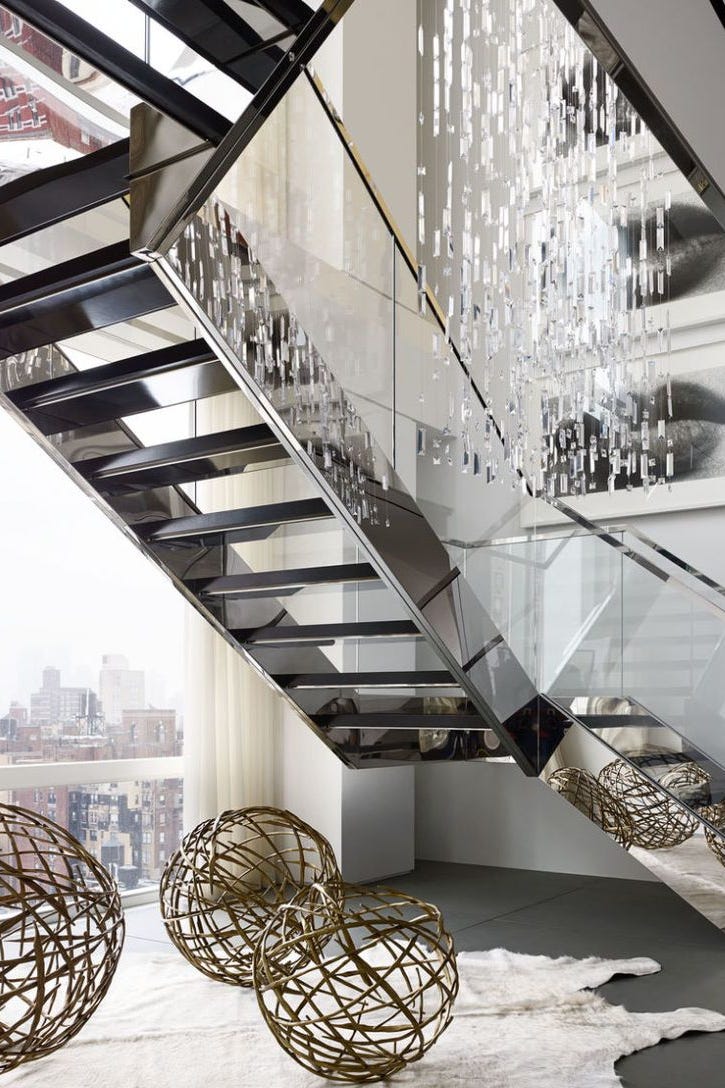
The staircase uses open metal treads and a glass balustrade, so the structure itself is barely there. A chandelier hangs above the stairs, and decorative spheres sit on the treads, adding a touch of sparkle to the metallic and gray palette. The geometric lines of the treads and the railing repeat the angles in the chandelier, creating a rhythm that feels planned. A modern metal glass staircase geometric design like this relies on clean lines and reflective surfaces to keep the space from feeling cold.
Modern Staircase with Glass Balustrade and Stone Wall
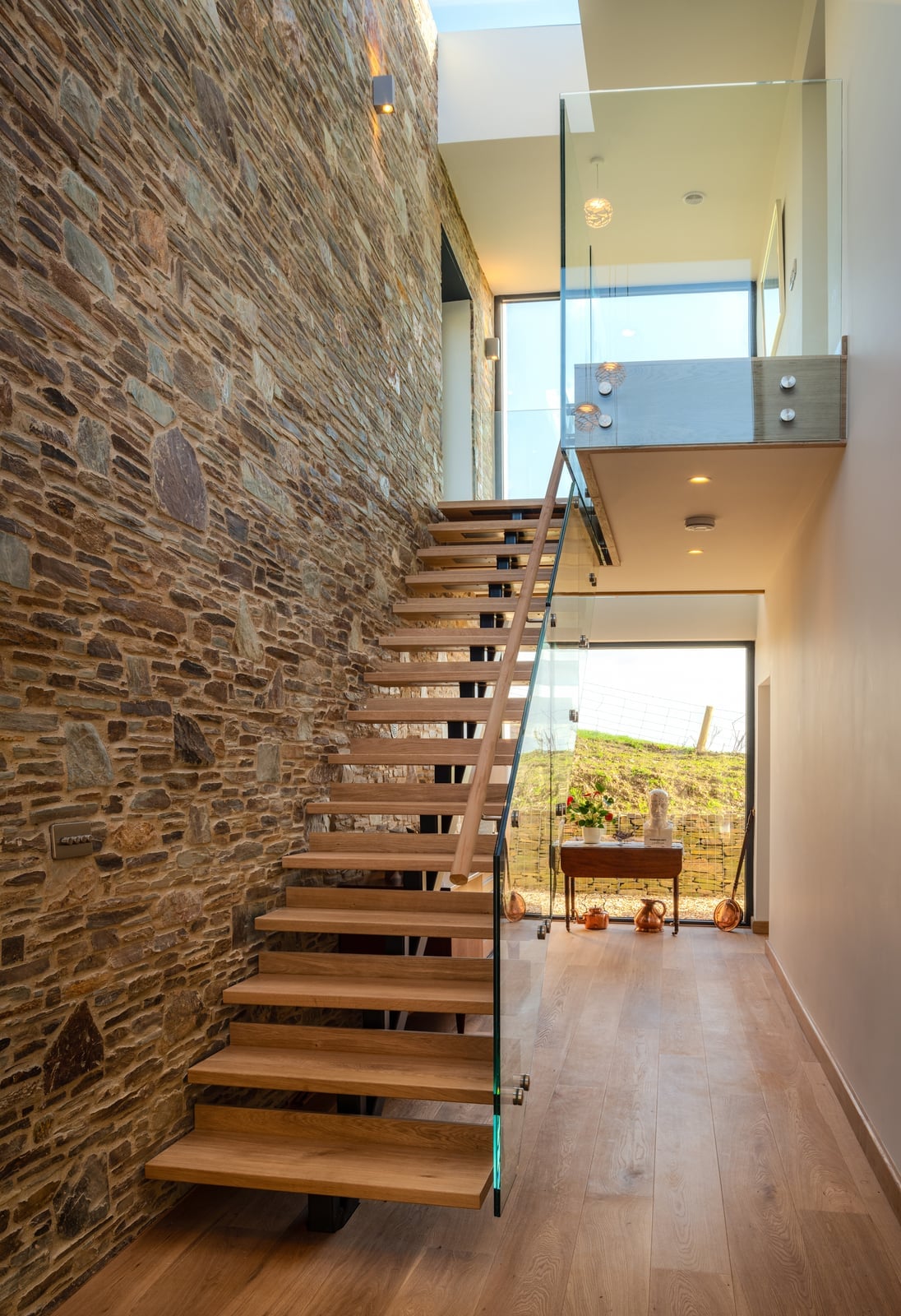
A practical rule for a staircase in an open hallway is to use materials that let light pass through. Here a glass balustrade runs alongside floating wood treads, so the view from one side to the other stays clear. The stone wall on one side adds a textured backdrop that grounds the wood and glass. Natural light comes from large windows, and ceiling lights fill in the evening. For a modern wood stairs glass balustrade stone wall setup, the glass keeps the staircase from blocking the room, and the stone wall gives the eye somewhere to land.
Cantilevered Wood Staircase Against Exposed Brick
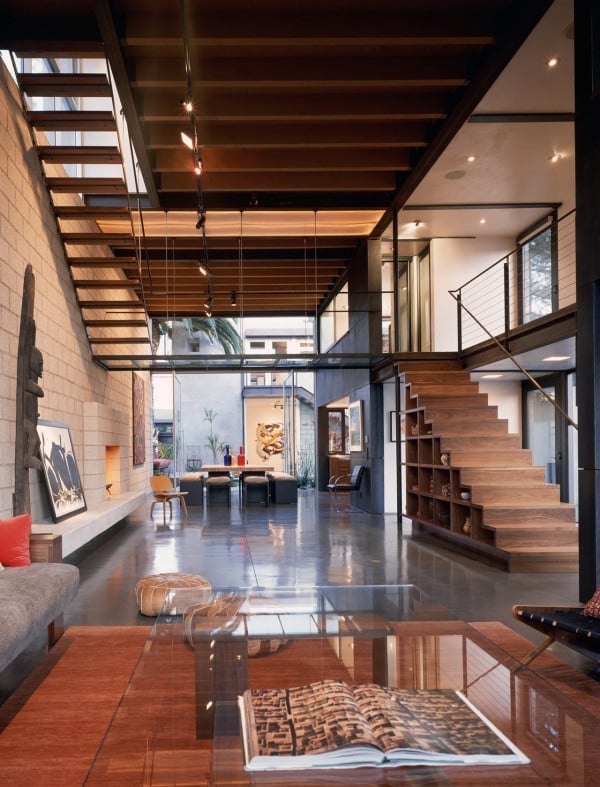
A cantilevered staircase saves floor space because each tread anchors into the wall with no visible support underneath. That open look works especially well against an exposed brick wall, where the warm texture of the brick contrasts with the clean lines of the wood steps. A black metal railing follows the stair’s angle without adding visual weight. Track lighting above casts even light across the treads, making the structure feel lighter. The combination of wood, metal, and concrete keeps the palette restrained. For a similar effect in a home without structural brick, a faux brick veneer panel can provide the same texture without demolition or permits.
Japandi Staircase with Minimalist Railings
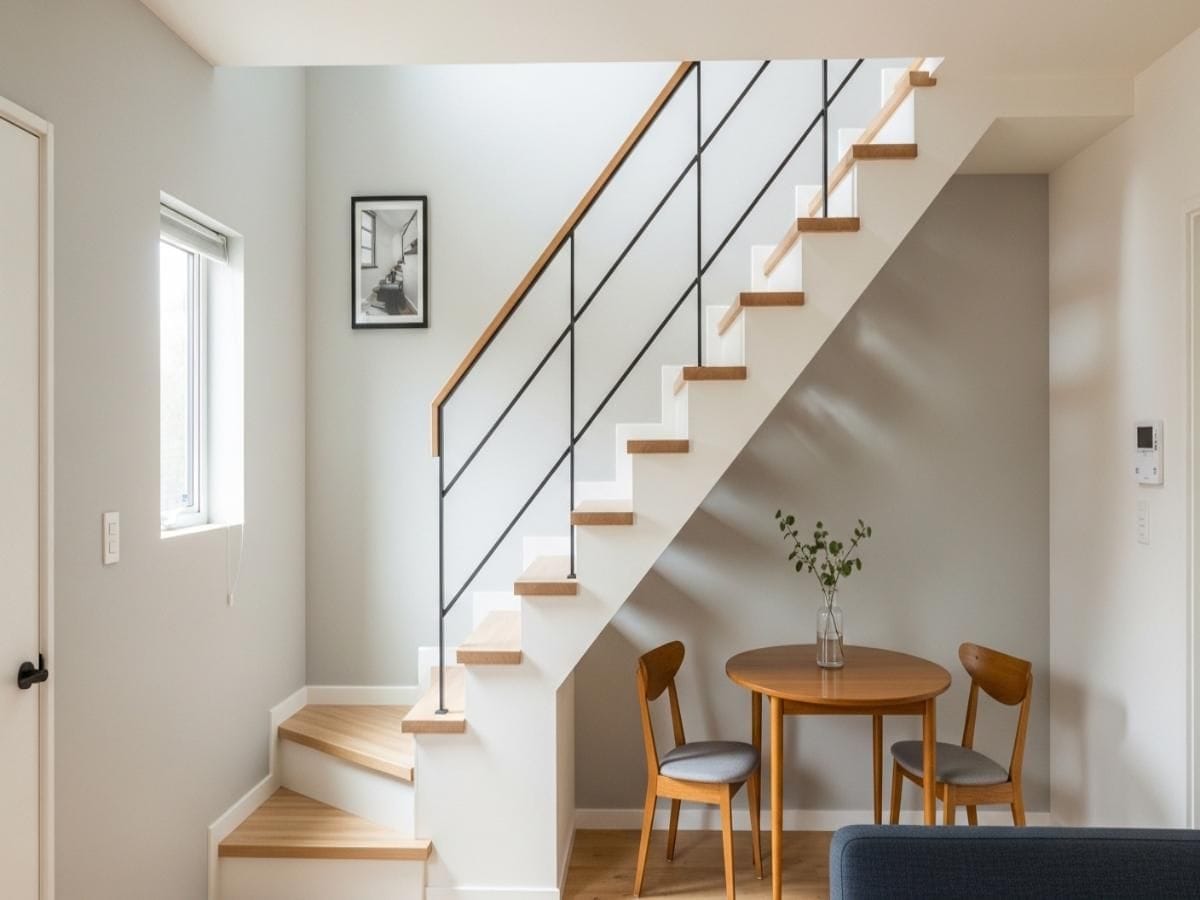
The Japandi staircase keeps the railing thin and black, letting the wood treads and white risers carry the visual weight. A round wooden table and two simple wooden chairs sit nearby, reinforcing the same natural palette. Natural daylight from a nearby window softens the contrast. This look works in a compact hallway because the railing does not crowd the path. Renters can approximate the style by painting an existing railing black and swapping a bulky table for a slim round one in a light wood tone.
Eclectic Hallway with Vibrant Coral Spiral Staircase
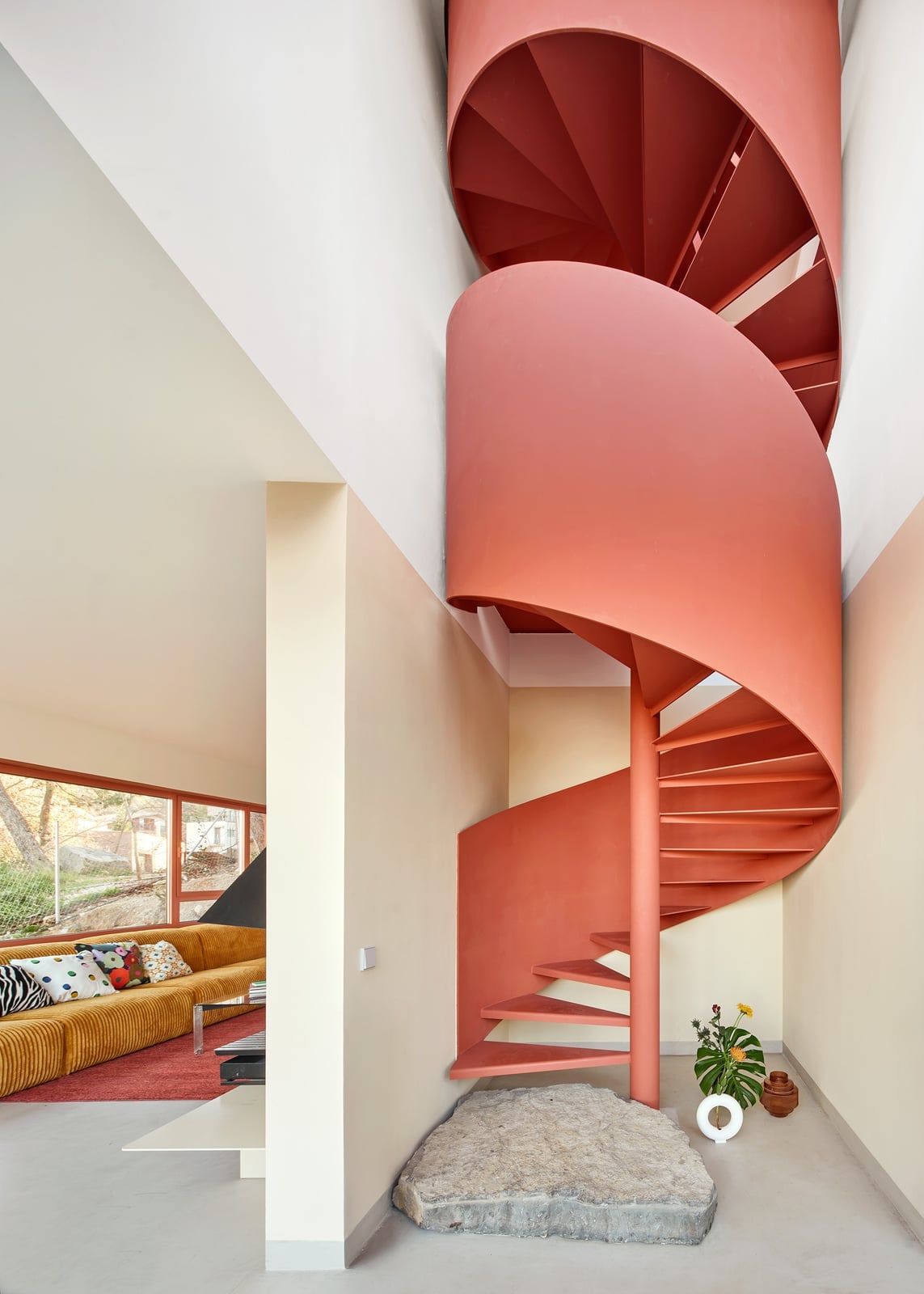
A coral spiral staircase becomes the anchor of this eclectic hallway. The color is strong enough to stand alone, so the rest of the room stays simple: a cream sofa, a large stone, and soft gray walls. Natural light from a nearby window keeps the coral from feeling heavy. The palette works because the yellow and gray accents echo warmth without competing. The spiral shape itself saves floor area, making the open plan feel even more spacious. If a full spiral is not an option, painting a straight staircase in a single bold color can create a similar focal point without changing the footprint.
Traditional Staircase with Geometric Runner
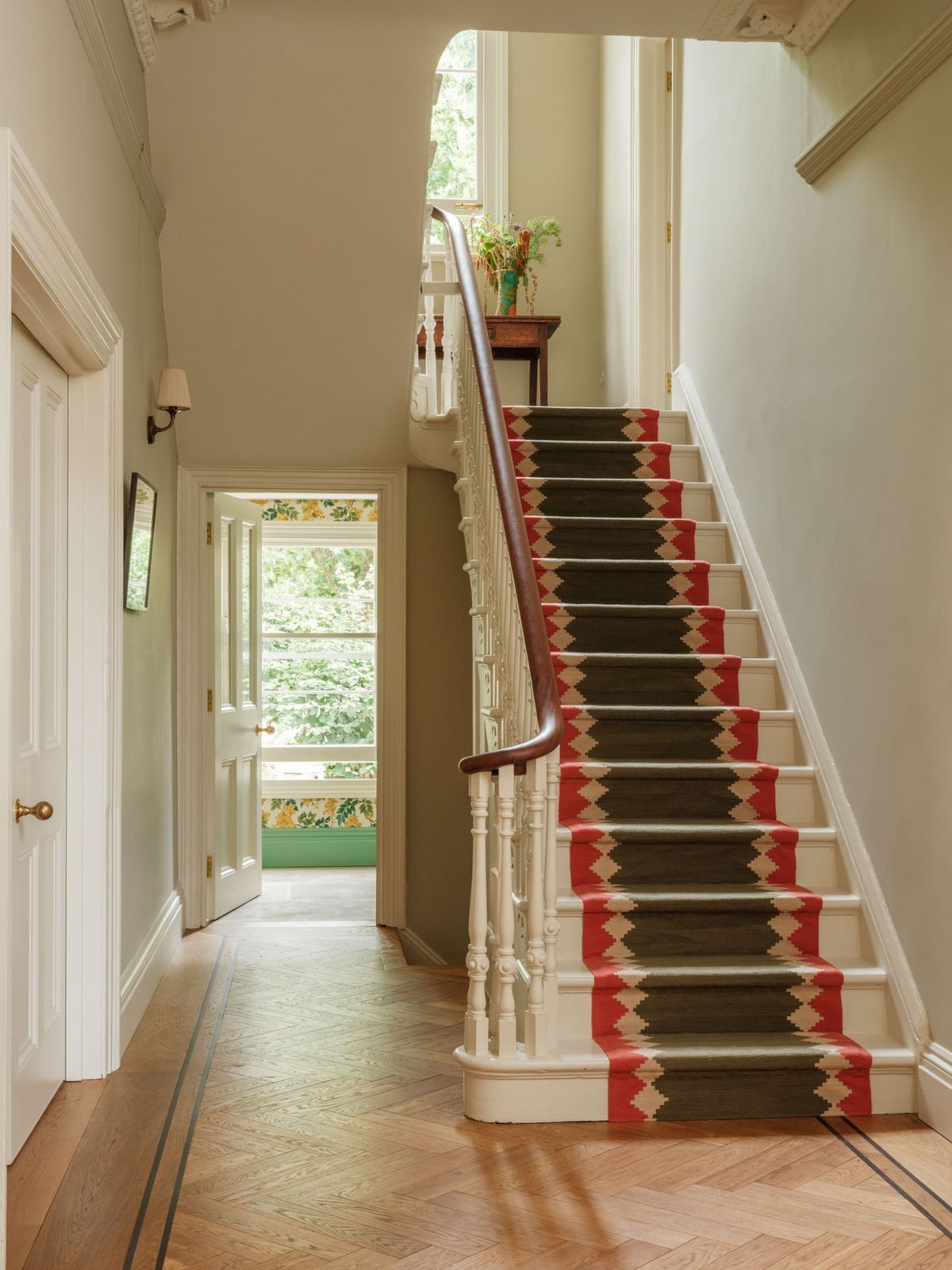
How do you add pattern to a traditional staircase without overwhelming the hallway? A geometric stair runner in green and red against white risers and a beige floor creates contrast without chaos. The repeating pattern draws the eye upward and defines each step. White painted balusters and a wooden handrail keep the look classic. A wide hallway can handle a runner with a larger repeat; a narrow space benefits from a smaller, denser pattern. The runner also protects the treads from wear where foot traffic is heaviest. For renters, a non-slip carpet stair tread in a matching geometric print can mimic the look without permanent installation.
Modern Staircase with Cascading Pendant Lights
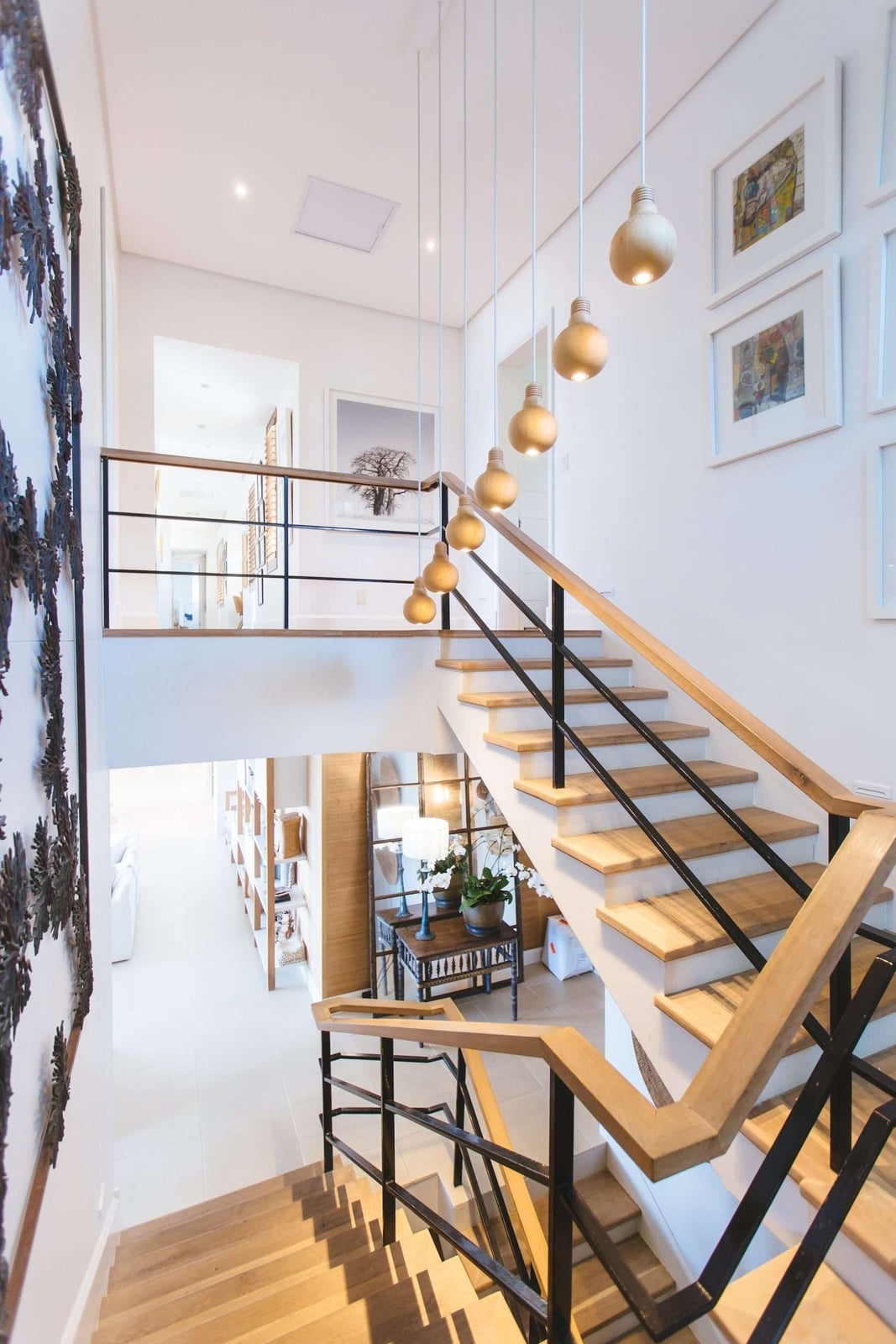
Multiple pendant lights hung at staggered heights above a wood staircase turn a functional path into a visual event. The black metal railing and white walls keep the focus on the light fixtures and the warm tones of the wood treads. Natural light from windows on the landing balances the artificial glow during the day. The spacing between pendants matters: too close and the lights blur together, too far and the cascade effect breaks. For a similar look without hardwiring, a single long pendant with a linear shape can create a comparable vertical line in a smaller space.
Playful Staircase with Color-Blocked Treads
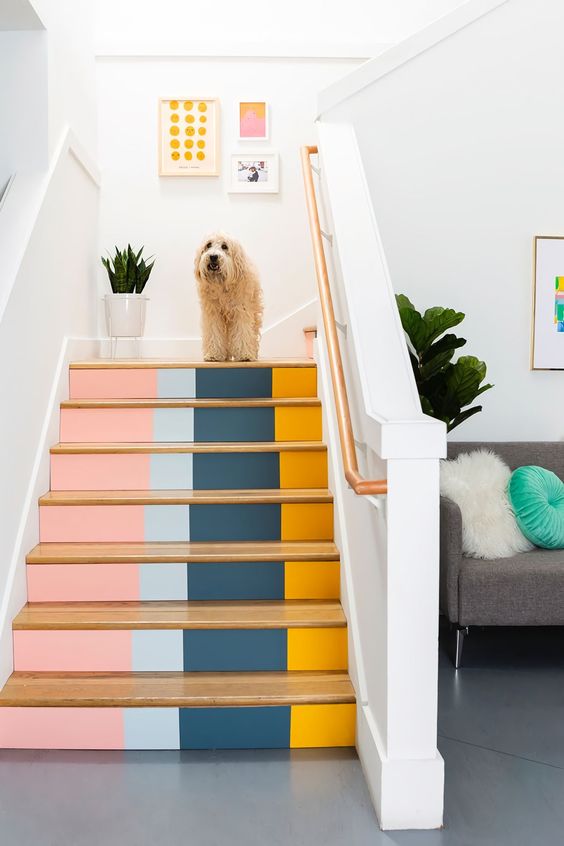
A palette with more than three colors works best when the brightest shades stay on the treads. The staircase in this hallway uses pink, blue, navy, yellow and white on the step surfaces, while the risers and the wooden handrail stay neutral. That keeps the color from spreading up the walls or onto the floor. The straight layout and roomy hallway give each painted step room to read as its own block, not a blur. A white wall behind the staircase holds the composition together, so the palette feels deliberate instead of busy.
Grand Wooden Staircase with Rainbow Carpet Runner
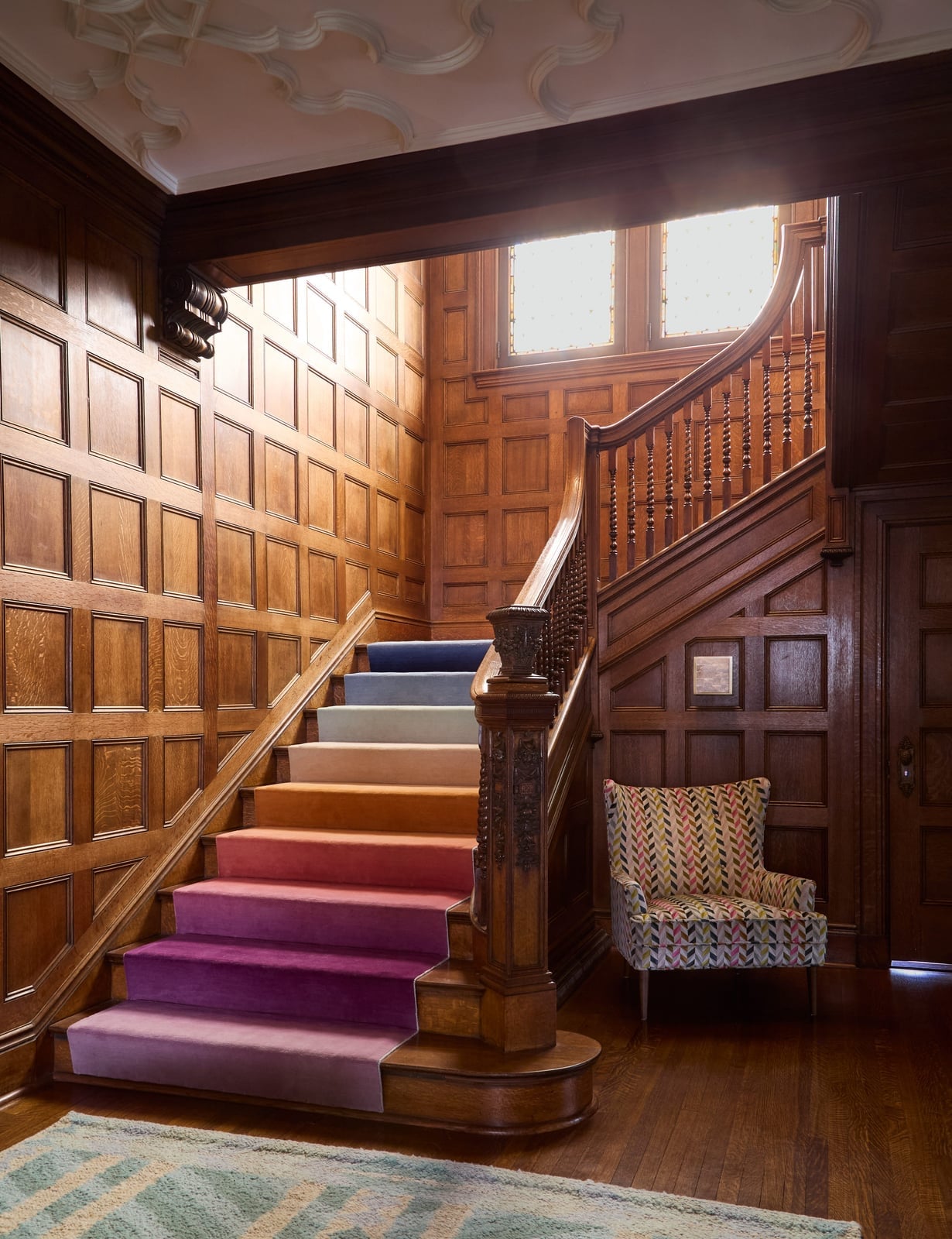
A wood-paneled hallway with a curved staircase sets a formal stage, but the runner can shift the mood. A rainbow gradient carpet on the steps brings a playful note to the ornate dark wood and cream walls. The patterned chair at the base of the stairs follows the same color logic without competing.
Windows keep the rainbow tones true, while the overhead fixture adds evening visibility. The runner follows the curve of the stairs, which helps the gradient appear as a continuous band. For a traditional space that does not lean into full whimsy, the rainbow runner introduces color without touching the walls or the woodwork.
Classic Marble Staircase with Botanical Prints
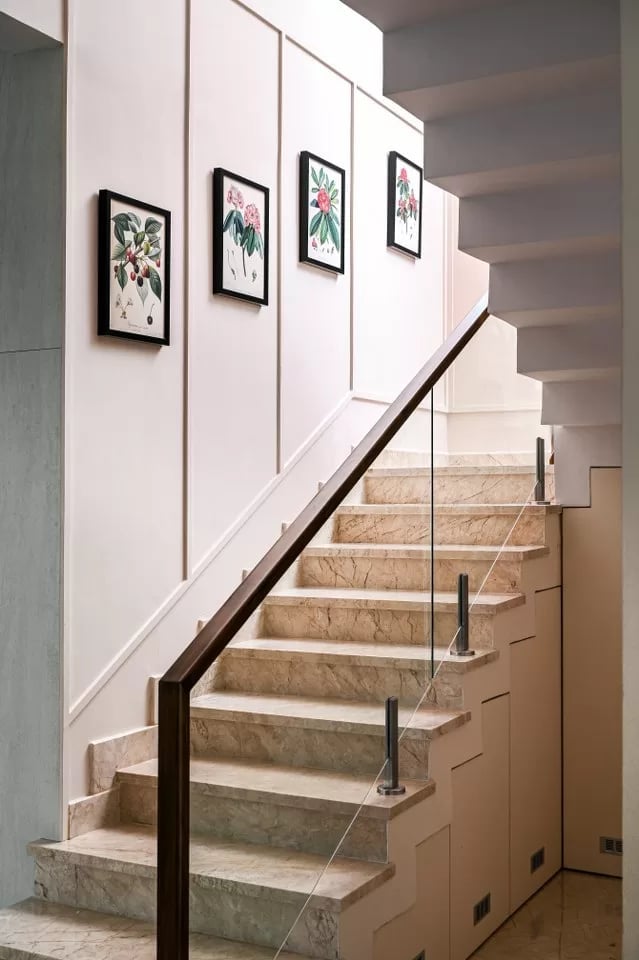
Marble steps set a cool, polished base, and the glass railing keeps the line of sight open so the stone stays visible. The compact corner staircase in this hallway uses cream and beige marble, with wood accents adding warmth. Framed botanical prints on the wall bring a natural motif that softens the hard surface of the stone. The ambient light bounces off the marble and the glass, which makes the small landing feel larger than it measures.
Glam Curved Staircase with Animal Print Runner
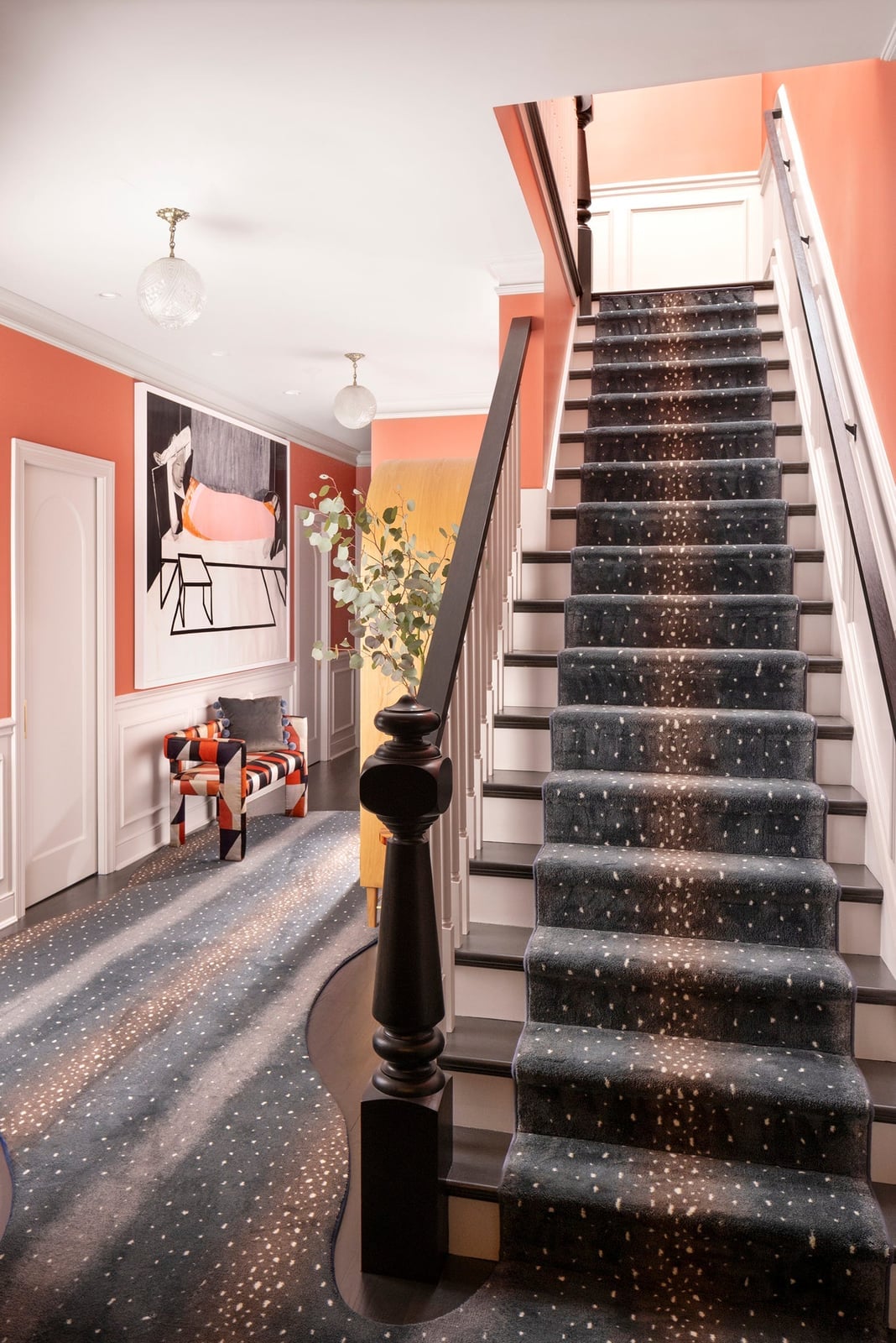
An animal print runner on a dark wood staircase is a direct way to introduce pattern. The coral and gray tones in the runner connect to the abstract art on the wall, while the white painted walls keep the space balanced. Light from the doorway and pendant lights above gives the runner enough illumination to show the print clearly. The curved layout makes the pattern follow the turn, which adds visual motion. A solid wall color lets the runner and the art do the work.
Geometric Tiled Floor with Modern White Staircase
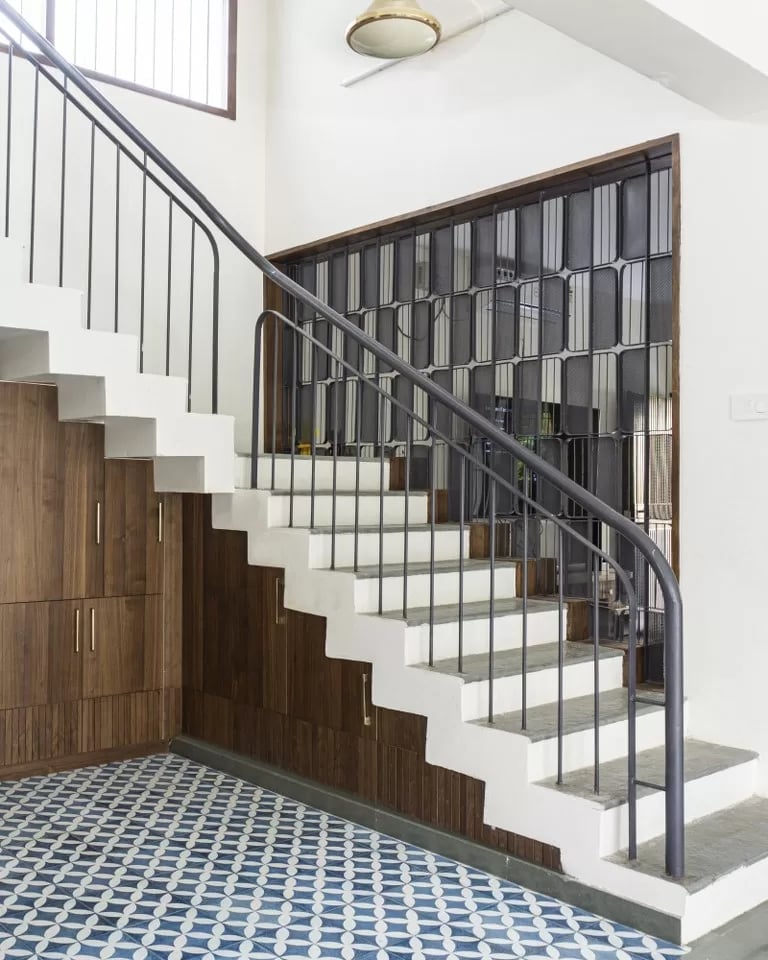
A patterned floor under a white staircase sets up a clear hierarchy: the floor leads, the stairs follow. The geometric blue and white tile in this hallway covers the ground plane, while the straight white staircase with a metal railing stays light and open. The treads add a natural break between the tile and the painted stair structure.
The daylight from the room helps the tile pattern read clearly. For a hallway that connects multiple rooms, the tile defines the path and the white staircase keeps the vertical plane from adding visual clutter. The palette stays in three zones: tile, wood and white.
Modern Hallway with Floating Staircase and Desk Area
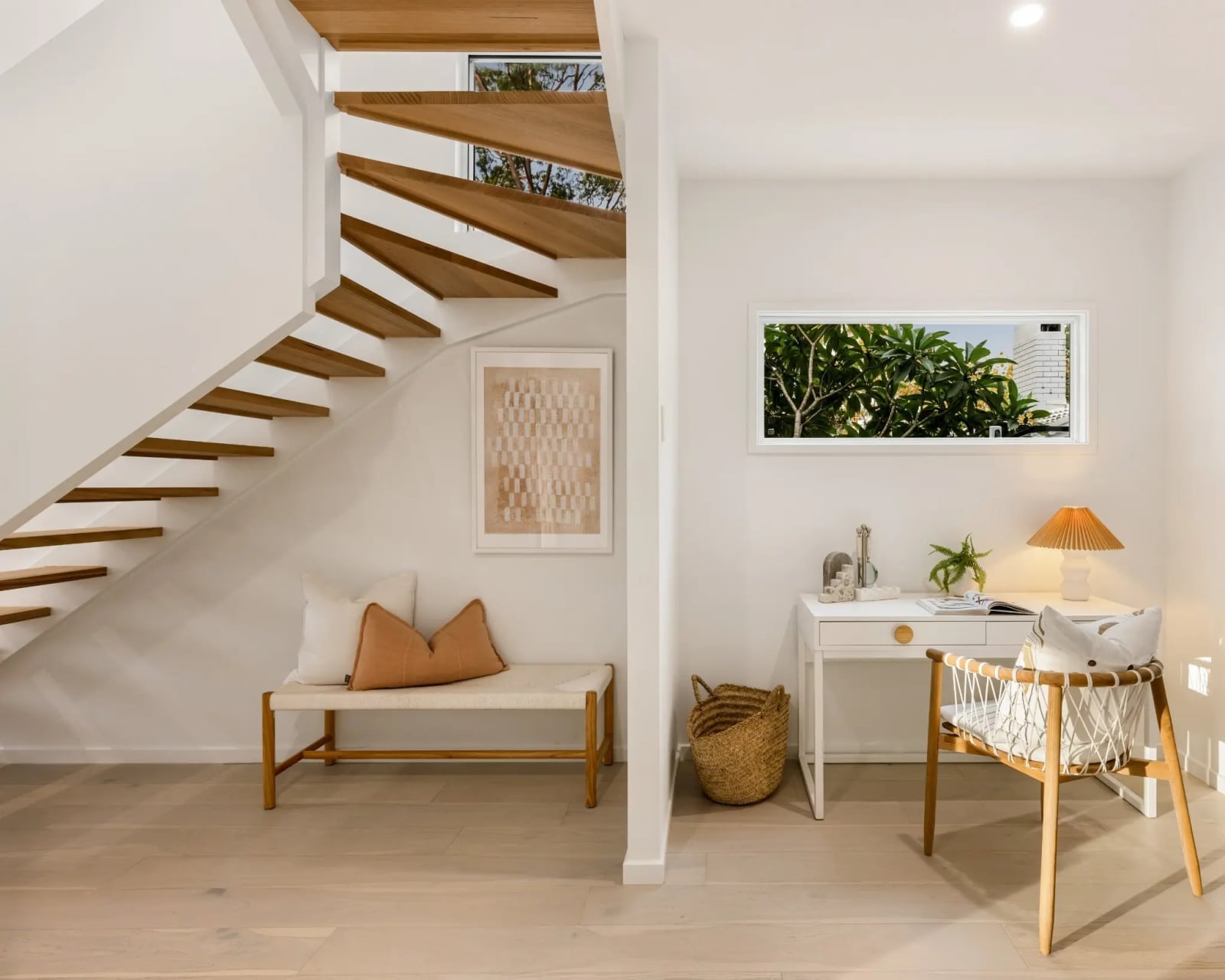
The floating staircase anchors the left side of this hallway, its open treads keeping the sightline clear across a roomy space. A desk and chair sit to the right, turning the landing into a practical nook without crowding the path. White walls and a beige linen bench keep the palette calm, while the table lamp adds a warm task light. When you place a work zone next to stairs, keep the desk at least a few feet from the bottom step so foot traffic and seated work don’t bump into each other. Daylight from the far end helps both areas feel connected.
Modern Farmhouse Staircase with Gray Carpet Runner
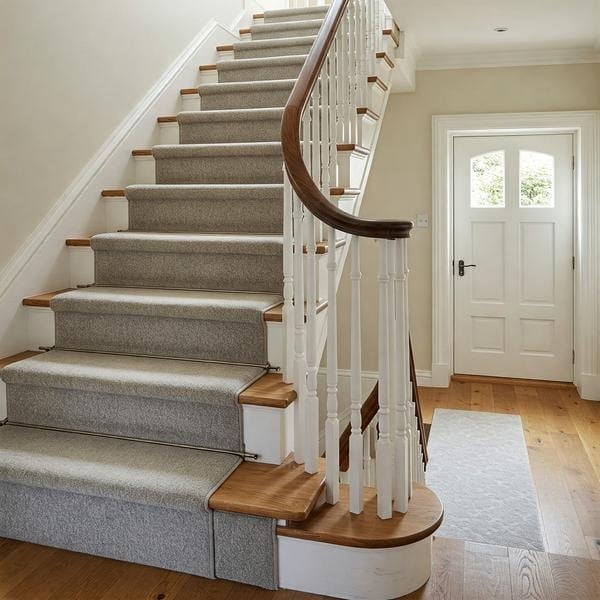
For a modern farmhouse staircase, run the carpet runner down the center of the treads, leaving the wood exposed on each side. That is exactly what happens here: a gray runner sits over wooden treads, with white painted risers and banisters framing the look. The natural daylight hitting the hall keeps the gray from feeling heavy. If you rent, a runner is one of the easiest swaps to make. You can install it with carpet rods or stair clips that do not damage the wood underneath, then take it with you when you move. The gray tone works because it bridges the white trim and the warm wood without competing with either.
Modern Staircase with Slatted Wood Wall Panel
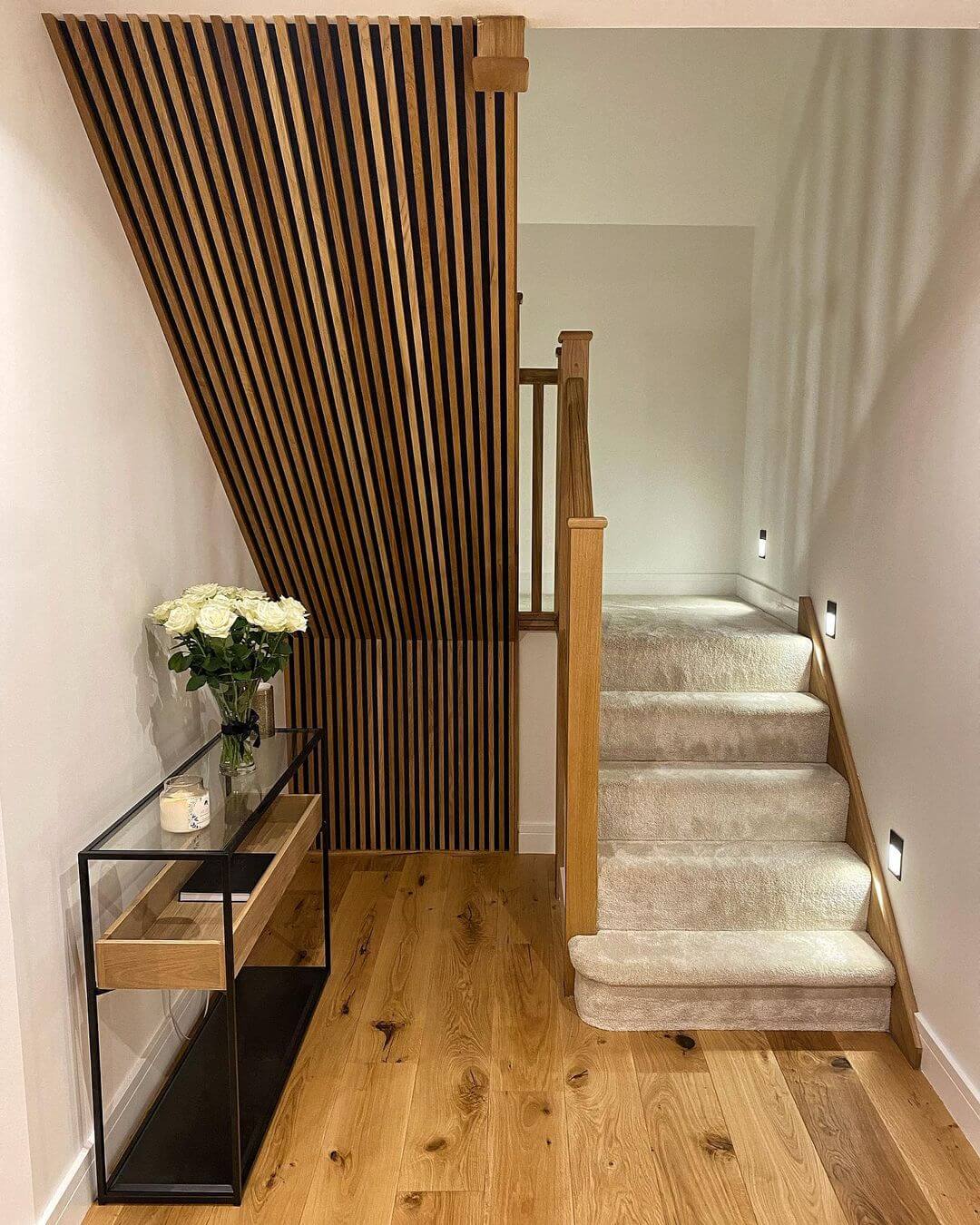
Where a solid wood wall can feel heavy, a slatted panel keeps the texture but lets the hallway breathe. Here the vertical slats run alongside a straight staircase, their warm tone contrasting with white risers and a black metal railing. A small console table sits below the panel, and wall lights cast soft highlights across the grooves.
The slats do more than add visual rhythm. They also break up the sound in a tall hallway, reducing the echo that bounces off bare drywall. The carpet on the stairs helps with noise too, while the natural light from the far end keeps the wood from darkening the space. If you want this look without a full build, a slatted wood screen mounted to the wall gives a similar effect and can be removed later.
Traditional Hallway with Dark Wood Stairs and Antique Bench
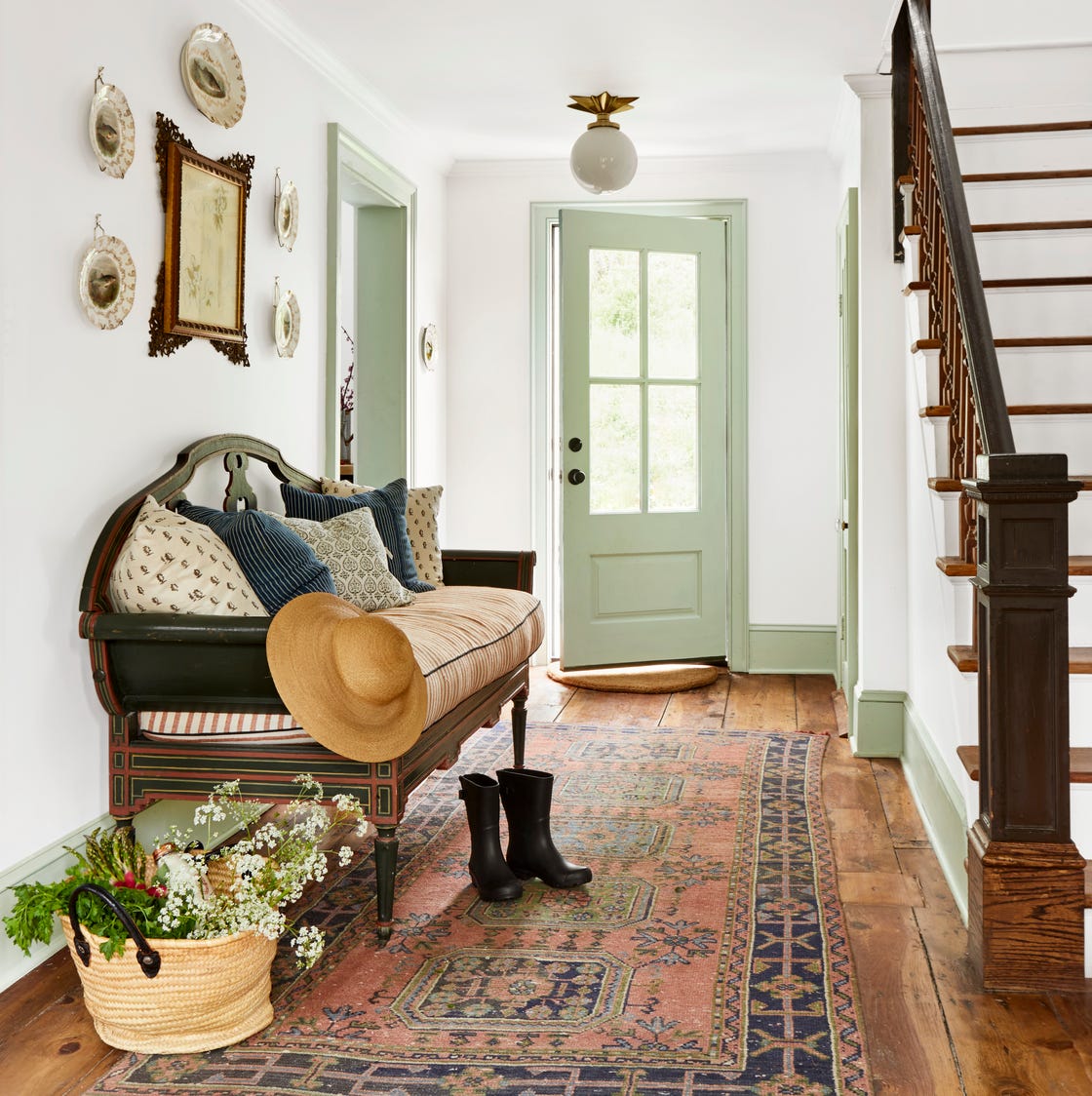
The dark wood staircase in this compact hallway is balanced by a light palette on the walls and a patterned rug on the floor. An antique bench with pillows sits against the wall, its cream and pink tones softening the deep wood. The natural light from the front door keeps the nook from feeling closed in. The staircase itself stays traditional with turned balusters and a stained finish, but the bench adds a spot to pause. In a tight entry, a single piece of furniture with upholstery can break up a run of dark wood without needing to paint the stairs.
Traditional Staircase with Botanical Wallpaper
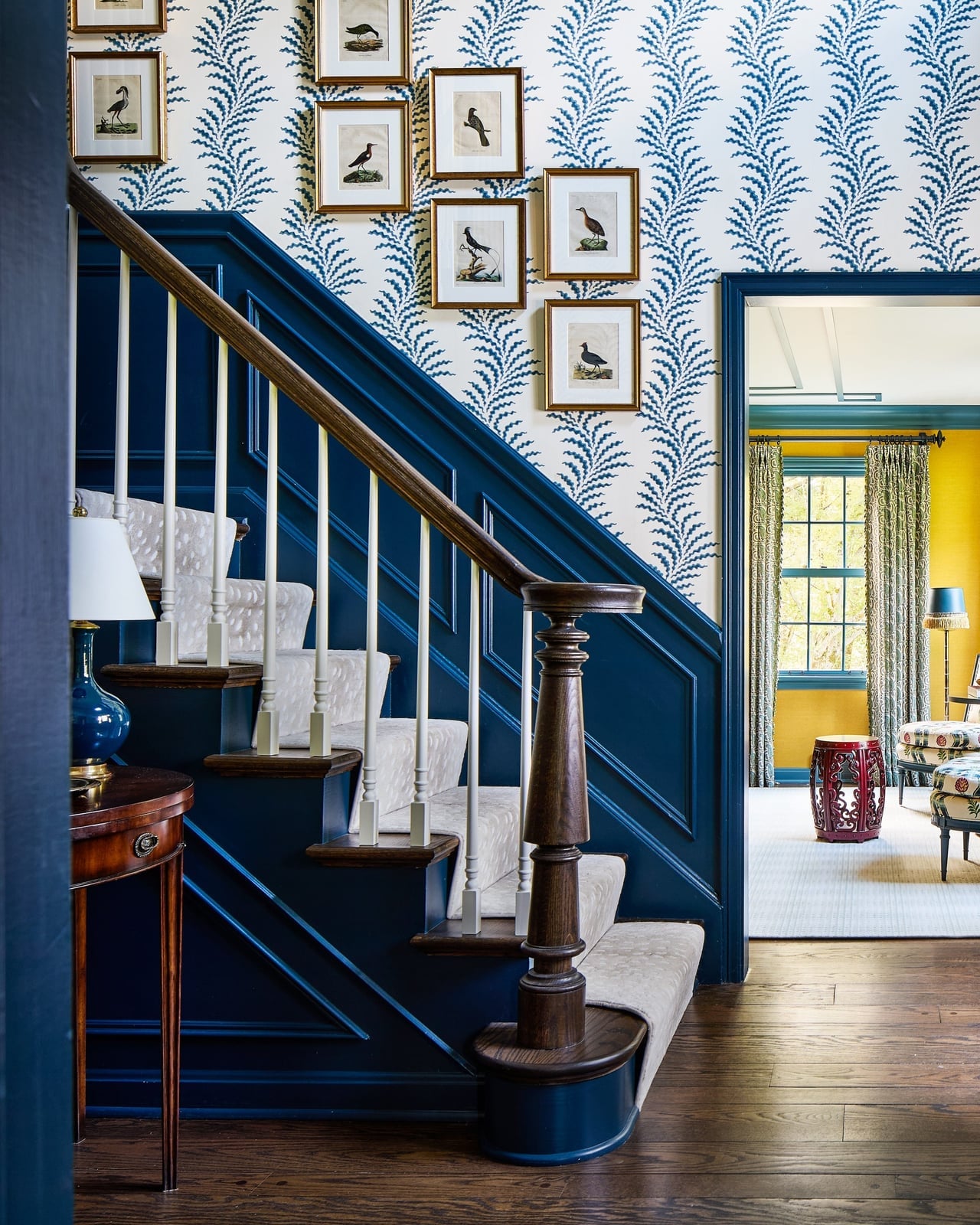
This staircase works because the wallpaper takes the lead. A deep blue botanical print climbs the wall beside the stairs, while the wood steps and beige carpet runner stay neutral. Framed art on the opposite wall adds another layer. The doorway and the overhead fixture keep the deep blue from dimming the hall. When you choose a bold wallpaper for a stairwell, stick to a single wall or the wall that runs parallel to the treads. That way the pattern reads as a feature, not a maze, and the stairs themselves remain clear and easy to navigate.
Minimalist Curved Staircase with Two-Tone Steps
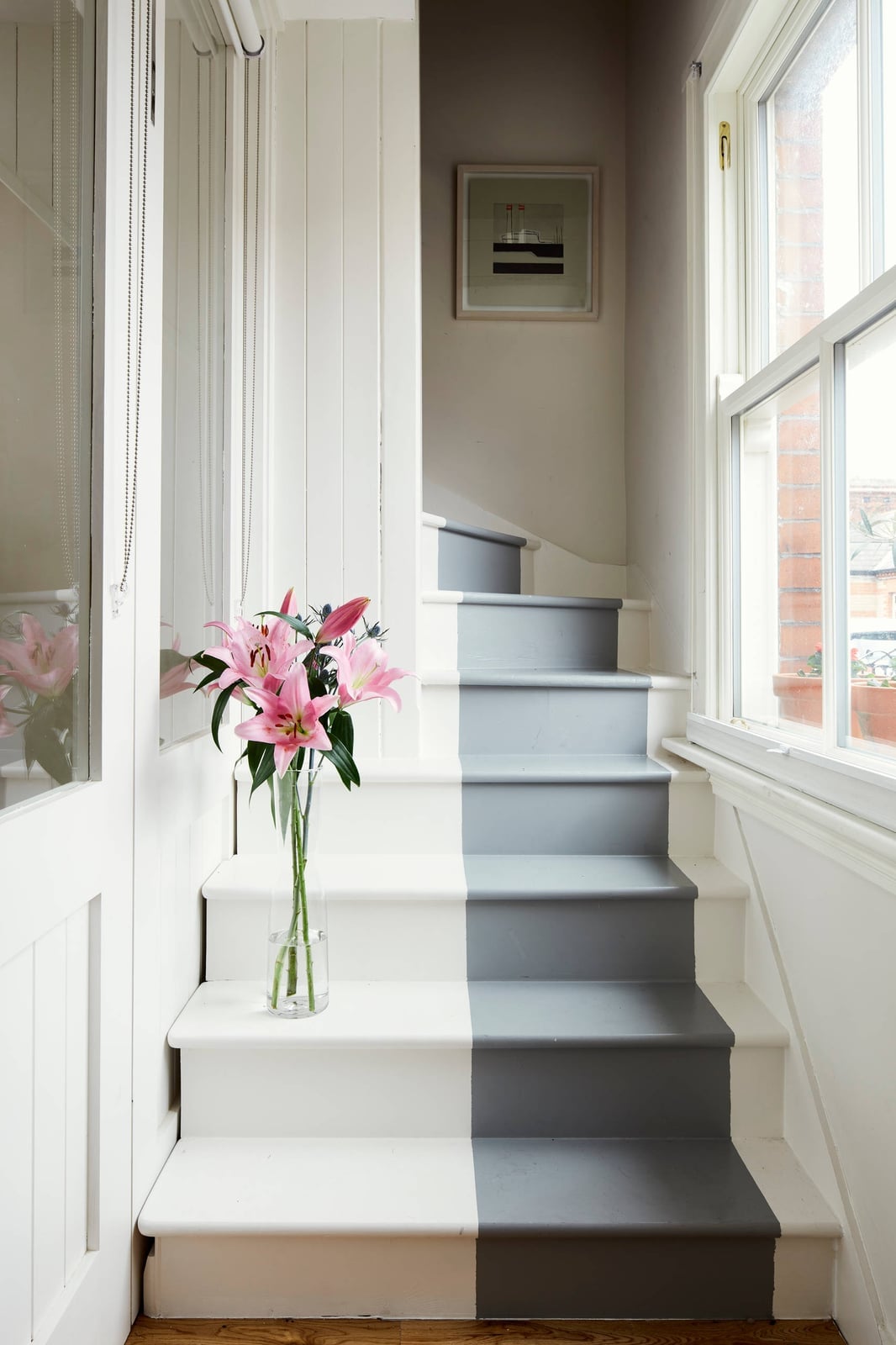
The palette sets the tone before you even step on the first tread. A curving staircase in white and gray painted wood draws the eye upward without clutter. The two-tone steps break the vertical line just enough to add interest, while a vase of pink lilies on the landing brings in a soft accent. Natural light hits the pale surfaces and the glass balustrade, making the space feel larger than its footprint. A palette that stays close to neutrals with one floral note lets a curved shape be the event.
Modern Minimalist Staircase with Integrated Wine Rack
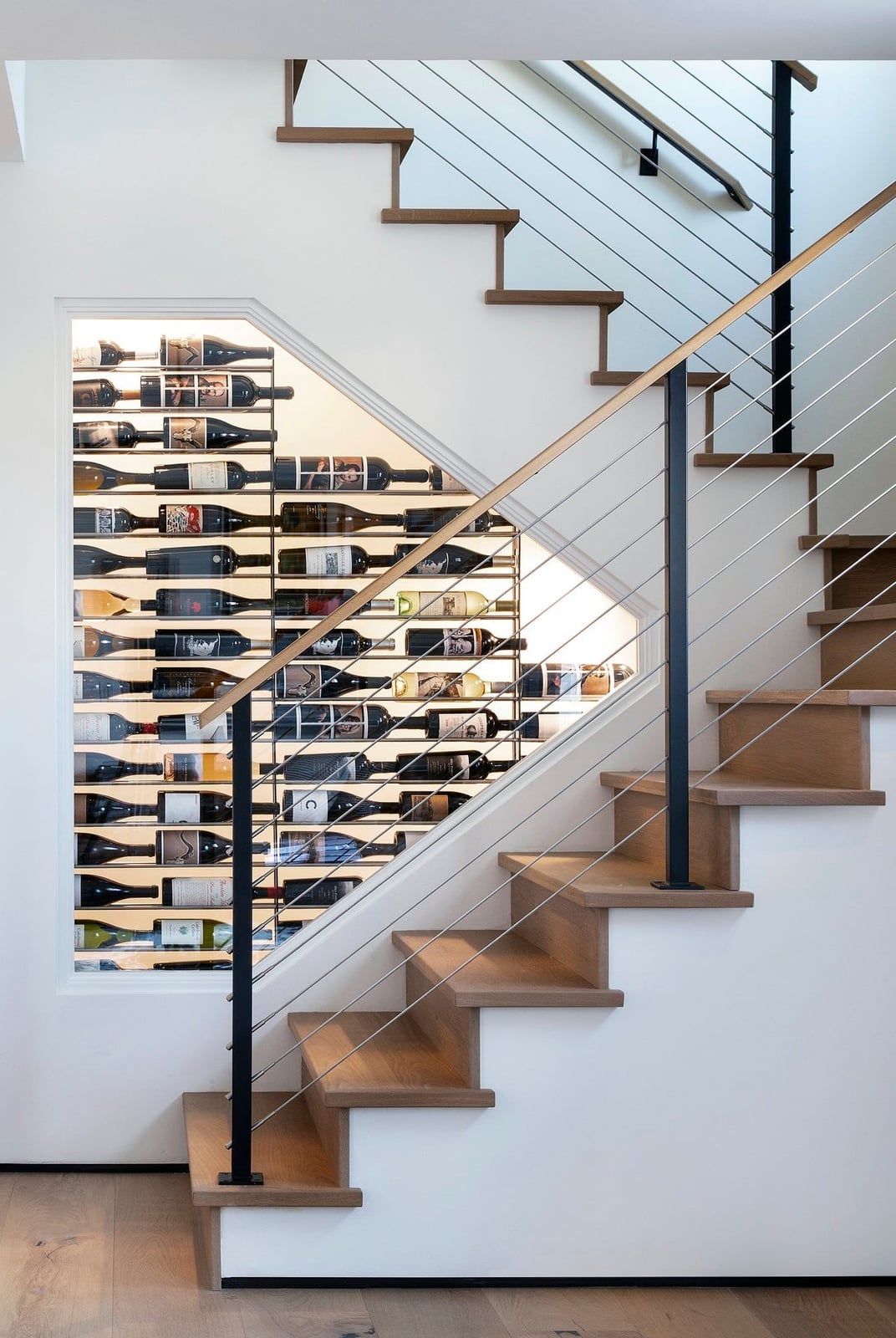
Floating wood stairs with cable railings already lean clean and open, but the real trick here is what sits underneath. Integrated wine storage tucks into the space below the staircase, with its own lighting that glows through the glass bottles. The combination of wood tones, white walls, and silver metal keeps the look modern and uncluttered. It turns wasted square footage into a functional display without adding furniture or blocking the hallway’s flow.
Industrial Loft Staircase with Exposed Beams
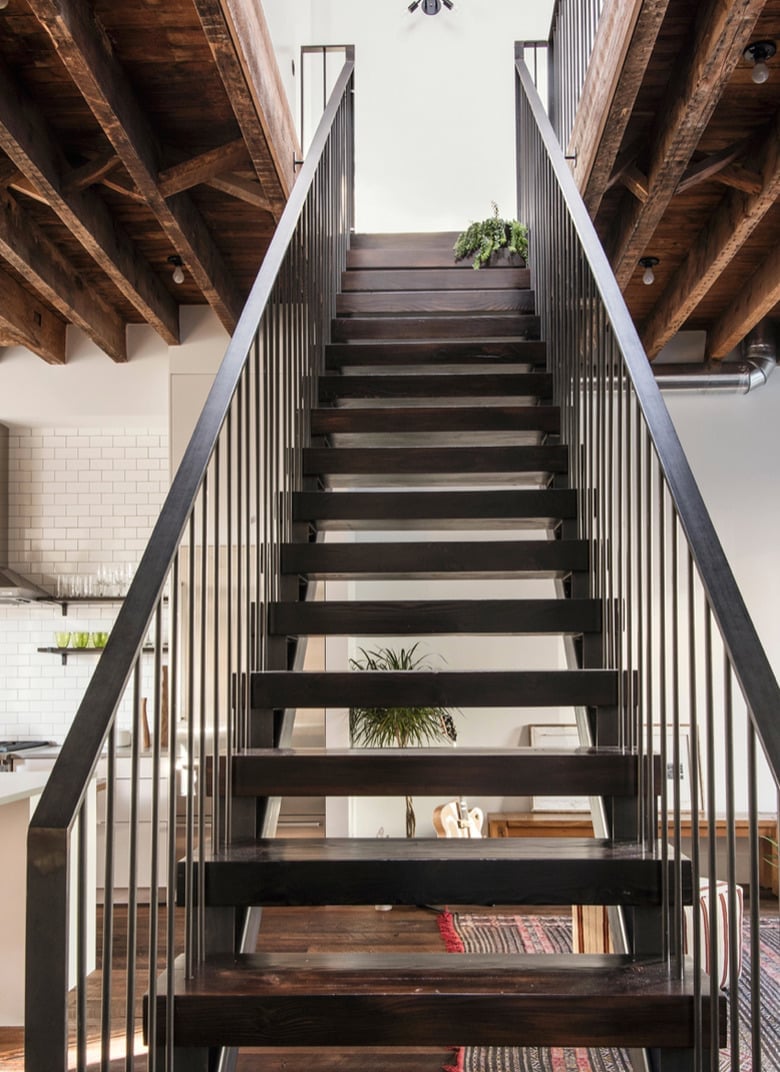
A practical rule for industrial spaces is to let the structure speak. Here, a dark wood staircase with a metal railing sits beneath exposed wooden ceiling beams, while brick and tile add texture at different heights. The open plan keeps the staircase central, so the materials repeat across sight lines: wood on the treads echoes the beams above, and the metal railing picks up the industrial feel of the brick. Keeping the palette limited to dark wood, white, and brick lets each surface read clearly without fighting for attention.
Modern Cantilevered Staircase with Abstract Art
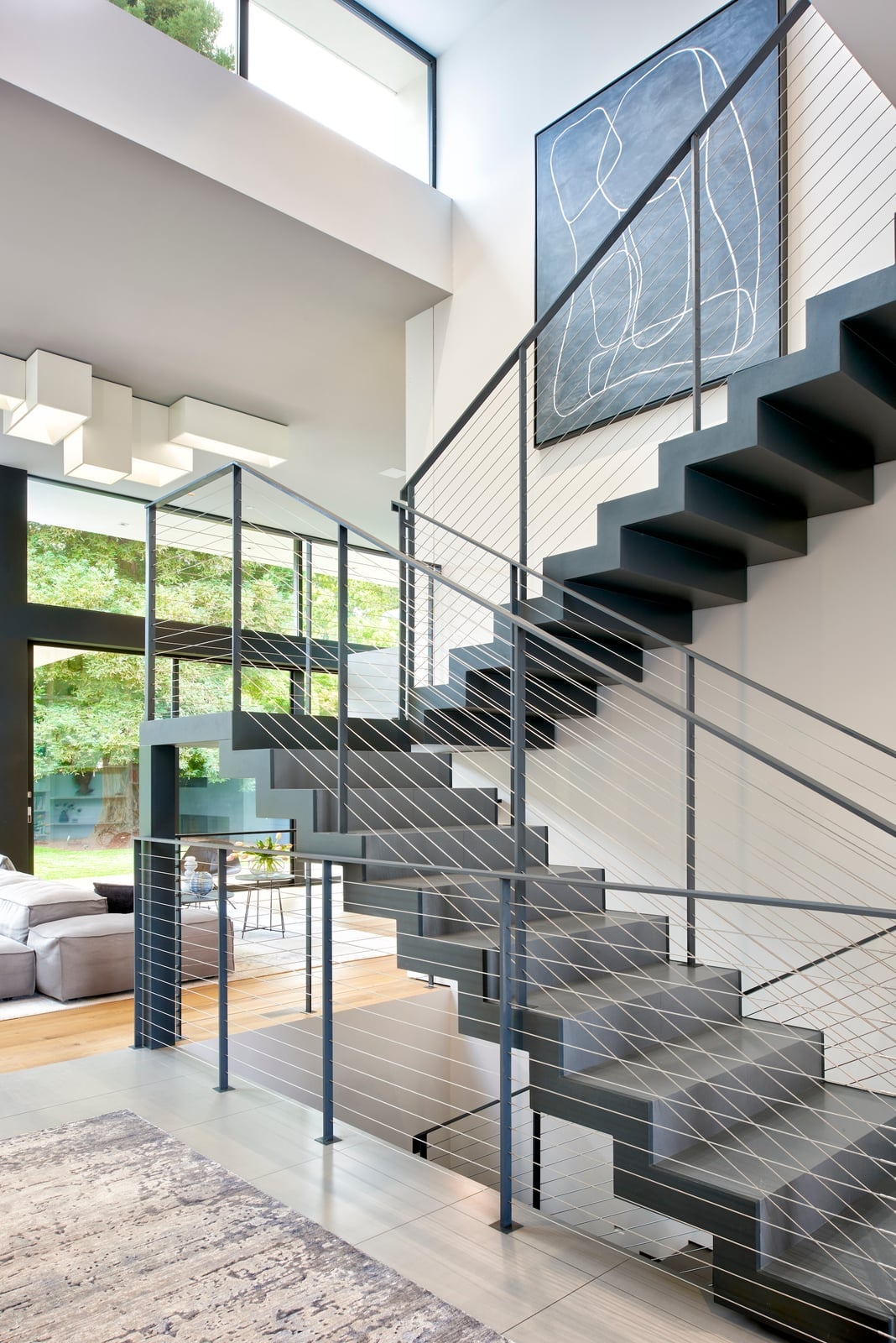
A cantilevered staircase can feel stark if the surrounding space is too bare, but scale and proportion fix that. The dark gray treads with open risers and cable railings keep the structure light, while a large abstract art piece on the adjacent wall balances the vertical mass. The hallway is open plan and airy, with natural light from large windows and ceiling lights that prevent shadows from pooling under the steps.
The art anchors the eye at mid-height, so the staircase becomes part of a composition. Green tones in the painting echo the wood tones used elsewhere, and the gray palette stays consistent between the stairs and the art’s background. Give the staircase a partner on the wall to complete the look.
Cottage Staircase with Red Patterned Runner and Brick Floor
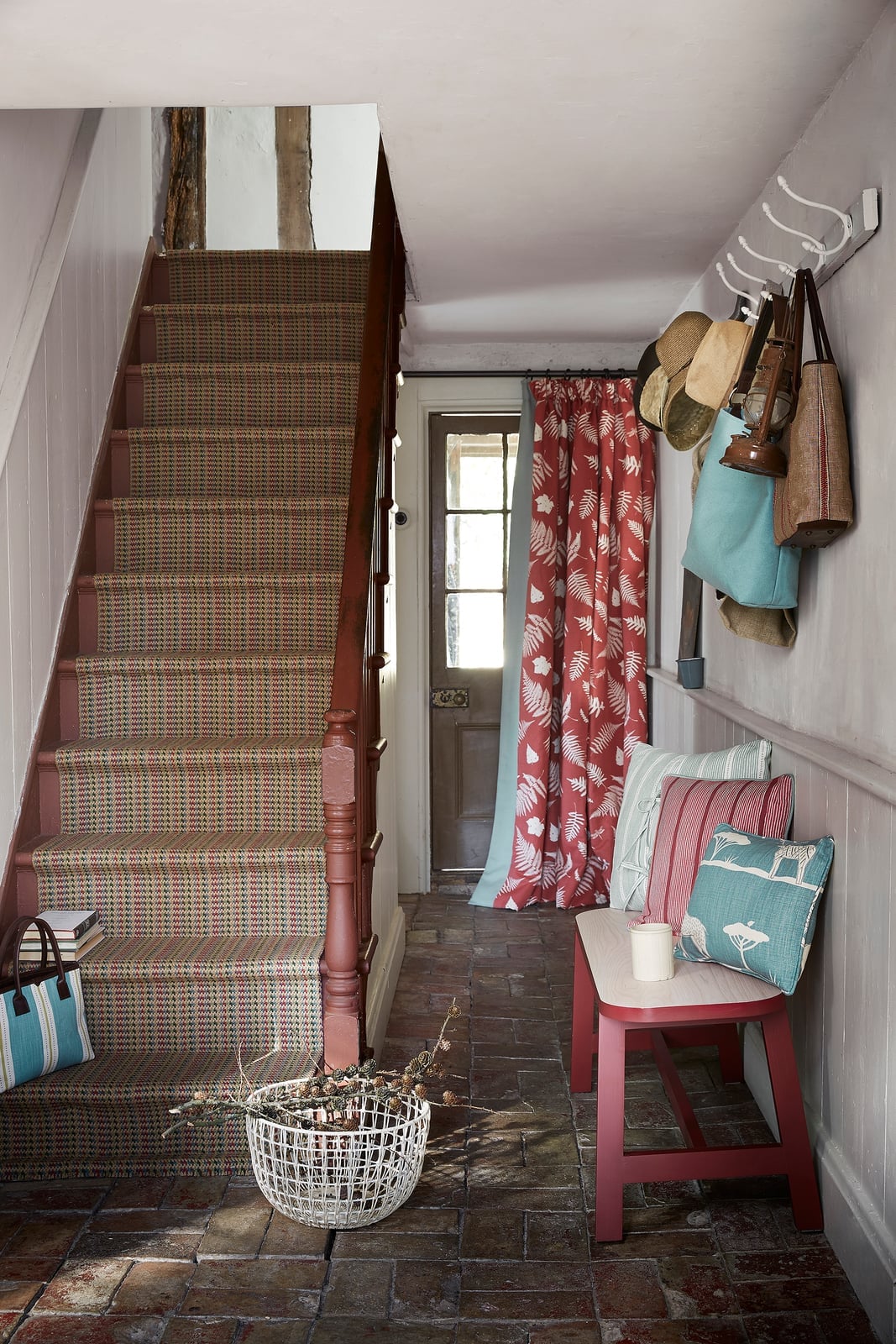
The red patterned runner on the staircase is the first thing you notice, but the brick floor is what holds the look together. In a compact hallway with white walls and a simple bench, the runner adds warmth and the brick adds texture that keeps the red from feeling too bold. The materials work in layers: soft carpet on the treads, hard brick underfoot, and wood on the bench. Mixing textures in a small space prevents any single surface from dominating.
Modern Black Metal Spiral Staircase in White Space
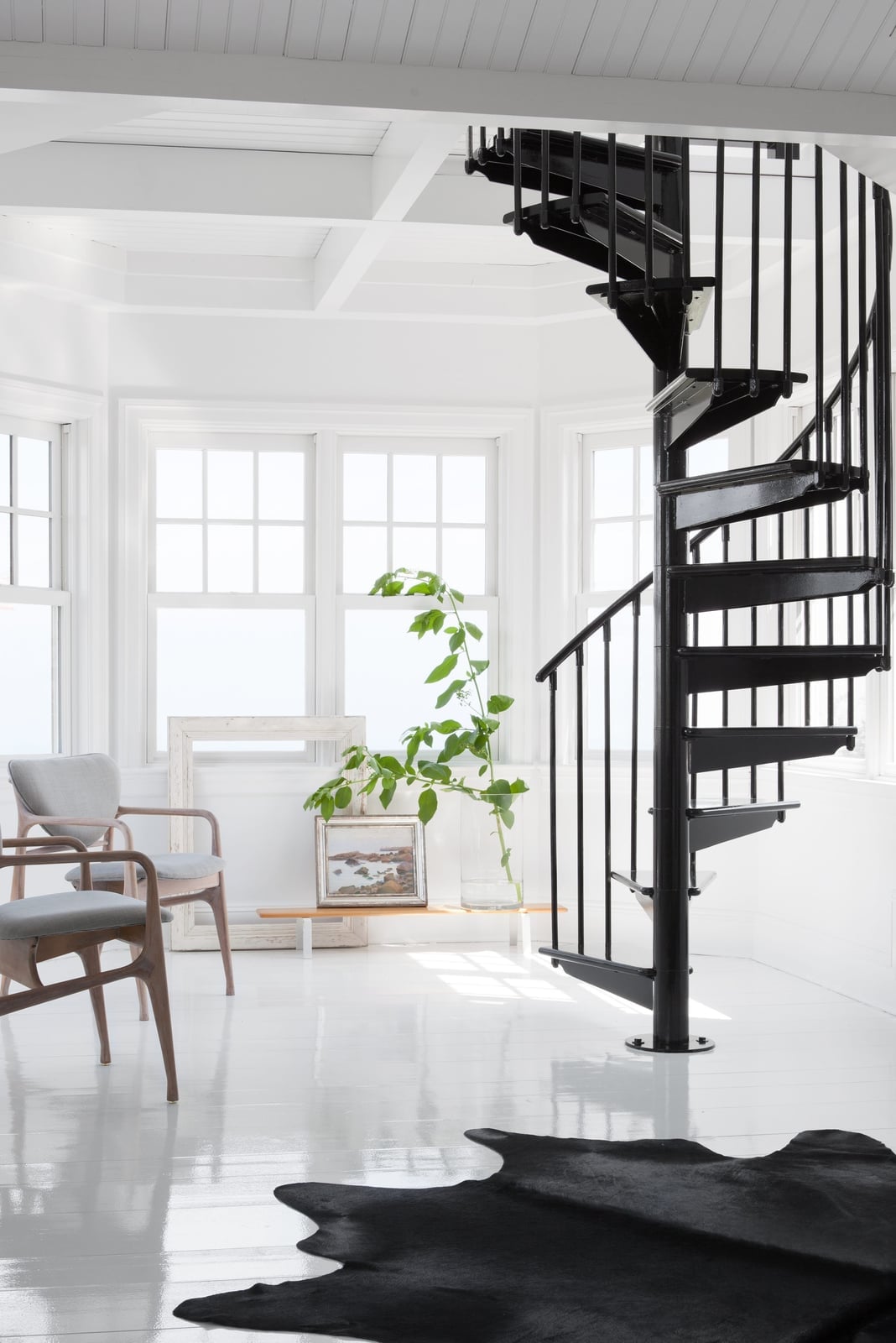
A black metal spiral staircase against white surroundings relies on contrast. The dark metal structure and wood treads become the focal point in an open interior with natural light. Minimalist chairs nearby keep the space uncluttered, letting the staircase do the work. The black and white palette makes the staircase feel like a sculptural element, not just a way to get upstairs. Keep surrounding walls and flooring light so the dark spiral stands out without making the room feel smaller.
Rustic Hallway with Distressed Wood Staircase
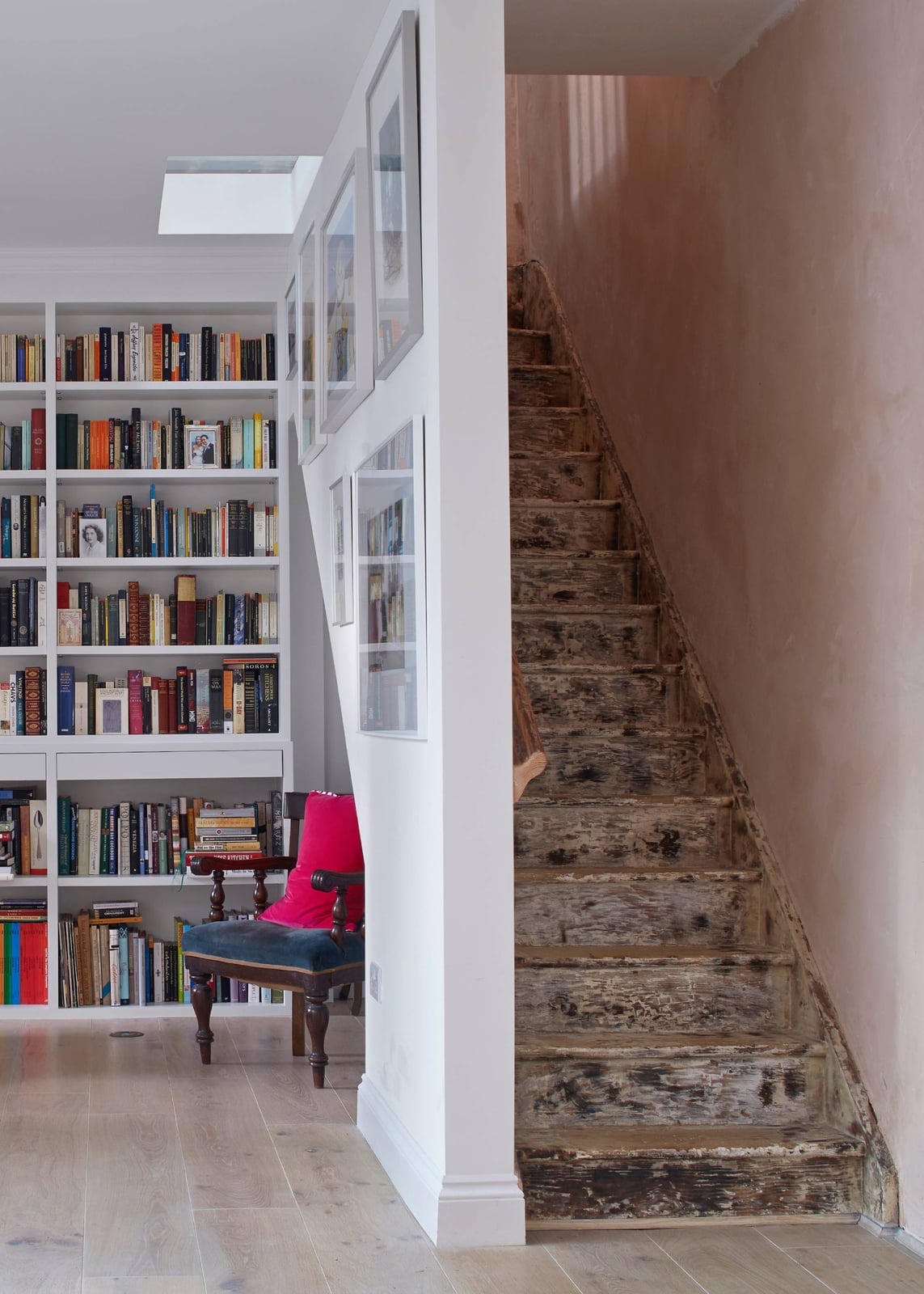
A rustic hallway with a distressed wood staircase balances rough textures with one soft, refined piece. The weathered wooden treads and plaster walls give the space a timeworn feel. A pink velvet chair introduces a smooth, plush surface that breaks up all the raw wood and matte plaster. A bookshelf on the opposite wall adds function without competing with the staircase.
Natural light from a skylight keeps the hallway from feeling dark despite all the wood tones. For renters, the takeaway is that you can introduce a single unexpected color or fabric to shift the whole mood of a rustic space. The pink chair does that here without requiring any permanent changes to the staircase or walls.
Retro Yellow Spiral Staircase for Compact Spaces
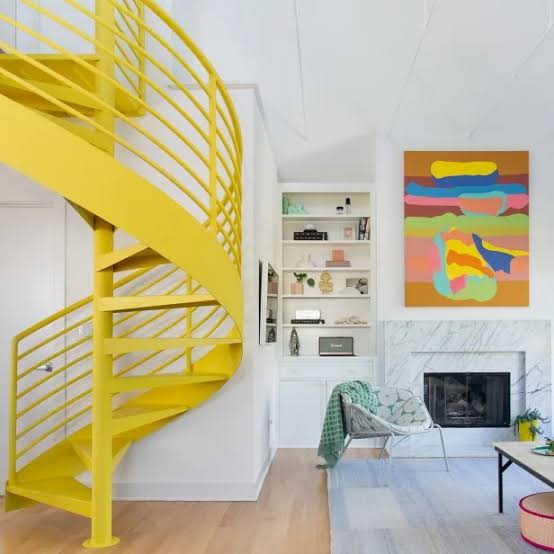
A bright yellow spiral staircase in a compact hallway proves that color can solve a small-space problem. The vibrant painted metal draws the eye upward, making the narrow footprint feel more intentional than cramped. White walls and ambient light keep the yellow from overwhelming the area. The scale works because the spiral footprint takes up less floor space than a straight run of stairs, leaving the hallway usable.
Modern Industrial Staircase with Stone Tile Accent Wall
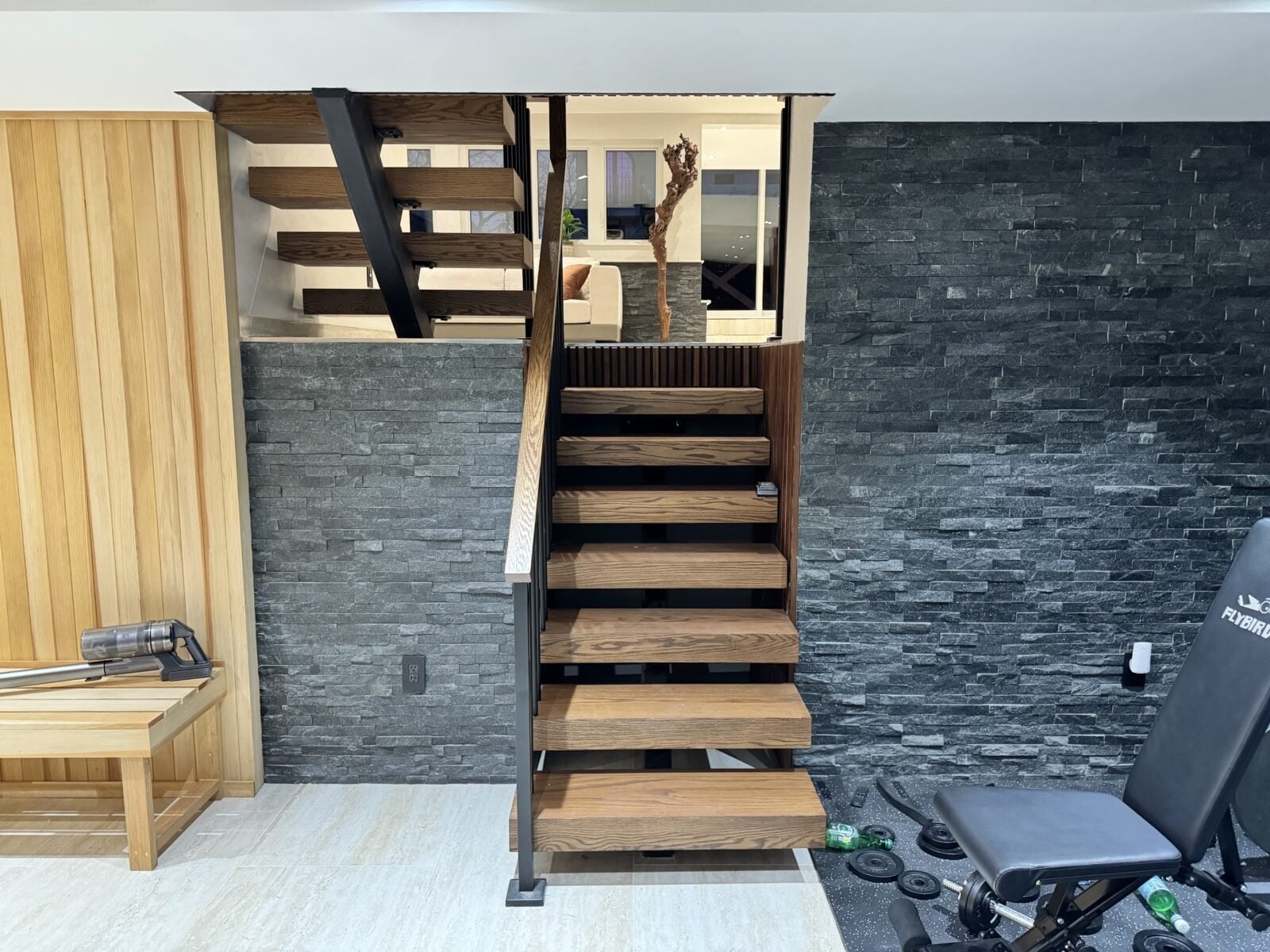
A modern industrial staircase with a stone tile accent wall combines three distinct materials in one hallway. The floating wood treads offer warmth, the black metal railing adds structure, and the gray stone tile wall brings texture. Overhead light and ambient light hit the stone differently throughout the day, which keeps the wall from looking flat. A nearby setup with gym equipment shows that this look works in a high-traffic area where durability matters. The stone tile wall is a practical choice for a hallway that sees daily use since it hides scuffs better than painted drywall.
Modern Eclectic Spiral Staircase to Mezzanine
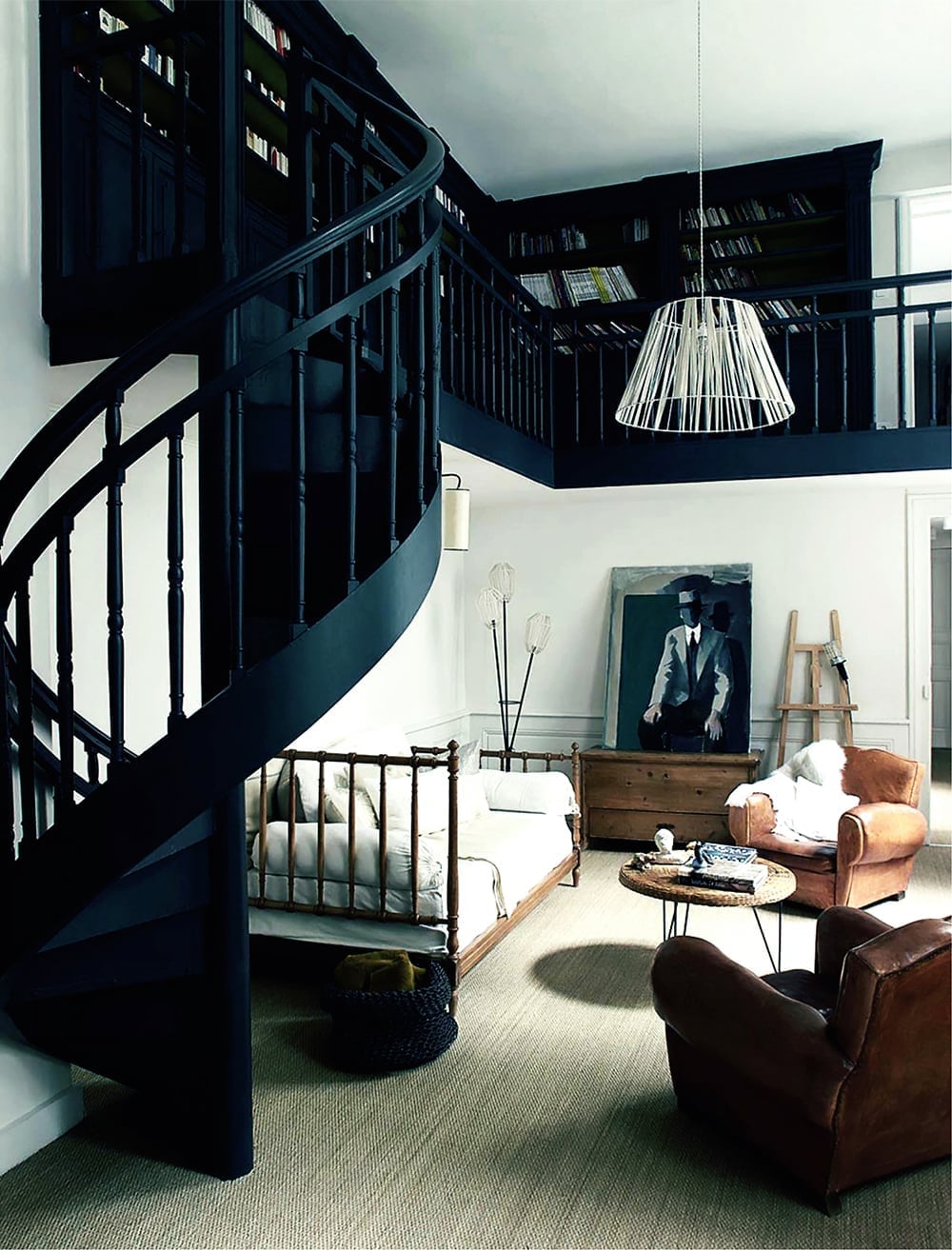
A black spiral staircase in an open-plan living area works differently than a straight staircase would. The spiral shape takes up less visual floor space, which lets the room breathe around it. A daybed and leather chairs sit nearby without feeling crowded, so the layout keeps the staircase central but the room open.
Layered lighting from a pendant light and floor lamps helps define zones in the open plan. The spiral staircase connects the main level to a mezzanine without blocking sight lines the way a solid wall or straight run would. For anyone considering a spiral in a multi-use room, the key is to let the staircase sit in the open space rather than tucking it into a corner.
Modern Space-Saving Staircase with Integrated Cabinets
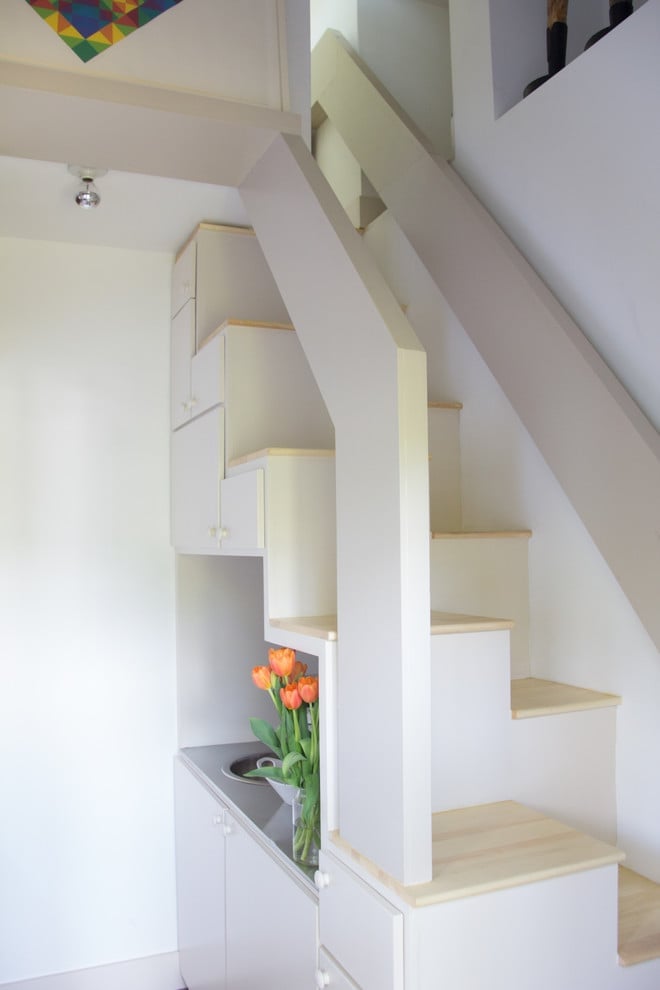
The compact footprint of this staircase is its first smart move, but the integrated storage underneath is what makes the layout work so hard. White painted MDF cabinets and a small counter turn what is often dead space into a functional landing for keys, mail, or a morning coffee. The light wood treads keep the structure from feeling heavy against the white walls, while a single spotlight overhead eliminates shadows in the work zone. For a tight hallway, the lesson is to measure the unused volume under the stairs and spec built-in cabinetry to match the staircase width exactly.
Contemporary Staircase with Slatted Wood Screen
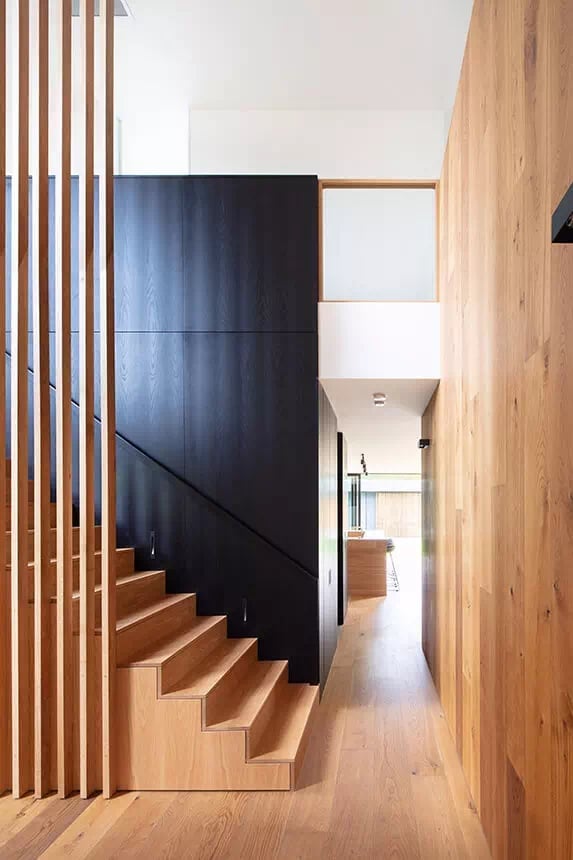
This is a staircase that manages to feel open yet grounded, thanks to a careful material palette. The warm wood tones of the treads and the slatted screen sit against a crisp white wall and black lacquer cabinetry, creating a natural rhythm of light and dark. The slatted screen does more than add visual texture; it filters sight lines between the stairwell and the adjacent space, offering privacy without a solid wall. Glass panels on the staircase side keep the hallway feeling airy, while the black accents anchor the composition. It is a contemporary approach where wood, black, and white work together, and the slatted screen is the element that breaks the expected solid-riser look.
Final Thoughts
From dramatic stone walls to playful color-blocked treads, these staircases prove the hallway deserves as much thought as any living room. The best design fits your daily life: open risers for an airy feel, a runner for noise reduction, or integrated storage for small spaces. Before you commit, check your local building codes for railing height and tread depth. A staircase that works hard and looks good makes coming home feel different.