Wainscoting adds instant character to a room, but picking the right style and color can feel overwhelming. From classic beadboard to modern slats, this article shares 27 ways to use wall paneling in your home. Each idea focuses on the paneling itself, keeping the rest of the space simple so the effect is clear.
Whether you are updating a hallway, bathroom, or living room, these photos offer practical inspiration for your next project. Expect a range of paint colors, wood tones, and panel shapes that work with different house styles.
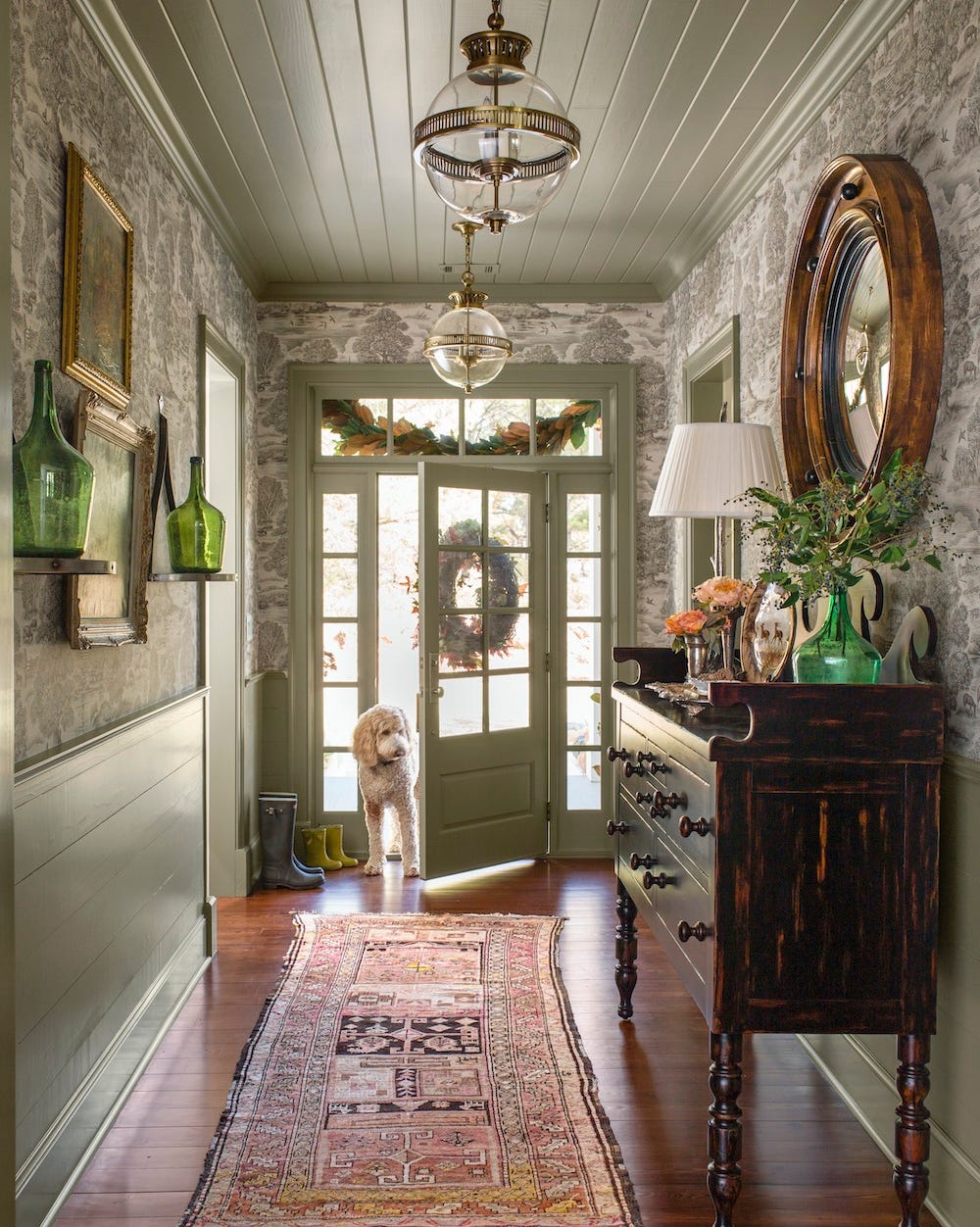
Farmhouse Hallway with Sage Green Wainscoting
A sage green wainscoting in a farmhouse hallway softens the transition between a patterned wallpaper above and the floor below. The green reads as neutral, not loud, which lets a console table, mirror, and rug add their own character without competing. Natural daylight from a door and an overhead pendant keep the space feeling open rather than tunnel-like. A dog by the door reinforces that this is a working entry, not a museum set piece. The palette works because it sticks to cream, pink, and sage, so nothing jars.
Dramatic Living Room with Black Paneled Wainscoting
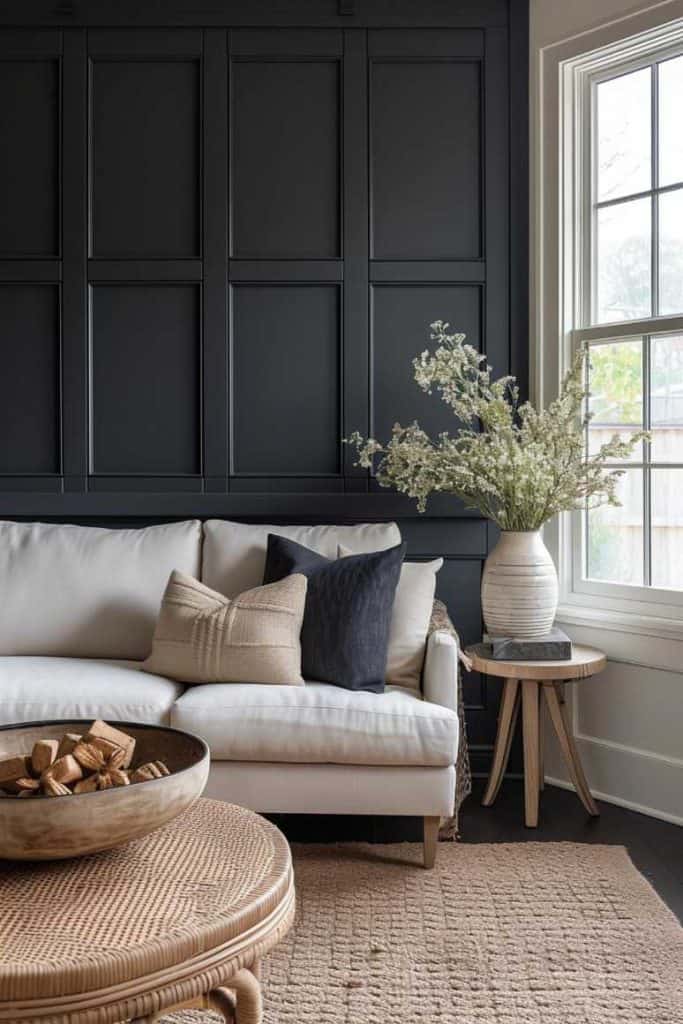
Black paneled wainscoting in a living room creates a backdrop that feels confident, not cave-like. The dark wood sets off cream upholstery and natural linen, while a rattan side table and a simple vase keep the mood from turning heavy. Natural light from a window balances the depth, letting the panels show texture instead of a wall of shadow. Let the wainscoting be the anchor and keep everything else light or natural. A roomy layout helps; the black does not crowd because the furniture breathes.
Cozy Cottage Breakfast Nook with Yellow Beadboard Wainscoting
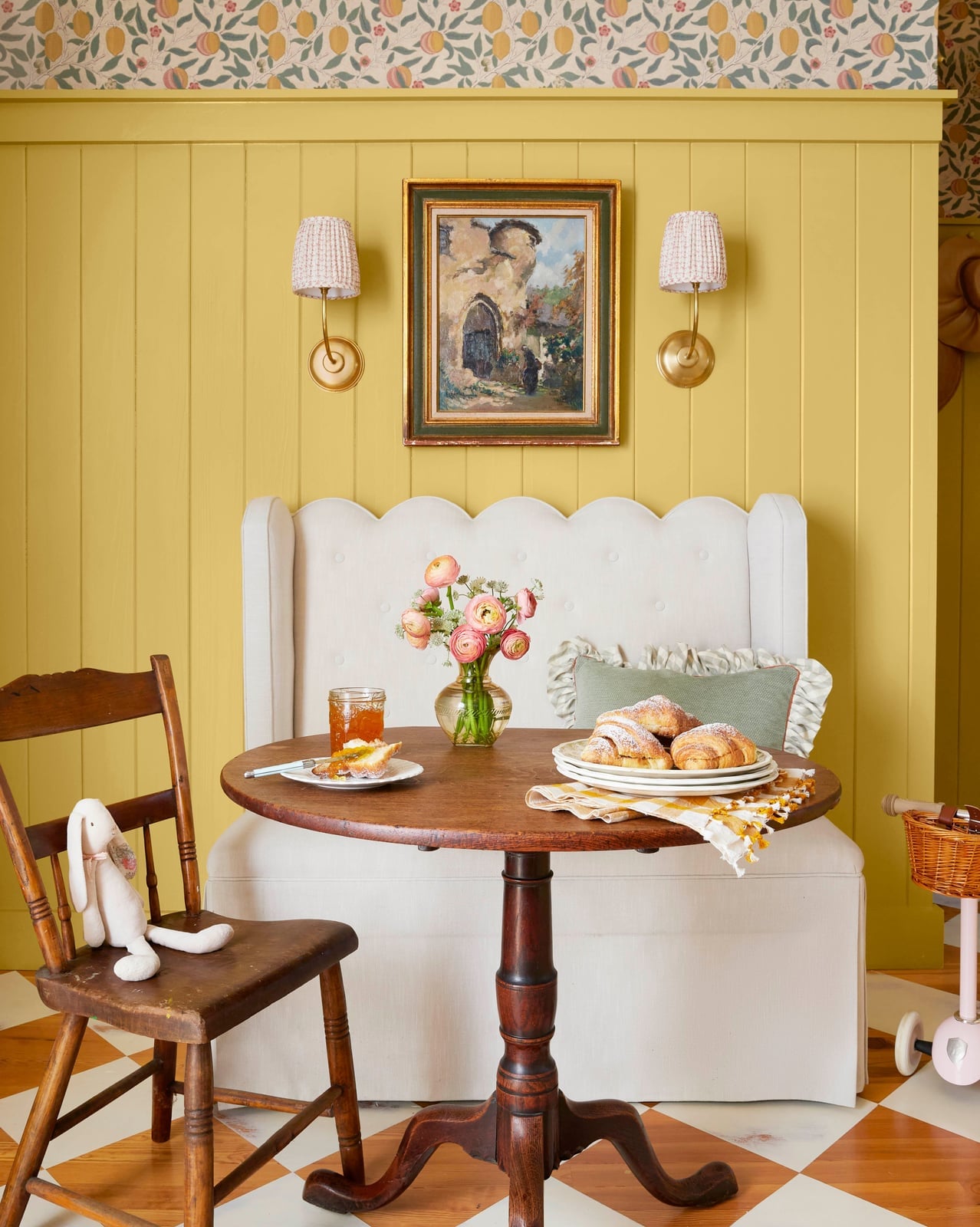
Can a bright yellow beadboard wainscoting make a compact breakfast nook feel bigger? Yes, if the room stays quiet. The yellow on the lower wall draws the eye horizontally, which visually widens a tight corner. White above and wood tones on the round table and banquette seating keep the palette grounded. Wall sconces cast soft light onto the beadboard, letting the yellow appear sunny without being harsh. The material choice matters: beadboard adds vertical lines that echo the chair slats, creating a rhythm that feels intentional, not chaotic.
Traditional Bathroom with Olive Green Wainscoting
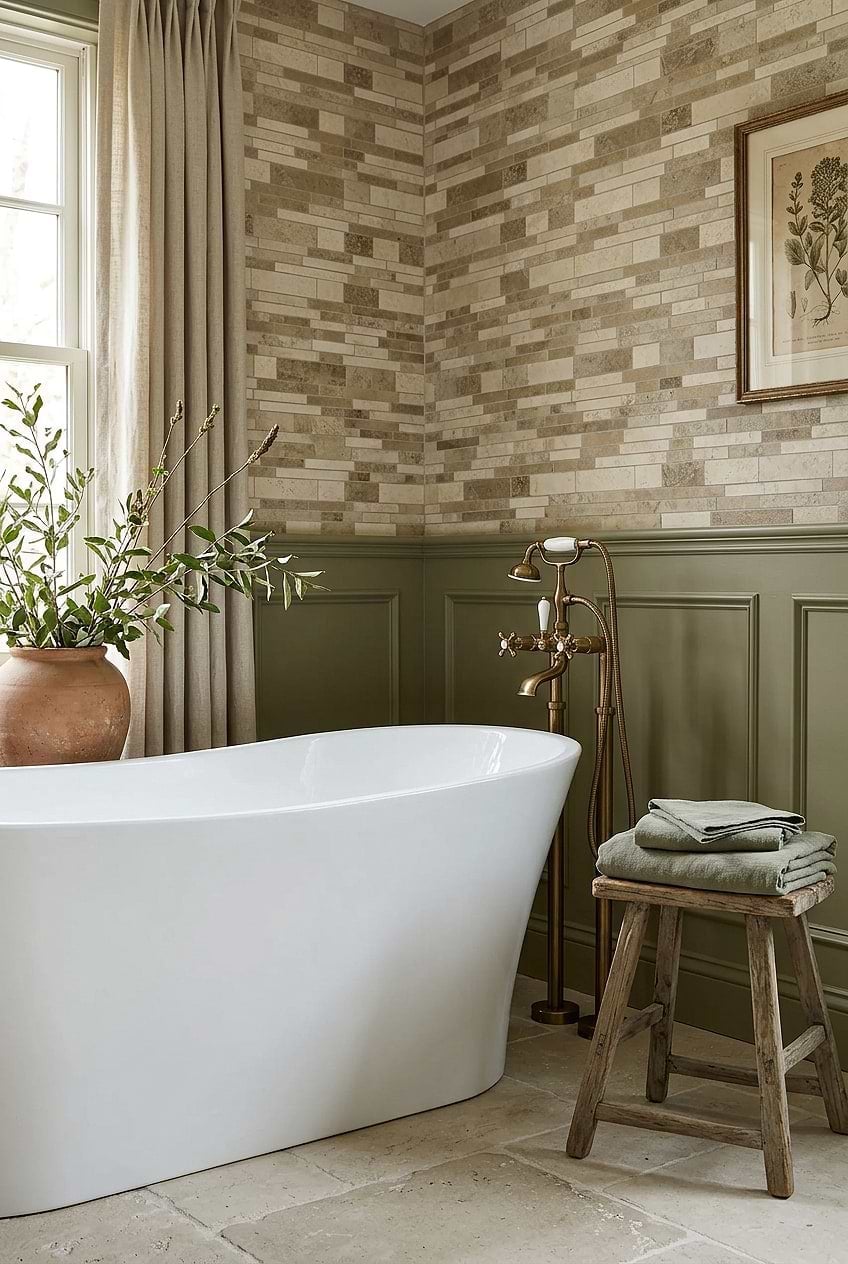
Olive green wainscoting in a traditional bathroom sits below a tiled wall, a combination that protects the painted wood from direct splashes while adding warmth to the stone and tile finishes. A freestanding tub with a brass faucet and a simple wooden stool keeps the look classic. Soft natural light lets the olive appear earthy. The wainscoting anchors the room alongside the tile, making the whole space feel grounded and calm.
Modern Farmhouse Hallway with Board and Batten Wainscoting
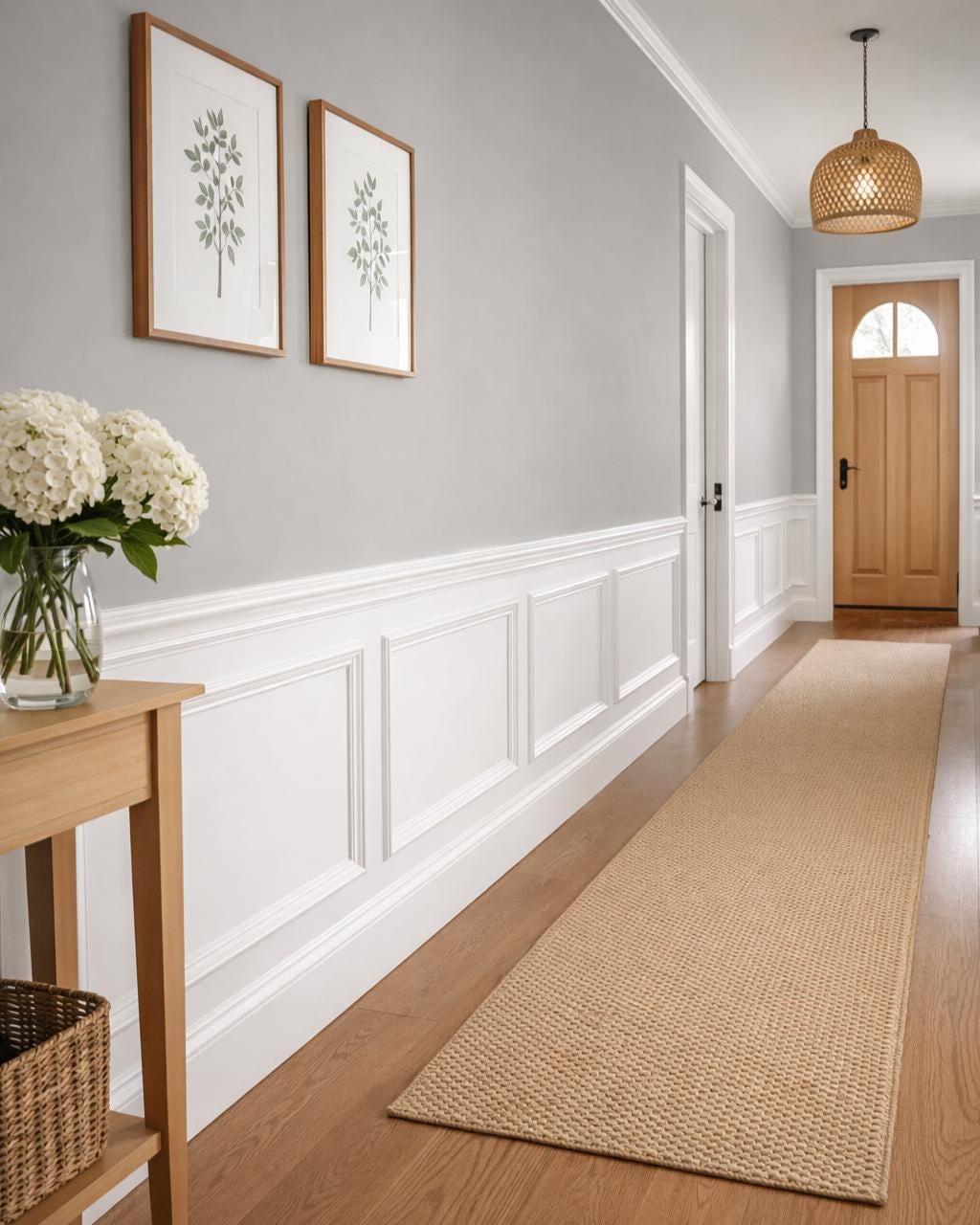
In a hallway with board and batten wainscoting, the vertical lines guide the eye toward a focal point like a console table or a door. White paint on the wainscoting keeps the hallway bright, while gray and wood tones on the floor and furniture add depth. A pendant light and natural light from the door work together to prevent the long corridor from feeling dim. The woven materials in a basket or rug soften the hard lines of the battens, balancing structure with texture.
Rustic Entryway with Black Horizontal Plank Wainscoting
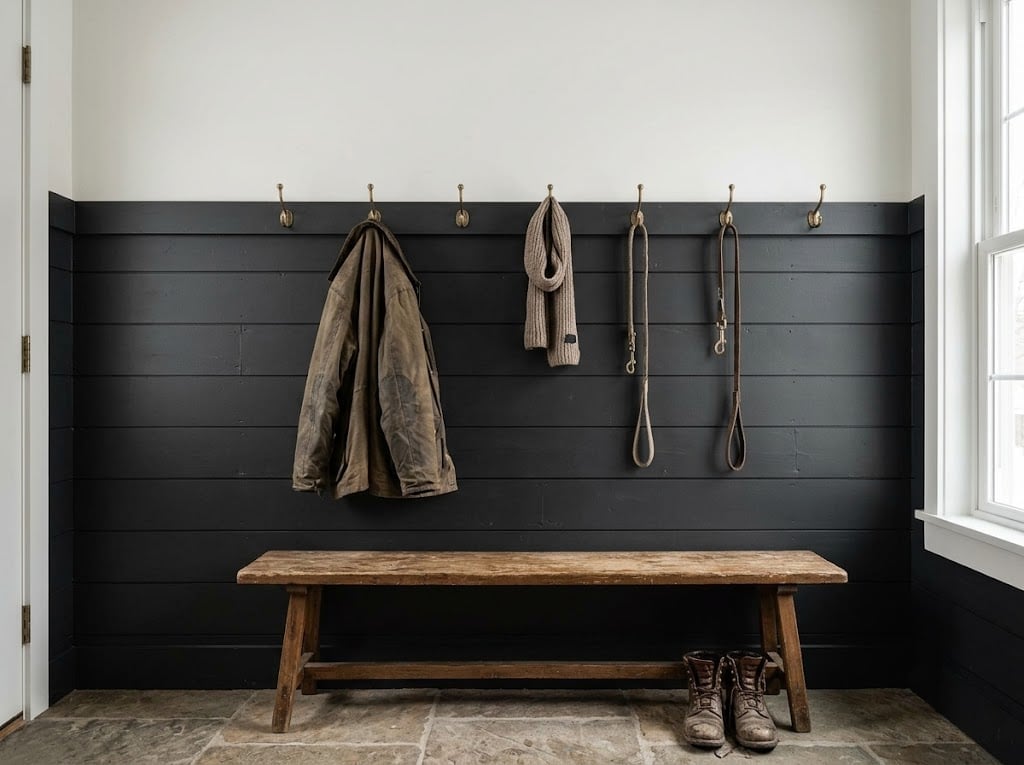
Black paint on horizontal planks is a shortcut to rustic without going full barn door. The dark lines draw the eye along the wall, making a compact entry feel wider than it is. Against that backdrop, the natural wood of a bench and the warm stone tile floor keep the room from turning into a cave. The wainscoting doubles as a landing strip for hooks holding coats, scarves, and leashes. A white wall above keeps the contrast sharp and the space from feeling closed in. The trick is to treat the dark wainscoting as a functional accent, not the whole mood.
Traditional Bathroom with Beige Paneled Wainscoting
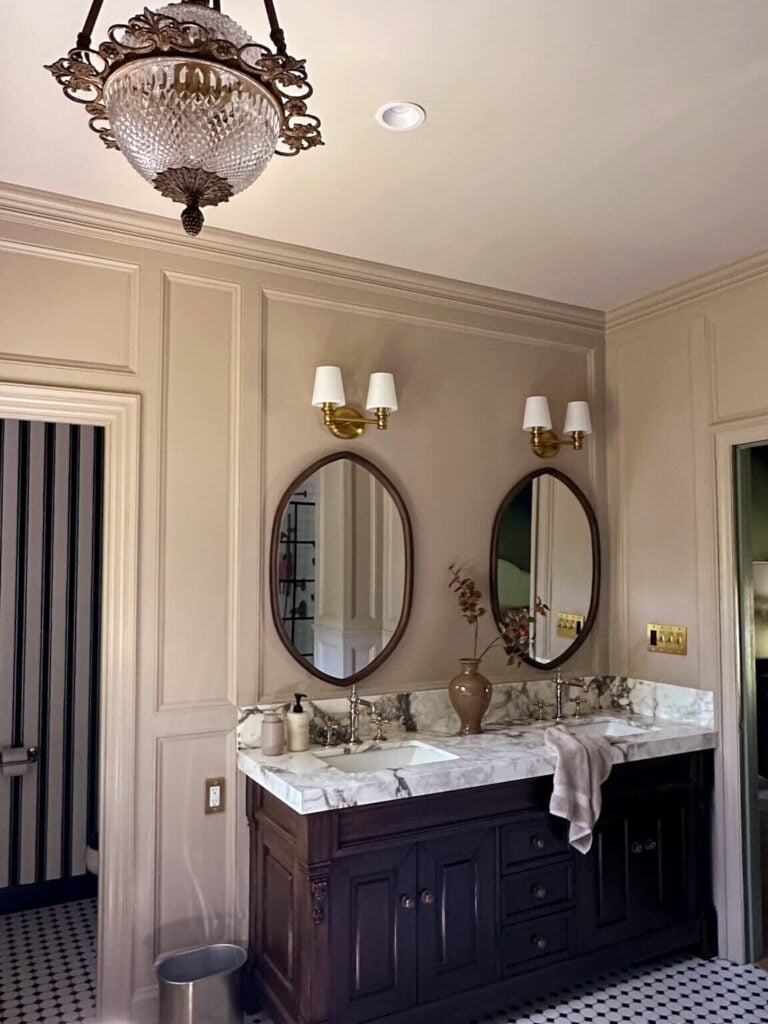
Beige paneled wainscoting in a bathroom is a quiet anchor for louder elements. The warm neutral panels sit below a white wall, leaving room for a dark wood vanity and marble countertop to take center stage. Brass sconces and an ornate chandelier add the sparkle, while the wainscoting grounds the whole setup. For a renter, this look is achievable with peel-and-stick paneling cut to chair-rail height. No permanent changes, just the illusion of custom millwork.
Modern Organic Entryway with Textured Cork Wainscoting
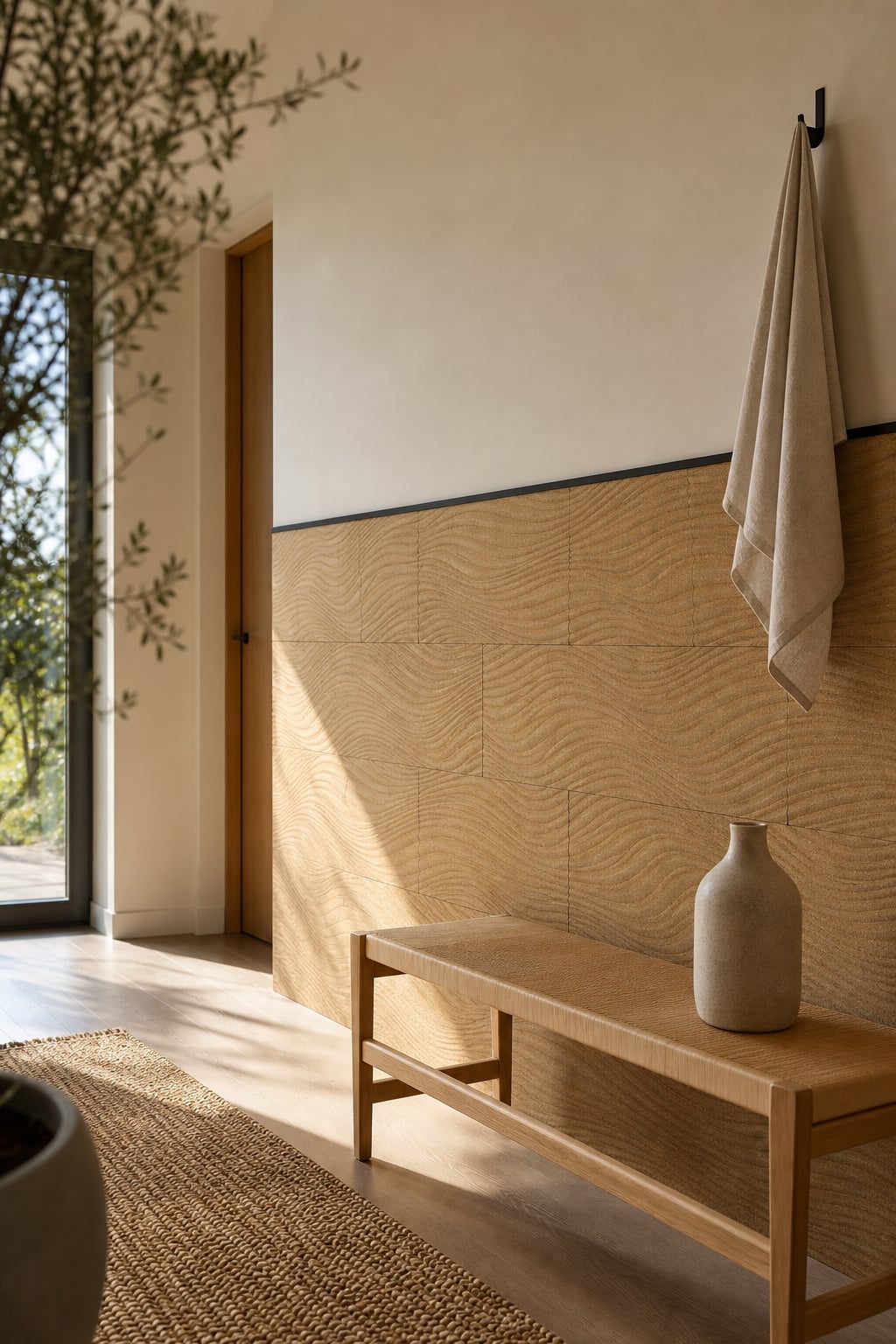
Cork wainscoting is a smart swap for anyone who wants texture without the weight of wood. The tan, cork surface adds warmth and a slight give under the touch, which is useful in a high-traffic entryway. Paired with a wood bench, a leather coat hook, and a jute rug, the material looks intentional. Natural light from the window keeps the cork from looking too dark. The finish is soft enough to absorb sound, a bonus in an open layout.
Farmhouse Bedroom with Cream Beadboard Wainscoting
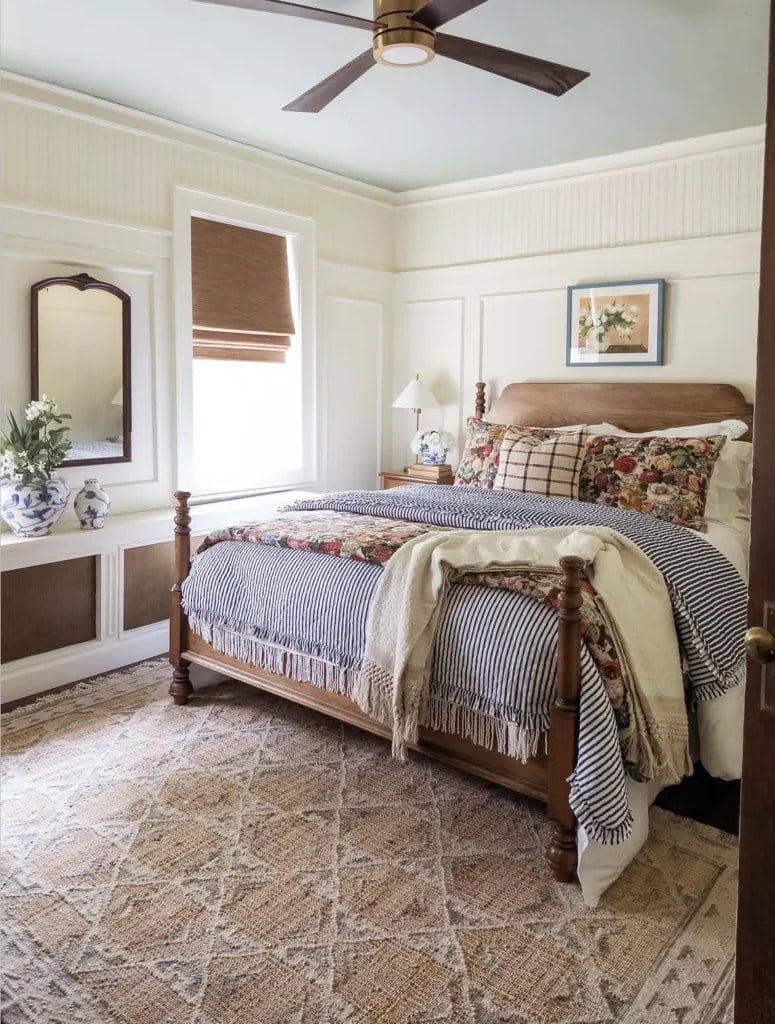
Can beadboard wainscoting hold up in a bedroom where furniture gets shifted and pillows pile against the wall? Yes, if you choose a cream finish that hides scuffs better than white. The vertical grooves add texture without competing with the patterned bedding or the wooden bed frame. A ceiling fan keeps the air moving, but the beadboard’s main job is to break up the wall so the floral bedding has a calm backdrop. The wainscoting runs about a third of the way up, leaving room for a mirror and natural light to do the rest.
Modern Farmhouse Entryway with Sage Green Board and Batten Wainscoting
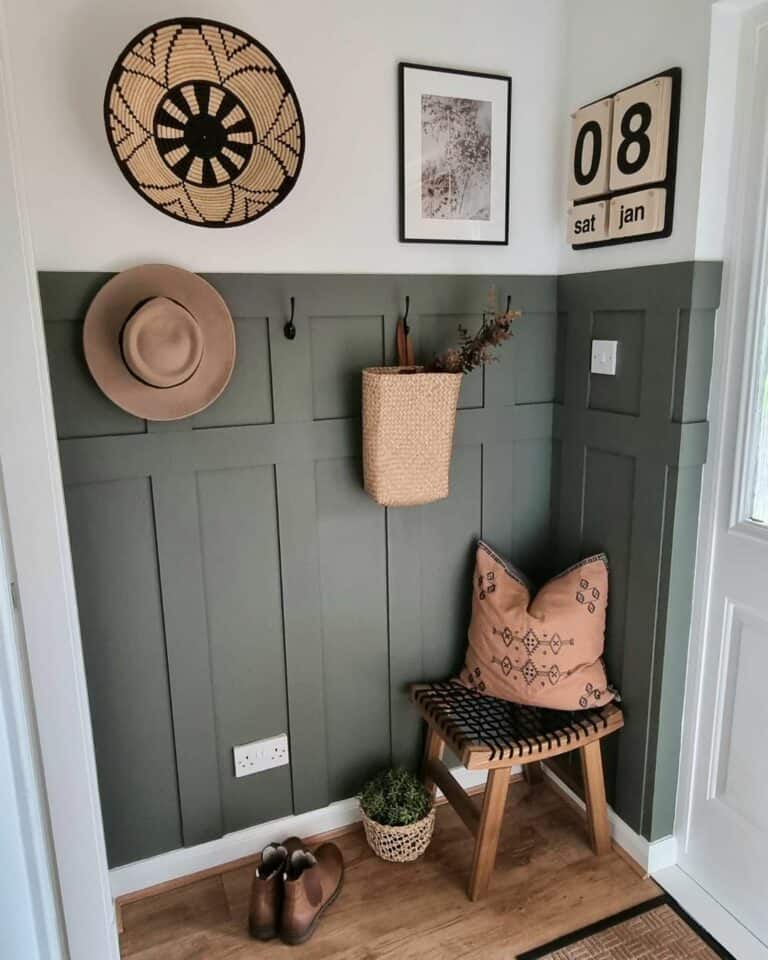
Sage green board and batten wainscoting hits a middle ground between neutral and color. The vertical battens add height to a compact corner, while the sage reads as earthy rather than pastel. Natural wood tones in a bench and a woven basket keep the look grounded. A white wall above and a calendar on the wall give the vignette a lived-in feel. The palette works because the green is muted enough to pair with leather and woven textures without clashing.
Compact Bathroom with Dark Gray Beadboard Wainscoting
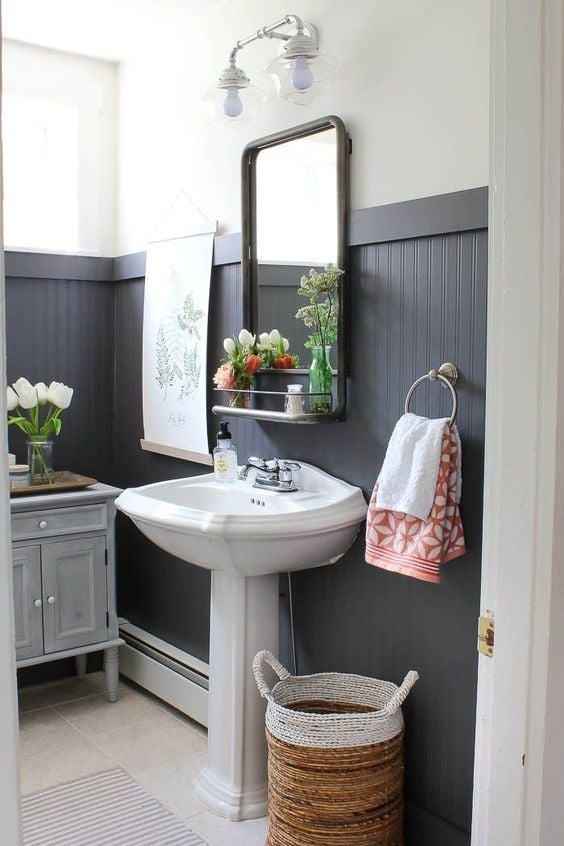
In a compact bathroom, dark gray beadboard wainscoting adds depth without shrinking the room. The vertical lines of the beadboard draw the eye upward, making the space feel taller than it is. Paired with a white pedestal sink and a coral accent towel, the dark gray grounds the room without overwhelming it. A small cabinet to the side provides storage without crowding the sink area. A window and a simple overhead fixture keep the room bright. This approach works because the wainscoting takes up the lower half of the wall, leaving the upper walls and ceiling light. The dark gray and white keep the bathroom from feeling like a cave.
Modern Living Room with Warm Brown Slatted Wood Paneling
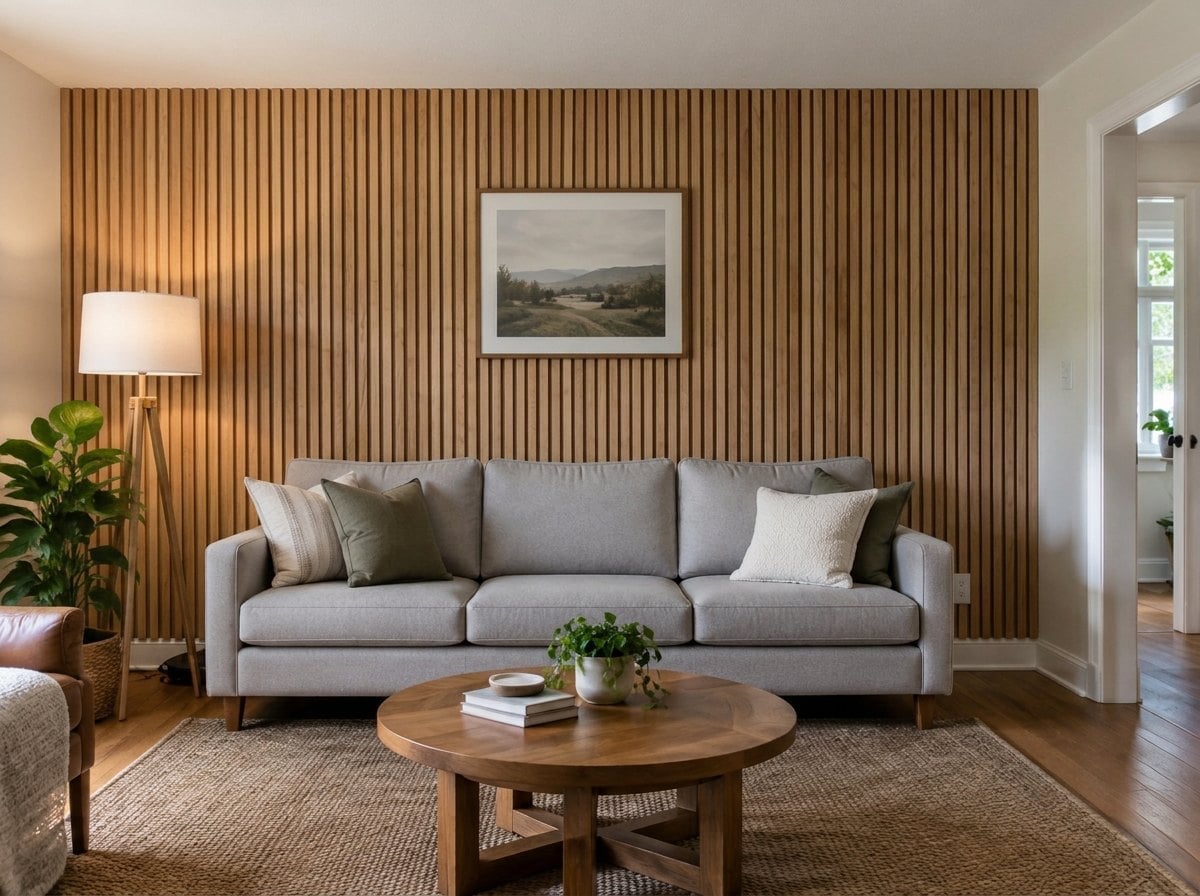
Slatted wood paneling in warm brown offers a softer alternative to a full accent wall of stone or tile. The vertical slats add texture and rhythm without overwhelming the room. In this living room, the paneling covers an entire wall behind a gray sofa, creating a natural focal point. A round coffee table and a woven basket bring in organic shapes that balance the linear slats. The warm brown wood pairs well with beige and green accents, keeping the palette earthy and calm. A nearby window and a floor lamp highlight the grain of the wood. This kind of paneling works well when the furniture stays low and simple, letting the texture do the work. The slatted wood adds visual interest to the space.
Elegant Hallway with Cream Traditional Wainscoting
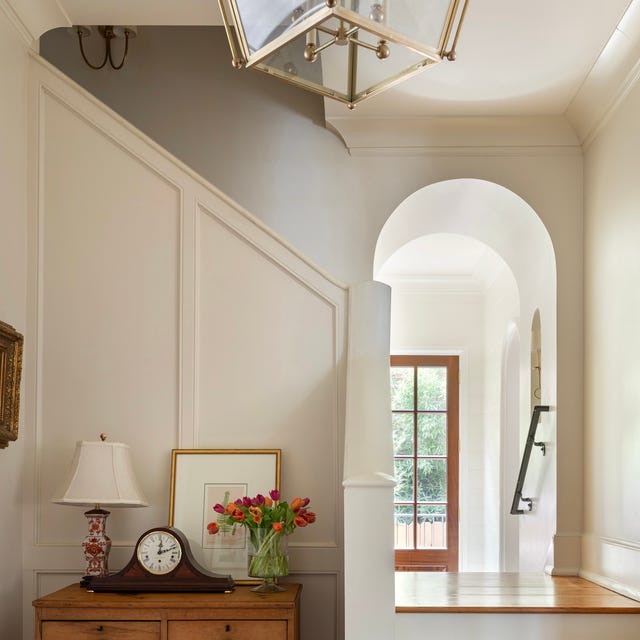
The cream traditional wainscoting in this hallway features ornate paneling that runs along the staircase and the hall. The raised panels catch the light from a brass lantern pendant and a table lamp, creating subtle shadows that add depth. A wooden chest of drawers and a glass vase of flowers sit against the wainscoting, grounding the space. The cream color keeps the hallway bright while the ornate trim provides enough detail to feel finished. This kind of wainscoting works well in a roomy hallway because the paneling defines the circulation path without making it feel narrow.
Bright Living Area with Tall White Panel Wainscoting
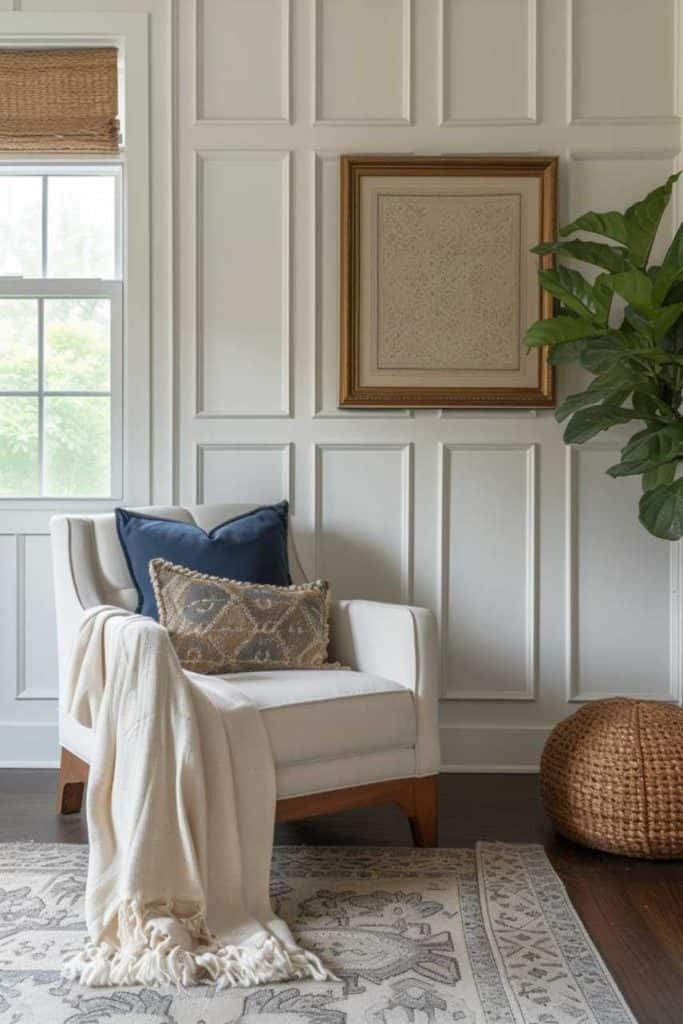
Tall white panel wainscoting can make a roomy living area feel even larger. The vertical panels draw the eye up, emphasizing the ceiling height. In this space, the white wainscoting provides a clean backdrop for a blue armchair, a cream ottoman, and a patterned rug. The natural light from the window bounces off the white panels, making the room feel bright and open. A rattan pouf and a metal floor lamp add texture without cluttering the look. The wainscoting runs from the floor to a high chair rail, leaving only a narrow band of wall above. This ratio keeps the room feeling grounded while still allowing the upper wall to breathe.
Compact Bathroom with Gray Decorative Panel Wainscoting
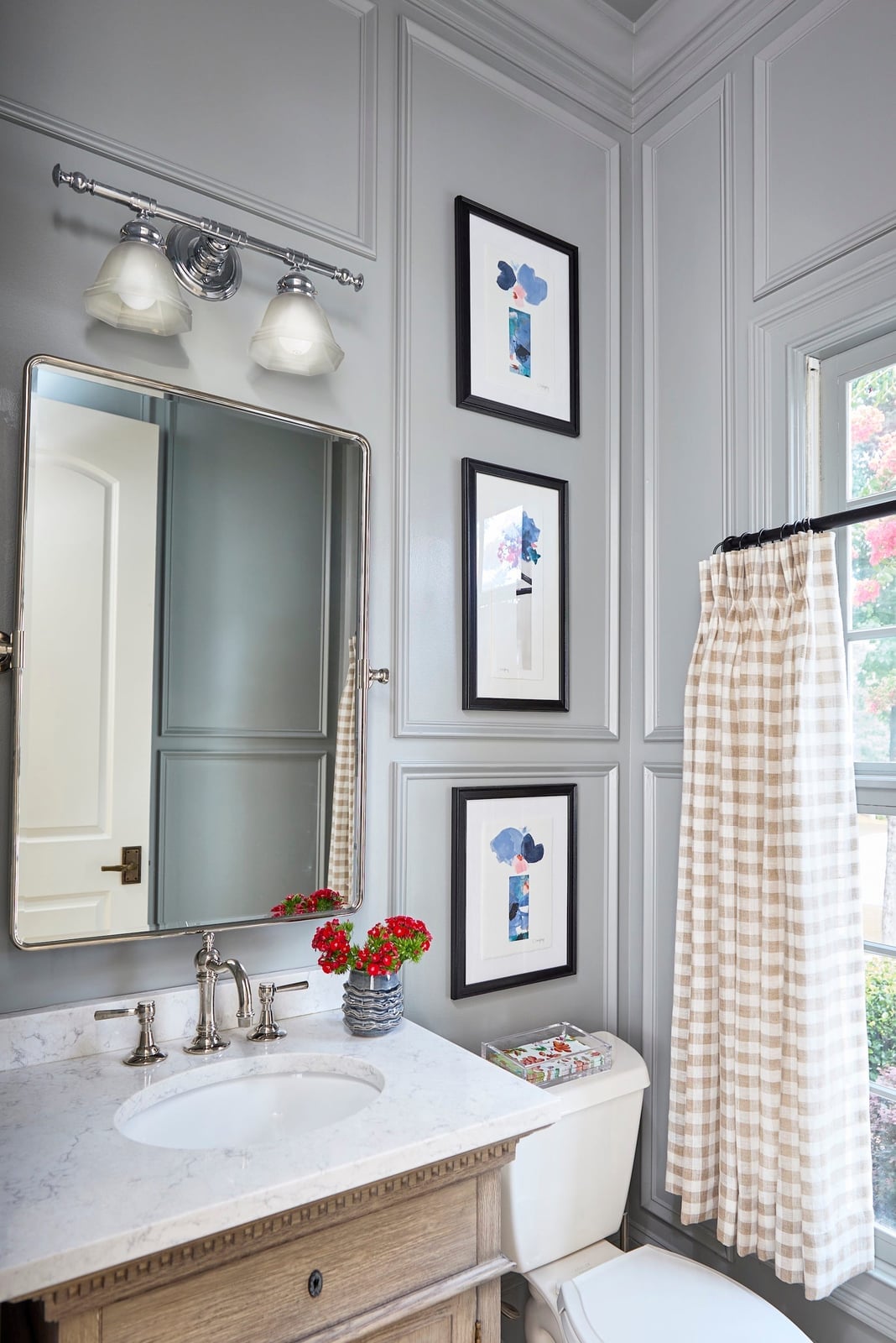
In a compact bathroom, gray decorative panel wainscoting adds structure without making the room feel busy. The panels are evenly spaced and framed with trim, creating a clean grid that gives the walls a finished look. A white marble vanity and a wood-framed mirror sit above the wainscoting, keeping the upper half of the room light. The gray paint helps hide scuffs and water spots better than white, which is practical in a small bathroom. Ambient overhead lighting and natural light keep the gray from feeling too dark. The wainscoting runs to about waist height, leaving the wall above open for a piece of art. This layout works because the gray panels anchor the room while the white and wood tones keep it from feeling cramped.
Traditional Entryway with White Wainscoting and Red Rug
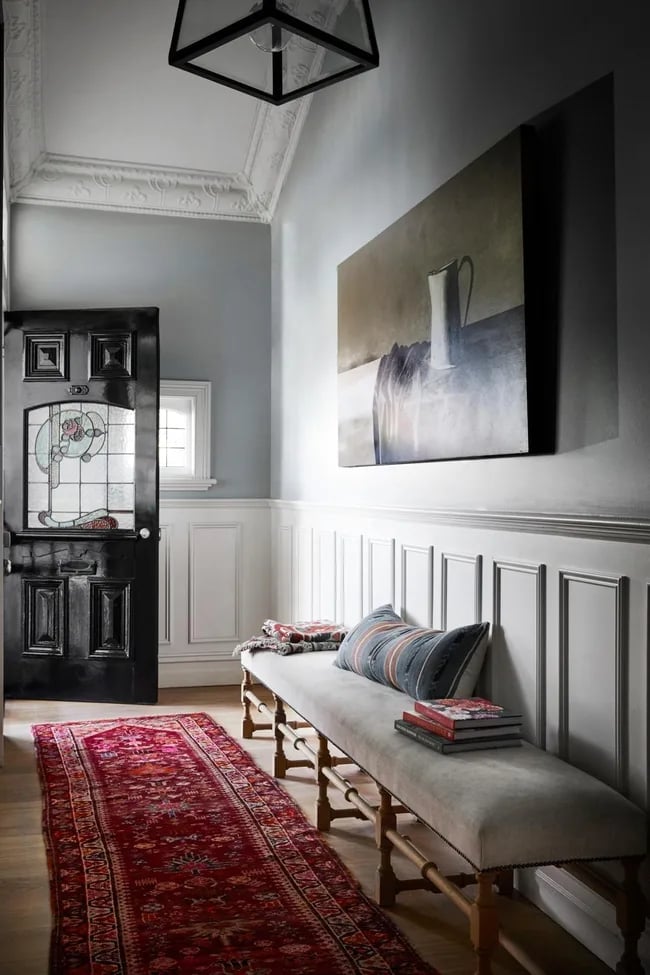
A detailed white wainscoting runs the length of this entryway, with a deep red patterned rug laid over a gray floor. The bench against the wall gives a place to sit, while the red and blue tones in the rug add a traditional jolt of color against the white woodwork. The palette rule here is to let the wainscoting act as a neutral anchor, so the rug and any artwork can carry the stronger hues without the room feeling busy.
Farmhouse Entryway with Yellow Beadboard Wainscoting
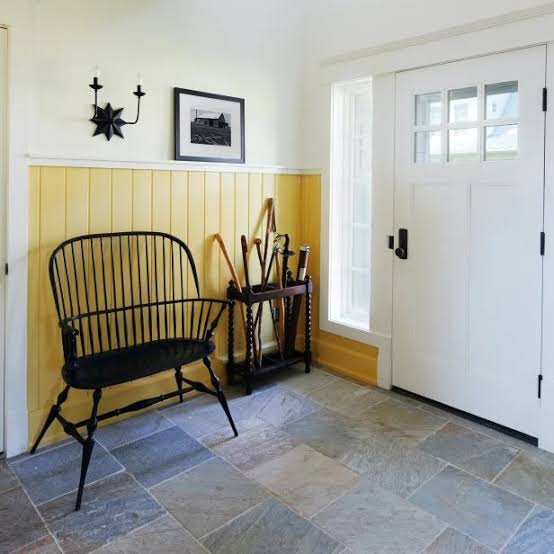
Beadboard wainscoting can be installed as removable panels with adhesive backing, avoiding permanent wall damage. This farmhouse entryway uses a bright yellow beadboard with white trim, running from the floor up to a chair rail. The yellow is cheerful without being overwhelming because the wood tones of the door and a nearby chair, plus the stone tile floor, ground the space. Light from the door and a window helps the color feel airy. To recreate it, look for a yellow paint and test a sample on the wall first, because yellow shifts with the light throughout the day.
Modern Organic Living Room with Slatted Wood Wainscoting
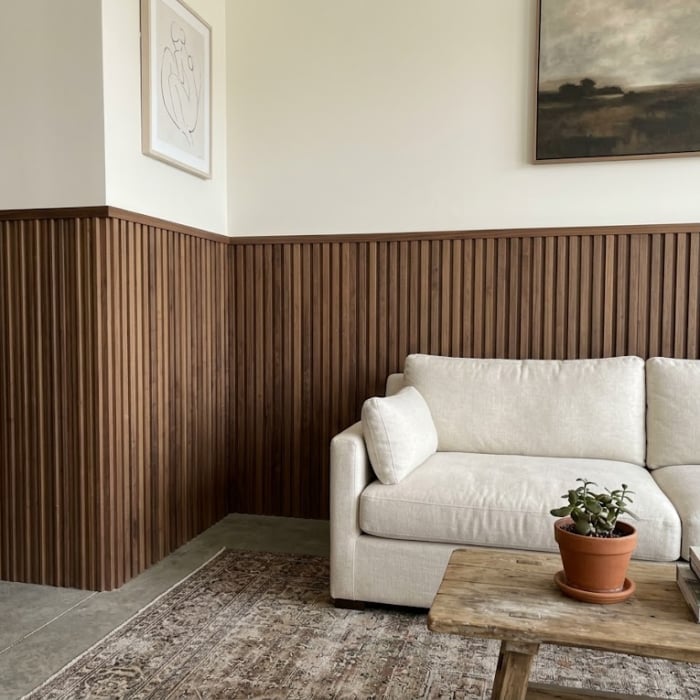
Slatted wood wainscoting sits between traditional paneling and modern accent walls, offering texture without the formality of raised panels. In this living room corner, the warm brown slats cover two walls, paired with a cream sofa, a wooden coffee table, and a patterned jute rug. The slats run vertically, drawing the eye up and making the room feel taller.
Nearby window light and a floor lamp with a linen shade keep the wood from looking dark. The linen sofa and jute rug match the organic feel of the wood, while the coffee table’s simple shape keeps the look balanced. To recreate it, look for slats spaced evenly apart and finish them with a clear matte sealer to keep the natural grain visible.
Modern Organic Living Room with Vertical Wainscoting Panels
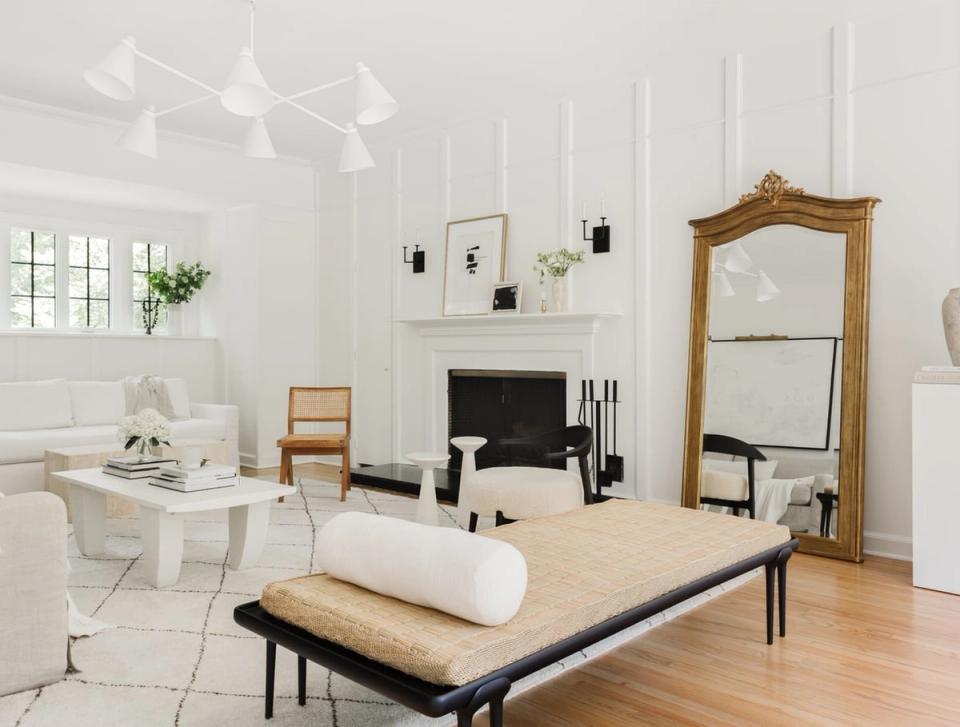
Tall vertical wainscoting panels in white give this open plan living room a clean, structured look without feeling heavy. The panels run from floor to near the ceiling, with a sofa and a daybed arranged in the seating area. The white wainscoting contrasts with natural wood furniture, a rattan mirror, and a linen coffee table, keeping the organic style intact. The proportion rule is that vertical panels spaced closer together create a busier look, while wider spacing feels more modern and relaxed. Stick to a consistent spacing across the wall for a uniform effect.
Bedroom with White Wainscoting and Floral Wallpaper
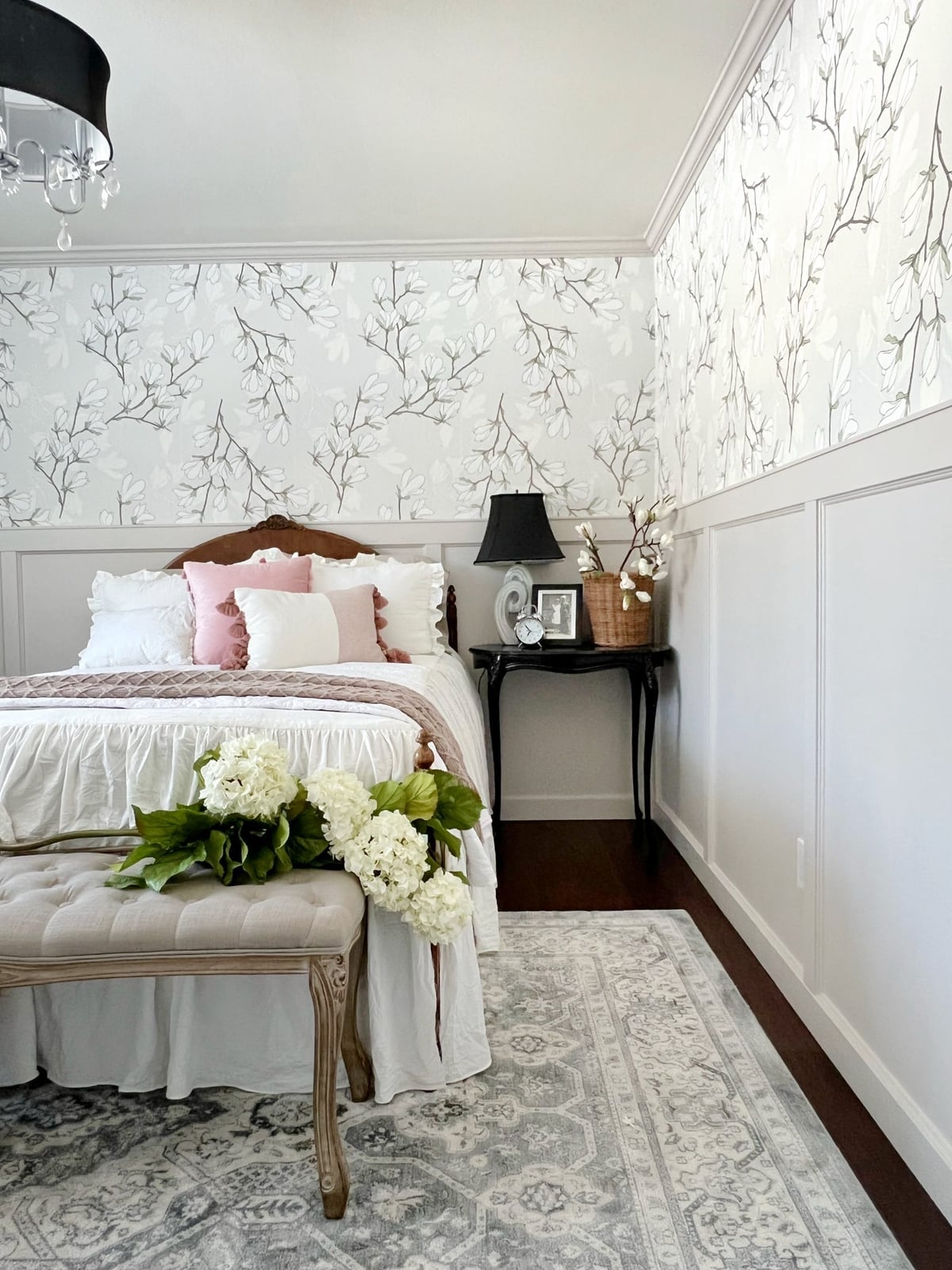
White wainscoting paired with floral wallpaper is a classic bedroom combination that balances pattern with calm. In this corner, the wainscoting covers the lower half of the wall, with a pink and gray floral wallpaper above. A bed with a gray headboard and a small bench at the foot add a neutral counterpoint. Natural daylight and a chandelier provide soft light. The styling variation here is that the wallpaper’s floral scale matters: larger prints work with higher wainscoting, while smaller repeats suit a shorter chair rail height.
Minimalist Entryway with Clean White Panel Wainscoting
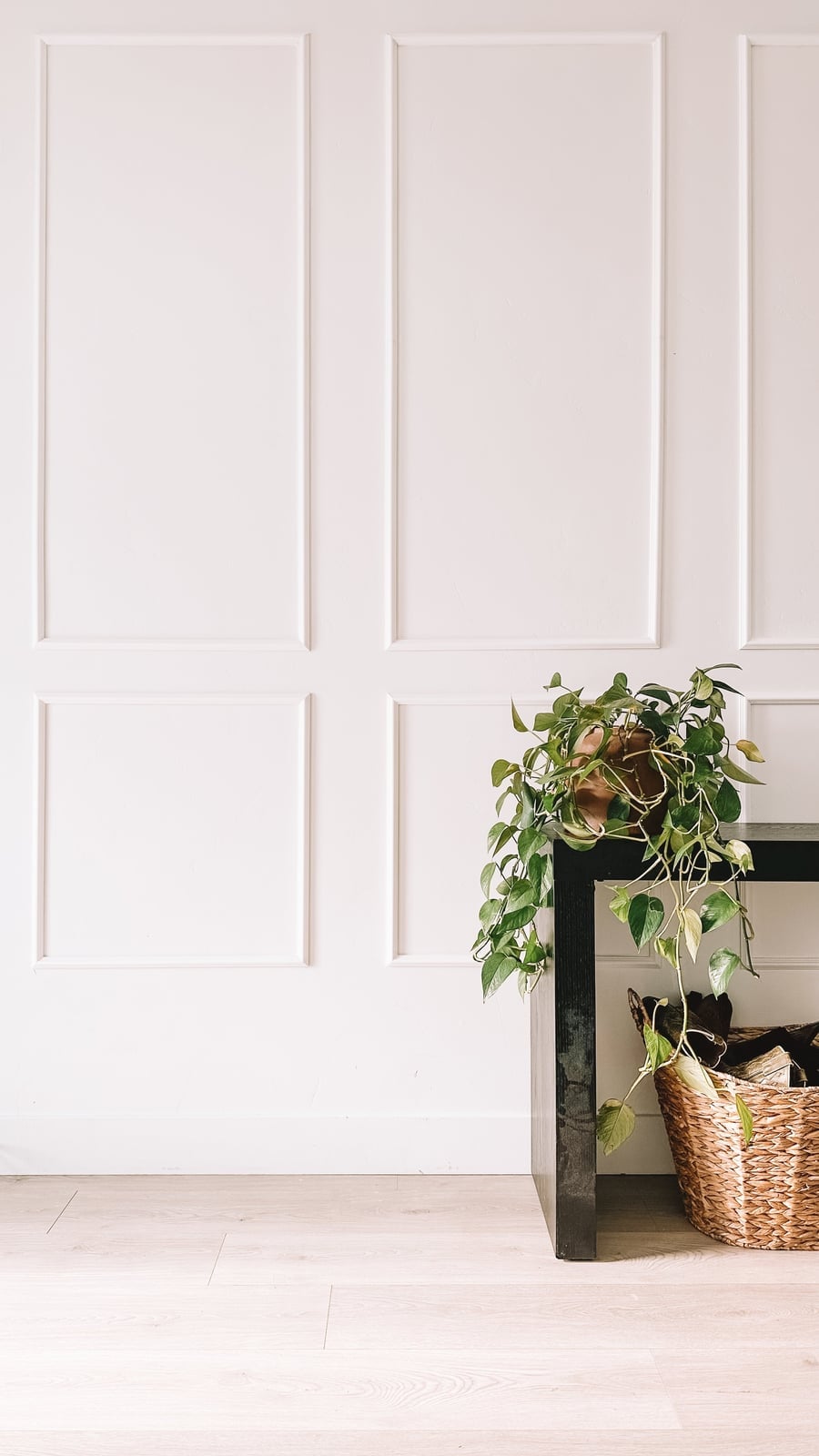
A minimalist entryway lives or dies by what you leave out. The clean white panel wainscoting here sets a calm, neutral backdrop, so a single console table in a natural wood finish, a slim metal basket, and a potted plant are all the decor you need. The palette stays tight: white, black, green, and brown. That restraint is what makes the space feel open rather than sparse. The wainscoting itself becomes the main event, its clean lines drawing the eye without clutter. For a similar effect, keep any wall-mounted items to a minimum. Let the paneling do the work.
Dining Room with White Wainscoting and Gold Wallpaper
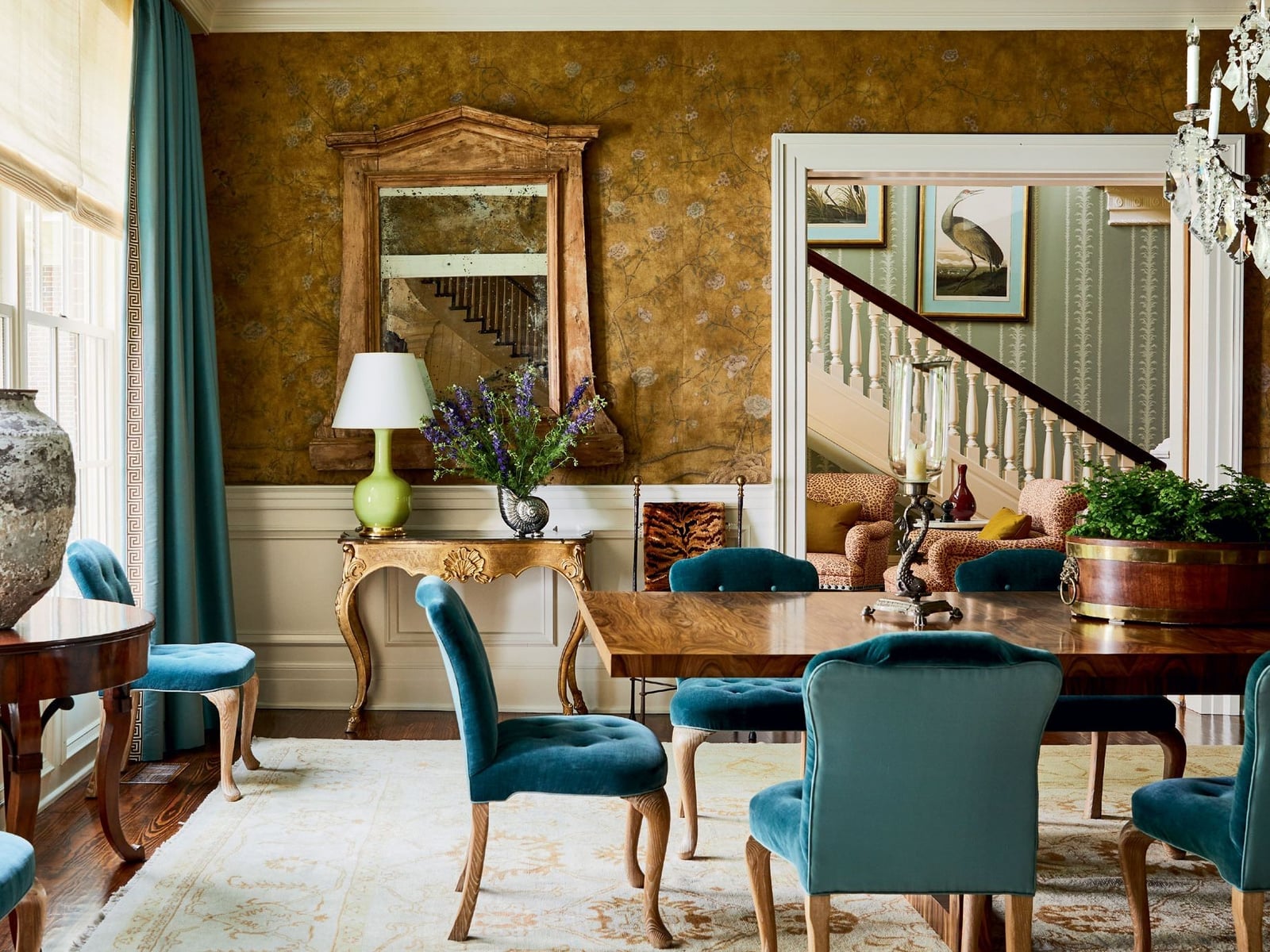
White wainscoting paired with a gold wallpaper creates a traditional dining room that feels both formal and inviting. The gold wallpaper, with its subtle sheen, catches the natural daylight from the windows and the glow of the chandelier overhead. The cream and gold palette is anchored by teal velvet chairs around the dining table, while an ornate gold mirror above a sideboard repeats the metallic note. The ratio of white to gold is about two to one, which keeps the room bright without overwhelming the senses.
Home Office with Dark Blue Walls and White Wainscoting
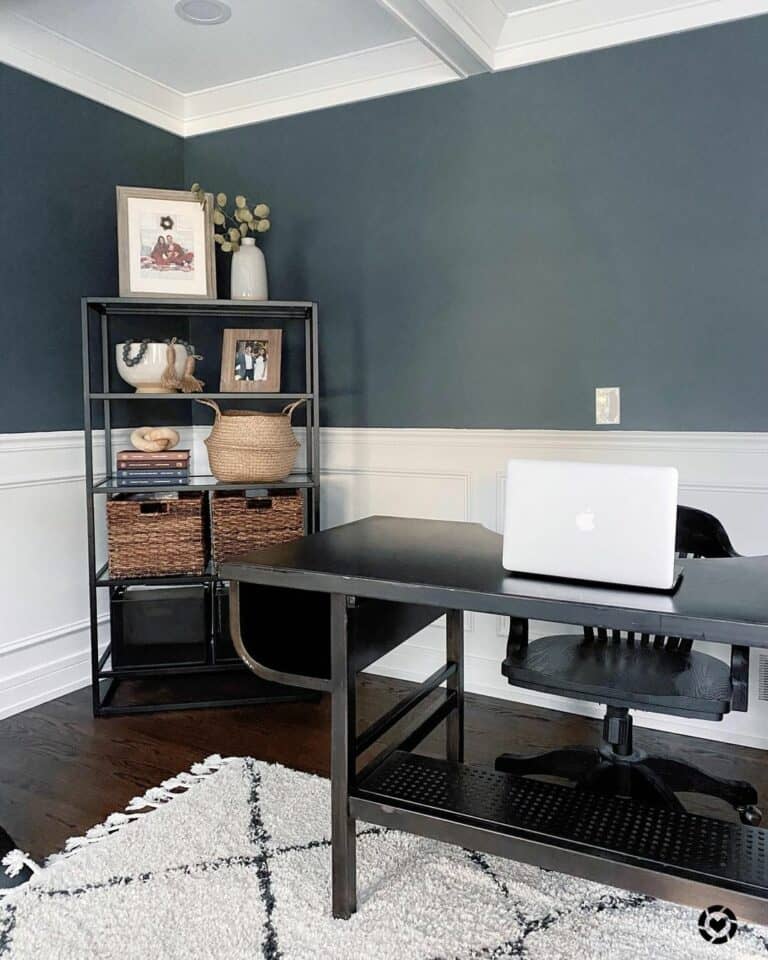
In a compact home office, contrast can define the space. Dark blue walls above crisp white wainscoting create a clear visual boundary that makes the room feel taller. A black desk faces the wall, with a metal shelving unit nearby, all set under natural light and an overhead fixture. The dark blue color acts as a focal point, drawing attention upward. To keep the room from feeling too heavy, limit the blue to one wall or use it only above the wainscoting line. The white paneling below grounds the room and reflects light back into the space.
Traditional Room Corner with Textured White Panel Wainscoting
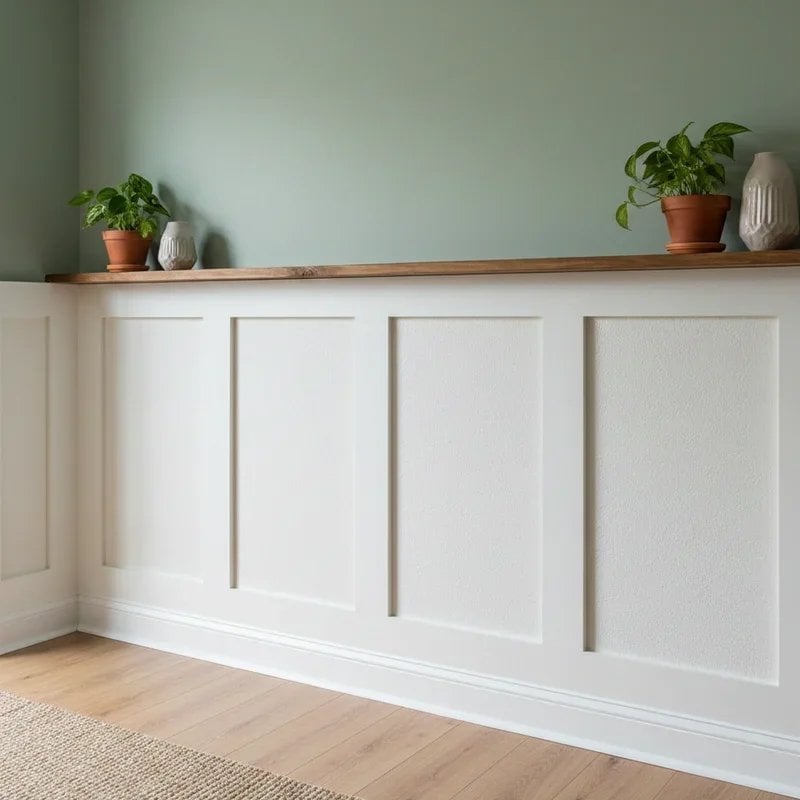
Texture can set wainscoting apart from a flat painted wall. Here, the white panel wainscoting has a visible grain or raised pattern that catches daylight, adding depth to a traditional corner. A wood shelf runs along the wall at the wainscoting’s top edge, holding potted plants against a backdrop of sage green paint above. The jute rug on the floor introduces a natural fiber that echoes the wood shelf. The combination of the textured white panels with the warm wood and green tones keeps the corner from feeling sterile. It is a simple way to add interest without pattern.
Living Room with Ornate White Wainscoting and Fireplace
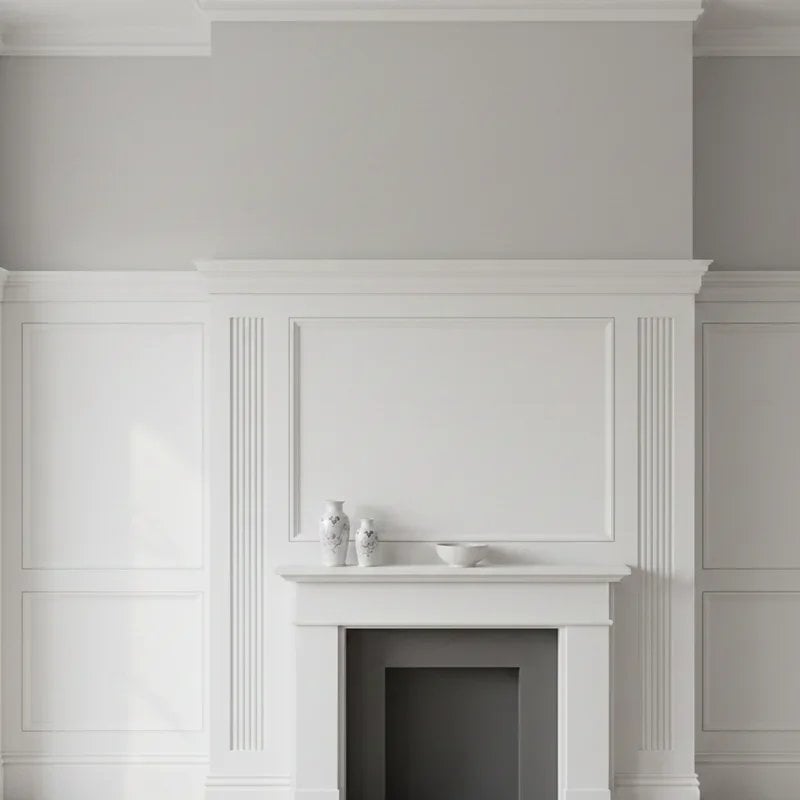
Ornate white wainscoting wraps around a living room with a centered fireplace, the paneling’s raised details and molding echoing the fireplace’s mantel. The palette stays neutral with white and gray, letting the architectural details stand out. The wainscoting’s decorative trim creates a rhythm across the wall, while the fireplace serves as the natural anchor. A few vases and a bowl on the mantel add shape without breaking the clean lines. This approach works well in a roomy space where the wainscoting can be appreciated from a distance.
Dining Room with White Wainscoting and Floral Wallpaper, Indoor
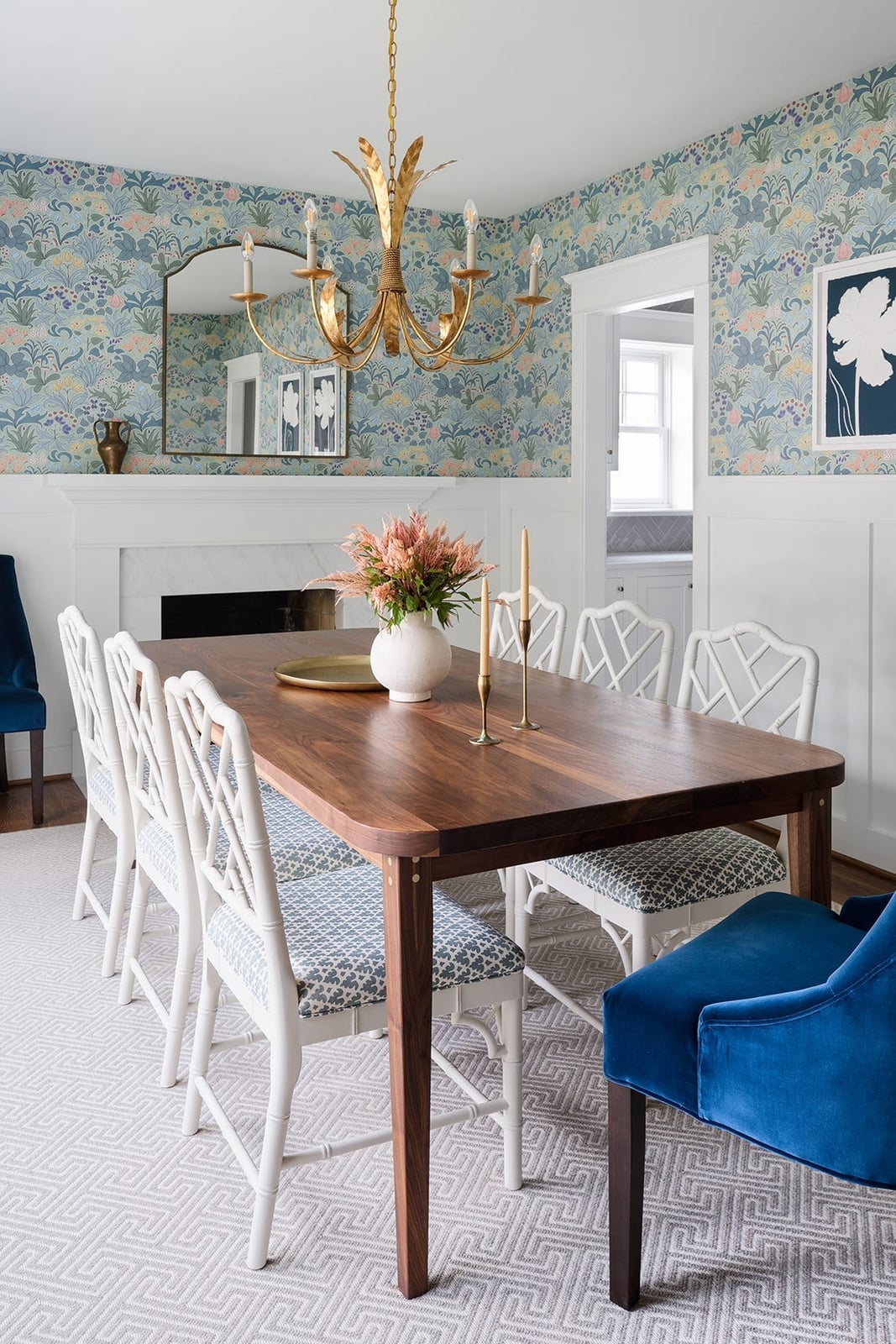
Pairing white wainscoting with a vibrant floral wallpaper is a straightforward way to add color without committing to painted walls. In this traditional dining room, the wainscoting runs below a bold blue and green floral pattern, anchoring the space while the wallpaper carries the personality. A large mirror above the fireplace and an ornate chandelier keep the room feeling balanced. The marble fireplace surround and wooden dining table add weight that matches the wallpaper. For a similar look that can be switched out later, consider peel-and-stick wallpaper above the chair rail. The wainscoting stays neutral, so changing the pattern is a weekend project that does not require repainting the whole room.
Traditional Room Corner with Ornate White Wainscoting Trim
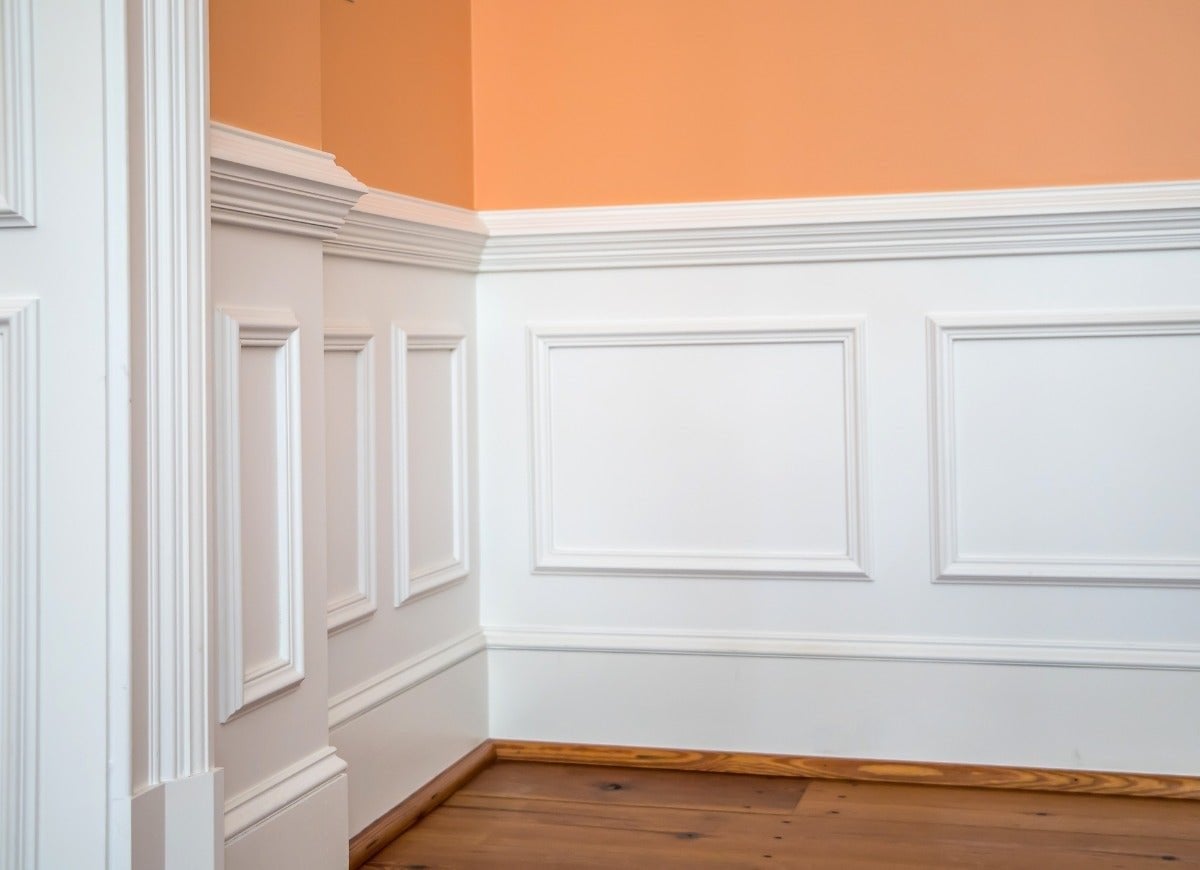
Ornate white wainscoting can read as a permanent fixture, but a corner like this one shows how much of the effect comes from the trim itself rather than the full wall construction. The detailed decorative molding and raised panels sit against a neutral wall, with warm daylight softening the contrast. The wood floor adds a natural counterpoint to the crisp white painted wood. For renters, the key is focusing on the trim. Adding a chair rail and picture-frame molding to a single wall or corner can mimic this look without installing full panels. Use adhesive-backed molding or lightweight MDF strips that can be removed with minimal wall repair. The result is the same traditional feel, but it travels with you when you move.
Final Thoughts
Wainscoting proves that walls do not have to be flat or boring. Across these 27 ideas, the common thread is letting the paneling lead the design. Keep the rest of the room understated so the texture, color, or pattern of the wainscoting reads clearly. Paint color changes everything: a dark shade makes a hallway feel intimate, while white keeps a small bathroom airy. Dust paneling with a soft cloth or vacuum attachment. Touch up paint as needed, especially in high-traffic areas. Your choice of wainscoting shape and finish sets the whole room’s tone without saying a word.