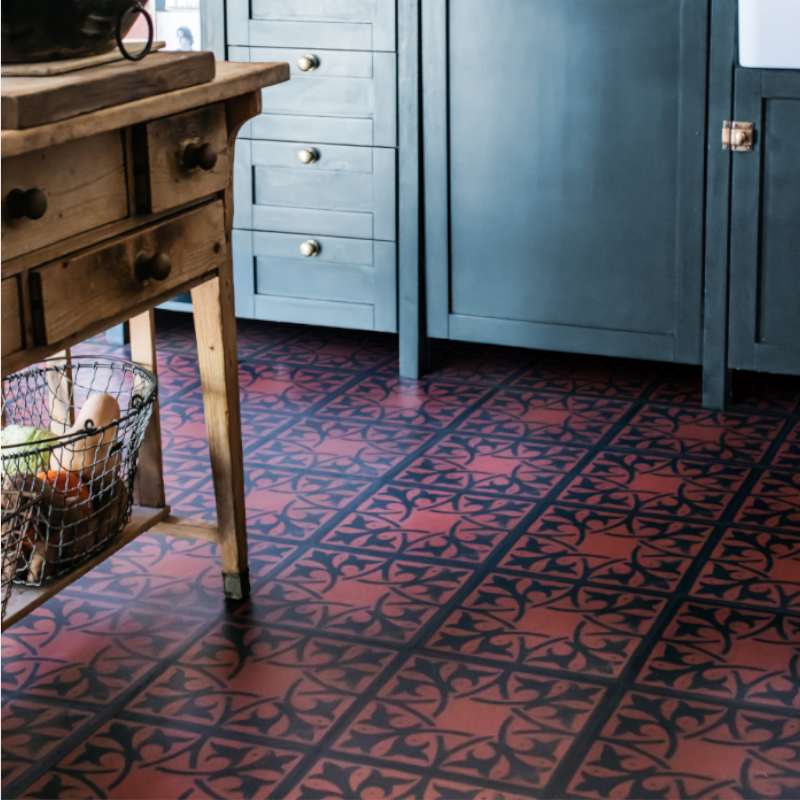
You know that feeling when you finally find the terracotta tile color pairing that looks exactly right for your space? It feels like the whole room just clicks into place. But getting there can feel like stumbling through an endless Pinterest board of conflicting advice. Terracotta is warm, earthy, and timeless, but finding its perfect partner is the secret to making it sing.
After filtering through hundreds of options across high-end design showcases and budget-friendly finds at stores like Target and IKEA, we narrowed it down to 30 ideas that actually deliver. We looked at everything from sprawling living rooms to tiny powder rooms, with total project costs ranging from under $1000 to over $10,000.
Inside, you’ll find 30 distinct ways to style your terracotta floors, covering everything from modern farmhouse to rustic Mediterranean and minimalist chic. For 2026, it’s all about moving away from cool, sterile grays and embracing colors that feel authentic and grounding. The shift towards natural materials and textures is bigger than ever, and terracotta is leading the charge.
And stay until the end — we break down the most common mistakes that can ruin these looks. 📌 Save this to Pinterest for later — you’ll want to revisit these ideas.
1. Starting with the Basics: Classic Terracotta Kitchen Warmth
At its core, a terracotta floor provides an immediate sense of history and warmth, acting as a vibrant neutral that connects a space to the earth. What makes this combination so enduring is the tile’s ability to anchor other design elements. Whether you lean towards modern minimalism or rustic charm, the terracotta floor serves as a forgiving base, allowing elements like crisp white cabinets, natural wood, or even bold color choices to stand out without competing. It’s a foundational choice that says “welcome” before any other piece of decor does.
“Let’s be honest: while beautiful, terracotta is a porous material.”
If you’re considering unsealed, natural terracotta, be prepared for a certain level of maintenance. It can be susceptible to staining, especially in a high-traffic area like a kitchen. Acidic spills like wine or lemon juice need to be wiped up immediately. Sealing the tiles is a must to protect them, and this will need to be redone every few years. If you love the look but not the upkeep, consider modern porcelain look-alikes that offer the same aesthetic with near-zero maintenance.
2. A Perfect Pair: Sage Green and Cream in a Traditional Kitchen
This kitchen is a beautiful exercise in balance. Think of it as a simple equation: 50% warm neutral + 40% soft color + 10% natural texture. The cream cabinetry and light countertops provide the neutral base, while the sage green island injects personality without being overwhelming. The final 10% comes from the rich terracotta floor and light wood accents, which ground the entire look in natural warmth. You could swap the sage for a dusty blue or a muted mulberry and the formula would still hold perfectly.
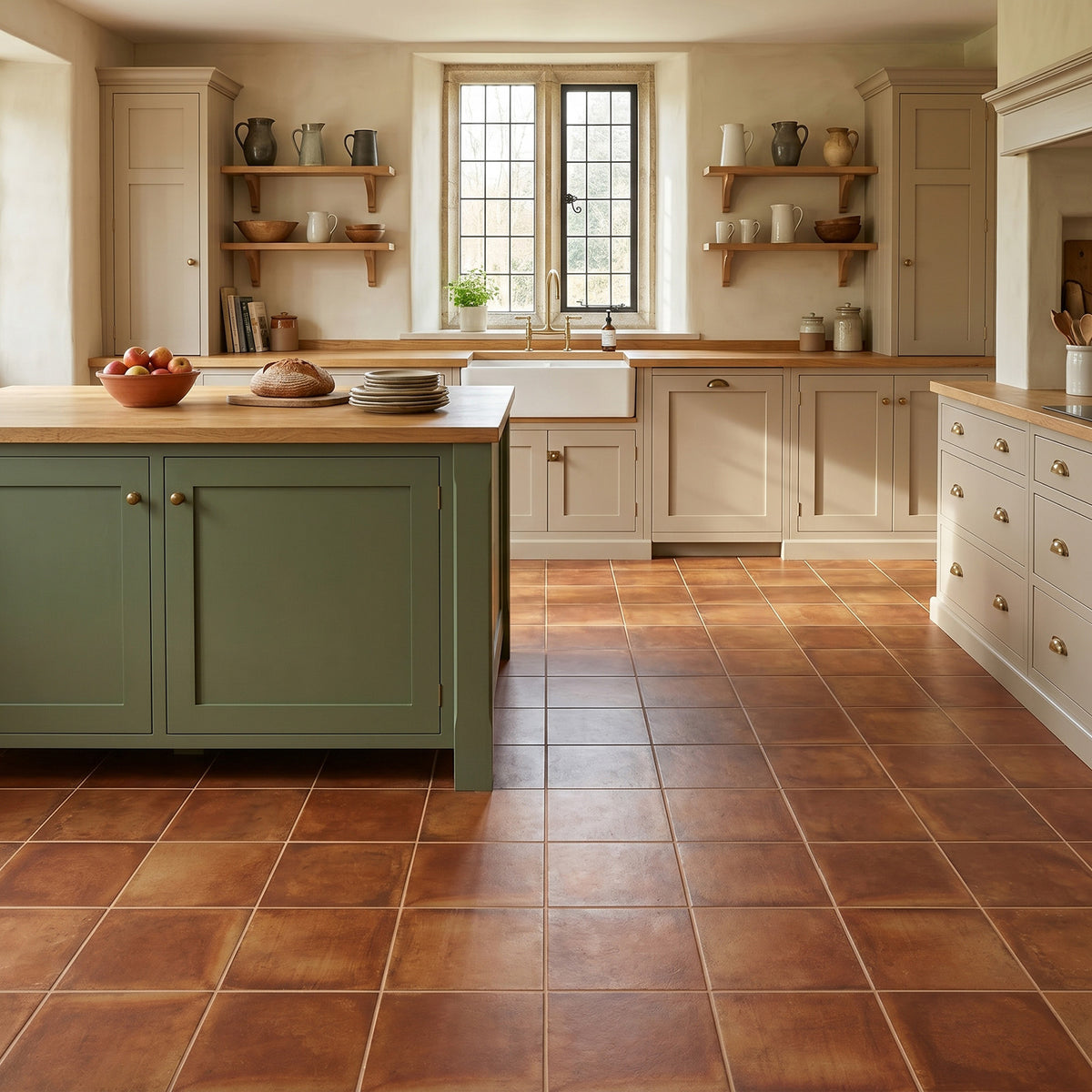
“When pairing a colored island with neutral perimeter cabinets, the hardware is what ties it all together.”
Notice how the warm brass on both the cream and sage green cabinetry creates a cohesive language. Don’t be tempted to use two different hardware finishes. Using a single, consistent metal finish like brass, polished nickel, or even oil-rubbed bronze ensures the two cabinet colors feel intentional and connected, rather than like two separate kitchens accidentally combined.
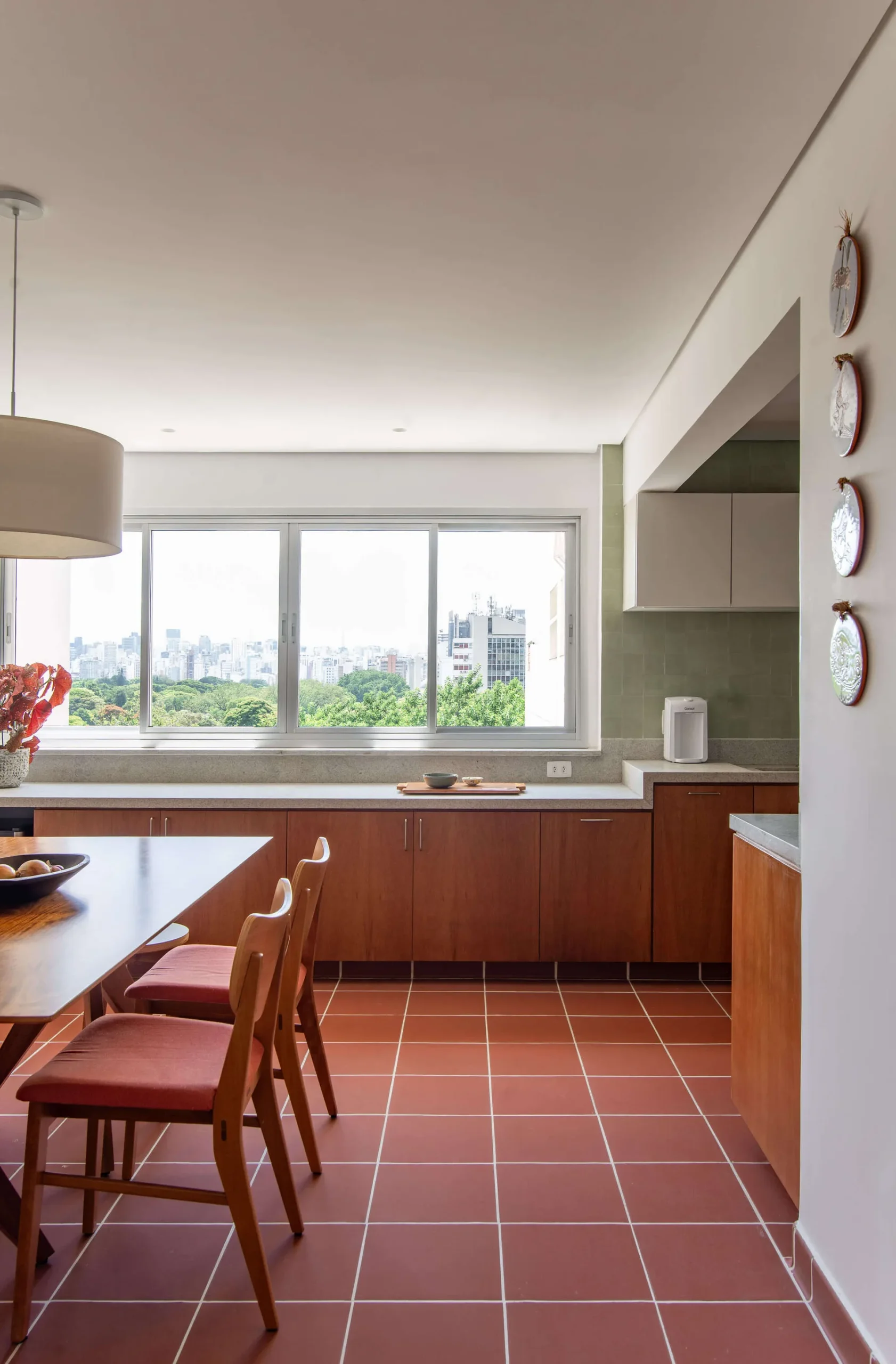
3. Layer Natural Tones with Wood, White, and Sage
Here’s a look at what it might cost to bring this balanced, earthy kitchen to life.
“Base Cabinetry (Wood): $4,000 – $9,000
Upper Cabinets & Backsplash (Tile): $2,”
- Base Cabinetry (Wood): $4,000 – $9,000
- Upper Cabinets & Backsplash (Tile): $2,500 – $6,000
- Terracotta Floor Tiles: $1,500 – $4,000
- Labor & Installation: $3,000 – $7,000
- TOTAL: $11,000 – $26,000
- Budget Alternative: Use butcher block countertops, opt for open shelving instead of some upper cabinets, and consider a high-quality vinyl tile for the floor to achieve a similar vibe for 40-50% less.
Solid wood base cabinets are stunning, but they require a bit more care than painted one. They are susceptible to scratches and dings, particularly in a busy kitchen. More importantly, you need to be mindful of water. Spills left near the sink or dishwasher can cause water damage or warping over time. It’s crucial to wipe up moisture promptly. On the plus side, wood is incredibly forgiving for touch-ups. Unlike a factory-painted finish, a small scratch on a wood cabinet can often be disguised with a simple stain pen.
4. Create an Earthy Nook with Woven Textures
The single most important element here is the layering of woven textures. Without the rattan-topped tables, the patterned area rug, and the nubby weave of the pillows, this would just be a room with terracotta floors and nice benches. It’s the tactile quality of these natural fibers that elevates the space from simply “earthy” to a rich, sensory experience. They add a handmade, artisanal quality that feels collected and personal, making the room feel like a well-loved retreat.
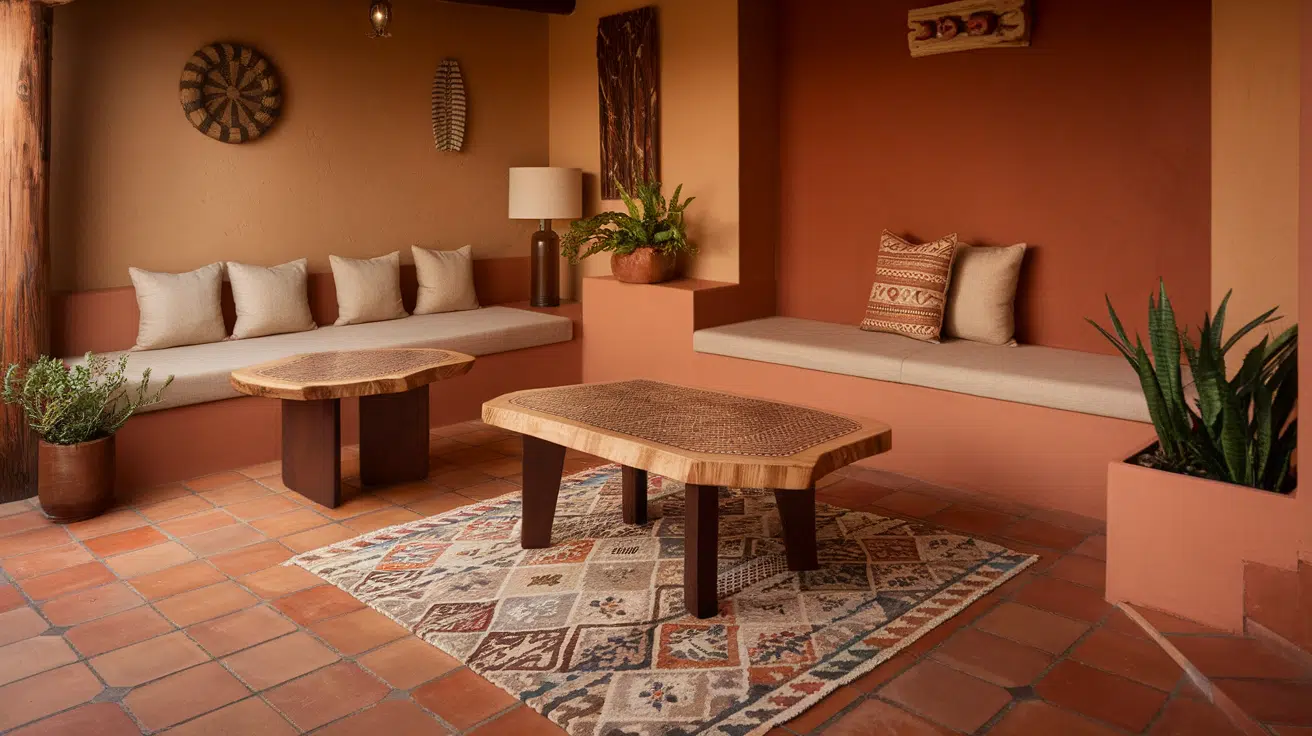
“This built-in bench concept is perfect for transitional spaces that are neither fully indoors nor out, like a sunroom, enclosed porch, or even a wide entryway.”
It works best in a space that is at least 8 feet wide to allow for comfortable seating and a walkway. For narrower spaces, under 6 feet, you’d want to opt for a single bench along one wall rather than a built-in corner nook to avoid feeling cramped. The key is maintaining at least 36 inches of clear traffic flow.
5. Go Bold with Rich Brown Walls and a Fluffy White Rug
This room proves that you don’t need to fear dark colors. The magic here is the monochromatic layering of warm tones. The terracotta floor, the deep brown walls, and the wood furniture all exist within the same warm color family. This creates a cohesive, enveloping feeling, like being wrapped in a cashmere blanket. The large white shag rug is the key piece of contrast, preventing the room from feeling heavy and adding a crucial touch of softness and light. It’s a masterclass in balancing deep, rich color with texture. For a similar effect with more color, see the blush-toned room in Idea #12
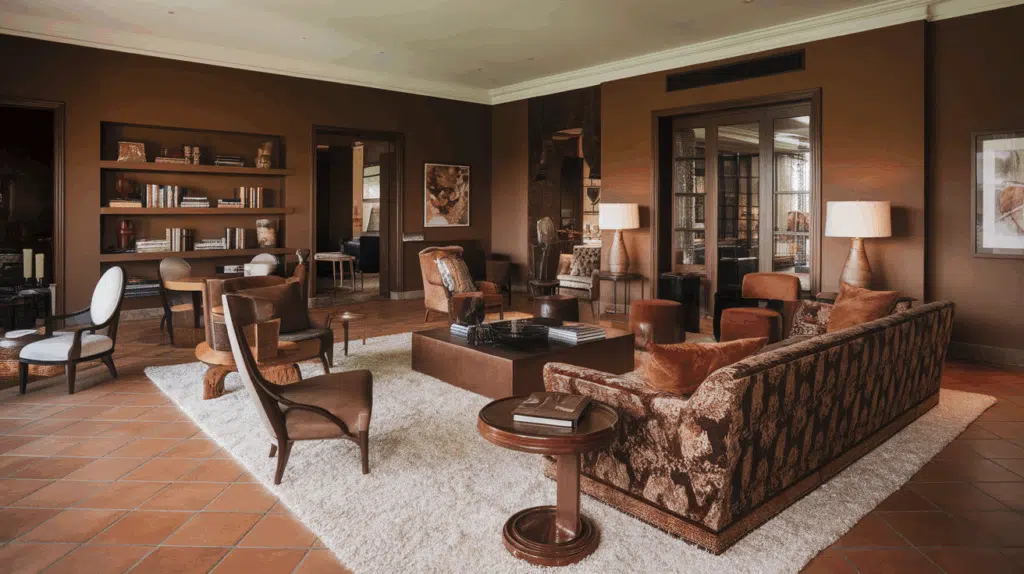
“Thinking of trying this dramatic, cozy look?”
Run through this checklist first.
- Natural Light: Does the room receive a significant amount of natural light? A North-facing or dark room can make this palette feel somber rather than cozy.
- Room Size: Is the room large enough to handle such saturated color? In a very small space, this could feel claustrophobic. A minimum of 150 sq ft is a good starting point.
- Ceiling Height: Are your ceilings at least 8 feet high? Painting the walls a dark color can visually lower the ceiling, so some height is beneficial.
6. Mix Wood Tones for a Collected, Traditional Vibe
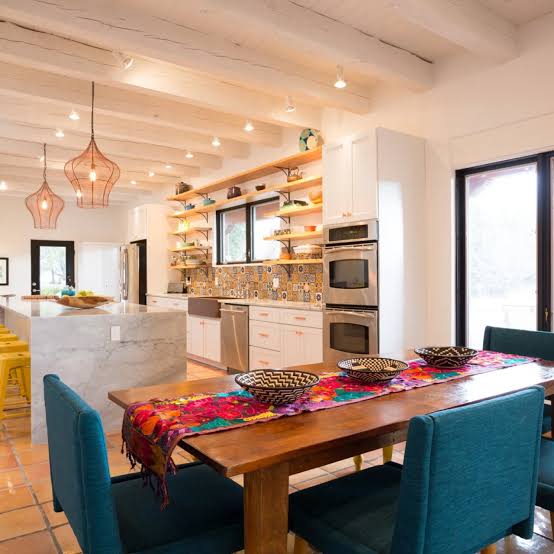
A common fear is that different wood tones will clash, but this space shows how to mix them like a pro. The secret is to choose woods that share a similar undertone. Here, the light dining table, medium kitchen cabinets, and dark bar stools all have warm, slightly reddish or yellowish undertones, which makes them harmonize beautifully with the terracotta floor. To ensure a cohesive look, stick to 2-3 different wood tones and distribute them evenly throughout the space to create a sense of rhythm and balance.
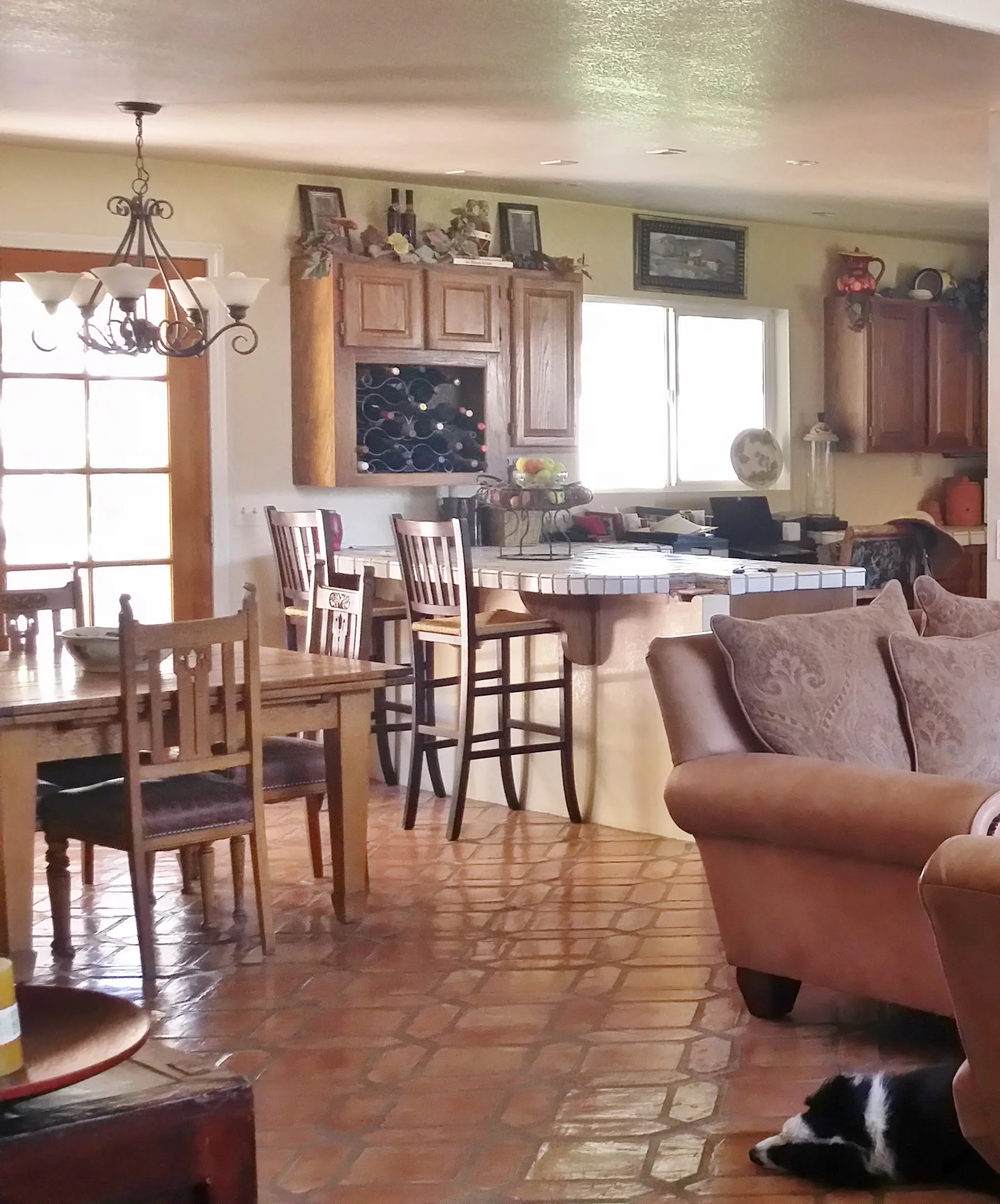
“An open-concept space with a continuous tile floor can sometimes feel vast and a bit cold, no matter how warm the tile color is.”
The key to making it feel cozy and defining the different “zones” (living, dining, etc.) is the strategic use of area rugs. A large rug under the sofa and a different one under the dining table not only add softness and texture but also create visual boundaries. Without them, furniture can feel like it’s floating in a sea of tile.
7. Refresh a Bathroom with a Sage Green Vanity and Patterned Terracotta
The star of this bathroom is unquestionably the patterned terracotta floor. While the sage green vanity is beautiful, the floor does the heavy lifting in defining the room’s entire personality. It infuses the space with a warm, slightly bohemian energy that feels both contemporary and classic. If you swapped it for a plain tile, the room would still be lovely, but it would lose that special, custom-designed feeling. The pattern is what gives the room its unique and memorable character.
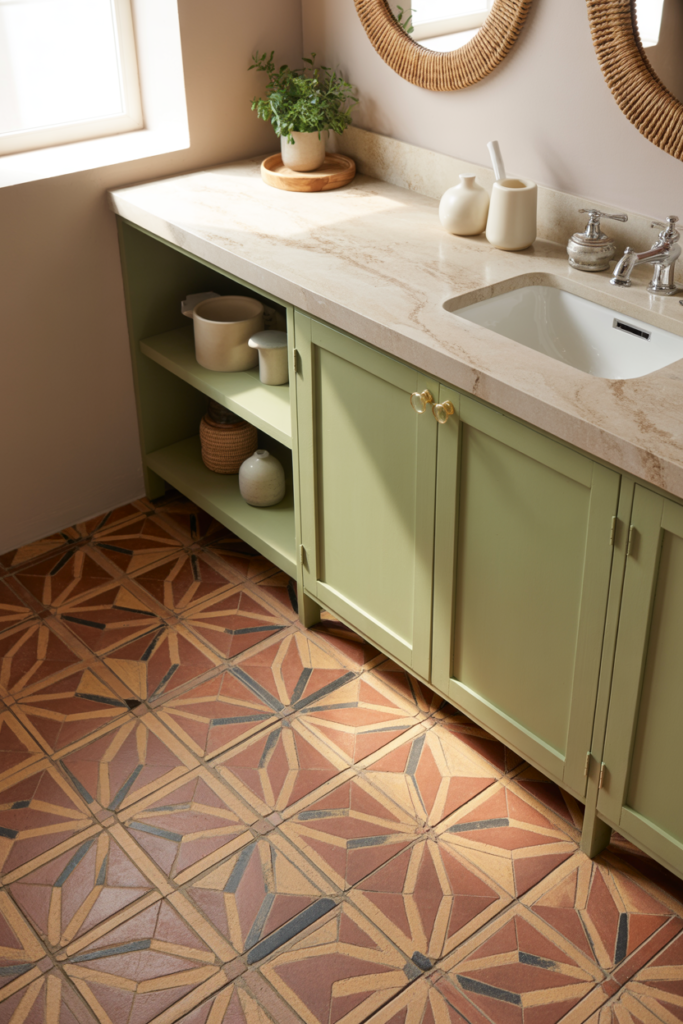
“Want to recreate this rattan mirror look?”
It’s a simple DIY project.
- Source Your Materials: You’ll need a simple, frameless mirror (round or arched), a roll of cane webbing, and a strong adhesive like E6000. (Cost: $40-$80).
- Cut the Cane: Lay the mirror on the cane webbing and trace a border 2-3 inches wider than the mirror itself. Cut carefully along the line.
- Soak the Cane: Soak the cut cane webbing in warm water for 30 minutes. This makes it pliable and easy to work with.
- Apply Adhesive: Pat the cane dry. Apply a generous bead of adhesive around the back edge of the mirror.
- Wrap and Secure: Center the mirror on the cane, then wrap the edges around to the back, pulling it taut. Use clamps or heavy books to hold it in place while the glue dries for 24 hours. (Time: 1 hour + drying).
8. Embrace Deep, Fired Terracotta Tones in the Kitchen
A deeper, ‘fired’ terracotta color brings a unique gravity and sophistication to a room. This approach works because it leans into the most authentic, historical version of the material. The slight variations in color from tile to tile create a surface that is rich with character and texture. It’s a powerful choice that pairs exceptionally well with other honest materials like wood, stone, and metal. By not shying away from the material’s inherent depth, you create a space that feels grounded and timeless, rather than trend-driven.
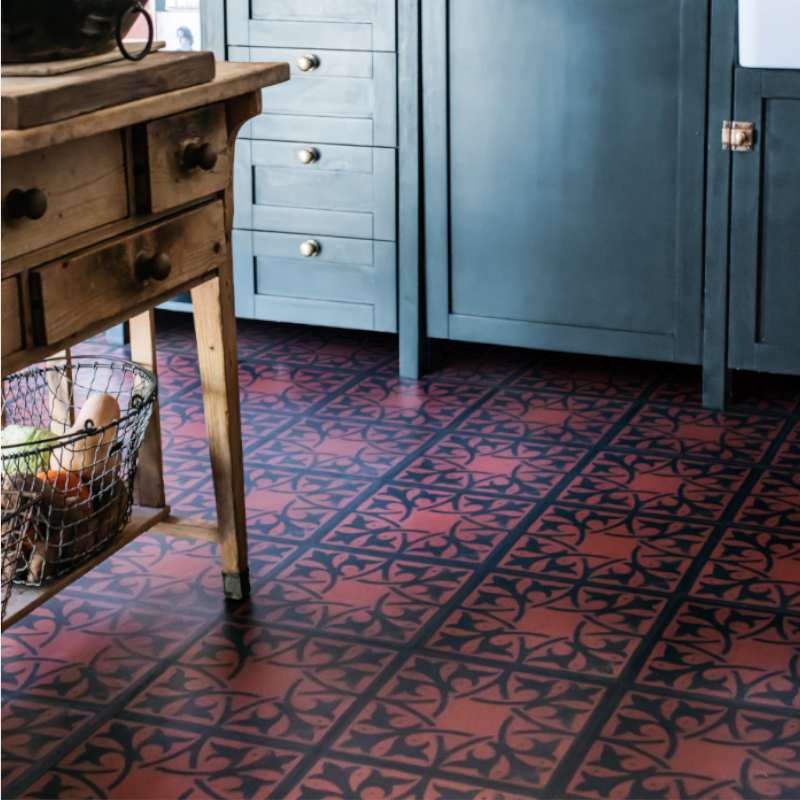
“As we move deeper into the 2020s, there’s a strong collective desire for homes that feel warm, authentic, and connected to nature.”
This is a direct reaction to the years of cool grays and stark whites that dominated design. Deep, earthy tones like fired terracotta are trending because they feel nourishing and real. They remind us of sun-baked earth and artisanal craftsmanship, creating a sense of permanence and comfort that feels especially relevant right now.
9. Create a Mediterranean Escape with Teal and Patterned Terracotta
This bathroom’s vibrant energy comes from a bold formula: 60% dominant color + 30% earthy foundation + 10% decorative detail. The glossy teal wall tiles make up the majority of the visual language, creating a cool, water-inspired backdrop. The terracotta floor provides the essential earthy warmth, keeping the teal from feeling too cold. The final 10% is the Spanish-style border tile, a small but mighty detail that ties the whole look together with pattern and history. Compare this use of color with the multi-toned wall in Idea #10.
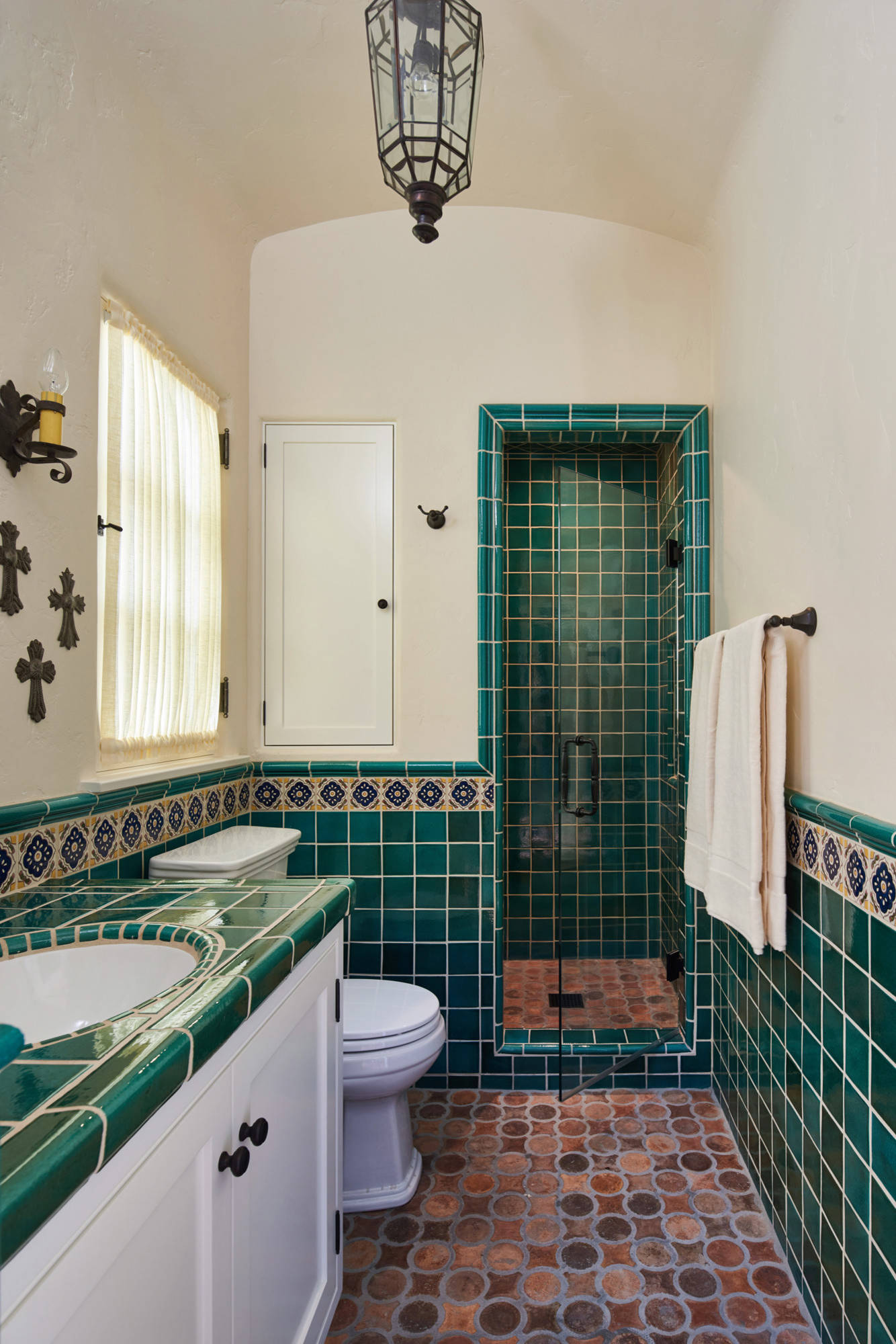
“A full-on tile installation like this can be pricey, but you can capture this Mediterranean vibe for much less.”
Instead of tiling the entire wall, paint the walls a rich teal (around $50 for a gallon). Then, use peel-and-stick terracotta-patterned LVT for the floor (around $100-$200 for a small bathroom). Find a decorative peel-and-stick tile border ($30 on Amazon or Etsy) to create that accent line. You get the same color story for a fraction of the cost and effort.
10. Mix Terracotta, Sage, and Peach Tiles for an Earthy Mosaic
This look is a masterclass in analogous color schemes. Terracotta (red-orange), sage (yellow-green), and peach (orange-yellow) all sit next to each other on the color wheel, which is why they feel so harmonious together. The key is that they share a similar level of saturation—they are all muted, earthy versions of their respective hues. This shared dusty quality allows them to blend beautifully, creating a tapestry of color that is rich and complex without being chaotic. The brass fixtures add the perfect touch of warm metallic shine.
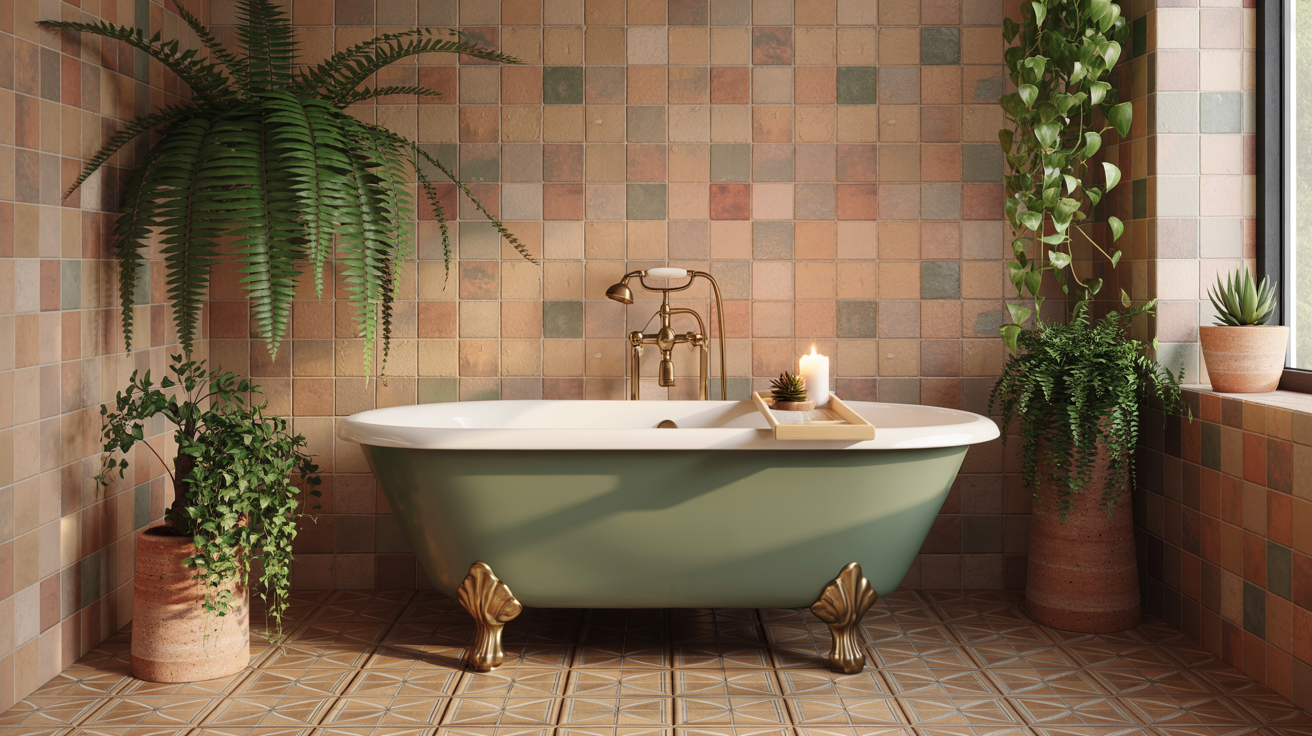
“The single element that makes this bathroom unforgettable is the sage green clawfoot tub.”
It’s the hero piece that confidently anchors the entire design. The tile work is beautiful, but it’s the tub that provides the focal point and the boldest statement of color. Removing it would leave a lovely but much less dramatic space. Its vintage shape and modern color are the perfect juxtaposition, elevating the room from a simple bathroom to a design statement.
11. Pair Deep Matte Green Walls with Glossy Terracotta Floors
The secret to this stunning combination is the play on finishes. A matte wall finish next to a glossy floor creates a sophisticated, multi-dimensional look. The matte green absorbs light, making the color feel deep, velvety, and rich. In contrast, the glossy terracotta tiles reflect light, highlighting their shape and warm color variations. If both surfaces were matte, the room could feel flat; if both were glossy, it might feel overwhelming. The contrast in sheen is what makes it feel so balanced and professionally designed.
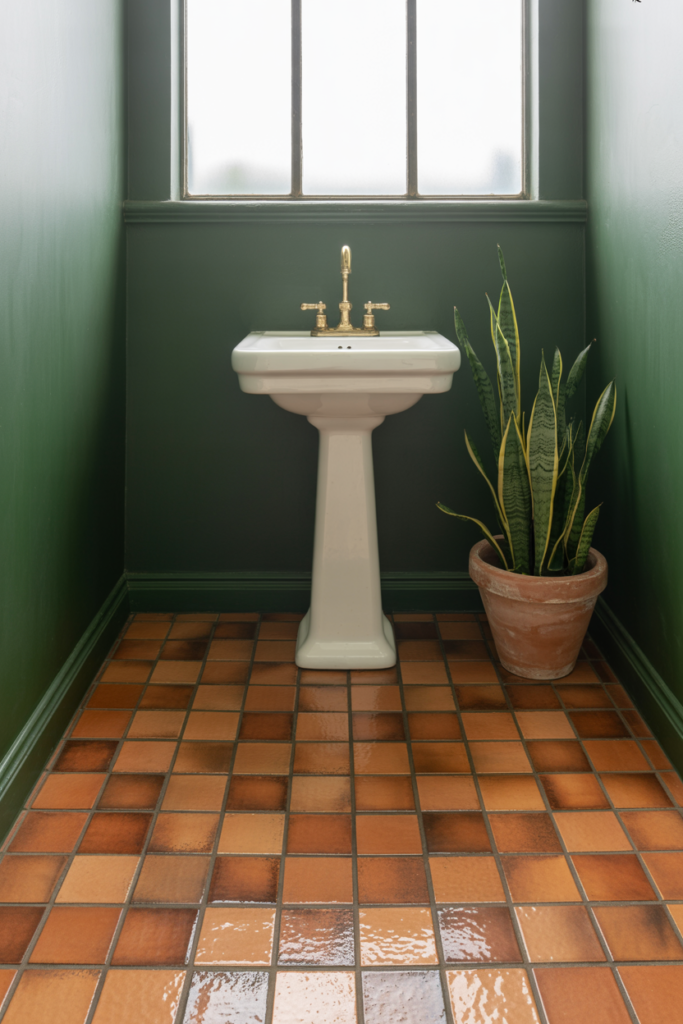
“A glossy floor is fantastic for reflecting light, but it’s also a magnet for showing every footprint, water splash, and speck of dust.”
In a high-traffic area, especially a bathroom, be prepared for frequent mopping or wiping to keep it looking pristine. While the smooth surface is easy to clean, it requires more frequent attention than a matte or satin finish tile, which is more forgiving of daily life. This is a trade-off: you get more light and vibrancy, but at the cost of more diligent cleaning.
12. Soften Terracotta with Blush Pink and Natural Wood
Terracotta and blush pink are a surprisingly perfect match because they are both part of the red color family, just at different ends of the spectrum. Terracotta is a deep, earthy red-orange, while blush is a pale, airy red-pink. This shared heritage creates a subtle, sophisticated harmony. The natural wood sideboard and the abundance of green plants act as a bridge between the two, grounding the airy pink and connecting beautifully with the earthy floor. The off-white walls provide a clean canvas that lets the color story shine.
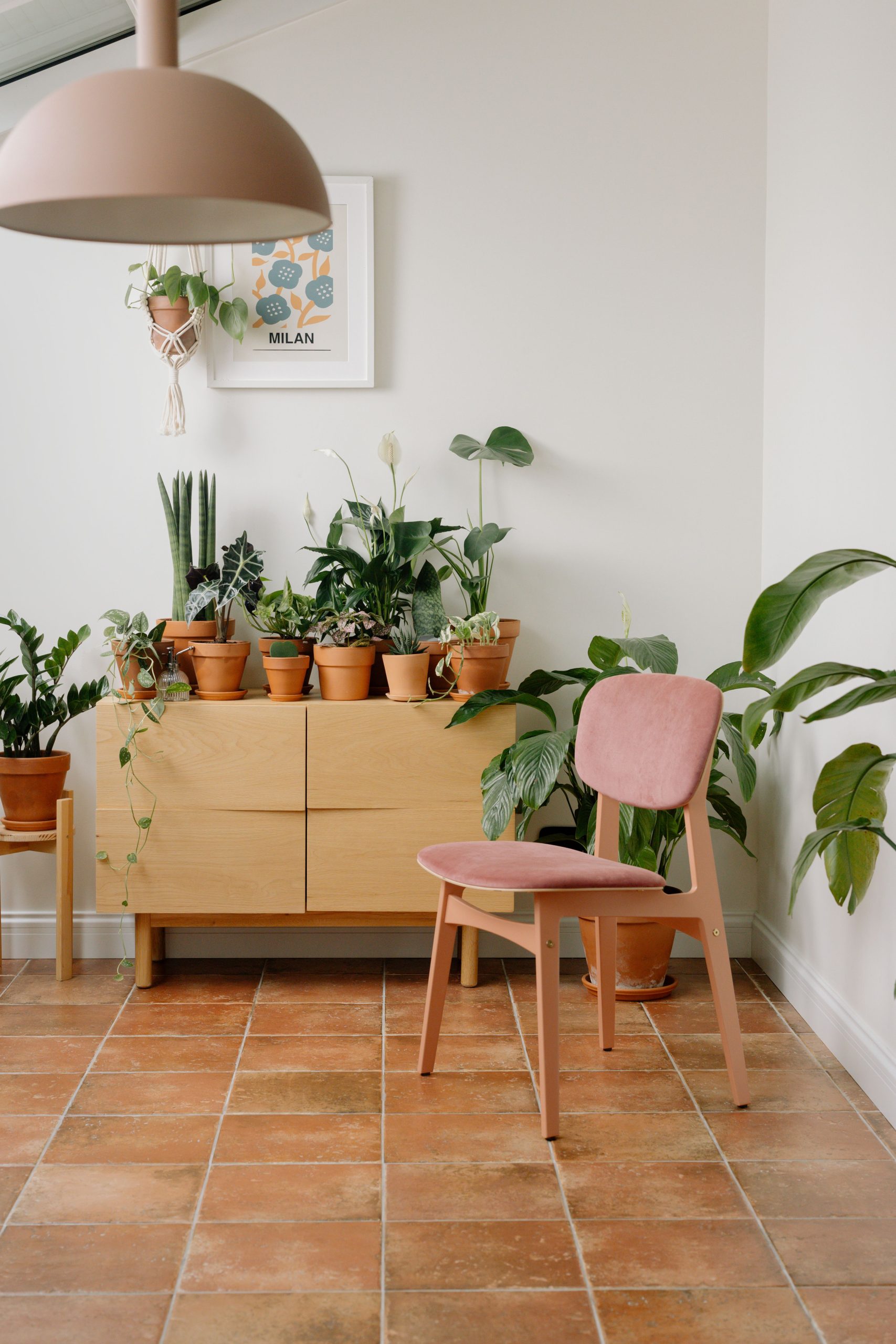
“You don’t need a designer budget to get this look.”
Instead of a solid wood sideboard, find a vintage piece on Facebook Marketplace and strip it down to its natural wood tone ($50-$150). The blush chair can be a simple dining chair from IKEA or Target, spray-painted the perfect shade of pink. Hit up your local nursery or even a big box store for an armful of affordable houseplants. The key elements here—color and nature—are accessible at any price point.
13. Anchor a Textured White Fireplace with Hexagonal Terracotta
The hexagonal terracotta tiles are the absolute key to this entire vignette. A standard square tile wouldn’t have the same effect. The honeycomb shape adds a layer of geometric pattern and visual interest that feels both modern and rustic. It contrasts beautifully with the rough, organic texture of the white stucco fireplace. The hexagonal shape elevates the floor from a simple surface to a significant design feature, providing the perfect foundation for the cozy, festive scene. For another take on hex tiles, see the bathroom in Idea #28.
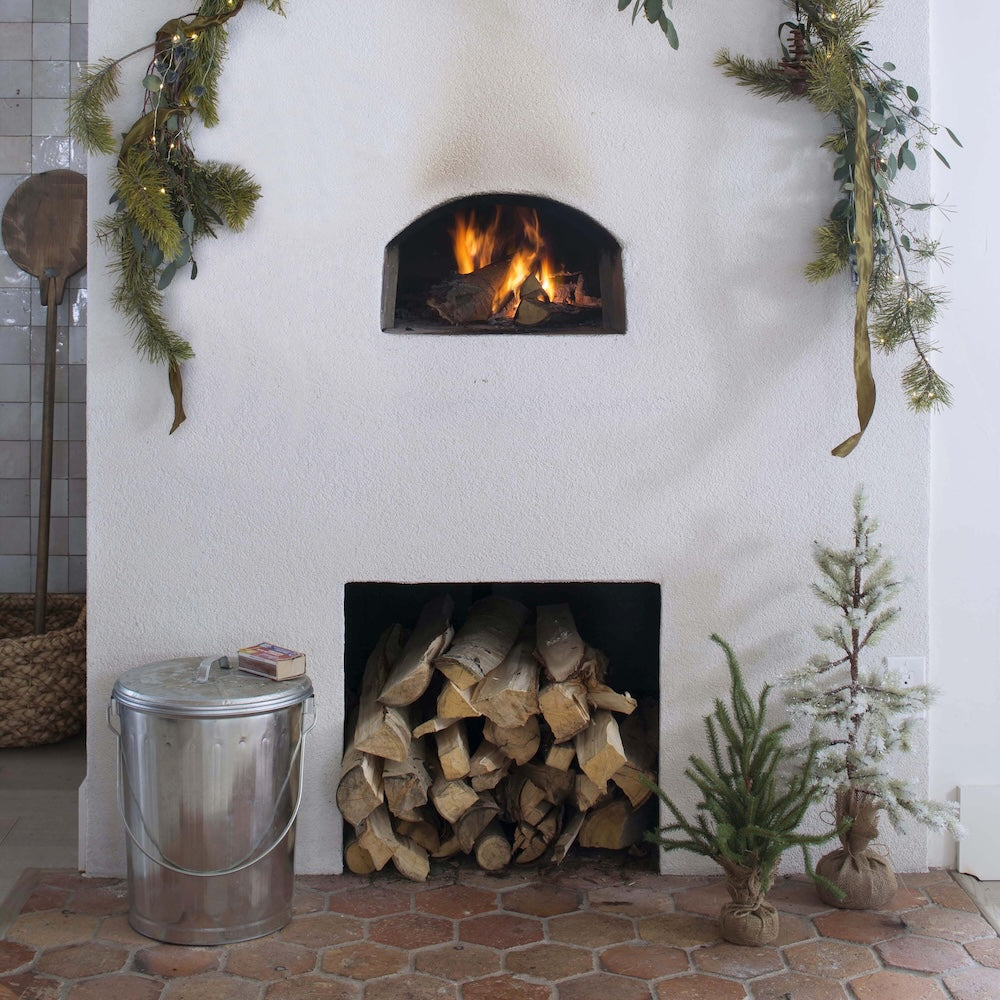
“A wood-fired oven integrated into a living room fireplace is an incredibly romantic and cozy feature, but it comes with practical considerations.”
First, there are building codes. This requires professional installation with proper ventilation and heat shielding to be safe. Second, it’s not a ‘flick of a switch’ feature; it takes time to get a wood fire going. Finally, be prepared for the realities of indoor wood burning: smoke, soot, and the regular task of cleaning out ash. It’s a lifestyle choice, not just a decorative one.
14. Use Patterned Terracotta as a Runner in a Hallway
Think of this hallway as a lesson in balanced contrast. The formula is approximately 50% light and bright + 40% warm pattern + 10% dark accent. The white walls and stair risers provide the bright, airy base that keeps the hallway from feeling narrow. The patterned terracotta floor brings in the warmth and personality. Finally, the dark wood treads and charcoal chair provide the crucial dark accents that ground the space and give it a sophisticated edge. This balance ensures the pattern is the star, but not the only actor.
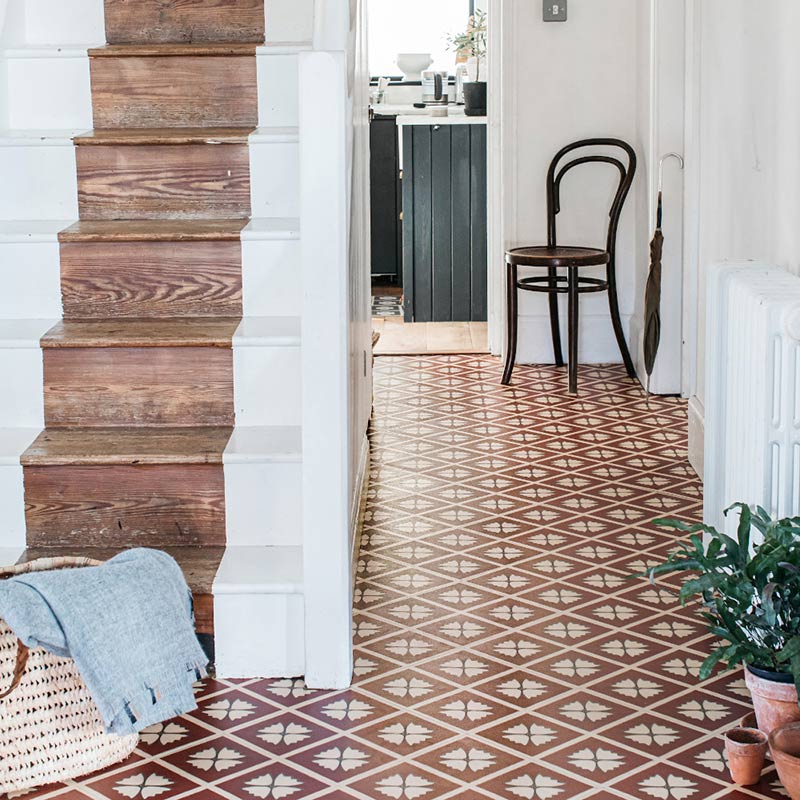
“Using a bold, patterned tile like this is an excellent strategy for a hallway or entryway precisely because it is a transitional space.”
It can handle more personality than a room where you spend hours at a time. This idea works best in a hallway that is at least 4 feet wide. Anything narrower and the pattern might feel too busy and visually shrink the space. The key is to have enough white space on the walls to balance the pattern on the floor.
15. Try a Warm Terracotta Pattern in a Bathroom Setting
Patterned terracotta, especially in Luxury Vinyl Tile (LVT), is seeing a huge surge in popularity for bathrooms. Why? It offers the perfect solution for people who want the warmth and character of terracotta without the maintenance of real tile and grout. LVT is waterproof, durable, and warmer underfoot than ceramic. As more people seek to inject personality and a bespoke feel into small spaces like bathrooms, a bold patterned floor like this is an easy and effective way to make a big design impact.
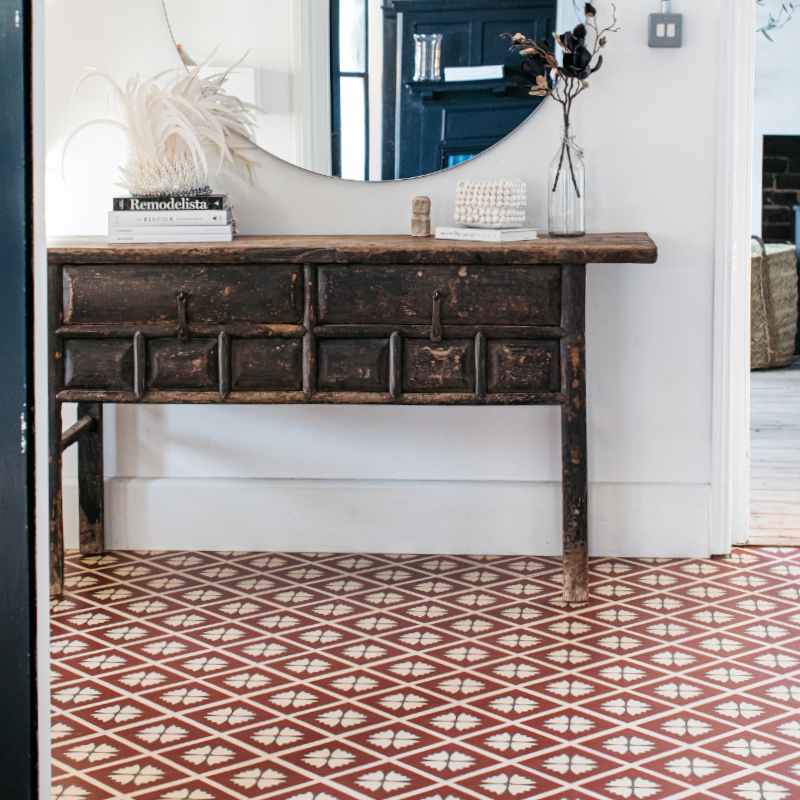
“When you have a bold pattern on the floor, let it be the star.”
The biggest mistake you can make is to introduce another competing pattern. Keep the walls simple. A solid color, like a warm white, a soft beige, or even a solid color pulled from the tile pattern, is your best bet. If you want to add more texture, do it with physical texture, not visual patterns—think a white subway tile with a handmade, slightly uneven surface, or a subtly textured wallpaper in a single color.
16. Embrace a Geometric Terracotta Floor Pattern
A geometric pattern in a warm terracotta LVT works because it blends the best of both worlds: the rustic, earthy color of traditional terracotta with the clean, modern lines of geometric design. This fusion creates a look that feels both timeless and current. The repeating pattern provides a sense of order and rhythm, which can make a space feel larger and more intentional. It’s a sophisticated way to add visual interest without overwhelming the senses, a perfect middle ground between plain tile and an intricate, multi-color pattern.
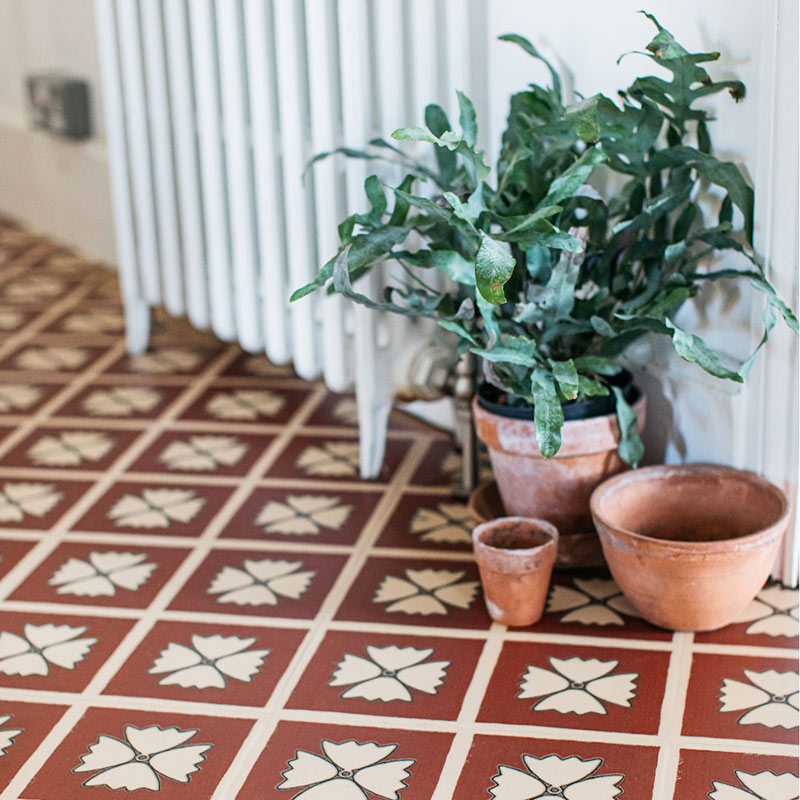
“While high-end LVT can be a significant investment, you can achieve a similar geometric terracotta look on a tight budget.”
Many brands now offer high-quality peel-and-stick vinyl tiles. This is a fantastic DIY-friendly option that can be installed in a weekend. For a small bathroom or laundry room, you could likely complete the project for under $200. Look for options at big-box stores like Home Depot or online retailers like Wayfair and Amazon for the best selection and prices.
17. Create a Sun-drenched Hallway with Aged Yellow-Orange Walls
The single element that makes this hallway magical is the aged, yellow-orange plaster on the walls. It’s more than just paint; the subtle texture and color variation of the plaster give the space a sense of history and depth that flat paint could never achieve. This wall treatment perfectly complements the rustic terracotta, creating a seamless, sun-drenched glow that feels like a centuries-old Tuscan villa. It’s the commitment to this authentic texture that transports you.
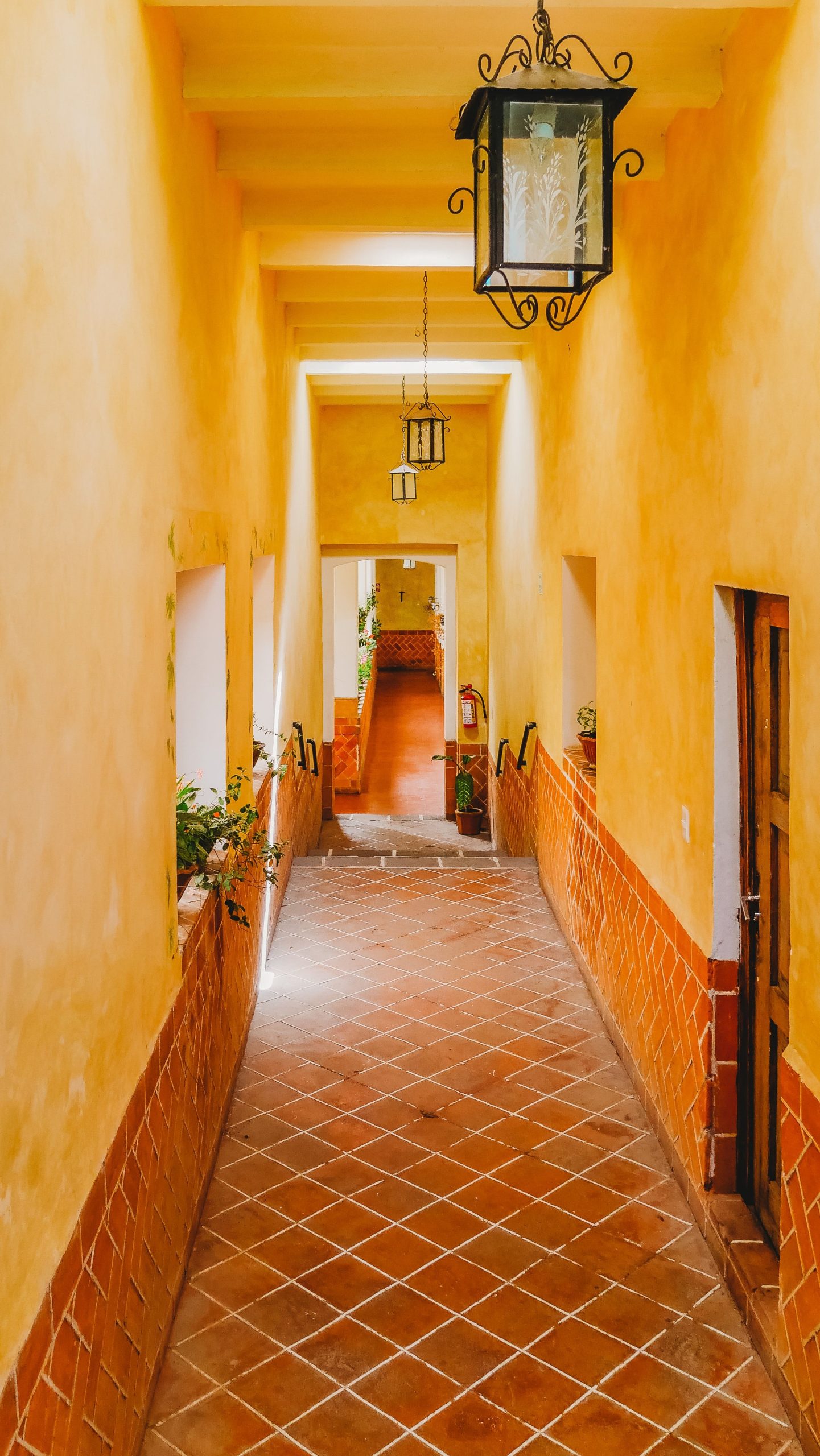
“This space is a beautiful example of a monochromatic-adjacent color scheme.”
The floor tiles, the wainscoting, and the plaster walls are all different shades and tints within the same orange hue family. This creates an incredibly cohesive and immersive experience. The black wrought iron lanterns and dark doorways act as crucial points of contrast, preventing the warm tones from becoming overwhelming and adding a necessary touch of graphic definition. This is a very different vibe from the high-contrast yellow in Idea #18.
18. Pair Terracotta Tiles with a Pop of Sunny Yellow-Orange
This vibrant look follows a daring formula: 50% earthy base + 50% bold color. The terracotta floor provides a classic, grounding element, while the sunny yellow-orange walls and railing inject a huge dose of energy and optimism. The key is that both colors are warm, so they feel related despite their difference in intensity. The white grout lines are also essential, providing a crisp, clean separation that keeps the two bold colors from visually bleeding into each other. It’s a high-energy, joyful combination.
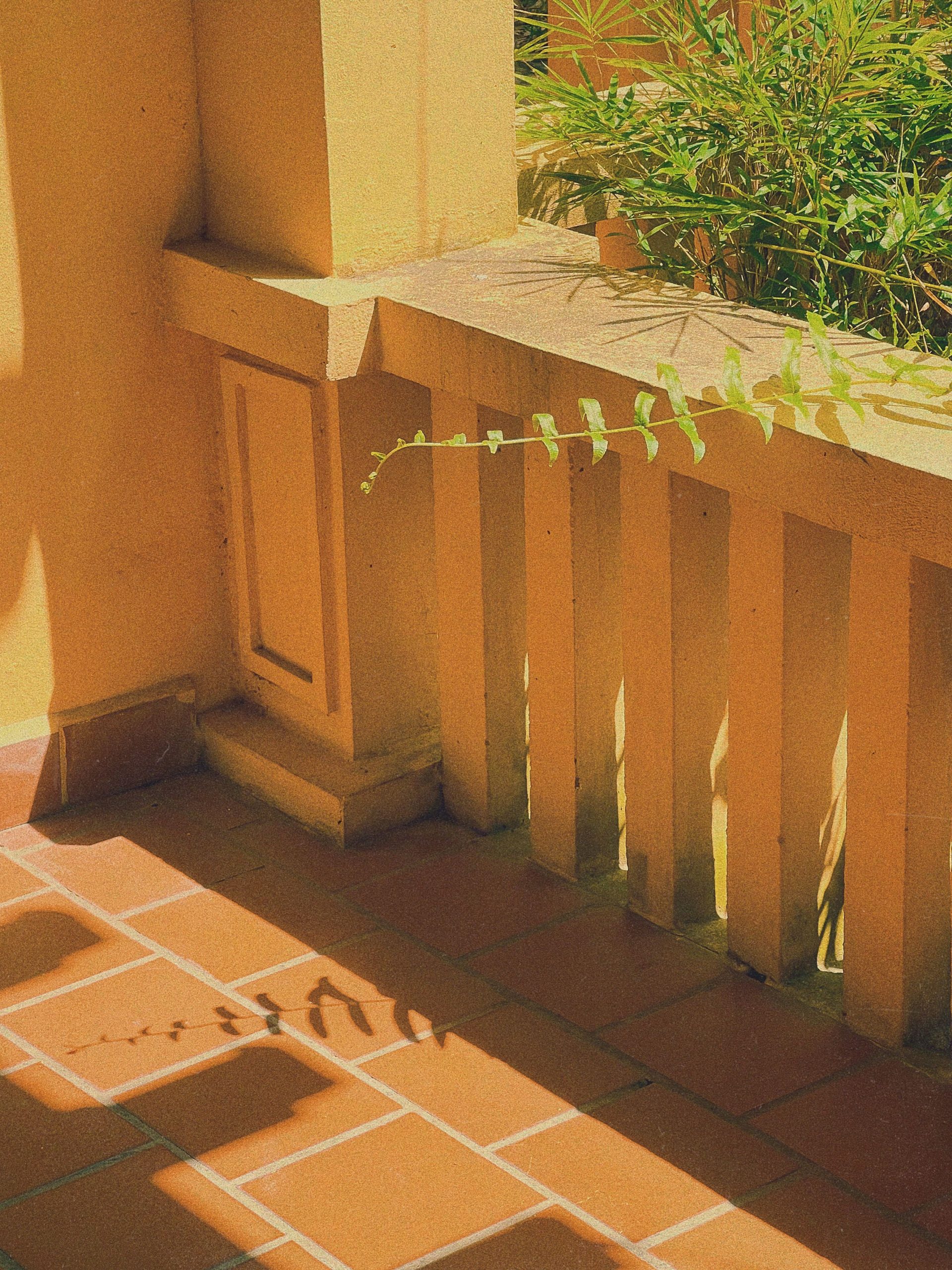
“A color this bright and saturated is a major commitment.”
Before you paint an entire room or hallway this color, get a sample pot and paint a large poster board. Live with it for a few days, moving it around the room to see how it looks in different light conditions—morning, noon, and night. A vibrant yellow can look cheerful and sunny in the morning light but might feel overwhelmingly intense in the evening under artificial light. Test it out before you commit to the whole gallon.
19. Soften a Rustic Floor with an Abundance of Potted Greenery
When styling a rustic floor like this octagonal terracotta tile, the key is to vary the scale and texture of your decor. Notice the mix of pots: some are classic terracotta, some are dark and modern. The plants themselves vary in height, leaf shape, and shade of green. This variety is what makes the arrangement feel like a natural, curated collection rather than a monotonous lineup. Always aim for a mix of at least three different pot styles and five different plant types for a lush, dynamic look.
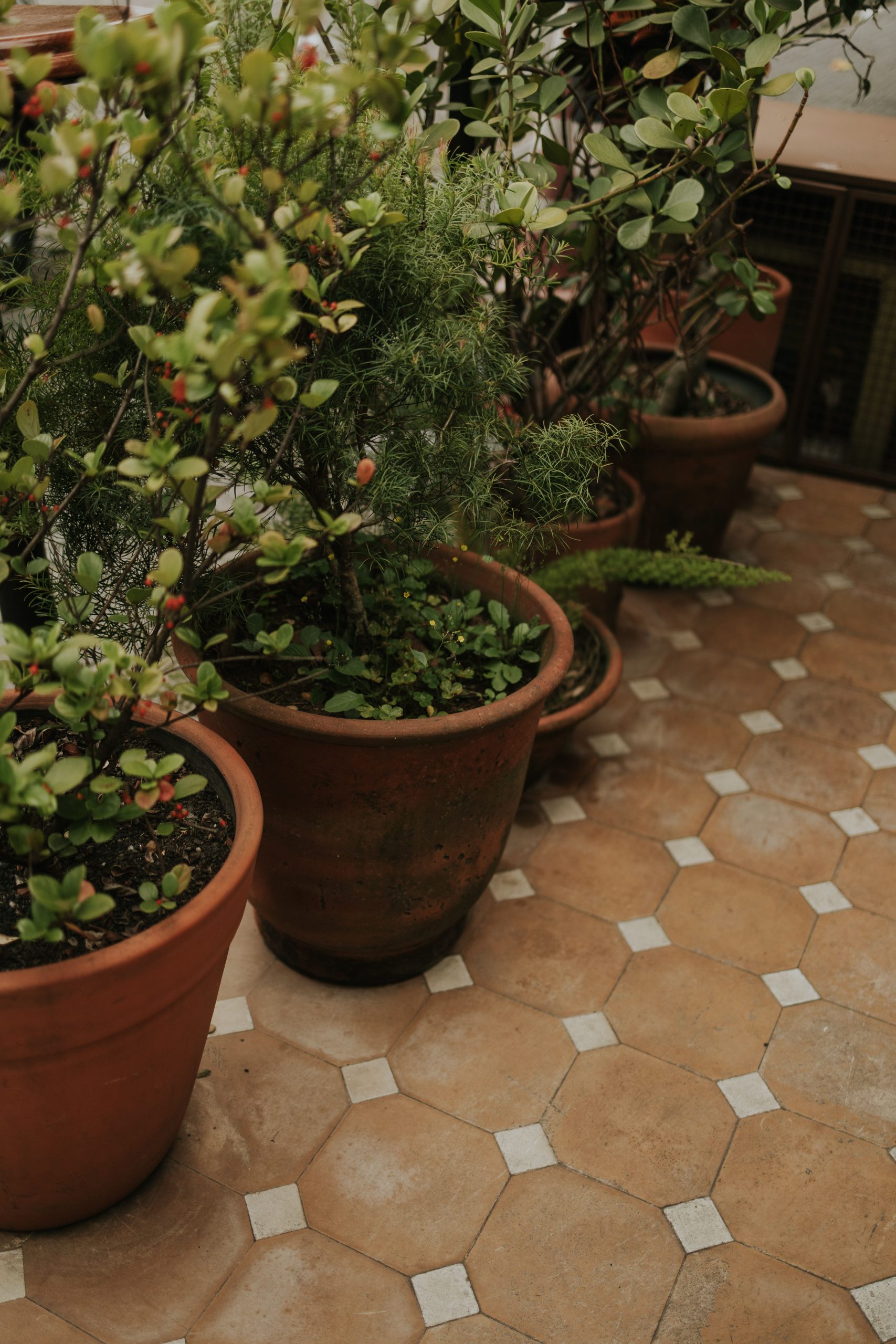
“This combination of terracotta and lush greenery is a classic for a reason: it’s a direct echo of nature.”
The reddish-brown of the tile is the color of the earth, and the vibrant green is the color of life growing from it. It’s a primal, satisfying pairing that taps into the principles of biophilic design—the idea that humans have an innate desire to connect with nature. Introducing plants brings life, purifies the air, and adds a layer of soft, organic texture that perfectly complements the hard, rustic tiles.
20. Embrace Luxury with Terracotta-Toned Marble and Light Wood
Achieving this level of spa-like luxury comes at a premium, primarily due to the cost of the materials.
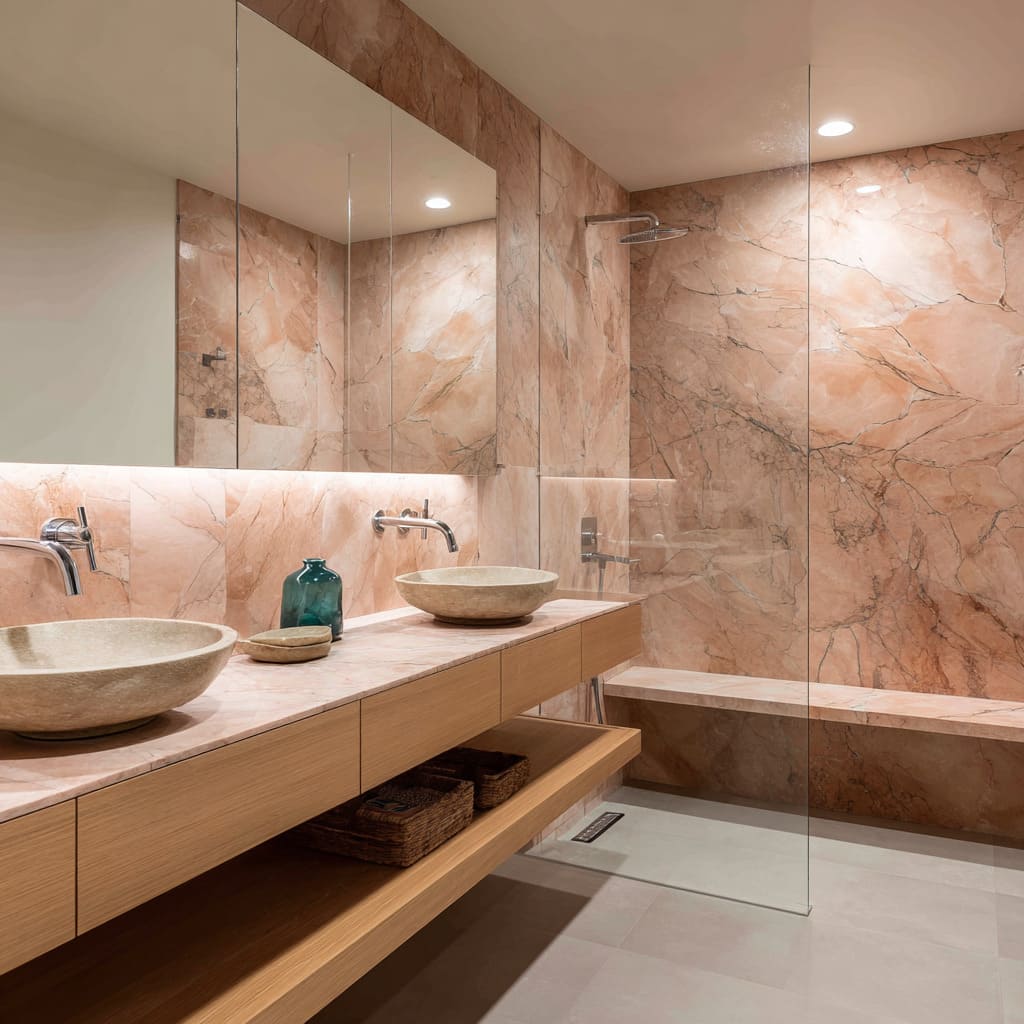
“Vein-Cut Marble Slabs: $8,000 – $20,000+
Light Wood Floating Vanity: $2,500 – ”
- Vein-Cut Marble Slabs: $8,000 – $20,000+
- Light Wood Floating Vanity: $2,500 – $7,000
- Stone Basin Sinks & Fixtures: $1,500 – $4,000
- Glass & Lighting: $1,000 – $3,000
- TOTAL: $13,000 – $34,000+
- Budget Alternative: Use a large-format porcelain tile that mimics the look of vein-cut marble, opt for a stock vanity from a big-box store with a butcher block top, and choose more affordable vessel sinks to get 80% of the look for 30% of the cost.
Marble, especially a unique and colorful one like this, is a high-maintenance surface for a bathroom. Like terracotta, it is porous and susceptible to staining and etching from acidic products (like certain cleaners or toiletries). It requires regular sealing—at least once a year in a shower. The grout lines will also require regular cleaning to prevent mildew. Furthermore, wood vanities in a bathroom require excellent ventilation to prevent moisture damage over time. This is a look that demands commitment to its upkeep.
21. Create a Moody, Eclectic Vibe with Deep Green and Teal
This dark, moody look is best suited for rooms with generous proportions and high ceilings. The dark wood beams and dark floor tiles will visually compress a space, so you need architectural volume to pull it off without feeling cramped. A minimum ceiling height of 9-10 feet is recommended. This style works wonderfully in a loft, a converted industrial space, or a living room in an older home with grand proportions. In a standard 8-foot-ceiling suburban home, this much dark color overhead and underfoot could become oppressive.
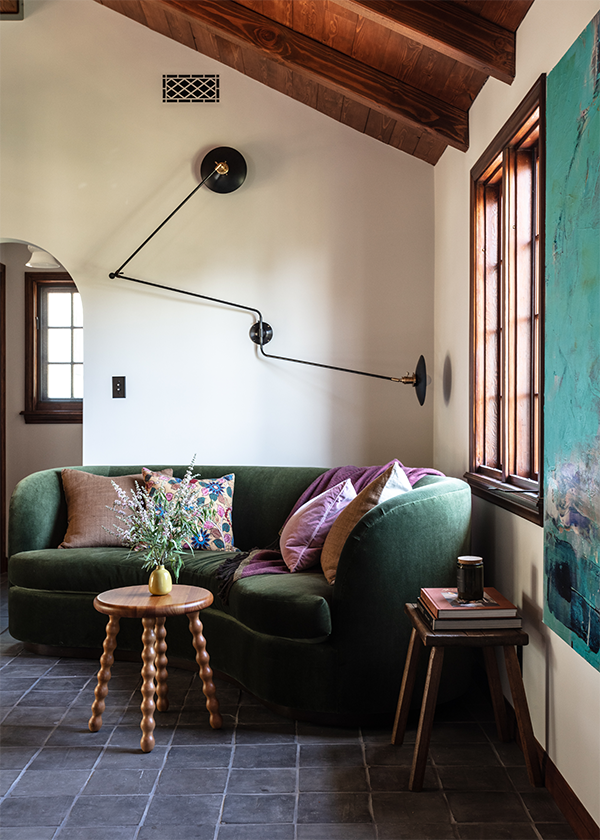
“A dark green velvet sofa is a stunning statement piece, but it has its practical downsides.”
Velvet acts like a magnet for pet hair, lint, and dust. If you have pets that shed, you will be spending a lot of time with a lint roller. It can also be susceptible to crushing or marking if not cared for properly. While beautiful and luxurious, it’s not the most forgiving choice for a high-traffic family room with kids and pets. Choose this for a more formal or less-used living space if low maintenance is a priority.
22. Wrap a Bathroom in Warm Terracotta Plaster
When pairing a dominant wall color like this terracotta plaster with a neutral floor, the key is to match the undertones. These light beige floor tiles work so well because they have a warm, slightly pinkish undertone that speaks directly to the red in the terracotta walls. A beige tile with a cool, greenish undertone would have clashed, creating a subtle but unsettling discord. Always get tile and paint samples and look at them together in the room’s actual light before committing.
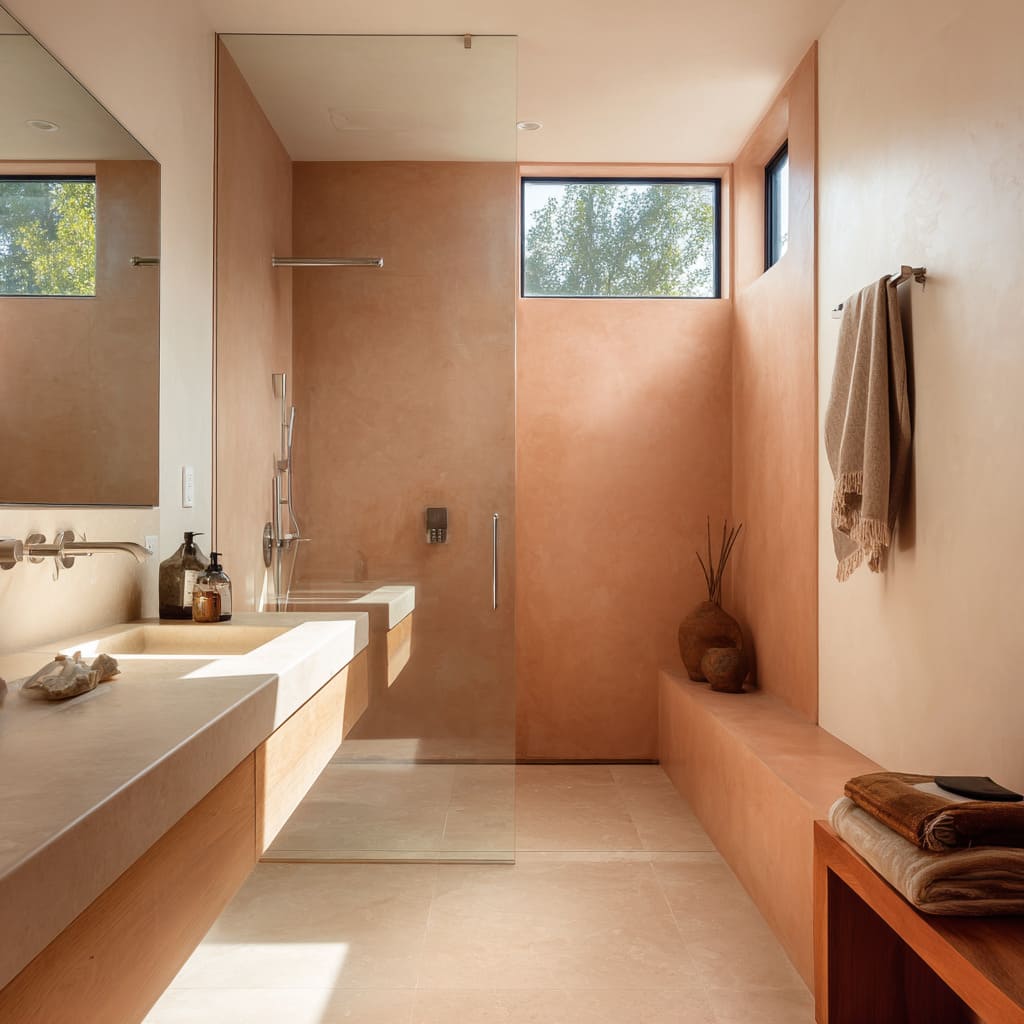
“Achieving this textured plaster look is possible for a dedicated DIYer.”
Here is a simplified process using Roman clay or limewash paint:
- Prep: Start with a clean, primed wall. The surface should be as smooth as possible.
- First Coat: Apply the material with a flexible putty knife or trowel in wide, sweeping, overlapping strokes. Don’t aim for perfect coverage; variation is part of the look. (Cost: $150-$300 for a medium bathroom).
- Second Coat: Once the first coat is dry to the touch (usually 2-4 hours), apply a second, thinner coat using the same technique to fill in gaps and add depth.
- Burnish (Optional): For a smoother finish with more sheen, you can gently burnish the dry wall by rubbing it with the clean edge of your trowel at a low angle. (Time: 6-10 hours for a full bathroom).
23. Ground Deep Green Cabinetry with a Dark Patterned Floor
This kitchen is a perfect example of how to successfully go dark with both your floor and your base cabinets. It works because of the careful balance of light and natural elements. The light wood island, beams, and upper cabinets, along with the white backsplash and walls, provide a crucial visual lift. They prevent the dark green and grey from making the space feel heavy. This combination of light and dark creates a dynamic tension that is sophisticated and inviting, a perfect blend of rustic charm and moody elegance.
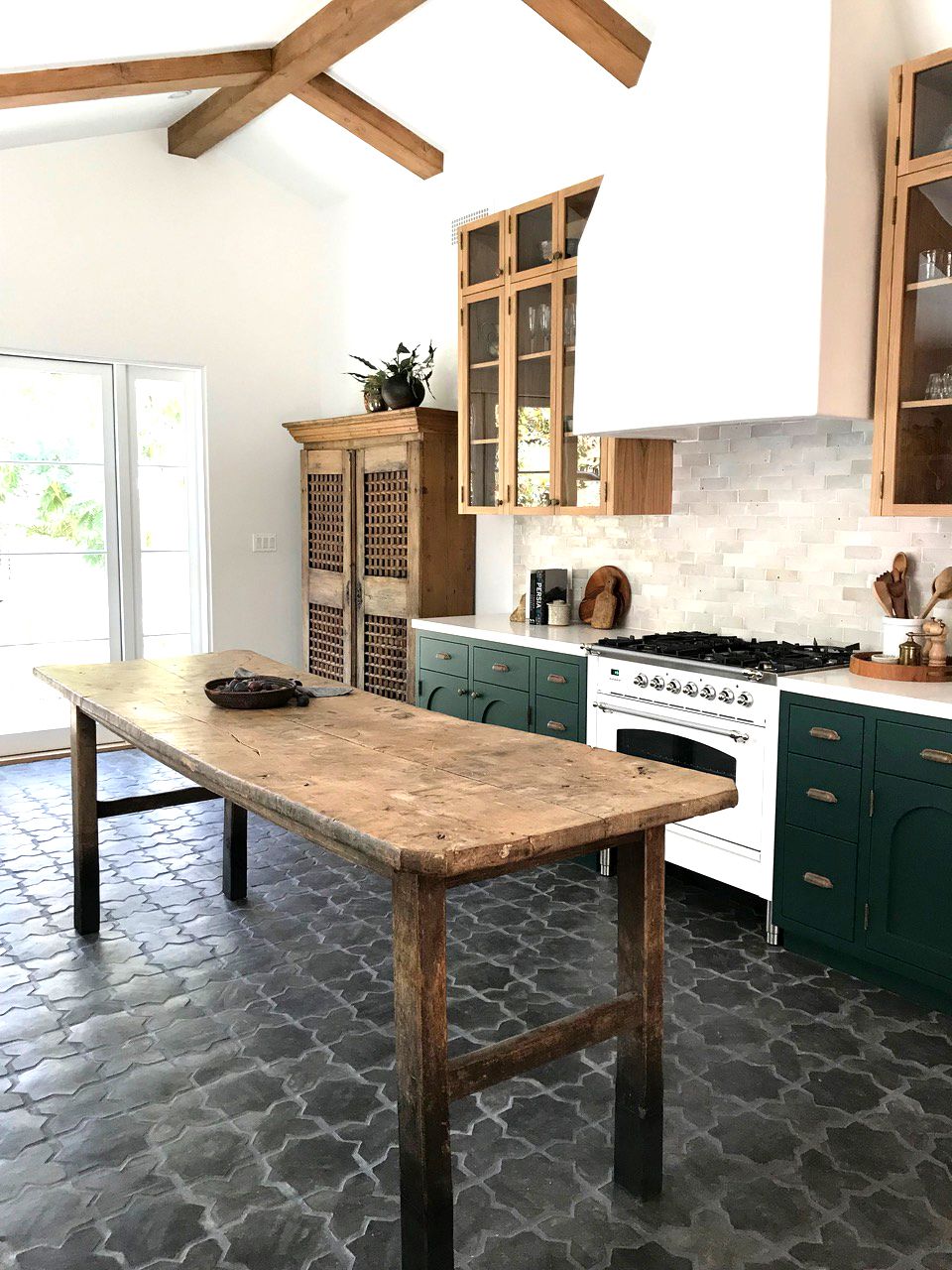
“The single element holding this entire design together is the rustic wooden island.”
It acts as the indispensable bridge between the dark, cool tones of the floor and cabinets and the light, airy elements above. Its natural wood grain introduces a critical layer of organic texture and warmth that mediates between the other finishes. Without it, the contrast between the green cabinets and the white walls would be much starker and less cohesive. The island is the heart of the room, both functionally and aesthetically.
24. Combine Navy Blue and Terracotta for a Modern Farmhouse Kitchen
When using a bold color combination like navy and terracotta, grout color is a critical detail that can make or break the look. Here, the choice of a light, warm grout for the terracotta floor tiles was intentional. A dark grout would have made the floor feel heavy and might have clashed with the navy. For the white wall tiles, a matching light grout creates a clean, classic grid that doesn’t compete for attention. Rule of thumb: match your grout to the lighter tones in your palette to keep things feeling bright. For a different approach, see the softer palette of Idea #2.
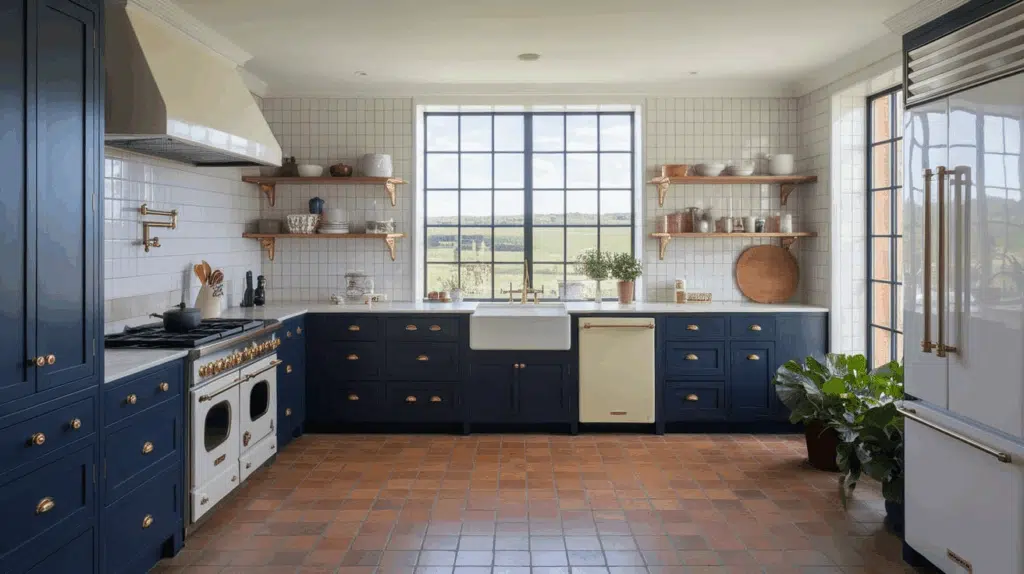
“This kitchen’s winning formula is about contrast and warmth: 50% classic whites + 30% bold navy + 15% earthy terracotta + 5% warm metallics.”
The white tiles, countertops, and appliances create a bright, clean canvas. The navy cabinetry provides a deep, sophisticated anchor. The terracotta floor injects a necessary dose of earthy warmth, preventing the navy and white from feeling too cold or nautical. The brass hardware is the final flourish, a little bit of jewelry that ties all the colors together.
25. Mix Solid Terracotta with a Graphic Patterned Tile
The genius of this design is the use of two different floor tiles to define a space. The patterned tile acts like a built-in area rug, creating a focal point around the freestanding tub and adding a major dose of personality. This technique is what elevates the bathroom from a simple, modern space to something truly custom and designer. It’s a bold choice that pays off, proving you don’t have to choose just one tile for your project. The mix is what makes it memorable.
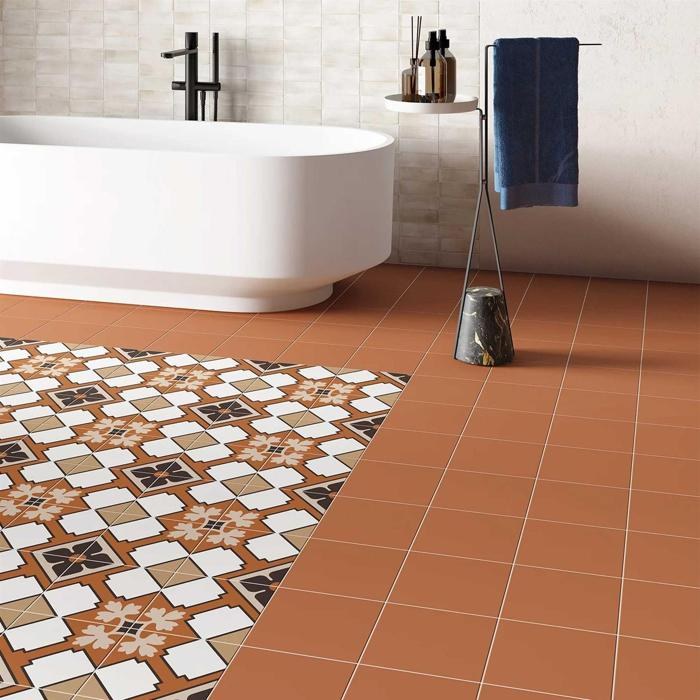
“This tile-zoning technique is brilliant for larger bathrooms, where you want to create distinct functional areas.”
It works best in a room that is at least 100 square feet. You need enough space for the solid tile to read as a clean field and for the patterned tile to have room to breathe without looking cramped. In a very small bathroom (under 50 sq ft), using two different floor tiles can make the space feel chopped up and visually cluttered. Stick to one great tile in smaller spaces.
26. Make an Entrance with Terracotta, Blue, and White Decorative Tiles
This combination of terracotta, light blue, and white is a classic Mediterranean palette for a reason. The warm, earthy terracotta provides a grounding base, while the crisp white offers a clean contrast. The light blue is the magic ingredient—it’s the color of the sky and sea, bringing a feeling of freshness and calm. It’s a complementary color to orange, which is why it creates such a pleasing and vibrant pop against the terracotta. The concrete border modernizes the look, keeping it from feeling too traditional.
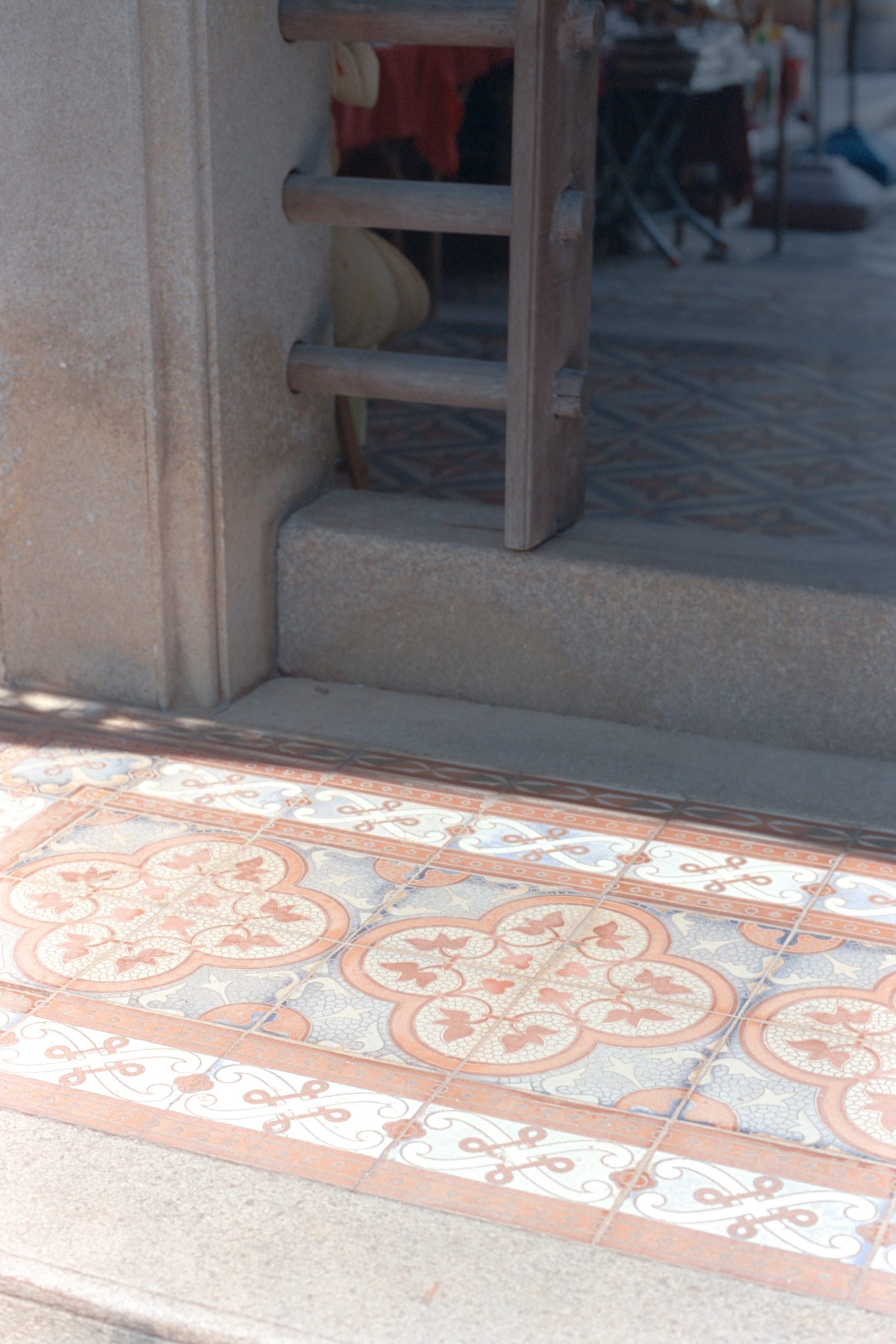
“In 2026, we’re seeing a huge revival of artisanal, patterned tiles, especially in entryways and mudrooms.”
Homeowners are looking for ways to create a ‘wow’ moment right at the front door. These decorative tiles offer a way to infuse personality and a handmade feel into a home from the moment you step inside. It’s part of a larger movement away from cookie-cutter design and towards spaces that feel unique, collected, and full of character.
27. Pair a Patterned Floor with Two-Tone Cabinetry in Mauve and Cream
When mixing two different cabinet colors AND two different hardware finishes like this, there needs to be a clear logic. Here, the logic is function. The island is the workhorse, so it gets durable, practical black hardware. The perimeter cabinetry is more decorative, so it gets the more elegant brass. This defines the island as a distinct zone. To pull this off, the two hardware styles should have a similar level of simplicity or complexity. A very ornate brass pull with a very modern black bar pull would clash. For a more uniform look, compare with the hardware choice in Idea #29.
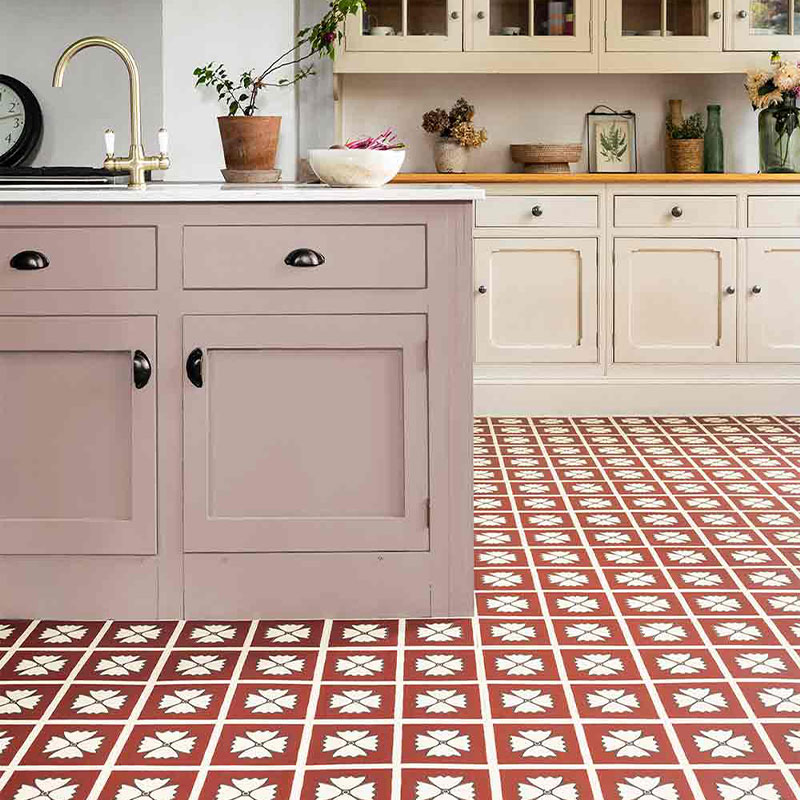
“A bold, geometric floor pattern is stunning, but it can be a double-edged sword.”
On one hand, it’s a powerful design statement. On the other hand, it can be very bossy. This floor will dictate many of your future design choices. You can’t easily throw down a patterned rug, and you’ll always have to consider how new furniture or decor interacts with the floor’s rhythm. Be sure you love the pattern for the long haul before you commit, as it’s a much more permanent choice than a gallon of paint.
28. Marry Terracotta Hexagons with White, Brass, and Woven Textures
Let’s estimate the cost for this fresh and warm bathroom look.
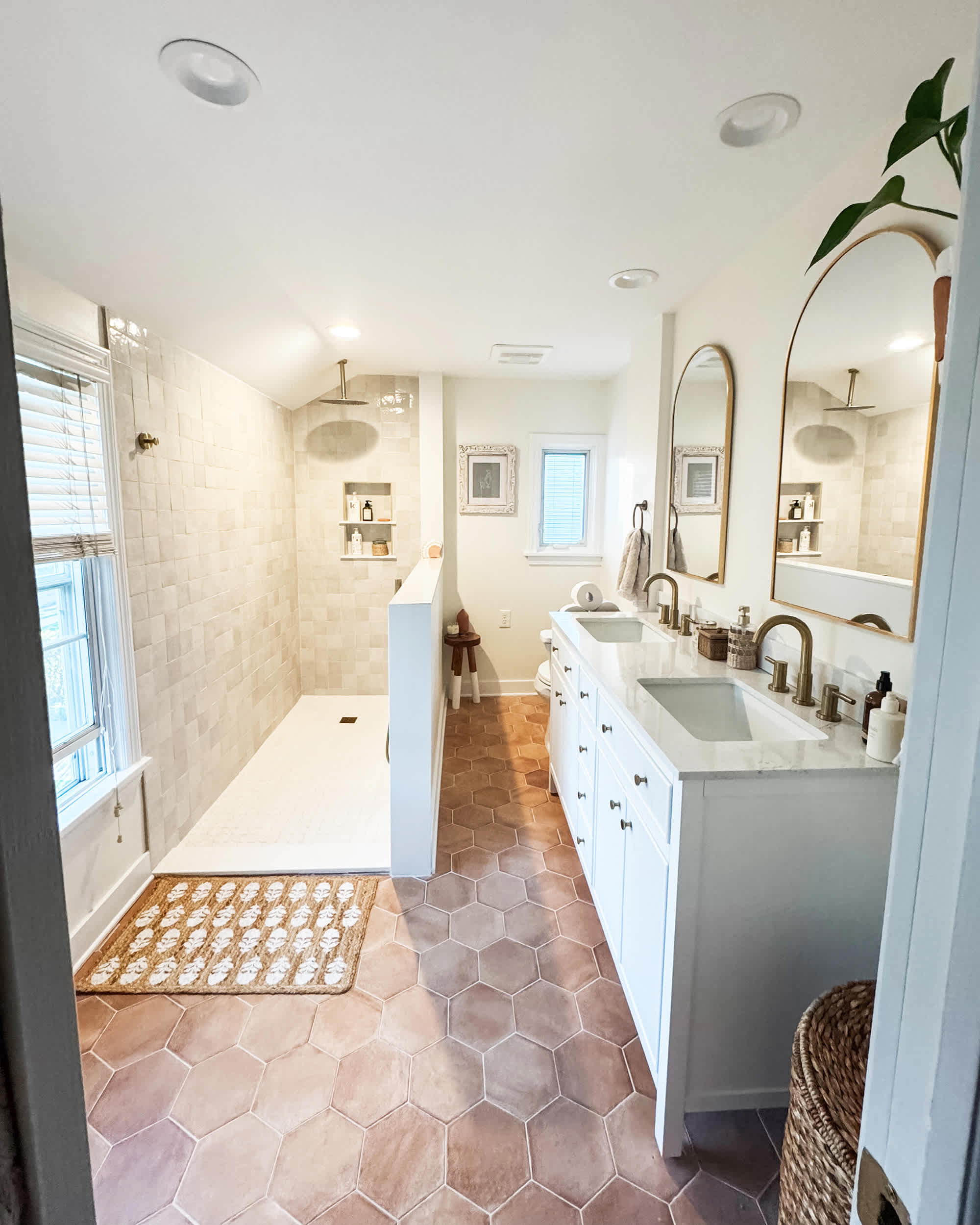
“Hexagonal Terracotta Tiles: $800 – $2,000
White Double Vanity: $1,500 – $4,000”
- Hexagonal Terracotta Tiles: $800 – $2,000
- White Double Vanity: $1,500 – $4,000
- Brass Fixtures & Mirrors: $1,000 – $2,500
- Shower Tile & Glass: $1,500 – $3,500
- TOTAL: $4,800 – $12,000
- Budget Alternative: Find a simple white vanity from a big box store and upgrade the hardware to brass. Look for affordable brass-finished fixtures and mirrors online, and choose a classic, inexpensive white subway tile for the shower to keep costs down.
Ready to jump into this warm minimalist look? Check these points first.
- Grout Choice: Have you decided on a grout color? A light, sand-colored grout will give a soft, blended look like this. A dark grout would create a much more graphic, busy honeycomb pattern.
- Fixture Finish: Are you committed to brass? This look leans heavily on the warmth of the metal. Swapping it for chrome or black would significantly change the room’s vibe, creating a much cooler, higher-contrast feel.
- Vanity Top: Notice the vanity has a durable, waterproof marble top. If you’re considering a wood-top vanity, ensure it’s properly sealed for a bathroom environment to prevent water damage.
29. Combine Dark Terracotta Floors with Light Beige Cabinetry
This room demonstrates the power of a high-contrast, warm-neutral palette. The dark terracotta floor provides a deep, solid anchor, while the light beige cabinetry and walls create a sense of airiness and space. The look is successful because both the dark and light elements share a warm undertone. The black countertops and door frame are the key to making it feel modern and crisp; they provide a sharp, graphic element that keeps the beige-and-terracotta combination from feeling dated.
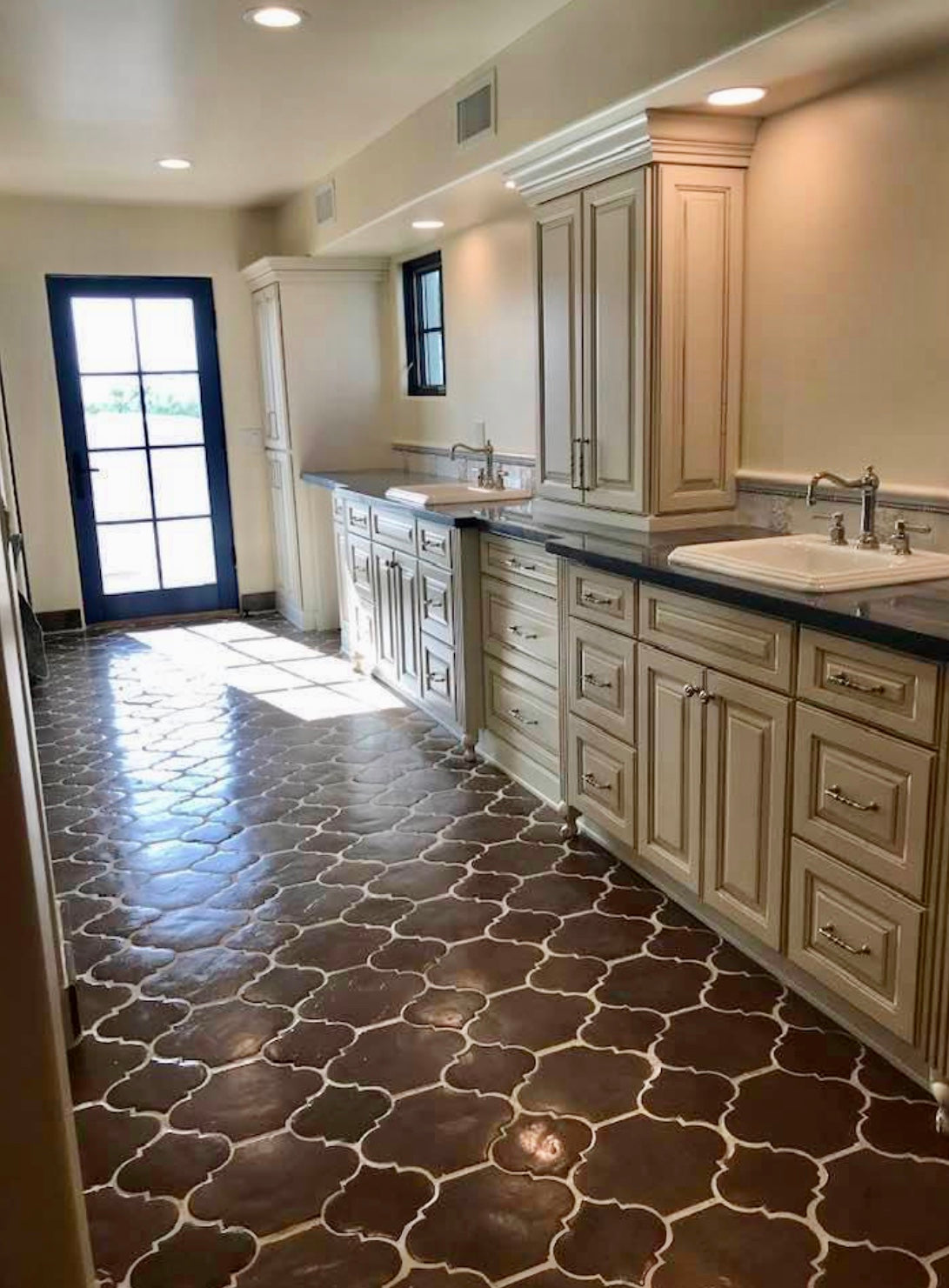
“Light-colored grout on a floor is a classic look, but it requires diligent maintenance to stay looking fresh.”
Grout is porous and will absorb dirt and spills over time, especially in a high-traffic area. Plan on deep cleaning the grout lines with a specialized cleaner and a brush at least once or twice a year. Sealing the grout after installation and after each deep cleaning is the best way to protect it from staining and make your regular mopping more effective.
30. Go Contemporary with Dusty Pink Cabinets and a Terracotta Floor
The combination of dusty pink (or ‘millennial pink’s’ more sophisticated cousin) and terracotta is a defining palette of mid-2020s design. It’s an evolution of the warm minimalism trend, infused with a bit more color and personality. It feels fresh, optimistic, and slightly playful, without sacrificing sophistication. This pairing is popular because it feels both fashion-forward and grounded, blending a trendy hue with a timeless, earthy material. The woven pendants and light wood add a touch of Scandi-boho, another major trend influence.
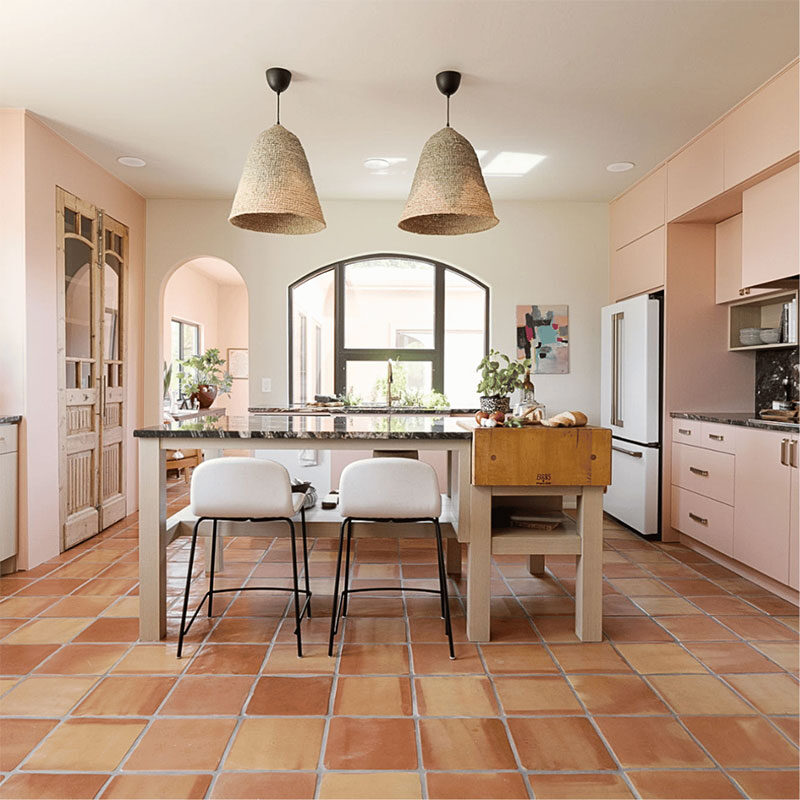
“The dark granite countertop on the island is the single element that gives this kitchen its sophisticated edge.”
Without it, the combination of pink, terracotta, and light wood could skew too sweet or bohemian. The sharp, dark countertop provides a necessary point of contrast and a touch of sleek, modern gravity. It’s the grown-up in the room that balances the playful energy of the pink and the rustic quality of the floor, making the whole design feel intentional and chic.
Your Floor is the Foundation—Now Build on It.
Terracotta is more than just a flooring choice; it’s a statement of warmth, history, and personality. As you’ve seen, it’s incredibly versatile, pairing just as beautifully with deep greens and navys as it does with soft pinks and creams. Now that you’re full of ideas, get back to that Pinterest board and start creating the warm, earthy home you’ve been dreaming of. The perfect color combination is waiting for you.