You know that feeling when you finally find the flower bed idea that looks exactly right for your space? It’s a tiny thrill every homeowner chases on Pinterest. We spent serious time browsing local garden centers and big-box stores like Home Depot and Lowe’s to find what truly works. We filtered through hundreds of options to bring you the best, from simple weekend projects to grand landscaping redesigns. Inside, you’ll find 29 curated ideas covering rustic, modern, and traditional styles that are defining gardens in 2026. This isn’t just about pretty pictures; it’s about real, achievable designs. And stay until the end — we break down the most common mistakes that can ruin these looks. 📌 Save this to Pinterest for later — you’ll want to revisit these ideas.
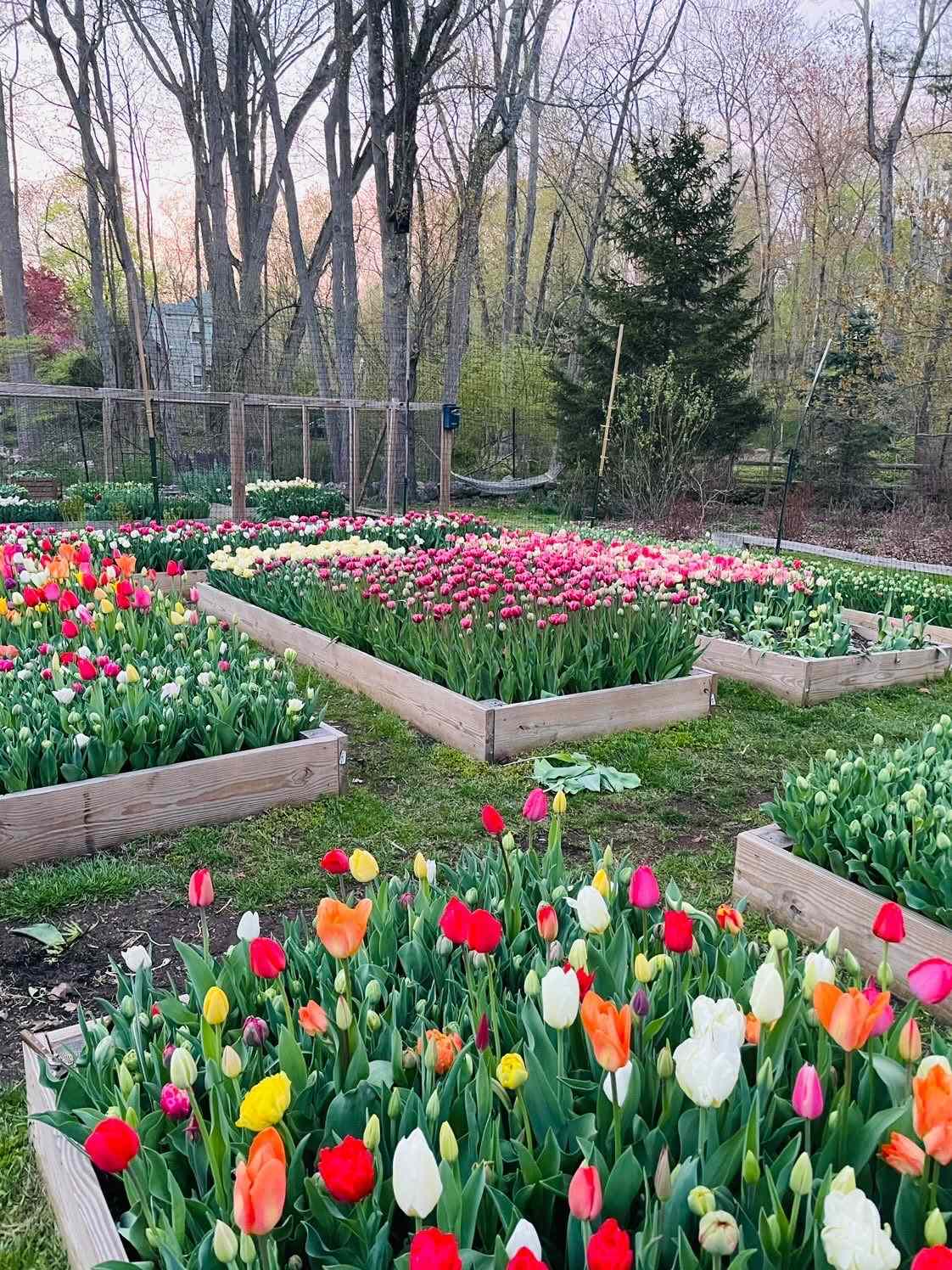
1. Vibrant Tulip Beds in a Rustic Wooded Garden
What makes this feel so special is the juxtaposition of formal structure with a wild setting. The simple, clean lines of the wooden raised beds provide a sense of order, but they’re filled with a riot of colorful tulips that feel joyful and untamed. This contrast between the man-made and the natural is what creates the visual interest. The background of bare trees and a simple fence adds to the rustic charm, proving that your garden doesn’t need to be perfectly manicured to be beautiful.
“A setup like this is glorious in the spring, but let’s be honest about the rest of the year.”
Once those tulips are done, these beds will look quite bare until you plant your summer annuals. This approach requires a two-season planting strategy. Also, the “unkempt” woodland background can easily tip into “overgrown mess” if you don’t stay on top of weeding and basic maintenance around the beds. It’s a bit more work than a simple lawn, so be prepared for the upkeep.
2. Lush Hydrangea Pathway with Natural Log Edging
To get that full, tumbling look with hydrangeas, don’t plant them in a straight, rigid line. Instead, stagger the plants in a zig-zag pattern, placing them about 30-36 inches apart. This gives each plant enough air circulation to prevent mildew but allows them to grow into each other, creating a dense, continuous wall of color. As they grow, they’ll spill over the log edging for that effortless, natural feel you see here. The key is planning for their mature size, not their size when you buy them.
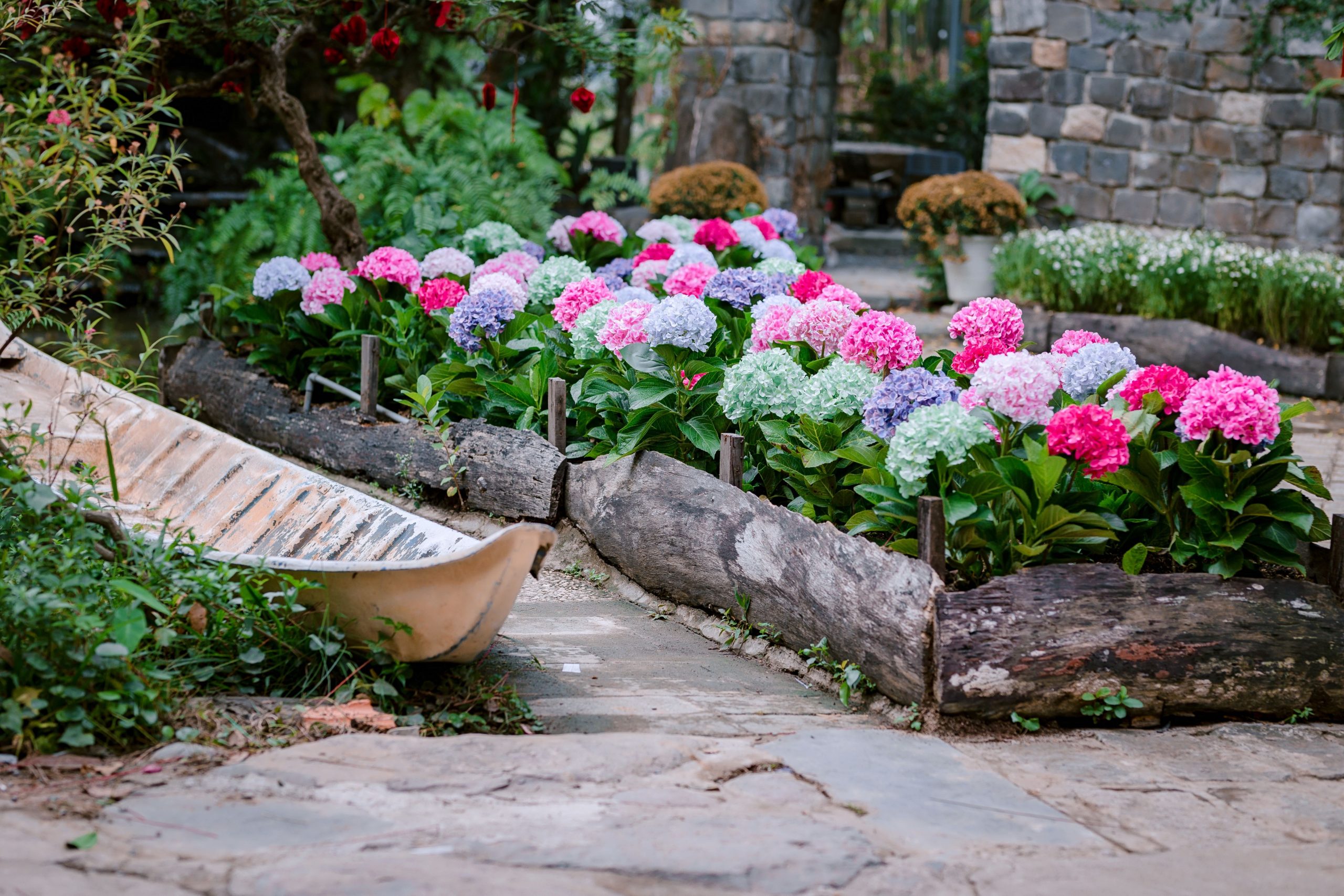
“that makes this design sing is the weathered wooden log edging.”
Without it, this would just be a pretty flower bed. With it, the entire scene is grounded in a rustic, earthy texture. The raw, natural wood contrasts beautifully with the soft, pillowy hydrangea blooms and the cool tones of the stone path. It’s a simple, low-cost element that adds immense character and makes the whole garden feel more established and intentional. Compare it with the more structured brick edging in Idea #26 to see the difference.
3. Interlocking Dark Wood Planters with Pink Hydrangeas
This look follows a simple but powerful formula: 60% structured material + 40% loose, vibrant florals. The dark, slatted wood planters provide a strong, geometric base, creating visual weight and a modern feel. The remaining 40% is all about the lush, almost chaotic explosion of pink hydrangeas and green foliage spilling from the top. You could swap the dark wood for black-painted metal or the pink hydrangeas for white panicle hydrangeas and still achieve the same balanced effect because the core ratio remains.
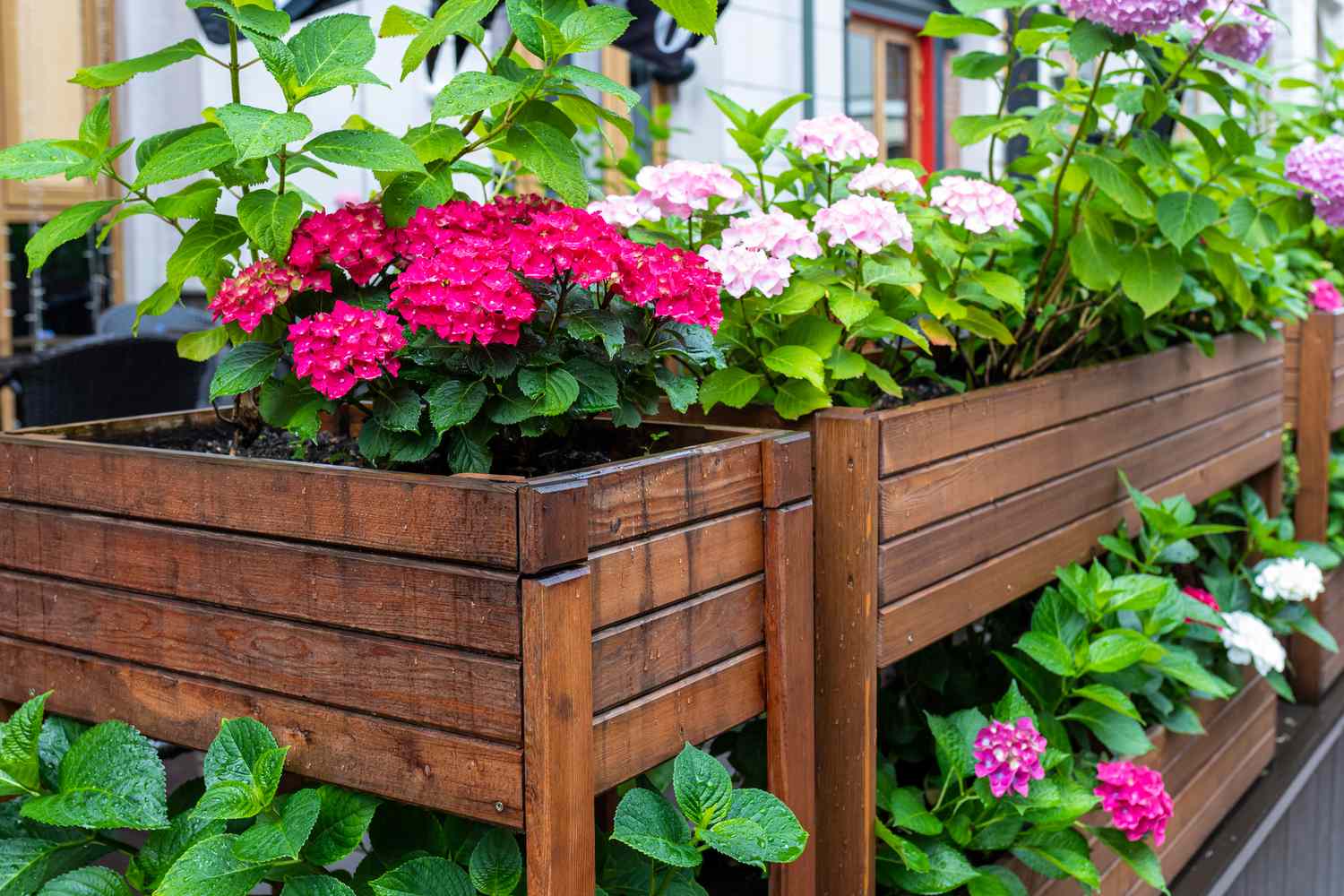
“This modular planter style is incredibly versatile, but it’s best suited for patios, decks, or smaller yard spaces where you want to create a significant floral impact without digging up the ground.”
They work well for defining an outdoor “room” or creating a privacy screen. For this look to feel substantial and not dinky, plan for a minimum length of 8-10 feet. The height, around 24-30 inches, is perfect for making a statement without blocking a view entirely.
4. Romantic Brick Path Lined with Pink Rose Bushes
This is a masterclass in repetition and framing. The repeating element is, of course, the vibrant pink rose bushes, which are used on both sides of the path to create a powerful sense of rhythm and guide the eye toward the front door. This repetition creates a cohesive and immersive experience. The brick path is perfectly framed by the flowers, creating a floral “hallway” that makes the entrance feel grand and inviting. The green shutters and white siding of the house provide a classic, neutral backdrop that allows the pink to truly pop.
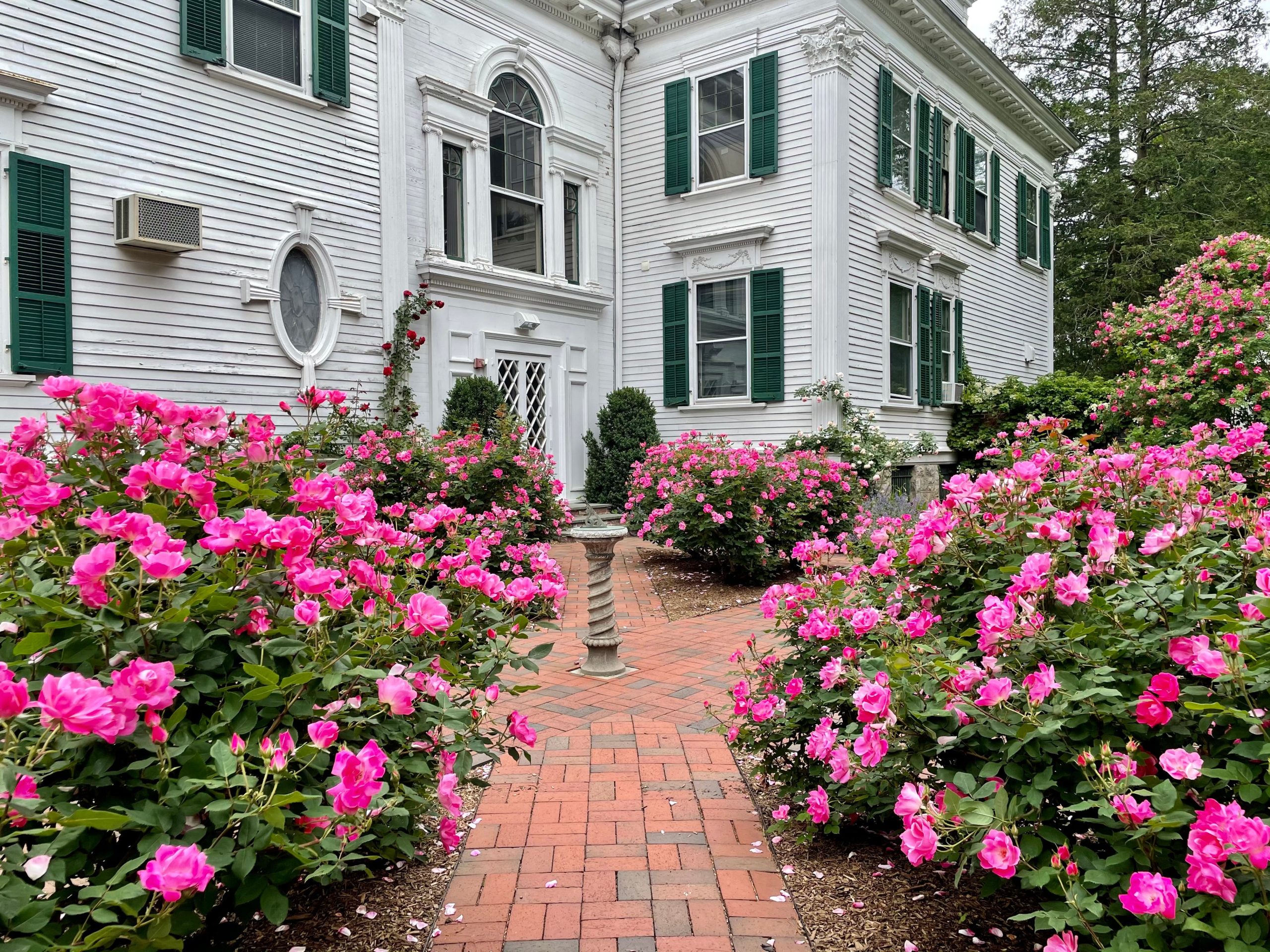
“A rose-lined path is the absolute dream, but it requires dedication.”
Roses are prone to pests like aphids and diseases like black spot, especially if you live in a humid climate. You’ll need a regular spraying schedule (organic or chemical) to keep them looking this good. Deadheading the spent blooms every few days is also non-negotiable to encourage new flowers. Expect to spend at least an hour per week on maintenance during the growing season. Also, thorns are a real thing, so keep that in mind if you have little kids who love to run up the path.
5. Colorful Raised Bed with Irregular Stepping Stones
- Main Furniture (Raised Bed): $250 – $500 (for lumber)
- Textiles (Colorful Annuals): $150 – $300 (depending on density)
- Decor/Accessories (Stepping Stones & Gravel): $200 – $400
- Paint/Wall Treatment: N/A
- TOTAL: $600 – $1,200
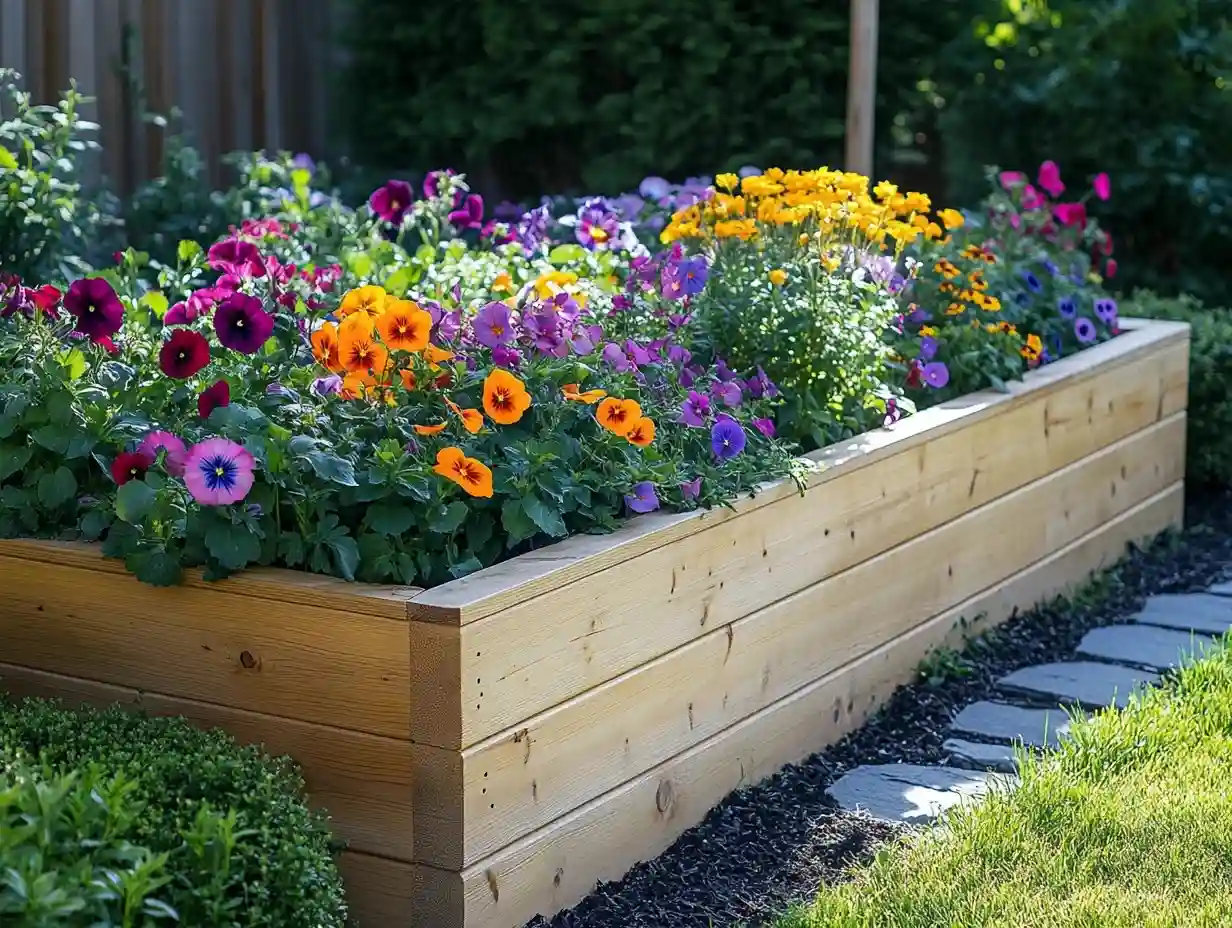
“Budget alternative: Use salvaged wood or lower-cost pine (it won’t last as long) for the bed.”
Grow flowers from seed instead of buying starts. Use pea gravel and fewer stepping stones to cut costs by about 50%.
6. Tiered Wooden Beds for a Sloped Yard Solution
This tiered design is an amazing way to make a sloped yard usable. By building a series of stepped raised beds, you create flat, accessible planting areas instead of fighting with a difficult incline. It solves erosion issues and makes gardening so much more ergonomic. The wood adds a warm, natural touch that blends in beautifully with the surrounding greenery, turning a landscaping challenge into a standout feature of the garden.
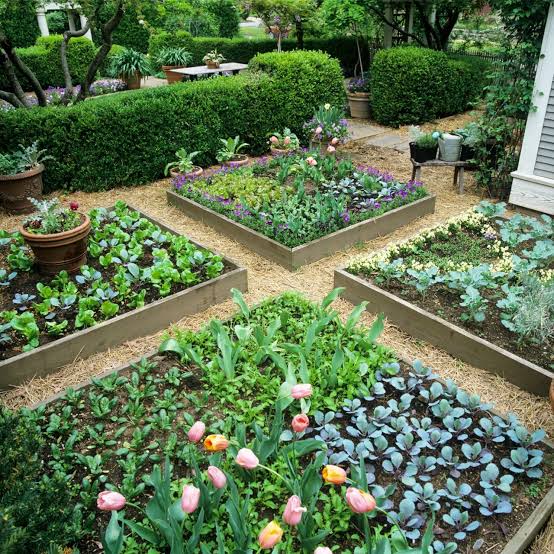
“Let’s be real: wood rots.”
Especially when it’s in constant contact with damp soil. While this look is gorgeous, untreated wood beds might only last you 3-5 years depending on your climate. Cedar or redwood will last longer (closer to 10-15 years) but come with a significantly higher price tag. You can line the inside with heavy-duty plastic to prolong the wood’s life, but be sure to poke drainage holes. It’s a trade-off between cost, longevity, and a bit of extra labor upfront.
7. Symmetrical Garden with a Central Fountain
The success of this design hinges on the principle of symmetry. The two dark wood raised beds are mirror images of each other, creating a pleasing sense of balance and order. This formal structure is then softened by the organic shapes of the plants within the beds and the climbing greenery on the back lattice. The light gravel paths create clean lines that lead the eye directly to the focal point, while their light color makes the surrounding greens and dark wood pop in contrast.
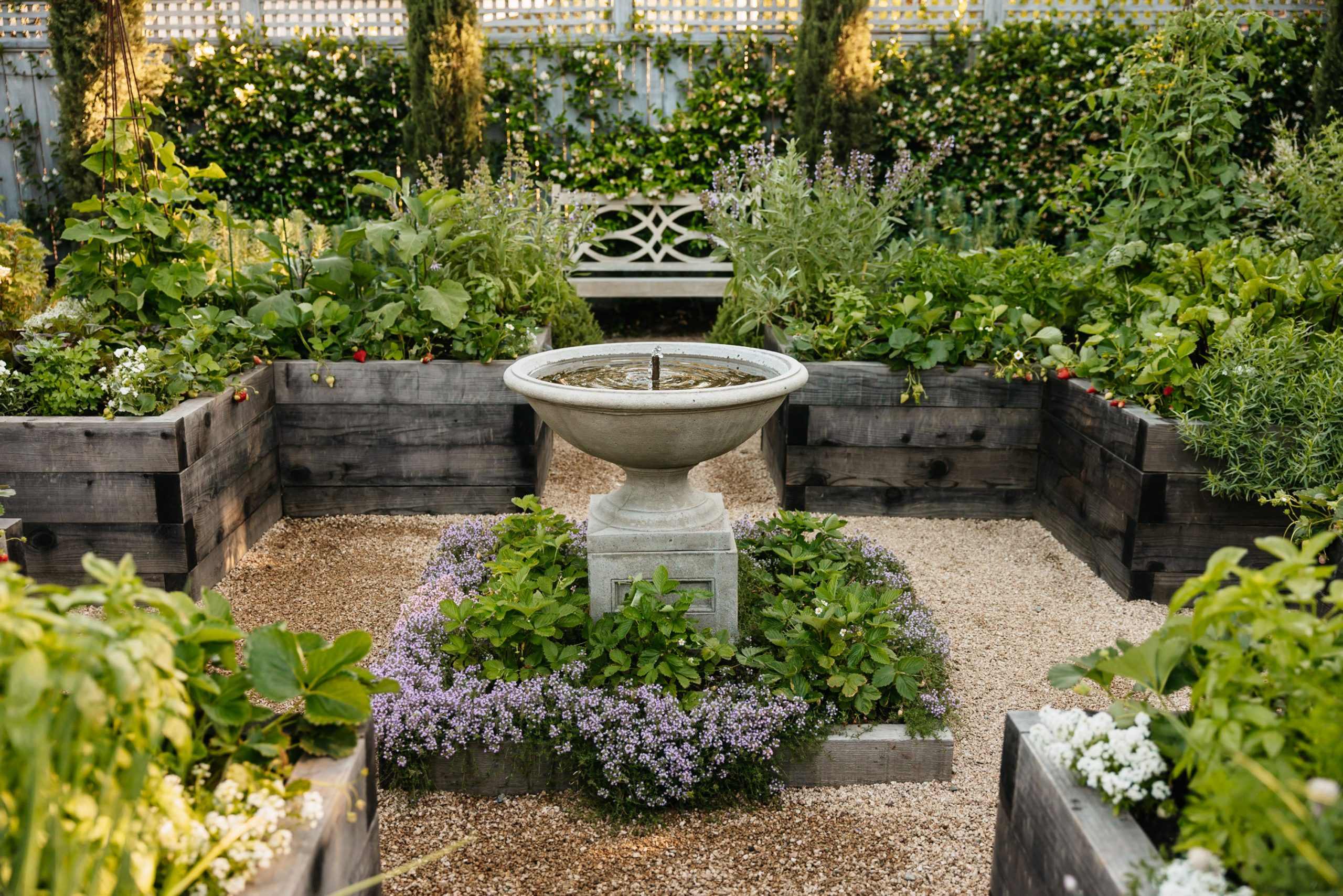
“The central water feature is the single element that elevates this from a nice garden to a serene sanctuary.”
It introduces the sound of moving water, which has a calming, meditative effect and helps mask unwanted neighborhood noise. Visually, its light stone color and vertical form provide a perfect centerpiece that breaks up the horizontal lines of the raised beds. Remove the fountain, and you just have a couple of planters. With it, you have a destination.
8. Weathered Metal Planters with Yellow and Green Foliage
This look is a beautiful equation: 50% rugged industrial material + 50% soft, vibrant planting. The weathered Corten steel planters provide a strong, textural, and modern base with their warm, rusty finish. This industrial edge is then completely softened by the explosion of color and texture from the plants—the bright yellow flowers and the cascading light green foliage create a display that feels both wild and contained. The contrast is what makes it so visually compelling.
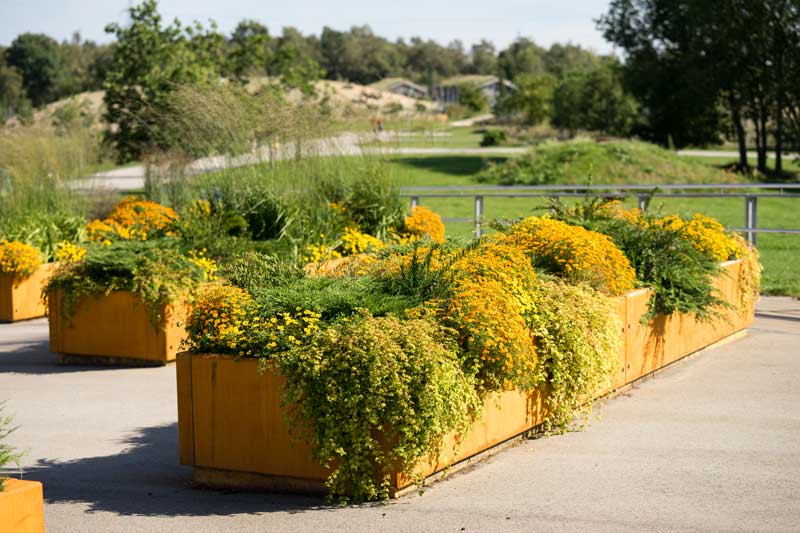
“While these planters look fantastic, keep in mind that metal heats up significantly in direct sun.”
This can dry out the soil much faster than a wood or stone planter, meaning you’ll need to be extra diligent with watering, especially during heat waves. The metal will also ‘bleed’ rust onto the surface below it for the first year or two as the patina develops. So, place them on gravel or another surface where a little rust staining won’t be a disaster. On a pristine white patio? Maybe not the best choice, unless you use a stand.
9. DIY U-Shaped Raised Bed for Maximum Planting Space
A U-shaped raised bed is a genius layout for maximizing planting space while keeping everything accessible. This design works beautifully in a square or rectangular area of at least 10×10 feet. To ensure you can always reach the middle of the beds without stepping on the soil, keep the width of each planting arm to no more than 4 feet. The central opening should be at least 3 feet wide to allow comfortable access with a wheelbarrow. This is a highly efficient design for a vegetable or cutting garden.
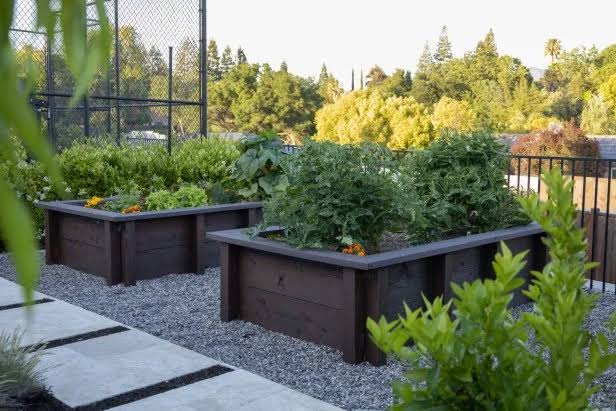
“You don’t need expensive cedar to get this functional layout.”
You can build this same U-shaped structure using much more affordable pressure-treated pine for around $200-$300 in lumber. If you’re concerned about chemicals, you can line the inside with a food-safe plastic barrier. For an even cheaper route, look for reclaimed lumber on Facebook Marketplace or Craigslist. As long as the wood is solid, a little character and weathering will only add to the charm.
10. Raised Garden Bed with an Integrated Trellis
- Time: 2 hours. Cost: $30-$50.
- Measure the inside width of your raised bed. Cut two pieces of 2×2 lumber to this length.
- Attach these two cross-pieces to the inside walls of your bed, about 6 inches from the top, using exterior screws.
- Place a pre-made wooden lattice panel onto these support pieces.
- Secure the lattice to the supports and the sides of the bed with more screws.
- Fill the bed with soil up to the base of the trellis and you’re ready to plant climbers!
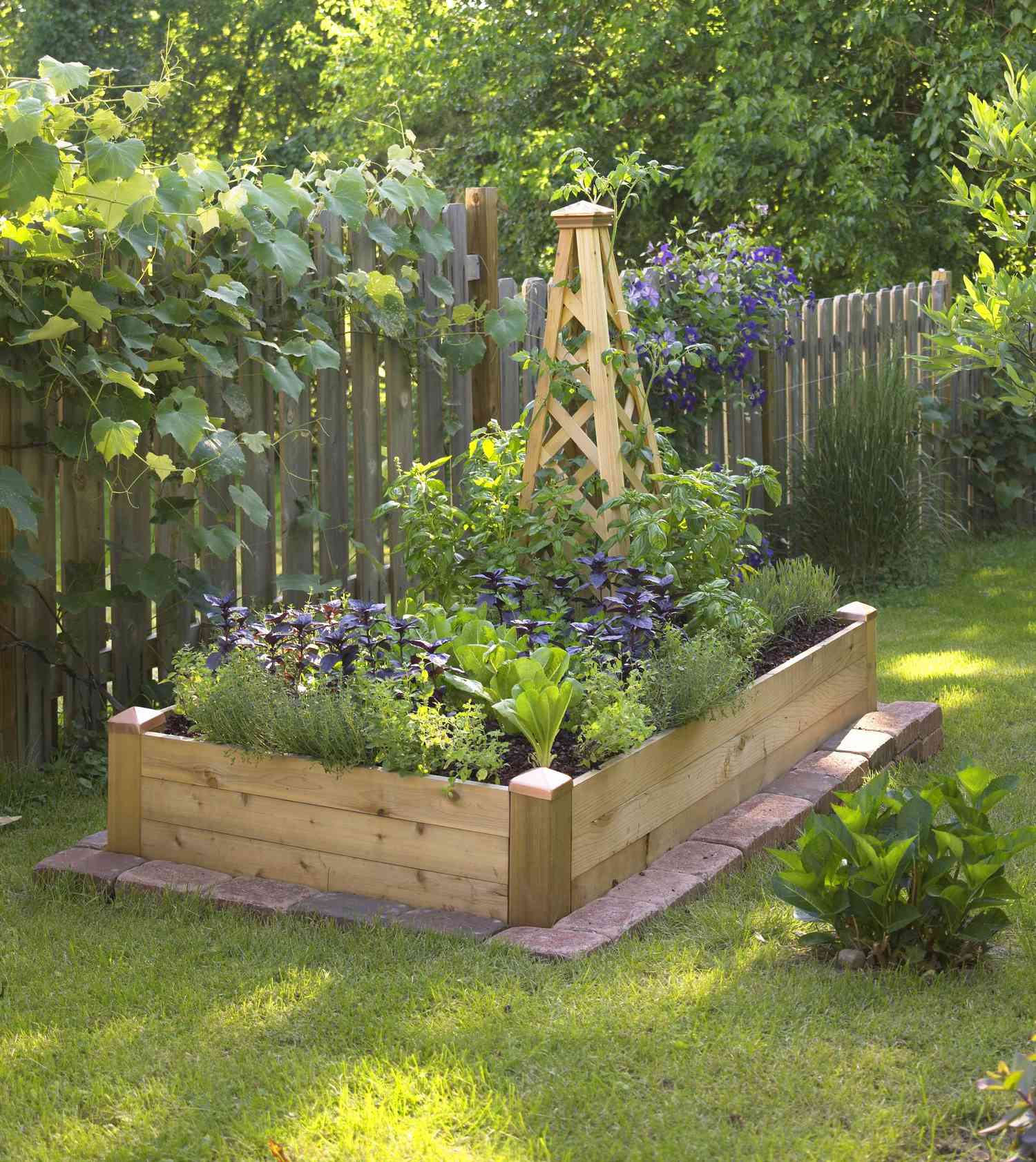
“The integrated trellis is the game-changer here.”
It transforms a simple box of plants into a dynamic, vertical growing space. It instantly adds height and structure to the garden, providing a backbone for climbing plants like peas, beans, or even flowering vines. This simple addition more than doubles the usable growing area of the bed without increasing its footprint. It’s a small detail that dramatically increases the bed’s productivity and visual appeal. See how it adds height compared to the flat design of Idea #5.
11. Corner Garden with Stacked Stone and a Pop of Blue
This little corner scene works because it masterfully layers textures and colors. You have the rough, natural texture of the stacked stone wall, the smooth painted lines of the wooden picket fence, the soft petals of the pink roses, and the distressed finish of the blue stool. Each element has its own distinct character, but they all work together to create a rich, tactile experience. The pop of bright blue is a classic designer trick—an unexpected color that instantly energizes the otherwise traditional, rustic palette.
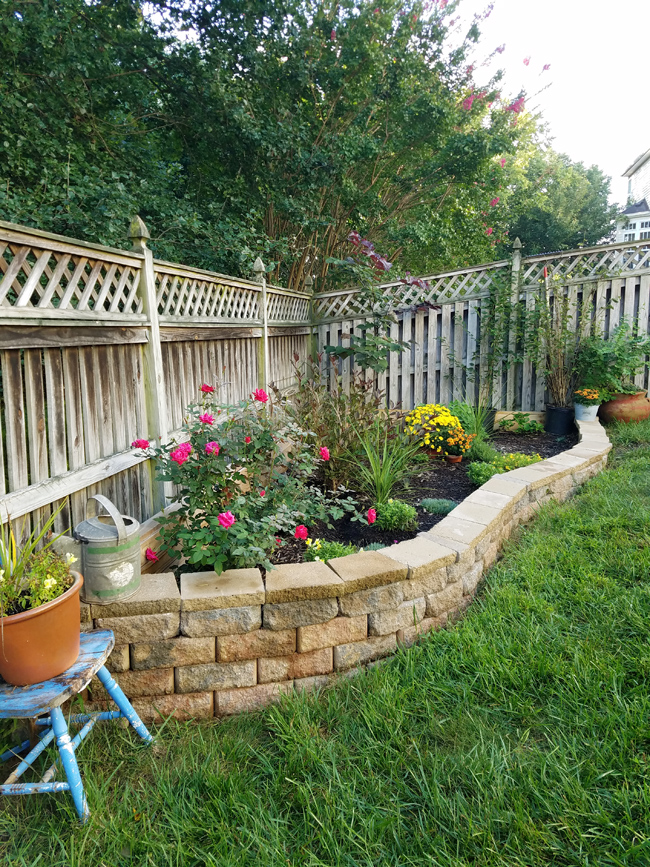
“When designing a corner garden, think in triangles.”
Place your tallest element (like a climbing plant on the fence or a large shrub) in the very back corner. Then, arrange mid-height plants like this rose bush in a semi-circle in front of it. Finally, fill in the front edge with your shortest plants or, in this case, charming decor like the stool and watering can. This layered, triangular arrangement creates depth and makes the corner feel much larger and more deliberate.
12. Rustic Hydrangea Bed with Log Edging and Stone Walls
That weathered log edging is absolutely dreamy, but be warned: it’s a haven for slugs and other garden pests. The nooks and crannies in the wood are perfect hiding spots. Also, because it’s untreated wood in direct contact with the soil, it will decompose. Depending on your climate and the type of wood, you might need to replace it every 5-7 years. It is not a permanent solution like a brick or stone border, but a stylistic choice that embraces a more transient, natural aesthetic.
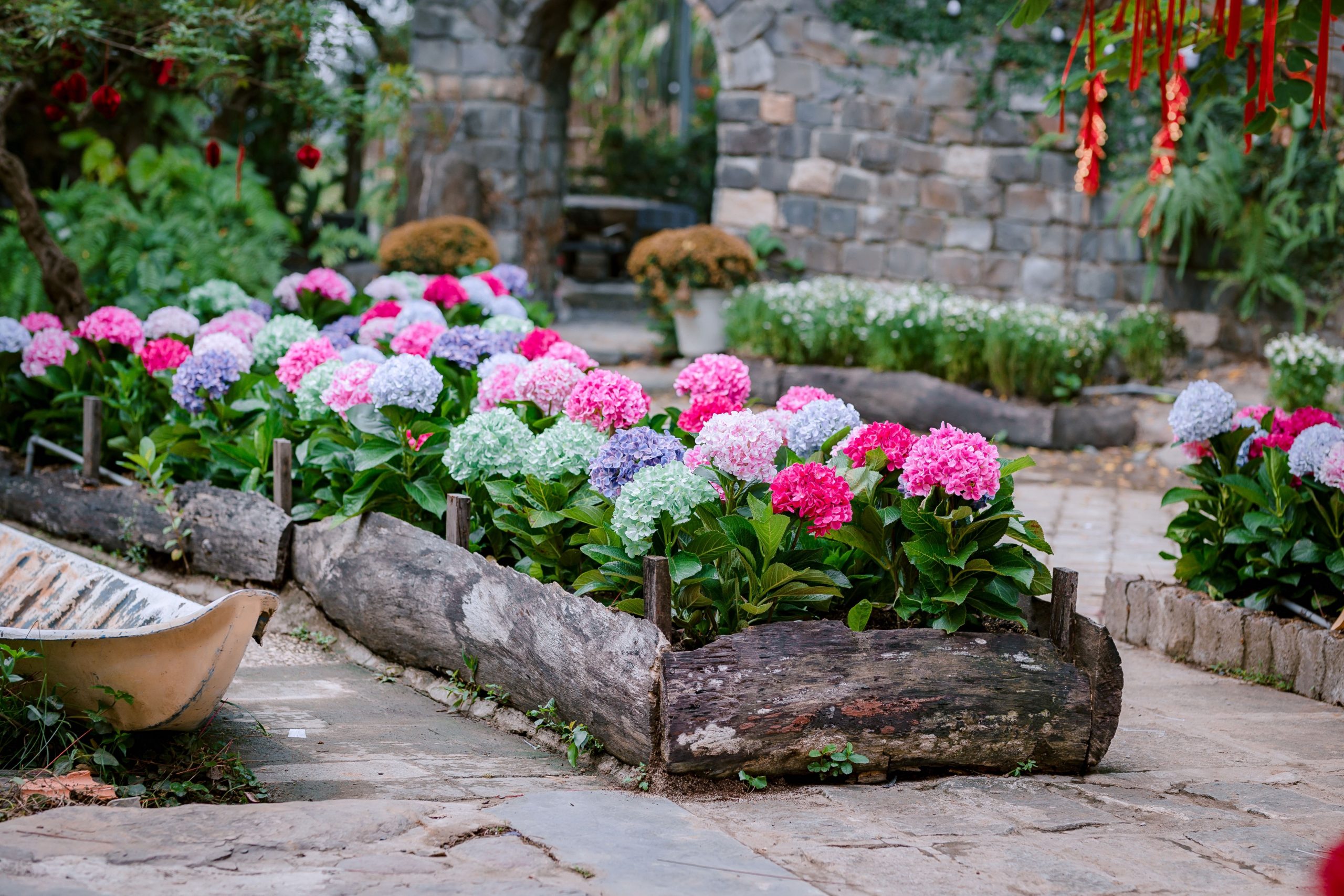
“The secret ingredient here is the layering of rustic textures.”
You have the rough bark of the log edging, the cool, uneven surface of the stone pavers, the blocky stone wall in the background, and the soft, pillowy texture of the hydrangea blooms themselves. It’s this rich combination of different materials that gives the garden its depth and character. Without this textural variety, the scene would feel much flatter and less interesting. This is a great example of how materials can tell a story.
13. Mixed Color Hydrangeas Along a Paved Stone Path
The color of many hydrangea varieties (like the ones seen here) is determined by the pH of your soil. To get those vibrant blues and lavenders, you need acidic soil (pH below 6.0). You can increase acidity by adding soil acidifiers, often found at garden centers, which usually contain sulfur or aluminum sulfate. For the bright pinks and reds, you need alkaline soil (pH above 7.0). You can raise the pH by adding garden lime. It’s a fun science experiment in your own backyard!
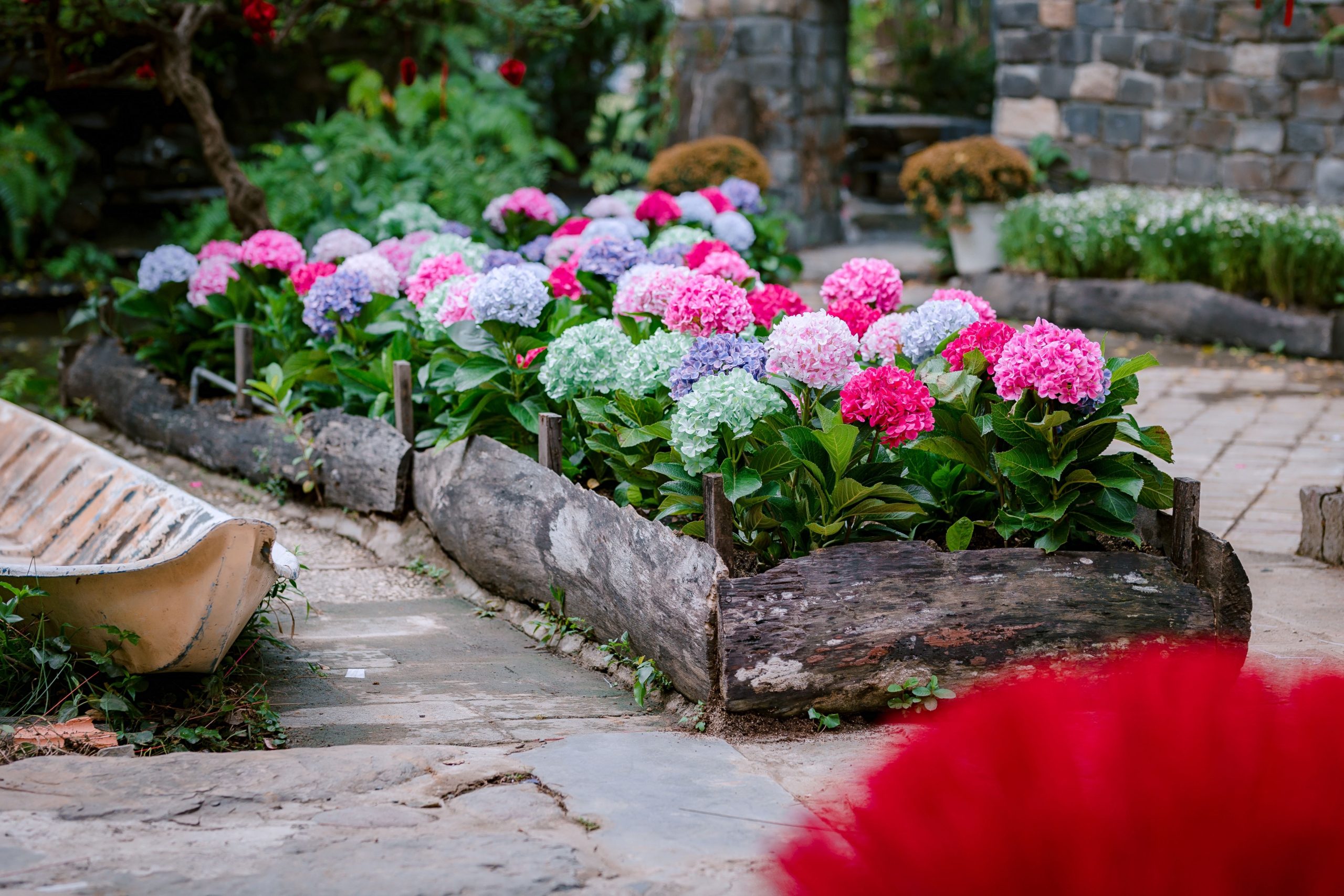
“We’re seeing a huge move away from perfectly manicured, single-color flower beds and towards this more natural, “garden-gathered” look.”
This path showcases a relaxed mix of pinks, purples, and blues, all living happily together. It reflects a broader cultural shift towards embracing imperfection and a more sustainable, less chemically-managed approach to gardening. This multi-color look feels authentic and alive, like a real cottage garden that has evolved over time, which is why it’s all over Pinterest right now.
14. Weathered Wood Planter with a Riot of Summer Blooms
This planter is a perfect example of the “thriller, filler, spiller” design principle. The tall, spiky pink bee balm acts as the “thriller,” providing vertical height and a dramatic focal point. The yellow coreopsis and green leafy plants are the “fillers,” adding mass and color to the middle. The ornamental grasses and other cascading elements are the “spillers,” softening the edges of the container as they drape over the side. This simple formula is a foolproof way to create a balanced and professional-looking container garden.
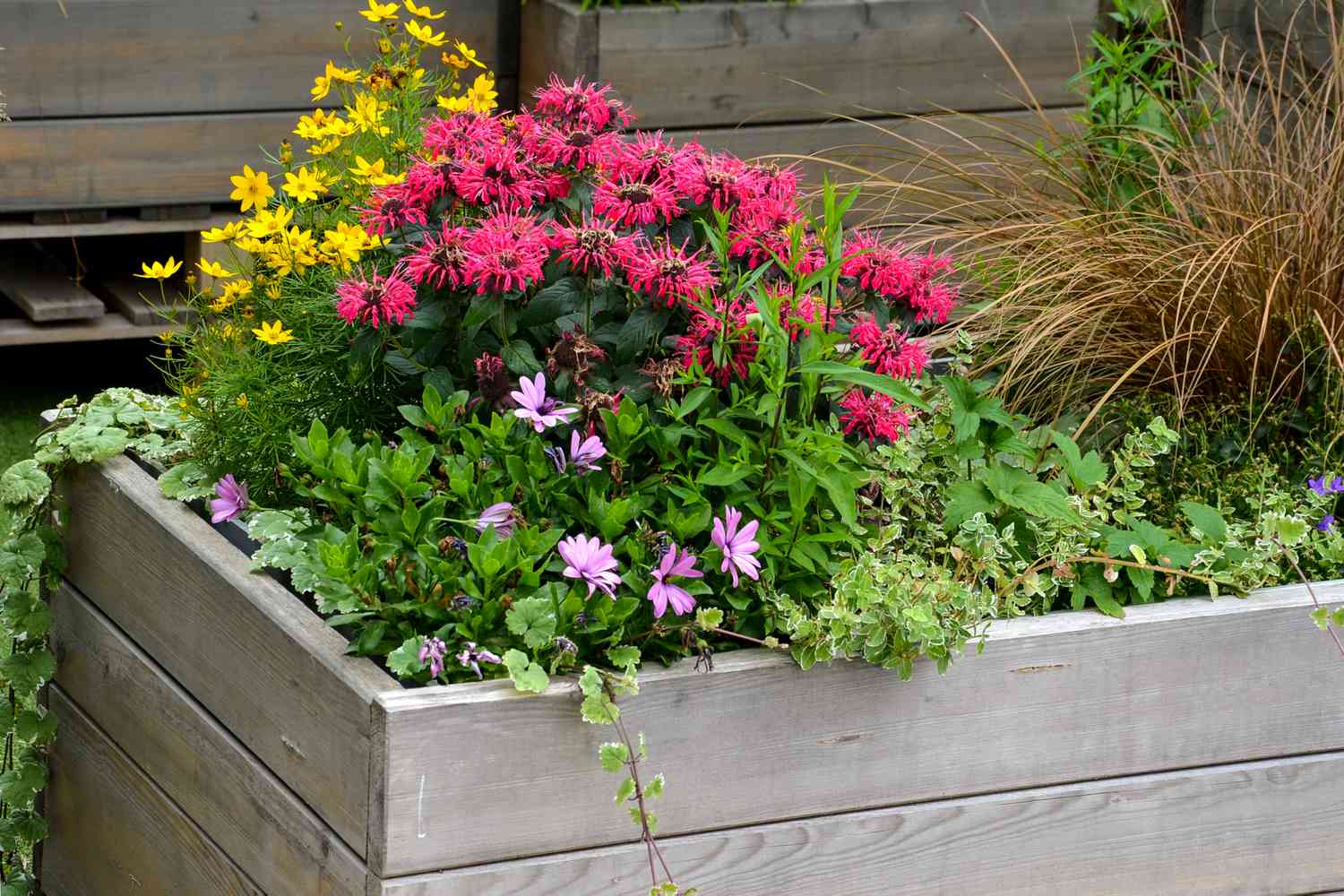
“You can get this same abundant, overflowing look for a fraction of the cost.”
Instead of a large, pre-made wooden planter, build a simple frame from pressure-treated 2x4s and line it with landscape fabric. Or, find a large plastic stock tank at a farm supply store and drill drainage holes in the bottom—it will give you a similar rustic, utilitarian vibe for under $100. Grow your flowers from seed packets (costing just a few dollars each) instead of buying expensive nursery starts.
15. Octagonal Brick Flower Bed with Divided Plantings
The octagonal shape is what sets this design apart. It’s a simple geometric twist that turns a standard flower bed into a deliberate garden feature. The shape creates natural “pockets” for planting different types of flowers, encouraging the organized, quilt-like look you see here. If this were a simple square or circle, it wouldn’t have the same charm or architectural interest. It’s a small detail that signals intentionality and thoughtful design.
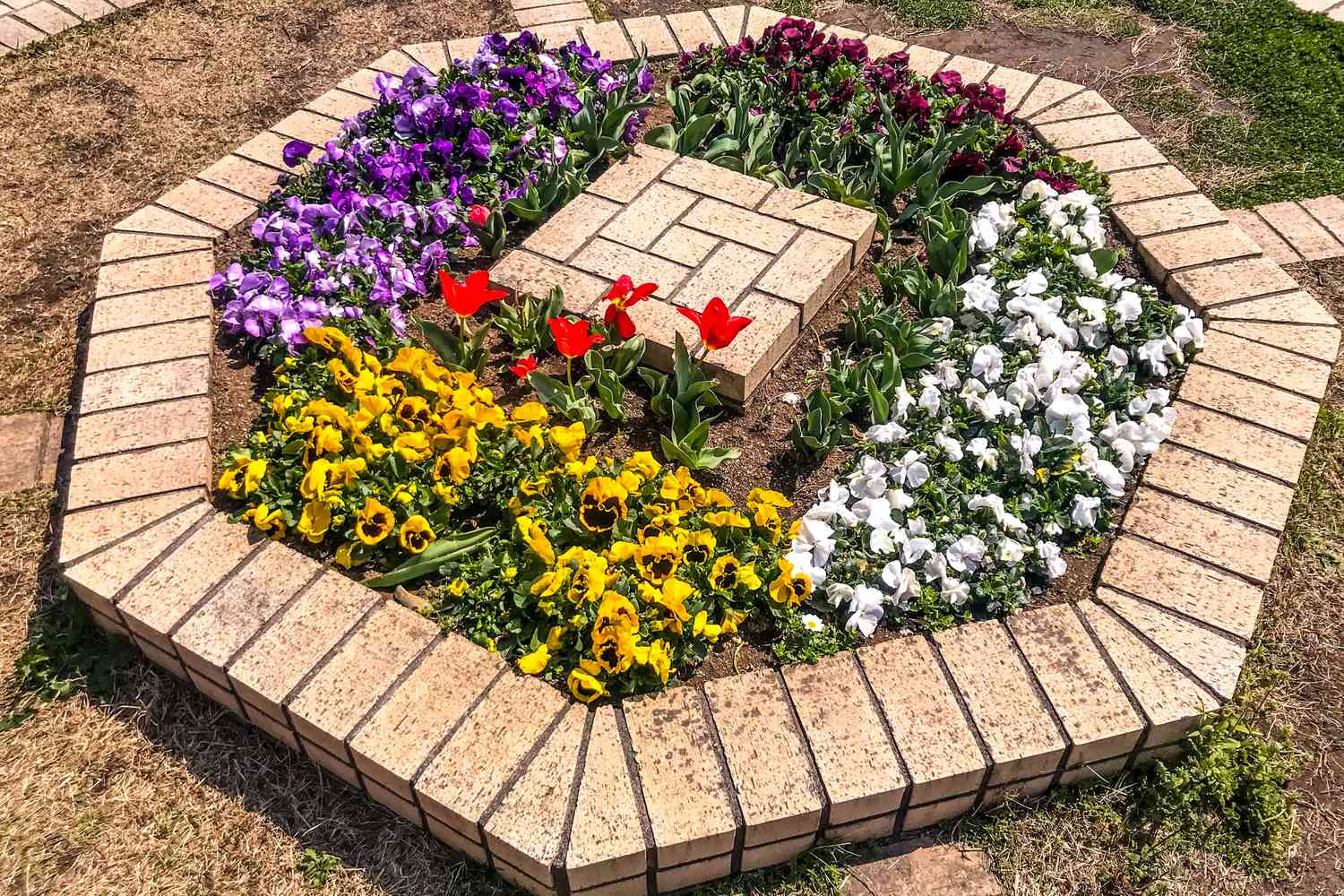
“A feature like this is perfect for creating a focal point in a small to medium-sized yard, or as a centerpiece where two paths cross.”
The bed itself is likely about 6-8 feet in diameter, making it substantial enough to make an impact without overpowering the space. It wouldn’t work as well in a very large, open lawn where it might look lost. It needs to be in proportion to the space it occupies, ideally with surrounding paths or lawn to frame it.
16. Curved Brick-Edged Beds with a Central Gravel Path
To create those smooth, perfect curves with brick edging, use a garden hose to lay out your desired shape first. A hose is flexible and allows you to easily adjust the curves until you’re happy with the flow. Once you have the shape locked in, you can either spray-paint the grass along the hose to mark your line, or just use it as a direct guide for your trench digger. This little trick saves a ton of time and ensures you get graceful arcs instead of wonky angles.
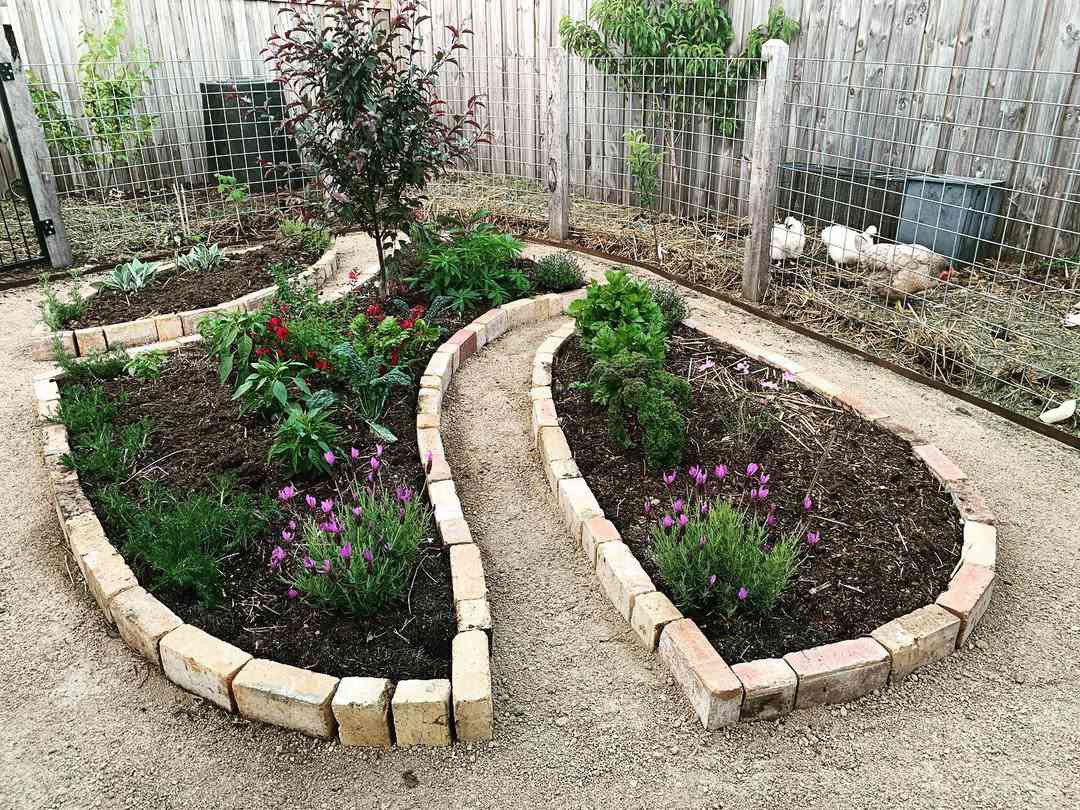
“A gravel path is a beautiful, budget-friendly choice, but it is not a zero-maintenance one.”
Weeds will eventually find a way to poke through, even if you use a high-quality landscape fabric underneath. Expect to spend some time hand-weeding or using a weed torch every few weeks. Leaves and other debris also need to be raked or blown off regularly to keep it looking clean. And over time, the gravel will get kicked into the beds and scattered, so it will need to be raked back into place and occasionally topped off.
17. Vibrant Marigold Beds Along a Historic Flagstone Path
The power of this design comes from bold color blocking. Instead of mixing a dozen different plants, the designer chose one dominant flower—the vibrant orange marigold—and planted it in a massive, uninterrupted swath. This creates a powerful visual impact that can be seen from a distance. The simple, intense color statement contrasts beautifully with the complex textures of the irregular flagstone path and the historic stone walls, making both the flowers and the architecture stand out more.
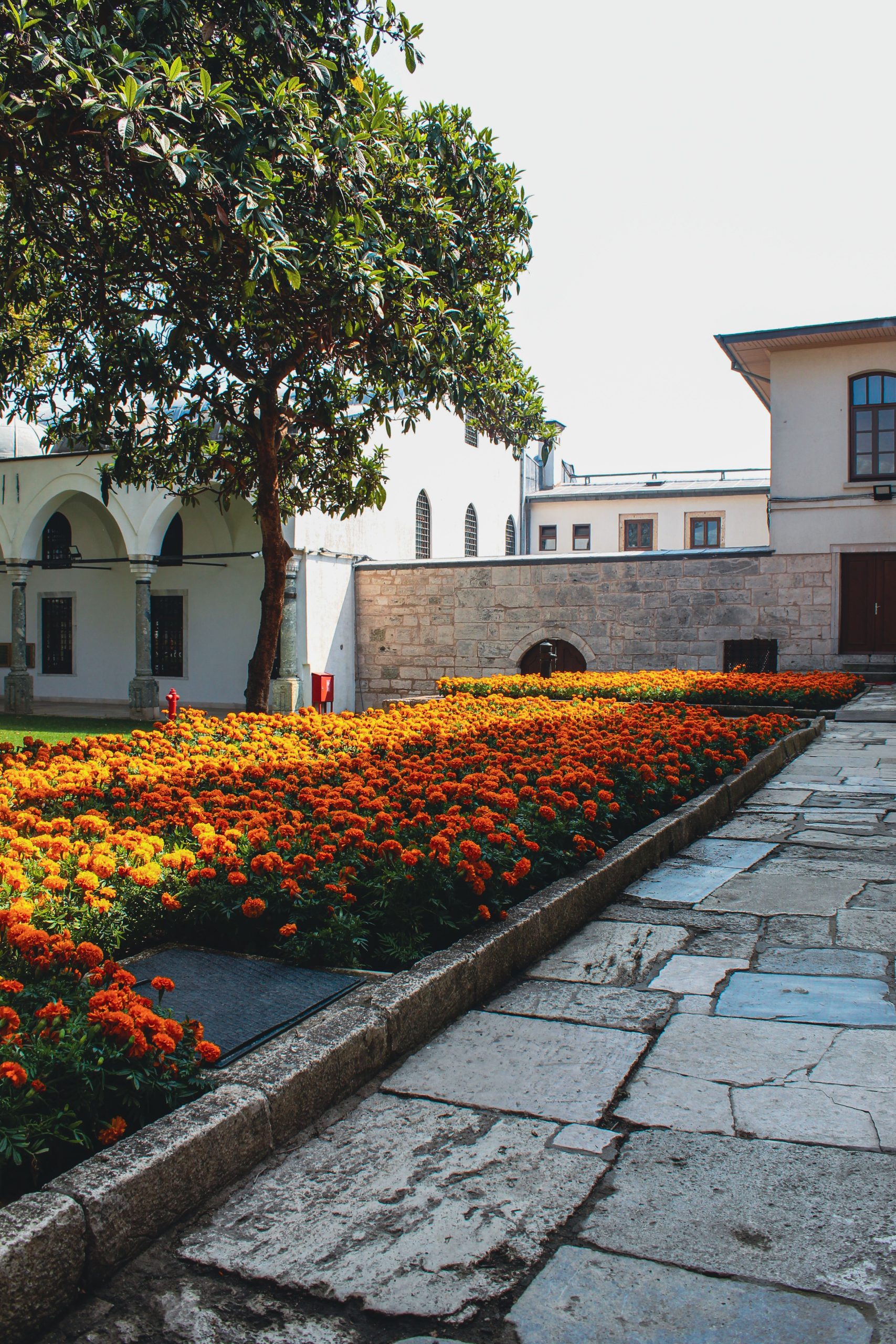
“Monochromatic mass plantings are having a real moment.”
After years of the “wildflower meadow” look being popular, designers and home gardeners are returning to this more structured, high-impact style. It feels confident and intentional. Using a single, hardy annual like marigolds is also a practical choice—they’re easy to grow, bloom all season, and are known for repelling pests. It’s a look that delivers maximum drama with relatively low fuss.
18. Classic Brick House with Mulched Foundation Beds
that makes this landscaping feel polished and complete is the crisp, clean edging between the black mulch beds and the vibrant green lawn. It’s a small, often overlooked detail, but it’s what creates that sharp definition and professional look. Without that clean line, the mulch would spill into the lawn, the grass would creep into the beds, and the whole yard would look messy and unfinished. A simple trench edge or a metal barrier is the secret to a high-end look.
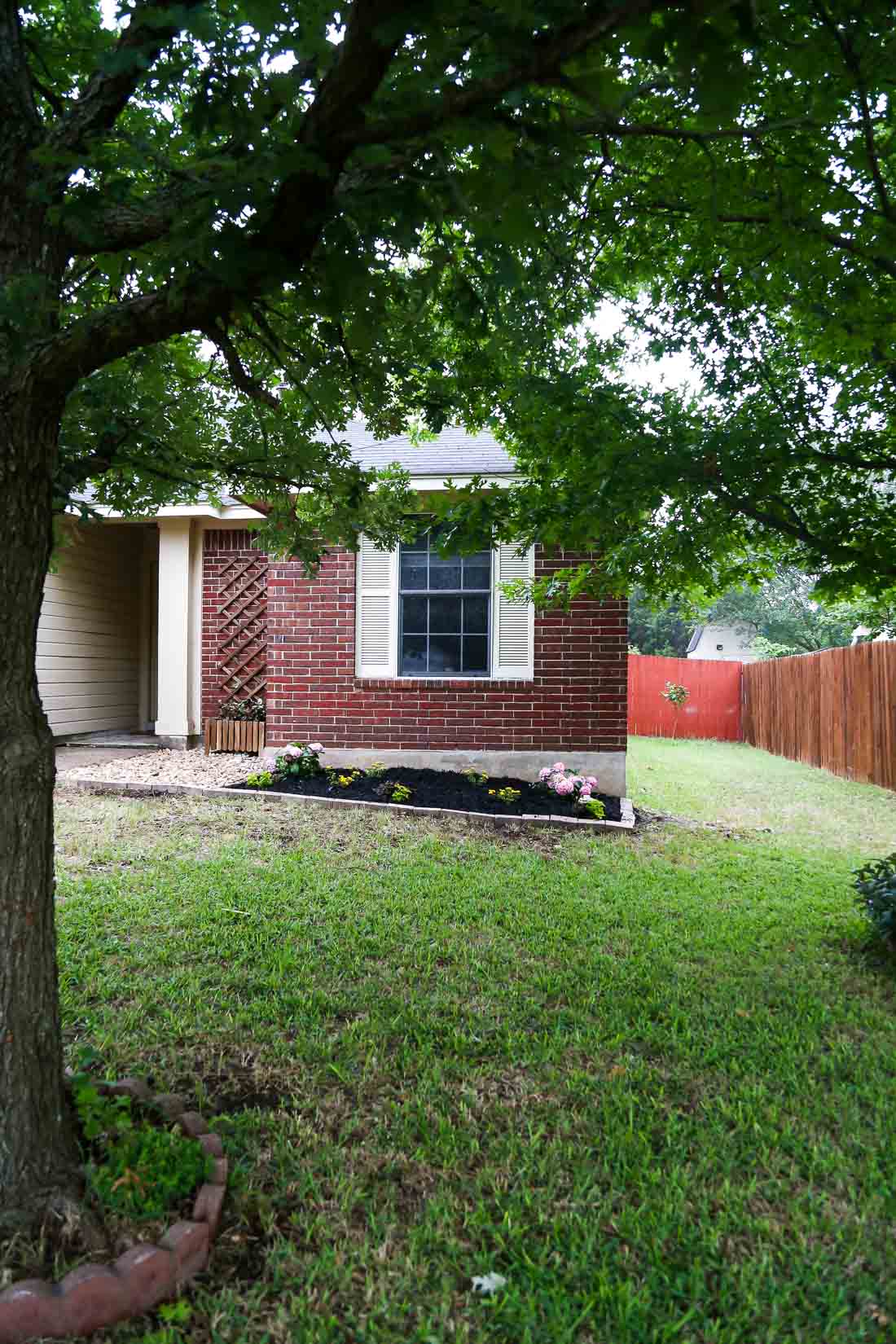
“Black mulch provides a fantastic dark backdrop that makes green foliage pop, but it comes with a downside: it fades.”
The deep black color is often a dye that will fade to a dull greyish-brown after a few months of sun and rain. To keep it looking fresh, you either need to apply a top-up layer of new mulch every spring, or use a mulch dye to re-spray the color. It’s an ongoing task to maintain that deep, rich black you see when it’s first installed.
19. Brick Wall with a Wooden Trellis and Planter Box
This composition is a beautiful exercise in textural layering against a flat plane. Let’s break it down: 50% is the foundational red brick wall, providing a warm, patterned backdrop. 30% is the natural wood of the trellis and planter, adding a lighter, organic grid and slat texture. The final 20% is the mix of soft foliage (the pink hydrangeas) and fine textures (pebbles and mulch). This layered approach adds so much depth and interest to what could have been a boring side of a house.
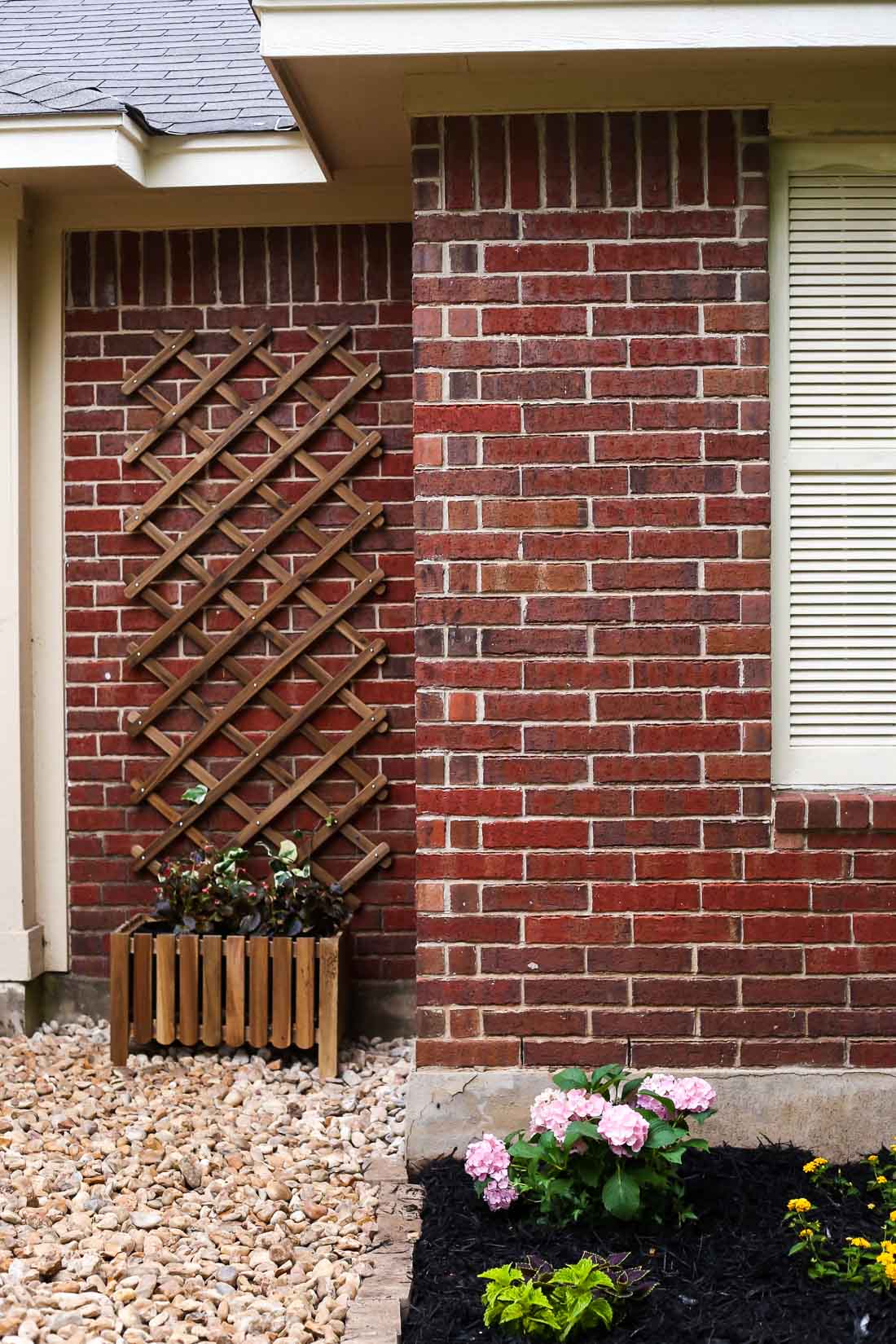
“When mounting a trellis to a brick wall, don’t attach it directly.”
You need to leave a gap of at least 2-3 inches between the trellis and the wall. This is crucial for two reasons. First, it allows air to circulate, which helps prevent mildew and disease on your climbing plants and protects the brick from trapped moisture. Second, it gives the plant stems and tendrils room to wrap around the trellis supports. Use spacer blocks or simple wood off-cuts to create the necessary gap.
20. Defining Edges with In-Ground Bricks
Using bricks set into the ground is a classic edging technique that works because it creates a subtle but clear definition between the lawn and the flower bed. Unlike taller borders, this method keeps the ground plane continuous, which can make a smaller space feel larger. The bricks provide a stable mowing strip, so you can run your lawnmower wheel right along the edge for a perfect cut every time, eliminating the need for tedious string trimming. It’s a practical and timeless choice.
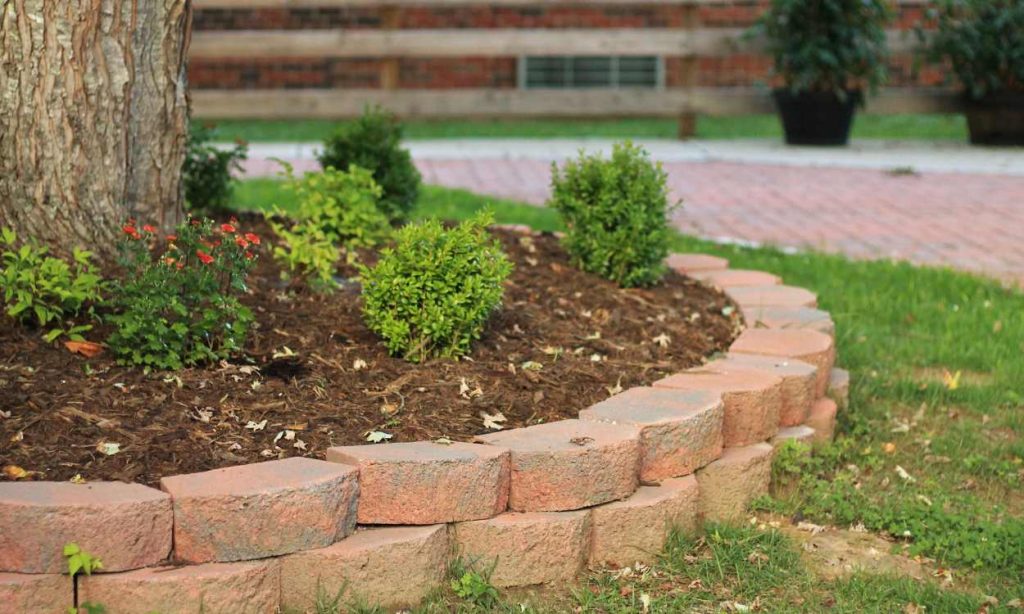
“Time: 4-6 hours (for a 50ft edge).”
Cost: $75-$150.Mark your desired edge with a rope or garden hose.Use a spade to dig a shallow trench along your line, about 4 inches deep and 4 inches wide.Add a 1-inch layer of paver sand to the bottom of the trench and tamp it down to create a level base.Place your bricks one by one in the trench, tapping them into place with a rubber mallet until they are level with each other and the lawn.Sweep more sand over the top to fill in any gaps between the bricks.
21. Tiered Retaining Walls for a Grand Entrance
This kind of grand, multi-layered landscaping is best suited for a property with a natural slope and a larger front yard. To achieve this dramatic, terraced effect, you need a significant change in grade. This design wouldn’t make sense on a flat lot. The house itself is large, and the landscaping is scaled to match. For a standard suburban lot, you might emulate this with a single, smaller retaining wall, as seen in Idea #11, rather than this multi-tiered approach.
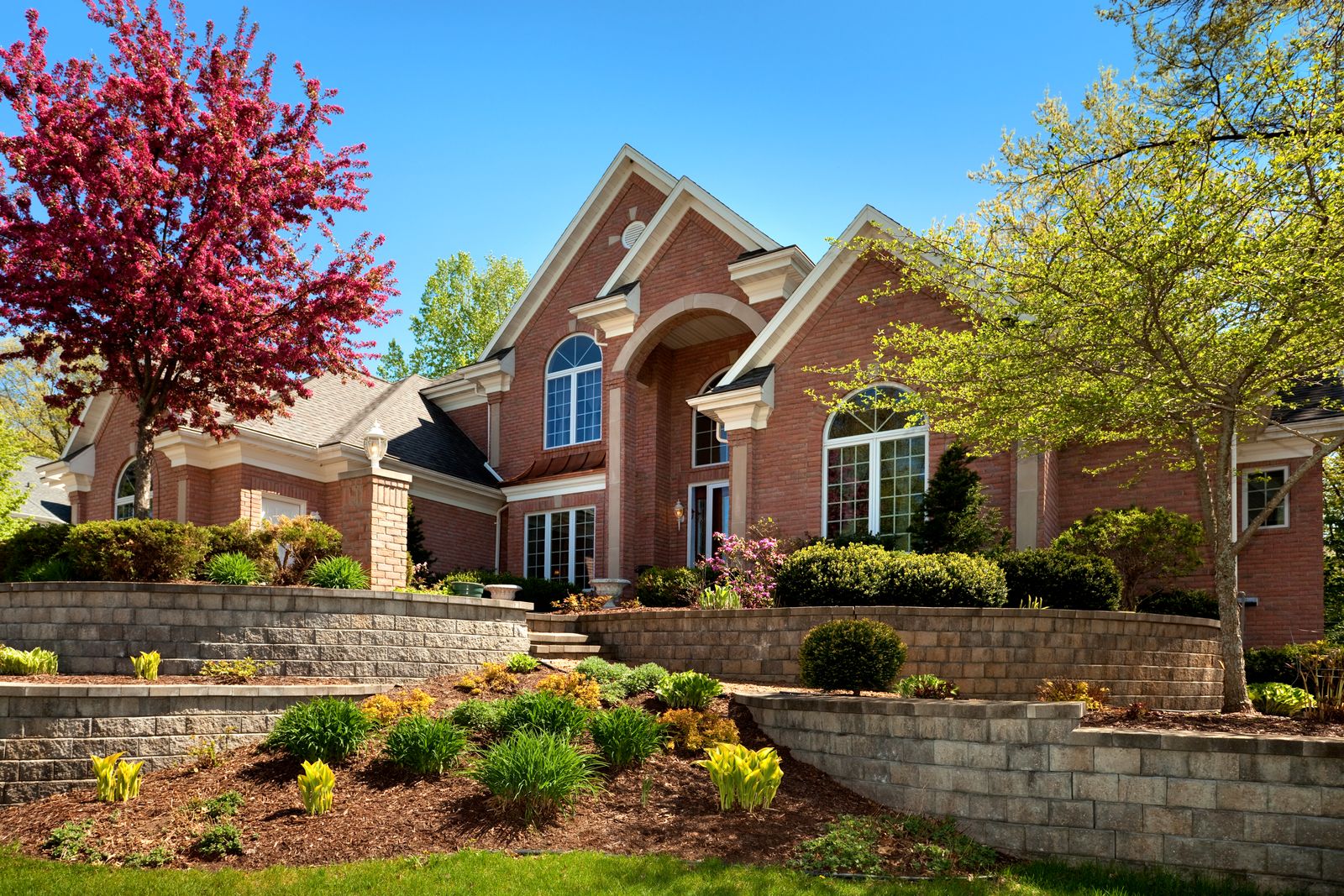
“While stunning, this is not a DIY project for a weekend.”
Building retaining walls, especially tiered ones, requires significant engineering to handle the pressure of the earth and ensure proper drainage. A poorly built wall can bulge, crack, or even collapse, which is both dangerous and expensive to fix. Unless you have professional landscaping experience, this is a job for the pros. The cost will be substantial, likely running into the thousands or even tens of thousands of dollars, depending on the size and materials.
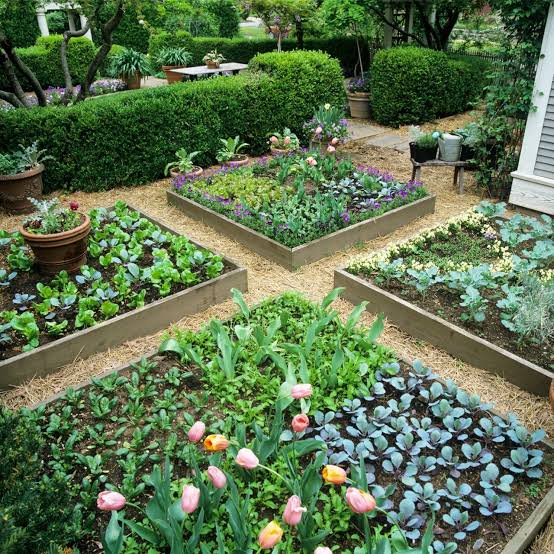
22. Productive Edible Garden with Woven Supports
The woven wood fencing and bamboo poles are what give this kitchen garden its soul. These natural, slightly rustic plant supports add a layer of craftsmanship and charm that you wouldn’t get from simple metal stakes or a plastic trellis. They suggest a gardener who is not just growing food, but is also tending to the beauty and artistry of the space. It’s a detail that elevates the garden from purely functional to genuinely beautiful and connects it to older, more traditional gardening practices.
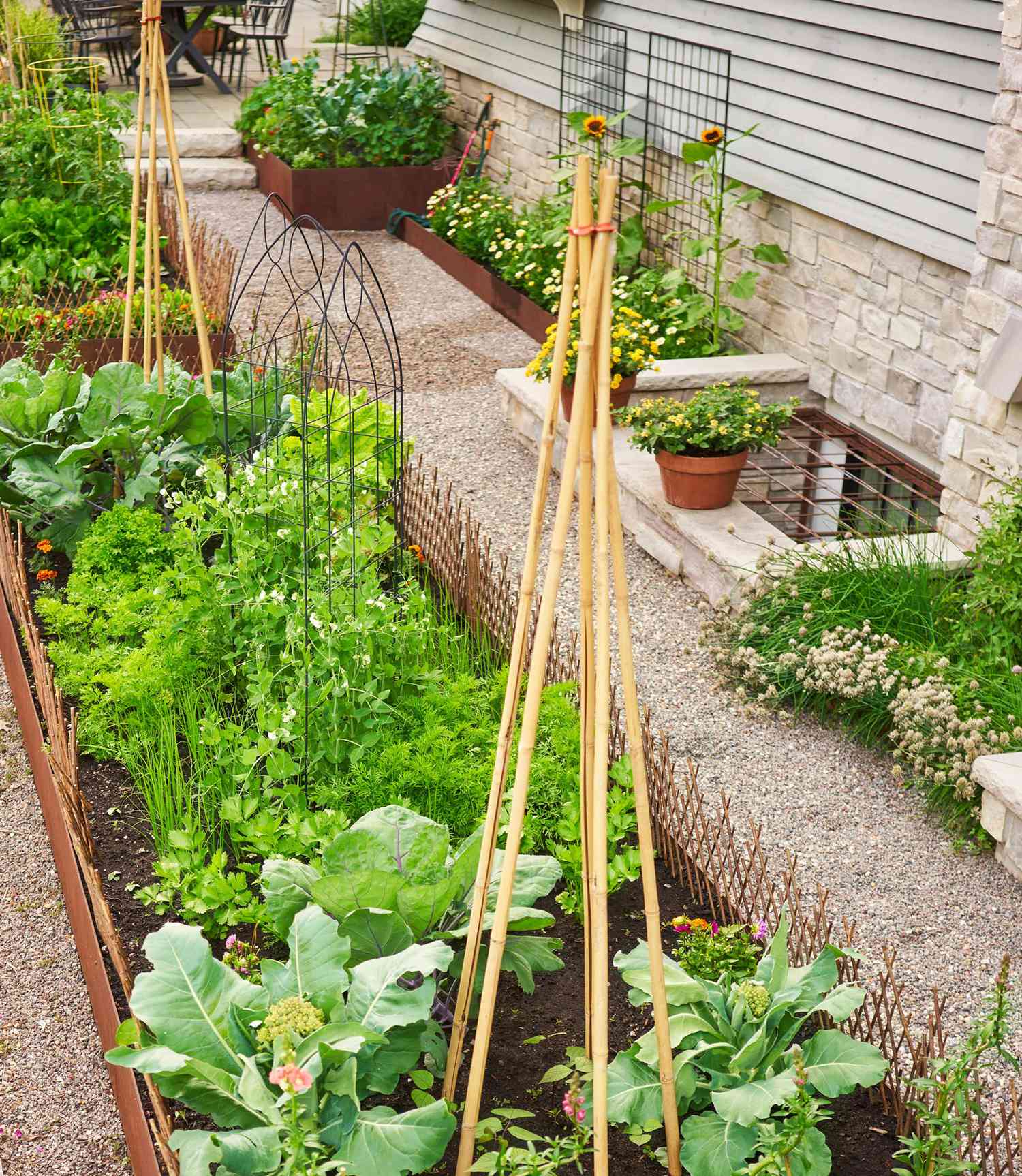
“You can create beautiful, functional plant supports for free.”
Instead of buying bamboo poles, look for long, straight branches from trees you’ve pruned in your own yard (fruit trees, willows, or dogwoods are great). You can create the woven “wattle” fencing seen here by using flexible green branches. It’s a traditional technique that costs nothing but time. Instead of gravel paths, use free wood chips which are often available from local arborists or your city’s parks department.
23. Layered Shade Garden Under a Mature Tree
This under-tree bed is a perfect illustration of how to use foliage for impact. Instead of relying on flowers, this design creates interest by contrasting leaf shapes, sizes, and colors. You have the huge, architectural leaves of the hostas, the finer textures of other green plants, and then the vibrant punch of the red and lime green coleus. This variety in foliage is what makes the composition so lush and interesting, proving you don’t need a lot of sun to have a gorgeous garden bed.
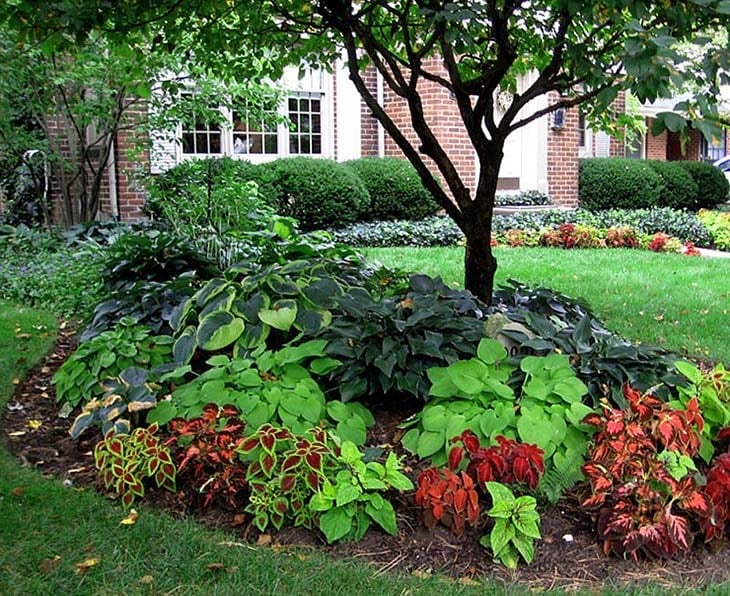
“Gardening under a mature tree can be tricky, as the tree roots compete for water and nutrients.”
The secret is to choose plants that are known to tolerate “dry shade.” Hostas and coleus are good choices, as are plants like Epimedium, Liriope, and certain varieties of ferns. Also, avoid piling up too much soil directly against the trunk of the tree, as this can cause the trunk to rot. Keep the base of the trunk (the root flare) exposed.
24. Circular Tree Bed with a Border of Colorful Annuals
Here’s the formula for this classic look: 30% structural hardscape + 70% floral abundance. The paver stone border provides a clean, defined circle that contains the visual “pop” of the planting. Within that circle, the design is all about mass and color. Roughly 10% is the tree trunk, 30% is green foliage from shrubs, and a whopping 60% is a dense mix of colorful annuals. This high ratio of flowers to structure is what gives it that cheerful, almost overflowing look. It’s a very traditional and effective recipe.
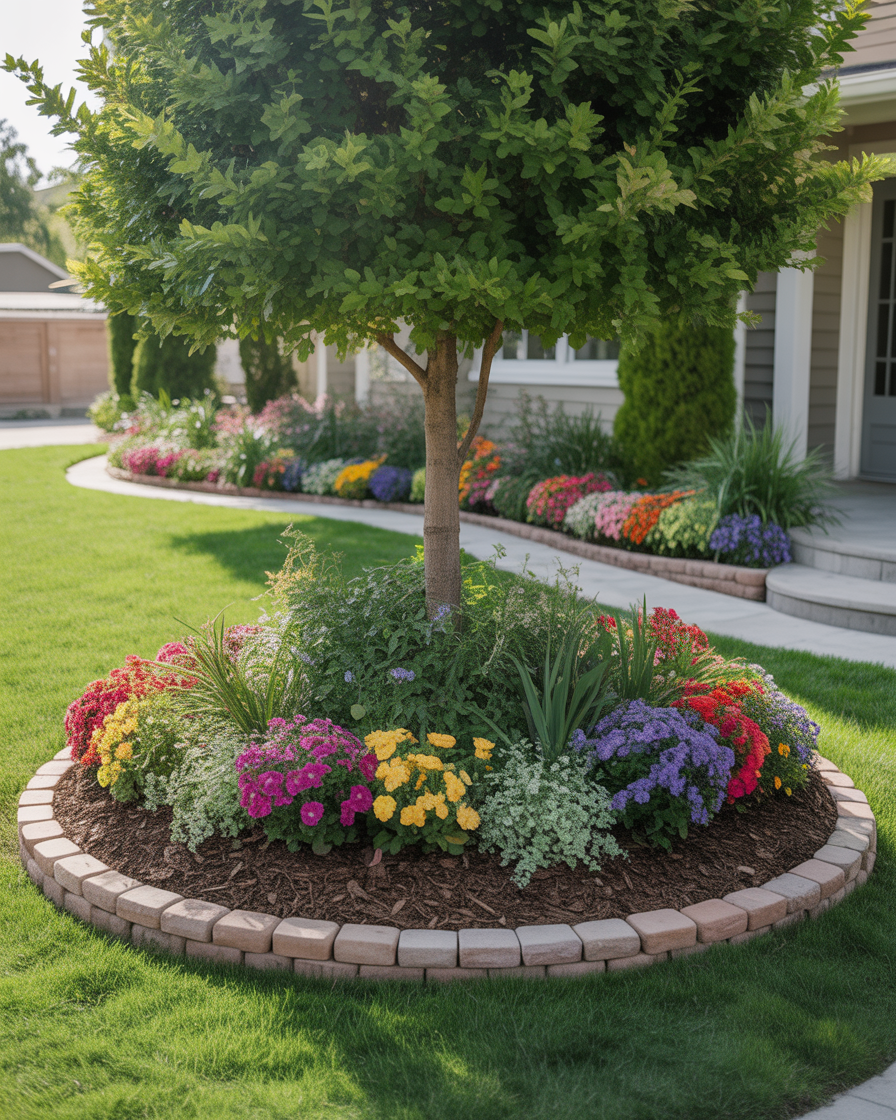
“A flower bed around a tree looks lovely, but it’s not always the best thing for the tree.”
Piling soil and mulch against the trunk can lead to rot and disease. More importantly, the tree’s roots need oxygen, and burying them under several inches of compacted soil and dense plantings can suffocate them over time, potentially harming or even killing a mature tree. A better, more tree-friendly approach is to use a thinner layer of mulch and plant a sparse groundcover that tolerates dry shade, rather than a dense bed of thirsty annuals.
25. Curved Stone Planters with Red and White Flowers
The single most important element in this design is the sweeping, sinuous curve of the stone planters. The gentle, organic lines are a beautiful contrast to the rigid, geometric shape of the brick house. They lead the eye effortlessly around the landscape and create a sense of movement and grace. If these beds were straight lines and right angles, the entire feel of the yard would be more severe and less welcoming. The curves are what make it feel soft and natural.
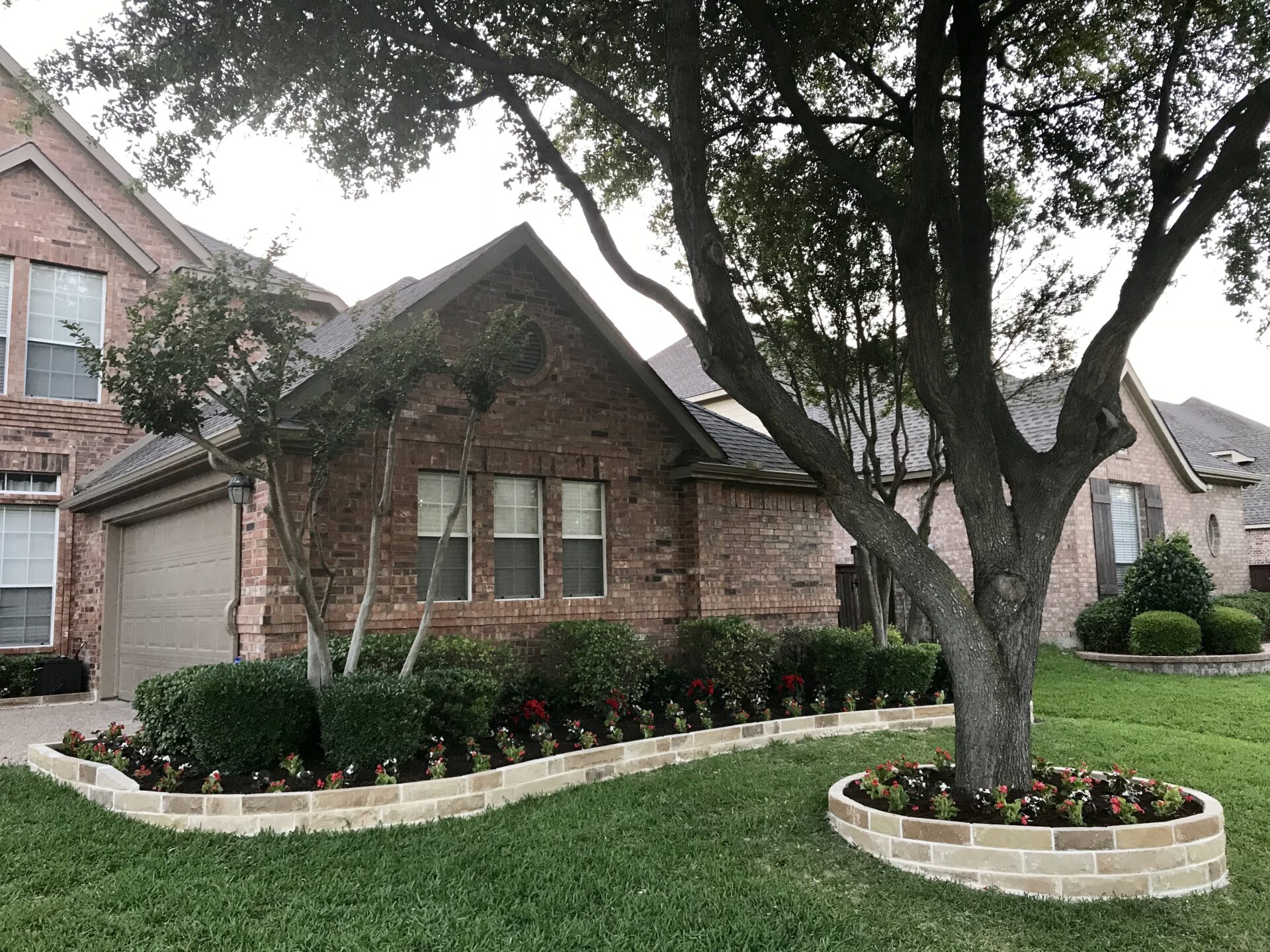
“When planting in beds like this, don’t just scatter plants randomly.”
To get that polished look, plant in drifts or masses. Instead of one red flower here and one white flower there, plant a group of 5-7 red flowers, and then a separate, connecting group of 5-7 white flowers. This creates blocks of color that have much more visual impact from the street. It’s the difference between a polka-dot pattern and a beautiful, cohesive design.
26. Curved Lavender Bed with Brick Edging and a Pebble Path
This design is so satisfying because of the strong contrast in color and texture. You have the deep purple of the lavender flowers against their own silvery-green foliage. This is then set against the warm, earthy red-brown of the brick edging. And finally, the entire flower bed is framed by the bright, light-colored pebble path. Each element has a distinct color and texture, and they all make each other look better. The curved line of the bed adds a soft, organic feel to the otherwise crisp separations.
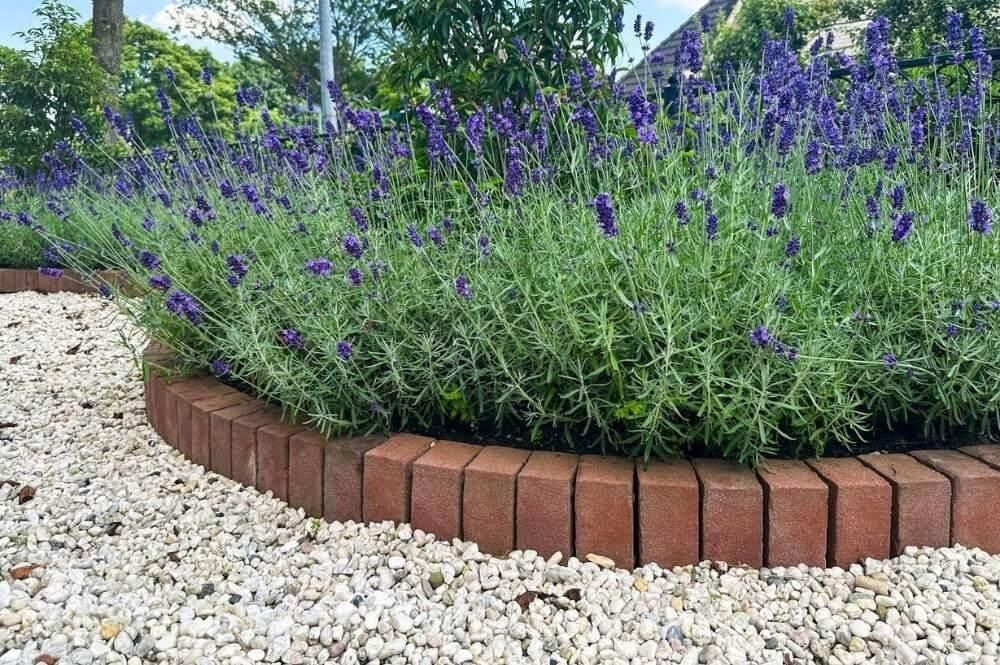
“Lavender is a fantastic, low-water plant, but it has one non-negotiable demand: excellent drainage.”
It hates having “wet feet” and will quickly rot in heavy, clay soil. The pebble path next to this bed isn’t just for looks; it signals that this is likely a well-draining, sunny spot. To keep lavender looking full and prevent it from getting woody and splitting open, you MUST prune it back by about a third every year, right after it finishes blooming.
27. Rustic Raised Beds with Black Metal Arch Trellises
The formula here is simple and effective: 70% rustic, natural materials + 30% clean, modern lines. The raised beds, made of warm, weathered wood, and the gravel path provide the earthy, rustic base. The clean, minimalist design of the black metal arch trellises introduces a touch of modern geometry. This blend of styles is what makes the garden feel current and fresh, not just like a throwback cottage garden. It’s a sophisticated mix that feels both comfortable and chic.
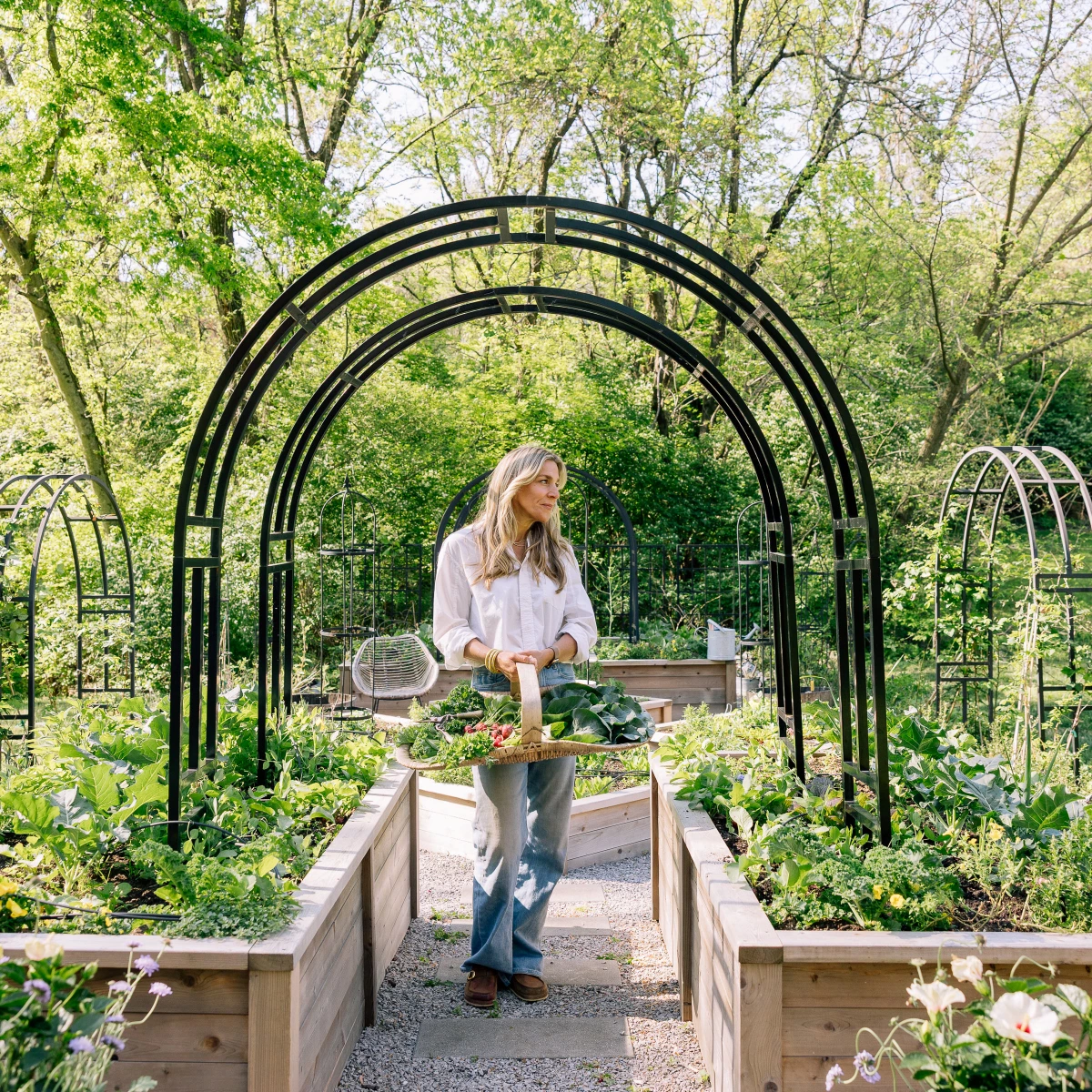
“There’s a huge trend right now towards creating “garden rooms” and making outdoor spaces feel as intentional and designed as indoor ones.”
The arch trellises play a huge role in that. They create a series of “doorways” along the path, which adds a sense of journey and discovery as you move through the space. It’s a clever way to add vertical structure and architectural interest to a simple vegetable patch, making it feel more like a special destination. It is similar in feel to the symmetry in Idea #7 but with a more rustic execution.
28. Functional Raised Beds with Protective Mesh Fencing
The key feature here isn’t the wood or the soil—it’s the black mesh fencing. This isn’t just a decorative choice; it’s a highly practical one. This kind of fencing is designed to keep out pests like rabbits, squirrels, and even larger animals that love to nibble on tender young seedlings. It turns a vulnerable garden bed into a secure fortress for your vegetables. For anyone who has ever planted lettuce only to have it disappear overnight, this single element is the most important part of the entire design.
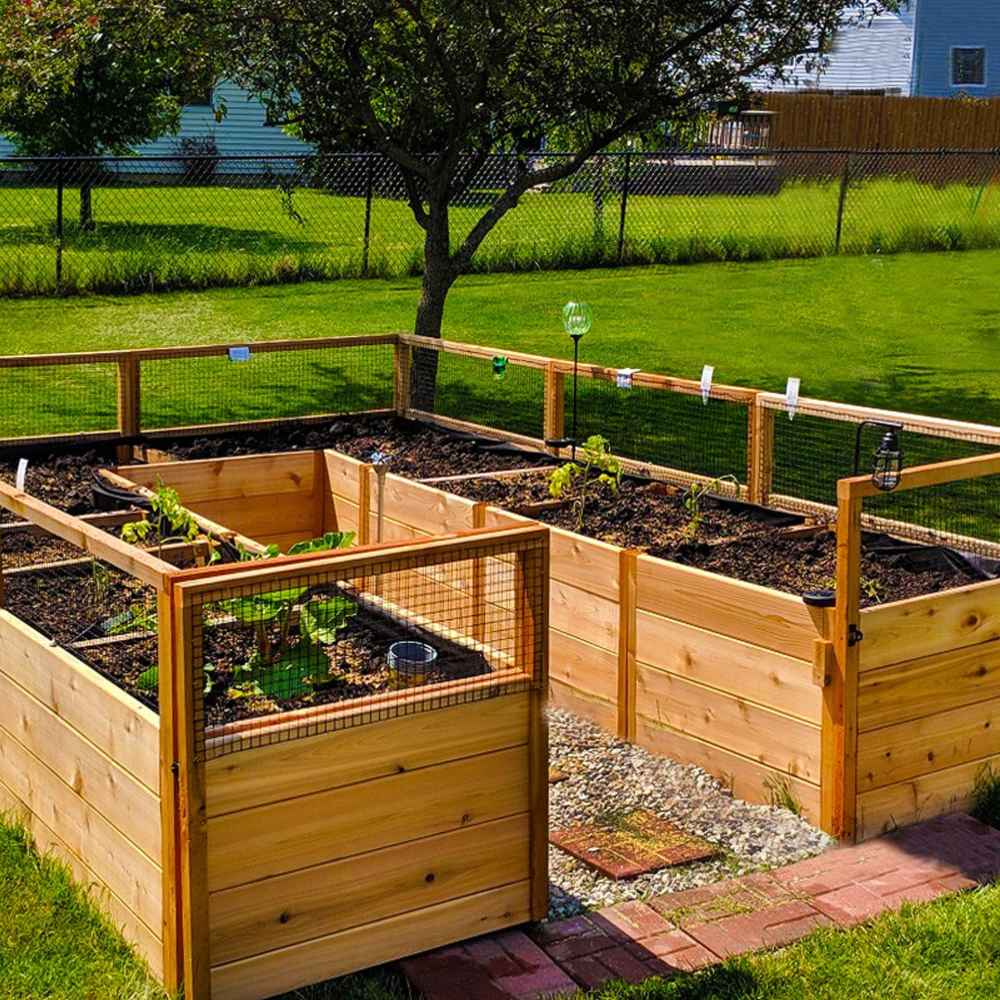
“While the mesh is great for keeping pests out, it can be a bit of a hassle for you, the gardener.”
Weeding, planting, and harvesting near the edges can be awkward, as you have to reach over or around the fence. It also slightly obstructs the view of your plants. It’s a trade-off: you sacrifice a little bit of convenience and perfect aesthetics for the very real benefit of actually getting to harvest the food you grow. For many urban and suburban gardeners, it’s a trade worth making.
29. Multi-Layered Landscaping with a Stone Retaining Wall
- Check your local regulations. Some municipalities have height limits for retaining walls that can be built without a permit and an engineer’s sign-off.
- Confirm the location of any underground utility lines before you start digging. Call 811, the national “call before you dig” number.
- Assess your soil. The type of soil you have will impact drainage requirements for the wall and plant selection.
- Have a clear budget. A stone wall is a significant investment; get quotes for both materials and professional installation if you’re not DIY-ing.
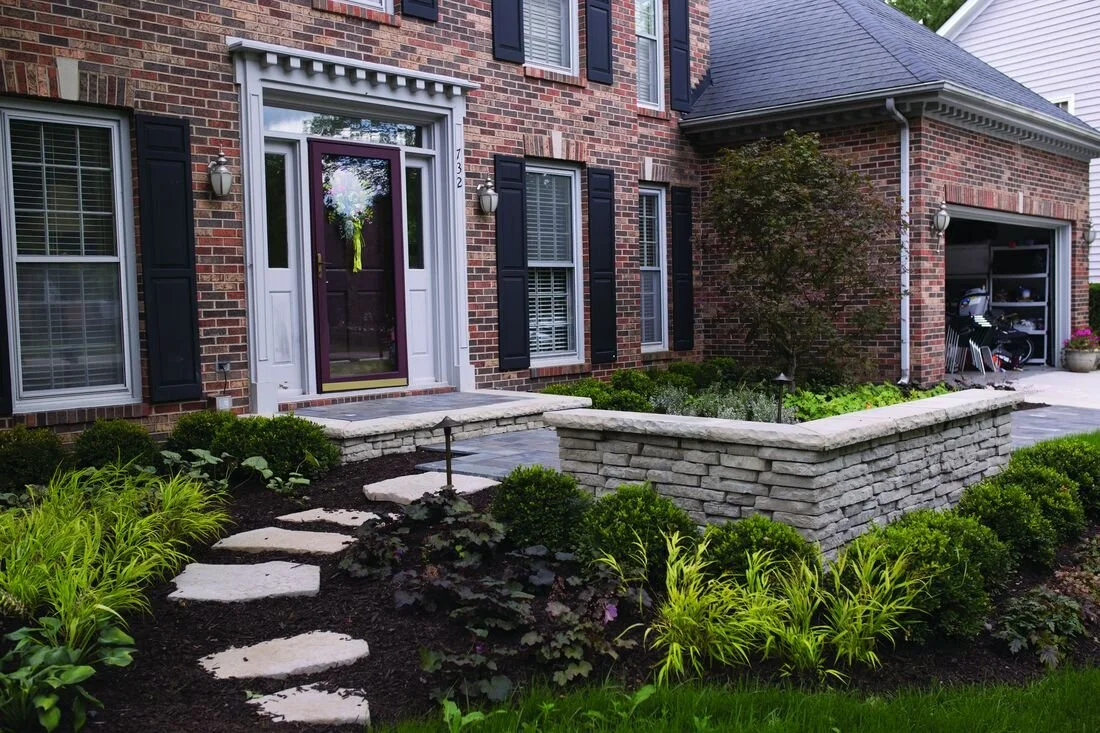
“This design works so well because it creates visual interest on multiple levels.”
The lowest level is the dark mulch with the irregular stepping stones, providing a textural path. The next level up is the stone retaining wall, which adds a strong horizontal line and a sense of permanence. Above that, you have the varied heights and colors of the shrubs and plants. And finally, the brick house itself serves as the backdrop. This layering creates a rich, complex, and professional-looking landscape.
Your Garden’s Next Chapter Starts Here
Feeling inspired? Good. The best gardens start with a single idea. Pick one of these looks that speaks to you, not because it’s trendy, but because it feels like home. Now, head over to Pinterest and create a new board for your project—it’s time to start planning your perfect flower bed.