You know that feeling when you finally find the small pond with a waterfall that looks exactly right for your space, saved on some forgotten Pinterest board? It feels magical, but turning that pin into reality can feel overwhelming. We’ve been there. So we filtered through hundreds of real-world examples to bring you only what’s worth your attention. These aren’t just pretty pictures; they’re achievable projects, and we’ve got the details to prove it. In this guide, you’ll find 28 distinct, beautiful pond and waterfall ideas, from lush naturalistic streams to modern, compact features. We’ll show you what makes each design work and how to bring it home. And stay until the end — we break down the most common mistakes that can ruin these looks. 📌 Save this to Pinterest for later — you’ll want to revisit these ideas.
1. A Tranquil Garden Scene with a Stone Waterfall and Ornate Bench
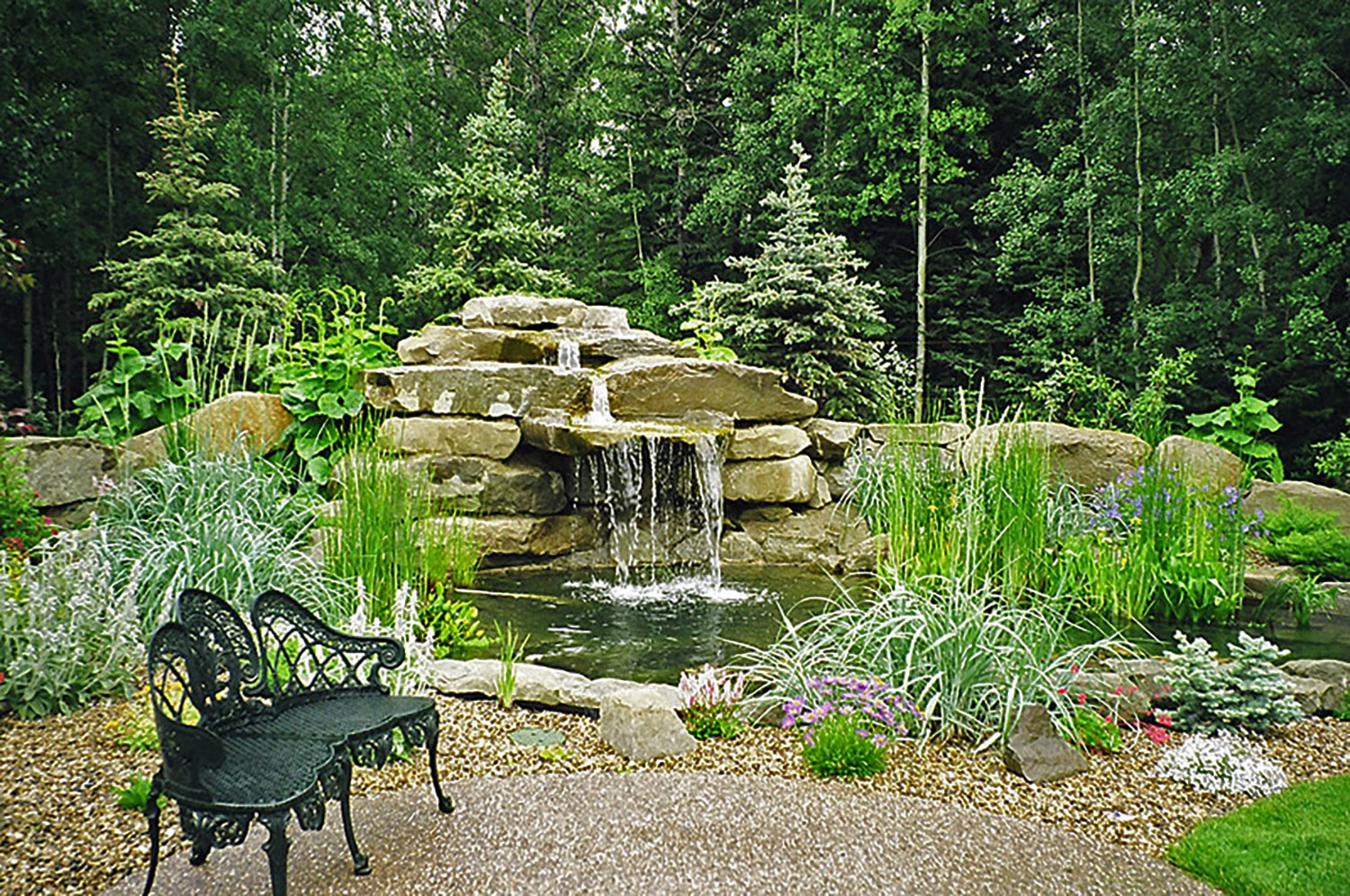
This design is a masterclass in creating a destination within your own yard. The magic lies in the deliberate juxtaposition of the wild and the refined. The multi-tiered stone waterfall feels like it was carved by nature itself, with lush grasses spilling over the edges. Placing the ornate, dark metal bench directly opposite transforms the scene from a simple feature into an experience. It provides a specific viewpoint, an invitation to sit and stay. The paved patio grounds the scene, creating a stable, comfortable spot to observe the untamed beauty of the water and surrounding forest foliage.
“To maximize the sensory experience of a waterside bench, placement is key.”
Position the bench between 6 and 10 feet from the waterfall’s edge. This is the sweet spot where the sound of the water is clear and soothing, not overwhelmingly loud. It’s also far enough to avoid constant splashing, which can damage the bench finish over time and make seating uncomfortably damp. Before permanently setting the bench, test the spot on a breezy day to see where the mist travels. A slight adjustment can be the difference between a serene retreat and a soggy seat.
2. Multi-Tiered Rock Waterfall with a Small Stone Footbridge
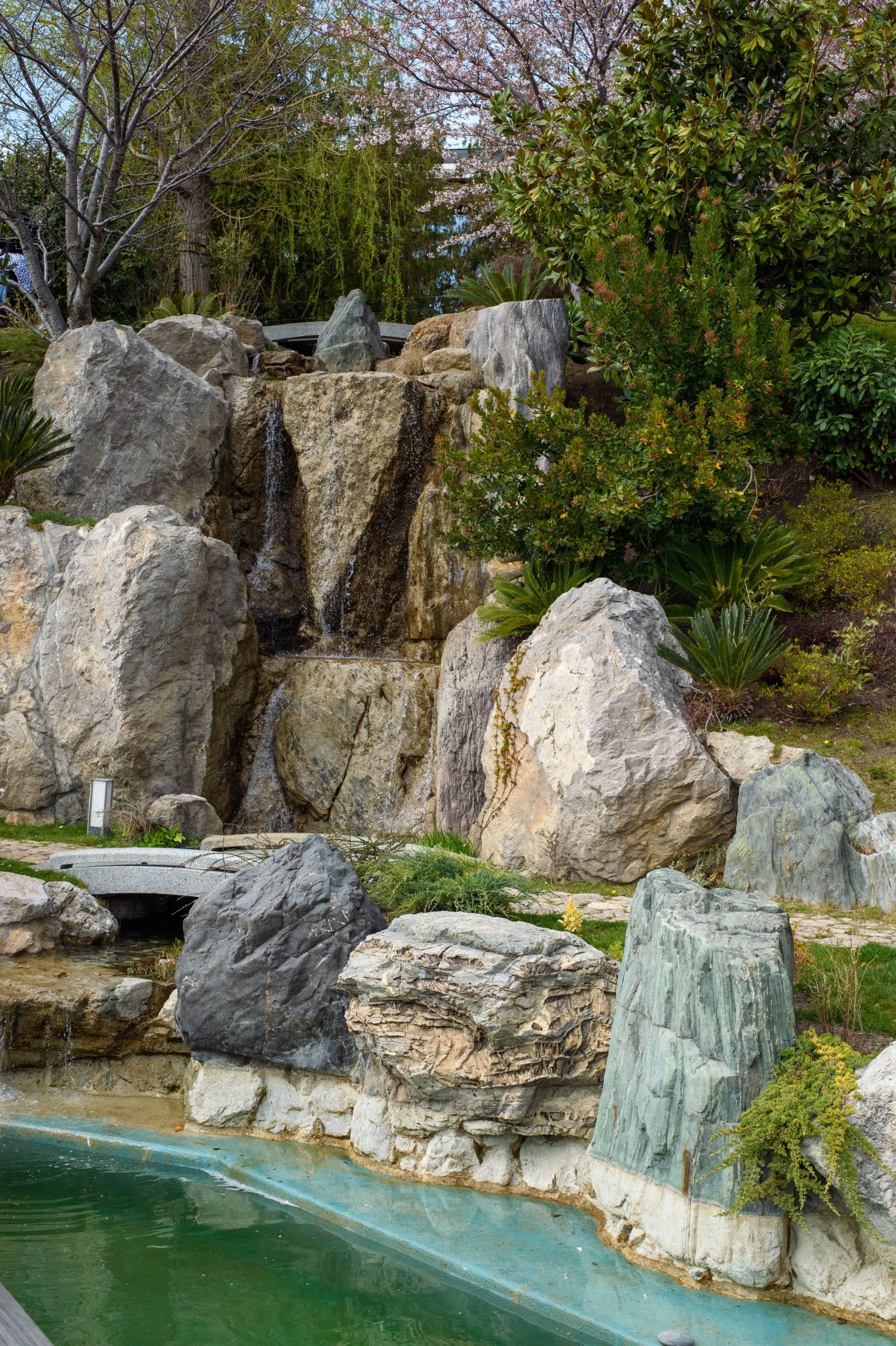
The formula for this immersive landscape is all about layering natural textures. Think of it as: 50% dominant stone + 30% water element + 20% varied foliage. The large gray and tan boulders are the foundation, providing scale and structure. The water, with its multi-tiered cascade and green-tinted pond, is the active, dynamic element. Finally, the lush shrubs and trees fill in the gaps, softening the hardscape. The small stone footbridge is the perfect accent—it doesn’t steal the show but adds a touch of storybook charm. You could swap the boulders for slate and the shrubs for ferns, and the same balanced, serene feeling would hold.
“That beautiful green tint in the pond water?”
It’s likely from algae. While a little bit can look naturalistic, a full-blown algae bloom can be a constant battle. This is especially true in ponds that get a lot of direct sunlight. Be prepared for regular maintenance, which could include adding beneficial bacteria, installing a UV clarifier, or manually skimming the surface. Also, a feature with this many large boulders is a significant, permanent installation. This isn’t a weekend DIY project; it requires heavy equipment and careful planning to ensure proper water circulation and stability.
3. Raised Stone Block Garden Pond with Autumnal Accents
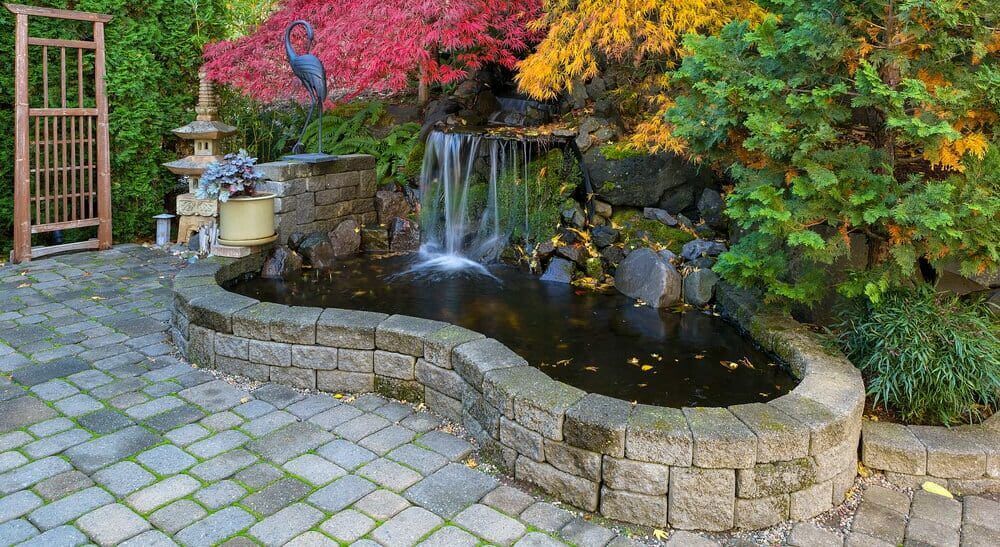
Recreating this structured yet serene look involves a mix of hardscaping and curated decor. Here’s a potential cost estimate:
- Raised Pond Construction (interlocking stone blocks, liner, pump): $1,500 – $3,500
- Paver Patio (approx. 10×10 ft): $1,000 – $2,500
- Decor & Lighting (stone pagoda, crane statue, submersible light): $300 – $800
- Plants (aquatics, surrounding trees/shrubs): $400 – $900
- TOTAL: $3,200 – $7,700
Budget alternative: Use cast concrete wall blocks instead of interlocking stone, purchase decor from a garden discount store, and start with smaller, less mature plants for around $1,500 – $2,500.
“The single element that elevates this design is the raised pond wall.”
Without it, this would be a standard in-ground pond. By building up the perimeter with those handsome grey stone blocks, the design achieves a sense of presence and formality. It clearly defines the water feature as a deliberate architectural element, not just a hole in the ground. This elevation also makes the pond more interactive—it’s easier to sit on the edge, tend to plants, and view the water without kneeling. The gentle cascade becomes a focal point that you look slightly *up* to, giving it more importance.
4. Backyard Koi Pond with a Stacked Flagstone Waterfall
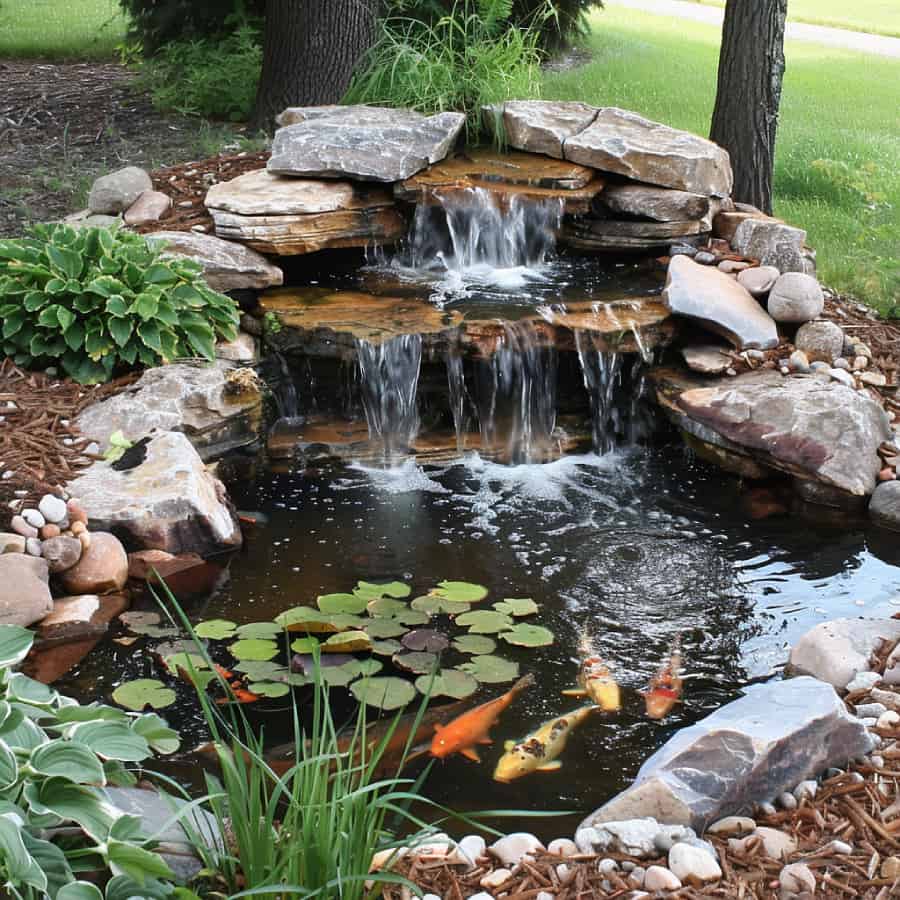
A vibrant koi pond like this is a living ecosystem, and it demands commitment. Keeping the water clear enough to see those beautiful fish requires a robust filtration system, including a mechanical filter to catch debris and a biological filter to process waste. Expect to spend 1-2 hours per week on maintenance: checking water parameters (pH, ammonia), cleaning filter pads, and removing any leaves or debris. The koi themselves need high-quality food and monitoring for health. While incredibly rewarding, think of it less as a water feature and more as pet ownership with landscaping benefits.
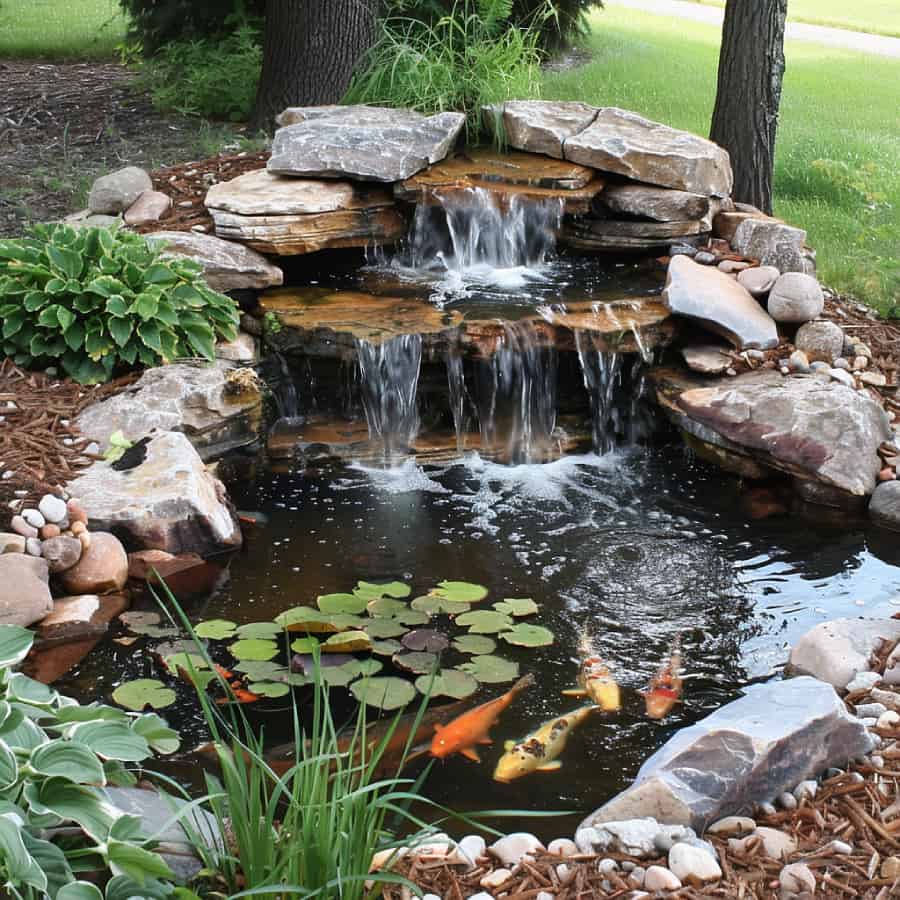
“The concept of the ‘backyard sanctuary’ has exploded in popularity, and this koi pond is a perfect example of why.”
It’s not just about aesthetics; it’s about creating a personal ecosystem that encourages mindfulness. The act of caring for the fish and tending to the aquatic plants like lily pads is a grounding ritual for many homeowners. On Pinterest, we’re seeing a huge move away from sterile, ‘perfect’ yards toward spaces that feel alive and interactive. This trend, often called ‘rewilding’ on a micro-scale, is about bringing a slice of nature, complete with its gentle routines and responsibilities, right up to your back door.
5. Cascading Waterfall of Large, Warm-Toned Boulders
A waterfall of this magnitude, with its large stacked boulders, needs room to breathe. This design works best in a medium to large backyard with at least 400 square feet of available space for the feature itself and the surrounding viewing area. The key is having a natural or man-made slope. A drop of at least 3-5 feet is ideal to create the dramatic, multi-tiered cascade seen here. Ceiling height isn’t an issue outdoors, but consider the ‘visual ceiling’ created by surrounding trees—you want enough open sky above to keep it from feeling cramped. For a more compact approach using similar materials, see the design in Idea #10.
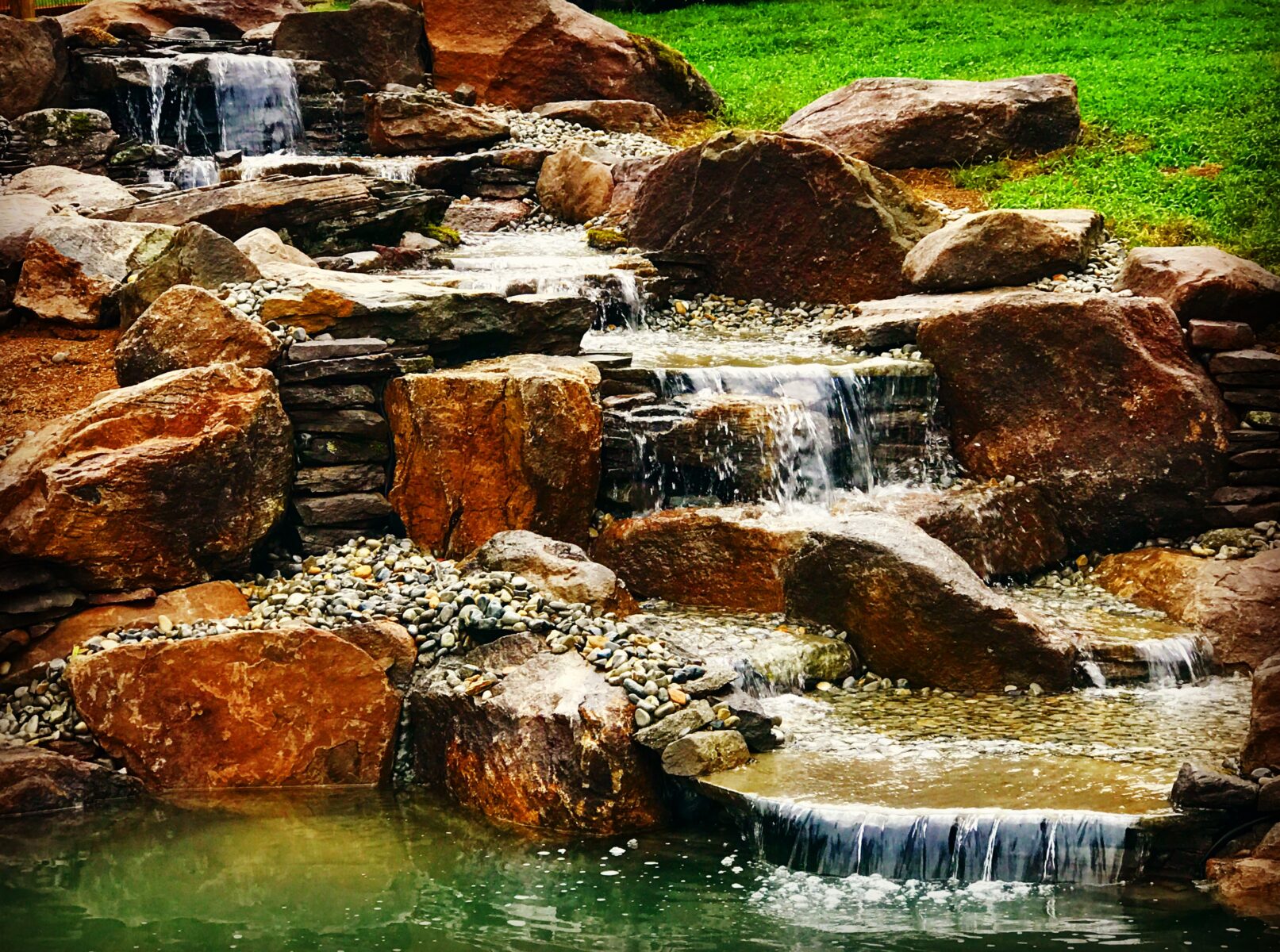
“This composition is all about the masterful use of scale and color temperature.”
The massive, rust-brown boulders provide a powerful visual anchor, their warm tones creating an inviting, earthy feel. The designer then contrasts this with the smaller, cooler-toned charcoal slate and smooth river pebbles. This variation in size and color makes the arrangement look natural and evolved, not like a pile of rocks dropped by a truck. The final touch is the calm lower pond, which acts as a quiet visual resting place after the eye travels down the energetic cascade of water.
6. Tiered Backyard Stone Waterfall Against a Wooden Fence
That tall wooden privacy fence is a great backdrop, but it comes with its own set of challenges. Constant moisture and splash from a waterfall can accelerate rot, discoloration, and mildew growth on the wood. You’ll need to be diligent about applying a high-quality waterproof sealant to the fence every 1-2 years, paying special attention to the sections closest to the water feature. Also, consider the root systems of the surrounding plants. Ensure they won’t compromise the fence foundation or the pond liner over time. It’s a beautiful pairing, but the two elements need to be managed to coexist happily.
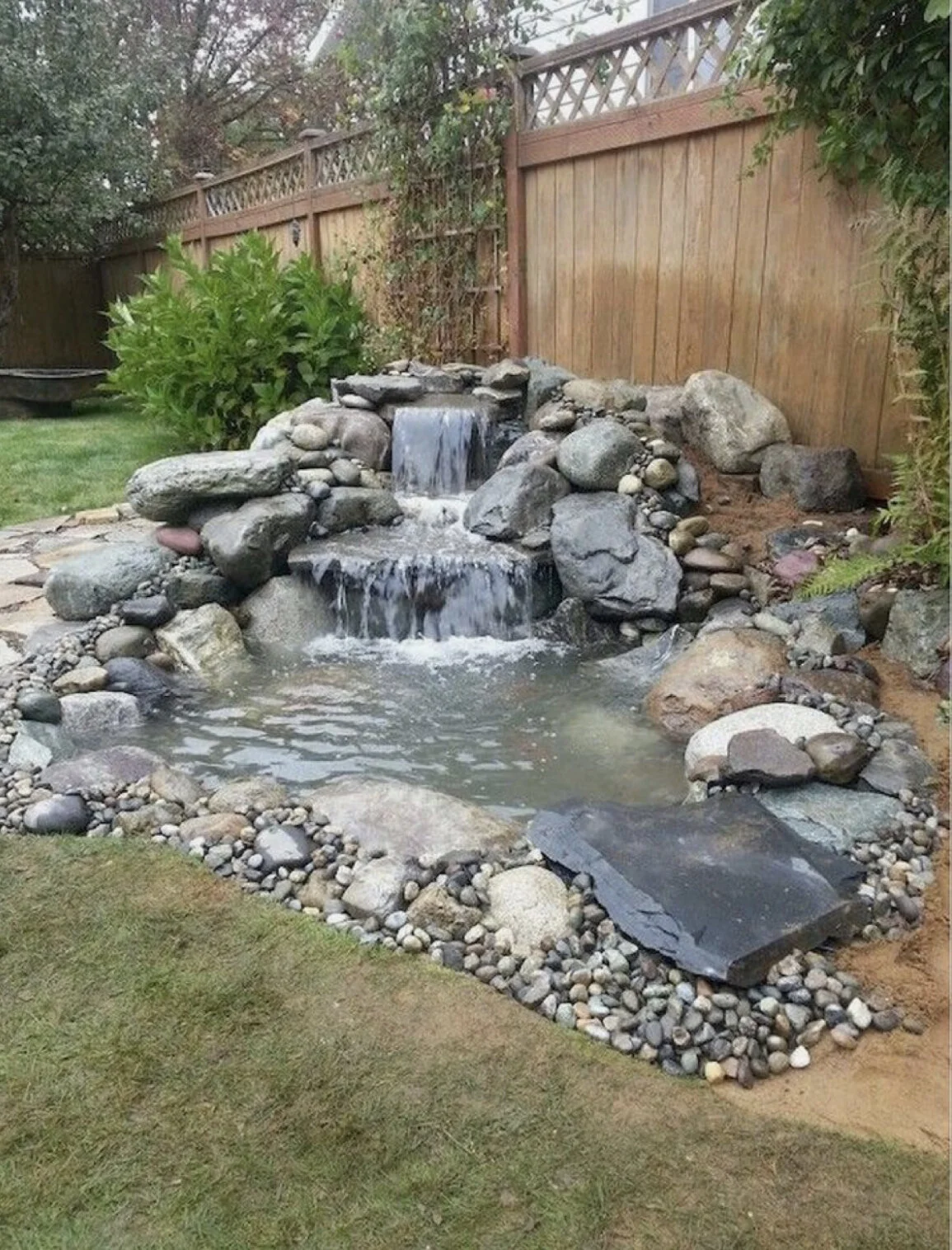
“You don’t need a professional landscaper and a five-figure budget to get this look.”
The core components are stackable rocks, a pond liner, and a pump. Start with a pre-formed pond basin from Home Depot or Lowe’s for about $100-$200. Scour Facebook Marketplace or local landscaping surplus yards for free or cheap rocks—people are often getting rid of them. A reliable pump costs around $150. With some sweat equity and careful shopping for river pebbles and mulch, you can create a simplified version of this serene corner for under $700. The key is to start small and embrace a more rustic, less ‘perfect’ arrangement of stones.
7. Lush Pond with Rock Waterfall and Dark Purple Elephant Ears
Those dramatic, dark purple elephant ear leaves are the absolute star of this show. Without them, this is a lovely, natural pond. With them, it’s a breathtaking, almost tropical oasis. The deep, moody purple-black color provides a stunning contrast against the vibrant greens of the papyrus grass and the earthy brown tones of the rock waterfall. It’s a bold, unexpected choice that injects a dose of high-design drama into a natural setting. Removing them would make the scene pleasant, but it’s their presence that makes it unforgettable and truly special.
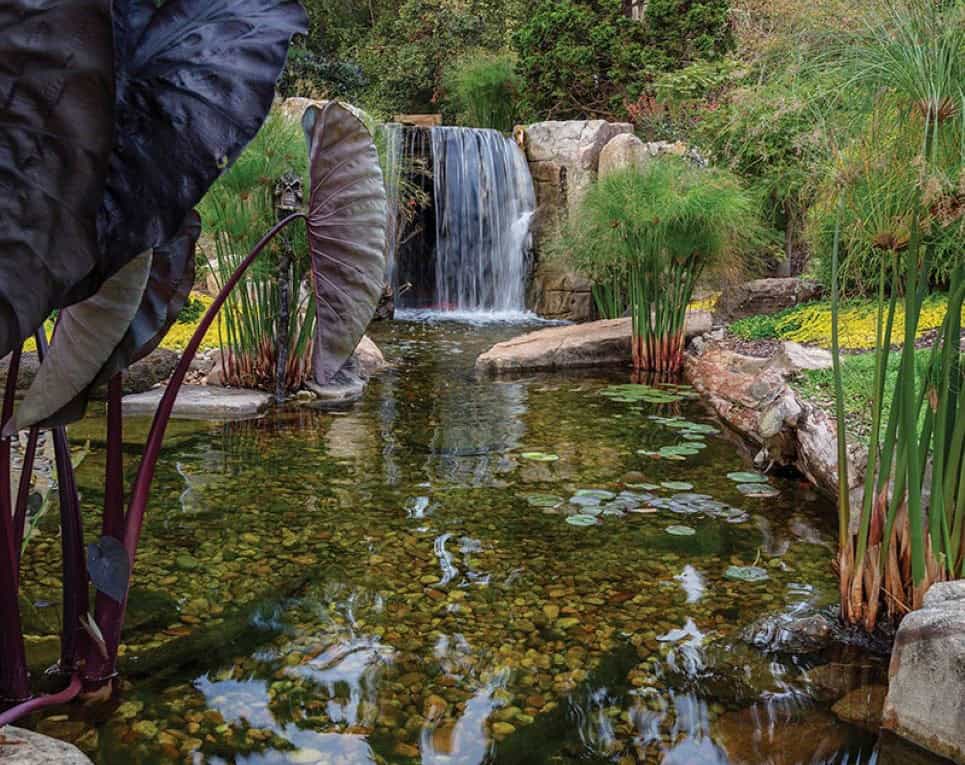
“This composition proves that a simple color formula can have a huge impact.”
It’s roughly 70% Green + 20% Earth Tones + 10% Dramatic Accent. The various green textures, from the tall papyrus to the floating lily pads, form a lush, dominant base. The natural brown stone of the waterfall and the pebble-lined bed provide the earthy foundation. Then comes the magic 10%: the dark purple elephant ear leaves. This small but mighty pop of unexpected color is what gives the entire scene its personality. You could swap the purple for a fiery red Japanese Maple or bright yellow irises to achieve a completely different, but equally balanced, mood.
8. Tiered Rock Waterfall Flowing into a Green Koi Pond
This landscape works because it expertly balances manicured elements with a wild, natural feel. The tiered rock waterfall and mulched slope are clearly planned and built, but the choice of smooth, large boulders and asymmetrical placement mimics nature. The lushness is amplified by the plant choices—the deep reddish-brown of the Japanese maple creates a beautiful color echo with the mulch, while the surrounding greenery softens the hardscape. The whimsical statues (alligator and mermaid) add a touch of personal charm, telling you this garden is loved and enjoyed, not just professionally staged. It feels personal and alive.
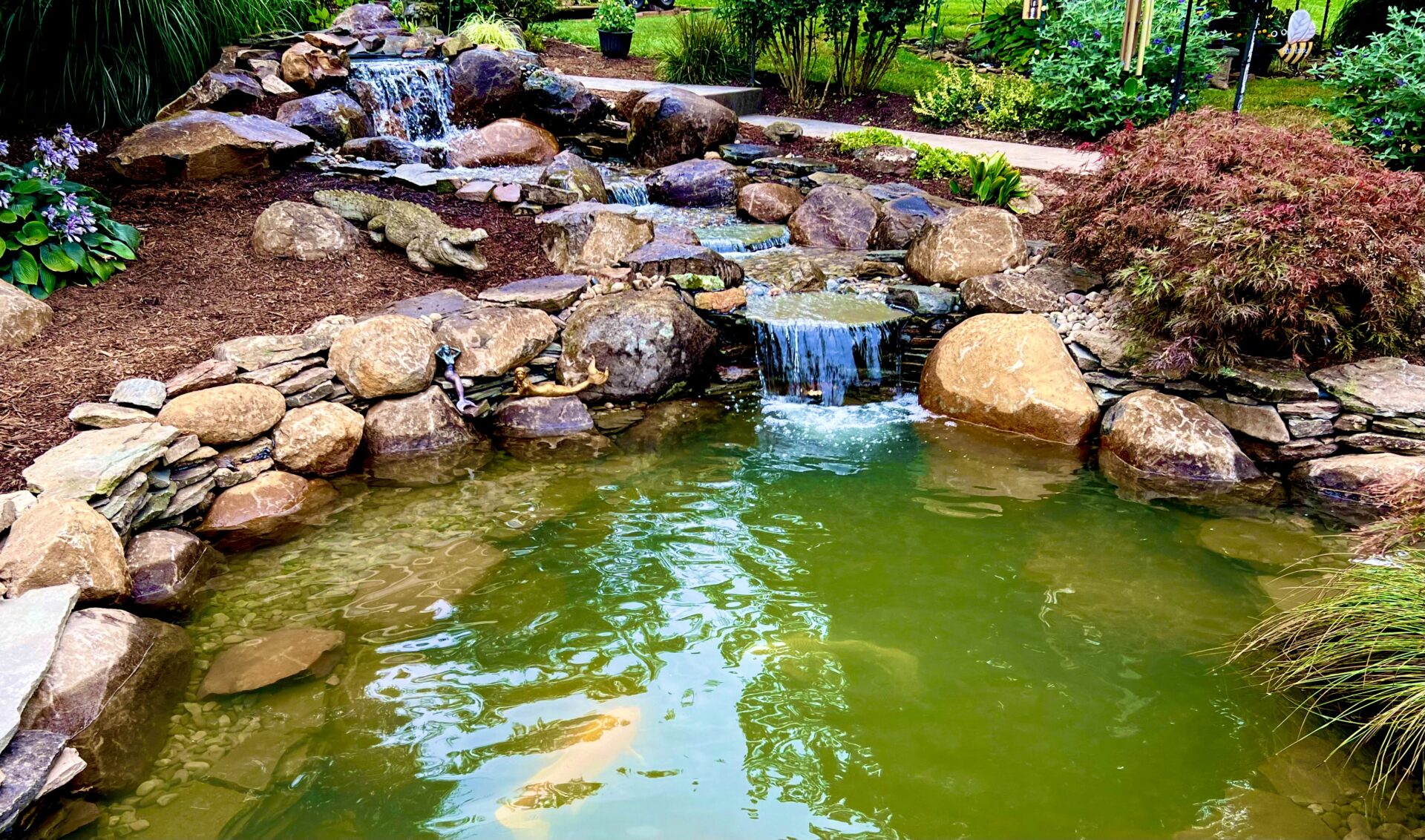
“When incorporating a feature tree like a Japanese maple near a pond, think about its full lifecycle.”
That gorgeous reddish-brown foliage is stunning, but it will eventually drop its leaves directly into your pond. To prevent leaves from decaying and affecting water quality, position the tree at least 10-15 feet from the water’s edge. Alternatively, if you want it closer for visual impact, plan to install pond netting over the water surface in the fall. It’s a simple, temporary measure that saves you hours of skimming and helps keep your pond ecosystem healthy.
9. Garden Pond with a Quaint Arched Bridge and Waterfall
The stone-faced arched bridge is, without a doubt, the heart of this entire design. It does more than just span the water; it creates a narrative. It introduces a sense of journey and discovery, inviting you to cross over and see the garden from a new perspective. The waterfall is deliberately placed to flow *under* it, adding to the charm and creating a delightful sound and visual effect as you walk over. Without the bridge, you would have a beautiful pond. With the bridge, you have a miniature landscape that tells a story and sparks the imagination.
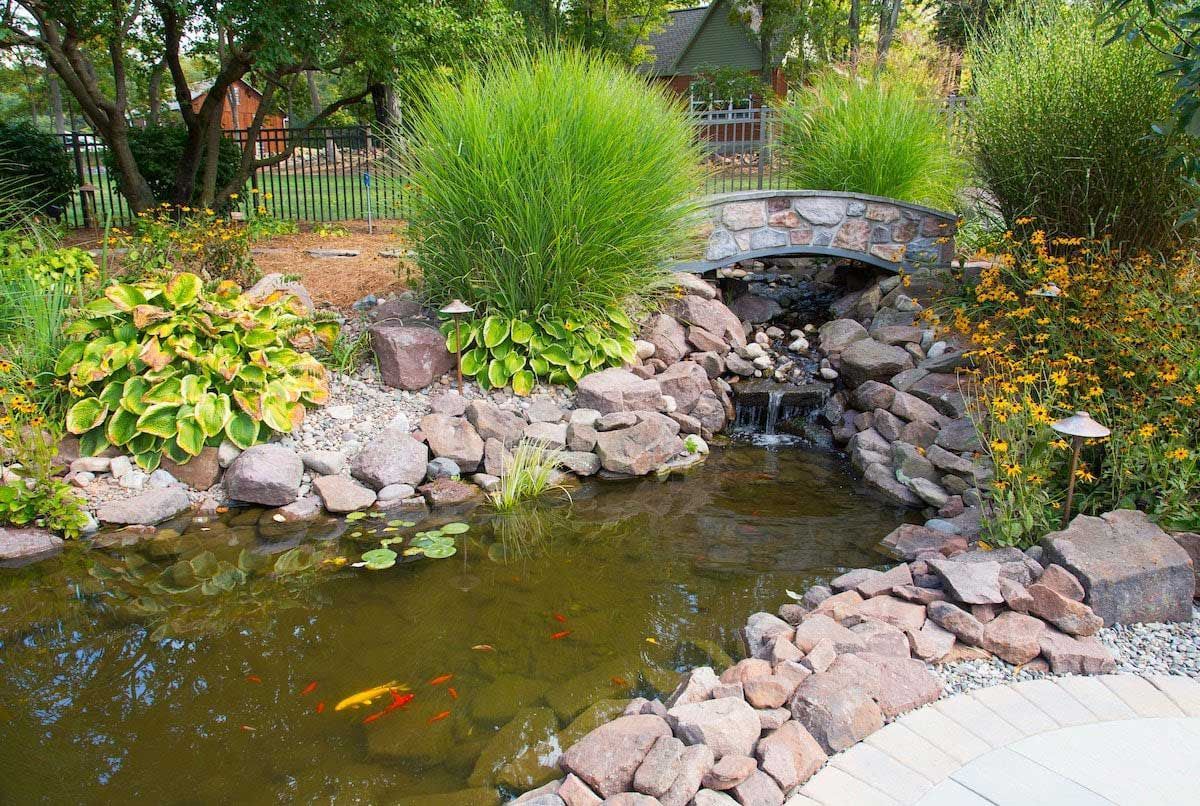
“A design featuring a functional bridge needs a bit more space than a simple pond.”
This idea is perfect for a corner of a medium-sized yard, requiring a footprint of roughly 15×20 feet to feel properly proportioned. The key is the pond’s shape; an irregular or elongated shape works best to give the bridge a clear purpose. A simple round pond would make a bridge look awkward. The arch of the bridge should also be in scale—for a pond this size, a bridge length of 5-8 feet with a gentle arch is ideal. Anything larger would overwhelm the peaceful, natural vibe. For a different take on a natural rock border, see Idea #18.
10. Compact Backyard Waterfall with Driftwood and River Pebbles
You can build a similar mini-waterfall in a weekend. Here’s a quick guide to stacking the stones:
- Lay the Foundation: Start with a level, compacted base of sand over your pond liner. Place your largest, flattest boulder as the bottom tier of the waterfall.
- Build Upwards: Add the next layer of stones, overlapping them like bricks and pushing them slightly back from the edge of the one below. Use smaller, flatter stones as shims to keep larger ones stable.
- Create the Spillway: Choose a stone with a slightly grooved or flat edge for your main waterfall spillway. Position it so water will flow cleanly off the edge into the basin.
- Fill and Test: Use expanding pond foam (in a black color) to fill gaps between the rocks from the back. This directs the water over the front of the stones instead of letting it get lost behind them. Run your pump to test the flow and adjust as needed.
Estimated time: 4-6 hours. Material cost (foam, shims): $50.
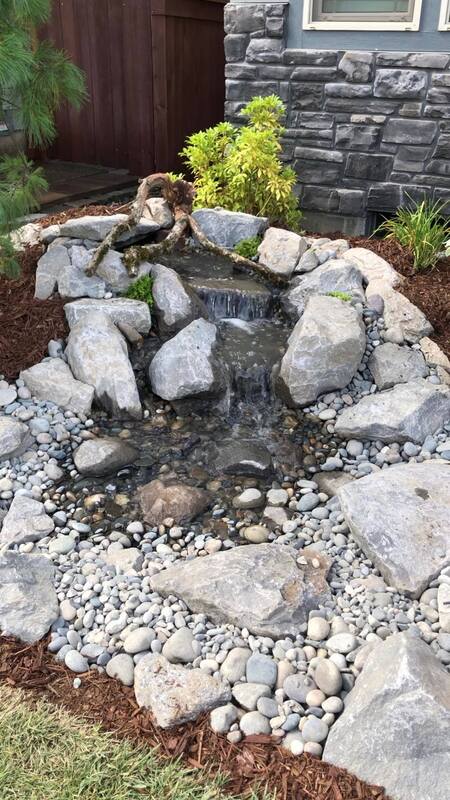
“This entire look is achievable on a tight budget.”
The key is sourcing materials smartly. The stacked grey boulders can be found affordably at landscape supply yards (ask for ‘river jacks’ or ‘fieldstone’). The smooth river pebbles for the basin are available in bags at big-box stores like Home Depot for about $20-$30 per bag. The real saver is the driftwood accent; instead of buying a pricey piece from an aquarium store, take a walk along a local river or lake (where permitted) to find your own unique, weathered piece for free. Combined with a small pump and liner, this whole setup could be yours for under $400.
11. Modern Concrete Basin Pouring into a Small Stone Pond
This feature perfectly captures the ‘Modern Rustic’ trend we’re seeing everywhere. It’s the high-contrast pairing of a smooth, manufactured element—the round concrete basin—with the organic, rugged texture of natural stacked rocks. For years, garden design was either strictly modern or strictly natural. Now, designers are confidently mixing them. This look feels fresh because it acknowledges both human design and natural beauty. The clean lines of the concrete bowl provide a crisp focal point, while the surrounding grasses and stones keep it from feeling sterile or out of place in a garden setting.
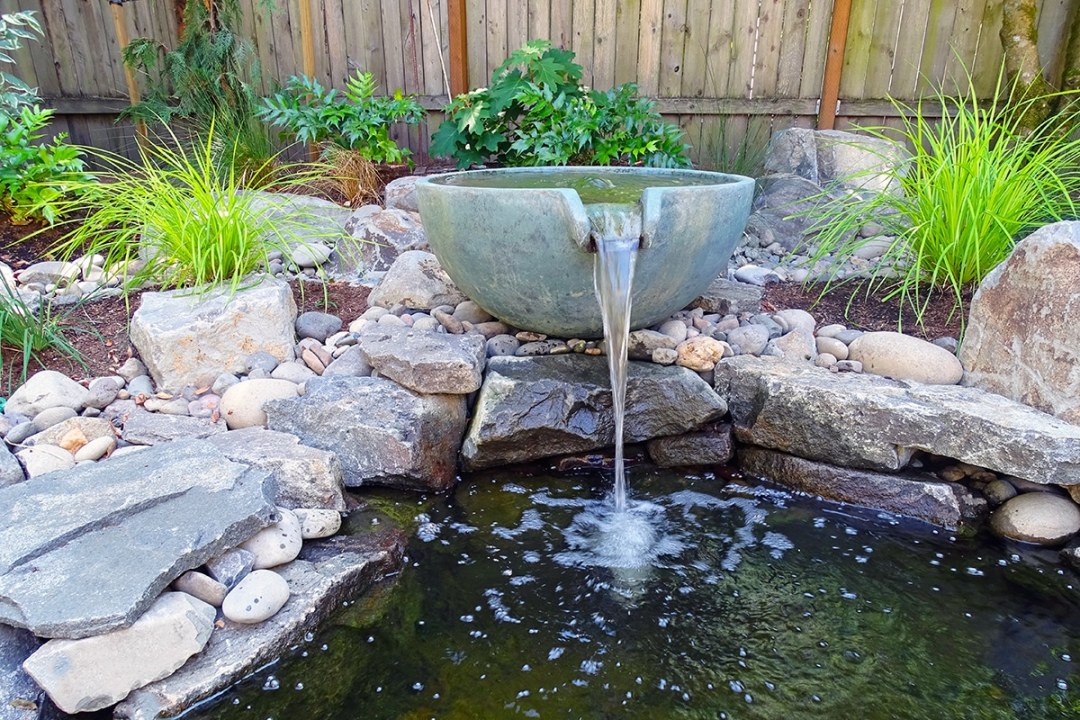
“Thinking of adding a feature like this?”
Run through this quick checklist first:Power Source: Is there a GFCI-protected outdoor outlet within reach of where you want to place the pond? Running new electrical can be a significant hidden cost.Sun Exposure: Watch the spot for a full day. Full, intense sun can lead to algae growth and high water evaporation. Partial shade is often ideal.Foundation Stability: The concrete basin and rocks are heavy. Is the ground underneath firm and level? You may need to create a compacted gravel pad to prevent shifting and settling over time.Noise Level: The sound of water pouring from that height can be louder than you think. Is it near a bedroom window or a neighbor’s patio? Consider a variable-speed pump to adjust the flow and sound.
12. DIY-Style Stacked River Rock Garden Waterfall
The charm of this water feature lies in its apparent simplicity and celebration of a single material. By using only stacked river stones of varied sizes and earth tones, the design feels incredibly cohesive and natural. The magic is in the variation—a mix of grays, browns, tans, and rusts makes it look like a real rock formation, not a uniform pile. The water is forced to navigate the irregular ledges, creating a complex, gentle sound. It’s a perfect example of how a limited palette, when combined with textural diversity, can create something deeply satisfying and calming.
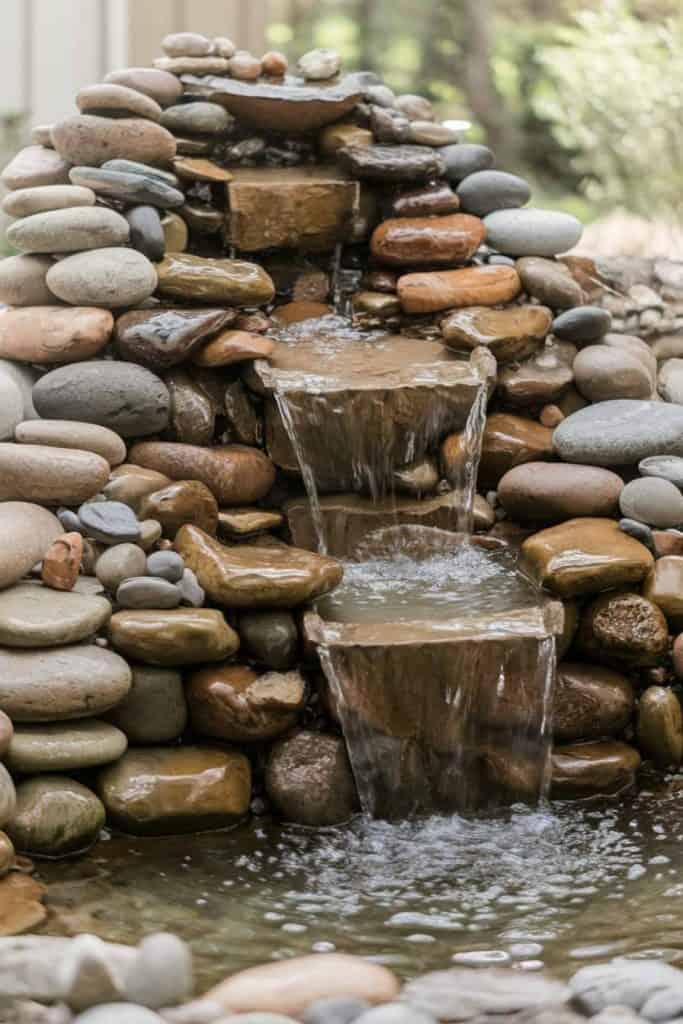
“Creating a stable, leak-free stacked stone waterfall requires a secret weapon: waterfall foam.”
It’s a black, expanding foam that you apply in the gaps *behind* and *between* the rocks.Dry Stack First: Arrange your rocks exactly as you want them, ensuring the structure is stable on its own. Create spillway lips where you want water to fall.Foam the Gaps: Working from the back, inject the foam into the crevices between the rocks. The goal is to create a hidden channel that forces all the water to flow over the front surfaces.Trim Excess: Once the foam cures (usually in a few hours), use a knife to trim any foam that’s visible from the front.Disguise with Gravel: Sprinkle small gravel or soil onto the still-tacky surface of any visible foam to camouflage it perfectly.This process prevents water loss and maximizes the visual impact of the cascade. Time: 2-3 hours. Cost for foam: $20-30.
13. Elegant Stone Waterfall and Pond with Integrated Lighting
Integrated landscape lighting is what separates a nice daytime feature from a stunning 24/7 focal point. The key is subtlety. Use low-voltage, warm-white (2700K-3000K) submersible LED lights. Place one light inside the pond, aimed upwards at the base of the waterfall to catch the turbulence. Tuck two or three other small spotlights into the crevices of the rocks, aiming them across the stone faces to highlight texture, not straight out at the viewer. This technique, called ‘grazing,’ creates beautiful shadows and depth. Avoid a single, powerful floodlight, which flattens the feature and creates glare.
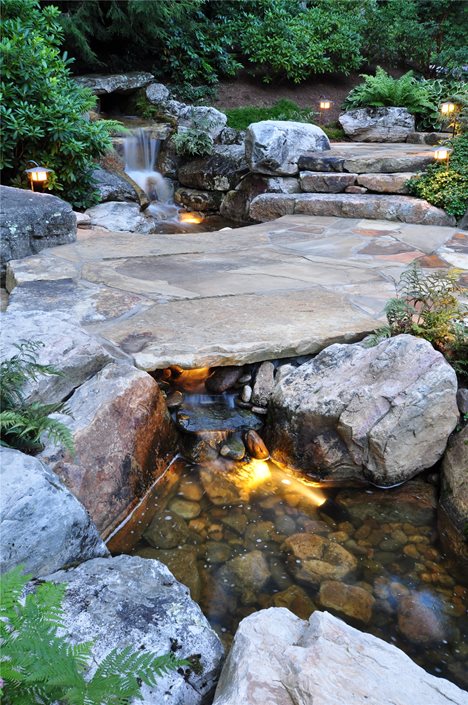
“This polished look is a beautiful equation of layered hardscapes and soft plantings.”
The formula is: 40% Large Boulders + 30% Flat Flagstone + 20% Lush Greenery + 10% Water & Light. The large natural stones provide the verticality and drama for the waterfall. The tan flagstone creates the functional, human-scale pathways and patios, contrasting in both color and form. The ferns and foliage soften all the stone and tie it into the garden. Finally, the water, enhanced by the warm amber lighting, acts as the shimmering, kinetic element that brings it all to life. It’s a sophisticated balance of structure and nature.
14. Tiered Water Feature from Carved Grey Stone Basins
The defining characteristic of this feature is its self-contained, fountain-like design. Unlike more naturalistic ponds that integrate into the landscape, this one is clearly a sculptural object. The water flows from one carved stone basin to the next in a predictable, controlled path. This makes it feel more like a piece of art placed within the garden. It’s this sculptural quality that makes it so appealing—it offers the soothing sound and movement of water without requiring a large, excavated pond. It’s a water feature for someone who loves order and deliberate form.
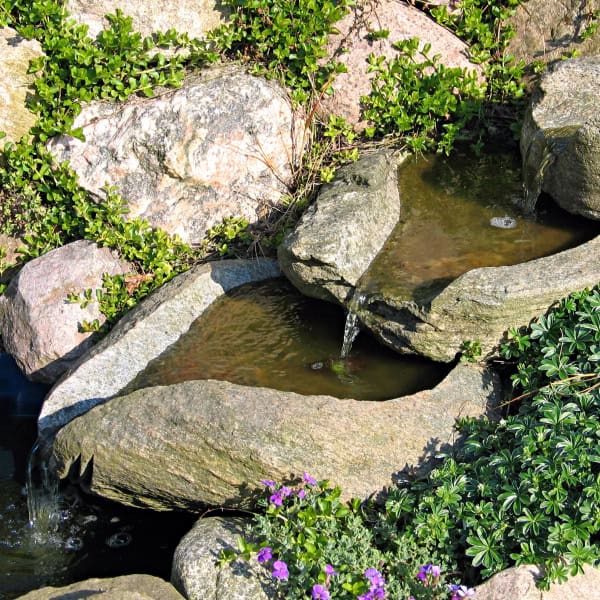
“While this fountain-style feature seems less maintenance-intensive than a full pond, it has its own quirks.”
The small basins have a low water volume, meaning they can evaporate quickly, especially on hot or windy days. You’ll need to top it off frequently to avoid burning out the pump. Because the water is constantly recirculating in a small loop, mineral deposits (scale) can build up on the grey stone, leaving white marks. Plan on a monthly cleaning with a stiff brush and a vinegar solution to keep the stone looking its best. The small pools are also magnets for leaves and debris, so frequent clearing is a must.
15. Wild, Naturalistic Garden Stream with Dense Grasses
This design succeeds because it commits fully to a ‘wild garden’ aesthetic. It doesn’t try to be neat or manicured. The rocks are arranged to look like a genuine stream bed, and the plants are allowed to grow densely and spill over the edges. The use of tall, fine-textured rushes and mossy ground cover creates a lush, immersive feeling. The key is the intentional lack of hard edges. There’s no visible pond liner or concrete border; everything is softened by foliage, making the viewer feel like they’ve stumbled upon a hidden spring in a meadow. It’s a triumph of controlled chaos.
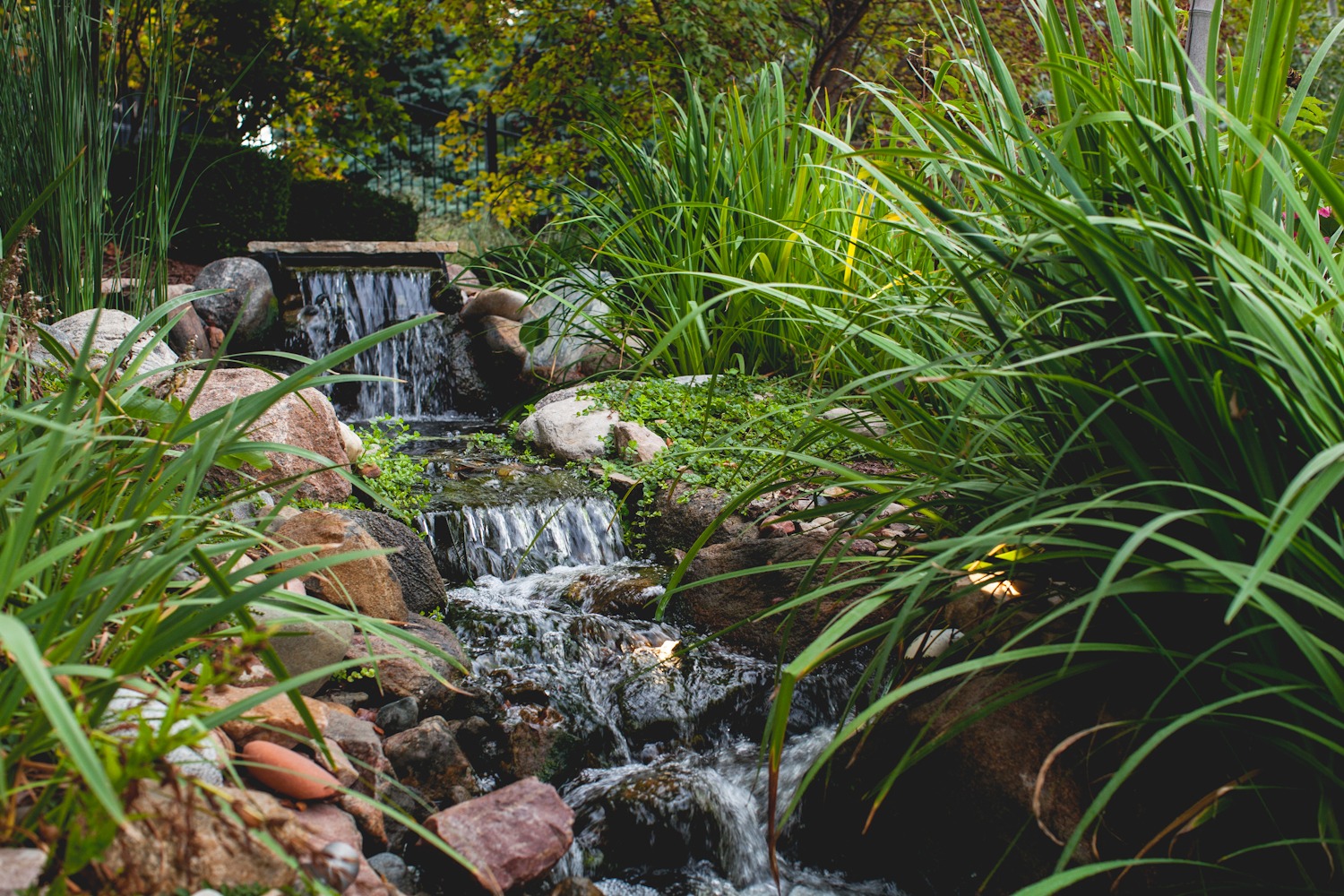
“A ‘wild’ look requires surprisingly diligent editing.”
Those lush green rushes and ground covers can quickly become invasive, choking out the stream and spreading into the rest of your yard. You’ll need to spend time each season thinning out the plants, pulling back the encroaching ground cover, and making sure the water flow isn’t being blocked. It’s a delicate balance between letting it look natural and letting it actually take over. Also, the dense foliage is a prime habitat for critters, from pleasant frogs to less-pleasant snakes and insects, which is something to consider if you have kids or pets.
16. Close-Up of a Compact Waterfall Over a Dark Stone Ledge
To achieve that clean, sheet-like flow of water off a flat ledge, the stone must be perfectly level. Use a small torpedo level to check it from side-to-side and front-to-back. Even a slight tilt will cause the water to favor one side, resulting in a weak trickle instead of a full curtain. For a more dramatic effect, choose a ‘spillway stone’ that is at least 1.5 inches thick. A thicker stone provides a cleaner break for the water, creating that beautiful, satisfying cascade. You can buy pre-cut spillway stones or have a landscape supplier cut a piece of flagstone for you.
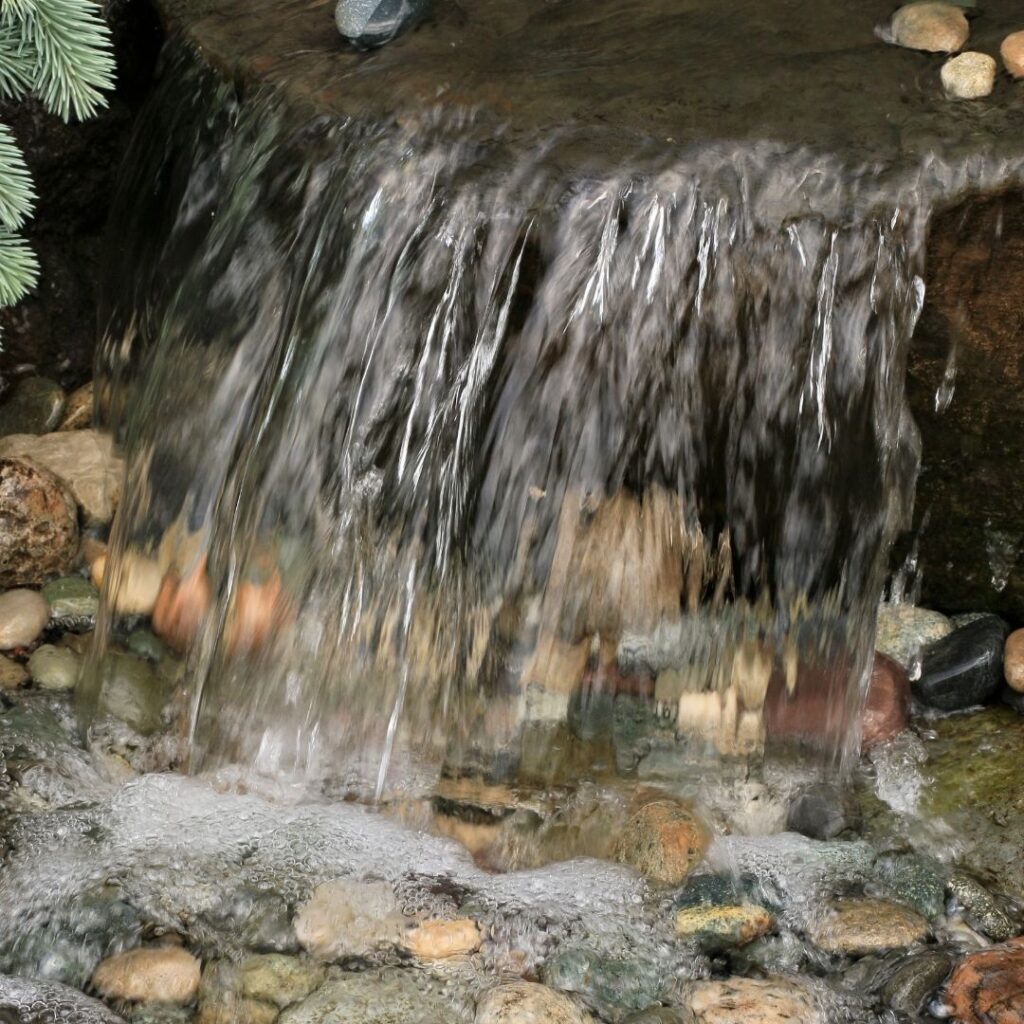
“The beauty of this micro-scene is its minimalist formula: 60% Dark, Dramatic Stone + 30% Water in Motion + 10% Textural Base.”
The single, dark flat stone ledge is the hero, providing a strong, simple platform for the action. The water itself, with its clear flow and white foam, is the dynamic element that catches the light and eye. The multicolored river pebbles in the basin below are the crucial 10%; they provide a complex, textured landing pad that breaks up the water and adds visual interest. This simple, elegant equation is what makes it so photogenic and calming.
17. Small Pond with Stacked Boulders and Blooming Purple Iris
This composition feels so rich and complete because it thoughtfully layers color, texture, and form in a very small space. The rugged, heavy texture of the tan and grey boulders provides a powerful, earthy backdrop. Against this, the delicate, vertical form of the purple iris flowers creates a perfect contrast. The pop of purple is unexpected and vibrant. In the background, the silvery galvanized metal tub adds a touch of rustic, industrial charm, while its red flowers echo the warmth of the tan stones. It’s a small corner packed with well-considered details that complement each other.
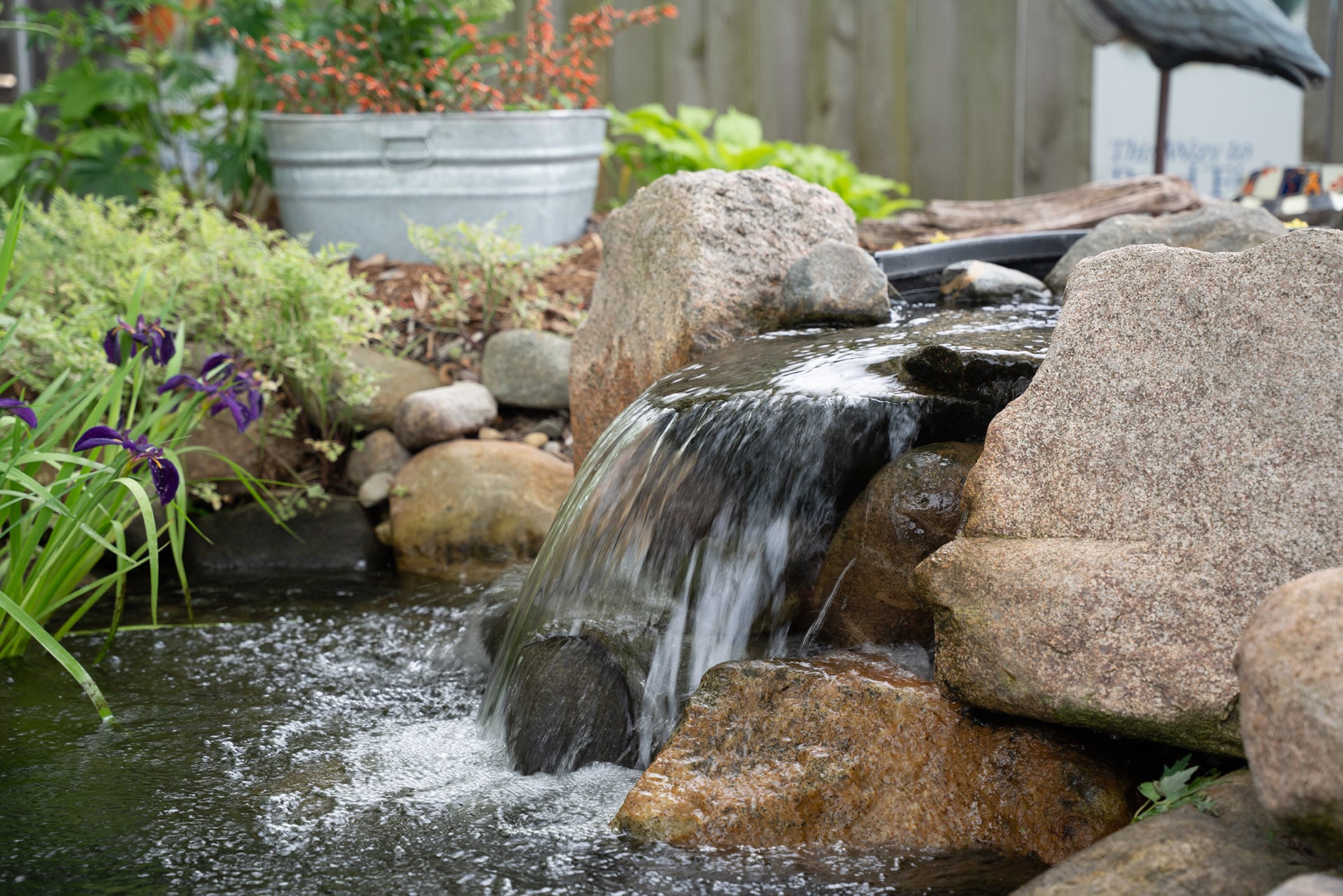
“Creating a charming vignette like this is all about resourceful decorating.”
The large boulders are the biggest expense, but you can get a similar feel by cleverly stacking smaller, more affordable fieldstones. The real star, the purple iris, is a perennial that can be bought as an inexpensive bare root or small plant. The galvanized planter is a classic find at any farm supply store or even Target for under $30. Fill it with seasonal annuals like geraniums for that pop of red. This look is more about thoughtful plant placement and rustic accents than a huge construction budget. It’s a testament to the power of a few well-chosen elements.
18. Tiered Waterfall in a Mulched Slope with a Pebble Basin
This ‘pondless’ waterfall design is perfect for yards where space or safety is a concern. Since there’s no open body of water, it’s a great option for families with small children. This style works beautifully on a natural slope or a constructed berm, needing a space as small as 6×10 feet. The vertical drop should be at least 24-36 inches to get a nice cascading effect. The basin at the bottom is actually a hidden reservoir covered with pebbles, so it doesn’t add to the visible footprint. This design is less about the pond and all about the sight and sound of the waterfall itself. Compare the space needs to the bridged pond in Idea #9.
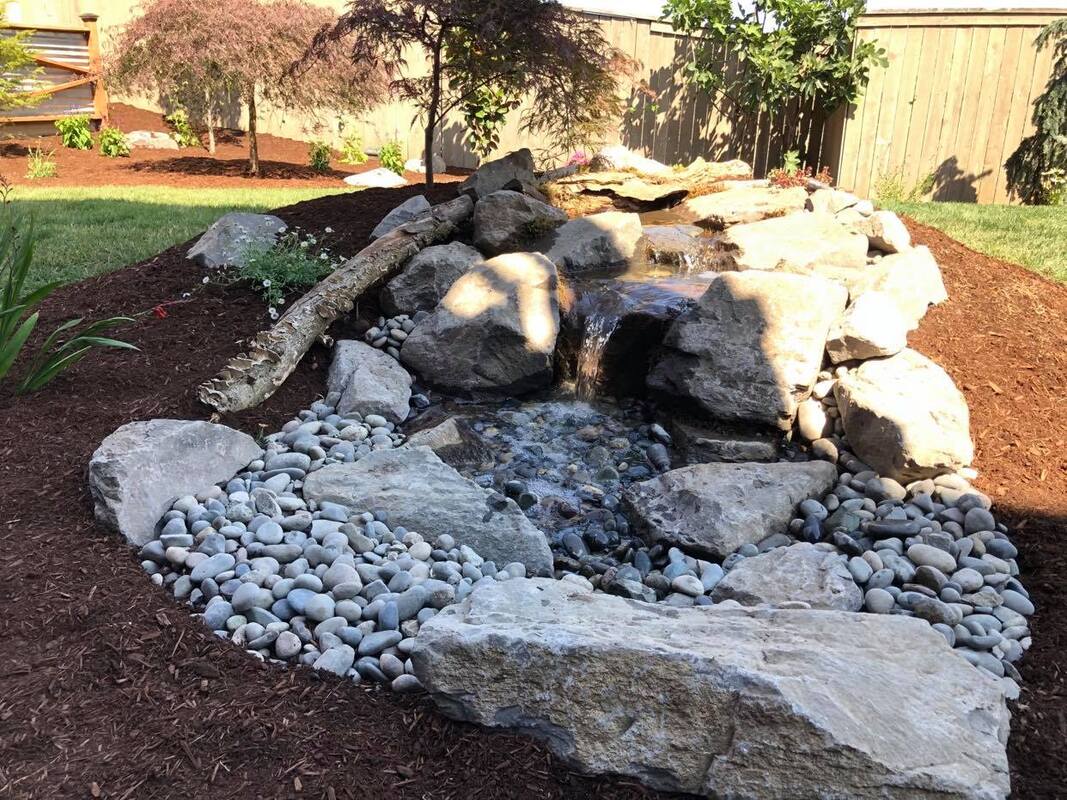
“The reddish-brown mulch is key to this look, suppressing weeds and making the grey stones pop.”
Here’s how to apply it like a pro:Weed the Area: Thoroughly remove all weeds and grass from the bed. For stubborn areas, lay down a layer of cardboard or newspaper first.Define the Edge: Use a spade to create a clean, crisp edge around your bed. This keeps mulch in and lawn out.Apply a 3-Inch Layer: Spread the mulch evenly across the entire bed. A depth of about 3 inches is perfect for retaining moisture and preventing weed growth.Create ‘Donuts’ Around Plants: Pull the mulch back a few inches from the base of your shrubs and the fallen log accent. Piling mulch against trunks and stems can cause rot.Rake Smooth: Use a rake or your hands to create a smooth, finished surface.Plan to refresh with a 1-inch top layer each spring.
19. Tiered Waterfall with Natural Boulders and Flat Slate Spillways
The combination of rounded boulders and flat slate spillways is what gives this waterfall its distinctive character. When building, use the large, roundish boulders to create the main structure and height. Then, insert the flat slate pieces to act as shelves or ledges for the water to flow over. To make it look natural, cantilever the slate so it juts out 2-4 inches from the boulders below it. Use black waterfall foam to seal the joints from behind, ensuring water flows over your carefully placed slate, not behind it. This technique gives you precise control over where the water falls, creating those distinct, separate cascades.
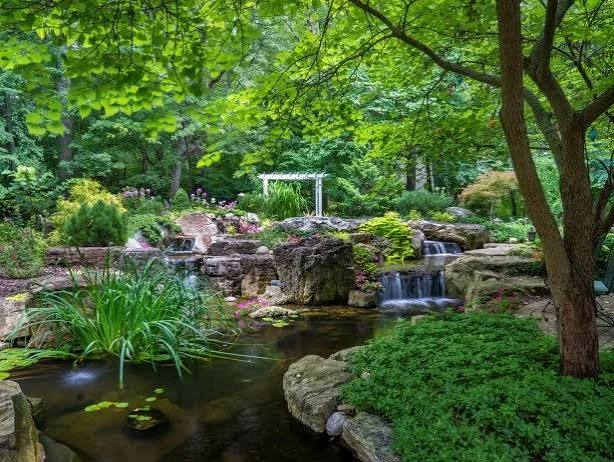
“This waterfall is visually successful because of its strong play on form and texture.”
The large, rounded, earth-brown boulders provide a soft, organic mass. In sharp contrast, the flat, dark charcoal slate spillways introduce strong horizontal lines and a smoother, more refined texture. This dialogue between ‘lumpy’ and ‘flat’ is dynamic and interesting. The composition is then softened by the feathery, vibrant green ferns, which fill the negative spaces and prevent the rockwork from feeling too heavy or monolithic. The clear water acts as the final element, tracing the path laid out by the contrasting stone forms.
20. Natural Rock Stream with Bright Ornamental Grasses
The visual recipe here is a celebration of natural textures: 50% Hardscape (Boulders) + 40% Plantings + 10% Water. The key is the variety within the plantings. Those bright, yellow-green ornamental grasses (like Japanese Forest Grass) and the tall, vertical reeds are doing the heavy lifting. They provide a vibrant color and textural contrast to the heavy, earthy boulders. The water itself is almost a subtle accent, a ribbon of movement and sound that ties the rocks and plants together. The brown mulch ground cover is a quiet supporting actor, making the green and gray tones stand out even more.
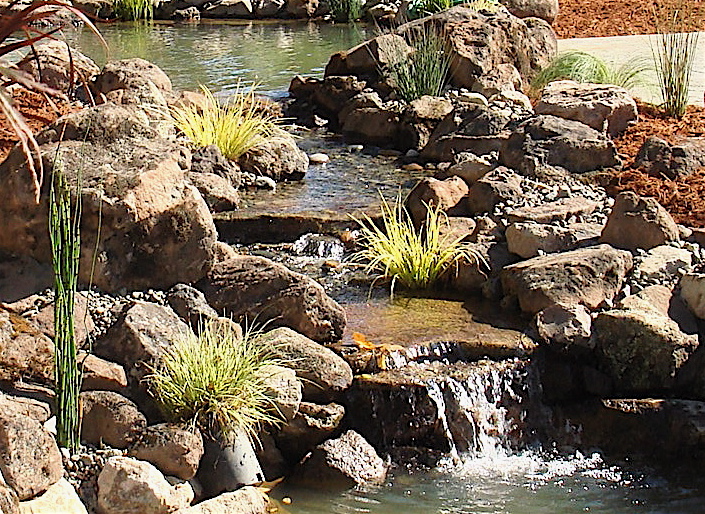
“Those beautiful, bright ornamental grasses can be divas.”
Many varieties, especially the brightly colored ones, require specific conditions to thrive. Some need full sun to maintain their vibrant color, while others will scorch without partial shade. They also need well-drained soil, which can be tricky to achieve right next to a water feature. Before you fall in love with a specific grass, check its specific light and water requirements. Be prepared to divide the clumps every few years to keep them healthy and prevent them from dying out in the center. They are not a ‘plant it and forget it’ choice.
21. Lush Garden Stream Cascading Alongside a Flagstone Path
This design is so effective because it creates an immersive journey. The narrow, cascading stream and the irregular flagstone path run parallel, inviting you to walk alongside the water. This creates a multi-sensory experience of sight, sound, and movement. The path isn’t a straight line; it meanders, forcing you to slow down and notice the details like the mossy rocks and variegated hostas. The dense plantings on either side create a feeling of enclosure and intimacy, making it feel like a secret garden path. It’s a brilliant use of a narrow space to create a big experience.
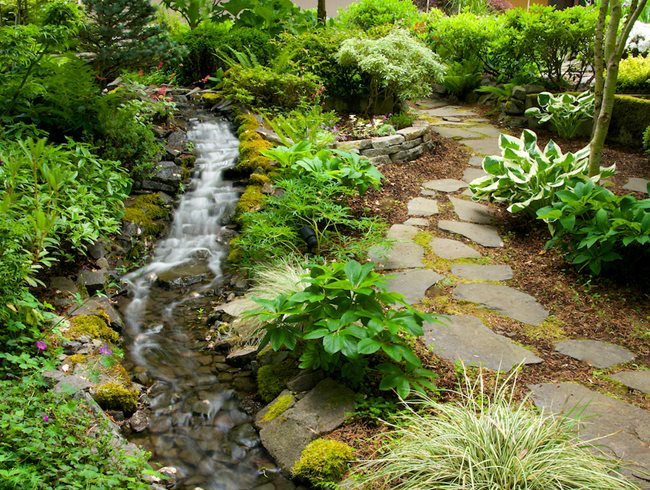
“An irregular flagstone path set in soil or moss looks romantic, but it requires upkeep.”
The stones can shift or become uneven over time, creating tripping hazards. You’ll need to re-level them periodically. Moss and ground cover will constantly try to overtake the stones, so plan on regular trimming and weeding to keep the path clear. In damp, shady conditions, the flagstones can become slippery with algae. An annual pressure washing or scrubbing with a stiff brush is essential for safety. While beautiful, it’s not as ‘set it and forget it’ as a mortared patio. This is a much more organic approach than the clean paver patio in Idea #3.
22. Multi-Tier Rock Waterfall with an Integrated Fire Feature
This dramatic fire-and-water combo is a high-end project. The custom integration is what drives the cost.
- Waterfall Construction (excavation, liner, pump, boulders): $4,000 – $9,000
- Integrated Fire Feature (gas line, burner kit, custom stone housing): $3,500 – $7,000
- Landscaping (river rock, mulch, dense plantings): $1,500 – $3,000
- Professional Design & Installation Labor: $3,000 – $6,000+
- TOTAL: $12,000 – $25,000+
Budget alternative: Create a similar vibe by placing a standalone gas fire pit table (around $500-$1,500) on a patio near a simpler, DIY-friendly waterfall kit ($1,000-$2,500).
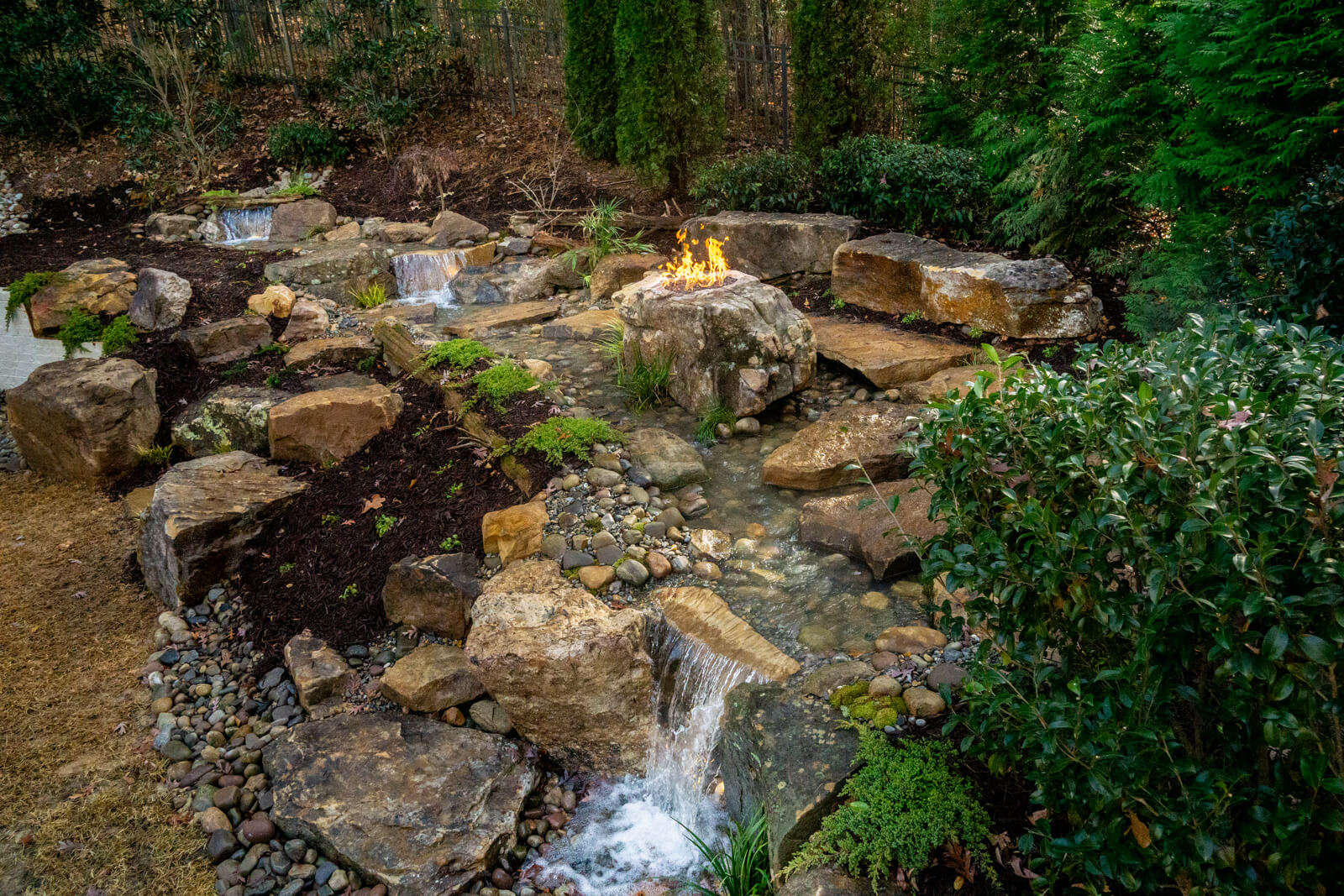
“The integrated fire pit is obviously the showstopper here.”
It’s a bold, elemental move that creates an immediate and powerful focal point. The contrast between the cool, flowing water and the warm, dancing flames is captivating. This isn’t just a waterfall; it’s a destination that engages multiple senses and provides both soothing sounds and physical warmth. Removing the fire element would leave a beautiful waterfall, but it’s the unexpected, primal combination of fire and water in one cohesive structure that makes this design truly memorable and luxurious.
23. Relaxing Backyard Corner with Waterfall and Adirondack Chair
This inviting scene is a perfect equation for relaxation: 40% Natural Feature (Waterfall) + 30% Lush Plantings + 20% Comfort (Chair & Fire Pit) + 10% Structure (Fence). The tiered rock waterfall provides the soothing soundtrack and visual focus. The mixed shrubs and colorful red flowers soften the edges and add life. The white Adirondack chair and low stone fire pit ring are crucial—they explicitly signal that this is a space for humans to relax and gather. Finally, the vertical wood fence provides a sense of privacy and enclosure, making the corner feel like a true outdoor room.
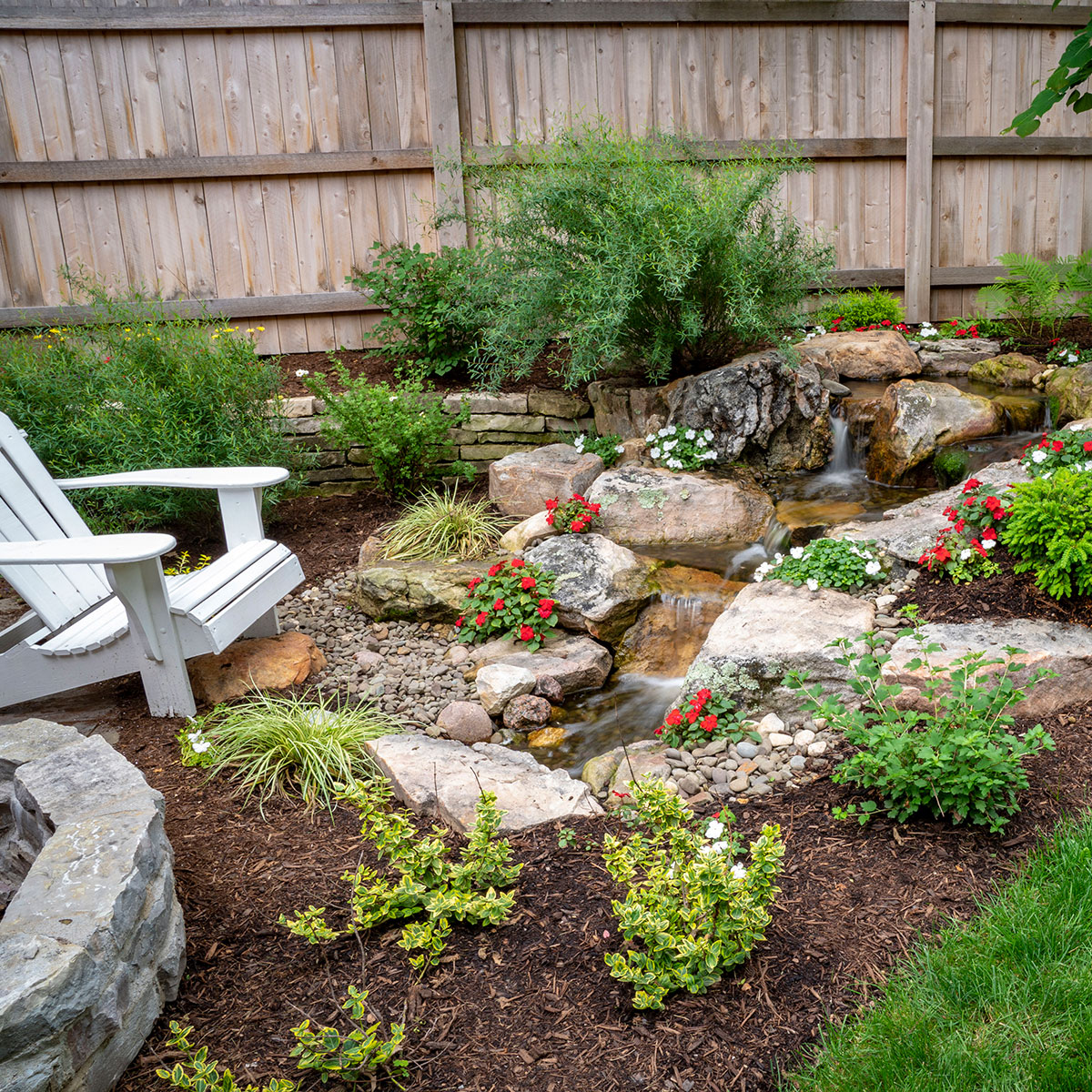
“Ready to create your own relaxation zone?”
Double-check these points first:Chair Material: That classic white wooden Adirondack looks great, but will it stand up to the constant moisture near a waterfall? Consider a chair made from poly-resin (like Polywood) for a similar look with zero maintenance.Fire Pit Placement: Check your local regulations for fire pit setbacks. Most municipalities require them to be 10-25 feet away from any structure, including your house and that wood privacy fence.Sun vs. Shade: Will the chair be in the blazing sun all afternoon? Or in deep shade where the cushions might get mildewy? Plan your seating for the time of day you’ll actually use it.
24. Seamless Pond and Waterfall Integrated into a Green Lawn
The success of this design lies in its seamless integration with the surrounding landscape. There is no hard border, no jarring transition between the water feature and the lawn. The turf grows right up to the natural boulder edging, and the lush foliage seems to emerge directly from the water’s edge. This makes the pond feel less like a man-made installation and more like a natural spring that has always been there. The gentle slope of the stacked stone waterfall and the inclusion of submerged aquatic plants further blur the lines, creating a truly organic and peaceful focal point.
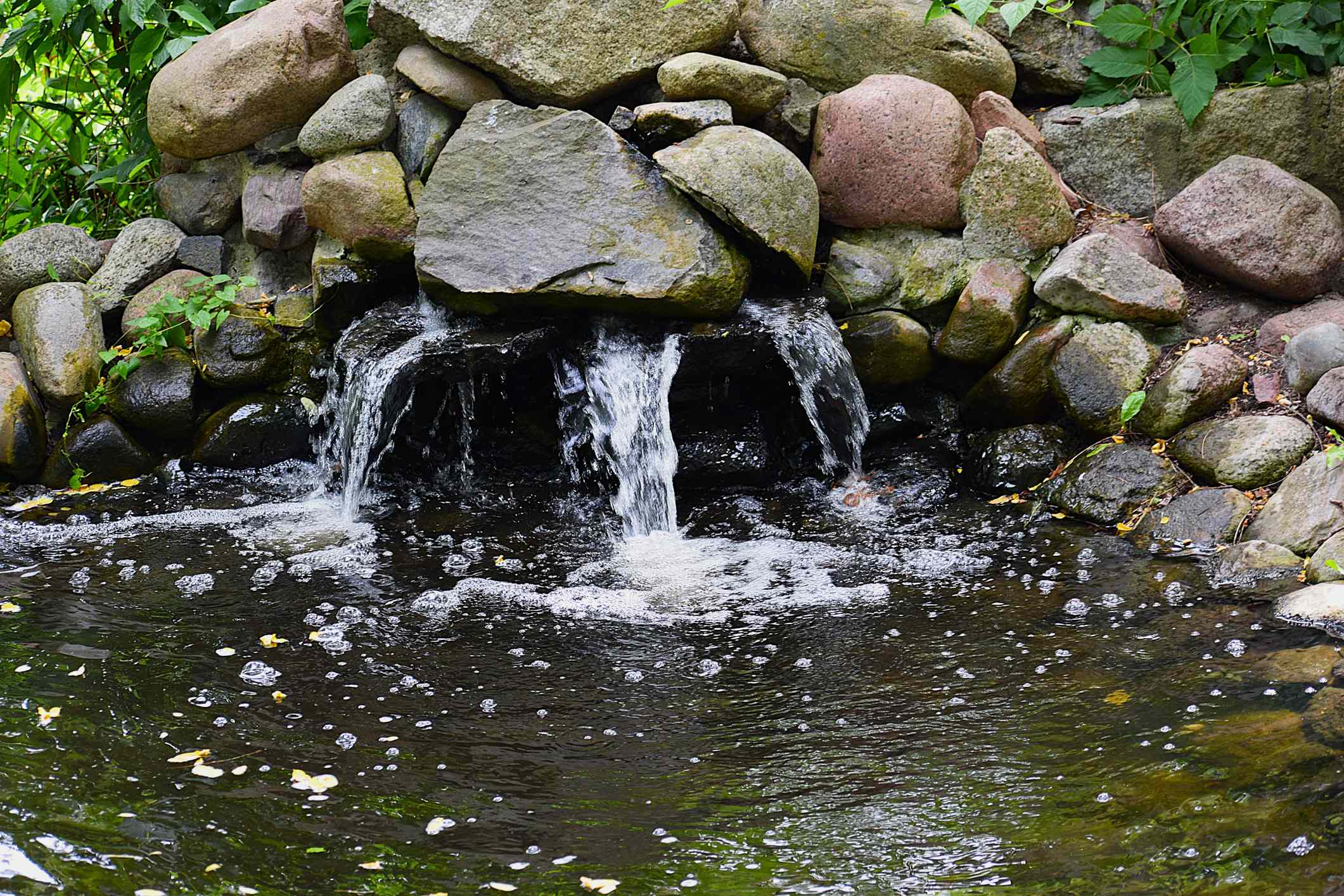
“Having your lawn grow right to the pond’s edge creates a major maintenance headache: grass clippings.”
Every time you mow, you risk getting clippings in the water, where they will decay, feed algae, and clog your pump intake. To combat this, you’ll either need to meticulously bag your clippings and use an edger, or create a ‘no-mow’ buffer zone right at the pond’s edge. A subtle trench filled with mulch or river rock, hidden just behind the main border stones, can be a great compromise. It creates a barrier to stop clippings without disrupting the seamless visual look from a distance.
25. Garden Stream with Weathered Logs and Wildflowers
Incorporating weathered logs into a water feature adds incredible naturalism, but you must choose the right wood. Use hardwoods like oak, cedar, or cypress, which are naturally rot-resistant. Softwoods like pine will decay quickly in a wet environment, fouling your water and falling apart. To be extra safe, use wood that has been aged for several years and is no longer leaching tannins (which can stain your water brown). You can also use highly realistic cast-concrete logs, which give you the same aesthetic with zero maintenance or water quality concerns. They are surprisingly convincing.
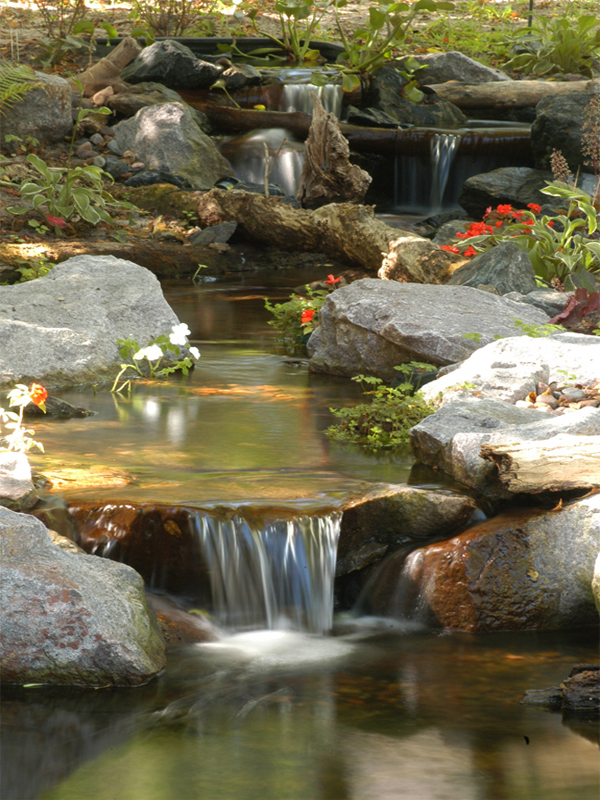
“The weathered logs placed across the stream are the single element that gives this feature its authentic, woodland character.”
Rocks and water are standard, but the addition of wood introduces a new texture and a sense of history. It suggests a fallen tree, the natural evolution of a forest landscape. The way the water flows over and around them adds complexity to the stream’s movement and sound. Without the logs, it would be a pretty rock stream. With them, it’s a slice of a wild, untouched environment, further enhanced by the delicate red and white wildflowers along the banks.
26. Compact Stacked Rock Waterfall in a Lush Green Yard
This is a perfect example of a high-impact, low-budget project. The entire feature is built from relatively small, easy-to-handle stacked rocks, which are far cheaper and easier to source than large boulders. You can often find stones like this for free on Craigslist or Facebook Marketplace. A small pond liner, a simple submersible pump, and a few bags of river rock for the basin are all you need for the core components. The total cost for materials could easily be under $500 if you’re resourceful. The lush look comes from letting existing turf and simple, inexpensive ferns fill in around the edges.
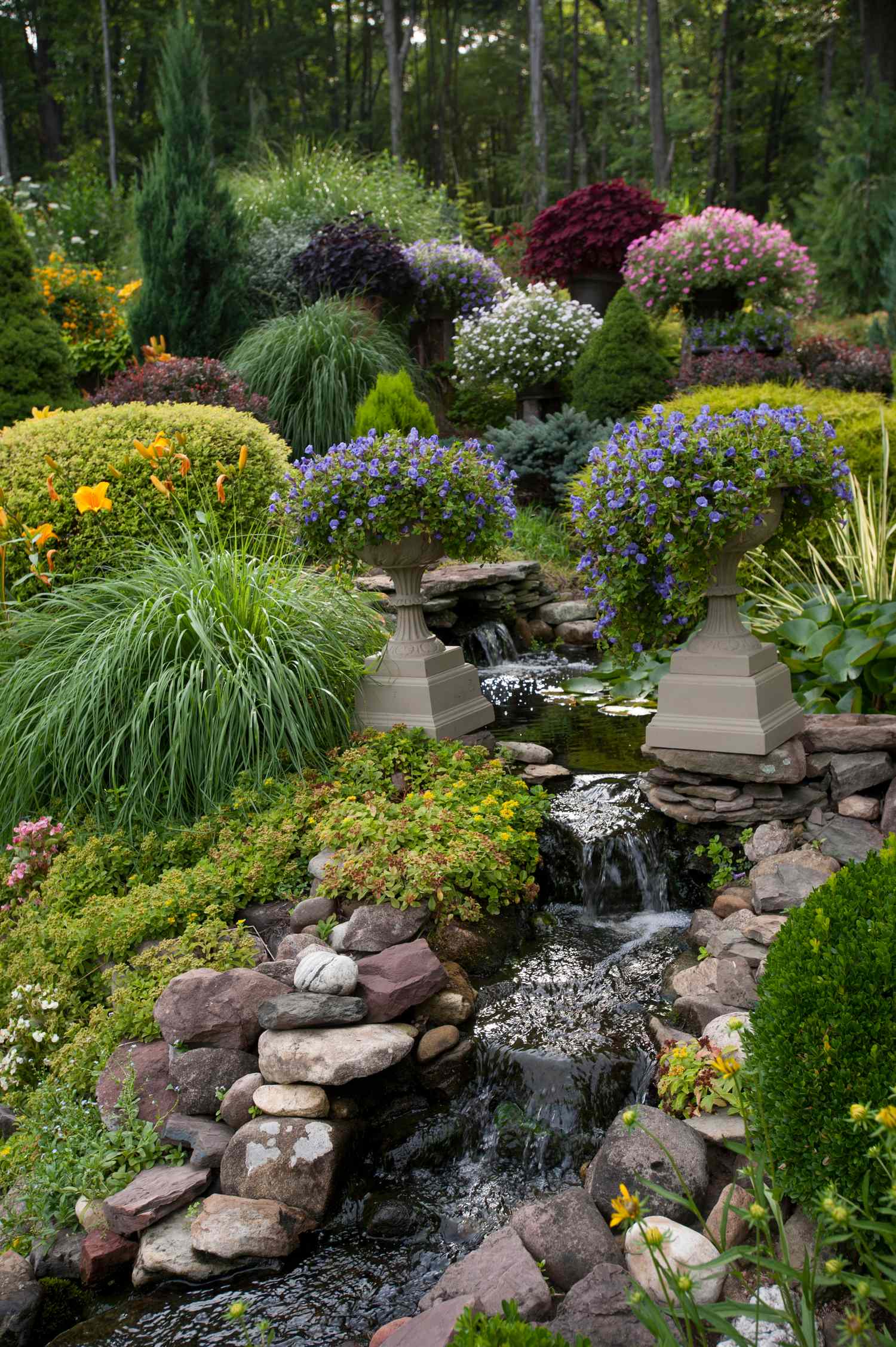
“This type of compact waterfall is incredibly versatile and ideal for small gardens, courtyards, or even a tight corner in a larger yard.”
The visible footprint is minimal, likely no more than 4×6 feet. Because it uses a ‘pondless’ design where the water reservoir is hidden underground beneath the rocks, it’s a great choice for homeowners concerned about the safety of open water. The vertical height is also modest, probably around 2-3 feet, which means you don’t need a dramatic slope to make it work. It’s about adding gentle sound and movement, not creating a massive focal point. For a larger version, see Idea #5.
27. Shaded Waterfall with Mossy Rocks and Ferns
This composition is a masterwork of shade gardening. It works because it fully embraces its low-light conditions instead of fighting them. The designer has chosen plants that thrive in damp, shaded environments, creating a cohesive and believable scene. The lush green ferns, with their delicate textures, contrast beautifully with the solid, moss-covered rocks. Moss is encouraged to grow, adding a layer of aged authenticity to the gray stones. The clear pond reflects the dense foliage, amplifying the feeling of being in a hidden, cool forest grotto. It’s a perfect example of choosing the right design for the right spot.
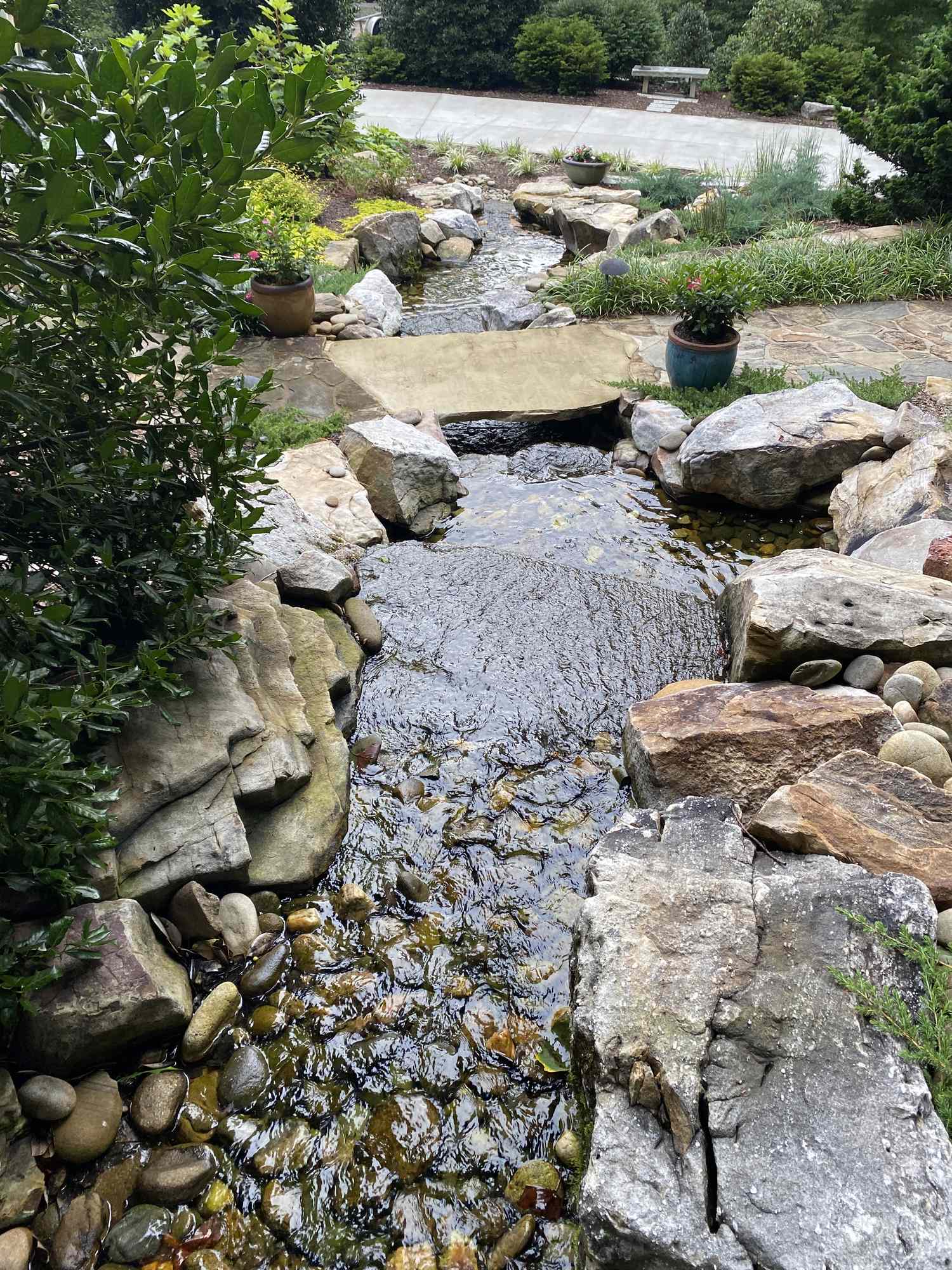
“A shady, moist environment is perfect for ferns and moss, but it’s also perfect for slugs and snails.”
Be prepared to manage these pests, as they can decimate your beautiful foliage overnight. A deep shade location also means you’ll have more debris from overhanging trees—leaves, twigs, and pollen—falling into your pond. This requires more frequent skimming to keep the water clear and prevent the pump from clogging. While you’ll have fewer algae problems than a sunny pond, the battle against debris is constant. Consider installing pond netting in the fall if you’re surrounded by deciduous trees.
28. Tiered Stone Waterfall with a Red Japanese Maple
When using a dominant accent piece like the decorative heron figurine, placement is everything. Notice how it’s positioned on the rock border, slightly away from the main waterfall cascade. This allows it to be a point of interest without competing with the water’s movement. It’s placed ‘in profile,’ looking towards the pond, which gives it a sense of purpose and integrates it into the scene. A common mistake is to place statues right in the middle of the waterfall or have them face outwards, which can look staged. Let your decor interact with the landscape naturally.
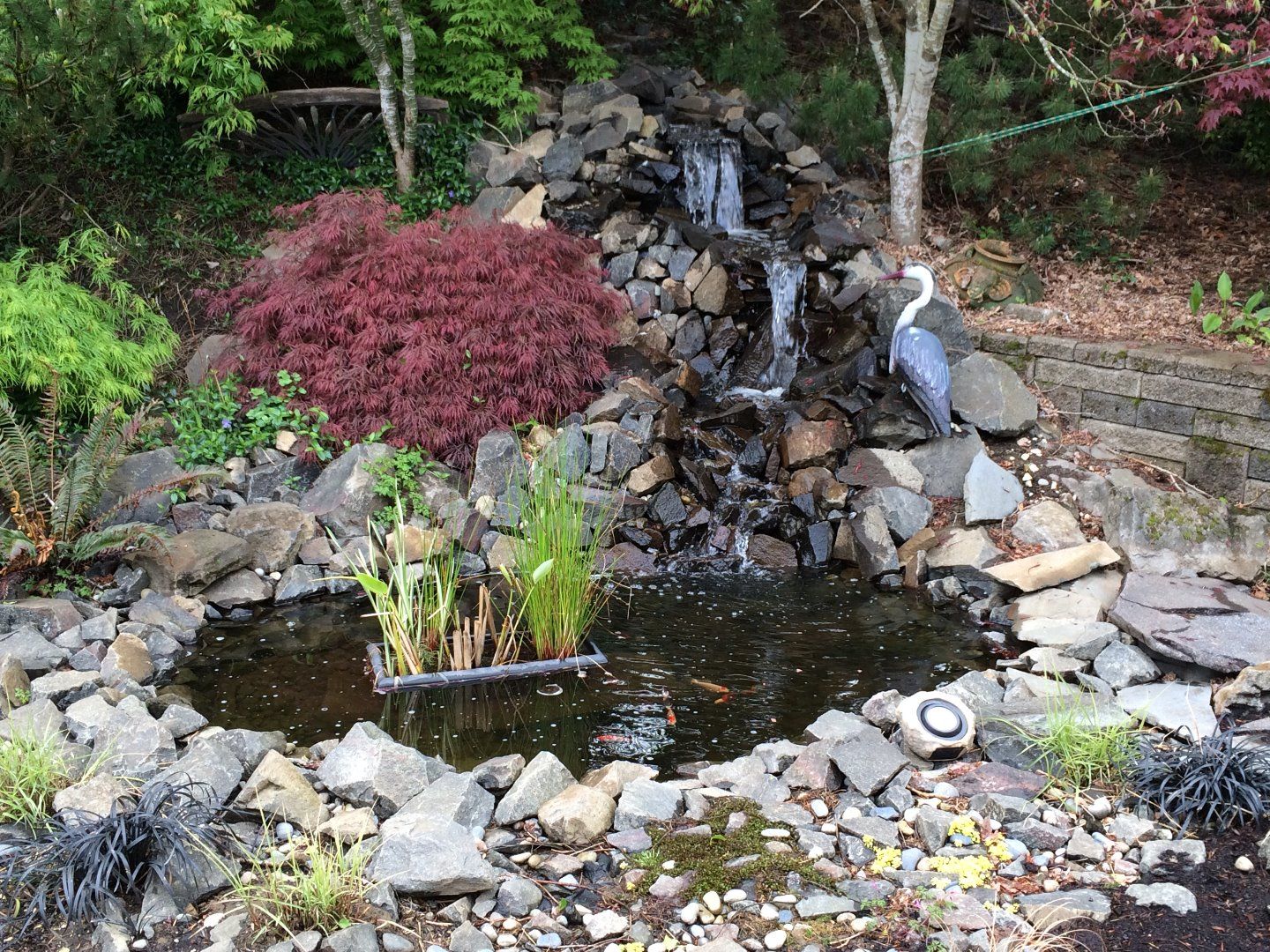
“This lovely garden pond follows a classic landscape design formula: 60% Green Base + 20% Stone Hardscape + 10% Water Element + 10% Color Pop.”
The lush ferns and surrounding plants form the dominant green backdrop. The stacked slate-gray stone of the waterfall and retaining wall provides the structure. The water is the active, moving element. The final, crucial 10% is the ‘pop’ of color from the deep burgundy Japanese maple. This single splash of contrasting color elevates the entire composition, drawing the eye and balancing the cool tones of the stone and water. It’s a simple, effective recipe for a dynamic garden scene.
Ready to Hear the Sound of Water in Your Garden?
We hope these 28 real-world examples have shown you just how achievable a beautiful backyard pond and waterfall can be. Whether you’re drawn to a wild, natural stream or a compact, modern feature, the key is to blend your design with the surrounding landscape. Don’t be afraid to start small and let your personal oasis evolve over time. Pin your favorite ideas from this list, and when you’re ready to start digging, you’ll have all the inspiration you need.