Fairy gardens bring a little magic to any outdoor space, no matter its size. These miniature worlds turn a corner of the yard or a simple planter into a tiny realm you can shape and change yourself. From carved pumpkins to mossy houses and pebble paths, each idea offers a fresh way to tell a story with plants and found objects.
This collection of 27 fairy garden ideas covers whimsical, seasonal, and natural looks so you can find a style that suits your garden. Whether you work with terracotta pots, glass terrariums, or galvanized buckets, the goal is the same: create a small scene that feels alive and inviting.
Whimsical Fairy Garden in a Terracotta Pot with Mushroom House
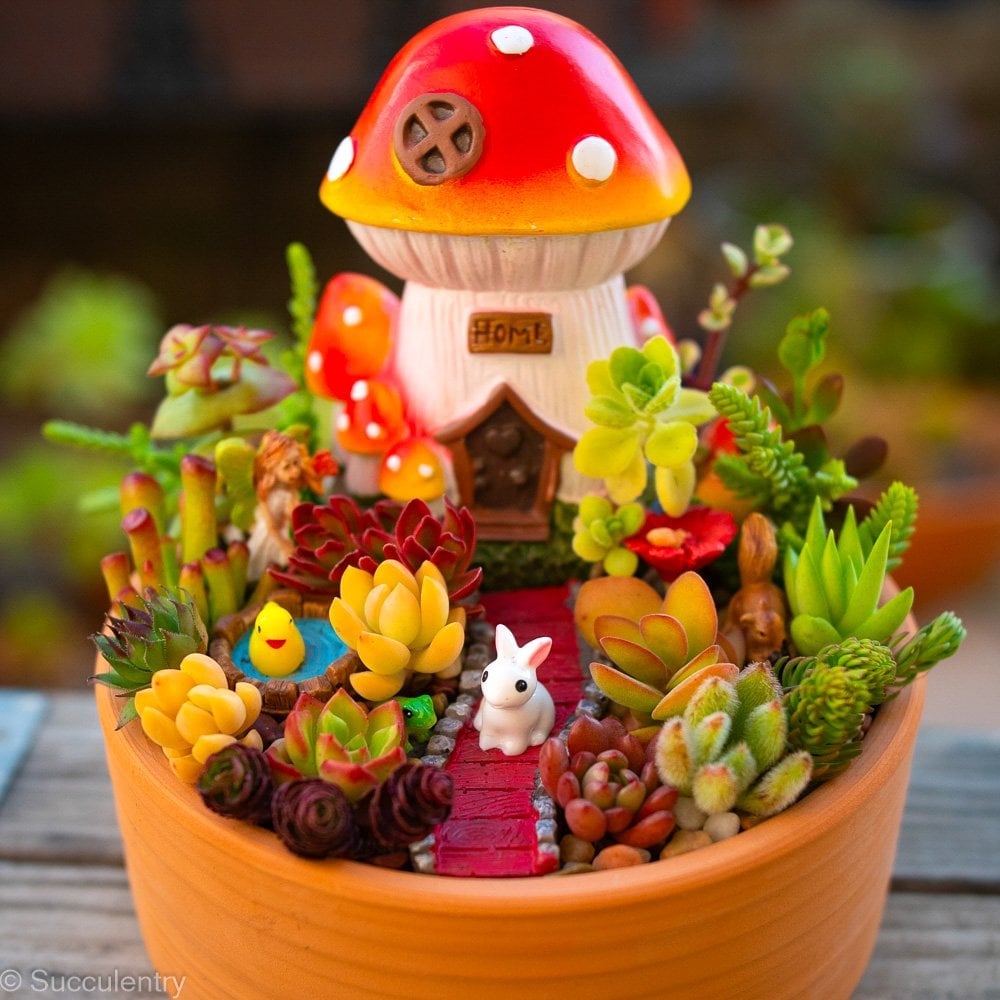
A terracotta pot holds a compact miniature scene where a red mushroom house with white spots acts as the anchor. The layout uses the pot as a boundary, keeping the succulents, stone path, and small animal figures contained so the eye stays on the central structure. For a container garden like this, a single large feature gives the whole arrangement a clear focal point without adding clutter.
Miniature Fairy Door Set into a Faux Wood and Stone Structure
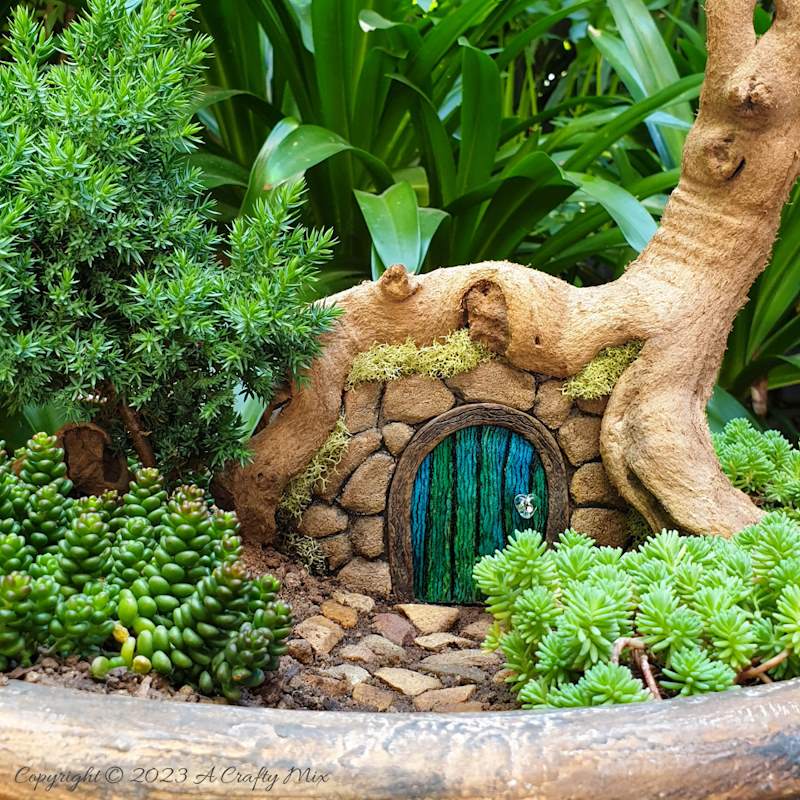
This design stacks two materials that read as natural: the faux wood of the door frame and the stacked stone of the wall around it. The brown and green palette keeps the scene grounded, while the tiny blue door adds a pop of color that draws the eye. Relying on just two or three textures prevents the vignette from feeling busy, and the contrast between smooth painted wood and rough stone gives the door a built-in look even in a small planter.
Charming Fairy Garden with Seated Fairy Figurine and Stone House
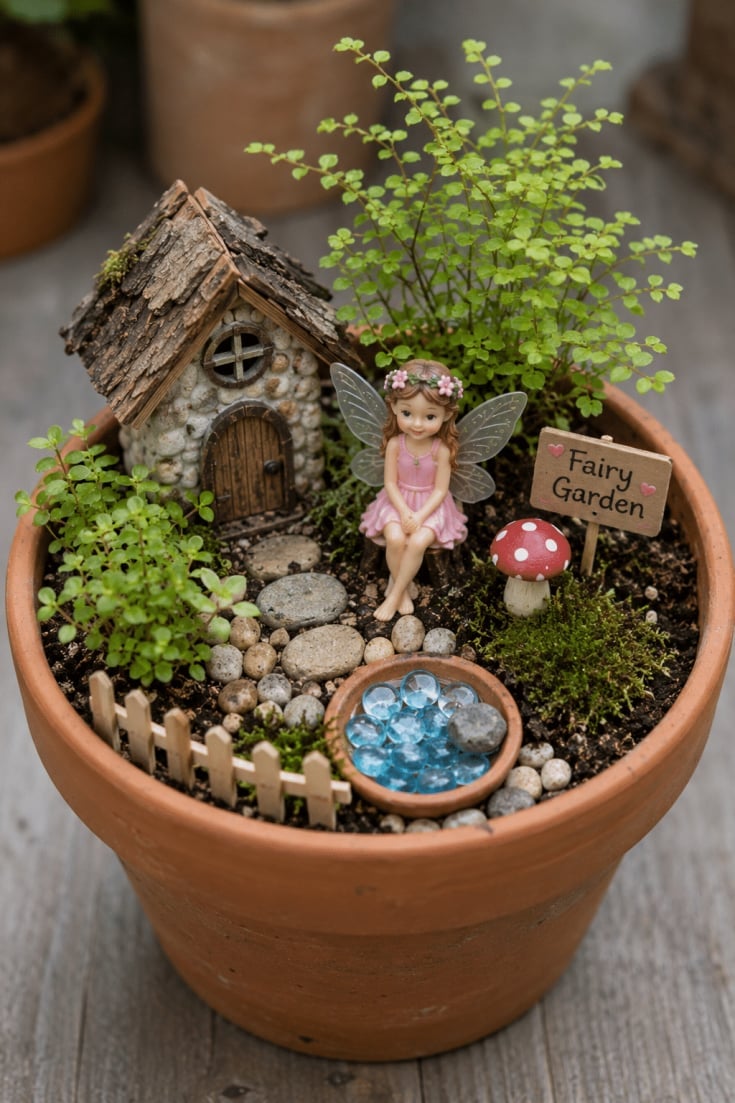
How do you make a miniature garden feel lived in rather than just arranged? Scale is the answer. This terracotta pot scene pairs a seated fairy figurine with a stone house, a small fence, and a pond, all kept to a similar size so nothing overwhelms the others. The pink of the fairy’s dress softens the brown and green palette, which keeps the scene from reading as overly rustic.
A good rule for proportion: the tallest piece should be no more than half the height of the pot or planter. That way the figurine stays the center of attention without the house or fence competing for it.
Autumnal Fairy Garden with White Pumpkin House and Miniature Accents
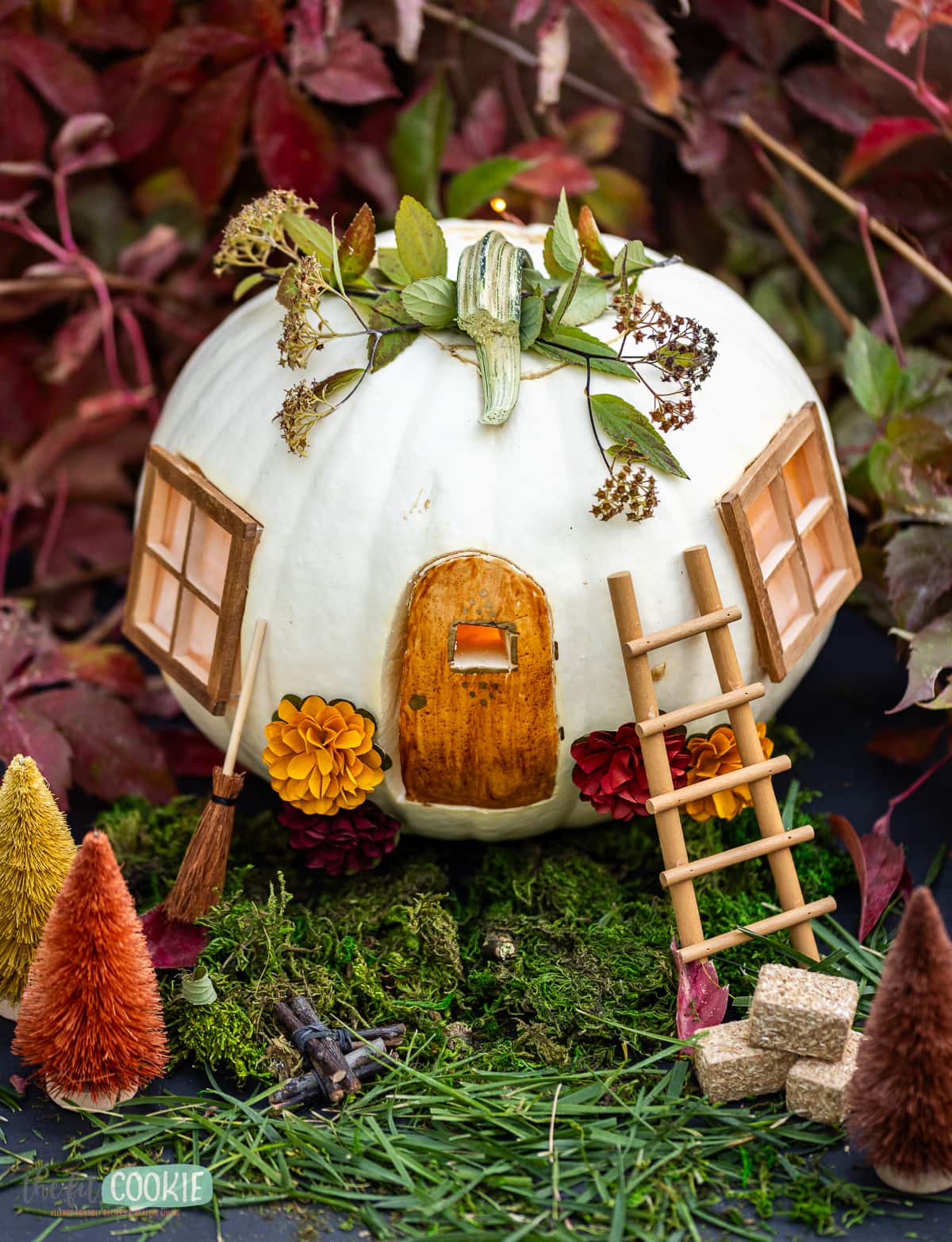
A white pumpkin house sits on mossy ground with a wooden door, a tiny ladder, and a broom leaning against it. The dried flowers and miniature trees in orange and brown reinforce the autumnal theme, while subtle fairy lights woven through the scene add warmth without washing out the pumpkin’s pale surface. Keeping the house itself neutral lets the seasonal accents change out easily when the holidays shift.
Garden Planter Fairy Garden Featuring a Pumpkin Fairy House
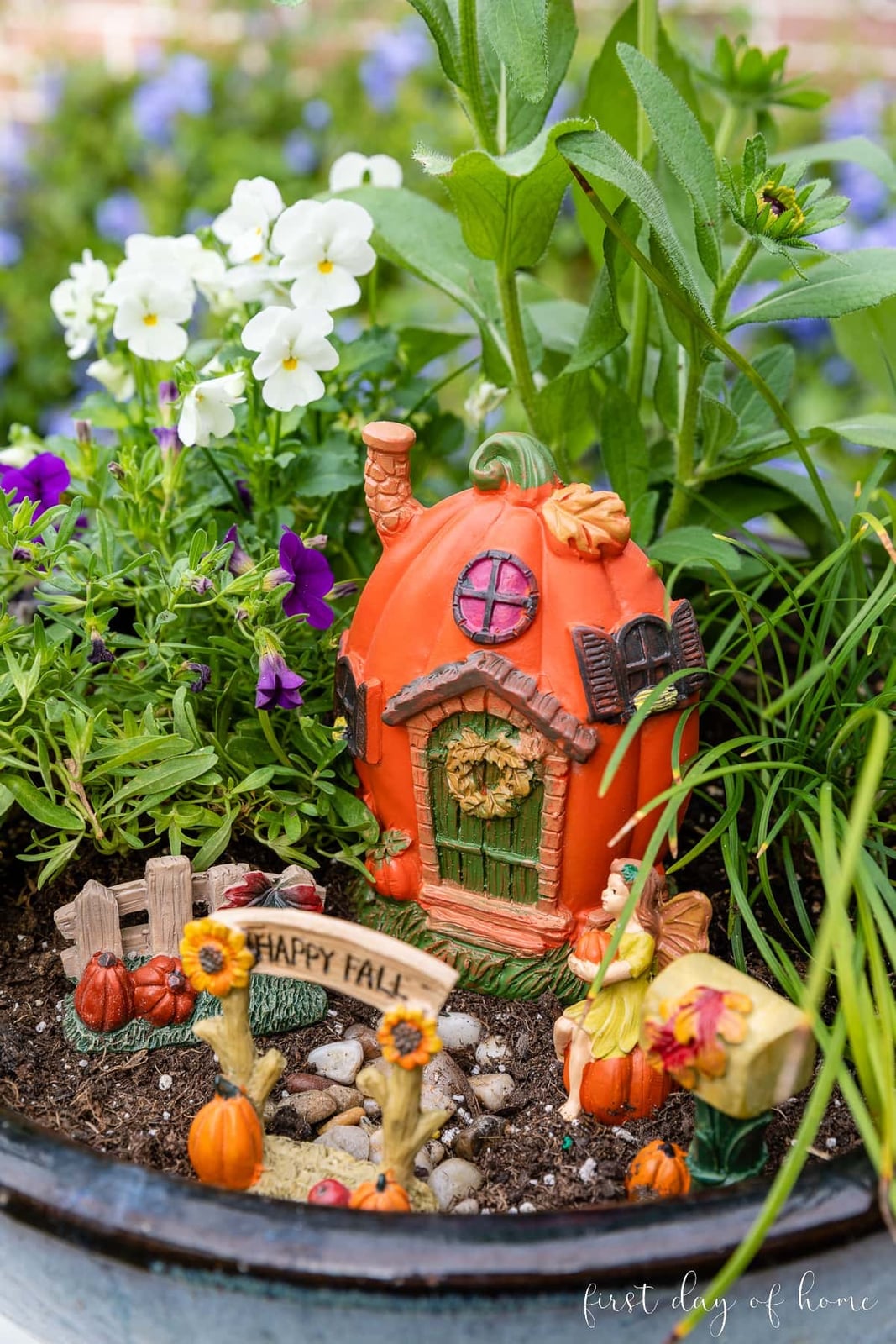
Build a planter fairy garden in layers from back to front. Place the resin pumpkin house near the rear, with a fairy figure and a ‘happy fall’ sign in front of it, and low plants filling the foreground. The orange, green, brown, and yellow palette ties the scene to autumn, and stone mulch around the pieces keeps them stable during watering. Arranging the tallest elements at the back prevents the view from being blocked.
Modern Succulent Fairy Garden in a Large Planter
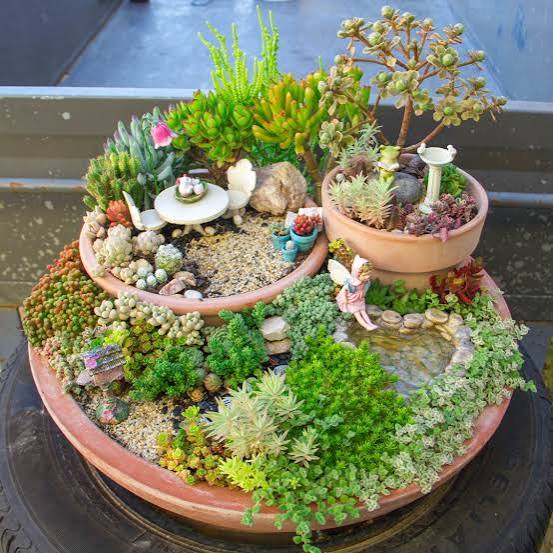
This setup trades the usual dense greenery for a modern succulent fairy garden with a cleaner look. The large planter holds a multi-tiered arrangement of succulents in greens and pinks, with gravel spread between the tiers. A miniature fairy and a tiny table sit among the plants, keeping the scale readable. The terracotta tones of the planter tie back to the warm ceramic pieces. For a garden container, this kind of layout works because the succulents need less water than ferns or moss, so the miniature elements stay in place longer without shifting from damp soil. The daylight hits the fleshy leaves evenly, which helps the resin details of the fairy stand out without extra effort.
Whimsical Fairy Garden with Winged Fairy Figurine and Birdhouse
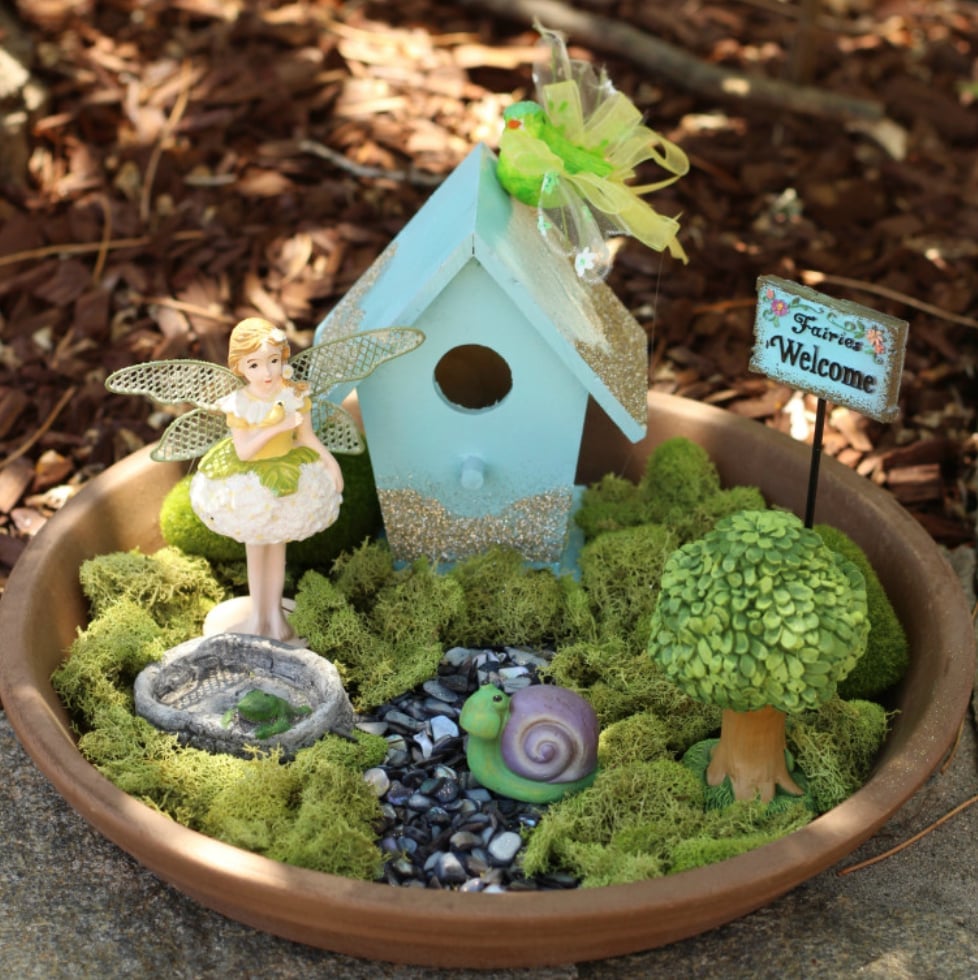
The winged fairy figurine becomes the focal point here, with her blue and yellow dress catching the eye against the green moss and terracotta pot. A wooden birdhouse, a miniature tree, and a small snail fill out the scene without crowding it. For renters, this setup is easy to move because everything sits inside one pot. You can swap the figurine or birdhouse for another piece when the mood changes, and the pot itself stays on a porch or patio without any permanent change to the space.
Fairy Garden Terrarium in a Glass Jar with ‘Happy Harvest’ Sign
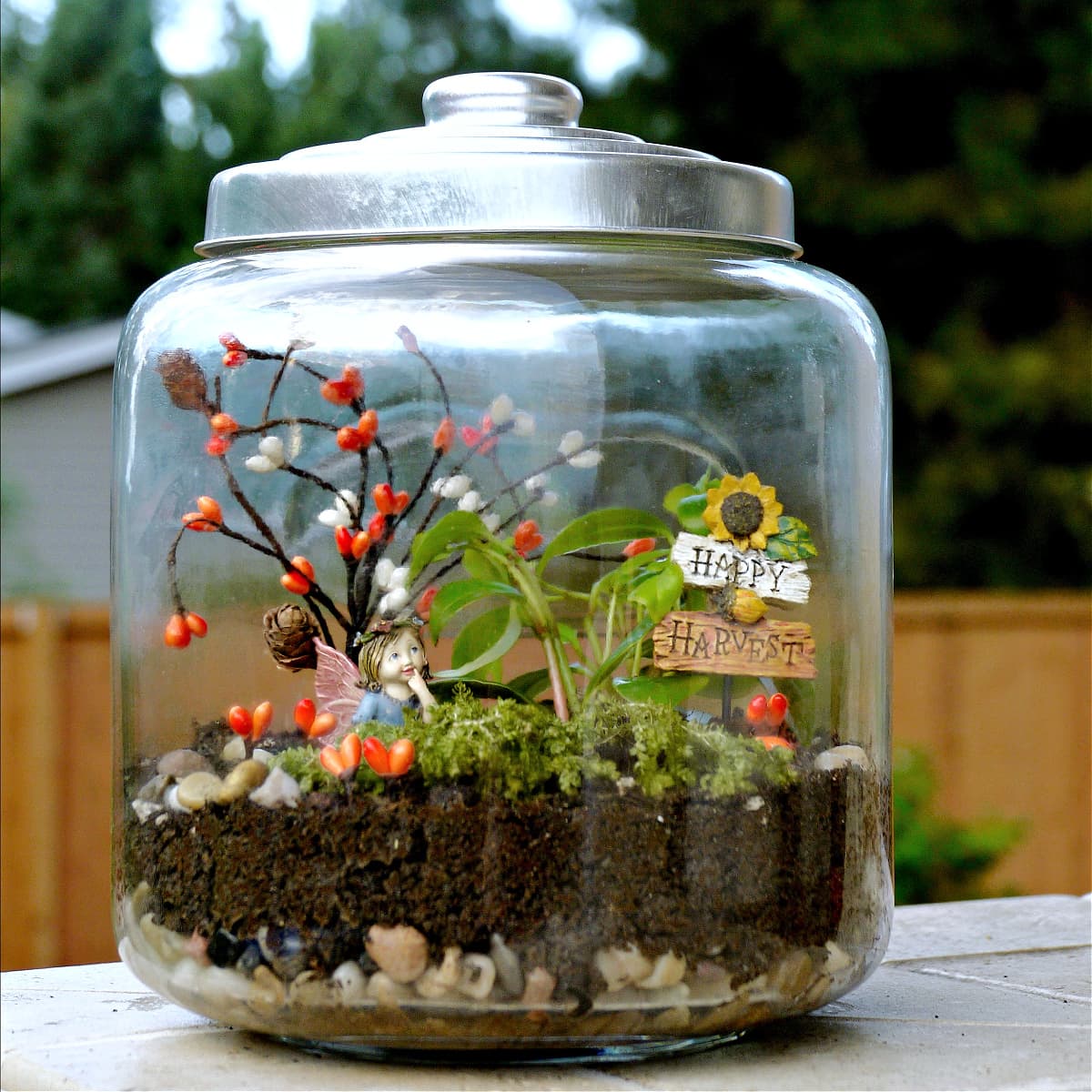
This one is a contained world inside a glass jar, with soil, pebbles, and moss forming the base. A fairy figurine stands next to a miniature sign that reads Happy Harvest, while small plants add green and brown tones. The jar keeps the layout tight and protects the moss from drying out as fast as an open pot would. For anyone who wants a fairy garden on a table or shelf, this glass barrier means less mess from loose soil and fewer watering worries. The white and red details on the sign give the eye a clear place to land, which matters in a compact scene.
Miniature Mushroom House with Butterfly Ornaments in a Textured Pot
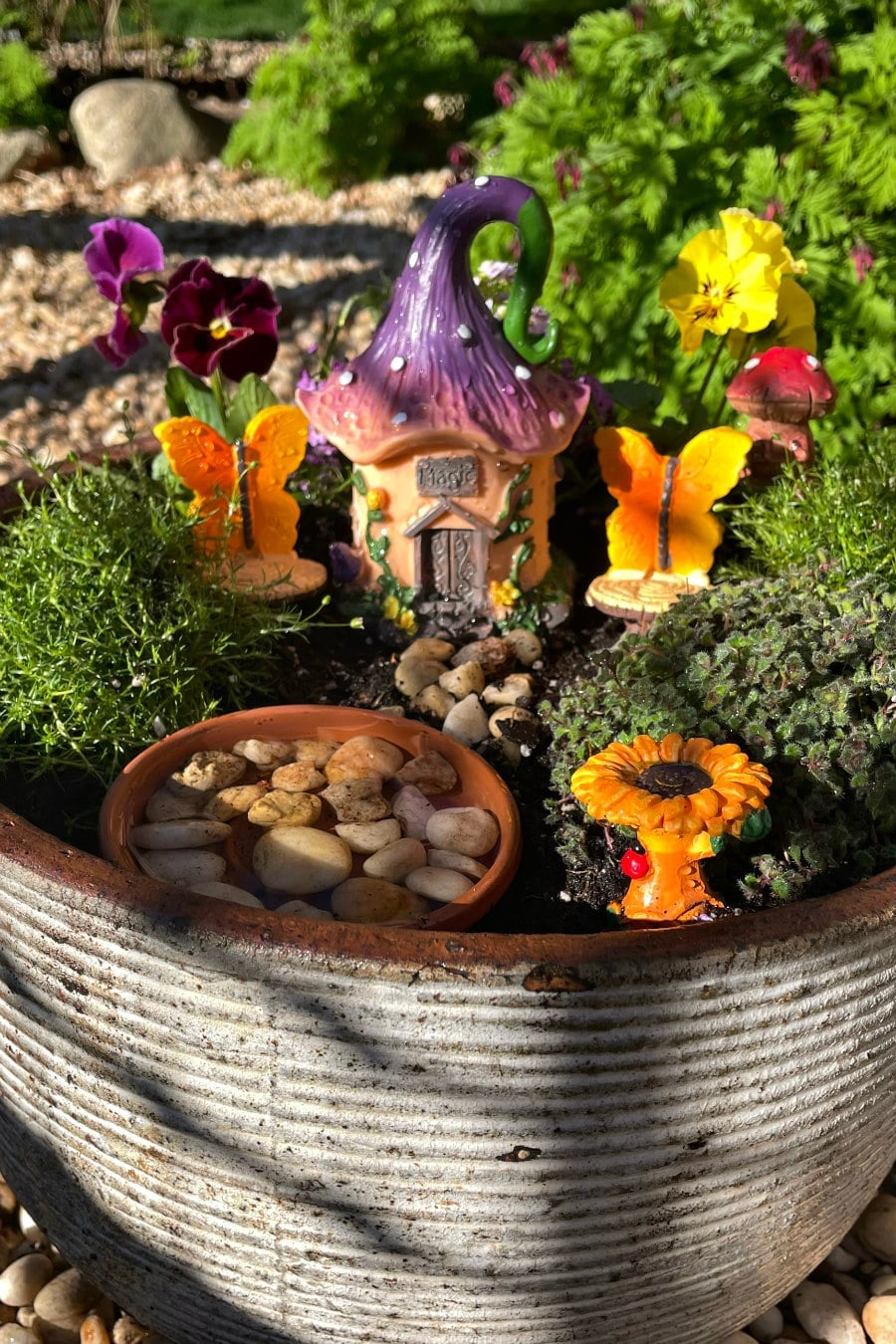
How do you make a fairy garden feel more playful without adding clutter? A purple and green mushroom house does the job on its own. Here the ceramic gnome house anchors the pot, with butterfly ornaments and a sunflower adding pops of orange and yellow. The textured pot keeps the overall look grounded so the bright colors don’t feel overwhelming. For durability, a ceramic house like this holds up better outdoors than painted plastic, which can fade after a season in the sun. The moss and stones around the base help the house look settled, as if it has always been there.
Overhead View of a Miniature Garden with Tree and Stone Path
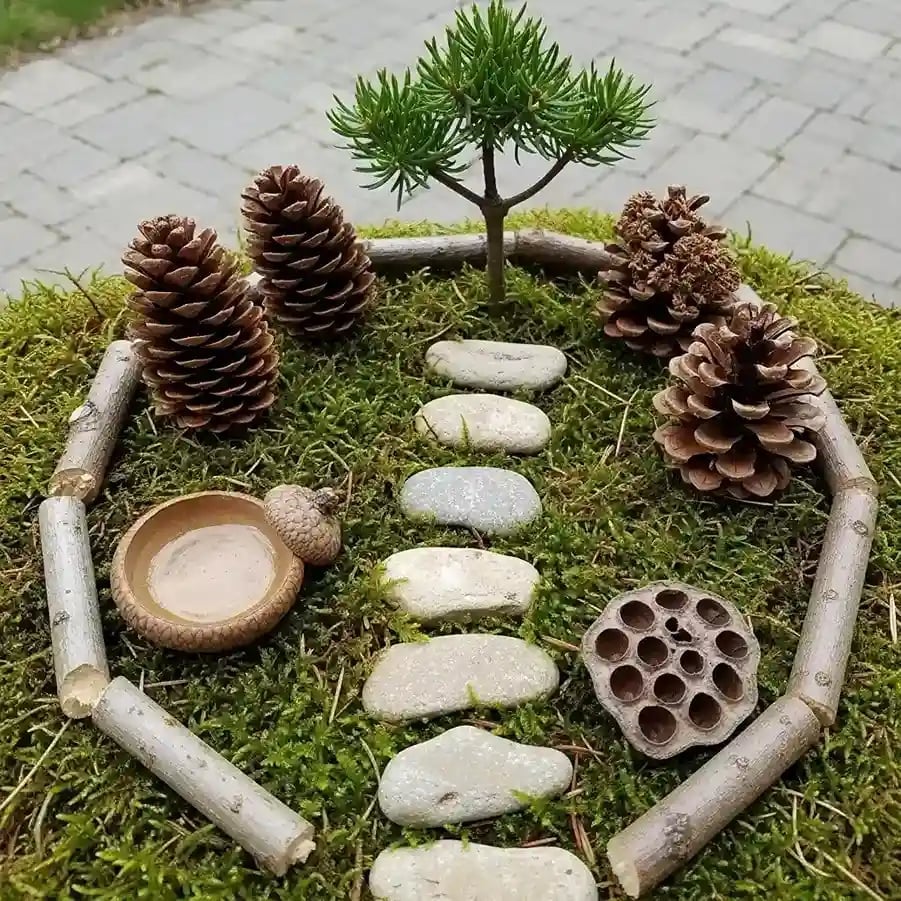
The overhead view shows a circular miniature garden where a stone path leads from the edge toward a small tree. Pine cones and an acorn cup sit among the moss, while gray stones mark the route. The layout uses the circle to create a natural boundary, so the path and tree feel deliberate rather than random. For a reader trying this at home, keeping the path narrow relative to the tree helps the scale read correctly. A path that is too wide makes the tree look like a bush instead of a tall trunk.
Green Metal Bucket Fairy Garden with Acorn Birdhouse
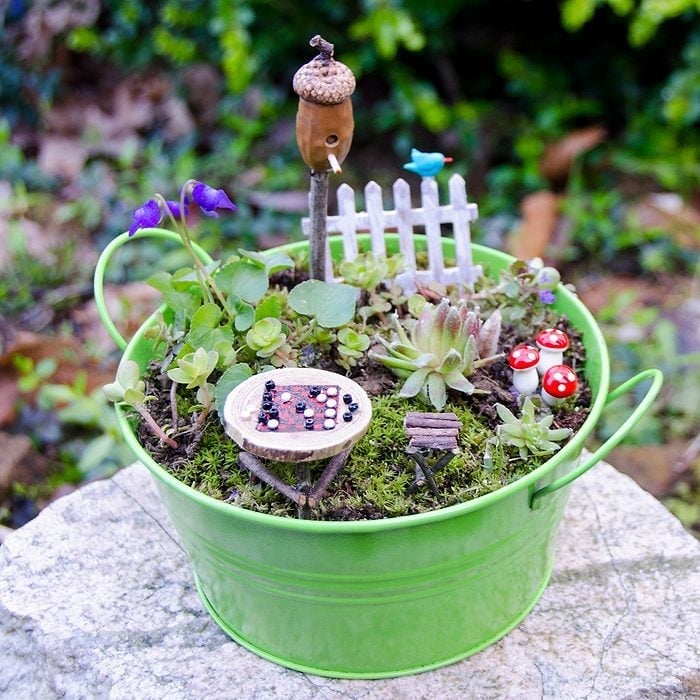
An outdoor miniature garden should use a container that already feels like part of the landscape. A green metal bucket holds a scene with a miniature fence, a game board, and an acorn-shaped birdhouse that becomes the clear focal point. The metal walls keep the soil and moss contained while the green finish blends with the garden setting. This approach avoids the need for a separate planting bed and makes the whole display portable. A container in a natural tone lets the miniature elements stand out without fighting the vessel for attention.
Tiered Galvanized Stand Fairy Garden with Miniature Bridge
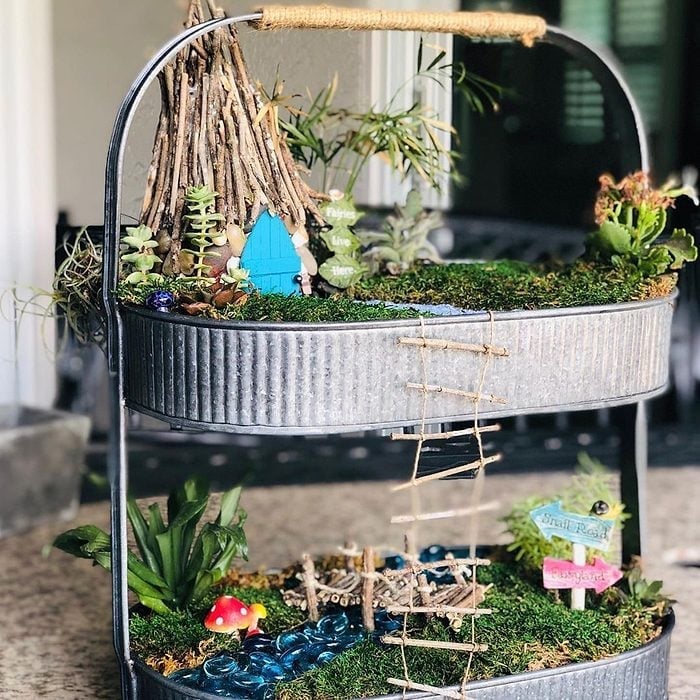
A single-level planter is the obvious choice for a fairy garden, but a tiered galvanized stand changes the whole logic of the layout. Here, two levels hold miniature houses, a bridge, and a ladder, creating separate zones that form a tiny village instead of a single crowded scene. The gray metal of the stand stays neutral against the green moss and brown wood accents.
The vertical separation solves a common problem: keeping tiny furniture visible. A bridge on the upper tier and a house below means nothing gets hidden behind a taller piece. For anyone working with a collection of miniatures, a tiered stand offers built-in organization without extra shelving.
Miniature Fairy Garden in a Light Pot with Thatched House
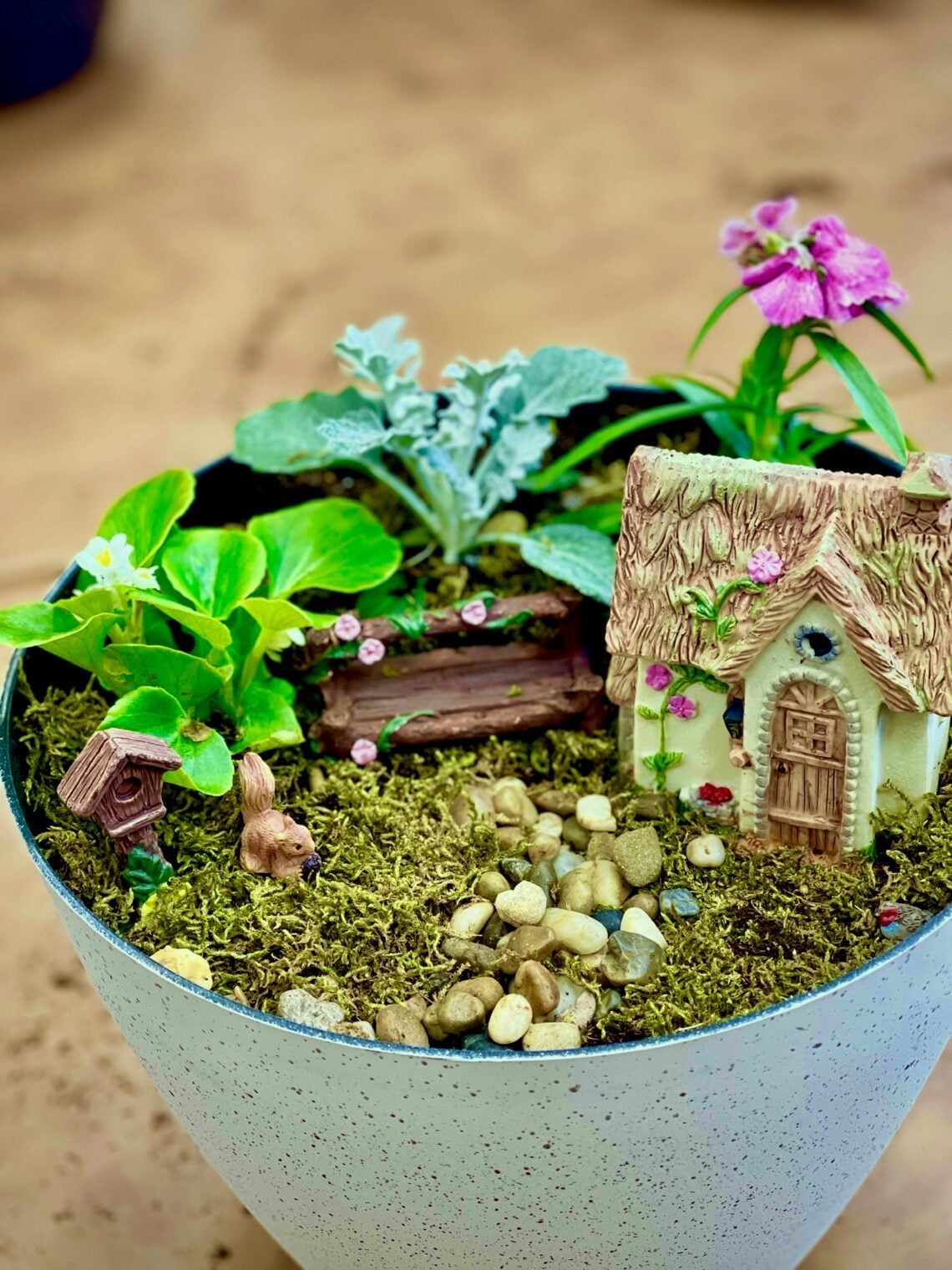
A light ceramic pot lets the thatched roof of the tiny house stand out. The beige and brown tones of the house, paired with a pink accent, look warm against the green plants and moss. A miniature bench and birdhouse fill the compact space without making it feel crowded. The bright daylight helps the textures of the thatch and stone read clearly, which matters when the whole scene fits in one pot.
Whimsical Fairy Houses Crafted from Carved Pumpkins
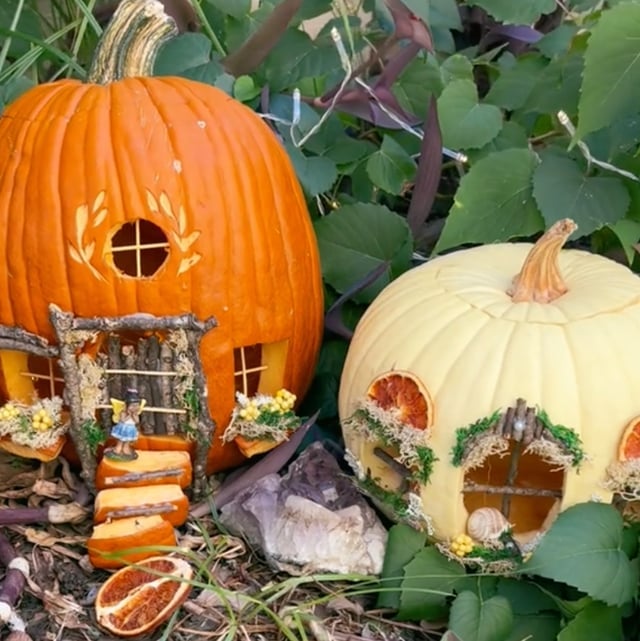
Carved pumpkins make excellent seasonal fairy houses because their natural shape already suggests a cottage. Two pumpkins sit side by side, one orange and one cream, with openings cut to serve as doorways. Wood pieces and dried fruit add scale while stone accents anchor the scene to the ground. The daylight keeps the orange and cream tones true without the need for artificial lighting. For this approach, pumpkins should be the largest elements and the decor stays small enough to preserve the illusion.
Detailed Miniature Garden Scene with Multi-Story House and Pond
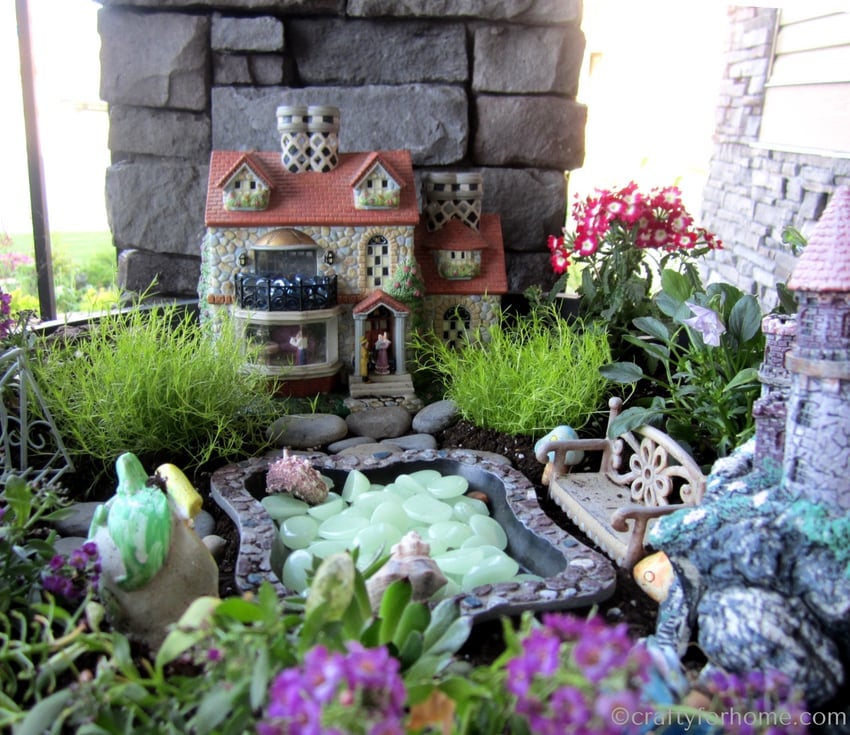
To create a detailed miniature scene, give each element its own visual space. Here, a multi story house with a balcony sits beside a small pond, with a bench and figurines placed at a clear distance from the water feature. The red house stands out against the green and gray palette, and the gravel path separates the seating area from the pond edge.
For anyone storing a collection of miniatures, a dedicated vignette like this keeps pieces organized and visible. Grouping related items such as the bench and the pond together prevents the scene from looking like a random assortment. A compact layout with clear pathways between elements makes the garden feel lived in rather than just arranged.
Fairy Garden Scene with Multiple Figurines and Arched Doorway
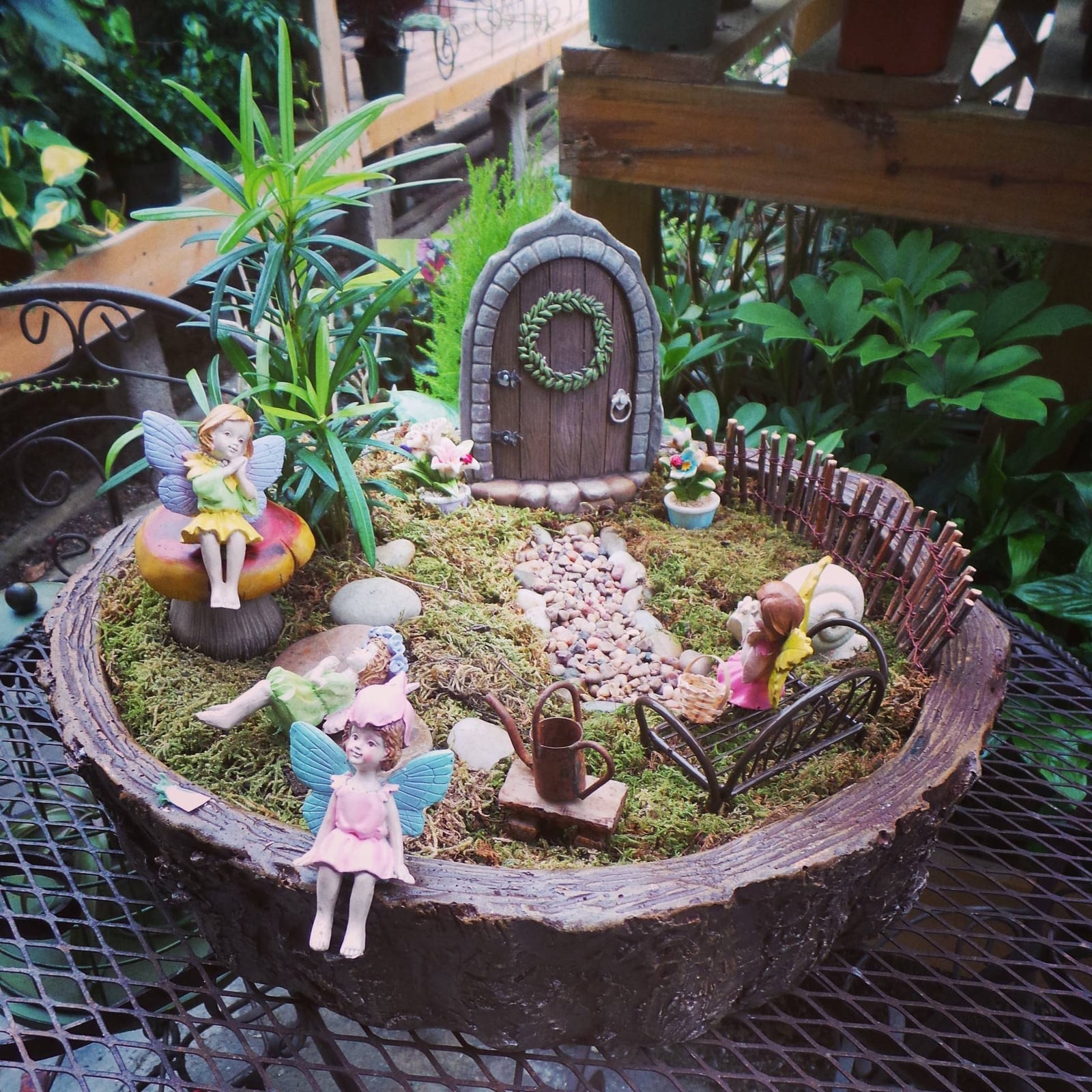
A compact scene in a garden bed fits several fairy figurines, a mushroom seat, and an arched doorway into a small footprint. The mix of resin, wood, moss, and stone adds texture without needing a large space. A miniature watering can and the blue accents on the fairies’ clothing tie the palette together. For a similar sense of density, group your key pieces first, then fill gaps with moss or pebbles. That approach keeps the layout from reading as cluttered.
Whimsical Fairy Houses with Mossy Roofs and Miniature Mailbox
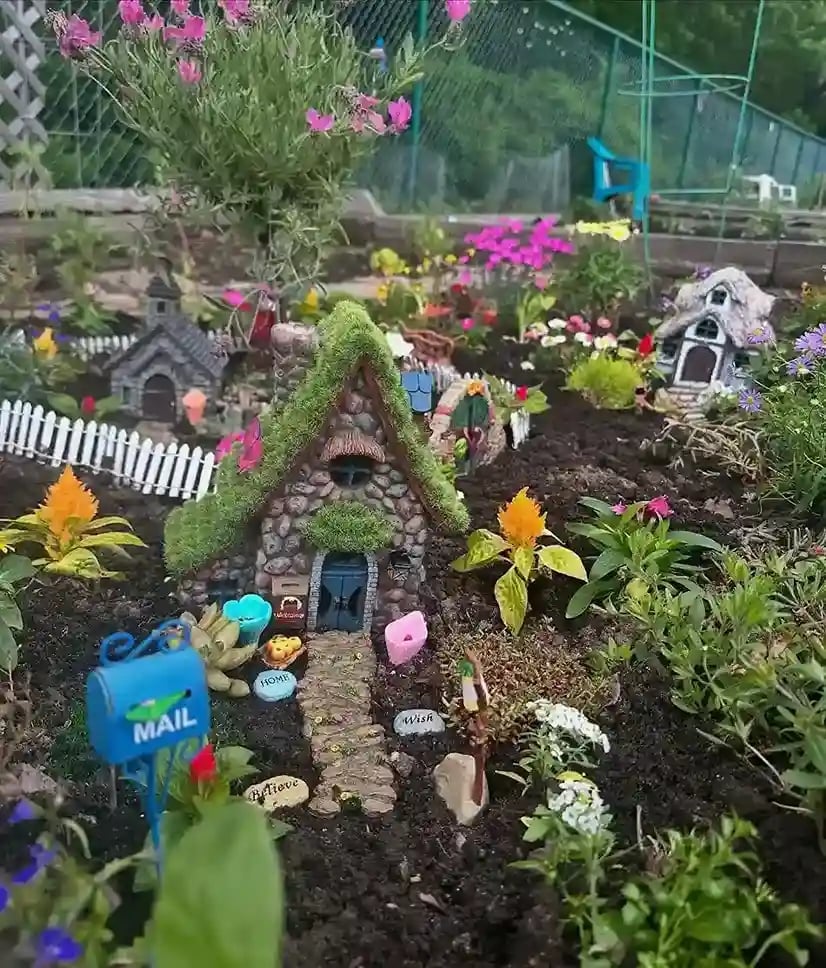
A renter-friendly fairy garden keeps everything in a garden bed or a container that sits on the ground, so you can lift it out when you move. Here, stone fairy houses with mossy roofs are scattered among plants, with a miniature mailbox and a picket fence adding story. The brown, green, pink, and yellow palette comes from the plants and natural materials, not paint. Gravel paths connect the dwellings visually. Since nothing is glued or cemented, you can rearrange the houses or swap out the fence without damaging the soil.
Miniature Fairy Garden with Fairy Figurine on a White Bench
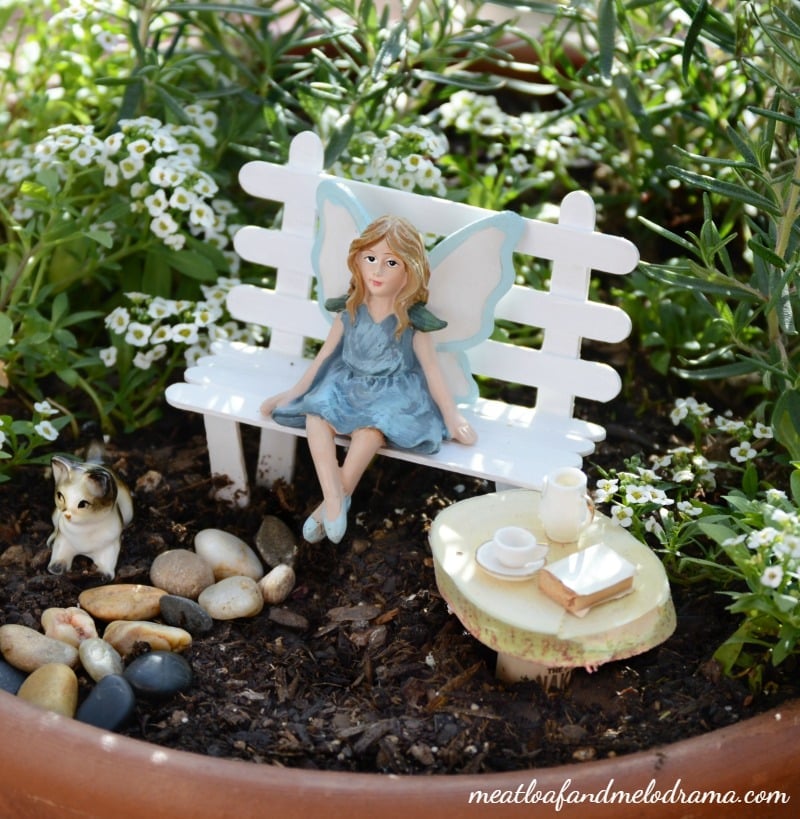
Most miniature fairy gardens center the house, but this one puts the fairy figurine on a white bench as the focal point. The blue, white, green, and brown palette keeps the scene calm, with a small table, chair, and cat figurine arranged around the bench like a real seating area. The compact pot limits the layout to a few pieces, which makes the scale clear.
For your own version, choose one element, a bench, a doorway, a large mushroom, and arrange the rest around it. That single anchor keeps the scene from feeling scattered, even with multiple figurines.
Christmas-Themed Fairy Garden in a Planter
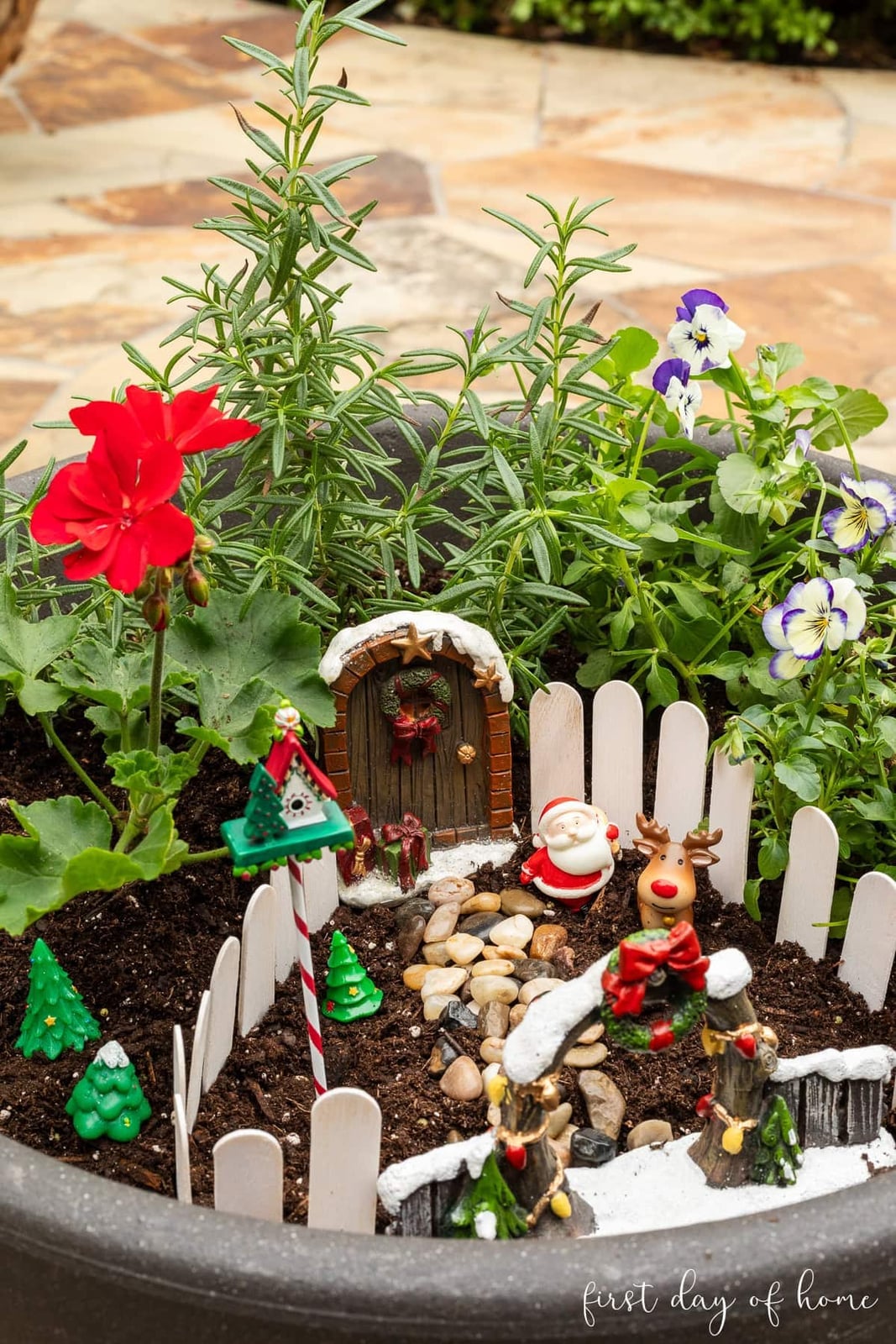
A miniature Santa and reindeer stand beside a fairy door and a birdhouse, all set inside a garden planter. The red, green, white, and brown palette creates a festive look without using actual holiday decorations. Plastic figures hold up better outdoors than painted ceramic, and the stone and wood elements add weight so the scene doesn’t shift in wind. To adapt the idea for another season, swap the Santa for a spring bunny or a fall scarecrow. The planter itself stays the same.
Miniature Moss-Covered Fairy House with Bird Bath
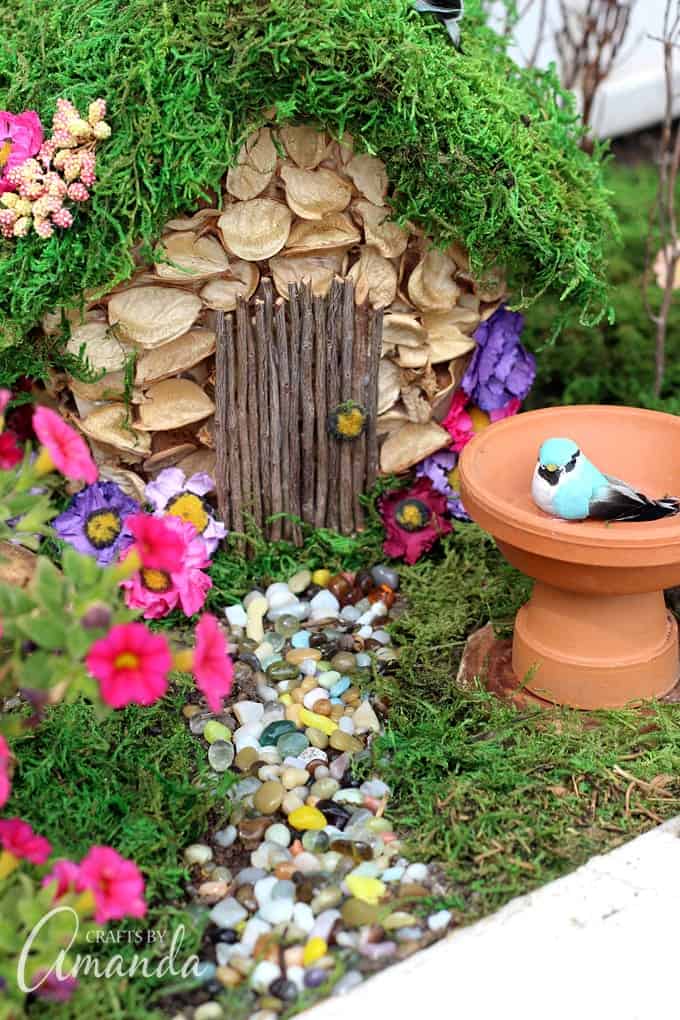
This miniature scene along a garden edge uses a moss-covered house, a bird bath, bluebird figures, and a pebble path to create a clear point of view. The green, pink, yellow, and blue palette comes from the moss, tiny flowers, and the birds themselves. Scale works here because the house is the largest piece, the bird bath is mid-size, and the pebbles are the smallest. When you choose items in three distinct sizes, the eye moves easily from the path to the bath to the house. A single garden edge is enough space for a complete world.
Wine Barrel Planter Fairy Garden with Blue Bead River
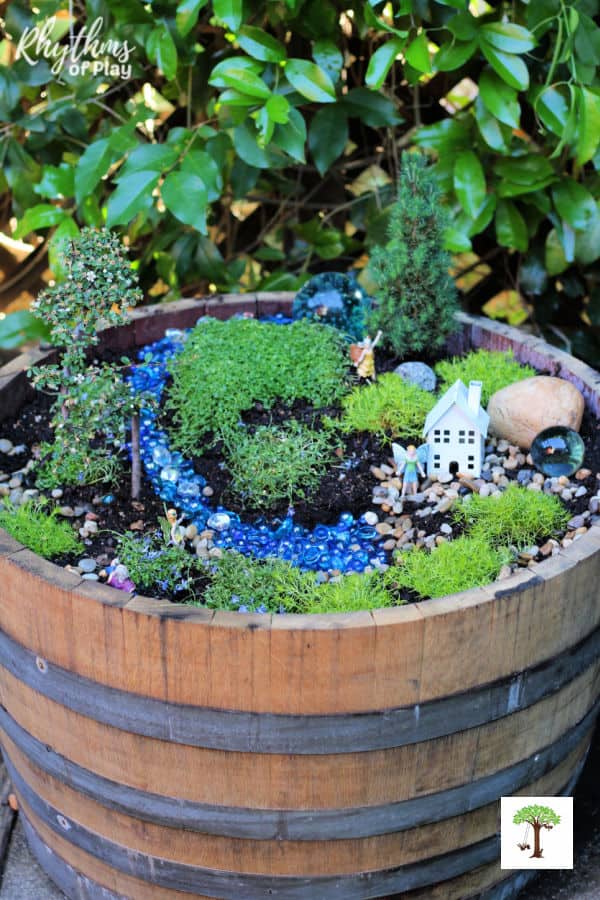
A miniature village in a wine barrel planter makes use of every inch of vertical space. The tiered layout lets you layer a tiny house, a ring of moss, and a river of blue glass beads that curves through the scene. Green plants fill the gaps between the structures, so nothing feels crowded. The circular arrangement inside the barrel creates a natural frame for the whole village. If your garden lacks a flat spot for a fairy display, a barrel planter solves the problem by keeping everything contained and raised. You can adjust the height by adding or removing soil before you set the decorations.
Elaborate Tiered Fairy Garden Display in Wooden Planters
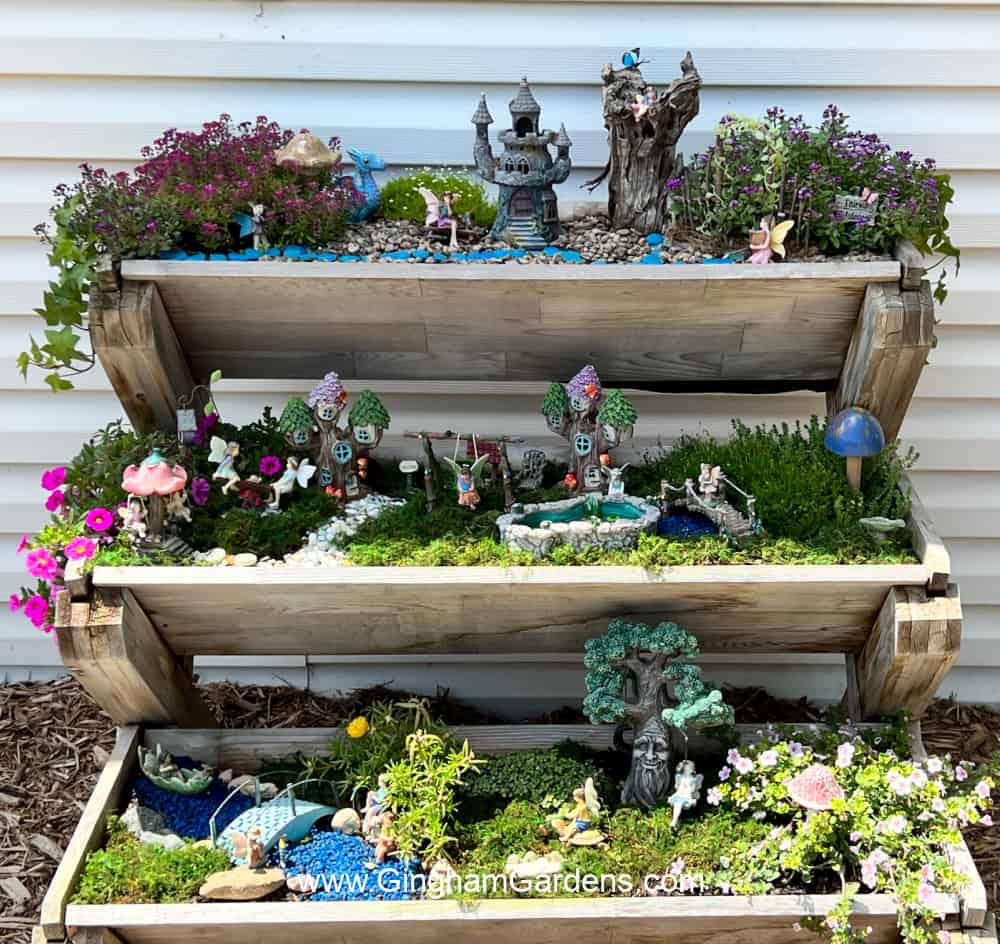
This multi-level display uses three wooden planters stacked like steps, each one holding its own miniature world. The lowest planter features a castle and a mushroom cluster, the middle one has a fairy house with a purple roof, and the top planter holds a tiny cottage with pink flowers. The natural wood of the planters ties the whole setup together, while the moss and plants soften the edges between levels. The eye moves upward from the largest piece at the bottom to the smallest at the top, which gives the arrangement a clear sense of order.
Whimsical Fairy Garden with Pink Butterfly House
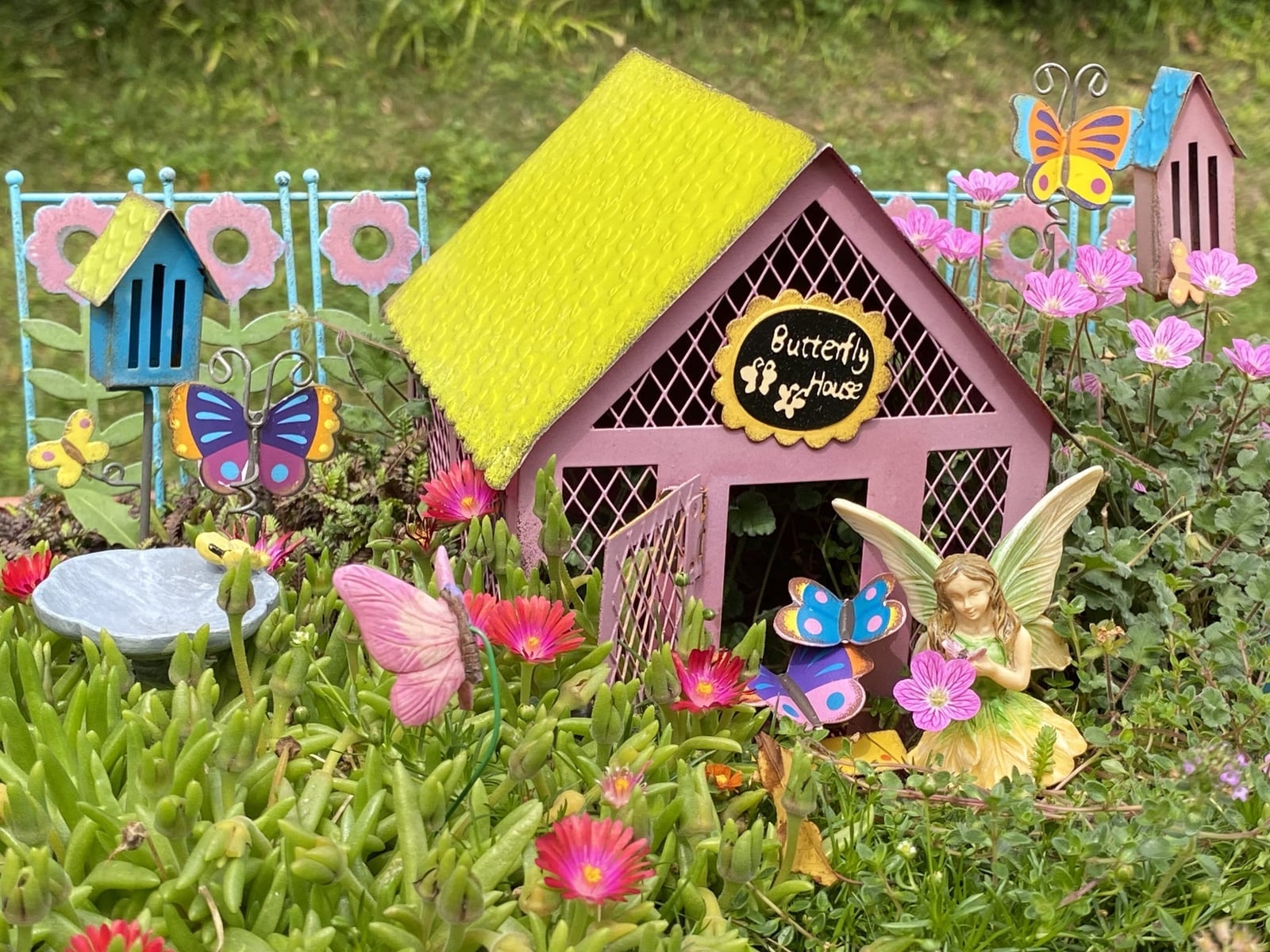
When a pink butterfly house sits at the center of a garden bed, everything else becomes a supporting detail. A fairy figurine in yellow stands beside the house, and small birdhouses hang from nearby branches. The pink roof draws attention first, so the scene can stay simple. Ground-level flowers in purple and blue add contrast to the main piece. Keep the surrounding plants low so the house stays visible. If the butterfly house is metal, make sure it has a sealed finish to protect it from rain.
Creative Fairy Garden with Pumpkin House and Pinecone Tree
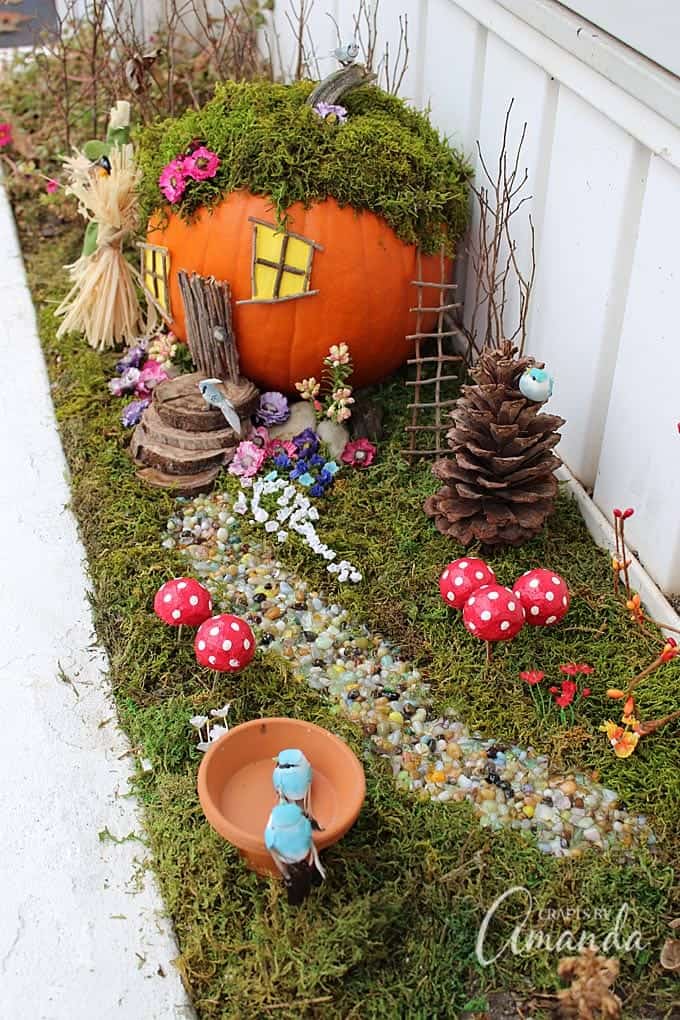
A pumpkin fairy house might feel seasonal, but this version works well beyond fall. The pumpkin sits in a garden bed with a pinecone tree beside it, a pebble path leading to the door, and small mushrooms scattered around. The moss covering the pumpkin roof softens the bright orange and helps the house blend into the garden. The overcast light in this scene keeps the colors muted, which makes the pumpkin look more like a permanent dwelling than a harvest decoration. If you want to use a real pumpkin, know that it will soften within a few weeks. A faux pumpkin lasts much longer and can stay out all year.
Terracotta Planter Fairy Garden with Miniature Figures
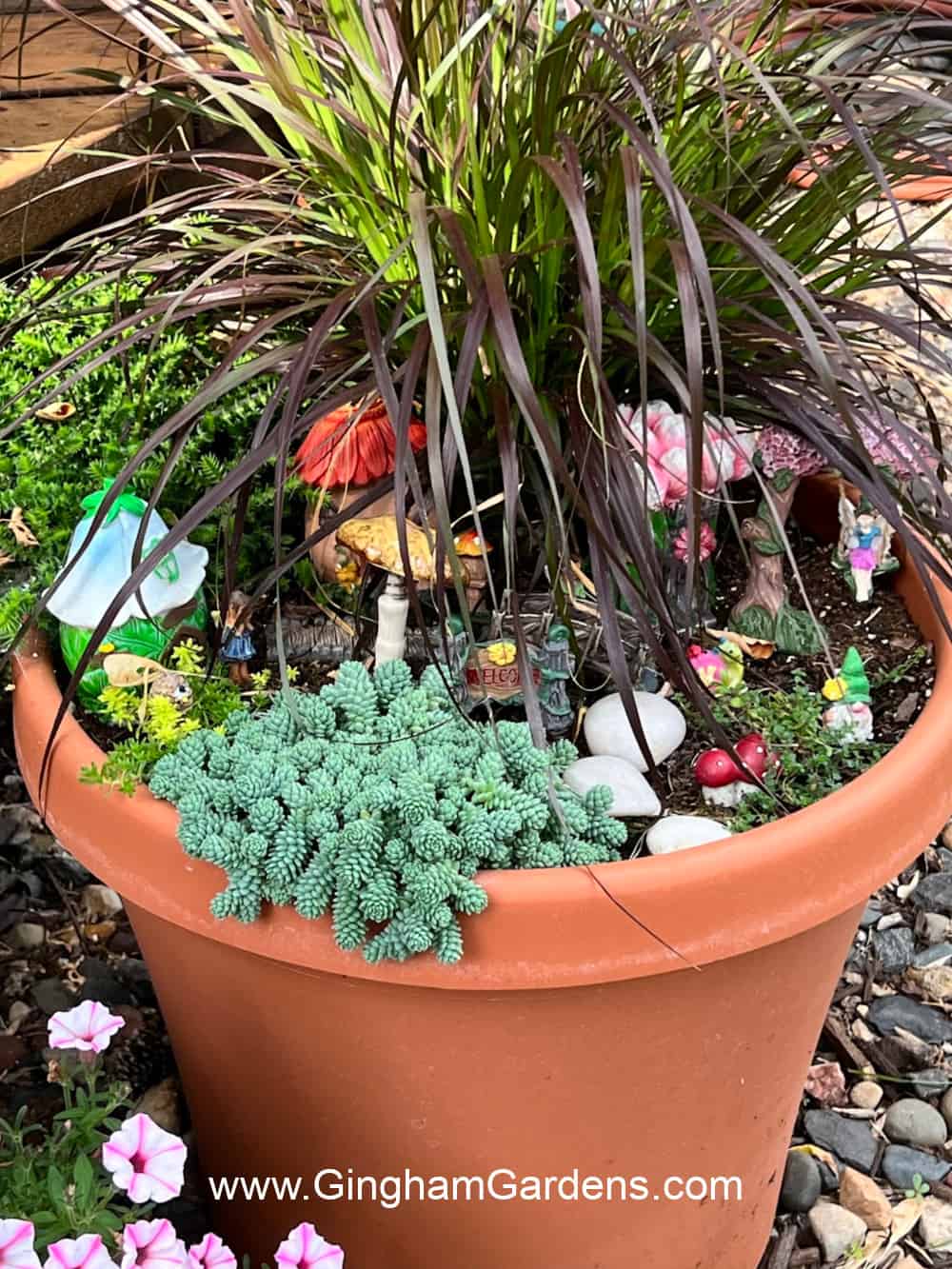
A terracotta planter holds a compact fairy scene with a mushroom house, a bird bath, and three tiny fairy figures. The warm terracotta of the pot matches the red of the mushroom cap, which creates a unified look. The figures are arranged in a small group near the bird bath, which gives the scene a sense of activity. Because the planter is shallow, the miniature pieces sit at eye level and are easy to see from a distance. This setup works well on a patio table or a front step where you want a small focal point that does not take up much room.
Fairy Garden House Made of Pebbles and Twigs Along a Fence
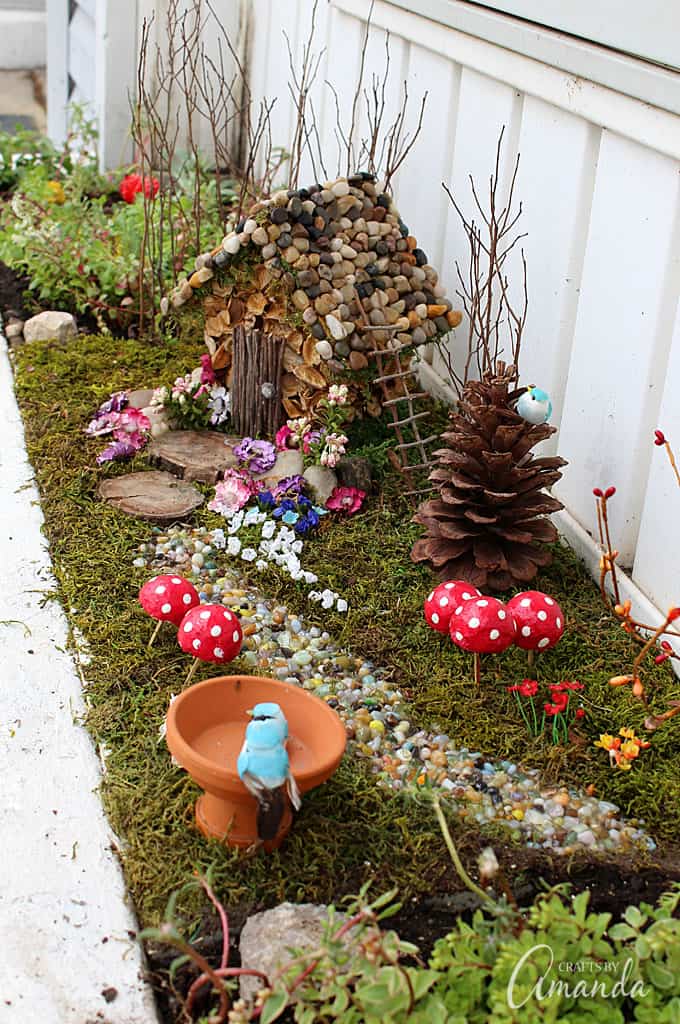
This miniature garden uses materials you can find around the yard. A small stone fairy house sits among moss and pebbles, with a pinecone tree and tiny mushrooms adding scale. A compact layout along a fence line makes it work for narrow beds or the edge of a larger garden. The palette stays natural with green, brown, and gray, while touches of pink and red from the mushrooms keep it from blending into the background. One useful principle for this kind of scene is materials: using pebbles and twigs instead of plastic miniatures gives the garden a more grounded feel that ages well through the seasons.
Enchanted Garden Scene Within a Broken Terracotta Pot
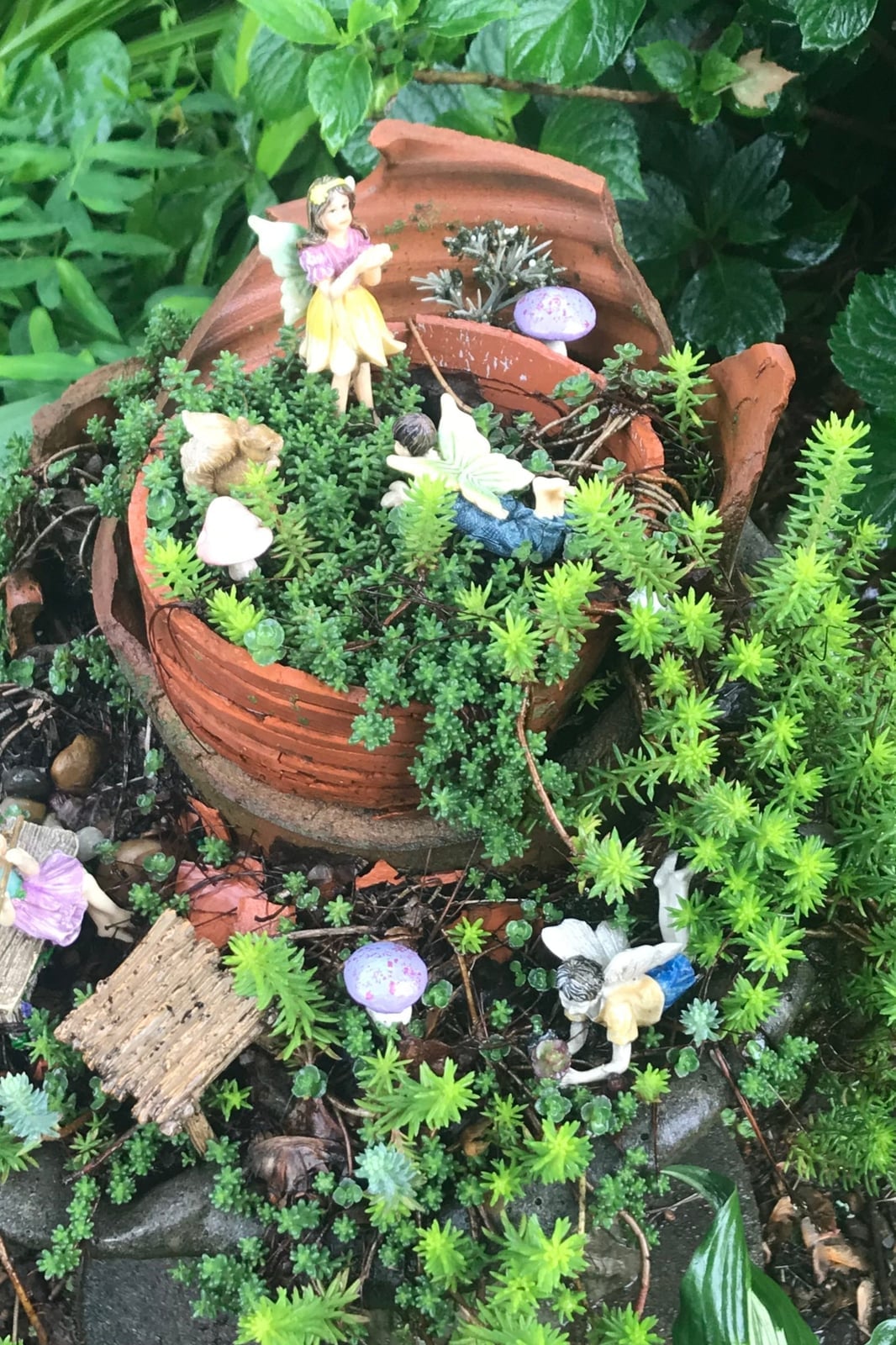
A cracked terracotta pot becomes the setting instead of something to toss. Fairy figurines and small plants fill the broken edges and the space around it, with mushrooms and wooden planks adding a rustic feel. The scattered layout works because the broken pottery anchors the composition. The purple flowers and green foliage soften the hard terracotta lines. This approach suits renters since you are using an existing container rather than building a permanent bed. The palette of terracotta, green, and purple keeps the scene cohesive while the fairies provide the unexpected detail that draws the eye in.
Final Thoughts
Building a fairy garden is a patient craft. The best ones combine a strong container, sturdy plants for your USDA zone, and small details that reward a close look. Scale matters: keep structures under a third of the pot’s width so the scene breathes. Use pebbles or moss to define paths and prevent soil splash during rain. Refresh seasonal accents like pumpkin houses in fall, then switch to evergreens or succulents for winter. A glue gun, a few figurines, and a little time are all you need to start. Let the garden evolve with the seasons, and it will keep surprising you.