A garden is more than a patch of dirt you walk past on the way to the car. It is a room without a ceiling, and dressing it takes the same thought you give your living room.
These 29 flower garden inspiration ideas show how to turn an outdoor space into something that feels like an extension of the house, not an afterthought. From raised beds to winding paths, each idea leans on what grows well and what holds up outside.
English Garden Raised Beds for Productive Beauty
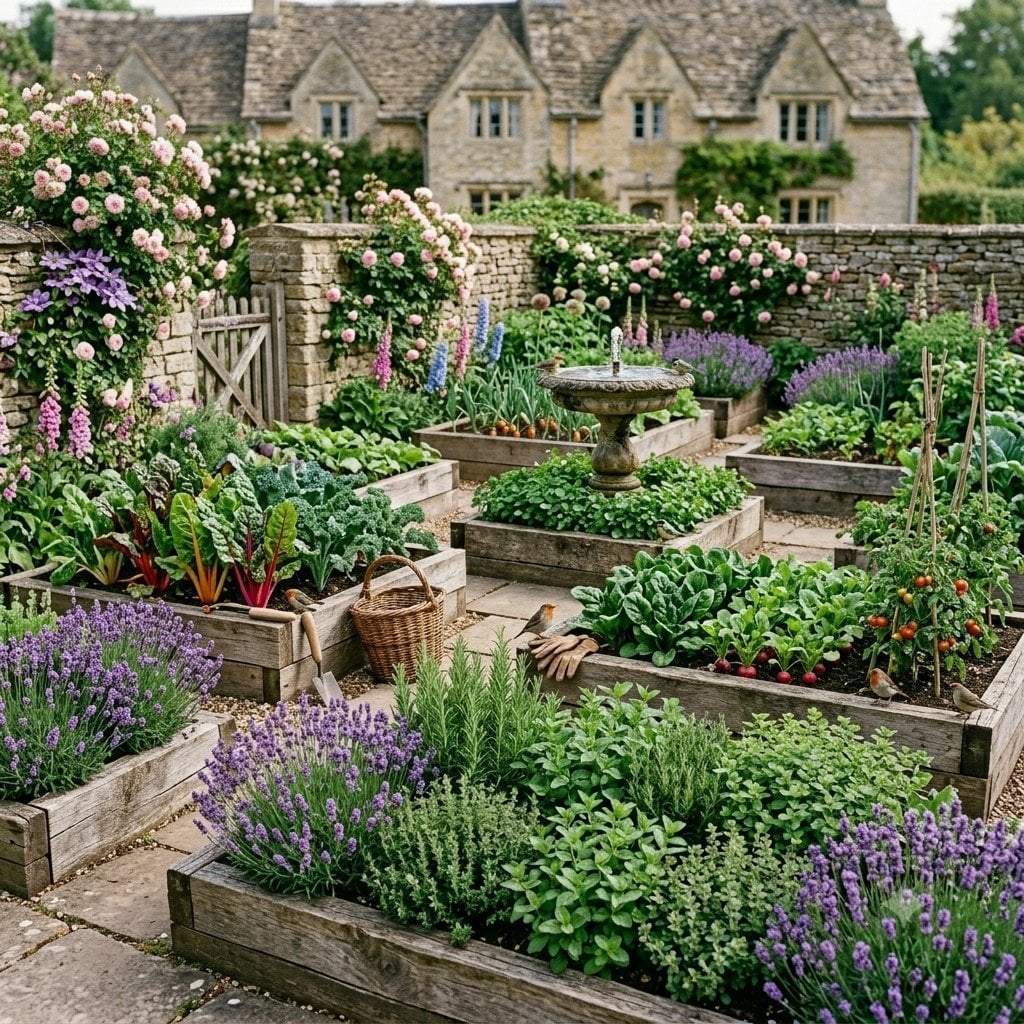
A grid of raised wooden planters turns a garden into a working landscape. The beds sit low, edged by a stone wall, with a fountain tucked to one side. Soft daylight keeps the greens, purples, and pinks from looking harsh. The layout pushes the planting front and center, so the path between beds stays clear for tending. A cottage garden feel, but the structure keeps it from feeling wild.
Modern Mediterranean Garden with Stone Accents
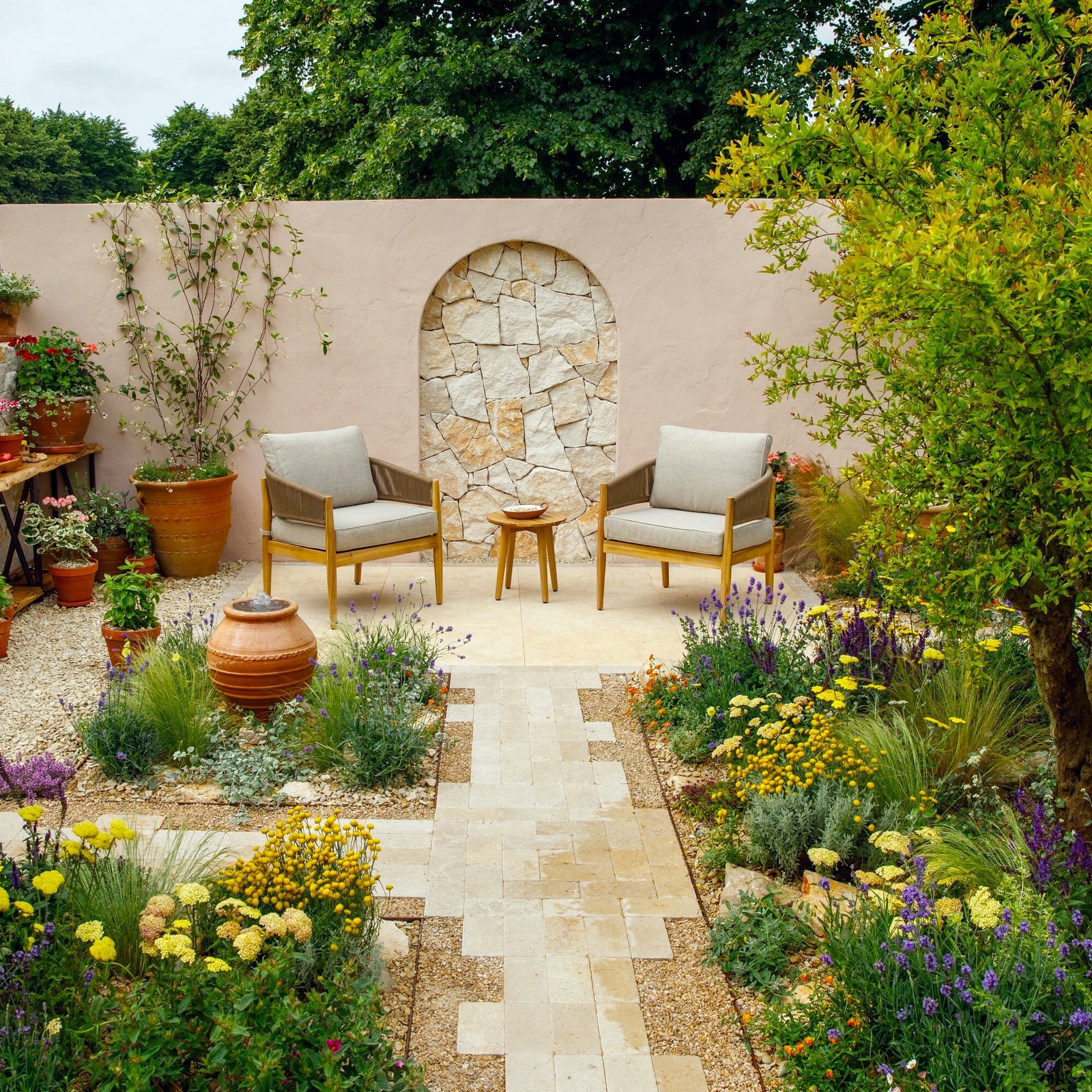
Two armchairs and a small table anchor a seating area that feels both open and private. The palette leans on beige, terracotta, and soft yellows, with green plants breaking up the warm tones. An arched stone niche adds a focal point without crowding the space. Pathways lead away from the chairs, keeping the layout loose. The look is modern but relaxed, with ceramic pots and tile accents that echo the region without copying it.
Cottage Garden Charm with Winding Flagstone Paths
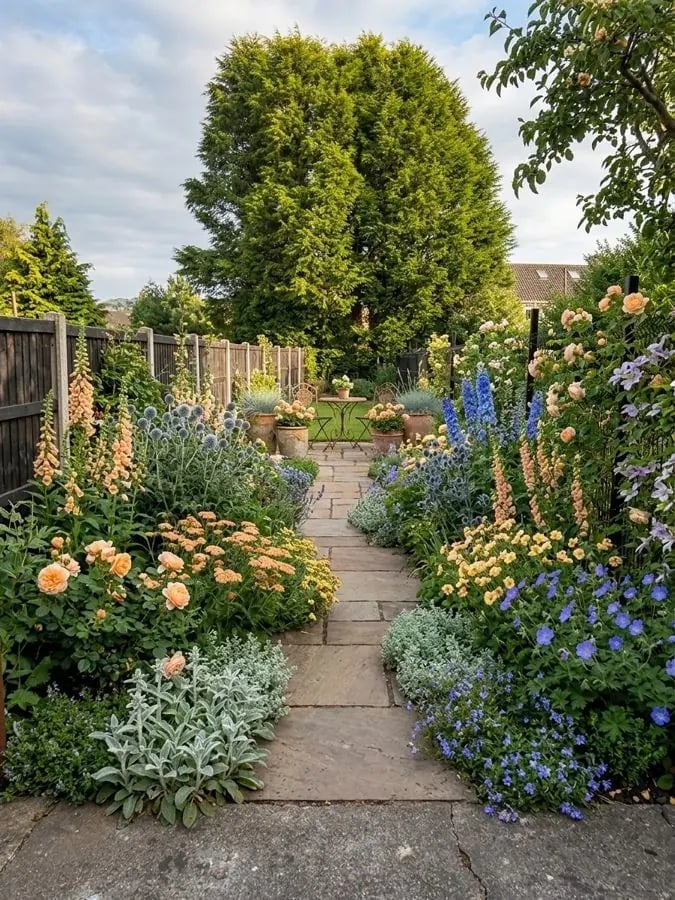
What makes a flagstone path feel like it belongs, not just laid down? The answer is in the planting. Here, the path curves through dense flower borders in peach, blue, and yellow, with a garden bench tucked to one side. The stones are irregular, set into the ground so grass and low plants grow between them. Terracotta pots add height at the turns. The path guides the eye without forcing a straight line, and the dense borders soften the edges so the path reads as part of the garden, not a separate feature.
Traditional Garden Archway Draped in Hydrangeas
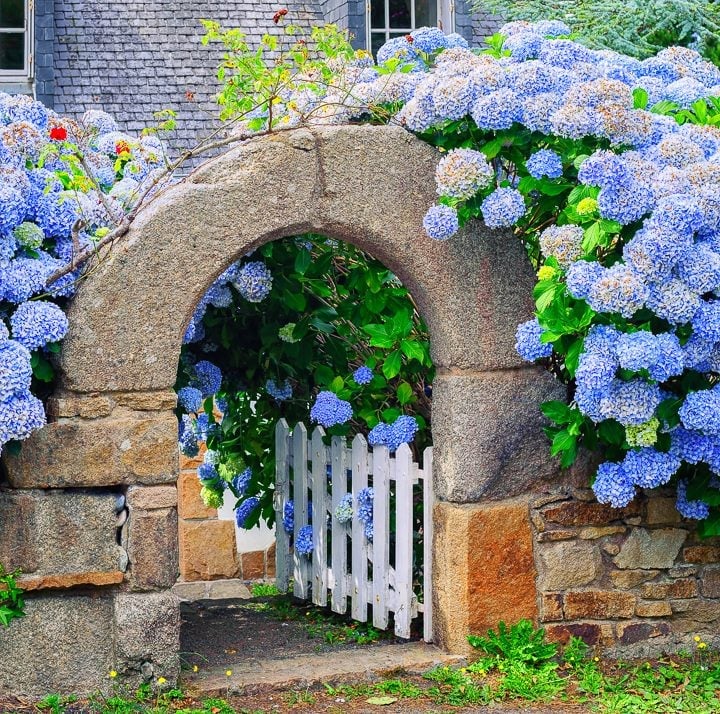
A stone arch with a white picket gate becomes the focal point when large blue hydrangea blooms spill over the top. The arch sits at the end of a pathway, drawing the eye through the garden. The hydrangeas are the hero here, their soft color against gray stone and white wood. The daylight keeps the scene bright without washing out the blue. A simple layout that lets one element do the work.
Country Garden Pathway Bathed in Golden Hour Light
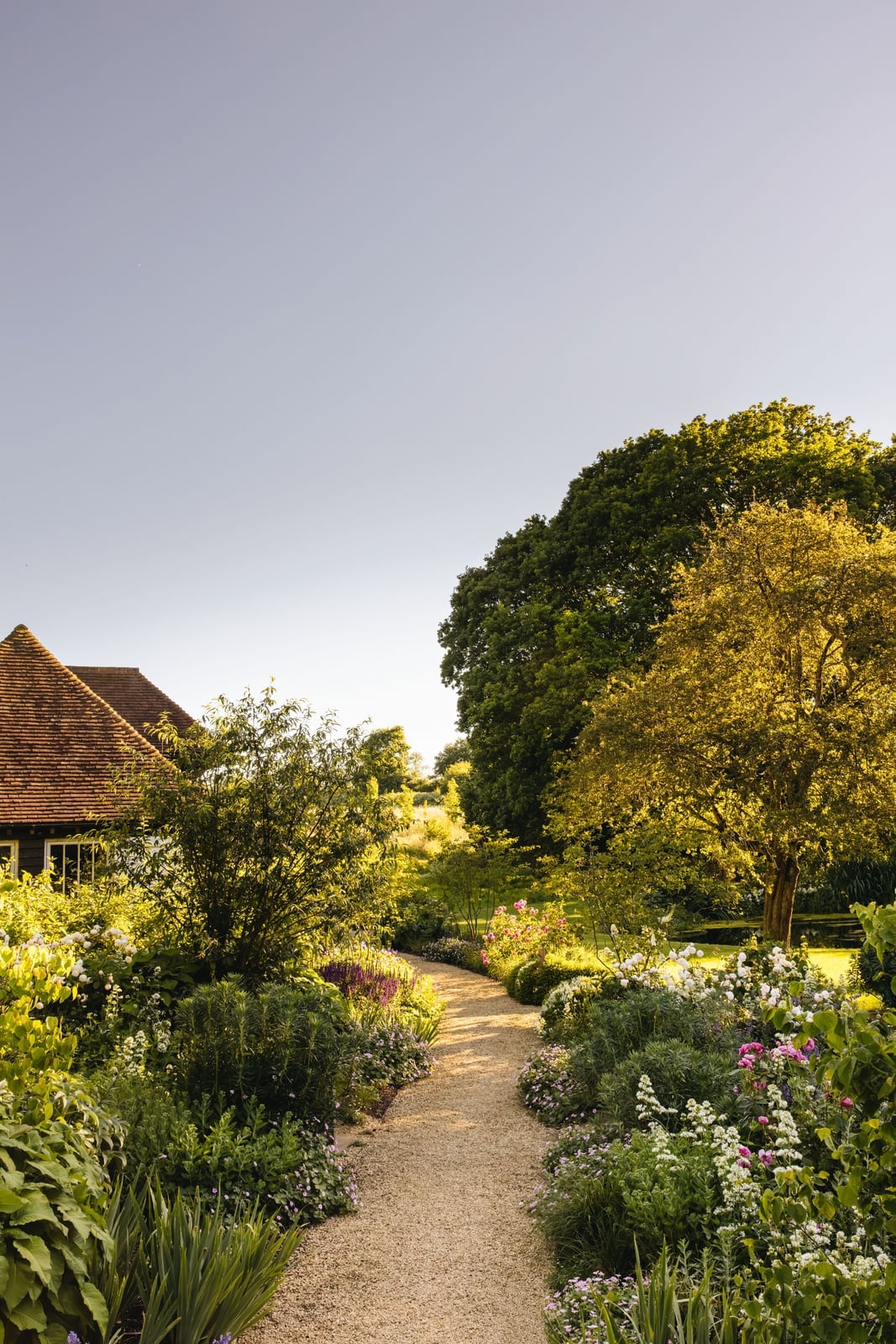
Golden hour light turns a winding gravel path into a warm corridor through the garden. Mature trees cast long shadows across the path, while flower beds in pinks, purples, and yellows catch the low sun. The path itself is gravel, edged with stone and brick, leading the eye through the space. The light makes the green leaves glow and softens the hard edges of the path. A reminder that timing matters as much as planting.
Vintage Garden Gazebo and Serene Seating
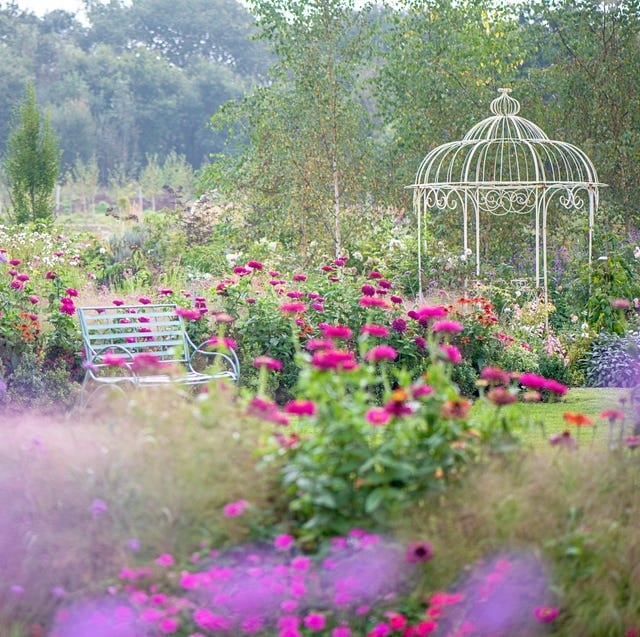
A white gazebo often reads as a grand statement, but here it serves as a quiet anchor for a seating area that feels settled rather than showy. The ornate metal bench beneath it offers a place to sit, and the surrounding planting, pink flowers, blue accents, soft green, keeps the eye moving. This is a garden that lives in its details: the curve of the bench back, the way the overcast light softens the white paint, the informal drift of flowers at the base. The layout works because the seating is central but not isolated, framed by trees and beds that give the space room to breathe. For a similar feel in a smaller yard, skip the gazebo and let a painted bench anchor a corner, with tall perennials behind it to create the same sense of enclosure without the permanent structure.
Formal Garden with Expansive Hydrangea Borders
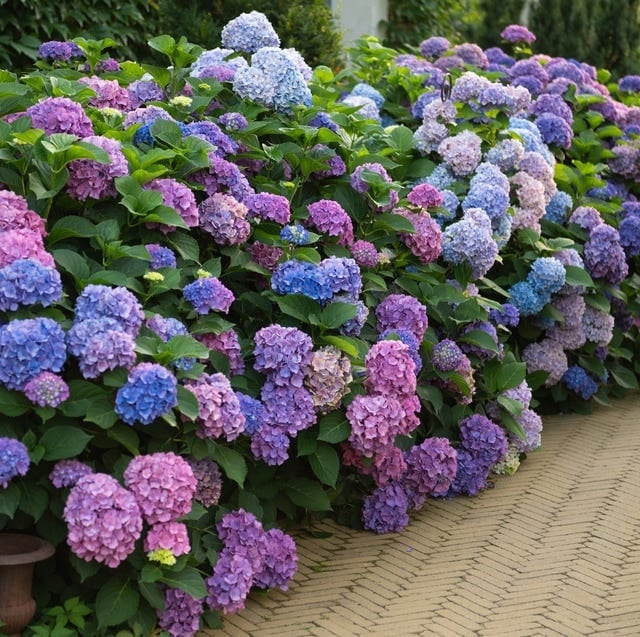
The mass of blue and purple hydrangeas here does something that a single row of shrubs cannot: it creates a wall of color that feels intentional without being stiff. The brick pavers at the edge keep the planting from bleeding into the path, which is the kind of boundary that matters when you want dense clusters to stay tidy. For a renter, this look is surprisingly achievable with large pots placed in a line along a patio or driveway, the same dense effect, none of the digging.
Modern Garden with Tiered Wooden Planters and Stone Paths
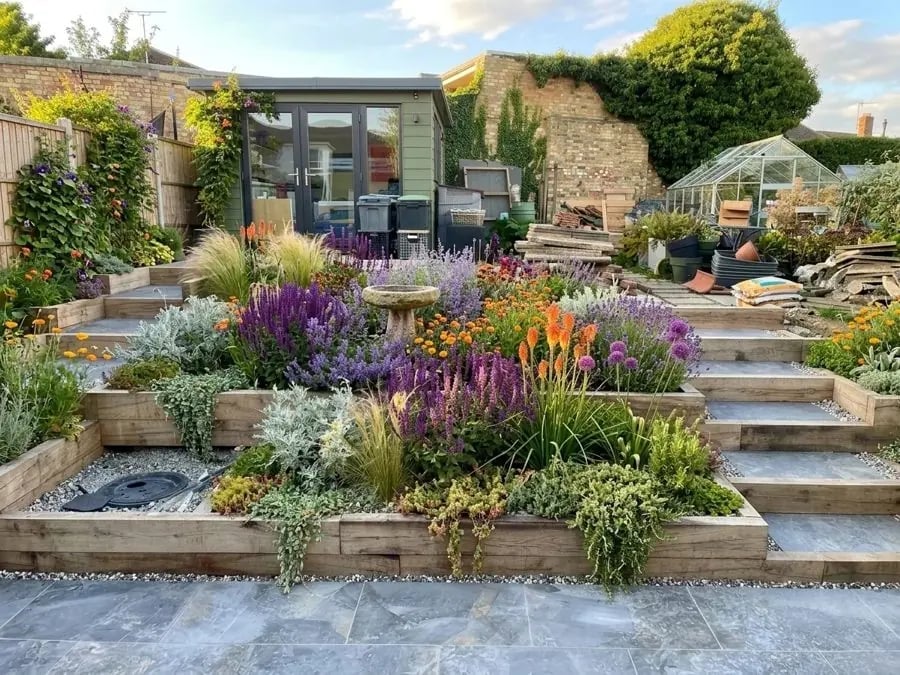
Tiered wooden planters solve a layout problem that flat beds cannot: they bring taller flowers like the purple and orange blooms here up to eye level while letting lower plants fill the space below. The stone paths between the tiers break the garden into walking zones instead of one big bed, which makes the whole space feel larger than it is. The bird bath near the center gives the eye a resting point, but the real structure comes from the levels themselves. For a garden that slopes or feels flat, adding even two tiers changes how the light hits the plants and how you move through the space.
Contemporary Garden with Geometric Green Planters
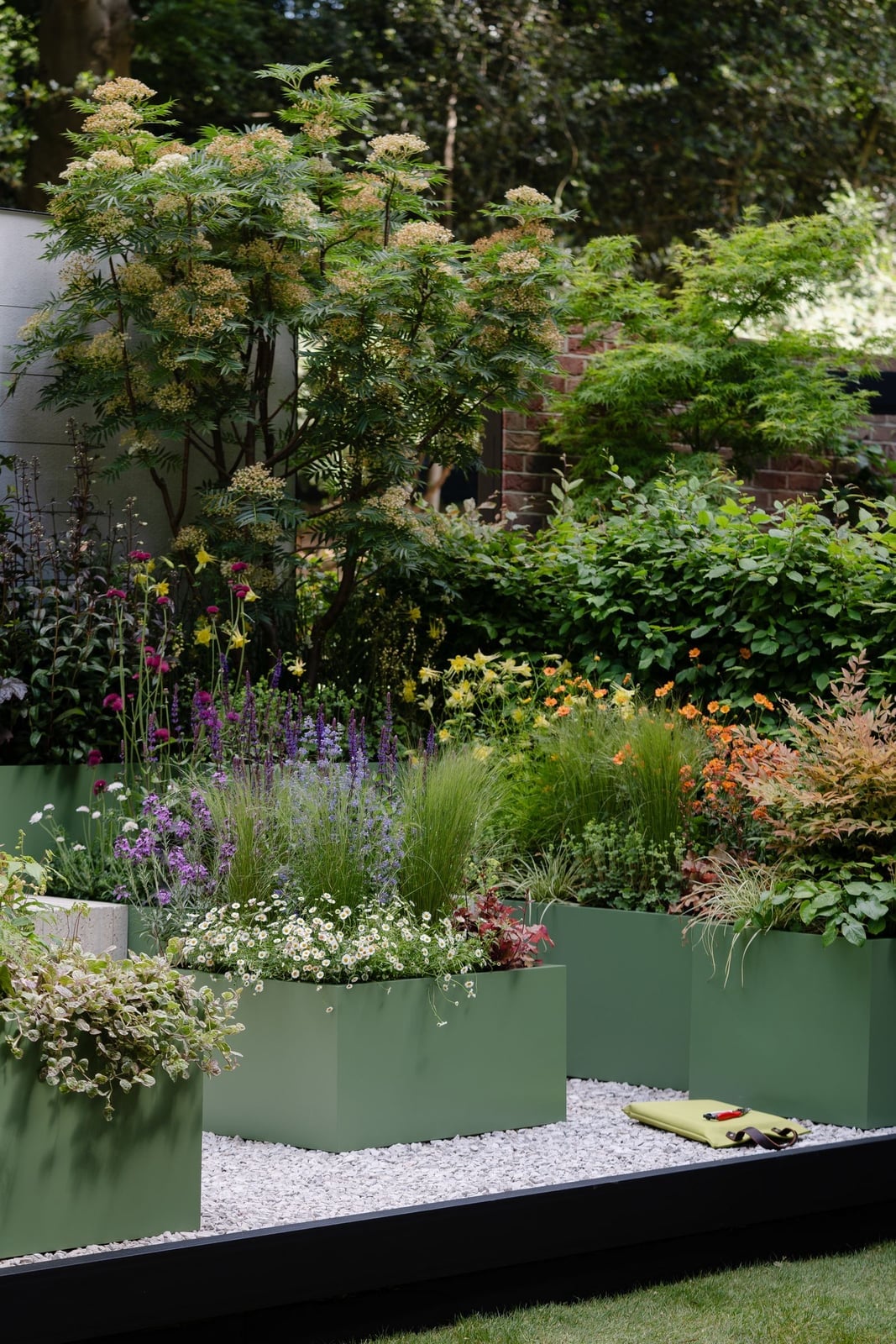
Can a planter be the main event in a garden? When it is a set of green geometric boxes in a gravel bed, yes. The color here is the defining move: the planters are a strong green that holds its own against the orange, yellow, and purple flowers inside them. That ratio, one bold hardscape color against a mix of bloom colors, keeps the garden from reading as chaotic. The metal and stone materials around the planters give the space a clean base, so the flowers can be as varied as they like without the whole thing falling apart visually. For a similar palette, choose one planter color that repeats across the space and let the flowers do the rest.
Cottage Garden Steps Leading to a Lavender Haven
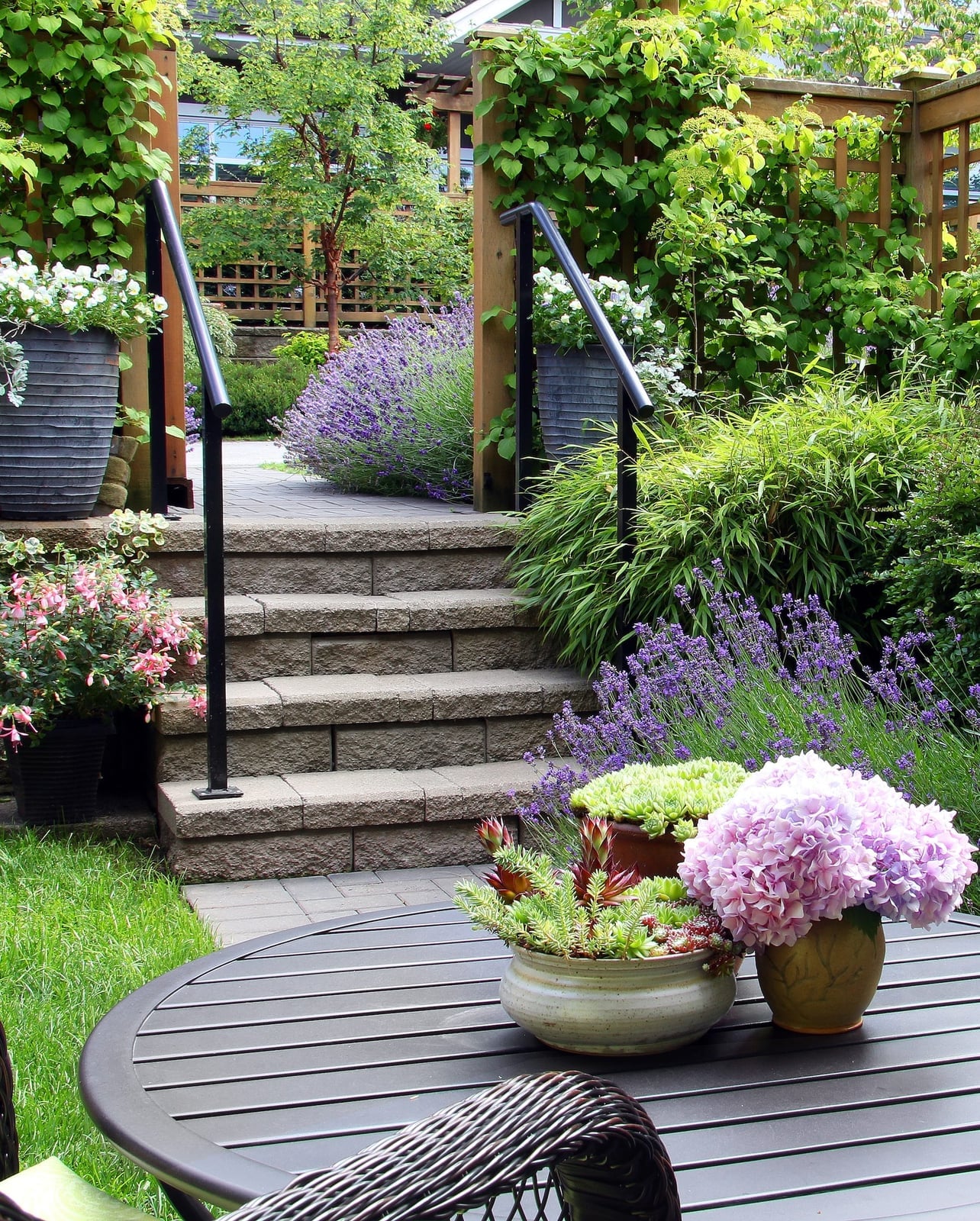
The stone steps here are wide enough to feel generous, and the lavender planted along both sides softens the hard edge without blocking the path. The tiered planting above the steps, potted plants on one level, chairs and a table on the next, turns a simple walkway into a transition between garden rooms. Lavender works for this because it stays compact and aromatic, so it lines the route without overwhelming the stone. For a similar approach, choose a low-growing plant that can handle foot traffic near the edges and keep the steps themselves clear for safe movement.
Traditional Landscaping with Rose and Boxwood Borders
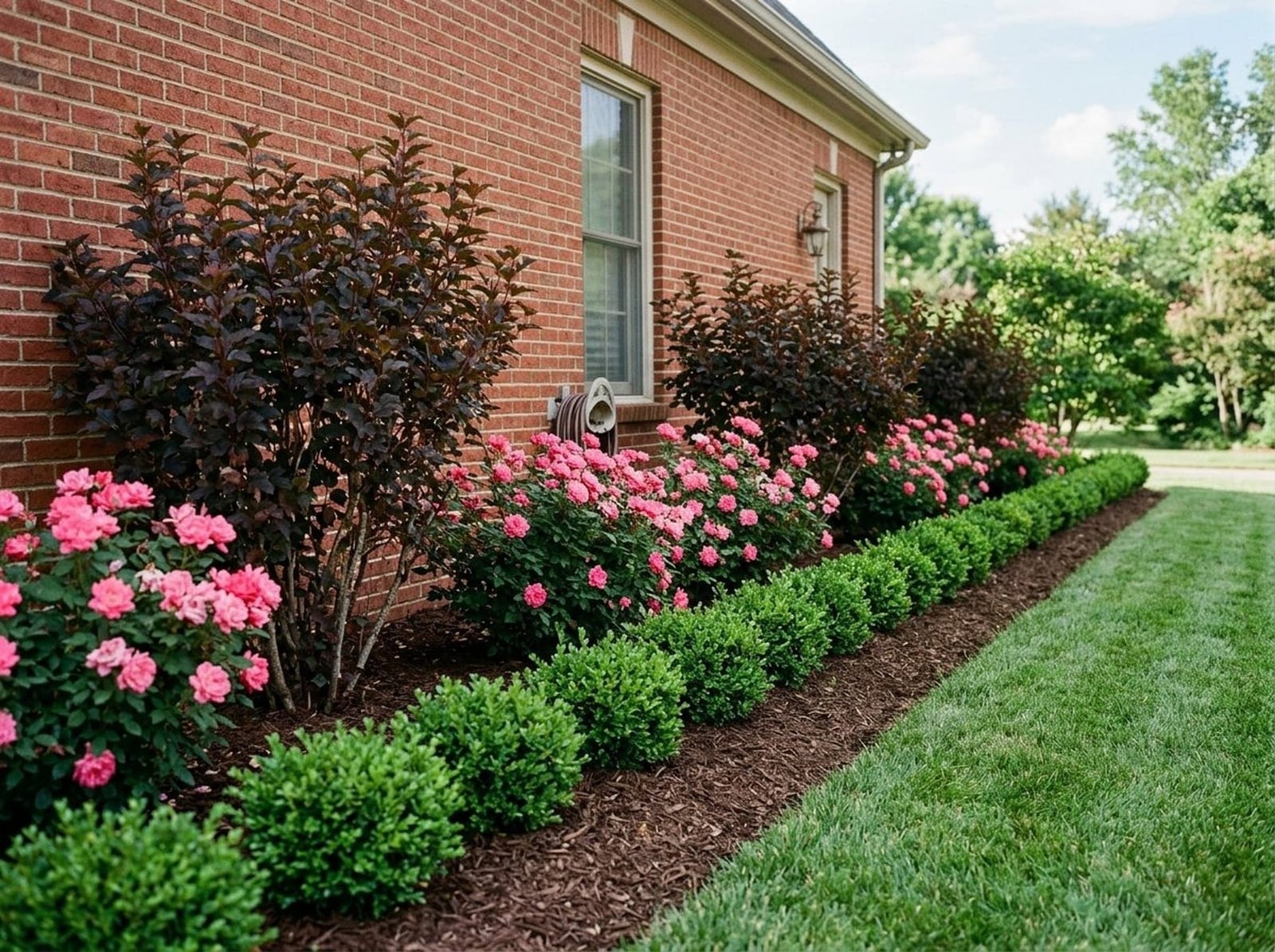
A flower border reads as more grounded when you anchor it with a hard material that repeats somewhere else in the yard. Here a brick house wall and low brick edging bookend the bed, while a clipped boxwood hedge runs the full length at the back. Pink roses rise above dark foliage shrubs, and bare mulch keeps the eye on the blooms. The palette stays tight: green, pink, and the warm red of the brick. That brick echo is what stops the border from floating. If your house has stone or siding, pull one tone from it into the edging or a pot.
Contemporary Garden with Lush Lawn and Water Feature
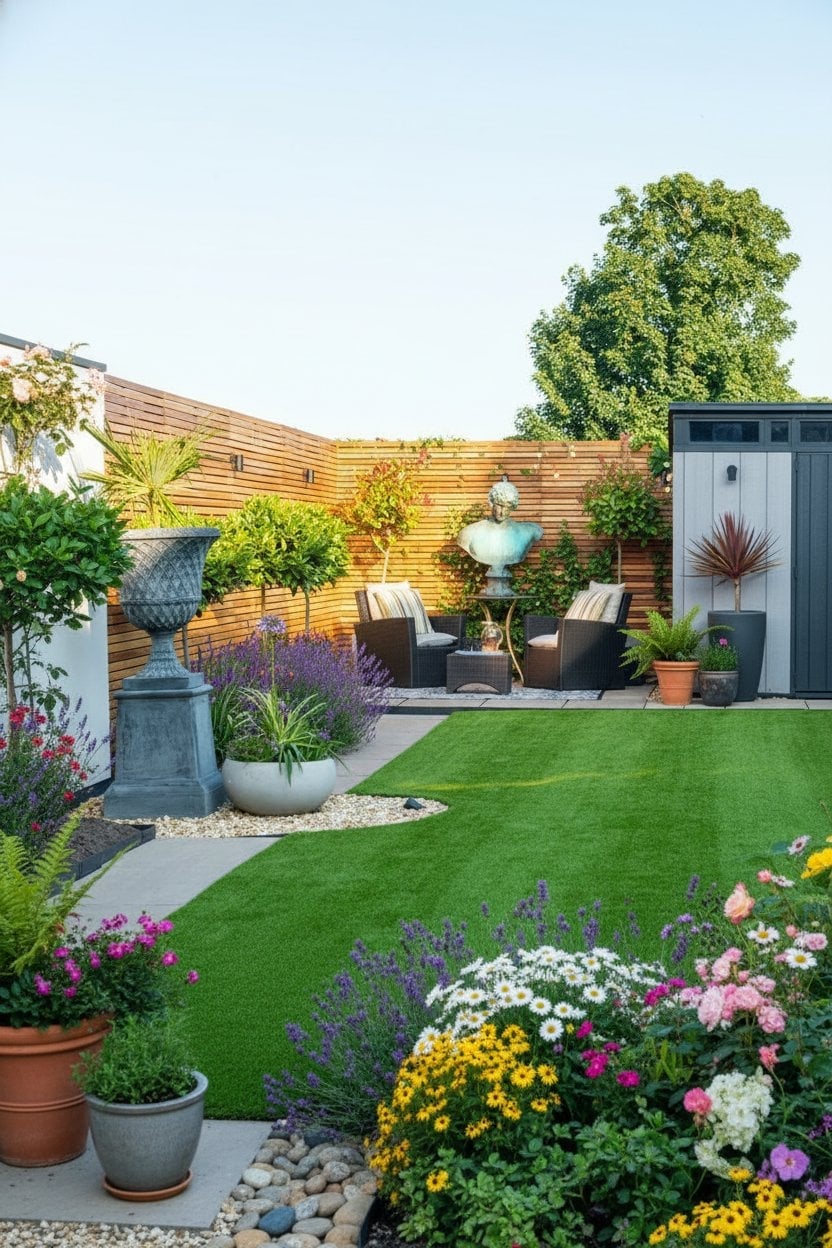
A contemporary garden can feel cold if it leans too hard on hardscape. This one sidesteps that by making the lawn the central event. A broad green rectangle holds the space, with a stone fountain set off to one side and two tall garden urns marking the far edge. A wood shed at the back adds warmth, and a tucked seating area in metal chairs keeps the layout usable without crowding the grass. The palette stays simple: green, brown, blue from the water, and a few pink flowers for contrast. The balance between open lawn and planted edges gives the garden room to breathe.
Scandi Garden Vignette with Weathered Wood and Lanterns
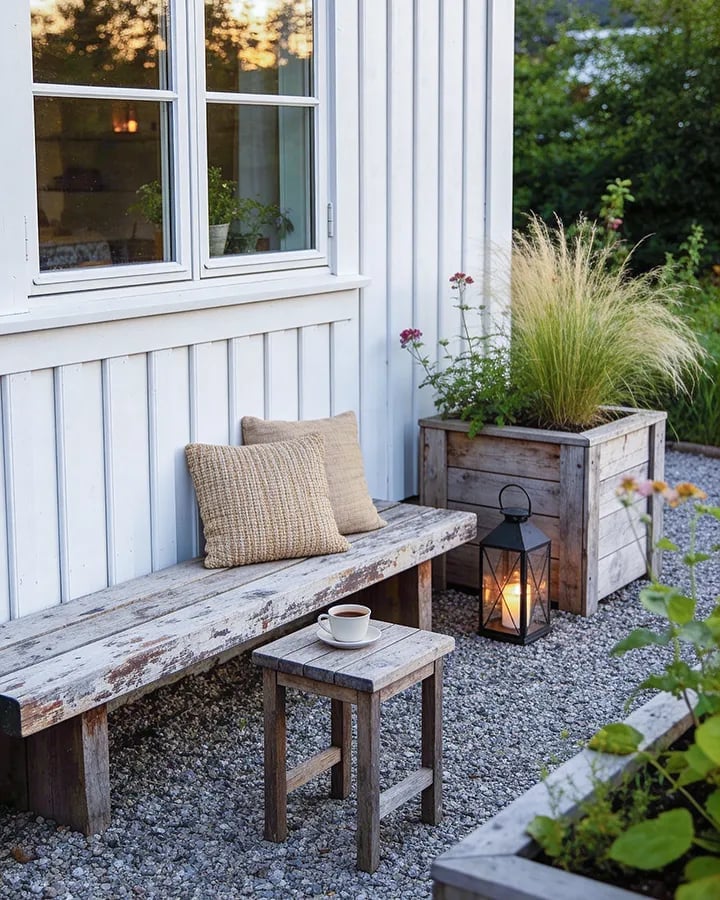
A weathered wooden bench and a matching planter set against a wall create a vignette that asks for nothing else. The wood has mellowed to a soft gray-beige, and the gravel underneath keeps the ground clean while adding texture. A single metal lantern on the bench brings evening light without wiring. The trick is letting the materials do the work: old wood, loose stone, and the green of the plants. Anything glossy or new would break the quiet.
Cottage Garden Abloom with Pink Roses and White Trellis
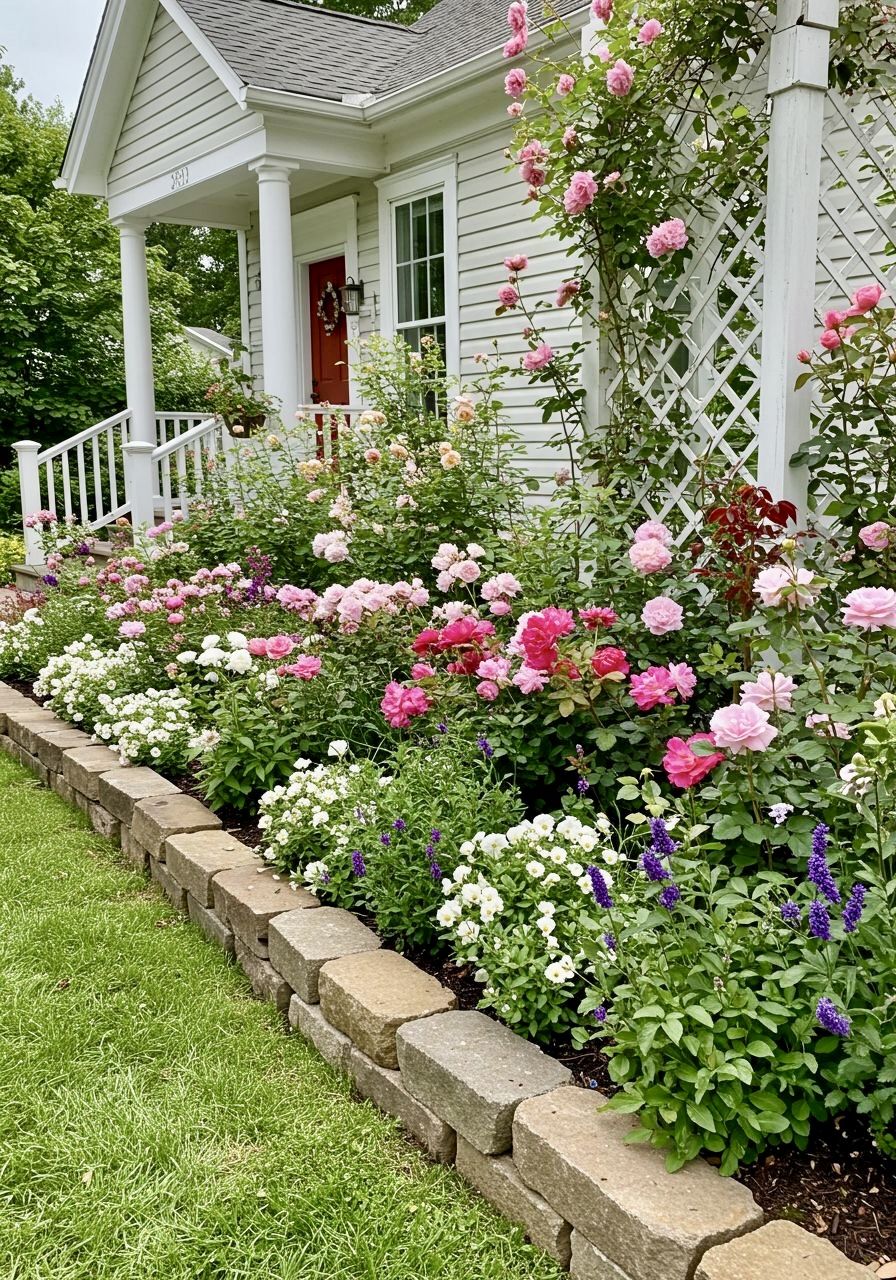
A cottage garden relies on abundance, and this one delivers it with pink roses climbing a white trellis against the house. A low stone border separates the flower bed from the lawn, and the path to the front door is wide enough to walk without brushing the blooms. The soft daylight helps the pink and white appear gentle. When the roses are the star, keep everything else plain: a white trellis, neutral stone, and green foliage are all the support they need.
Informal Garden with Curving Beds and Sedum Abundance
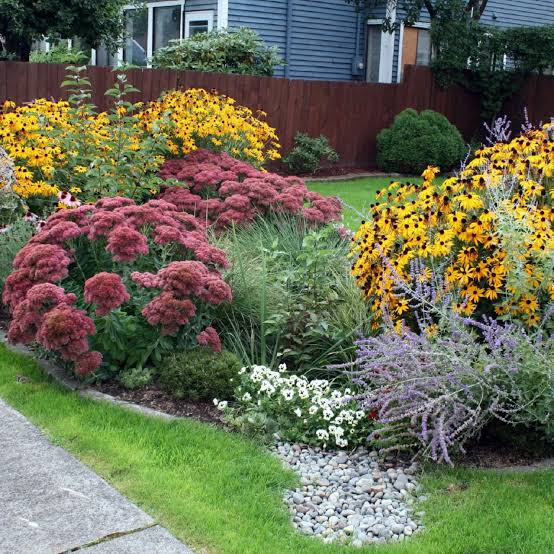
A curving border softens the edge of any garden, especially when it follows a natural dip in the ground. Here the bed sweeps around a gravel drainage feature, with pink sedum forming the main drift. Black-eyed susans add yellow height, and ornamental grasses break up the mass. The wood fence behind stays unpainted, so the brown tones in the gravel and fence echo each other. The palette is warm and loose: yellow, pink, green, and brown. When the shapes curve and the plants spill over each other, a formal edge would fight the whole point.
Modern Natural Garden with Winding Wooden Path
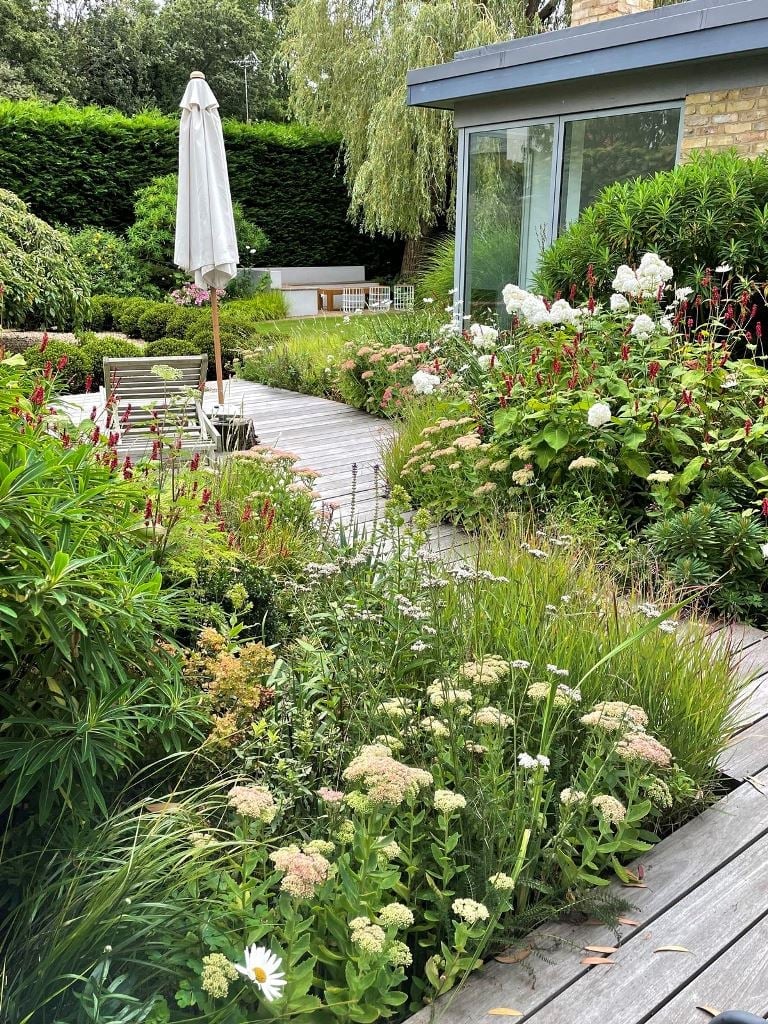
A winding path changes how you move through a garden, slowing the pace and revealing the planting in sections. This curved wooden walkway cuts through layered beds, with low greenery near the edges and taller flowers and shrubs set back behind it. The wood reads as a neutral bridge between the stone ground and the green foliage. For a similar layout on a rental property, lay down precast concrete stepping stones in a gentle curve and let the grass grow between them. No digging or permanent change needed, just stones set into the lawn.
Cottage Porch with Overflowing Wicker Flower Basket
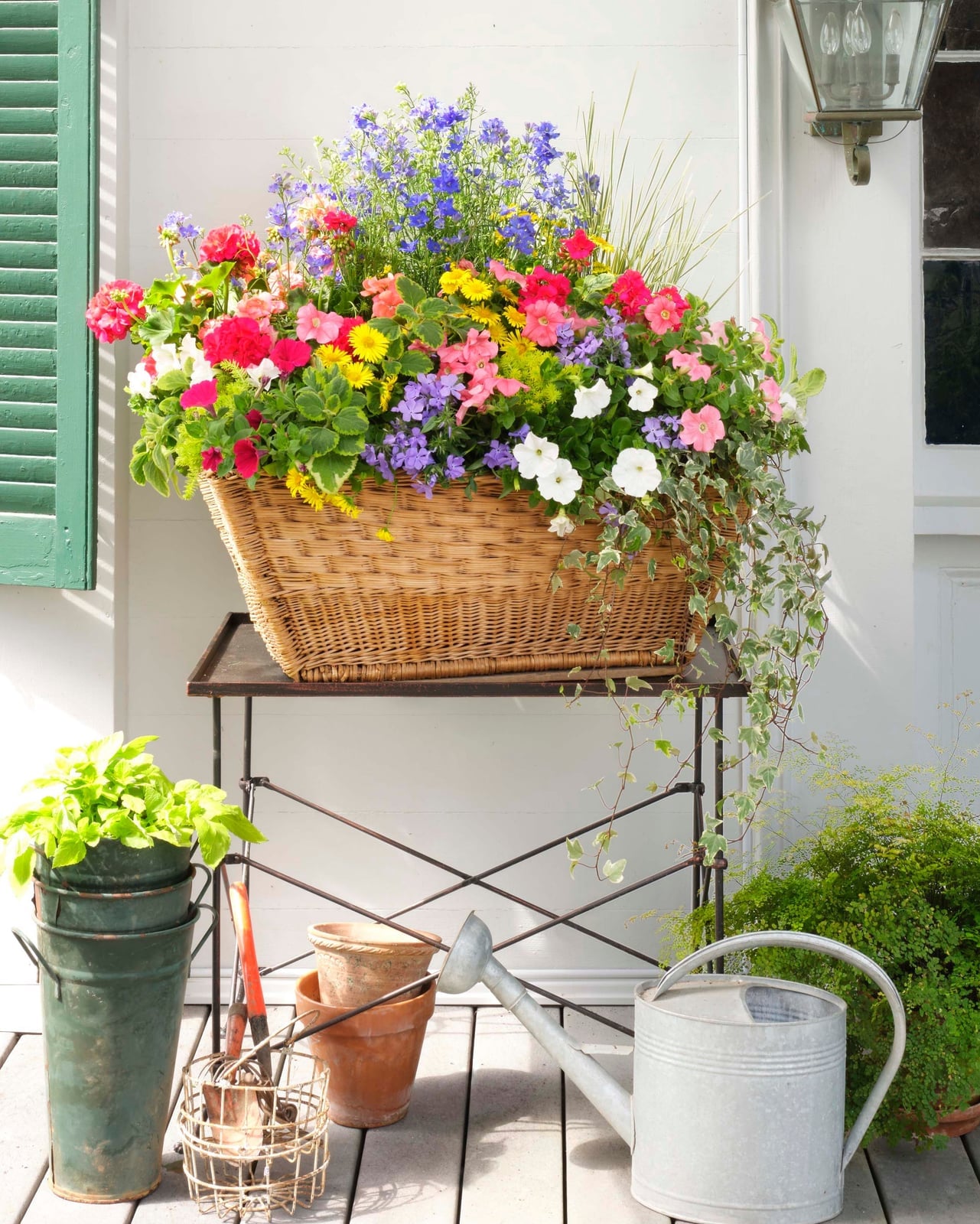
A practical rule for porch containers: one oversized piece carries more weight than a cluster of small pots. A large wicker basket packed with blooms creates an instant focal point, especially when it spills over the rim. This porch arrangement pairs the basket with a metal watering can and a few terracotta pots, all sitting on the wood floor next to a lamp. The mix of brown wicker, green leaves, and multicolored flowers keeps the palette warm without matching. Renters can swap the basket for a galvanized tub or a ceramic urn and get the same effect.
Cottage Garden with Rustic Wooden Arbor and Lush Planting
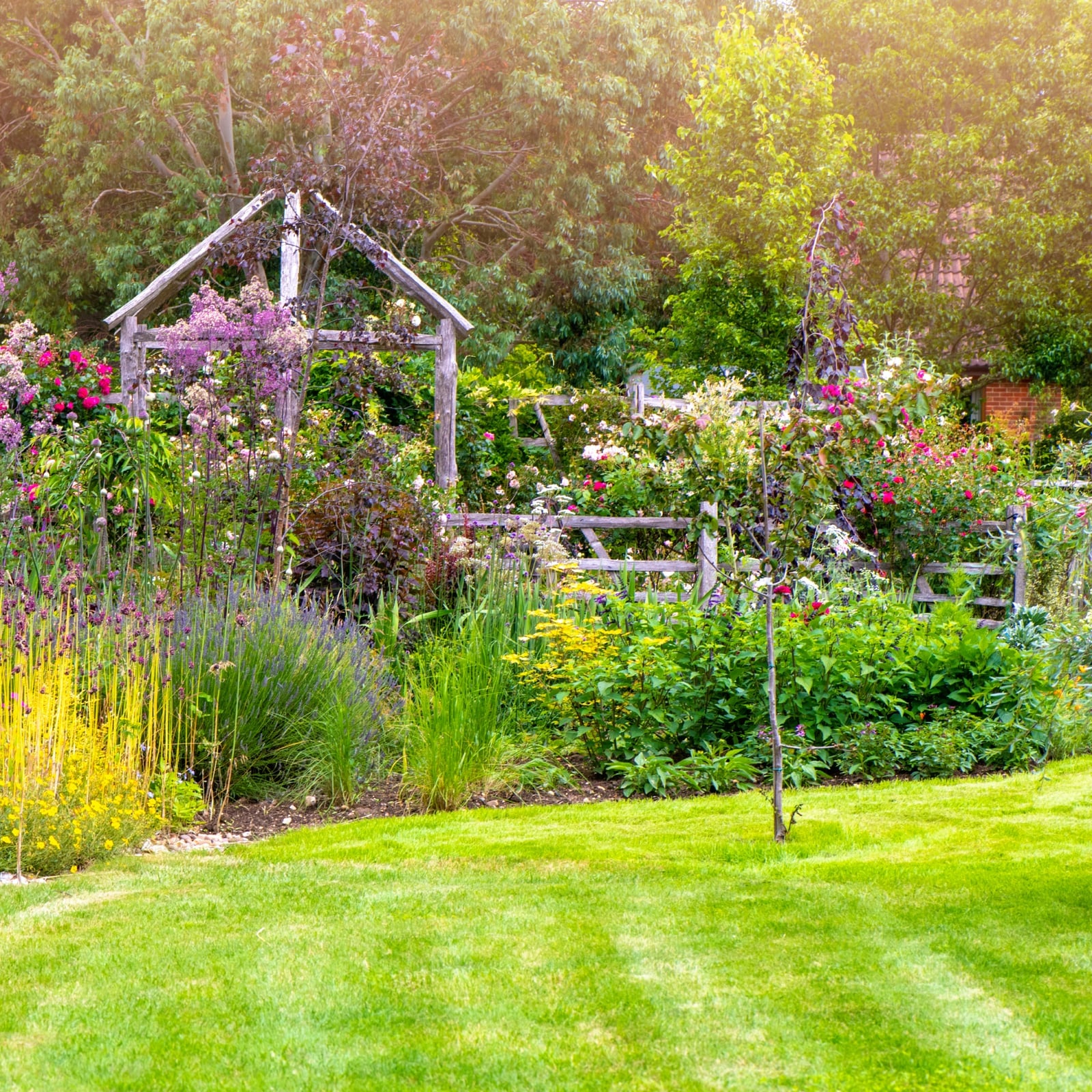
A white trellis arch gives a garden structure, while a natural wood arbor blends into the planting. This rustic arbor sits at the edge of a lawn, with pink, purple, and yellow flowers massed around its base and climbing up the sides. The wood is untreated, so it weathers to a soft gray that becomes part of the garden. The layered planting in front softens the arbor’s legs and keeps the whole scene connected.
A dappled light pattern across the grass and flowers adds depth without needing any artificial source. The arbor frames the view beyond, making a small garden feel larger by suggesting there is something worth walking toward. For a similar look, choose a wood arbor with simple lines and let the plants do the decorating.
Naturalistic Garden with Mixed Flowers and Ornamental Grasses
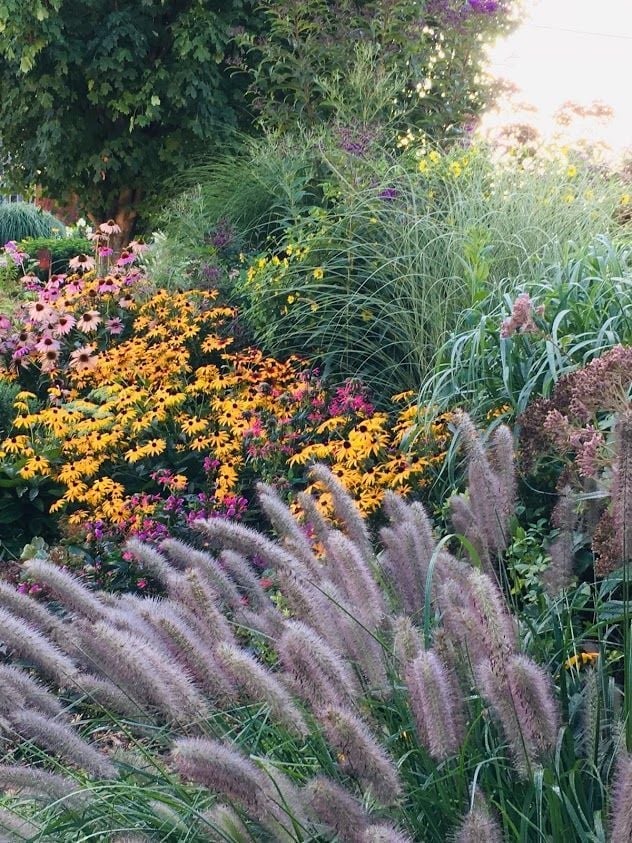
The mix of tall ornamental grasses with coneflowers and other daisy-like blooms creates a meadow effect that needs less water than a traditional border. The grasses add vertical texture and a soft, moving backdrop for the yellow, pink, and purple flowers. Late afternoon sun catches the seed heads and makes the whole bed glow. This planting style works with the local climate rather than against it, and the deep root systems of the grasses help hold soil in place. Check your USDA zone before selecting specific grass varieties.
Cottage Garden Border with Picket Fence and Pink Flowers
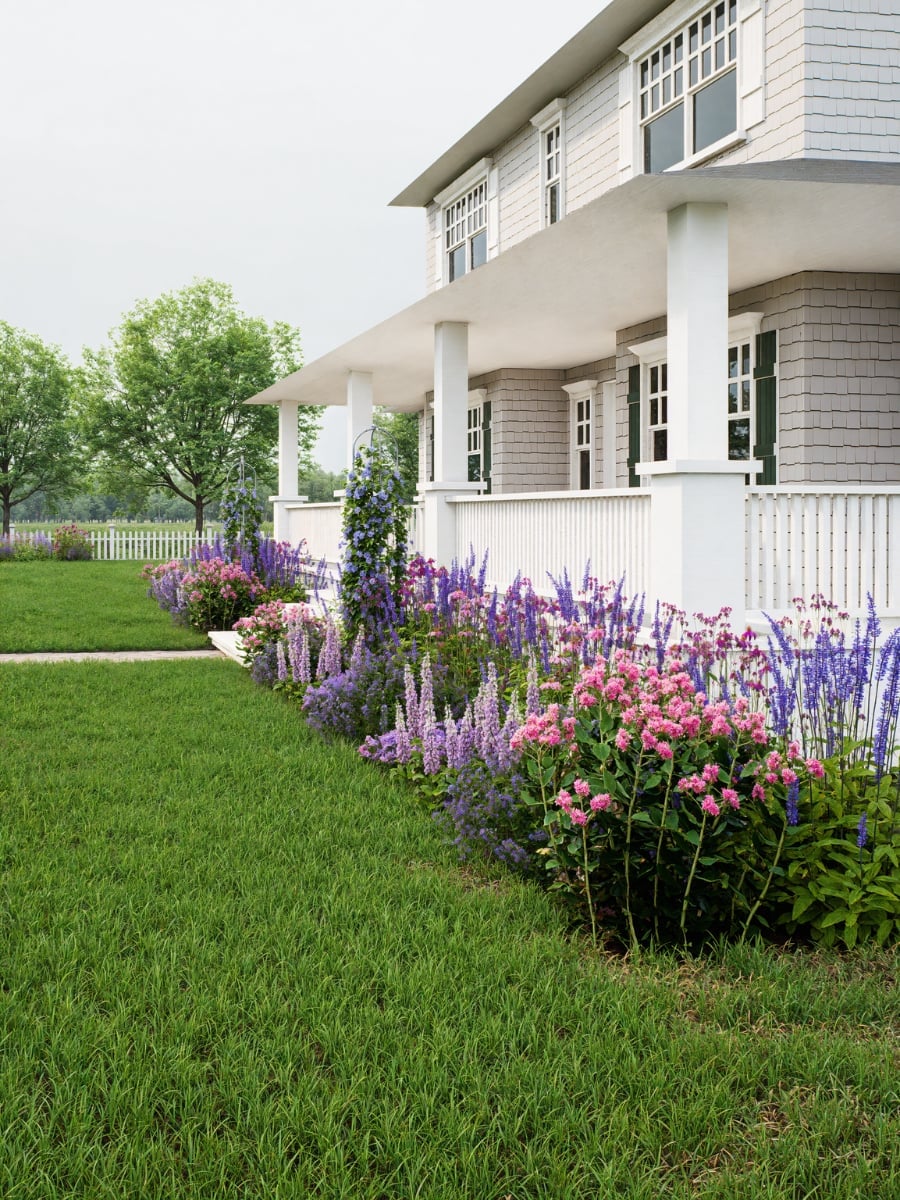
This border feels generous without being fussy. A white picket fence runs behind a dense mass of pink and purple blooms, with the house siding visible beyond. The overcast light softens the contrast between the green foliage and the gray shingles, so the flowers stay the main event. The palette is simple: pink and purple against green and gray. Keeping the fence white and the house neutral prevents the color from feeling chaotic. For a border that looks deliberate, pick two flower colors and repeat them along the whole length.
Garden Border with Large, Vibrant Pink Dahlias
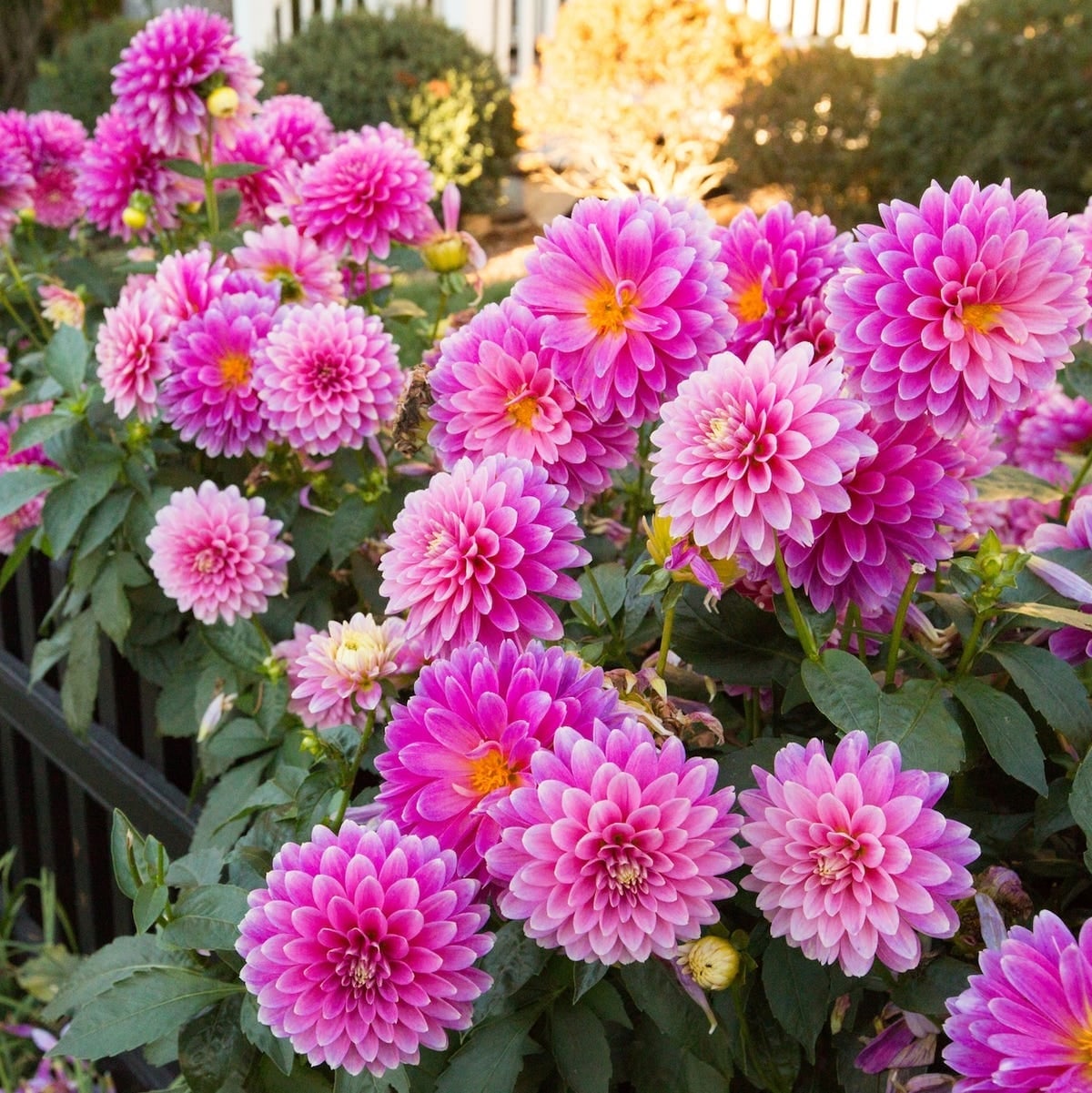
A line of large dahlias along a fence creates an instant focal point with very little effort. The dense planting means the blooms form a single mass of pink instead of a spotty row, which gives the garden border a finished look. Bright natural daylight makes the petals almost glow against the green foliage, so the bed catches attention from across the yard. The practical rule here is to repeat one flower at close intervals instead of scattering singles. A fence behind the dahlias provides a visual backstop, keeping the eye on the flowers and not on the yard beyond. For renters who cannot dig new beds, a row of large nursery pots lined against a fence mimics the same effect without permanent changes to the soil.
Cottage Garden with White Archway and Mixed Blooms
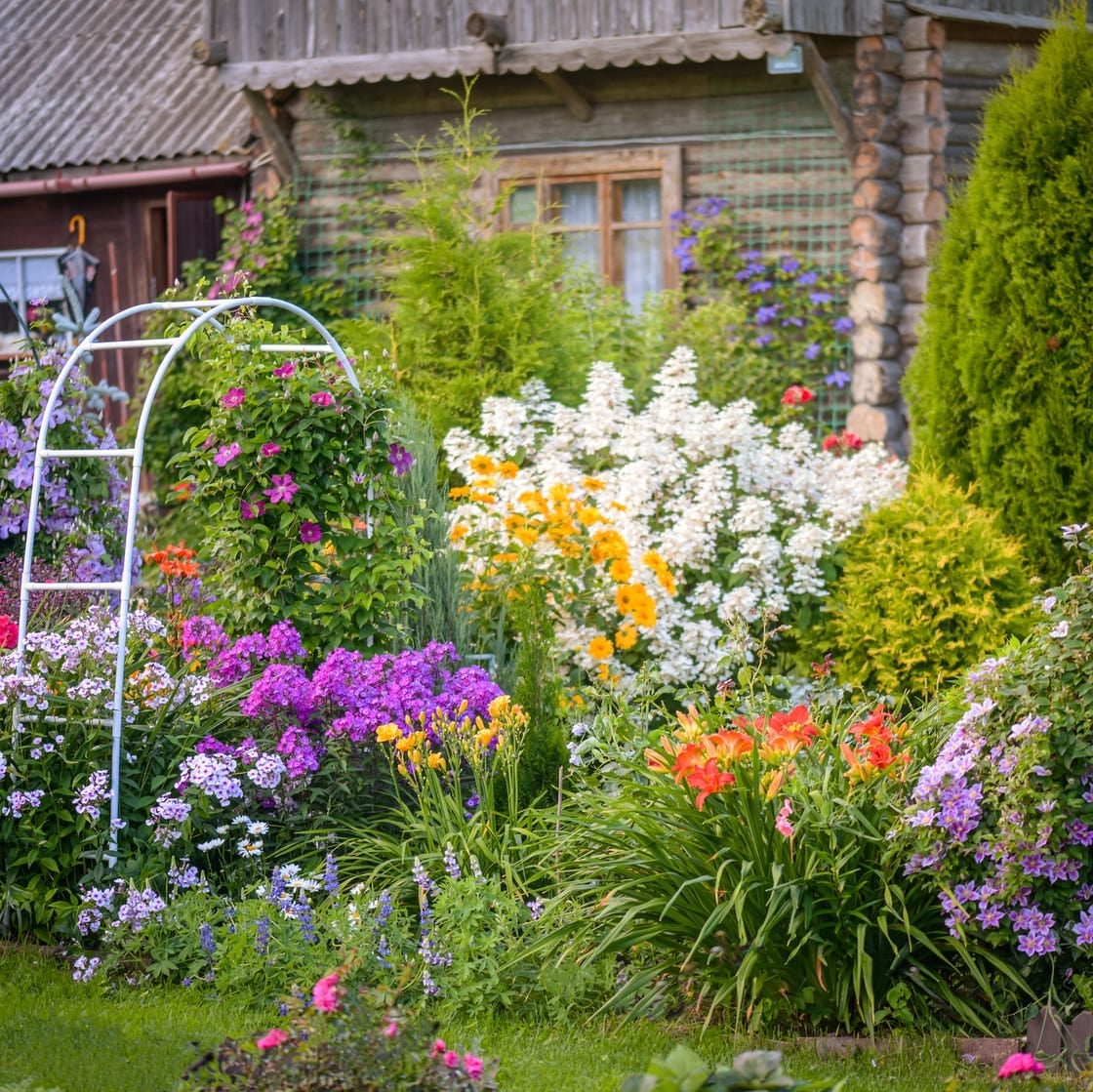
A white archway anchors the cottage garden by breaking up the green lawn and offering a clear entry point into the planting. The mixed flower beds around it layer purple, white, yellow, and orange blooms at different heights, so the eye travels from the low ground cover up through shrubs to the arch itself. The palette reads as abundant without feeling chaotic because the white of the arch ties the scattered flower colors together. Grass paths between the beds keep the space roomy enough to walk through and prevent the dense foliage from reading as overgrown.
Modern Rustic Garden with Wooden Raised Beds
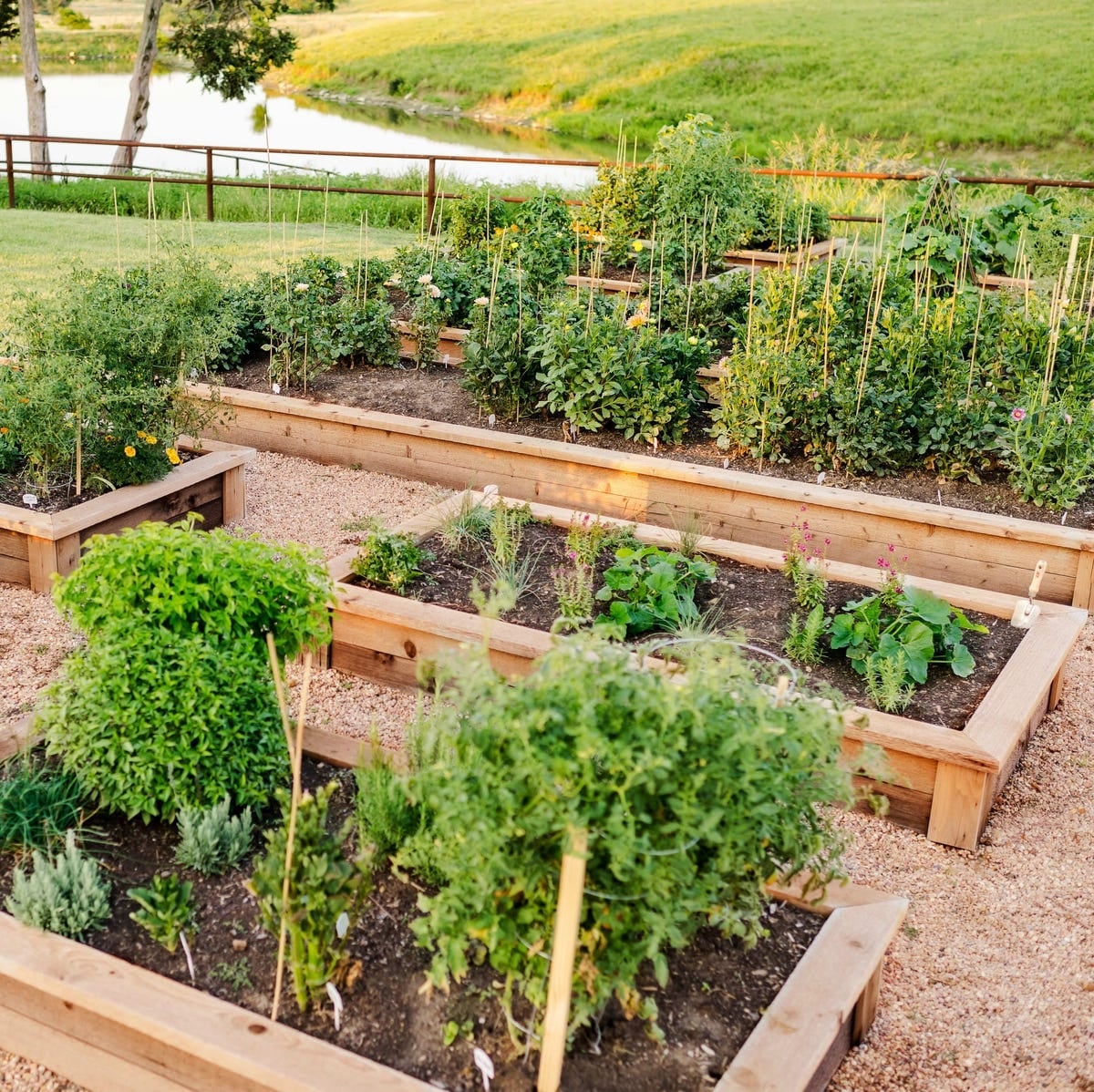
Modern rustic raised beds need paths wide enough for a wheelbarrow. This garden uses multiple wooden beds set in rows with gravel walkways, so the layout works for both planting and maintenance. The wood tones of the beds match the natural gravel, creating a cohesive look that complements the greenery inside. Bright daylight makes the warm wood and cool soil read clearly. The spacing between each bed gives room to kneel, weed, and harvest without stepping onto the planting area, which cuts down on soil compaction.
Traditional Garden with Porch and Layered Flower Beds
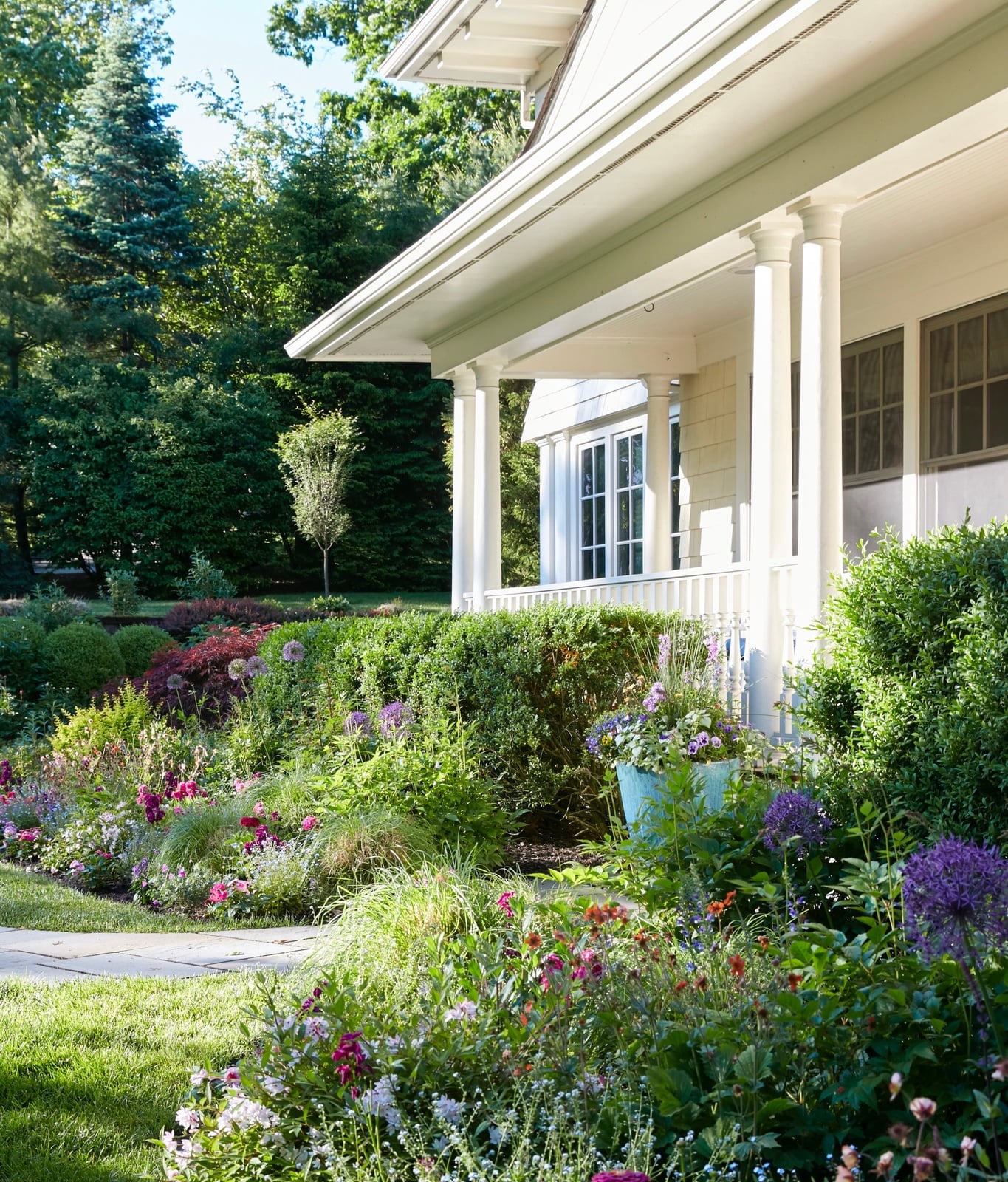
A traditional garden with layered flower beds around a columned porch can feel formal or welcoming depending on how the plants are arranged. Here, the beds wrap the house exterior in pinks, purples, greens, and white, with a blue planter adding a cool contrast against the warm stone. The lighting is natural daylight, so the colors stay true rather than shifting under awnings or overhangs. Where a more formal approach might use clipped hedges and symmetrical lines, this version keeps the planting loose and abundant. The porch steps become a natural transition from the lawn to the house, and the layered heights soften the hard edge of the foundation. A blue planter placed near the door breaks up the pink and purple repeat, keeping the palette from going one-note.
Traditional Garden Beds with Red Roses and Stone Border
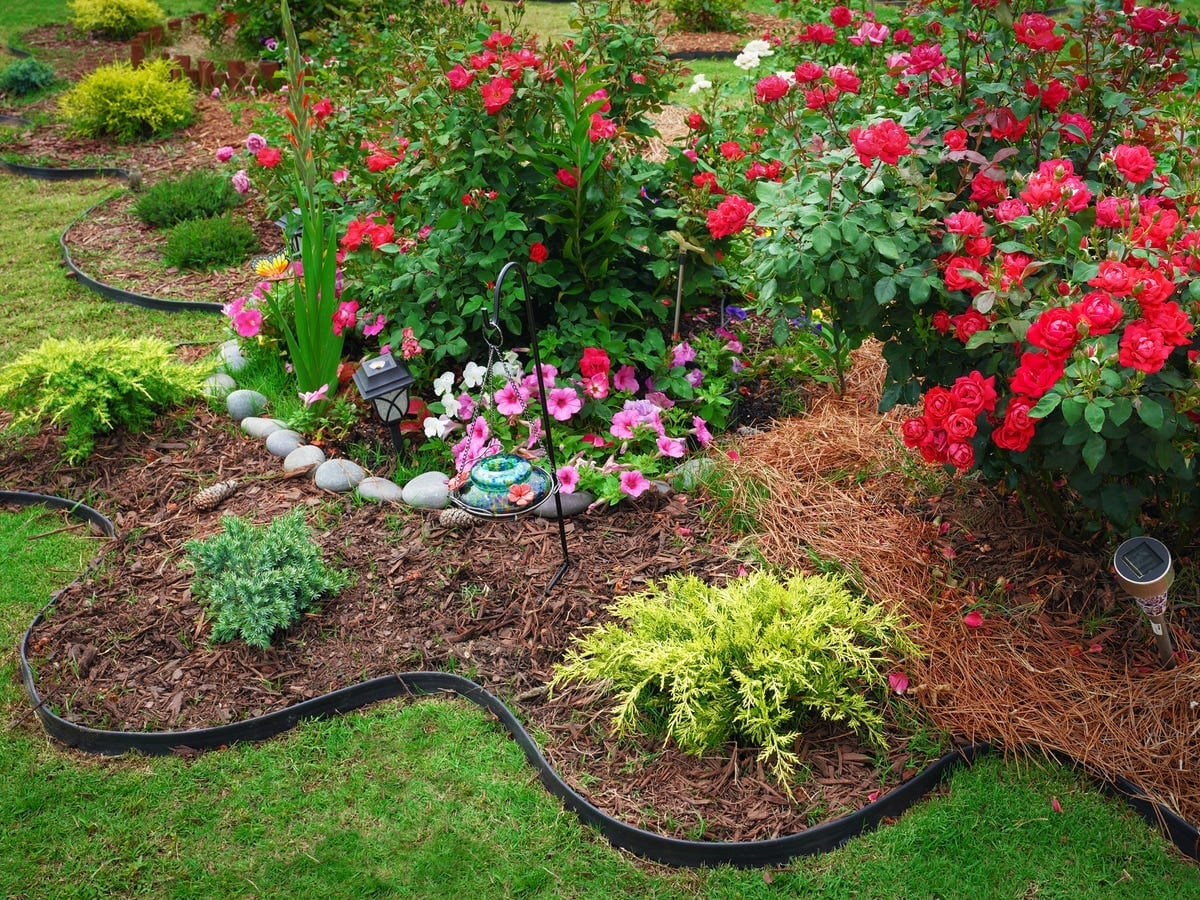
A stone border around curved garden beds gives the red roses a defined edge that keeps the lawn from creeping into the planting area. The mulch inside the beds helps hold moisture and suppresses weeds, which matters for roses that need consistent watering. Ornamental grass adds height variation behind the lower rose bushes, so the bed has a layered look. The red blooms stand out against the green grass and brown mulch because there is no competing color nearby. The curved shape of the beds softens the straight lines of the property, making the garden feel older and more established than it might be.
Cottage Garden with Layered Beds and Vibrant Blooms
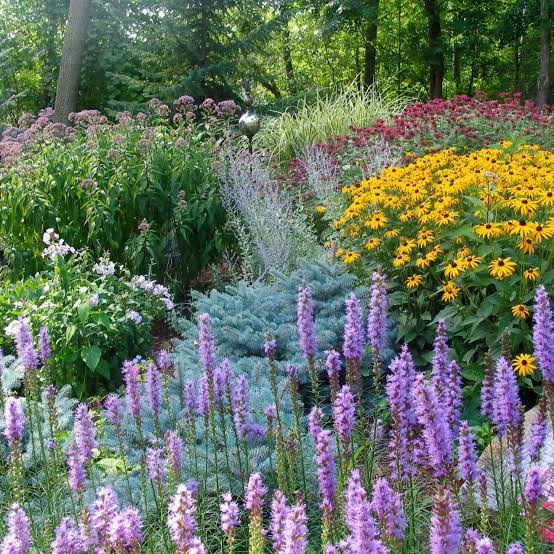
A cottage garden worth its salt leans hard into layered planting, and this one delivers with a mix of purple, yellow, and pink blooms set against a backdrop of full green trees. The layout is naturalistic, with taller plants rising behind lower ones so every layer gets its moment. A palette this rich works because the green foliage acts as a visual buffer, keeping the colors from feeling chaotic. Group plants in odd-numbered clusters and let them spill into the path a little. That slight looseness is what separates a garden that looks alive from one that looks like a catalog spread.
Modern Garden with Corrugated Metal Raised Beds
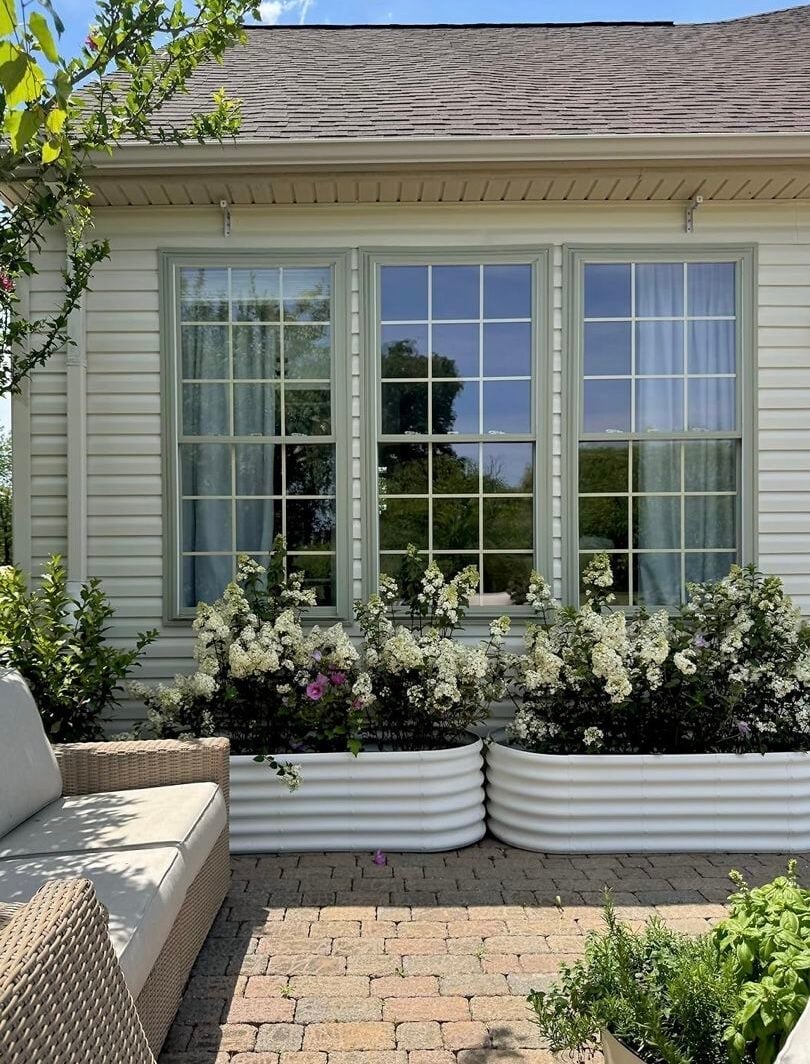
A traditional wooden raised bed is fine, but it also rots eventually and costs more to replace. Corrugated metal beds offer a longer-lasting alternative with a clean, modern look that pairs well with brick and wood accents. In this garden, the metal beds sit in front of a house, filled with white flowers and soft pink blooms that soften the industrial edge. An outdoor sofa nearby confirms the space is meant for sitting, not just looking.
The key is matching the metal finish to your existing hardscape. Galvanized silver works with grays and cool tones; darker charcoal suits warmer brick. Renters should note that these beds sit directly on soil, so no permanent foundation is needed. Just level the ground, set the beds, and fill with soil. The bright daylight helps the white flowers pop against the gray metal, making the whole setup feel intentional without being fussy.
Formal Garden with Green Pergola and Brick Pathway
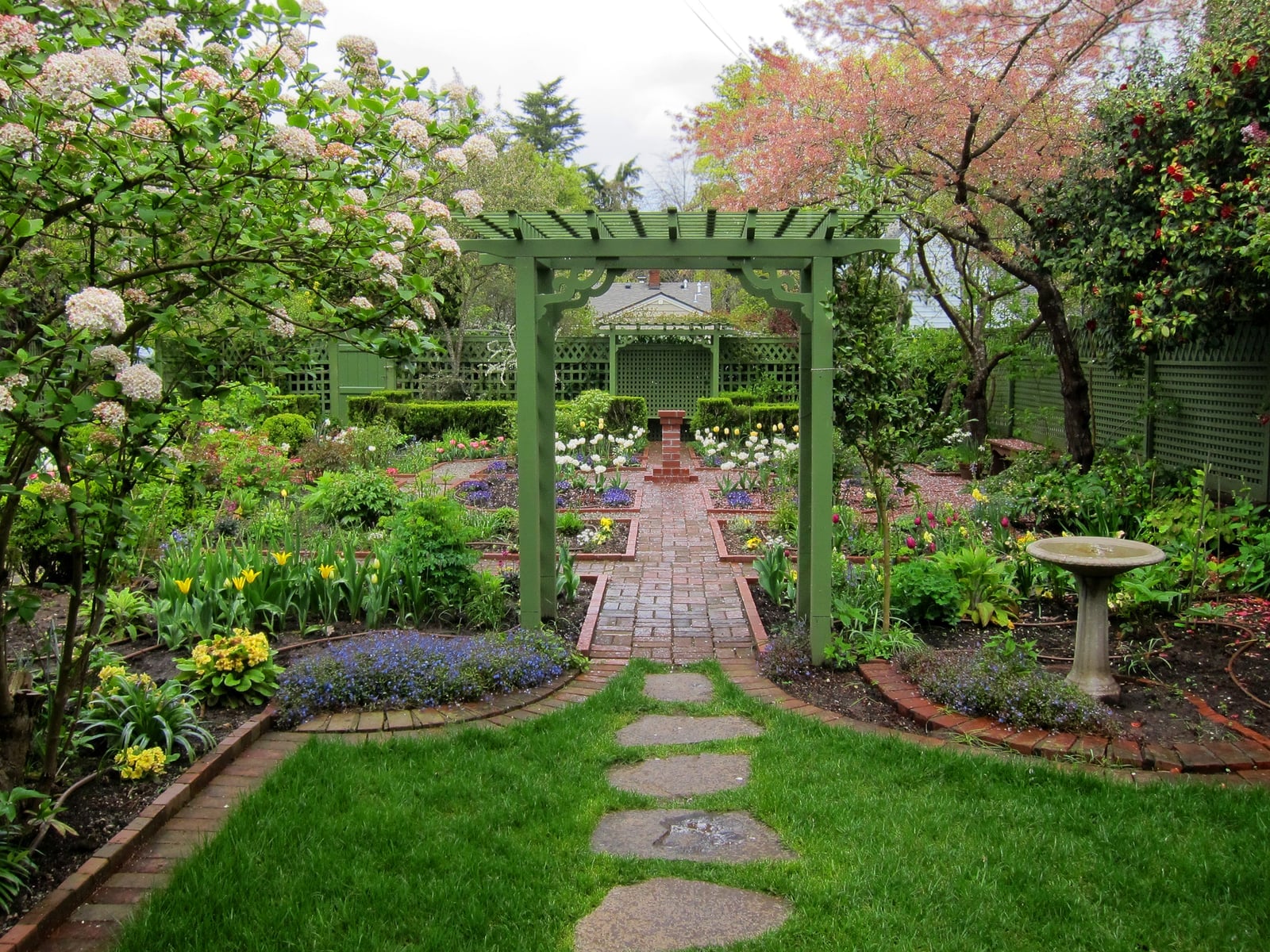
A green pergola anchors this formal garden, with a brick path running straight ahead and a stone bird bath drawing the eye further in. The layout is symmetrical, with flowers in pink, yellow, red, and blue lining both sides of the path. Overcast daylight softens the contrast. When a pergola is the hero element, keep the path simple and let the plants do the color work. A brick or stone walkway underfoot grounds the vertical lines and gives the eye a clear route through the space.
Wildflower Garden with Sunflowers and Diverse Blooms
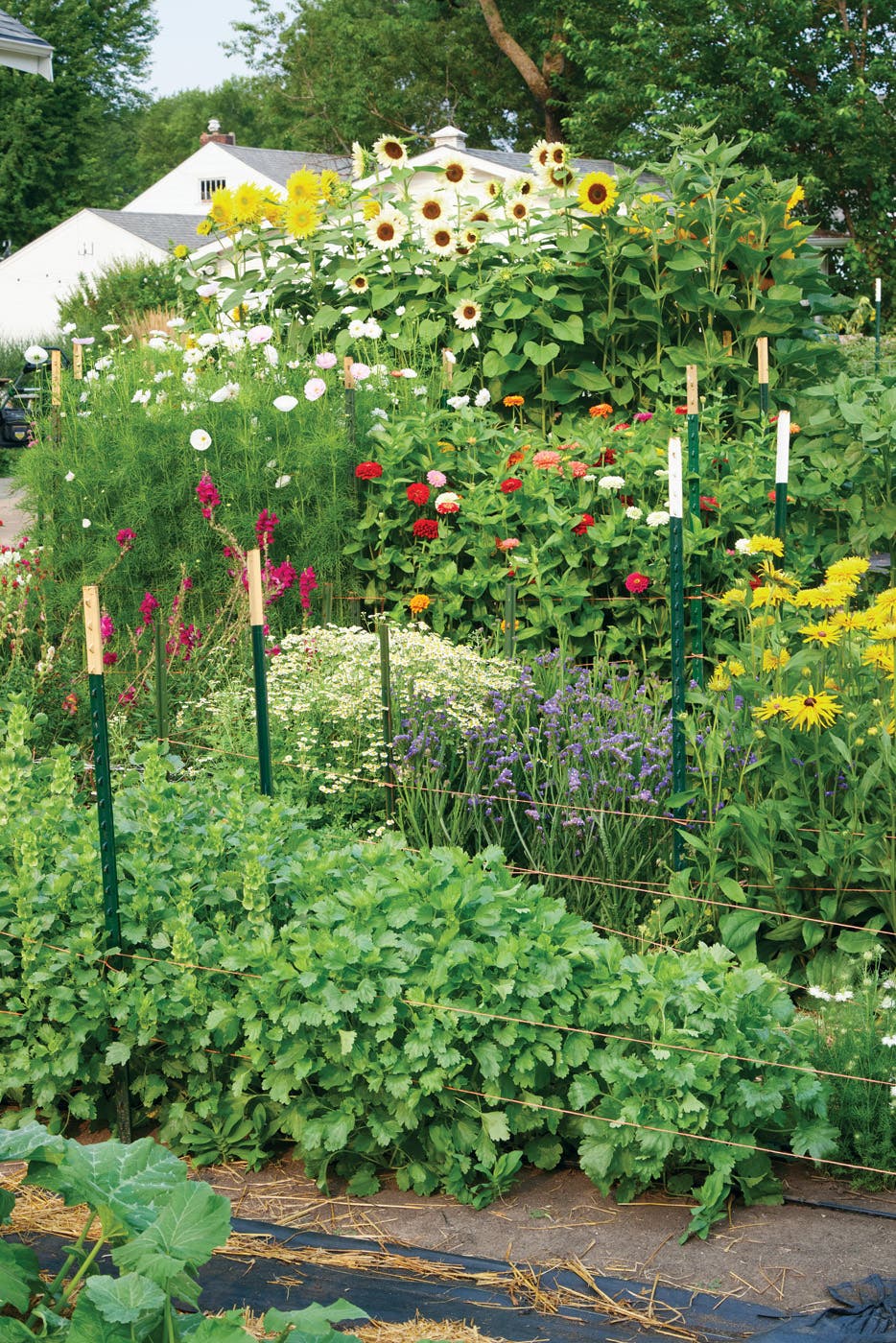
Towering sunflowers rise above a dense mix of zinnias, cosmos, and lavender, creating a wildflower garden that feels abundant without being messy. The scale works because taller plants like sunflowers get support stakes, while lower blooms fill the gaps naturally. Yellows, whites, reds, and purples spread across the bed, with green foliage keeping everything connected. A roomy layout like this relies on proportion: let the tallest flowers sit toward the back or center, then step down in height. That way, every bloom gets light, and the garden appears layered and intentional.
Final Thoughts
A flower garden does not need to be complicated to feel full. The ideas here share a common thread: they rely on structure, plant choice, and the way light moves through the space. Raised beds give order, paths guide the eye, and flowers do the rest. A well-planned garden grows better with time, not less. If you take one thing from these 29 ideas, let it be this: match the layout to how you actually use the yard. A path you walk daily matters more than a corner you only see from the window. Mulch once a year, deadhead spent blooms, and adjust the watering schedule when the season shifts. That keeps the garden alive without turning it into a second job.