You know that feeling when you finally find the DIY flower tower idea that looks exactly right for your space? That little spark of ‘I can totally make that!’ is what this guide is all about. We spent serious time browsing Amazon, Home Depot, and Lowe’s to bring you only what’s worth your attention this year. We’ve curated 28 stunning DIY flower tower ideas, covering everything from rustic stacked terracotta pots to sleek, modern metal stands. For 2026, it’s all about ‘vertical gardening’ as a design statement, not just a space-saver, a huge trend popping up all over Pinterest. And stay until the end — we break down the most common mistakes that can ruin these looks. 📌 Save this to Pinterest for later — you’ll want to revisit these ideas.
1. First, Sketch Your Dream Flower Tower
Before you buy a single pot or bag of soil, grab a pencil and paper. A quick sketch is the single best way to avoid a flower tower flop. Think about the final height and width. Where will it live? How will the sun hit it? This isn’t about creating a masterpiece, it’s about making practical decisions. A simple line drawing can help you visualize the scale, decide on the number of tiers, and plan your color palette. It’s a five-minute task that can save you hours of frustration and wasted money down the line.
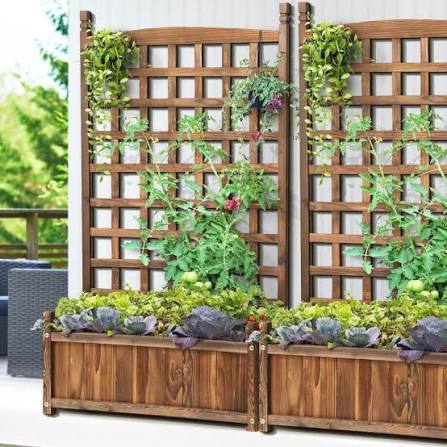
“For a truly dynamic tower, think in layers of three: a ‘thriller’ (a tall, upright plant for the top), ‘fillers’ (mounding plants to fill the middle), and ‘spillers’ (trailing plants that cascade over the edges).”
This classic container gardening formula works perfectly for vertical towers. For a 4-foot tower, you might use a dwarf ornamental grass as your thriller, petunias as your filler, and sweet potato vine as your spiller. This creates visual interest from top to bottom and gives your tower a lush, professionally designed look.
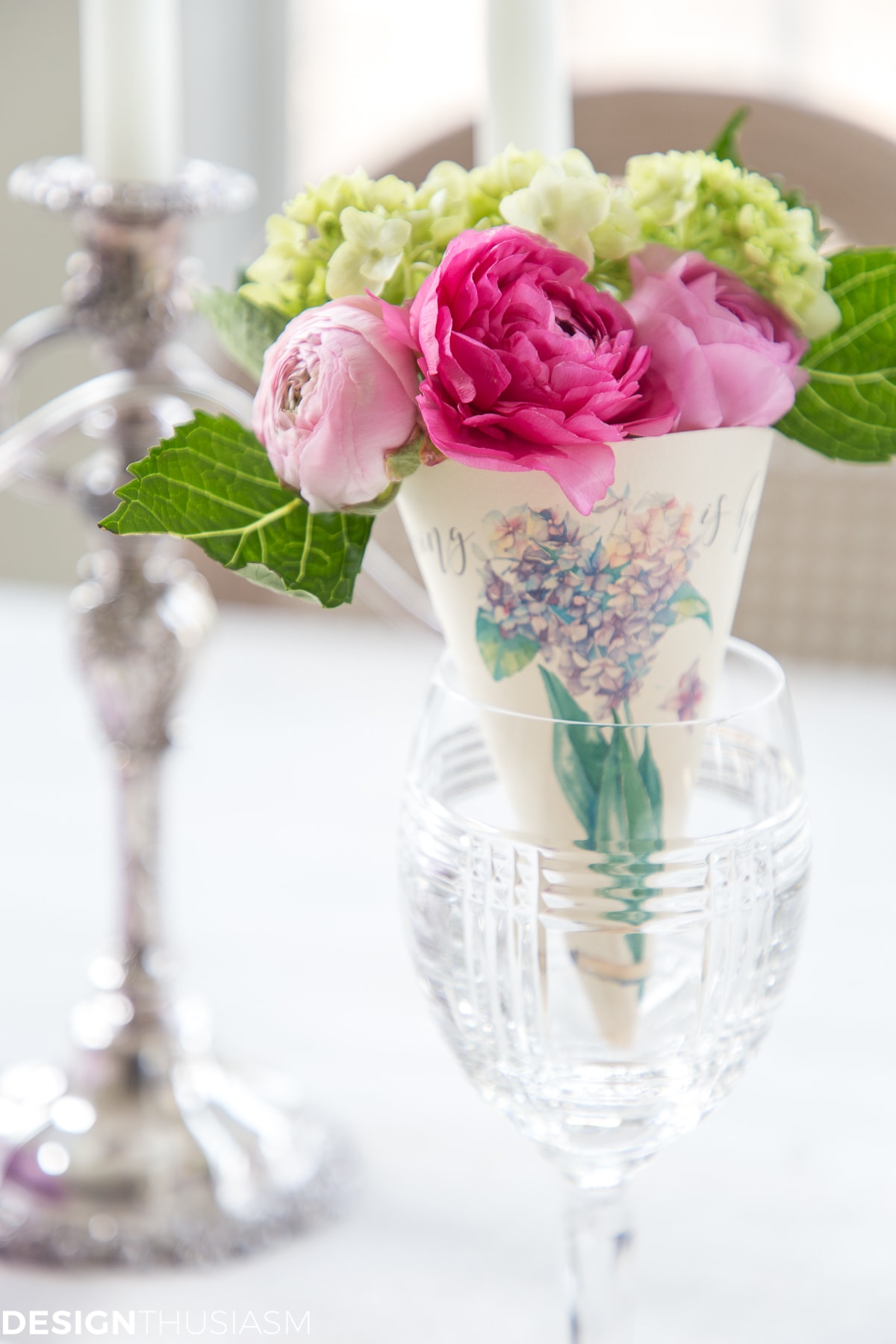
2. A Delicate Ranunculus Cone for a Touch of Spring
This tiny arrangement is pure charm. What makes it work so well is the clever use of everyday objects to create something special. The printed paper cone adds a touch of bespoke pattern and softness, transforming simple flowers into a thoughtful gift or accent. Placing it inside a cut-glass wine glass elevates the whole look, turning it from a simple posy into a miniature centerpiece. The contrast between the casual paper and the formal glassware is unexpected and delightful, proving that elegance doesn’t always require a traditional vase.
“You can recreate this elegant look for less than a coffee shop latte.”
Skip the florist and grab a small bunch of seasonal flowers from the grocery store for around $5-$10. The ‘vase’ is where you get creative. Use any nice wine glass or even a jam jar you already own. For the cone, you don’t need fancy craft paper; a page from a magazine with nice colors, a piece of leftover gift wrap, or even a brown paper lunch bag can look incredibly chic. The total cost could easily be under $10 for a piece of decor that looks thoughtful and expensive.
3. Vibrant Blue Stacked Pots Against a Rustic Fence
The formula here is simple but effective: 70% bold color + 30% rustic texture. The bright, uniform blue of the plastic planters provides a massive dose of cheerful color that immediately draws the eye. This is balanced by the weathered, neutral brown of the wooden fence, which keeps the look grounded and not overwhelming. The magenta and green from the plants act as accents within this framework. You could swap the blue for a sunny yellow or lime green and get the same vibrant effect, as long as you keep that rustic wood backdrop for contrast.
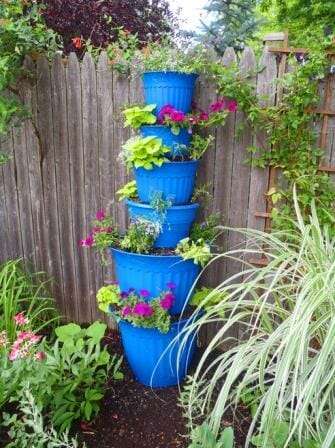
“While lightweight plastic pots are affordable and easy to stack, they can have a shorter lifespan than ceramic or terracotta, especially in climates with intense sun or freeze-thaw cycles.”
The bright color may fade over a few seasons, and the plastic can become brittle and crack. Also, a tall, lightweight stack can be top-heavy, especially once the plants are mature and watered. Be sure to place it in a spot sheltered from strong winds or consider adding weight (like rocks) to the bottom pot for stability.
4. The All-in-One Terracotta-Tone Edible Garden Tower
A tower packed this densely with a mix of flowers, herbs, and vegetables is a superstar in the garden, but it’s also high-maintenance. The top tiers will dry out much faster than the bottom ones, so you’ll likely need to water daily in warm weather. Fruiting plants like tomatoes are heavy feeders and will require regular fertilizing to be productive. Be honest with yourself about your watering commitment before you invest in a tower this large. A self-watering version of this planter type can be a game-changer if you have a busy schedule or a forgetful nature.
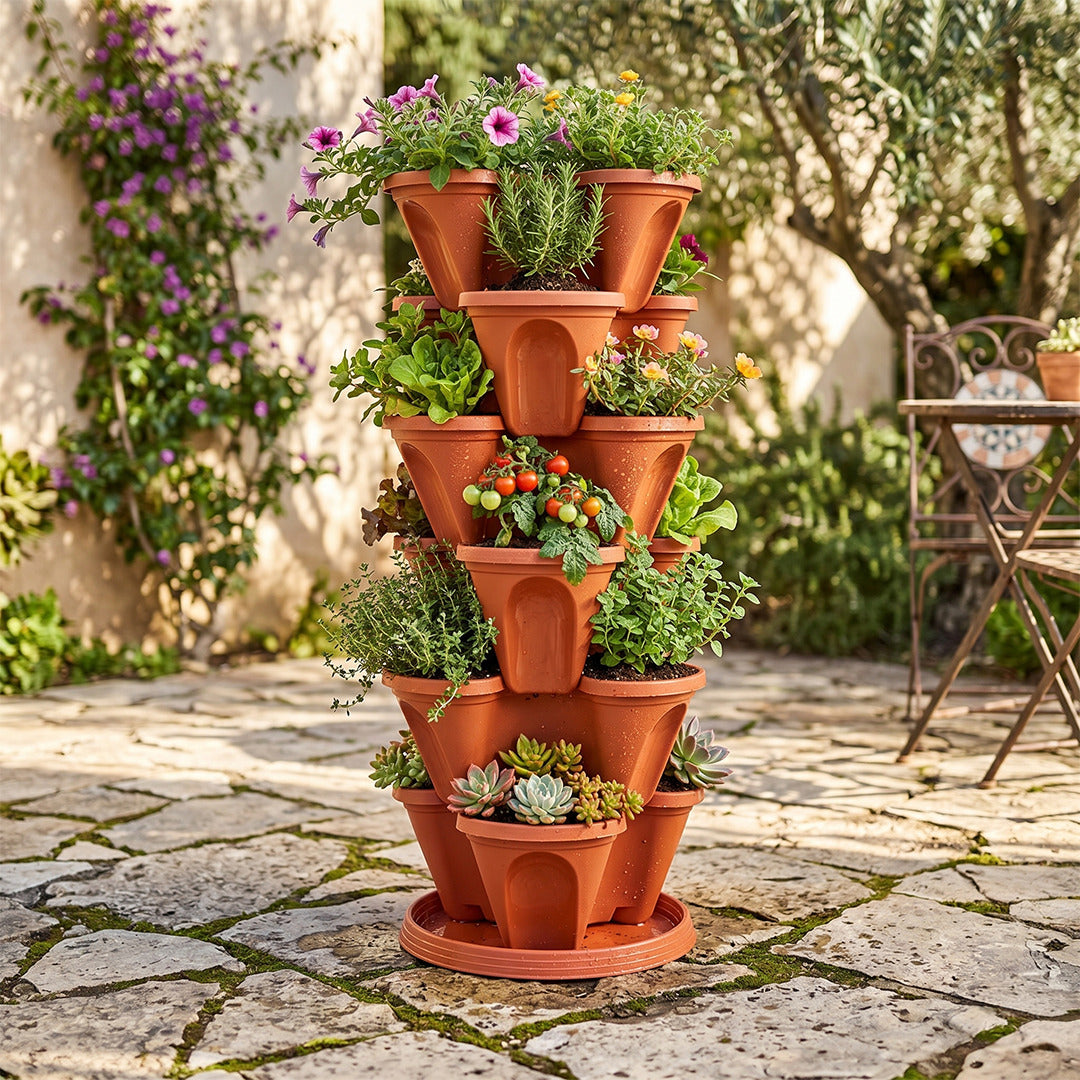
“This style of multi-tiered planter is perfect for maximizing harvest in a small footprint.”
It works best on a patio, balcony, or deck that’s at least 4×4 feet to give you room to walk around it and access all the plants. Because of its vertical nature, it requires a location that gets at least 6-8 hours of direct sunlight, especially for growing tomatoes and other sun-loving edibles. A tower this size would overwhelm a very narrow balcony but is an ideal solution for a standard apartment patio or a sunny corner of a small yard. Compare its footprint to the wall-mounted approach in Idea #19.
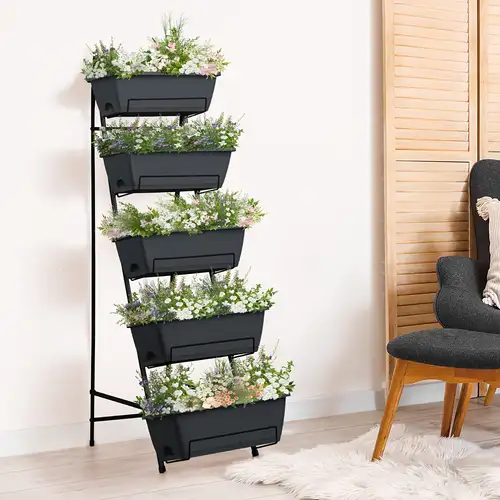
5. Modern Minimalism with a Tiered Black Plant Stand
To get this clean, modern look, the key is repetition with variation. Notice how all the planters are simple, rectangular shapes, and all the plants are a variation of white and green. This creates a cohesive, intentional look. Don’t mix and match a dozen different pot styles and flower colors. Choose one planter style and a strict two-color plant palette (e.g., green and white, green and purple). This disciplined approach is what elevates it from a simple plant stand to a true design feature. The result is calm and sophisticated, not cluttered.
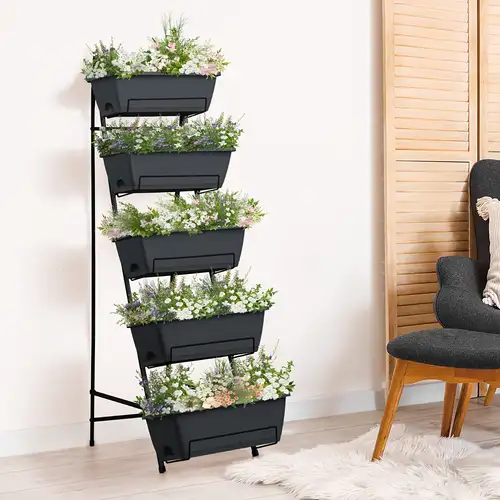
“that makes this entire setup work is the stand’s slender, vertical frame.”
If you removed it and just placed these planters on the floor, you’d have a messy jumble. The black metal stand provides structure, height, and a graphic quality that organizes the plants into a living sculpture. It draws the eye upward, making the room feel taller, and its minimalist design allows the cascading white flowers and foliage to be the undisputed stars of the show. It’s the architectural backbone of the entire concept and a more ornamental alternative to the edible tower in Idea #21.
6. Earthy Live-Edge Wood Stand for a Succulent Collection
This display feels so serene because it perfectly masters the art of mixing textures within a tight color palette. The smooth, organic curves of the live-edge wood shelves contrast beautifully with the varied, sculptural shapes of the succulents. The pots—in shades of white, grey, and terracotta—are all neutral, earthy materials that complement, rather than compete with, the plants and the wood. This careful curation of natural textures is what gives the arrangement its calming, cohesive, and high-end feel. For a different take on a wood stand, see the corner unit in Idea #9.
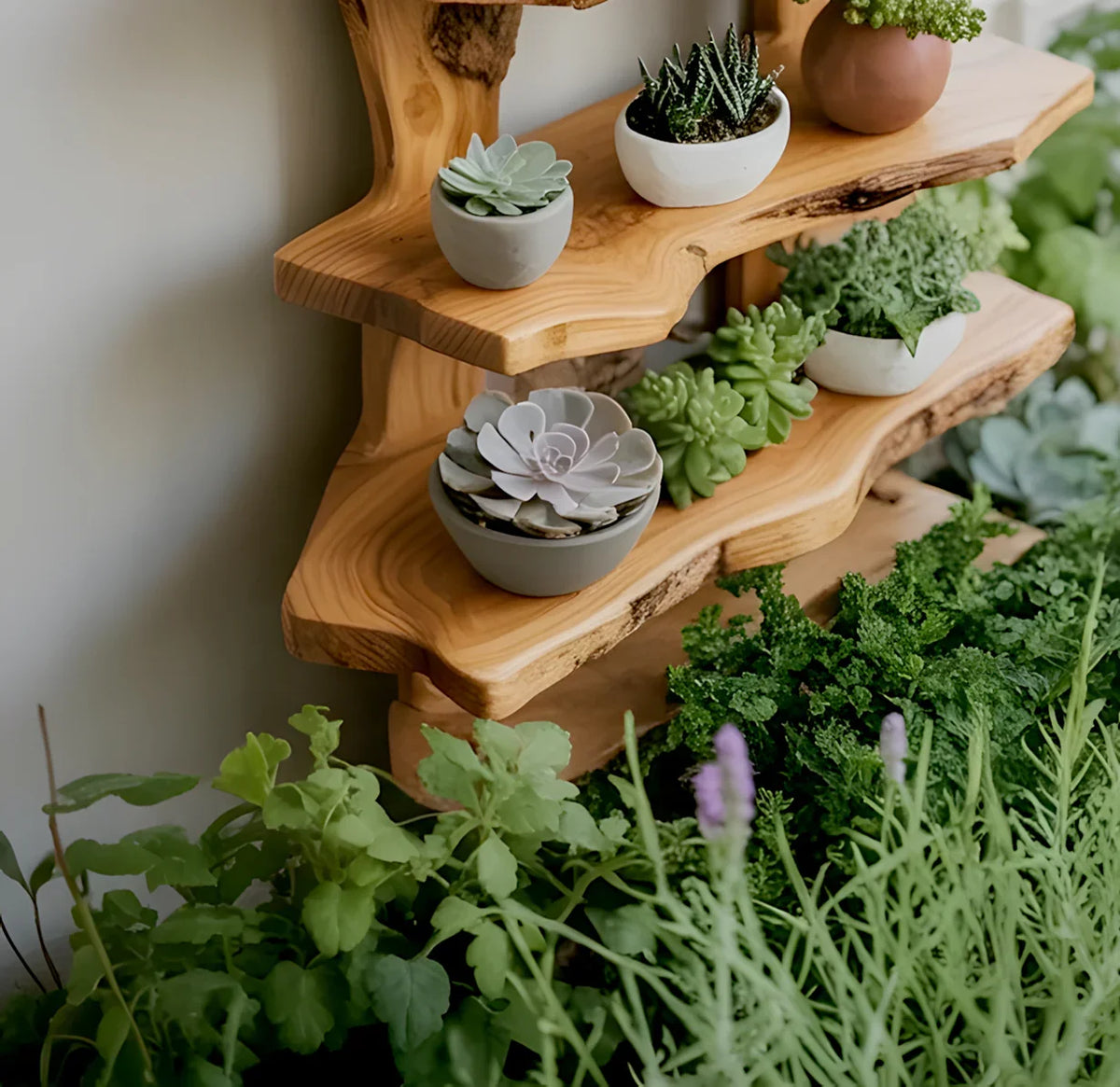
“Here’s a look at what it might cost to build a similar succulent sanctuary.”
Prices can vary widely based on wood type and plant rarity.Live-Edge Wood Stand: $150 – $400Assorted Succulents (10-15 plants): $50 – $150Ceramic & Terracotta Pots: $40 – $100Potting Mix & Soil: $15 – $25TOTAL: $255 – $675Budget alternative: Use reclaimed wood planks for shelves and propagate succulents from cuttings for a total cost under $100.
7. Get Inspired by Professional Nursery Displays
A trip to a local garden center is one of the best ways to get ideas, but remember that these are commercial displays designed for optimal plant health under greenhouse conditions. The lighting, humidity, and watering schedules are perfectly controlled. When you bring those plants home, you are their sole caregiver. That beautiful, lush fern that looked perfect under the diffused light of the nursery might scorch in your sunny window, and those sun-loving succulents will get leggy and sad in a dark corner. Always read the plant tags and buy for the conditions you actually have, not the ones in the store.
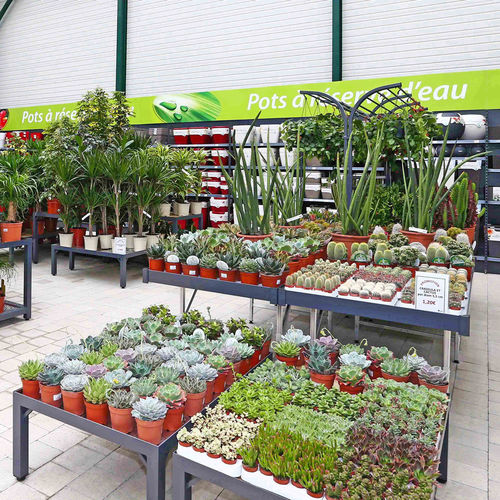
“Want to select plants for your tower like a pro?”
Follow this mini-guide next time you’re at the nursery. Total time: 20 minutes.First, check for pests. Look under leaves and at the junction of stem and leaf for any webbing, spots, or tiny insects.Inspect the roots. Gently slide the plant out of its pot. Healthy roots are typically white or light tan and fill the pot without being a solid, cramped mass. Brown, mushy roots are a red flag.Look for new growth. Healthy plants should show signs of new leaves or buds, indicating they are actively growing.Check the overall shape. Avoid lopsided or ‘leggy’ plants that have stretched unnaturally towards a light source.
8. Choosing the Right Materials: Pots, Soil, and Supports
The material of your pots directly impacts your watering schedule. Porous terracotta dries out very quickly, which is great for succulents but means daily watering for thirsty annuals in the summer. Glazed ceramic and plastic pots retain moisture much longer, giving you more wiggle room between waterings. Self-watering planters have a built-in reservoir that can keep plants hydrated for days or even weeks, making them a fantastic choice for busy people or for placing towers in hard-to-reach spots where daily watering is a hassle. Choose your pot material based on your lifestyle, not just looks.
“Think of your flower tower’s materials as a simple equation: 50% Structure + 40% Plants + 10% Accents.”
The ‘Structure’ is your pots and support—be it rustic terracotta, modern metal, or colorful plastic. The ‘Plants’ are your main event, the flowers and foliage that bring the life. The final 10% ‘Accents’ are the details that pull it together: a decorative top finial, a coordinating water tray, or even the choice of a specific color of mulch or top dressing. Getting the balance right in this equation ensures a cohesive and polished final look.
9. A Bright Corner Filled with a Tiered Wooden Plant Stand
A tall, tiered corner stand like this is a fantastic solution for rooms with limited floor space but decent ceiling height (8 feet or more). It utilizes vertical real estate that often goes to waste. This specific style works best in a corner with at least 2×2 feet of clear floor space to feel balanced, not cramped. The open-shelf design keeps it from feeling bulky and allows light from the nearby window to reach all the plants. It’s a perfect fit for a small living room, home office, or even a spacious bedroom where you want to add a lot of greenery without a large footprint.
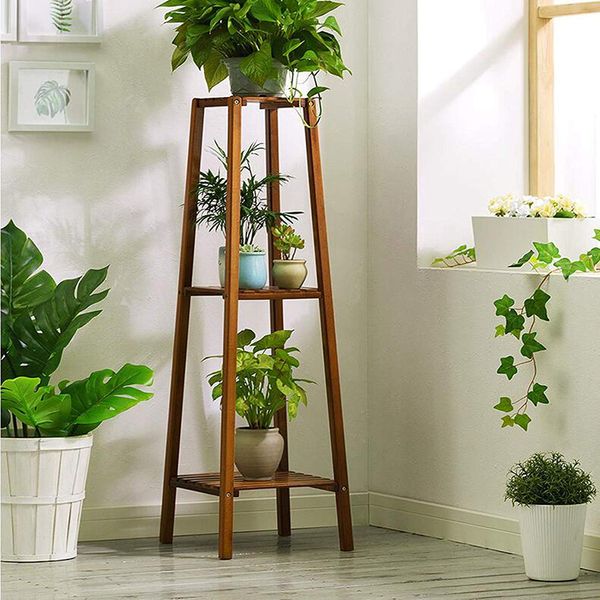
“When styling a multi-level plant stand, create visual rhythm by staggering the plant heights and textures.”
Don’t put all your tall plants on one shelf and all your short ones on another. Mix it up! Place a trailing plant like a pothos next to an upright snake plant. Position a plant with large, broad leaves near one with fine, feathery foliage. This variation creates movement and encourages the eye to travel around the entire display, making it feel more dynamic and professionally styled. It’s the difference between a plant shelf and a botanical feature.
10. A Curated Succulent Display on an Outdoor Live-Edge Stand
The singular element that makes this display so compelling is the careful curation of the succulents. This isn’t just a random assortment of plants; it’s a collection. Each plant has its own distinct shape, color, and texture, from spiky haworthias to rosette-forming echeverias. They are arranged with intention, like tiny living sculptures. Without this thoughtful selection, it would just be a stand with some pots on it. The curation is what tells a story and transforms it into a personal, artistic statement. For an indoor version of this idea, take a look at Idea #6.
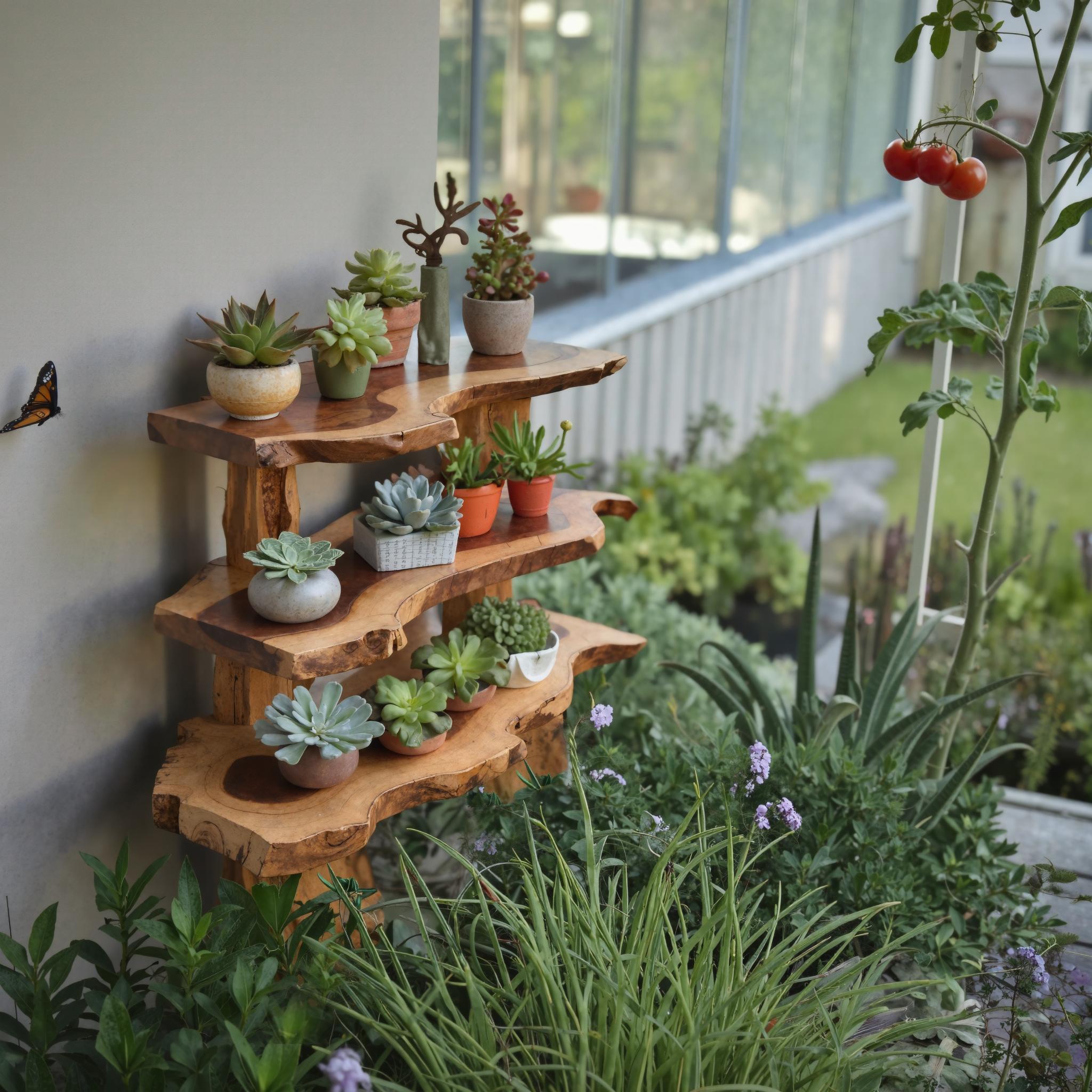
“This arrangement works because of the principle of repetition with slight variation.”
The stand’s repeated horizontal wood shelves provide a strong, organizing rhythm. Upon this structure, the theme of ‘potted succulents’ is also repeated. However, within that theme, the variation is immense—different pot sizes, colors, and a wide variety of plant forms. This ‘theme and variation’ approach creates a display that feels both unified and incredibly interesting to look at. The neutral gray wall acts as a quiet backdrop, allowing the natural textures of the wood and plants to stand out.
11. Luxe Bathroom Greenery on a Tall Metal Stand
Bringing large-scale plants and ‘plant furniture’ into the bathroom is a major trend. It’s part of the larger ‘biophilic design’ movement, which is all about connecting our homes with nature to improve well-being. A few years ago, a single small plant on the vanity was the norm. Now, we’re seeing full-on plant towers like this one, turning the bathroom into a spa-like sanctuary. The high humidity from showers creates a perfect microclimate for many tropical plants, making the bathroom an unexpectedly ideal spot for a lush green tower.
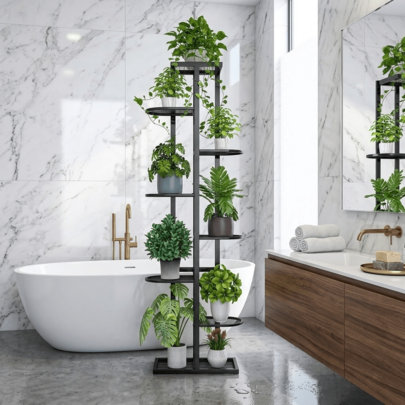
“While a bathroom full of plants looks incredible, be practical about maintenance.”
This many plants require regular watering, pruning, and cleaning of leaves. Watering day can be a whole production, so make sure you have a plan to avoid drips on your beautiful floors. Also, ensure your bathroom has enough natural light. A tower this large in a windowless powder room is not going to thrive. Only choose plants that are well-suited to the light and humidity levels you can actually provide. A similar stand would also work well on a covered balcony, like in Idea #17.
12. Floating Yellow Planters on Scrolled Wall Brackets
Installing wall brackets for planters is a quick project that adds big impact. Here’s how to do it right. Estimated time: 15 minutes per bracket. Cost: $15-$30 for brackets and hardware.
- Choose your location. Use a pencil to mark where you want the bracket to go. Use a level to ensure your marks are straight.
- Locate a stud. Use a stud finder to find a wall stud for maximum support. If no stud is available, you’ll need to use heavy-duty drywall anchors.
- Drill pilot holes. Drill small pilot holes on your marks. This makes it easier to drive the screws.
- Install the bracket. Align the bracket with the pilot holes and use a drill or screwdriver to secure it with screws.
- Hang your planter and check for stability before you walk away.
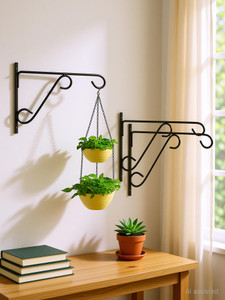
“You don’t need fancy hardware to get this ‘floating’ look.”
A simple, modern black shelf bracket from IKEA or Home Depot (around $5) can work just as well as an ornate scrolled one. Instead of a specialized tiered planter, you can find colorful plastic pots at Target or even a dollar store for a few bucks each. Drill a hole in the bottom for drainage, and you’re set. A couple of basic wall hooks and some macrame cord or simple chain from a hardware store can be used to create the tiered effect for pennies. This look is more about the concept of verticality than the specific items used.
13. A Romantic Wheeled Plant Cart with Potted Roses
This charming look is a mix of 50% rustic hardware and 50% romantic florals. The brown metal cart, with its large, decorative wheels and scalloped trays, provides a solid, almost industrial base. This is then completely softened by the lush, blooming rose bushes in vibrant pinks and oranges. It’s a classic juxtaposition of hard and soft, industrial and natural. The formula is what creates the ‘English country garden’ feel. Without the soft flowers, it’s just a metal cart. Without the rustic cart, they’re just potted roses.
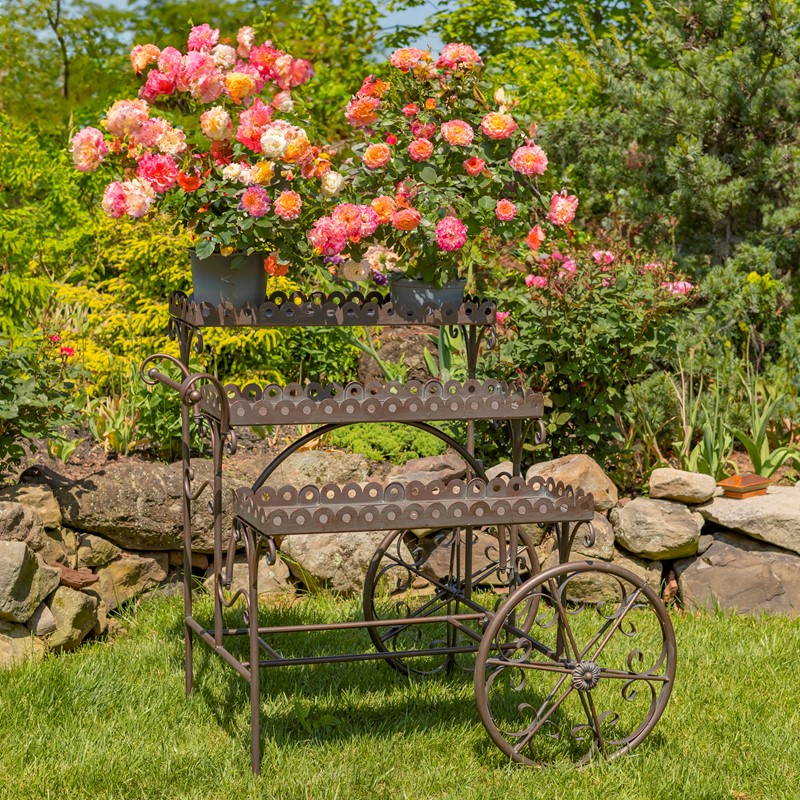
“The design works through the power of suggestion and context.”
The cart’s form, with its wheels and tray-like shelves, evokes images of flower market carts or garden wagons, instantly lending a storybook, rustic quality to the scene. This context elevates the simple potted roses into something more special. Furthermore, the concentration of color on the top tier creates a strong focal point, while the open space below keeps the piece from feeling too heavy or dense. It’s a clever use of form to create a feeling.
14. Whimsical Garden Fountain from Stacked Watering Cans
The single element that makes this creation so magical is the cascading water. Without it, you’d have a quirky tower of stacked watering cans and buckets filled with flowers—charming, but static. The addition of moving, trickling water transforms it into a dynamic, multi-sensory feature. It adds sound and movement, attracts birds, and creates a focal point that is truly alive. The water is the ‘special effect’ that elevates this from a simple planter to a whimsical garden fountain. It’s the detail that makes everyone who sees it smile.
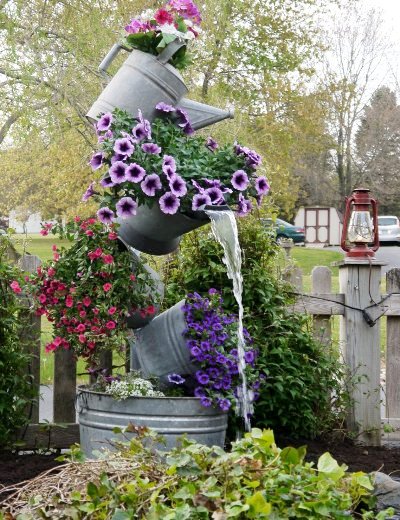
“A water feature like this is delightful, but it requires upkeep.”
You’ll need to regularly check the water level and top it off, as some will be lost to evaporation and splashing. The pump will need to be cleaned periodically to prevent clogs from algae or debris, especially in a sunny spot. In freezing climates, you’ll need to winterize the feature by draining it completely and bringing the pump indoors to prevent damage. While not overly burdensome, it’s more work than a standard planter tower.
15. A Simple Wooden Stand for an Outdoor Staircase
This type of slender, tall plant stand is an excellent choice for adding life to transitional spaces like stair landings, entryways, or narrow side yards. It requires very little horizontal square footage, typically less than 18×18 inches. Its height (usually 3-4 feet) allows it to make a statement without blocking pathways. The key is to match the scale of the stand to the space. On a wide, grand staircase, you might use two flanking stands, while on a narrow set of steps like this one, a single stand placed to the side is perfect to add interest without becoming an obstacle.
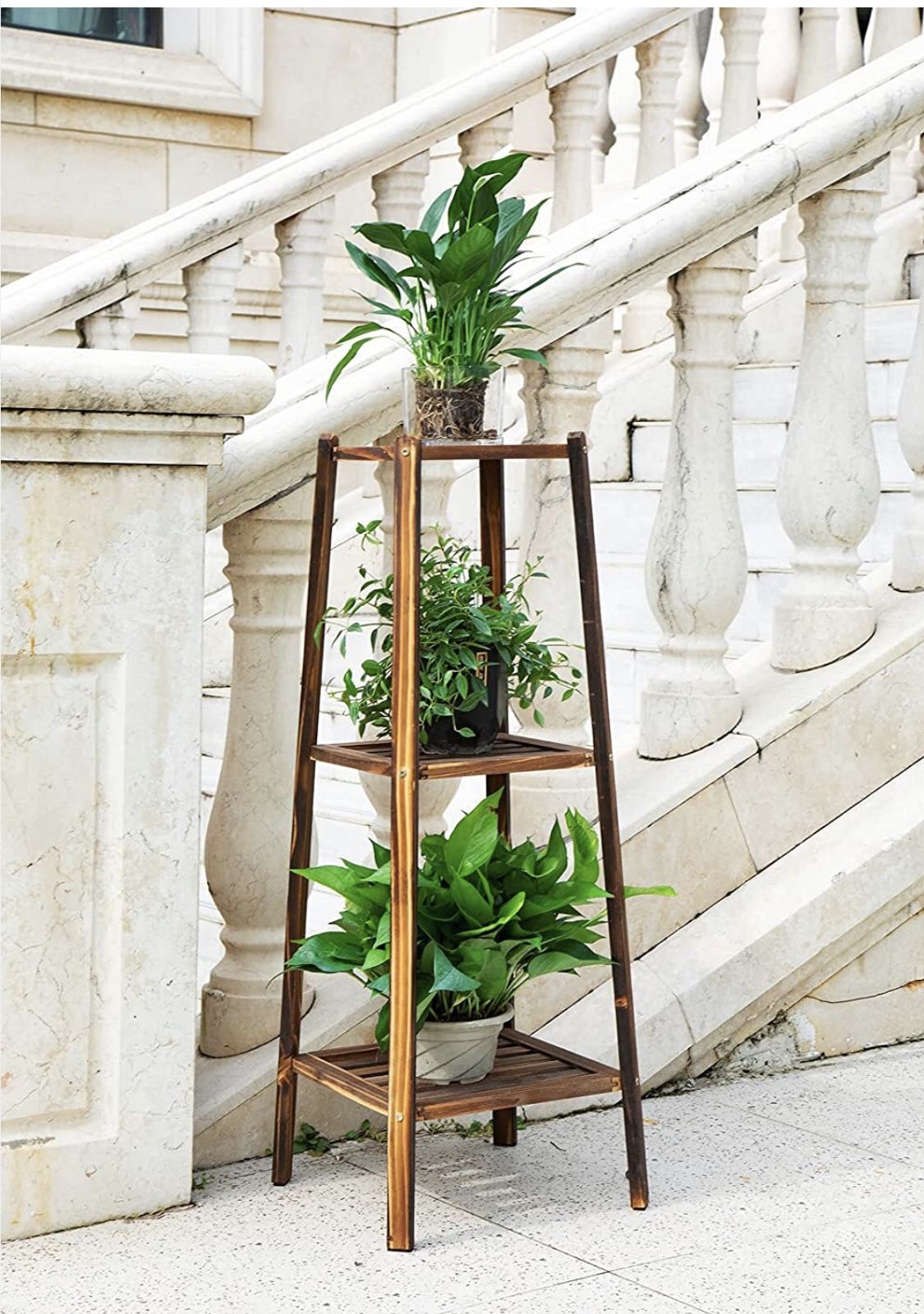
“When placing plants on a stand with open, slatted shelves like this one, always use a saucer or tray underneath each pot, even outdoors.”
This isn’t just about preventing water from dripping on the shelf below, which can cause staining or rot on the wood over time. More importantly, it prevents soil and nutrients from washing out of the top pot and dumping directly onto the foliage of the plant below. This can lead to soil-borne diseases and pests spreading from one plant to another. A simple clear plastic saucer is an inexpensive and essential accessory.
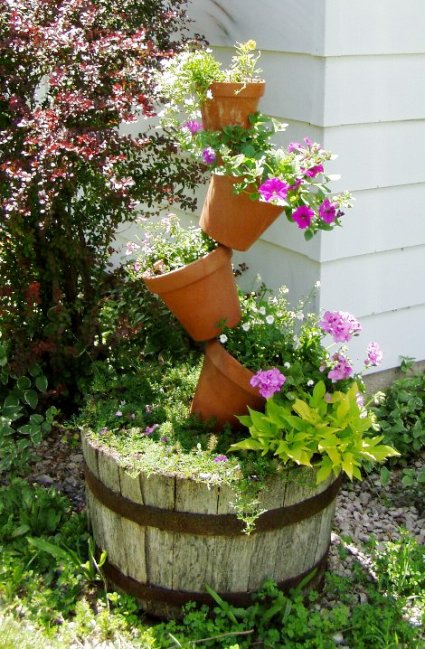
16. Playful ‘Topsy-Turvy’ Terracotta Pot Tower
Creating a ‘topsy-turvy’ planter is a fun weekend project. The trick is a central support rod. Total time: 1 hour (plus planting). Cost: $40-$80.
- Get your supplies: One 4-foot rebar or metal rod, one large base pot, and 4-5 smaller pots (about 2 inches smaller in diameter than the base).
- Set the rod. Place the rebar into the ground or into your large base pot, filling it with soil to hold the rod securely upright.
- Thread the first pot. Slide your first small pot down the rod, tilting it to one side so the rod rests against the inside edge of the pot. Fill with soil.
- Stack and repeat. Thread the next pot, tilting it in the opposite direction. Fill with soil. Continue alternating until you reach the top.
- Plant your flowers and water well!
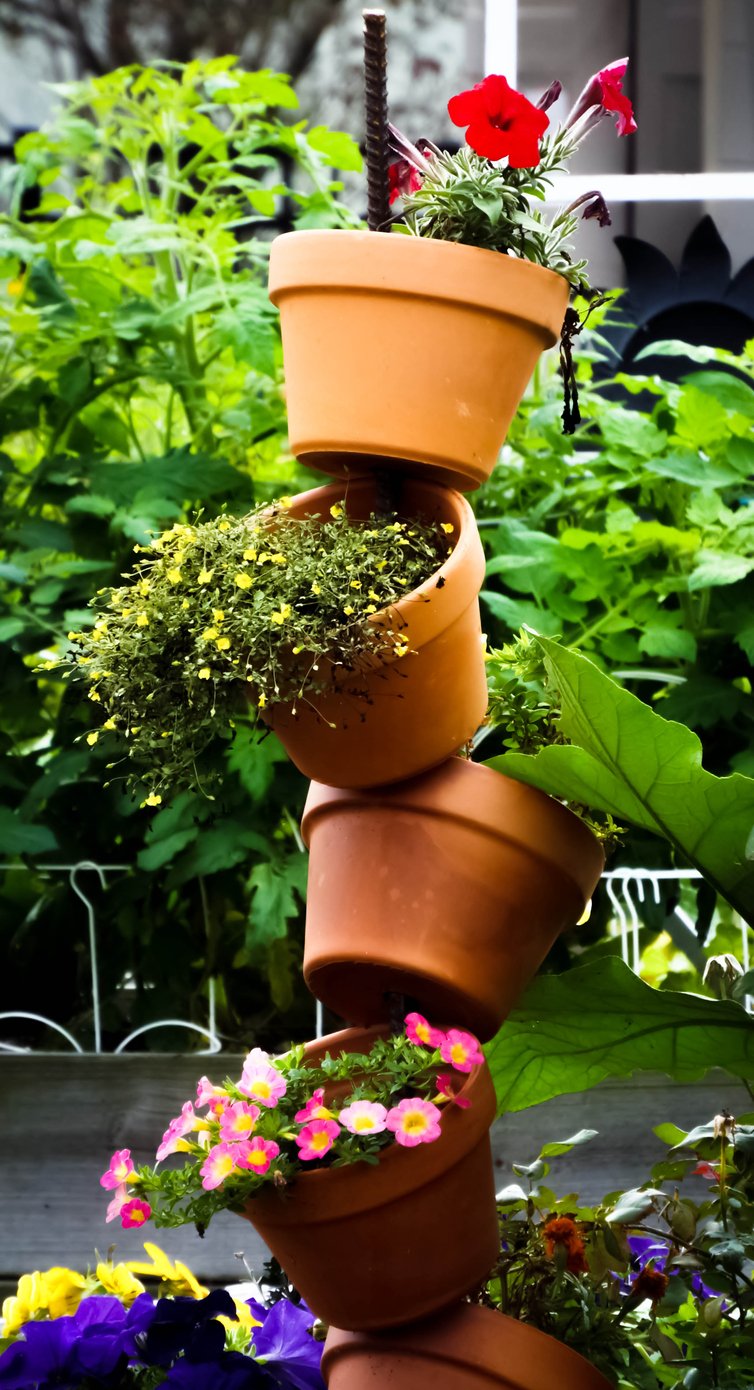
“This is one of the most budget-friendly tower designs you can make, using readily available garden supplies.Terracotta Pots (1 large, 4 medium): $25 – $504-ft Metal Rebar: $5 – $10Bag of Potting Soil: $10 – $20Assorted Flower Seedlings: $15 – $30TOTAL: $55 – $110Budget alternative: Look for free or cheap terracotta pots on Facebook Marketplace or at garage sales.”
Growing flowers from seed instead of buying seedlings can bring the total project cost under $30.
17. Tiered Metal Stand for a Small Balcony Garden
A balcony is a great place for a plant tower, but you have to consider weight. Pots filled with wet soil are surprisingly heavy. Before loading up a stand like this, check your balcony’s weight capacity, especially in older buildings. Also, think about your downstairs neighbors. Ensure all your pots have trays to catch water overflow. No one wants dirty water dripping onto their clean patio furniture. Finally, secure the stand so it can’t be toppled by a strong gust of wind, which can be more powerful several stories up.
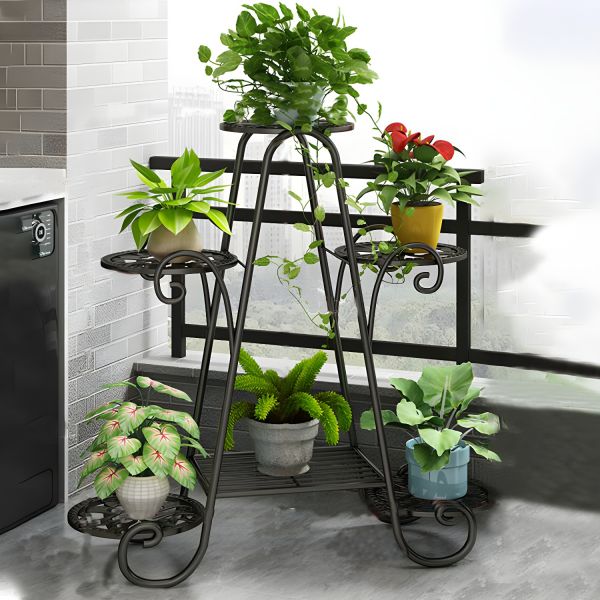
“This design is successful because it offers maximum plant display for a minimal footprint, which is crucial for a small balcony.”
The tiered structure staggers the plants vertically, ensuring each one gets adequate light and air circulation. The open, airy design of the metal stand prevents it from looking like a heavy, solid mass. It allows the brick wall texture to show through, integrating the stand into the space rather than just sitting in front of it. The dark metal provides a clean, graphic contrast to the soft green foliage and red flowers.
18. The Ultimate ‘Flower Wall’ Tower for Maximum Impact
that defines this look is density. It’s not about individual plants in pots; it’s about creating a solid, continuous wall of flowers and foliage. The sheer volume of blooms is what creates the drama and impact. To achieve this, the underlying structure is completely hidden, making it seem like a magical, gravity-defying column of pure flora. This commitment to density is what separates a simple flower tower from a true ‘flower wall’ experience. It’s a go-big-or-go-home approach that is absolutely breathtaking when done right.
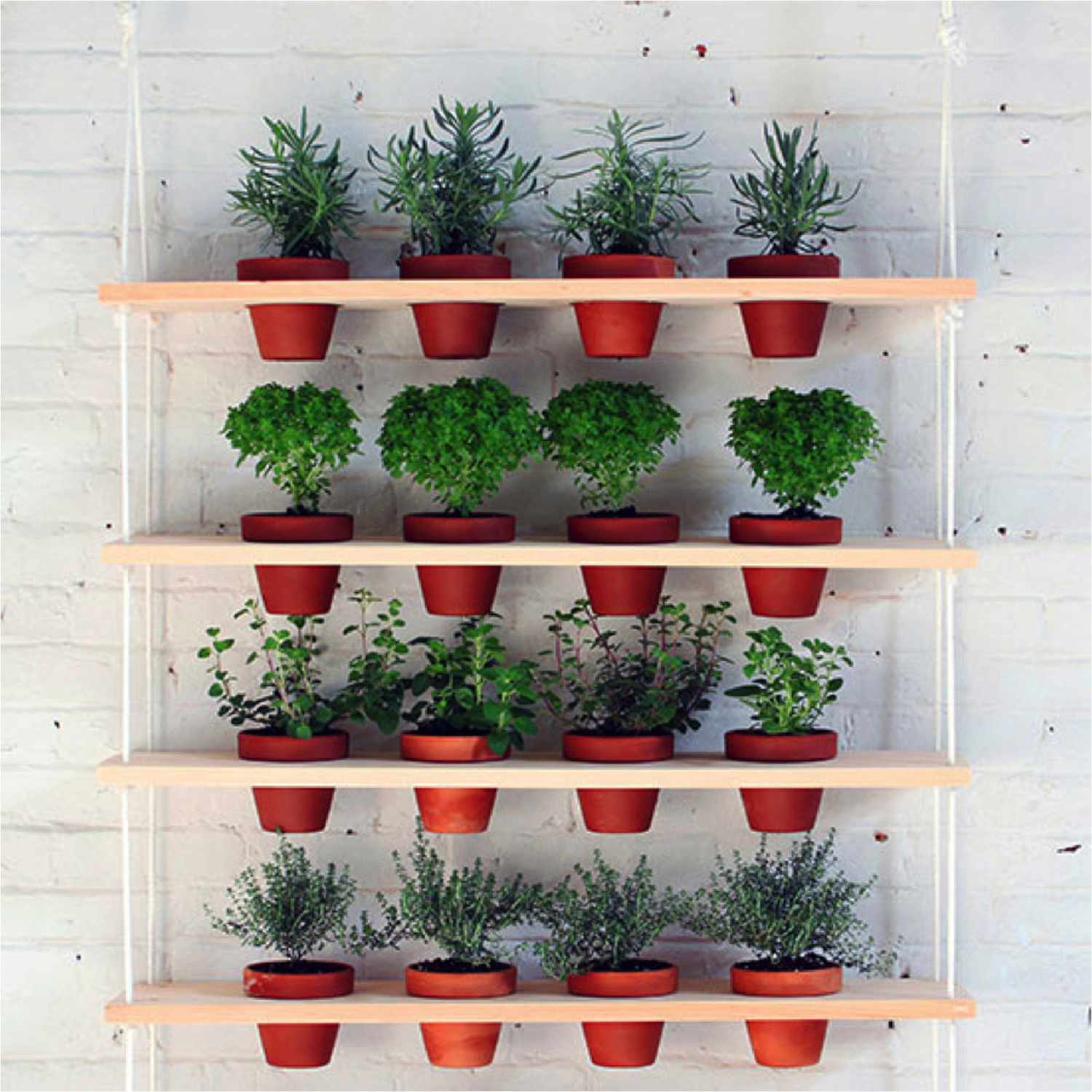
“To create a dense flower wall effect, the secret is to use a structure with closely spaced openings, like a wire mesh frame or a pocket planter system.”
When planting, don’t be shy. Pack the plants in much closer than you normally would in a garden bed. Use a mix of mounding plants (like impatiens or petunias) and trailing plants (like ivy or calibrachoa). The trailers will help cover any gaps in the structure as they grow, creating that seamless, lush wall of color and texture that makes this look so spectacular.
19. A Modern Vertical Garden with Angled Metal Troughs
The visual recipe for this modern planter is 60% industrial material + 40% organic texture. The galvanized metal of the frame and troughs provides a cool, clean, and slightly industrial vibe. This is softened and brought to life by the lush, varied foliage of the plants. The mix of fine grasses and broad, purple leaves creates a rich tapestry of texture. The warm wood slat wall in the background adds another layer of natural material, keeping the metal from feeling too cold or stark. A more rustic alternative can be seen in the stacked blue pots of Idea #3.
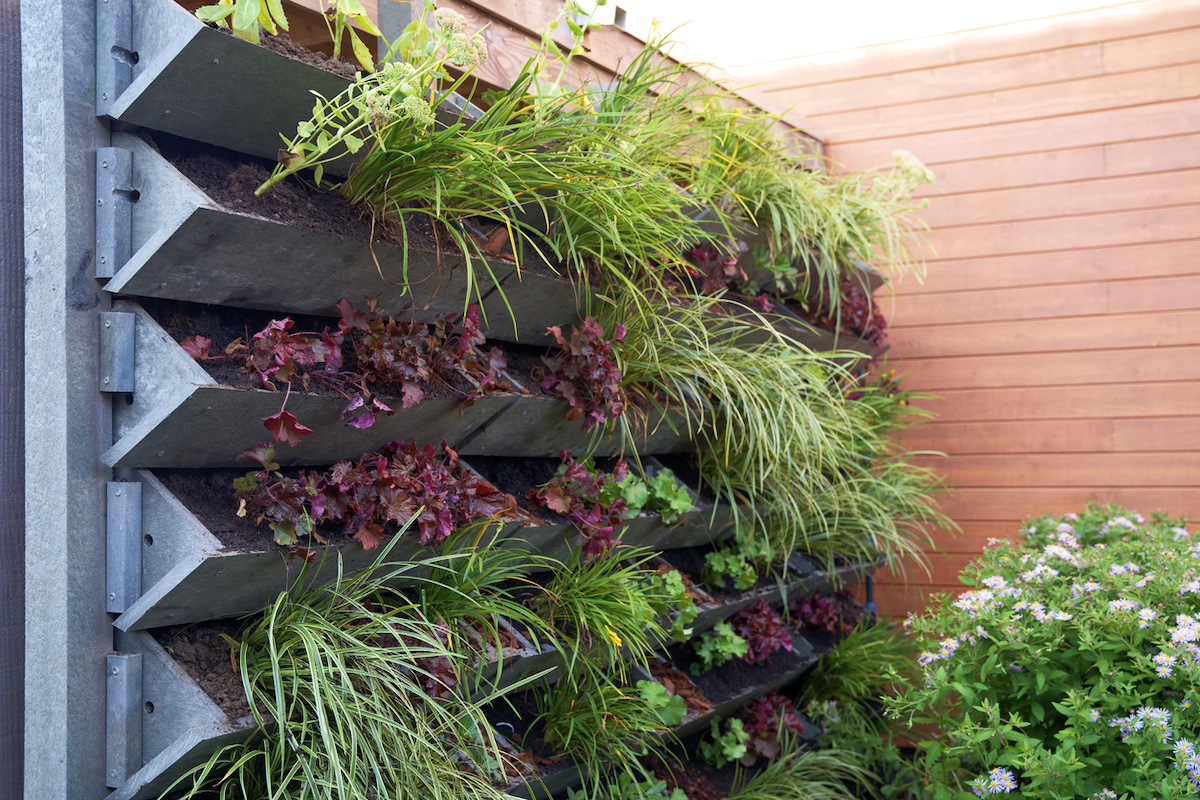
“This wall-mounted system is brilliant for extremely narrow spaces where even a small stand would be too bulky.”
It’s ideal for a side-return, a narrow balcony, or as a living art piece on a large exterior wall. The unit itself has virtually no floor footprint. You’ll need a sturdy wall to mount it on—brick, concrete, or a well-supported fence are ideal. Because of its height, it can make a low-ceilinged patio or balcony feel taller. It’s a professional-looking solution for anyone who wants a garden but has zero ground to work with.
20. Classic Terracotta Tower Bursting with Pink Petunias
This is a classic for a reason. The design works because of its simple, effective use of color and form. The warm, earthy orange of the terracotta pots is a perfect complement to the vibrant hot pink of the petunias—they are opposite each other on the color wheel, creating maximum visual pop. The classic, graduated stacking method creates a pleasing pyramid shape that feels stable and generous. Finally, the sheer abundance of flowers, spilling over the sides, gives it a feeling of lushness and joyful energy. Compare this to the playful, tilted version in Idea #16.
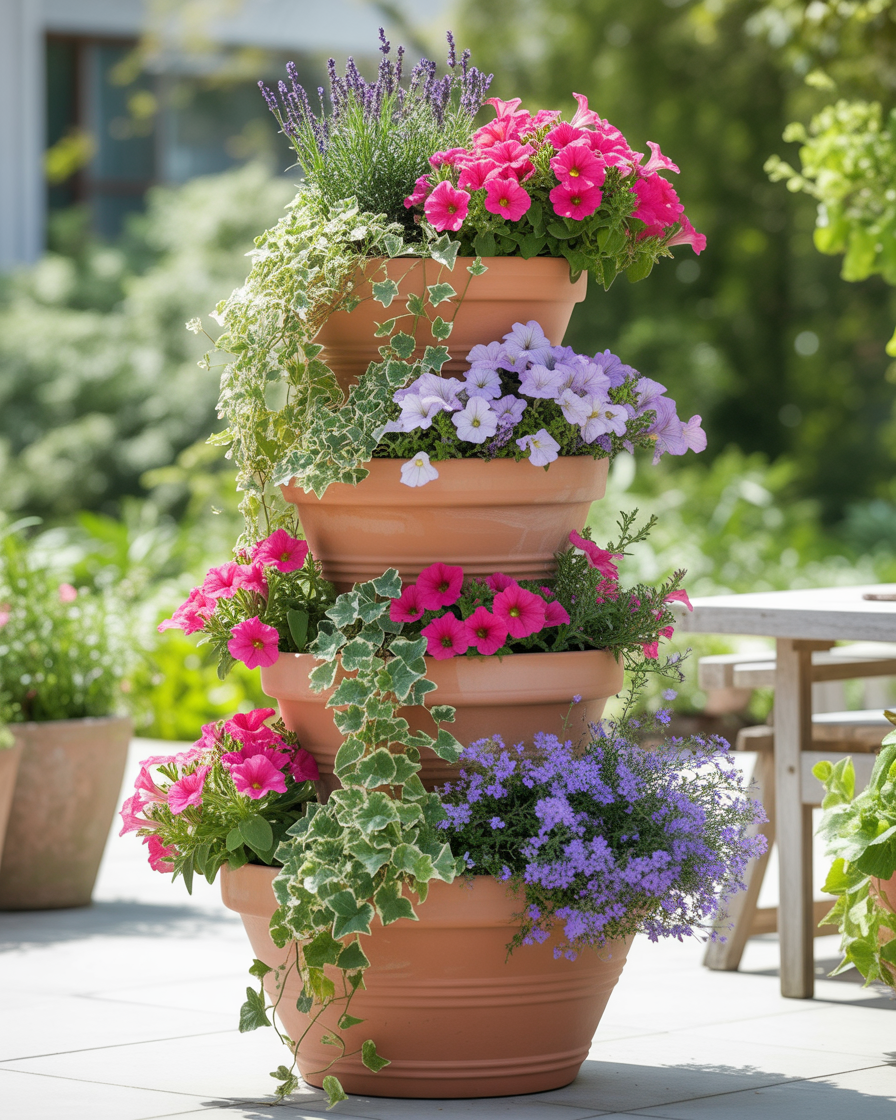
“You can get this lush, overflowing look on a shoestring budget.”
While a pre-made stacking planter kit can be convenient, you can create the same effect by simply buying four or five terracotta pots of graduated sizes. Place the largest on the bottom, fill it with soil, then place the next smallest pot on top of the soil, and so on. This method is cheaper and allows for more soil volume for healthier roots. Petunias and calibrachoa are inexpensive, fast-growing annuals that will provide that signature cascading look for just a few dollars per plant.
21. A ‘Small Space Big Harvest’ Strawberry Tower
Ready to grow your own strawberries? This tower is a fantastic way to do it, but check these things first.
- Sunlight: Do you have a spot that gets at least 6-8 hours of direct sun per day? Strawberries need sun to produce sweet fruit.
- Water Source: Is there a hose or watering can easily accessible? A tower this full will need frequent watering, especially on hot days.
- Variety: Are you buying the right type of strawberry plants? Look for ‘everbearing’ or ‘day-neutral’ varieties, which will produce fruit throughout the season, not just once in the spring.
- Pest Patrol: Do you have a plan for birds and squirrels who will love your berries as much as you do? Bird netting might be a wise investment.
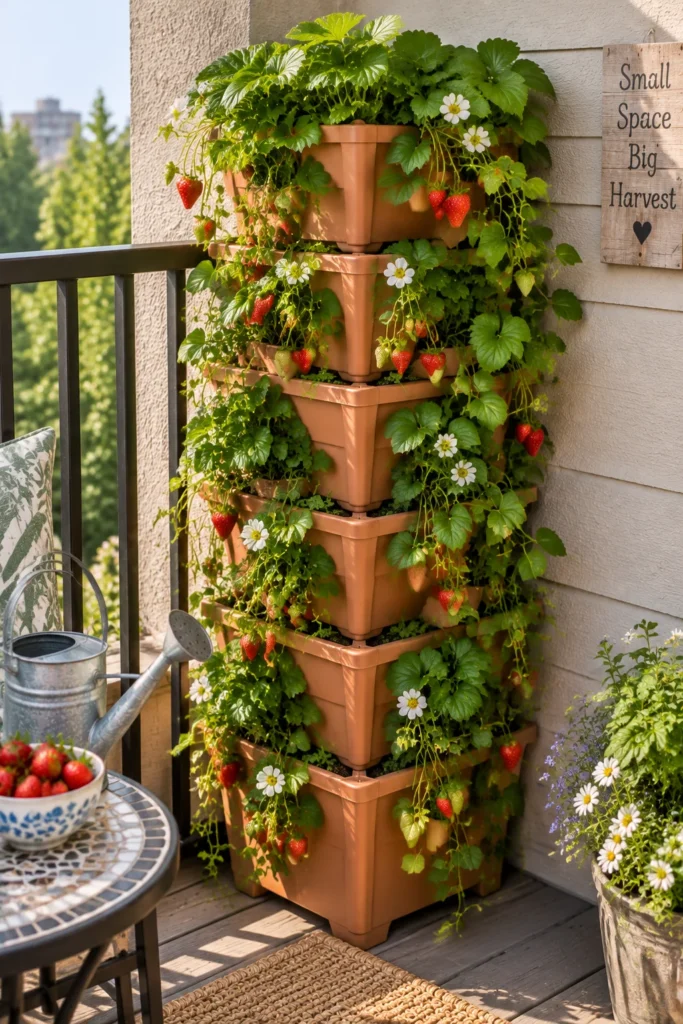
“Edible gardening in small spaces, or ‘foodscaping’, is more popular than ever.”
As people become more interested in where their food comes from, solutions like this strawberry tower have boomed in popularity on Pinterest and Instagram. It taps into a desire for self-sufficiency and freshness, even for those without a traditional backyard. The aesthetic has also evolved; it’s no longer just about function. The ‘Small Space Big Harvest’ sign shows that these productive gardens are now a point of pride and a key part of outdoor decor.
22. A Cascading Floral Display in Offset Beige Planters
An offset stack like this is visually interesting, but it can be less stable than a centrally stacked tower. The weight is not evenly distributed, which can be a problem in windy locations. If you’re attempting this DIY, it’s crucial to use a very sturdy internal support rod (like thick rebar) and to ensure the base is heavy and wide. Also, be aware that the plants on the underside of the ‘overhangs’ may get less rain and sunlight, so you might need to rotate the tower or give those sections a little extra attention and water to keep them looking full.
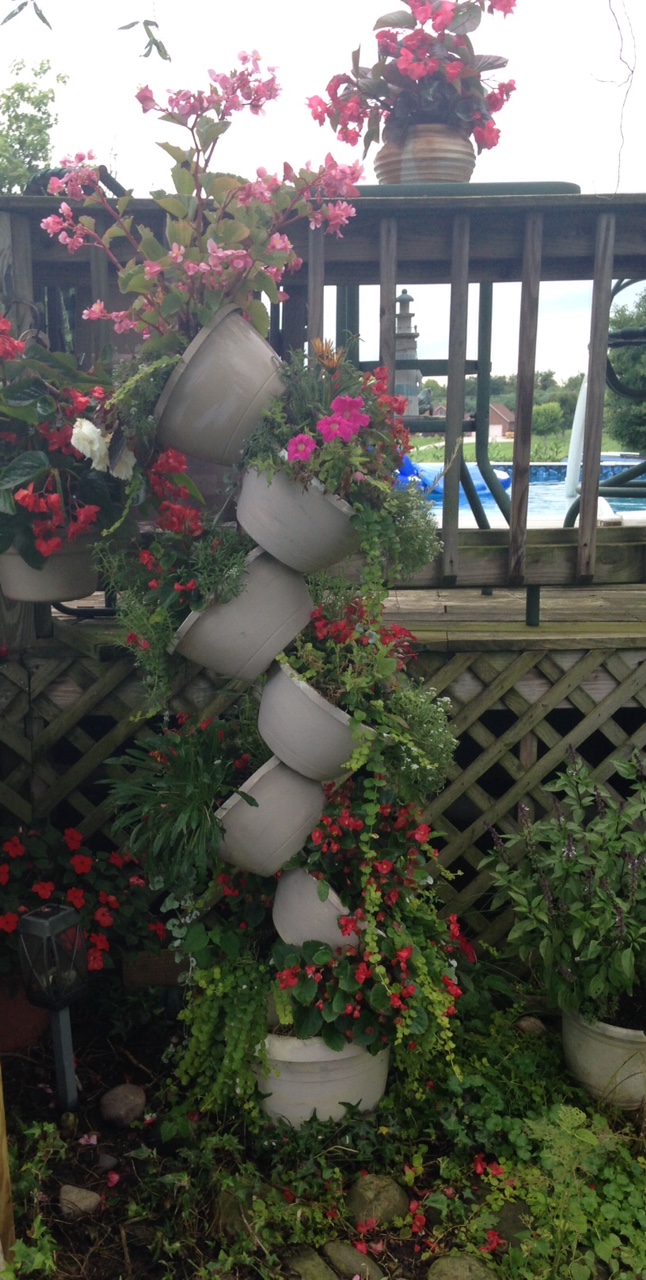
“This design’s formula is all about creating rhythm through offset repetition.”
It’s about 80% repeating form and 20% controlled chaos. The ‘repeating form’ is the beige planter, stacked over and over. But instead of a neat column, they are intentionally offset, creating a winding, almost dancing S-curve. The ‘controlled chaos’ comes from the flowers, which are allowed to spill out naturally, softening the hard edges of the pots. This combination of a repeating architectural element with wild, organic planting is what gives the tower its dynamic energy.
23. A Vibrant Garden Tower from Interconnected Green Pots
This modular system works because it brilliantly combines form and function. The clover-like shape of the interconnected pots isn’t just for looks; it creates multiple planting pockets at each level, allowing for a greater variety and density of plants than a simple round pot would. The bright green color of the plastic makes the entire structure read as a cohesive, plant-like object even before the flowers fully grow in. It’s a smart design that looks lush and full from day one because the container itself contributes to the overall green, botanical feel.
![stackable planter] 5/6/7 tier stack-able planter | 1 kit, 2 kits for strawberries, flowers, herbs, vegetables | vertical of vegetables and succulents | Shop Now For Limited-time Deals | Temu](https://quotableideas.com/wp-content/uploads/2026/09/stackable-planter-567-tier-stack-able-pl-23.webp)
“Plastic planters like this are lightweight and won’t crack from frost, which is a huge plus.”
However, the deep green color can absorb a lot of heat in direct, all-day sun. This can cause the soil to heat up and dry out very quickly, stressing the plant roots. In a hot climate, a lighter color planter might be a better choice, or you may need to place this tower in a location that gets some afternoon shade. Regular watering is non-negotiable, as the smaller individual pockets have less soil volume to hold moisture.
24. Elegant Dining Centerpiece with a Tall Gold Floral Stand
When creating a tall floral centerpiece for a dining table, the ‘negative space’ is just as important as the flowers themselves. The key is to keep the slender support rod completely clear at eye level, between roughly 12 and 30 inches from the tabletop. This elevates the floral arrangement so it floats above the table, allowing guests to see and talk to each other across the table without a wall of flowers in their faces. This thoughtful consideration for conversation flow is the mark of a truly professional and successful centerpiece design. This is a much more formal look than a rustic garden tower like Idea #3.
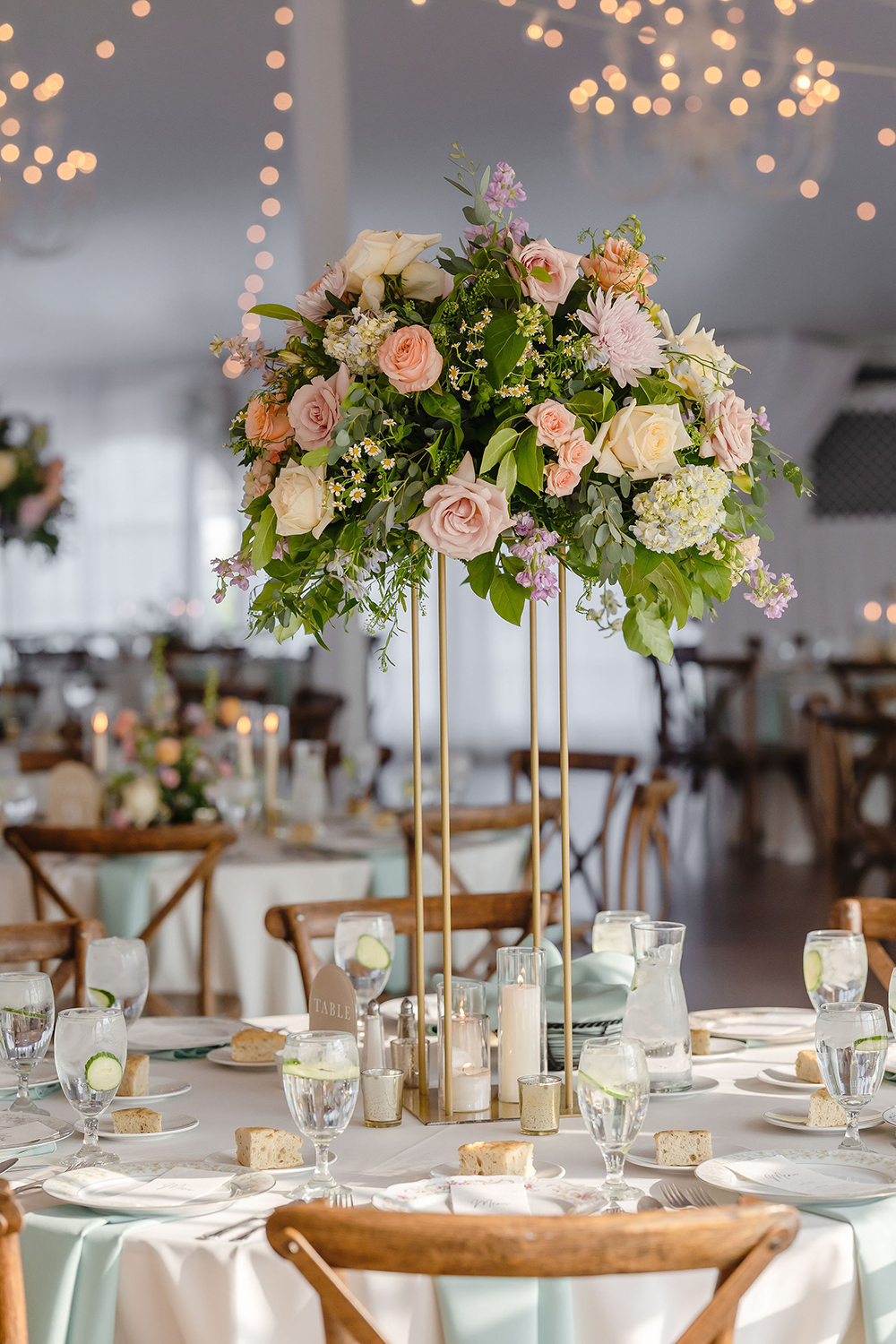
“The single most important element here is height.”
By lifting the main floral mass a few feet off the table, the arrangement achieves a sense of drama and grandeur that a low centerpiece simply cannot match. It creates a ‘canopy’ of flowers over the table, defining the space and making the event feel more significant and celebratory. Without the tall gold stand, this would just be a large, pretty bowl of flowers. With the stand, it becomes architectural and transformative, completely changing the atmosphere of the room.
25. Modern Geometric Stand with a Cloud of White Roses
The style math here is a beautiful exercise in contrast: 30% rigid geometry + 70% soft, organic forms. The tall, metallic stand is all clean lines, sharp angles, and hard surfaces. It has a distinctly modern, almost architectural feel. This is paired with an abundant, overflowing arrangement of soft white roses, hydrangeas, and trailing greenery. The tension between the strict geometry of the stand and the romantic chaos of the flowers is what creates such a visually stunning and contemporary look. It’s a perfect marriage of modern and classic.
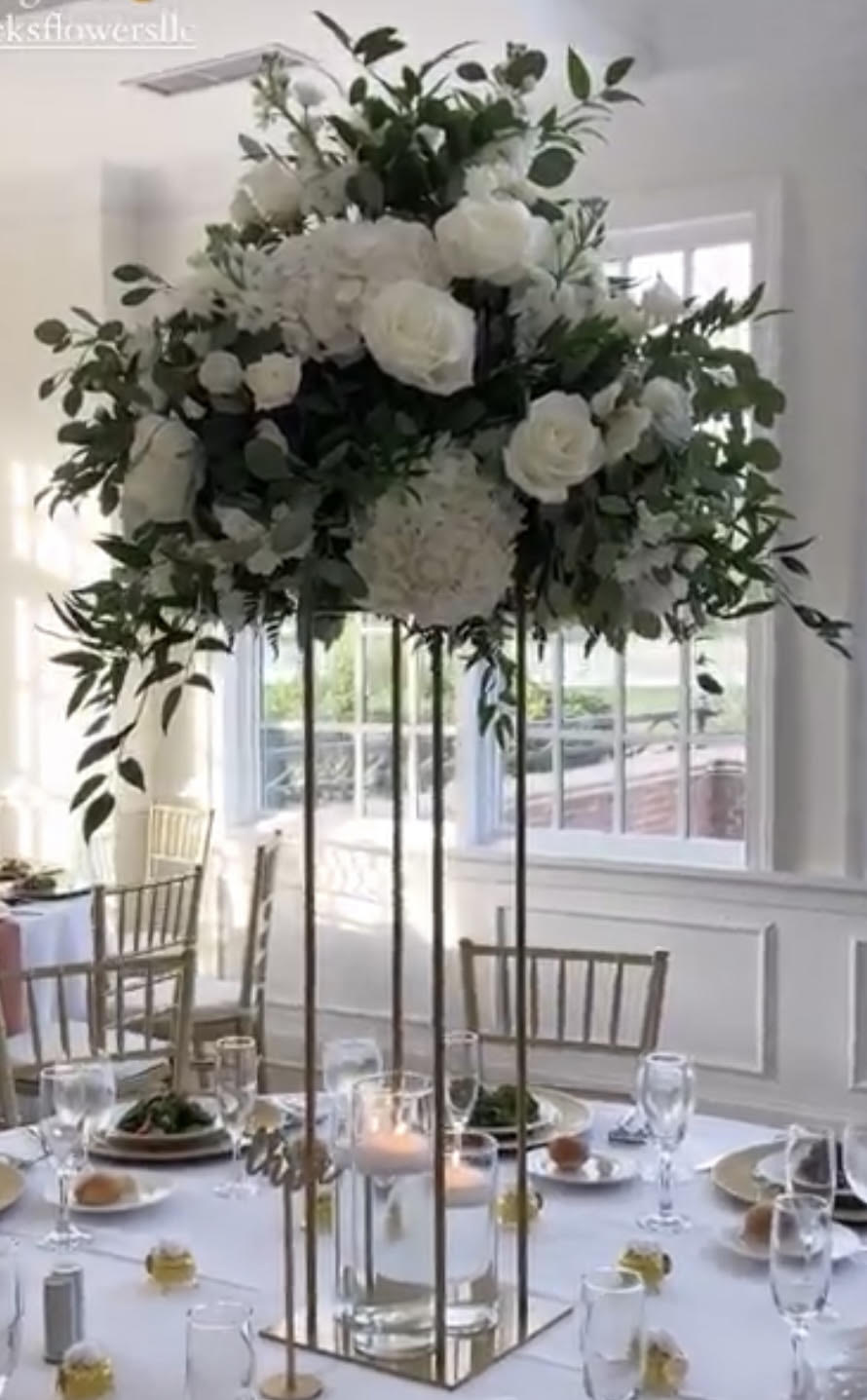
“This centerpiece works by playing with expectations of scale and mass.”
The stand itself is visually very light and airy—it’s mostly empty space defined by thin lines. In contrast, the floral arrangement at the top is dense, lush, and visually heavy. This creates a fascinating illusion of a heavy ‘cloud’ of flowers floating effortlessly on a barely-there structure. This dramatic play on visual weight is what makes the design feel so dynamic, sophisticated, and memorable. It commands attention without overwhelming the table.
26. Ethereal Romance with Clear Acrylic Floral Pillars
Clear acrylic, or lucite, is having a huge moment in event design. For years, the go-to was gold or silver metal stands, but acrylic offers a completely different vibe. It provides the necessary height and structure for a tall arrangement while being visually almost invisible. This creates a magical, ethereal effect, making the flowers appear as if they are floating in mid-air. It’s a modern, clean, and incredibly romantic look that feels very current and is all over high-end wedding and event inspiration boards right now.
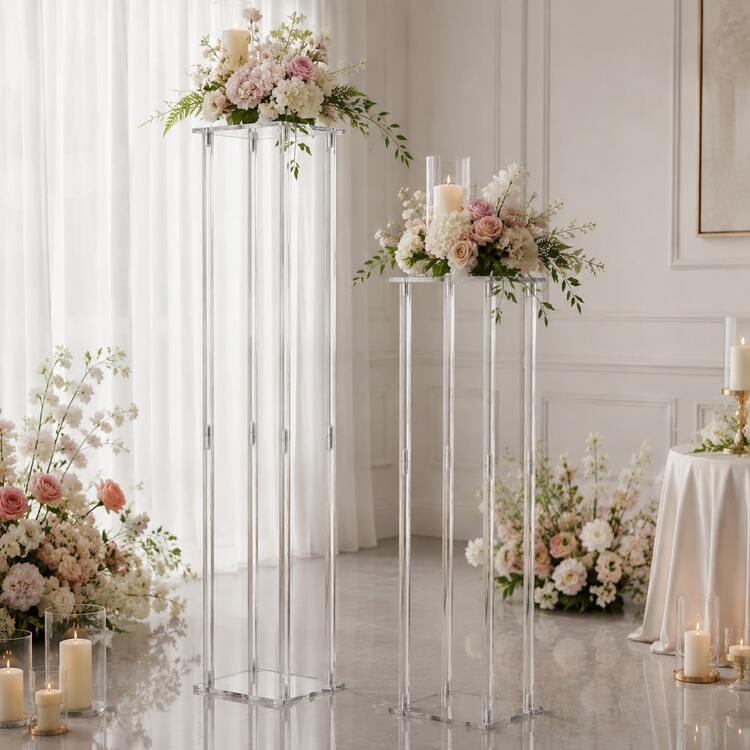
“Acrylic looks stunning, but it requires careful handling and cleaning.”
It scratches much more easily than metal or wood, so stands must be transported and stored with care, often in special padded bags. Fingerprints and smudges also show up very easily, so the pillars will need a thorough wipe-down with a microfiber cloth right before guests arrive to look their best. While the ‘floating flowers’ effect is gorgeous, the trade-off is a material that demands a bit more attention to detail to keep it looking pristine.
27. A Romantic Spherical Rose Arrangement on a Slender Pillar
To create a perfectly spherical or ‘pomander’ floral arrangement like this, the secret is to use a sphere of floral foam as your base. Soak the foam in water mixed with flower food until it’s fully saturated. Secure it to the top of your stand using floral clay or wire. Then, trim your flower stems to about 3-4 inches long and insert them into the foam, starting from the top and working your way down and around. Keep the stems short and the heads close to the foam to create that tight, dense, perfectly round shape. It’s a classic floral design technique.
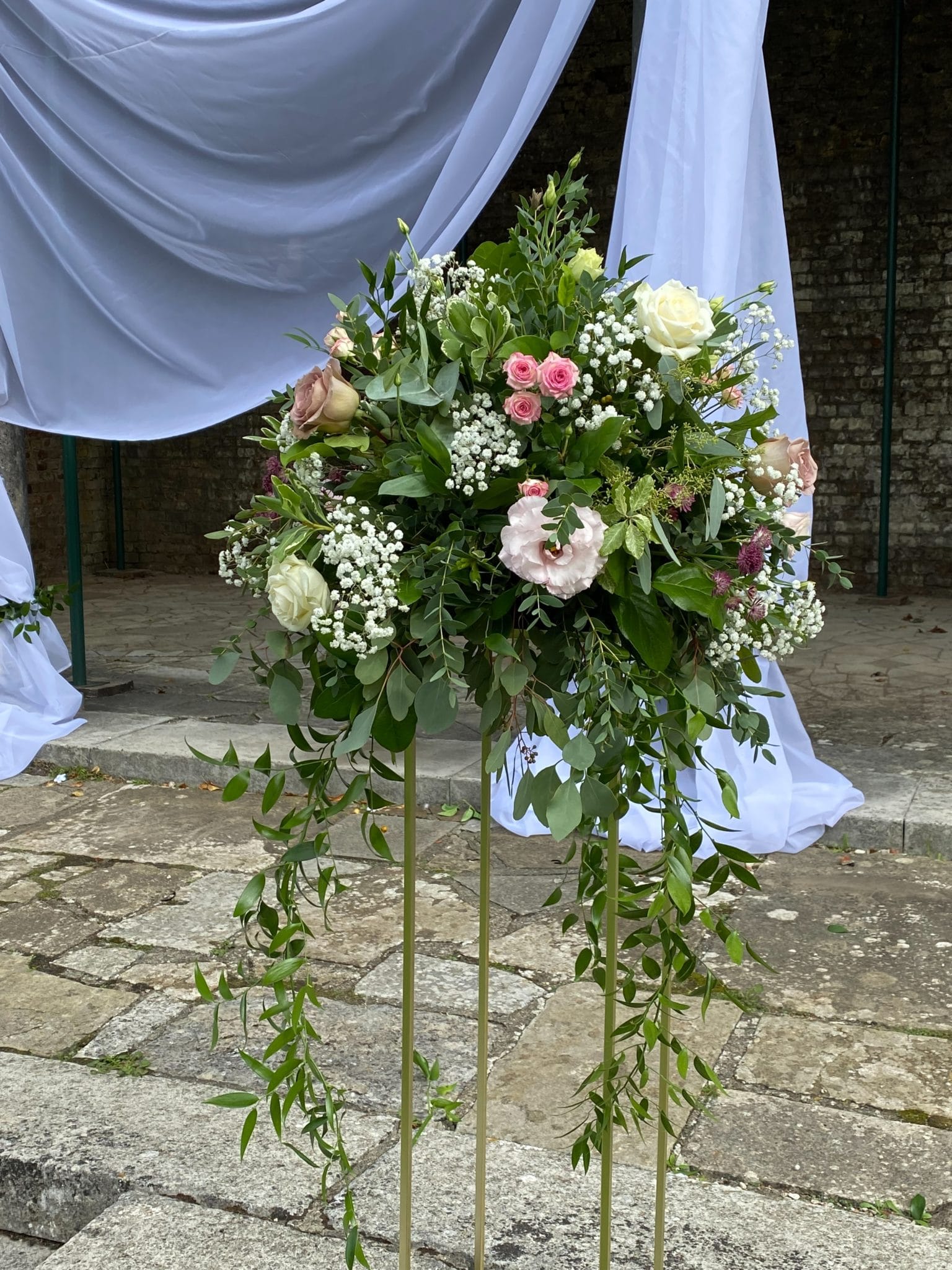
“This design’s success lies in its use of classic, elegant shapes.”
The composition is a study in pure geometry: the perfect sphere of the floral arrangement sits atop the long, clean line of the pillar stand. This combination of a circle and a line is elemental and deeply satisfying to the eye. The romanticism comes from the choice of flowers—soft pink and white roses—and the lushness of the arrangement, but the underlying structure is strong, simple, and timeless. The draped fabric adds softness and frames the composition beautifully.
28. Rustic Elegance with a White Wicker Pedestal Arrangement
The single element that defines this arrangement is the white wicker pedestal. If you placed the same floral arrangement in a glass vase or on a metal stand, it would have a completely different feel—more classic or more modern. The wicker introduces a crucial element of rustic, natural texture. It evokes a feeling of a country garden, a seaside cottage, or a relaxed outdoor gathering. It’s the pedestal that bridges the gap between the formal elegance of the white roses and the wildness of the woodland setting, creating a perfect ‘rustic chic’ harmony.
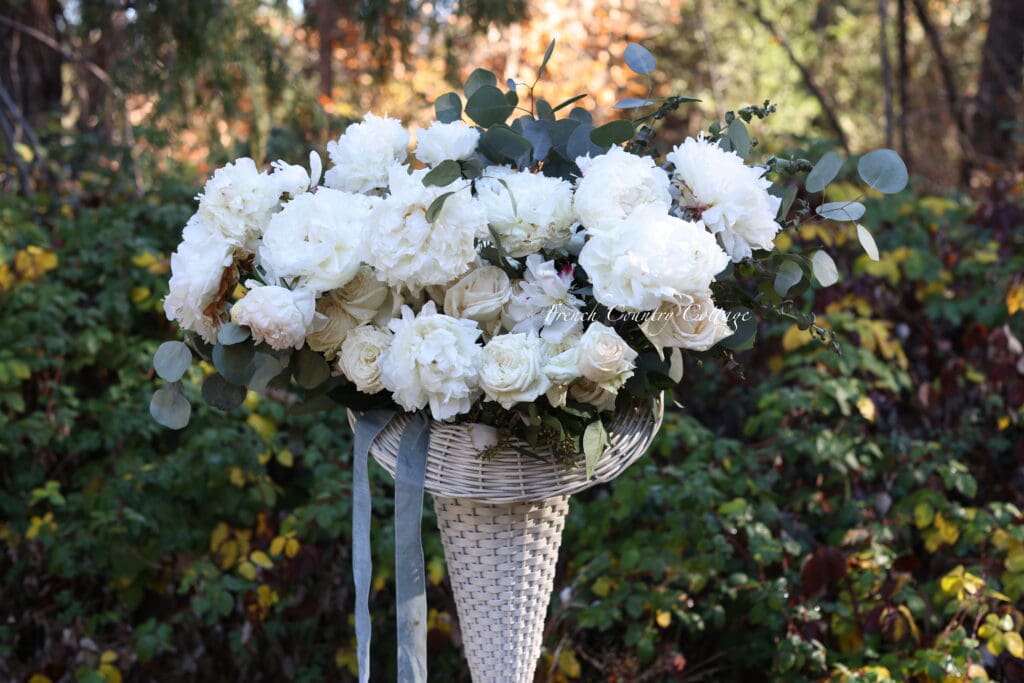
“A large-scale arrangement on a tall pedestal like this is designed to be a major focal point.”
It works best as an ‘altar’ piece for an outdoor wedding, as a statement piece flanking the entrance to an event, or in a large foyer with high ceilings. The overall height is likely 5-6 feet, so it needs space to breathe. In a standard room with 8-foot ceilings, it would feel overwhelming. This is a piece of floral architecture meant for grand spaces and special occasions where you want to make a significant visual impact.
Let Your Garden Creativity Bloom Upwards
Whether you’re starting with a single terracotta pot or building an elaborate floral wall, the beauty of a flower tower is its ability to bring so much life into a small space. Don’t be afraid to experiment with different plants, colors, and structures to create something that’s uniquely you. The perfect vertical garden is waiting to be planted. Ready to get started? Head over to Pinterest to find even more inspiration and save your favorite ideas from this article.