Still scrolling through DIY bird bath ideas without knowing where to start? You’re not alone. We combed through hundreds of options across IKEA, Home Depot, and Etsy to bring you only the looks worth copying, from $10 thrift store finds to $300 sculptural fountains. Inside, you’ll find 33 curated ideas spanning rustic stone, mosaic tile, repurposed pottery, and minimalist modern styles. In 2026, wildlife-friendly gardening is bigger than ever—adding a water feature is the fastest way to invite more birds into your yard. Pin this guide for later—your future self will thank you when it’s time to actually do this.
1. Animal-Foot Stone Basin Nestled in Lavender Brick Path
Here’s the visual formula: 70% rustic stone texture, 20% deep garden green, 10% vibrant purple lavender. The low profile keeps the water accessible to ground-feeding birds like robins and sparrows. Swap the lavender for creeping thyme or dianthus if you need something more drought-tolerant, but keep the stone animal feet—they add that whimsical cottage-garden charm without feeling kitschy.
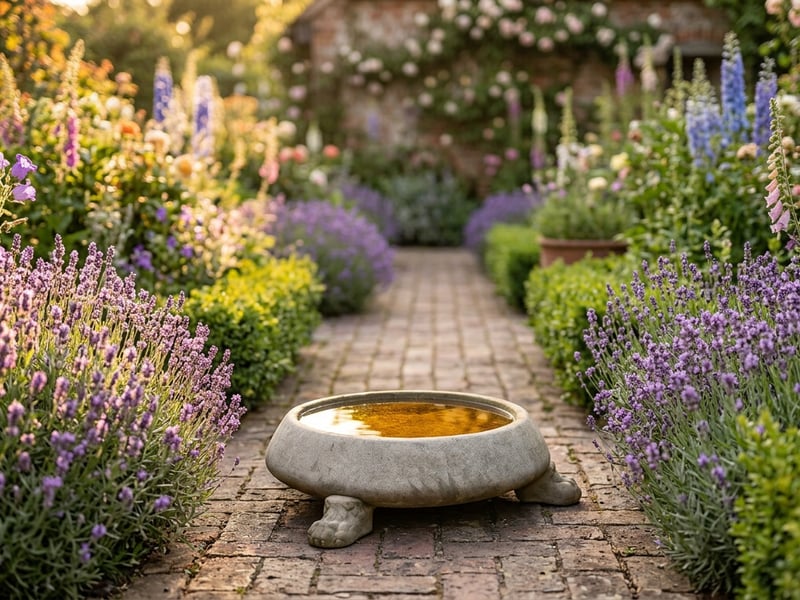
“What makes this work is the contrast between the hard stone basin and the soft, flowering borders.”
The brick pathway frames the basin as a deliberate stopping point, not an afterthought. The shallow depth is perfect for small birds—aim for 1.5 to 2 inches of water to prevent drowning. The animal feet raise the bowl just enough to keep leaves out while staying low enough to look grounded.
2. Galvanized Corrugated Basin for Sparrow Splashing Ground-Level
For a ground-level galvanized basin, place it at least 10 feet from dense shrubs where cats can hide. The corrugated texture gives birds a non-slip grip, which is crucial for active bathers. If you’re using a repurposed wash tub, drill a 1/4-inch drainage hole 1 inch below the rim to prevent overflow during heavy rain. Refresh water every two days to keep mosquitoes away.
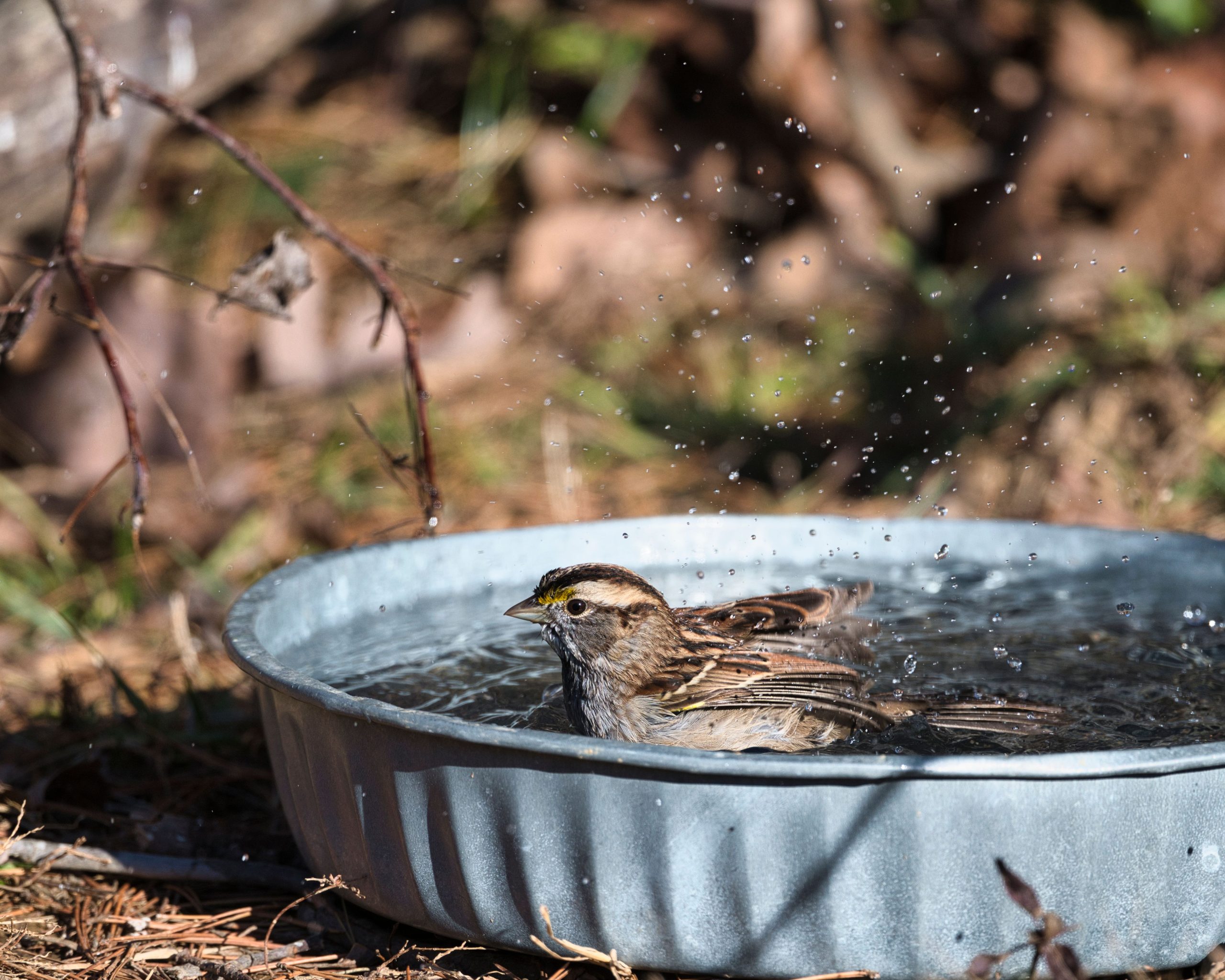
“Galvanized metal heats up fast in full sun.”
On a 90-degree day, the water can get uncomfortably warm for birds, so position it in dappled shade or under a tree. Also, pine needles and debris will collect faster than you think—plan on a quick rinse every other day during fall. If you have hard water, mineral spots will dull the finish, but that’s part of the rustic charm.
3. Cobalt Blue Mosaic Tile Bowl with Wire Bird Sculpture
A hand-mosaicked birdbath like this can run $80-$150 at boutiques, but you can recreate it for under $30. Grab a $5 terracotta saucer from Home Depot, a $10 bag of glass tile scraps from Etsy, and a tube of waterproof tile adhesive plus white grout. Stick with cobalt, turquoise, and white for that Mediterranean punch. Add a wire bird sculpture from the craft store for $8 and place it on an old white-painted plant stand.
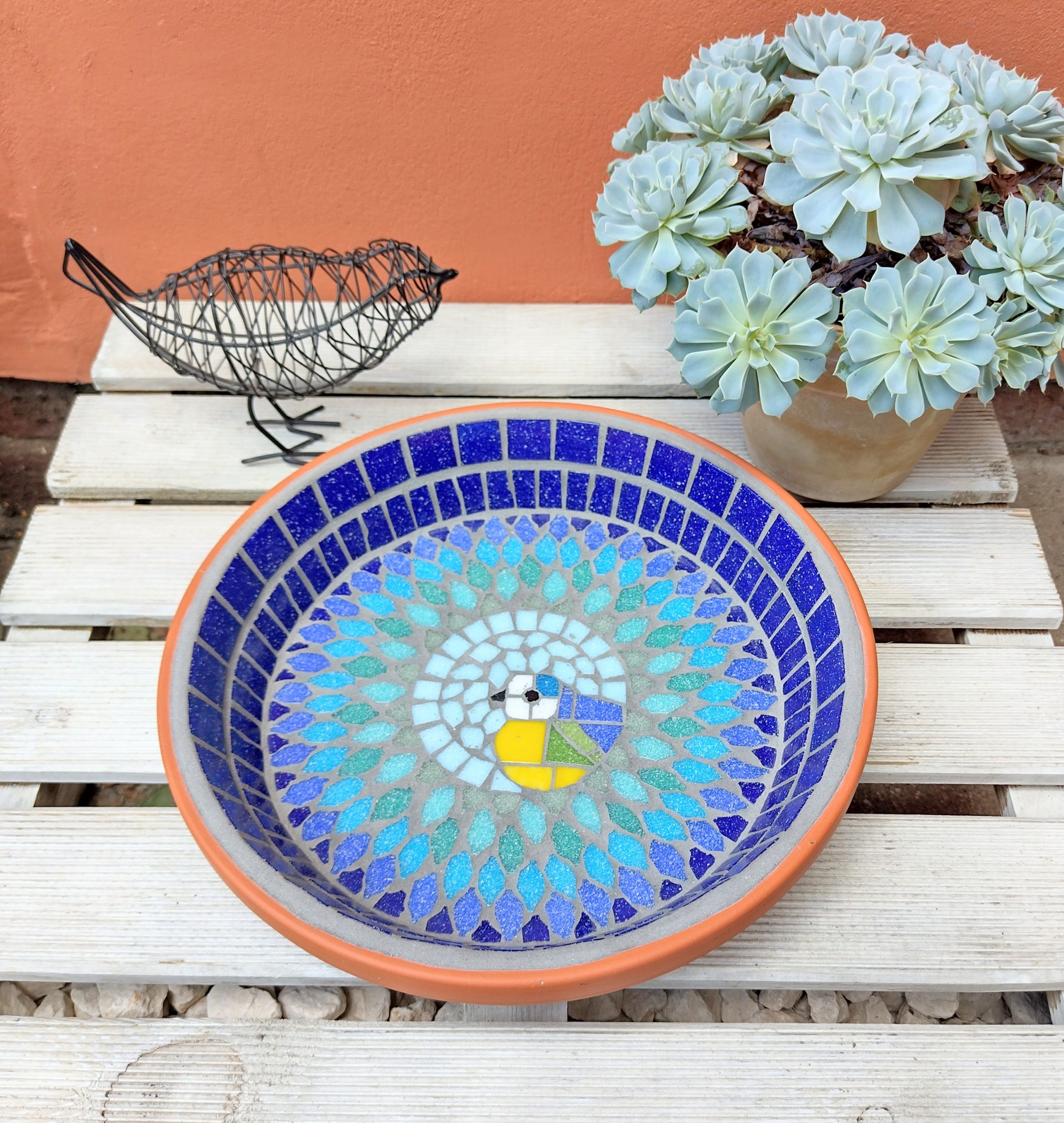
“Mosaic bird baths are having a resurgence because they blend folk-art charm with the maximalism trend that’s all over Pinterest in 2026.”
People want their gardens to feel collected, not catalog-ordered. The central bird motif is a nod to vintage Italian tile work, and the white slatted wood base gives it that coastal-grandma-meets-cottage-core vibe that won’t go away anytime soon.
4. Carved Leaf Rim Stone Birdbath Among White Daisies
To age a new concrete birdbath to look like this weathered stone, mix one part yogurt with two parts water and brush it over the surface, then set it outside in a shady spot. Within two weeks, moss and lichen will start growing. For the daisy border, plant Shasta daisies 12 inches apart around the base, leaving a 2-foot ring of bare soil until they fill in.
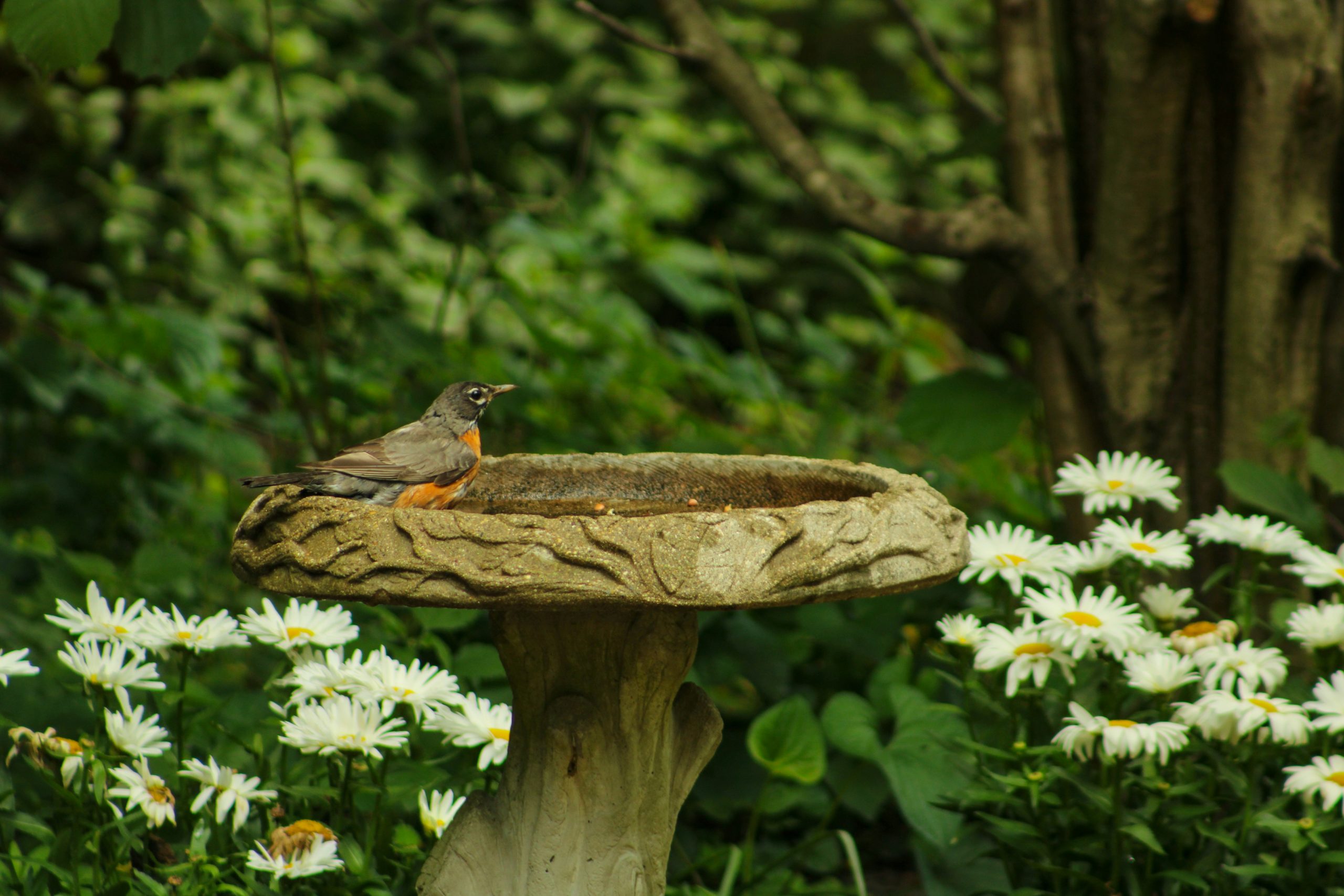
“This birdbath needs a footprint of at least 3 feet by 3 feet to let the daisies and stones breathe.”
The basin height of about 28 inches works for most garden beds, but if your space is tighter than 5 square feet, consider a smaller version like the low basin in Idea #7.
5. Geometric Glass Mosaic Terra Cotta Saucer on River Rocks
The white grout is the unsung hero here. Without those crisp bright lines between the cobalt, purple, and green glass pieces, the whole thing would read as a muddy collage. The grout is what turns random shards into a deliberate geometric pattern. Protect it with a thin coat of outdoor sealant so it doesn’t yellow after the first season.
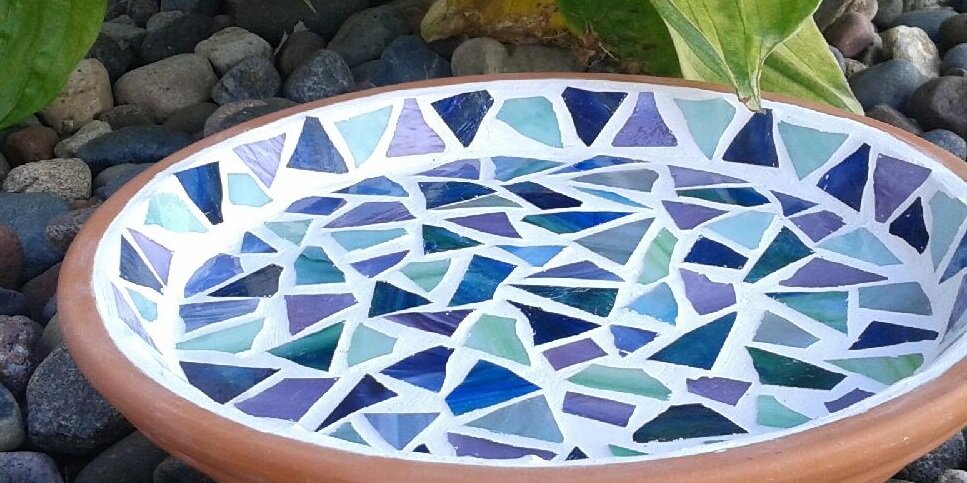
“Glass mosaic pieces can pop off with freeze-thaw cycles if you live in a cold climate.”
Bring the saucer inside for winter or store it in a shed. The river rocks underneath are low-maintenance but will collect debris; blast them with a hose every couple weeks. Expect to re-seal the grout every two years to keep water from seeping behind the tiles.
6. Golden Scrollwork Rim Birdbath with Perched Figurines
This look is 80% metallic shine, 15% ornate detailing, 5% whimsy from the figurines. To replicate, start with a gold spray-painted metal basin, add wire scrollwork around the rim, and perch a few tiny bird statues. The formula works because the gold reflects sunlight and catches the eye from across the yard. You can swap gold for copper or bronze without losing the elegance.
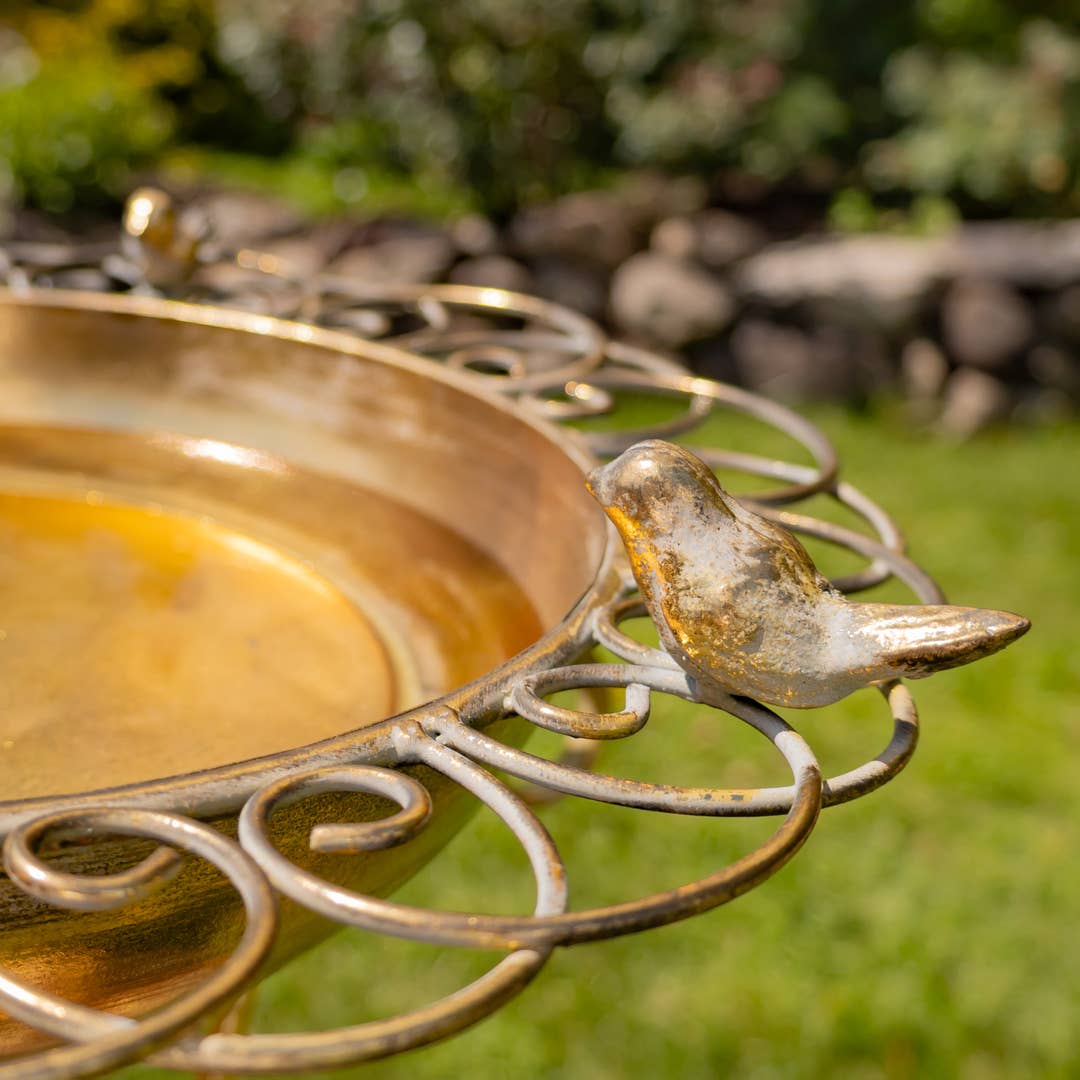
“80% metallic shine15% ornate scrollwork5% playful figurines”
- 80% metallic shine
- 15% ornate scrollwork
- 5% playful figurines
The scrollwork creates vertical interest that draws the eye upward, making a simple basin feel like a garden sculpture. The figurines break the hard metallic edge with a touch of humor. The shallow water reflects the gold tones, doubling the visual warmth. This bird bath works best against a green hedge or dark foliage background so the gold pops.
7. Blue-Green Ceramic Dish on Flat Stone with Floating Red Bloom
Place a flat stone under any ceramic dish to prevent it from sinking into soil and to stop ants from crawling in. The stone also heats up slowly, keeping the water cooler longer. Add a single floating red flower—like a geranium bloom or a small plastic one—to help birds gauge water depth. That pop of red is a visual cue for them, not just decoration.
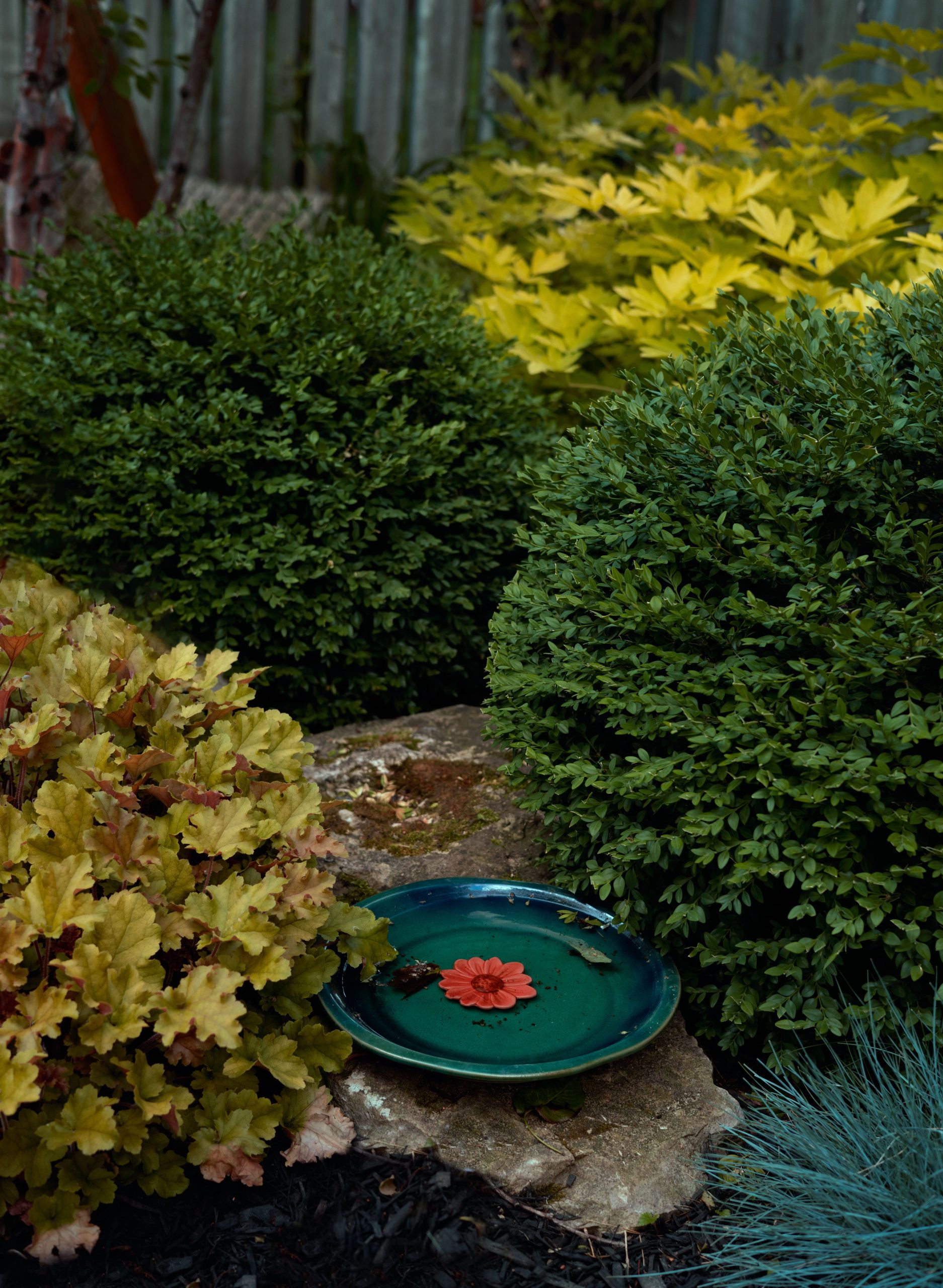
“Ceramic glazed dishes can become slippery for birds.”
If you notice them struggling to perch, add a few small pebbles in the center for traction. The red flower floating around might scare skittish species at first; give it a week and they’ll ignore it. Also, the glossy finish will show water spots quickly, so don’t obsess over weekly scrubbing—just rinse and refill.
8. Blue and Teal Mosaic Bowl on Wrought Iron Scrollwork Stand
Wrought iron stands with scrollwork can cost $60+ at garden centers. Instead, hit Facebook Marketplace for an old plant stand and spray-paint it matte black, then top it with a $15 blue-and-teal mosaic bowl from a thrift store. You’ll get that vintage European garden look for under $40 total.
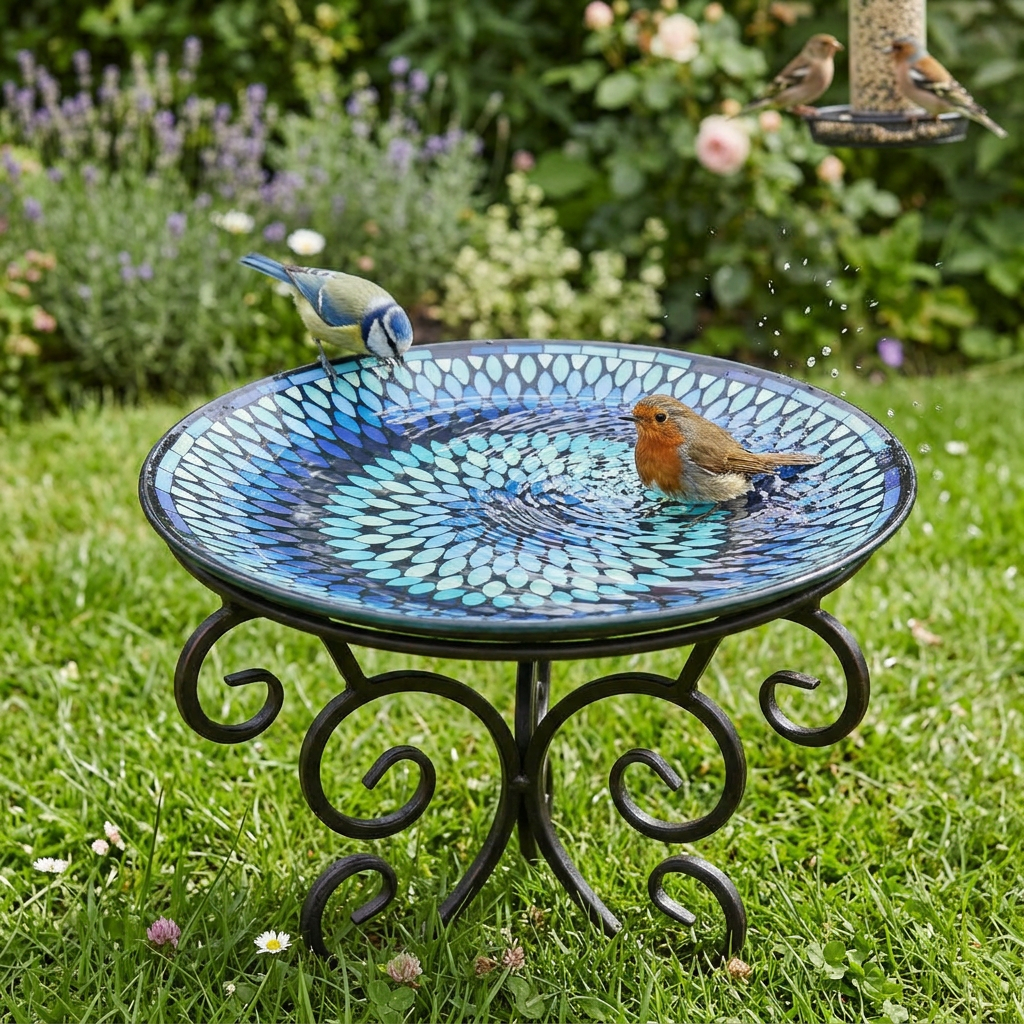
“This combination of blue mosaic and dark iron is a direct descendant of French and Italian courtyard style.”
It’s popular because it feels both romantic and low-maintenance. The iron ages gracefully, developing a rust patina that only adds character, and the blue tiles mimic the color of water even when the basin is dry.
9. Slender Black Folding Stand for Blue Mosaic Bowl
To build a simple folding metal stand like this, use three 1/2-inch metal rods cut to 24 inches. Weld or bolt them in an X-pattern at the center, then bend the tops into U-shapes to hold the bowl. Total cost under $20. Paint with rust-inhibiting spray paint. It takes about an hour and folds flat for winter storage.
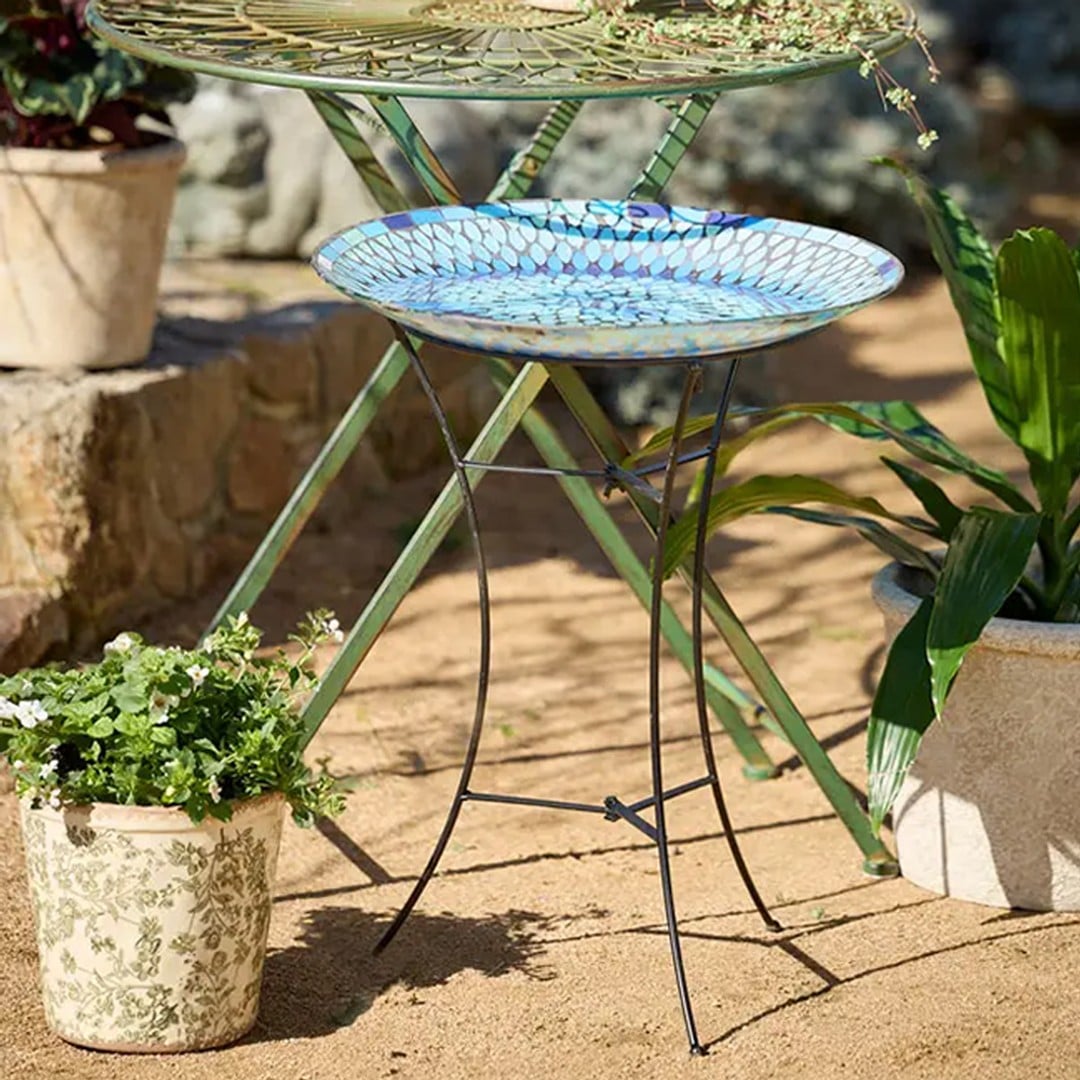
“A folding stand like this is ideal for small patios or balconies because it has a footprint of just 18 inches square.”
It works best where the bowl can be at least 24 inches off the ground to deter cats. Compare with the heavier wrought iron stand in Idea #8 if you need something more permanent.
10. Mandala Glass Bowl on Black Folding Metal Stand
The hand-painted mandala pattern is what elevates this from a simple glass bowl to a focal point. That detailed blue, gold, and pink design adds a layer of artistry that draws the eye even before you notice the water. Without it, the black stand would look stark and the bowl would disappear. Protect it with a clear outdoor sealant to keep the colors from fading.
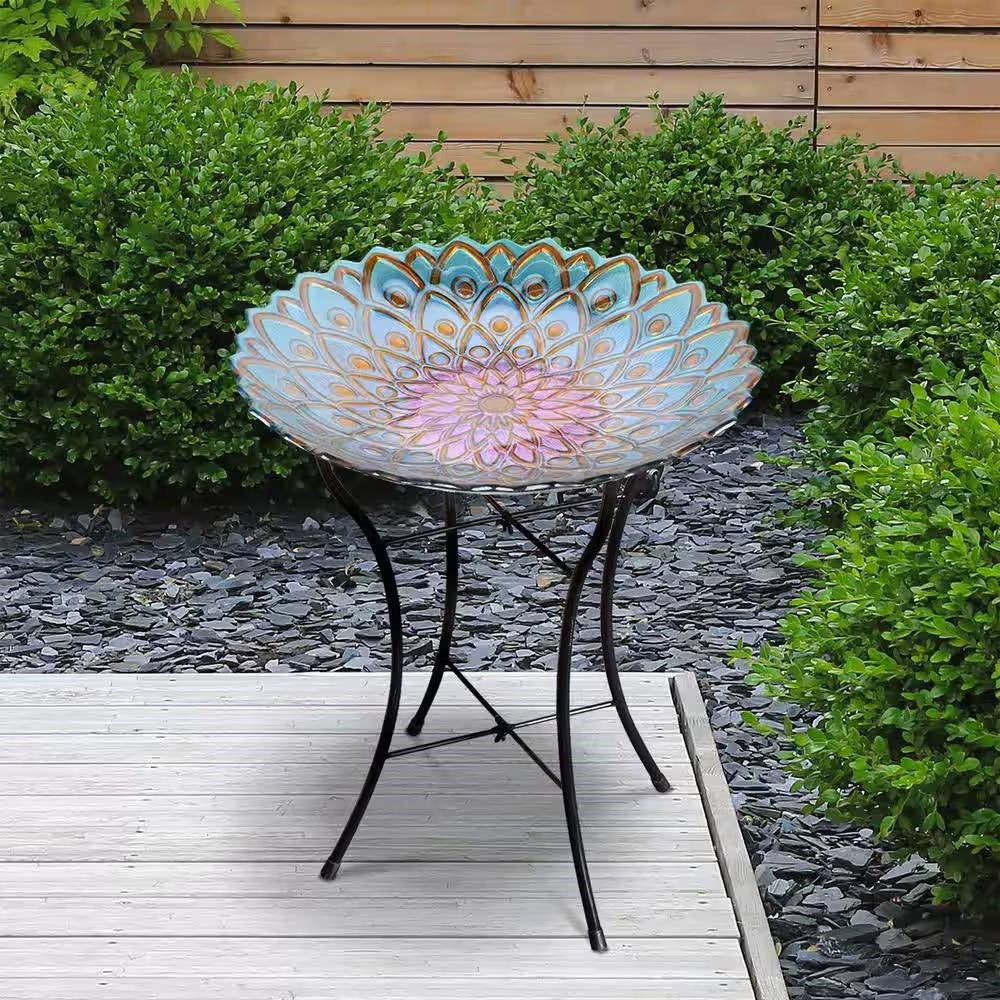
“Decorative glass bowls are more fragile than stone or metal.”
Birds won’t break it, but a dropped branch or a strong wind might. Position it against a wall or fence to reduce knock-over risk. The painted pattern can fade after two summers in direct sun, so move it to partial shade or reapply a UV-blocking clear coat annually.
11. Modern Grey Shallow Bowl on Rectangular Stone Pedestal by Pond
This is 90% negative space and 10% material. The grey stone and shallow bowl keep everything calm, letting the pond and foliage do the talking. To recreate, focus on one neutral color family and let natural textures vary. It’s the opposite of mosaic—less is more, especially when water features are nearby.
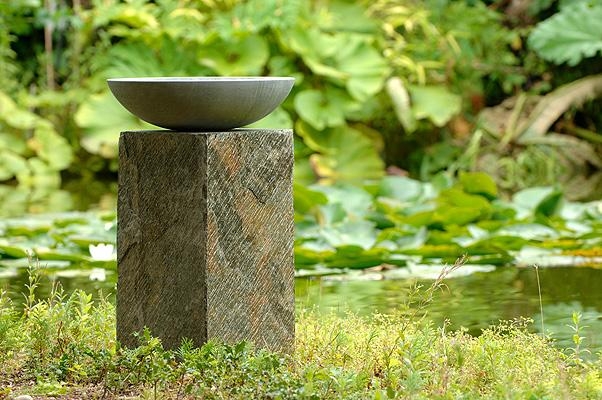
“The rectangular pedestal breaks the typical round silhouette, giving the eye a rest from all the curves in the garden.”
The shallow bowl (1 inch deep) is perfect for songbirds and also doubles as a butterfly puddling station. Placing it next to a pond creates a layered water source—birds will hop between the two.
12. Tapered Stone Pedestal Birdbath with Relief Carvings and Daffodils
When using a carved stone birdbath, set the bowl at 30 inches high—that’s the sweet spot for most songbirds and deters ground predators. The relief carvings will collect algae; mix one part white vinegar with four parts water and scrub with a soft brush every two weeks. Don’t use harsh chemicals, as they’ll etch the stone.
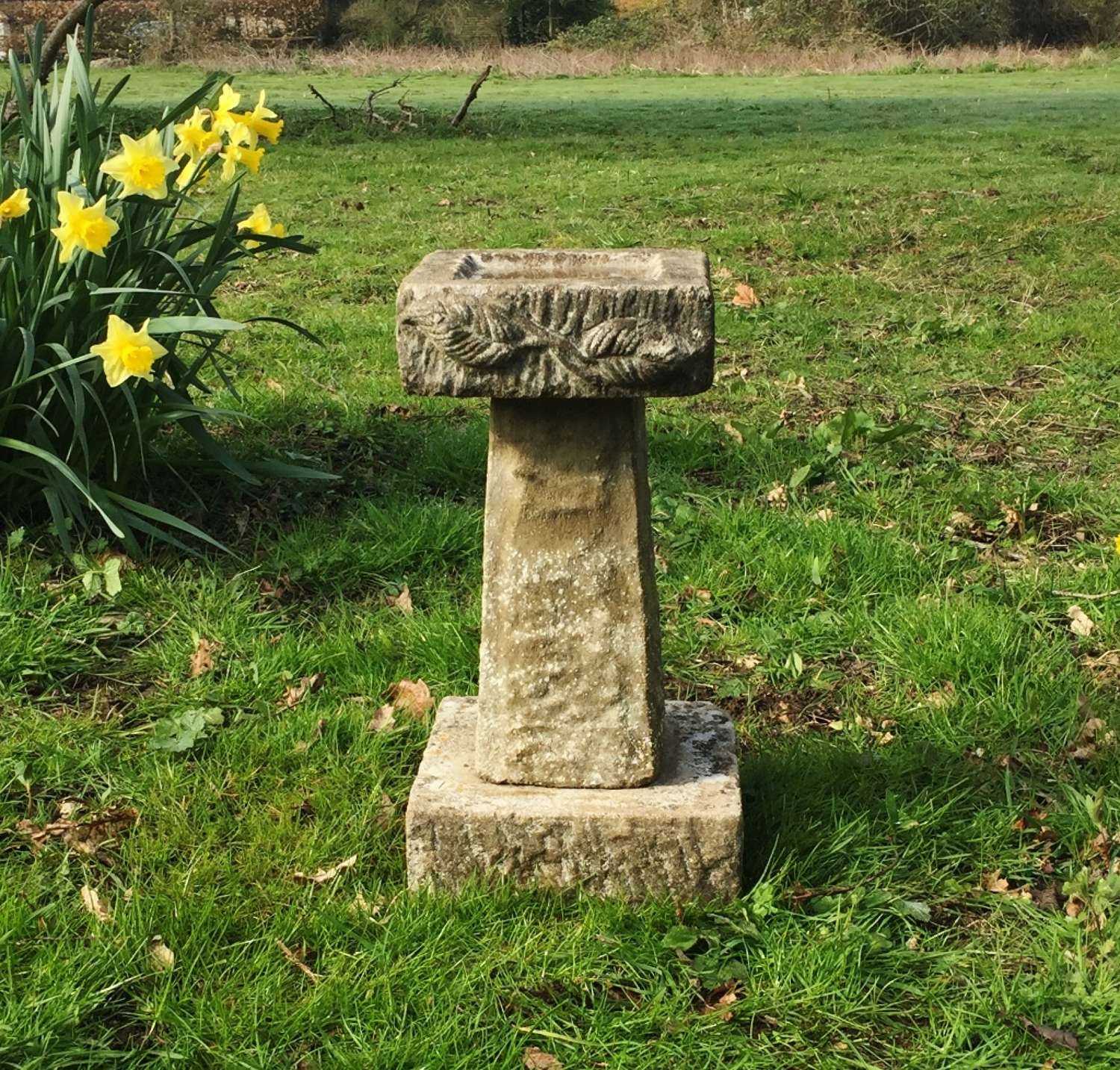
“A solid stone pedestal like this is essentially permanent—moving it later is a two-person job.”
Make sure you love the placement before setting it. The daffodils are ephemeral, so plan for something to take their place in summer, like daylilies or salvia. Also, the square base can be a tripping hazard in mowed lawns.
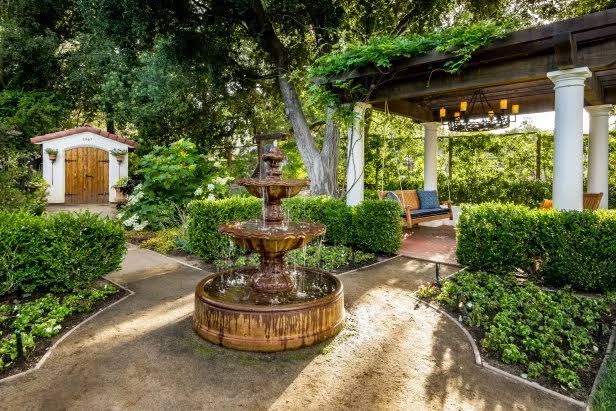
13. Multi-Tiered Terracotta Fountain Birdbath with Splashing Sparrows
Multi-tier terracotta fountains can cost $200+ if you buy them pre-made. Instead, stack three different-sized terracotta pots and saucers from IKEA or a hardware store, total around $50. Drill a hole in the center, add a small submersible pump, and run the tubing up through the pots. The birds get moving water, which they adore, and you save a bundle.
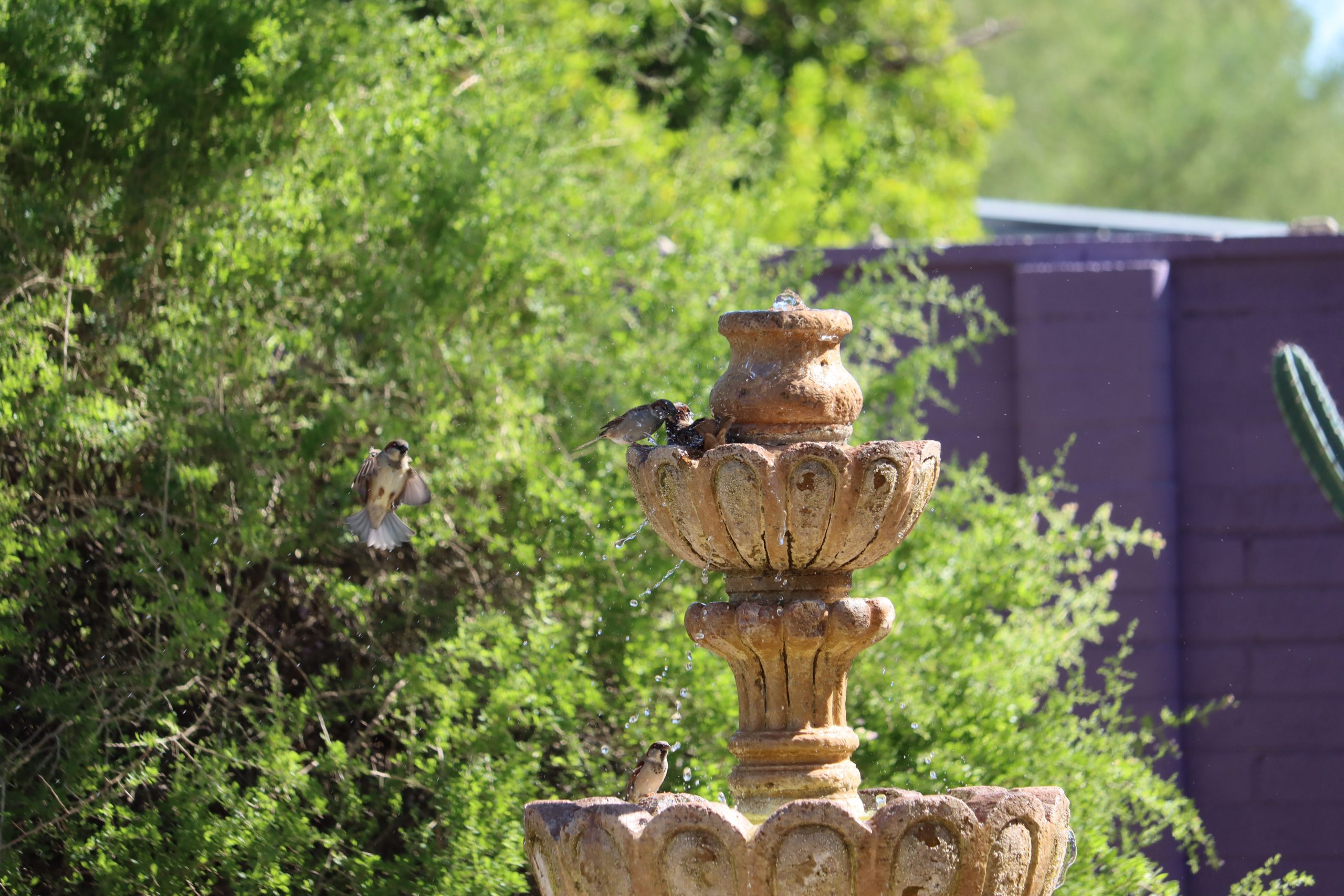
“Moving water is the biggest bird bath trend of the decade.”
The sound of splashing attracts birds from much farther away than still water, and it keeps mosquitoes from breeding. Terracotta’s warm orange against green foliage is a classic combination that’s stayed relevant because it echoes Tuscan and Spanish garden styles. Adding a purple wall behind it, like in the photo, makes the whole scene pop.
14. Scalloped Stone Basin on Sculpted Pedestal with Dynamic Splash
To get that dramatic splash effect, set your birdbath at 32 inches high and keep water just under the rim. Birds bathe more vigorously in deeper water, so 2.5 inches is ideal. Add a few medium-sized stones near the edge to create perching spots. Then, use a camera with a fast shutter speed to capture the action.
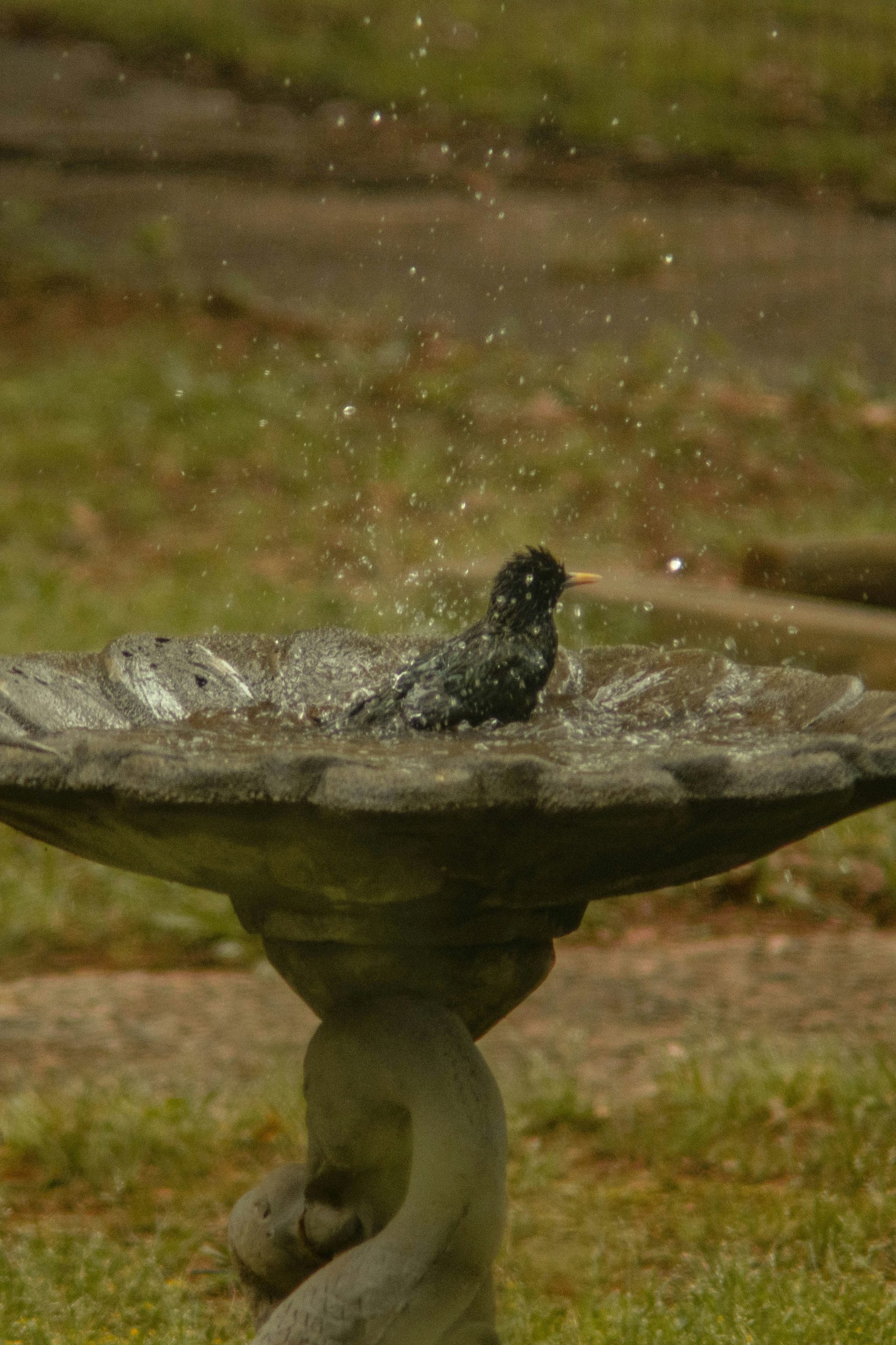
“A sculpted pedestal birdbath needs a circle of at least 4 feet diameter of open space so birds have a clear flight path.”
If your garden is narrow, opt for a wall-mounted or hanging version like Idea #17 instead. The height also matters—too tall and small birds won’t use it; too low and cats will.
15. Classic Grey Pedestal Fountain with Pineapple Finial
The pineapple finial is the star. Without that sculpted crowning piece, this would be just another grey stone pedestal. The pineapple symbolizes hospitality and instantly elevates the whole structure from utilitarian to ornamental. It also directs the water stream into a pleasing arc, adding sound and movement.
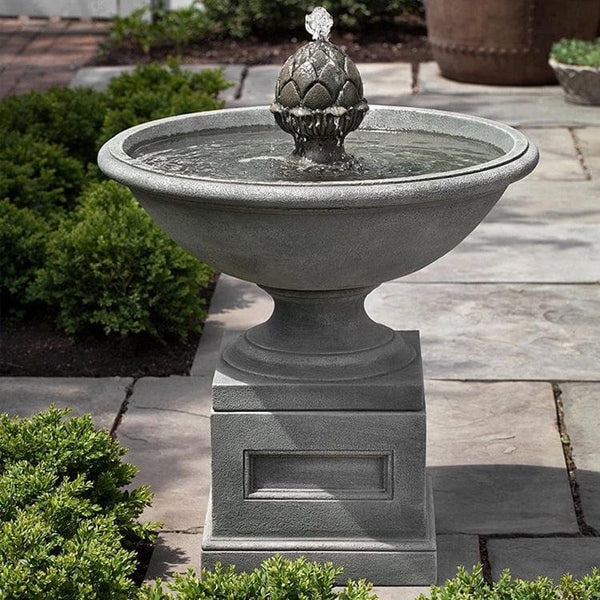
“Fountains require more upkeep than static baths—the pump needs cleaning every month, and the moving water evaporates faster, so top it off every two days in summer.”
The stone will develop mineral deposits around the spout; use a pumice stone to remove limescale gently. In winter, drain the pump and bring it indoors to prevent cracking.
16. Aggregate Stone Birdbath with Bubbling Water and Cardinal
This look is 60% raw stone texture, 30% dark green foliage, 10% vibrant birdlife. The aggregate stone’s speckled gray and charcoal provides a neutral canvas that makes the red cardinal absolutely pop. To recreate, use a concrete birdbath with exposed pebbles, then surround it with dense evergreens like boxwood or yew.
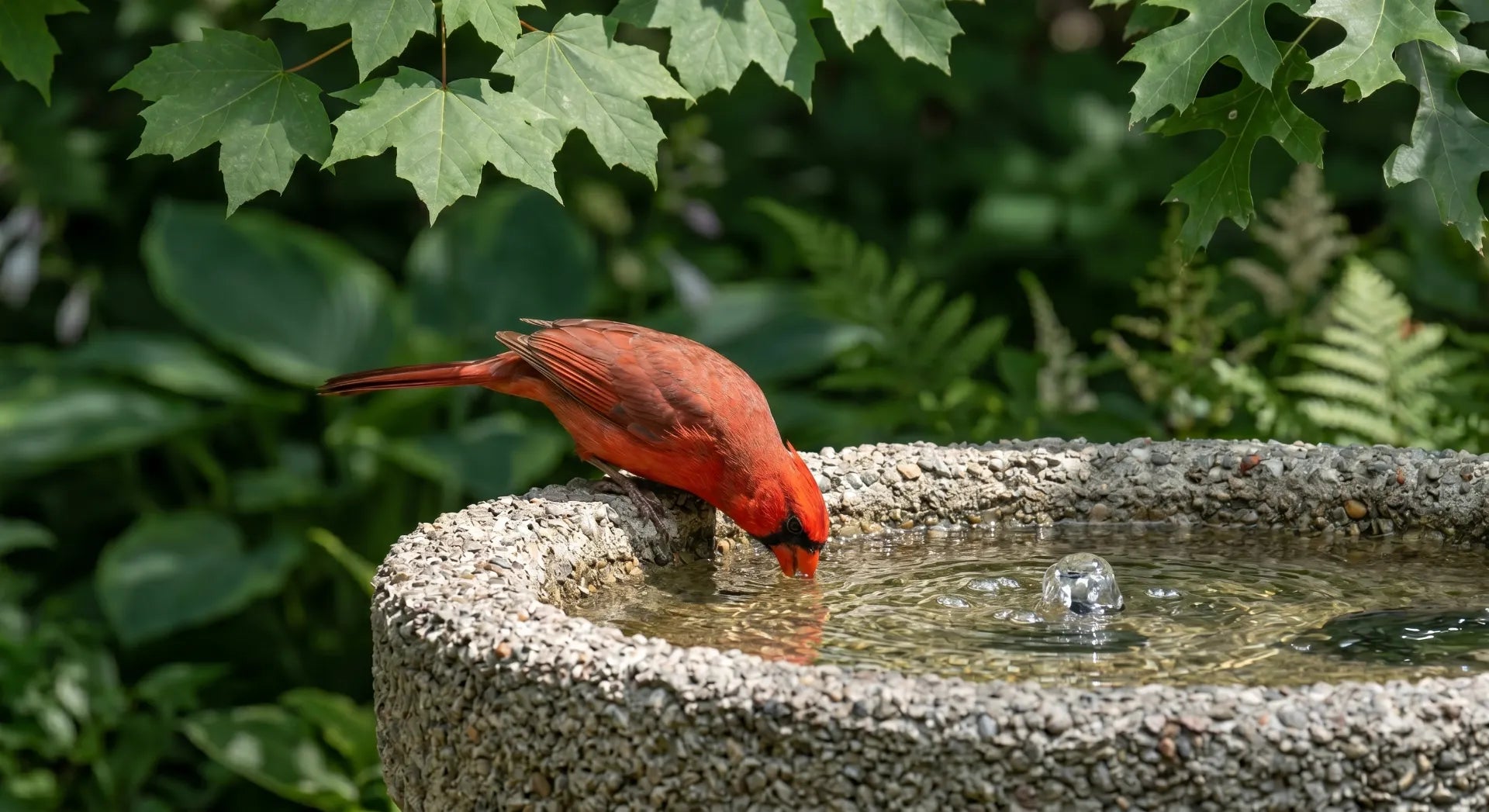
“60% raw stone texture30% dark green foliage10% vibrant birdlife”
- 60% raw stone texture
- 30% dark green foliage
- 10% vibrant birdlife
The central bubbler is a genius addition. Not only does it attract birds with its soft gurgle, but it also breaks the flat surface of the water, creating movement that catches light. The cardinal perched on the rim becomes the focal point because everything else is monochromatic. It’s a masterclass in using neutrals to highlight living color.
17. Hanging Blue Mosaic Glass Bowl from Tree Branch Chains
Hanging bird baths should sway less than 2 inches in the wind, or birds will avoid them. Use three chains of equal length (18 inches is standard) and attach to a sturdy branch at least 2 inches thick. The S-hook should be rated for 10+ pounds. Keep the bowl at 5 to 6 feet off the ground to deter squirrels.
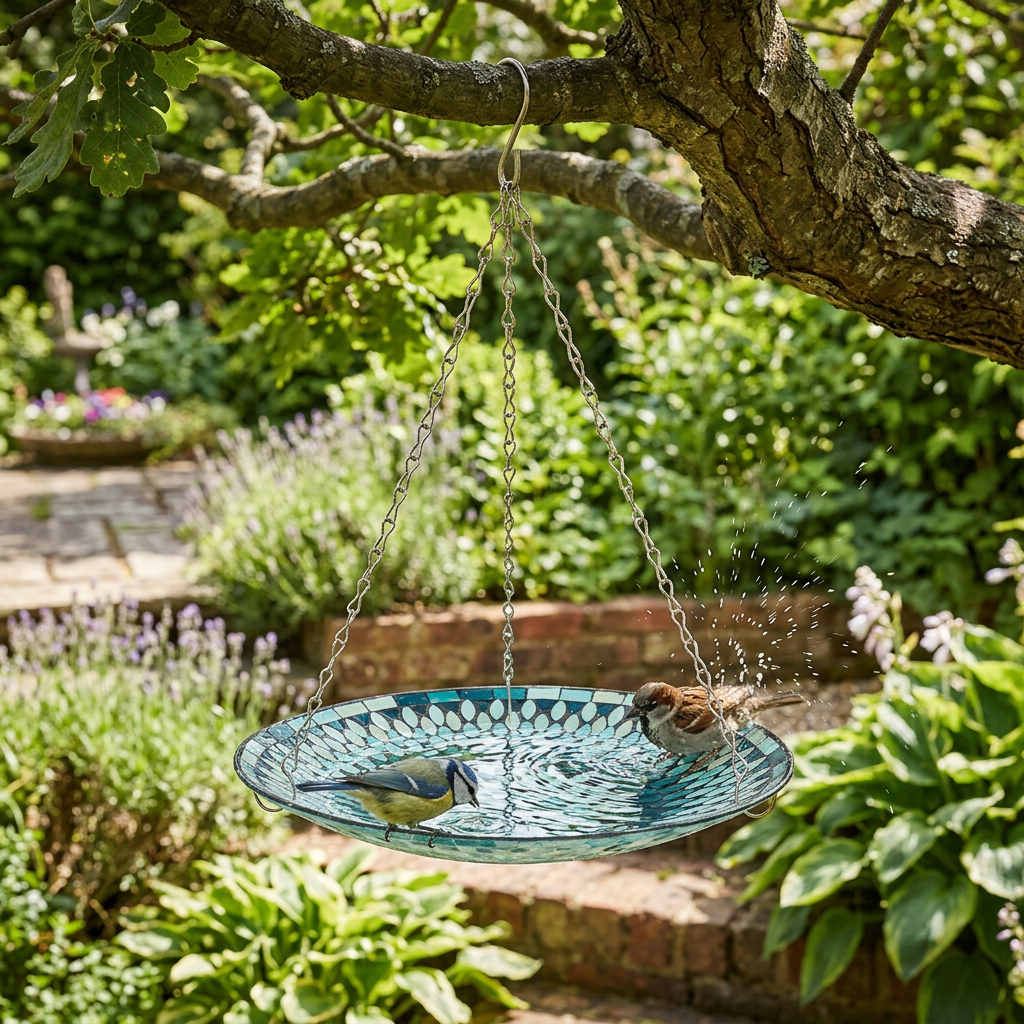
“A hanging bath is great for small gardens because it uses zero ground space, but it’s not predator-proof.”
Raccoons can climb, and squirrels will drink from it constantly. Also, the swaying water can spill during storms, so choose a bowl with a raised rim. The chains will rust over time but that’s fine—just check the links yearly for weakening.
18. Terra Cotta Saucer on Natural Tree Stump
This is the cheapest bird bath you can make—a $6 terra cotta saucer from any garden center and a free tree stump. If you don’t have a stump, use a large log or an upturned bucket disguised with bark. Total cost under $10. Just make sure the saucer is at least 12 inches in diameter to hold enough water.
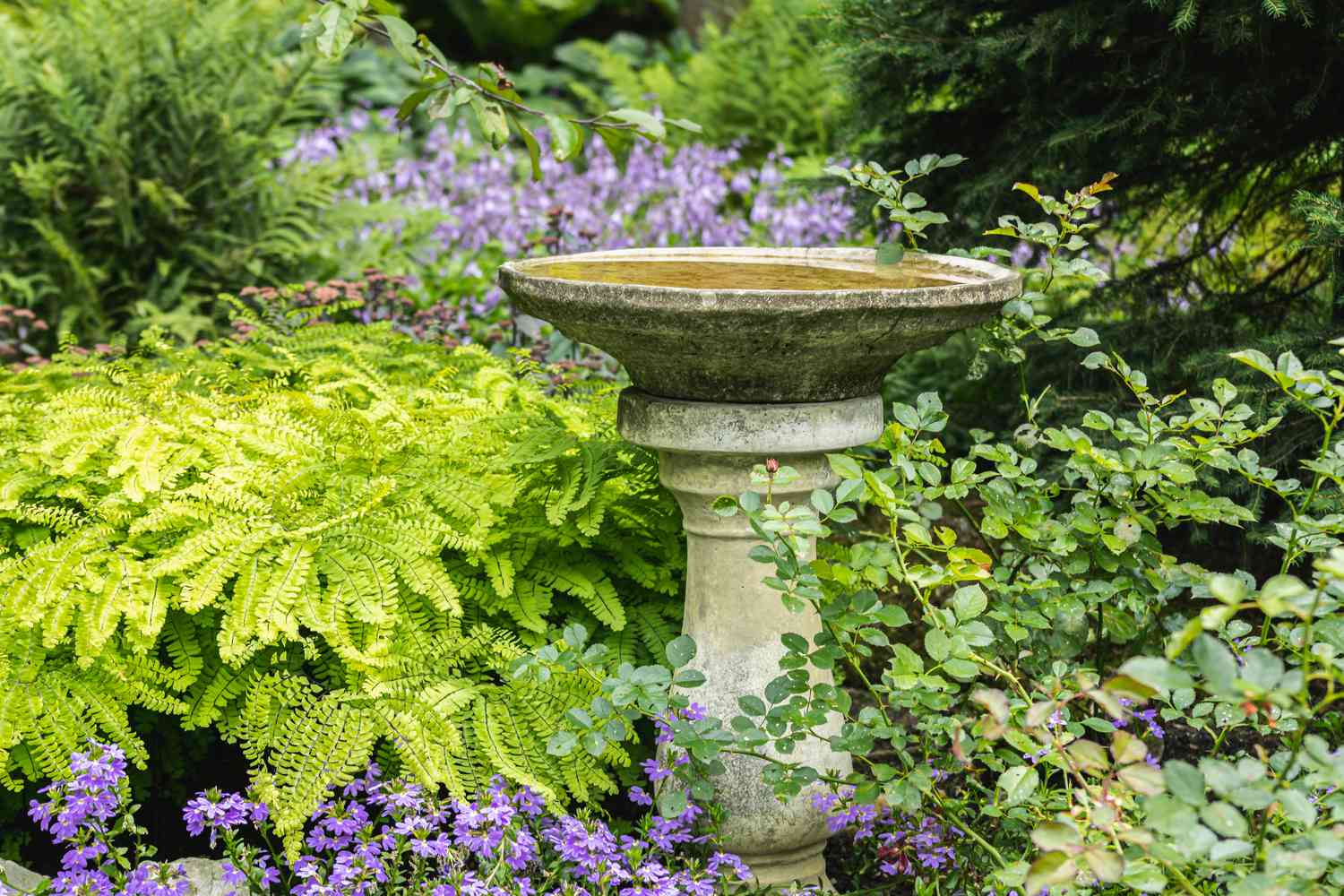
“The rustic stump-and-saucer look is part of the ‘rewilding’ trend, where gardens are designed to look like they just happened.”
It’s low-impact and biodegradable, appealing to eco-conscious gardeners. The terra cotta adds a warm earthy tone that blends seamlessly into any naturalized setting.
19. Bamboo Spout Over Low Grey Stone Basin
To create a bamboo water feature, cut a 3-foot length of bamboo with a 2-inch diameter. Drill a hole halfway down and insert a smaller diagonal bamboo piece as the spout. Connect a 1/2-inch vinyl tubing from a small pump inside the basin to the top of the vertical bamboo. Adjust flow rate to a gentle trickle.
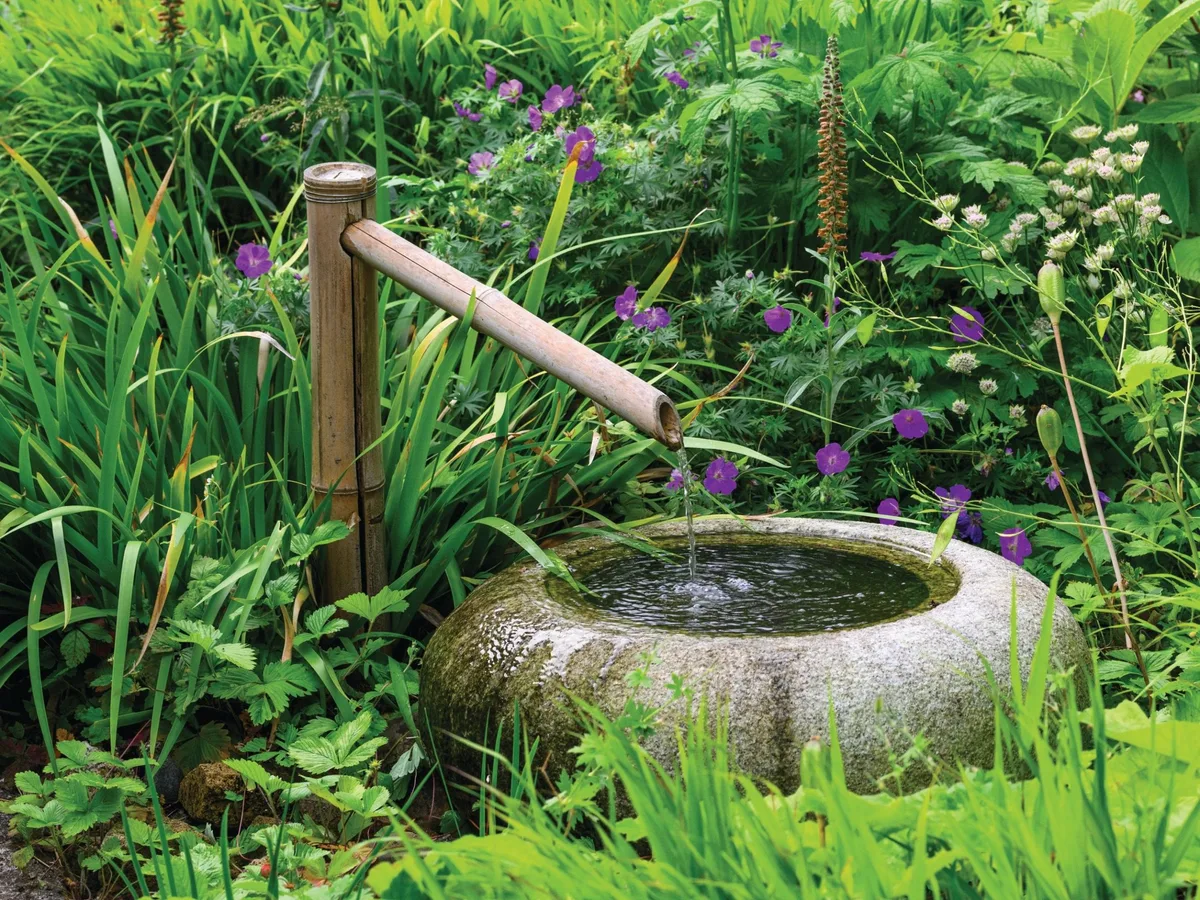
“Cut vertical bamboo to 3 feet.Drill hole and insert diagonal spout.Run tubing fr”
- Cut vertical bamboo to 3 feet.
- Drill hole and insert diagonal spout.
- Run tubing from pump to top of bamboo.
- Set pump in basin and adjust flow.
This low basin setup works best in a garden bed with at least 3 square feet of space. The basin diameter should be at least 16 inches to catch the water without splashing out. If your garden is tiny, consider a smaller hanging version like Idea #17 because this one needs room for the vertical bamboo and surrounding plants.
20. Hammered Copper Bowl on Black Scrollwork Stand in Mulch Bed
The hand-hammered texture of the copper is what gives this bird bath its soul. Each dimple catches light differently, creating a shimmering effect that a smooth basin could never replicate. As it ages, the copper develops a green patina that tells a story. That organic transformation is the whole point—don’t fight it.
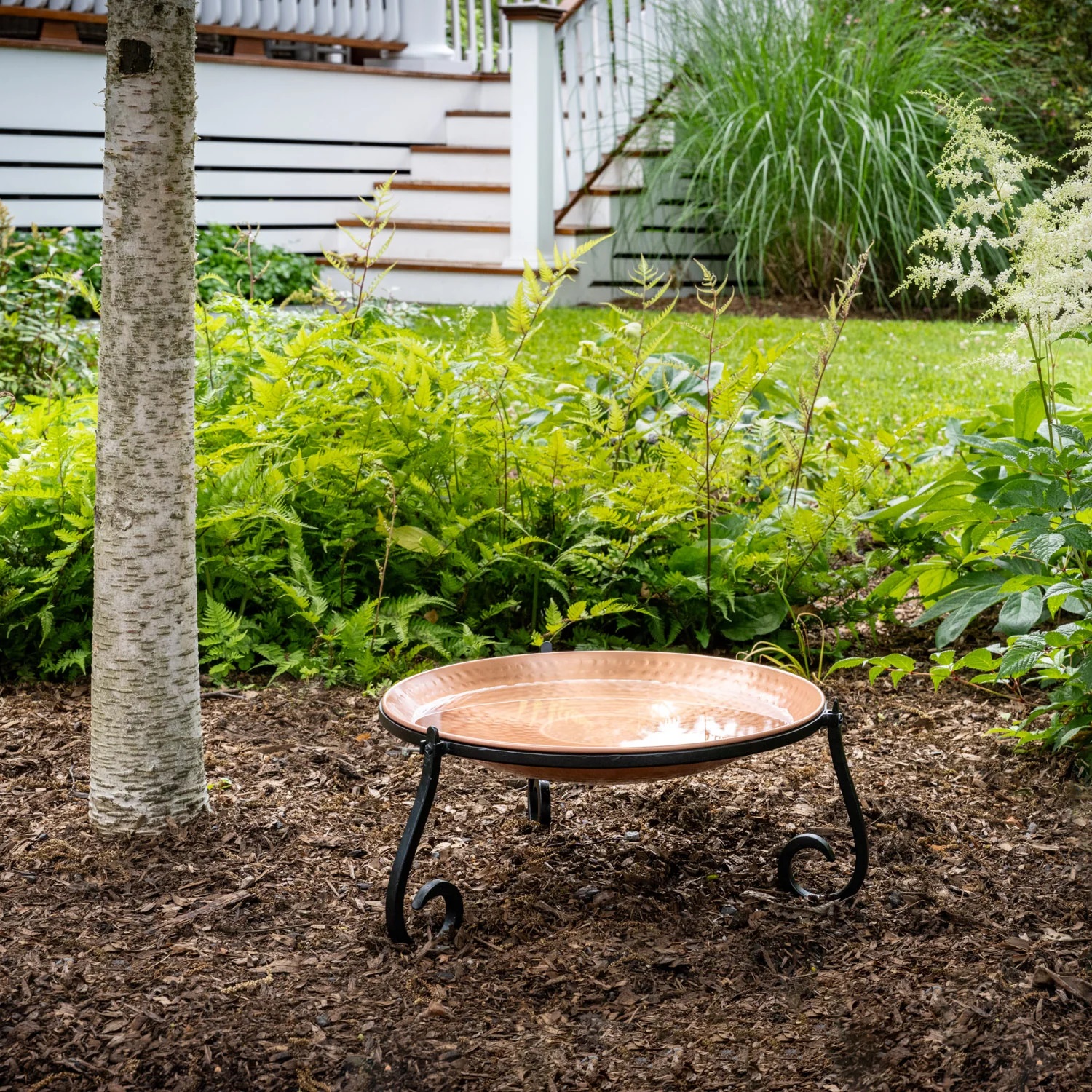
“Copper is relatively low-maintenance but it will darken over time.”
If you prefer the bright penny look, polish it twice a year with a copper cleaner, but expect it to tarnish quickly outdoors. The black scrollwork stand will show rust spots; touch up with spray paint annually. The mulch bed underneath will retain moisture, so check for slugs.
21. Weathered Concrete Birdbath with Central Figurine and Cardinal
This is 70% weathered gray, 20% earthy brown, 10% vibrant red. The central figurine adds an architectural focal point, while the mottled concrete surface creates a soft, old-world feel. To get this look, buy a plain concrete bath and age it with a mixture of water, peat moss, and yogurt painted on the surface.
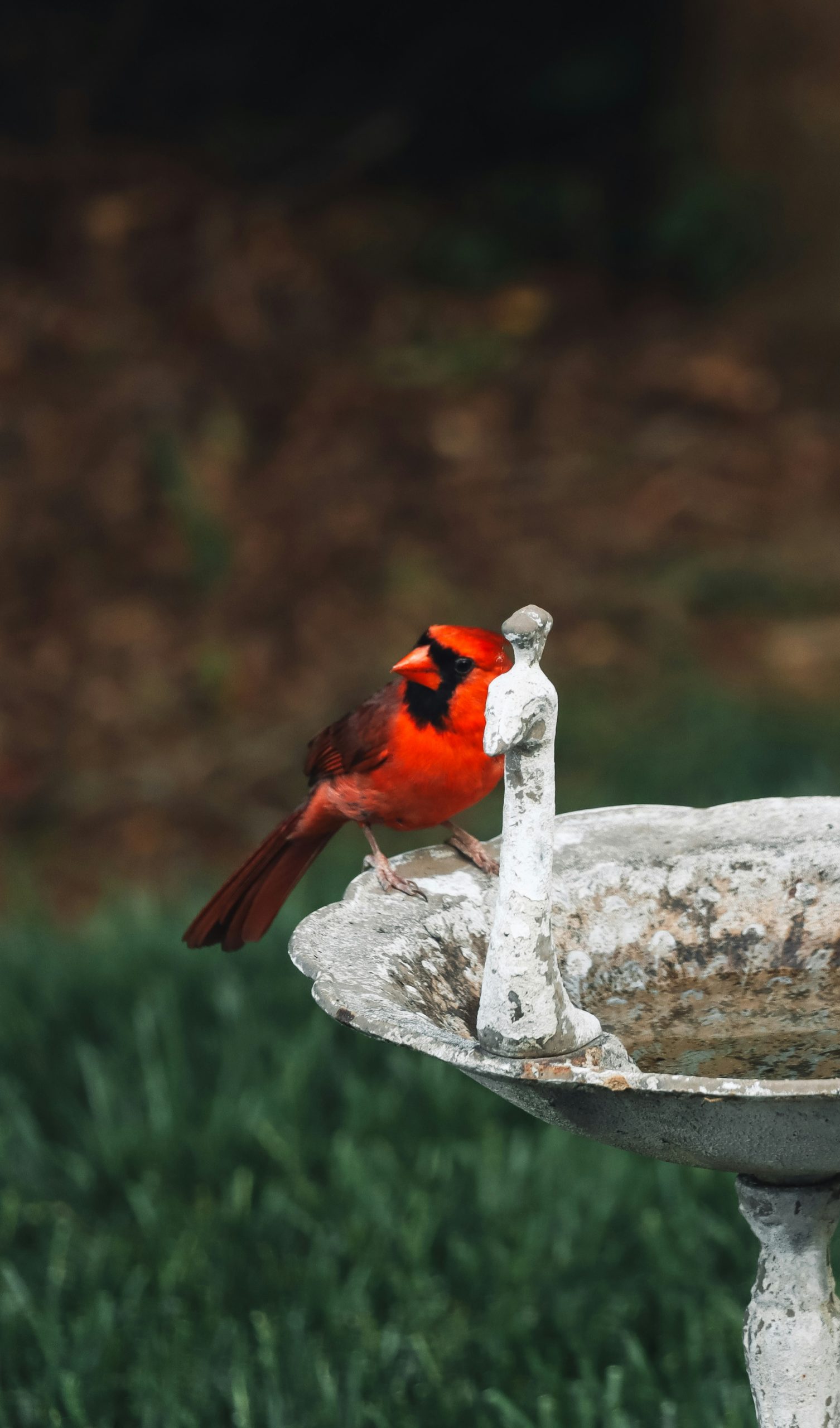
“The central statue breaks the circular symmetry, giving the eye a place to rest.”
But the real genius is that it provides a perch for smaller birds that might otherwise be intimidated by the open water. The cardinal standing on the rim demonstrates exactly how birds use the sculpture as a stepping stone. Compare this to the low basin in Idea #7—similar materials, different energy.
22. Simple Repurposed Bowl Bird Bath for Small Spaces
When using a repurposed ceramic or glass bowl, choose one with a shallow depth—no more than 2.5 inches—so birds can easily stand. Place it on a sturdy base like an upturned pot or a wooden stool. Add a few river stones in the center for grip. Position it at least 8 feet from bird feeders to avoid contamination.
“Repurposed bowls can crack in winter if water freezes and expands.”
Bring them indoors before the first frost or use a plastic liner. Also, if the bowl is too deep, smaller birds may avoid it out of fear of drowning. If you notice birds only drinking but not bathing, add more stones to raise the effective water level.
23. Blue Mosaic Glass Bird Bath on Black Folding Stand with Cardinal
A blue mosaic birdbath on a folding stand can cost $75 at specialty garden stores. Build your own with a $15 blue glass mosaic bowl from a discount store and a $10 folding metal plant stand from IKEA. Add a few yellow tulips nearby for that high-contrast look. Total under $30.
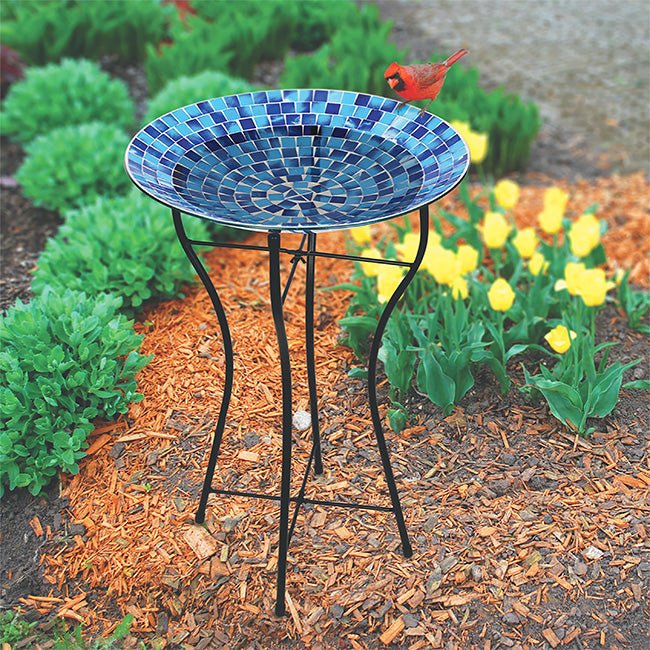
“The blue-and-yellow combo is a classic complementary color scheme that never fails to attract attention.”
In 2026, gardeners are doubling down on bold color blocking in outdoor spaces, moving away from all-neutral palettes. The red cardinal is just the cherry on top—nature matching your design.
24. Rustic Terra Cotta Saucer and Inverted Pot Bird Bath
To make this tiered terra cotta bird bath, you need one large inverted pot (14-inch diameter) and one saucer (16-inch diameter). Place the saucer on top of the inverted pot’s base. Fill the saucer with water and add a few river stones. For stability, bury the pot’s rim 2 inches into the soil or set it on a flat stone.
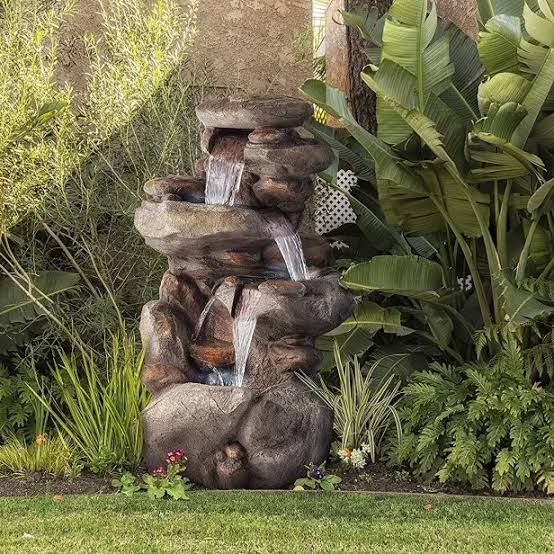
“This style works best in garden beds with at least 4 square feet because the inverted pot takes up vertical space.”
The basin height should be around 18-20 inches. If you have a smaller area, use a shallower pot or place it on a patio corner. For something even simpler, see the stump version in Idea #18.
25. Carved Stone Bowl Filled with Water on Grass
The carved stone texture is what makes this bird bath feel ancient and grounding. The irregular surface gives birds a secure grip, and the moss that eventually grows in the crevices adds character. Without that hand-carved finish, it would just be another concrete bowl.
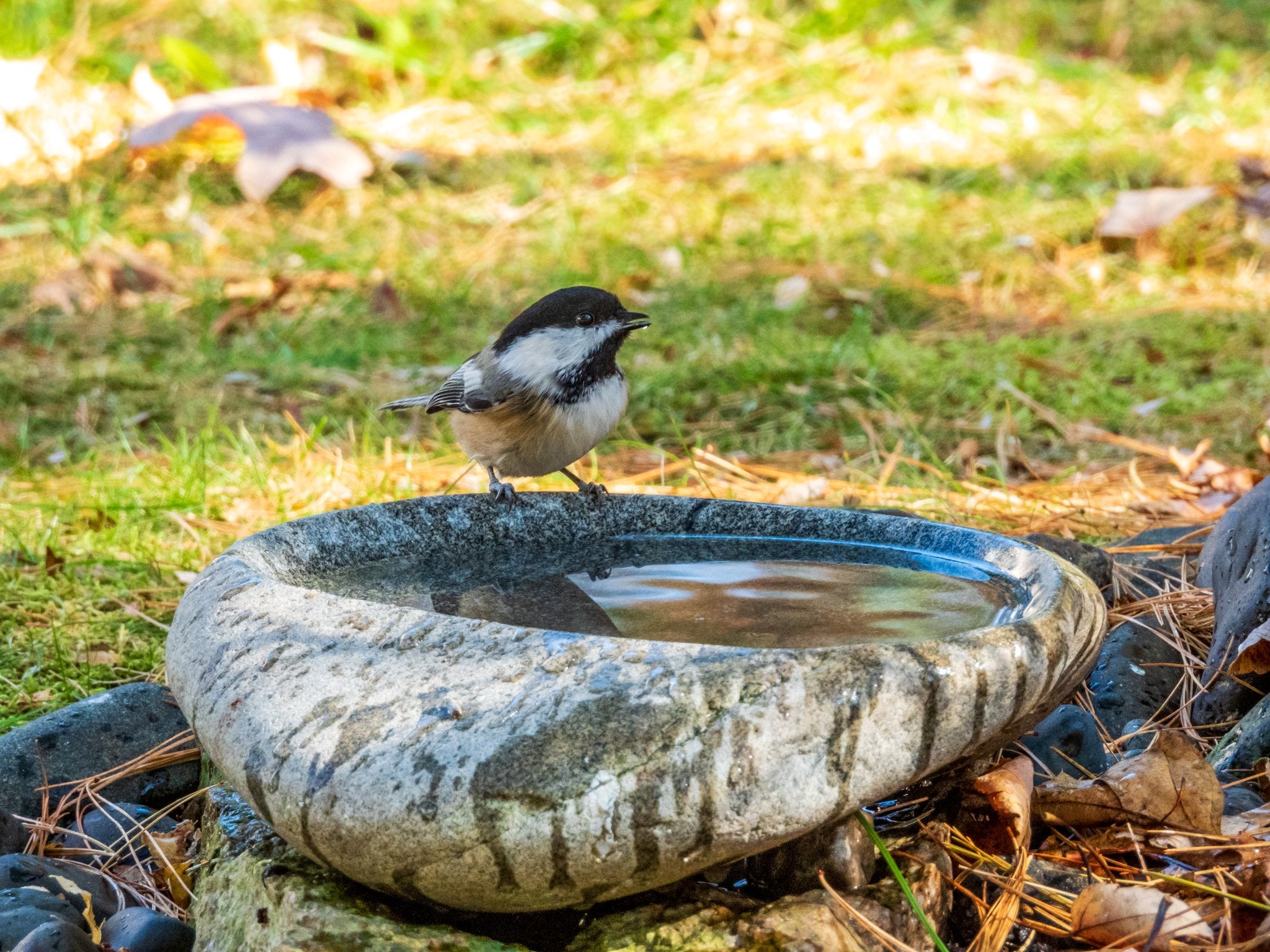
“Stone bowls are durable but will develop algae in the tiny carvings.”
Scrub gently with a stiff brush and water every month; avoid bleach as it can damage the stone. The grass underneath will stay damp, so trim it regularly to prevent mold. In autumn, fallen leaves should be removed daily to keep the water clean.
26. Hanging Floral Teacup and Saucer Bird Feeder
This whimsical look is 50% vintage ceramic charm, 30% colorful beadwork, 20% rustic wood. The red and yellow floral pattern against the white lattice background is a study in contrast. You can swap the beaded strings for twine or ribbon and change the teacup pattern to match your garden’s palette.
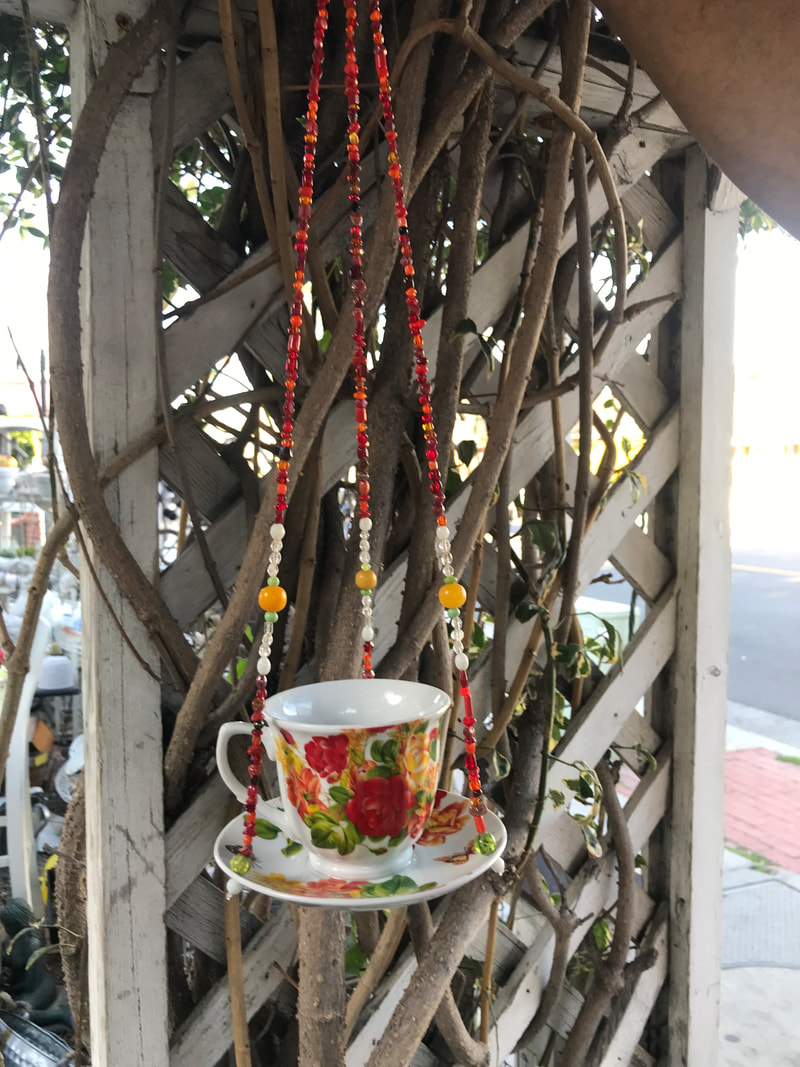
“50% vintage ceramic charm30% colorful beadwork20% rustic wood”
- 50% vintage ceramic charm
- 30% colorful beadwork
- 20% rustic wood
The small scale of a teacup is actually perfect for tiny birds like finches and chickadees, who prefer shallow water. The hanging motion deters larger bully birds. The white lattice trellis acts as a neutral frame, making the colorful cup the star. It’s a perfect example of using unexpected objects to create a focal point.
27. Weathered Verde Green Cat Sculptural Bird Bath
Sculptural bird baths with an animal base are conversation starters, but make sure the base is wide enough to prevent tipping. The cat sculpture here has a low center of gravity; if you’re making your own, fill the base with sand or gravel. The weathered verde green finish is achievable with a verdigris patina paint kit from a craft store.
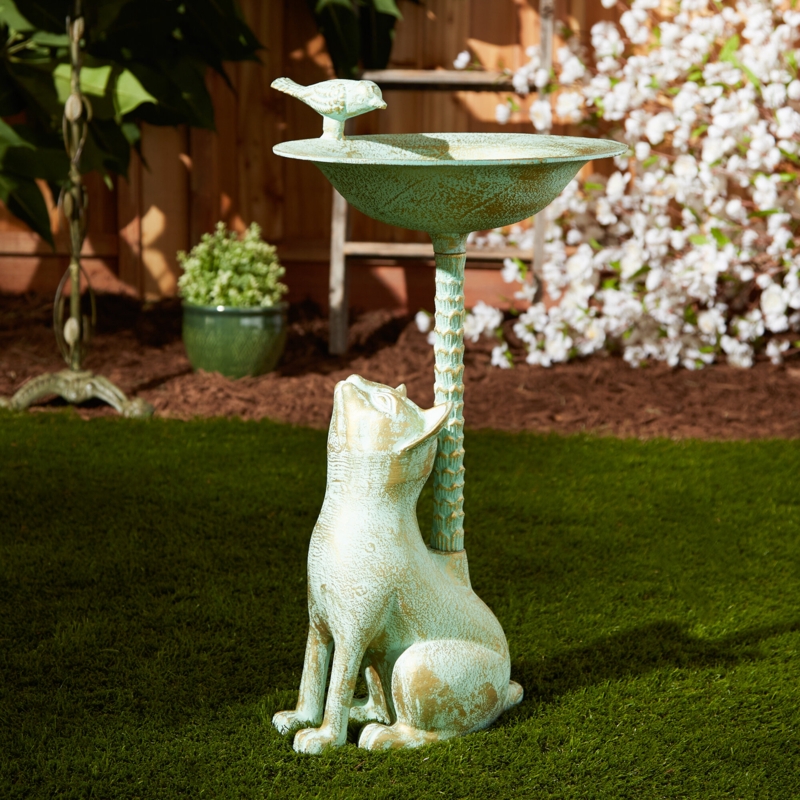
“This is not a bird bath for shy birds.”
The cat shape might scare them initially, even though it’s just a sculpture. Give it a few weeks—birds are smart and will figure it out. Also, the patina finish is delicate; don’t scrub it hard or you’ll remove the green. Just rinse with a hose.
28. Speckled Concrete Bird Bath With Two Sculpted Birds
Concrete bird baths with sculpted birds can be pricey—up to $100. But you can make a speckled concrete version using a plastic mold (around $20) and concrete mix ($10). Add granite flecks to the mix before pouring. For the birds, use small ceramic figurines from a dollar store and glue them to the rim.
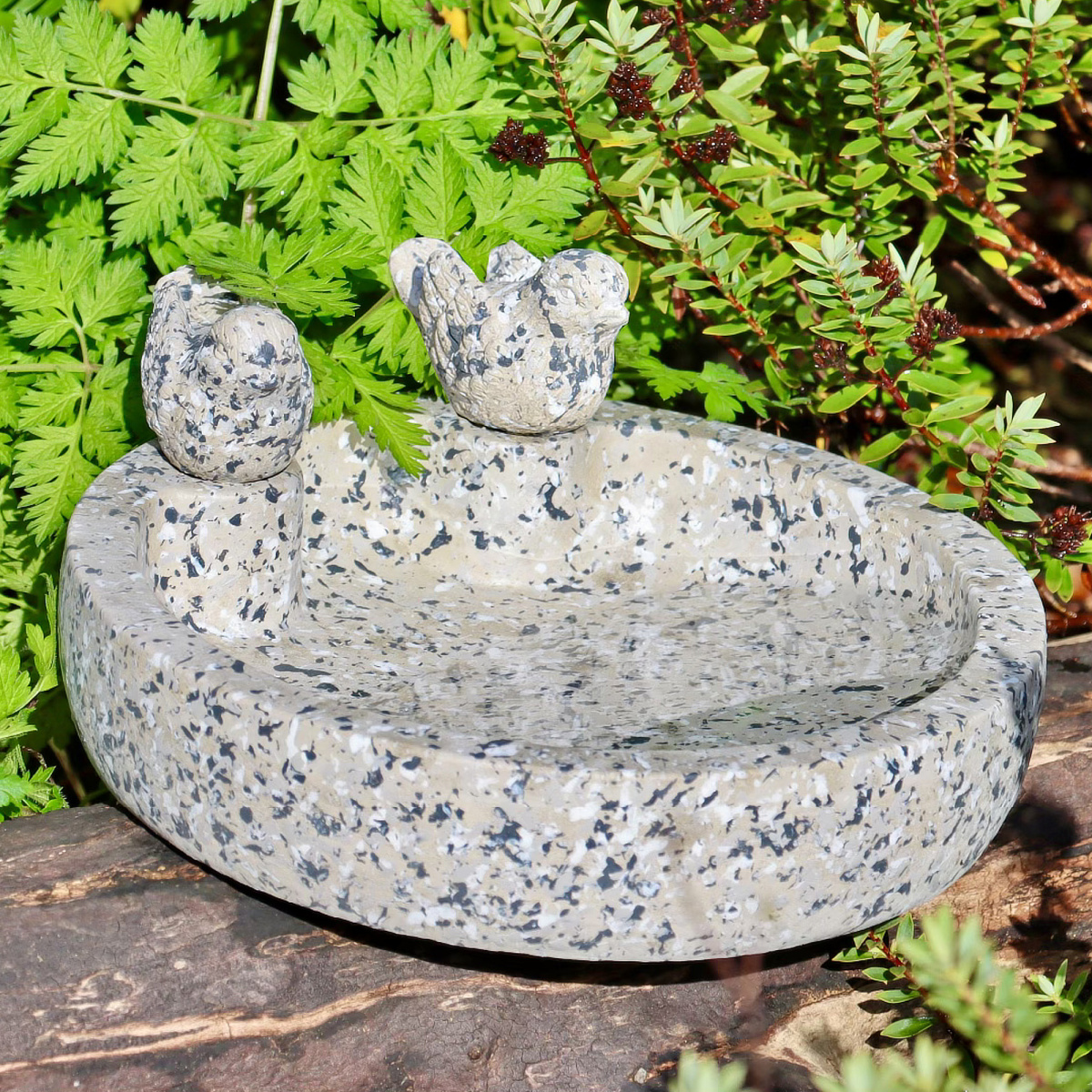
“The speckled aggregate finish is trending because it mimics expensive stone at a fraction of the cost.”
It also hides dirt and water spots beautifully. The two sculpted birds add a layer of narrative—they make the bath feel inhabited even when empty. This fits the growing ‘curated whimsy’ movement in garden decor.
29. Concrete Garden Bird Bath Surrounded by Vibrant Flowers
To create a butterfly-themed bird bath like this, use a silicone mold with raised butterfly reliefs. Mix concrete with a plasticizer to flow into fine details. Pour, tap out air bubbles, and cure for 48 hours before demolding. Then seal with a matte concrete sealer to protect the reliefs.
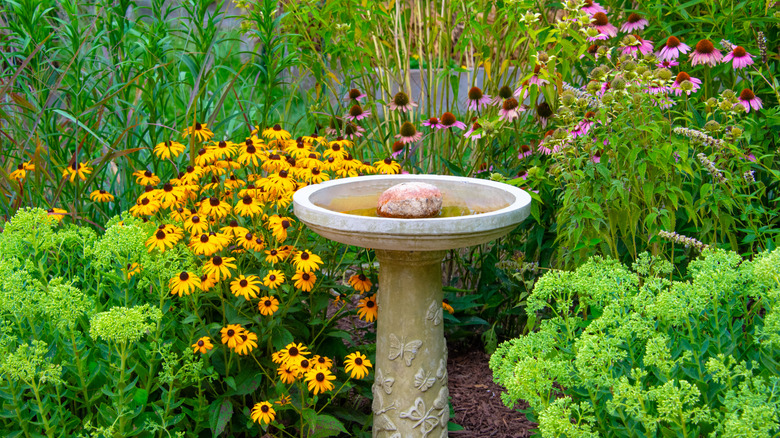
“With a pedestal height of 28 inches and a 20-inch bowl, this bird bath needs a flower bed radius of at least 2 feet around it.”
The black-eyed Susans and coneflowers grow 2-3 feet tall, so plant them behind or to the sides to avoid crowding the bath. If your space is limited, choose shorter annuals instead.
30. Carved Stone Basin Bird Bath in Garden Bed
The low, almost ground-level placement is what makes this bird bath feel so natural. It’s tucked into the soil, surrounded by variegated ground cover, as if it’s been there for decades. The dark water inside creates a mirror effect, reflecting the foliage. Without that low profile, it would lose its ancient, grounded quality.
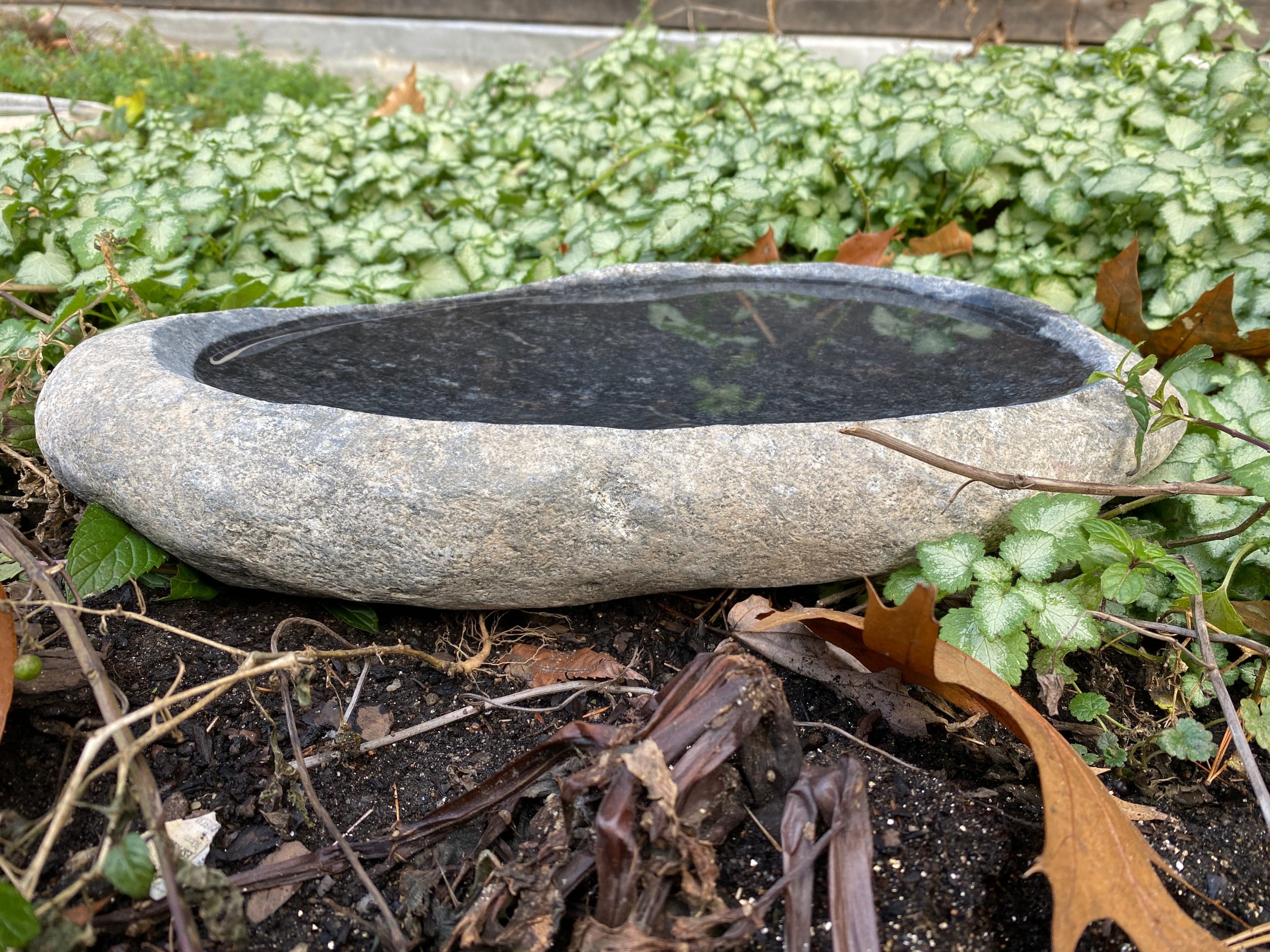
“A ground-level basin collects more debris than elevated ones—soil, leaves, and mulch will find their way in.”
Plan on rinsing it every two days. The variegated ground cover around it needs trimming to keep it from creeping over the rim. In heavy rain, the basin may overflow, so ensure the soil drains well around it.
31. Green Ceramic Bird Bath on Decorated Metal Stem with Hummingbird Sculpture
This is 60% green ceramic, 25% gold leaf accents, 15% purple and white floral backdrop. The warm sunset light amplifies the gold, making the metalwork glow. To recreate, choose a green glazed basin and add gold Rub’n Buff to the metal accents. The hummingbird sculpture ties it all together.
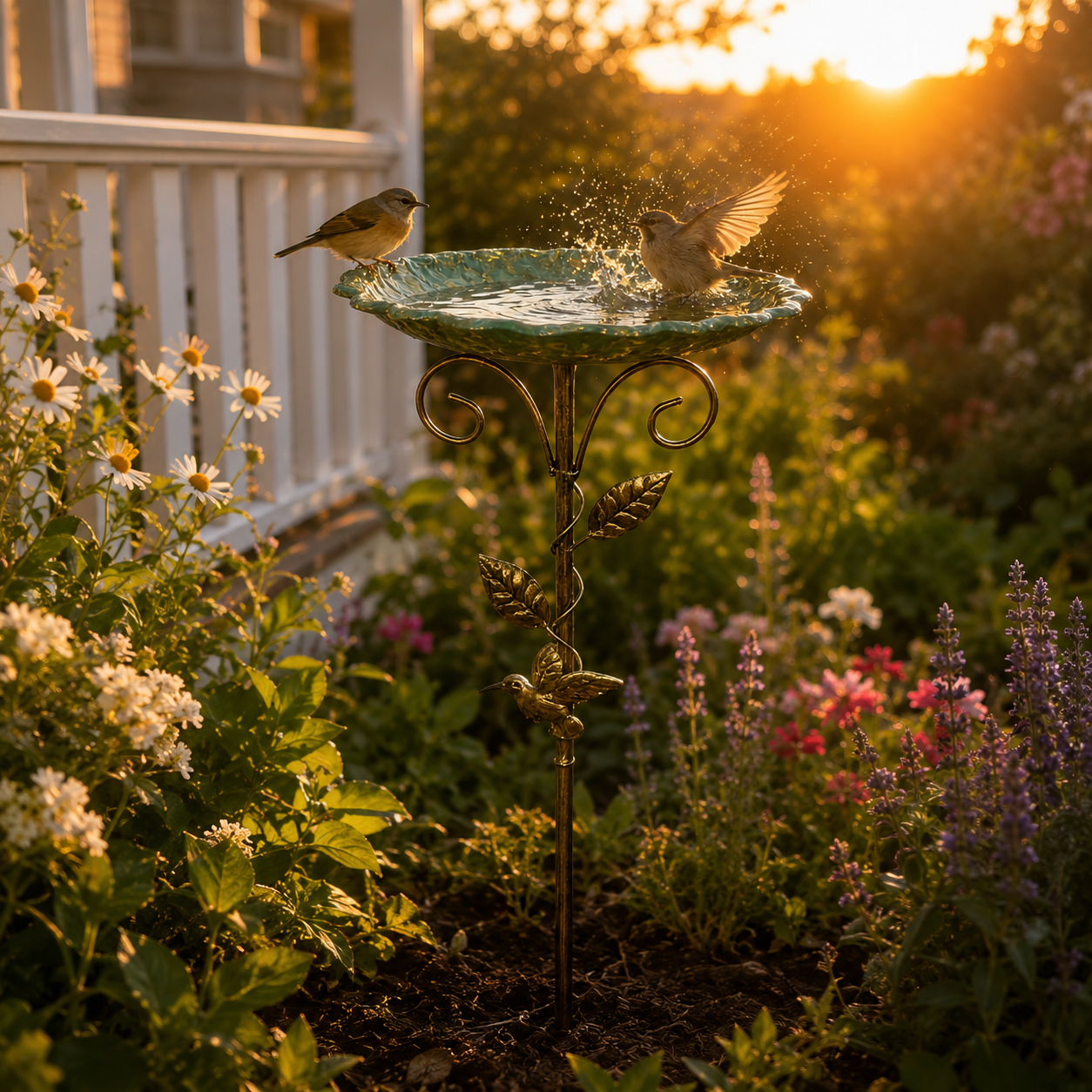
“The vertical metal stem decorated with leaves and a hummingbird creates a vertical line that draws the eye from the flower bed up to the basin.”
The splashing birds add life, while the warm amber backlighting unifies the whole scene. Compare with the all-stone version in Idea #15—similar elegance, different material story.
32. Handcrafted Green and Copper Swirled Glass Bird Bath
For an organic-edged glass basin like this, place it on three sturdy legs at least 8 inches apart to prevent wobbling. The swirled green and copper pattern is best seen against a plain wooden fence backdrop. To hang it, use a tripod ring that cradles the irregular edges securely.
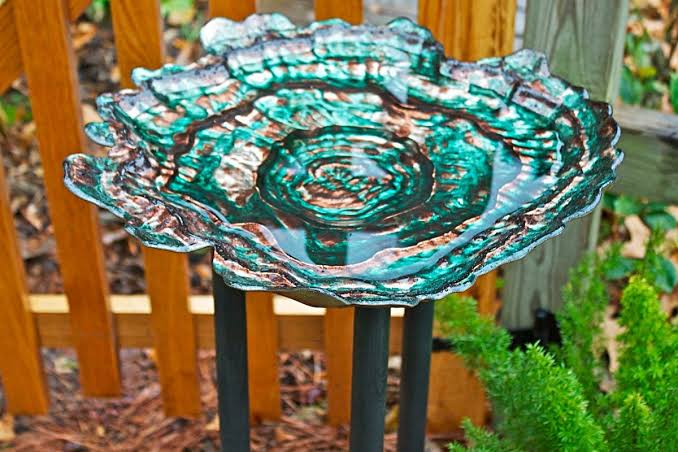
“Handmade glass is stunning but fragile—it won’t survive a hailstorm or a fallen branch.”
Position it in a sheltered spot, perhaps under an eave or against a wall. The copper swirls may react with bird droppings, causing discoloration; clean with a gentle glass cleaner and soft cloth. Expect to bring it indoors during winter.
33. Classic Cast Stone Pedestal Bird Bath with Animals
Cast stone pedestal bird baths can be $150-$300 new, but you can find used ones on Facebook Marketplace for $40-$80. Look for cracks that can be patched with concrete epoxy. Add a coat of exterior stone sealer to refresh the weathered look. The surrounding flower beds make the biggest impact, so invest in perennial plants.
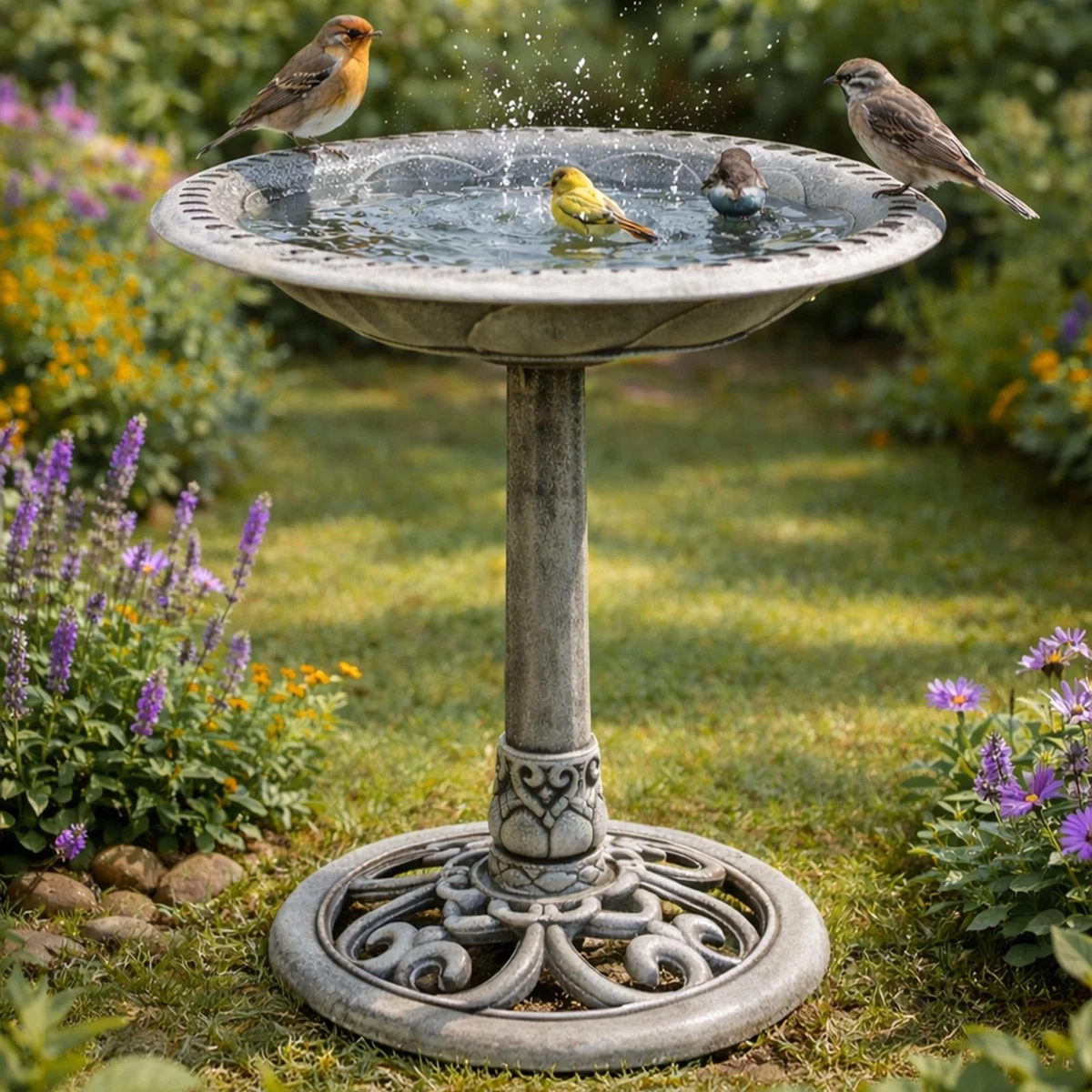
“The classic pedestal bird bath never goes out of style, but it’s seeing a resurgence as people embrace traditional garden forms with a modern, low-maintenance twist.”
The splashing birds and mixed flower beds signal that this is a working garden, not a showpiece. In 2026, authenticity trumps perfection.
Your Backyard Birds Are Waiting for Their DIY Spa Day
Start with one idea that matches your garden’s light and your own patience level. Most of these projects can be done in a weekend, and the birds will thank you with daily visits. Save your favorites to your garden Pinterest board and let the inspiration simmer.