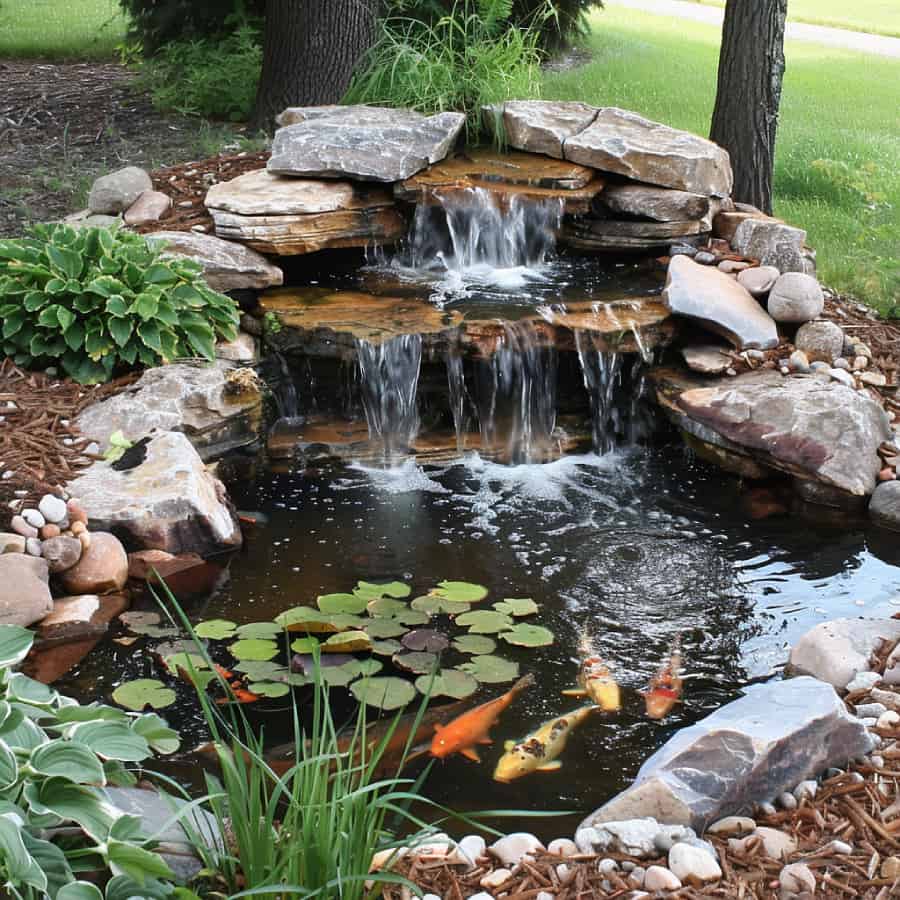
That feeling when you find the perfect outdoor water fountain idea on Pinterest, but have no idea how to make it happen? We’ve all been there. After filtering through hundreds of options, from high-end showrooms to Wayfair and even Facebook Marketplace, we narrowed it down to the 31 ideas that actually deliver. Inside, you’ll find everything from grand European designs to sleek minimalist waterfalls and charming DIY setups. These aren’t just pretty pictures; they are real, achievable designs trending for 2026 because they connect our homes to the soothing power of nature. And stay until the end — we break down the most common mistakes that can ruin these looks.
This post may contain affiliate links. As an Amazon Associate, we earn from qualifying purchases at no extra cost to you.
📌 Save this to Pinterest for later — you’ll want to revisit these ideas.
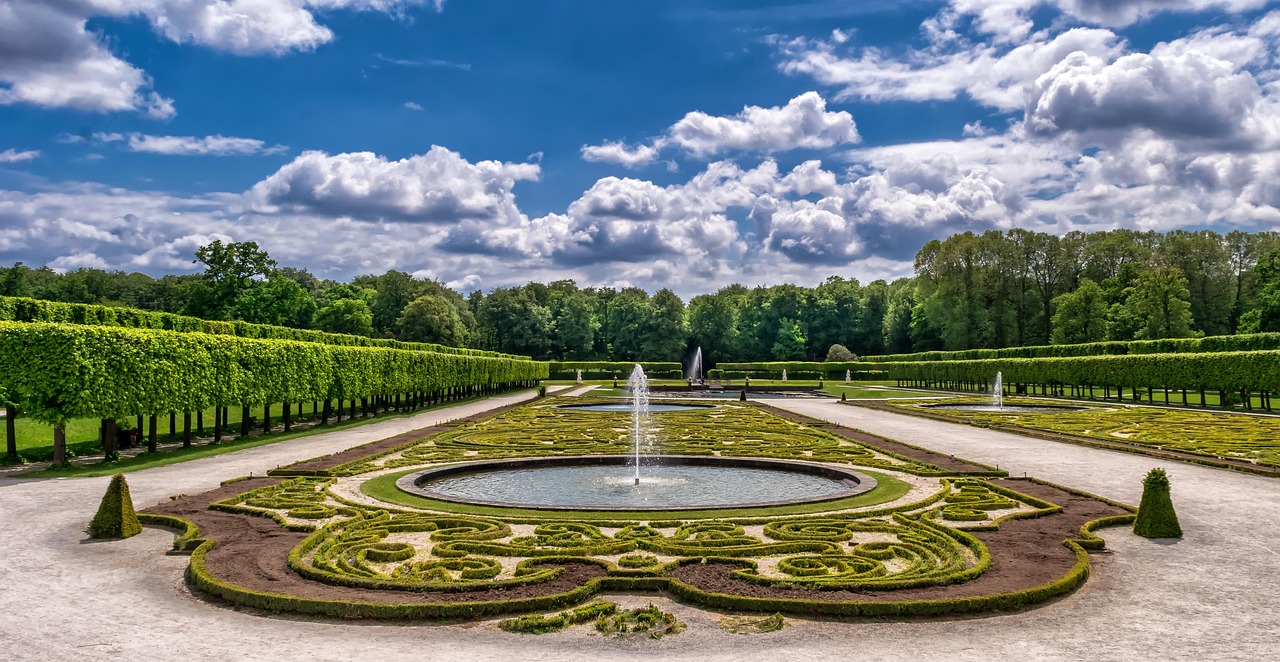
1. Build a Formal European Landscape with Symmetrical Fountains
To recreate a grand landscape of this scale is a serious investment in symmetry and patience. The cost is significant, largely due to the extensive hardscaping and mature hedging required to achieve this formal look.
|
$1,500.00
|
$330.01
|
$119.95
|
$32.99
|
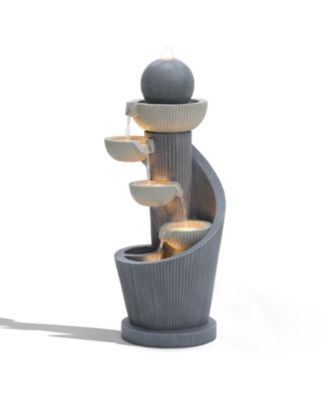

“Professional Landscape Design: $5,000 – $15,000+
Gravel Pathways (materials & la”
- Professional Landscape Design: $5,000 – $15,000+
- Gravel Pathways (materials & labor): $8 – $20 per sq. ft.
- Mature Hedges & Topiaries: $10,000 – $30,000+
- Fountain Installation (x2): $8,000 – $20,000
- Irrigation & Lighting: $5,000 – $12,000
- TOTAL: $28,000 – $77,000+
Budget alternative: Start with a single, smaller fountain and use faster-growing, less expensive hedges. The look will take a few years to mature, but for about 40% of the cost.
This design leans on the classical principle of bilateral symmetry. By creating a mirror image on either side of a central axis, the brain perceives it as orderly, calm, and intentional. The long lines of the gravel paths and pleached trees create forced perspective, making the garden feel even longer and more expansive than it is. The repeating conical shapes of the topiaries provide a rhythmic quality, guiding the eye through the landscape without interruption.
2. Frame an Urban View with Twin Geyser Fountains
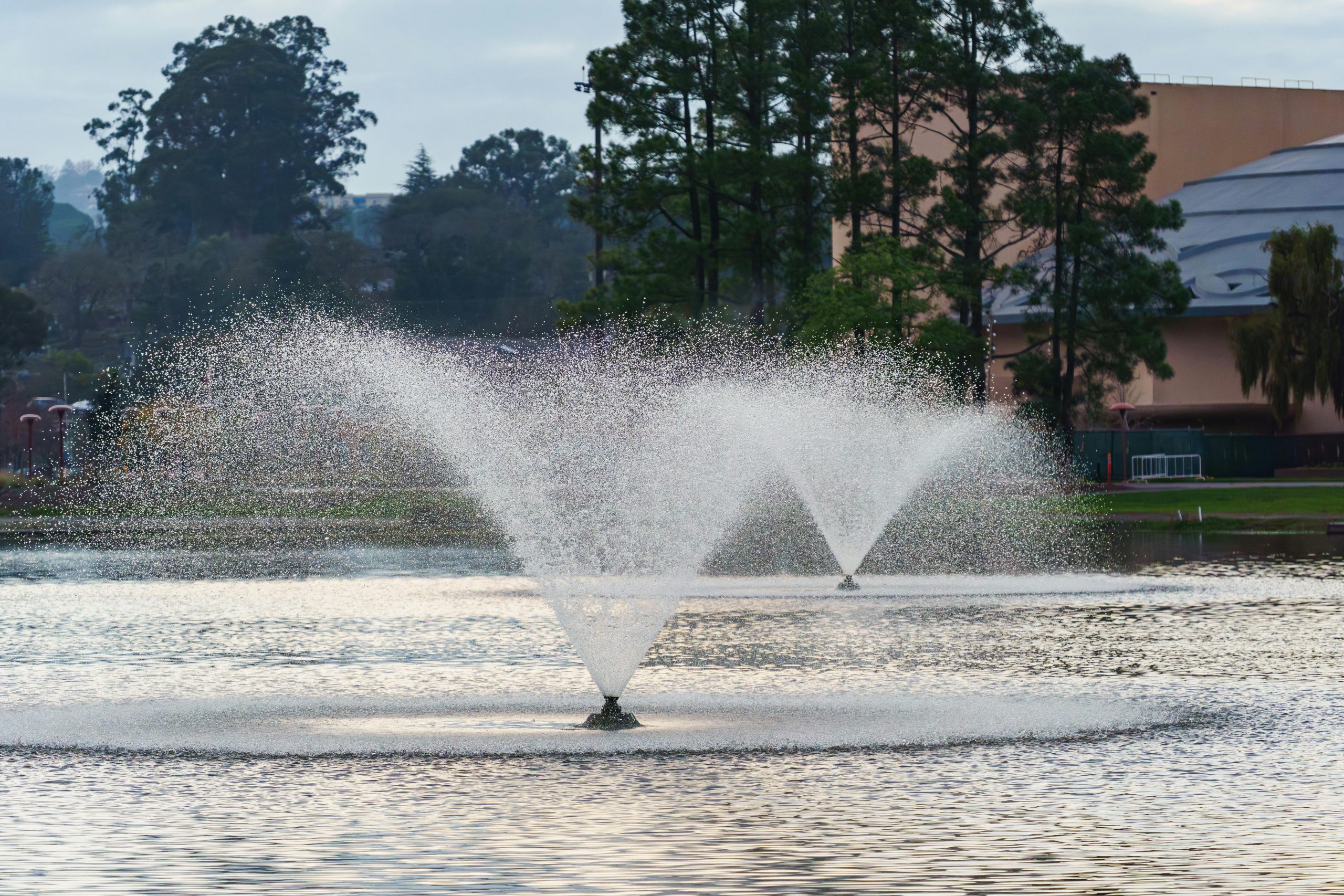
For geyser-style fountains, the magic is in the pump. You need a high-flow submersible pump with an adjustable nozzle. To get this wide, cone-shaped spray, aim for a pump that turns over the total volume of your pond or basin at least once per hour. For a symmetrical look like this, use two identical pumps and place them equidistant from a central viewing point. A common mistake is using one oversized pump with a splitter, which often results in uneven flow.
|
$96.15
|
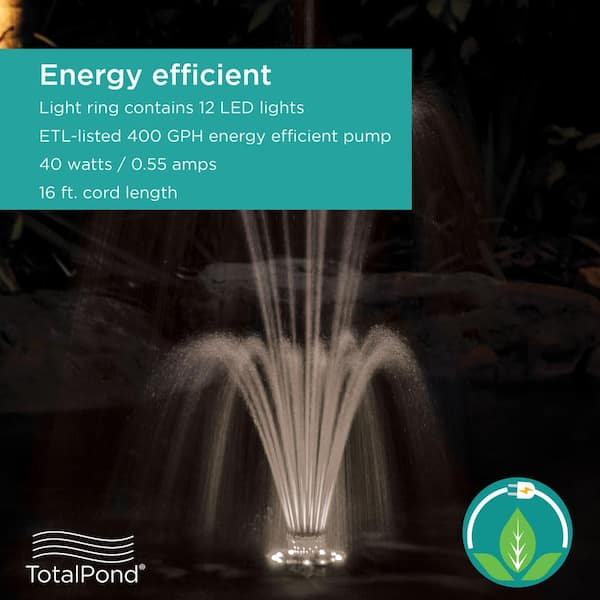
“This idea is all about grand scale.”
It won’t work in a small backyard pond. You need a body of water at least 50-60 feet wide to prevent the spray from constantly soaking the surrounding banks, which leads to erosion. The fountains themselves should be spaced at least 30 feet apart to feel distinct and balanced. This design is ideal for community lakes, corporate campuses, or large private estates with existing ponds where the goal is a dramatic, low-maintenance feature visible from a distance.
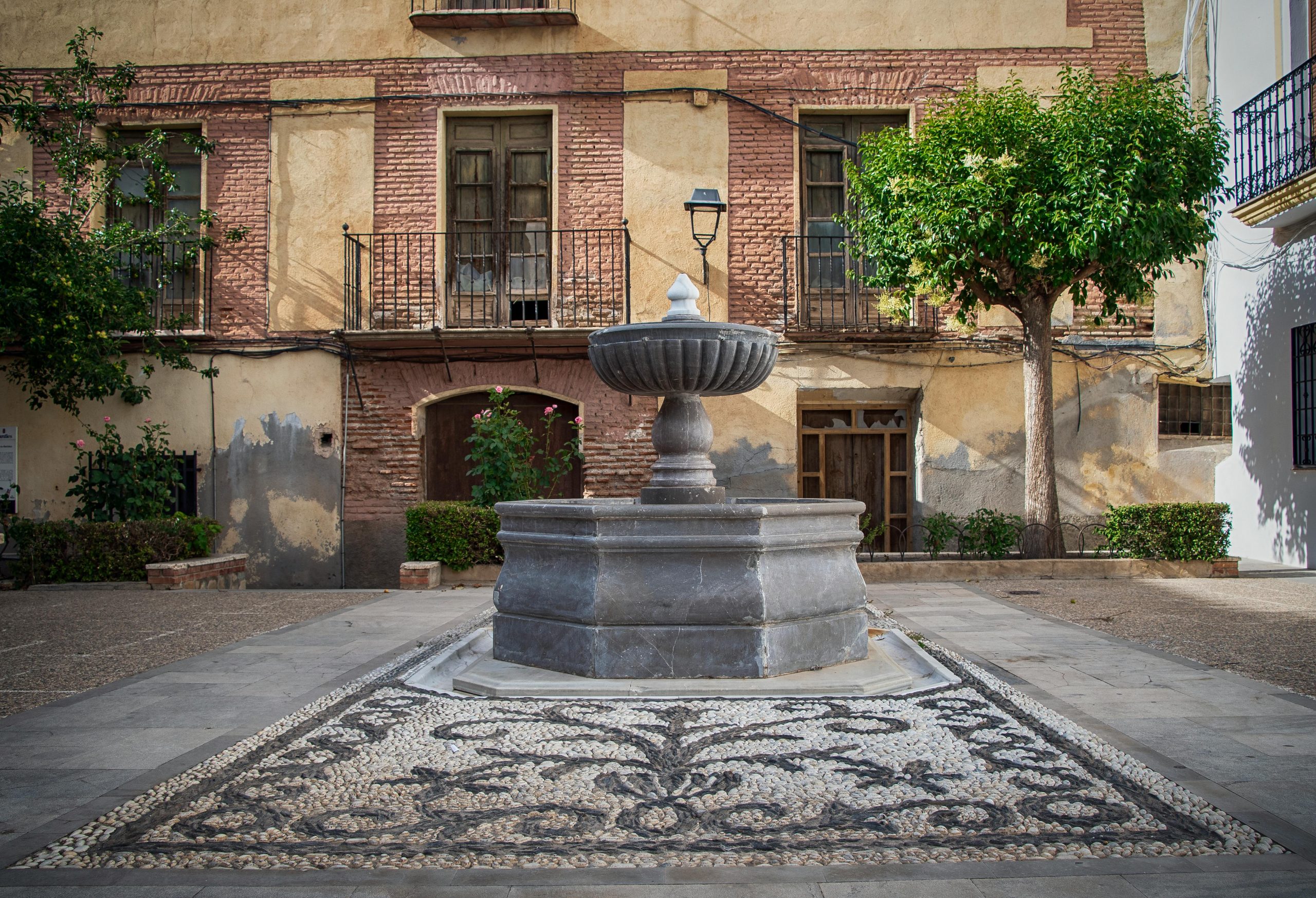
3. Anchor a Town Square with a Historic Stone Fountain and Pebble Mosaic
The single most important element here isn’t the fountain itself, but the intricate black and white pebble mosaic at its base. Without it, you’d have a handsome, but standard, historic fountain. With it, you have a story. The swirling patterns create movement and visual energy on the ground plane, turning a simple plaza into a work of art. It draws you in and asks you to look down as well as up, engaging you with the space on a more intimate level.
|
$3,000.00
|
$0.10
|
$1,692.00
|
$62.15
|


“Recreating this look comes with a serious reality check: maintenance.”
A public-facing feature like this is a magnet for leaves, trash, and algae. The intricate pebble work can be a nightmare to clean, often requiring specialized pressure washing or even hand-weeding. For a home application, be honest about your tolerance for upkeep. A simpler paver pattern might be a more practical choice if you don’t have a dedicated maintenance crew.
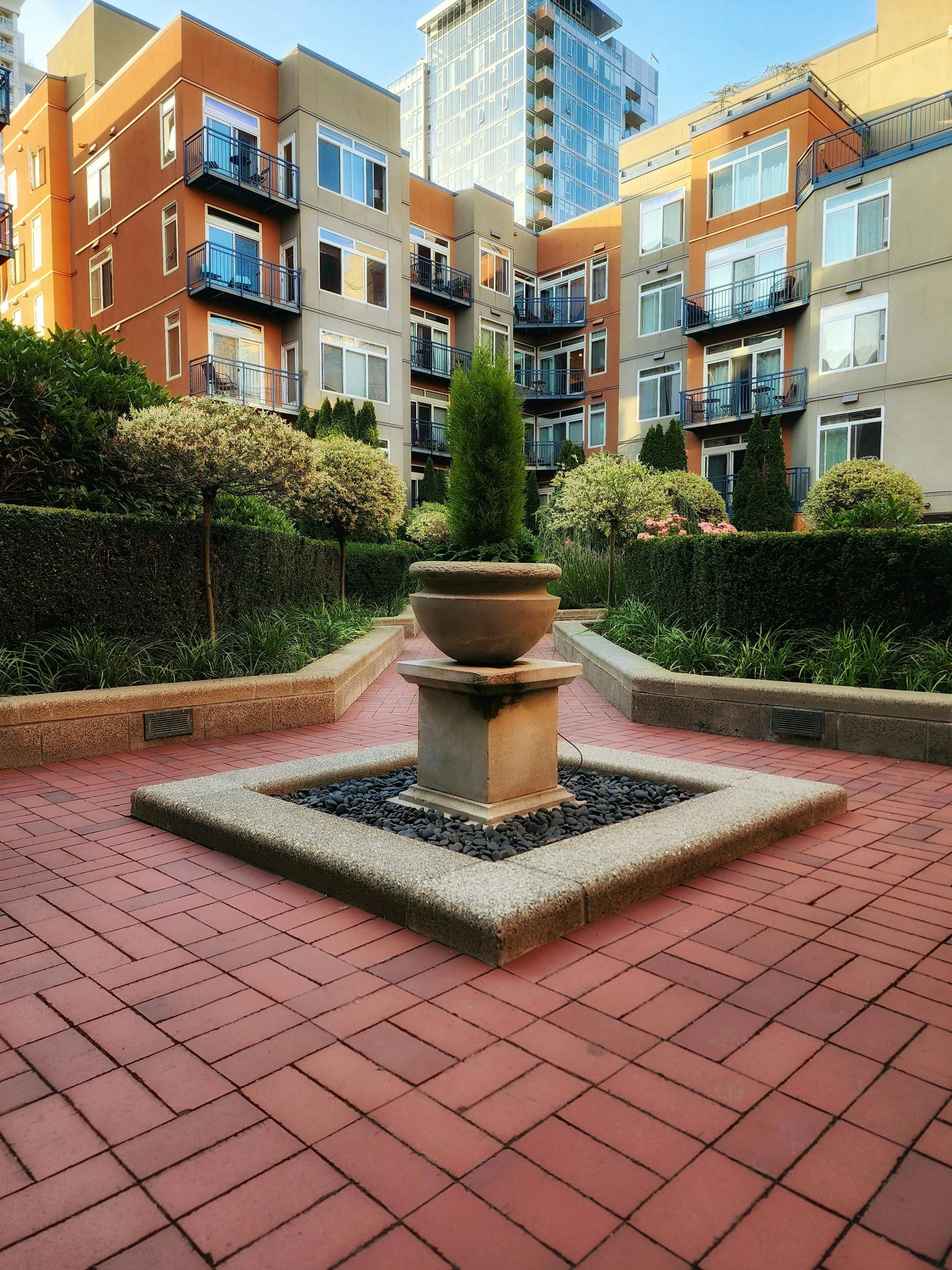
4. Define a Modern Courtyard with a Simple Bowl Fountain
The formula here is clean and repeatable: 50% warm hardscaping + 30% structured greenery + 20% focal point water feature. The terracotta pavers provide the warm base, while the crisp hedges and trees add a layer of natural texture. The cool, grey concrete of the fountain provides a point of contrast. You could easily swap the terracotta for warm wood decking or trade the grey concrete for a Corten steel bowl to achieve a similar balance of warmth and modernity. This is the more affordable cousin of the grand landscape in Idea #1.
|
$3,449.00
|
$1,400.00
|
$3.98
|
$16.69
|

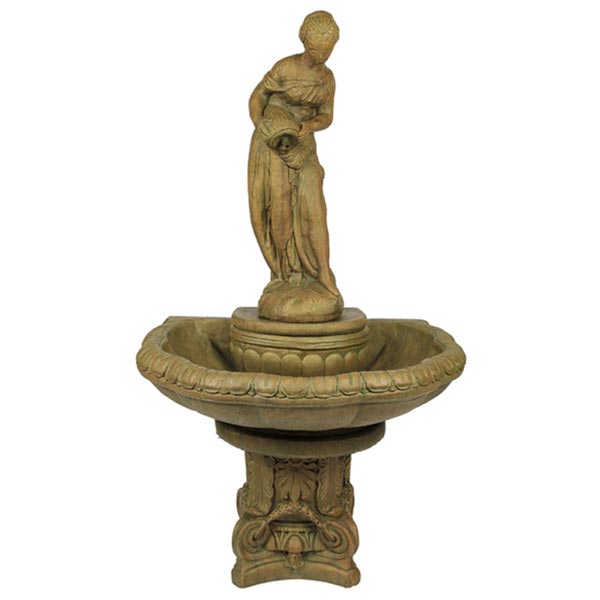
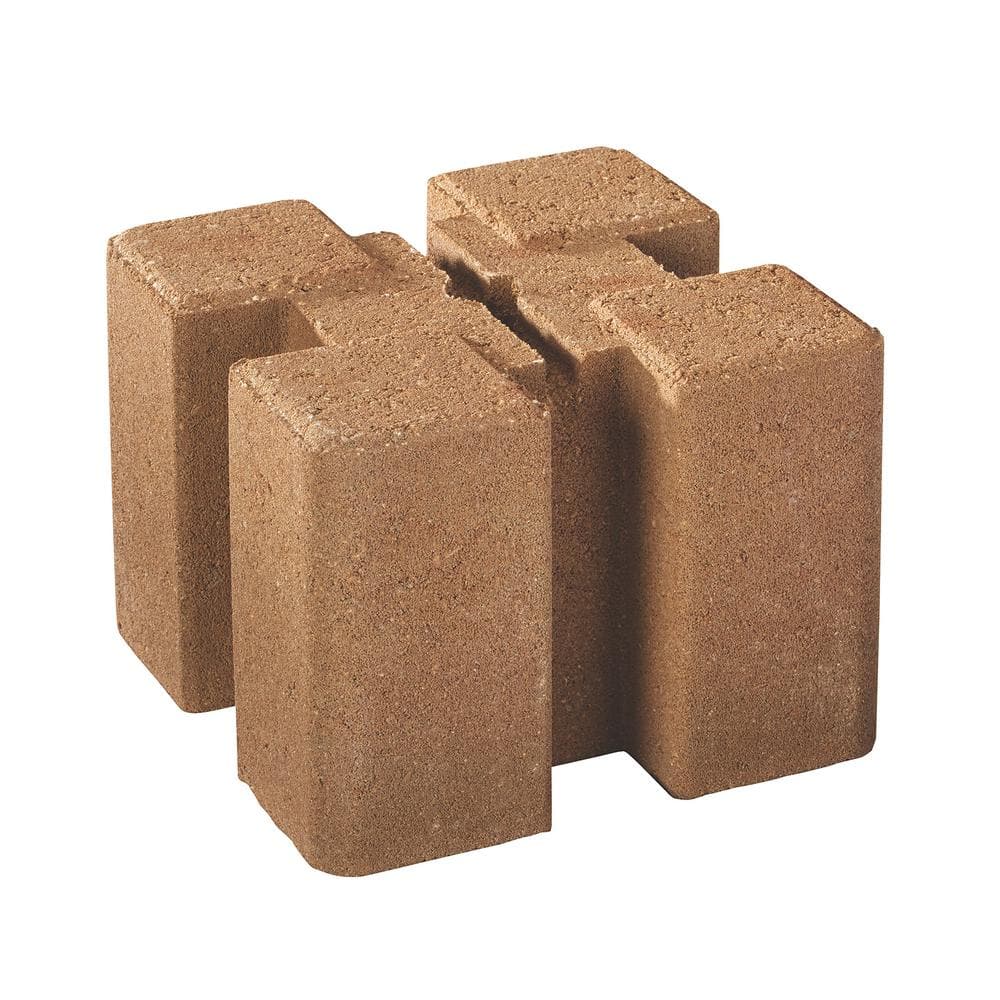
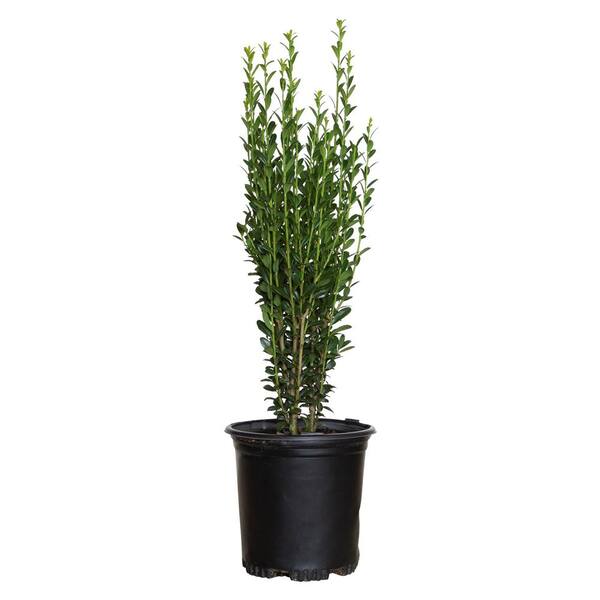
“You don’t need a custom-poured concrete fountain to get this vibe.”
A similar large-scale bowl fountain can be found at stores like Restoration Hardware for a premium, but you can get a nearly identical look with a fiberglass or resin version from a garden center for $300 – $700. For the base, a bag of black river stones from a home improvement store costs about $25. The key is the scale—go for the largest diameter bowl your space can handle to make it feel intentional and not like an afterthought.
5. Complement Ornate Architecture with a Carved Stone Fountain
This design succeeds because of material harmony. The carved grey stone of the fountain directly echoes the stone pavers of the courtyard, making it feel like it grew right out of the ground. It acts as a cool, solid anchor amidst the visual complexity of the carved dark wood balconies and warm red brick. The fountain’s relatively simple, classical form provides a quiet resting place for the eye, balancing the high-detail architecture surrounding it.
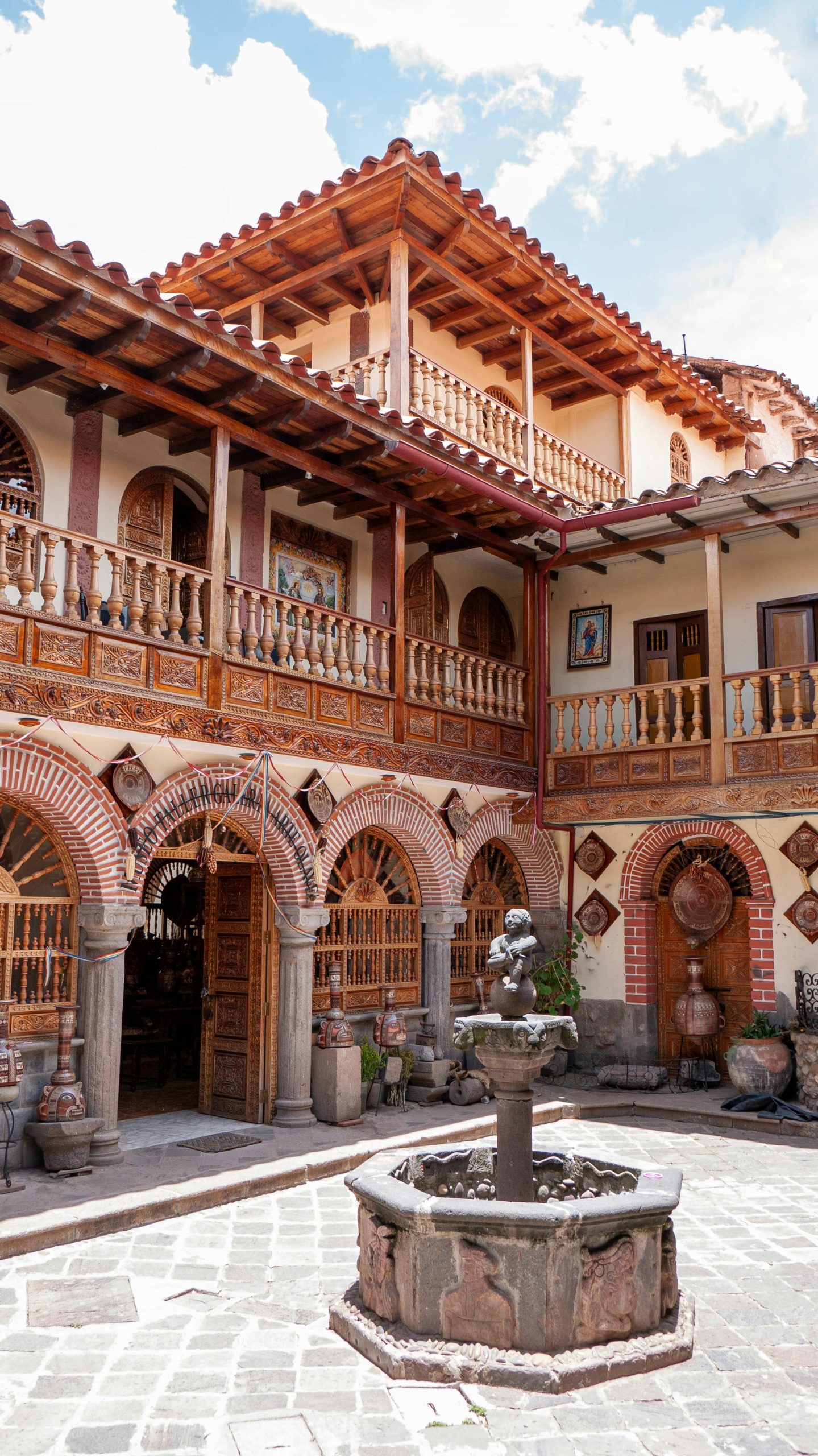
|
$800.00
|
$500.00
|
$125.00
|
$360.00
|



“A fountain with this much carved detail and texture is a prime spot for algae and mineral deposit buildup, especially in hard water areas.”
The whitish efflorescence you sometimes see on stone is from salts leaching out. To keep it looking its best, it will need a full drain and scrub with a stiff-bristled brush (no metal!) at least twice a year. Using a water clarifier or algaecide specifically designed for fountains can cut down on weekly upkeep. Annual cost for professional cleaning could run $200-$400.
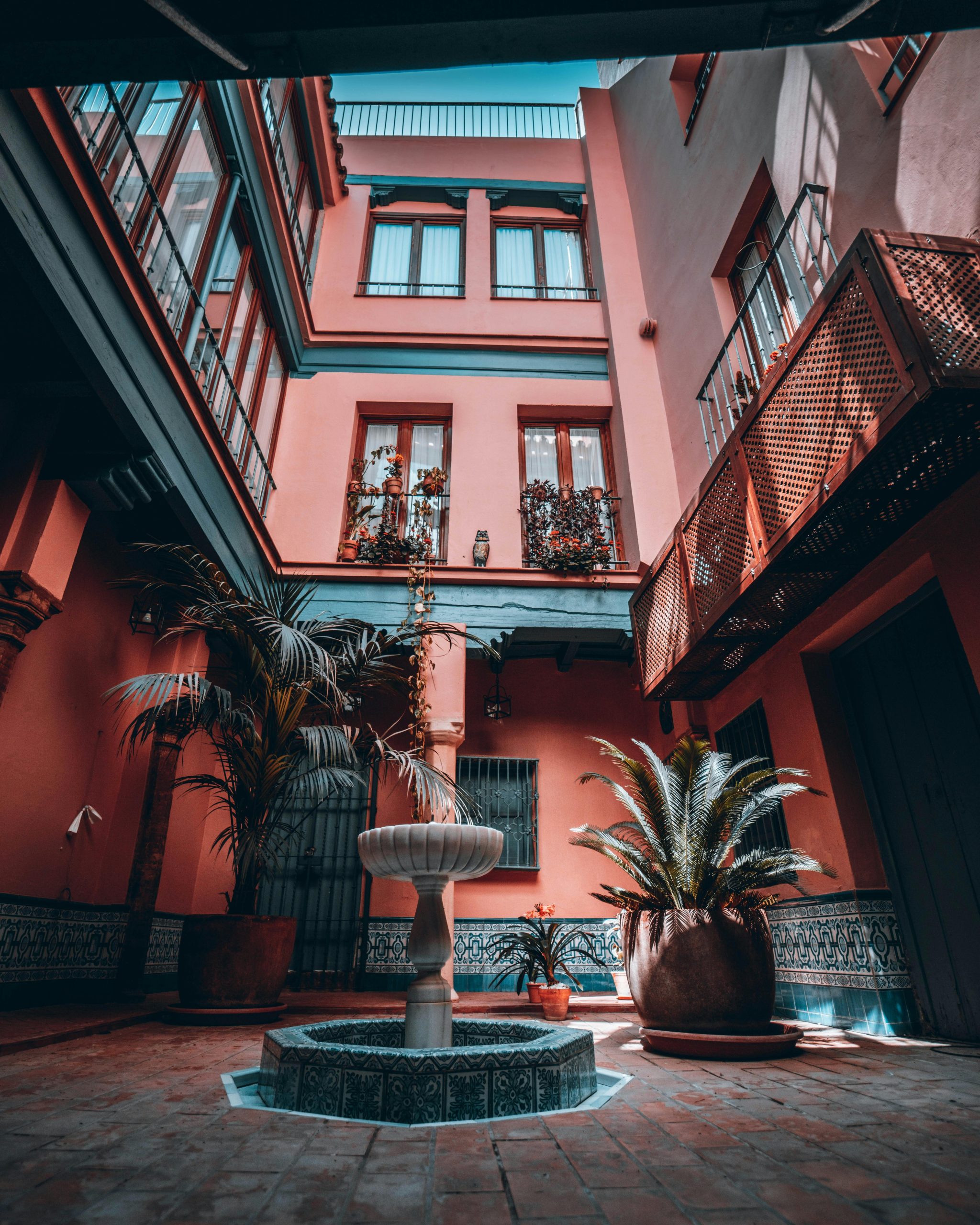
6. Mix Pattern and Color with a Tiled Mediterranean Fountain
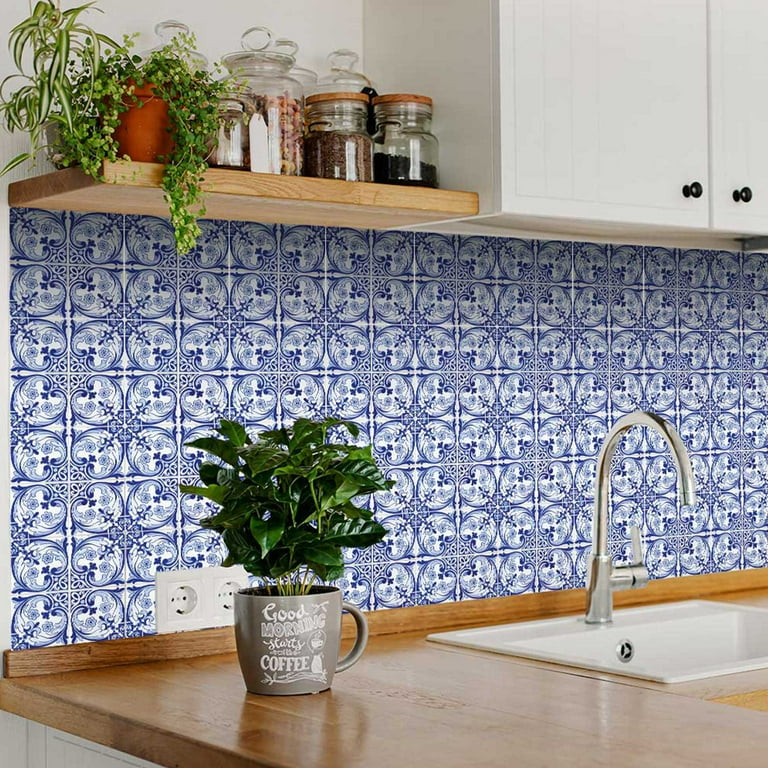
That bold tile accent is easier than it looks. Here’s a quick guide to adding a similar tile wainscot around a courtyard.
|
$174.99
|
$39.89
|
$69.99
|

“Time: 1 weekend
Cost: $5 – $25 per sq. ft. for tile
Prep is Key: Thoroughly clea”
- Time: 1 weekend
- Cost: $5 – $25 per sq. ft. for tile
- Prep is Key: Thoroughly clean and dry the stucco wall. Mark a level guideline for the top of your tile line all the way around the space.
- Apply Adhesive: Use a notched trowel to apply a thin-set mortar or tile adhesive rated for exterior use to a small section of the wall.
- Set The Tile: Press tiles into the adhesive with a slight twist. Use spacers to maintain even grout lines. Check for level frequently.
- Grout and Seal: After 24-48 hours, remove spacers and apply grout, wiping away excess with a damp sponge. After the grout cures (check manufacturer’s instructions), apply a grout sealer to protect against moisture and stains.
We’re seeing a huge wave of interest in authentic, location-specific designs, and this is a perfect example. Driven by a desire for spaces that feel collected and personal, people are looking to global design traditions—like the vibrant tilework of Portugal or the courtyard houses of Morocco—for inspiration. The rise of the “dopamine decor” trend on Pinterest favors these kinds of bold, joyful color and pattern combinations over sterile, all-white-everything minimalism.
7. Use Water to Reflect a Grand Building Façade
The star of this show is the reflection. The ornate fountain is lovely, but the real magic is the massive body of calm water that acts like a mirror for the stunning salmon-pink building. It doubles the impact of the architecture and creates a powerful sense of serenity and scale. Without the water, you’d have a pretty building and a nice fountain. With the water, you have a breathtaking, immersive experience.

“When designing a reflective pool, depth and color are critical.”
A shallow basin (18-24 inches) is sufficient. To get that perfect, dark-mirrored surface that reflects so beautifully, the bottom of the pool should be finished in a very dark color, like black or deep charcoal. This minimizes the visibility of the bottom and maximizes the reflection of the sky and surrounding elements. A light-colored bottom, like white or sky blue, will simply look like a swimming pool and ruin the effect.
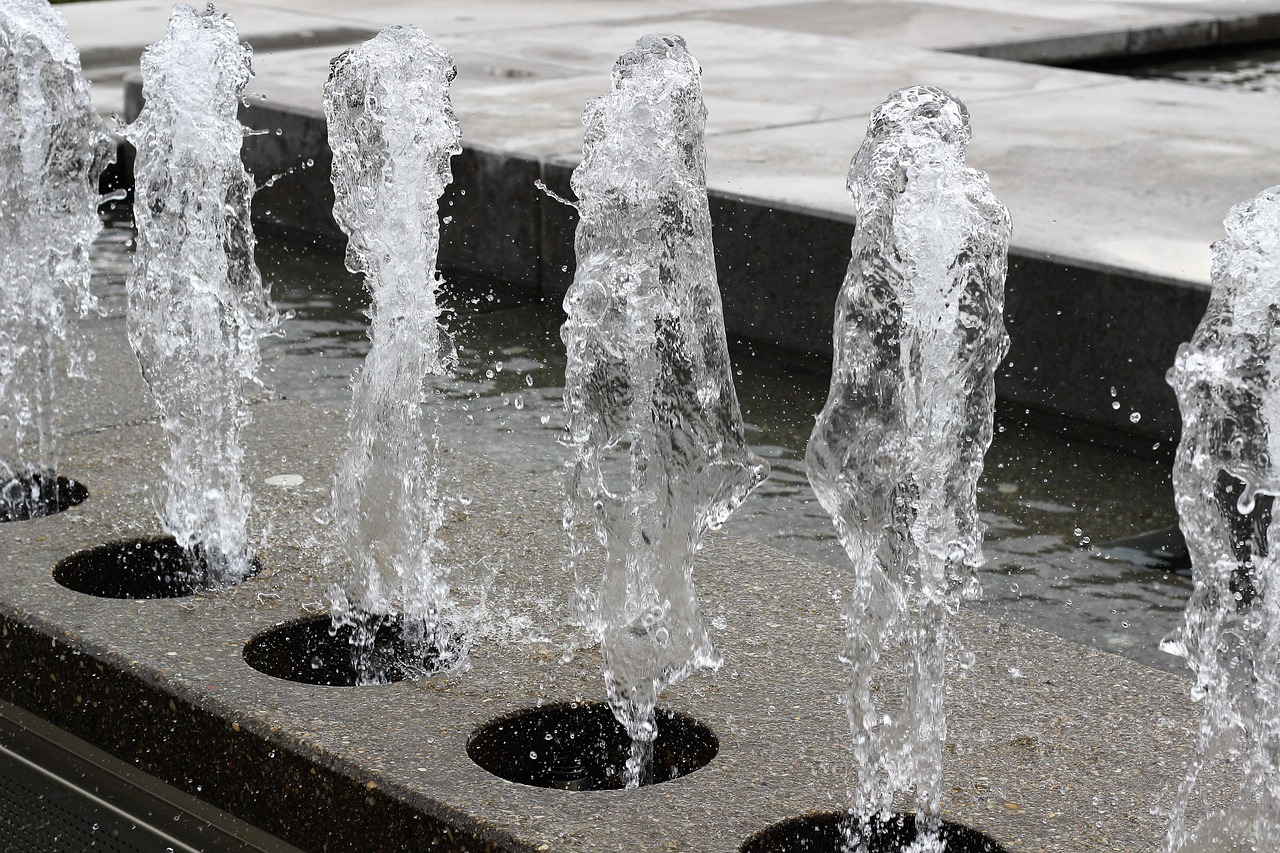
8. Create a Playful Space with Modern Ground Jet Fountains
Ground jet fountains, or “splash pads,” are incredibly fun, but they come with a major safety consideration: slip resistance. The speckled grey stone surface shown here needs to have a high coefficient of friction (COF) rating to be safe for a public or family space. Polished granite, for example, would be dangerously slick. Look for textured or sandblasted finishes. Also, the water needs to be properly treated and filtered, just like a swimming pool, to be safe for contact.
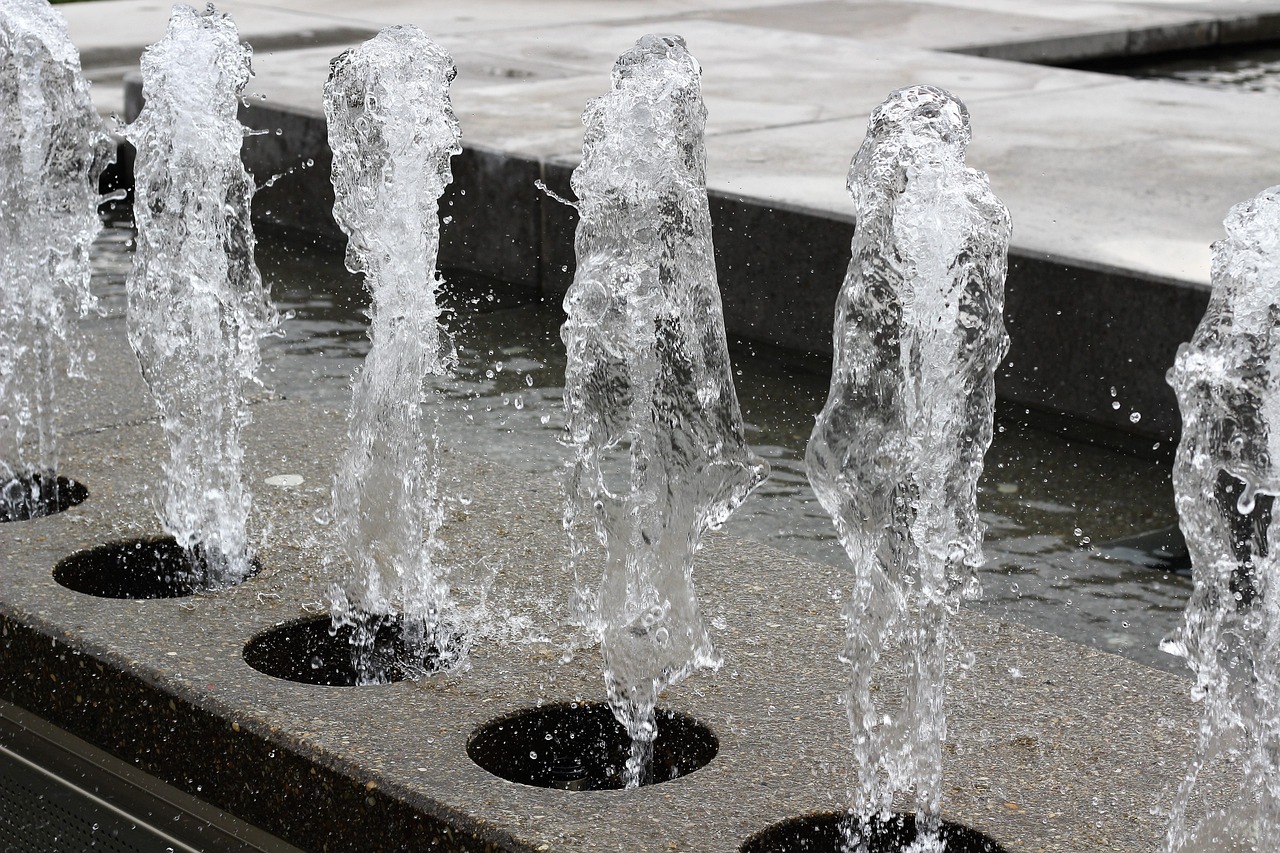
“This idea is incredibly flexible.”
You can do it on a massive public scale, as pictured, or shrink it down for a residential patio. For a home, an area as small as 8×8 feet can work. The key is installing a dedicated underground reservoir and pump system. This isn’t a simple DIY for most. Expect to dedicate a budget of $5,000 – $15,000 for a professionally installed residential system with proper drainage and filtration. Compare with the modern waterfall in Idea #17 for a more contained option.
9. Add Timeless Character with a Carved Animal Spout Fountain
This design works because of its texture and sense of history. The weathered stone, with its carved scale patterns and patina, tells a story of time. It doesn’t feel like it was just installed; it feels like it has always been there. The whimsical animal spouts add a touch of personality and life, preventing the fountain from feeling too stuffy or formal. It’s this combination of classic form and aged character that makes it so appealing and timeless.
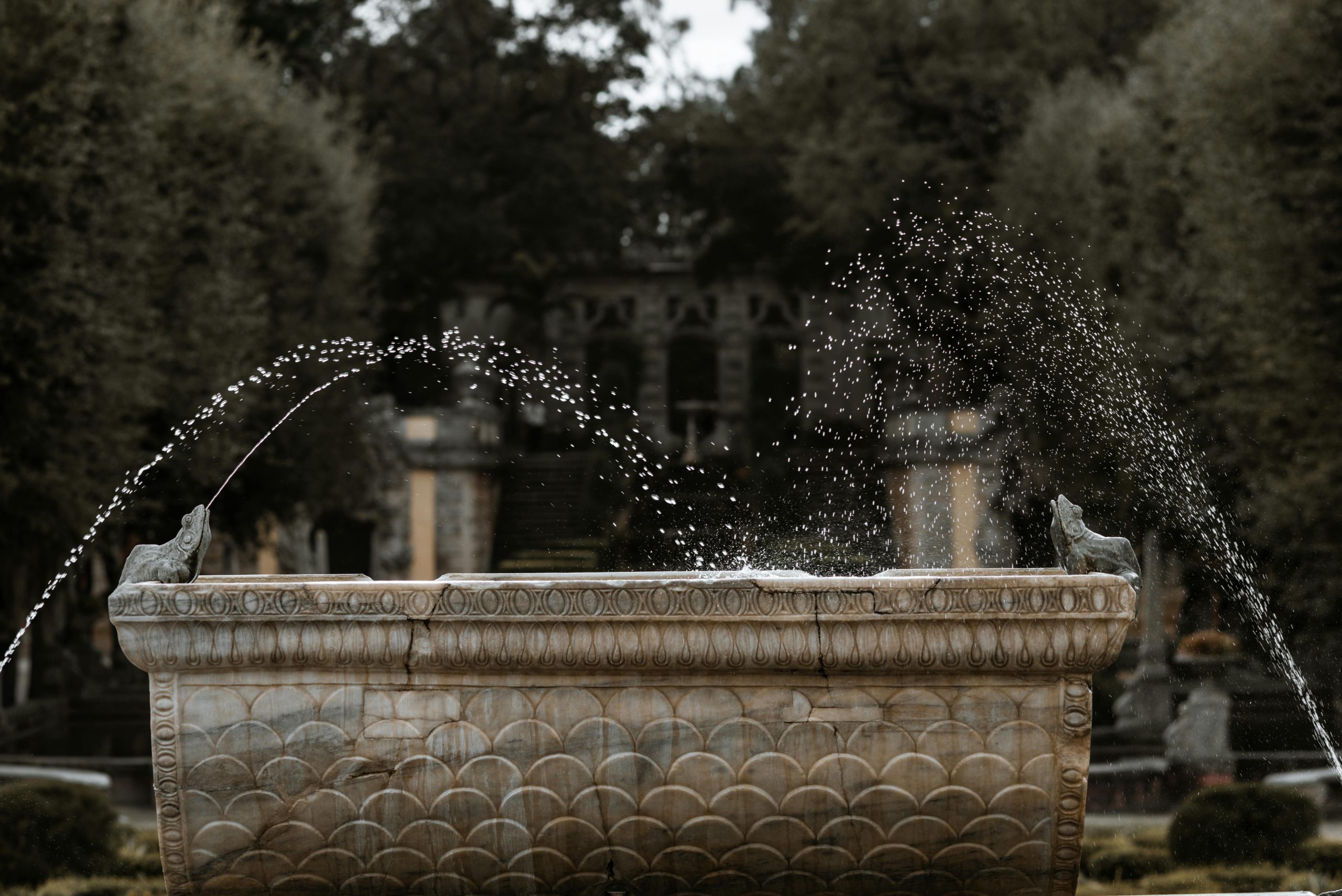
“A massive, hand-carved stone fountain is a huge expense.”
But you can get the spirit of this look for much less. Look for a smaller, cast-stone wall fountain with an animal spout. You can find beautiful options online or at garden centers for $200 – $600. The key is to encourage a bit of aging. Let moss grow on it. Don’t scrub it clean every week. That weathered patina is what gives it so much charm, and luckily, that part is free.
10. Create a Lush Oasis with a Tiered Fountain and Waterfront Seating
The single element that makes this scene so inviting is the color of the water. That deep, dark teal-green, a result of both depth and the surrounding reflections, is what transforms it from a simple water feature into a lush, mysterious oasis. It feels cool, deep, and natural. If the water were clear or bright blue, it would feel more like a swimming pool and lose all of its tranquil, organic charm. The dark water is what completes the feeling of being enveloped by nature.
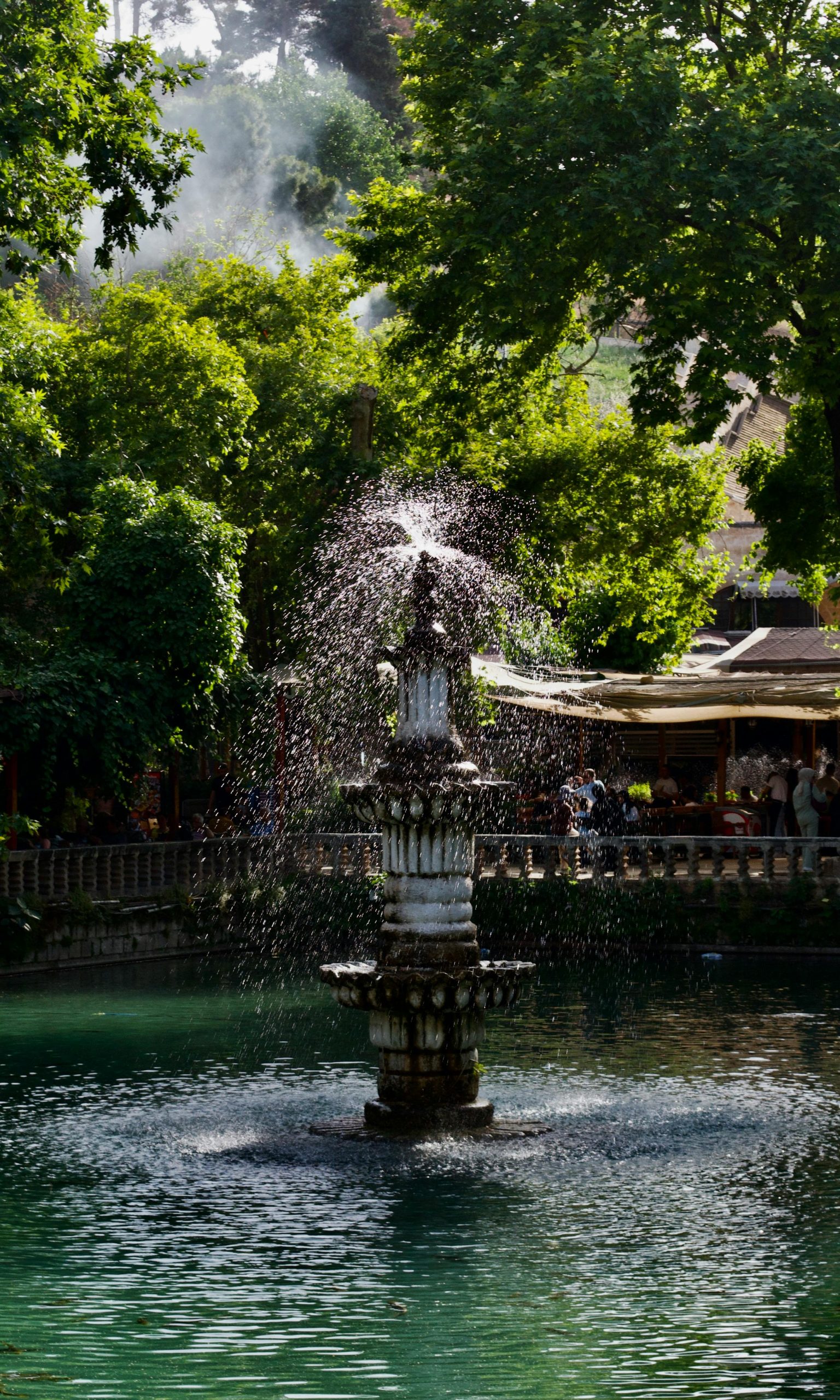
“Maintaining water that looks this good in a large, outdoor setting is a constant battle against nature.”
The dark color that makes it so beautiful also absorbs sunlight, which can encourage algae growth. Abundant surrounding foliage means a constant shower of leaves, pollen, and debris that needs to be skimmed out. A robust filtration system, including a skimmer and a UV clarifier, is non-negotiable to keep the water clear and healthy, not swampy.
11. Embrace Natural Aging with a Weathered Park Fountain
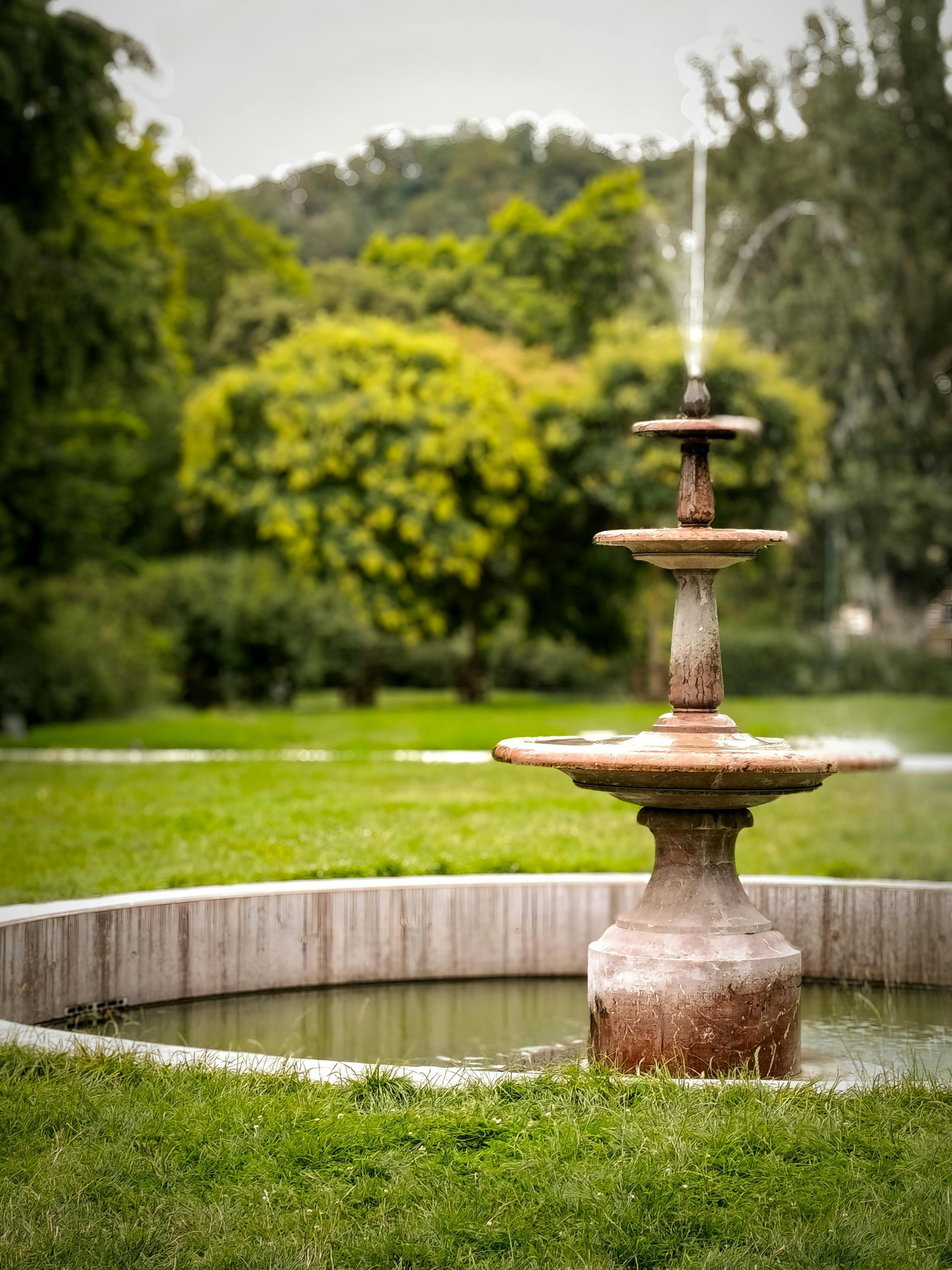
This look follows a simple, nature-focused formula: 80% natural elements + 20% classic structure. The overwhelming majority of the visual is the vibrant green grass and the deep greens and yellows of the tree foliage. The fountain and its basin make up the remaining 20%, acting as a focal point. The key is that the structure itself is weathered and yielding to nature, with patina and wear that helps it blend in rather than stand out as a brand-new object.
12. Add European Elegance with a Fountain and Mansard Roof Backdrop
Before committing to a prominent fountain, evaluate your home’s existing architecture. This idea works best when the fountain style complements the house, not competes with it.
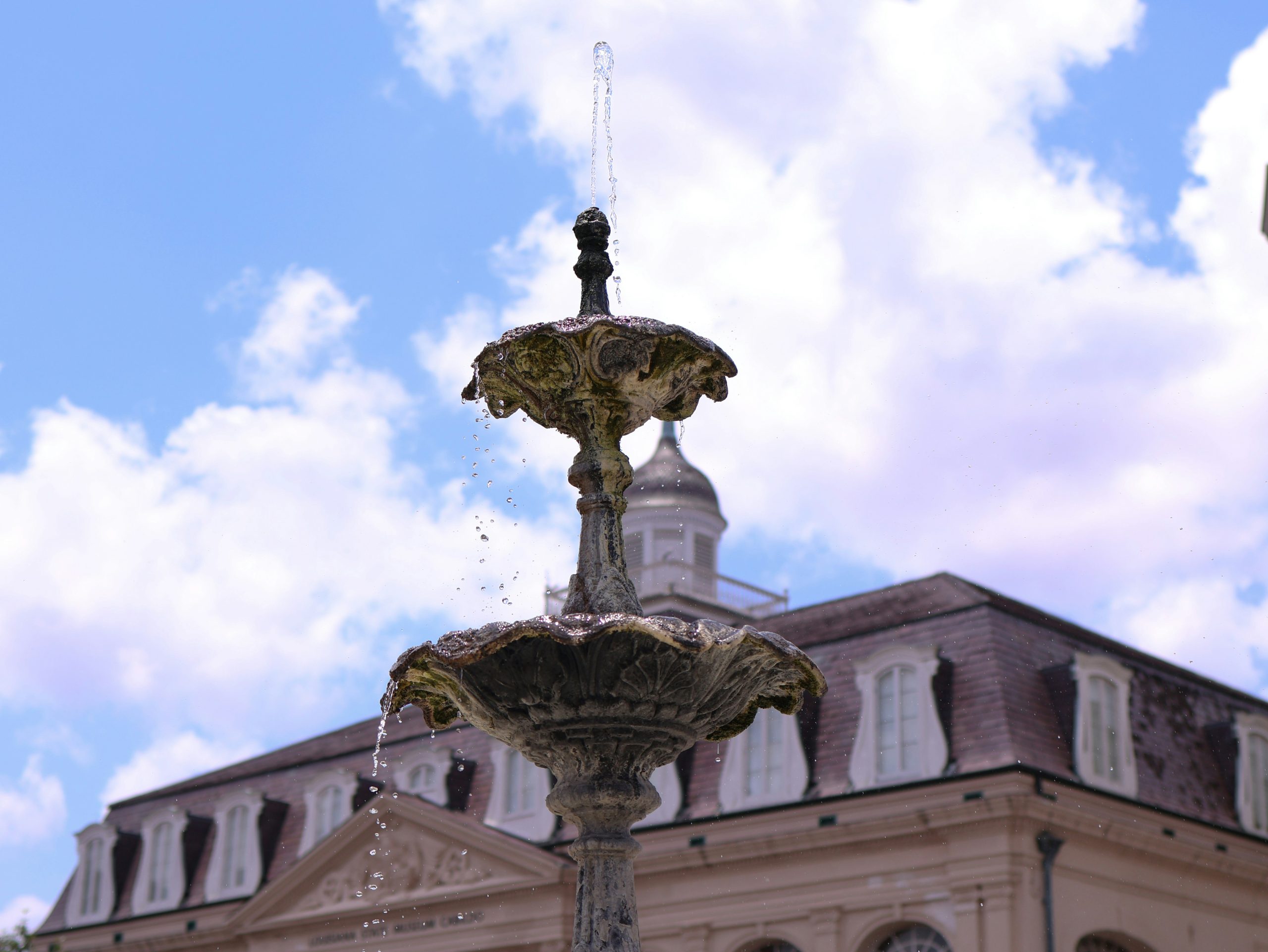
“Architectural Harmony: Does the style of the fountain (e.g., classical, modern, rustic) match the style of your home?”
A classical fountain in front of a mid-century modern home can look very out of place.
View from Inside: Where will the fountain be seen from indoors? Position it to be framed by a window in a main living area, like a living room or kitchen.
Sun and Shade: Observe how the light hits the proposed spot throughout the day. Full sun can lead to faster evaporation and algae growth, while deep shade might obscure its details.
The success of this scene lies in the visual dialogue between the foreground and background. The dark, weathered grey-green of the two-tiered fountain has a direct color relationship with the dark mansard roof of the building behind it. This repetition of color, separated by the warm beige of the building’s facade, creates a pleasing sense of cohesion. The vertical spray of water from the fountain also subtly echoes the vertical lines of the dormer windows, tying the whole composition together.
13. Nestle a Three-Tiered Fountain in a Lush Garden
The single most effective detail in this design is the blue mosaic tile lining the fountain basin. It’s an unexpected pop of color that elevates the entire feature. The warm beige stone and green foliage are beautiful on their own, but the vibrant blue adds a focal point, simulates the deep color of pristine water, and introduces a touch of Mediterranean charm. Remove that tile, and the design is only half as special.
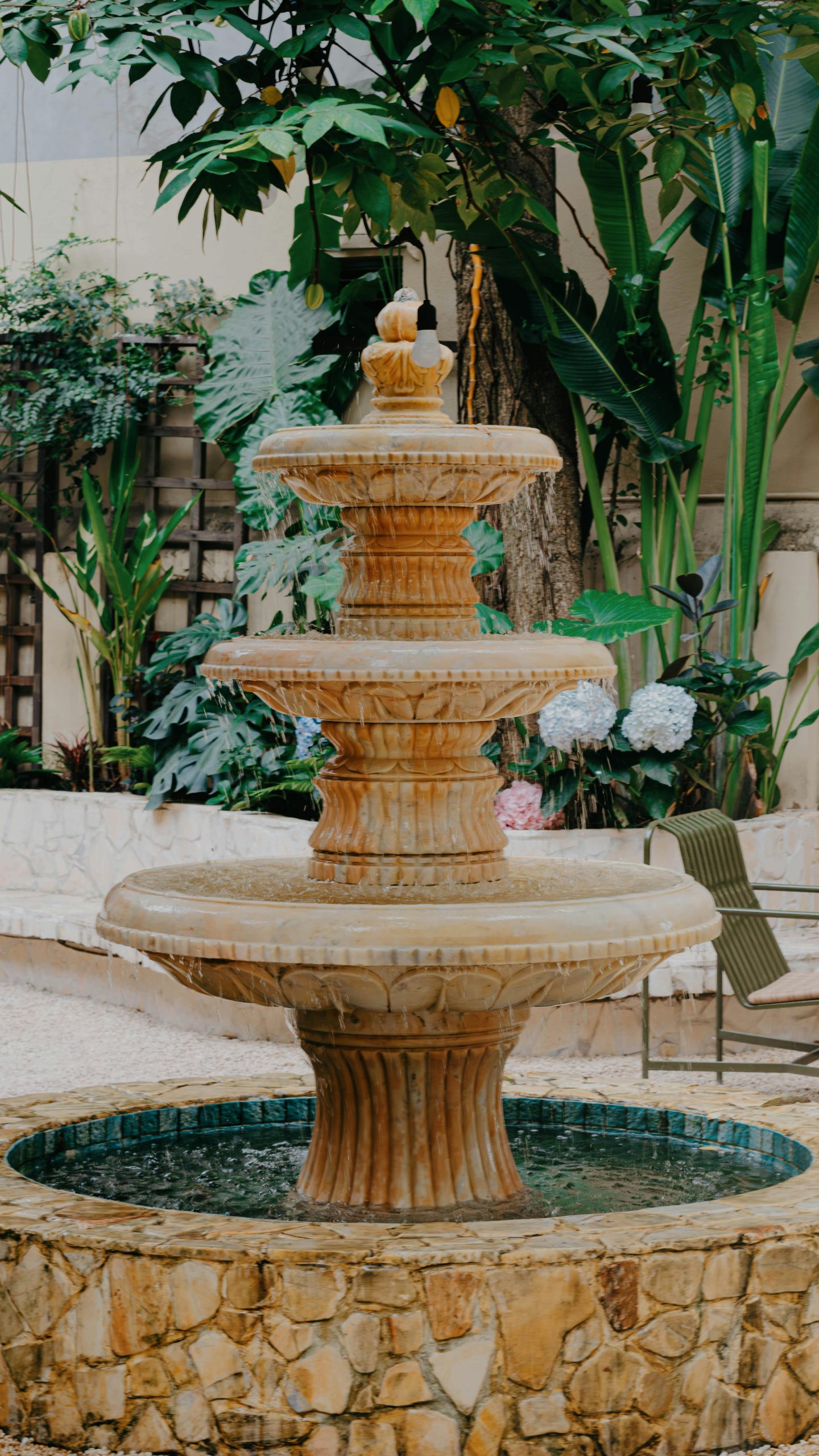
“For a multi-tiered fountain of this size—likely 6-8 feet tall—you need adequate space for it to feel nestled, not crammed.”
Plan for at least a 15×15 foot area to allow for the fountain’s basin and surrounding foliage to breathe. The sound of the cascading water will be significant, so place it where it can be enjoyed from a patio or window, but not so close to a bedroom that it becomes a nuisance. The lushness comes from planting right up to the stone basin wall.
14. Create an Artistic Focal Point with a Bronze Rose Fountain
When you have a sculptural fountain like this, lighting is everything. Don’t just point a single spotlight at it. Use a combination of two to three small, low-voltage landscape lights. Place one underwater, pointing up at the water stream, to make the arch of water glow. Place another one or two from the side, at a low angle, to graze across the textured bronze petals. This will pick up all the beautiful detail and patina that would be lost with flat, direct lighting.
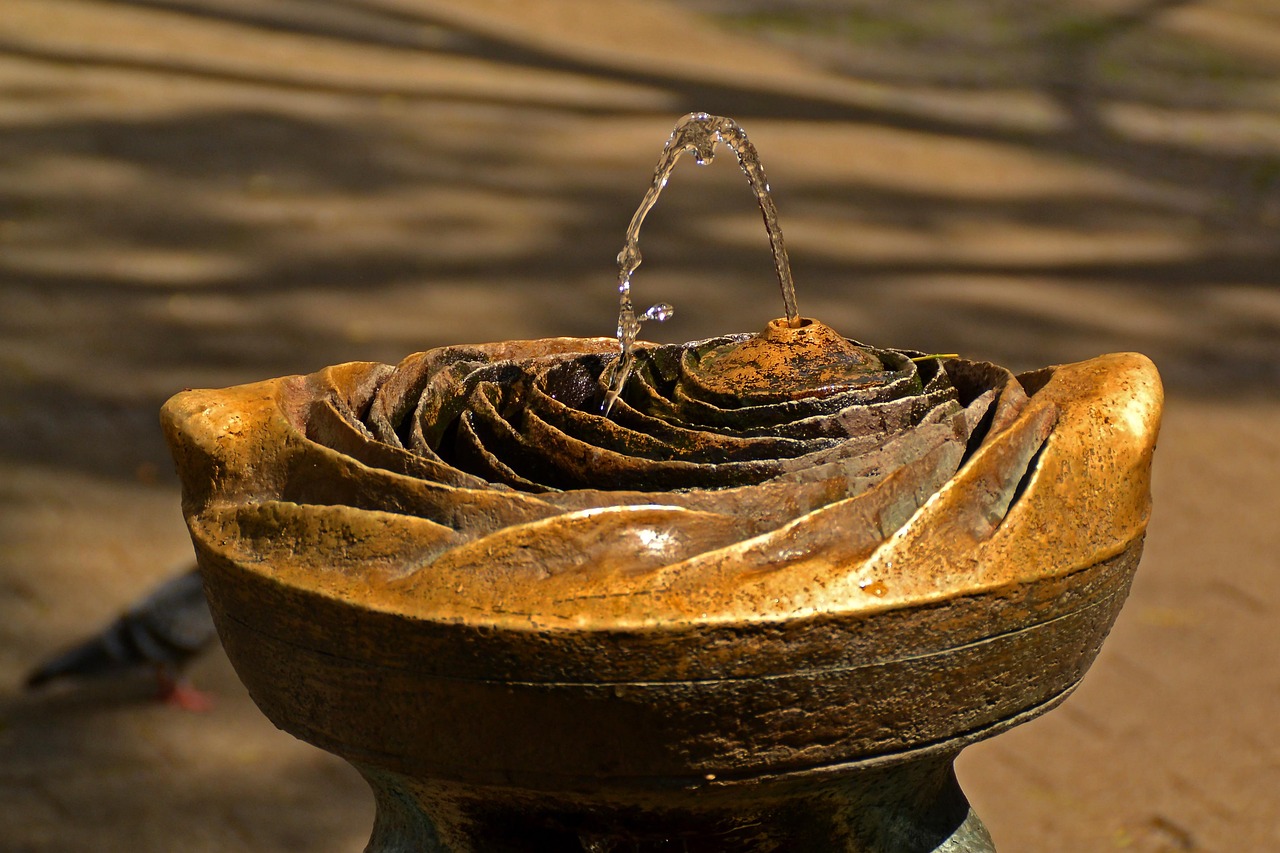
“Real bronze is incredibly beautiful, durable, and…”
expensive. A solid bronze fountain of this size could cost thousands. Many more affordable options are made from resin or fiberglass with a bronze finish. They can look great initially, but be warned: the finish can chip or fade over time, especially in harsh sun or freezing weather. Before you buy, ask about the UV resistance of the finish and whether it needs a clear coat reapplied every few years to maintain its look.
15. Add a Touch of Myth with a Dragon Head Spout
This design is a masterclass in using contrast to create focus. The light gray, intricately carved stone of the dragon head stands out sharply against the dark, calm water and the deep green of the lily pads. The single stream of water provides a point of light and movement in an otherwise still composition. It’s a simple setup, but the strong contrasts in color, texture (carved stone vs. smooth water), and energy (static sculpture vs. flowing water) make it incredibly effective. Compare the rustic feel here to the log fountain in Idea #20.
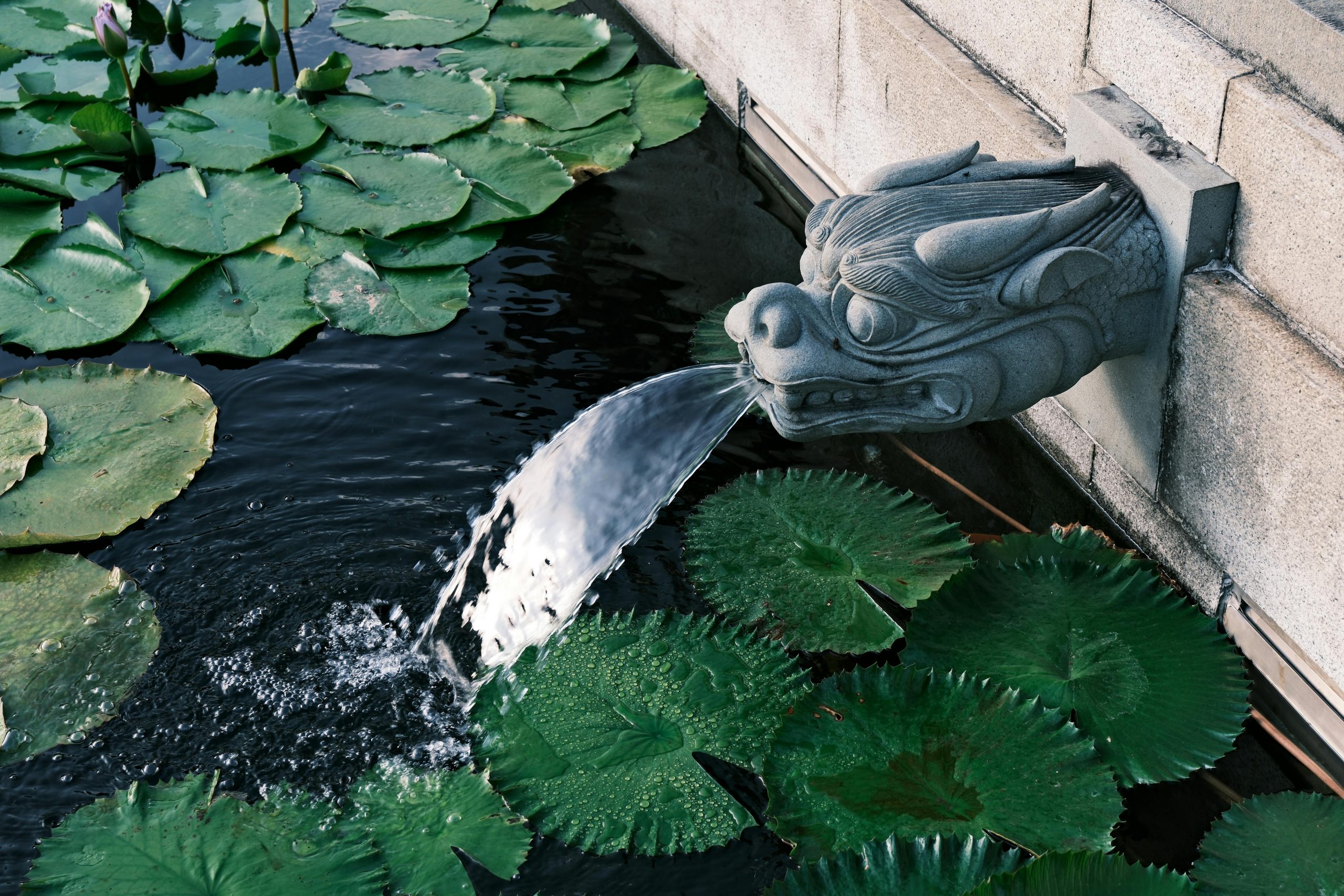
“You don’t need a custom-carved stone feature to bring this look home.”
Many garden and pond suppliers sell pre-cast concrete or resin spouts in a variety of styles—from classic lion heads to whimsical frogs or, yes, dragons. These can range from $50 to $300. You can mount one on a simple garden wall or even just have it emerge from some rocks at the edge of a small pre-formed pond basin. The key is the spout and its interaction with the water; the rest can be simple.
16. Install an Ornate Bronze & Gold Wall Fountain
Brass and bronze are stunning but require upkeep to stay brilliant. The golden spigot will tarnish from exposure to water and air, developing a greenish-brown patina. If you love that aged look, just let it happen. If you want to keep it shiny, you’ll need to polish it 2-3 times a year with a dedicated brass polish. The dark bronze escutcheon is less fussy but can develop uneven water spots. A periodic application of a clear paste wax can help protect its finish and make water bead off.
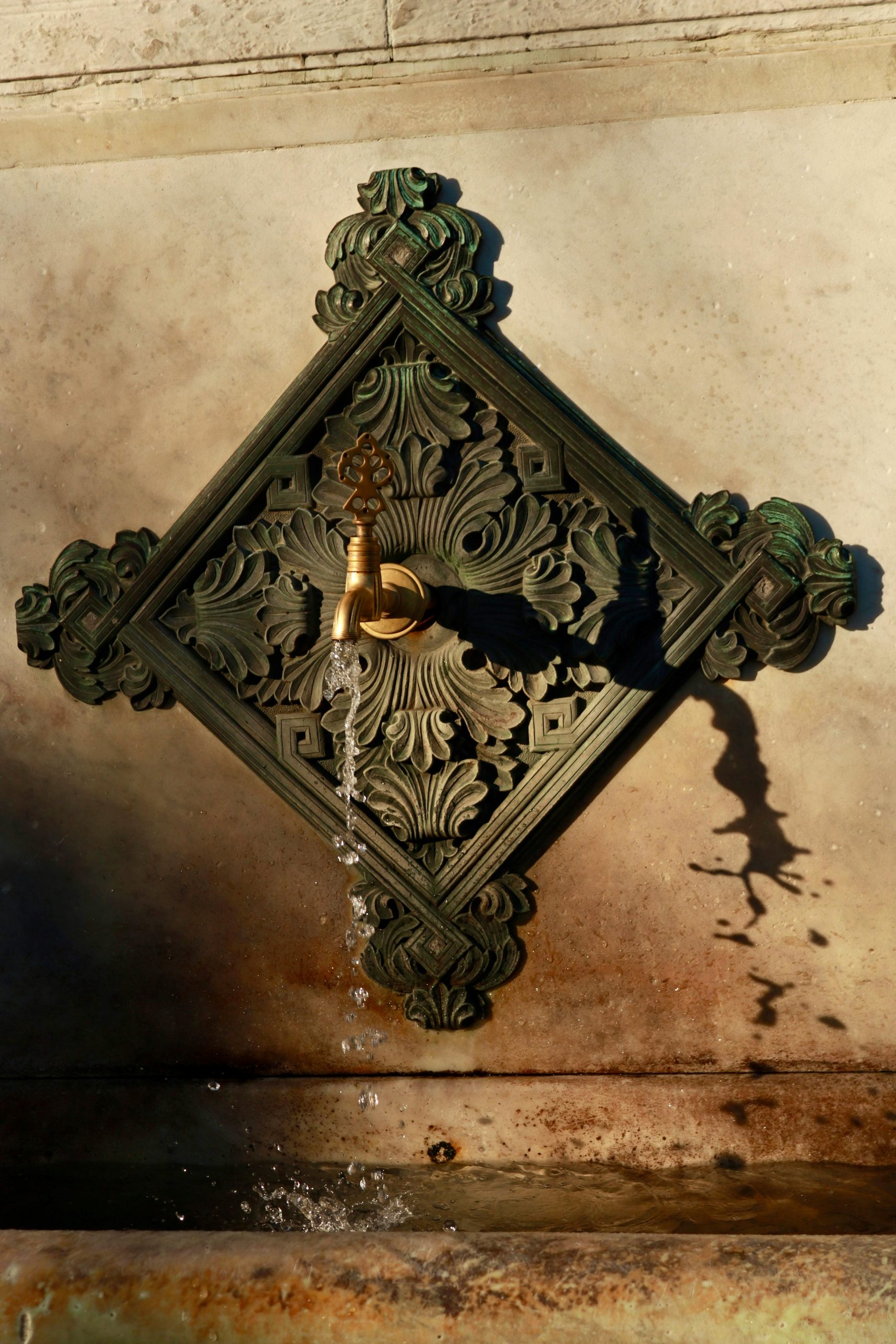
“When mounting a heavy feature like this to a wall, especially a stone or brick wall, you absolutely cannot just drill a hole and hope for the best.”
You need to locate a solid structural point. For a wall fountain, this also involves running a water supply line inside the wall cavity. This is not a beginner DIY project. It’s wise to hire a plumber and a mason or skilled handyman to ensure it’s securely mounted and the plumbing is leak-free. A project like Idea #28 is a much simpler wall-mounted alternative.
17. Design a Modern Waterfall with Stacked Stone and Aqua Tiles
Creating that shimmering water effect is about light and movement. Here’s a mini-guide to lighting it right:
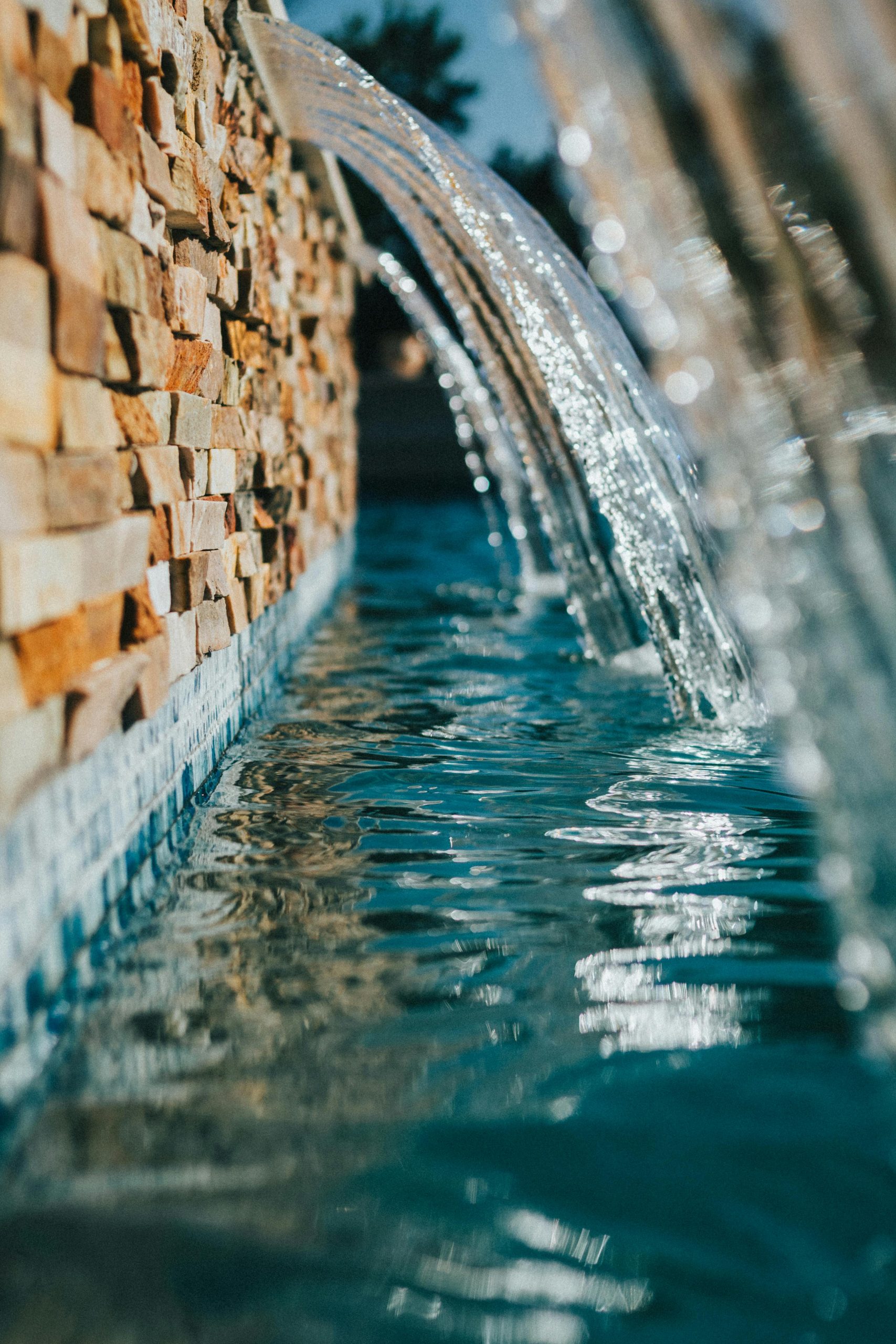
“Time: 2 – 3 hours
Cost: $100 – $300 for LED lights
Choose Submersible LEDs: Sele”
- Time: 2 – 3 hours
- Cost: $100 – $300 for LED lights
- Choose Submersible LEDs: Select low-voltage (12V) LED lights specifically rated for underwater use (IP68 rating).
- Position for Grazing: Don’t point the light straight at the wall. Place the fixture in the basin near the base of the wall and angle it upwards, so the light washes up across the face of the cascading water.
- Highlight the Texture: This grazing angle will catch the movement of the water and highlight the texture of both the water and the stone behind it.
- Conceal the Source: Hide the light fixture behind a rock or a small plant in the basin so you see the effect, not the bulb.
This look is a beautiful equation: 70% natural texture + 30% pop of color. The stacked stone, with its warm browns and varied texture, provides the earthy, organic base that makes up the bulk of the feature. The aqua tiles are the accent, providing a cool, vibrant contrast that feels refreshing and modern. You could swap the stacked stone for smooth concrete for a more minimalist look, or change the aqua tiles to a deep emerald green, and the formula would still hold perfectly.
18. Achieve Serenity with a Minimalist Concrete Wall Fountain
The power of this design lies in its repetition and simplicity. The five identical dark metal spouts create a strong, rhythmic pattern against the plain, textured concrete wall. There are no distracting ornamental details. The focus is entirely on the simple beauty of the water itself—the clean, straight streams and the resulting ripples in the basin below. This minimalist approach has a calming, meditative effect. It’s a great example of how impactful simple geometry can be, similar to the ground jets in Idea #8.
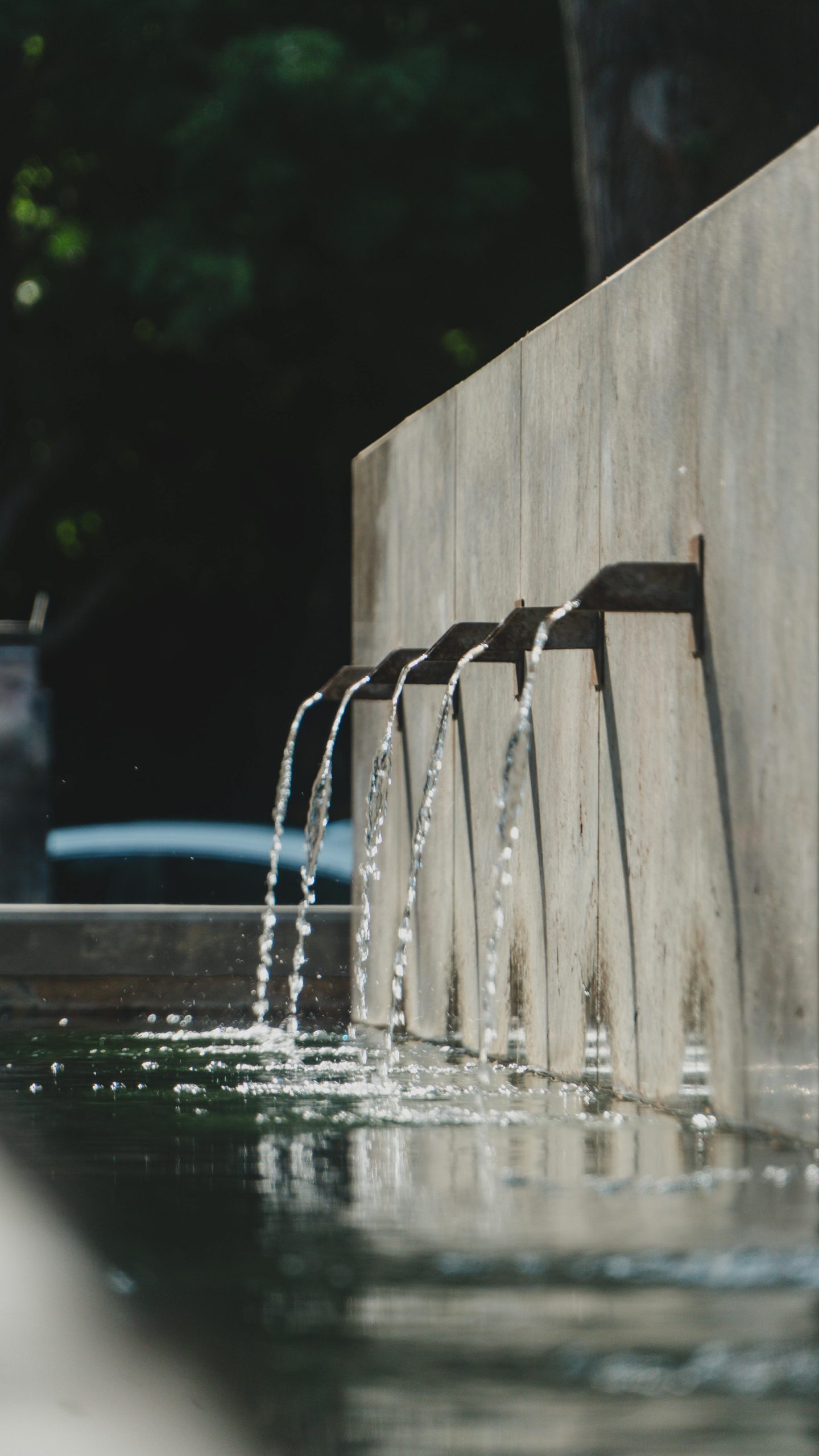
“A poured concrete wall looks amazing, but it’s a permanent decision.”
You can’t easily move it or change your mind. It’s also prone to cracking if not installed correctly with proper footings and reinforcement, especially in climates with frost heave. A less permanent, and often more affordable, alternative is to build a wall from concrete blocks (CMUs) and then apply a stucco finish to mimic the look of monolithic poured concrete.
19. Craft a Serene, Meandering Stream with Small Waterfalls
It’s all about the sound. While this feature is visually beautiful with its dark stone and lush foliage, its most important contribution to the space is auditory. The series of small waterfalls creates a constant, gentle, burbling sound. This is much more tranquil and natural-sounding than the single, forceful splash of a large fountain. The sound of moving water masks unwanted background noise like traffic or neighbors, creating a private, serene sanctuary. That’s the one thing that truly transforms the garden. Looks similar to Idea #31, but on a smaller scale.
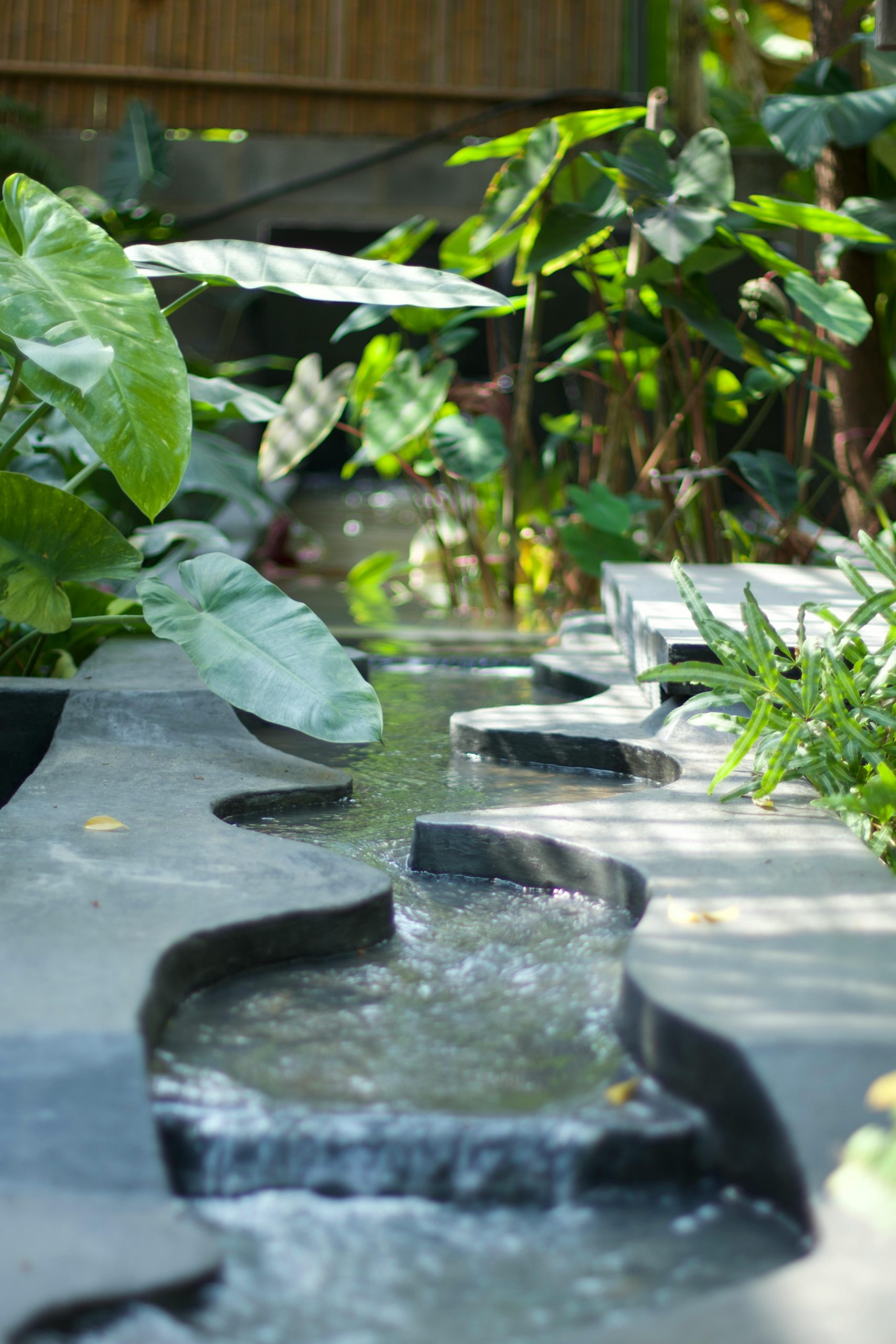
“To create a natural-looking stream, use a flexible pond liner, not a pre-formed plastic shell.”
This allows you to create the gentle curves and custom shapes that make it look realistic. Hide the edges of the liner by tucking it under heavy stones and planting ground-cover plants right up to the edge. Use stones of various sizes within the stream bed to create the little waterfalls and vary the sound of the water.
20. Build a Rustic Fountain from Repurposed Logs
This is the ultimate budget-friendly, high-impact idea if you have access to the right materials. If you’ve had a tree taken down or know someone who has, you can create this for the cost of a small pump and some tubing (under $100). The logs themselves are free. You’ll need a drill with a long auger bit to bore a hole through the top log for the tubing. It’s a fantastic weekend project that delivers a million-dollar rustic look for pennies, especially compared to a carved stone feature like Idea #15.
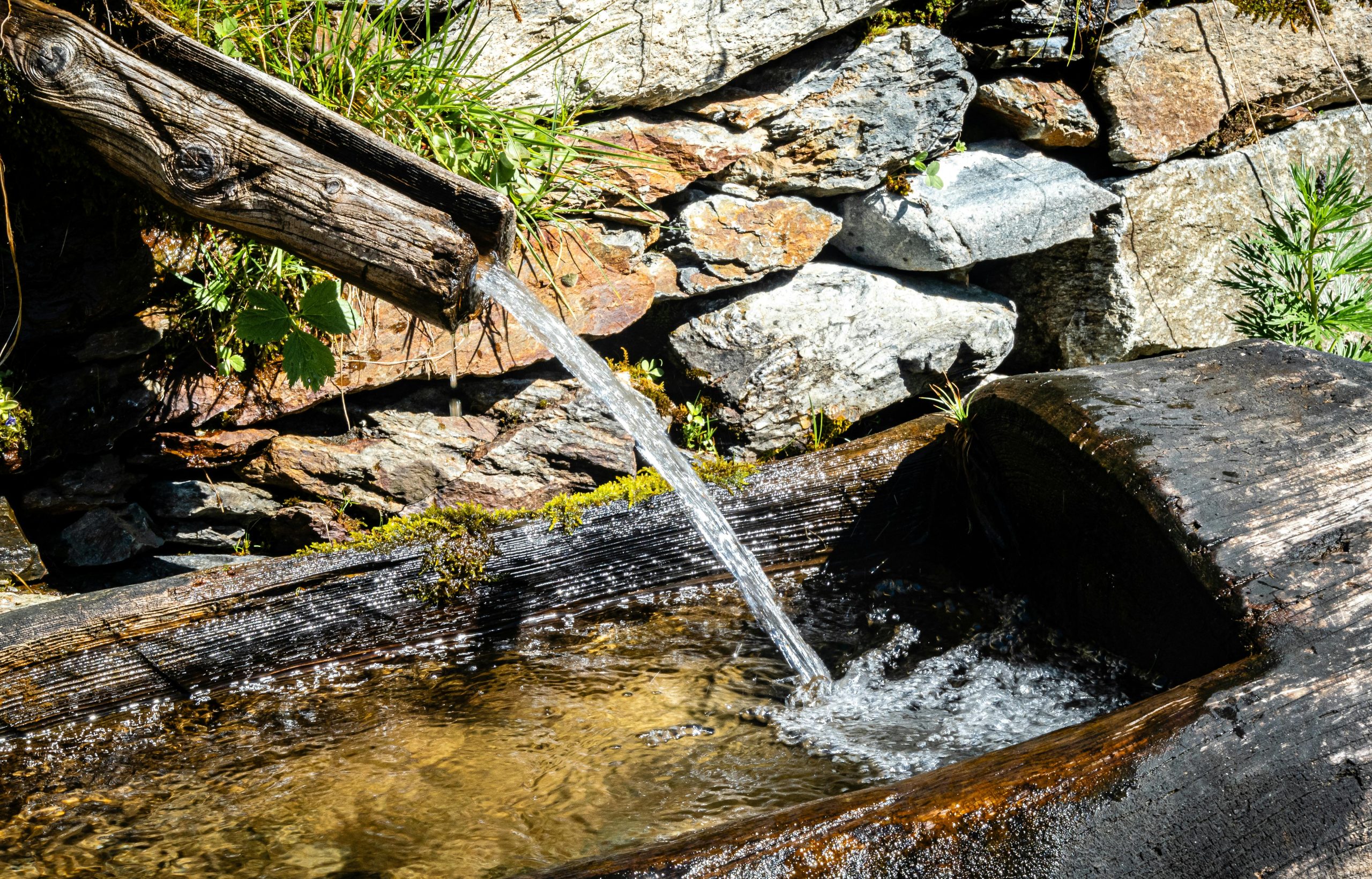
“, check what kind of wood you have.”
Not all logs are created equal for water features.
- Choose a hardwood: Cedar, cypress, or black locust are naturally rot-resistant and will last for years. Softer woods like pine or poplar will decay much more quickly when constantly exposed to water.
- Check for stability: Make sure the logs are stable and won’t rock or tip over. You may need to partially bury the base log or prop it securely with stones.
- Consider the location: Place it where it won’t be a tripping hazard and where the splashes won’t constantly soak plants that prefer dry feet.
21. Frame a Waterfront View with a Classical Fountain
This composition works by masterfully framing the view. The dark green hedges on either side act like curtains on a stage, parting to reveal the scene. The white wrought iron fence and stone pillars create a secondary frame within that, drawing the eye towards the distant city skyline. The fountain itself serves as an elegant foreground element, adding a sense of grandeur and establishing the classic, picturesque tone of the entire space. It’s a lesson in layering and directing the gaze.

22. Set a Carved Marble Fountain Against a Green Hedge Wall
The single element that makes this fountain feel so luxurious and important is the dense green hedge that serves as its backdrop. The hedge wall creates a solid, living frame that isolates the fountain from any background distractions. The deep green makes the white and pink marble pop, highlighting every carved detail. Without this living wall, the fountain would just be sitting in a garden; against it, the fountain becomes a deliberate piece of art on display.
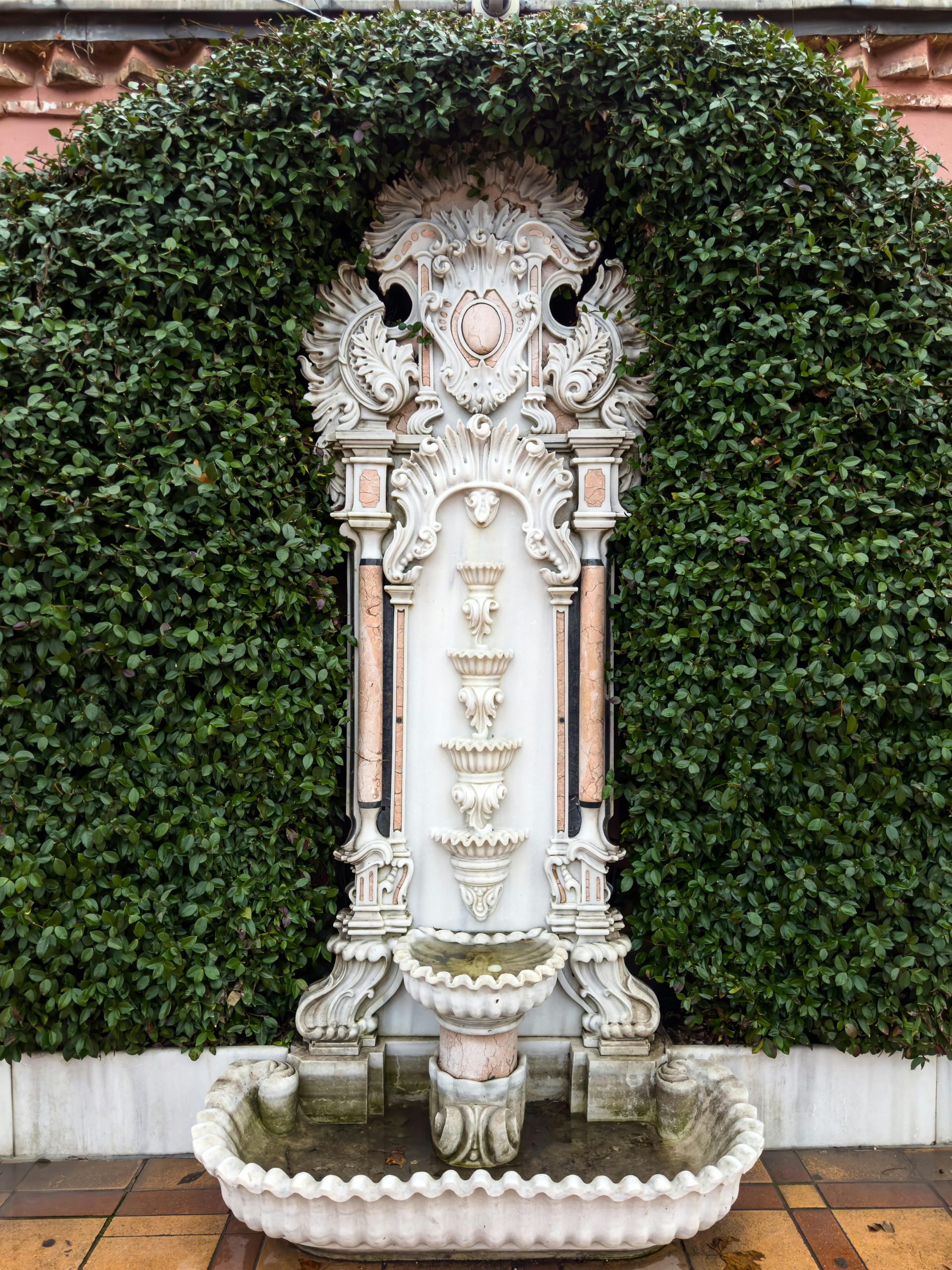
“The visual recipe here is about high contrast and luxury materials: 60% living texture + 30% polished stone + 10% unexpected color.”
The vibrant green hedge provides the textured field. The intricately carved white marble is the main event. And the subtle pink marble columns are that 10% twist that adds a layer of custom detail and sophistication. You could get a similar effect by setting a simple, modern concrete fountain against a clipped hedge for a less ornate interpretation.
23. Add Calm with a Bubbling Beige Bowl Fountain
This serene look is very achievable on a budget. The key is the shallow bowl. You can find similar large, lightweight bowls made of fiberglass or concrete composite at home and garden centers for $150 to $400. The bubbling mechanism is just a small submersible pump placed in the center. Surround it with a bag or two of polished river pebbles from a big box store, and you have recreated this entire look for under $500. It gives you the soothing sound and visual of water without the expense of a large, tiered fountain. Check out Idea #4 for a similar concept in a more structured setting.
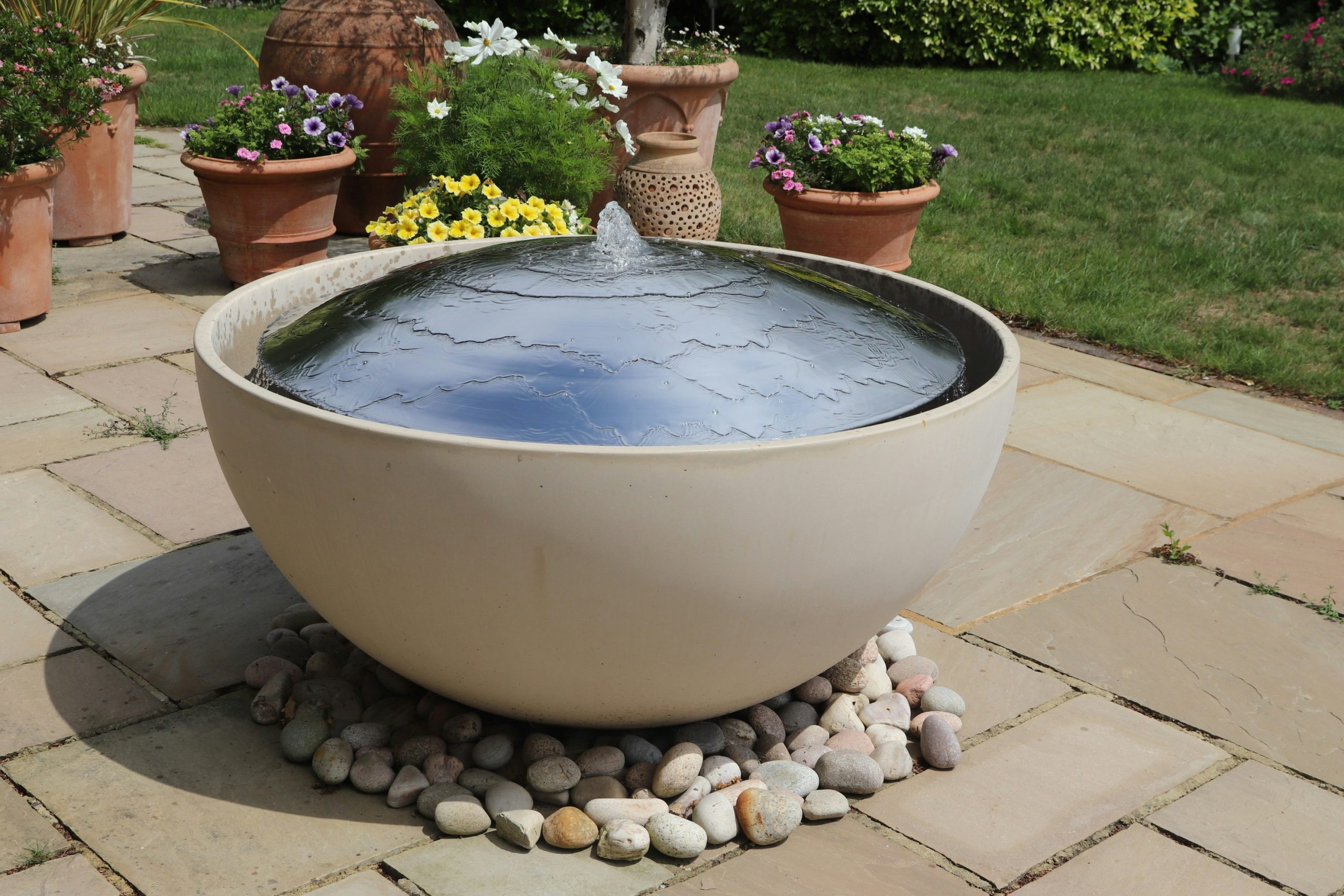
“A fountain with a large, shallow surface area like this is an evaporation machine, especially in full sun or a windy location.”
You’ll need to top it off with water every few days to keep the pump from running dry, which can burn out the motor. Also, because the water is shallow and warms up quickly, it can be a breeding ground for algae. Using a fountain-specific algaecide and placing it in a spot that gets some afternoon shade can help reduce both evaporation and algae growth.
24. Combine Cascades and Jets for a Dramatic Park Fountain
This design creates so much energy by combining two different types of water movement. You have the vertical, gravity-fed cascade from the central tiered fountain, which creates a classic, powerful sound. Then, you have the playful, arching sprays from the surrounding jets. This layering of movement—the downward cascade and the outward arcs—makes the fountain dynamic and engaging from every angle. The sparkling water droplets from each source catch the sunlight, adding another layer of texture and life.
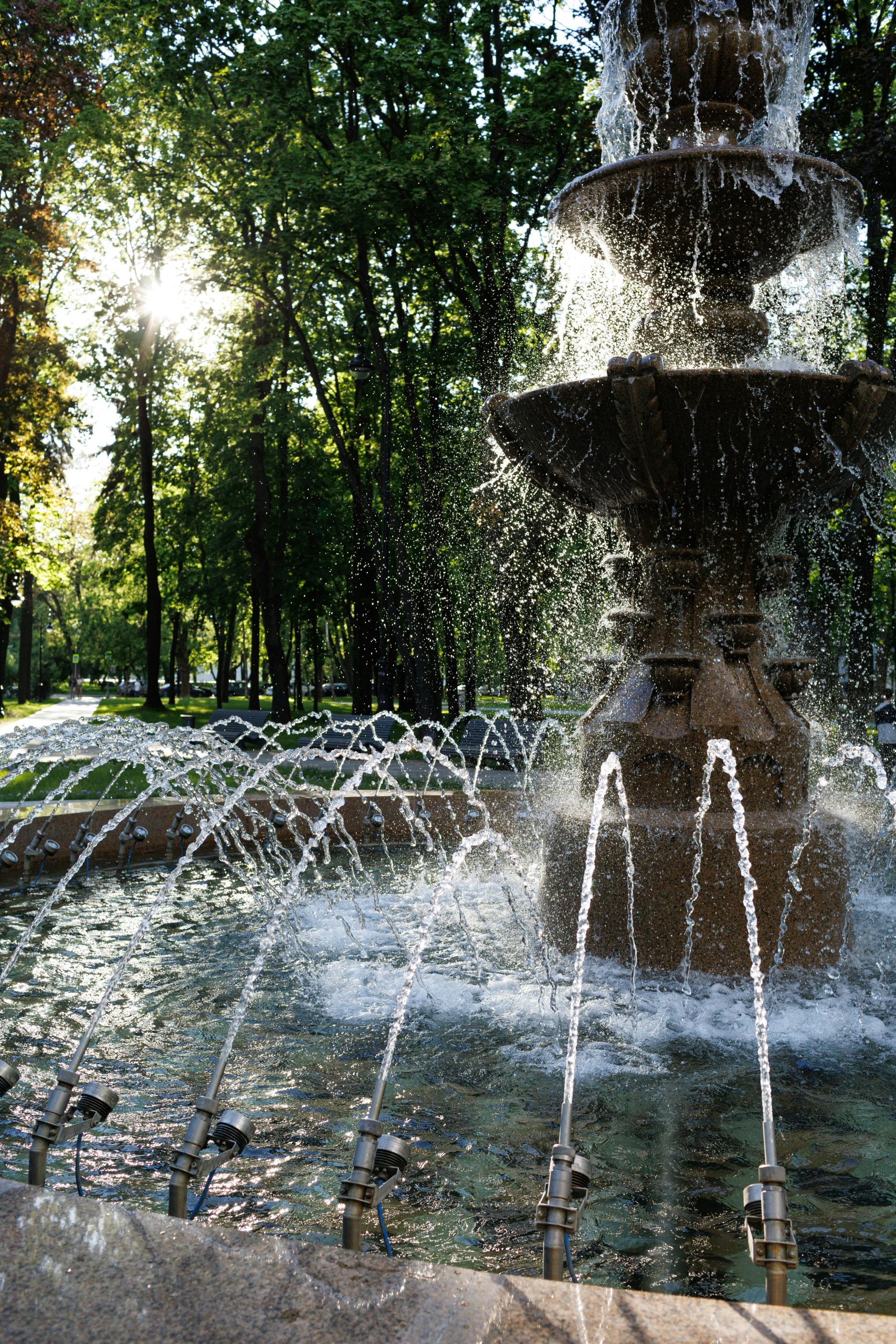
“To make this work, you need at least two separate pumps: one to power the central tiered fountain, and one (or more) to power the ring of jets.”
This allows you to control the flow and height of each element independently. For an even more dynamic show, you can put the pumps on timers or even use a smart controller that varies the fountain heights to create a choreographed water display. Don’t try to run all of this off a single, oversized pump.
25. Create an Elegant Entry with Cascading Water Steps
A cascading water feature like this is best suited for a landscape with a natural slope. It’s a beautiful way to handle a change in elevation. The width is scalable, but the length needs room to run. For a noticeable cascade effect, you’ll want at least 3-4 steps, which requires a run of at least 8-12 feet. This makes it a great choice for a grand entryway, a terraced garden, or along a path that slopes down from the house to the yard.
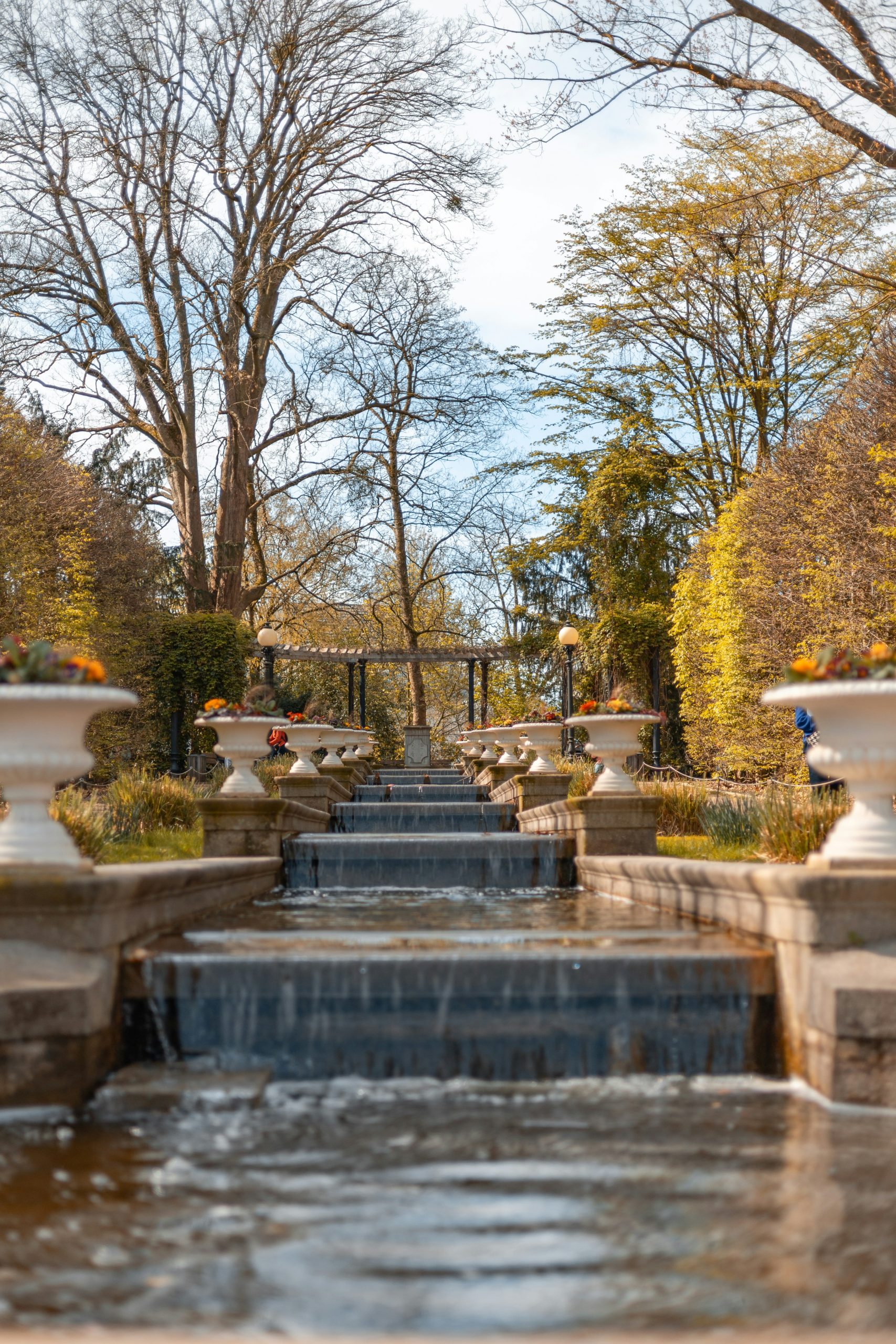
“While stunning, this type of open, cascading feature can be a hassle.”
The wide, shallow steps are a magnet for leaves, twigs, and other debris, which can clog the flow and look messy. It requires regular skimming. Also, the large surface area means significant water loss to evaporation, so an auto-fill system connected to your home’s water line is almost essential to avoid having to constantly top it off with a hose. It’s beautiful, but it’s not a low-maintenance choice.
26. Soften a Concrete Fountain with Lush Garden Plantings
This look is all about the beautiful contrast between hard and soft. The light-colored concrete of the three-tiered fountain provides a strong, architectural form. But it’s the explosion of lush, green foliage and soft lilac flowers surrounding it that brings it to life. The plants soften the hard edges of the concrete, making the fountain feel like a natural discovery within the garden rather than just an object placed on top of it. The sound of the water combined with the vibrant plant life creates a full sensory experience.
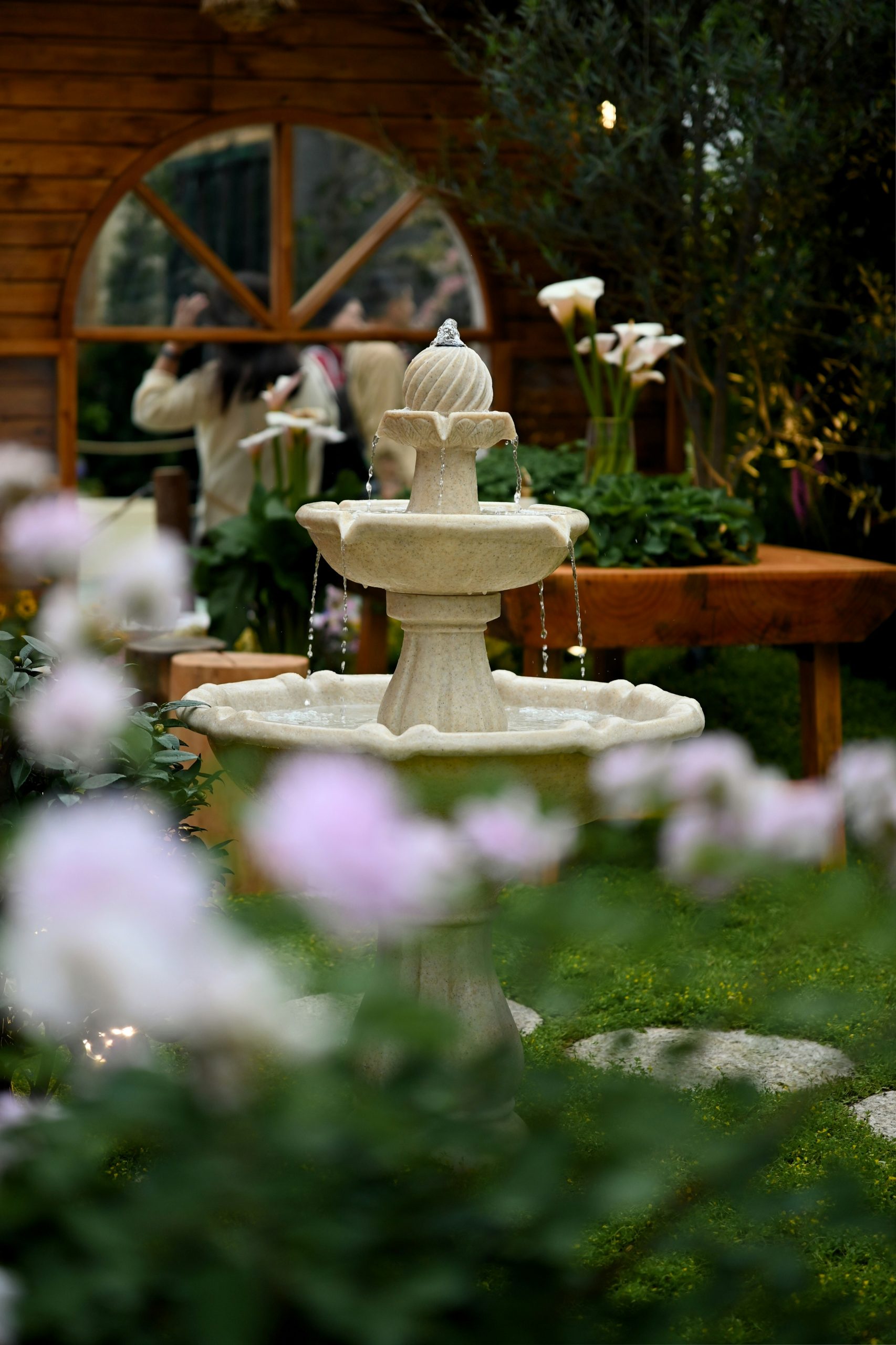
“The single element that makes this feel so much more special than a standard fountain is the textured sphere finial on top.”
A typical fountain might have a pineapple or another carved stone element. This simple, almost modernist sphere, with its dimpled texture, adds a touch of the unexpected. It’s a contemporary detail on a classic form, which keeps the whole thing from feeling dated and gives it a unique, updated personality. It’s a small choice that makes a huge difference.
27. Add Rustic Charm with a Carved Cherub Wall Fountain
There’s a huge trend right now towards what’s being called “romantic rustic” or “new pastoral” style. It’s a reaction against years of sleek minimalism. People are craving pieces with history, character, and a touch of whimsy. This cherub fountain, especially with its rough stone basin and charming sunflower accents, fits perfectly. It feels like something you’d stumble upon in the Italian countryside, and that sense of discovery and storytelling is what homeowners are looking to capture in their own gardens.
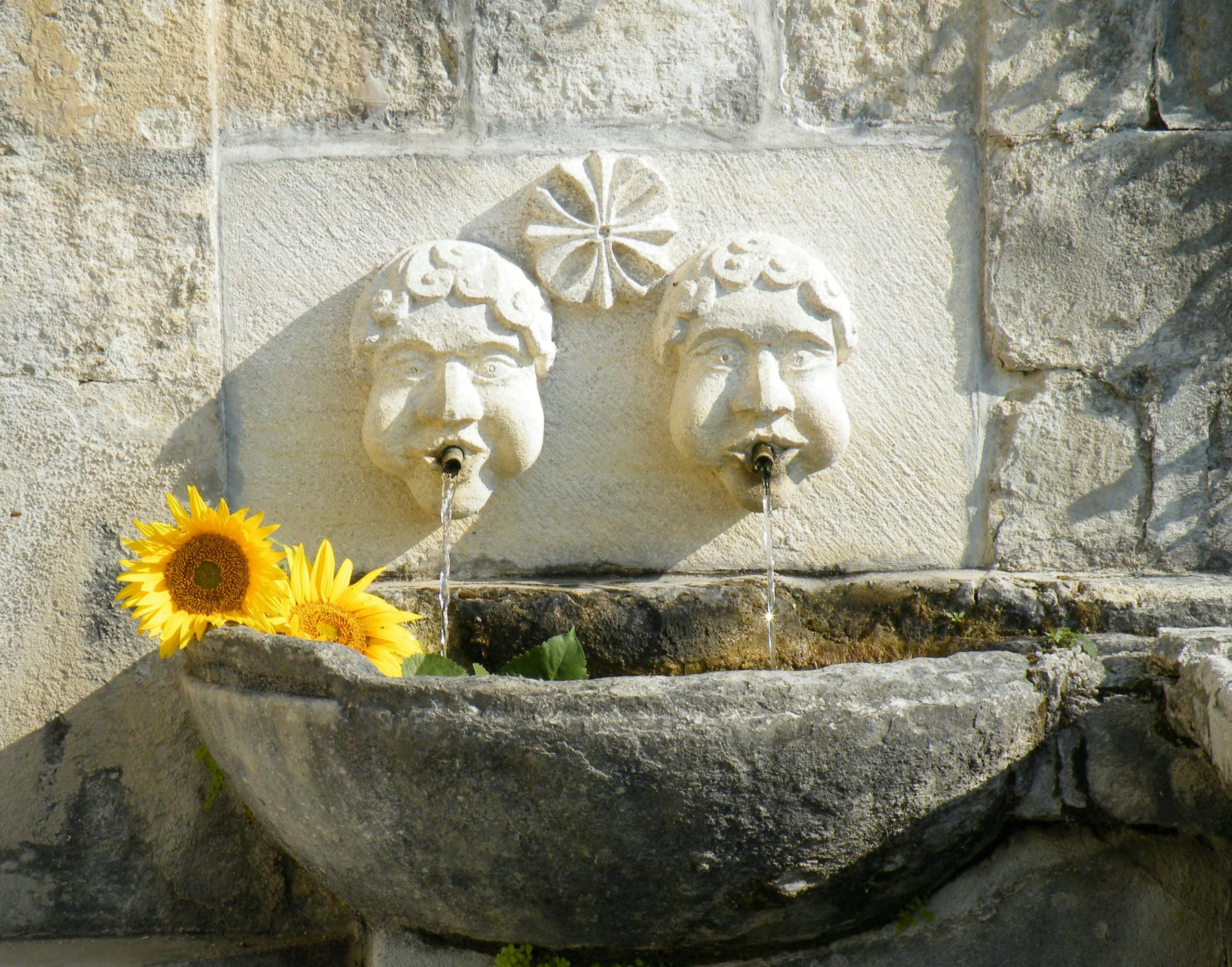
“A fountain with a rough-hewn stone basin like this one can be tricky to clean.”
The uneven, porous surface is a great place for algae to grab hold. You won’t be able to just wipe it clean. You’ll need a stiff brush and some patience. Also, be aware that placing decorative items like these sunflowers in the water can introduce organic material that will decay and feed algae, meaning you’ll have to clean it more often.
28. Contrast a Carved Stone Fountain with a Warm Stucco Wall
This is a fantastic example of using color and texture contrast. The cool, smooth, grey stone of the fountain really pops against the warm, textured, orange stucco wall. The colors are complementary (blue/grey tones vs. orange/brown tones), which creates a natural visual excitement. The textures also play off each other—the rustic, bumpy wall makes the carved details of the fountain appear even more refined and crisp. The dark green foliage at the base completes the beautiful, earthy palette. This idea shares a similar wall-mounted concept with Idea #16 but with a much more rustic feel.
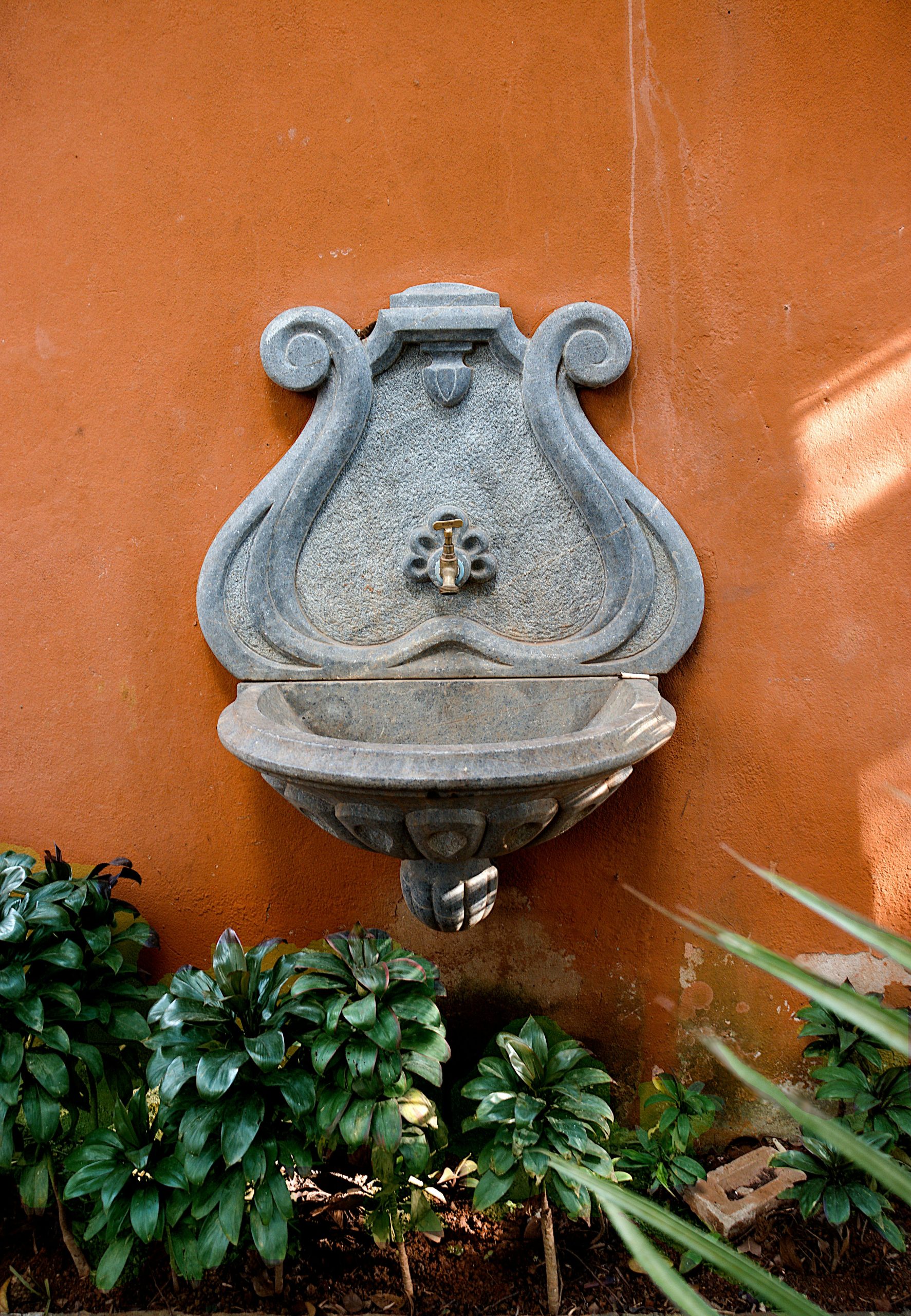
“Want to recreate that rich, orange stucco color?”
It’s not just paint. Here’s a basic guide to coloring stucco:
- Time: 2 days (for application and drying)
- Cost: $200-$500 for materials for a small wall
- Integral Color vs. Fog Coat: For new stucco, powdered pigment can be mixed into the final stucco coat itself for color that runs all the way through.
- Staining/Fog Coat: For existing stucco, you can apply a cement-based color wash called a fog coat or a specialized masonry stain. This is better than paint because it soaks into the stucco and lets it breathe, preventing peeling.
- Test a Patch: Always test your color on a small, inconspicuous area first. The color can change as it dries.
29. Create a Formal Atrium with a Symmetrical Courtyard Fountain
To achieve this formal, enclosed feel, the height of your surrounding hedges is critical. They should be tall enough to block the view of what’s beyond, creating a true ‘room’ outdoors. A height of at least 6 feet is a good starting point. For plantings, choose evergreen shrubs that take well to sheering, like Boxwood, Yew, or Privet. The goal is to create a solid green wall that makes the courtyard feel private and intentionally designed.
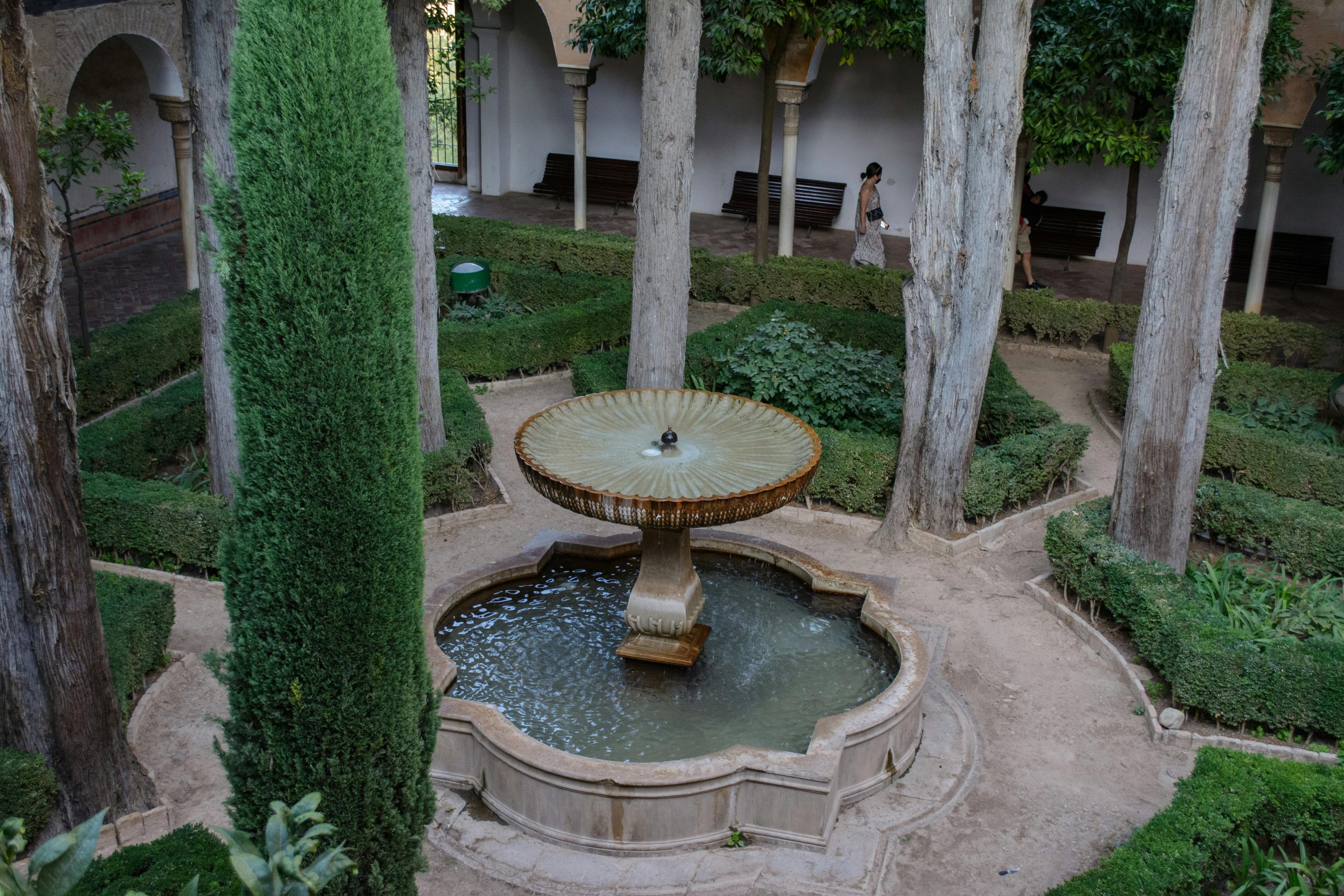
“This idea of a formal, enclosed courtyard works best in a space that is roughly square or rectangular.”
A minimum size would be around 25×25 feet to allow for the central fountain, a surrounding pathway, and the planting beds. The archways and covered walkway add another layer of enclosure and grandeur, but the core concept of a central fountain within a green ‘room’ can work even without them. It’s perfect for side yards or creating a private destination within a larger property.
30. Anchor a Landscape with a Timeless Tiered Stone Fountain
The secret ingredient here is sound. While the fountain is a beautiful visual anchor, its most important job is to fill the large, open space with the gentle, constant sound of cascading water. This auditory element is what makes a grand garden feel serene and alive. It masks distant noises and draws your attention to the immediate environment, creating a more intimate and peaceful atmosphere despite the large scale. Without the sound, it’s just a sculpture.
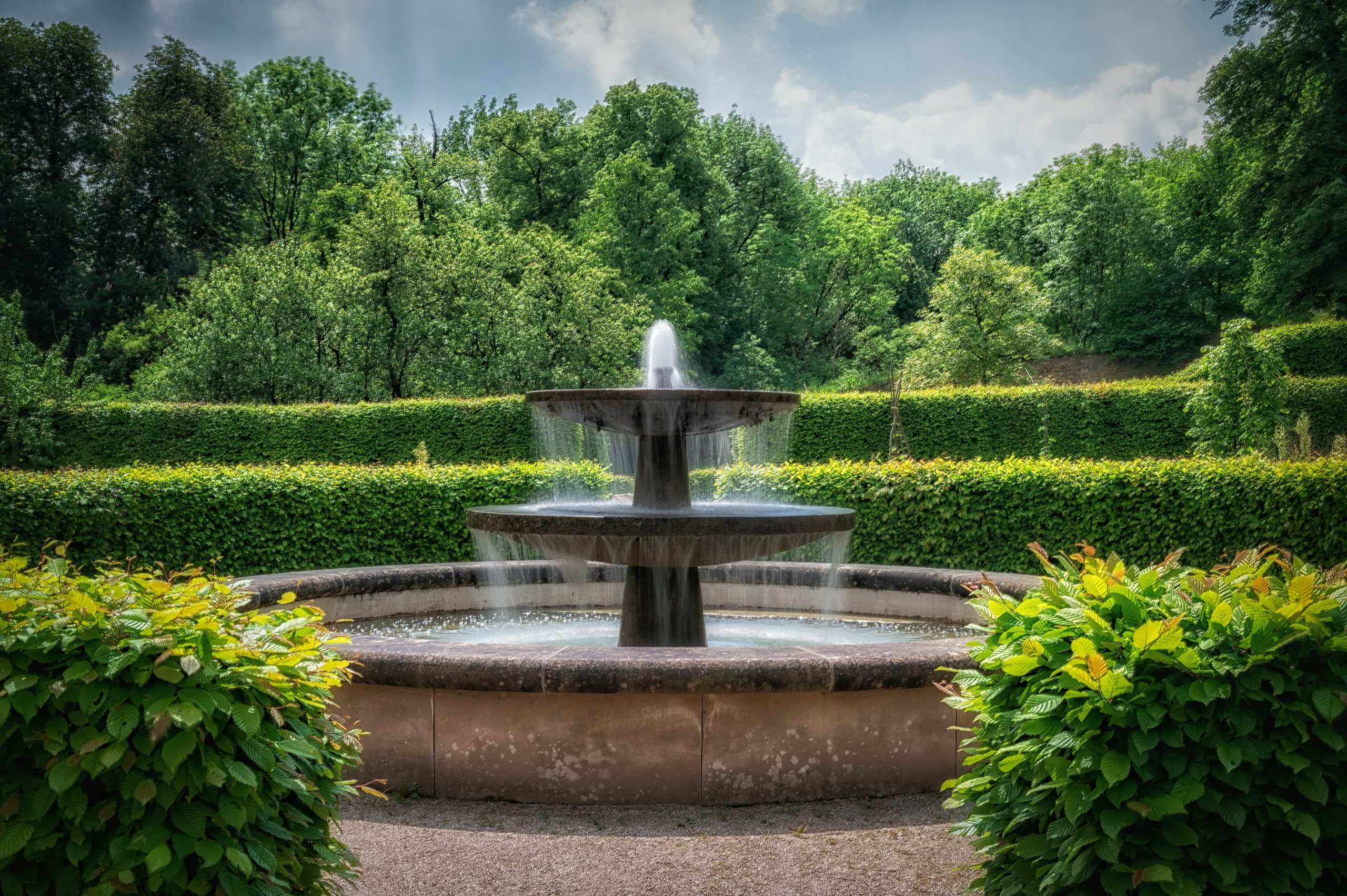
“This design is a masterclass in the principle of a central focal point.”
The entire landscape is organized around the fountain. The manicured hedges create concentric circles that radiate from it, the paths lead your eye toward it, and the background trees frame it. This clear hierarchy—with the fountain as the undisputed star—is what makes the design feel so orderly, intentional, and grand. Every other element serves to elevate the centerpiece.
31. Install a Cascading Stone Bowl Fountain for Natural Sound
A fountain with this much cascading water and textured surfaces is prone to developing a white, crusty buildup, especially if you have hard water. This is called efflorescence or lime scale. To manage it, you’ll need to scrub the fountain periodically with a 50/50 vinegar and water solution and a stiff brush. Using distilled water instead of tap water to fill the fountain can virtually eliminate the problem, but that can be impractical for a large feature. Compare with the smooth stream of Idea #19, which would have fewer texture-related cleaning issues.
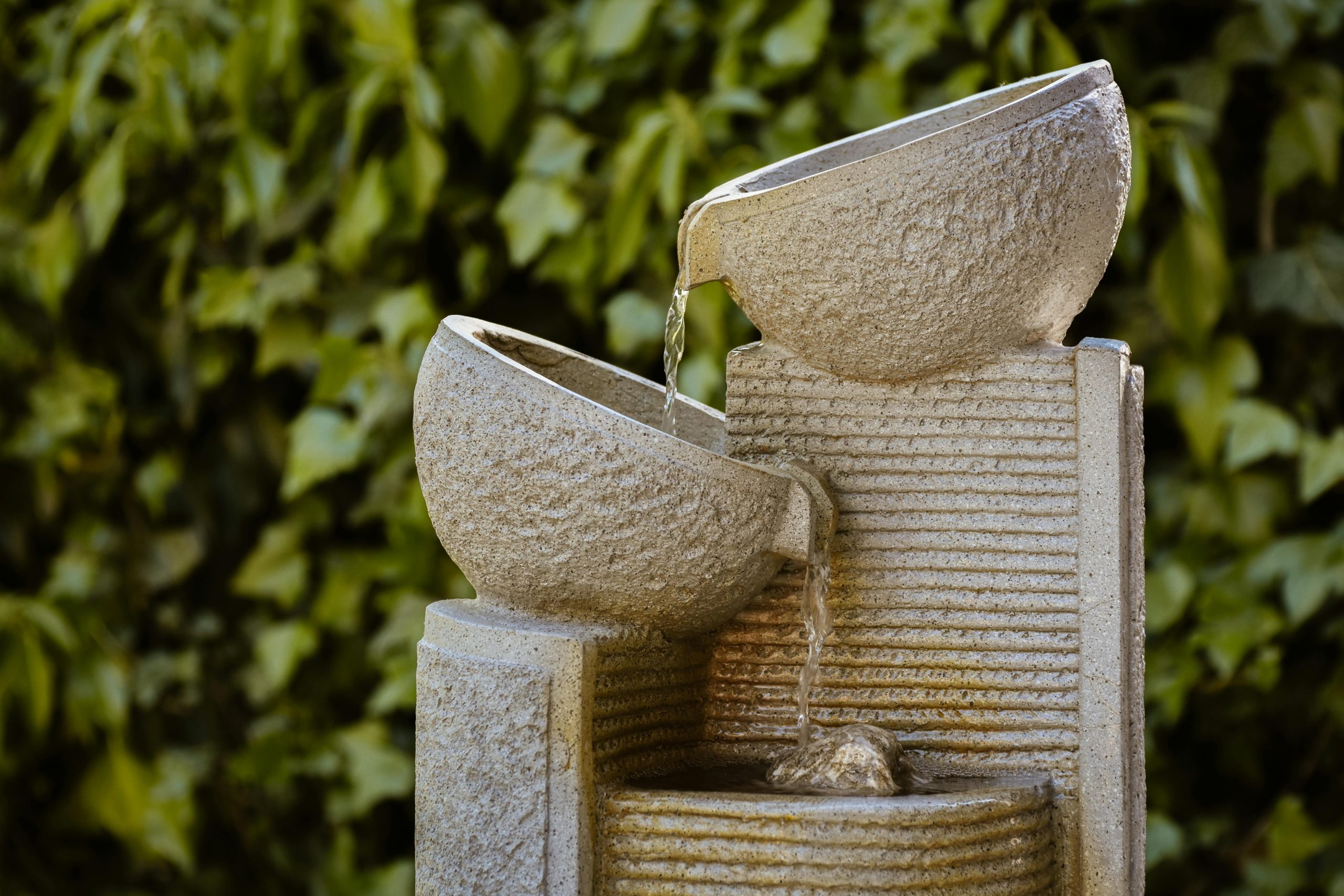
“The sound of your fountain is determined by how far the water falls and what it hits.”
For a louder, more dramatic splash, increase the distance between the tiers. For a softer, more tranquil burble like the one pictured here, keep the distance between the bowls minimal (just a few inches). The ribbed texture on the stone surface also plays a role, breaking up the water flow and creating a more complex, gentle sound than a smooth, single sheet of water would.
Let the Water Flow: Your Garden’s Next Chapter
Whether you’re dreaming of a grand, formal centerpiece or a simple, bubbling bowl, the right water feature can completely change the way your outdoor space feels. It’s about creating a moment of peace, a focal point for your garden, and a soothing soundtrack for your life.
Feeling inspired? Go check out your “Garden Ideas” Pinterest board—we bet you’ll see it with fresh eyes. Now you know not just what looks good, but why it works.
Photo credits: Alexander Popadin, Büşra Boduroğlu, Vitaliy Haiduk, cao jun, Kai, Louizi Ayoub, Claudia Schmalz, Alexas Fotos, jackie mrs ho, Christopher Nichols, 🇻🇳🇻🇳Nguyễn Tiến Thịnh 🇻🇳🇻🇳, Yuliia Shkvarok, Enrique, Coral Grandbois, Zeya, Dilan Ceviz, Marcelo Barboza, Efnan, Wim Van den Brande, Robert So, Jose Manuel Gonzalez Lupiañez Photography, Jérémy Glineur, Jose Rodriguez Ortega / Pexels, Peter Herrmann, Hannah Tu, Tanya Barrow, Slavan, Raiday Zhang / Unsplash, UweDigital, GoranH, Tama66 / Pixabay