Basements often get painted white, gray, or beige without much thought. That doesn’t mean they have to stay that way. If you’re planning a refresh, these 30 basement paint ideas show how a single color can change the whole feel of the room. From a soft blue to a deep charcoal, each look treats the paint as the main event.
You’ll see how different colors work in different zones, whether that’s a home theater, a home office, or just a corner for the treadmill. The focus is on the paint itself and how the space around it stays simple. No fussy decor, just a clear color choice that does the work.
Cohesive Gray Basement Living Area with Modern Appeal
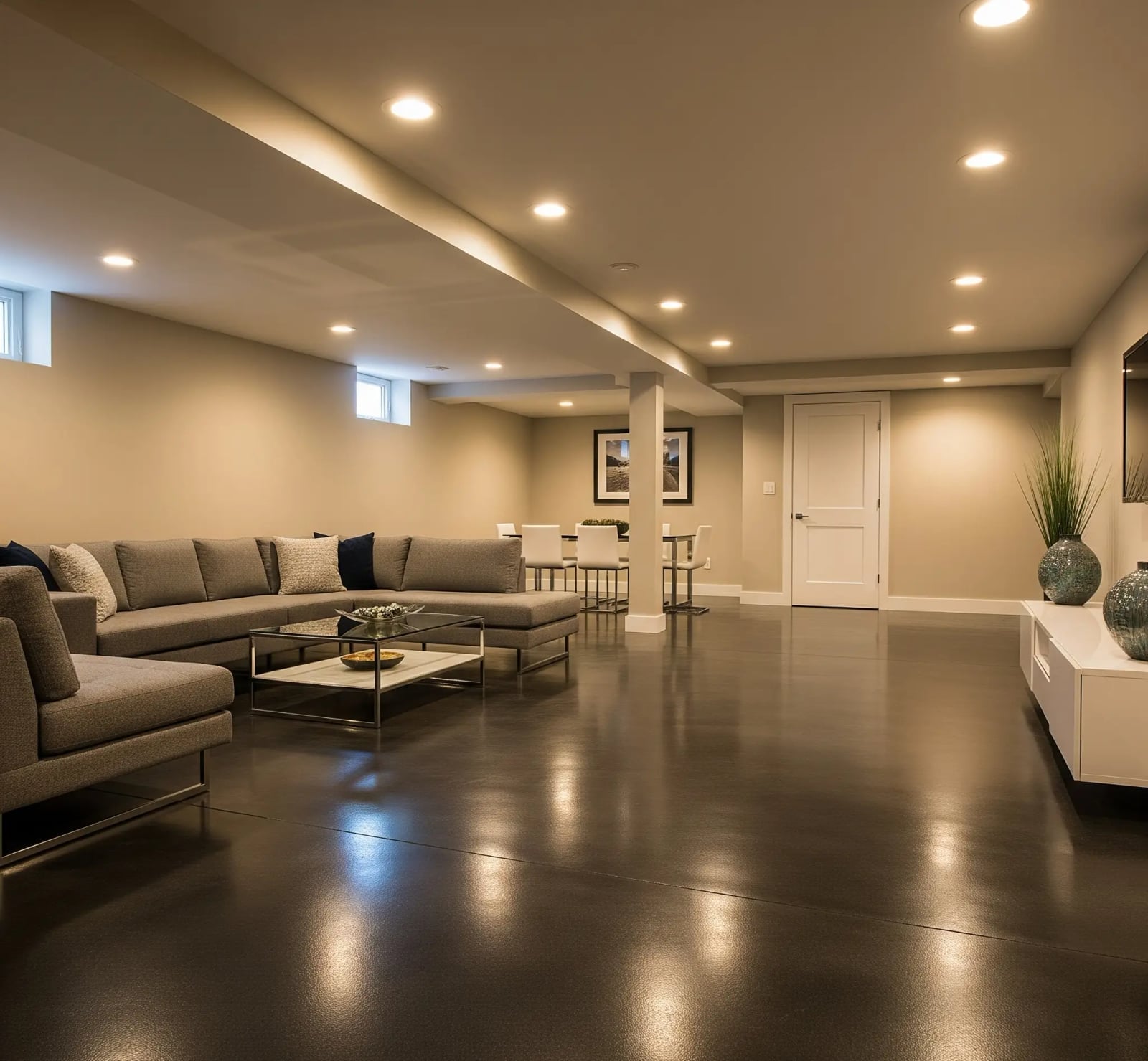
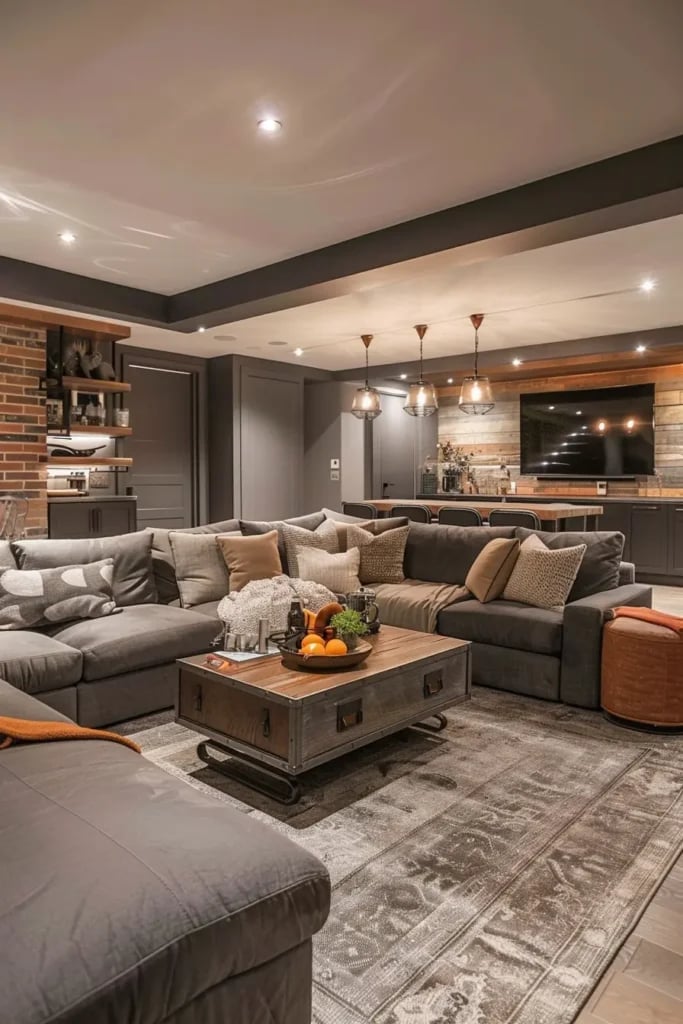
A single gray paint color across walls and trim pulls this roomy basement living area together without the cut-up feeling that comes from switching finishes at every corner. The large sectional sofa in a matching neutral tone lets the gray act as a backdrop rather than a focal point, while the wood coffee table and brick accent add warmth that keeps the palette from turning flat. Recessed ceiling lights and a pair of pendant lights spread light evenly, so the gray reads as a calm envelope instead of a cave.
Open-Plan Basement with Cream Sectional and Geometric Rug
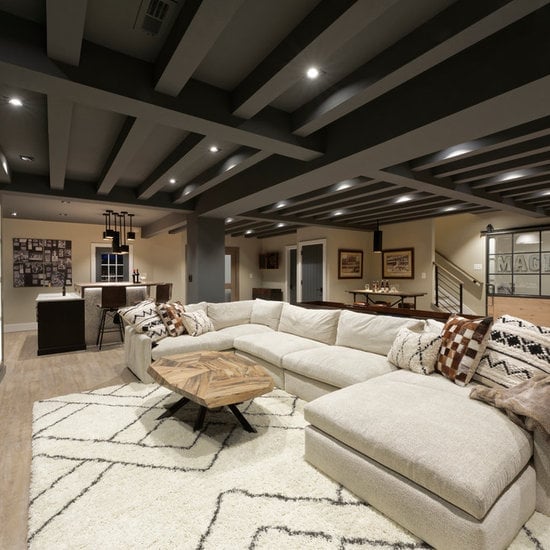
An open-plan basement with a cream sectional and a geometric rug works because the rug does the job of defining zones. The large patterned rug anchors the seating area and separates it from the bar and stairs beyond, so the room feels like two spaces without a wall. The cream sofa and beige walls keep the palette light, while the black in the rug and the dark bar stools add contrast. A single pendant light over the coffee table draws the eye down to the seating group, reinforcing the layout. The result is a basement that feels organized by design, not by accident.
Cozy Basement Corner in Deep Charcoal Gray
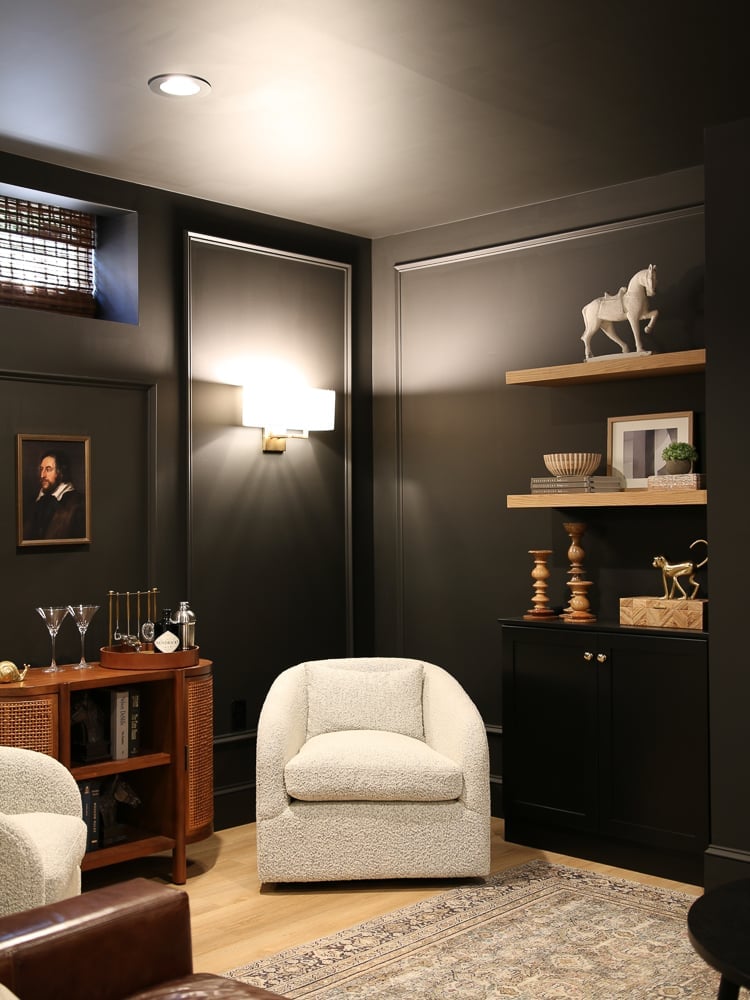
Can a dark paint color make a compact corner feel bigger rather than smaller? Yes, when you commit to it fully. The deep charcoal gray on walls and trim in this basement corner creates a contained, intimate zone that the eye reads as a separate room, even without a door. The textured armchair in a lighter tone and the wood shelf unit prevent the dark walls from swallowing the space.
The wall sconce and overhead light matter here. A dark corner needs directed light to avoid feeling like a shadow. The metal and glass fixtures bounce light off the gray surface, which reflects enough to keep the nook from turning into a cave. A small rug and artwork add personal touches without breaking the cohesive dark shell.
Bright Basement Living Area with White Walls and Ceiling
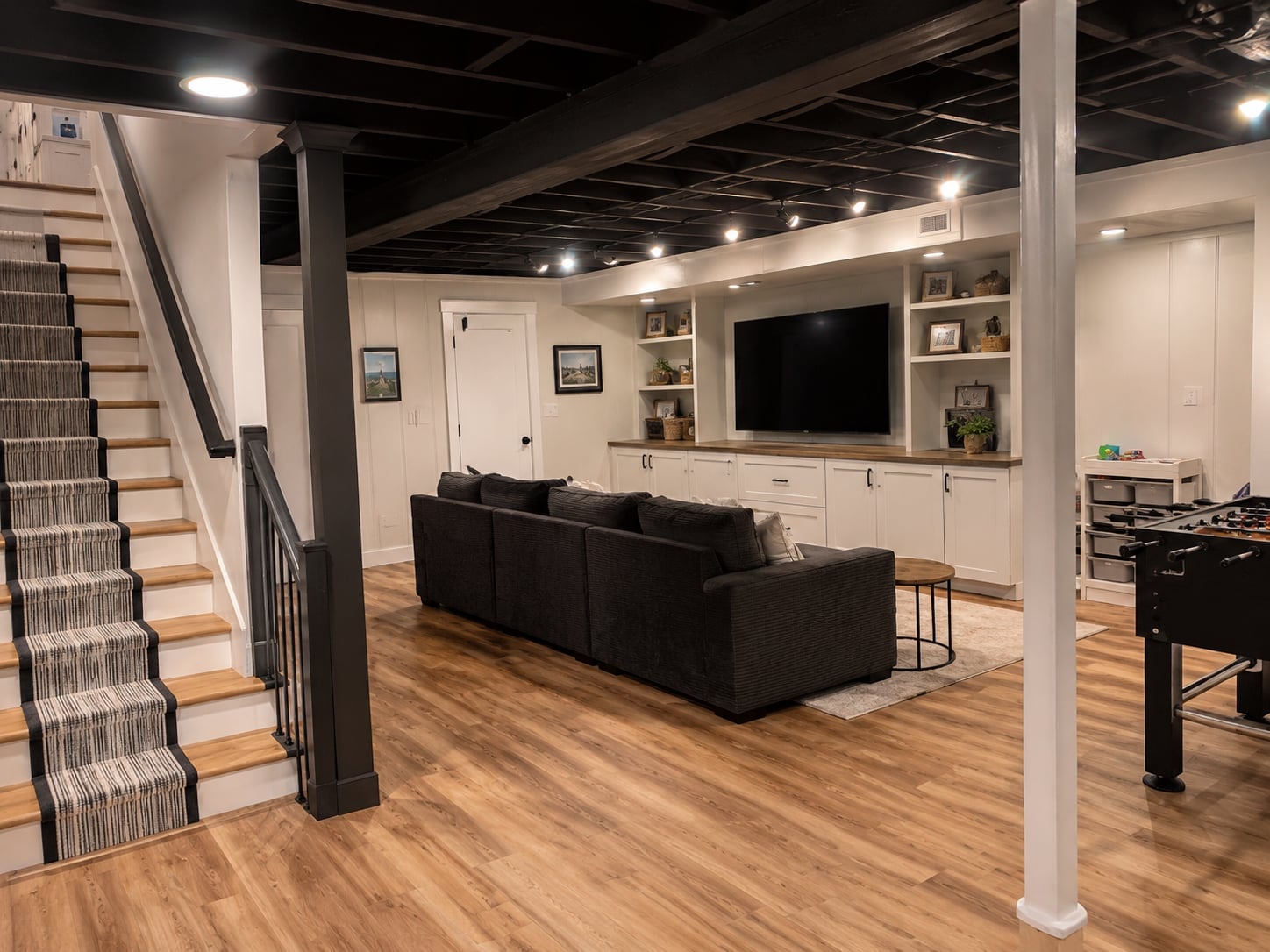
White paint on both the walls and ceiling in this roomy basement living area does more than just lighten the room. It blurs the line between wall and ceiling, making the ceiling feel higher and the whole space less boxy. The gray sofa and entertainment unit provide contrast, so the white does not wash out the room. Under the recessed ceiling lights, the white surfaces act as a reflector, spreading light farther than a colored ceiling would. A foosball table in the same area confirms that white can handle active use without looking clinical.
Modern Farmhouse Basement with Blue Bar and Brick Accents
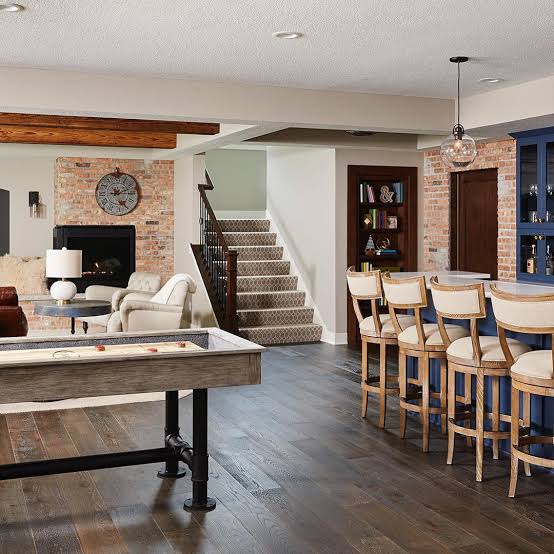
A basement bar stands out when the cabinetry is painted in a saturated color. The blue bar in this modern farmhouse basement does exactly that. The rich blue against the brick accent wall and the cream walls makes the bar area the natural hub of the room. Light wood bar stools and a warm lamp soften the blue, keeping it from feeling cold.
The brick wall adds texture that paint alone cannot match, while the shuffleboard table and fireplace nearby complete the entertainment zone. The blue bar ties the modern farmhouse look together by providing a single, deliberate color anchor.
Dramatic Basement Home Theater with Dark Green Walls
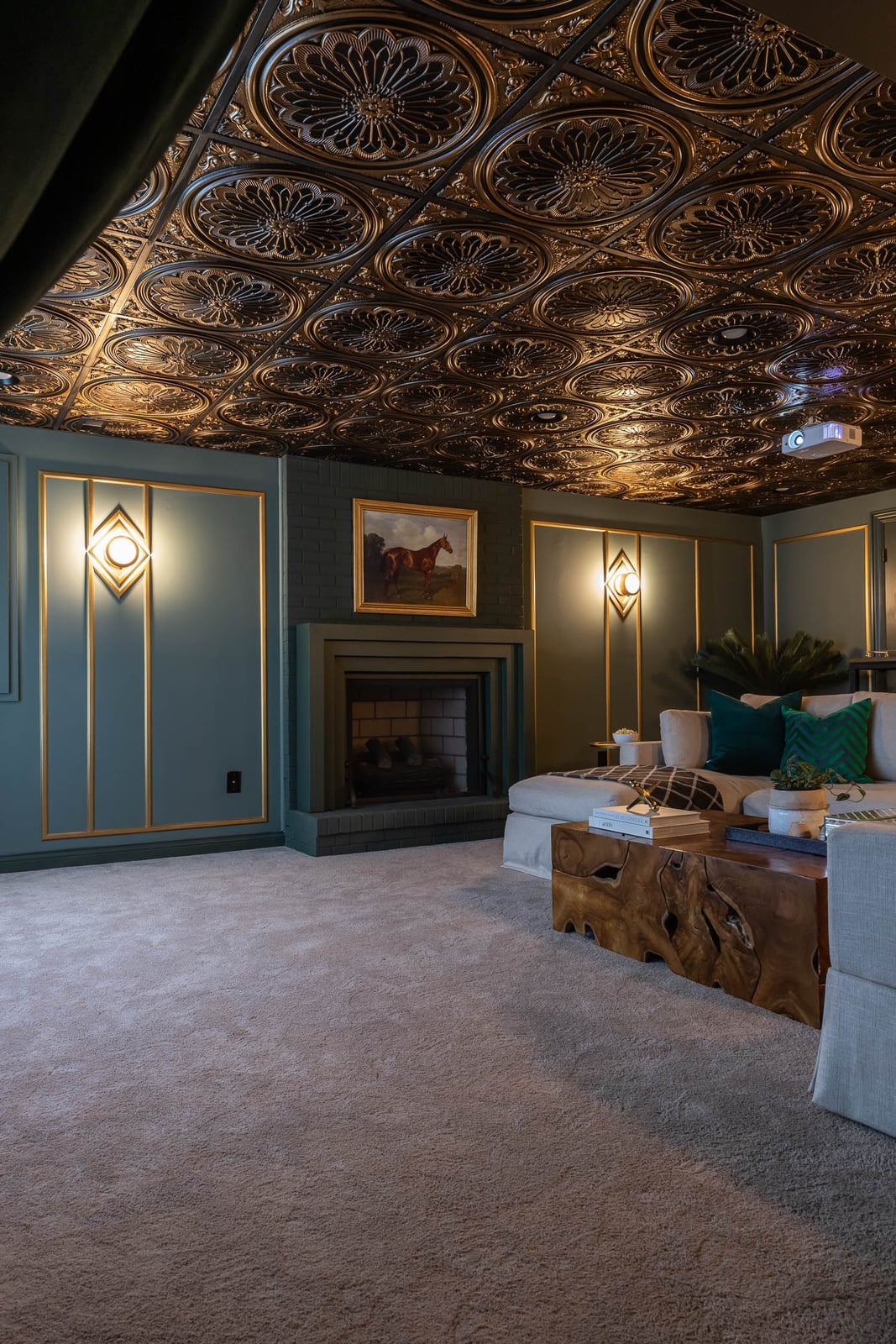
Dark green walls in a home theater do the same job as black or charcoal but with more character. The paint holds the room in shadow while the gold-toned wall sconces and beige sofa keep it from feeling like a cave. An ornate metal ceiling reflects the projector light, and the fireplace anchors the seating arrangement. The palette works because the green has enough warmth to show as a color, not just a dark surface. To recreate it, look for: a deep green with a yellow or gold undertone, not a blue-based one.
Transitional Basement Entertainment Zone with Pool Table
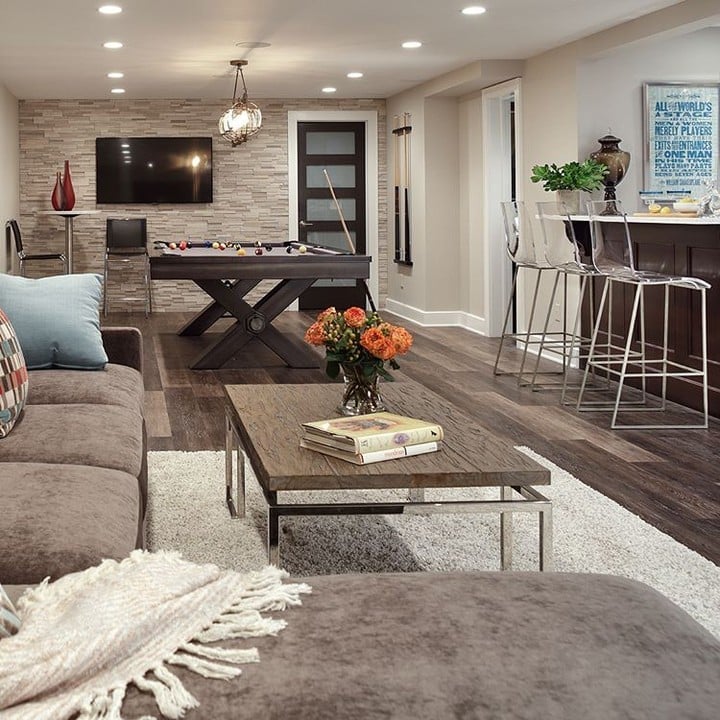
The pool table anchors the space, and everything else arranges around it without crowding. Bar stools line one side, a sofa and television face another, and the pendant lights hang low enough to define the play zone. The layout works because the traffic path stays clear of the table. A renter can achieve the same zoning with a large rug under the table and a few floor lamps to mark the seating area.
Contemporary Basement with Light Gray Walls and Stone Alcoves
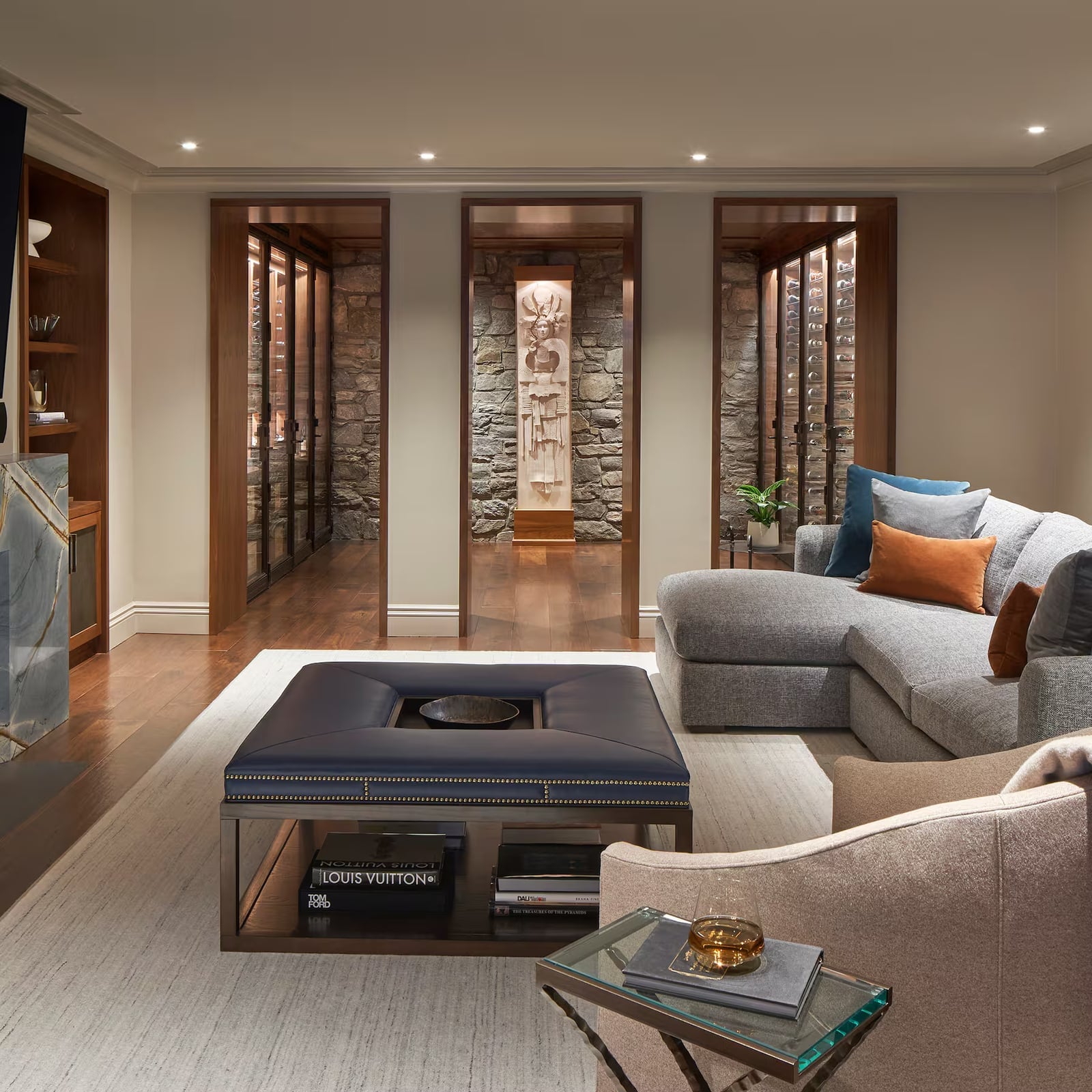
Light gray paint works as a neutral backdrop, but here the stone alcoves do the heavy work. The natural stone adds texture and a warm beige tone that keeps the gray from reading as flat or cold. The sectional and armchair sit in a loose grouping that faces the wine cabinets, making the storage a visual anchor. The wood and glass in the cabinets echo the materials in the room without matching them. A light gray with a warm undertone is the key; a cool gray would fight the stone.
Basement Dining Area with Ornate White Tin Tile Ceiling
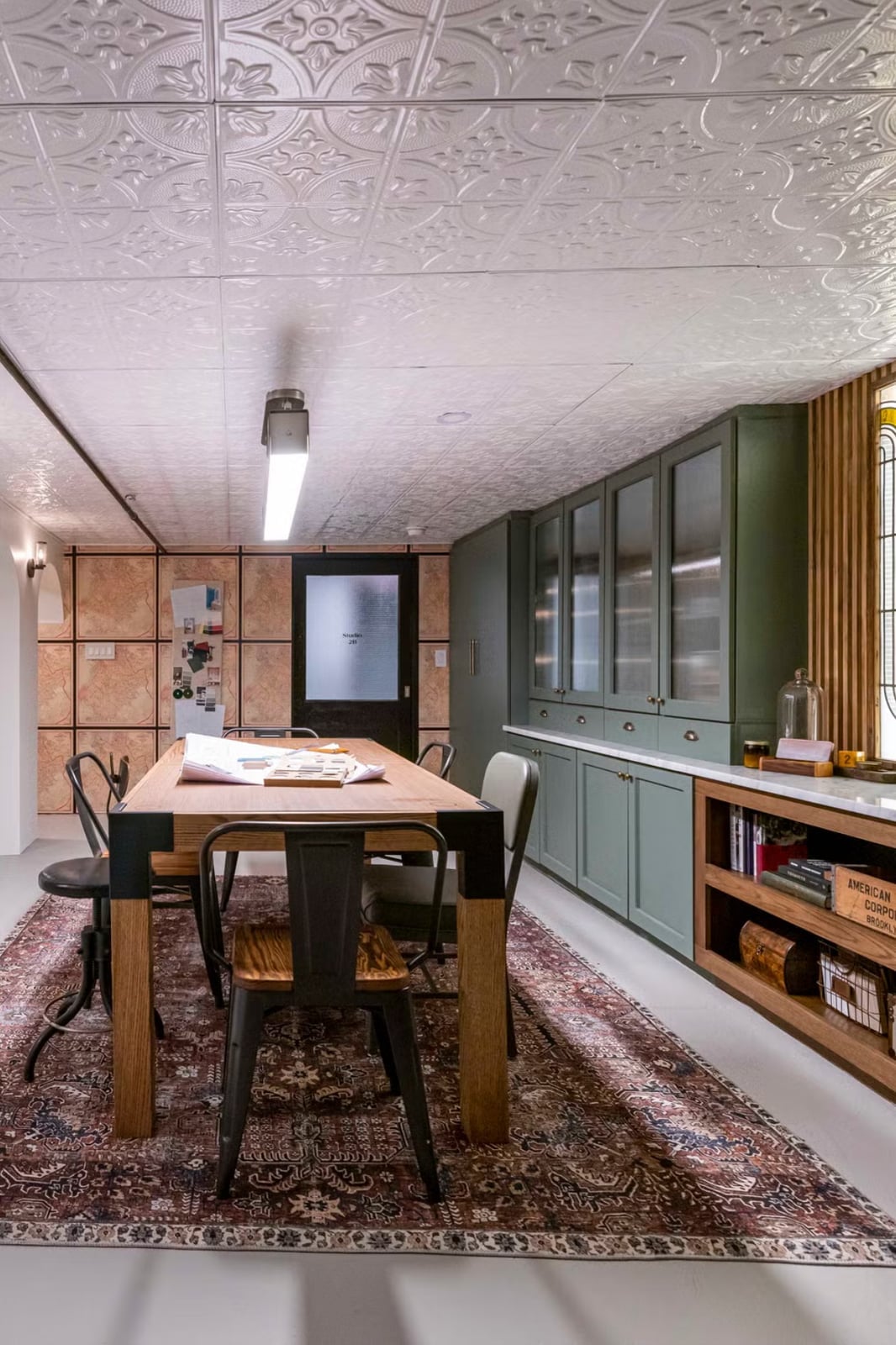
Is a drop ceiling the only option for a basement? The ornate white tin tile ceiling in this dining area proves otherwise. The metal panels add pattern and reflect the fluorescent and ambient light, making the room feel taller. The white paint keeps the ceiling from competing with the gray walls and wood cabinetry. Tin tile is a durable material that resists moisture better than drywall, which matters in a basement. The dining table and chairs sit directly under the ceiling, drawing the eye up.
Modern Basement Living Area with Dark Green Walls and Metal Ceiling
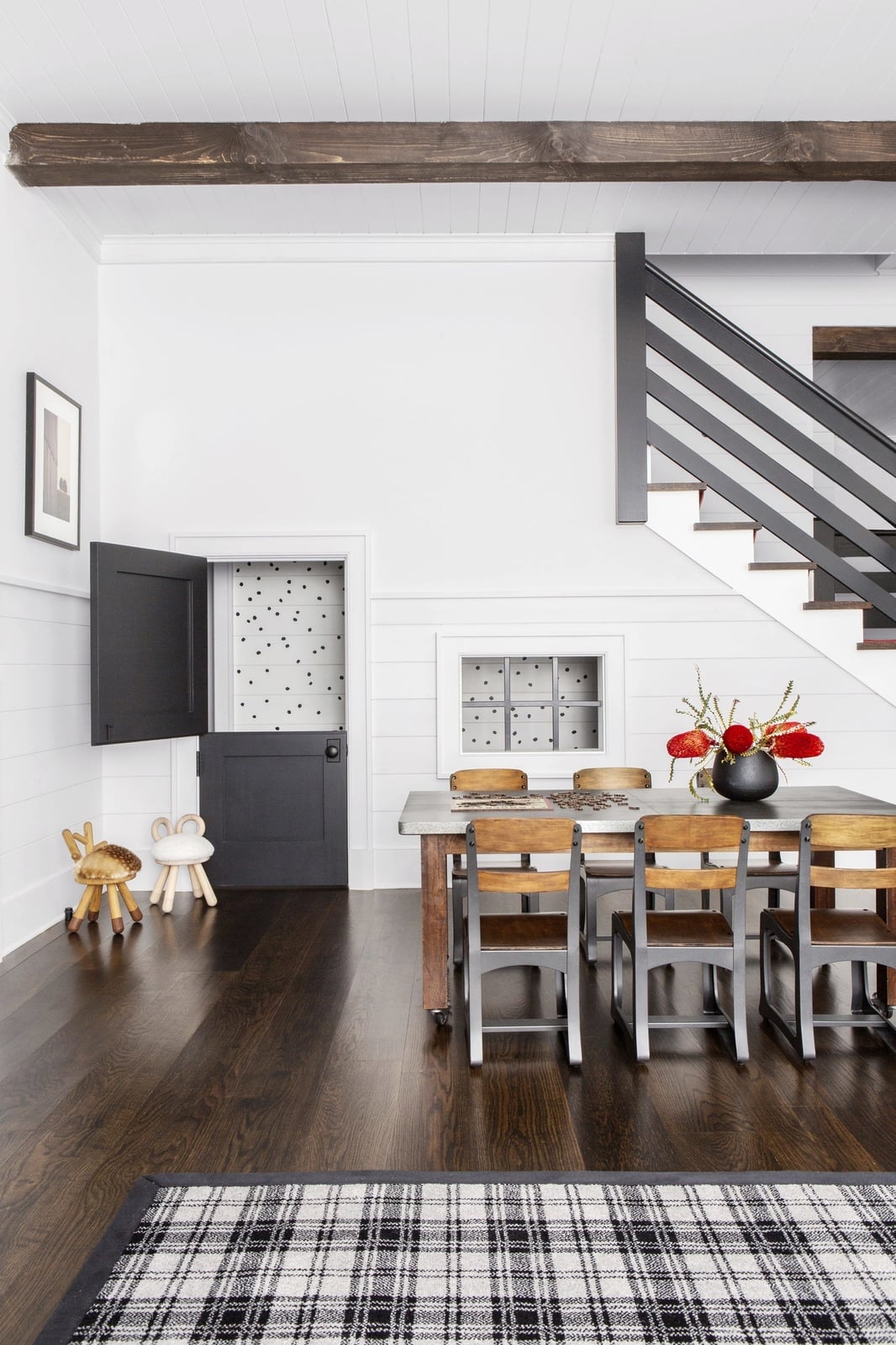
The dark green walls cover all four sides, and the metal ceiling mirrors the same deep tone. The palette relies on a small ratio of gold and beige in the wall sconces and sofa to keep the room from going black. The carpet and wood paneling add softness and warmth. The green reads as a true color because the metal ceiling reflects what little light there is. The sofa faces the fireplace, and the projector screen stays out of sight until needed.
Modern Basement Corner with Navy Cabinets and Exercise Area
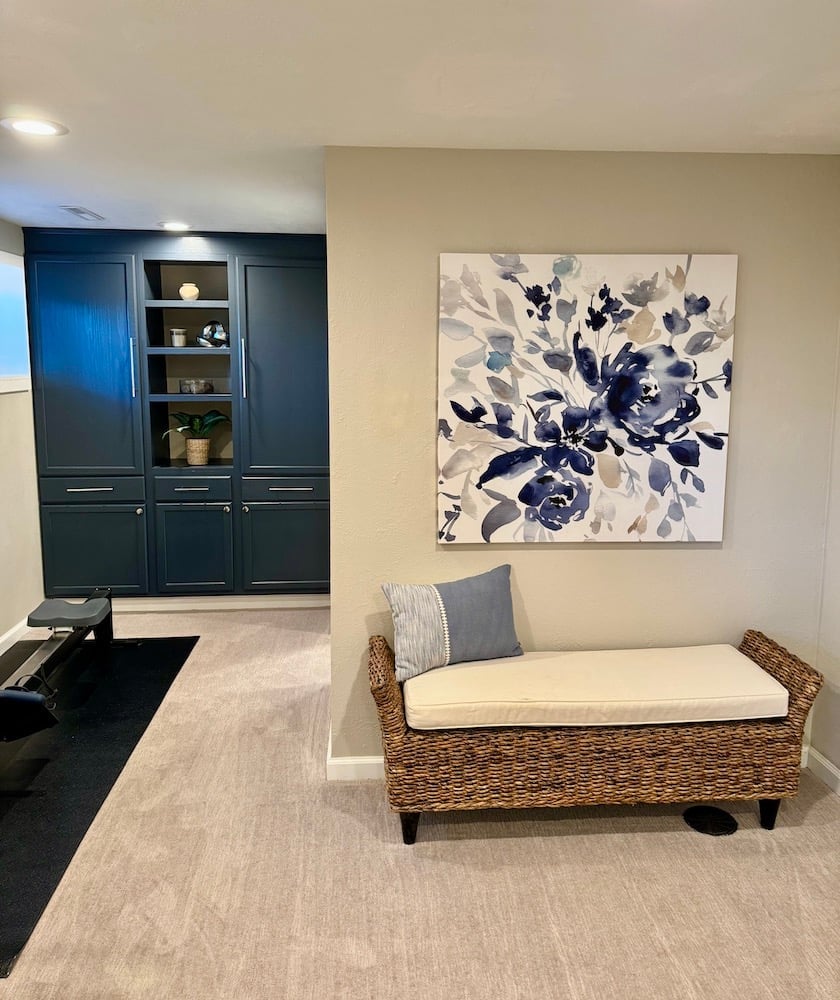
A row of navy blue cabinets along one wall changes how you think about basement storage. The deep blue acts like furniture, not just cabinetry, so it anchors the corner without feeling like a utility closet. A bench with fabric cushions softens the transition between the wood cabinet fronts and the carpeted floor. Recessed lights keep the navy from going too dark, and the beige wall behind it lets the color sit without competing. The exercise equipment nearby proves that practical zones and a strong paint choice can share the same footprint. Keep the palette lean, navy, beige, white, and the room stays cohesive even when the use of the space shifts.
Modern Basement Living Room with Dark Gray Accent Wall
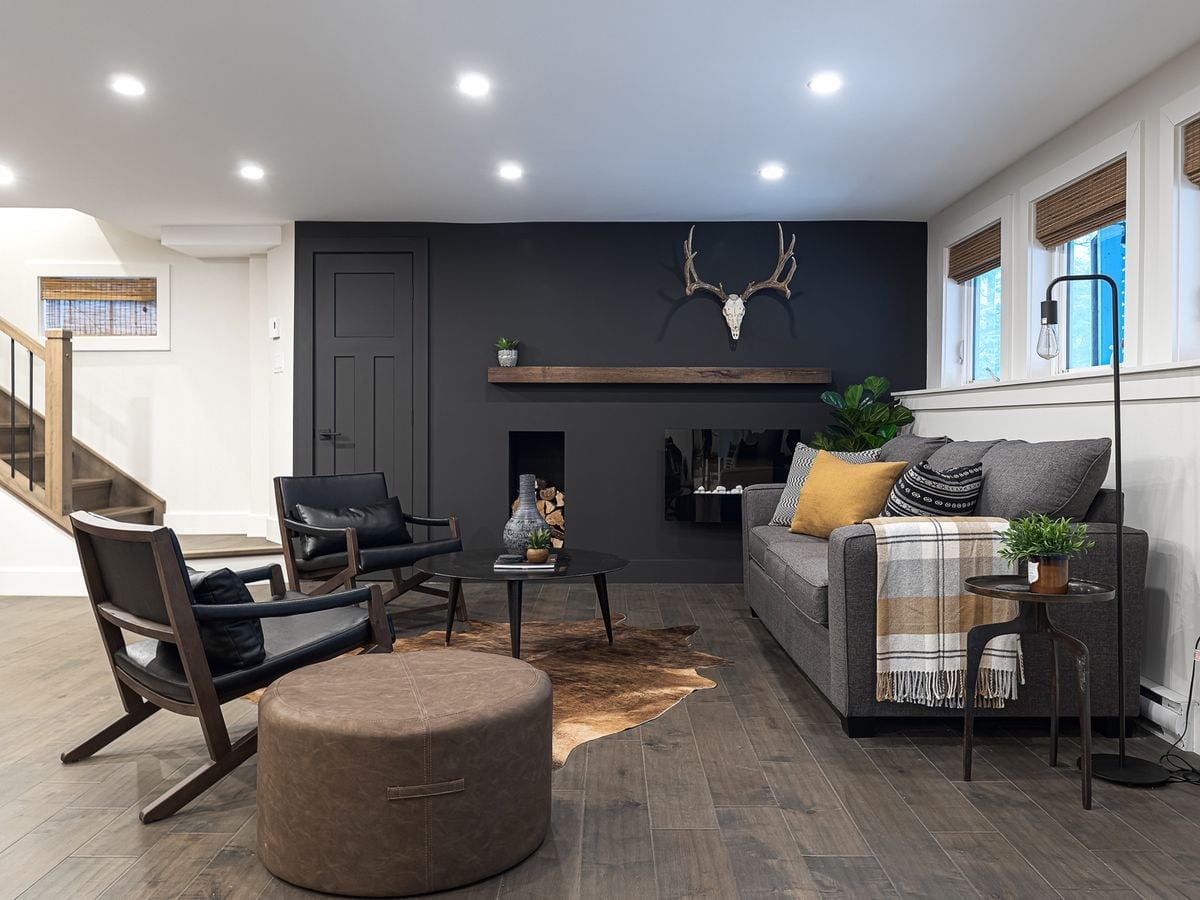
A dark gray accent wall can feel heavy in a basement, but this one works because the other walls stay light and open. The gray serves as a backdrop, and the mounted antlers above the fireplace give it a focal point that pulls the eye upward. Yellow accents in the throw pillows and floor lamp add a jolt of contrast, warm against the cool gray, while the leather sofa and wood coffee table keep the texture grounded. The floor lamp by the seating area softens the recessed lights overhead, so the wall never feels flat or washed out.
This setup relies on balance: one dark wall, one strong accent color, and everything else neutral. The stone surround on the fireplace bridges the gray and the wood tones, and the metal legs on the coffee table stop the room from feeling too soft. If you try a dark accent wall in a basement, keep the other three walls light and let one piece of furniture or one accessory carry the punch of color. That way the wall does the work without the room feeling closed in.
Cozy Cottage Bedroom Corner with Light Blue Walls
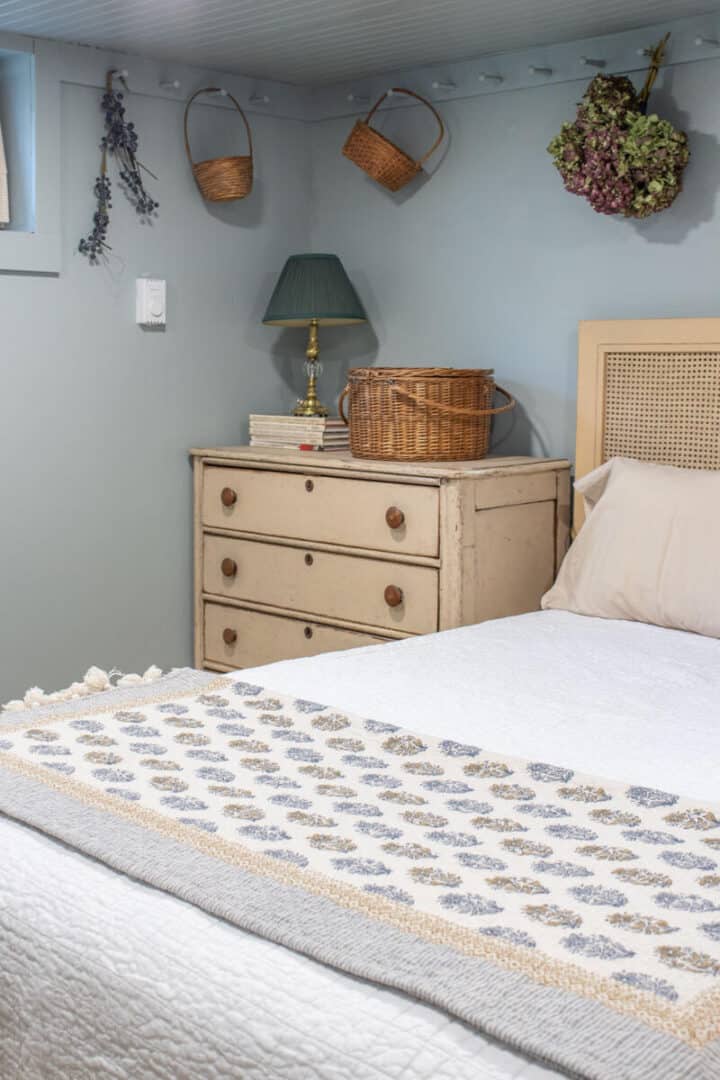
Light blue walls in a basement bedroom do something that darker shades cannot: they reflect what little natural light comes through a low window, making the corner feel bigger than it is. The cream bed linens and wicker baskets keep the cottage tone intact, while the wood dresser adds warmth against the wall color. A table lamp on the dresser gives the corner its own glow after dark, a useful feature in a room where overhead light might feel harsh. The blue stays soft enough that the room feels airy, not cold, and the natural materials keep it from tipping into nursery territory.
Roomy Modern Basement with Dark Accent Wall and Leather Sofa
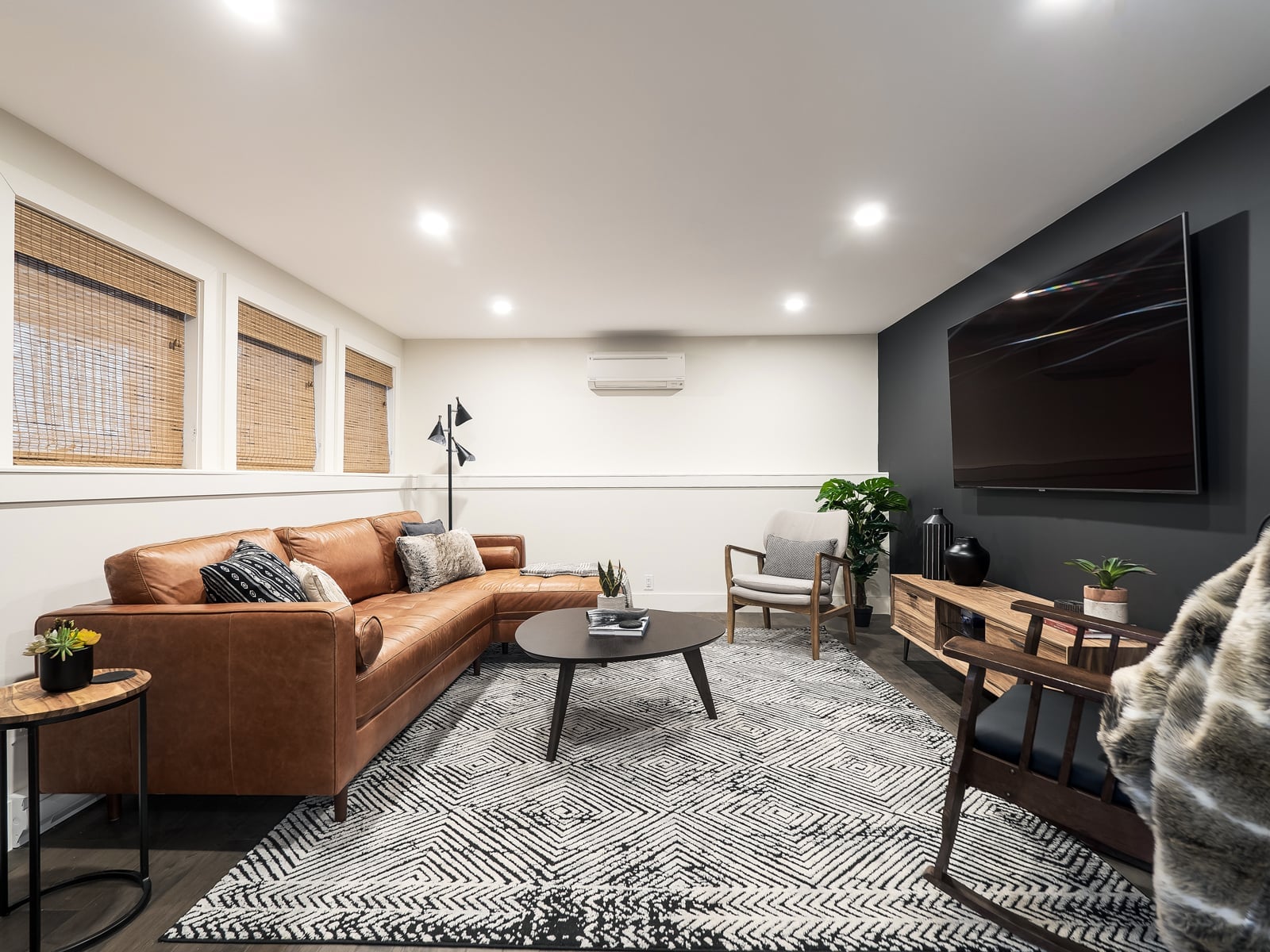
This room uses a dark accent wall to define the living zone without closing off the space. The wall behind the sectional is deep and moody, but the white ceiling and pale floor keep the air moving. The leather sofa and wood coffee table add weight, while the floor lamp and recessed lights layer the lighting so the wall never goes flat. The dark wall becomes the backdrop for the TV and the armchair across from it, which gives the seating area a clear anchor. A room this size could feel cavernous with all light finishes; the dark wall pulls the eye to one side and makes the space feel grounded.
Functional Basement Gym Area with White Walls
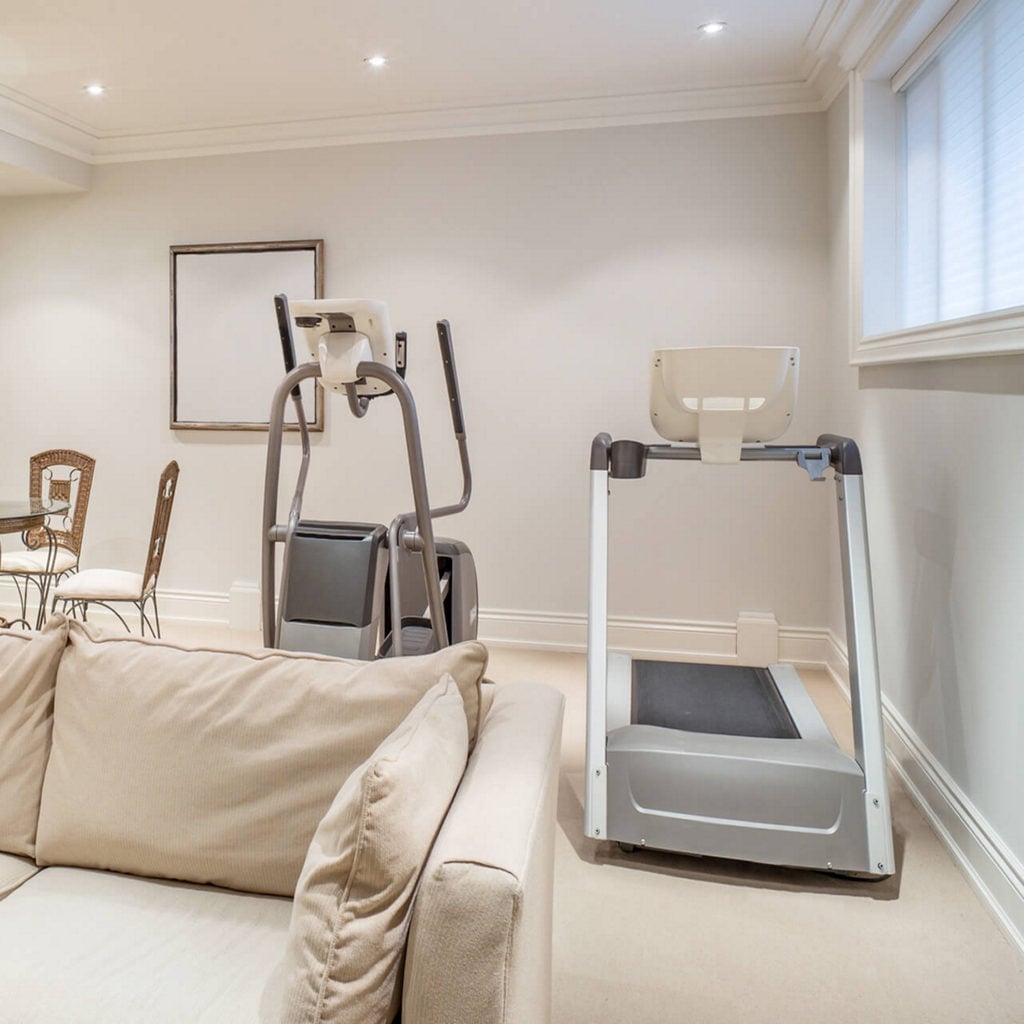
White walls in a basement gym do more than brighten the space. They help you see equipment clearly, which matters when you are moving between a treadmill and an elliptical in a room with recessed lights. The white reflects the light evenly, so there are no dark corners where a mat or a weight might trip you. A small sofa and table near the window offer a spot to rest between sets, and the neutral palette keeps the gym connected to the rest of the house, not separate from it.
The practical rule here is that white paint in a gym holds up because you can touch up scuffs from equipment or sneakers without repainting the whole room. Keep the floor finish durable. The carpet in this setup works for low-impact use, but rubber or vinyl tiles are easier to clean if the gym gets heavy use. The white walls also let you add color through mats, towels, or wall art without committing to a full palette shift.
Dark Gray Basement Home Theater with Ornate Metal Ceiling
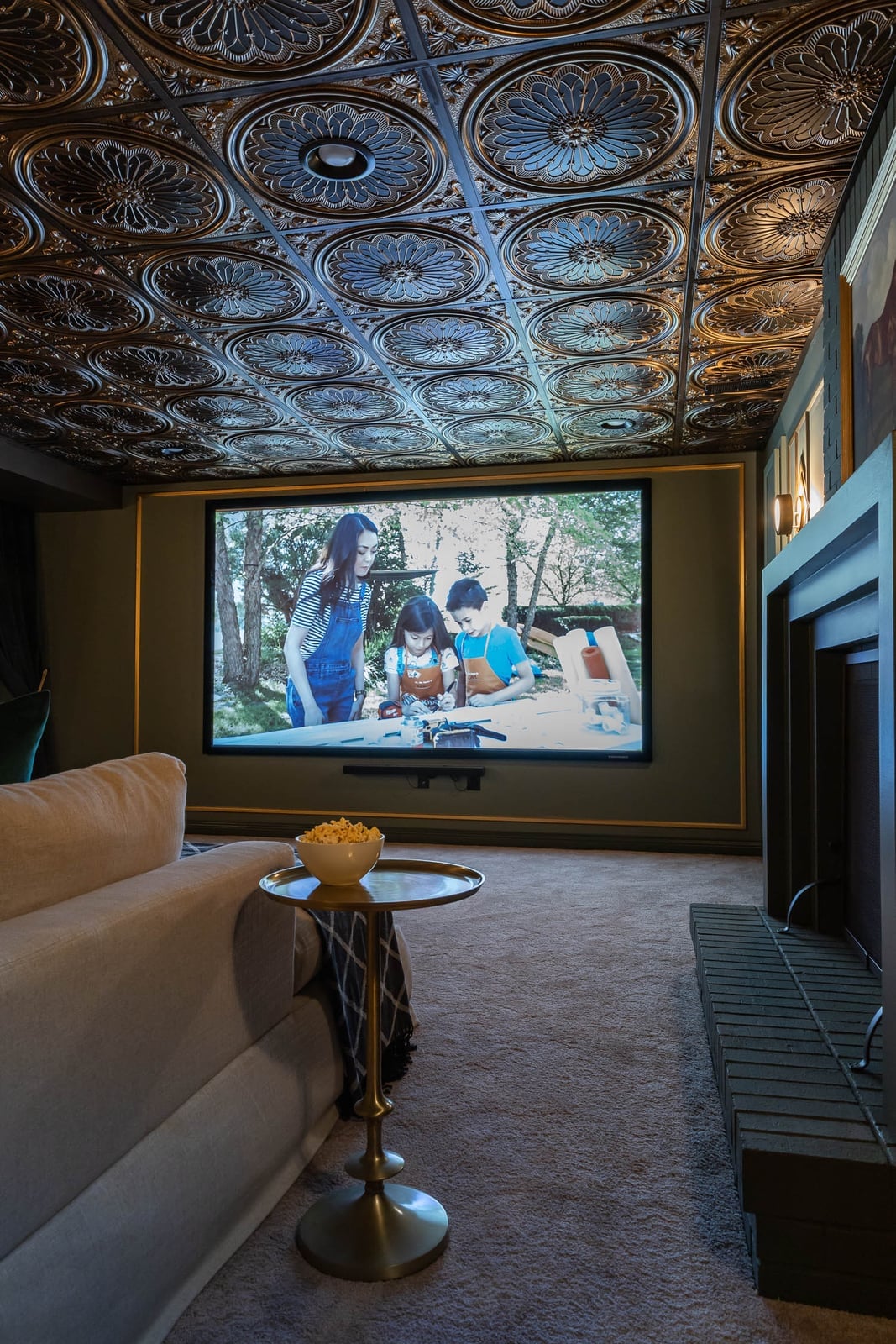
The ornate metal ceiling here does more than catch the projector light. It turns a room wrapped in dark gray walls into a space where the ceiling becomes the visual anchor. A gold finish on the metal panels adds a warmth that beige carpet and a large sectional sofa echo below. Wall sconces provide soft ambient light along the sides, keeping the focus on the screen without washing out the dark walls. The fireplace adds a secondary focal point, which helps the room feel balanced rather than tunnel-like.
Farmhouse Basement Bedroom with Soft Blue Walls and Cane Headboard
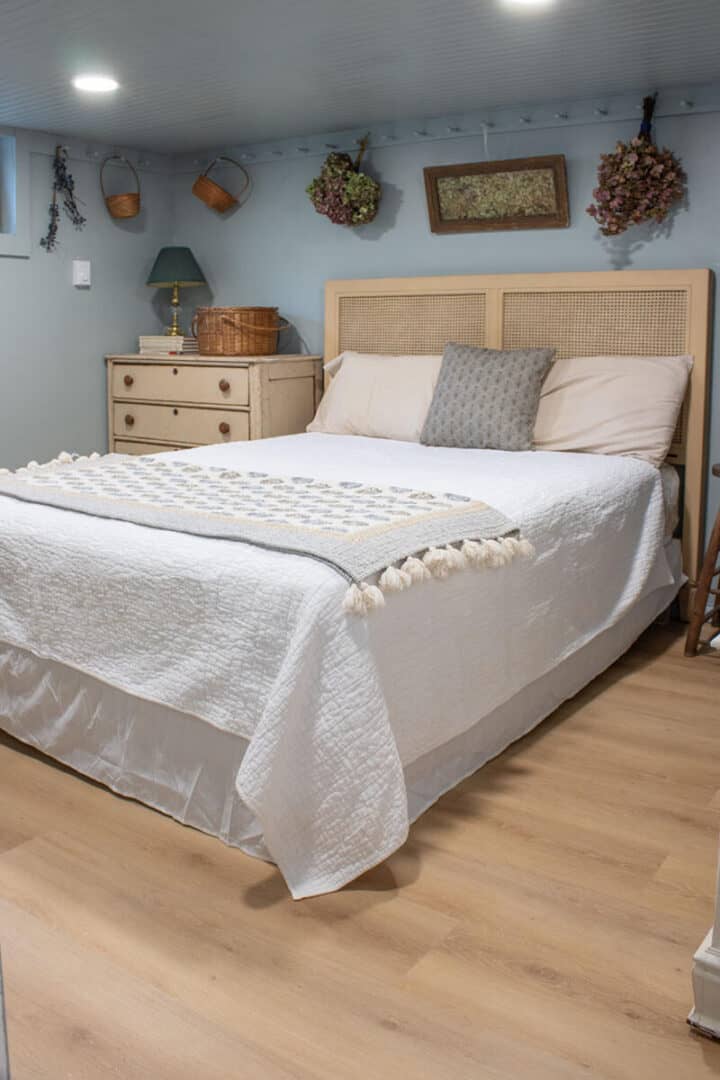
A practical rule for basement bedrooms is to anchor the palette with a soft wall color that feels calm but not cold. Soft blue walls here do exactly that, pairing with a cane headboard that adds natural texture without overwhelming the space. White bedding and a cream-toned dresser keep the look airy, while a gray wardrobe adds contrast. The farmhouse style comes through in the wood and cane materials rather than heavy patterns. Recessed lighting keeps the ceiling clean. For renters, this is a palette that works with most existing furniture and doesn’t require permanent changes to the structure.
Modern Basement Family Room with Dark Charcoal Walls
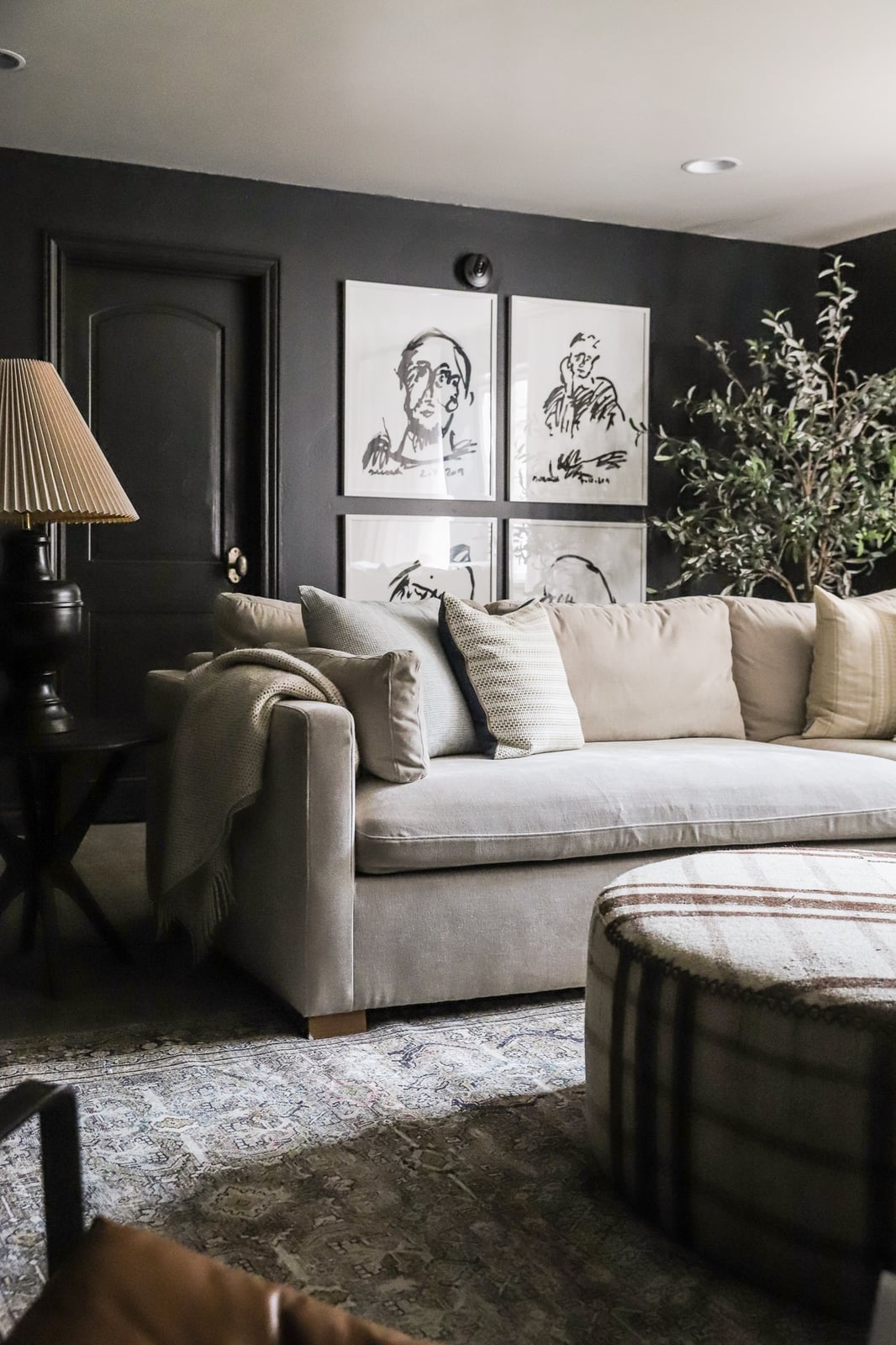
Dark charcoal walls can feel heavy in a family room, but the layout keeps things grounded. A large sectional sofa in beige fabric anchors the seating area, while a wood ottoman and side table add warmth. The charcoal is the dominant color, but the beige and wood tones prevent the room from feeling like a cave.
Table lamps are a smart choice over harsh overhead lighting in a room this dark. The lamp light creates pockets of brightness that soften the walls. Carpet underfoot helps with sound and warmth in a basement. For a similar look with less darkness, keep one wall in a lighter neutral and use charcoal on the rest.
Farmhouse Basement Bedroom with Soft Blue Walls, Close-Up Take
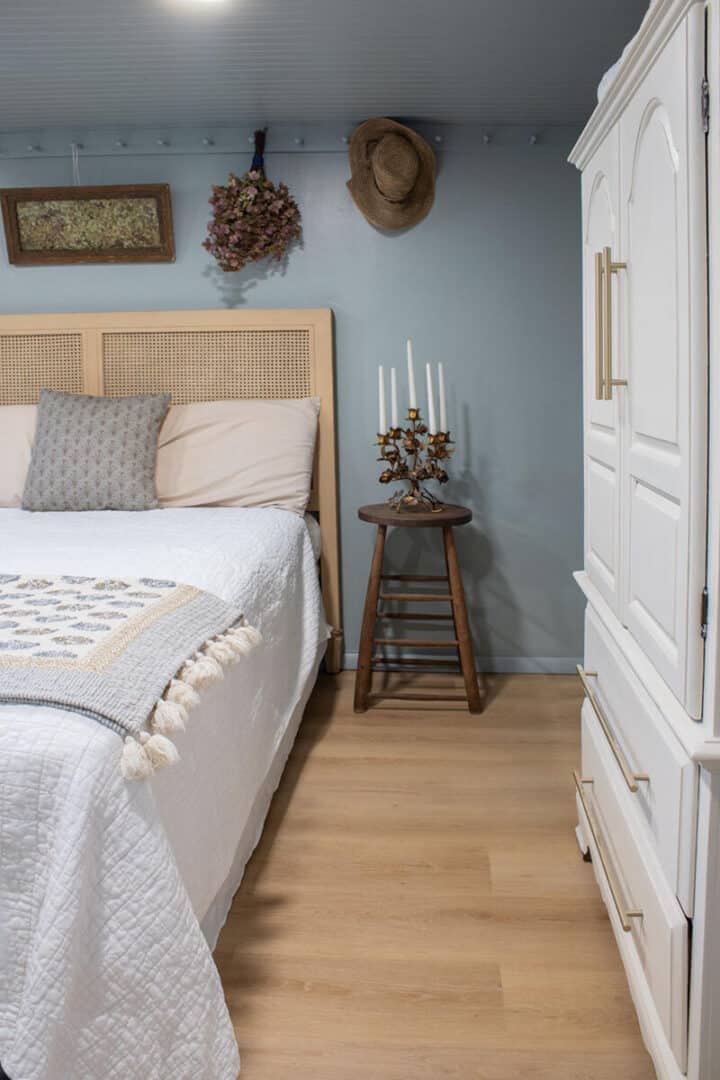
The cane headboard is the standout element here, and its durability is worth noting. Cane webbing holds up well in basement conditions because it allows air circulation behind the bed, reducing the risk of moisture buildup against the wall. The soft blue walls provide a gentle backdrop that doesn’t compete with the cane texture. A wood wardrobe and a small stool complete the vignette without crowding it. Overhead lighting keeps the room functional, but a table lamp on the dresser would add a softer layer for evening use.
Traditional Basement Home Office with Dark Green Walls
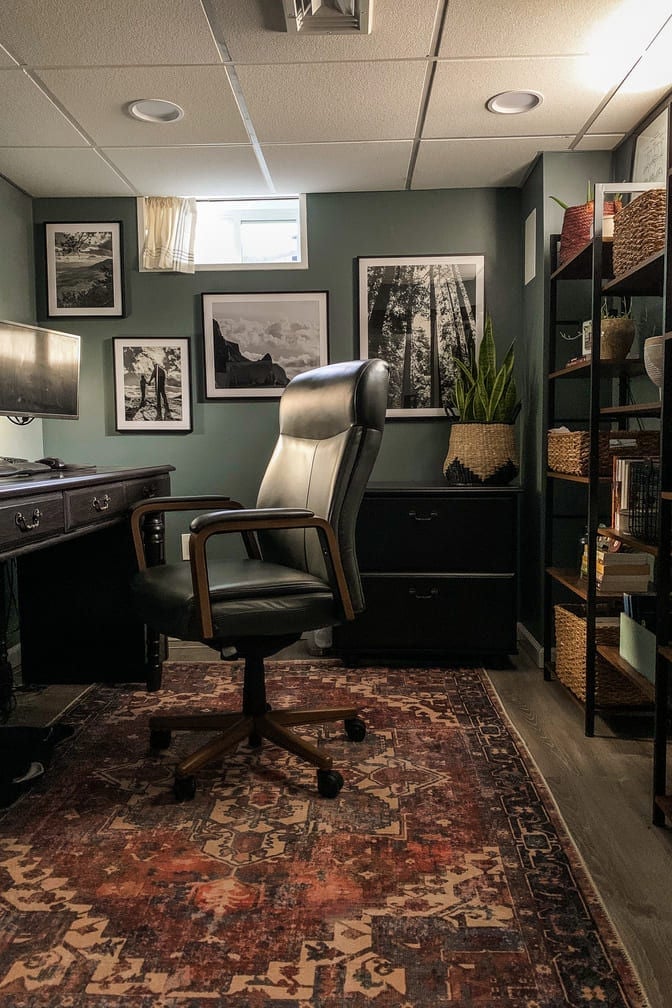
Dark green walls in a compact basement office create a focused, cocoon-like atmosphere that suits a traditional desk-and-shelves setup. The green is deep enough to recede visually, making the room feel less boxy than it might with a lighter color. A gray desk and white shelving keep the palette grounded, while red accents in the artwork add a deliberate pop of contrast. The desk lamp provides task lighting, and the overhead lights fill the general space. For a small room, keeping the trim and ceiling white helps define the edges without adding visual weight.
Minimalist Basement Bedroom with Off-White Walls
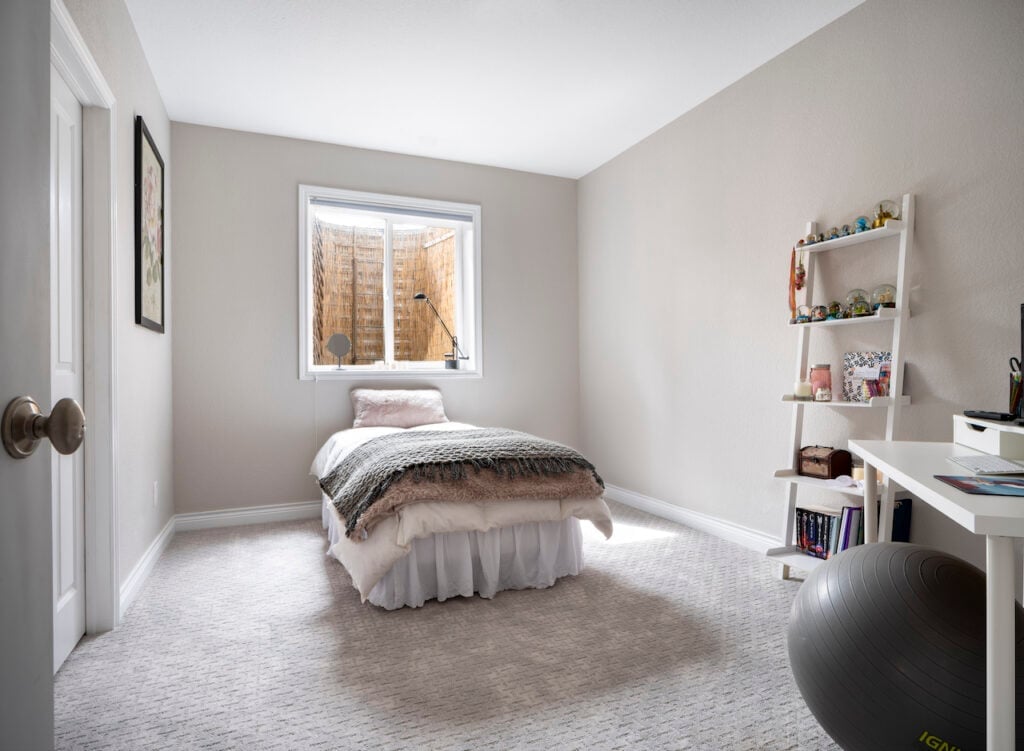
A light palette works harder in a compact basement bedroom. Off-white walls and carpet keep the room open, while the gray bed frame and beige desk add soft contrast. A ladder shelf offers storage without closing off the wall. The desk lamp and window provide task and ambient light, so the room stays bright even during the day. An exercise ball by the window is a practical touch for a space that doubles as a home gym. This setup proves that a restrained palette can make a small room feel larger without extra square footage.
Modern Farmhouse Basement with Olive Green Walls
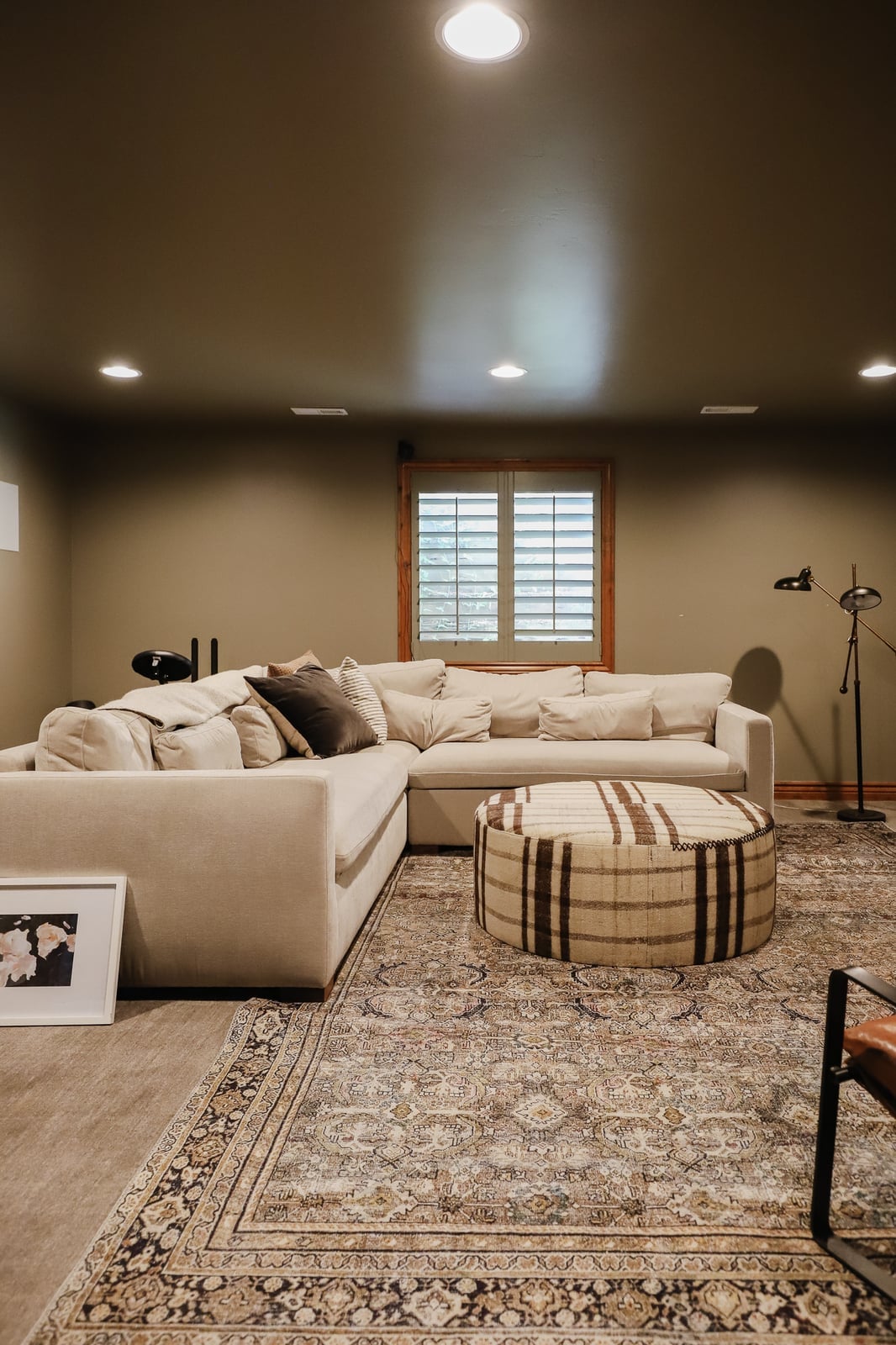
Olive green walls bring warmth to a basement family room without darkening it. The beige sectional and brown plaid ottoman ground the seating area, while wood shutters and a floor lamp add texture. Recessed lighting keeps the ceiling clean. The palette works because the green is muted, not bright, so it functions as a neutral. A brown ottoman breaks the pattern and adds visual interest.
Transitional Basement Bedroom with Light Green Walls
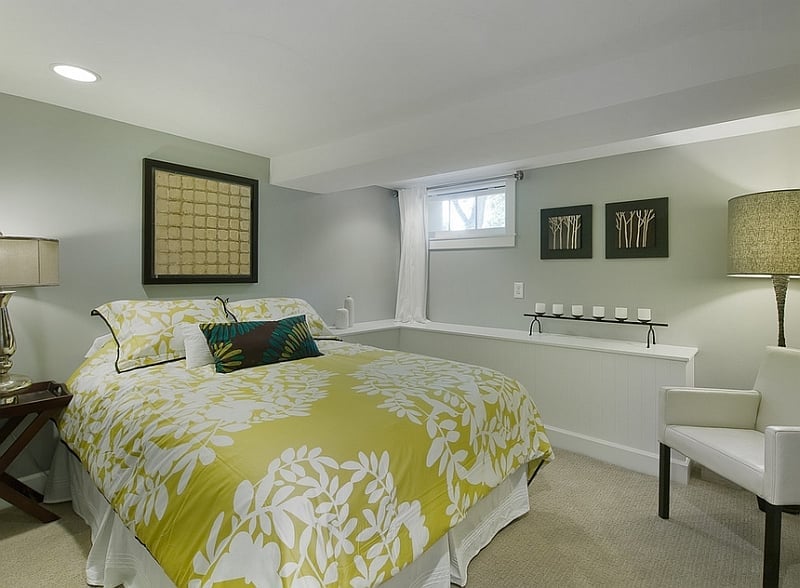
Light green walls make a basement bedroom feel fresh without being cold. The yellow floral bedding adds a cheerful pop, while white lamps and a wood chair keep the room grounded. Carpet on the floor softens sound. The overhead light and window light balance the palette. This finish works well for a guest room that needs to feel inviting with minimal upkeep.
Eclectic Basement with Light Green Walls and Beadboard Ceiling
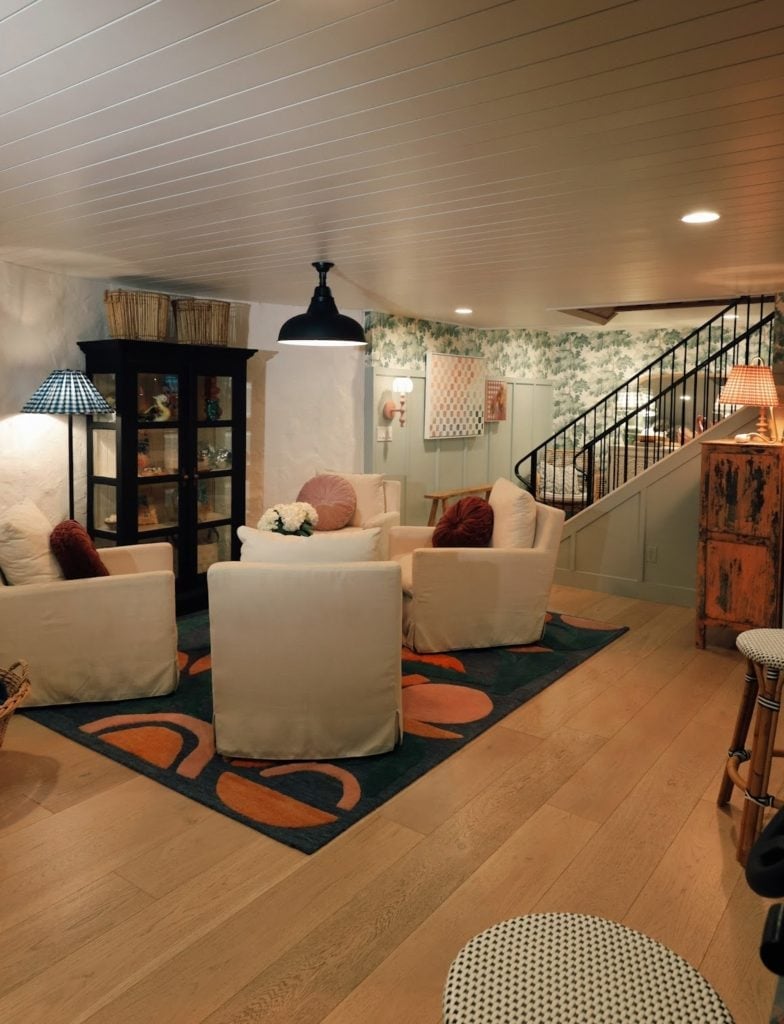
Light green walls and a white beadboard ceiling give this basement a clean base. The eclectic mix of blue and orange in the rug and armchairs adds energy, while the patterned wallpaper on the stairs draws the eye up. Overhead lights and wall sconces provide layered lighting, and a lamp on the cabinet softens the corners. The stairs visible in the layout make the space feel connected to the rest of the house. This approach works because the ceiling is a neutral canvas, letting the walls and furniture do the talking.
Unfinished Basement with Fresh Off-White Paint
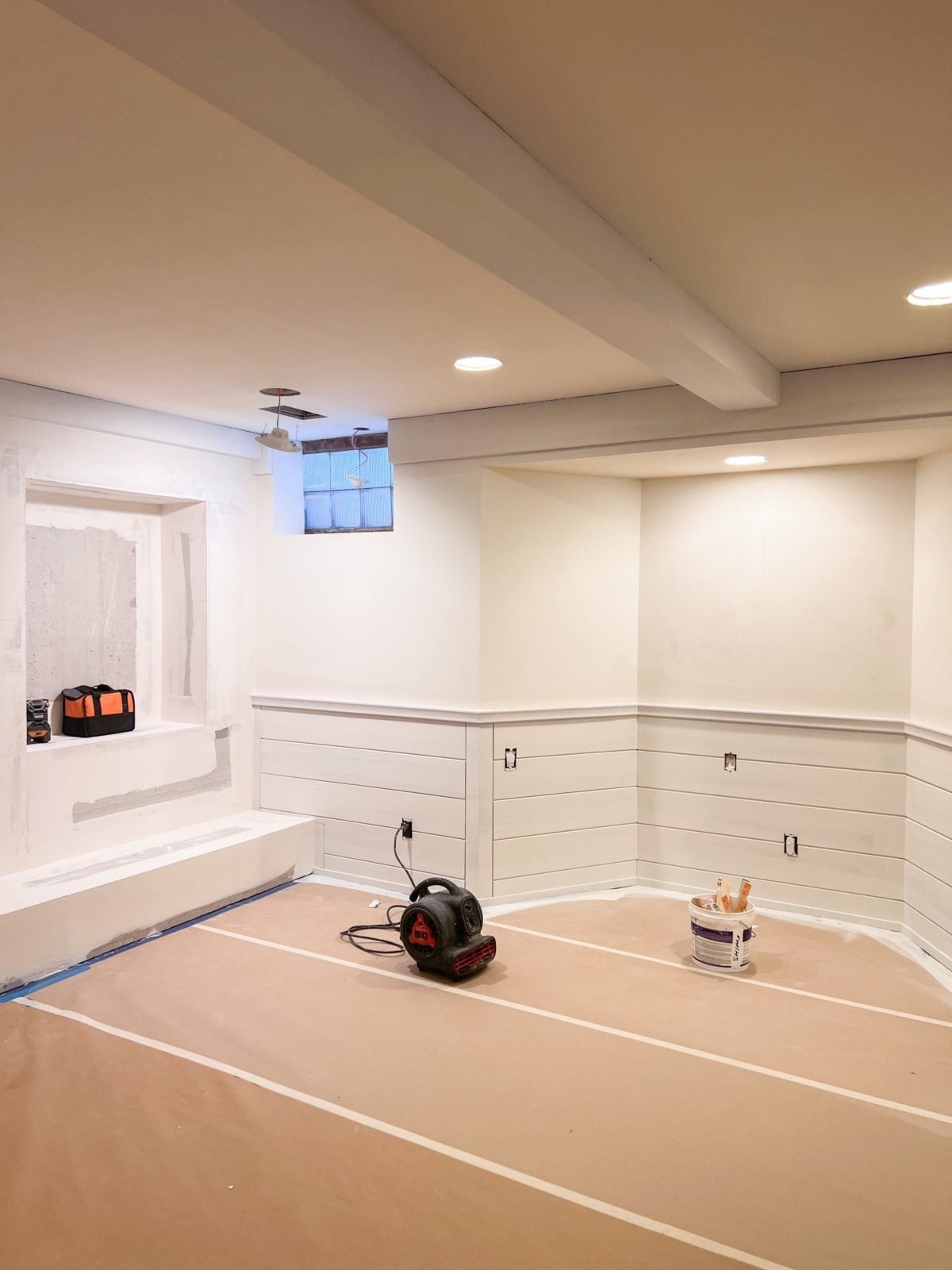
Fresh off-white paint transforms an unfinished basement without a full renovation. The walls and drywall are coated in a warm neutral, while the wood tones of the framing and floor remain visible. Paint cans, brushes, and drop cloths show the process is still underway. Overhead recessed lighting keeps the space usable. This is a renter-safe swap: painting the walls is a low-commitment way to brighten a raw space before adding furniture or storage.
Compact Basement with Light Gray and Beige Walls
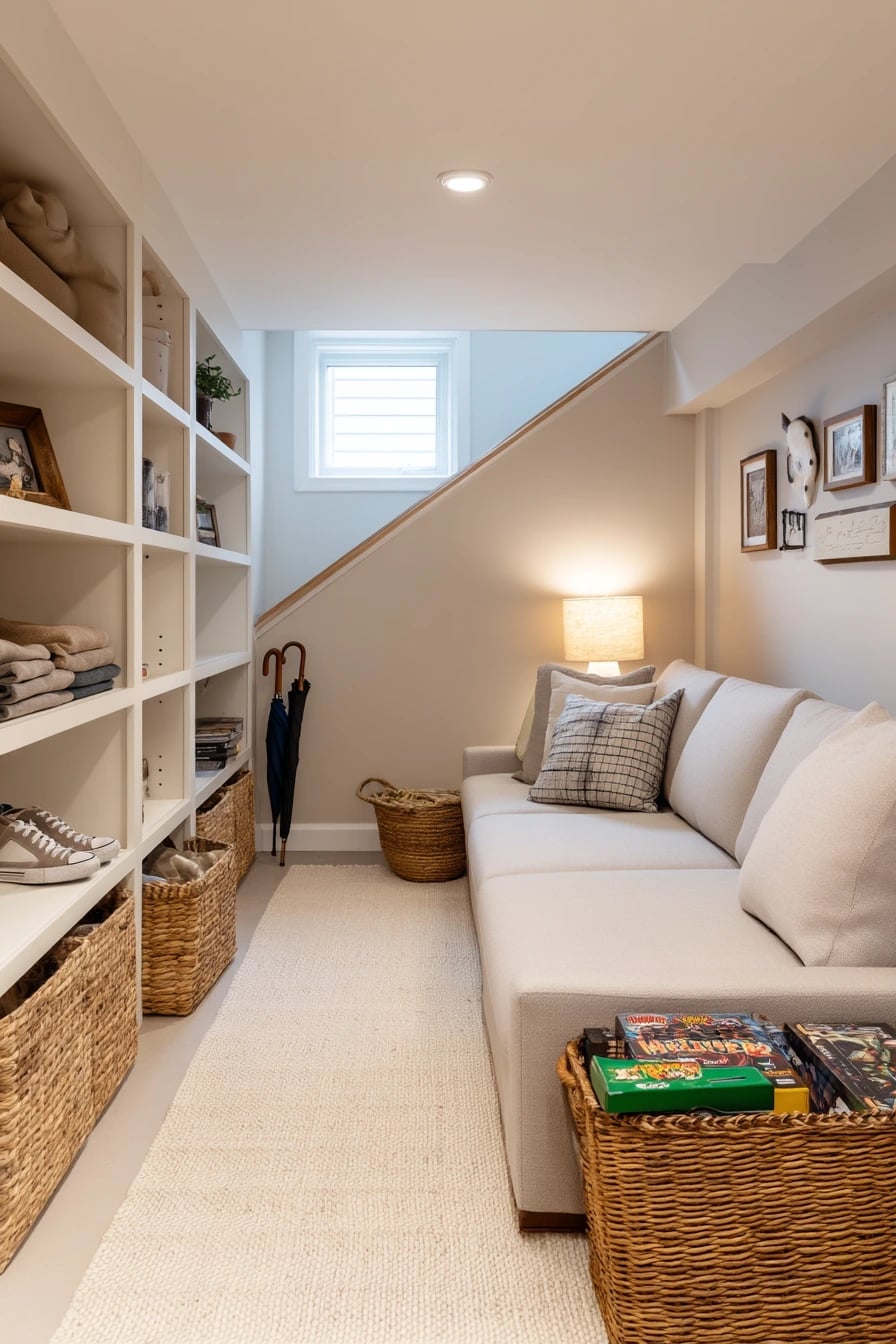
Light gray walls and a beige sofa make this compact basement feel wider than it is, and the white shelving unit that runs the length of the wall does the real work. When square footage is tight, a pale neutral palette lets you add storage without the room shrinking. The wicker baskets on the lower shelves keep clutter hidden while adding texture, and the small window above the sofa brings in natural light that the gray walls bounce around. A layout like this keeps the floor plan open by putting everything against one wall.
Minimalist Basement Hallway with Light Blue Walls
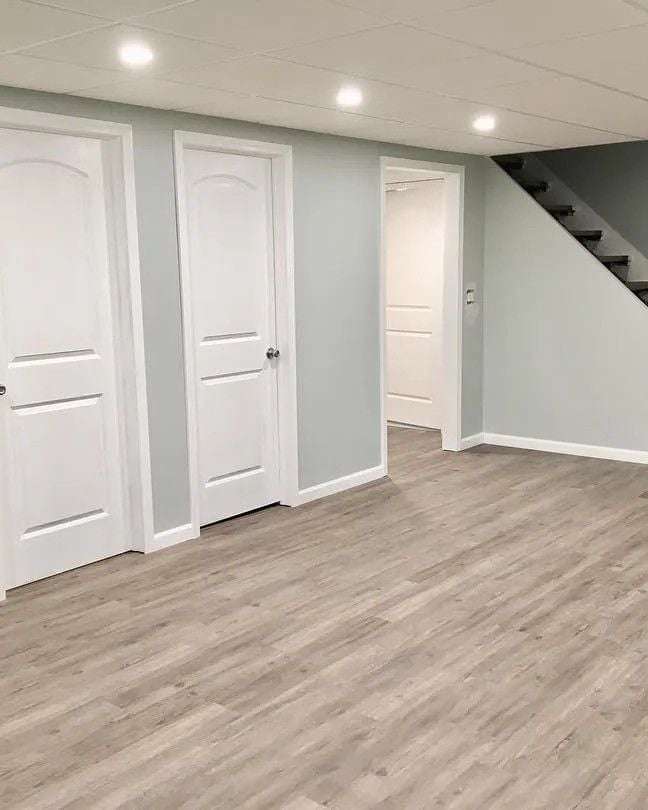
A light blue hallway reads as calm and intentional, but it is a trickier choice than white because the shade needs to be pale enough to keep a compact space from feeling tight. In this minimalist basement hallway, the light blue walls sit between three white doors and a gray stair railing, and the combination works because the blue is soft and the white trim keeps the lines crisp. Recessed lights in the ceiling add even light without taking up visual room.
For renters, painting a hallway that tone is a low-risk change. It is easy to repaint white before moving out, and the color adds personality to an area that often gets forgotten. A light blue reads as fresher than a beige or gray without demanding anything from the decor that follows.
Cozy Basement with Beige Walls and Gallery Wall
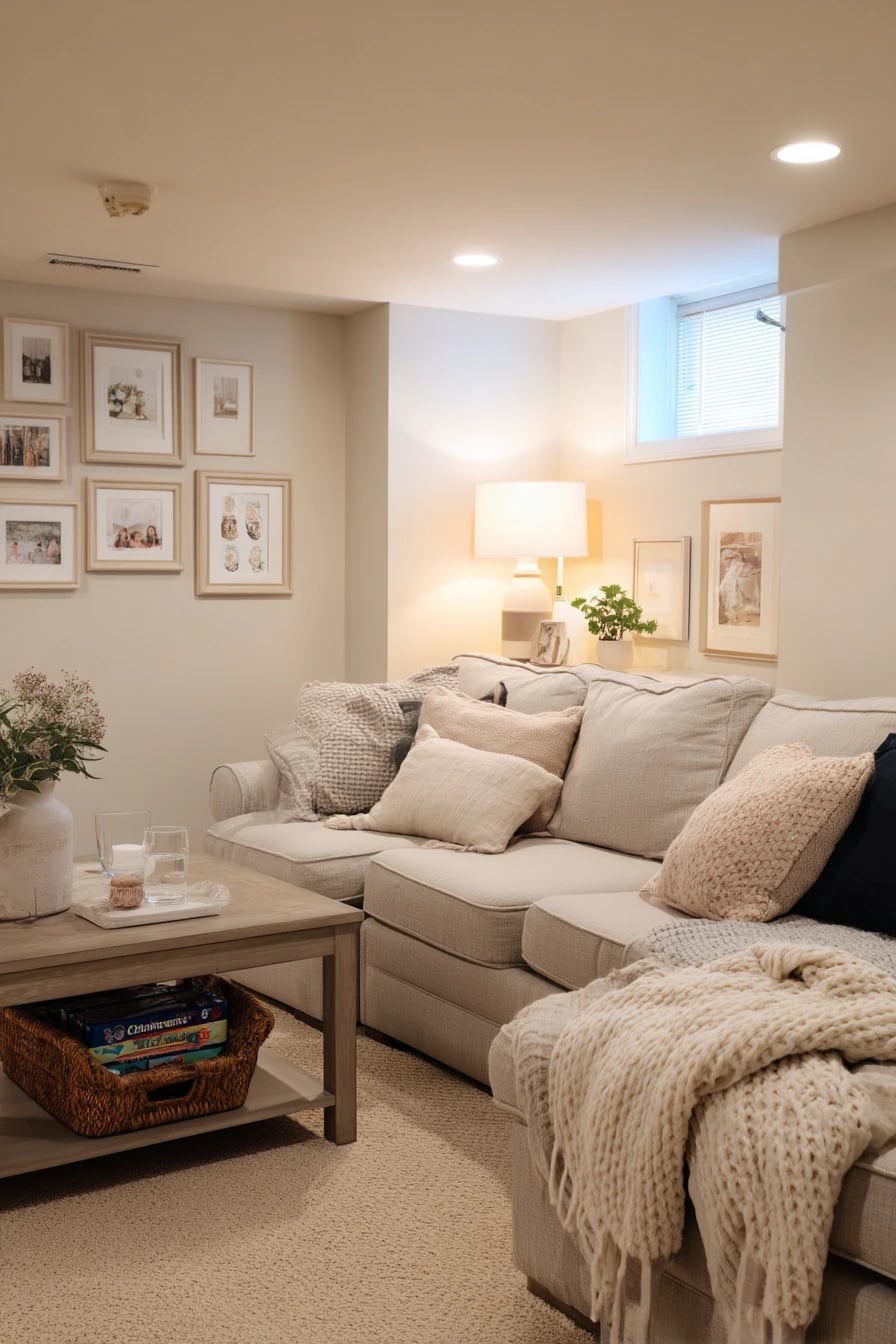
The beige here is warm enough to keep the sectional and coffee table from feeling sterile, and the gallery wall above the sofa stops the room from looking like a waiting area. Beige can read as bland on its own, but the mix of cream upholstery and light wood coffee table gives it enough variation to feel layered. The gallery wall breaks up the wall and adds the personality that a single color cannot carry alone.
Modern Basement with Navy Cabinets and Integrated Storage
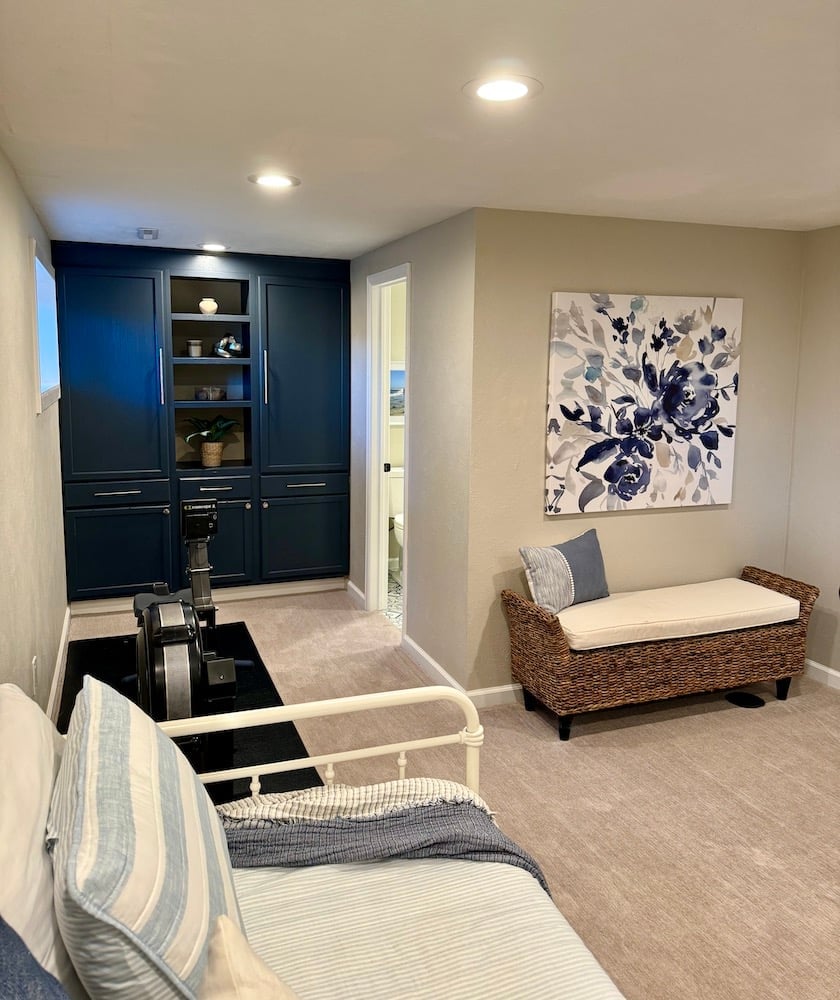
Navy cabinets in a basement corner pull double duty as storage and decor, and they anchor the room in a way that beige walls and carpet cannot. The deep blue reads as a furniture piece rather than a built-in, so it adds character without requiring a full renovation. A bench below the cabinets offers a spot to sit while putting on shoes, and the artwork above keeps the wall from feeling bare. Recessed lighting keeps the navy from darkening the corner, and the contrast with the light walls keeps the room feeling open.
Modern Farmhouse Basement Family Room in Olive Green, Indoor
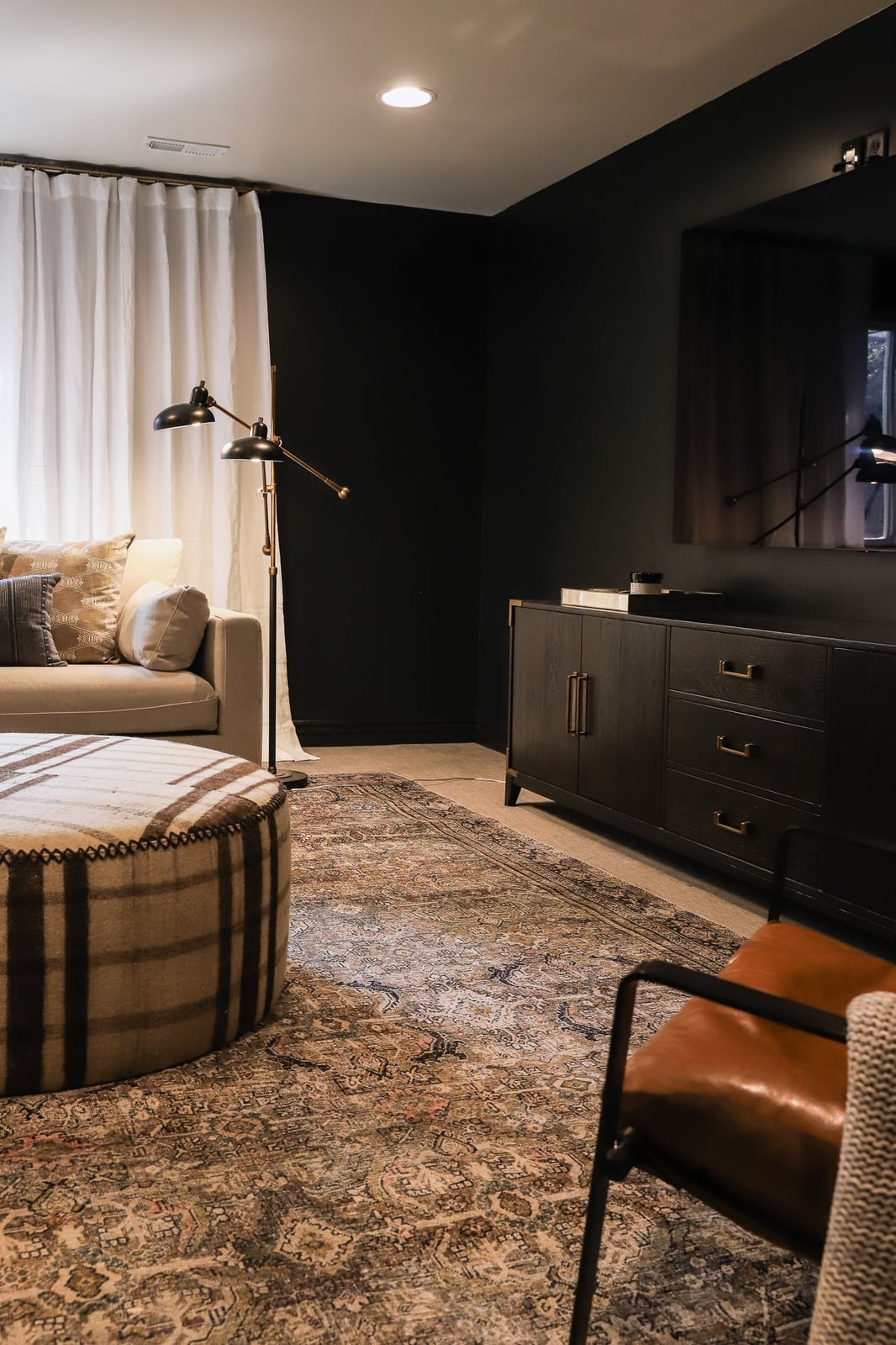
Olive green can lean too earthy or too dark depending on the light, but in this modern farmhouse basement it stays warm because the beige sectional and light wood dresser balance it out. The color works here because it is not competing with the other finishes. A plaid ottoman adds pattern without clashing, and the brown rug ties the olive walls to the wood tones.
For a basement family room that needs to feel lived-in, olive green is a good middle ground. It is darker than a beige but not as heavy as a charcoal, and it hides the scuffs that come with daily use. A floor lamp adds warm light to brighten the space during evening hours.
Final Thoughts
Choosing a basement paint color is really about deciding how you want the room to feel. Dark shades like charcoal and green create a cozy, enclosed atmosphere that works well for media rooms and game areas. Lighter colors like white, off-white, and light blue make a basement feel bigger and brighter, which helps if you’re short on natural light. Olive and beige offer a middle ground, warm without being heavy. Keep the rest of the room simple let the paint be the focus. If you’re painting a basement with exposed pipes or concrete walls, a coat of primer first will save you time and frustration. And always test a swatch on the wall before you commit. The right color can turn a forgotten space into a favorite one.