A workshop should work as hard as you do, but that doesn’t mean it has to look like an afterthought. Whether you are outfitting a garage, a shed, or a dedicated room, the right layout and storage choices can turn a purely functional space into one you actually want to spend time in.
These 17 workshop design ideas lean into the tools and materials themselves, making organization part of the decor. From craftsman-style pegboards to modern rolling chests, each setup proves that a well-planned workshop balances practicality with a clear, intentional look.
Maximize Wall Space with a Craftsman-Style Pegboard
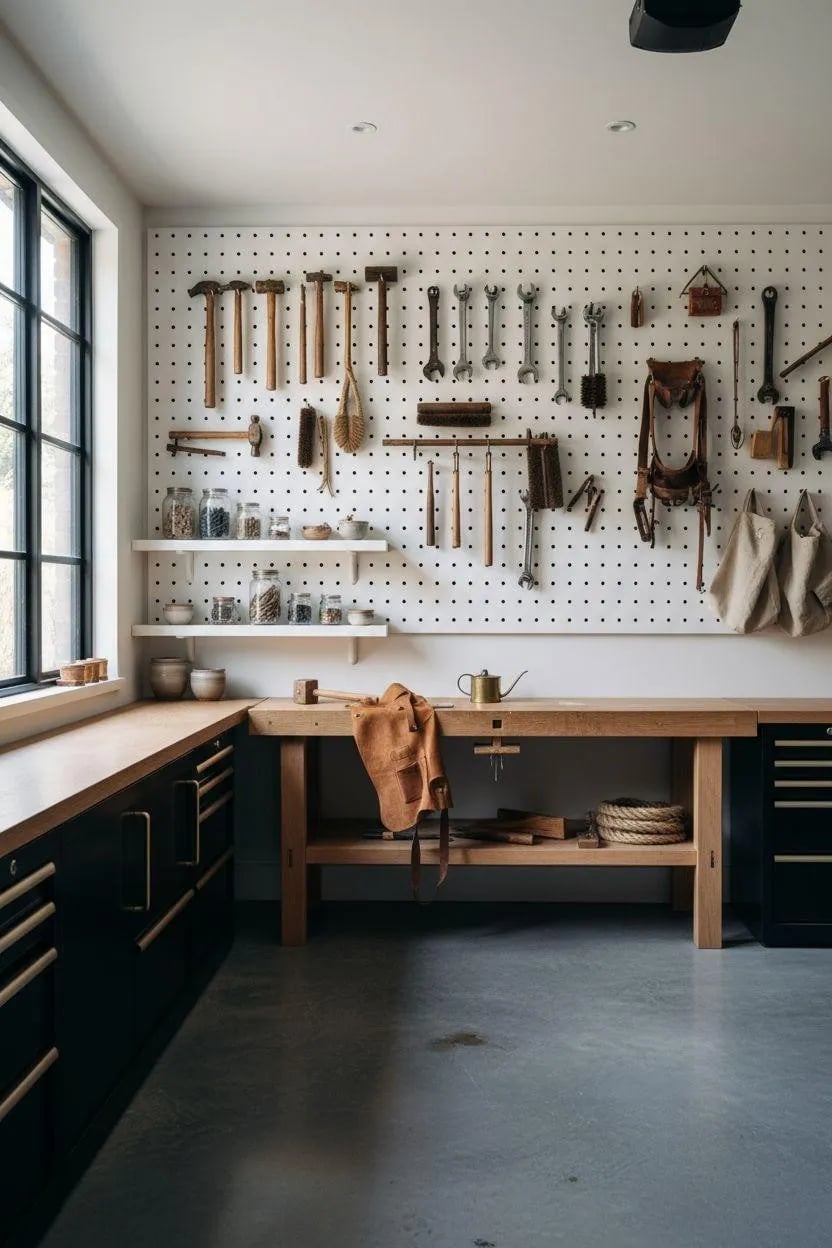
A pegboard wall that covers the entire space from workbench height to ceiling changes how a workshop feels, turning a jumble of tools into something almost like a display. The workbench and concrete floor keep the room grounded, while the black pegboard and metal tools add contrast without clutter. Overhead pendant lighting makes tools easy to find. This is a style where the pegboard is the focal point, and everything else steps back.
Modern Industrial Garage Workshop with Integrated Seating
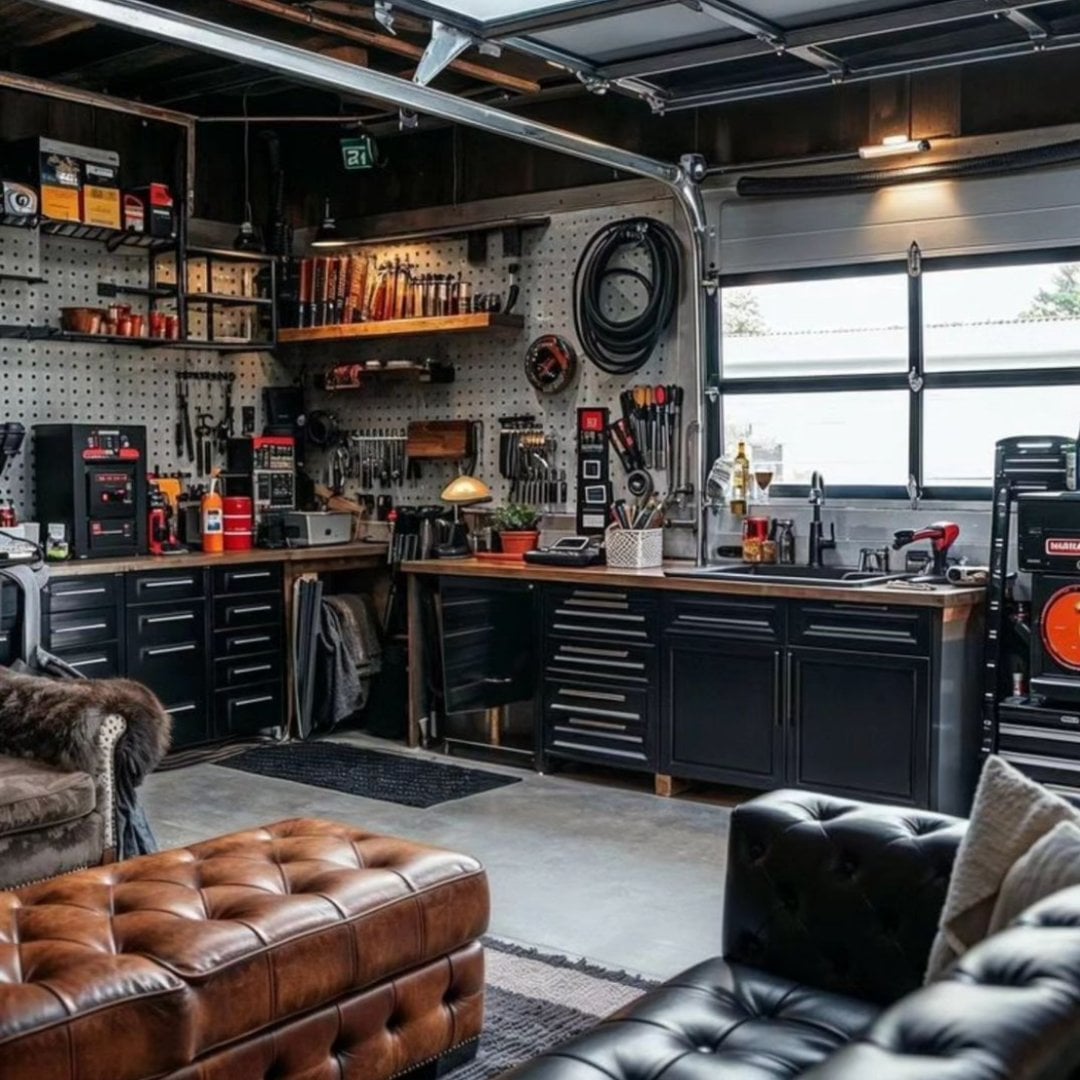
A garage workshop that adds a leather sofa to the mix is a clear sign the room is meant for more than just projects. The black tool cabinets and gray concrete floor set a no-nonsense industrial tone, while the wood workbench and red accents soften the look. Overhead garage lighting and task lighting keep the work area bright, and the seating area turns one corner into a place to think through a build. The palette is tight: black, gray, and wood with red as the one note that breaks the scheme. The leather sofa is integrated into the layout from the start.
Rustic Modern Workshop with Vaulted Wood Ceiling
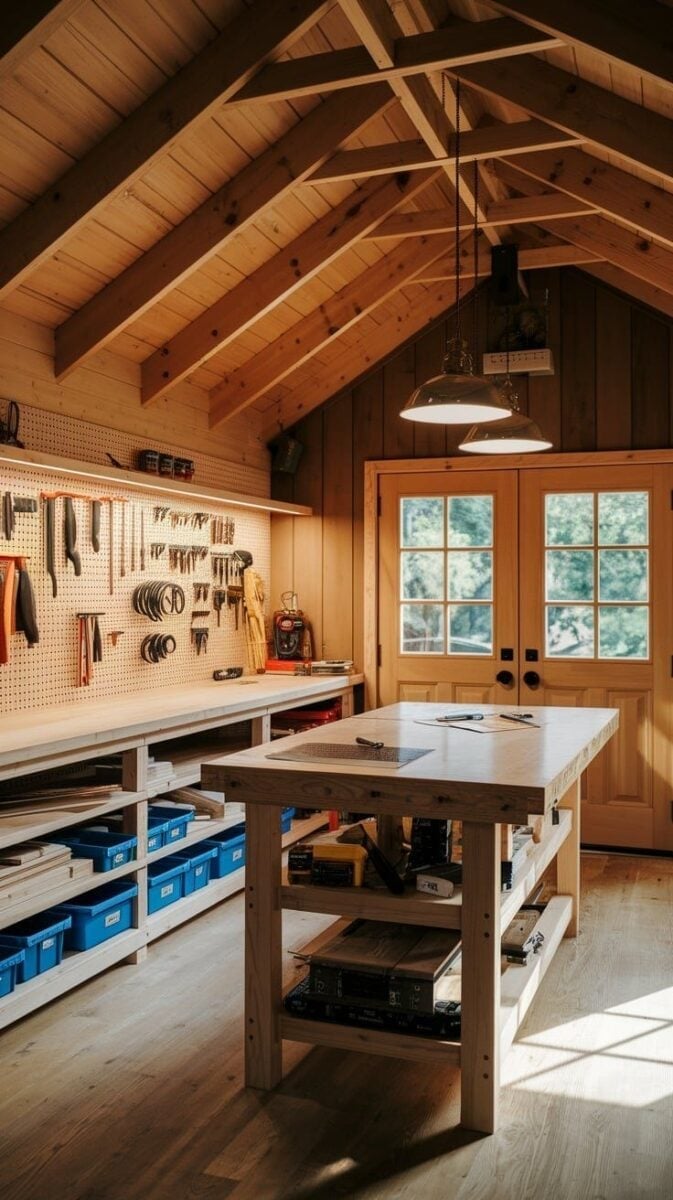
How do you keep a workshop with a vaulted wood ceiling from feeling like a barn? The answer is in the materials and how they balance each other. The wood ceiling and wood workbench lean rustic, but the metal pegboard, blue bins, and industrial pendant lights pull the room toward modern. Double doors let in natural light that hits the organized tool wall, making the space feel open rather than dark.
The ratio is key: wood covers the top and the work surface, while metal and bright blue handle the storage and accents. The blue bins break the brown monotony without introducing a whole new palette. For anyone working in a room with exposed rafters, keeping the wall tools and containers in a secondary material stops the wood from taking over.
Classic Rustic Workshop Featuring a Heavy-Duty Workbench
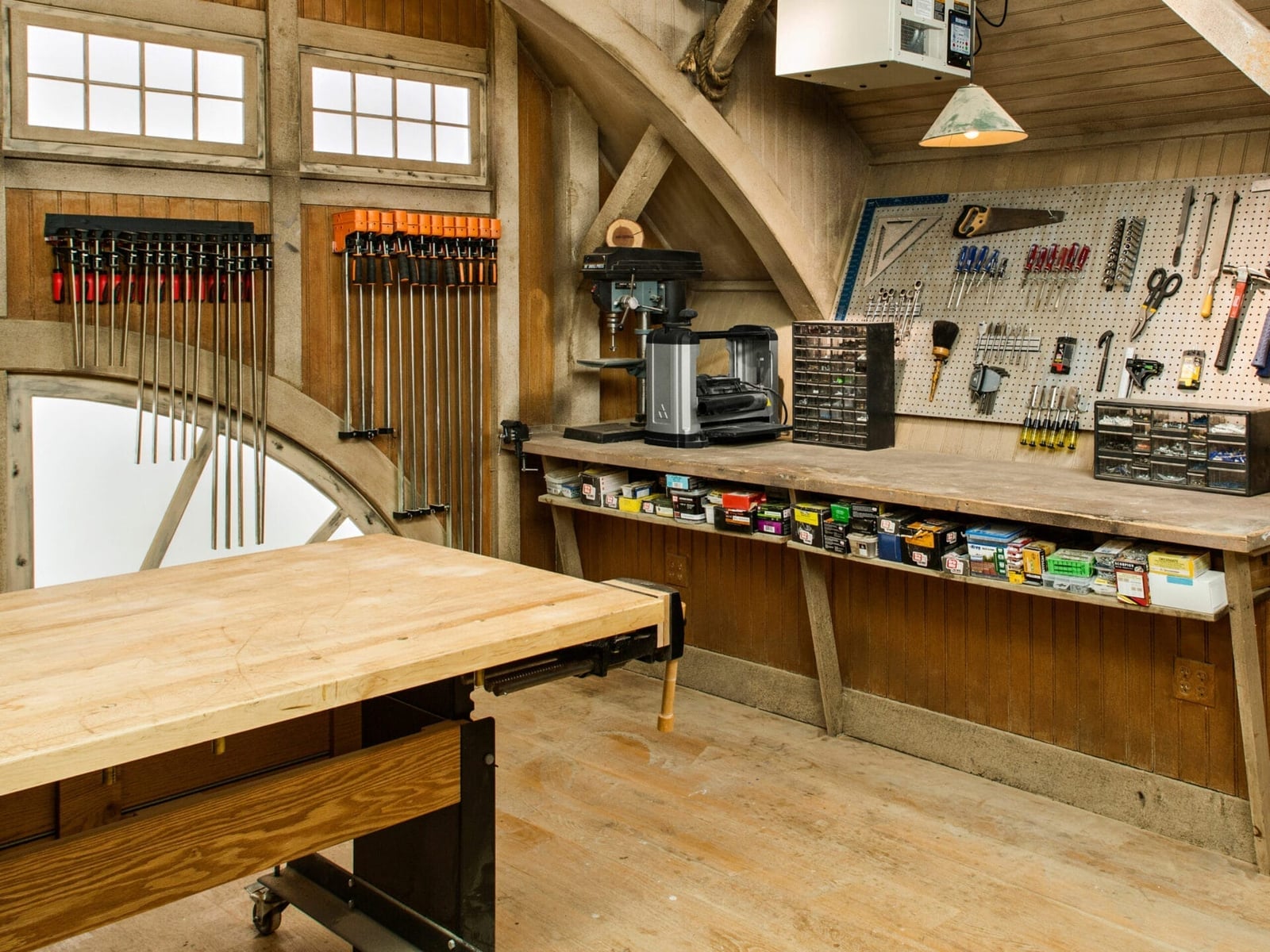
A large wooden workbench with a vise is the kind of piece that defines a workshop, and this one anchors the room. The bench and the metal pegboard behind it create a straightforward rustic look, with an overhead industrial pendant dropping light right onto the work surface. Windows add natural light that balances the heavy feel of the bench. The layout keeps the workbench as the anchor and stores tools against the walls, leaving the floor clear for moving around a long project. The drill press on the side shows that heavy equipment can share the space without competing for attention.
Sleek Modern Workshop with Rolling Tool Chest and Pegboard
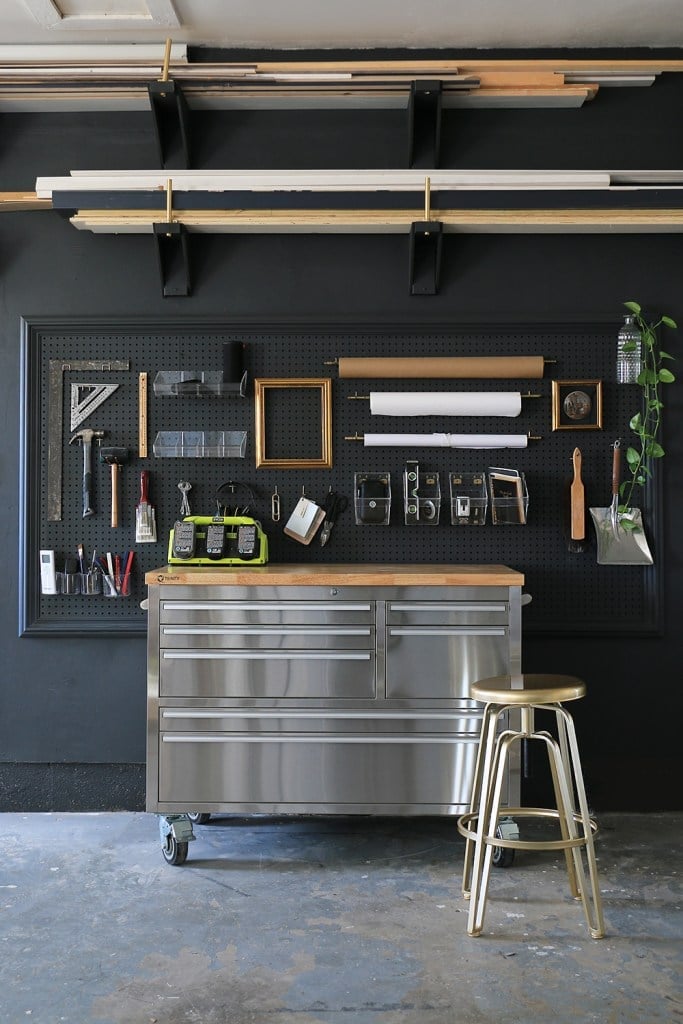
A practical rule for workshop storage is to keep what you use every day on the wall and everything else in a rolling chest. This room follows that logic with a full pegboard display above a central workbench and a silver rolling tool chest parked nearby. The black pegboard and metal chest set a modern, almost industrial palette, while the wood stool and wood tones on the bench add warmth. Overhead artificial light keeps the work area bright. The rolling chest makes it easy to move tools to a different corner or bring them closer to a project without unpacking everything.
Modern Utilitarian Workshop with Central Workbench and Miter Saw
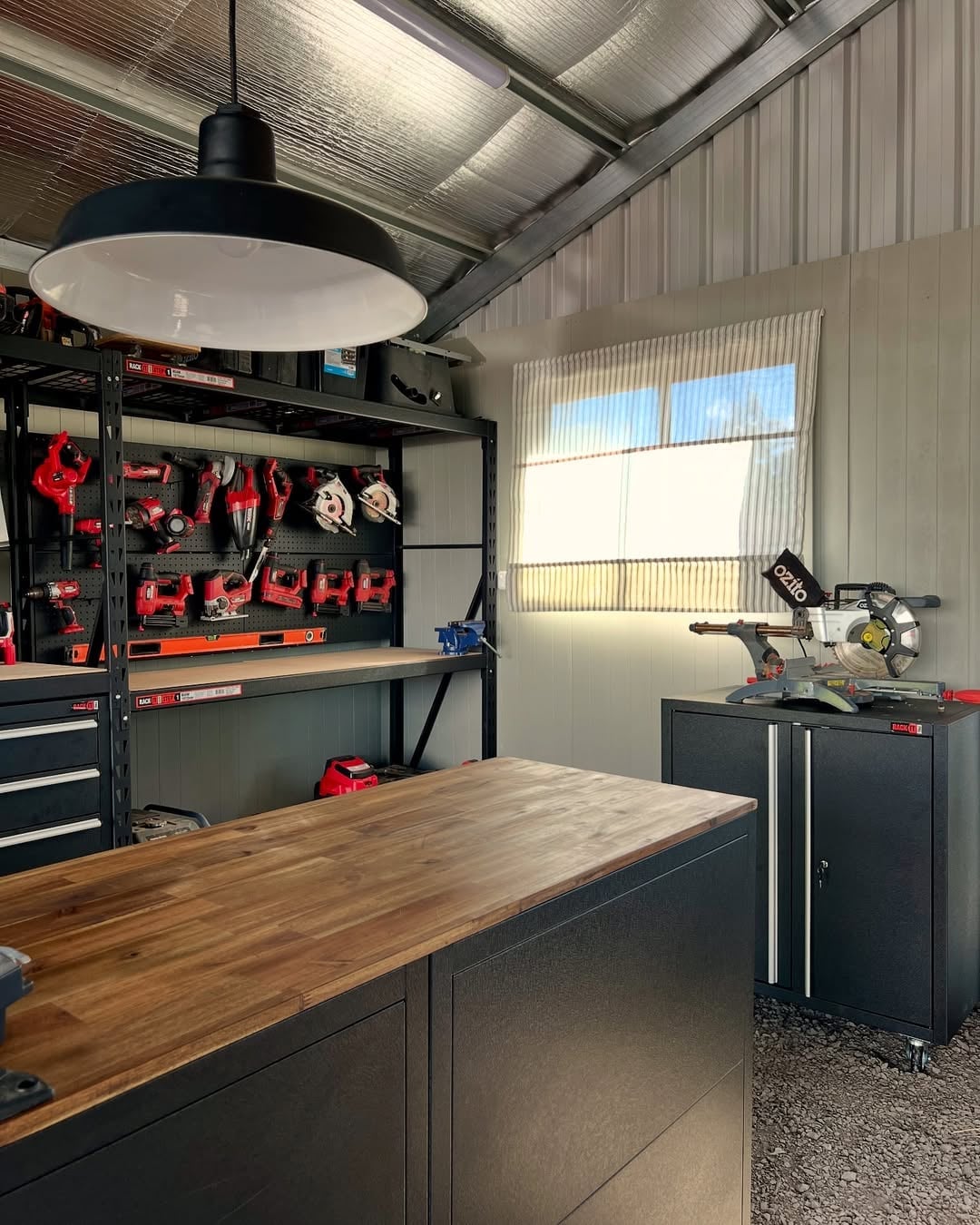
A plain pegboard wall can become cluttered once the tools pile up. This modern utilitarian workshop centers on a workbench flanked by black tool chests and shelving units that keep the perimeter clean. The palette stays muted with wood and black, so the red accents on a few tools and the miter saw stand out without reading as clutter. An industrial pendant and fluorescent ceiling lights spread even illumination across the roomy space, which matters when you are switching between a handsaw and a power tool. The style works because every surface has a job, and nothing drifts into decoration.
Functional Workshop with Organized Tool Racks and Shelving
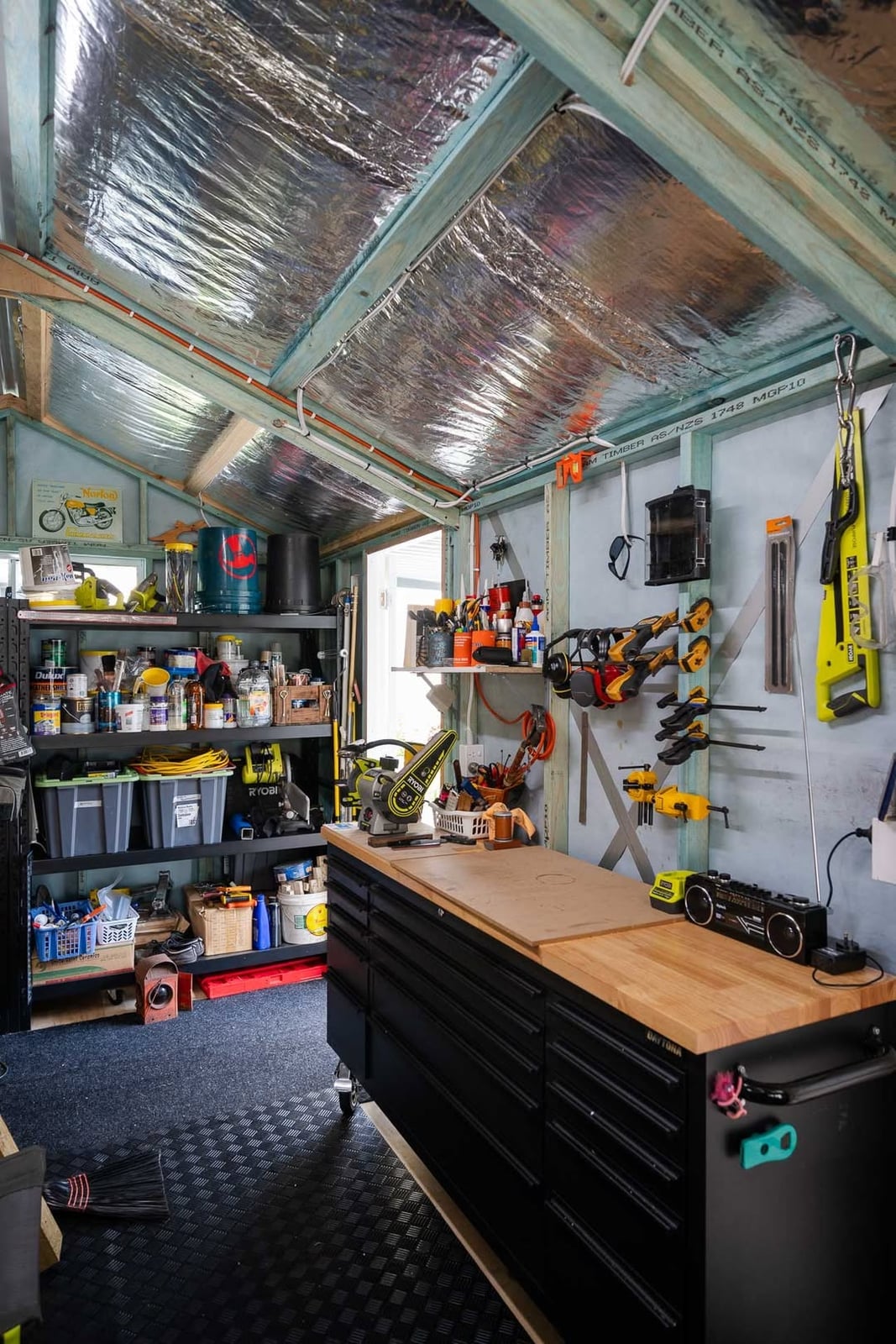
The tool racks here run from floor to chest height, and the shelving above them catches the overflow that usually ends up on the workbench. A blue metal rack breaks up the gray and wood palette, and the overhead fluorescent and natural light keep the space bright. The layout proves that vertical storage does the organizing for you, so you do not have to dig through a drawer for the right wrench.
Clean and Organized Modern Workshop with White Cabinets
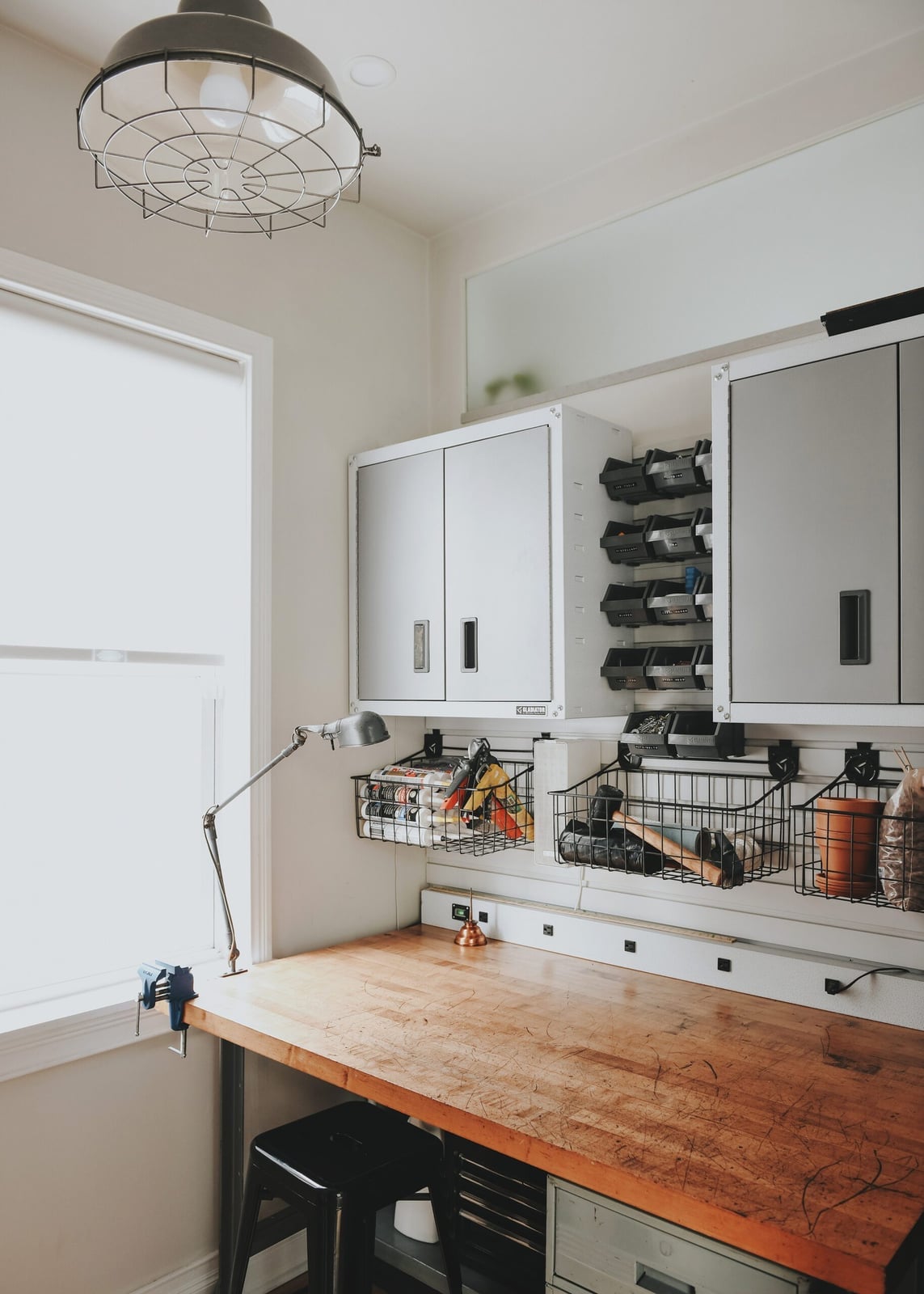
White cabinets are the shortcut to a workshop that looks clean even when it is not. This modern workshop pairs them with a gray workbench and a wood-toned top, so the palette stays crisp without feeling cold. Task lighting and natural light hit the pegboard and tools evenly, which cuts down on shadows when you are reading a tape measure or sorting screws. The laminate countertops wipe down fast, and the white finish reflects light around the roomy space. It is a palette that works because the dark tools and bare wood keep the white from reading as sterile.
Spacious Craftsman Workshop with Multiple Workstations
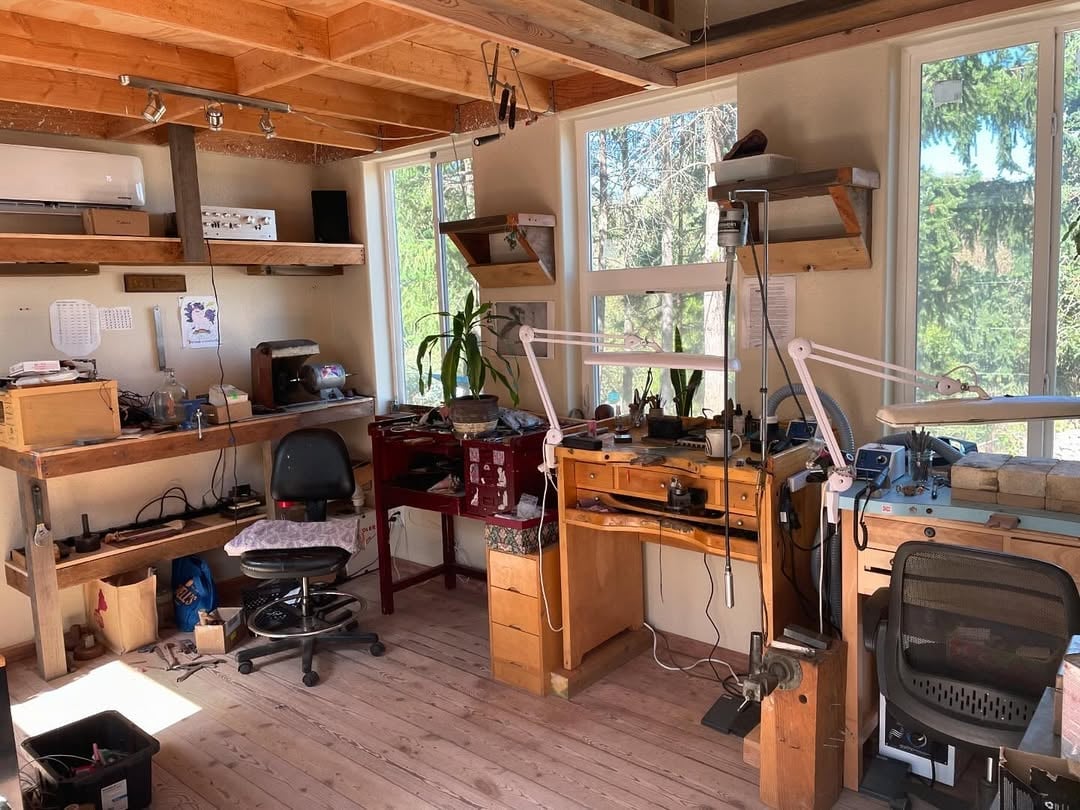
Can one workbench handle every project? This craftsman workshop says no with two separate benches, each with its own chair and task lamp. The layout splits the roomy floor into zones, so you can leave a sanding job set up on one bench while you measure and cut on the other. Wood tones dominate the palette, with white shelving and gray accents keeping it from going dark. Overhead lights handle the general brightness, and the task lamps let you aim light exactly where the blade meets the board. The multiple stations mean you do not have to reset your space every time you switch tasks, which is the real time saver.
Craftsman Workshop Tool Wall Display on Wood Paneling
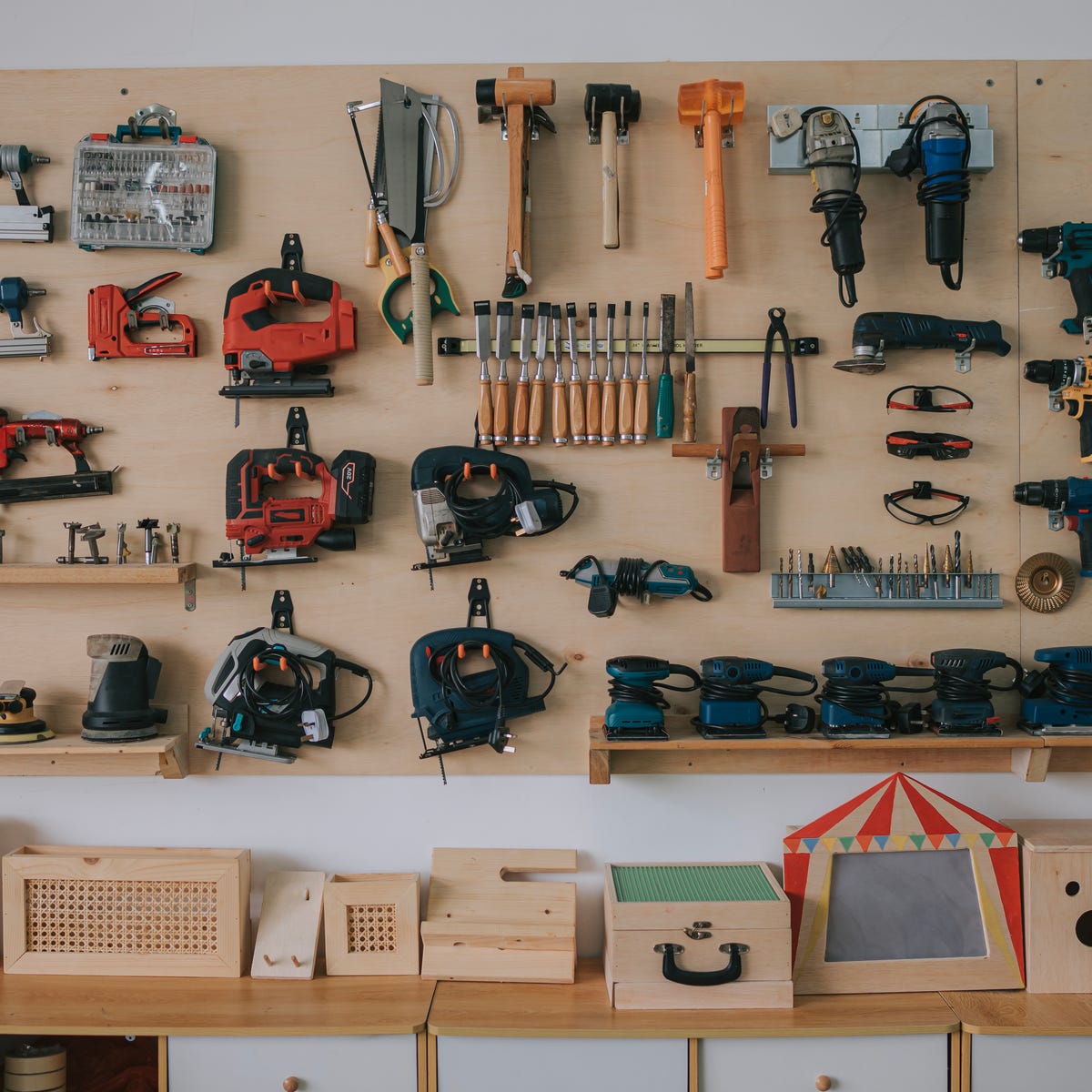
A tool wall on light wood paneling turns a practical storage wall into a visual display. Red, blue, and orange tool handles pop against the warm background, and the wooden boxes on the lower shelves anchor the array. The overhead artificial light hits the tools evenly, so nothing gets lost in shadow. This styling trick works because the wood paneling provides a neutral backdrop that lets the tools do the decorating, and the color mix keeps the wall from reading as a hardware store aisle.
Functional Workshop with Tall Storage Cabinets and Clamp Rack
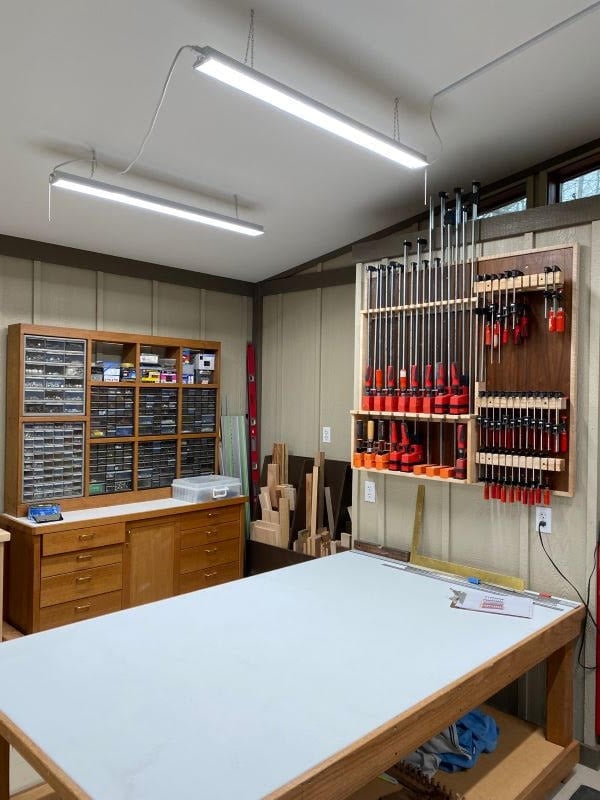
Start with a practical rule: keep the things you reach for most often at arm’s length. The tall storage cabinets and large workbench in this functional workshop put that idea to work, with wood, metal, and plastic pieces in wood tones and gray, punctuated by orange accents. The organized clamp rack is the standout, turning a tangle of clamps into a tidy row that is easy to grab and return. Fluorescent tube lights spread even light across the roomy space, so nothing hides in shadow. This is a layout that rewards a quick sweep before you leave, because when every tool has a home, the next project starts faster.
Industrial Workshop with Large Table Saw and Lumber Storage
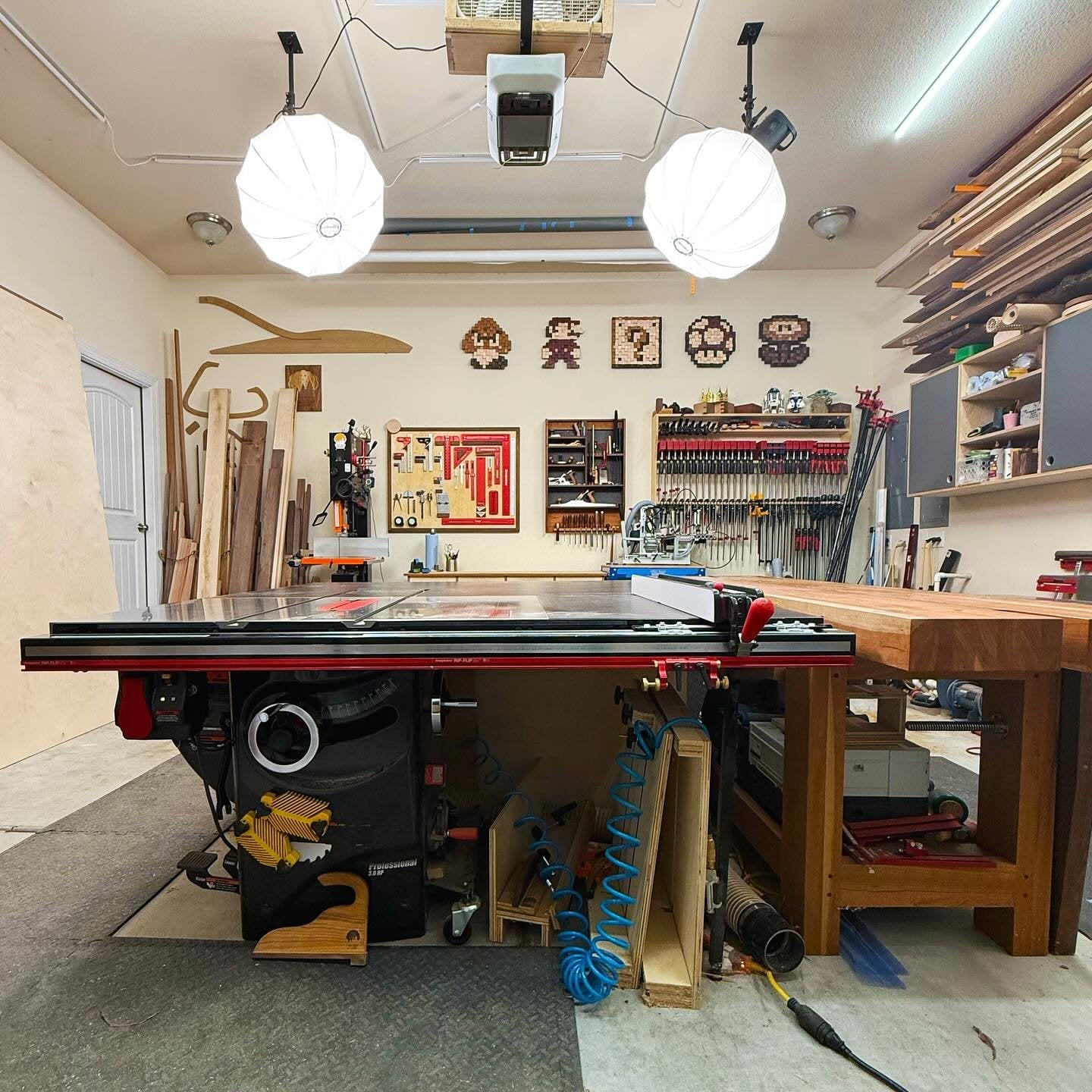
Where a tidy pegboard workshop feels calm, this industrial space leans into function first. The large table saw anchors the room, with a workbench beside it and lumber storage arranged to keep long boards off the floor. Wood tones and gray are warmed by red accents, while concrete and metal add an honest, no-nonsense base. Overhead fluorescent lights handle the main work, and globe lights soften the edges. The palette here is simple: let the machinery and materials carry the color, and keep the walls and floor quiet. That contrast is what makes the room feel purposeful rather than cluttered.
For a similar setup, think about how the saw, bench, and lumber storage work as one path. Cut, measure, and store without backtracking. The red accents are small but deliberate, so they read as a style choice, not an accident.
Industrial Workshop Packed with Woodworking Machinery
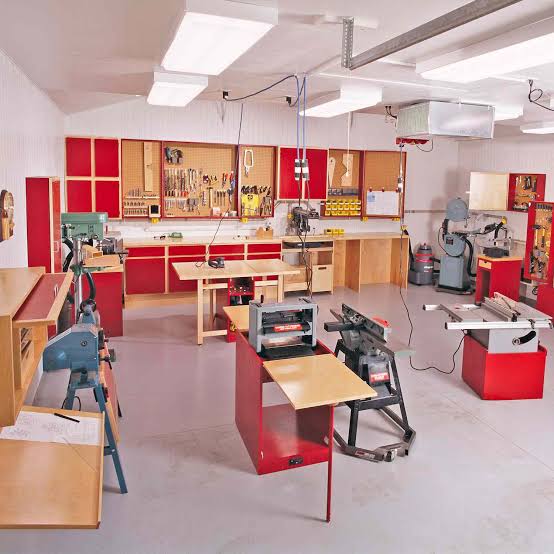
Walking into this workshop, the first thing you notice is the sheer range of tools: a table saw, a drill press, and a workbench all arranged so you can move between them without crossing your own path. Red and wood tones stand out against beige, with metal, wood, and laminate surfaces that are made to take a beating. Fluorescent overhead lighting keeps every corner visible. The style is industrial, but the real principle is adjacency: group machines by the order you use them, so the work flows. This is a room that says the tools are the decor, and they carry it well.
Craftsman Workshop with Red Pendant Light Accent
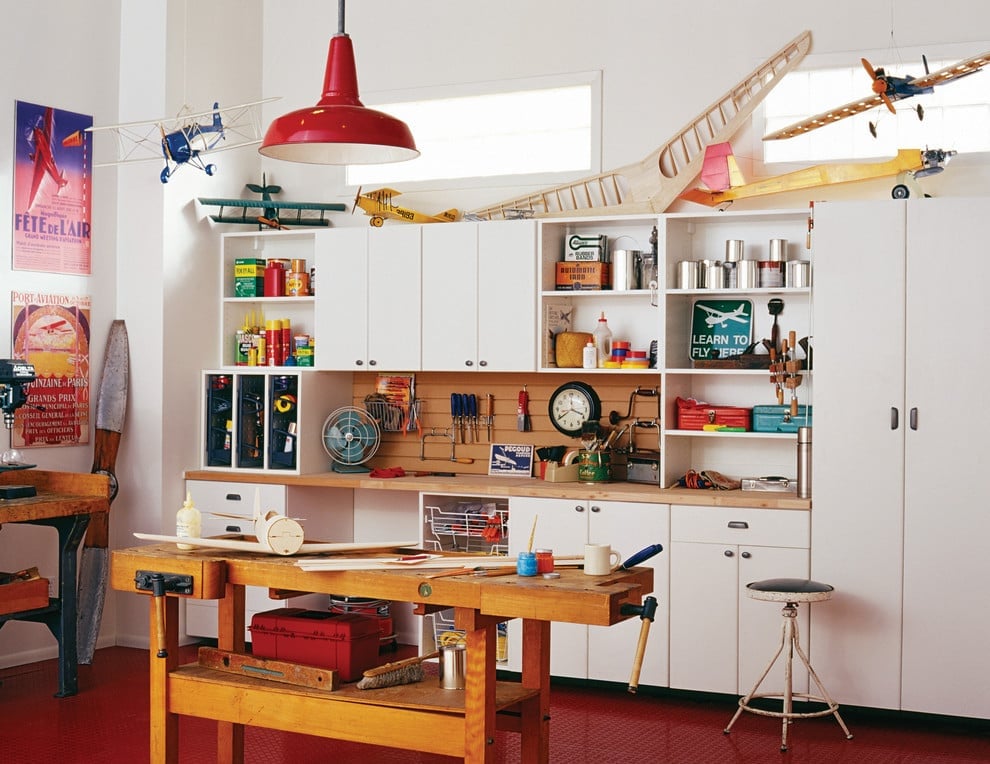
A single red pendant light is a smart way to give a workshop a focal point without redoing the whole room. This craftsman space keeps the palette mostly white and wood tones, then lets that one red shade do the talking above the large wooden workbench. The light also does real work, focusing brightness right where you cut and assemble, with additional natural light backing it up. Cabinets, a pegboard, and tools in wood, metal, plastic, and rubber stay organized along the walls, so the bench stays clear. The rule here: pick one accent color and let it anchor the eye, while everything else stays quiet.
Organized Workshop with Blue Metal Tool Chests
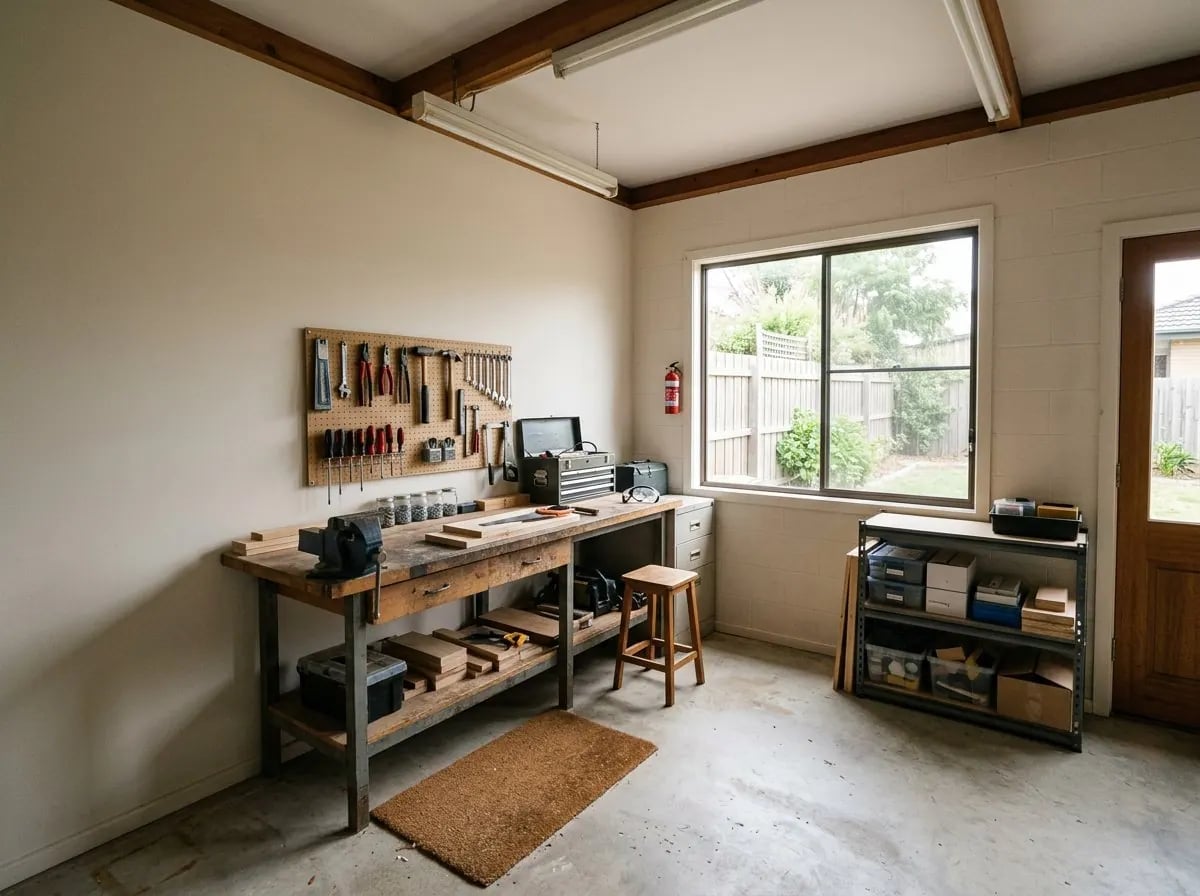
If you cannot see it, you will not use it. This organized space makes that easy with a workbench and pegboard at the center, keeping the most-used tools in plain view. Blue metal tool chests add a steady pop of color against wood tones and gray, and the neatly arranged pegboard is the standout, with each tool outlined or spaced so you notice when something is missing. Linear overhead light plus natural light keeps the room bright without harsh shadows. The palette is a good model: one bold color for the storage pieces, and neutrals everywhere else. That way the blue reads as a choice, not a clash.
For a renter, swap the built-in chests for a rolling cart in the same blue, and you get the same organizing power without drilling into walls. The pegboard can hang on a freestanding frame if you cannot put holes in the drywall. The goal is the same: a place for every tool, and a color that makes you smile when you walk in.
Modern Workshop with Green Accents and Central Workbench
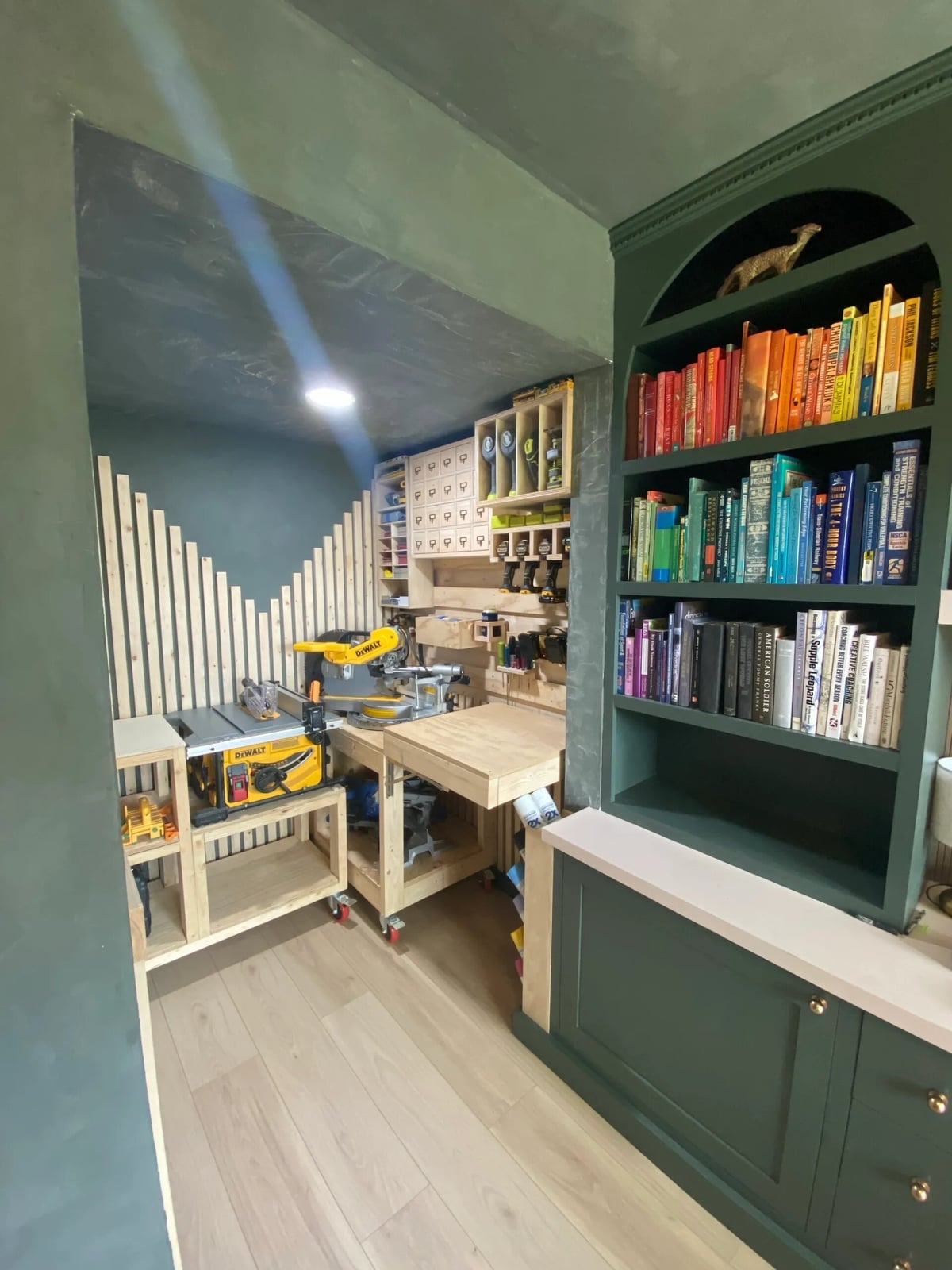
A modern workshop gains character when a single accent color, like green, appears on the tool wall or shelving. The palette here pairs green with natural wood tones and white drywall, creating a space that feels both industrial and inviting. A central workbench anchors the room, with power tools and supplies stored on an organized tool wall and bookcase nearby. The combination of wood and metal materials gives the room a practical, sturdy feel. This approach breaks the monotony of a standard workshop without overwhelming the space with color. The ratio of green to neutral tones keeps the accent intentional, not chaotic.
Craftsman Style Craft Room with Colorful Shelving
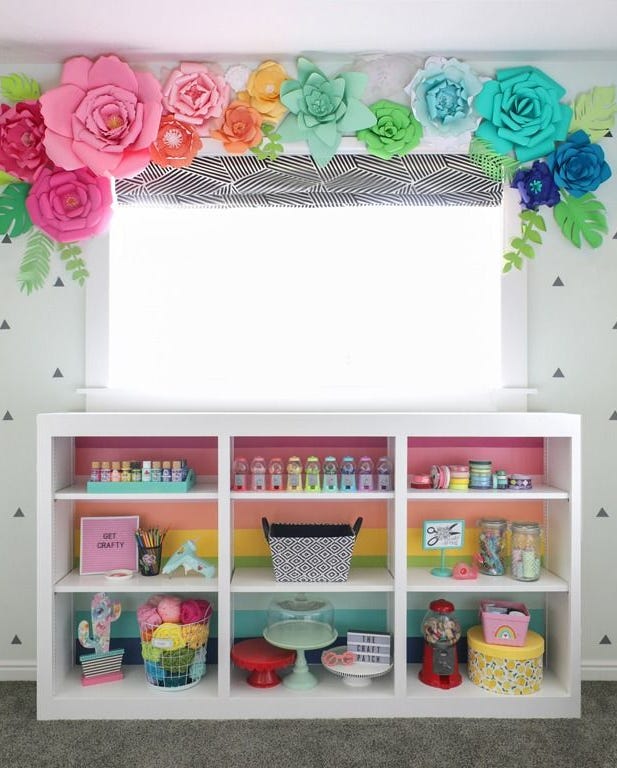
Open shelving puts craft supplies on display, as seen in this craftsman style room with a white shelving unit. Colorful paper, plastic containers, and handmade paper flowers fill the shelves. The rainbow of pastel and bright colors against the white shelves creates a cheerful, organized look for a creative space. Renters can use a freestanding shelving unit to avoid permanent wall changes. Group supplies by color or type to make the storage feel deliberate. This approach turns everyday materials into part of the decor, defining the room’s playful character. Keep each shelf edited so the color remains the focus.
Final Thoughts
The best workshop designs balance storage density with clear paths and good light. Pegboards, rolling chests, and tall cabinets keep tools accessible without crowding the floor. A vaulted ceiling or a coat of paint adds character. Start with the workbench and build the storage around how you move through the room. The goal is a space that supports the work, not one you have to work around.