Basements often get the short end of the design stick, but they have serious potential. Whether you want a cozy den, a guest bedroom, or a game room, a fresh coat of paint or a new accent wall is the easiest way to change the whole mood.
These 24 color ideas cover dark and moody, light and airy, boho, farmhouse, and modern looks. You will see how to use wall colors, paneling, wallpaper, and even ceiling treatments to make your lower level feel like a real part of the home.
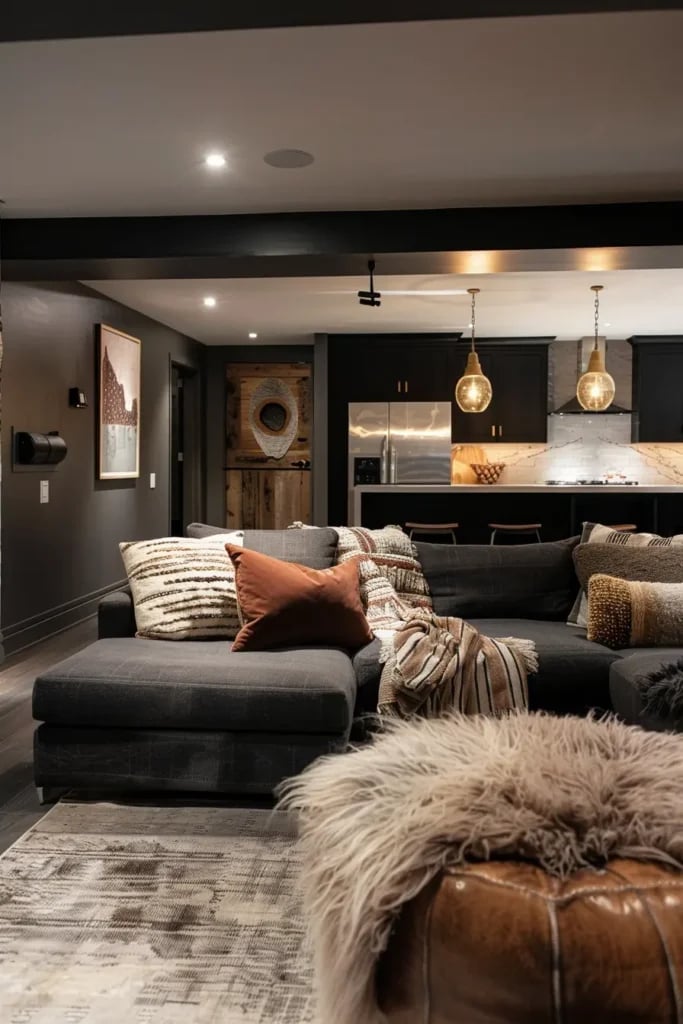
Moody Dark Gray Sectional for a Modern Basement Living Area
A large dark gray sectional anchors this open plan basement, turning a wide concrete rectangle into a defined living area. The palette runs deep: the sofa nearly matches the black-framed bar stools, while a wood accent wall and exposed brick add warmth without lifting the mood. Pendant lights hang low over the seating area, their glow softening all that charcoal. The principle here is that a dark sectional does not shrink a basement when you balance it with layered lighting and natural textures nearby. The room feels roomy because the eye stops at the warm surfaces, not the ceiling or floor.
Striking Dark Wood Paneling as a Modern Basement Accent Wall
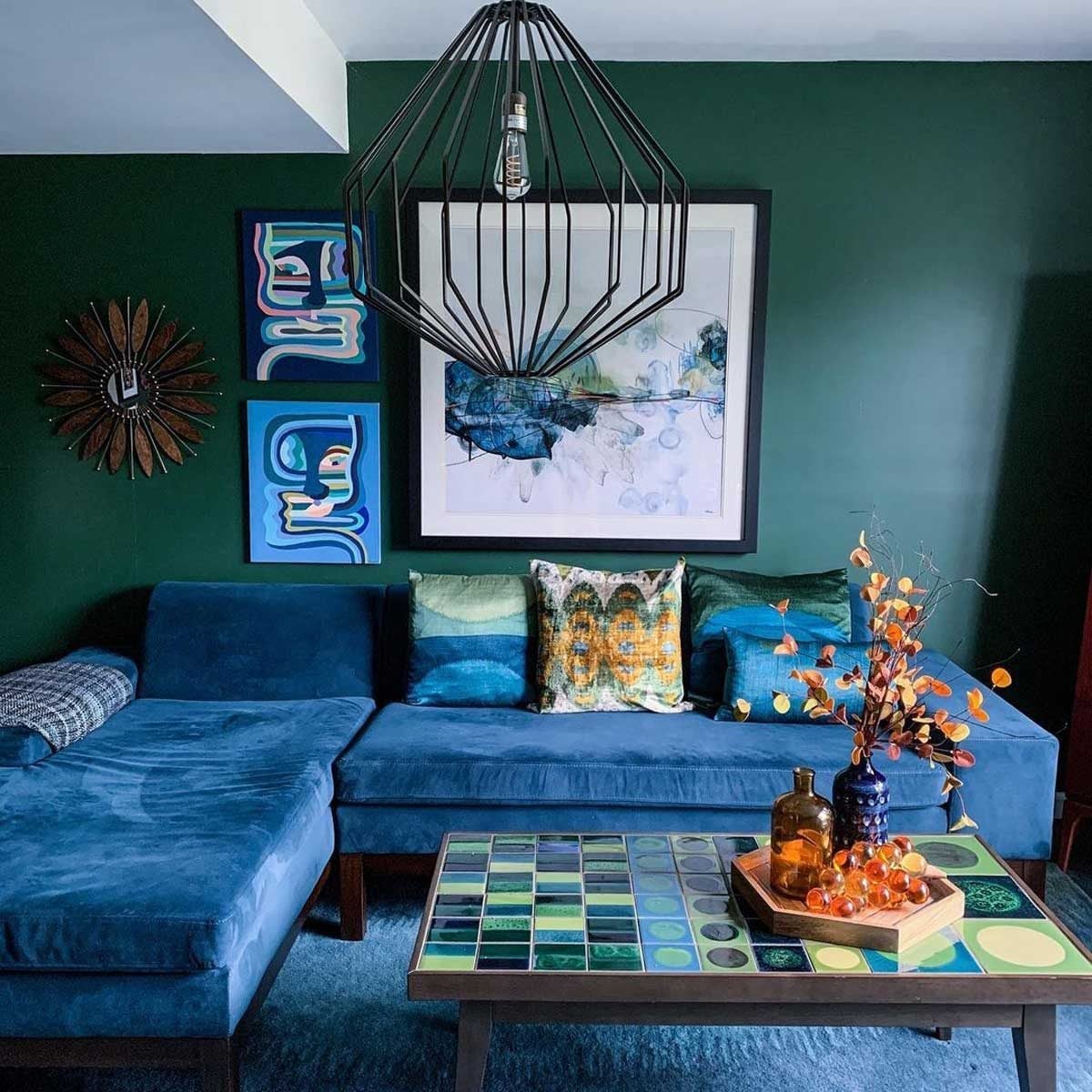
Dark wood paneling on one wall gives this basement a focal point that costs nothing in floor space. The room stays simple: a gray sofa, a ladder shelf, a floor lamp, a coffee table. What makes the wall work is contrast. The paneling is nearly black, but the sofa and rug are lighter gray, and the floor lamp throws a white glow that breaks up the darkness. The material itself adds texture without needing art or decor. For a basement that feels like a cave, a single dark wall can actually make the room feel larger by pushing the other walls back.
Open Plan Basement with Wood Accents and Brick Details
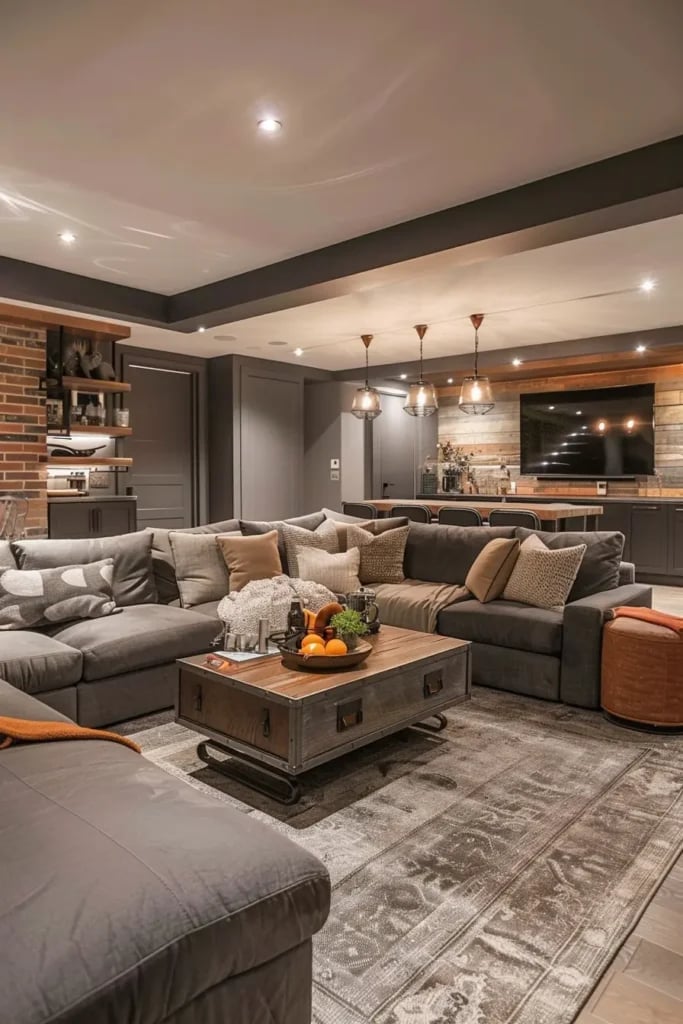
How do you make an open plan basement feel like two rooms instead of one long space? Let the furniture do the dividing. A large sectional faces away from the bar area, creating a natural walkway behind it. The palette stays consistent: dark gray upholstery, warm wood paneling on the accent wall, and exposed brick that reads as a second texture rather than a second color. Pendant lights hang over both zones, keeping the light level even so neither side feels like a hallway. The layout works because the bar counter sits at the same height as the sofa back, so the eye flows across the room without a hard break.
Eclectic Basement with Tropical Wallpaper and Orange Chairs
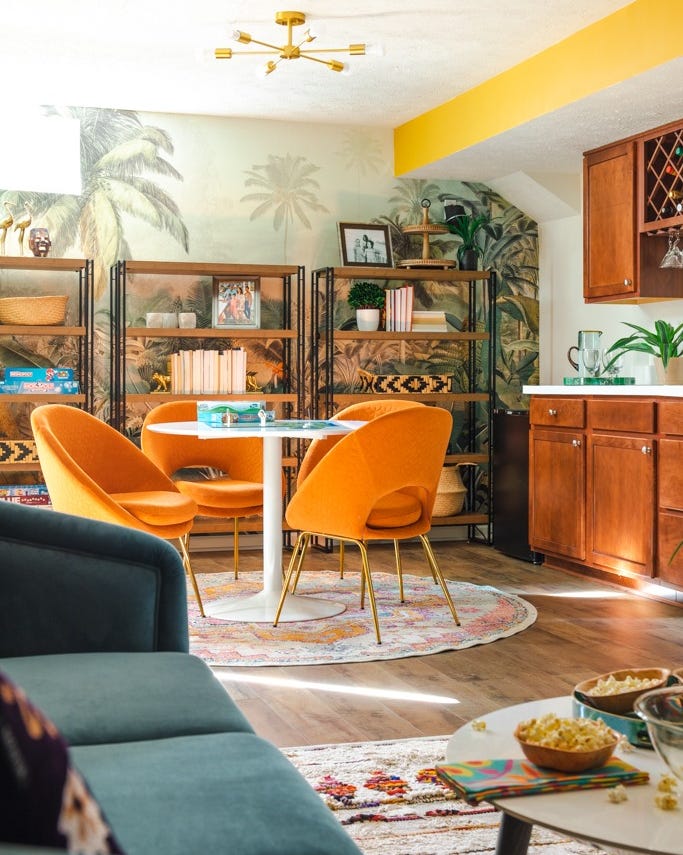
A tropical wallpaper with green leaves climbs one wall, and two orange accent chairs sit in front of it. The pattern stands out because the surrounding pieces stay neutral. A round wood table, a neutral sofa, and open shelving keep the color story from turning into a carnival. The orange chairs are the loudest thing in the room, but they echo the warm undertones in the wood and the yellow in the wallpaper. The trick is that the wallpaper does not wrap the whole space. One wall is enough to carry the theme, and the other walls stay light so the room does not close in.
Sage Green Accent Wall in a Boho Basement Retreat
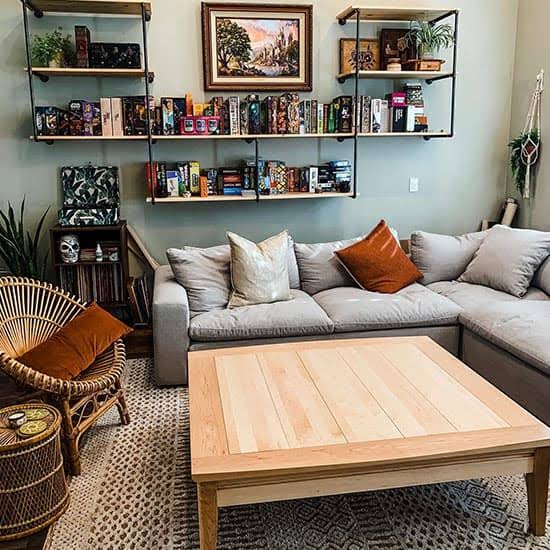
For a basement with limited natural light, pick a color that feels soft, not dark. Sage green on one wall turns this seating area into a retreat without fighting the low ceiling. A cream sectional and a rattan chair keep the palette airy, while a wood coffee table and floating shelves add warmth. A floor lamp and a window provide the light, and the green wall reflects enough of it to keep the space bright. The boho look comes from the mix of textures: linen on the sofa, rattan on the chair, and the matte finish of the wall paint. What breaks it is too much clutter, so the shelves stay lightly styled.
Transitional Basement with Shiplap Walls and Neutral Tones
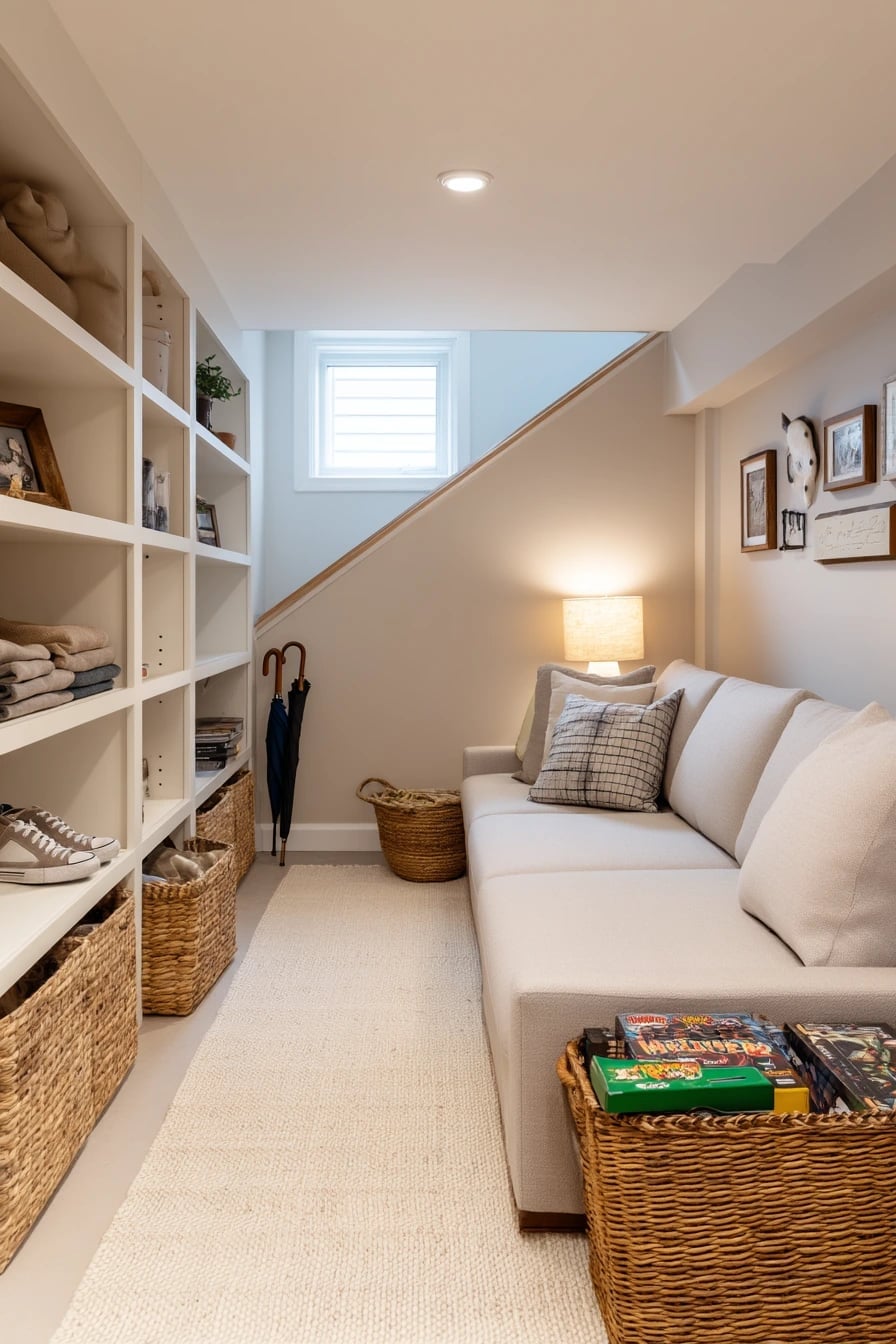
Shiplap can read too farmhouse for a basement that leans modern. Here the wall stays white and the room follows suit: a large sectional in a light fabric, a wood floor in a warm tone, and an entertainment unit that blends in. The stairs and open plan keep the area from feeling closed in, and recessed lights do the work without adding visual clutter.
For a transitional look, match the shiplap to the ceiling color and let the furniture provide the contrast. A neutral palette with wood tones keeps the room flexible. Swap in a darker sofa or a patterned rug later without repainting.
Farmhouse Bedroom with Sage Green Walls and Blush Accents
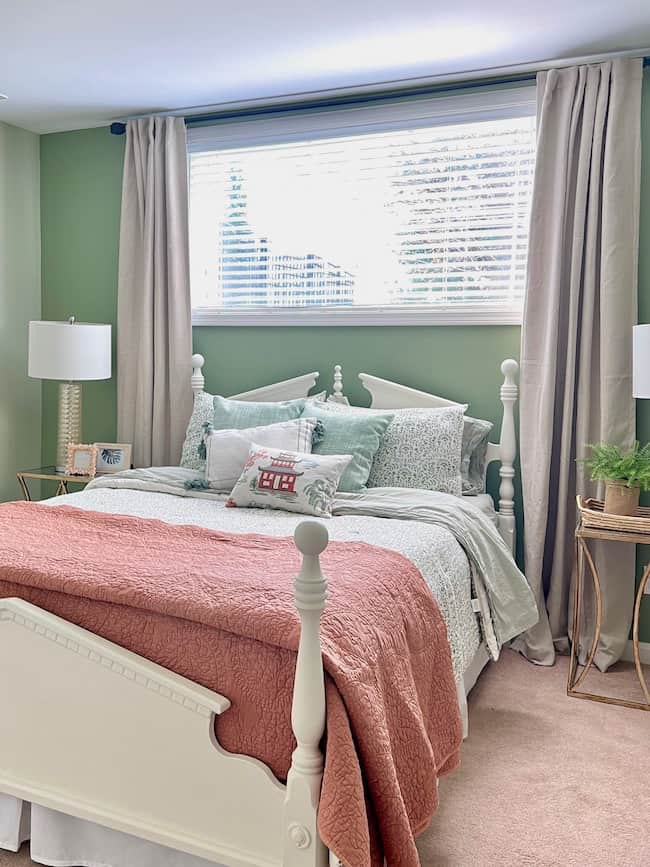
Sage green walls provide a calm backdrop for blush bedding and white curtains. In a compact room, balance comes from one strong wall color, soft linens, and a wood bed frame that grounds the space. Natural light keeps the palette from feeling heavy. For renters, this look works with peel-and-stick wallpaper in a soft green rather than paint, and the room stays neutral enough to move on.
Vibrant Yellow Walls in a Bohemian Basement Oasis
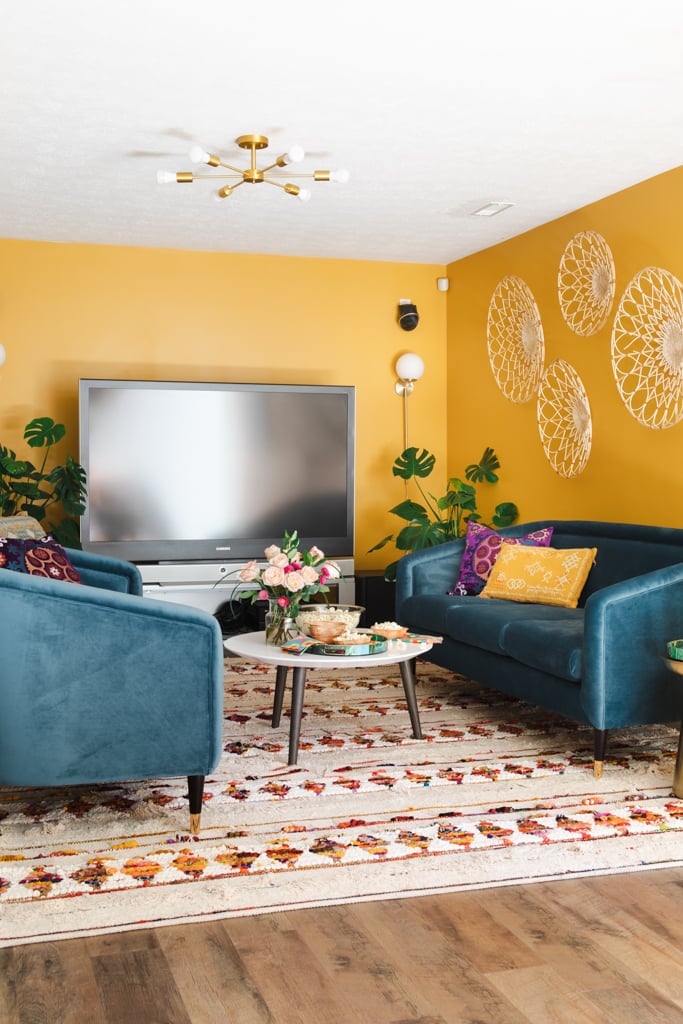
Yellow walls this bright need a partner that can hold its own. Blue sofas, a patterned rug, and orange accent chairs create a seating area that feels layered rather than loud. The white ceiling and floor break up the color, and the overhead lighting keeps the room usable at night. For a bohemian basement, the ratio matters: one bold wall color, two or three strong furniture hues, and enough neutral space to let the eye rest.
Cottagecore Basement Bedroom with Blue Ceiling and Cane Accents
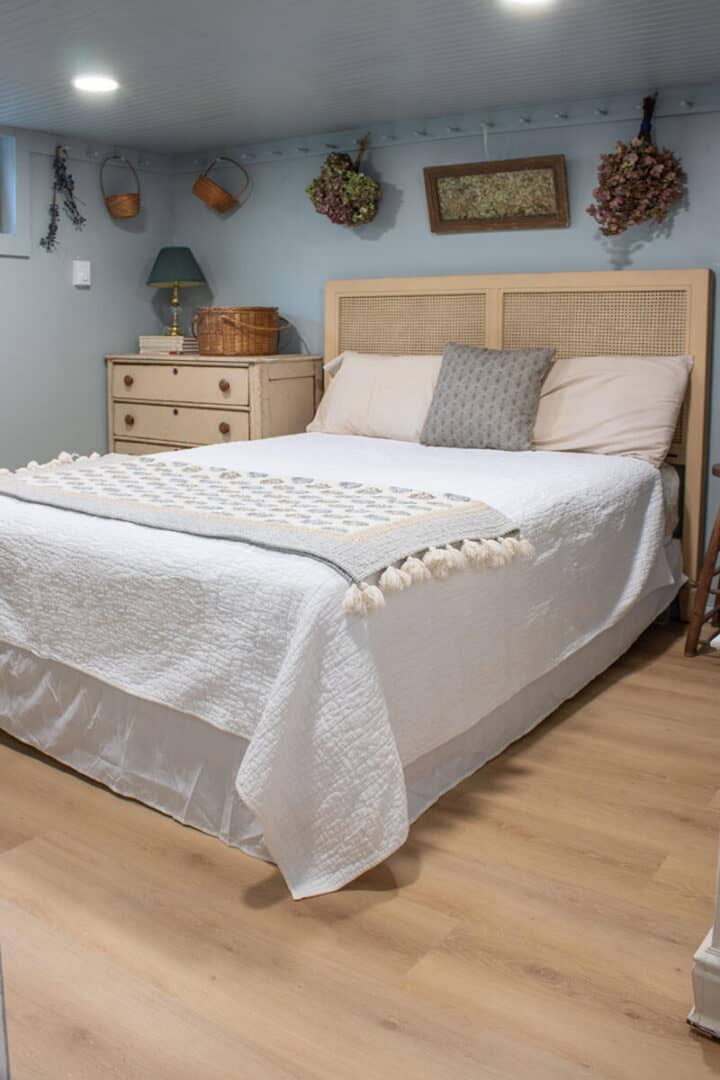
Can a basement bedroom feel airy with a blue ceiling and a cane headboard? Yes, if the rest stays light. The bed sits centered, the dresser to one side, and the beige walls and natural wood keep the room from shrinking. Overhead lights provide the main source, so the ceiling color reads as a feature rather than a shadow.
For a cottagecore look, cane and linen add texture without pattern. The blue ceiling acts as the unexpected element, while the white and beige bedding keep the space calm. A hanging decor piece above the bed draws the eye up, making a compact room feel taller.
Vibrant Peach Accent Wall for a Cozy Eclectic Basement
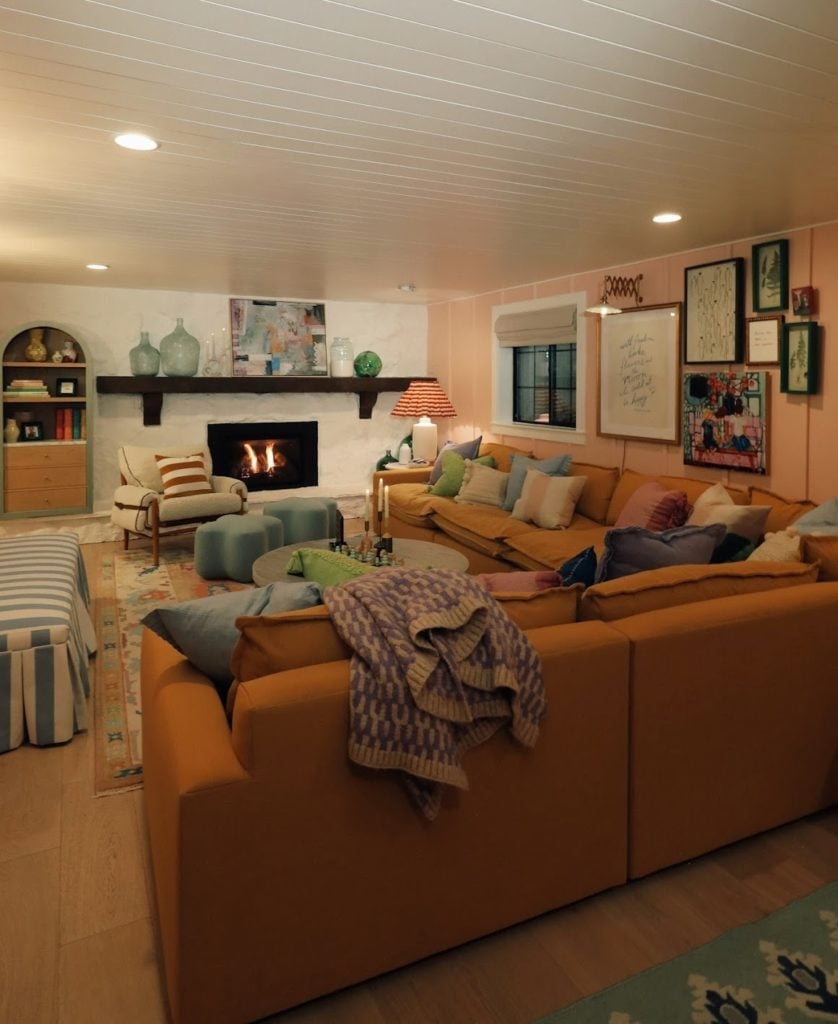
The peach wall runs behind the sofa and fireplace, making that corner the room’s anchor. A large orange sofa, a striped ottoman, and a gallery wall fill the space without competing. Wall sconces and a lamp add warmth, while the overhead lights keep the room bright enough for a basement. For an eclectic look, the peach wall ties together the multi-color rug and ceramic pieces without needing everything to match.
Stone Tile Accent Wall in a Modern Transitional Entertainment Area
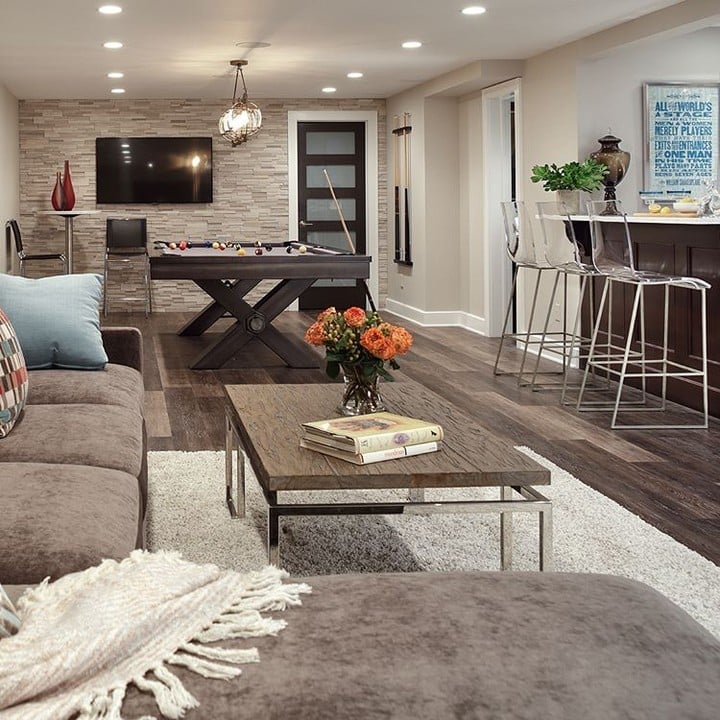
Anchor a basement entertainment area with a material that can handle the action. The stone tile accent wall behind the TV sets a rugged, textured backdrop that contrasts with the smooth fabric of the sectional sofa and the warm wood of the bar stools. The brown and gray tones in the stone tie into the palette, while the pool table and bar define the layout. The recessed ceiling lights keep the focus on the game, and the pendant lights over the bar add a softer glow. This material choice gives the space a finished feel without making it feel delicate.
Dark Ceiling in a Modern Basement Living Space
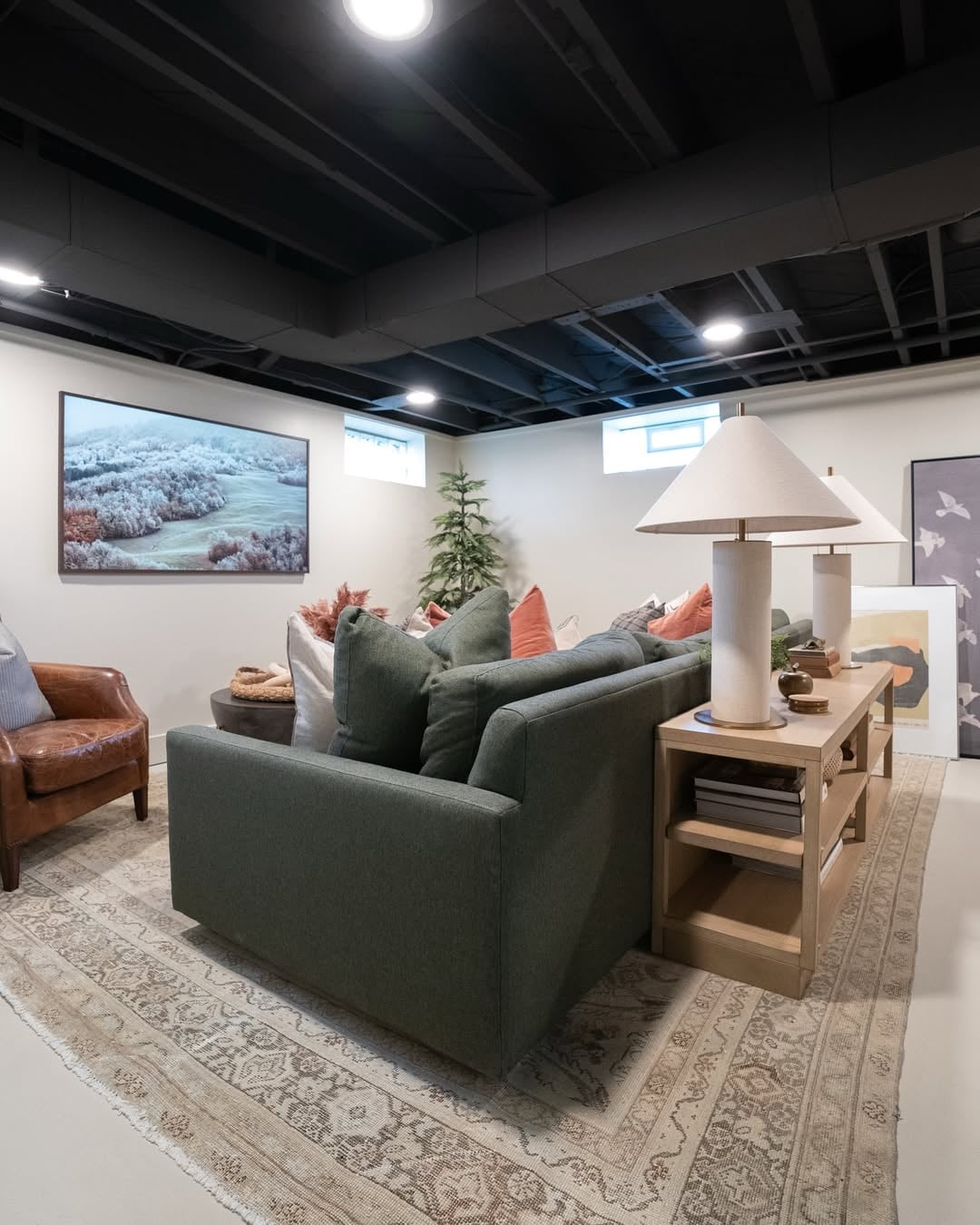
Painting the ceiling dark sounds like a move that would shrink a room, but in a modern basement living space with a roomy footprint, it does the opposite. The dark ceiling pulls the eye up and makes the walls feel less like boundaries. It also hides the ductwork and pipes that tend to live down there, which is a practical bonus.
The palette here leans into the contrast: green sofa, cream rug, brown leather armchair, black accents. The dark ceiling acts as a neutral anchor, letting the furniture colors pop without competing. The recessed lights blend into the dark surface, so the room feels evenly lit rather than spotty. For a basement with good ceiling height, this is a palette trick that adds depth without needing any structural work.
Rattan Headboard in a Modern Basement Bedroom
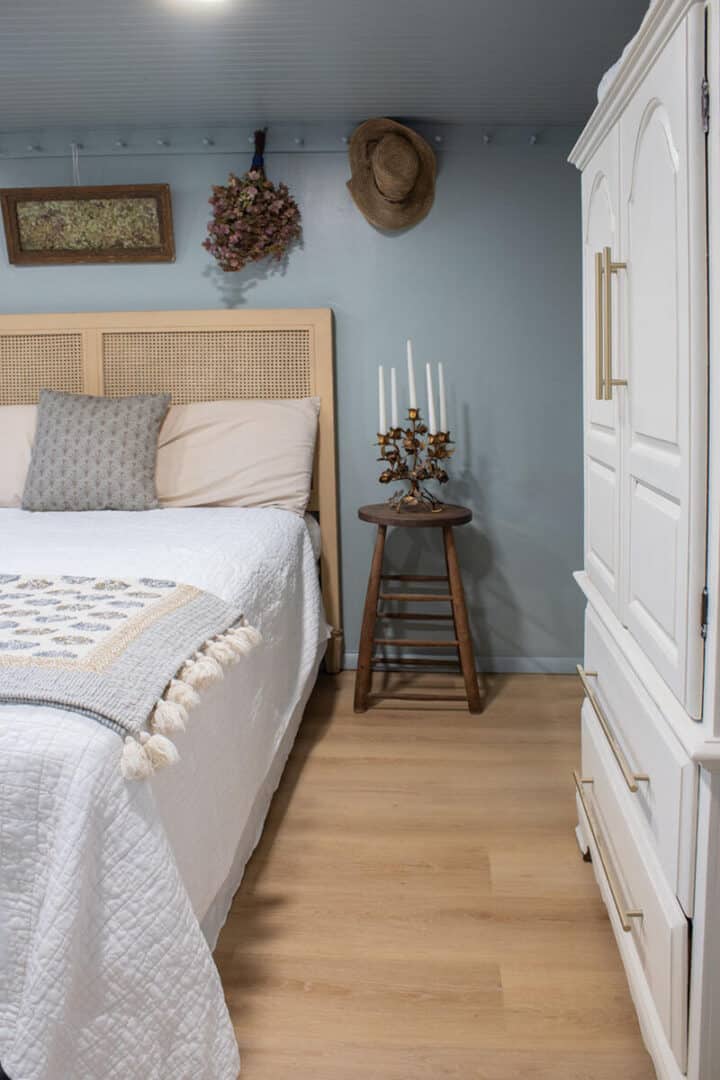
A rattan headboard brings a natural texture into a modern basement bedroom that might otherwise lean too cool or hard. The woven material softens the lines of the wood dresser and the metal candelabra, and its warm gold tone bridges the blue walls and white bedding. It is a lightweight choice that does not block light the way a solid headboard might, which matters in a basement where every bit of ambient light counts. The room stays airy and the design looks deliberate.
Vibrant Yellow Wall in a Bohemian Basement
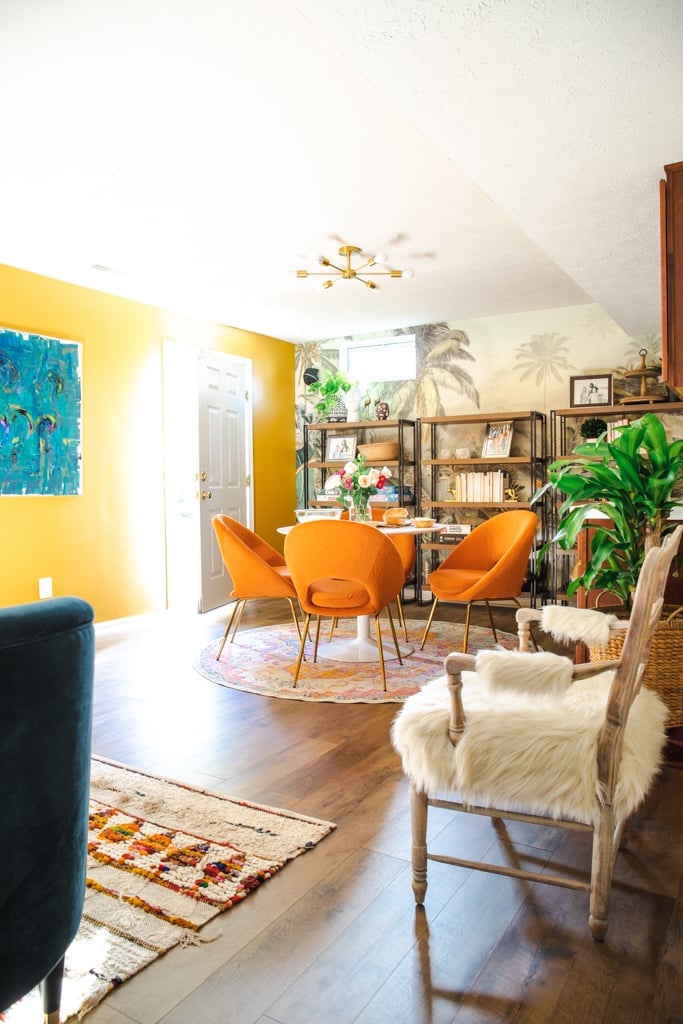
A vibrant yellow wall in a bohemian basement open plan living area is a bold move that works because the palette is willing to play along. The yellow feels warm and energetic, not harsh, because it is paired with orange, green, and blue in the furniture and plants. The dining set and shelves stay in natural wood tones, which keeps the color from feeling flat. The overhead fixture and ambient light from the open plan layout bounce off the yellow, making the whole space feel brighter than it would with a neutral wall. For a basement that lacks windows, this kind of color choice acts like a second light source.
Farmhouse Basement with Large Wall Clock and Open Plan Layout
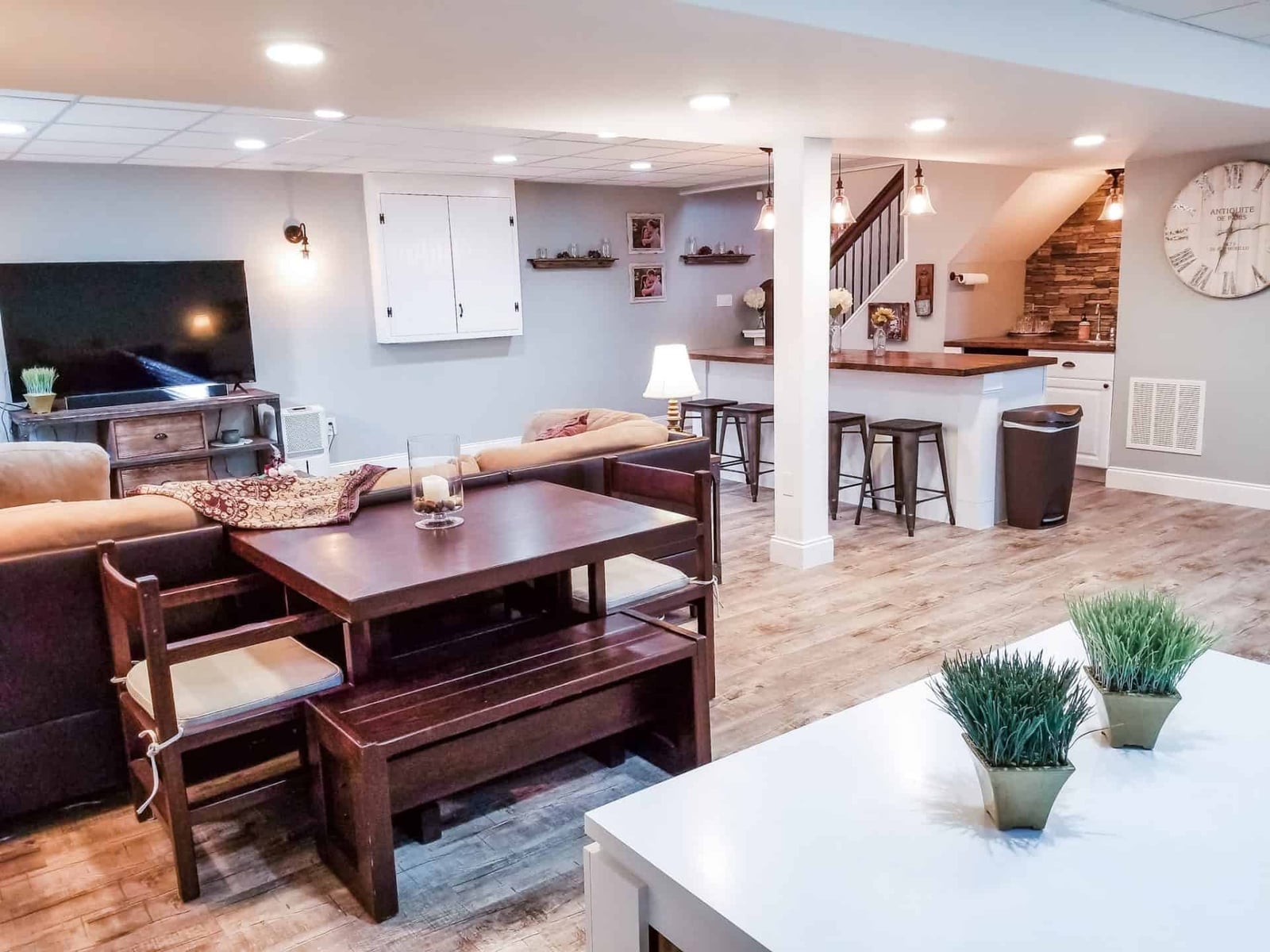
In an open plan farmhouse basement, the layout itself defines the zones. The large wall clock and furniture arrangement anchor the space. The sofa anchors the living area, the dining table sits in its own zone, and the bar stools line up along the counter. This keeps the floor plan open and easy to move through.
The gray, brown, and white palette stays consistent across all three zones, so the room reads as one connected space. The recessed ceiling lights keep the ceiling clean, while the pendant lights over the dining table and bar add character. The large clock becomes a focal point that also serves a function, which is the farmhouse way: useful first, decorative second.
Gallery Wall in a Modern Farmhouse Basement
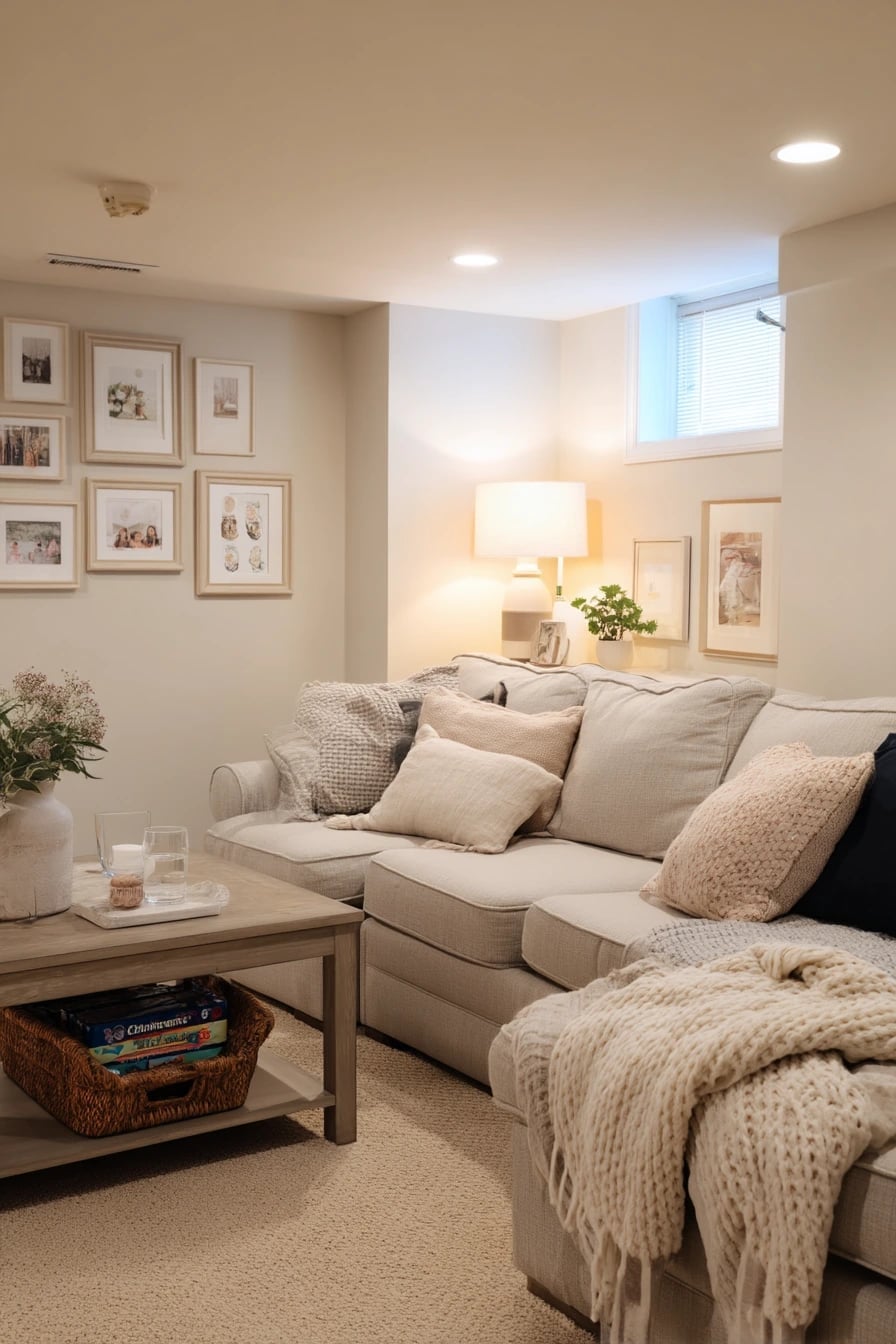
A gallery wall brings a personal touch to a modern farmhouse basement without requiring a big renovation. The neutral palette of beige and cream keeps the space calm, while the mix of frames adds visual interest above a fabric sectional sofa. A wood coffee table anchors the seating area, and warm lamp light balances the recessed ceiling lights. The layout works because the gallery wall fills the vertical space above the sofa, making the room feel curated rather than accidental. It is a practical way to introduce pattern and memory into a neutral room.
Exposed Brick Wall in a Modern Industrial Basement
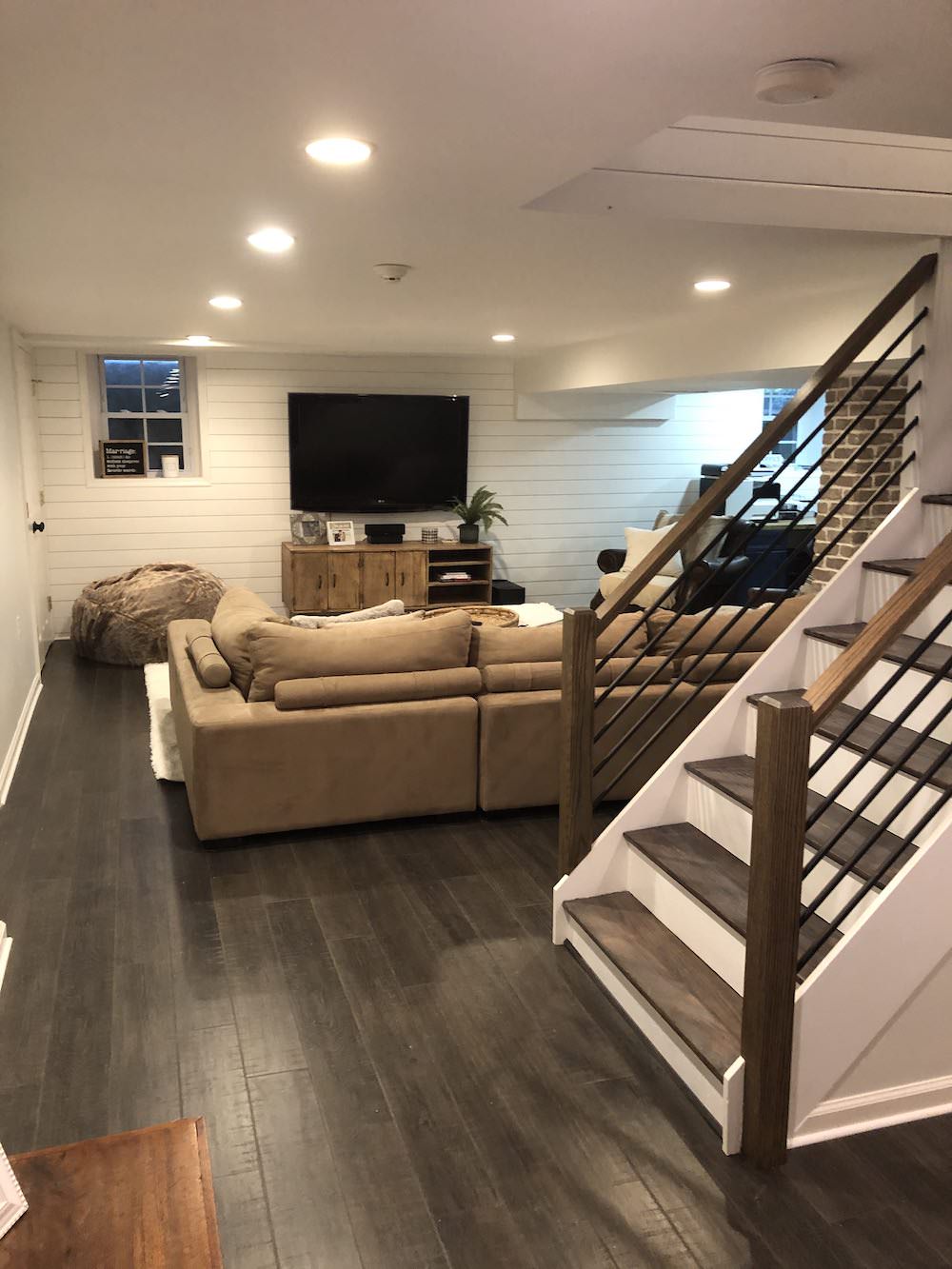
Not all exposed brick needs to be real. Faux brick panels or wallpaper can deliver the same industrial look without permanent changes. In this modern industrial basement, the brick wall pairs with dark wood cabinetry and metal accents for a cohesive palette of gray, charcoal, and brick red. The pool table sits in the foreground, with cabinetry in the back, while track lighting and pendant lights provide task and ambient light. The brick wall becomes the anchor, and other materials support its raw texture.
Vibrant Yellow Ceiling Beam in a Bohemian Basement Bar Area
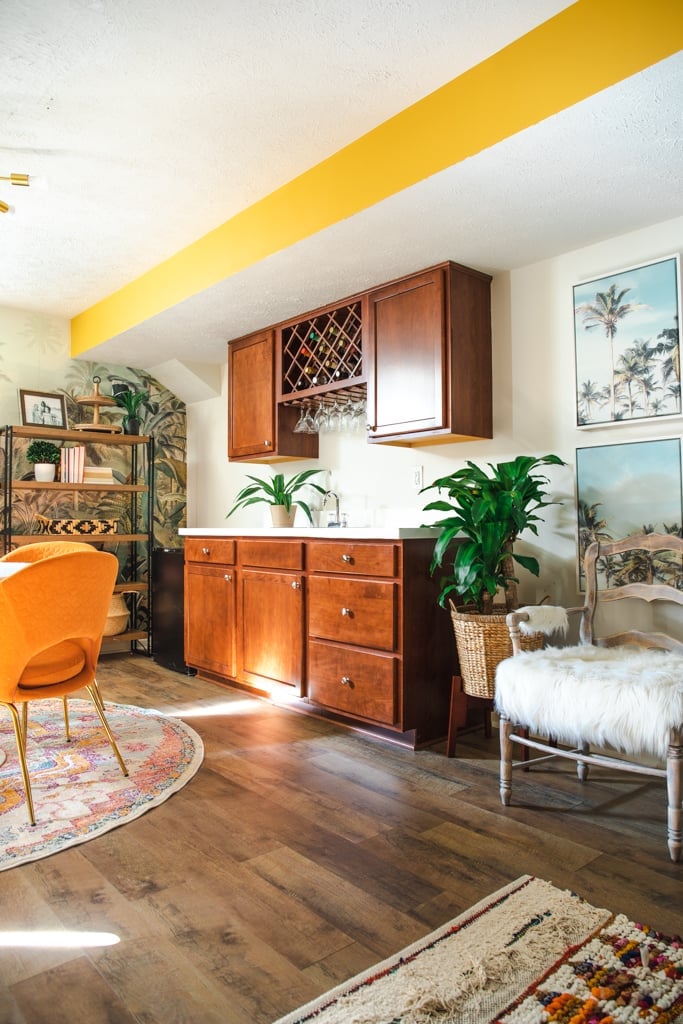
Most basements keep the ceiling neutral, but a yellow beam can shift the whole energy of a bohemian bar area. The bar cabinet and shelving unit stay grounded in wood tones and green, while the beam becomes a deliberate pop of color overhead. A window helps the yellow feel warm without being harsh.
A white ceiling would have blended into the background, but the yellow beam draws the eye up and visually lowers the ceiling height, making the room feel more intimate. The rattan, tile, and fabric pieces in the seating area keep the look eclectic without feeling chaotic. It is a useful trick when you want color but want to keep walls neutral.
Traditional Basement with Beige Walls and Oriental Rugs
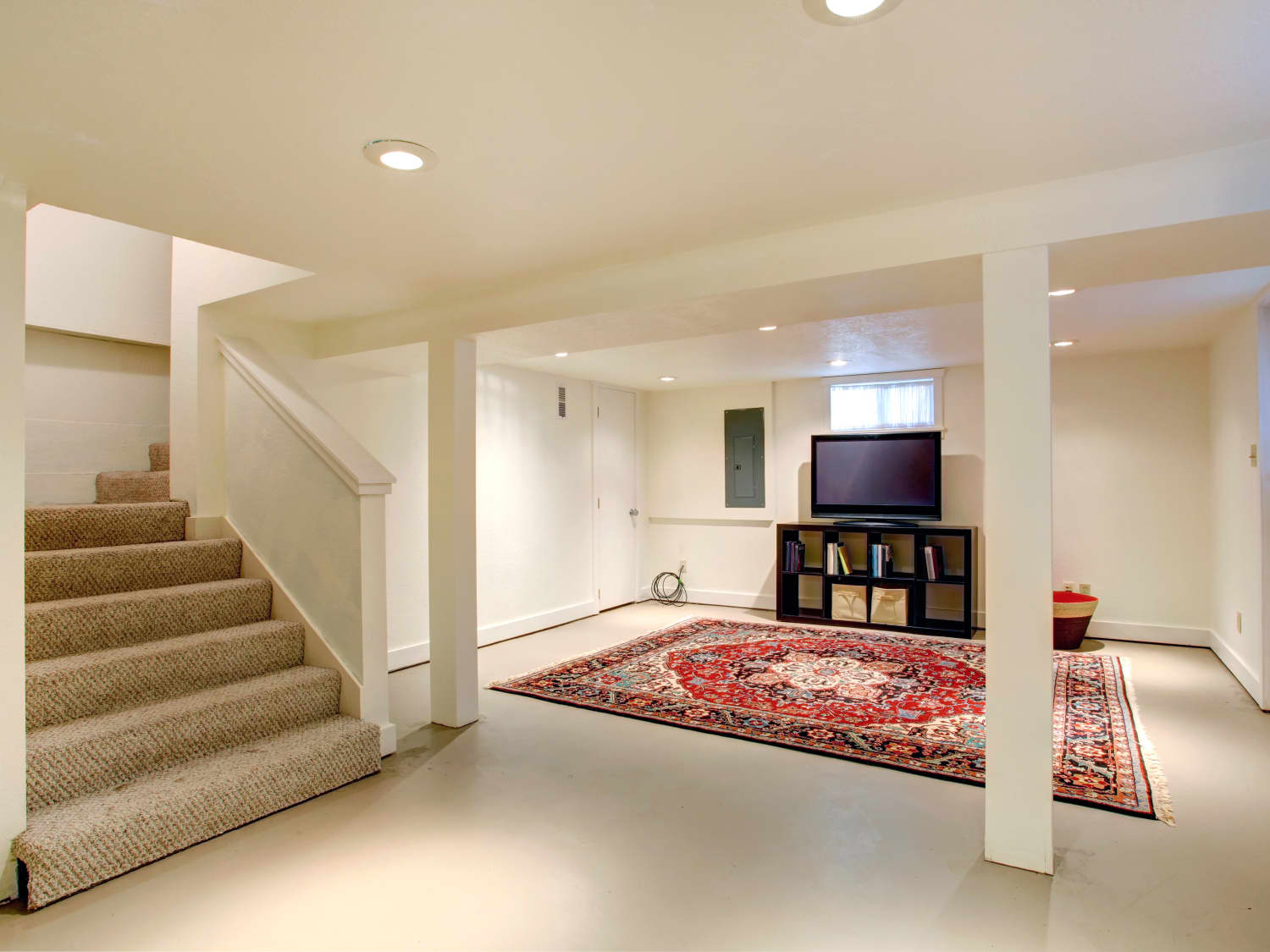
The large oriental rug defines the seating area in this traditional basement, bringing red and blue into a palette of beige and white. The beige walls keep the room flexible, while the rug anchors the sofa and bookcase arrangement. Recessed ceiling lights provide even illumination without competing with the rug. A traditional setup like this relies on the rug to carry the pattern, so the walls stay quiet. It is a direct way to add color and structure to an open basement floor.
Modern Basement with Stone Fireplace Wall and Gray Sofas
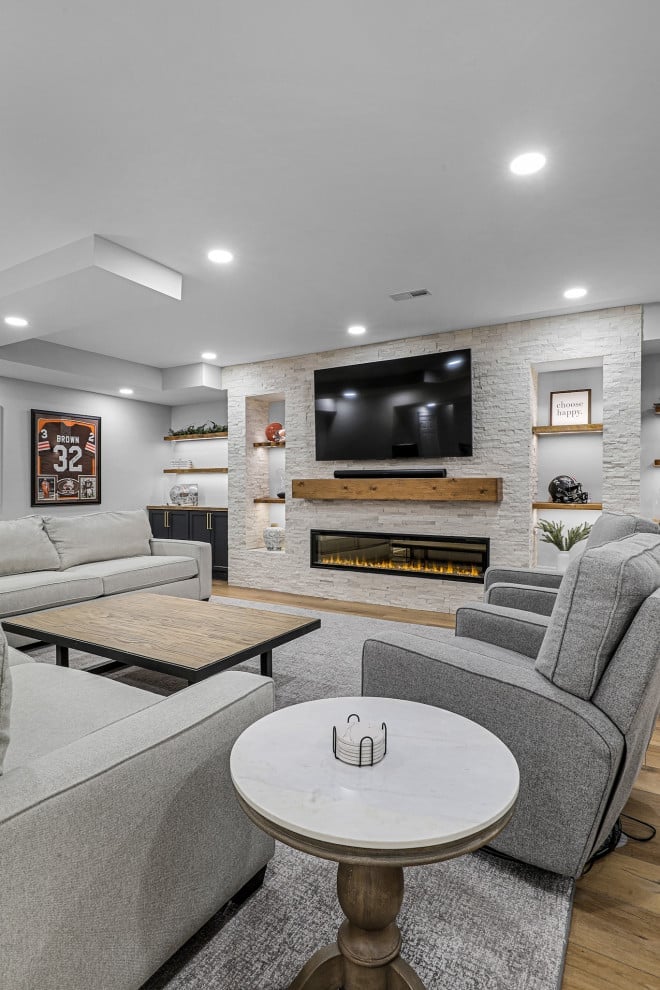
A stone fireplace wall with built-in niches gives this modern basement a clear focal point. The gray sofas and chairs face the fireplace, and the stone texture adds depth against the drywall ceiling. The palette stays simple with gray, white, and wood tones, so the stone does not compete with other materials. Recessed ceiling lights keep the ceiling clean, letting the fireplace wall command attention. The layout works because the seating is arranged to face the stone wall, making the room feel intentional and balanced for conversation or watching TV.
Vintage Basement Bowling Alley with Industrial Touches
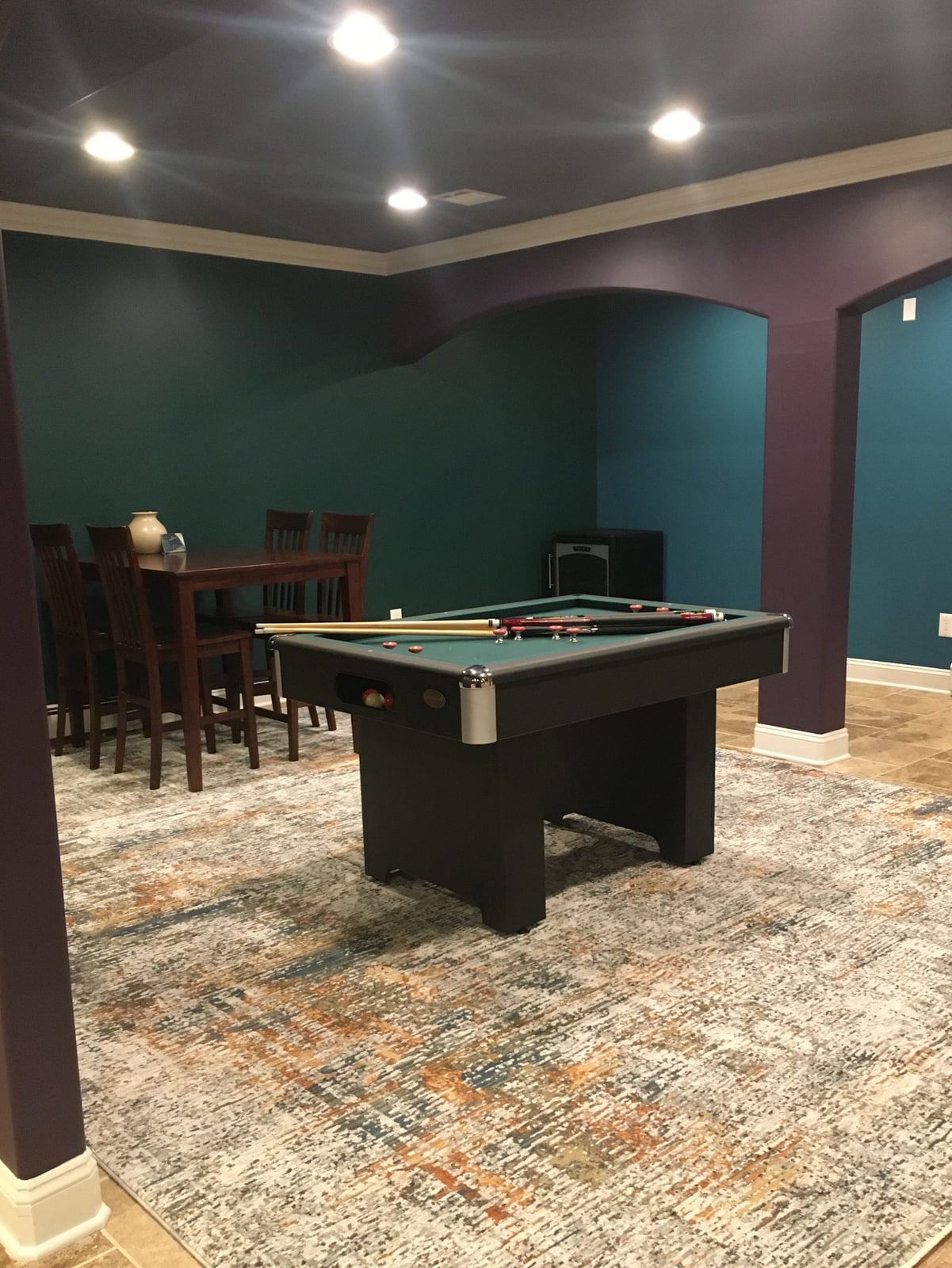
A basement bowling alley is a commitment to a single idea, and that focus is what makes it work. The vintage lane dominates the layout, so everything else steps back. Track lighting runs overhead, and small windows let in what natural light they can, keeping the concrete and metal details from reading as too cold. Wood tones appear in the lane itself and in the pins, while gray walls and a black ceiling keep the palette grounded.
The style reads as vintage without turning into a theme party. Industrial touches like exposed metal fixtures and a simple tile floor keep the look from going full retro arcade. What breaks the vintage feel is anything too polished: the lane stays worn, the lighting stays functional, and the furniture stays minimal. The space lives as a destination, not a leftover corner.
Modern Farmhouse Basement Dining Area with Buffalo Check Banquette
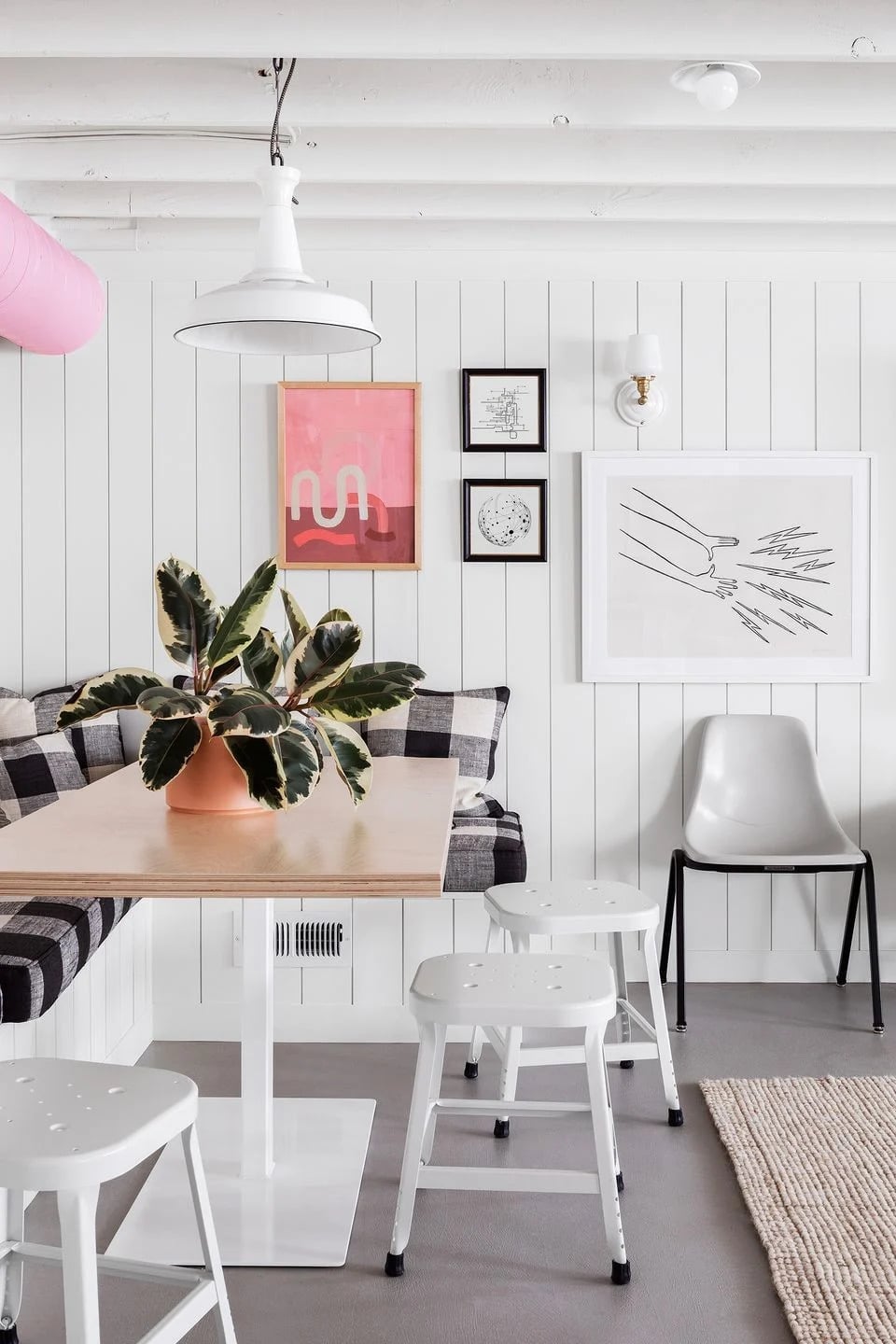
The black and white buffalo check banquette anchors this basement dining area with a pattern that is classic farmhouse but sits comfortably in a modern space. The dining table and stools use simple wood and metal, while the pendant light and wall sconce add warm overhead and task lighting. The banquette runs along the wall, making the roomy layout feel purposeful. White, black, and wood tones keep the pattern as the main personality without extra color.
Vintage Basement Recreation Area with Pool Table and Bar
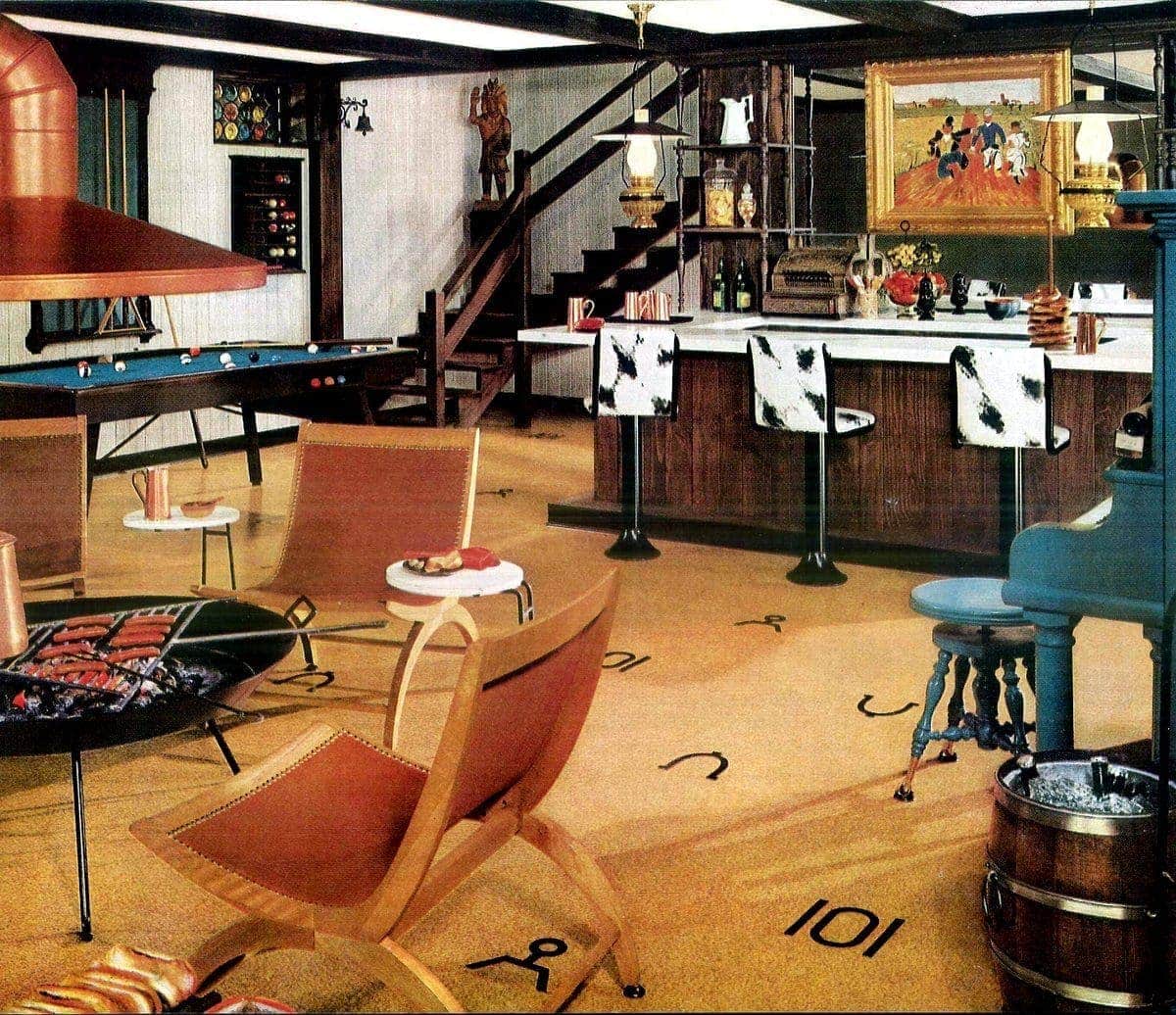
The pool table and bar define this recreation area as a place to gather, not just store things. Yellow, brown, white, and blue make up the palette, with wood and metal furniture carrying the vintage aesthetic. Overhead lights and lamps layer the lighting, and a fireplace adds a natural focal point near the seating. The bar stools and chairs use vinyl and fabric, which hold up better in a basement than untreated wood or delicate upholstery. The style reads as retro without being a museum piece: the furniture is functional, the colors are warm, and the layout puts the pool table at the center of the action.
Horizontal Light Wood Plank Accent Wall in Modern Rustic Basement
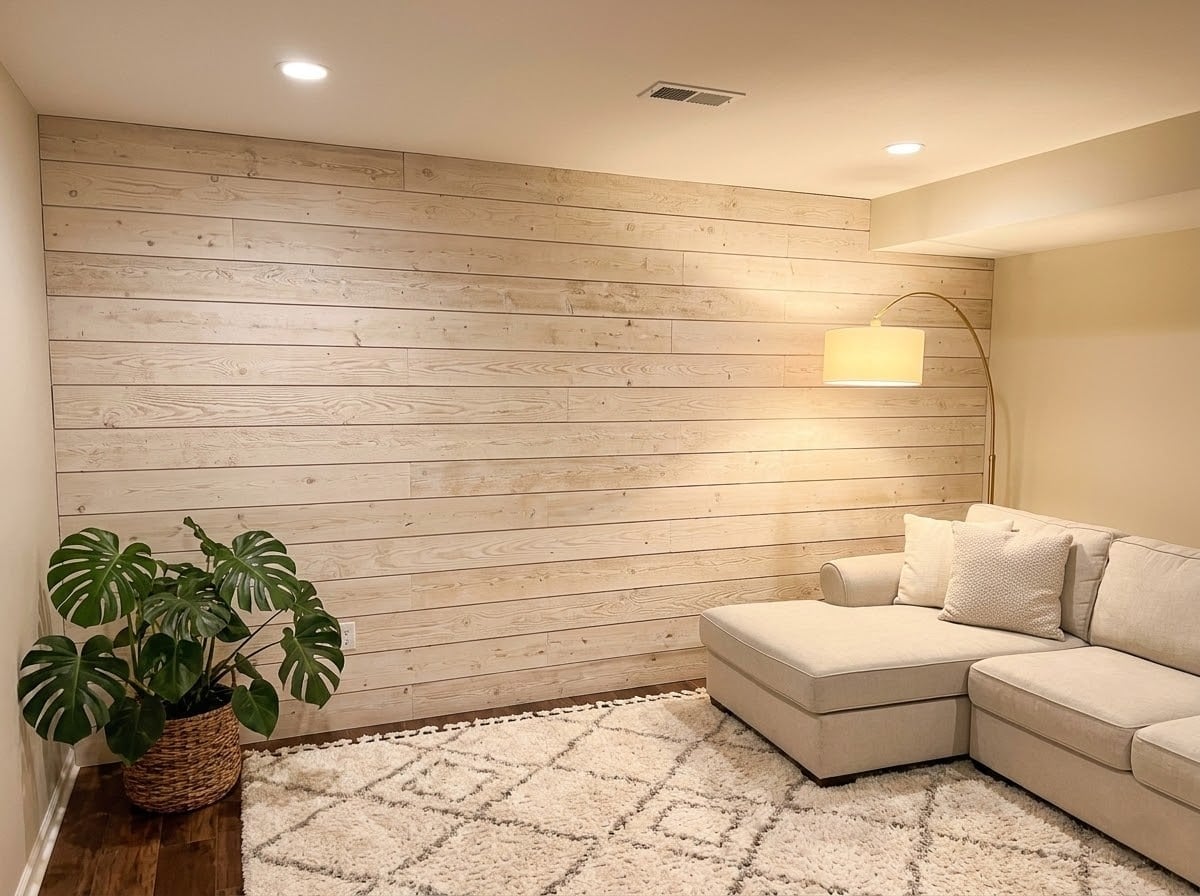
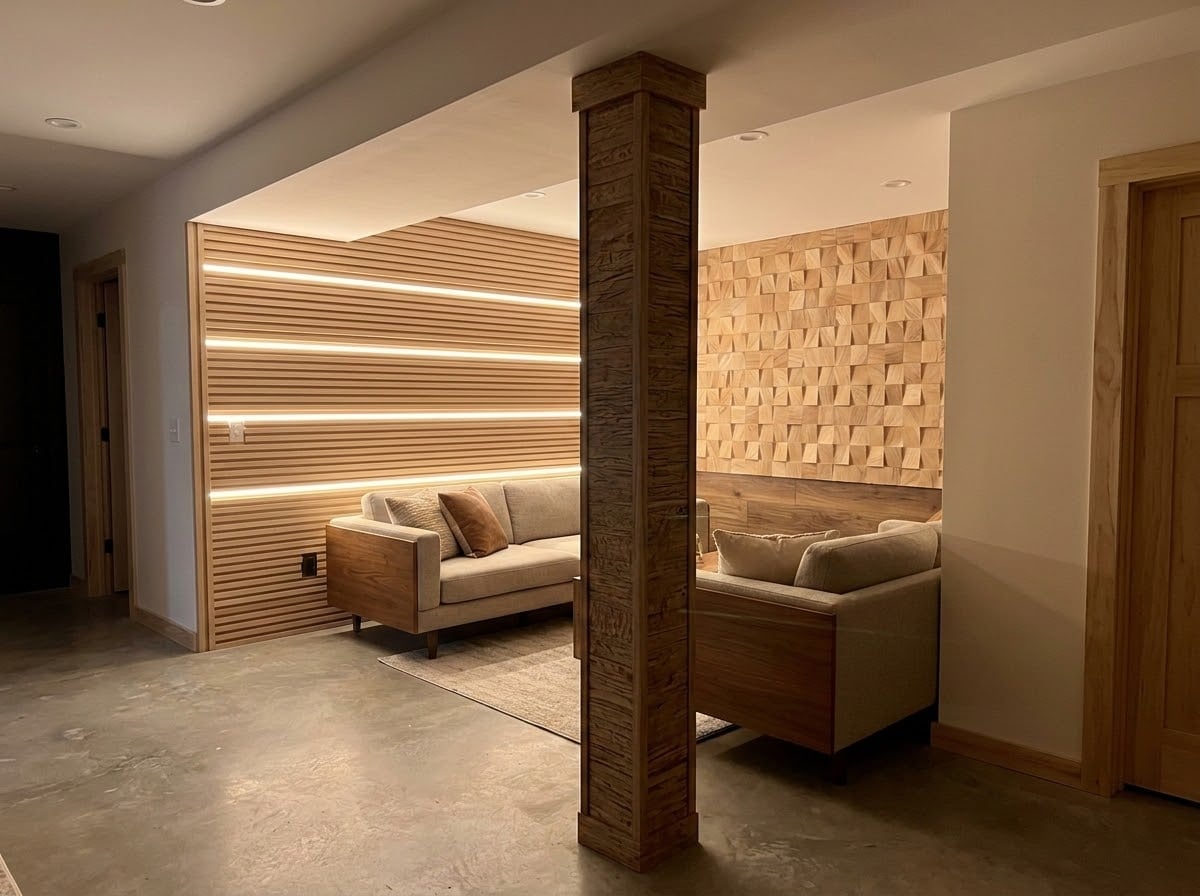
A light wood plank wall can feel like a sauna if the finish is too warm, but horizontal planks in a pale tone keep the room airy instead. The accent wall faces a sectional sofa, with a large potted plant and textured rug adding softness. An arc floor lamp and recessed ceiling lights provide even illumination, so the wood grain shows without harsh shadows. The palette stays in light wood, cream, and beige, which keeps the modern rustic style from tipping into cabin territory.
What breaks the look is anything too dark or glossy. The wood planks stay matte and light, the sofa stays neutral, and the wicker basket and rug add texture without competing. The horizontal direction of the planks makes the room feel wider, which matters in a basement where ceiling height might be limited. The wall becomes the backdrop, not the whole story.
Final Thoughts
Color can transform a basement from a storage catch-all into a room you actually want to spend time in. The trick is working with the light you have: dark shades add drama, while lighter tones and strategic accents keep things airy. Stick to a cohesive palette, test samples on the wall first, and remember that finishes matter as much as the color itself. A well-chosen scheme makes the space feel finished and lived-in, not forgotten.