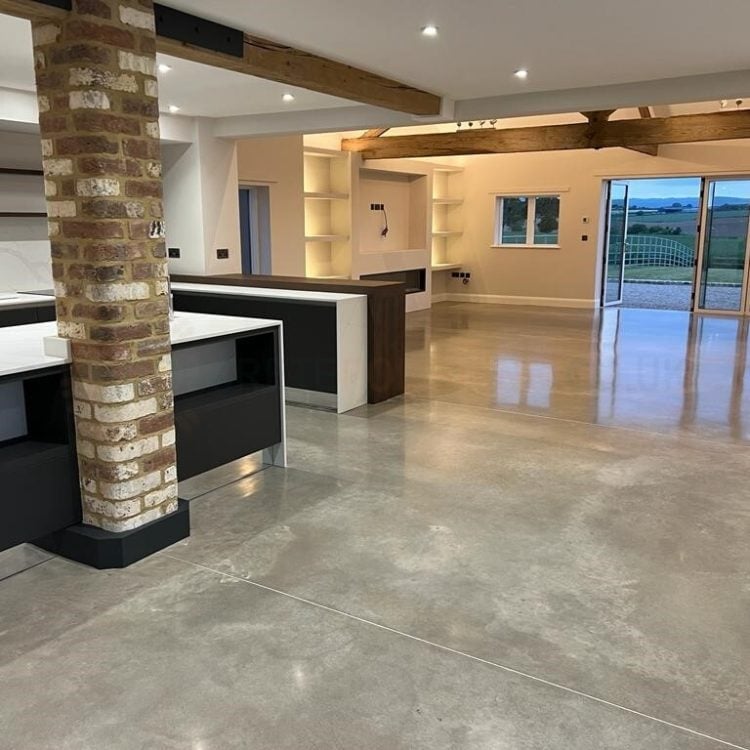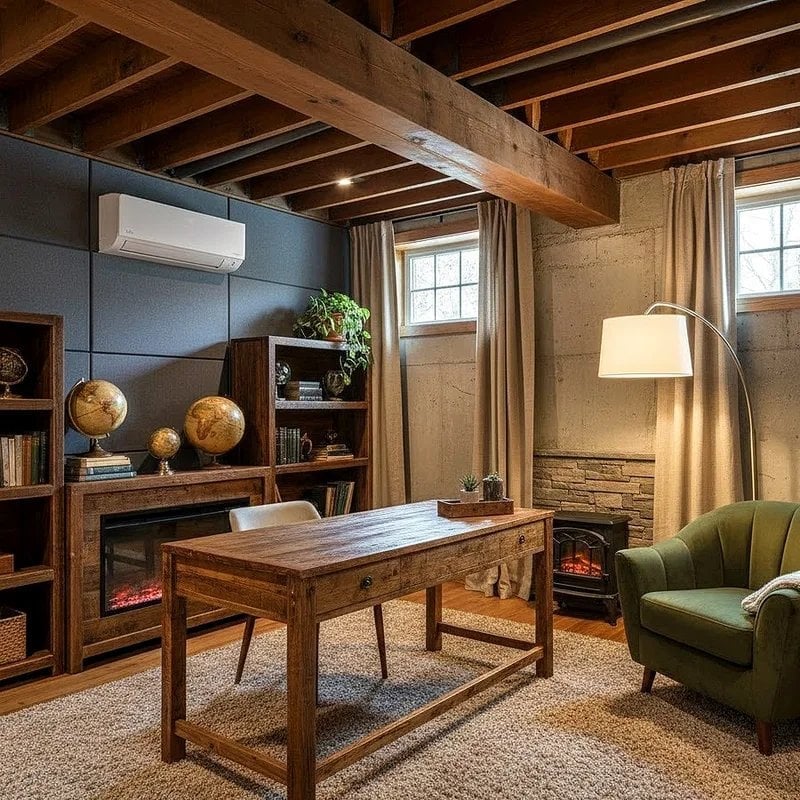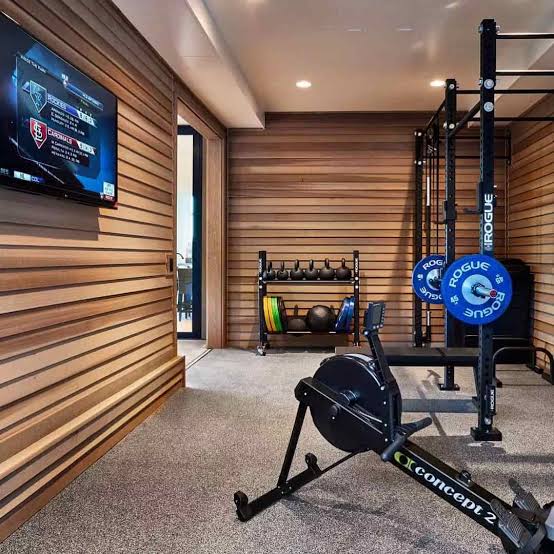
Concrete basement floors are usually the starting point, not the finish line. But with the right treatment, that slab can become one of the most practical and surprising surfaces in your home. Whether you prefer a high-gloss shine or a matte, industrial look, polished and coated concrete holds up to moisture, heavy use, and the occasional spill without flinching.
This roundup of 23 ideas shows you how to turn a bare floor into a design feature that works as hard as your basement does. From subtle stains to reflective epoxy finishes, each look keeps the concrete intact while changing how the whole room feels. You will find options that suit finished living areas, storage-heavy spaces, and everything in between.
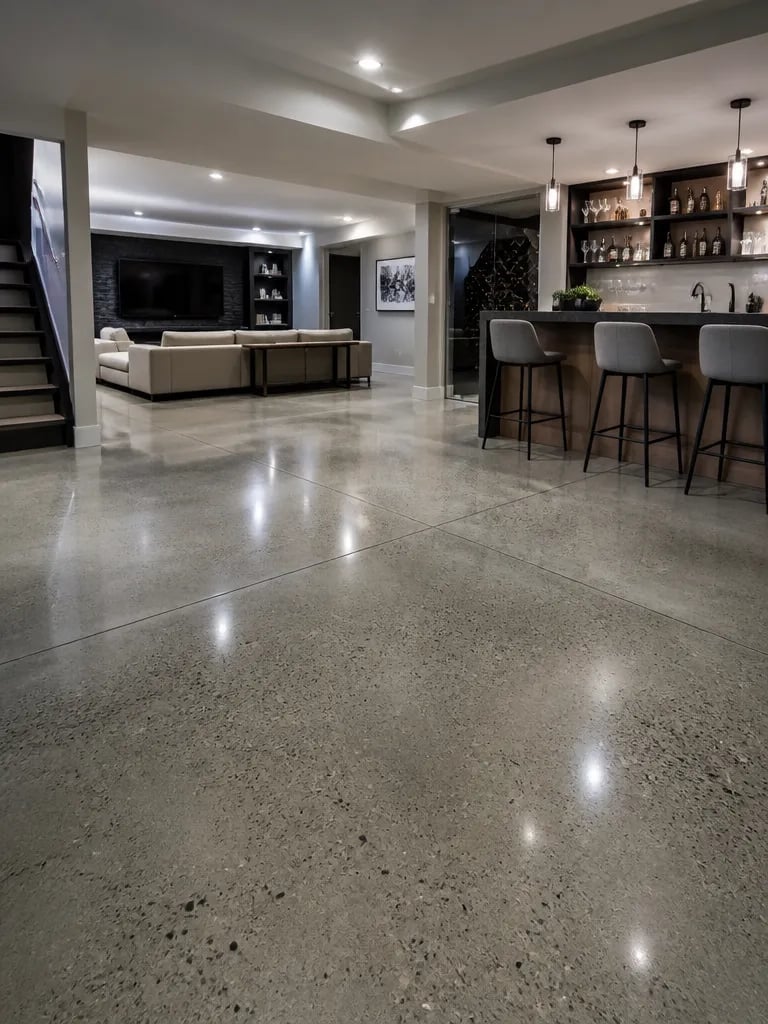
Modern Basement with a Highly Polished Gray and Beige Concrete Floor
The polished concrete floor in this open plan basement is the star, its high shine bouncing light from the recessed and pendant fixtures across the space. The gray and beige palette keeps the room feeling calm, while the bar area with stools and the sofa create a natural separation between zones. Wood and stone accents add texture without competing with the floor’s reflective surface.
Spacious Basement Living Area Featuring a Dark, Reflective Polished
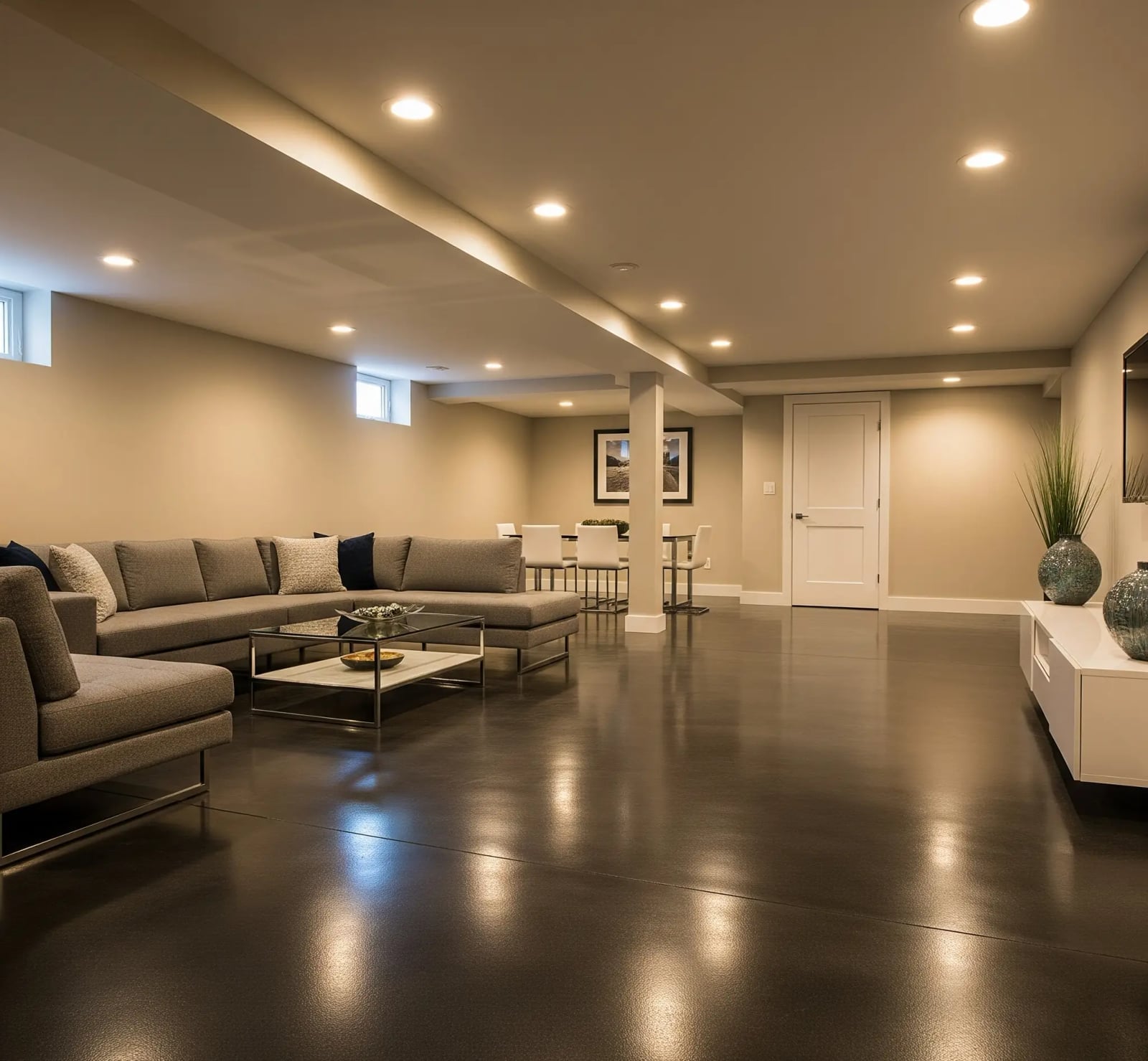
This room works a dark gray polished concrete floor against neutral beige walls, and the contrast is the whole point. The dark, reflective surface anchors the open plan living and dining area, giving it a grounded feel. A light palette on the walls and furniture keeps the space from feeling too heavy. The sectional sofa, dining set, and media console all sit on that dark field, with glass and metal accents adding a little shimmer.
Glossy Gray Epoxy Floor in a Modern Transitional Basement Living Area
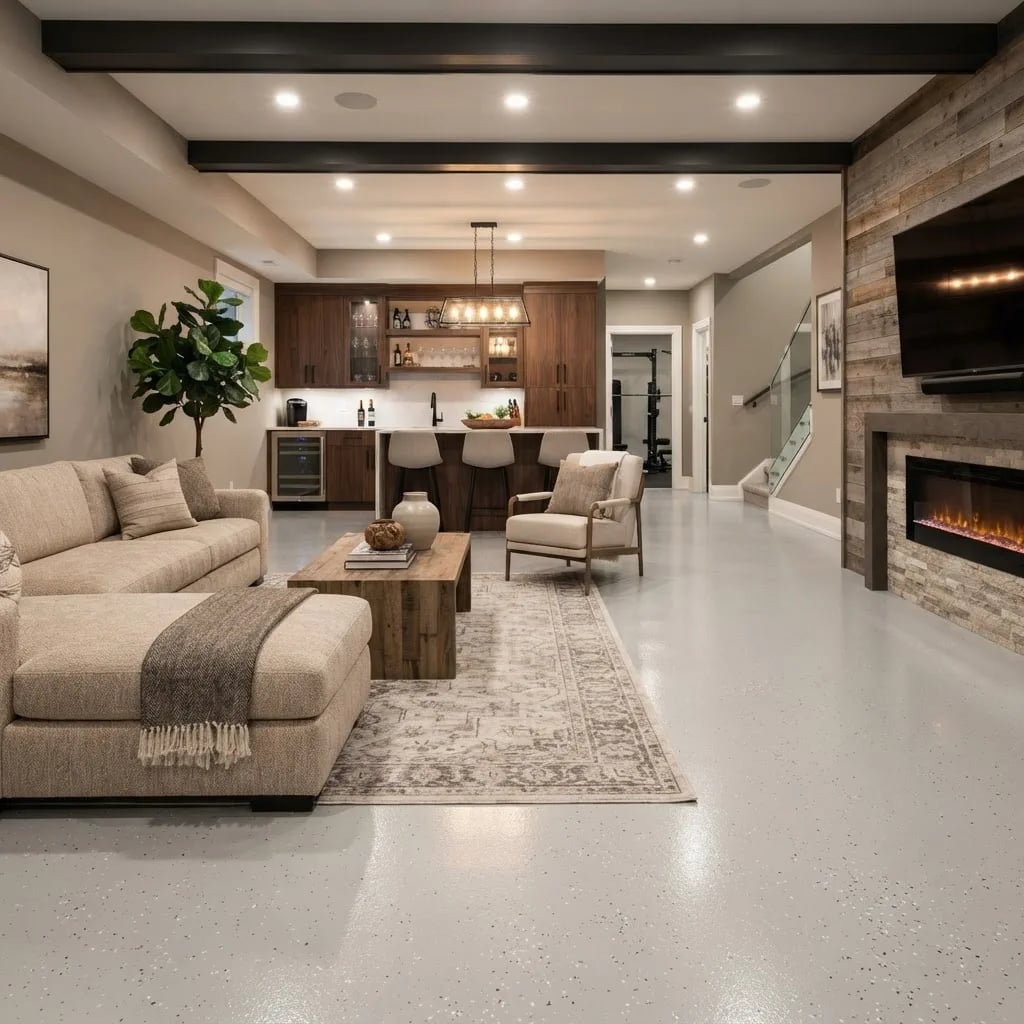
Can an epoxy floor read as warm rather than industrial? This one does. The glossy gray epoxy floor in this modern transitional basement has a smooth, reflective finish that catches the light from recessed ceiling lights and pendants. The material is the hero, but it plays nicely with a neutral palette of beige, wood tones, and gray. A large sectional, a bar, and a fireplace anchor the open plan layout. A rug sits on the epoxy, softening the surface and defining the seating zone. The floor’s gloss adds a layer of polish without making the room feel cold.
Modern Basement Living Area with a Highly Polished Concrete Floor
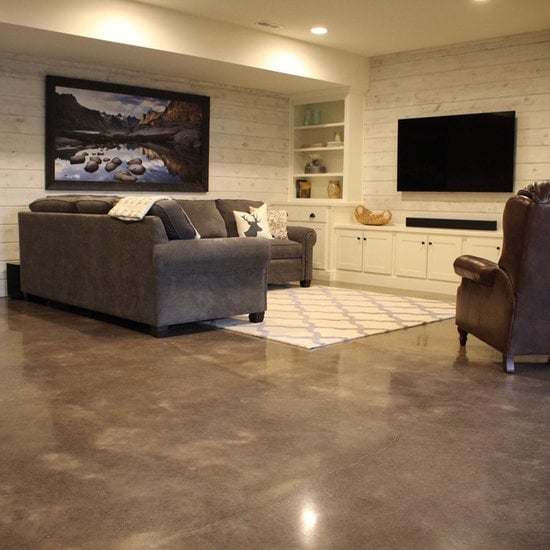
The polished concrete floor here is the anchor, its gray tones picking up the browns in the wood paneling and the whites in the upholstery. Recessed ceiling lights and wall sconces provide a mix of ambient and task lighting, and the floor’s reflective quality helps spread that light around. The living area is arranged around a media wall, with a sofa and armchair creating a clear conversation zone.
Smooth Gray Concrete Floor in a Modern Farmhouse Basement Living Space
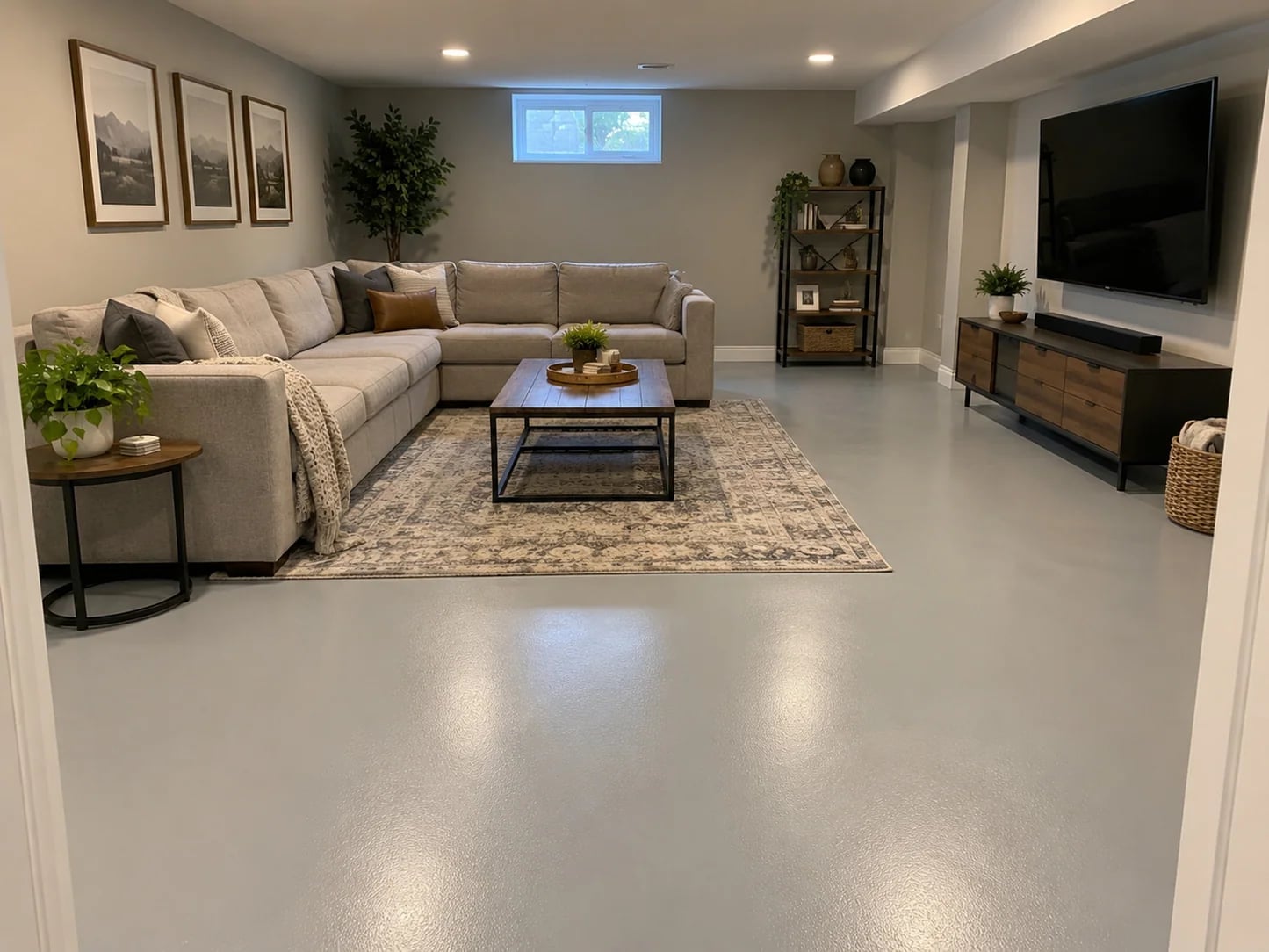
A smooth gray concrete floor is a practical choice for a modern farmhouse basement, where the palette leans neutral with beige and wood tones. The concrete’s matte finish pairs well with natural materials like wood and fabric, and it grounds the open plan layout without competing with a rug or the sectional sofa. A table lamp adds a soft glow, balancing the recessed ceiling lights. The floor serves as a durable, low-maintenance base for the whole room.
Modern Industrial Basement Bar with a Prominent Concrete Floor
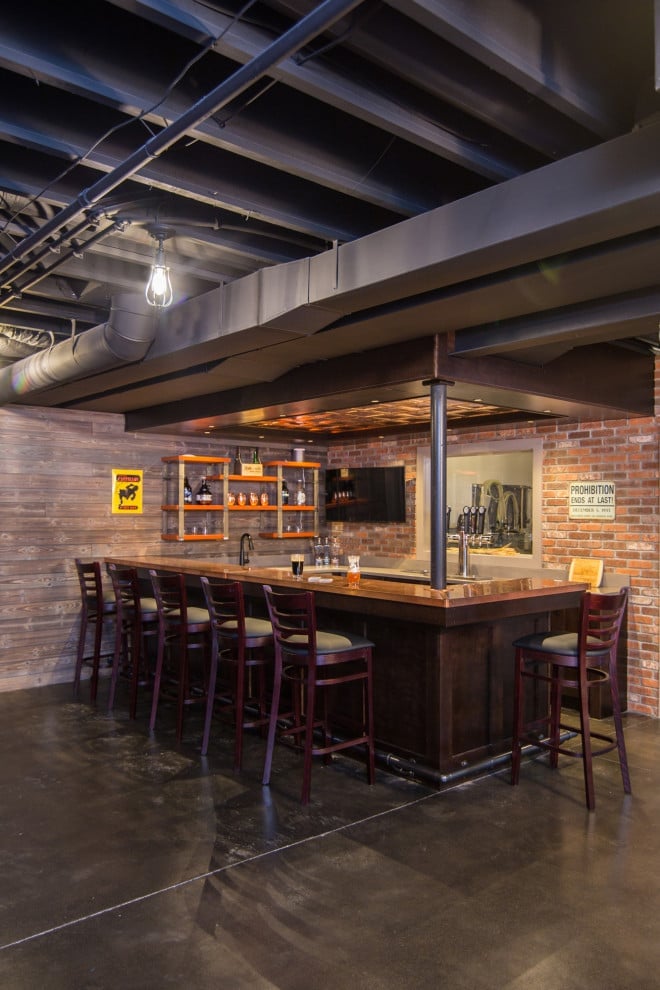
A basement bar often leans toward the dark and moody, but this version takes the opposite route. The large concrete floor anchors the whole space in a cool gray, letting the wood bar, metal shelving, and brick wall accents do the texture work. The room uses ambient and task lighting to keep the concrete from feeling cold, and the layout splits the bar from the lounge area naturally. The trick is letting the floor act as the neutral foundation so every other material reads as intentional. A concrete floor basement bar industrial style setup like this proves that a raw finish can make a room feel bigger rather than rougher.
Minimalist Modern Basement with a Smooth, Reflective Polished Concrete
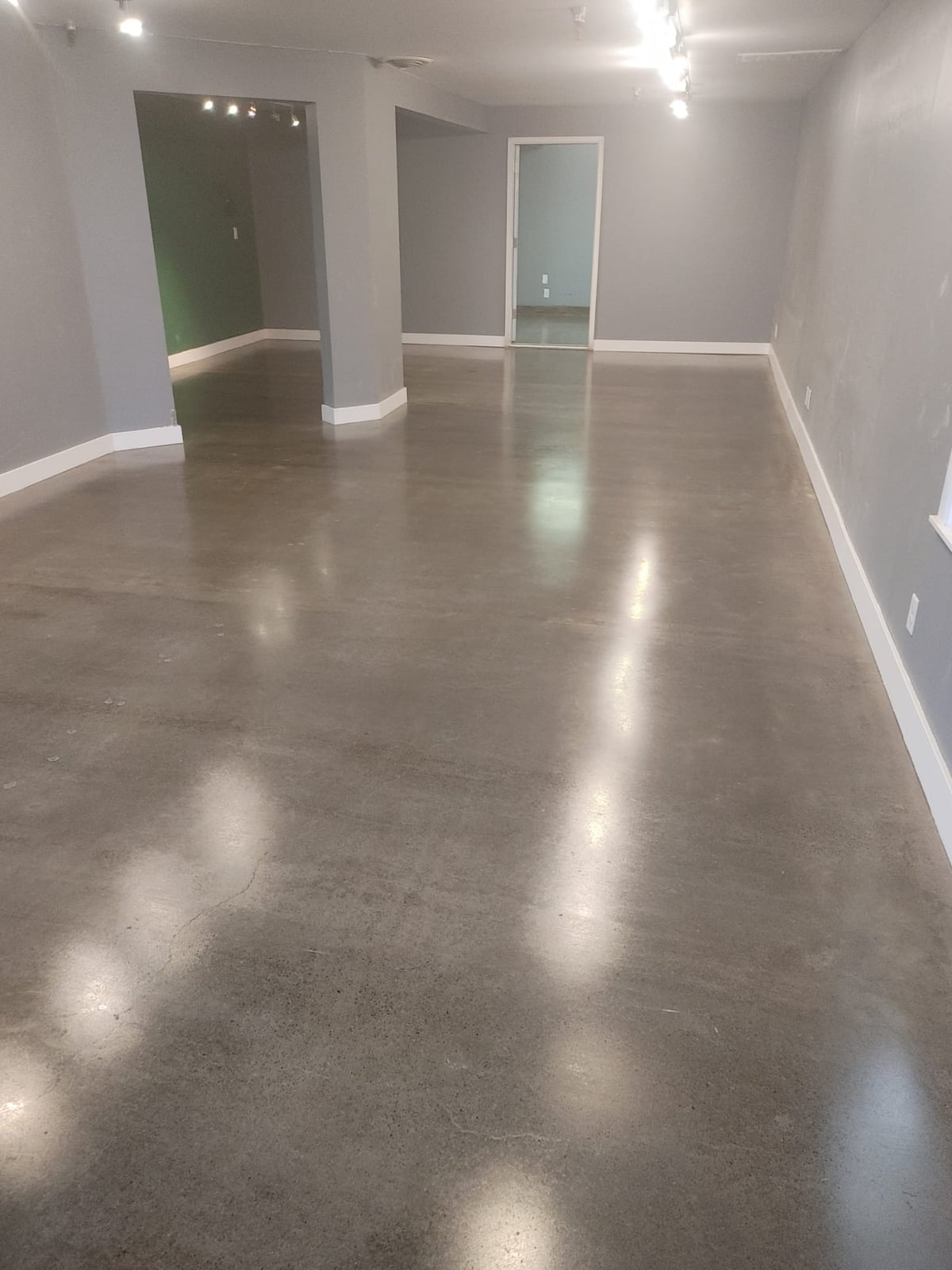
The polished concrete floor here does not just sit underfoot, it throws light back up into the room. With white walls and track lighting overhead, the reflective surface keeps the open space from feeling cavernous. Minimal furniture lets the floor do the talking, and the smooth finish means dust and spills wipe up fast. A reflective polished concrete floor minimalist basement approach like this works because the gloss adds warmth without adding color.
Richly Stained Concrete Floor in an Industrial Basement Space
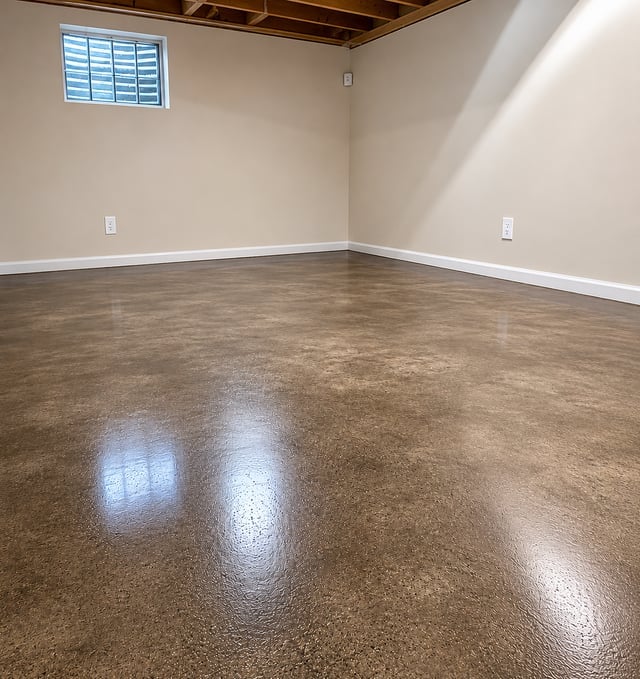
Stain is the quickest way to give concrete depth without covering its character. This floor shifts between brown, beige, and gray tones, catching light from a window and overhead fixtures. The empty room shows off the stain’s variation, a look that suits an industrial basement where exposed drywall and metal complete the palette. The stained concrete finish proves that a single material can carry the whole room when the color is layered right.
High-Gloss Metallic Epoxy Garage Floor in Swirling Gray and Silver
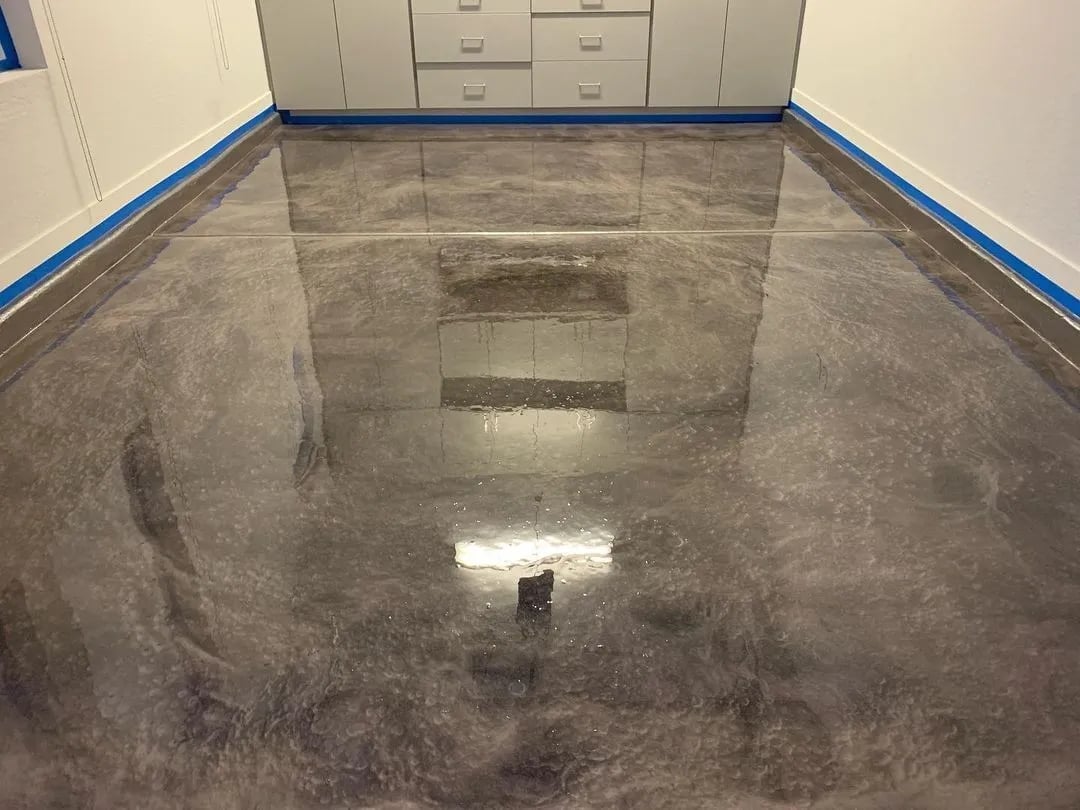
Can a garage floor actually look like polished stone? This metallic epoxy finish in swirling gray and silver comes close. The high-gloss surface reflects overhead light, which makes the space feel cleaner and bigger than a standard gray slab. The epoxy coating bonds directly to the concrete, creating a seamless layer that resists stains and tire marks. With the floor edges still taped off during application, you can see how precise the process is. A metallic epoxy garage floor gray silver high gloss finish like this turns a work space into something that looks deliberate.
Speckled Terrazzo Concrete Floor in a Modern Basement Living Area
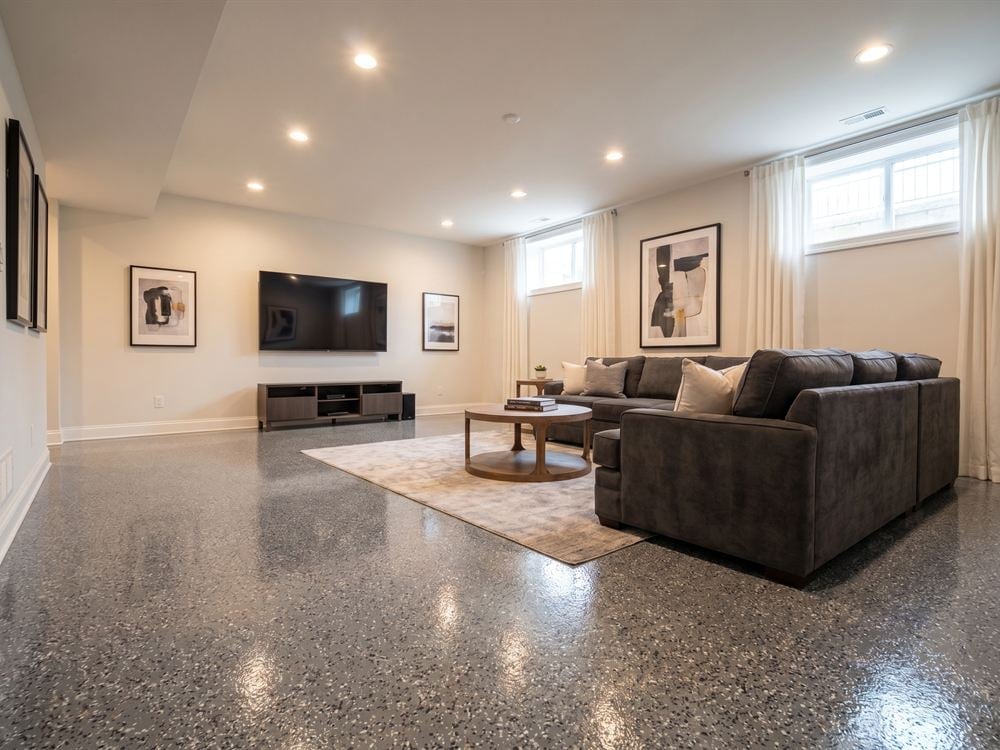
A terrazzo floor brings pattern without needing a rug. The gray base is scattered with white and black flecks, which hide dust and everyday wear better than a solid color. In this living area, the floor anchors the sofa, coffee table, and artwork without competing for attention. Natural light from recessed fixtures keeps the speckled surface from feeling busy. A terrazzo concrete floor modern basement gray white palette works well for families who want a hard surface that still looks intentional.
Swirled Metallic Epoxy Floor in a Modern Basement Play Area
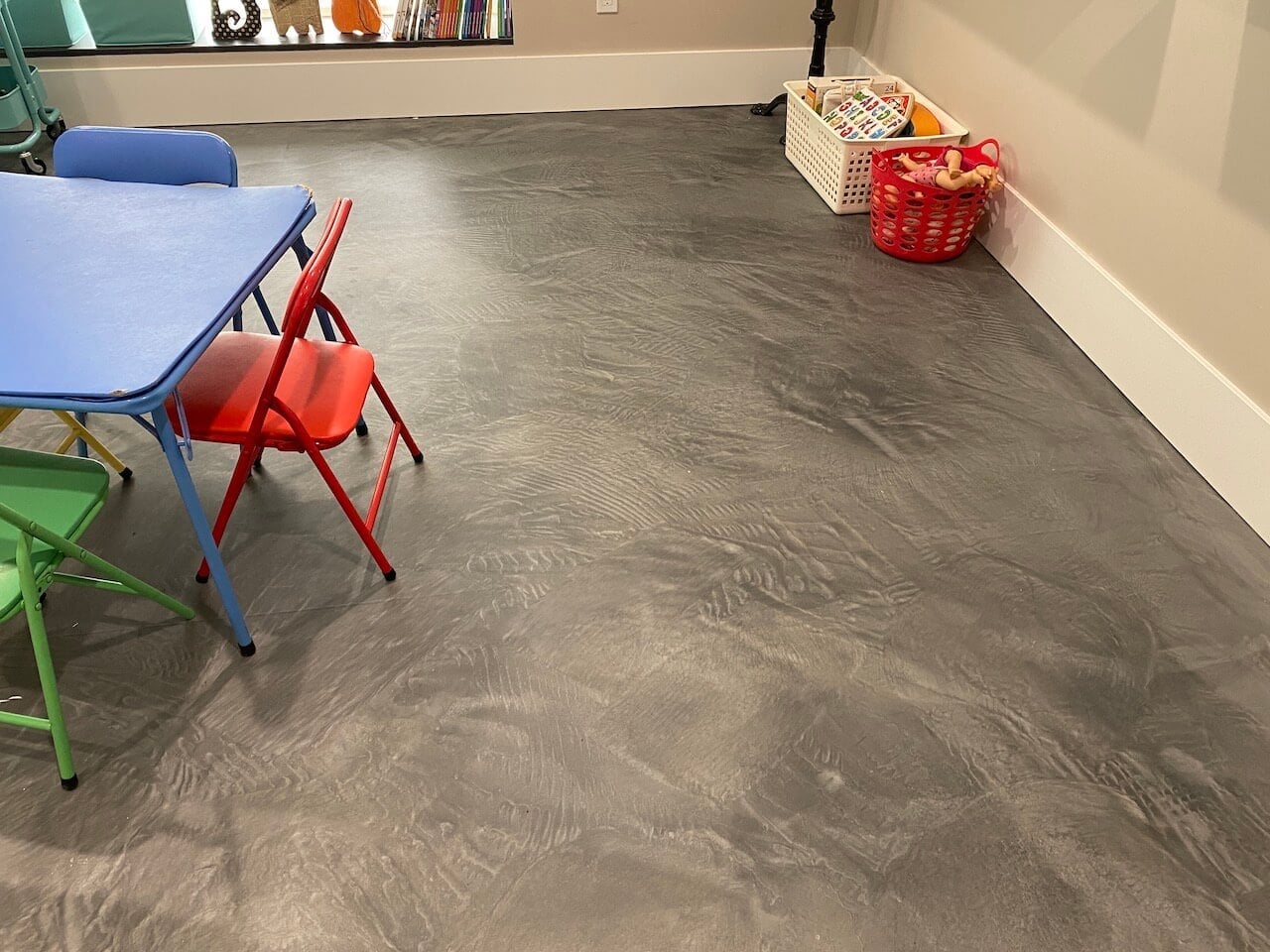
A play area needs a floor that can take a beating and still look good. The swirled metallic epoxy finish in gray and silver creates a surface with a polished look that does not feel fragile. The floor becomes the main event, so the space stays simple with a children’s table and chairs and overhead lighting. The metallic swirls add depth and movement, which prevents the room from feeling flat even when the toys are put away. This is a smart choice for a basement play area because the finish hides scuffs and spills more effectively than a solid color would.
Smooth Light Gray Concrete Floor in a Modern Basement, Close-Up Take
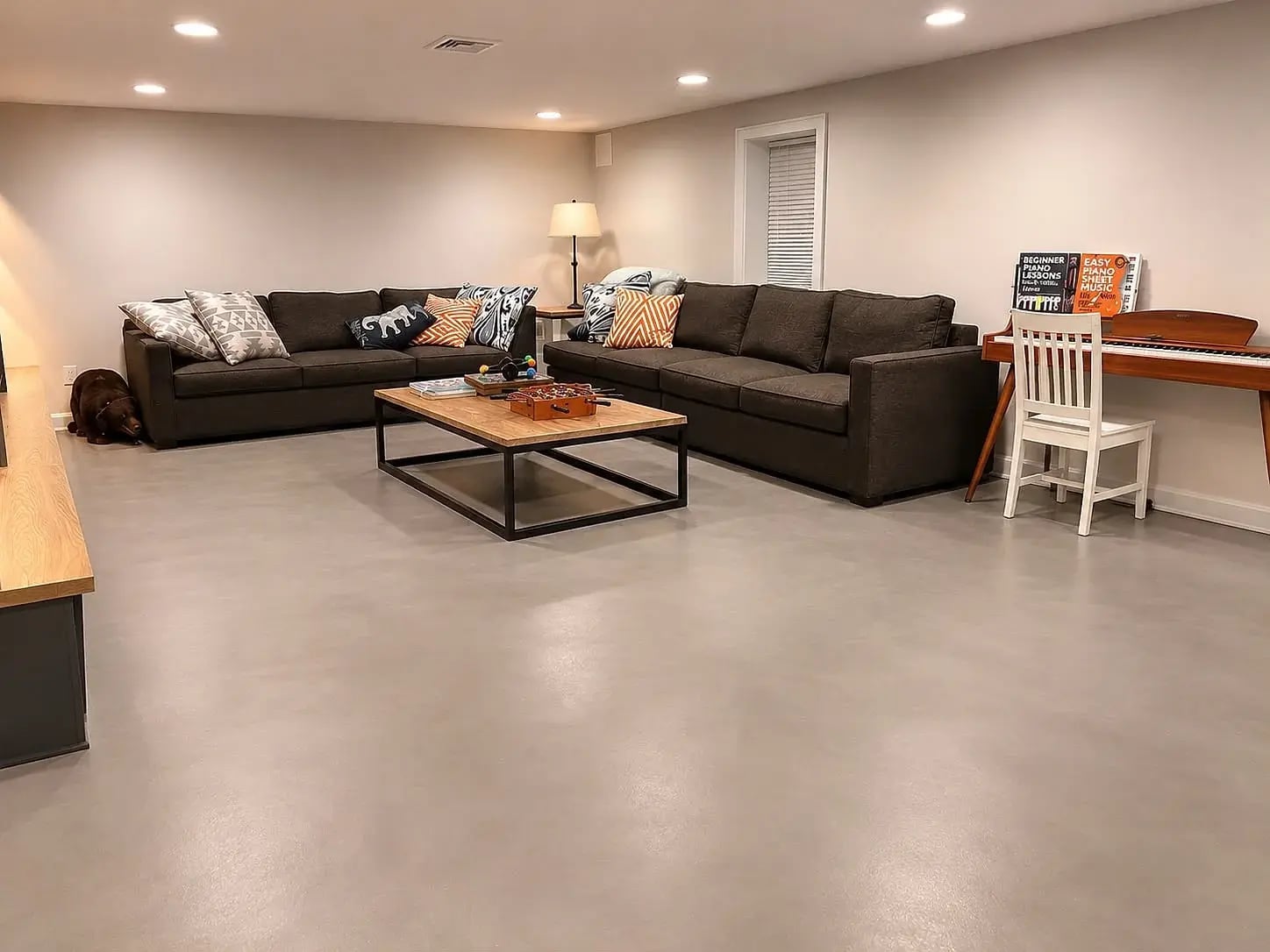
A smooth light gray concrete floor can feel cold if the room leans too industrial. The trick is to balance it with warm wood tones and soft fabrics. In this open plan basement living space, the floor sits under a large sectional sofa, a coffee table, and a media unit, all of which add layers of texture and color. The palette stays neutral with gray, wood tones, and beige, so the concrete does not feel like the only option.
Recessed ceiling lights and a floor lamp provide the illumination, and the light gray surface reflects that light back up into the room. That reflection helps the space feel larger and more open. The concrete is smooth but not highly polished, which means it will not show every footprint. For a renter-safe version, a large washable rug over the concrete gives the same softness without changing the floor.
Industrial Unfinished Basement with a Smooth Concrete Floor
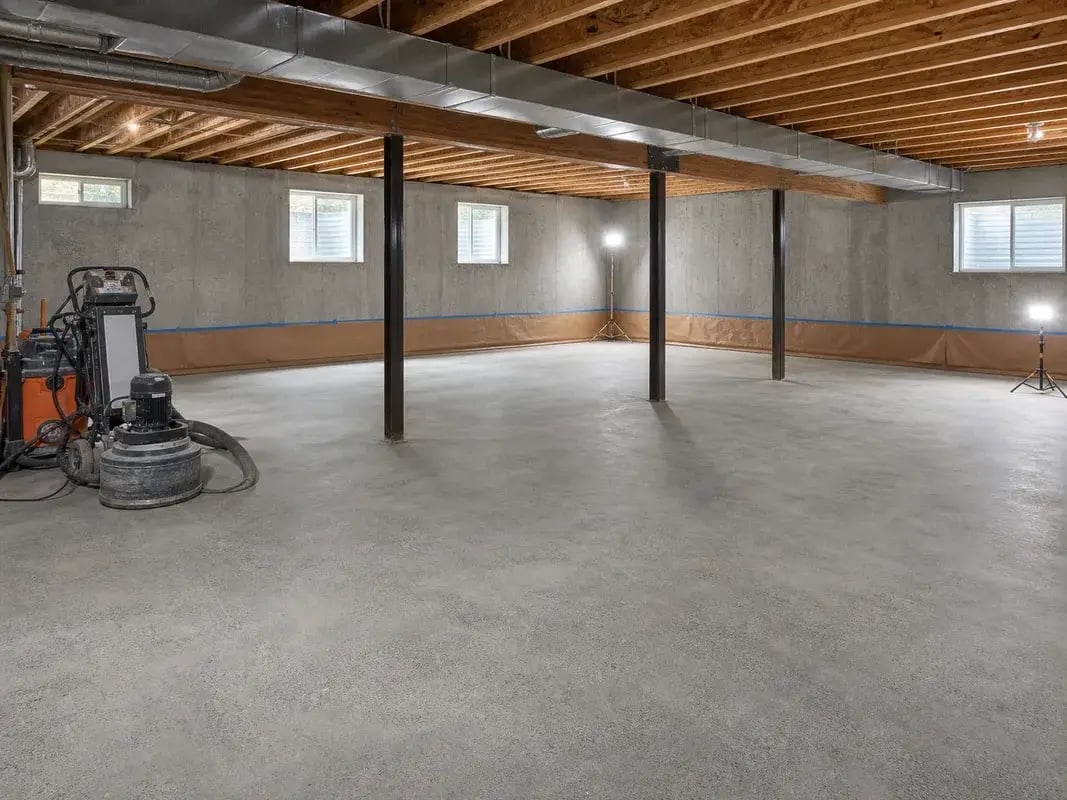
A smooth concrete floor in an unfinished basement creates a clean base without hiding the bones of the space. The support columns, exposed wood, and metal accents stay visible, and the floor ties them together without competing. The palette of gray, brown, and white keeps the look cohesive, and light from the windows adds a softness that balances the raw materials. This setup works when the floor is the most finished thing in the room, letting the structure appear as a deliberate choice.
Modern Basement Room with a Smooth Gray Concrete Floor and Seating
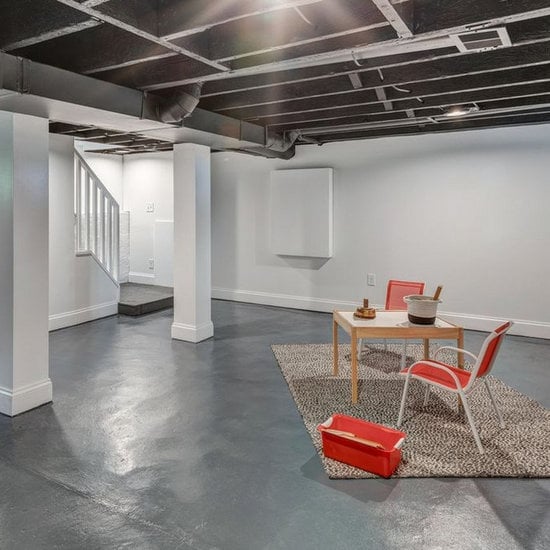
This room proves that a smooth gray concrete floor can work in a seating area without feeling too hard. The key is the rug underneath the small table and chairs, which breaks up the expanse of concrete and adds a soft landing for feet. Overhead lights and natural light keep the space bright, and the gray and white palette keeps it calm. The floor acts as a neutral backdrop, letting the furniture and rug do the talking. In a rental, a large rug and a few floor cushions can soften the concrete without a permanent change.
Wet, Reflective Concrete Floor in an Industrial Unfinished Basement
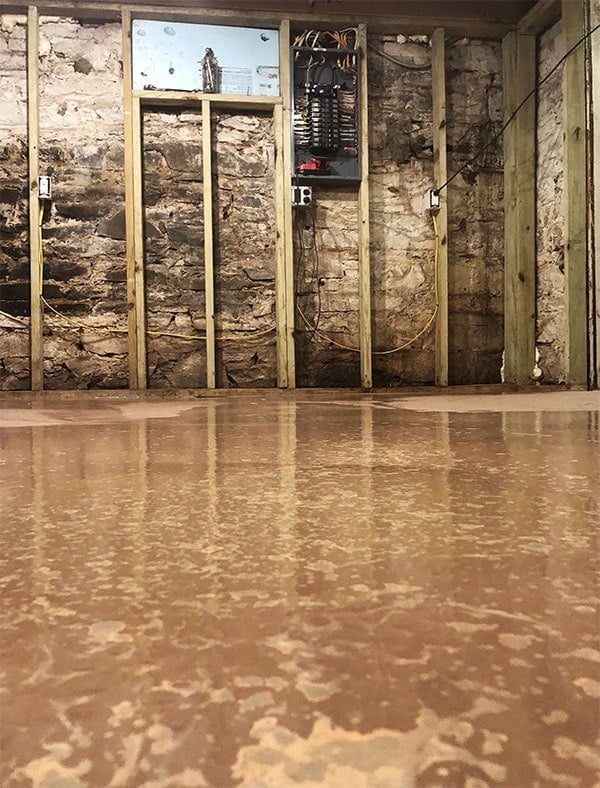
A wet, reflective concrete floor in an unfinished basement bounces light around the room, which helps brighten a space that might otherwise feel dark and cramped. In this room, the floor picks up the brown and beige tones from the exposed wooden studs and stone elements, creating a cohesive look without extra effort.
The reflection also makes the floor look deeper and richer than a dry matte finish would. This is a good option for a basement that gets a lot of foot traffic or needs to double as a workshop or storage area. The wet look is achieved with a sealant, which also protects the concrete from stains and moisture. A high-gloss concrete sealer can be applied to an existing slab.
Dark Gray Speckled Epoxy Floor in a Finished Basement with Storage
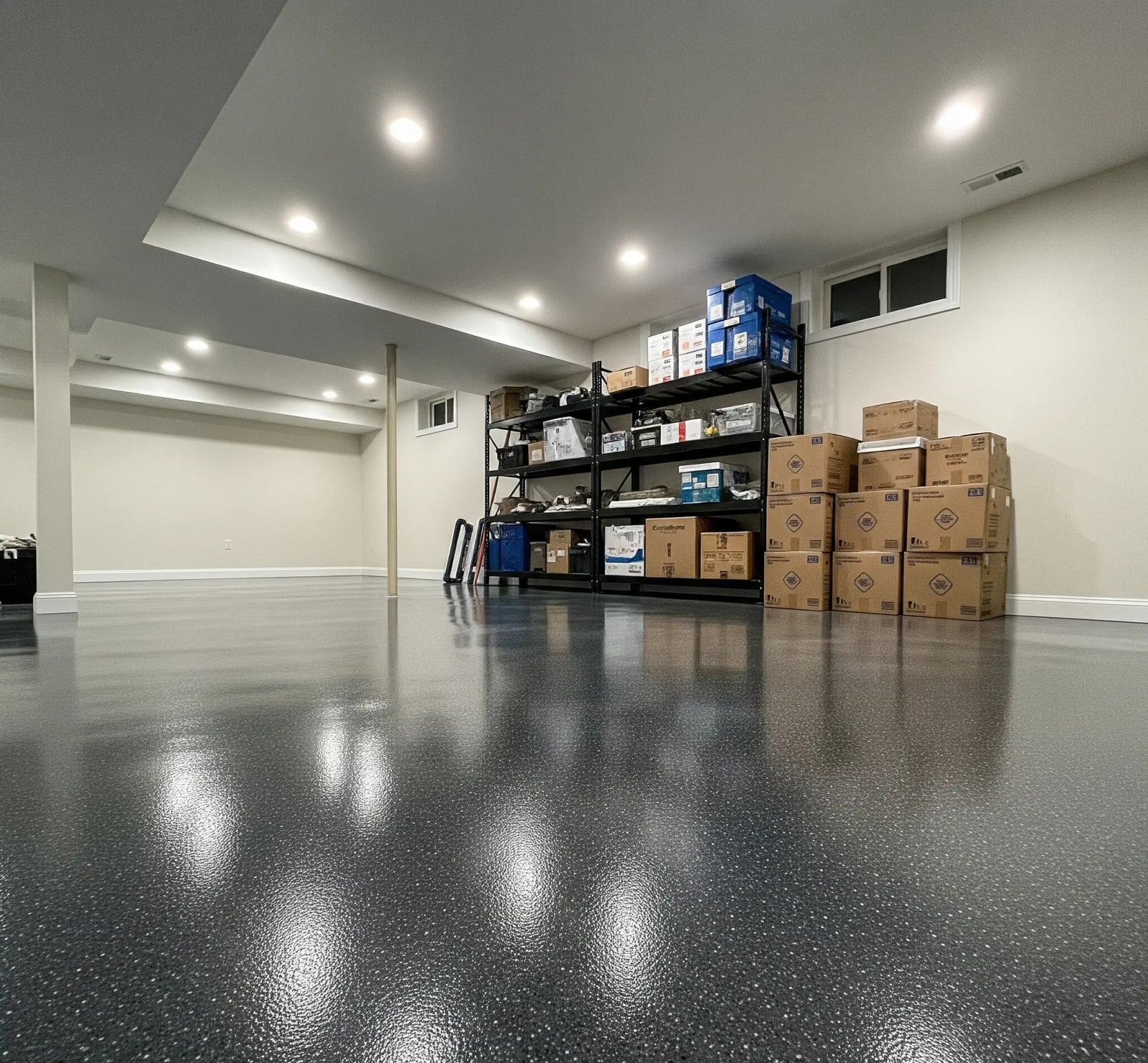
The speckled pattern on this dark gray epoxy floor hides dust and scuffs, which matters in a room used for storage. Recessed ceiling lights bounce off the reflective coating, keeping the room bright despite the deep palette. White storage shelves and boxes stand out clearly against the dark floor, making it easier to find what you need. This finish works well for a basement that doubles as a workshop or overflow closet.
Dramatic Transformation: Light Tan Epoxy-Coated Concrete Basement
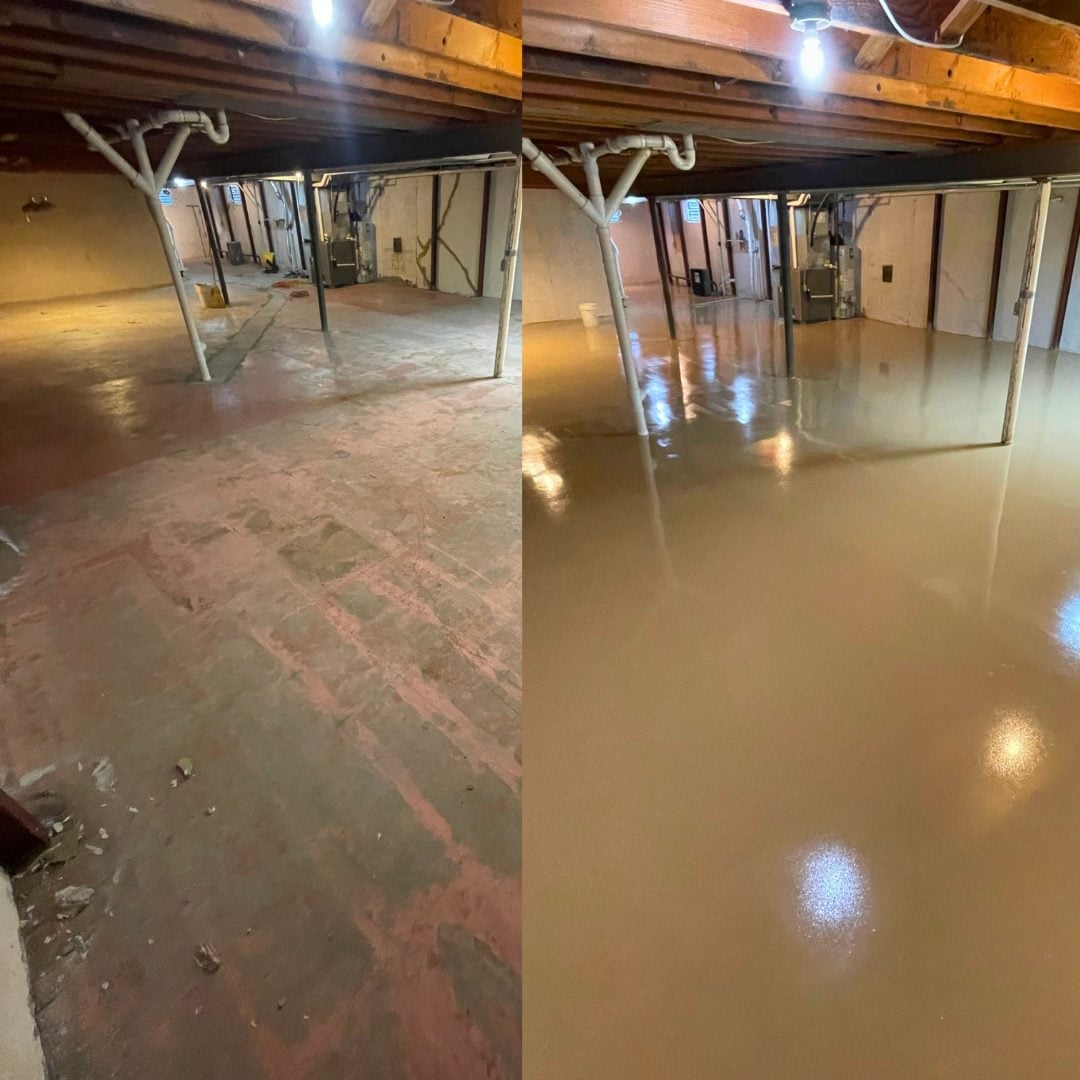
A light tan epoxy coating can make a basement feel brighter without requiring new windows or additional fixtures. The trick is to pick a shade that is warm beige instead of cool gray, so the floor reflects the overhead fluorescent light in a way that softens the room. Exposed pipes and support beams become less of an eyesore when the ground plane is unified and clean. Renters should check with their landlord before applying any coating, but owners can treat this as a straightforward weekend refresh that changes how the whole lower level lives.
Vibrant Blue and Teal Epoxy Floor in a Modern Basement Space
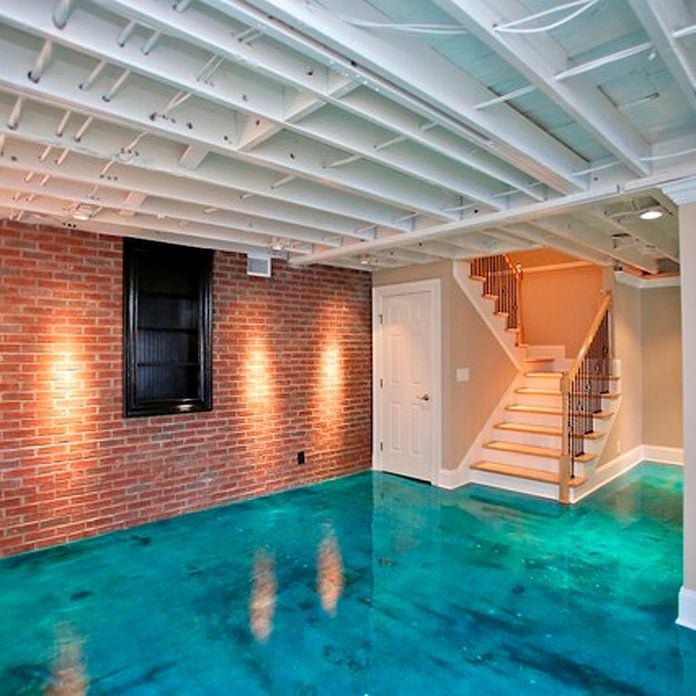
A blue and teal epoxy floor is a bold alternative to the usual gray or tan finishes. White walls and a brick accent wall keep the palette from feeling chaotic, while the recessed ceiling lights and wall sconces cast enough glow to balance the saturated color underfoot.
The deep blue tones pair with cool whites and warm brick reds to create a cohesive look. This finish suits a game room or media area where the floor can be part of the fun. The epoxy finish also seals the concrete, which helps with moisture resistance in a below-grade space.
Minimalist Hallway with a Smooth, Reflective Gray Painted Concrete
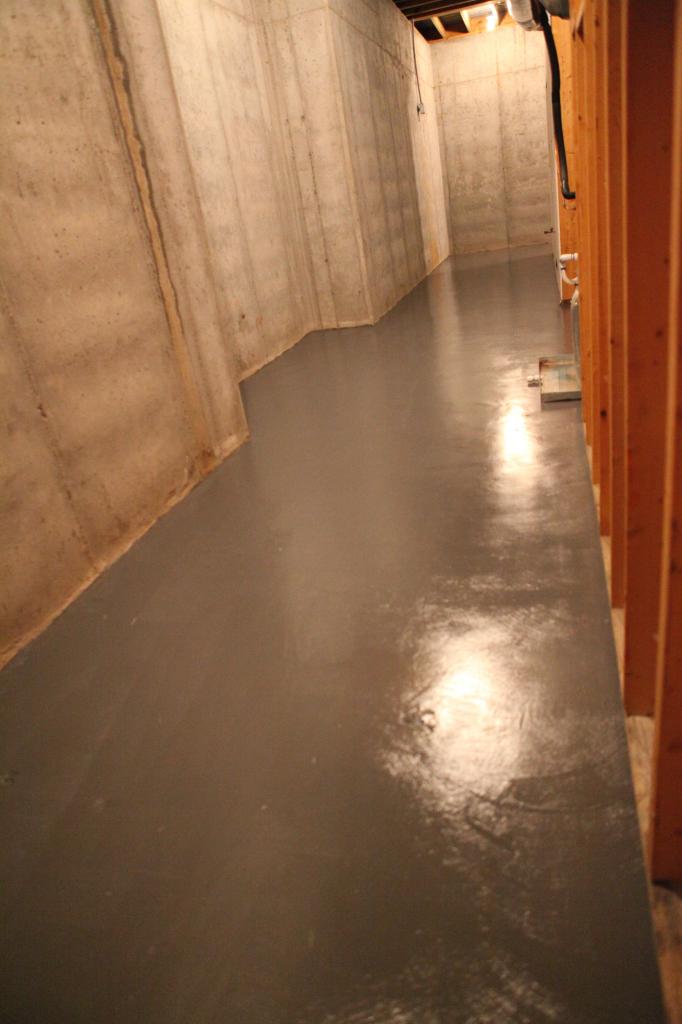
A smooth, reflective gray painted concrete floor can make a long basement hallway feel wider by bouncing light from the overhead fixture down the corridor. The minimalist palette of gray and wood tones keeps the eye moving without any visual clutter. Wooden support beams add warmth without breaking the clean lines, and the glossy finish on the floor ties the whole look together. This is a simple upgrade that requires only paint and a sealant, but prep work like cleaning and etching the concrete is what determines how long the finish lasts.
Marbled Metallic Epoxy Floor in a Modern Open-Plan Basement
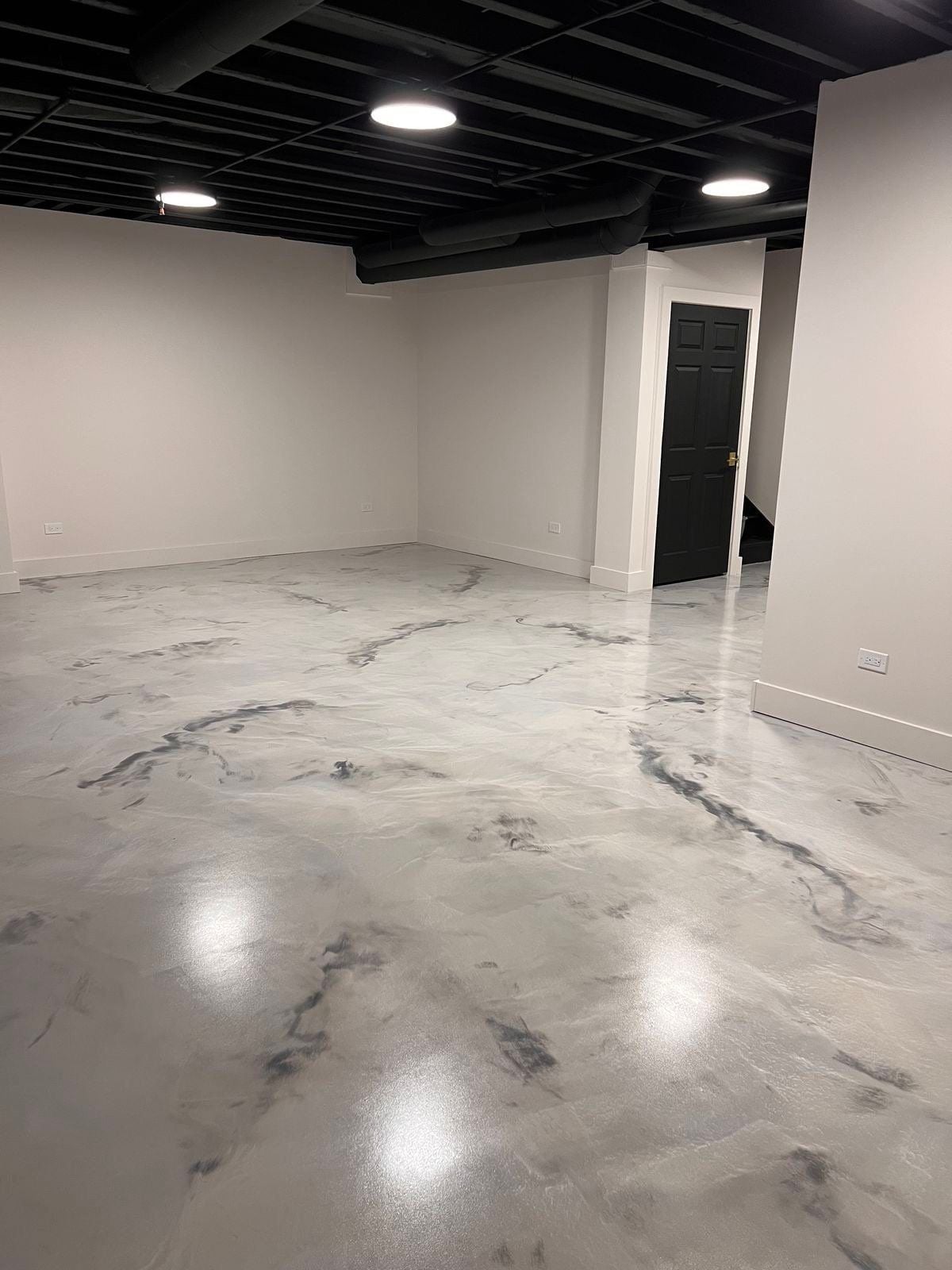
A marbled metallic epoxy floor offers a high-end look without the cost of natural stone, and the swirling white and gray pattern adds movement to an open-plan basement. The reflective surface works with recessed ceiling lights to spread illumination evenly across the room, reducing shadowy corners. Because the pattern is abstract, it hides minor dirt better than a solid light floor would. This finish suits a modern space with minimalist furniture, where the floor becomes the main visual event. The metallic pigment shifts slightly depending on the viewing angle, which prevents a flat appearance.
Minimalist Basement Hallway with a Smooth Dark Gray, Close-Up Take
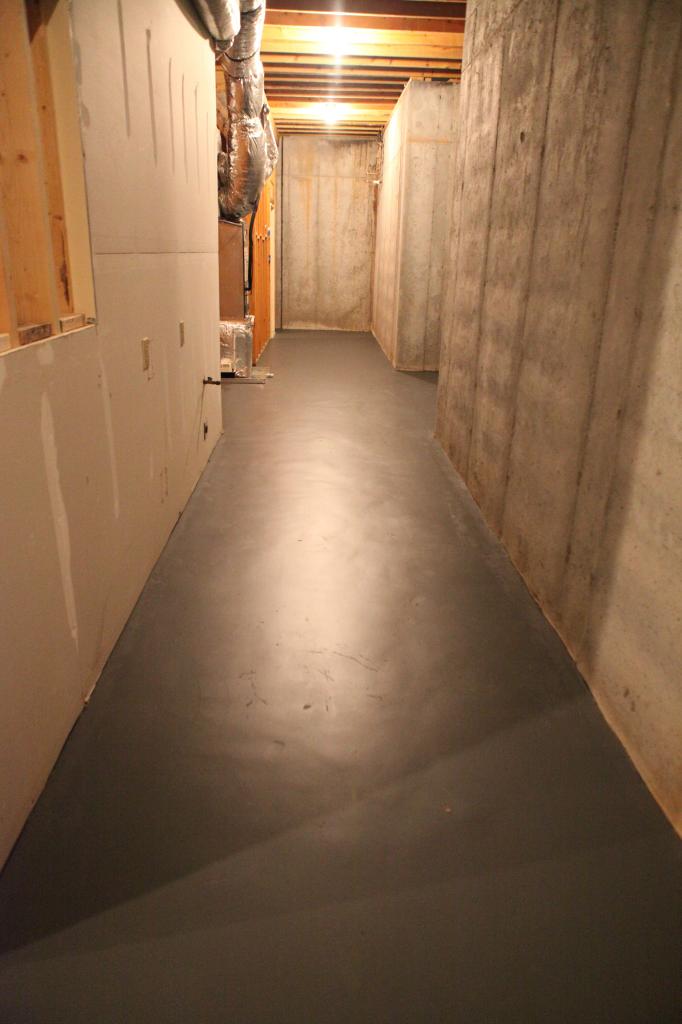
A smooth dark gray painted concrete floor grounds a narrow basement hallway without making it feel smaller, especially when paired with beige walls and overhead ceiling lights. The deep gray floor and lighter palette keep the eye moving down the hall without getting stuck on any single detail.
This finish suits a minimalist look where the floor is the main event and everything else steps back. The paint creates a uniform surface that hides minor imperfections better than a bare concrete slab. For renters or anyone wanting a low-commitment update, a concrete floor paint in a dark neutral tone can change the feel of a basement hallway without tearing anything out. Just make sure the concrete is clean and dry before you start, and check your local rules about painting in a rented space.
Dramatic High-Gloss Metallic Epoxy Garage Floor in Dark, Close-Up Take
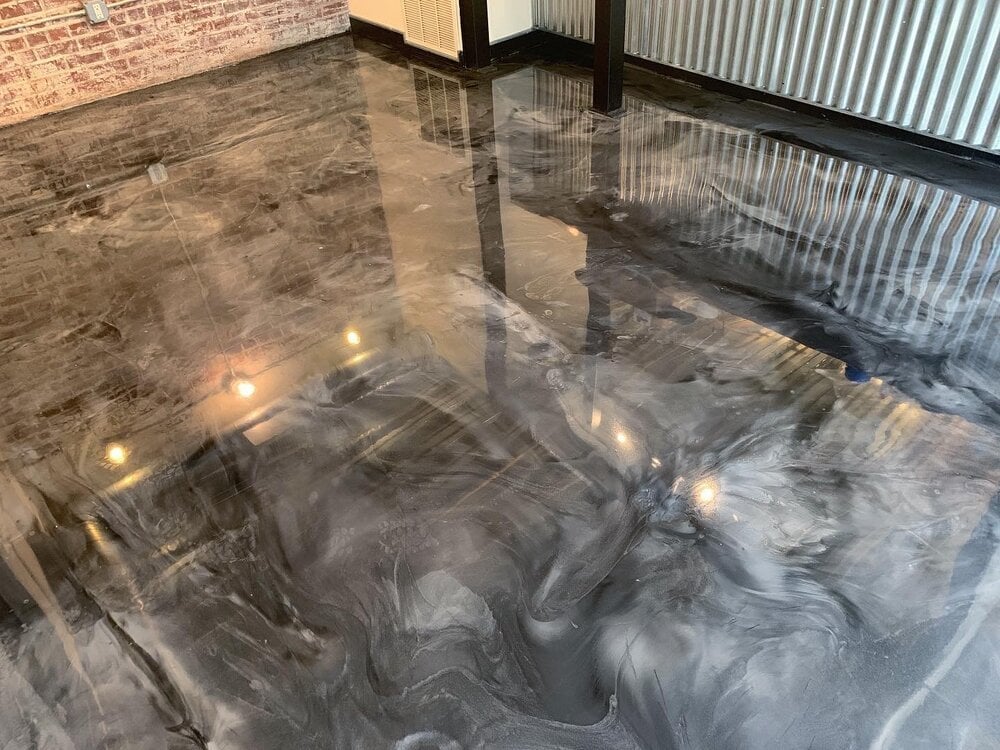
A metallic epoxy coating turns a concrete garage floor into a reflective surface that catches and bounces warm overhead light. The dark gray base swirls with silver and white highlights, creating a finish that reads as liquid metal. Black support beams and corrugated metal walls play into the industrial feel, while the high-gloss floor becomes the visual anchor. The epoxy itself is a multi-layer system that requires careful mixing and application to get those marbled effects. This is a job where prep and patience matter more than speed, so plan for a full weekend if you are doing it yourself.
Industrial Garage with a Deeply Colored, Glossy Stained Concrete Floor
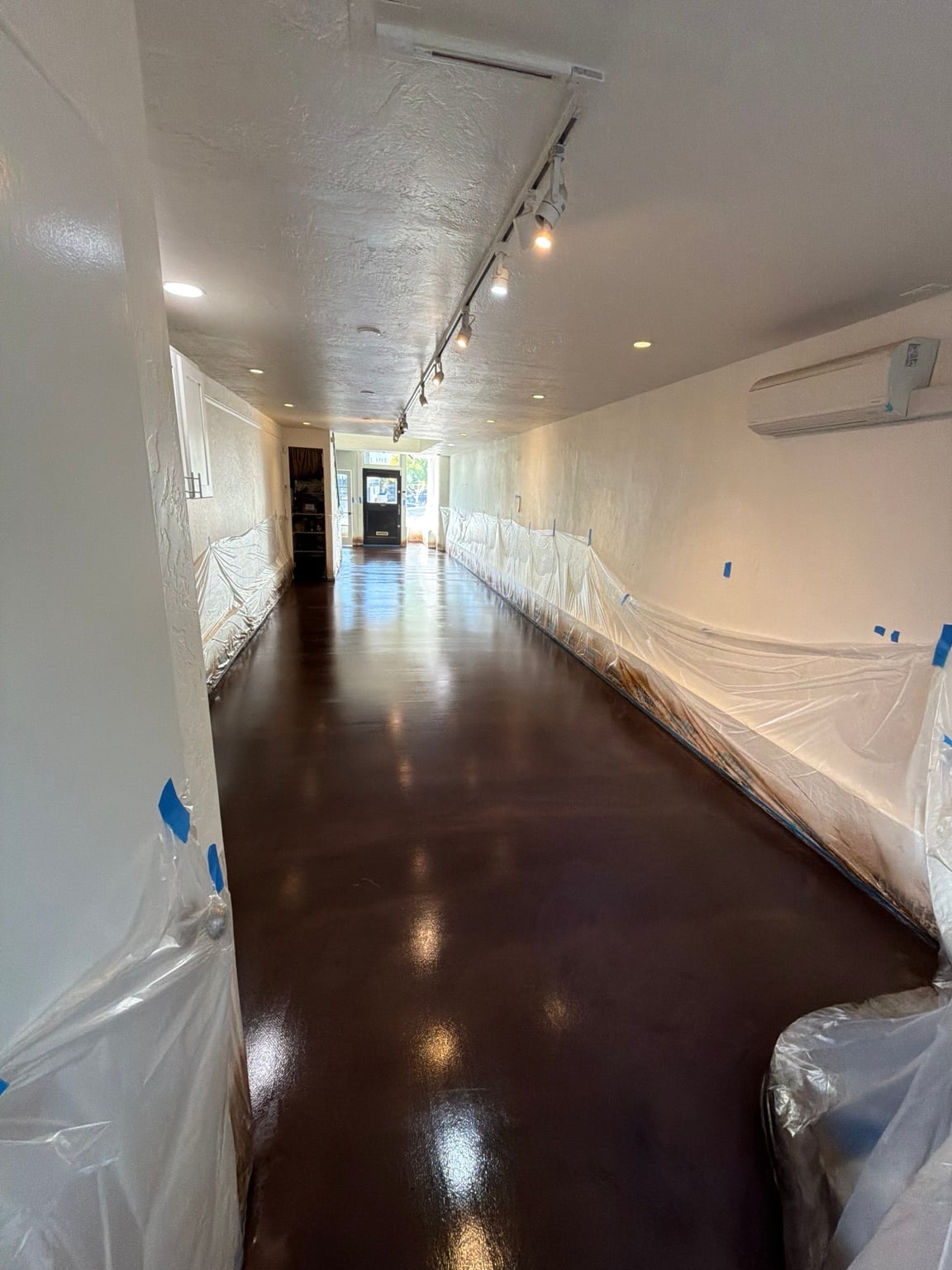
A deeply colored stained concrete floor in a dark brown gloss finish brings warmth to an otherwise utilitarian garage. The long, narrow layout benefits from the uniform floor surface, which visually connects the space from end to end. Track lighting overhead adds focused illumination and softens the industrial edge. The drywall and plastic sheeting on the walls keep the look raw and unfinished, letting the floor carry the richness. Staining concrete is a chemical process that penetrates the surface, so the color becomes part of the slab. That means fewer worries about peeling or chipping over time, though the floor will still need a sealer to maintain that glossy look.
Final Thoughts
Concrete basement floors do not have to be cold or unfinished. A coat of polish, a tinted stain, or a metallic epoxy layer changes the whole character of the room while keeping the durability that makes concrete practical. The best approach depends on how you use the space. A glossy finish bounces light around a dark basement. A speckled or terrazzo look hides dust better in a high-traffic area. A simple painted or sealed floor keeps things low-maintenance in a workshop or storage zone. Whatever finish you choose, keep up with cleaning and resealing as needed. Concrete is forgiving, but a little care goes a long way. Let the floor set the tone for the rest of the room.