A flower garden is a living canvas, and the 31 looks ahead prove there is a style for every patch of sun or shade. Whether you crave the tumbled charm of a cottage border or the clean lines of a modern bed, these gardens share one thing: they are designed to feel full and alive.
Expect layered plantings, clever use of hardscape, and a few surprises that make a space feel personal.
Layered Flower Borders for a Picturesque Cottage Garden
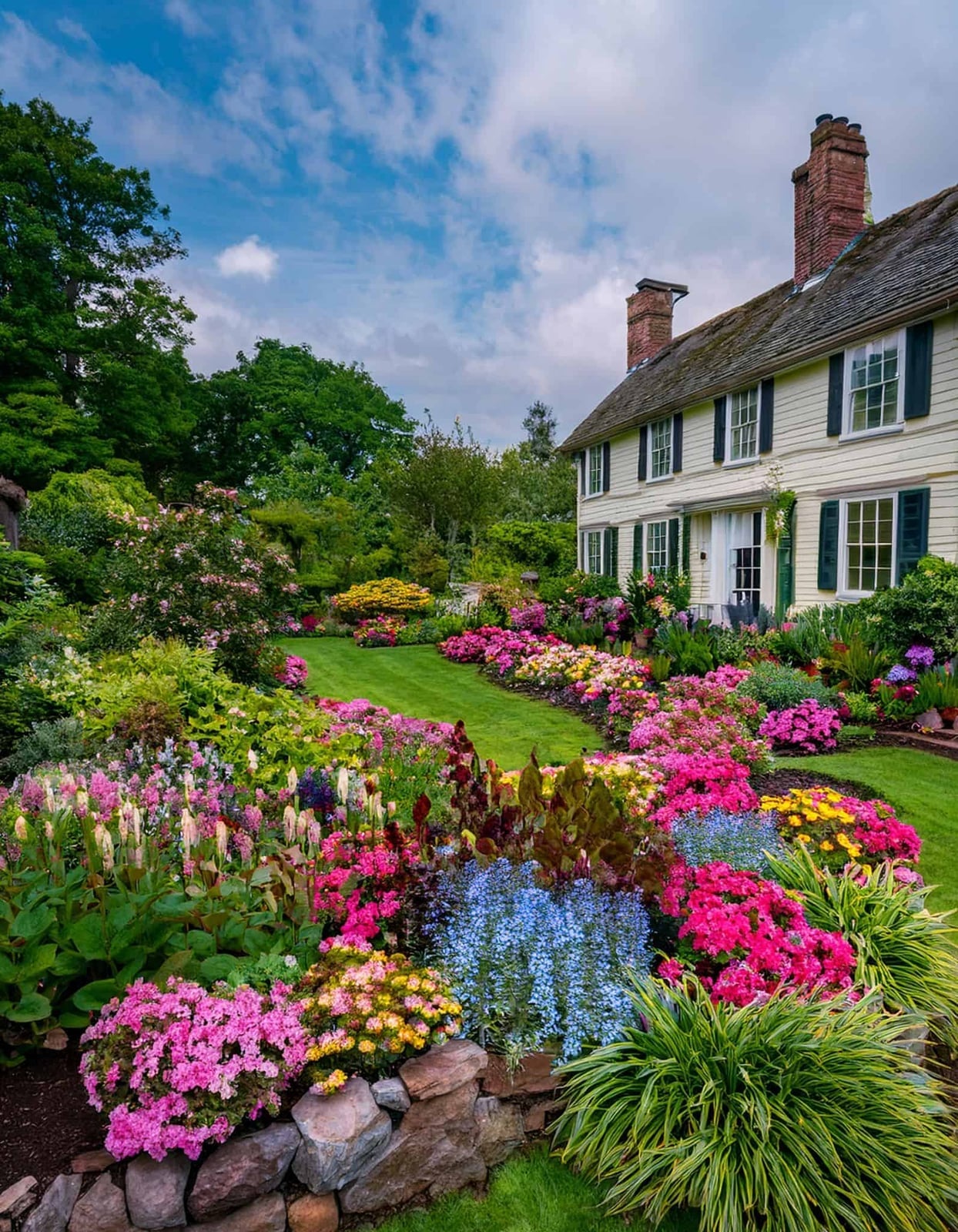
A wide lawn is edged by borders so dense with pink, yellow, and blue blooms that the grass reads as a quiet path through color. The cottage garden style relies on this contrast: soft, billowing perennials and shrubs against a clean green floor. Layering shorter plants at the front with taller ones behind creates depth without a formal structure, so the eye moves naturally from one cluster to the next.
Whimsical Garden Structure Adorned with Blue Hydrangeas
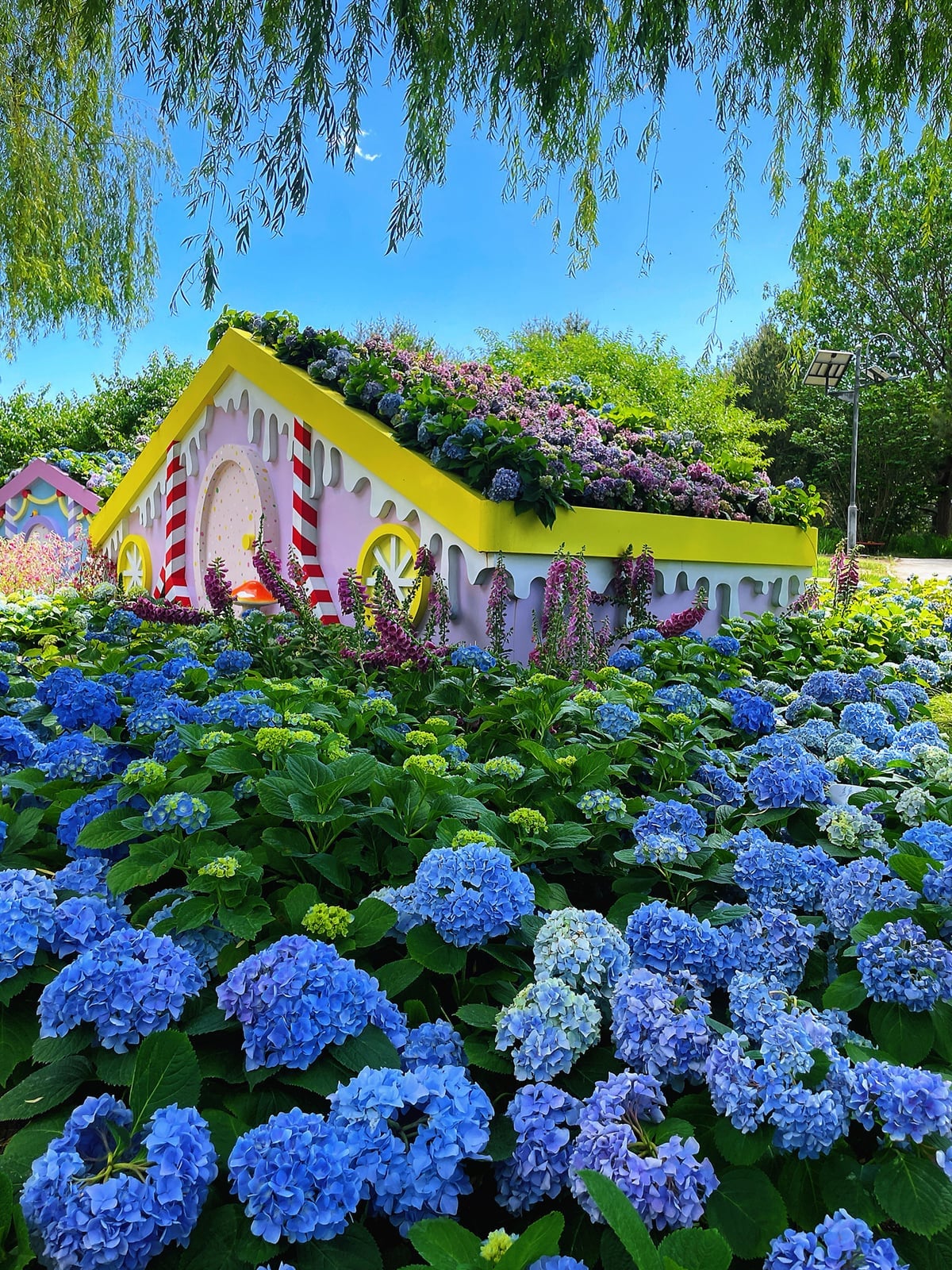
A small painted house structure becomes the focal point when its roof is nearly hidden under blue hydrangeas, yellow blooms, and pink flowers. The palette here is deliberate: cool blues anchor the eye while warm yellows and pinks keep the scene lively. In a whimsical garden, color contrast does the work of defining zones. Grouping hydrangeas around the base and letting them climb the structure ties the architecture to the planting bed, so nothing feels like an afterthought.
Terraced English Garden with Stone Walls and Mixed Plantings
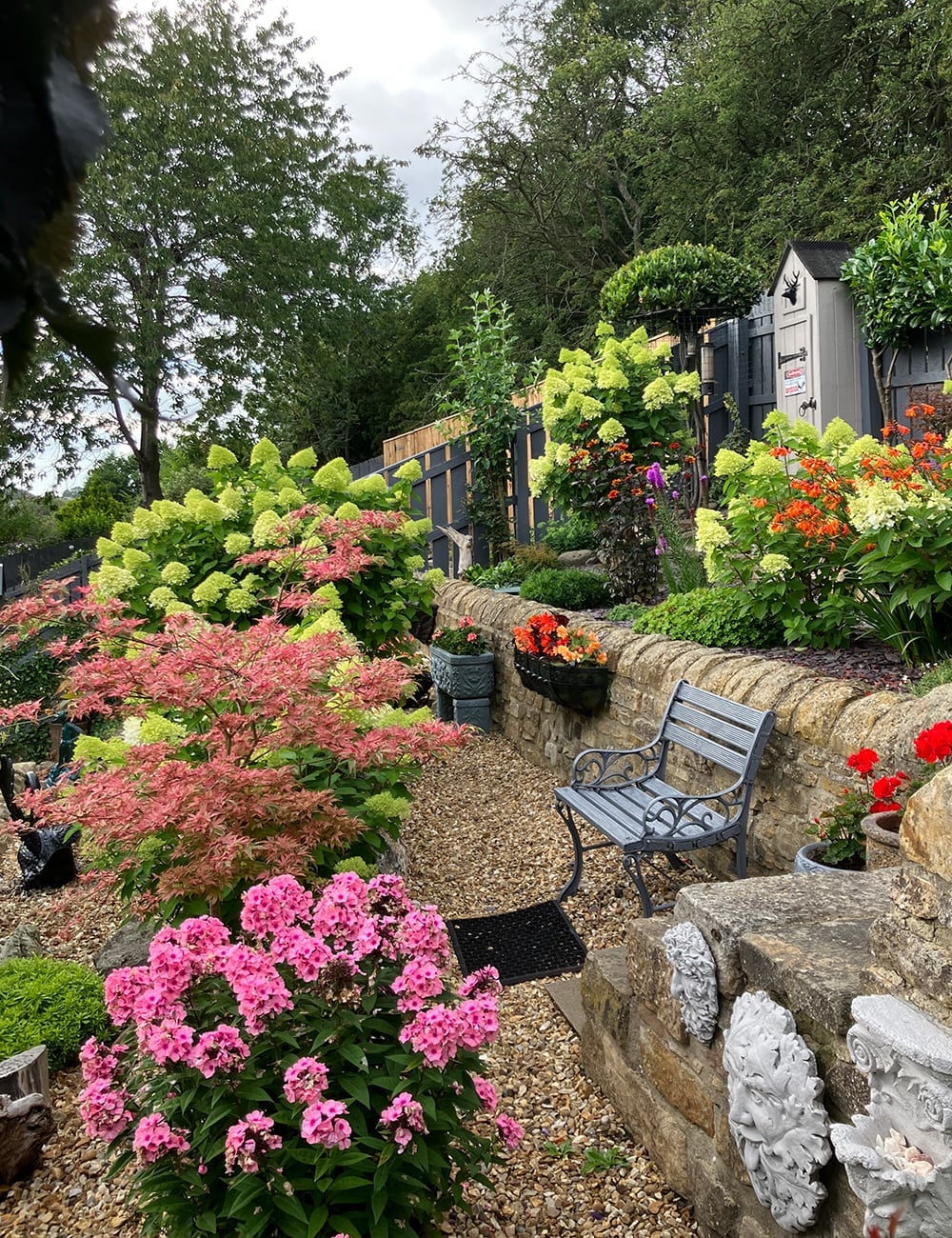
How do you keep a sloped garden from feeling disconnected? Stone retaining walls create distinct levels, each with its own planting character. In this English garden, the lower terrace holds hydrangeas and ornamental grasses, while a pink maple tree rises above a gray metal bench. Gravel paths connect the levels, and the mix of stone, wood, and metal gives the eye different textures to rest on. The overcast light softens the pinks and oranges, making the whole space feel enclosed and calm.
Naturalistic Raised Garden Bed with Lush Greenery
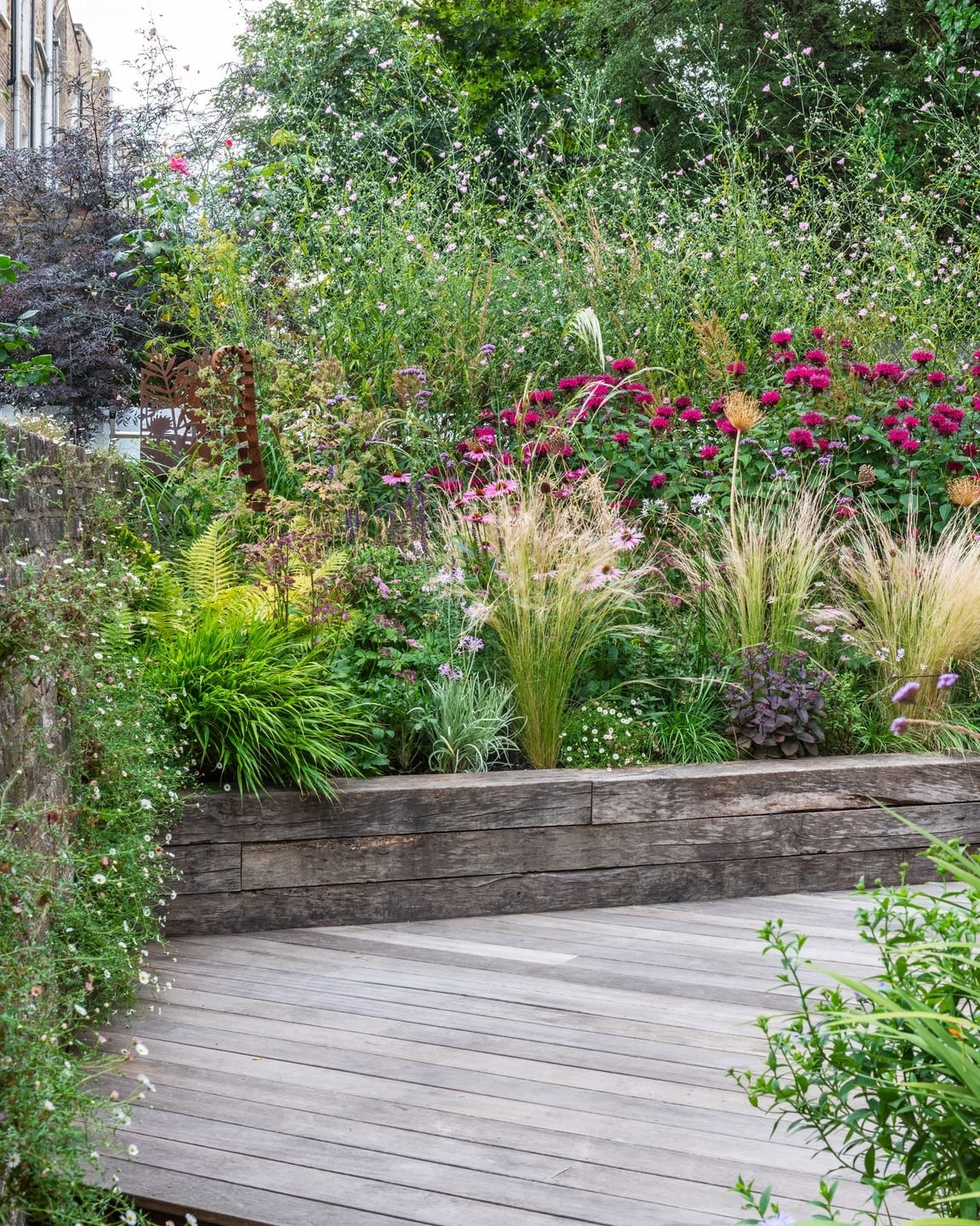
A wooden raised bed holds a dense mix of greenery, pink flowers, and white blooms, with no bare soil visible. The tiered planting means taller plants sit toward the back, while lower ones spill over the front edge. Soft daylight filters through the leaves, creating shadows that make the bed look fuller than a uniform block of color would. Wood and stone edging keeps the boundary clear without drawing attention from the plants themselves.
Cottage-Style Front Yard with Layered Pink and White Blooms
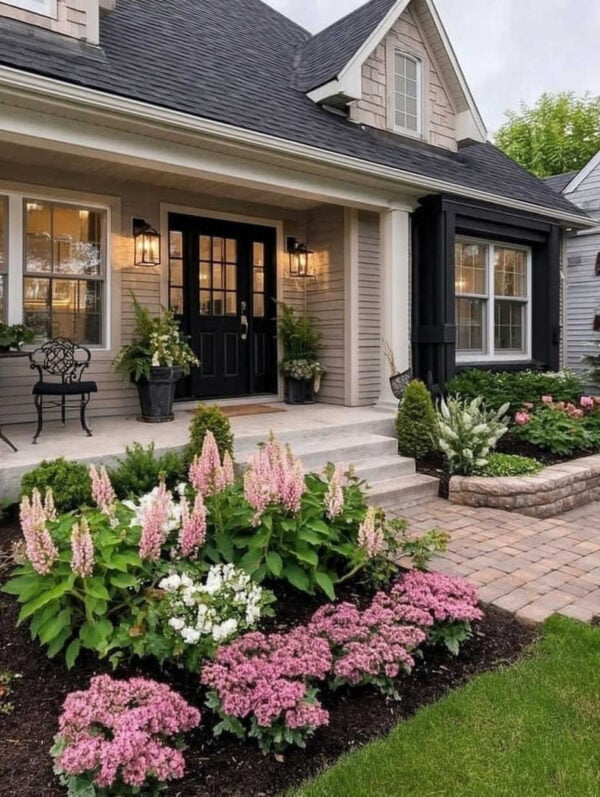
A good rule for a cottage front yard: let the planting beds widen as they get closer to the house. Here, pink and white flowers fill the space between a stone path and a beige house facade, with shrubs and a chair adding height near the porch. The layered approach hides the foundation and softens the transition from lawn to wall. Keeping the palette to pink, white, and green prevents the abundance from looking chaotic, even when every bed is full.
Tiered Flower Bed Design with Vibrant Mixed Border Plantings
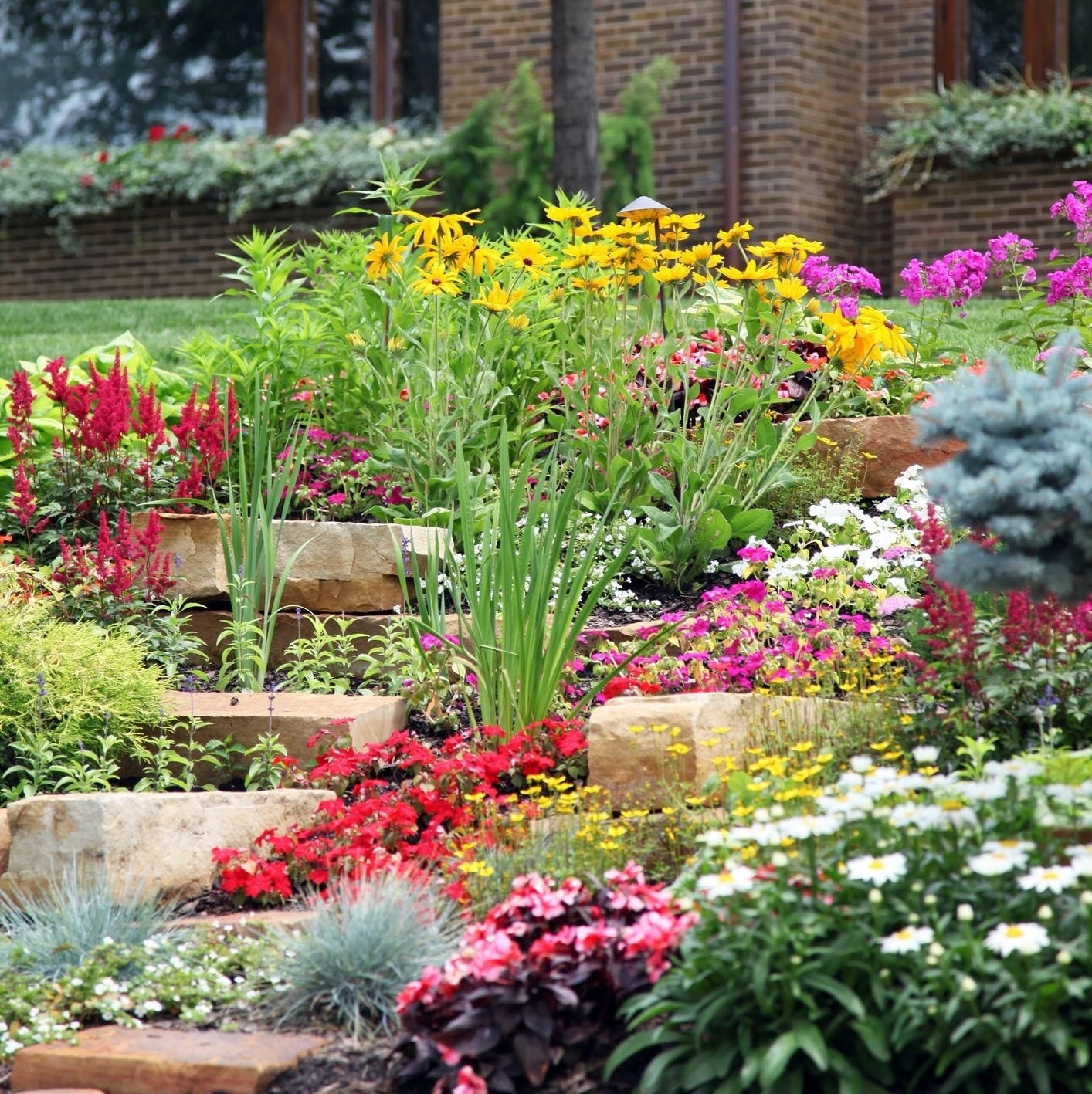
A single-level border can look flat, but a tiered flower bed mixed border changes the whole rhythm of a garden. The layout here uses stacked stone walls to create three distinct planting levels, each one catching light at a different angle. Yellow coneflowers and red astilbe fill the middle tier, while white daisies spill over the front edge. The bright daylight makes every color punch, and the stone defines each zone without making the garden feel rigid. For a roomy yard, this approach turns a flat lawn into a space with depth and movement. The palette stays within a warm range of yellow, pink, red, and white, so the green foliage acts as a neutral buffer rather than a competing element. It is a layout that rewards the eye from any angle, not just straight on.
Naturalistic Garden Integration of Classical Stone Statuary
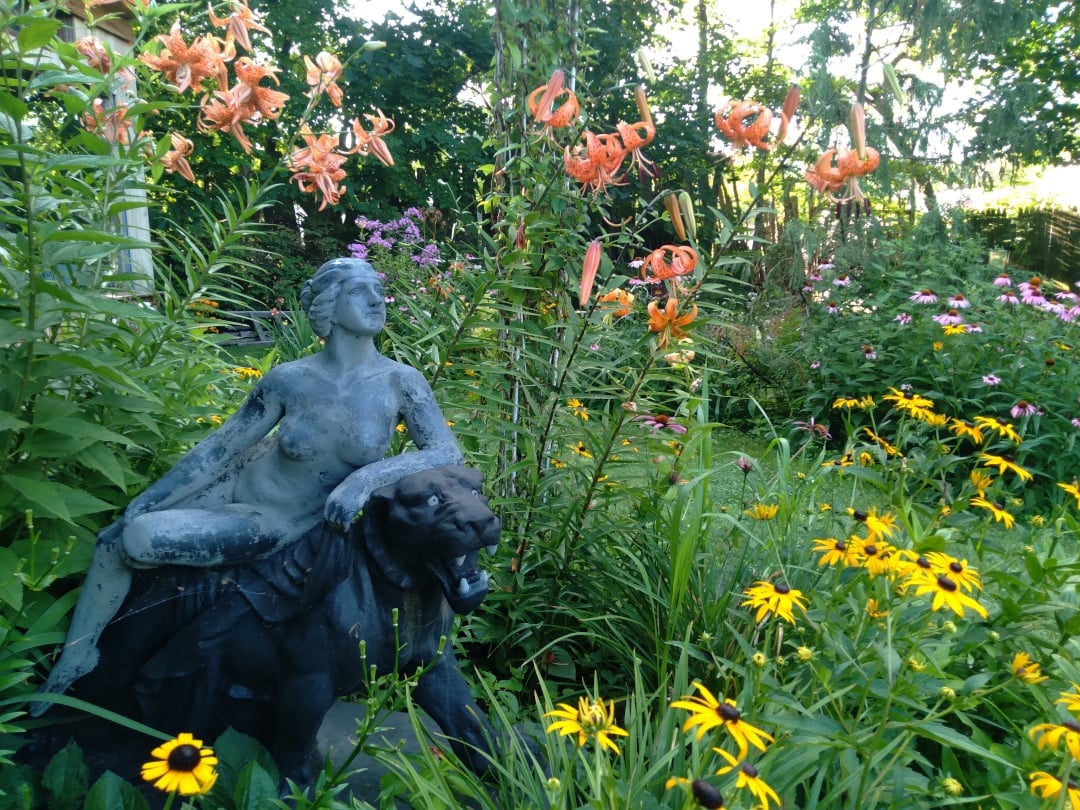
A classical stone statue of a woman and lion sits half-hidden among tiger lilies and black-eyed susans, which is exactly what makes it work. The gray stone reads as a neutral anchor in a garden full of orange, yellow, and pink blooms. If you want a similar look without a permanent installation, a smaller cast-stone bust or birdbath on a low pedestal gives the same contrast. The naturalistic garden style relies on the plants feeling untamed around the statuary, so avoid trimming everything into a neat circle. Let the flowers brush against the base, and the whole scene feels like a discovered ruin rather than a staged display.
Expansive Meadow Garden at Sunset with Colorful Flower Rows
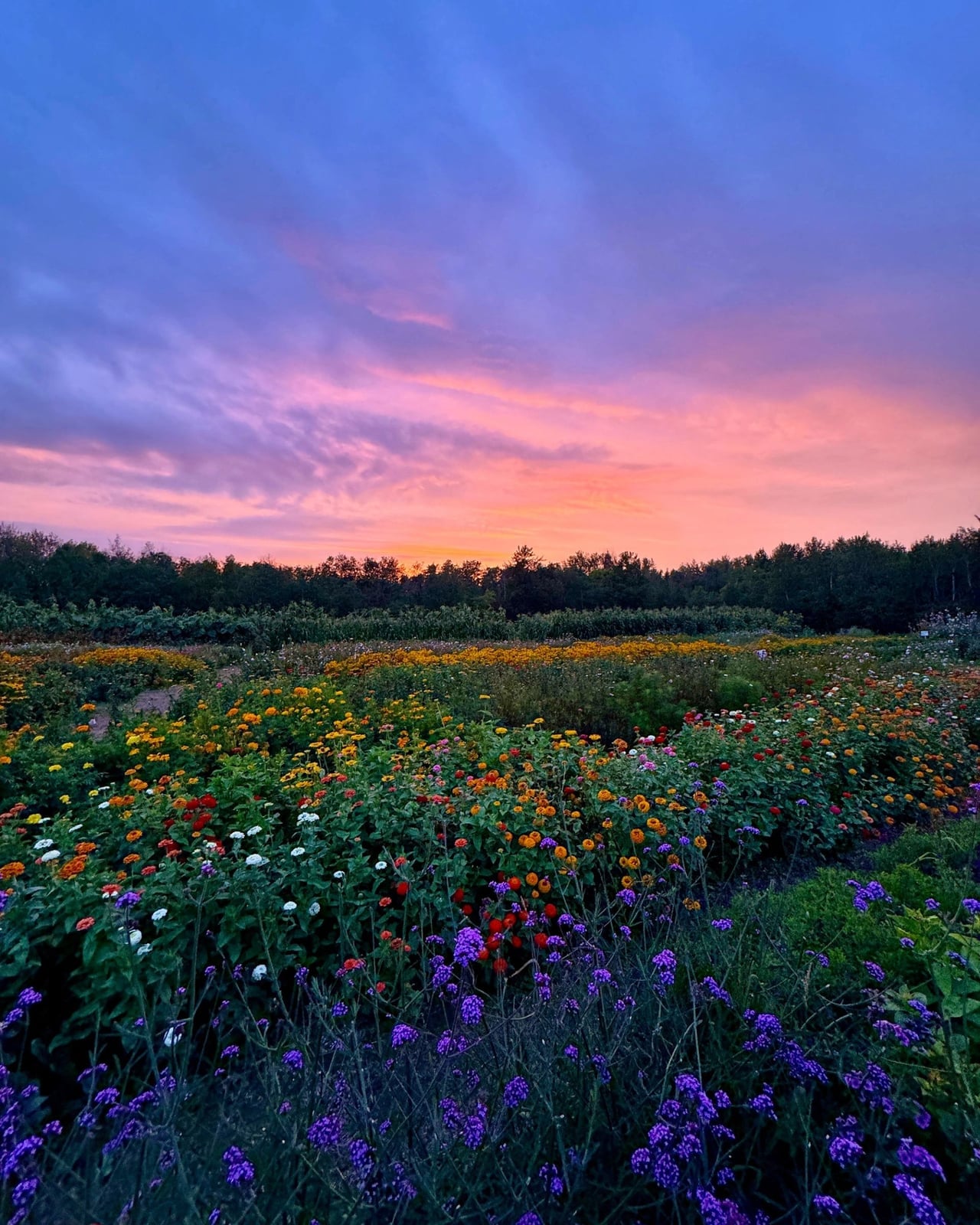
This meadow garden uses a sunset palette that mirrors the sky. Purple, pink, orange, yellow, and white flowers stretch in long rows toward a dramatic sunset sky, and the warm light pulls the cooler purple and pink tones forward. The soil is the only material here, so the color ratio matters more than any hardscape. For a similar effect in a smaller yard, group flowers by height and let the tallest varieties sit at the back. Keep the rows wide enough to form bands of color instead of thin stripes. That way, the garden feels expansive even when the lot is modest.
Formal Heart-Shaped Flower Bed with Manicured Grass Border
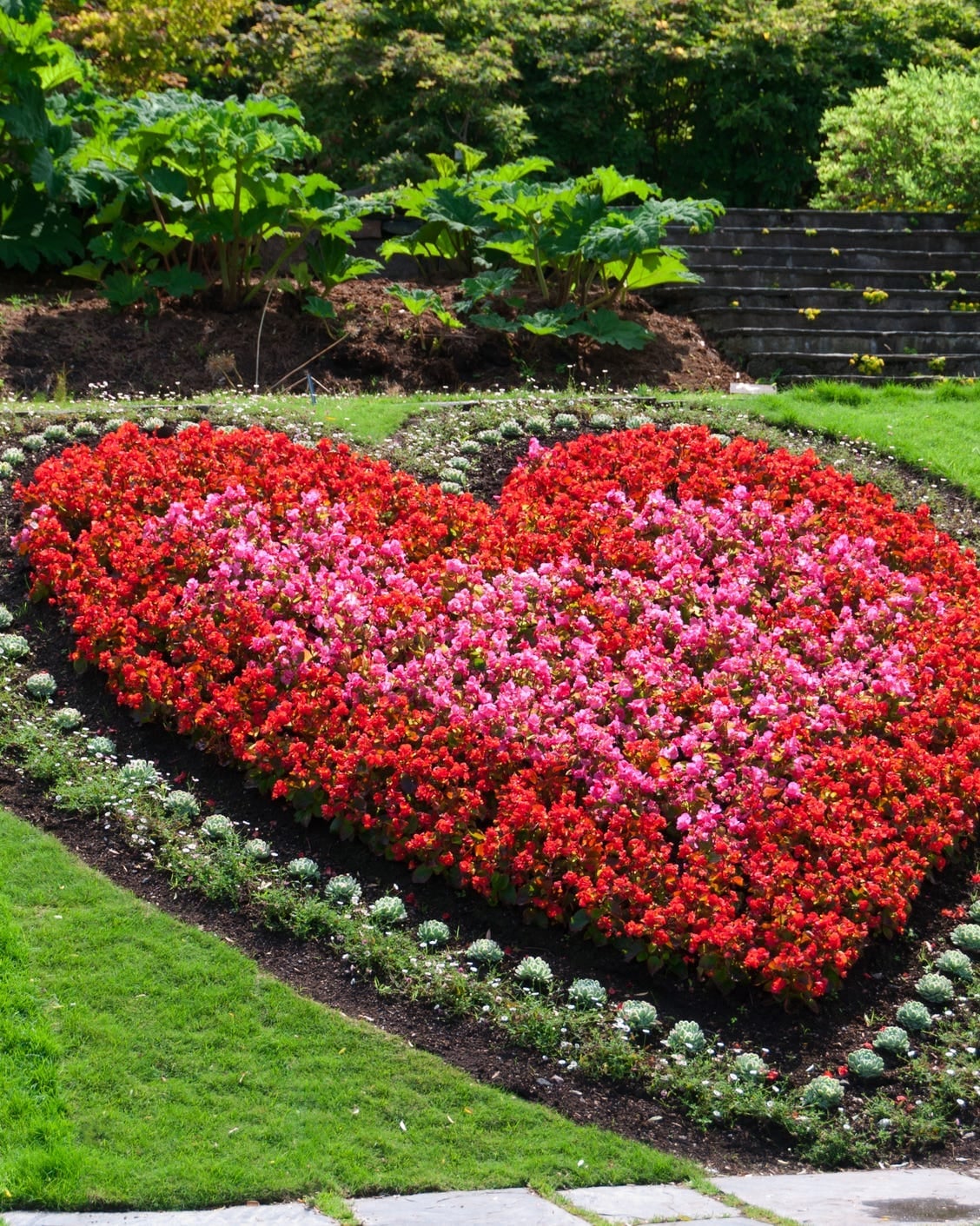
Can a flower bed shape hold its own without a lot of plant variety? This formal heart shaped flower bed proves yes. A clean heart outlined in manicured grass and filled with red and pink begonias creates a strong graphic in the lawn. The bright daylight makes the white grass border pop against the dark soil, so the shape reads clearly from a distance. For this to work, the scale has to match the yard. A heart that is too small looks lost, while one that takes up a quarter of the lawn becomes a focal point. The grass border needs regular edging to keep the line crisp, but that upkeep is what keeps the formal garden style intact.
Farmhouse Style Garden with Layered Pink and White Hydrangeas
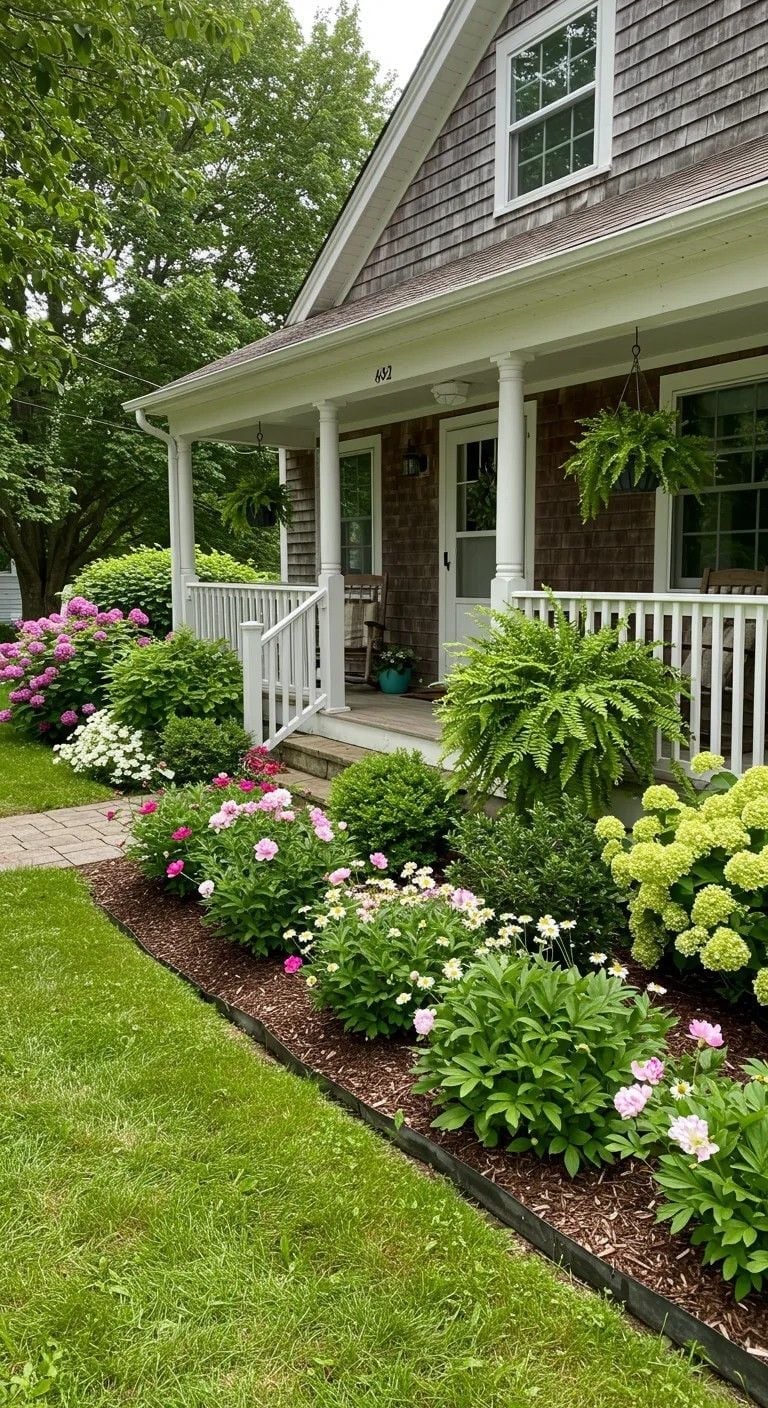
A farmhouse garden hydrangeas approach works because of the layering, not just the flowers. Pink and white hydrangeas sit behind peonies and ferns, with a wooden porch and stone walkway framing the whole scene. The soft daylight keeps the pink and white from washing out against the brown mulch and green grass. What breaks the farmhouse style is spacing the shrubs too far apart. Here, the hydrangeas are dense enough to form a single mass, which gives the front yard a lush, established feel. The porch columns anchor the planting beds on either side, so the garden feels connected to the house instead of floating in the yard.
Informal Garden Pathway with Vibrant Orange, Pink, and Yellow Blooms
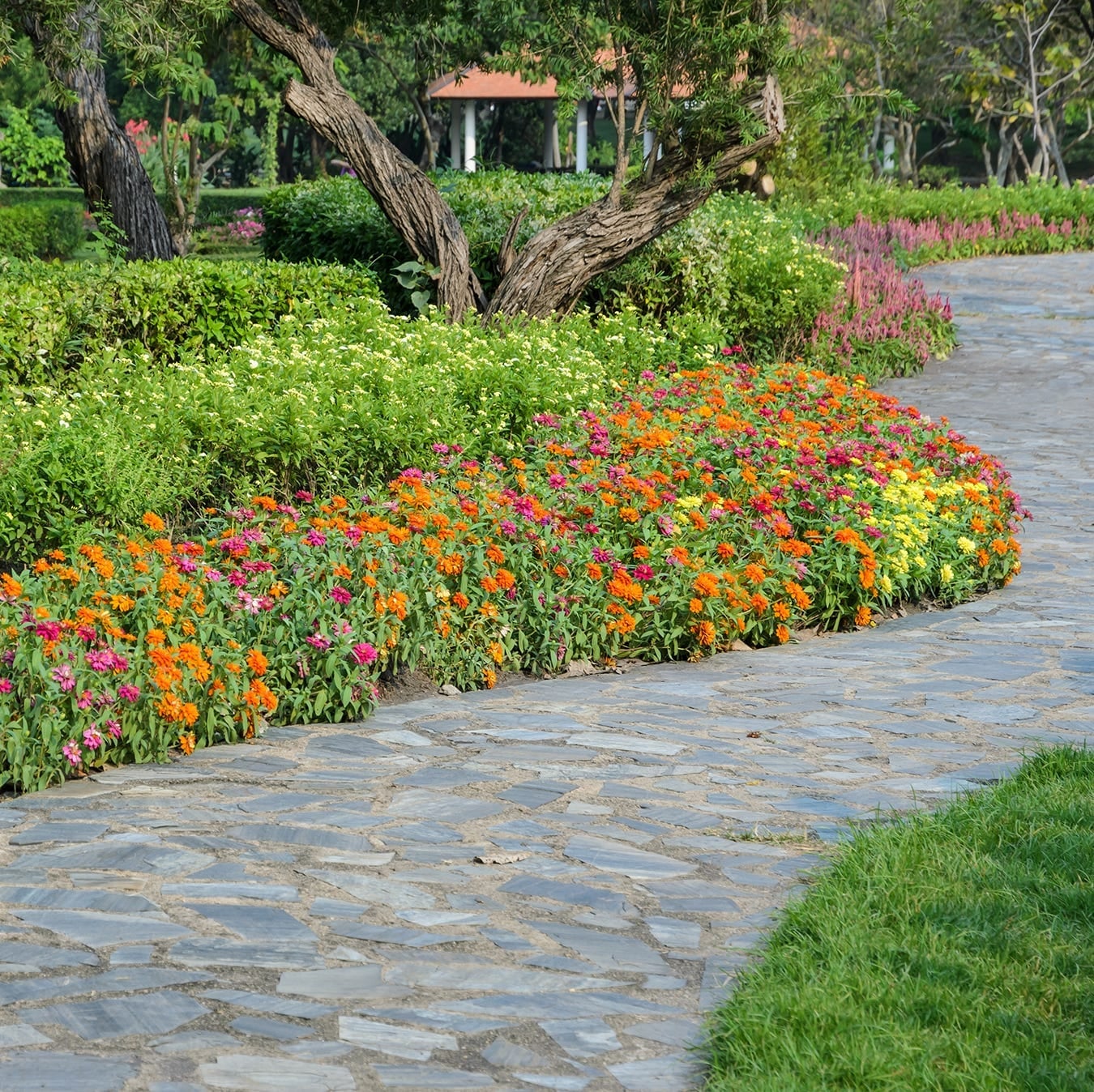
A curving path draws the eye forward, so make the border along it the main event. Here, a wide stone pathway snakes between a dense flower border and a lawn, with blooms in orange, pink, and yellow stacked from low edging to tall spires. The layout keeps the walkway clear while the plants spill just slightly over the edge, softening the line between hardscape and garden. Trees frame the background, adding height without blocking the view. This approach works because the path gives structure and the flowers provide the color, so neither feels crowded. A useful principle is to let the pathway width match the plant height: wider paths can handle taller, looser borders without the walkway disappearing.
Naturalistic Garden Focus on Monarch Butterfly and Coneflowers
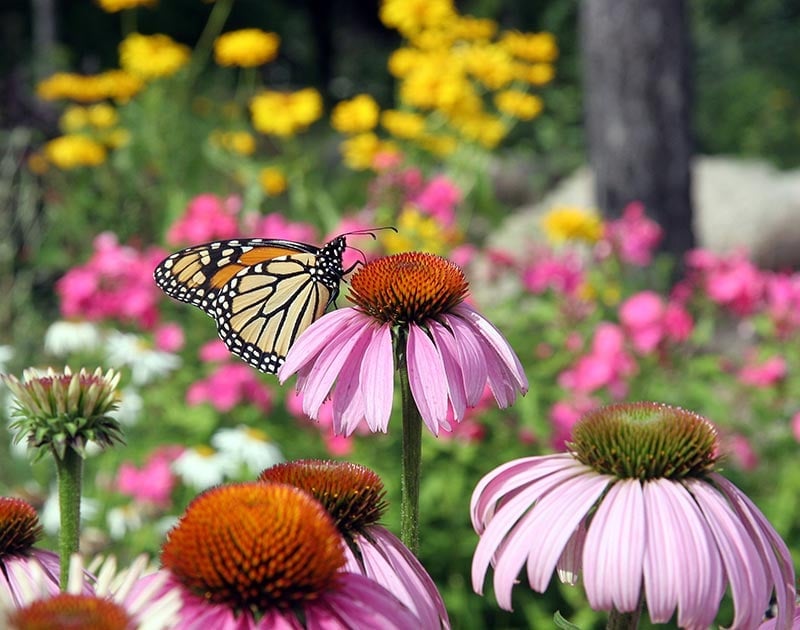
A manicured border can feel tidy, but a naturalistic planting invites wildlife in a way that formal beds rarely do. Here, a monarch butterfly rests on a pink coneflower, its orange wings matching the warm yellow centers of the echinacea blooms. The garden behind it is a mix of pink, yellow, and green foliage, planted in a loose, meadow-like drift instead of tight rows.
The palette is built around complementary tones: the pink petals and orange butterfly sit next to soft yellow and green, creating a balanced contrast that reads as intentional without looking arranged. The monarch is the focal point, but the surrounding flowers keep the eye moving. Choose plants that bloom at different heights and stagger their peak seasons so the garden stays colorful from spring through fall. Check your USDA zone for native coneflower varieties that support local pollinators.
Serene Naturalistic Garden with Winding Gravel Pathway
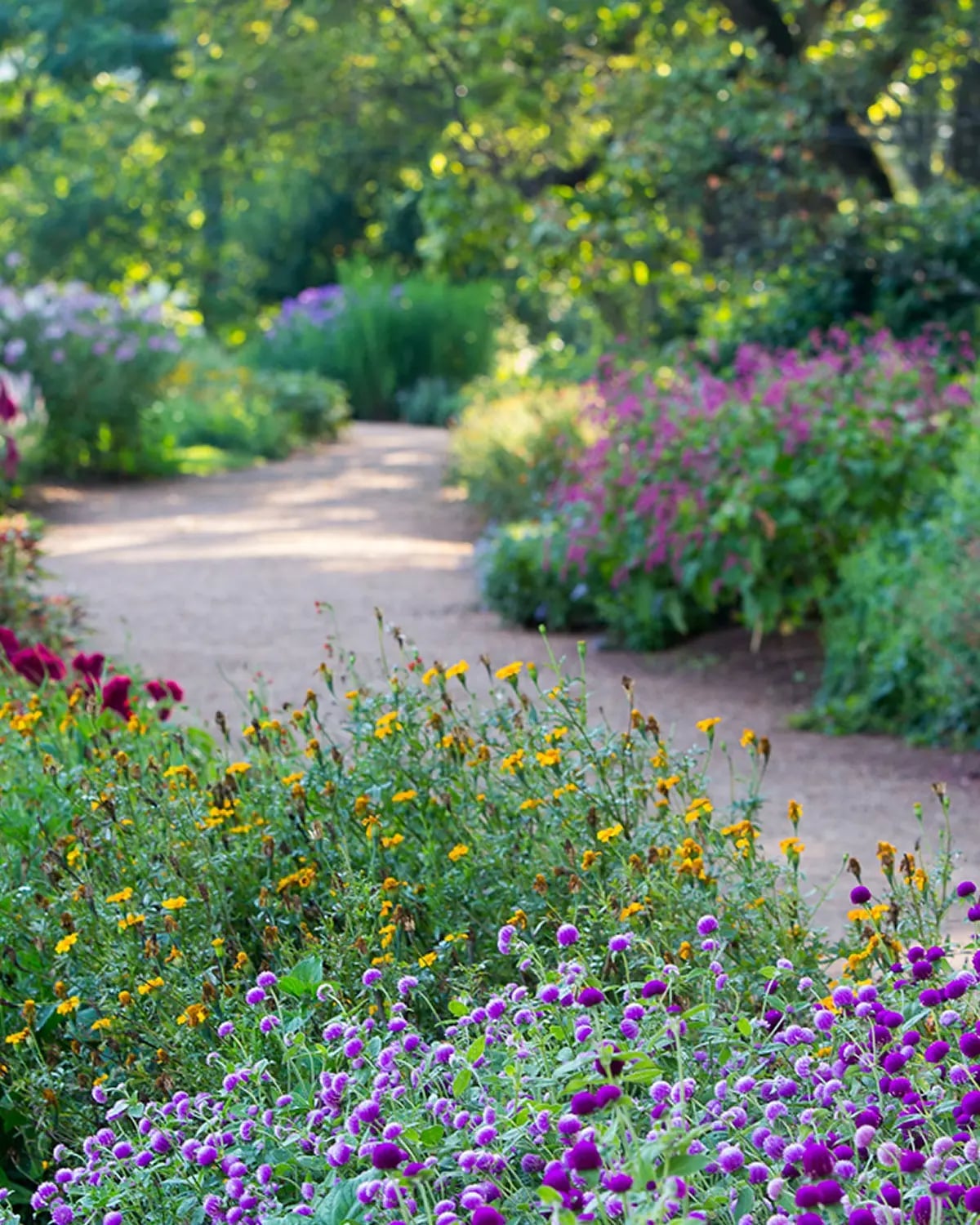
The gravel path curves gently, disappearing around a bend, which makes the garden feel larger than it is. Dense plantings of purple, yellow, and pink flowers line both sides, with trees casting dappled light across the ground. The gravel crunches underfoot and drains quickly, a practical choice for pathways that see regular rain. Keeping the path narrow enough to feel intimate but wide enough for two people to walk side by side is a solid rule of thumb for this layout.
Vibrant Cottage Garden with Brick Path and Abundant Blooms
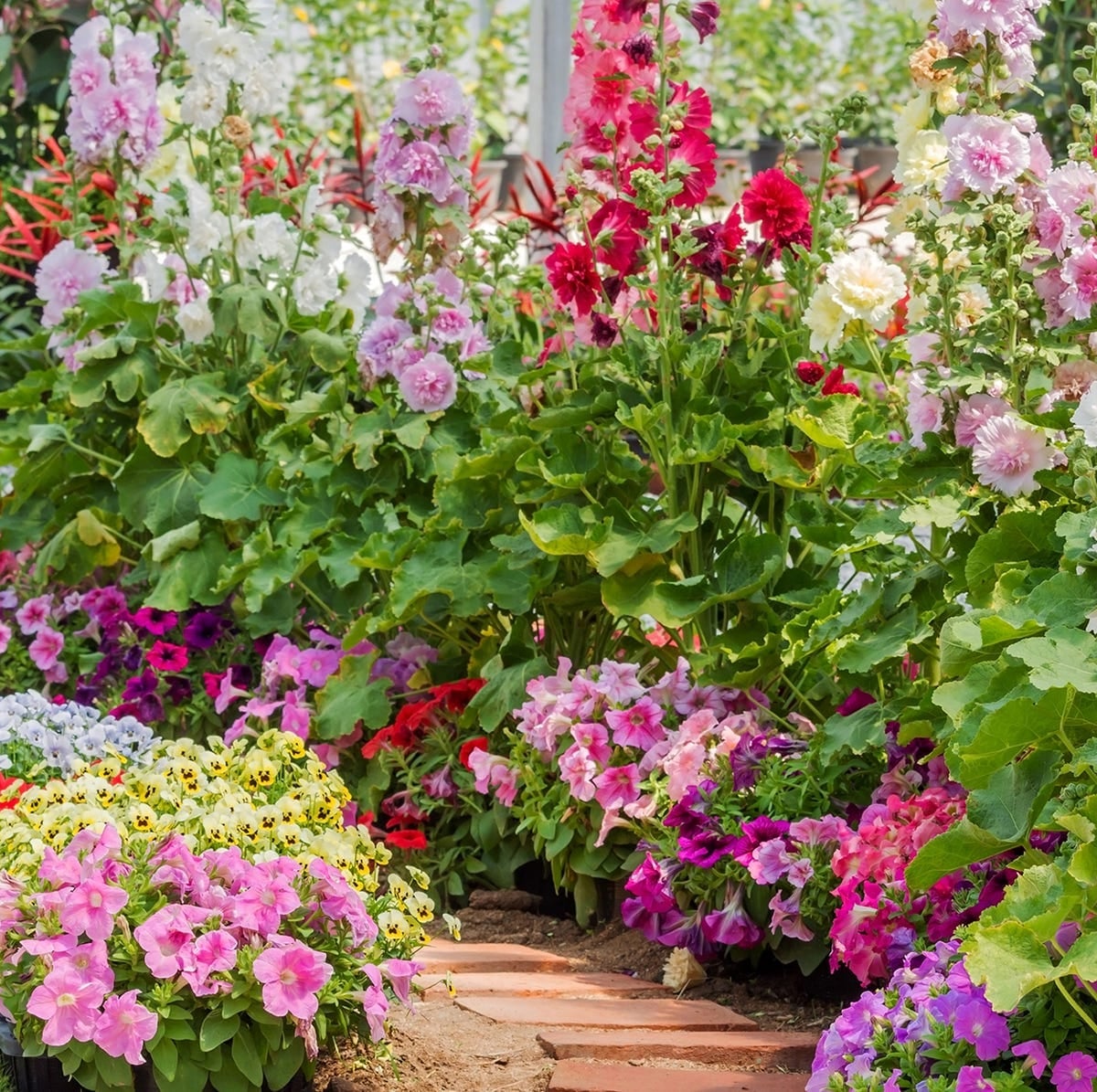
This is a garden that knows what it is: a riot of color held together by a single material. The brick path cuts straight through the flower beds, its warm red-brown tone grounding the pink, white, red, yellow, and purple blooms. Hollyhocks rise above petunias and pansies, creating full and lush layers. The brick holds heat during the day and releases it slowly in the evening, which can extend the bloom season for tender annuals. For a renter-safe swap, lay brick-style pavers on a sand base instead of mortar, so you can pull them up and take them with you.
Dense Cottage Garden Planting of Tall Pink Lupine
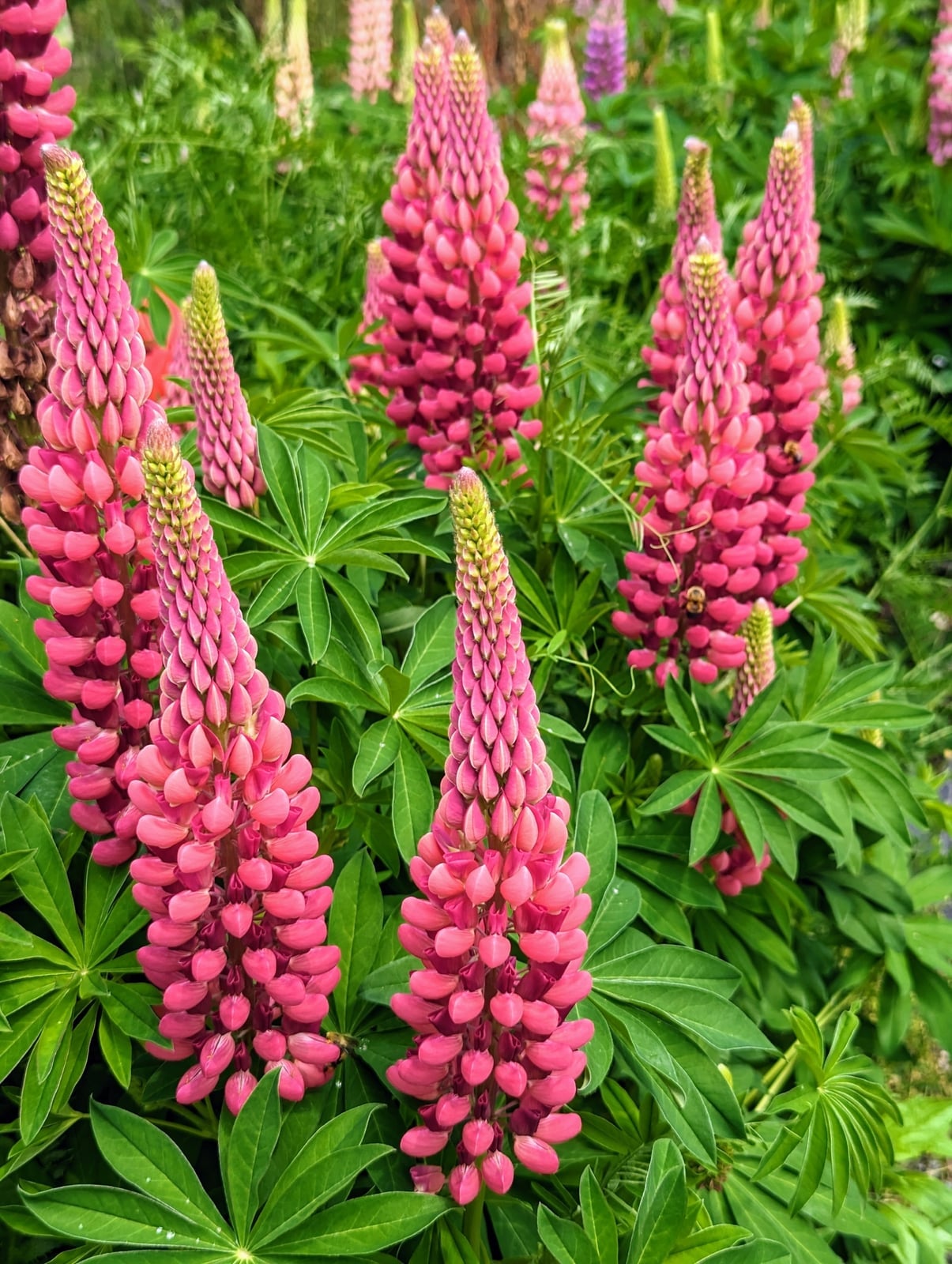
Dense planting means crowding the roots and letting the stems sort themselves out. Here, tall pink lupine spikes rise from a thick mat of green foliage and purple accents, with no bare soil showing between the plants. The lupine stalks reach well above waist height, so they act as vertical anchors in a bed that might otherwise feel flat.
The scale works because the tall spikes are balanced by the lower, spreading foliage around them. In a cottage garden, proportion matters more than symmetry: the lupines create a loose rhythm, not a rigid line. For a similar look, plant in odd-numbered clusters and repeat the same variety in at least three spots along the bed. This keeps the eye moving and prevents the garden from looking like a single row of specimens.
Informal Garden with Curving Border and Manicured Lawn
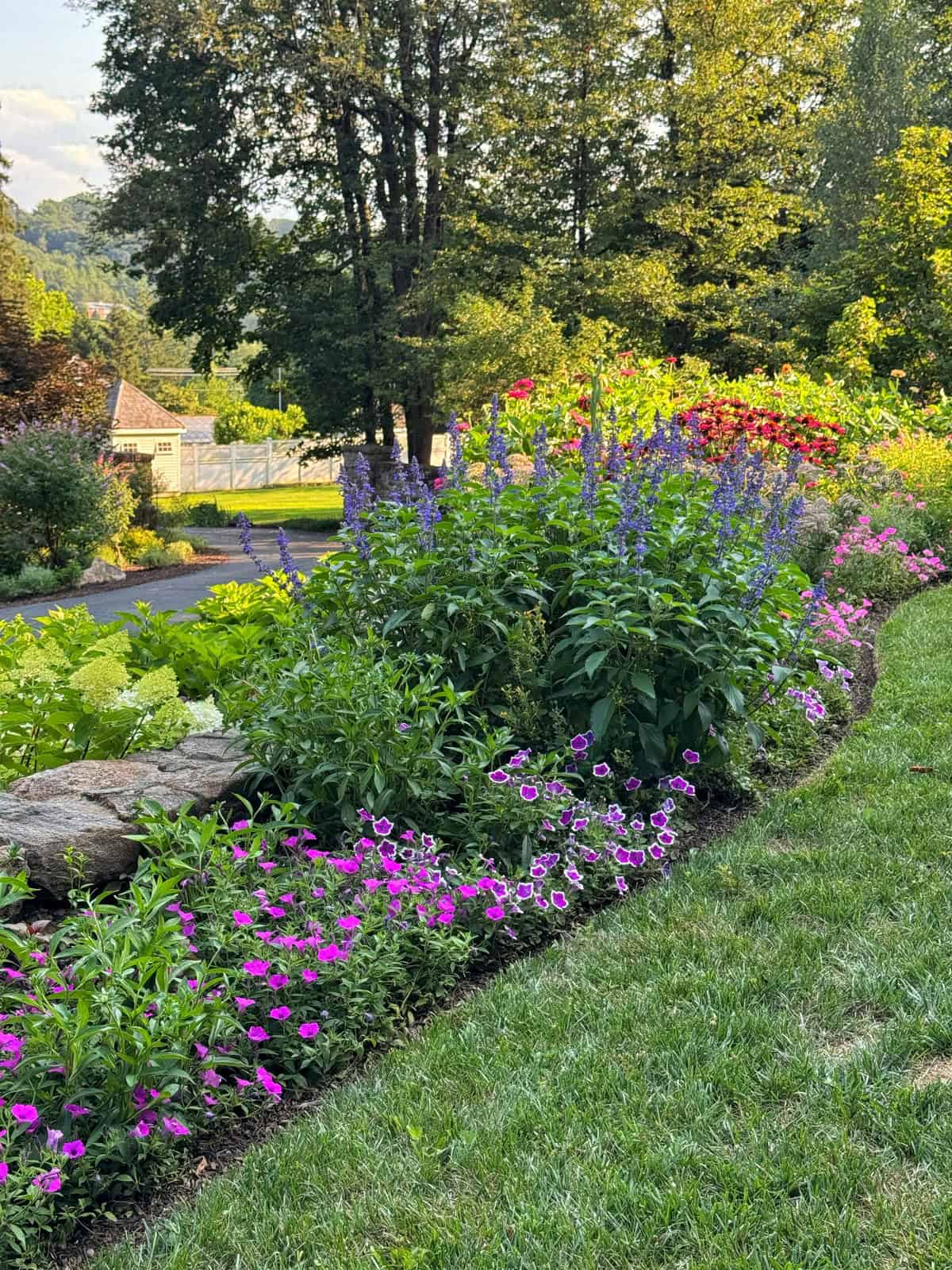
A curving border softens the line between a manicured lawn and a dense flower bed. Here, salvia, hydrangeas, and petunias in purple, pink, red, and white create a layered edge that follows the lawn’s natural shape. The stone border keeps the soil and mulch in place without a rigid line. For a similar look, plant taller flowers like salvia toward the back and let petunias spill forward. The late afternoon sun catches the petals and adds warmth to the green foliage.
Modern Garden Corner with Pink Hydrangeas and Black Mulch
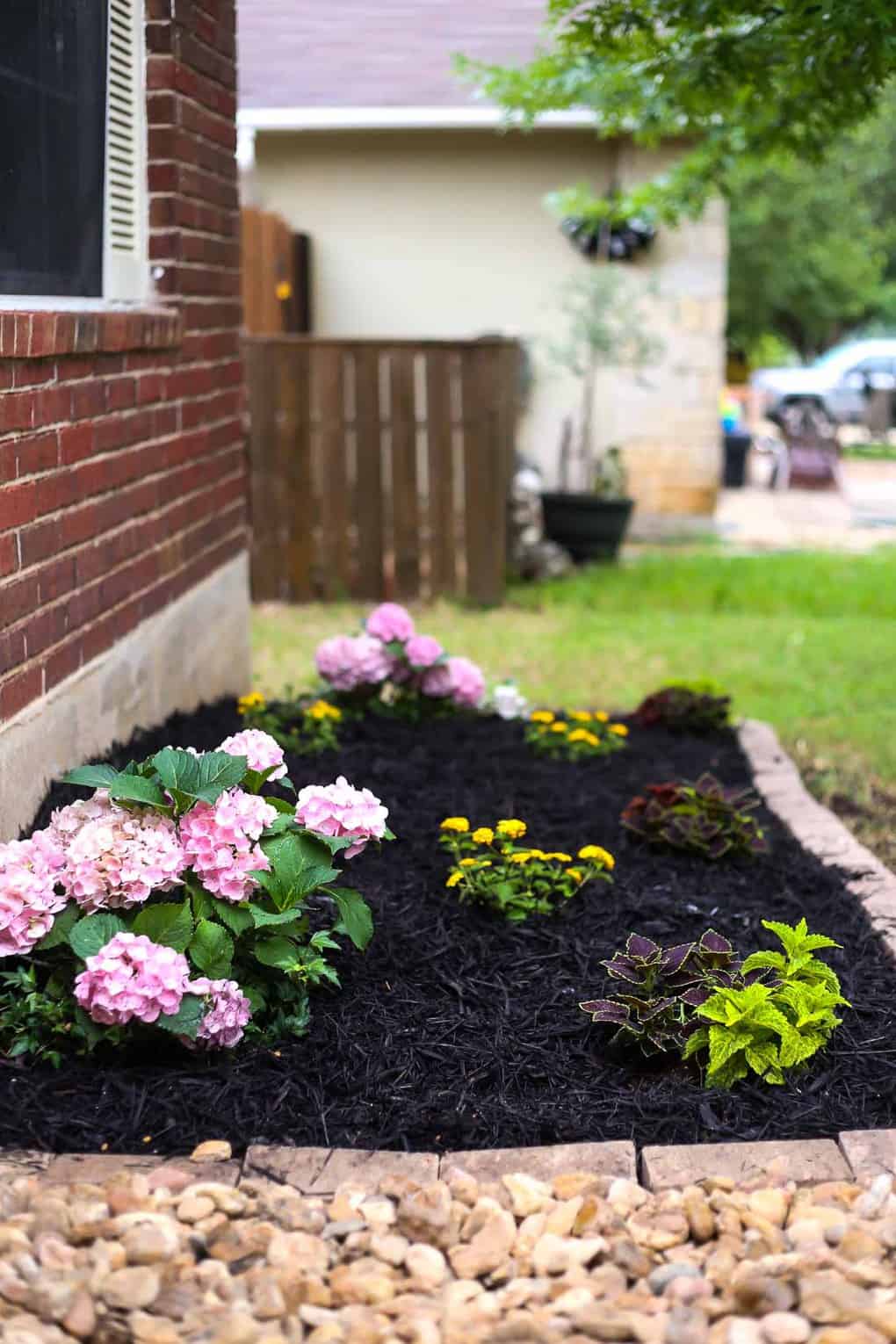
To create a modern garden corner, choose one high-contrast material to anchor the planting. Here, black mulch sets off pink hydrangeas and small yellow flowers against a brick wall. The dark ground cover keeps the palette simple and makes the pink petals pop against the green foliage. For renters, black mulch is a low-commitment swap that changes the feel of a bed in one afternoon. Stone edging defines the corner without permanent construction. This approach works well for compact spaces where you want a clean, deliberate look.
Cottage Garden with Curving Beds and Terracotta Pot Accent
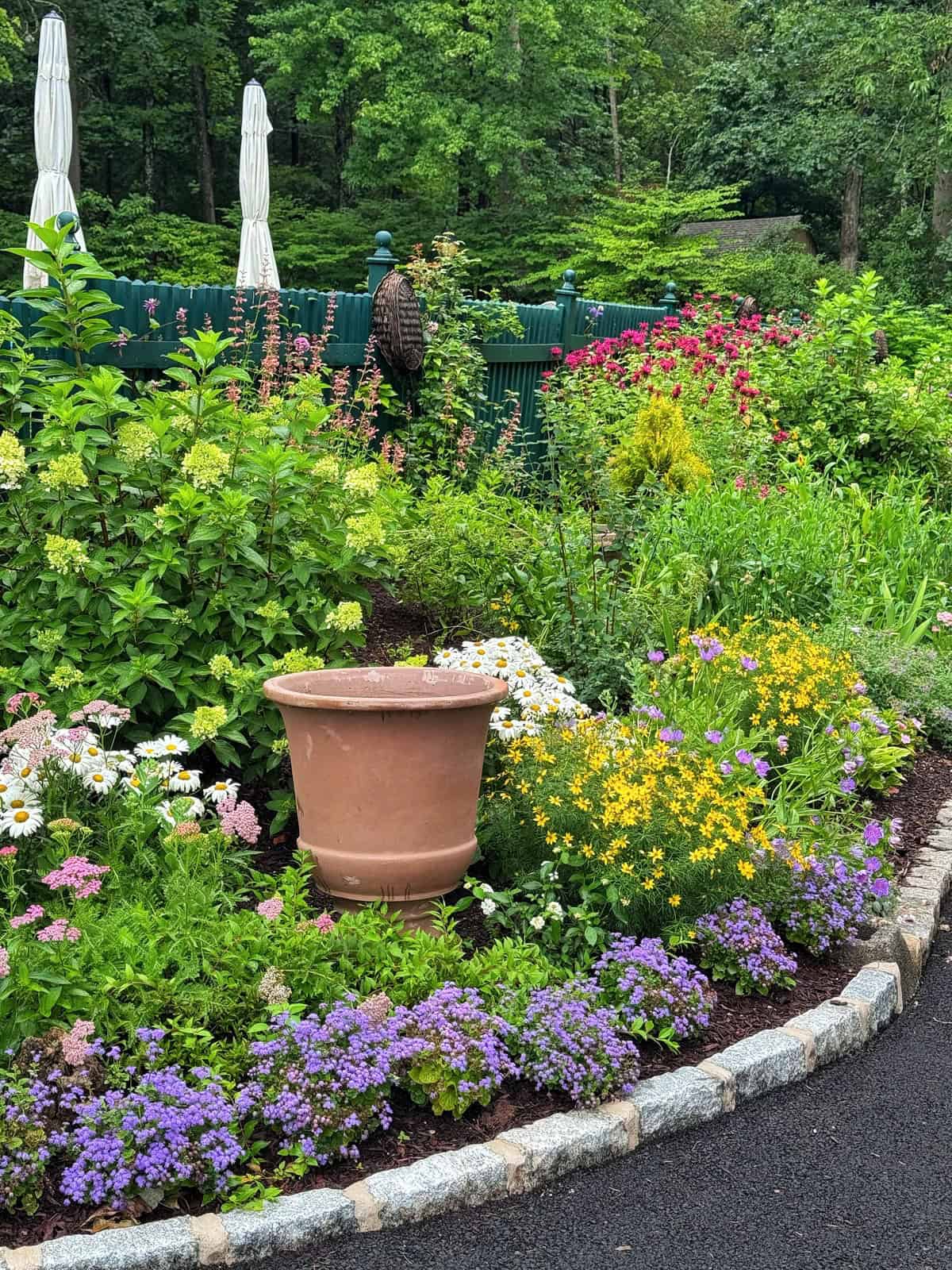
A cottage garden often mixes shapes and colors freely, but this version balances abundance with a clear anchor. The curving beds are edged with stone and filled with pink, yellow, purple, and white blooms, while a large terracotta pot near a green fence draws the eye to one spot. Without that pot, the beds might feel like a random scatter of flowers.
Terracotta adds warmth that stone alone cannot, and its earthy tone ties the wood fence and stone border together. The key is to let the pot sit slightly apart from the densest planting so it becomes a deliberate accent. This works for any yard where you want the garden to feel full but not chaotic.
Informal Spring Garden Explosion of Daffodils and Tulips
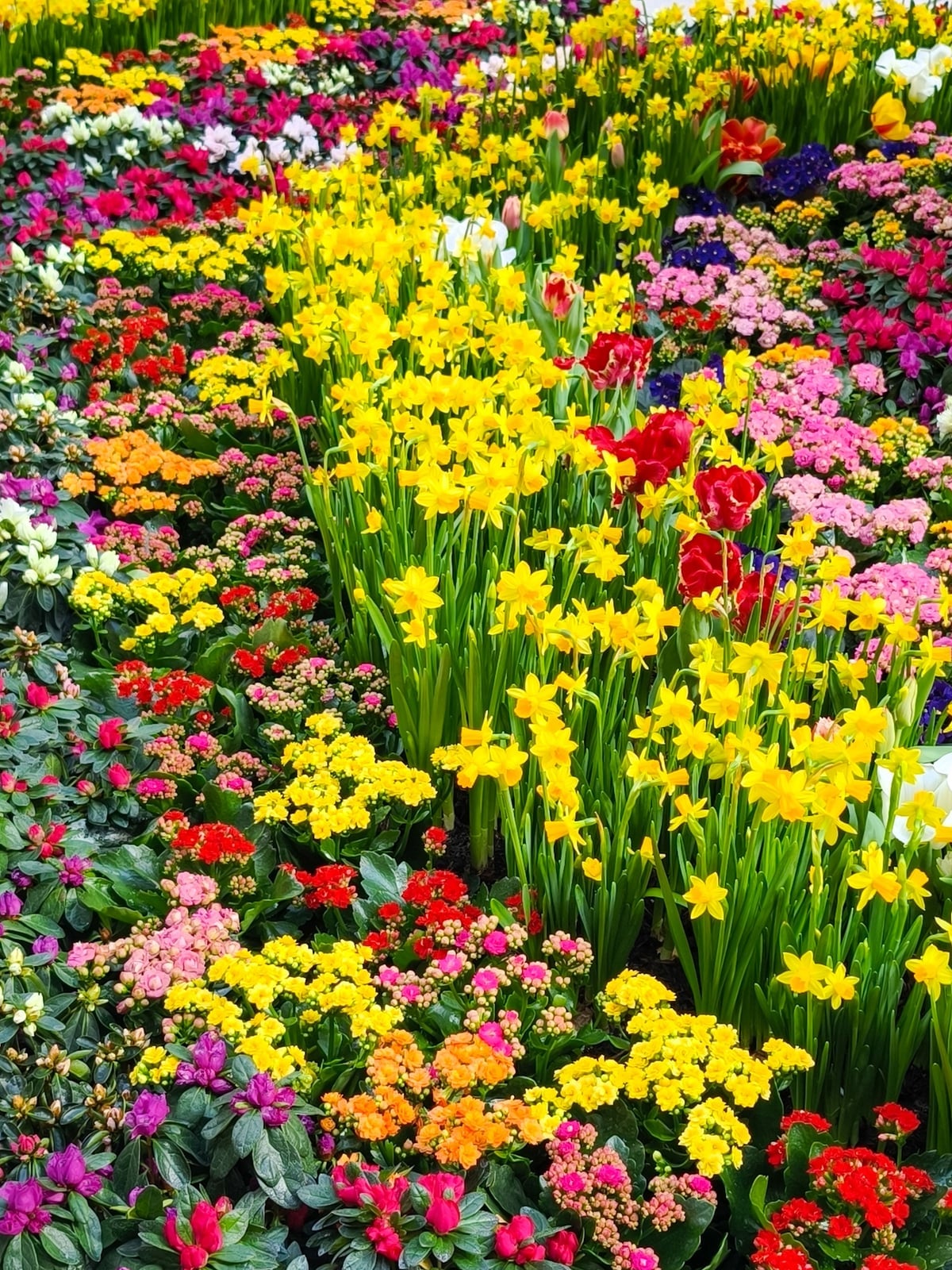
The dense, layered planting here pushes daffodils and tulips in yellow, pink, red, purple, and orange into one bright mass. The palette skips any neutral filler, so every inch of soil is covered with color. This approach works best when you plant bulbs in clusters rather than single rows. The bright daylight keeps the petals saturated and the green foliage recedes into the background. For a similar effect, choose varieties that bloom at the same time so the explosion lasts for a few weeks before the flowers fade.
Classical Garden with Bronze Statue and White Hydrangeas
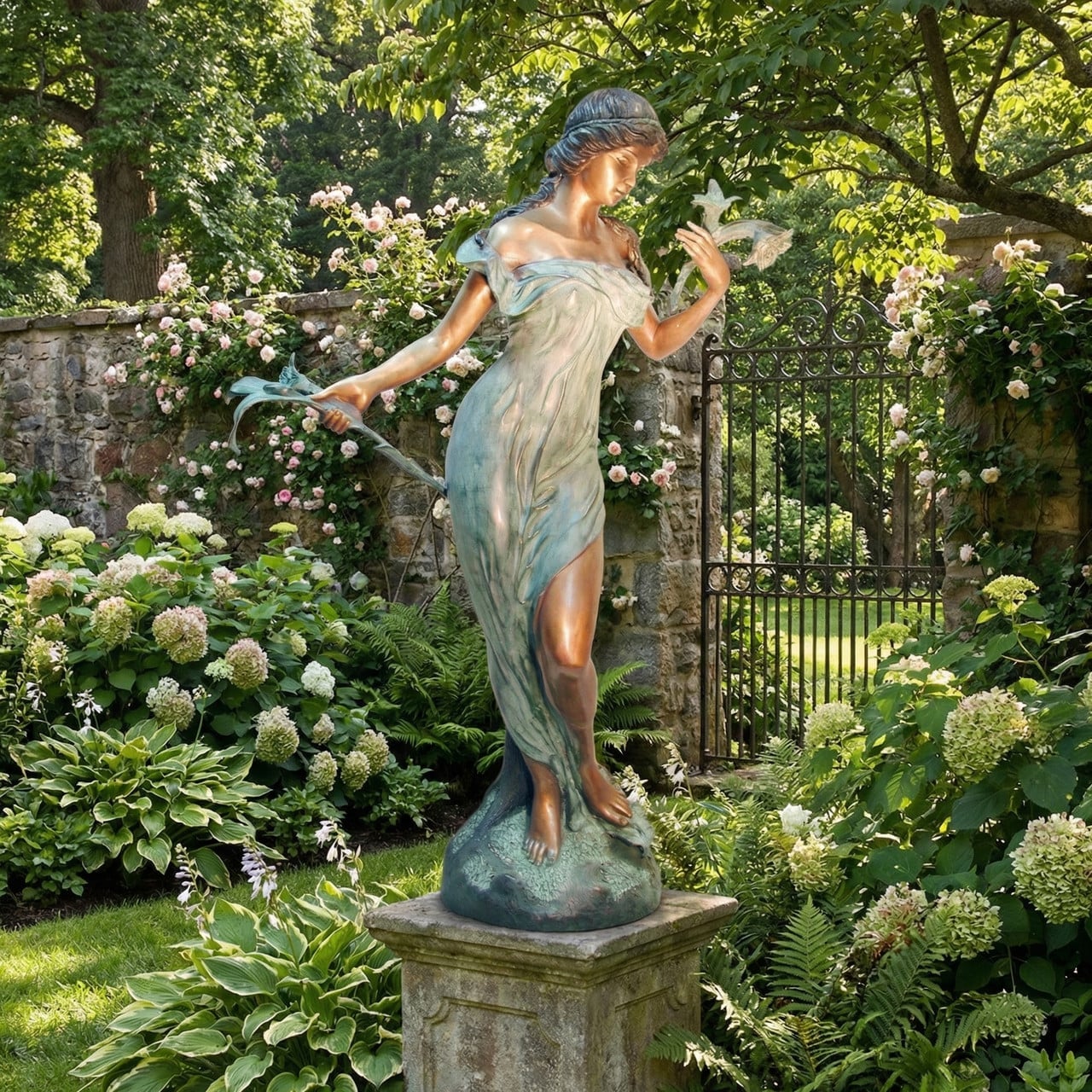
A bronze statue on a stone pedestal needs plantings that frame without overwhelming it. Here, white hydrangeas and pink roses surround the base, keeping the palette soft so the bronze figure and its bird companion stay as the focal point. The materials do the work: bronze reads as weight and permanence, while the stone pedestal lifts it above the foliage. For a similar balance, choose one hardscape element and let the plants stay within a two-color range. This keeps the garden feeling curated rather than crowded, even in a roomy space.
Formal Garden Bed Featuring a Variety of Colorful Tulips
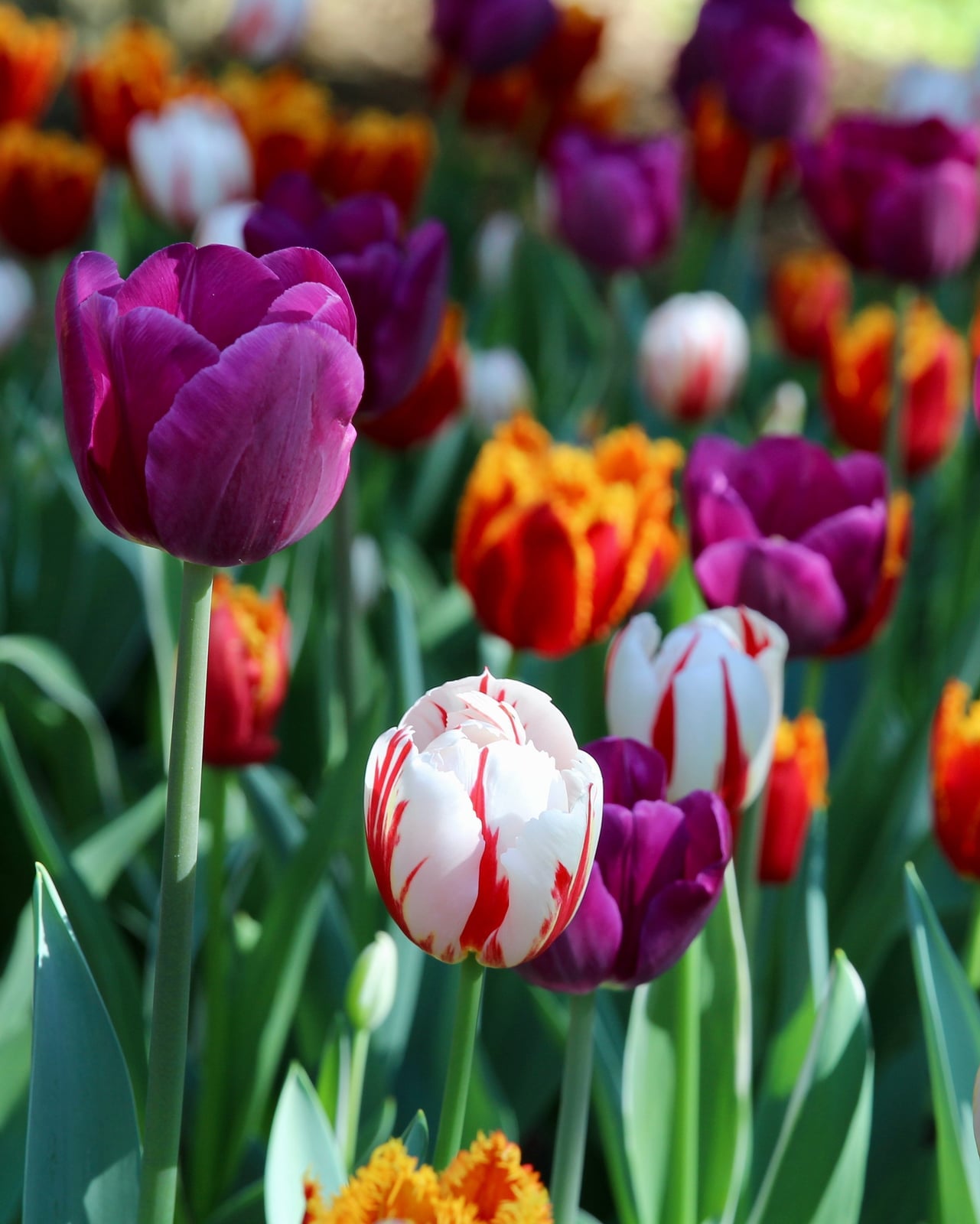
A formal garden bed gains its structure from a deliberate palette, and this one proves the point with a field of tulips in purple, white, red, and orange against green stems. The soft daylight and shallow focus keep the eye on the flowers themselves rather than the soil or background. What makes this work as a formal layout is the repetition: the same flower form repeats across the bed, so the color variation feels intentional rather than chaotic. The purple and striped tulips stand out as accents within the larger mass. A useful decor principle for this kind of planting is that a single plant type in multiple colors creates a cohesive look. The palette stays controlled by limiting the range to four colors, which prevents the bed from feeling busy even with the variety.
Informal Garden with Sunflowers and Hydrangeas in Golden Hour Light
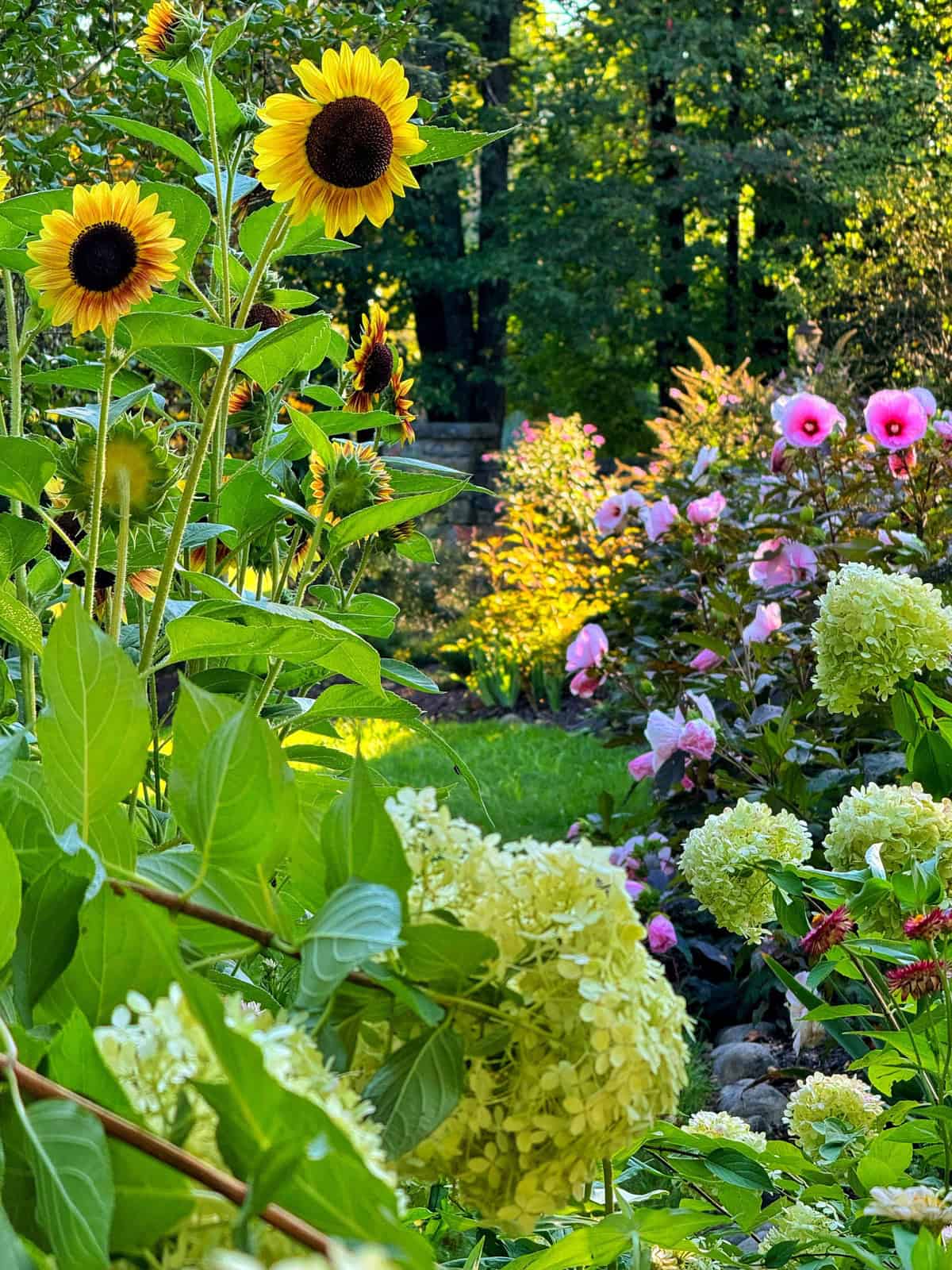
Golden hour sunlight shifts the entire palette of a garden, and here it turns the green foliage, yellow sunflowers, and pink hydrangeas into a warm, cohesive scene. The tall sunflowers rise above the large hydrangeas, creating a layered planting that feels natural against the grass and stone path. The key principle for lighting is to consider how the sun moves across your space. A garden that looks flat at midday can come alive in late afternoon light, so position taller plants where they will catch that glow.
Functional Garden with Curved Concrete Raised Bed
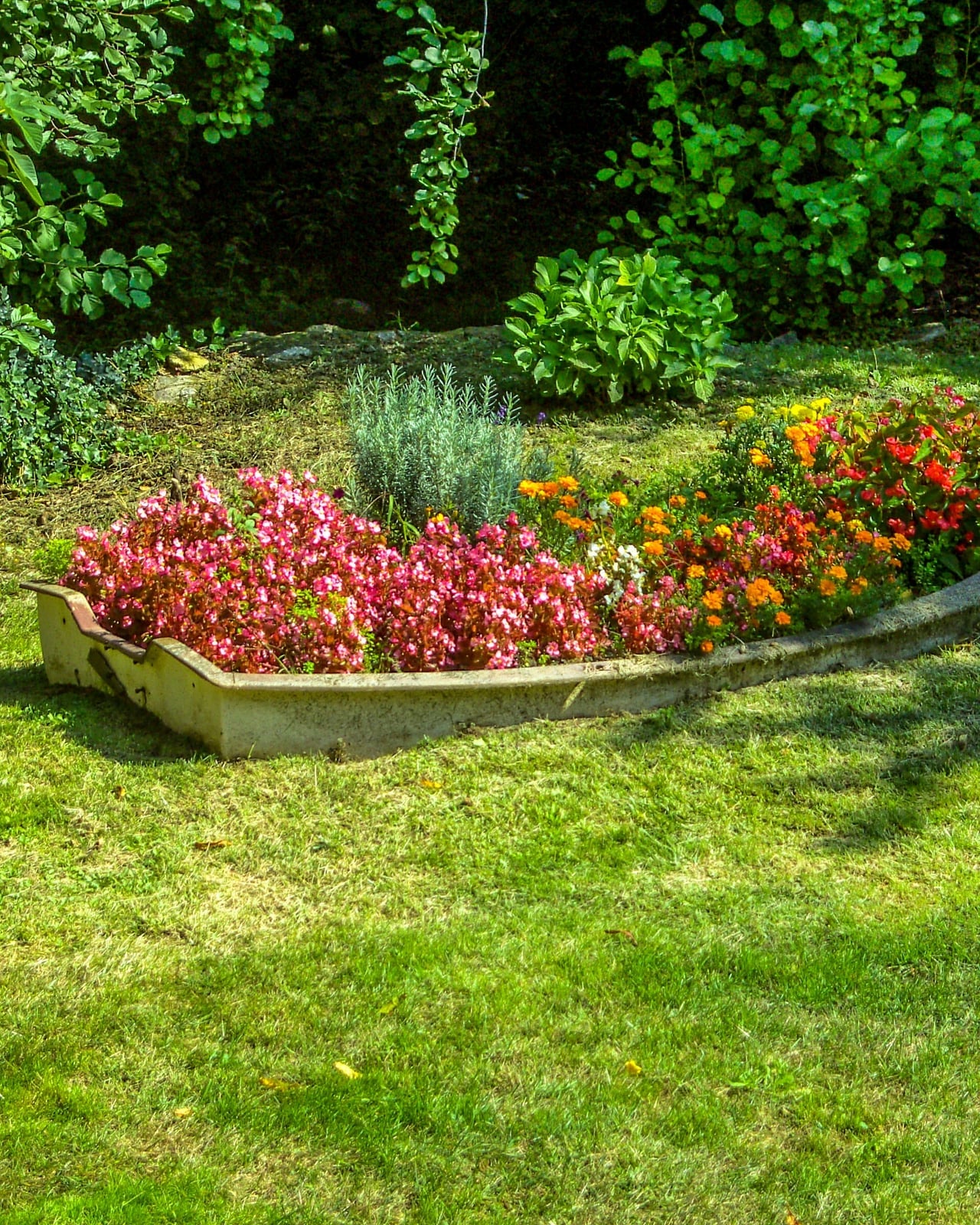
A practical rule for choosing garden materials is that the container defines the garden’s character, and a curved concrete raised bed shifts the look from purely utilitarian to something with architectural weight. The soft gray concrete holds pink, orange, and yellow flowers against green foliage, and the dappled daylight softens the hard edges. Concrete is a long-lasting material that weathers well outdoors, and its neutral tone lets the flower colors do the work. The curved shape breaks up the typical straight-line grid of raised beds, making the garden feel more organic even within a functional setup.
Informal Garden with Dense, Layered Mixed Flower Border
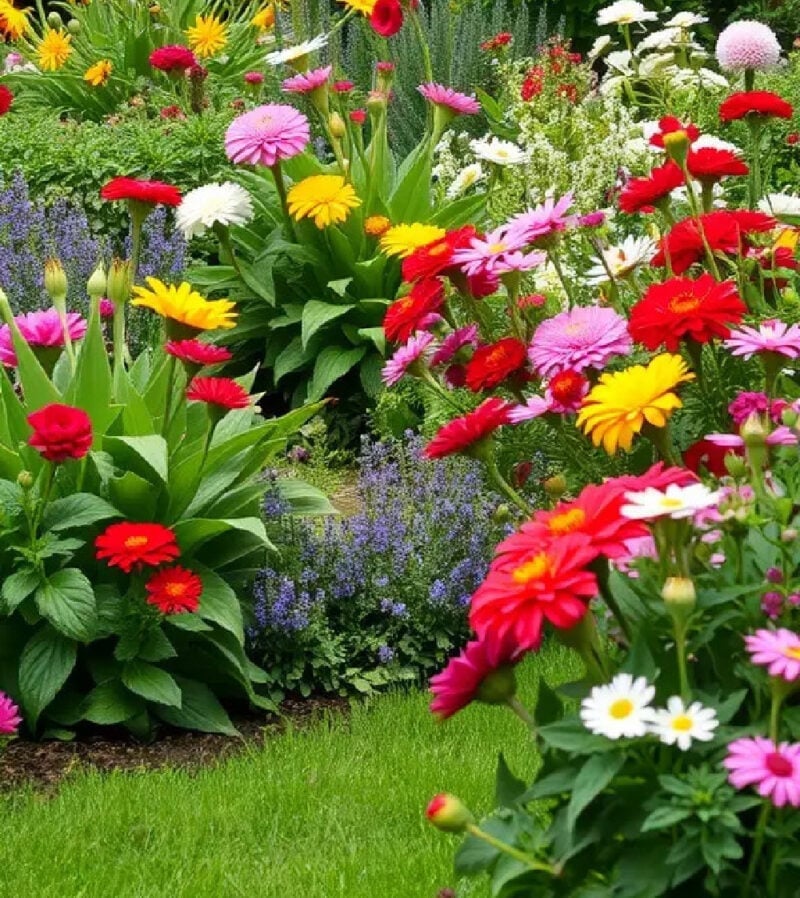
A dense mixed flower border like this one works by setting itself against a simpler alternative: a single row of the same plant. The wide shot shows gerbera daisies, cosmos, lavender, and other flowers layered together in red, pink, yellow, white, and purple. The bright natural light keeps the colors clear and the dense planting hides the soil, which is the main layout trick here. The goal is to create an explosion of color that reads as abundant rather than messy.
The second principle is that a layered border needs height variation to succeed. The tallest flowers sit at the back, with medium stems in the middle and lower growth at the front. This arrangement ensures every plant gets light and the viewer sees all the colors at once. The informal garden style relies on this kind of density to feel lush rather than sparse.
Informal Garden Bed Showcasing Vibrant Pink Dahlias
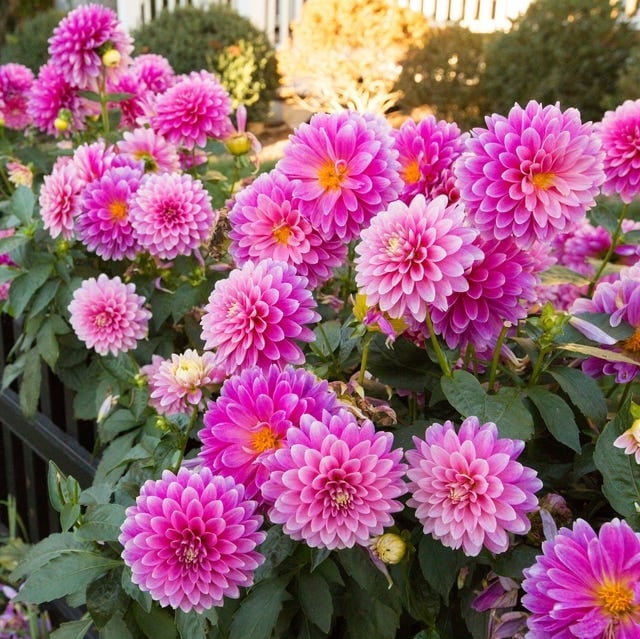
The large pink dahlias are the clear hero element here, and the design keeps everything else simple to let them lead. The dense planting of pink blooms against green foliage creates a monochromatic effect that feels lush without needing variety. The bright natural light picks up the texture of the petals, which is the main visual interest. A useful principle for a hero plant is to give it enough space to read as a mass rather than a single stem. When dahlias are grouped closely, their size and color become the focal point of the whole bed.
Informal Garden with Abundant Yellow, Purple, and Pink Flowers
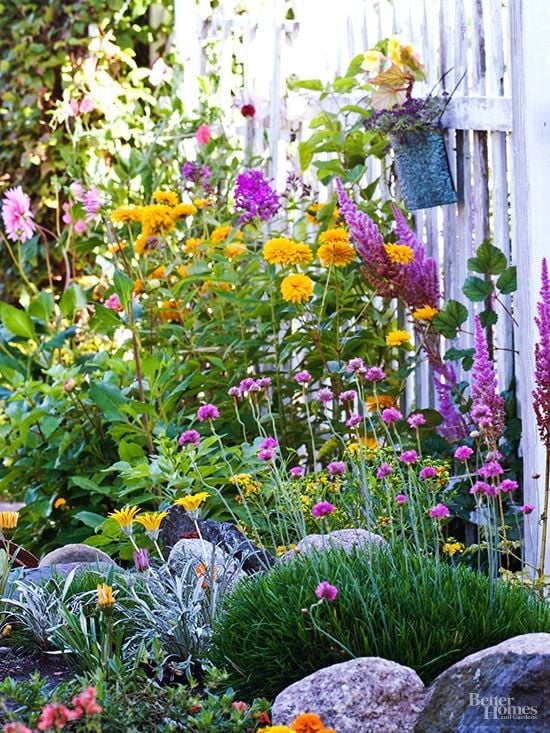
A mixed flower border packed with yellow, purple, and pink blooms looks abundant when the planting follows a simple rule: keep the tallest flowers at the back and the lowest at the front. A wooden trellis and a few scattered rocks break up the green mass, giving the eye a place to rest between color patches. The bright daylight helps each shade hold its own without muddying together. To recreate it, look for at least three heights of plants and let the colors overlap freely instead of planting in rigid stripes.
Naturalistic Garden with Glowing Pink Peonies in Sunlight
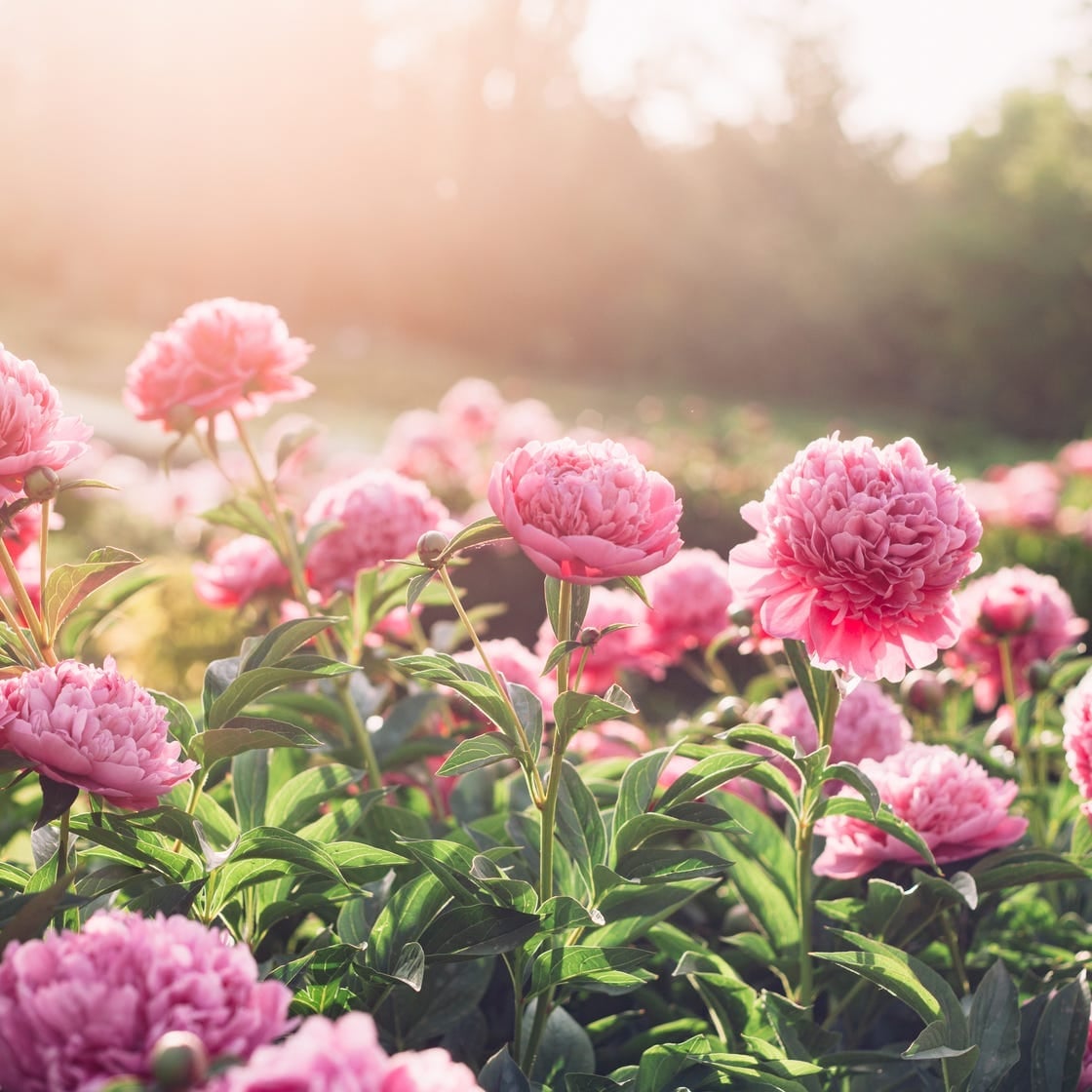
Plant peonies where they catch late afternoon light. The soft backlight makes the pink petals glow against the green foliage, turning a simple bush into the focal point of the garden.
The palette here stays in the pink and green family with warm gold highlights from the sun. That narrow range keeps the scene calm even when the peonies are fully open. A naturalistic garden benefits from massing one plant type in the same bed. The dense peony planting creates a cohesive look.
Eclectic Container Garden on a Balcony with Blue Pots
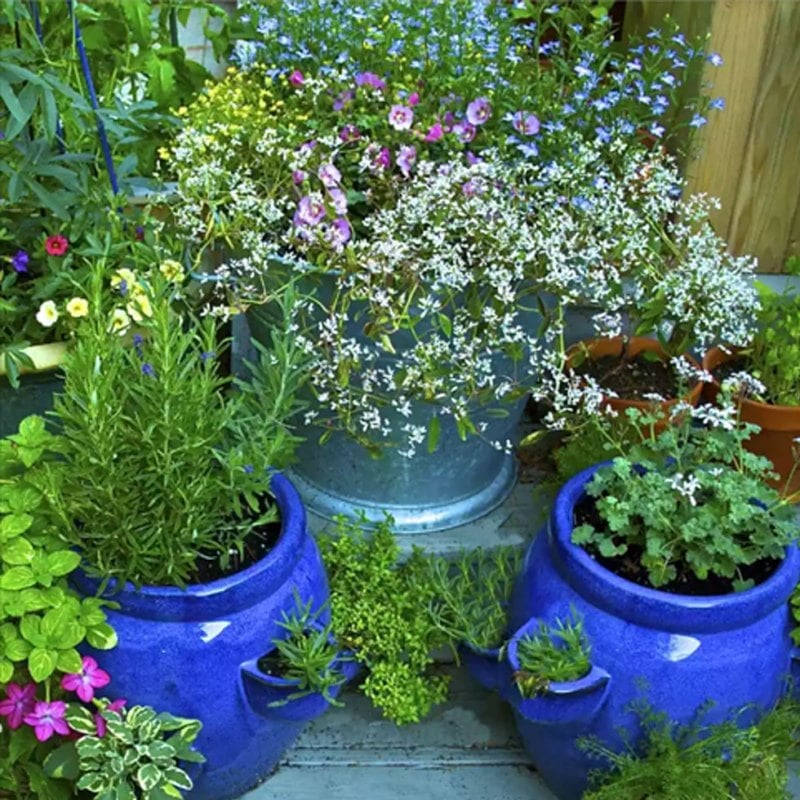
Vibrant blue ceramic pots and a galvanized metal tub anchor this compact balcony garden. The blue containers act as a unifying element, tying together white, pink, and green foliage plants that might otherwise look mismatched. Grouping containers of different materials and heights creates visual rhythm without needing a permanent garden bed. This setup works well for renters who want to change the layout each season without digging or demolition.
Tropical Garden Detail of Fiery Pink and Orange Celosia
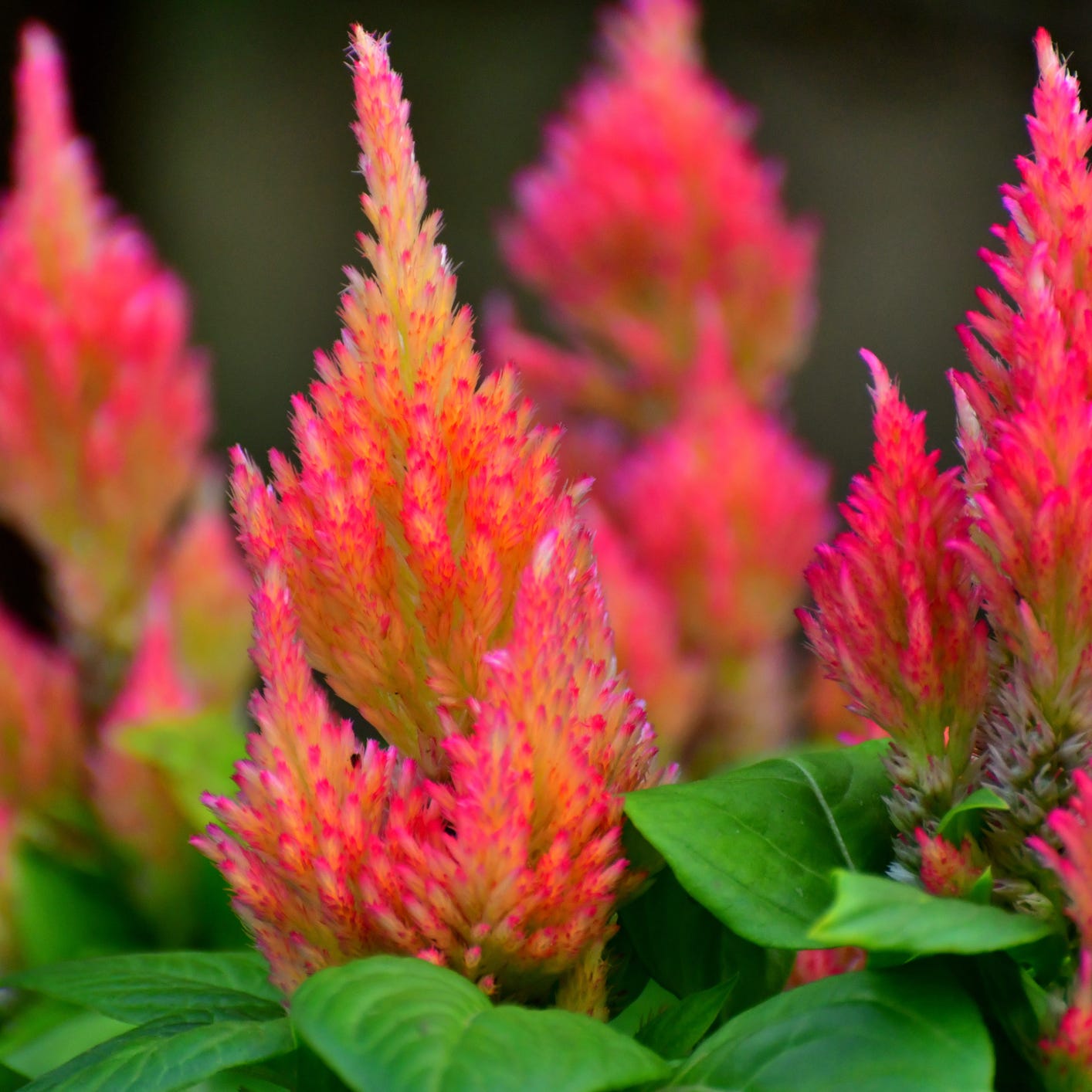
The celosia plumes rise like flames against broad green leaves. Their texture is the real draw: the velvety, ruffled heads catch light differently than smooth petals, adding visual depth even in a small cluster. Placing a single variety of celosia in a dense grouping makes a stronger statement than sprinkling a few here and there. The bright daylight keeps the pink and orange tones vivid without washing them out.
Informal Garden with Vibrant Blue Adirondack Chair and Potted Plants
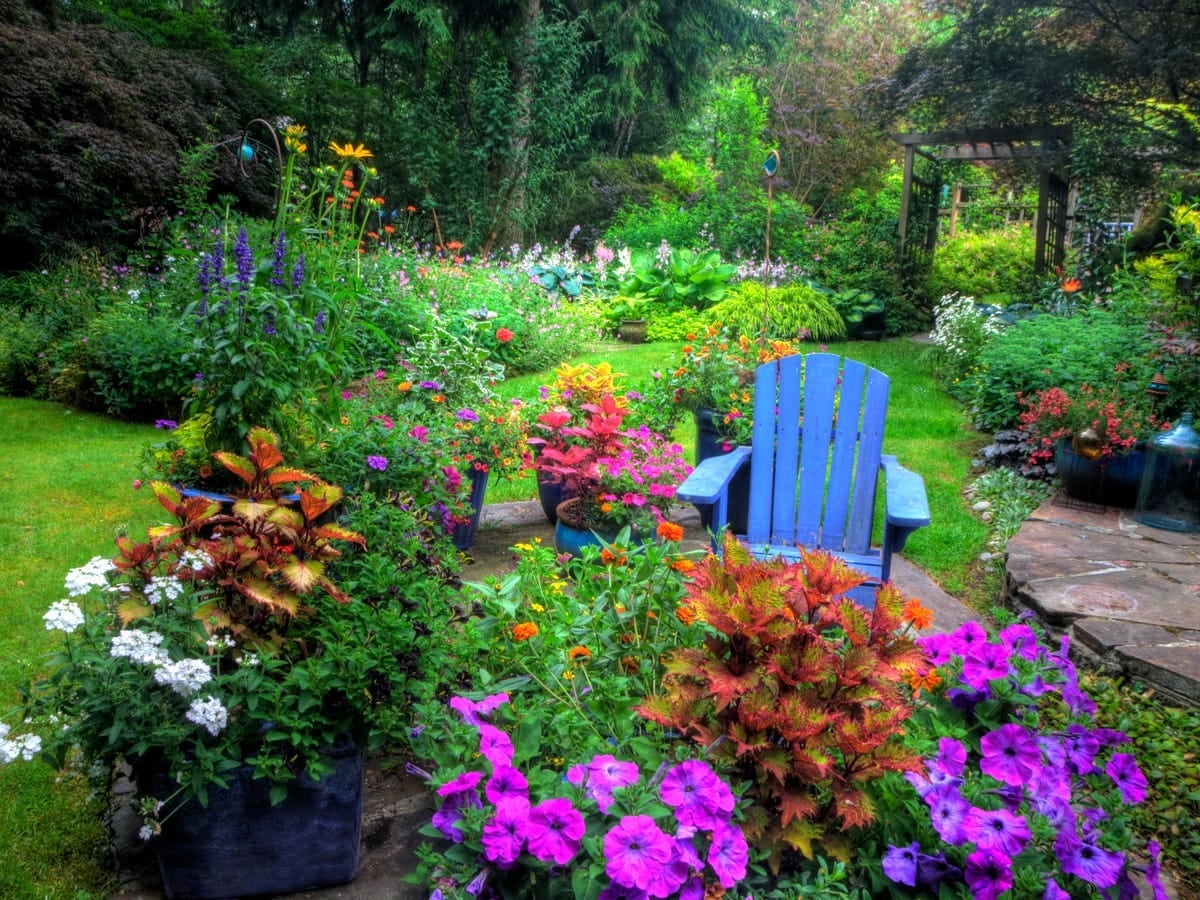
A blue Adirondack chair can read as a beach accessory if placed on a lawn alone. Here it works because the chair sits inside a layered garden bed, surrounded by pink, orange, and red flowers that echo its color temperature.
The wide view shows an open plan where the chair acts as a destination point. Potted plants clustered at its base soften the transition between the painted wood and the soil. For a similar setup, choose one bold furniture piece and build the flower beds around it, letting the plants frame the seat without hiding it.
Formal Garden Bed with Mass Planting of Vibrant, Office-Safe Version
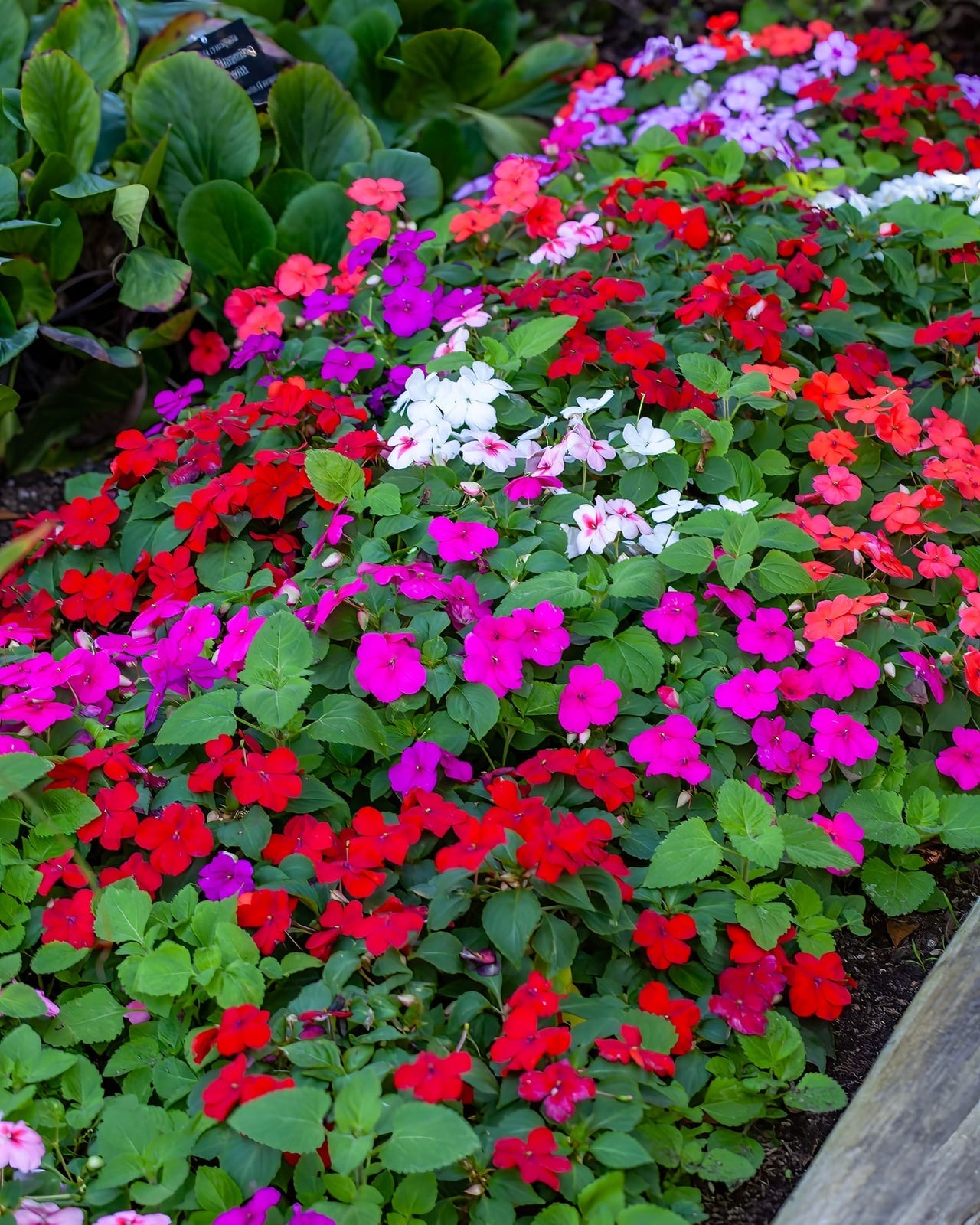
A single block of color can feel static, but a formal garden impatiens mass planting works when the palette shifts across the bed. Here, red, pink, purple, white, and orange blooms form a dense carpet of flowers, with each color blending into the next rather than stopping at a hard line. The foliage underneath stays mostly hidden, so the effect reads as a solid layer of petals. The key is planting in staggered rows: a block of one color, then a shift, then another. It keeps the eye moving across the compact bed without needing any other elements to hold the design together.
Final Thoughts
A great flower garden does not happen by accident. It rewards the slow work of layering heights, textures, and bloom times so something is always in play. The 31 ideas here show that structure matters as much as the flowers themselves. Start with one bed or one border. Let the soil and the season guide you. The best garden is the one you water and watch grow.