Your front walkway is the first thing guests see, so it deserves a look that sets the tone for your home. Whether you prefer a straight path of classic brick or a winding trail of irregular flagstone, the right design can make your entrance feel welcoming and intentional.
In this roundup, you’ll find 31 front walkway ideas that balance style with practicality, from formal stone paths with urn planters to casual stepping stones set in white gravel. Each idea focuses on the pathway itself, keeping the surrounding landscape simple and supportive so the walkway stays the hero of your curb appeal.
Patterned Tile Walkway with Wisteria-Covered Entrance
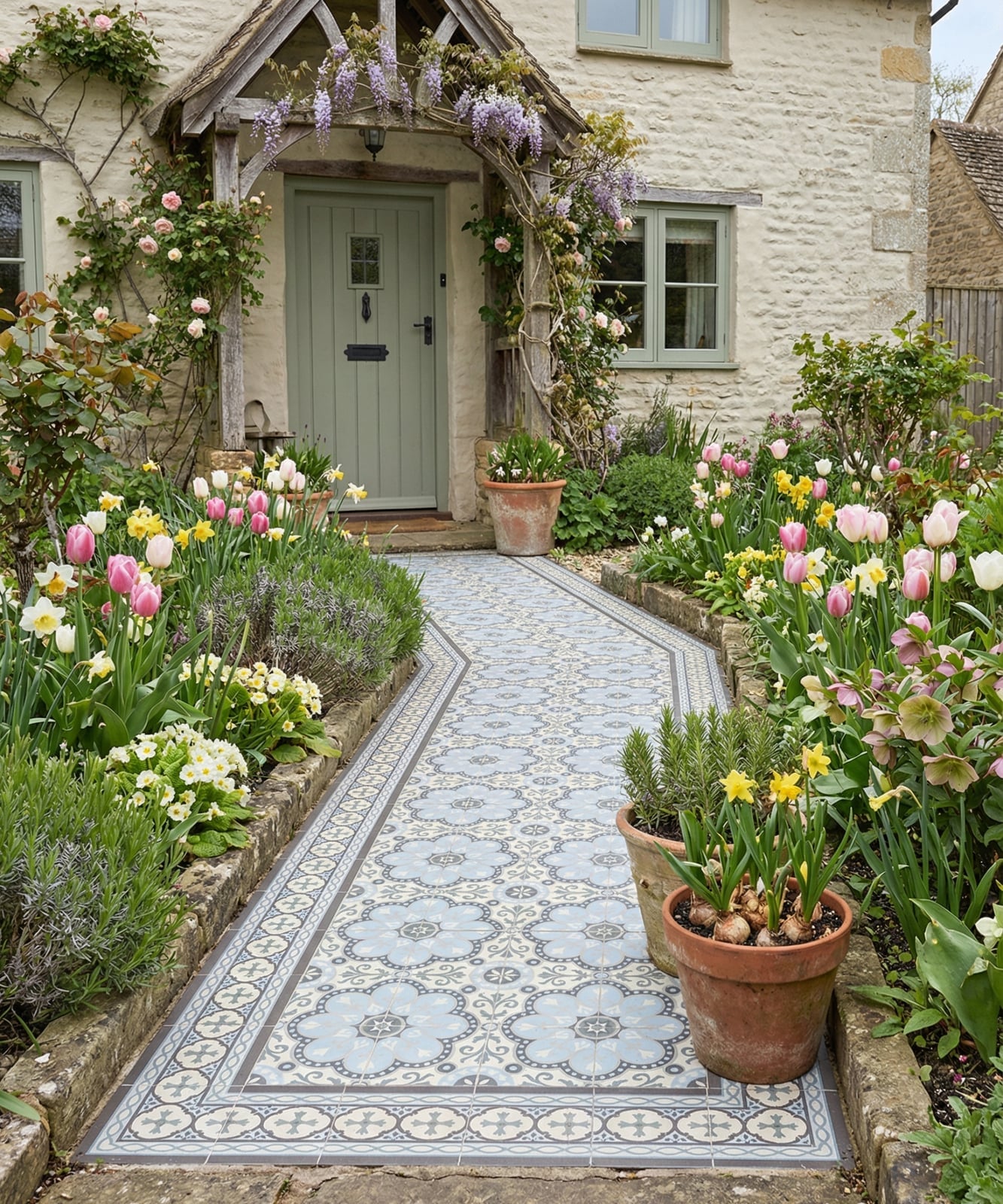
A central path of decorative blue and gray tiles draws the eye straight to an arched doorway, with stone edging keeping the pattern neat. The wisteria covering the entrance softens the geometry, and terracotta pots add warmth. This layout makes the walkway the hero, so keep flanking plantings low and simple to let the tilework lead the way.
Classic Stone Path Lined with Manicured Bushes
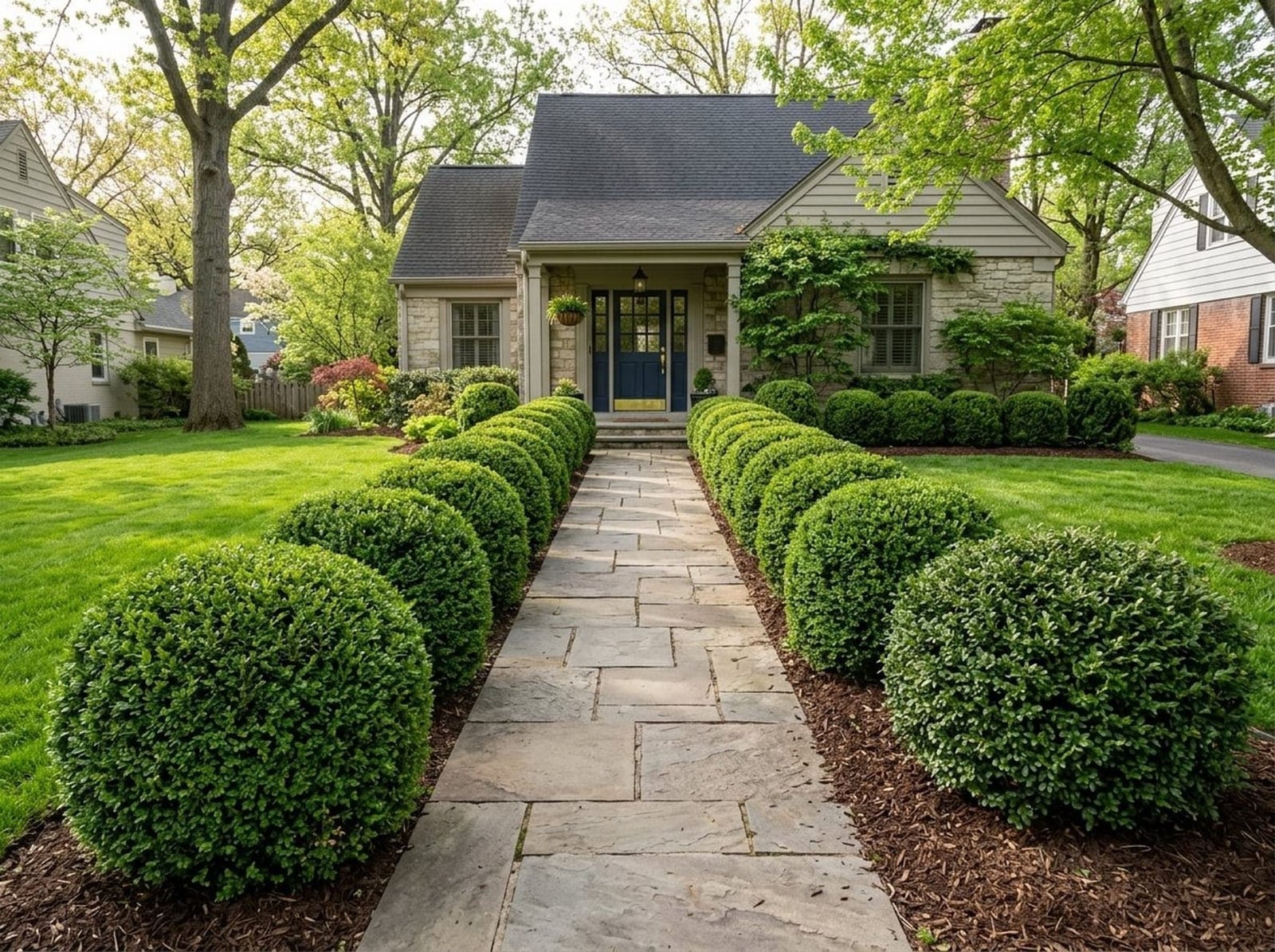
This straight stone path is practical because it creates the most direct route from street to front door. Symmetrical green bushes line both sides, reinforcing the clear line of travel and framing the house facade. For a similar effect, choose a neutral gray stone and keep the planting height below window level so the path remains the visual anchor.
Red Brick Pathway to a Southern Style Porch
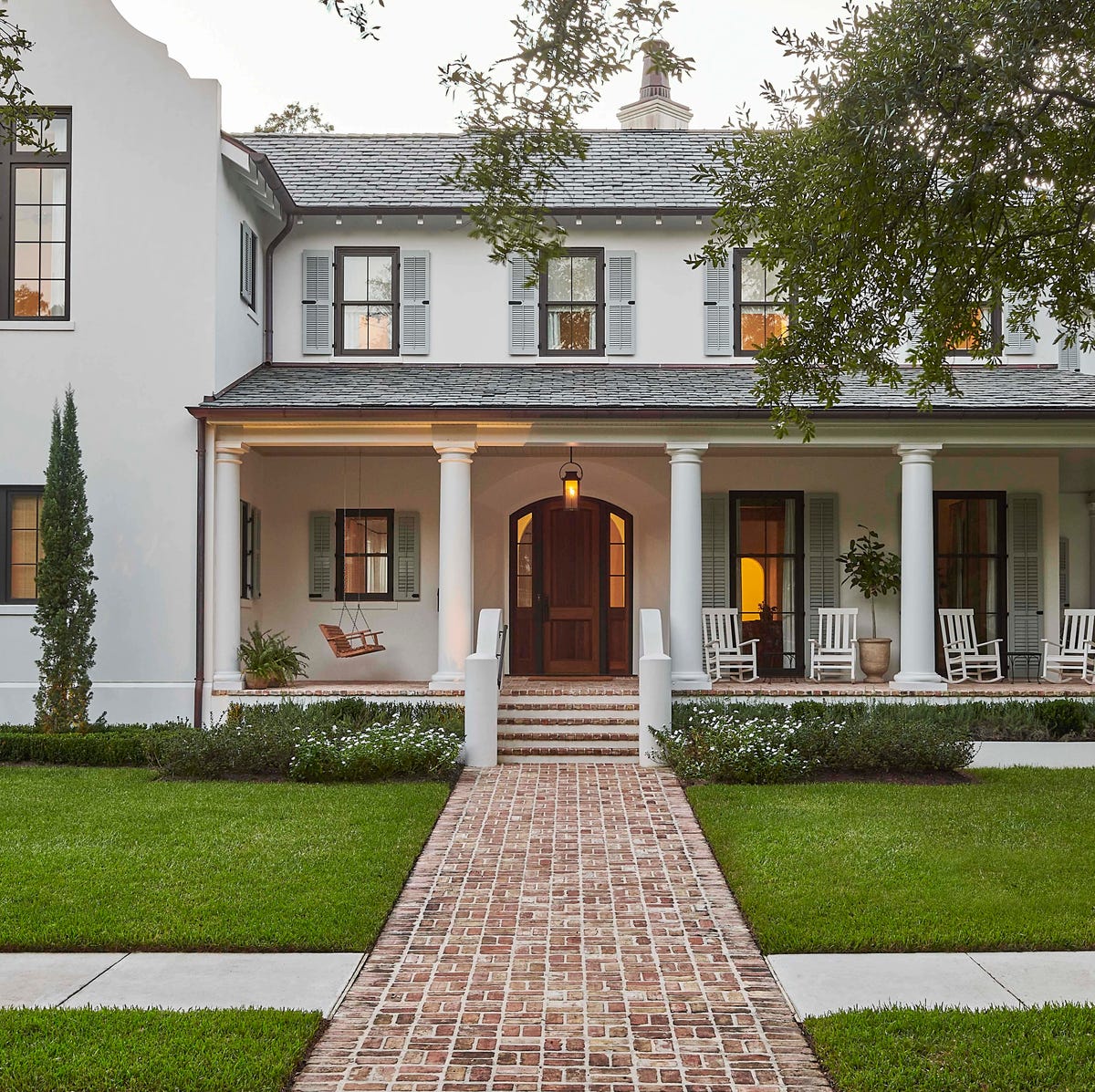
Can a red brick path feel formal without being stiff? Here, the warm brick tone plays off white columns and the gray porch floor, while a porch swing and rocking chairs add a relaxed note. The straight walkway leads directly to the covered porch, making the entrance feel intentional. Brick is a durable material that weathers well, and its color ties the house to the ground. Pairing it with a painted white trim keeps the look airy rather than heavy.
Winding Flagstone Path with Lush Naturalistic Plantings
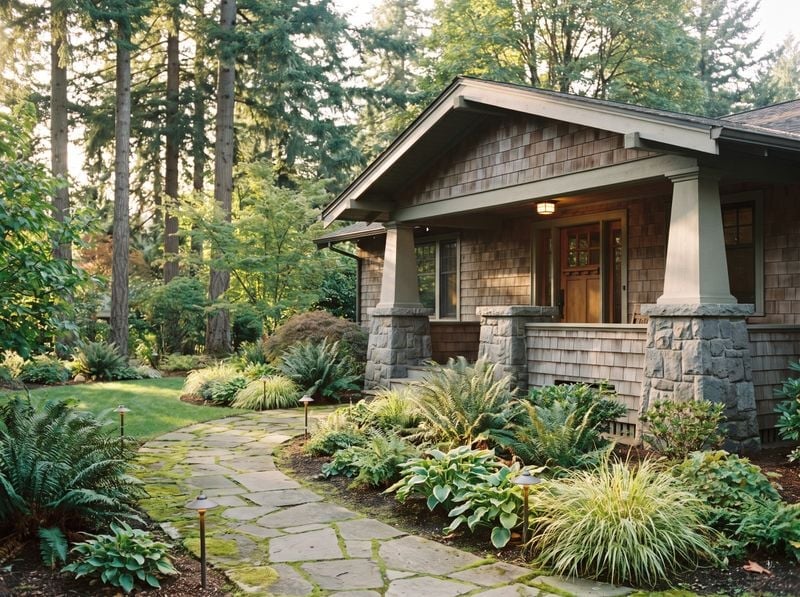
A curving flagstone path through garden beds creates a slower, more deliberate journey to the front door. Stone pillars at the entrance anchor the path, while lush ferns and layered plantings soften the edges. This winding layout works best when the path is wide enough for two people to walk side by side, about 4 to 5 feet.
Geometric Grass and Stone Walkway
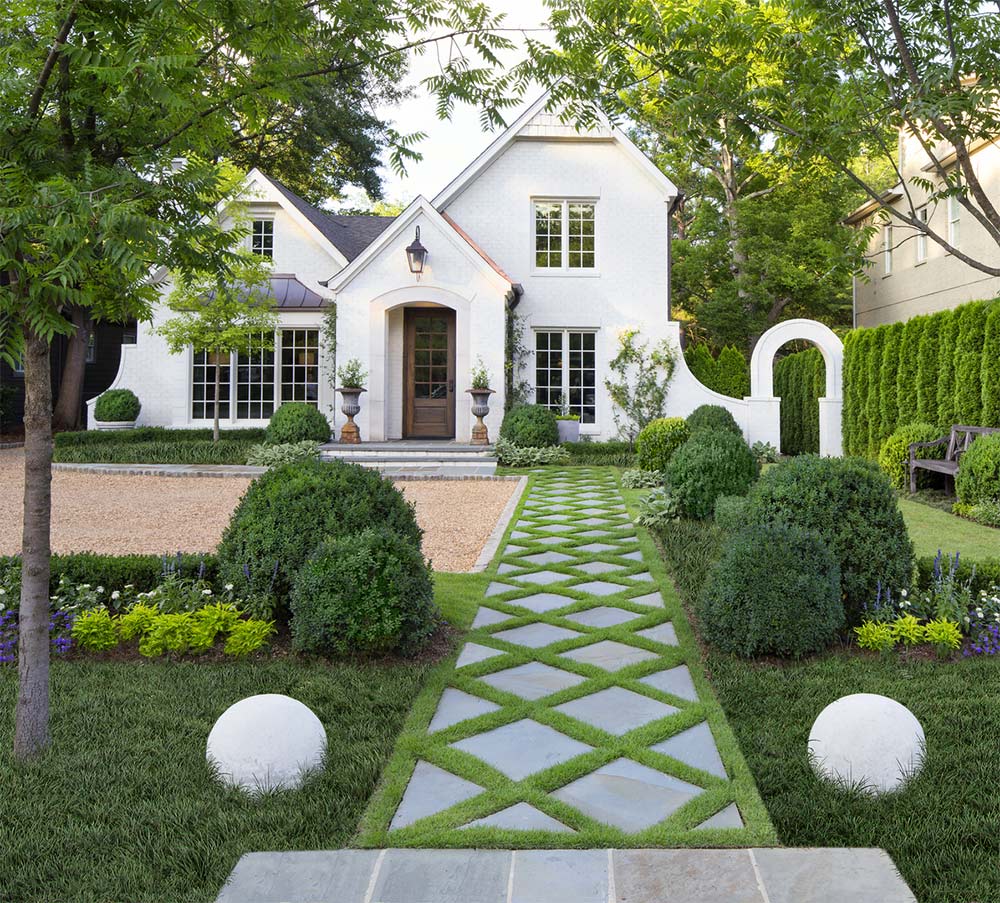
A geometric diamond pattern of grass set into stone and gravel creates visual interest without needing planters or ornaments. The white stucco house keeps the palette neutral so the pattern stands out. This approach works for renters, since the walkway surface itself is the decoration.
Circular Stone Paver Walkway in Minimalist Landscape
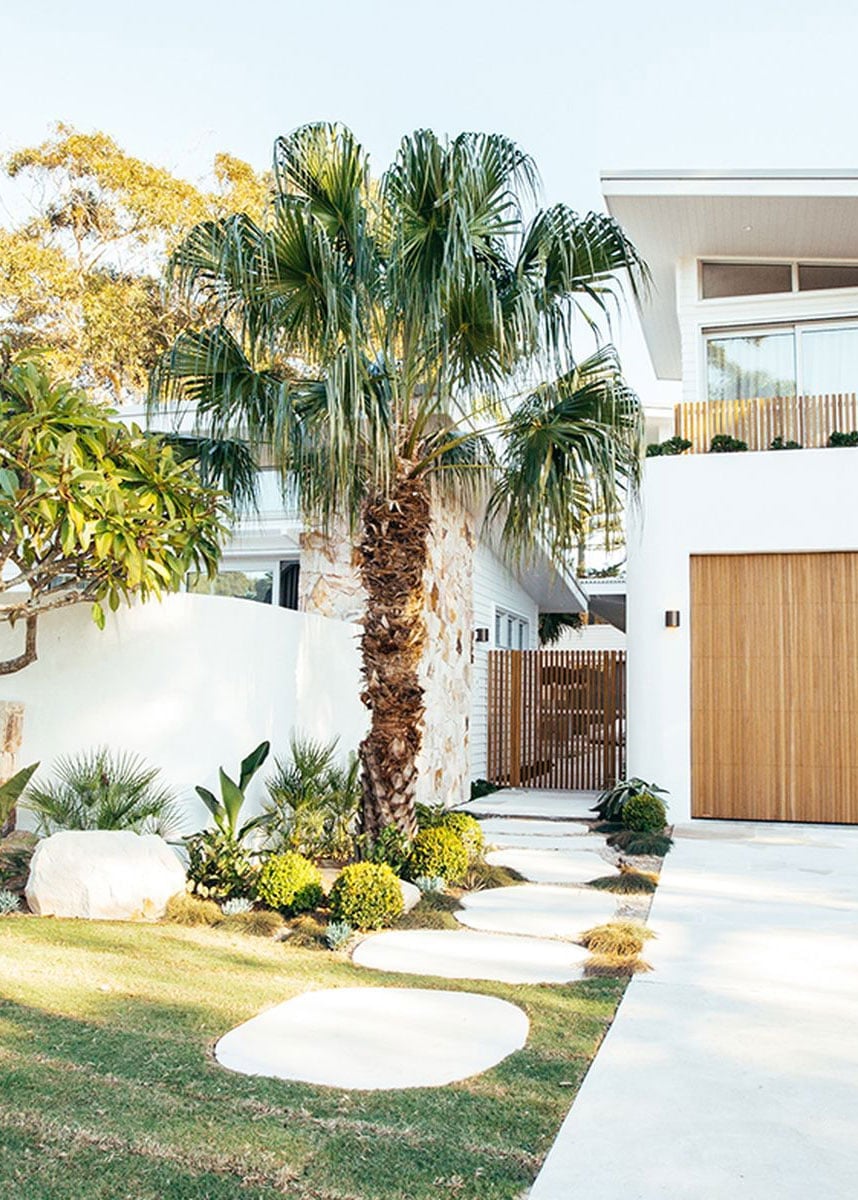
A straight concrete path can feel too direct for a relaxed entry. This walkway uses large circular stone pavers set into a white gravel bed instead. The rounded shapes soften the approach, leading the eye toward a wooden gate without demanding a straight line. The wood gate and warm golden light keep the scene from feeling cold. A good rule for a minimal front yard is to let one material pattern do the work. Here the big circles are the whole show, and the surrounding white gravel and greenery stay quiet.
Stone Pathway Through Layered Contemporary Landscaping
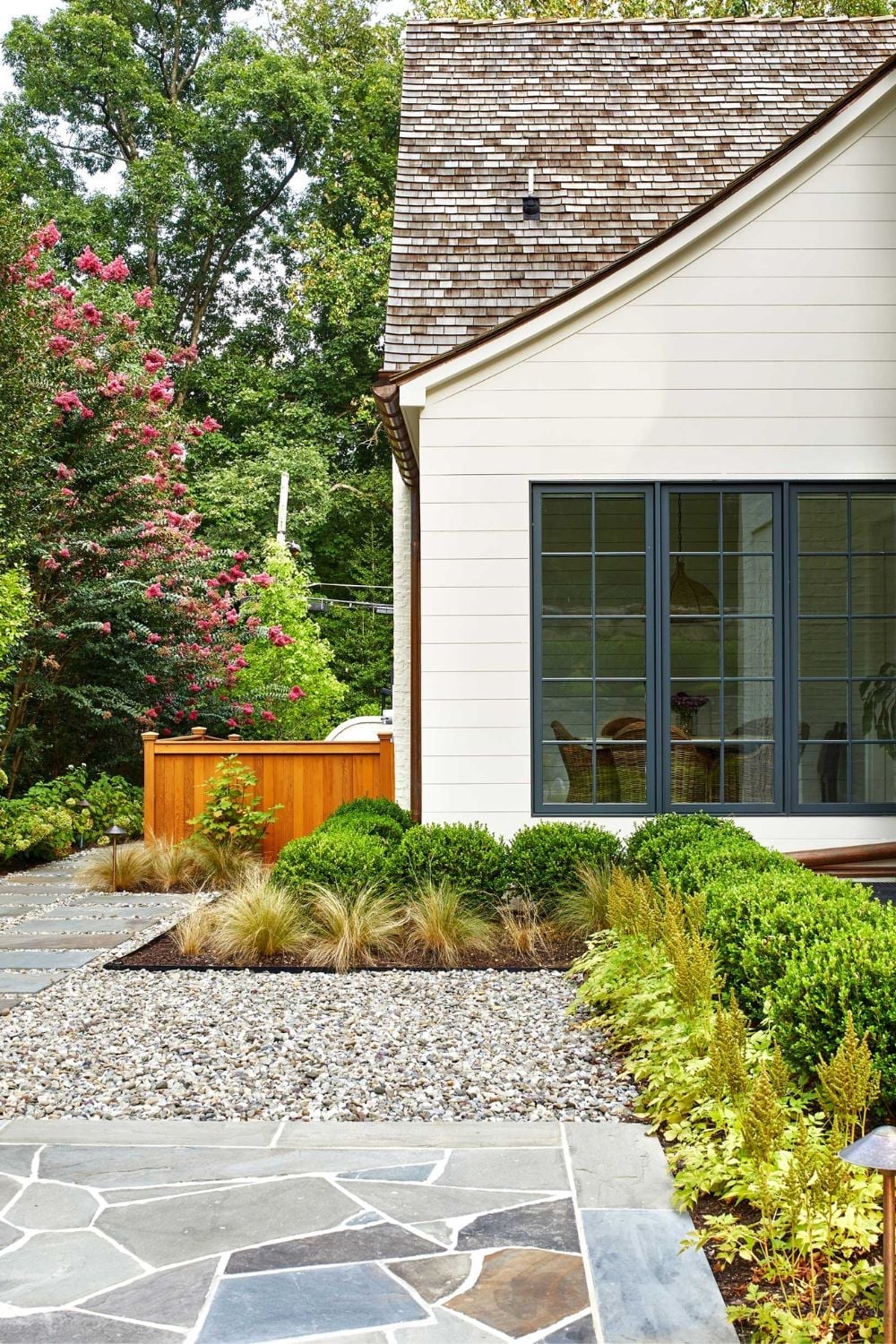
The path here is just one part of a layered landscape. Wide stone slabs cross a narrow gravel strip, with manicured boxwood and a wooden fence building depth behind them. The layout pulls the eye forward while the low shrubs keep the edges tidy. For a renter, this is a smart template: a straight run of stone over gravel reads as permanent but sits on top of the ground. Add a few potted boxwoods and you get the same layered look without digging.
Expansive Stone Walkway with Modern Planters
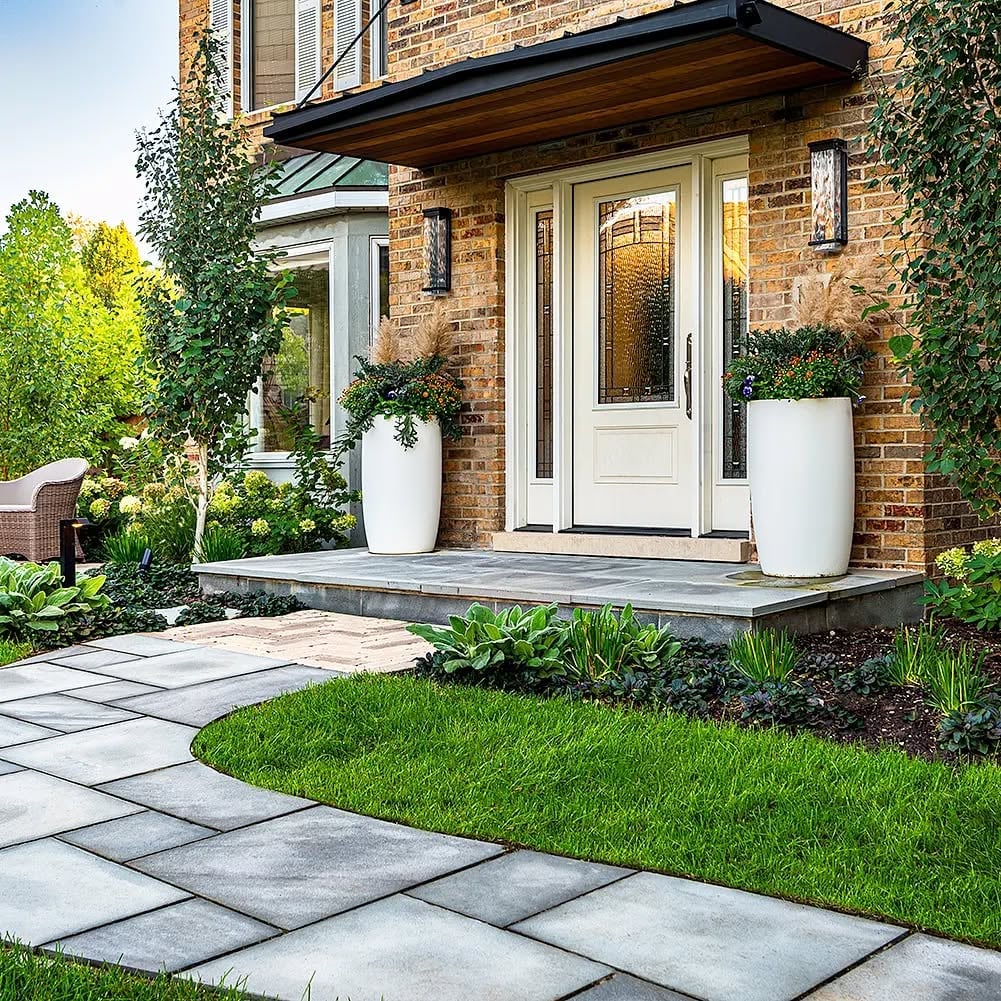
This walkway makes a strong first impression. Large format stone pavers sweep in a clean curve from the street to a wood-overhang entrance, with a broad lawn to one side and modern planters defining the edge. The wide stone surface feels generous, not fussy. Scale is the principle here: big pavers match the grand entry, and the planters and brick accents offer just enough contrast to hold interest. When a walkway is this wide, every detail counts.
Curving Flagstone Walkway with Granite Border
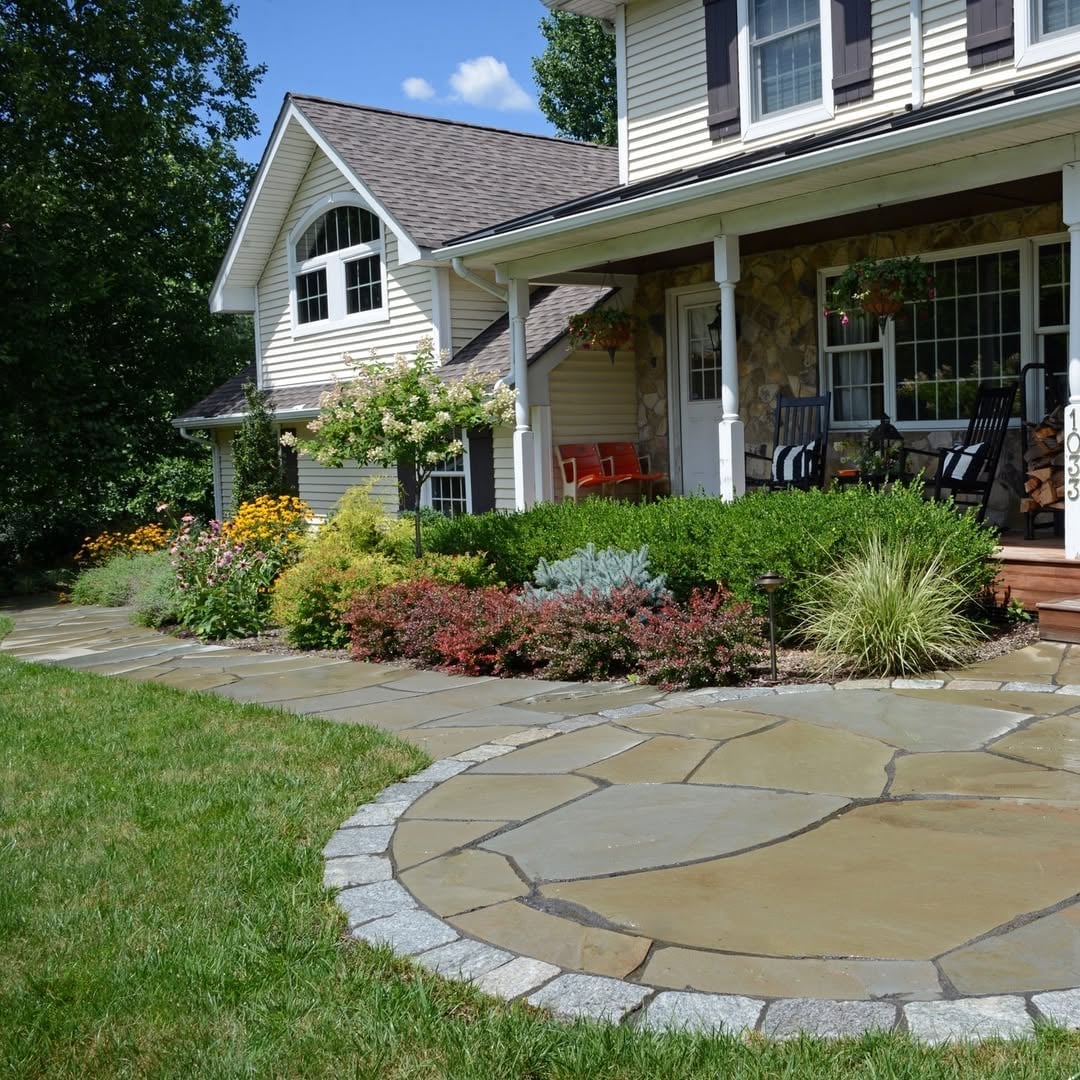
A curving flagstone walkway feels sturdy with a granite border that anchors the path. The irregular flagstone pieces curve naturally toward a porch with rocking chairs, while the darker granite edge holds the shape and keeps the stones from shifting. Subtle landscape lights along the border add safety after dark without distracting from the traditional look. The materials do the work: flagstone for character, granite for a clean edge that lasts.
Straight Stone Pathway Flanked by Tall Palm Trees
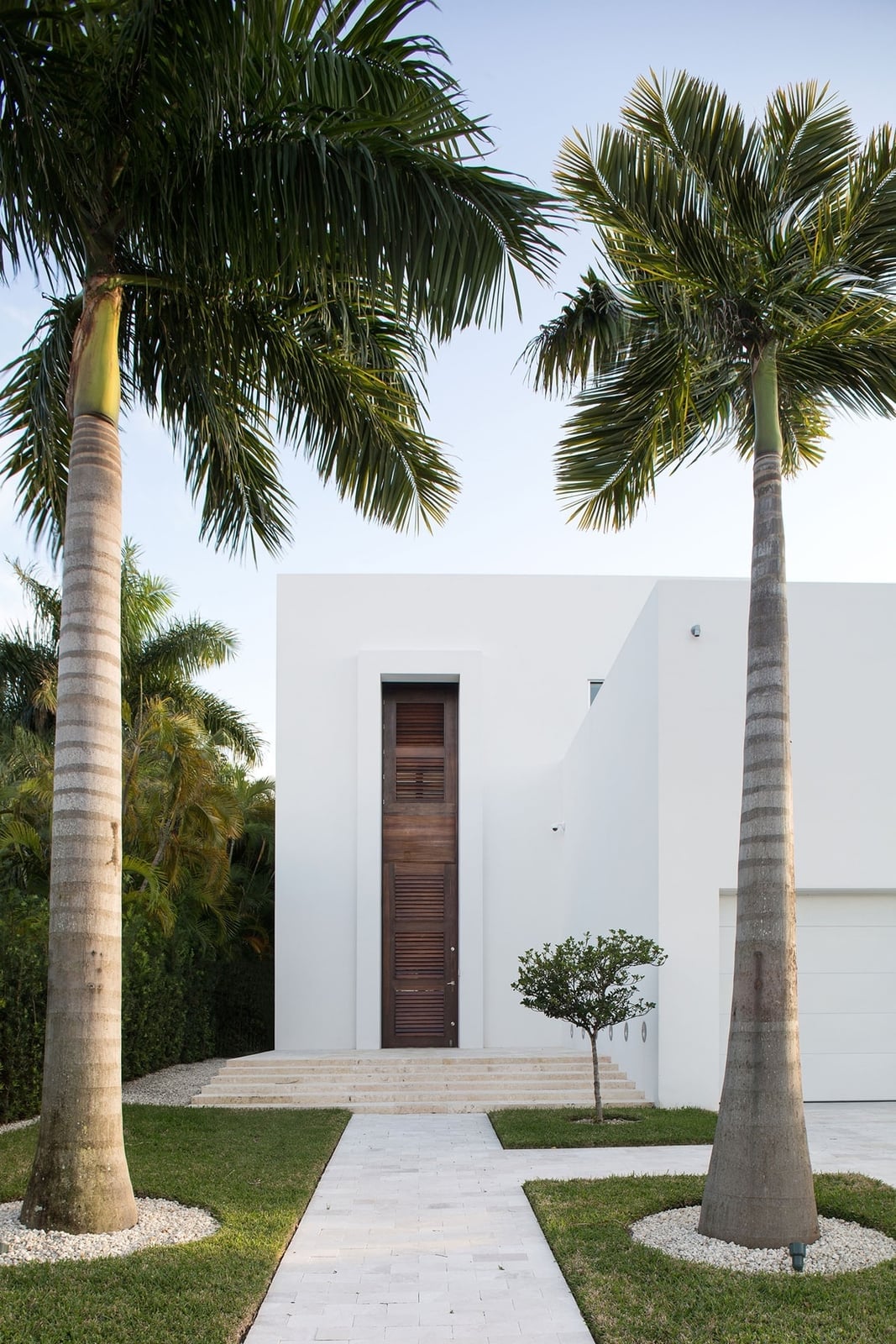
Tall palm trees do more than frame a path. Here a straight stone walkway leads to a wooden door, with palms spaced evenly on both sides. Their vertical trunks echo the modern entry and draw the eye upward, making the approach feel open. The stone steps and warm wood door keep the palette natural. When planning a straight path, consider what will frame it. Palms give height without crowding the walkway.
Winding Paver Walkway with Dark Stone Border
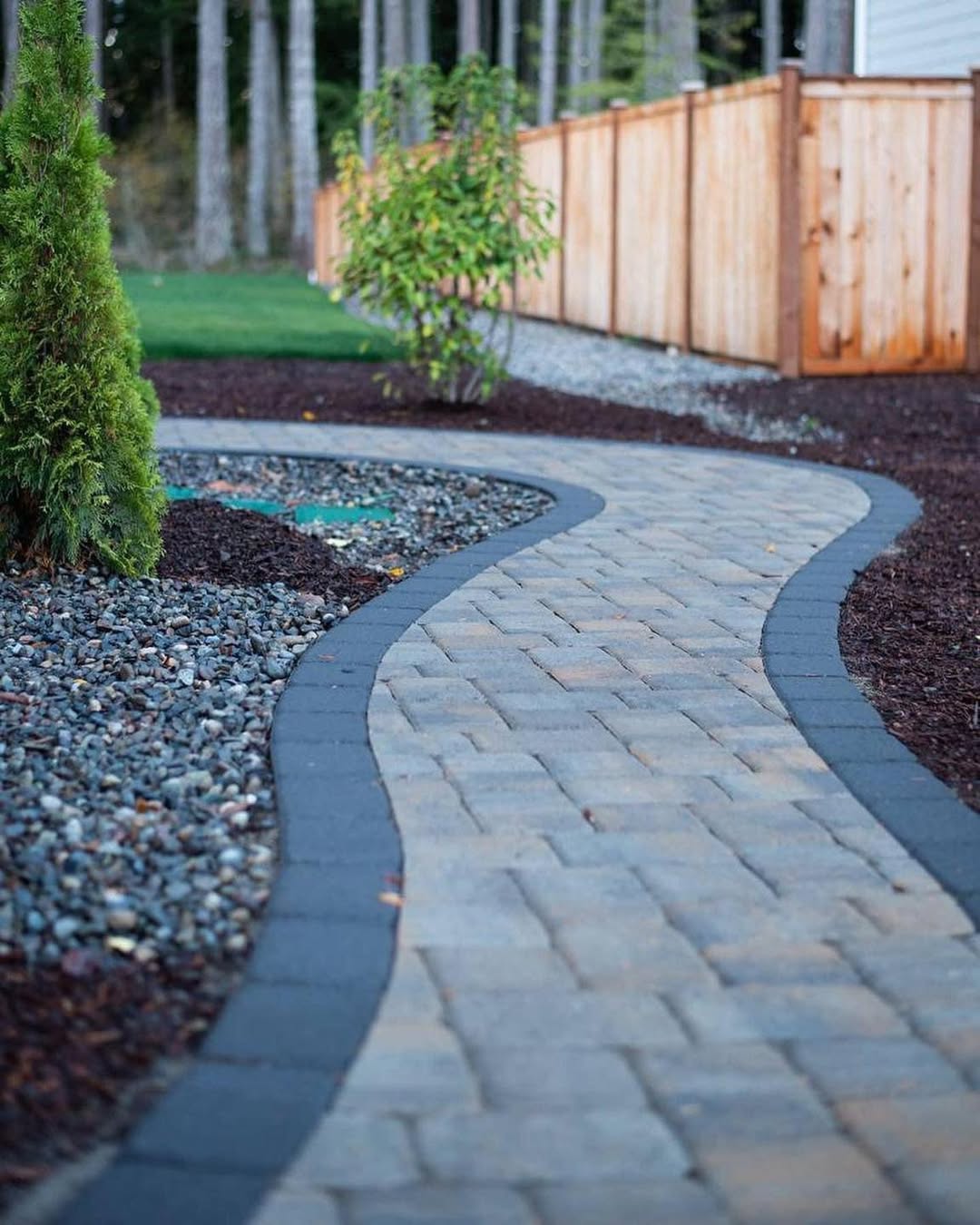
A winding walkway slows the pace better than a straight one, and this version uses a dark stone border to keep the curve from reading as random. Warm brown pavers sit inside a slim edging that anchors the path against the gravel and the wood fence alongside it. The border acts like a drawn line, giving the curve a clear start and finish. On a straight path, add a contrasting edge material that matches another hardscape element nearby. The eye follows the line naturally, and the path feels planned.
Formal Gray Stone Walkway with Urn Planters
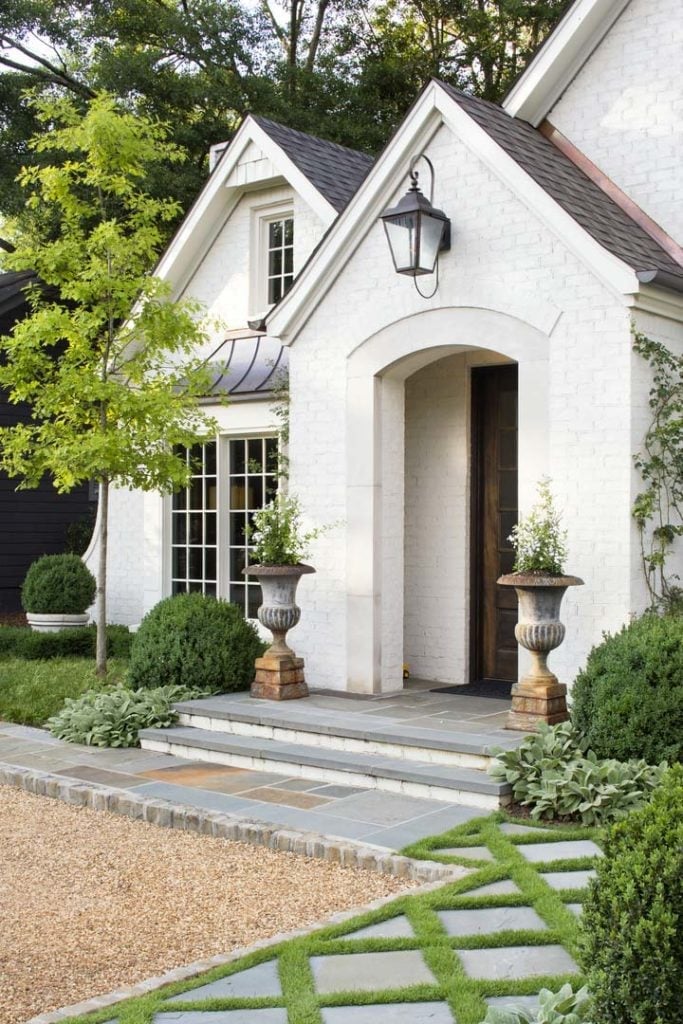
A formal walkway can feel stiff, but this gray stone path avoids that by pairing clean rectangular pavers with soft greenery. The urn planters flank the steps, each holding a sculptural shrub that repeats the rounded shape of the arched doorway behind them. The palette stays restrained: gray stone, white trim, deep green foliage. What breaks the formality is the uneven height of the plants, which keeps the entrance from looking like a hotel lobby. The ratio of hardscape to planting is roughly equal, so the walkway feels grounded but not heavy.
Brown Stepping Stone Path in White Gravel
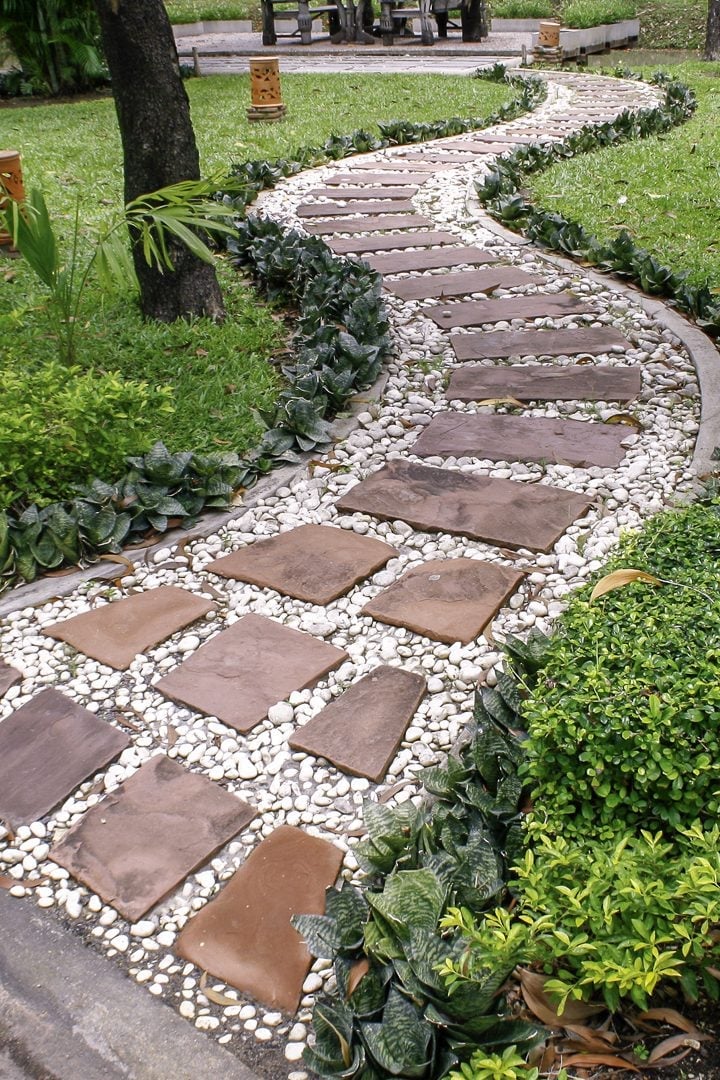
The contrast is the point here: brown flat stones set in a sea of white gravel, each step spaced for a natural stride. The gravel spreads around the stones and softens the edges, while a concrete curb keeps the fill from migrating into the garden beds. Lush greenery on both sides frames the path without crowding it. The design works because the materials have opposite personalities, warm stone against cool aggregate, and the gap between them provides breathing room, not neglect.
Stone Stepping Stone Pathway Through Ornamental Grasses
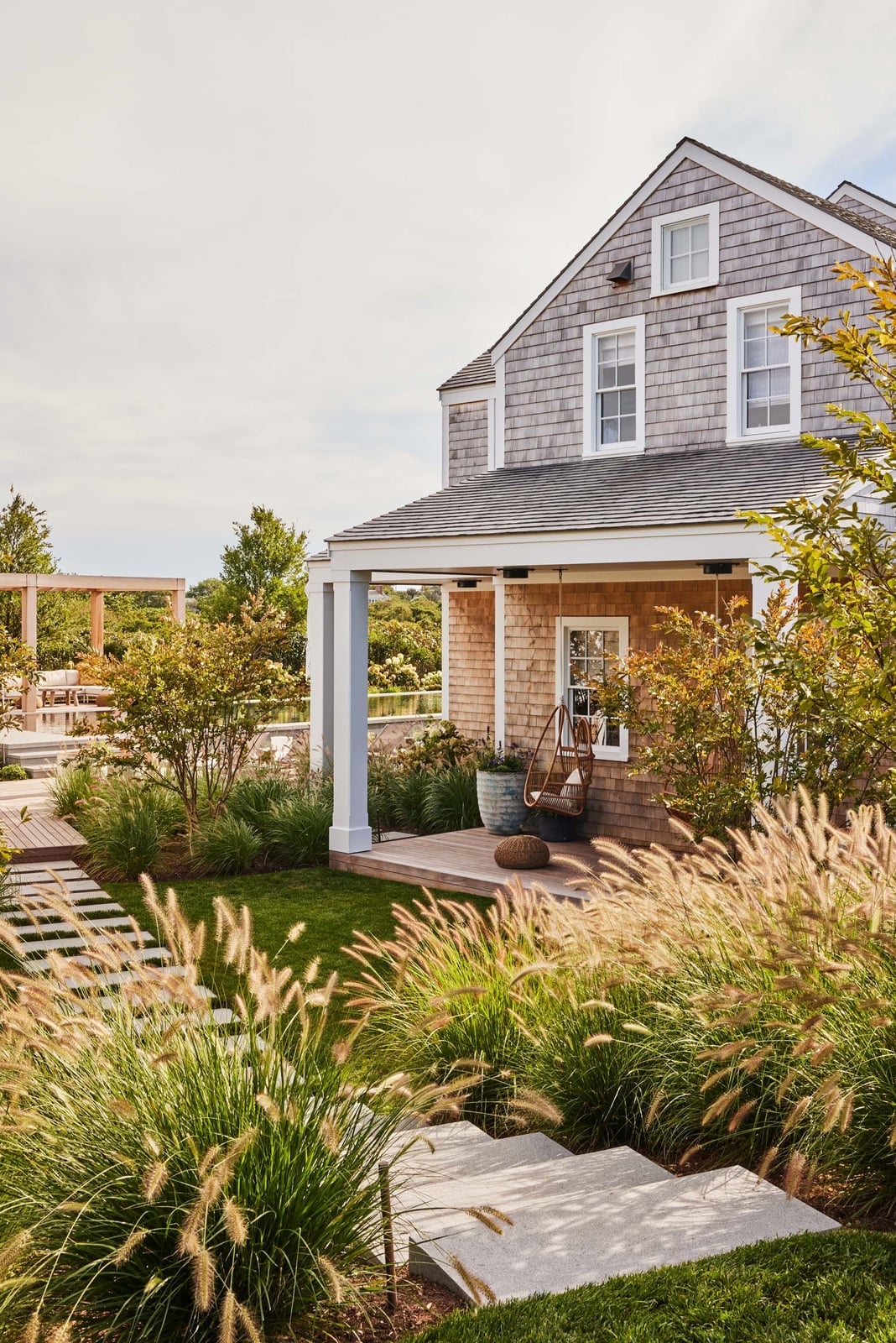
This pathway earns its place in the garden by doing one thing well: it leads the eye through a soft landscape without dominating it. Gray stone steps sit at a comfortable distance, surrounded by ornamental grasses that sway above the path. The light here is diffuse, filtering through the grasses and the cedar shingles on the house, so the stones never glare. A wooden deck with a hanging chair sits off to the side, making the walkway feel like part of a larger outdoor room rather than a strict route to the door.
Curving Flagstone Path to a Stone-Clad House
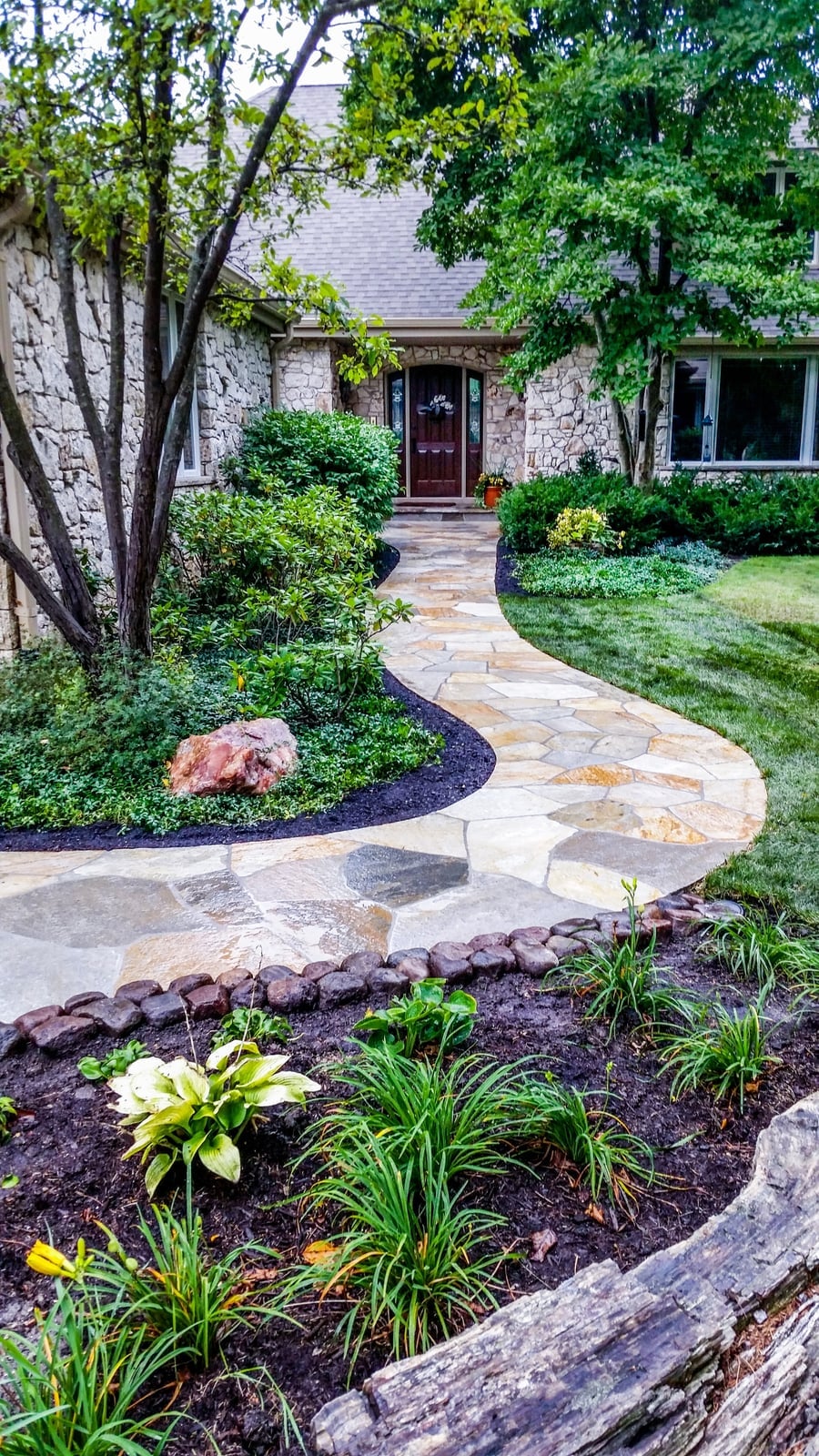
A curving path that leads to a stone-clad house needs to echo the material of the facade, and this one does it with irregular flagstone in tan and gray tones. The path widens slightly near the steps, a practical detail that gives you room to pause before the door. Mulch beds on both sides hold low shrubs and mature trees, their canopies softening the overcast light. The curve itself is gentle, not sharp, so it feels like the path chose the path of least resistance through the yard. For a similar layout, match the stone color to the house and let the planting be looser on the outer curve to reinforce the bend.
Herringbone Pattern Paver Walkway with Garden Beds
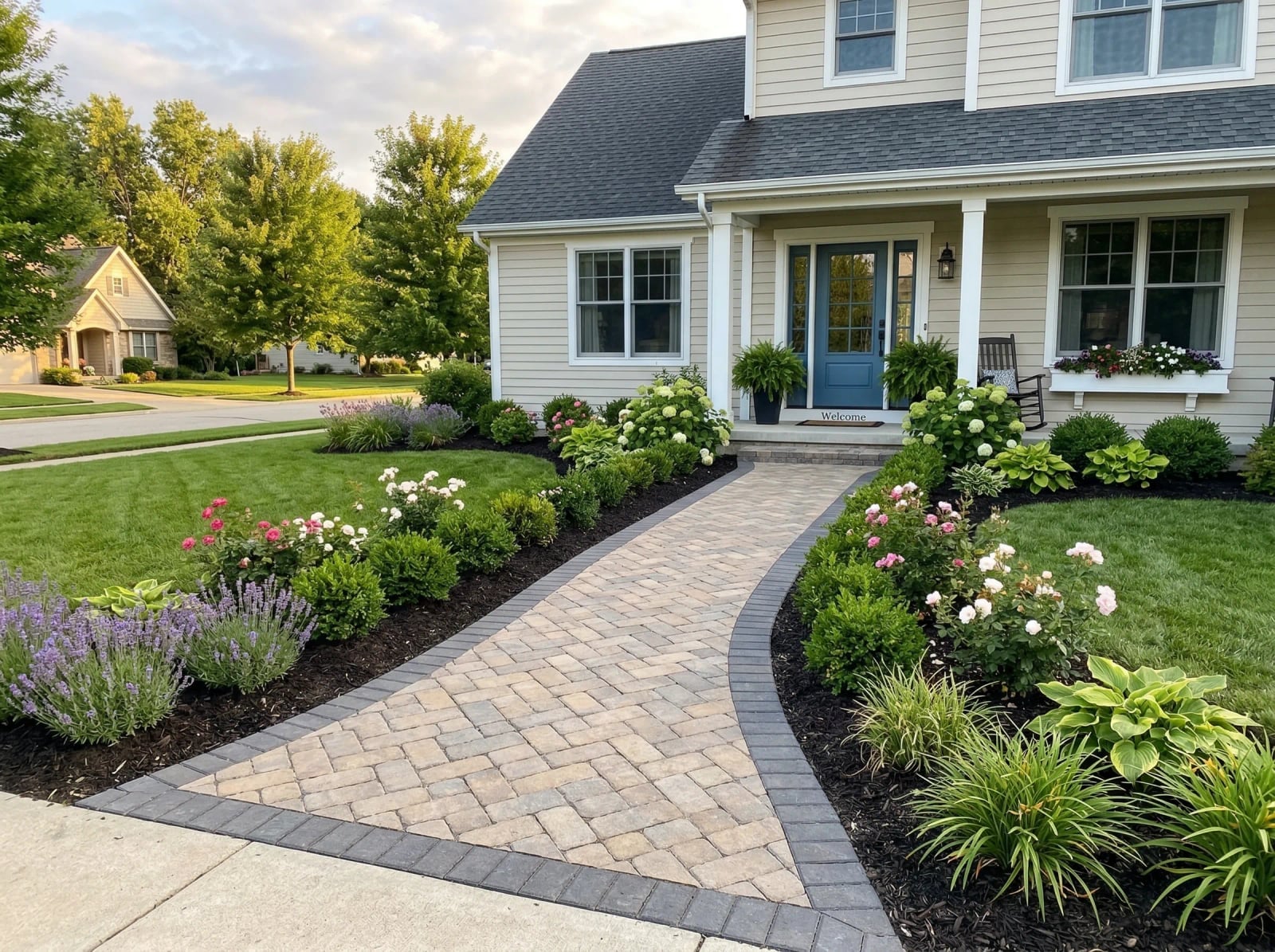
A herringbone pattern on a curving walkway adds visual structure without needing straight lines. The beige and gray pavers set into a herringbone layout give the path a tailored feel that complements the layered garden beds on either side. Pink and green plantings soften the stone edges and keep the traditional house facade from feeling too rigid. For a similar effect, use a contrasting border paver to define the path edge where it meets the mulch or lawn.
Curved Paver Walkway to Ornate Double Doors
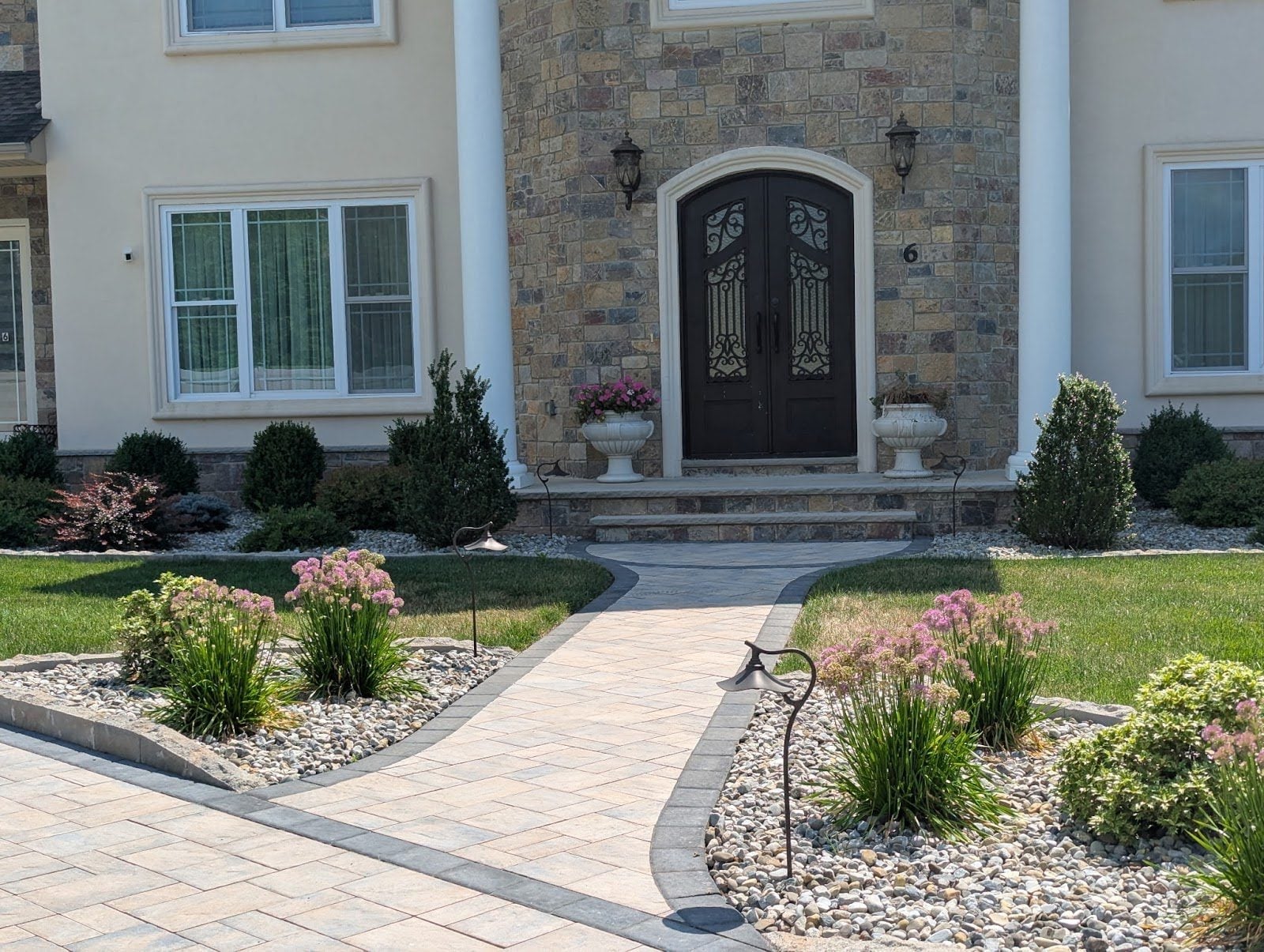
A front walkway should lead the eye directly to the entrance. A curved paver walkway that widens as it approaches ornate double doors does exactly that, drawing attention to the stone surround and the metal and glass details of the entry. Beige and brown pavers keep the focus on the architecture. Renters can mimic this sense of arrival by placing a pair of urns or potted plants on either side of the door, creating a visual anchor that frames the entrance without altering the walkway itself.
Flagstone Walkway with River Stone Borders and Vibrant Flowers
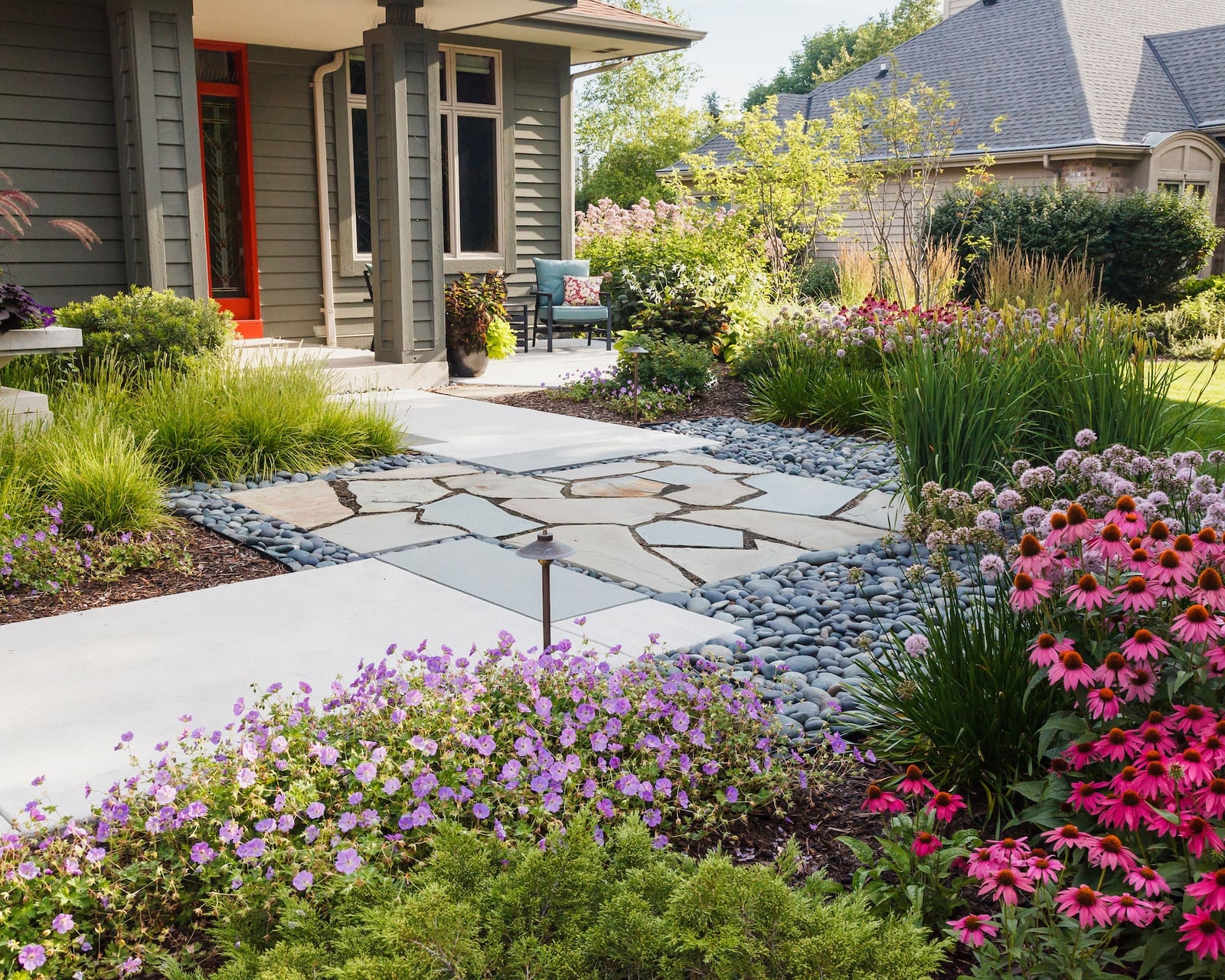
A flagstone walkway with river stone borders creates a contrast between irregular gray stones and smooth, rounded river stones, giving it a modern garden feel. The river stone border acts as a natural edging that keeps mulch and soil from spilling onto the path, which is a practical benefit for upkeep.
Vibrant pink and purple flowers planted in drifts along the walkway add a pop of color that draws the eye forward. Low landscape lights tucked among the plantings extend the visual interest into the evening without overwhelming the naturalistic style. This approach uses flowers repeated in clusters for a cohesive look.
Large Format Paver Walkway with Urn Planter
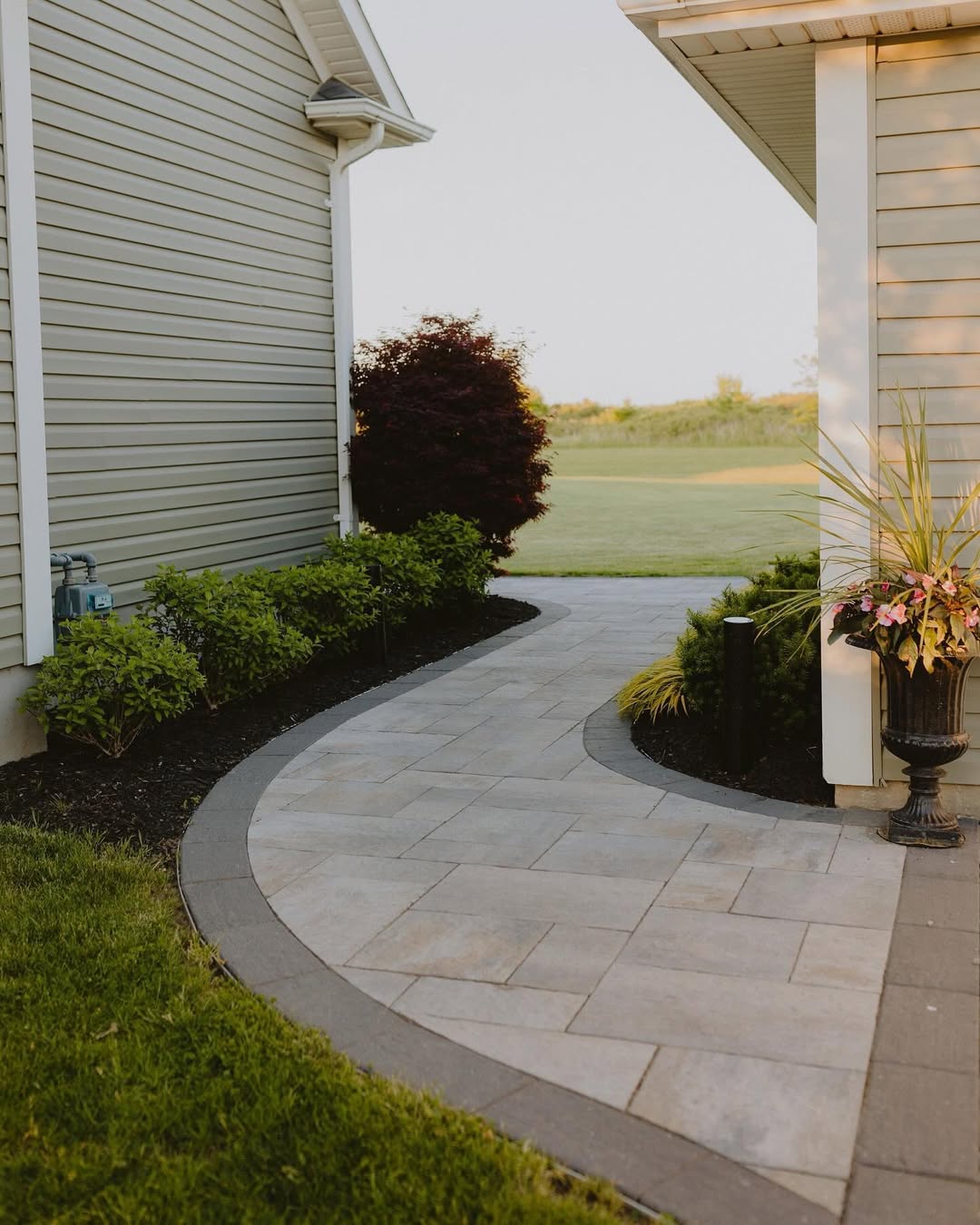
Large format pavers in a warm gray create a clean, modern surface that looks like one continuous plane. The dark border defines the path edge and keeps the curving layout from feeling formless. A single urn planter placed at the turn serves as a visual pause point, giving the eye a place to rest before following the path to the entrance. Evening light softens the gray tones and makes the dark border stand out more clearly.
Nighttime Stone Path Illuminated by Solar Lights
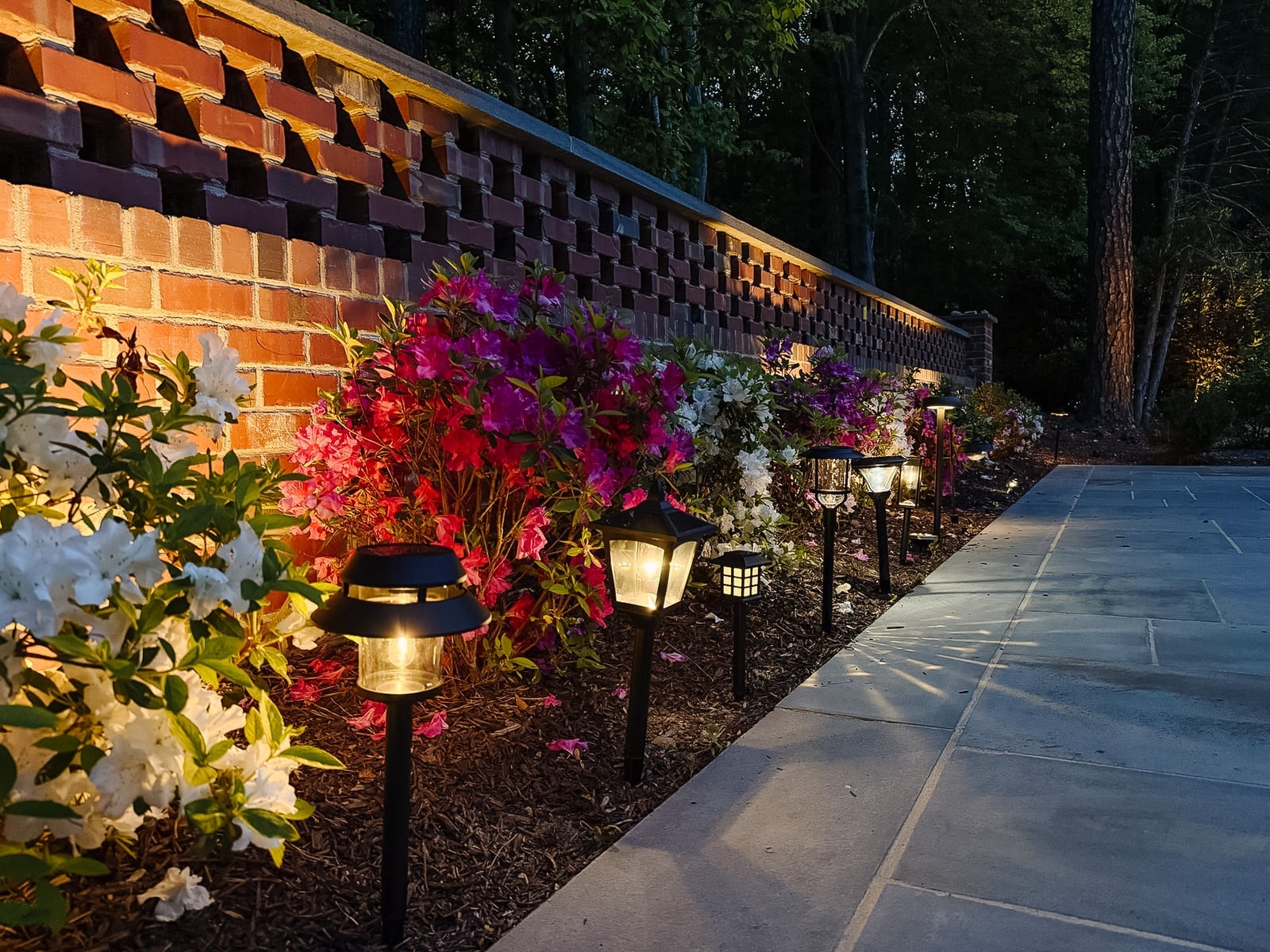
Solar path lights along a stone walkway do more than just guide feet after dark. The line of glowing fixtures defines the path curve and creates a sense of depth that is lost in full daylight. Red brick walls and flowering plants in pink and white catch the warm light, turning the garden path into a destination rather than a passage. For best results, space the lights evenly on one side of the path so the glow pools across the stones rather than creating a dotted line of bright spots. Check your USDA zone to confirm which flowering plants will thrive with the light exposure near the path.
Curving Paver Walkway with Dark Stone Edging
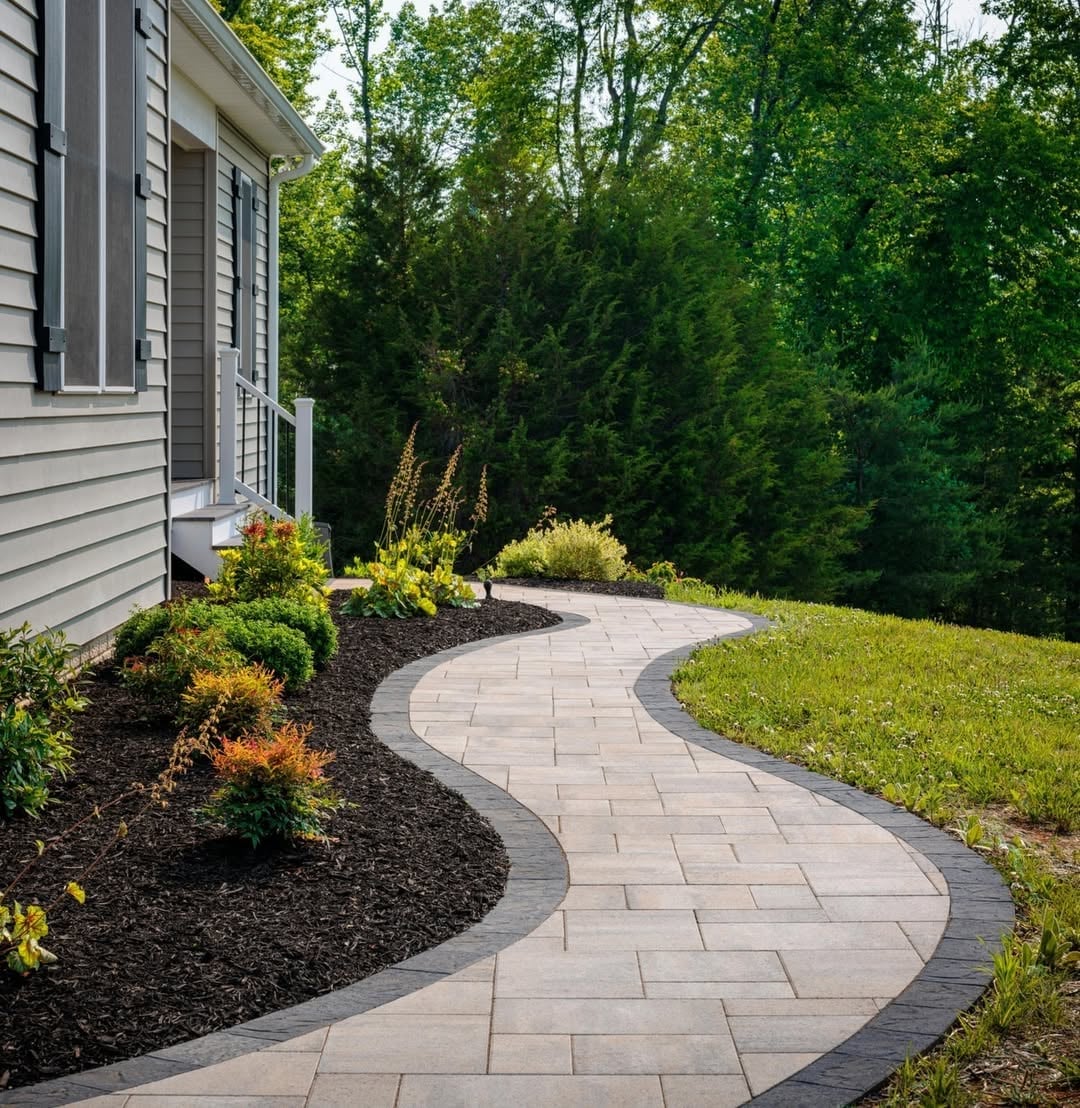
A winding path feels more natural when the edge treatment does the talking. Here the pavers curve gently toward the house, and the dark stone edging holds the line against the beige and gray tones. The dark mulch beds on either side reinforce the path and keep the ornamental grasses from spilling onto the walkway.
Material contrast is the quiet anchor of this layout. The smooth pavers are the main surface, while the darker edging and mulch create a visual border that guides the eye forward. In a smaller front yard, choose a paver color that matches the house trim and let the edging do the defining work.
Concrete Pathway with Integrated LED Lighting
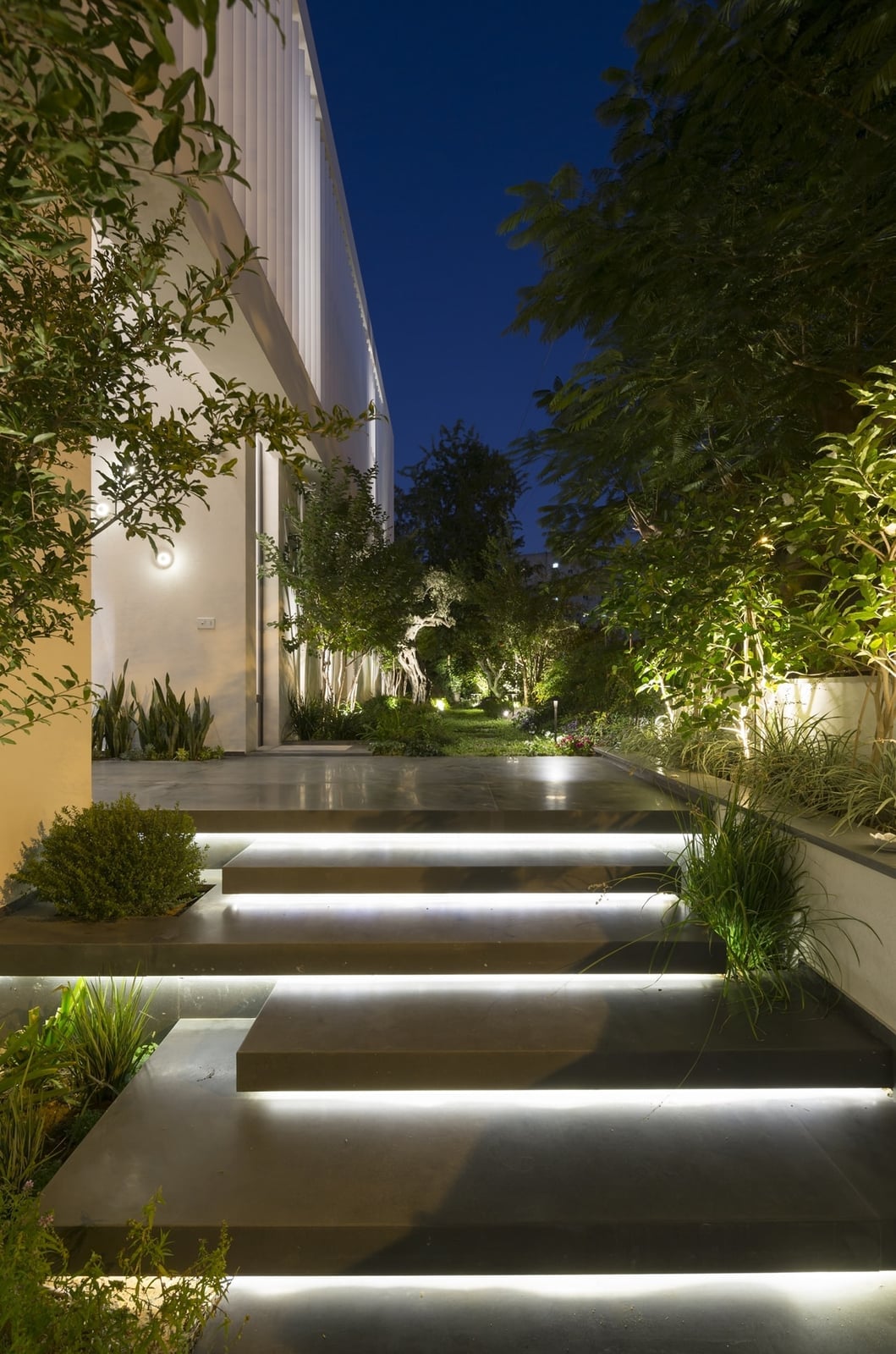
Integrated LED lighting turns a concrete walkway into a usable feature after dark. The wide concrete steps here have lights built directly into the risers, casting a white glow that outlines each step without flooding the yard. The dark gray concrete and green plants stay quiet in daylight, so the light becomes the focal point at night. This setup works well for any house where the front entry is used after sunset, and it avoids the clutter of standalone path lights.
Sweeping Paver Walkway to a Traditional House
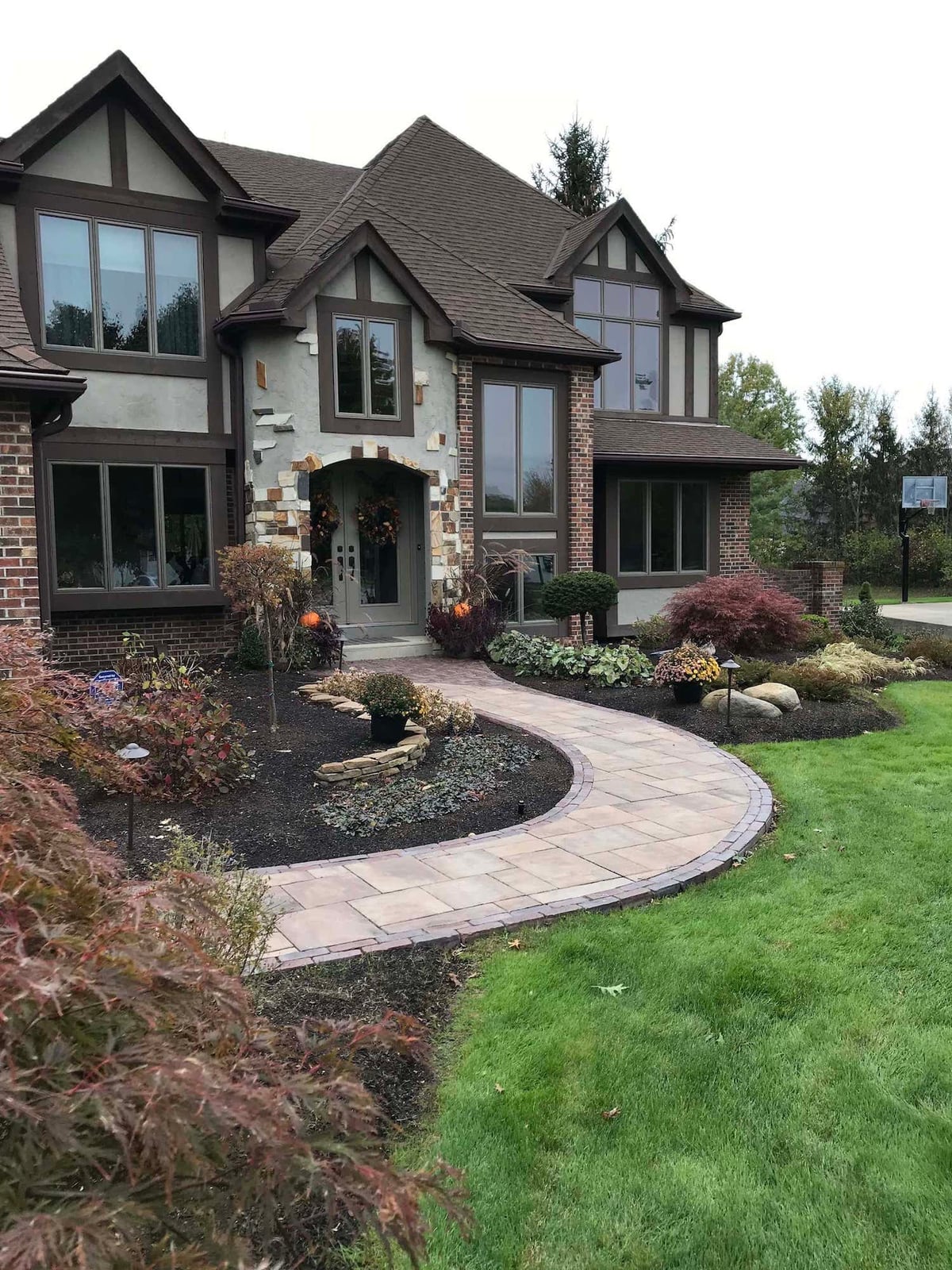
A sweeping path should feel like it belongs to the house, not just the lawn. The tan and brown pavers curve in a wide arc toward the double doors, with the manicured lawn and low greenery flanking the route. The brick and stone accents on the house facade echo the warm paver tones, so the walkway reads as an extension of the architecture. In a traditional setting, keep the path width consistent through the curve, which lets the eye travel smoothly from street to entrance.
Irregular Flagstone Path in a Natural Garden Setting
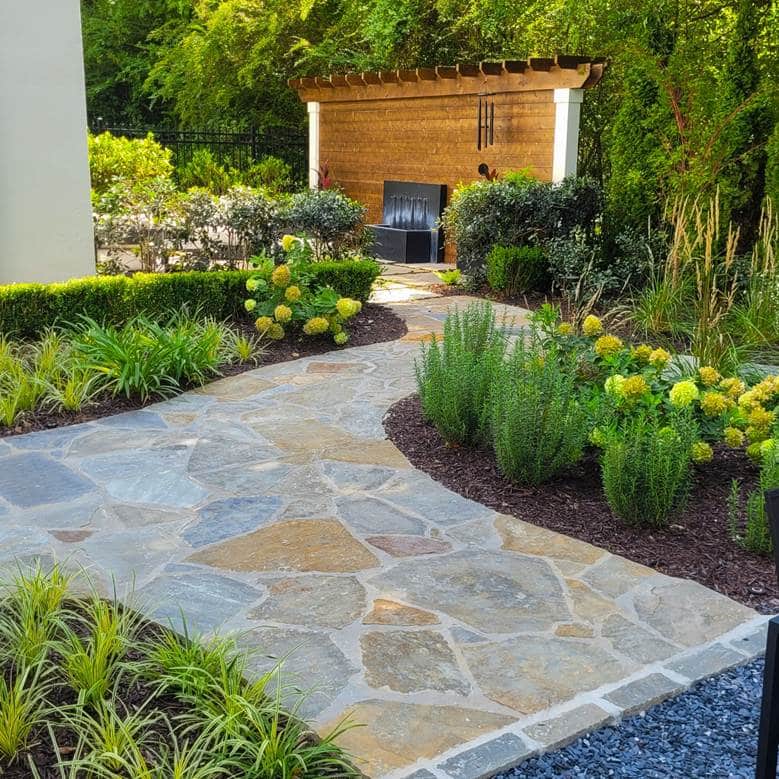
A formal paved path can feel stiff next to loose plantings. An irregular flagstone path, by contrast, settles into a garden without demanding attention. The gray and brown flagstones here are set into gravel and mulch, with gaps that soften the edges. The wooden pergola and water feature beyond the path reinforce the naturalistic feel, while the winding route slows the walker down.
This approach works best when the flagstones are laid in a random pattern rather than a repeating grid. The uneven shapes and varied spacing keep the path from looking manufactured, and the gravel fill between stones helps with drainage and weed control.
Straight Paver Walkway to Craftsman House
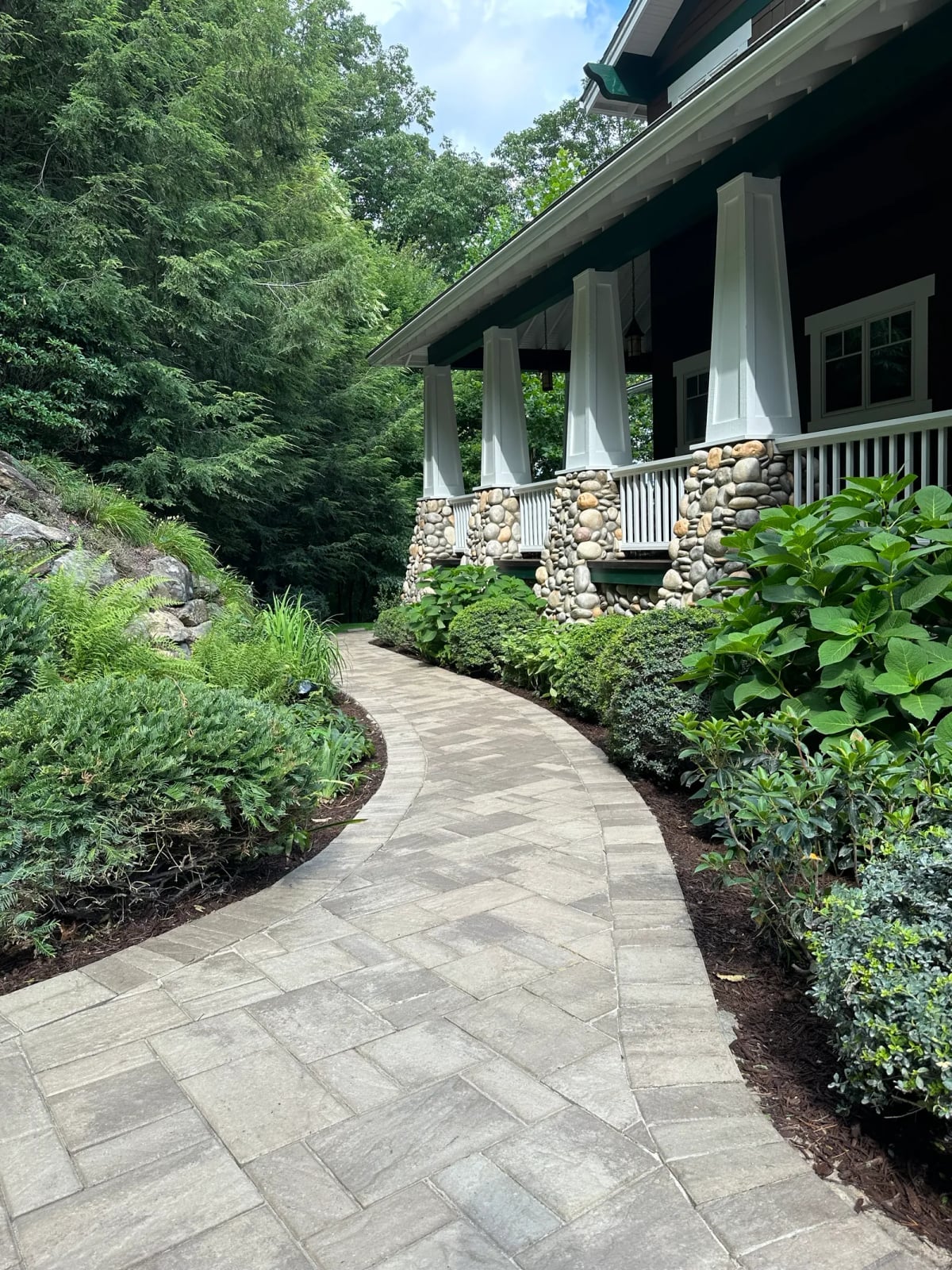
A straight paver path to a Craftsman house relies on geometric precision. The gray pavers here run directly from the curb to the covered porch, with stone pillars and wood details on the house echoing the clean lines. The bright daylight makes the straight path and the even spacing between pavers stand out, reinforcing the orderly character of the style. For a Craftsman front yard, a straight path with consistent paver spacing supports the architectural symmetry without needing extra ornament.
Classic Red Brick Pathway to White Brick House
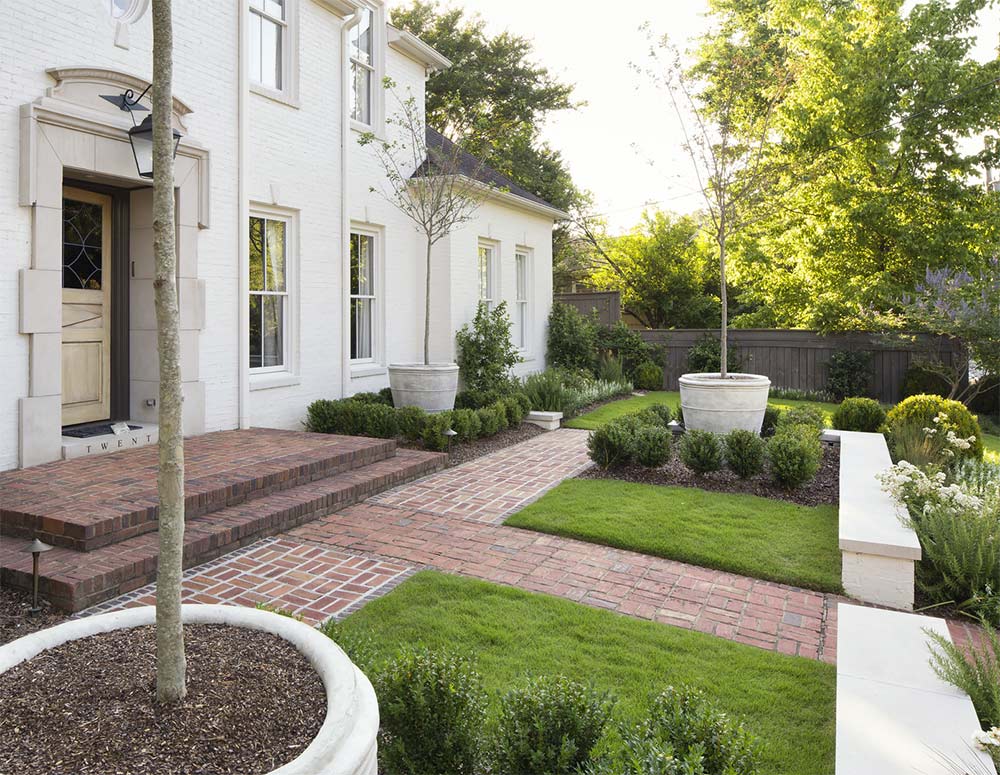
A red brick pathway against a white brick house is a classic pairing that costs less than you might think. The warm terracotta tones of the brick pavers anchor the pale facade and make the entrance feel grounded. Large planters on either side of the door add height and greenery without blocking the walkway. A modern door with glass panels keeps the look current. Keep the path straight and the edges crisp, and skip fussy borders or inlays so the brick remains the focal point.
Concrete Walkway and Brick Path to Stone Facade
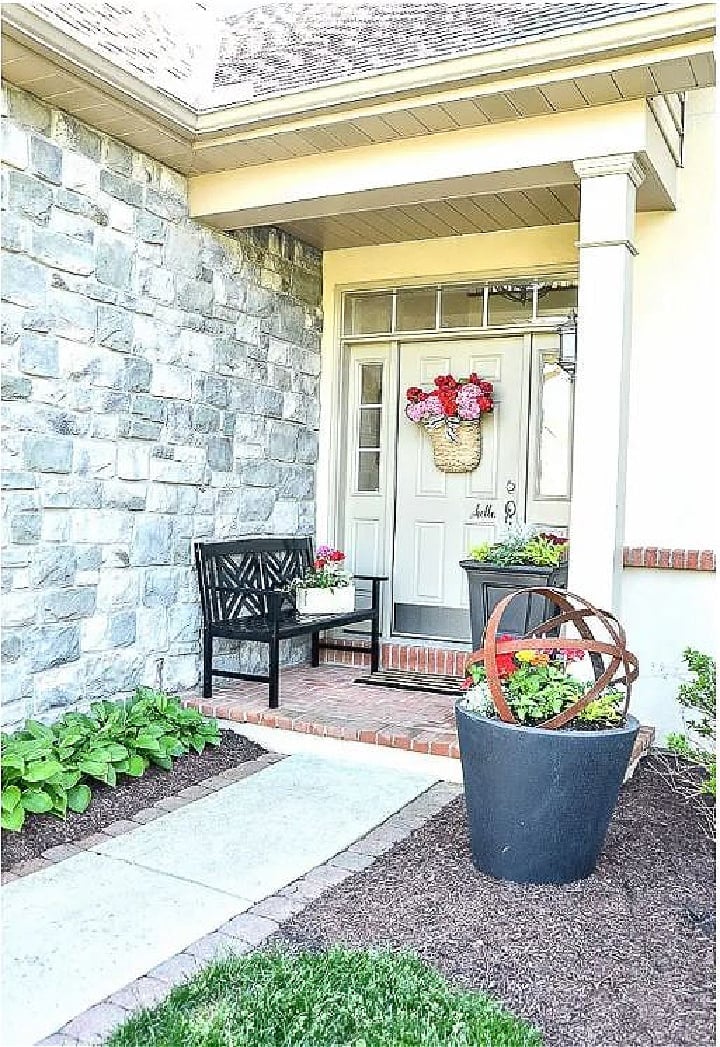
A walkway that needs to work for both guests and daily use should keep the main path wide enough for two people to walk side by side. Here, a concrete walkway leads to a front porch with a stone facade, and a brick path branches off to the side. The combination of materials adds visual interest without complicating the layout. A bench on the porch and a few planters soften the hardscape.
For renters, this look is surprisingly doable. Instead of pouring concrete, use large concrete pavers laid on a gravel base. The brick section can be replaced with brick veneer tiles or even a roll-out brick mat. A wreath on the door and potted plants on the steps bring color without permanent changes.
Straight Concrete Walkway with Stone Planter
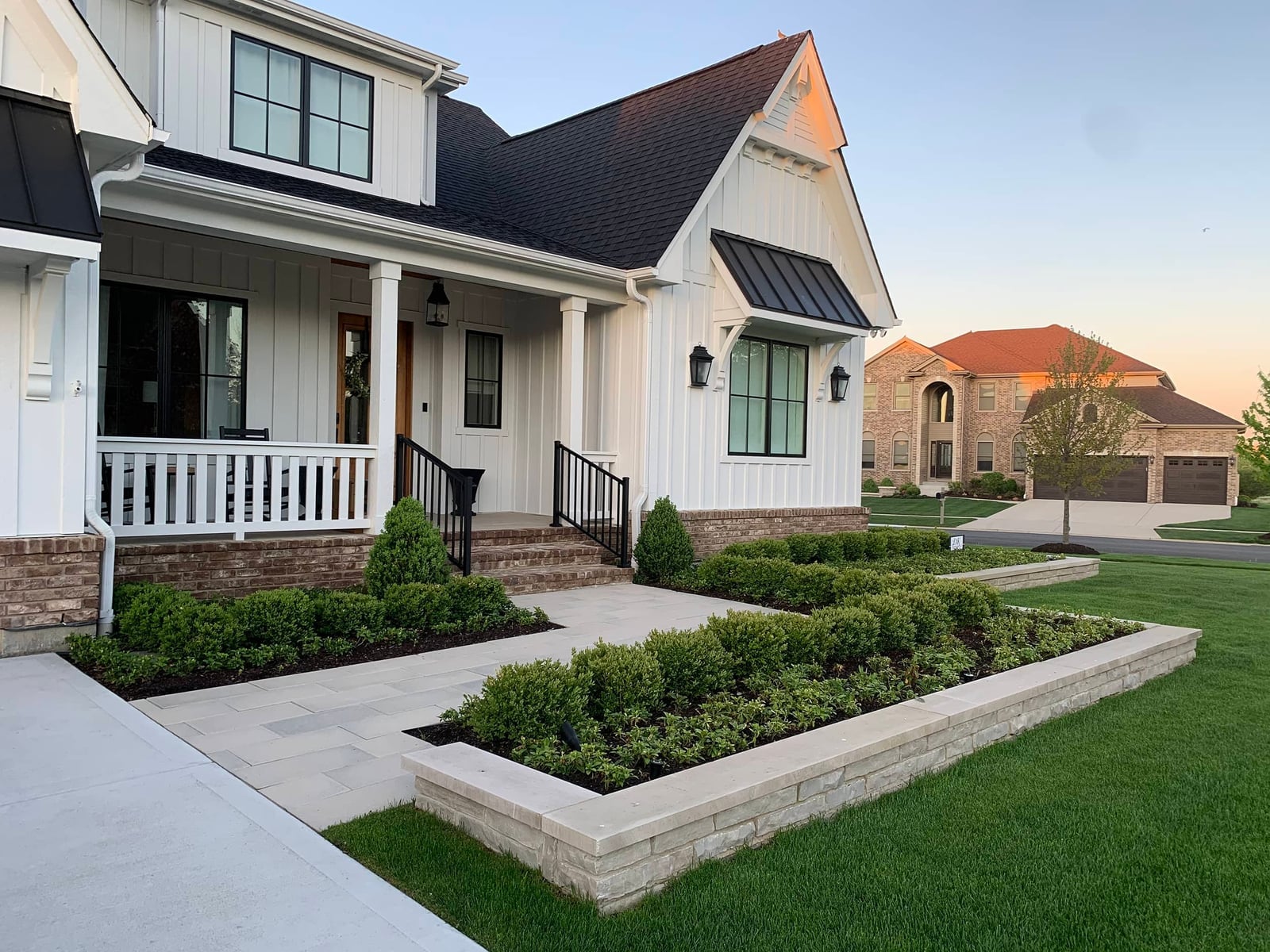
A straight concrete walkway with a raised stone planter at the corner creates a clean, deliberate line to the front door. The contrast between the gray concrete and the white house facade is softened by dark manicured hedges. At dusk, the soft light makes the walkway look even more sculptural. This design works because the planter acts as a visual anchor, breaking up what could otherwise be a long, blank stretch of path.
Paver Walkway Leading to Multi-Level Stone Steps
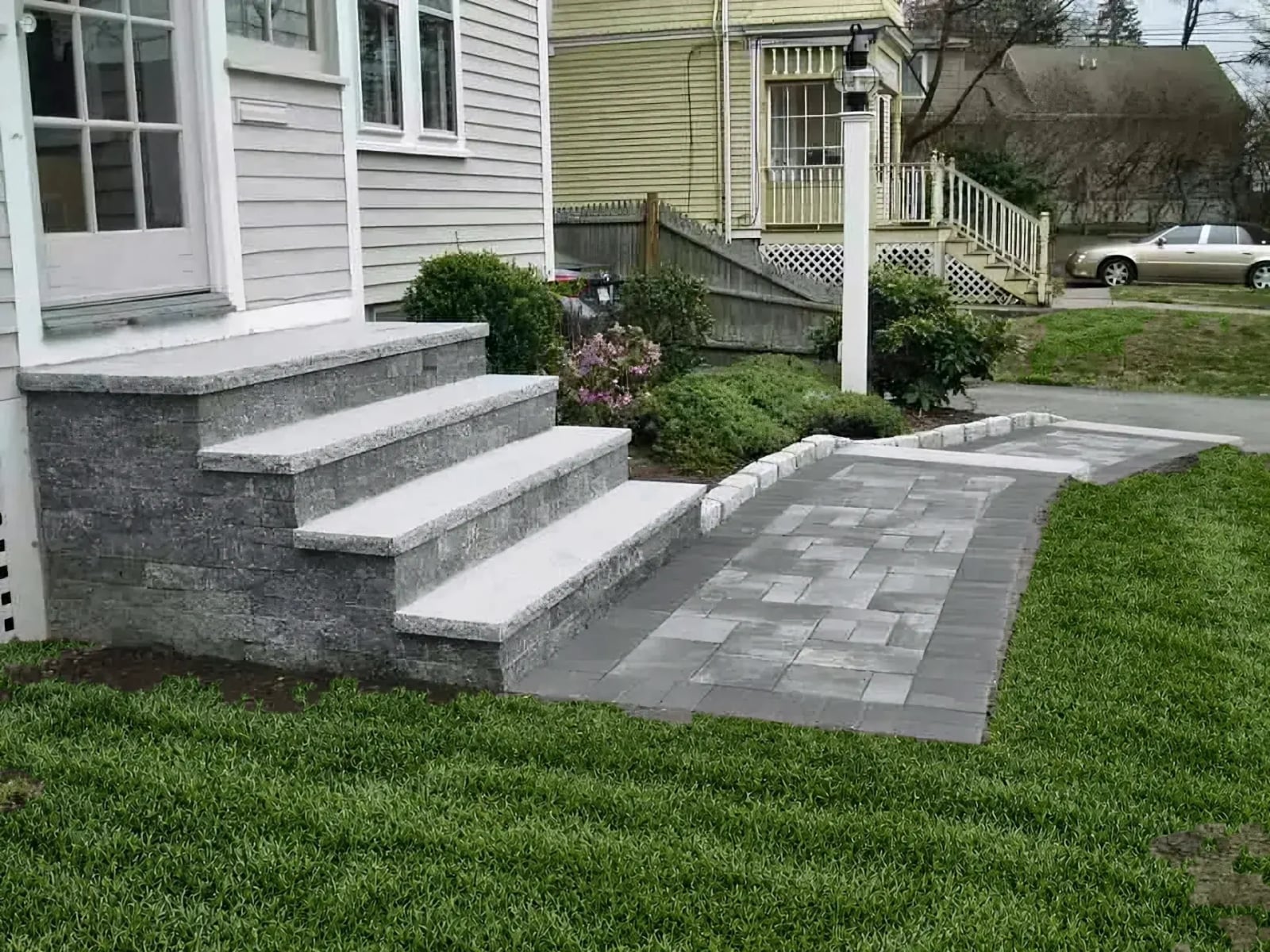
A paver walkway that leads to multi-level stone steps adds a sense of arrival that a single step just cannot match. The steps here are wide and shallow, which makes the climb feel gradual rather than steep. The pavers are laid in a simple running bond pattern, so the eye moves forward without stopping. A porch light and a metal railing add safety without distracting from the stonework. This layout is a good choice if your lot has a natural slope or if you want to create a formal entrance that feels substantial.
Curving Paver Walkway with Stone Border and Colorful Landscaping
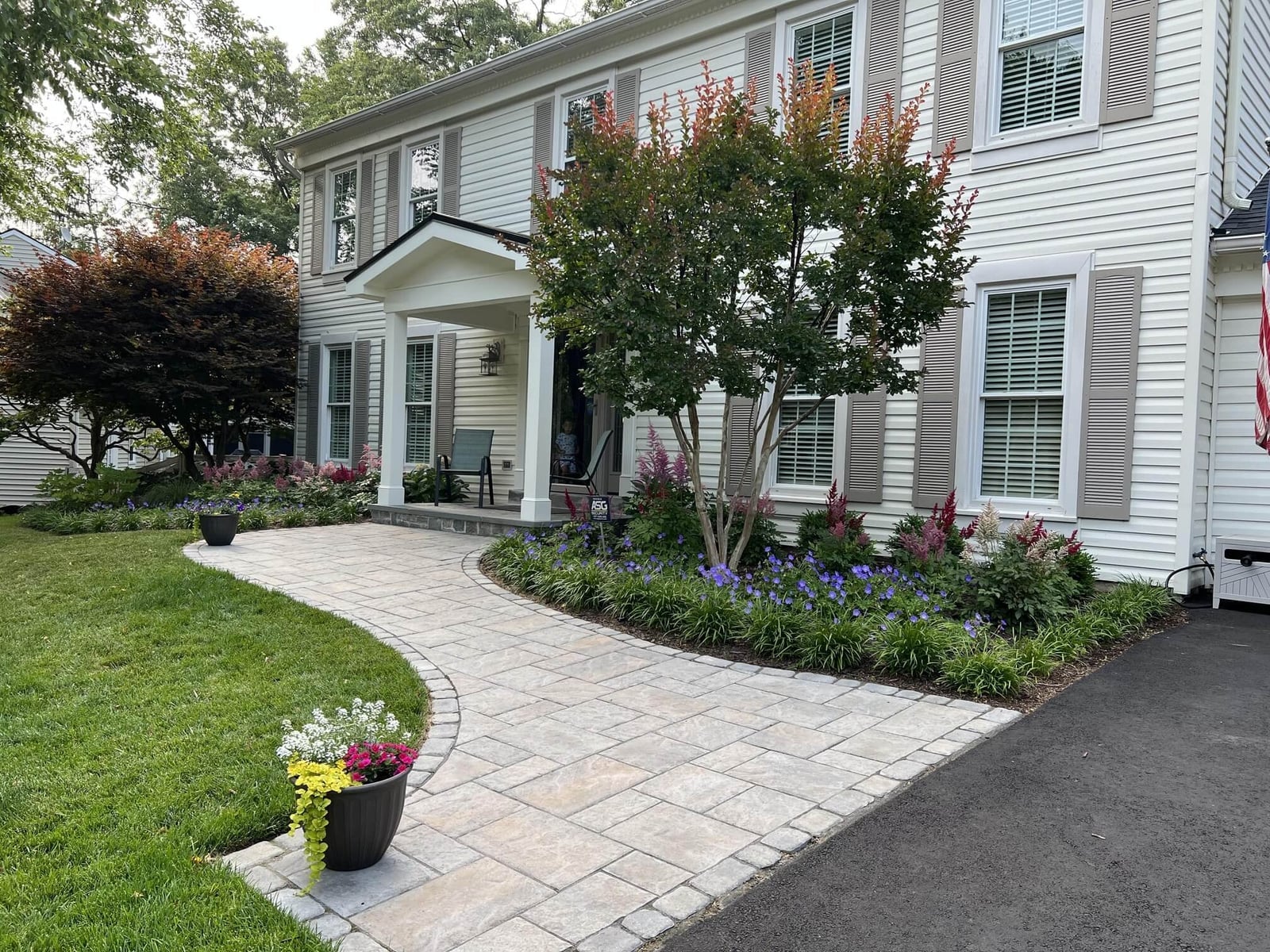
A straight walkway is efficient, but a curving one tells a story. This curving paver path with a stone border softens the approach to the house and makes the front yard feel larger. The beige concrete pavers blend with the stone border, while the landscaping on both sides is packed with pink and purple flowers. The curve also means you plant more: the beds are wider at the bends, so you can layer low ground cover behind taller perennials. The stone border keeps the pavers from shifting and defines the edge so the grass does not creep in.
Curving Stone Paver Walkway on a Traditional Estate
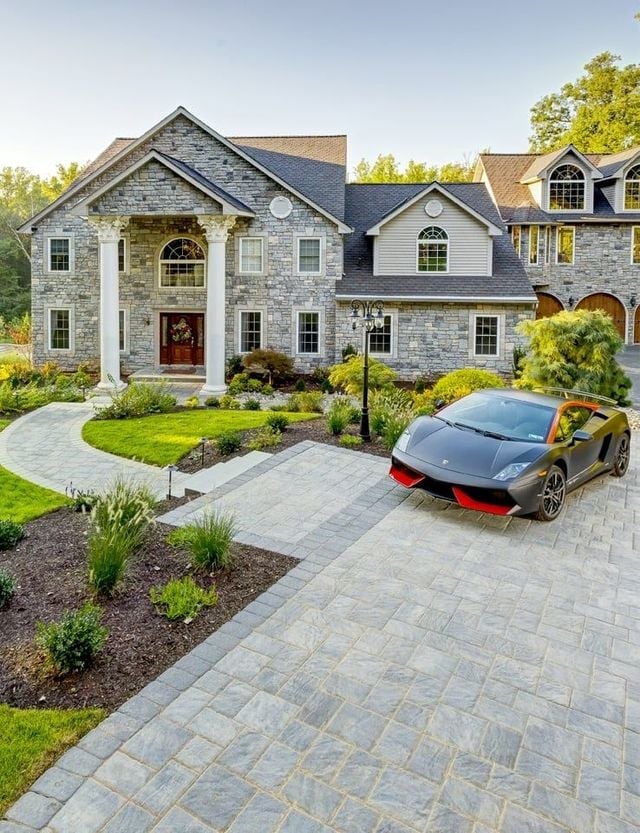
A grand stone house sets the tone here, and the walkway follows its lead with a gentle curve from the driveway to the entrance. The gray stone pavers read as substantial against the green grass and dark mulch, while a gravel border softens the transition between hardscape and lawn. Bright sun brings out the texture in the stone facade and the pavers themselves. For a traditional estate, the material choice is what carries the look: stone that feels grounded and permanent, not overly refined. The curve keeps the path from feeling like a strict line, which suits the roomy front yard and the scale of the house.
Final Thoughts
A good walkway does more than get you from the curb to the door. It frames the view of your house, directs the eye, and can make a small front yard feel larger or a formal home feel grounded. The best choice is the one that suits your climate and how you actually use the path. Consider upkeep, drainage, and how the material feels underfoot in wet weather. Check your USDA zone before planting along the edges. The right walkway is one you do not think about because it simply works.