When winter settles in, outdoor cats need more than a cardboard box to stay warm. A DIY insulated cat house gives them a dry, draft-free space without costing a fortune or requiring advanced carpentry skills. This article rounds up 35 practical designs, from quick plastic-bin shelters to multi-level wooden houses that look right at home in your yard or on your patio.
Whether you are building for a community cat or your own pet, these ideas focus on materials that trap heat, block wind, and keep bedding dry. You will see real-world examples that balance function with a bit of style, so the shelter does not stick out like an eyesore.
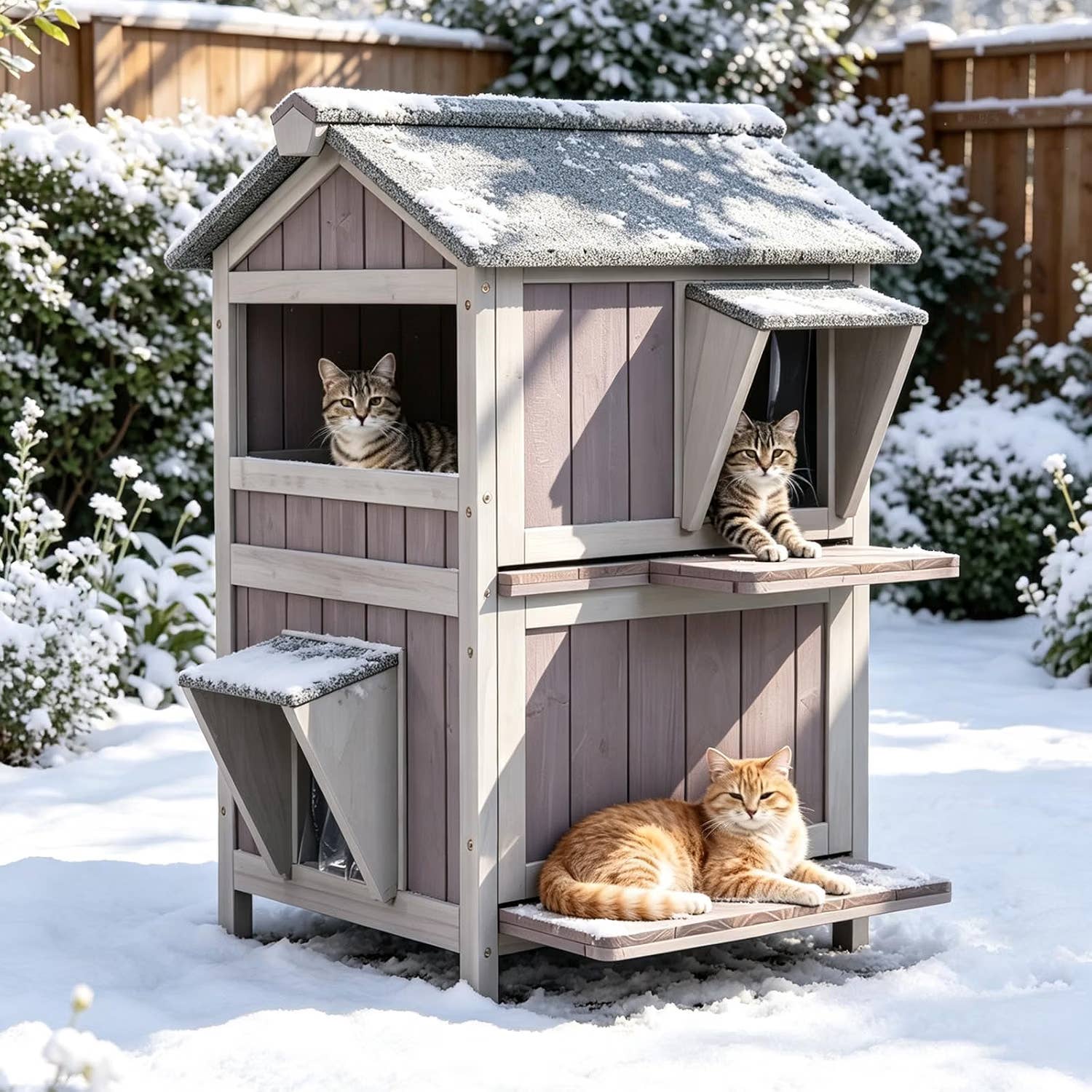
Modern Two-Story Insulated Cat House for Snowy Backyards
A two-story cat house built from wood and asphalt shingles sits in a snowy backyard, its gray, brown, and white palette blending with the winter landscape. The design puts cats on platforms above the snow line, giving them a dry lookout. What defines this style is the ratio between the sturdy lower shelter and the open upper deck: one part enclosed warmth, one part fresh air. For layout, keep the footprint compact so the house fits against a fence or wall, leaving space for play.
Charming Rustic Pallet Wood Cat House with Garden Ramp
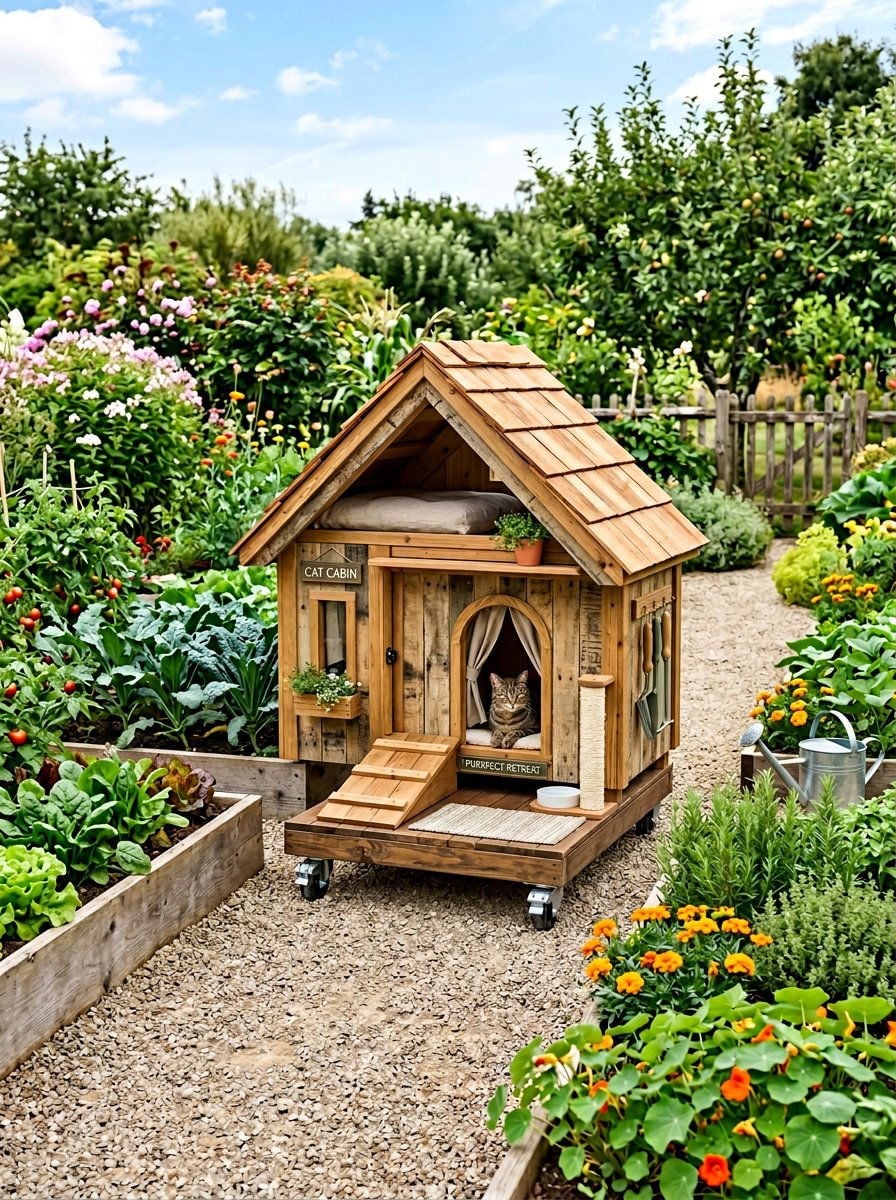
This is the kind of build that looks better with age. A pallet wood cat house on wheels sits in a garden, its natural wood tone softened by the surrounding green plants and stone pathway. A ramp leads up to the entrance, making it easy for a cat to climb without jumping. The rustic style is defined by the ratio of rough-sawn wood to the smooth, simple ramp. What breaks the look is anything too polished: skip paint or stain, and let the wood weather naturally. For a renter-safe swap, set the house on casters so it can move with you.
Cozy Rustic Wooden Cat House with Straw Bedding in Snow
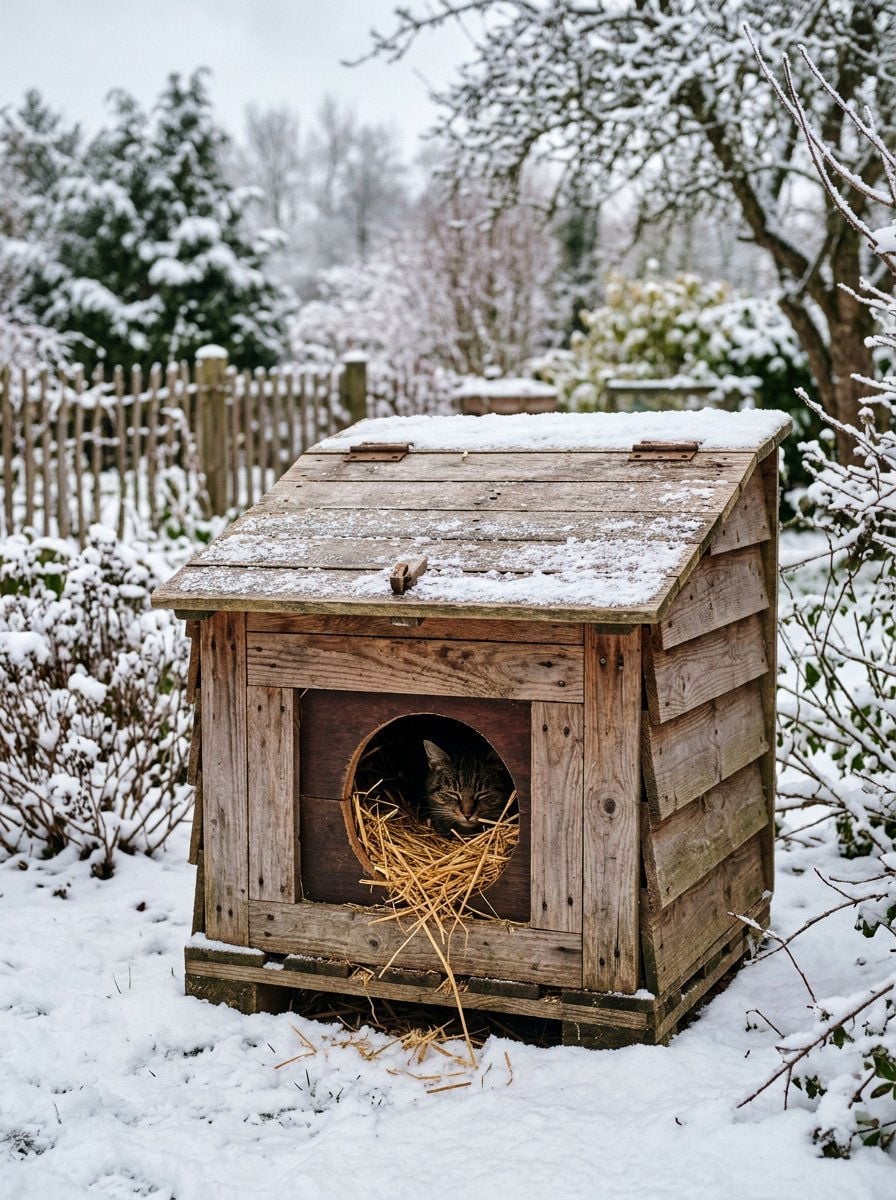
How do you keep a cat warm when the ground is covered in snow? A ground-level wooden cat house with straw bedding is one honest answer. The natural wood and white snow palette is simple, and the straw inside acts as loose insulation that traps body heat without holding moisture.
The rustic style here depends on keeping the wood untreated and the straw dry. Using hay instead of straw retains dampness and molds faster. Fill the interior at least two-thirds with straw so the cat can burrow in. Check your USDA zone before setting this up: in very wet climates, raise the floor an inch or two on a wooden base.
Elaborate Multi-Level Cat House with Ladder and Green Roof
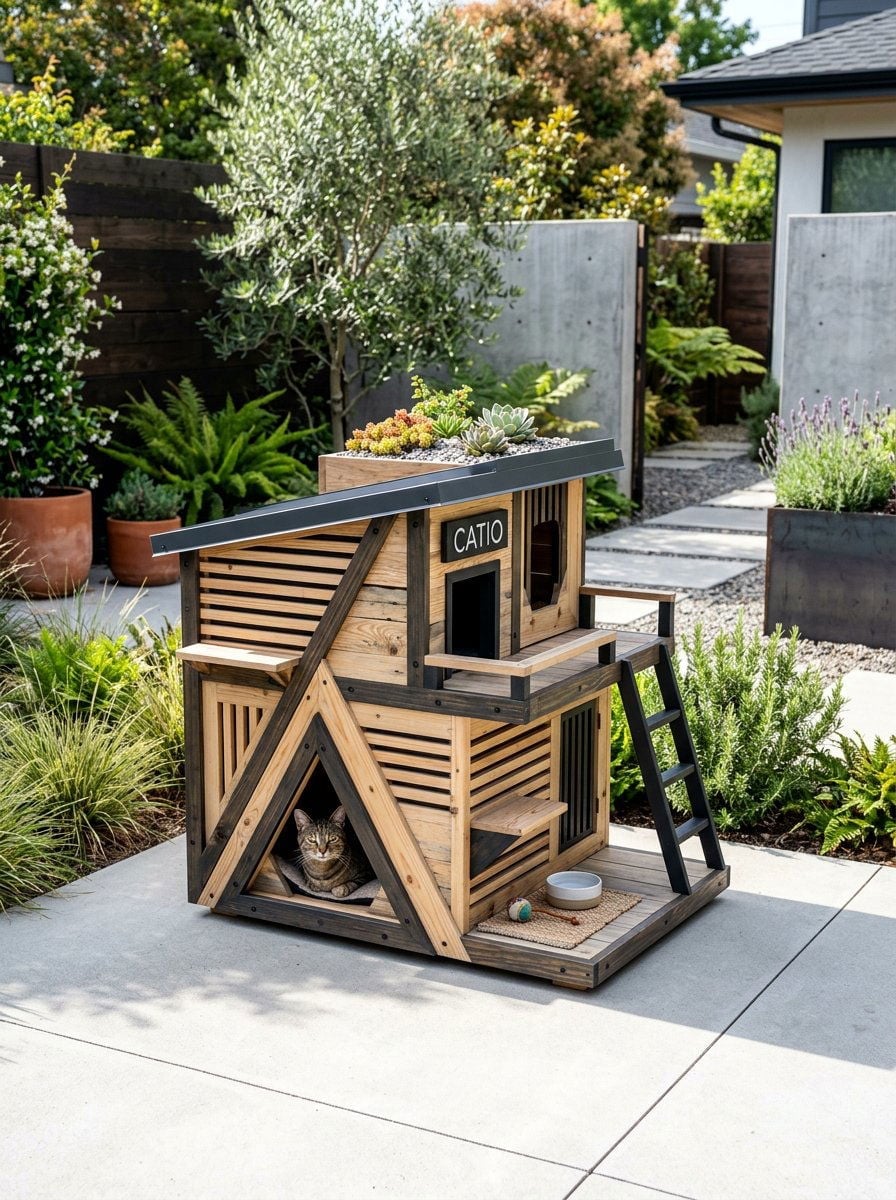
A multi-level wooden structure with platforms and a ladder turns a patio corner into a cat playground. The house sits against a concrete patio edge, surrounded by potted plants, and a green roof blends the top into the garden. Each level offers a different vantage point, and the ladder connects them without taking up floor space. A practical rule for layout is to anchor the structure to a wall or fence if you have more than two levels: a tall, narrow house can tip in wind.
Farmhouse Cat House with Pink Accents and Shingled Roof
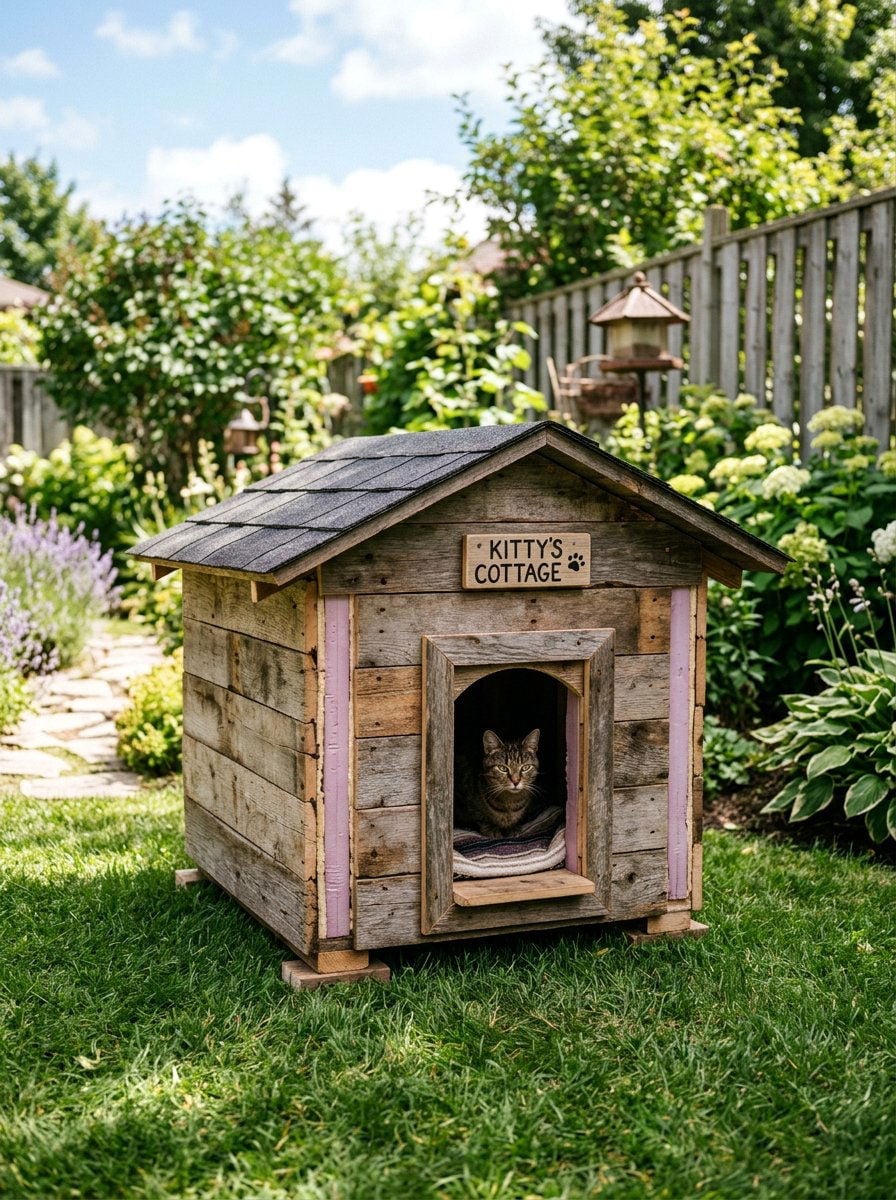
A farmhouse rule: one accent color is enough to make a structure feel intentional. Here, a reclaimed wood cat house with a shingled roof gets pink trim around the door and window, and a cat peeks from inside. The natural wood and green palette is warm, and the pink is kept to the edges so it reads as decoration rather than a full paint job. What defines the farmhouse style is the ratio of weathered wood to crisp details: roughly three parts rustic to one part refined. What breaks it is matching the pink to anything else in the yard: let it stand alone.
Rustic Cat House with Canvas Awning for Outdoor Comfort
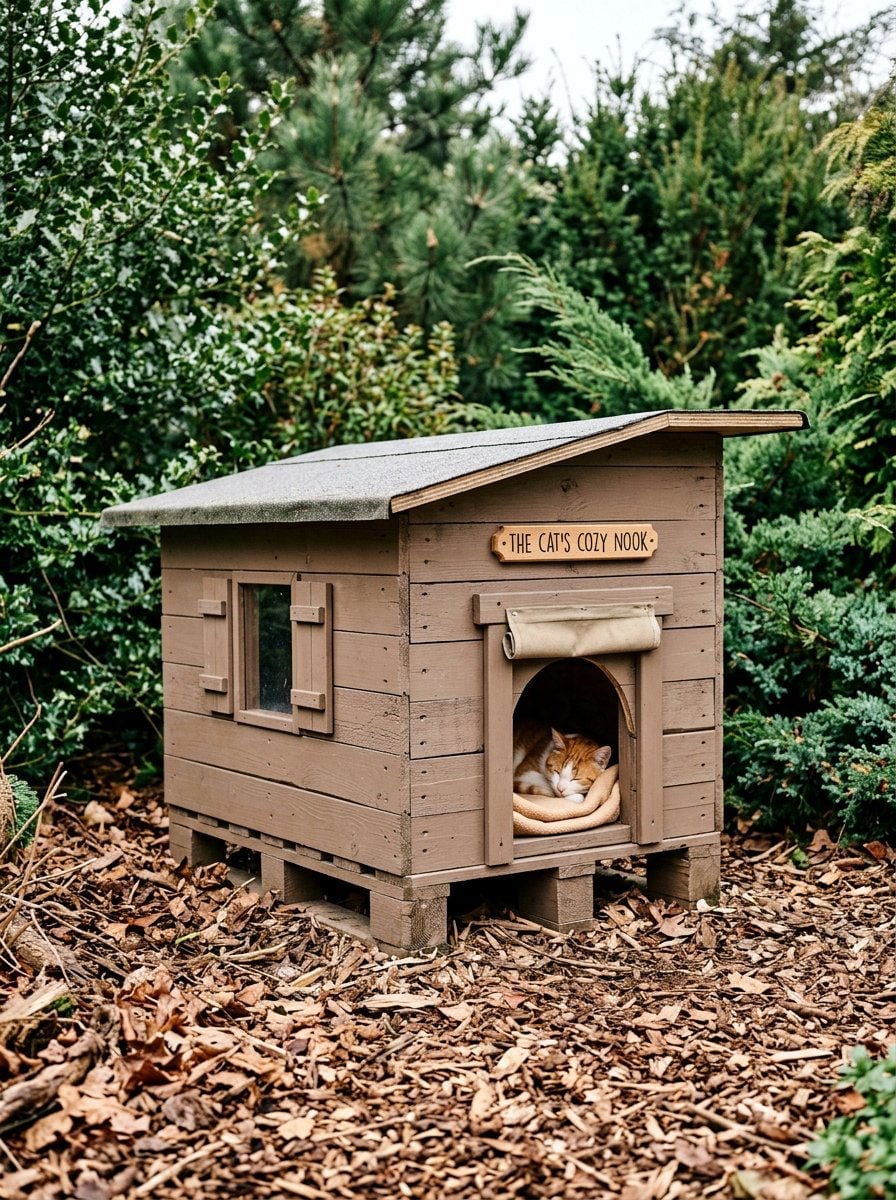
A canvas awning turns a plain wooden shelter into something that reads as a proper little porch. The natural wood brown of this compact house blends into its wood-chip setting so the cat, curled up in the opening, becomes the main event. A canvas roof flap is a budget-friendly swap for a fixed overhang: it sheds light rain, breaks direct sun, and costs nothing in framing. The awning also breaks the solid roofline, which keeps the whole piece from looking like a storage crate. If your yard sits in full sun, this kind of soft roof buys shade without blocking the view from inside.
Elevated Cedar Cat House with Platform on Stone Pavers
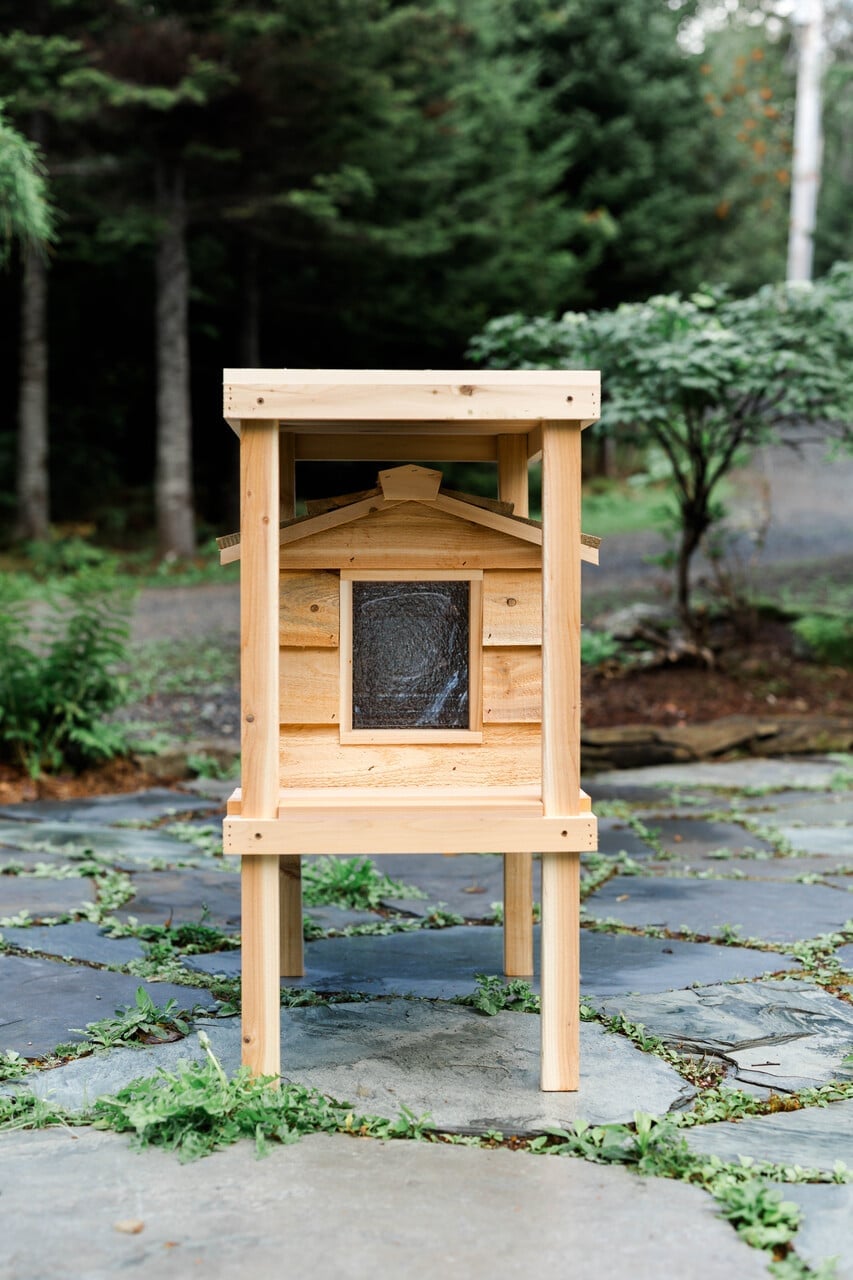
The cedar house sits up on legs, with a flat platform that turns the space below into a shaded hangout. That raised layout does two things at once: it lifts the sleeping quarters off damp ground and gives the cat a lookout spot at eye level. The platform rests on stone pavers, which is a renter-safe way to add a solid base without pouring concrete. Pavers shift with frost and can be pulled up when you move, so the whole setup stays temporary on paper but feels permanent in use.
DIY Insulated Cat House from Repurposed Plastic Bin
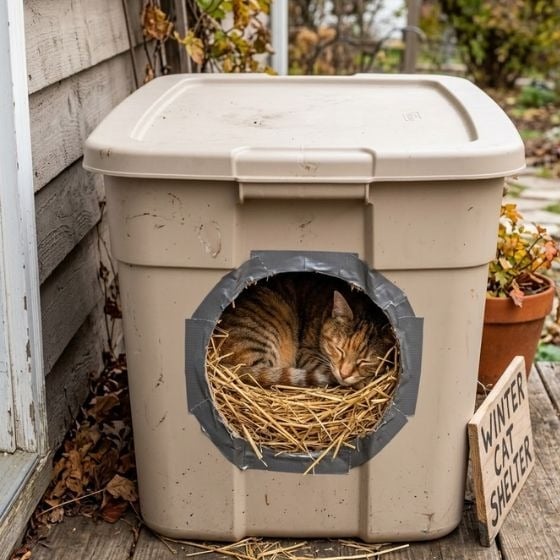
A repurposed plastic bin is the fastest route to a weatherproof shelter that costs next to nothing in materials. This version sits on a wooden deck with a layer of straw packed inside for insulation and a wooden sign propped out front for personality. Tan plastic walls and a gray lid keep the look low-key, while the straw bedding provides a dry nest that cats burrow into for warmth. Duct tape along the seams seals drafts, and the whole bin can be swapped out in minutes if the plastic cracks in deep cold. It is a styling variation on the build: function first, charm second, and both work fine.
Modern Farmhouse Wooden Cat House on Tiled Patio
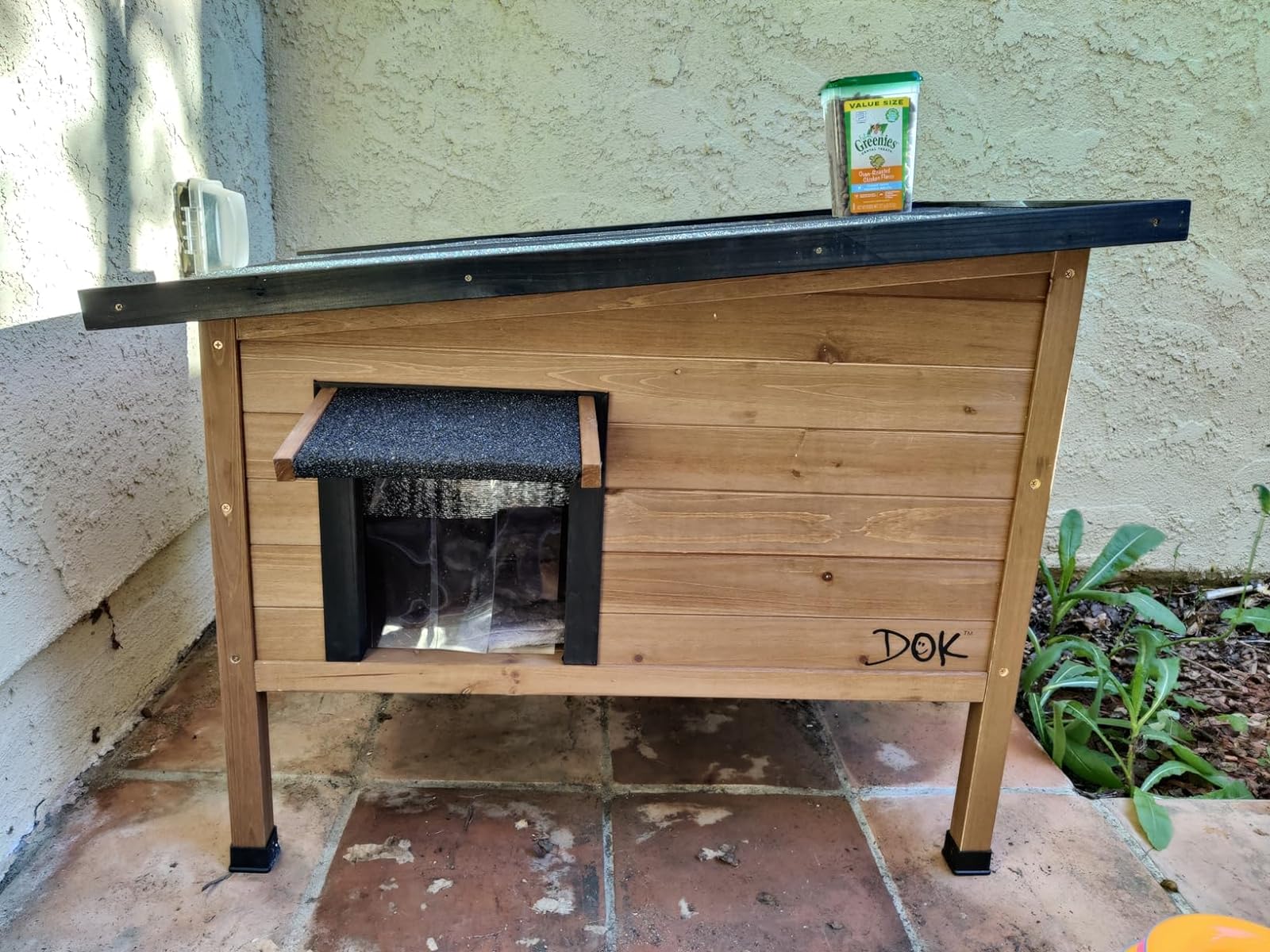
Does a cat house have to hide in the backyard? This one sits right on a tiled patio, treated like a piece of outdoor furniture. The wood body is stained a warm brown, topped with black asphalt shingles that handle snow and rain better than flat lumber. A plastic mat under the structure protects the tile from scratches and moisture, which is a detail worth copying if your cat house sits on a finished surface. The modern farmhouse style comes from the mix of natural wood grain with the dark, textured roof. Potted plants on either side anchor the house to the patio layout, making the whole corner feel designed rather than cobbled together.
Multi-Level Outdoor Cat House with Platforms and Bench
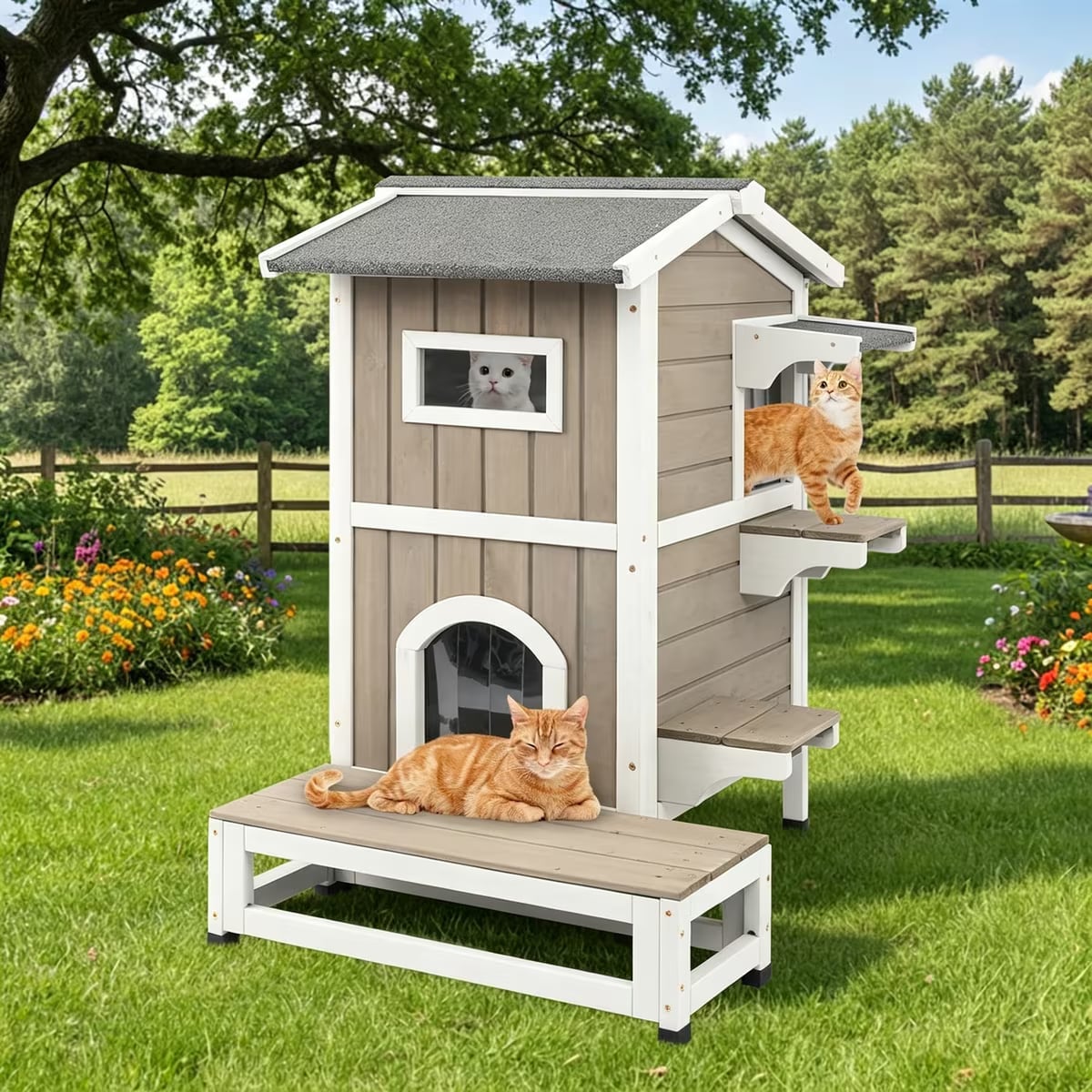
Two orange cats claim this gray-and-white structure like it was built to their exact specifications, because it was. The multi-level design gives each cat its own spot: one on the upper platform surveying the garden, another lounging on the bench at ground level. That bench extends the usable footprint without adding height, so the house feels substantial in the garden without towering over the flower beds. Beige trim softens the gray palette and prevents the whole thing from reading as a municipal shed. The scale suits a yard with room to spread out rather than a tight corner.
Rustic Indoor Cat House on a Patterned Rug
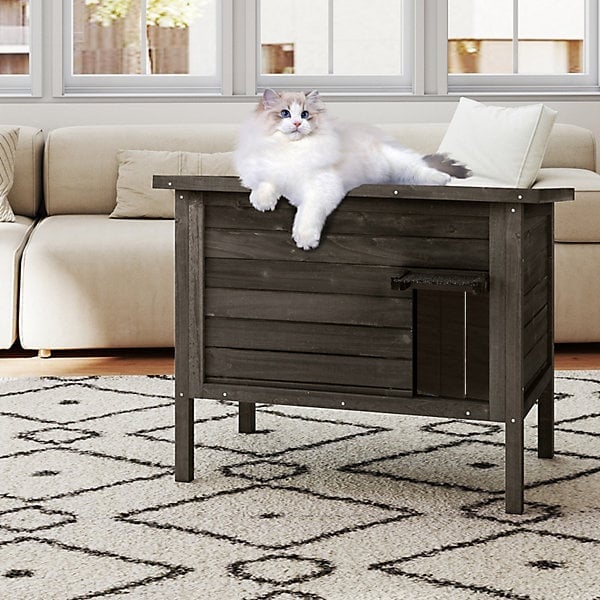
A cat house that lives indoors changes how a room feels by giving the pet a place that is clearly its own. This dark gray and white wooden house with metal details sits on a patterned rug near a sofa, and the cat on top of the roof shows how the piece becomes part of daily life. The style is rustic, so the wood has a raw, unfinished look rather than a polished surface. Ambient indoor lighting keeps the scene soft. For the layout, placing the house on a rug instead of bare floor helps the eye read it as furniture. The rug anchors the house and keeps it from floating visually in the room.
Triangular Rustic Cat House Amidst Garden Ivy
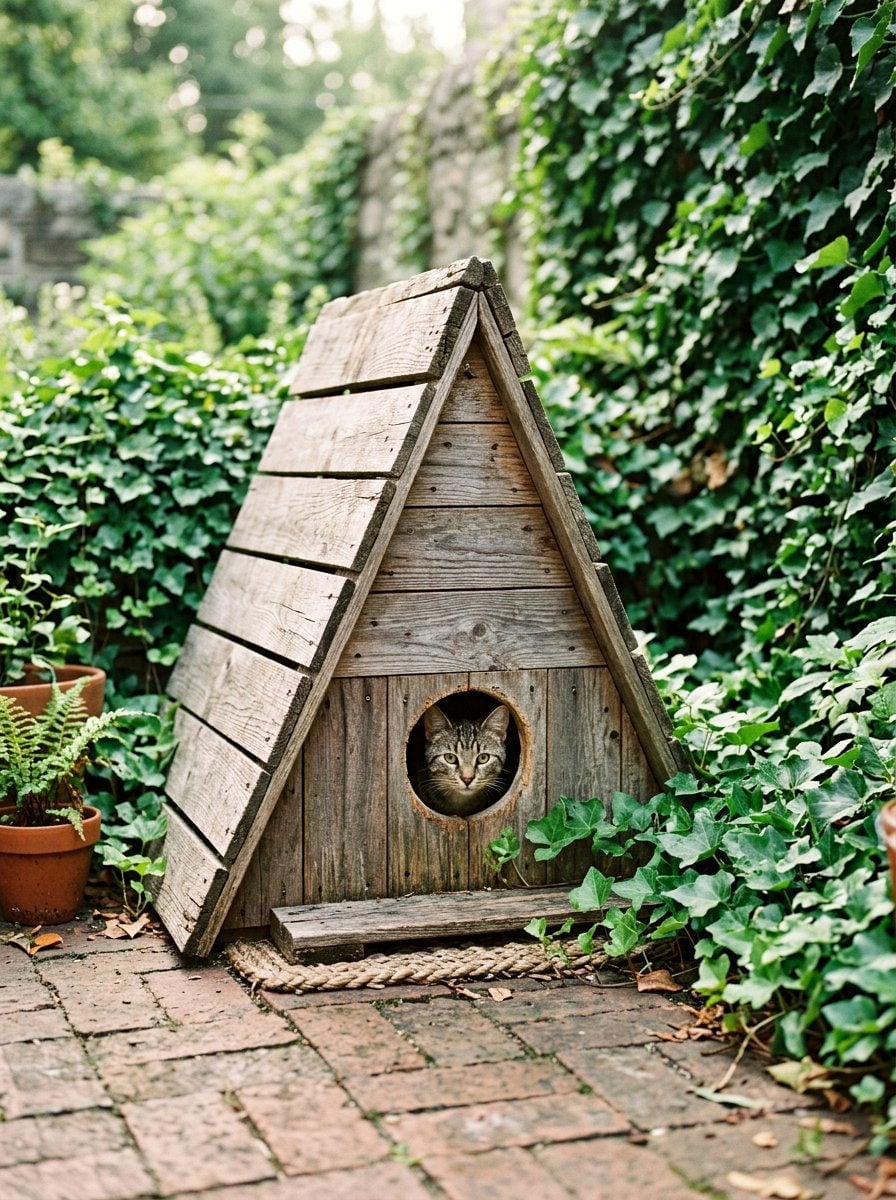
A flat fronted cat house is one option, but this triangular wooden house takes a different shape altogether. The compact house sits on a garden path surrounded by green ivy, with a cat peeking from the opening. Natural wood and green ivy set the palette, and the brick and rope details around the path give the garden a layered, established feel. Natural daylight makes the wood grain visible without washing out the green.
The triangular form is what makes this house stand out from the usual boxy shelters. It tucks into the garden without dominating the plants. The rope and brick in the path echo the rustic materials of the house itself, so the whole garden looks like one deliberate scene.
DIY Insulated Cat Shelter Construction Layers
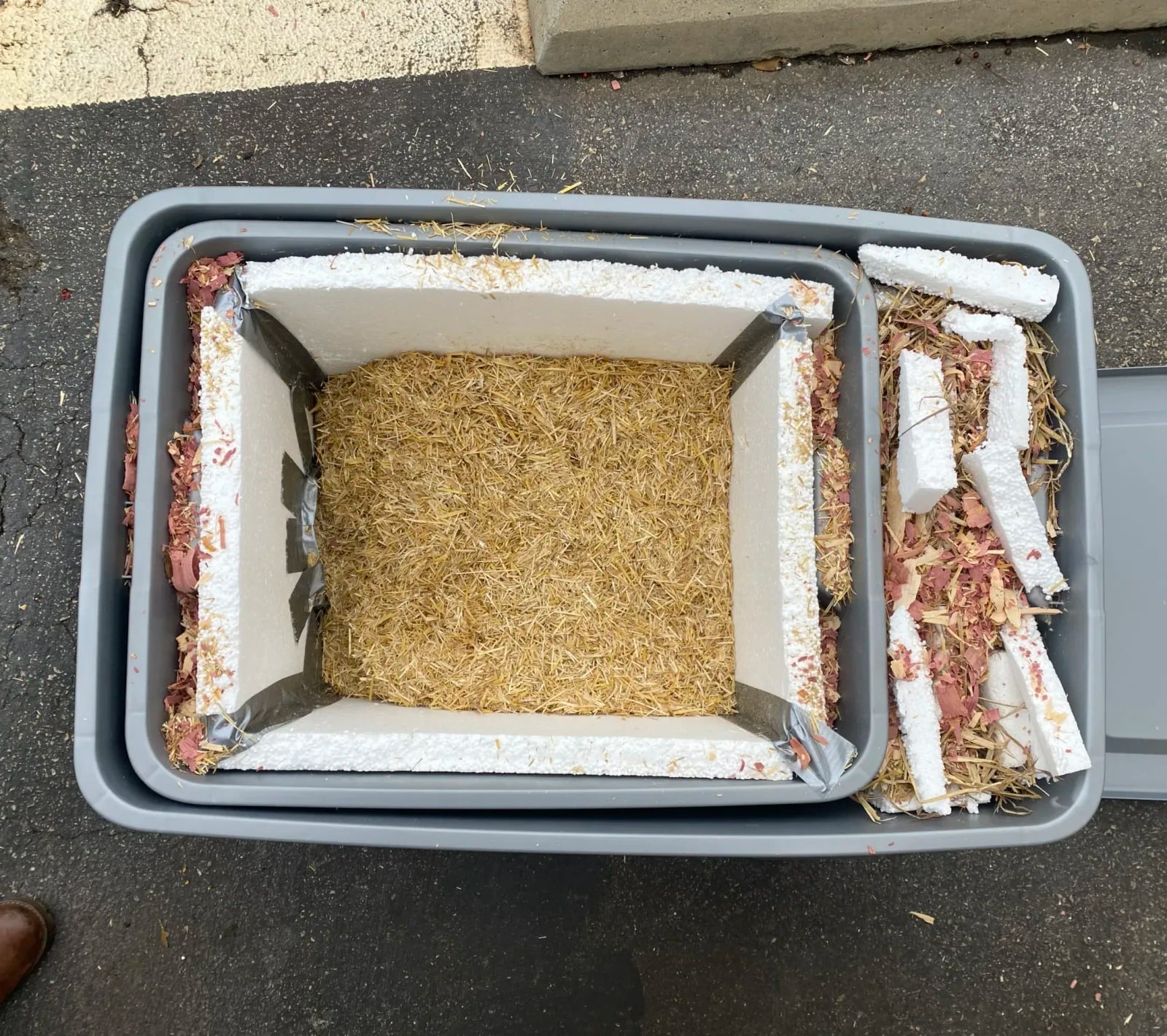
The construction layers here are what make this shelter functional. An overhead shot shows a gray plastic bin nested inside a larger container, with styrofoam panels and straw filling the gaps. The idea is that the air gap and the insulation materials trap heat. The straw sits on top of the styrofoam inside the bin. Natural light from the outdoor setting shows the white and gray layers clearly. For materials, the combination of a rigid outer bin and soft interior bedding gives the cat a dry, warm space without any complicated framing.
Multi-Level Modern Farmhouse Cat House in Front Yard
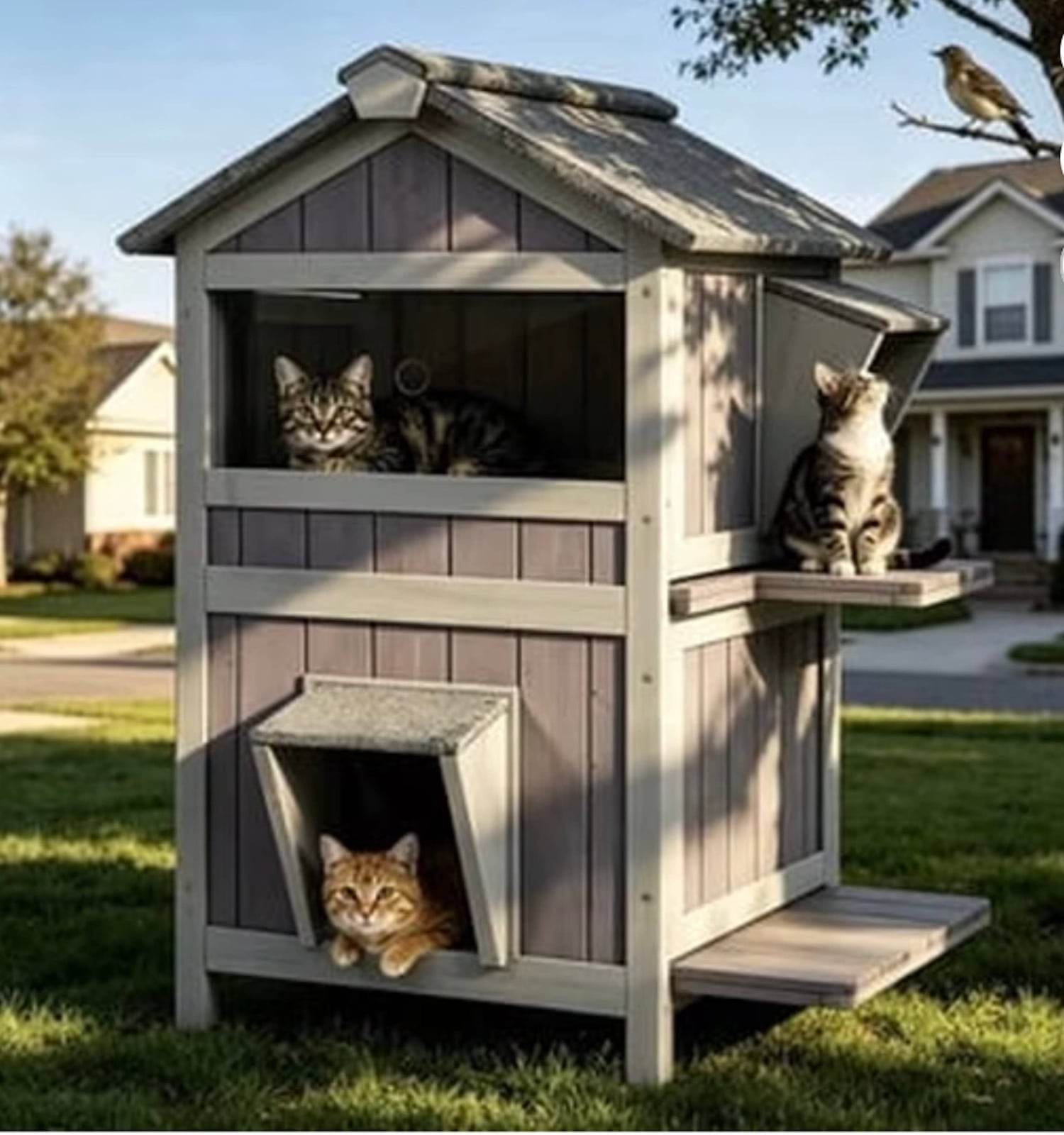
This two-story cat house in a front yard shows how a multi-level structure works for a household with more than one cat. The modern farmhouse style reads in the gray and beige palette and the simple wood construction. Natural daylight hits the house from the front yard, and the grass underneath keeps the look clean. Multiple cats sit on different platforms, which confirms that the layout does what it is supposed to do. For lighting, the house is placed where it gets sun but is not shaded by trees or the house itself, so the platforms stay dry and visible. The tiered structure gives each cat a separate spot without crowding.
Modern Wooden Cat House with Dark Gray Roof
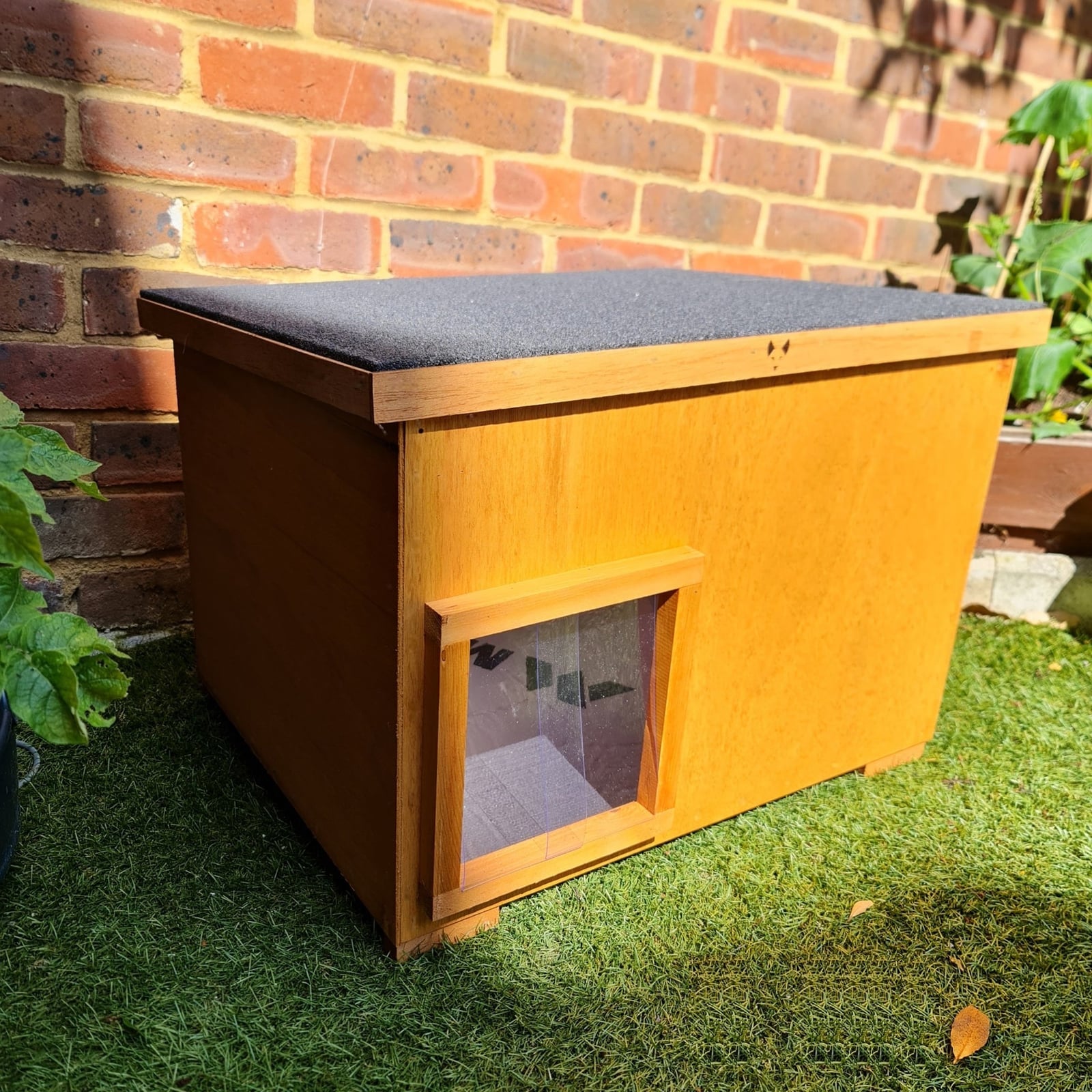
A garden cat house needs a roof that sheds water, and this compact wooden house delivers with a dark gray asphalt shingle roof that slopes on both sides. The natural wood body keeps the house looking like a garden structure, not a pet crate. A small window on the front adds to the house-like feel. The house sits on grass in a garden, and natural daylight shows the contrast between the warm wood and the cool gray roof.
The style here is modern, which means clean lines and no extra trim or decoration. The dark gray roof breaks the all-wood palette and gives the house a finished look. For storage, a house this size fits one cat comfortably and can be moved to a shed or garage during the off season if needed.
Functional Olive Green Cat House on Snow-Dusted Deck
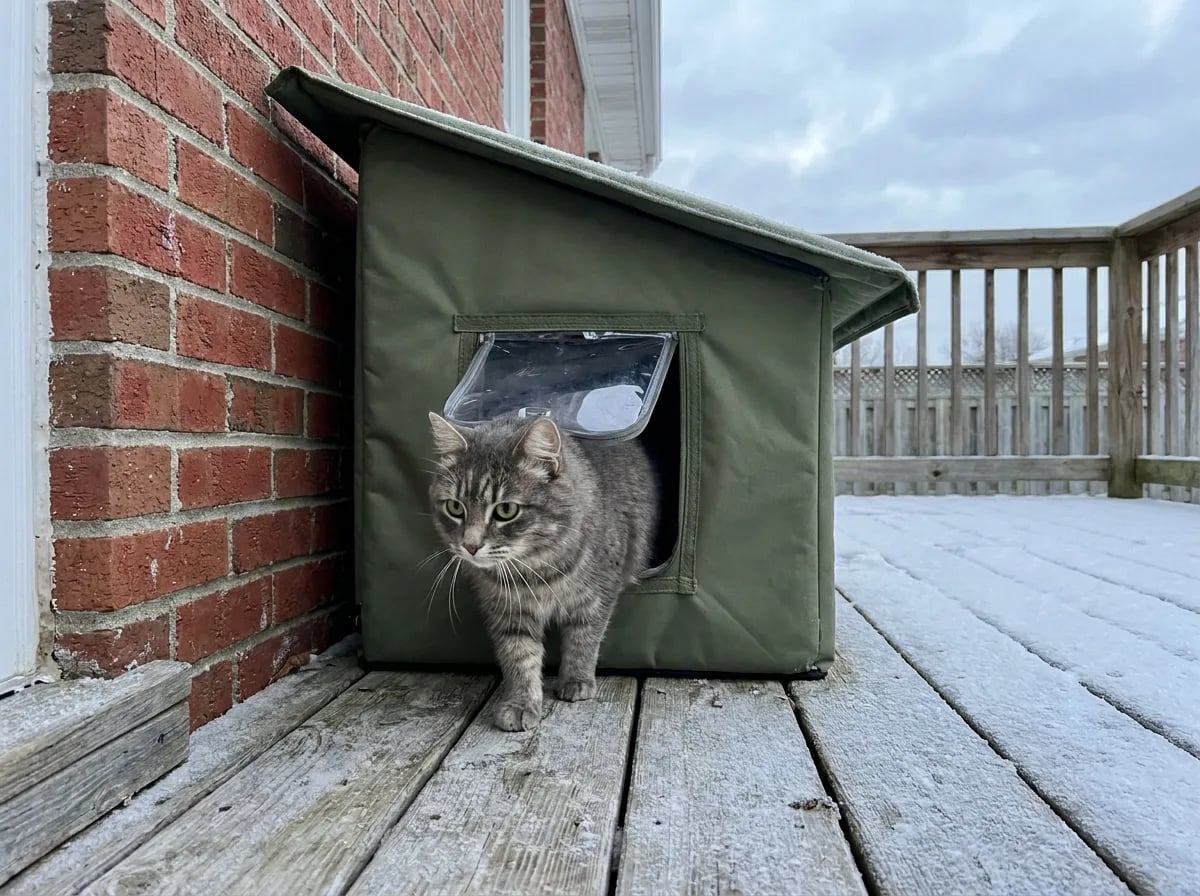
Olive green is a surprisingly practical color for an outdoor cat house because it hides dirt and blends with garden foliage. This one sits against a brick wall on a deck, with snow dusting the surface. The palette stays muted with olive green, gray, and white, so the house looks like part of the structure. A fabric flap over a plastic entrance adds weather protection, while the wooden frame keeps the shape clean. The overcast sky means the color appears flatter and more subdued than it would in full sun, which suits a functional style that does not need attention.
Geometric Triangular Wooden Cat House with Circular Openings
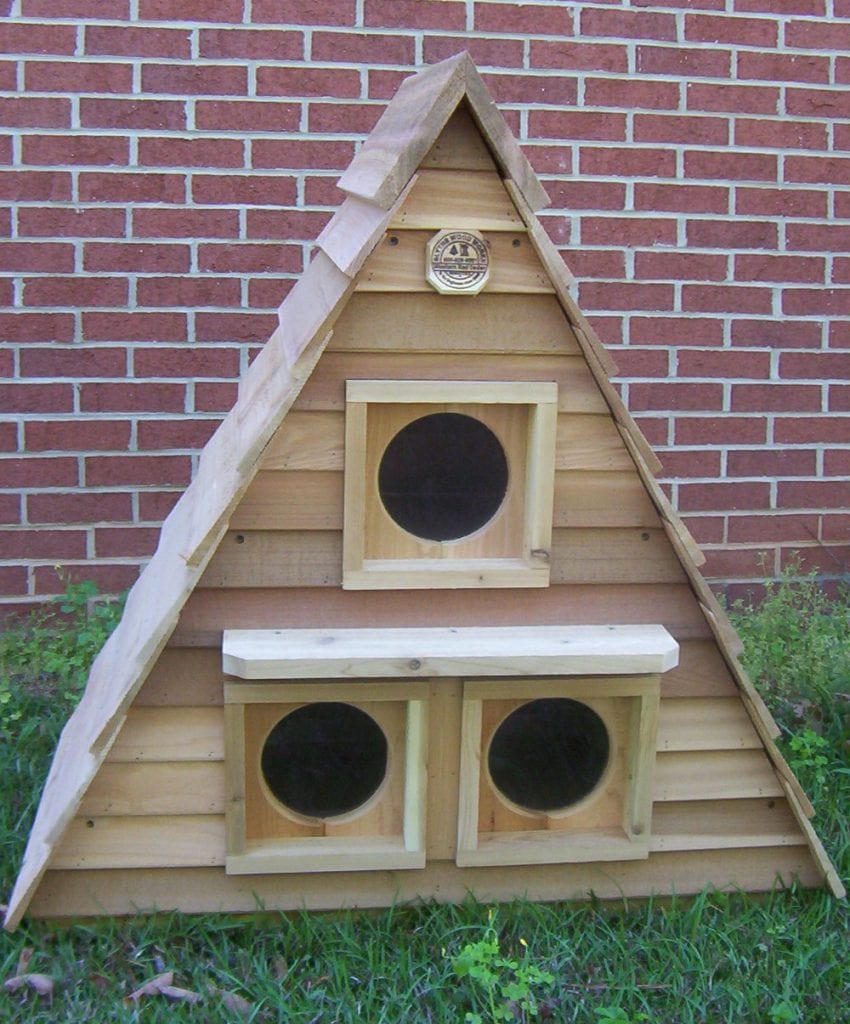
For renters, choose a cat house that stays as a standalone object, not something attached to the house. This triangular wooden design with circular openings sits against a brick wall in a compact yard, so it does not need permanent installation. The geometric shape breaks from the usual boxy silhouette, and the wood tones with black accents give it a modern look. The circular openings are the defining feature, and the ratio of solid wall to open space leans heavily toward structure, which keeps the interior sheltered. What breaks the style is the brick wall behind it, which adds a rough texture that contrasts with the clean lines of the triangle.
Two-Story Modern Rustic Cat House in Grassy Yard
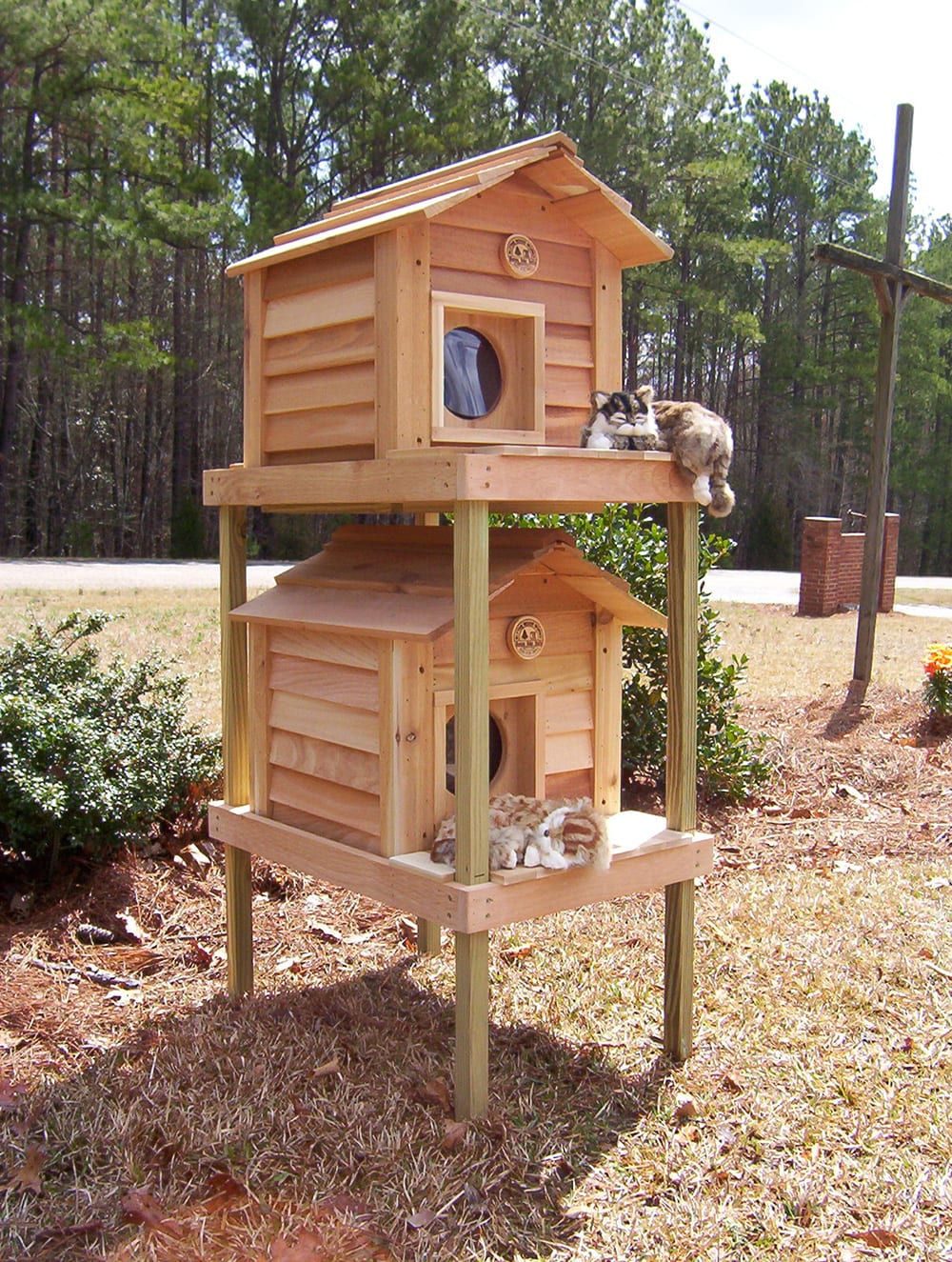
Where a single-level house offers a simple hideaway, a two-story design changes how cats use the yard by adding vertical territory. This one sits in a grassy yard with natural wood tones and green grass as the whole palette. The elevated structure means the lower level stays cooler in summer and drier in wet weather, while the upper level gives a lookout point. Two cats can occupy different levels at the same time, which reduces squabbles over space. The layout works because the house is placed away from fences and trees, leaving clear sightlines from both levels. The modern rustic style comes from the clean wooden lines and the absence of decorative trim, which keeps the focus on function.
Natural Cedar Cat House with Hinged Roof Design
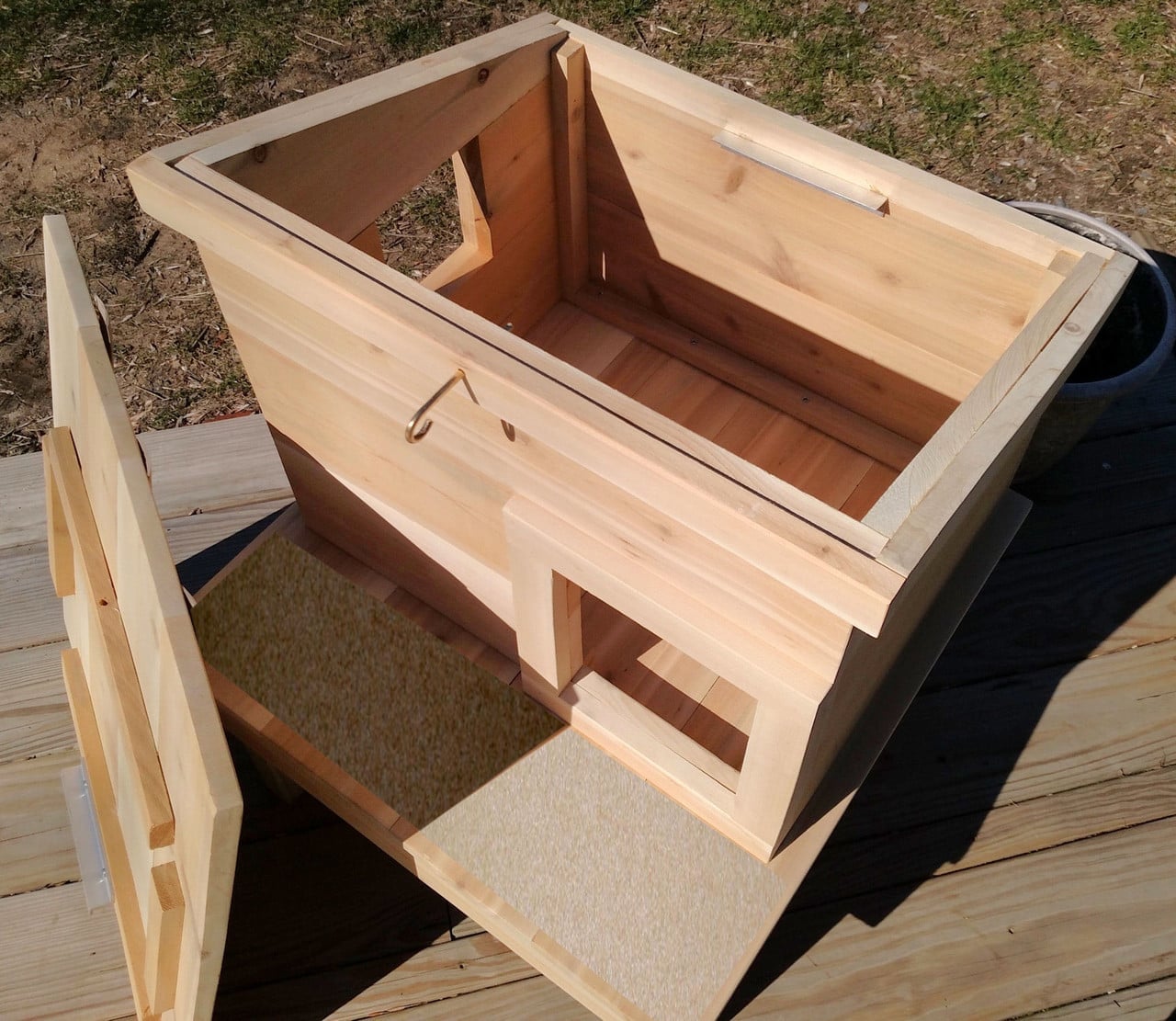
A hinged roof on a compact cedar cat house makes seasonal insulation checks simple. The natural cedar grain shows through with no paint or stain, which means the wood can breathe and resist rot over time. Metal hardware holds the roof hinge, and the beige tones of the wood warm up the deck without competing with surrounding plants. The compact size fits on a small deck or patio, and the roof can be lifted to swap straw bedding or add insulation panels before winter. Cedar is light enough to move by hand but dense enough to hold up to rain and snow, so the house stays in place once set down.
Rustic Outdoor Cat Enclosure with Small Orange Cat House
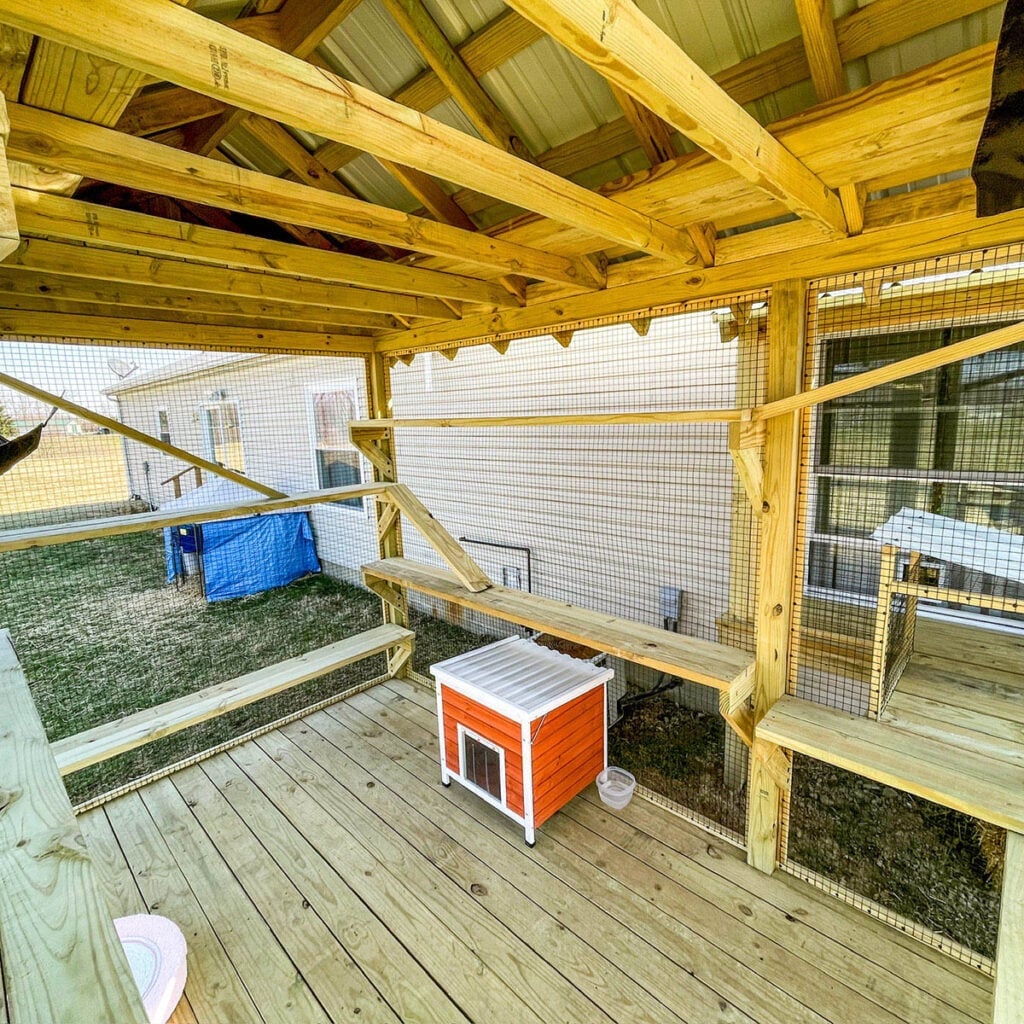
A small orange cat house inside a larger rustic enclosure creates a clear focal point without overwhelming the space. The enclosure uses natural wood tones and wire mesh to form a roomy multi-level setup with wooden platforms and benches. The orange house is the smallest element, so it looks like a shelter within the overall structure. The palette breaks the expected brown and green garden scheme with a warm accent. The open floor plan of the enclosure means the house does not block sightlines, and the orange color stays visible against the neutral wood and white mesh. Daylight keeps the color true without glare.
Farmhouse Green Cat House with Hay Bales in Snow
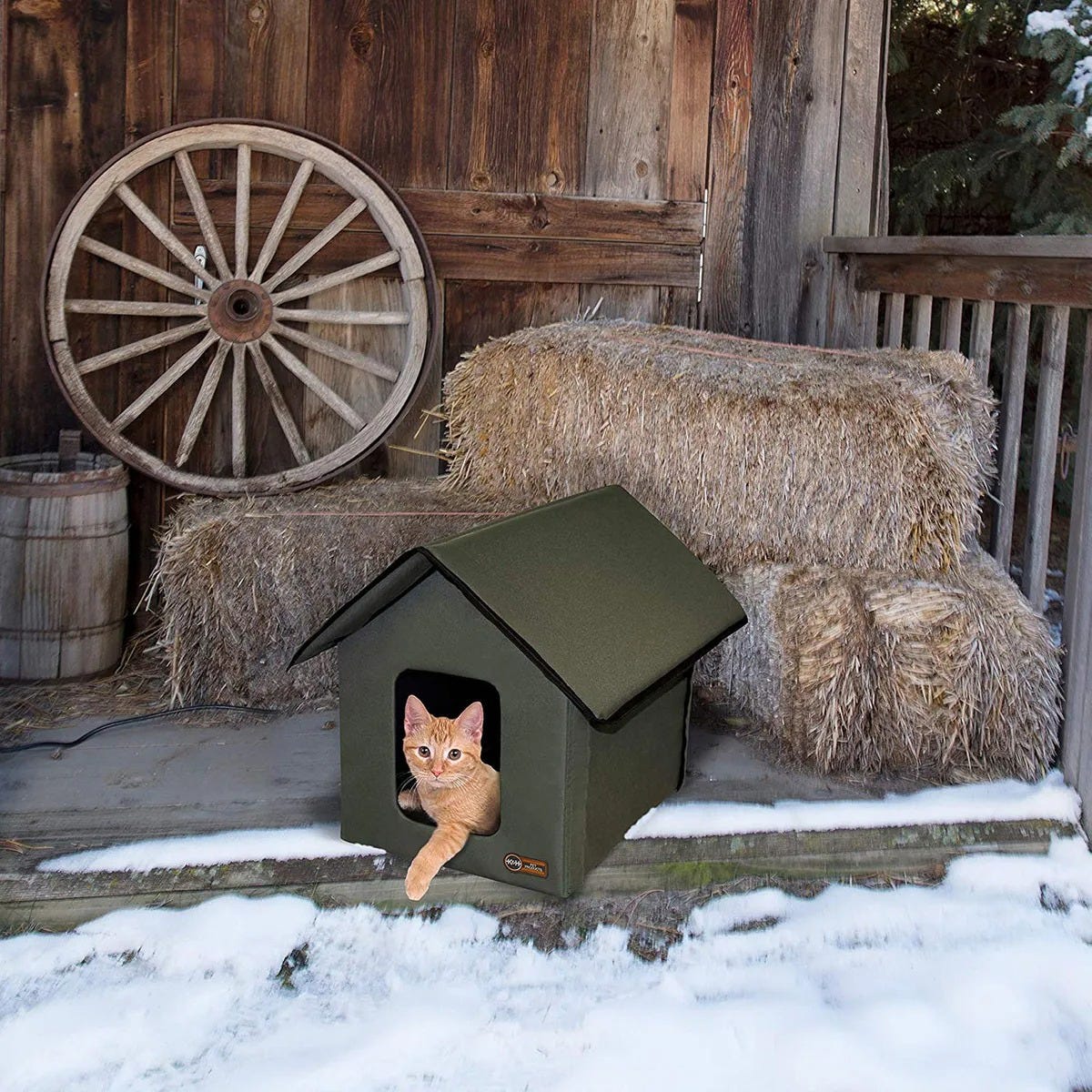
Outdoor shelters blend into their surroundings based on the material mix. This green pitched-roof cat house sits on a porch with hay bales nearby, the wood frame and fabric elements giving it a farmhouse feel that belongs in a snowy yard. The orange cat peeking out of the entrance adds a small jolt of warmth against all that green and white. What defines this look is the honest utility of hay as both decoration and insulation, and the ratio of natural materials to painted wood keeps it from looking like a playset. What breaks it would be anything too glossy or refined hay bales and a matte finish belong together.
Multi-Level Purple and White Cat House with Porch
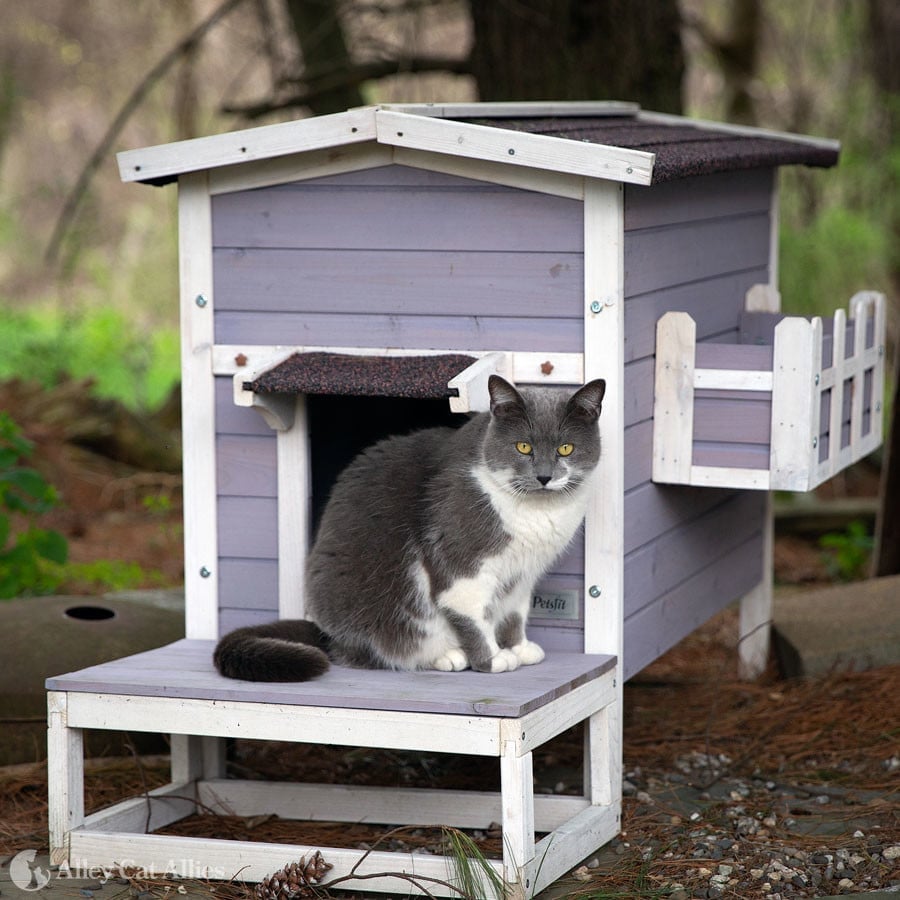
Purple and white is an unexpected palette for an outdoor structure, and it works here because the wood shingles and metal roof keep it grounded in rustic farmhouse style. The multi-level design with a porch gives a cat room to move between levels without leaving the shelter, and the gray and brown of the untreated wood prevent the purple from reading as purely decorative. The ratio of white to purple is careful the white dominates the walls while the purple accents the trim and roofline, so the color feels chosen rather than accidental.
Functional Elevated Cat House with Fleece-Covered Top
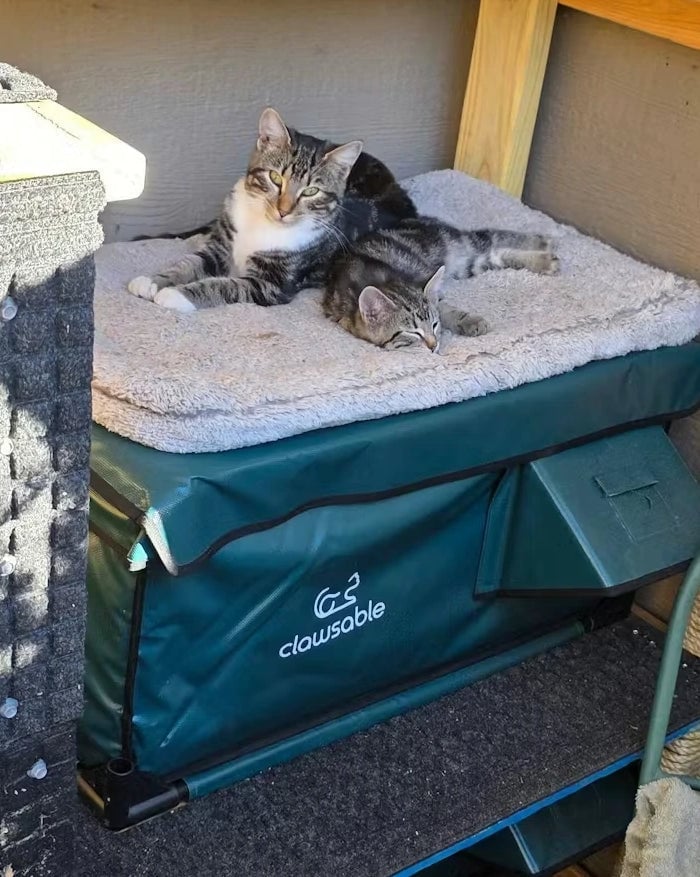
Outdoor cat shelters benefit from elevation because it adds insulation and visibility. This compact shelter sits off the ground, with a plastic and metal frame supporting a fleece-covered top where two cats lounge in daylight. The fleece provides a soft surface that holds warmth better than bare plastic, and the green and beige palette keeps the design from looking clinical. The fleece is not decorative; it is there because cats will use a warm spot. The ratio of soft to hard materials leans heavily on the fleece for comfort. Adding anything fussy would detract from a shelter that already does its job.
Modern Black Rounded Cat House Amidst Colorful Flowers
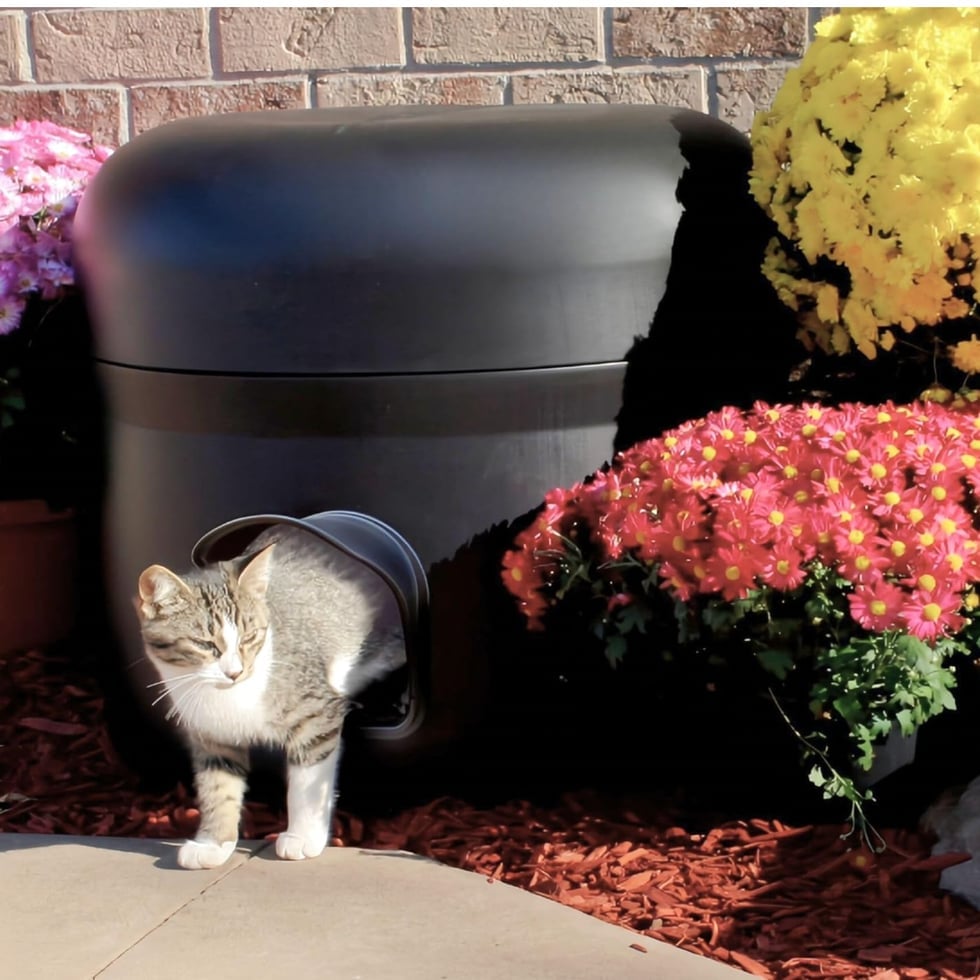
A black rounded cat house could easily disappear into a garden, but here it stands out because of what surrounds it. The sleek plastic dome sits among stone, mulch, and potted flowers in pink, yellow, and red, and a tabby cat emerges from the entrance just as the daylight hits the blooms. Where a standard wooden house would compete with the garden, the black form acts as a neutral anchor for all that color. The style is modern in its clean lines and functional in its material, and what defines it is the contrast between the matte black shape and the lively flowerbed. What breaks it would be any attempt to match the flowers with paint or pattern the restraint is the point.
White Painted Wooden Cat House with Dual Entry Flaps
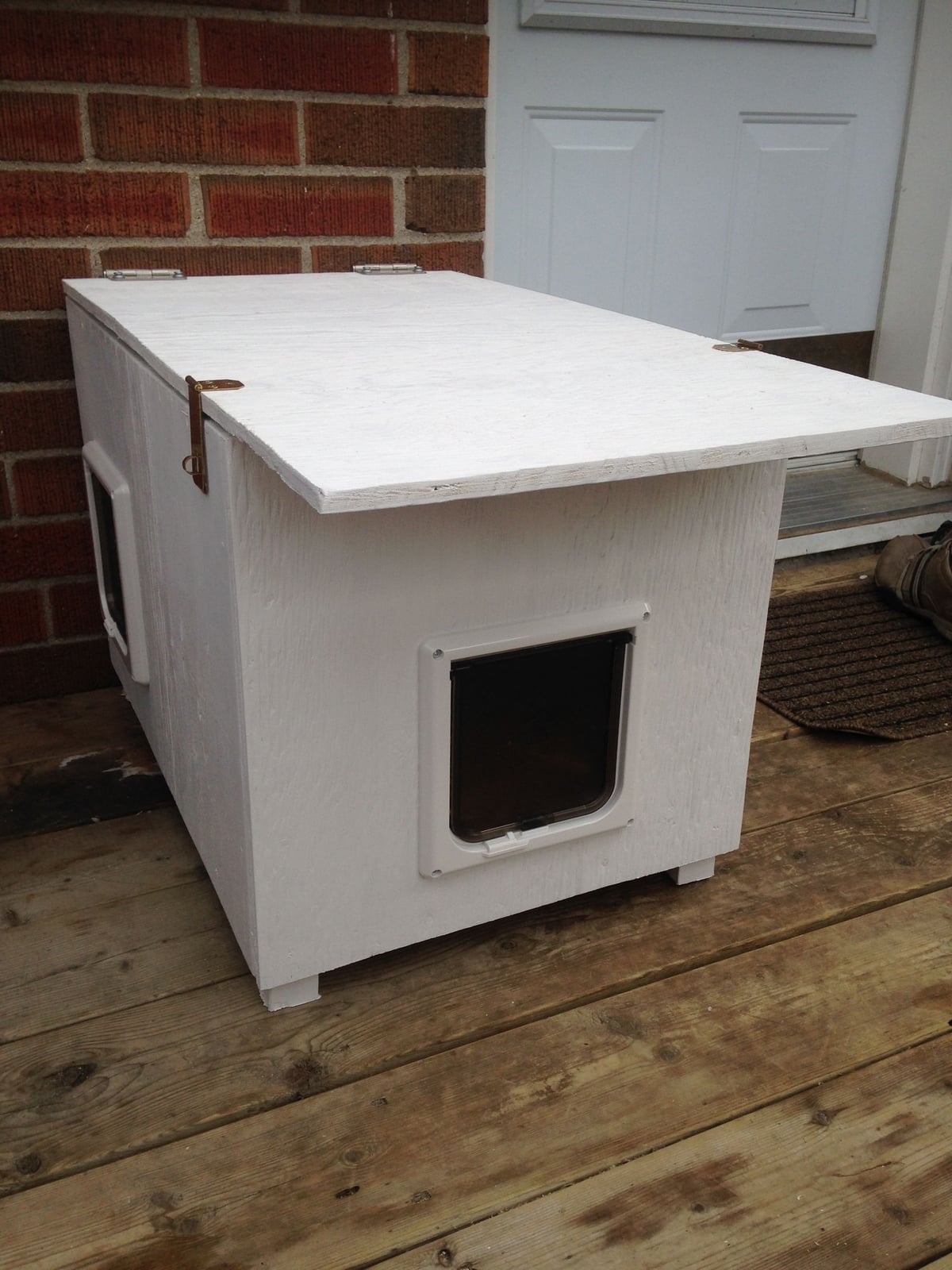
A white painted cat house with two entry flaps solves a specific problem: cats that want an escape route. The dual flaps mean a cat can enter from either side without being cornered, and the compact footprint leaves room for a food bowl or a mat in the same area. The white paint reflects heat in summer and keeps the wood protected from moisture, and the flaps add a layer of wind protection that a single opening cannot match.
DIY Wooden Cat House with Visible Purple Insulation
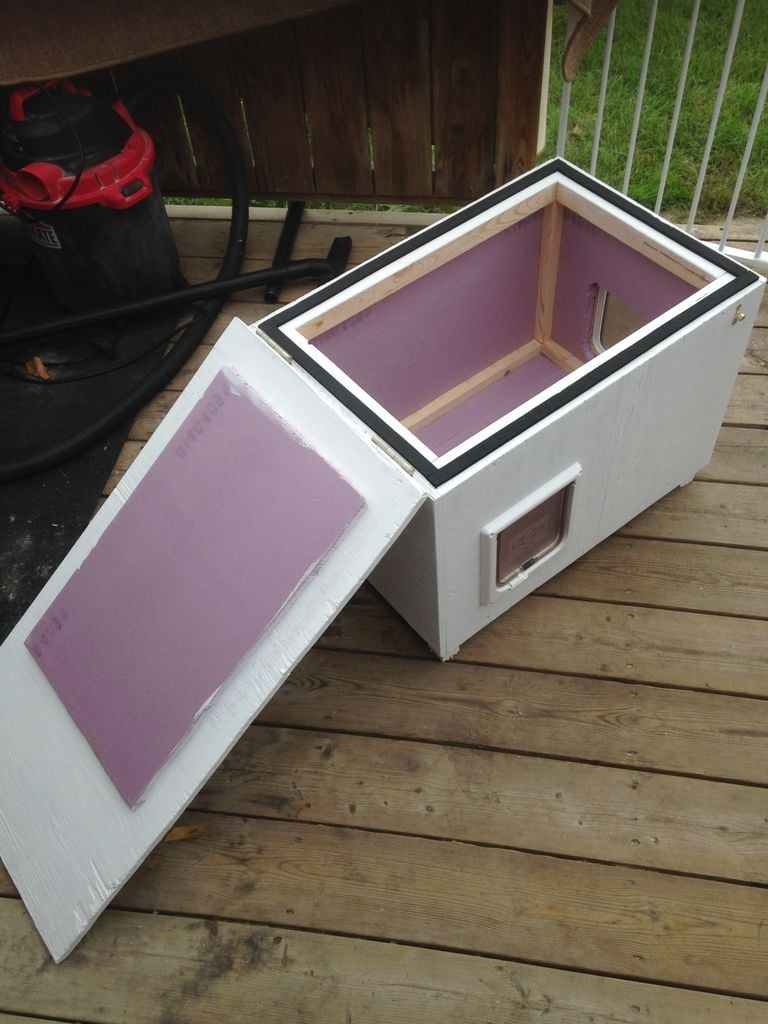
A wooden cat house with its top lid swung open reveals a vivid strip of purple insulation board fitted inside. The raw natural wood shell and that unexpected flash of color define the rustic, practical look. On a simple deck in daylight, the compact structure is a straightforward build: plywood walls, metal hinges, and a single insulation panel snug against the interior. The style works because the purple foam is not hidden. It becomes the visual anchor, breaking the all-wood palette entirely. That one material swap, visible insulation instead of a finished liner, keeps the build honest and the cat warmer.
Interior of Blue Bin Lined with Reflective Insulation
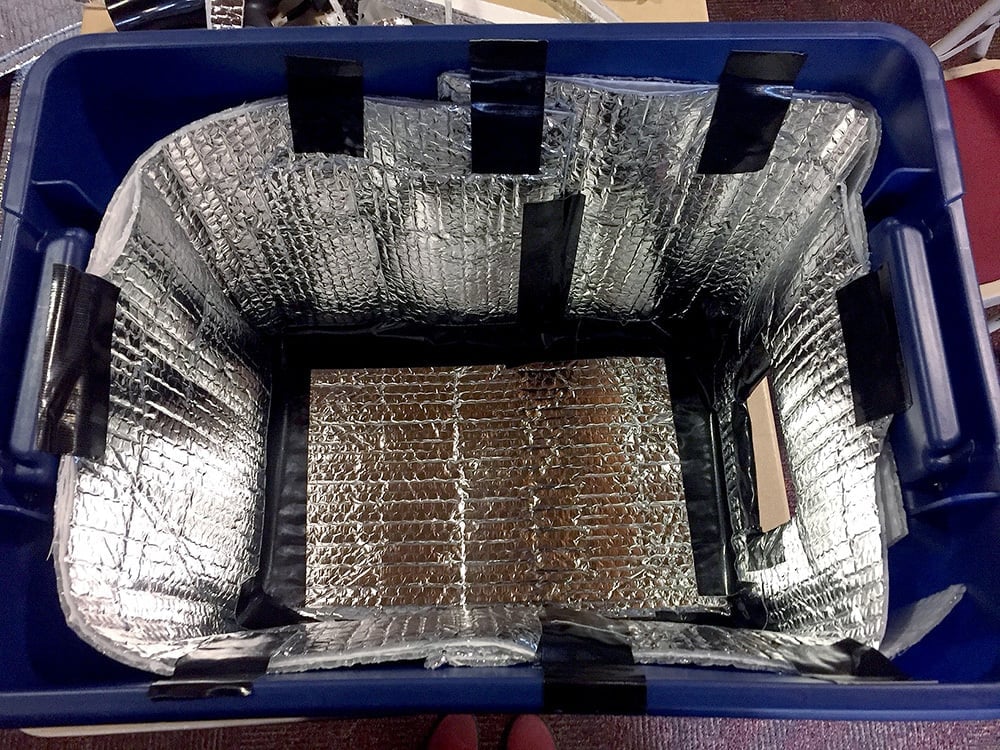
Use a plastic storage bin as the outer shell for a renter friendly cat shelter. This overhead view shows a standard blue bin retrofitted with silver reflective insulation panels cut to fit the walls and floor. Black tape seals the seams between the panels, holding them in place without permanent adhesives. The interior becomes a bright, heat reflecting cavity that is easy to clean and simple to reverse when the lease ends. The style is purely DIY, no paint, no trim, just a functional shell that prioritizes warmth over appearance. It is a build that can sit on a balcony, inside a garage, or under a covered porch.
Gray and White Two-Story Cat House in Garden
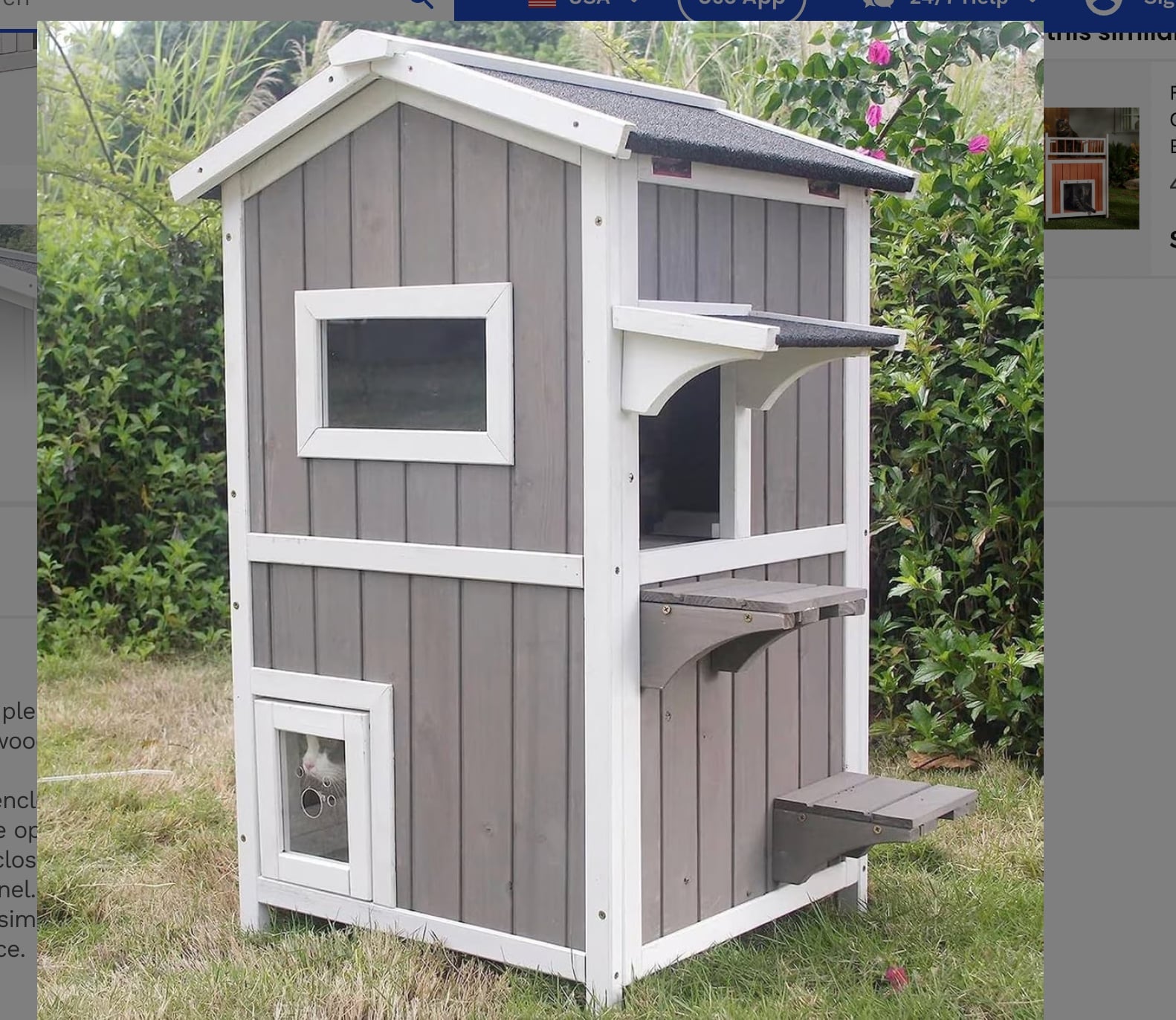
A two-story cat house in soft gray and white sits in a garden under an overcast sky, its multiple platforms creating stepping stones between ground level and the upper entry. The palette, gray walls, white trim, green foliage around it, lets the structure blend into the yard rather than shout from it. The layout works because each platform gives a cat a place to pause, observe, or lounge before climbing higher. It is a modern rustic take on outdoor shelter that treats the cat house more like garden furniture than a utility box.
Nested Gray Plastic Bins for DIY Cat House Preparation
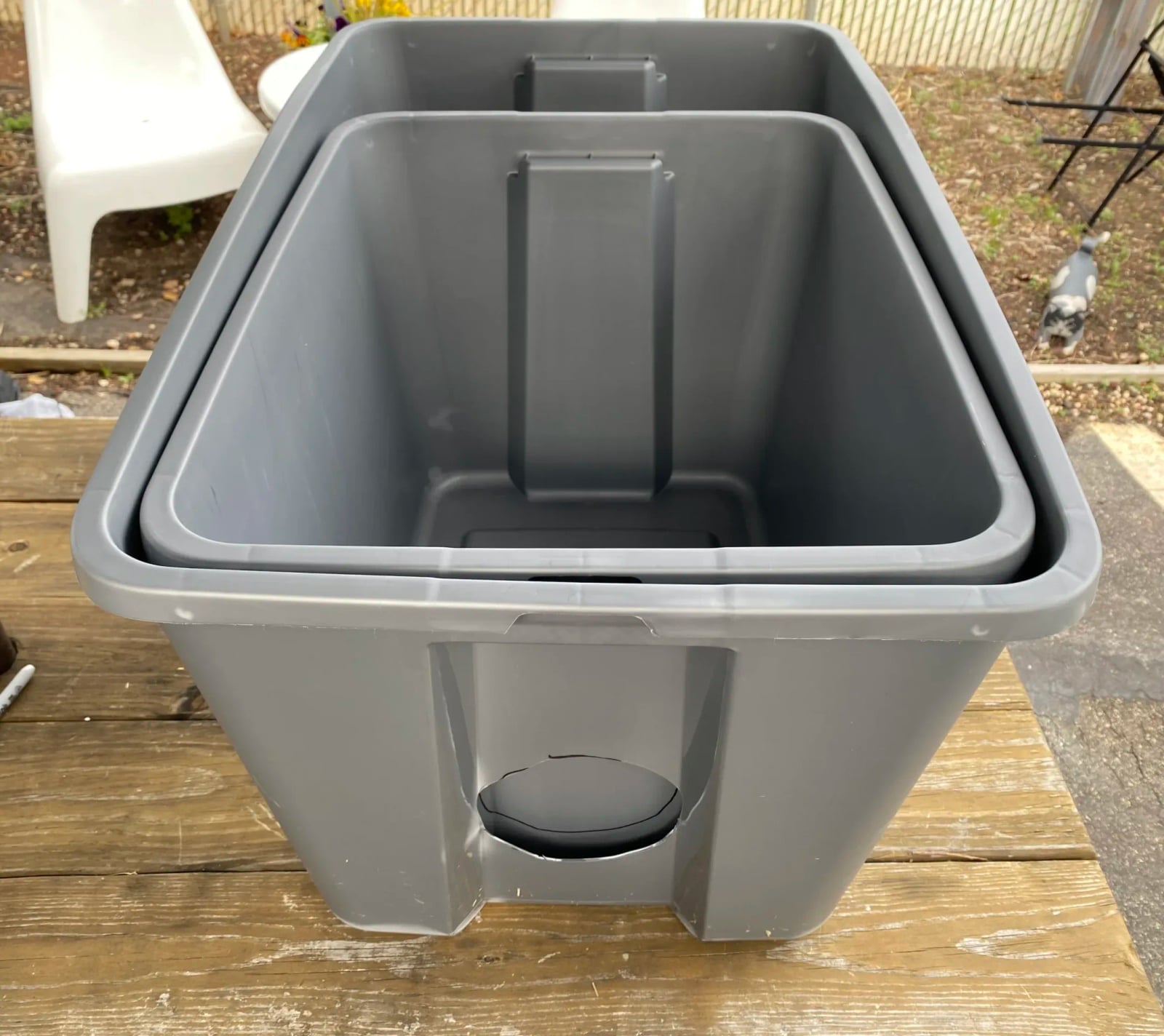
Two gray plastic bins sit nested on a wooden table in daylight, the outer bin intact and the inner one fitted with a cut opening at one end. The gap between the two walls creates an air pocket that works as insulation without any foam or reflective wrap. That precision in the cut, a clean arch just large enough for a cat to pass through, makes the difference between a drafty shelter and a snug one. The materials are standard hardware store bins and a steady hand with a saw. It is a functional, low-fuss approach that prioritizes durability over decoration.
Elevated Cedar Cat House with Platform on Pavers and Outdoor Space
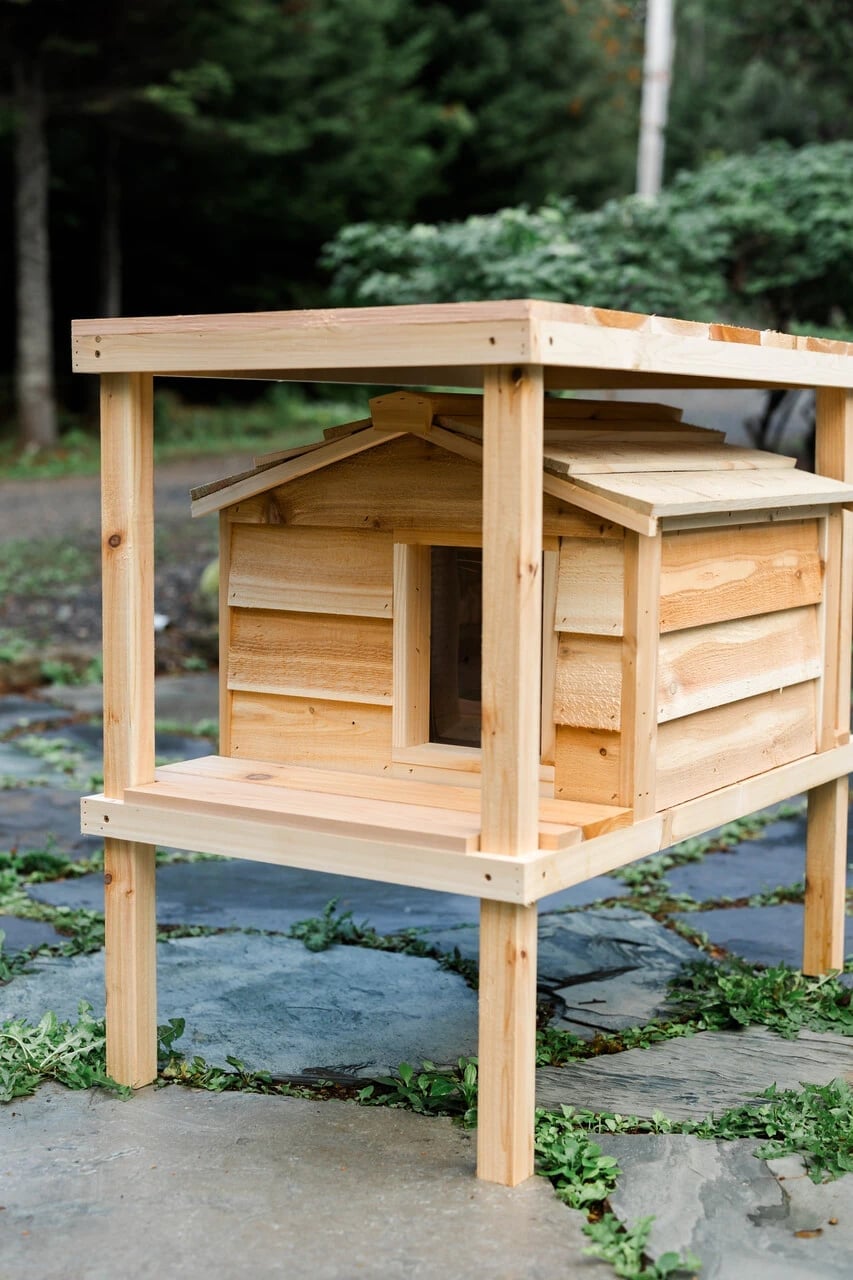
Where a ground-level shelter sits on cold dirt or snow, this elevated cedar cat house stands on four legs above a platform made from stone pavers. The height lifts the house away from moisture and frost, while the paver base gives it a stable, drainable footprint. Natural wood tones keep the whole structure looking like a permanent part of the yard rather than a temporary add-on. The platform extends past the house itself, offering a dry step for a cat entering or exiting. That extra landing space changes how the shelter lives: it becomes a station, not just a box.
The layout works because the elevation does not isolate the house. A short ramp or a jump from the platform connects it to the ground, and the pavers prevent mud from splashing up onto the cedar. For a backyard with wet winters or poor drainage, this design keeps the interior dry without relying on sealants or plastic sheeting. The cedar resists rot naturally, and the open space beneath the house can air out rather than trap moisture against the wood.
Utilitarian Black Insulated Cat House with Straw Bedding
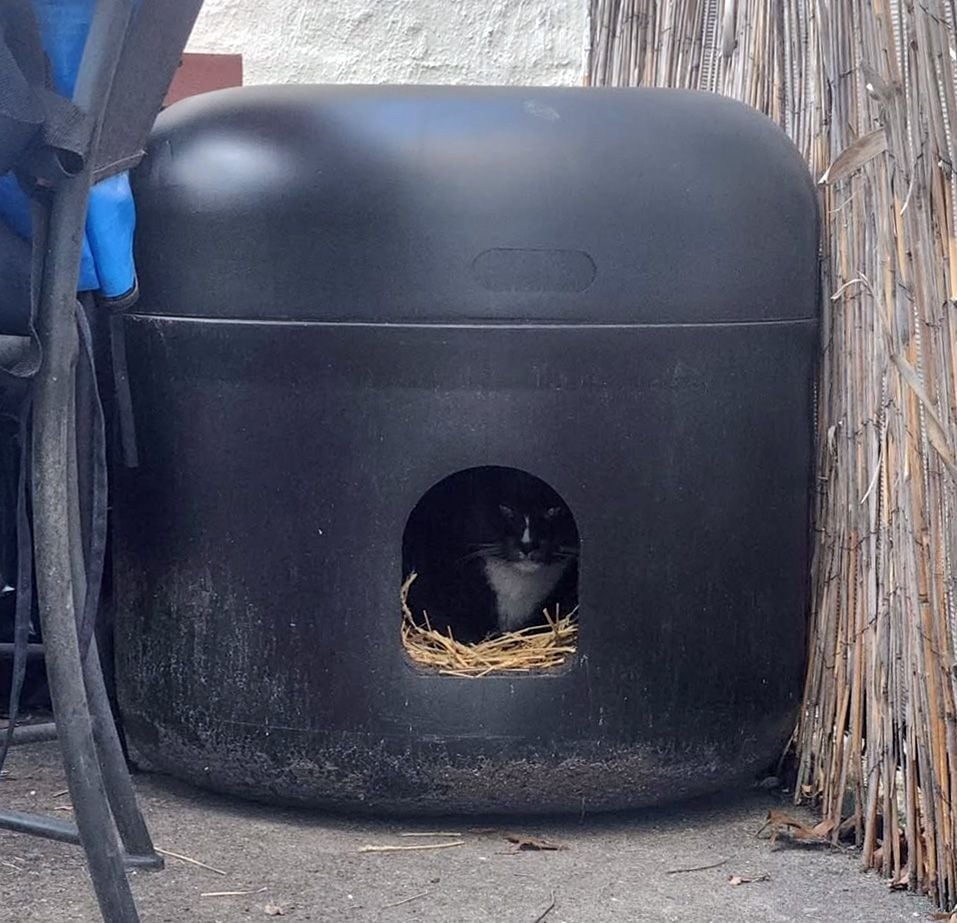
A black plastic insulated cat house with a single occupant is a study in purposeful design. The utilitarian look comes from the lack of ornament and the focus on function: a dark, weatherproof shell with a low opening that keeps wind out and warmth in. Straw bedding visible at the entrance signals that the interior is layered for cold weather. The ratio of dark structure to light straw breaks the all-black mass, making the house read as approachable rather than severe. For any outdoor shelter, a single contrasting texture at the threshold does the same job as a welcome mat.
Modern Farmhouse Gray Wooden Cat House with Openable Roof
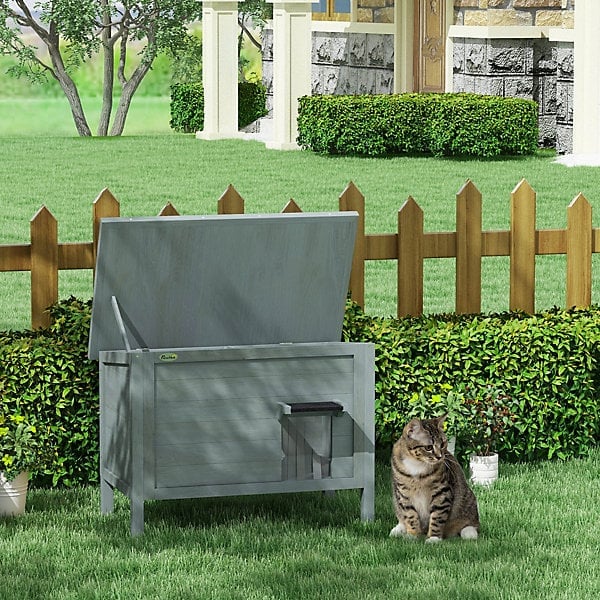
A gray wooden cat house with an openable roof is the kind of build that looks good and works hard. The modern farmhouse palette rests on muted gray wood, a color that blends into a grassy lawn without disappearing. The openable roof is the defining feature: it allows you to clean out bedding, check for drafts, or swap straw without dismantling the whole structure. A tabby cat positioned beside it confirms the scale is generous enough for a full-size adult. What breaks the simple silhouette is the roof line itself, a practical hatch that adds a clear visual hinge to an otherwise solid box.
DIY Cat House Bin with Straw-Filled Opening
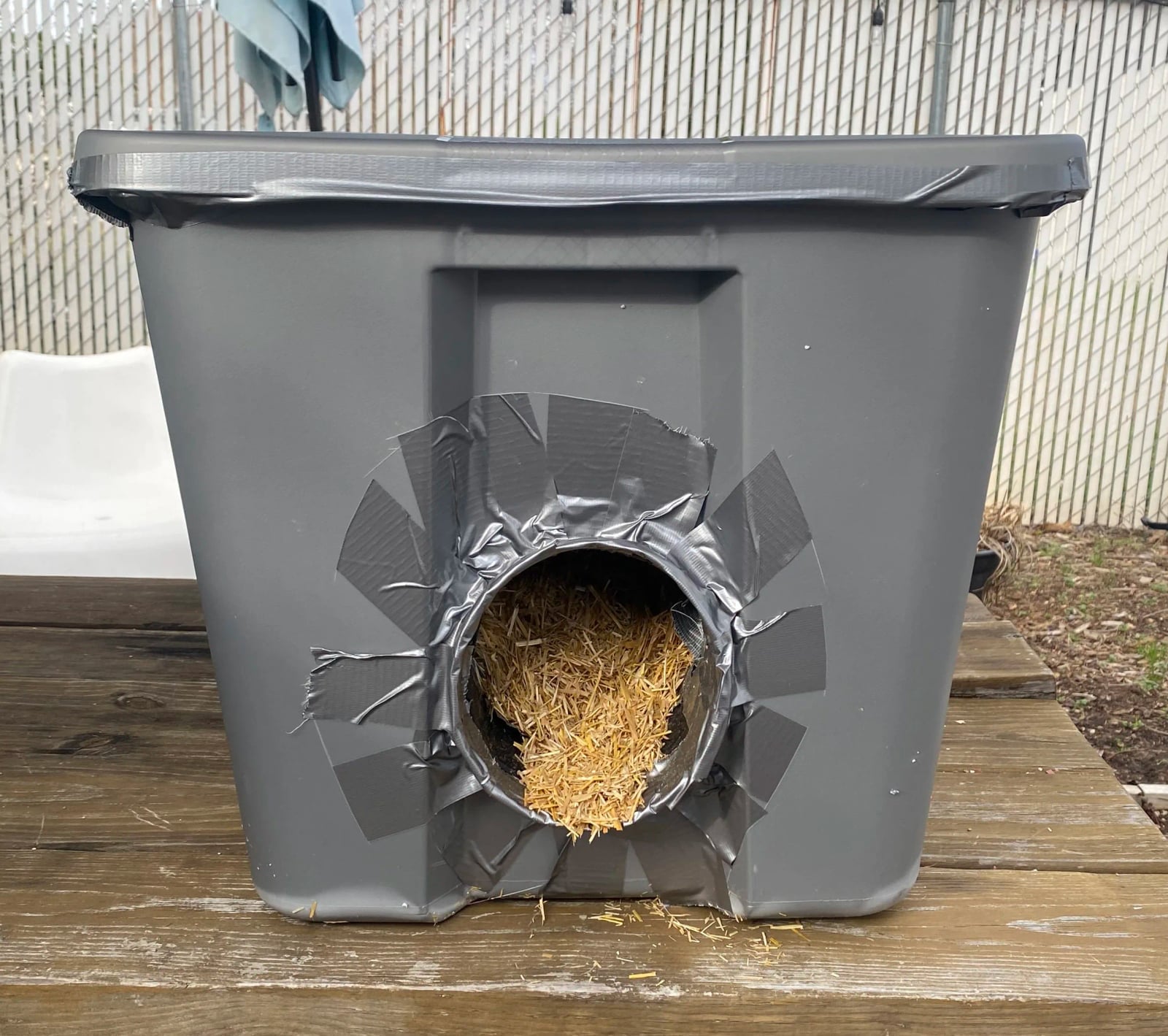
A plastic storage bin might not be the first thing that comes to mind for a cat shelter, but it works better than many wood builds in wet climates. The photo shows a large gray bin with a cut opening, resting on a wooden table mid-construction. Straw spills from the entrance, and silver duct tape seals the edges against drafts. The plastic body sheds rain, the straw traps body heat, and the tape keeps the cut from fraying. A wood base lifts the bin off bare ground, preventing cold from conducting through the floor. This setup is not about looks; it is about using what you have to create a dry, insulated pocket.
Rustic Wooden Cat House on Stone Pathway
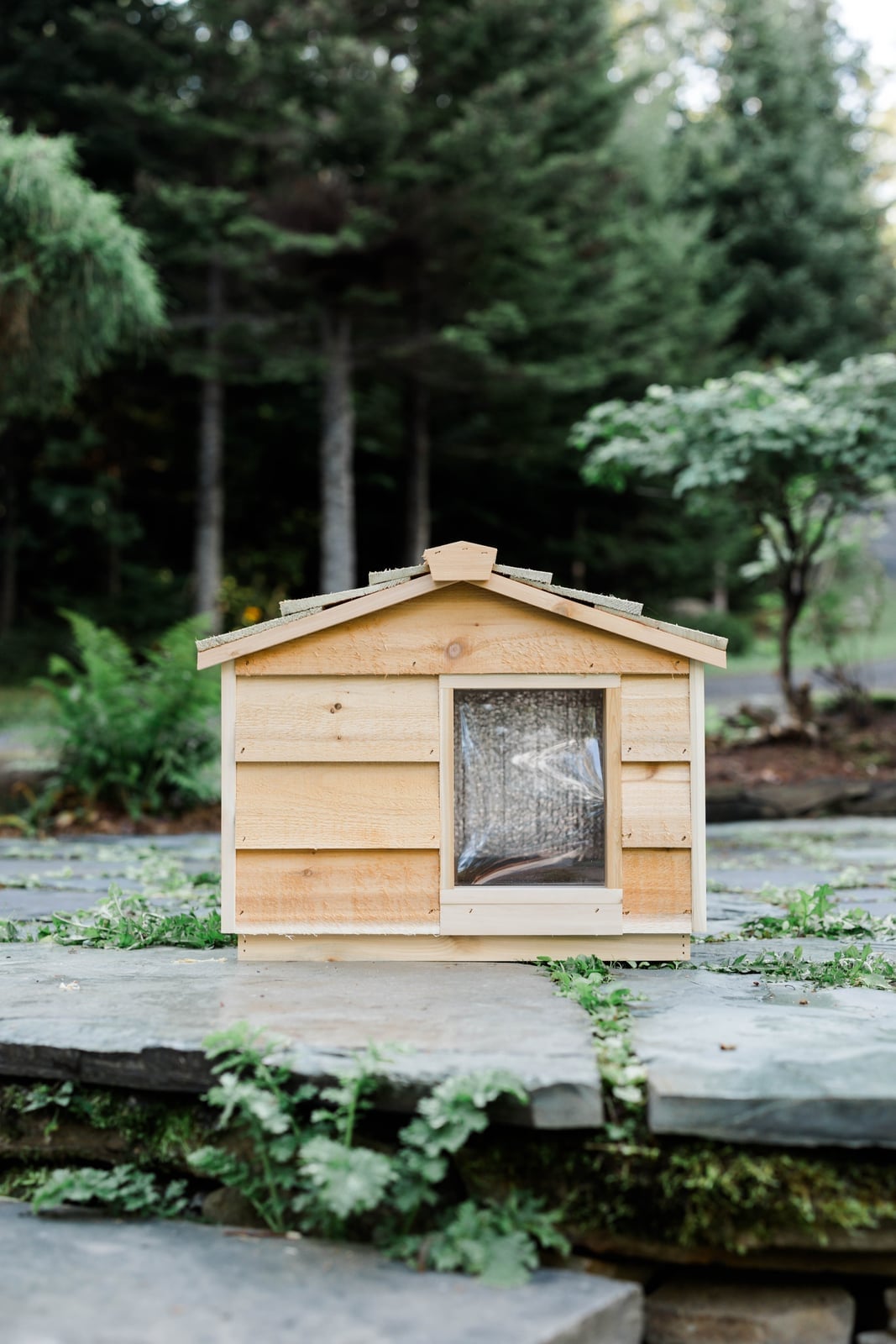
A compact wooden cat house set on a stone pathway gains a solid, moisture-resistant foundation without any extra work. The natural wood exterior and green plant surroundings give it a rustic feel that blends into the garden rather than standing out. A small window breaks the solid wall, offering ventilation and a second exit route, which cats appreciate. Placing a shelter on stone rather than grass or dirt keeps the base dry and prevents rot over time. If your yard has a path or patio stones, that spot is already ready for a winter shelter.
Utilitarian Insulated Cat Houses in Snowy Terrain
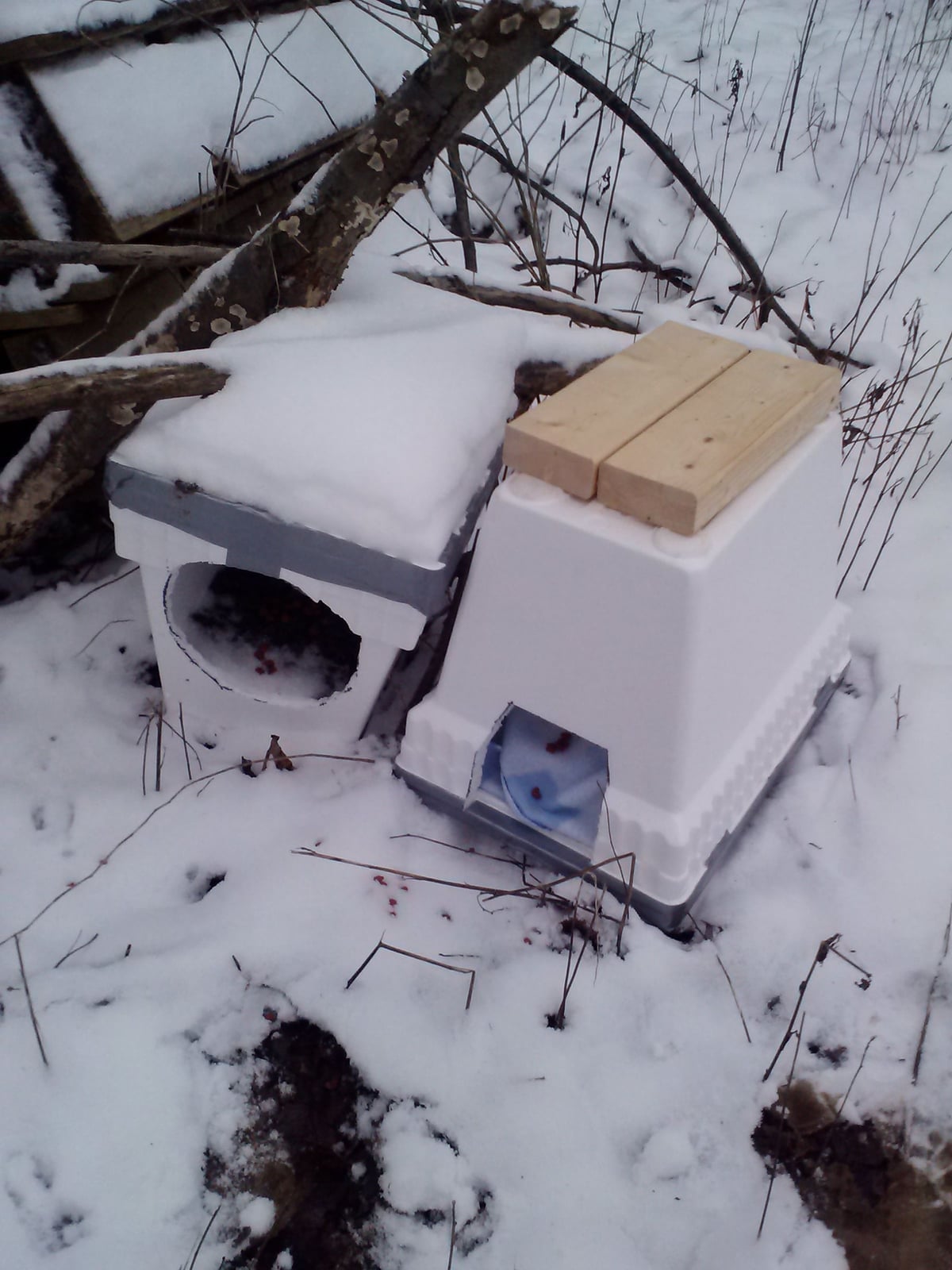
Two insulated shelters set directly on snow is a honest test of any build. The photo shows one structure in wood and another in plastic, both compact and sitting low to the ground under overcast light. The gray and white palette comes from the snow itself, with the shelters reading as functional objects rather than decor. A styrofoam layer inside either one would block the cold rising from the frozen ground. Placing shelters where snow has been packed down or cleared gives cats a dry path to the entrance. In deep snow, any elevated platform or stone base is better than bare ground.
Final Thoughts
From simple plastic bin conversions to elaborate multi-level houses, the key to a successful insulated cat shelter is layering. A waterproof exterior, a gap of rigid foam or reflective insulation, and a dry interior filled with straw create a warm pocket of air that holds body heat. Elevating the structure off the ground prevents moisture wicking, and a small entryway with a flap or baffle reduces drafts. Whichever design fits your yard and skill level, the goal is the same: a dry, draft-free space that helps a cat survive winter. Check your USDA zone and local weather patterns before choosing materials, and always prioritize clean, replaceable bedding over closed-cell foam for interior comfort.