Cottagecore home decor leans into the charm of rural life, where worn wood, soft florals, and hand-me-down pieces tell a story. This style turns a house into a retreat that feels lived-in and welcoming, without needing a full renovation to get there. In this article, you’ll find 22 real-world looks that show how to bring that farmhouse warmth into your own space, from cozy kitchens to reading nooks and beyond.
Each idea focuses on what you can actually see and use: colors, materials, and simple arrangements that make a room feel like a countryside escape. Whether you’re starting fresh or just tweaking a corner, these examples offer practical inspiration for making cottagecore work in any home.
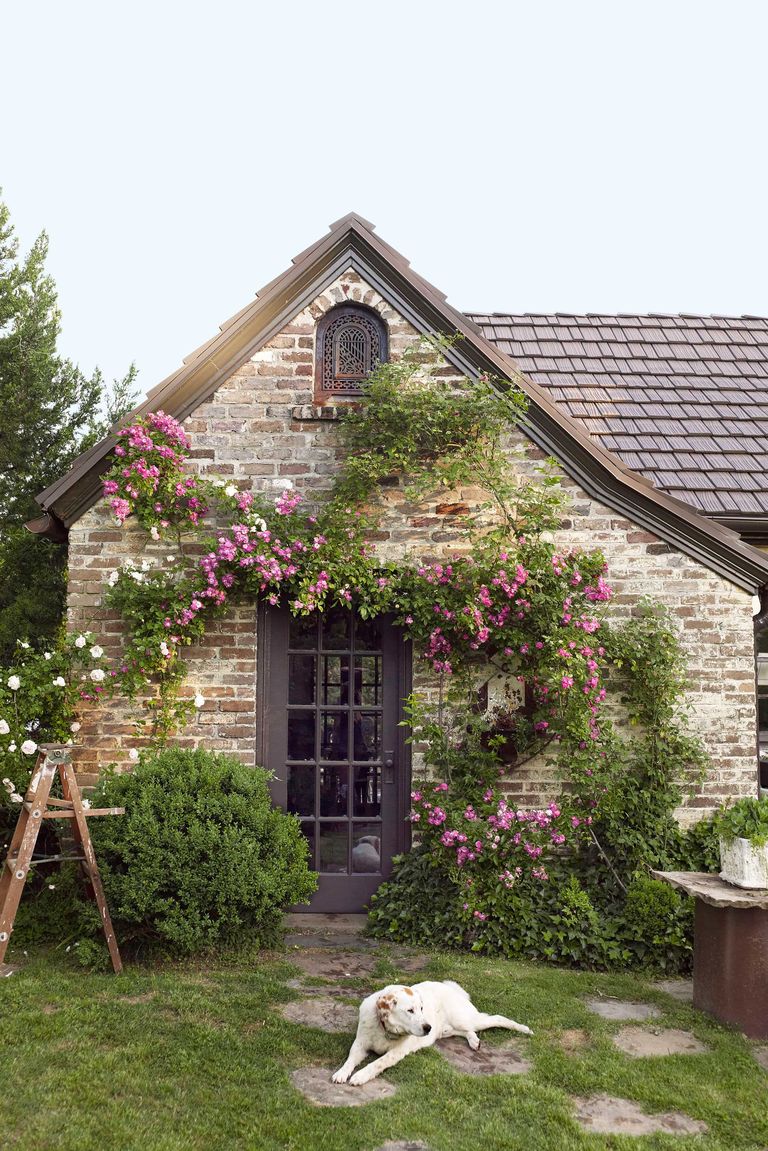
A Charming Brick Cottage Exterior Adorned with Climbing Roses
The brick facade here is a study in how a cottagecore home decor exterior reads as something that grew there, not something that was built. Climbing roses in pink weave up the brick and frame the door and windows without blocking them, while low bushes anchor the garden beds. The palette is a straightforward one: brick red, green, and pink, with the overcast daylight softening the contrast. What defines this look is the ratio of plants to structure, the greenery and flowers cover more surface than the bare wall, but the brick still sets the overall tone.
Storybook Thatched Cottage Nestled in a Lush Garden
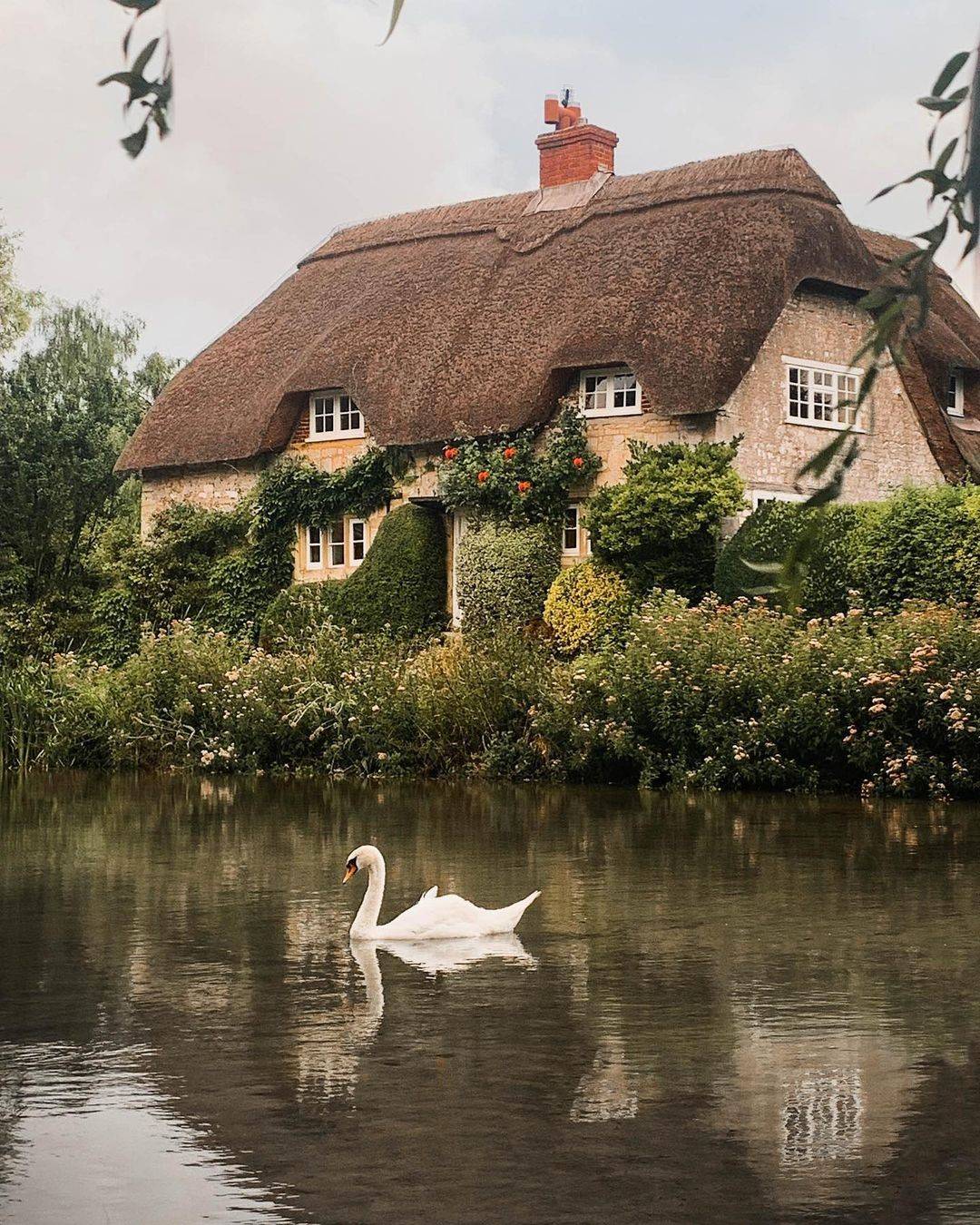
This thatched cottage is the picture of storybook charm, and the palette is the reason it works. The thatch itself is a warm, neutral brown that reads as part of the landscape, while the stone walls and wooden details stay in a similar natural range. The garden breaks that quietness with green foliage and touches of red, which keeps the whole scene from feeling like a museum exhibit. The ratio here favors the natural tones, about two-thirds of the view is browns and greens, and the red flowers are the accent that makes the eye stop.
Vibrant Blue Range Cooker in a Rustic Stone Kitchen
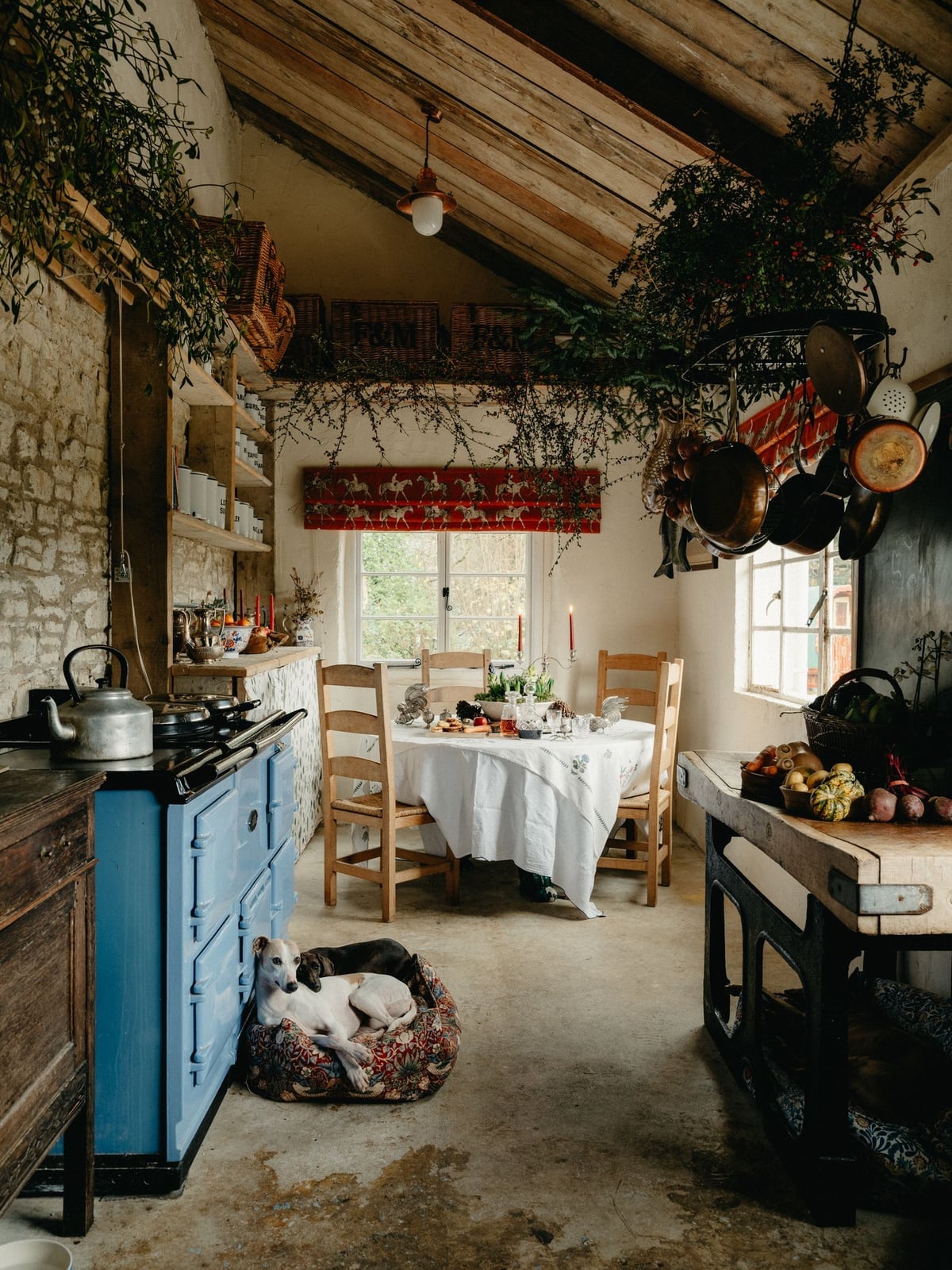
A cottagecore kitchen can feel both lively and grounded with a single saturated color on a major piece. The blue range cooker is the first thing you notice, but the room around it holds its own: stone walls in gray and tan, a wooden table and chairs, and hanging copper pans. The palette is blue, white, red, and natural wood, with the cooker taking the lead at a roughly one to three ratio against the neutral stone and wood. The red accents, a vase, a small textile, break the blue and wood scheme just enough to keep the eye moving. What defines this style is that the color reads as intentional without being overwhelming.
Cozy Kitchen with Burgundy Cabinetry and Butcher Block Island
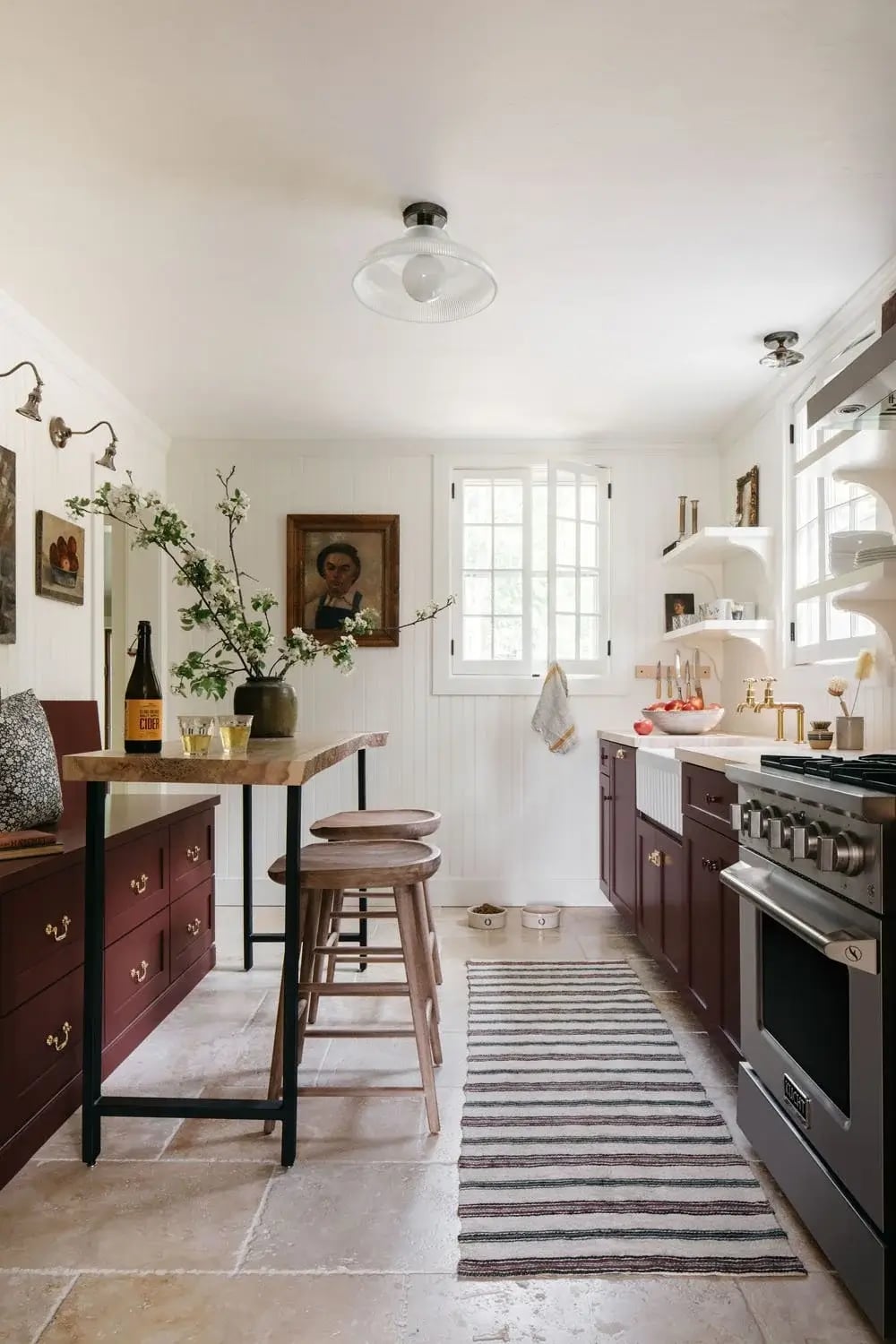
Burgundy cabinetry is a bold move in a compact galley kitchen, but here it works because the island and countertops are a warm wood tone that prevents a closed-in feel. The white farmhouse sink and stone tile backsplash add a light counterpoint, and the ceiling light and natural light keep the burgundy from darkening the space too much. The palette is burgundy, wood tones, and white, with the burgundy dominating the upper half of the room while the wood island anchors the lower half.
Farmhouse Living Room with a Blue Gingham Sofa
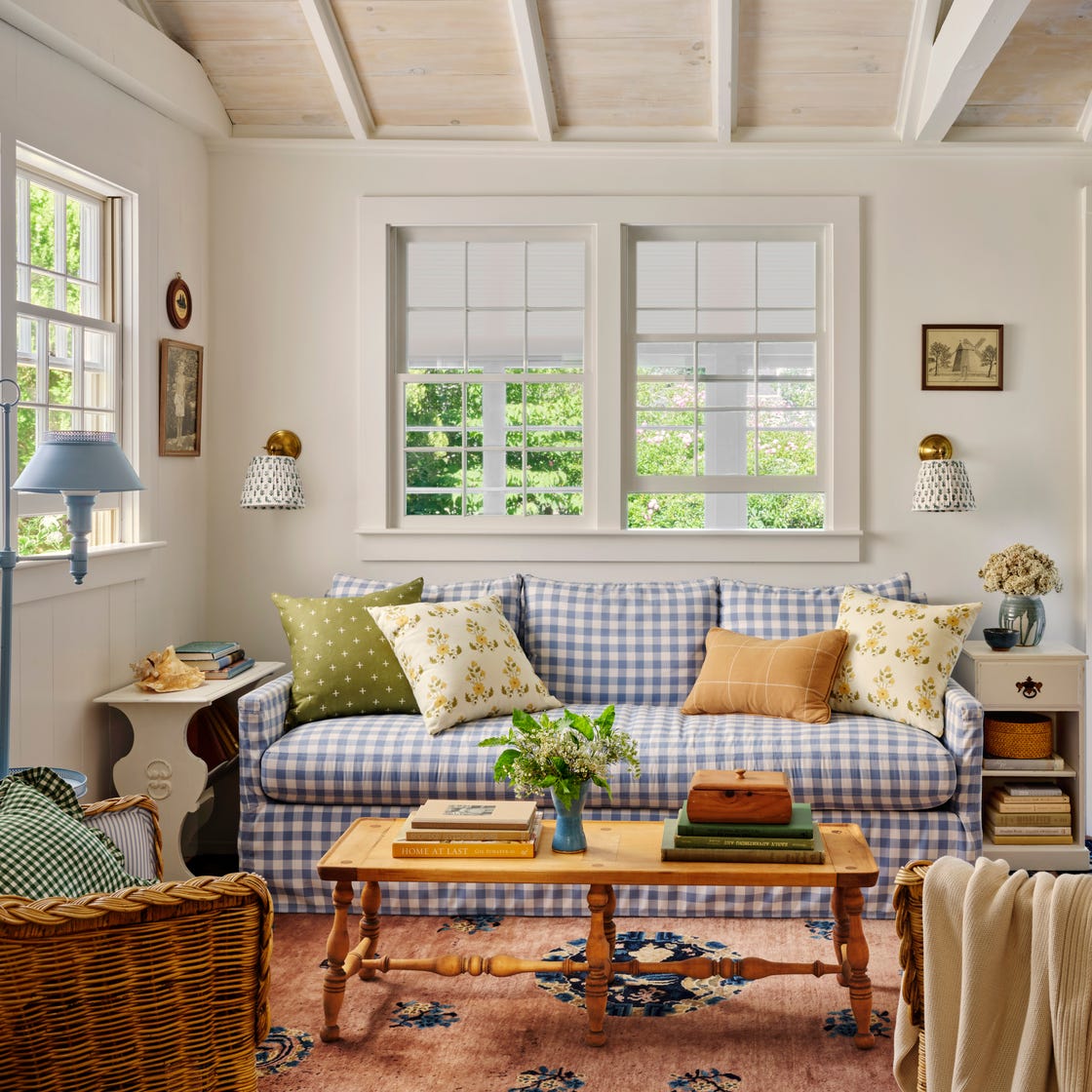
A room with a strong patterned sofa works best when the rest of the space stays simple. The blue gingham sofa here is the focal point, and the wicker chairs, wooden coffee table, and patterned rug all take a supporting role. The palette is blue, white, yellow, and green, with the sofa carrying most of the blue. The wall sconces provide warm light that balances the cool blue, and the windows keep the room feeling airy. What defines this look is that the pattern is cheerful rather than busy, because the other pieces are solid or neutral.
Spacious Farmhouse Kitchen with a Large Wooden Island
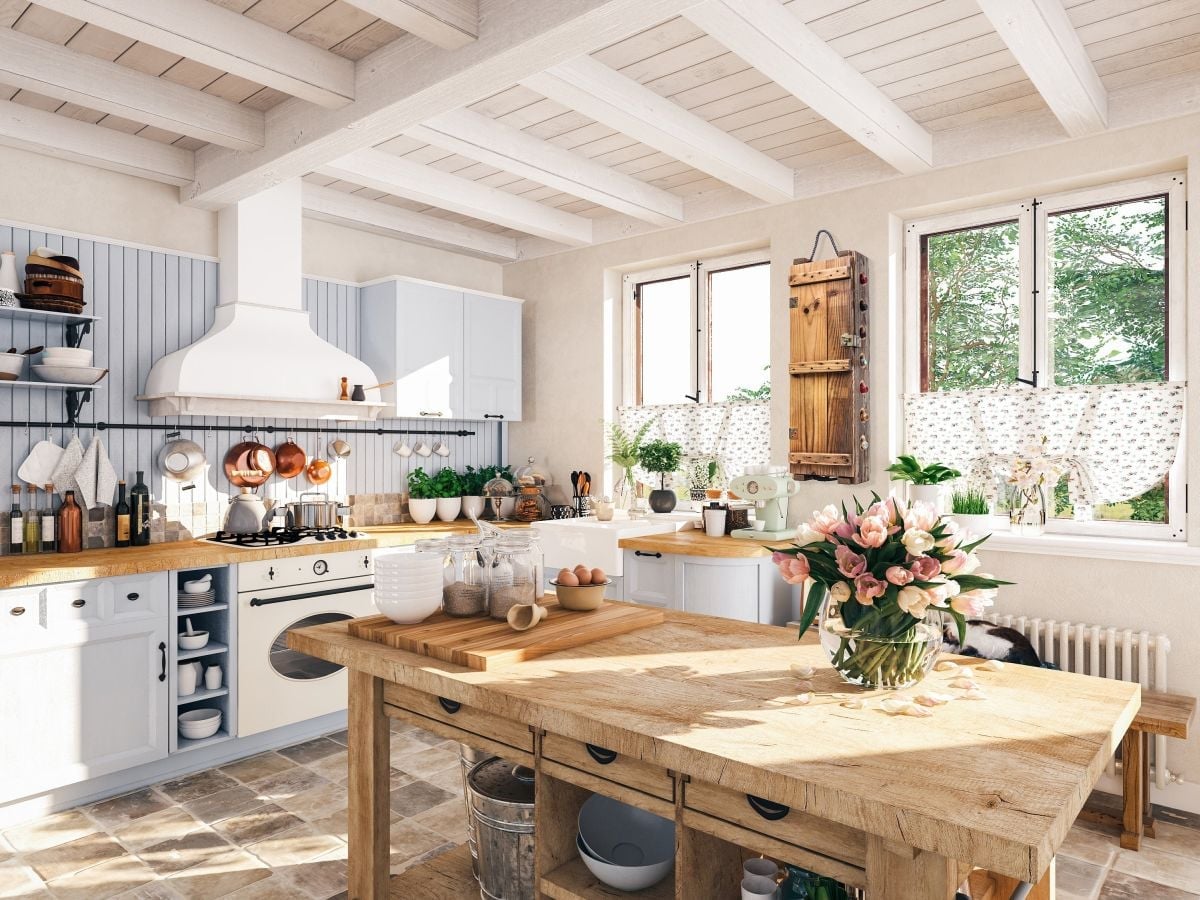
In farmhouse kitchens, the debate between a central island and a simple table often comes down to how you cook. A large wooden island, like this one in a roomy kitchen, offers more than extra counter space. It anchors the room, giving you a spot for prep, casual meals, and gathering without blocking the flow to the range cooker and hanging pots. The white and light blue palette keeps the wood from feeling heavy, while the ceramic and metal accents add texture. If your kitchen feels cramped, a smaller island on casters can offer similar function without the commitment. The trick is matching the island’s size to your room’s footprint, not the other way around.
Cozy Vignette with a Wooden Table and Wildflowers
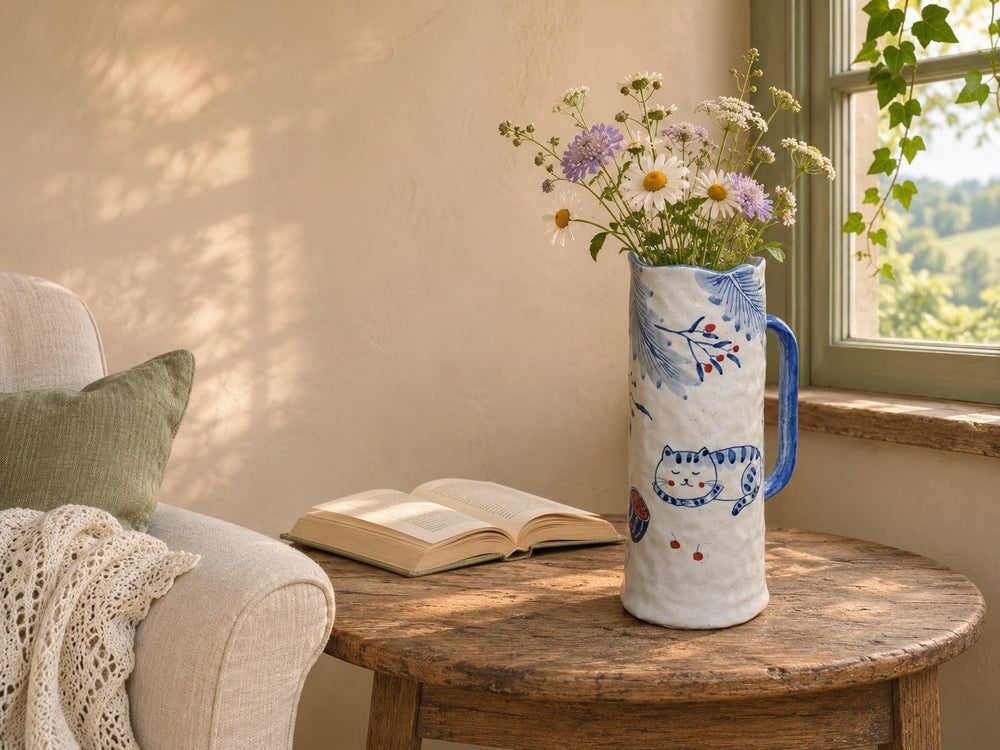
The round wooden table holds a ceramic vase of wildflowers, and beside it rests an open book and a simple armchair. Soft natural light falls across the scene, making the beige, green, and white palette feel calm rather than staged. This vignette works because it avoids clutter. One strong element, the wildflowers, carries the cottagecore look, while the lace and wood stay quiet. For renters, this approach is a safe bet. You can change the flowers with the season, swap the book for a stack of plates, and never touch a wall or fixture. The whole setup moves with you.
Cottagecore Bedroom with Floral Armchair and Lace Curtains
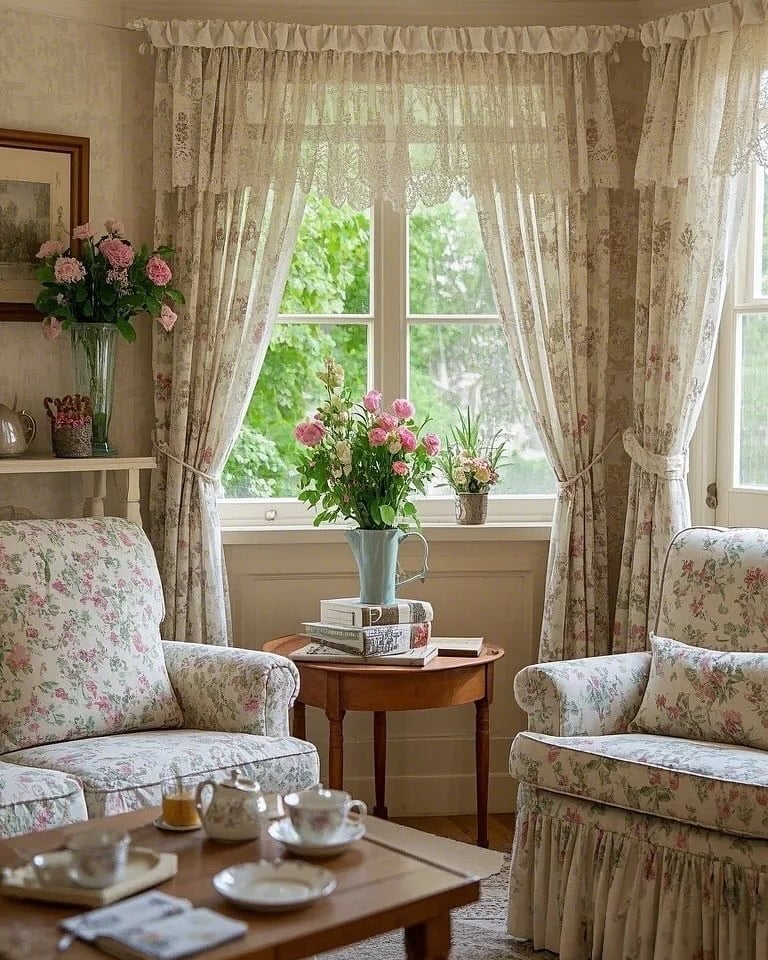
This bedroom leans fully into floral patterns, and it works because the palette stays tight. Pink, white, and green repeat across the bedding, the armchair upholstery, and the lace curtains, with the wooden bed frame and a vase of flowers adding natural contrast. The bedside lamp and window light keep the room bright, even with so much pattern. The takeaway is ratio. When you use floral prints on multiple surfaces, keep the background neutral and the scale of the prints similar. Too many different sizes create visual noise. One consistent floral scale ties the look together.
Farmhouse Corner Cabinet Filled with Blue and White Pottery
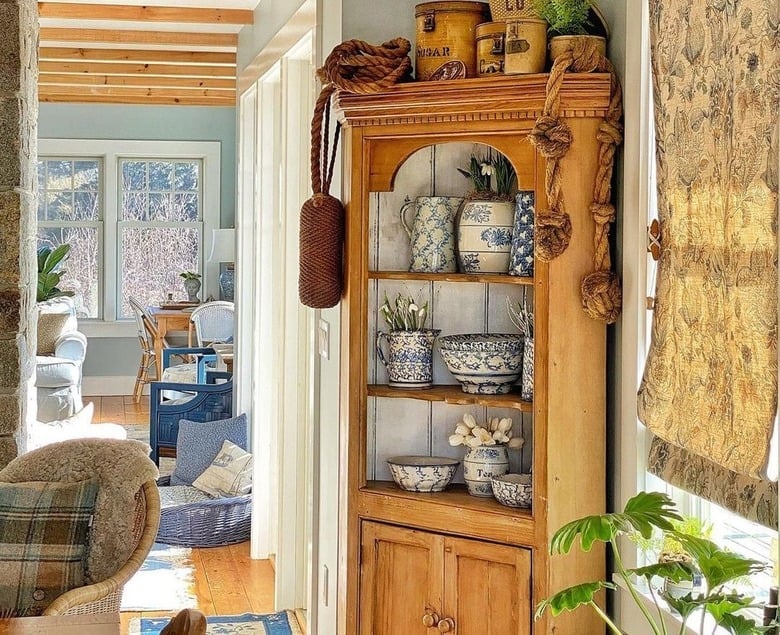
What do you do with a corner that feels like dead space? A corner cabinet, like this light wood piece filled with blue and white pottery, turns an awkward spot into a focal point. The woven chair beside it softens the display, making the corner feel lived in rather than curated. The blue and white palette is classic farmhouse, but the trick is varying the shapes of the pottery. Tall vases, round bowls, and small pitchers create visual rhythm. A row of identical plates would fall flat. For renters, a freestanding cabinet like this adds storage without touching walls, and it moves with you to the next place.
Cozy Reading Nook with Floral Pillows and Lace Curtains
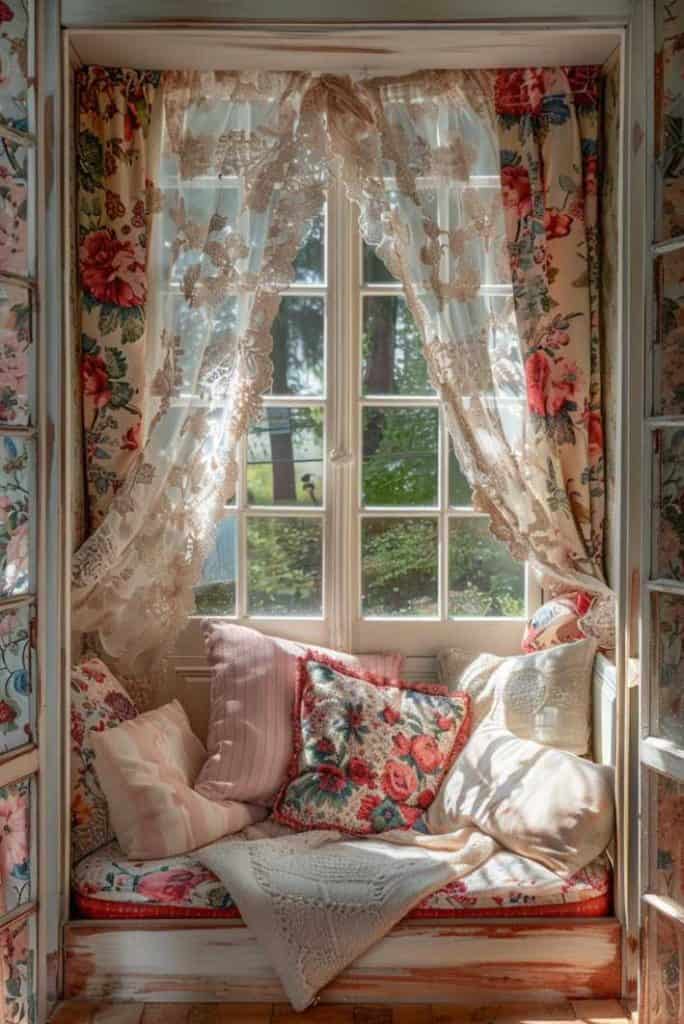
A window seat with layered pillows and lace curtains is a classic cottagecore setup, but the key detail here is the lace itself. Full-length lace curtains diffuse the daylight, softening the whole nook without blocking the view. The cream and pink pillows add comfort, while the green accents from nearby plants tie the fabric back to nature. For a similar look, choose lace with an open weave that lets light through. Heavy, dense lace can darken a small nook, which defeats the purpose of a spot meant for reading and relaxing.
Vintage Bedroom with Pink Floral Wallpaper and Lace Curtains
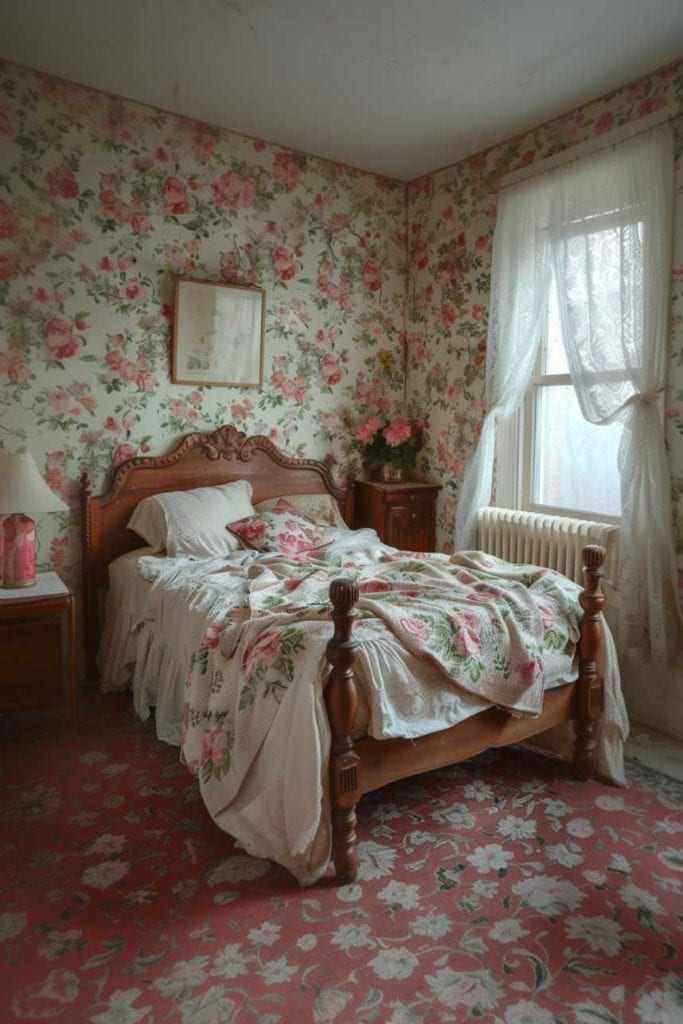
A bedroom that leans hard into floral-on-floral needs a visual anchor so the pattern does not feel overwhelming. Here the ornate wooden bed frame acts as that anchor, its dark lines breaking up the pink wallpaper and the floral bedding. Lace curtains at the window soften the natural light while letting it through. The bedside lamp adds a warm glow for evening, but the real trick is the balance: one bold element (the bed) grounds all that pattern, making the room feel cohesive.
Farmhouse Display Cabinet with Vintage Pottery and Baskets
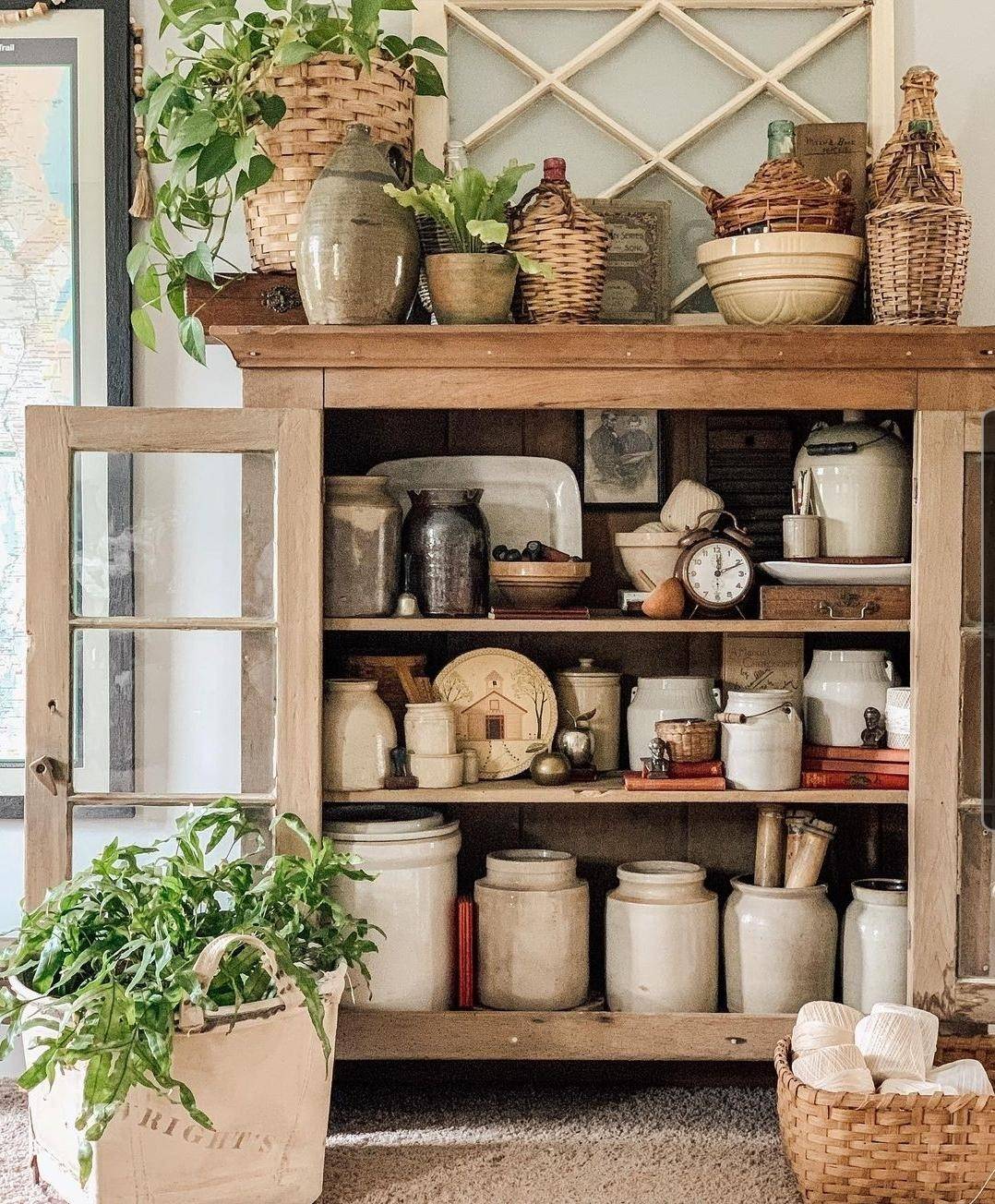
A display cabinet can easily look like a shop shelf if every item is the same height and material. This one avoids that by mixing pottery, baskets, a clock, and books across the shelves, creating a vignette that feels collected over time rather than styled in an afternoon. The natural wood tones and cream ceramics keep the palette warm, while the glass doors let you see the layers without dust settling on everything. A shelf of all small ceramics would feel cluttered; a shelf of all baskets would feel flat. The mix of heights and textures gives each piece room to breathe, which is the whole point of open storage.
Rustic Farmhouse Living Room with a Deep Brown Leather Sofa
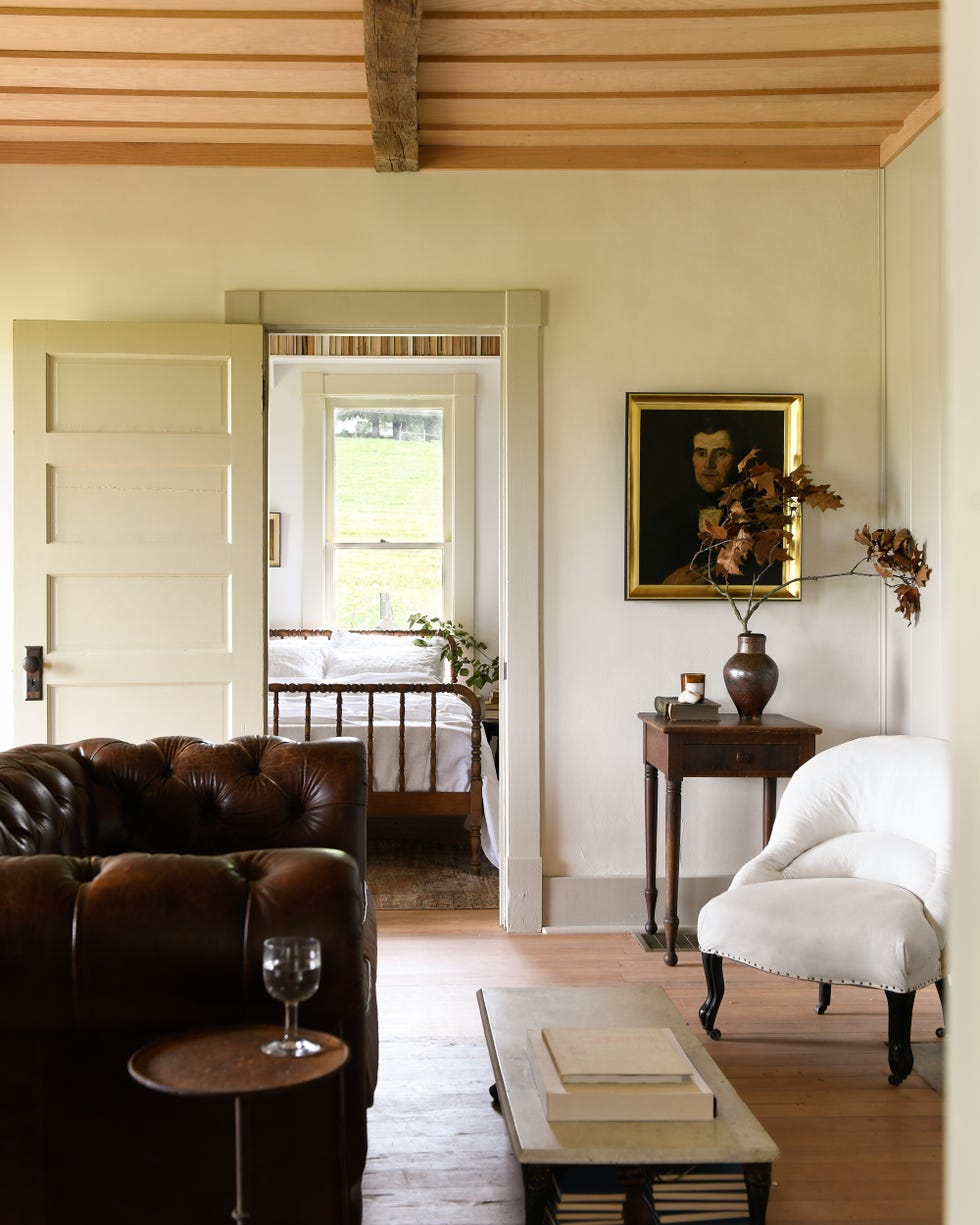
A tufted leather sofa in deep brown sets the tone for this living room without needing much help. The leather brings a weight that balances the lighter cream upholstery on the armchair and the natural wood of the coffee table. Natural light from the doorway hits the leather surface, which picks up a slight sheen that keeps the dark color from feeling heavy. The sofa works as the hero piece, and everything else in the room steps back to let it lead.
Farmhouse Kitchen with Sage Green Cabinets and Window Seat
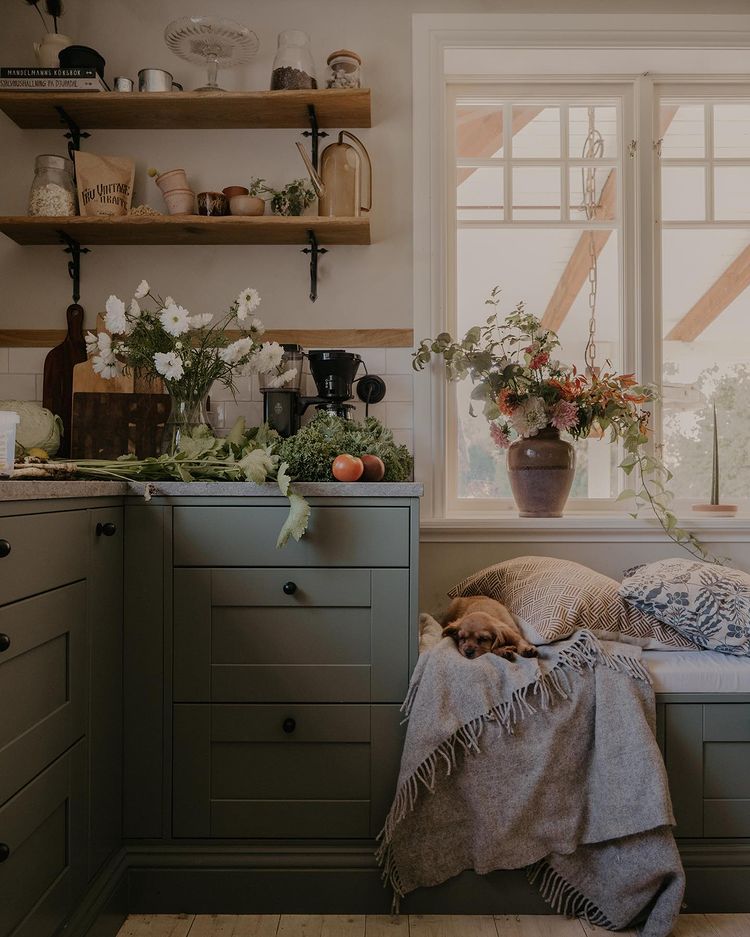
Sage green cabinetry reads as calm and grounded, which is exactly what a busy kitchen needs. Here the green cabinets pair with natural wood shelves and white tile, creating a palette that feels fresh without being cold. The window seat with floral cushions adds a soft spot that breaks up the hard surfaces of counter and tile. Natural daylight from the window keeps the sage green from going too dark, and the dog curled up on the cushion makes the seat look like the most used spot in the room. The takeaway: when you pick a muted color for cabinets, bring in warm wood and soft textiles so the space does not feel sterile.
Bright Farmhouse Kitchen with White Dresser and Ceramic Mugs
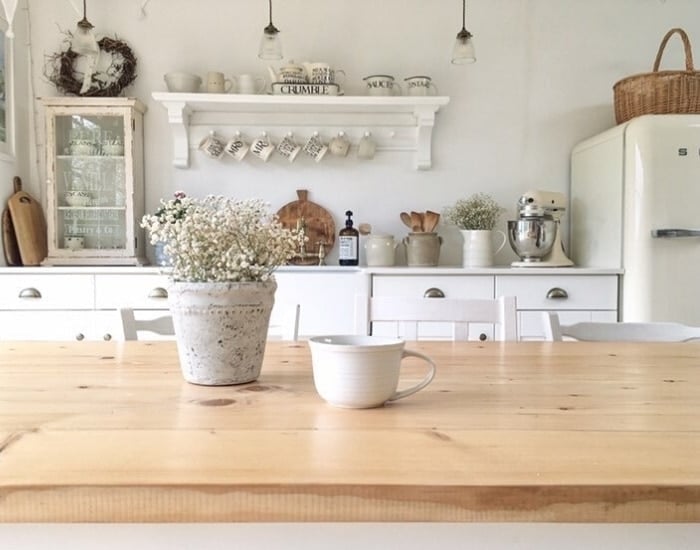
Open shelving looks best when the items on it earn their visibility. A white dresser filled with ceramic mugs does exactly that: the mugs become a display that is both practical and decorative. The wooden table in the foreground and the white cabinets in the background keep the room from feeling too stark, while the pendant lights add warmth overhead. A glass cabinet door lets you see the mugs without them collecting kitchen dust, which is a smart move for anything you use daily but want to keep clean. The white dresser stays neutral, so the mugs and their varied shapes do the talking.
Romantic Cottagecore Living Room with Floral Curtains
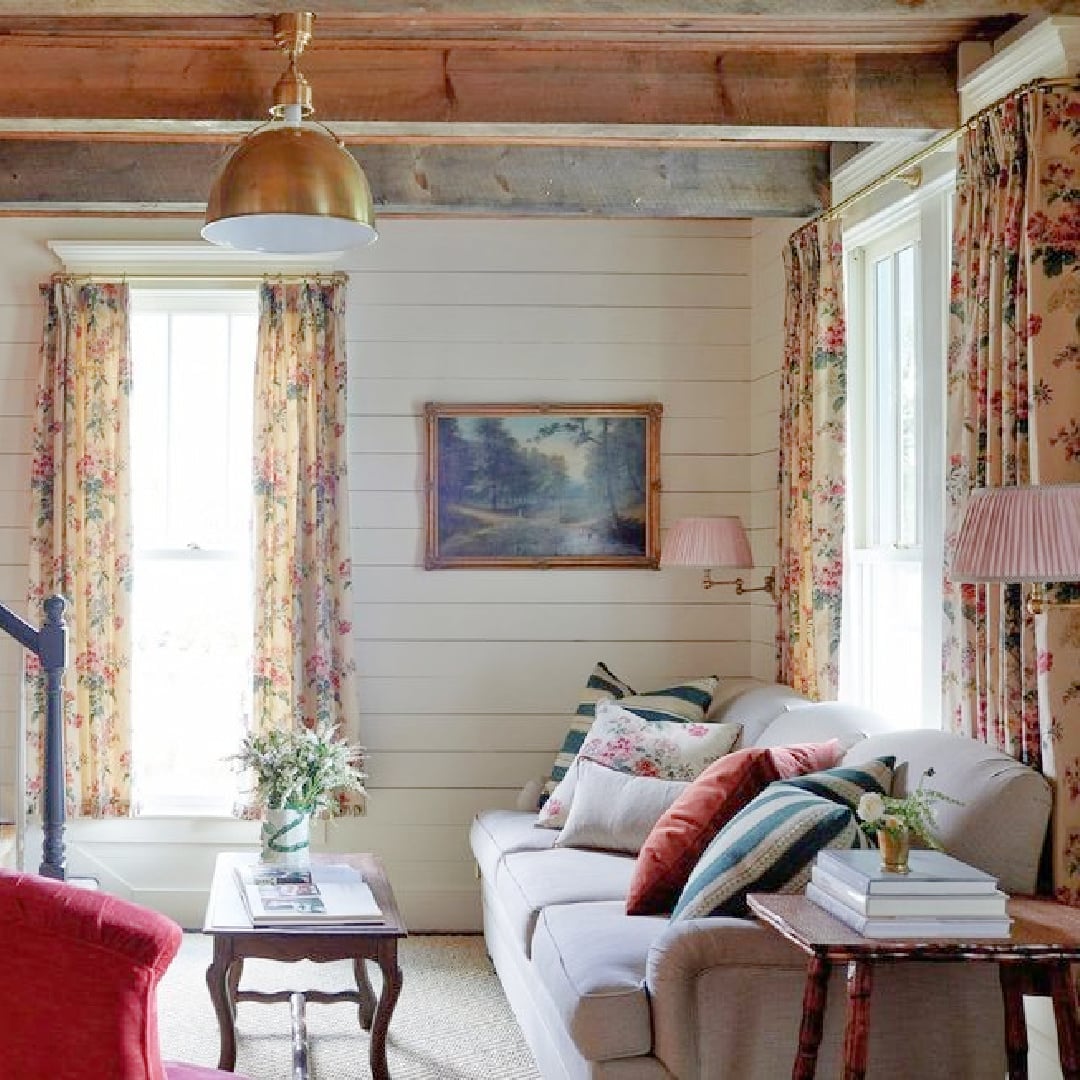
Cottagecore living room floral curtains bring a soft, layered feel to a space without overwhelming it. The neutral sofa anchors the room, while the floral curtains add the main pattern. Wooden side tables and an accent chair in muted tones keep the look grounded. Wall lamps and a table lamp provide warm light that makes the fabric textures stand out. Let one fabric piece, here, the curtains, define the romantic mood. Keep everything else simple to avoid a busy look.
Cozy Bedroom with Floral Bedding and Abundant Plants
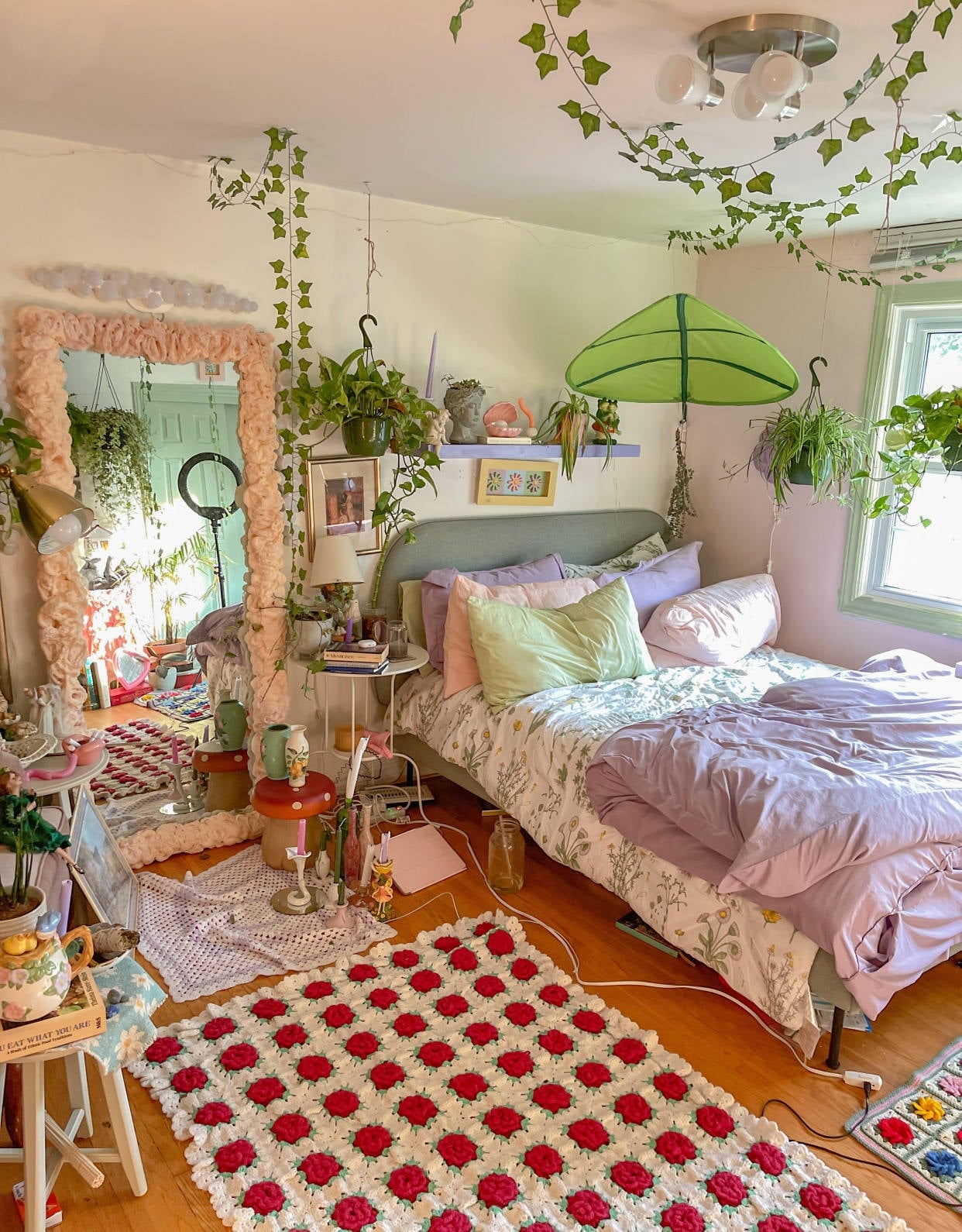
A cozy bedroom mixes patterns with plenty of greenery. The floral bedding sets the cottagecore tone, and the ivy vines trailing from a shelf or mirror soften the edges of a compact space. Pastel tones of green, pink, and white keep the palette light. A mirror helps bounce natural light around, while lamps add a warm glow at night. The cluttered, layered look works here because the plants and bedding share a similar color story. For renters, this setup is easy to change: swap the bedding or move the plants to another room with no permanent changes.
Cottagecore Bedroom with Floral Quilt and Patterned Wallpaper
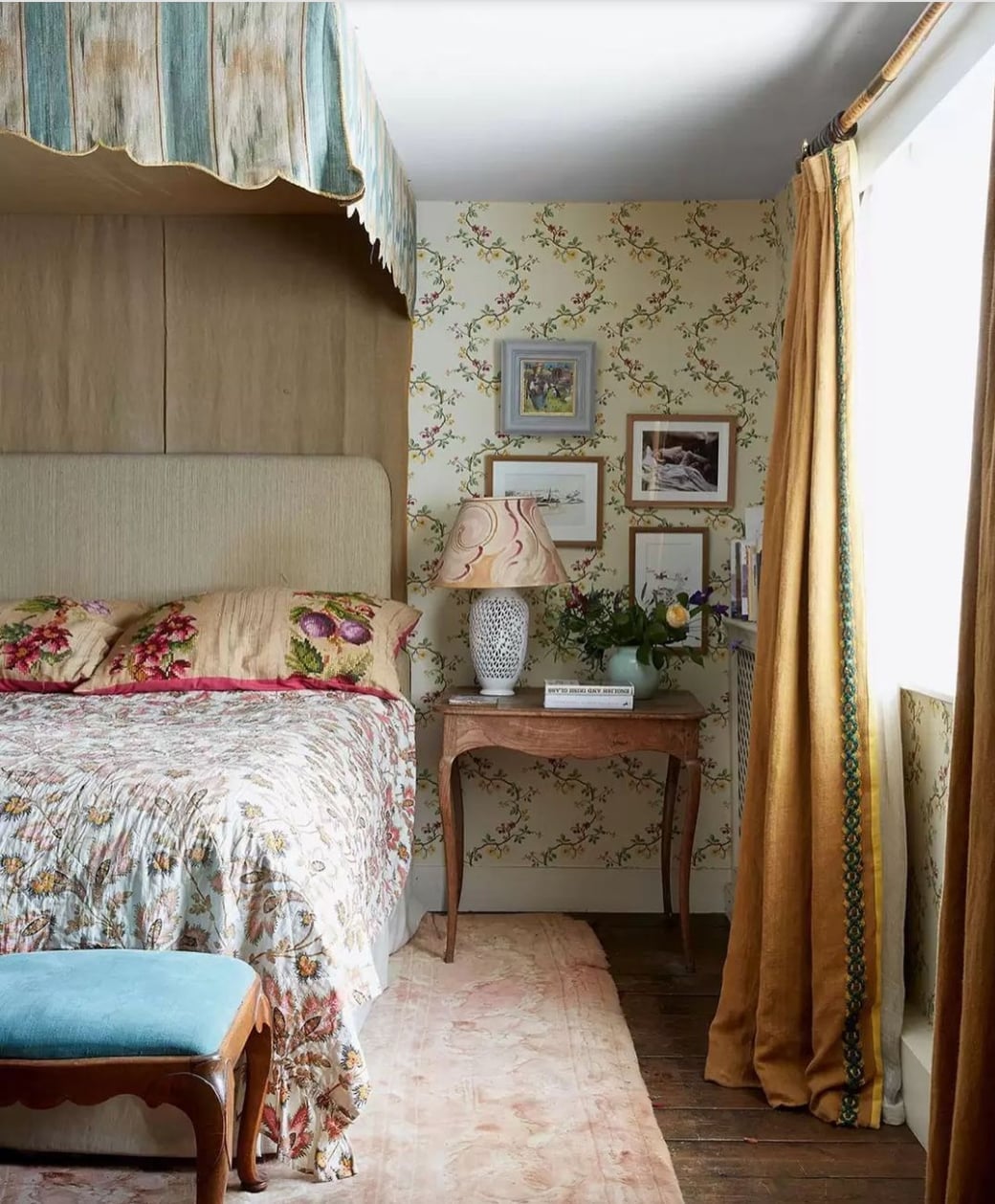
A floral quilt paired with patterned wallpaper might sound like too much pattern, but it works when the colors tie together. Here, the yellow, gold, cream, and blue tones in the quilt echo the wallpaper, creating a unified look. The draped canopy adds softness and frames the bed as the focal point. A wooden side table and a table lamp bring in natural texture and warm light. The ratio of pattern to solid space matters: the quilt covers the bed, while the wallpaper fills one wall, and the rest of the room stays simple. What breaks the pattern overload is the cream background in both the quilt and wallpaper, giving the eye a place to rest.
Cozy Bedroom with Textured Bedding and Wooden Accent Wall
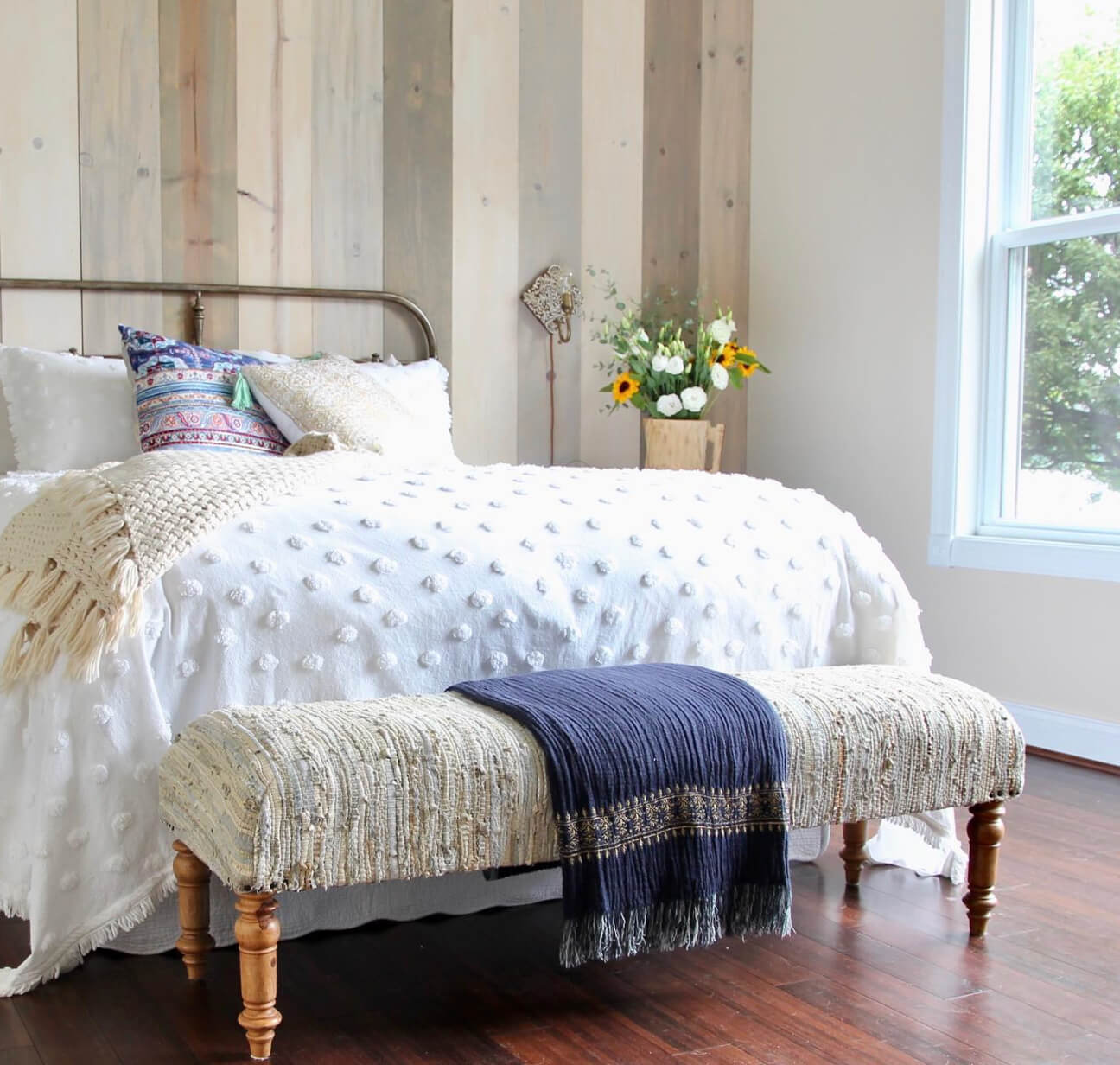
The textured bedding here does most of the visual work, with layers of white and cream fabric on a metal bed frame. The wooden accent wall behind it adds warmth without competing for attention. Blue accents in the bedding and a woven bench at the foot of the bed give the room a farmhouse feel. A bedside lamp provides soft light that highlights the texture of the linens. The compact layout keeps the bed central, making the room feel cozy. For durability, textured bedding hides everyday wear better than flat, smooth fabrics.
Farmhouse Living Room with Bold Striped Upholstery
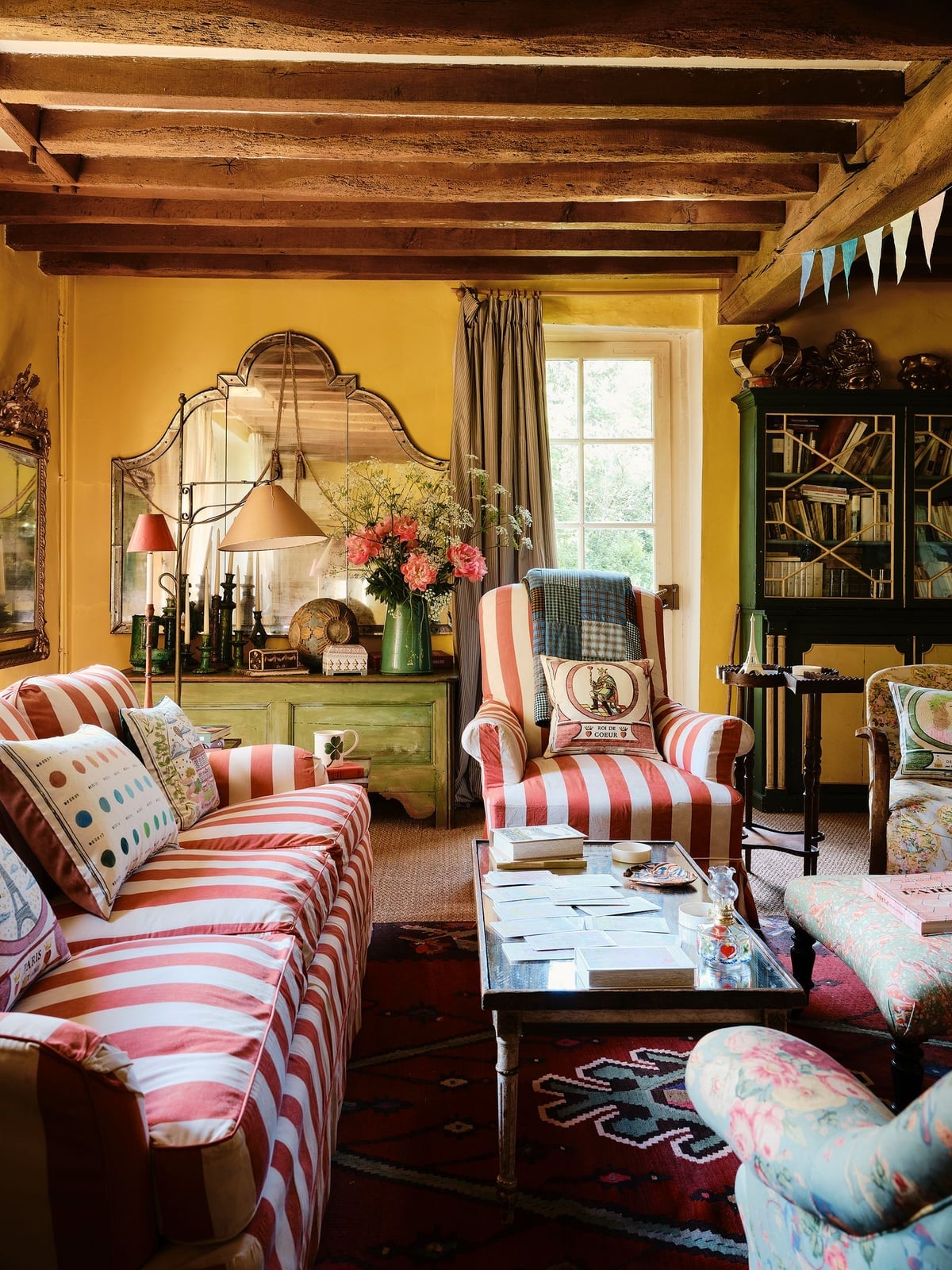
Bold striped upholstery on a sofa and armchair makes a strong statement in a farmhouse living room. The yellow, red, green, and blue stripes add energy, while the wood beams and a green cabinet keep the room grounded. An ornate mirror above the fireplace reflects natural light, balancing the bold pattern. The key is scale: the stripes are large enough to read from across the room, but the palette stays simple. A striped sofa and armchair work best when the room has enough neutral space around them to let the pattern breathe.
Farmhouse Living Room with Distressed Coffee Table and Dough Bowl
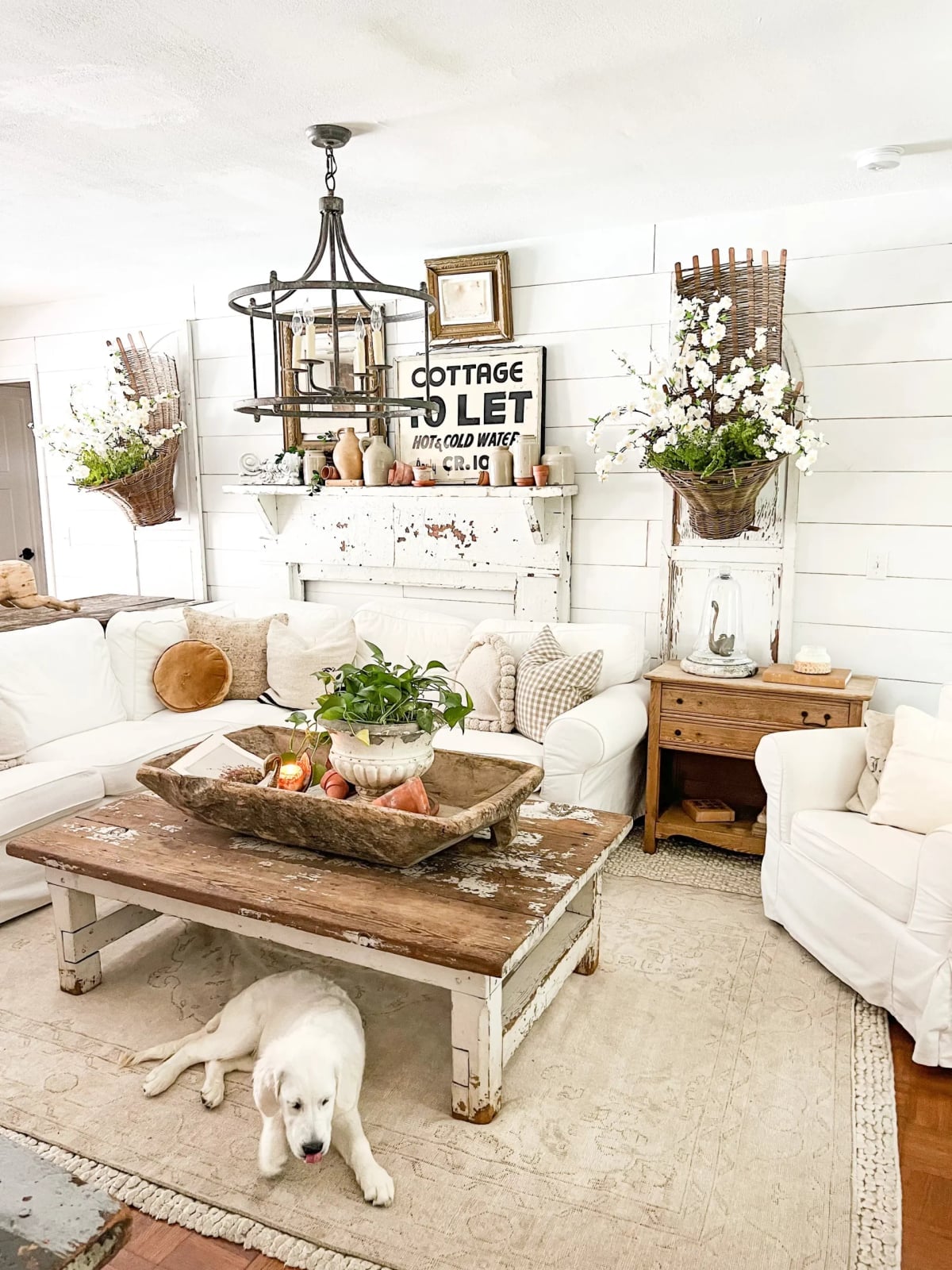
A central coffee table anchors a roomy living room when its finish and form carry enough weight. Here a distressed wooden table with visible wear and a carved base claims the middle of the seating area, while a large dough bowl filled with neutral-toned objects sits on top. The table’s weathered surface shows its history, which fits the farmhouse and cottagecore mix of the room.
Shiplap walls and a chandelier above keep the setting simple so the coffee table vignette stays the focal point. The palette sticks to white, cream and wood tones, letting the textured tabletop and the bowl’s organic shape add interest without extra color. In a rental, swap a permanent coffee table for a chunky wood crate or a low bench with a bowl or tray on it. The key is a single substantial piece that gathers the room’s main objects in one spot.
Farmhouse Living Room Featuring a Vibrant Patchwork Quilt
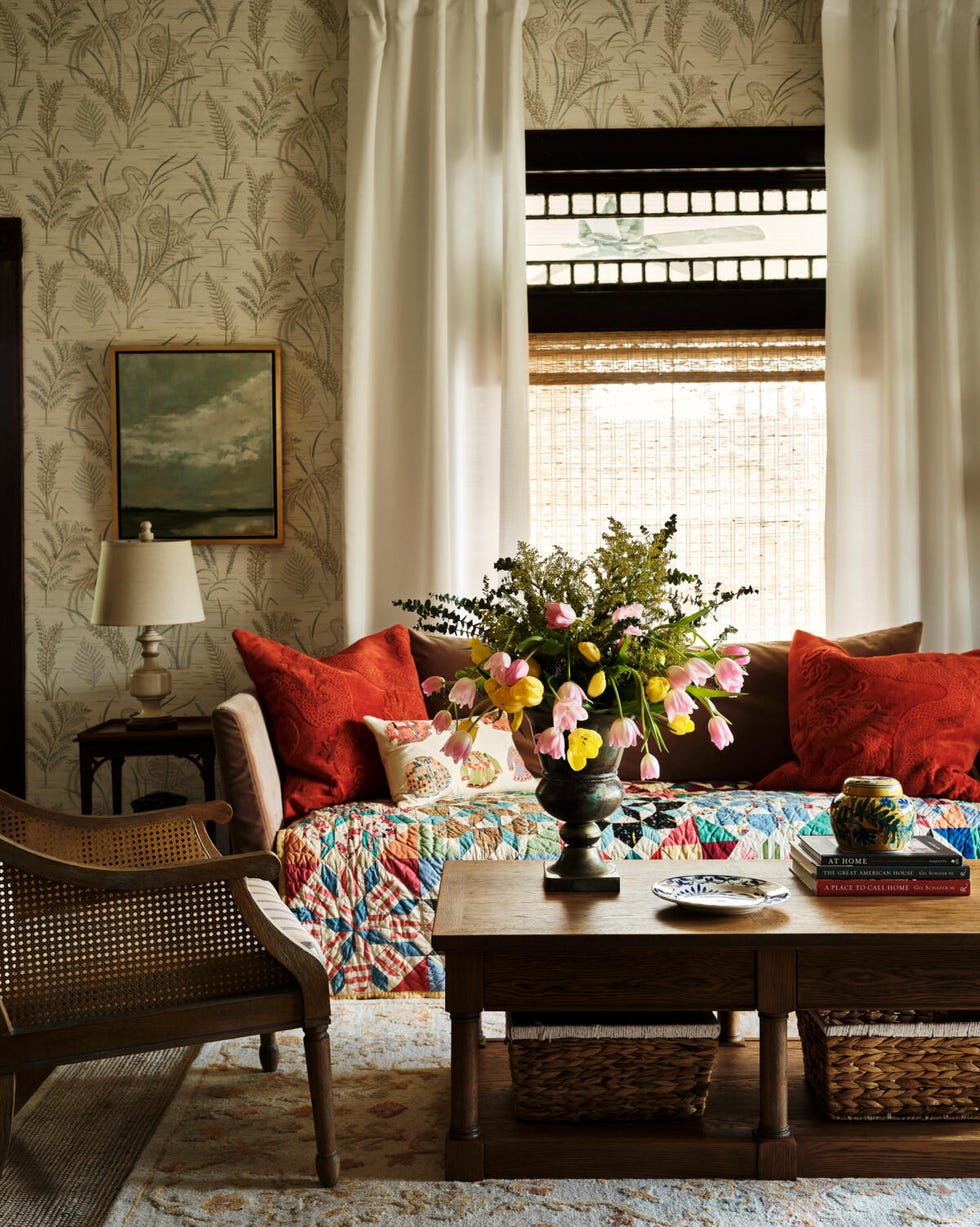
A colorful patchwork quilt draped over a sofa brings earthy red, yellow and green into a roomy living room with wood furniture and wallpaper. The quilt breaks the neutral palette, adding pattern and warmth without needing a permanent change. This style works because the quilt is the only vivid element in the space, so it becomes a deliberate accent. Natural light keeps the fabric’s colors true and the room feeling open.
Final Thoughts
Across these 22 cottagecore spaces, a few lessons repeat: natural materials like wood and stone anchor the look, while florals and gingham add softness without overwhelming. Lace curtains and vintage pottery bring that storybook feel, but they work best when paired with sturdy, functional pieces like a butcher block island or a leather sofa. The style isn’t about perfection, it’s about layering textures and colors that feel honest and lived-in. Start with one change, maybe a floral pillow or a wooden bowl, and build from there. Keep an eye on upkeep, since real plants and delicate fabrics need attention, and check your USDA zone before choosing outdoor climbers like roses. The final takeaway is simple: cottagecore is a mood you create with what you already love, not a catalog you have to follow.