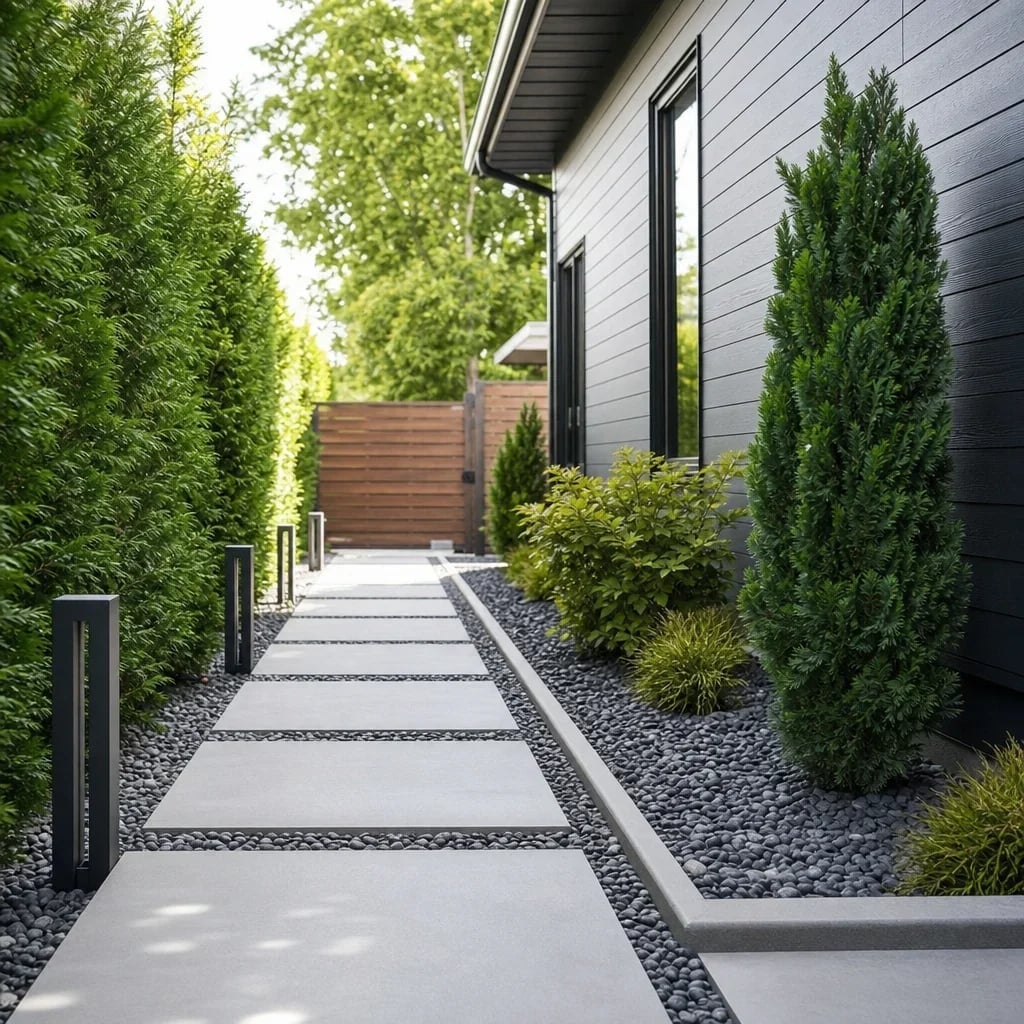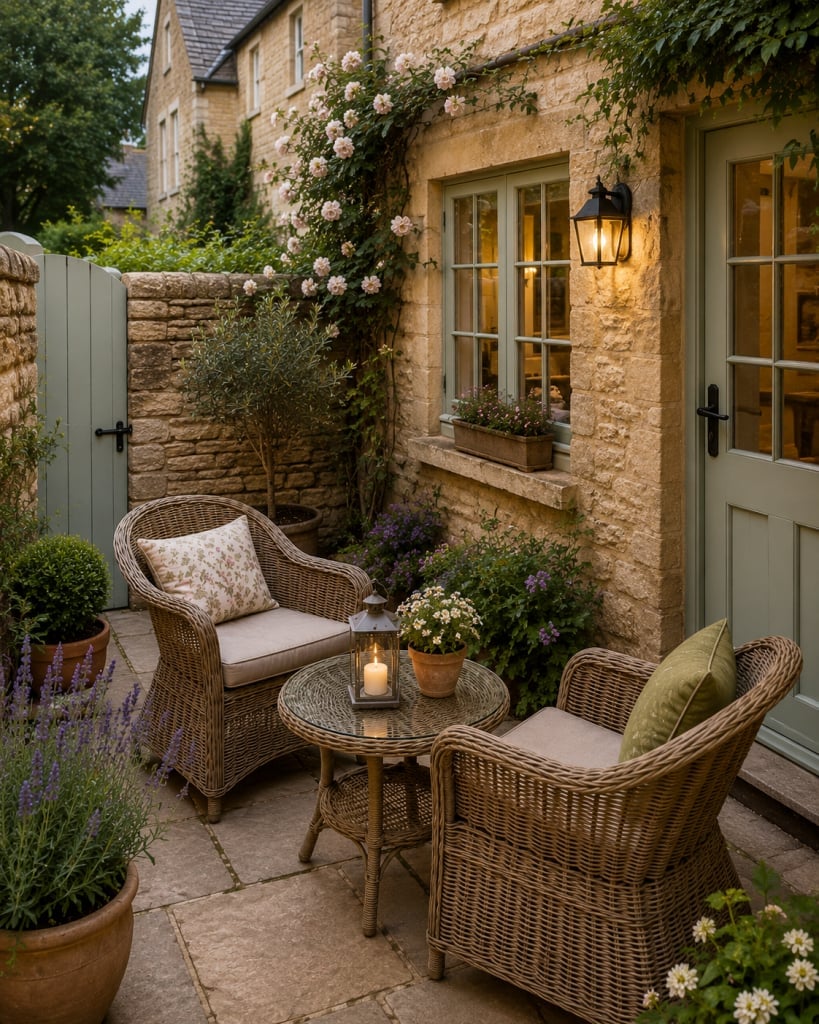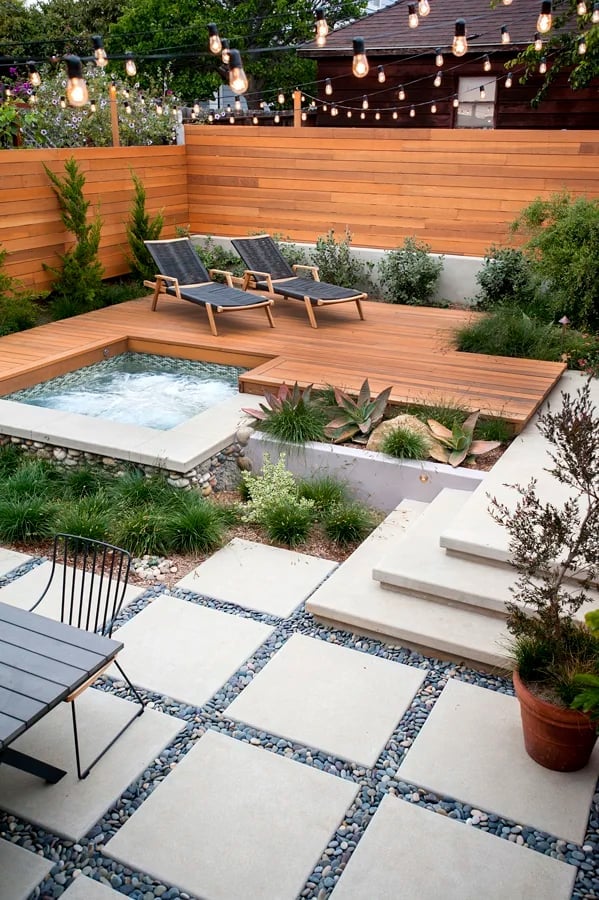
A retaining wall does more than hold back soil. It shapes how your yard lives and looks, turning a steep grade into usable space. These 26 ideas show you the range, from sleek modern curves to rustic stone tiers that feel like they’ve been there for decades.
You’ll see built-in seating, integrated planters, and even a waterfall feature. Each approach solves a slope problem while adding real character to your garden or patio. Whether you’re planning a full regrade or just a raised bed, there’s a style here that fits your land and your taste.
Modern Tropical Curve with Built-in Seating
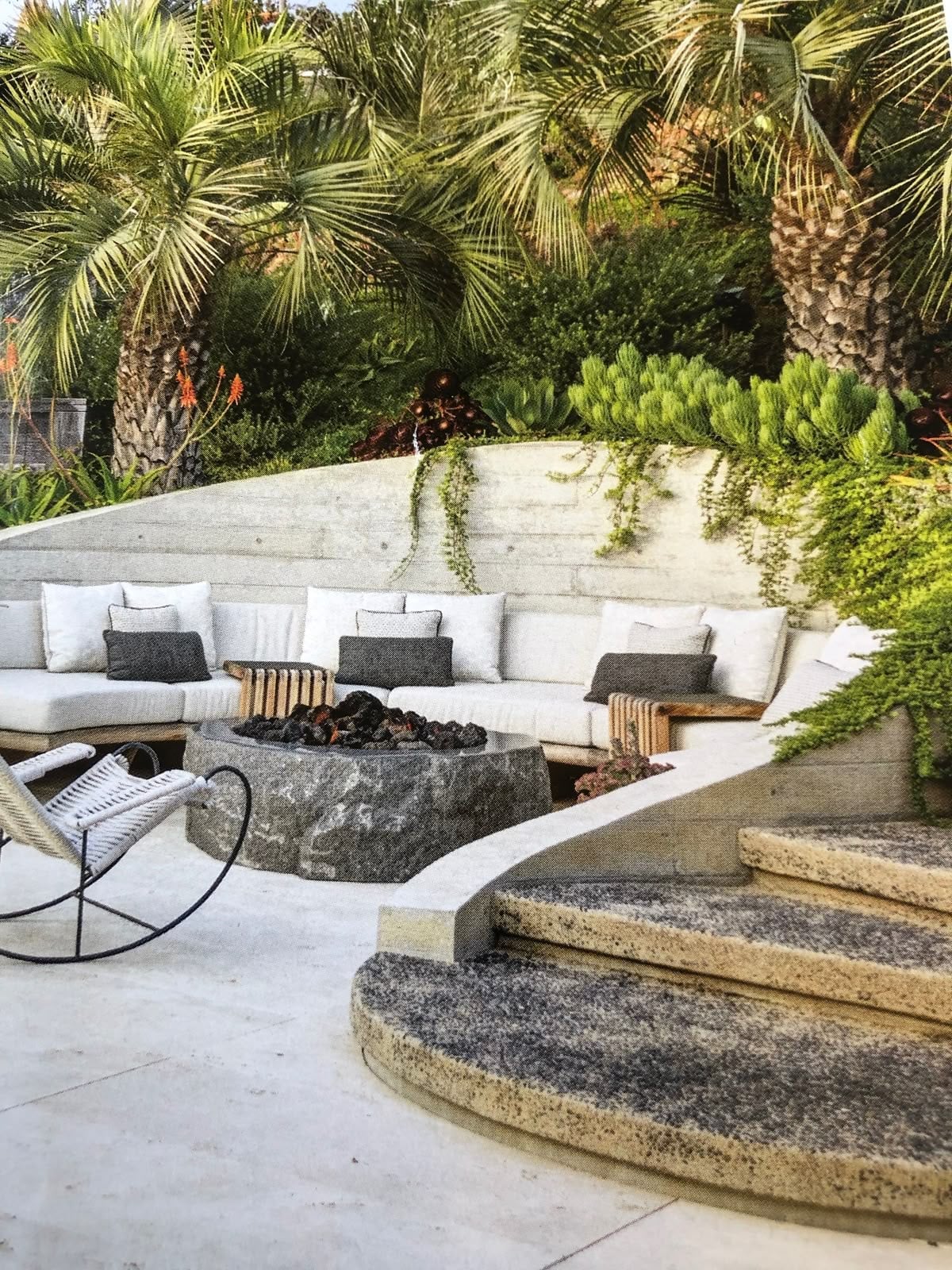
A curved concrete retaining wall does more than hold back earth; it shapes how you use the yard. Here, the wall wraps around a sunken lounge, creating a natural boundary for a sofa and fire pit. The soft gray of the concrete contrasts with the greenery and the warm glow of evening light. A rocking chair on the upper level proves the layout works for both conversation and quiet moments.
Geometric Gabion Walls for a Modern Garden
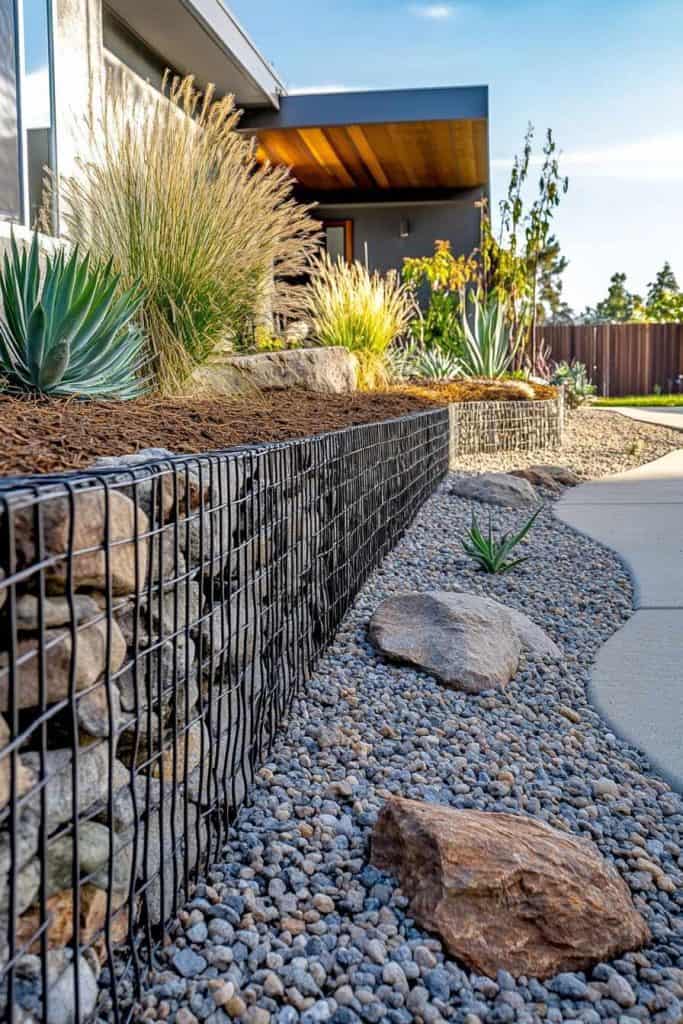
Gabion walls are a straightforward way to add texture without fuss. The metal cages hold local stone, creating a surface that feels solid but not heavy. In this garden, the wall runs alongside a gravel path, with ornamental grasses and succulents softening the hard edges. The mix of gray stone and green plants keeps the palette grounded. A concrete cap on top gives the wall a finished look and provides a narrow ledge for pots or a place to set down a watering can.
Sleek Black Retaining Walls for Terraced Design
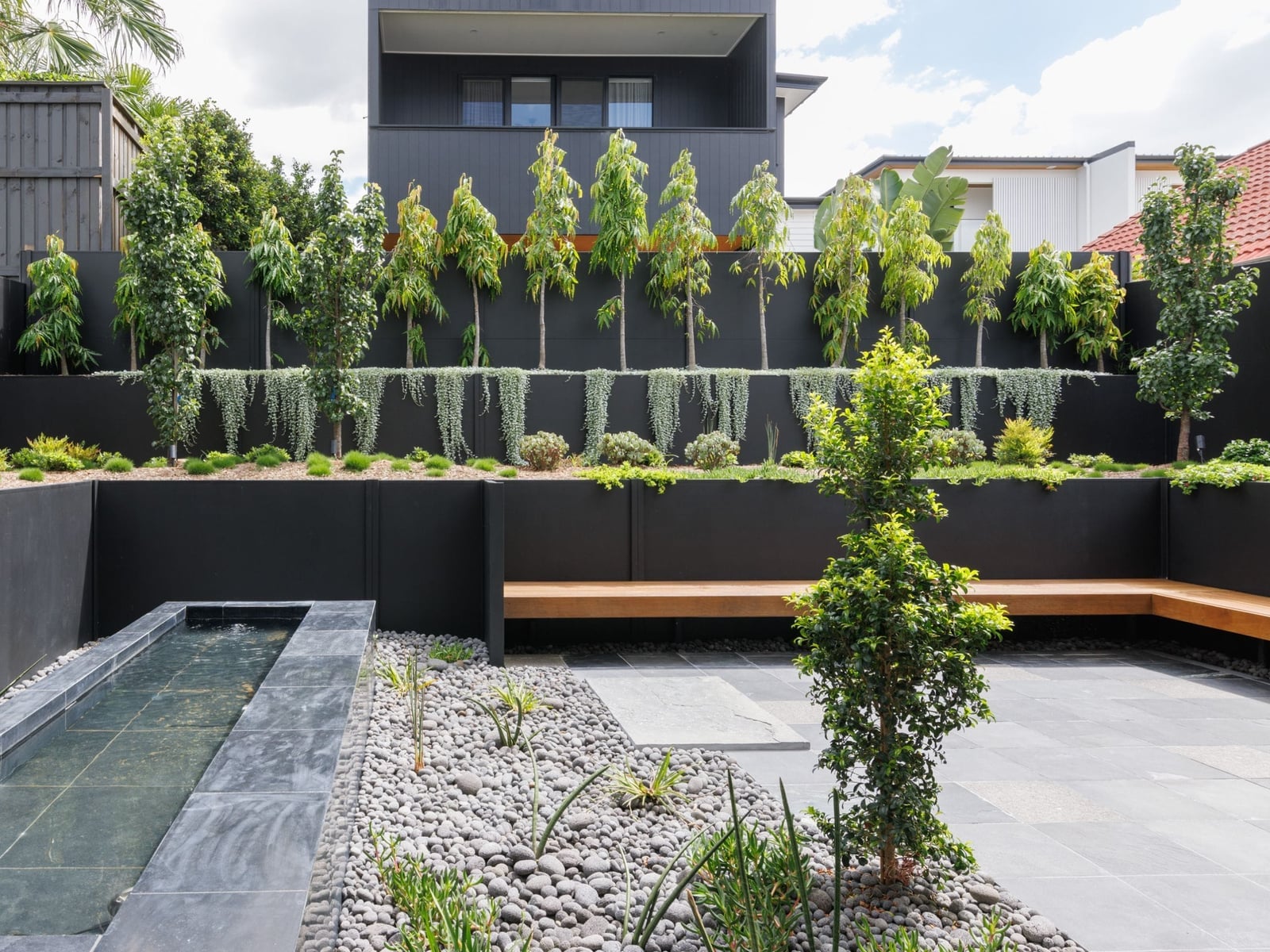
Can a retaining wall do more than just hold soil? In this terraced backyard, the answer is yes. The black wall creates a sharp line that separates the upper lawn from the lower patio, with a water feature built into the lower level. The dark tone makes the greenery pop and gives the space a modern edge. A wooden bench and planters add warmth without competing with the wall. The layout uses the change in elevation to define two distinct zones: one for dining, one for lounging. Overcast daylight softens the contrast, so the black reads as a natural part of the landscape rather than a hard barrier.
Wooden Slatted Retaining Walls with Integrated Seating
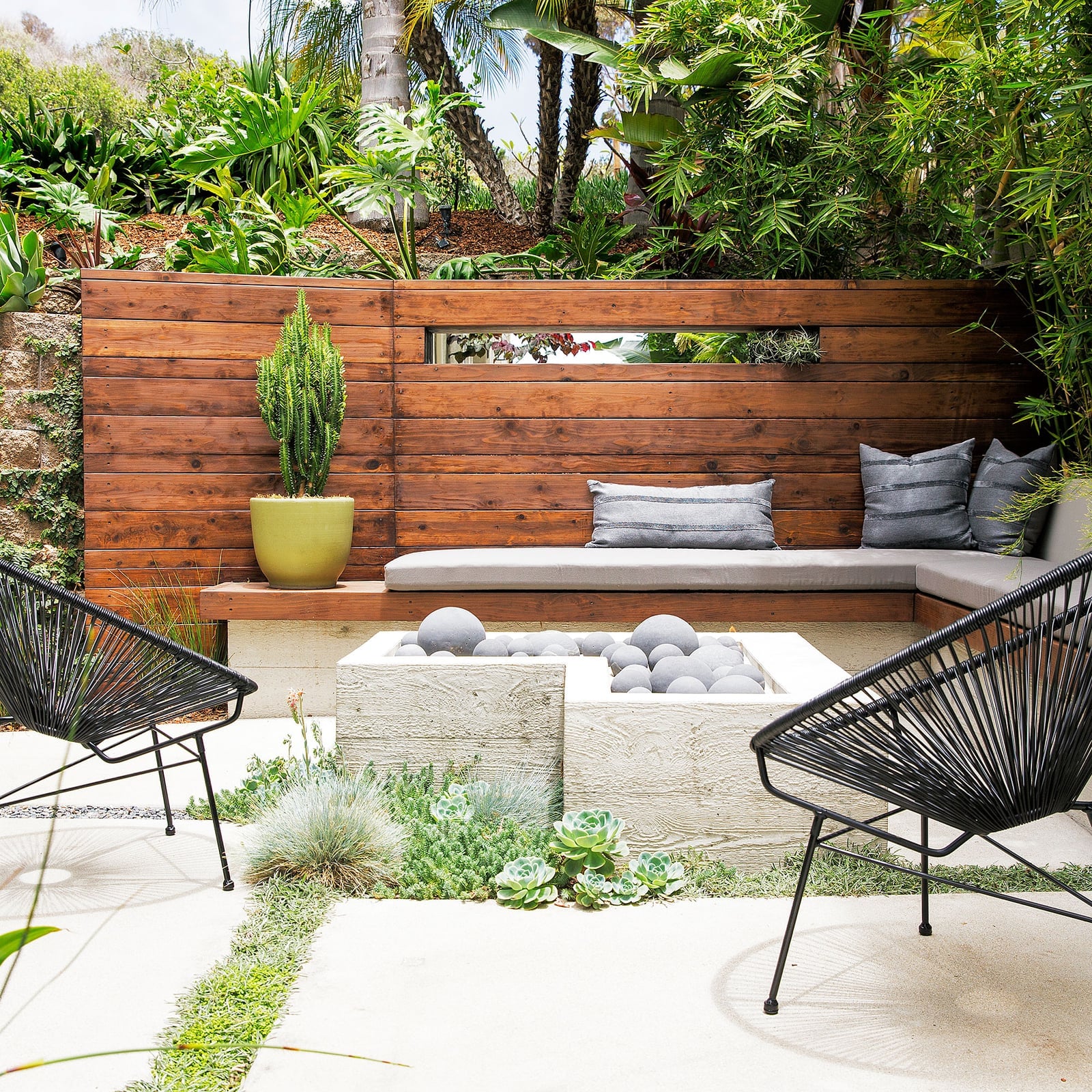
A wooden slatted wall does double duty as a retaining structure and a built-in bench. The horizontal lines of the wood draw the eye across the patio, while the seat offers a place to sit by the fire pit. Concrete pavers and stone planters balance the warmth of the wood, keeping the look clean. The open slats allow air to move through, which helps the wood dry faster after rain.
Curving Natural Stone Walls in a Traditional Garden
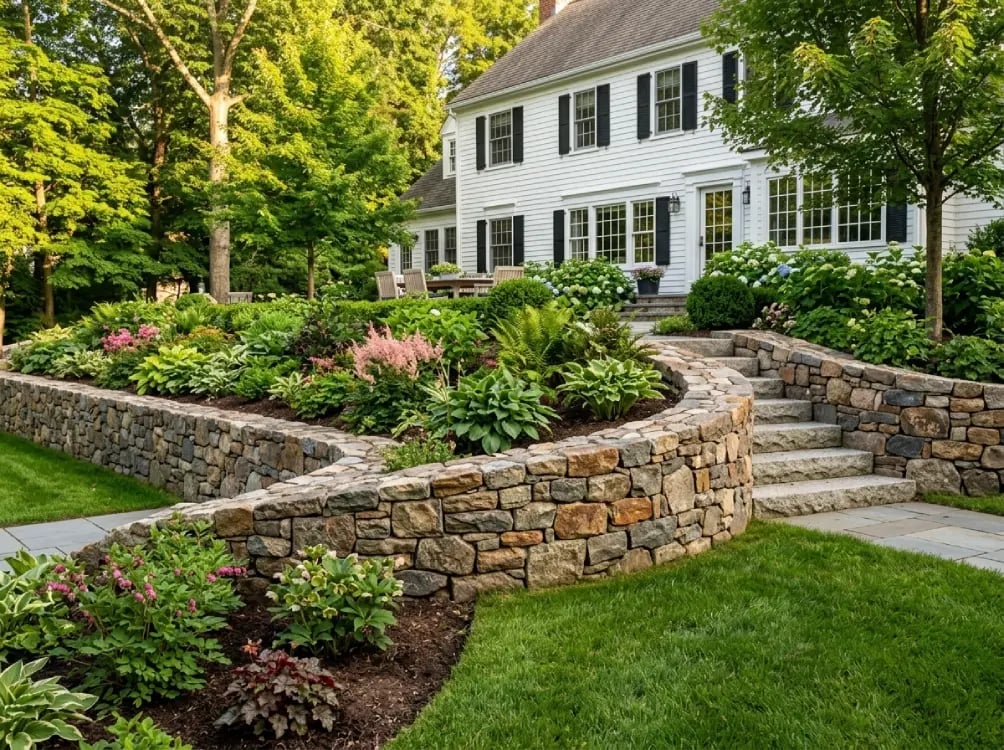
For a sloped garden, let the wall follow the land, not fight it. This curved stone wall creates terraced beds that step down through the yard. The natural stone blends with the brick path and stone staircase, so the wall looks like it has always been there. Pink and white flowers spill over the edge, softening the hard lines. The curve also makes the garden feel larger, because you cannot see the whole space at once.
Extensive Tiered Stone Walls for a Formal Garden
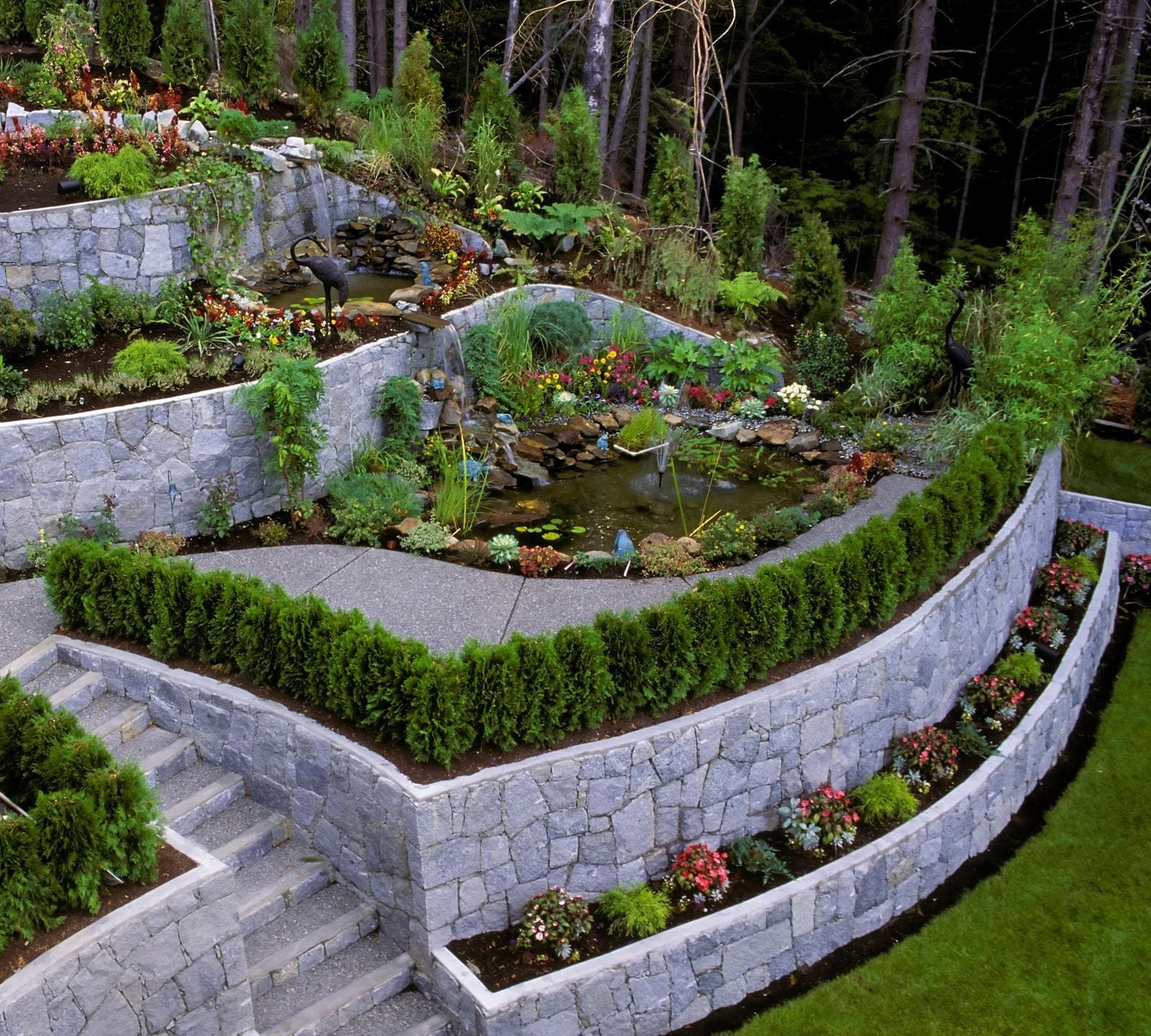
A formal garden calls for structure, and a single retaining wall can feel like half the job. These extensive tiered gray stone walls work with the slope rather than fighting it, creating a series of level planting beds that are deliberate. The palette stays restrained: gray stone, green manicured hedges, and colorful flowers placed with precision. The open plan layout means the multi-level garden is one cohesive space, with pathways connecting each tier. The style here depends on that ratio of hardscape to softscape. The stone provides the bones, the hedges add the geometry, and the flowers break the formality just enough to keep the garden from feeling like a municipal plaza.
Cottage Garden Stone Walls Overflowing with Flowers
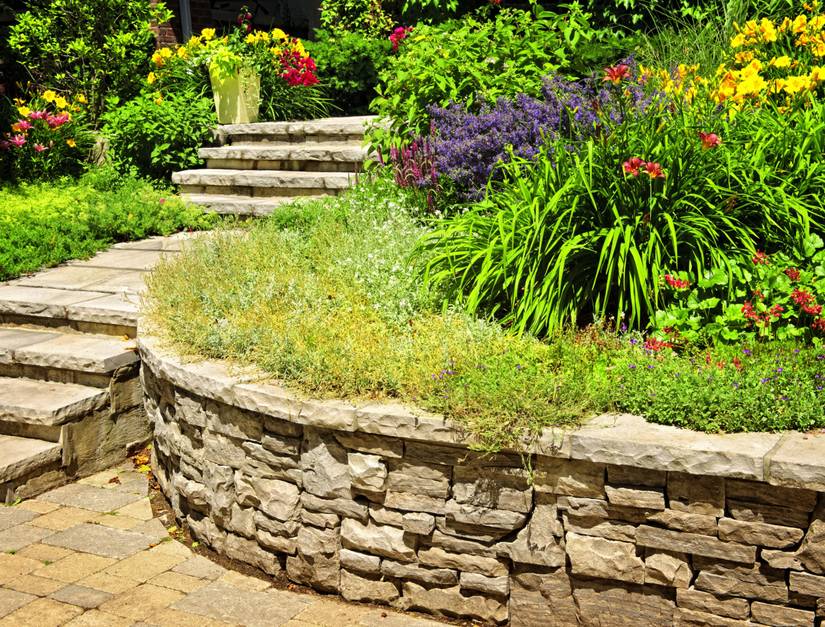
The stone retaining wall here is nearly invisible under the layers of yellow, pink, and purple flowers spilling over its edge. That is the point. A cottage garden relies on abundance, and the stone wall exists to hold the soil while the plants do the decorating. The natural stone steps and brick pavers add texture. Renter friendly advice: if you cannot build a stone wall, try a low wooden planter box along the base of an existing slope. Fill it with trailing annuals in a mix of warm and cool tones, and let them grow thick enough to hide the container. The effect looks planned rather than improvised.
Modern Outdoor Living with Concrete Block Walls
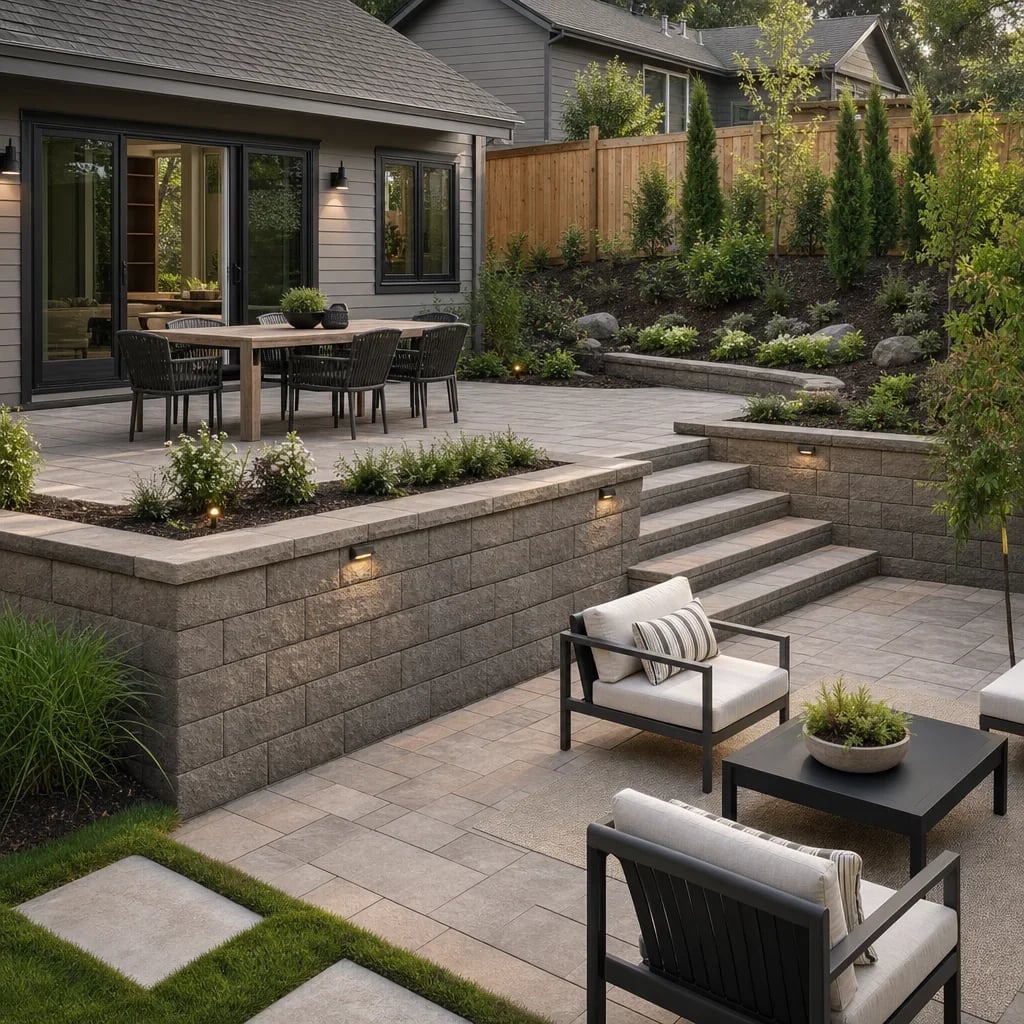
Concrete block retaining walls do not have to look utilitarian. Here they define a multi-level patio with an outdoor dining set and lounge chairs, turning a slope into a usable room. The palette sticks to gray and beige with green accents and warm wood tones from the furniture. Integrated landscape lights along the top of the walls extend the space into the evening. The layout works because the walls do not just hold back soil. They create clear zones for dining and lounging without needing railings or fences. The stone tile floor and metal furniture add a modern edge, while the wood softens the look.
Rustic Tiered Walls of Reclaimed Wood Timbers
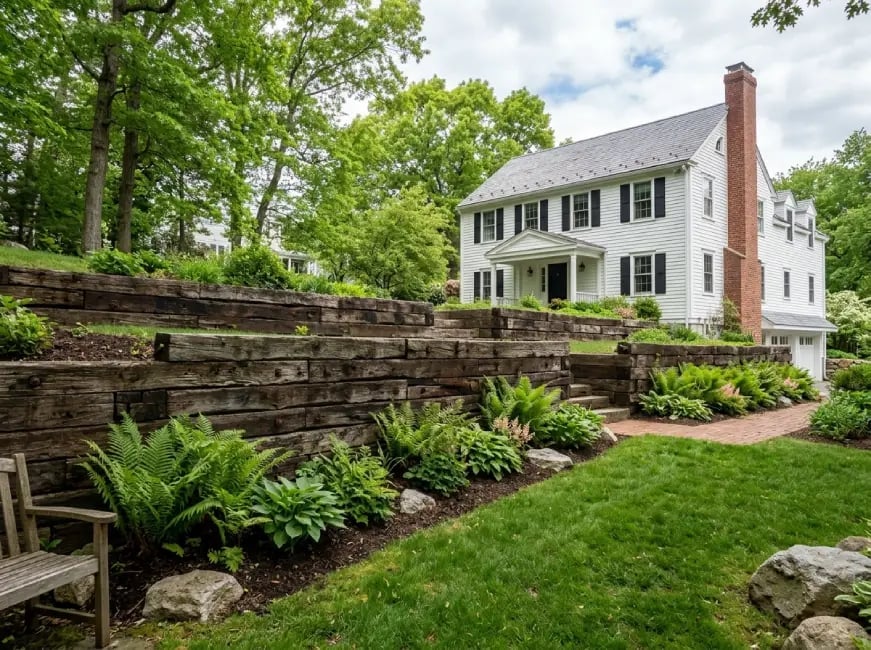
How long will reclaimed wood timbers hold up in a retaining wall? That is the question most people have when they see a design like this. The answer depends on the wood species and how well the wall is built. These large timbers create tiered levels in a roomy yard, with a stone path and ferns softening the base. The brown wood contrasts with the green foliage and the white house behind it.
The rustic style relies on the weight and texture of the material. Reclaimed timbers bring a history that new lumber cannot match. The key is drainage. Wood retaining walls need a gravel backfill and a perforated pipe behind them to move water away. Without that, the timbers can rot from the inside out. This is not a weekend project. A wall at this scale requires proper engineering and permits.
Naturalistic Terraced Walls with Grass Inlays
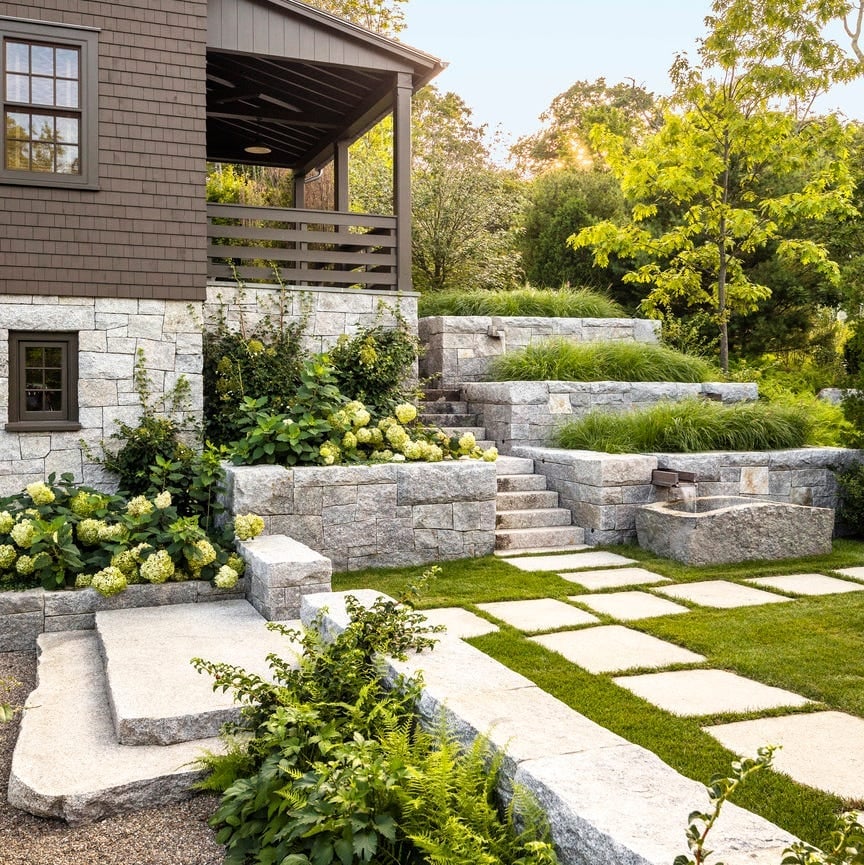
These terraced stone retaining walls use grass inlays between the tiers to soften the transition from one level to the next. The stacked stone feels grounded, while the ornamental grass and stone steps add a natural rhythm. The warm late afternoon sun catches the texture of the stone and the green of the grass, making the whole backyard feel expansive rather than divided. The trick is keeping the grass strips narrow enough to mow without a trimmer. A width of about 12 to 18 inches lets a standard mower handle it. Any wider and you are hand-trimming edges.
Integrated Multi-Level Walls for Modern Patios
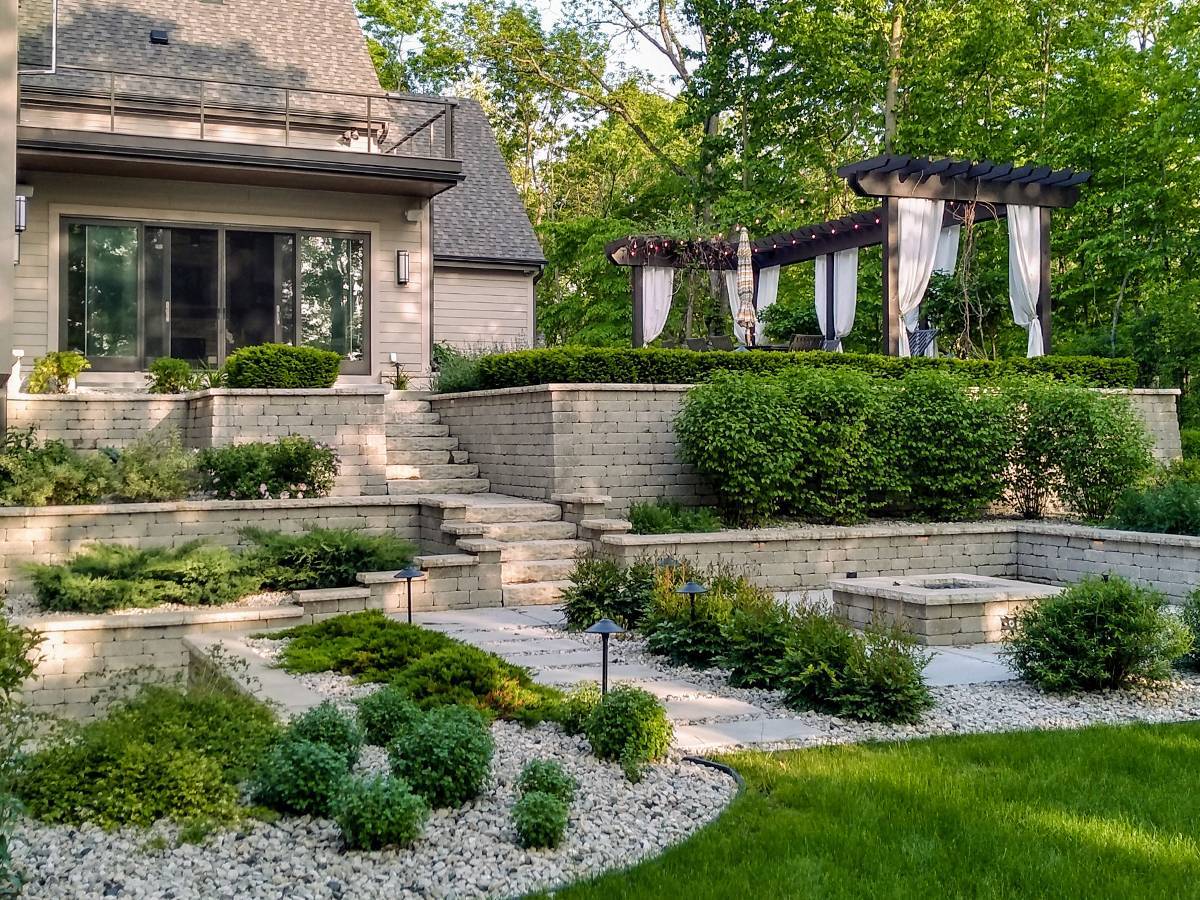
In a sloped yard, retaining walls can define the rooms, not just the grade. In this modern landscape, the multi-level concrete block walls act as the backbone, carving a roomy patio into distinct zones. The lower tier holds a fire pit and seating, while the upper level steps up to a pergola and dining area. Wood details and gravel soften the block’s industrial edge. Subtle landscape lights along the wall edges make the transition between levels feel deliberate after dark. The layout works because each platform is wide enough to feel like its own space, not a narrow landing.
Rustic Stone Wall as a Garden Seating Backdrop
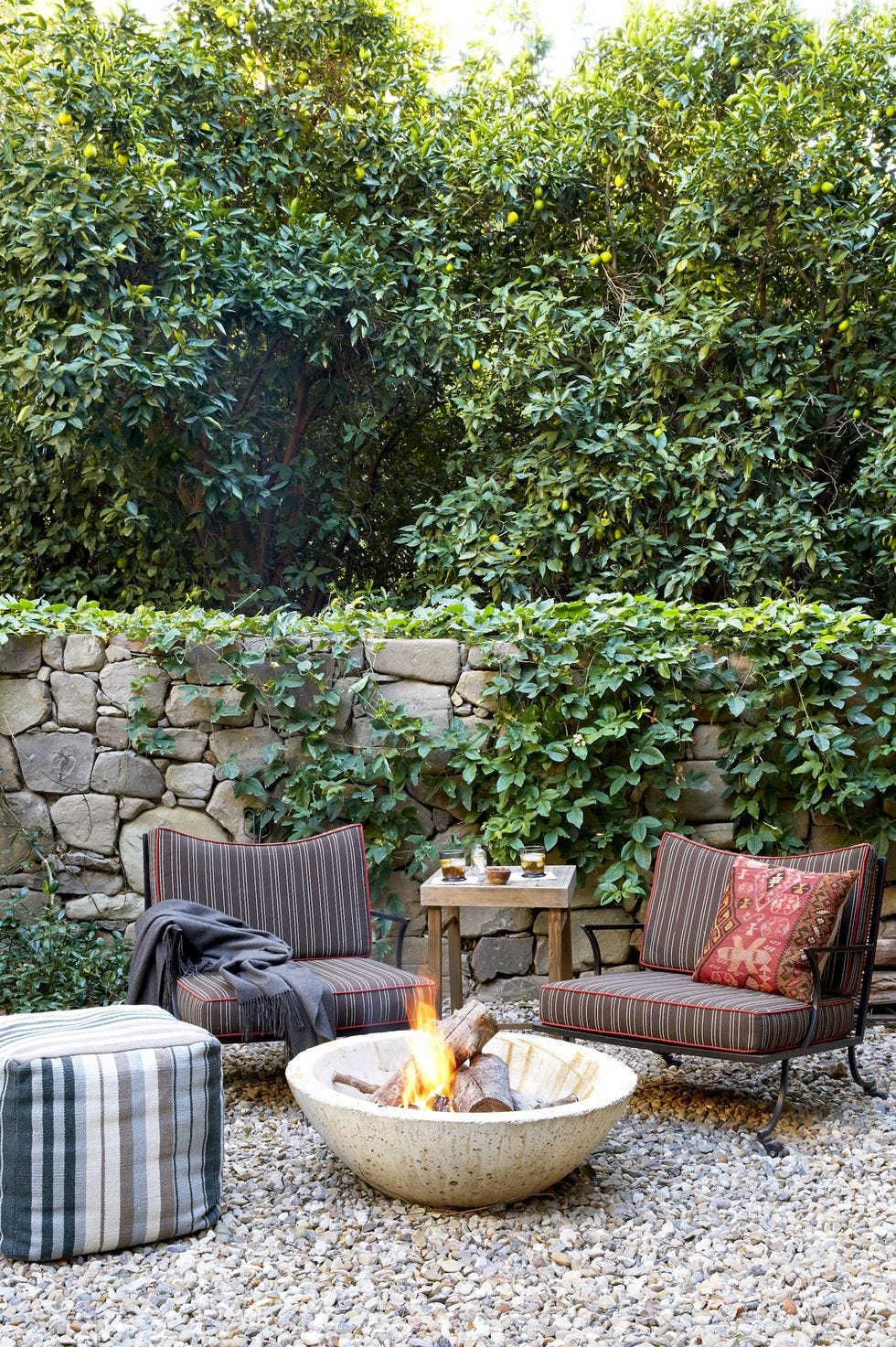
A stone retaining wall can serve as a backdrop for a rustic seating area. The wall’s rough, natural stone and warm brown and red tones anchor a compact gravel nook with two chairs and a small side table. The palette is key: the stone’s muted grays and browns let the green foliage and a red accent in the seating stand out. The wall never competes with the fire pit or the chairs. What breaks the monotony is the irregular stone sizes and the way the wall curves slightly, keeping the eye moving across the space.
Layered Gray Stone Walls for a Traditional Entrance
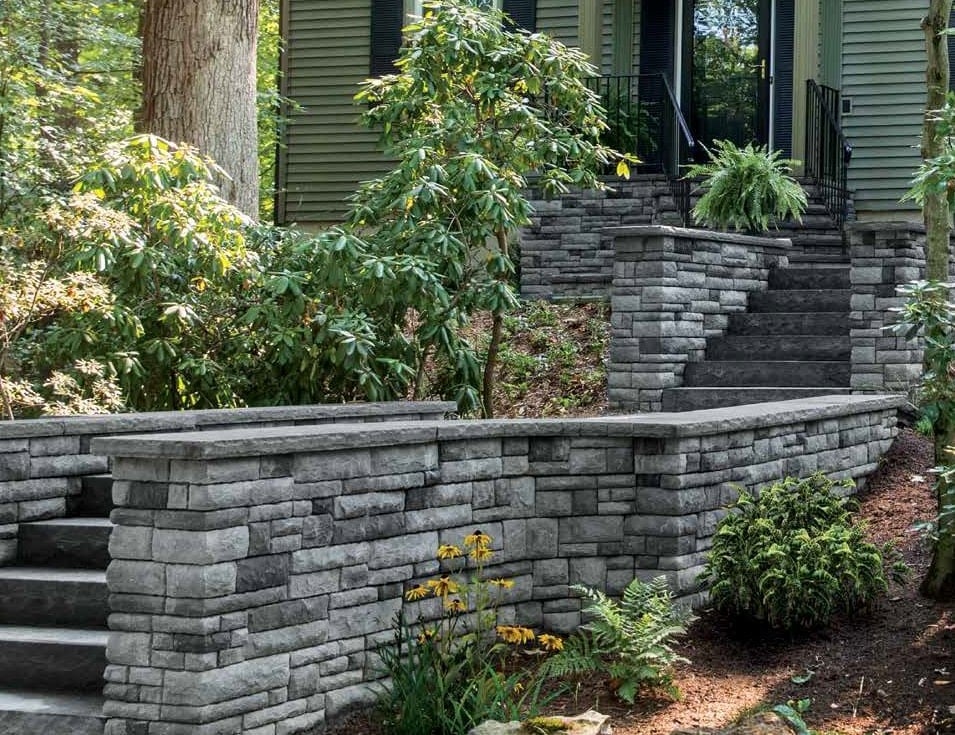
The layered, rectangular gray stone blocks create a terraced entrance that feels substantial without being heavy. Each course steps back slightly, forming a natural staircase alongside the concrete steps. The consistent gray palette and the straight lines of the stone blocks give the entrance a clean, orderly feel, while the green foliage in the planters softens the hardscape. This is a traditional approach that relies on repeating the same stone block size and placement to create a rhythm that guides the eye and the foot up to the entry.
Modern Stacked Stone Walls with Vibrant Plantings
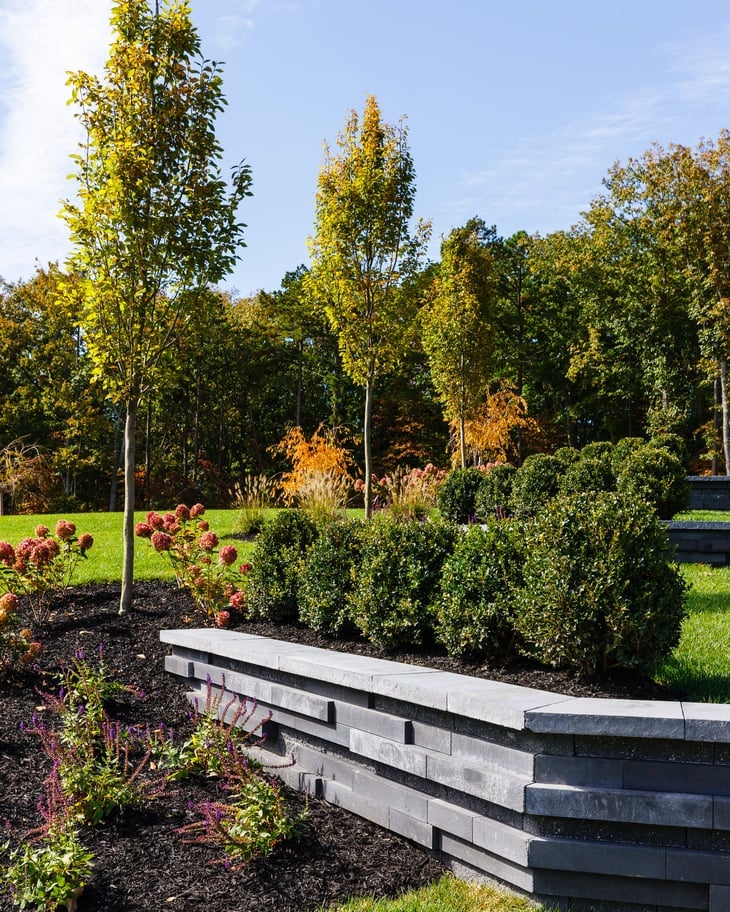
This modern stacked stone wall succeeds because the gray stone is a neutral canvas for the plantings. The palette is the star: the cool gray of the stone blocks sets off the bright green of manicured shrubs and the purple and orange blooms above them. The bright, direct daylight makes the contrast pop, so the wall doesn’t fade into the background or compete with the garden. The tiered layout of the walls creates raised beds that let the plants spill over the edge, breaking the rigid horizontal line of the stone. The result is a structured garden that still feels lush.
Rustic Curved Walls with Integrated Seating
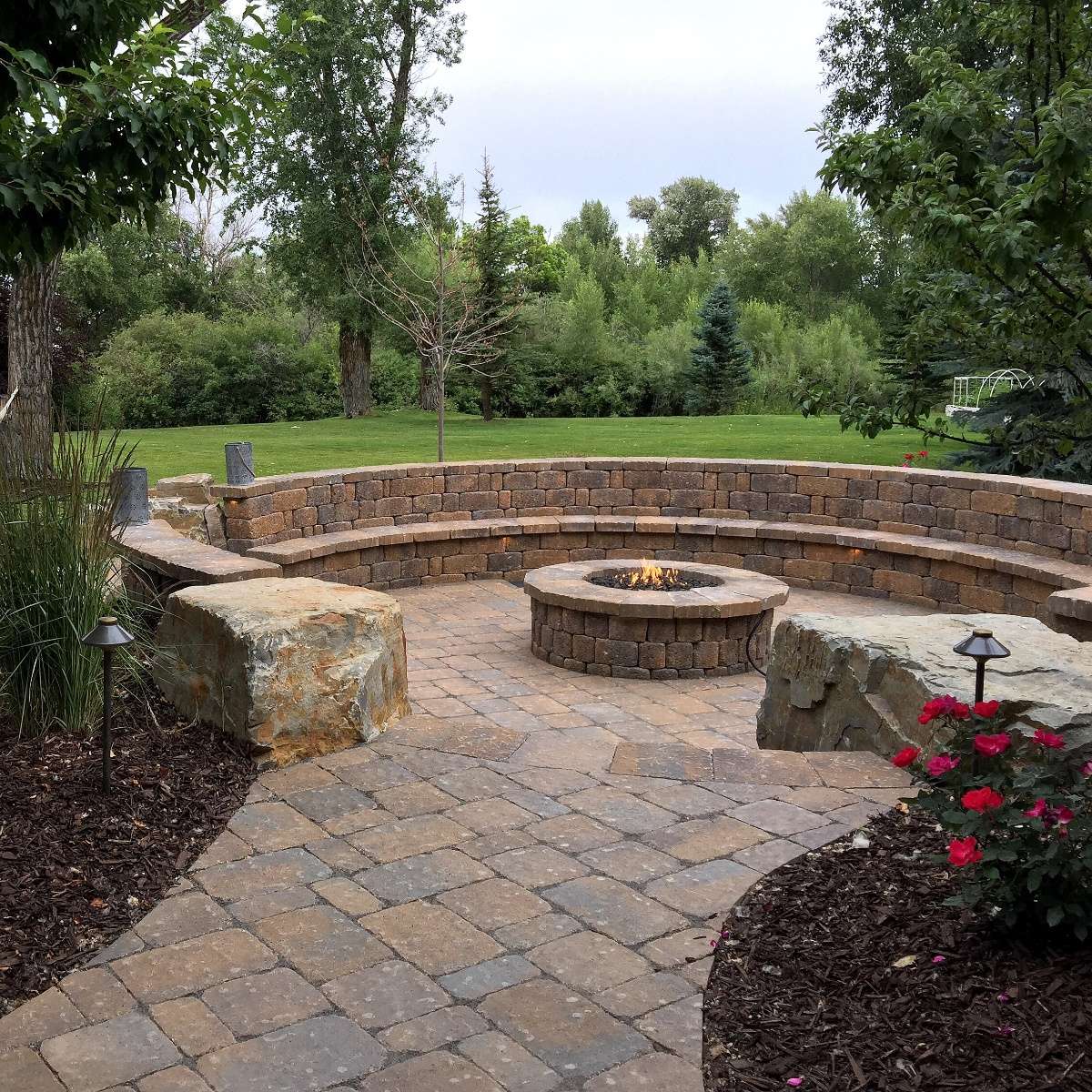
A retaining wall can earn its square footage, and this curved stone wall does exactly that. It wraps around a circular patio, and the top of the wall is wide enough to sit on, creating a continuous ring of seating around a fire pit. The tan and brown natural stone pavers on the wall top match the patio floor, so the seating feels like part of the structure, not an add-on. The curved layout naturally draws people into a circle, and the subtle landscape lighting along the base of the wall keeps the path safe without spotlighting the seating. This wall does double duty as both structure and furniture.
Expansive Stone Walls for Terraced Naturalistic Gardens
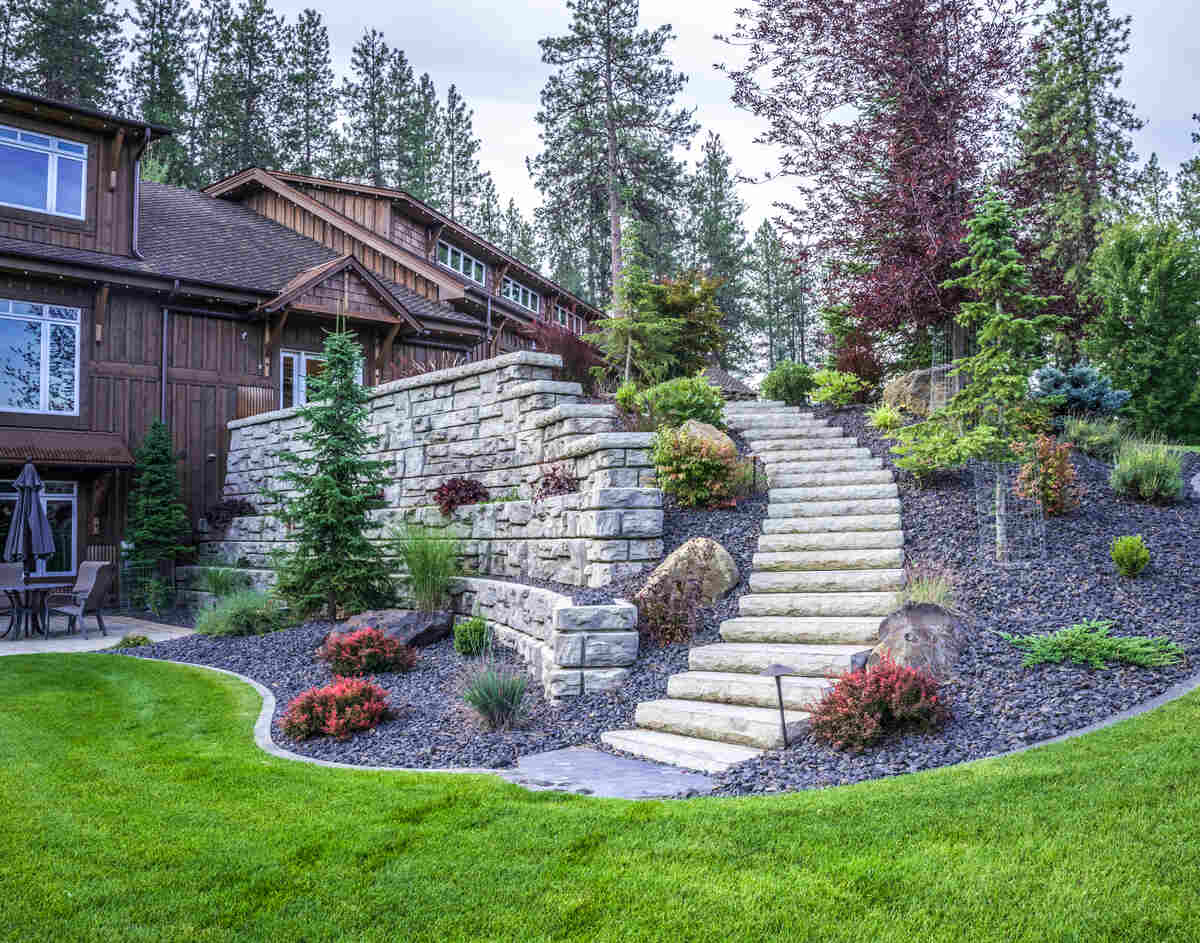
An expansive gray stone retaining wall anchors a terraced garden, its scale defining the landscape without dominating it. The naturalistic style relies on irregular stone, wood, gravel, and grass to soften the structure. Steps cut through the wall connect upper and lower planting beds, making the grade change part of the journey. The palette stays grounded in gray, green, and brown so the wall blends with the overcast daylight. What defines the look is proportion: the wall is wide and roomy, but the trees and shrubs spilling over its top break the hard line, keeping the garden from looking like a construction site.
Curved Concrete Block Walls for Sloping Lawns
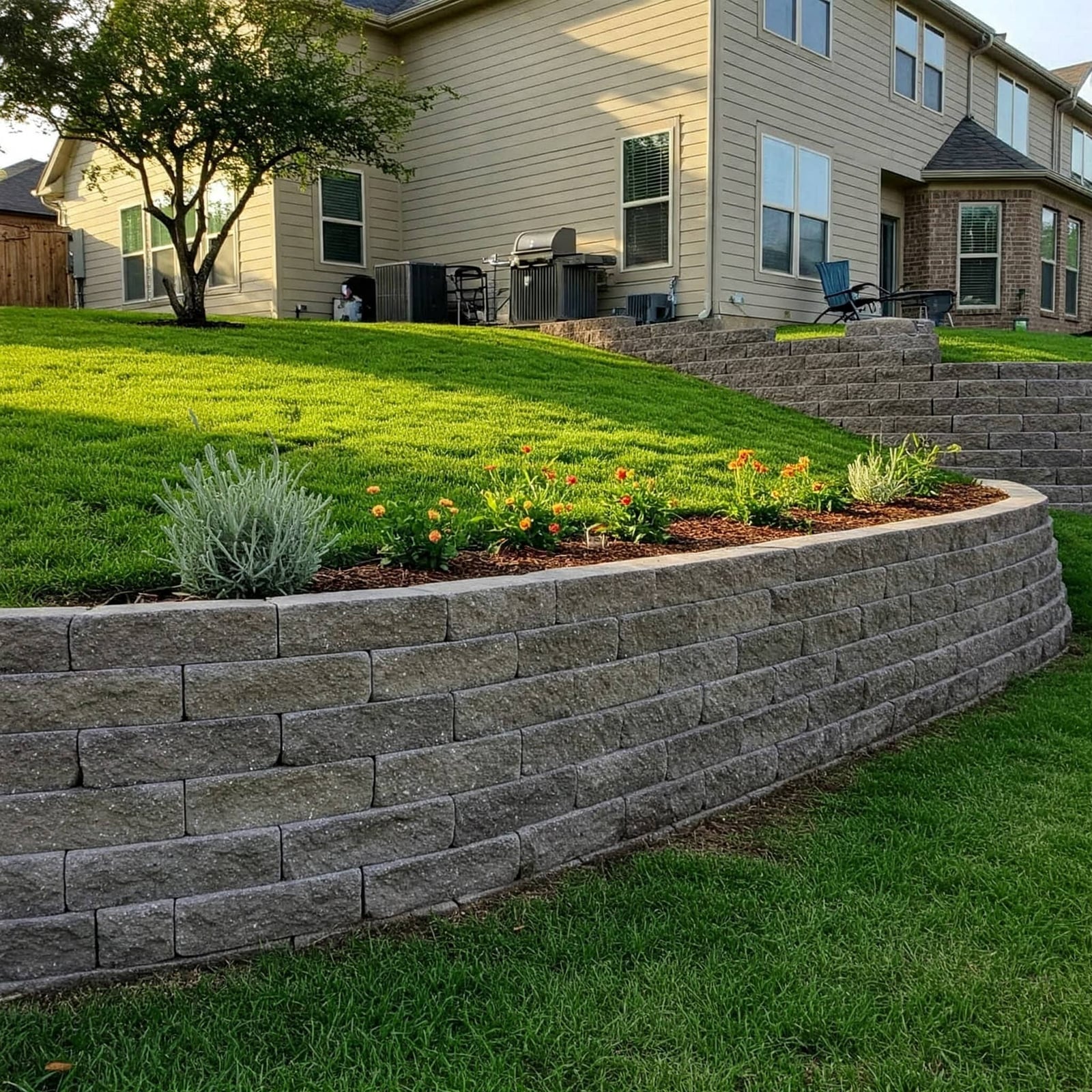
A curved concrete block wall follows the slope of a sloping backyard instead of fighting it. The warm beige blocks step down the grade in a smooth arc, holding back soil while creating a natural boundary between lawn and garden. The curve makes the layout feel relaxed. Orange flowers and low seating tuck into the bend, turning a structural necessity into a spot to sit. For renters, the angle matters: a curved wall of stacked blocks can be disassembled and moved if the landlord allows it, unlike poured concrete. The daytime sunlight shows the blocks’ texture, and the beige-gray palette keeps the wall from overpowering the greenery.
Luxury Landscape with Waterfall Retaining Wall
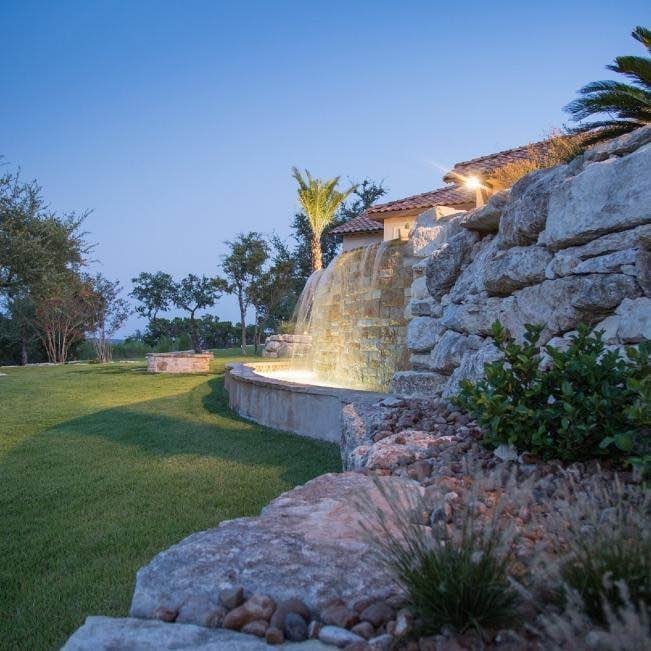
A waterfall retaining wall is a luxury landscape feature, but the real difference is how it handles the transition from hardscape to water. A close alternative is a dry stacked stone wall with a planted top, which holds the grade quietly. This version adds a sheet of water cascading over a curved stone wall, turning a structural element into a focal point. The evening landscape lighting picks up the texture of the stone and the movement of the water, so the wall works at night as much as during the day.
The tiered layout places the waterfall at the center, with lush landscaping stepping down around it. The palette stays natural: stone, green foliage, and a blue sky reflection in the water. The key is the curve of the wall guiding the water in a smooth arc instead of a straight drop. That curve breaks the typical rectangular pool look and lets the feature feel built into the slope, not dropped onto it.
Modern Concrete Block Retaining Wall Planter
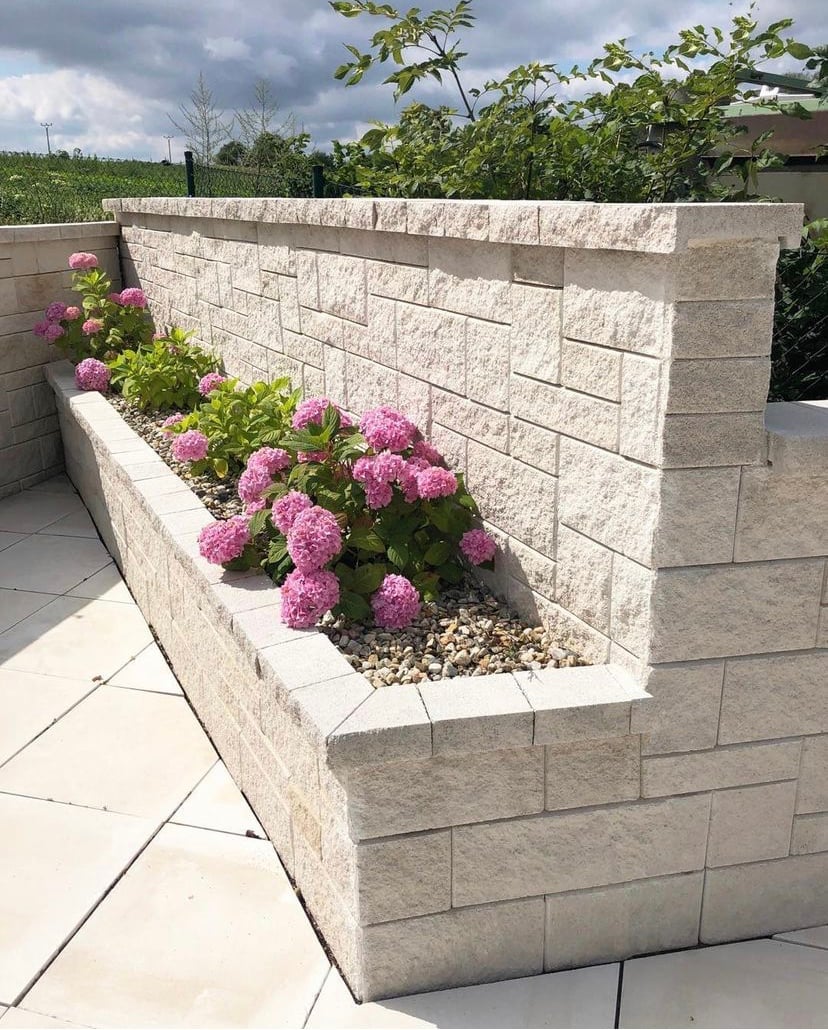
A concrete block retaining wall doubles as a raised planter, with pink hydrangeas spilling over the top edge. The cream and gray blocks form a clean structural line, while the flowers add a soft, colorful counterpoint. The compact scale makes this a good fit for a smaller garden where every inch needs to earn its keep. Bright daylight flattens the block texture, so the plants do the visual work. The palette stays restrained: cream, pink, green, and gray. What defines the style is the contrast between the rigid geometry of the blocks and the relaxed, mounded habit of the hydrangeas. That ratio of hard to soft is what keeps the planter feeling like a garden feature, not a construction leftover.
Natural Stone Curves in a Vibrant Garden
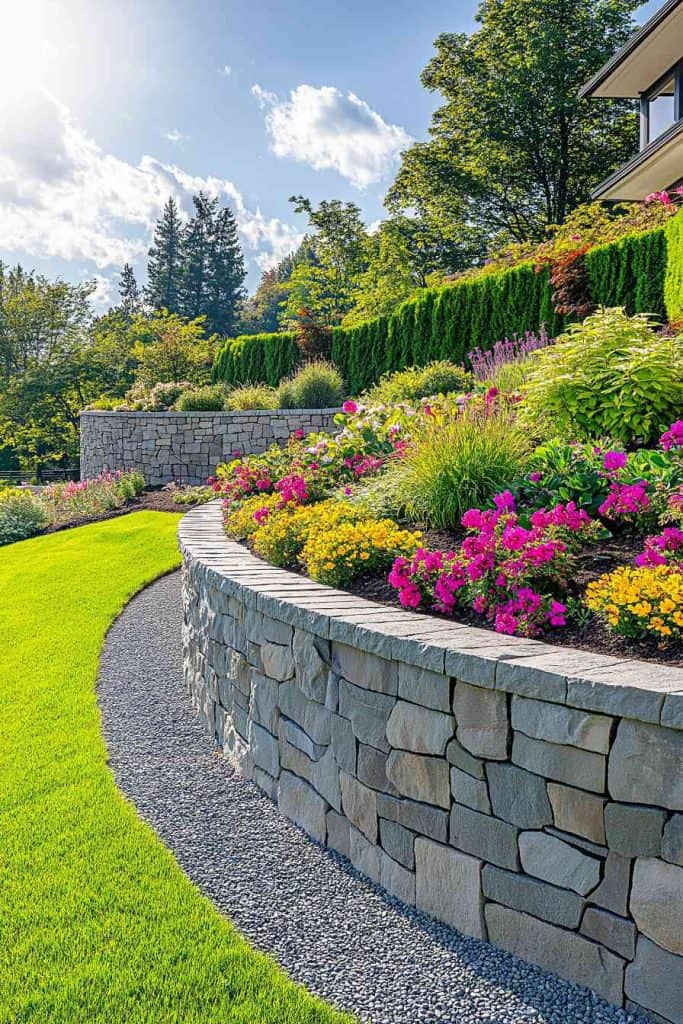
A curved natural stone retaining wall carves a smooth line through a vibrant garden, and the one-line assessment is this: the curve makes the garden feel bigger. The wall separates the manicured lawn from raised planting beds filled with pink and yellow flowers, but the soft arc keeps the division from feeling harsh. The bright sunlight sharpens the contrast between the gray stone and the colorful blooms. The scale is generous, with the wall sweeping across an open plan layout. What defines the style is the juxtaposition of the rough, irregular stone against the tidy lawn and orderly flowers. The curve breaks the typical straight shot of a retaining wall, letting the garden beds curve around it rather than butt up against it.
Boulder Retaining Walls for Sloping Naturalistic Landscapes
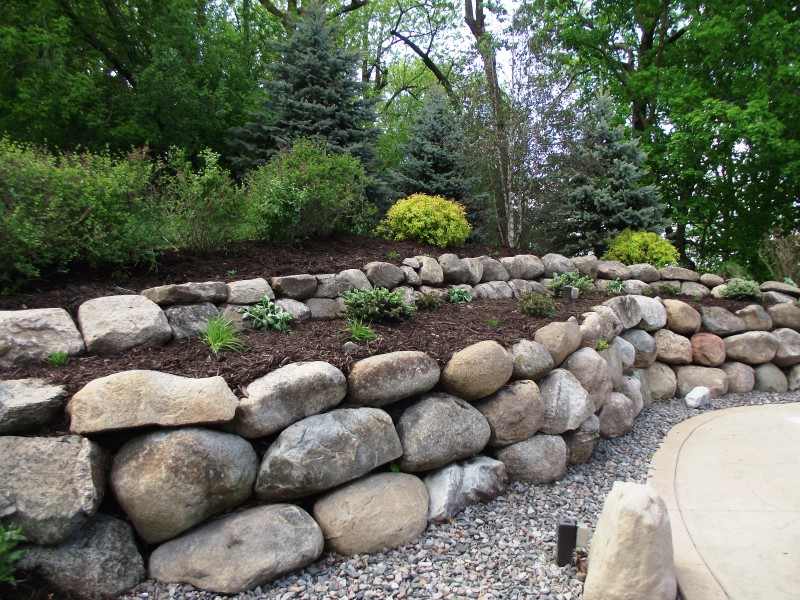
The most natural-looking retaining wall is the one that looks like it was already there. A natural boulder retaining wall landscape built from large, irregularly shaped stones follows the terrain. The undulating line of the boulders mimics the way rock would settle on a slope, so the wall appears as part of the original site. The earth tones and green foliage around it reinforce that seamless look. For a naturalistic landscape, the goal is to make the wall disappear visually, letting the plants and the slope itself take center stage.
Tiered Concrete Block Walls for Formal Backyard Levels
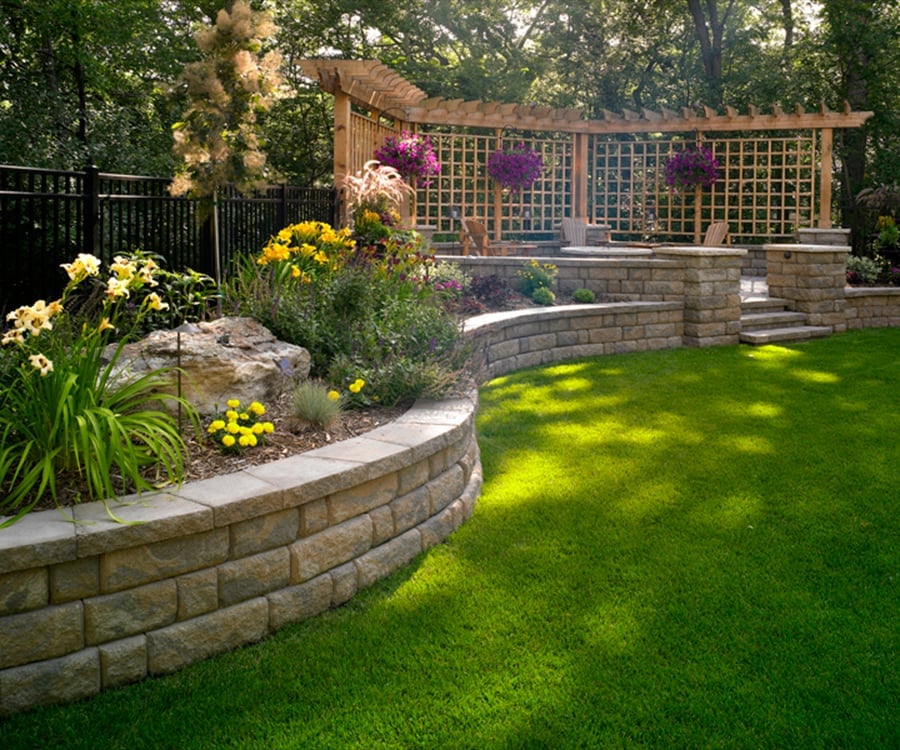
A single tall retaining wall can feel like a barrier, but tiered walls break the height into manageable levels. In this formal backyard, light gray concrete block walls step down the slope with integrated stairs, creating distinct garden rooms. The pergola above adds a vertical anchor, while the dappled shade keeps the space from feeling exposed. The tiered layout turns a functional grade change into a deliberate design feature.
Massive Natural Stone Walls for Tiered Planting Beds
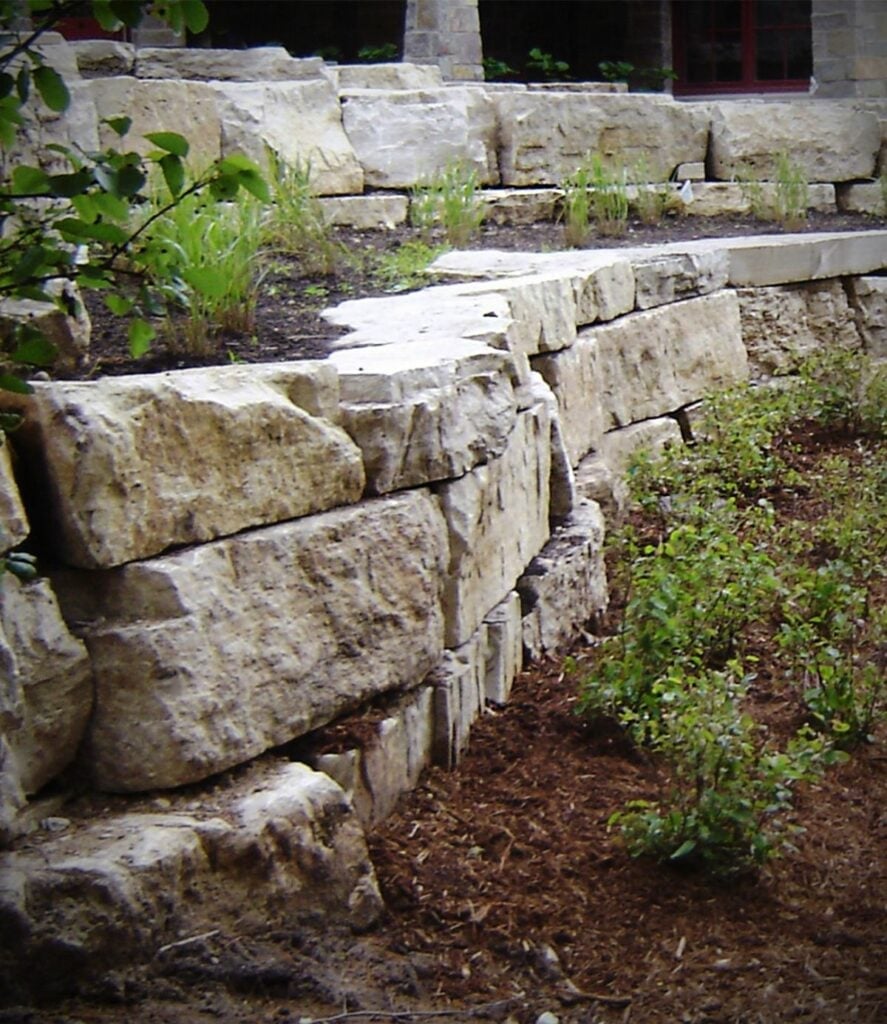
When the stone is this big, you let it lead. A massive natural stone retaining wall garden uses large light gray and beige blocks stacked in a way that emphasizes their weight and texture. The imposing scale of the stone works best with simple, low-lying plants in front, so the wall stays the anchor and the greenery softens the base. The overcast daylight flattens shadows and lets the stone’s natural variation in color and surface do the work.
Curved Stone Wall Enhancing a Traditional Front Yard
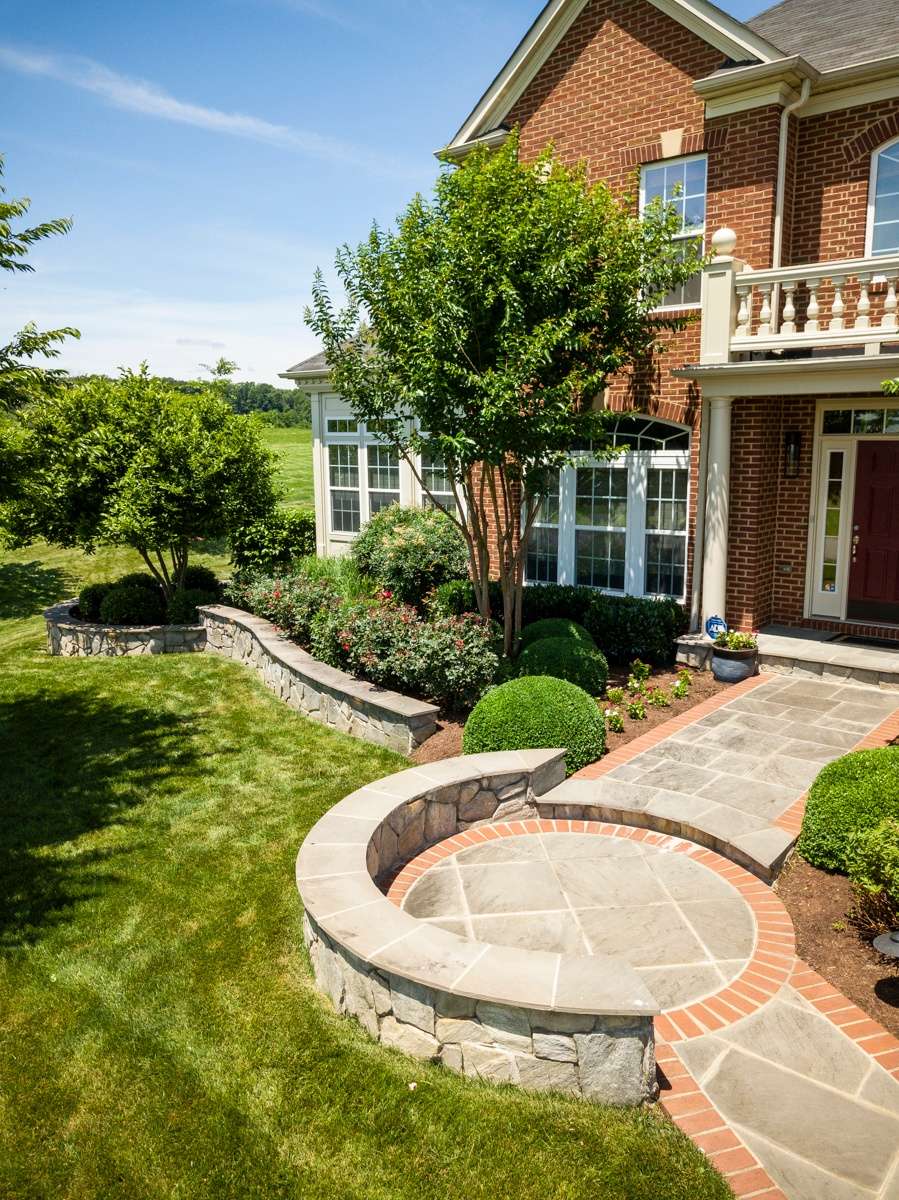
A straight walkway leads the eye forward, but a curved stone wall in a traditional front yard invites you to slow down and follow the line. The curve softens the entry, guiding visitors toward the front door without the formality of a straight edge. The wall is made from brick and stone that match the house, so it feels like an extension of the architecture rather than an afterthought. Paired with a simple grass lawn and low plants, the curved wall becomes the defining gesture of the front yard.
Symmetrical Brick Walls Flanking Garden Entrance Steps
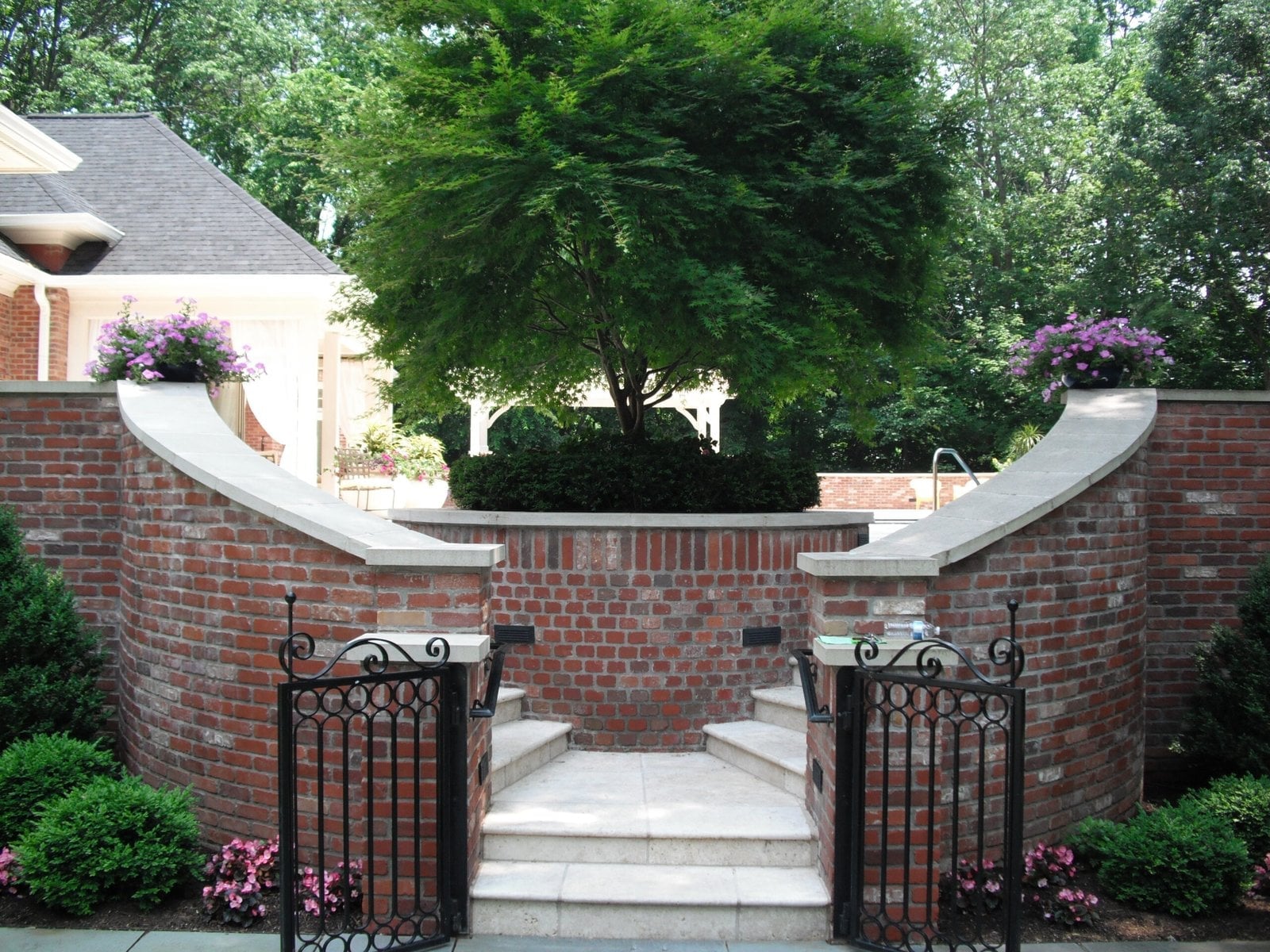
Symmetry gives an entrance weight. Here, curved brick retaining walls mirror each other as they flank a set of stone steps leading to ornate gates. The red brick contrasts with the gray stone steps and the pink flowers planted along the base, creating a formal frame for the garden entrance. The curved shape is a twist on the usual straight wall, adding movement without breaking the balanced layout.
Irregular Natural Stone Walls with Winding Paths
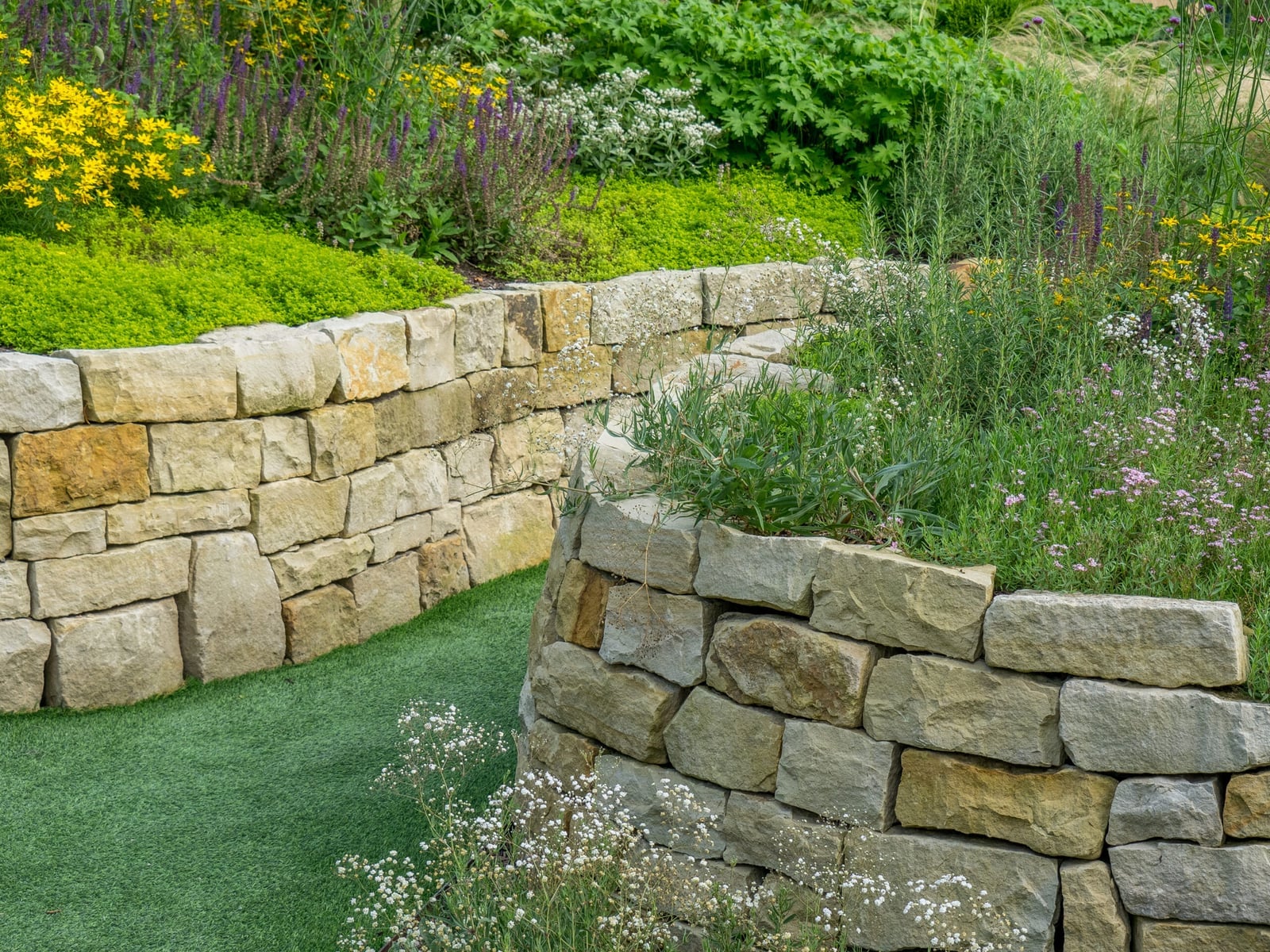
A dry-stack stone wall built from irregular, organic shapes is one of the most forgiving and naturalistic ways to manage a slope. The tan and gray stones stack without mortar, so the wall settles into the landscape instead of cutting through it. Between the curved walls, a winding gravel path softens the transition from one garden level to the next. The palette stays grounded in earth tones, letting the wildflowers and greenery supply the yellow and purple accents. An irregular wall blends with the site as a natural feature, making it a strong choice for a naturalistic garden where you want the retaining wall to blend, not dominate. This is one idea that actually works.
Final Thoughts
The best retaining wall doesn’t just hold dirt. It adds a seat, a planter, a path, or a place to stop. Match the material to the house and the shape to the slope. Keep drainage clear, watch for frost heave, and let plants soften the edges. Check your local code on wall height and permits before you start. A wall that works with the land instead of against it lasts longer and looks better every season.