The side yard often becomes a forgotten corridor between house and fence, but with a little planning it can become one of the most interesting parts of your property. In this article, we’ll walk through 25 side yard landscaping ideas that turn narrow strips and awkward passages into functional, beautiful outdoor spaces.
From gravel paths and water features to vertical gardens and bistro sets, these approaches suit a range of styles and climates. Whether you want a quiet reading nook, a practical walkway, or a lush garden retreat, these examples provide real inspiration for making the most of every inch.
Modern Side Yard with Linear Stepping Stone Pathway and Integrated
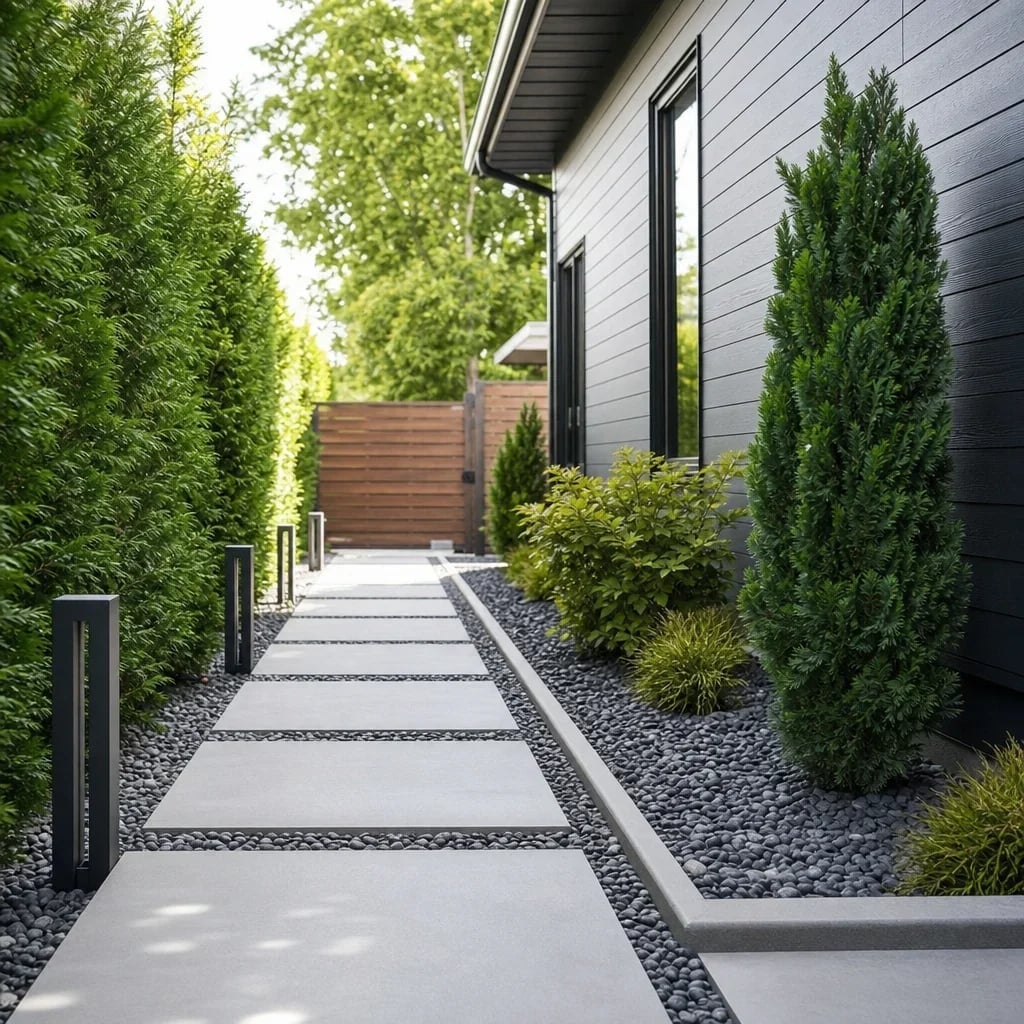
A straight pathway with large concrete slabs runs between two narrow garden beds, drawing the eye forward. Tall evergreen trees and modern planters frame the edges, while small bollard lights sit flush with the ground. The layout uses the line of the path as its backbone, with plants filling in on either side. Keeping the planting simple lets the rhythm of the stones do the work.
Tranquil Side Yard Oasis Featuring a Water Feature and Seating Area
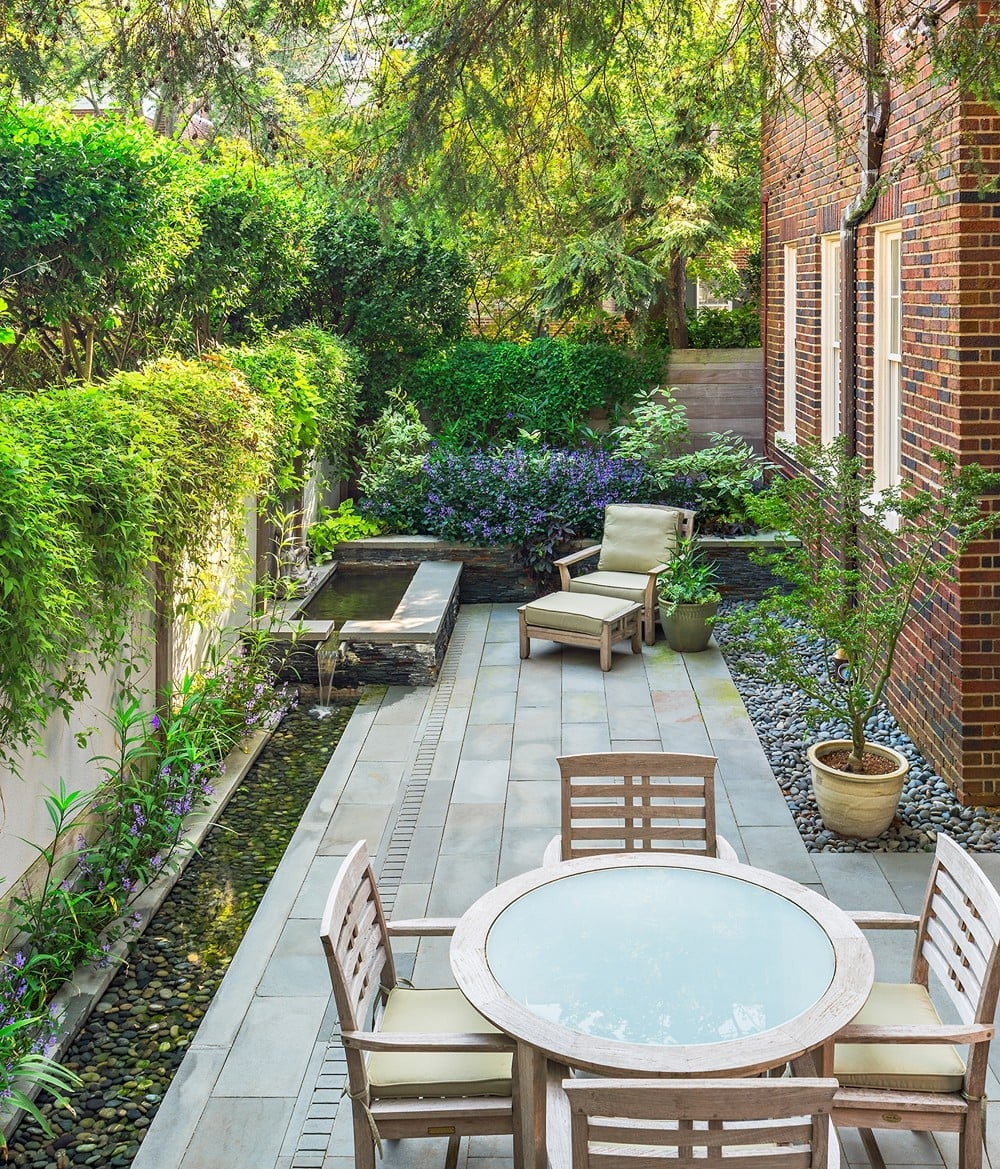
This design uses a mix of stone pavers and wood to create a calm outdoor room. A narrow water channel runs alongside the pathway, with a dining set and lounge chair placed nearby. The palette stays within greens, grays, and natural wood tones, letting the water become the focal point. The materials work together to soften the transition from house to garden.
Narrow Side Yard with Concrete Pavers and Wood Slat Fence
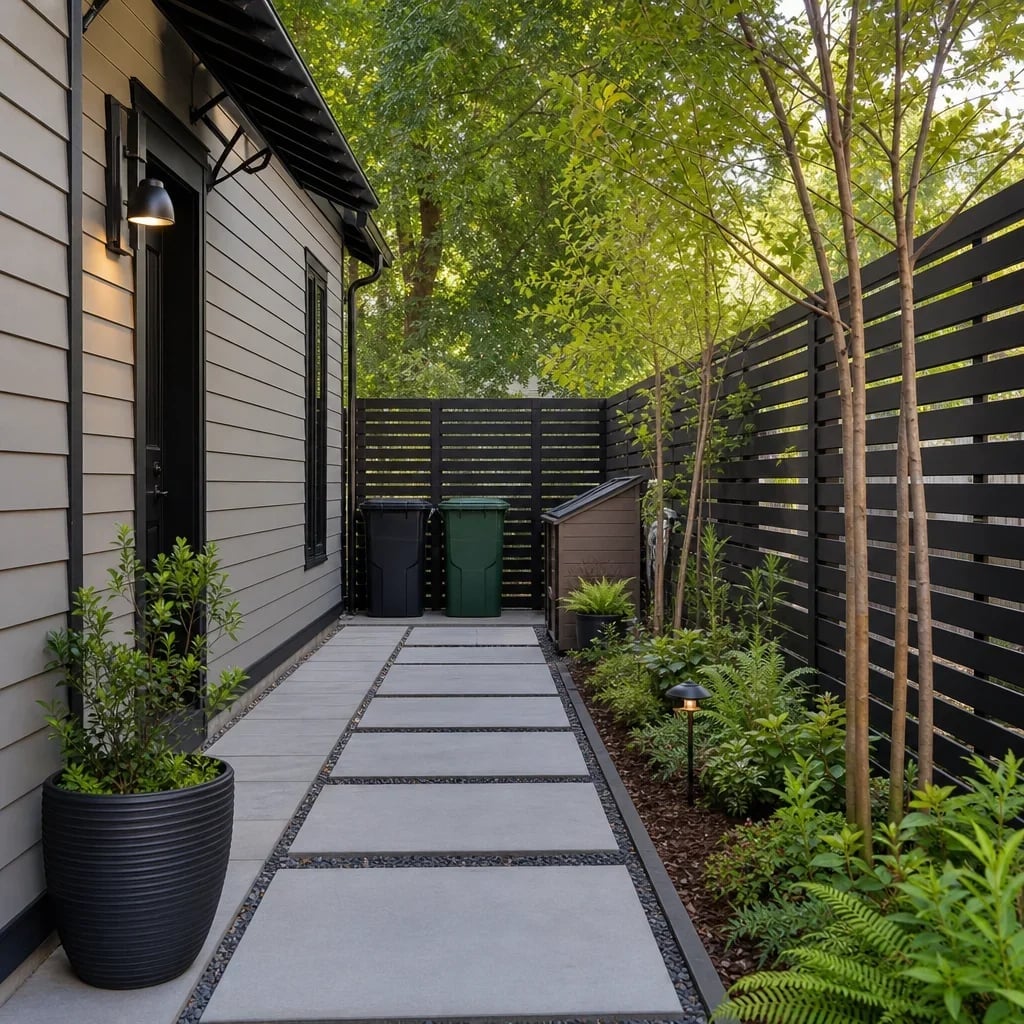
How do you make a narrow walkway feel wider than it is? The trick is in the scale of the hardscape. Here, large concrete pavers span almost the full width of the path, with gravel filling the gaps between them. A wood slat fence runs along one side, painted a dark shade that recedes from view.
Metal planters hold tall greenery that draws the eye upward rather than sideways. An exterior light fixture near the end of the path adds a destination point. The proportion of the wide stones to the narrow corridor changes how the space reads on foot.
Contemporary Side Yard with White Pebble Border and Lush Greenery
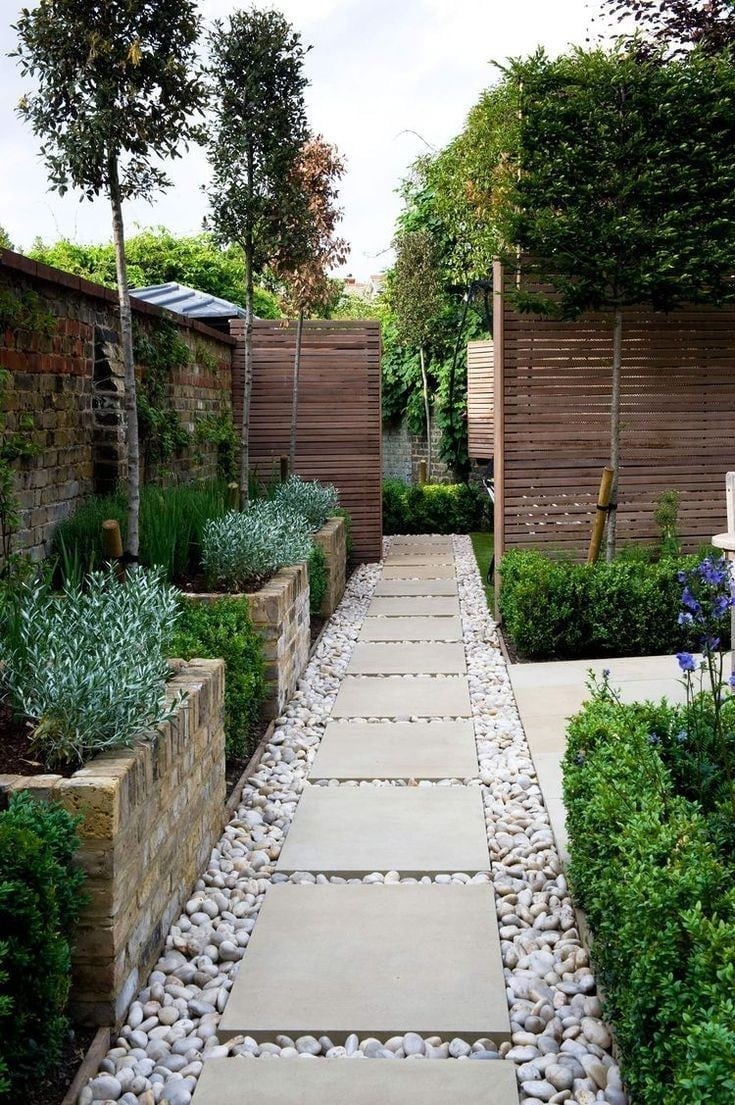
A border of white pebbles runs along the edge of the concrete stepping stones, creating a crisp line between path and planting. The pale stones catch the daylight and reflect it back onto the surrounding greenery. The palette pairs gray concrete with white pebbles and deep green foliage, keeping the contrast clean. The bright border defines the path without needing a hard edge.
Modern Side Yard Vertical Garden Wall and Bistro Set
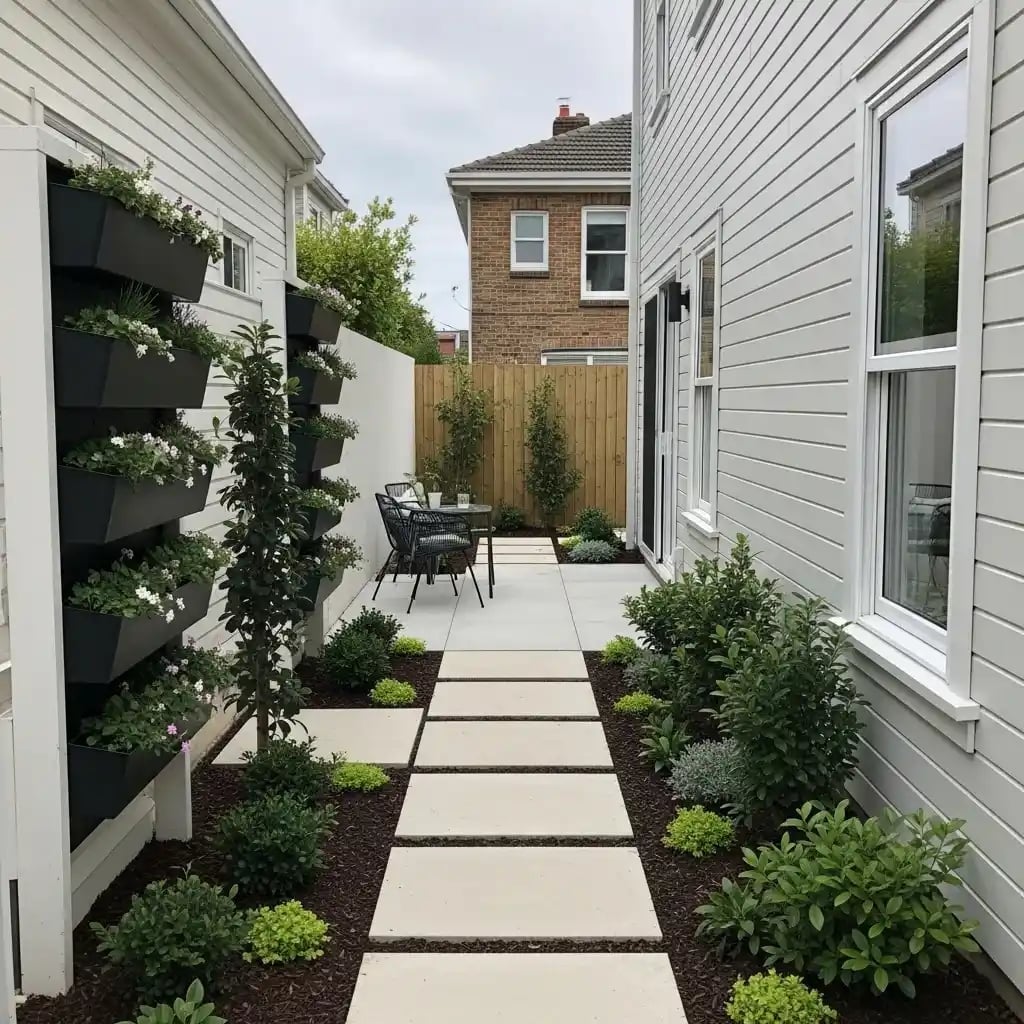
A stacked vertical garden wall turns a narrow side yard into a usable outdoor nook. White wall panels hold rows of greenery, with concrete stepping stones leading past a small bistro set. The vertical planting uses wall space instead of ground area, leaving room for a place to sit. The gray and white palette keeps the garden from feeling crowded.
Minimalist Side Yard with Gravel Ground Cover and Abstract Sculpture
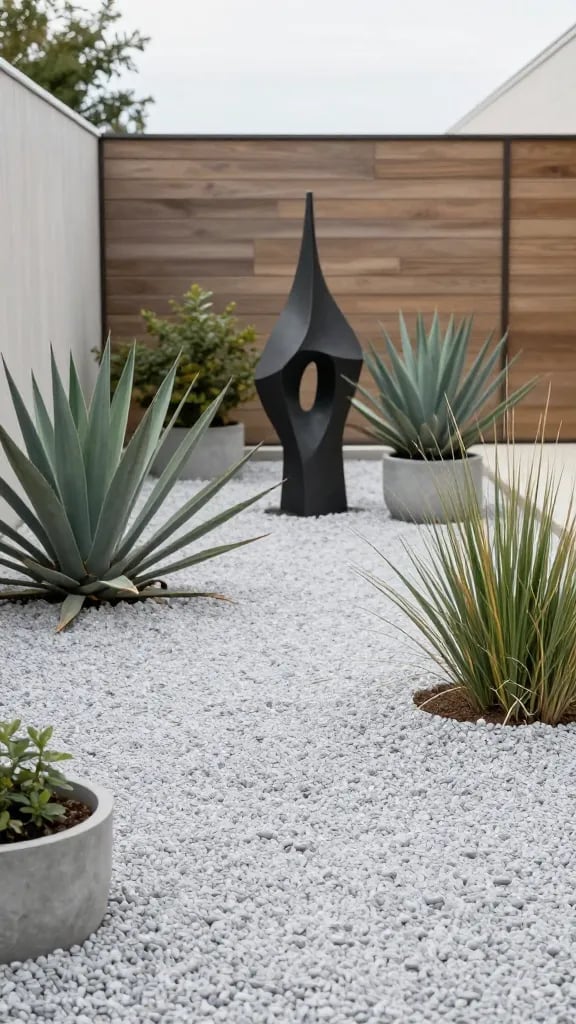
A plain side yard with gravel underfoot might read as unfinished, but drop an abstract sculpture into it and the whole space becomes deliberate. The black metal piece sits low to the ground, surrounded by a wide spread of gray gravel that acts as a neutral canvas. Concrete planters hold agave plants, their spiky shapes echoing the sculpture’s angles without competing. The wood fence behind them stays bare, keeping the palette to gray, green, and black. What makes this layout work is the open gravel area itself. It gives the sculpture room to breathe and stops the yard from feeling like a crowded corridor. Use large concrete containers instead of permanent planting. You get the same modern minimalist look without digging anything in.
Compact Side Yard with Square Stepping Stones and White Stucco Walls
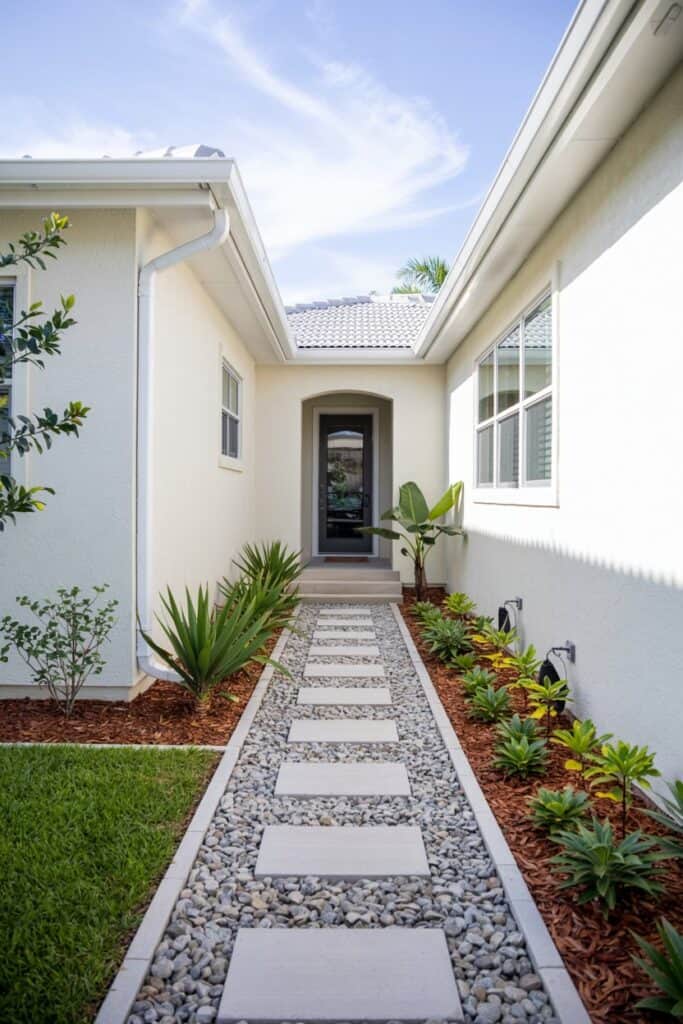
A narrow path between two white stucco walls can feel like a squeeze, but square concrete stepping stones break up the run and give your eye somewhere to land. The pavers sit on a bed of gray gravel, with dark mulch and low-maintenance plants filling the gaps on either side. The contrast between bright white walls and green foliage adds visual warmth. This setup works for renters because the stones and gravel sit on top of the ground. No concrete pouring or permanent changes. You can pull it up and take the whole thing with you.
Cottage Garden Side Yard with Trellis and Climbing Roses
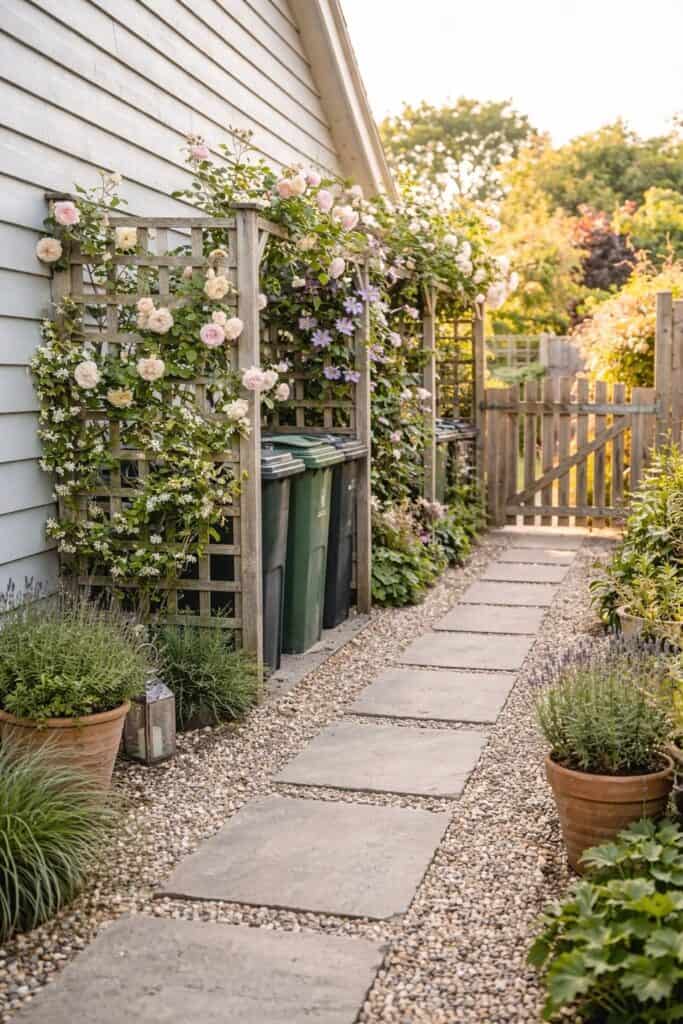
This is a cottage garden that knows what it is. A wooden trellis holds climbing roses in full bloom, their pink flowers set against gray siding and green lavender below. The stone pavers and gravel path run straight through the middle, flanked by terracotta pots that add warmth. What defines the style is the mix of soft and hard materials. The wood trellis and stone path are the structure; the roses and lavender are the softness. The ratio leans heavily on plants, which is what makes a cottage garden feel lush rather than bare. If you want to break the look, swap the terracotta for black plastic pots. The whole thing reads as less intentional.
Verdant Side Yard with Rustic Wooden Gate and River Stone Path
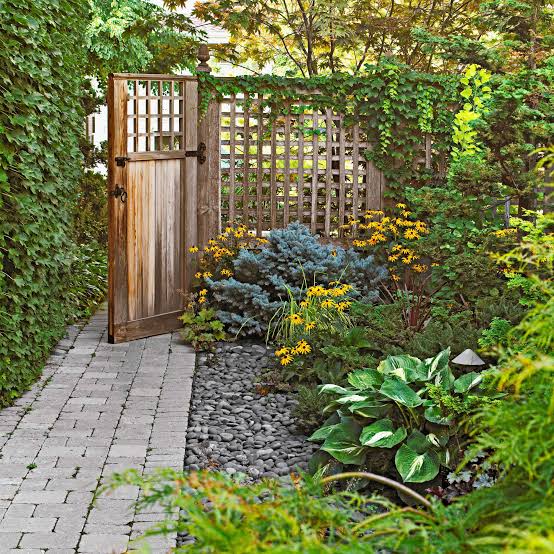
Can a side yard feel like a destination? When the path leads to an open wooden gate, it does. The river stone path winds through dense foliage in shades of green, brown, and yellow, with the lattice gate standing open at the end. Dappled daylight filters through the leaves, softening the hard edges of the stone and wood. The layout matters here because the path pulls you forward. It is not a straight shot. The curve gives the yard a sense of discovery, and the open gate makes you want to see what is beyond. Keep the path width narrow and let the plants spill over the edges. That overgrowth is what sells the cottage garden feel.
Modern Garden Side Yard with Slate Pavers and Layered Greenery
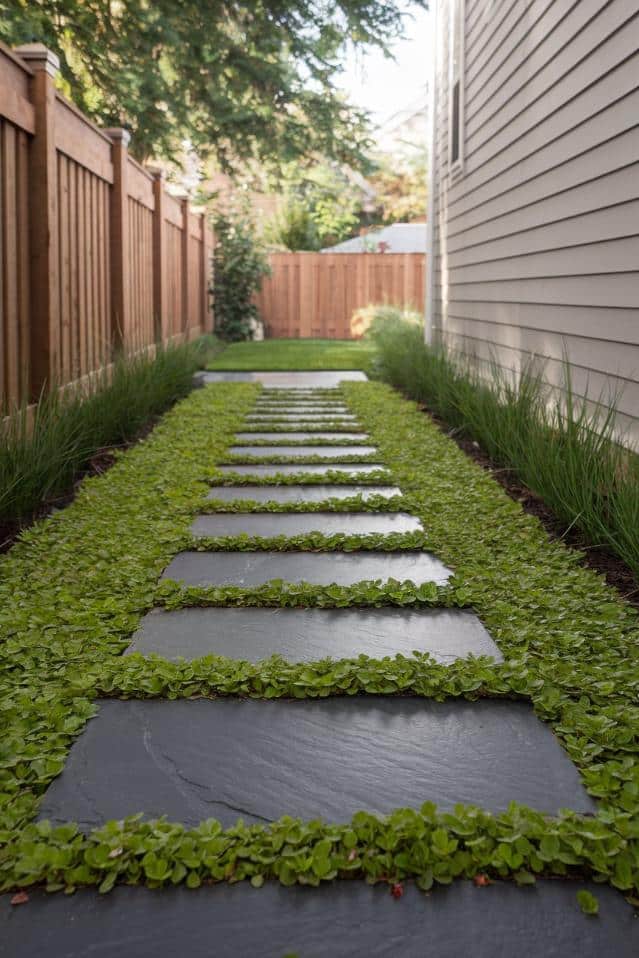
Slate pavers in dark gray sit on a bed of matching gravel, with dense greenery packed on both sides. The narrow pathway is the only hard surface, and the plants rise in layers from low ground cover to taller shrubs. The palette stays in the greens and grays family, which gives the whole yard a calm, cohesive look. No bright flowers or contrasting colors interrupt it. That restraint is what makes the design feel modern. If you want to try this with a rented space, use large pots with layered plants instead of digging into the ground. You keep the same lush effect without altering the soil.
Atmospheric Side Yard with Wooden Arbor and Gravel Path
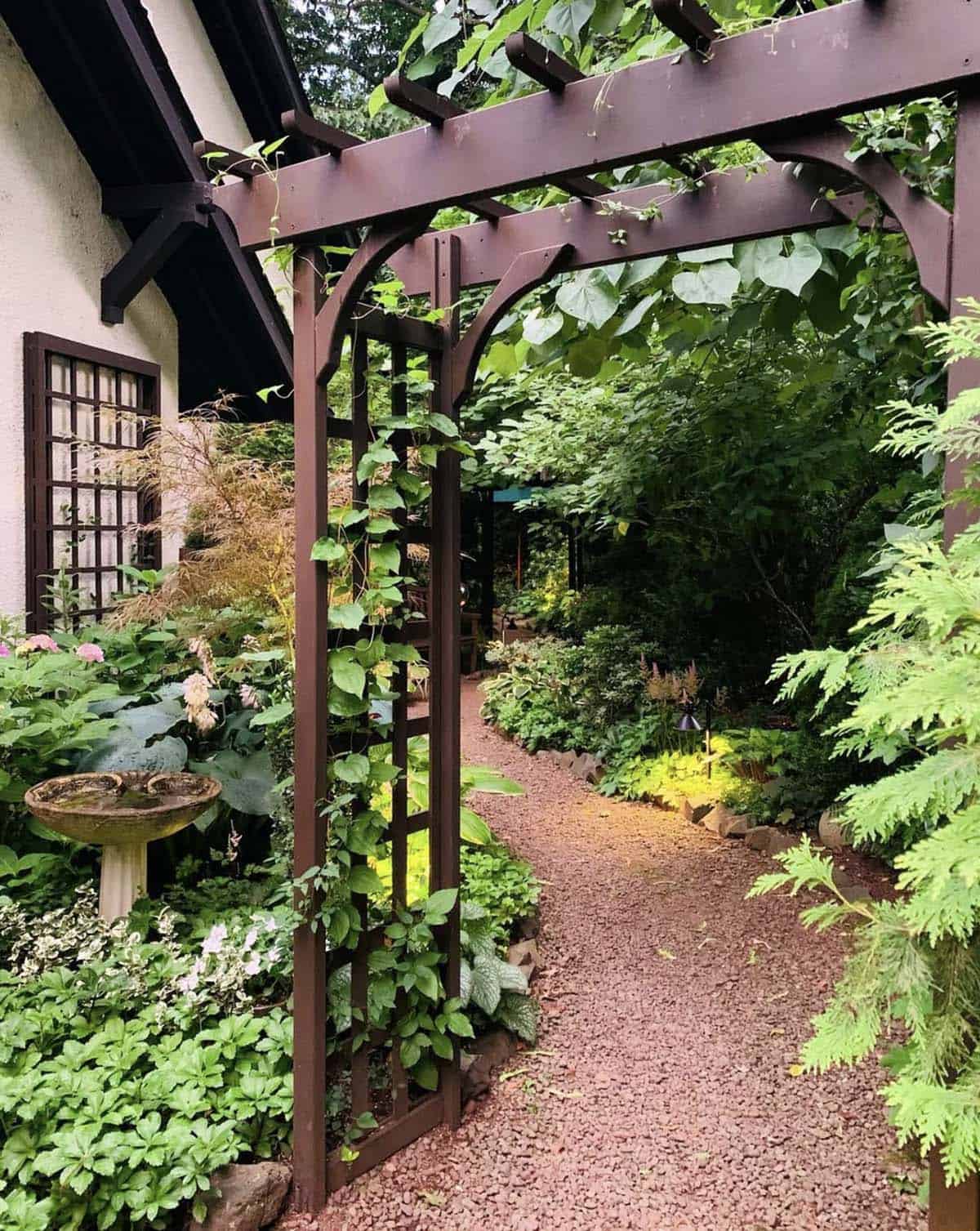
For side yard lighting, place the source near the destination, not along the whole path. This design uses a dark wooden arbor as the exit point, with climbing vines softening the frame. The gravel path leads the eye straight to it, and the soft evening light highlights the arbor’s structure without flooding the space. A bird bath and lush planting on either side add weight without clutter. The result is a roomy cottage garden that feels like a destination, not a hallway.
Modern Side Yard Pathway with Pavers and Integrated Grass Strips
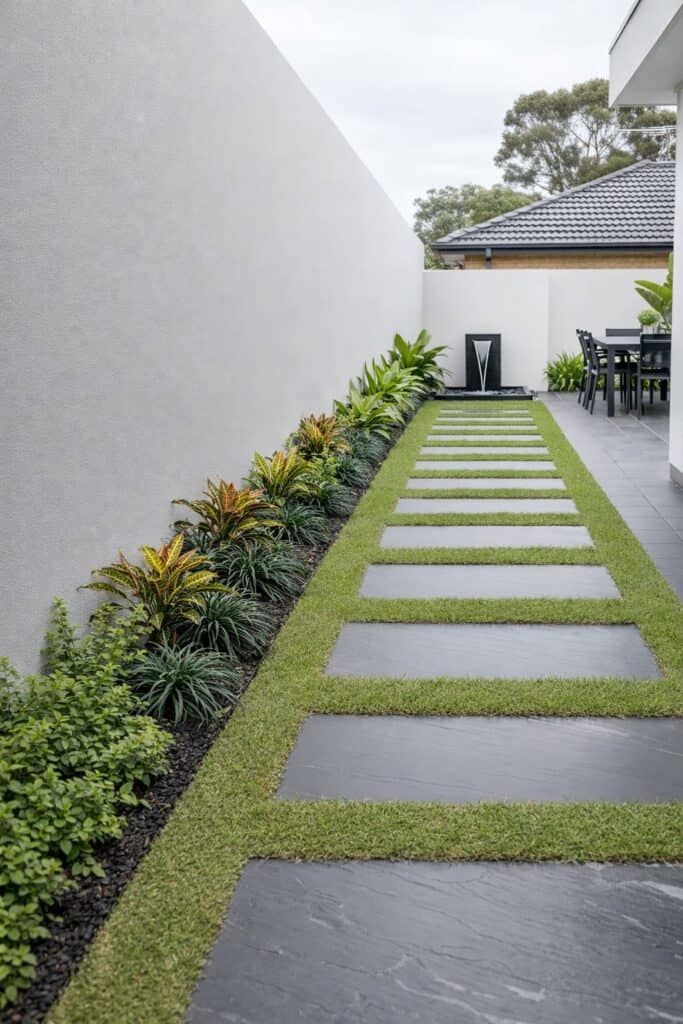
Most side yard paths use a single material from end to end, but this modern take sets the path against a close alternative: dark square pavers with bright green grass growing in the gaps. The concrete path sits between a stucco wall and the house, making the wide route feel like a purposeful design choice rather than leftover space. Grass strips break up the hard surface without losing the clean, modern line.
The palette is restrained: gray, green, and white. The dark pavers anchor the ground, while the grass adds a living texture that changes with the season. Minimalist planting along the edges highlights the contrast. To recreate it, look for large square pavers and keep the grass low with pavers flush to the soil line.
Cottage Garden Side Yard with Flagstone Path and Overflowing Pots
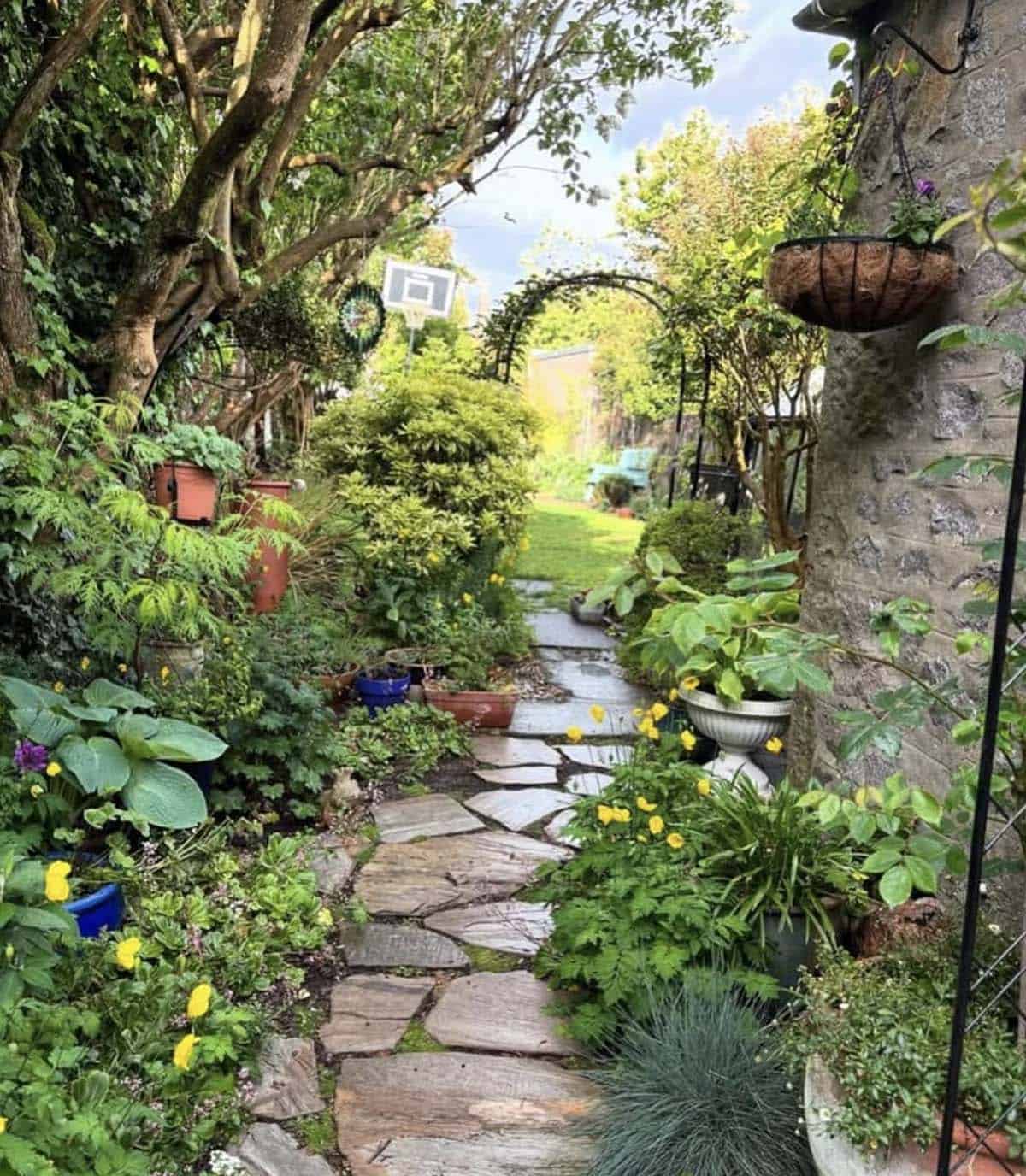
The flagstone path here is narrow, but the planting makes the space feel full. Terracotta pots sit close to the edge, spilling over with greenery and yellow blooms. A garden arch frames the route, and the brick edging keeps the stones in place. The compact layout relies on dense, layered planting to soften the hard lines, so the path blends into the garden as a natural part of the landscape.
Modern Side Yard with Stone Pavers and Tree Stump Planters
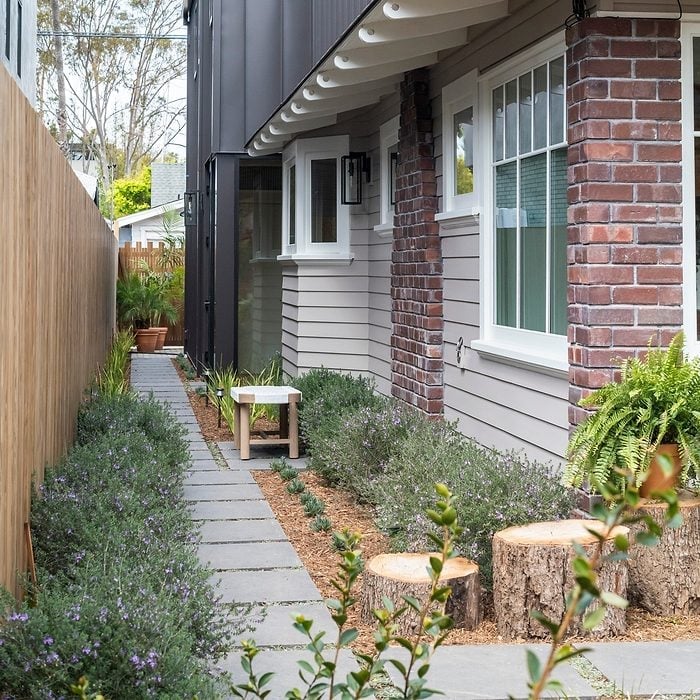
The hero element here is the pathway itself, but the real standout is what sits on it: tree stumps used as planters. The linear path runs between flanking garden beds, with stone pavers leading from a wooden bench toward the house. The palette stays neutral with grays, browns, and greens, letting the stumps add a natural, sculptural note. For a compact side yard, this keeps the ground open while adding texture at eye level. The stumps work because they match the earthy tones of the pavers and brick.
Naturalistic Side Yard with Meandering Stream Bed and Flagstone Path
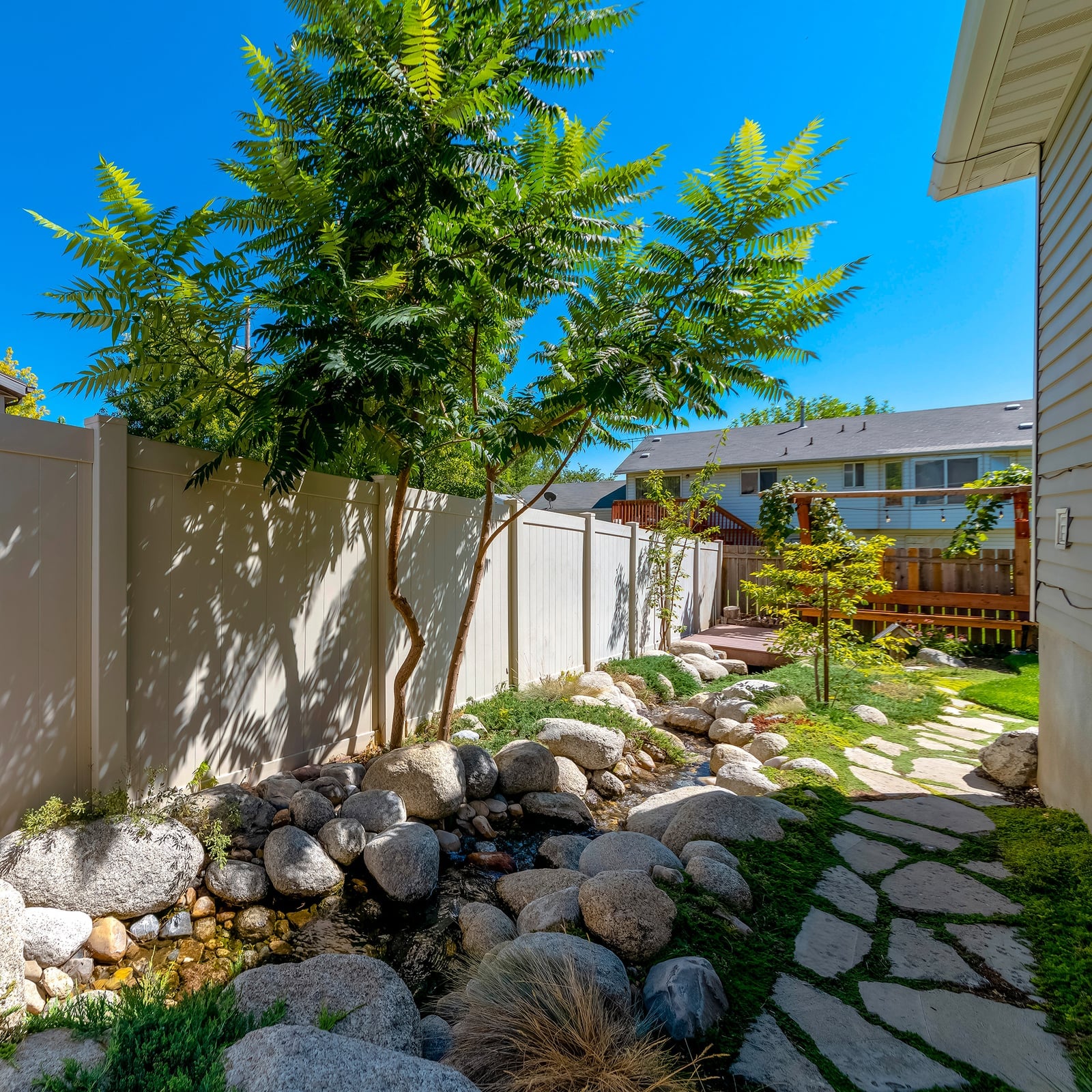
In a naturalistic side yard, the path and water feature follow the same curve. Here, a stone-lined stream bed meanders beside a flagstone path, with river rocks and small trees reinforcing the zen feel. The palette stays green, gray, and natural stone, so nothing competes with the water’s movement.
The stream bed acts as both a visual anchor and a sound element. Stepping stones cross the water at points, connecting the two sides. This layout works for a roomy side yard where the path can wander without feeling cramped. Rock sizes should stay consistent, and planting should be low enough to see the water line.
Formal Garden Side Yard with Stone Path and White Columns
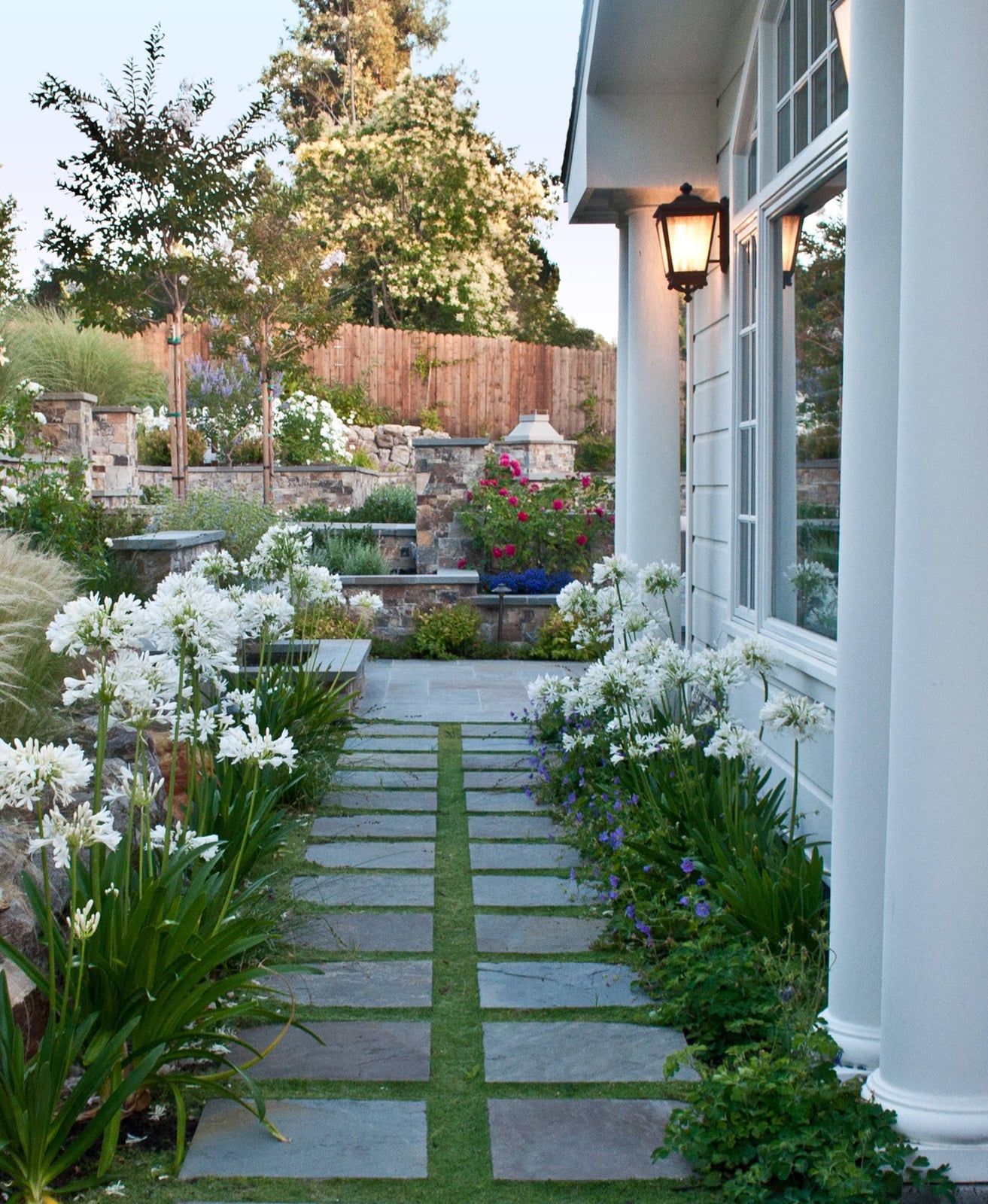
A stone path with a thin grass inlay running through it gives a formal side yard a sense of precision without feeling stiff. Large white columns anchor the far end, drawing the eye down the space and making it feel more structured. The palette stays restrained, green and gray and white, which keeps the columns as the clear focal point. For a similar sense of structure on a smaller scale, try a pair of tall planters with clipped shrubs at the end of a path. They create the same visual stop without the permanence of built columns.
Naturalistic Side Yard with Curved Flagstone Path and Rock Garden
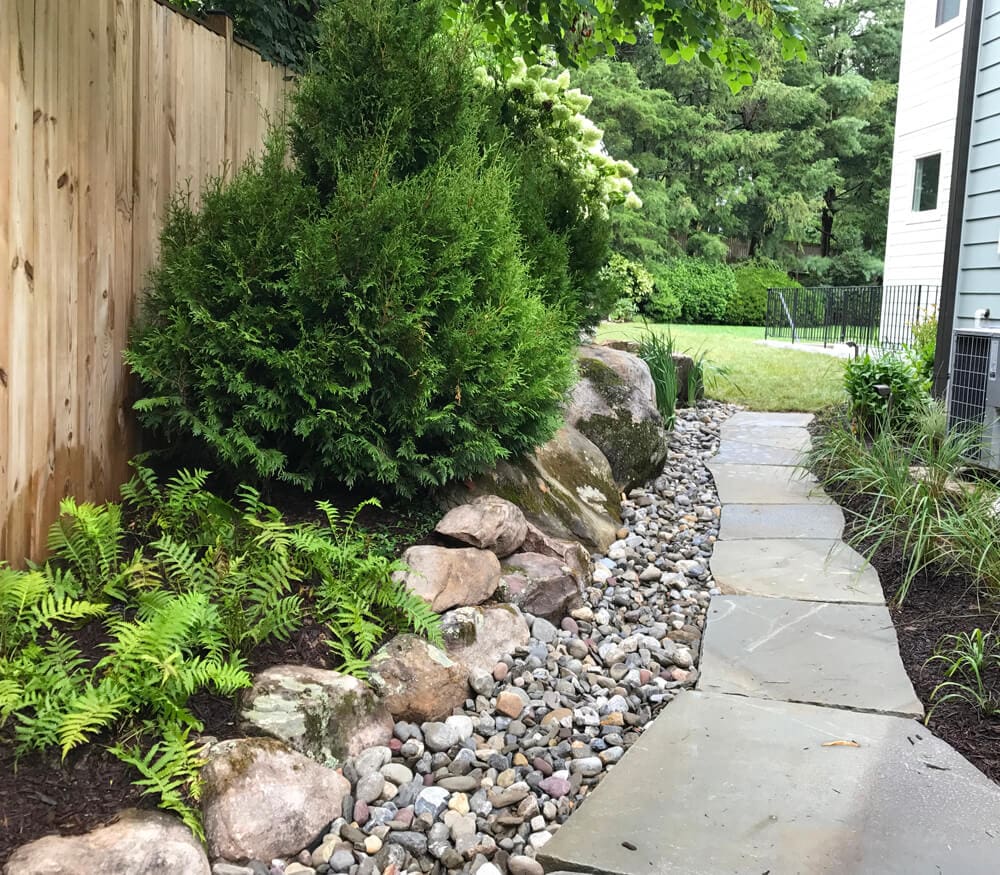
A curved flagstone path in a narrow side yard slows the eye and makes the space feel wider than it is. Here the path winds past a rock garden built from a mix of large boulders and smaller river stones, with evergreen shrubs tucked between them. The wood fence stays in the background, letting the natural stone do the work. A layout like this works because the path and the planting are integrated. If you are renting, you can get a similar effect by laying flagstones directly on the ground without mortar, so they are easy to move when you leave.
Garden Side Yard Pathway with Lanterns and Low Garden Walls
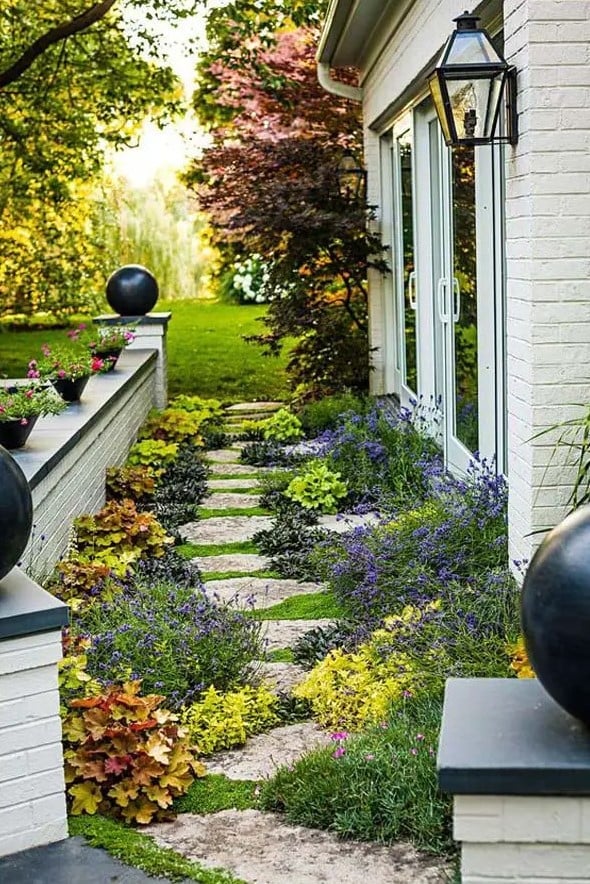
A path lined with low garden walls feels orderly, but lanterns keep it from feeling stiff. The difference between this and a plain straight walkway is the warmth the lights add. Stone pavers step through a bed of gravel, with brick edging holding the line, while the lanterns sit on the walls at intervals.
Those small pools of light change how the space lives after dark. They make the path feel like a destination rather than a passage. The planting here mixes green with purple and yellow blooms, so the lanterns pick up those colors in the evening. If you want the same effect, run a low-voltage path light along the top of a retaining wall or a row of potted plants. It gives you the structure of a formal garden with the softness of a lit walkway.
Boho Garden Side Yard with Overhead String Lights and Modern Chairs
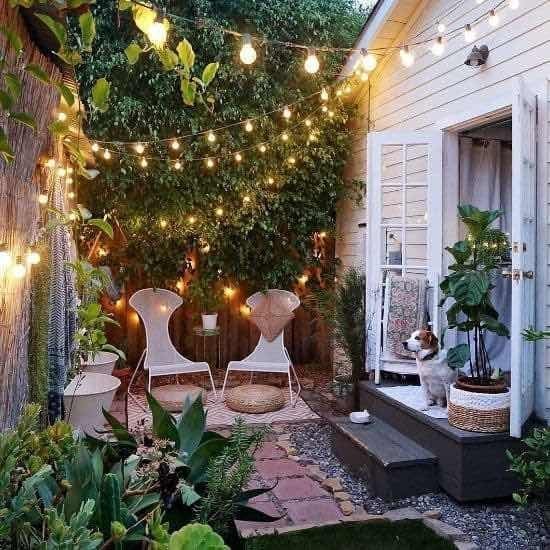
String lights hung overhead turn a compact side yard into a spot you actually want to sit in. The lights are the thing that makes this work, because they define the seating area without taking up floor space. Two modern chairs and a small table sit near the doorway, with potted plants filling the corners. A dog lying on the ground suggests this is a lived-in space, not a staged one. The trick is to hang the lights low enough to feel intimate but high enough to walk under. For a rental, use adhesive hooks on the siding or a tension rod between two walls, so you do not have to drill.
Tropical Side Yard with Colorful Stepping Stones and Palm Trees
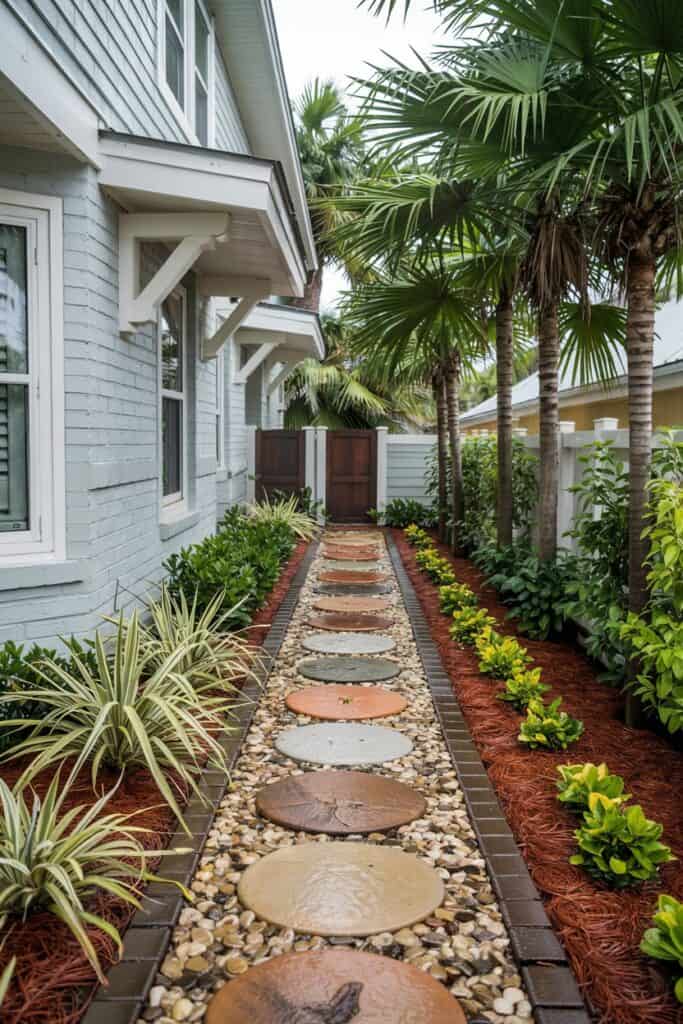
This is a straightforward path through a dense planting, and the stepping stones are what make it work. Round stones in mixed colors break up what could be a long stretch of green, and they add a playful note that fits the tropical style. Palm trees and lush shrubs crowd the edges, so the path feels carved out rather than laid in. The light blue house behind it all keeps the palette from going too warm. The lesson here is about scale. In a narrow side yard, a single row of wide stepping stones keeps the path functional without eating into the planting space. Check your USDA zone to see if palms and tropical shrubs will survive your winters before planting.
Naturalistic Side Yard Pathway with Dark Gravel and Large Rocks
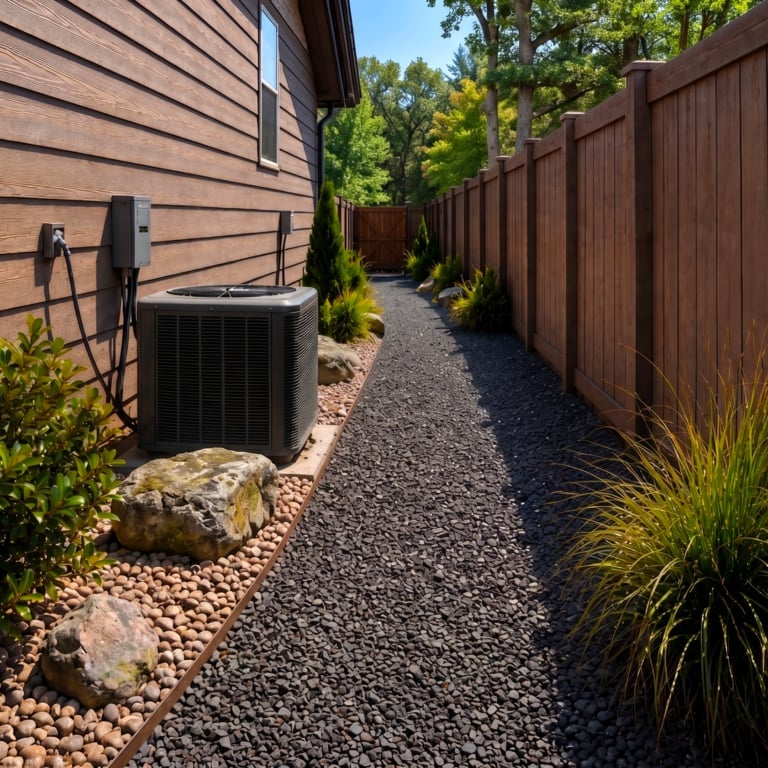
A narrow side yard reads wider when the path is the main event and everything else steps back. Here, a dark gravel ribbon runs the length of the space, with large boulders set at intervals along one edge and ornamental grass softening the wood fence beyond. The contrast between the dark gravel and a lighter gravel border defines the route without a hard edge, so the path feels built into the ground. This layout works because the rocks and plants are kept to the sides, leaving the walkway clear and the eye moving forward. In a tight passage, let the path take up most of the width and treat the planting as punctuation, not a border.
Modern Side Yard with Gravel Path and Decorative Wooden Gate
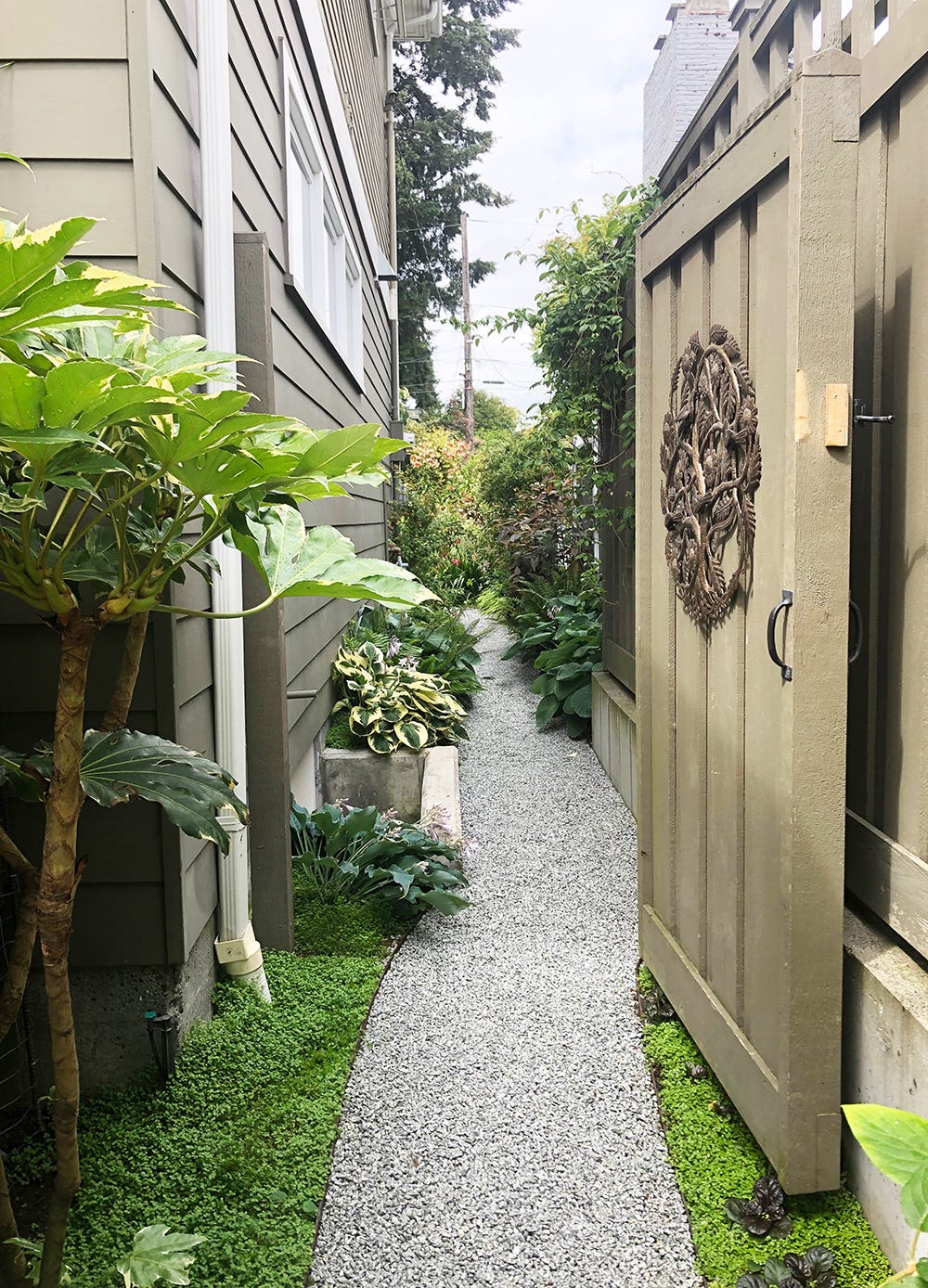
The wooden gate at the far end of this narrow passage is more than an exit. Its warm brown finish and decorative metal accent break up the long run of the gravel path and give the eye a place to stop. The path itself stays simple, gray gravel between low concrete edging, so the gate reads as the destination. In a narrow side yard, a distinctive end point pulls you through the space and makes the walk feel shorter.
Traditional Garden Side Yard with Curved Paver Pathway and Pergola
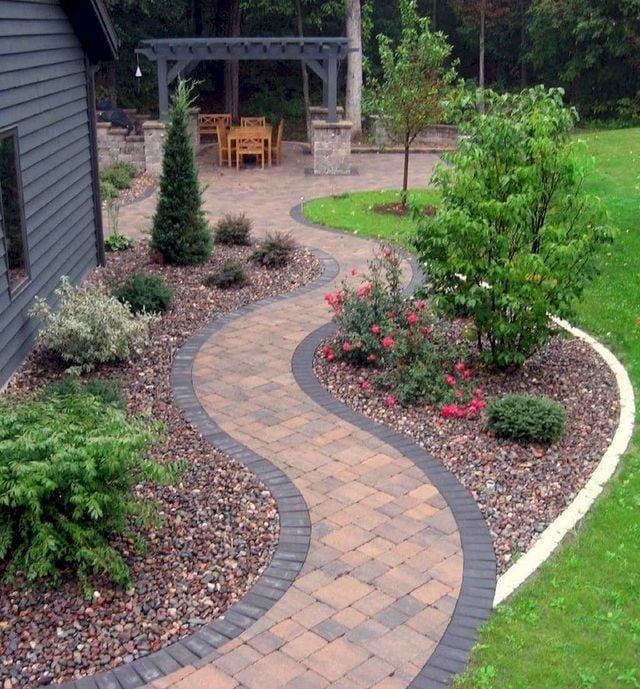
A straight path through a wide side yard gets you from one end to the other fast, but a curve changes how you move through the space. In this layout, the paver pathway sweeps in a gentle arc past mature trees and shrubs, with a pergola set near the midpoint to mark a pause. The curve hides the far end from view, so the garden unfolds as you walk. The pavers are set in gravel, which softens the edge and lets the path blend into the planting beds. When the yard has room to spare, a curved route turns a simple walkway into a garden feature that rewards a slower pace.
Formal Garden Side Yard with Brick Wall, Lattice, and Topiaries
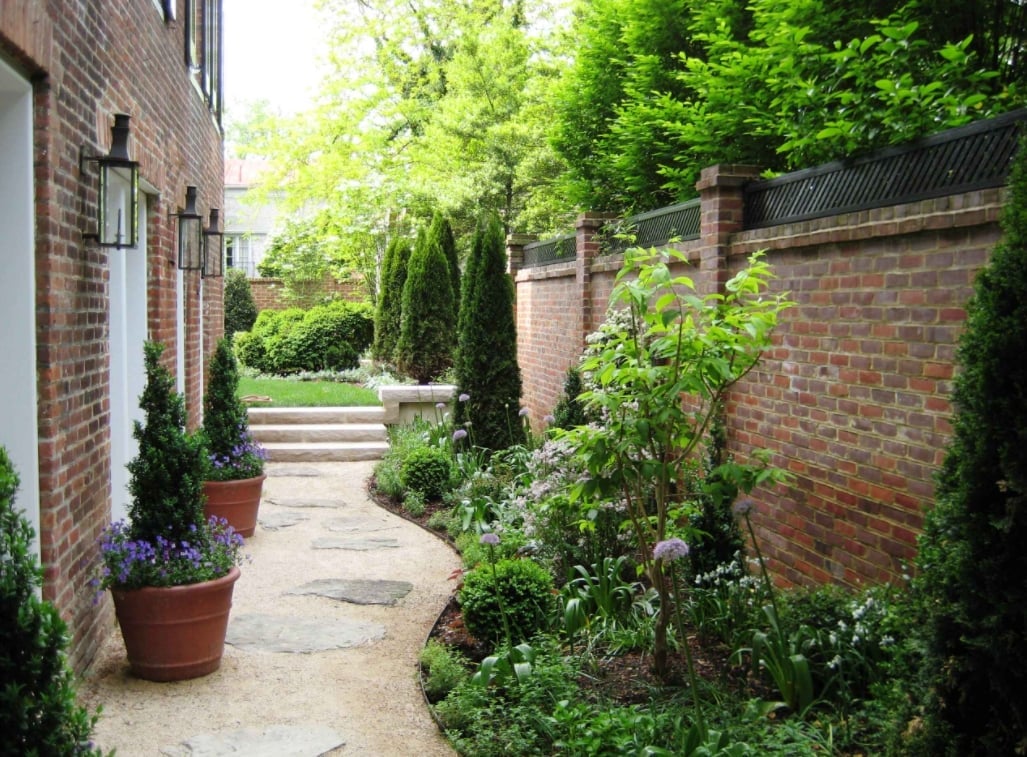
A tall brick wall might feel like a boundary to work around, but here it becomes the backbone of the garden. The wall runs the full length of the side yard, with a lattice panel near the top that lets light filter through without opening the view. A gravel path runs parallel to the wall, lined with clipped topiaries and stone lanterns that repeat at a steady rhythm. The bright daylight hits the brick and the green forms hard, throwing clean shadows that reinforce the formal layout. This design suits a side yard that gets strong sun and needs structure more than softness. The repetition of the topiaries and lanterns is what makes the space feel planned, not leftover.
Modern Side Yard with Curving Gravel Pathway and White Picket Fence
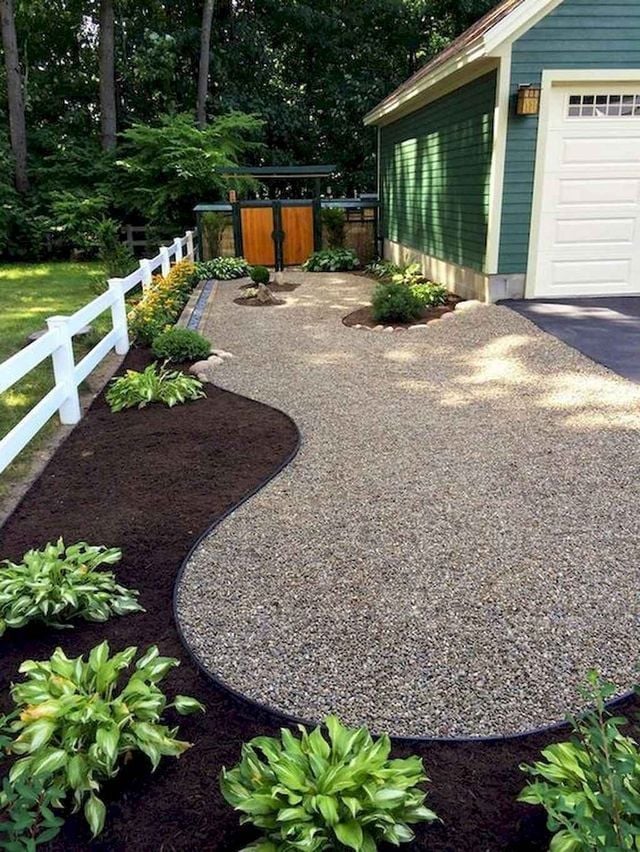
The white picket fence at the far end of this side yard is a classic element, but the curving gravel path leading to it adds a modern twist. The path bends through garden beds filled with hostas and dark mulch, with the gravel itself a neutral gray that complements the green. The curve softens the straight run of the fence and makes the destination feel discovered. In a side yard with room to spare, a winding path brings a contemporary look to a familiar fence line.
Final Thoughts
A side yard does not have to stay bare dirt or a storage zone. The ideas here show how a path, some plants, and a few structural touches can make it feel deliberate. Gravel, pavers, and stepping stones give you a surface that handles foot traffic and weather. Add a bistro set, a water feature, or a trellis only if the width allows. Keep the plant choices simple and suited to your USDA zone so the upkeep stays low. The takeaway is that even a narrow strip can become a transition worth slowing down for, not just a route to the backyard.