Dark exterior house colors are having a serious moment, and it’s easy to see why. A deep, moody facade adds instant drama and curb appeal, making your home stand out in the best way. From charcoal grays and navy blues to rich greens and even black, these shades feel modern and grounded.
This roundup of 31 ideas shows you how to use dark siding, trim, and accents without making your house feel like a cave. Whether you love a sleek modern look or a cozy farmhouse vibe, you will find practical inspiration here.
Modern Architecture Meets Dark Wood Siding
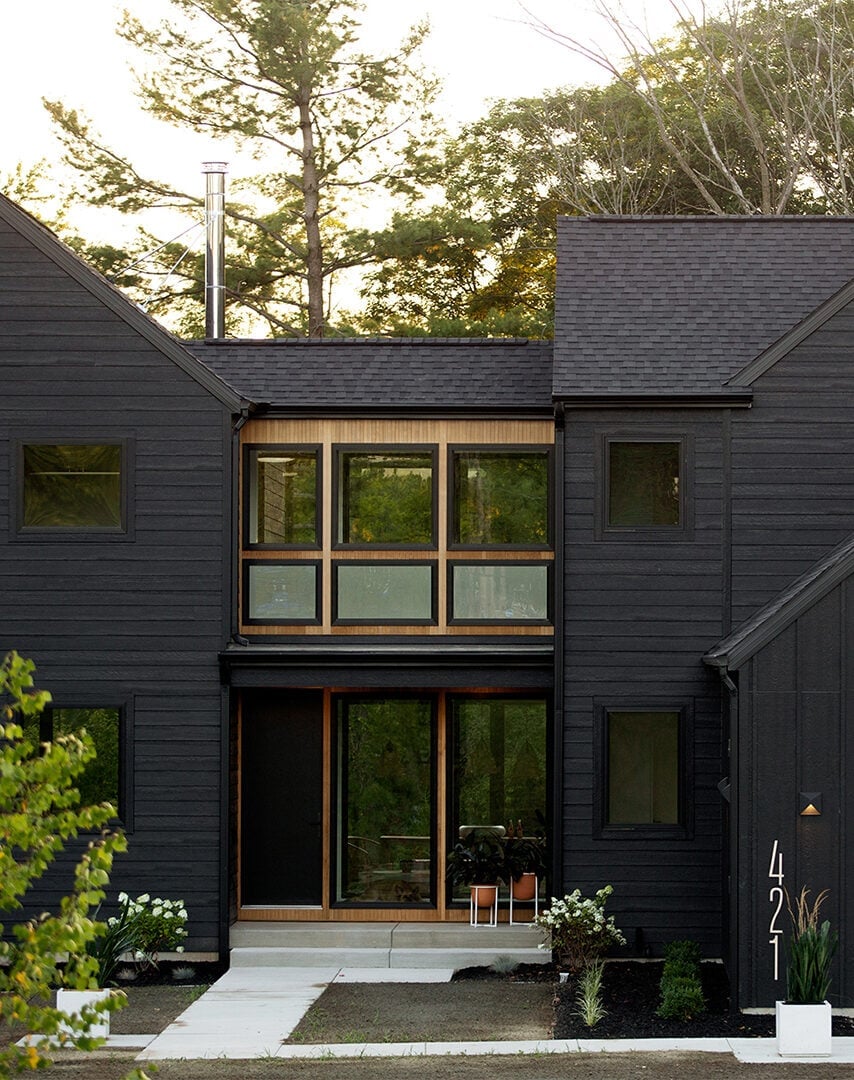
A multi-level facade reads as a single sculptural mass when the siding is a deep, nearly black wood tone. The large windows are not cutouts but negative space against that dark plane, and their frames echo the wood rather than fighting it. A stone chimney anchors one side so the composition does not float. The palette stays tight: black, wood tones, the green of the landscape. That is the trick with dark exteriors, let one material lead and every other element either matches or steps back.
Deep Teal Siding for a Bold Modern Entrance
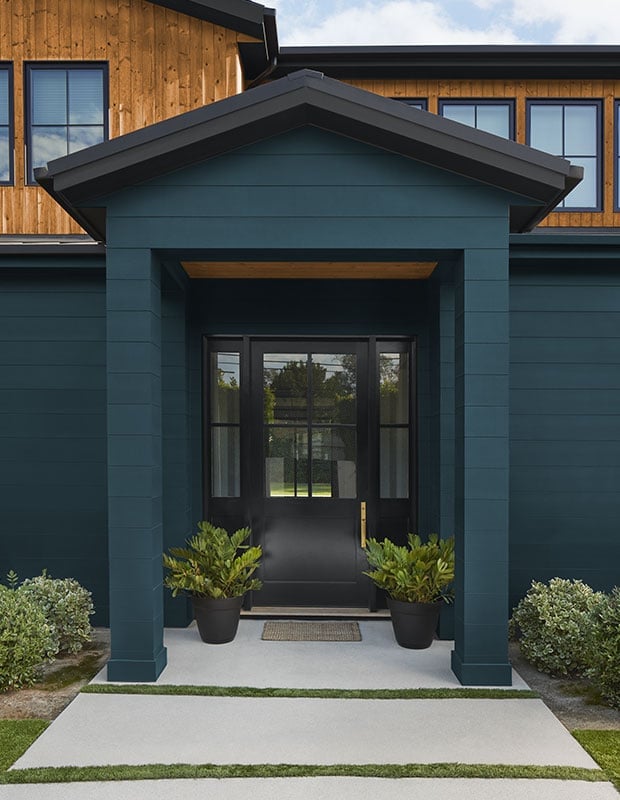
This porch proves that dark does not mean neutral. The deep teal siding is a color, not a default, and it has enough blue in it to feel cool rather than heavy. The front door is black, which sounds like a non-choice, but against teal it reads as a deliberate frame. The porch roof extends just far enough to shade the entrance without cutting light from the windows. Planters in warm wood tones keep the composition grounded. The palette ratio is roughly seventy percent teal, twenty percent black, ten percent wood, enough contrast to read clearly, not so much that the color loses its nerve.
All-Black Exterior with a Pop of Pink
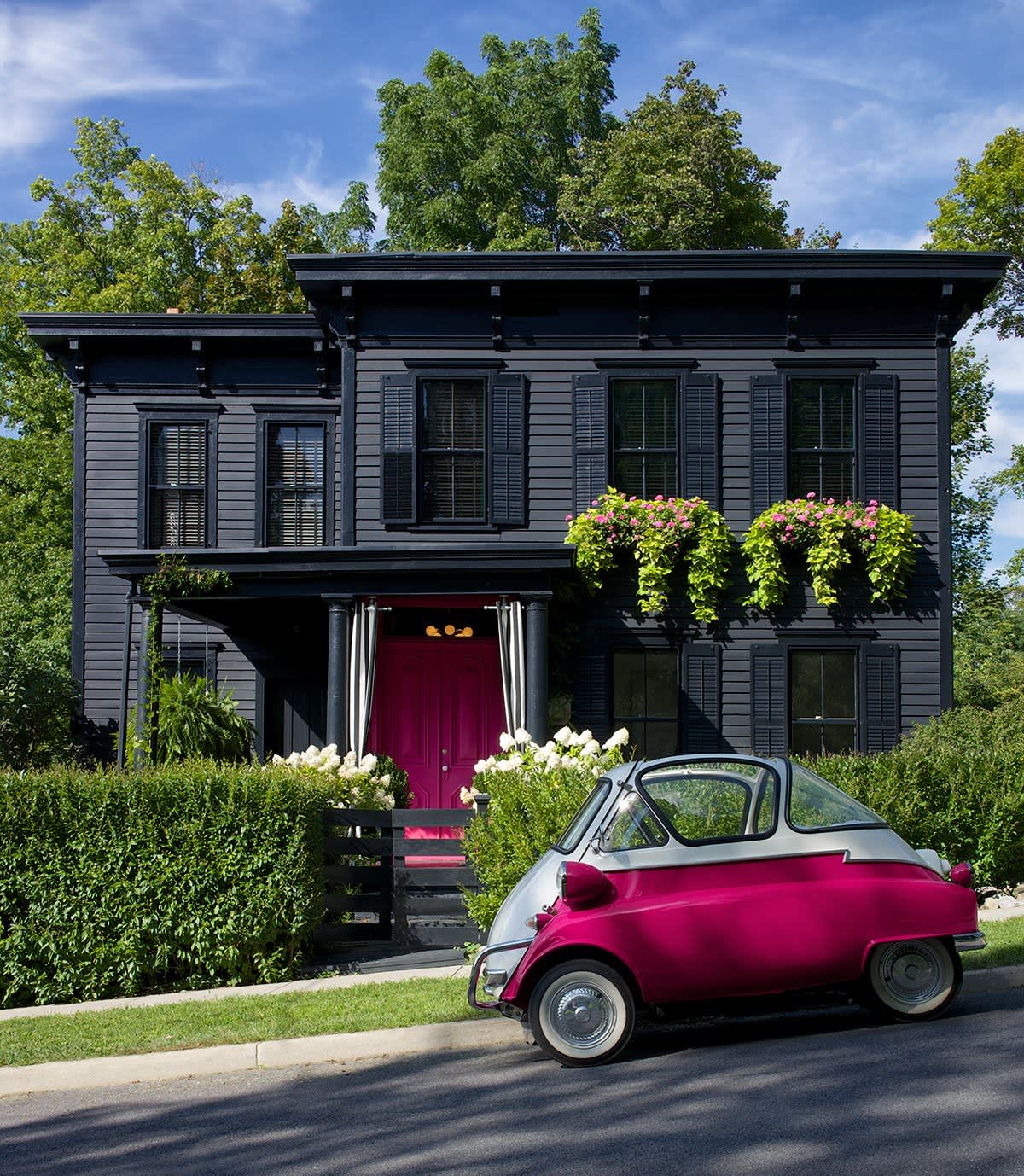
Can a black house feel playful? Yes, if you let one saturated color claim the front door. The rest of the exterior is a uniform dark wood siding with shutters that blend into it. The pink door is not a small accent. It is a full-height statement that the eye lands on before it reads the rest of the facade. White trim around the windows provides a crisp boundary so the black does not turn into a void.
The composition relies on that single break in the palette. Window boxes or a vintage car in the driveway echo the pink without competing. The rule is one pop, not a pattern. Add a second bright color and the whole thing reads as accidental.
Dark Gray Siding with Natural Cedar Accents
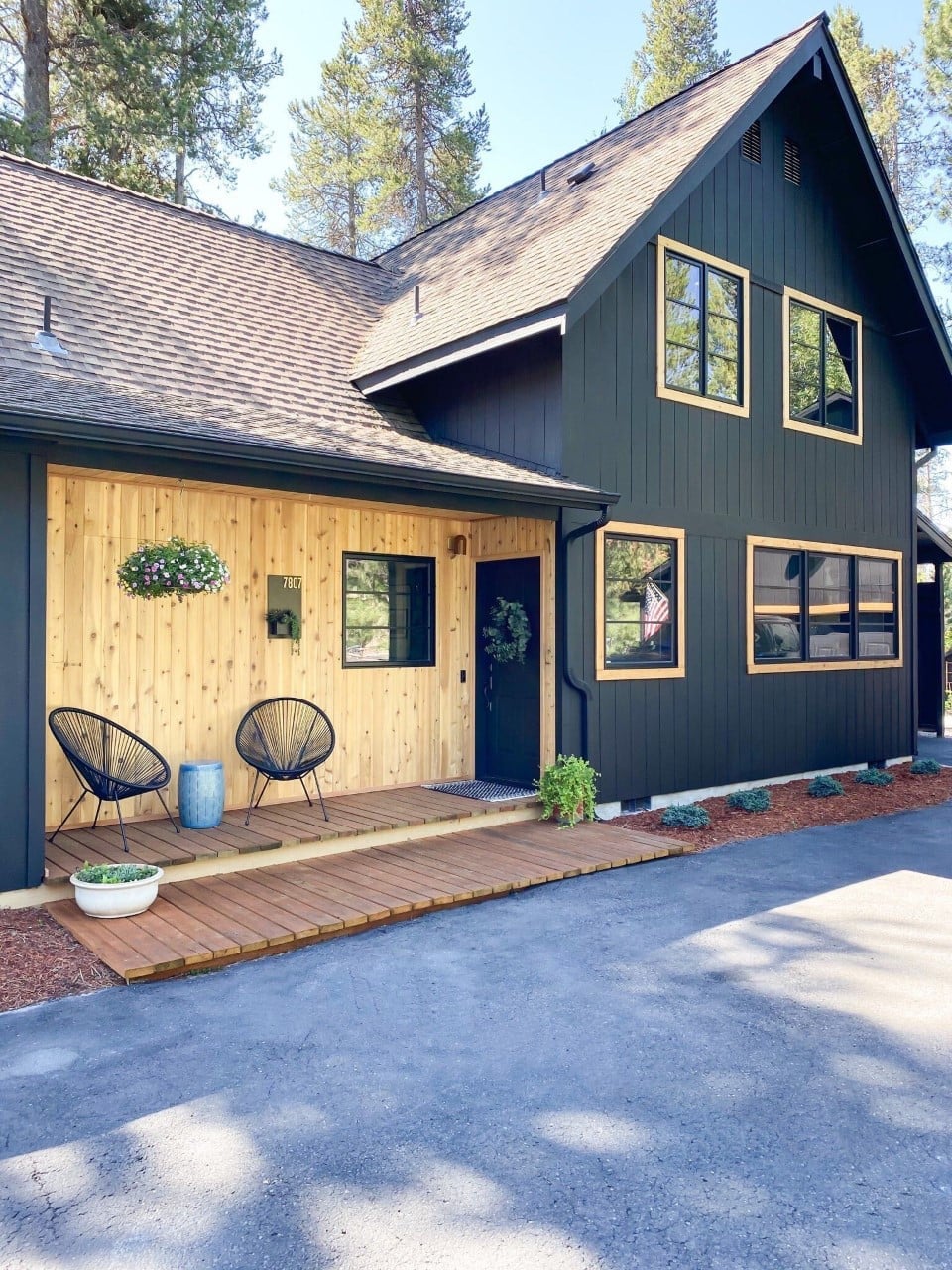
A dark gray exterior needs a warm partner, and cedar delivers that without going near beige. The siding is a cool, matte gray that recedes, while the cedar accents, on the deck or near the entrance, advance because they carry red undertones. Black trim keeps the transition clean. The wooden deck extends the living space outward, and dark chairs on it look like intentional furniture. The combination of cool gray siding and warm cedar creates a facade with depth without needing a bright color.
Monochromatic Black Brick and Wood Exterior
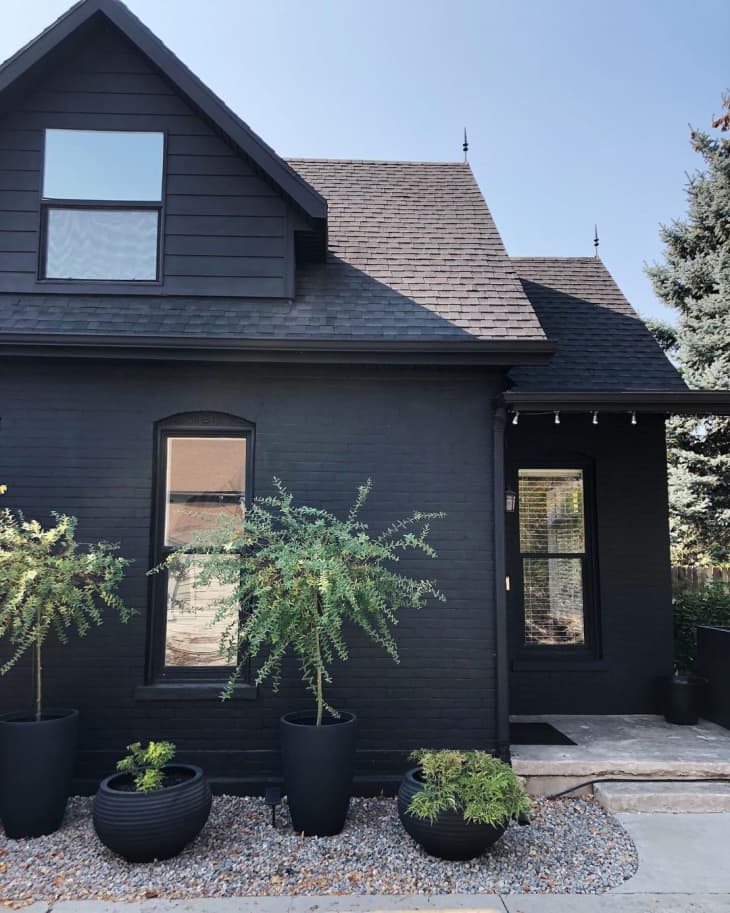
A uniform matte finish across brick and wood siding requires the textures to do all the work. Brick has a slight irregularity and grain; wood has a linear direction. When both are the same near-black, the eye reads the surface shift rather than a color change. The windows and door are integrated into the facade without trim that jumps forward. The practical rule for an all-black exterior is to vary the scale of the materials, large-format siding next to standard brick keeps the wall from reading as one flat plane. That texture contrast is what keeps the look intentional rather than unfinished.
Craftsman Charm with Dark Gray Siding and Red Door
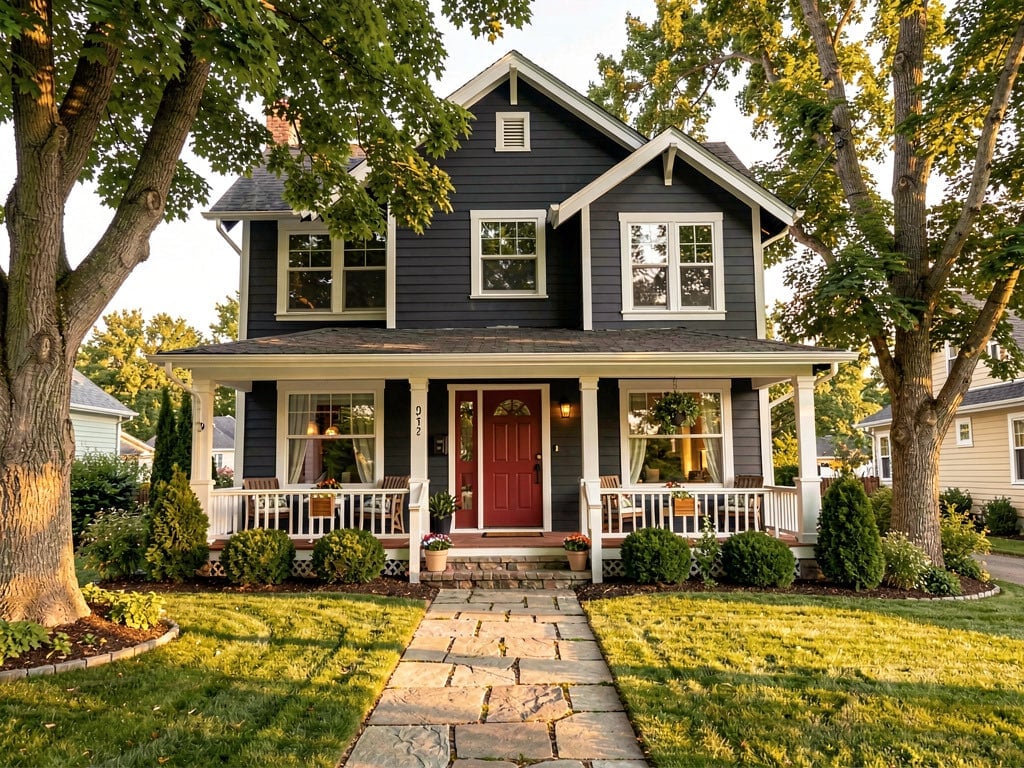
A dark gray house can feel like a closed book until one detail opens it. Here the red front door does exactly that, sitting in a white-trimmed porch on a centered facade that reads as solid and welcoming. The dark gray siding with white trim gives the craftsman style its bones, and the red door is the color that breaks the palette. The ratio is roughly 70 percent dark gray, 20 percent white trim, and 10 percent red. That small pop is all you need. A useful palette principle: when you commit to a dark neutral, choose one accent color and keep it to a single element. More than that and the contrast scatters.
Traditional Dark Gray Siding with White Trim
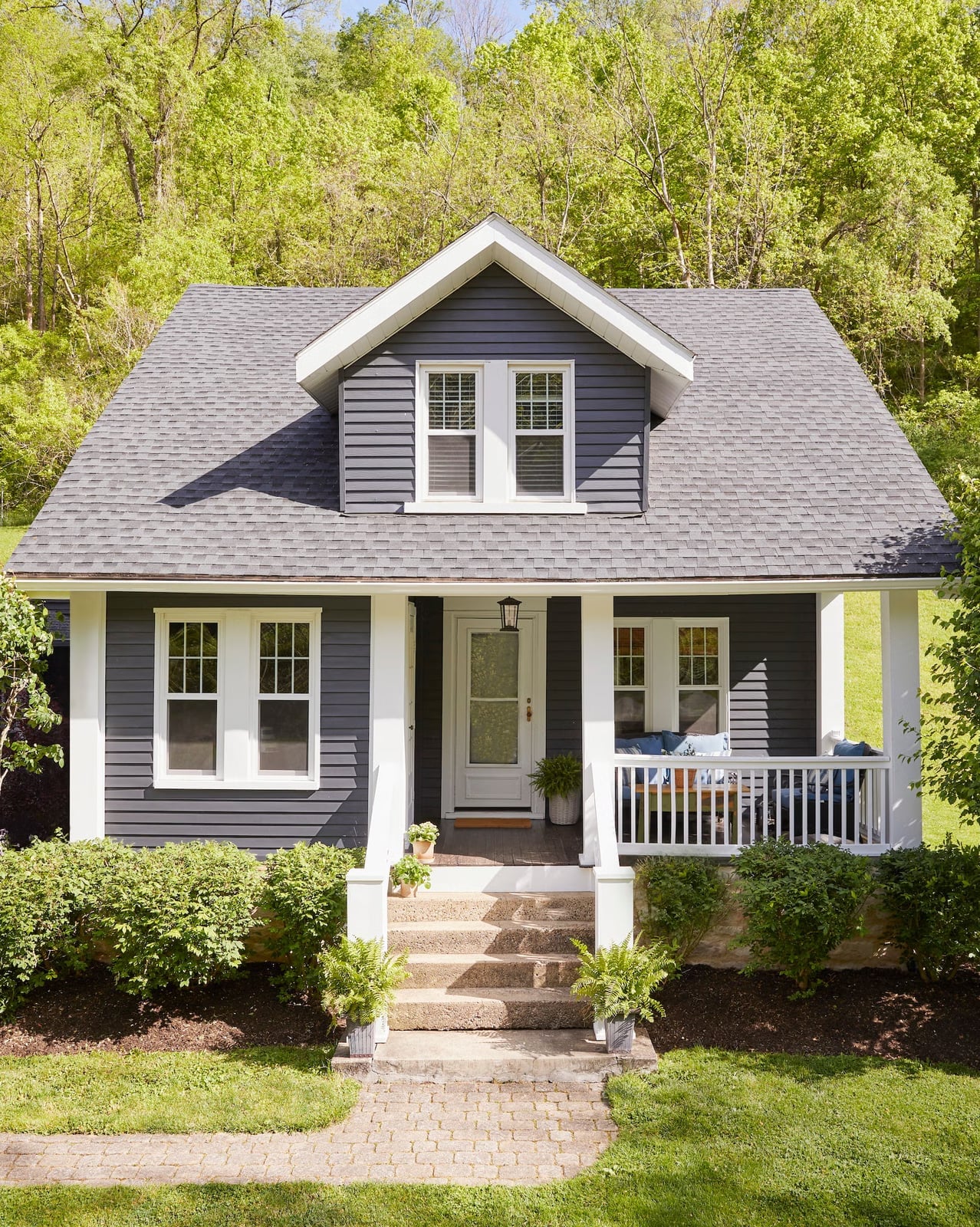
The white trim on a dark gray house does not just outline the windows and porch railing. It also holds the eye at the edges, so the facade stays crisp rather than heavy. On this traditional house the dark gray vinyl siding and white trim work with the covered porch and small seating area to keep the look approachable. The landscaping of green bushes and trees softens the hard lines. A palette principle for renters: if you cannot paint the siding, add white trim elements through furniture or planters. A white porch chair or white window box does the same job as painted trim.
Modern Farmhouse with Dark Gray Board and Batten
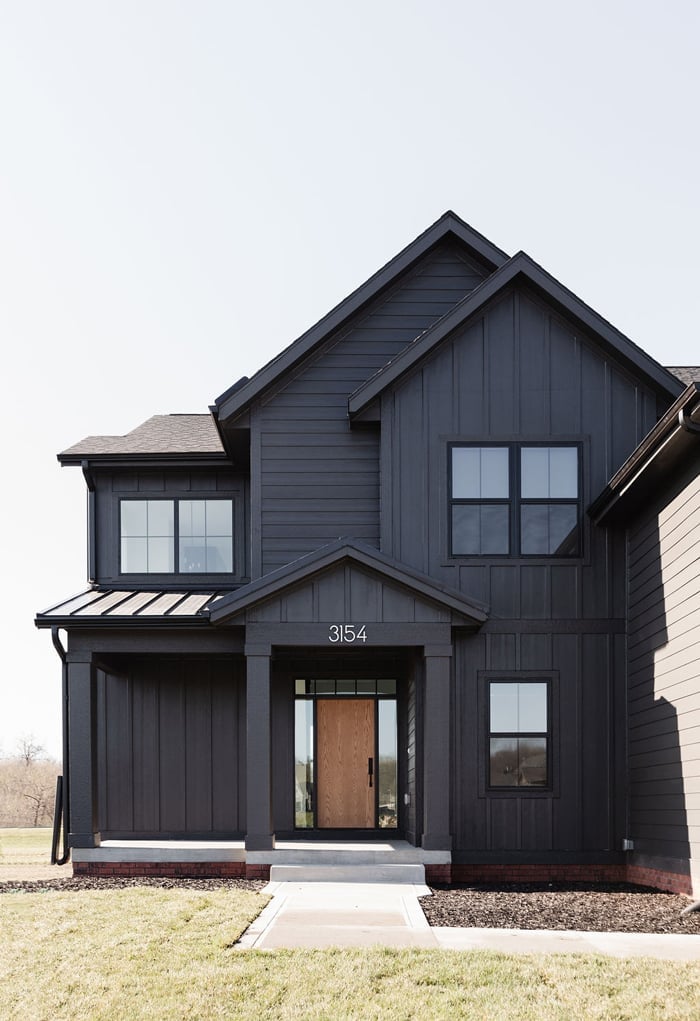
The uniform dark gray board and batten siding on this two-story house is the material choice that defines the modern farmhouse style. The vertical lines of the siding draw the eye up, and the metal roof and natural wood door add texture without breaking the dark palette. The prominent entryway and large windows keep the facade from feeling closed off. A materials principle: vertical siding like board and batten makes a house look taller, which is useful for a ranch or a single-story floor plan. If you are working with a shorter facade, the same trick applies.
Barn Conversion in Dark Navy Wood Siding
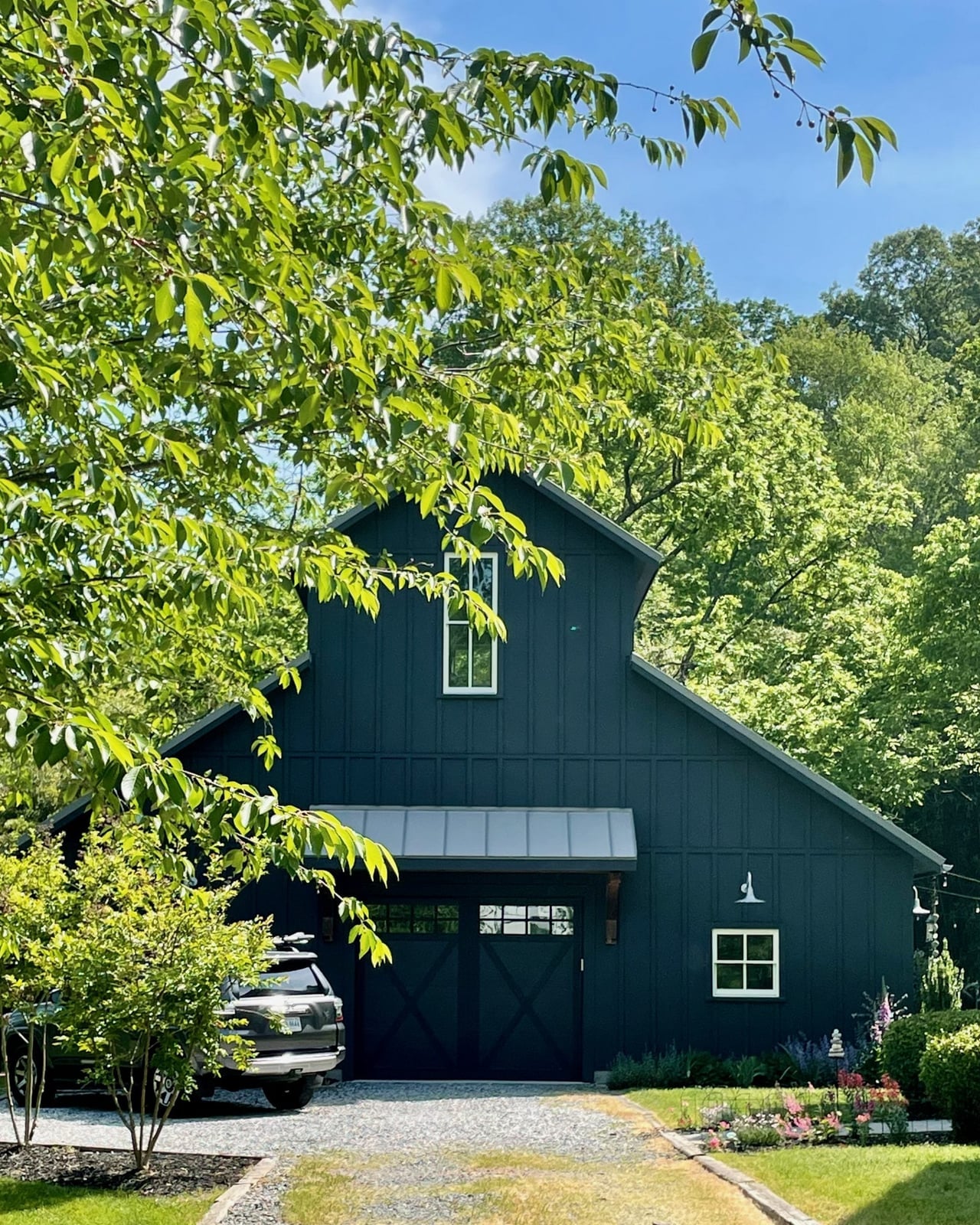
Can a dark navy barn still feel like a barn? Yes, if the material stays agricultural. The wood siding on this modern farmhouse conversion keeps the original barn character, while the dark navy color updates it for a house. The metal roof and gravel drive continue the rural feel. The palette is dark navy, gray, and white, with the white appearing in the trim around the garage doors. A rule for a conversion: keep the original material and change only the color. That way the structure looks authentic and not themed. The dark navy also hides the dust and wear that come with a gravel driveway.
Farmhouse Dark Green Siding with Stone Base
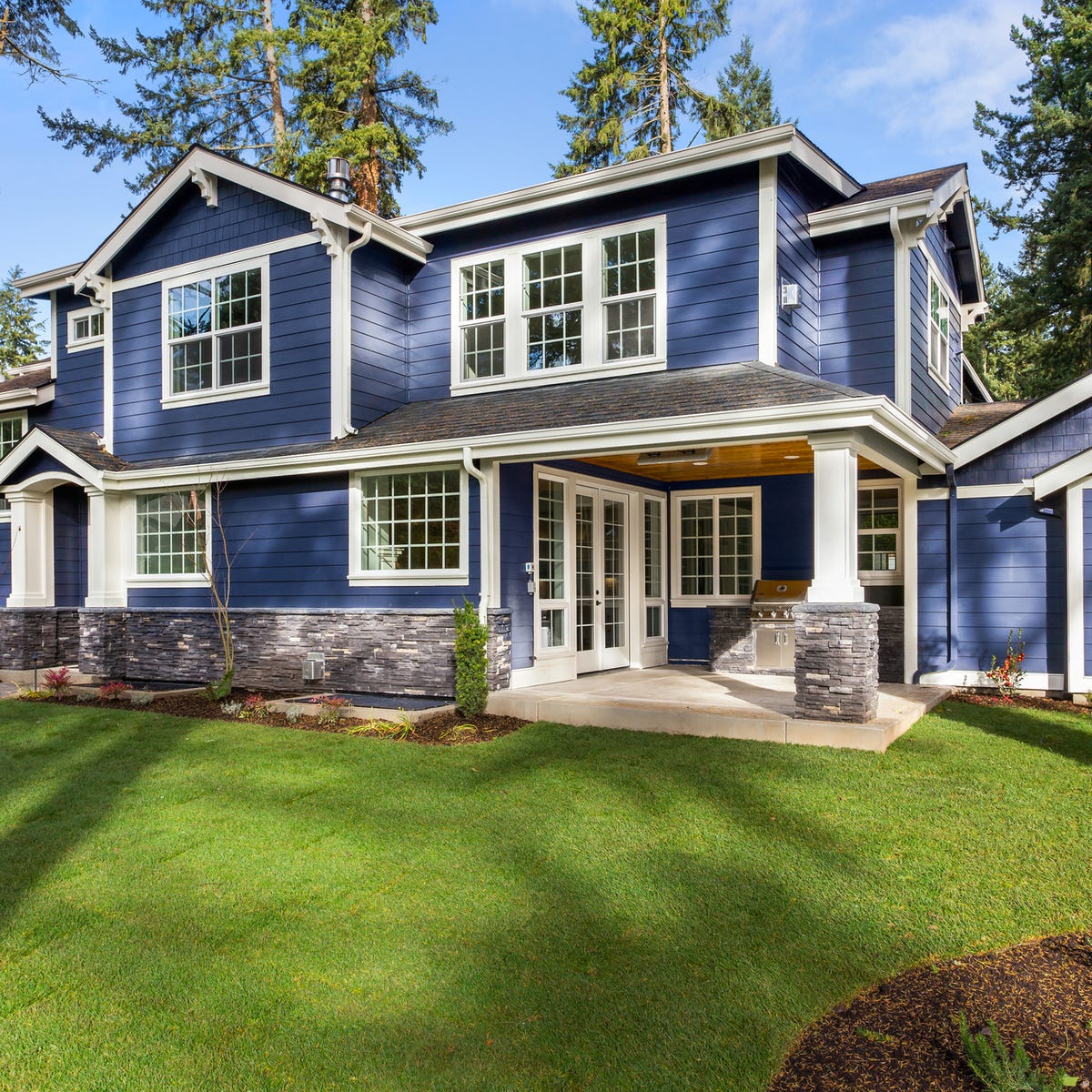
The dark green siding on this farmhouse sits above a stone veneer base that runs across the full width of the two-story facade. That stone base is not just decoration. It anchors the house to the ground visually and protects the siding from splash-back during rain. The white trim around the large windows keeps the dark green from feeling too heavy. A materials principle: a stone base works best when it matches the scale of the house. A thin strip looks mismatched, but a base that reaches a foot or more above grade properly grounds the facade.
Traditional Dark Brown Siding and Black Door
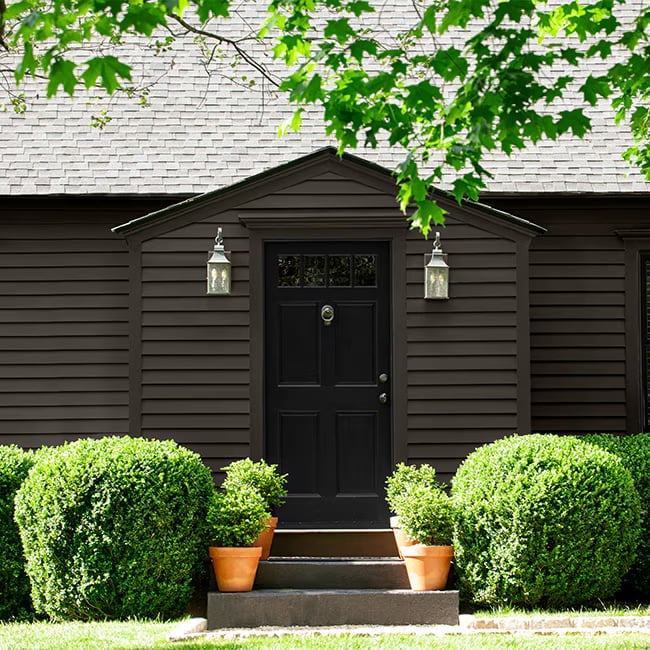
A traditional front entrance benefits from a palette that feels grounded. This approach uses dark brown siding as the dominant color, with a black front door and dark green shrubs to anchor the composition. The brown and black are natural partners, while the green foliage adds life without competing. A pair of black lanterns on either side of the door reinforces the symmetry and keeps the eye moving toward the entrance. The result is a settled and established look suited to homes where the goal is understated curb appeal.
Modern Black Siding with Wood and Stone Accents
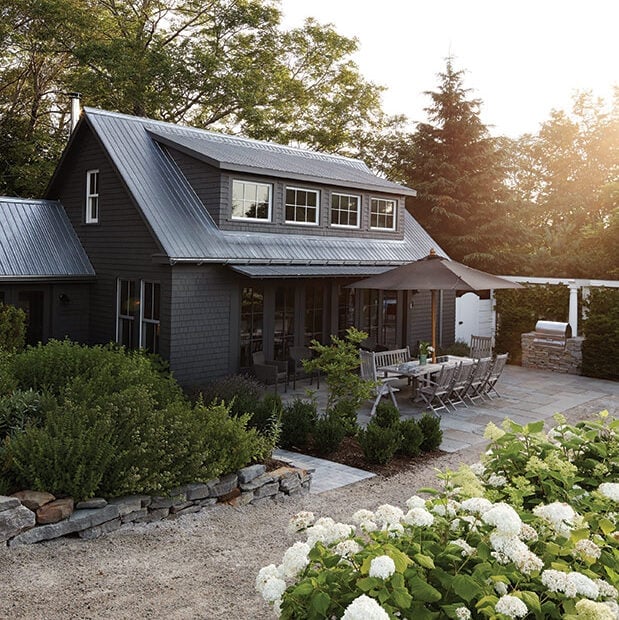
An all-black exterior might feel severe, but pairing it with wood and stone changes the whole effect. This modern house uses black siding as the primary material, then breaks up the dark mass with warm wood panels around the garage and a tall stone chimney that rises from the ground. The white trim around the windows offers a clean line of contrast, and the overcast sky softens the daylight so the black appears rich and deep. The key is the ratio: black covers most of the facade, but the wood and stone occupy enough surface area to prevent the house from looking like a solid block. For anyone considering a dark exterior, this combination shows how to introduce texture without losing the dramatic effect.
Modern Farmhouse with Dark Gray Shingles and Metal
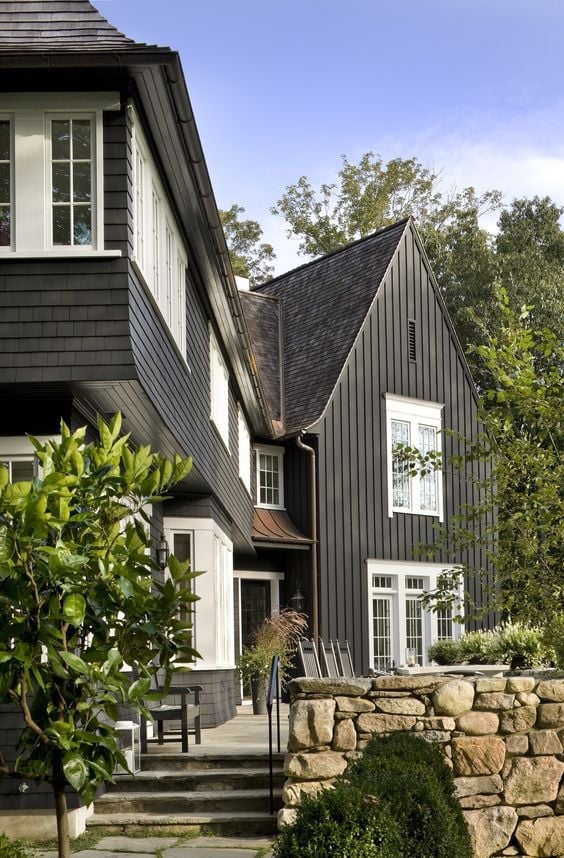
A modern farmhouse gains interest when it layers materials instead of sticking to one. This house uses dark gray shingles on the upper story and metal siding on the lower, with a stone wall running along the foreground for additional texture. White trim around the large windows keeps the facade from feeling heavy, and copper gutters add a warm metallic note. The side view of the house shows how the dark siding recedes while the stone and trim stay prominent, giving the building depth without extra ornament.
Dark Gray Siding with Copper Gutters and Autumn Foliage
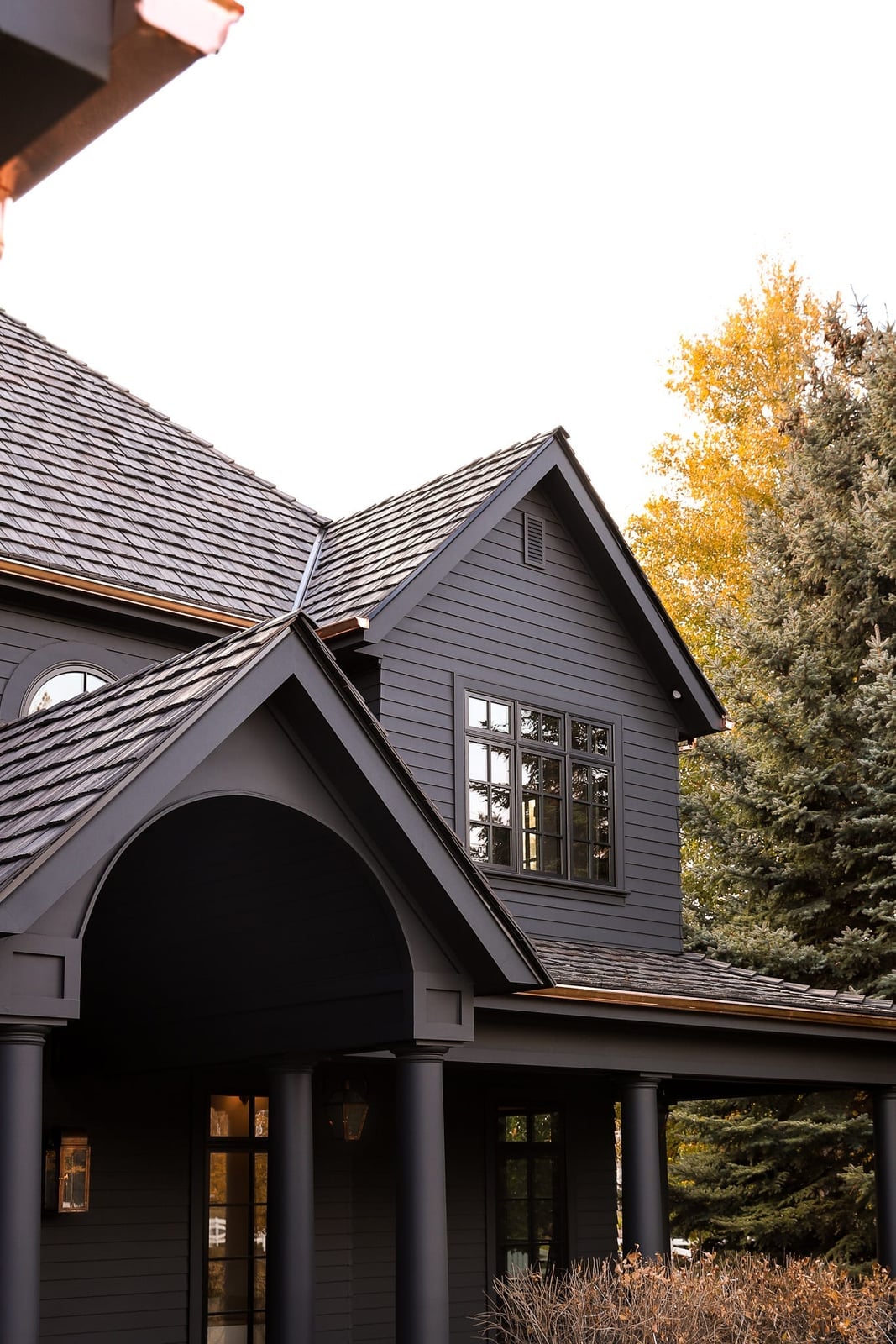
This facade proves that dark gray siding works well with warm accents and seasonal color. The house uses dark gray siding and shingles as the base, but the copper gutters add a warm metallic stripe across the front even on an overcast day. The yellow autumn foliage in the trees introduces a bright contrast that feels natural. For homeowners in areas with distinct fall color, a dark gray exterior becomes a backdrop that makes the changing leaves pop. The copper will develop a patina over time, shifting from bright to muted green, which adds another layer of character.
Farmhouse Sage Green Siding with White Trim
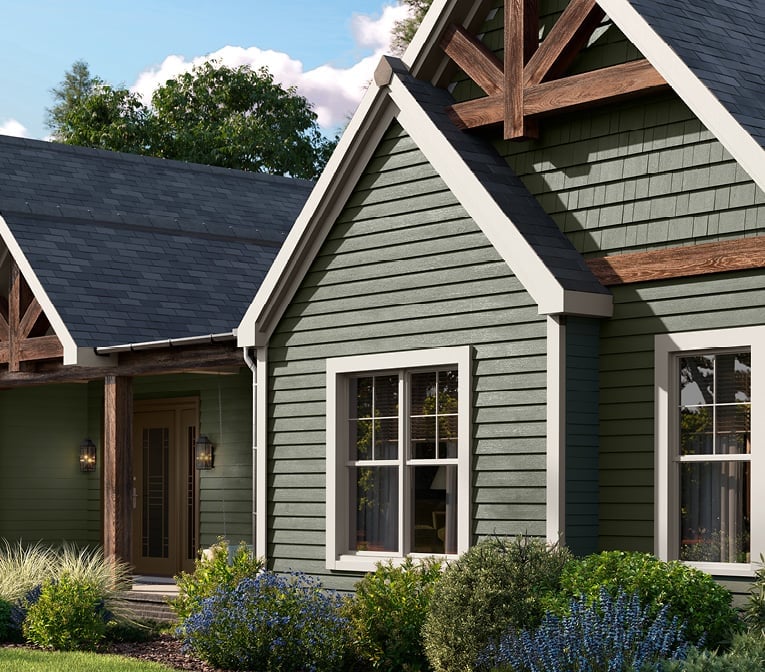
A practical rule for exterior color: if you want a dark house that still feels soft, reach for sage green instead of charcoal or black. This modern farmhouse uses sage green siding with white trim, creating a look that is dark enough to feel substantial but light enough to read as approachable. The covered porch with pendant lights extends the living space outdoors, and the surrounding landscaping helps the green blend with the natural setting. The white trim defines the edges of the house clearly, preventing the color from feeling muddy. For anyone who finds dark gray or black too stark, sage green offers a gentler way into the dark exterior trend. It pairs well with wood accents and white, so the overall palette stays coherent without much effort.
Farmhouse Charm in Dark Blue Wood Siding
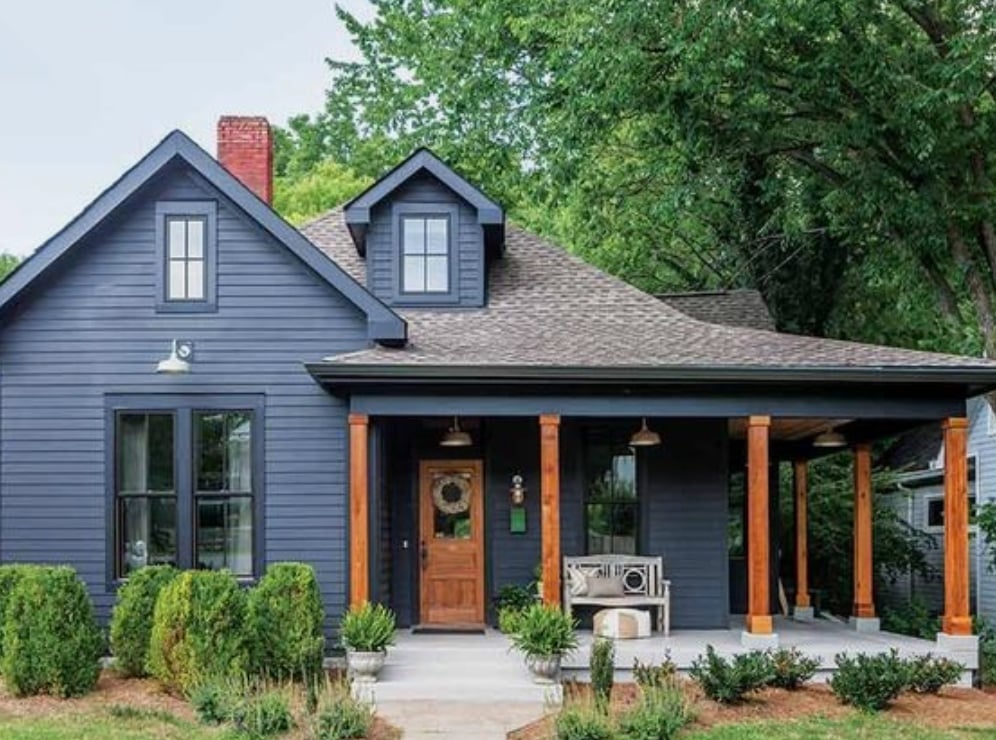
A front porch centered on the facade makes the dark blue wood siding feel welcoming rather than heavy. The farmhouse style leans on the contrast between that deep color and white trim, with natural wood posts and a brick chimney adding warmth. The palette defines the look: dark blue as the anchor, wood and white as the balance. What breaks it would be adding another saturated color to the mix, since the charm comes from keeping the ratio simple.
Coastal Farmhouse with Dark Blue Siding
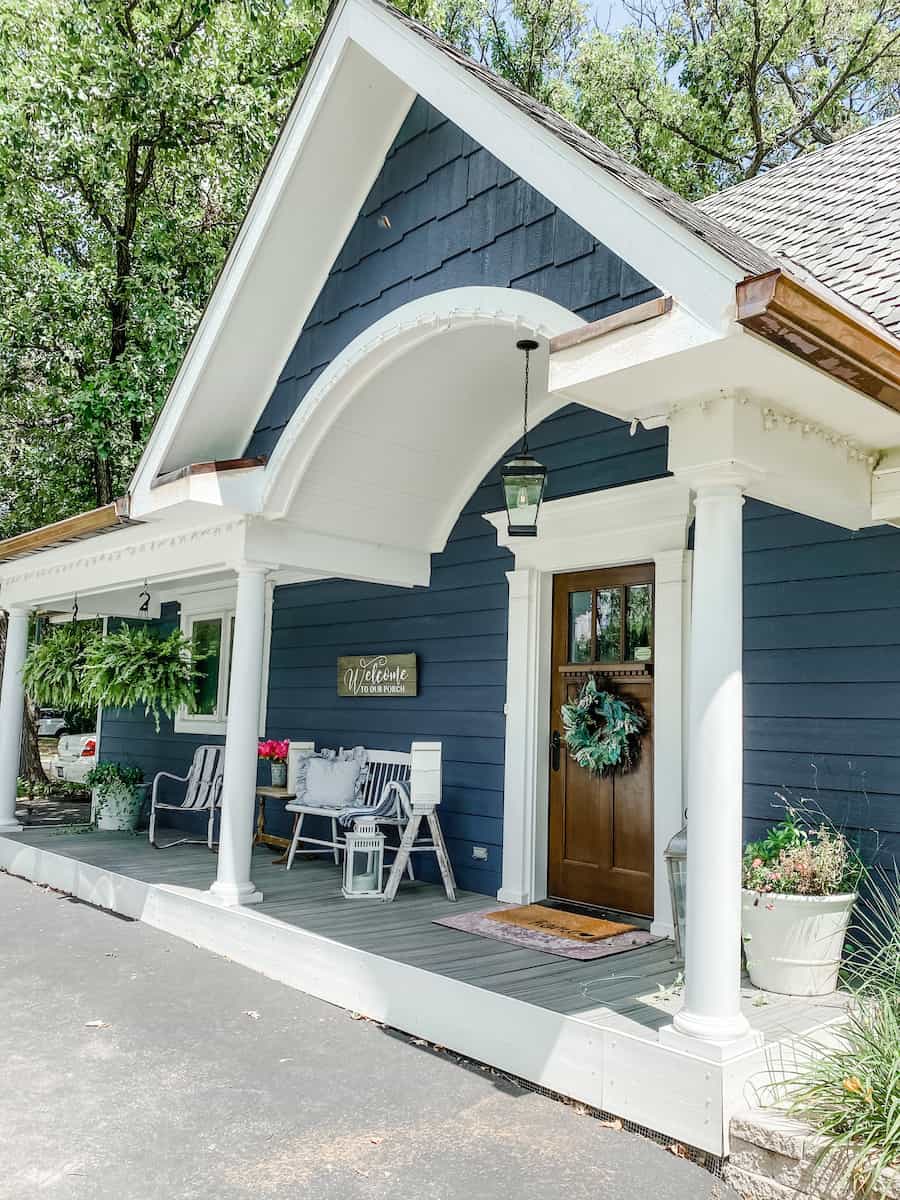
The palette does the work when you cannot change the structure. Dark blue siding paired with white trim and wood details creates a coastal farmhouse look without needing a full renovation. The covered porch with columns and a door in a matching tone keeps the look consistent. For renters, swapping in outdoor furniture in a natural finish or adding a neutral door mat can reinforce the style without touching the siding. The stone foundation grounds the light colors, so the whole porch feels roomy and deliberate.
Modern Dark Gray Siding with a Tall Stone Chimney
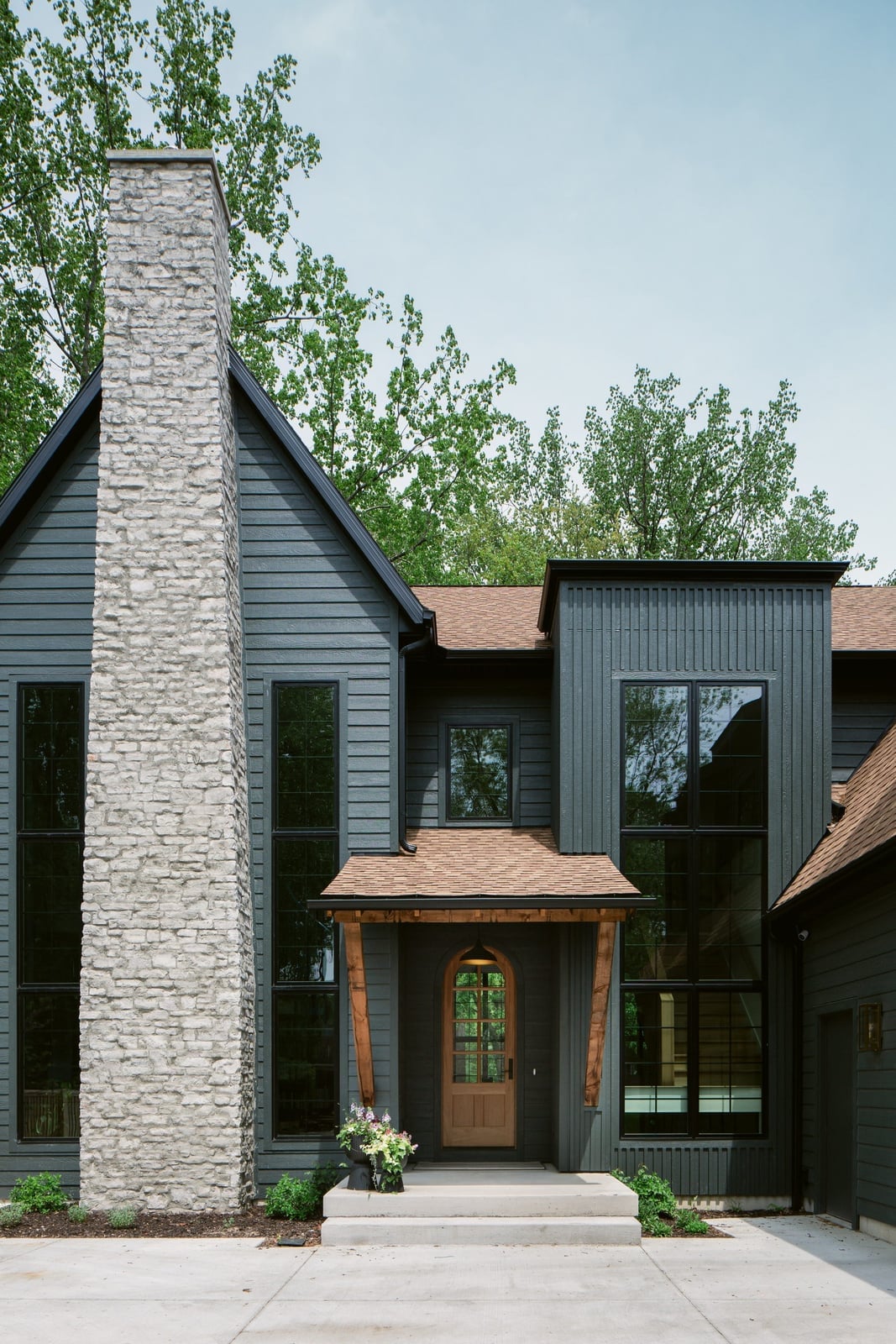
A dark gray facade with a tall stone chimney leans more sculptural than cozy, which sets it apart from the softer farmhouse versions of dark exteriors. The modern style uses the chimney as a vertical anchor against the horizontal siding, with large windows in black frames keeping the look clean.
The wood accents near the entrance prevent the palette from feeling cold. The overcast daylight makes the stone appear gray, so the whole composition stays monochrome. What breaks this look is adding traditional trim details or a bright door, because the effect depends on the uninterrupted line of dark materials.
Dark Gray Horizontal Siding with Natural Stone
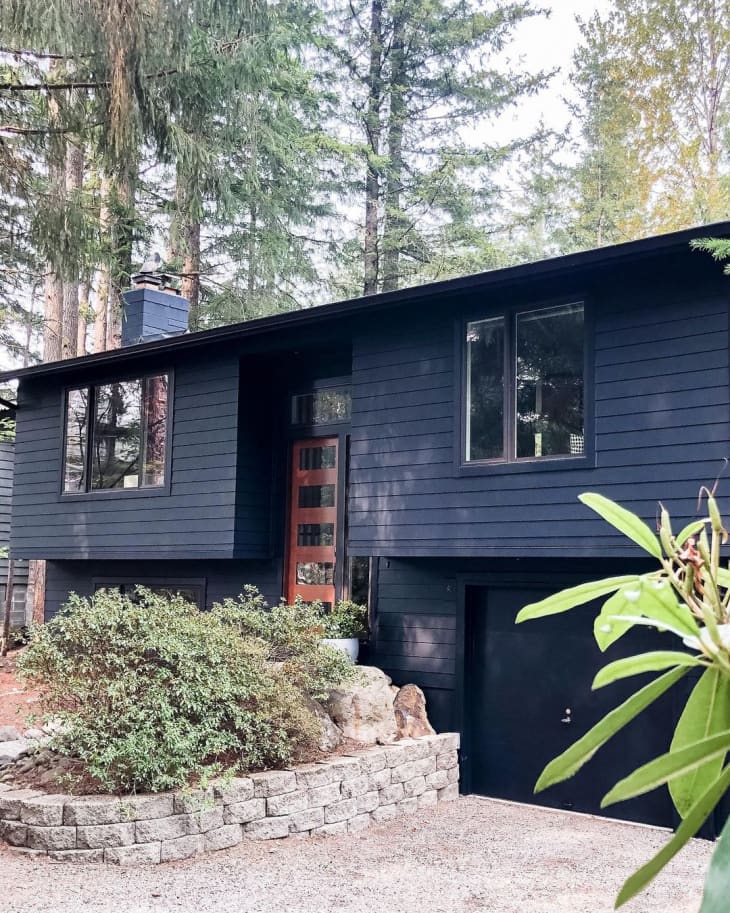
The horizontal lines of the dark gray siding run uninterrupted across the facade, with natural stone used only at the base. That choice gives the house a grounded look without the stone taking over. The garage door blends into the dark palette, so the eye moves to the landscaping instead. The material mix matters here: the stone adds texture that the smooth siding cannot provide on its own, and keeping the stone near the ground makes the house feel stable rather than top-heavy.
Matte Black Wood Siding with Metal Roof and Lighting
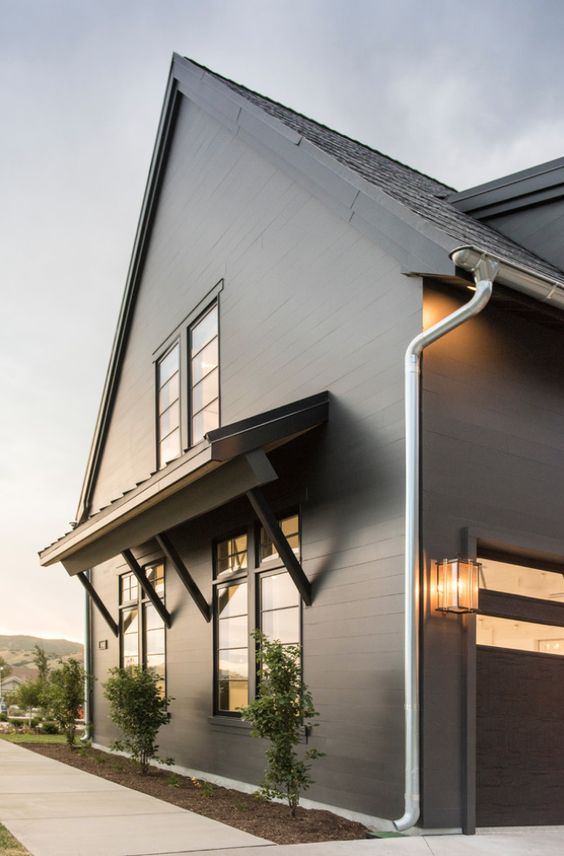
This exterior works because the matte black siding and metal roof create a single dark silhouette against the evening sky. The large windows break up the mass without needing trim or accent colors, and the warm exterior lights prevent the house from disappearing after dark. The metal roof adds a reflective quality that the matte siding lacks, giving the facade visual interest through texture instead of color. The dark volume feels solid, not overwhelming, because the glass and lighting keep it from closing in.
Charcoal Black Brick and Wood Exterior with Copper Accents
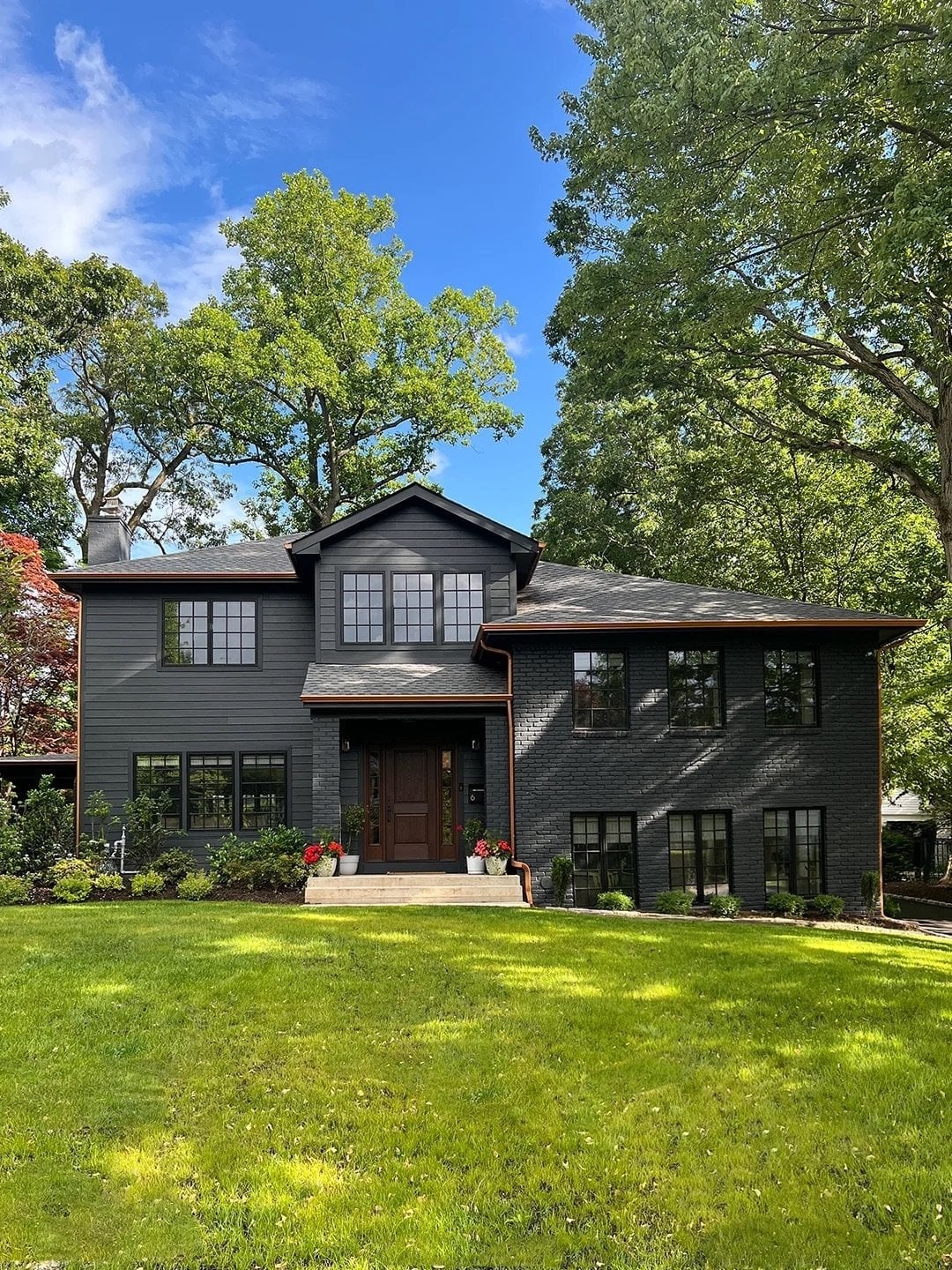
A dark exterior works best when you break up the mass with a secondary material. This modern house uses charcoal black brick across the main facade, with wood siding on the upper gable to add warmth and texture. Large windows and a wooden door keep the front from reading as a solid wall. The copper gutters are the quiet surprise: their warm metallic tone shifts the whole palette from cold to rich. A matte finish on the brick and siding keeps the look soft rather than glossy. The style is defined by a roughly 70-30 ratio of dark brick to wood, with copper as a fine accent line. What breaks it would be adding a third bold color or switching the copper for standard white metal, the contrast would flatten.
Traditional Dark Blue Siding with Red Door and Brick Path
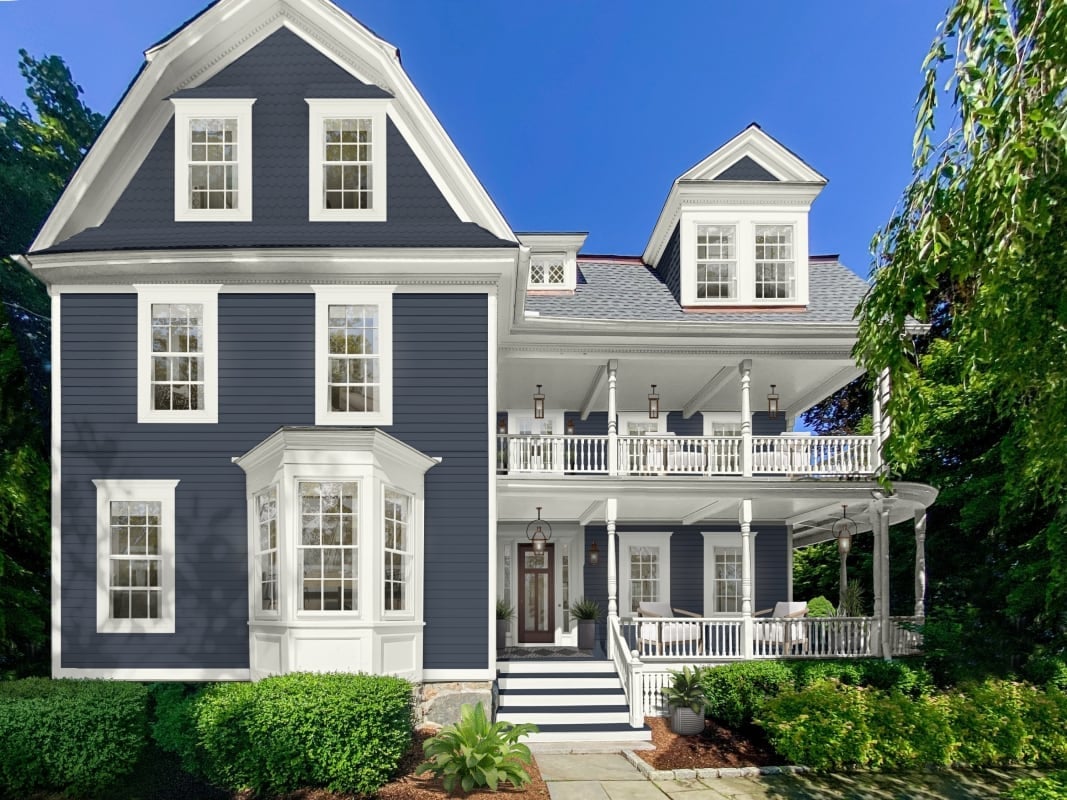
Dark blue siding on a traditional house stays approachable when you pair it with a classic red door. The brick path leading to the porch reinforces the warm side of the palette, while white trim frames the blue without competing. The combination works because red and blue are opposites on the color wheel, so each makes the other look more intentional. A porch with white railings keeps the front elevation from feeling too heavy.
Urban Row Houses with Dark Gray and Brick Red Facades
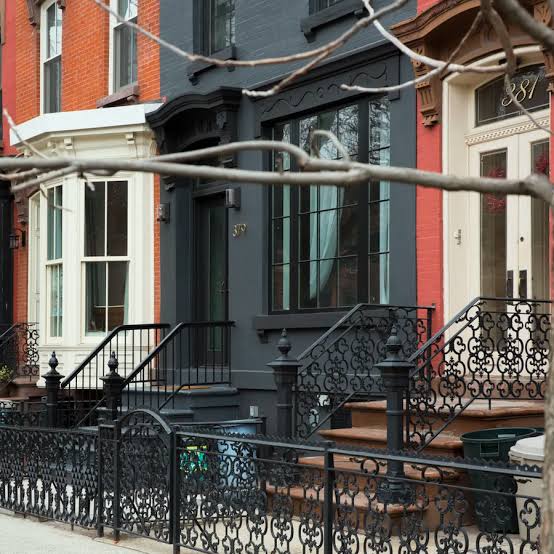
A row of urban houses can feel monotonous unless you vary the color. Here, dark gray siding on one house sits next to a brick red facade on the next, with a cream-toned house between them. The mix works because each color belongs to the same muted family, no bright primaries. Ornate wrought iron railings and a bay window add detail that stops the street from looking flat. The practical rule: when neighbors share a wall, treat each facade as its own palette rather than matching everything.
Grand Modern Farmhouse in Deep Navy Vertical Siding
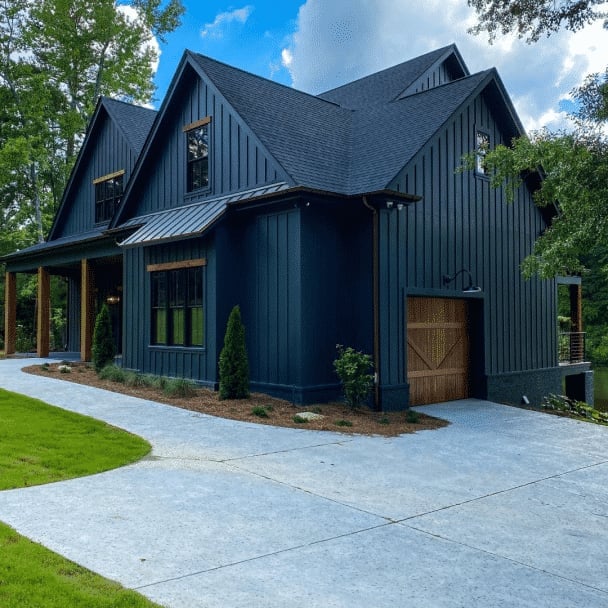
Deep navy vertical siding looks almost black from a distance but reveals its blue undertone in direct daylight. That shift makes it more interesting than true black, especially on a grand modern farmhouse with angular lines. Large windows and a dark garage door keep the navy from dominating the facade. Porch columns in a similar dark tone extend the vertical rhythm. The alternative would be a flat charcoal, which reads as solid but loses the depth that navy brings when the sun hits it. The trick is to let the siding do the work, keep trim minimal and let the color change with the light.
Modern Rustic Dark Gray Metal Siding with Wood
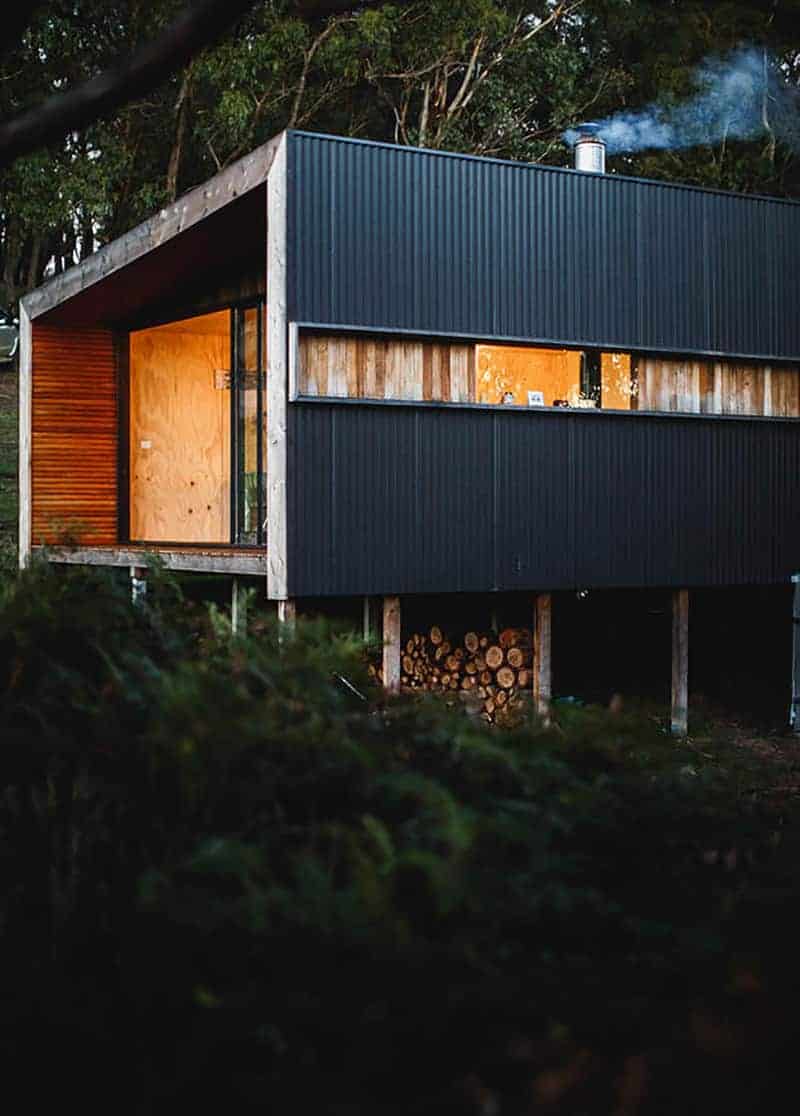
Dark gray metal siding paired with warm wood accents creates a clear inside-outside contrast. The metal feels cool and industrial, while the wood adds a natural, lived-in feel. A metal roof reinforces the modern side of the style. At dusk, warm interior lights soften the dark gray, making the house glow from within instead of receding into the evening. The combination works best when the wood is a true warm tone, not a gray-washed finish, because the contrast is what gives the look its character.
Traditional Dark Gray Shingle Siding with Arched Doorway
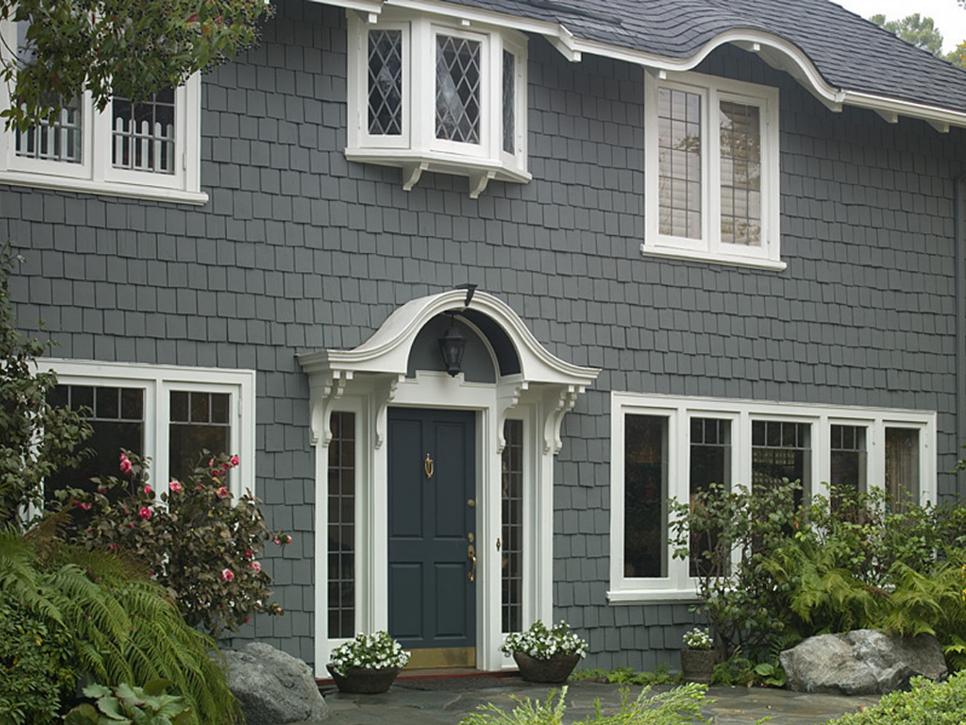
The arched doorway is the focal point here, softening the mass of dark gray shingle siding with a curve that reads as both formal and welcoming. White wood trim traces the arch and the windows, giving the traditional facade a crisp outline against an overcast sky. A bay window adds depth to the front elevation, while stone at the base anchors the whole composition to the ground. The palette stays restrained, dark gray, white, and green from the landscaping, so the eye lands on that doorway first.
Craftsman Dark Navy Siding with White Trim and Brick
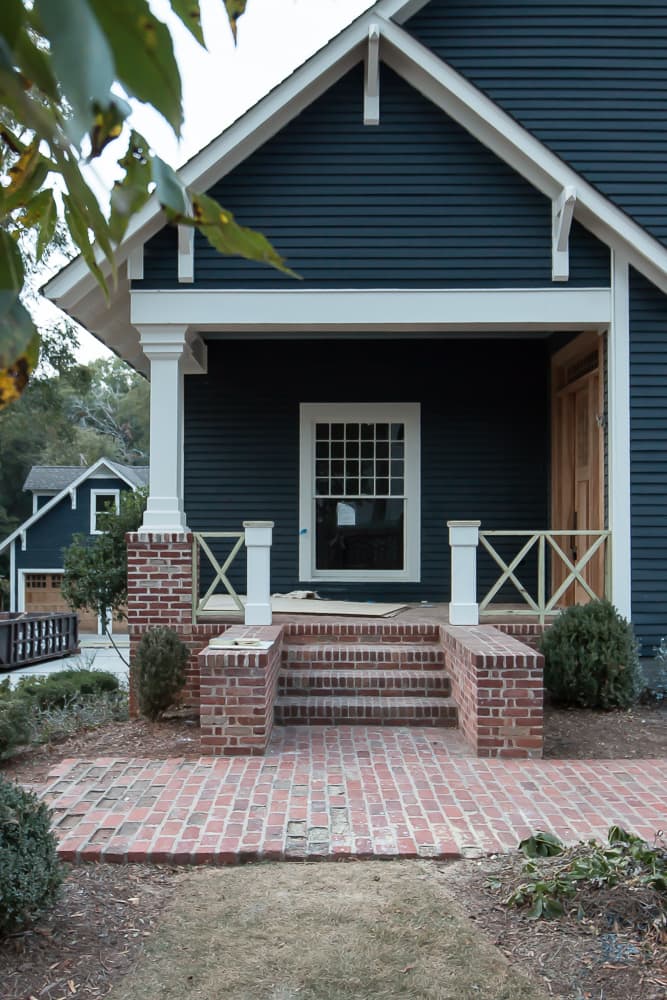
A practical rule for renting: paint is temporary, but you can shift the visual weight of a facade with what you add, not what you strip. Here the dark navy siding is permanent, but the white trim and brick red steps create contrast that feels built in rather than bolted on. The covered porch and white railings break up the dark mass, and the brick walkway draws the eye forward.
Renters can borrow this logic by anchoring the entry with a pair of tall planters in a light tone or adding a weatherproof mat in a warm brick red. The compact front porch already has white railings, so any added piece, a bench, a lantern, a small side table, in a natural wood tone will echo the brick without touching the siding. The navy reads as neutral when white frames it, which is the whole trick: let the trim do the work.
Modern Dark Gray Vertical Siding with Wood Accents
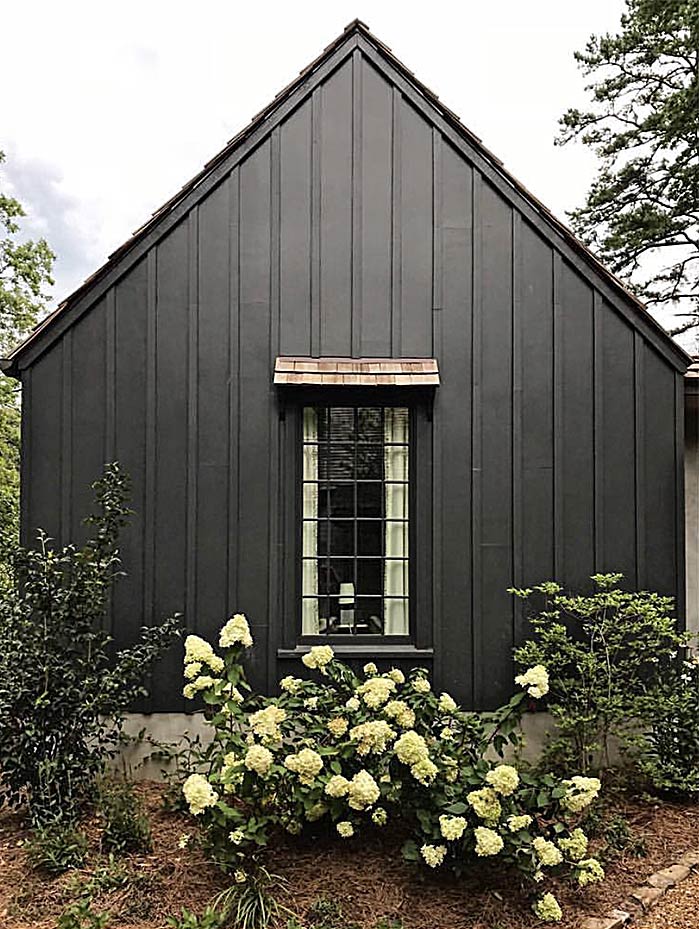
Vertical dark gray siding draws the eye upward, making a modern house feel taller and more grounded at the same time. The wood accents here break the solid color into panels, so the facade has rhythm rather than a flat wall of gray. An awning over the window adds a horizontal line that keeps the vertical planks from feeling too severe. The result is a clean, composed exterior that works in overcast light without losing its shape.
Traditional Dark Purple Siding with White Trim, Outdoor
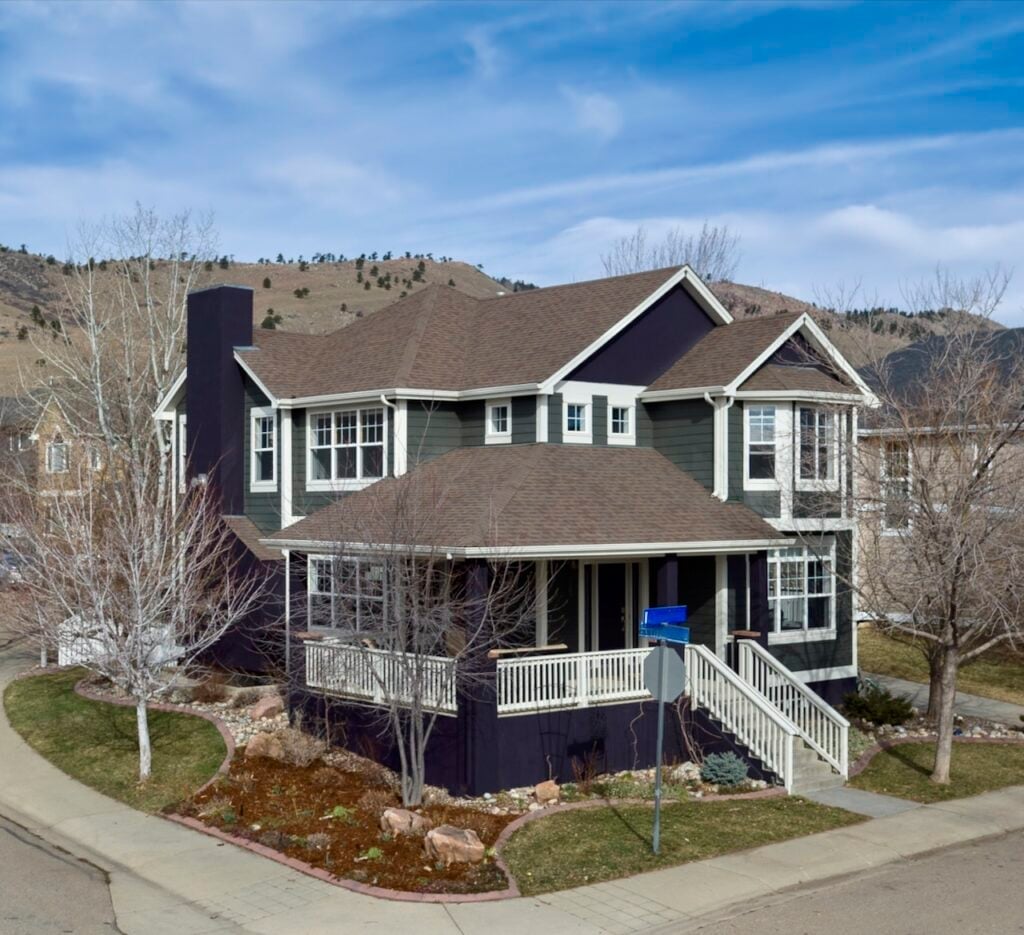
Dark purple siding is rare enough that it stops you mid-block, but the white trim keeps it from tipping into costume territory. The layout here is a street corner view, so the house has presence from two angles, and the brown porch railing and roof tiles warm the purple without competing. The bright sky helps the white trim pop, which is the key: dark purple needs a crisp, light counterpoint to stay readable as a deliberate choice. It is a bold move, but the white and brown keep it grounded in tradition.
Coastal Farmhouse Dark Blue Siding and Stone Veneer
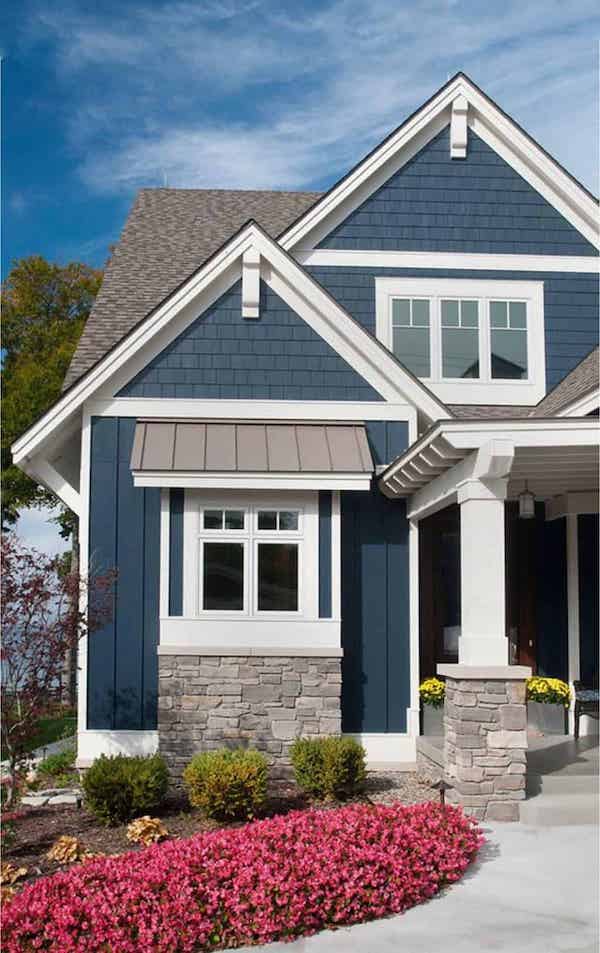
Coastal farmhouse often leans pale blue and white, but this version goes dark blue with a stone veneer base, and the result is more substantial than its breezy cousin. The two-story gable and metal awning give the facade a firm silhouette, while the white trim keeps the dark siding from feeling heavy. The stone base adds visual weight at ground level, which makes the house look settled into its site rather than perched on top.
What sets this apart is the proportion: the dark blue covers most of the volume, but the stone runs a solid band across the bottom, so the eye has a place to rest before traveling up to the gable. A metal awning over the entry or a window breaks the vertical lines just enough. The coastal farmhouse formula usually relies on white, but here the dark blue and gray stone do the work, and the white trim is just the outline.
Modern Black Wood Siding with Concrete Elements
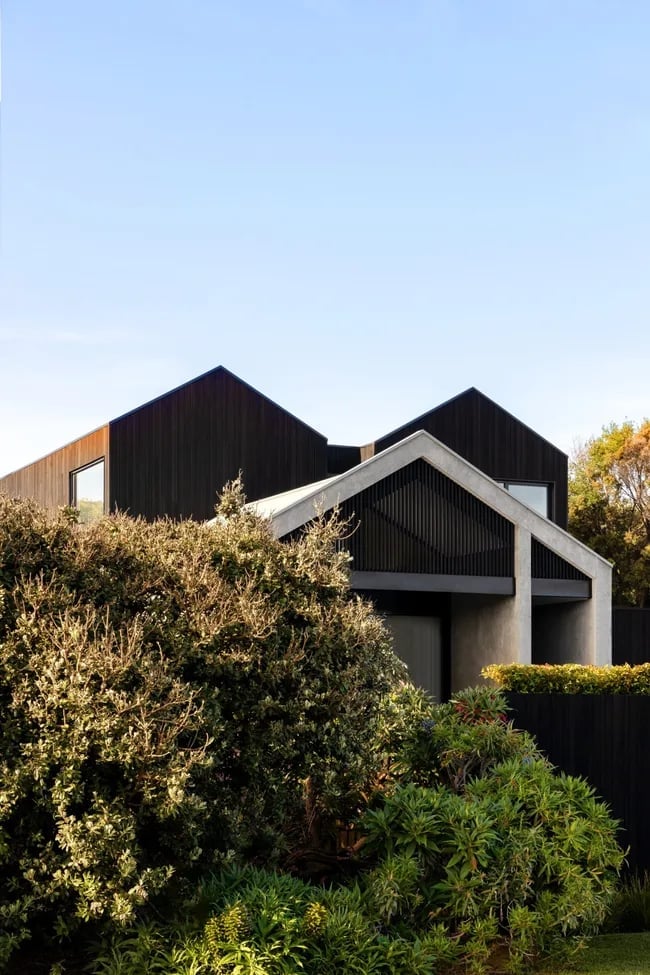
The combination of black wood siding and concrete creates a modern exterior with a sculptural quality. The dark cladding absorbs light, while the smooth gray concrete adds a cooler, heavier counterpoint. Large windows break up the solid mass and let daylight shift the mood hour by hour. The green of nearby foliage softens the hard edges. If you are drawn to this look, the ratio of materials matters more than the shades: concrete works best as an accent, not as the main surface, so the wood stays the dominant texture.
Final Thoughts
Choosing a dark exterior is a bold move that pays off with a striking, memorable home. The key is balance: pair deep siding with lighter trim, natural wood, or stone to keep the look from feeling flat. Pay attention to your roof, gutters, and landscaping as they all play a role in the final effect. A dark house can get hot in direct sun, so consider your climate and the material’s heat absorption. With the right combination of color and texture, your home will feel both dramatic and inviting for years to come.