Door trim is the frame that sets the tone for any entryway, interior passage, or porch. It is the unsung hero of a room’s personality, quietly defining the style from craftsman to farmhouse to modern. This collection of 28 door trim ideas covers the full spectrum of looks, from stained wood to painted white to bold colors, each with a distinct approach to shape and detail.
Whether you lean toward rustic rough-hewn boards or crisp modern lines, these examples show how trim can anchor a space without overwhelming it. You will find practical notes on how each style lives in its setting, what defines its palette, and what breaks the mold.
Craftsman Hallway with Stained Wood Door Trim
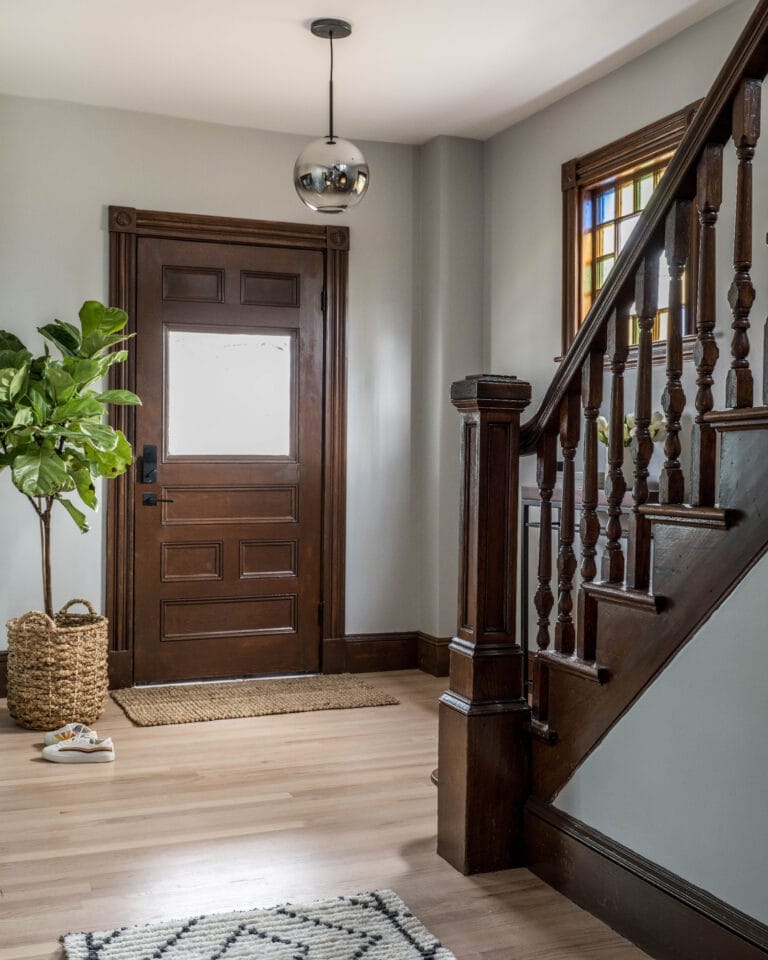
Stained wood door trim in a craftsman hallway anchors the room with warmth and draws the eye through the space. The rich wood tones contrast with light blue walls, while a stained glass window adds color that shifts with the light. A pendant light above casts a focused glow on the trim, staircase, and a potted plant nearby. The layout keeps the hallway simple, letting the woodwork and glass do the work. This style needs a balanced palette: warm wood and cool blue stop the hallway from feeling too dark or too plain.
Rustic Entryway with Rough-Hewn Wood Trim
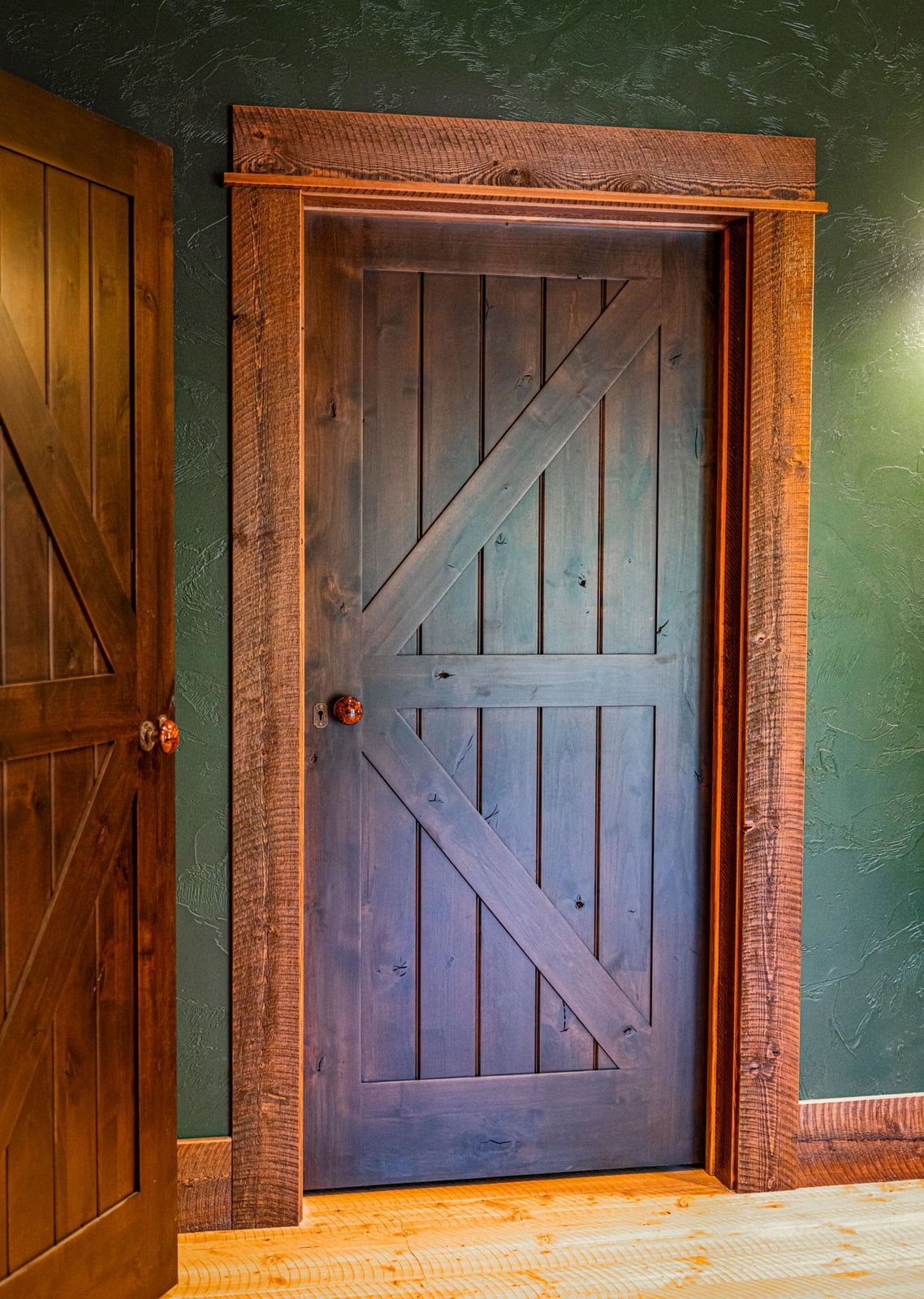
Rough-hewn wood trim defines this rustic entryway with a texture that smooth finishes can’t match. The dark wood and green palette feels grounded, and the textured wall behind the paneled doors adds depth. Ambient light softens the look, making the entryway feel like a natural transition from outdoors to indoors. Two doors sit side by side, with the rustic trim tying them together. The style breaks if you add glossy or refined accessories; keep the rest of the materials raw and the palette earthy to let the trim carry the space.
Farmhouse Front Door with Scalloped White Trim
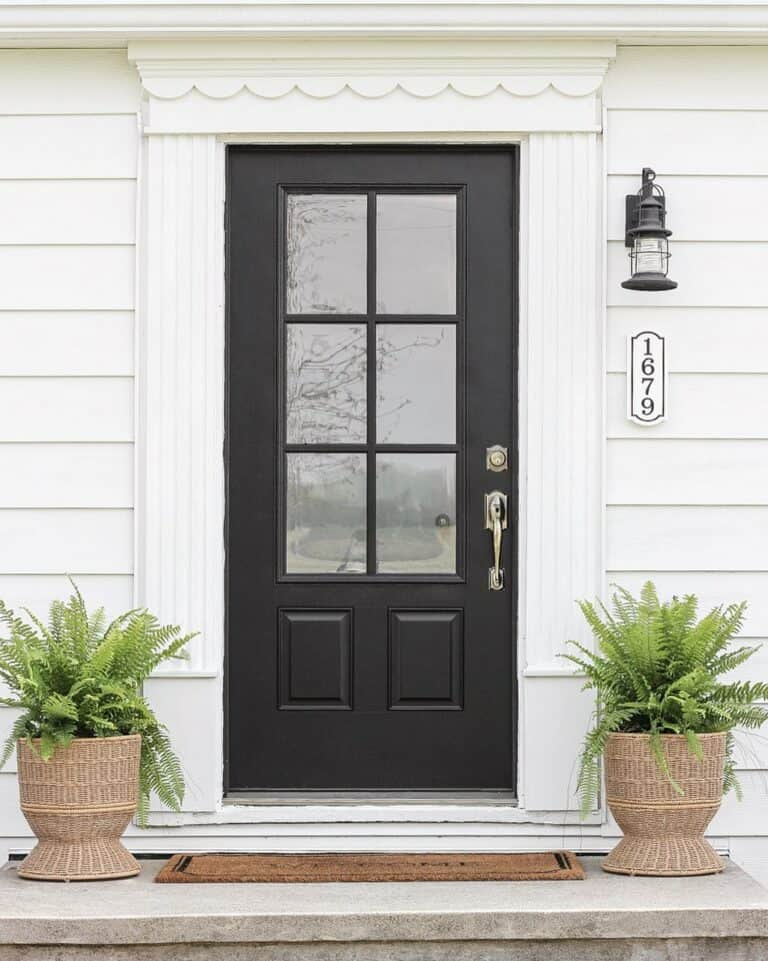
Can scalloped trim make a front door feel more inviting without losing its farmhouse roots? Yes, and this entry proves it. The black door with glass panes sits inside a white scalloped frame that softens the dark color. Two potted ferns and a lantern light on each side create symmetry, while the stone path and wicker accents keep the look natural. Natural daylight and the warm glow of the lanterns balance the high-contrast palette of black and white. The scalloped detail reads as intentional because the rest of the trim stays clean and simple. If you want a similar look, match the scalloped profile to the house’s existing trim style so it doesn’t feel like an add-on.
Traditional Entryway with Detailed White Door Trim
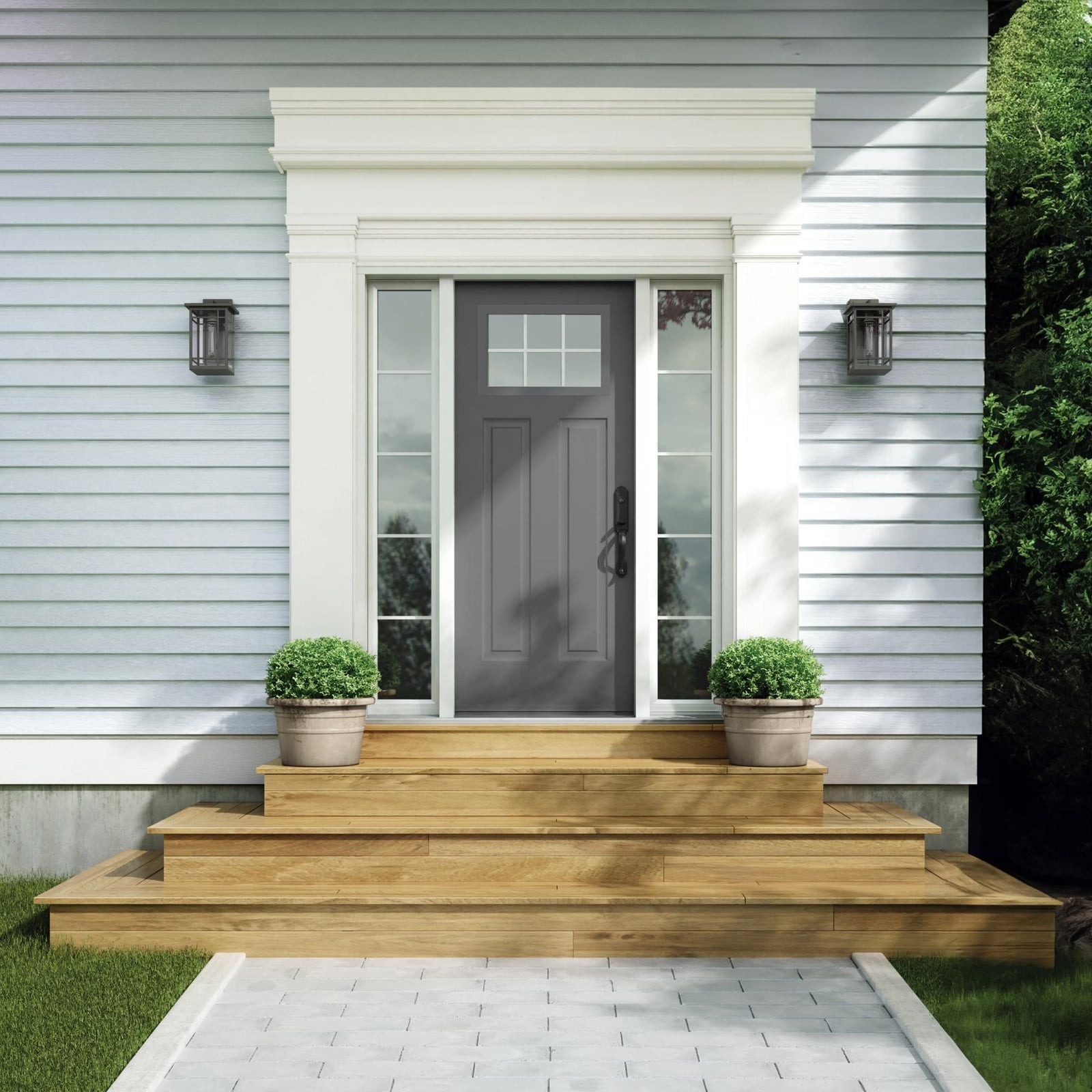
Detailed white trim around a gray front door gives this traditional entryway a formal edge without feeling stiff. The door has glass panels, and sidelights on both sides let daylight filter inside. Wooden steps, metal sconces, and potted plants soften the stone facade. The white trim frames the gray door and ties the sidelights into one cohesive look. Lighting matters: the sconces cast a warm glow at night, while daytime light comes through the glass, shifting the way the trim reads against the stone. This setup works best when the trim stays crisp white and the door color provides the contrast.
Farmhouse Interior Door with Clean White Trim
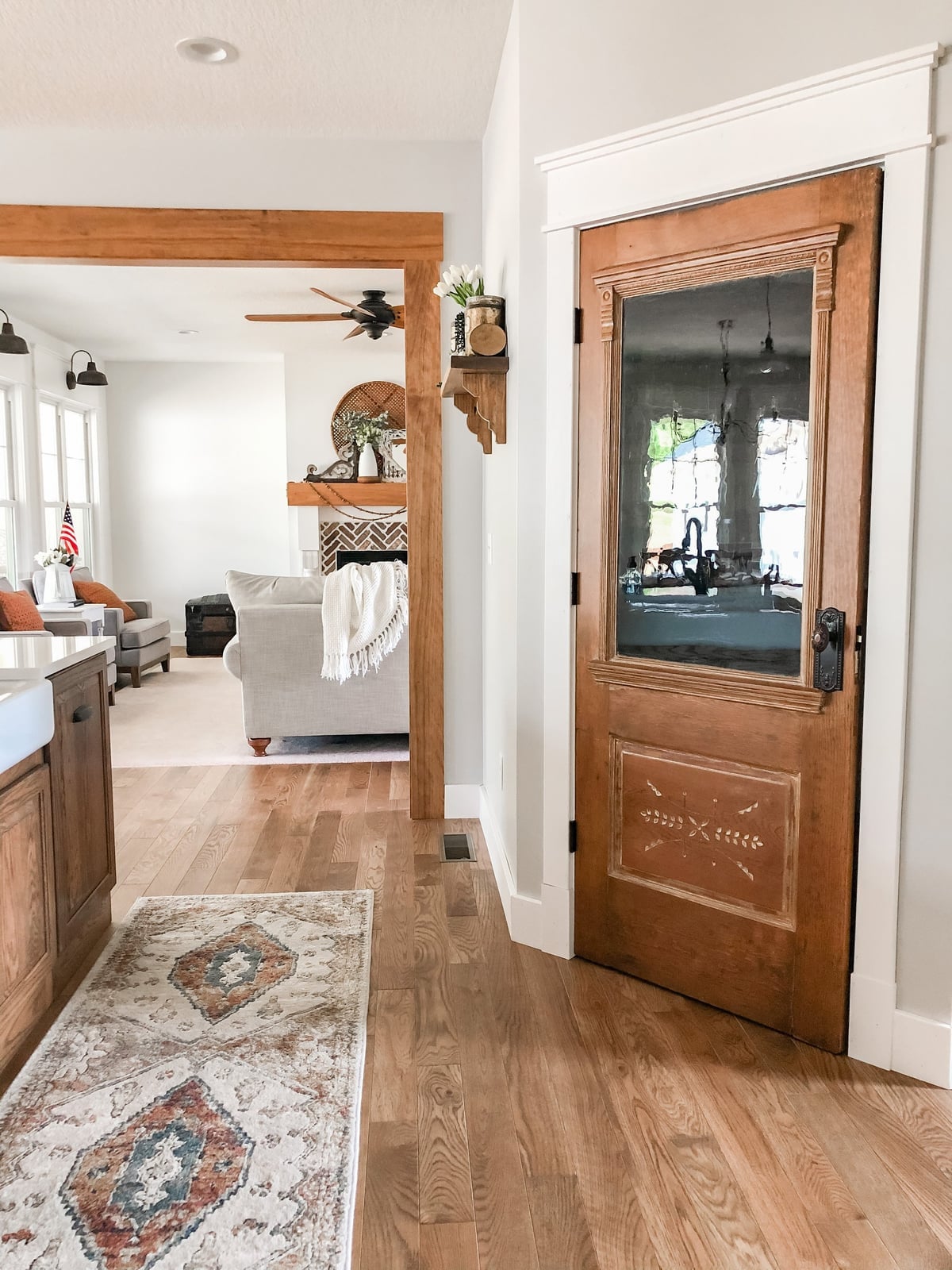
For interior doors, clean white trim highlights the door itself. Here, a glass door with white trim sits between rooms, letting natural light pass through and making the open plan feel even more spacious. The wood tones in the door frame add warmth without competing with the white trim. The trim is simple, no scallops or extra detailing, so the decorative glass in the door becomes the centerpiece. This approach works well in hallways or transitions where you want the eye to move through rather than stop. The palette stays neutral, with wood and white as the only players.
Modern Organic Bedroom with Sage Green Door
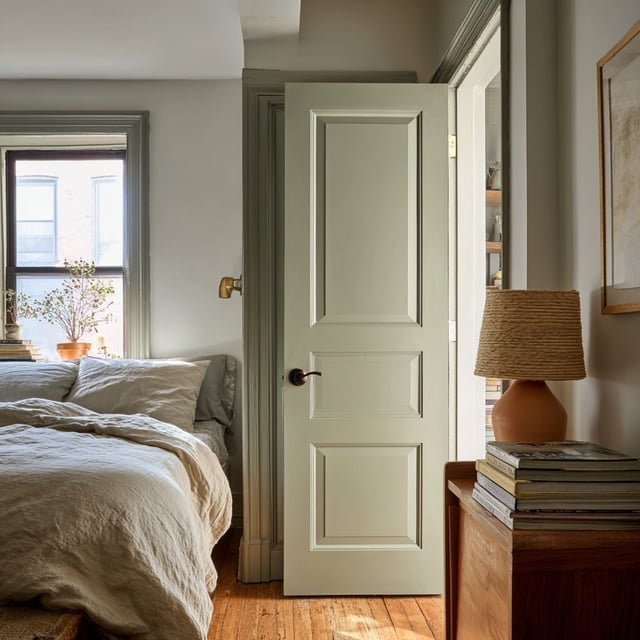
A sage green door blends with cream linens, wood furniture, and a woven lamp in a modern organic bedroom. The palette is earthy: soft greens, warm wood tones, and off-white textiles. The sage covers the door only, while the walls, bedding, and rug stay light. That one block of green anchors the room and keeps the eye moving around the corner vignette. Adding another saturated color nearby would break the scheme. A bright ceramic vase or a patterned rug would pull focus from the door’s quiet role. Stick to texture instead: a linen duvet, a ceramic lamp base, a chunky knit throw. The room feels cohesive because the door belongs to the same natural family as everything else.
Cottage Entryway with Red Dutch Door and Diamond Glass
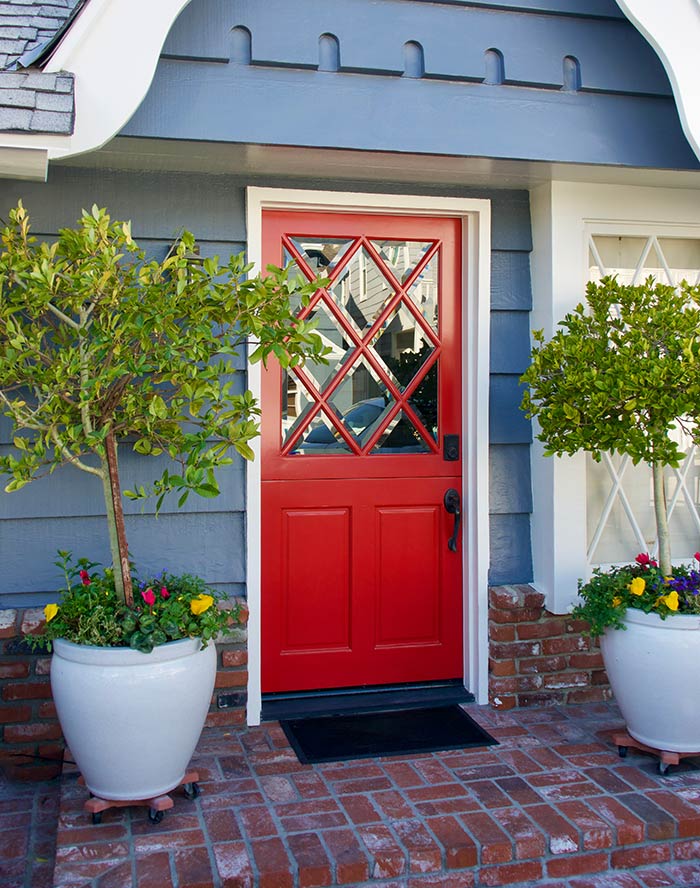
A red dutch door with a diamond glass pane gives an entryway instant personality without a full renovation. The upper glass section lets in daylight while the solid lower half keeps privacy intact. For renters, the swap is straightforward: paint the existing door a warm red and swap the knob for a black or brass option. The brick path and stone accents outside already lean cottage, so the color reads as part of the original structure. Keep the trim white to frame the red without clashing.
Traditional Porch with Dark Green Six-Panel Door and White Trim
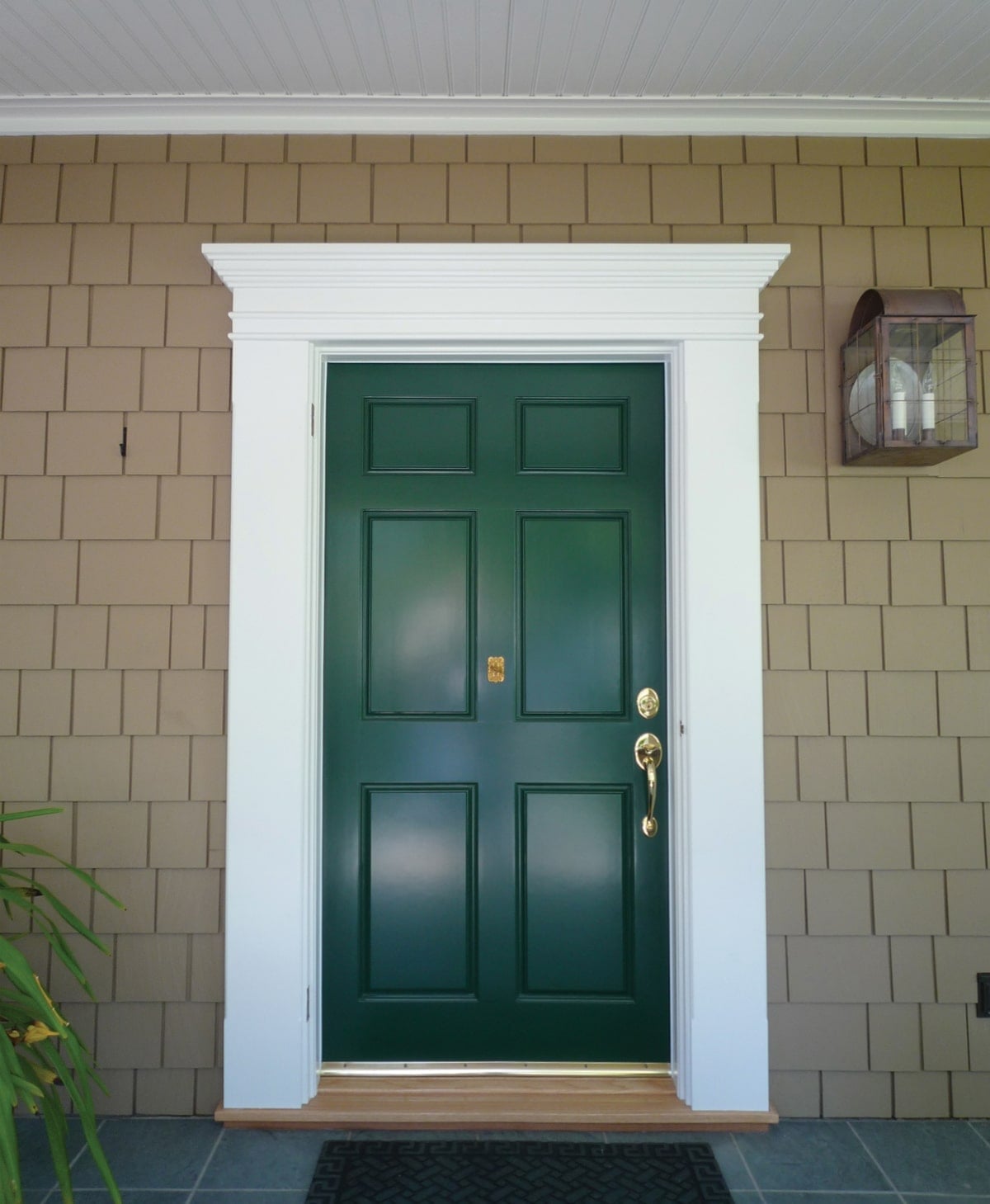
A dark green six-panel door with white trim is a classic combination because the contrast is clean. The green is bold against the white, but the six-panel detailing adds depth so the color does not look flat. On a front porch with composite shingles and a metal lantern, the palette stays grounded: green, beige, and white. The lantern light at dusk softens the green into a deeper, almost black tone. The balance between the door’s saturated hue and the trim’s crisp line defines this look. If the trim were any darker, the door would lose its edge. Stick to white or a very light neutral for the surround.
Craftsman Doorway with Wide Top Trim
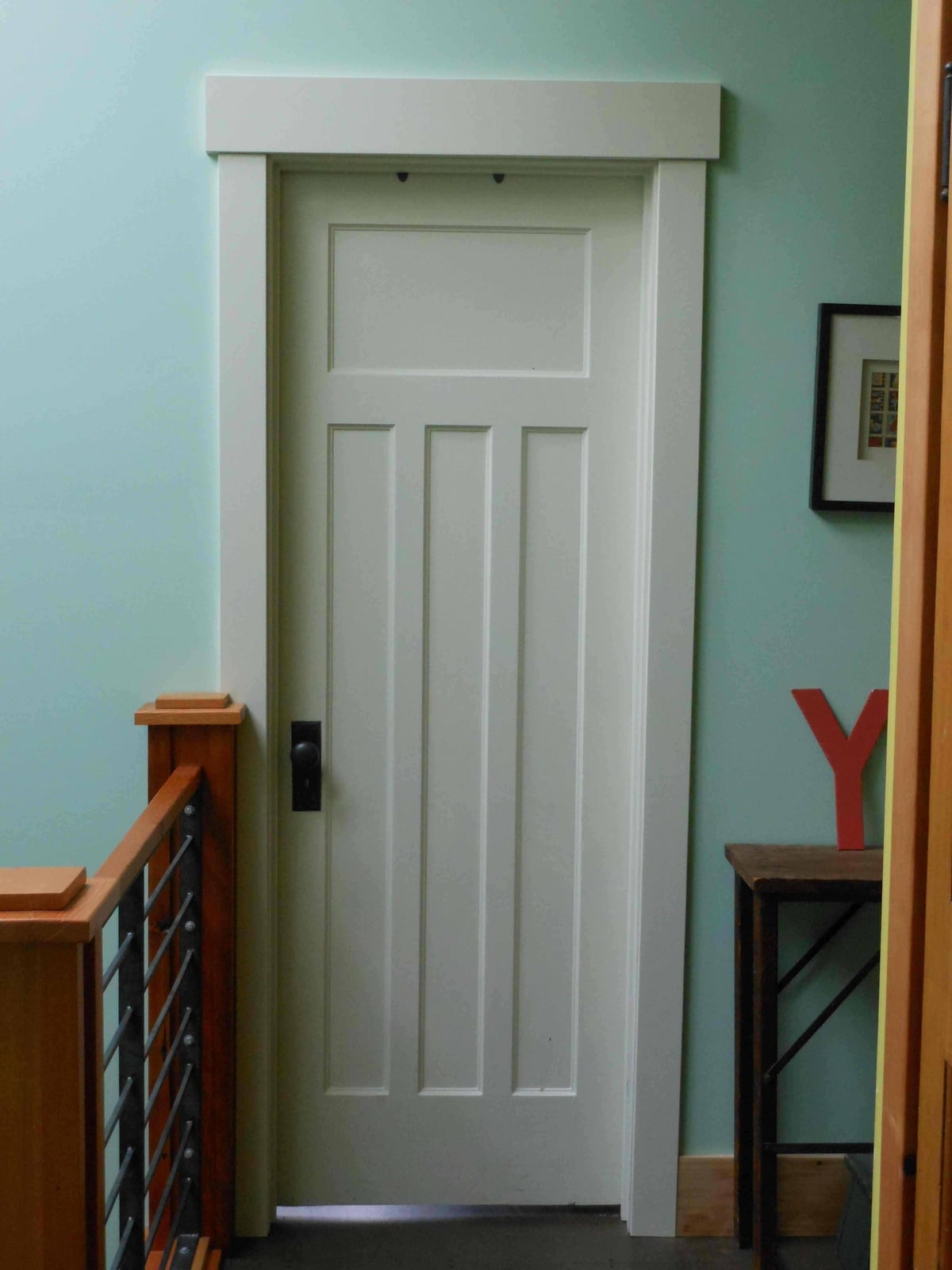
Wondering how to make a standard interior doorway feel more substantial? The answer is in the trim width. A craftsman doorway with a wide top piece draws the eye upward and gives the opening more presence. In this interior doorway at the top of stairs, the white paneled door sits within a wood trim that is noticeably thicker at the top than on the sides. That single proportion change shifts the whole feel from builder-basic to considered. The blue wall behind the door adds a layer of contrast, but the trim stays neutral to keep the focus on the shape. The ratio of top trim to side trim is key. The wider top acts like a brow, framing the door below. Ask your carpenter for a head casing that is at least one and a half times the width of the side casings. The result is a doorway that looks architectural and built in.
Modern Entryway with Wood Grain Door and Black Trim
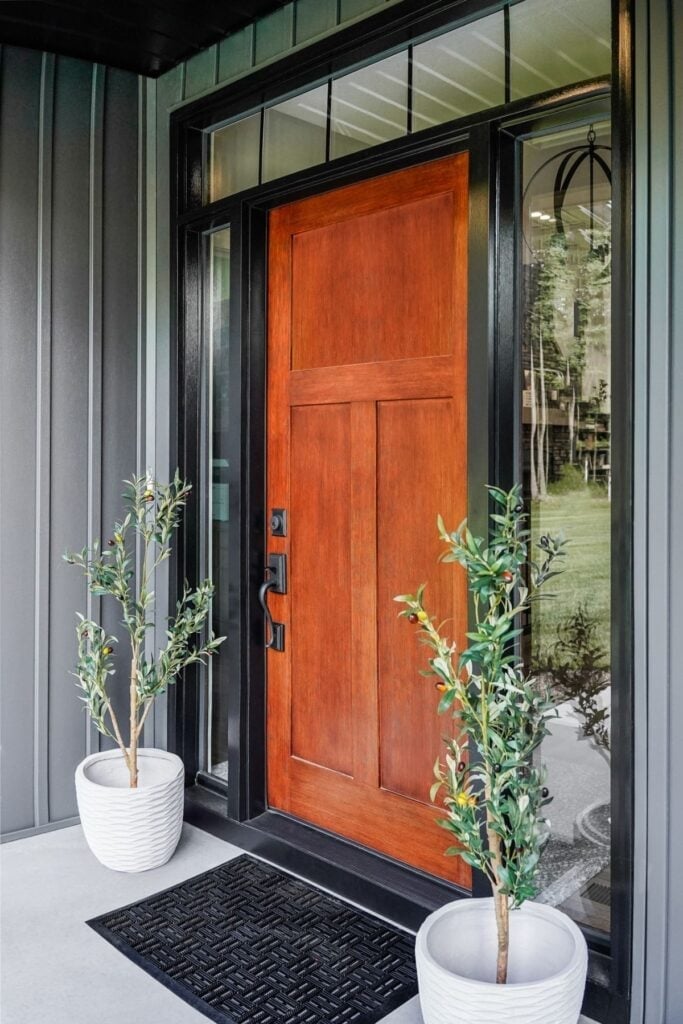
A wood grain door with black trim creates a modern entryway that relies on material contrast. The rich wood grain of the door is the star, and the black trim frames it without competing. Flanked by windows on an overcast day, the door appears warm against the gray light and the black surround. The potted plants on either side soften the geometry. The look relies on an absence of ornament. No panels, no glass inserts, no decorative hardware needed. The wood grain provides all the texture. For a cohesive entry, keep the door’s finish matte and the trim flat black. Gloss on either surface would reflect light in a way that distracts from the grain.
Traditional Entryway with Clear White Trim Around Glass Door
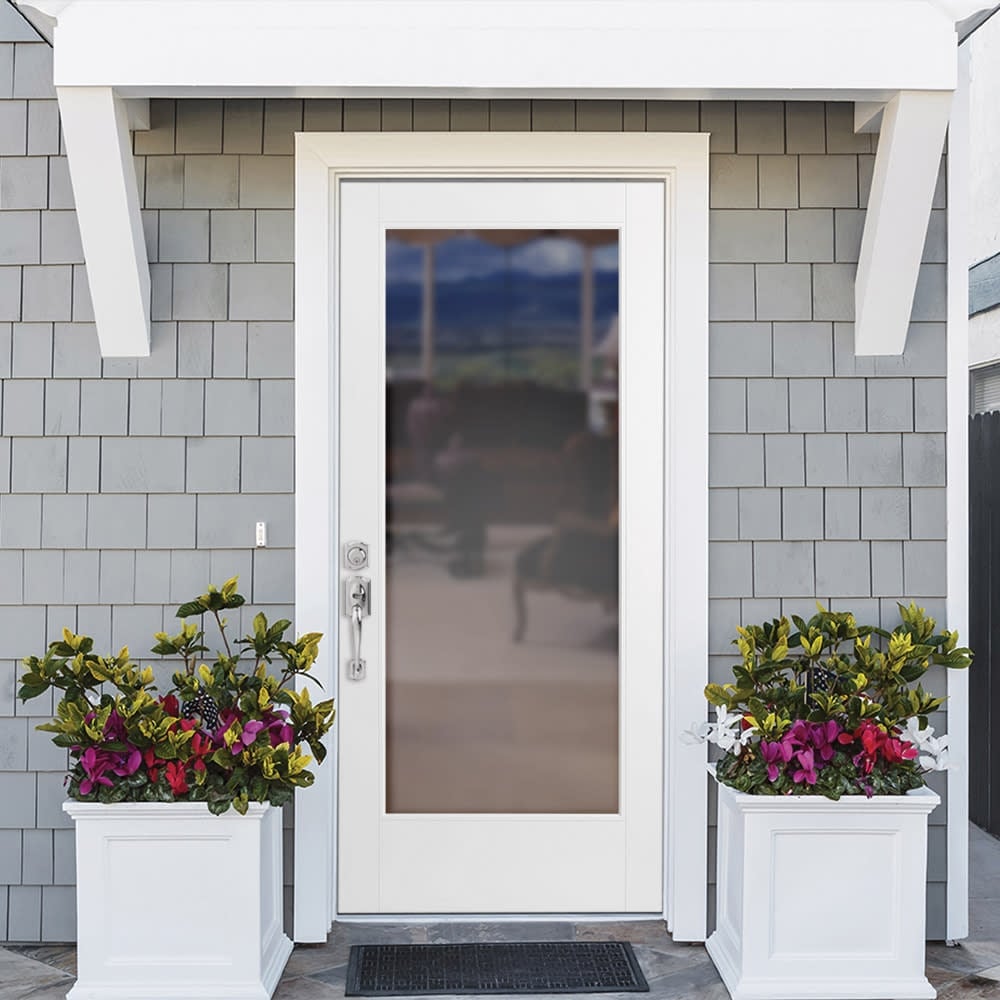
A glass-paneled door relies on its frame to define the entry, and clean white trim does that without competing with the view. The painted wood casing here stays simple and narrow, letting the glass, the stone ground, and the muted landscape outside carry the character. Flanking planters soften the hard edges of the door and trim, anchoring the whole composition to the ground. When the door itself has clear glass, the trim should recede, not shout. A bright white finish against gray stone and muted greenery keeps the entry crisp without feeling cold. The result is a traditional front that feels open rather than fussy.
Farmhouse Porch with Sage Green Door and White Trim
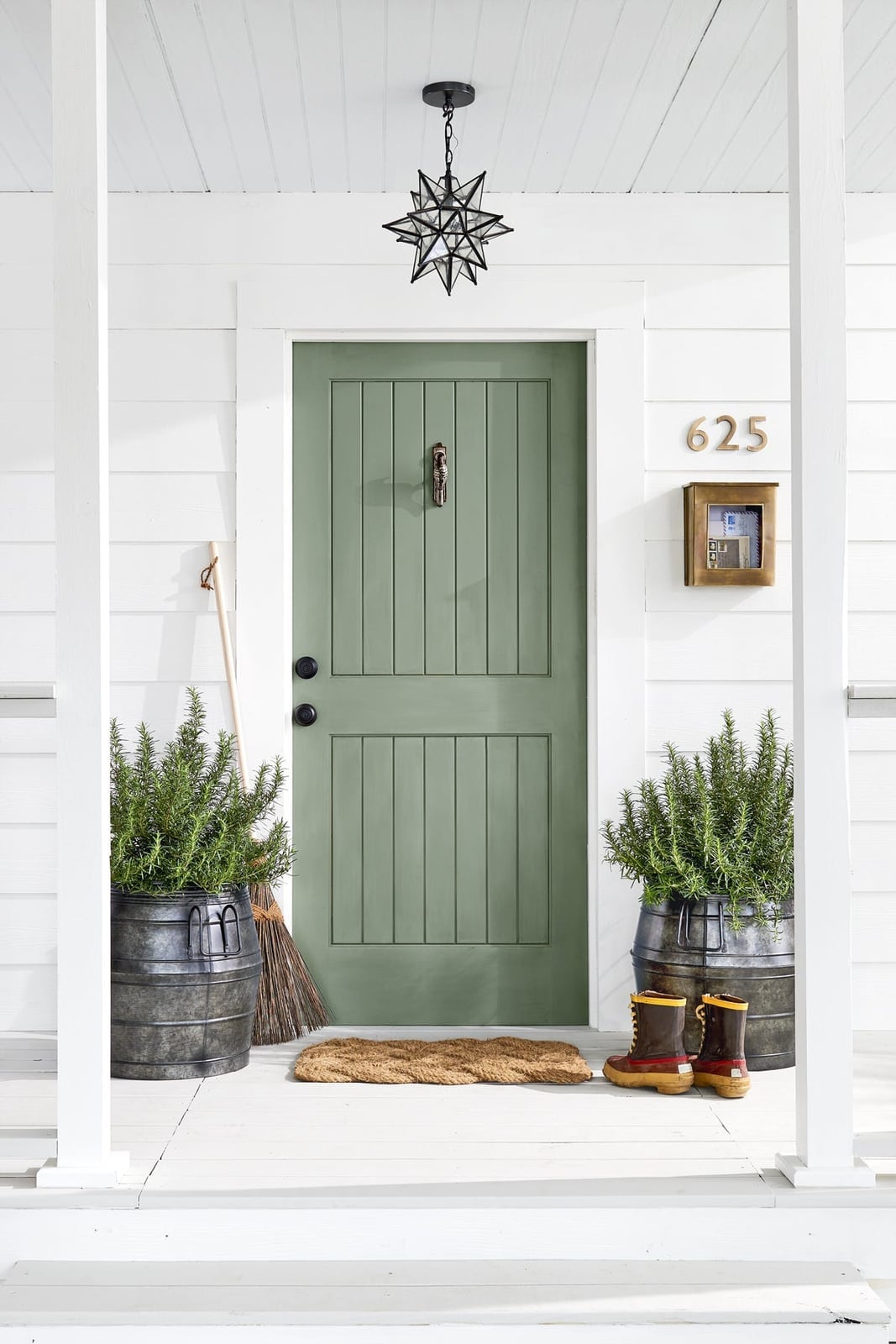
Sage green reads as neutral but adds more life than plain white or gray, which makes it a natural fit for a farmhouse porch that already leans on wood tones and natural light. The paneled door here sits centered on a roomy porch, flanked by potted plants and a pair of sconces, with a simple mail box and doormat below. The white trim around the door keeps the green from feeling heavy and ties the door to the porch ceiling and siding.
The palette works because the ratio favors the muted green and warm browns of the wood floor and broom, with white acting as the separator rather than the star. A dark doormat and black sconces add just enough contrast to keep the look from going flat. What breaks the scheme is too many competing pastels or a bright white door that washes out the green entirely.
Modern Entryway with Blue Door, Sidelights, and Transom
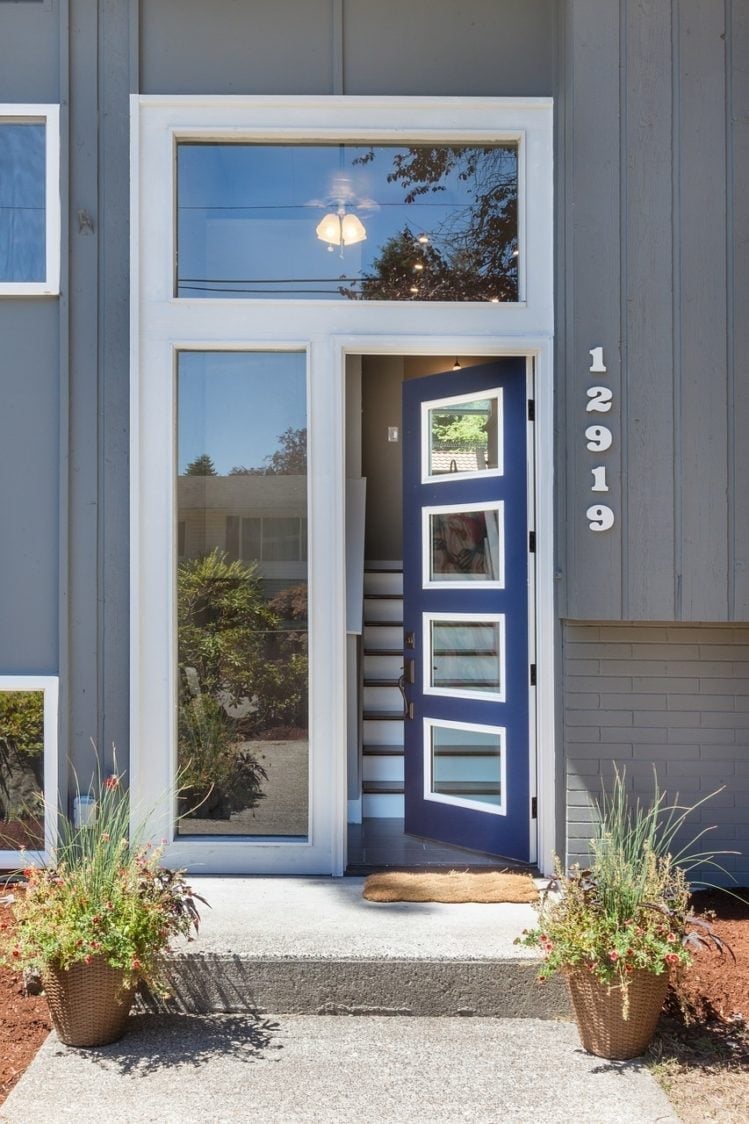
A blue door with multiple glass panes, flanked by sidelights and topped by a transom window, turns a simple entry into a statement of symmetry and light. The white frame and brick surround keep the color from overwhelming, while the glass panels and transom let daylight flood the interior. The layout itself creates the impact: the door is the center of a deliberate composition of glass and painted wood, with potted plants adding softness at the base. For a modern entry, the geometry of the door and its surrounding windows matters as much as the color.
Cottage Porch with Peach Door and Lantern Sconces
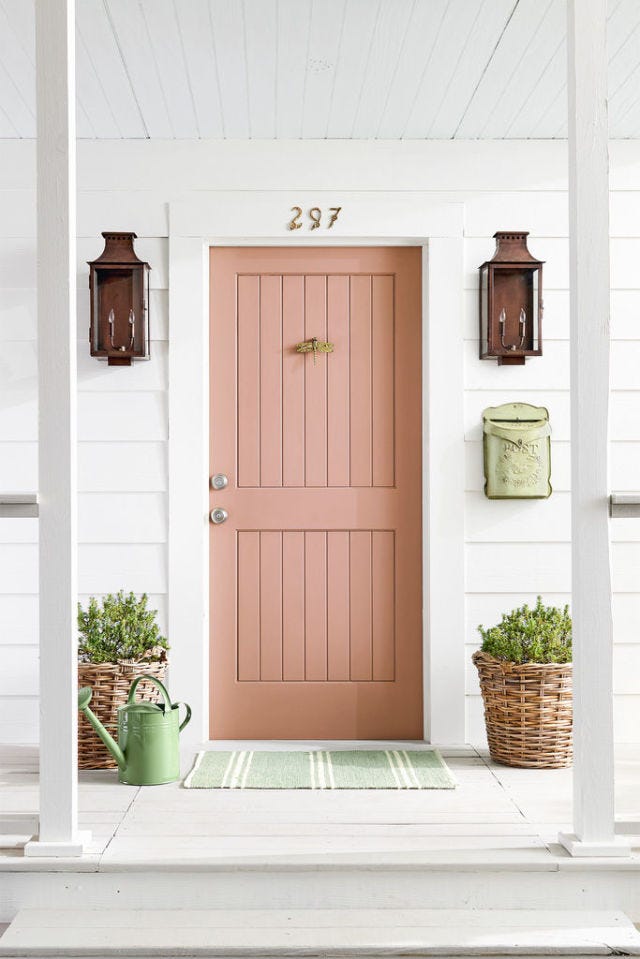
Peach is an unexpected front door color, but on a cottage porch it reads as warm and welcoming rather than precious. The paneled door here is centered on the porch, flanked by lantern sconces that echo the traditional cottage feel. Wicker baskets and natural textures keep the peach grounded, while the white trim and porch ceiling prevent the color from feeling too sweet. The lantern sconces do double duty: they frame the door during the day and cast a soft glow at night that plays well with the peachy hue. For a cottage, the trick is letting the door color lead and keeping everything else simple.
Modern Farmhouse Kitchen with Crisp White Door Trim
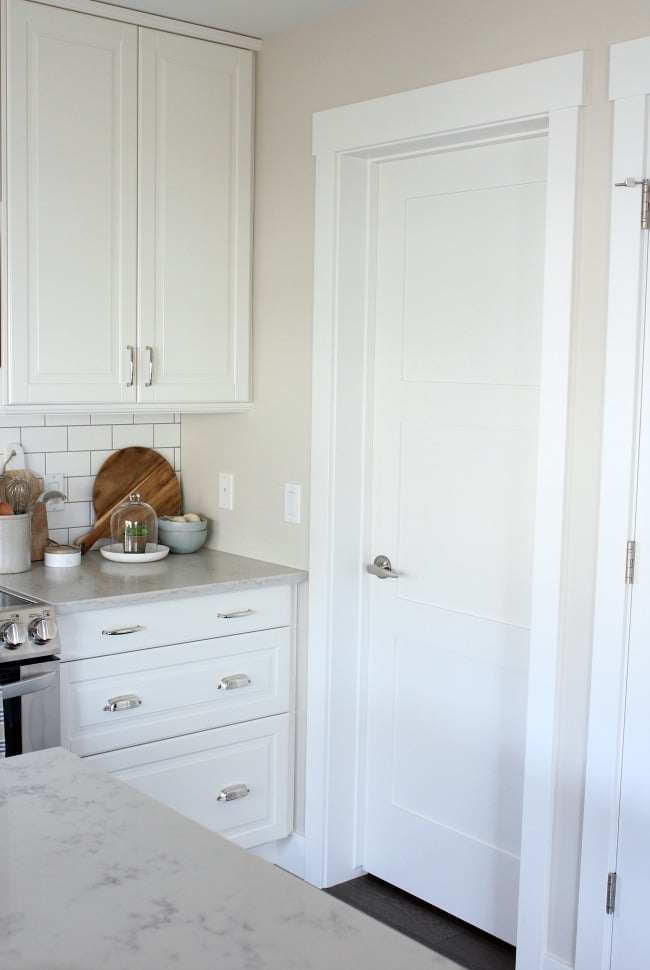
A kitchen with shaker cabinets, subway tile, and marble surfaces needs a door trim that holds its own without stealing focus. Crisp white trim does exactly that, acting as the visual anchor that separates the door from the surrounding cabinetry. The clean profile of the trim matches the simple paneled door, and the white finish ties into the lighter tones of the kitchen palette. In a roomy corner layout with overhead lighting, the trim helps define the kitchen’s geometry without adding visual clutter.
The scale works because the trim is substantial enough to stand out against the tall shaker cabinets but not so wide that it competes with the countertops or backsplash. For a modern farmhouse kitchen, the trim should echo the clean lines of the cabinetry and let the materials, not the moldings, do the talking.
Transitional Hallway with Ornate Double Door Trim
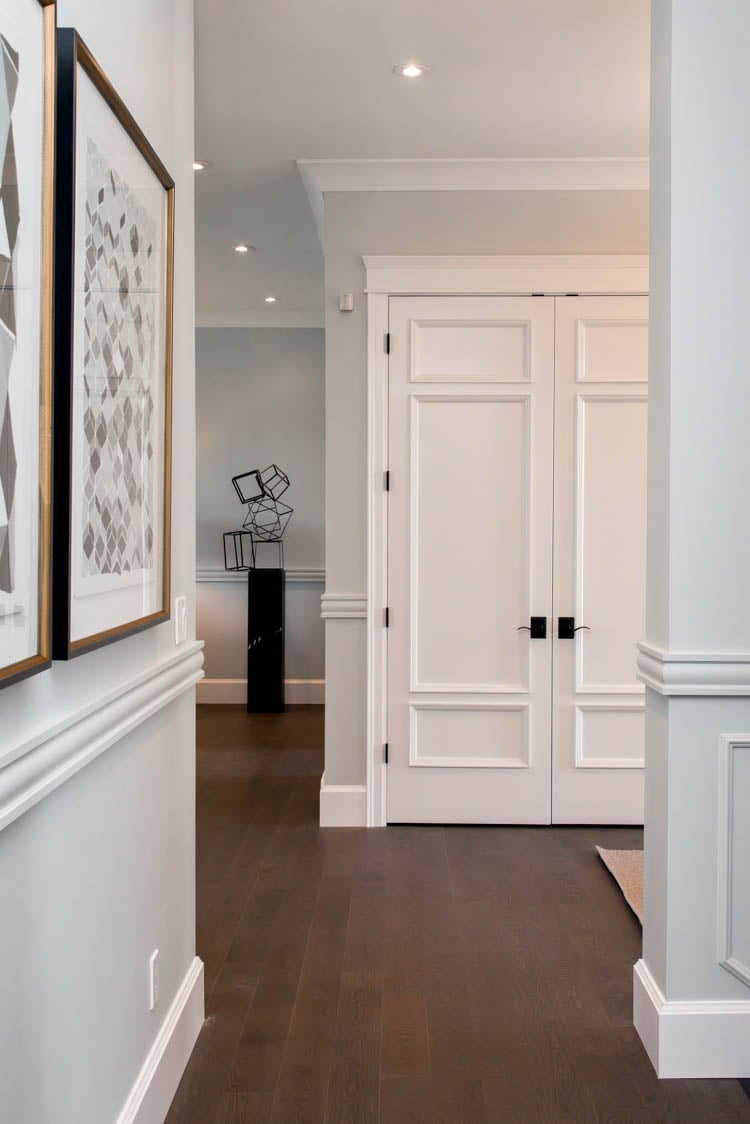
A pair of white double doors with paneled trim anchors the end of a gray hallway, their ornate detail drawing the eye past dark wood flooring and recessed lighting. The transitional style balances traditional molding with clean lines, so the trim appears as architecture. White, gray, and dark wood keep the carved elements from competing with the hallway. What defines the look is the ratio: the trim is substantial enough to hold its own against the double doors but not so heavy that it shrinks the passage. A single break in the symmetry, like a runner or wall art, would shift the focus from the doors.
Transitional Hallway with Decorative Trim and Macrame Art
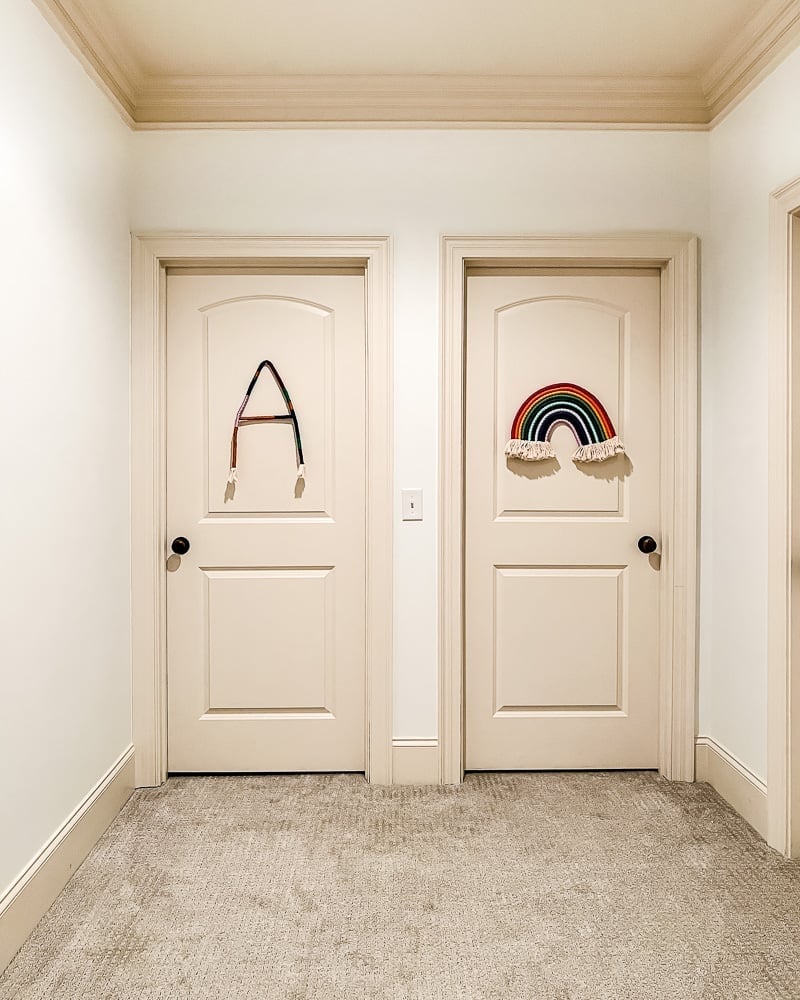
A practical rule for renters: decorative trim can read as permanent even when it is not. In this cream hallway, two paneled doors sit side by side with trim that frames each opening, while macrame hangings on the wall add the texture that painted wood alone does not supply. The transitional style carries the look by mixing crisp molding with soft fiber art, so the space feels finished without requiring a full millwork budget. What defines the palette is the neutral ratio of cream, beige, and gray, and what breaks it is the organic fringe of the macrame against the straight trim lines. Overhead lighting keeps the hallway evenly lit, which matters when the doors are closed and the only daylight comes from the rooms beyond.
Modern Farmhouse Entry with Light Blue Door and Decorative Trim
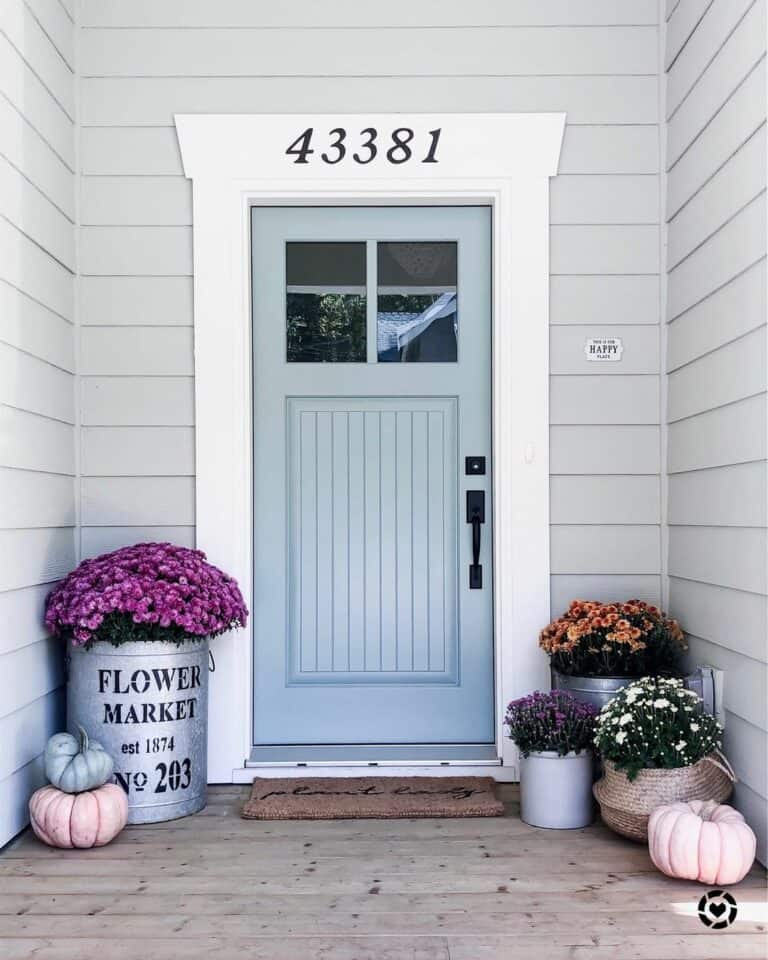
A light blue door reads softer than a navy or charcoal front door, which makes it a natural fit for a modern farmhouse porch that leans casual. The paneled door has a glass inset, and the decorative trim around it mirrors the same white seen in the surrounding porch elements, so the entry feels cohesive. The palette of light blue, gray, and white holds the farmhouse side, while the metal planters and pumpkin accents on the steps pull in the seasonal shift. What defines the modern edge is the trim itself: it is narrower and cleaner than traditional farmhouse casing, so the door does not get swallowed by its own frame. The porch light keeps the blue looking muted, not sugary.
Modern Farmhouse Hallway with Thick White Doorway Trim
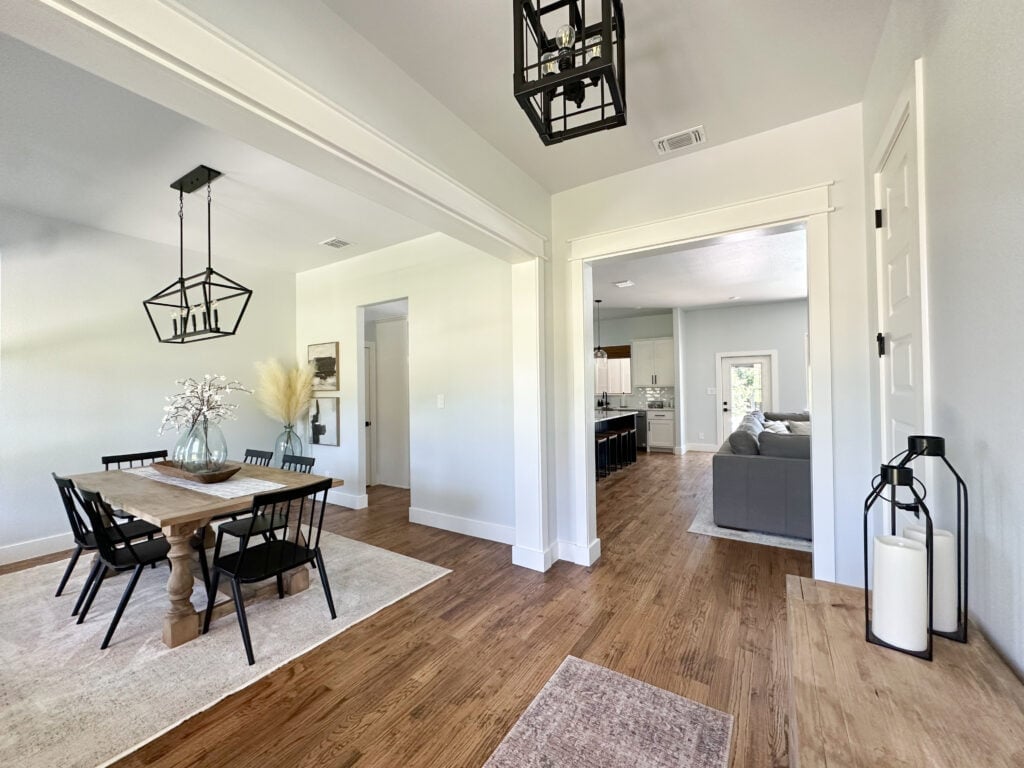
The thick white doorway trim here does the work that a separating wall would normally do. It frames the opening between a dining room and a hallway, with the dining table, chairs, and black pendant lights visible through the pass-through. The scale of the trim is the defining move: wide enough to signal a threshold but not so wide that it cuts the sight line. The palette stays in white, wood tones, black, and a touch of light blue from what is likely a wall beyond, which keeps the open plan feeling connected instead of chopped into zones. Light from the dining room windows and the pendants overhead both land on the trim, so the white stays bright no matter the time of day.
Farmhouse Porch with Bright Blue Door and White Trim
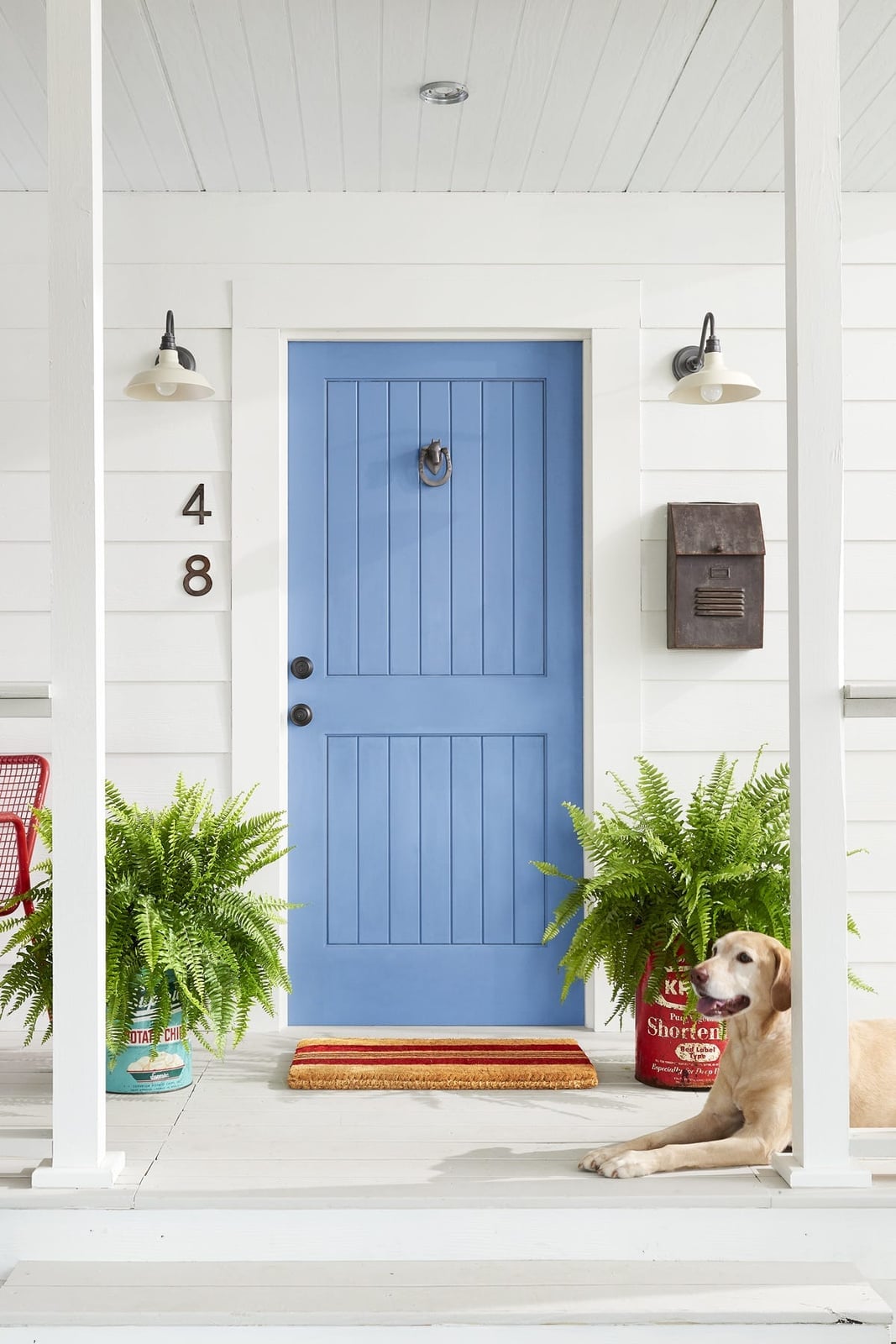
This bright blue door on a farmhouse porch is a one-line assessment of how much contrast a white trim can handle. The paneled door sits centered on the brick porch, flanked by potted ferns and a dog on the doormat, with a mailbox and sconces anchoring the sides. The white trim frames the blue without competing, because the ratio is clear: the trim is a clean border, not an ornament. The palette of blue, white, red in the brick, and green from the plants gives the porch a classic American palette that works in daylight and under the sconces at night. What breaks the straight farmhouse formula is the bright blue itself, which reads more playful than the usual navy or sage. The doormat and the ferns keep the scale grounded so the door does not float.
Modern Hallway with Black Door and Crisp White Trim
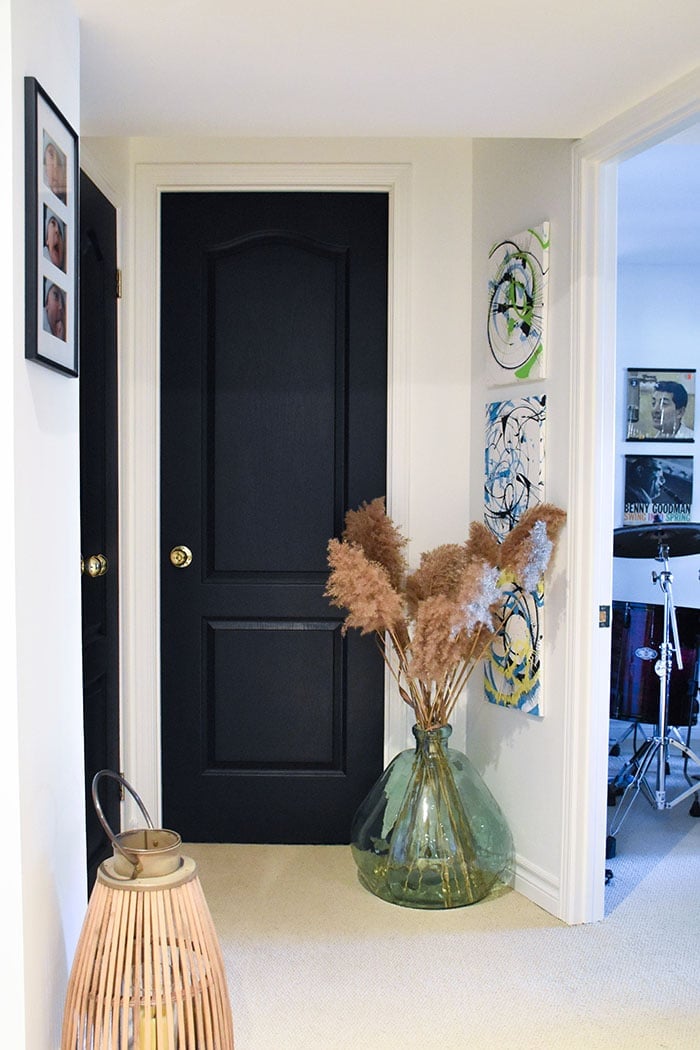
A black door creates a deliberate pause in a light hallway. The contrast is the point: crisp white trim frames the dark paneled door, keeping the opening from blending into the wall. A blue abstract painting and a vase with dried flowers add soft color without competing. A table lamp provides warm light, balancing the cool daylight. The palette stays simple, black, white, blue, green, so the door becomes the anchor. The ratio is one dark vertical against pale surroundings. A single piece of abstract art keeps the wall from feeling bare. The hallway leads to another room, so the door works as a transition, not a barrier.
Farmhouse Entryway with Soft Pink Door and Abundant Planters
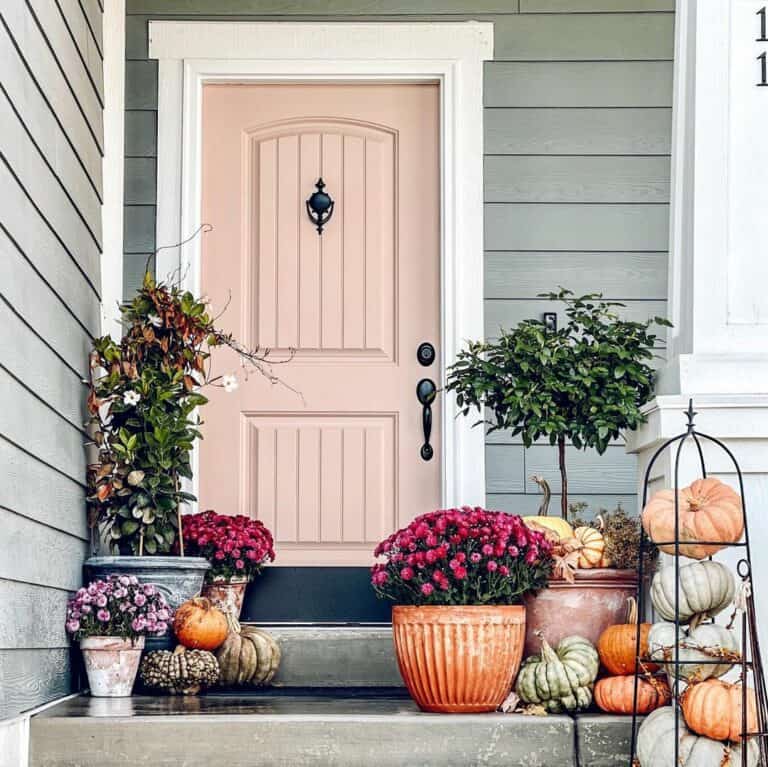
A soft pink paneled front door pairs with cream trim and stone steps for a farmhouse entry that feels welcoming. Potted plants and pumpkins on the porch add seasonal color, with green leaves and orange gourds against the pink. A metal rack holds more planters, creating layers of texture. The palette breaks from neutral expectations: pink, green, orange, and cream together. The door is the focal point, but the abundance of planters gives the entry a lived-in feel. For renters, swapping seasonal planters is a low-commitment way to refresh the look without painting the door.
Modern Farmhouse Hallway with Dark Blue Door and White Trim
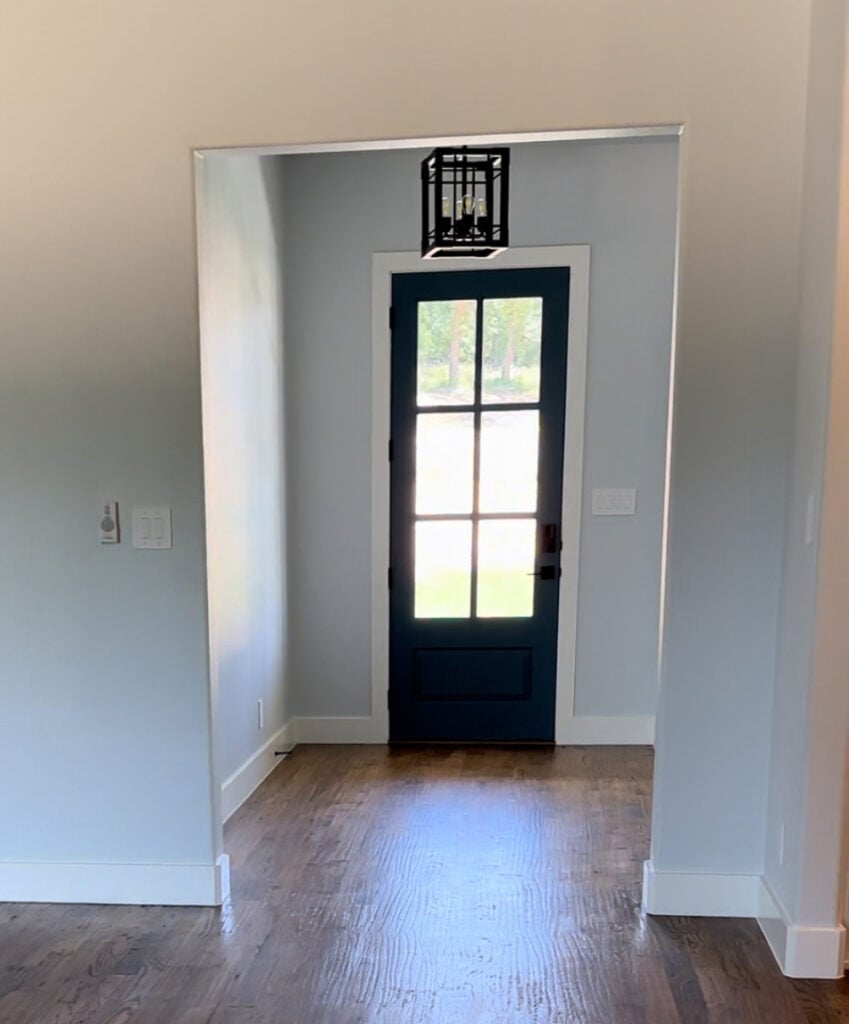
A practical rule for hallways: let the door at the end set the tone. Here, a dark blue door with white trim anchors a long view. The white casing frames the door clearly, while a lantern pendant light hangs overhead, casting light down the hallway. Hardwood floors in a warm tone add contrast to the cool gray walls and blue door. The materials work together, painted wood, drywall, hardwood, without competing. The palette stays restrained: gray, white, dark blue. The dark blue door pulls the eye forward, making the hallway feel like a destination rather than a passage. A single pendant light keeps the ceiling clean.
Farmhouse Interior with White French Doors and Brick Wall
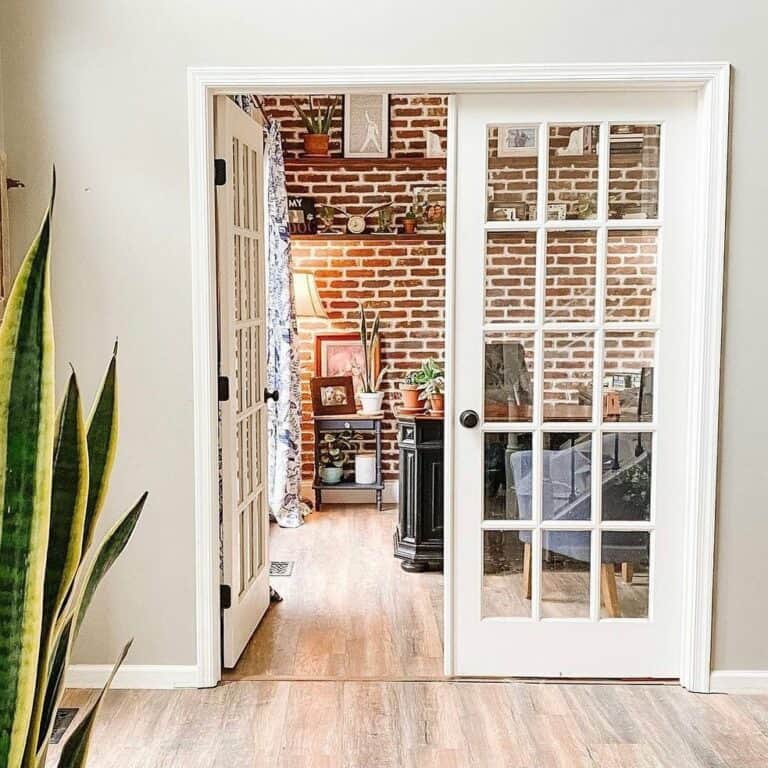
White french doors with glass panels can feel airy, but paired with a brick wall, they gain weight. The brick adds texture and a warm red tone, while the white trim keeps the doors from feeling heavy. Light passes through the glass, and an interior lamp adds warmth in the corner. The double doors open to a roomy interior, making the threshold feel generous. The contrast between smooth painted wood and rough brick is the defining move. A green plant near the wall softens the industrial edge. Keep the brick wall as the only rough surface, with simple floors and ceiling.
Transitional Interior with Pink Three-Panel Door and Dark Wood Trim
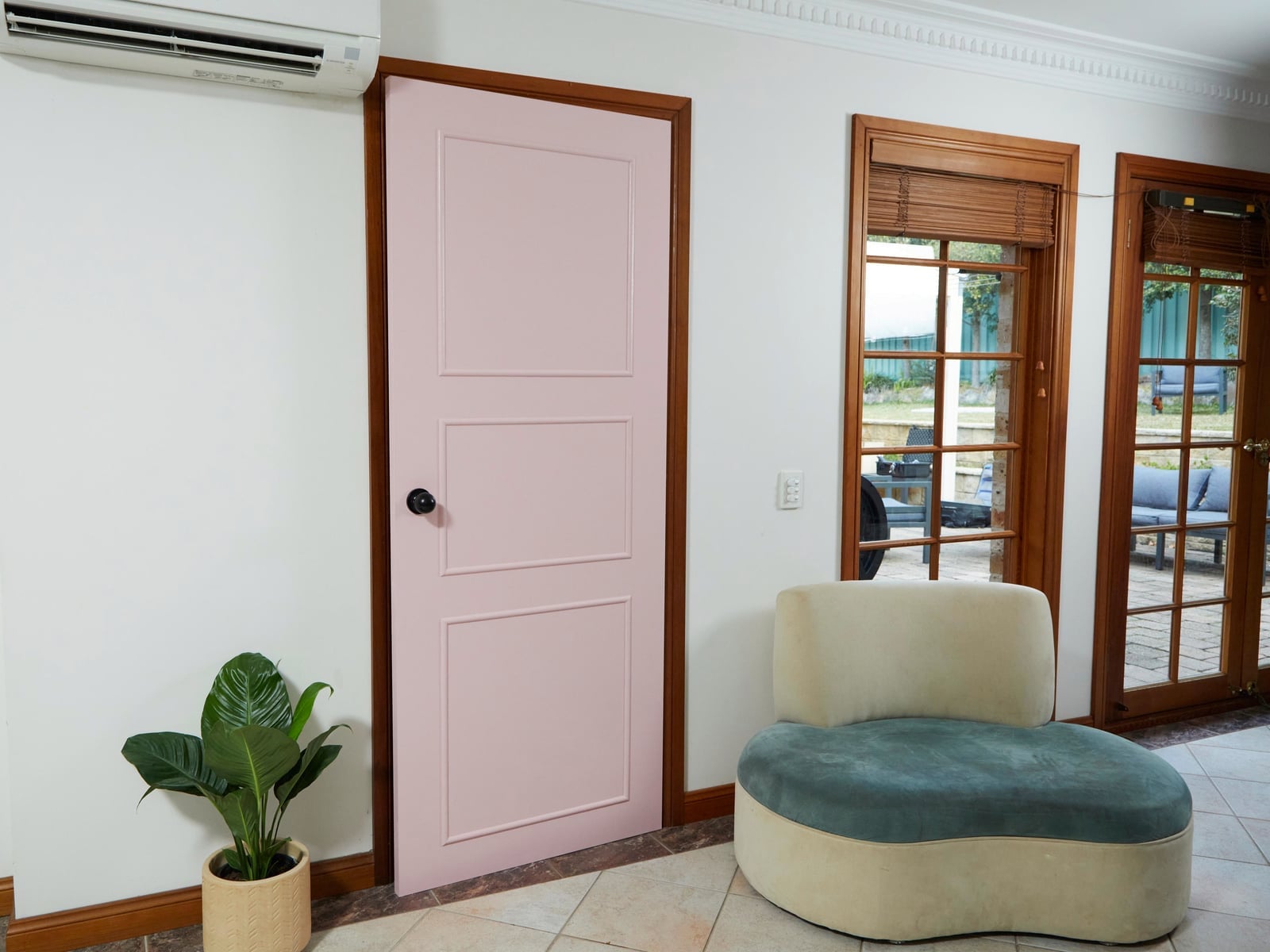
A pink three-panel door set against dark wood trim creates a precise tension: soft color meets strong framing. The wood tones ground the pink, keeping it from feeling too sweet. A teal accent in the room, perhaps a curved chair or a potted plant, echoes the palette without matching. The corner vignette places the door on the left wall, leaving room for a small side table or art. The dark trim reads as intentional because it repeats elsewhere in the room. For renters, painting the door is reversible; the wood trim stays as a permanent anchor.
Modern Farmhouse Garage Door with Dark Wood and White Trim
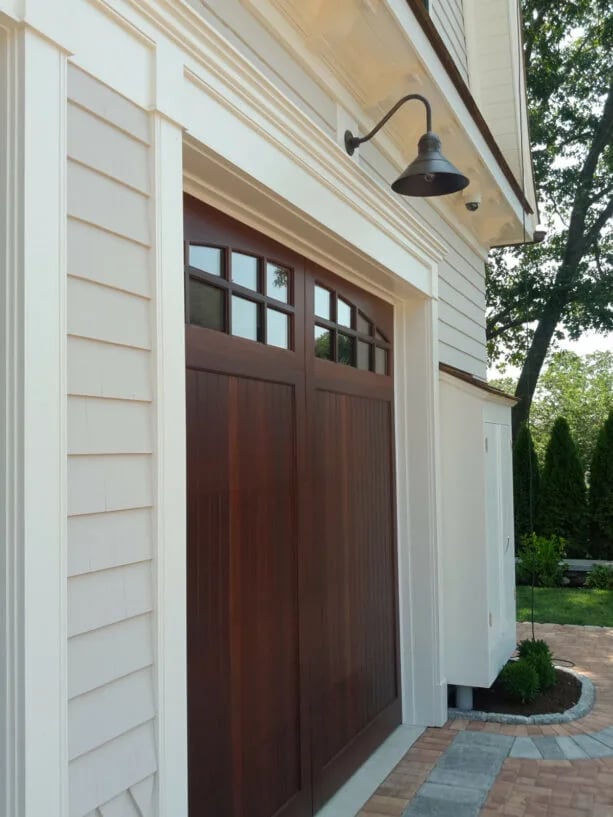
A dark wood garage door with visible grain makes the whole house feel more grounded, especially when the trim stays a clean white. The contrast is deliberate, and the shingle siding and stone foundation give the modern farmhouse style room to breathe. An overhead barn light keeps the entry practical after dark, while the glass panes in the door break up the solid wood and let a little daylight into the garage.
Traditional Burgundy Front Door with Decorative Glass and Brass
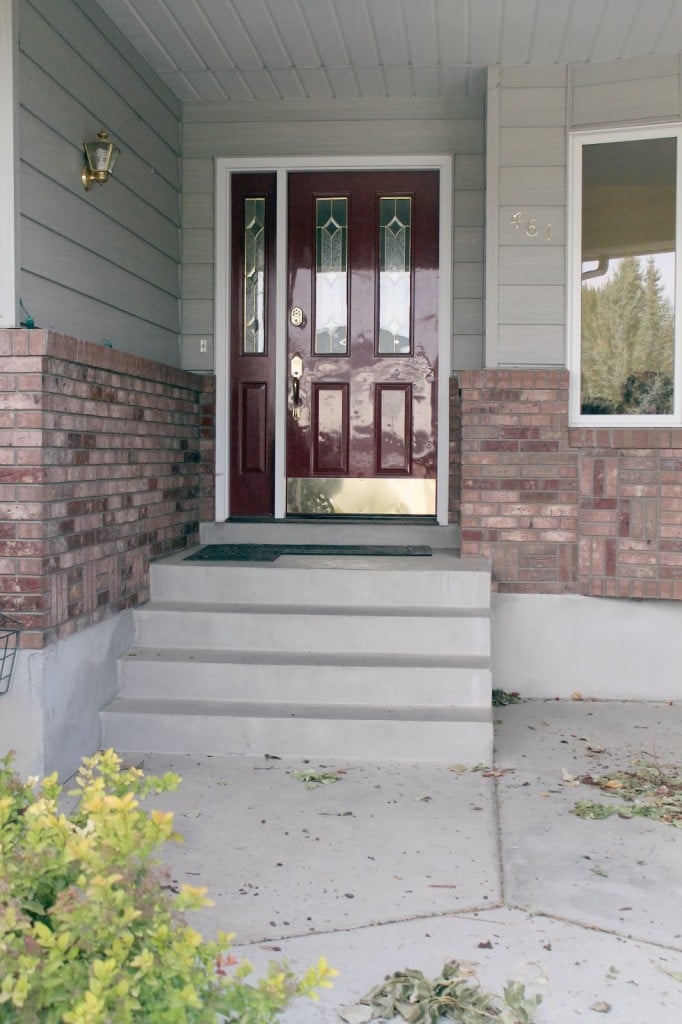
A burgundy front door with decorative glass panes and a brass kick plate feels like the traditional choice that already has everything figured out. The brick exterior and gray concrete steps keep the palette grounded, so the door color doesn’t float away. For anyone renting, the same effect comes from swapping the door itself for a temporary film on the glass that mimics the geometric pattern, then adding a brass-finish kick plate that screws on without permanent changes. The exterior light fixture keeps the entry visible after dark, and the brick tones tie the whole look together.
Modern Farmhouse Hallway with Dark Wood Door, Close-Up Take
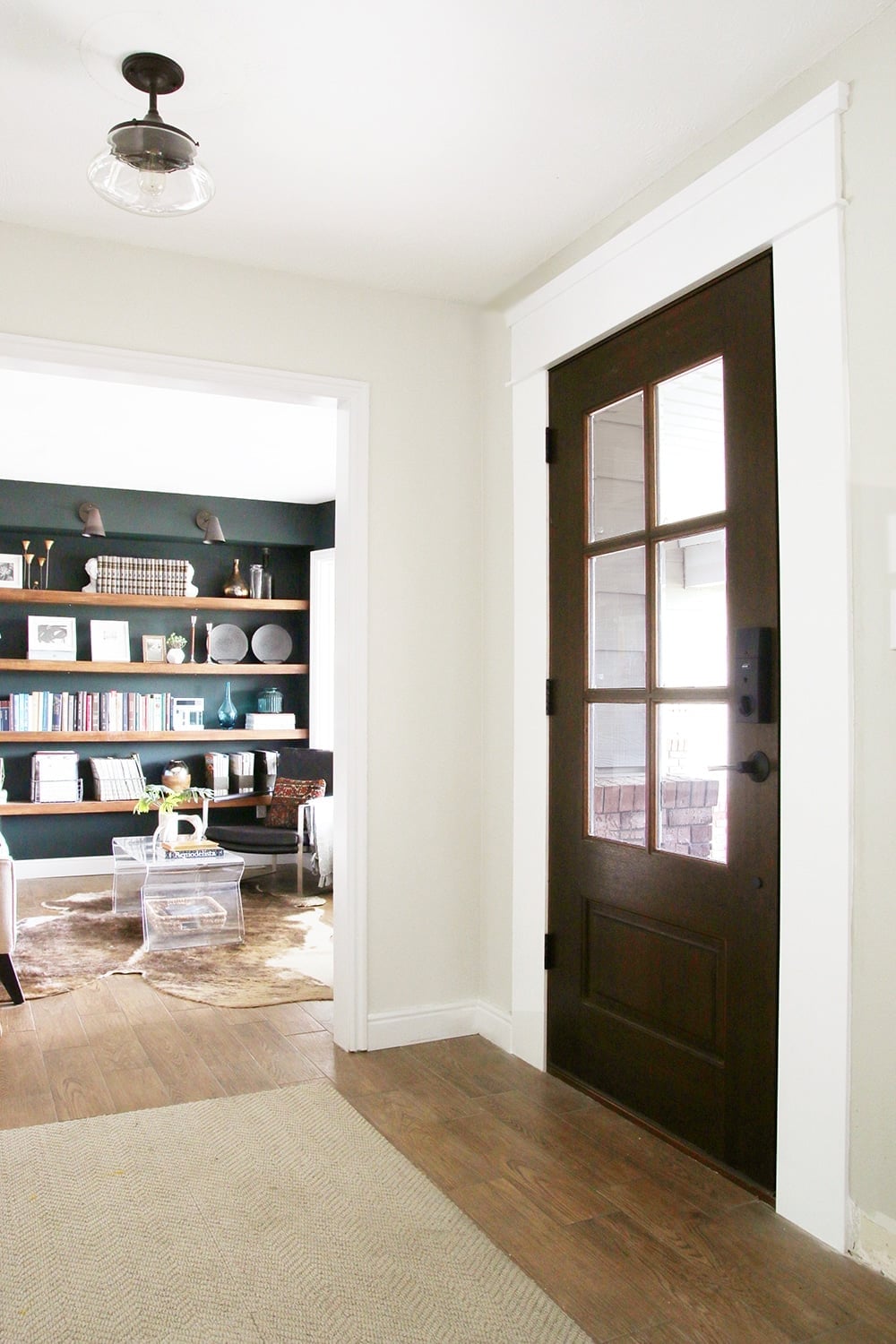
A dark wood door with glass panes and crisp white trim creates a palette that works for any hallway, especially one with a beige rug and tile floor. The dark brown reads as weight, the white trim reads as structure, and the glass lets natural light pass through without sacrificing privacy. Overhead light keeps the doorway visible, and the whole setup avoids the need for a bold wall color.
Final Thoughts
Door trim is a small detail with a big impact on how a space feels. Across these 28 ideas, the common thread is contrast: light against dark, smooth against textured, simple against ornate. Stained wood brings warmth to Craftsman and rustic settings, while crisp white trim keeps farmhouse and modern looks clean. Colored doors gain presence from neutral casings, and decorative profiles add visual weight without extra square footage. When you choose a trim, think about the room’s light, the wall color, and how much maintenance you want. Paint needs occasional touch-ups, but wood ages gracefully. For upkeep, dust trim with a soft cloth and check for gaps seasonally. The best door trim fits your home’s style and your own patience for upkeep.