If you dream of a garden that feels like a storybook escape, these 26 English cottage garden ideas will help you create that look at home. From climbing roses to winding stone paths, each idea focuses on the outdoor spaces that make a farmhouse-style garden feel lived-in and inviting.
You will find practical ways to layer flowers, add structure with arches and pergolas, and use simple materials like stone and wood to build charm. This is about shaping the whole garden as a room, not just planting a few blooms.
Create a Cozy Nook with a Wooden Bench and Lavender
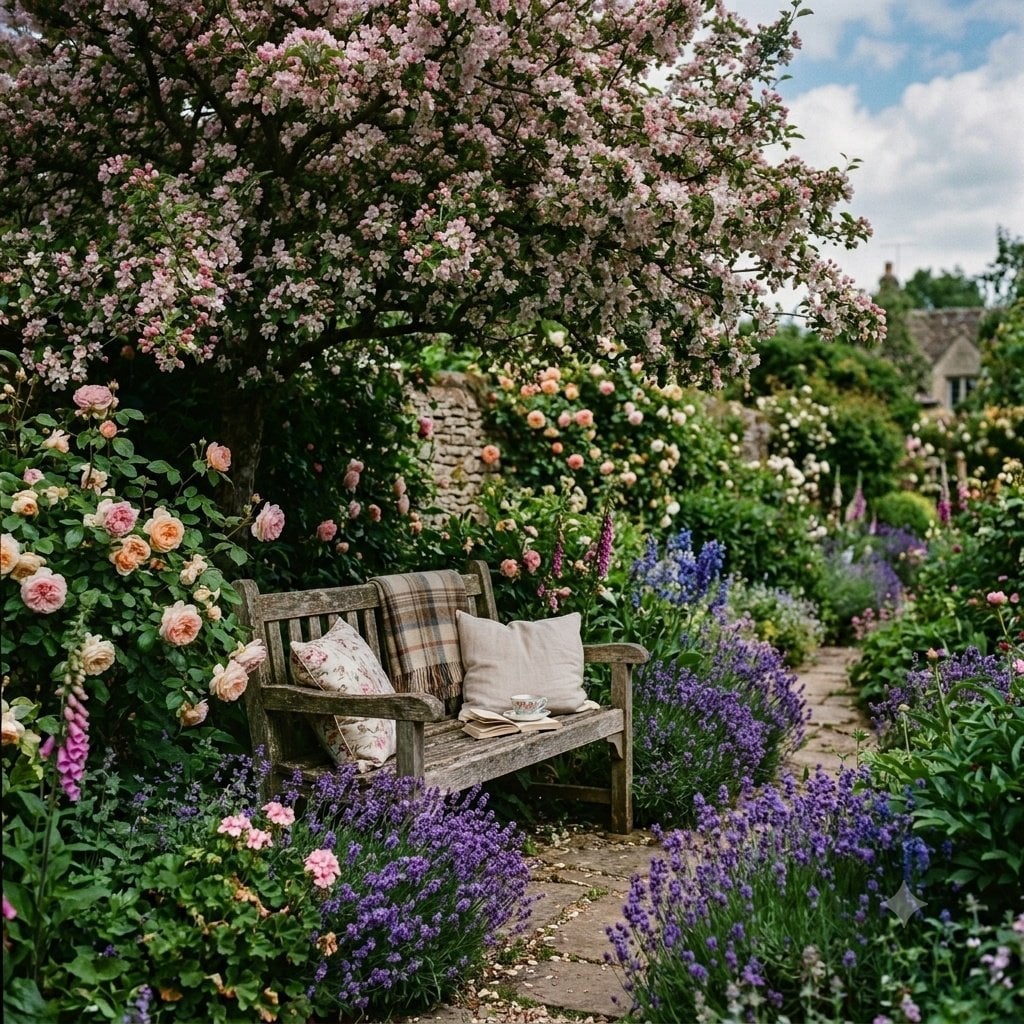
A wooden bench set among lavender and roses turns a corner of the garden into a spot you actually want to sit in. The path winds toward it, so the bench reads as a destination rather than an afterthought. Soft pink blooms and purple lavender repeat the same gentle palette, while a couple of pillows make the hard seat friendlier. The layout principle here is to place seating where the path naturally leads the eye, not against a wall or fence. That way the nook feels like a discovery, not a parking spot.
Frame Your Garden Path with a Rose Arch and Lavender Borders
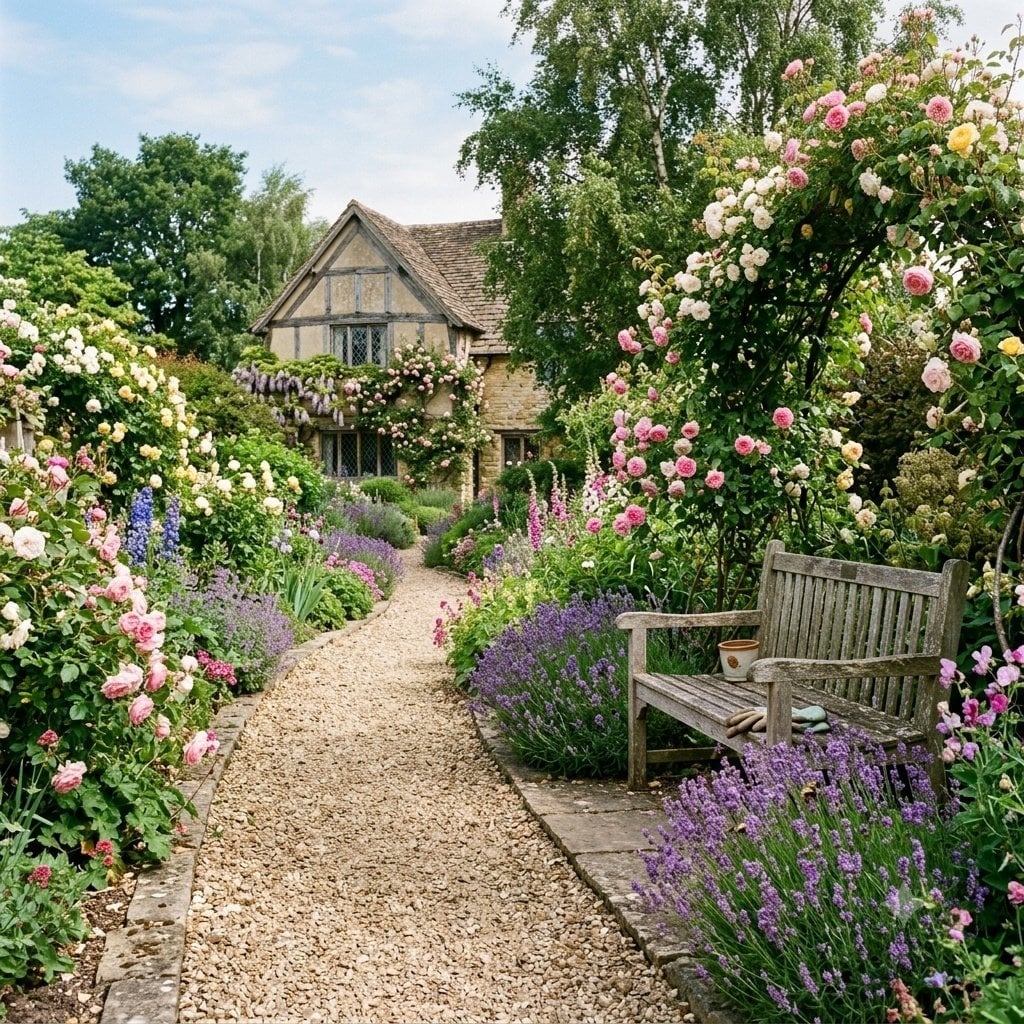
A gravel path lined with lavender and hedges leads straight to a wooden bench under a rose arch. The arch is the frame, the bench is the payoff. The palette keeps to pink, lavender, green, and beige, which is about as restrained as cottage gardens get. Repeating lavender on both sides of the path creates a ribbon of color that pulls you forward. The roses above add height without blocking the view. For a layout like this, keep the path width consistent so the arch feels like a gateway rather than an obstacle. Narrower paths make the arch feel taller by comparison.
Adorn Your Cottage with Climbing Roses on Stone Walls
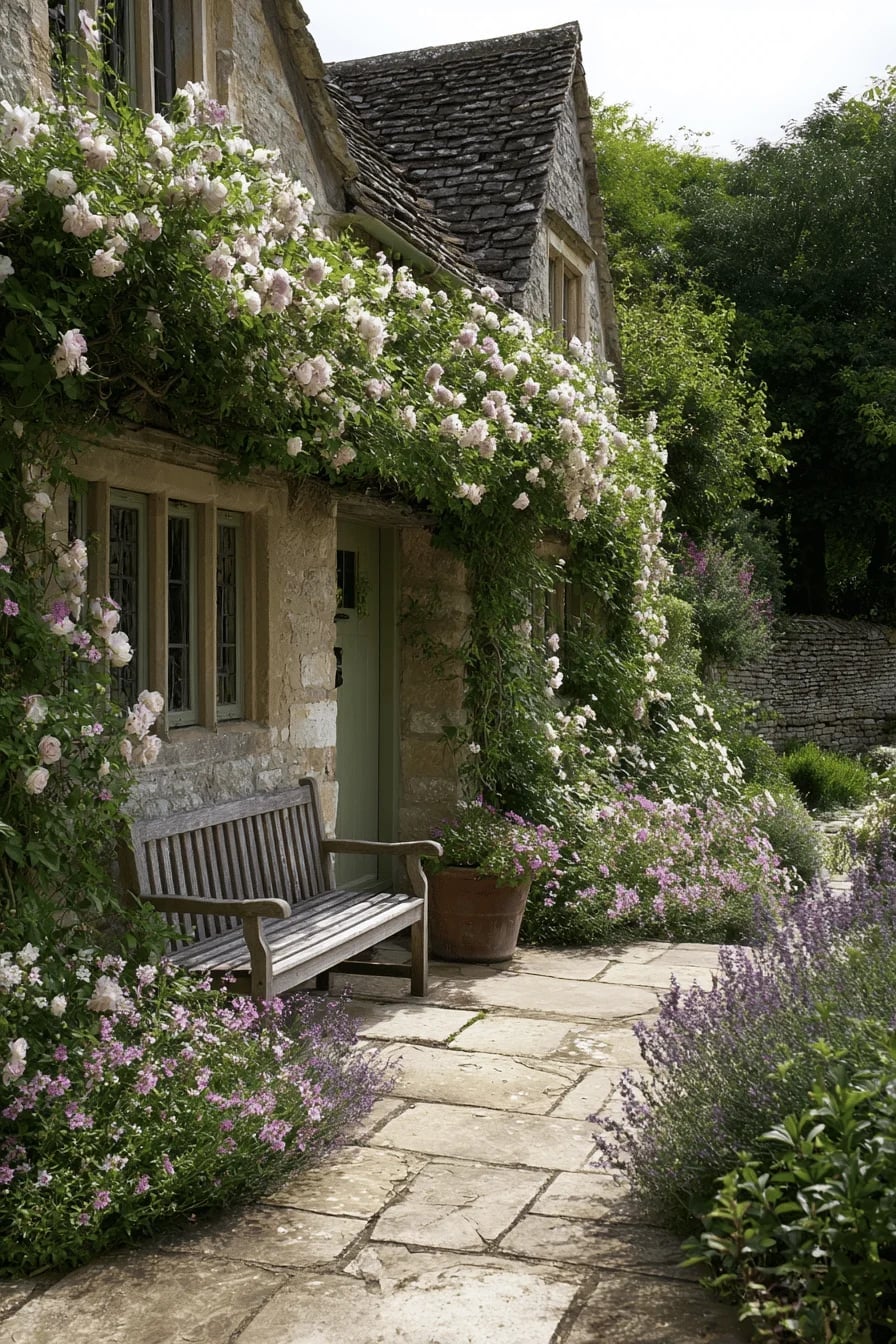
How do you make a stone cottage feel softer without losing its character? Let climbing roses do the work. The stone wall stays the main texture, but pink and white roses break up the hard surface and tie the house to the garden. A wooden bench and a stone path reinforce the materials palette: wood, stone, and plants, nothing glossy or synthetic. The trick is to plant roses that bloom at different times so something is always in flower against the wall. Keep the path clear of overgrowth so the cottage door stays the focal point. The contrast between rough stone and delicate petals is what makes the look read as intentional.
Welcome Guests with a Rose-Covered Archway and Garden Shed
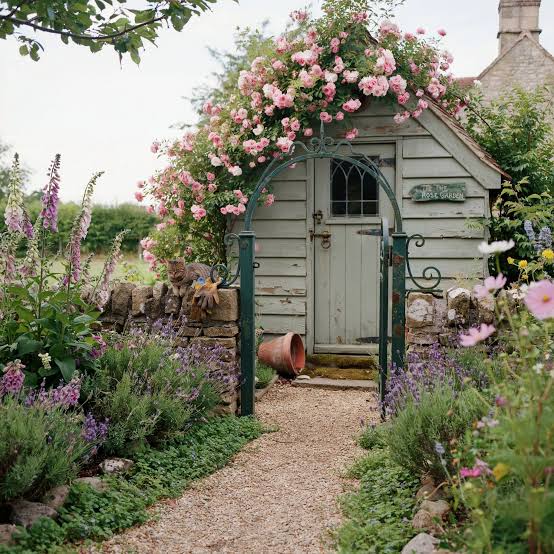
A pale green shed becomes a focal point when you lead the eye there with a rose-covered archway and a gravel path. The arch frames the shed door, and the stone wall behind adds depth. Soft daylight keeps the scene from looking harsh, which matters for a roomy garden where nothing competes for attention. The hero element here is the shed, but the arch is what makes you walk toward it. Place the arch far enough from the shed that you see both clearly in one glance. That spacing turns a utility building into a garden feature.
Embrace Enchantment with a Winding Stone Path and Abundant Flowers
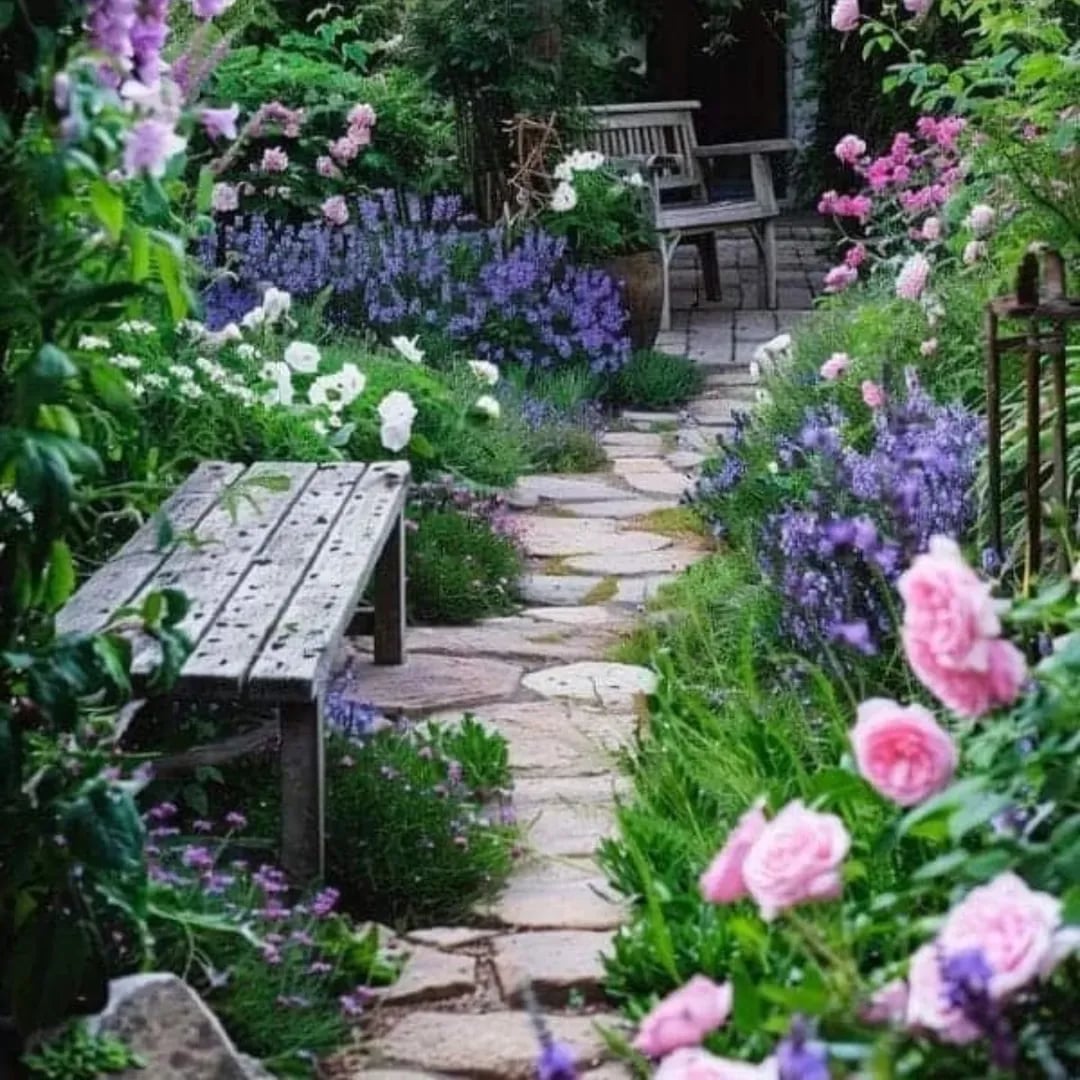
A winding path hides its end from view so the garden feels bigger than it is. Here, stone steps curve past lavender, roses, and a wooden bench, with flowers spilling over the edges. The informal planting softens the hard lines of the stone, and the path itself becomes the organizing element. Let the plants grow a few inches over the stones instead of trimming them back. That slight overgrowth gives a cottage garden its lived-in feel. Just keep the surface clear enough for steady footing, especially if the path gets damp.
Create a Relaxing Patio with a Pergola Draped in Wisteria and Roses
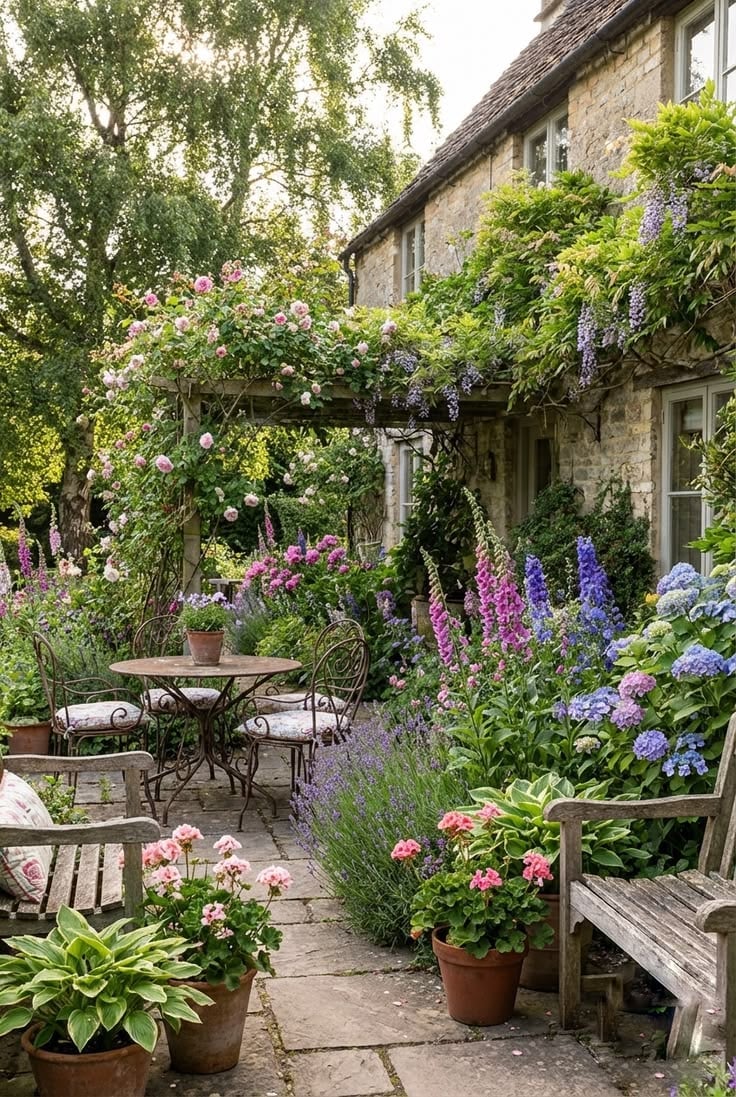
A stone patio with a wooden pergola overhead is a common cottage setup, but the difference between a nice patio and one you never want to leave often comes down to what is growing on top of it. Here, cascading wisteria and climbing roses weave through the pergola, creating a soft canopy of pink, purple, and blue that filters the daylight. Below, the seating area mixes a wrought iron table and chairs with a couple of wooden benches, giving the space room for a crowd without feeling like a furniture showroom. The key layout principle is that the plants do the work: they provide the shade, the color, and the sense of enclosure. Keep the hardscape simple, stone underfoot, untreated wood overhead, and let the greenery soften every edge. That way, the patio feels like a natural extension of the garden rather than a structure dropped into it.
Add a Pop of Color with a Vibrant Blue Garden Arch
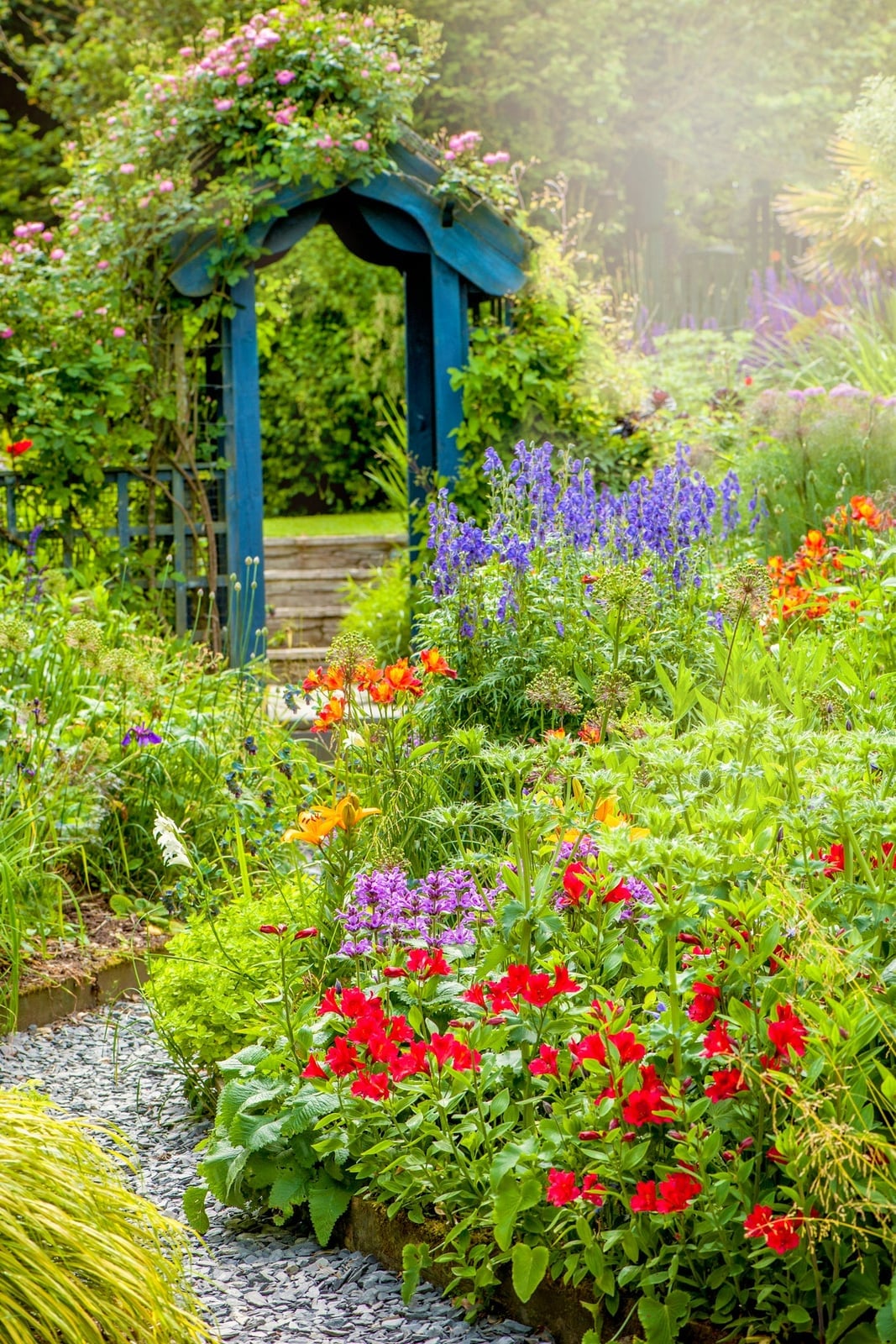
A blue garden arch does something that a white or wooden one cannot: it signals a deliberate design choice. The vibrant blue stands out against the gravel path and the abundant flower beds in pink, red, and purple, and it catches the dappled sunlight, making the whole garden feel more intentional. For renters, this is an easy swap. A freestanding archway in a painted finish can be placed without altering the ground, and it pulls the eye down the path, giving a small garden more depth. The palette rule here is simple: pick one hardscape color that contrasts with the flowers, and let that color be the only non-green, non-stone note in the space.
Feature a Rustic Stone Shed as a Garden Focal Point
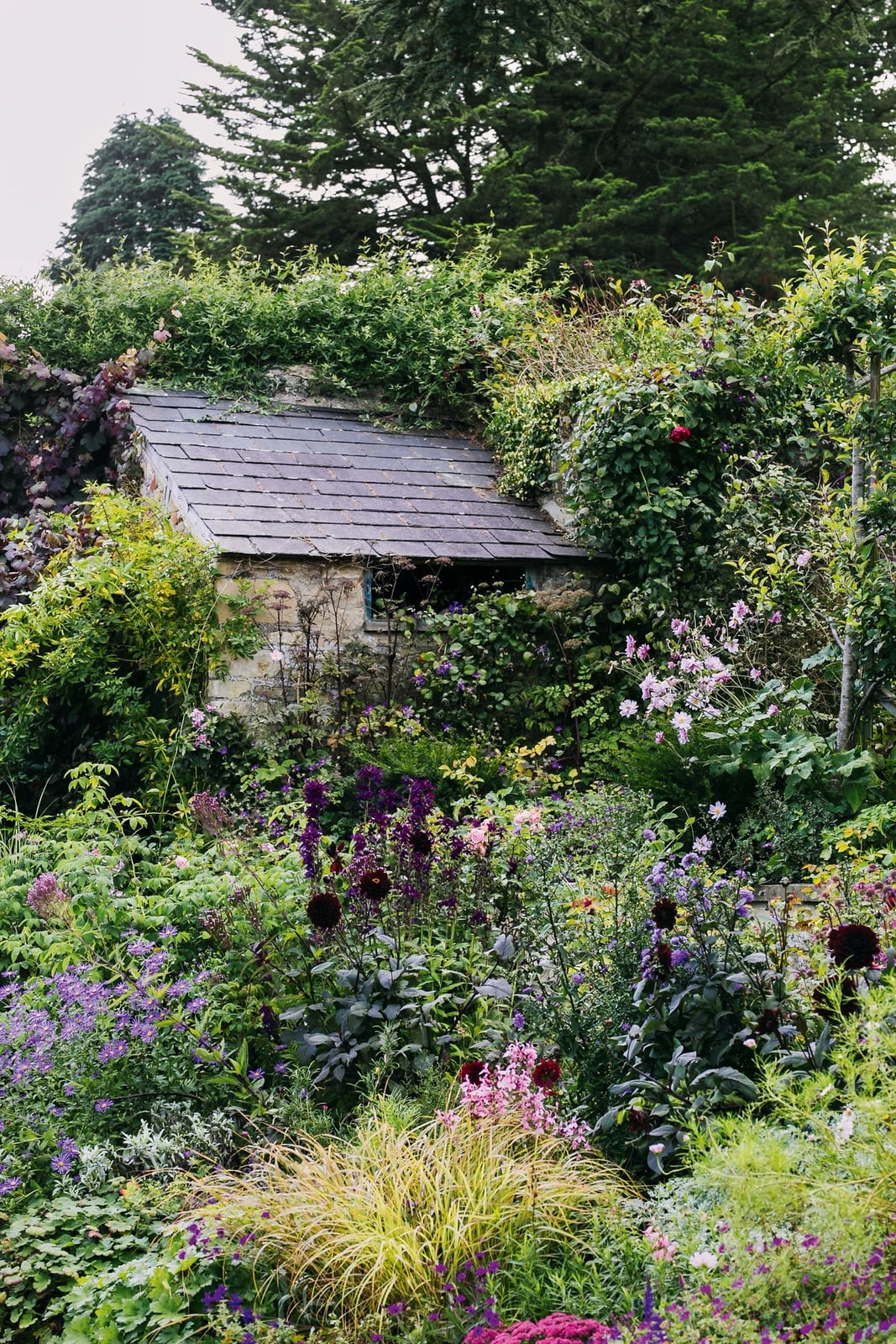
This garden does not need a statue or a fountain to anchor the view because the stone shed itself becomes the focal point. Set at the back of a dense planting bed, the shed is built from mismatched stone and topped with a slate roof, and it is half covered in climbing greenery. The flowers in front, purple, pink, yellow, are tall and loosely arranged, so they frame the shed without hiding it. That is the hero element approach: place your most permanent structure where the eye naturally lands, and let everything else grow around it. A stone shed works especially well in an overcast climate, where the gray tones in the stone pick up the soft light and keep the garden from feeling washed out.
Cultivate a Wildflower Meadow for Natural Abundance
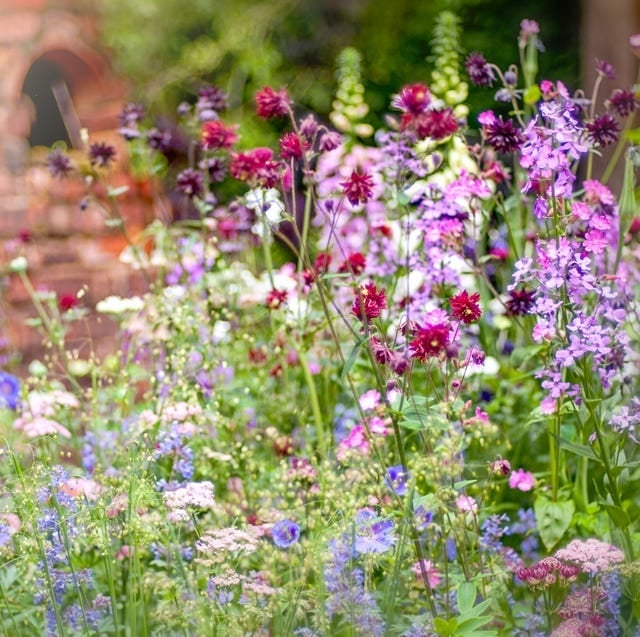
Can a garden look full and lush without feeling crowded or chaotic? Yes, but only if the planting follows a loose layout rule: tall plants in back, shorter ones in front, and no straight lines. This wildflower meadow does exactly that, with delphiniums and cosmos rising above a dense mix of pink, purple, white, and blue blooms. A low stone wall runs along one edge, giving the eye a point of focus amid all that soft texture. The layout here is about scale. A meadow planting needs a hard edge, a wall, a path, or a fence to keep it from looking unkempt. The contrast between the structured stone and the informal flowers is what makes the abundance feel planned.
Line Your Path with Vibrant Flower Borders and a Cozy Bench
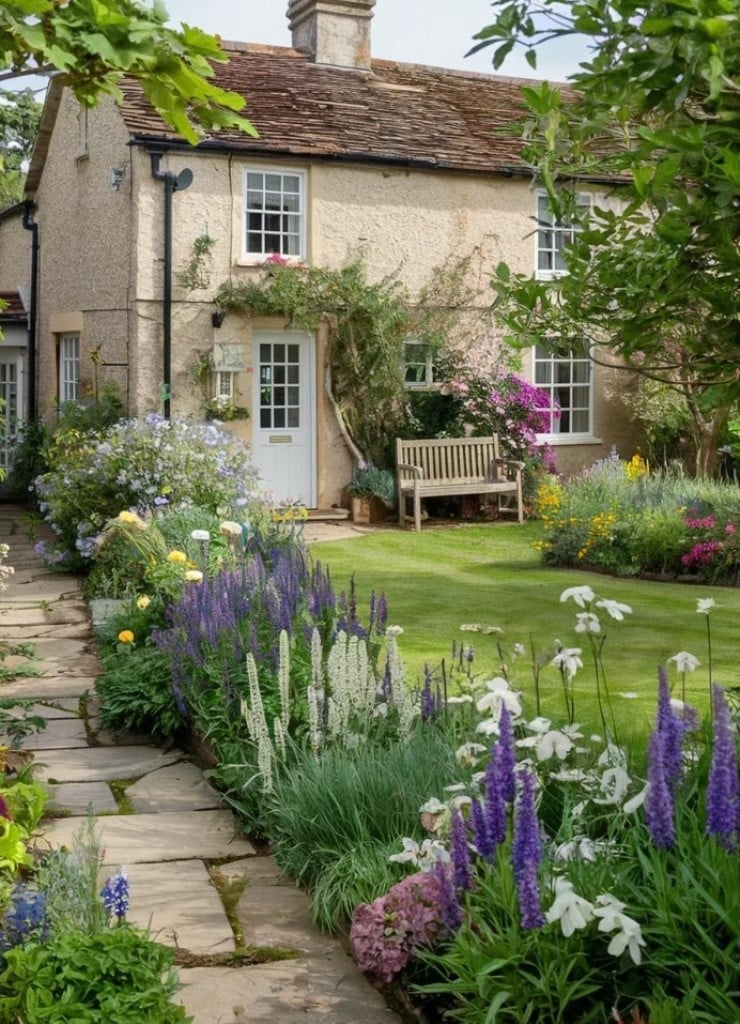
A stone path leading to a cottage door is a classic setup, but what makes this one work is the way the flower borders are scaled to the path. The beds on either side are wide enough to hold tall, dense planting in purple, white, and yellow, but they stop short of the bench set against the cottage wall. That gap gives the eye a pause. The layout rule is about proportion: the path width, the bed depth, and the bench placement all relate to each other. If the flowers crept right up to the bench, the seating would feel cramped. If the path were any narrower, you would brush against the plants on both sides. A cottage garden path should invite a slow walk, not a tight squeeze.
Add Whimsy with Stone Sphinx Statues and a Picket Fence
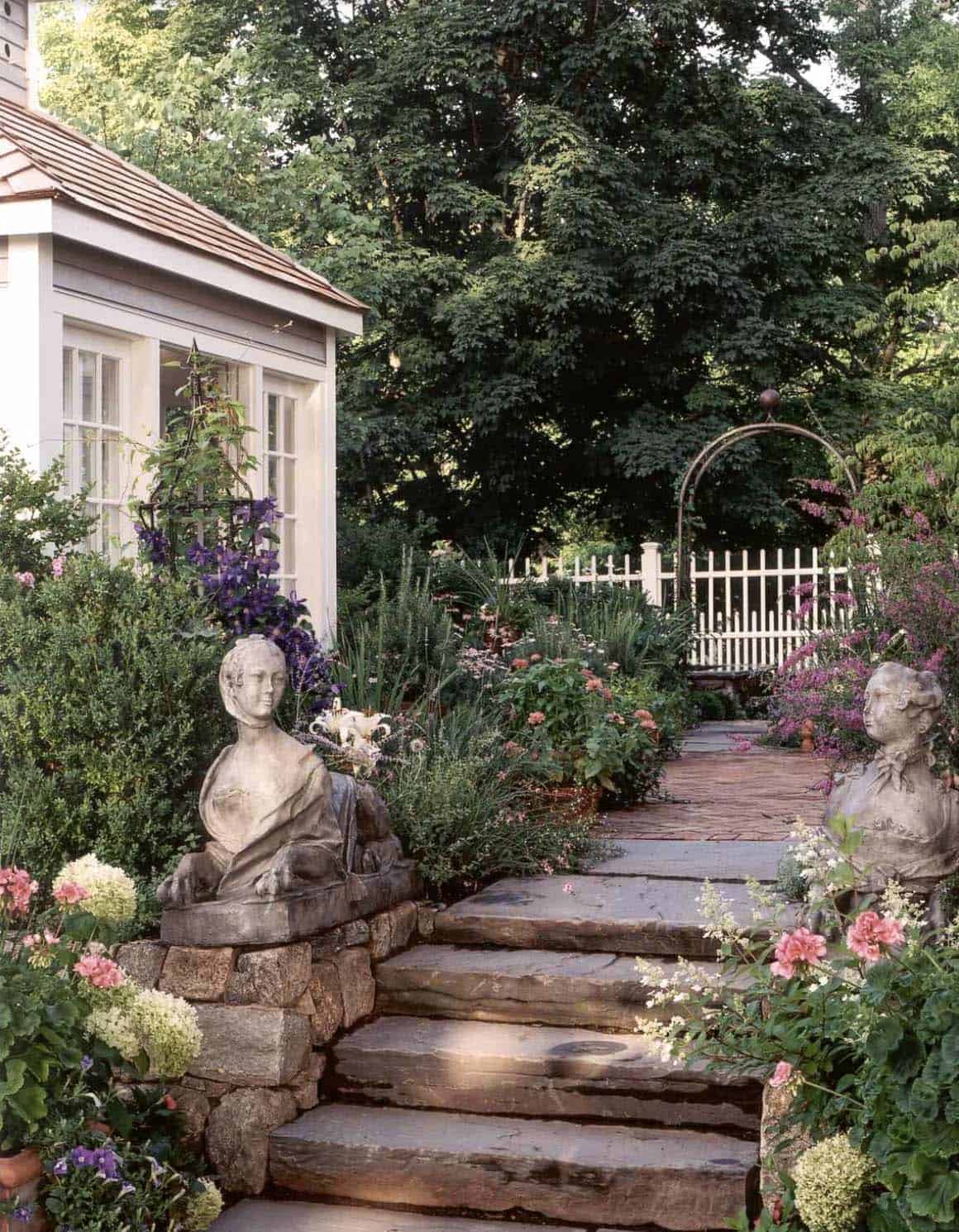
Adding whimsy in a cottage garden starts with hardscape elements that set the tone. Stone sphinx statues flanking the steps create a sense of arrival, while the white picket fence frames the view without closing it in. The dappled daylight softens the gray stone and keeps the purple and pink blooms from feeling too formal. By placing the statues at the garden entrance, the layout draws the eye along the path and makes the space feel larger. It is a simple trick: choose one or two unexpected stone pieces and let the plants do the rest.
Illuminate with Golden Hour Light on a Greenhouse
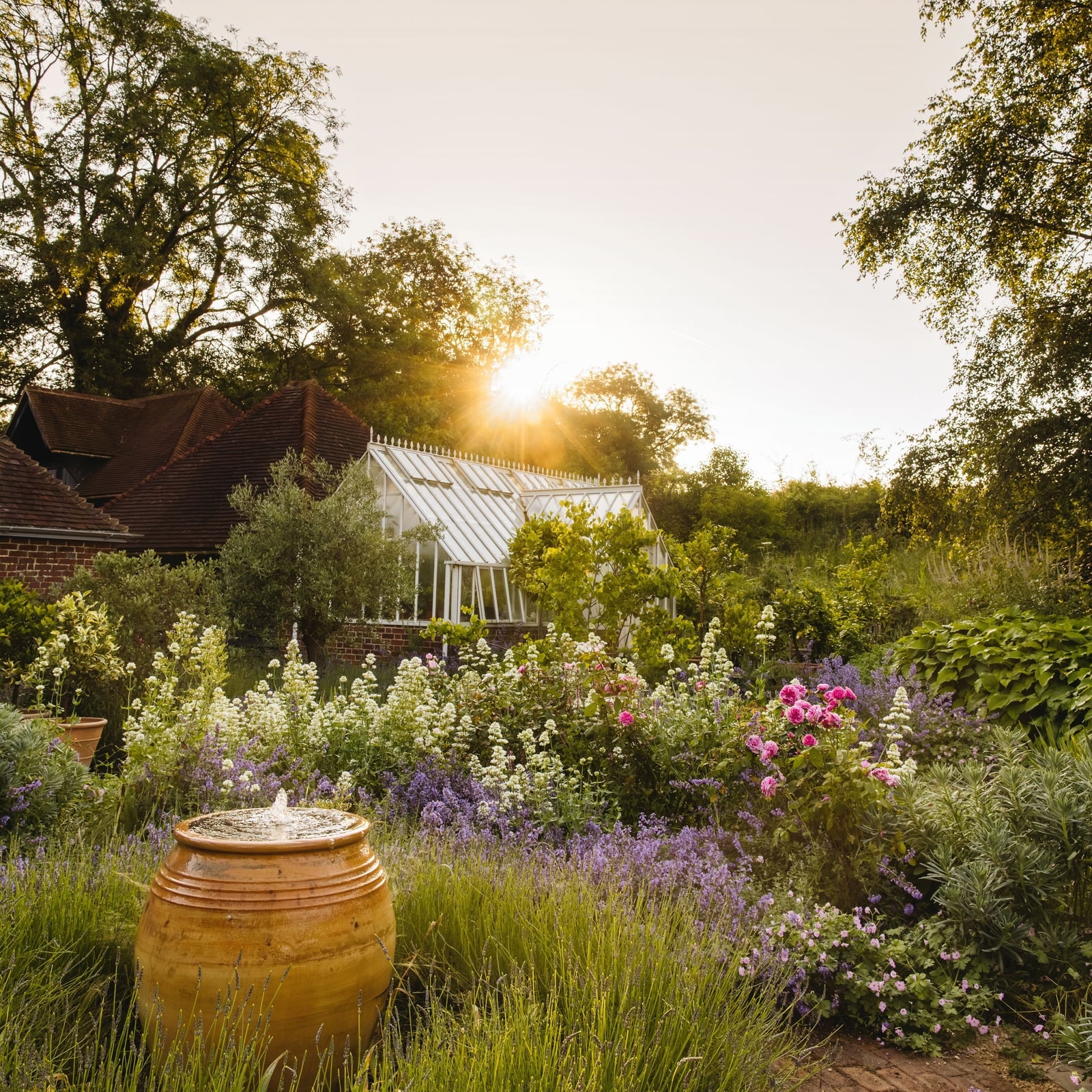
A greenhouse can serve as a functional structure or a garden focal point, depending on the light. Golden hour turns the glass into a warm gold reflector that bounces color onto the surrounding brick and terracotta pots. The palette shifts from green and white to pink, purple, and gold as the sun drops. Layered planting around the greenhouse base softens the transition between structure and garden, so the building does not dominate. The fountain nearby adds a cooling sound that balances the warmth of the light. This setup requires the greenhouse to face west to catch the low sun. If your yard does not allow that, position seating nearby to enjoy the glow from a distance.
Enhance with a Rose-Covered Metal Archway Leading to a Greenhouse
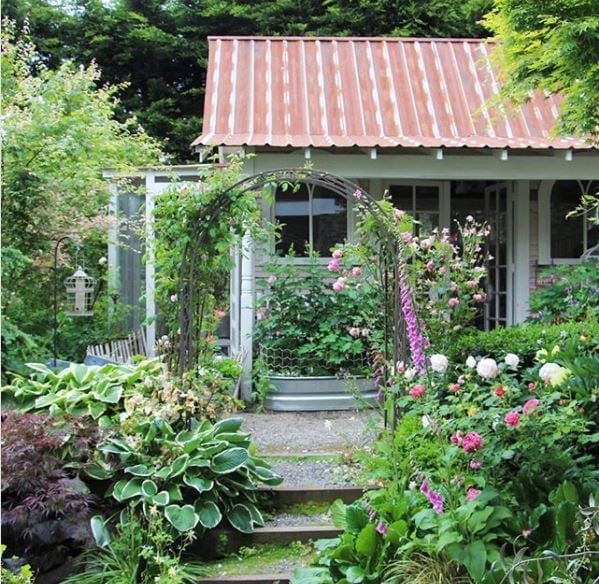
An ornate metal archway covered in roses creates a clear threshold between the pathway and the greenhouse beyond. The dark metal provides contrast against the soft pink blooms and the gray overcast sky. Foxgloves and hostas planted below add height variation and keep the arch from floating visually. The straight path through the arch leads the eye directly to the greenhouse, making the garden feel organized rather than overgrown. Choose a metal arch with scrollwork to echo the farmhouse style without adding bulk.
Create a Picture-Perfect Entrance with a Floral Archway and Picket
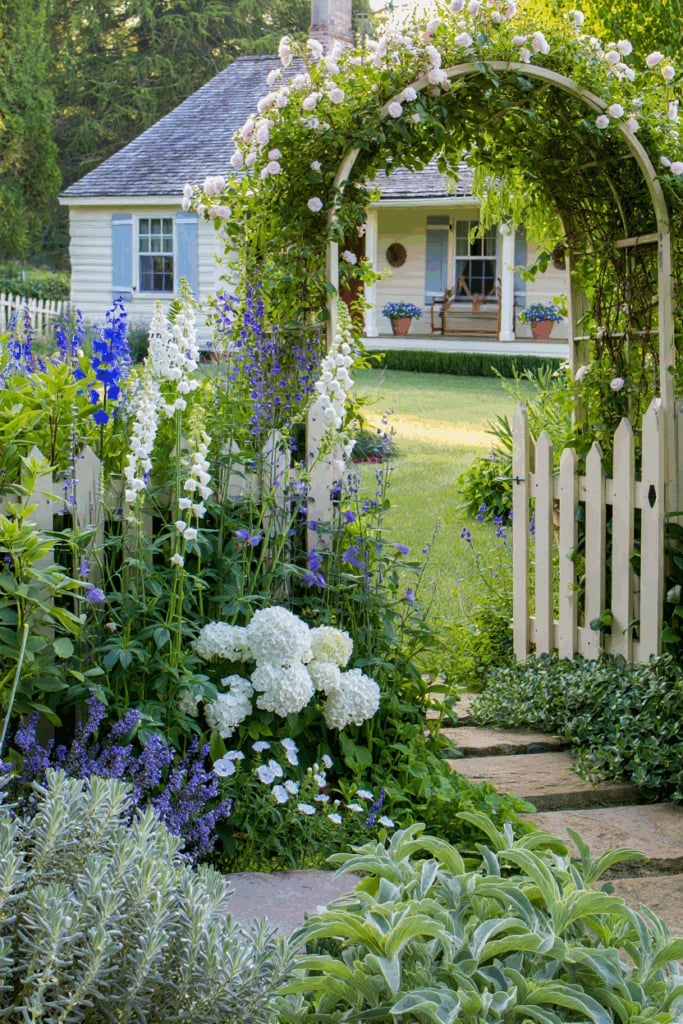
A white picket gate combined with a floral archway is a clear invitation into the garden. The arch covered in white roses softens the wooden structure and draws the eye upward, while blue delphiniums add a cool counterpoint. Soft daylight keeps the cream and green palette from washing out, and the path through the arch leads naturally to the house. This entrance requires an arch wide enough for two people to walk through side by side so the space feels open. If your gate is standard width, train climbing roses to grow outward to create the same effect without replacing the frame.
Add Rustic Charm with a Wheelbarrow in a Sun-Drenched Garden
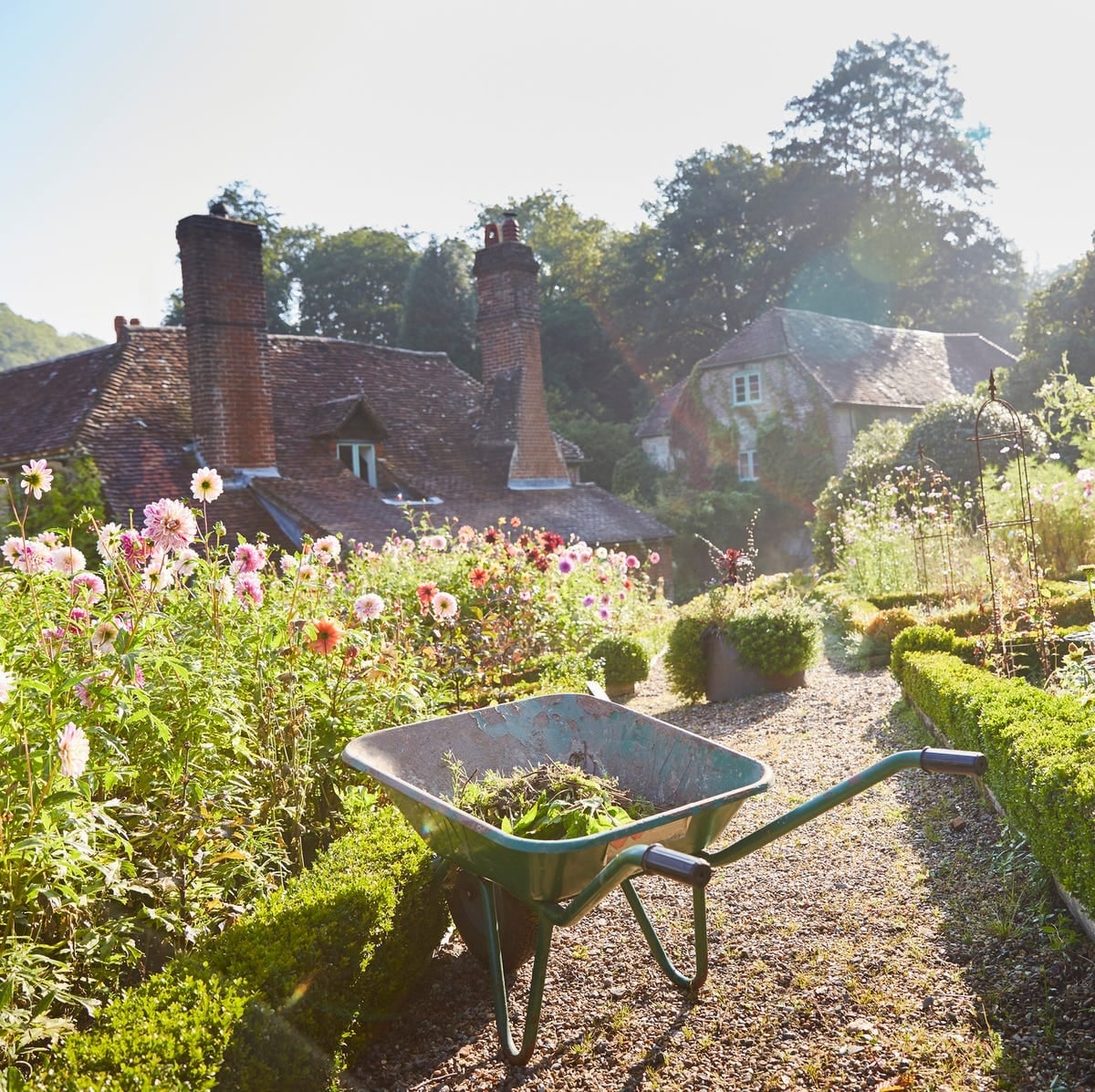
To add rustic charm, use everyday garden tools as functional decor. A metal wheelbarrow filled with clippings and morning sunlight becomes an instant focal point against the clipped hedges and brick red houses. The warm light picks up the pink and white flowers in the beds, while the gravel path keeps the layout tidy. Position the wheelbarrow near a hedge or wall so it does not interrupt foot traffic but still catches the eye. This works especially well in a roomy garden where a single prop can anchor a wide view. Swap out the clippings seasonally to keep the look fresh.
Design an Open Feel with a Grand White Archway and Hydrangeas
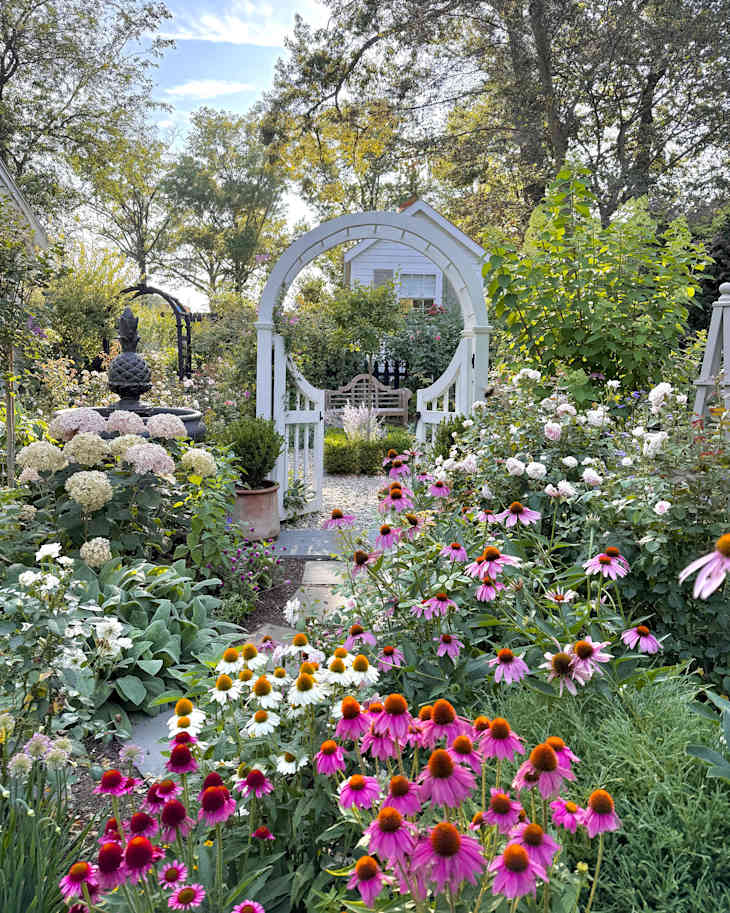
A grand white archway, standing tall against a bright garden, signals an open and welcoming space beyond. Here, the arch is flanked by soft pink hydrangeas and coneflowers, with a stone path leading the eye straight through the center. To make the whole garden feel bigger, let the arch do the work. Keep the planting around it low and airy, so the opening is a clear invitation. This approach requires the arch to be the tallest element in view. It frames the garden behind it without competing for attention.
Highlight Blooms with a Large Pink Poppy on a Gravel Path
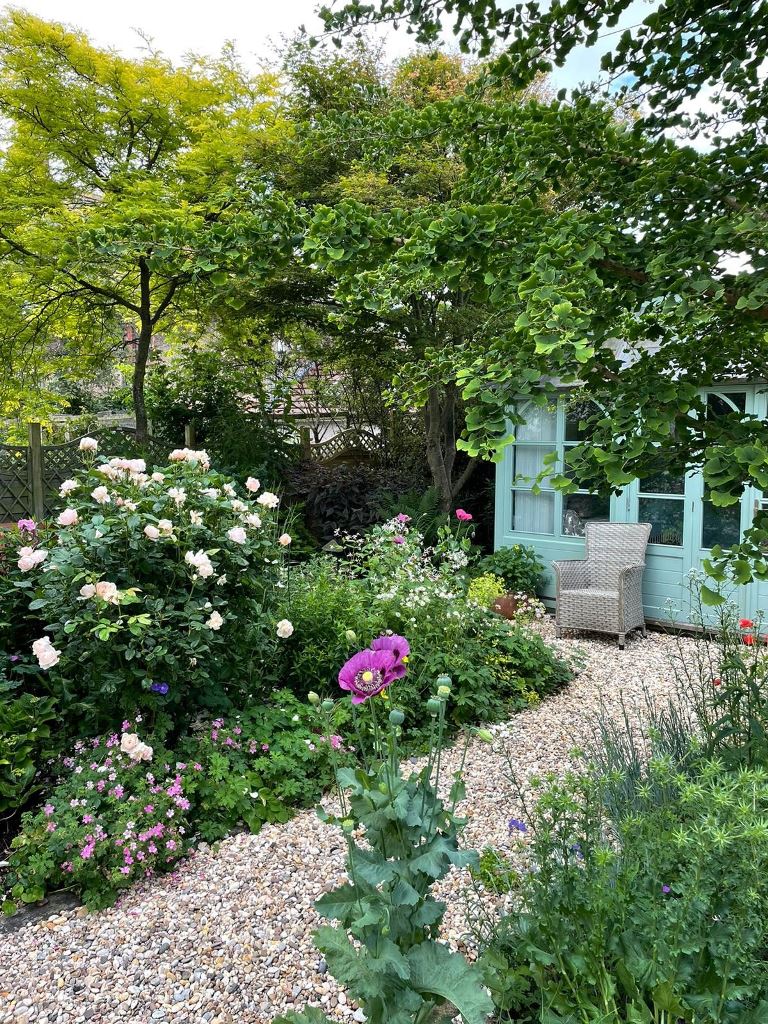
Let one bold flower anchor the whole view in a rental garden. Here, a single large pink poppy rises from a gravel path, stealing the scene without needing a permanent bed. The gravel itself is a renter-friendly surface: it goes down over landscape fabric and comes up without breaking the soil beneath. Pair it with a portable wicker chair and pots that move with you, and the garden feels established without a single shovel of permanent digging. The poppy, along with purple blooms that echo its scale, proves that one standout plant can define a path more clearly than a dozen fussy borders.
Layer Flower Beds with Roses, Alliums, and Dianthus
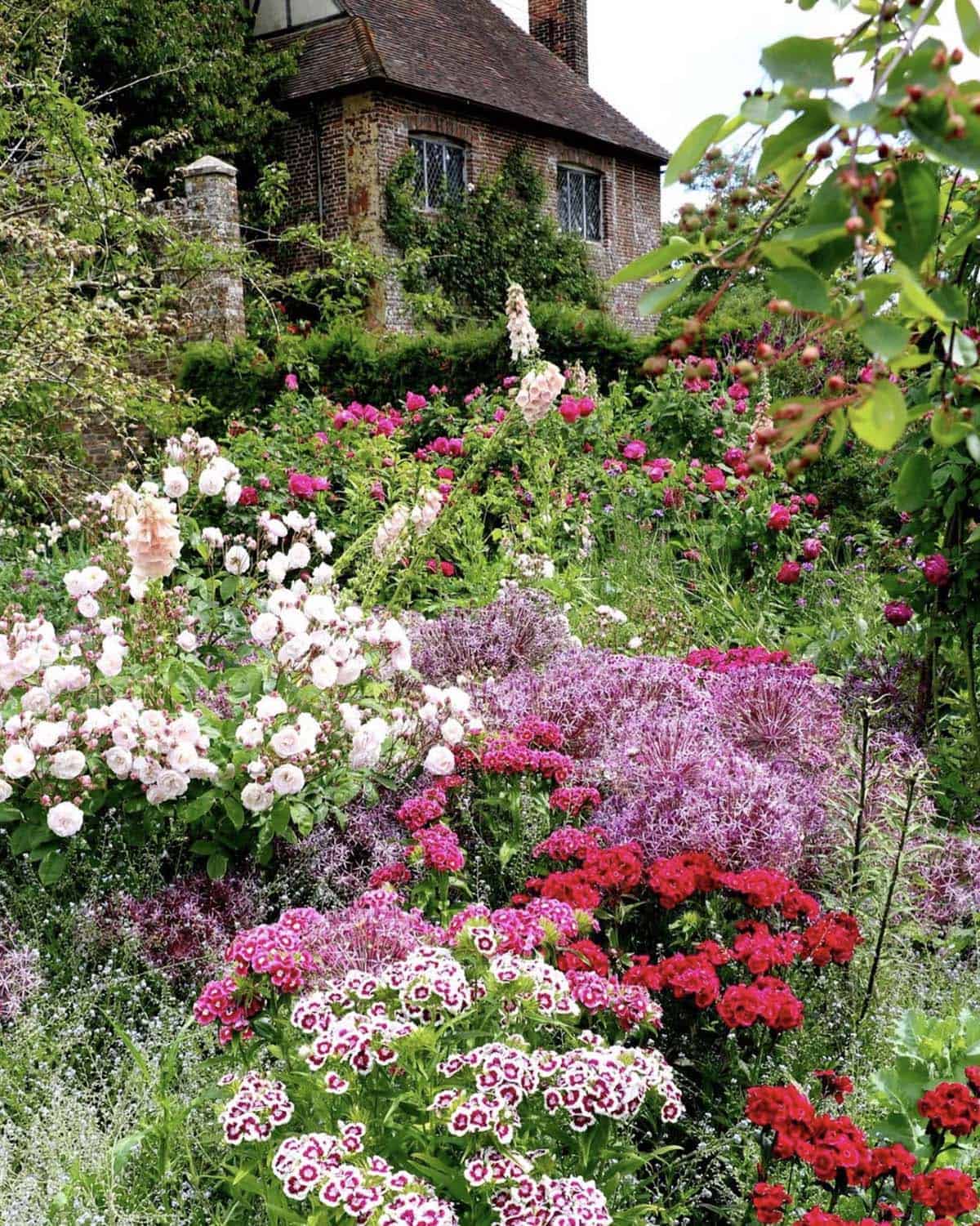
A dense flower bed risks looking like a jumble, but a layered one creates a sense of abundance. In this garden, roses, alliums, and dianthus are stacked by height: tall alliums rise above the roses, while low dianthus fills the front edge. The brick building behind anchors the whole scene, keeping the eye from wandering. Place the tallest plants at the back or center, then step down in size. This gives every bloom its own sight line. The result is a border that looks full without feeling crowded. Even in a roomy garden, this layout keeps the flowers from blurring into a single mass of color.
Showcase Vibrant Colors with Helenium and Salvia Borders
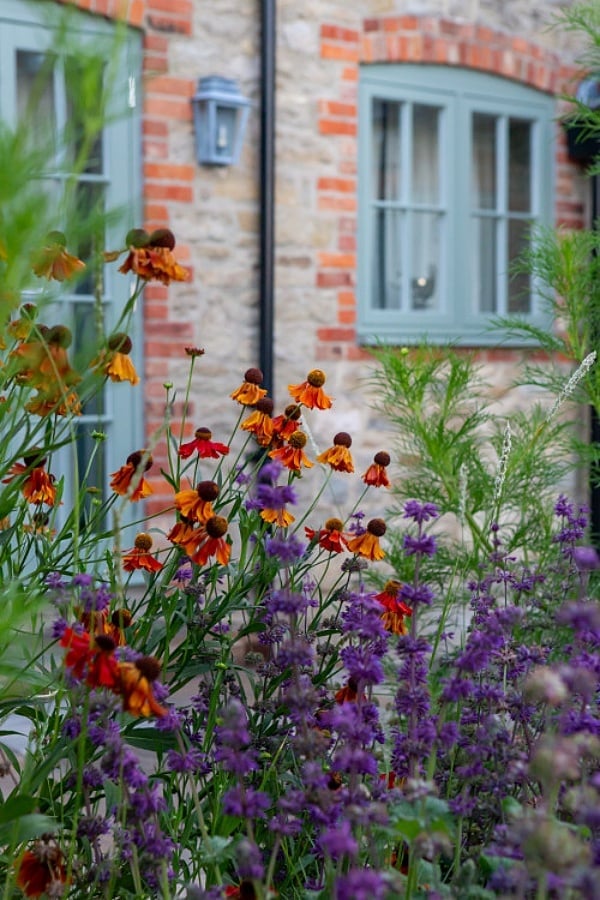
Orange helenium and purple salvia face each other across a brick wall, and the contrast is immediate. Helenium leans warm and bright, while salvia cools it down with deep violet spikes. This pairing works because the two colors sit opposite each other on the color wheel. The brick wall behind them adds a neutral buffer, so the clash stays lively without becoming chaotic. For a cottage garden border, this palette brings energy without needing constant deadheading. It holds its own from June through early fall, with both plants known for lasting through dry spells.
Frame Views with a Lush, Overgrown Wooden Archway
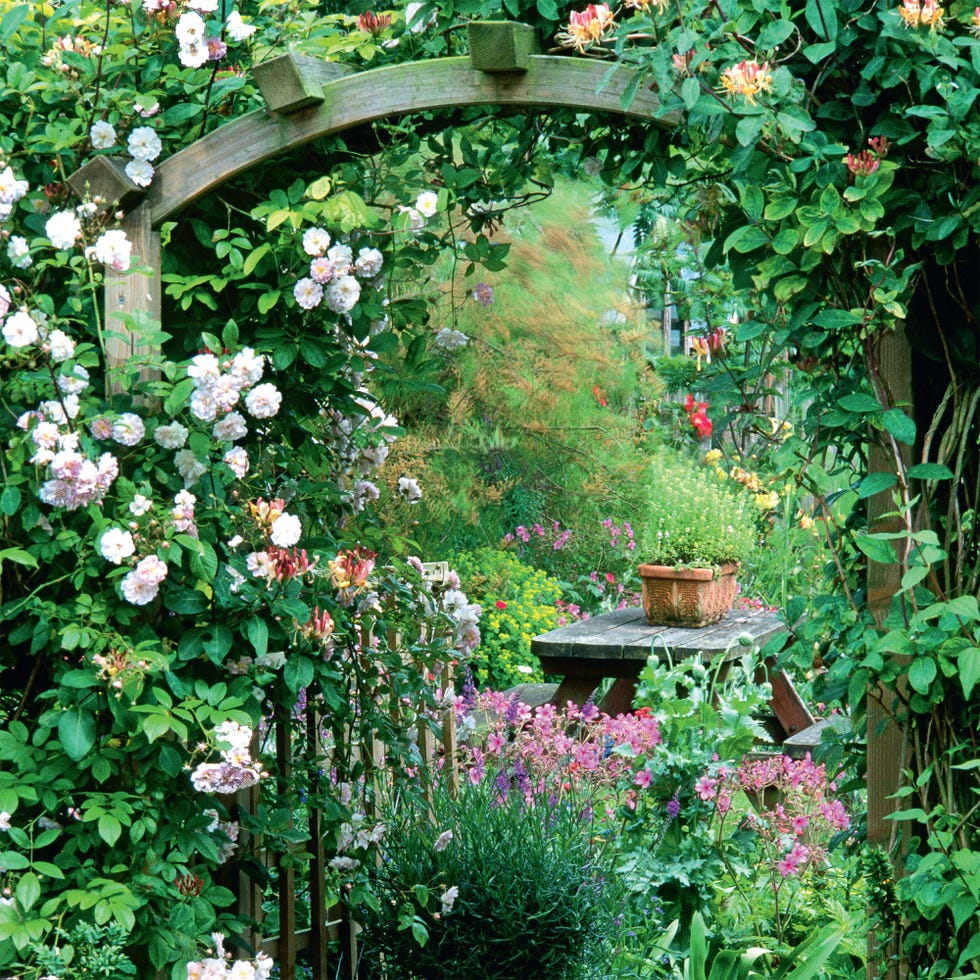
A wooden archway draped in climbing roses is the most direct way to frame a view and make a garden feel like a room. Here, the arch is thick with pink and white blooms, creating a soft ceiling over a stone path. Beyond it, a picnic table and a potted herb sit in dappled light. The effect is inviting precisely because the archway is not tidy. Let the roses spill over the sides and droop down; that is what gives the arch its character. A terracotta pot at the base reinforces the cottage feel. The arch becomes the threshold between one part of the garden and the next.
Embrace Character with a Half-Timbered Cottage Facade
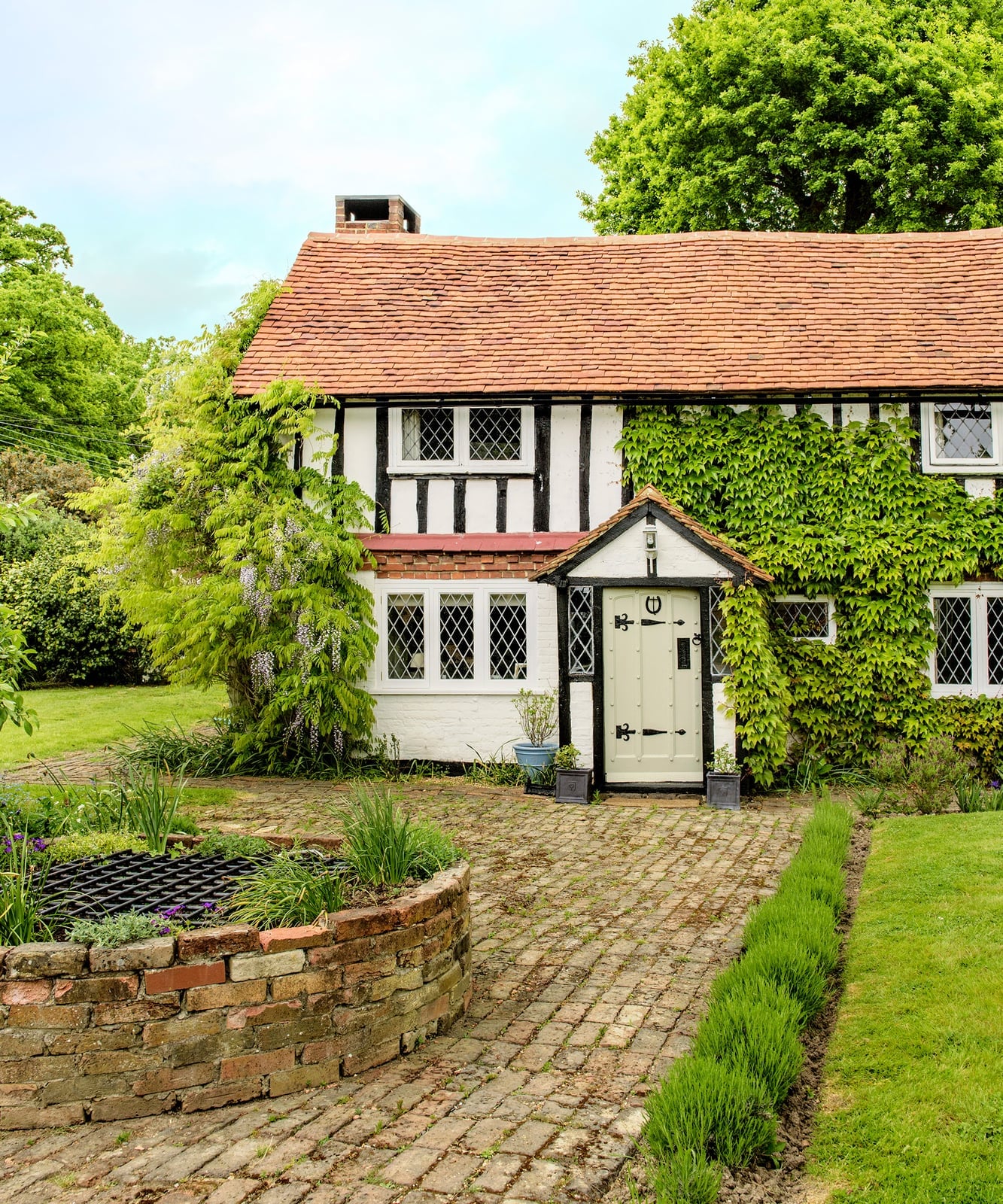
A half-timbered facade gives a cottage its bones before a single plant goes in. The black and white timber frame against brick and tile creates a graphic pattern that holds its own even in winter. Ivy climbing the walls softens the geometry and ties the building to the garden. A brick pathway leading to the front door and a stone well near the entrance add period detail without looking staged.
The palette stays disciplined: white render, dark wood, green ivy, and a few red brick accents. That restraint is what lets the planting feel abundant rather than chaotic. For a similar effect on a newer house, add timber battens to a gable end and train a self-clinging climber like ivy or climbing hydrangea up the wall. Check your USDA zone before planting against the structure.
Incorporate Stone Steps for Garden Path Charm
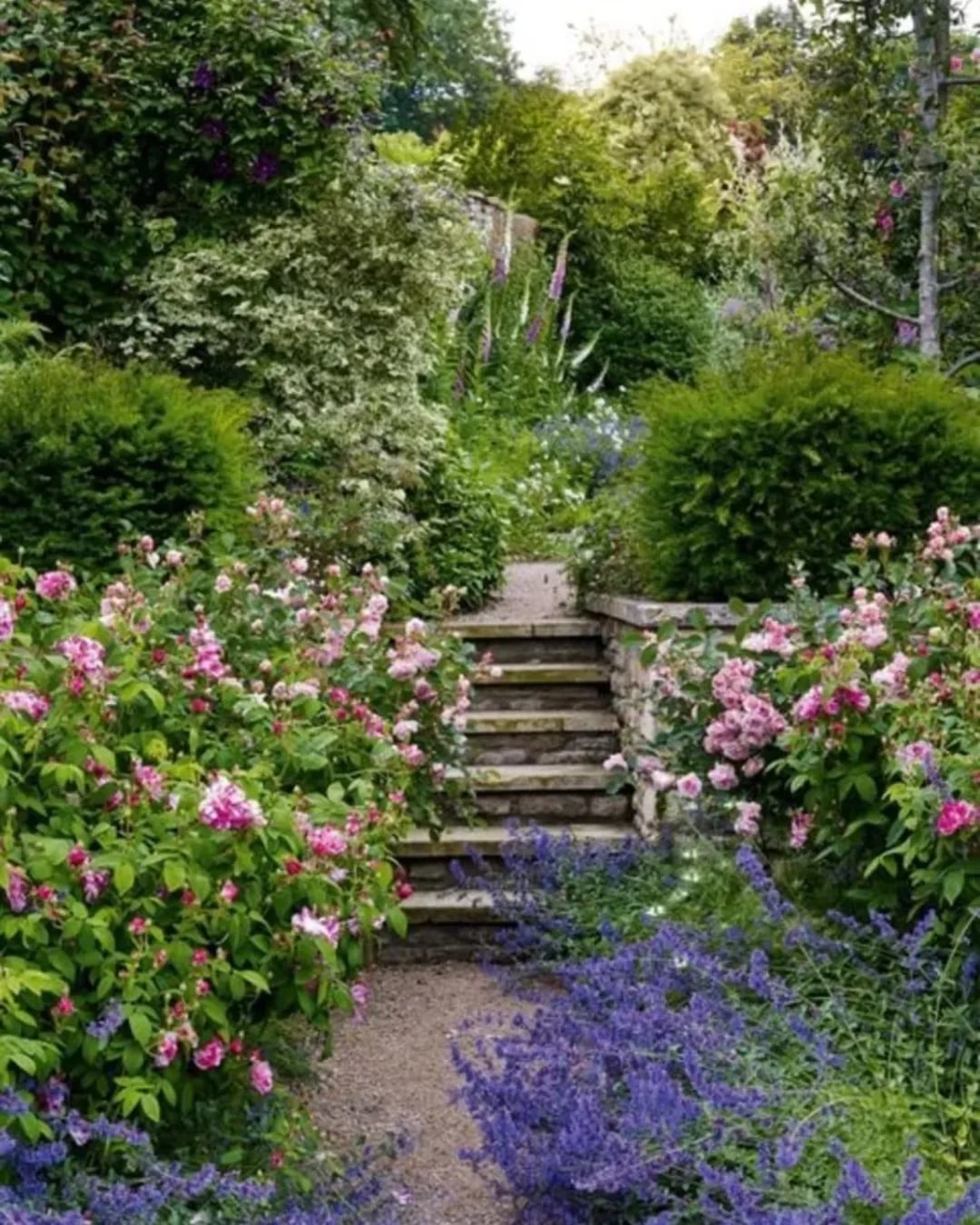
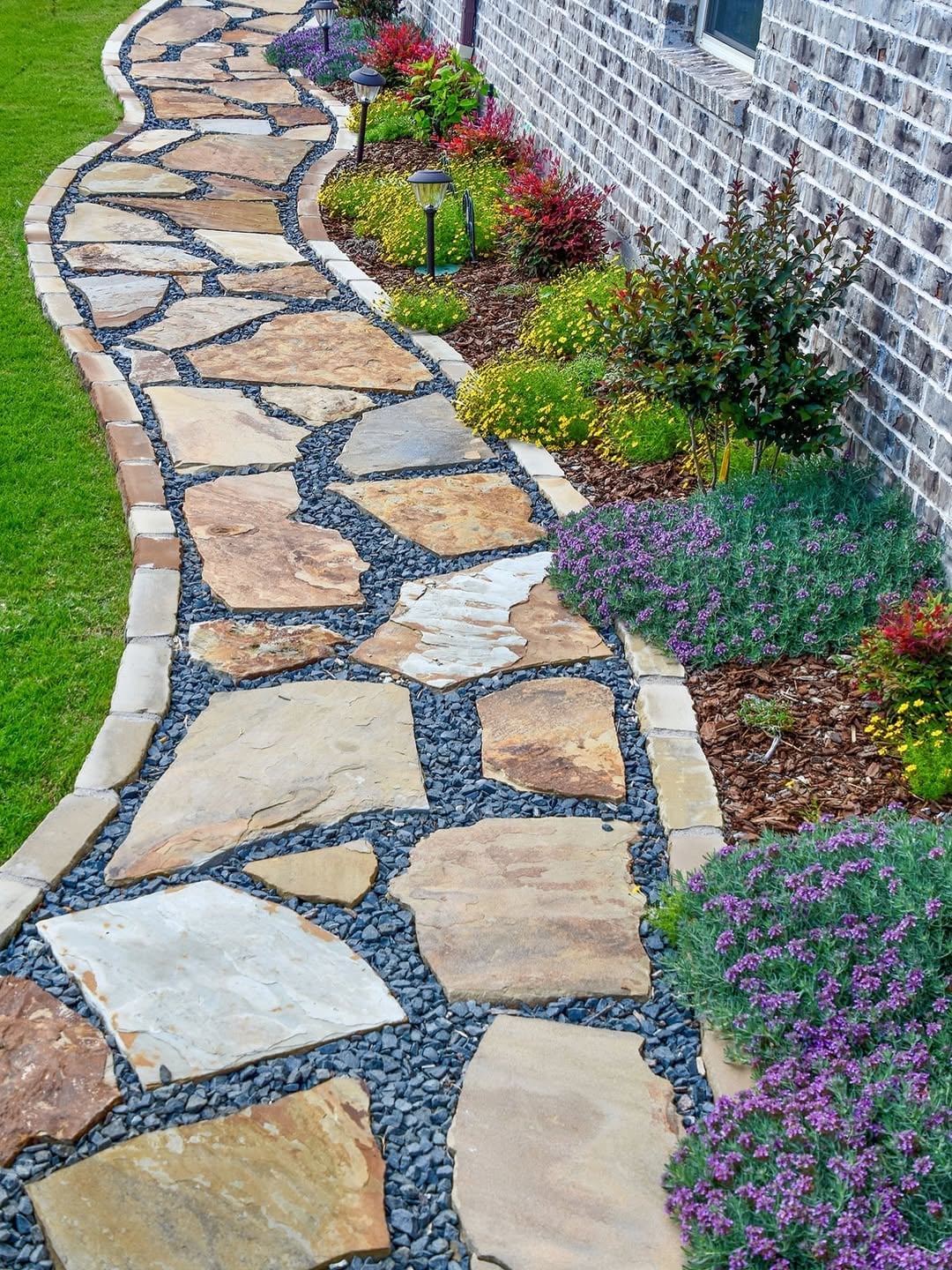
Stone steps naturally slow the pace of a garden path, which is the point. Wide, flat stones set into a gentle rise let the eye travel upward while the planting spills over the edges. Here, pink roses and purple flowers crowd the sides, so the steps read as a pause in the foliage rather than a hard break. Gravel between the stones keeps the surface permeable and the look relaxed. The palette stays in the pink-purple-green range, which keeps the stone neutral and the flowers as the event.
Design a Welcoming Patio with Flagstone Flooring
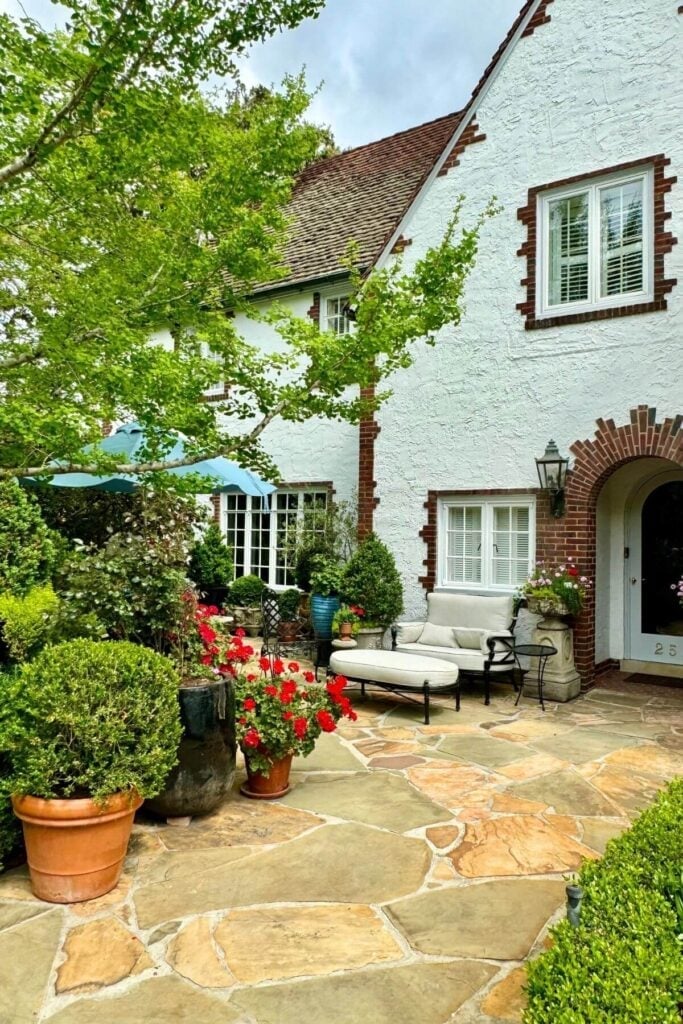
Flagstone is the material that makes a patio feel like it has been there for decades. Irregular stones set with wide joints let moss and low plants creep in, which is exactly what a cottage garden needs. Here, the patio holds bench seating, potted plants, and a market umbrella, all arranged so the textured white house facade stays the backdrop. Brick edging or a wood bench keeps the materials honest. The goal is a surface that anchors the seating without competing with the flowers.
Set Up a Cozy Seating Area with Ornate Wrought Iron Furniture
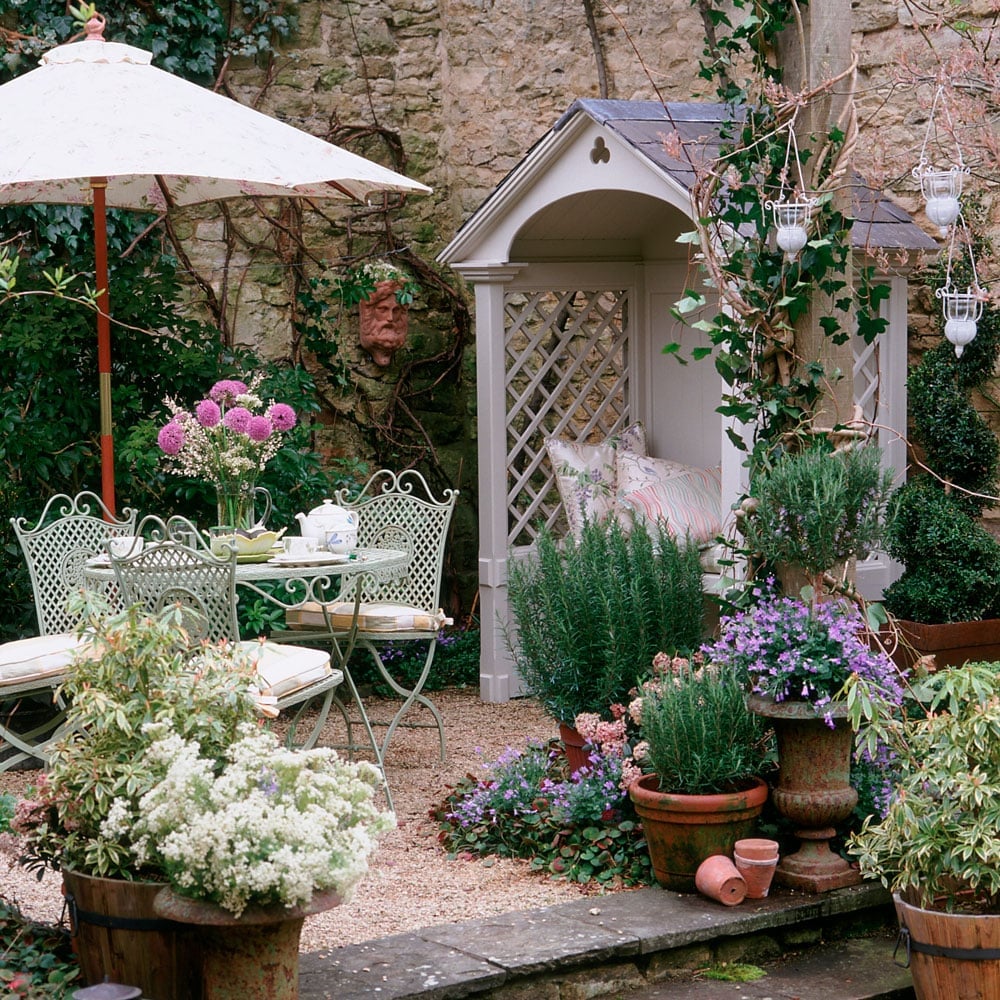
Wrought iron furniture can read as fussy in a modern setting, but in a cottage garden it lands as charming. The key is letting the metalwork be the ornament and keeping everything else simple. A gravel patio provides a neutral base, and the green, pink, and white palette of the surrounding plants softens the dark lines of the table and chairs. A cushioned garden seat adds a spot for lounging without matching the set.
Soft daylight matters here: morning or late afternoon light catches the scrollwork without creating harsh shadows. Place the seating where it catches that light but has a view of the flowers. The arrangement works best when the furniture feels settled into the garden, not dropped onto a concrete slab.
Define the Garden with a Manicured Lawn and Stone Path
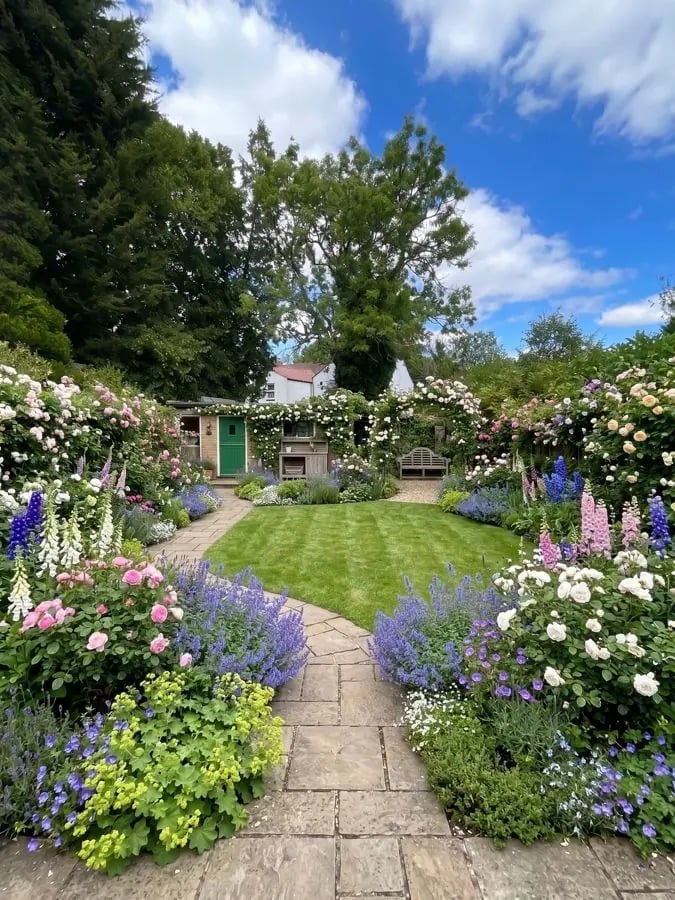
A manicured lawn creates a calm center between flower borders. Here, a stone path cuts across the grass toward a garden shed, with rose bushes and delphiniums in pink, purple, and blue lining the way. The lawn acts as a quiet center that makes the vibrant flower colors appear planned. A stone path keeps foot traffic off the grass and defines the route without adding hardscape mass. The layout works because the lawn has clear edges and the planting has room to sprawl.
Create a Lush Backdrop with an Overgrown Wooden Pergola
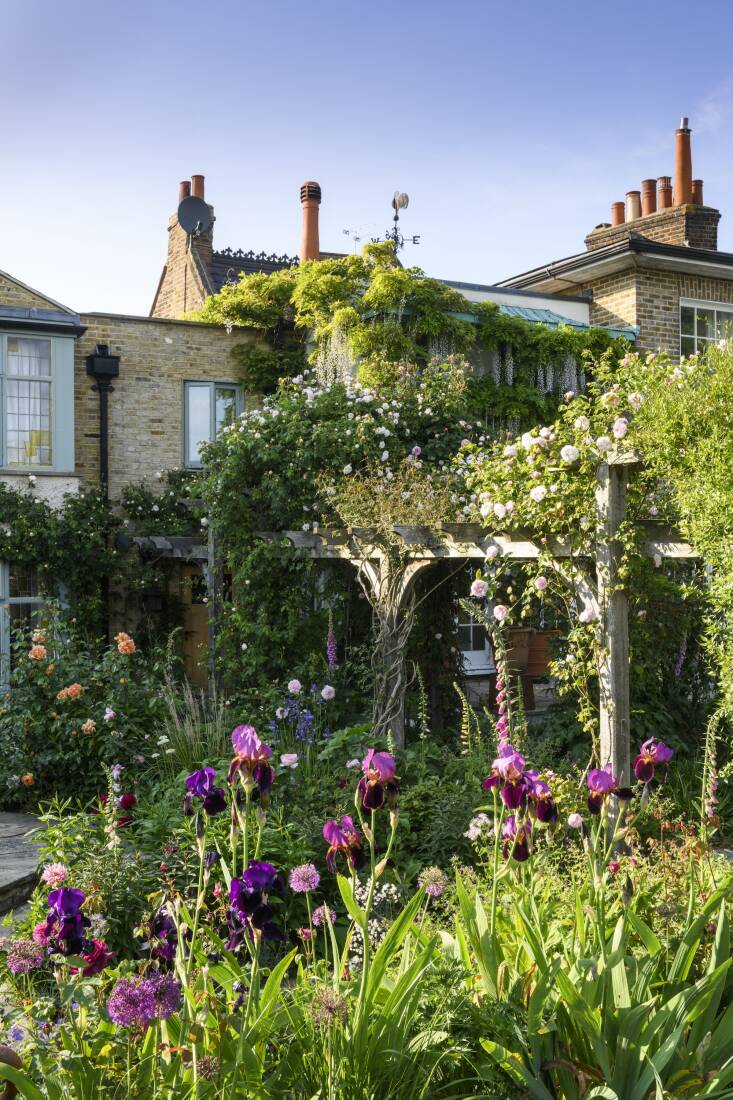
A wooden pergola draped in climbing plants gives a garden a sense of depth and enclosure without blocking the light. In this English cottage garden, the pergola stands at the back of the space, its beams nearly hidden by a tangle of green vines and blossoms in purple, pink, and orange. Tall irises and dense beds of flowers crowd the base, softening the transition from structure to soil. The effect is a backdrop that feels both intentional and wild, as if the garden grew up to meet it. Room mode works here because the pergola defines the far boundary of the space, drawing the eye through the garden rather than stopping it short. For a similar look, let climbing roses or clematis run loose rather than training them tightly; the slight dishevelment is what gives a cottage garden its charm.
Final Thoughts
The real trick to an English cottage garden is patience. Let the roses climb, let the lavender spill over the path, and let the stone weather. These 26 ideas are starting points, not prescriptions. Pick the arch, the bench, or the flower border that speaks to you and build from there. A cottage garden grows better with time, so give yours room to become what it wants to be. Keep the soil rich, water deeply, and enjoy the process as much as the blooms.