A path is more than a way to get from here to there. It sets the tone for your yard, guiding visitors and framing the view before they even reach the door. Pavers walkways come in so many styles it can be hard to pick one.
This article walks through 35 paver walkway ideas that actually work for different homes and gardens, from natural flagstone curves to clean modern grids. You will see how shape, material, and border choices change the whole feel of a space, and get practical notes on what to consider for your own project.
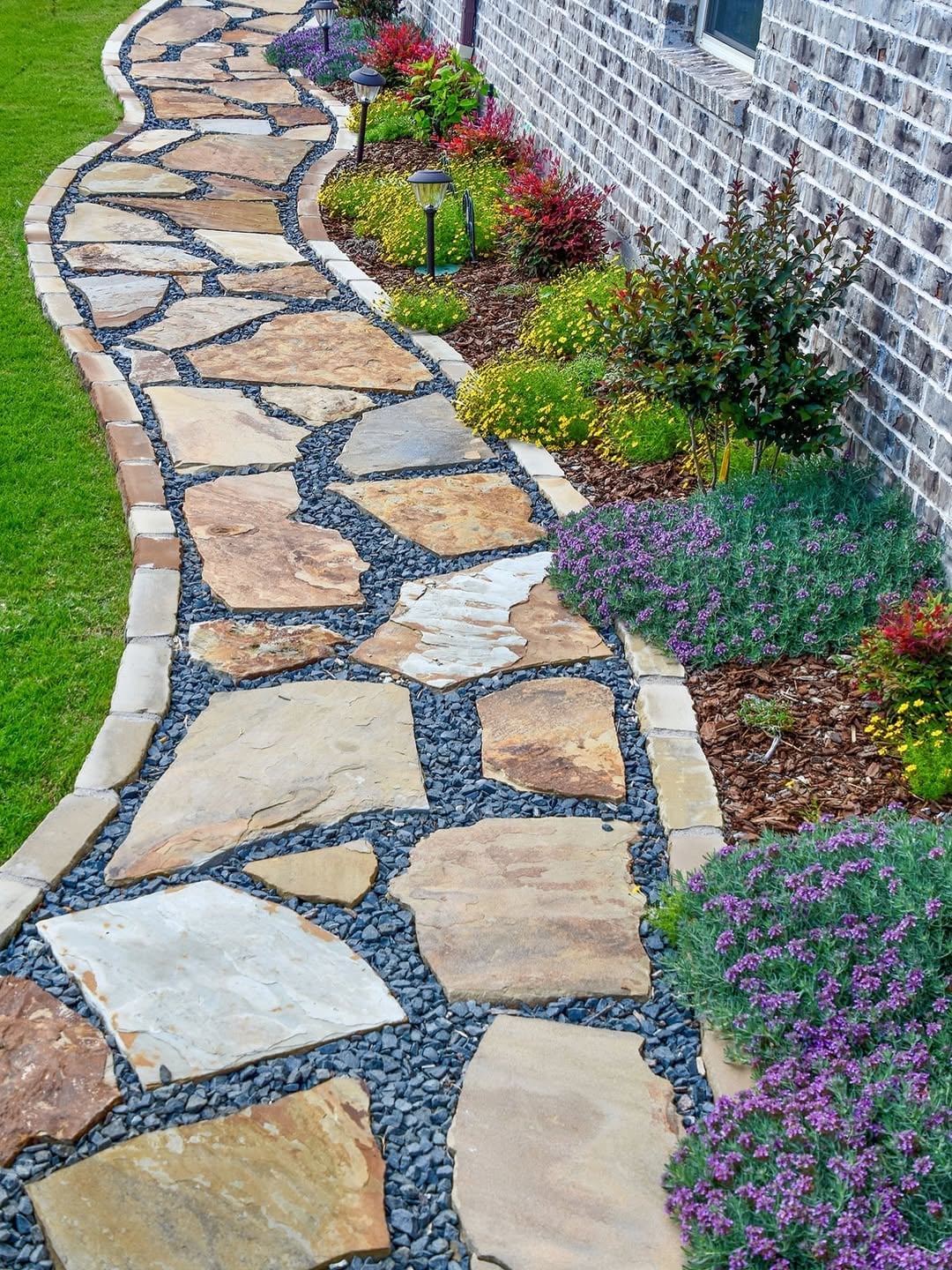
Curving Flagstone Paver Walkway with Naturalistic Border
A curving walkway built from irregular flagstone pavers sets a naturalistic tone from the start. The path bends gently through the garden, its stone border keeping the dark gravel in place and the whole layout grounded. Tan and gray stones mix with purple and green flowering plants along the edge, so the walkway feels like it belongs to the landscape rather than cutting through it. The key is letting the path follow the land instead of forcing a straight line.
Modern Straight Walkway with Large Gray Flagstone Pavers
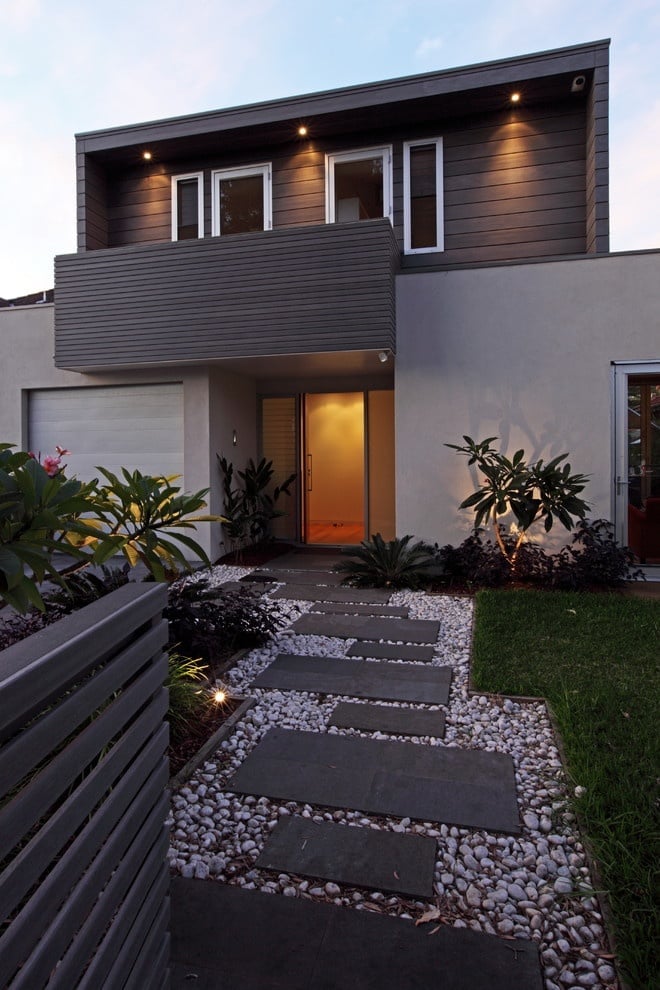
Large, flat flagstone pavers in gray make this front yard walkway read as clean and deliberate. White gravel fills the gaps between them, creating contrast against the green lawn and the wood fence behind. At dusk, exterior landscape lights come on, casting a soft glow across the path and the modern house facade. The palette stays simple: gray, white, green. When you choose oversized stones, you reduce the number of joints and the visual busyness, which helps the walkway feel more permanent and less like a patchwork.
Geometric Paver Walkway with Grass Infill
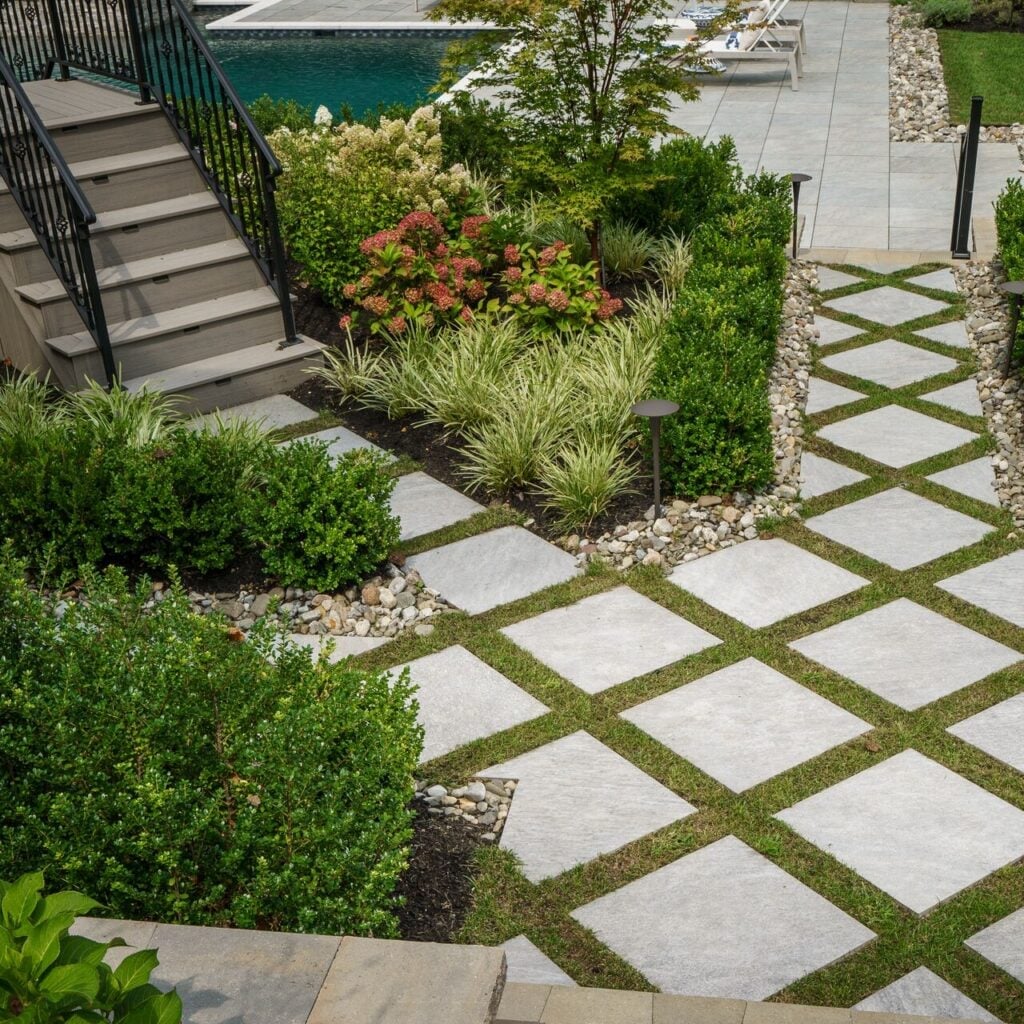
Can a walkway feel structured and soft at the same time? A geometric paver path with grass infill answers that. Gray stone pavers are laid in a repeating pattern, with narrow strips of grass growing between them instead of gravel or sand. The green softens the hard edges of the stone and ties the path to the surrounding lawn. Modern planters and outdoor stairs frame the route, making it feel like a designed garden room rather than just a way to get from one spot to another. The layout works because the geometry is consistent: the pavers create the rhythm, and the grass keeps it from feeling too rigid.
Minimalist Concrete Stepping Stones Across Gravel
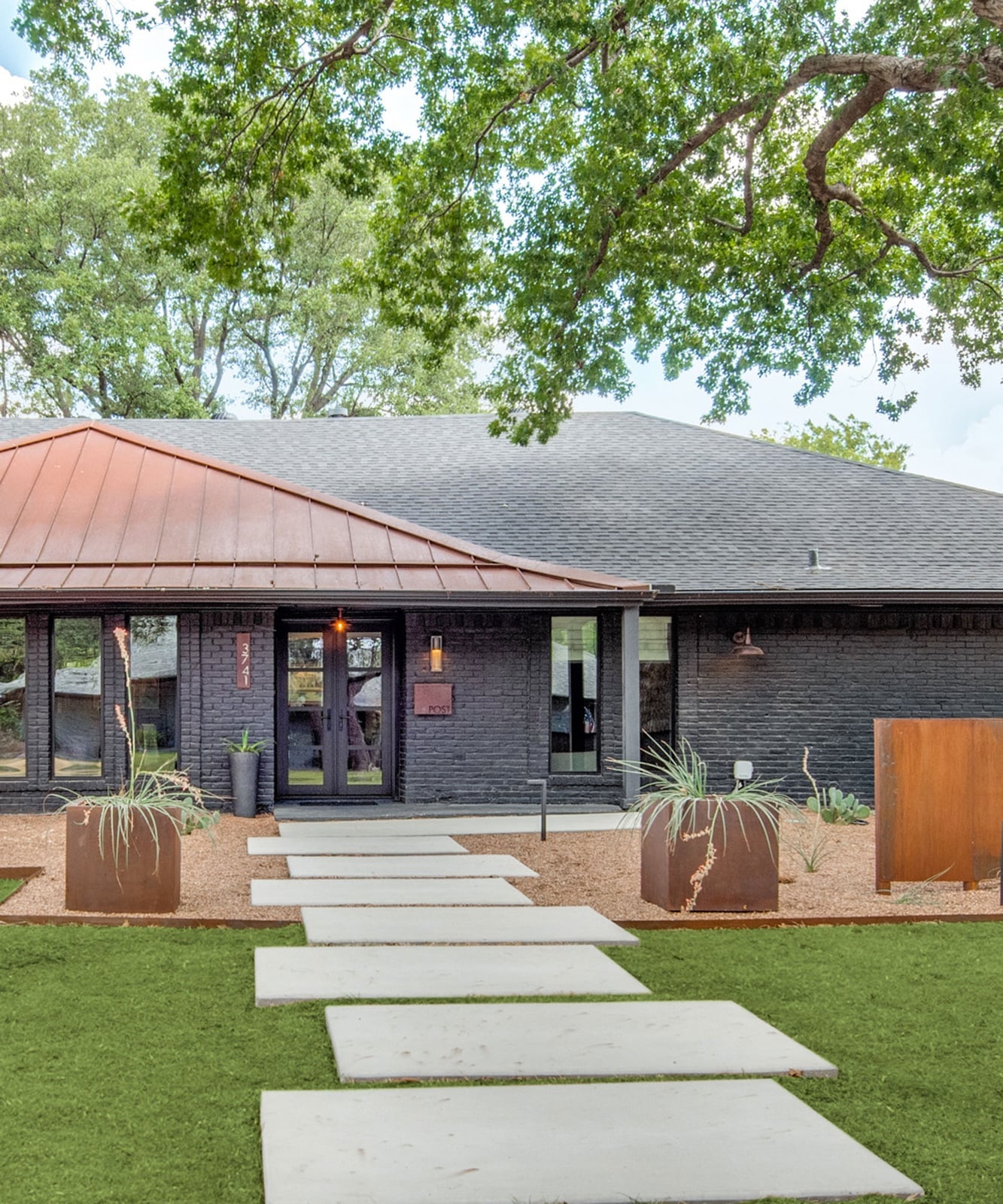
Large white concrete stepping stones float across a bed of gray gravel and patches of grass. The contrast is stark: pale, smooth rectangles against a darker, textured ground. Metal edging and a brick border keep the gravel contained, so the path stays crisp without constant raking. This design works best when the stones are big enough to land on naturally, roughly one stride apart. For renters, laying stepping stones directly on gravel is a no-dig alternative to a permanent walkway.
Farmhouse Stone Paver Walkway to Arched Door
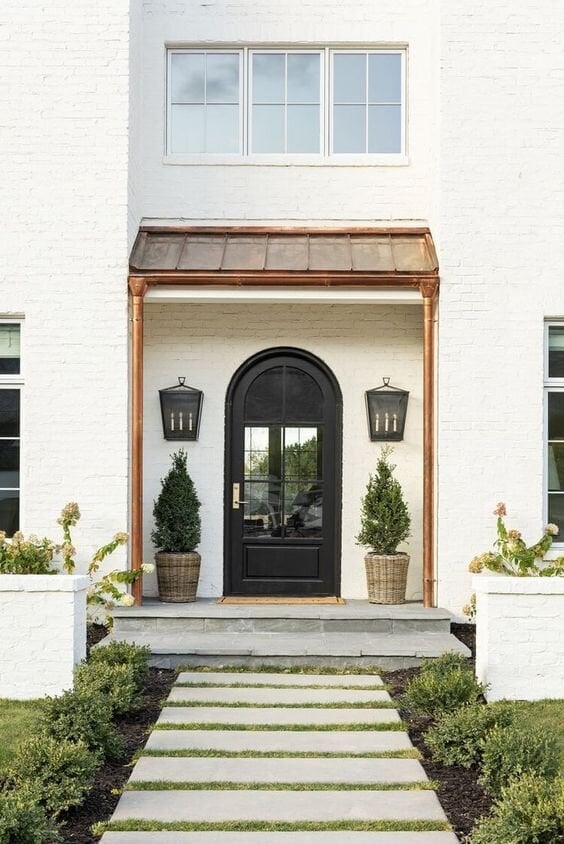
A straight stone paver walkway leading to an arched front door is the kind of entry that sets the tone before you step inside. The stones are laid in a simple running bond, with brick edging keeping the line clean. A copper awning over the door adds warmth against the white facade and gray stone. The style is farmhouse, but it avoids the overly rustic look by keeping the path wide, the stones uniform, and the color palette restrained. What breaks the formality is the copper: it introduces a lived-in patina that stops the entrance from feeling too new or precious.
Modern Walkway with Scattered Square Pavers and Gravel
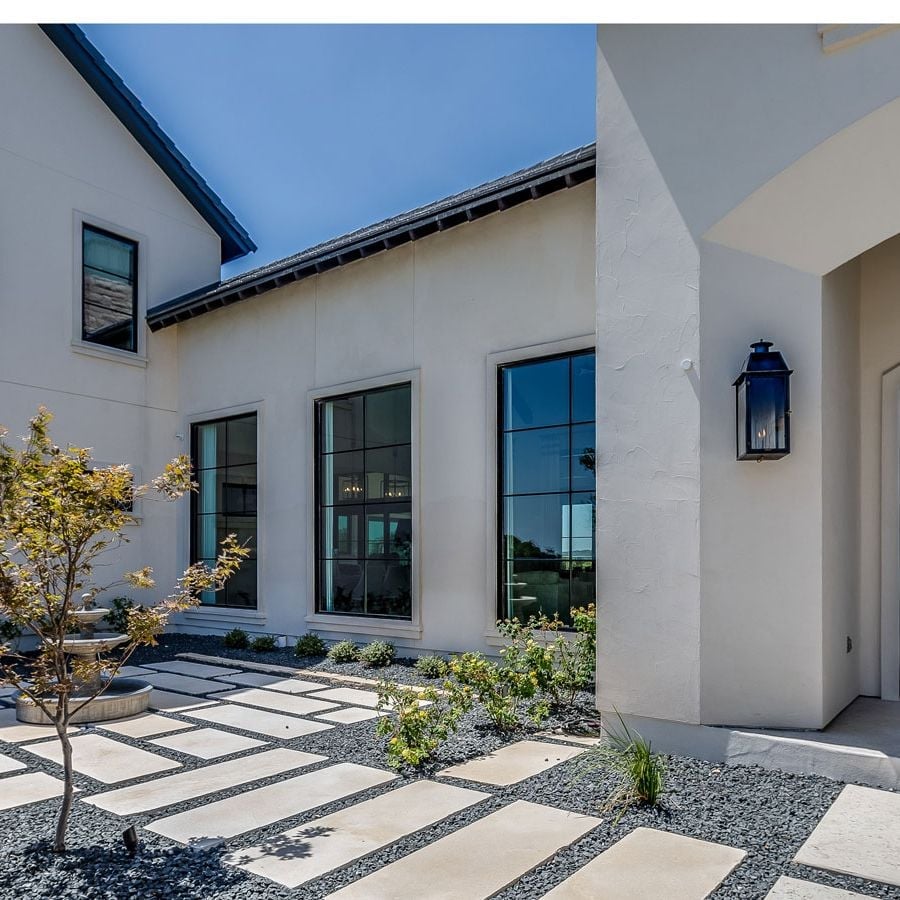
A solid slab walkway can feel too heavy for a small courtyard. Scattered square pavers let the ground breathe. Large cream stone squares sit in a bed of gray gravel, with a small tree planted off to the side. The open layout keeps the space from feeling crowded. A wall sconce adds gentle light for evening use. The look works because the pavers are spaced far enough apart to read as deliberate stepping stones, not a path that got interrupted. Gravel infill drains naturally and is simple to top up as needed.
Curving Concrete Paver Walkway with Dark Border
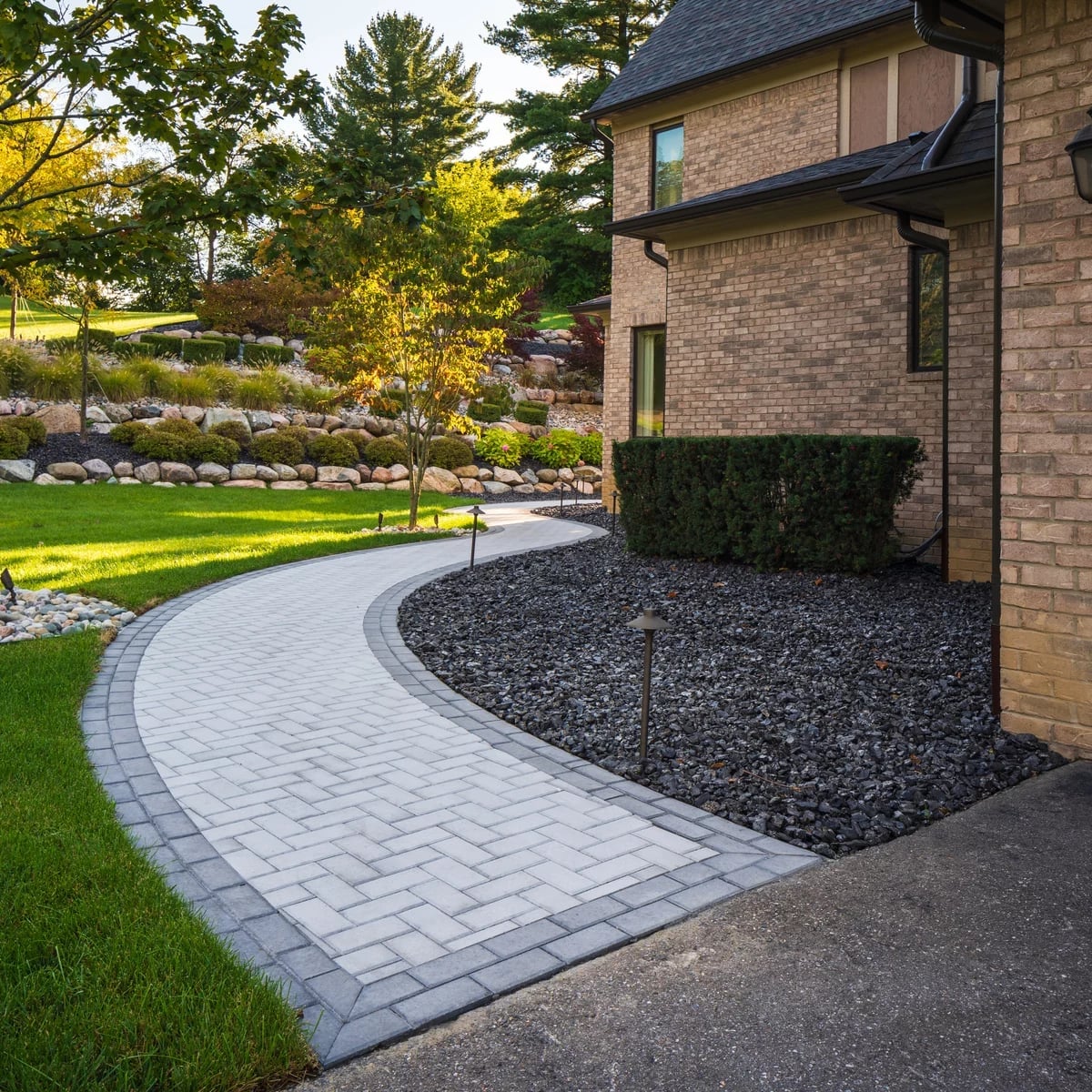
A curved walkway with a dark border frames the lawn without fencing it in. Gray concrete pavers sweep around a green lawn, with the darker edge defining the path clearly. Renter-friendly because the pavers sit on a prepared base, not permanent mortar. When it is time to move, the stones can be lifted and the grass allowed to fill back in. The curve itself guides visitors naturally toward the entrance, so the layout does the work of wayfinding without a sign.
Multi-Level Flagstone Patio and Walkway with Landscape Lighting
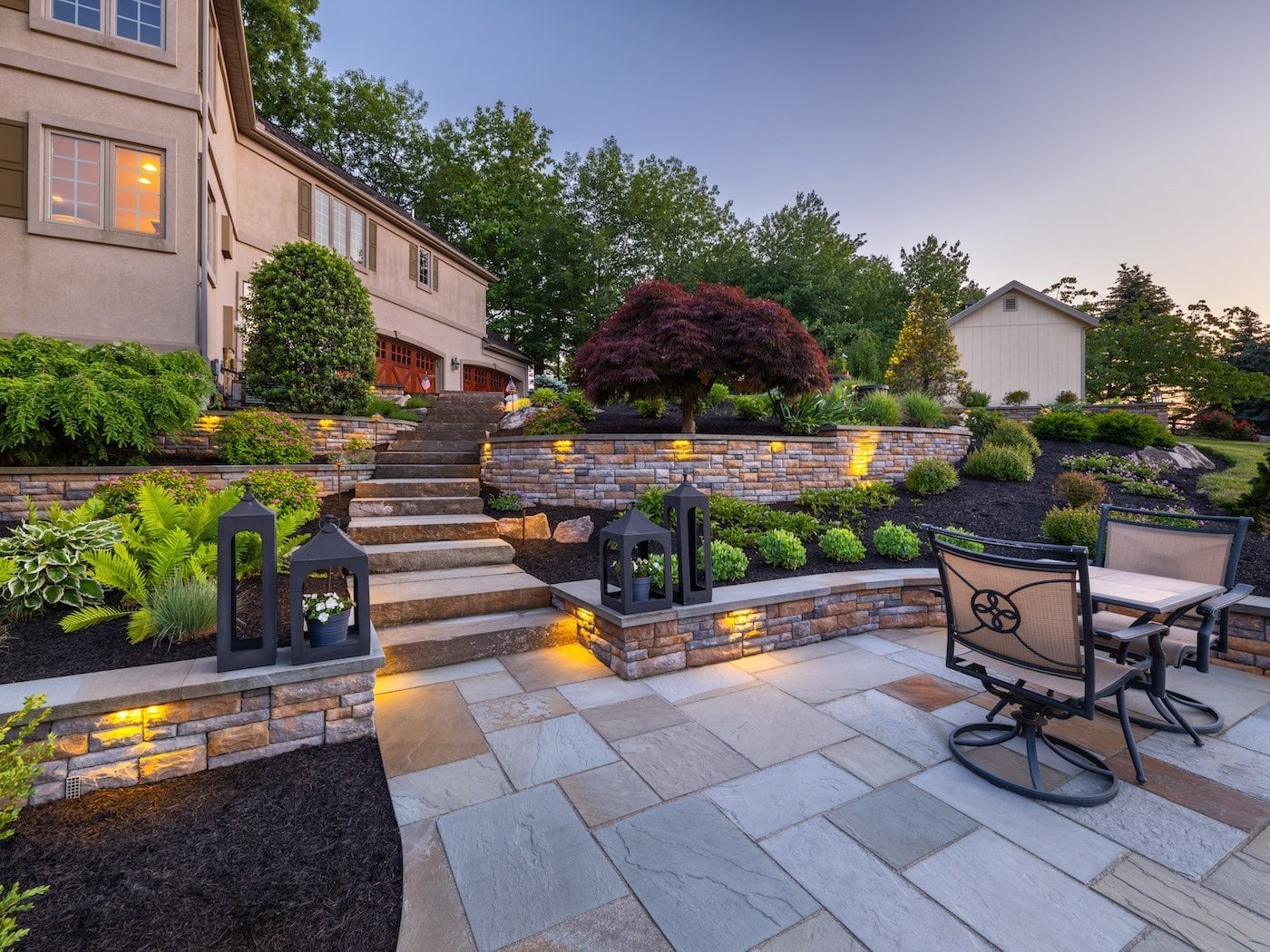
This is a roomy backyard designed for evening use. Large flagstone pavers form a multi-level patio and walkway, with stone retaining walls holding the grade changes. Landscape lighting is built into the steps and along the path, making the space usable after dark. Outdoor furniture sits on the lower patio, while the upper level connects to the house. The lighting layout prevents tripping on the level change and highlights the texture of the stone. A practical setup for anyone who actually entertains outside.
Modern Curved Paver Walkway with Stone Retaining Wall
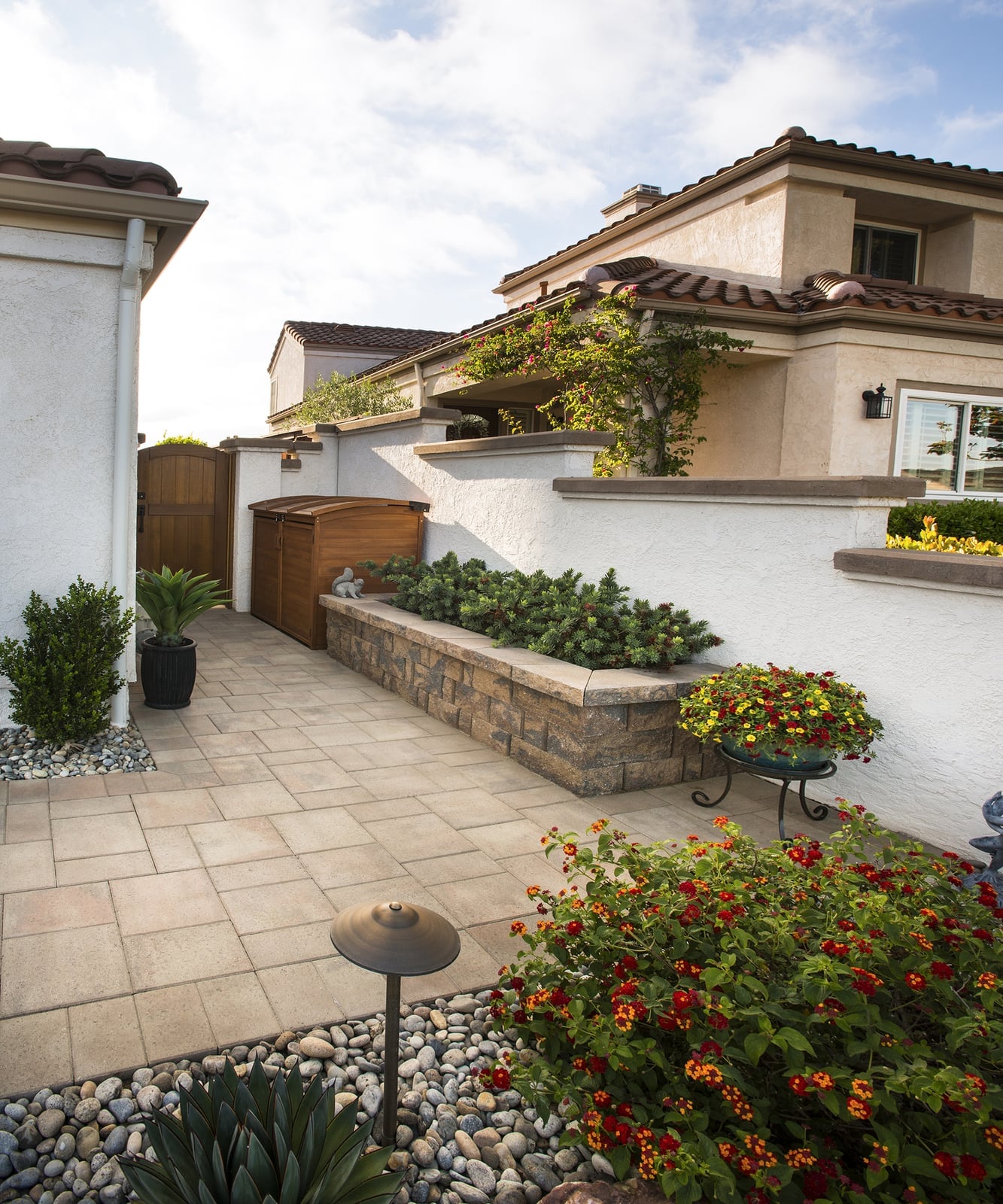
Is a curved path more work than a straight one? Not by much, and the result feels more natural. Beige concrete pavers curve toward a patio area, with a low stone retaining wall on one side. The wall holds back soil for a planter box with potted flowers, adding color without extra maintenance. Gravel fills the gaps between the pavers, which helps with drainage and keeps weeds down. The curve slows the walker down, making the garden feel larger than it is. A simple layout trick that costs nothing extra.
Uniform Beige Concrete Paver Walkway with Manicured Bushes
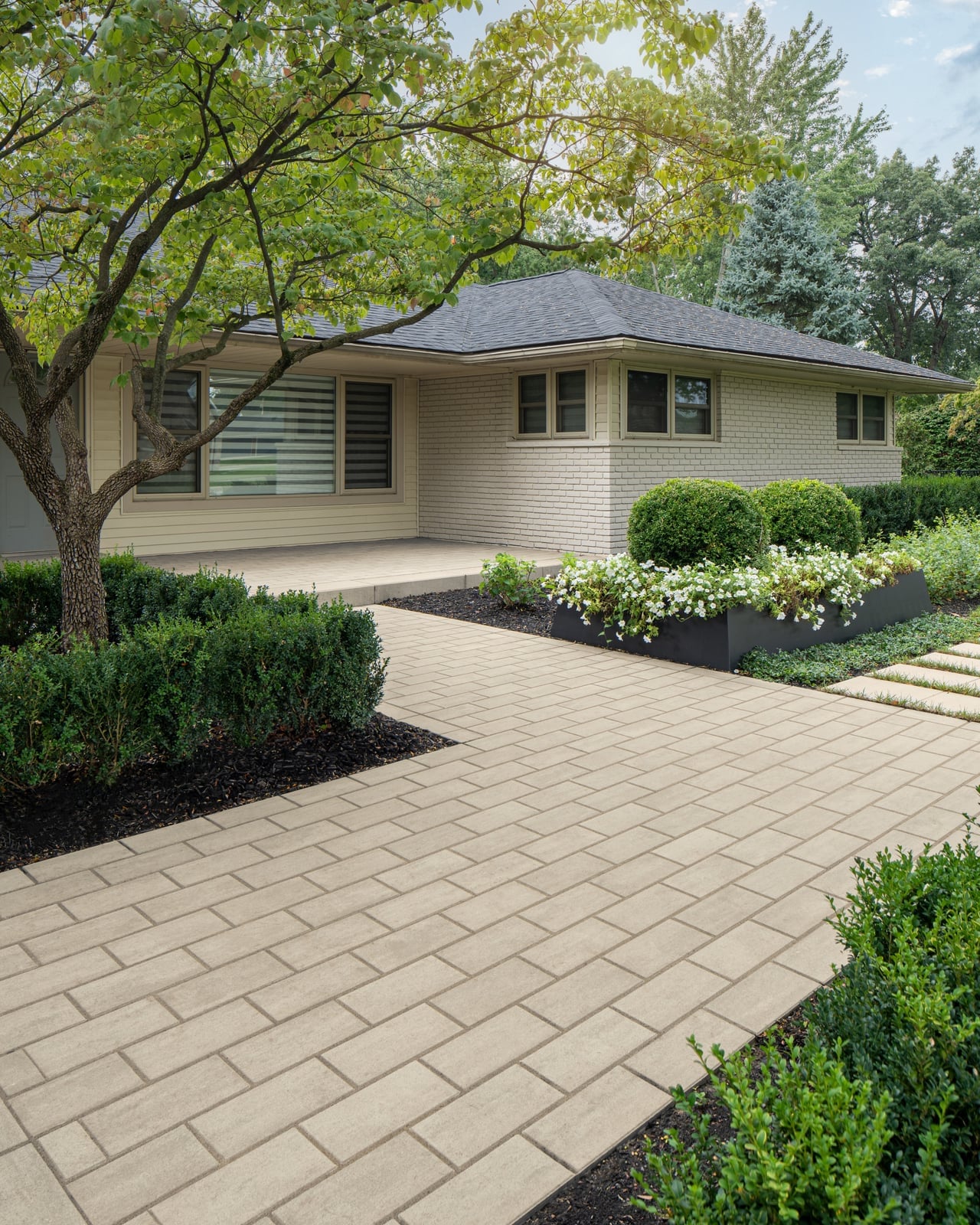
A straight walkway of uniform beige concrete pavers leads directly to the house entrance. Manicured green bushes line both sides, creating a clean, symmetrical frame. The repetition of the rectangular stones gives the path a crisp, intentional look. Under overcast daylight, the beige tone stays soft rather than glaring. This layout works best for a front yard where the goal is a clear, no-nonsense route from curb to door.
Sleek Gray Concrete Pavers Through Dense Bamboo, Close-Up Take
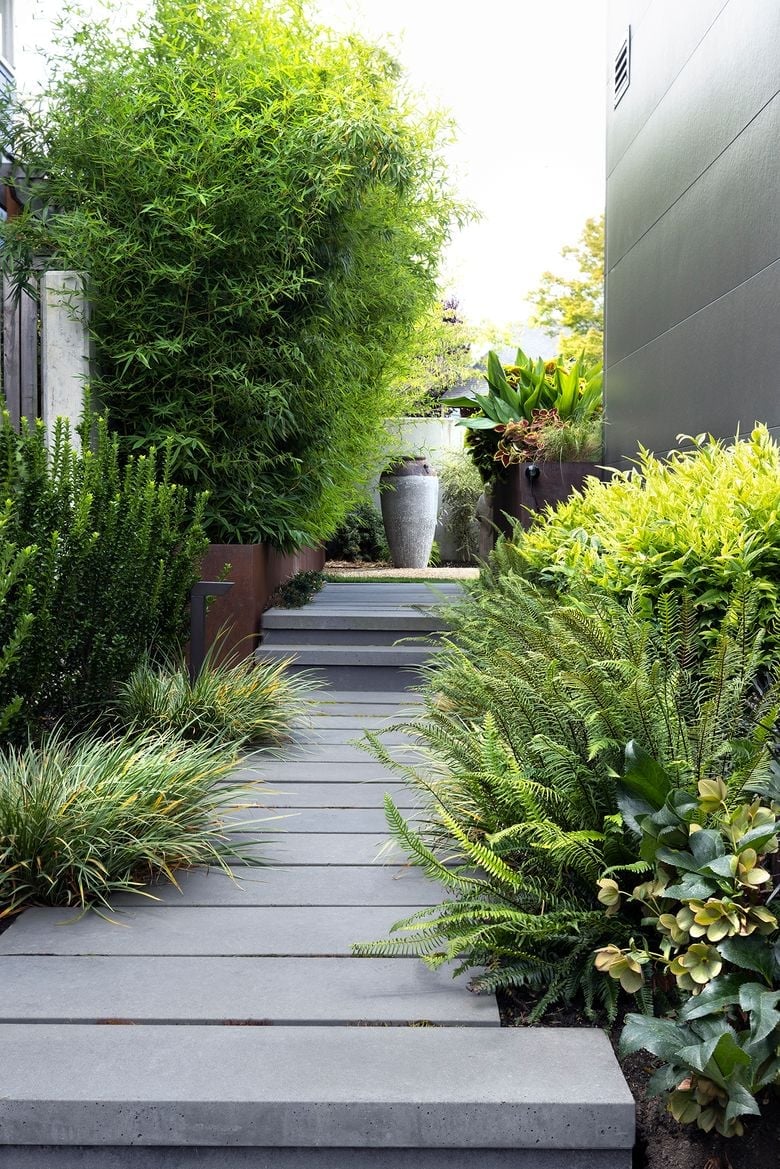
For a path through dense planting, keep the surface simple so the foliage stays the main event. Long gray concrete pavers form a straight walkway bordered by tall bamboo and lush greenery, with a large stone planter adding weight near the entrance. The palette stays in gray and green, with the dark gray stone of the planter tying the hardscape to the soil. The minimalist concrete surface does not distract from the layered leaves, which makes the path feel like a calm opening in the garden.
Minimalist Side Path with Large Gray Stone Pavers, Close-Up Take
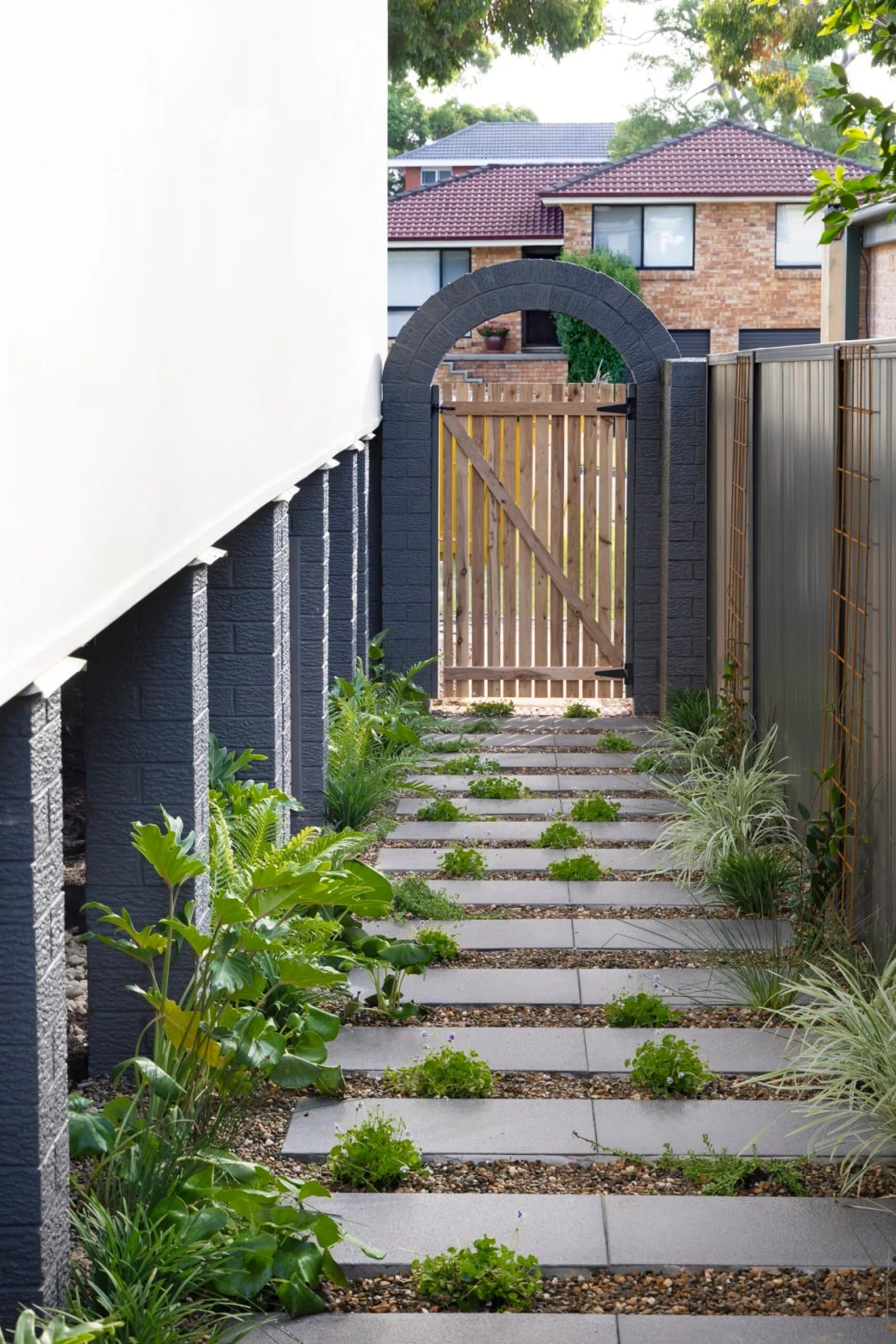
A side path often gets less attention than the front walkway, but a minimalist approach with large gray stone pavers can make it feel intentional rather than leftover. The straight layout uses widely spaced rectangular stones set into gravel, which lets the ground breathe and keeps the path from dominating the narrow space between the house and the fence. The bright daylight hits the gray stone evenly, so the palette stays clean: gray, green from the grass, and brown from the gravel.
For a side path that needs to handle regular foot traffic, the gap between the pavers matters. Wide enough for a single step but not so wide that you have to stretch, the spacing here keeps the walk natural and the gravel visible. The clean lines and even spacing give the path a polished look without adding a border or edging.
Traditional Curved Driveway with Gray Pavers and Stone, Close-Up Take
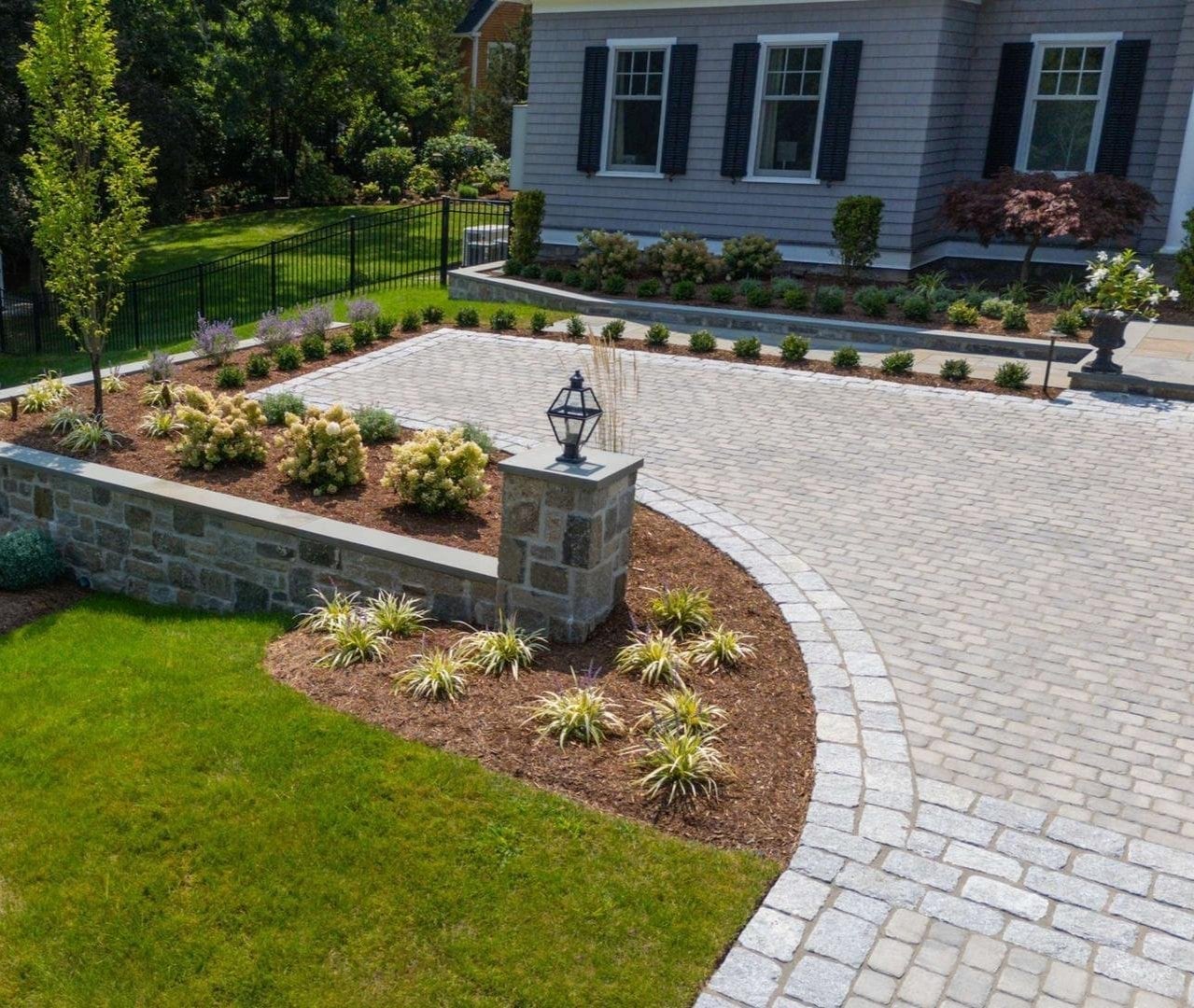
The curve of this driveway follows the natural line of the property, with gray pavers laid in a consistent pattern that wraps around the bend without breaking. A low stone wall runs along the outer edge, acting as a visual anchor and a physical boundary between the paved surface and the lawn. The beige tones in the stone wall warm the gray palette, and the lamppost near the curve adds a traditional vertical element that balances the horizontal sweep of the driveway.
Naturalistic Garden Walkway with Beige Brick Pavers, Close-Up Take
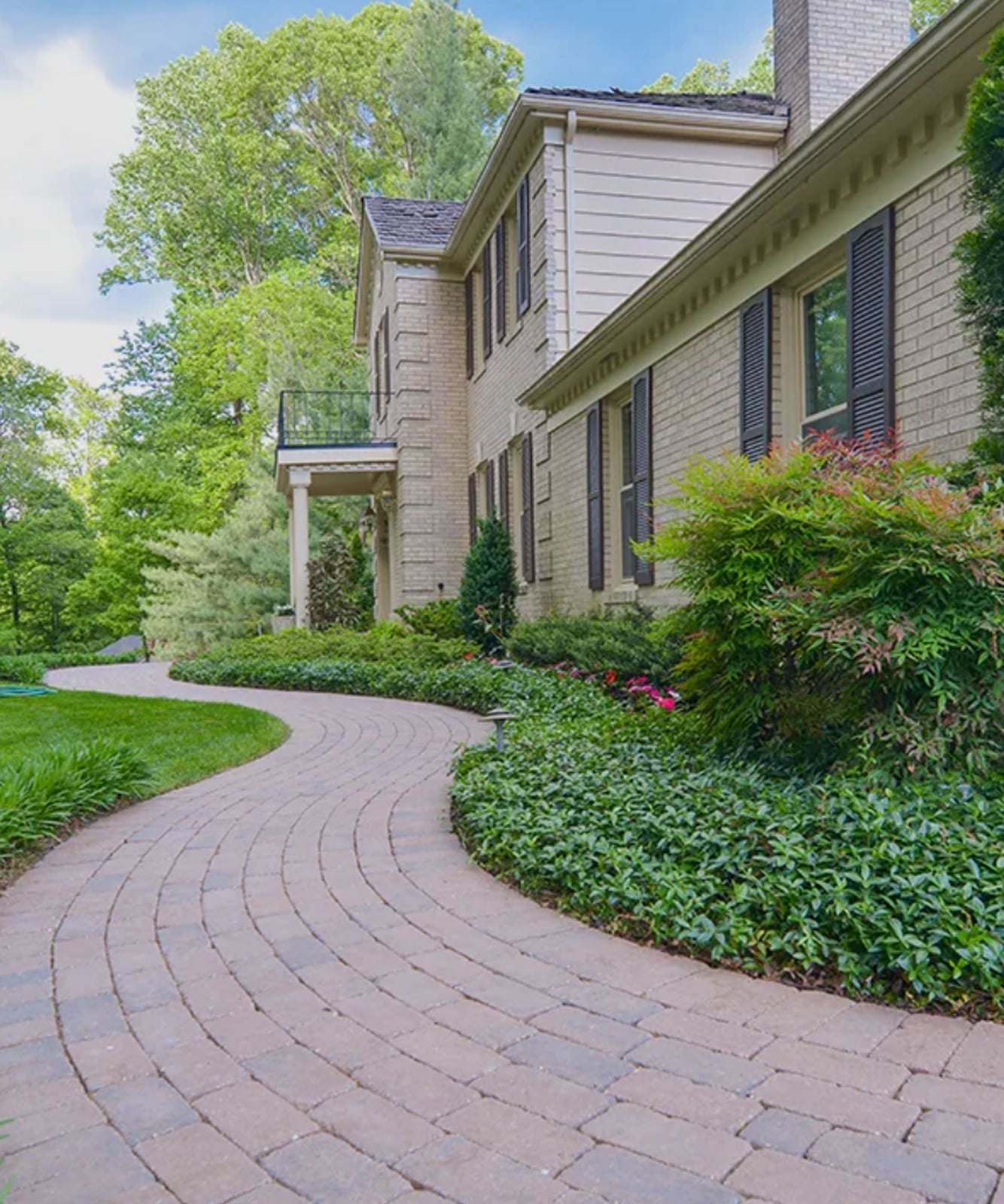
A curved brick paver walkway in warm beige makes a garden feel settled and mature. The winding layout follows the natural contours of the planting beds, with mature trees and dense shrubs on both sides creating a sense of enclosure without blocking the view. Under daylight, the beige of the brick and the green of the foliage stay soft, so the path blends into the landscape. The naturalistic style means the planting does the defining, and the curved brick is just the route through it.
Modern Curved Flagstone Walkway with Integrated, Close-Up Take
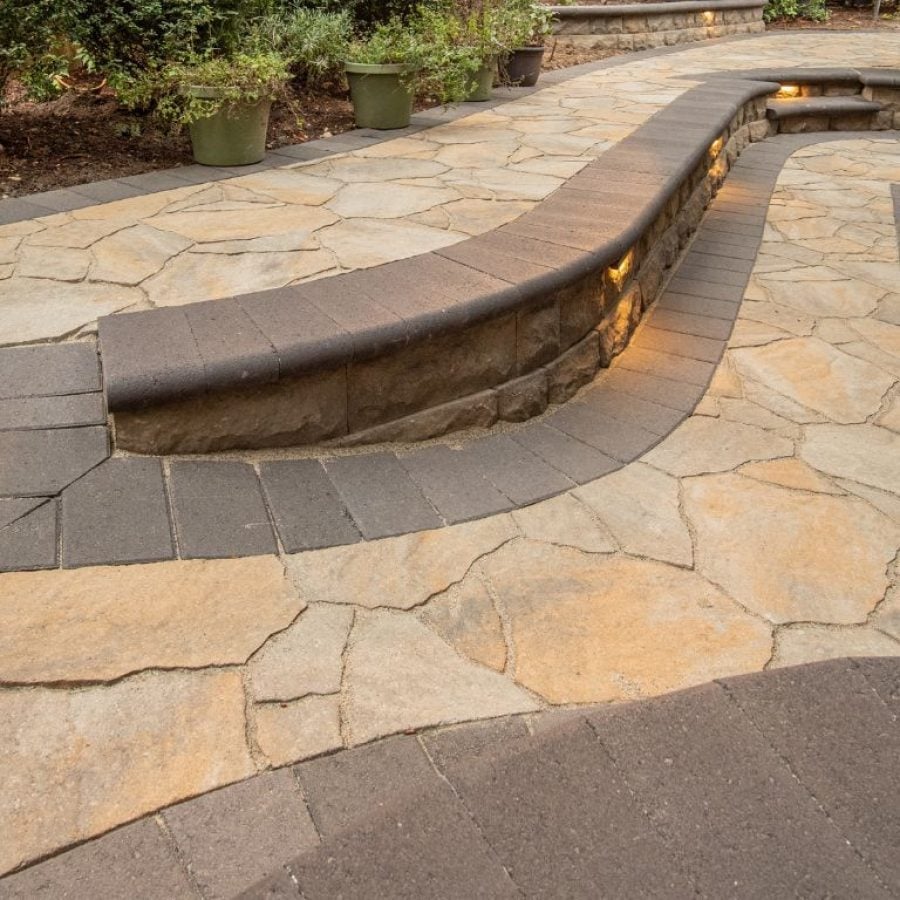
Plan the lighting for a walkway that gets evening use before the last paver goes down. This modern curved flagstone walkway uses integrated lights set into the stone, so the path is visible after dark without relying on a single overhead fixture or a porch light that casts shadows the wrong way. The low, warm glow follows the curve of the walkway and outlines the seating area where a stone bench sits, making the whole route feel usable and decorative.
Tan and gray flagstone pavers make up the surface, and the concrete border keeps the edge clean. The integrated lights turn the walkway into the main feature of the patio after sunset, with the bench becoming a natural stopping point. Solar disc lights placed along the edge of the pavers can define the curve, though they will not match the even brightness of built-in fixtures.
Modern Stepping Stones with Black River Stone Infill
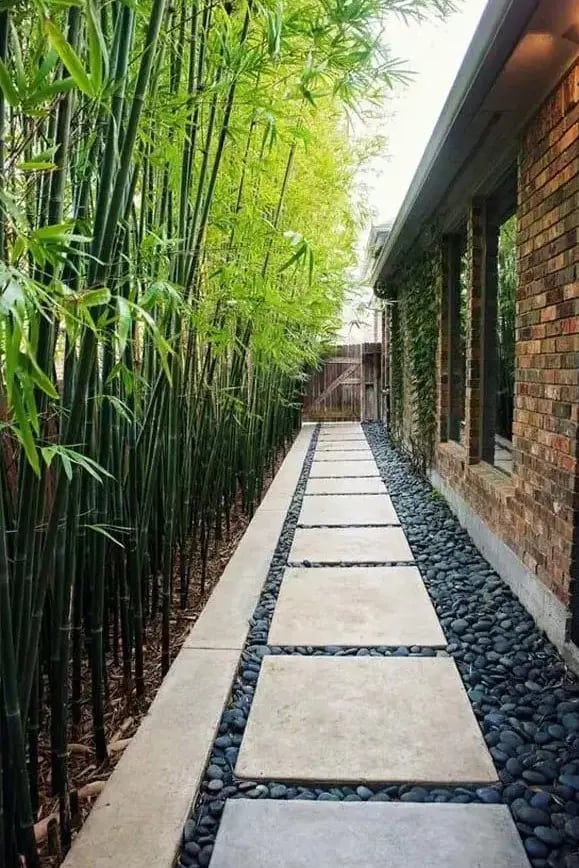
Large concrete slabs create a clean, modern path that feels solid underfoot. The straight walkway uses black river stone as infill between the stepping stones, a material choice that adds texture and a dark contrast to the gray concrete. Tall bamboo on either side reinforces the minimalist look with vertical green lines. The palette stays in gray, black, and green, which keeps the scene calm. A practical swap is to use poured concrete rounds instead of rectangular slabs. The result is a straightforward path that directs movement without distracting from the surrounding plants.
Curved Gray and Beige Concrete Paver Walkway to Stone Steps
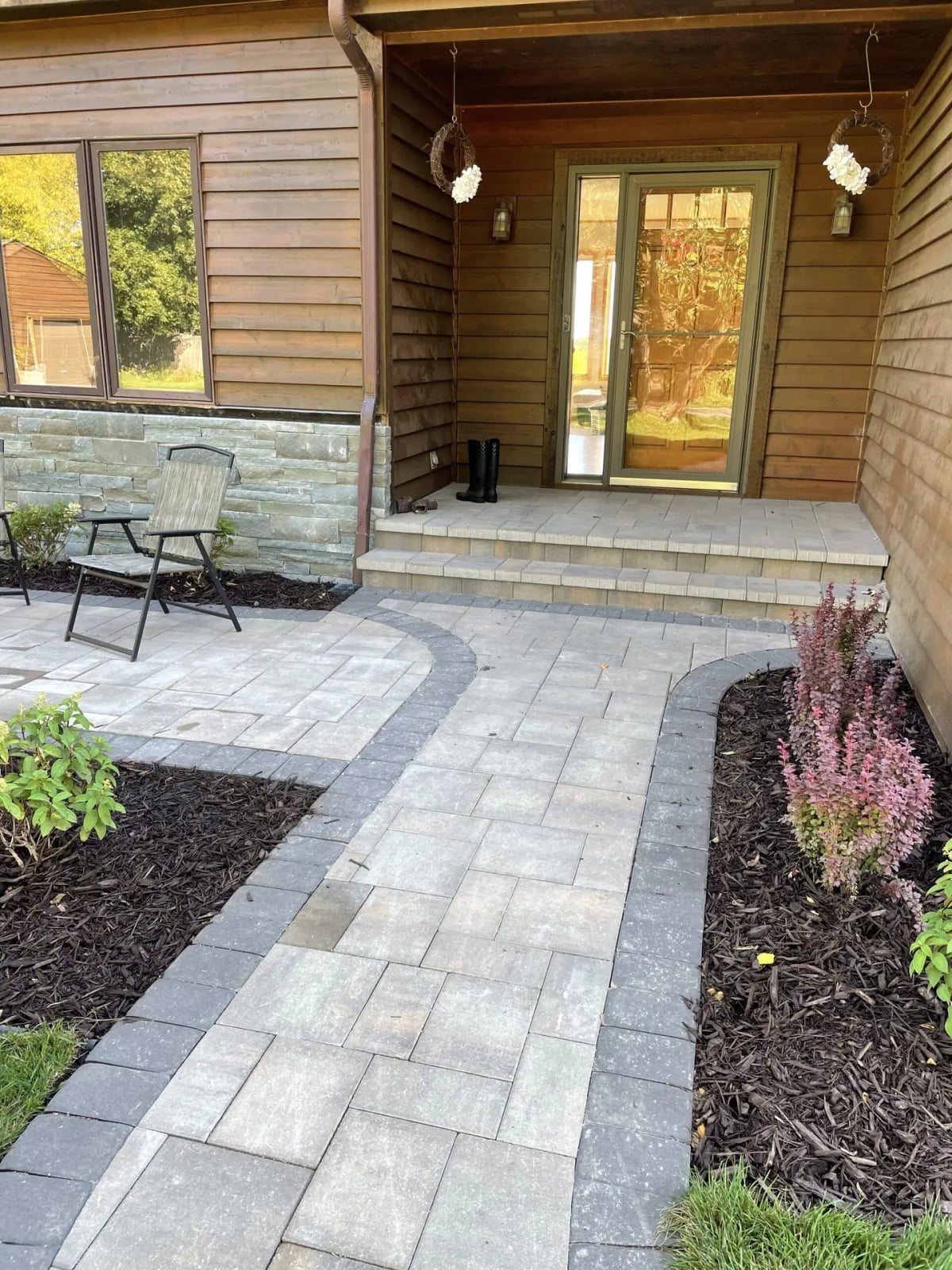
A curved walkway softens the approach to a front entrance, making the path feel longer and more inviting than a straight line. This one uses gray and beige concrete pavers that lead to stone steps and a front door. The curve itself creates a natural division between the paved surface and the surrounding lawn, so you do not need a separate border material. The house exterior uses stone veneer and wood siding, which means the walkway colors can tie into both textures. A single potted plant near the steps anchors the endpoint. For renters, a curved path is not a practical DIY. Instead, focus on what you can control: add potted plants along the existing walkway to echo the curve and draw the eye toward the entrance.
Traditional Dark Gray Cobblestone Driveway
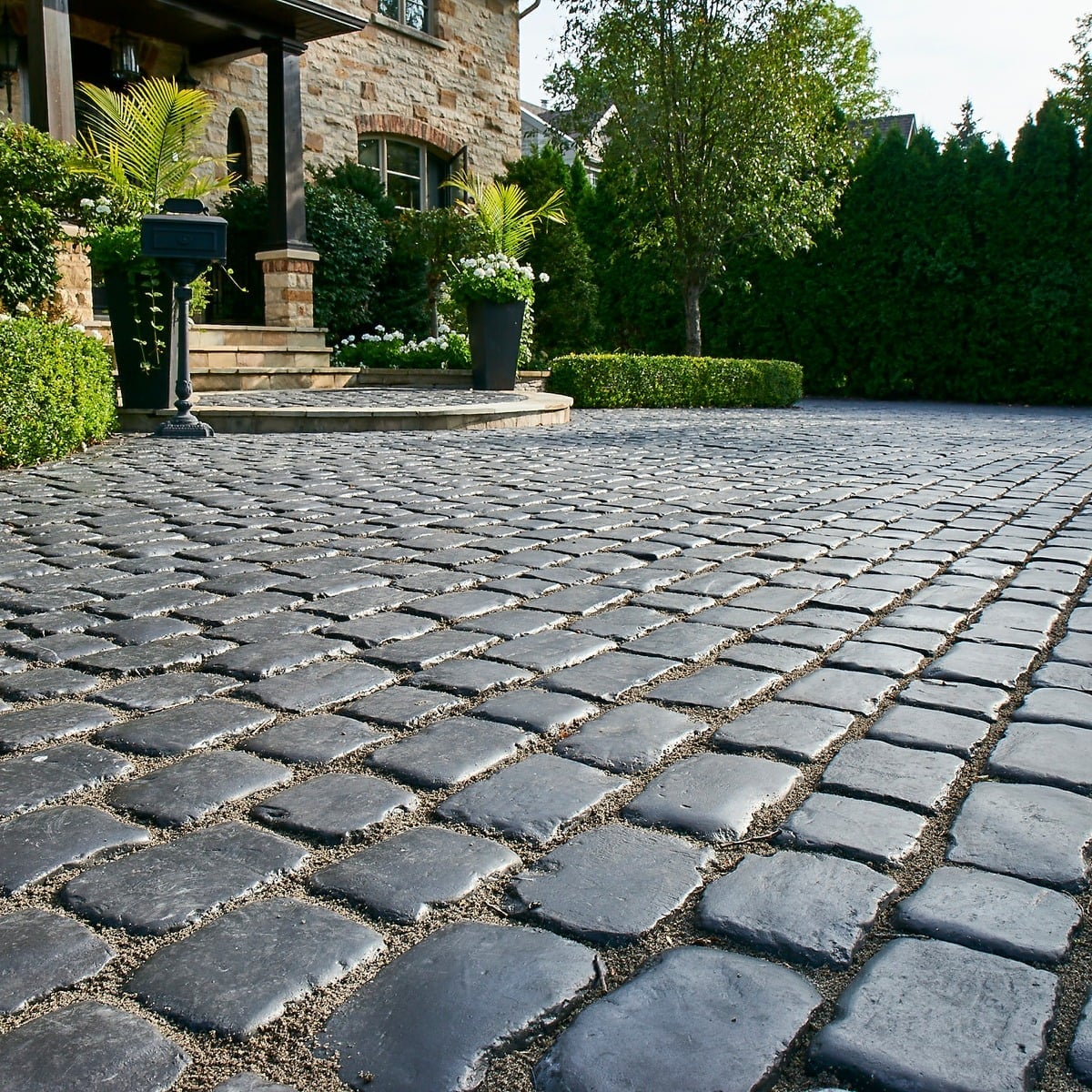
A traditional driveway often goes with smooth asphalt, but dense cobblestone pavers in dark gray offer a more textured alternative. The uniform pattern covers the full width of the driveway, creating a surface that looks solid and deliberate. The dark gray tones pair well with a beige house facade and a simple mailbox, keeping the look grounded. Cobblestone handles vehicle weight well because the individual stones lock together under load. Gravel along the edges keeps the stones from shifting. The trade-off is that the joints between pavers can collect debris, so a leaf blower or stiff broom becomes part of regular upkeep. For anyone wanting the look without a full replacement, a dark gray concrete paver in a similar size offers the same dense pattern at a lower installation effort.
Modern Curved Paver Walkway with Contrasting Border
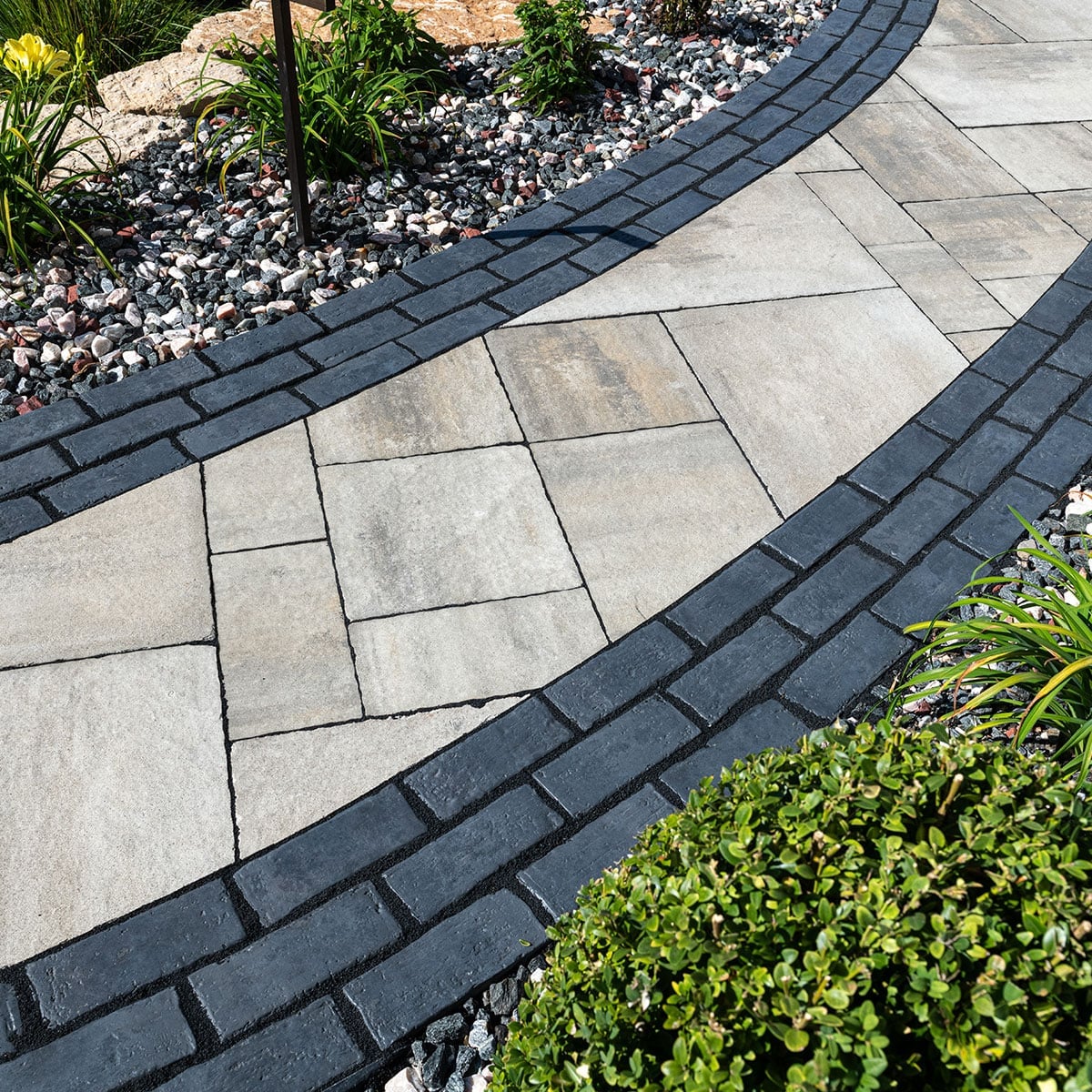
Large gray pavers form a curved walkway, and a charcoal border runs along both edges to define the path clearly. The lighter gray field and dark border give the walkway a precise, finished edge without needing a metal or stone curb. A manicured bush sits near the curve, adding green softness against the hard materials. Gravel and stone surround the path to reduce mud splatter onto the pavers. The border protects the paver edges from shifting outward over time, especially on a curve where soil erosion is more likely. For a similar effect on an existing path, install a row of darker edging stones only on the outer side of the curve.
Naturalistic Garden Path with Scattered Stone Pavers
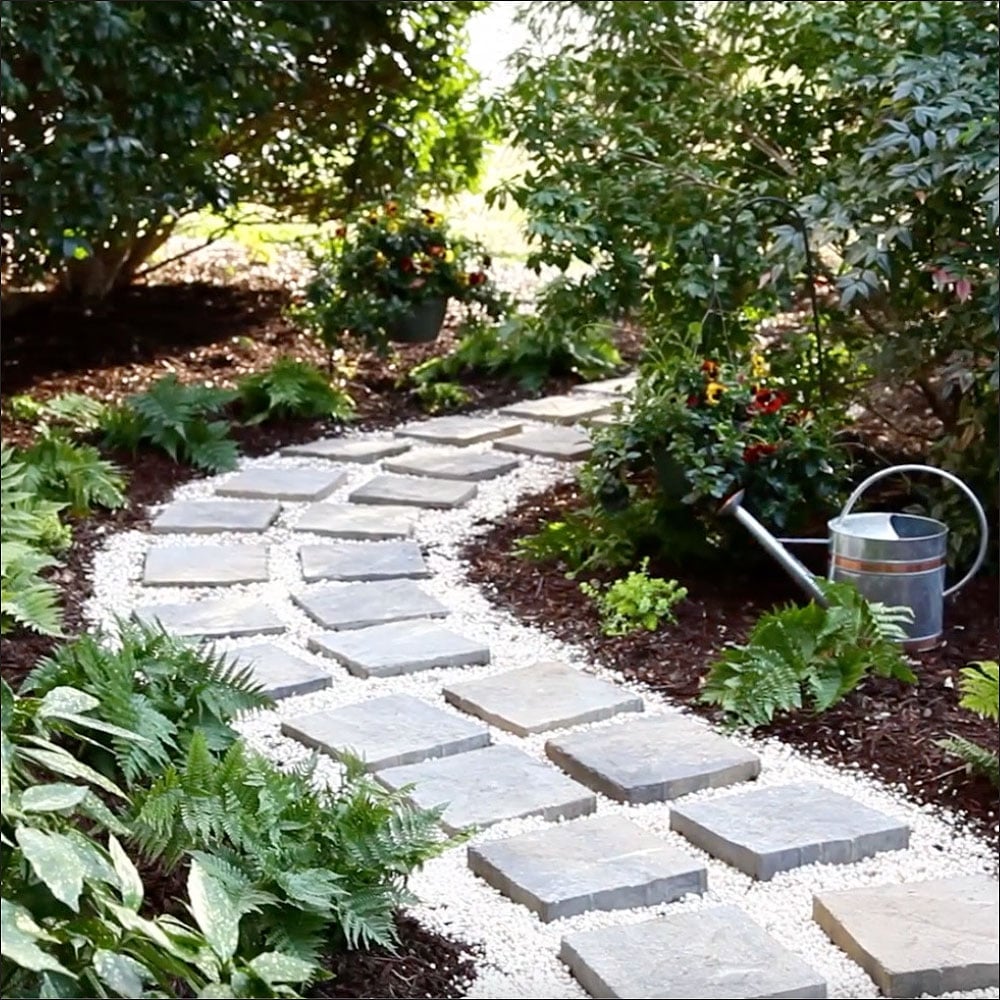
Scattered stone pavers set into gravel and mulch create a path that feels discovered rather than built. The stones vary in size and placement, which suits the naturalistic style and the dappled shade from surrounding plants. Ferns and a watering can near the path reinforce the garden setting. The layout works because the pavers are spaced close enough to step between them easily, but far enough apart that the gravel and mulch remain visible as the secondary surface. That ratio matters. If the stones are too close, the path looks like a broken slab. Too far apart, and the walkway loses its visual connection. The gray stone tones blend with the brown mulch and green foliage, so nothing jumps out as artificial. A garden path like this is simple to adjust after installation by adding or moving a few stones.
Winding Flagstone Walkway with Brick Border
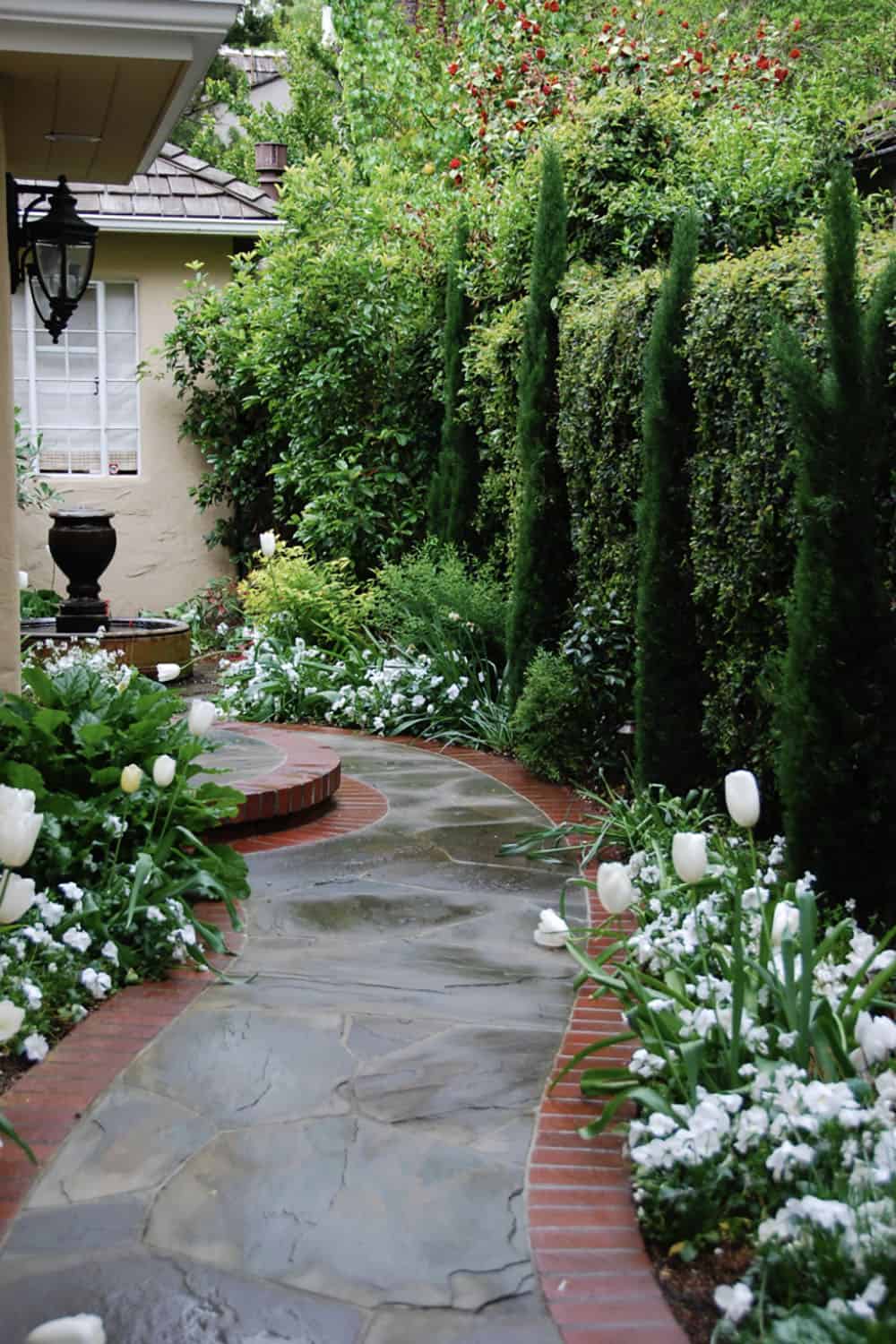
A winding path needs a turn gentle enough that a garden cart or wheelbarrow can follow it without stepping off the stones. This walkway uses large flagstones in gray tones, edged with a narrow brick border in warm red that anchors the irregular shapes. The bricks also create a clean line between stone and the lush planting on either side. White tulips and a manicured hedge frame the curve, and the overcast daylight softens the green and the gray stone. A brick border like this is a smart choice for renters because it sits on top of the soil and does not require a permanent mortar bed. You can shift it as the planting fills in over the seasons.
Traditional Winding Stone Walkway to Wooden Gate
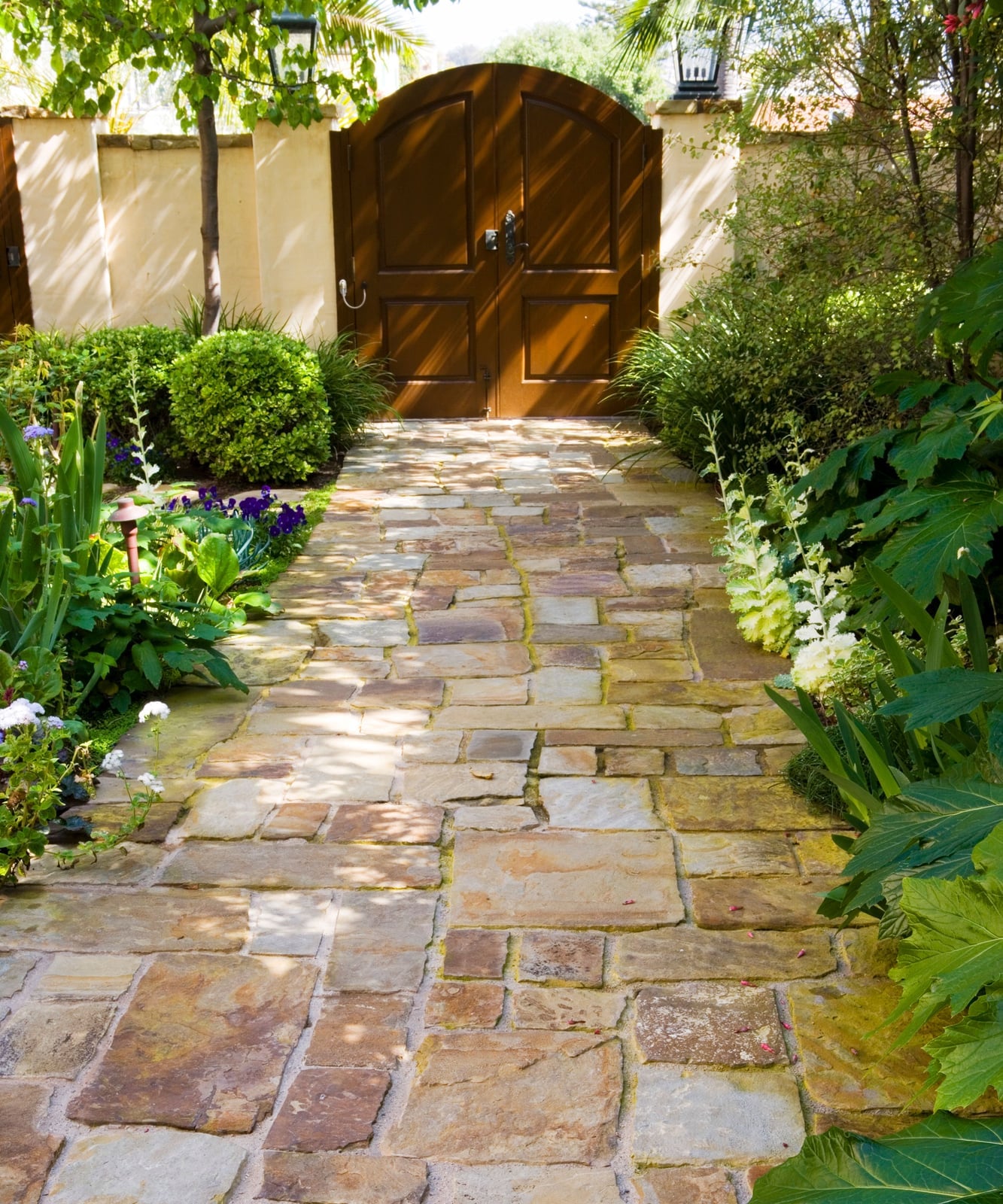
The palette here is tan stone, soft green foliage and touches of purple from low flowers, all leading to a wooden gate that closes the view. The irregular stone pavers are set in gravel, which lets water drain between them and keeps the path from feeling too formal for a front yard. The warm wood of the gate repeats the tan of the stone, so the eye travels easily from the first paver to the latch without a hard break in color. This traditional stone paver walkway wooden gate setup works best when the path widens slightly near the gate, giving you room to pause and open it without stepping into the planting.
Modern Luxury Curved Paver Walkway with Stone Facade
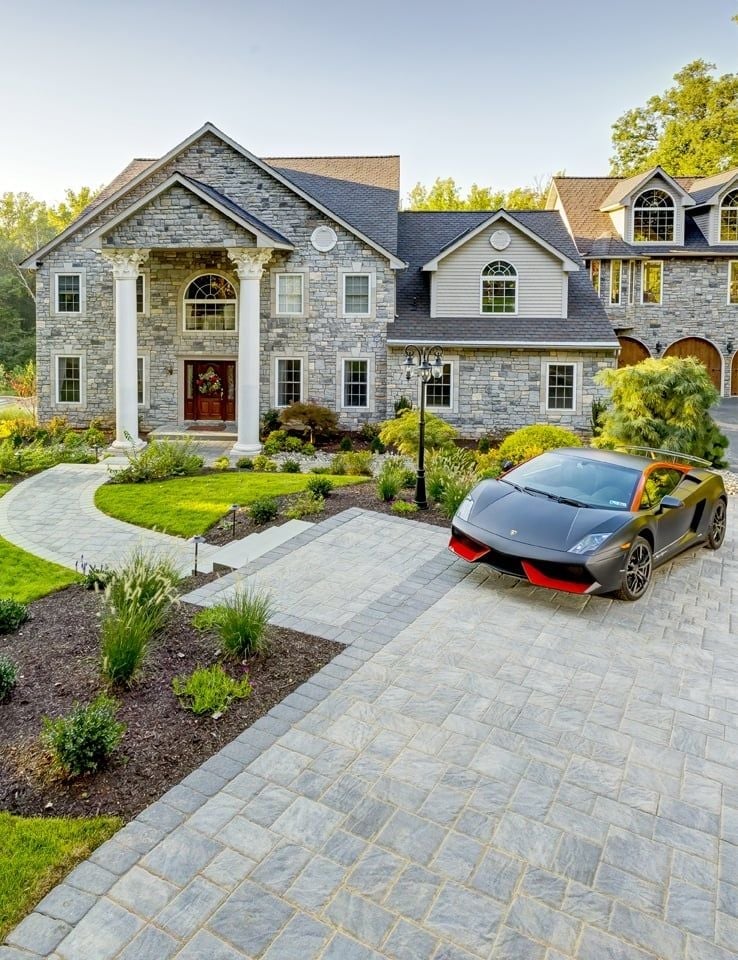
A curved walkway should have a radius wide enough for two people to walk side by side. This one sweeps through a front yard of gray and beige stone pavers set into grass, leading to a modern house with a stone facade. The curve softens the straight lines of the house, and the green lawn between the pavers keeps the surface from reading as a solid slab of hardscape. A sports car parked at the end hints at the scale: the path is generous. To recreate it, look for consistent paver spacing across the curve so the eye follows the arc without stumbling over uneven gaps.
Garden Path with Stone Steps and Paver Walkway
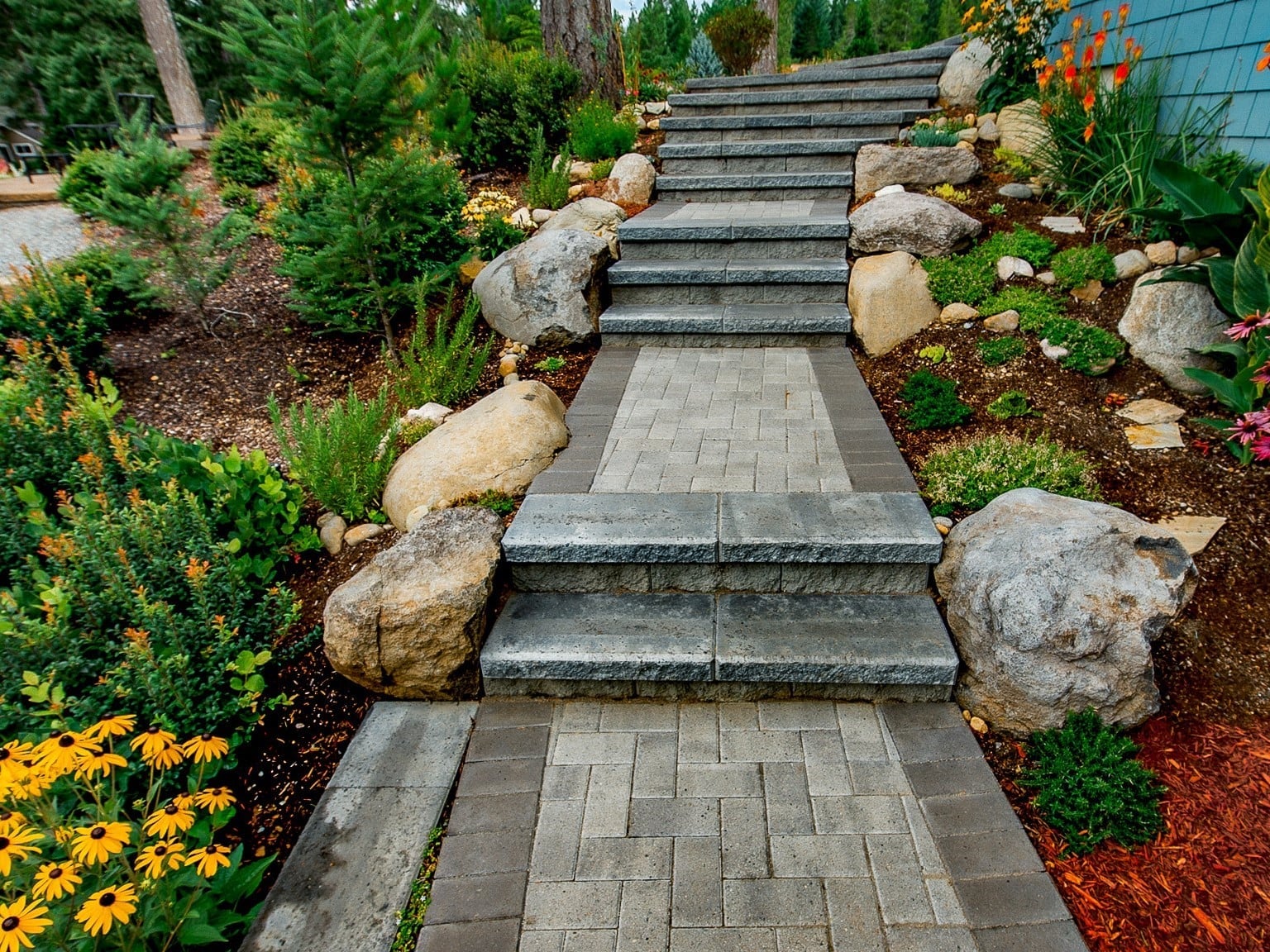
A straight path through a garden can feel like a shortcut; a path with steps asks you to slow down and notice what is growing on either side. This garden paver walkway with stone steps uses broad stone treads set into mulch, with gray pavers leading the way between large rocks and layered planting in green and orange tones. The steps break the slope into manageable sections, and the mulch between the pavers softens the look while keeping weeds down. If your garden has a gentle grade, a step every four or five feet is enough to change the pace without making the walk feel like a climb.
Modern Paved Area with Light-Colored Pavers and Wood Fence
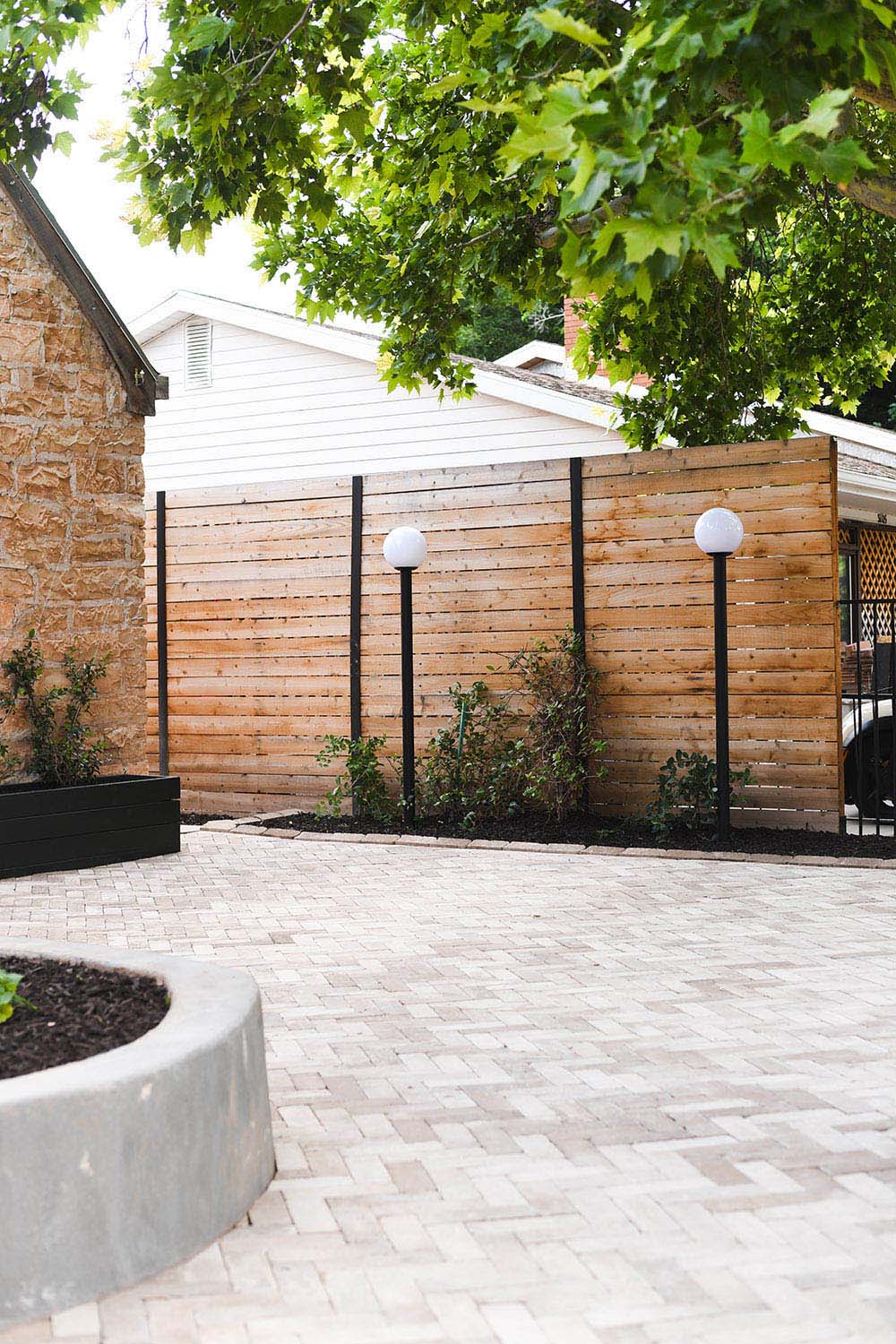
The surface here is paved in light tan and gray pavers that reflect daylight, which keeps the area bright even without direct sun. A horizontal wood fence in a natural finish runs along one side, adding warmth that the cool stone tones lack on their own. The open plan feels roomy, with the pavers laid in a simple grid. For this modern light paver patio wood fence combination, the trick is matching the fence stain to the warmest note in the stone to make the two materials feel like a deliberate pair.
Modern Minimalist Walkway with Grass Infill and Metal Railing
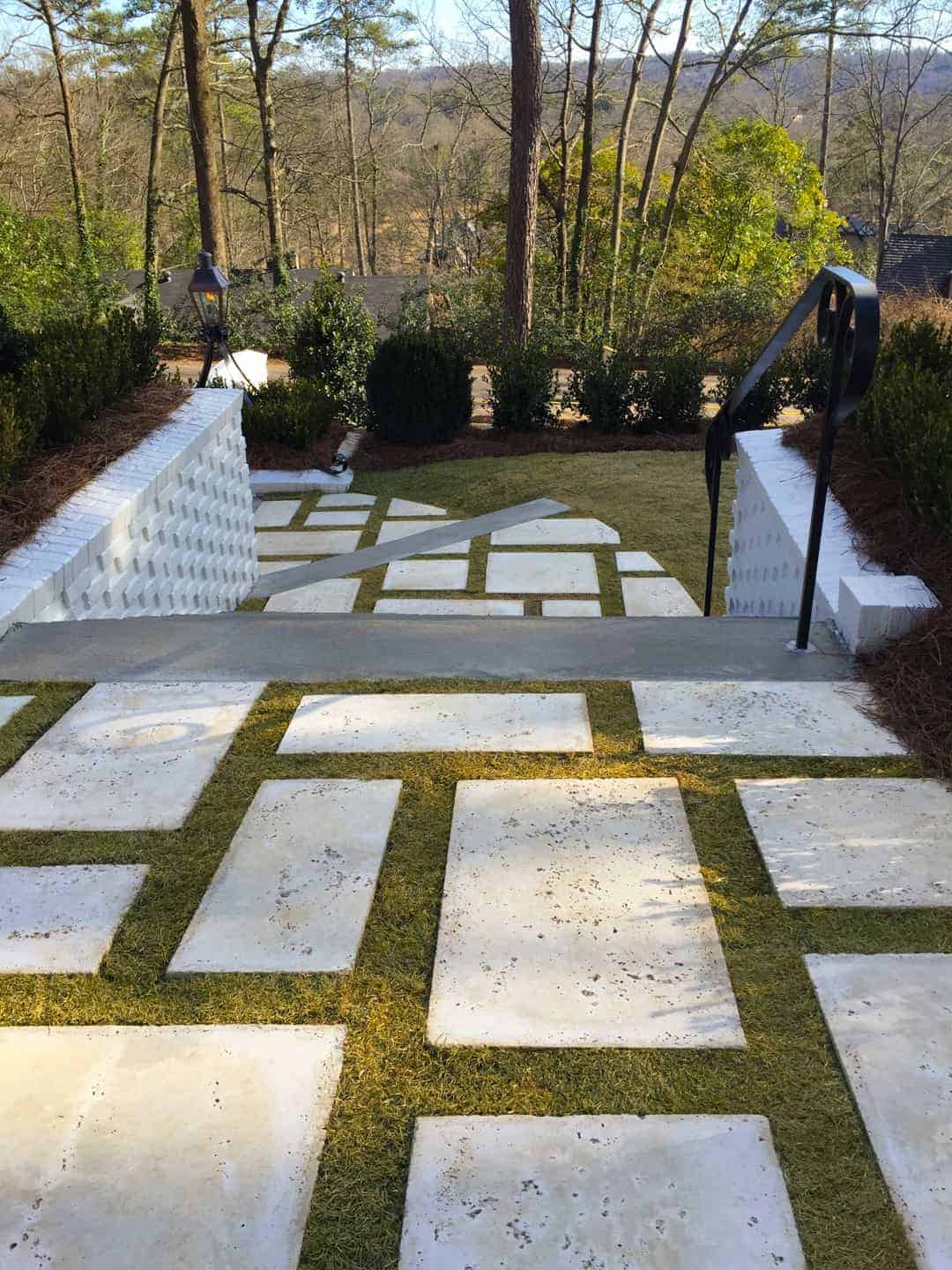
This walkway reads as a straightforward swap for a solid poured path. Large concrete pavers sit spaced apart with grass growing between them, so the ground stays permeable and the look stays clean. A metal railing runs along one side, which adds definition without blocking the view. The gray of the concrete and the green of the grass keep the palette simple, and the geometric layout means the path feels intentional rather than random. For a renter, this approach works because the individual pavers can be lifted and the grass will fill back in, leaving no permanent change to the yard.
Modern Curved Driveway with Gray Herringbone Pavers
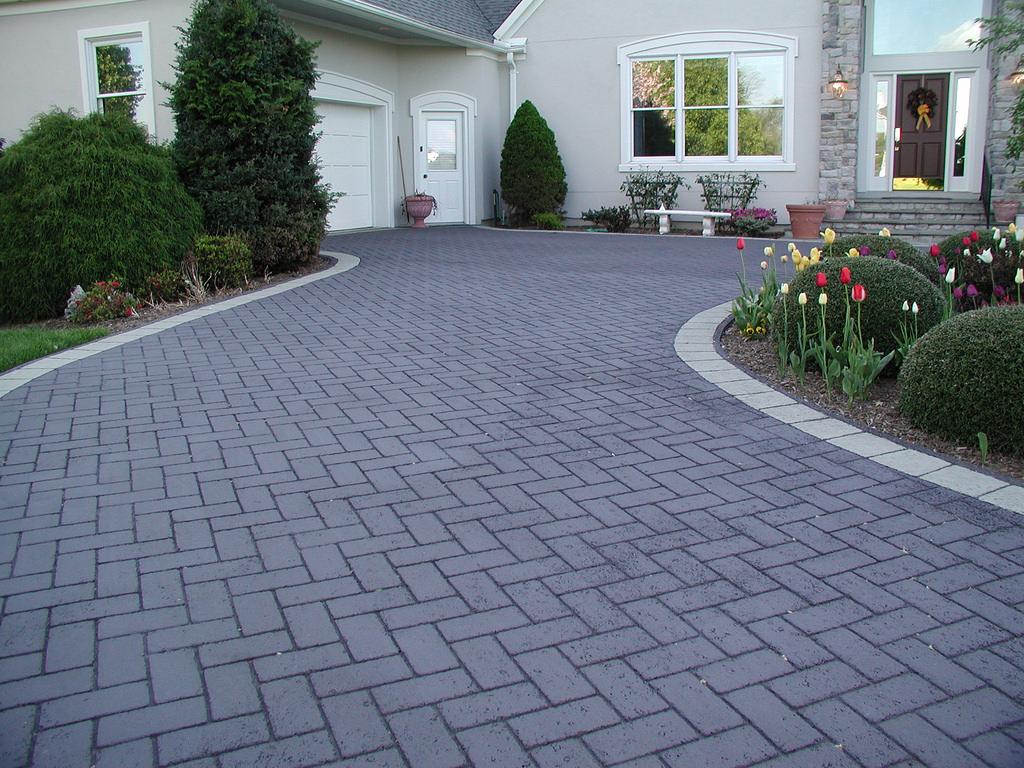
To keep a curved driveway looking cohesive, keep the paver pattern consistent through the turn. Here the gray herringbone pavers follow the bend without breaking the line, which makes the curve look planned. The herringbone layout adds texture and a sense of movement, helping a wide driveway feel less like a flat stretch of concrete.
The palette stays cool with gray stone, white trim on the house, and green shrubs along the edge. Bright daylight makes the pattern visible from a distance, important for a driveway since you see it from the street first. If you are working with an existing straight driveway, switching to a herringbone pattern on the surface layer is a surface-level update that does not require digging up the base.
Roomy Modern Curved Paver Walkway with Stone Border
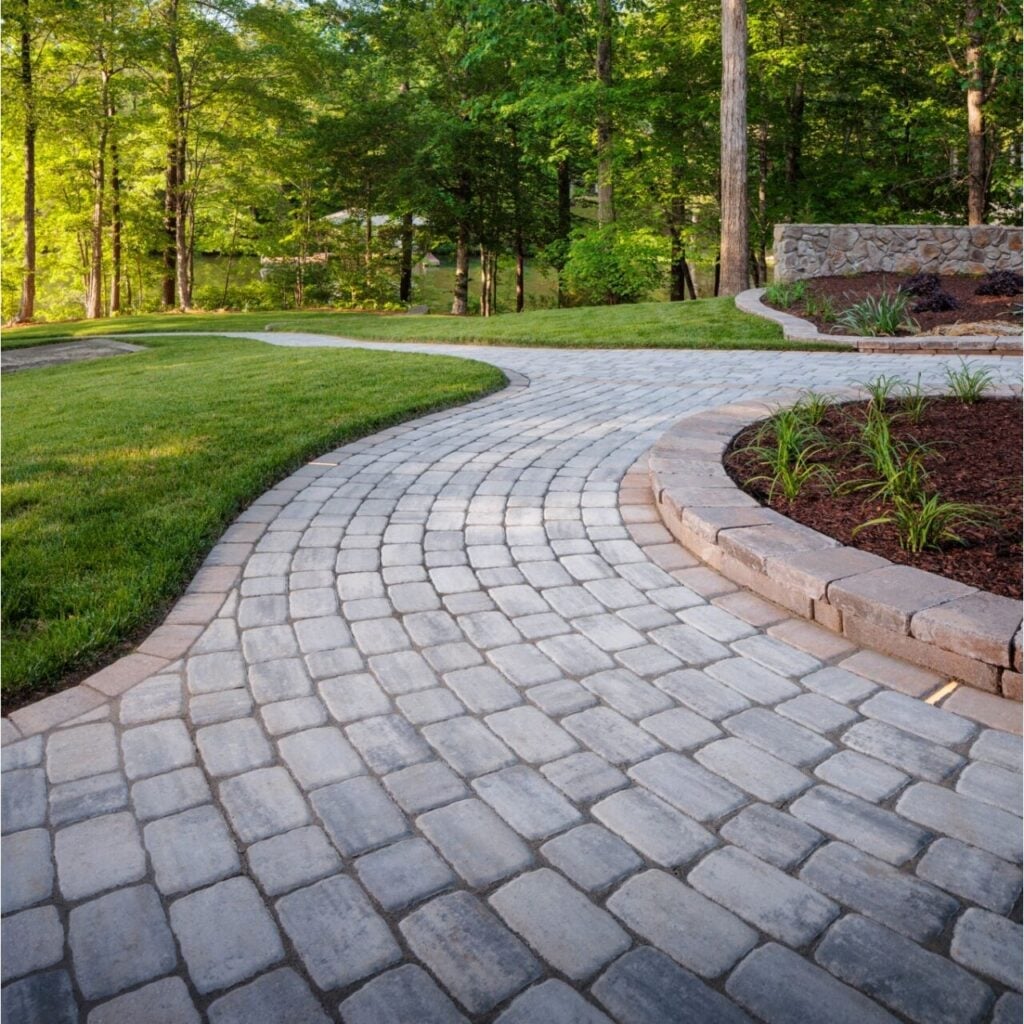
The walkway uses a wide sweeping curve rather than a tight turn, which makes the path feel generous instead of narrow. A stone border runs along the edge, separating the pavers from the lawn and giving the curve a clear boundary. The gray and beige tones of the concrete pavers blend with the stone border, so the path does not fight the natural setting. Subtle uplighting along the retaining wall would keep the curve visible after dark, which is useful if this is the main route to the front door.
Traditional Multi-Toned Paver Patio with Stone-Top Table
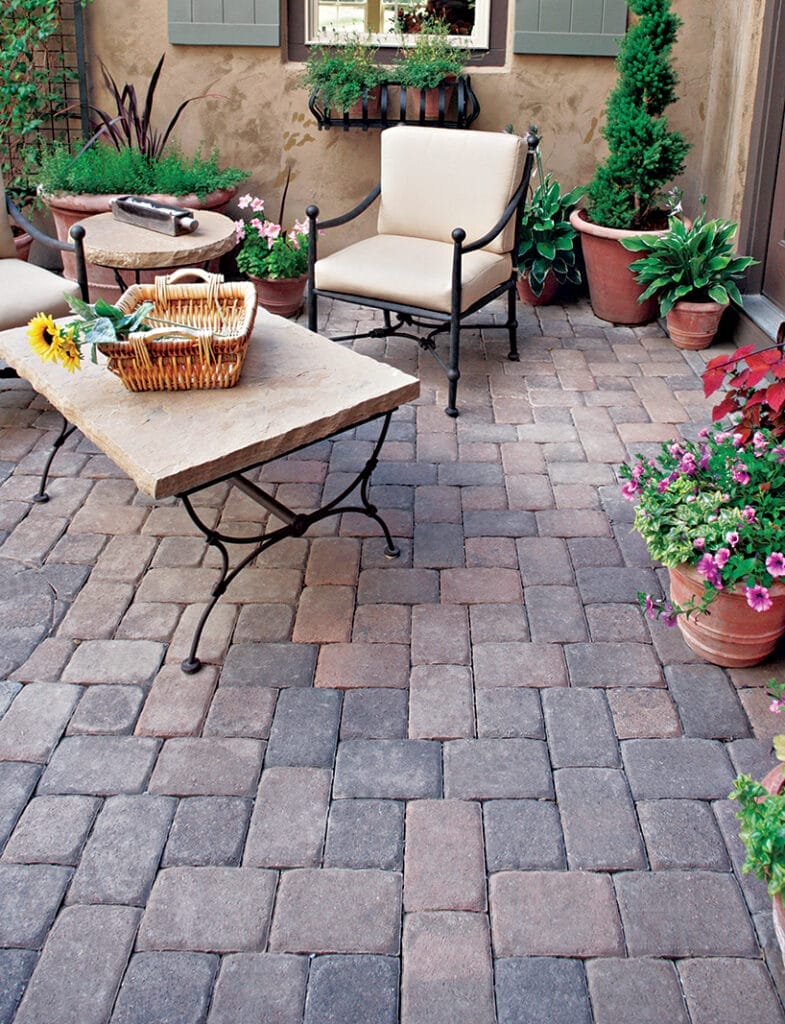
The patio uses pavers in brown, gray, and beige tones rather than a single solid color, which helps disguise any future stains or wear. A stone-top table and a metal chair with a dark frame sit on the surface, and potted plants add green without needing permanent planting. For a traditional patio, the mix of paver colors gives the ground a settled, aged look right from the start. The metal furniture is a practical choice outdoors because it holds up to weather and can be moved easily when the patio needs a refresh.
Naturalistic Curved Garden Path with Rounded Stone Pavers
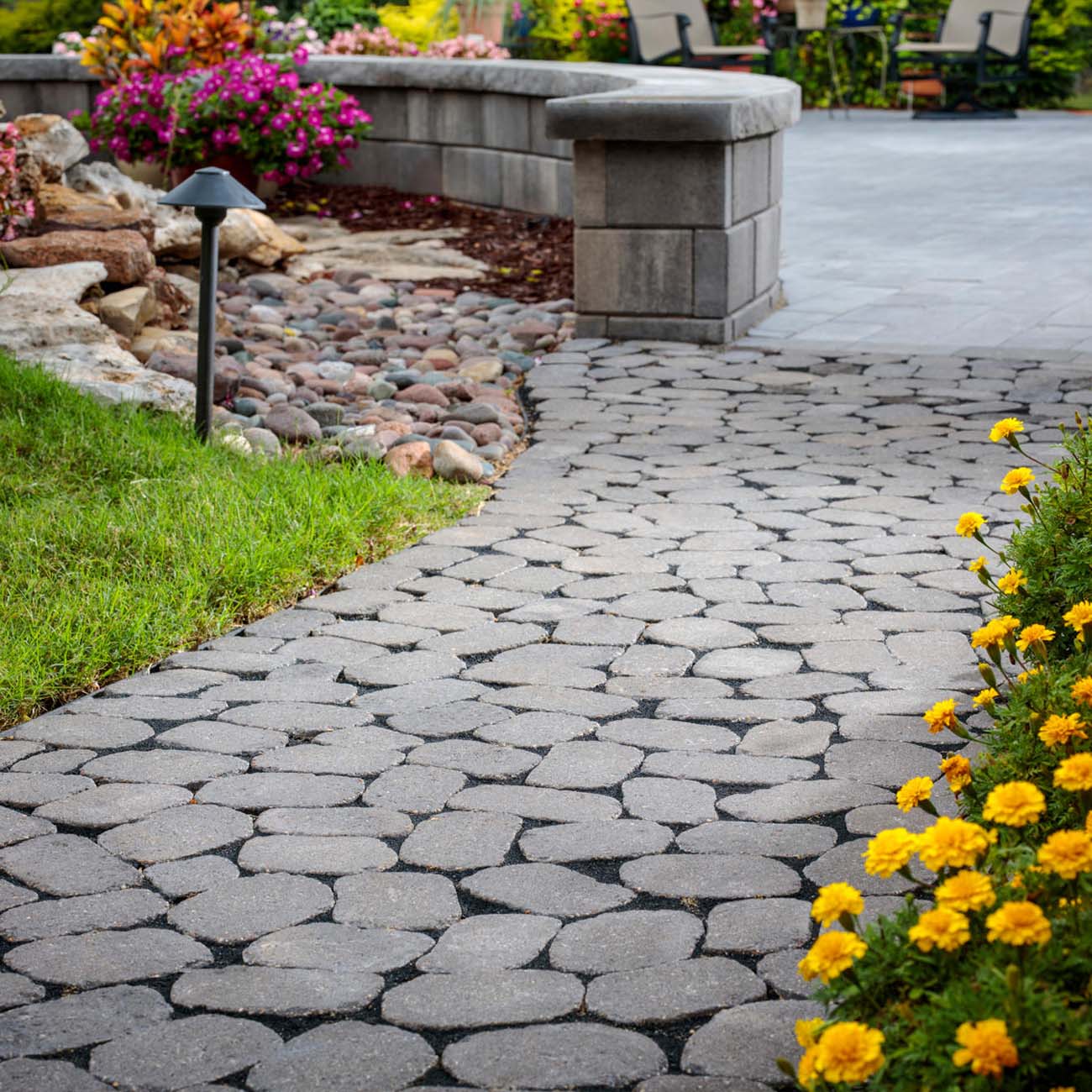
A straight path would rush the eye through this garden, while the curved route slows the pace and lets the planting take center stage. The rounded stone pavers sit in gravel with grass edging, so the path blends into the landscape instead of standing out as a hard interruption. The gray stones pick up the tones in a nearby stone wall, and the occasional yellow or pink flower softens the edge further.
For a garden path, rounded pavers are a smart choice because they lack sharp corners that can chip or loosen over time. The gravel between them drains well and can be topped up as needed, which keeps the path stable without requiring a full re-lay. Just check your USDA zone before choosing the plants that will grow alongside it.
Modern Curved Walkway with Contrasting Paver Border, Close-Up Take
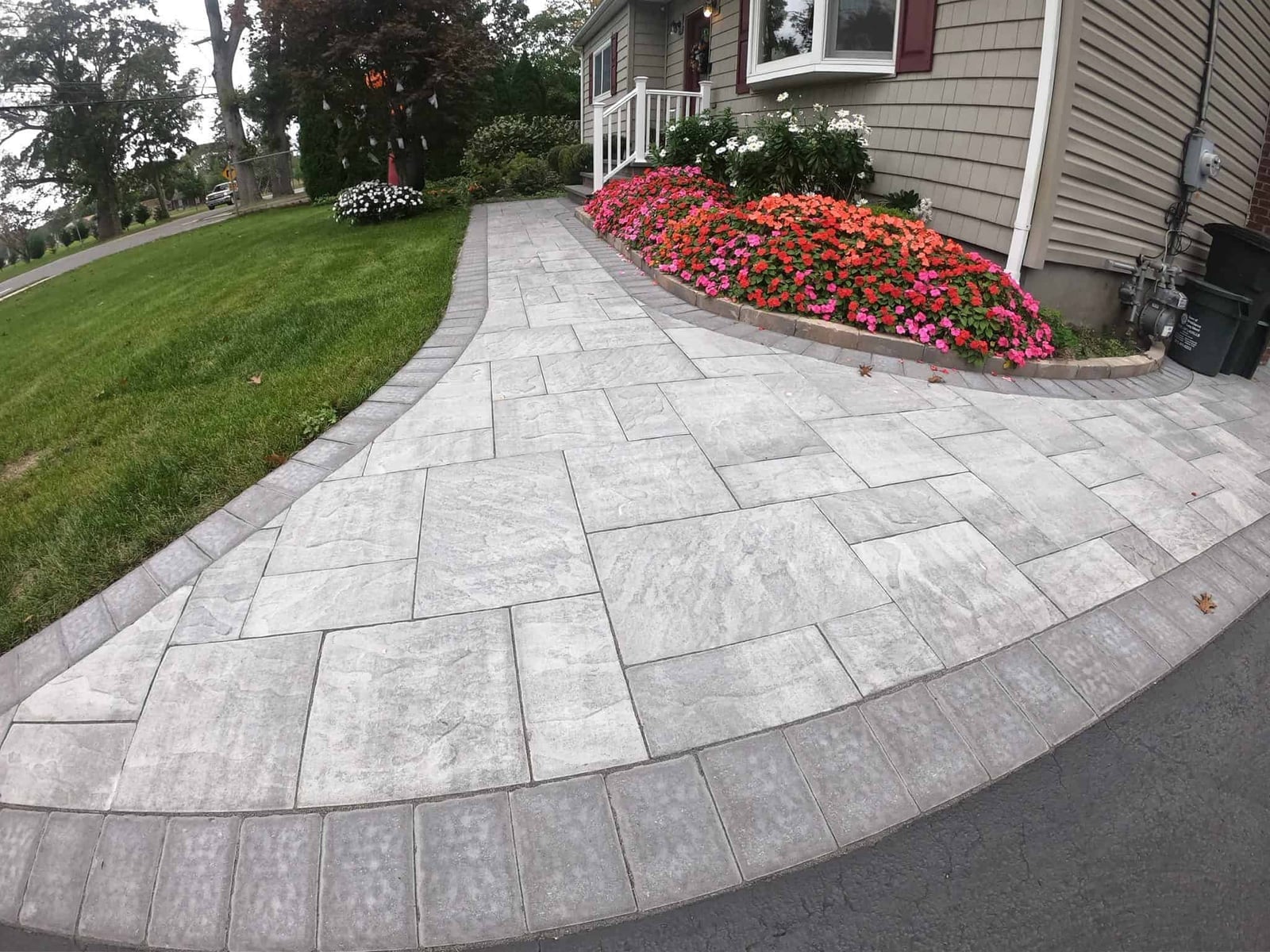
The palette here works because the main walkway pavers stay a warm beige while a narrow border of darker gray stone defines the curve. That contrast makes the bend around the flower bed feel intentional, not accidental. The gray, beige, green from the grass, and pink from the flowers keep the front yard from reading as too many competing colors. A single contrasting border is a simple way to add definition to a curved modern concrete paver walkway without needing a full pattern change.
Modern Checkerboard Paver Walkway with Metal Fencing
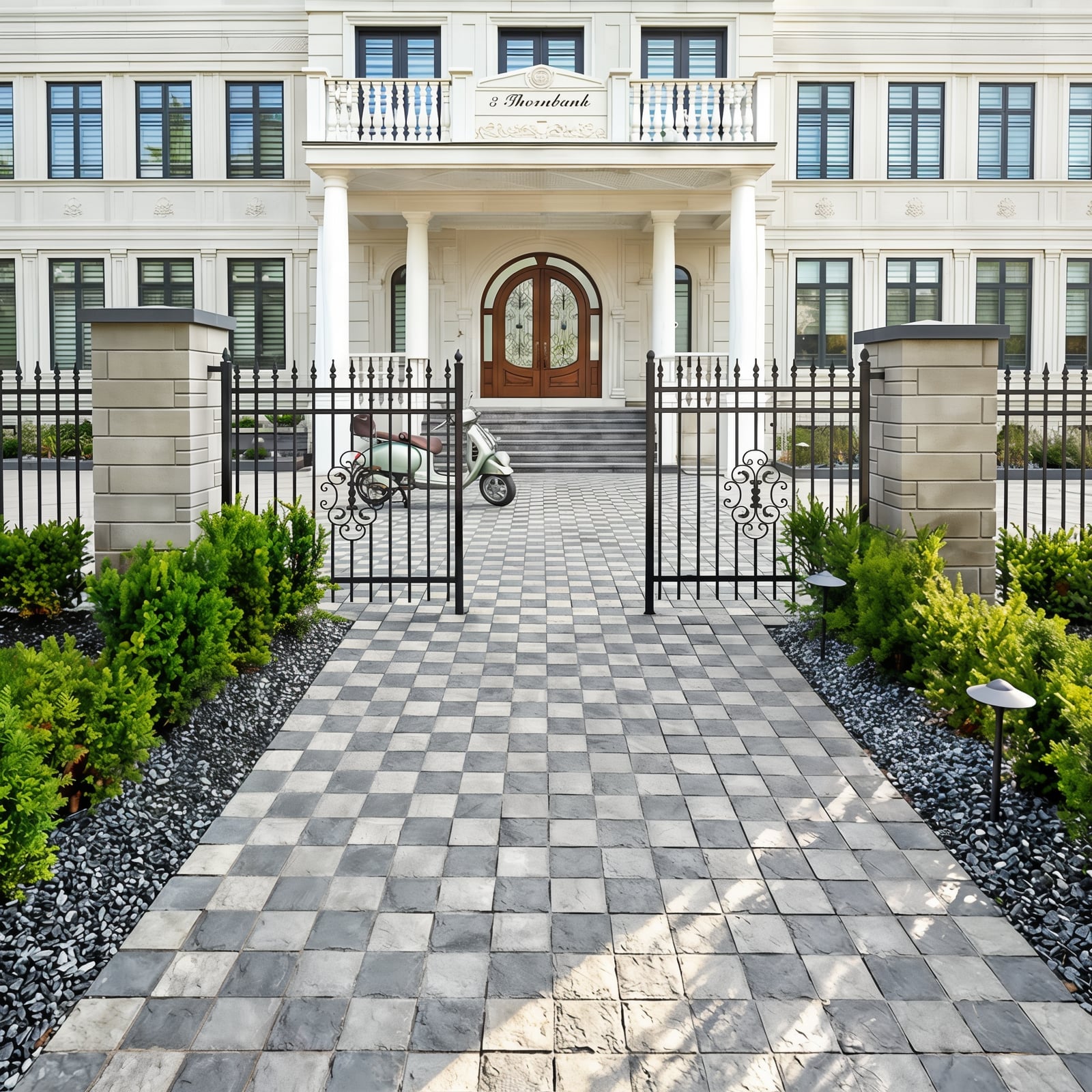
The checkerboard paver walkway is the kind of pattern that defines the whole front entrance. Dark and light stone squares alternate in a clean grid, and the black metal gate and fence pick up the dark side of that palette. The manicured bushes soften the geometry, so the look does not feel harsh. What breaks the strict grid is the gravel between the pavers, which adds texture and a slight looseness. Subtle landscape lights along the path echo the white tones in the stone, pulling the palette together from ground level to the gate.
Modern Concrete and Gravel Checkerboard Walkway
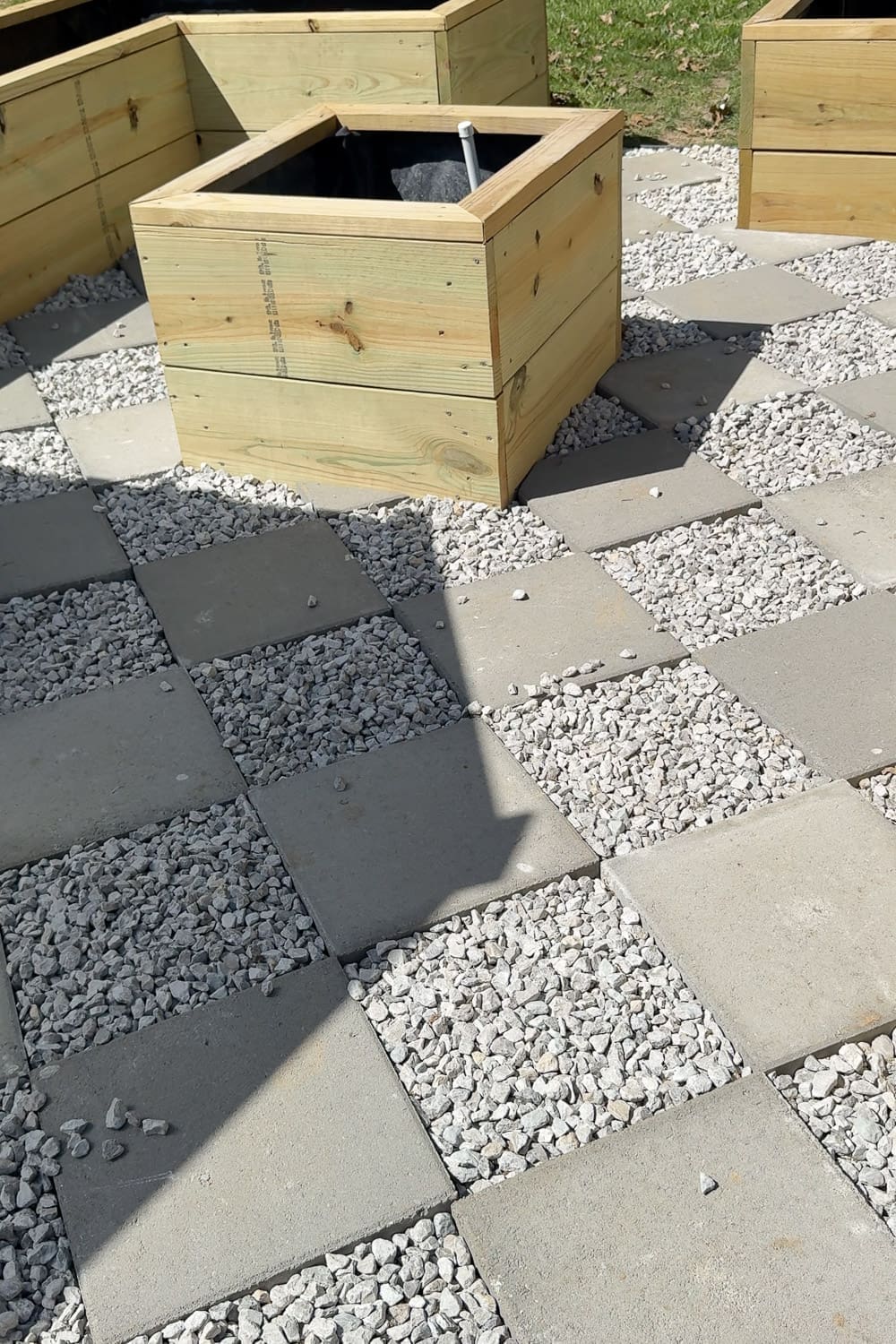
A checkerboard of concrete and gravel is a close alternative to a full paver path, but it trades solid surface for more drainage and a lighter visual weight. The concrete squares sit in a grid with gravel filling the spaces between them, creating a pattern that reads as both structured and permeable. Wooden planters along the edge add warmth to the gray and white palette, so the walkway does not feel like a purely hardscape element.
From a layout standpoint, the grid works because it breaks a straight path into smaller, repeatable sections. Each concrete square becomes a step, and the gravel between them slows the eye down. That rhythm makes a short walkway feel longer and more deliberate, which is useful when the path leads to an open area that lacks a clear destination.
Naturalistic Garden with Curved Paver Walkway
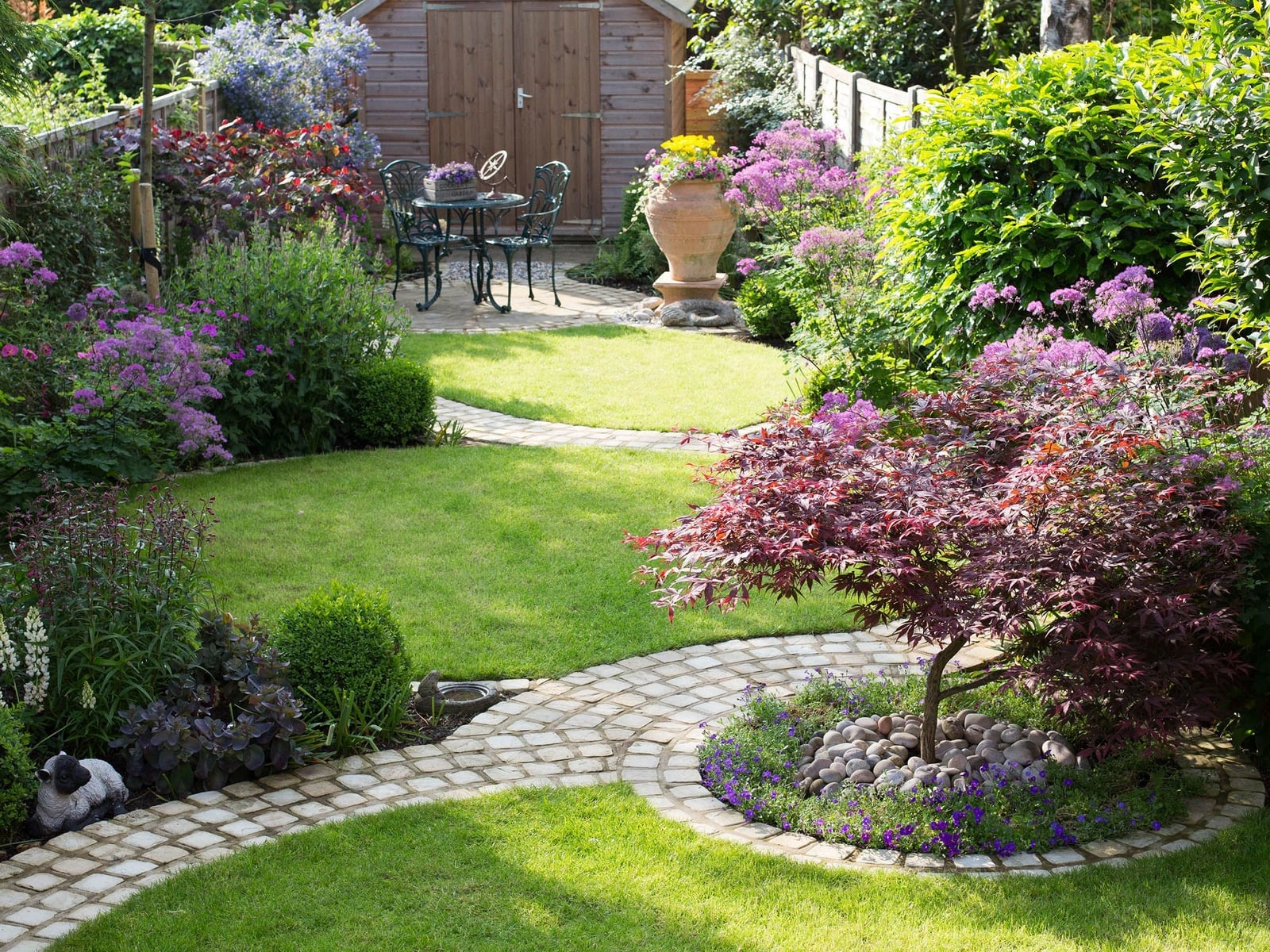
The curved stone paver path winds through the garden rather than cutting straight across it, which means the planting beds on either side feel fuller and more layered. Sunny daylight hits the gravel between the pavers and the broad leaves of the Japanese maple, creating a mix of light and shadow that shifts as you walk. The garden shed at the far end becomes a destination, but the curve keeps it partially hidden until you round the bend. That kind of layout makes a roomy garden feel like a series of discoveries rather than one open sweep.
Minimalist Straight Concrete Paver Walkway with Hedges
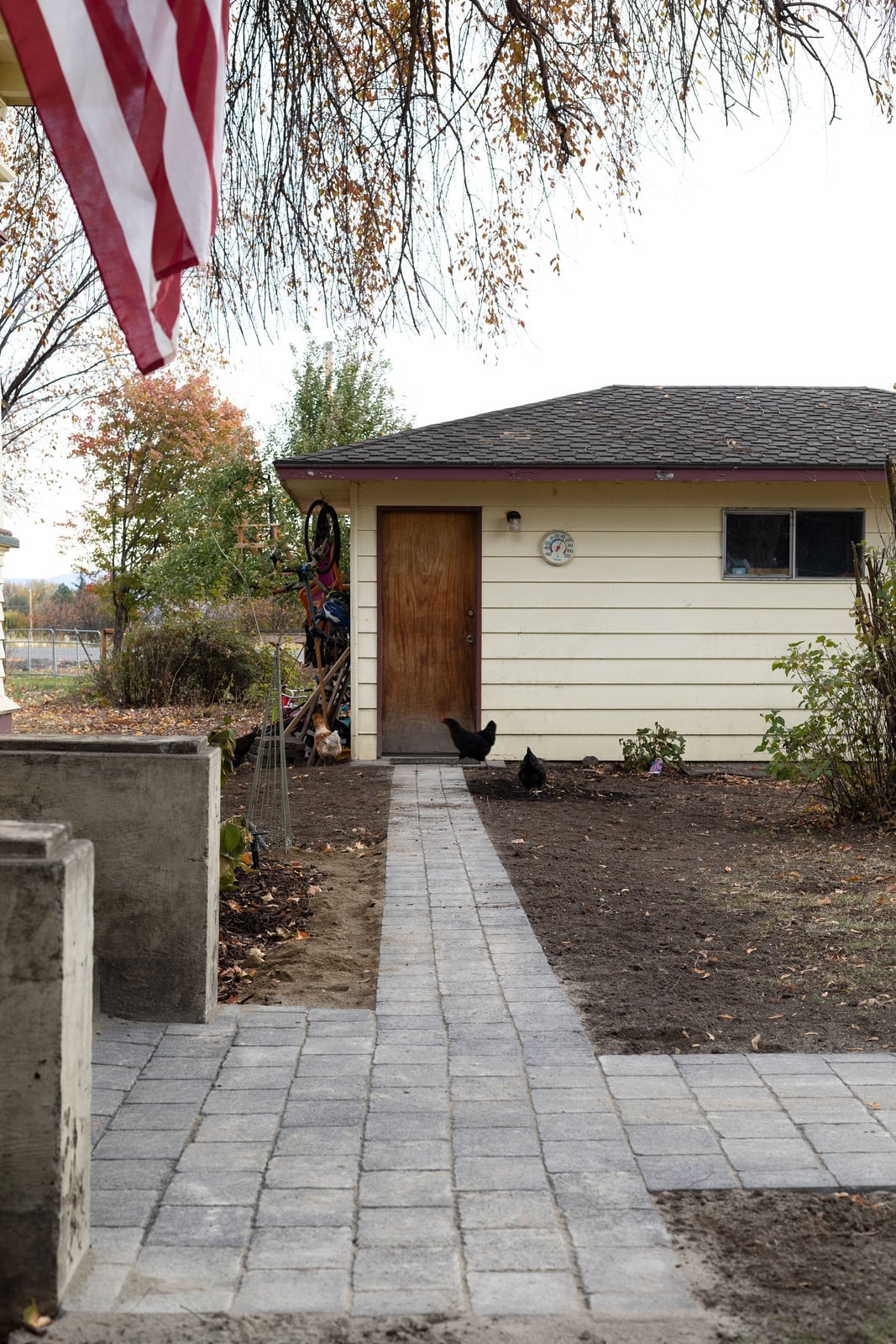
A straight, uniform gray brick paver walkway is the most direct way to lead someone from the street to the yard entrance. The layout here is simple, a straight path with a clear destination, and the manicured hedges on both sides act as low walls that keep the eye moving forward. The slightly hazy daylight softens the gray of the concrete and the brown of the soil, so the palette stays muted. For a minimalist approach, the straight line does the work, and the hedges provide the only visual interruption. That is enough to keep the path from feeling like a service corridor.
Final Thoughts
A well-chosen paver walkway can change how you experience your yard, guiding visitors and framing your home’s entrance. Whether you lean toward the organic feel of flagstone or the clean lines of concrete, the key is matching the material and layout to your space. Keep weeds in check with polymeric sand, and give your walkway a quick rinse each season to keep it looking sharp. The right path makes the journey as good as the destination.