English cottage style wraps a room in layers of soft linen, faded florals, and worn wood that feels like it has been there for a hundred years. It borrows from farmhouse honesty, butcher-block counters, open shelving, a plain white sink, then softens the edges with a chintz cushion and a dog-eared book on the hearth.
Over 27 looks, this article unpacks the mix: the stone walls, the painted cabinets, the window seats that beg you to sit. You will see how to bring the same unhurried charm into your own four walls without trying to copy a thatched roof.
English Cottage Garden Paths Create a Welcoming Approach
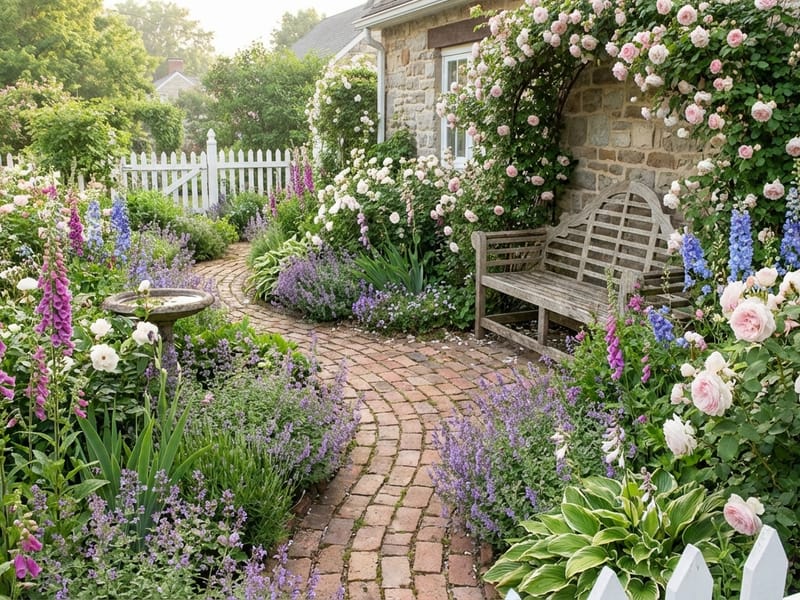
A winding brick path pulls you into the garden rather than leading you straight to the door. The curve slows your pace past a wooden bench and a stone wall, with flowers spilling over the edges in pink, purple, green and white. The path itself is the hero element here, and everything else stays simple so the garden feels abundant without being crowded. A straight walkway would get you there faster, but the bend makes the approach feel longer and more generous. That is the layout trick: let the path wander so the house arrives as a reward.
Cozy Window Seats Define English Cottage Living Rooms
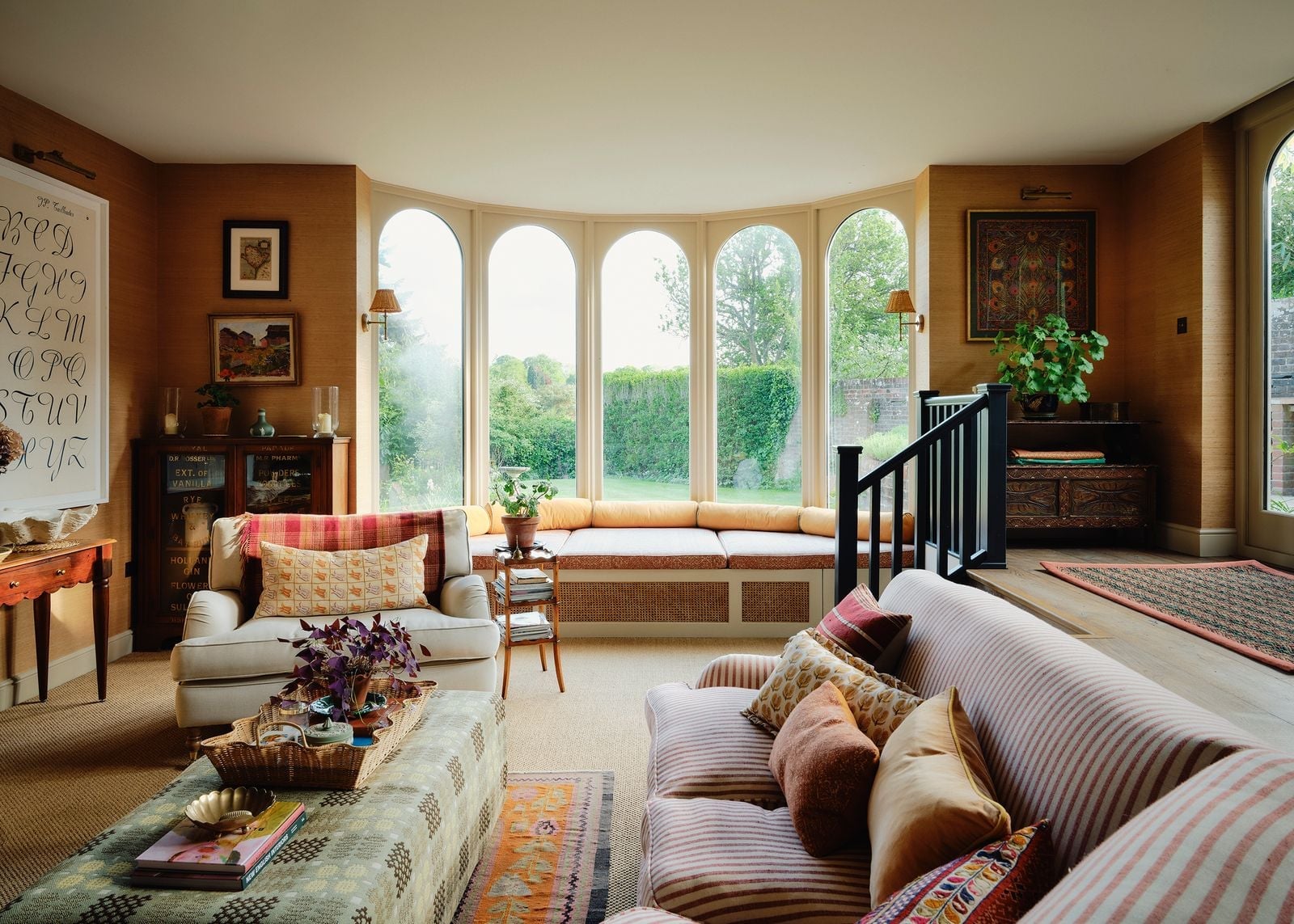
A curved window seat anchors the whole palette. The warm neutrals of the seat cushion and the patterned textiles on the sofas and armchairs all echo back to that arched nook. Grasscloth on the walls adds texture without competing, and the stone floor keeps the room grounded. The seating arrangement faces the light: sofas and armchairs turn toward the window rather than each other. Wall sconces fill in after sunset. The palette stays soft so the seat remains the focal point, not the wall color.
Fireplaces and Bookcases Anchor English Cottage Spaces
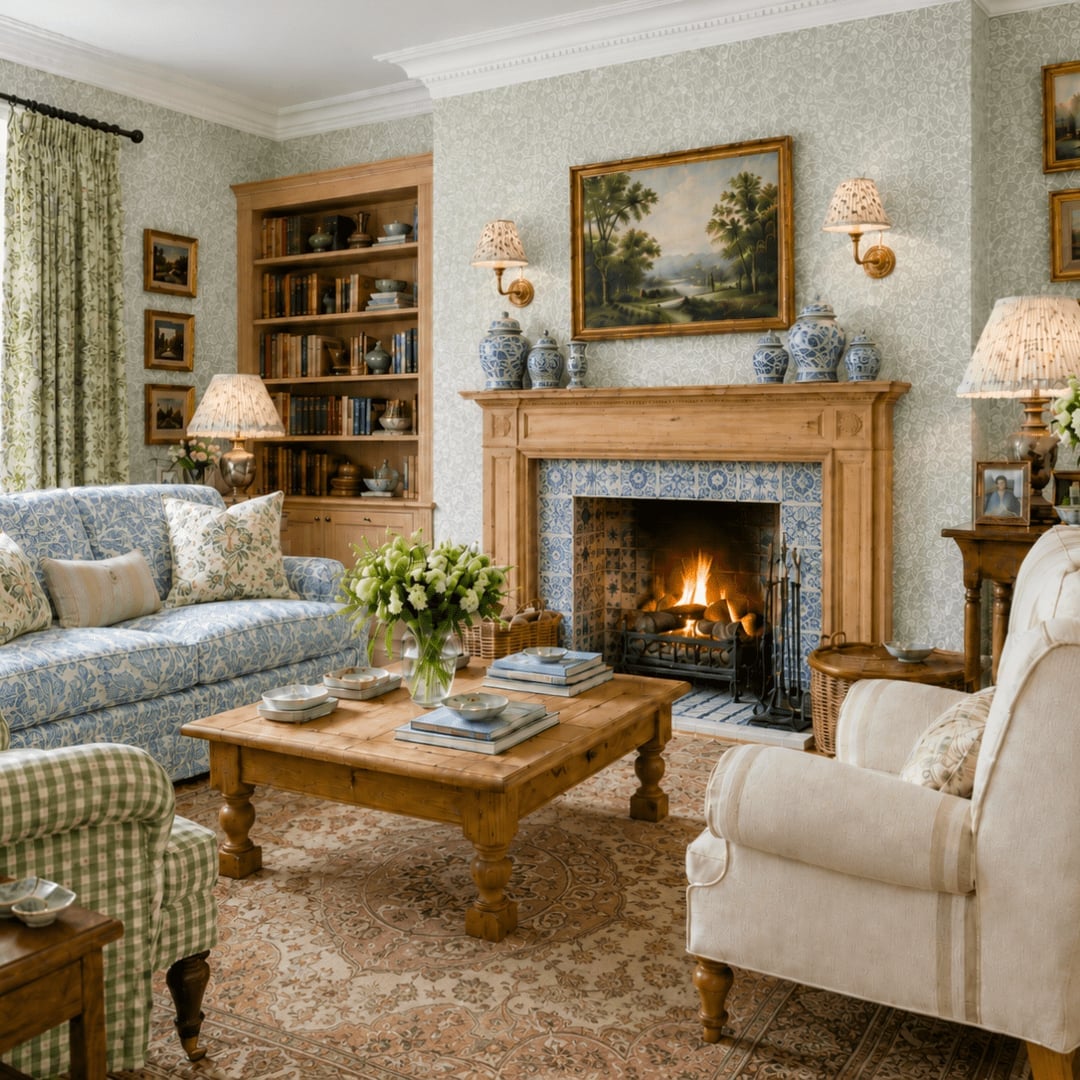
How do you make a large living room feel like a cottage? You give it a single anchor that draws everything inward. Here, an ornate fireplace surround in blue tile and a matching built-in bookcase do that work. The blue pulls the eye, while the wood shelves and green armchairs keep the palette from feeling cold. The sofa faces the fire, and the coffee table sits within easy reach.
Wall sconces add ambient light next to the firelight. The bookcase holds books and small objects, giving the room a lived in feel. That mix of tile, fabric and glass makes the space layered without clutter.
Classic English Cottage Exteriors Inspire Timeless Charm
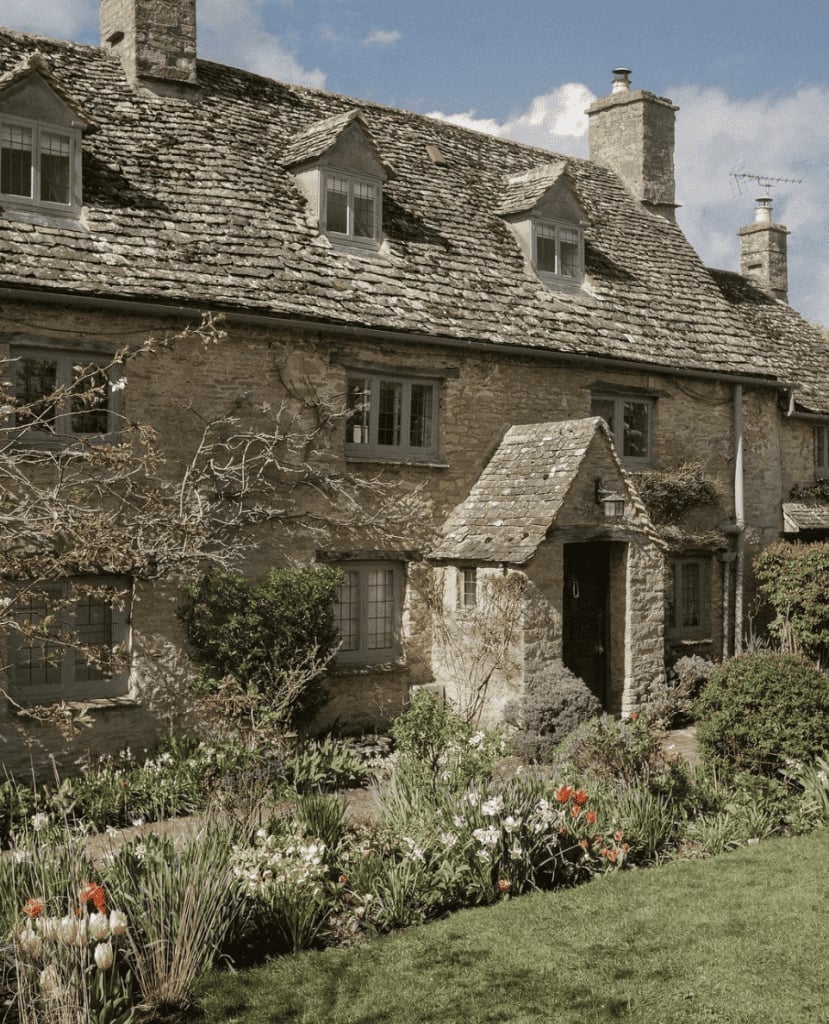
The stone facade of a classic cottage does not need paint or siding to make an impression. Here, the textured stone walls in gray and warm beige catch the daylight differently across the day, while slate roof tiles and dormer windows break up the mass. The flower garden at the base softens the hard edges. Bright daylight shows every irregularity in the stone, which is exactly the point. A smooth facade would read as modern. The uneven surface and varied tones give the exterior its age and character without trying.
Rustic Fireplaces Set a Cozy Tone in Cottage Interiors
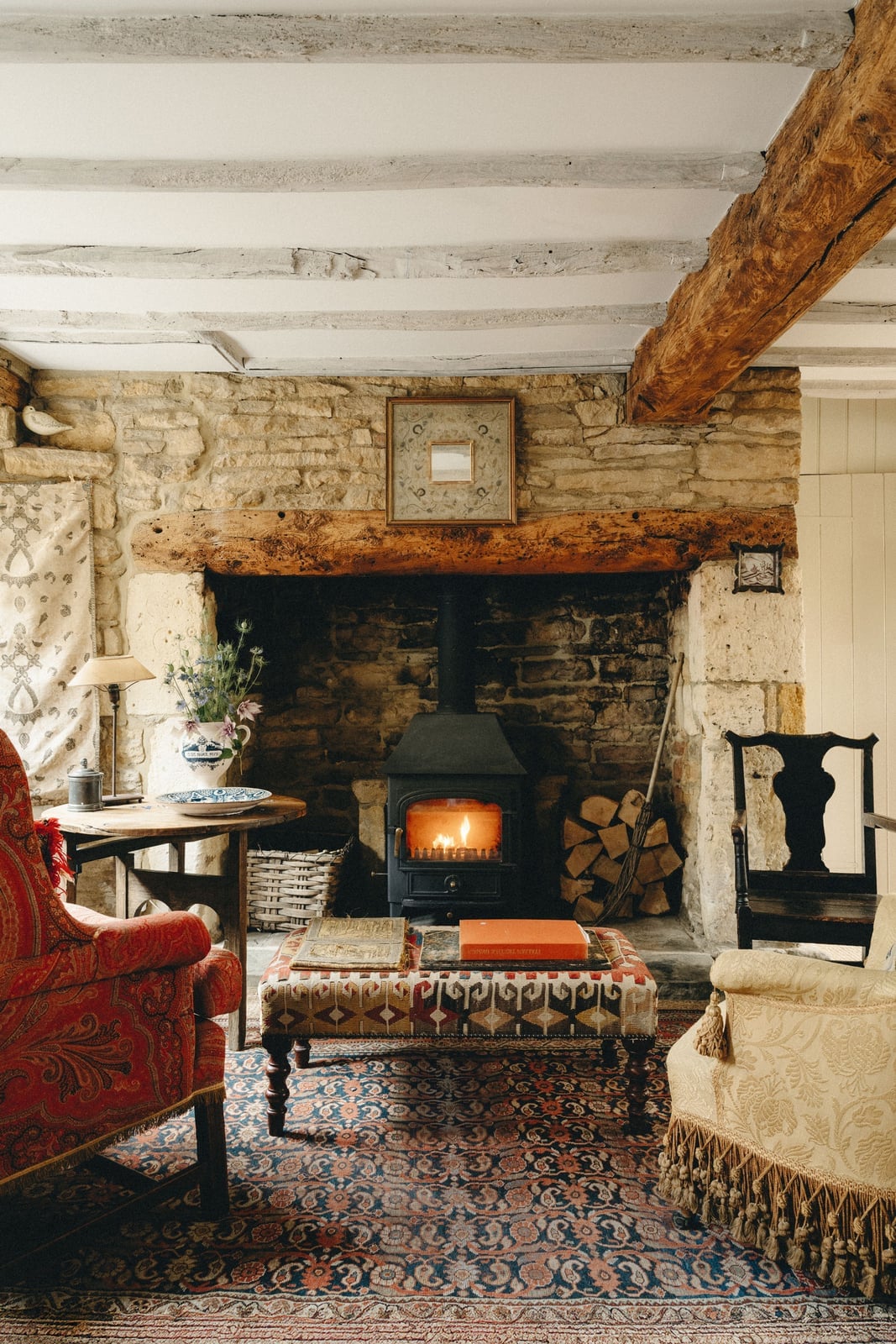
When a fireplace is the hero element, the furniture should support it, not fight it. A stone fireplace with a wood burning stove dominates this small living room, so the armchair and patterned ottoman sit close enough to feel the heat but far enough to keep the path clear. The palette stays simple: stone, wood, red and blue, with the red in the ottoman pulling warmth from the fire. Ambient light from nearby lamps keeps the room bright when the fire dies down. The layout works because nothing blocks the view of the stove.
Floral Patterns Evoke English Cottage Garden Vibes Indoors
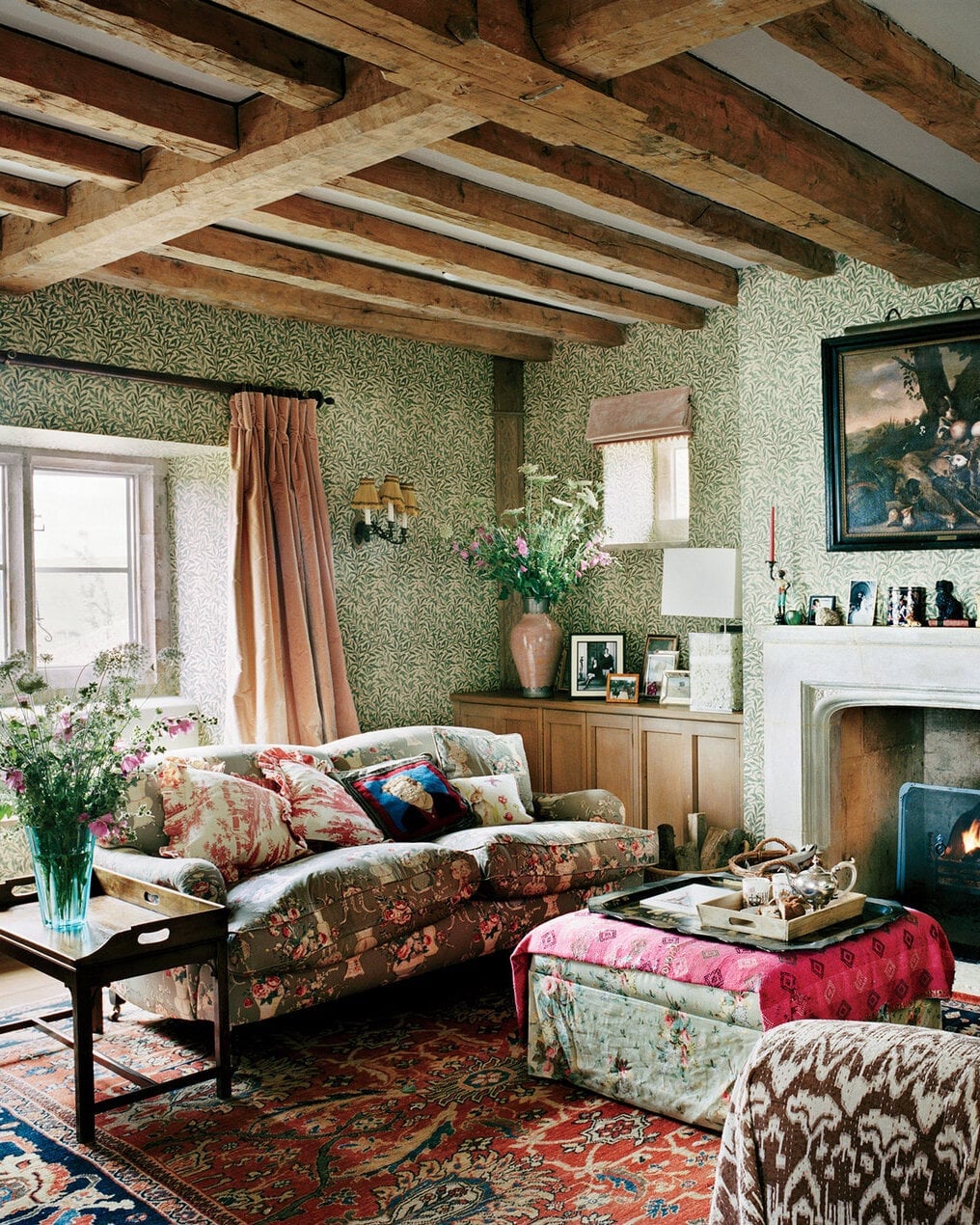
A floral sofa reads differently than a solid one. Here, the patterned sofa and matching floral wallpaper turn the living room into an extension of the garden, with red and blue blooms standing out against a green backdrop. The palette defines the style, and the ratio of pattern to solid is what keeps it from feeling busy. The stone fireplace and wood coffee table break the floral repetition, giving the eye a place to rest. For a similar effect, anchor a bold sofa with neutral, natural materials so the room still feels grounded.
Vibrant Cabinets Add a Pop of Color in Cottage Hallways
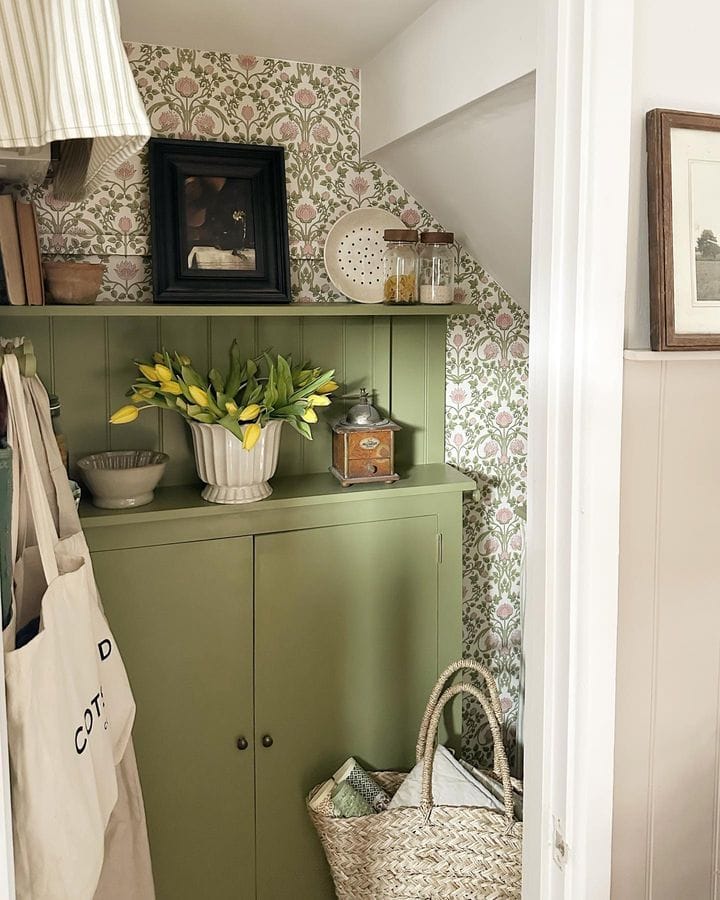
The green cabinet sits against floral wallpaper in a compact corner, with tulips and a woven basket on top and shelves above. The color is what makes the piece work in a tight hallway, drawing attention without needing much floor space. The white and pink in the wallpaper soften the green, so the cabinet reads as a focal point rather than an interruption. If you rent, a piece like this can transform a plain corner without paint or permanent changes.
Charming Stone Architecture Defines English Village Streets
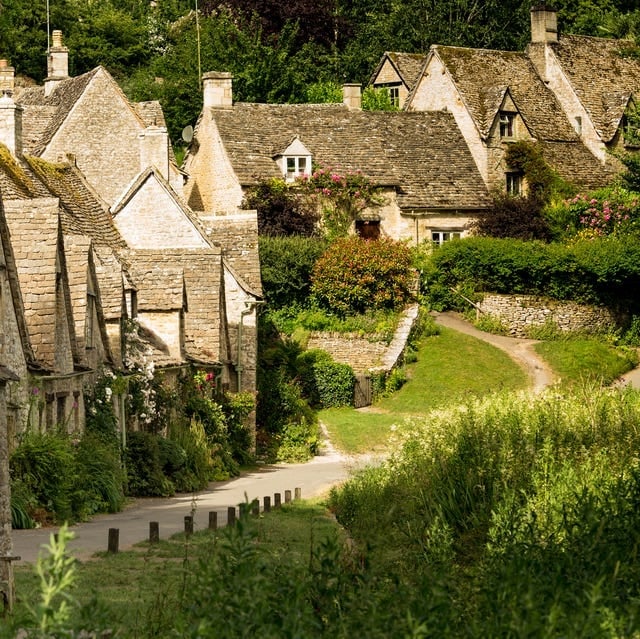
Stone cottages with winding garden paths and lush greenery define the look of an English village street. The gray stone facades and slate roofs create a neutral backdrop for the foliage and floral accents that soften the hard edges. The materials do the work here, with wood doors and window frames adding warmth against the stone. The layout of the street, with gardens flanking the path, keeps the view from feeling too dense. If your house lacks stone, a stone veneer or stacked stone planter can suggest the same character.
Entryways Blend Farmhouse and Cottage Comfort
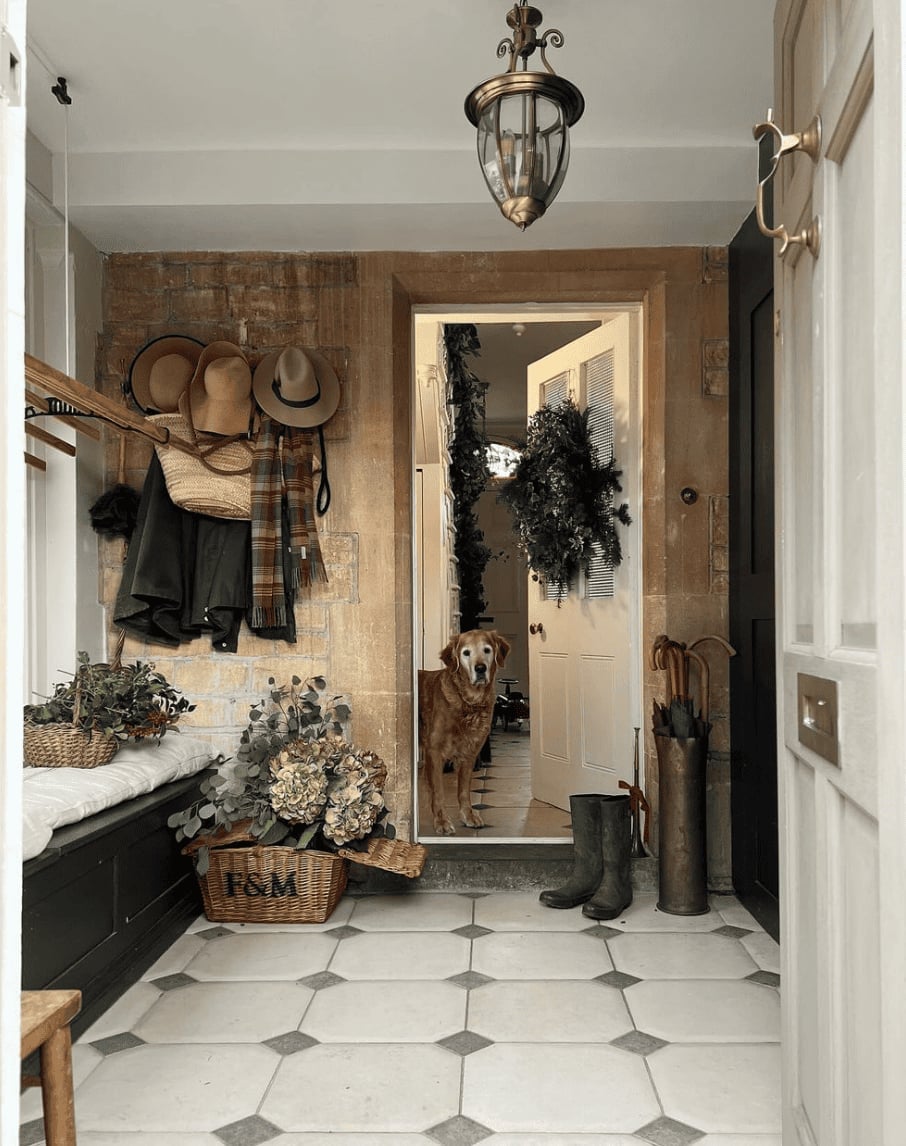
How do you make an entryway feel both practical and welcoming? This one uses a stone wall, a wooden bench, baskets, and a coat rack to handle the daily drop-off of hats and coats, with a golden retriever adding the lived-in part. The overhead pendant light and natural light from the doorway keep the space bright, while the neutral palette with brown and green grounds the room. The plaid accents tie the farmhouse side to the cottage side. The layout works because the bench gives you a place to sit and the baskets catch the things that would otherwise land on the floor.
Ivy-Covered Facades Enhance English Cottage Aesthetics
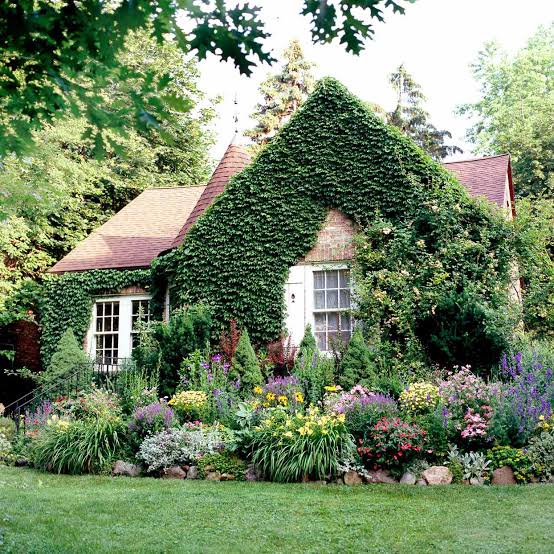
An ivy-covered facade with abundant flower beds in pink, purple, and yellow creates the kind of soft, layered look that defines cottage style. The ivy softens the stone and wood of the house, while the flowers add color at ground level. The scale of the ivy relative to the house matters, covering enough to feel established but not so much that it hides the architecture. The lawn and garden beds balance the vertical growth of the ivy. Before planting ivy on your own house, check your climate and the condition of your siding, since it can trap moisture against some materials.
Rustic Dining Sets Complement Cottage Dining Rooms
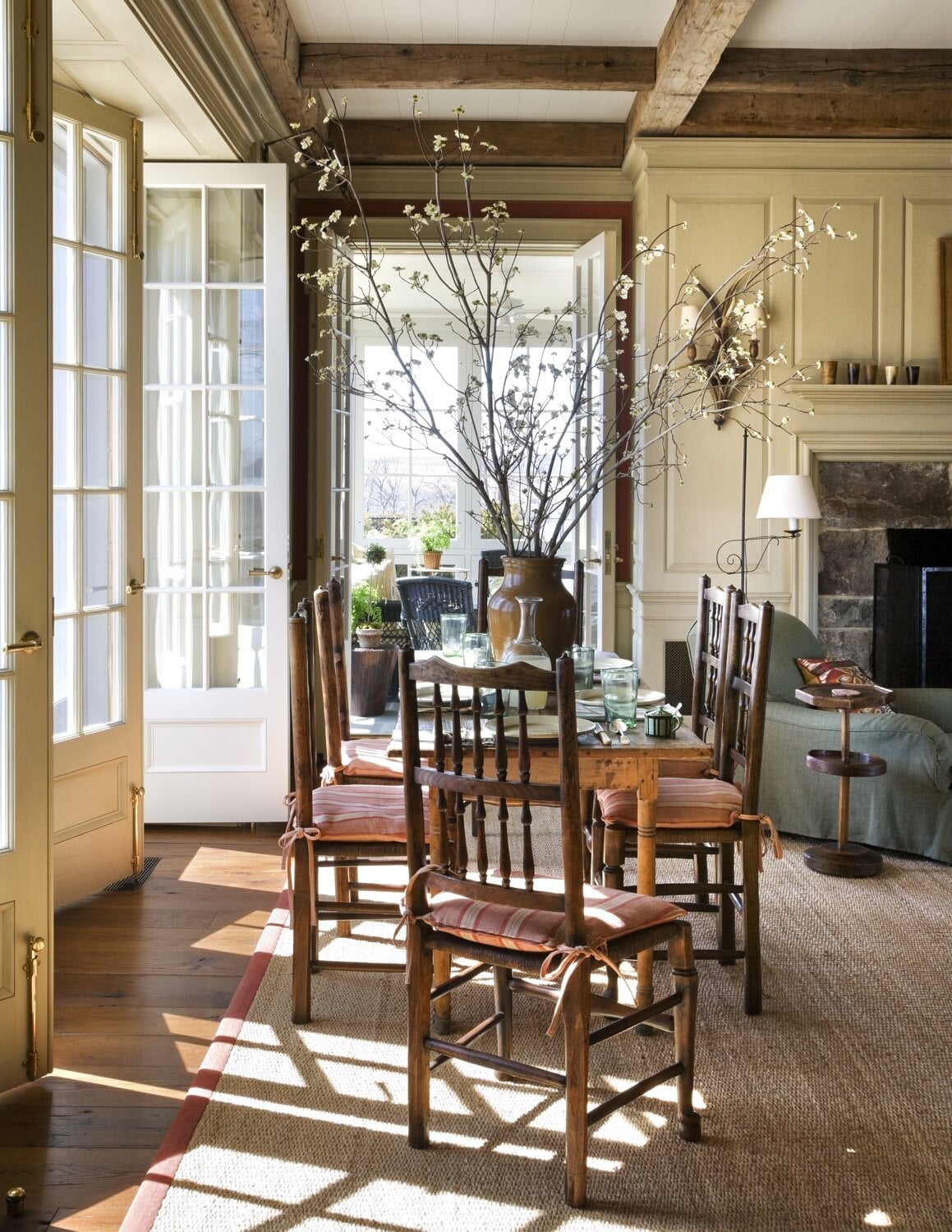
A dining room that leans too formal can feel stiff, so keep the furniture grounded and the decor airy. Wooden chairs with a natural finish bring warmth, while a large vase filled with tall, delicate branches keeps the table from feeling crowded. A stone fireplace anchors one wall, adding a solid, earthy contrast to the softer wood and cream tones. The room feels spacious but still intimate, where the layout centers on the table and the space supports it. That balance between a sturdy set and light, organic accents is what makes an English cottage dining room work.
Stone Cottages with Floral Accents Offer Quaint Charm
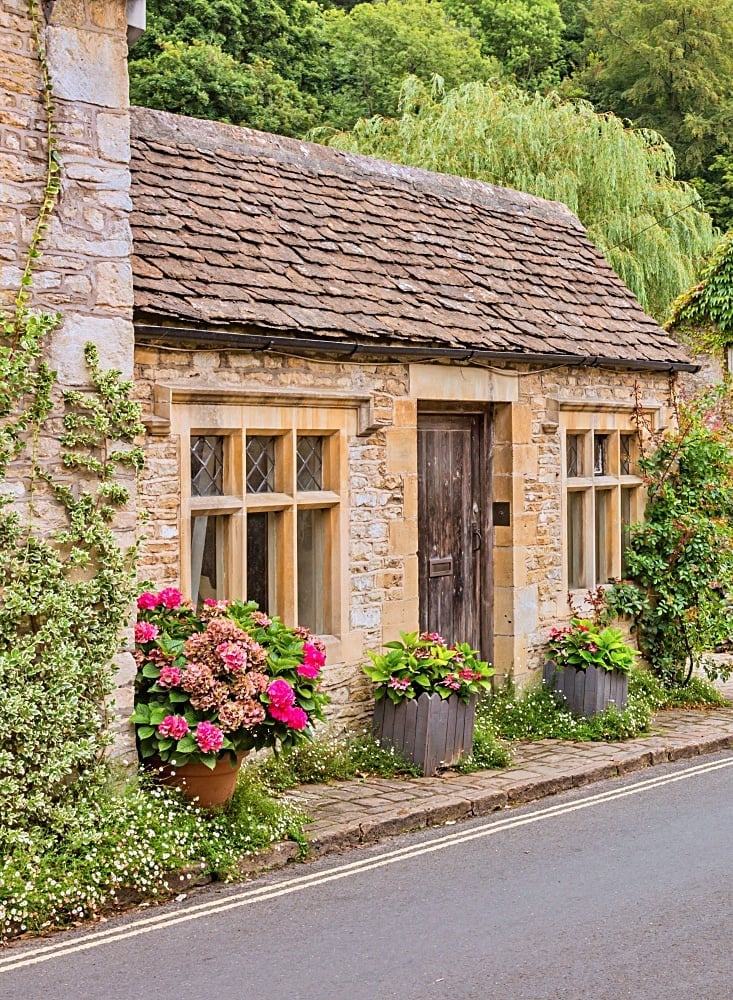
A stone cottage can feel either rugged or refined, and the difference often comes down to the accents. A facade of natural stone, paired with a solid wooden door, already has a timeless, grounded feel. Add potted flowers in soft pink tones, and the whole look softens. The stone stays the hero, but the plants bring color and life to the street view, making the compact exterior feel welcoming.
This style works because the palette is restrained: browns and greens from the stone and wood, with pink blooms as the only bright note. The flowers break the monotony of the texture without competing with it. Choose one or two planters in a warm clay tone and let the flowers do the work. The charm is in the contrast, not the quantity.
Hand-Painted Cabinets Add Artistic Flair to Cottage Living Areas
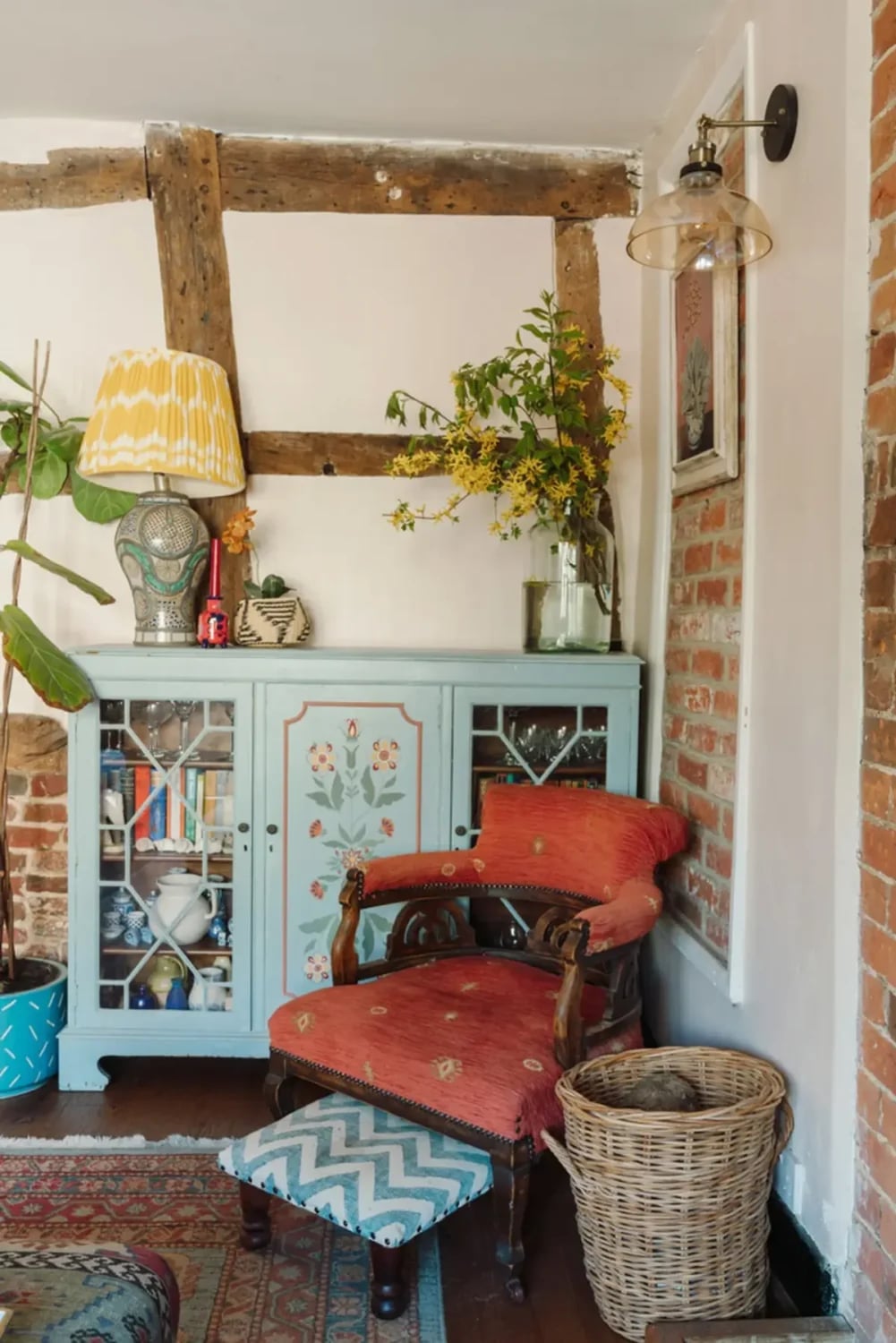
A hand-painted cabinet in blue, red, and yellow details becomes the natural focal point of a compact living room corner. Its painted surface adds a layer of artistry that a plain wood finish cannot match, especially when set against a simple brick wall. An armchair and small ottoman nearby create a cozy seating nook, while a patterned rug ties the colors together. The cabinet holds the eye, so the rest of the arrangement stays minimal. A wall sconce and a table lamp provide warm, layered light that keeps the corner from feeling dark.
Extensive Bookshelves Create Cozy Reading Nooks
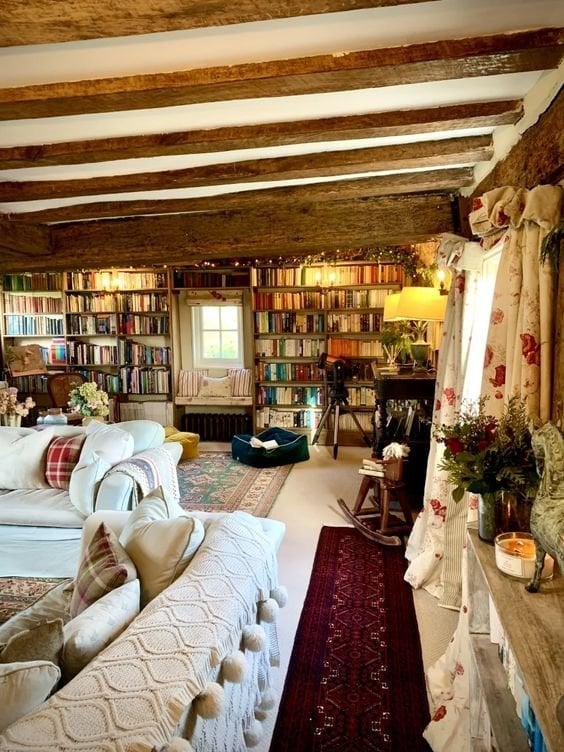
Floor-to-ceiling bookshelves are the kind of feature that defines a room’s character. In a spacious living room with wood tones, cream walls, and hints of red and green, the shelves turn an entire wall into a library. Two sofas face a stone fireplace, and a rocking chair sits nearby, offering a quiet spot to read. The lighting comes from ambient string lights and lamps, which soften the space and make the shelves feel inviting rather than overwhelming. For a room with multiple seating areas, the bookshelves act as the visual anchor, giving every corner a reason to linger.
Floral Wallpaper and Knit Throws Enhance Cottage Bedrooms
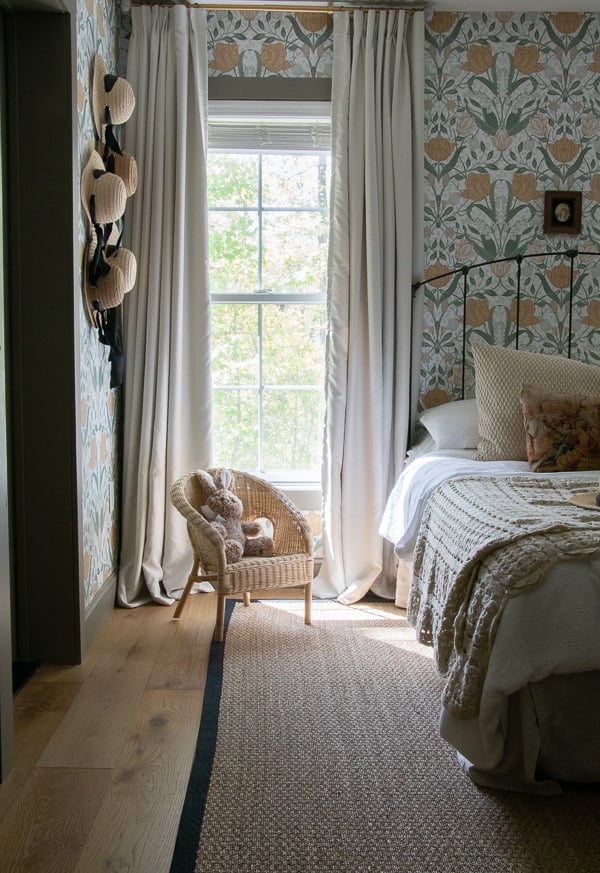
A compact bedroom can feel bigger when the pattern and texture work together instead of competing. Floral wallpaper in soft cream and muted floral tones covers the walls, while a knit throw in a similar cream hue drapes over the bed. The repeat of the floral print keeps the eye moving, and the knit adds a tactile layer that balances the busy pattern. A wicker chair and a wooden dresser stay simple, letting the wall treatment and bedding lead.
Sunlight keeps the room bright, and a soft ambient lamp fills in the corners. The palette stays within a narrow range of cream, wood, and floral tones, which prevents the room from looking cluttered. A renter-friendly swap for permanent wallpaper is a removable peel-and-stick floral panel on the wall behind the bed, which gives the same focal point without the commitment.
Farmhouse Tables Anchor Cottage Kitchen Dining Areas
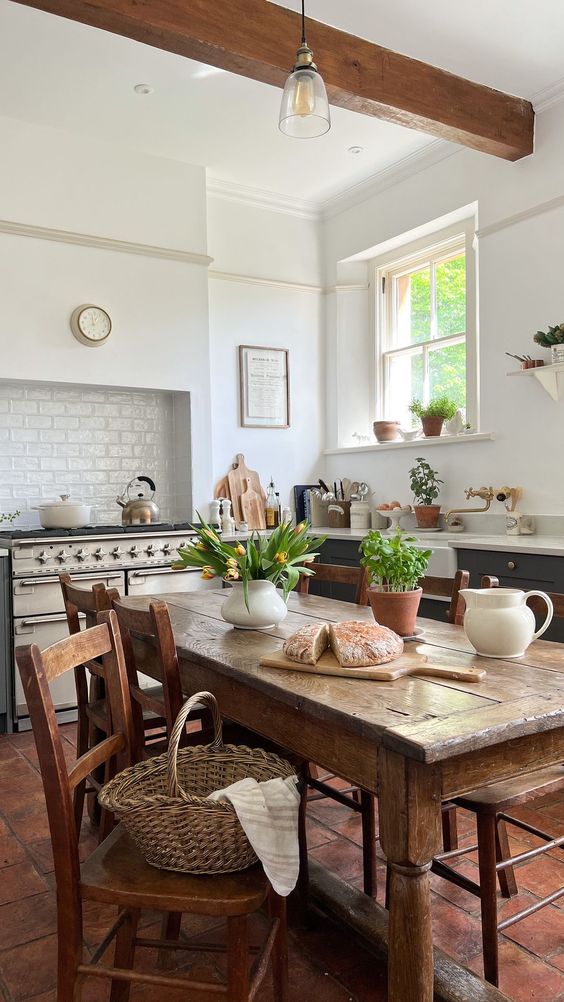
A farmhouse table in a cottage kitchen is less a piece of furniture and more a declaration of purpose. This one, a broad slab of worn wood on turned legs, sits centered in a room with white cabinetry, a tile floor, and a brick surround around a range cooker. The style leans into contrast: the table’s dark, distressed surface against the pale kitchen, with a wooden island behind it and a metal pendant overhead. What defines English cottage farmhouse is that the table is the anchor, not an accessory. The ratio of table to room is generous, and nothing competes with it. What breaks the look is clutter on the surface. A few plain objects keep the weight where it belongs.
Vibrant Green Cabinets Define English Cottage Kitchens
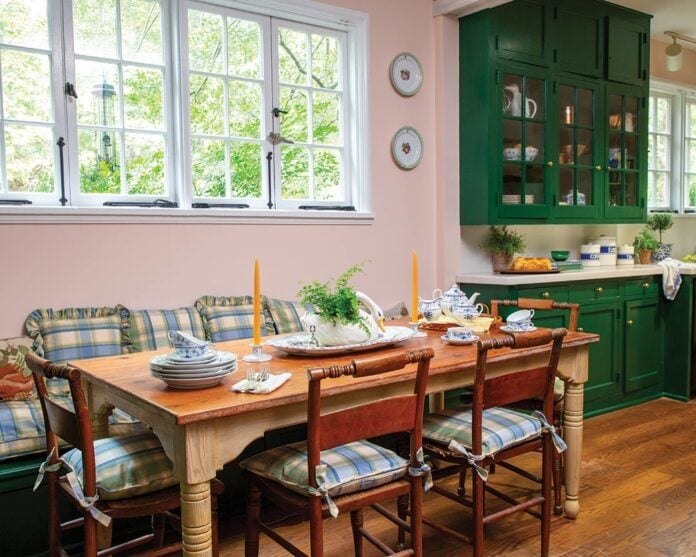
A practical rule for renters is that color can live on surfaces you leave behind, not just on walls. In this kitchen-dining space, forest green cabinets and a green dining set anchor the room, with pale pink walls and a plaid banquette cushion softening the effect. The palette is the story here: the green is deep enough to feel established, not trendy, and the pink and plaid keep it from turning somber. What defines the English cottage palette is that the color is saturated but not glossy, matte, worn, lived-in. The ratio of green to neutral is roughly three to one, with the wood table and natural light from the windows doing the work of breaking the color block. The look breaks if every surface matches; the pink and plaid are necessary interruptions.
Bold Floral Sofas Inject Personality into Cottage Living Rooms
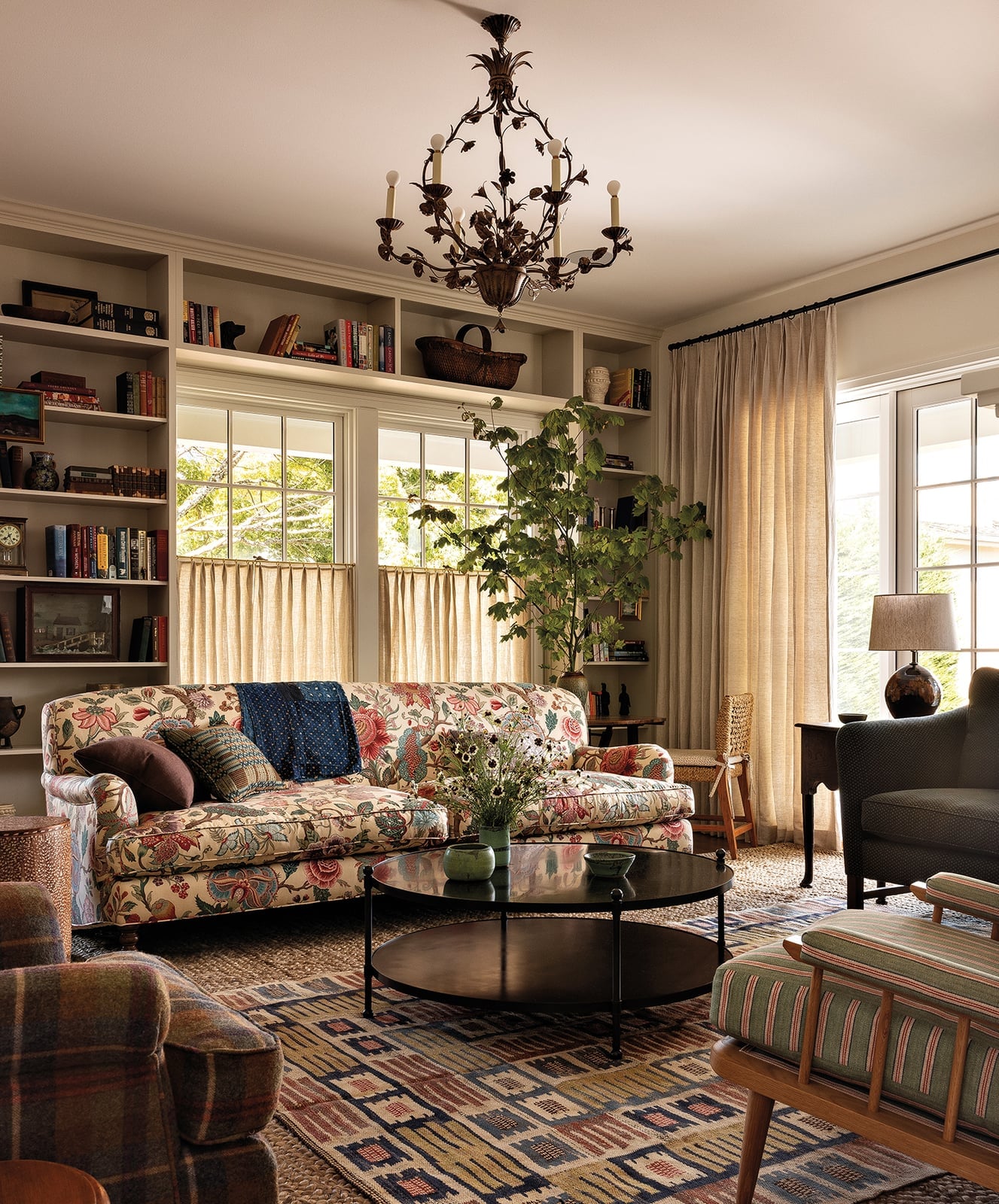
A solid-color sofa is the safe choice, but a bold floral is the one with opinions. In this living room, the sofa carries a multi-color floral pattern on a light ground, with two neutral armchairs and a dark coffee table keeping the arrangement grounded. The palette is the defining move: the floral is not shy, so the surrounding pieces, the bookshelves, the chandelier, the rug, stay quiet. What makes this English cottage work is that the floral pattern is large enough to register as a single statement, not a collection of small flowers. The ratio of pattern to solid is roughly one to three, with the windows and the chandelier adding light without competing. One patterned piece is the whole point; another patterned piece would fight for attention.
Antique Cabinets Serve as Focal Points in Cozy Seating Areas
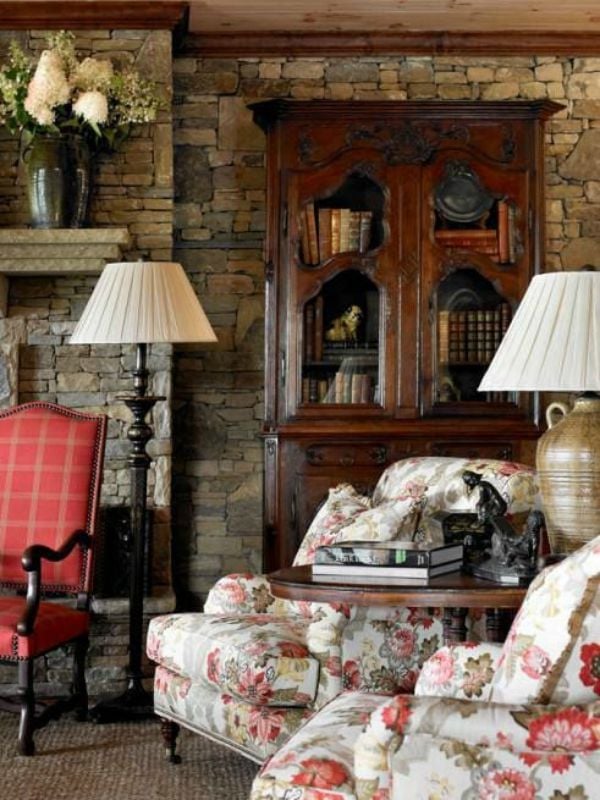
An ornate antique cabinet with glass doors and carved details sits in a corner of a compact living room, with a plaid armchair, a floral sofa, and a floor lamp arranged around it. The cabinet’s dark wood and metal hardware read as traditional English cottage, and its height draws the eye first. In a small seating area, a single substantial piece like this replaces the need for wall art or a mantel. The materials, stone on the fireplace, wood on the cabinet, fabric on the chairs, give the room texture without adding clutter. The layout works because the cabinet is the focal point and the seating faces it, not the other way around.
Blue Painted Tables Add a Splash of Color to Cottage Dining
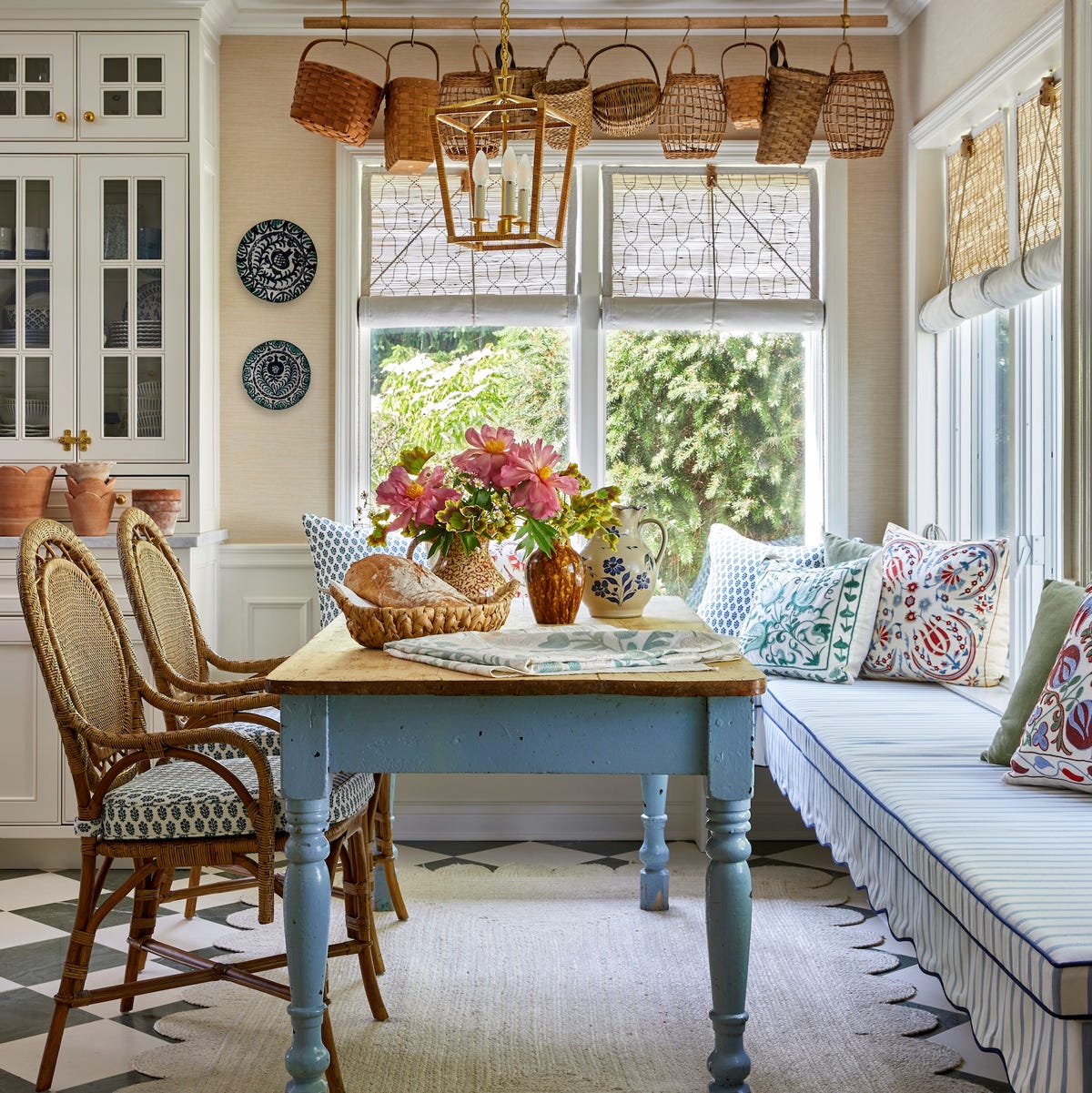
A blue painted dining table is a commitment to color over caution. In this dining area, a blue table with turned legs sits with wicker chairs on one side and a banquette along the window on the other, with pink and green patterned cushions tying the palette together. The blue is the standout element; white walls, natural wood, and a ceramic vase keep the space simple. What defines the English cottage palette here is that the blue is not a pastel; it is a clear, mid-tone blue that looks deliberate. The ratio of blue to white is about half and half, with the pink and green cushions breaking the scheme just enough. The table cannot be the only color in the room; the cushions and flowers on the table are what make it feel lived-in.
Study Walls Lined with Bookshelves Create a Scholarly Retreat
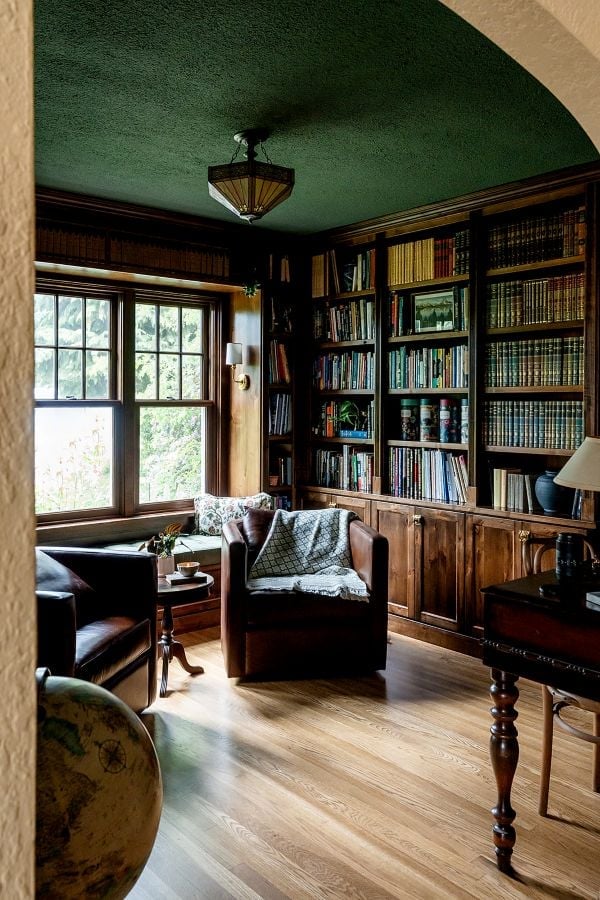
A study lined with floor-to-ceiling bookshelves turns storage into the room’s main event. Here, built-in wood shelves cover entire walls, creating a warm backdrop of brown and cream tones. The shelves hold a mix of books, glass objects, and a globe, breaking up the mass with varied heights and materials.
Two leather armchairs face the shelves, making the room as much about conversation as it is about reading. Natural window light and a ceiling fixture keep the space bright. The layout works best when the shelves are deep enough to hold more than just books, add a few personal objects to soften the scholarly feel. That is the 1st idea in this collection.
Prominent Fireplaces Anchor Cottage Living Room Layouts
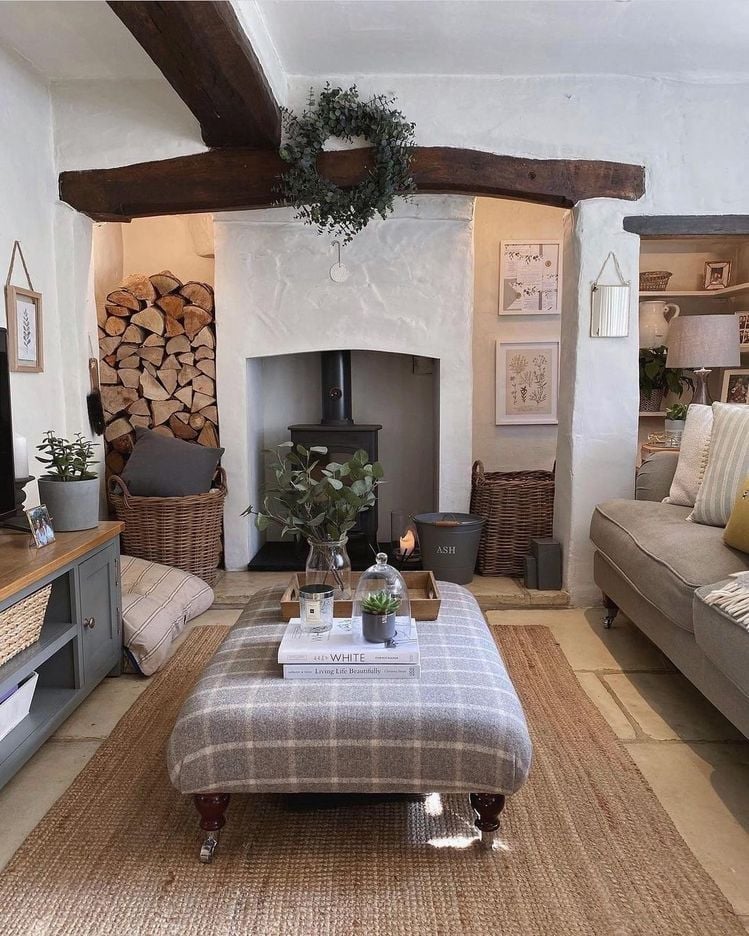
A large fireplace with stacked logs sits at the center of this living room, with a sofa facing it directly and an upholstered ottoman in between. The palette stays neutral: white plaster, gray stone, brown wood, and green accents from a few plants. The fireplace acts as the natural anchor, with woven baskets and linen upholstery keeping the look soft instead of formal. The layout follows the fireplace.
Lantern Pendants Illuminate Farmhouse Cottage Kitchens
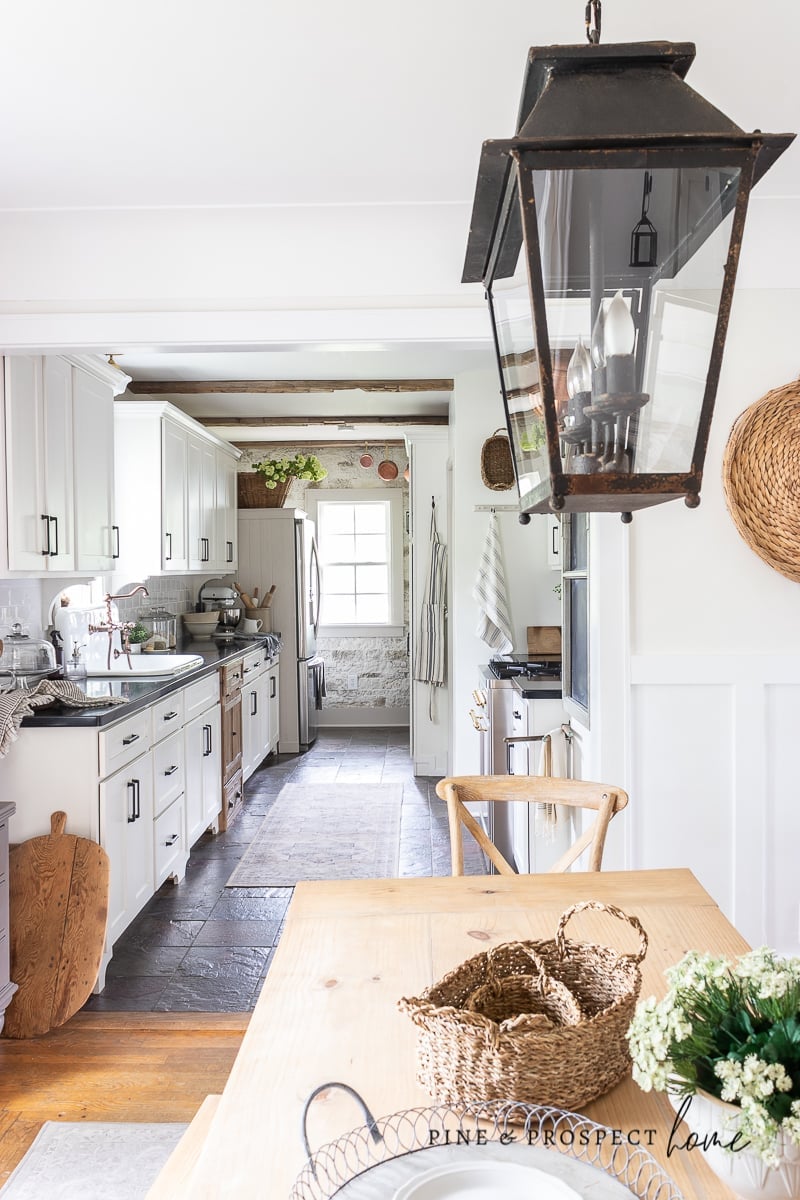
Hang pendants low enough to cast light on the work surface, not your eyes. This farmhouse cottage kitchen uses a large black lantern pendant over a wooden island, with white cabinets and black countertops around it. The dark metal finish repeats in the window frames and cabinet hardware, tying the kitchen together. Daylight balances the pendant’s warm glow during the day. The fixture acts as a visual anchor in the open-plan layout.
Textured Stone Walls Add Rustic Charm to Cottage Kitchens
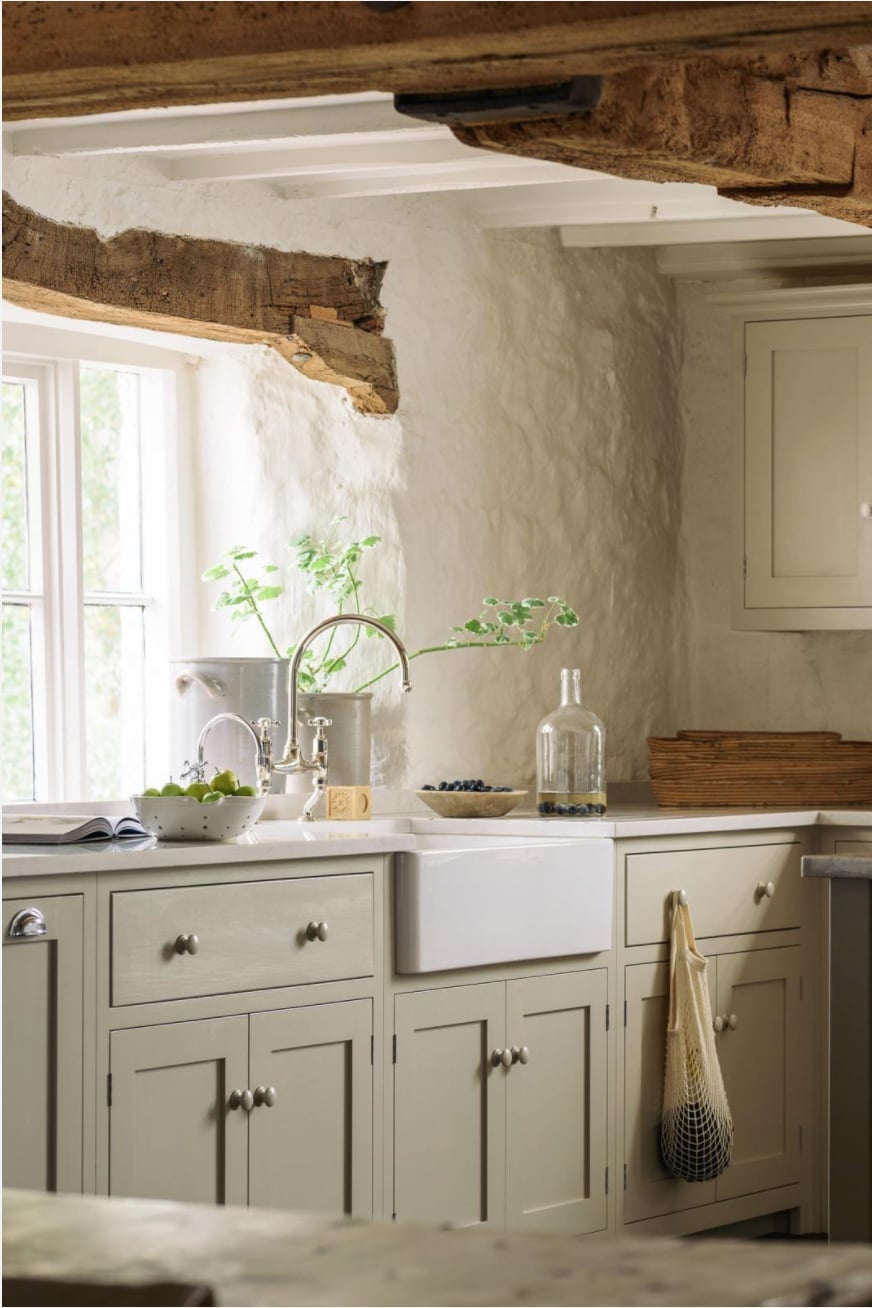
A farmhouse kitchen can lean rustic or refined, and this one lands somewhere in between. The textured stone wall behind the farmhouse sink adds a rough, organic feel that contrasts with the smooth cream cabinetry and ceramic apron sink.
Wooden beams overhead reinforce the cottage character without making the room feel heavy. The stone is the standout feature, but it works because the rest of the palette stays simple, cream, gray, and natural wood. Soft artificial light from under-cabinet fixtures keeps the stone from casting harsh shadows. That balance is the 27th takeaway in this collection.
Exposed Beams Create Architectural Interest in Cottage Living Rooms
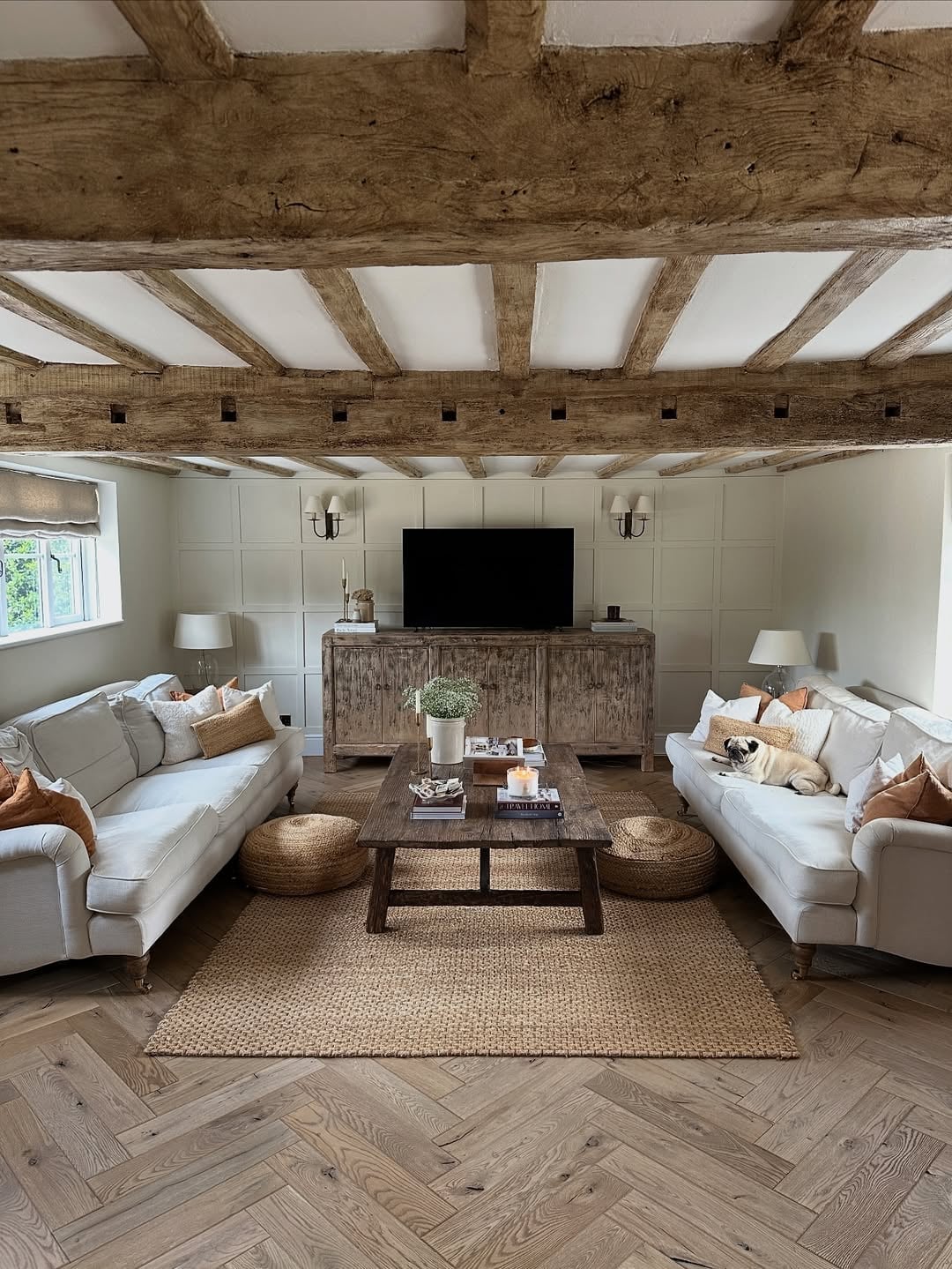
The exposed beams in this living room are the first thing you notice. They run the length of the ceiling in a warm wood tone, drawing the eye up and making the room feel taller. Below them, the furniture stays low and neutral: linen sofas, a wood coffee table, and woven poufs. Wall sconces and ambient lamps keep the light soft so the beams remain the focus. That is the 27th section in this article.
Floral Bedding and Beadboard Walls Enhance Cottage Bedrooms
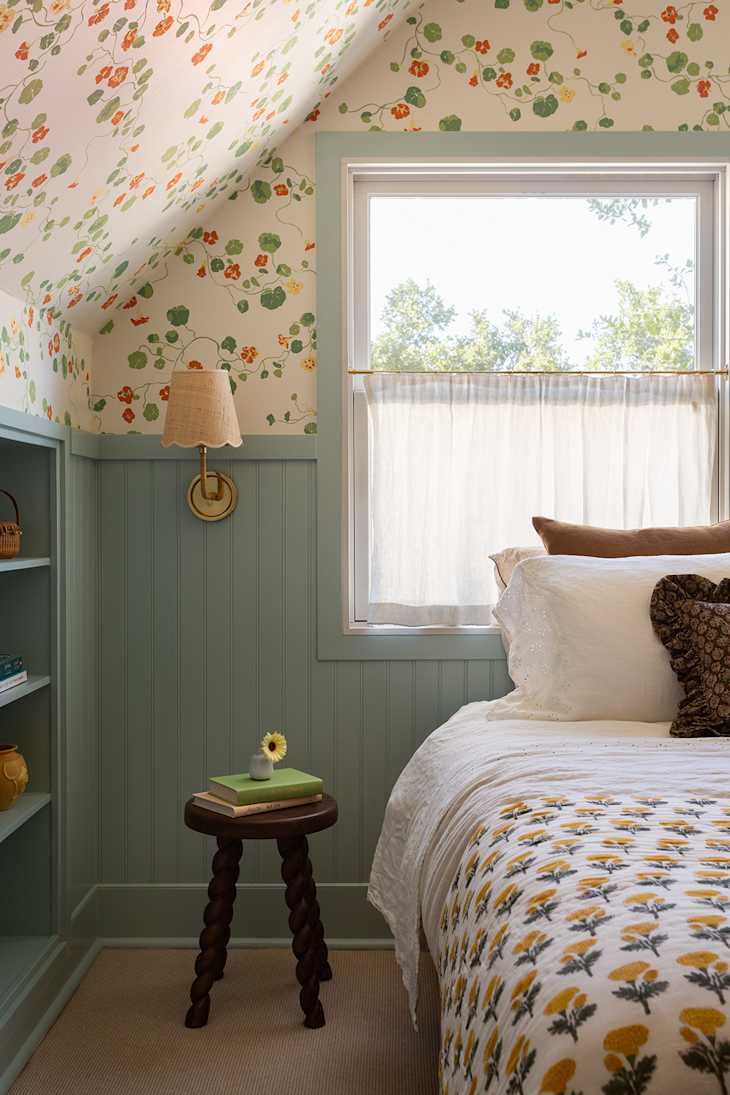
In a compact bedroom corner, floral patterns on both the wallpaper and the bedding create a cohesive English cottage look without needing a lot of square footage. The palette of green, cream, and yellow prevents a busy appearance, while the wooden stool and wicker accents add natural texture. A wall sconce provides soft light for reading, making the space work for morning tea or evening wind-down. Let the floral pattern carry the color and keep other elements simple.
Large Islands Anchor Farmhouse Cottage Kitchens
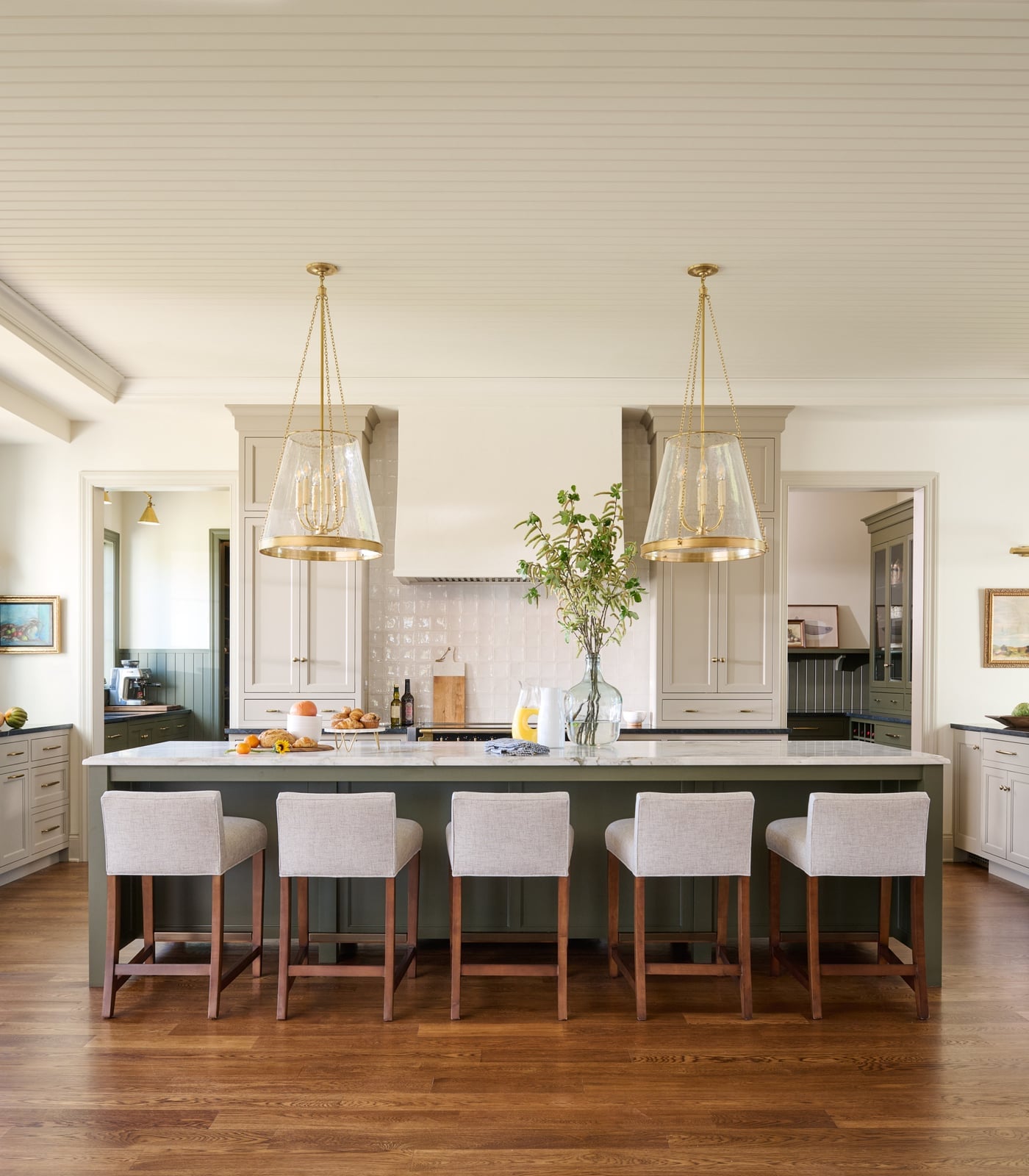
A farmhouse kitchen can feel spacious without a huge footprint, but a large island with seating changes the whole layout. Here, a marble-topped island with bar stools anchors the room, giving you a place for prep, meals, or just hanging out while someone cooks. Pendant lights hang above, adding task lighting and a bit of style, while the gray and white cabinetry keeps the palette calm. The wood tones on the island base warm up the marble and metal, so the kitchen feels like a gathering spot rather than just a work zone.
For renters, a freestanding island or a butcher block cart on locking casters can deliver the same central layout without a permanent install. Pair it with stools that tuck underneath, and you get the same farmhouse english cottage kitchen island effect without touching the existing cabinetry or floors.
Final Thoughts
English cottage style doesn’t require a thatched roof or a village lane. It’s about choosing materials and colors that age well, stone, wood, floral fabrics, and painted furniture. Keep an eye on upkeep: stone walls and exposed beams need occasional dusting, while floral upholstery benefits from a spot-clean routine. For ivy on exteriors, check your USDA zone. Some varieties can damage mortar. The real takeaway? This style rewards patience. Layer in pieces over time, let the patina build, and your home will feel like it has stories to tell.